US5645835A - Therapeutic antibody based fusion proteins - Google Patents
Therapeutic antibody based fusion proteins Download PDFInfo
- Publication number
- US5645835A US5645835A US08/247,437 US24743794A US5645835A US 5645835 A US5645835 A US 5645835A US 24743794 A US24743794 A US 24743794A US 5645835 A US5645835 A US 5645835A
- Authority
- US
- United States
- Prior art keywords
- antibody
- fusion protein
- fusion proteins
- cells
- tumor
- Prior art date
- Legal status (The legal status is an assumption and is not a legal conclusion. Google has not performed a legal analysis and makes no representation as to the accuracy of the status listed.)
- Expired - Lifetime
Links
Images




Classifications
-
- C—CHEMISTRY; METALLURGY
- C07—ORGANIC CHEMISTRY
- C07K—PEPTIDES
- C07K14/00—Peptides having more than 20 amino acids; Gastrins; Somatostatins; Melanotropins; Derivatives thereof
- C07K14/435—Peptides having more than 20 amino acids; Gastrins; Somatostatins; Melanotropins; Derivatives thereof from animals; from humans
- C07K14/46—Peptides having more than 20 amino acids; Gastrins; Somatostatins; Melanotropins; Derivatives thereof from animals; from humans from vertebrates
-
- A—HUMAN NECESSITIES
- A61—MEDICAL OR VETERINARY SCIENCE; HYGIENE
- A61K—PREPARATIONS FOR MEDICAL, DENTAL OR TOILETRY PURPOSES
- A61K47/00—Medicinal preparations characterised by the non-active ingredients used, e.g. carriers or inert additives; Targeting or modifying agents chemically bound to the active ingredient
- A61K47/50—Medicinal preparations characterised by the non-active ingredients used, e.g. carriers or inert additives; Targeting or modifying agents chemically bound to the active ingredient the non-active ingredient being chemically bound to the active ingredient, e.g. polymer-drug conjugates
- A61K47/51—Medicinal preparations characterised by the non-active ingredients used, e.g. carriers or inert additives; Targeting or modifying agents chemically bound to the active ingredient the non-active ingredient being chemically bound to the active ingredient, e.g. polymer-drug conjugates the non-active ingredient being a modifying agent
- A61K47/68—Medicinal preparations characterised by the non-active ingredients used, e.g. carriers or inert additives; Targeting or modifying agents chemically bound to the active ingredient the non-active ingredient being chemically bound to the active ingredient, e.g. polymer-drug conjugates the non-active ingredient being a modifying agent the modifying agent being an antibody, an immunoglobulin or a fragment thereof, e.g. an Fc-fragment
- A61K47/6835—Medicinal preparations characterised by the non-active ingredients used, e.g. carriers or inert additives; Targeting or modifying agents chemically bound to the active ingredient the non-active ingredient being chemically bound to the active ingredient, e.g. polymer-drug conjugates the non-active ingredient being a modifying agent the modifying agent being an antibody, an immunoglobulin or a fragment thereof, e.g. an Fc-fragment the modifying agent being an antibody or an immunoglobulin bearing at least one antigen-binding site
- A61K47/6851—Medicinal preparations characterised by the non-active ingredients used, e.g. carriers or inert additives; Targeting or modifying agents chemically bound to the active ingredient the non-active ingredient being chemically bound to the active ingredient, e.g. polymer-drug conjugates the non-active ingredient being a modifying agent the modifying agent being an antibody, an immunoglobulin or a fragment thereof, e.g. an Fc-fragment the modifying agent being an antibody or an immunoglobulin bearing at least one antigen-binding site the antibody targeting a determinant of a tumour cell
-
- A—HUMAN NECESSITIES
- A61—MEDICAL OR VETERINARY SCIENCE; HYGIENE
- A61P—SPECIFIC THERAPEUTIC ACTIVITY OF CHEMICAL COMPOUNDS OR MEDICINAL PREPARATIONS
- A61P35/00—Antineoplastic agents
-
- C—CHEMISTRY; METALLURGY
- C07—ORGANIC CHEMISTRY
- C07K—PEPTIDES
- C07K14/00—Peptides having more than 20 amino acids; Gastrins; Somatostatins; Melanotropins; Derivatives thereof
- C07K14/435—Peptides having more than 20 amino acids; Gastrins; Somatostatins; Melanotropins; Derivatives thereof from animals; from humans
- C07K14/52—Cytokines; Lymphokines; Interferons
- C07K14/521—Chemokines
- C07K14/522—Alpha-chemokines, e.g. NAP-2, ENA-78, GRO-alpha/MGSA/NAP-3, GRO-beta/MIP-2alpha, GRO-gamma/MIP-2beta, IP-10, GCP-2, MIG, PBSF, PF-4, KC
-
- C—CHEMISTRY; METALLURGY
- C07—ORGANIC CHEMISTRY
- C07K—PEPTIDES
- C07K14/00—Peptides having more than 20 amino acids; Gastrins; Somatostatins; Melanotropins; Derivatives thereof
- C07K14/435—Peptides having more than 20 amino acids; Gastrins; Somatostatins; Melanotropins; Derivatives thereof from animals; from humans
- C07K14/52—Cytokines; Lymphokines; Interferons
- C07K14/54—Interleukins [IL]
- C07K14/55—IL-2
-
- C—CHEMISTRY; METALLURGY
- C07—ORGANIC CHEMISTRY
- C07K—PEPTIDES
- C07K16/00—Immunoglobulins [IG], e.g. monoclonal or polyclonal antibodies
-
- C—CHEMISTRY; METALLURGY
- C07—ORGANIC CHEMISTRY
- C07K—PEPTIDES
- C07K16/00—Immunoglobulins [IG], e.g. monoclonal or polyclonal antibodies
- C07K16/18—Immunoglobulins [IG], e.g. monoclonal or polyclonal antibodies against material from animals or humans
- C07K16/28—Immunoglobulins [IG], e.g. monoclonal or polyclonal antibodies against material from animals or humans against receptors, cell surface antigens or cell surface determinants
- C07K16/30—Immunoglobulins [IG], e.g. monoclonal or polyclonal antibodies against material from animals or humans against receptors, cell surface antigens or cell surface determinants from tumour cells
-
- A—HUMAN NECESSITIES
- A61—MEDICAL OR VETERINARY SCIENCE; HYGIENE
- A61K—PREPARATIONS FOR MEDICAL, DENTAL OR TOILETRY PURPOSES
- A61K38/00—Medicinal preparations containing peptides
-
- C—CHEMISTRY; METALLURGY
- C07—ORGANIC CHEMISTRY
- C07K—PEPTIDES
- C07K2319/00—Fusion polypeptide
-
- Y—GENERAL TAGGING OF NEW TECHNOLOGICAL DEVELOPMENTS; GENERAL TAGGING OF CROSS-SECTIONAL TECHNOLOGIES SPANNING OVER SEVERAL SECTIONS OF THE IPC; TECHNICAL SUBJECTS COVERED BY FORMER USPC CROSS-REFERENCE ART COLLECTIONS [XRACs] AND DIGESTS
- Y10—TECHNICAL SUBJECTS COVERED BY FORMER USPC
- Y10S—TECHNICAL SUBJECTS COVERED BY FORMER USPC CROSS-REFERENCE ART COLLECTIONS [XRACs] AND DIGESTS
- Y10S424/00—Drug, bio-affecting and body treating compositions
- Y10S424/80—Antibody or fragment thereof whose amino acid sequence is disclosed in whole or in part
Definitions
- the present invention relates to antibody based proteins in which a portion of an antibody is fused to a biologically active ligand.
- the resulting fusion protein may be used to deliver the active molecule to a specific target cell or tissue.
- a portion of an antibody which recognizes a tumor cell is linked to a ligand which is an antitumor agent.
- a portion of an antibody which recognizes a tumor cell is linked to a lymphokine such as IL-2, thereby providing a method for producing a targeted, amplified anti-tumor immune response.
- Mabs monoclonal antibodies
- chimeric antibodies which combine regions of immunoglobulin molecules from different sources (Morrison et al., 1984, Proc. Natl. Acad. Sci. U.S.A. 81:6581; Sahagan et al., 1986, J. Immunol. 137:1066; Sun et al., 1987, Proc. Natl. Acad. Sci. U.S.A. 84:214).
- chimeric antibodies combine an antigen-combining region (or variable region) from a non-human source and a constant region from a human source.
- Chimeric antibody technology has been extended to produce chimeric molecules comprising immunoglobulin and non-immunoglobulin portions.
- International Patent Application No. PCT/GB85/00392 by Neuberger et al. filed Sep. 3, 1985, and published Mar. 13, 1986, describes the production of Fab-Staphylococcus aureus nuclease, Fab-myc, and Fab-Klenow fragment of DNA polymerase I chimeric antibodies (see also Neuberger et al., 1984, Nature 312:604-608 and Williams and Neuberger, 1986, Gene 4.3.:319-324).
- Schnee et al. (1987, Proc. Natl. Acad. Sci. U.S.A. 84:6904-6908) describe the construction of a hybrid molecule comprising the variable region of an anti-fibrin antibody and the catalytic ⁇ -chain of tissue plasminogen activator.
- the present invention relates to a system for the generation of antibody fusion proteins which has utility in the production of recombinant molecules that possess novel, clinically relevant biological activity.
- the antibody fusion proteins of the invention may be used therapeutically to deliver biologically active ligands to a desired tissue.
- the antibody fusion protein comprises a biologically active ligand which is a lymphokine, including, in a specific embodiment, interleukin-2.
- a biologically active ligand which is a lymphokine, including, in a specific embodiment, interleukin-2.
- interleukin-2 induces lymphocyte proliferation
- fused antibody that targets interleukin-2 (IL-2) to a malignant or infected tissue can produce localized amplification of the immune response toward the diseased tissue, and thereby facilitate the destruction of the infected or malignant tissue.
- a fused antibody is produced which comprises a variable region of the anti-tumor antigen monoclonal antibody L6 and active IL-2.
- fused antibodies which comprise an immunoglobulin variable region and a biologically active ligand which is a non-lymphokine cellular factor.
- a fused antibody is produced which comprises a variable region of the anti-tumor antigen monoclonal antibody L6 and active platelet factor 4, a molecule associated with antagonism of angiogenesis, inhibition of suppressor T lymphocyte development, chemotaxis and heparin binding.
- FIG. 1 Diagram of insertion of CH 1 into pUC18 vector.
- FIG. 2 Diagram of insertion of PF-4 cDNA into CH 1 , Hinge-Bearing Vector.
- FIG. 3 Diagram of insertion of construct into a mammalian expression vector.
- FIG. 4 Production of PF-4/L6 fusion protein by cell lines transfected with PF-4/L6 expression vector, as measured by reactivity with anti-L6 idiotype antibody.
- FIG. 5 Inhibition of binding of anti-PF-4 antibody to PF-4/L6 fusion protein by increasing concentrations of free PF-4.
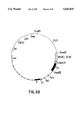
- FIGS. 6A and 6B Diagram of strategy for the generation of IL-2/L6 fusion proteins.
- FIG. 7 Exact hinge (a) and hinge-linker (b) sequences.
- FIG. 8 Procedure of producing IL-2 cDNA for cloning.
- FIG. 9 Coding portion of IL-2 amplified in polymerase chain reaction.
- FIG. 10 Chimeric light chain vector cotransfected with pIL-2/L6.
- the present invention relates to a system for the generation of therapeutic antibody fusion proteins.
- the present invention relates to therapeutic antibody fusion proteins as well as the recombinant DNA molecules utilized in their production.
- therapeutic antibody fusion proteins as well as the recombinant DNA molecules utilized in their production.
- the antibody-based fusion proteins of the invention comprise (i) a portion of an immunoglobulin molecule capable of directing the fusion protein to an intended cell or tissue and (ii) a biologically active protein or peptide.
- the recombinant genes encoding the antibody fusion proteins of the invention may be constructed using any technique known in the art of molecular biology, including but not limited to the following.
- the targeting portion of the molecule may comprise all or part of an immunoglobulin variable region which may, in turn, be comprised of regions encoded by a V gene and/or D gene and/or J gene.
- the antibody fusion proteins comprise a portion corresponding to the hinge region of an immunoglobulin molecule, or a functional equivalent thereof which would provide flexibility between the globular domains of the antibody-based fusion protein.
- a functional hinge may be important in retaining targeting ability.
- Variable regions of antibody particularly monoclonal antibody, that recognize tumor-specific antigens, viral-specific antigens, bacterial antigens, parasite antigens, or antigens expressed on a particular population of cells (such as lymphocytes) may be used in fusion proteins of the invention.
- Lymphokines which may be incorporated into the antibody-based fusion proteins of the invention include but are not limited to lymphokines and cellular factors which interact with specific cellular receptor. Lymphokines of the invention include but are not limited to interleukin-1 (Henderson and Pettipher, 1988, Biochem. Pharmacol. 37:4717); interleukin-2 (Weil-Hillman et al., 1988, J. Biol. Response Mod. 7:424); interleukin-6 (Van Damme et al., 1987, J. Exp. Med. 165:914-919); interferon ⁇ (Pitha et al., 19898, J. Immunol. 141:3611); and interferon ⁇ (Blanchard and Djeu, 1988, J. Immunol. 141:4067).
- interleukin-1 Human and Pettipher, 1988, Biochem. Pharmacol. 37:4717
- interleukin-2 Weil-Hillman et al., 1988, J.
- Cellular factors which may be incorporated into the antibody-based fusion proteins of the invention include but are not limited to platelet factor 4 (Devel et al., 1981, Proc. Natl. Acad. Sci. U.S.A. 78:4584-4587); tumor necrosis factor ⁇ (Plate et al, 1988, Ann. N.Y. Acad. Sci. 532:149); epidermal growth factor (Carpenter and Cohen, A. Rev. Biochem.
- fibroblast growth factor (Folkman and Klagsburn, 1987, Science 235:442-447); insulin-like growth factor-1 (Blundell and Humbel, 1980, Nature 287:781-787); insulin-like growth factor-2 (Blundell and Humbel, supra); platelet-derived growth factor (Ross et al., 1986, Cell 46:155-169); transforming growth factor ⁇ (Derynck, 1988, Cell 54:593-595); transforming growth factor ⁇ (Cheifetz et al., 1987, Cell 48:409-416); interferon ⁇ and nerve growth factor (Thoenen et al., 1982, in "Repair and Regeneration of the Nervous System", J. G. Nicholls, ed., Springer-Verlag, New York, pp. 173-185).
- Recombinant nucleic acid molecules which encode the immunoglobulin, lymphokine or growth factor may be obtained by any method known in the art (Maniatis et al., 1982, Molecular Cloning; A Laboratory Manual, Cold Spring Harbor Laboratory, Cold Spring Harbor, New York) or obtained from publicly available clones.
- nucleic acid encoding a lymphokine or factor may be obtained as follows. A population of cells known to actively express the factor may be obtained, and total cellular RNA may be harvested therefrom.
- Amino acid sequence of the factor may be used to deduce the sequence of a portion of the factor's nucleic acid so as to design appropriate oligonucleotide primers, or, alternatively, the oligonucleotide primers may be obtained from a known nucleic acid sequence which encodes the factor. The oligonucleotide fragment may then be used in conjunction with reverse transcriptase to produce cDNA corresponding to factor-encoding nucleotide sequence (Okayama et al., 1987, Methods Enzymol. 154:3-29).
- the cDNA can then be cloned, and/or portions of the factor coding region may then be amplified from this cDNA using polymerase chain reaction and appropriate primer sequences, (Saiki et al., 1988, Science 239:487-491).
- a recombinant vector system may be created to accommodate sequences encoding the ligand in the correct reading frame with a natural or synthetic hinge region.
- the hinge region of the human IgG 1 constant region may be used; in a specific embodiment of the invention, the constant region exon encoding the C H1 domain of human IgG 1 may be cloned as a HindIII-PstI fragment into the vector pUC18 to which may be joined, using standard restriction enzyme techniques, a modified version of the human hinge region sequences of human IgG 1 .
- the two cysteine residues that normally mediate interchain disulfide linkage may be replaced by codons specifying proline and serine so as to permit greater flexibility in the fused molecule; in this specific embodiment the sequence of the hinge region may be EPKSCDKTHTPPPSPGRVVGGRA.
- nucleic acids corresponding to the 3' flanking region of an immunoglobulin gene including RNA cleavage/polyadenylation sites and downstream sequences; according to a specific embodiment of the invention, this nucleotide sequence provides the mRNA with the 3' untranslated region of the secretory form of the murine C ⁇ gene.
- Nucleic acid sequences encoding the various components of the antibody-based fusion proteins of the invention may be joined together using any techniques known in the art, including restriction enzyme methodologies and the use of synthetic linker sequences.
- a suitable promoter/enhancer sequence may preferably be incorporated into the recombinant vector.
- Promoters which may be used to control the expression of the antibody-based fusion protein include, but are not limited to, the SV40 early promoter region (Bernoist and Chambon, 1981, Nature 290:304-310), the promoter contained in the 3' long terminal repeat of Rous sarcoma virus (Yamamoto, et al., 1980, Cell 22:787-797), the herpes thymidine kinase promoter (Wagner et al., 1981, Proc. Natl. Acad. Sci. U.S.A.
- the regulatory sequences of the metallothionine gene (Brinster et al., 1982, Nature 296:39-42); prokaryotic expression systems such as the LAC, or ⁇ -lactamase promoter (Villa-Kamaroff, et al., 1978, Proc. Natl. Acad. Sci. U.S.A. 75:3727-3731), or the tac ⁇ phage promoter (DeBoer, et al., 1983, Proc. Natl. Acad. Sci. U.S.A.
- promoter elements from yeast or other fungi such as the Gal 4 promoter, the ADC (alcohol dehydrogenase) promoter, PGK (phosphoglycerol kinase) promoter, alkaline phophatase promoter, and the following animal transcriptional control regions, which exhibit tissue specificity and have been utilized in transgenic animals: elastase I gene control region which is active in pancreatic acinar cells (Swift et al., 1984, Cell 38:639-646; Ornitz et al., 1986, Cold Spring Harbor Symp.
- alpha 1-antitrypsin gene control region which is active in the liver (Kelsey et al, 1987, Genes and Devel. 1:161-171), beta-globin gene control region which is active in myeloid cells (Mogram et al., 1985, Nature 315:338-340; Kollias et al., 1986, Cell 46:89-94; myelin basic protein gene control region which is active in oligodendrocyte cells in the brain (Readhead et al., 1987, Cell 48:703-712); myosin light chain-2 gene control region which is active in skeletal 5muscle (Sani, 1985, Nature 314:283-286), and gonadotropic releasing hormone gene control region which is active in the hypothalamus (Mason et al., 1986, Science 234:1372-1378).
- Successful incorporation of antibody-based fusion gene constructs may be identified by three general approaches: (a) DNA-DNA hybridization, (b) presence or absence of "marker" gene functions, and (c) expression of inserted sequences.
- the presence of a foreign gene inserted in an expression vector can be detected by DNA-DNA hybridization using probes comprising sequences that are homologous to the inserted antibody fusion protein gene.
- the recombinant vector/host system can be identified and selected based upon the presence or absence of certain "marker" gene functions (e.g., thymidine kinase activity, resistance to antibiotics such as G418, transformation phenotype, occlusion body formation in baculovirus, etc.) caused by the insertion of foreign genes in the vector.
- certain "marker" gene functions e.g., thymidine kinase activity, resistance to antibiotics such as G418, transformation phenotype, occlusion body formation in baculovirus, etc.
- recombinant expression vectors can be identified by assaying the foreign gene product expressed by the recombinant. Such assays can be based, for example, on the physical or functional properties of the antibody fusion gene product in bioassay systems as described infra.
- the expression vectors which can be used include, but are not limited to, the following vectors or their derivatives: human or animal viruses such as vaccinia virus, adenovirus or retroviral based vectors; insect viruses such as baculovirus; yeast vectors; bacteriophage vectors (e.g., lambda), and plasmid and cosmid DNA vectors, to name but a few.
- the promoter/enhancer and 3' regulatory sequences may all be derived from immunoglobulin genes.
- the recombinant constructs of the invention may be introduced into host cells which are capable of expressing the antibody-based fusion protein using any method known in the art, including transformation (for example, using DEAE-dextran or calcium phosphate techniques), transfection, microinjection, infection, cell gun, and electroporation. Any host cell type may be utilized provided that the antibody-based fusion protein recombinant nucleic acid sequences would be adequately transcribed into mRNA in that cell type.
- mouse myeloma cell lines which do not produce immunoglobulin, such as Sp2/o or Ag8.653 may be used.
- the recombinant nucleic acid constructs of the invention may be used to create non-human transgenic animals capable of producing the antibody based fusion protein.
- the host cell is a lymphoid cell.
- the host cell is a hybridoma derived heavy chain loss variant which expresses immunoglobulin light chains; in this embodiment, the parent hybridoma most preferably may be the source of the monoclonal antibody which comprises the immunoglobulin portions of the antibody-based fusion protein.
- the light-chain producing cell line derived from a hybridoma which produces monoclonal antibody "X” may be transfected with recombinant DNA encoding an antibody-based fusion protein which comprises a variable region of monoclonal antibody "X"; the antibody-based fusion protein may combine with endogenous light chain and thereby re-create the antigen binding site of monoclonal antibody "X".
- recombinant nucleic acids encoding both antibody-based fusion protein and corresponding or compatible immunoglobulin light chain may be cotransfected into a cell line which is preferably of lymphoid origin.
- the antibody fusion protein encoding sequences may be introduced into the immunoglobulin locus of a lymphoid cell line by homologous recombination according to methods set forth in U.S. patent application Ser. No. 07/242,873, by Folger-Bruce and Fell, filed Sep. 14, 1988, which is incorporated by reference in its entirety herein.
- Antibody-based fusion protein produced by the host cell may be collected using any technique known in the art, including, but not limited to, affinity chromatography using target antigen or antibody specific for any portion of the fusion protein including, for example, anti-idiotype antibody.
- the activity of the fused lymphokine or cellular factor may be confirmed using biological assays which detect or measure the activity of the lymphokine or cellular factor. For example, and not by way of limitation, if IL-2 is the lymphokine comprised by the antibody fusion protein, the presence of IL-2 activity may be confirmed in assays which detect T-cell proliferation.
- the presence of PF4 activity is confirmed by observing that the antibody fusion protein binds to anti-PF4 antibody in a manner which is competitively inhibited by free, unconjugated PF4 protein.
- the present invention provides for dimeric immunoglobulin molecules as well as monomeric or multimeric molecules comprising antibody based fusion proteins.
- the present invention provides for antibody based fusion proteins that may be used to deliver biologically active ligand molecules to specific target cells or tissues.
- the antibody fusion proteins comprise ligands which are lymphokines or other cellular factors.
- an antibody fusion protein may comprise variable region sequences which recognize a tumor specific antigen.
- the variable region sequences are derived from L6, a monoclonal antibody which reacts with an antigen present on human non-small cell lung carcinoma and a number of other carcinomas, including breast and colon carcinoma. If the antibody fusion molecule which recognizes a tumor specific antigen also comprises a lymphokine, it may be used to alter the immune response in the area of the tumor cells. For example, as shown in Example Section 7, infra, an antibody fusion protein comprising IL-2 and the L6 variable region retains IL-2 activity.
- the IL-2/L6 fusion protein may be used to target IL-2 to tumor cells; consequently, activated T-cells in the vicinity of the tumor will be induced to proliferate, thereby amplifying the anti-tumor immune response.
- current immunotherapy often involves systemic administration of lymphokines at a concentration that is intended to effectively boost anti-tumor activity but which necessarily affects lymphocytes and tissues throughout the body. In the case of IL-2, severe and potentially fatal clinical reactions may occur.
- the present invention offers the advantage of decreasing systemic exposure to lymphokine; antibody-mediated targeting allows for less total lymphokine to be administered and substantially decreases the exposure of non-tumor tissues to lymphokine, thereby minimizing toxic effects.
- a PF4/L6 antibody may be used to inhibit angiogenesis at a tumor site and thereby inhibit tumor growth.
- the antibody fusion proteins of the invention may be directed toward antigens associated with infectious agents, including vital, bacterial, or parasitic antigens.
- the antibody fusion protein may comprise a chemotactic factor which may be used to recruit polymorphonuclear leukocytes to sites of infection, including the walls of abscesses.
- the antibody fusion proteins of the invention may be directed toward antigens present on a subpopulation of cells in the body.
- antibody fusion proteins directed toward antigens on the surface of helper T-cells could be used to target ligands which augment helper cell activity in immune compromised patients or to target ligands that down regulate T-helper responses in cases of autoimmunity.
- antibody fusion proteins directed toward antigens on the surface of suppressor T-cells may be used to regulate activity.
- Subpopulations of cells could also be targeted based on receptor specificity (e.g. antigen for lymphocytes).
- cellular factors that relate to wound healing may be incorporated into antibody fusion proteins.
- fibroblast growth factor may be combined with an antibody which recognizes an antigen exposed by or applied to an area of cell injury.
- the antibody fusion proteins may be administered to a patient in need of such treatment in any sterile pharmaceutical carrier which will maintain the solubility and activity of the protein. It may be desirable to administer antibody fusion proteins in conjunction with other treatment modalities, including antibodies and/or antibody fusion proteins comprising additional growth factors.
- a recombinant vector system was created to accommodate sequences encoding novel protein structure in the correct reading frame with the hinge region of the human IgG 1 constant region.
- the constant region exon encoding the C H1 domain of human IgG 1 was cloned as a HindIII/PstI fragment into the vector pUC18 (FIG. 1). Downstream of these sequences was cloned a 1.6 kb PstI/KpnI fragment containing a portion of the 3' flanking region of the murine C ⁇ gene that includes the RNA cleavage/polyadenylation sites used in the expression of mRNA encoding the secretory form of IgM heavy chain. A portion of the vector polylinker was retained between the two fragments for subsequent additions.
- a pair of oligonucleotides was generated that when annealed encode a modified version of the human hinge region sequences of human IgG 1 .
- the two cysteines that normally mediate interchain disulfide linkage between heavy chains were replaced with codons specifying proline and serine, and several amino acids were added to the carboxy terminus such that the entire hinge region sequence is: EPKSCDKTHTPPPSPGRVVGGRA.
- the annealed oligonucleotide pair has a PstI compatible overhang on the 5' end, includes the normal splice acceptor site for the hinge exon, and retains another suitable overhang for linkage with additional oligonucleotides at the 3' end.
- a second pair of oligonucleotides was designed to overlap with the first set and provide compatible ends for ligation with an NcoI overhang.
- the cDNA clone encoding human platelet factor 4 was linked as an NcoI/BamI fragment in frame with the hinge region by ligation into the PstI/BamI sites of the vector with the two pairs of oligonucleotides at the 5' end (FIG. 2).
- the fusion construct was then transferred to a vector that contains a dominant selectable marker (NEO) for expression in mammalian cells (FIG. 3), and then a gene segment encoding a heavy chain variable region of the desired specificity was inserted just upstream.
- NEO dominant selectable marker
- the construct was transfected into a murine myeloma cell line expressing the chimeric light chain and supernatants were screened for production of heavy/light assembled protein using anti-idiotypic antibodies specific for L6 V region determinants. Clones were established that tested positive for the presence of assembled heavy and light chain.
- the first example of an immunoglobulin fusion protein generated by this design incorporated the sequence of human platelet factor 4 downstream as part of the L6 chimeric heavy chain.
- Platelet factor 4 has been reported to have several biological activities of interest including heparin binding, antagonism of angiogenesis, inhibition of suppressor T lymphocyte development, chemotaxis for inflammatory cells, etc.
- FIG. 4 The growth and production characteristics (as determined by the Id/Id assay) for two clones are shown in FIG. 4. As can be seen by comparison with purified chimeric L6 as a standard, substantial amounts of Id bearing protein is produced, although it should be emphasized that chimeric L6 is a bivalent molecule that probably reacts somewhat differently than a chimeric F(ab) in this assay.
- FIG. 5 shows a plot of the percent inhibition of the detectable signal with increasing amounts of the PF4 protein. No inhibition was observed by coincubation with chimeric L6 protein.
- the L6/PF4 fusion protein was also shown to bind to human tumor cells by FACS analysis using antisera specific for human Fab or human PF4.
- L6/IL2 fusion protein shown in FIG. 6.
- constructs began with the same pUC18C gamma1 3' UT shown in FIG. 2.
- This vector was opened with PstI and BamHI to receive three DNA fragments.
- the first fragment was a pair of oligonucleotides encoding a modified version of the human hinge region in which the cysteines that normally mediate intermolecular linkage to another heavy chain have been replaced with codons specifying proline and serine (shown as hinge in FIG. 7).
- the second section was formed by another pair of oligonucleotides (IL2 hinge gene linker sequence in FIG.
- This restriction site encompasses a codon specifying methionine and had been used for cloning the PF4 gene into bacterial expression vectors.
- the third component was the segment encoding the desired effector function (novel gene in FIGS. 6A and 6B) with an NcoI overhang at the 5' end and a BamHI overhang at the 3' end to complete ligation into the vector.
- a separate construct was created by using oligonucleotides that encode each of the three cysteines normally present in the human IgG 1 hinge region, but with a stop codon immediately following the hinge sequence (FIG. 7 (Fab') 2 ).
- Each assembled sequence was then transferred as a HindIII/Eco RI fragment to a vector containing a dominantly selectable gene (NEO) for transfection into eukaryotic cells. Subsequent to this step, either the cloned fragment encoding the L6 heavy chain variable region, or the 2.3 kb HindIII fragment used for direct gene targeting to the IgH locus, was cloned just upstream.
- NEO dominantly selectable gene
- the coding region was generated using the polymerase chain reaction (PCR).
- PCR polymerase chain reaction
- FIG. 8 Peripheral blood cells from normal human donors were stimulated for 6 hours with anti-CD3 and anti-CD28 to elicit the production of IL2 RNA by the T cells within the population. Total cellular RNA was then extracted from these cells and a single strand cDNA copy of the IL2 message was generated using primer IL2-3' as shown in FIG. 8.
- the portion of the IL2 coding region specified in FIG. 9 was amplified from this cDNA by the polymerase chain reaction using the primers IL2-5' and IL2-3' (FIG. 8).
- each primer is perfectly homologous to the IL2 sequence, whereas the 5' region of each primer is mismatched to include an NcoI site at the 5' end and a BamHI site at the 3' end of the final product.
- This PCR product was cloned as a blunt fragment into the SmaI site of pUC19 for sequencing. Once the IL2 sequence was confirmed the coding region was transferred as an NcoI/BamHI fragment to the pUC18Cgamma 13' UT plasmid as described above.
- the L6/IL2 heavy chain fusion vector was cotransfected along with the chimeric light chain vector shown in FIG. 10 into either the Ag8.653 or Sp2/0 non-Ig producing murine plasmacytoma cell line. Selection was performed using G418 and resistant cell populations were tested for production of both heavy and light chain using a pair of anti-idiotypes, one specific for the L6 light chain variable region and the other specific for the heavy chain variable region of L6. A single clone from the Ag8 transfection (10 3 A4) was chosen for further study.
- the human tumor cells (1 ⁇ 10 4 ) that bear the L6 antigen were irradiated and incubated with either media, 20 ⁇ /ml of chimeric L6, 10 3 A4 supernatant, supernatant plus 20 ⁇ /ml of murine L6 antibody,or supernatant plus 20 ⁇ /ml of L6 anti-idiotype 14B.
- the cells were incubated for 30 minutes on ice, washed, and then mixed with 2 ⁇ 10 4 CTLL-2 cells which proliferate in response to IL2.
- the proliferation was measured as a function of 3 H-thymidine incorporation and the results were as follows:
- L6 The cell line, designated L6, which produces the L6 monoclonal antibody was deposited with the American Type Culture Collection (ATCC), 12301 Parklawn Drive, Rockville, Md. 20852, on Dec. 6, 1984 and received accession number HB 8677.
Landscapes
- Health & Medical Sciences (AREA)
- Chemical & Material Sciences (AREA)
- Life Sciences & Earth Sciences (AREA)
- Organic Chemistry (AREA)
- General Health & Medical Sciences (AREA)
- Medicinal Chemistry (AREA)
- Molecular Biology (AREA)
- Proteomics, Peptides & Aminoacids (AREA)
- Biochemistry (AREA)
- Biophysics (AREA)
- Genetics & Genomics (AREA)
- Immunology (AREA)
- Zoology (AREA)
- Toxicology (AREA)
- Gastroenterology & Hepatology (AREA)
- Cell Biology (AREA)
- Animal Behavior & Ethology (AREA)
- Veterinary Medicine (AREA)
- Pharmacology & Pharmacy (AREA)
- Public Health (AREA)
- Engineering & Computer Science (AREA)
- Epidemiology (AREA)
- Bioinformatics & Cheminformatics (AREA)
- Chemical Kinetics & Catalysis (AREA)
- General Chemical & Material Sciences (AREA)
- Nuclear Medicine, Radiotherapy & Molecular Imaging (AREA)
- Peptides Or Proteins (AREA)
- Preparation Of Compounds By Using Micro-Organisms (AREA)
- Medicines That Contain Protein Lipid Enzymes And Other Medicines (AREA)
- Medicines Containing Antibodies Or Antigens For Use As Internal Diagnostic Agents (AREA)
- Micro-Organisms Or Cultivation Processes Thereof (AREA)
Abstract
The present invention relates to methods of providing a targeted, amplified antitumor immune response using antibody-based fusion proteins. More specifically, the invention relates to the use of antibody-based fusion proteins comprising an immunoglobulin portion capable of binding to a tumor antigen linked to a biologically active lymphokine. The immunoglobulin portion targets the fusion protein to the site of the tumor cells and the lymphokine portion stimulates the proliferation of immune T cells at the site of the tumor cells, thereby amplifying the anti-tumor immune response. In preferred embodiments of the invention, the immunoglobulin portion of the fusion protein is derived from the L6 monoclonal antibody and/or the lymphokine is interleukin-2.
Description
The present application is a division of prior U.S. application Ser. No. 07/468,390, filed on Jan. 22, 1990, now U.S. Pat. No. 5,314,995.
1. Introduction
2. Background Of The Invention
2.1. Monoclonal Antibodies As Diagnostic And Therapeutic Reagents
2.2. Use Of Monoclonal Antibodies As Targeting Agents
3. Summary Of The Invention
4. Description Of The Figures
5. Detailed Description Of The Invention
5.1. Construction Of Recombinant Genes Encoding Antibody Fusion Proteins
5.2. Expression Of Antibody Fusion Proteins
5.3. Utility Of The Invention
6. Example: Construction And Expression Of A Platelet Factor 4/L6 Antibody Fusion Protein With Platelet Factor-4
6.1. Materials And Methods
6.1.1. Construction Of An Expression Cassette For An Antibody-Based Fusion Protein
6.1.2. Insertion Of Platelet Factor 4 Encoding Sequences Into Antibody Fusion Protein Cassette
6.1.3. Expression Of Platelet Factor 4/L6 Fusion Protein
6.2. Results And Discussion
7. Example: Construction And Expression Of An Interleukin-2/L6 Antibody Fusion Protein With Interleukin-2 Activity
7.1. Materials And Methods
7.1.1. Construction Of An Expression Vector For The IL-2 Antibody Fusion Protein
7.2. Results And Discussion
7.2.1. Expression of IL-2/L6 Antibody Fusion Protein
7.2.2. Assays For Bifunctional Activity Of The Fusion Protein
8. Deposit Of Microorganisms
The present invention relates to antibody based proteins in which a portion of an antibody is fused to a biologically active ligand. The resulting fusion protein may be used to deliver the active molecule to a specific target cell or tissue. In particular embodiments of the present invention, a portion of an antibody which recognizes a tumor cell is linked to a ligand which is an antitumor agent. In a preferred embodiment of the present invention, a portion of an antibody which recognizes a tumor cell is linked to a lymphokine such as IL-2, thereby providing a method for producing a targeted, amplified anti-tumor immune response.
Since the development of the cell fusion technique for the production of monoclonal antibodies (Kohler and Milstein, 1975, Nature 256:495), a vast number of monoclonal antibodies, many of which define heretofore unknown antigens, have been produced by a number of researchers. Concurrently, a number of techniques have been developed for the generation of monoclonal antibodies, including the B cell hybridoma technique (Kozbor et al, 1983, Immunology Today 4:72) and the EBV hybridoma technique to produce human monoclonal antibodies (Cole et al., 1985, in "Monoclonal Antibodies and Cancer Therapy," Alan R. Liss, Inc. pp. 77-96).
Through hybridoma technology, monoclonal antibodies (Mab) can be developed that are capable of recognizing almost any determinant or epitope. The property of specific recognition and binding to particular cells has encouraged the development of Mabs as diagnostic and therapeutic reagents for a variety of disease states. Mabs have been obtained that recognize determinants preferentially expressed on tumor cells (Hellstrom et al., 1984 in "Monoclonal Antibodies and Cancer", Wright et. al. Marcel Dekker, Inc., New York, pp. 31-47) and are currently being evaluated in the clinic for their effectiveness as therapeutic agents.
The ability of monoclonal antibodies (Mabs) to localize to tumor tissue has also led to the development of Mabs conjugated to various substances in an effort to target specific molecules to tumor sites (Hellstrom and Hellstrom, 1985, in "Monoclonal Antibodies for Tumor Detection and Drug Targeting," Baldwin et al. eds, Academic Press, New York pp. 17-51). Linkages have been performed using toxins, drugs, radionuclides, and enzymes for the activation of prodrug compounds. Many of these linkages involve the chemical conjugation of the reactive moiety with a given preparation of antibody, a process which can be cumbersome and subject to variation. (U.S. Pat. No. 4,671,958 by Rodwell et al., filed Mar. 9, 1982, issued Jun. 9, 1987).
Recently, recombinant DNA techniques have been used to produce genetically altered immunoglobulin molecules. For example, techniques have been developed to produce chimeric antibodies, which combine regions of immunoglobulin molecules from different sources (Morrison et al., 1984, Proc. Natl. Acad. Sci. U.S.A. 81:6581; Sahagan et al., 1986, J. Immunol. 137:1066; Sun et al., 1987, Proc. Natl. Acad. Sci. U.S.A. 84:214). Usually, chimeric antibodies combine an antigen-combining region (or variable region) from a non-human source and a constant region from a human source.
Chimeric antibody technology has been extended to produce chimeric molecules comprising immunoglobulin and non-immunoglobulin portions. For example, International Patent Application No. PCT/GB85/00392 by Neuberger et al., filed Sep. 3, 1985, and published Mar. 13, 1986, describes the production of Fab-Staphylococcus aureus nuclease, Fab-myc, and Fab-Klenow fragment of DNA polymerase I chimeric antibodies (see also Neuberger et al., 1984, Nature 312:604-608 and Williams and Neuberger, 1986, Gene 4.3.:319-324). Schnee et al. (1987, Proc. Natl. Acad. Sci. U.S.A. 84:6904-6908) describe the construction of a hybrid molecule comprising the variable region of an anti-fibrin antibody and the catalytic β-chain of tissue plasminogen activator.
The present invention relates to a system for the generation of antibody fusion proteins which has utility in the production of recombinant molecules that possess novel, clinically relevant biological activity. The antibody fusion proteins of the invention may be used therapeutically to deliver biologically active ligands to a desired tissue.
In particular embodiments of the invention, the antibody fusion protein comprises a biologically active ligand which is a lymphokine, including, in a specific embodiment, interleukin-2. Because interleukin-2 induces lymphocyte proliferation, fused antibody that targets interleukin-2 (IL-2) to a malignant or infected tissue can produce localized amplification of the immune response toward the diseased tissue, and thereby facilitate the destruction of the infected or malignant tissue. In a specific embodiment of the invention, a fused antibody is produced which comprises a variable region of the anti-tumor antigen monoclonal antibody L6 and active IL-2.
Additional embodiments of the invention relate to fused antibodies which comprise an immunoglobulin variable region and a biologically active ligand which is a non-lymphokine cellular factor. In a specific embodiment of the invention, a fused antibody is produced which comprises a variable region of the anti-tumor antigen monoclonal antibody L6 and active platelet factor 4, a molecule associated with antagonism of angiogenesis, inhibition of suppressor T lymphocyte development, chemotaxis and heparin binding.
FIG. 1. Diagram of insertion of CH1 into pUC18 vector.
FIG. 2. Diagram of insertion of PF-4 cDNA into CH1, Hinge-Bearing Vector.
FIG. 3. Diagram of insertion of construct into a mammalian expression vector.
FIG. 4. Production of PF-4/L6 fusion protein by cell lines transfected with PF-4/L6 expression vector, as measured by reactivity with anti-L6 idiotype antibody.
FIG. 5. Inhibition of binding of anti-PF-4 antibody to PF-4/L6 fusion protein by increasing concentrations of free PF-4.
FIGS. 6A and 6B. Diagram of strategy for the generation of IL-2/L6 fusion proteins. (6A) insertion of IL-2 cDNA into pUC18 vector containing CH1 amd 3' untranslated regions (3'uT) from the mouse immunoglobulin gene locus with incorporation of hinge/linker sequences; (6B) final expression vector comprising SV40ori promoter and the neo resistance gene.
FIG. 7. Exact hinge (a) and hinge-linker (b) sequences.
FIG. 8. Procedure of producing IL-2 cDNA for cloning.
FIG. 9. Coding portion of IL-2 amplified in polymerase chain reaction.
FIG. 10. Chimeric light chain vector cotransfected with pIL-2/L6.
The present invention relates to a system for the generation of therapeutic antibody fusion proteins. In particular, the present invention relates to therapeutic antibody fusion proteins as well as the recombinant DNA molecules utilized in their production. For purposes of clarity of disclosure, and not by way of limitation, the detailed description of the invention will be divided into the following subsections:
(i) construction of recombinant genes encoding antibody fusion proteins;
(ii) expression of antibody fusion proteins; and
(iii) utility of the invention.
The antibody-based fusion proteins of the invention comprise (i) a portion of an immunoglobulin molecule capable of directing the fusion protein to an intended cell or tissue and (ii) a biologically active protein or peptide. The recombinant genes encoding the antibody fusion proteins of the invention may be constructed using any technique known in the art of molecular biology, including but not limited to the following.
The targeting portion of the molecule may comprise all or part of an immunoglobulin variable region which may, in turn, be comprised of regions encoded by a V gene and/or D gene and/or J gene. In preferred embodiments of the invention, the antibody fusion proteins comprise a portion corresponding to the hinge region of an immunoglobulin molecule, or a functional equivalent thereof which would provide flexibility between the globular domains of the antibody-based fusion protein. A functional hinge may be important in retaining targeting ability. Variable regions of antibody, particularly monoclonal antibody, that recognize tumor-specific antigens, viral-specific antigens, bacterial antigens, parasite antigens, or antigens expressed on a particular population of cells (such as lymphocytes) may be used in fusion proteins of the invention.
Ligands which may be incorporated into the antibody-based fusion proteins of the invention include but are not limited to lymphokines and cellular factors which interact with specific cellular receptor. Lymphokines of the invention include but are not limited to interleukin-1 (Henderson and Pettipher, 1988, Biochem. Pharmacol. 37:4717); interleukin-2 (Weil-Hillman et al., 1988, J. Biol. Response Mod. 7:424); interleukin-6 (Van Damme et al., 1987, J. Exp. Med. 165:914-919); interferon α (Pitha et al., 19898, J. Immunol. 141:3611); and interferon γ (Blanchard and Djeu, 1988, J. Immunol. 141:4067).
Cellular factors which may be incorporated into the antibody-based fusion proteins of the invention include but are not limited to platelet factor 4 (Devel et al., 1981, Proc. Natl. Acad. Sci. U.S.A. 78:4584-4587); tumor necrosis factor α (Plate et al, 1988, Ann. N.Y. Acad. Sci. 532:149); epidermal growth factor (Carpenter and Cohen, A. Rev. Biochem. 48:193-216); fibroblast growth factor (Folkman and Klagsburn, 1987, Science 235:442-447); insulin-like growth factor-1 (Blundell and Humbel, 1980, Nature 287:781-787); insulin-like growth factor-2 (Blundell and Humbel, supra); platelet-derived growth factor (Ross et al., 1986, Cell 46:155-169); transforming growth factor α (Derynck, 1988, Cell 54:593-595); transforming growth factor β (Cheifetz et al., 1987, Cell 48:409-416); interferon β and nerve growth factor (Thoenen et al., 1982, in "Repair and Regeneration of the Nervous System", J. G. Nicholls, ed., Springer-Verlag, New York, pp. 173-185).
Recombinant nucleic acid molecules which encode the immunoglobulin, lymphokine or growth factor may be obtained by any method known in the art (Maniatis et al., 1982, Molecular Cloning; A Laboratory Manual, Cold Spring Harbor Laboratory, Cold Spring Harbor, New York) or obtained from publicly available clones. For example, nucleic acid encoding a lymphokine or factor may be obtained as follows. A population of cells known to actively express the factor may be obtained, and total cellular RNA may be harvested therefrom. Amino acid sequence of the factor may be used to deduce the sequence of a portion of the factor's nucleic acid so as to design appropriate oligonucleotide primers, or, alternatively, the oligonucleotide primers may be obtained from a known nucleic acid sequence which encodes the factor. The oligonucleotide fragment may then be used in conjunction with reverse transcriptase to produce cDNA corresponding to factor-encoding nucleotide sequence (Okayama et al., 1987, Methods Enzymol. 154:3-29). The cDNA can then be cloned, and/or portions of the factor coding region may then be amplified from this cDNA using polymerase chain reaction and appropriate primer sequences, (Saiki et al., 1988, Science 239:487-491).
In particular embodiments of the invention, a recombinant vector system may be created to accommodate sequences encoding the ligand in the correct reading frame with a natural or synthetic hinge region. For example, and not by way of limitation, the hinge region of the human IgG1 constant region may be used; in a specific embodiment of the invention, the constant region exon encoding the CH1 domain of human IgG1 may be cloned as a HindIII-PstI fragment into the vector pUC18 to which may be joined, using standard restriction enzyme techniques, a modified version of the human hinge region sequences of human IgG1. In the modified version of the human hinge region, the two cysteine residues that normally mediate interchain disulfide linkage may be replaced by codons specifying proline and serine so as to permit greater flexibility in the fused molecule; in this specific embodiment the sequence of the hinge region may be EPKSCDKTHTPPPSPGRVVGGRA.
Additionally, it may be desirable to include, as part of the recombinant vector system, nucleic acids corresponding to the 3' flanking region of an immunoglobulin gene including RNA cleavage/polyadenylation sites and downstream sequences; according to a specific embodiment of the invention, this nucleotide sequence provides the mRNA with the 3' untranslated region of the secretory form of the murine Cμ gene. Furthermore, it may be desirable to engineer a signal sequence upstream of the antibody fusion protein-encoding sequences to facilitate the secretion of the fused molecule from a cell transformed with the recombinant vector.
Nucleic acid sequences encoding the various components of the antibody-based fusion proteins of the invention may be joined together using any techniques known in the art, including restriction enzyme methodologies and the use of synthetic linker sequences.
To provide for adequate transcription of the recombinant constructs of the invention, a suitable promoter/enhancer sequence may preferably be incorporated into the recombinant vector. Promoters which may be used to control the expression of the antibody-based fusion protein include, but are not limited to, the SV40 early promoter region (Bernoist and Chambon, 1981, Nature 290:304-310), the promoter contained in the 3' long terminal repeat of Rous sarcoma virus (Yamamoto, et al., 1980, Cell 22:787-797), the herpes thymidine kinase promoter (Wagner et al., 1981, Proc. Natl. Acad. Sci. U.S.A. 78:144-1445), the regulatory sequences of the metallothionine gene (Brinster et al., 1982, Nature 296:39-42); prokaryotic expression systems such as the LAC, or β-lactamase promoter (Villa-Kamaroff, et al., 1978, Proc. Natl. Acad. Sci. U.S.A. 75:3727-3731), or the tac λ phage promoter (DeBoer, et al., 1983, Proc. Natl. Acad. Sci. U.S.A. 80:21-25), see also "Useful proteins from recombinant bacteria" in Scientific American, 1980, 242:74-94; plant expression vectors comprising the nopaline synthetase promoter region (Herrera-Estrella et al., Nature 303:209-213) or the cauliflower mosaic virus 35S RNA promoter (Gardner, et al., 1981, Nucl. Acids Res. 9:2871), and the promoter for the photosynthetic enzyme ribulose biphosphate carboxylase (Herrera-Estrella et al., 1984, Nature 310:115-120); promoter elements from yeast or other fungi such as the Gal 4 promoter, the ADC (alcohol dehydrogenase) promoter, PGK (phosphoglycerol kinase) promoter, alkaline phophatase promoter, and the following animal transcriptional control regions, which exhibit tissue specificity and have been utilized in transgenic animals: elastase I gene control region which is active in pancreatic acinar cells (Swift et al., 1984, Cell 38:639-646; Ornitz et al., 1986, Cold Spring Harbor Symp. Quant. Biol. 50:399-409; MacDonald, 1987, Hepatology 7:425-515); insulin gene enhancers or promoters which are active in pancreatic beta cells (Hanahan, 1985, Nature 315:115-122), immunoglobulin gene enhancers or promoters which are active in lymphoid cells (Grosschedl et al., 1984, Cell 38:647-658; Adames et al., 1985, Nature 318:533-538; Alexander et al., 1987, Mol. Cell. Biol. 7:1436-1444), the cytomegalovirus early promoter and enhancer regions (Boshart et al., 1985, Cell 41:521-530), mouse mammary tumor virus control region which is active in testicular, breast, lymphoid and mast cells (Leder et al., 1986, Cell 45:485-495), albumin gene control region which is active in liver (Pinkert et al., 1987, Genes and Devel. 1:268-276), alpha-fetoprotein gene control region which is active in liver (Krumlauf et al., 1985, Mol. Cell. Biol. 5:1639-1648; Hammer et al., 1987, Science 235:53-58); alpha 1-antitrypsin gene control region which is active in the liver (Kelsey et al, 1987, Genes and Devel. 1:161-171), beta-globin gene control region which is active in myeloid cells (Mogram et al., 1985, Nature 315:338-340; Kollias et al., 1986, Cell 46:89-94; myelin basic protein gene control region which is active in oligodendrocyte cells in the brain (Readhead et al., 1987, Cell 48:703-712); myosin light chain-2 gene control region which is active in skeletal 5muscle (Sani, 1985, Nature 314:283-286), and gonadotropic releasing hormone gene control region which is active in the hypothalamus (Mason et al., 1986, Science 234:1372-1378).
Successful incorporation of antibody-based fusion gene constructs may be identified by three general approaches: (a) DNA-DNA hybridization, (b) presence or absence of "marker" gene functions, and (c) expression of inserted sequences. In the first approach, the presence of a foreign gene inserted in an expression vector can be detected by DNA-DNA hybridization using probes comprising sequences that are homologous to the inserted antibody fusion protein gene. In the second approach, the recombinant vector/host system can be identified and selected based upon the presence or absence of certain "marker" gene functions (e.g., thymidine kinase activity, resistance to antibiotics such as G418, transformation phenotype, occlusion body formation in baculovirus, etc.) caused by the insertion of foreign genes in the vector. For example, if the antibody fusion gene is inserted so as to interrupt the marker gene sequence of the vector, recombinants containing the antibody fusion gene insert can be identified by the absence of the marker gene function. In the third approach, recombinant expression vectors can be identified by assaying the foreign gene product expressed by the recombinant. Such assays can be based, for example, on the physical or functional properties of the antibody fusion gene product in bioassay systems as described infra.
Once a particular recombinant DNA molecule is identified and isolated, several methods known in the art may be used to propagate it. Once a suitable host system and growth conditions are established, recombinant expression vectors can be propagated and prepared in quantity. As previously explained, the expression vectors which can be used include, but are not limited to, the following vectors or their derivatives: human or animal viruses such as vaccinia virus, adenovirus or retroviral based vectors; insect viruses such as baculovirus; yeast vectors; bacteriophage vectors (e.g., lambda), and plasmid and cosmid DNA vectors, to name but a few.
In a preferred embodiment of the invention, the promoter/enhancer and 3' regulatory sequences may all be derived from immunoglobulin genes.
The recombinant constructs of the invention may be introduced into host cells which are capable of expressing the antibody-based fusion protein using any method known in the art, including transformation (for example, using DEAE-dextran or calcium phosphate techniques), transfection, microinjection, infection, cell gun, and electroporation. Any host cell type may be utilized provided that the antibody-based fusion protein recombinant nucleic acid sequences would be adequately transcribed into mRNA in that cell type. In specific embodiments of the invention, mouse myeloma cell lines which do not produce immunoglobulin, such as Sp2/o or Ag8.653 may be used. In addition, the recombinant nucleic acid constructs of the invention may be used to create non-human transgenic animals capable of producing the antibody based fusion protein. In preferred embodiments of the invention, the host cell is a lymphoid cell. In specific embodiments of the invention, the host cell is a hybridoma derived heavy chain loss variant which expresses immunoglobulin light chains; in this embodiment, the parent hybridoma most preferably may be the source of the monoclonal antibody which comprises the immunoglobulin portions of the antibody-based fusion protein. Thus, for example, and not by way of limitation, the light-chain producing cell line derived from a hybridoma which produces monoclonal antibody "X" may be transfected with recombinant DNA encoding an antibody-based fusion protein which comprises a variable region of monoclonal antibody "X"; the antibody-based fusion protein may combine with endogenous light chain and thereby re-create the antigen binding site of monoclonal antibody "X".
Alternatively, recombinant nucleic acids encoding both antibody-based fusion protein and corresponding or compatible immunoglobulin light chain may be cotransfected into a cell line which is preferably of lymphoid origin. In yet a further embodiment of the invention, the antibody fusion protein encoding sequences may be introduced into the immunoglobulin locus of a lymphoid cell line by homologous recombination according to methods set forth in U.S. patent application Ser. No. 07/242,873, by Folger-Bruce and Fell, filed Sep. 14, 1988, which is incorporated by reference in its entirety herein.
Antibody-based fusion protein produced by the host cell may be collected using any technique known in the art, including, but not limited to, affinity chromatography using target antigen or antibody specific for any portion of the fusion protein including, for example, anti-idiotype antibody. The activity of the fused lymphokine or cellular factor may be confirmed using biological assays which detect or measure the activity of the lymphokine or cellular factor. For example, and not by way of limitation, if IL-2 is the lymphokine comprised by the antibody fusion protein, the presence of IL-2 activity may be confirmed in assays which detect T-cell proliferation. In a specific embodiment of the invention, the presence of PF4 activity is confirmed by observing that the antibody fusion protein binds to anti-PF4 antibody in a manner which is competitively inhibited by free, unconjugated PF4 protein.
The present invention provides for dimeric immunoglobulin molecules as well as monomeric or multimeric molecules comprising antibody based fusion proteins.
The present invention provides for antibody based fusion proteins that may be used to deliver biologically active ligand molecules to specific target cells or tissues. In particular embodiments of the invention, the antibody fusion proteins comprise ligands which are lymphokines or other cellular factors.
In various embodiments of the invention, an antibody fusion protein may comprise variable region sequences which recognize a tumor specific antigen. According to a specific embodiment of the invention, the variable region sequences are derived from L6, a monoclonal antibody which reacts with an antigen present on human non-small cell lung carcinoma and a number of other carcinomas, including breast and colon carcinoma. If the antibody fusion molecule which recognizes a tumor specific antigen also comprises a lymphokine, it may be used to alter the immune response in the area of the tumor cells. For example, as shown in Example Section 7, infra, an antibody fusion protein comprising IL-2 and the L6 variable region retains IL-2 activity. The IL-2/L6 fusion protein may be used to target IL-2 to tumor cells; consequently, activated T-cells in the vicinity of the tumor will be induced to proliferate, thereby amplifying the anti-tumor immune response. It should be noted that current immunotherapy often involves systemic administration of lymphokines at a concentration that is intended to effectively boost anti-tumor activity but which necessarily affects lymphocytes and tissues throughout the body. In the case of IL-2, severe and potentially fatal clinical reactions may occur. The present invention offers the advantage of decreasing systemic exposure to lymphokine; antibody-mediated targeting allows for less total lymphokine to be administered and substantially decreases the exposure of non-tumor tissues to lymphokine, thereby minimizing toxic effects. In a further specific embodiment, a PF4/L6 antibody may be used to inhibit angiogenesis at a tumor site and thereby inhibit tumor growth.
In additional embodiments, the antibody fusion proteins of the invention may be directed toward antigens associated with infectious agents, including vital, bacterial, or parasitic antigens. In a specific embodiment, the antibody fusion protein may comprise a chemotactic factor which may be used to recruit polymorphonuclear leukocytes to sites of infection, including the walls of abscesses.
Alternatively, the antibody fusion proteins of the invention may be directed toward antigens present on a subpopulation of cells in the body. For example, antibody fusion proteins directed toward antigens on the surface of helper T-cells could be used to target ligands which augment helper cell activity in immune compromised patients or to target ligands that down regulate T-helper responses in cases of autoimmunity. Alternatively, antibody fusion proteins directed toward antigens on the surface of suppressor T-cells may be used to regulate activity. Subpopulations of cells could also be targeted based on receptor specificity (e.g. antigen for lymphocytes).
In additional embodiments of the invention, cellular factors that relate to wound healing may be incorporated into antibody fusion proteins. For example, fibroblast growth factor may be combined with an antibody which recognizes an antigen exposed by or applied to an area of cell injury.
The antibody fusion proteins may be administered to a patient in need of such treatment in any sterile pharmaceutical carrier which will maintain the solubility and activity of the protein. It may be desirable to administer antibody fusion proteins in conjunction with other treatment modalities, including antibodies and/or antibody fusion proteins comprising additional growth factors.
A recombinant vector system was created to accommodate sequences encoding novel protein structure in the correct reading frame with the hinge region of the human IgG1 constant region. Initially, the constant region exon encoding the CH1 domain of human IgG1 was cloned as a HindIII/PstI fragment into the vector pUC18 (FIG. 1). Downstream of these sequences was cloned a 1.6 kb PstI/KpnI fragment containing a portion of the 3' flanking region of the murine Cμ gene that includes the RNA cleavage/polyadenylation sites used in the expression of mRNA encoding the secretory form of IgM heavy chain. A portion of the vector polylinker was retained between the two fragments for subsequent additions.
A pair of oligonucleotides was generated that when annealed encode a modified version of the human hinge region sequences of human IgG1. The two cysteines that normally mediate interchain disulfide linkage between heavy chains were replaced with codons specifying proline and serine, and several amino acids were added to the carboxy terminus such that the entire hinge region sequence is: EPKSCDKTHTPPPSPGRVVGGRA. The annealed oligonucleotide pair has a PstI compatible overhang on the 5' end, includes the normal splice acceptor site for the hinge exon, and retains another suitable overhang for linkage with additional oligonucleotides at the 3' end. A second pair of oligonucleotides was designed to overlap with the first set and provide compatible ends for ligation with an NcoI overhang.
The cDNA clone encoding human platelet factor 4 (PF4) was linked as an NcoI/BamI fragment in frame with the hinge region by ligation into the PstI/BamI sites of the vector with the two pairs of oligonucleotides at the 5' end (FIG. 2). The fusion construct was then transferred to a vector that contains a dominant selectable marker (NEO) for expression in mammalian cells (FIG. 3), and then a gene segment encoding a heavy chain variable region of the desired specificity was inserted just upstream.
The construct was transfected into a murine myeloma cell line expressing the chimeric light chain and supernatants were screened for production of heavy/light assembled protein using anti-idiotypic antibodies specific for L6 V region determinants. Clones were established that tested positive for the presence of assembled heavy and light chain.
The first example of an immunoglobulin fusion protein generated by this design incorporated the sequence of human platelet factor 4 downstream as part of the L6 chimeric heavy chain. Platelet factor 4 has been reported to have several biological activities of interest including heparin binding, antagonism of angiogenesis, inhibition of suppressor T lymphocyte development, chemotaxis for inflammatory cells, etc.
The growth and production characteristics (as determined by the Id/Id assay) for two clones are shown in FIG. 4. As can be seen by comparison with purified chimeric L6 as a standard, substantial amounts of Id bearing protein is produced, although it should be emphasized that chimeric L6 is a bivalent molecule that probably reacts somewhat differently than a chimeric F(ab) in this assay.
Culture supernatants from a clonal cell line were used to establish the PF4 nature of the heavy chain fusion protein. ELISA plates were coated with goat antisera specific for human platelet factor 4 (a kind gift from Dr. Karen Kaplan, Columbia University). Supernatant from the producing clone was then added jointly in the presence of various concentrations of purified PF4 protein (Sigma), or media only. The plate was subsequently developed with the biotinylated 13B anti-idiotype which recognizes an L6 combinatorial determinant, and avidin-HRP (TAGO). FIG. 5 shows a plot of the percent inhibition of the detectable signal with increasing amounts of the PF4 protein. No inhibition was observed by coincubation with chimeric L6 protein.
Since PF4 is normally capable of binding to heparin, that biological activity was characterized for the assembled fusion protein. Culture supernatant or media spiked with chimeric L6 protein was adsorbed on heparin-sepharose. The amount of assembled protein was measured by an anti-Id assay requiring the presence of both light chain and combinatorial determinants (15B capture and 14B biotinylated to detect). The concentration before and after incubation with heparin-sepharose is shown in Table 1,
              TABLE 1
______________________________________
Adsorption of L6PF.sub.4 and ChimFab to Heparin-Sepharose
                         Heparin
          Conc (ng/ml).sup.1)
                         bound
Sup       Before ads    After ads
                                 (%)
______________________________________
6B3.7subcl6
          137           <5       <96
ChimFab   64            64       0
______________________________________
 .sup.1) Expressed in ChimL6 eq. (15B  14Bbio Elisa)
demonstrating that greater than 95% of the assembled Ig fusion protein is removable by heparin, a property not associated with the chimeric L6 molecule. The L6/PF4 fusion protein was also shown to bind to human tumor cells by FACS analysis using antisera specific for human Fab or human PF4.
These studies demonstrate that the basic design described here is useful for generating heavy chain fusion proteins that maintain dual characteristics and can be expressed at reasonable levels.
A slightly different strategy was employed for the generation of L6/IL2 fusion protein, shown in FIG. 6. These constructs began with the same pUC18C gamma1 3' UT shown in FIG. 2. This vector was opened with PstI and BamHI to receive three DNA fragments. The first fragment was a pair of oligonucleotides encoding a modified version of the human hinge region in which the cysteines that normally mediate intermolecular linkage to another heavy chain have been replaced with codons specifying proline and serine (shown as hinge in FIG. 7). The second section was formed by another pair of oligonucleotides (IL2 hinge gene linker sequence in FIG. 7) that has a 5' compatible overhang with that of the hinge pair, and a 3' overhang compatible with that of NcoI. This restriction site encompasses a codon specifying methionine and had been used for cloning the PF4 gene into bacterial expression vectors. The third component was the segment encoding the desired effector function (novel gene in FIGS. 6A and 6B) with an NcoI overhang at the 5' end and a BamHI overhang at the 3' end to complete ligation into the vector.
A separate construct was created by using oligonucleotides that encode each of the three cysteines normally present in the human IgG1 hinge region, but with a stop codon immediately following the hinge sequence (FIG. 7 (Fab')2).
Each assembled sequence was then transferred as a HindIII/Eco RI fragment to a vector containing a dominantly selectable gene (NEO) for transfection into eukaryotic cells. Subsequent to this step, either the cloned fragment encoding the L6 heavy chain variable region, or the 2.3 kb HindIII fragment used for direct gene targeting to the IgH locus, was cloned just upstream.
In the case of IL2, the coding region was generated using the polymerase chain reaction (PCR). The overall procedure is outlined in FIG. 8. Peripheral blood cells from normal human donors were stimulated for 6 hours with anti-CD3 and anti-CD28 to elicit the production of IL2 RNA by the T cells within the population. Total cellular RNA was then extracted from these cells and a single strand cDNA copy of the IL2 message was generated using primer IL2-3' as shown in FIG. 8. The portion of the IL2 coding region specified in FIG. 9 was amplified from this cDNA by the polymerase chain reaction using the primers IL2-5' and IL2-3' (FIG. 8). The 3' portion of each primer is perfectly homologous to the IL2 sequence, whereas the 5' region of each primer is mismatched to include an NcoI site at the 5' end and a BamHI site at the 3' end of the final product. This PCR product was cloned as a blunt fragment into the SmaI site of pUC19 for sequencing. Once the IL2 sequence was confirmed the coding region was transferred as an NcoI/BamHI fragment to the pUC18Cgamma 13' UT plasmid as described above.
The L6/IL2 heavy chain fusion vector was cotransfected along with the chimeric light chain vector shown in FIG. 10 into either the Ag8.653 or Sp2/0 non-Ig producing murine plasmacytoma cell line. Selection was performed using G418 and resistant cell populations were tested for production of both heavy and light chain using a pair of anti-idiotypes, one specific for the L6 light chain variable region and the other specific for the heavy chain variable region of L6. A single clone from the Ag8 transfection (103 A4) was chosen for further study.
Culture supernatant from this cell line was used to demonstrate the dual functionality of the fusion protein in the following way. The human tumor cells (1×10⁴) that bear the L6 antigen were irradiated and incubated with either media, 20μ/ml of chimeric L6, 103 A4 supernatant, supernatant plus 20μ/ml of murine L6 antibody,or supernatant plus 20μ/ml of L6 anti-idiotype 14B. The cells were incubated for 30 minutes on ice, washed, and then mixed with 2×10⁴ CTLL-2 cells which proliferate in response to IL2. The proliferation was measured as a function of 3 H-thymidine incorporation and the results were as follows:
              TABLE I
______________________________________
3347s w/        CPM     % INHIB
______________________________________
Media           8950
cL6             12151
10.sup.3 A4 Sup 78731
Sup + L6        11238   97
Sup + anti-id   13690   93
______________________________________
The following microorganisms have been deposited with the Agricultural Research Culture Collection, Northern Regional Research Center (NRRL) 1815 No. University Street, Peoria, Ill. 61604, Nov. 9, 1990 and Jan. 12, 1990, respectively and have been assigned the following accession numbers:
______________________________________
microorganism  plasmid   Accession No.
______________________________________
DH5α     pPF-4/L6  B-18595
DH5α     pIL-2/L6  B-18589
______________________________________
The cell line, designated L6, which produces the L6 monoclonal antibody was deposited with the American Type Culture Collection (ATCC), 12301 Parklawn Drive, Rockville, Md. 20852, on Dec. 6, 1984 and received accession number HB 8677.
The present invention is not to be limited in scope by the specific embodiments described herein. Indeed, various modifications of the invention in addition to those described herein will become apparent to those skilled in the art from the foregoing description and accompanying figures. Such modifications are intended to fall within the scope of the appended claims. Various publications are cited herein, the disclosures of which are incorporated by references in their entireties.
Claims (2)
1. A method of increasing an antitumor immune response comprising exposing tumor cells, in the presence of immune effector cells, to an antibody-based fusion protein comprising a variable region of an immunoglobulin molecule capable of binding to an antigen on the surface of the tumor cell linked via peptide linkage to an IL-2 molecule capable of promoting lymphocyte proliferation.
2. The method of claim 1 in which the variable region of the antibody-based fusion protein is derived from the L6 antibody, produced by hybridoma L6 deposited with the ATCC and having accession number HB 8677.
Priority Applications (1)
| Application Number | Priority Date | Filing Date | Title |
|---|---|---|---|
| US08/247,437 US5645835A (en) | 1990-01-22 | 1994-05-23 | Therapeutic antibody based fusion proteins |
Applications Claiming Priority (2)
| Application Number | Priority Date | Filing Date | Title |
|---|---|---|---|
| US07/468,390 US5314995A (en) | 1990-01-22 | 1990-01-22 | Therapeutic interleukin-2-antibody based fusion proteins |
| US08/247,437 US5645835A (en) | 1990-01-22 | 1994-05-23 | Therapeutic antibody based fusion proteins |
Related Parent Applications (1)
| Application Number | Title | Priority Date | Filing Date |
|---|---|---|---|
| US07/468,390 Division US5314995A (en) | 1990-01-22 | 1990-01-22 | Therapeutic interleukin-2-antibody based fusion proteins |
Publications (1)
| Publication Number | Publication Date |
|---|---|
| US5645835A true US5645835A (en) | 1997-07-08 |
Family
ID=23859613
Family Applications (2)
| Application Number | Title | Priority Date | Filing Date |
|---|---|---|---|
| US07/468,390 Expired - Lifetime US5314995A (en) | 1990-01-22 | 1990-01-22 | Therapeutic interleukin-2-antibody based fusion proteins |
| US08/247,437 Expired - Lifetime US5645835A (en) | 1990-01-22 | 1994-05-23 | Therapeutic antibody based fusion proteins |
Family Applications Before (1)
| Application Number | Title | Priority Date | Filing Date |
|---|---|---|---|
| US07/468,390 Expired - Lifetime US5314995A (en) | 1990-01-22 | 1990-01-22 | Therapeutic interleukin-2-antibody based fusion proteins |
Country Status (9)
| Country | Link |
|---|---|
| US (2) | US5314995A (en) |
| EP (2) | EP0699766B1 (en) |
| JP (1) | JP3171268B2 (en) |
| AT (2) | ATE166232T1 (en) |
| CA (1) | CA2034741C (en) |
| DE (2) | DE69133148T2 (en) |
| DK (2) | DK0439095T4 (en) |
| ES (2) | ES2115596T5 (en) |
| GR (1) | GR3027613T3 (en) |
Cited By (63)
| Publication number | Priority date | Publication date | Assignee | Title |
|---|---|---|---|---|
| US6339070B1 (en) * | 1997-05-10 | 2002-01-15 | Zeneca Limited | Gene construct encoding a heterologous prodrug-activating enzyme and a cell targeting moiety |
| US20020193569A1 (en) * | 2001-06-04 | 2002-12-19 | Idec Pharmaceuticals Corporation | Bispecific fusion protein and method of use for enhancing effector cell killing of target cells |
| US20030044423A1 (en) * | 2001-03-07 | 2003-03-06 | Lexigen Pharmaceuticals Corp. | Expression technology for proteins containing a hybrid isotype antibody moiety |
| US20030049227A1 (en) * | 2000-06-29 | 2003-03-13 | Gillies Stephen D. | Enhancement of antibody-cytokine fusion protein mediated immune responses by combined treatment with immunocytokine uptake enhancing agents |
| US20030103984A1 (en) * | 1998-05-04 | 2003-06-05 | Heinz Kohler | Fusion proteins of biologically active peptides and antibodies |
| US20030143234A1 (en) * | 1999-08-20 | 2003-07-31 | Wenyuan Shi | Anti-microbial targeting chimeric pharmaceutical |
| US20030157054A1 (en) * | 2001-05-03 | 2003-08-21 | Lexigen Pharmaceuticals Corp. | Recombinant tumor specific antibody and use thereof |
| US20030166877A1 (en) * | 2001-03-30 | 2003-09-04 | Lexigen Pharmaceuticals Corp. | Reducing the immunogenicity of fusion proteins |
| US20030166163A1 (en) * | 2001-12-04 | 2003-09-04 | Emd Lexigen Research Center Corp. | Immunocytokines with modulated selectivity |
| US6617135B1 (en) | 1999-08-09 | 2003-09-09 | Emd Lexigen Research Center Corp. | Multiple cytokine protein complexes |
| US20030215421A1 (en) * | 1999-07-21 | 2003-11-20 | Mcdonald John R. | Methods and compositions for treating secondary tissue damage and other inflammatory conditions and disorders |
| US20030219436A1 (en) * | 2002-03-15 | 2003-11-27 | Ledbetter Jeffrey A. | Compositions and methods to regulate an immune response using CD83 gene expressed in tumors and using soluble CD83-Ig fusion protein |
| US20040058445A1 (en) * | 2001-04-26 | 2004-03-25 | Ledbetter Jeffrey Alan | Activation of tumor-reactive lymphocytes via antibodies or genes recognizing CD3 or 4-1BB |
| US20040101905A1 (en) * | 2000-12-01 | 2004-05-27 | Brekke Ole Henrik Andre | Product |
| US20040115183A1 (en) * | 2000-12-26 | 2004-06-17 | Aharon Rabinkov | Site-specific in situ generation of allicin using a targeted alliinase delivery system for the treatment of cancers, tumors, infectious diseases and other allicin-senstive diseases |
| US20040180035A1 (en) * | 1998-04-15 | 2004-09-16 | Emd Lexigen Research Center Corp. | IL-15 immunoconjugates and uses thereof |
| US20040185039A1 (en) * | 2002-08-30 | 2004-09-23 | Heinz Kohler | Therapeutic applications of noncovalent dimerizing antibodies |
| US20040203100A1 (en) * | 2002-12-17 | 2004-10-14 | Emd Lexigen Research Center Corp. | Immunocytokine sequences and uses thereof |
| US6838260B2 (en) | 1997-12-08 | 2005-01-04 | Emd Lexigen Research Center Corp. | Heterodimeric fusion proteins useful for targeted immune therapy and general immune stimulation |
| US20050042729A1 (en) * | 1999-05-19 | 2005-02-24 | Emd Lexigen Research Center Corp. | Expression and export of interferon-alpha proteins as Fc fusion proteins |
| US6869606B1 (en) | 1999-02-22 | 2005-03-22 | Millennium Pharmaceuticals, Inc. | Biotinylated-chemokine antibody complexes |
| US20050069521A1 (en) * | 2003-08-28 | 2005-03-31 | Emd Lexigen Research Center Corp. | Enhancing the circulating half-life of interleukin-2 proteins |
| US20050136049A1 (en) * | 2001-01-17 | 2005-06-23 | Ledbetter Jeffrey A. | Binding constructs and methods for use thereof |
| US20050175614A1 (en) * | 2001-01-17 | 2005-08-11 | Trubion Pharmaceuticals, Inc. | Binding domain-immunoglobulin fusion proteins |
| US20050192211A1 (en) * | 2003-12-31 | 2005-09-01 | Emd Lexigen Research Center Corp. | Fc-erythropoietin fusion protein with improved pharmacokinetics |
| US20050202021A1 (en) * | 2004-01-22 | 2005-09-15 | Emd Lexigen Research Center Corp. | Anti-cancer antibodies with reduced complement fixation |
| US20050202538A1 (en) * | 1999-11-12 | 2005-09-15 | Merck Patent Gmbh | Fc-erythropoietin fusion protein with improved pharmacokinetics |
| US20050287154A1 (en) * | 1998-05-04 | 2005-12-29 | Heinz Kohler | Autophilic antibodies and method of making and using same |
| US20060034836A1 (en) * | 2000-02-11 | 2006-02-16 | Emd Lexigen Research Center Corp. | Enhancing the circulating half-life of antibody-based fusion proteins |
| US20060135498A1 (en) * | 2004-03-04 | 2006-06-22 | Wenyuan Shi | Compositions useful for the treatment of microbial infections |
| US7067110B1 (en) | 1999-07-21 | 2006-06-27 | Emd Lexigen Research Center Corp. | Fc fusion proteins for enhancing the immunogenicity of protein and peptide antigens |
| US20060141581A1 (en) * | 2004-12-09 | 2006-06-29 | Merck Patent Gmbh | IL-7 variants with reduced immunogenicity |
| US20060194952A1 (en) * | 1998-02-25 | 2006-08-31 | Emd Lexigen Research Center Corp. | Enhancing the circulating half-life of antibody-based fusion proteins |
| US20060228332A1 (en) * | 2004-06-28 | 2006-10-12 | Merck Patent Gmbh | Assembly and folding of Fc-interferon-beta fusion proteins |
| US7157418B1 (en) | 1998-07-22 | 2007-01-02 | Osprey Pharmaceuticals, Ltd. | Methods and compositions for treating secondary tissue damage and other inflammatory conditions and disorders |
| US20070059306A1 (en) * | 2005-07-25 | 2007-03-15 | Trubion Pharmaceuticals, Inc. | B-cell reduction using CD37-specific and CD20-specific binding molecules |
| US7211253B1 (en) | 1999-11-12 | 2007-05-01 | Merck Patentgesellschaft Mit Beschrankter Haftung | Erythropoietin forms with improved properties |
| US20070104689A1 (en) * | 2005-09-27 | 2007-05-10 | Merck Patent Gmbh | Compositions and methods for treating tumors presenting survivin antigens |
| US20070154473A1 (en) * | 2005-12-30 | 2007-07-05 | Merck Patent Gmbh | Anti-CD19 antibodies with reduced immunogenicity |
| US20070154453A1 (en) * | 2005-12-30 | 2007-07-05 | Merck Patent Gmbh | Interleukin-12p40 variants with improved stability |
| US7323549B2 (en) | 2003-12-30 | 2008-01-29 | Emd Lexigen Research Center Corp. | IL-7 fusion proteins |
| US20080170991A1 (en) * | 2006-09-06 | 2008-07-17 | Wenyuan Shi | Selectively targeted antimicrobial peptides and the use thereof |
| US7569542B2 (en) | 1999-08-20 | 2009-08-04 | The Regents Of The University Of California | Anti-microbial targeting chimeric pharmaceutical |
| US20090208418A1 (en) * | 2005-04-29 | 2009-08-20 | Innexus Biotechnology Internaltional Ltd. | Superantibody synthesis and use in detection, prevention and treatment of disease |
| US20090274710A1 (en) * | 1997-09-19 | 2009-11-05 | Innexus Biotechnology International Limited | Trans-membrane-antibody induced inhibition of apoptosis |
| US20100034820A1 (en) * | 2001-01-17 | 2010-02-11 | Trubion Pharmaceuticals, Inc. | Binding domain-immunoglobulin fusion proteins |
| US20100068175A1 (en) * | 1999-07-21 | 2010-03-18 | Gillies Stephen D | Methods of using Fc-Cytokine fusion proteins |
| US7754209B2 (en) | 2003-07-26 | 2010-07-13 | Trubion Pharmaceuticals | Binding constructs and methods for use thereof |
| US20100272720A1 (en) * | 2009-04-22 | 2010-10-28 | Merck Patent Gmbh | Antibody Fusion Proteins with a Modified FcRn Binding Site |
| US20110171208A1 (en) * | 2008-04-11 | 2011-07-14 | Trubion Pharmaceuticals, Inc. | Cd37 immunotherapeutic and combination with bifunctional chemotherapeutic thereof |
| EP2537933A1 (en) | 2011-06-24 | 2012-12-26 | Institut National de la Santé et de la Recherche Médicale (INSERM) | An IL-15 and IL-15Ralpha sushi domain based immunocytokines |
| US8409577B2 (en) | 2006-06-12 | 2013-04-02 | Emergent Product Development Seattle, Llc | Single chain multivalent binding proteins with effector function |
| US20150132254A1 (en) * | 2012-05-22 | 2015-05-14 | Massachusetts Institute Of Technology | Synergistic tumor treatment with extended-pk il-2 and therapeutic agents |
| US10604576B2 (en) | 2016-06-20 | 2020-03-31 | Kymab Limited | Antibodies and immunocytokines |
| US10808022B2 (en) | 2014-03-03 | 2020-10-20 | Cytune Pharma | IL-15/IL-15Ralpha based conjugates purification method |
| US10995126B2 (en) | 2016-05-04 | 2021-05-04 | National Health Research Institutes | Immunogenic peptide containing a b cell epitope of tumor associated antigen L6 |
| US11352426B2 (en) | 2015-09-21 | 2022-06-07 | Aptevo Research And Development Llc | CD3 binding polypeptides |
| US11401312B2 (en) | 2013-04-19 | 2022-08-02 | Cytune Pharma | Cytokine derived treatment with reduced vascular leak syndrome |
| US11753479B2 (en) | 2014-03-04 | 2023-09-12 | Kymab Limited | Nucleic acids encoding anti-OX40L antibodies |
| US11779604B2 (en) | 2016-11-03 | 2023-10-10 | Kymab Limited | Antibodies, combinations comprising antibodies, biomarkers, uses and methods |
| US12209128B2 (en) | 2016-06-20 | 2025-01-28 | Kymab Limited | Anti-PD-L1 antibodies |
| USRE50880E1 (en) | 2015-04-30 | 2026-05-05 | Kymab Limited | Anti-human OX40L antibodies and methods of treatment |
| US12703754B2 (en) | 2021-08-10 | 2026-08-11 | Kymab Limited | Treatment of atopic dermatitis |
Families Citing this family (278)
| Publication number | Priority date | Publication date | Assignee | Title |
|---|---|---|---|---|
| US5314995A (en) * | 1990-01-22 | 1994-05-24 | Oncogen | Therapeutic interleukin-2-antibody based fusion proteins |
| DE69127749T2 (en) * | 1990-03-20 | 1998-04-16 | The Trustees Of Columbia University In The City Of New York, New York, N.Y. | CHIMEAN ANTIBODIES WITH RECEPTOR-BINDING LIGANDS RATHER THAN YOUR CONSTANT REGION |
| US6458360B1 (en) * | 1990-04-25 | 2002-10-01 | The Johns Hopkins University | Soluble complement regulatory molecules |
| US5650150A (en) * | 1990-11-09 | 1997-07-22 | Gillies; Stephen D. | Recombinant antibody cytokine fusion proteins |
| ATE218889T1 (en) * | 1990-11-09 | 2002-06-15 | Stephen D Gillies | CYTOKINE IMMUNOCONJUGATES |
| US5637481A (en) | 1993-02-01 | 1997-06-10 | Bristol-Myers Squibb Company | Expression vectors encoding bispecific fusion proteins and methods of producing biologically active bispecific fusion proteins in a mammalian cell |
| GB9121815D0 (en) * | 1991-10-15 | 1991-11-27 | Delta Biotechnology Ltd | Medicine |
| FR2698880B1 (en) * | 1992-11-25 | 1995-02-24 | Inst Nat Sante Rech Med | Process for the production of soluble T receptors, products thus obtained and their use in diagnostic or therapeutic compositions. |
| WO1995012414A1 (en) * | 1993-11-05 | 1995-05-11 | Repligen Corporation | Novel modified pf4 compositions and methods of use |
| ATE207366T1 (en) * | 1993-12-24 | 2001-11-15 | Merck Patent Gmbh | IMMUNOCONJUGATES |
| US5667987A (en) * | 1994-07-12 | 1997-09-16 | Bristol-Myers Squibb Company | P53 response genes |
| IT1271688B (en) * | 1994-08-04 | 1997-06-04 | Menarini Ricerche Sud Spa | HYBRID MOLECULES FOR ANTI-CANCER TREATMENT THEIR PREPARATION AND THEIR USE IN PHARMACEUTICAL COMPOSITIONS |
| FR2724320B1 (en) * | 1994-09-13 | 1996-12-20 | Transgene Sa | NEW IMPLANT FOR THE TREATMENT OF ACQUIRED DISEASES |
| PT706799E (en) * | 1994-09-16 | 2002-05-31 | Merck Patent Gmbh | IMUNOCONJUGADOS II |
| US7597886B2 (en) * | 1994-11-07 | 2009-10-06 | Human Genome Sciences, Inc. | Tumor necrosis factor-gamma |
| US7820798B2 (en) * | 1994-11-07 | 2010-10-26 | Human Genome Sciences, Inc. | Tumor necrosis factor-gamma |
| US7429646B1 (en) | 1995-06-05 | 2008-09-30 | Human Genome Sciences, Inc. | Antibodies to human tumor necrosis factor receptor-like 2 |
| US7888466B2 (en) | 1996-01-11 | 2011-02-15 | Human Genome Sciences, Inc. | Human G-protein chemokine receptor HSATU68 |
| WO1997030089A1 (en) * | 1996-02-13 | 1997-08-21 | Regents Of The University Of California | Novel antibody-cytokine fusion protein, and methods of making and using the same |
| US6635743B1 (en) | 1996-03-22 | 2003-10-21 | Human Genome Sciences, Inc. | Apoptosis inducing molecule II and methods of use |
| US7964190B2 (en) | 1996-03-22 | 2011-06-21 | Human Genome Sciences, Inc. | Methods and compositions for decreasing T-cell activity |
| US8212004B2 (en) | 1999-03-02 | 2012-07-03 | Human Genome Sciences, Inc. | Neutrokine-alpha fusion proteins |
| US6812327B1 (en) | 1996-10-25 | 2004-11-02 | Human Genome Sciences, Inc. | Neutrokine-alpha polypeptides |
| US6100387A (en) * | 1997-02-28 | 2000-08-08 | Genetics Institute, Inc. | Chimeric polypeptides containing chemokine domains |
| US6852508B1 (en) | 1997-02-28 | 2005-02-08 | Genetics Institute, Llc | Chemokine with amino-terminal modifications |
| US6165476A (en) * | 1997-07-10 | 2000-12-26 | Beth Israel Deaconess Medical Center | Fusion proteins with an immunoglobulin hinge region linker |
| JP2001523480A (en) * | 1997-11-20 | 2001-11-27 | バイカル インコーポレイテッド | Treatment of cancer with cytokine-expressed polynucleotides and their compositions |
| ATE490980T1 (en) | 1998-03-19 | 2010-12-15 | Human Genome Sciences | CYTOKINE RECEPTOR SIMILAR TO THE COMMON GAMMA CHAIN |
| RU2236251C2 (en) * | 1999-02-12 | 2004-09-20 | Дзе Скриппс Рисерч Инститьют | Methods for treatment of tumors and metastasis using combination of anti-angiogenic therapy and immunotherapy |
| WO2000050620A2 (en) | 1999-02-26 | 2000-08-31 | Human Genome Sciences, Inc. | Human endokine alpha and methods of use |
| AU2002219944B2 (en) | 2000-11-28 | 2008-02-21 | Medimmune, Llc | Methods of administering/dosing anti-RSV antibodies for prophylaxis and treatment |
| WO2001070985A2 (en) * | 2000-03-23 | 2001-09-27 | Greenville Hospital System | Bi-functional cancer treatment agents |
| US20030031675A1 (en) | 2000-06-06 | 2003-02-13 | Mikesell Glen E. | B7-related nucleic acids and polypeptides useful for immunomodulation |
| EP1294949A4 (en) | 2000-06-15 | 2004-08-25 | Human Genome Sciences Inc | HUMAN TUMOR NECROSIS FACTOR DELTA AND EPSILON |
| AU2001268427B2 (en) | 2000-06-16 | 2007-03-29 | Glaxosmithkline Intellectual Property Limited | Antibodies that immunospecifically bind to blys |
| US7879328B2 (en) | 2000-06-16 | 2011-02-01 | Human Genome Sciences, Inc. | Antibodies that immunospecifically bind to B lymphocyte stimulator |
| WO2001097844A1 (en) * | 2000-06-22 | 2001-12-27 | Idec Pharmaceuticals Corporation | Bispecific fusion protein and method of use for enhancing effector cell killing of target cells |
| AU2001288301A1 (en) | 2000-08-18 | 2002-03-04 | Human Genome Sciences, Inc. | Binding polypeptides and methods based thereon |
| EP2267017A3 (en) | 2000-08-18 | 2011-07-06 | Human Genome Sciences, Inc. | Binding polypeptides for B lymphocyte stimulator protein (BLyS) |
| EP1355919B1 (en) | 2000-12-12 | 2010-11-24 | MedImmune, LLC | Molecules with extended half-lives, compositions and uses thereof |
| EP1683865A3 (en) | 2001-02-02 | 2006-10-25 | Eli Lilly & Company | Mammalian proteins and in particular CD200 |
| WO2002064612A2 (en) | 2001-02-09 | 2002-08-22 | Human Genome Sciences, Inc. | Human g-protein chemokine receptor (ccr5) hdgnr10 |
| US8231878B2 (en) | 2001-03-20 | 2012-07-31 | Cosmo Research & Development S.P.A. | Receptor trem (triggering receptor expressed on myeloid cells) and uses thereof |
| JP2004536579A (en) | 2001-04-13 | 2004-12-09 | ヒューマン ジノーム サイエンシーズ, インコーポレイテッド | Vascular endothelial growth factor 2 |
| MXPA03010747A (en) | 2001-05-25 | 2004-03-02 | Human Genome Sciences Inc | Antibodies that immunospecifically bind to trail receptors. |
| CA2349506C (en) | 2001-06-14 | 2009-12-08 | Duke University | A method for selective expression of therapeutic genes by hyperthermia |
| US6867189B2 (en) * | 2001-07-26 | 2005-03-15 | Genset S.A. | Use of adipsin/complement factor D in the treatment of metabolic related disorders |
| AU2003209340A1 (en) * | 2002-01-18 | 2003-09-02 | Bristol-Myers Squibb Company | Predictor sets for tyrosine kinase pathways |
| AU2003216288B2 (en) | 2002-02-13 | 2009-09-24 | Duke University | Modulation of immune response by non-peptide binding stress response polypeptides |
| JP2005520539A (en) * | 2002-03-19 | 2005-07-14 | ザ・ペン・ステート・リサーチ・ファンデーション | EGFR ligands and methods of use |
| AU2003218456A1 (en) * | 2002-04-01 | 2003-10-20 | Human Genome Sciences, Inc. | Antibodies that specifically bind to gmad |
| EP2270049A3 (en) | 2002-04-12 | 2011-03-09 | Medimmune, Inc. | Recombinant anti-interleukin-9-antibody |
| WO2003097814A2 (en) * | 2002-05-16 | 2003-11-27 | The Government Of The United States Of America, Represented By The Secretary, Dept. Of Health And Human Services | Scytovirins and related conjugates, fusion proteins, nucleic acids, vectors, host cells, compositions, antibodies and methods of using scytovirins |
| AU2003274463B2 (en) * | 2002-06-10 | 2009-10-29 | University Of Rochester | Gene differentially expressed in breast and bladder cancer and encoded polypeptides |
| US7132100B2 (en) | 2002-06-14 | 2006-11-07 | Medimmune, Inc. | Stabilized liquid anti-RSV antibody formulations |
| US7425618B2 (en) | 2002-06-14 | 2008-09-16 | Medimmune, Inc. | Stabilized anti-respiratory syncytial virus (RSV) antibody formulations |
| PT1534335E (en) | 2002-08-14 | 2012-02-28 | Macrogenics Inc | Fcgammariib-specific antibodies and methods of use thereof |
| DK1551876T3 (en) | 2002-10-16 | 2011-06-14 | Purdue Pharma Lp | Antibodies that bind to cell associates approximately 125 / 0722P and methods for their use |
| AU2004206250B8 (en) * | 2003-01-21 | 2009-09-17 | Bristol-Myers Squibb Company | Polynucleotide encoding a novel acyl coenzyme a, monoacylglycerol acyltransferase-3 (MGAT3), and uses thereof |
| PL1606409T3 (en) | 2003-03-19 | 2011-02-28 | Biogen Ma Inc | Nogo receptor binding protein |
| CA2525929A1 (en) | 2003-05-13 | 2004-11-25 | Chiron Corporation | Methods of modulating metastasis and skeletal related events resulting from metastases |
| EP1660186B1 (en) | 2003-08-18 | 2013-12-25 | MedImmune, LLC | Humanization of antibodies |
| US20050239700A1 (en) * | 2003-10-14 | 2005-10-27 | Biogen Idec Inc. | Treatment of cancer using antibodies to LRRC15 |
| WO2005055936A2 (en) * | 2003-12-04 | 2005-06-23 | Vaccinex, Inc. | Methods of killing tumor cells by targeting internal antigens exposed on apoptotic tumor cells |
| MX361174B (en) | 2003-12-23 | 2018-11-29 | Genentech Inc | Novel anti-il 13 antibodies and uses thereof. |
| WO2005078848A2 (en) | 2004-02-11 | 2005-08-25 | University Of Tennessee Research Foundation | Inhibition of tumor growth and invasion by anti-matrix metalloproteinase dnazymes |
| EP1786463A4 (en) | 2004-03-26 | 2009-05-20 | Human Genome Sciences Inc | ANTIBODIES AGAINST NOGO RECEPTOR |
| US7572766B2 (en) | 2004-06-16 | 2009-08-11 | Affinergy, Inc. | IFBMs to promote the specific attachment of target analytes to the surface of orthopedic implants |
| PT1776136E (en) | 2004-06-24 | 2012-12-05 | Biogen Idec Inc | Treatment of conditions involving demyelination |
| EP1789070B1 (en) | 2004-08-03 | 2012-10-24 | Biogen Idec MA Inc. | Taj in neuronal function |
| JP2008513540A (en) | 2004-09-21 | 2008-05-01 | メディミューン,インコーポレーテッド | Antibody to respiratory syncytial virus and method for producing vaccine for the virus |
| WO2006047639A2 (en) | 2004-10-27 | 2006-05-04 | Medimmune, Inc. | Modulation of antibody specificity by tailoring the affinity to cognate antigens |
| GB0426146D0 (en) | 2004-11-29 | 2004-12-29 | Bioxell Spa | Therapeutic peptides and method |
| WO2006078776A2 (en) * | 2005-01-19 | 2006-07-27 | The Trustees Of The University Of Pennsylvania | Inhibitors and methods of treatment of cardiovascular diseases, and methods for identifying inhibitors |
| EP1869192B1 (en) | 2005-03-18 | 2016-01-20 | MedImmune, LLC | Framework-shuffling of antibodies |
| CN101198624B (en) | 2005-05-06 | 2012-10-10 | 津莫吉尼蒂克斯公司 | IL-31 monoclonal antibodies and methods of use |
| KR20080025174A (en) | 2005-06-23 | 2008-03-19 | 메디뮨 인코포레이티드 | Antibody Preparations with Optimized Aggregation and Fragmentation Profiles |
| SI1904104T1 (en) | 2005-07-08 | 2013-12-31 | Biogen Idec Ma Inc. | Sp35 antibodies and uses thereof |
| EP1904652A2 (en) * | 2005-07-08 | 2008-04-02 | Brystol-Myers Squibb Company | Single nucleotide polymorphisms associated with dose-dependent edema and methods of use thereof |
| US20070202512A1 (en) * | 2005-08-19 | 2007-08-30 | Bristol-Myers Squibb Company | Human single nucleotide polymorphisms associated with dose-dependent weight gain and methods of use thereof |
| US9168286B2 (en) | 2005-10-13 | 2015-10-27 | Human Genome Sciences, Inc. | Methods and compositions for use in treatment of patients with autoantibody positive disease |
| EP1959979A4 (en) | 2005-11-04 | 2010-01-27 | Biogen Idec Inc | METHODS FOR PROMOTING NEURITY GROWTH AND SURVIVAL OF DOPAMINERGIC NEURONS |
| DK2500030T4 (en) | 2005-11-04 | 2018-10-29 | Genentech Inc | Use of complement pathway inhibitors for the treatment of eye diseases |
| US20100028358A1 (en) | 2005-11-07 | 2010-02-04 | Wolfram Ruf | Compositions and Methods for Controlling Tissue Factor Signaling Specificity |
| US20090175872A1 (en) | 2005-12-02 | 2009-07-09 | Biogen Idec Ma Inc. | Treatment of Conditions Involving Demyelination |
| US20070136826A1 (en) * | 2005-12-02 | 2007-06-14 | Biogen Idec Inc. | Anti-mouse CD20 antibodies and uses thereof |
| EP2526968A3 (en) | 2006-01-27 | 2013-05-22 | Biogen Idec MA Inc. | Nogo receptor antagonists |
| AU2007214426A1 (en) * | 2006-02-16 | 2007-08-23 | Nascent Biologics, Inc. | Methods for improving immune function and methods for prevention or treatment of disease in a mammalian subject |
| WO2007123765A2 (en) | 2006-03-31 | 2007-11-01 | Human Genome Sciences Inc. | Neutrokine-alpha and neutrokine-alpha splice variant |
| KR20090010194A (en) | 2006-04-13 | 2009-01-29 | 노바티스 백신즈 앤드 다이아그노스틱스, 인크. | How to treat, diagnose or detect cancer |
| BRPI0712850A8 (en) | 2006-06-07 | 2018-05-02 | Bioalliance Cv | antibodies that recognize a cd-43 and cea carbohydrate-containing epitope expressed in cancer cells and methods of using them |
| AU2007261247A1 (en) * | 2006-06-22 | 2007-12-27 | Vaccinex, Inc. | Anti-C35 antibodies for treating cancer |
| EP2029173B1 (en) | 2006-06-26 | 2016-07-20 | MacroGenics, Inc. | Fc riib-specific antibodies and methods of use thereof |
| US7572618B2 (en) | 2006-06-30 | 2009-08-11 | Bristol-Myers Squibb Company | Polynucleotides encoding novel PCSK9 variants |
| EP2484696B1 (en) | 2006-08-28 | 2017-08-16 | Kyowa Hakko Kirin Co., Ltd. | Antagonistic hLIGHT-specific human monoclonal antibodies |
| EP2061811A2 (en) | 2006-09-01 | 2009-05-27 | ZymoGenetics, Inc. | Variable region sequences of il-31 monoclonal antibodies and methods of use |
| US9382327B2 (en) | 2006-10-10 | 2016-07-05 | Vaccinex, Inc. | Anti-CD20 antibodies and methods of use |
| EP2064335A4 (en) | 2006-10-16 | 2011-03-30 | Medimmune Llc | MOLECULES HAVING REDUCED HALF LIVES, COMPOSITIONS AND USES THEREOF |
| EP2099827B1 (en) | 2006-12-18 | 2018-11-21 | Genentech, Inc. | Antagonist anti-notch3 antibodies and their use in the prevention and treatment of notch3-related diseases |
| HUE033325T2 (en) | 2007-01-05 | 2017-11-28 | Univ Zuerich | Method of providing disease-specific binding molecules and targets |
| GEP20125693B (en) | 2007-01-09 | 2012-11-26 | Biogen Idec Inc | Sp35 antibodies and usage thereof |
| US8128926B2 (en) | 2007-01-09 | 2012-03-06 | Biogen Idec Ma Inc. | Sp35 antibodies and uses thereof |
| EA017403B1 (en) | 2007-02-02 | 2012-12-28 | Байоджен Айдек Эмэй Инк. | Use of semaphorin 6a for promoting myelination and oligodendrocyte differentiation |
| WO2008112988A2 (en) | 2007-03-14 | 2008-09-18 | Novartis Ag | Apcdd1 inhibitors for treating, diagnosing or detecting cancer |
| KR101540823B1 (en) | 2007-03-30 | 2015-07-30 | 메디뮨 엘엘씨 | Antibody formulation |
| EP3067368A1 (en) | 2007-04-27 | 2016-09-14 | Genentech, Inc. | Potent, stable and non-immunosuppressive anti-cd4 antibodies |
| PT2164868E (en) | 2007-05-04 | 2015-08-04 | Technophage Investigaçao E Desenvolvimento Em Biotecnologia Sa | Engineered rabbit antibody variable domains and uses thereof |
| EP2388266B1 (en) | 2007-05-11 | 2014-04-23 | Altor BioScience Corporation | Fusion molecules and IL-15 variants |
| EP2195023B1 (en) * | 2007-08-29 | 2018-03-07 | Sanofi | Humanized anti-cxcr5 antibodies, derivatives thereof and their uses |
| CA2701189C (en) * | 2007-10-11 | 2017-05-16 | Biogen Idec Ma Inc. | Methods for treating pressure induced optic neuropathy, preventing neuronal degeneration and promoting neuronal cell survival via administration of lingo-1 antagonists and trkb agonists |
| EP2050764A1 (en) | 2007-10-15 | 2009-04-22 | sanofi-aventis | Novel polyvalent bispecific antibody format and uses thereof |
| WO2009061500A1 (en) * | 2007-11-08 | 2009-05-14 | Biogen Idec Ma Inc. | Use of lingo-4 antagonists in the treatment of conditions involving demyelination |
| CA2705851C (en) | 2007-11-21 | 2016-11-01 | Oregon Health & Science University | Anti-factor xi monoclonal antibodies and methods of use thereof |
| CN105732813A (en) | 2007-12-18 | 2016-07-06 | 生物联合公司 | Antibodies recognizing a carbohydrate containing epitope on cd-43 and cea expressed on cancer cells and methods using same |
| NZ586544A (en) | 2007-12-26 | 2012-07-27 | Vaccinex Inc | Anti-c35 antibody in combination with an ani-her2 antibody in cancer therapies and methods |
| EP2388323B1 (en) | 2008-01-11 | 2016-04-13 | Gene Techno Science Co., Ltd. | Humanized anti-9 integrin antibodies and the uses thereof |
| KR20100107501A (en) | 2008-01-18 | 2010-10-05 | 메디뮨 엘엘씨 | Cysteine engineered antibodies for site-specific conjugation |
| MX2010008578A (en) | 2008-02-08 | 2010-11-10 | Medimmune Llc | Anti-ifnar1 antibodies with reduced fc ligand affinity. |
| US20110020368A1 (en) | 2008-03-25 | 2011-01-27 | Nancy Hynes | Treating cancer by down-regulating frizzled-4 and/or frizzled-1 |
| CN102065870B (en) | 2008-04-16 | 2014-11-19 | 比奥根艾迪克Ma公司 | Method of isolating biomacromolecules using polyalkylene glycol and transition metals |
| KR101746861B1 (en) | 2008-04-24 | 2017-06-14 | 가부시키가이샤 진 테크노 사이언스 | Humanized antibodies specific for amino acid sequence rgd of an extracellular matrix protein and the uses thereof |
| EP2315779A2 (en) | 2008-07-09 | 2011-05-04 | Biogen Idec MA Inc. | Compositions comprising antibodies to lingo or fragments thereof |
| WO2010027364A1 (en) | 2008-09-07 | 2010-03-11 | Glyconex Inc. | Anti-extended type i glycosphingolipid antibody, derivatives thereof and use |
| WO2010048615A2 (en) | 2008-10-24 | 2010-04-29 | The Government Of The United States Of America As Represented By The Secretary, Department Of Health & Human Services, Center For Disease Control And Prevention | Human ebola virus species and compositions and methods thereof |
| HRP20150831T1 (en) | 2008-12-19 | 2015-10-09 | Biogen International Neuroscience Gmbh | Human anti-alpha-synuclein autoantibodies |
| US20100159485A1 (en) * | 2008-12-19 | 2010-06-24 | Centre For Dna Fingerprinting And Diagnostics | Detection of mycobacterium tuberculosis |
| CN102341411A (en) | 2008-12-31 | 2012-02-01 | 比奥根艾迪克Ma公司 | Anti-lymphotoxin antibodies |
| WO2010087927A2 (en) | 2009-02-02 | 2010-08-05 | Medimmune, Llc | Antibodies against and methods for producing vaccines for respiratory syncytial virus |
| EP2396035A4 (en) | 2009-02-12 | 2012-09-12 | Human Genome Sciences Inc | USE OF ANTAGONISTS OF PROTEIN STIMULATING LYMPHOCYTES B TO PROMOTE GRAFT TOLERANCE |
| EP2405920A1 (en) | 2009-03-06 | 2012-01-18 | Novartis Forschungsstiftung, Zweigniederlassung Friedrich Miescher Institute For Biomedical Research | Novel therapy for anxiety |
| EP2406285B1 (en) | 2009-03-10 | 2016-03-09 | Gene Techno Science Co., Ltd. | Generation, expression and characterization of the humanized k33n monoclonal antibody |
| WO2010111180A1 (en) | 2009-03-24 | 2010-09-30 | Teva Biopharmaceuticals Usa, Inc. | Humanized antibodies against light and uses thereof |
| EP2241323A1 (en) | 2009-04-14 | 2010-10-20 | Novartis Forschungsstiftung, Zweigniederlassung Friedrich Miescher Institute For Biomedical Research | Tenascin-W and brain cancers |
| EP2427212B1 (en) | 2009-05-08 | 2017-08-23 | Vaccinex, Inc. | Anti-cd100 antibodies and methods for using the same |
| BRPI1015234A2 (en) | 2009-06-22 | 2018-02-20 | Medimmune Llc | fc regions designed for site specific conjugation. |
| MX2012001882A (en) | 2009-08-13 | 2012-04-11 | Crucell Holland Bv | ANTIBODIES AGAINST HUMAN RESPIRATORY SYNCTIAL VIRUS (RSV) AND METHODS OF USE. |
| EP2292266A1 (en) | 2009-08-27 | 2011-03-09 | Novartis Forschungsstiftung, Zweigniederlassung | Treating cancer by modulating copine III |
| WO2011035205A2 (en) | 2009-09-18 | 2011-03-24 | Calmune Corporation | Antibodies against candida, collections thereof and methods of use |
| EP2480573A1 (en) | 2009-09-22 | 2012-08-01 | Novartis Forschungsstiftung, Zweigniederlassung Friedrich Miescher Institute For Biomedical Research | Treating cancer by modulating mex-3 |
| US8518405B2 (en) | 2009-10-08 | 2013-08-27 | The University Of North Carolina At Charlotte | Tumor specific antibodies and uses therefor |
| WO2011045352A2 (en) | 2009-10-15 | 2011-04-21 | Novartis Forschungsstiftung | Spleen tyrosine kinase and brain cancers |
| US20120213801A1 (en) | 2009-10-30 | 2012-08-23 | Ekaterina Gresko | Phosphorylated Twist1 and cancer |
| CA2780221A1 (en) | 2009-11-04 | 2011-05-12 | Fabrus Llc | Methods for affinity maturation-based antibody optimization |
| TW201125583A (en) * | 2009-12-23 | 2011-08-01 | Bioalliance Cv | Anti-EpCAM antibodies that induce apoptosis of cancer cells and methods using same |
| US20130004519A1 (en) | 2010-03-05 | 2013-01-03 | Ruth Chiquet-Ehrismann | Smoci, tenascin-c and brain cancers |
| WO2011112935A2 (en) * | 2010-03-12 | 2011-09-15 | The Regents Of The University Of California | Antibody fusion proteins with disrupted heparin-binding activity |
| EP2561076A1 (en) | 2010-04-19 | 2013-02-27 | Novartis Forschungsstiftung, Zweigniederlassung Friedrich Miescher Institute For Biomedical Research | Modulating xrn1 |
| US20130089538A1 (en) | 2010-06-10 | 2013-04-11 | Novartis Forschungsstiftung, Zweigniederlassung Friedrich Miescher Institute forBiomedical Researh | Treating cancer by modulating mammalian sterile 20-like kinase 3 |
| NZ603581A (en) | 2010-06-19 | 2015-05-29 | Sloan Kettering Inst Cancer | Anti-gd2 antibodies |
| EP2591000B1 (en) | 2010-07-09 | 2017-05-17 | Janssen Vaccines & Prevention B.V. | Anti-human respiratory syncytial virus (rsv) antibodies and methods of use |
| WO2012019061A2 (en) | 2010-08-05 | 2012-02-09 | Stem Centrx, Inc. | Novel effectors and methods of use |
| SG10201506782XA (en) | 2010-08-27 | 2015-10-29 | Stem Centrx Inc | Notum protein modulators and methods of use |
| WO2012025636A1 (en) | 2010-08-27 | 2012-03-01 | University Of Zurich | Method for target and drug validation in inflammatory and/or cardiovascular diseases |
| EP2611832B1 (en) | 2010-09-02 | 2017-11-29 | Vaccinex, Inc. | Anti-cxcl13 antibodies and methods of using the same |
| CN106620693A (en) | 2010-09-03 | 2017-05-10 | 艾伯维施特姆森特克斯有限责任公司 | Novel modulators and methods of use |
| US20130171159A1 (en) | 2010-09-10 | 2013-07-04 | Brian Arthur Hemmings | Phosphorylated twist1 and metastasis |
| US11053299B2 (en) | 2010-09-21 | 2021-07-06 | Immunity Bio, Inc. | Superkine |
| JP6251570B2 (en) | 2010-09-21 | 2017-12-20 | アルター・バイオサイエンス・コーポレーション | Multimeric IL-15 soluble fusion molecule and methods for its production and use |
| LT2627672T (en) | 2010-10-11 | 2018-12-10 | Biogen International Neuroscience Gmbh | Human anti-tau antibodies |
| CN103429620B (en) | 2010-11-05 | 2018-03-06 | 酵活有限公司 | Antibody design for stable heterodimerization with mutations in the Fc domain |
| EP2640738A1 (en) | 2010-11-15 | 2013-09-25 | Novartis Forschungsstiftung, Zweigniederlassung Friedrich Miescher Institute For Biomedical Research | Anti-fungal agents |
| PH12013501137A1 (en) | 2010-12-08 | 2021-06-02 | Abbvie Stemcentrx Llc | Novel modulators and methods of use |
| PL2651975T3 (en) | 2010-12-14 | 2018-04-30 | Dso Nat Laboratories | HUMAN MONOCLONAL ANTIBODIES WITH RESPECTIVITY TO DENGA SEROTY 1 VIRUS PROTEIN AND ITS APPLICATION |
| CN103380145B (en) | 2010-12-17 | 2016-10-12 | 生物控股有限公司 | Human anti-SOD 1 antibody |
| SA112330278B1 (en) | 2011-02-18 | 2015-10-09 | ستيم سينتركس، انك. | Novel modulators and methods of use |
| WO2012125775A1 (en) | 2011-03-16 | 2012-09-20 | Sanofi | Uses of a dual v region antibody-like protein |
| EP2717911A1 (en) | 2011-06-06 | 2014-04-16 | Novartis Forschungsstiftung, Zweigniederlassung | Protein tyrosine phosphatase, non-receptor type 11 (ptpn11) and triple-negative breast cancer |
| US9244074B2 (en) | 2011-06-07 | 2016-01-26 | University Of Hawaii | Biomarker of asbestos exposure and mesothelioma |
| US9561274B2 (en) | 2011-06-07 | 2017-02-07 | University Of Hawaii | Treatment and prevention of cancer with HMGB1 antagonists |
| PL2723379T3 (en) | 2011-06-23 | 2019-05-31 | Biogen Int Neuroscience Gmbh | Anti-alpha synuclein binding molecules |
| US20130058947A1 (en) | 2011-09-02 | 2013-03-07 | Stem Centrx, Inc | Novel Modulators and Methods of Use |
| US20140234903A1 (en) | 2011-09-05 | 2014-08-21 | Eth Zurich | Biosynthetic gene cluster for the production of peptide/protein analogues |
| UY34317A (en) | 2011-09-12 | 2013-02-28 | Genzyme Corp | T cell antireceptor antibody (alpha) / ß |
| US20130108641A1 (en) | 2011-09-14 | 2013-05-02 | Sanofi | Anti-gitr antibodies |
| US20150044208A1 (en) | 2011-09-23 | 2015-02-12 | Technophage, Investigaçäo E Desenvolvimento Em Biotecnologia, Sa | Modified Albumin-Binding Domains and Uses Thereof to Improve Pharmacokinetics |
| KR102434073B1 (en) | 2011-10-11 | 2022-08-18 | 비엘라 바이오, 인크. | Cd40l-specific tn3-derived scaffolds and methods of use thereof |
| ES2697674T3 (en) | 2011-11-01 | 2019-01-25 | Bionomics Inc | Procedures to block the growth of cancer stem cells |
| WO2013067060A1 (en) | 2011-11-01 | 2013-05-10 | Bionomics, Inc. | Anti-gpr49 antibodies |
| EP2773664A1 (en) | 2011-11-01 | 2014-09-10 | Bionomics, Inc. | Anti-gpr49 antibodies |
| HK1201855A1 (en) | 2011-11-01 | 2015-09-11 | Bionomics, Inc. | Antibodies and methods of treating cancer |
| US9574010B2 (en) | 2011-11-04 | 2017-02-21 | Zymeworks Inc. | Stable heterodimeric antibody design with mutations in the Fc domain |
| US20140294732A1 (en) | 2011-11-08 | 2014-10-02 | Novartis Forschungsstiftung, Zweigniederlassung, Friedrich Miescher Institute | Early diagnostic of neurodegenerative diseases |
| WO2013068431A1 (en) | 2011-11-08 | 2013-05-16 | Novartis Forschungsstiftung, Zweigniederlassung, Friedrich Miescher Institute For Biomedical Research | New treatment for neurodegenerative diseases |
| JP2015505828A (en) | 2011-12-02 | 2015-02-26 | イーライ リリー アンド カンパニー | Anti-glucagon antibodies and uses thereof |
| CN107353342B (en) | 2011-12-05 | 2021-08-10 | X 博迪生物科学公司 | PDGF receptor beta binding polypeptides |
| EP3539982B1 (en) | 2011-12-23 | 2025-02-19 | Pfizer Inc. | Engineered antibody constant regions for site-specific conjugation and methods and uses therefor |
| WO2013102825A1 (en) | 2012-01-02 | 2013-07-11 | Novartis Ag | Cdcp1 and breast cancer |
| US9550830B2 (en) | 2012-02-15 | 2017-01-24 | Novo Nordisk A/S | Antibodies that bind and block triggering receptor expressed on myeloid cells-1 (TREM-1) |
| CN104520324A (en) | 2012-02-24 | 2015-04-15 | 施特姆森特Rx股份有限公司 | DLL3 modulators and methods of use thereof |
| US9890213B2 (en) | 2012-03-02 | 2018-02-13 | Vaccinex, Inc. | Methods for the treatment of B cell-mediated inflammatory diseases |
| US9592289B2 (en) | 2012-03-26 | 2017-03-14 | Sanofi | Stable IgG4 based binding agent formulations |
| WO2013148296A1 (en) | 2012-03-28 | 2013-10-03 | Sanofi | Antibodies to bradykinin b1 receptor ligands |
| US20150266961A1 (en) | 2012-03-29 | 2015-09-24 | Novartis Forschungsstiftung, Zweigniederlassung, Fridrich Miescher Institute | Inhibition of interleukin-8 and/or its receptor cxcr1 in the treatment of her2/her3-overexpressing breast cancer |
| US9441039B2 (en) | 2012-05-07 | 2016-09-13 | Amgen Inc. | Anti-erythropoietin antibodies |
| WO2013169657A1 (en) | 2012-05-07 | 2013-11-14 | Sanofi | Methods for preventing biofilm formation |
| JP6351572B2 (en) | 2012-05-10 | 2018-07-04 | ザイムワークス,インコーポレイテッド | Heteromultimeric constructs of immunoglobulin heavy chains with mutations in the Fc domain |
| US9796780B2 (en) | 2012-05-14 | 2017-10-24 | Biogen Ma Inc. | LINGO-2 antagonists for treatment of conditions involving motor neurons |
| WO2013175276A1 (en) | 2012-05-23 | 2013-11-28 | Argen-X B.V | Il-6 binding molecules |
| SG11201408330XA (en) | 2012-05-24 | 2015-01-29 | Mountgate Group Ltd | Compositions and methods related to prevention and treatment of rabies infection |
| WO2014004549A2 (en) | 2012-06-27 | 2014-01-03 | Amgen Inc. | Anti-mesothelin binding proteins |
| WO2014001482A1 (en) | 2012-06-29 | 2014-01-03 | Novartis Forschungsstiftung, Zweigniererlassung, Friedrich Miescher Institute For Biomedical Research | Treating diseases by modulating a specific isoform of mkl1 |
| US20150184154A1 (en) | 2012-07-05 | 2015-07-02 | Novartis Forschungsstiftung, Zweigniederlassung Friedrich Miescher Institute For Biomedical Resear | New treatment for neurodegenerative diseases |
| US20150224190A1 (en) | 2012-07-06 | 2015-08-13 | Mohamed Bentires-Alj | Combination of a phosphoinositide 3-kinase inhibitor and an inhibitor of the IL-8/CXCR interaction |
| PL3489261T3 (en) | 2012-08-24 | 2021-08-16 | The Regents Of The University Of California | Antibodies and vaccines for use in the treatment of ROR1 expressing tumors and in the inhibition of metastasis |
| JP6284548B2 (en) | 2012-12-21 | 2018-02-28 | バイオジェン・エムエイ・インコーポレイテッドBiogen MA Inc. | Human anti-tau antibody |
| EP3517545A1 (en) | 2012-12-31 | 2019-07-31 | Neurimmune Holding AG | Recombinant human antibodies for therapy and prevention of polyomavirus-related diseases |
| CA2902442A1 (en) | 2013-03-08 | 2014-09-12 | Vaccinex, Inc. | Anti-cxcl13 antibodies and associated epitope sequences |
| AU2014233198B2 (en) | 2013-03-15 | 2019-06-27 | Sutter West Bay Hospitals | Falz for use as a target for therapies to treat cancer |
| AU2014228772B2 (en) | 2013-03-15 | 2019-02-28 | Memorial Sloan Kettering Cancer Center | High affinity anti-GD2 antibodies |
| EP2970396B1 (en) | 2013-03-15 | 2022-02-23 | Biological Mimetics, Inc. | Immunogenic human rhinovirus (hrv) compositions |
| EP3003390B1 (en) | 2013-06-06 | 2021-07-07 | Pierre Fabre Médicament | Anti-c10orf54 antibodies and uses thereof |
| US20160178610A1 (en) | 2013-08-07 | 2016-06-23 | Friedrich Miescher Institute For Biomedical Research | New screening method for the treatment Friedreich's ataxia |
| BR112016002753A2 (en) | 2013-08-13 | 2017-11-21 | Sanofi Sa | antibodies to plasminogen activator inhibitor-1 (parent-1) and uses thereof |
| TW201722994A (en) | 2013-08-13 | 2017-07-01 | 賽諾菲公司 | Antibody to plasminogen activin inhibitor-1 (PAI-1) and use thereof |
| CA2922529A1 (en) | 2013-08-28 | 2015-03-05 | Stemcentrx, Inc. | Novel sez6 modulators and methods of use |
| LT3060229T (en) | 2013-10-24 | 2021-09-27 | Astrazeneca Ab | Stable, aqueous antibody formulations |
| EP3450571B1 (en) | 2014-02-24 | 2023-04-05 | Celgene Corporation | Methods of using an activator of cereblon for neural cell expansion and the treatment of central nervous system disorders |
| CA2943242A1 (en) | 2014-03-21 | 2015-09-24 | X-Body, Inc. | Bi-specific antigen-binding polypeptides |
| CA2944649C (en) | 2014-04-04 | 2022-06-21 | Bionomics, Inc. | Humanized antibodies that bind lgr5 |
| JP6832709B2 (en) | 2014-05-16 | 2021-02-24 | メディミューン,エルエルシー | Molecules with modified neonatal Fc receptor binding for enhanced therapeutic and diagnostic properties |
| EP3154579A1 (en) | 2014-06-13 | 2017-04-19 | Friedrich Miescher Institute for Biomedical Research | New treatment against influenza virus |
| EP3157535A1 (en) | 2014-06-23 | 2017-04-26 | Friedrich Miescher Institute for Biomedical Research | Methods for triggering de novo formation of heterochromatin and or epigenetic silencing with small rnas |
| CA2953816C (en) | 2014-06-30 | 2022-03-15 | Altor Bioscience Corporation | Il-15-based molecules and methods of use thereof |
| US20170165261A1 (en) | 2014-07-01 | 2017-06-15 | Brian Arthur Hemmings | Combination of a brafv600e inhibitor and mertk inhibitor to treat melanoma |
| CN106536559B (en) | 2014-07-17 | 2021-04-27 | 诺和诺德股份有限公司 | Site-directed mutagenesis of TREM-1 antibody to reduce viscosity |
| CA2956161A1 (en) | 2014-07-23 | 2016-01-28 | Ohio State Innovation Foundation | Methods and compositions related to antibody fragments that bind to tumor-associated glycoprotein 72 (tag-72) |
| EP3174898A2 (en) | 2014-07-29 | 2017-06-07 | Neurimmune Holding AG | Human-derived anti-huntingtin (htt) antibodies and uses thereof |
| US10961298B2 (en) | 2014-08-21 | 2021-03-30 | The Government Of The United States, Represented By The Secretary Of The Army | Monoclonal antibodies for treatment of microbial infections |
| WO2016046768A1 (en) | 2014-09-24 | 2016-03-31 | Friedrich Miescher Institute For Biomedical Research | Lats and breast cancer |
| CA2960925A1 (en) | 2014-09-30 | 2016-04-07 | Neurimmune Holding Ag | Human-derived anti-dipeptide repeats (dprs) antibody |
| BR112017008383A2 (en) | 2014-10-31 | 2018-07-31 | Medimmune, Llc | improved production method |
| KR102693806B1 (en) | 2014-12-11 | 2024-08-09 | 피에르 파브르 메디카먼트 | Anti-C10ORF54 antibodies and uses thereof |
| WO2016112270A1 (en) | 2015-01-08 | 2016-07-14 | Biogen Ma Inc. | Lingo-1 antagonists and uses for treatment of demyelinating disorders |
| PL3265123T3 (en) | 2015-03-03 | 2023-03-13 | Kymab Limited | Antibodies, uses & methods |
| KR102618312B1 (en) | 2015-03-17 | 2023-12-28 | 메모리얼 슬로안 케터링 캔서 센터 | Anti-MUC16 antibody and use thereof |
| MX387295B (en) | 2015-03-31 | 2025-03-18 | Medimmune Ltd | NEW FORM OF INTERLEUKIN-33 (IL33), MUTATE FORMS OF INTERLEUKIN-33 (IL33), ANTIBODIES, ASSAYS AND METHODS FOR USING THE SAME. |
| JP2018531625A (en) | 2015-09-11 | 2018-11-01 | ナセント バイオテック インコーポレイテッド | Methods for improved drug delivery to the brain |
| EP3349791A1 (en) | 2015-09-15 | 2018-07-25 | Board of Regents, The University of Texas System | T-cell receptor (tcr)-binding antibodies and uses thereof |
| AU2016332900C1 (en) | 2015-09-29 | 2024-07-04 | Amgen Inc. | ASGR inhibitors |
| US20180348224A1 (en) | 2015-10-28 | 2018-12-06 | Friedrich Miescher Institute For Biomedical Resear Ch | Tenascin-w and biliary tract cancers |
| WO2017096262A1 (en) | 2015-12-04 | 2017-06-08 | Jomoco, Corp. | Compositions and methods to mitigate or prevent an immune response to an immunogenic therapeutic molecule in non-human primates |
| WO2017120534A1 (en) | 2016-01-08 | 2017-07-13 | Bioalliance C.V. | Tetravalent anti-psgl-1 antibodies and uses thereof |
| JP6979976B2 (en) | 2016-03-10 | 2021-12-15 | ヴィエラ バイオ,インコーポレーテッド | ILT7 binding molecule and its usage |
| US10745487B2 (en) | 2016-03-22 | 2020-08-18 | Bionomics Limited | Method of treating cancer by administering an anti-LGR5 monoclonal antibody |
| JP2018035137A (en) | 2016-07-13 | 2018-03-08 | マブイミューン ダイアグノスティックス エイジーMabimmune Diagnostics Ag | Novel anti-fibroblast activated protein (FAP) binding agent and use thereof |
| MX2019004681A (en) | 2016-10-21 | 2019-10-07 | Altor Bioscience Corp | Multimeric il-15-based molecules. |
| EP3574012A1 (en) | 2017-01-27 | 2019-12-04 | Memorial Sloan Kettering Cancer Center | Bispecific her2 and cd3 binding molecules |
| JP7246320B2 (en) | 2017-05-05 | 2023-03-27 | バクシネックス インコーポレーティッド | Human anti-semaphorin 4D antibody |
| CN111587123A (en) | 2017-11-09 | 2020-08-25 | 品通治疗有限公司 | Methods and compositions for generating and using humanized conformationally-specific phosphorylated tau antibodies |
| CN111727075B (en) | 2017-11-27 | 2024-04-05 | 普渡制药公司 | Humanized antibodies targeting human tissue factor |
| JP7539834B2 (en) | 2018-02-01 | 2024-08-26 | メモリアル スローン ケタリング キャンサー センター | Antibodies to Galectin-3 and methods of use thereof |
| CN112088169A (en) | 2018-03-12 | 2020-12-15 | 纪念斯隆凯特琳癌症中心 | Bispecific binding agents and uses thereof |
| KR20200131846A (en) | 2018-03-14 | 2020-11-24 | 메모리얼 슬로안 케터링 캔서 센터 | Anti-polysialic acid antibodies and uses thereof |
| CR20250022A (en) | 2018-04-02 | 2025-02-25 | Bristol Myers Squibb Co | Anti-TREM-1 antibodies, nucleic acids, and vectors thereof (Divisional 2020-0450) |
| TW202016144A (en) | 2018-06-21 | 2020-05-01 | 日商第一三共股份有限公司 | Compositions including cd3 antigen binding fragments and uses thereof |
| MX2021009662A (en) | 2019-02-13 | 2021-09-08 | Brigham & Womens Hospital Inc | Anti-peripheral lymph node addressin antibodies and uses thereof. |
| CA3133074A1 (en) | 2019-03-11 | 2020-09-17 | Memorial Sloan Kettering Cancer Center | Cd22 antibodies and methods of using the same |
| WO2020198731A2 (en) | 2019-03-28 | 2020-10-01 | Danisco Us Inc | Engineered antibodies |
| JP7575401B2 (en) | 2019-04-03 | 2024-10-29 | ジェンザイム・コーポレーション | Anti-alpha beta TCR binding polypeptides with reduced fragmentation - Patents.com |
| TWI883004B (en) | 2019-05-24 | 2025-05-11 | 法商賽諾菲公司 | Methods for treating systemic sclerosis |
| US20220227888A1 (en) | 2019-06-07 | 2022-07-21 | Amgen Inc. | Bispecific binding constructs with selectively cleavable linkers |
| CN114929743B (en) | 2019-09-05 | 2026-01-02 | 纪念斯隆凯特琳癌症中心 | Anti-STEAP1 antibodies and their uses |
| US20230220085A1 (en) | 2020-02-28 | 2023-07-13 | The Brigham And Women’S Hospital, Inc. | Selective modulation of transforming growth factor beta superfamily signaling via multi-specific antibodies |
| US20230203191A1 (en) | 2020-03-30 | 2023-06-29 | Danisco Us Inc | Engineered antibodies |
| WO2021202463A1 (en) | 2020-03-30 | 2021-10-07 | Danisco Us Inc | Anti-rsv antibodies |
| WO2021203013A2 (en) | 2020-04-03 | 2021-10-07 | Viela Bio, Inc. | Methods of treating immune mediated pulmonary injury |
| CA3184351A1 (en) | 2020-06-04 | 2021-12-09 | Amgen Inc. | Bispecific binding constructs |
| US20230382978A1 (en) | 2020-10-15 | 2023-11-30 | The United States Of America, As Represented By The Secretary, Department Of Health & Human Services | Antibody specific for sars-cov-2 receptor binding domain and therapeutic methods |
| WO2022087274A1 (en) | 2020-10-21 | 2022-04-28 | The United States Of America, As Represented By The Secretary, Department Of Health And Human Services | Antibodies that neutralize type-i interferon (ifn) activity |
| TWI815194B (en) | 2020-10-22 | 2023-09-11 | 美商基利科學股份有限公司 | INTERLEUKIN-2-Fc FUSION PROTEINS AND METHODS OF USE |
| MX2023006573A (en) | 2020-12-03 | 2023-06-19 | Amgen Inc | Immunoglobuline constructs with multiple binding domains. |
| IL303967A (en) * | 2020-12-23 | 2023-08-01 | Immunowake Inc | Immunocytokines and uses thereof |
| EP4277665A1 (en) | 2021-01-13 | 2023-11-22 | Memorial Sloan Kettering Cancer Center | Anti-dll3 antibody-drug conjugate |
| CN117425501A (en) | 2021-01-13 | 2024-01-19 | 纪念斯隆凯特琳癌症中心 | Antibody-pyrrolobenzodiazepine derivative conjugates |
| EP4294834A2 (en) | 2021-02-19 | 2023-12-27 | The United States of America, as represented by The Secretary, Department of Health and Human Services | Single domain antibodies that neutralize sars-cov-2 |
| JP2024540484A (en) | 2021-11-17 | 2024-10-31 | アルトゥルバイオ, インコーポレイテッド | Methods of Treating T-Cell-Mediated Inflammatory Disease or Cancer Using Anti-PSGL-1 Antibodies in Combination with JAK Inhibitors - Patent application |
| WO2024015953A1 (en) | 2022-07-15 | 2024-01-18 | Danisco Us Inc. | Methods for producing monoclonal antibodies |
| WO2026143022A1 (en) | 2024-12-23 | 2026-07-02 | Point Loma Nazarene University | Antibody directed enzyme pro-drug therapy (adept) for cancer treatment using an antibody or fragment that binds to a cd206 receptor and 3-cyclopentyl-alpha-phenylalanine-methotrexate |
Citations (8)
| Publication number | Priority date | Publication date | Assignee | Title |
|---|---|---|---|---|
| WO1986001533A1 (en) * | 1984-09-03 | 1986-03-13 | Celltech Limited | Production of chimeric antibodies |
| EP0305967A2 (en) * | 1987-09-02 | 1989-03-08 | Ciba-Geigy Ag | Conjugates of interferon alpha with immunoglobulins |
| EP0332174A2 (en) * | 1988-03-08 | 1989-09-13 | The University Of Wyoming | Cell specific cytotoxic agents |
| US4935352A (en) * | 1985-10-21 | 1990-06-19 | Takeda Chemical Industries, Ltd. | Expression vector for animal cell line and use thereof |
| EP0396387A2 (en) * | 1989-05-05 | 1990-11-07 | Research Development Foundation | A novel antibody delivery system for biological response modifiers |
| WO1991001004A1 (en) * | 1989-07-06 | 1991-01-24 | Seragen, Inc. | Hybrid molecules |
| US5095096A (en) * | 1987-05-29 | 1992-03-10 | Sagami Chemical Research Center | Fused protein comprising lymphotoxin |
| US5314995A (en) * | 1990-01-22 | 1994-05-24 | Oncogen | Therapeutic interleukin-2-antibody based fusion proteins |
Family Cites Families (7)
| Publication number | Priority date | Publication date | Assignee | Title |
|---|---|---|---|---|
| GB1564666A (en) * | 1978-05-31 | 1980-04-10 | Ng Mun Hon | Heterocomplexes of interferon with immunoglobulin and pharmaceutical compositions thereof |
| GB2148299B (en) * | 1983-09-01 | 1988-01-06 | Hybritech Inc | Antibody compositions of therapeutic agents having an extended serum half-life |
| US4997913A (en) * | 1986-06-30 | 1991-03-05 | Oncogen | pH-sensitive immunoconjugates and methods for their use in tumor therapy |
| CA1329119C (en) * | 1988-03-29 | 1994-05-03 | Milton David Goldenberg | Cytotoxic therapy |
| IE62463B1 (en) * | 1988-07-07 | 1995-02-08 | Res Dev Foundation | Immunoconjugates for cancer diagnosis and therapy |
| KR900005995A (en) * | 1988-10-31 | 1990-05-07 | 우메모또 요시마사 | Modified Interleukin-2 and Method of Making the Same |
| EP0423641A3 (en) * | 1989-10-18 | 1992-01-15 | Nippon Mining Company Limited | Expression vector, transformed microorganism, fusion protein and method for the production of platelet factor 4 or tgfalpha |
-
1990
- 1990-01-22 US US07/468,390 patent/US5314995A/en not_active Expired - Lifetime
-
1991
- 1991-01-21 DK DK91100695T patent/DK0439095T4/en active
- 1991-01-21 EP EP95116766A patent/EP0699766B1/en not_active Expired - Lifetime
- 1991-01-21 EP EP91100695A patent/EP0439095B2/en not_active Expired - Lifetime
- 1991-01-21 DE DE69133148T patent/DE69133148T2/en not_active Expired - Lifetime
- 1991-01-21 AT AT91100695T patent/ATE166232T1/en not_active IP Right Cessation
- 1991-01-21 ES ES91100695T patent/ES2115596T5/en not_active Expired - Lifetime
- 1991-01-21 ES ES95116766T patent/ES2186701T3/en not_active Expired - Lifetime
- 1991-01-21 DK DK95116766T patent/DK0699766T3/en active
- 1991-01-21 DE DE69129421T patent/DE69129421T3/en not_active Expired - Lifetime
- 1991-01-21 AT AT95116766T patent/ATE227776T1/en not_active IP Right Cessation
- 1991-01-22 JP JP21667491A patent/JP3171268B2/en not_active Expired - Lifetime
- 1991-01-22 CA CA002034741A patent/CA2034741C/en not_active Expired - Lifetime
-
1994
- 1994-05-23 US US08/247,437 patent/US5645835A/en not_active Expired - Lifetime
-
1998
- 1998-08-07 GR GR980401791T patent/GR3027613T3/en unknown
Patent Citations (8)
| Publication number | Priority date | Publication date | Assignee | Title |
|---|---|---|---|---|
| WO1986001533A1 (en) * | 1984-09-03 | 1986-03-13 | Celltech Limited | Production of chimeric antibodies |
| US4935352A (en) * | 1985-10-21 | 1990-06-19 | Takeda Chemical Industries, Ltd. | Expression vector for animal cell line and use thereof |
| US5095096A (en) * | 1987-05-29 | 1992-03-10 | Sagami Chemical Research Center | Fused protein comprising lymphotoxin |
| EP0305967A2 (en) * | 1987-09-02 | 1989-03-08 | Ciba-Geigy Ag | Conjugates of interferon alpha with immunoglobulins |
| EP0332174A2 (en) * | 1988-03-08 | 1989-09-13 | The University Of Wyoming | Cell specific cytotoxic agents |
| EP0396387A2 (en) * | 1989-05-05 | 1990-11-07 | Research Development Foundation | A novel antibody delivery system for biological response modifiers |
| WO1991001004A1 (en) * | 1989-07-06 | 1991-01-24 | Seragen, Inc. | Hybrid molecules |
| US5314995A (en) * | 1990-01-22 | 1994-05-24 | Oncogen | Therapeutic interleukin-2-antibody based fusion proteins |
Non-Patent Citations (56)
| Title |
|---|
| Ashenozi et al, CA, vol. 116(3) 1991 #19532h. |
| Ashenozi et al, CA, vol. 116(3) 1991 19532h. * |
| Chaudhary et al., 1989, Nature 339: 394 397. * |
| Chaudhary et al., 1989, Nature 339: 394-397. |
| Gross et al, PNAS 86, 1989, pp. 10024 10028. * |
| Gross et al, PNAS 86, 1989, pp. 10024-10028. |
| Hellstrom et al., 1984, in Monoclonal Antibodies And Cancer, Wright et al. (eds.), Marcel Dekker, Inc. NY, pp. 31 47 ( Hellstrom I ). * |
| Hellstrom et al., 1984, in Monoclonal Antibodies And Cancer, Wright et al. (eds.), Marcel Dekker, Inc. NY, pp. 31-47 ("Hellstrom I"). |
| Hellstrom et al., 1985, in Monoclonal Antibodies For Cancer Detection And Therapy, Baldwin et al. (eds.), Academic Press, NY, pp. 17 51 ( Hellstrom II ). * |
| Hellstrom et al., 1985, in Monoclonal Antibodies For Cancer Detection And Therapy, Baldwin et al. (eds.), Academic Press, NY, pp. 17-51 ("Hellstrom II"). |
| Hird et al., "Immunotherapy with Monoclonal Antibodies," in Genes and Cancer, Carney et al., Eds., John Wiley & Sons Ltd., 1990. |
| Hird et al., Immunotherapy with Monoclonal Antibodies, in Genes and Cancer , Carney et al., Eds., John Wiley & Sons Ltd., 1990. * |
| Howard et al., "T-Cell-Derived Cytokines and Their Receptors," in Fundamental Immunology, 3rd Ed., W.E. Paul, Ed., Raven Press, 1993. |
| Howard et al., T Cell Derived Cytokines and Their Receptors, in Fundamental Immunology , 3rd Ed., W.E. Paul, Ed., Raven Press, 1993. * |
| Kelley et al., 1988, Proc. Natl. Acad. Sci. USA 85: 3980 3984. * |
| Kelley et al., 1988, Proc. Natl. Acad. Sci. USA 85: 3980-3984. |
| Kirkman et al., 1989, Transplantation 47 (No. 2): 327 330. * |
| Kirkman et al., 1989, Transplantation 47 (No. 2): 327-330. |
| Kiyokawa et al., 1989, Cancer Res. 49: 4042 4046. * |
| Kiyokawa et al., 1989, Cancer Res. 49: 4042-4046. |
| Manson, Anti tumor immune responses of the tumor bearing host: the case for antibody mediated immunologic enhancement. Clin. Immunol. Immunopathol. vol. 72, No. 1, pp. 1 8, 1994. * |
| Manson, Anti-tumor immune responses of the tumor bearing host: the case for antibody mediated immunologic enhancement. Clin. Immunol. Immunopathol. vol. 72, No. 1, pp. 1-8, 1994. |
| Morrison et al, CA 116(3) 1991, #19660a. |
| Morrison et al, CA 116(3) 1991, 19660a. * |
| Morrison et al., 1984, Proc. Natl. Acad. Sci. USA 81: 6851 6855 ( Morrison I ). * |
| Morrison et al., 1984, Proc. Natl. Acad. Sci. USA 81: 6851-6855 ("Morrison I"). |
| Morrison, 1985, Science 229: 1202 1207 ( Morrison II ). * |
| Morrison, 1985, Science 229: 1202-1207 ("Morrison II"). |
| Murphy, 1988, in Immunotoxins, Frankel (ed.), Kluwer Academic Publshers, pp. 123 140. * |
| Murphy, 1988, in Immunotoxins, Frankel (ed.), Kluwer Academic Publshers, pp. 123-140. |
| Neuberger et al., 1984, Nature 312: 604 608. * |
| Neuberger et al., 1984, Nature 312: 604-608. |
| Osbund et al., Problems in the investigational and clinical use of cancer immuntherapy. Immunol. Today, vol. 11, No. 6, pp. 103 105. * |
| Osbund et al., Problems in the investigational and clinical use of cancer immuntherapy. Immunol. Today, vol. 11, No. 6, pp. 103-105. |
| Roberge et al., 1989, J. Immunol. 143 (No. 11): 3498 3502. * |
| Roberge et al., 1989, J. Immunol. 143 (No. 11): 3498-3502. |
| Sahagan et al., J. Immunol. 1317 (No. 3): 1066 p1074. * |
| Sahagan et al., J. Immunol. 1317 (No. 3): 1066-p1074. |
| Sasada et al, Cell Structure and Function, 13, 1988, pp. 129 141. * |
| Sasada et al, Cell Structure and Function, 13, 1988, pp. 129-141. |
| Schnee et al., 1987, Proc. Natl. Acad. Sci. USA 84: 6904 6908. * |
| Schnee et al., 1987, Proc. Natl. Acad. Sci. USA 84: 6904-6908. |
| Schull et al, PNAS , vol. 84, 1987, pp. 6904 6908. * |
| Schull et al, PNAS, vol. 84, 1987, pp. 6904-6908. |
| Senoo et al, CA, vol. 104, 1986, #220129e. |
| Senoo et al, CA, vol. 104, 1986, 220129e. * |
| Sun et al., 1987, Proc. Natl. Acad. Sci. USA 84: 214 218. * |
| Sun et al., 1987, Proc. Natl. Acad. Sci. USA 84: 214-218. |
| Traunecker et al, Nature , 339, 1989, pp. 68 70. * |
| Traunecker et al, Nature, 339, 1989, pp. 68-70. |
| Waldmann, Monoclonal antibodies in diagnosis and therapy. Science, vol. 252, pp. 1657 1662, 1991. * |
| Waldmann, Monoclonal antibodies in diagnosis and therapy. Science, vol. 252, pp. 1657-1662, 1991. |
| Walz et al., Jan. 1990, Transplantation 49 (No. 1): 198 201. * |
| Walz et al., Jan. 1990, Transplantation 49 (No. 1): 198-201. |
| Williams et al., 1986, Gene 43: 319 324. * |
| Williams et al., 1986, Gene 43: 319-324. |
Cited By (164)
| Publication number | Priority date | Publication date | Assignee | Title |
|---|---|---|---|---|
| US6339070B1 (en) * | 1997-05-10 | 2002-01-15 | Zeneca Limited | Gene construct encoding a heterologous prodrug-activating enzyme and a cell targeting moiety |
| US20090274710A1 (en) * | 1997-09-19 | 2009-11-05 | Innexus Biotechnology International Limited | Trans-membrane-antibody induced inhibition of apoptosis |
| US7576193B2 (en) | 1997-12-08 | 2009-08-18 | Merck Patent Gmbh | Heterodimeric fusion proteins useful for targeted immune therapy and general immune stimulation |
| US7879319B2 (en) | 1997-12-08 | 2011-02-01 | Merk Patent Gmbh | Heterodimeric fusion proteins useful for targeted immune therapy and general immune stimulation |
| US6838260B2 (en) | 1997-12-08 | 2005-01-04 | Emd Lexigen Research Center Corp. | Heterodimeric fusion proteins useful for targeted immune therapy and general immune stimulation |
| US7226998B2 (en) | 1997-12-08 | 2007-06-05 | Emd Lexigen Research Center Corp. | Heterodimeric fusion proteins useful for targeted immune therapy and general immune stimulation |
| US20090088561A1 (en) * | 1998-02-25 | 2009-04-02 | Merck Patent Gmbh | Enhancing the circulating half-life of antibody-based fusion proteins |
| US20060194952A1 (en) * | 1998-02-25 | 2006-08-31 | Emd Lexigen Research Center Corp. | Enhancing the circulating half-life of antibody-based fusion proteins |
| US20040180035A1 (en) * | 1998-04-15 | 2004-09-16 | Emd Lexigen Research Center Corp. | IL-15 immunoconjugates and uses thereof |
| US20050287154A1 (en) * | 1998-05-04 | 2005-12-29 | Heinz Kohler | Autophilic antibodies and method of making and using same |
| US20030103984A1 (en) * | 1998-05-04 | 2003-06-05 | Heinz Kohler | Fusion proteins of biologically active peptides and antibodies |
| US7569674B2 (en) | 1998-05-04 | 2009-08-04 | Innexus Biotechnology International Limited | Autophilic antibodies |
| US7166702B1 (en) | 1998-07-22 | 2007-01-23 | Osprey Pharmaceuticals, Ltd. | Cytotoxic conjugates comprising a chemokine receptor targeting agent |
| US20110160126A1 (en) * | 1998-07-22 | 2011-06-30 | Mcdonald John R | Methods and compositions for treating secondary tissue damage and other inflammatory conditions and disorders |
| US7157418B1 (en) | 1998-07-22 | 2007-01-02 | Osprey Pharmaceuticals, Ltd. | Methods and compositions for treating secondary tissue damage and other inflammatory conditions and disorders |
| US7192736B2 (en) | 1998-07-22 | 2007-03-20 | Osprey Pharmaceuticals, Ltd. | Nucleic acid molecules encoding cytotoxic conjugates that contain a chemokine receptor targeting agent |
| US6869606B1 (en) | 1999-02-22 | 2005-03-22 | Millennium Pharmaceuticals, Inc. | Biotinylated-chemokine antibody complexes |
| US20050042729A1 (en) * | 1999-05-19 | 2005-02-24 | Emd Lexigen Research Center Corp. | Expression and export of interferon-alpha proteins as Fc fusion proteins |
| US8043608B2 (en) | 1999-07-21 | 2011-10-25 | Merck Patent Gmbh | Methods of using Fc-cytokine fusion proteins |
| US7067110B1 (en) | 1999-07-21 | 2006-06-27 | Emd Lexigen Research Center Corp. | Fc fusion proteins for enhancing the immunogenicity of protein and peptide antigens |
| US20100068175A1 (en) * | 1999-07-21 | 2010-03-18 | Gillies Stephen D | Methods of using Fc-Cytokine fusion proteins |
| US20030215421A1 (en) * | 1999-07-21 | 2003-11-20 | Mcdonald John R. | Methods and compositions for treating secondary tissue damage and other inflammatory conditions and disorders |
| US7955590B2 (en) | 1999-07-21 | 2011-06-07 | Merck Patent Gmbh | Fc fusion proteins for enhancing the immunogenicity of protein and peptide antigens |
| US7141651B2 (en) | 1999-08-09 | 2006-11-28 | Emd Lexigen Research Center Corp. | Multiple cytokine protein complexes |
| US6617135B1 (en) | 1999-08-09 | 2003-09-09 | Emd Lexigen Research Center Corp. | Multiple cytokine protein complexes |
| US20040072299A1 (en) * | 1999-08-09 | 2004-04-15 | Gillies Stephen D. | Multiple cytokine protein complexes |
| US20070258944A1 (en) * | 1999-08-09 | 2007-11-08 | Emd Lexigen Research Center Corp. | Multiple cytokine protein complexes |
| US7582288B2 (en) | 1999-08-09 | 2009-09-01 | Merck Patent Gmbh | Methods of targeting multiple cytokines |
| US20030143234A1 (en) * | 1999-08-20 | 2003-07-31 | Wenyuan Shi | Anti-microbial targeting chimeric pharmaceutical |
| US7569542B2 (en) | 1999-08-20 | 2009-08-04 | The Regents Of The University Of California | Anti-microbial targeting chimeric pharmaceutical |
| US7211253B1 (en) | 1999-11-12 | 2007-05-01 | Merck Patentgesellschaft Mit Beschrankter Haftung | Erythropoietin forms with improved properties |
| US20050202538A1 (en) * | 1999-11-12 | 2005-09-15 | Merck Patent Gmbh | Fc-erythropoietin fusion protein with improved pharmacokinetics |
| US7091321B2 (en) | 2000-02-11 | 2006-08-15 | Emd Lexigen Research Center Corp. | Enhancing the circulating half-life of antibody-based fusion proteins |
| US7507406B2 (en) | 2000-02-11 | 2009-03-24 | Emd Serono Research Center, Inc. | Enhancing the circulating half-life of antibody-based fusion proteins |
| US20060034836A1 (en) * | 2000-02-11 | 2006-02-16 | Emd Lexigen Research Center Corp. | Enhancing the circulating half-life of antibody-based fusion proteins |
| US7790415B2 (en) | 2000-02-11 | 2010-09-07 | Merck Patent Gmbh | Enhancing the circulating half-life of antibody-based fusion proteins |
| US20030049227A1 (en) * | 2000-06-29 | 2003-03-13 | Gillies Stephen D. | Enhancement of antibody-cytokine fusion protein mediated immune responses by combined treatment with immunocytokine uptake enhancing agents |
| US20100297060A1 (en) * | 2000-06-29 | 2010-11-25 | Merck Patent Gmbh | Enhancement of antibody-cytokine fusion protein mediated immune responses by combined treatment with immunocytokine uptake enhancing agents |
| US7517526B2 (en) | 2000-06-29 | 2009-04-14 | Merck Patent Gmbh | Enhancement of antibody-cytokine fusion protein mediated immune responses by combined treatment with immunocytokine uptake enhancing agents |
| US20040101905A1 (en) * | 2000-12-01 | 2004-05-27 | Brekke Ole Henrik Andre | Product |
| US7445802B2 (en) | 2000-12-26 | 2008-11-04 | Yeda Research And Development Co. Ltd | Site-specific in situ generation of allicin using a targeted alliinase delivery system for the treatment of cancers, tumors, infectious diseases and other allicin-sensitive diseases |
| US20040115183A1 (en) * | 2000-12-26 | 2004-06-17 | Aharon Rabinkov | Site-specific in situ generation of allicin using a targeted alliinase delivery system for the treatment of cancers, tumors, infectious diseases and other allicin-senstive diseases |
| US20050202012A1 (en) * | 2001-01-17 | 2005-09-15 | Trubion Pharmaceuticals, Inc. | Binding domain-immunogloubulin fusion proteins |
| US20050202023A1 (en) * | 2001-01-17 | 2005-09-15 | Trubion Pharmaceuticals, Inc. | Binding domain-immunoglobulin fusion proteins |
| US20110105729A1 (en) * | 2001-01-17 | 2011-05-05 | Trubion Pharmaceuticals, Inc. | Binding domain-immunoglobulin fusion proteins |
| US20050238646A1 (en) * | 2001-01-17 | 2005-10-27 | Trubion Pharmaceuticals, Inc. | Binding domain-immunoglobulin fusion proteins |
| US8188237B2 (en) | 2001-01-17 | 2012-05-29 | Emergent Product Development Seattle, Llc | Binding domain-immunoglobulin fusion proteins |
| US20050186216A1 (en) * | 2001-01-17 | 2005-08-25 | Trubion Pharmaceuticals, Inc. | Binding domain-immunoglobulin fusion proteins |
| US8106161B2 (en) | 2001-01-17 | 2012-01-31 | Emergent Product Development Seattle, Llc | Binding domain-immunoglobulin fusion proteins |
| US20050180970A1 (en) * | 2001-01-17 | 2005-08-18 | Trubion Pharmaceuticals, Inc. | Binding domain-immunoglobulin fusion proteins |
| US20050175614A1 (en) * | 2001-01-17 | 2005-08-11 | Trubion Pharmaceuticals, Inc. | Binding domain-immunoglobulin fusion proteins |
| US20050136049A1 (en) * | 2001-01-17 | 2005-06-23 | Ledbetter Jeffrey A. | Binding constructs and methods for use thereof |
| US20110091461A1 (en) * | 2001-01-17 | 2011-04-21 | Trubion Pharmaceuticals, Inc. | Binding domain-immunoglobulin fusion proteins |
| US20100203052A1 (en) * | 2001-01-17 | 2010-08-12 | Trubion Pharmaceuticals, Inc. | Binding domain-immunoglobulin fusion proteins |
| US7829084B2 (en) | 2001-01-17 | 2010-11-09 | Trubion Pharmaceuticals, Inc. | Binding constructs and methods for use thereof |
| US20110223164A1 (en) * | 2001-01-17 | 2011-09-15 | Emergent Product Development Seattle, Llc | Binding domain-immunoglobulin fusion proteins |
| US8197810B2 (en) | 2001-01-17 | 2012-06-12 | Emergent Product Development Seattle, Llc | Binding domain-immunoglobulin fusion proteins |
| US20100034820A1 (en) * | 2001-01-17 | 2010-02-11 | Trubion Pharmaceuticals, Inc. | Binding domain-immunoglobulin fusion proteins |
| US9005612B2 (en) | 2001-01-17 | 2015-04-14 | Emergent Product Development Seattle, Llc | Binding domain-immunoglobulin fusion proteins |
| US20050202534A1 (en) * | 2001-01-17 | 2005-09-15 | Trubion Pharmaceuticals, Inc. | Binding domain-immunoglobulin fusion proteins |
| US20050202028A1 (en) * | 2001-01-17 | 2005-09-15 | Trubion Pharmaceuticals, Inc. | Binding domain-immunoglobulin fusion proteins |
| US8853366B2 (en) | 2001-01-17 | 2014-10-07 | Emergent Product Development Seattle, Llc | Binding domain-immunoglobulin fusion proteins |
| US8147835B2 (en) | 2001-01-17 | 2012-04-03 | Emergent Product Development Seattle, Llc | Binding domain-immunoglobulin fusion proteins |
| US8066994B2 (en) | 2001-03-07 | 2011-11-29 | Merck Patent Gmbh | Proteins comprising an IgG2 domain |
| US7148321B2 (en) | 2001-03-07 | 2006-12-12 | Emd Lexigen Research Center Corp. | Expression technology for proteins containing a hybrid isotype antibody moiety |
| US20060263856A1 (en) * | 2001-03-07 | 2006-11-23 | Emd Lexigen Research Center Corp. | Expression technology for proteins containing a hybrid isotype antibody moiety |
| US20030044423A1 (en) * | 2001-03-07 | 2003-03-06 | Lexigen Pharmaceuticals Corp. | Expression technology for proteins containing a hybrid isotype antibody moiety |
| US8926973B2 (en) | 2001-03-30 | 2015-01-06 | Merck Patent Gmbh | Reducing the immunogenicity of fusion proteins |
| US7973150B2 (en) | 2001-03-30 | 2011-07-05 | Merck Patent Gmbh | Reducing the immunogenicity of fusion proteins |
| US6992174B2 (en) | 2001-03-30 | 2006-01-31 | Emd Lexigen Research Center Corp. | Reducing the immunogenicity of fusion proteins |
| US20100016562A1 (en) * | 2001-03-30 | 2010-01-21 | Merck Patent Gmbh | Reducing the immunogenicity of fusion proteins |
| US7601814B2 (en) | 2001-03-30 | 2009-10-13 | Merck Patent Gmbh | Reducing the immunogenicity of fusion proteins |
| US20060025573A1 (en) * | 2001-03-30 | 2006-02-02 | Merck Patent Gmbh | Reducing the immunogenicity of fusion proteins |
| US20030166877A1 (en) * | 2001-03-30 | 2003-09-04 | Lexigen Pharmaceuticals Corp. | Reducing the immunogenicity of fusion proteins |
| US20040058445A1 (en) * | 2001-04-26 | 2004-03-25 | Ledbetter Jeffrey Alan | Activation of tumor-reactive lymphocytes via antibodies or genes recognizing CD3 or 4-1BB |
| US7803618B2 (en) | 2001-05-03 | 2010-09-28 | Merck Patent Gmbh | Recombinant tumor specific antibody and use thereof |
| US20030157054A1 (en) * | 2001-05-03 | 2003-08-21 | Lexigen Pharmaceuticals Corp. | Recombinant tumor specific antibody and use thereof |
| US20100174056A1 (en) * | 2001-05-03 | 2010-07-08 | Merck Patent Gmbh | Recombinant tumor specific antibody and use thereof |
| US7459538B2 (en) | 2001-05-03 | 2008-12-02 | Merck Patent Gmbh | Recombinant tumor specific antibody and use thereof |
| US6969517B2 (en) | 2001-05-03 | 2005-11-29 | Emd Lexigen Research Center Corp. | Recombinant tumor specific antibody and use thereof |
| US20020193569A1 (en) * | 2001-06-04 | 2002-12-19 | Idec Pharmaceuticals Corporation | Bispecific fusion protein and method of use for enhancing effector cell killing of target cells |
| US7186804B2 (en) | 2001-12-04 | 2007-03-06 | Emd Lexigen Research Center Corp. | IL-2 fusion proteins with modulated selectivity |
| US20070036752A1 (en) * | 2001-12-04 | 2007-02-15 | Emd Lexigen Research Center Corp. | IL-2 fusion proteins with modulated selectivity |
| US7888071B2 (en) | 2001-12-04 | 2011-02-15 | Merck Patent Gmbh | DNA encoding IL-2 fusion proteins with modulated selectivity |
| US7462350B2 (en) | 2001-12-04 | 2008-12-09 | Emd Serono Research Center, Inc. | Cancer treatments including administering IL-2 fusion proteins with modulated selectivity |
| US20030166163A1 (en) * | 2001-12-04 | 2003-09-04 | Emd Lexigen Research Center Corp. | Immunocytokines with modulated selectivity |
| US20030219436A1 (en) * | 2002-03-15 | 2003-11-27 | Ledbetter Jeffrey A. | Compositions and methods to regulate an immune response using CD83 gene expressed in tumors and using soluble CD83-Ig fusion protein |
| US20040185039A1 (en) * | 2002-08-30 | 2004-09-23 | Heinz Kohler | Therapeutic applications of noncovalent dimerizing antibodies |
| US20070059282A1 (en) * | 2002-12-17 | 2007-03-15 | Emd Lexigen Research Center Corp. | Immunocytokine sequences and uses thereof |
| US7767405B2 (en) | 2002-12-17 | 2010-08-03 | Merck Patent Gmbh | Immunocytokine sequences and uses thereof |
| US8470991B2 (en) | 2002-12-17 | 2013-06-25 | Merck Patent Gmbh | Immunocytokine sequences and uses thereof |
| US20100210831A1 (en) * | 2002-12-17 | 2010-08-19 | Merck Patent Gmbh | Immunocytokine Sequences and Uses Thereof |
| US20040203100A1 (en) * | 2002-12-17 | 2004-10-14 | Emd Lexigen Research Center Corp. | Immunocytokine sequences and uses thereof |
| US7169904B2 (en) | 2002-12-17 | 2007-01-30 | Emd Lexigen Research Center Corp. | Immunocytokine sequences and uses thereof |
| US7754209B2 (en) | 2003-07-26 | 2010-07-13 | Trubion Pharmaceuticals | Binding constructs and methods for use thereof |
| US20050069521A1 (en) * | 2003-08-28 | 2005-03-31 | Emd Lexigen Research Center Corp. | Enhancing the circulating half-life of interleukin-2 proteins |
| US7960514B2 (en) | 2003-12-30 | 2011-06-14 | Merck Patent Gmbh | IL-7 fusion proteins |
| US8338575B2 (en) | 2003-12-30 | 2012-12-25 | Merck Patent Gmbh | IL-7 fusion proteins |
| US7323549B2 (en) | 2003-12-30 | 2008-01-29 | Emd Lexigen Research Center Corp. | IL-7 fusion proteins |
| US20090010875A1 (en) * | 2003-12-30 | 2009-01-08 | Scott Lauder | IL-7 Fusion Proteins |
| US7465447B2 (en) | 2003-12-31 | 2008-12-16 | Merck Patent Gmbh | Fc-erythropoietin fusion protein with improved pharmacokinetics |
| US20050192211A1 (en) * | 2003-12-31 | 2005-09-01 | Emd Lexigen Research Center Corp. | Fc-erythropoietin fusion protein with improved pharmacokinetics |
| US20090092607A1 (en) * | 2003-12-31 | 2009-04-09 | Merck Patent Gmbh | Fc-erythropoietin fusion protein with improved pharmacokinetics |
| US8835606B2 (en) | 2004-01-22 | 2014-09-16 | Merck Patent Gmbh | Anti-cancer antibodies with reduced complement fixation |
| US10633452B2 (en) | 2004-01-22 | 2020-04-28 | Merck Patent Gmbh | Anti-cancer antibodies with reduced complement fixation |
| US20050202021A1 (en) * | 2004-01-22 | 2005-09-15 | Emd Lexigen Research Center Corp. | Anti-cancer antibodies with reduced complement fixation |
| US10017579B2 (en) | 2004-01-22 | 2018-07-10 | Meck Patent Gmbh | Anti-cancer antibodies with reduced complement fixation |
| US9617349B2 (en) | 2004-01-22 | 2017-04-11 | Merck Patent Gmbh | Anti-cancer antibodies with reduced complement fixation |
| US7432357B2 (en) | 2004-01-22 | 2008-10-07 | Merck Patent Gmbh | Anti-cancer antibodies with reduced complement fixation |
| US20090148441A1 (en) * | 2004-01-22 | 2009-06-11 | Merck Patent Gmbh | Anti-Cancer Antibodies With Reduced Complement Fixation |
| US20060135498A1 (en) * | 2004-03-04 | 2006-06-22 | Wenyuan Shi | Compositions useful for the treatment of microbial infections |
| US7875598B2 (en) | 2004-03-04 | 2011-01-25 | The Regents Of The University Of California | Compositions useful for the treatment of microbial infections |
| US20060228332A1 (en) * | 2004-06-28 | 2006-10-12 | Merck Patent Gmbh | Assembly and folding of Fc-interferon-beta fusion proteins |
| US8557232B2 (en) | 2004-06-28 | 2013-10-15 | Merck Patent Gmbh | Stabilization of Fc-interferon-beta fusion proteins |
| US20090191154A1 (en) * | 2004-06-28 | 2009-07-30 | Merck Patent Gmbh | Assembly and folding of fc-interferon-beta fusion proteins |
| US7670595B2 (en) | 2004-06-28 | 2010-03-02 | Merck Patent Gmbh | Fc-interferon-beta fusion proteins |
| US7589179B2 (en) | 2004-12-09 | 2009-09-15 | Merck Patent Gmbh | IL-7 variants with reduced immunogenicity |
| US20060141581A1 (en) * | 2004-12-09 | 2006-06-29 | Merck Patent Gmbh | IL-7 variants with reduced immunogenicity |
| US20090208418A1 (en) * | 2005-04-29 | 2009-08-20 | Innexus Biotechnology Internaltional Ltd. | Superantibody synthesis and use in detection, prevention and treatment of disease |
| US10143748B2 (en) | 2005-07-25 | 2018-12-04 | Aptevo Research And Development Llc | B-cell reduction using CD37-specific and CD20-specific binding molecules |
| US20070059306A1 (en) * | 2005-07-25 | 2007-03-15 | Trubion Pharmaceuticals, Inc. | B-cell reduction using CD37-specific and CD20-specific binding molecules |
| US10307481B2 (en) | 2005-07-25 | 2019-06-04 | Aptevo Research And Development Llc | CD37 immunotherapeutics and uses thereof |
| US20070104689A1 (en) * | 2005-09-27 | 2007-05-10 | Merck Patent Gmbh | Compositions and methods for treating tumors presenting survivin antigens |
| US8188248B2 (en) | 2005-12-30 | 2012-05-29 | Merck Patent Gmbh | Nucleic acids encoding interleukin-12P40 variants with improved stability |
| US8957195B2 (en) | 2005-12-30 | 2015-02-17 | Merck Patent Gmbh | Anti-CD19 antibodies with reduced immunogenicity |
| US11208496B2 (en) | 2005-12-30 | 2021-12-28 | Cancer Research Technology Ltd. | Anti-CD19 antibodies with reduced immunogenicity |
| US20110097792A1 (en) * | 2005-12-30 | 2011-04-28 | Merck Patent Gmbh | Interleukin-12p40 variants with improved stability |
| US10072092B2 (en) | 2005-12-30 | 2018-09-11 | Merck Patent Gmbh | Methods of use of anti-CD19 antibodies with reduced immunogenicity |
| US8691952B2 (en) | 2005-12-30 | 2014-04-08 | Merck Patent Gmbh | Anti-CD19 antibodies with reduced immunogenicity |
| US9029330B2 (en) | 2005-12-30 | 2015-05-12 | Merck Patent Gmbh | Methods of treating cancer using interleukin-12p40 variants having improved stability |
| US20070154453A1 (en) * | 2005-12-30 | 2007-07-05 | Merck Patent Gmbh | Interleukin-12p40 variants with improved stability |
| US7872107B2 (en) | 2005-12-30 | 2011-01-18 | Merck Patent Gmbh | Interleukin-12p40 variants with improved stability |
| US20070154473A1 (en) * | 2005-12-30 | 2007-07-05 | Merck Patent Gmbh | Anti-CD19 antibodies with reduced immunogenicity |
| US8409577B2 (en) | 2006-06-12 | 2013-04-02 | Emergent Product Development Seattle, Llc | Single chain multivalent binding proteins with effector function |
| US10111926B2 (en) | 2006-09-06 | 2018-10-30 | The Regents Of The University Of California | Selectively targeted antimicrobial peptides and the use thereof |
| US20080170991A1 (en) * | 2006-09-06 | 2008-07-17 | Wenyuan Shi | Selectively targeted antimicrobial peptides and the use thereof |
| US8680058B2 (en) | 2006-09-06 | 2014-03-25 | The Regents Of The University Of California | Selectively targeted antimicrobial peptides and the use thereof |
| US7846895B2 (en) | 2006-09-06 | 2010-12-07 | The Regents Of The University Of California | Selectively targeted antimicrobial peptides and the use thereof |
| US9351490B2 (en) | 2006-09-06 | 2016-05-31 | The Regents Of The University Of California | Selectively targeted antimicrobial peptides and the use thereof |
| US9101609B2 (en) | 2008-04-11 | 2015-08-11 | Emergent Product Development Seattle, Llc | CD37 immunotherapeutic and combination with bifunctional chemotherapeutic thereof |
| US8333966B2 (en) | 2008-04-11 | 2012-12-18 | Emergent Product Development Seattle, Llc | CD37 immunotherapeutics and uses thereof |
| US20110171208A1 (en) * | 2008-04-11 | 2011-07-14 | Trubion Pharmaceuticals, Inc. | Cd37 immunotherapeutic and combination with bifunctional chemotherapeutic thereof |
| US8907066B2 (en) | 2009-04-22 | 2014-12-09 | Merck Patent Gmbh | Antibody fusion proteins with a modified FcRn binding site |
| US20100272720A1 (en) * | 2009-04-22 | 2010-10-28 | Merck Patent Gmbh | Antibody Fusion Proteins with a Modified FcRn Binding Site |
| EP3406723A1 (en) | 2011-06-24 | 2018-11-28 | Cytune | An il-15 and il-15ralpha sushi domain based immunocytokines |
| WO2012175222A1 (en) | 2011-06-24 | 2012-12-27 | Cytune | AN IL-15 AND IL-15Rα SUSHI DOMAIN BASED IMMUNOCYTOKINES |
| EP2537933A1 (en) | 2011-06-24 | 2012-12-26 | Institut National de la Santé et de la Recherche Médicale (INSERM) | An IL-15 and IL-15Ralpha sushi domain based immunocytokines |
| US10626155B2 (en) | 2011-06-24 | 2020-04-21 | Cytune Pharma | IL-15 and IL-15R\alpha sushi domain based immunocytokines |
| US10899816B2 (en) | 2011-06-24 | 2021-01-26 | Inserm (Institut National De La Santé Et De La Recherche Medicale) | IL-15 and IL-15Rα sushi domain based immunocytokines |
| US11753454B2 (en) | 2011-06-24 | 2023-09-12 | Cytune Pharma | IL-15 and IL-15R\alpha sushi domain based immunocytokines |
| US20150132254A1 (en) * | 2012-05-22 | 2015-05-14 | Massachusetts Institute Of Technology | Synergistic tumor treatment with extended-pk il-2 and therapeutic agents |
| US9844582B2 (en) * | 2012-05-22 | 2017-12-19 | Massachusetts Institute Of Technology | Synergistic tumor treatment with extended-PK IL-2 and therapeutic agents |
| US11401312B2 (en) | 2013-04-19 | 2022-08-02 | Cytune Pharma | Cytokine derived treatment with reduced vascular leak syndrome |
| US12060407B2 (en) | 2014-03-03 | 2024-08-13 | Cytune Pharma | IL-15/IL-15Ralpha based conjugates purification method |
| US10808022B2 (en) | 2014-03-03 | 2020-10-20 | Cytune Pharma | IL-15/IL-15Ralpha based conjugates purification method |
| US11773175B2 (en) | 2014-03-04 | 2023-10-03 | Kymab Limited | Antibodies, uses and methods |
| US11753479B2 (en) | 2014-03-04 | 2023-09-12 | Kymab Limited | Nucleic acids encoding anti-OX40L antibodies |
| USRE50880E1 (en) | 2015-04-30 | 2026-05-05 | Kymab Limited | Anti-human OX40L antibodies and methods of treatment |
| US11352426B2 (en) | 2015-09-21 | 2022-06-07 | Aptevo Research And Development Llc | CD3 binding polypeptides |
| US10995126B2 (en) | 2016-05-04 | 2021-05-04 | National Health Research Institutes | Immunogenic peptide containing a b cell epitope of tumor associated antigen L6 |
| US10604576B2 (en) | 2016-06-20 | 2020-03-31 | Kymab Limited | Antibodies and immunocytokines |
| US12209128B2 (en) | 2016-06-20 | 2025-01-28 | Kymab Limited | Anti-PD-L1 antibodies |
| US11779604B2 (en) | 2016-11-03 | 2023-10-10 | Kymab Limited | Antibodies, combinations comprising antibodies, biomarkers, uses and methods |
| US12703754B2 (en) | 2021-08-10 | 2026-08-11 | Kymab Limited | Treatment of atopic dermatitis |
Also Published As
| Publication number | Publication date |
|---|---|
| CA2034741A1 (en) | 1991-07-23 |
| JPH0687898A (en) | 1994-03-29 |
| DK0439095T4 (en) | 2005-03-21 |
| ES2115596T3 (en) | 1998-07-01 |
| EP0699766A1 (en) | 1996-03-06 |
| DE69129421D1 (en) | 1998-06-25 |
| ES2186701T3 (en) | 2003-05-16 |
| JP3171268B2 (en) | 2001-05-28 |
| GR3027613T3 (en) | 1998-11-30 |
| EP0439095B2 (en) | 2004-12-15 |
| EP0439095A2 (en) | 1991-07-31 |
| US5314995A (en) | 1994-05-24 |
| EP0439095A3 (en) | 1992-01-15 |
| DE69133148T2 (en) | 2003-07-24 |
| DK0699766T3 (en) | 2003-03-17 |
| EP0699766B1 (en) | 2002-11-13 |
| DK0439095T3 (en) | 1999-01-25 |
| ATE166232T1 (en) | 1998-06-15 |
| EP0439095B1 (en) | 1998-05-20 |
| DE69133148D1 (en) | 2002-12-19 |
| ATE227776T1 (en) | 2002-11-15 |
| DE69129421T2 (en) | 1999-02-18 |
| ES2115596T5 (en) | 2005-06-16 |
| DE69129421T3 (en) | 2005-07-21 |
| CA2034741C (en) | 2002-03-12 |
Similar Documents
| Publication | Publication Date | Title |
|---|---|---|
| US5314995A (en) | Therapeutic interleukin-2-antibody based fusion proteins | |
| EP1289564B1 (en) | T cell receptor fusions and conjugates and methods of use thereof | |
| Fell et al. | Genetic construction and characterization of a fusion protein consisting of a chimeric F (ab’) with specificity for carcinomas and human IL-2 | |
| JP3780315B2 (en) | Anti-IL-8 monoclonal antibody for the treatment of inflammatory diseases | |
| US10822427B2 (en) | Anti-CSPG4 fusions with interferon for the treatment of malignancy | |
| EP0706799B1 (en) | Immunoconjugates II | |
| JP3040121B2 (en) | Methods of treating tumor cells by inhibiting growth factor receptor function | |
| Schwager et al. | Preclinical characterization of DEKAVIL (F8-IL10), a novel clinical-stage immunocytokine which inhibits the progression of collagen-induced arthritis | |
| US5502037A (en) | Pro-cytotoxic drug conjugates for anticancer therapy | |
| AU2001275246A1 (en) | T cell receptor fusions and conjugates and methods of use thereof | |
| JPH07223968A (en) | Immunoconjugate | |
| WO1995009917A1 (en) | Genetically engineered bispecific tetravalent antibodies | |
| JPH06505399A (en) | Anti-human fat breast humanized antibody | |
| JPH06506697A (en) | Human PF4A receptor and its use | |
| CA2166875A1 (en) | Transferrin receptor specific ligand-neuro-pharmaceutical agent fusion proteins | |
| JPH09506761A (en) | Immune complex of cytokines |
Legal Events
| Date | Code | Title | Description |
|---|---|---|---|
| STCF | Information on status: patent grant |
Free format text: PATENTED CASE |
|
| FPAY | Fee payment |
Year of fee payment: 4 |
|
| FPAY | Fee payment |
Year of fee payment: 8 |
|
| FPAY | Fee payment |
Year of fee payment: 12 |