US5577124A - Multi-purpose high speed cryptographically secure sequence generator based on zeta-one-way functions - Google Patents
Multi-purpose high speed cryptographically secure sequence generator based on zeta-one-way functions Download PDFInfo
- Publication number
- US5577124A US5577124A US08/400,928 US40092895A US5577124A US 5577124 A US5577124 A US 5577124A US 40092895 A US40092895 A US 40092895A US 5577124 A US5577124 A US 5577124A
- Authority
- US
- United States
- Prior art keywords
- primes
- public key
- zeta
- distributed public
- subset
- Prior art date
- Legal status (The legal status is an assumption and is not a legal conclusion. Google has not performed a legal analysis and makes no representation as to the accuracy of the status listed.)
- Expired - Fee Related
Links
Images




Classifications
-
- G—PHYSICS
- G06—COMPUTING OR CALCULATING; COUNTING
- G06F—ELECTRIC DIGITAL DATA PROCESSING
- G06F7/00—Methods or arrangements for processing data by operating upon the order or content of the data handled
- G06F7/58—Random or pseudo-random number generators
- G06F7/582—Pseudo-random number generators
-
- H—ELECTRICITY
- H04—ELECTRIC COMMUNICATION TECHNIQUE
- H04L—TRANSMISSION OF DIGITAL INFORMATION, e.g. TELEGRAPHIC COMMUNICATION
- H04L9/00—Cryptographic mechanisms or cryptographic arrangements for secret or secure communications; Network security protocols
- H04L9/06—Cryptographic mechanisms or cryptographic arrangements for secret or secure communications; Network security protocols the encryption apparatus using shift registers or memories for block-wise or stream coding, e.g. DES systems or RC4; Hash functions; Pseudorandom sequence generators
- H04L9/065—Encryption by serially and continuously modifying data stream elements, e.g. stream cipher systems, RC4, SEAL or A5/3
- H04L9/0656—Pseudorandom key sequence combined element-for-element with data sequence, e.g. one-time-pad [OTP] or Vernam's cipher
- H04L9/0662—Pseudorandom key sequence combined element-for-element with data sequence, e.g. one-time-pad [OTP] or Vernam's cipher with particular pseudorandom sequence generator
-
- H—ELECTRICITY
- H04—ELECTRIC COMMUNICATION TECHNIQUE
- H04L—TRANSMISSION OF DIGITAL INFORMATION, e.g. TELEGRAPHIC COMMUNICATION
- H04L9/00—Cryptographic mechanisms or cryptographic arrangements for secret or secure communications; Network security protocols
- H04L9/30—Public key, i.e. encryption algorithm being computationally infeasible to invert or user's encryption keys not requiring secrecy
- H04L9/3093—Public key, i.e. encryption algorithm being computationally infeasible to invert or user's encryption keys not requiring secrecy involving Lattices or polynomial equations, e.g. NTRU scheme
-
- G—PHYSICS
- G06—COMPUTING OR CALCULATING; COUNTING
- G06F—ELECTRIC DIGITAL DATA PROCESSING
- G06F7/00—Methods or arrangements for processing data by operating upon the order or content of the data handled
- G06F7/60—Methods or arrangements for performing computations using a digital non-denominational number representation, i.e. number representation without radix; Computing devices using combinations of denominational and non-denominational quantity representations, e.g. using difunction pulse trains, STEELE computers, phase computers
- G06F7/72—Methods or arrangements for performing computations using a digital non-denominational number representation, i.e. number representation without radix; Computing devices using combinations of denominational and non-denominational quantity representations, e.g. using difunction pulse trains, STEELE computers, phase computers using residue arithmetic
- G06F7/724—Finite field arithmetic
- G06F7/725—Finite field arithmetic over elliptic curves
Definitions
- the present invention relates to the generation of cryptographically secure sequences at very high speed. More particularly, this invention relates to the generation of such sequences with predetermined probability distribution with cryptographic security based on zeta-one-way functions with applications to authentication, key transfer, and public-key cryptography.
- the one-time pad cryptosystem is provably secure from the information-theoretic point of view introduced by Claude Shannon (C. E. Shannon, Communication theory of secrecy systems, Bell Systems Technical Journal 28 (1949), 657-715) and later refined by Martin Hellman (M. E. Hellman, An extension of Shannon's approach to cryptography, IEEE Transaction on Information Theory v. IT-23 n.3 (1977), 289-294).
- the one-time pad system according to Ronald Rivest, in his survey of contemporary cryptography, is rarely used because of the difficulty in generating, sharing, and storing very large keys (R. L. Rivest, Cryptography, p.721 in Handbook of theoretical computer science volume A: Algorithms and complexity, J. Van Lueewen, managing editor, MIT Press, Cambridge, Mass. (1994)). Rivest points out that one motivation for generating random pseudorandom sequences is for use in the one-time pad cryptosystem (ibid p. 735). According to Rivest (ibid p. 737) Manuel Blum and Silvio Micali introduced the first method for designing provably secure pseudorandom bit generators based on one-way predicates (M. Blum and S.
- Rivest ibid p. 729
- Whitfield Diffie and Martin Hellman in 1976 (W. Diffie and M. E. Hellman, New Directions in Cryptography, IEEE Transactions on Information Theory IT-22 (1976), 644-654, also described in U.S. Pat. No. 4,200,700).
- Rivest observes that their general method makes use of trapdoor one-way permutations (ibid p. 729).
- Rivest also observes that the Diffie-Hellman method allows two parties to establish a shared secret key via a public discussion that anyone can overhear. Rivest himself, together with Adi Shamir and Leonard Adleman, introduced a system known today as the RSA public-key cryptosystem (R.
- Rivest, A. Shamir, and L. M. ADLEMAN A method for obtaining digital signatures and public-key cryptosystems, Communications of the ACM 21 (1978), 120-126, also described in U.S. Pat. No. 4,405,829).
- the pioneering work on probabilistic public-key encryption was performed by Shafi Goldwasser and Silvio Micali (S. Goldwasser and S. Micali, Probabilistic encryption, Journal of Computer and System Sciences 26 (2) (1984), 270-299).
- Goldwasser and Micali employ the intractability of the quadratic residue problem in their constructions.
- the Diffie-Hellman, the RSA and the Goldwasser and Micali systems employ trapdoor one-way functions which have the deficiency that they require non-linear computations in extremely large finite rings.
- the public-key cryptosystem provides dynamic encryption, i.e. a given bit will be encrypted in a totally different manner at each time.
- stream cipher code based on zeta-one-way functions can be generated by arithmetic operations in small finite fields, i.e., finite fields whose number of elements is at most polynomial in the logarithm of the analytic conductor of the associated zeta function.
- the present invention provides a high performance, high integrity, cryptographically secure sequence generator based on zeta one way functions for pseudorandom sequence generation, authentication, key transfer by public discussion, and public key encryption.
- the system according to the invention is particularly suited towards implementation using currently available digital technology, commercially popular microprocessor based systems, and other affordable digital components. Significant portions of the system may be implemented and significant portions of the method according to the invention may be performed by software in a microcomputer based system or by hardware installed in such systems or other communication devices and combined with facsimile transmission components or communication terminals.
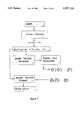
- FIG. 1 shows a zeta function chooser.
- FIG. 2 shows a zeta coefficient generator
- FIG. 3 shows a zeta pseudorandom number generator.
- FIG. 4 shows a zeta function authenticator
- FIG. 5 shows a Hasse-Weil pseudorandom number generator.
- FIG. 6 shows a specific Hasse-Weil pseudorandom number generator.
- FIG. 7 shows a public key transfer system
- FIG. 8 shows a public key encryption system
- FIG. 9 shows a zeta communication system with two stations.
- FIG. 10 shows a schematic diagram of the basic zeta function machine.
- FIG. 11 shows a zeta apparatus in pseudorandom sequence generator mode.
- FIG. 13 shows the zeta apparatus in an authentication mode.
- FIG. 14 shows the zeta apparatus in a key transfer mode.
- FIG. 15 shows the zeta apparatus in send-receive mode.
- n ⁇ 0 be an integer and define ##EQU1## where for an arbitrary real number x ⁇ 0, .left brkt-bot.x.right brkt-bot. denotes the greatest integer less than or equal to x.
- d 2 (n) we refer to d 2 (n) as the bit size of n.
- ⁇ (n 1 ,n 2 , . . . ,n t ) ⁇ of a vector (n 1 ,n 2 , . . . ,n t ) .di-elect cons. t as ##EQU2##
- Condition (i) says that the bit size of f(n) is neither polynomially longer or shorter than the bit size of n.
- the term feasibly computed in polynomial time in condition (ii) and feasible polynomial time in condition (iii) means that the output may be created within the bounds of the technology employed and within the time bounds dictated by the purposes of the computation.
- the feasible polynomial time Selberg class consists of zeta functions Z(s) which are given as Dirichlet series ##EQU4## (with complex coefficients a(n)) where it is assumed that the defining Dirichlet series Z(s) is absolutely convergent in some half-plane Re(s)>>1. It is further assumed that Z(s) is a meromorphic function of a single complex variable s which satisfies the following hypotheses:
- Hasse-Weil .OR right. of all zeta functions of Hasse-Weil type see, D. Husemoller, Elliptic Curves, graduate Texts in Mathematics 111, Springer-Verlag, New York (1987), 291-293). Fix a large integer B.
- Hasse-Weil the algebraic variety associated to Hasse-Weil is defined over .
- D Hasse-Weil denote the set of all vectors consisting of the first b coefficients of any zeta function in Hasse-Weil . Then
- Hasse-Weil can be ordered by vectors of non-negative integers determined by the polynomial equations defining the variety associated to the zeta function in Hasse-Weil .
- Our one-way function is the function f where
- the Hasse-Weil zeta one-way functions are a special case of the more general Jacquet-Langlands zeta one-way functions which we now briefly describe.
- the Jacquet-Langlands class of zeta functions denoted J-L .di-elect cons., consists of zeta functions associated to cuspidal automorphic forms on reductive groups (see Stephen S. Gelbart, Automorphic Forms on Adele Groups, Annals of Mathematics Studies 83 Princeton University Press and University of Tokyo Press, Princeton, N.J. (1975), 108-121). Similarly as above, it is possible to define a zeta one-way function for this class.
- a pseudorandom number generator based on q with uniform probability distribution function pdf is a feasible polynomial time algorithm whose outputs are sequences
- the Zeta Pseudorandom Number Generator ZPNG The Zeta Pseudorandom Number Generator ZPNG:
- the Zeta Function Chooser 20 which accepts as inputs: k 10, and a pair (q, pdf) 11 consisting of a positive integer q ⁇ 2 and a rational probability distribution pdf on q symbols.
- the input 11 goes to the Abelian Variety Classifier 12 which chooses a class of abelian varieties V.
- the input k 10, together with the output V of 12 is presented to the Fast Abelian Variety Generator 13 which generates a particular abelian variety v.di-elect cons.V and outputs the zeta code associated to v.
- ZCG 30 accepts as inputs, an input password k 10, a pair (q,pdf) 11 consisting of a positive integer q ⁇ 2 and a rational probability distribution function pdf on q symbols, and a monotone increasing sequence 22 of s positive prime integers (p 1 ,p 2 , . . . ,p s ).
- Inputs 10 and 11 are presented to the Zeta Function Chooser 20 which outputs the zeta code for producing a zeta function ##EQU9##
- the Zeta code and the input 22 are presented to the Zeta Function Coefficient Producer 21, then 21 computes the sequence of zeta coefficients
- the final output zcsq will be a pseudorandom sequence on the q symbols ⁇ 0, 1, 2, . . . , q-1 ⁇ with probability distribution pdf. This completes the description of the Zeta Pseudorandom Number Generator ZPNG.
- the Zeta Pseudorandom Number Generator ZPNG 41 Upon receiving the inputs k(0), s, 40, the Zeta Pseudorandom Number Generator ZPNG 41 outputs zeta code which is transformed by the Zeta Code Transformer 42 and converted to suitable input for the Fast Abelian Variety Generator 13 which generates the abelian variety v(s) and computes the zeta code k(s) associated to v(s).
- This information is sent to the Public Key Announcer 43 which announces the public key k(s) for the state s.
- the public and private keys k(s), v(s) are then sent to the Authenticator 44 which publicly announces v(s) if authentication is required.
- the input is a positive rational integer k, 50 which uniquely determines a pair of integers a, b satisfying b 3 -27a 2 ⁇ 0.
- the pair of integers (a, b) may be produced from the input k, 50, by employing a one-way function.
- the Fast Elliptic Curve Generator 51 generates the elliptic curve
- the Hasse-Weil Zeta Function Coefficient Producer 52 has 2 inputs: the elliptic curve E outputted by 51 (which in the general case is referred to as the zeta code in FIG. 2), and the input (p 1 , . . . ,p s ), 53.
- the Hasse-Weil Zeta Function Coefficient Producer 52 (see, D. Husemoller, Elliptic Curves, graduate Texts in Mathematics 111, Springer-Verlag, New York (1987), 291-293) then outputs the coefficients
- Hasse-Weil Zeta Function ##EQU10## associated to E to the Zeta Coefficient Store and Forward Module 54. This completes the description of the Hasse-Weil Zeta Function Coefficient Generator 51 in FIG. 5.
- the inputs k, 50 and (p 1 , . . . , P s ), 53 are sent to the Hasse-Weil Zeta Function Coefficient Generator 60 which ouputs the zeta coefficients a (p 1 ), . . . ,a (p s ). These are sent to the 2-Reducer 61 which reduces each of these coefficients (mod 2)
- the algorithm can be developed in rather large generality. For example, if ##EQU11## is in the feasible polynomial time Selberg class and there exists an integer ⁇ , a function b(x, y) on pairs of integers x, y, and a set A of integers such that
- a very general class of zeta functions which satisfy (1) and (2) is the class of Artin L-functions (see H. Heilbronn, Zeta-functions and L-functions, in Algebraic Number Theory, Proceedings of an Instructional Conference organized by the London Mathematical Society, (Edited by J. W. S. Cassels and A. Fruhlich), Thompson Book Company Inc., Washington D.C. (1967), 218-225) and condition (2) above is a consequence of the Artin reciprocity law.
- the Jacobi Symbol Generator sends the vector of Jacobi symbols to the Public Key Announcer 74.
- the Public Key Announcer 74 publicly announces the vector ##EQU16##
- the public Announcer for the second party will announce the vector ##EQU17##
- the Jacobi Symbol Generator 73 Upon receiving the input p', the Jacobi Symbol Generator 73 generates the list of Jacobi symbols ##EQU20## This list is then sent to the Encryptor 81.
- the Jacobi Symbol Chooser 75 upon receiving the public encryption key ##EQU21## then chooses the appropriate subset of these Jacobi symbols, i.e. the symbols ##EQU22## and sends these symbols to the Multiplier 72.
- the Multiplier 72 then multiplies these symbols and transfers the product k to the Encryptor 81.
- the Zeta Apparatus is illustrated in FIG. 9. It includes identical subsystems, A and B, which communicate through Communication Modules 95 (which receive and transmit code) and which also communicate with off-line Prime Storers 91, 92.
- Prime Storers 91, 92 store and produce disjoint sets of primes (determined by Artin reciprocity) from a predetermined algebraic number field. For example, in the special case where the algebraic number field is the rational number field, we may take the set of primes stored in 91 to be the primes congruent to 1 modulo 8, and the set of primes stored in 92, the primes congruent to 5 modulo 8.
- the main components of the Zeta Apparatus are: identical Zeta Machines 90 which perform arithmetic computations; the Communication Modules 95 for information exchange between subsystems A, B; Collection/Distribution Modules 93 for internally storing and routing data within a subsystem; Feature Modules 94 for specifying required modes of operation.
- the Zeta Apparatus operates in the following modes: Pseudorandom Sequence Generator Mode; Authentication Mode; Key Transfer Mode; Send/Receive Mode; Privacy Enhancer Mode (this mode operates in conjunction with the latter three modes).
- the most basic operating mode of the Zeta Apparatus is as a pseudorandom sequence generator. This mode of operation is readily employed in the operation of stream ciphers, and is utilized in the other modes of operation of the Zeta Apparatus.
- the higher modes of operation refer to authentication, key exchange by public discussion and message transfer employing public key encryption. These higher modes of operation can be enhanced by a unique feature employed in the Zeta Apparatus allowing users of the Zeta Apparatus to employ private keys for enhanced security.
- FIG. 10 represents the Zeta Machine 90 occurring in subsystems A, B.
- the Zeta Machine operates in the following manner.
- the Prime Chooser 71 requests a set of primes (denoted P-set) from the Prime Storer 100. After receiving P-set, Prime Chooser 71 chooses a subset of P-set (denoted P-subset) and sends P-subset to both the Multiplier 72 and the Artin Symbol Chooser 102.
- the Multiplier 72 produces from P-subset the conductor which is the product of the primes in P-subset.
- the conductor is sent to the Artin Symbol Generator 101 which then requests an additional set of primes (denoted Auxiliary P-set) from the Prime Storer 100 and then computes from the conductor and Auxiliary P-set the Artin symbol list which is then sent to the Store and Forward Module 103.
- the primes of the P-set and or the Auxiliary P-set may be generated or calculated according to predetermined criteria or retrieved over a communication channel.
- the Artin Symbol Chooser 102 upon receiving P-subset from Prime Chooser 71 and an External P-set, produces Artin symbol sub-list which is then sent to the Multiplier 72 which simply multiplies the Artin symbols in the Artin symbol sub-list producing the keycode which is sent to the Store and Forward Module 103.
- FIG. 11 represents the Feature Module 94 which includes three submodules: Privacy Enhancer Submodule 110; Authenticator Submodule 111; Bit Corrector Submodule 112.
- the Feature Module 94 configures its submodules 110, 111, 112 according to the specified mode of operation of the Zeta Apparatus.
- FIG. 12 illustrates the operation of the Zeta Apparatus in Pseudorandom Sequence Generator Mode.
- the Prime Chooser 71 requests a set of primes (denoted P-set) from the Prime Storer 100. After receiving P-set, Prime Chooser 71 chooses a subset of P-set (denoted P-subset) and sends P-subset to the Multiplier 72. The Multiplier 72 produces from P-subset the conductor which is the product of the primes in P-subset.
- the conductor is sent to the Artin Symbol Generator 101 which then requests the primes Auxiliary P-set from the Prime Storer 100 and then computes from the conductor and P-set the Artin symbol list which is then sent to the Privacy Enhancer Submodule 110.
- the Privacy Enhancer Submodule 110 produces the Privacy enhanced Artin symbol list and sends it to the Store and Forward Module 103.
- the Privacy Enhancer Submodule 110 is in one of two states: ON or OFF. If it is ON, it permutes the Artin symbol list employing a one-way permutation known privately to both subsystems A, B. If it is OFF, it simply transmits the Artin symbol list to the Store and Forward Module 103.
- FIG. 13 illustrates the Zeta Apparatus in Authentication Mode.
- subsystem B is in Pseudorandom Generator Mode and transmits P-set, P-subset and Privacy enhanced Artin symbol list to subsystem A which then operates as follows.
- Subsystem A computes from the received inputs P-set and P-subset the Privacy enhanced Artin symbol list and sends it to the Authenticator Submodule 111 which compares it to the Privacy enhanced Artin symbol list transmitted by subsystem B. If these lists agree then authentication is confirmed.
- FIG. 14 illustrates the Zeta Apparatus in Key Transfer Mode.
- subsystems A, B operate symmetrically, so it is enough to restrict this description to subsystem A.
- Store and Forward Modules and Transmitters and Receivers are omitted in order to simplify the figure.
- labeled lightning bolts indicate transmissions.
- the Prime Chooser 71 requests a set of primes (denoted P-set(A)) from the Prime Storer 91. After receiving P-set(A), Prime Chooser 71 chooses a subset of P-set(A) (denoted P-subset(A)) and sends P-subset(A) to the Multiplier 72.
- the Multiplier 72 produces from P-subset(A) the conductor(A) which is the product of the primes in P-subset(A).
- the conductor(A) is sent to the Artin Symbol Generator 101 which then requests the primes P-set(B) (transmitted by subsystem B) from the Prime Storer 92 and then computes from the conductor(A) and P-set(B) the Artin symbol list(A) which is then sent to the Privacy Enhancer Submodule 110.
- the Privacy Enhancer Submodule 110 then sends Privacy enhanced Artin symbol list (A) to the transmitter which transmits this list (upon request) to the Artin Symbol Chooser 102 of subsystem B.
- the Prime Chooser 71 also sends P-subset(A) to the Artin Symbol Chooser 102 which then requests Privacy enhanced Artin symbol list(B) from subsystem B.
- Artin Symbol Chooser 102 computes Artin symbol sublist(A) and sends this sublist to the Multiplier 72.
- the Multiplier 72 then multiplies the Artin symbols in Artin symbol sub-list(A) which is the key code.
- the key code will be identical in both subsystems and is then sent to the Store and Forward Module 103.
- P-set(A) and P-set(B) may be stored in both subsystems, generated in each subsystem according to a predetermined or specified criteria or transmitted to a subsystem from an accessible storage or generation facility.
- FIG. 15 illustrates the Zeta Apparatus in Send/Receive Mode.
- Store and Forward Modules and Transmitters and Receivers are omitted in order to simplify the figure. Labeled lightning bolts indicate transmissions.
- the Prime Chooser 71 requests a set of primes (denoted P-set(A)) from the Prime Storer 91. After receiving P-set(A), Prime Chooser 71 chooses a subset of P-set(A) (denoted P-subset(A)) and sends P-subset(A) to the Multiplier 72.
- the Multiplier 72 produces from P-subset(A) the conductor(A) which is the product of the primes in P-subset(A).
- the conductor(A) is sent to the Artin Symbol Generator 101 which then requests the primes P-set(B) (transmitted by subsystem B) from the Prime Storer 92 and then computes from the conductor(A) and P-set(B) the Artin symbol list(A) which is then sent to the Bit Corrector Submodule 112.
- the Prime Chooser 71 also sends P-subset(A) to the Artin Symbol Chooser 102 which then requests Privacy enhanced Artin symbol list(B) from subsystem B.
- the Bit Corrector Submodule 112 modifies the Artin symbol list(A) (as previously discussed in the section on the Public Key Encryption Scheme) and sends this modified Artin symbol list to the Privacy Enhancer Submodule 110.
- the Privacy Enhancer Submodule 110 then sends this list to the transmitter which transmits this list (upon request) to the Artin Symbol Chooser 102 of subsystem B.
- the privacy enhancer submodules illustrated in FIGS. 11-15 may be omitted from the respective embodiments.
- the privacy enhancer is an optional and advantageous feature in certain applications.
Landscapes
- Engineering & Computer Science (AREA)
- Theoretical Computer Science (AREA)
- Physics & Mathematics (AREA)
- General Physics & Mathematics (AREA)
- Mathematical Optimization (AREA)
- Signal Processing (AREA)
- Mathematical Analysis (AREA)
- Computer Networks & Wireless Communication (AREA)
- Pure & Applied Mathematics (AREA)
- Computer Security & Cryptography (AREA)
- Algebra (AREA)
- Computing Systems (AREA)
- Mathematical Physics (AREA)
- Computational Mathematics (AREA)
- General Engineering & Computer Science (AREA)
- Mobile Radio Communication Systems (AREA)
- Control Of Eletrric Generators (AREA)
Priority Applications (7)
| Application Number | Priority Date | Filing Date | Title |
|---|---|---|---|
| US08/400,928 US5577124A (en) | 1995-03-09 | 1995-03-09 | Multi-purpose high speed cryptographically secure sequence generator based on zeta-one-way functions |
| JP8529780A JPH11502321A (ja) | 1995-03-09 | 1996-03-11 | ゼーター方向性関数に基づく多目的高速暗号化安全シーケンス発生装置 |
| PCT/US1996/003270 WO1996034473A2 (en) | 1995-03-09 | 1996-03-11 | A multi-purpose high speed cryptographically secure sequence generator based on zeta one-way functions |
| CA002214903A CA2214903A1 (en) | 1995-03-09 | 1996-03-11 | A multi-purpose high speed cryptographically secure sequence generator based on zeta one-way functions |
| EP96929645A EP0872079A2 (de) | 1995-03-09 | 1996-03-11 | Auf zeta-einwegfunktionen basierender vielzweck-hochgeschwindigkeits-generator kryptographisch sicherer sequenzen |
| AU68947/96A AU711911B2 (en) | 1995-03-09 | 1996-03-11 | A multi-purpose high speed cryptographically secure sequence generator based on zeta-one-way functions |
| US08/752,033 US5751808A (en) | 1995-03-09 | 1996-11-19 | Multi-purpose high speed cryptographically secure sequence generator based on zeta-one-way functions |
Applications Claiming Priority (1)
| Application Number | Priority Date | Filing Date | Title |
|---|---|---|---|
| US08/400,928 US5577124A (en) | 1995-03-09 | 1995-03-09 | Multi-purpose high speed cryptographically secure sequence generator based on zeta-one-way functions |
Related Child Applications (1)
| Application Number | Title | Priority Date | Filing Date |
|---|---|---|---|
| US08/752,033 Continuation US5751808A (en) | 1995-03-09 | 1996-11-19 | Multi-purpose high speed cryptographically secure sequence generator based on zeta-one-way functions |
Publications (1)
| Publication Number | Publication Date |
|---|---|
| US5577124A true US5577124A (en) | 1996-11-19 |
Family
ID=23585578
Family Applications (2)
| Application Number | Title | Priority Date | Filing Date |
|---|---|---|---|
| US08/400,928 Expired - Fee Related US5577124A (en) | 1995-03-09 | 1995-03-09 | Multi-purpose high speed cryptographically secure sequence generator based on zeta-one-way functions |
| US08/752,033 Expired - Fee Related US5751808A (en) | 1995-03-09 | 1996-11-19 | Multi-purpose high speed cryptographically secure sequence generator based on zeta-one-way functions |
Family Applications After (1)
| Application Number | Title | Priority Date | Filing Date |
|---|---|---|---|
| US08/752,033 Expired - Fee Related US5751808A (en) | 1995-03-09 | 1996-11-19 | Multi-purpose high speed cryptographically secure sequence generator based on zeta-one-way functions |
Country Status (6)
| Country | Link |
|---|---|
| US (2) | US5577124A (de) |
| EP (1) | EP0872079A2 (de) |
| JP (1) | JPH11502321A (de) |
| AU (1) | AU711911B2 (de) |
| CA (1) | CA2214903A1 (de) |
| WO (1) | WO1996034473A2 (de) |
Cited By (25)
| Publication number | Priority date | Publication date | Assignee | Title |
|---|---|---|---|---|
| US5668877A (en) * | 1994-06-10 | 1997-09-16 | Sun Microsystems, Inc. | Method and apparatus for stepping pair keys in a key-management scheme |
| WO1998008323A1 (en) * | 1996-08-19 | 1998-02-26 | Ntru Cryptosystems, Inc. | Public key cryptosystem method and apparatus |
| US5751808A (en) * | 1995-03-09 | 1998-05-12 | Anshel; Michael M. | Multi-purpose high speed cryptographically secure sequence generator based on zeta-one-way functions |
| US5790675A (en) * | 1995-07-27 | 1998-08-04 | Cp8 Transac | Cryptographic communication process |
| WO1999030458A1 (en) * | 1997-12-05 | 1999-06-17 | Secured Information Technology, Inc. | Transformation methods for optimizing elliptic curve cryptographic computations |
| KR20000024419A (ko) * | 2000-02-12 | 2000-05-06 | 배민관 | 트랩-도어 일방향 함수를 이용한 안전한 정보교환 시스템및 메시지 전자서명 및 인증 시스템. |
| AU743461B2 (en) * | 1995-07-27 | 2002-01-24 | Cp8 Technologies | Cryptographic communication process |
| US20020062295A1 (en) * | 2000-10-11 | 2002-05-23 | International Business Machines Corporation | Method and apparatus for evaluating polynomials and rational functions |
| US6859795B1 (en) | 1998-11-25 | 2005-02-22 | Cyphermint, Inc. | Method for carrying out transactions and device for realizing the same |
| US20060013403A1 (en) * | 2002-07-03 | 2006-01-19 | Klaus Huber | Factorization-based encryption method |
| US7036014B2 (en) | 1997-02-10 | 2006-04-25 | The Regents Of The University Of California | Probabilistic signature scheme |
| US7058808B1 (en) | 1998-09-29 | 2006-06-06 | Cyphermint, Inc. | Method for making a blind RSA-signature and apparatus therefor |
| US20060210069A1 (en) * | 2005-03-15 | 2006-09-21 | Microsoft Corporation | Elliptic curve point octupling for weighted projective coordinates |
| US20070046424A1 (en) * | 2005-08-31 | 2007-03-01 | Davis Michael L | Device authentication using a unidirectional protocol |
| US7190787B1 (en) * | 1999-11-30 | 2007-03-13 | Intel Corporation | Stream cipher having a combiner function with storage based shuffle unit |
| US20070165843A1 (en) * | 2006-01-13 | 2007-07-19 | Microsoft Corporation | Trapdoor Pairings |
| US7680268B2 (en) | 2005-03-15 | 2010-03-16 | Microsoft Corporation | Elliptic curve point octupling using single instruction multiple data processing |
| US8244909B1 (en) * | 2009-06-18 | 2012-08-14 | Google Inc. | Method, apparatus and networking equipment for performing flow hashing using quasi cryptographic hash functions |
| US8358783B2 (en) | 2008-08-11 | 2013-01-22 | Assa Abloy Ab | Secure wiegand communications |
| US10148285B1 (en) | 2012-07-25 | 2018-12-04 | Erich Schmitt | Abstraction and de-abstraction of a digital data stream |
| US10452877B2 (en) | 2016-12-16 | 2019-10-22 | Assa Abloy Ab | Methods to combine and auto-configure wiegand and RS485 |
| CN110999202A (zh) * | 2017-08-23 | 2020-04-10 | 区块链控股有限公司 | 用于对数据进行高度安全、高速加密和传输的计算机实现的系统和方法 |
| US10795858B1 (en) | 2014-02-18 | 2020-10-06 | Erich Schmitt | Universal abstraction and de-abstraction of a digital data stream |
| US11146397B2 (en) * | 2017-10-31 | 2021-10-12 | Micro Focus Llc | Encoding abelian variety-based ciphertext with metadata |
| US11546142B1 (en) * | 2021-12-22 | 2023-01-03 | Bakhtgerey Sinchev | Cryptography key generation method for encryption and decryption |
Families Citing this family (29)
| Publication number | Priority date | Publication date | Assignee | Title |
|---|---|---|---|---|
| US7212632B2 (en) | 1998-02-13 | 2007-05-01 | Tecsec, Inc. | Cryptographic key split combiner |
| US6885747B1 (en) | 1997-02-13 | 2005-04-26 | Tec.Sec, Inc. | Cryptographic key split combiner |
| US6694433B1 (en) * | 1997-05-08 | 2004-02-17 | Tecsec, Inc. | XML encryption scheme |
| US6044388A (en) * | 1997-05-15 | 2000-03-28 | International Business Machine Corporation | Pseudorandom number generator |
| US6240183B1 (en) | 1997-06-19 | 2001-05-29 | Brian E. Marchant | Security apparatus for data transmission with dynamic random encryption |
| US6236728B1 (en) | 1997-06-19 | 2001-05-22 | Brian E. Marchant | Security apparatus for data transmission with dynamic random encryption |
| US6094486A (en) * | 1997-06-19 | 2000-07-25 | Marchant; Brian E. | Security apparatus for data transmission with dynamic random encryption |
| US8077870B2 (en) * | 1998-02-13 | 2011-12-13 | Tecsec, Inc. | Cryptographic key split binder for use with tagged data elements |
| US7095852B2 (en) | 1998-02-13 | 2006-08-22 | Tecsec, Inc. | Cryptographic key split binder for use with tagged data elements |
| US7079653B2 (en) * | 1998-02-13 | 2006-07-18 | Tecsec, Inc. | Cryptographic key split binding process and apparatus |
| CA2327504A1 (en) | 1998-04-29 | 1999-11-04 | Vlaams Interuniversitair Instituut Voor Biotechnologie Vzw | Cd40-interacting and traf-interacting proteins |
| US7111173B1 (en) | 1998-09-01 | 2006-09-19 | Tecsec, Inc. | Encryption process including a biometric unit |
| US6684330B1 (en) * | 1998-10-16 | 2004-01-27 | Tecsec, Inc. | Cryptographic information and flow control |
| US7095851B1 (en) | 1999-03-11 | 2006-08-22 | Tecsec, Inc. | Voice and data encryption method using a cryptographic key split combiner |
| CA2368307C (en) * | 1999-03-11 | 2007-05-22 | Tecsec, Incorporated | Voice and data encryption method using a cryptographic key split combiner |
| US6668265B1 (en) * | 1999-03-29 | 2003-12-23 | Communications Research Laboratory, Ministry Of Posts And Telecommunications | Apparatus and method for outputting sequence of vectors, data recording medium, and carrier wave signal |
| KR100345685B1 (ko) * | 1999-11-15 | 2002-07-27 | 한국전자통신연구원 | 땋임 연산을 이용한 암호화/복호화 시스템 및 그 방법과그를 위한 키 생성 방법 |
| US6718038B1 (en) * | 2000-07-27 | 2004-04-06 | The United States Of America As Represented By The National Security Agency | Cryptographic method using modified fractional fourier transform kernel |
| US20020073345A1 (en) * | 2000-12-11 | 2002-06-13 | Joseph Esfahani | Secure indentification method and apparatus |
| US6691141B2 (en) * | 2001-04-13 | 2004-02-10 | Science Applications International Corp. | Method and apparatus for generating random number generators |
| CN101099329B (zh) | 2004-11-11 | 2012-12-26 | 塞尔蒂卡姆公司 | 基于椭圆曲线的新陷门单向函数及其用于较短签名和非对称加密的应用 |
| US8719324B1 (en) * | 2005-04-28 | 2014-05-06 | Cetin K. Koc | Spectral modular arithmetic method and apparatus |
| US20090153290A1 (en) * | 2007-12-14 | 2009-06-18 | Farpointe Data, Inc., A California Corporation | Secure interface for access control systems |
| EP2157526B1 (de) * | 2008-08-14 | 2014-04-30 | Assa Abloy Ab | RFID-Lesegerät mit eingebetteter Angriffserkennungsheuristik |
| KR102520502B1 (ko) * | 2016-08-02 | 2023-04-12 | 엑스-로고스, 엘엘씨 | 기하 대수학을 이용한 강화된 데이터-중심 암호화 시스템을 위한 방법 및 시스템 |
| US11526927B1 (en) * | 2018-12-05 | 2022-12-13 | Amazon Technologies, Inc. | Distributed numeric sequence generation |
| US11416806B1 (en) | 2018-12-05 | 2022-08-16 | Amazon Technologies, Inc. | Distributed numeric sequence generation |
| US11764943B2 (en) | 2020-08-10 | 2023-09-19 | Algemetric, Inc. | Methods and systems for somewhat homomorphic encryption and key updates based on geometric algebra for distributed ledger/blockchain technology |
| WO2022061188A1 (en) | 2020-09-17 | 2022-03-24 | X-Logos, LLC | Methods and systems for distributed computation within a fully homomorphic encryption scheme using p-adic numbers |
Citations (5)
| Publication number | Priority date | Publication date | Assignee | Title |
|---|---|---|---|---|
| US4200770A (en) * | 1977-09-06 | 1980-04-29 | Stanford University | Cryptographic apparatus and method |
| US4405829A (en) * | 1977-12-14 | 1983-09-20 | Massachusetts Institute Of Technology | Cryptographic communications system and method |
| US5159632A (en) * | 1991-09-17 | 1992-10-27 | Next Computer, Inc. | Method and apparatus for public key exchange in a cryptographic system |
| US5272755A (en) * | 1991-06-28 | 1993-12-21 | Matsushita Electric Industrial Co., Ltd. | Public key cryptosystem with an elliptic curve |
| US5373558A (en) * | 1993-05-25 | 1994-12-13 | Chaum; David | Desinated-confirmer signature systems |
Family Cites Families (1)
| Publication number | Priority date | Publication date | Assignee | Title |
|---|---|---|---|---|
| US5577124A (en) * | 1995-03-09 | 1996-11-19 | Arithmetica, Inc. | Multi-purpose high speed cryptographically secure sequence generator based on zeta-one-way functions |
-
1995
- 1995-03-09 US US08/400,928 patent/US5577124A/en not_active Expired - Fee Related
-
1996
- 1996-03-11 WO PCT/US1996/003270 patent/WO1996034473A2/en not_active Ceased
- 1996-03-11 EP EP96929645A patent/EP0872079A2/de not_active Withdrawn
- 1996-03-11 JP JP8529780A patent/JPH11502321A/ja active Pending
- 1996-03-11 CA CA002214903A patent/CA2214903A1/en not_active Abandoned
- 1996-03-11 AU AU68947/96A patent/AU711911B2/en not_active Ceased
- 1996-11-19 US US08/752,033 patent/US5751808A/en not_active Expired - Fee Related
Patent Citations (5)
| Publication number | Priority date | Publication date | Assignee | Title |
|---|---|---|---|---|
| US4200770A (en) * | 1977-09-06 | 1980-04-29 | Stanford University | Cryptographic apparatus and method |
| US4405829A (en) * | 1977-12-14 | 1983-09-20 | Massachusetts Institute Of Technology | Cryptographic communications system and method |
| US5272755A (en) * | 1991-06-28 | 1993-12-21 | Matsushita Electric Industrial Co., Ltd. | Public key cryptosystem with an elliptic curve |
| US5159632A (en) * | 1991-09-17 | 1992-10-27 | Next Computer, Inc. | Method and apparatus for public key exchange in a cryptographic system |
| US5373558A (en) * | 1993-05-25 | 1994-12-13 | Chaum; David | Desinated-confirmer signature systems |
Non-Patent Citations (26)
| Title |
|---|
| "A Method for Obtaining Digital Signatures and Public-Key Cryptosystems." R. L. Rivest, A. Shamir and L. Adleman, Communications of the ACM 21, 1978, pp. 120-126. |
| "An Extension of the Shannon Theory Approach to Cryptography," C. E. Shannon. IEEE Transactions on Information Theory, vol. IT-23, No. 3 May 1977, pp. 289-294. |
| "Cryptography," Ronald L. Rivest. Handbook of Theoretical Computer Science, Volume A: Algorithms & Complexity, 1994. pp. 721-738. |
| "How To Generate Cyrptographically Strong Sequences of Pseudo-Random Bits," M. Blum and S. Micali, SIAM Journal on Computing, vol. 13, No. 4 (1984). |
| "New Directions in Cryptography," W. Diffie and M. Hellman. IEEE Transactions on Information Theory, vol. IT-22, No. 6, Nov. 1976, pp. 644-654. |
| "Odds and Ends from Cryptology and Computational Number Theory," K. McCurley. Cryptology and Computational Number Theory, 1990, p. 162. |
| "On the Randomness of Legendre and Jacobi Sequences," I. V. Damgard. Advances in Cryptology (Proceedings of Crypto '88), Lecture Notes in Computer Science, 1990, pp. 163-172. |
| "One Way Functions and Pseudorandom Generators," L. A. Levin. Combinatorica 7, 1987, pp. 357-363. |
| "Open Problems in Number Theoretic Complexity, II," L. Adleman and K. McCurley. Algorithmic Number Theory, 1st Intl. Symposium, ANTS-I, May 6-9, 1994. |
| "Probabilistic Encryption," S. Goldwasser and S. Micali. Journal of Computer and System Sciences 26(2), 1984, pp. 270-299. |
| "Zeta Functions, One-Way Functions, and Cryptography," M. Anshel and D. Goldfeld. A.M.S. Abstracts, vol. 15, No. 3, Apr. 1994, p. 349, #892-11-157. |
| A Method for Obtaining Digital Signatures and Public Key Cryptosystems. R. L. Rivest, A. Shamir and L. Adleman, Communications of the ACM 21, 1978, pp. 120 126. * |
| An Extension of the Shannon Theory Approach to Cryptography, C. E. Shannon. IEEE Transactions on Information Theory , vol. IT 23, No. 3 May 1977, pp. 289 294. * |
| Communication Theory of Secrecy Systems , journal pp. 657 715. C. E. Shannon. Entire Manuscript provided. * |
| Communication Theory of Secrecy Systems, journal pp. 657-715. C. E. Shannon. Entire Manuscript provided. |
| Cryptography, Ronald L. Rivest. Handbook of Theoretical Computer Science, Volume A: Algorithms & Complexity , 1994. pp. 721 738. * |
| How To Generate Cyrptographically Strong Sequences of Pseudo Random Bits, M. Blum and S. Micali, SIAM Journal on Computing , vol. 13, No. 4 (1984). * |
| New Directions in Cryptography, W. Diffie and M. Hellman. IEEE Transactions on Information Theory , vol. IT 22, No. 6, Nov. 1976, pp. 644 654. * |
| Odds and Ends from Cryptology and Computational Number Theory, K. McCurley. Cryptology and Computational Number Theory , 1990, p. 162. * |
| On the Randomness of Legendre and Jacobi Sequences, I. V. Damgard. Advances in Cryptology (Proceedings of Crypto 88), Lecture Notes in Computer Science , 1990, pp. 163 172. * |
| One Way Functions and Pseudorandom Generators, L. A. Levin. Combinatorica 7, 1987, pp. 357 363. * |
| Open Problems in Number Theoretic Complexity, II, L. Adleman and K. McCurley. Algorithmic Number Theory , 1st Intl. Symposium, ANTS I, May 6 9, 1994. * |
| Probabilistic Encryption, S. Goldwasser and S. Micali. Journal of Computer and System Sciences 26(2), 1984, pp. 270 299. * |
| The Codebreakers: The Story of Secret Writing , pp. 394 396. David Kahn. * |
| The Codebreakers: The Story of Secret Writing, pp. 394-396. David Kahn. |
| Zeta Functions, One Way Functions, and Cryptography, M. Anshel and D. Goldfeld. A.M.S. Abstracts, vol. 15, No. 3, Apr. 1994, p. 349, 892 11 157. * |
Cited By (34)
| Publication number | Priority date | Publication date | Assignee | Title |
|---|---|---|---|---|
| US5668877A (en) * | 1994-06-10 | 1997-09-16 | Sun Microsystems, Inc. | Method and apparatus for stepping pair keys in a key-management scheme |
| US5751808A (en) * | 1995-03-09 | 1998-05-12 | Anshel; Michael M. | Multi-purpose high speed cryptographically secure sequence generator based on zeta-one-way functions |
| AU743461B2 (en) * | 1995-07-27 | 2002-01-24 | Cp8 Technologies | Cryptographic communication process |
| US5790675A (en) * | 1995-07-27 | 1998-08-04 | Cp8 Transac | Cryptographic communication process |
| AU716797B2 (en) * | 1996-08-19 | 2000-03-09 | Ntru Cryptosystems, Inc. | Public key cryptosystem method and apparatus |
| US6081597A (en) * | 1996-08-19 | 2000-06-27 | Ntru Cryptosystems, Inc. | Public key cryptosystem method and apparatus |
| US6298137B1 (en) | 1996-08-19 | 2001-10-02 | Ntru Cryptosystems, Inc. | Ring-based public key cryptosystem method |
| WO1998008323A1 (en) * | 1996-08-19 | 1998-02-26 | Ntru Cryptosystems, Inc. | Public key cryptosystem method and apparatus |
| US7036014B2 (en) | 1997-02-10 | 2006-04-25 | The Regents Of The University Of California | Probabilistic signature scheme |
| WO1999030458A1 (en) * | 1997-12-05 | 1999-06-17 | Secured Information Technology, Inc. | Transformation methods for optimizing elliptic curve cryptographic computations |
| US7058808B1 (en) | 1998-09-29 | 2006-06-06 | Cyphermint, Inc. | Method for making a blind RSA-signature and apparatus therefor |
| US6859795B1 (en) | 1998-11-25 | 2005-02-22 | Cyphermint, Inc. | Method for carrying out transactions and device for realizing the same |
| US7190787B1 (en) * | 1999-11-30 | 2007-03-13 | Intel Corporation | Stream cipher having a combiner function with storage based shuffle unit |
| KR20000024419A (ko) * | 2000-02-12 | 2000-05-06 | 배민관 | 트랩-도어 일방향 함수를 이용한 안전한 정보교환 시스템및 메시지 전자서명 및 인증 시스템. |
| US20020062295A1 (en) * | 2000-10-11 | 2002-05-23 | International Business Machines Corporation | Method and apparatus for evaluating polynomials and rational functions |
| US20060013403A1 (en) * | 2002-07-03 | 2006-01-19 | Klaus Huber | Factorization-based encryption method |
| US7778414B2 (en) * | 2002-07-03 | 2010-08-17 | Deutsche Telekom Ag | Encryption method based on factorization |
| US20060210069A1 (en) * | 2005-03-15 | 2006-09-21 | Microsoft Corporation | Elliptic curve point octupling for weighted projective coordinates |
| US7702098B2 (en) | 2005-03-15 | 2010-04-20 | Microsoft Corporation | Elliptic curve point octupling for weighted projective coordinates |
| US7680268B2 (en) | 2005-03-15 | 2010-03-16 | Microsoft Corporation | Elliptic curve point octupling using single instruction multiple data processing |
| US20070046424A1 (en) * | 2005-08-31 | 2007-03-01 | Davis Michael L | Device authentication using a unidirectional protocol |
| US8183980B2 (en) | 2005-08-31 | 2012-05-22 | Assa Abloy Ab | Device authentication using a unidirectional protocol |
| US8180047B2 (en) * | 2006-01-13 | 2012-05-15 | Microsoft Corporation | Trapdoor pairings |
| US20070165843A1 (en) * | 2006-01-13 | 2007-07-19 | Microsoft Corporation | Trapdoor Pairings |
| US8943562B2 (en) | 2008-08-11 | 2015-01-27 | Assa Abloy Ab | Secure Wiegand communications |
| US8358783B2 (en) | 2008-08-11 | 2013-01-22 | Assa Abloy Ab | Secure wiegand communications |
| US8923513B2 (en) | 2008-08-11 | 2014-12-30 | Assa Abloy Ab | Secure wiegand communications |
| US8244909B1 (en) * | 2009-06-18 | 2012-08-14 | Google Inc. | Method, apparatus and networking equipment for performing flow hashing using quasi cryptographic hash functions |
| US10148285B1 (en) | 2012-07-25 | 2018-12-04 | Erich Schmitt | Abstraction and de-abstraction of a digital data stream |
| US10795858B1 (en) | 2014-02-18 | 2020-10-06 | Erich Schmitt | Universal abstraction and de-abstraction of a digital data stream |
| US10452877B2 (en) | 2016-12-16 | 2019-10-22 | Assa Abloy Ab | Methods to combine and auto-configure wiegand and RS485 |
| CN110999202A (zh) * | 2017-08-23 | 2020-04-10 | 区块链控股有限公司 | 用于对数据进行高度安全、高速加密和传输的计算机实现的系统和方法 |
| US11146397B2 (en) * | 2017-10-31 | 2021-10-12 | Micro Focus Llc | Encoding abelian variety-based ciphertext with metadata |
| US11546142B1 (en) * | 2021-12-22 | 2023-01-03 | Bakhtgerey Sinchev | Cryptography key generation method for encryption and decryption |
Also Published As
| Publication number | Publication date |
|---|---|
| JPH11502321A (ja) | 1999-02-23 |
| WO1996034473A2 (en) | 1996-10-31 |
| EP0872079A2 (de) | 1998-10-21 |
| CA2214903A1 (en) | 1996-10-31 |
| WO1996034473A3 (en) | 1996-12-27 |
| AU6894796A (en) | 1996-11-18 |
| AU711911B2 (en) | 1999-10-21 |
| US5751808A (en) | 1998-05-12 |
Similar Documents
| Publication | Publication Date | Title |
|---|---|---|
| US5577124A (en) | Multi-purpose high speed cryptographically secure sequence generator based on zeta-one-way functions | |
| Nguyen et al. | Lattice reduction in cryptology: An update | |
| US5220606A (en) | Cryptographic system and method | |
| Desmedt | Some recent research aspects of threshold cryptography | |
| Tsiounis et al. | On the security of ElGamal based encryption | |
| Damgård | Towards practical public key systems secure against chosen ciphertext attacks | |
| Courtois | Efficient zero-knowledge authentication based on a linear algebra problem MinRank | |
| Gilboa | Two party RSA key generation | |
| EP0503119B1 (de) | Verschlüsselungssystem mit öffentlichem Schlüssel unter Verwendung elliptischer Kurven über Ringe | |
| CA2262549C (en) | Accelerating public-key cryptography by precomputing randomly generated pairs | |
| Stern | A new and efficient all-or-nothing disclosure of secrets protocol | |
| US6411715B1 (en) | Methods and apparatus for verifying the cryptographic security of a selected private and public key pair without knowing the private key | |
| Ding et al. | Hyper-encryption and everlasting security | |
| US5627893A (en) | Cryptographic method | |
| US7649999B2 (en) | Method and apparatus for establishing a key agreement protocol | |
| US4306111A (en) | Simple and effective public-key cryptosystem | |
| Mao | Guaranteed correct sharing of integer factorization with off-line shareholders | |
| Goldwasser et al. | Proof of plaintext knowledge for the Ajtai-Dwork cryptosystem | |
| McCurley | Odds and Ends from Cryptology and | |
| Chang et al. | The design of a conference key distribution system | |
| WO2003013052A1 (en) | Cryptosystems based on non-commutatity | |
| Goldwasser | The search for provably secure cryptosystems | |
| EP1148675A1 (de) | Kryptograph mit öffentlichem schlüssel sowie verfahren zur gemeinsamen nutzung eines schlüssels | |
| Liu | Computation over encrypted data | |
| JP3278790B2 (ja) | 公開鍵暗号方法及び公開鍵暗号システム |
Legal Events
| Date | Code | Title | Description |
|---|---|---|---|
| AS | Assignment |
Owner name: ARITHMETICA, INC., DELAWARE Free format text: ASSIGNMENT OF ASSIGNORS INTEREST;ASSIGNORS:ANSHEL, MICHAEL M.;GOLDFELD, DORIAN;REEL/FRAME:007393/0886 Effective date: 19950308 |
|
| FEPP | Fee payment procedure |
Free format text: PAYOR NUMBER ASSIGNED (ORIGINAL EVENT CODE: ASPN); ENTITY STATUS OF PATENT OWNER: SMALL ENTITY |
|
| FPAY | Fee payment |
Year of fee payment: 4 |
|
| FPAY | Fee payment |
Year of fee payment: 8 |
|
| REMI | Maintenance fee reminder mailed | ||
| LAPS | Lapse for failure to pay maintenance fees | ||
| STCH | Information on status: patent discontinuation |
Free format text: PATENT EXPIRED DUE TO NONPAYMENT OF MAINTENANCE FEES UNDER 37 CFR 1.362 |
|
| FP | Lapsed due to failure to pay maintenance fee |
Effective date: 20081119 |