US5569598A - Extracellular aminopeptidase isolated from Streptococcus thermonitrificans culture - Google Patents
Extracellular aminopeptidase isolated from Streptococcus thermonitrificans culture Download PDFInfo
- Publication number
- US5569598A US5569598A US08/261,525 US26152594A US5569598A US 5569598 A US5569598 A US 5569598A US 26152594 A US26152594 A US 26152594A US 5569598 A US5569598 A US 5569598A
- Authority
- US
- United States
- Prior art keywords
- aminopeptidase
- seq
- amino acid
- pro
- glu
- Prior art date
- Legal status (The legal status is an assumption and is not a legal conclusion. Google has not performed a legal analysis and makes no representation as to the accuracy of the status listed.)
- Expired - Fee Related
Links
- 102000004400 Aminopeptidases Human genes 0.000 title claims abstract description 94
- 108090000915 Aminopeptidases Proteins 0.000 title claims abstract description 94
- 241000194017 Streptococcus Species 0.000 title 1
- 238000002415 sodium dodecyl sulfate polyacrylamide gel electrophoresis Methods 0.000 claims abstract description 9
- 239000001963 growth medium Substances 0.000 claims abstract description 5
- 230000001419 dependent effect Effects 0.000 claims abstract 2
- 238000002523 gelfiltration Methods 0.000 claims abstract 2
- 241000187177 Streptomyces thermovulgaris Species 0.000 claims description 15
- 125000003275 alpha amino acid group Chemical group 0.000 claims 2
- 150000001413 amino acids Chemical group 0.000 abstract description 23
- 102000002704 Leucyl aminopeptidase Human genes 0.000 abstract description 2
- 108010004098 Leucyl aminopeptidase Proteins 0.000 abstract description 2
- 241000187747 Streptomyces Species 0.000 abstract description 2
- 230000000694 effects Effects 0.000 description 37
- FAPWRFPIFSIZLT-UHFFFAOYSA-M Sodium chloride Chemical compound [Na+].[Cl-] FAPWRFPIFSIZLT-UHFFFAOYSA-M 0.000 description 22
- 238000000034 method Methods 0.000 description 21
- 102000007056 Recombinant Fusion Proteins Human genes 0.000 description 19
- 108010008281 Recombinant Fusion Proteins Proteins 0.000 description 19
- 239000000872 buffer Substances 0.000 description 18
- 125000001360 methionine group Chemical group N[C@@H](CCSC)C(=O)* 0.000 description 17
- 108010000521 Human Growth Hormone Proteins 0.000 description 15
- 102000002265 Human Growth Hormone Human genes 0.000 description 15
- 239000000854 Human Growth Hormone Substances 0.000 description 15
- 235000001014 amino acid Nutrition 0.000 description 15
- 235000018102 proteins Nutrition 0.000 description 14
- 102000004169 proteins and genes Human genes 0.000 description 14
- 108090000623 proteins and genes Proteins 0.000 description 14
- 229930182817 methionine Natural products 0.000 description 13
- 238000005192 partition Methods 0.000 description 12
- 239000000243 solution Substances 0.000 description 12
- 239000000758 substrate Substances 0.000 description 12
- 108090000765 processed proteins & peptides Proteins 0.000 description 11
- 239000011780 sodium chloride Substances 0.000 description 11
- OKTJSMMVPCPJKN-UHFFFAOYSA-N Carbon Chemical compound [C] OKTJSMMVPCPJKN-UHFFFAOYSA-N 0.000 description 9
- 229910052799 carbon Inorganic materials 0.000 description 9
- 239000002609 medium Substances 0.000 description 9
- IAZDPXIOMUYVGZ-UHFFFAOYSA-N Dimethylsulphoxide Chemical compound CS(C)=O IAZDPXIOMUYVGZ-UHFFFAOYSA-N 0.000 description 8
- 102000004190 Enzymes Human genes 0.000 description 8
- 108090000790 Enzymes Proteins 0.000 description 8
- 239000006228 supernatant Substances 0.000 description 8
- 239000007983 Tris buffer Substances 0.000 description 7
- 244000005700 microbiome Species 0.000 description 7
- PEDCQBHIVMGVHV-UHFFFAOYSA-N Glycerine Chemical compound OCC(O)CO PEDCQBHIVMGVHV-UHFFFAOYSA-N 0.000 description 6
- 125000001429 N-terminal alpha-amino-acid group Chemical group 0.000 description 6
- HEMHJVSKTPXQMS-UHFFFAOYSA-M Sodium hydroxide Chemical compound [OH-].[Na+] HEMHJVSKTPXQMS-UHFFFAOYSA-M 0.000 description 6
- DGEZNRSVGBDHLK-UHFFFAOYSA-N [1,10]phenanthroline Chemical compound C1=CN=C2C3=NC=CC=C3C=CC2=C1 DGEZNRSVGBDHLK-UHFFFAOYSA-N 0.000 description 6
- BFNBIHQBYMNNAN-UHFFFAOYSA-N ammonium sulfate Chemical compound N.N.OS(O)(=O)=O BFNBIHQBYMNNAN-UHFFFAOYSA-N 0.000 description 6
- 229910052921 ammonium sulfate Inorganic materials 0.000 description 6
- 235000011130 ammonium sulphate Nutrition 0.000 description 6
- 210000004027 cell Anatomy 0.000 description 6
- 238000012258 culturing Methods 0.000 description 6
- 229930182830 galactose Natural products 0.000 description 6
- 239000000203 mixture Substances 0.000 description 6
- LENZDBCJOHFCAS-UHFFFAOYSA-N tris Chemical compound OCC(N)(CO)CO LENZDBCJOHFCAS-UHFFFAOYSA-N 0.000 description 6
- 230000008859 change Effects 0.000 description 5
- 238000004519 manufacturing process Methods 0.000 description 5
- 230000008569 process Effects 0.000 description 5
- WQZGKKKJIJFFOK-SVZMEOIVSA-N (+)-Galactose Chemical compound OC[C@H]1OC(O)[C@H](O)[C@@H](O)[C@H]1O WQZGKKKJIJFFOK-SVZMEOIVSA-N 0.000 description 4
- CSNNHWWHGAXBCP-UHFFFAOYSA-L Magnesium sulfate Chemical compound [Mg+2].[O-][S+2]([O-])([O-])[O-] CSNNHWWHGAXBCP-UHFFFAOYSA-L 0.000 description 4
- 241000187392 Streptomyces griseus Species 0.000 description 4
- DKGAVHZHDRPRBM-UHFFFAOYSA-N Tert-Butanol Chemical compound CC(C)(C)O DKGAVHZHDRPRBM-UHFFFAOYSA-N 0.000 description 4
- 239000002253 acid Substances 0.000 description 4
- 125000000539 amino acid group Chemical group 0.000 description 4
- 238000006243 chemical reaction Methods 0.000 description 4
- 238000001641 gel filtration chromatography Methods 0.000 description 4
- YBYRMVIVWMBXKQ-UHFFFAOYSA-N phenylmethanesulfonyl fluoride Chemical compound FS(=O)(=O)CC1=CC=CC=C1 YBYRMVIVWMBXKQ-UHFFFAOYSA-N 0.000 description 4
- 238000002360 preparation method Methods 0.000 description 4
- 239000011535 reaction buffer Substances 0.000 description 4
- ROHFNLRQFUQHCH-YFKPBYRVSA-N L-leucine Chemical compound CC(C)C[C@H](N)C(O)=O ROHFNLRQFUQHCH-YFKPBYRVSA-N 0.000 description 3
- FFEARJCKVFRZRR-BYPYZUCNSA-N L-methionine Chemical compound CSCC[C@H](N)C(O)=O FFEARJCKVFRZRR-BYPYZUCNSA-N 0.000 description 3
- ROHFNLRQFUQHCH-UHFFFAOYSA-N Leucine Natural products CC(C)CC(N)C(O)=O ROHFNLRQFUQHCH-UHFFFAOYSA-N 0.000 description 3
- 108010006035 Metalloproteases Proteins 0.000 description 3
- 102000005741 Metalloproteases Human genes 0.000 description 3
- 239000001888 Peptone Substances 0.000 description 3
- 108010080698 Peptones Proteins 0.000 description 3
- 229920002684 Sepharose Polymers 0.000 description 3
- KRKNYBCHXYNGOX-UHFFFAOYSA-N citric acid Chemical compound OC(=O)CC(O)(C(O)=O)CC(O)=O KRKNYBCHXYNGOX-UHFFFAOYSA-N 0.000 description 3
- 239000012634 fragment Substances 0.000 description 3
- 102000037865 fusion proteins Human genes 0.000 description 3
- 108020001507 fusion proteins Proteins 0.000 description 3
- 239000007788 liquid Substances 0.000 description 3
- 230000014759 maintenance of location Effects 0.000 description 3
- 229910021645 metal ion Inorganic materials 0.000 description 3
- 235000019319 peptone Nutrition 0.000 description 3
- 238000004007 reversed phase HPLC Methods 0.000 description 3
- 238000011218 seed culture Methods 0.000 description 3
- 239000012064 sodium phosphate buffer Substances 0.000 description 3
- 108700031632 somatrem Proteins 0.000 description 3
- FWMNVWWHGCHHJJ-SKKKGAJSSA-N 4-amino-1-[(2r)-6-amino-2-[[(2r)-2-[[(2r)-2-[[(2r)-2-amino-3-phenylpropanoyl]amino]-3-phenylpropanoyl]amino]-4-methylpentanoyl]amino]hexanoyl]piperidine-4-carboxylic acid Chemical compound C([C@H](C(=O)N[C@H](CC(C)C)C(=O)N[C@H](CCCCN)C(=O)N1CCC(N)(CC1)C(O)=O)NC(=O)[C@H](N)CC=1C=CC=CC=1)C1=CC=CC=C1 FWMNVWWHGCHHJJ-SKKKGAJSSA-N 0.000 description 2
- WQZGKKKJIJFFOK-QTVWNMPRSA-N D-mannopyranose Chemical compound OC[C@H]1OC(O)[C@@H](O)[C@@H](O)[C@@H]1O WQZGKKKJIJFFOK-QTVWNMPRSA-N 0.000 description 2
- 229920002271 DEAE-Sepharose Polymers 0.000 description 2
- 241000588724 Escherichia coli Species 0.000 description 2
- DHMQDGOQFOQNFH-UHFFFAOYSA-N Glycine Chemical compound NCC(O)=O DHMQDGOQFOQNFH-UHFFFAOYSA-N 0.000 description 2
- 241000282414 Homo sapiens Species 0.000 description 2
- 229910021577 Iron(II) chloride Inorganic materials 0.000 description 2
- GUBGYTABKSRVRQ-QKKXKWKRSA-N Lactose Natural products OC[C@H]1O[C@@H](O[C@H]2[C@H](O)[C@@H](O)C(O)O[C@@H]2CO)[C@H](O)[C@@H](O)[C@H]1O GUBGYTABKSRVRQ-QKKXKWKRSA-N 0.000 description 2
- KDXKERNSBIXSRK-UHFFFAOYSA-N Lysine Natural products NCCCCC(N)C(O)=O KDXKERNSBIXSRK-UHFFFAOYSA-N 0.000 description 2
- 239000004472 Lysine Substances 0.000 description 2
- 229910021380 Manganese Chloride Inorganic materials 0.000 description 2
- GLFNIEUTAYBVOC-UHFFFAOYSA-L Manganese chloride Chemical compound Cl[Mn]Cl GLFNIEUTAYBVOC-UHFFFAOYSA-L 0.000 description 2
- 229910019142 PO4 Inorganic materials 0.000 description 2
- 102000035195 Peptidases Human genes 0.000 description 2
- 108091005804 Peptidases Proteins 0.000 description 2
- NBIIXXVUZAFLBC-UHFFFAOYSA-N Phosphoric acid Chemical compound OP(O)(O)=O NBIIXXVUZAFLBC-UHFFFAOYSA-N 0.000 description 2
- 108010076504 Protein Sorting Signals Proteins 0.000 description 2
- UIIMBOGNXHQVGW-UHFFFAOYSA-M Sodium bicarbonate Chemical compound [Na+].OC([O-])=O UIIMBOGNXHQVGW-UHFFFAOYSA-M 0.000 description 2
- 229930006000 Sucrose Natural products 0.000 description 2
- CZMRCDWAGMRECN-UGDNZRGBSA-N Sucrose Chemical compound O[C@H]1[C@H](O)[C@@H](CO)O[C@@]1(CO)O[C@@H]1[C@H](O)[C@@H](O)[C@H](O)[C@@H](CO)O1 CZMRCDWAGMRECN-UGDNZRGBSA-N 0.000 description 2
- 108090000631 Trypsin Proteins 0.000 description 2
- 102000004142 Trypsin Human genes 0.000 description 2
- HCHKCACWOHOZIP-UHFFFAOYSA-N Zinc Chemical compound [Zn] HCHKCACWOHOZIP-UHFFFAOYSA-N 0.000 description 2
- 239000012141 concentrate Substances 0.000 description 2
- ZPWVASYFFYYZEW-UHFFFAOYSA-L dipotassium hydrogen phosphate Chemical compound [K+].[K+].OP([O-])([O-])=O ZPWVASYFFYYZEW-UHFFFAOYSA-L 0.000 description 2
- 229910000396 dipotassium phosphate Inorganic materials 0.000 description 2
- 235000019797 dipotassium phosphate Nutrition 0.000 description 2
- 238000002474 experimental method Methods 0.000 description 2
- 238000004128 high performance liquid chromatography Methods 0.000 description 2
- NMCUIPGRVMDVDB-UHFFFAOYSA-L iron dichloride Chemical compound Cl[Fe]Cl NMCUIPGRVMDVDB-UHFFFAOYSA-L 0.000 description 2
- 239000008101 lactose Substances 0.000 description 2
- 229910052943 magnesium sulfate Inorganic materials 0.000 description 2
- 239000011565 manganese chloride Substances 0.000 description 2
- 229910000402 monopotassium phosphate Inorganic materials 0.000 description 2
- 235000019796 monopotassium phosphate Nutrition 0.000 description 2
- NBIIXXVUZAFLBC-UHFFFAOYSA-K phosphate Chemical compound [O-]P([O-])([O-])=O NBIIXXVUZAFLBC-UHFFFAOYSA-K 0.000 description 2
- 239000010452 phosphate Substances 0.000 description 2
- GNSKLFRGEWLPPA-UHFFFAOYSA-M potassium dihydrogen phosphate Chemical compound [K+].OP(O)([O-])=O GNSKLFRGEWLPPA-UHFFFAOYSA-M 0.000 description 2
- 239000011541 reaction mixture Substances 0.000 description 2
- 230000028327 secretion Effects 0.000 description 2
- 239000007787 solid Substances 0.000 description 2
- 239000005720 sucrose Substances 0.000 description 2
- 239000012588 trypsin Substances 0.000 description 2
- XLYOFNOQVPJJNP-UHFFFAOYSA-N water Chemical compound O XLYOFNOQVPJJNP-UHFFFAOYSA-N 0.000 description 2
- 229910052725 zinc Inorganic materials 0.000 description 2
- 239000011701 zinc Substances 0.000 description 2
- 239000011592 zinc chloride Substances 0.000 description 2
- JIAARYAFYJHUJI-UHFFFAOYSA-L zinc dichloride Chemical compound [Cl-].[Cl-].[Zn+2] JIAARYAFYJHUJI-UHFFFAOYSA-L 0.000 description 2
- XDIYNQZUNSSENW-NUVHGKSTSA-N (2r,3s,4s,5r)-2,3,4,5,6-pentahydroxyhexanal;(2r,3s,4r,5r)-2,3,4,5,6-pentahydroxyhexanal Chemical compound OC[C@@H](O)[C@H](O)[C@H](O)[C@@H](O)C=O.OC[C@@H](O)[C@@H](O)[C@H](O)[C@@H](O)C=O XDIYNQZUNSSENW-NUVHGKSTSA-N 0.000 description 1
- KZNQNBZMBZJQJO-UHFFFAOYSA-N 1-(2-azaniumylacetyl)pyrrolidine-2-carboxylate Chemical compound NCC(=O)N1CCCC1C(O)=O KZNQNBZMBZJQJO-UHFFFAOYSA-N 0.000 description 1
- QKNYBSVHEMOAJP-UHFFFAOYSA-N 2-amino-2-(hydroxymethyl)propane-1,3-diol;hydron;chloride Chemical compound Cl.OCC(N)(CO)CO QKNYBSVHEMOAJP-UHFFFAOYSA-N 0.000 description 1
- VZZMNSJSZXVCCW-UHFFFAOYSA-N 2-amino-n-(4-nitrophenyl)acetamide Chemical compound NCC(=O)NC1=CC=C([N+]([O-])=O)C=C1 VZZMNSJSZXVCCW-UHFFFAOYSA-N 0.000 description 1
- DQSIXGDDUJJEQH-QRPNPIFTSA-N 2-aminoacetic acid;(2s)-2-amino-3-phenylpropanoic acid Chemical compound NCC(O)=O.OC(=O)[C@@H](N)CC1=CC=CC=C1 DQSIXGDDUJJEQH-QRPNPIFTSA-N 0.000 description 1
- GUBGYTABKSRVRQ-XLOQQCSPSA-N Alpha-Lactose Chemical compound O[C@@H]1[C@@H](O)[C@@H](O)[C@@H](CO)O[C@H]1O[C@@H]1[C@@H](CO)O[C@H](O)[C@H](O)[C@H]1O GUBGYTABKSRVRQ-XLOQQCSPSA-N 0.000 description 1
- 244000063299 Bacillus subtilis Species 0.000 description 1
- 235000014469 Bacillus subtilis Nutrition 0.000 description 1
- 108091003079 Bovine Serum Albumin Proteins 0.000 description 1
- OYPRJOBELJOOCE-UHFFFAOYSA-N Calcium Chemical compound [Ca] OYPRJOBELJOOCE-UHFFFAOYSA-N 0.000 description 1
- BHPQYMZQTOCNFJ-UHFFFAOYSA-N Calcium cation Chemical compound [Ca+2] BHPQYMZQTOCNFJ-UHFFFAOYSA-N 0.000 description 1
- UXVMQQNJUSDDNG-UHFFFAOYSA-L Calcium chloride Chemical compound [Cl-].[Cl-].[Ca+2] UXVMQQNJUSDDNG-UHFFFAOYSA-L 0.000 description 1
- 241000193385 Geobacillus stearothermophilus Species 0.000 description 1
- WQZGKKKJIJFFOK-GASJEMHNSA-N Glucose Natural products OC[C@H]1OC(O)[C@H](O)[C@@H](O)[C@@H]1O WQZGKKKJIJFFOK-GASJEMHNSA-N 0.000 description 1
- 239000004471 Glycine Substances 0.000 description 1
- 102000018997 Growth Hormone Human genes 0.000 description 1
- 108010051696 Growth Hormone Proteins 0.000 description 1
- 102000003839 Human Proteins Human genes 0.000 description 1
- 108090000144 Human Proteins Proteins 0.000 description 1
- 206010062767 Hypophysitis Diseases 0.000 description 1
- QNAYBMKLOCPYGJ-REOHCLBHSA-N L-alanine Chemical compound C[C@H](N)C(O)=O QNAYBMKLOCPYGJ-REOHCLBHSA-N 0.000 description 1
- KDXKERNSBIXSRK-YFKPBYRVSA-N L-lysine Chemical compound NCCCC[C@H](N)C(O)=O KDXKERNSBIXSRK-YFKPBYRVSA-N 0.000 description 1
- COLNVLDHVKWLRT-QMMMGPOBSA-N L-phenylalanine Chemical compound OC(=O)[C@@H](N)CC1=CC=CC=C1 COLNVLDHVKWLRT-QMMMGPOBSA-N 0.000 description 1
- FYYHWMGAXLPEAU-UHFFFAOYSA-N Magnesium Chemical compound [Mg] FYYHWMGAXLPEAU-UHFFFAOYSA-N 0.000 description 1
- 108010058846 Ovalbumin Proteins 0.000 description 1
- 108010059712 Pronase Proteins 0.000 description 1
- 239000004365 Protease Substances 0.000 description 1
- 108020004511 Recombinant DNA Proteins 0.000 description 1
- 240000004808 Saccharomyces cerevisiae Species 0.000 description 1
- 241000187419 Streptomyces rimosus Species 0.000 description 1
- 241000607269 Vibrio proteolyticus Species 0.000 description 1
- ZPCHSJOFYAYGOP-PPHPATTJSA-N [N+](=O)([O-])C1=CC=C(NC([C@H]2NCCC2)=O)C=C1.NCC(=O)O Chemical compound [N+](=O)([O-])C1=CC=C(NC([C@H]2NCCC2)=O)C=C1.NCC(=O)O ZPCHSJOFYAYGOP-PPHPATTJSA-N 0.000 description 1
- 238000005273 aeration Methods 0.000 description 1
- 238000013019 agitation Methods 0.000 description 1
- 235000004279 alanine Nutrition 0.000 description 1
- WQZGKKKJIJFFOK-PHYPRBDBSA-N alpha-D-galactose Chemical compound OC[C@H]1O[C@H](O)[C@H](O)[C@@H](O)[C@H]1O WQZGKKKJIJFFOK-PHYPRBDBSA-N 0.000 description 1
- 229910000147 aluminium phosphate Inorganic materials 0.000 description 1
- 238000003277 amino acid sequence analysis Methods 0.000 description 1
- 238000004458 analytical method Methods 0.000 description 1
- 210000004102 animal cell Anatomy 0.000 description 1
- 238000003556 assay Methods 0.000 description 1
- WQZGKKKJIJFFOK-VFUOTHLCSA-N beta-D-glucose Chemical compound OC[C@H]1O[C@@H](O)[C@H](O)[C@@H](O)[C@@H]1O WQZGKKKJIJFFOK-VFUOTHLCSA-N 0.000 description 1
- KGBXLFKZBHKPEV-UHFFFAOYSA-N boric acid Chemical compound OB(O)O KGBXLFKZBHKPEV-UHFFFAOYSA-N 0.000 description 1
- 239000004327 boric acid Substances 0.000 description 1
- 229940098773 bovine serum albumin Drugs 0.000 description 1
- 210000004899 c-terminal region Anatomy 0.000 description 1
- 239000011575 calcium Substances 0.000 description 1
- 229910052791 calcium Inorganic materials 0.000 description 1
- 239000001110 calcium chloride Substances 0.000 description 1
- 229910001628 calcium chloride Inorganic materials 0.000 description 1
- 229910001424 calcium ion Inorganic materials 0.000 description 1
- 229940041514 candida albicans extract Drugs 0.000 description 1
- 125000001314 canonical amino-acid group Chemical group 0.000 description 1
- 238000005277 cation exchange chromatography Methods 0.000 description 1
- 239000002738 chelating agent Substances 0.000 description 1
- 230000003247 decreasing effect Effects 0.000 description 1
- 230000007547 defect Effects 0.000 description 1
- 238000006731 degradation reaction Methods 0.000 description 1
- 238000009795 derivation Methods 0.000 description 1
- 238000011161 development Methods 0.000 description 1
- 230000029087 digestion Effects 0.000 description 1
- 230000003292 diminished effect Effects 0.000 description 1
- 239000012153 distilled water Substances 0.000 description 1
- 229940079593 drug Drugs 0.000 description 1
- 238000009509 drug development Methods 0.000 description 1
- 238000005516 engineering process Methods 0.000 description 1
- PHTAMBMUQWHXLX-UHFFFAOYSA-N ethyl 2-amino-7-hydroxy-4-(4-nitrophenyl)-4h-chromene-3-carboxylate Chemical compound CCOC(=O)C1=C(N)OC2=CC(O)=CC=C2C1C1=CC=C([N+]([O-])=O)C=C1 PHTAMBMUQWHXLX-UHFFFAOYSA-N 0.000 description 1
- 239000013604 expression vector Substances 0.000 description 1
- 238000000855 fermentation Methods 0.000 description 1
- 230000004151 fermentation Effects 0.000 description 1
- 238000009472 formulation Methods 0.000 description 1
- 239000008103 glucose Substances 0.000 description 1
- -1 glycine-phenylalanine-paranitroanilide Chemical compound 0.000 description 1
- 239000000122 growth hormone Substances 0.000 description 1
- 230000036541 health Effects 0.000 description 1
- 239000005556 hormone Substances 0.000 description 1
- 229940088597 hormone Drugs 0.000 description 1
- 230000008105 immune reaction Effects 0.000 description 1
- 238000004255 ion exchange chromatography Methods 0.000 description 1
- 150000002500 ions Chemical group 0.000 description 1
- 210000003734 kidney Anatomy 0.000 description 1
- PXFUDSMGEYRNNC-LURJTMIESA-N l-alanine-4-nitroanilide Chemical compound C[C@H](N)C(=O)NC1=CC=C([N+]([O-])=O)C=C1 PXFUDSMGEYRNNC-LURJTMIESA-N 0.000 description 1
- 238000004811 liquid chromatography Methods 0.000 description 1
- 239000011777 magnesium Substances 0.000 description 1
- 229910052749 magnesium Inorganic materials 0.000 description 1
- 239000003550 marker Substances 0.000 description 1
- 230000004060 metabolic process Effects 0.000 description 1
- MYWUZJCMWCOHBA-VIFPVBQESA-N methamphetamine Chemical compound CN[C@@H](C)CC1=CC=CC=C1 MYWUZJCMWCOHBA-VIFPVBQESA-N 0.000 description 1
- 238000012986 modification Methods 0.000 description 1
- 230000004048 modification Effects 0.000 description 1
- 230000003287 optical effect Effects 0.000 description 1
- 230000008520 organization Effects 0.000 description 1
- 229940092253 ovalbumin Drugs 0.000 description 1
- COLNVLDHVKWLRT-UHFFFAOYSA-N phenylalanine Natural products OC(=O)C(N)CC1=CC=CC=C1 COLNVLDHVKWLRT-UHFFFAOYSA-N 0.000 description 1
- 230000000704 physical effect Effects 0.000 description 1
- 210000003635 pituitary gland Anatomy 0.000 description 1
- 229920002401 polyacrylamide Polymers 0.000 description 1
- 239000000843 powder Substances 0.000 description 1
- 125000002924 primary amino group Chemical group [H]N([H])* 0.000 description 1
- 102000004196 processed proteins & peptides Human genes 0.000 description 1
- 235000019833 protease Nutrition 0.000 description 1
- 235000019419 proteases Nutrition 0.000 description 1
- 238000001742 protein purification Methods 0.000 description 1
- 238000000746 purification Methods 0.000 description 1
- 230000035484 reaction time Effects 0.000 description 1
- 230000001105 regulatory effect Effects 0.000 description 1
- 238000012163 sequencing technique Methods 0.000 description 1
- 235000020183 skimmed milk Nutrition 0.000 description 1
- 235000017557 sodium bicarbonate Nutrition 0.000 description 1
- 229910000030 sodium bicarbonate Inorganic materials 0.000 description 1
- 239000001488 sodium phosphate Substances 0.000 description 1
- 229910000162 sodium phosphate Inorganic materials 0.000 description 1
- 239000002689 soil Substances 0.000 description 1
- 239000008247 solid mixture Substances 0.000 description 1
- 230000001131 transforming effect Effects 0.000 description 1
- RYFMWSXOAZQYPI-UHFFFAOYSA-K trisodium phosphate Chemical compound [Na+].[Na+].[Na+].[O-]P([O-])([O-])=O RYFMWSXOAZQYPI-UHFFFAOYSA-K 0.000 description 1
- 239000012138 yeast extract Substances 0.000 description 1
Images
Classifications
-
- C—CHEMISTRY; METALLURGY
- C12—BIOCHEMISTRY; BEER; SPIRITS; WINE; VINEGAR; MICROBIOLOGY; ENZYMOLOGY; MUTATION OR GENETIC ENGINEERING
- C12N—MICROORGANISMS OR ENZYMES; COMPOSITIONS THEREOF; PROPAGATING, PRESERVING, OR MAINTAINING MICROORGANISMS; MUTATION OR GENETIC ENGINEERING; CULTURE MEDIA
- C12N9/00—Enzymes; Proenzymes; Compositions thereof; Processes for preparing, activating, inhibiting, separating or purifying enzymes
- C12N9/14—Hydrolases (3)
- C12N9/48—Hydrolases (3) acting on peptide bonds (3.4)
- C12N9/485—Exopeptidases (3.4.11-3.4.19)
-
- C—CHEMISTRY; METALLURGY
- C12—BIOCHEMISTRY; BEER; SPIRITS; WINE; VINEGAR; MICROBIOLOGY; ENZYMOLOGY; MUTATION OR GENETIC ENGINEERING
- C12P—FERMENTATION OR ENZYME-USING PROCESSES TO SYNTHESISE A DESIRED CHEMICAL COMPOUND OR COMPOSITION OR TO SEPARATE OPTICAL ISOMERS FROM A RACEMIC MIXTURE
- C12P21/00—Preparation of peptides or proteins
- C12P21/06—Preparation of peptides or proteins produced by the hydrolysis of a peptide bond, e.g. hydrolysate products
-
- C—CHEMISTRY; METALLURGY
- C07—ORGANIC CHEMISTRY
- C07K—PEPTIDES
- C07K1/00—General methods for the preparation of peptides, i.e. processes for the organic chemical preparation of peptides or proteins of any length
- C07K1/14—Extraction; Separation; Purification
- C07K1/16—Extraction; Separation; Purification by chromatography
-
- C—CHEMISTRY; METALLURGY
- C07—ORGANIC CHEMISTRY
- C07K—PEPTIDES
- C07K1/00—General methods for the preparation of peptides, i.e. processes for the organic chemical preparation of peptides or proteins of any length
- C07K1/14—Extraction; Separation; Purification
- C07K1/16—Extraction; Separation; Purification by chromatography
- C07K1/18—Ion-exchange chromatography
-
- C—CHEMISTRY; METALLURGY
- C07—ORGANIC CHEMISTRY
- C07K—PEPTIDES
- C07K1/00—General methods for the preparation of peptides, i.e. processes for the organic chemical preparation of peptides or proteins of any length
- C07K1/14—Extraction; Separation; Purification
- C07K1/36—Extraction; Separation; Purification by a combination of two or more processes of different types
-
- C—CHEMISTRY; METALLURGY
- C07—ORGANIC CHEMISTRY
- C07K—PEPTIDES
- C07K14/00—Peptides having more than 20 amino acids; Gastrins; Somatostatins; Melanotropins; Derivatives thereof
- C07K14/435—Peptides having more than 20 amino acids; Gastrins; Somatostatins; Melanotropins; Derivatives thereof from animals; from humans
- C07K14/575—Hormones
- C07K14/61—Growth hormone [GH], i.e. somatotropin
-
- C—CHEMISTRY; METALLURGY
- C12—BIOCHEMISTRY; BEER; SPIRITS; WINE; VINEGAR; MICROBIOLOGY; ENZYMOLOGY; MUTATION OR GENETIC ENGINEERING
- C12N—MICROORGANISMS OR ENZYMES; COMPOSITIONS THEREOF; PROPAGATING, PRESERVING, OR MAINTAINING MICROORGANISMS; MUTATION OR GENETIC ENGINEERING; CULTURE MEDIA
- C12N9/00—Enzymes; Proenzymes; Compositions thereof; Processes for preparing, activating, inhibiting, separating or purifying enzymes
- C12N9/14—Hydrolases (3)
- C12N9/48—Hydrolases (3) acting on peptide bonds (3.4)
-
- C—CHEMISTRY; METALLURGY
- C12—BIOCHEMISTRY; BEER; SPIRITS; WINE; VINEGAR; MICROBIOLOGY; ENZYMOLOGY; MUTATION OR GENETIC ENGINEERING
- C12Y—ENZYMES
- C12Y304/00—Hydrolases acting on peptide bonds, i.e. peptidases (3.4)
- C12Y304/11—Aminopeptidases (3.4.11)
- C12Y304/11002—Membrane alanyl aminopeptidase (3.4.11.2), i.e. aminopeptidase N
Definitions
- the present invention relates to a novel aminopeptidase and a process for the preparation thereof. More particularly, it pertains to a novel aminopeptidase separated from a culture of Streptomyces thermonitrificans; a process for producing said aminopeptidase by culturing said microorganism; and a process for preparing a wild-type recombinant protein by using said aminopeptidase.
- Aminopeptidases have their industrial uses in the determination of protein primary structures, and in the pharmaceutical drug development etc., and, in particular, they are useful for the preparation of a recombinant protein having a same amino acid sequence as its wild-type protein by eliminating N-terminal methionine from the recombinant protein, which is accompanied by methionine in its N-terminal(N-methionyl recombinant protein), produced in a microorganism by using a recombinant DNA technique.
- N-terminal methionine As the presence of an N-terminal methionine on recombinant human proteins may cause an unwanted immune reaction when administered to human beings, it would be desirable to remove the N-terminal methionine, thus producing the mature eucaryotic proteins whose primary amino acid sequences are identical to that of human origin.
- A. Spungin and S. Blumberg disclosed in Eur. J. Biochem., 183, 471-477(1989) an aminopeptidase having a molecular weight of about 33 kd as determined by SDS-PAGE and N-terminal amino acid sequence of Ala-Pro-Asp-Ile-Pro-Leu (SEQ ID NO: 1), which was separated and purified by a process which comprises heat-treating a culture of Streptomyces griseus separated from soil and subjecting the heat-treated culture to Bio-Gel P-4 gel filtration chromatography and DEAE Sepharose ion exchange chromatography.
- pronase separated from Streptomyces griseus K-1 strain
- the enzyme contains various proteinases as a mixture, it is not efficient to remove only the N-terminal methionine residue.
- a wild-type protein by removing the N-terminal methionine residue from the recombinant protein produced in a microorganism.
- Exemplary methods thereof may include a process for preparing wild-type human growth hormone by expressing a fusion protein in which the N-terminal of human growth hormone is fused with the C-terminal of another protein, and then severing the fusion protein by using a specific protease(PCT International Publication No. WO 89/12678; EP Patent Publication Nos.
- the above methods produce a low yield, have the difficulty of isolating the desired wild-type recombinant protein from the fusion protein if the two proteins have similar physical properties, and may require complicated and laborious procedures for transforming a host cell with a newly prepared expression vector and determining the optimum fermentation conditions.
- a wild-type recombinant protein may be prepared without suffering from such defects by using a specific aminopeptidase which is capable of specifically removing a methionine residue present in its N-terminal of N-methionyl recombinant protein(PCT International Publication Nos. WO 86/04609 and WO 86/204527 A1).
- the N-terminal methionine may be removed selectively by using an aminopeptidase which can recognize the X-pro(wherein X means any amino acid residue) site at the N-terminal, thereby terminating its severing reaction before the X residue.
- aminopeptidases such as the one separated and purified from a culture of Vibrio proteolyticus(Bio-Technology General Corp., WO 86/01229) and the one extracted and purified from a porcine kidney (Takeda, WO 86/204527 A1) have been reportedly used for the preparation of a wild-type recombinant protein by removing its N-terminal methionine residue.
- WO 86/204527 A1 a limited number of aminopeptidases which meet various substrate specificity and high enzyme activity requirements.
- Another object of the present invention is to provide a process for producing said aminopeptidase by way of culturing Streptomyces thermonitrificans.
- An additional object of the present invention is to provide a process for preparing a wild-type recombinant protein by removing the N-terminal methionine residue from its N-methionyl recombinant protein by using said aminopeptidase.
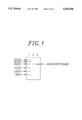
- FIG. 1 shows the result of SDS polyacrylamide gel electrophoresis(SDS-PAGE) for determining the molecular weight the aminopeptidase separated from the culture of Streptomyces thermonitrificans;
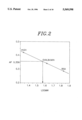
- FIG. 2 depicts the result of gel filtration chromatography for determining the molecular weight of a natural (unreduced) form of the aminopeptidase
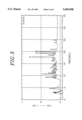
- FIG. 3 represents the result of reversed phase high pressure liquid chromatography(HPLC) by using the trypsin-digested aminopeptidase for confirming the internal amino acid sequence thereof;
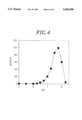
- FIG. 4 illustrates the change in the activity of the aminopeptidase with respect to pH
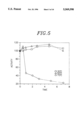
- FIG. 5 demonstrates the change in the activity of the aminopeptidase with respect to temperature and time
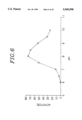
- FIG. 6 describes the change in the level of activity of the aminopeptidase as a function of pH
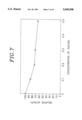
- FIG. 7 is intended to explain the change in the relative activity of the aminopeptidase with respect to the concentration of sodium chloride in 100 mM Tris buffer(pH 8.0);
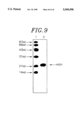
- FIG. 9 presents the result of SDS-PAGE evidencing the purity of the wild-type recombinant human growth hormone prepared in accordance with the inventive process.
- the aminopeptidase comprises the amino acid sequence of Lys-Phe-Ser-Lys-Lys-Phe-Asn-Glu (SEQ ID NO: 3) at its N-terminal and the amino acid sequences of Glu-Pro-Gly-Thr-Gly-Ala-Leu-Glu-pro (SEQ ID NO: 4) and Asn-Pro-Asp-Ile-Val-Tyr (SEQ ID NO: 5) in other regions; and it can be classified as a leucine aminopeptidase since it reacts specifically with leucine but reacts restrictively to positively-charged amino acids such as lysine.
- the aminopeptidase of the present invention exhibits a high activity at a pH ranging from 7.5 to 9.0, more preferably, from 8.0 to 8.5, and at a temperature ranging from 20° to 70° C., more preferably, from 30° to 50° C., and maintains its activity at, e.g., 50° C. for several hours.
- the formulation of the medium except for the employment of galactose as the carbon source and the condition for culturing Streptomyces thermonitrificans may be adjusted in accordance with conventional procedures described in, e.g., FEMS Microbiol. Lett., 40, 61-66(1987) by C. Edwards and A. S. Ball.
- the culture is centrifuged to obtain the supernatant thereof; ammonium sulfate is added to the supernatant to the concentration of 20 to 60% (weight/volume) by weight, preferably 30 to 50% (wt/vol); the supernatant containing ammonium sulfate is subject to a triphase partition (R.
- the aminopeptidase of the present invention can be used for preparing a wild-type recombinant protein.
- An N-methionyl recombinant protein produced in a microorganism, e.g., E. coli is reacted with the aminopeptidase under an optimal condition in an appropriate reaction buffer, e.g., a buffer consisting of 50 mMTris(pH 8.0), 100 NaCl, 2%, and 1 mM PMSF, to remove the N-terminal methionine therefrom.
- an appropriate reaction buffer e.g., a buffer consisting of 50 mMTris(pH 8.0), 100 NaCl, 2%, and 1 mM PMSF
- the aminopeptidase of the present invention may be reacted with an N-methionyl recombinant protein prepared from a host cell, such as E. coli and yeast, to obtain the wild-type recombinant protein by removing the N-terminal methionine therefrom.
- the aminopeptidase can be employed in an appropriate amount determined by considering the molecular weight and the concentration of the N-methionyl recombinant protein; and, in case of an N-methionyl human growth hormone, 0.2 to 20 units of the aminopeptidase may be employed per mg of the growth hormone.
- the reaction buffer e.g., Tris-HCl, employed for the removal of N-terminal methionine may have a pH ranging from 7.5 to 9.5, preferably from 8 to 8.5; and a concentration of NaCl ranging from 0 to 300 mM, preferably from 0 to 100 mM.
- the reaction may be carried out at a temperature ranging from 20° to 50° C., preferably from 30° to 40° C. for 10 to 20 hours.
- Example 1 Change of Aminopeptidase Productivity According to the Kind of a Carbon Source in a Medium
- the activity of the aminopeptidase present in each supernatant was determined on the basis of the activity obtained by culturing said microorganism in a medium containing galactose as a carbon source for 39 hours, being 100%. The results are shown in Table 1 below.
- a sterilized seed-culture medium (final pH of 7.4 to 7.6) containing 2.0% galactose, 1.0% trypton, 0.5% casamino acid, 0.6% phosphate, 0.01% MgSO 4 , 0.01% FeCl 2 , 0.01% MnCl 2 and 0.01% ZnCl 2 .
- a sterilized culture medium (final pH of 7.4 to 7.6) containing 3.0% galactose, 0.3% trypton, 0.3% casamino acid, 1.4% skim milk, 0.6% phosphate, 0.01% MgSO 4 , 0.01% FeCl 2 , 0.01% MnCl 2 and 0.01% ZnCl 2 .
- 70 ml of the seed culture obtained above was inoculated into each of the above sterilized medium and then cultured for 18 to 22 hours maintaining an agitation speed of 500 rpm, a temperature of 50° C. and an aeration rate of 1 vvm.
- the purified aminopeptidase was obtained from the culture of Example 2 in accordance with the following procedures:
- Example 2 About 10 l of the culture obtained in Example 2 was centrifuged at 10,000 xg for 30 minutes with a centrifuge(JA10 rotor, Beckman, U.S.A.) to obtain the supernatant thereof. The supernatant was passed over a Amicon spiral cartridge (molecular weight cut-off: 10 kd, Amicon, U.S.A.) to concentrate it to a volume of 2 l.
- the protein aggregates were dissolved in a 20 mM sodium phosphate buffer(pH 6.8) and the solution was dialyzed sufficiently against the same buffer and passed over a S-Sepharose column(5 cm ⁇ 10 cm, Pharmacia, Sweden) equilibrated with the same buffer. Then, the same buffer having a linear concentration gradient of 0M to 0.1M NaCl was added to the column to elute the aminopeptidase.
- the molecular weight of the aminopeptidase obtained in Example 3 was determined by SDS-PAGE and the result is shown in FIG. 1, wherein:
- lane 1 shows the standard molecular weight size marker proteins, i.e., 97, 67, 42, 31, 22 and 14 kilodaltons(kd) from the top of the gel;
- lane 3 shows the finally purified aminopeptidase.
- molecular weight of the aminopeptidase obtained from the culture of Streptomyces thermonitrificans was about 41 to 45 kd when determined by SDS-PAGE.
- molecular weight of the aminopeptidase in its natural state was determined by a gel filtration chromatography using a FPLC superose 12 column(1 cm ⁇ 30 cm, Pharmacia, Sweden).
- a standard curve of the molecular weight as a function of the partition coefficient was obtained by eluting a recombinant human growth hormone(rhGH), an ovalbumin and a bovine serum albumin as standard proteins and then calculating the partition coefficients of the proteins according to the following equation: ##EQU1##
- the aminopeptidase obtained in Example 3 was eluted under the same condition as above to calculate its partition coefficient and then its molecular weight was determined with reference to the standard curve. As a result, it was confirmed that the molecular weight of the aminopeptidase of the present invention in its natural state is about 36 to 40 kd(FIG. 2).
- N-terminal amino acid sequence of the aminopeptidase was analyzed in accordance with the automated Edman degradation reaction(Geoffrey Zubay, Biochemistry, 2nd ed., 47-48(1988)) by using an amino acid sequencer(model 471A, Applied Biosystems, U.S.A.).
- the resulting phenylthiohydantoin-attached amino acid residue was subjected to an HPLC by using a reversed phase HPLC column(220 mm ⁇ 2.1 mm, model PTH-222, Applied Biosystems, U.S.A.).
- the retention time of each of phenylthiohydantoin-attached amino acid residues was measured and then compared with those of standard amino acid residues obtained by using that column.
- N-terminal amino acid sequence of the aminopeptidase of the present invention is Lys-Phe-Ser-Lys-Lys-Phe-Asn-Glu (SEQ ID NO:3).
- the peptides obtained in the reaction were passed over a reversed phase HPLC column(3.9 mm ⁇ 300 mm, ⁇ Bondapack C 18 , Millipore, U.S.A.) to obtain a chromatogram(FIG. 3).
- the fractions corresponding to the peaks marked with * in FIG. 3 were collected and their amino acid sequences were confirmed in accordance with the method for analyzing N-terminal amino acid sequence as described above.
- amino acid sequence of the peptide with retention time of 17.5 minute is Glu-Pro-Gly-Thr-Gly-Ala-Leu-Glu-Pro (SEQ ID NO:4) and that of the peptide with retention time of 19 minutes is Asn-Pro-Asp-Ile-Val-Tyr (SEQ ID NO:5).
- orthophenanthroline was added to the aminopeptidase fraction obtained in Example 3 to a final concentration of 0 mM, 1 mM and 5 mM, respectively.
- the resulting solution was reacted at 37° C. for 1 minute and then the activity of the aminopeptidase was determined.
- Table 2 The result is shown in Table 2 below, and it is confirmed that the aminopeptidase of the present invention is a metallo-protease.
- the substrate specificity of the aminopeptidase was examined as follows. Each 1 unit of the aminopeptidase was added to 100 mM Tris buffer(pH 8.0) containing 10 mM paranitroanilide of leucine, methionine, glycine-proline, alanine, lysine, glycine and glycine-phenylalanine, respectively, and the resulting mixtures were reacted at 37° C. The reaction time was regulated in accordance with the substrate so that paranitroanilide is produced in a fixed rate. The activities of the aminopeptidase according to the substrate were measured as in the Reference Example and compared with each other regarding the activity to leucine-paranitroanilide as 100%. The result is shown in Table 3 below.
- the above substrate was treated with the aminopeptidase in a 100 mM Tris buffer(pH 8.0) containing NaCl to a final concentration of 0, 0.1, 0.2, 0.3, 0.4 and 0.5M, respectively, in order to confirm the optimum ionic strength to maintain the activity of aminopeptidase.
- the result is shown in FIG. 7, wherein the activity of aminopeptidase is decreased as the concentration of NaCl increases.
- it is preferable to add NaCl to the reaction buffer to be 0 to 100 mM.
- reaction mixture was redialyzed sufficiently against 20 mM Tris buffer(pH 8.0), and then, passed over a DEAE-Sepharose column previously equilibrated with the same buffer. The column was washed with the same buffer and then a buffer containing 20 mM Tris and 100 mM NaCl was added to the column to elute the human growth hormone.
- Example 7 Properties of a Wild-Type Recombinant Human Growth Hormone
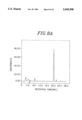
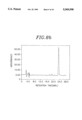
- N-terminal methionine was confirmed by using the wild-type recombinant human growth hormone obtained in Example 6 with an N-terminal sequencer (Applied Biosystems, model 471A protein sequencer) and the results are shown in FIGS. 8A and 8B which represent the result of N-terminal sequencing before and after the aminopeptidase treatment, respectively.
- FIG. 8B the first amino acid residue of the recombinant human growth hormone after the treatment with the aminopeptidase was disclosed as phenylalanine and methionine peak was rarely found. This result shows that the aminopeptidase of the present invention can remove specifically the N-terminal methionine residue from the recombinant human growth hormone.
- the potency of the finally purified wild-type recombinant human growth hormone was determined by a radio receptor assay (I. Tsushima and H. G. Frieson, Journal of Clinical Endocrinology and Metabolism, 37, 334(1973)) and, as a result, it has been found that the hormone has a potency of 2.7 IU/mg similar to 2.5 IU/mg which is the potency of pituitary gland-derived human growth hormone supplied by World Health Organization (WHO)(Journal of Korean endocrinology society, Vol. 5, No. 3(1990)).
- WWHO World Health Organization
Landscapes
- Chemical & Material Sciences (AREA)
- Health & Medical Sciences (AREA)
- Organic Chemistry (AREA)
- Life Sciences & Earth Sciences (AREA)
- Genetics & Genomics (AREA)
- Zoology (AREA)
- Biochemistry (AREA)
- General Health & Medical Sciences (AREA)
- Molecular Biology (AREA)
- Engineering & Computer Science (AREA)
- Wood Science & Technology (AREA)
- Medicinal Chemistry (AREA)
- Bioinformatics & Cheminformatics (AREA)
- Microbiology (AREA)
- Biophysics (AREA)
- General Engineering & Computer Science (AREA)
- Proteomics, Peptides & Aminoacids (AREA)
- Biotechnology (AREA)
- Endocrinology (AREA)
- Biomedical Technology (AREA)
- Analytical Chemistry (AREA)
- Gastroenterology & Hepatology (AREA)
- Toxicology (AREA)
- Chemical Kinetics & Catalysis (AREA)
- General Chemical & Material Sciences (AREA)
- Enzymes And Modification Thereof (AREA)
- Preparation Of Compounds By Using Micro-Organisms (AREA)
- Peptides Or Proteins (AREA)
- Micro-Organisms Or Cultivation Processes Thereof (AREA)
- Medicines That Contain Protein Lipid Enzymes And Other Medicines (AREA)
Abstract
An extracellular leucine aminopeptidase was isolated from the culture medium of Streptomyces therrnonitrificans which is a Zn2+-dependent metalloenzyme which comprises an amino acid sequence Lys-Phe-Ser-Lys-Lys-Phe-Asn-Glu (SEQ ID NO: 3) at the N-terminal thereof, and amino acid sequences of Glu-Pro-Gly-Thr-Gly-Ala-Leu-Glu-Pro (SEQ ID NO: 4) and Asn-Pro-Asp-Ile-Val-Tyr (SEQ ID NO: 5) at other regions thereof. The aminopeptidase has a pH optimum of 7.5 to 9.0, a temperature optimum of 30 DEG to 50 DEG C., and an apparent molecular weight as determined by sodium dodecyl sulfate polyacrylamide gel electrophoresis under reducing conditions of 41 to 45 kDa, and as determined by gel filtration under native state conditions of 36 to 40 kDa.
Description
The present invention relates to a novel aminopeptidase and a process for the preparation thereof. More particularly, it pertains to a novel aminopeptidase separated from a culture of Streptomyces thermonitrificans; a process for producing said aminopeptidase by culturing said microorganism; and a process for preparing a wild-type recombinant protein by using said aminopeptidase.
Aminopeptidases are found in various microorganisms and animal cells, and generally metallo-proteases requiring a metal ion such as calcium and zinc for their activities. Said enzymes are known to be capable of maintaining their activities of diverse nature, depending on their origin of derivation, even in a temperature range of 50° to 70° C.
Aminopeptidases have their industrial uses in the determination of protein primary structures, and in the pharmaceutical drug development etc., and, in particular, they are useful for the preparation of a recombinant protein having a same amino acid sequence as its wild-type protein by eliminating N-terminal methionine from the recombinant protein, which is accompanied by methionine in its N-terminal(N-methionyl recombinant protein), produced in a microorganism by using a recombinant DNA technique.
As the presence of an N-terminal methionine on recombinant human proteins may cause an unwanted immune reaction when administered to human beings, it would be desirable to remove the N-terminal methionine, thus producing the mature eucaryotic proteins whose primary amino acid sequences are identical to that of human origin.
G. Roncari and H. Zuber disclosed in Method in Enzymology, 19, 544(1970) three aminopeptidases derived from Bacillus stearothermophilus, having slightly different properties from each other; and Takayuri Uwajima et al. reported in Agr. Biol. Chem., 37(12), 2727(1973) the physicochemical properties of an aminopeptidase requiring a calcium ion for maintaining its activity, which was derived from Streptomyces peptidofaciens KY 2389.
In addition, various aminopeptidases have been obtained from, e.g., Bacillus subtilis (Fred W. Wagner et al., Arch. Biochem. Biophys., 197(1), 63-72(1979)), Streptomyces rimosus (Lj. Vitale et al., Appl. Microbiol. Biotechnol., 23, 449-455(1986)), Streptomyces griseus (K. D. Vosbeck et al., J. Biol. Chem., 238, 6029-6034(1973)), etc.
A. Spungin and S. Blumberg disclosed in Eur. J. Biochem., 183, 471-477(1989) an aminopeptidase having a molecular weight of about 33 kd as determined by SDS-PAGE and N-terminal amino acid sequence of Ala-Pro-Asp-Ile-Pro-Leu (SEQ ID NO: 1), which was separated and purified by a process which comprises heat-treating a culture of Streptomyces griseus separated from soil and subjecting the heat-treated culture to Bio-Gel P-4 gel filtration chromatography and DEAE Sepharose ion exchange chromatography.
Recently, an enzyme called pronase, separated from Streptomyces griseus K-1 strain, has become commercially available. However, since the enzyme contains various proteinases as a mixture, it is not efficient to remove only the N-terminal methionine residue.
On the other hand, there have been many attempts made to prepare a wild-type protein by removing the N-terminal methionine residue from the recombinant protein produced in a microorganism. Exemplary methods thereof may include a process for preparing wild-type human growth hormone by expressing a fusion protein in which the N-terminal of human growth hormone is fused with the C-terminal of another protein, and then severing the fusion protein by using a specific protease(PCT International Publication No. WO 89/12678; EP Patent Publication Nos. 20290 and 321940); a process for preparing a wild-type recombinant protein by expressing a recombinant protein having a secretion signal peptide in a microorganism cell so that the secretion signal peptide containing the N-terminal methionine residue is removed when the protein is secreted out of the cell and then recovering the wild-type recombinant protein from the medium (EP Laid-open Publication No. 0088632 A2; U.S. Pat. No. 4,755,465; Japanese Patent Laid-open Publication No. 01273591; EP Patent Publication No. 306673; and Korean Patent Laid-open Publication No. 94-579). However, the above methods produce a low yield, have the difficulty of isolating the desired wild-type recombinant protein from the fusion protein if the two proteins have similar physical properties, and may require complicated and laborious procedures for transforming a host cell with a newly prepared expression vector and determining the optimum fermentation conditions.
It has been suggested that a wild-type recombinant protein may be prepared without suffering from such defects by using a specific aminopeptidase which is capable of specifically removing a methionine residue present in its N-terminal of N-methionyl recombinant protein(PCT International Publication Nos. WO 86/04609 and WO 86/204527 A1). For example, in the case of methionyl human growth hormone whose N-terminal amino acid sequence is Met-Phe-Pro-Thr-Ile (SEQ ID NO: 2), the N-terminal methionine may be removed selectively by using an aminopeptidase which can recognize the X-pro(wherein X means any amino acid residue) site at the N-terminal, thereby terminating its severing reaction before the X residue.
Hitherto, a limited number of aminopeptidases such as the one separated and purified from a culture of Vibrio proteolyticus(Bio-Technology General Corp., WO 86/01229) and the one extracted and purified from a porcine kidney (Takeda, WO 86/204527 A1) have been reportedly used for the preparation of a wild-type recombinant protein by removing its N-terminal methionine residue. However, there still exists a demand for the development of aminopeptidases which meet various substrate specificity and high enzyme activity requirements.
Accordingly, it is an object of the present invention to provide a novel aminopeptidase derived from a culture of Streptomyces thermonitrificans.
Another object of the present invention is to provide a process for producing said aminopeptidase by way of culturing Streptomyces thermonitrificans.
An additional object of the present invention is to provide a process for preparing a wild-type recombinant protein by removing the N-terminal methionine residue from its N-methionyl recombinant protein by using said aminopeptidase.
The above and other objects and features of the present invention will become apparent from the following description of the invention taken in conjunction with the accompanying drawings, in which:
FIG. 1 shows the result of SDS polyacrylamide gel electrophoresis(SDS-PAGE) for determining the molecular weight the aminopeptidase separated from the culture of Streptomyces thermonitrificans;
FIG. 2 depicts the result of gel filtration chromatography for determining the molecular weight of a natural (unreduced) form of the aminopeptidase;
FIG. 3 represents the result of reversed phase high pressure liquid chromatography(HPLC) by using the trypsin-digested aminopeptidase for confirming the internal amino acid sequence thereof; and
FIG. 4 illustrates the change in the activity of the aminopeptidase with respect to pH;
FIG. 5 demonstrates the change in the activity of the aminopeptidase with respect to temperature and time;
FIG. 6 describes the change in the level of activity of the aminopeptidase as a function of pH;
FIG. 7 is intended to explain the change in the relative activity of the aminopeptidase with respect to the concentration of sodium chloride in 100 mM Tris buffer(pH 8.0);
FIGS. 8A and 8B offer the results of an N-terminal amino acid analyses of a recombinant human growth hormone carried out before and after the removal of N-terminal methionine by using the aminopeptidase, respectively; and
FIG. 9 presents the result of SDS-PAGE evidencing the purity of the wild-type recombinant human growth hormone prepared in accordance with the inventive process.
All references cited herein are hereby incorporated in their entirety by reference.
The novel aminopeptidase of the present invention has a molecular weight of about 41 to 45 kd when measured on a SDS-polyacrylamide gel(i.e., in a reduced state) and about 36 to 40 kd when measured by a gel filtration chromatography (i.e., in its natural state).
The aminopeptidase comprises the amino acid sequence of Lys-Phe-Ser-Lys-Lys-Phe-Asn-Glu (SEQ ID NO: 3) at its N-terminal and the amino acid sequences of Glu-Pro-Gly-Thr-Gly-Ala-Leu-Glu-pro (SEQ ID NO: 4) and Asn-Pro-Asp-Ile-Val-Tyr (SEQ ID NO: 5) in other regions; and it can be classified as a leucine aminopeptidase since it reacts specifically with leucine but reacts restrictively to positively-charged amino acids such as lysine.
The aminopeptidase of the present invention exhibits a high activity at a pH ranging from 7.5 to 9.0, more preferably, from 8.0 to 8.5, and at a temperature ranging from 20° to 70° C., more preferably, from 30° to 50° C., and maintains its activity at, e.g., 50° C. for several hours.
Further, the aminopeptidase is a metallo-protease since its activity is increased by the presence of a divalent metal ion such as zinc and magnesium and is diminished when the metal ion forms a complex with a chelating agent such as orthophenanthroline.
The aminopeptidase of the present invention is prepared by culturing Streptomyces thermonitrificans. The amount of the aminopeptidase which can be obtained may vary with the kind and the concentration of carbon source in the culture medium. Galactose is preferably employed as the carbon source at a concentration ranging from 1 to 5% by weight, preferably, from 2 to 3% by weight on the basis of the total weight of the medium.
The formulation of the medium except for the employment of galactose as the carbon source and the condition for culturing Streptomyces thermonitrificans may be adjusted in accordance with conventional procedures described in, e.g., FEMS Microbiol. Lett., 40, 61-66(1987) by C. Edwards and A. S. Ball. After the cultivation is completed, the culture is centrifuged to obtain the supernatant thereof; ammonium sulfate is added to the supernatant to the concentration of 20 to 60% (weight/volume) by weight, preferably 30 to 50% (wt/vol); the supernatant containing ammonium sulfate is subject to a triphase partition (R. Lovrien et al., Protein purification Micro to Macro, Alan R. Liss, Inc., New York, pp 131-148(1987)) by adding tertiary butanol to the supernatant having an appropriate concentration of ammonium sulfate to obtain a clear solution as a lower layer thereof (first triphase partition); to the clear solution is added ammonium sulfate to a concentration ranging from 70 to 100% (wt/vol), preferably from 80 to 90% (wt/vol), and the resultant is repeatedly subjected to the triphase partition procedure to partition and obtain an intermediate layer, containing the desired protein, between the tertiary butanol layer(upper phase) and the aqueous layer(lower phase) in the form of aggregates(second triphase partition); and the intermediate layer is dissolved in a buffer and subjected to cation exchange chromatography employing, e.g., S-sepharose column and FPLC(Fast Performance Liquid Chromatography: Pharmacia, Sweden) employing, e.g., FPLC mono-S column, so as to obtain the aminopeptidase in a high degree of purity.
The aminopeptidase of the present invention can be used for preparing a wild-type recombinant protein. An N-methionyl recombinant protein produced in a microorganism, e.g., E. coli, is reacted with the aminopeptidase under an optimal condition in an appropriate reaction buffer, e.g., a buffer consisting of 50 mMTris(pH 8.0), 100 NaCl, 2%, and 1 mM PMSF, to remove the N-terminal methionine therefrom.
The aminopeptidase of the present invention may be reacted with an N-methionyl recombinant protein prepared from a host cell, such as E. coli and yeast, to obtain the wild-type recombinant protein by removing the N-terminal methionine therefrom. The aminopeptidase can be employed in an appropriate amount determined by considering the molecular weight and the concentration of the N-methionyl recombinant protein; and, in case of an N-methionyl human growth hormone, 0.2 to 20 units of the aminopeptidase may be employed per mg of the growth hormone.
The reaction buffer, e.g., Tris-HCl, employed for the removal of N-terminal methionine may have a pH ranging from 7.5 to 9.5, preferably from 8 to 8.5; and a concentration of NaCl ranging from 0 to 300 mM, preferably from 0 to 100 mM.
The reaction may be carried out at a temperature ranging from 20° to 50° C., preferably from 30° to 40° C. for 10 to 20 hours.
The following Examples are intended to further illustrate the present invention without limiting its scope; and the experimental methods used in the Examples can be practiced in accordance with the Reference Example given hereinbelow, unless otherwise stated.
Further, percentages given below for solids in solid mixtures, liquids in liquids and solids in liquids are on a wt/wt, vol/vol and wt/vol basis, respectively, unless specifically indicated otherwise.
The activity of an aminopeptidase was determined in accordance with the method of Pfleiderer as described in Meth. Enzymol., 19, 514-521(1970).
To 1 ml of a buffer(100 mMTris, pH 8.0) containing 20 μl of 25 mg/ml leucine-paranitroanilide(Sigma, USA) solubilized in 50% DMSO(dimethylsulfoxide, Sigma, USA) as a substrate was added a fixed amount of an aminopeptidase. The resulting solution was reacted at 37° C. for 1 minute, and then, the optical density thereof at 405 nm(OD405nm) was measured. 1 unit of aminopeptidase activity was defined as the amount of the enzyme which was capable of increasing OD405nm by 1.
The following experiment was carried out to determine the effect of a carbon source on the production of the aminopeptidase in a culture of Streptomyces thermonitrificans(ATCC 23385).
1 ml of Streptomyces thermonitrificans(ATCC 23385) mycelium suspended in seed stock medium containing 25%(vol/vol) glycerol, 1.0% peptone, 0.5% casamino acid, 0.55% potassium phosphate dibasic, 0.05% potassium phosphate monobasic and 3.0% D-galactose to a concentration of 10 to 30% by wet cell weight was inoculated into mediums containing 1.0% peptone, 0.5% yeast extract and 2.0% of a carbon source selected from the group consisting of glucose, galactose, mannose, lactose and sucrose, respectively; and then cultured at 50° C. 1 ml of each of the cultures was taken at 19, 24 and 39 hours, respectively, and centrifuged at 13,000 xg for 5 minutes to obtain the supernatant thereof.
The activity of the aminopeptidase present in each supernatant was determined on the basis of the activity obtained by culturing said microorganism in a medium containing galactose as a carbon source for 39 hours, being 100%. The results are shown in Table 1 below.
              TABLE 1
______________________________________
Activity of the aminopeptidase in 1 ml of the
culture cultivated with various carbon sources
          carbon
cultivation
          source
period(hours)
          glucose galactose
                           mannose
                                  lactose
                                        sucrose
______________________________________
19         4.7    48.4     26.4   14.7  12.8
24        48.4    58.9     37.6   35.3  25.2
39        15.5    100.0    45.0   22.1  22.1
______________________________________
To produce the novel aminopeptidase of the present invention by culturing Streptomyces thermonitrificans, the following procedures were carried out.
Into a 1 l flask was added 300 ml of a sterilized seed-culture medium(final pH of 7.4 to 7.6) containing 2.0% galactose, 1.0% trypton, 0.5% casamino acid, 0.6% phosphate, 0.01% MgSO4, 0.01% FeCl2, 0.01% MnCl2 and 0.01% ZnCl2. 1 ml of Streptomyces thermonitrificans(ATCC 23385) mycelium suspended in seed stock medium containing 25%(vol/vol) glycerol, 1.0% peptone, 0.5% casamino acid, 0.55% potassium phosphate dibasic, 0.05% potassium phosphate monobasic and 3.0% D-galactose to a concentration of 10 to 30% by wet cell weight was inoculated into the above sterilized medium and then cultured at 50° C. for 20 hours as a seed culture.
Into each of four 5 l fermenters were added 3 l of a sterilized culture medium(final pH of 7.4 to 7.6) containing 3.0% galactose, 0.3% trypton, 0.3% casamino acid, 1.4% skim milk, 0.6% phosphate, 0.01% MgSO4, 0.01% FeCl2, 0.01% MnCl2 and 0.01% ZnCl2. 70 ml of the seed culture obtained above was inoculated into each of the above sterilized medium and then cultured for 18 to 22 hours maintaining an agitation speed of 500 rpm, a temperature of 50° C. and an aeration rate of 1 vvm.
The purified aminopeptidase was obtained from the culture of Example 2 in accordance with the following procedures:
About 10 l of the culture obtained in Example 2 was centrifuged at 10,000 xg for 30 minutes with a centrifuge(JA10 rotor, Beckman, U.S.A.) to obtain the supernatant thereof. The supernatant was passed over a Amicon spiral cartridge (molecular weight cut-off: 10 kd, Amicon, U.S.A.) to concentrate it to a volume of 2 l.
100% ammonium sulfate solution was added to the concentrate to a final concentration of 33%, the equal volume of tertiary butanol was added thereto and the resulting solution was stirred for 1 hour. The resultant was centrifuged at 10,000 xg for 10 minutes to obtain a clear solution as a lower layer thereof(first triphase partition).
To the clear solution was added ammonium sulfate powder to be final concentration of 90%, and the resultant was repeatedly subjected to the triphase partition procedure to partition and obtain an intermediate protein aggregates layer between the tertiary butanol layer and the aqueous layer(second triphase partition).
The protein aggregates were dissolved in a 20 mM sodium phosphate buffer(pH 6.8) and the solution was dialyzed sufficiently against the same buffer and passed over a S-Sepharose column(5 cm×10 cm, Pharmacia, Sweden) equilibrated with the same buffer. Then, the same buffer having a linear concentration gradient of 0M to 0.1M NaCl was added to the column to elute the aminopeptidase.
Eluted fractions showing the aminopeptidase activity were collected and then sufficiently dialyzed against a 20 mM sodium phosphate buffer(pH 6.8). The resulting solution was passed over a FPLC Mono-S column(0.5 cm×5 cm, Pharmacia, Sweden) equilibrated with the same buffer and the column was washed with the same buffer containing 0.3M NaCl. Then, the same buffer having a linear concentration gradient of 0.3M to 0.8M NaCl was added to the column to elute the aminopeptidase.
Properties of the novel aminopeptidase of the present invention were determined by the following various methods.
The molecular weight of the aminopeptidase obtained in Example 3 was determined by SDS-PAGE and the result is shown in FIG. 1, wherein:
lane 1 shows the standard molecular weight size marker proteins, i.e., 97, 67, 42, 31, 22 and 14 kilodaltons(kd) from the top of the gel;
lane 2 shows the aminopeptidase fraction eluted from the S-sepharose column; and
lane 3 shows the finally purified aminopeptidase. As shown in the above result, molecular weight of the aminopeptidase obtained from the culture of Streptomyces thermonitrificans was about 41 to 45 kd when determined by SDS-PAGE.
In addition, molecular weight of the aminopeptidase in its natural state was determined by a gel filtration chromatography using a FPLC superose 12 column(1 cm×30 cm, Pharmacia, Sweden). A standard curve of the molecular weight as a function of the partition coefficient was obtained by eluting a recombinant human growth hormone(rhGH), an ovalbumin and a bovine serum albumin as standard proteins and then calculating the partition coefficients of the proteins according to the following equation: ##EQU1##
The aminopeptidase obtained in Example 3 was eluted under the same condition as above to calculate its partition coefficient and then its molecular weight was determined with reference to the standard curve. As a result, it was confirmed that the molecular weight of the aminopeptidase of the present invention in its natural state is about 36 to 40 kd(FIG. 2).
N-terminal amino acid sequence of the aminopeptidase was analyzed in accordance with the automated Edman degradation reaction(Geoffrey Zubay, Biochemistry, 2nd ed., 47-48(1988)) by using an amino acid sequencer(model 471A, Applied Biosystems, U.S.A.). The resulting phenylthiohydantoin-attached amino acid residue was subjected to an HPLC by using a reversed phase HPLC column(220 mm×2.1 mm, model PTH-222, Applied Biosystems, U.S.A.). The retention time of each of phenylthiohydantoin-attached amino acid residues was measured and then compared with those of standard amino acid residues obtained by using that column. As a result, it was confirmed that N-terminal amino acid sequence of the aminopeptidase of the present invention is Lys-Phe-Ser-Lys-Lys-Phe-Asn-Glu (SEQ ID NO:3).
The internal amino acid sequence of the aminopeptidase of the present invention was confirmed by the following procedures.
2 mg of the purified aminopeptidase was dissolved in 500 μl of ultrapure distilled water, boiled for 30 minutes to inactivate the aminopeptidase, lyophilized and then dissolved in 800 μl of 1 mM sodium hydroxide solution. To the solution were added 100 μl of 10X trypsin digestion buffer(1M Tris-Cl, 10 mM CaCl2, pH 8.3) and 100 μl of 0.1 mg/ml trypsin(Boehringer Mannheim, Germany), and the mixture was reacted at 25° C. for 24 hours to digest the aminopeptidase completely. The peptides obtained in the reaction were passed over a reversed phase HPLC column(3.9 mm×300 mm, μBondapack C18, Millipore, U.S.A.) to obtain a chromatogram(FIG. 3). The fractions corresponding to the peaks marked with * in FIG. 3 were collected and their amino acid sequences were confirmed in accordance with the method for analyzing N-terminal amino acid sequence as described above. As a result, it was found that the amino acid sequence of the peptide with retention time of 17.5 minute is Glu-Pro-Gly-Thr-Gly-Ala-Leu-Glu-Pro (SEQ ID NO:4) and that of the peptide with retention time of 19 minutes is Asn-Pro-Asp-Ile-Val-Tyr (SEQ ID NO:5).
To determine the optimum pH for the activity of the aminopeptidase, its activities in an universal buffer(100 mM citric acid, 100 mM sodium phosphate, 100 mM boric acid and 100 mM phosphoric acid) containing 20 μl of 25 mg/ml leucine paranitroanilide dissolved in 50% DMSO, with a pH ranging from 3.0 to 9.5 were examined. The pH of the buffers were adjusted by using 5N sodium hydroxide. The result is shown in FIG. 4, wherein, it have been found that the pH for the activity of the aminopeptidase ranges from pH 7.5 to pH 9.0 and that the aminopeptidase is most active in the pH range of 8.0 to 8.5.
To confirm the thermostability of the aminopeptidase of the present invention, 18 tubes containing aliquots of the aminopeptidase prepared in Example 3 were allowed to stand at 30° C., 50° C. and 70° C. for 0.5, 1, 2, 3, 5 and 7 hours, respectively, and thereafter, activity of the aminopeptidase remains in each tube was determined in accordance with the method of the Reference Example. The result is shown in FIG. 5, wherein, it can be seen that the aminopeptidase is stable at 50° C. and 30° C.
To confirm the effect of orthophenanthroline on the activity of the aminopeptidase, orthophenanthroline was added to the aminopeptidase fraction obtained in Example 3 to a final concentration of 0 mM, 1 mM and 5 mM, respectively. The resulting solution was reacted at 37° C. for 1 minute and then the activity of the aminopeptidase was determined. The result is shown in Table 2 below, and it is confirmed that the aminopeptidase of the present invention is a metallo-protease.
              TABLE 2
______________________________________
Effect of orthophenanthroline
on the enzyme activity
Concentration of
orthophenanthroline
(mM)             Activity(%)
______________________________________
0                100
1                 27
5                 2
______________________________________
The substrate specificity of the aminopeptidase was examined as follows. Each 1 unit of the aminopeptidase was added to 100 mM Tris buffer(pH 8.0) containing 10 mM paranitroanilide of leucine, methionine, glycine-proline, alanine, lysine, glycine and glycine-phenylalanine, respectively, and the resulting mixtures were reacted at 37° C. The reaction time was regulated in accordance with the substrate so that paranitroanilide is produced in a fixed rate. The activities of the aminopeptidase according to the substrate were measured as in the Reference Example and compared with each other regarding the activity to leucine-paranitroanilide as 100%. The result is shown in Table 3 below.
              TABLE 3
______________________________________
Substrate specificity
Substrate(10 mM)      Activity(%)
______________________________________
leucine-paranitroanilide
                      100
methionine-paranitroanilide
                      3.60
glycine-proline-paranitroanilide
                      0.80
alanine-paranitroanilide
                      0.60
lysine-paranitroanilide
                      0.03
glycine-paranitroanilide
                      0.04
glycine-phenylalanine-paranitroanilide
                      0.11
______________________________________
0.1M Tris buffers containing 200 μg of a N-methionyl peptide (Met-Phe-Pro-Thr-Glu-Pro-Ser) (SEQ ID NO:6) as a substrate and having the pH of 7, 7.5, 8, 8.5 and 9, respectively; 0.1M sodium phosphate buffers containing the same amount of the same substrate and having the pH of 6, 6.5, 7, and 7.5, respectively; and 0.1M sodium bicarbonate buffers containing the same amount of the same substrate and having the pH of 8.5, 9, 9.5 and 10, respectively, were prepared, and then, to 1 ml of each of the buffers was added 4.0 units of aminopeptidase. The mixtures were reacted at 37° C. for 10 minutes, and thereafter, the activity of the aminopeptidase in each reaction mixture was measured. The result is shown in FIG. 6, wherein the aminopeptidase shows high activity in a buffer having a pH of 7.5 to 9.5.
Further, the above substrate was treated with the aminopeptidase in a 100 mM Tris buffer(pH 8.0) containing NaCl to a final concentration of 0, 0.1, 0.2, 0.3, 0.4 and 0.5M, respectively, in order to confirm the optimum ionic strength to maintain the activity of aminopeptidase. The result is shown in FIG. 7, wherein the activity of aminopeptidase is decreased as the concentration of NaCl increases. However, since the ionic strength is necessary to maintain the stability of an enzyme for a long time, it is preferable to add NaCl to the reaction buffer to be 0 to 100 mM.
8 units of the aminopeptidase of the present invention was added to about 600 μg of a methionyl human growth hormone prepared in accordance with the method of Korean patent Publication No. 92-99 and the mixture was dialyzed sufficiently against a reaction buffer(50 mM Tris(pH 8.0), 100 mM NaCl and 1 mM PMSF). The dialyzate was concentrated to the volume of 0.6 ml by using a centricon (Amicon, U.S.A.) with 2 ml volume, and then, reacted in a water bath at 37° C. for 24 hours. After 24 hours, the reaction mixture was redialyzed sufficiently against 20 mM Tris buffer(pH 8.0), and then, passed over a DEAE-Sepharose column previously equilibrated with the same buffer. The column was washed with the same buffer and then a buffer containing 20 mM Tris and 100 mM NaCl was added to the column to elute the human growth hormone.
The removal of N-terminal methionine was confirmed by using the wild-type recombinant human growth hormone obtained in Example 6 with an N-terminal sequencer (Applied Biosystems, model 471A protein sequencer) and the results are shown in FIGS. 8A and 8B which represent the result of N-terminal sequencing before and after the aminopeptidase treatment, respectively. As can be seen from FIG. 8B, the first amino acid residue of the recombinant human growth hormone after the treatment with the aminopeptidase was disclosed as phenylalanine and methionine peak was rarely found. This result shows that the aminopeptidase of the present invention can remove specifically the N-terminal methionine residue from the recombinant human growth hormone.
The purity of the wild-type recombinant human growth hormone was confirmed by SDS-PAGE and the result is shown in FIG. 9.
The potency of the finally purified wild-type recombinant human growth hormone was determined by a radio receptor assay (I. Tsushima and H. G. Frieson, Journal of Clinical Endocrinology and Metabolism, 37, 334(1973)) and, as a result, it has been found that the hormone has a potency of 2.7 IU/mg similar to 2.5 IU/mg which is the potency of pituitary gland-derived human growth hormone supplied by World Health Organization (WHO)(Journal of Korean endocrinology society, Vol. 5, No. 3(1990)).
While the invention has been described with respect to the above specific embodiments, it should be recognized that various modifications and changes may be made and also fall within the scope of the invention as defined by the claims that follow.
__________________________________________________________________________
SEQUENCE LISTING
(1) GENERAL INFORMATION:
(iii) NUMBER OF SEQUENCES: 6
(2) INFORMATION FOR SEQ ID NO:1:
(i) SEQUENCE CHARACTERISTICS:
(A) LENGTH: 6 amino acids
(B) TYPE: amino acid
(C) TOPOLOGY: linear
(ii) MOLECULE TYPE: peptide
(iii) FRAGMENT TYPE: N-terminal
(iv) ORIGINAL SOURCE:
(A) ORGANISM: Streptomyces griseus
(v) SEQUENCE DESCRIPTION: SEQ ID NO: 1:
AlaProAspIleProLeu
15
(2) INFORMATION FOR SEQ ID NO:2:
(i) SEQUENCE CHARACTERISTICS:
(A) LENGTH: 5 amino acids
(B) TYPE: amino acid
(C) TOPOLOGY: linear
(ii) MOLECULE TYPE: peptide
(iii) FRAGMENT TYPE: N-terminal
(iv) PROPERTIES: N-terminal of methionyl human growth hormone
(v) SEQUENCE DESCRIPTION: SEQ ID NO: 2:
MetPheProThrIle
15
(2) INFORMATION FOR SEQ ID NO:3:
(i) SEQUENCE CHARACTERISTICS:
(A) LENGTH: 8 amino acids
(B) TYPE: amino acid
(C) TOPOLOGY: linear
(ii) MOLECULE TYPE: peptide
(iii) FRAGMENT TYPE: N-terminal
(iv) ORIGINAL SOURCE:
(A) ORGANISM: Streptomyces thermonitrificans
(v) SEQUENCE DESCRIPTION: SEQ ID NO: 3:
LysPheSerLysLysPheAsnGlu
15
(2) INFORMATION FOR SEQ ID NO:4:
(i) SEQUENCE CHARACTERISTICS:
(A) LENGTH: 9 amino acids
(B) TYPE: amino acid
(C) TOPOLOGY: linear
(ii) MOLECULE TYPE: peptide
(iii) ORIGINAL SOURCE:
(A) ORGANISM: Streptomyces thermonitrificans
(iv) SEQUENCE DESCRIPTION: SEQ ID NO: 4:
GluProGlyThrGlyAlaLeuGluPro
15
(2) INFORMATION FOR SEQ ID NO:5:
(i) SEQUENCE CHARACTERISTICS:
(A) LENGTH: 6 amino acids
(B) TYPE: amino acid
(C) TOPOLOGY: linear
(ii) MOLECULE TYPE: peptide
(iii) ORIGINAL SOURCE:
(A) ORGANISM: Streptomyces thermonitrificans
(iv) SEQUENCE DESCRIPTION: SEQ ID NO: 5:
AsnProAspIleValTyr
15
(2) INFORMATION FOR SEQ ID NO:6:
(i) SEQUENCE CHARACTERISTICS:
(A) LENGTH: 7 amino acids
(B) TYPE: amino acid
(C) TOPOLOGY: linear
(ii) MOLECULE TYPE: peptide
(iv) SEQUENCE DESCRIPTION: SEQ ID NO: 6:
MetPheProThrGluProSer
15
__________________________________________________________________________
Claims (3)
1. A substantially pure aminopeptidase isolated from a culture medium of Streptomyces thermonitrificans, said aminopeptidase being a Zn2+ -dependent metalloenzyme and comprising an amino acid sequence of Lys-Phe-Ser-Lys-Lys-Phe-Asn-Glu(SEQ ID NO: 3) at the N-terminal thereof and amino acid sequences of Glu-Pro-Gly-Thr-Gly-Ala-Leu-Glu-Pro(SEQ ID NO: 4) and Asn-Pro-Asp-Ile-Val-Tyr(SEQ ID NO: 5) at other regions thereof.
2. The aminopeptidase of claim 1 having an apparent molecular weight, as determined by sodium dodecyl sulfate polyacrylamide gel electrophoresis under a reducing condition, from 41 to 45 kd and an apparent molecular weight, as determined by gel filtration under a native state condition, from 36 to 40 kd.
3. The aminopeptidase of claim 1 having a pH optimum ranging from 7.5 to 9.0, and a temperature optimum ranging from 30° to 50° C.
Applications Claiming Priority (2)
| Application Number | Priority Date | Filing Date | Title |
|---|---|---|---|
| KR93-11107 | 1993-06-17 | ||
| KR1019930011107A KR970010135B1 (en) | 1993-06-17 | 1993-06-17 | Novel aminopeptidase isolated from streptococcus thermonitrificans |
Publications (1)
| Publication Number | Publication Date |
|---|---|
| US5569598A true US5569598A (en) | 1996-10-29 |
Family
ID=19357590
Family Applications (1)
| Application Number | Title | Priority Date | Filing Date |
|---|---|---|---|
| US08/261,525 Expired - Fee Related US5569598A (en) | 1993-06-17 | 1994-06-17 | Extracellular aminopeptidase isolated from Streptococcus thermonitrificans culture |
Country Status (13)
| Country | Link |
|---|---|
| US (1) | US5569598A (en) |
| EP (1) | EP0629695B1 (en) |
| JP (1) | JP2890168B2 (en) |
| KR (1) | KR970010135B1 (en) |
| CN (1) | CN1098742A (en) |
| AT (1) | ATE206159T1 (en) |
| BR (1) | BR9402461A (en) |
| CO (1) | CO4230106A1 (en) |
| DE (1) | DE69428395T2 (en) |
| EG (1) | EG21684A (en) |
| ES (1) | ES2160605T3 (en) |
| MY (1) | MY110997A (en) |
| PE (1) | PE50794A1 (en) |
Cited By (2)
| Publication number | Priority date | Publication date | Assignee | Title |
|---|---|---|---|---|
| KR100327971B1 (en) * | 1999-04-07 | 2002-03-14 | 허영섭 | Process for Preparing Amino-terminal Methionine Free Recombinant Interferon-alpha |
| WO2009057533A1 (en) | 2007-10-29 | 2009-05-07 | Jcr Pharmaceuticals Co., Ltd. | Method for producing aminopeptidase |
Families Citing this family (4)
| Publication number | Priority date | Publication date | Assignee | Title |
|---|---|---|---|---|
| KR100365838B1 (en) * | 2000-03-24 | 2002-12-26 | 한국생명공학연구원 | A New thermostable D-stereospecific dipeptidase from Brevibacillus borstelensis BCS-1 and its use as a biocatalyst for the synthesis of peptides containing D-amino acids |
| US20040214271A1 (en) * | 2000-07-31 | 2004-10-28 | Hidekazu Sawada | Process for producing recombined protein |
| EP2097520A4 (en) * | 2006-11-30 | 2012-07-04 | Biocon Ltd | A method for producing n-terminal methioine free polypeptides in microbial host cells |
| CN111449318B (en) * | 2020-03-18 | 2021-12-28 | 同曦集团有限公司 | Antibacterial and antiviral mask and preparation method thereof |
Citations (6)
| Publication number | Priority date | Publication date | Assignee | Title |
|---|---|---|---|---|
| US4146432A (en) * | 1976-05-31 | 1979-03-27 | Sumitomo Chemical Company, Limited | Immobilized proteases |
| WO1986001229A1 (en) * | 1984-08-16 | 1986-02-27 | Bio-Technology General Corp. | Method of removing n-terminal amino acid residues from eucaryotic polypetide analogs and polypeptides produced thereby |
| WO1986004609A1 (en) * | 1985-02-07 | 1986-08-14 | Nordisk Gentofte A/S | A process for producing human growth hormone |
| EP0204527A1 (en) * | 1985-06-04 | 1986-12-10 | Takeda Chemical Industries, Ltd. | Removal of the N-terminal methionine from methionylproteins |
| WO1988005993A2 (en) * | 1987-02-10 | 1988-08-25 | Biogen, Inc. | Aminopeptidase for removing n-terminal methionine from proteins and proteins prepared therefrom |
| US5143839A (en) * | 1989-08-07 | 1992-09-01 | Ramot Ltd. | Assay of endopeptidases and novel purified bacterial enzyme |
Family Cites Families (2)
| Publication number | Priority date | Publication date | Assignee | Title |
|---|---|---|---|---|
| KR910000458B1 (en) * | 1988-12-31 | 1991-01-25 | 주식회사 럭키 | Expression vector pysbc-gap-high for human growth hormone |
| KR920000099B1 (en) * | 1990-03-15 | 1992-01-09 | 주식회사 럭키 | Purification Method of Human Growth Hormone Expressed in Yeast |
-
1993
- 1993-06-17 KR KR1019930011107A patent/KR970010135B1/en not_active Expired - Fee Related
-
1994
- 1994-06-15 MY MYPI94001525A patent/MY110997A/en unknown
- 1994-06-15 PE PE1994244636A patent/PE50794A1/en not_active Application Discontinuation
- 1994-06-16 DE DE69428395T patent/DE69428395T2/en not_active Expired - Fee Related
- 1994-06-16 ES ES94109309T patent/ES2160605T3/en not_active Expired - Lifetime
- 1994-06-16 EP EP94109309A patent/EP0629695B1/en not_active Expired - Lifetime
- 1994-06-16 CO CO94026075A patent/CO4230106A1/en unknown
- 1994-06-16 AT AT94109309T patent/ATE206159T1/en not_active IP Right Cessation
- 1994-06-17 CN CN94107221A patent/CN1098742A/en active Pending
- 1994-06-17 EG EG36094A patent/EG21684A/en active
- 1994-06-17 JP JP6135268A patent/JP2890168B2/en not_active Expired - Fee Related
- 1994-06-17 BR BR9402461A patent/BR9402461A/en not_active Application Discontinuation
- 1994-06-17 US US08/261,525 patent/US5569598A/en not_active Expired - Fee Related
Patent Citations (6)
| Publication number | Priority date | Publication date | Assignee | Title |
|---|---|---|---|---|
| US4146432A (en) * | 1976-05-31 | 1979-03-27 | Sumitomo Chemical Company, Limited | Immobilized proteases |
| WO1986001229A1 (en) * | 1984-08-16 | 1986-02-27 | Bio-Technology General Corp. | Method of removing n-terminal amino acid residues from eucaryotic polypetide analogs and polypeptides produced thereby |
| WO1986004609A1 (en) * | 1985-02-07 | 1986-08-14 | Nordisk Gentofte A/S | A process for producing human growth hormone |
| EP0204527A1 (en) * | 1985-06-04 | 1986-12-10 | Takeda Chemical Industries, Ltd. | Removal of the N-terminal methionine from methionylproteins |
| WO1988005993A2 (en) * | 1987-02-10 | 1988-08-25 | Biogen, Inc. | Aminopeptidase for removing n-terminal methionine from proteins and proteins prepared therefrom |
| US5143839A (en) * | 1989-08-07 | 1992-09-01 | Ramot Ltd. | Assay of endopeptidases and novel purified bacterial enzyme |
Non-Patent Citations (9)
| Title |
|---|
| A. Spungin & S. Blumber Eur. J. Biochem., 183, 471 477. * |
| A. Spungin & S. Blumber Eur. J. Biochem., 183, 471-477. |
| Aphale et al. (1993) J. Gen. Microbiol. , 139(3), Purification and properties of an extracellular aminopeptidase from Streptomyces lividans 1326 , pp. 417 424. * |
| Aphale et al. (1993)J. Gen. Microbiol., 139(3), "Purification and properties of an extracellular aminopeptidase from Streptomyces lividans 1326", pp. 417-424. |
| K. D. Vosbeck, et al. J. Biol. Chem., 248, 6029 6034 (1973). * |
| K. D. Vosbeck, et al. J. Biol. Chem., 248, 6029-6034 (1973). |
| Lj. Vitale, et al. Appl. Microbiol. Biotechnlol., 23, 449 455. * |
| Lj. Vitale, et al. Appl. Microbiol. Biotechnlol., 23, 449-455. |
| T. Uwajima, et al. Agr. Biol. Chem., 37(12), 2727 (1973). * |
Cited By (4)
| Publication number | Priority date | Publication date | Assignee | Title |
|---|---|---|---|---|
| KR100327971B1 (en) * | 1999-04-07 | 2002-03-14 | 허영섭 | Process for Preparing Amino-terminal Methionine Free Recombinant Interferon-alpha |
| WO2009057533A1 (en) | 2007-10-29 | 2009-05-07 | Jcr Pharmaceuticals Co., Ltd. | Method for producing aminopeptidase |
| US20110027859A1 (en) * | 2007-10-29 | 2011-02-03 | Jcr Pharmaceuticals Co., Ltd | Method for producing aminopeptidase |
| US8685691B2 (en) | 2007-10-29 | 2014-04-01 | Jcr Pharmaceuticals Co., Ltd. | Method for producing aminopeptidase |
Also Published As
| Publication number | Publication date |
|---|---|
| DE69428395T2 (en) | 2002-06-06 |
| EG21684A (en) | 2002-02-27 |
| ES2160605T3 (en) | 2001-11-16 |
| DE69428395D1 (en) | 2001-10-31 |
| JP2890168B2 (en) | 1999-05-10 |
| KR950000889A (en) | 1995-01-03 |
| ATE206159T1 (en) | 2001-10-15 |
| PE50794A1 (en) | 1995-01-14 |
| JPH07147979A (en) | 1995-06-13 |
| EP0629695B1 (en) | 2001-09-26 |
| CO4230106A1 (en) | 1995-10-19 |
| BR9402461A (en) | 1995-01-24 |
| CN1098742A (en) | 1995-02-15 |
| MY110997A (en) | 1999-07-31 |
| KR970010135B1 (en) | 1997-06-21 |
| EP0629695A1 (en) | 1994-12-21 |
Similar Documents
| Publication | Publication Date | Title |
|---|---|---|
| US5614379A (en) | Process for preparing anti-obesity protein | |
| US5304723A (en) | Biologically pure culture of maltopentaose forming amylase producing alkalophilic bacteria | |
| US5643757A (en) | High yield production of human apolipoprotein A1 in E. coli. | |
| EP0332120B1 (en) | Structural gene for membranebound aldehyde dehydrogenase, plasmid containing the same, acetic acid bacteria transformed with said plasmid, and acetic acid fermentation using said transformant | |
| JP3550409B2 (en) | Dipeptidyl aminopeptidase of dictyosterium | |
| EP0629695B1 (en) | Novel Aminopeptidase from Streptomyces | |
| JP2657383B2 (en) | Novel hydrolase and its production method | |
| US6428997B1 (en) | Aminopeptidase derived from Bacillus licheniformis and process for preparation of natural type proteins | |
| KR0180103B1 (en) | Thrombosis dissolution enzyme from bacillus subtilis | |
| US5217880A (en) | L-fucose dehydrogenase gene, microorganism having said gene and production of l-fucose dehydrogenase by the use of said microorganism | |
| US5187078A (en) | Plasma-type glutathione peroxidase gene and application of the same | |
| US6890746B1 (en) | Gene participating in the production of homo-glutamic acid and utilization thereof | |
| JP4102138B2 (en) | Method for producing glucose dehydrogenase | |
| JP3516318B2 (en) | Novel endopeptidase | |
| US4874697A (en) | Novel Host e. coli and use thereof | |
| JP3518773B2 (en) | New aminopeptidase | |
| JP3489865B2 (en) | Method for producing human growth hormone | |
| WO2006054595A1 (en) | Novel high alkaline protease and use thereof | |
| KR970001813B1 (en) | Purification Method of Aminopeptidase Using Three Phase Separation Method | |
| RU2486249C2 (en) | Method of production of recombinant staphylokinase in regulating level of oxygen | |
| KR100243526B1 (en) | An aminopeptidase purified from aspergillus flavus and a method removing methionine residue from recombinant | |
| EP0814160A2 (en) | KEX2 proteinase inhibitor | |
| JPH09234073A (en) | Cyclic isomaltooligosaccharide synthase, gene of the enzyme, recombinant DNA and method for producing the enzyme |
Legal Events
| Date | Code | Title | Description |
|---|---|---|---|
| AS | Assignment |
Owner name: LUCKY LIMITED, KOREA, REPUBLIC OF Free format text: ASSIGNMENT OF ASSIGNORS INTEREST;ASSIGNORS:PARK, SOON JAE;LEE, YOUNG MEE;WON, TEUG YEON;AND OTHERS;REEL/FRAME:007296/0238 Effective date: 19940601 |
|
| FPAY | Fee payment |
Year of fee payment: 4 |
|
| REMI | Maintenance fee reminder mailed | ||
| LAPS | Lapse for failure to pay maintenance fees | ||
| STCH | Information on status: patent discontinuation |
Free format text: PATENT EXPIRED DUE TO NONPAYMENT OF MAINTENANCE FEES UNDER 37 CFR 1.362 |
|
| FP | Lapsed due to failure to pay maintenance fee |
Effective date: 20041029 |