US5415864A - Colonic-targeted oral drug-dosage forms based on crosslinked hydrogels containing azobonds and exhibiting PH-dependent swelling - Google Patents
Colonic-targeted oral drug-dosage forms based on crosslinked hydrogels containing azobonds and exhibiting PH-dependent swelling Download PDFInfo
- Publication number
- US5415864A US5415864A US07/932,914 US93291492A US5415864A US 5415864 A US5415864 A US 5415864A US 93291492 A US93291492 A US 93291492A US 5415864 A US5415864 A US 5415864A
- Authority
- US
- United States
- Prior art keywords
- hydrogel
- drug
- carbon atoms
- group
- crosslinking agent
- Prior art date
- Legal status (The legal status is an assumption and is not a legal conclusion. Google has not performed a legal analysis and makes no representation as to the accuracy of the status listed.)
- Expired - Fee Related
Links
- 239000000017 hydrogel Substances 0.000 title claims abstract description 127
- 230000008961 swelling Effects 0.000 title claims abstract description 44
- 230000001419 dependent effect Effects 0.000 title claims abstract description 22
- 239000002552 dosage form Substances 0.000 title claims abstract description 21
- 230000001747 exhibiting effect Effects 0.000 title 1
- 229940079593 drug Drugs 0.000 claims abstract description 92
- 239000003814 drug Substances 0.000 claims abstract description 92
- 239000003431 cross linking reagent Substances 0.000 claims abstract description 51
- 125000003118 aryl group Chemical group 0.000 claims abstract description 33
- 210000001072 colon Anatomy 0.000 claims abstract description 29
- SMZOUWXMTYCWNB-UHFFFAOYSA-N 2-(2-methoxy-5-methylphenyl)ethanamine Chemical compound COC1=CC=C(C)C=C1CCN SMZOUWXMTYCWNB-UHFFFAOYSA-N 0.000 claims abstract description 21
- NIXOWILDQLNWCW-UHFFFAOYSA-N 2-Propenoic acid Natural products OC(=O)C=C NIXOWILDQLNWCW-UHFFFAOYSA-N 0.000 claims abstract description 21
- 229940126701 oral medication Drugs 0.000 claims abstract description 12
- HRPVXLWXLXDGHG-UHFFFAOYSA-N Acrylamide Chemical compound NC(=O)C=C HRPVXLWXLXDGHG-UHFFFAOYSA-N 0.000 claims abstract description 4
- 239000000499 gel Substances 0.000 claims description 49
- 125000004432 carbon atom Chemical group C* 0.000 claims description 36
- 238000004132 cross linking Methods 0.000 claims description 35
- 229920001577 copolymer Polymers 0.000 claims description 34
- 239000000203 mixture Substances 0.000 claims description 32
- 125000002887 hydroxy group Chemical group [H]O* 0.000 claims description 22
- 238000000034 method Methods 0.000 claims description 21
- 239000012704 polymeric precursor Substances 0.000 claims description 21
- 230000001588 bifunctional effect Effects 0.000 claims description 18
- KBOPZPXVLCULAV-UHFFFAOYSA-N mesalamine Chemical compound NC1=CC=C(O)C(C(O)=O)=C1 KBOPZPXVLCULAV-UHFFFAOYSA-N 0.000 claims description 18
- 229960004963 mesalazine Drugs 0.000 claims description 17
- 125000000217 alkyl group Chemical group 0.000 claims description 16
- 238000007334 copolymerization reaction Methods 0.000 claims description 16
- XLYOFNOQVPJJNP-UHFFFAOYSA-N water Substances O XLYOFNOQVPJJNP-UHFFFAOYSA-N 0.000 claims description 16
- 239000001257 hydrogen Substances 0.000 claims description 15
- 229910052739 hydrogen Inorganic materials 0.000 claims description 15
- 125000002496 methyl group Chemical group [H]C([H])([H])* 0.000 claims description 15
- 239000002253 acid Substances 0.000 claims description 14
- 125000004435 hydrogen atom Chemical group [H]* 0.000 claims description 14
- 239000000178 monomer Substances 0.000 claims description 14
- 229910052757 nitrogen Inorganic materials 0.000 claims description 13
- 230000008569 process Effects 0.000 claims description 13
- 210000002784 stomach Anatomy 0.000 claims description 13
- XFHJDMUEHUHAJW-UHFFFAOYSA-N n-tert-butylprop-2-enamide Chemical compound CC(C)(C)NC(=O)C=C XFHJDMUEHUHAJW-UHFFFAOYSA-N 0.000 claims description 12
- PPBRXRYQALVLMV-UHFFFAOYSA-N Styrene Chemical compound C=CC1=CC=CC=C1 PPBRXRYQALVLMV-UHFFFAOYSA-N 0.000 claims description 10
- 125000001495 ethyl group Chemical group [H]C([H])([H])C([H])([H])* 0.000 claims description 10
- 125000002768 hydroxyalkyl group Chemical group 0.000 claims description 10
- 239000002243 precursor Substances 0.000 claims description 10
- LDOUJMDIVOIJGH-UHFFFAOYSA-N 2-methyl-n-[4-[[4-(2-methylprop-2-enoylamino)phenyl]diazenyl]phenyl]prop-2-enamide Chemical group C1=CC(NC(=O)C(=C)C)=CC=C1N=NC1=CC=C(NC(=O)C(C)=C)C=C1 LDOUJMDIVOIJGH-UHFFFAOYSA-N 0.000 claims description 9
- 125000000524 functional group Chemical group 0.000 claims description 6
- WWJXRJJBIVSSNF-UHFFFAOYSA-N 2-(but-2-enoylamino)acetic acid Chemical compound CC=CC(=O)NCC(O)=O WWJXRJJBIVSSNF-UHFFFAOYSA-N 0.000 claims description 5
- SLXKOJJOQWFEFD-UHFFFAOYSA-N 6-aminohexanoic acid Chemical compound NCCCCCC(O)=O SLXKOJJOQWFEFD-UHFFFAOYSA-N 0.000 claims description 5
- NLHHRLWOUZZQLW-UHFFFAOYSA-N Acrylonitrile Chemical compound C=CC#N NLHHRLWOUZZQLW-UHFFFAOYSA-N 0.000 claims description 5
- GYCMBHHDWRMZGG-UHFFFAOYSA-N Methylacrylonitrile Chemical compound CC(=C)C#N GYCMBHHDWRMZGG-UHFFFAOYSA-N 0.000 claims description 5
- XTXRWKRVRITETP-UHFFFAOYSA-N Vinyl acetate Chemical compound CC(=O)OC=C XTXRWKRVRITETP-UHFFFAOYSA-N 0.000 claims description 5
- 150000003926 acrylamides Chemical class 0.000 claims description 5
- XYLMUPLGERFSHI-UHFFFAOYSA-N alpha-Methylstyrene Chemical compound CC(=C)C1=CC=CC=C1 XYLMUPLGERFSHI-UHFFFAOYSA-N 0.000 claims description 5
- 229960002684 aminocaproic acid Drugs 0.000 claims description 5
- CQEYYJKEWSMYFG-UHFFFAOYSA-N butyl acrylate Chemical compound CCCCOC(=O)C=C CQEYYJKEWSMYFG-UHFFFAOYSA-N 0.000 claims description 5
- LDHQCZJRKDOVOX-NSCUHMNNSA-N crotonic acid Chemical compound C\C=C\C(O)=O LDHQCZJRKDOVOX-NSCUHMNNSA-N 0.000 claims description 5
- FPYJFEHAWHCUMM-UHFFFAOYSA-N maleic anhydride Chemical compound O=C1OC(=O)C=C1 FPYJFEHAWHCUMM-UHFFFAOYSA-N 0.000 claims description 5
- OKPYIWASQZGASP-UHFFFAOYSA-N n-(2-hydroxypropyl)-2-methylprop-2-enamide Chemical compound CC(O)CNC(=O)C(C)=C OKPYIWASQZGASP-UHFFFAOYSA-N 0.000 claims description 5
- 125000002924 primary amino group Chemical group [H]N([H])* 0.000 claims description 5
- LDHQCZJRKDOVOX-UHFFFAOYSA-N trans-crotonic acid Natural products CC=CC(O)=O LDHQCZJRKDOVOX-UHFFFAOYSA-N 0.000 claims description 5
- 229940117958 vinyl acetate Drugs 0.000 claims description 5
- 239000002775 capsule Substances 0.000 claims description 4
- 125000002777 acetyl group Chemical group [H]C([H])([H])C(*)=O 0.000 claims description 3
- DMLAVOWQYNRWNQ-UHFFFAOYSA-N azobenzene Chemical compound C1=CC=CC=C1N=NC1=CC=CC=C1 DMLAVOWQYNRWNQ-UHFFFAOYSA-N 0.000 claims description 3
- 125000003178 carboxy group Chemical group [H]OC(*)=O 0.000 claims description 3
- 150000001875 compounds Chemical class 0.000 claims description 3
- 125000000956 methoxy group Chemical group [H]C([H])([H])O* 0.000 claims description 3
- YPHQUSNPXDGUHL-UHFFFAOYSA-N n-methylprop-2-enamide Chemical compound CNC(=O)C=C YPHQUSNPXDGUHL-UHFFFAOYSA-N 0.000 claims description 3
- 239000006186 oral dosage form Substances 0.000 claims description 3
- KVQVJFUVGMHSPH-UHFFFAOYSA-N 6-(2-methylprop-2-enoylamino)-N-[4-[[4-[6-(2-methylprop-2-enoylamino)hexanoylamino]phenyl]diazenyl]phenyl]hexanamide Chemical compound C1=CC(NC(=O)CCCCCNC(=O)C(=C)C)=CC=C1N=NC1=CC=C(NC(=O)CCCCCNC(=O)C(C)=C)C=C1 KVQVJFUVGMHSPH-UHFFFAOYSA-N 0.000 claims description 2
- 230000003213 activating effect Effects 0.000 claims description 2
- 125000002915 carbonyl group Chemical group [*:2]C([*:1])=O 0.000 claims description 2
- 150000001252 acrylic acid derivatives Chemical class 0.000 claims 4
- DDFZXEVRGBYWSN-UHFFFAOYSA-N 1-(2-methylprop-2-enoyloxy)ethanesulfonic acid Chemical compound OS(=O)(=O)C(C)OC(=O)C(C)=C DDFZXEVRGBYWSN-UHFFFAOYSA-N 0.000 claims 3
- 125000004356 hydroxy functional group Chemical group O* 0.000 claims 2
- 101100177155 Arabidopsis thaliana HAC1 gene Proteins 0.000 claims 1
- UFHFLCQGNIYNRP-UHFFFAOYSA-N Hydrogen Chemical compound [H][H] UFHFLCQGNIYNRP-UHFFFAOYSA-N 0.000 claims 1
- 101100434170 Oryza sativa subsp. japonica ACR2.1 gene Proteins 0.000 claims 1
- 101100434171 Oryza sativa subsp. japonica ACR2.2 gene Proteins 0.000 claims 1
- GJFNJELAAALINE-UHFFFAOYSA-N n-[2,6-dichloro-4-[[3,5-dichloro-4-(2-methylprop-2-enoylamino)phenyl]diazenyl]phenyl]-2-methylprop-2-enamide Chemical compound C1=C(Cl)C(NC(=O)C(=C)C)=C(Cl)C=C1N=NC1=CC(Cl)=C(NC(=O)C(C)=C)C(Cl)=C1 GJFNJELAAALINE-UHFFFAOYSA-N 0.000 claims 1
- 230000015556 catabolic process Effects 0.000 abstract description 17
- 238000006731 degradation reaction Methods 0.000 abstract description 17
- 102100022365 NAD(P)H dehydrogenase [quinone] 1 Human genes 0.000 abstract description 8
- 108010066657 azoreductase Proteins 0.000 abstract description 8
- 238000003776 cleavage reaction Methods 0.000 abstract description 5
- 230000007017 scission Effects 0.000 abstract description 5
- 230000002255 enzymatic effect Effects 0.000 abstract 1
- IAZDPXIOMUYVGZ-UHFFFAOYSA-N Dimethylsulphoxide Chemical compound CS(C)=O IAZDPXIOMUYVGZ-UHFFFAOYSA-N 0.000 description 36
- 239000000243 solution Substances 0.000 description 26
- 238000006243 chemical reaction Methods 0.000 description 13
- 229940088644 n,n-dimethylacrylamide Drugs 0.000 description 12
- YLGYACDQVQQZSW-UHFFFAOYSA-N n,n-dimethylprop-2-enamide Chemical compound CN(C)C(=O)C=C YLGYACDQVQQZSW-UHFFFAOYSA-N 0.000 description 12
- RTZKZFJDLAIYFH-UHFFFAOYSA-N Diethyl ether Chemical compound CCOCC RTZKZFJDLAIYFH-UHFFFAOYSA-N 0.000 description 11
- 210000004534 cecum Anatomy 0.000 description 11
- IJGRMHOSHXDMSA-UHFFFAOYSA-N Atomic nitrogen Chemical compound N#N IJGRMHOSHXDMSA-UHFFFAOYSA-N 0.000 description 10
- NOESYZHRGYRDHS-UHFFFAOYSA-N insulin Chemical compound N1C(=O)C(NC(=O)C(CCC(N)=O)NC(=O)C(CCC(O)=O)NC(=O)C(C(C)C)NC(=O)C(NC(=O)CN)C(C)CC)CSSCC(C(NC(CO)C(=O)NC(CC(C)C)C(=O)NC(CC=2C=CC(O)=CC=2)C(=O)NC(CCC(N)=O)C(=O)NC(CC(C)C)C(=O)NC(CCC(O)=O)C(=O)NC(CC(N)=O)C(=O)NC(CC=2C=CC(O)=CC=2)C(=O)NC(CSSCC(NC(=O)C(C(C)C)NC(=O)C(CC(C)C)NC(=O)C(CC=2C=CC(O)=CC=2)NC(=O)C(CC(C)C)NC(=O)C(C)NC(=O)C(CCC(O)=O)NC(=O)C(C(C)C)NC(=O)C(CC(C)C)NC(=O)C(CC=2NC=NC=2)NC(=O)C(CO)NC(=O)CNC2=O)C(=O)NCC(=O)NC(CCC(O)=O)C(=O)NC(CCCNC(N)=N)C(=O)NCC(=O)NC(CC=3C=CC=CC=3)C(=O)NC(CC=3C=CC=CC=3)C(=O)NC(CC=3C=CC(O)=CC=3)C(=O)NC(C(C)O)C(=O)N3C(CCC3)C(=O)NC(CCCCN)C(=O)NC(C)C(O)=O)C(=O)NC(CC(N)=O)C(O)=O)=O)NC(=O)C(C(C)CC)NC(=O)C(CO)NC(=O)C(C(C)O)NC(=O)C1CSSCC2NC(=O)C(CC(C)C)NC(=O)C(NC(=O)C(CCC(N)=O)NC(=O)C(CC(N)=O)NC(=O)C(NC(=O)C(N)CC=1C=CC=CC=1)C(C)C)CC1=CN=CN1 NOESYZHRGYRDHS-UHFFFAOYSA-N 0.000 description 10
- 210000004379 membrane Anatomy 0.000 description 9
- 239000012528 membrane Substances 0.000 description 9
- CSCPPACGZOOCGX-UHFFFAOYSA-N Acetone Chemical compound CC(C)=O CSCPPACGZOOCGX-UHFFFAOYSA-N 0.000 description 8
- 239000000872 buffer Substances 0.000 description 7
- 238000002360 preparation method Methods 0.000 description 7
- 239000002904 solvent Substances 0.000 description 7
- LFQSCWFLJHTTHZ-UHFFFAOYSA-N Ethanol Chemical compound CCO LFQSCWFLJHTTHZ-UHFFFAOYSA-N 0.000 description 6
- VEXZGXHMUGYJMC-UHFFFAOYSA-N Hydrochloric acid Chemical compound Cl VEXZGXHMUGYJMC-UHFFFAOYSA-N 0.000 description 6
- OKKJLVBELUTLKV-UHFFFAOYSA-N Methanol Chemical compound OC OKKJLVBELUTLKV-UHFFFAOYSA-N 0.000 description 6
- ZMXDDKWLCZADIW-UHFFFAOYSA-N N,N-Dimethylformamide Chemical compound CN(C)C=O ZMXDDKWLCZADIW-UHFFFAOYSA-N 0.000 description 6
- 102000004877 Insulin Human genes 0.000 description 5
- 108090001061 Insulin Proteins 0.000 description 5
- 239000006185 dispersion Substances 0.000 description 5
- -1 divinylazobenzene compound Chemical class 0.000 description 5
- 239000003999 initiator Substances 0.000 description 5
- 229940125396 insulin Drugs 0.000 description 5
- 238000006116 polymerization reaction Methods 0.000 description 5
- OZAIFHULBGXAKX-UHFFFAOYSA-N 2-(2-cyanopropan-2-yldiazenyl)-2-methylpropanenitrile Chemical compound N#CC(C)(C)N=NC(C)(C)C#N OZAIFHULBGXAKX-UHFFFAOYSA-N 0.000 description 4
- NBSCHQHZLSJFNQ-GASJEMHNSA-N D-Glucose 6-phosphate Chemical compound OC1O[C@H](COP(O)(O)=O)[C@@H](O)[C@H](O)[C@H]1O NBSCHQHZLSJFNQ-GASJEMHNSA-N 0.000 description 4
- VFRROHXSMXFLSN-UHFFFAOYSA-N Glc6P Natural products OP(=O)(O)OCC(O)C(O)C(O)C(O)C=O VFRROHXSMXFLSN-UHFFFAOYSA-N 0.000 description 4
- 150000001408 amides Chemical class 0.000 description 4
- 230000015572 biosynthetic process Effects 0.000 description 4
- 239000003795 chemical substances by application Substances 0.000 description 4
- 238000009792 diffusion process Methods 0.000 description 4
- 230000000694 effects Effects 0.000 description 4
- 238000011156 evaluation Methods 0.000 description 4
- YGSDEFSMJLZEOE-UHFFFAOYSA-N salicylic acid Chemical compound OC(=O)C1=CC=CC=C1O YGSDEFSMJLZEOE-UHFFFAOYSA-N 0.000 description 4
- 210000000813 small intestine Anatomy 0.000 description 4
- 238000003756 stirring Methods 0.000 description 4
- 238000003786 synthesis reaction Methods 0.000 description 4
- YFTMEYUSBLASEL-UHFFFAOYSA-N 2-methyl-n-(2-phenyldiazenylphenyl)prop-2-enamide Chemical compound CC(=C)C(=O)NC1=CC=CC=C1N=NC1=CC=CC=C1 YFTMEYUSBLASEL-UHFFFAOYSA-N 0.000 description 3
- LUAZZOXZPVVGSO-UHFFFAOYSA-N Benzyl viologen Chemical compound C=1C=C(C=2C=C[N+](CC=3C=CC=CC=3)=CC=2)C=C[N+]=1CC1=CC=CC=C1 LUAZZOXZPVVGSO-UHFFFAOYSA-N 0.000 description 3
- 150000007513 acids Chemical class 0.000 description 3
- 125000003277 amino group Chemical group 0.000 description 3
- 239000007853 buffer solution Substances 0.000 description 3
- 238000009472 formulation Methods 0.000 description 3
- NAQMVNRVTILPCV-UHFFFAOYSA-N hexane-1,6-diamine Chemical compound NCCCCCCN NAQMVNRVTILPCV-UHFFFAOYSA-N 0.000 description 3
- 238000000338 in vitro Methods 0.000 description 3
- 125000000896 monocarboxylic acid group Chemical group 0.000 description 3
- 229920000642 polymer Polymers 0.000 description 3
- 150000003254 radicals Chemical class 0.000 description 3
- 239000011541 reaction mixture Substances 0.000 description 3
- NASINQZGKRQIRS-UHFFFAOYSA-N (4-nitrophenyl) 2-[[2-(2-methylprop-2-enoylamino)acetyl]amino]acetate Chemical compound CC(=C)C(=O)NCC(=O)NCC(=O)OC1=CC=C([N+]([O-])=O)C=C1 NASINQZGKRQIRS-UHFFFAOYSA-N 0.000 description 2
- 229920002818 (Hydroxyethyl)methacrylate Polymers 0.000 description 2
- DCDQWPCLRKGQDB-UHFFFAOYSA-N 5-[(4-ethoxycarbonylphenyl)diazenyl]-2-hydroxybenzoic acid Chemical compound C1=CC(C(=O)OCC)=CC=C1N=NC1=CC=C(O)C(C(O)=O)=C1 DCDQWPCLRKGQDB-UHFFFAOYSA-N 0.000 description 2
- VABSGTQWGVXDJX-UHFFFAOYSA-N 5-[[4-(2-aminoethylcarbamoyl)phenyl]diazenyl]-2-hydroxybenzoic acid Chemical compound C1=CC(C(=O)NCCN)=CC=C1N=NC1=CC=C(O)C(C(O)=O)=C1 VABSGTQWGVXDJX-UHFFFAOYSA-N 0.000 description 2
- 102100031126 6-phosphogluconolactonase Human genes 0.000 description 2
- 108010029731 6-phosphogluconolactonase Proteins 0.000 description 2
- 108010018962 Glucosephosphate Dehydrogenase Proteins 0.000 description 2
- WOBHKFSMXKNTIM-UHFFFAOYSA-N Hydroxyethyl methacrylate Chemical group CC(=C)C(=O)OCCO WOBHKFSMXKNTIM-UHFFFAOYSA-N 0.000 description 2
- FAPWRFPIFSIZLT-UHFFFAOYSA-M Sodium chloride Chemical compound [Na+].[Cl-] FAPWRFPIFSIZLT-UHFFFAOYSA-M 0.000 description 2
- XJLXINKUBYWONI-DQQFMEOOSA-N [[(2r,3r,4r,5r)-5-(6-aminopurin-9-yl)-3-hydroxy-4-phosphonooxyoxolan-2-yl]methoxy-hydroxyphosphoryl] [(2s,3r,4s,5s)-5-(3-carbamoylpyridin-1-ium-1-yl)-3,4-dihydroxyoxolan-2-yl]methyl phosphate Chemical compound NC(=O)C1=CC=C[N+]([C@@H]2[C@H]([C@@H](O)[C@H](COP([O-])(=O)OP(O)(=O)OC[C@@H]3[C@H]([C@@H](OP(O)(O)=O)[C@@H](O3)N3C4=NC=NC(N)=C4N=C3)O)O2)O)=C1 XJLXINKUBYWONI-DQQFMEOOSA-N 0.000 description 2
- 125000005396 acrylic acid ester group Chemical group 0.000 description 2
- 239000003708 ampul Substances 0.000 description 2
- QVGXLLKOCUKJST-UHFFFAOYSA-N atomic oxygen Chemical compound [O] QVGXLLKOCUKJST-UHFFFAOYSA-N 0.000 description 2
- 229910052799 carbon Inorganic materials 0.000 description 2
- 239000000969 carrier Substances 0.000 description 2
- 230000008859 change Effects 0.000 description 2
- 238000002425 crystallisation Methods 0.000 description 2
- 230000008025 crystallization Effects 0.000 description 2
- 230000007515 enzymatic degradation Effects 0.000 description 2
- 125000004185 ester group Chemical group 0.000 description 2
- 238000002474 experimental method Methods 0.000 description 2
- 239000012530 fluid Substances 0.000 description 2
- 210000001035 gastrointestinal tract Anatomy 0.000 description 2
- 238000001727 in vivo Methods 0.000 description 2
- 210000002429 large intestine Anatomy 0.000 description 2
- 239000007788 liquid Substances 0.000 description 2
- HQKMJHAJHXVSDF-UHFFFAOYSA-L magnesium stearate Chemical compound [Mg+2].CCCCCCCCCCCCCCCCCC([O-])=O.CCCCCCCCCCCCCCCCCC([O-])=O HQKMJHAJHXVSDF-UHFFFAOYSA-L 0.000 description 2
- 239000004005 microsphere Substances 0.000 description 2
- 239000001301 oxygen Substances 0.000 description 2
- 229910052760 oxygen Inorganic materials 0.000 description 2
- FJKROLUGYXJWQN-UHFFFAOYSA-N papa-hydroxy-benzoic acid Natural products OC(=O)C1=CC=C(O)C=C1 FJKROLUGYXJWQN-UHFFFAOYSA-N 0.000 description 2
- 210000003200 peritoneal cavity Anatomy 0.000 description 2
- 230000035699 permeability Effects 0.000 description 2
- 239000008363 phosphate buffer Substances 0.000 description 2
- 239000000047 product Substances 0.000 description 2
- 229960004889 salicylic acid Drugs 0.000 description 2
- LPXPTNMVRIOKMN-UHFFFAOYSA-M sodium nitrite Chemical compound [Na+].[O-]N=O LPXPTNMVRIOKMN-UHFFFAOYSA-M 0.000 description 2
- 159000000000 sodium salts Chemical class 0.000 description 2
- 239000006228 supernatant Substances 0.000 description 2
- 239000000725 suspension Substances 0.000 description 2
- 239000003826 tablet Substances 0.000 description 2
- 238000012360 testing method Methods 0.000 description 2
- 238000000870 ultraviolet spectroscopy Methods 0.000 description 2
- 229920003067 (meth)acrylic acid ester copolymer Polymers 0.000 description 1
- XLPJNCYCZORXHG-UHFFFAOYSA-N 1-morpholin-4-ylprop-2-en-1-one Chemical compound C=CC(=O)N1CCOCC1 XLPJNCYCZORXHG-UHFFFAOYSA-N 0.000 description 1
- WWGQHTJIFOQAOC-UHFFFAOYSA-N 2,3,5-trichlorophenol Chemical compound OC1=CC(Cl)=CC(Cl)=C1Cl WWGQHTJIFOQAOC-UHFFFAOYSA-N 0.000 description 1
- PRAMZQXXPOLCIY-UHFFFAOYSA-N 2-(2-methylprop-2-enoyloxy)ethanesulfonic acid Chemical compound CC(=C)C(=O)OCCS(O)(=O)=O PRAMZQXXPOLCIY-UHFFFAOYSA-N 0.000 description 1
- CFMZSMGAMPBRBE-UHFFFAOYSA-N 2-hydroxyisoindole-1,3-dione Chemical compound C1=CC=C2C(=O)N(O)C(=O)C2=C1 CFMZSMGAMPBRBE-UHFFFAOYSA-N 0.000 description 1
- WEQKUPUQEMJDRJ-UHFFFAOYSA-N 2-methyl-N-[2-oxo-2-(2-phenyldiazenylanilino)ethyl]prop-2-enamide Chemical compound CC(=C)C(=O)NCC(=O)NC1=CC=CC=C1N=NC1=CC=CC=C1 WEQKUPUQEMJDRJ-UHFFFAOYSA-N 0.000 description 1
- BTJIUGUIPKRLHP-UHFFFAOYSA-N 4-nitrophenol Chemical compound OC1=CC=C([N+]([O-])=O)C=C1 BTJIUGUIPKRLHP-UHFFFAOYSA-N 0.000 description 1
- RWHRFHQRVDUPIK-UHFFFAOYSA-N 50867-57-7 Chemical compound CC(=C)C(O)=O.CC(=C)C(O)=O RWHRFHQRVDUPIK-UHFFFAOYSA-N 0.000 description 1
- 239000005725 8-Hydroxyquinoline Substances 0.000 description 1
- 108010064733 Angiotensins Proteins 0.000 description 1
- 102000015427 Angiotensins Human genes 0.000 description 1
- 239000004342 Benzoyl peroxide Substances 0.000 description 1
- OMPJBNCRMGITSC-UHFFFAOYSA-N Benzoylperoxide Chemical compound C=1C=CC=CC=1C(=O)OOC(=O)C1=CC=CC=C1 OMPJBNCRMGITSC-UHFFFAOYSA-N 0.000 description 1
- FJKWAQSPYNMPMO-UHFFFAOYSA-N C(C(=C)C)(=O)NC1=C(C=C(C=C1[N+](=O)[O-])N=NC1=CC(=C(C(=C1)[N+](=O)[O-])NC(C(=C)C)=O)[N+](=O)[O-])[N+](=O)[O-] Chemical compound C(C(=C)C)(=O)NC1=C(C=C(C=C1[N+](=O)[O-])N=NC1=CC(=C(C(=C1)[N+](=O)[O-])NC(C(=C)C)=O)[N+](=O)[O-])[N+](=O)[O-] FJKWAQSPYNMPMO-UHFFFAOYSA-N 0.000 description 1
- APNBBFLIGCEDJU-UHFFFAOYSA-N CC=CC(=O)NC1=CC=C(C=C1)N=NC1=CC=C(C=C1)NC(C=CC)=O Chemical compound CC=CC(=O)NC1=CC=C(C=C1)N=NC1=CC=C(C=C1)NC(C=CC)=O APNBBFLIGCEDJU-UHFFFAOYSA-N 0.000 description 1
- 102000055006 Calcitonin Human genes 0.000 description 1
- 108060001064 Calcitonin Proteins 0.000 description 1
- 239000004971 Cross linker Substances 0.000 description 1
- PMATZTZNYRCHOR-CGLBZJNRSA-N Cyclosporin A Chemical compound CC[C@@H]1NC(=O)[C@H]([C@H](O)[C@H](C)C\C=C\C)N(C)C(=O)[C@H](C(C)C)N(C)C(=O)[C@H](CC(C)C)N(C)C(=O)[C@H](CC(C)C)N(C)C(=O)[C@@H](C)NC(=O)[C@H](C)NC(=O)[C@H](CC(C)C)N(C)C(=O)[C@H](C(C)C)NC(=O)[C@H](CC(C)C)N(C)C(=O)CN(C)C1=O PMATZTZNYRCHOR-CGLBZJNRSA-N 0.000 description 1
- 229930105110 Cyclosporin A Natural products 0.000 description 1
- 108010036949 Cyclosporine Proteins 0.000 description 1
- PIICEJLVQHRZGT-UHFFFAOYSA-N Ethylenediamine Chemical compound NCCN PIICEJLVQHRZGT-UHFFFAOYSA-N 0.000 description 1
- GUBGYTABKSRVRQ-QKKXKWKRSA-N Lactose Natural products OC[C@H]1O[C@@H](O[C@H]2[C@H](O)[C@@H](O)C(O)O[C@@H]2CO)[C@H](O)[C@@H](O)[C@H]1O GUBGYTABKSRVRQ-QKKXKWKRSA-N 0.000 description 1
- NQTADLQHYWFPDB-UHFFFAOYSA-N N-Hydroxysuccinimide Chemical compound ON1C(=O)CCC1=O NQTADLQHYWFPDB-UHFFFAOYSA-N 0.000 description 1
- XJLXINKUBYWONI-NNYOXOHSSA-N NADP zwitterion Chemical compound NC(=O)C1=CC=C[N+]([C@H]2[C@@H]([C@H](O)[C@@H](COP([O-])(=O)OP(O)(=O)OC[C@@H]3[C@H]([C@@H](OP(O)(O)=O)[C@@H](O3)N3C4=NC=NC(N)=C4N=C3)O)O2)O)=C1 XJLXINKUBYWONI-NNYOXOHSSA-N 0.000 description 1
- IOVCWXUNBOPUCH-UHFFFAOYSA-N Nitrous acid Chemical compound ON=O IOVCWXUNBOPUCH-UHFFFAOYSA-N 0.000 description 1
- 239000004677 Nylon Substances 0.000 description 1
- 108010038807 Oligopeptides Proteins 0.000 description 1
- 102000015636 Oligopeptides Human genes 0.000 description 1
- 101150108015 STR6 gene Proteins 0.000 description 1
- 101100386054 Saccharomyces cerevisiae (strain ATCC 204508 / S288c) CYS3 gene Proteins 0.000 description 1
- 229920002125 Sokalan® Polymers 0.000 description 1
- 102000005157 Somatostatin Human genes 0.000 description 1
- 108010056088 Somatostatin Proteins 0.000 description 1
- GXBMIBRIOWHPDT-UHFFFAOYSA-N Vasopressin Natural products N1C(=O)C(CC=2C=C(O)C=CC=2)NC(=O)C(N)CSSCC(C(=O)N2C(CCC2)C(=O)NC(CCCN=C(N)N)C(=O)NCC(N)=O)NC(=O)C(CC(N)=O)NC(=O)C(CCC(N)=O)NC(=O)C1CC1=CC=CC=C1 GXBMIBRIOWHPDT-UHFFFAOYSA-N 0.000 description 1
- 108010004977 Vasopressins Proteins 0.000 description 1
- 102000002852 Vasopressins Human genes 0.000 description 1
- 210000003489 abdominal muscle Anatomy 0.000 description 1
- 230000002378 acidificating effect Effects 0.000 description 1
- 239000000654 additive Substances 0.000 description 1
- 125000005263 alkylenediamine group Chemical group 0.000 description 1
- KBZOIRJILGZLEJ-LGYYRGKSSA-N argipressin Chemical compound C([C@H]1C(=O)N[C@@H](CCC(N)=O)C(=O)N[C@@H](CC(N)=O)C(=O)N[C@@H](CSSC[C@@H](C(N[C@@H](CC=2C=CC(O)=CC=2)C(=O)N1)=O)N)C(=O)N1[C@@H](CCC1)C(=O)N[C@@H](CCCN=C(N)N)C(=O)NCC(N)=O)C1=CC=CC=C1 KBZOIRJILGZLEJ-LGYYRGKSSA-N 0.000 description 1
- 125000000751 azo group Chemical group [*]N=N[*] 0.000 description 1
- BLFLLBZGZJTVJG-UHFFFAOYSA-N benzocaine Chemical compound CCOC(=O)C1=CC=C(N)C=C1 BLFLLBZGZJTVJG-UHFFFAOYSA-N 0.000 description 1
- 229960003328 benzoyl peroxide Drugs 0.000 description 1
- 235000019400 benzoyl peroxide Nutrition 0.000 description 1
- DJINZKSHLUSBEQ-UHFFFAOYSA-N boric acid;2-hydroxypropane-1,2,3-tricarboxylic acid;phosphoric acid Chemical compound OB(O)O.OP(O)(O)=O.OC(=O)CC(O)(C(O)=O)CC(O)=O DJINZKSHLUSBEQ-UHFFFAOYSA-N 0.000 description 1
- BBBFJLBPOGFECG-VJVYQDLKSA-N calcitonin Chemical compound N([C@H](C(=O)N[C@@H](CC(C)C)C(=O)NCC(=O)N[C@@H](CCCCN)C(=O)N[C@@H](CC(C)C)C(=O)N[C@@H](CO)C(=O)N[C@@H](CCC(N)=O)C(=O)N[C@@H](CCC(O)=O)C(=O)N[C@@H](CC(C)C)C(=O)N[C@@H](CC=1NC=NC=1)C(=O)N[C@@H](CCCCN)C(=O)N[C@@H](CC(C)C)C(=O)N[C@@H](CCC(N)=O)C(=O)N[C@@H]([C@@H](C)O)C(=O)N[C@@H](CC=1C=CC(O)=CC=1)C(=O)N1[C@@H](CCC1)C(=O)N[C@@H](CCCNC(N)=N)C(=O)N[C@@H]([C@@H](C)O)C(=O)N[C@@H](CC(N)=O)C(=O)N[C@@H]([C@@H](C)O)C(=O)NCC(=O)N[C@@H](CO)C(=O)NCC(=O)N[C@@H]([C@@H](C)O)C(=O)N1[C@@H](CCC1)C(N)=O)C(C)C)C(=O)[C@@H]1CSSC[C@H](N)C(=O)N[C@@H](CO)C(=O)N[C@@H](CC(N)=O)C(=O)N[C@@H](CC(C)C)C(=O)N[C@@H](CO)C(=O)N[C@@H]([C@@H](C)O)C(=O)N1 BBBFJLBPOGFECG-VJVYQDLKSA-N 0.000 description 1
- 229960004015 calcitonin Drugs 0.000 description 1
- 150000001721 carbon Chemical group 0.000 description 1
- 150000001733 carboxylic acid esters Chemical class 0.000 description 1
- VDTNNGKXZGSZIP-UHFFFAOYSA-N carbutamide Chemical group CCCCNC(=O)NS(=O)(=O)C1=CC=C(N)C=C1 VDTNNGKXZGSZIP-UHFFFAOYSA-N 0.000 description 1
- 239000001913 cellulose Substances 0.000 description 1
- 229920002678 cellulose Polymers 0.000 description 1
- 235000010980 cellulose Nutrition 0.000 description 1
- 125000003636 chemical group Chemical group 0.000 description 1
- 150000001805 chlorine compounds Chemical class 0.000 description 1
- 229960001265 ciclosporin Drugs 0.000 description 1
- 210000004953 colonic tissue Anatomy 0.000 description 1
- 230000001268 conjugating effect Effects 0.000 description 1
- 238000013270 controlled release Methods 0.000 description 1
- 238000001816 cooling Methods 0.000 description 1
- 230000008878 coupling Effects 0.000 description 1
- 238000010168 coupling process Methods 0.000 description 1
- 238000005859 coupling reaction Methods 0.000 description 1
- 229930182912 cyclosporin Natural products 0.000 description 1
- 230000003247 decreasing effect Effects 0.000 description 1
- 239000012954 diazonium Substances 0.000 description 1
- 150000001989 diazonium salts Chemical class 0.000 description 1
- 239000002270 dispersing agent Substances 0.000 description 1
- 238000004090 dissolution Methods 0.000 description 1
- 238000012377 drug delivery Methods 0.000 description 1
- 239000003118 drug derivative Substances 0.000 description 1
- 239000013583 drug formulation Substances 0.000 description 1
- 229920001971 elastomer Polymers 0.000 description 1
- 239000002702 enteric coating Substances 0.000 description 1
- 238000009505 enteric coating Methods 0.000 description 1
- 230000007613 environmental effect Effects 0.000 description 1
- 150000002148 esters Chemical class 0.000 description 1
- 239000010419 fine particle Substances 0.000 description 1
- 230000002496 gastric effect Effects 0.000 description 1
- 238000001879 gelation Methods 0.000 description 1
- 239000011521 glass Substances 0.000 description 1
- 239000011491 glass wool Substances 0.000 description 1
- 238000010438 heat treatment Methods 0.000 description 1
- 229920006158 high molecular weight polymer Polymers 0.000 description 1
- 230000002209 hydrophobic effect Effects 0.000 description 1
- 238000011065 in-situ storage Methods 0.000 description 1
- 238000011534 incubation Methods 0.000 description 1
- 230000000968 intestinal effect Effects 0.000 description 1
- 150000002500 ions Chemical class 0.000 description 1
- 239000008101 lactose Substances 0.000 description 1
- 238000011068 loading method Methods 0.000 description 1
- 235000019359 magnesium stearate Nutrition 0.000 description 1
- 230000000813 microbial effect Effects 0.000 description 1
- 244000005706 microflora Species 0.000 description 1
- 238000002156 mixing Methods 0.000 description 1
- 238000012986 modification Methods 0.000 description 1
- 230000004048 modification Effects 0.000 description 1
- 238000012544 monitoring process Methods 0.000 description 1
- 210000000214 mouth Anatomy 0.000 description 1
- LNOPIUAQISRISI-UHFFFAOYSA-N n'-hydroxy-2-propan-2-ylsulfonylethanimidamide Chemical compound CC(C)S(=O)(=O)CC(N)=NO LNOPIUAQISRISI-UHFFFAOYSA-N 0.000 description 1
- 239000012299 nitrogen atmosphere Substances 0.000 description 1
- 125000004433 nitrogen atom Chemical group N* 0.000 description 1
- 229920001778 nylon Polymers 0.000 description 1
- 239000003960 organic solvent Substances 0.000 description 1
- 239000002357 osmotic agent Substances 0.000 description 1
- 229960003540 oxyquinoline Drugs 0.000 description 1
- 230000020477 pH reduction Effects 0.000 description 1
- 239000008194 pharmaceutical composition Substances 0.000 description 1
- ISWSIDIOOBJBQZ-UHFFFAOYSA-N phenol group Chemical group C1(=CC=CC=C1)O ISWSIDIOOBJBQZ-UHFFFAOYSA-N 0.000 description 1
- 125000001997 phenyl group Chemical group [H]C1=C([H])C([H])=C(*)C([H])=C1[H] 0.000 description 1
- 239000004584 polyacrylic acid Substances 0.000 description 1
- 229920000768 polyamine Polymers 0.000 description 1
- 239000008057 potassium phosphate buffer Substances 0.000 description 1
- 229920001592 potato starch Polymers 0.000 description 1
- 230000002028 premature Effects 0.000 description 1
- 108090000765 processed proteins & peptides Proteins 0.000 description 1
- 102000004169 proteins and genes Human genes 0.000 description 1
- 108090000623 proteins and genes Proteins 0.000 description 1
- MCJGNVYPOGVAJF-UHFFFAOYSA-N quinolin-8-ol Chemical compound C1=CN=C2C(O)=CC=CC2=C1 MCJGNVYPOGVAJF-UHFFFAOYSA-N 0.000 description 1
- 230000002285 radioactive effect Effects 0.000 description 1
- 230000009257 reactivity Effects 0.000 description 1
- 230000001105 regulatory effect Effects 0.000 description 1
- 150000003839 salts Chemical class 0.000 description 1
- 238000007789 sealing Methods 0.000 description 1
- 229920002379 silicone rubber Polymers 0.000 description 1
- 239000004945 silicone rubber Substances 0.000 description 1
- 239000011780 sodium chloride Substances 0.000 description 1
- 239000007787 solid Substances 0.000 description 1
- 239000007909 solid dosage form Substances 0.000 description 1
- NHXLMOGPVYXJNR-ATOGVRKGSA-N somatostatin Chemical compound C([C@H]1C(=O)N[C@H](C(N[C@@H](CO)C(=O)N[C@@H](CSSC[C@@H](C(=O)N[C@@H](CCCCN)C(=O)N[C@@H](CC(N)=O)C(=O)N[C@@H](CC=2C=CC=CC=2)C(=O)N[C@@H](CC=2C=CC=CC=2)C(=O)N[C@@H](CC=2C3=CC=CC=C3NC=2)C(=O)N[C@@H](CCCCN)C(=O)N[C@H](C(=O)N1)[C@@H](C)O)NC(=O)CNC(=O)[C@H](C)N)C(O)=O)=O)[C@H](O)C)C1=CC=CC=C1 NHXLMOGPVYXJNR-ATOGVRKGSA-N 0.000 description 1
- 229960000553 somatostatin Drugs 0.000 description 1
- 238000001179 sorption measurement Methods 0.000 description 1
- 238000012453 sprague-dawley rat model Methods 0.000 description 1
- 101150035983 str1 gene Proteins 0.000 description 1
- 230000002194 synthesizing effect Effects 0.000 description 1
- 229920001187 thermosetting polymer Polymers 0.000 description 1
- 210000001519 tissue Anatomy 0.000 description 1
- 210000002438 upper gastrointestinal tract Anatomy 0.000 description 1
- 229960003726 vasopressin Drugs 0.000 description 1
- 229920002554 vinyl polymer Polymers 0.000 description 1
- 238000005406 washing Methods 0.000 description 1
Images


Classifications
-
- C—CHEMISTRY; METALLURGY
- C08—ORGANIC MACROMOLECULAR COMPOUNDS; THEIR PREPARATION OR CHEMICAL WORKING-UP; COMPOSITIONS BASED THEREON
- C08F—MACROMOLECULAR COMPOUNDS OBTAINED BY REACTIONS ONLY INVOLVING CARBON-TO-CARBON UNSATURATED BONDS
- C08F246/00—Copolymers in which the nature of only the monomers in minority is defined
-
- A—HUMAN NECESSITIES
- A61—MEDICAL OR VETERINARY SCIENCE; HYGIENE
- A61K—PREPARATIONS FOR MEDICAL, DENTAL OR TOILETRY PURPOSES
- A61K47/00—Medicinal preparations characterised by the non-active ingredients used, e.g. carriers or inert additives; Targeting or modifying agents chemically bound to the active ingredient
- A61K47/30—Macromolecular organic or inorganic compounds, e.g. inorganic polyphosphates
- A61K47/32—Macromolecular compounds obtained by reactions only involving carbon-to-carbon unsaturated bonds, e.g. carbomers, poly(meth)acrylates, or polyvinyl pyrrolidone
-
- A—HUMAN NECESSITIES
- A61—MEDICAL OR VETERINARY SCIENCE; HYGIENE
- A61K—PREPARATIONS FOR MEDICAL, DENTAL OR TOILETRY PURPOSES
- A61K47/00—Medicinal preparations characterised by the non-active ingredients used, e.g. carriers or inert additives; Targeting or modifying agents chemically bound to the active ingredient
- A61K47/50—Medicinal preparations characterised by the non-active ingredients used, e.g. carriers or inert additives; Targeting or modifying agents chemically bound to the active ingredient the non-active ingredient being chemically bound to the active ingredient, e.g. polymer-drug conjugates
- A61K47/51—Medicinal preparations characterised by the non-active ingredients used, e.g. carriers or inert additives; Targeting or modifying agents chemically bound to the active ingredient the non-active ingredient being chemically bound to the active ingredient, e.g. polymer-drug conjugates the non-active ingredient being a modifying agent
- A61K47/56—Medicinal preparations characterised by the non-active ingredients used, e.g. carriers or inert additives; Targeting or modifying agents chemically bound to the active ingredient the non-active ingredient being chemically bound to the active ingredient, e.g. polymer-drug conjugates the non-active ingredient being a modifying agent the modifying agent being an organic macromolecular compound, e.g. an oligomeric, polymeric or dendrimeric molecule
- A61K47/58—Medicinal preparations characterised by the non-active ingredients used, e.g. carriers or inert additives; Targeting or modifying agents chemically bound to the active ingredient the non-active ingredient being chemically bound to the active ingredient, e.g. polymer-drug conjugates the non-active ingredient being a modifying agent the modifying agent being an organic macromolecular compound, e.g. an oligomeric, polymeric or dendrimeric molecule obtained by reactions only involving carbon-to-carbon unsaturated bonds, e.g. poly[meth]acrylate, polyacrylamide, polystyrene, polyvinylpyrrolidone, polyvinylalcohol or polystyrene sulfonic acid resin
-
- A—HUMAN NECESSITIES
- A61—MEDICAL OR VETERINARY SCIENCE; HYGIENE
- A61K—PREPARATIONS FOR MEDICAL, DENTAL OR TOILETRY PURPOSES
- A61K9/00—Medicinal preparations characterised by special physical form
- A61K9/20—Pills, tablets, discs, rods
- A61K9/2004—Excipients; Inactive ingredients
- A61K9/2022—Organic macromolecular compounds
- A61K9/2027—Organic macromolecular compounds obtained by reactions only involving carbon-to-carbon unsaturated bonds, e.g. polyvinyl pyrrolidone, poly(meth)acrylates
Definitions
- the present invention relates to novel hydrogels that contain aromatic azobonds in the crosslinks and exhibit pH-dependent swelling that are useful for making oral drug dosage forms that release drug selectively in the colon.
- enteric coatings have been used previously to orally administer drugs that are labile in the stomach and/or are targeted at the large intestine. See Remington's Pharmaceutical Sciences, Mack Publishing Company, Easton, Pa., 17th Edition (1985), p. 1637.
- the patent suggests various acrylic acid esters and amides as well as unsaturated acids as possible monomers.
- the only copolymer exemplified in the patent is a hydroxyethyl-methacrylate (HEMA)-styrene copolymer that contains no ionizable group.
- the only ionizable group-containing polymer exemplified in the patent is a crosslinked polyacrylic acid.
- drug release from the formulations of the present invention is controlled by a combination of pH-dependent swelling of the copolymer and degradation of the hydrogel via cleavage of the azobonds by the azoreductases in the colon.
- the copolymers of U.S. Pat. No. 4,663,308 are crosslinked under the gel point (branched) and are thus soluble in organic solvents.
- the copolymers of the present invention are crosslinked beyond the gel point and are insoluble in any solvent.
- the present invention provides: novel crosslinked hydrogels that undergo pH-dependent swelling and contain azobonds that are enzymatically cleavable by the azoreductases that reside in the colon; oral drug dosage forms composed of such hydrogels that permit selective release of drug in the colon; methods for selectively delivering drugs to the colon employing such oral dosage forms; two processes for making such hydrogels; conjugates of hydrogels which exhibit pH-dependent swelling, and optionally include enzymatically-cleavable azobonds, and amino group-containing drugs that are covalently bound to the hydrogel via an aromatic azobond; and a process for making such conjugates.
- the crosslinked hydrogels of the invention are comprised of: (a) at least one ethylenically unsaturated comonomer containing no ionizable group; (b) at least one ethylenically unsaturated comonomer containing one or more ionizable groups; (c) a crosslinking agent containing an aromatic azobond; and (d) optionally a crosslinking agent without aromatic azobonds, said hydrogel being crosslinked beyond the gel point and containing an amount of (b) such that the hydrogel exhibits pH-dependent swelling.
- the oral dosage forms of the invention comprise a drug confined within, e.g., dispersed in or encapsulated by, the hydrogel, or bound via aromatic azobonds to the hydrogel.
- the method of delivering a drug selectively to the colon of a patient according to the invention comprises confining the drug within the hydrogel and administering the thus-confined drug orally to the patient.
- One of the processes for making the above-described hydrogels comprises the steps of: forming a solution of the comonomers ((a) and (b) above), the azobond-containing crosslinking agent ((c) above), and optionally (d); subjecting the solution to crosslinking copolymerization conditions and carrying out the reaction beyond the gel point.
- the other process for making the hydrogels comprises: forming a solution of the comonomers and at least one ethylenically unsaturated comonomer having a terminal reactive group; copolymerizing the mixture of the three types of comonomers to form a polymeric precursor; forming a mixture of the polymeric precursor and one or more crosslinking agents containing moieties which can form covalent bonds with the reactive group; and subjecting the mixture to crosslinking conditions and carrying out the crosslinking beyond the gel point.
- the drug-hydrogel conjugates of the invention comprise: (a) at least one ethylenically unsaturated comonomer unit containing no ionizable group; (b) at least one ethylenically unsaturated comonomer unit containing an ionizable group; (c) at least one ethylenically unsaturated comonomer unit having a drug covalently bound thereto via an aromatic azobond; and (d) a bifunctional crosslinking agent, said hydrogel being crosslinked beyond the gel point and containing an amount of (b) such that the copolymer exhibits pH-dependent swelling.
- the crosslinking agent may or may not contain aromatic azobonds or it may be a mixture of an agent that contains an aromatic azobond and an agent that does not contain an azobond.
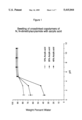
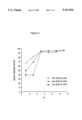
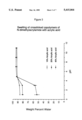
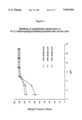
- FIGS. 1 to 4 are graphs showing the degree of swelling of various copolymers of the invention as a function of pH.
- FIG. 5 is a graph showing the degree of swelling of copolymers of this invention at two different pHs as a function of the amount of crosslinking agent in the copolymer.
- FIG. 6 is a graph showing the in vivo degradability of various copolymers of the invention.
- FIG. 7 is a graph showing the dependence of equilibrium water content (w) in hydrogels prepared by copolymerization of butylacrylate/acrylic acid and 4,4'-di(methacryloylamino) azobenzene on the content of acrylic acid (m) at pH 2 and pH 7 (preparation of hydrogels is described in Example 6).
- An “ionizable group” is a chemical group that dissociates into charged ions at pHs greater than about 4. Examples of such groups are carboxyl, SO 3 H, and substituted phenolic groups.
- aromatic azobond intends an azo group (--N ⁇ N--) with each nitrogen atom bound directly to a nuclear carbon atom of an aromatic ring, e.g., a benzene ring.
- the "gel point" of a crosslinking reaction is that point in the crosslinking reaction at which the reaction mixture loses fluidity.
- the products of reactions carried beyond the gel point are infinite network polymers that are insoluble in all solvents. See Odian, G., Principles of Polymerization, 2nd ed., Wiley-Interscience; ISBN 047105146-2; pp. 117-127.
- pH-dependent swelling intends a hydrogel that imbibes a substantially greater amount of water at the pH found in the colon (above about 4) than at the pH found in the stomach (below about 4). "Substantially greater” will normally intend at least about 10% more water, more usually at least about 30% more water.
- the word "selective" used to describe the release or delivery of drug from the invention dosage form intends that the substantial proportion (usually at least about 10%, more usually 50%) of the drug released from the dosage form is released in the colon as opposed to the upper regions of the gastrointestinal tract.
- hydrogels are composed of at least two types of ethylenically unsaturated monomers and a crosslinking agent that contains an aromatic azobond.
- One of the comonomer types contains no ionizable group.
- These comonomers are preferably acrylamides or acrylic acid esters of the formulas ##STR1## where R 1 is H, methyl or ethyl, and R 2 and R 3 are individually H, alkyl of 1 to 8 carbon atoms (methyl-octyl), hydroxyalkyl of 1-12 carbon atoms and 1-3 hydroxy groups, or hydroxyalkoxyalkyl of 2-12 carbon atoms and 1-3 hydroxy groups ##STR2## where R 1 is as above and R 4 is alkyl of 1 to 12 carbon atoms (methyl-dodecyl), hydroxyalkyl of 1 to 12 carbon atoms and 1 to 3 hydroxy groups, or hydroxyalkoxyalkyl of 2 to 12 carbon atoms and 1 to 3 hydroxy groups.
- the alkyl groups of greater than 2 carbon atoms that are represented by R 2 , R 3 and R 4 may be linear or branched
- comonomers of the non-ionizable type are styrene, N-vinyl pyrollidone, acrylonitrile, N-acryloyl morpholine, methacrylonitrile, vinylacetate, and alpha-methylstyrene.
- the other type of comonomer contains an ionizable group.
- These comonomers are preferably unsaturated acids of the formula ##STR3## where R 5 is alkyl of 1 to 4 carbon atoms.
- comonomers that contain an ionizable group include N-methylacryloylglycine, N-methacryloyl epsilon-aminocaproic acid, 2-sulfoethylmethacrylate, N-methacryloylundecanoic acid, maleic anhydride, crotonic acid, and similar monomers.
- a third comonomer type having a reactive group, such as an active ester group, will be included to provide reactive sites for crosslinking.
- Preferred comonomers of this third type are carboxylic esters of the formula: ##STR4## where R 6 is hydrogen, methyl or ethyl, R 7 is a residue of p-nitrophenol, 2,3,5-trichlorophenol, 8-hydroxyquinoline, N-hydroxysuccinimide, N-hydroxyphthalimide, or any carbonyl activating group, n is 0 or an integer from 1 to 3 inclusive, and x is 1 when n is from 1 to 3 and an integer from 2 to 10, inclusive, when n is 0; and the functional groups of the bifunctional crosslinking agent are amino groups or hydroxy groups.
- reactive comonomers are N-methacryloylated oligopeptides whose terminal COOH group is activated by R 7 or chlorides of unsaturated acids.
- the crosslinking agent contains an aromatic azobond that is cleaved by the azoreductases that are present in the colon.
- the hydrogels may be crosslinked with a mixture of such crosslinking agents and agents that do not contain aromatic azobonds.
- the crosslinking agent will either also contain two ethylenically unsaturated bonds or be bifunctional (have groups, such as amino or hydroxy groups, preferably located at the ends of the molecule, that will react with the reactive groups, such as the reactive ester groups, in the precursor).
- the azobond-containing crosslinking agents that may be used in the crosslinking copolymerization process are ##STR5## where R 1 is ##STR6## where x is an integer from 1 to 12 inclusive, and R 6 is H, methyl or ethyl, and R 2 , R 3 , R 4 and R 5 are individually H, CH 3 , OCH 3 , Br, Cl, F, I, NO 2 , CN or C(O)CH 3 .
- Preferred crosslinking agents for use in the crosslinking copolymerization synthesis are 4,4'-di(methacryloylamino)azobenzene, 4,4'-di(N-methacryloyl-epsilon-aminocaproyl)aminoazobenzene, 4,4'-di(meth-acryloylamino)-3,3',5,5'tetrachloroazobenzene, 4,4'-di(methacryloylglycinamidoazobenzene; and di(methacryloylamino)-3,3',5,5'tetranitroazobenzene.
- Preferred crosslinking agents of the bifunctional type are compounds of the formula ##STR7## where n is an integer from 1 to 12 inclusive, and Y is a functional group, such as NH 2 or OH, that reacts with the reactive group in the polymeric precursor to form a covalent bond.
- the extent of pH-dependent swelling exhibited by the hydrogels will depend on (a) the amount of ionizable comonomer in the copolymer (b) the structure and compositional ratios of all monomers and (c) the network density (degree of crosslinking) of the copolymer. (Swelling also depends on the nature of the drug as discussed infra.) In general, the extent of pH-dependent swelling increases with increasing amounts of ionizable monomer and decreasing degree of crosslinking. A very important factor is the hydrophobic-hydrophilic balance in the hydrogel structure, since it influences the difference in the degrees of swelling at pH 2 and pH 7.
- the mol % of ionizable comonomer in the copolymer will be in the range of about 1 to 90, preferably 20 to 70.
- the mol % of nonionizable comonomer in the copolymer will normally be in the range of 10 to 98.95, preferably 30 to 80.
- the mol % of third monomer in copolymer made via polymeric precursors will usually be in the range of 0.1 to 50, preferably 3 to 20.
- the amount of crosslinking agent incorporated in the copolymers will be sufficient to insure that the crosslinking reaction occurs beyond the gel point. Normally about 0.05 to 15 mol % crosslinking agent is incorporated, preferably 0.1 to 1 mol %.
- the hydrogels may be made by crosslinking copolymerization or by first forming a polymeric precursor containing pendant reactive groups and crosslinking the precursor using a bifunctional crosslinking agent.
- the comonomers and crosslinking agents are dissolved in a suitable solvent such as dimethylsulfoxide (DMSO), dimethylformamide (DMF), DMSO/H 2 O, or ethanol (EtOH).
- a suitable solvent such as dimethylsulfoxide (DMSO), dimethylformamide (DMF), DMSO/H 2 O, or ethanol (EtOH).
- the copolymerization can be performed without solvent if desired.
- the reaction is carried out in the absence of oxygen and is initiated by adding a free radical initiator to the reaction mixture.
- the reaction conditions are such that the reaction proceeds beyond the gel point.
- the ionizable comonomer, nonionizable comonomer and the comonomer containing a reactive group are dissolved in a solvent such as those described above.
- the copolymerization of the three types of comonomers is carried out in the absence of oxygen, and is initiated by adding a free radical initiator to the solution.
- a 3 to 20% by weight solution of the resulting polymeric precursor containing side chains terminated by reactive groups in a solvent is combined with the bifunctional aromatic azobond-containing crosslinking agent and optionally a crosslinking agent without azobonds is also added.
- Crosslinks are formed via reactions between the reactive groups on the precursor and the functional groups on the crosslinking agent.
- the drugs that are advantageously administered via the dosage forms of the invention are drugs that would be destroyed by the environments of the stomach/small intestine, have an irritating or other undesirable effect on the tissues of the upper gastrointestinal tract, or are intended to locally treat conditions within the colon or colonic tissue.
- Systemically acting drugs that are delivered via these dosage forms must be capable of being absorbed into circulation through the mucosal lining of the colon.
- Examples of drugs that may be delivered advantageously via this invention are peptide or protein drugs such as insulin, calcitonin, angiotensin, cyclosporin, vasopressin, and somatostatin.
- the drugs may be formulated with the hydrogels by dispersing them in the hydrogels or by enclosing or encapsulating them in a film or membrane of the hydrogel. Dispersions are made by mixing the drug with the solution of monomers/polymeric precursor and then forming the hydrogel by crosslinking as described above. Alternatively a body of the hydrogel may be soaked in a solution or dispersion of the drug which swells the hydrogel and the body then dried (solution sorption technique). The drug-hydrogel dispersions may be cut or otherwise shaped into a body containing the desired unit dose of drug.
- the amount of drug administered may be varied by varying the concentration of drug in the solution or dispersion, the solvent used to create the solution or dispersion, and the volume of the drug-hydrogel body.
- the drugs may be enclosed in a film or membrane of the copolymer by forming the copolymer into a film or membrane, placing a desired amount of drug between two pieces of the film/membrane and sealing the edges of the pieces. In this manner a container whose walls are made of the copolymer and whose lumen contains a unit dose of drug are prepared.
- drug tablets, capsules or microspheres may be coated with the polymeric precursor and the precursor crosslinked in situ using the procedure described above.
- Drug tablets, capsules or microspheres may also be coated with the hydrogel using a latex-type suspension of the hydrogel (e.g., a suspension of fine particles in a swelling agent/dispersant).
- a latex-type suspension of the hydrogel e.g., a suspension of fine particles in a swelling agent/dispersant.
- various additives and carriers may be included in the drug formulation, if desired.
- the dosage forms of the invention are administered orally to the animal or human to be treated with the drug. Because the azoaromatic crosslinks of the hydrogel are substantially stable in the stomach and small intestine and because of the low degree of swelling of the hydrogel in the acidic conditions of the stomach no or a limited amount of drug is released in the stomach. Depending upon the drug involved and the degree of swelling exhibited by the hydrogel, drug may or may not be released within the small intestine.
- the particular hydrogel used with a given drug will depend upon the properties of the drug (molecular weight and water solubility) and the desired pattern of drug release. In general, drugs with low water solubilities and high molecular weights will be released more slowly from a given hydrogel.
- hydrogels having a higher degree of swelling may be required to achieve desired release of high molecular weight, water insoluble drugs.
- the degradation of the hydrogels by the microbial azoreductases of the gastrointestinal tract depends strongly on the equilibrium degree of swelling of the hydrogel.
- Drugs with aromatic amino groups such as 5-ASA and N-(4-aminobenzenesulfonyl)-N'-butylurea may also be covalently bound to the hydrogels of the invention via aromatic azobonds or in a similar manner to hydrogels that exhibit pH-dependent swelling but lack aromatic azobonds.
- Such conjugates are composed of: the ionizable comonomer; the nonionizable comonomer; a third ethylenically unsaturated comonomer having a reactive group and which when incorporated into the copolymer has the drug covalently bound thereto via an aromatic azobond; and a bifunctional crosslinking agent.
- the conjugate is crosslinked beyond the gel point and contains sufficient ionizable comonomer to exhibit pH-dependent swelling.
- the bifunctional crosslinking agent may or may not contain an aromatic azobond or may consist of a mixture of a crosslinking agent that contains an aromatic azobond and a crosslinking agent that does not contain an aromatic azobond.
- drug release occurs via cleavage of the azobond between the drug and hydrogel by azoreductases. Such enzymatic degradation is, in turn, controlled by the pH-dependent swelling of the hydrogel.
- conjugates may be made by a variation of the polymeric precursor mode for making the invention hydrogels.
- the precursor is first formed as described above. It is then reacted with the bifunctional crosslinking agent and a derivative of the drug that contains a functional group that will react with the reactive group of the precursor and which has the drug coupled to the remainder of the derivative by an aromatic azobond.
- the bifunctional crosslinking agent for instance, in the case of 5-ASA, 4-[(4-hydroxy-3-carboxyphenylazo]-N-(2-aminoethyl)benzamide could be used as the 5-ASA derivative.
- bifunctional crosslinking agents that do not contain an azobond are the alkylenediamines, e.g., hexylenediamine.
- the amount of drug incorporated into these conjugates will depend upon the amount of the reactive group-containing monomer in the precursor and the relative amounts and reactivities of the drug derivatives and bifunctional crosslinking agent. By knowing the amount of drug per unit weight of conjugate an appropriate amount of conjugate may be administered orally to deliver the desired dose of drug to the colon.
- composition (mol %) of the resulting hydrogel was: 49.0% N,N-dimethylacrylamide; 40% acrylic acid; 10% N-t-butylacrylamide; and 1.0% 4,4'-di(methylacryloylamino)azobenzene.
- compositions of these copolymers were: 40% acrylic acid; 10% N-t-butylacrylamide, 49-49.9% N,N-dimethylacrylamide and 0.1%, 0.2%, 0.5%, and 1.0% 4,4'-di(methacryloylamino) azobenzene.
- FIG. 5 shows that the degree of crosslinking has a significant effect upon swelling at low pHs but much less effect at higher pHs.
- Diffusion experiments were done in a two compartment diffusion cell.
- the cell was thermostated at 3° C.
- the cell volumes were 2.3 ml and the area available for diffusion was 0.785 cm 2 .
- a preswollen hydrogel membrane was mounted between the two compartments using a silicone rubber ring to protect the membrane.
- the donor compartment was then filled with a solution of drug (radioactive) in buffer and the receiver compartment was filled with buffer. At regular time intervals samples were taken from the receiver side and replaced with buffer solution, and the samples counted in a scintillation counter.
- the permeability of insulin through a membrane composed of 40% acrylic acid, 10% N-t-butylacrylamide, 49% N,N-dimethylacrylamide and 1% N,N-di(methacryloylamino)azobenzene (all in mol %) was determined to be 3.3 ⁇ 10 -8 cm 2 /s at pH 2 and at pH 7.4 to be 4.7 ⁇ 10 -7 cm 2 /s.
- CFE cell free extract
- the gel was left in the following solution: 4 ml CFE, 2 ml phosphate buffer 0.1M pH 7.4, 0.47 mg/ml glucose-6-phosphate, 0.38 mg/ml NADP and 0.11 mg/ml benzyl-viologen. This was bubbled with nitrogen to obtain anaerobic conditions and 12 U glucose-6-phosphate dehydrogenase was added to initiate the reaction.
- Gel A initial degree of swelling 56.5% (swollen weight/dry weight). After degradation the swelling increased to 103.3%, i.e., increase by 83%.
- Gel B initial 19.6%; after degradation 29.5%; increase 51%.
- Gel C initial 14.8%; after degradation 18.0%; increase 22%.
- the size of the swollen gels during degradation changed accordingly. Similar results can be obtained by changing the structure of gels by varying the content of ionizable comonomers. These results demonstrate the possibility of regulating the rate of degradation of the hydrogels by tailor-making their structure.
- a hydrogel disc 1 mm in height and 4 mm in diameter was preswollen in PBS pH 7.4 at 37° C.
- the gel was placed in a nylon bag (6 ⁇ 6 mm) and implanted in the cecum of a 200 g male rat (Sprague-Dawley) anaesthetized with ether. This was done by incision through the midline of the abdominal muscle opening the peritoneal cavity. The cecum was found right underneath the incision and was carefully pulled out of the body. A small cut was made in the upper part of the cecum and with a pair of ring-forceps, the bag containing the hydrogel was placed inside the cecum and secured with silk through the opening.
- the opening in the cecum was tied off to prevent leakage and was carefully washed clean and inspected for any leakage. Then the cecum was inserted back into the peritoneal cavity and the incisions were sutured closed. The rat woke up shortly thereafter. The animal was allowed rat chow and water ad libitum. After two days the rat was sacrificed and the bag recovered from the cecum. The gel was washed in buffer and swollen to equilibrium and weighed. After washing with water, the gel was dried and the dry weight measured.
- compositions of the hydrogels tested were as follows: Gel #1: 49.8% N,N-dimethylacrylamide, 40% acrylic acid, 10% N-t-butylacrylamide and 0.2% 4,4'-di(methacryloylamino)azobenzene.
- Gel #2 49.5% N,N-dimethylacrylamide, 40% acrylic acid, 10% N-tert.butylacrylamide and 0.5% 4,4'-di(methacryloylamino)azobenzene.
- Gel #3 49.0% N,N-dimethylacrylamide, 40% acrylic acid, 10% N-tert.butylacrylamide and 1.0% 4,4'-di(methacryloylamino)azobenzene.
- Hydrogels of acrylic acid and butyl acrylate crosslinked with di(4,4'-methacryloylamino)azobenzene were prepared by radical copolymerization with benzoylperoxide as the initiator. Solutions of monomers (1 g), crosslinker (1 mol % with respect to the monomeric mixture), initiator (0.1 mol % with respect to monomeric mixture) in 2 ml of DMSO were placed in a 5 ml ampule, sparged 10 min with nitrogen, sealed and polymerized 50 h at 80° C. in a thermostated water bath. After polymerization the ampule was broken and the hydrogel washed in ethanol (3 days), water (1-2 days) and buffer (2 weeks) at 25° C.
- the degrees of swelling of the hydrogels were determined gravimetrically as the content of water in equilibrium swollen samples at pH 2 and 7, 37° C. and with 0.32 mol dm -3 osmolarity, and are shown in FIG. 7.
- N-(2-hydroxypropyl)methacrylamide and N-methacryloylglycylglycine p-nitrophenyl ester (mol ratio 4:1) were copolymerized in a mixture of acetone and dimethyl sulfoxide (95:5, v/v) for 40 h at 50° C.
- the total concentration of monomers was 12.5 %-wt and the concentration of azobisisobutyronitrile was 0.6 %-wt.
- the p-nitrophenoxy (ONp) group content as determined by UV spectrophotometry was 25.0 mol %.
- N-(2-hydroxypropyl)methacrylamide, N-methacryloylglycylglycine p-nitrophenyl ester and acrylic acid (mol ratio 7:2:1) were copolymerized in a mixture of acetone and DMSO (90:10, v/v) for 40 h at 55° C.
- the total concentration of monomers was 11%-wt and concentration of azobisisobutyronitrile was 0.7%-wt.
- the content of ONp groups as determined by UV spectrophotometry was 23.5 mol %.
- the coupling of salicylic acid to the diazonium salt prepared as above was performed as follows: to the cooled solution of the salt 3.45 g (2.75 ⁇ 10 -2 mol) of salicylic acid in 20% Na 2 CO 3 were added. The pH of the reaction mixture was adjusted to 9-10 and the mixture was reacted 1 h under cooling and stirring. The sodium salt of ethyl-4-(4-hydroxy-3-carboxyphenylazo)benzoate which precipitated during the reaction was filtered off, recrystallized from C 2 H 5 OH/H 2 O (1:7) . The free acid was isolated by dissolving the sodium salt in C 2 H 5 OH/H 2 O, acidification of conc. HCl and crystallization. Overall yield was 5 4 g (68%).
- a piece of gel (13 mm in diameter in swollen state, 3 mm in thickness) with the composition: 0.2% 4,4'-di(methacryloylamino)azobenzene, 40% acrylic acid, 10% N-tert.butylacrylamide, and 49.8% N,N-dimethylacrylamide prepared according to Example 1, was soaked in a 14 C-labeled insulin solution (2 mg/ml) at pH 11 for 15 h. The gel was dried at room temperature for 40 h and quickly washed with buffer pH 2 to remove the drug adsorbed on the surface.
- the gel was immersed in buffer pH 2, then in a mixture of cell-free extract (CFE), isolated from rat cecum, and cofactors (6 ml containing 4 ml CFE, 2 ml phosphate buffer 0.1M pH 7.4, 0.47 mg/ml glucose-6-phosphate, 0.38 mg/ml NADP, and 0.11 mg/ml benzyl viologen).
- CFE cell-free extract
- the mixture was bubbled with nitrogen and the degradation was initiated by addition of 12 U glucose-6-phosphate-dehydrogenase. Release of insulin was observed during the whole period of observation (5 h) as detected by monitoring the increase in radioactivity of the supernatant.
Landscapes
- Health & Medical Sciences (AREA)
- Chemical & Material Sciences (AREA)
- Medicinal Chemistry (AREA)
- Pharmacology & Pharmacy (AREA)
- Epidemiology (AREA)
- Life Sciences & Earth Sciences (AREA)
- Animal Behavior & Ethology (AREA)
- General Health & Medical Sciences (AREA)
- Public Health (AREA)
- Veterinary Medicine (AREA)
- Inorganic Chemistry (AREA)
- Chemical Kinetics & Catalysis (AREA)
- Polymers & Plastics (AREA)
- Organic Chemistry (AREA)
- Engineering & Computer Science (AREA)
- Bioinformatics & Cheminformatics (AREA)
- Medicinal Preparation (AREA)
- Addition Polymer Or Copolymer, Post-Treatments, Or Chemical Modifications (AREA)
- Compositions Of Macromolecular Compounds (AREA)
Abstract
Colonic-targeted oral drug dosage forms composed of a drug confined within a crosslinked hydrogel that exhibits pH-dependent swelling and is composed of an ionizable comonomer such as acrylic acid, a nonionizable comonomer such as an acrylamide, and a crosslinking agent that contains an aromatic azobond. Selective drug release in the colon occurs by a combination of pH-dependent swelling of the hydrogel and degradation of the hydrogel by enzymatic cleavage of the azobonds by azoreductases.
Description
This application is a continuation of application Ser. No. 07/513,267, filed Apr. 18, 1990, now abandoned.
The present invention relates to novel hydrogels that contain aromatic azobonds in the crosslinks and exhibit pH-dependent swelling that are useful for making oral drug dosage forms that release drug selectively in the colon.
Various enteric coatings have been used previously to orally administer drugs that are labile in the stomach and/or are targeted at the large intestine. See Remington's Pharmaceutical Sciences, Mack Publishing Company, Easton, Pa., 17th Edition (1985), p. 1637.
Several prior patents describe dosage forms for selectively delivering 5-aminosalicylic acid (5-ASA) to the colon. Halskov (U.S. Pat. No. 4,496,553) describes formulations of 5-ASA with conventional enteric carriers (composed of lactose, potato starch, magnesium stearate and cellulose) that are not readily soluble at low pHs. Similarly, Canadian Patent 1,172,570 describes solid dosage forms of 5-ASA that are coated with methacrylic acid-methacrylic acid ester copolymers that are relatively insoluble in gastric fluid but highly soluble at the higher pHs found in the intestinal fluids. Other patents, such as U.S. Pat. Nos. 4,190,176 and 4,489,197, describe conjugating 5-ASA to nonabsorbable aromatic polymers via azobonds that are stable in the stomach but are cleaved enzymatically in the large intestine to release the 5-ASA.
U.S. Pat. No. 4,663,308--which is perhaps the closest art to the present invention--employs high molecular weight polymers of one or more ethylenically unsaturated monomers copolymerized with a divinylazobenzene compound to coat or otherwise entrap drugs that are labile in the stomach, have an undesirable effect in the stomach, or are targeted at the colon. Release of drug occurs via the cleavage of the azobonds by the azoreductases that abound in the colon but are not prevalent in the stomach or small intestine. The patent suggests various acrylic acid esters and amides as well as unsaturated acids as possible monomers. However, the only copolymer exemplified in the patent is a hydroxyethyl-methacrylate (HEMA)-styrene copolymer that contains no ionizable group. Further, the only ionizable group-containing polymer exemplified in the patent is a crosslinked polyacrylic acid. In this regard, drug release from the formulations of the present invention is controlled by a combination of pH-dependent swelling of the copolymer and degradation of the hydrogel via cleavage of the azobonds by the azoreductases in the colon. Further, the copolymers of U.S. Pat. No. 4,663,308 are crosslinked under the gel point (branched) and are thus soluble in organic solvents. In contrast, the copolymers of the present invention are crosslinked beyond the gel point and are insoluble in any solvent.
Siegel et al., J. Controlled Release (1988) 8(2):179-182, employs hydrophobic polyamine hydrogels that swell selectively at low pHs to administer drugs orally in a manner that avoids premature release of drug in the oral cavity but permits release in the stomach. Such hydrogels would not be useful for delivering drugs selectively to the colon.
The present invention provides: novel crosslinked hydrogels that undergo pH-dependent swelling and contain azobonds that are enzymatically cleavable by the azoreductases that reside in the colon; oral drug dosage forms composed of such hydrogels that permit selective release of drug in the colon; methods for selectively delivering drugs to the colon employing such oral dosage forms; two processes for making such hydrogels; conjugates of hydrogels which exhibit pH-dependent swelling, and optionally include enzymatically-cleavable azobonds, and amino group-containing drugs that are covalently bound to the hydrogel via an aromatic azobond; and a process for making such conjugates.
The crosslinked hydrogels of the invention are comprised of: (a) at least one ethylenically unsaturated comonomer containing no ionizable group; (b) at least one ethylenically unsaturated comonomer containing one or more ionizable groups; (c) a crosslinking agent containing an aromatic azobond; and (d) optionally a crosslinking agent without aromatic azobonds, said hydrogel being crosslinked beyond the gel point and containing an amount of (b) such that the hydrogel exhibits pH-dependent swelling.
The oral dosage forms of the invention comprise a drug confined within, e.g., dispersed in or encapsulated by, the hydrogel, or bound via aromatic azobonds to the hydrogel.
The method of delivering a drug selectively to the colon of a patient according to the invention comprises confining the drug within the hydrogel and administering the thus-confined drug orally to the patient.
One of the processes for making the above-described hydrogels comprises the steps of: forming a solution of the comonomers ((a) and (b) above), the azobond-containing crosslinking agent ((c) above), and optionally (d); subjecting the solution to crosslinking copolymerization conditions and carrying out the reaction beyond the gel point.
The other process for making the hydrogels comprises: forming a solution of the comonomers and at least one ethylenically unsaturated comonomer having a terminal reactive group; copolymerizing the mixture of the three types of comonomers to form a polymeric precursor; forming a mixture of the polymeric precursor and one or more crosslinking agents containing moieties which can form covalent bonds with the reactive group; and subjecting the mixture to crosslinking conditions and carrying out the crosslinking beyond the gel point.
The drug-hydrogel conjugates of the invention comprise: (a) at least one ethylenically unsaturated comonomer unit containing no ionizable group; (b) at least one ethylenically unsaturated comonomer unit containing an ionizable group; (c) at least one ethylenically unsaturated comonomer unit having a drug covalently bound thereto via an aromatic azobond; and (d) a bifunctional crosslinking agent, said hydrogel being crosslinked beyond the gel point and containing an amount of (b) such that the copolymer exhibits pH-dependent swelling. The crosslinking agent may or may not contain aromatic azobonds or it may be a mixture of an agent that contains an aromatic azobond and an agent that does not contain an azobond.
FIGS. 1 to 4 are graphs showing the degree of swelling of various copolymers of the invention as a function of pH.
FIG. 5 is a graph showing the degree of swelling of copolymers of this invention at two different pHs as a function of the amount of crosslinking agent in the copolymer.
FIG. 6 is a graph showing the in vivo degradability of various copolymers of the invention.
FIG. 7 is a graph showing the dependence of equilibrium water content (w) in hydrogels prepared by copolymerization of butylacrylate/acrylic acid and 4,4'-di(methacryloylamino) azobenzene on the content of acrylic acid (m) at pH 2 and pH 7 (preparation of hydrogels is described in Example 6).
A. Definitions
"Ethylenically unsaturated" intends the presence of a carbon-to-carbon double bond (>C═C<).
An "ionizable group" is a chemical group that dissociates into charged ions at pHs greater than about 4. Examples of such groups are carboxyl, SO3 H, and substituted phenolic groups.
An "aromatic azobond" intends an azo group (--N═N--) with each nitrogen atom bound directly to a nuclear carbon atom of an aromatic ring, e.g., a benzene ring.
The "gel point" of a crosslinking reaction is that point in the crosslinking reaction at which the reaction mixture loses fluidity. The products of reactions carried beyond the gel point are infinite network polymers that are insoluble in all solvents. See Odian, G., Principles of Polymerization, 2nd ed., Wiley-Interscience; ISBN 047105146-2; pp. 117-127.
As used herein "pH-dependent swelling" intends a hydrogel that imbibes a substantially greater amount of water at the pH found in the colon (above about 4) than at the pH found in the stomach (below about 4). "Substantially greater" will normally intend at least about 10% more water, more usually at least about 30% more water.
The word "selective" used to describe the release or delivery of drug from the invention dosage form intends that the substantial proportion (usually at least about 10%, more usually 50%) of the drug released from the dosage form is released in the colon as opposed to the upper regions of the gastrointestinal tract.
B. Composition of Hydrogels
The invention hydrogels are composed of at least two types of ethylenically unsaturated monomers and a crosslinking agent that contains an aromatic azobond.
One of the comonomer types contains no ionizable group. These comonomers are preferably acrylamides or acrylic acid esters of the formulas ##STR1## where R1 is H, methyl or ethyl, and R2 and R3 are individually H, alkyl of 1 to 8 carbon atoms (methyl-octyl), hydroxyalkyl of 1-12 carbon atoms and 1-3 hydroxy groups, or hydroxyalkoxyalkyl of 2-12 carbon atoms and 1-3 hydroxy groups ##STR2## where R1 is as above and R4 is alkyl of 1 to 12 carbon atoms (methyl-dodecyl), hydroxyalkyl of 1 to 12 carbon atoms and 1 to 3 hydroxy groups, or hydroxyalkoxyalkyl of 2 to 12 carbon atoms and 1 to 3 hydroxy groups. The alkyl groups of greater than 2 carbon atoms that are represented by R2, R3 and R4 may be linear or branched
Other comonomers of the non-ionizable type are styrene, N-vinyl pyrollidone, acrylonitrile, N-acryloyl morpholine, methacrylonitrile, vinylacetate, and alpha-methylstyrene.
The other type of comonomer contains an ionizable group. These comonomers are preferably unsaturated acids of the formula ##STR3## where R5 is alkyl of 1 to 4 carbon atoms.
Other comonomers that contain an ionizable group include N-methylacryloylglycine, N-methacryloyl epsilon-aminocaproic acid, 2-sulfoethylmethacrylate, N-methacryloylundecanoic acid, maleic anhydride, crotonic acid, and similar monomers.
When the hydrogels are formed by first synthesizing a polymeric precursor and then crosslinking the precursor, a third comonomer type having a reactive group, such as an active ester group, will be included to provide reactive sites for crosslinking. Preferred comonomers of this third type are carboxylic esters of the formula: ##STR4## where R6 is hydrogen, methyl or ethyl, R7 is a residue of p-nitrophenol, 2,3,5-trichlorophenol, 8-hydroxyquinoline, N-hydroxysuccinimide, N-hydroxyphthalimide, or any carbonyl activating group, n is 0 or an integer from 1 to 3 inclusive, and x is 1 when n is from 1 to 3 and an integer from 2 to 10, inclusive, when n is 0; and the functional groups of the bifunctional crosslinking agent are amino groups or hydroxy groups.
Other reactive comonomers are N-methacryloylated oligopeptides whose terminal COOH group is activated by R7 or chlorides of unsaturated acids.
The crosslinking agent contains an aromatic azobond that is cleaved by the azoreductases that are present in the colon. (As indicated above, the hydrogels may be crosslinked with a mixture of such crosslinking agents and agents that do not contain aromatic azobonds.) Depending upon the manner in which the copolymer is synthesized (i.e., by crosslinking copolymerization or by crosslinking of a polymeric precursor), the crosslinking agent will either also contain two ethylenically unsaturated bonds or be bifunctional (have groups, such as amino or hydroxy groups, preferably located at the ends of the molecule, that will react with the reactive groups, such as the reactive ester groups, in the precursor).
The azobond-containing crosslinking agents that may be used in the crosslinking copolymerization process are ##STR5## where R1 is ##STR6## where x is an integer from 1 to 12 inclusive, and R6 is H, methyl or ethyl, and R2, R3, R4 and R5 are individually H, CH3, OCH3, Br, Cl, F, I, NO2, CN or C(O)CH3.
Preferred crosslinking agents for use in the crosslinking copolymerization synthesis are 4,4'-di(methacryloylamino)azobenzene, 4,4'-di(N-methacryloyl-epsilon-aminocaproyl)aminoazobenzene, 4,4'-di(meth-acryloylamino)-3,3',5,5'tetrachloroazobenzene, 4,4'-di(methacryloylglycinamidoazobenzene; and di(methacryloylamino)-3,3',5,5'tetranitroazobenzene.
Preferred crosslinking agents of the bifunctional type are compounds of the formula ##STR7## where n is an integer from 1 to 12 inclusive, and Y is a functional group, such as NH2 or OH, that reacts with the reactive group in the polymeric precursor to form a covalent bond.
The extent of pH-dependent swelling exhibited by the hydrogels will depend on (a) the amount of ionizable comonomer in the copolymer (b) the structure and compositional ratios of all monomers and (c) the network density (degree of crosslinking) of the copolymer. (Swelling also depends on the nature of the drug as discussed infra.) In general, the extent of pH-dependent swelling increases with increasing amounts of ionizable monomer and decreasing degree of crosslinking. A very important factor is the hydrophobic-hydrophilic balance in the hydrogel structure, since it influences the difference in the degrees of swelling at pH 2 and pH 7.
Normally the mol % of ionizable comonomer in the copolymer will be in the range of about 1 to 90, preferably 20 to 70. Correlatively, the mol % of nonionizable comonomer in the copolymer will normally be in the range of 10 to 98.95, preferably 30 to 80. The mol % of third monomer in copolymer made via polymeric precursors will usually be in the range of 0.1 to 50, preferably 3 to 20. The amount of crosslinking agent incorporated in the copolymers will be sufficient to insure that the crosslinking reaction occurs beyond the gel point. Normally about 0.05 to 15 mol % crosslinking agent is incorporated, preferably 0.1 to 1 mol %.
C. Synthesis of Hydrogels
As indicated previously, the hydrogels may be made by crosslinking copolymerization or by first forming a polymeric precursor containing pendant reactive groups and crosslinking the precursor using a bifunctional crosslinking agent.
In the crosslinking copolymerization reaction the comonomers and crosslinking agents are dissolved in a suitable solvent such as dimethylsulfoxide (DMSO), dimethylformamide (DMF), DMSO/H2 O, or ethanol (EtOH). The copolymerization can be performed without solvent if desired. The reaction is carried out in the absence of oxygen and is initiated by adding a free radical initiator to the reaction mixture. The reaction conditions are such that the reaction proceeds beyond the gel point.
In the other reaction scheme the ionizable comonomer, nonionizable comonomer and the comonomer containing a reactive group are dissolved in a solvent such as those described above. The copolymerization of the three types of comonomers is carried out in the absence of oxygen, and is initiated by adding a free radical initiator to the solution. A 3 to 20% by weight solution of the resulting polymeric precursor containing side chains terminated by reactive groups in a solvent is combined with the bifunctional aromatic azobond-containing crosslinking agent and optionally a crosslinking agent without azobonds is also added. Crosslinks are formed via reactions between the reactive groups on the precursor and the functional groups on the crosslinking agent.
D. Formulation of Hydrogel and Drug
The drugs that are advantageously administered via the dosage forms of the invention are drugs that would be destroyed by the environments of the stomach/small intestine, have an irritating or other undesirable effect on the tissues of the upper gastrointestinal tract, or are intended to locally treat conditions within the colon or colonic tissue. Systemically acting drugs that are delivered via these dosage forms must be capable of being absorbed into circulation through the mucosal lining of the colon. Examples of drugs that may be delivered advantageously via this invention are peptide or protein drugs such as insulin, calcitonin, angiotensin, cyclosporin, vasopressin, and somatostatin.
The drugs may be formulated with the hydrogels by dispersing them in the hydrogels or by enclosing or encapsulating them in a film or membrane of the hydrogel. Dispersions are made by mixing the drug with the solution of monomers/polymeric precursor and then forming the hydrogel by crosslinking as described above. Alternatively a body of the hydrogel may be soaked in a solution or dispersion of the drug which swells the hydrogel and the body then dried (solution sorption technique). The drug-hydrogel dispersions may be cut or otherwise shaped into a body containing the desired unit dose of drug. The amount of drug administered may be varied by varying the concentration of drug in the solution or dispersion, the solvent used to create the solution or dispersion, and the volume of the drug-hydrogel body. The drugs may be enclosed in a film or membrane of the copolymer by forming the copolymer into a film or membrane, placing a desired amount of drug between two pieces of the film/membrane and sealing the edges of the pieces. In this manner a container whose walls are made of the copolymer and whose lumen contains a unit dose of drug are prepared. Alternatively, drug tablets, capsules or microspheres may be coated with the polymeric precursor and the precursor crosslinked in situ using the procedure described above. Drug tablets, capsules or microspheres may also be coated with the hydrogel using a latex-type suspension of the hydrogel (e.g., a suspension of fine particles in a swelling agent/dispersant). As will be appreciated by those of skill in the art, various additives and carriers may be included in the drug formulation, if desired.
The dosage forms of the invention are administered orally to the animal or human to be treated with the drug. Because the azoaromatic crosslinks of the hydrogel are substantially stable in the stomach and small intestine and because of the low degree of swelling of the hydrogel in the acidic conditions of the stomach no or a limited amount of drug is released in the stomach. Depending upon the drug involved and the degree of swelling exhibited by the hydrogel, drug may or may not be released within the small intestine. The particular hydrogel used with a given drug will depend upon the properties of the drug (molecular weight and water solubility) and the desired pattern of drug release. In general, drugs with low water solubilities and high molecular weights will be released more slowly from a given hydrogel. Accordingly, hydrogels having a higher degree of swelling may be required to achieve desired release of high molecular weight, water insoluble drugs. Correlatively, it may be desirable to use hydrogels having low degrees of swelling for drugs that have low molecular weights and/or that act as osmotic agents. In any event, the degradation of the hydrogels by the microbial azoreductases of the gastrointestinal tract depends strongly on the equilibrium degree of swelling of the hydrogel. By knowing the diffusion rate of drugs through the hydrogel, the transit time of the dosage form through the tract and the rate of enzymatic degradation, adjustment of copolymer composition, drug loading, and dosage form geometry can be made to obtain a desired drug release pattern.
E. Hydrogel-Drug Conjugates
Drugs with aromatic amino groups such as 5-ASA and N-(4-aminobenzenesulfonyl)-N'-butylurea may also be covalently bound to the hydrogels of the invention via aromatic azobonds or in a similar manner to hydrogels that exhibit pH-dependent swelling but lack aromatic azobonds. Such conjugates are composed of: the ionizable comonomer; the nonionizable comonomer; a third ethylenically unsaturated comonomer having a reactive group and which when incorporated into the copolymer has the drug covalently bound thereto via an aromatic azobond; and a bifunctional crosslinking agent. The conjugate is crosslinked beyond the gel point and contains sufficient ionizable comonomer to exhibit pH-dependent swelling. The bifunctional crosslinking agent may or may not contain an aromatic azobond or may consist of a mixture of a crosslinking agent that contains an aromatic azobond and a crosslinking agent that does not contain an aromatic azobond. In such conjugates drug release occurs via cleavage of the azobond between the drug and hydrogel by azoreductases. Such enzymatic degradation is, in turn, controlled by the pH-dependent swelling of the hydrogel.
These conjugates may be made by a variation of the polymeric precursor mode for making the invention hydrogels. The precursor is first formed as described above. It is then reacted with the bifunctional crosslinking agent and a derivative of the drug that contains a functional group that will react with the reactive group of the precursor and which has the drug coupled to the remainder of the derivative by an aromatic azobond. For instance, in the case of 5-ASA, 4-[(4-hydroxy-3-carboxyphenylazo]-N-(2-aminoethyl)benzamide could be used as the 5-ASA derivative. Examples of bifunctional crosslinking agents that do not contain an azobond are the alkylenediamines, e.g., hexylenediamine.
The amount of drug incorporated into these conjugates will depend upon the amount of the reactive group-containing monomer in the precursor and the relative amounts and reactivities of the drug derivatives and bifunctional crosslinking agent. By knowing the amount of drug per unit weight of conjugate an appropriate amount of conjugate may be administered orally to deliver the desired dose of drug to the colon.
F. Examples
The following examples further illustrate the various aspects of the invention. They are not intended to limit the invention in any manner.
1. Preparation of hydrogels by crosslinking copolymerization
1.341 ml N,N-dimethylacrylamide, 0.338 g N-t-butylacrylamide, 0.728 ml acrylic acid and 0.0925 g N,N-di(methacryloylamino)azobenzene was dissolved in 5.85 ml DMSO by heating in a waterbath (about 50° C.) to dissolve all solid compounds. Then the mixture was bubbled with nitrogen for 30 min and 12 ul t-butyl-peroxyoctoate was added as initiator. The mixture was polymerized between glass plates separated by a rubber ring to obtain membranes. The polymerization took place at 80° C. for 48 hr in a thermostated waterbath. The composition (mol %) of the resulting hydrogel was: 49.0% N,N-dimethylacrylamide; 40% acrylic acid; 10% N-t-butylacrylamide; and 1.0% 4,4'-di(methylacryloylamino)azobenzene.
In a similar manner two other hydrogels were prepared with 10% and 20% acrylic acid and correspondingly greater amount of N,N-dimethylacrylamide.
In addition corresponding sets of three hydrogels containing 10%, 20% and 40% acrylic acid respectively with acrylamide, N-methylacrylamide, or N-(2-hydroxypropyl) methacrylamide in place of N,N-dimethylacrylamide were prepared.
Also a set of four other hydrogels were prepared using varying amounts of crosslinking agent. The compositions of these copolymers were: 40% acrylic acid; 10% N-t-butylacrylamide, 49-49.9% N,N-dimethylacrylamide and 0.1%, 0.2%, 0.5%, and 1.0% 4,4'-di(methacryloylamino) azobenzene.
2. Evaluation of pH-dependent swelling of hydrogels
Three disks 10-15 mm in diameter were cut from each hydrogel membrane of Example 1. The equilibrium degree of swelling was measured using a citrate-borate-phosphate/HCl universal buffer system at pH 3, 5, 7, 9 and 11. Swelling at pH 1 was measured in a HCl/KCl buffer. The ionic strength was adjusted with sodium chloride to 0.16 in all buffer solutions. The swelling was measured at 37° C. After determination of the weight of the swollen gel, the gels were washed in water and dried in a vacuum oven at 40°-50° C. for 48 hr. The results of these tests are shown graphically in FIGS. 1-5.
As shown in FIGS. 1-4 the pH-dependent swelling is strongly dependent upon the amount of ionizable comonomer (acrylic acid) present. Swelling was also dependent upon the structure of the nonionizable comonomer, but to a lesser degree.
FIG. 5 shows that the degree of crosslinking has a significant effect upon swelling at low pHs but much less effect at higher pHs.
3. Evaluation of permeability of hydrogels
Diffusion experiments were done in a two compartment diffusion cell. The cell was thermostated at 3° C. The cell volumes were 2.3 ml and the area available for diffusion was 0.785 cm2. A preswollen hydrogel membrane was mounted between the two compartments using a silicone rubber ring to protect the membrane. The donor compartment was then filled with a solution of drug (radioactive) in buffer and the receiver compartment was filled with buffer. At regular time intervals samples were taken from the receiver side and replaced with buffer solution, and the samples counted in a scintillation counter.
The permeability of insulin through a membrane composed of 40% acrylic acid, 10% N-t-butylacrylamide, 49% N,N-dimethylacrylamide and 1% N,N-di(methacryloylamino)azobenzene (all in mol %) was determined to be 3.3×10⁻⁸ cm2 /s at pH 2 and at pH 7.4 to be 4.7×10⁻⁷ cm2 /s.
4. Degradability of hydrogels in vitro
Degradation of the gels was investigated using cell free extract (CFE) prepared from rat cecum contents. The method was modified from the method described by Brown (Brown, J., Applied and Environmental Microbiology, May 1981, 1283-1286). The cell free extract was prepared by suspending 1 g rat cecum contents in 10 ml potassium phosphate buffer 0.01M, pH 7.4. The microflora cells were sonically disrupted for 15 min at 0°-4° C., then the mixture was filtered through glasswool and centrifuged at 13,000 rpm at 0°-4° C. The supernatant is then isolated and kept in freezer until use. For the degradation experiments the gel was left in the following solution: 4 ml CFE, 2 ml phosphate buffer 0.1M pH 7.4, 0.47 mg/ml glucose-6-phosphate, 0.38 mg/ml NADP and 0.11 mg/ml benzyl-viologen. This was bubbled with nitrogen to obtain anaerobic conditions and 12 U glucose-6-phosphate dehydrogenase was added to initiate the reaction.
After 90 hr of degradation of a gel composed of 40% acrylic acid, 10% N-t-butylacrylamide, 49% N,N-dimethylacrylamide and 1% N,N-di(methacryloylamino)azobenzene (Gel B) 0.5 mm in thickness and 0.5 cm in diameter, the color of the gel changed from yellow to colorless, indicating cleavage of aromatic azo bonds. The degradation was evaluated by an increase in degree of swelling. Gel A containing 0.2% of crosslinking agent and Gel C containing 2% of crosslinking agent were also evaluated.
Three gels of the above-described structure were evaluated to determine the relationship between the degree of swelling and degradability in vitro. They differed in the network density and in their equilibrium degree of swelling.
Gel A: initial degree of swelling 56.5% (swollen weight/dry weight). After degradation the swelling increased to 103.3%, i.e., increase by 83%. Gel B: initial 19.6%; after degradation 29.5%; increase 51%. Gel C: initial 14.8%; after degradation 18.0%; increase 22%. The size of the swollen gels during degradation changed accordingly. Similar results can be obtained by changing the structure of gels by varying the content of ionizable comonomers. These results demonstrate the possibility of regulating the rate of degradation of the hydrogels by tailor-making their structure.
5. In vivo degradation of hydrogels
A hydrogel disc 1 mm in height and 4 mm in diameter was preswollen in PBS pH 7.4 at 37° C. The gel was placed in a nylon bag (6×6 mm) and implanted in the cecum of a 200 g male rat (Sprague-Dawley) anaesthetized with ether. This was done by incision through the midline of the abdominal muscle opening the peritoneal cavity. The cecum was found right underneath the incision and was carefully pulled out of the body. A small cut was made in the upper part of the cecum and with a pair of ring-forceps, the bag containing the hydrogel was placed inside the cecum and secured with silk through the opening. The opening in the cecum was tied off to prevent leakage and was carefully washed clean and inspected for any leakage. Then the cecum was inserted back into the peritoneal cavity and the incisions were sutured closed. The rat woke up shortly thereafter. The animal was allowed rat chow and water ad libitum. After two days the rat was sacrificed and the bag recovered from the cecum. The gel was washed in buffer and swollen to equilibrium and weighed. After washing with water, the gel was dried and the dry weight measured.
The compositions of the hydrogels tested were as follows: Gel #1: 49.8% N,N-dimethylacrylamide, 40% acrylic acid, 10% N-t-butylacrylamide and 0.2% 4,4'-di(methacryloylamino)azobenzene. Gel #2: 49.5% N,N-dimethylacrylamide, 40% acrylic acid, 10% N-tert.butylacrylamide and 0.5% 4,4'-di(methacryloylamino)azobenzene. Gel #3: 49.0% N,N-dimethylacrylamide, 40% acrylic acid, 10% N-tert.butylacrylamide and 1.0% 4,4'-di(methacryloylamino)azobenzene. Gel #4: 19.0% N,N-dimethylacrylamide, 70% acrylic acid, 10% N-t-butylacrylamide and 1.0% 4,4'-di(methacryloylamino)azobenzene. The visible appearance of some samples were found to change from dark yellow to colorless. This was more pronounced for gels with lower crosslinking densities. The increase in swelling was evaluated as the percent increase in water content (i.e., weight of swollen gel after degradation--weight of swollen gel before degradation)×100%/(weight of swollen gel before degradation). The results of these tests are shown in FIG. 6.
6. Hydrogels prepared by crosslinking copolymerization of butylacrylate, acrylic acid and 4,4-(methacryloylamino)azobenzene
A) Synthesis of Hydrogels
Hydrogels of acrylic acid and butyl acrylate crosslinked with di(4,4'-methacryloylamino)azobenzene were prepared by radical copolymerization with benzoylperoxide as the initiator. Solutions of monomers (1 g), crosslinker (1 mol % with respect to the monomeric mixture), initiator (0.1 mol % with respect to monomeric mixture) in 2 ml of DMSO were placed in a 5 ml ampule, sparged 10 min with nitrogen, sealed and polymerized 50 h at 80° C. in a thermostated water bath. After polymerization the ampule was broken and the hydrogel washed in ethanol (3 days), water (1-2 days) and buffer (2 weeks) at 25° C.
B) Evaluation of Swelling
The degrees of swelling of the hydrogels were determined gravimetrically as the content of water in equilibrium swollen samples at pH 2 and 7, 37° C. and with 0.32 mol dm-3 osmolarity, and are shown in FIG. 7.
7. Degradable hydrogels prepared by crosslinking of polymeric precursors
A) Preparation of polymeric precursors
N-(2-hydroxypropyl)methacrylamide and N-methacryloylglycylglycine p-nitrophenyl ester (mol ratio 4:1) were copolymerized in a mixture of acetone and dimethyl sulfoxide (95:5, v/v) for 40 h at 50° C. The total concentration of monomers was 12.5 %-wt and the concentration of azobisisobutyronitrile was 0.6 %-wt. After polymerization the solution was rotoevaporated to a viscous liquid and precipitated into an excess of acetone/diethyl ether (3:2). The p-nitrophenoxy (ONp) group content as determined by UV spectrophotometry was 25.0 mol %.
B) Crosslinking
One-tenth of a gram of polymeric precursor containing 3×10⁻⁴ mol ONp groups was dissolved in 0.8 ml of dimethyl sulfoxide (DMSO). A solution of 6.5 mg (1.5×10⁻⁵ mol) of N,N'-di(epsilon-aminocaproyl)-4,4'-diaminoazobenzene in 0.13 ml of DMSO was added and stirred briefly. Within seconds a biodegradable hydrogel was formed. Changing the concentration of polymeric precursor, the amount of ONp groups, the ratio of ONp:NH2 groups, it is possible to control the time of gelation and the crosslinking density.
8. Preparation of a hydrogel containing 5-amino salicylic acid (5-ASA) bound via azoaromatic degradable bonds and degradable crosslinks
A) Preparation of polymeric precursor containing carboxylic groups:
N-(2-hydroxypropyl)methacrylamide, N-methacryloylglycylglycine p-nitrophenyl ester and acrylic acid (mol ratio 7:2:1) were copolymerized in a mixture of acetone and DMSO (90:10, v/v) for 40 h at 55° C. The total concentration of monomers was 11%-wt and concentration of azobisisobutyronitrile was 0.7%-wt. After polymerization the solution was rotoevaporated to a viscous liquid and precipitated into an excess of acetone/diethyl ether (3:1, v/v). The content of ONp groups as determined by UV spectrophotometry was 23.5 mol %.
B) Synthesis of 4-(4-hydroxy-3-carboxyphenyl azo)-N-(2-aminoethyl)benzamide hydrochloride:
4.13 g (2.5×10 mol) of ethyl p-aminobenzoate was dissolved in 13 ml of diluted (1:1) HCl and cooled to 4° C. A solution of 1.9 g (2.75×10⁻² mol) NaNO2 in 3.5 ml H2 O was added and the reaction allowed to proceed for 10 min. The excess of HNO2 was decomposed by the addition of 0.25 g (2.5 mmol) of sulfamic acid.
The coupling of salicylic acid to the diazonium salt prepared as above was performed as follows: to the cooled solution of the salt 3.45 g (2.75×10⁻² mol) of salicylic acid in 20% Na2 CO3 were added. The pH of the reaction mixture was adjusted to 9-10 and the mixture was reacted 1 h under cooling and stirring. The sodium salt of ethyl-4-(4-hydroxy-3-carboxyphenylazo)benzoate which precipitated during the reaction was filtered off, recrystallized from C2 H5 OH/H2 O (1:7) . The free acid was isolated by dissolving the sodium salt in C2 H5 OH/H2 O, acidification of conc. HCl and crystallization. Overall yield was 5 4 g (68%). M.p. 216°-217° C. Σ358 =2.6×10⁴ l·mol·cm (C2 H5 OH)·C16 H14 N2 O5 (314,3) Calc. C 61.15, H 4.49, N 8.91; Found C 60.86, H 4.50, N 8.75. IR (KBr) 1020 (γs C--O--C); 1220 (γas C--O--C); 1300 (γC--O); 1690 (γC═O acid); 1720 (γC═O ester); 3180 (γOH carboxyl); 3420 cm-1 (γOH).
Two grams (6.4 mmol) of ethyl-4-(4-hydroxy-3-carboxyphenylazo)benzoate was dissolved in 10 ml of ethylenediamine and refluxed 48 h under N2 atmosphere. The solution was rotoevaporated and residual oil was solidified by treatment with cold methanol, filtered and washed with methanol and diethyl ether. The product, 4(4-hydroxy-3-carboxyphenylazo)-N-(2-aminoethyl)benzamide, was isolated as the hydrochloride after dissolution in HCl/CH3 OH, and crystallization from CH3 OH. Yield 1.2 g (50%). M.p. 240° C. (decomp). Σ359 =2.5×10⁴ l·mol·cm-1 (PBS, pH 7.4). C16 H17 N4 O4 Cl (364.8). Calc. C 52.68, H 4.70, N 15.36, C19.72. Found C 52.10, H 4.84, N 15.19, Cl 10.49. IR (KBr) 1300 (amide III); 1550 (amide II); 1655 (amide I); 2350-2750 (γNH2 +); 3480 cm-1 (γNH).
C) Conjugate Drug Binding and Crosslinking:
One-tenth gram of polymeric precursor containing 2.8×10⁻⁴ mol of ONp groups was dissolved in 0.7 ml DMSO. A solution of 0.018 g of 4-(4-hydroxy-3-carboxyphenylazo)-N-(2-aminoethyl)benzamide was added under stirring. After 30 min a solution of N,N'-(epsilon-aminocaproyl)-4,4'-diaminoazobenzene (crosslinking agent; 6.1 mg; 1.4×10⁻⁵ mol) in 0.14 ml of DMSO was added and the mixture briefly stirred. A gel was formed which contained ionizable carboxylic groups and sidechains terminating in a low molecular weight drug (5-ASA) bound via azoaromatic bonds and cleavable (azobond containing) crosslinks.
9. Preparation and evaluation of a hydrogel containing 5-ASA bound via degradable bonds and nondegradable crosslinks
B) Crosslinking:
One-tenth gram of polymeric precursor (prepared as described in Example 8) containing 2.8×10 mol of ONp groups was dissolved in 0.7 ml of DMSO. A solution of 18 mg (5.6×10⁻⁵ mol) of 4-(4-hydroxy-3-carboxyphenyl azo)-N-(2-aminoethyl)benzamide in 0.1 ml of DMSO was added under stirring. After 30 min a solution of 1,6-diaminohexane (1.6 mg; 1.4×10 mol) in 0.15 ml of DMSO was added and briefly stirred. A gel was formed which contained ionizable COOH groups; sidechains terminating in 5-ASA bound via a degradable bond and nondegradable crosslinks.
Thirty-five hundreds gram of swollen hydrogel (20×20×3 mm) was equilibrated in 2 ml of cell-free extract (isolated from rat cecum) containing 8.3×10⁻⁴ M glucose-6-phosphate; 2.5×10⁻⁴ M of beta-NADP and 1.3×10⁻⁴ M of benzyl viologen. The mixture was bubbled with nitrogen for 2 hours and then the degradation was initiated by addition of glucose-6-phosphate (1 unit/ml). During incubation (24 hours at 37° C) the gel gradually changed color from yellow to colorless, indicating the release of 5-ASA. The color change started from the margins of the hydrogel and proceeded towards the center.
10. Preparation of a hydrogel containing 5-ASA bound via degradable bonds and two types of crosslinks: degradable and nondegradable
One-tenth gram of polymeric precursor (prepared as described in Example 8) containing 2.8×10⁻⁴ mol of ONp groups was dissolved in 0.7 ml of DMSO. A solution of 18 mg of 4-(4-hydroxy-3-carboxyphenylazo)-N-(2-aminoethyl)benzamide in 0.1 ml DMSO was added under stirring. After 30 min a solution of two crosslinking agents: 3.1 mg (7×10⁻⁶ mol) of N,N'-di(epsilon-aminocaproyl)-4,4-diaminoazobenzene and 8 mg (7×10⁻⁶ mol) of 1,6-diaminohexane in 0.15 ml of DMSO was added and shortly vigorously stirred. A gel was formed which contained ionizable COOH groups; a low molecular weight drug (5-ASA) bound via degradable bonds; degradable and nondegradable crosslinks. The pH-dependent swelling is controlled by the content of ionizable groups. After arrival in the colon, degradable crosslinks will be cleaved by azoreductases. Consequently, the swelling degree will further increase. The release of the low molecular weight drug can be controlled by the detailed structure of the hydrogel.
11. Release of insulin from hydrogel in vitro
A piece of gel (13 mm in diameter in swollen state, 3 mm in thickness) with the composition: 0.2% 4,4'-di(methacryloylamino)azobenzene, 40% acrylic acid, 10% N-tert.butylacrylamide, and 49.8% N,N-dimethylacrylamide prepared according to Example 1, was soaked in a 14 C-labeled insulin solution (2 mg/ml) at pH 11 for 15 h. The gel was dried at room temperature for 40 h and quickly washed with buffer pH 2 to remove the drug adsorbed on the surface. After that, the gel was immersed in buffer pH 2, then in a mixture of cell-free extract (CFE), isolated from rat cecum, and cofactors (6 ml containing 4 ml CFE, 2 ml phosphate buffer 0.1M pH 7.4, 0.47 mg/ml glucose-6-phosphate, 0.38 mg/ml NADP, and 0.11 mg/ml benzyl viologen). The mixture was bubbled with nitrogen and the degradation was initiated by addition of 12 U glucose-6-phosphate-dehydrogenase. Release of insulin was observed during the whole period of observation (5 h) as detected by monitoring the increase in radioactivity of the supernatant.
Modifications of the above-described modes for carrying out the invention that are obvious to those of skill in polymer chemistry, pharmaceutical formulation, drug delivery, and related fields are intended to be within the scope of the following claims.
Claims (38)
1. A crosslinked hydrogel comprised of:
(a) at least one ethylenically unsaturated comonomer containing no ionizable group;
(b) at least one ethylenically unsaturated comonomer containing an ionizable group; and
(c) a crosslinking agent containing an aromatic azobond,
said copolymer being crosslinked beyond the gel point and containing an amount of (b) such that the hydrogel exhibits pH-dependent swelling wherein the hydrogen imbibes at least about 10% more water at the pH found in the human colon than at the pH found in the human stomach.
2. The hydrogel of claim 1 wherein
(a) is selected from the group consisting of
(i) acrylamides of the formula: ##STR8## where R1 is hydrogen, methyl or ethyl, and R2 and R3 are hydrogen, alkyl of 1 to 8 carbon atoms, hydroxylalkyl of 1 to 12 carbon atoms and 1 to 3 hydroxy groups, or hydroxyalkoxyalkyl of 2 to 12 carbon atoms and 1 to 3 hydroxy groups;
(ii) acrylates of the formula: ##STR9## where R1 is as defined previously and R4 is alkyl of 1 to 12 carbon atoms, hydroxyalkyl of 1 to 12 carbon atoms and 1 to 3 hydroxy groups, or hydroxyalkoxyalkyl of 2 to 12 carbon atoms and 1 to 3 hydroxy groups,
(iii) styrene,
(iv) N-vinylpyrollidone,
(v) acrylonitrile,
(vi) methacrylonitrile,
(vii) N-acryloylmorphine
(viii) vinylacetate, or
(ix) alpha-methylstyrene, and
(b) is selected from the group consisting of
(i) an unsaturated acid of the formula: ##STR10## where R5 is hydrogen or alkyl of 1 to 4 carbon atoms, and (ii) N-methylacryloylglycine,
(iii) N-methacryloyl epsilon-aminocaproic acid,
(iv) α-sulfoethylmethacrylate,
(v) N-methacryloylundecanoic acid,
(vi) maleic anhydride, and
(vii) crotonic acid.
3. The hydrogel of claim 2 wherein the crosslinking agent is of the formula: ##STR11## where R1 is ##STR12## where x is an integer from 1 to 12 inclusive, and R6 is H, methyl or ethyl and R2, R3, R4 and R5 are individually H, CH3, OCH3, Br, Cl, F, I, NO2, CN or C(O)CH3.
4. The hydrogel of claim 2 wherein the crosslinking agent is 4,4'-di(methacryloylamino)azobenzene, 4,4'-di(N-methacryloyl-epsilon-aminocaproyl)aminoazobenzene, or 4,4'-di(methacryloylamino)-3,3',5,5'-tetrachloroazobenzene.
5. The hydrogel of claim 1 wherein (a) constitutes about 10 to about 99 mol % of the hydrogel and (b) constitutes about 1 to about 90 mol % of the hydrogel and the crosslinking agent constitutes about 0.05 to about 15% of the hydrogel.
6. The hydrogel of claim 1 further comprised of (d) a crosslinking agent that does not contain an aromatic azobond.
7. An oral drug dosage form that releases drug selectively in the colon comprising a drug confined within the crosslinked hydrogel copolymer of claim 1.
8. The oral drug dosage form of claim 7 wherein the drug is dispersed homogeneously in the hydrogel.
9. The oral drug dosage form of claim 7 wherein the hydrogel defines a wall enclosing a lumen and the drug is contained within the lumen.
10. The oral drug dosage form of claim 7 wherein the drug is coated with the hydrogel.
11. The oral dosage form of claim 7 wherein the hydrogel defines the wall of an enclosed capsule or pouch and the drug is contained within the capsule or pouch.
12. An oral drug dosage form that releases drug selectively in the colon comprising a drug confined within the crosslinked hydrogel copolymer of claim 2.
13. An oral drug dosage form that releases drug selectively in the colon comprising a drug confined within the crosslinked hydrogel copolymer of claim 3.
14. An oral drug dosage form that releases drug selectively in the colon comprising a drug confined within the crosslinked hydrogel copolymer of claim 4.
15. An oral drug dosage form that releases drug selectively in the colon comprising a drug confined within the crosslinked hydrogel copolymer of claim 5.
16. An oral drug dosage form that releases drug selectively in the colon comprising a drug confined within the crosslinked hydrogel copolymer of claim 6.
17. A method of delivering a drug selectively to the colon of a patient comprising:
(a) confining the drug within the crosslinked hydrogel of claim 1; and
(b) administering the thus-confined drug orally to the patient.
18. A process for making the hydrogel of claim comprising the steps of:
forming a solution of (a), (b), and (c) wherein (c) contains at least two ethylenically unsaturated bonds in addition to said aromatic azobond; and
subjecting the solution to crosslinking copolymerization conditions wherein the crosslinking copolymerization is carried out beyond the gel point.
19. The process of claim 18 wherein (a) constitutes about 10 to 99 mol % of the total monomers and (b) constitutes about 1 to 90 mol % of the total monomers.
20. The process of claim 18 wherein
(a) is selected from the group consisting of
(i) acrylamides of the formula: ##STR13## where R1 is hydrogen, methyl or ethyl, and R2 and R3 are hydrogen, alkyl of 1 to 8 carbon atoms, hydroxylalkyl of 1 to 12 carbon atoms and 1 to 3 hydroxy groups, or hydroxyalkoxyalkyl of 2 to 12 carbon atoms and 1 to 3 hydroxy groups;
(ii) acrylates of the formula: ##STR14## where R1 is as defined previously and R4 is alkyl of 1 to 12 carbon atoms, hydroxyalkyl of 1 to 12 carbon atoms and 1 to 3 hydroxy groups, or hydroxyalkoxyalkyl of 2 to 12 carbon atoms and 1 to 3 hydroxy groups,
(iii) styrene,
(iv) N-vinylpyrollidone,
(v) acrylonitrile,
(vi) methacrylonitrile,
(vii) N-acryloylmorphine
(viii) vinylacetate, or
(ix) alpha-methylstyrene, and
(b) is selected from the group consisting of
(i) an unsaturated acid of the formula: ##STR15## where R5 is hydrogen or alkyl of 1 to 4 carbon atoms, and (ii) N-methylacryloylglycine,
(iii) N-methacryloyl epsilon-aminocaproic acid,
(iv) α-sulfoethylmethacrylate,
(v) N-methacryloylundecanoic acid,
(vi) maleic anhydride, and
(vii) crotonic acid.
21. The process of claim 20 wherein the crosslinking agent is a compound of the formula: ##STR16## where R1 is ##STR17## where x is an integer from 1 to 12 inclusive, and R6 is H, methyl or ethyl and R2, R3, R4 and R5 are individually H, CH3, OCH3, Br, Cl, F, I, NO2, CN or C(O)CH3.
22. A process for making the hydrogel of claim 1 comprising the steps of:
forming a solution of (a), (b), and at least one ethylenically unsaturated comonomer having a terminal reactive group;
subjecting the solution to copolymerization conditions whereby a soluble polymeric precursor is formed which contains side chains terminated by said reactive group;
forming a mixture of said precursor and (c) wherein (c) is a bifunctional crosslinking agent; and
subjecting the mixture to crosslinking conditions wherein the crosslinking is carried out beyond the gel point.
23. A process for making the hydrogel of claim 6 comprising the steps of:
forming a solution of (a) and (b), and at least one ethylenically unsaturated comonomer having a terminal reactive group;
subjecting the solution to copolymerization conditions whereby a soluble polymeric precursor is formed which contains side chains terminated by said reactive group;
forming a mixture of said precursor and (c) and (d) wherein (c) and (d) are bifunctional crosslinking agents; and
subjecting the mixture to crosslinking conditions wherein the crosslinking is carried out beyond the gel point.
24. The process of claim 22 wherein
(a) is selected from the group consisting of
(i) acrylamides of the formula: ##STR18## where R1 is hydrogen, methyl or ethyl, and R2 and R3 are hydrogen, alkyl of 1 to 8 carbon atoms, hydroxylalkyl of 1 to 12 carbon atoms and 1 to 3 hydroxy groups, or hydroxyalkoxyalkyl of 2 to 12 carbon atoms and 1 to 3 hydroxy groups;
(ii) acrylates of the formula: ##STR19## where R1 is as defined previously and R4 is alkyl of 1 to carbon atoms, hydroxyalkyl of 1 to 12 carbon atoms and 1 to 3 hydroxy groups, or hydroxyalkoxyalkyl of 2 to 12 carbon atoms and 1 to 3 hydroxy groups,
(iii) styrene,
(iv) N-vinylpyrollidone,
(v) acrylonitrile,
(vi) methacrylonitrile,
(vii) N-acryloylmorphine
(viii) vinylacetate, or
(ix) alpha-methylstyrene, and
(b) is selected from the group consisting of
(i) an unsaturated acid of the formula: ##STR20## where R5 is hydrogen or alkyl of 1 to 4 carbon atoms, and (ii) N-methylacryloylglycine,
(iii) N-methacryloyl epsilon-aminocaproic acid,
(iv) α-sulfoethylmethacrylate,
(v) N-methacryloylundecanoic acid,
(vi) maleic anhydride, and
(vii) crotonic acid.
25. The process of claim 24 wherein the bifunctional crosslinking agent is of the formula: ##STR21## where Y is amino or hydroxy and n is an integer from 1 to inclusive.
26. The hydrogel of claim 1 including an amino-containing drug covalently bound to the copolymer via an aromatic azobond.
27. The copolymer of claim 26 wherein the drug is 5-aminosalicylic acid.
28. A crosslinked hydrogel copolymer-drug conjugate useful for delivering the drug selectively to the colon comprised of:
(a) at least one ethylenically unsaturated comonomer unit containing no ionizable group;
(b) at least one ethylenically unsaturated comonomer unit containing an ionizable group;
(c) at least one ethylenically unsaturated comonomer unit having a drug covalently bound thereto in an aromatic azobond; and
(d) a bifunctional crosslinking agent, said copolymer being crosslinked at the gel point and containing an amount of (a) such that the copolymer exhibits pH-dependent swelling wherein the hydrogel imbibes at least about 10% more water at the pH found in the human colon than at the pH found in the human stomach.
29. The hydrogel of claim 28 wherein the bifunctional crosslinking agent contains an aromatic azobond.
30. The hydrogel of claim 28 wherein the bifunctional crosslinking agent does not contain an aromatic azobond.
31. The hydrogel of claim 28 wherein the bifunctional crosslinking agent is a mixture of a crosslinking agent containing an aromatic azobond and a crosslinking agent that does not contain an aromatic azobond.
32. A method of delivering a drug selectively to the colon of a patient comprising administering the hydrogel of claim 28 orally to the patient.
33. The hydrogel of claim 1 wherein the ionizable group is carboxyl.
34. The hydrogel of claim 1 wherein
(a) is selected from the group consisting of N,N-dimethylacryladmie, N-t-butylacrylamide, acrylamide, N-methylacrylamide, N-(2-hydroxypropyl)methacrylamide, and butylacrylate,
(b) is acrylic acid, and
(c) is N,N-di-(methylacryloylamino)azobenzene.
35. The hydrogel of claim 18 wherein
(a) is selected from the group consisting of N,N-dimethylacryladmie, N-t-butylacrylamide, acrylamide, N-methylacrylamide, N-(2-hydroxypropyl)methacrylamide, and butylacrylate,
(b) is acrylic acid, and
(c) is N,N-di-(methylacryloylamino)azobenzene.
36. The hydrogel of claim 1 wherein the hydrogel includes a third comonomer that has a reactive group prior to crosslinking and the crosslinking agent has prior to crosslinking at least two functional groups that are capable of reacting with the reactive group of the third comonomer.
37. The hydrogel of claim 36 wherein the third comonomer has the formula: ##STR22## where R6 is hydrogen, methyl, or ethyl, R7 is a residue of a carbonyl activating group, n is 0 or an integer from 1 to 3 inclusive, and X is 1 when n is from 1 to 3 and an integer from 2 to 10 inclusive when n is 0 and the functional groups are amino or hydroxy.
38. The hydrogel of claim 37 wherein
(a) is selected from the group consisting of
(i) acrylamides of the formula: ##STR23## where R1 is hydrogen, methyl or ethyl, and R2 and R3 are hydrogen, alkyl of 1 to 8 carbon atoms, hydroxylalkyl of 1 to 12 carbon atoms and 1 to 3 hydroxy groups, or hydroxyalkoxyalkyl of 2 to 12 carbon atoms and 1 to 3 hydroxy groups;
(ii) acrylates of the formula: ##STR24## where R1 is as defined previously and R4 is alkyl of 1 to 12 carbon atoms, hydroxyalkyl of 1 to 12 carbon atoms and 1 to 3 hydroxy groups, or hydroxyalkoxyalkyl of 2 to 12 carbon atoms and 1 to 3 hydroxy groups,
(iii) styrene,
(iv) N-vinylpyrollidone,
(v) acrylonitrile,
(vi) methacrylonitrile,
(vii) N-acryloylmorphine
(viii) vinylacetate, or
(ix) alpha-methylstyrene, and
(b) is selected from the group consisting of
(i) an unsaturated acid of the formula: ##STR25## where R5 is hydrogen or alkyl of 1 to 4 carbon atoms, and (ii) N-methylacryloylglycine,
(iii) N-methacryloyl epsilon-aminocaproic acid,
(iv) 2-sulfoethylmethcrylate,
(v) N-methacryloylundecanoic acid,
(vi) maleic anhydride, and
(vii) crotonic acid.
Priority Applications (1)
| Application Number | Priority Date | Filing Date | Title |
|---|---|---|---|
| US07/932,914 US5415864A (en) | 1990-04-18 | 1992-08-20 | Colonic-targeted oral drug-dosage forms based on crosslinked hydrogels containing azobonds and exhibiting PH-dependent swelling |
Applications Claiming Priority (2)
| Application Number | Priority Date | Filing Date | Title |
|---|---|---|---|
| US51326790A | 1990-04-18 | 1990-04-18 | |
| US07/932,914 US5415864A (en) | 1990-04-18 | 1992-08-20 | Colonic-targeted oral drug-dosage forms based on crosslinked hydrogels containing azobonds and exhibiting PH-dependent swelling |
Related Parent Applications (1)
| Application Number | Title | Priority Date | Filing Date |
|---|---|---|---|
| US51326790A Continuation | 1990-04-18 | 1990-04-18 |
Publications (1)
| Publication Number | Publication Date |
|---|---|
| US5415864A true US5415864A (en) | 1995-05-16 |
Family
ID=24042539
Family Applications (1)
| Application Number | Title | Priority Date | Filing Date |
|---|---|---|---|
| US07/932,914 Expired - Fee Related US5415864A (en) | 1990-04-18 | 1992-08-20 | Colonic-targeted oral drug-dosage forms based on crosslinked hydrogels containing azobonds and exhibiting PH-dependent swelling |
Country Status (6)
| Country | Link |
|---|---|
| US (1) | US5415864A (en) |
| EP (1) | EP0544671A4 (en) |
| JP (1) | JPH05507948A (en) |
| AU (1) | AU654483B2 (en) |
| CA (1) | CA2080224A1 (en) |
| WO (1) | WO1991016057A1 (en) |
Cited By (40)
| Publication number | Priority date | Publication date | Assignee | Title |
|---|---|---|---|---|
| US5641745A (en) * | 1995-04-03 | 1997-06-24 | Elan Corporation, Plc | Controlled release biodegradable micro- and nanospheres containing cyclosporin |
| WO1998001421A1 (en) * | 1996-07-10 | 1998-01-15 | University Of Utah Research Foundation | pH SENSITIVE HYDROGELS WITH ADJUSTABLE SWELLING KINETICS FOR COLON-SPECIFIC DELIVERY OF PEPTIDES AND PROTEINS |
| WO2000053243A1 (en) * | 1999-03-09 | 2000-09-14 | Ball Semiconductor, Inc. | Implantable drug delivery system |
| US6201065B1 (en) | 1995-07-28 | 2001-03-13 | Focal, Inc. | Multiblock biodegradable hydrogels for drug delivery and tissue treatment |
| US6261247B1 (en) | 1998-12-31 | 2001-07-17 | Ball Semiconductor, Inc. | Position sensing system |
| US6521431B1 (en) | 1999-06-22 | 2003-02-18 | Access Pharmaceuticals, Inc. | Biodegradable cross-linkers having a polyacid connected to reactive groups for cross-linking polymer filaments |
| US20040126900A1 (en) * | 2001-04-13 | 2004-07-01 | Barry Stephen E | High affinity peptide- containing nanoparticles |
| WO2003101425A3 (en) * | 2002-06-03 | 2005-03-17 | Alnis Biosciences Inc | Therapeutic agent-containing polymeric nanoarticles |
| US20050129769A1 (en) * | 2002-06-03 | 2005-06-16 | Barry Stephen E. | Polymeric articles for carrying therapeutic agents |
| US20050152855A1 (en) * | 2003-09-19 | 2005-07-14 | Damian Hajduk | Materials for enhanced delivery of hydrophilic active agents in personal care formulations |
| US20050169883A1 (en) * | 2002-05-06 | 2005-08-04 | Prestwich Glenn D. | Preblocking with non-ha gags increases effectiveness of ha conjugated anticancer agents |
| US20050196426A1 (en) * | 2001-03-13 | 2005-09-08 | Microvention, Inc. | Hydrogels that undergo volumetric expansion in response to changes in their environment and their methods of manufacture and use |
| US20060073208A1 (en) * | 2004-10-01 | 2006-04-06 | Allergan, Inc. | Cosmetic neurotoxin compositions and methods |
| US20070185276A1 (en) * | 2003-06-26 | 2007-08-09 | Symyx Technologies, Inc. | Synthesis of Photresist Polymers |
| US20080287565A1 (en) * | 2005-04-14 | 2008-11-20 | Technische Universitat Wien | Polymerized Molded Body |
| US20090104143A1 (en) * | 2001-05-04 | 2009-04-23 | University Of Utah Research Foundation | Hyaluronic acid containing bioconjugates: targeted delivery of anti-cancer drugs to cancer cells |
| US20090137057A1 (en) * | 2006-06-02 | 2009-05-28 | University Of Virginia Patent Foundation | Luminescent diketonate polymers |
| US20090149389A1 (en) * | 2007-01-10 | 2009-06-11 | Purdue Research Foundation | Kinase Inhibitors And Uses Thereof |
| US20090196927A1 (en) * | 2007-01-10 | 2009-08-06 | Alyssa Panitch | Polypeptide Inhibitors of HSP27 Kinase and Uses Therefor |
| WO2009123759A3 (en) * | 2008-04-02 | 2010-01-21 | Moerae Matrix, Inc. | Therapeutic uses of biocompatible biogel compositions |
| WO2010059725A1 (en) * | 2008-11-18 | 2010-05-27 | One S.R.I. | Methods and compositions for weight management and for improving glycemic control |
| US20100234233A1 (en) * | 2007-08-10 | 2010-09-16 | Alessandro Sannino | Polymer hydrogels and methods of preparation thereof |
| US20100239685A1 (en) * | 2006-11-27 | 2010-09-23 | Taehwan Kwak | Compound for treatment or prevention of prostate-related diseases and pharmaceutical composition of colon delivery system containing the same |
| US20100310657A1 (en) * | 2007-12-28 | 2010-12-09 | Mazence Inc. | Pharmaceutical composition for treatment and prevention of kidney diseases |
| US20110020448A1 (en) * | 2007-12-24 | 2011-01-27 | Mazence, Inc. | Pharmaceutical composition for the treatment and prevention of glaucoma |
| US20110052658A1 (en) * | 2009-07-27 | 2011-03-03 | Alyssa Panitch | Mk2 inhibitor compositions and methods to enhance neurite outgrowth, neuroprotection, and nerve regeneration |
| US20120231072A1 (en) * | 2011-03-11 | 2012-09-13 | Chemisches Institut Schaefer Ag | Thermo-responsive hydrogel compositions |
| US9327008B2 (en) | 2008-12-10 | 2016-05-03 | Purdue Research Foundation | Cell-permeant peptide-based inhibitor of kinases |
| WO2016073706A1 (en) * | 2014-11-06 | 2016-05-12 | Board Of Regents, The University Of Texas System | Delivery of small interfering rna and micro rna through nanogels containing hydrophobic pseudo-peptides |
| US9353191B2 (en) | 2011-06-07 | 2016-05-31 | Gelesis Llc | Method for producing hydrogels |
| US9452218B2 (en) | 2012-03-09 | 2016-09-27 | Purdue Research Foundation | Compositions and methods for delivery of kinase inhibiting peptides |
| US9855294B2 (en) | 2014-06-20 | 2018-01-02 | Gelesis, Llc | Methods for treating overweight or obesity |
| US10098907B2 (en) | 2016-04-25 | 2018-10-16 | Gelesis Llc | Method for treating constipation |
| US10179824B2 (en) | 2015-01-29 | 2019-01-15 | Gelesis Llc | Method for producing hydrogels coupling high elastic modulus and absorbance |
| US10448895B2 (en) | 2013-03-11 | 2019-10-22 | University Of Utah Research Foundation | Sensor systems |
| US11366357B2 (en) | 2017-03-28 | 2022-06-21 | Sharp Kabushiki Kaisha | Liquid crystal display device, production method for liquid crystal display device, and retardation layer-forming monomer |
| CN115698106A (en) * | 2020-04-17 | 2023-02-03 | 小利兰斯坦福大学董事会 | Polymeric excipients for biopharmaceutical formulations |
| CN117402296A (en) * | 2023-07-19 | 2024-01-16 | 国科温州研究院(温州生物材料与工程研究所) | A kind of prodrug polymer for treating colitis and its preparation method and application |
| US12144862B2 (en) | 2022-05-23 | 2024-11-19 | The Board Of Trustees Of The Leland Stanford Junior University | Antibody biopharmaceutical formulations including polymer excipients |
| US20250195044A1 (en) * | 2022-03-17 | 2025-06-19 | Eli Lilly And Company | Capsule for gastrointestinal sampling |
Families Citing this family (16)
| Publication number | Priority date | Publication date | Assignee | Title |
|---|---|---|---|---|
| US5352448A (en) * | 1992-07-20 | 1994-10-04 | Purdue Research Foundatioin | Oral administration of antigens |
| US5788687A (en) | 1994-02-01 | 1998-08-04 | Caphco, Inc | Compositions and devices for controlled release of active ingredients |
| US5554147A (en) * | 1994-02-01 | 1996-09-10 | Caphco, Inc. | Compositions and devices for controlled release of active ingredients |
| US5834017A (en) * | 1995-08-25 | 1998-11-10 | Sangstat Medical Corporation | Oral cyclopsporin formulations |
| US5962019A (en) * | 1995-08-25 | 1999-10-05 | Sangstat Medical Corporation | Oral cyclosporin formulations |
| US5827822A (en) * | 1996-03-25 | 1998-10-27 | Sangstat Medical Corporation | Cyclosporin a formulations as nanoparticles |
| US5766629A (en) * | 1995-08-25 | 1998-06-16 | Sangstat Medical Corporation | Oral cyclosporin formulations |
| US8377091B2 (en) | 2006-06-15 | 2013-02-19 | Microvention, Inc. | Embolization device constructed from expansile polymer |
| CN101903051B (en) | 2007-12-21 | 2013-07-31 | 微温森公司 | Hydrogel filaments for biomedical applications |
| US10639396B2 (en) | 2015-06-11 | 2020-05-05 | Microvention, Inc. | Polymers |
| BRPI1014645B1 (en) | 2009-04-30 | 2020-07-07 | Technip France | method and system for sharing mooring lines |
| CN102791183B (en) | 2009-10-26 | 2015-07-08 | 微排放器公司 | Embolization device constructed from expansile polymer |
| WO2012145431A2 (en) | 2011-04-18 | 2012-10-26 | Microvention, Inc. | Embolic devices |
| WO2015153996A1 (en) | 2014-04-03 | 2015-10-08 | Micro Vention, Inc. | Embolic devices |
| JP6599361B2 (en) | 2014-04-29 | 2019-10-30 | マイクロベンション インコーポレイテッド | Polymer containing an active agent |
| US10092663B2 (en) | 2014-04-29 | 2018-10-09 | Terumo Corporation | Polymers |
Citations (14)
| Publication number | Priority date | Publication date | Assignee | Title |
|---|---|---|---|---|
| DE2813771A1 (en) * | 1978-03-30 | 1979-10-11 | Bayer Ag | BETA-LACTAM COMPOUNDS |
| US4190716A (en) * | 1978-12-20 | 1980-02-26 | Dynapol | Polymeric agent for releasing 5-aminosalicylic acid or its salts into the gastrointestinal tract |
| WO1981001290A1 (en) * | 1979-11-06 | 1981-05-14 | Ki Med I | Polyacrylamide gel for medical and biological application and method of its preparation |
| US4432966A (en) * | 1979-12-10 | 1984-02-21 | Roussel-Uclaf | Compressed tablets for disintegration in the colon comprising an active ingredient containing nucleus coated with a first layer containing microcrystalline cellulose which is coated with an enteric organic polymer coating |
| CA1172570A (en) * | 1981-07-31 | 1984-08-14 | John Rhodes | Orally administrable pharmaceutical compositions |
| EP0123485A1 (en) * | 1983-04-14 | 1984-10-31 | The Regents Of The University Of California | Colon-specific prodrug, the preparation and uses thereof |
| US4489197A (en) * | 1981-11-09 | 1984-12-18 | Dynapol | Polymeric active methylene compounds |
| US4496553A (en) * | 1980-03-20 | 1985-01-29 | Farmaceutisk Laboratorium Ferring A/S | Pharmaceutical composition and method for the treatment of colitis ulcerosa and Crohn's disease by oral administration |
| JPS61157513A (en) * | 1984-12-28 | 1986-07-17 | Mitsubishi Petrochem Co Ltd | Production of polymer having high water absorption property |
| US4663308A (en) * | 1984-07-18 | 1987-05-05 | Medical College Of Ohio | Method of use of polymers containing cross-linked azo bonds for releasing therapeutic agents into the lower gastrointestinal tract |
| EP0225189A2 (en) * | 1985-11-29 | 1987-06-10 | R.P. Scherer Corporation | Targeted enteral delivery system |
| EP0297184A1 (en) * | 1987-06-30 | 1989-01-04 | Kyoritsu Yuki Co. Ltd. | High water-absorptive resin emulsion |
| US4971790A (en) * | 1986-02-07 | 1990-11-20 | Alza Corporation | Dosage form for lessening irritation of mocusa |
| US5078994A (en) * | 1990-04-12 | 1992-01-07 | Eastman Kodak Company | Microgel drug delivery system |
Family Cites Families (1)
| Publication number | Priority date | Publication date | Assignee | Title |
|---|---|---|---|---|
| US4190176A (en) * | 1979-01-23 | 1980-02-26 | Semi-Alloys, Inc. | Sealing cover unit for a container for a semiconductor device |
-
1991
- 1991-04-03 WO PCT/US1991/002319 patent/WO1991016057A1/en not_active Ceased
- 1991-04-03 JP JP91507449A patent/JPH05507948A/en active Pending
- 1991-04-03 AU AU76795/91A patent/AU654483B2/en not_active Ceased
- 1991-04-03 EP EP19910907661 patent/EP0544671A4/en not_active Withdrawn
- 1991-04-03 CA CA002080224A patent/CA2080224A1/en not_active Abandoned
-
1992
- 1992-08-20 US US07/932,914 patent/US5415864A/en not_active Expired - Fee Related
Patent Citations (15)
| Publication number | Priority date | Publication date | Assignee | Title |
|---|---|---|---|---|
| DE2813771A1 (en) * | 1978-03-30 | 1979-10-11 | Bayer Ag | BETA-LACTAM COMPOUNDS |
| US4190716A (en) * | 1978-12-20 | 1980-02-26 | Dynapol | Polymeric agent for releasing 5-aminosalicylic acid or its salts into the gastrointestinal tract |
| WO1981001290A1 (en) * | 1979-11-06 | 1981-05-14 | Ki Med I | Polyacrylamide gel for medical and biological application and method of its preparation |
| US4432966A (en) * | 1979-12-10 | 1984-02-21 | Roussel-Uclaf | Compressed tablets for disintegration in the colon comprising an active ingredient containing nucleus coated with a first layer containing microcrystalline cellulose which is coated with an enteric organic polymer coating |
| US4496553A (en) * | 1980-03-20 | 1985-01-29 | Farmaceutisk Laboratorium Ferring A/S | Pharmaceutical composition and method for the treatment of colitis ulcerosa and Crohn's disease by oral administration |
| US4496553B1 (en) * | 1980-03-20 | 1988-06-28 | ||
| CA1172570A (en) * | 1981-07-31 | 1984-08-14 | John Rhodes | Orally administrable pharmaceutical compositions |
| US4489197A (en) * | 1981-11-09 | 1984-12-18 | Dynapol | Polymeric active methylene compounds |
| EP0123485A1 (en) * | 1983-04-14 | 1984-10-31 | The Regents Of The University Of California | Colon-specific prodrug, the preparation and uses thereof |
| US4663308A (en) * | 1984-07-18 | 1987-05-05 | Medical College Of Ohio | Method of use of polymers containing cross-linked azo bonds for releasing therapeutic agents into the lower gastrointestinal tract |
| JPS61157513A (en) * | 1984-12-28 | 1986-07-17 | Mitsubishi Petrochem Co Ltd | Production of polymer having high water absorption property |
| EP0225189A2 (en) * | 1985-11-29 | 1987-06-10 | R.P. Scherer Corporation | Targeted enteral delivery system |
| US4971790A (en) * | 1986-02-07 | 1990-11-20 | Alza Corporation | Dosage form for lessening irritation of mocusa |
| EP0297184A1 (en) * | 1987-06-30 | 1989-01-04 | Kyoritsu Yuki Co. Ltd. | High water-absorptive resin emulsion |
| US5078994A (en) * | 1990-04-12 | 1992-01-07 | Eastman Kodak Company | Microgel drug delivery system |
Non-Patent Citations (8)
| Title |
|---|
| "Isomerization . . . Effect" Eisenbach Polymer, 1980 vol. 21 (1175-1179). |
| Hydrogels for Medical and Related Applications pp. 37 51 (Refojo) 1975. * |
| Hydrogels for Medical and Related Applications pp. 37-51 (Refojo) 1975. |
| Isomerization . . . Effect Eisenbach Polymer, 1980 vol. 21 (1175 1179). * |
| Porter, Remington s Pharmaceutical Sciences, Mack Publishing Co., Easton, Pa, 17th Edition (1985) pp. 1633 1643. * |
| Porter, Remington's Pharmaceutical Sciences, Mack Publishing Co., Easton, Pa, 17th Edition (1985) pp. 1633-1643. |
| Siegel et al. J. of Controlled Release 8 (1988) 179 182. * |
| Siegel et al. J. of Controlled Release 8 (1988) 179-182. |
Cited By (76)
| Publication number | Priority date | Publication date | Assignee | Title |
|---|---|---|---|---|
| US5641745A (en) * | 1995-04-03 | 1997-06-24 | Elan Corporation, Plc | Controlled release biodegradable micro- and nanospheres containing cyclosporin |
| US6923986B2 (en) | 1995-07-28 | 2005-08-02 | Genzyme Corporation | Multiblock biodegradable hydrogels for drug delivery and tissue treatment |
| US6201065B1 (en) | 1995-07-28 | 2001-03-13 | Focal, Inc. | Multiblock biodegradable hydrogels for drug delivery and tissue treatment |
| US6410645B1 (en) | 1995-07-28 | 2002-06-25 | Focal, Inc. | Multiblock biodegradable hydrogels for drug delivery and tissue treatment |
| US6639014B2 (en) | 1995-07-28 | 2003-10-28 | Focal, Inc. | Multiblock biodegradable hydrogels for drug delivery and tissue treatment |
| WO1998001421A1 (en) * | 1996-07-10 | 1998-01-15 | University Of Utah Research Foundation | pH SENSITIVE HYDROGELS WITH ADJUSTABLE SWELLING KINETICS FOR COLON-SPECIFIC DELIVERY OF PEPTIDES AND PROTEINS |
| US6261247B1 (en) | 1998-12-31 | 2001-07-17 | Ball Semiconductor, Inc. | Position sensing system |
| WO2000053243A1 (en) * | 1999-03-09 | 2000-09-14 | Ball Semiconductor, Inc. | Implantable drug delivery system |
| US6521431B1 (en) | 1999-06-22 | 2003-02-18 | Access Pharmaceuticals, Inc. | Biodegradable cross-linkers having a polyacid connected to reactive groups for cross-linking polymer filaments |
| US20030078339A1 (en) * | 1999-06-22 | 2003-04-24 | Kiser Patrick F. | Degradable cross-linking agents and cross-linked network polymers formed therewith |
| US20050196426A1 (en) * | 2001-03-13 | 2005-09-08 | Microvention, Inc. | Hydrogels that undergo volumetric expansion in response to changes in their environment and their methods of manufacture and use |
| US8734834B2 (en) | 2001-03-13 | 2014-05-27 | Microvention, Inc. | Acrylic hydrogels with deprotonated amine groups that undergo volumetric expansion in response to changes in environmental pH |
| EP2308431A1 (en) | 2001-03-13 | 2011-04-13 | Microvention, Inc. | Hydrogels that undergo volumetric expansion in response to changes in their environment and their methods of manufacture and use |
| US8465779B2 (en) | 2001-03-13 | 2013-06-18 | Microvention, Inc. | Hydrogels that undergo volumetric expansion in response to changes in their environment and their methods of manufacture and use |
| EP1372553A4 (en) * | 2001-03-13 | 2006-04-12 | Microvention Inc | HYDROGELES, WHICH ARE TAKEN IN RESPONSE TO CHANGES IN THE ENVIRONMENT OF A VOLUMETRIC EXPANSION, AND THEIR MANUFACTURING AND USE METHODS |
| US8231890B2 (en) | 2001-03-13 | 2012-07-31 | Microvention, Inc. | Hydrogels that undergo volumetric expansion in response to changes in their environment and their methods of manufacture and use |
| EP2363104A1 (en) | 2001-03-13 | 2011-09-07 | Microvention, Inc. | Hydrogels that undergo volumetric expansion in response to changes in their environment and their methods of manufacture and use |
| US20040126900A1 (en) * | 2001-04-13 | 2004-07-01 | Barry Stephen E | High affinity peptide- containing nanoparticles |
| US20090104143A1 (en) * | 2001-05-04 | 2009-04-23 | University Of Utah Research Foundation | Hyaluronic acid containing bioconjugates: targeted delivery of anti-cancer drugs to cancer cells |
| US20050169883A1 (en) * | 2002-05-06 | 2005-08-04 | Prestwich Glenn D. | Preblocking with non-ha gags increases effectiveness of ha conjugated anticancer agents |
| US20050129769A1 (en) * | 2002-06-03 | 2005-06-16 | Barry Stephen E. | Polymeric articles for carrying therapeutic agents |
| WO2003101425A3 (en) * | 2002-06-03 | 2005-03-17 | Alnis Biosciences Inc | Therapeutic agent-containing polymeric nanoarticles |
| US7399806B2 (en) | 2003-06-26 | 2008-07-15 | Symyx Technologies, Inc. | Synthesis of photoresist polymers |
| US20070185276A1 (en) * | 2003-06-26 | 2007-08-09 | Symyx Technologies, Inc. | Synthesis of Photresist Polymers |
| US20050152855A1 (en) * | 2003-09-19 | 2005-07-14 | Damian Hajduk | Materials for enhanced delivery of hydrophilic active agents in personal care formulations |
| US9056059B2 (en) | 2004-10-01 | 2015-06-16 | Allergan, Inc. | Cosmetic neurotoxin compositions and methods |
| US20100129449A1 (en) * | 2004-10-01 | 2010-05-27 | First Eric R | Cosmetic Neurotoxin Compositions and Methods |
| US8647639B2 (en) | 2004-10-01 | 2014-02-11 | Allergan, Inc. | Cosmetic neurotoxin compositions and methods |
| US20060073208A1 (en) * | 2004-10-01 | 2006-04-06 | Allergan, Inc. | Cosmetic neurotoxin compositions and methods |
| US8022155B2 (en) * | 2005-04-14 | 2011-09-20 | Technische Universitat Wien | Polymerized molded body |
| US20080287565A1 (en) * | 2005-04-14 | 2008-11-20 | Technische Universitat Wien | Polymerized Molded Body |
| US7955861B2 (en) | 2006-06-02 | 2011-06-07 | University Of Virginia Patent Foundation | Luminescent diketonate polymers |
| US20090137057A1 (en) * | 2006-06-02 | 2009-05-28 | University Of Virginia Patent Foundation | Luminescent diketonate polymers |
| US20100239685A1 (en) * | 2006-11-27 | 2010-09-23 | Taehwan Kwak | Compound for treatment or prevention of prostate-related diseases and pharmaceutical composition of colon delivery system containing the same |
| US8741849B2 (en) | 2007-01-10 | 2014-06-03 | Purdue Research Foundation | Kinase inhibitors and uses thereof |
| US20090196927A1 (en) * | 2007-01-10 | 2009-08-06 | Alyssa Panitch | Polypeptide Inhibitors of HSP27 Kinase and Uses Therefor |
| US9649354B2 (en) | 2007-01-10 | 2017-05-16 | Purdue Research Foundation | Polypeptide inhibitors of HSP27 kinase and uses therfor |
| US8536303B2 (en) | 2007-01-10 | 2013-09-17 | Purdue Research Foundation | Polypeptide inhibitors of HSP27 kinase and uses therefor |
| US9447158B2 (en) | 2007-01-10 | 2016-09-20 | Purdue Research Foundation | Kinase inhibitors and uses thereof |
| US20090149389A1 (en) * | 2007-01-10 | 2009-06-11 | Purdue Research Foundation | Kinase Inhibitors And Uses Thereof |
| US9493508B2 (en) | 2007-01-10 | 2016-11-15 | Purdue Research Foundation | Polypeptide inhibitors of HSP27 kinase and uses therefor |
| US20100234233A1 (en) * | 2007-08-10 | 2010-09-16 | Alessandro Sannino | Polymer hydrogels and methods of preparation thereof |
| US8658147B2 (en) | 2007-08-10 | 2014-02-25 | Gelesis Llc | Polymer hydrogels and methods of preparation thereof |
| US20110020448A1 (en) * | 2007-12-24 | 2011-01-27 | Mazence, Inc. | Pharmaceutical composition for the treatment and prevention of glaucoma |
| US20100310657A1 (en) * | 2007-12-28 | 2010-12-09 | Mazence Inc. | Pharmaceutical composition for treatment and prevention of kidney diseases |
| WO2009123759A3 (en) * | 2008-04-02 | 2010-01-21 | Moerae Matrix, Inc. | Therapeutic uses of biocompatible biogel compositions |
| WO2010059725A1 (en) * | 2008-11-18 | 2010-05-27 | One S.R.I. | Methods and compositions for weight management and for improving glycemic control |
| US9327008B2 (en) | 2008-12-10 | 2016-05-03 | Purdue Research Foundation | Cell-permeant peptide-based inhibitor of kinases |
| US9890195B2 (en) | 2009-07-27 | 2018-02-13 | Purdue Research Foundation | MK2 inhibitor compositions and methods to enhance neurite outgrowth, neuroprotection, and nerve regeneration |
| US20110052658A1 (en) * | 2009-07-27 | 2011-03-03 | Alyssa Panitch | Mk2 inhibitor compositions and methods to enhance neurite outgrowth, neuroprotection, and nerve regeneration |
| US20120231072A1 (en) * | 2011-03-11 | 2012-09-13 | Chemisches Institut Schaefer Ag | Thermo-responsive hydrogel compositions |
| US9353191B2 (en) | 2011-06-07 | 2016-05-31 | Gelesis Llc | Method for producing hydrogels |
| US11130823B2 (en) | 2011-06-07 | 2021-09-28 | Gelesis Llc | Method for producing hydrogels |
| US10034839B2 (en) | 2012-03-09 | 2018-07-31 | Purdue Research Foundation | Compositions and methods for delivery of kinase inhibiting peptides |
| US9452218B2 (en) | 2012-03-09 | 2016-09-27 | Purdue Research Foundation | Compositions and methods for delivery of kinase inhibiting peptides |
| US10448895B2 (en) | 2013-03-11 | 2019-10-22 | University Of Utah Research Foundation | Sensor systems |
| US11628184B2 (en) | 2014-06-20 | 2023-04-18 | Gelesis, Llc | Methods for treating overweight or obesity |
| US9855294B2 (en) | 2014-06-20 | 2018-01-02 | Gelesis, Llc | Methods for treating overweight or obesity |
| WO2016073706A1 (en) * | 2014-11-06 | 2016-05-12 | Board Of Regents, The University Of Texas System | Delivery of small interfering rna and micro rna through nanogels containing hydrophobic pseudo-peptides |
| US11000602B2 (en) | 2014-11-06 | 2021-05-11 | Board Of Regents, The University Of Texas System | Delivery of small interfering RNA and micro RNA through nanogels containing hydrophobic pseudo-peptides |
| US10179824B2 (en) | 2015-01-29 | 2019-01-15 | Gelesis Llc | Method for producing hydrogels coupling high elastic modulus and absorbance |
| US10584183B2 (en) | 2015-01-29 | 2020-03-10 | Gelesis, Llc | Method for producing hydrogels coupling high elastic modulus and absorbance |
| US11130824B2 (en) | 2015-01-29 | 2021-09-28 | Gelesis Llc | Method for producing hydrogels coupling high elastic modulus and absorbance |
| US10098907B2 (en) | 2016-04-25 | 2018-10-16 | Gelesis Llc | Method for treating constipation |
| US11366357B2 (en) | 2017-03-28 | 2022-06-21 | Sharp Kabushiki Kaisha | Liquid crystal display device, production method for liquid crystal display device, and retardation layer-forming monomer |
| CN115698106A (en) * | 2020-04-17 | 2023-02-03 | 小利兰斯坦福大学董事会 | Polymeric excipients for biopharmaceutical formulations |
| US11945892B2 (en) | 2020-04-17 | 2024-04-02 | The Board Of Trustees Of The Leland Stanford Junior Univeristy | Polymer excipients for biopharmaceutical formulations |
| US12077621B2 (en) | 2020-04-17 | 2024-09-03 | The Board Of Trustees Of The Leland Stanford Junior Univeristy | Polymer excipients for biopharmaceutical formulations |
| US12187828B2 (en) | 2020-04-17 | 2025-01-07 | The Board Of Trustees Of The Leland Stanford Junior Univeristy | Polymer excipients for biopharmaceutical formulations |
| CN115698106B (en) * | 2020-04-17 | 2025-01-07 | 小利兰斯坦福大学董事会 | Polymeric excipients for biopharmaceutical formulations |
| TWI899211B (en) * | 2020-04-17 | 2025-10-01 | 小利蘭史丹佛大學董事會 | Polymer excipients for biopharmaceutical formulations |
| US12643968B2 (en) | 2020-04-17 | 2026-06-02 | The Board Of Trustees Of The Leland Stanford Junior University | Polymer excipients for biopharmaceutical formulations |
| US20250195044A1 (en) * | 2022-03-17 | 2025-06-19 | Eli Lilly And Company | Capsule for gastrointestinal sampling |
| US12144862B2 (en) | 2022-05-23 | 2024-11-19 | The Board Of Trustees Of The Leland Stanford Junior University | Antibody biopharmaceutical formulations including polymer excipients |
| US12472260B2 (en) | 2022-05-23 | 2025-11-18 | The Board Of Trustees Of The Leland Stanford Junior University | Antibody biopharmaceutical formulations including polymer excipients |
| CN117402296A (en) * | 2023-07-19 | 2024-01-16 | 国科温州研究院(温州生物材料与工程研究所) | A kind of prodrug polymer for treating colitis and its preparation method and application |
Also Published As
| Publication number | Publication date |
|---|---|
| AU7679591A (en) | 1991-11-11 |
| CA2080224A1 (en) | 1991-10-19 |
| EP0544671A4 (en) | 1993-09-15 |
| AU654483B2 (en) | 1994-11-10 |
| EP0544671A1 (en) | 1993-06-09 |
| WO1991016057A1 (en) | 1991-10-31 |
| JPH05507948A (en) | 1993-11-11 |
Similar Documents
| Publication | Publication Date | Title |
|---|---|---|
| AU654483B2 (en) | Crosslinked hydrogels containing azobonds | |
| Brøndsted et al. | Hydrogels for site-specific drug delivery to the colon: in vitro and in vivo degradation | |
| CA1309657C (en) | Biodegradable microspheres as a carrier for macromolecules | |
| Brøndsted et al. | Hydrogels for site-specific oral drug delivery: synthesis and characterization | |
| Akala et al. | Novel pH-sensitive hydrogels with adjustable swelling kinetics | |
| US5160745A (en) | Biodegradable microspheres as a carrier for macromolecules | |
| US5484610A (en) | pH and temperature sensitive terpolymers for oral drug delivery | |
| US6514535B2 (en) | Bioadhesive hydrogels with functionalized degradable crosslinks | |
| AU692852B2 (en) | Block and graft copolymers and methods relating thereto | |
| US5770627A (en) | Hydrophobically-modified bioadhesive polyelectrolytes and methods relating thereto | |
| Ulbrich et al. | Novel biodegradable hydrogels prepared using the divinylic crosslinking agent N, O-dimethacryloylhydroxylamine. 1. Synthesis and characterisation of rates of gel degradation, and rate of release of model drugs, in vitro and in vivo | |
| CA2175479A1 (en) | Drug delivery systems | |
| Işıklan et al. | Development and characterization of dual sensitive poly (N, N-diethyl acrylamide) grafted alginate microparticles | |
| Verestiuc et al. | Functionalized chitosan/NIPAM (HEMA) hybrid polymer networks as inserts for ocular drug delivery: Synthesis, in vitro assessment, and in vivo evaluation | |
| WO1998001421A1 (en) | pH SENSITIVE HYDROGELS WITH ADJUSTABLE SWELLING KINETICS FOR COLON-SPECIFIC DELIVERY OF PEPTIDES AND PROTEINS | |
| Ghandehari et al. | Biodegradable and pH sensitive hydrogels: synthesis by a polymer‐polymer reaction | |
| AU7101600A (en) | Nitric oxide-producing hydrogel materials | |
| WO2005056619A1 (en) | pH SENSITIVE POLYMER AND PROCESS FOR PREPARATION THEREOF | |
| Tirosh et al. | The effect of Eudragit RL-100 on the mechanical and mucoadhesion properties of polycarbophil dosage forms | |
| CN100491423C (en) | pH sensitive polymer and process for preparation thereof | |
| Davaran et al. | Synthesis and characterization of methacrylic derivatives of 5-amino salicylic acid with pH-sensitive swelling properties | |
| CA2425212A1 (en) | Novel polymer compounds | |
| Kumar et al. | Injectable amphiphilic hydrogel systems from the self-assembly of partially alkylated poly (2-dimethyl aminoethyl) methacrylate with inherent antimicrobial property and sustained release behaviour | |
| JP5619341B2 (en) | Stimulus-responsive biodegradable polymer and method for producing the same | |
| Sintov et al. | Polymeric drug delivery of enzymatically degradable pendant agents: Peptidyl-linked procainamide model system studies |
Legal Events
| Date | Code | Title | Description |
|---|---|---|---|
| AS | Assignment |
Owner name: UNIVERSITY OF UTAH RESEARCH FOUNDATION, UTAH Free format text: ASSIGNMENT OF ASSIGNORS INTEREST.;ASSIGNOR:UNIVERSITY OF UTAH;REEL/FRAME:006498/0410 Effective date: 19930308 |
|
| FPAY | Fee payment |
Year of fee payment: 4 |
|
| FPAY | Fee payment |
Year of fee payment: 8 |
|
| REMI | Maintenance fee reminder mailed | ||
| LAPS | Lapse for failure to pay maintenance fees | ||
| STCH | Information on status: patent discontinuation |
Free format text: PATENT EXPIRED DUE TO NONPAYMENT OF MAINTENANCE FEES UNDER 37 CFR 1.362 |