US5403829A - Use of bisphosphonates in endo-osteal bone surgery - Google Patents
Use of bisphosphonates in endo-osteal bone surgery Download PDFInfo
- Publication number
- US5403829A US5403829A US08/036,140 US3614093A US5403829A US 5403829 A US5403829 A US 5403829A US 3614093 A US3614093 A US 3614093A US 5403829 A US5403829 A US 5403829A
- Authority
- US
- United States
- Prior art keywords
- bone
- clodronate
- pharmaceutically acceptable
- formation
- acid
- Prior art date
- Legal status (The legal status is an assumption and is not a legal conclusion. Google has not performed a legal analysis and makes no representation as to the accuracy of the status listed.)
- Expired - Lifetime
Links
- 210000000988 bone and bone Anatomy 0.000 title claims abstract description 75
- 238000001356 surgical procedure Methods 0.000 title claims abstract description 25
- 229940122361 Bisphosphonate Drugs 0.000 title description 17
- 150000004663 bisphosphonates Chemical class 0.000 title description 16
- 150000001875 compounds Chemical class 0.000 claims abstract description 24
- 238000000034 method Methods 0.000 claims abstract description 20
- 150000003839 salts Chemical class 0.000 claims abstract description 15
- 150000002148 esters Chemical class 0.000 claims abstract description 14
- 230000015572 biosynthetic process Effects 0.000 claims abstract description 12
- -1 chloro-substituted phenyl Chemical group 0.000 claims abstract description 10
- 231100000252 nontoxic Toxicity 0.000 claims abstract description 7
- 230000003000 nontoxic effect Effects 0.000 claims abstract description 7
- 125000004076 pyridyl group Chemical group 0.000 claims abstract description 6
- 125000000217 alkyl group Chemical group 0.000 claims abstract description 5
- 125000002496 methyl group Chemical group [H]C([H])([H])* 0.000 claims abstract description 4
- 125000000582 cycloheptyl group Chemical group [H]C1([H])C([H])([H])C([H])([H])C([H])([H])C([H])(*)C([H])([H])C1([H])[H] 0.000 claims abstract description 3
- 230000002708 enhancing effect Effects 0.000 claims abstract description 3
- ACSIXWWBWUQEHA-UHFFFAOYSA-N clodronic acid Chemical compound OP(O)(=O)C(Cl)(Cl)P(O)(O)=O ACSIXWWBWUQEHA-UHFFFAOYSA-N 0.000 claims description 49
- 229960002286 clodronic acid Drugs 0.000 claims description 43
- 238000002513 implantation Methods 0.000 claims description 14
- 229960000579 clodronate disodium Drugs 0.000 claims description 5
- 238000002054 transplantation Methods 0.000 claims description 5
- DBVJJBKOTRCVKF-UHFFFAOYSA-N Etidronic acid Chemical compound OP(=O)(O)C(O)(C)P(O)(O)=O DBVJJBKOTRCVKF-UHFFFAOYSA-N 0.000 claims description 4
- 229940009626 etidronate Drugs 0.000 claims description 4
- WRUUGTRCQOWXEG-UHFFFAOYSA-N pamidronate Chemical compound NCCC(O)(P(O)(O)=O)P(O)(O)=O WRUUGTRCQOWXEG-UHFFFAOYSA-N 0.000 claims description 4
- 229940046231 pamidronate Drugs 0.000 claims description 4
- OGSPWJRAVKPPFI-UHFFFAOYSA-N Alendronic Acid Chemical compound NCCCC(O)(P(O)(O)=O)P(O)(O)=O OGSPWJRAVKPPFI-UHFFFAOYSA-N 0.000 claims description 3
- IIDJRNMFWXDHID-UHFFFAOYSA-N Risedronic acid Chemical compound OP(=O)(O)C(P(O)(O)=O)(O)CC1=CC=CN=C1 IIDJRNMFWXDHID-UHFFFAOYSA-N 0.000 claims description 3
- DKJJVAGXPKPDRL-UHFFFAOYSA-N Tiludronic acid Chemical compound OP(O)(=O)C(P(O)(O)=O)SC1=CC=C(Cl)C=C1 DKJJVAGXPKPDRL-UHFFFAOYSA-N 0.000 claims description 3
- LOTQNXPCYAQVSD-UHFFFAOYSA-N [(cycloheptylamino)oxy-hydroxyphosphoryl]methylphosphonic acid Chemical compound OP(O)(=O)CP(O)(=O)ONC1CCCCCC1 LOTQNXPCYAQVSD-UHFFFAOYSA-N 0.000 claims description 3
- 229960004343 alendronic acid Drugs 0.000 claims description 3
- PUUSSSIBPPTKTP-UHFFFAOYSA-N neridronic acid Chemical compound NCCCCCC(O)(P(O)(O)=O)P(O)(O)=O PUUSSSIBPPTKTP-UHFFFAOYSA-N 0.000 claims description 3
- 229950010733 neridronic acid Drugs 0.000 claims description 3
- 229960000759 risedronic acid Drugs 0.000 claims description 3
- 229940019375 tiludronate Drugs 0.000 claims description 3
- NEAHTABRXFKZGG-UHFFFAOYSA-N 2-pyridin-4-yl-3h-imidazo[4,5-c]pyridine Chemical compound C1=NC=CC(C=2NC3=CN=CC=C3N=2)=C1 NEAHTABRXFKZGG-UHFFFAOYSA-N 0.000 claims 2
- 101100386054 Saccharomyces cerevisiae (strain ATCC 204508 / S288c) CYS3 gene Proteins 0.000 abstract 1
- 101150035983 str1 gene Proteins 0.000 abstract 1
- 239000007943 implant Substances 0.000 description 34
- 210000002303 tibia Anatomy 0.000 description 29
- 241000283973 Oryctolagus cuniculus Species 0.000 description 26
- 241001465754 Metazoa Species 0.000 description 11
- 230000011164 ossification Effects 0.000 description 11
- 230000001054 cortical effect Effects 0.000 description 9
- 230000000694 effects Effects 0.000 description 9
- 238000002474 experimental method Methods 0.000 description 9
- 210000004373 mandible Anatomy 0.000 description 9
- 229940079593 drug Drugs 0.000 description 8
- 102000008186 Collagen Human genes 0.000 description 7
- 108010035532 Collagen Proteins 0.000 description 7
- 229920001436 collagen Polymers 0.000 description 7
- 239000003814 drug Substances 0.000 description 7
- 230000010478 bone regeneration Effects 0.000 description 6
- RTAQQCXQSZGOHL-UHFFFAOYSA-N Titanium Chemical compound [Ti] RTAQQCXQSZGOHL-UHFFFAOYSA-N 0.000 description 5
- 239000000463 material Substances 0.000 description 5
- 208000006386 Bone Resorption Diseases 0.000 description 4
- OYPRJOBELJOOCE-UHFFFAOYSA-N Calcium Chemical compound [Ca] OYPRJOBELJOOCE-UHFFFAOYSA-N 0.000 description 4
- 230000003187 abdominal effect Effects 0.000 description 4
- 230000024279 bone resorption Effects 0.000 description 4
- 239000011575 calcium Substances 0.000 description 4
- 229910052791 calcium Inorganic materials 0.000 description 4
- 238000005553 drilling Methods 0.000 description 4
- 230000000149 penetrating effect Effects 0.000 description 4
- 238000012552 review Methods 0.000 description 4
- 238000012360 testing method Methods 0.000 description 4
- 210000001519 tissue Anatomy 0.000 description 4
- 230000009772 tissue formation Effects 0.000 description 4
- 239000010936 titanium Substances 0.000 description 4
- 229910052719 titanium Inorganic materials 0.000 description 4
- 206010061218 Inflammation Diseases 0.000 description 3
- 208000006735 Periostitis Diseases 0.000 description 3
- 230000033115 angiogenesis Effects 0.000 description 3
- XPPKVPWEQAFLFU-UHFFFAOYSA-J diphosphate(4-) Chemical compound [O-]P([O-])(=O)OP([O-])([O-])=O XPPKVPWEQAFLFU-UHFFFAOYSA-J 0.000 description 3
- 235000011180 diphosphates Nutrition 0.000 description 3
- 238000011156 evaluation Methods 0.000 description 3
- 238000010562 histological examination Methods 0.000 description 3
- 229910052739 hydrogen Inorganic materials 0.000 description 3
- 230000004054 inflammatory process Effects 0.000 description 3
- 229910052500 inorganic mineral Inorganic materials 0.000 description 3
- 239000011707 mineral Substances 0.000 description 3
- 230000001338 necrotic effect Effects 0.000 description 3
- 210000003460 periosteum Anatomy 0.000 description 3
- 230000000250 revascularization Effects 0.000 description 3
- 239000007787 solid Substances 0.000 description 3
- 210000003462 vein Anatomy 0.000 description 3
- WSFSSNUMVMOOMR-UHFFFAOYSA-N Formaldehyde Chemical compound O=C WSFSSNUMVMOOMR-UHFFFAOYSA-N 0.000 description 2
- WZUVPPKBWHMQCE-UHFFFAOYSA-N Haematoxylin Chemical compound C12=CC(O)=C(O)C=C2CC2(O)C1C1=CC=C(O)C(O)=C1OC2 WZUVPPKBWHMQCE-UHFFFAOYSA-N 0.000 description 2
- 208000037147 Hypercalcaemia Diseases 0.000 description 2
- DGAQECJNVWCQMB-PUAWFVPOSA-M Ilexoside XXIX Chemical compound C[C@@H]1CC[C@@]2(CC[C@@]3(C(=CC[C@H]4[C@]3(CC[C@@H]5[C@@]4(CC[C@@H](C5(C)C)OS(=O)(=O)[O-])C)C)[C@@H]2[C@]1(C)O)C)C(=O)O[C@H]6[C@@H]([C@H]([C@@H]([C@H](O6)CO)O)O)O.[Na+] DGAQECJNVWCQMB-PUAWFVPOSA-M 0.000 description 2
- FYYHWMGAXLPEAU-UHFFFAOYSA-N Magnesium Chemical compound [Mg] FYYHWMGAXLPEAU-UHFFFAOYSA-N 0.000 description 2
- 206010028980 Neoplasm Diseases 0.000 description 2
- 241000906034 Orthops Species 0.000 description 2
- 206010031252 Osteomyelitis Diseases 0.000 description 2
- ABLZXFCXXLZCGV-UHFFFAOYSA-N Phosphorous acid Chemical class OP(O)=O ABLZXFCXXLZCGV-UHFFFAOYSA-N 0.000 description 2
- OAICVXFJPJFONN-UHFFFAOYSA-N Phosphorus Chemical compound [P] OAICVXFJPJFONN-UHFFFAOYSA-N 0.000 description 2
- 206010052428 Wound Diseases 0.000 description 2
- 208000027418 Wounds and injury Diseases 0.000 description 2
- 230000002411 adverse Effects 0.000 description 2
- 230000002547 anomalous effect Effects 0.000 description 2
- 210000001367 artery Anatomy 0.000 description 2
- 201000011510 cancer Diseases 0.000 description 2
- 238000002149 energy-dispersive X-ray emission spectroscopy Methods 0.000 description 2
- 230000035876 healing Effects 0.000 description 2
- 230000000148 hypercalcaemia Effects 0.000 description 2
- 208000030915 hypercalcemia disease Diseases 0.000 description 2
- 238000002347 injection Methods 0.000 description 2
- 239000007924 injection Substances 0.000 description 2
- 238000001990 intravenous administration Methods 0.000 description 2
- 239000011777 magnesium Substances 0.000 description 2
- 229910052749 magnesium Inorganic materials 0.000 description 2
- 210000001161 mammalian embryo Anatomy 0.000 description 2
- 210000002698 mandibular nerve Anatomy 0.000 description 2
- 239000000203 mixture Substances 0.000 description 2
- 210000000963 osteoblast Anatomy 0.000 description 2
- WEXRUCMBJFQVBZ-UHFFFAOYSA-N pentobarbital Chemical compound CCCC(C)C1(CC)C(=O)NC(=O)NC1=O WEXRUCMBJFQVBZ-UHFFFAOYSA-N 0.000 description 2
- 239000000902 placebo Substances 0.000 description 2
- 229940068196 placebo Drugs 0.000 description 2
- 230000008092 positive effect Effects 0.000 description 2
- 230000008929 regeneration Effects 0.000 description 2
- 238000011069 regeneration method Methods 0.000 description 2
- 239000011734 sodium Substances 0.000 description 2
- 229910052708 sodium Inorganic materials 0.000 description 2
- 210000004872 soft tissue Anatomy 0.000 description 2
- 238000010186 staining Methods 0.000 description 2
- 238000002560 therapeutic procedure Methods 0.000 description 2
- 206010003694 Atrophy Diseases 0.000 description 1
- 208000020084 Bone disease Diseases 0.000 description 1
- 208000027932 Collagen disease Diseases 0.000 description 1
- 241000124008 Mammalia Species 0.000 description 1
- 208000003076 Osteolysis Diseases 0.000 description 1
- 229910019142 PO4 Inorganic materials 0.000 description 1
- ZLMJMSJWJFRBEC-UHFFFAOYSA-N Potassium Chemical compound [K] ZLMJMSJWJFRBEC-UHFFFAOYSA-N 0.000 description 1
- FAPWRFPIFSIZLT-UHFFFAOYSA-M Sodium chloride Chemical compound [Na+].[Cl-] FAPWRFPIFSIZLT-UHFFFAOYSA-M 0.000 description 1
- 229910000831 Steel Inorganic materials 0.000 description 1
- 206010070863 Toxicity to various agents Diseases 0.000 description 1
- 241000425571 Trepanes Species 0.000 description 1
- NIXOWILDQLNWCW-UHFFFAOYSA-N acrylic acid group Chemical group C(C=C)(=O)O NIXOWILDQLNWCW-UHFFFAOYSA-N 0.000 description 1
- 229910052783 alkali metal Inorganic materials 0.000 description 1
- 210000001909 alveolar process Anatomy 0.000 description 1
- 230000003872 anastomosis Effects 0.000 description 1
- 230000002917 arthritic effect Effects 0.000 description 1
- 125000003118 aryl group Chemical group 0.000 description 1
- 230000037444 atrophy Effects 0.000 description 1
- 230000003416 augmentation Effects 0.000 description 1
- 210000004204 blood vessel Anatomy 0.000 description 1
- 230000037396 body weight Effects 0.000 description 1
- 230000010072 bone remodeling Effects 0.000 description 1
- 230000002308 calcification Effects 0.000 description 1
- 230000003185 calcium uptake Effects 0.000 description 1
- 125000004432 carbon atom Chemical group C* 0.000 description 1
- 150000001768 cations Chemical class 0.000 description 1
- 230000001413 cellular effect Effects 0.000 description 1
- 238000006243 chemical reaction Methods 0.000 description 1
- 238000004140 cleaning Methods 0.000 description 1
- 239000004053 dental implant Substances 0.000 description 1
- 230000008021 deposition Effects 0.000 description 1
- 201000010099 disease Diseases 0.000 description 1
- 208000037265 diseases, disorders, signs and symptoms Diseases 0.000 description 1
- 230000000483 effect on mineralization Effects 0.000 description 1
- 230000008030 elimination Effects 0.000 description 1
- 238000003379 elimination reaction Methods 0.000 description 1
- 230000007071 enzymatic hydrolysis Effects 0.000 description 1
- 238000006047 enzymatic hydrolysis reaction Methods 0.000 description 1
- YQGOJNYOYNNSMM-UHFFFAOYSA-N eosin Chemical compound [Na+].OC(=O)C1=CC=CC=C1C1=C2C=C(Br)C(=O)C(Br)=C2OC2=C(Br)C(O)=C(Br)C=C21 YQGOJNYOYNNSMM-UHFFFAOYSA-N 0.000 description 1
- 238000009472 formulation Methods 0.000 description 1
- 230000004927 fusion Effects 0.000 description 1
- 239000001257 hydrogen Substances 0.000 description 1
- 125000004435 hydrogen atom Chemical group [H]* 0.000 description 1
- 230000000121 hypercalcemic effect Effects 0.000 description 1
- LWRDQHOZTAOILO-UHFFFAOYSA-N incadronic acid Chemical group OP(O)(=O)C(P(O)(O)=O)NC1CCCCCC1 LWRDQHOZTAOILO-UHFFFAOYSA-N 0.000 description 1
- 238000001802 infusion Methods 0.000 description 1
- 239000003112 inhibitor Substances 0.000 description 1
- 238000007918 intramuscular administration Methods 0.000 description 1
- 238000010255 intramuscular injection Methods 0.000 description 1
- 229940039412 ketalar Drugs 0.000 description 1
- VCMGMSHEPQENPE-UHFFFAOYSA-N ketamine hydrochloride Chemical compound [Cl-].C=1C=CC=C(Cl)C=1C1([NH2+]C)CCCCC1=O VCMGMSHEPQENPE-UHFFFAOYSA-N 0.000 description 1
- 230000007774 longterm Effects 0.000 description 1
- 208000029791 lytic metastatic bone lesion Diseases 0.000 description 1
- 230000036210 malignancy Effects 0.000 description 1
- 230000007246 mechanism Effects 0.000 description 1
- 230000001537 neural effect Effects 0.000 description 1
- 231100000957 no side effect Toxicity 0.000 description 1
- 150000002894 organic compounds Chemical class 0.000 description 1
- 230000000399 orthopedic effect Effects 0.000 description 1
- 210000002997 osteoclast Anatomy 0.000 description 1
- 238000007427 paired t-test Methods 0.000 description 1
- 238000007911 parenteral administration Methods 0.000 description 1
- 229960001412 pentobarbital Drugs 0.000 description 1
- 230000000144 pharmacologic effect Effects 0.000 description 1
- 125000001997 phenyl group Chemical group [H]C1=C([H])C([H])=C(*)C([H])=C1[H] 0.000 description 1
- NBIIXXVUZAFLBC-UHFFFAOYSA-K phosphate Chemical compound [O-]P([O-])([O-])=O NBIIXXVUZAFLBC-UHFFFAOYSA-K 0.000 description 1
- 239000010452 phosphate Substances 0.000 description 1
- 229910052700 potassium Inorganic materials 0.000 description 1
- 239000011591 potassium Substances 0.000 description 1
- 230000003389 potentiating effect Effects 0.000 description 1
- 229940069575 rompun Drugs 0.000 description 1
- 238000004626 scanning electron microscopy Methods 0.000 description 1
- 229920002379 silicone rubber Polymers 0.000 description 1
- 239000004945 silicone rubber Substances 0.000 description 1
- 239000011780 sodium chloride Substances 0.000 description 1
- 239000000243 solution Substances 0.000 description 1
- 230000007480 spreading Effects 0.000 description 1
- 239000010959 steel Substances 0.000 description 1
- 239000000829 suppository Substances 0.000 description 1
- 230000009885 systemic effect Effects 0.000 description 1
- QORWJWZARLRLPR-UHFFFAOYSA-H tricalcium bis(phosphate) Chemical group [Ca+2].[Ca+2].[Ca+2].[O-]P([O-])([O-])=O.[O-]P([O-])([O-])=O QORWJWZARLRLPR-UHFFFAOYSA-H 0.000 description 1
- 230000007306 turnover Effects 0.000 description 1
- 210000002700 urine Anatomy 0.000 description 1
- QYEFBJRXKKSABU-UHFFFAOYSA-N xylazine hydrochloride Chemical compound Cl.CC1=CC=CC(C)=C1NC1=NCCCS1 QYEFBJRXKKSABU-UHFFFAOYSA-N 0.000 description 1
Images




Classifications
-
- A—HUMAN NECESSITIES
- A61—MEDICAL OR VETERINARY SCIENCE; HYGIENE
- A61L—METHODS OR APPARATUS FOR STERILISING MATERIALS OR OBJECTS IN GENERAL; DISINFECTION, STERILISATION OR DEODORISATION OF AIR; CHEMICAL ASPECTS OF BANDAGES, DRESSINGS, ABSORBENT PADS OR SURGICAL ARTICLES; MATERIALS FOR BANDAGES, DRESSINGS, ABSORBENT PADS OR SURGICAL ARTICLES
- A61L27/00—Materials for grafts or prostheses or for coating grafts or prostheses
- A61L27/50—Materials characterised by their function or physical properties, e.g. injectable or lubricating compositions, shape-memory materials, surface modified materials
- A61L27/54—Biologically active materials, e.g. therapeutic substances
-
- A—HUMAN NECESSITIES
- A61—MEDICAL OR VETERINARY SCIENCE; HYGIENE
- A61F—FILTERS IMPLANTABLE INTO BLOOD VESSELS; PROSTHESES; DEVICES PROVIDING PATENCY TO, OR PREVENTING COLLAPSING OF, TUBULAR STRUCTURES OF THE BODY, e.g. STENTS; ORTHOPAEDIC, NURSING OR CONTRACEPTIVE DEVICES; FOMENTATION; TREATMENT OR PROTECTION OF EYES OR EARS; BANDAGES, DRESSINGS OR ABSORBENT PADS; FIRST-AID KITS
- A61F2/00—Filters implantable into blood vessels; Prostheses, i.e. artificial substitutes or replacements for parts of the body; Appliances for connecting them with the body; Devices providing patency to, or preventing collapsing of, tubular structures of the body, e.g. stents
- A61F2/02—Prostheses implantable into the body
- A61F2/28—Bones
-
- A—HUMAN NECESSITIES
- A61—MEDICAL OR VETERINARY SCIENCE; HYGIENE
- A61K—PREPARATIONS FOR MEDICAL, DENTAL OR TOILETRY PURPOSES
- A61K31/00—Medicinal preparations containing organic active ingredients
- A61K31/66—Phosphorus compounds
-
- A—HUMAN NECESSITIES
- A61—MEDICAL OR VETERINARY SCIENCE; HYGIENE
- A61K—PREPARATIONS FOR MEDICAL, DENTAL OR TOILETRY PURPOSES
- A61K31/00—Medicinal preparations containing organic active ingredients
- A61K31/66—Phosphorus compounds
- A61K31/675—Phosphorus compounds having nitrogen as a ring hetero atom, e.g. pyridoxal phosphate
-
- A—HUMAN NECESSITIES
- A61—MEDICAL OR VETERINARY SCIENCE; HYGIENE
- A61L—METHODS OR APPARATUS FOR STERILISING MATERIALS OR OBJECTS IN GENERAL; DISINFECTION, STERILISATION OR DEODORISATION OF AIR; CHEMICAL ASPECTS OF BANDAGES, DRESSINGS, ABSORBENT PADS OR SURGICAL ARTICLES; MATERIALS FOR BANDAGES, DRESSINGS, ABSORBENT PADS OR SURGICAL ARTICLES
- A61L27/00—Materials for grafts or prostheses or for coating grafts or prostheses
- A61L27/36—Materials for grafts or prostheses or for coating grafts or prostheses containing ingredients of undetermined constitution or reaction products thereof, e.g. transplant tissue, natural bone, extracellular matrix
-
- A—HUMAN NECESSITIES
- A61—MEDICAL OR VETERINARY SCIENCE; HYGIENE
- A61P—SPECIFIC THERAPEUTIC ACTIVITY OF CHEMICAL COMPOUNDS OR MEDICINAL PREPARATIONS
- A61P3/00—Drugs for disorders of the metabolism
-
- A—HUMAN NECESSITIES
- A61—MEDICAL OR VETERINARY SCIENCE; HYGIENE
- A61P—SPECIFIC THERAPEUTIC ACTIVITY OF CHEMICAL COMPOUNDS OR MEDICINAL PREPARATIONS
- A61P43/00—Drugs for specific purposes, not provided for in groups A61P1/00-A61P41/00
-
- A—HUMAN NECESSITIES
- A61—MEDICAL OR VETERINARY SCIENCE; HYGIENE
- A61L—METHODS OR APPARATUS FOR STERILISING MATERIALS OR OBJECTS IN GENERAL; DISINFECTION, STERILISATION OR DEODORISATION OF AIR; CHEMICAL ASPECTS OF BANDAGES, DRESSINGS, ABSORBENT PADS OR SURGICAL ARTICLES; MATERIALS FOR BANDAGES, DRESSINGS, ABSORBENT PADS OR SURGICAL ARTICLES
- A61L2300/00—Biologically active materials used in bandages, wound dressings, absorbent pads or medical devices
- A61L2300/10—Biologically active materials used in bandages, wound dressings, absorbent pads or medical devices containing or releasing inorganic materials
- A61L2300/112—Phosphorus-containing compounds, e.g. phosphates, phosphonates
-
- A—HUMAN NECESSITIES
- A61—MEDICAL OR VETERINARY SCIENCE; HYGIENE
- A61L—METHODS OR APPARATUS FOR STERILISING MATERIALS OR OBJECTS IN GENERAL; DISINFECTION, STERILISATION OR DEODORISATION OF AIR; CHEMICAL ASPECTS OF BANDAGES, DRESSINGS, ABSORBENT PADS OR SURGICAL ARTICLES; MATERIALS FOR BANDAGES, DRESSINGS, ABSORBENT PADS OR SURGICAL ARTICLES
- A61L2300/00—Biologically active materials used in bandages, wound dressings, absorbent pads or medical devices
- A61L2300/40—Biologically active materials used in bandages, wound dressings, absorbent pads or medical devices characterised by a specific therapeutic activity or mode of action
- A61L2300/412—Tissue-regenerating or healing or proliferative agents
-
- A—HUMAN NECESSITIES
- A61—MEDICAL OR VETERINARY SCIENCE; HYGIENE
- A61L—METHODS OR APPARATUS FOR STERILISING MATERIALS OR OBJECTS IN GENERAL; DISINFECTION, STERILISATION OR DEODORISATION OF AIR; CHEMICAL ASPECTS OF BANDAGES, DRESSINGS, ABSORBENT PADS OR SURGICAL ARTICLES; MATERIALS FOR BANDAGES, DRESSINGS, ABSORBENT PADS OR SURGICAL ARTICLES
- A61L2430/00—Materials or treatment for tissue regeneration
- A61L2430/02—Materials or treatment for tissue regeneration for reconstruction of bones; weight-bearing implants
Definitions
- This invention relates to the use of a certain group of bisphosphonates for the regeneration of bone tissue and/or elimination of late complications subsequent to bone surgery. More particularly, the invention concerns the use of clodronate to enhance bone tissue formation after surgical replacement of endo-osteal material such as implantations, particularly dental implantations, and transplantations.
- Bisphosphonates are synthetic organic compounds structurally related to pyrophosphate in that the pyrophosphate P-O-P-bond is replaced by a P-C-P-bond.
- bisphosphonates are resistent to enzymatic hydrolysis in osseous tissue.
- the bisphosphonates are potent inhibitors of bone resorption and they have been successfully used in the treatment of hypercalcemia caused by various reasons. A great number of bisphosphonates have been studied, but only clodronate, etidronate and pamidronate have reached wider clinical use.
- the main effect of the bisphosphonates is their ability to inhibit bone resorption, but contrary to the effect on mineralization, the mechanism involved is cellular (Fleisch H., Drugs 1991; 42: 919-44). These different effects vary greatly according to the structure of the individual bisphosphonate compound.
- the half-life of circulating bisphosphonates is very short, in the order of minutes to hours. Of a given dose, 20 to 50% is taken up by the skeleton, the rest being excreted in the urine. The half-life in bone is far longer and depends upon the turnover rate of the skeleton itself.
- clodronate has been widely used in hypercalcemia and osteolysis of malignancy (Bonjour J. P. and Rizzoli R., Calcif Tissue Int 1990; 46 Suppl: 20-25). All published reports indicate that clodronate can normalize plasma calcium in the majority of hypercalcemic, rehydrated cancer patients in whom increased bone resorption is the prevailing disturbed calcium flux (Fleisch H., Drugs 1991; 42: 919-44).
- bisphosphonates are well documented with respect to their ability to inhibit bone resorption in connection with various diseases.
- the use of these compounds to promote bone tissue formation subsequent to surgical operations relating to endo-osteal prosthesis such as hip prostheses, plates used in internal rigid fixation and various kinds of implantations; osteomyelitis after decorticalization of necrotics from the mandible or bone transplantations has, however, never been suggested.
- endo-osteal prosthesis such as hip prostheses, plates used in internal rigid fixation and various kinds of implantations; osteomyelitis after decorticalization of necrotics from the mandible or bone transplantations
- patients with severe atrophy of the mandibular alveolar process are difficult to treat by conventional implant techniques.
- mobile fixtures are found frequently. About half of the number of recorded failures occurred under the healing period (Adell R.
- the term "bone surgery” shall be understood to include surgical operations relating to endo-osteal prostheses such as hip prostheses, plates used in internal rigid fixation and various kinds of implantations of artificial implants into the human body such as dental implants; treatment of osteomyelitis after decorticalization of necrotics from the mandible; and bone transplantations.
- the invention particularly concerns oral surgery, especially the introduction of artificial tooth implants.
- FIG. 1 is a drawing illustrating a cross-section and a top-view of a rabbit tibia showing a bone transplanted with a titanium screw.
- FIG. 2 is a lateral roentgen picture of a rabbit tibia showing a bone transplant as described in Experiment (I).
- FIG. 3 is a photomicrograph showing a 21-day tibia specimen from a rabbit treated with clodronate used for evaluating angiogenesis as described in Experiment (I).
- FIG. 4 is a photomicrograph showing a 21-day tibia specimen from an untreated rabbit used for evaluating angiogenesis as described in Experiment (I).
- FIG. 5 is a photomicrograph of a five-week control cavity of a rabbit tibia as described in Experiment (I).
- FIG. 6 is a photomicrograph of a five-week clodronate-treated cavity of a rabbit tibia as described in Experiment (I).
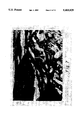
- FIGS. 7 and 8 are greater magnified photomicrographs of the clodronate-treated cavity shown in FIG. 6.
- FIG. 9 is a side-view of a four-week clodronate-treated rabbit tibia showing the bone transplant as described in Experiment (I).
- FIG. 10 shows a 21-day clodronate-treated rabbit tibia showing the bone transplant as described in Experiment (I).
- FIG. 11 is a drawing illustrating a front view human mandible with four Astra implants as described in Experiment (II).
- FIG. 12 is a photomicrograph of the bone implant marked with E in FIG. 11.
- FIG. 13 is a photomicrograph of the bone implant marked with E in FIG. 11 taken at a greater magnification than FIG. 12.
- FIG. 14 is a photomicrograph of a human mandible 4 weeks after implantation of an extra-ester implant where numbers 1 to 5 indicate the points where mineral concentrations were measured as reported in Table III.
- the present invention relates to a method of enhancing the formation of bone tissue and/or eliminating late complications subsequent to bone surgery comprising administering an amount, which is safe and sufficient to promote the formation of bone tissue and/or eliminate late complications, of a compound of formula (I) ##STR2## wherein X is H, OH, Cl, F or a methyl group and Y is Cl, OH, --(CH 2 ) 2 --N(CH 3 )--(CH 2 ) 4 --CH 3 , --(CH 2 ) n --CH 3 or --(CH 2 ) n --NH 2 , where n is zero or an integer of 1 to 8, --NHZ, where Z is pyridinyl or cycloheptyl, --SZ', where Z' is pyridinyl or chloro-substituted phenyl, or Y is a pyridinylsubstituted lower alkyl chain; or a non-toxic, pharmaceutically acceptable salt or ester thereof to a bone surgery patient
- Particularly valuable members of formula (I) for the purpose of this invention are clodronate, where X and Y both are Cl; pamidronate, where X is OH and Y is --(CH 2 ) 2 --NH 2 ; alendronic acid, where X is OH and Y is --(CH 2 ) 3 --NH 2 ; neridronic acid, where X is OH and Y is --(CH 2 ) 5 --NH 2 ; risedronic acid, where X is OH and Y is 3-pyridinylmethyl; tiludronate, where X is H and Y is 4-chlorophenylthio; YM-175 (cycloheptylamino)methylenebisphosphonic acid, where X is H and Y is cycloheptylamino; BM-210995,-1-hydroxy-3-(methylpentylamino)-propylidenebisphosphonic acid, where X is OH and Y is --(CH 2 ) 2 --
- the pharmaceutically acceptable salts and esters useful in the practice of this invention can be described by formula (II) ##STR3## wherein X and Y are as defined above and M is hydrogen, a pharmaceutically acceptable cation, preferably an alkali metal cation such as sodium or potassium, or an alkyl or aryl moiety, e.g. an alkyl group of 1 to 4 carbon atoms or phenyl.
- the compounds of formula (I) or their pharmaceutically acceptable salts and esters can be administered by various routes.
- the suitable administration forms includes systemic use such as oral formulations; parenteral injections including intravenous, intramuscular, intradermal and subcutanous injections; and suppositories.
- the compounds can also be administered locally by laying on or spreading the compounds or compositions thereof directly on the tissue to be treated.
- the required dosage of the compounds of formula (I) or their salts will vary with the particular condition being treated, the severity of the condition, the duration of the treatment, the administration route and the specific bisphosphonate being employed.
- a single daily dose can range from 0.01 to 100 mg per kilogram body weight. Doses higher than 100/kg/day may produce toxic symptoms and should be avoided.
- the preferable bisphosphonate daily doses range from 0.5 to 20 mg/kg.
- the most preferable daily doses are 0.5 to 5 mg/kg.
- For oral administration the preferred daily doses range from 10 to 100 mg/kg.
- a solution of 5 to 100 mg/ml of a bisphosphonate should preferably be used before replacement of endo-osteal material.
- the medication should preferably start 1 to 3 weeks before the surgery to obtain the optimal bisphosphonate concentration in bone. After the surgery, the medication should preferably be continued for a period of 1 to 6 months.
- the aim of the study was to determine whether clodronate had a positive effect on vascularization and bone formation in the tibia of a rabbit in which bone was transplanted with the aid of a titanium screw.
- the rabbits were anesthetized with an i.m. injection of 2.8 mg of Ketalar® (Parke-Davis, Spain) and 2.0 ml of Rompun® (Bayer, Germany).
- FIG. 1 representing the rabbit tibia, where A means the implant, T the transplant and F the donor cavity.
- the upper drawing of the Figure represents the cross section and the lower drawing the tibia as seen from above.
- FIG. 2 discloses a lateral roentgen picture of tibia in the operation area.
- the letters A, T and F have the same meaning as in FIG. 1.
- Tibiae were fixed with 5% phosphate-buffered formalin and toluine blue staining and hematoxylin eosin (HE) were carried out. Specimens were inspected under a light microscope and adverse effects or signs of inflammation were recorded.
- HE hematoxylin eosin
- the vessel count was performed in the specimen where the most vessels were observed. Vessels were counted on two separate occasions by the same observers and the results were averaged. If the variation between two values was greater than 10%, a third count was undertaken and the three counts were averaged. Vessel counts in both groups were compared using a paired t-test; P values less than 0.05 were considered significant.
- the number of vessels penetrating into the donor cavities was greater in rabbits treated with clodronate than for the control.
- the results are given in Table I below and the difference is statistically significant (P ⁇ 0.05).
- FIG. 3 discloses a 21-day specimen from a rabbit treated with clodronate. Implant and transplant are located in the centre of the picture. The donor cavity is seen to the right of the transplant. It can be seen that many vessels penetrate the donor cavity and transplant.
- FIG. 4 shows a 21-day specimen from an untreated rabbit. Only a small number of vessels penetrated the transplant.
- the number of vessels from one side of the specimen was greater than from the opposite side.
- the 14-day control specimens exhibited slight collagen formation and were partly devoid of histologically visible elements in the middle part of the cavity.
- the clodronate-treated specimens exhibited more collagen formation than the control specimens. No empty spaces were seen.
- the control specimens exhibited only slight bone formation at the outer edges of the cavity.
- the inner part of the cavity was mainly filled with collagen and a sharp line between the cavity and bone was clearly seen.
- the clodronate-treated donor cavities were almost completely filled with new bone. Collagen was still found between new bone in the three-week specimens.
- FIG. 5 illustrates a five-week control cavity. Bone regeneration is seen in middle of cavity and in drilling lines. The line between drilled cavity and bone is still seen in most parts of cavity. New bone formation with osteoblasts occurs occasionally in drilling line and also in centre of cavity.
- FIG. 6 illustrates a five-week clodronate-treated cavity. Cavity is completely filled with new bone and drilling line is still visible but there is a fusion between donor cavity and cortical bone.
- FIGS. 7 and 8 represent greater magnifications of FIG. 6. In FIG. 7 solid new bone and osteoblasts can be observed. FIG. 8 shows that cortical and new bone are almost completely fused.
- FIG. 9 represents a side-view of four-week clodronate-treated rabbit's tibia. New bone covers transplant. Periosteum is intact but thinner than that above non-operated area. Implant and transplant are in the middle of this specimen. Donor cavity is to the right from transplant and is the reason for new bone formation in normally empty rabbit's spongious bone.
- FIG. 10 represents a clodronate-treated 21-day specimen. Transplant is partly resorbed and replaced with new bone.
- the letters A and T represent implant and transplant, respectively, as in FIG. 1, and E represents new bone adjacent to transplant and cortical tibia.
- a cortical graft is not penetrated by blood vessels until the sixth day (Ray R. D.; reference as above). Twenty-one days was selected on the basis of the results of a report by Eppley and co-workers (Eppley B. et al., J Oral Maxifollfac Surg 1988; 46: 391-98) as bone regeneration time after implantation. They found that the vascularization of bone grafts in rabbits reached a maximum after 21 days.
- the material of this study were 20 edentulous patients. They all came to the Institute of Dentistry, University of Turku, for an implantation procedure. The Institutional Review Board of the Faculty of Medicine at the University of Turku received the project in order to determine whether human subjects are placed at risk. The unanimous decision made by the Institutional Review Board was that the human subjects concerned in this activity would not be placed at any risk. Patients gave permission for an explantation of an extra implant. 10 patients got a daily dose of 1600 mg clodronate disodium until the extra implant was removed (the medicated group) and 10 patients got placebo. The medication and placebo administration, respectively, started one week before the surgery and continued for three weeks after the surgery.
- FIG. 11 is a front view human mandible with four Astra implants, where A means implants, E explanted implant with bone and N is the mandibular nerve. To avoid disturbances in neural function implants are usually placed between the ends of mandibular nerve. At the operation an extra 4 mm screw was installed in the midline of the mandible.
- the 4 mm extra implant was removed with a trephan bore after 4 (10 patients, equally from both groups) and 12 weeks (10 patients, equally from both groups).
- the specimens were imbedded in acrylic blocks and divided in midline in two pieces. To the one piece a histological examination was performed. The other one was taken to a SEM-electromicroscopic examination. Electromicroscopic examination in bone-implant interspace and bone in three points with SEM/EDXA (energy dispersive X-ray analysis) was made. At the four different places, two in the upper cortical bone, one in the middle of the implant and one in the bottom of that the following values are calculated: sodium, calcium, phosphor, magnesium and titan. Calcium/phosphor and calcium/magnesium ratio were calculated in 12 points.
- FIGS. 12 and 13 both disclose the bone-implant specimen marked with E in FIG. 11.
- FIG. 13 represents a greater magnification of FIG. 12. No spongious bone was seen. Soft gingival tissue covering the implants was healthy.
- Table III shows the SEM results in human mandibles 4 weeks after implantation of an extra Astra implant.
- the 10 000 ⁇ SEM figure is the same as that in FIGS. 11 and 12.
- the exact points where mineral concentrationas are measured are shown with small numbers in FIG. 14.
- the mean values of those standard points are given in Table III.
Landscapes
- Health & Medical Sciences (AREA)
- Life Sciences & Earth Sciences (AREA)
- Chemical & Material Sciences (AREA)
- Medicinal Chemistry (AREA)
- Veterinary Medicine (AREA)
- Animal Behavior & Ethology (AREA)
- General Health & Medical Sciences (AREA)
- Public Health (AREA)
- Engineering & Computer Science (AREA)
- Epidemiology (AREA)
- Biomedical Technology (AREA)
- Oral & Maxillofacial Surgery (AREA)
- Pharmacology & Pharmacy (AREA)
- Transplantation (AREA)
- Chemical Kinetics & Catalysis (AREA)
- Dermatology (AREA)
- Nuclear Medicine, Radiotherapy & Molecular Imaging (AREA)
- Heart & Thoracic Surgery (AREA)
- Organic Chemistry (AREA)
- General Chemical & Material Sciences (AREA)
- Bioinformatics & Cheminformatics (AREA)
- Botany (AREA)
- Vascular Medicine (AREA)
- Molecular Biology (AREA)
- Orthopedic Medicine & Surgery (AREA)
- Cardiology (AREA)
- Obesity (AREA)
- Hematology (AREA)
- Diabetes (AREA)
- Pharmaceuticals Containing Other Organic And Inorganic Compounds (AREA)
- Materials For Medical Uses (AREA)
Priority Applications (9)
| Application Number | Priority Date | Filing Date | Title |
|---|---|---|---|
| US08/036,140 US5403829A (en) | 1993-03-24 | 1993-03-24 | Use of bisphosphonates in endo-osteal bone surgery |
| EP94909140A EP0689443B1 (en) | 1993-03-24 | 1994-03-14 | The use of bisphosphonates in bone surgery |
| PCT/FI1994/000091 WO1994021266A1 (en) | 1993-03-24 | 1994-03-14 | The use of bisphosphonates in bone surgery |
| JP6520683A JPH08510996A (ja) | 1993-03-24 | 1994-03-14 | 骨の手術へのビスホスホネートの使用 |
| RO95-01658A RO117416B1 (ro) | 1993-03-24 | 1994-03-14 | Metoda de sporire a formarii tesutului osos si/sau de eliminare a complicatiilor tarzii, ulterioare interventiei chirurgicale |
| DE69427345T DE69427345T2 (de) | 1993-03-24 | 1994-03-14 | Verwendung von bisphosphonaten in der knochenchirurgie |
| AU62093/94A AU6209394A (en) | 1993-03-24 | 1994-03-14 | The use of bisphosphonates in bone surgery |
| HK98113017.5A HK1011926B (en) | 1993-03-24 | 1994-03-14 | The use of bisphosphonates in bone surgery |
| DE0689443T DE689443T1 (de) | 1993-03-24 | 1994-03-14 | Verwendung von bisphosphonaten in der knochenchirurgie |
Applications Claiming Priority (1)
| Application Number | Priority Date | Filing Date | Title |
|---|---|---|---|
| US08/036,140 US5403829A (en) | 1993-03-24 | 1993-03-24 | Use of bisphosphonates in endo-osteal bone surgery |
Publications (1)
| Publication Number | Publication Date |
|---|---|
| US5403829A true US5403829A (en) | 1995-04-04 |
Family
ID=21886875
Family Applications (1)
| Application Number | Title | Priority Date | Filing Date |
|---|---|---|---|
| US08/036,140 Expired - Lifetime US5403829A (en) | 1993-03-24 | 1993-03-24 | Use of bisphosphonates in endo-osteal bone surgery |
Country Status (7)
| Country | Link |
|---|---|
| US (1) | US5403829A (enExample) |
| EP (1) | EP0689443B1 (enExample) |
| JP (1) | JPH08510996A (enExample) |
| AU (1) | AU6209394A (enExample) |
| DE (2) | DE689443T1 (enExample) |
| RO (1) | RO117416B1 (enExample) |
| WO (1) | WO1994021266A1 (enExample) |
Cited By (26)
| Publication number | Priority date | Publication date | Assignee | Title |
|---|---|---|---|---|
| US5646134A (en) * | 1994-04-21 | 1997-07-08 | Merck & Co., Inc. | Alendronate therapy to prevent loosening of, or pain associated with, orthopedic implant devices |
| WO1997029754A1 (en) * | 1996-02-14 | 1997-08-21 | Itzhak Binderman | Topical bisphosphonates for prevention of bone resorption |
| US5733564A (en) * | 1993-04-14 | 1998-03-31 | Leiras Oy | Method of treating endo-osteal materials with a bisphosphonate solution |
| US5804570A (en) * | 1995-02-17 | 1998-09-08 | Merck & Co., Inc. | Method of lessening the risk of non-vertebral bone fractures |
| US5965547A (en) * | 1994-05-04 | 1999-10-12 | Novartis Corporation | Use of certain methanebishosphonic acid derivatives to prevent prosthesis loosening and prosthesis migration |
| US5998390A (en) * | 1998-09-28 | 1999-12-07 | The Research Foundation Of State University Of New York | Combination of bisphosphonate and tetracycline |
| US6117856A (en) * | 1996-02-14 | 2000-09-12 | Binderman; Itzhak | Topical bisphosphonates for prevention of bone resorption |
| US6160165A (en) * | 1998-12-10 | 2000-12-12 | Aesgen, Inc. | Method for preparation of disodium pamidronate |
| WO2001049295A1 (en) * | 2000-01-04 | 2001-07-12 | The Regents Of The University Of California | Use of low dosage bisphosphonates to inhibit cardiac and arterial calcification |
| WO2001051497A1 (en) * | 2000-01-14 | 2001-07-19 | Strakan Limited | Novel bisphosphonates and uses thereof |
| US6376476B1 (en) | 1996-12-13 | 2002-04-23 | Zymogenetics Corporation | Isoprenoid pathway inhibitors for stimulating bone growth |
| US6555529B1 (en) * | 1997-12-25 | 2003-04-29 | Toray Industries, Inc. | Remedies for intramedullary diseases |
| US6630453B1 (en) | 1999-05-04 | 2003-10-07 | Strakan Limited | Androgen derivatives and uses thereof |
| US20030232065A1 (en) * | 2002-06-13 | 2003-12-18 | Remington Benjamin J. | Spinal fusion using an HMG-CoA reductase inhibitor |
| US20040157798A1 (en) * | 2001-04-03 | 2004-08-12 | Little David Graham | Drug for use in bone grafting |
| US6794536B1 (en) | 1998-12-10 | 2004-09-21 | Aesqen, Inc. | Method for preparation of disodium pamidronate |
| US6828312B2 (en) * | 1998-09-25 | 2004-12-07 | Sunol Molecular Corporation | Pharmaceutically active compounds and methods of use thereof |
| US20050026870A1 (en) * | 1999-05-12 | 2005-02-03 | Roldan Emilio J.A. | Use of bisphosphonates for the treatment of osteogenesis imperfecta |
| US20050182030A1 (en) * | 2001-05-10 | 2005-08-18 | American Pharmaceutical Partners, Inc. | Liquid injectable formulation of disodium pamidronate |
| US20060188542A1 (en) * | 2005-02-22 | 2006-08-24 | Bobyn John D | Implant improving local bone formation |
| US20060264912A1 (en) * | 2005-05-09 | 2006-11-23 | Mcintyre Jon T | Medical devices for treating urological and uterine conditions |
| US20060292201A1 (en) * | 2005-05-06 | 2006-12-28 | Synthes Usa | Methods for the in situ treatment of bone cancer |
| US20100144679A1 (en) * | 2007-03-21 | 2010-06-10 | Duke University | Medication kits and formulations for preventing, treating or reducing secondary fractures after previous fracture |
| US20110172632A1 (en) * | 2009-12-23 | 2011-07-14 | Stryker Trauma Gmbh | Method of delivering a biphosphonate and/or strontium ranelate below the surface of a bone |
| US9867838B2 (en) | 2009-09-01 | 2018-01-16 | Duke University | Methods for treating heart failure using bisphosphonate compositions |
| US9949992B2 (en) | 2011-11-16 | 2018-04-24 | Duke University | Bisphosphonate compositions and methods for treating and\or reducing cardiac dysfunction |
Families Citing this family (11)
| Publication number | Priority date | Publication date | Assignee | Title |
|---|---|---|---|---|
| FR2703590B1 (fr) * | 1993-04-05 | 1995-06-30 | Sanofi Elf | Utilisation de derives d'acide bisphosphonique pour la preparation de medicaments destines a favoriser la reparation osseuse . |
| PT813423E (pt) * | 1995-01-23 | 2002-11-29 | Xenotech Inc | Composicao para inibir osteolise e metastese |
| US5652227A (en) * | 1995-01-30 | 1997-07-29 | Teronen; Olli Pekka | Inhibition of the degradation of connective tissue matrix protein components in mammals |
| US20010051616A1 (en) * | 1995-02-17 | 2001-12-13 | David B. Karpf | Method of lessening the risk of vertebral fractures |
| EP0824341A4 (en) * | 1995-05-12 | 1999-07-07 | Merck & Co Inc | PREVENTING TOOTH LOSS THROUGH ADMINISTRATION OF ALENDRONATE OR ITS SALTS |
| PT1135140E (pt) * | 1998-12-04 | 2005-10-31 | Roche Diagnostics Gmbh | Utilizacao de ibandronato para a promocao da integracao ossea de endoproteses |
| AUPQ232599A0 (en) * | 1999-08-19 | 1999-09-09 | Royal Alexandra Hospital For Children, The | Drug for treating fractures |
| SI1365769T1 (sl) * | 2001-02-06 | 2011-06-30 | Sydney Children S Hospitals Network Randwick And Westmead Incorporating The Royal Alexandra Hospital | Zdravilo za zdravljenje osteonekroze za oskrbo pacientov pri tveganju razvoja osteonekroze |
| ITMI20040218A1 (it) * | 2004-02-10 | 2004-05-10 | Abiogen Pharma Spa | Uso di neridronato sodico per promuovere la neoformazione ossea |
| ITMI20040641A1 (it) * | 2004-03-31 | 2004-06-30 | Tb Technology S R L | Composizioni bioadesive bifunzionali per implantologia orale |
| DE102005053512A1 (de) * | 2005-11-09 | 2007-06-28 | Omnimedic Gbr | Verwendung von Clodronsäure zur Behandlung von Podotrochlose |
Citations (4)
| Publication number | Priority date | Publication date | Assignee | Title |
|---|---|---|---|---|
| US4067971A (en) * | 1976-05-13 | 1978-01-10 | The Procter & Gamble Company | Therapeutic composition |
| US4234645A (en) * | 1977-03-29 | 1980-11-18 | The Procter & Gamble Company | Pharmaceutical composition |
| US5227506A (en) * | 1989-09-06 | 1993-07-13 | Merck & Co., Inc. | Acyloxymethyl esters of bisphosphonic acids as bone resorption inhibitors |
| US5270365A (en) * | 1991-12-17 | 1993-12-14 | Merck & Co., Inc. | Prevention and treatment of periodontal disease with alendronate |
Family Cites Families (1)
| Publication number | Priority date | Publication date | Assignee | Title |
|---|---|---|---|---|
| US4753652A (en) * | 1984-05-04 | 1988-06-28 | Children's Medical Center Corporation | Biomaterial implants which resist calcification |
-
1993
- 1993-03-24 US US08/036,140 patent/US5403829A/en not_active Expired - Lifetime
-
1994
- 1994-03-14 WO PCT/FI1994/000091 patent/WO1994021266A1/en not_active Ceased
- 1994-03-14 DE DE0689443T patent/DE689443T1/de not_active Ceased
- 1994-03-14 EP EP94909140A patent/EP0689443B1/en not_active Expired - Lifetime
- 1994-03-14 RO RO95-01658A patent/RO117416B1/ro unknown
- 1994-03-14 JP JP6520683A patent/JPH08510996A/ja not_active Ceased
- 1994-03-14 AU AU62093/94A patent/AU6209394A/en not_active Abandoned
- 1994-03-14 DE DE69427345T patent/DE69427345T2/de not_active Expired - Lifetime
Patent Citations (4)
| Publication number | Priority date | Publication date | Assignee | Title |
|---|---|---|---|---|
| US4067971A (en) * | 1976-05-13 | 1978-01-10 | The Procter & Gamble Company | Therapeutic composition |
| US4234645A (en) * | 1977-03-29 | 1980-11-18 | The Procter & Gamble Company | Pharmaceutical composition |
| US5227506A (en) * | 1989-09-06 | 1993-07-13 | Merck & Co., Inc. | Acyloxymethyl esters of bisphosphonic acids as bone resorption inhibitors |
| US5270365A (en) * | 1991-12-17 | 1993-12-14 | Merck & Co., Inc. | Prevention and treatment of periodontal disease with alendronate |
Non-Patent Citations (2)
| Title |
|---|
| Lehtinen, R. and A. Raunio, "The Effect of Chlodronate in the Rabbit Tibia Implanted with a Titanium Screw and an Osseointegration in Man". Abstract, Internationales Symposium, Oct. 6-9, 1991, Universitat Rostock Medizinische Fakultat Klinik Und Poliklinik Fur Mund-Kiefer-Gesichtschirurgie. |
| Lehtinen, R. and A. Raunio, The Effect of Chlodronate in the Rabbit Tibia Implanted with a Titanium Screw and an Osseointegration in Man . Abstract, Internationales Symposium, Oct. 6 9, 1991, Universit t Rostock Medizinische Fakult t Klinik Und Poliklinik F r Mund Kiefer Gesichtschirurgie. * |
Cited By (57)
| Publication number | Priority date | Publication date | Assignee | Title |
|---|---|---|---|---|
| US5733564A (en) * | 1993-04-14 | 1998-03-31 | Leiras Oy | Method of treating endo-osteal materials with a bisphosphonate solution |
| US5972913A (en) * | 1994-04-21 | 1999-10-26 | Merck & Co., Inc. | Alendronate therapy to prevent loosening of, or pain associated with, orthopedic implant devices |
| US5646134A (en) * | 1994-04-21 | 1997-07-08 | Merck & Co., Inc. | Alendronate therapy to prevent loosening of, or pain associated with, orthopedic implant devices |
| US5965547A (en) * | 1994-05-04 | 1999-10-12 | Novartis Corporation | Use of certain methanebishosphonic acid derivatives to prevent prosthesis loosening and prosthesis migration |
| US5804570A (en) * | 1995-02-17 | 1998-09-08 | Merck & Co., Inc. | Method of lessening the risk of non-vertebral bone fractures |
| US6117856A (en) * | 1996-02-14 | 2000-09-12 | Binderman; Itzhak | Topical bisphosphonates for prevention of bone resorption |
| WO1997029754A1 (en) * | 1996-02-14 | 1997-08-21 | Itzhak Binderman | Topical bisphosphonates for prevention of bone resorption |
| AU723516B2 (en) * | 1996-02-14 | 2000-08-31 | Itzhak Binderman | Topical bisphosphonates for prevention of bone resorption |
| US7101907B2 (en) | 1996-12-13 | 2006-09-05 | Zymogenetics Corporation | Topical administration of statins for treatment of bone disorders |
| US6376476B1 (en) | 1996-12-13 | 2002-04-23 | Zymogenetics Corporation | Isoprenoid pathway inhibitors for stimulating bone growth |
| US20040106675A1 (en) * | 1996-12-13 | 2004-06-03 | Gasper Shirley R. | Isoprenoid pathway inhibitors for stimulating bone growth |
| US20050272801A1 (en) * | 1996-12-13 | 2005-12-08 | Gasper Shirley R | Isoprenoid pathway inhibitors for stimulating cartilage growth |
| EP0998934A4 (en) * | 1997-12-25 | 2005-09-14 | Toray Industries | REMEDIES AGAINST INTRAMEDULLARY DISEASES |
| US6555529B1 (en) * | 1997-12-25 | 2003-04-29 | Toray Industries, Inc. | Remedies for intramedullary diseases |
| US6828312B2 (en) * | 1998-09-25 | 2004-12-07 | Sunol Molecular Corporation | Pharmaceutically active compounds and methods of use thereof |
| US7199113B2 (en) | 1998-09-25 | 2007-04-03 | Jin-An Jiao | Pharmaceutically active compounds and methods of use thereof |
| US20050245488A1 (en) * | 1998-09-25 | 2005-11-03 | Sunol Molecular | Pharmaceutically active compounds and methods of use thereof |
| US20070155703A1 (en) * | 1998-09-25 | 2007-07-05 | Tanox, Inc. | Pharmaceutically active compounds and methods of use thereof |
| US6114316A (en) * | 1998-09-28 | 2000-09-05 | Research Foundation Of S.U.N.Y. | Combination of bisphosphonate and tetracycline |
| US5998390A (en) * | 1998-09-28 | 1999-12-07 | The Research Foundation Of State University Of New York | Combination of bisphosphonate and tetracycline |
| US6268524B1 (en) | 1998-12-10 | 2001-07-31 | Aesgen, Inc. | Method for preparation of disodium pamidronate |
| US6160165A (en) * | 1998-12-10 | 2000-12-12 | Aesgen, Inc. | Method for preparation of disodium pamidronate |
| US6794536B1 (en) | 1998-12-10 | 2004-09-21 | Aesqen, Inc. | Method for preparation of disodium pamidronate |
| US6916791B2 (en) | 1999-05-04 | 2005-07-12 | Strakan Limited | Androgen derivatives and uses thereof |
| US6630453B1 (en) | 1999-05-04 | 2003-10-07 | Strakan Limited | Androgen derivatives and uses thereof |
| US7846474B2 (en) | 1999-05-11 | 2010-12-07 | Gador S.A. | Use of bisphosphonates for the treatment of osteogenesis imperfecta |
| US20080227756A1 (en) * | 1999-05-11 | 2008-09-18 | Gador, S.A. | Use of bisphosphonates for the treatment of osteogenesis imperfecta |
| US20050026870A1 (en) * | 1999-05-12 | 2005-02-03 | Roldan Emilio J.A. | Use of bisphosphonates for the treatment of osteogenesis imperfecta |
| US6864228B1 (en) * | 1999-05-12 | 2005-03-08 | Gador, S.A. | Use of bisphosphonates for the treatment of osteogenesis imperfecta |
| US6812034B2 (en) | 2000-01-04 | 2004-11-02 | The Regents Of The University Of California | Fetuin-MGP-mineral complex in serum assayed to determine calcification risk |
| WO2001049295A1 (en) * | 2000-01-04 | 2001-07-12 | The Regents Of The University Of California | Use of low dosage bisphosphonates to inhibit cardiac and arterial calcification |
| US20030027211A1 (en) * | 2000-01-04 | 2003-02-06 | The Regents Of The University Of California | Fetuin-MGP-mineral complex in serum |
| WO2001051497A1 (en) * | 2000-01-14 | 2001-07-19 | Strakan Limited | Novel bisphosphonates and uses thereof |
| US20040157798A1 (en) * | 2001-04-03 | 2004-08-12 | Little David Graham | Drug for use in bone grafting |
| US20050182030A1 (en) * | 2001-05-10 | 2005-08-18 | American Pharmaceutical Partners, Inc. | Liquid injectable formulation of disodium pamidronate |
| US7041309B2 (en) | 2002-06-13 | 2006-05-09 | Neuropro Technologies, Inc. | Spinal fusion using an HMG-CoA reductase inhibitor |
| US8088402B2 (en) | 2002-06-13 | 2012-01-03 | Neuropro Technologies, Inc. | Bone growth compositions and methods |
| US20060233853A1 (en) * | 2002-06-13 | 2006-10-19 | Remington Benjamin J | Bone Growth Compositions and Methods |
| US20040006125A1 (en) * | 2002-06-13 | 2004-01-08 | Neuropro Technologies, Inc. | Bone growth compositions and methods |
| US7108862B2 (en) | 2002-06-13 | 2006-09-19 | Neuropro Technologies, Inc. | Bone growth compositions and methods |
| US20030232065A1 (en) * | 2002-06-13 | 2003-12-18 | Remington Benjamin J. | Spinal fusion using an HMG-CoA reductase inhibitor |
| US20060188542A1 (en) * | 2005-02-22 | 2006-08-24 | Bobyn John D | Implant improving local bone formation |
| US8309536B2 (en) | 2005-02-22 | 2012-11-13 | John Dennis Bobyn | Implant improving local bone formation |
| US20110014265A1 (en) * | 2005-02-22 | 2011-01-20 | John Dennis Bobyn | Implant Improving Local Bone Formation |
| US8071574B2 (en) | 2005-02-22 | 2011-12-06 | John Dennis Bobyn | Implant improving local bone formation |
| US20060292201A1 (en) * | 2005-05-06 | 2006-12-28 | Synthes Usa | Methods for the in situ treatment of bone cancer |
| US9345818B2 (en) | 2005-05-06 | 2016-05-24 | DePuy Synthes Products, Inc. | Methods for the in situ treatment of bone cancer |
| US7914810B2 (en) | 2005-05-06 | 2011-03-29 | Synthes Usa, Llc | Methods for the in situ treatment of bone cancer |
| US20110142904A1 (en) * | 2005-05-06 | 2011-06-16 | Synthes Usa, Llc | Methods for the In Situ Treatment of Bone Cancer |
| US7862552B2 (en) | 2005-05-09 | 2011-01-04 | Boston Scientific Scimed, Inc. | Medical devices for treating urological and uterine conditions |
| US20110098631A1 (en) * | 2005-05-09 | 2011-04-28 | Boston Scientific Scimed, Inc. | Medical devices for treating urological and uterine conditions |
| US20060264912A1 (en) * | 2005-05-09 | 2006-11-23 | Mcintyre Jon T | Medical devices for treating urological and uterine conditions |
| US20100144679A1 (en) * | 2007-03-21 | 2010-06-10 | Duke University | Medication kits and formulations for preventing, treating or reducing secondary fractures after previous fracture |
| US9867838B2 (en) | 2009-09-01 | 2018-01-16 | Duke University | Methods for treating heart failure using bisphosphonate compositions |
| US20110172632A1 (en) * | 2009-12-23 | 2011-07-14 | Stryker Trauma Gmbh | Method of delivering a biphosphonate and/or strontium ranelate below the surface of a bone |
| US8882740B2 (en) | 2009-12-23 | 2014-11-11 | Stryker Trauma Gmbh | Method of delivering a biphosphonate and/or strontium ranelate below the surface of a bone |
| US9949992B2 (en) | 2011-11-16 | 2018-04-24 | Duke University | Bisphosphonate compositions and methods for treating and\or reducing cardiac dysfunction |
Also Published As
| Publication number | Publication date |
|---|---|
| DE69427345T2 (de) | 2002-05-02 |
| RO117416B1 (ro) | 2002-03-29 |
| DE689443T1 (de) | 1996-10-24 |
| AU6209394A (en) | 1994-10-11 |
| EP0689443A1 (en) | 1996-01-03 |
| EP0689443B1 (en) | 2001-05-30 |
| WO1994021266A1 (en) | 1994-09-29 |
| JPH08510996A (ja) | 1996-11-19 |
| HK1011926A1 (en) | 1999-07-23 |
| DE69427345D1 (de) | 2001-07-05 |
Similar Documents
| Publication | Publication Date | Title |
|---|---|---|
| EP0689443B1 (en) | The use of bisphosphonates in bone surgery | |
| US5733564A (en) | Method of treating endo-osteal materials with a bisphosphonate solution | |
| US5891863A (en) | Alendronate therapy to prevent loosening of, or pain associated with, orthopedic implant devices | |
| US20040157798A1 (en) | Drug for use in bone grafting | |
| KR100453779B1 (ko) | 내인공삽입물의 골형성을 개선시키기 위한 이밴드론산염의용도 | |
| HK1011926B (en) | The use of bisphosphonates in bone surgery | |
| NZ510804A (en) | Use of bisphosphonic acid derivatives for preparing a medicine for treating lameness | |
| HK1011940B (en) | A method of treating endo-osteal materials | |
| Das | The Local Effect of Alendronate with Intraalveolar Collagen Sponges on Post Extraction Alveolar Ridge Resorption-A Single Blind Study | |
| Kim et al. | The Effects of Alendronate on Healing of the Calvarial Defect in Rats | |
| Gabr et al. | Effect of calcitonin intra muscular injection on bone formation around titanium dental implants in dogs (A histological study) | |
| MXPA96004968A (en) | Use of bisphosphonates to inhibit bone rebassion after the implantation of orthopedic protesis | |
| MXPA01005462A (en) | Use of ibandronate for promoting osseointegration of endoprostheses | |
| AU2005203308A1 (en) | Use of bisphosphonates for inhibiting bone resorption following implantation of orthopaedic prosthesis | |
| AU9745901A (en) | Use of bisphosphonates for inhibiting bone resorption following implantation of orthopaedic prosthesis |
Legal Events
| Date | Code | Title | Description |
|---|---|---|---|
| STPP | Information on status: patent application and granting procedure in general |
Free format text: APPLICATION UNDERGOING PREEXAM PROCESSING |
|
| AS | Assignment |
Owner name: LEIRAS OY, FINLAND Free format text: ASSIGNMENT OF ASSIGNORS INTEREST;ASSIGNORS:LEHTINEN, RISTO TAPANI;NYMAN, MARKKU;PAAVOLAINEN, PEKKA;REEL/FRAME:007270/0058 Effective date: 19941115 |
|
| FPAY | Fee payment |
Year of fee payment: 4 |
|
| FEPP | Fee payment procedure |
Free format text: PAYOR NUMBER ASSIGNED (ORIGINAL EVENT CODE: ASPN); ENTITY STATUS OF PATENT OWNER: LARGE ENTITY |
|
| FPAY | Fee payment |
Year of fee payment: 8 |
|
| FPAY | Fee payment |
Year of fee payment: 12 |