US5288877A - Continuous process for preparing indolenine compounds - Google Patents
Continuous process for preparing indolenine compounds Download PDFInfo
- Publication number
- US5288877A US5288877A US07/725,849 US72584991A US5288877A US 5288877 A US5288877 A US 5288877A US 72584991 A US72584991 A US 72584991A US 5288877 A US5288877 A US 5288877A
- Authority
- US
- United States
- Prior art keywords
- indolenine
- product
- reactor
- reaction medium
- reactant
- Prior art date
- Legal status (The legal status is an assumption and is not a legal conclusion. Google has not performed a legal analysis and makes no representation as to the accuracy of the status listed.)
- Expired - Fee Related
Links
- RKJUIXBNRJVNHR-UHFFFAOYSA-N indolenine group Chemical group N1=CCC2=CC=CC=C12 RKJUIXBNRJVNHR-UHFFFAOYSA-N 0.000 title claims abstract description 84
- 238000010924 continuous production Methods 0.000 title abstract description 3
- QTBSBXVTEAMEQO-UHFFFAOYSA-N Acetic acid Chemical compound CC(O)=O QTBSBXVTEAMEQO-UHFFFAOYSA-N 0.000 claims abstract description 93
- 239000012429 reaction media Substances 0.000 claims abstract description 41
- 229940067157 phenylhydrazine Drugs 0.000 claims abstract description 27
- 239000003153 chemical reaction reagent Substances 0.000 claims abstract description 21
- 150000002576 ketones Chemical class 0.000 claims abstract description 20
- 150000003839 salts Chemical class 0.000 claims abstract description 13
- 239000000243 solution Substances 0.000 claims abstract description 11
- 238000002360 preparation method Methods 0.000 claims abstract description 8
- 238000006386 neutralization reaction Methods 0.000 claims abstract description 7
- 239000007864 aqueous solution Substances 0.000 claims abstract description 4
- 230000003472 neutralizing effect Effects 0.000 claims abstract 3
- 239000000376 reactant Substances 0.000 claims description 48
- 239000000047 product Substances 0.000 claims description 44
- 238000000034 method Methods 0.000 claims description 31
- -1 indolenine compound Chemical class 0.000 claims description 27
- HKOOXMFOFWEVGF-UHFFFAOYSA-N phenylhydrazine Chemical compound NNC1=CC=CC=C1 HKOOXMFOFWEVGF-UHFFFAOYSA-N 0.000 claims description 25
- 125000000217 alkyl group Chemical group 0.000 claims description 16
- 239000000203 mixture Substances 0.000 claims description 16
- 238000006482 condensation reaction Methods 0.000 claims description 13
- 150000001735 carboxylic acids Chemical class 0.000 claims description 11
- 125000001997 phenyl group Chemical group [H]C1=C([H])C([H])=C(*)C([H])=C1[H] 0.000 claims description 8
- 125000003545 alkoxy group Chemical group 0.000 claims description 7
- 125000004435 hydrogen atom Chemical group [H]* 0.000 claims description 7
- 239000003960 organic solvent Substances 0.000 claims description 7
- 238000009833 condensation Methods 0.000 claims description 6
- 230000005494 condensation Effects 0.000 claims description 6
- 125000001424 substituent group Chemical group 0.000 claims description 6
- 125000003118 aryl group Chemical group 0.000 claims description 5
- 239000006227 byproduct Substances 0.000 claims description 5
- 229910052739 hydrogen Inorganic materials 0.000 claims description 5
- 239000001257 hydrogen Substances 0.000 claims description 5
- 125000004432 carbon atom Chemical group C* 0.000 claims description 4
- 239000003054 catalyst Substances 0.000 claims description 4
- 230000003197 catalytic effect Effects 0.000 claims description 4
- 125000001309 chloro group Chemical group Cl* 0.000 claims description 4
- 125000001153 fluoro group Chemical group F* 0.000 claims description 4
- 150000004679 hydroxides Chemical class 0.000 claims description 4
- 239000007787 solid Substances 0.000 claims description 4
- 125000004385 trihaloalkyl group Chemical group 0.000 claims description 4
- BVKZGUZCCUSVTD-UHFFFAOYSA-M Bicarbonate Chemical class OC([O-])=O BVKZGUZCCUSVTD-UHFFFAOYSA-M 0.000 claims description 3
- DGAQECJNVWCQMB-PUAWFVPOSA-M Ilexoside XXIX Chemical compound C[C@@H]1CC[C@@]2(CC[C@@]3(C(=CC[C@H]4[C@]3(CC[C@@H]5[C@@]4(CC[C@@H](C5(C)C)OS(=O)(=O)[O-])C)C)[C@@H]2[C@]1(C)O)C)C(=O)O[C@H]6[C@@H]([C@H]([C@@H]([C@H](O6)CO)O)O)O.[Na+] DGAQECJNVWCQMB-PUAWFVPOSA-M 0.000 claims description 3
- ZLMJMSJWJFRBEC-UHFFFAOYSA-N Potassium Chemical compound [K] ZLMJMSJWJFRBEC-UHFFFAOYSA-N 0.000 claims description 3
- 150000004649 carbonic acid derivatives Chemical class 0.000 claims description 3
- 229910052751 metal Inorganic materials 0.000 claims description 3
- 239000002184 metal Substances 0.000 claims description 3
- 239000011591 potassium Substances 0.000 claims description 3
- 229910052700 potassium Inorganic materials 0.000 claims description 3
- 239000011734 sodium Substances 0.000 claims description 3
- 229910052708 sodium Inorganic materials 0.000 claims description 3
- WHXSMMKQMYFTQS-UHFFFAOYSA-N Lithium Chemical compound [Li] WHXSMMKQMYFTQS-UHFFFAOYSA-N 0.000 claims description 2
- 125000004423 acyloxy group Chemical group 0.000 claims description 2
- 125000005073 adamantyl group Chemical group C12(CC3CC(CC(C1)C3)C2)* 0.000 claims description 2
- 125000002723 alicyclic group Chemical group 0.000 claims description 2
- 125000004453 alkoxycarbonyl group Chemical group 0.000 claims description 2
- 125000001797 benzyl group Chemical group [H]C1=C([H])C([H])=C(C([H])=C1[H])C([H])([H])* 0.000 claims description 2
- 125000004093 cyano group Chemical group *C#N 0.000 claims description 2
- 229910052736 halogen Inorganic materials 0.000 claims description 2
- 150000002367 halogens Chemical class 0.000 claims description 2
- 229910052744 lithium Inorganic materials 0.000 claims description 2
- 150000002739 metals Chemical class 0.000 claims description 2
- 125000000956 methoxy group Chemical group [H]C([H])([H])O* 0.000 claims description 2
- 125000006682 monohaloalkyl group Chemical group 0.000 claims description 2
- 125000000449 nitro group Chemical group [O-][N+](*)=O 0.000 claims description 2
- 125000002868 norbornyl group Chemical group C12(CCC(CC1)C2)* 0.000 claims description 2
- 125000006684 polyhaloalkyl group Polymers 0.000 claims description 2
- 238000004064 recycling Methods 0.000 abstract description 3
- 150000004031 phenylhydrazines Chemical class 0.000 abstract description 2
- 238000007599 discharging Methods 0.000 abstract 1
- IMNFDUFMRHMDMM-UHFFFAOYSA-N N-Heptane Chemical class CCCCCCC IMNFDUFMRHMDMM-UHFFFAOYSA-N 0.000 description 36
- 229960000583 acetic acid Drugs 0.000 description 25
- 238000006243 chemical reaction Methods 0.000 description 24
- IJGRMHOSHXDMSA-UHFFFAOYSA-N Atomic nitrogen Chemical compound N#N IJGRMHOSHXDMSA-UHFFFAOYSA-N 0.000 description 20
- XLYOFNOQVPJJNP-UHFFFAOYSA-N water Substances O XLYOFNOQVPJJNP-UHFFFAOYSA-N 0.000 description 17
- HEMHJVSKTPXQMS-UHFFFAOYSA-M Sodium hydroxide Chemical compound [OH-].[Na+] HEMHJVSKTPXQMS-UHFFFAOYSA-M 0.000 description 15
- UIHCLUNTQKBZGK-UHFFFAOYSA-N 3-methyl-2-pentanone Chemical compound CCC(C)C(C)=O UIHCLUNTQKBZGK-UHFFFAOYSA-N 0.000 description 12
- 150000001732 carboxylic acid derivatives Chemical class 0.000 description 12
- 229910052757 nitrogen Inorganic materials 0.000 description 10
- 239000008346 aqueous phase Substances 0.000 description 9
- 239000011541 reaction mixture Substances 0.000 description 9
- 239000002253 acid Substances 0.000 description 8
- 239000007788 liquid Substances 0.000 description 8
- 239000000463 material Substances 0.000 description 7
- 239000012074 organic phase Substances 0.000 description 7
- 238000010926 purge Methods 0.000 description 7
- 239000002002 slurry Substances 0.000 description 7
- 125000003003 spiro group Chemical group 0.000 description 7
- NLXLAEXVIDQMFP-UHFFFAOYSA-N Ammonia chloride Chemical compound [NH4+].[Cl-] NLXLAEXVIDQMFP-UHFFFAOYSA-N 0.000 description 6
- OAKJQQAXSVQMHS-UHFFFAOYSA-N Hydrazine Chemical compound NN OAKJQQAXSVQMHS-UHFFFAOYSA-N 0.000 description 6
- 239000002904 solvent Substances 0.000 description 6
- CSNNHWWHGAXBCP-UHFFFAOYSA-L Magnesium sulfate Chemical compound [Mg+2].[O-][S+2]([O-])([O-])[O-] CSNNHWWHGAXBCP-UHFFFAOYSA-L 0.000 description 5
- 239000012530 fluid Substances 0.000 description 5
- 238000004821 distillation Methods 0.000 description 4
- 125000002496 methyl group Chemical group [H]C([H])([H])* 0.000 description 4
- 238000010992 reflux Methods 0.000 description 4
- YYMIOVAEQIEPET-UHFFFAOYSA-N (3,4-dimethylanilino)azanium;chloride Chemical compound Cl.CC1=CC=C(NN)C=C1C YYMIOVAEQIEPET-UHFFFAOYSA-N 0.000 description 3
- UHOVQNZJYSORNB-UHFFFAOYSA-N Benzene Chemical compound C1=CC=CC=C1 UHOVQNZJYSORNB-UHFFFAOYSA-N 0.000 description 3
- LYCAIKOWRPUZTN-UHFFFAOYSA-N Ethylene glycol Chemical compound OCCO LYCAIKOWRPUZTN-UHFFFAOYSA-N 0.000 description 3
- YXFVVABEGXRONW-UHFFFAOYSA-N Toluene Chemical compound CC1=CC=CC=C1 YXFVVABEGXRONW-UHFFFAOYSA-N 0.000 description 3
- 235000019270 ammonium chloride Nutrition 0.000 description 3
- 125000000484 butyl group Chemical group [H]C([*])([H])C([H])([H])C([H])([H])C([H])([H])[H] 0.000 description 3
- 239000007795 chemical reaction product Substances 0.000 description 3
- 125000001495 ethyl group Chemical group [H]C([H])([H])C([H])([H])* 0.000 description 3
- 238000010438 heat treatment Methods 0.000 description 3
- 230000014759 maintenance of location Effects 0.000 description 3
- QSHDDOUJBYECFT-UHFFFAOYSA-N mercury Chemical compound [Hg] QSHDDOUJBYECFT-UHFFFAOYSA-N 0.000 description 3
- 229910052753 mercury Inorganic materials 0.000 description 3
- SIKJAQJRHWYJAI-UHFFFAOYSA-N Indole Chemical compound C1=CC=C2NC=CC2=C1 SIKJAQJRHWYJAI-UHFFFAOYSA-N 0.000 description 2
- QAOWNCQODCNURD-UHFFFAOYSA-N Sulfuric acid Chemical compound OS(O)(=O)=O QAOWNCQODCNURD-UHFFFAOYSA-N 0.000 description 2
- WYURNTSHIVDZCO-UHFFFAOYSA-N Tetrahydrofuran Chemical compound C1CCOC1 WYURNTSHIVDZCO-UHFFFAOYSA-N 0.000 description 2
- 150000007513 acids Chemical class 0.000 description 2
- 238000010923 batch production Methods 0.000 description 2
- 238000009835 boiling Methods 0.000 description 2
- 230000000052 comparative effect Effects 0.000 description 2
- 238000001816 cooling Methods 0.000 description 2
- 238000004817 gas chromatography Methods 0.000 description 2
- 239000012362 glacial acetic acid Substances 0.000 description 2
- 239000011521 glass Substances 0.000 description 2
- 150000004820 halides Chemical class 0.000 description 2
- 239000011261 inert gas Substances 0.000 description 2
- 229910052943 magnesium sulfate Inorganic materials 0.000 description 2
- 235000019341 magnesium sulphate Nutrition 0.000 description 2
- 239000012046 mixed solvent Substances 0.000 description 2
- 230000004048 modification Effects 0.000 description 2
- 238000012986 modification Methods 0.000 description 2
- 239000012071 phase Substances 0.000 description 2
- JOVOSQBPPZZESK-UHFFFAOYSA-N phenylhydrazine hydrochloride Chemical compound Cl.NNC1=CC=CC=C1 JOVOSQBPPZZESK-UHFFFAOYSA-N 0.000 description 2
- 229940038531 phenylhydrazine hydrochloride Drugs 0.000 description 2
- 125000001436 propyl group Chemical group [H]C([*])([H])C([H])([H])C([H])([H])[H] 0.000 description 2
- 238000003756 stirring Methods 0.000 description 2
- 238000003860 storage Methods 0.000 description 2
- 125000002023 trifluoromethyl group Chemical group FC(F)(F)* 0.000 description 2
- JIAARYAFYJHUJI-UHFFFAOYSA-L zinc dichloride Chemical compound [Cl-].[Cl-].[Zn+2] JIAARYAFYJHUJI-UHFFFAOYSA-L 0.000 description 2
- ZTUKGBOUHWYFGC-UHFFFAOYSA-N 1,3,3-trimethyl-2-methylideneindole Chemical compound C1=CC=C2N(C)C(=C)C(C)(C)C2=C1 ZTUKGBOUHWYFGC-UHFFFAOYSA-N 0.000 description 1
- DURPTKYDGMDSBL-UHFFFAOYSA-N 1-butoxybutane Chemical compound CCCCOCCCC DURPTKYDGMDSBL-UHFFFAOYSA-N 0.000 description 1
- QDEJGQKJMKXYLM-UHFFFAOYSA-N 2h-pyrido[2,3-h][1,2]benzoxazine Chemical class C1=CC2=NC=CC=C2C2=C1C=CNO2 QDEJGQKJMKXYLM-UHFFFAOYSA-N 0.000 description 1
- QEQVCPKISCKMOQ-UHFFFAOYSA-N 3h-benzo[f][1,2]benzoxazine Chemical class C1=CC=CC2=C(C=CNO3)C3=CC=C21 QEQVCPKISCKMOQ-UHFFFAOYSA-N 0.000 description 1
- QCQCHGYLTSGIGX-GHXANHINSA-N 4-[[(3ar,5ar,5br,7ar,9s,11ar,11br,13as)-5a,5b,8,8,11a-pentamethyl-3a-[(5-methylpyridine-3-carbonyl)amino]-2-oxo-1-propan-2-yl-4,5,6,7,7a,9,10,11,11b,12,13,13a-dodecahydro-3h-cyclopenta[a]chrysen-9-yl]oxy]-2,2-dimethyl-4-oxobutanoic acid Chemical compound N([C@@]12CC[C@@]3(C)[C@]4(C)CC[C@H]5C(C)(C)[C@@H](OC(=O)CC(C)(C)C(O)=O)CC[C@]5(C)[C@H]4CC[C@@H]3C1=C(C(C2)=O)C(C)C)C(=O)C1=CN=CC(C)=C1 QCQCHGYLTSGIGX-GHXANHINSA-N 0.000 description 1
- FERIUCNNQQJTOY-UHFFFAOYSA-N Butyric acid Chemical class CCCC(O)=O FERIUCNNQQJTOY-UHFFFAOYSA-N 0.000 description 1
- OYPRJOBELJOOCE-UHFFFAOYSA-N Calcium Chemical compound [Ca] OYPRJOBELJOOCE-UHFFFAOYSA-N 0.000 description 1
- 238000006783 Fischer indole synthesis reaction Methods 0.000 description 1
- FYYHWMGAXLPEAU-UHFFFAOYSA-N Magnesium Chemical compound [Mg] FYYHWMGAXLPEAU-UHFFFAOYSA-N 0.000 description 1
- CTQNGGLPUBDAKN-UHFFFAOYSA-N O-Xylene Chemical compound CC1=CC=CC=C1C CTQNGGLPUBDAKN-UHFFFAOYSA-N 0.000 description 1
- 101100386054 Saccharomyces cerevisiae (strain ATCC 204508 / S288c) CYS3 gene Proteins 0.000 description 1
- VMHLLURERBWHNL-UHFFFAOYSA-M Sodium acetate Chemical compound [Na+].CC([O-])=O VMHLLURERBWHNL-UHFFFAOYSA-M 0.000 description 1
- 159000000021 acetate salts Chemical class 0.000 description 1
- 125000000218 acetic acid group Chemical group C(C)(=O)* 0.000 description 1
- 239000003377 acid catalyst Substances 0.000 description 1
- 230000001476 alcoholic effect Effects 0.000 description 1
- 150000004996 alkyl benzenes Chemical class 0.000 description 1
- BIVUUOPIAYRCAP-UHFFFAOYSA-N aminoazanium;chloride Chemical compound Cl.NN BIVUUOPIAYRCAP-UHFFFAOYSA-N 0.000 description 1
- 238000004458 analytical method Methods 0.000 description 1
- 238000010936 aqueous wash Methods 0.000 description 1
- 150000004945 aromatic hydrocarbons Chemical class 0.000 description 1
- 229910052788 barium Inorganic materials 0.000 description 1
- DSAJWYNOEDNPEQ-UHFFFAOYSA-N barium atom Chemical compound [Ba] DSAJWYNOEDNPEQ-UHFFFAOYSA-N 0.000 description 1
- 150000005130 benzoxazines Chemical class 0.000 description 1
- 229950011260 betanaphthol Drugs 0.000 description 1
- 230000015572 biosynthetic process Effects 0.000 description 1
- 239000011575 calcium Substances 0.000 description 1
- 229910052791 calcium Inorganic materials 0.000 description 1
- 229910052799 carbon Inorganic materials 0.000 description 1
- 150000001734 carboxylic acid salts Chemical class 0.000 description 1
- 125000002603 chloroethyl group Chemical group [H]C([*])([H])C([H])([H])Cl 0.000 description 1
- 125000004218 chloromethyl group Chemical group [H]C([H])(Cl)* 0.000 description 1
- 230000000295 complement effect Effects 0.000 description 1
- 239000000470 constituent Substances 0.000 description 1
- 239000013078 crystal Substances 0.000 description 1
- 125000004122 cyclic group Chemical group 0.000 description 1
- 239000008367 deionised water Substances 0.000 description 1
- 229910021641 deionized water Inorganic materials 0.000 description 1
- 150000001983 dialkylethers Chemical class 0.000 description 1
- PUXQPFBSQFQSPW-UHFFFAOYSA-N dimethylamino(phenyl)azanium;chloride Chemical compound Cl.CN(C)NC1=CC=CC=C1 PUXQPFBSQFQSPW-UHFFFAOYSA-N 0.000 description 1
- 238000004090 dissolution Methods 0.000 description 1
- 238000001914 filtration Methods 0.000 description 1
- 125000004216 fluoromethyl group Chemical group [H]C([H])(F)* 0.000 description 1
- 239000007789 gas Substances 0.000 description 1
- 231100001261 hazardous Toxicity 0.000 description 1
- 229930195733 hydrocarbon Natural products 0.000 description 1
- 150000002430 hydrocarbons Chemical class 0.000 description 1
- PZOUSPYUWWUPPK-UHFFFAOYSA-N indole Natural products CC1=CC=CC2=C1C=CN2 PZOUSPYUWWUPPK-UHFFFAOYSA-N 0.000 description 1
- 125000001041 indolyl group Chemical group 0.000 description 1
- 230000000977 initiatory effect Effects 0.000 description 1
- 229910052500 inorganic mineral Inorganic materials 0.000 description 1
- 239000011777 magnesium Substances 0.000 description 1
- 229910052749 magnesium Inorganic materials 0.000 description 1
- AUHZEENZYGFFBQ-UHFFFAOYSA-N mesitylene Substances CC1=CC(C)=CC(C)=C1 AUHZEENZYGFFBQ-UHFFFAOYSA-N 0.000 description 1
- 125000001827 mesitylenyl group Chemical group [H]C1=C(C(*)=C(C([H])=C1C([H])([H])[H])C([H])([H])[H])C([H])([H])[H] 0.000 description 1
- 239000011707 mineral Substances 0.000 description 1
- 235000010755 mineral Nutrition 0.000 description 1
- 150000002762 monocarboxylic acid derivatives Chemical class 0.000 description 1
- 125000000740 n-pentyl group Chemical group [H]C([H])([H])C([H])([H])C([H])([H])C([H])([H])C([H])([H])* 0.000 description 1
- 210000003739 neck Anatomy 0.000 description 1
- FBUKVWPVBMHYJY-UHFFFAOYSA-N noncarboxylic acid Natural products CCCCCCCCC(O)=O FBUKVWPVBMHYJY-UHFFFAOYSA-N 0.000 description 1
- 125000001147 pentyl group Chemical group C(CCCC)* 0.000 description 1
- 230000002035 prolonged effect Effects 0.000 description 1
- 238000005086 pumping Methods 0.000 description 1
- 239000013014 purified material Substances 0.000 description 1
- 239000011369 resultant mixture Substances 0.000 description 1
- 238000000926 separation method Methods 0.000 description 1
- 239000001632 sodium acetate Substances 0.000 description 1
- 235000017281 sodium acetate Nutrition 0.000 description 1
- 101150035983 str1 gene Proteins 0.000 description 1
- YLQBMQCUIZJEEH-UHFFFAOYSA-N tetrahydrofuran Natural products C=1C=COC=1 YLQBMQCUIZJEEH-UHFFFAOYSA-N 0.000 description 1
- 125000004953 trihalomethyl group Chemical group 0.000 description 1
- 238000010626 work up procedure Methods 0.000 description 1
- 239000008096 xylene Substances 0.000 description 1
- 239000011592 zinc chloride Substances 0.000 description 1
- 235000005074 zinc chloride Nutrition 0.000 description 1
Images

Classifications
-
- C—CHEMISTRY; METALLURGY
- C07—ORGANIC CHEMISTRY
- C07D—HETEROCYCLIC COMPOUNDS
- C07D209/00—Heterocyclic compounds containing five-membered rings, condensed with other rings, with one nitrogen atom as the only ring hetero atom
- C07D209/02—Heterocyclic compounds containing five-membered rings, condensed with other rings, with one nitrogen atom as the only ring hetero atom condensed with one carbocyclic ring
- C07D209/04—Indoles; Hydrogenated indoles
- C07D209/08—Indoles; Hydrogenated indoles with only hydrogen atoms or radicals containing only hydrogen and carbon atoms, directly attached to carbon atoms of the hetero ring
Definitions
- Spiro(indolino)-type compounds have been described as possessing photochromic properties and have been suggested for use in applications in which a color change or darkening induced by sunlight is a desirable feature.
- spiro(indolino) naphthoxazine compounds are described in U.S. Pat. Nos. 3,562,172, 3,578,602, 4,215,010 and 4,342,668.
- Spiro(indolino) pyridobenzoxazines have been described in U.S. Pat. No. 4,637,698.
- Spiro(indolino) benzoxazines have been described in U.S. Pat. No. 4,816,584.
- Spiro(benzindolino)-type compounds have been described in U.S. Pat. No. 4,931,219.
- the aforedescribed spiro(indolino)-type compounds are commonly prepared by reacting the corresponding Fischer's base (indolenine) reactant with an aromatic reactant, e.g., 5-nitroso (or formal)-6-hydroxy quinoline or 1-nitroso (or formal)-2-hydroxy naphthalene.
- the Fishcher's base reactant may be prepared by intramolecular condensation of an appropriately substituted phenylhydrazine, e.g., a phenylhydrazine hydrochloride, with an appropriate unsymmetrical ketone in the presence of an acid catalyst, e.g., zinc chloride, acetic acid, alcoholic sulfuric acid or a combination of acids.
- an acid catalyst e.g., zinc chloride, acetic acid, alcoholic sulfuric acid or a combination of acids.
- the Fischer indole synthesis i.e., the condensation of a phenylhydrazine with an unsymmetrical ketone, is typically described as a batch process involving relatively small amounts of reactant materials.
- the rapid and large reaction exotherm which is estimated to be on the order of 36-40 KCal/mole, can be handled safely.
- use of relatively small multiple batch preparations is inefficient and not cost effective.
- Larger batch preparations of indolenines are not attractive because of the difficulty of handling the large reaction exotherm which accompanies large batch preparations and the potential for runaway reactions in such circumstances. There has developed, therefore, a need for a safe procedure for large scale preparation of indolenine compounds.
- indolenine compounds may be synthesized safely and continuously by a method which comprises continuously charging phenylhydrazine and unsymmetrical ketone reactants simultaneously to a reactor containing a reaction medium including a weak organic carboxylic acid, e.g., acetic acid, and continuously removing the resultant indolenine product from the reactor dissolved in the reaction medium.
- the reaction medium and carboxylic acid is separated from the indolenine product and recycled to the reactor.
- the indolenine product is neutralized with alkaline reagent and salts resulting from the preparation and neutralization thereof are separated from the neutralized indolenine product.
- Indolenine compounds prepared in accordance with the foregoing continuous process may be used to prepared indoleninium halides which may be condensed with an aromatic reactant to produce spiro(indolino)-type compounds as described hereinabove.
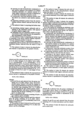
- Indolenine materials that may be prepared in accordance with the process described herein may be represented by the following graphic formula: ##STR1##
- R 2 and R 3 may each be selected from the group consisting of C 1 -C 5 alkyl, phenyl, mono- and di-substituted phenyl, benzyl or R 2 and R 3 may combine to form an alicyclic ring containing from 6 to 8 carbon atoms (including the spiro carbon atom), norbornyl and adamantyl.
- the aforesaid phenyl substituents may be selected from C 1 -C 4 alkyl, e.g., methyl, ethyl, propyl and butyl, and C 1 -C 5 alkoxy, e.g., methoxy, ethoxy, propoxy, butoxy and pentoxy radicals. More particularly, R 2 and R 3 may each be selected from C 1 -C 5 alkyl, e.g., methyl, ethyl, propyl, butyl and pentyl, and phenyl.
- R 2 or R 3 is a tertiary alkyl radical, such as tertiary butyl or tertiary amyl
- the other is preferably an alkyl radical other than a tertiary alkyl radical.
- each R 4 may be selected from C 1 -C 5 alkyl, halogen, e.g., chloro and fluoro, C 1 -C 5 alkoxy, nitro, cyano, C 1 -C 4 monohaloalkyl, e.g., chloromethyl, fluoromethyl, chloroethyl, chloropropyl, etc., C 1 -C 4 polyhaloalkyl, e.g., trihaloalkyl such as trifluoromethyl, C 1 -C 8 alkoxycarbonyl, and C 1 -C 4 acyloxy, i.e., R c C(O)O--, wherein R c is a C 1 -C 4 alkyl, e.g., methyl.
- each R 4 is selected from the group consisting of C 1 -C 2 alkyl, chloro, fluoro, C 1 -C 2 trihaloalkyl, e.g., trihalomethyl such as trifluoromethyl, and C 1 -C 2 alkoxy.
- "d" is 0 (zero)
- (R 4 ) d is an aromatic ring system, e.g., a benzene ring, fused to ring A, said ring system optionally carrying one or more, e.g., one or two, substituents, (R 6 ) e , each of the R 6 substituents being the same as defined above for the non-fused ring substituents R 4 .
- the letter "e” is preferably the integer 0, 1 or 2.
- R 5 may be selected from the group consisting of hydrogen, methoxy, and C 1 -C 2 alkyl, i.e., methyl or ethyl.
- R 5 is hydrogen.
- the phenylhydrazine reactant is preferably used as the hydrochloride salt since the phenylhydrazine reagents are unstable, and may be represented by the following graphic formula: ##STR2##
- graphic formula II A, R 4 and d are the same as defined with respect to graphic formula I.
- the unsymmetrical ketone reactant may be represented by the following graphic formula:
- the ratio of phenylhydrazine reactant to the unsymmetrical ketone reactant can, of course, vary. Since the intramolecular condensation reaction is an equimolar reaction, it is preferred that about stoichiometric molar amounts of the reactants be used. Preferably, the phenylhydrazine reactant is reacted completely. Typically, the mole ratio of unsymmetrical ketone to phenylhydrazine will range from about 1.2:1 to about 1:1. To insure complete utilization of the phenylhydrazine, the ketone reactant is preferably used in slight molar excess.
- the condensation reaction is initiated at the minimum temperatures at which the intramolecular condensation reaction readily occurs.
- the herein described process design insures that there is a relatively small amount of unreacted reagents present in the reactor at any one time. Therefore, the large exotherm which would accompany a large batch reaction is eliminated. Additionally, control of the reaction exotherm can be attained readily by jacketing the reactor and passing a heat exchange fluid, e.g., a constant temperature bath through the jacket.
- the contents of the reactor are heated, e.g., by the heat exchange fluid, to a temperature at which the condensation reaction is initiated.
- initiation temperatures may vary from about 50° C. to about 80° C., e.g., 75° C.
- the reaction temperature is controlled by the circulating constant temperature heat exchange fluid passing through the jacket surrounding the reactor.
- Reaction temperatures of from about 75° C. to about 100° C. for the condensation reaction are typically observed. Reaction temperatures below 75° C. may be used; however, such temperatures result in prolonged retention times, which requires larger reaction vessels. Typically, retention times will average about 30 minutes at reaction temperatures of 75° C. to 100° C.
- the reaction medium in which the condensation reaction is conducted is an organic solvent including a weak organic carboxylic acid. It is contemplated and preferred that the organic solvent is the organic carboxylic acid, e.g., acetic acid; however, the acid may be a constituent of the reaction medium. Use of the carboxylic acid as the organic solvent provides the further benefit of a homogeneous reaction medium.
- reaction medium comprises an organic solvent (other than the carboxylic acid)
- solvent be inert (non-reactive) with the reagents and the resulting product; have a boiling point above 50° C.; serve to solubilize the indolenine product; and more preferably, form an azeotrope with the carboxylic acid.
- paraffinic hydrocarbons containing from 6 to 10 carbon atoms e.g., the heptanes
- aromatic hydrocarbons such as benzene, alkyl substituted benzenes, such as toluene, xylene and mesitylene
- dialkyl ethers containing greater than 4 carbon atoms in the alkyl group such as dibutyl ether, cyclic hydrocarbon ethers, and tetrahydr
- the organic carboxylic acid e.g., monocarboxylic acid
- used in or as the reaction medium is a weak acid. Strong organic and mineral acids tend to cause the formation of indole by-product rather than the desired indolenine product, thereby reducing the yield of the desired indolenine product.
- suitable weak carboxylic acids One skilled in the art can readily ascertain by reference to handbooks and accepted classification standards suitable weak carboxylic acids.
- carboxylic acids examples include formic, acetic, propionic and butyric acids.
- the acid used is acetic acid.
- the acid serves as the catalyst for the reaction and when used alone, also serves as the solvent, i.e., the reaction medium. In the latter embodiment, separation and recycling of the solvent, e.g., acetic acid, from the indolenine product is simplified.
- n-heptane When used with another organic solvent, e.g., n-heptane, sufficient of the carboxylic acid is used to serve as the catalyst for the condensation reaction, i.e., catalytic amounts. Generally, from 0.1 to 3, e.g., 1.1 to 3, moles of the carboxylic acid per mole of phenylhydrazine hydrochloride reactant is used. When the carboxylic acid is used as the reaction medium, a large catalytic excess of the acid is, of course, used.
- An example of a mixed solvent is n-heptane containing about 10 weight percent acetic acid. This mixture of materials forms an azeotrope which may be readily separated from the indolenine product and recycled to the reactor. Use of a mixed solvent system as the reaction medium may however complicate the means required to separate it from the indolenine product and recycle the solvent system to the reactor.
- a separate reactant feed source with feed control means for each of the reagents is located near the reactor vessel.
- One reactant feed source container contains the unsymmetrical ketone, which is usually a liquid and, therefore, can be readily pumped to the reactor.
- the other reactant feed source container is charged with the phenylhydrazine reagent.
- the phenylhydrazine reagent is preferably charged as a slurry in the reaction medium, which preferably is acetic acid; but may be charged as a dry solid, although such an embodiment is less preferred as providing less control of the amounts charged to the reactor.
- Control means such as adjustable feed pumps, are attached to the feed lines of each reactant to control and monitor the amount of reactant charged to the reactor to provide the desired molar amount of each that is charged into the reactor.
- Feed lines from the respective reactant feed sources, e.g., a feed tank, to the reactor may be independent.
- the feed lines can join at a point near the reactor to form a common feed line that introduces a mixture of the phenylhydrazine and unsymmetrical ketone reagents into the reactor.
- the amount of both reactants present in the mixture in the common feed line is small.
- the mixture is usually at ambient temperatures, i.e., temperatures below reaction temperature, and is present as a mixture external to the reactor for a very short period of time, thereby eliminating any potential hazard from premixing of the reactants.
- the reactants are introduced below the liquid level of the reaction medium, e.g., by a dip feed tube.
- a mixture in an appropriate molar ratio of the reactants in a single storage vessel may be used. This embodiment is, however, not preferred since the mixture would pose potentially a hazardous condition.
- the single storage vessel should, in the aforesaid case, have cooling means associated with it to maintain the mixture well below reaction temperatures.
- the reactor is preferably equipped with a conventional reflux condenser for returning vaporized reactant materials to the reactor; a mechanical stirrer; and means for introducing an inert gas, e.g., nitrogen, for providing an inert gas pad or purge.
- the reactor is typically charged with an initial charge of the reaction medium, e.g., acetic acid, that is sufficient to cover the bottom of the inlet feed tube; the reaction medium in the reactor is heated to a temperature at which the reaction will self initiate, e.g., by the heat exchange fluid in the jacket of the reactor; and the reactants then charged at predetermined rates to the heated and agitated reaction medium.
- indolenine product in the reaction medium e.g., acetic acid
- the liquid reaction product removed from the reactor may be first filtered to separate solid by-product salt, e.g., ammonium chloride, from the reaction medium.
- solid by-product salt e.g., ammonium chloride
- this is less preferred since such salt is soluble in water and may be removed as an aqueous solution in a subsequent step.
- the presence of the salt in the aqueous phase increases the density of the aqueous phase and reduces the solubility of the indolenine product in the aqueous phase, thereby improving the yield of the indolenine product.
- the liquid reaction product from the reactor (preferably also containing ammonium chloride by-product salt) is forwarded to a receiving vessel equipped with heating means, nitrogen purge and a condenser.
- the reaction medium e.g., acetic acid
- Recycled reaction medium may be forwarded to the phenylhydrazine feed tank, directly to the reactor, or to both the phenylhydrazine feed tank and the reactor.
- the amount of reaction medium recycled is controlled to maintain the volume of liquid in the reactor at the desired level.
- the carboxylic acid is not the reaction medium or is not separated from the indolenine product as an azeotrope with the organic (non-acid) solvent, it may be necessary to make-up the appropriate reaction medium from recovered elements of the reaction medium before recycling it to the reactor and/or using it to make-up further phenylhydrazine slurry reagent.
- the receiving vessel into which the liquid reaction product discharged from the reactor is introduced may be operated continuously or as a batch process step.
- the indolenine product from which the reaction medium has been removed is neutralized, e.g., to a pH of about 7, with an aqueous inorganic alkaline reagent, e.g., sodium hydroxide, and the resultant carboxylic acid salt produced by the neutralization step, e.g., the acetate salt, (and preferably the ammonium chloride by-product salt) separated from the indolenine product, e.g., by dissolution in the aqueous phase of the alkaline reagent, which aqueous phase is decanted from the organic phase, i.e., the indolenine product.
- Additional conventional workup procedures of the indolenine product provide a purified material that may be used to produce indoleninium halides.
- Inorganic alkaline reagents should be water-soluble at the temperatures at which neutralization is conducted and form salts that are sufficiently water soluble to be dissolved in the aqueous phase formed by use of the aqueous alkaline reagent.
- suitable inorganic alkaline reagents include the hydroxides, carbonates and bicarbonates of Group 1a metals, e.g., lithium, sodium and potassium and the hydroxides of calcium, magnesium and barium.
- Group 1a metal alkaline reagents e.g., sodium hydroxide, are preferred because of their cost, availability, and the water solubility of the salts produced by neutralization, e.g., sodium acetate.
- a two-liter, 3-necked jacketed glass reactor was charged with 350 milliliters (ml) of acetic acid.
- the reactor was fitted with a feed tube, thermometer, reflux condenser, nitrogen purge and mechanical stirrer.
- the reactor jacket was supplied heat or cooling by a constant temperature heat exchange fluid comprising a 50/50 ethylene glycol/water mixture circulating through the jacket around the reactor.
- the reactor was fitted with a bottom discharge which was connected to a pump that provided control of the amount of liquid reactor discharge removed from the reactor.
- Located adjacent to the reactor were two reactant feed containers, the first of which was charged with a slurry of dimethyl phenylhydrazine hydrochloride (10.0 gram moles) and glacial acetic acid (7 liters).
- the second reactant feed container was charged with 3-methyl-2-pentanone (10.08 gram moles). Connected to each reactant feed container was a feed line for transferring reactant to the reactor. Each feed line contained a feed pump. The feed lines from the reactant feed containers joined near the reactor to form a common reactant feed line terminating in a feed dip tube, the end of which was below the level of the acetic acid in the reactor.
- the initial charge of acetic acid in the reactor was heated to 75° C.
- Reactant materials from the feed containers were then forwarded by the reactant feed pumps to the reactor at respective rates of 45 grams/minute of hydrazine hydrochloride slurry and 6.63 grams/minute of 3-methyl-2-pentanone.
- the mole ratio of the ketone to phenylhydrazine charged to the reactor was 1.17:1.
- the reactor discharge pump was started and set to maintain a constant volume of 1.5 liters in the reactor.
- the average retention time of the reactants in the reactor was calculated to be about 30 minutes.
- Reactor product was discharged into a receiving vessel, which was set in a heating mantle and fitted with a stirrer, nitrogen purge and condenser. Reactor discharge in the receiving vessel was maintained under nitrogen at 60° C. with constant stirring. Subsequently, the receiving vessel was fitted with a distillation column, distillate receiver and a controlled vacuum source. A vacuum was applied to the receiving vessel system and acetic acid distilled from the product mixture at approximately a 65° C. head temperature and a pressure of 27 inches of mercury. Distillation continued until the pot temperature reached 100° C., at which time the distillation was stopped and the receiving vessel cooled and vented with nitrogen. A total of 6,360 grams of acetic acid distillate was recovered.
- the receiving vessel containing the acetic acid depleted indolenine product was chilled in an ice bath and then diluted with two liters of deionized water and one liter of n-heptane. Acetic acid remaining in the product was neutralized by dropwise addition of 1078 grams of a 50 percent sodium hydroxide solution.
- the resultant material in the holding vessel contained solid salt which was dissolved by the addition of two liters of water.
- the organic phase was separated and washed with 500 milliliters of water three times to a pH of 7.0.
- the aqueous phase and water washes were back extracted with one liter of n-heptane two times.
- the reaction flask was cooled in an ice bath, diluted with 2 liters of water and the remaining acetic acid in the reaction mixture neutralized at 25° C. by dropwise addition of a 50 percent sodium hydroxide solution (635 grams, 7.93 gram moles).
- the reaction mixture was transferred under nitrogen to a separatory funnel, left standing overnight and subsequently phase separated.
- the aqueous phase was extracted twice with 500 milliliters of n-heptane and then once with 250 milliliters of n-heptane. All of the organic phases were combined and washed with 500 milliliters of water three times.
- the final wash water had a measured pH of 7.0.
- the combined aqueous wash solutions were back extracted with 500 milliliters of n-heptane.
- the combined organic phases were dried for approximately 30 minutes over 250 grams of anhydrous magnesium sulfate.
- the magnesium sulfate was separated from the organic phase by filtration.
- the n-heptane solvent was stripped from the product, a mixture of 2,3,4,5(and 2,3,5,6)-tetramethyl-3-ethyl-indolenine, which was obtained in 91.2 percent yield (basis the hydrazine charged).
- the product assayed about 91.59 percent by GC analysis.
- a jacketed three-necked reaction flask was fitted with a mechanical stirrer, a thermometer, nitrogen purge, condenser feed tube and a bottom discharge stopcock.
- the reactor jacket was connected to a constant temperature circulating bath.
- a liquid addition burette was fitted to one of the reactor flask's necks.
- Acetic acid (578 grams) and 3,4-dimethyl phenylhydrazine hydrochloride (172.7 grams) were charged to the reaction flask.
- 3-methyl-2-pentanone (106.2 grams) was charged to the addition burette.
- the reaction flask containing the acetic acid and 3,4-dimethyl phenylhydrazine hydrochloride was heated to 79° C. at which time 3-methyl-2-pentanone was added dropwise from the addition burette over the next 30 minutes. After approximately 10 minutes, the temperature in the reaction flask had increased to 85° C. and the slurry turned dark red. During the next 3-5 minutes, the reaction temperature had increased to 105° C. After all of the 3-methyl-2-pentanone had been added, the reaction mixture was held at 80° C. for a total of 70 minutes.
- the reaction flask contents were cooled to about 25° C., transferred to a separatory funnel and diluted with 2 liters of water and 1 liter of n-heptane.
- the resultant mixture was mixed thoroughly and allowed to stand for approximately 15 minutes.
- the mixture was phase separated and the organic phase washed sequentially with 250 milliliters of water, 350 milliliters of a 3 percent sodium hydroxide solution, 250 milliliters of water and then 500 milliliters of water.
- the aqueous phases were combined and back-extracted with 500 milliliters of n-heptane.
- the organic phases were combined and n-heptane removed at 70° C. and a pressure of 26 inches of mercury.
Landscapes
- Chemical & Material Sciences (AREA)
- Organic Chemistry (AREA)
- Indole Compounds (AREA)
Abstract
Description
R.sub.5 CH.sub.2 --C(O)--CH(R.sub.3)R.sub.2 III
Claims (21)
R.sub.5 CH.sub.2 --C(O)--CH(R.sub.3)R.sub.2
R.sub.5 CH.sub.2 --C(O)--CH(R.sub.3)R.sub.2
Priority Applications (1)
| Application Number | Priority Date | Filing Date | Title |
|---|---|---|---|
| US07/725,849 US5288877A (en) | 1991-07-03 | 1991-07-03 | Continuous process for preparing indolenine compounds |
Applications Claiming Priority (1)
| Application Number | Priority Date | Filing Date | Title |
|---|---|---|---|
| US07/725,849 US5288877A (en) | 1991-07-03 | 1991-07-03 | Continuous process for preparing indolenine compounds |
Publications (1)
| Publication Number | Publication Date |
|---|---|
| US5288877A true US5288877A (en) | 1994-02-22 |
Family
ID=24916211
Family Applications (1)
| Application Number | Title | Priority Date | Filing Date |
|---|---|---|---|
| US07/725,849 Expired - Fee Related US5288877A (en) | 1991-07-03 | 1991-07-03 | Continuous process for preparing indolenine compounds |
Country Status (1)
| Country | Link |
|---|---|
| US (1) | US5288877A (en) |
Cited By (3)
| Publication number | Priority date | Publication date | Assignee | Title |
|---|---|---|---|---|
| US5523455A (en) * | 1993-10-12 | 1996-06-04 | Sanofi | Substituted 1-naphthyl-3-pyrazolecarboxamides which are active on neurotensin, their preparation and pharmaceutical compositions containing them |
| US5601966A (en) | 1993-11-04 | 1997-02-11 | Microelectronics And Computer Technology Corporation | Methods for fabricating flat panel display systems and components |
| CN115772111A (en) * | 2021-09-08 | 2023-03-10 | 中国石油化工股份有限公司 | Alkyl indole polyether carboxylate surfactant and its preparation method and application |
Citations (8)
| Publication number | Priority date | Publication date | Assignee | Title |
|---|---|---|---|---|
| US3562172A (en) * | 1968-10-28 | 1971-02-09 | Fuji Photo Film Co Ltd | Photochromic compound and composition containing the same |
| US3639420A (en) * | 1968-02-21 | 1972-02-01 | Toms River Chemical Corp | Process for the preparation of 2 3 3-trimethyl indolenines |
| US4062865A (en) * | 1974-04-05 | 1977-12-13 | Snamprogetti S.P.A. | Process for the synthesis of substituted indolenines |
| US4240963A (en) * | 1978-08-07 | 1980-12-23 | Basf Aktiengesellschaft | Preparation of indolenines |
| US4637698A (en) * | 1983-11-04 | 1987-01-20 | Ppg Industries, Inc. | Photochromic compound and articles containing the same |
| US4816584A (en) * | 1986-11-12 | 1989-03-28 | Ppg Industries, Inc. | Photochromic spiro(indoline)benzoxazines |
| US4830786A (en) * | 1986-02-27 | 1989-05-16 | Syntex (U.S.A.) Inc. | Squaraine dyes |
| US4931219A (en) * | 1987-07-27 | 1990-06-05 | Ppg Industries, Inc. | Photochromic compound and articles containing the same |
-
1991
- 1991-07-03 US US07/725,849 patent/US5288877A/en not_active Expired - Fee Related
Patent Citations (8)
| Publication number | Priority date | Publication date | Assignee | Title |
|---|---|---|---|---|
| US3639420A (en) * | 1968-02-21 | 1972-02-01 | Toms River Chemical Corp | Process for the preparation of 2 3 3-trimethyl indolenines |
| US3562172A (en) * | 1968-10-28 | 1971-02-09 | Fuji Photo Film Co Ltd | Photochromic compound and composition containing the same |
| US4062865A (en) * | 1974-04-05 | 1977-12-13 | Snamprogetti S.P.A. | Process for the synthesis of substituted indolenines |
| US4240963A (en) * | 1978-08-07 | 1980-12-23 | Basf Aktiengesellschaft | Preparation of indolenines |
| US4637698A (en) * | 1983-11-04 | 1987-01-20 | Ppg Industries, Inc. | Photochromic compound and articles containing the same |
| US4830786A (en) * | 1986-02-27 | 1989-05-16 | Syntex (U.S.A.) Inc. | Squaraine dyes |
| US4816584A (en) * | 1986-11-12 | 1989-03-28 | Ppg Industries, Inc. | Photochromic spiro(indoline)benzoxazines |
| US4931219A (en) * | 1987-07-27 | 1990-06-05 | Ppg Industries, Inc. | Photochromic compound and articles containing the same |
Non-Patent Citations (10)
| Title |
|---|
| "Direct Synthesis of Indole by the Fischer Indole Synthesis", by Masao Nakazaki et al, J. Org. Chem., vol. 41, No. 10, 1976. |
| "Direction of Cyclization in the Fischer Indole Synthesis. Mechanistic Consideration", by F. M. Miller et al, J. Org. Chem., vol. 43, No. 17, pp. 3384-3387 (1978). |
| "Fischer Indole Synthesis on Unsymmetrical Ketones. The Effect of the Acid Catalyst", by M. H. Palmer et al, J. Chem. Soc. (B), pp. 446-449 (1969). |
| "One-Step Synthesis of 1,2,3,4-Tetrahydrocarbazole and 1,2-Benzo-3,4-dihydrocarbazole", by C. Rogers et al, JACS, vol. 69, p. 2910 (1947). |
| Direct Synthesis of Indole by the Fischer Indole Synthesis , by Masao Nakazaki et al, J. Org. Chem., vol. 41, No. 10, 1976. * |
| Direction of Cyclization in the Fischer Indole Synthesis. Mechanistic Consideration , by F. M. Miller et al, J. Org. Chem., vol. 43, No. 17, pp. 3384 3387 (1978). * |
| Fischer Indole Synthesis on Unsymmetrical Ketones. The Effect of the Acid Catalyst , by M. H. Palmer et al, J. Chem. Soc. (B), pp. 446 449 (1969). * |
| Houlihan, Indoles, Part One pp. 257 258, 1972. * |
| Houlihan, Indoles, Part One pp. 257-258, 1972. |
| One Step Synthesis of 1,2,3,4 Tetrahydrocarbazole and 1,2 Benzo 3,4 dihydrocarbazole , by C. Rogers et al, JACS, vol. 69, p. 2910 (1947). * |
Cited By (3)
| Publication number | Priority date | Publication date | Assignee | Title |
|---|---|---|---|---|
| US5523455A (en) * | 1993-10-12 | 1996-06-04 | Sanofi | Substituted 1-naphthyl-3-pyrazolecarboxamides which are active on neurotensin, their preparation and pharmaceutical compositions containing them |
| US5601966A (en) | 1993-11-04 | 1997-02-11 | Microelectronics And Computer Technology Corporation | Methods for fabricating flat panel display systems and components |
| CN115772111A (en) * | 2021-09-08 | 2023-03-10 | 中国石油化工股份有限公司 | Alkyl indole polyether carboxylate surfactant and its preparation method and application |
Similar Documents
| Publication | Publication Date | Title |
|---|---|---|
| JP7549635B2 (en) | Method for preparing 1,3-benzodioxole heterocyclic compounds | |
| BRPI0714426A2 (en) | Process for the preparation of triallyl isocyanurate (taic) | |
| CN104411704B (en) | The method for preparing triazole compounds | |
| RU2119918C1 (en) | Method of synthesis of aryltriazolinone | |
| EP2543662B1 (en) | Process for preparation of alkyl methanesulfonate solution | |
| EP1342716A2 (en) | Preparation of 4,5-diamino-1-(2'-hydroxyethyl)-pyradazole and acid addition salts thereof | |
| JPH021142B2 (en) | ||
| Sommer et al. | New Intramolecular Rearrangements of α-Chloroalkysilicon Compounds1, 2 | |
| US7227042B2 (en) | Method of preparing 1-acetyl-1-chlorocyclopropane | |
| US5705674A (en) | Process for preparing ortho-nitrobenzonitriles | |
| CA2307593C (en) | Continuous process for the production of carboxylic acid esters of alkylene glycol monoalkyl ethers | |
| KR100250415B1 (en) | Method for producing high purity 1,3-dialkyl-2-imidazolidinone | |
| JP2539928B2 (en) | Method for producing N, N'-dithiobis (sulfonamide) | |
| CA1281038C (en) | Method for preparing organic esters from halocarbons | |
| EP0148145A1 (en) | Process for making nitrodiarylamines | |
| EP0919546B1 (en) | Process for 4-sulfonamidophenyl hydrazines | |
| US5616723A (en) | Process for the preparation of 3-amino-5-methylpyrazole | |
| CN103827069A (en) | Processes for separating components in alkyl perfluoroalkene ether production | |
| KR20010032823A (en) | Method for producing salts of cyclic amidines | |
| WO1990010004A1 (en) | Pyrazolotriazoles and processes for their formation | |
| JPS6019755A (en) | Production of 2-alkaliformyl-3,3-dialkoxypropane nitirle | |
| JPH08268929A (en) | Method for producing alkyl group-substituted aromatic hydrocarbon | |
| JPS6221781B2 (en) | ||
| CS224167B1 (en) | Method of manufacture of mixed peroxides and/or mixtures of peroxides | |
| PL164318B1 (en) | Method for the preparation of 2- (bromomethyl) -2-phenyl-1,3-dioxolanes |
Legal Events
| Date | Code | Title | Description |
|---|---|---|---|
| AS | Assignment |
Owner name: PPG INDUSTRIES, INC. A CORP. OF PENNSYLVANIA, P Free format text: ASSIGNMENT OF ASSIGNORS INTEREST.;ASSIGNORS:HOELSCHER, CHARLES H.;ANDERSON, BRUCE R.;REEL/FRAME:005858/0123;SIGNING DATES FROM 19910703 TO 19910723 |
|
| FPAY | Fee payment |
Year of fee payment: 4 |
|
| AS | Assignment |
Owner name: PPG INDUSTRIES OHIO, INC., OHIO Free format text: ASSIGNMENT OF ASSIGNORS INTEREST;ASSIGNOR:PPG INDUSTRIES, INC.;REEL/FRAME:009737/0591 Effective date: 19990204 |
|
| FEPP | Fee payment procedure |
Free format text: PAYOR NUMBER ASSIGNED (ORIGINAL EVENT CODE: ASPN); ENTITY STATUS OF PATENT OWNER: LARGE ENTITY |
|
| REMI | Maintenance fee reminder mailed | ||
| LAPS | Lapse for failure to pay maintenance fees | ||
| STCH | Information on status: patent discontinuation |
Free format text: PATENT EXPIRED DUE TO NONPAYMENT OF MAINTENANCE FEES UNDER 37 CFR 1.362 |
|
| FP | Lapsed due to failure to pay maintenance fee |
Effective date: 20020222 |
|
| AS | Assignment |
Owner name: PPG INDUSTRIES OHIO, INC., OHIO Free format text: CORRECTIVE ASSIGNMENT TO CORRECT INCORRECT PROPERTY NUMBERS 08/666726;08/942182;08/984387;08/990890;5645767;5698141;5723072;5744070;5753146;5783116;5808063;5811034 PREVIOUSLY RECORDED ON REEL 009737 FRAME 0591. ASSIGNOR(S) HEREBY CONFIRMS THE ASSIGNMENT;ASSIGNOR:PPG INDUSTRIES, INC.;REEL/FRAME:032513/0174 Effective date: 19990204 |