US5257357A - Method and apparatus for implementing a priority adjustment of an interrupt in a data processor - Google Patents
Method and apparatus for implementing a priority adjustment of an interrupt in a data processor Download PDFInfo
- Publication number
- US5257357A US5257357A US07/644,142 US64414291A US5257357A US 5257357 A US5257357 A US 5257357A US 64414291 A US64414291 A US 64414291A US 5257357 A US5257357 A US 5257357A
- Authority
- US
- United States
- Prior art keywords
- priority
- interrupt
- signal
- priority level
- modules
- Prior art date
- Legal status (The legal status is an assumption and is not a legal conclusion. Google has not performed a legal analysis and makes no representation as to the accuracy of the status listed.)
- Expired - Lifetime
Links
Images


Classifications
-
- G—PHYSICS
- G06—COMPUTING OR CALCULATING; COUNTING
- G06F—ELECTRIC DIGITAL DATA PROCESSING
- G06F13/00—Interconnection of, or transfer of information or other signals between, memories, input/output devices or central processing units
- G06F13/14—Handling requests for interconnection or transfer
- G06F13/20—Handling requests for interconnection or transfer for access to input/output bus
- G06F13/24—Handling requests for interconnection or transfer for access to input/output bus using interrupt
- G06F13/26—Handling requests for interconnection or transfer for access to input/output bus using interrupt with priority control
Definitions
- This invention relates generally to data processors, and more particularly, to interrupt mechanisms for generating a prioritized processing interrupt signal used by data processors.
- a data processor typically executes program instructions sequentially. Often, however, either internal requests from within the data processor or external requests from devices peripheral to the data processor necessitate the execution of interrupt service routines. Interrupt service routines are sets of instructions which enable the data processor to respond appropriately to these internal or external requests. To allow for execution of the interrupt service routine, the interrupt request signals are asserted and normal operation of the data processor is temporarily suspended. Commonly, the interrupt request signal may be identified by an assigned priority level. Therefore, if several interrupt request signals are asserted simultaneously, the signal with the highest priority will be serviced first. This type of prioritization system generally results in a more efficient data processor which is able to quickly service interrupt requests which are vital for operation before processing those interrupt requests which are not as significant.
- the time necessary to service each of the interrupt request signals increases in such a system since the priority levels of each of the interrupt requests must be compared to determine the highest priority.
- Current technology permits the priority of the interrupt request signals to be determined by hardware implementations, software programs or a system involving both. In many cases, the established priority of an interrupt request signal may be adjusted to reflect the needs of a user's system. Typically, an interrupt request signal with a lower priority is adjusted to have the highest priority and is serviced first.
- An example of a data processor having an adjustable interrupt priority is the MC68HC11 of data processors sold by Motorola, Inc.
- an interrupt request signal is not identified as having been adjusted. Often, it is desirable for the user to adjust the priority of a signal to a higher level without changing the interrupt request signal with the highest priority. Additionally, the user may need to determine whether or not an interrupt request signal has been adjusted to a higher level, or has simply been asserted in the general operation of the data processor.
- Existing data processing systems commonly use software routines which force every potential interrupt source to be investigated to determine if an adjustment in interrupt prioritization occurred. The time required to perform this function may significantly impact a system's overhead.
- a data processing system having an interrupt mechanism with an apparatus for variably adjusting a priority value of an interrupt signal.
- the apparatus comprises a plurality of prioritized modules each of which selectively provides an interrupt source signal.
- a first logic portion is coupled to the plurality of prioritized modules for receiving each interrupt source signal and receives an adjust signal which selectively modifies an interrupt priority of a predetermined one of the prioritized modules.
- the first logic portion provides an adjust enable signal which indicates when the predetermined prioritized module provides the interrupt source signal.
- a second logic portion is coupled to the plurality of prioritized modules and to the output signal of the first logic portion.
- the second logic portion provides a priority interrupt signal which either identifies a highest prioritized module providing an interrupt source signal or if an adjustment in the interrupt priority of the modules was made.
- the data processing system uses the priority interrupt signal to identify the highest prioritized module if the priority interrupt signal indicates that an adjustment in interrupt priority was made.
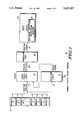
- FIG. 1 illustrates in block diagram form an interrupt mechanism in accordance with the present invention
- FIG. 2 illustrates in logic diagram form carry chain logic of the interrupt mechanism of FIG. 1;
- FIG. 3 illustrates in flow chart form a software exception processing routine implemented by the interrupt mechanism of FIG. 1.
- FIG. 1 Illustrated in FIG. 1 is a block diagram of a data processor interrupt mechanism 10 comprised generally of a plurality of N modules 12, where N is an integer, selector logic 13, carry chain logic 14, translator logic 16, and a central processing unit (CPU) 18 having a software exception processing routine 20.
- N is an integer
- selector logic 13 carry chain logic 14
- translator logic 16 carry chain logic 14
- the modules 12 provide N interrupt source signals collectively labeled "Interrupt Sources", which are connected to a first input of each of the carry chain logic 14 and the selector logic 13 via an N-bit wide communications bus.
- An encoded signal labeled "Module Priority Adjust Request” is connected to a second input of selector logic 13 via a second communications bus which is K bits wide, where K is an integer.
- An output of selector logic 13 is a signal labelled "Adjust Enable” and is connected to a control input of carry chain logic 14.
- An output of carry chain logic 14 is a signal labelled "Priority Interrupt” having (N+1) bits and is connected to an input of the translator logic 16 by a third communications bus.
- An output of translator logic 16 is a signal labelled "Interrupt Vector” having M bits, where M is an integer, which is connected to the software exception processing routine 20 within the CPU 18.
- interrupt mechanism 10 functions to provide a prioritized data processing interrupt mechanism which is user adjustable.
- the plurality of modules 12 may represent the systems monitored in an automobile in a prioritized order. Assume that the module with the lowest number represents the system function with the highest interrupt source priority. For example, a signal to perform a brake function might be assigned the highest interrupt source priority (one), with the sequential firing of four pistons in the engine being assigned the next four interrupt source priority levels (two through five).
- one or more interrupt source signals may be coupled to the CPU.
- the interrupt mechanism When more than one interrupt source signal is asserted, the interrupt mechanism must recognize a priority level of each signal and service the highest prioritized interrupt source signal. While the automobile is operating and a braking situation is not encountered, the sequential firing of the pistons is necessary for proper operation of the engine.
- the CPU 18 of the automobile's control systems must be interrupted each time one of the four pistons should be fired. Therefore, if the second piston has fired, the third piston should be fired next.
- the interrupt source signal associated with the third piston (priority level four) should be subsequently serviced. If the priority level four interrupt source signal has the highest priority level asserted, the carry chain logic 14 identifies that signal as the priority interrupt signal. An appropriate interrupt vector is then provided to CPU 18.
- a software program selectively provides the module priority adjust request signal to control the automobile system in a predetermined manner.
- the module priority adjust request signal contains an encoded value identifying a module which should have the priority level raised.
- the software program which provides the module priority adjust request signal is structured to insure that certain automobile functions are not interrupted. In this example, the software program is structured to insure that the CPU permits the firing of the third piston before servicing any higher interrupt source signal.
- the software program which provides the module priority adjust request signal either may or may not be implemented in the software exception processing routine 20.
- selector logic 13 In response to receiving the module priority adjust request signal, selector logic 13 asserts the adjust enable signal.
- the carry chain logic 14 When the adjust enable signal is asserted, the carry chain logic 14 provides an encoded priority interrupt signal which indicates that the priority of an interrupt source has been adjusted.
- the translator logic 16 translates or assigns the priority interrupt signal a predetermined interrupt vector signal.
- the interrupt vector signal is sent to software exception processing routine 20 in the CPU 18 of the automobile system.
- the software exception processing routine 20 enables the appropriate interrupt service routine to be activated and the third piston fires.
- the software exception processing routine tests the interrupt vector to perform a brake function. In this example, if the interrupt source signal to perform the higher prioritized brake function has been asserted, the software exception processing routine 20 overrides the piston firing function to perform a brake function for the automobile. If the interrupt source signal to perform a brake function has not been asserted as determined by exception processing routine 20, then the appropriate interrupt service routine is asserted and the third piston fires.
- the plurality of N modules 12 represents either internal interrupt sources from within the data processing system which uses interrupt mechanism 10 or external interrupt sources peripheral to the data processing system.
- Each of the modules is assigned a predetermined priority level according to the specifications of the user's system.
- Selector logic 13 may be implemented with standard logic which compares the interrupt source signals to a module priority adjust request signal.
- the module priority adjust request signal indicates that the priority level of a specified module should be adjusted to reflect the needs of the system's user. It should be well understood that the determination as to which module should be adjusted in priority is made through either a software program (not shown) or a hardware implementation (not shown) external to the interrupt mechanism shown in FIG. 1.
- the adjust enable signal is asserted. If the specified module priority adjust signal does not correspond to one of the active interrupt source signals, the adjust enable signal is not asserted. The adjust enable signal is output to the carry chain logic 14.
- FIG. 2 Illustrated in FIG. 2 is a logic diagram of the carry chain logic 14 of FIG. 1 and is generally comprised of a plurality of prioritized (N+1) logic portions such as a first logic portion 22 and a second logic portion 24, each of which generates a priority interrupt signal.
- the adjust enable signal provides an input to logic portion 22 which is comprised of a single node.
- the adjust enable signal is asigned the highest priority interrupt signal when it is asserted. If the adjust enable signal is not asserted, the interrupt source with the highest priority is assigned the appropriate priority interrupt signal.
- the priority interrupt signal is output from the carry chain logic 14.
- Logic portion 24 is generally comprised of an OR gate 26, an inverter 28, and an AND gate 30. All other lower ranked logic portions of carry chain logic 14 also each have an OR gate, an inverter and an AND gate.
- the adjust enable signal from logic portion 22 provides an input to both a first input of OR gate 26 and an input of inverter 30.
- the interrupt source signal provides an input to both a second input of the OR gate 26 and a first input of the AND gate 30.
- An output of inverter 28 is connected to a second input of AND gate 30.
- An output of the OR gate 26, labelled “Carry” provides a first input to an OR gate and an inverter in an immediately lower prioritized logic portion.
- An output of AND gate 30 provides a bit of predetermined rank of the (N+1) bit encoded priority interrupt signal.
- the carry chain logic 14 identifies an interrupt source signal having the highest priority level by asserting only one bit of the priority interrupt signal. For example, if the interrupt source signal associated with module one is asserted, the priority interrupt one signal is asserted.
- the carry output of OR gate 26 is also asserted and is carry propagated in chain fashion thru all other lower prioritized logic portions to force the output of each logic portion to not be asserted. If the priority of an interrupt source signal has been adjusted, the priority interrupt signal only identifies that the signal was adjusted, and not the actual priority of the signal.
- the translator logic 16 comprises standard logic circuitry for translating or assigning the (N+1) bit priority interrupt signal a predetermined interrupt vector signal having M bits.
- CPU 18 uses the M bit interrupt vector signal to identify the highest prioritized interrupt source signal or whether a priority adjustment was made to an interrupt source signal.
- FIG. 3 Illustrated in FIG. 3 is a flow chart diagram of the software exception processing routine 20 which occurs after the interrupt vector signal is input to the CPU 18.
- the flow chart illustrates how the data processing system having the interrupt mechanism of the present invention uses the priority interrupt signal to identify the highest prioritized module if the priority interrupt signal indicates that an adjustment in interrupt priority was made.
- a prioritized interrupt vector which was adjusted is input to the CPU 18, the module which should be adjusted is identified through a user software program which is the software exception processing routine 20.
- the adjusted prioritized interrupt vector is tested by routine 20 to determine if a user has programmed CPU 18 to allow the adjusted interrupting module to retain the adjusted priority.
- the adjusted prioritized interrupt vector is verfied by routine 20 as the vector with the highest priority, the adjusted priority interrupting module should be serviced. If the user has defined the data processing system so that the adjusted prioritized interrupt vector does not have the highest priority level, the software exception processing routine 20 indicates that the interrupting module which was determined to have a higher priority should be serviced. If a prioritized interrupt vector which was not adjusted is received, the software exception processing routine 20 allows the interrupting module to be serviced.
- interrupt mechanisms are essential to the operation of data processors.
- the need to provide prioritized processing interrupt signals in a timely manner is a concern of many systems designs.
- the interrupt mechanism described herein provides an effective and unique solution to generate the response to prioritized interrupt signals more quickly than conventional designs.
- the user identifies and adjusts the interrupt source signal which should have the highest priority by using either a software program (not shown) or a hardware implementation (not shown).
- the present invention identifies whether an interrupt source signal was adjusted before the interrupt vector is provided to the CPU. Additionally, the CPU does not have to individually investigate each system module to acquire additional information related to the priority adjustment. As a result, the speed with which the CPU 18 services the interrupt source signal is increased.
- the priority interrupt signal is encoded by assigning a unique value to an adjusted interrupt source signal. That unique priority interrupt signal may then be used in a variety of operations which shorten the time necessary to process interrupt requests, as well as allow an interrupt source to have a higher priority level than some of the interrupt source signals, but not all. In other words, a user may variably adjust the priority of an interrupt request without making the adjusted priority assume the highest priority in the interrupt mechanism.
- the module priority adjust request signal input to the selector logic 13 could range in size from a single bit to any other encoded bit size.
- the carry chain logic 14 could be replaced by a programmable logic array (PLA). In such an implementation, the PLA would be programmed to perform the same function described above as the carry chain logic 14 performs.
- the translator logic 16 could be removed from the data processor 10. Also, translator logic 16 could be replaced by either a software program or other hardware implementations.
- the software exception processing routine 20 could also be implemented in a variety of ways. The flow chart diagram illustrated in FIG. 3 represents only one manner in which the invention could be used. The function of software exception processing routine 20 could also be implemented by hardware.
Landscapes
- Engineering & Computer Science (AREA)
- Theoretical Computer Science (AREA)
- Physics & Mathematics (AREA)
- General Engineering & Computer Science (AREA)
- General Physics & Mathematics (AREA)
- Bus Control (AREA)
Abstract
Description
Claims (13)
Priority Applications (1)
| Application Number | Priority Date | Filing Date | Title |
|---|---|---|---|
| US07/644,142 US5257357A (en) | 1991-01-22 | 1991-01-22 | Method and apparatus for implementing a priority adjustment of an interrupt in a data processor |
Applications Claiming Priority (1)
| Application Number | Priority Date | Filing Date | Title |
|---|---|---|---|
| US07/644,142 US5257357A (en) | 1991-01-22 | 1991-01-22 | Method and apparatus for implementing a priority adjustment of an interrupt in a data processor |
Publications (1)
| Publication Number | Publication Date |
|---|---|
| US5257357A true US5257357A (en) | 1993-10-26 |
Family
ID=24583621
Family Applications (1)
| Application Number | Title | Priority Date | Filing Date |
|---|---|---|---|
| US07/644,142 Expired - Lifetime US5257357A (en) | 1991-01-22 | 1991-01-22 | Method and apparatus for implementing a priority adjustment of an interrupt in a data processor |
Country Status (1)
| Country | Link |
|---|---|
| US (1) | US5257357A (en) |
Cited By (10)
| Publication number | Priority date | Publication date | Assignee | Title |
|---|---|---|---|---|
| US5581771A (en) * | 1993-10-08 | 1996-12-03 | Nec Corporation | Microcomputer having interrupt control circuit to determine priority level |
| US5615375A (en) * | 1992-11-17 | 1997-03-25 | Fujitsu Limited | Interrupt control circuit |
| US5867687A (en) * | 1995-05-12 | 1999-02-02 | Sgs-Thomson Microelectronics Limited | Microprocessor system for handling multiple priority levels interrupt requests to processor and interrupt process identifiers |
| US5958036A (en) * | 1997-09-08 | 1999-09-28 | Lucent Technologies Inc. | Circuit for arbitrating interrupts with programmable priority levels |
| US20020116563A1 (en) * | 2000-12-12 | 2002-08-22 | Lever Paul D. | Apparatus and method to reduce interrupt latency in shared interrupt systems |
| DE10206865C1 (en) * | 2002-02-18 | 2003-05-15 | Daimler Chrysler Ag | Limiting software process response time to predetermined maximum response time, process is subdivided and if process is terminated, result of selected sub-process is used as final result |
| EP1422627A1 (en) * | 2002-11-19 | 2004-05-26 | STMicroelectronics S.r.l. | Method for generating interrupt commands in a microprocessor system and relative priority interrupt controller |
| US20050005050A1 (en) * | 2003-07-07 | 2005-01-06 | Protocom Technology Corporation | Memory bus assignment for functional devices in an audio/video signal processing system |
| US10657086B2 (en) * | 2016-05-27 | 2020-05-19 | Arm Ip Limited | Methods for reconciling interrupt conflicts |
| US10742430B2 (en) * | 2017-12-13 | 2020-08-11 | Fujitsu Limited | Information processing apparatus and information processing method |
Citations (8)
| Publication number | Priority date | Publication date | Assignee | Title |
|---|---|---|---|---|
| US3925766A (en) * | 1972-11-29 | 1975-12-09 | Honeywell Inf Systems | Dynamically variable priority access system |
| US3984820A (en) * | 1975-06-30 | 1976-10-05 | Honeywell Information Systems, Inc. | Apparatus for changing the interrupt level of a process executing in a data processing system |
| US4493036A (en) * | 1982-12-14 | 1985-01-08 | Honeywell Information Systems Inc. | Priority resolver having dynamically adjustable priority levels |
| US4788640A (en) * | 1986-01-17 | 1988-11-29 | Intel Corporation | Priority logic system |
| US4829467A (en) * | 1984-12-21 | 1989-05-09 | Canon Kabushiki Kaisha | Memory controller including a priority order determination circuit |
| US4914580A (en) * | 1987-10-26 | 1990-04-03 | American Telephone And Telegraph Company | Communication system having interrupts with dynamically adjusted priority levels |
| US4953081A (en) * | 1988-12-21 | 1990-08-28 | International Business Machines Corporation | Least recently used arbiter with programmable high priority mode and performance monitor |
| US5083261A (en) * | 1983-11-03 | 1992-01-21 | Motorola, Inc. | Dynamically alterable interrupt priority circuit |
-
1991
- 1991-01-22 US US07/644,142 patent/US5257357A/en not_active Expired - Lifetime
Patent Citations (8)
| Publication number | Priority date | Publication date | Assignee | Title |
|---|---|---|---|---|
| US3925766A (en) * | 1972-11-29 | 1975-12-09 | Honeywell Inf Systems | Dynamically variable priority access system |
| US3984820A (en) * | 1975-06-30 | 1976-10-05 | Honeywell Information Systems, Inc. | Apparatus for changing the interrupt level of a process executing in a data processing system |
| US4493036A (en) * | 1982-12-14 | 1985-01-08 | Honeywell Information Systems Inc. | Priority resolver having dynamically adjustable priority levels |
| US5083261A (en) * | 1983-11-03 | 1992-01-21 | Motorola, Inc. | Dynamically alterable interrupt priority circuit |
| US4829467A (en) * | 1984-12-21 | 1989-05-09 | Canon Kabushiki Kaisha | Memory controller including a priority order determination circuit |
| US4788640A (en) * | 1986-01-17 | 1988-11-29 | Intel Corporation | Priority logic system |
| US4914580A (en) * | 1987-10-26 | 1990-04-03 | American Telephone And Telegraph Company | Communication system having interrupts with dynamically adjusted priority levels |
| US4953081A (en) * | 1988-12-21 | 1990-08-28 | International Business Machines Corporation | Least recently used arbiter with programmable high priority mode and performance monitor |
Cited By (14)
| Publication number | Priority date | Publication date | Assignee | Title |
|---|---|---|---|---|
| US5615375A (en) * | 1992-11-17 | 1997-03-25 | Fujitsu Limited | Interrupt control circuit |
| US5581771A (en) * | 1993-10-08 | 1996-12-03 | Nec Corporation | Microcomputer having interrupt control circuit to determine priority level |
| US5867687A (en) * | 1995-05-12 | 1999-02-02 | Sgs-Thomson Microelectronics Limited | Microprocessor system for handling multiple priority levels interrupt requests to processor and interrupt process identifiers |
| US5958036A (en) * | 1997-09-08 | 1999-09-28 | Lucent Technologies Inc. | Circuit for arbitrating interrupts with programmable priority levels |
| US20020116563A1 (en) * | 2000-12-12 | 2002-08-22 | Lever Paul D. | Apparatus and method to reduce interrupt latency in shared interrupt systems |
| US20050160425A1 (en) * | 2002-02-18 | 2005-07-21 | Daimlerchrysler Ag | Limitation of the response time of a software process |
| DE10206865C1 (en) * | 2002-02-18 | 2003-05-15 | Daimler Chrysler Ag | Limiting software process response time to predetermined maximum response time, process is subdivided and if process is terminated, result of selected sub-process is used as final result |
| EP1422627A1 (en) * | 2002-11-19 | 2004-05-26 | STMicroelectronics S.r.l. | Method for generating interrupt commands in a microprocessor system and relative priority interrupt controller |
| US20040177192A1 (en) * | 2002-11-19 | 2004-09-09 | Stmicroelectronics S.R.L. | Method for generating interrupt commands in a microprocessor system and relative priority interrupt controller |
| US7120718B2 (en) | 2002-11-19 | 2006-10-10 | Stmicroelectronics S.R.L. | Method for generating interrupt commands in a microprocessor system and relative priority interrupt controller |
| US20050005050A1 (en) * | 2003-07-07 | 2005-01-06 | Protocom Technology Corporation | Memory bus assignment for functional devices in an audio/video signal processing system |
| US7284080B2 (en) * | 2003-07-07 | 2007-10-16 | Sigmatel, Inc. | Memory bus assignment for functional devices in an audio/video signal processing system |
| US10657086B2 (en) * | 2016-05-27 | 2020-05-19 | Arm Ip Limited | Methods for reconciling interrupt conflicts |
| US10742430B2 (en) * | 2017-12-13 | 2020-08-11 | Fujitsu Limited | Information processing apparatus and information processing method |
Similar Documents
| Publication | Publication Date | Title |
|---|---|---|
| US5428799A (en) | Redirection of interrupts to microprocessors | |
| US4438489A (en) | Interrupt pre-processor with dynamic allocation of priority levels to requests queued in an associative CAM | |
| US5623692A (en) | Architecture for providing input/output operations in a computer system | |
| US5257357A (en) | Method and apparatus for implementing a priority adjustment of an interrupt in a data processor | |
| CN1251077C (en) | Method for implementing interrupt in data processing and data processing system | |
| JP3609444B2 (en) | Data processing system | |
| US10565140B2 (en) | Techniques for issuing interrupts in a data processing system with multiple scopes | |
| EP1096376A2 (en) | Snapshot arbiter mechanism | |
| JPH0250753A (en) | Interrupt processing apparatus and method for computer | |
| EP1080422A1 (en) | Software configurable technique for prioritizing interrupts in a microprocessor-based system | |
| JPS6029138B2 (en) | priority interrupt device | |
| KR920001814B1 (en) | Direct Memory Access Control | |
| US5640519A (en) | Method and apparatus to improve latency experienced by an agent under a round robin arbitration scheme | |
| KR20030051834A (en) | System and method for implementing a multi-level interrupt scheme in a computer system | |
| JP4741256B2 (en) | Interrupt controller | |
| US5640591A (en) | Method and apparatus for naming input/output devices in a computer system | |
| JPH04211855A (en) | Apparatus and method for controlling communication bus in data processing system | |
| CA2072720A1 (en) | Programmable interrupt priority encoder method and apparatus | |
| GB2341460A (en) | Arbitration between requests for accessing a shared resource uses dynamic priority scheme | |
| US6061756A (en) | Computer system which performs intelligent byte slicing/data packing on a multi-byte wide bus | |
| US6336179B1 (en) | Dynamic scheduling mechanism for an asynchronous/isochronous integrated circuit interconnect bus | |
| US6047350A (en) | Computer system which performs intelligent byte slicing on a multi-byte wide bus | |
| US6449675B1 (en) | Multifield register having a selection field for selecting a source of an information field | |
| KR19980079572A (en) | Method and device for handling interrupt request | |
| US7231499B2 (en) | Prioritization of real time / non-real time memory requests from bus compliant devices |
Legal Events
| Date | Code | Title | Description |
|---|---|---|---|
| AS | Assignment |
Owner name: MOTOROLA, INC., SCHAUMBURG, IL A CORP OF DE Free format text: ASSIGNMENT OF ASSIGNORS INTEREST.;ASSIGNORS:YISHAY, ODED;HARTUNG, EYTAN;REEL/FRAME:005613/0024 Effective date: 19910118 |
|
| AS | Assignment |
Owner name: MOTOROLA, INC., A CORP. OF DE, ILLINOIS Free format text: ASSIGNMENT OF ASSIGNORS INTEREST.;ASSIGNOR:SHAMIR, DAVID;REEL/FRAME:005602/0710 Effective date: 19910129 |
|
| STCF | Information on status: patent grant |
Free format text: PATENTED CASE |
|
| FEPP | Fee payment procedure |
Free format text: PAYOR NUMBER ASSIGNED (ORIGINAL EVENT CODE: ASPN); ENTITY STATUS OF PATENT OWNER: LARGE ENTITY |
|
| FPAY | Fee payment |
Year of fee payment: 4 |
|
| FPAY | Fee payment |
Year of fee payment: 8 |
|
| AS | Assignment |
Owner name: FREESCALE SEMICONDUCTOR, INC., TEXAS Free format text: ASSIGNMENT OF ASSIGNORS INTEREST;ASSIGNOR:MOTOROLA, INC.;REEL/FRAME:015698/0657 Effective date: 20040404 Owner name: FREESCALE SEMICONDUCTOR, INC.,TEXAS Free format text: ASSIGNMENT OF ASSIGNORS INTEREST;ASSIGNOR:MOTOROLA, INC.;REEL/FRAME:015698/0657 Effective date: 20040404 |
|
| FPAY | Fee payment |
Year of fee payment: 12 |
|
| AS | Assignment |
Owner name: CITIBANK, N.A. AS COLLATERAL AGENT, NEW YORK Free format text: SECURITY AGREEMENT;ASSIGNORS:FREESCALE SEMICONDUCTOR, INC.;FREESCALE ACQUISITION CORPORATION;FREESCALE ACQUISITION HOLDINGS CORP.;AND OTHERS;REEL/FRAME:018855/0129 Effective date: 20061201 Owner name: CITIBANK, N.A. AS COLLATERAL AGENT,NEW YORK Free format text: SECURITY AGREEMENT;ASSIGNORS:FREESCALE SEMICONDUCTOR, INC.;FREESCALE ACQUISITION CORPORATION;FREESCALE ACQUISITION HOLDINGS CORP.;AND OTHERS;REEL/FRAME:018855/0129 Effective date: 20061201 |
|
| AS | Assignment |
Owner name: CITIBANK, N.A., AS COLLATERAL AGENT,NEW YORK Free format text: SECURITY AGREEMENT;ASSIGNOR:FREESCALE SEMICONDUCTOR, INC.;REEL/FRAME:024397/0001 Effective date: 20100413 Owner name: CITIBANK, N.A., AS COLLATERAL AGENT, NEW YORK Free format text: SECURITY AGREEMENT;ASSIGNOR:FREESCALE SEMICONDUCTOR, INC.;REEL/FRAME:024397/0001 Effective date: 20100413 |
|
| AS | Assignment |
Owner name: FREESCALE SEMICONDUCTOR, INC., TEXAS Free format text: PATENT RELEASE;ASSIGNOR:CITIBANK, N.A., AS COLLATERAL AGENT;REEL/FRAME:037354/0225 Effective date: 20151207 Owner name: FREESCALE SEMICONDUCTOR, INC., TEXAS Free format text: PATENT RELEASE;ASSIGNOR:CITIBANK, N.A., AS COLLATERAL AGENT;REEL/FRAME:037356/0143 Effective date: 20151207 Owner name: FREESCALE SEMICONDUCTOR, INC., TEXAS Free format text: PATENT RELEASE;ASSIGNOR:CITIBANK, N.A., AS COLLATERAL AGENT;REEL/FRAME:037356/0553 Effective date: 20151207 |