US5254238A - Surface treating solution and surface treating process for zinc-plated steel plates - Google Patents
Surface treating solution and surface treating process for zinc-plated steel plates Download PDFInfo
- Publication number
- US5254238A US5254238A US07/645,816 US64581691A US5254238A US 5254238 A US5254238 A US 5254238A US 64581691 A US64581691 A US 64581691A US 5254238 A US5254238 A US 5254238A
- Authority
- US
- United States
- Prior art keywords
- ions
- zinc
- treating solution
- sup
- plated steel
- Prior art date
- Legal status (The legal status is an assumption and is not a legal conclusion. Google has not performed a legal analysis and makes no representation as to the accuracy of the status listed.)
- Expired - Fee Related
Links
- 229910000831 Steel Inorganic materials 0.000 title claims abstract description 35
- 239000010959 steel Substances 0.000 title claims abstract description 35
- 238000000034 method Methods 0.000 title claims abstract description 18
- -1 nitrate ions Chemical class 0.000 claims abstract description 26
- 229910021645 metal ion Inorganic materials 0.000 claims abstract description 25
- 239000007800 oxidant agent Substances 0.000 claims abstract description 23
- MHAJPDPJQMAIIY-UHFFFAOYSA-N Hydrogen peroxide Chemical compound OO MHAJPDPJQMAIIY-UHFFFAOYSA-N 0.000 claims abstract description 14
- 238000005868 electrolysis reaction Methods 0.000 claims abstract description 13
- 229910002651 NO3 Inorganic materials 0.000 claims abstract description 8
- SXDBWCPKPHAZSM-UHFFFAOYSA-M bromate Inorganic materials [O-]Br(=O)=O SXDBWCPKPHAZSM-UHFFFAOYSA-M 0.000 claims abstract description 6
- XTEGARKTQYYJKE-UHFFFAOYSA-M chlorate Inorganic materials [O-]Cl(=O)=O XTEGARKTQYYJKE-UHFFFAOYSA-M 0.000 claims abstract description 6
- 238000004381 surface treatment Methods 0.000 claims abstract description 5
- XLYOFNOQVPJJNP-UHFFFAOYSA-M hydroxide Chemical compound [OH-] XLYOFNOQVPJJNP-UHFFFAOYSA-M 0.000 claims abstract description 4
- 230000005611 electricity Effects 0.000 claims description 11
- 229910052749 magnesium Inorganic materials 0.000 claims description 6
- 229910052782 aluminium Inorganic materials 0.000 claims description 5
- 150000004679 hydroxides Chemical class 0.000 claims description 5
- 229910052804 chromium Inorganic materials 0.000 claims description 4
- XLYOFNOQVPJJNP-UHFFFAOYSA-N water Substances O XLYOFNOQVPJJNP-UHFFFAOYSA-N 0.000 claims description 4
- 238000011282 treatment Methods 0.000 description 28
- 239000000243 solution Substances 0.000 description 21
- PXHVJJICTQNCMI-UHFFFAOYSA-N Nickel Chemical compound [Ni] PXHVJJICTQNCMI-UHFFFAOYSA-N 0.000 description 14
- 229910052751 metal Inorganic materials 0.000 description 13
- 239000002184 metal Substances 0.000 description 13
- 229910000000 metal hydroxide Inorganic materials 0.000 description 13
- 150000004692 metal hydroxides Chemical class 0.000 description 13
- HCHKCACWOHOZIP-UHFFFAOYSA-N Zinc Chemical compound [Zn] HCHKCACWOHOZIP-UHFFFAOYSA-N 0.000 description 12
- 229910052725 zinc Inorganic materials 0.000 description 12
- 239000011701 zinc Substances 0.000 description 12
- 230000000052 comparative effect Effects 0.000 description 11
- 239000011651 chromium Substances 0.000 description 10
- 239000011777 magnesium Substances 0.000 description 10
- XLOMVQKBTHCTTD-UHFFFAOYSA-N Zinc monoxide Chemical group [Zn]=O XLOMVQKBTHCTTD-UHFFFAOYSA-N 0.000 description 8
- JIAARYAFYJHUJI-UHFFFAOYSA-L zinc dichloride Chemical compound [Cl-].[Cl-].[Zn+2] JIAARYAFYJHUJI-UHFFFAOYSA-L 0.000 description 8
- 230000000694 effects Effects 0.000 description 7
- ZCDOYSPFYFSLEW-UHFFFAOYSA-N chromate(2-) Chemical compound [O-][Cr]([O-])(=O)=O ZCDOYSPFYFSLEW-UHFFFAOYSA-N 0.000 description 6
- 238000000151 deposition Methods 0.000 description 6
- 239000007921 spray Substances 0.000 description 6
- 230000008021 deposition Effects 0.000 description 5
- 239000000463 material Substances 0.000 description 5
- 150000002739 metals Chemical class 0.000 description 5
- 229910052759 nickel Inorganic materials 0.000 description 5
- 238000005260 corrosion Methods 0.000 description 4
- 230000007797 corrosion Effects 0.000 description 4
- BASFCYQUMIYNBI-UHFFFAOYSA-N platinum Chemical compound [Pt] BASFCYQUMIYNBI-UHFFFAOYSA-N 0.000 description 4
- 239000011592 zinc chloride Substances 0.000 description 4
- 235000005074 zinc chloride Nutrition 0.000 description 4
- 239000011787 zinc oxide Substances 0.000 description 4
- 230000015572 biosynthetic process Effects 0.000 description 3
- JOPOVCBBYLSVDA-UHFFFAOYSA-N chromium(6+) Chemical compound [Cr+6] JOPOVCBBYLSVDA-UHFFFAOYSA-N 0.000 description 3
- 230000007613 environmental effect Effects 0.000 description 3
- JEIPFZHSYJVQDO-UHFFFAOYSA-N iron(III) oxide Inorganic materials O=[Fe]O[Fe]=O JEIPFZHSYJVQDO-UHFFFAOYSA-N 0.000 description 3
- 238000012360 testing method Methods 0.000 description 3
- FYYHWMGAXLPEAU-UHFFFAOYSA-N Magnesium Chemical compound [Mg] FYYHWMGAXLPEAU-UHFFFAOYSA-N 0.000 description 2
- FAPWRFPIFSIZLT-UHFFFAOYSA-M Sodium chloride Chemical compound [Na+].[Cl-] FAPWRFPIFSIZLT-UHFFFAOYSA-M 0.000 description 2
- 230000001070 adhesive effect Effects 0.000 description 2
- 239000007864 aqueous solution Substances 0.000 description 2
- 239000003795 chemical substances by application Substances 0.000 description 2
- 239000000460 chlorine Substances 0.000 description 2
- 239000011248 coating agent Substances 0.000 description 2
- 238000000576 coating method Methods 0.000 description 2
- 238000011156 evaluation Methods 0.000 description 2
- 238000007654 immersion Methods 0.000 description 2
- 150000002500 ions Chemical class 0.000 description 2
- 238000007747 plating Methods 0.000 description 2
- 229910052697 platinum Inorganic materials 0.000 description 2
- 159000000000 sodium salts Chemical class 0.000 description 2
- 150000003467 sulfuric acid derivatives Chemical class 0.000 description 2
- 239000008399 tap water Substances 0.000 description 2
- 235000020679 tap water Nutrition 0.000 description 2
- 238000005406 washing Methods 0.000 description 2
- 239000002699 waste material Substances 0.000 description 2
- 229910018626 Al(OH) Inorganic materials 0.000 description 1
- VEXZGXHMUGYJMC-UHFFFAOYSA-M Chloride anion Chemical compound [Cl-] VEXZGXHMUGYJMC-UHFFFAOYSA-M 0.000 description 1
- ZAMOUSCENKQFHK-UHFFFAOYSA-N Chlorine atom Chemical compound [Cl] ZAMOUSCENKQFHK-UHFFFAOYSA-N 0.000 description 1
- RYGMFSIKBFXOCR-UHFFFAOYSA-N Copper Chemical compound [Cu] RYGMFSIKBFXOCR-UHFFFAOYSA-N 0.000 description 1
- 229910019440 Mg(OH) Inorganic materials 0.000 description 1
- 229910018661 Ni(OH) Inorganic materials 0.000 description 1
- 229910021586 Nickel(II) chloride Inorganic materials 0.000 description 1
- NHNBFGGVMKEFGY-UHFFFAOYSA-N Nitrate Chemical compound [O-][N+]([O-])=O NHNBFGGVMKEFGY-UHFFFAOYSA-N 0.000 description 1
- 229910019142 PO4 Inorganic materials 0.000 description 1
- NBIIXXVUZAFLBC-UHFFFAOYSA-N Phosphoric acid Chemical compound OP(O)(O)=O NBIIXXVUZAFLBC-UHFFFAOYSA-N 0.000 description 1
- 230000002378 acidificating effect Effects 0.000 description 1
- 239000000956 alloy Substances 0.000 description 1
- 229910045601 alloy Inorganic materials 0.000 description 1
- XAGFODPZIPBFFR-UHFFFAOYSA-N aluminium Chemical compound [Al] XAGFODPZIPBFFR-UHFFFAOYSA-N 0.000 description 1
- 150000003863 ammonium salts Chemical class 0.000 description 1
- KGBXLFKZBHKPEV-UHFFFAOYSA-N boric acid Chemical compound OB(O)O KGBXLFKZBHKPEV-UHFFFAOYSA-N 0.000 description 1
- 239000004327 boric acid Substances 0.000 description 1
- 238000006757 chemical reactions by type Methods 0.000 description 1
- 229910052801 chlorine Inorganic materials 0.000 description 1
- TVWHTOUAJSGEKT-UHFFFAOYSA-N chlorine trioxide Chemical compound [O]Cl(=O)=O TVWHTOUAJSGEKT-UHFFFAOYSA-N 0.000 description 1
- 229910017052 cobalt Inorganic materials 0.000 description 1
- 239000010941 cobalt Substances 0.000 description 1
- GUTLYIVDDKVIGB-UHFFFAOYSA-N cobalt atom Chemical compound [Co] GUTLYIVDDKVIGB-UHFFFAOYSA-N 0.000 description 1
- 238000007796 conventional method Methods 0.000 description 1
- 229910052802 copper Inorganic materials 0.000 description 1
- 239000010949 copper Substances 0.000 description 1
- 238000000354 decomposition reaction Methods 0.000 description 1
- 238000005238 degreasing Methods 0.000 description 1
- 125000002084 dioxo-lambda(5)-bromanyloxy group Chemical group *OBr(=O)=O 0.000 description 1
- 238000001035 drying Methods 0.000 description 1
- 238000009713 electroplating Methods 0.000 description 1
- 238000002474 experimental method Methods 0.000 description 1
- 239000001257 hydrogen Substances 0.000 description 1
- 229910052739 hydrogen Inorganic materials 0.000 description 1
- 229910044991 metal oxide Inorganic materials 0.000 description 1
- 150000004706 metal oxides Chemical class 0.000 description 1
- 239000000203 mixture Substances 0.000 description 1
- QMMRZOWCJAIUJA-UHFFFAOYSA-L nickel dichloride Chemical compound Cl[Ni]Cl QMMRZOWCJAIUJA-UHFFFAOYSA-L 0.000 description 1
- LGQLOGILCSXPEA-UHFFFAOYSA-L nickel sulfate Chemical compound [Ni+2].[O-]S([O-])(=O)=O LGQLOGILCSXPEA-UHFFFAOYSA-L 0.000 description 1
- 229910000363 nickel(II) sulfate Inorganic materials 0.000 description 1
- NBIIXXVUZAFLBC-UHFFFAOYSA-K phosphate Chemical compound [O-]P([O-])([O-])=O NBIIXXVUZAFLBC-UHFFFAOYSA-K 0.000 description 1
- 239000010452 phosphate Substances 0.000 description 1
- 230000010287 polarization Effects 0.000 description 1
- 150000003839 salts Chemical class 0.000 description 1
Images
Classifications
-
- C—CHEMISTRY; METALLURGY
- C25—ELECTROLYTIC OR ELECTROPHORETIC PROCESSES; APPARATUS THEREFOR
- C25D—PROCESSES FOR THE ELECTROLYTIC OR ELECTROPHORETIC PRODUCTION OF COATINGS; ELECTROFORMING; APPARATUS THEREFOR
- C25D5/00—Electroplating characterised by the process; Pretreatment or after-treatment of workpieces
- C25D5/48—After-treatment of electroplated surfaces
Definitions
- the present invention relates to a novel surface treating solution which can give excellent anticorrosion to zinc-plated steel plates which are bare or have been coated, and these steel plates are, for example, electrically zinc-plated steel plates, electrically zinc alloy-plated steel plates, melted zinc-plated steel plates, alloyed and melted zinc-plated steel plates or vapor-depositionally zinc-plated steel plates. Furthermore, the present invention relates to a surface treating process for zinc-plated steel plates.
- chromate treatments and metal flash treatments of nickel, magnesium and the like have been heretofore used in order to chemically improve the anticorrosion properties of zinc-plated steel plates.
- chromate treatments include a reaction type chromate treatment, a coating type chromate treatment and an electrolysis type chromate treatment.
- metal flash treatment is the electrolytic deposition treatment of metallic nickel from an acidic nickel plating solution, as described in, for example, Japanese Patent Laid-open No. 56-55592. These treatments are mainly used as undercoating treatments.
- hexavalent chromium is used as an essential component to obtain good performance.
- the conventional examples can provide good anticorrosion properties but involve the environmental problem of a waste solution owing to the employment of hexavalent chromium.
- a metal such as aluminum or magnesium contributes to the improvement of anticorrosion properties of zinc, but the process for depositing the metal on the zinc-plated steel plates from an aqueous solution has some problems to be solved.
- the present invention intends to solve the above-mentioned problems of conventional techniques, and it is directed to a treating solution for forming a hydroxide film on each surface of zinc-plated steel plates by cathodic electrolysis which comprises
- the present invention is also directed to a process for the surface treatment of zinc-plated steel plates which comprises the step of carrying out cathodic electrolysis in a treating solution comprising
- Another treatment process is also acceptable in which the treating solution is brought into contact with the surfaces of the zinc-plated steel plates by spray or immersion. Moreover, after the treatment of the present invention, if necessary, it is possible to additionally subject the zinc-plated steel plates to a phosphate treatment which can also be applied as an undercoating treatment.
- composition of a treating solution according to the present invention will be described in detail.
- one or more metal ions selected from the group consisting of Mg 2+ , Cr 3+ , Ca 2+ , Ni 2+ , Co 2+ and Al 3+ are contained, and it is necessary that the amount of the metal ions is 0.2-50 g/l in all.
- the amount of the metal ions is less than 0.2 g/l, the amount of the deposited metal hydroxide is insufficient, and conversely when it is more than 50 g/l, the deposition efficiency of the metal hydroxide cannot be improved and the use of such an excessive amount is economically disadvantageous.
- an oxidizing agent is also used, and the oxidizing agent is one or more ions selected from the group consisting of nitrate ions, nitrite ions, chlorate ions, bromate ions and hydrogen peroxide. It is necessary that the amount of the oxidizing agent is 0.1-50 g/l. When the amount of the oxidizing agent is less than 0.1 g/l, the deposition efficiency of the metal oxide per unit quantity of electricity deteriorates, and in the case that the film containing metal ions of Ni 2+ and Co 2+ is deposited, these ions separate out in the state of metals, with the result that anticorrosion property declines.
- a treatment temperature is in the range of from ordinary temperature to 70° C., and in this temperature range, the treatment can be achieved without any trouble.
- the film on each surface of the zinc-plated steel plates which have been subjected to the surface treatment is composed of the hydroxides of one or more metals selected from the group consisting of Mg, Cr, Ca, Ni, Co and Al.
- the concentrations of the metal ions and the oxidizing agent in the treating solution and the electrical conduction time, the current density and the quantity of electricity are lower than the respective predetermined levels, the amount of the deposited metal hydroxides is insufficient, so that the anticorrosion effect falls off.
- the concentrations of the metal ions and oxidizing agent as well as the electrical conduction time the current density and the quantity of electricity are increased, the amount of the deposited metal hydroxides increases.
- the crystallinity of the deposited metal hydroxides is poor and the adhesive properties between the metal hydroxides are not so strong, so that the metal hydroxides which are precipitated/deposited in an amount in excess of a certain level are peeled and dispersed in the treating solution simultaneously at the end of the electrical conduction.
- the desirable treating process is to carry out electrolysis in the above-mentioned surface treating solution by the use of each zinc-plated steel plate as the cathode under conditions of a current density of 0.5-50 A/dm 2 , an electric conduction time of 1-60 seconds and an electricity quantity of 1-50 coulomb/dm 2 .
- the surface treatment film of the present invention can be obtained by an immersion process or a spray process without any electrolysis. In the case of the electrolysis process, if the current density, the conduction time and the quantity of electricity are less than 0.5 A/dm 2 , second and 1 coulomb/dm 2 , respectively, the amount of the deposited film is insufficient, with the result that enough anticorrosion cannot be obtained.
- examples of the usable anode include insoluble electrodes such as a platinum electrode and a lead electrode and soluble electrodes comprising these metals or alloys containing these metals.
- metal ions which are dissolved in the treating solution are precipitated in the form of hydroxides, and in this case, they are deposited on the surface of the steel plate [(1), (2), (3), (4), (5) and (6)].
- the function of the metal hydroxide film in the present invention would be that the metallic components melted out at the time of the corrosion act on the zinc material, which leads to the increase of the formation of basic zinc chloride having the anticorrosive effect to the corrosion of the zinc material.
- steel plates were used which had a unit weight of 20 g/m 2 and which had been electroplated with zinc on both the surfaces thereof.
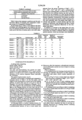
- Table 2 shows the treatment conditions and the anticorrosion effects of examples and comparative examples except for Comparative Example 4.
- a plating bath comprising
- Nickel sulfate 300 g/l
- Nickel chloride 45 g/l
- the grade of anticorrosion was X.
- the lower limit of a current density was set to 0.5 A/dm 2 in view of Example 2 (0.6 A/dm 2 ) and Comparative Example 2 (0.4 A/dm 2 )
- the lower limit of a conduction time was set to 1.0 second in view of Example 4 (1.1 seconds) and Comparative Example 1 (0.8 second)
- the lower limit of the quantity of electricity was set to 2.5 coulomb/dm 2 in view of Example 3 (2.7 coulomb/dm 2 ) and Comparative Example 2 (2.4 coulomb/dm 2 ).
- a surface treating solution for zinc-plated steel plates of the present invention contains a predetermined amount of one or more metal ions selected from the group consisting of Mg 2+ , Cr 3+ , Ca 2+ , Ni 2+ , Co 2+ and Al 3+ and a predetermined amount of an oxidizing agent of nitrate ions or the like, and therefore the treating solution can exert good effects such as the formation of a film having excellent anticorrosion and no environmental problem of a waste solution treatment.
- the present invention uses the above-mentioned specific surface treating solution and preferably each zinc-plated steel plate as a cathode and specifies a current density and the total quantity of electricity, and therefore the film of metal hydroxides can be deposited effectively on the zinc-plated steel plates.
- the formed film of the metal hydroxides can exhibit a sufficient effect in a small deposition amount, which can decrease costs remarkably.
- a phosphorate treatment can be additionally carried out so as to improve coating performance.
Landscapes
- Chemical & Material Sciences (AREA)
- Engineering & Computer Science (AREA)
- Chemical Kinetics & Catalysis (AREA)
- Electrochemistry (AREA)
- Materials Engineering (AREA)
- Metallurgy (AREA)
- Organic Chemistry (AREA)
- Chemical Treatment Of Metals (AREA)
Abstract
A treating solution for forming a hydroxide film on each surface of zinc-plated steel plates by cathodic electrolysis is here disclosed which comprises (a) 0.2 to 50 g/l of one or more metal ions selected from the group consisting of Mg2+, Cr3+, Ca2+, Ni2+, Co2+ and Al3+, and (b) 0.1 to 50 g/l of one or more oxidizing agents selected from the group consisting of nitrate ions, nitrite ions, chlorate ions, bromate ions and hydrogen peroxide. A process for the surface treatment of the zinc-plated steel plates by the use of this treating solution is also disclosed.
Description
(i) Field of the Invention
The present invention relates to a novel surface treating solution which can give excellent anticorrosion to zinc-plated steel plates which are bare or have been coated, and these steel plates are, for example, electrically zinc-plated steel plates, electrically zinc alloy-plated steel plates, melted zinc-plated steel plates, alloyed and melted zinc-plated steel plates or vapor-depositionally zinc-plated steel plates. Furthermore, the present invention relates to a surface treating process for zinc-plated steel plates.
(ii) Description of the Prior Art
It is known that various chromate treatments and metal flash treatments of nickel, magnesium and the like have been heretofore used in order to chemically improve the anticorrosion properties of zinc-plated steel plates. Known examples of the above-mentioned chromate treatments include a reaction type chromate treatment, a coating type chromate treatment and an electrolysis type chromate treatment. Furthermore, a known example of the metal flash treatment is the electrolytic deposition treatment of metallic nickel from an acidic nickel plating solution, as described in, for example, Japanese Patent Laid-open No. 56-55592. These treatments are mainly used as undercoating treatments.
However, in the above-mentioned chromate treatments, hexavalent chromium is used as an essential component to obtain good performance. The employment of hexavalent chromium, which is harmful and difficult of disposal, leads to an environmental problem.
When the final treatment for the zinc-plated steel plates is carried out by the above-mentioned metal flash treatment using a metal such as copper, nickel or cobalt which is nobler than zinc, the corrosion of zinc is inversely accelerated unpreferably by a local polarization function with the zinc material.
Therefore, the conventional examples can provide good anticorrosion properties but involve the environmental problem of a waste solution owing to the employment of hexavalent chromium. In addition, it is known that a metal such as aluminum or magnesium contributes to the improvement of anticorrosion properties of zinc, but the process for depositing the metal on the zinc-plated steel plates from an aqueous solution has some problems to be solved.
The present invention intends to solve the above-mentioned problems of conventional techniques, and it is directed to a treating solution for forming a hydroxide film on each surface of zinc-plated steel plates by cathodic electrolysis which comprises
(a) 0.2 to 50 g/l of one or more metal ions selected from the group consisting of Mg2+, Cr3+, Ca2+, Ni2+, Co2+ and Al3+, and
(b) 0.1 to 50 g/l of one or more oxidizing agents selected from the group consisting of nitrate ions, nitrite ions, chlorate ions, bromate ions and hydrogen peroxide. When the zinc-plated steel plates are treated by the use of this treating solution, the hydroxide film of the selected metal can be deposited on each surface of the steel plates, and this hydroxide film comprises one or more metals selected from the group consisting of Mg, Cr, Ni, Co and Al and thus it is excellent in anticorrosion.
Furthermore, the present invention is also directed to a process for the surface treatment of zinc-plated steel plates which comprises the step of carrying out cathodic electrolysis in a treating solution comprising
(a) 0.2 to 50 g/l of one or more metal ions selected from the group consisting of Mg2+, Cr3+, Ca2+, Ni2+, Co2+ and Al3+, and
(b) 0.1 to 50 g/l of one or more oxidizing agents selected from the group consisting of nitrate ions, nitrite ions, chlorate ions, bromate ions and hydrogen peroxide, under conditions of current density=0.5-50 A/dm2, electrical conduction time=1-60 seconds and the total quantity of electricity=2.5-250 coulomb/dm2 in order to deposit a film containing one or more selected from hydroxides of Mg, Cr, Ca, Ni, Co and Al on each surface of the zinc-plated steel plates. In particular, the electrolysis process in which each zinc-plated steel plate is used as the cathode is effective to deposit the film. Another treatment process is also acceptable in which the treating solution is brought into contact with the surfaces of the zinc-plated steel plates by spray or immersion. Moreover, after the treatment of the present invention, if necessary, it is possible to additionally subject the zinc-plated steel plates to a phosphate treatment which can also be applied as an undercoating treatment.
The composition of a treating solution according to the present invention will be described in detail.
In the treating solution of the present invention, one or more metal ions selected from the group consisting of Mg2+, Cr3+, Ca2+, Ni2+, Co2+ and Al3+ are contained, and it is necessary that the amount of the metal ions is 0.2-50 g/l in all. When the amount of the metal ions is less than 0.2 g/l, the amount of the deposited metal hydroxide is insufficient, and conversely when it is more than 50 g/l, the deposition efficiency of the metal hydroxide cannot be improved and the use of such an excessive amount is economically disadvantageous. In the treating solution of the present invention, an oxidizing agent is also used, and the oxidizing agent is one or more ions selected from the group consisting of nitrate ions, nitrite ions, chlorate ions, bromate ions and hydrogen peroxide. It is necessary that the amount of the oxidizing agent is 0.1-50 g/l. When the amount of the oxidizing agent is less than 0.1 g/l, the deposition efficiency of the metal oxide per unit quantity of electricity deteriorates, and in the case that the film containing metal ions of Ni2+ and Co2+ is deposited, these ions separate out in the state of metals, with the result that anticorrosion property declines. When the amount is in excess of 50 g/l, the deposition efficiency of the metal hydroxide cannot be improved and the use of such an excessive amount is economically disadvantageous, as in the case of the above-mentioned concentration of the metal ions. These metal ions can be added in the form of a sulfate, a chloride or a nitrate, and the oxidizing agent can be added in the form of a sodium salt, an ammonium salt or a corresponding metal salt. In addition, a treatment temperature is in the range of from ordinary temperature to 70° C., and in this temperature range, the treatment can be achieved without any trouble.
The film on each surface of the zinc-plated steel plates which have been subjected to the surface treatment is composed of the hydroxides of one or more metals selected from the group consisting of Mg, Cr, Ca, Ni, Co and Al. In the course of the electrolysis treatment, if the concentrations of the metal ions and the oxidizing agent in the treating solution and the electrical conduction time, the current density and the quantity of electricity are lower than the respective predetermined levels, the amount of the deposited metal hydroxides is insufficient, so that the anticorrosion effect falls off. Furthermore, in the case that the concentrations of the metal ions and oxidizing agent as well as the electrical conduction time, the current density and the quantity of electricity are increased, the amount of the deposited metal hydroxides increases. In this case, however, the crystallinity of the deposited metal hydroxides is poor and the adhesive properties between the metal hydroxides are not so strong, so that the metal hydroxides which are precipitated/deposited in an amount in excess of a certain level are peeled and dispersed in the treating solution simultaneously at the end of the electrical conduction.
The desirable treating process is to carry out electrolysis in the above-mentioned surface treating solution by the use of each zinc-plated steel plate as the cathode under conditions of a current density of 0.5-50 A/dm2, an electric conduction time of 1-60 seconds and an electricity quantity of 1-50 coulomb/dm2. In addition, the surface treatment film of the present invention can be obtained by an immersion process or a spray process without any electrolysis. In the case of the electrolysis process, if the current density, the conduction time and the quantity of electricity are less than 0.5 A/dm2, second and 1 coulomb/dm2, respectively, the amount of the deposited film is insufficient, with the result that enough anticorrosion cannot be obtained. Moreover, if the current density, the conduction time and the quantity of electricity are more than 50 A/dm2, 60 seconds and 50 coulomb/dm2, respectively, the amount of the deposited metal hydroxides does not increase for the above-mentioned reason, so that the improvement of the anticorrosion property cannot be expected any more. In the electrolysis treatment, examples of the usable anode include insoluble electrodes such as a platinum electrode and a lead electrode and soluble electrodes comprising these metals or alloys containing these metals.
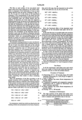
Next, the mechanism of the film according to the present invention will be described. When each zinc-plated steel is used as a cathode in the treating solution of the present invention and current is caused to flow, hydrogen ions are consumed on the surface of the cathode owing to the decomposition of the oxidizing agent, and as a result, a pH rises [→(1), (2), (3), (4) and (5)].
NO.sub.3.sup.- +7H.sub.2 O+8e.sup.- →NH.sub.4.sup.+ +10OH.sup.--( 1)
NO.sub.2.sup.- +6H.sub.2 O+6e.sup.- →NH.sub.4.sup.+ +8OH.sup.--) 2)
ClO.sub.3.sup.- +3H.sub.2 O+6e.sup.- →Cl.sup.- +6OH.sup.--( 3)
BrO.sub.3.sup.- +3H.sub.2 O+6e.sup.- →Br.sup.- +6OH.sup.--( 4)
H.sub.2 O.sub.2 +2e.sup.- →2OH.sup.-- ( 5)
In consequence, metal ions which are dissolved in the treating solution are precipitated in the form of hydroxides, and in this case, they are deposited on the surface of the steel plate [(1), (2), (3), (4), (5) and (6)].
Mg.sup.2+ +2OH.sup.-- →Mg(OH).sub.2 ↓ (1)
Cr.sup.3+ +3OH.sup.-- →Cr(OH).sub.3 ↓ (2)
Ca.sup.2+ +2OH.sup.-- →Ca(OH).sub.2 ↓ (3)
Ni.sup.2+ +2OH.sup.-- →Ni(OH).sub.2 ↓ (4)
Co.sup.2+ +2OH.sup.-- →Co(OH).sub.2 ↓ (5)
Al.sup.3+ +3OH.sup.-- →Al(OH).sub.3 ↓ (6)
Here, the functional effect of the deposited metal hydroxides on the zinc-plated steel plate will be described.
In the case that zinc is corroded under wet corrosive circumstances containing chlorine, the main component of the rust is zinc oxide, and since this zinc oxide imparts no anticorrosive function to zinc, the corrosion makes rapid progress. However, if metal ions such as Mg2+, Cr3+, Ca2+, Ni2+, Co2+ and Al3+ are present in the above-mentioned corrosive circumstances, the formation of zinc oxide can be inhibited, and basic zinc chloride is instead selectively produced. This basic zinc chloride, in contrast to zinc oxide, has good adhesive properties to the zinc material and a low electrical conductivity, and so it is known that basic zinc chloride is excellent in anticorrosive function to the zinc material.
In other words, the function of the metal hydroxide film in the present invention would be that the metallic components melted out at the time of the corrosion act on the zinc material, which leads to the increase of the formation of basic zinc chloride having the anticorrosive effect to the corrosion of the zinc material.
Now, the present invention will be described in detail in reference to Examples 1 to 7 and Comparative Examples 1 to 4.
In all the experiments, steel plates were used which had a unit weight of 20 g/m2 and which had been electroplated with zinc on both the surfaces thereof.
(1) Degreasing: 42° C., 120 seconds, Spray FC-L4460 (Japanese Parkerizing Co., Ltd.) 20 g/l of Agent A, 12 g/l of Agent B
(2) Water washing: Tap water, Room temperature, 20 seconds, Spray
(3) Treatments in examples and comparative examples (temperature=40° C., anode for electrolysis treatment=platinum electrode)
(4) Water washing: Tap water, Room temperature, 20 seconds, Spray
(5) Drying: 110° C., 180 seconds
The edge portions of the plated steel plates were sealed, and a saline solution spray test was carried out in order to measure each generation time of red rust.
              TABLE 1
______________________________________
Evaluation Rank of Anticorrosion Effect by Saline
Solution Spray Test (generation time of red rust)
Grade         Generation Time of Red Rust
______________________________________
⊚
              121 hours or more
◯ 73-120 hours
Δ       48-72 hours
X             less than 48 hours
______________________________________
Table 2 shows the treatment conditions and the anticorrosion effects of examples and comparative examples except for Comparative Example 4.
All the metal ions in Table 2 were added in the form of sulfates, and oxidizing agents were added in the form of a 31% aqueous solution in the case of hydrogen peroxide and in the form of sodium salts in the other cases.
                                  TABLE 2
__________________________________________________________________________
                            Current
                                 Conduction
                                       Quantity of
                            Density
                                 Time  Electricity
                                               Anticorrosive
       Metal Ions
                Oxidizing Agent
                         pH (A/dm.sup.2)
                                 (sec) (coulomb/dm.sup.2)
                                               Properties
__________________________________________________________________________
Example 1
       Mg.sup.2+  = 0.3 g/l
                NO.sub.3.sup.- = 0.5 g/l
                         7.0
                            50   5.0   250     ⊚
Example 2
       Cr.sup.3+  = 1.0 g/l
                ClO3 = 0.3 g/l
                         4.0
                            0.6  60    36      ⊚
       Co.sup.2+  = 0.5 g/l
                H.sub.2 O.sub.2 = 0.1 g/l
Example 3
       Ni.sup.2+  = 1.0 g/l
                BrO3.sup.-  = 0.1 g/l
                         3.0
                            0.6  4.5   2.7     ◯
       A1.sup.3+  = 2.0 g/l
                NO2.sup.- = 0.2 g/l
Example 4
       Mg.sup.2+  = 3.0 g/l
                ClO.sub.3.sup.-  = 0.3 g/l
                         8.0
                            20   1.1   22      ⊚
       Ca.sup.2+  = 1.0 g/l
Example 5
       Cr.sup.3+  = 30 g/l
                NO.sub.2.sup. - = 0.12 g/l
                         3.0
                            5.5  6.0   33      ⊚
       A1.sup.3+  = 10 g/l
Example 6
       Ni.sup.2+  = 1.0 g/l
                NO.sub.3.sup.-  = 45 g/l
                         4.5
                            7.0  2.0   14      ⊚
       Cr.sup.3+  = 2.0 g/l
Example 7
       Cr.sup.3+  = 2.0 g/l
                NO.sub.3.sup.-  = 5 g/l
                         4.5
                            3.0  3.0   9.0     ⊚
Comp. Ex. 1
       Mg.sup.2+  = 0.15 g/l
                NO.sub.3.sup.-  = 0.5 g/l
                         7.0
                            0.6  0.8   0.48    X
Comp. Ex. 2
       Mg.sup.2+  = 3.0 g/l
                ClO.sub.3.sup.-  = 0.3 g/l
                         8.0
                            0.4  6.0   2.4     X
       Ca.sup.2+  = 1.0 g/l
Comp. Ex. 3
       Ni.sup.2+  = 1.0 g/l
                NO.sub.3.sup.-  = 0.08 g/l
                         4.5
                            7.0  2.0   14      X
       Cr.sup.3+ = 2.0 g/l
__________________________________________________________________________
A plating bath comprising
Nickel sulfate: 300 g/l
Nickel chloride: 45 g/l
Boric acid: 35 g/l
was used, and electroplating was carried out under conditions of a bath temperature=50° C. and a current density=5 A/dm2 so as to form a nickel film having a thickness of 0.01 micron (Japanese Patent Laid-open No. 56-55592).
The grade of anticorrosion was X.
Reference will be made to examples and comparative examples shown in Table 2. In the first place, with regard to the concentration of metal ions in the treating solution, its lower limit was set to 0.2 g/l in view of Example 1 (0.3 g/l) and Comparative Example 1 (0.15 g/l). With regard to the concentration of the oxidizing agent in the treating solution, its lower limit was set to 0.1 g/l in view of Example 5 (0.12 g/l) and Comparative Example 3 (0.08 g/l). In a treating procedure, the lower limit of a current density was set to 0.5 A/dm2 in view of Example 2 (0.6 A/dm2) and Comparative Example 2 (0.4 A/dm2), the lower limit of a conduction time was set to 1.0 second in view of Example 4 (1.1 seconds) and Comparative Example 1 (0.8 second), and the lower limit of the quantity of electricity was set to 2.5 coulomb/dm2 in view of Example 3 (2.7 coulomb/dm2) and Comparative Example 2 (2.4 coulomb/dm2).
As discussed above, a surface treating solution for zinc-plated steel plates of the present invention contains a predetermined amount of one or more metal ions selected from the group consisting of Mg2+, Cr3+, Ca2+, Ni2+, Co2+ and Al3+ and a predetermined amount of an oxidizing agent of nitrate ions or the like, and therefore the treating solution can exert good effects such as the formation of a film having excellent anticorrosion and no environmental problem of a waste solution treatment. Furthermore, the present invention uses the above-mentioned specific surface treating solution and preferably each zinc-plated steel plate as a cathode and specifies a current density and the total quantity of electricity, and therefore the film of metal hydroxides can be deposited effectively on the zinc-plated steel plates.
In addition, in contrast to the upper layer of a conventional two-layer plate, the formed film of the metal hydroxides can exhibit a sufficient effect in a small deposition amount, which can decrease costs remarkably. Moreover, after the treatment, a phosphorate treatment can be additionally carried out so as to improve coating performance.
Claims (10)
1. A treating solution for forming a hydroxide film by carrying out cathodic electrolysis on each surface of zinc-plated steel plates which consists essentially of water and
(a) 0.2 to 50 g/l of one or more metal ions selected from the group consisting of Mg2+, Cr3+, Ca2+, Ni2+, Co2+, and Al3+, and
(b) 0.1 to 50 g/l of one or more oxidizing agents selected from the group consisting of nitrate ions, nitrite ions, chlorate ions, bromate ions and hydrogen peroxide.
2. A treating solution according to claim 1 containing 0.3 to 40 g/l of said metal ions and 0.12 to 45 g/l of said oxidizing agent.
3. A treating solution according to claim 2 containing 1.5 to 4 g/l of said metal ions and 0.3 to 5 g/l of said oxidizing agents.
4. A treating solution according to claim 1 containing more than one of said metal ions.
5. A treating solution according to claim 1 containing more than one of said oxidizing agents.
6. A process for the surface treatment of zinc-plated steel plates which comprises the step of carrying out cathodic electrolysis in a treating solution consisting essentially of water and
(a) 0.2 to 50 g/l of one or more metal ions selected from the group consisting of Mg2+, Cr3+, Ca2+, Ni2+, Co2+ and Al3+, and
(b) 0.1 to 50 g/l of one or more oxidizing agents selected from the group consisting of nitrate ions, nitrite ions, chlorate ions, bromate ions and hydrogen peroxide, under conditions of current density=0.5-50 A/dm2, electrical conduction time=1.1-60 seconds and the total quantity of electricity=2.5-250 coulomb/dm2 in order to deposit a film containing one or more selected from hydroxides of Mg, Cr, Ca, Ni, Co and Al on each surface of the zinc-plated steel plates.
7. A process according to claim 6 in which said treating solution contains 0.3 to 40 g/l of said metal ions and 0.12 to 45 g/l of said oxidizing agent.
8. A process according to claim 7 in which said treating solution contains 1.5 to 4 g/l of said metal ions and 0.3 to 5 g/l of said oxidizing agents.
9. A process according to claim 6 in which said treating solution contains more than one of said metal ions.
10. A process according to claim 6 in which said treating solution contains more than one of said oxidizing agents.
Applications Claiming Priority (2)
| Application Number | Priority Date | Filing Date | Title |
|---|---|---|---|
| JP2015715A JPH03223472A (en) | 1990-01-25 | 1990-01-25 | Surface treating liquid and surface treatment for galvanized steel sheet |
| JP2-15715 | 1990-01-25 |
Publications (1)
| Publication Number | Publication Date |
|---|---|
| US5254238A true US5254238A (en) | 1993-10-19 |
Family
ID=11896463
Family Applications (1)
| Application Number | Title | Priority Date | Filing Date |
|---|---|---|---|
| US07/645,816 Expired - Fee Related US5254238A (en) | 1990-01-25 | 1991-01-25 | Surface treating solution and surface treating process for zinc-plated steel plates |
Country Status (2)
| Country | Link |
|---|---|
| US (1) | US5254238A (en) |
| JP (1) | JPH03223472A (en) |
Cited By (3)
| Publication number | Priority date | Publication date | Assignee | Title |
|---|---|---|---|---|
| US6332967B1 (en) | 1999-11-23 | 2001-12-25 | Midwest Research Institute | Electro-deposition of superconductor oxide films |
| WO2002062354A1 (en) * | 2001-02-08 | 2002-08-15 | The Procter & Gamble Company | Allergen neutralization compositions containing aluminum ions |
| US7704532B1 (en) | 2001-07-11 | 2010-04-27 | Smith C Steven | Method for altering allergenic protein in the environment |
Families Citing this family (4)
| Publication number | Priority date | Publication date | Assignee | Title |
|---|---|---|---|---|
| ZA945567B (en) * | 1993-08-06 | 1995-11-14 | Wegrostek Ivo | Water treatment agent and method of its use |
| JP4701546B2 (en) * | 2001-06-27 | 2011-06-15 | Jfeスチール株式会社 | Manufacturing method of surface-treated steel sheet with excellent corrosion resistance |
| JP4661627B2 (en) * | 2006-02-21 | 2011-03-30 | 住友金属工業株式会社 | Surface-treated zinc-based plated metal material and method for producing the same |
| JP7151195B2 (en) * | 2018-06-14 | 2022-10-12 | スズキ株式会社 | Method for forming anti-corrosion structure |
Citations (3)
| Publication number | Priority date | Publication date | Assignee | Title |
|---|---|---|---|---|
| US3214355A (en) * | 1958-09-03 | 1965-10-26 | Ludwig Kandler | Process for the filling of pores of metallic or metallic coated frames with metallic hydroxides and products thereof |
| DE1521098A1 (en) * | 1962-06-13 | 1970-08-20 | Yawata Iron & Steel Company Lt | Process for the electrochemical treatment of metals |
| US4957594A (en) * | 1988-02-19 | 1990-09-18 | Nippon Steel Corporation | Process for producing a zinc or zinc alloy coated steel sheet having excellent spot weldability |
-
1990
- 1990-01-25 JP JP2015715A patent/JPH03223472A/en active Pending
-
1991
- 1991-01-25 US US07/645,816 patent/US5254238A/en not_active Expired - Fee Related
Patent Citations (3)
| Publication number | Priority date | Publication date | Assignee | Title |
|---|---|---|---|---|
| US3214355A (en) * | 1958-09-03 | 1965-10-26 | Ludwig Kandler | Process for the filling of pores of metallic or metallic coated frames with metallic hydroxides and products thereof |
| DE1521098A1 (en) * | 1962-06-13 | 1970-08-20 | Yawata Iron & Steel Company Lt | Process for the electrochemical treatment of metals |
| US4957594A (en) * | 1988-02-19 | 1990-09-18 | Nippon Steel Corporation | Process for producing a zinc or zinc alloy coated steel sheet having excellent spot weldability |
Cited By (3)
| Publication number | Priority date | Publication date | Assignee | Title |
|---|---|---|---|---|
| US6332967B1 (en) | 1999-11-23 | 2001-12-25 | Midwest Research Institute | Electro-deposition of superconductor oxide films |
| WO2002062354A1 (en) * | 2001-02-08 | 2002-08-15 | The Procter & Gamble Company | Allergen neutralization compositions containing aluminum ions |
| US7704532B1 (en) | 2001-07-11 | 2010-04-27 | Smith C Steven | Method for altering allergenic protein in the environment |
Also Published As
| Publication number | Publication date |
|---|---|
| JPH03223472A (en) | 1991-10-02 |
Similar Documents
| Publication | Publication Date | Title |
|---|---|---|
| US5730851A (en) | Method of making electronic housings more reliable by preventing formation of metallic whiskers on the sheets used to fabricate them | |
| KR910002103B1 (en) | Zn-based composite-plated metallic material and plating method | |
| JPH0338351B2 (en) | ||
| US5254238A (en) | Surface treating solution and surface treating process for zinc-plated steel plates | |
| Naik et al. | Electrodeposition of zinc from chloride solution | |
| US3684666A (en) | Copper electroplating in a citric acid bath | |
| US4406756A (en) | Hard chromium plating from hexavalent plating bath | |
| US6099714A (en) | Passification of tin surfaces | |
| JPH0436498A (en) | Surface treatment of steel wire | |
| US4940638A (en) | Plated steel sheet for a can | |
| US5820741A (en) | Passification of zinc surfaces | |
| JP2000064090A (en) | Metal surface treatment method | |
| KR100311062B1 (en) | Manufacturing method of zinc-containing metal plated steel sheet with excellent black resistance and whiteness | |
| US1590170A (en) | Process of plating with chromium | |
| Mohan et al. | Pulse electrodeposition of tin from sulphate bath | |
| US3083150A (en) | Process for the electro-plating of cadmium-titanium alloy | |
| Thangaraj | Electrodeposition and corrosion behaviour of some Zn–Fe group metal alloys by pulsed current | |
| JPH025839B2 (en) | ||
| JPH09249990A (en) | Metal surface treatment method | |
| JPS6028918B2 (en) | Post-treatment method for non-plated side of single-sided zinc-based electroplated steel sheet | |
| US3486990A (en) | Electrolytic surface treatment of metals | |
| US5730809A (en) | Passivate for tungsten alloy electroplating | |
| JP3398100B2 (en) | Electrogalvanized steel sheet with excellent white rust resistance and blackening resistance | |
| JP4635638B2 (en) | Phosphate-treated electrogalvanized steel sheet with excellent corrosion resistance and blackening resistance | |
| JPS6220280B2 (en) |
Legal Events
| Date | Code | Title | Description |
|---|---|---|---|
| AS | Assignment |
Owner name: NIHON PARKERIZING CO., LTD., 1-15-1, NIHONBASHI, C Free format text: ASSIGNMENT OF ASSIGNORS INTEREST.;ASSIGNORS:ISHII, HITOSHI;MIYAWAKI, TOSHI;REEL/FRAME:005586/0771 Effective date: 19910109 |
|
| REMI | Maintenance fee reminder mailed | ||
| LAPS | Lapse for failure to pay maintenance fees | ||
| FP | Lapsed due to failure to pay maintenance fee |
Effective date: 19971022 |
|
| STCH | Information on status: patent discontinuation |
Free format text: PATENT EXPIRED DUE TO NONPAYMENT OF MAINTENANCE FEES UNDER 37 CFR 1.362 |