US5117751A - Clamping apparatus and method for positioning a printing screen over a screen table - Google Patents
Clamping apparatus and method for positioning a printing screen over a screen table Download PDFInfo
- Publication number
- US5117751A US5117751A US07/225,230 US22523088A US5117751A US 5117751 A US5117751 A US 5117751A US 22523088 A US22523088 A US 22523088A US 5117751 A US5117751 A US 5117751A
- Authority
- US
- United States
- Prior art keywords
- screen
- clamp
- upper lip
- lip
- bracket
- Prior art date
- Legal status (The legal status is an assumption and is not a legal conclusion. Google has not performed a legal analysis and makes no representation as to the accuracy of the status listed.)
- Expired - Fee Related
Links
- 238000007639 printing Methods 0.000 title claims abstract description 50
- 238000000034 method Methods 0.000 title claims abstract description 36
- 229910000746 Structural steel Inorganic materials 0.000 claims abstract description 17
- 230000003028 elevating effect Effects 0.000 claims 2
- 230000000712 assembly Effects 0.000 abstract description 13
- 238000000429 assembly Methods 0.000 abstract description 13
- 238000007650 screen-printing Methods 0.000 abstract description 11
- 239000004744 fabric Substances 0.000 description 3
- 239000000976 ink Substances 0.000 description 3
- 238000011835 investigation Methods 0.000 description 1
- 239000000463 material Substances 0.000 description 1
- 230000004048 modification Effects 0.000 description 1
- 238000012986 modification Methods 0.000 description 1
- 238000006467 substitution reaction Methods 0.000 description 1
- 239000000758 substrate Substances 0.000 description 1
- 239000004753 textile Substances 0.000 description 1
- 238000003466 welding Methods 0.000 description 1
Images




Classifications
-
- B—PERFORMING OPERATIONS; TRANSPORTING
- B41—PRINTING; LINING MACHINES; TYPEWRITERS; STAMPS
- B41F—PRINTING MACHINES OR PRESSES
- B41F15/00—Screen printers
- B41F15/02—Manually-operable devices
-
- B—PERFORMING OPERATIONS; TRANSPORTING
- B41—PRINTING; LINING MACHINES; TYPEWRITERS; STAMPS
- B41M—PRINTING, DUPLICATING, MARKING, OR COPYING PROCESSES; COLOUR PRINTING
- B41M1/00—Inking and printing with a printer's forme
- B41M1/12—Stencil printing; Silk-screen printing
-
- Y—GENERAL TAGGING OF NEW TECHNOLOGICAL DEVELOPMENTS; GENERAL TAGGING OF CROSS-SECTIONAL TECHNOLOGIES SPANNING OVER SEVERAL SECTIONS OF THE IPC; TECHNICAL SUBJECTS COVERED BY FORMER USPC CROSS-REFERENCE ART COLLECTIONS [XRACs] AND DIGESTS
- Y10—TECHNICAL SUBJECTS COVERED BY FORMER USPC
- Y10T—TECHNICAL SUBJECTS COVERED BY FORMER US CLASSIFICATION
- Y10T29/00—Metal working
- Y10T29/49—Method of mechanical manufacture
- Y10T29/49826—Assembling or joining
- Y10T29/4984—Retaining clearance for motion between assembled parts
-
- Y—GENERAL TAGGING OF NEW TECHNOLOGICAL DEVELOPMENTS; GENERAL TAGGING OF CROSS-SECTIONAL TECHNOLOGIES SPANNING OVER SEVERAL SECTIONS OF THE IPC; TECHNICAL SUBJECTS COVERED BY FORMER USPC CROSS-REFERENCE ART COLLECTIONS [XRACs] AND DIGESTS
- Y10—TECHNICAL SUBJECTS COVERED BY FORMER USPC
- Y10T—TECHNICAL SUBJECTS COVERED BY FORMER US CLASSIFICATION
- Y10T29/00—Metal working
- Y10T29/49—Method of mechanical manufacture
- Y10T29/49998—Work holding
Definitions
- This invention is related to an apparatus for clamping. More specifically, this invention provides an apparatus for clamping, and a method for positioning a printing screen over a screen table.
- the present invention accomplishes its desired objects by broadly providing a clamping apparatus which includes an angle iron means having an upright back means, a lower lip means bound to the upright back means, and an upper lip means bound to the upright back means and having an upper lip top and an upper lip bottom. At least one clamp means is slidably disposed along the upper lip means. A plurality of hinge means is pivotally secured to the lower lip means.
- the clamp means preferably comprises a generally L-shaped bracket means having a bracket back means that slidably contacts the upright back means of the angle iron means when the clamp means is slidably disposed along the upper lip means.
- the clamp means additionally includes a bracket head means bound to the bracket back means. The bracket head means is slidably positioned along the upper lip top of the upper lip means.
- the clamp means still further includes a clamp lip means supported by the bracket head means and extending in slidable contact with the upper lip bottom.
- a clamping screw means threadably passes through the bracket head means and the clamp lip means in order to releasably engage a silk printing screen which is to be positioned on or over a screen table.
- a counterbalance means Secured to the upright back means of the angle iron means of the angle iron means is a counterbalance means.
- the present invention further accomplishes its desired objects by broadly providing a method for positioning a printing screen over a screen table.
- the angle iron assembly is formed to have an upright back, a lower lip bound to the upright back, and an upper lip bound to the upright back.
- the upper lip has an upper lip top and an upper lip bottom.
- a pair of clamp means is slidably mounted along the upper lip means.
- the lower lip means of the angle iron assembly means is pivoted to a screen table means; and the pair of clamp means clamps a printing screen means against the lower lip means.
- the method additionally comprises the steps of securing a counterbalance means to the upright back means, and passing threadably at least one pin means through the upper lip means in order to prevent the slant means from sliding off of the upper lip means.
- Clamping of the printing screen means against the lower lip means by the pair of clamp means preferably comprises positioning the pair of clamp means against a pair of screen brackets having rotatably affixed thereto cylindrical frame rollers, and affixing rigidly the pair of screen brackets between the pair of clamp means and the lower lip means of the angle iron assembly means.
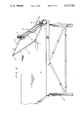
- Fig. 1 is a perspective view of the clamping apparatus of this invention
- FIG. 2 is a perspective view of the rear of the clamping apparatus
- Fig. 3 is a perspective view of the rear of the base assembly of the clamping apparatus
- FIG. 4 is a vertical sectional view of the base assembly having the clamp slide assembly slidably mounted thereto with the clamp screw removed from the clamp slide assembly;
- FIG. 5 is a perspective view of the clamp slide assembly
- FIG. 6 is a side elevational view of the upper lip means of the base assembly having a pin threadably passing therethrough;
- Fig. 7 is a perspective view of the clamping apparatus of this invention pivotally mounted to a silkscreen table with a pair of clamp slide assemblies engaged to a silkscreen frame;
- FIG. 8 is a perspective view of the clamping apparatus of this invention pivotally mounted to a silkscreen table and having the pair of clamp slide assemblies slidably positioned in close proximity to the end of of the base assembly in order to engage a silkscreen frame that is longer than the silkscreen frame in Fig. 7;
- FIG. 9 is a perspective view of the clamping apparatus of FIG. 8 with the silkscreen frame engaged by the clamping apparatus in an elevated position and with the counterbalance member 38 of the base assembly balancing the silkscreen frame in the elevated position;
- Fig. 10 is a perspective view of a prior art printing screen frame whose borders are formed with cylindrical rollers;
- FIG. 11 is a side elevational view of a typical reciprocating flatbed press with a frame in place and clamps attached;
- FIG. 12 is a top plan view of a typical press retaining frame comprising a silkscreen frame, an angle attached to the press retaining frame by means of countersunk screws, a welding, an adapting clamp attached to the corners of a tubular frame or other type, and an adapting frame body press;
- FIG. 13 is a side elevational view showing opposing side clamps, a screen frame attached by the side clamps, side clamps at the corners of the silkscreen frame, and an adapting frame of a typical flatbed press;
- FIG. 14 is a perspective view disclosing a silkscreen frame A, a top angle rail B that clamp C will slide on horizontally, an adjustable clamp C, and a press screen adaptor D;
- FIG. 15 is a side elevational view disclosing a rotating bearing A, a shaft support B, a revolving clamp support C, clamps D, a table top E, and/or substrate surface, a hinge F on the outside of channel end welded to revolving clamp supports (for textile printing);
- FIG. 16 is a side elevational view disclosing a bearing support and/or retaining tube disposed within a rotating frame adaptor, and is a side elevational view of a revolving clamp support of the revolving clamp support in FIG. 15 and more particularly discloses the pivotally connected hinge and how the clamps must face in an outward position;
- FIG. 17 is a side elevational view of the clamping apparatus of this invention with the width of the top angle increased to slide a press rail therebetween as illustrated therein;
- FIG. 18 is view disclosing a revolving clamp A support, hinges B, and outward facing U channel C to receive adjustable slide clamp;
- FIG. 19 is a side elevational view of the clamping apparatus engaged with the frame of a screen
- FIG. 20 is a side elevational view of the assembly of FIG. 18.
- the clamping apparatus 10 has a base assembly, generally illustrated as 12, and a pair of clamping slide assemblies 14--14 slidably mounted to the base assembly 12.
- a plurality of hinges 16 is secured to the base assembly 12 and to a silkscreen table 18 that is supported by connecting legs 20. The hinges 16 provide for the pivoting of the base assembly 12 about an edge 22 of the silkscreen table 18.
- the base assembly 12 has a back 24, a lower lip 26 integrally bound to the back 24, and an upper lip means, generally illustrated as 28, secured to the back 24.
- the upper lip means 28 is not as wide as the lower lip 26, and is L-shaped (see FIG. 6) with a lip back 30 that connects to the back 24 of the base assembly 12.
- the upper lip means 28 also has a planar lip structure 29 perpendicular to the lip back 30 and having a lip top 32 and a lip bottom 34 (see FIG. 6).
- a pair of pins 36--36 threadably pass through the planar lip structure 29 and provide a means for preventing the slide assemblies 14--14 from slipping off of the base assembly 12; more specifically, as will be seen below, from slipping off of the planar lip structure 29 of the upper lip means 28.
- a counterbalance member 38 is mounted to the back 24 of the base assembly 12. The counterbalance member 38 functions to balance the clamping apparatus 10 when a printing screen means, generally illustrated as 40 in FIGS. 7-10, is elevated off or away from the silkscreen table 18, as illustrated in FIG. 9.
- Each of the clamp slide assemblies 14--14 comprises an L-shaped bracket 42 having a bracket back 44 and a bracket head 46 that integrally connects to the bracket back 44 in a normal fashion.
- the bracket back 44 slidably contacts the back 24 of the base assembly 12 and the bracket head 46 is slidably disposed on or along the lip top 32 of the planar lip structure 29 (see FIG. 4).
- a plate member 48 connects to the bottom of the bracket head 46, and a clamp lip 50 is bound to the plate member 48 in order to be supported in a spaced relationship with respect to the bracket head 46 to define a channel 52 (see FIG. 5) wherethrough the planar lip structure 29 of the upper lip means 28 slidably lodges.
- clamp screw 54 Threadably passing through the bracket head 46, the plate member 48, and the clamp lip 50 is clamp screw 54 having a clamp head 56 and a clamp foot 58. As indicated in FIG. 4, the bracket head 46, the plate member 48, and the clamp lip 50 are formed with threaded apertures that register along center line 60 in FIG. 4 for threadably receiving the clamp screw 54.
- torque in direction of the arrow T in FIG. 4 is developed which prevents the clamp slide assembly 14 from readily sliding along the planar lip structure 29 of the upper lip means 28 and along the back 24 of the base assembly 12.
- the torque more specifically causes the bracket back 44 to be in frictional contact with the base assembly back 24, along with the bracket head 49 and the clamp lip 50 frictionally engaging the planar lip structure 29.
- the clamping apparatus 10 of this invention is ideally suited for stencil screen printing operations.
- the prior art of stencil screen printing often referred to as silkscreen printing, is well known and widely used for a wide variety of printing applications. Briefly stated, silkscreen printing is performed with the aid of a stencil screen or printing screen to which a stencil pattern is applied in any convenient conventional manner. Silk cloth was originally used as the stencil screen and hence the name silkscreen printing evolved. A variety of other stencil screen materials has been developed, however, and are used today although the name “silkscreen printing" still persists.
- the stencil screen is stretched across the open side of a screen stretch frame and placed with one side of the screen in contact with the article to be printed.
- a suitable printing ink which may be any printing medium, is spread across the opposite side of the screen. This ink is forced through the screen onto the article to be printed by means of a squeegee to reproduce on the article the stencil pattern on the stencil screen.
- Multiple color screen prints may be reproduced by performing a number of successive stencil screen printing operations with different color printing inks.
- the clamping apparatus of this invention is ideally suited for engaging the printing screen means 40 depicted in FIG. 10.
- the printing screen means of FIG. 10 is known as a Newman Roller frame and comprises cylindrical rollers 70. More specifically, the Newman Roller frame of FIG. 10 has four cylindrical rollers, with each end of a roller rotatably secured to a screen bracket 72. As illustrated in FIG. 10, each screen bracket 72 is generally L-shaped and has a planar bracket surface 74.
- the clamp foot 58 of each of the clamp slide assemblies 14 urgedly engages the planar bracket surface 74.
- the printing screen means 40, or the Newman Roller frame, of FIG. 10 is designed for stretching any screen fabric (not shown in FIGS. 7-10) accurately through the entire printing area. The fabric is easily adjusted before, during or after printing and may be quickly stretched and quickly removed.
- the clamping apparatus 10 is initially formed in accordance with the procedures indicated above.
- the lower lip means 26 of the angle iron assembly 12 is pivotally secured to an end of the silkscreen table 18 by employment of the hinges 16.
- the pins 36 are removed from the planar lip structure 29 of the upper lip means 28, and a pair of clamp slide assemblies 14--14 are slid on and along the upper lip means 28; more specifically, along the planar lip structure 29 and the back 24 of the base assembly 12.
- the clamp slide assemblies 14--14 are separated at a distance which will readily engage the planar bracket surface 74 of the bracket 72 of the printing screen means 40.
- clamp slide assemblies 14--14 may be easily slid along the base assembly for engagement with any silkscreen frame of any length.
- the distance that the clamp slide assemblies 14--14 are separated depends on the length of the silkscreen frame to be engaged.
- one end of the silkscreen frame of the printing screen means 40 is positioned on top of the lower lip means 26 and the clamp screw means 54 or rotated such that the clamp foot 58 travels downwardly to engage the planar bracket surface 74 of the bracket 72.
- the other clamp screw means 54 is also rotated such that its clamp foot 58 travels downwardly in order to engage the planar bracket surface 74 of the other bracket 72, as indicated in FIGS. 7 and 8.
- the pin means 36--36 should be rotatably passed through the upper lip means 28 in order to reposition them therethrough.
- the affixed printing screen means 40 may be easily elevated by picking up the silkscreen frame.
- the silkscreen frame will remain in an elevated position (such as that shown in FIG. 9) by the counterbalance member 38. Thus, there is no need for the operator to continually hold the silkscreen frame of the printing screen means 40 in the elevated position.
- the clamping apparatus 10 of this invention may be employed in many screen printing operations which are of the small scale and custom order variety. When the clamping apparatus 10 of this invention is used in such an operation, it is capable of handling a very large variety of different printing jobs, and it is readily adjustable from one job to another.
- the clamping apparatus 10 of this invention is not only versatile and readily adjustable in several different senses, but it is also simple and economical to construct and operate.
- the clamping apparatus of this invention is ideally suited for the many and varied tasks which a small, non-specialized custom silkscreen printing operation is called upon to accomplish.
Landscapes
- Engineering & Computer Science (AREA)
- Mechanical Engineering (AREA)
- Screen Printers (AREA)
Abstract
A clamping apparatus for use in screen printing operations. The clamping apparatus has an angle iron having an upright back, a lower lip bound to the upright back, and an upper lip bound to the upright back. At least one clamp slide assembly is slidably disposed on and along the upper lip of the angle iron. The clamping apparatus is pivotally secured to a silkscreen table in order for readily engaging a silkscreen frame. A method for positioning a printing screen over a screen table which includes clamping with a pair of clamp slide assemblies a silkscreen frame of a printing screen against the lower lip of the angle iron. The silkscreen frame may be easily elevated as desired.
Description
This invention is related to an apparatus for clamping. More specifically, this invention provides an apparatus for clamping, and a method for positioning a printing screen over a screen table.
A patentability investigation was conducted and the following United States patents were discovered: U.S. Pat. No. 2,796,831 to Heestand and entitled "Printing Screen Registering Device"; U.S. Pat. No. 4,041,861 to Alter and entitled "Screen Printing Frame with Floating Stretch-Clamps"; U.S. Pat. No. 4,073,232 to Brewer and entitled "Screen Printing Apparatus"; U.S. Pat. No. 4,388,862 to Thomas entitled "Apparatus for Silkscreen Printing"; and U.S. Pat. No. 4,694,746 to Hamu and entitled "Silkscreen Frame Mounting Assembly for Press". The foregoing prior art is incorporated herein by reference thereto, and none of the foregoing prior art teach or suggest the particular clamping apparatus of this invention. Nor does any of the foregoing prior art teach or suggest the particular method for positioning a printing screen over a screen table.
The present invention accomplishes its desired objects by broadly providing a clamping apparatus which includes an angle iron means having an upright back means, a lower lip means bound to the upright back means, and an upper lip means bound to the upright back means and having an upper lip top and an upper lip bottom. At least one clamp means is slidably disposed along the upper lip means. A plurality of hinge means is pivotally secured to the lower lip means. The clamp means preferably comprises a generally L-shaped bracket means having a bracket back means that slidably contacts the upright back means of the angle iron means when the clamp means is slidably disposed along the upper lip means. The clamp means additionally includes a bracket head means bound to the bracket back means. The bracket head means is slidably positioned along the upper lip top of the upper lip means. The clamp means still further includes a clamp lip means supported by the bracket head means and extending in slidable contact with the upper lip bottom. A clamping screw means threadably passes through the bracket head means and the clamp lip means in order to releasably engage a silk printing screen which is to be positioned on or over a screen table. Secured to the upright back means of the angle iron means of the angle iron means is a counterbalance means.
The present invention further accomplishes its desired objects by broadly providing a method for positioning a printing screen over a screen table. Initially, the angle iron assembly is formed to have an upright back, a lower lip bound to the upright back, and an upper lip bound to the upright back. As was indicated above, the upper lip has an upper lip top and an upper lip bottom. A pair of clamp means is slidably mounted along the upper lip means. The lower lip means of the angle iron assembly means is pivoted to a screen table means; and the pair of clamp means clamps a printing screen means against the lower lip means. The method additionally comprises the steps of securing a counterbalance means to the upright back means, and passing threadably at least one pin means through the upper lip means in order to prevent the slant means from sliding off of the upper lip means. Clamping of the printing screen means against the lower lip means by the pair of clamp means preferably comprises positioning the pair of clamp means against a pair of screen brackets having rotatably affixed thereto cylindrical frame rollers, and affixing rigidly the pair of screen brackets between the pair of clamp means and the lower lip means of the angle iron assembly means.
It is therefore an object of the present invention to provide a clamping apparatus which is to be primarily used for positioning a printing screen over a screen table.
It is another object of the present invention to provide a method for positioning a printing screen over a screen table.
These, together with the various ancillary objects and features which will become apparent to those skilled in the art as the following description proceeds, are attained by this novel clamping apparatus and process, a preferred embodiment being shown with respect to the accompanying drawings, by way of example only, wherein:
Fig. 1 is a perspective view of the clamping apparatus of this invention;
FIG. 2 is a perspective view of the rear of the clamping apparatus;
Fig. 3 is a perspective view of the rear of the base assembly of the clamping apparatus;
FIG. 4 is a vertical sectional view of the base assembly having the clamp slide assembly slidably mounted thereto with the clamp screw removed from the clamp slide assembly;
FIG. 5 is a perspective view of the clamp slide assembly;
FIG. 6 is a side elevational view of the upper lip means of the base assembly having a pin threadably passing therethrough;
Fig. 7 is a perspective view of the clamping apparatus of this invention pivotally mounted to a silkscreen table with a pair of clamp slide assemblies engaged to a silkscreen frame;
FIG. 8 is a perspective view of the clamping apparatus of this invention pivotally mounted to a silkscreen table and having the pair of clamp slide assemblies slidably positioned in close proximity to the end of of the base assembly in order to engage a silkscreen frame that is longer than the silkscreen frame in Fig. 7;
FIG. 9 is a perspective view of the clamping apparatus of FIG. 8 with the silkscreen frame engaged by the clamping apparatus in an elevated position and with the counterbalance member 38 of the base assembly balancing the silkscreen frame in the elevated position;
Fig. 10 is a perspective view of a prior art printing screen frame whose borders are formed with cylindrical rollers;
FIG. 11 is a side elevational view of a typical reciprocating flatbed press with a frame in place and clamps attached;
FIG. 12 is a top plan view of a typical press retaining frame comprising a silkscreen frame, an angle attached to the press retaining frame by means of countersunk screws, a welding, an adapting clamp attached to the corners of a tubular frame or other type, and an adapting frame body press;
FIG. 13 is a side elevational view showing opposing side clamps, a screen frame attached by the side clamps, side clamps at the corners of the silkscreen frame, and an adapting frame of a typical flatbed press;
FIG. 14 is a perspective view disclosing a silkscreen frame A, a top angle rail B that clamp C will slide on horizontally, an adjustable clamp C, and a press screen adaptor D;
FIG. 15 is a side elevational view disclosing a rotating bearing A, a shaft support B, a revolving clamp support C, clamps D, a table top E, and/or substrate surface, a hinge F on the outside of channel end welded to revolving clamp supports (for textile printing);
FIG. 16 is a side elevational view disclosing a bearing support and/or retaining tube disposed within a rotating frame adaptor, and is a side elevational view of a revolving clamp support of the revolving clamp support in FIG. 15 and more particularly discloses the pivotally connected hinge and how the clamps must face in an outward position;
FIG. 17 is a side elevational view of the clamping apparatus of this invention with the width of the top angle increased to slide a press rail therebetween as illustrated therein;
FIG. 18 is view disclosing a revolving clamp A support, hinges B, and outward facing U channel C to receive adjustable slide clamp;
FIG. 19 is a side elevational view of the clamping apparatus engaged with the frame of a screen;
FIG. 20 is a side elevational view of the assembly of FIG. 18.
Referring in detail now to the drawings wherein similar parts of the invention are identified by like reference numerals, there is seen the clamping apparatus, generally illustrated as 10. As best seen in FIGS. 1-6, the clamping apparatus 10 has a base assembly, generally illustrated as 12, and a pair of clamping slide assemblies 14--14 slidably mounted to the base assembly 12. A plurality of hinges 16 is secured to the base assembly 12 and to a silkscreen table 18 that is supported by connecting legs 20. The hinges 16 provide for the pivoting of the base assembly 12 about an edge 22 of the silkscreen table 18.
The base assembly 12 has a back 24, a lower lip 26 integrally bound to the back 24, and an upper lip means, generally illustrated as 28, secured to the back 24. Preferably, the upper lip means 28 is not as wide as the lower lip 26, and is L-shaped (see FIG. 6) with a lip back 30 that connects to the back 24 of the base assembly 12. The upper lip means 28 also has a planar lip structure 29 perpendicular to the lip back 30 and having a lip top 32 and a lip bottom 34 (see FIG. 6). A pair of pins 36--36 threadably pass through the planar lip structure 29 and provide a means for preventing the slide assemblies 14--14 from slipping off of the base assembly 12; more specifically, as will be seen below, from slipping off of the planar lip structure 29 of the upper lip means 28. A counterbalance member 38 is mounted to the back 24 of the base assembly 12. The counterbalance member 38 functions to balance the clamping apparatus 10 when a printing screen means, generally illustrated as 40 in FIGS. 7-10, is elevated off or away from the silkscreen table 18, as illustrated in FIG. 9.
Each of the clamp slide assemblies 14--14 comprises an L-shaped bracket 42 having a bracket back 44 and a bracket head 46 that integrally connects to the bracket back 44 in a normal fashion. When the clamp slide assemblies 14--14 are slidably mounted to the base assembly 12, the bracket back 44 slidably contacts the back 24 of the base assembly 12 and the bracket head 46 is slidably disposed on or along the lip top 32 of the planar lip structure 29 (see FIG. 4). A plate member 48 connects to the bottom of the bracket head 46, and a clamp lip 50 is bound to the plate member 48 in order to be supported in a spaced relationship with respect to the bracket head 46 to define a channel 52 (see FIG. 5) wherethrough the planar lip structure 29 of the upper lip means 28 slidably lodges. Threadably passing through the bracket head 46, the plate member 48, and the clamp lip 50 is clamp screw 54 having a clamp head 56 and a clamp foot 58. As indicated in FIG. 4, the bracket head 46, the plate member 48, and the clamp lip 50 are formed with threaded apertures that register along center line 60 in FIG. 4 for threadably receiving the clamp screw 54. When the clamp screw 54 is firmly engaging the printing screen means 40 as in FIGS. 7-9, torque in direction of the arrow T in FIG. 4 is developed which prevents the clamp slide assembly 14 from readily sliding along the planar lip structure 29 of the upper lip means 28 and along the back 24 of the base assembly 12. The torque more specifically causes the bracket back 44 to be in frictional contact with the base assembly back 24, along with the bracket head 49 and the clamp lip 50 frictionally engaging the planar lip structure 29. The clamping apparatus 10 of this invention is ideally suited for stencil screen printing operations. The prior art of stencil screen printing, often referred to as silkscreen printing, is well known and widely used for a wide variety of printing applications. Briefly stated, silkscreen printing is performed with the aid of a stencil screen or printing screen to which a stencil pattern is applied in any convenient conventional manner. Silk cloth was originally used as the stencil screen and hence the name silkscreen printing evolved. A variety of other stencil screen materials has been developed, however, and are used today although the name "silkscreen printing" still persists.
In the stencil screen printing process, the stencil screen is stretched across the open side of a screen stretch frame and placed with one side of the screen in contact with the article to be printed. A suitable printing ink, which may be any printing medium, is spread across the opposite side of the screen. This ink is forced through the screen onto the article to be printed by means of a squeegee to reproduce on the article the stencil pattern on the stencil screen. Multiple color screen prints may be reproduced by performing a number of successive stencil screen printing operations with different color printing inks. An extensive discussion of screen printing operations is in the following publications: Screen Printing Techniques by Albert Kosloff, published by THE SIGNS OF THE TIMES Publishing Company, Cincinnati, Ohio; and Photographic Screen Printing by Albert Kosloff, published by THE SIGNS OF THE TIMES Publishing Company (copyright 1981), Cincinnati, Ohio. These publications are incorporated herein by reference thereto.
The clamping apparatus of this invention is ideally suited for engaging the printing screen means 40 depicted in FIG. 10. The printing screen means of FIG. 10 is known as a Newman Roller frame and comprises cylindrical rollers 70. More specifically, the Newman Roller frame of FIG. 10 has four cylindrical rollers, with each end of a roller rotatably secured to a screen bracket 72. As illustrated in FIG. 10, each screen bracket 72 is generally L-shaped and has a planar bracket surface 74. When the clamping apparatus 10 of this invention engages the printing screen means 40 of FIG. 10, the clamp foot 58 of each of the clamp slide assemblies 14 urgedly engages the planar bracket surface 74. The printing screen means 40, or the Newman Roller frame, of FIG. 10 is designed for stretching any screen fabric (not shown in FIGS. 7-10) accurately through the entire printing area. The fabric is easily adjusted before, during or after printing and may be quickly stretched and quickly removed.
With continuing reference to the drawings for one operation of the clamping apparatus 10 and for a method for positioning the printing screen means 40 on and/or over the silkscreen table 18, the clamping apparatus 10 is initially formed in accordance with the procedures indicated above. The lower lip means 26 of the angle iron assembly 12 is pivotally secured to an end of the silkscreen table 18 by employment of the hinges 16. The pins 36 are removed from the planar lip structure 29 of the upper lip means 28, and a pair of clamp slide assemblies 14--14 are slid on and along the upper lip means 28; more specifically, along the planar lip structure 29 and the back 24 of the base assembly 12. The clamp slide assemblies 14--14 are separated at a distance which will readily engage the planar bracket surface 74 of the bracket 72 of the printing screen means 40. One of the salient features of this invention is that the clamp slide assemblies 14--14 may be easily slid along the base assembly for engagement with any silkscreen frame of any length. The distance that the clamp slide assemblies 14--14 are separated depends on the length of the silkscreen frame to be engaged.
After the clamp slide assemblies 14--14 are separated at the desired distance, one end of the silkscreen frame of the printing screen means 40 is positioned on top of the lower lip means 26 and the clamp screw means 54 or rotated such that the clamp foot 58 travels downwardly to engage the planar bracket surface 74 of the bracket 72. The other clamp screw means 54 is also rotated such that its clamp foot 58 travels downwardly in order to engage the planar bracket surface 74 of the other bracket 72, as indicated in FIGS. 7 and 8. The pin means 36--36 should be rotatably passed through the upper lip means 28 in order to reposition them therethrough. The affixed printing screen means 40 may be easily elevated by picking up the silkscreen frame. The silkscreen frame will remain in an elevated position (such as that shown in FIG. 9) by the counterbalance member 38. Thus, there is no need for the operator to continually hold the silkscreen frame of the printing screen means 40 in the elevated position.
The clamping apparatus 10 of this invention may be employed in many screen printing operations which are of the small scale and custom order variety. When the clamping apparatus 10 of this invention is used in such an operation, it is capable of handling a very large variety of different printing jobs, and it is readily adjustable from one job to another. The clamping apparatus 10 of this invention is not only versatile and readily adjustable in several different senses, but it is also simple and economical to construct and operate. The clamping apparatus of this invention is ideally suited for the many and varied tasks which a small, non-specialized custom silkscreen printing operation is called upon to accomplish.
While the present invention has been described herein with reference to particular embodiments thereof, a latitude of modification, various changes and substitutions are intended in the foregoing disclosure, and it will be appreciated that in some instances some features of the invention will be employed without a corresponding use of other features without departing from the scope of the invention as set forth.
Claims (24)
1. A method for positioning a printing screen over a screen table comprising the steps of:
(a) forming an angle iron assembly having an upright back, a lower lip bound to said upright back, and an upper lip bound to said upright back and having an upper lip top and an upper lip bottom;
(b) sliding at least one clamp along said upper lip;
(c) pivoting said angle iron assembly to a screen table; and
(d) clamping with said clamp a printing screen against said lower lip.
2. The method of claim 1 wherein said forming step (a) additionally comprises securing a counterbalance to said upright back.
3. The method of claim 1 wherein said forming step (a) additionally comprises passing threadably at least one pin through said upper lip.
4. The method of claim 3 additionally comprising removing said pin from said upper lip prior to said sliding step (b).
5. The method of claim 1 additionally comprising forming the printing screen prior to step (d) to have a plurality of cylindrical rollers interconnected to each other by a plurality of screen brackets with each screen bracket being secured to an end of a pair of cylindrical rollers and having a generally planar surface.
6. The method of claim 5 wherein said sliding step (b) comprises sliding a pair of clamps along said upper lip; and said clamping step (d) comprises positioning the pair of clamps against a pair of screen brackets and affixing rigidly the pair of screen brackets between the pair of clamps and the lower lip.
7. The method of claim 6 additionally comprising elevating the printing screen away from the screen table while said pair of screen brackets remain affixed between said pair of clamps and the lower lip.
8. A method for positioning a printing screen over a screen table comprising the steps of:
(a) forming an angle iron including a base assembly having an upright back and an upper lip bound to said upright back;
(b) sliding at least one clamp along said upper lip;
(c) pivoting said base assembly to a screen table; and
(d) clamping with said clamp a printing screen against said base assembly.
9. The method of claim 8 wherein said forming step (a) additionally comprises passing threadably at least one pin through the upper lip.
10. The method of claim 8 wherein said forming step (a) additionally comprises securing a counterbalance to said upright back.
11. The method of claim 9 additionally comprising removing said pin from said upper lip prior to said sliding step (b).
12. The method of claim 8 wherein said forming step (a) additionally comprises forming said angle iron such that said upper lip has an upper lip top and an upper lip bottom and forming a lower lip bound to said upright back.
13. The method of claim 12 additionally comprising prior to said sliding step (b) forming said clamp comprising a generally L-shaped bracket having a bracket back for slidably contacting said upright back of said base assembly and a bracket head bound to said bracket back, a clamp lip supported by said bracket head, and a clamping screw threadably passing through the bracket head.
14. The method of claim 13 wherein said sliding step (b) additionally comprises sliding said clamp along said upper lip such that said bracket back slidably contacts said upright back and said bracket head is slidably positioned along said upper lip top of said upper lip and said clamp is in slidable contact with the upper lip and said clamp lip is in slidable contact with the upper lip bottom.
15. The method of claim 14 additionally comprising forming said clamp such that said clamping screw comprises a clamp foot positioned at the bottom thereof and a clamp head disposed at the top thereof.
16. The method of claim 15 additionally comprising forming the printing screen prior to step (d) to have a plurality of cylindrical rollers interconnected to each other by a plurality of screen brackets with each screen bracket being secured to an end of a pair of cylindrical rollers and having a generally planar surface.
17. The method of claim 16 wherein said sliding step (b) comprises sliding a pair of clamps along said upper lip, and said clamping step (d) comprises positioning the pair of clamps against a pair of screen brackets and affixing rigidly the pair of screen brackets between the pair of clamps and the lower lip.
18. The method of claim 17 additionally comprising elevating the printing screen away from the screen table while said pair of screen brackets remain affixed between said pair of clamps and the lower lip.
19. A method for positioning a printing screen over a screen table comprising the steps of:
(a) forming an angle iron including a base assembly having an upright back and an upper lip bound to said upright back;
(b) sliding said upper lip bound to said upright back;
(c) pivoting said base assembly to a screen table; and
(d) clamping with said clamp a printing screen.
20. The method of claim 19 wherein said clamping step (d) comprises clamping the printing screen with said clamp against the base assembly.
21. The method of claim 19 wherein said channel of said clamp is defined by a bracket head and a clamp lip supported by said bracket head in a spaced relationship.
22. The method of claim 19 additionally comprising prior to said sliding step (b) forming said clamp comprising a generally L-shaped bracket having a bracket back for slidably contacting said upright back of said base assembly and a bracket head bound to said bracket back, a clamp lip supported by said bracket head in a spaced relationship such that said channel is defined by a space between said clamp lip and said bracket head, and a clamping screw threadably passing through the bracket head.
23. The method of claim 22 wherein said forming step (a) additionally comprises forming said angle iron such that said upper lip has an upper lip top and an upper lip bottom.
24. The method of claim 23 wherein said sliding step (b) additionally comprises sliding said clamp along said upper lip such that said bracket back slidably contacts said upright back and said bracket head is slidably positioned along said upper lip top of said upper lip and said clamp lip is in slidable contact with the upper lip bottom.
Priority Applications (2)
| Application Number | Priority Date | Filing Date | Title |
|---|---|---|---|
| US07/225,230 US5117751A (en) | 1988-07-28 | 1988-07-28 | Clamping apparatus and method for positioning a printing screen over a screen table |
| US07/885,144 US5320320A (en) | 1988-07-28 | 1992-05-18 | Clamping apparatus for positioning a printing screen over a screen table |
Applications Claiming Priority (1)
| Application Number | Priority Date | Filing Date | Title |
|---|---|---|---|
| US07/225,230 US5117751A (en) | 1988-07-28 | 1988-07-28 | Clamping apparatus and method for positioning a printing screen over a screen table |
Related Child Applications (1)
| Application Number | Title | Priority Date | Filing Date |
|---|---|---|---|
| US07/885,144 Continuation US5320320A (en) | 1988-07-28 | 1992-05-18 | Clamping apparatus for positioning a printing screen over a screen table |
Publications (1)
| Publication Number | Publication Date |
|---|---|
| US5117751A true US5117751A (en) | 1992-06-02 |
Family
ID=22844066
Family Applications (2)
| Application Number | Title | Priority Date | Filing Date |
|---|---|---|---|
| US07/225,230 Expired - Fee Related US5117751A (en) | 1988-07-28 | 1988-07-28 | Clamping apparatus and method for positioning a printing screen over a screen table |
| US07/885,144 Expired - Fee Related US5320320A (en) | 1988-07-28 | 1992-05-18 | Clamping apparatus for positioning a printing screen over a screen table |
Family Applications After (1)
| Application Number | Title | Priority Date | Filing Date |
|---|---|---|---|
| US07/885,144 Expired - Fee Related US5320320A (en) | 1988-07-28 | 1992-05-18 | Clamping apparatus for positioning a printing screen over a screen table |
Country Status (1)
| Country | Link |
|---|---|
| US (2) | US5117751A (en) |
Cited By (9)
| Publication number | Priority date | Publication date | Assignee | Title |
|---|---|---|---|---|
| GB2276122A (en) * | 1993-02-20 | 1994-09-21 | Keith Robert Reynolds | Screen printing apparatus |
| US5537927A (en) * | 1994-08-26 | 1996-07-23 | Tension Envelope Corporation | Apparatus and method for precisely drilling alignment pin register holes in pre-marked flexible printing plates |
| US5655241A (en) * | 1989-08-23 | 1997-08-12 | L&P Property Management Company | Sleep enhancing posturized mattress and mattress cover assembly |
| RU2301151C2 (en) * | 2005-02-08 | 2007-06-20 | Владимир Исаакович Гласс | Multi-color stenciling method |
| GB2446663A (en) * | 2007-02-15 | 2008-08-20 | Dek Int Gmbh | Effector module and system for use with a screen printing machine |
| US20100269274A1 (en) * | 2009-04-23 | 2010-10-28 | Heidelberger Druckmaschinen Ag | Washing Device |
| CN102837490A (en) * | 2012-09-28 | 2012-12-26 | 苏州金科信汇光电科技有限公司 | Automated positioning device |
| US20190049837A1 (en) * | 2017-08-11 | 2019-02-14 | Samsung Electronics Co., Ltd. | Film frame, display substrate-manufacturing system, and display substrate-manufacturing method |
| CN109435437A (en) * | 2018-11-16 | 2019-03-08 | 东莞市东城世丰自动化机械设备厂 | A kind of full-automatic screen printer and its working method |
Families Citing this family (3)
| Publication number | Priority date | Publication date | Assignee | Title |
|---|---|---|---|---|
| US7156806B2 (en) * | 2002-08-23 | 2007-01-02 | Minnesota Scientific, Inc. | Stabilized table rail clamp |
| DE102005026346A1 (en) * | 2005-06-08 | 2006-12-14 | Bernhard Brandl | Device and arrangement for fixing workpieces |
| USD694607S1 (en) * | 2013-03-14 | 2013-12-03 | Canica Design Inc. | Saw vise |
Citations (13)
| Publication number | Priority date | Publication date | Assignee | Title |
|---|---|---|---|---|
| US2796831A (en) * | 1954-10-12 | 1957-06-25 | Paul L Heestand | Printing screen registering device |
| US3601912A (en) * | 1968-10-25 | 1971-08-31 | Wendell P Dubbs | Woven screen stretching frame |
| US4041861A (en) * | 1975-06-02 | 1977-08-16 | Alter David L | Screen printing frame with floating stretch-clamps |
| US4073232A (en) * | 1977-03-09 | 1978-02-14 | Brewer Harold Hazen | Screen printing apparatus |
| US4084504A (en) * | 1977-04-28 | 1978-04-18 | Medalist Industries, Inc. | Multiple tier screen printer |
| US4388862A (en) * | 1981-12-18 | 1983-06-21 | Thomas Jr Thomas A | Apparatus for silk screen printing |
| US4404903A (en) * | 1979-12-14 | 1983-09-20 | Cronin John V | Automated screener |
| US4438693A (en) * | 1982-11-15 | 1984-03-27 | R. Jennings Manufacturing Company, Inc. | Silk screen printing onto the front panel of a cap |
| US4478144A (en) * | 1979-04-16 | 1984-10-23 | Maloof Ferris A | Cap printing system |
| US4509420A (en) * | 1983-10-06 | 1985-04-09 | Vito J. Paolantonio | Umbrella silk screening fixture |
| US4694746A (en) * | 1984-10-05 | 1987-09-22 | Hamu Kaino J | Silkscreen frame mounting assembly for press |
| US4708057A (en) * | 1986-04-23 | 1987-11-24 | T. Parker Distributing Company, Inc. | Platen assembly for screen printing |
| US4753161A (en) * | 1987-09-30 | 1988-06-28 | Kimball George L | Apparatus and method for multicolor silk screen printing of caps |
Family Cites Families (14)
| Publication number | Priority date | Publication date | Assignee | Title |
|---|---|---|---|---|
| US2397731A (en) * | 1942-06-16 | 1946-04-02 | Harwood B Fowler | Method and apparatus for radium coating mechanism |
| US2912206A (en) * | 1956-08-03 | 1959-11-10 | Andrew K Ferris | Automobile waste basket and support |
| US2995823A (en) * | 1959-06-22 | 1961-08-15 | Casey E Bowen | Tau-square holder |
| US3286744A (en) * | 1964-08-03 | 1966-11-22 | Cash G Stall | Power saw guide apparatus |
| US3608854A (en) * | 1969-11-19 | 1971-09-28 | Kaino J Hamu | Hinge clamp |
| US3837060A (en) * | 1972-10-31 | 1974-09-24 | N Stehling | Armor joint jack |
| US4063502A (en) * | 1975-11-17 | 1977-12-20 | Cunningham Leroy G | Squeegee and flood-bar drive with screen lift |
| US4129076A (en) * | 1977-12-07 | 1978-12-12 | Gardner Robert F | Color-keyed fabric for screen printing |
| US4702450A (en) * | 1986-02-03 | 1987-10-27 | Barisa Robert J | Mounting for astronomical binoculars |
| US4735393A (en) * | 1987-05-11 | 1988-04-05 | Q-Panel Corporation | Sheet clamp for easel |
| US5044505A (en) * | 1988-06-09 | 1991-09-03 | Spratt James V | Equipment storage frame |
| US4896451A (en) * | 1989-01-30 | 1990-01-30 | K O Lien Wei | Electric fishing device for fishing from a ship |
| US4949635A (en) * | 1989-08-17 | 1990-08-21 | Benmar Manufacturing Incorporated | Textile printing apparatus |
| US4972773A (en) * | 1989-12-19 | 1990-11-27 | Barlow Walter T | Registration system for silk screen equipment |
-
1988
- 1988-07-28 US US07/225,230 patent/US5117751A/en not_active Expired - Fee Related
-
1992
- 1992-05-18 US US07/885,144 patent/US5320320A/en not_active Expired - Fee Related
Patent Citations (13)
| Publication number | Priority date | Publication date | Assignee | Title |
|---|---|---|---|---|
| US2796831A (en) * | 1954-10-12 | 1957-06-25 | Paul L Heestand | Printing screen registering device |
| US3601912A (en) * | 1968-10-25 | 1971-08-31 | Wendell P Dubbs | Woven screen stretching frame |
| US4041861A (en) * | 1975-06-02 | 1977-08-16 | Alter David L | Screen printing frame with floating stretch-clamps |
| US4073232A (en) * | 1977-03-09 | 1978-02-14 | Brewer Harold Hazen | Screen printing apparatus |
| US4084504A (en) * | 1977-04-28 | 1978-04-18 | Medalist Industries, Inc. | Multiple tier screen printer |
| US4478144A (en) * | 1979-04-16 | 1984-10-23 | Maloof Ferris A | Cap printing system |
| US4404903A (en) * | 1979-12-14 | 1983-09-20 | Cronin John V | Automated screener |
| US4388862A (en) * | 1981-12-18 | 1983-06-21 | Thomas Jr Thomas A | Apparatus for silk screen printing |
| US4438693A (en) * | 1982-11-15 | 1984-03-27 | R. Jennings Manufacturing Company, Inc. | Silk screen printing onto the front panel of a cap |
| US4509420A (en) * | 1983-10-06 | 1985-04-09 | Vito J. Paolantonio | Umbrella silk screening fixture |
| US4694746A (en) * | 1984-10-05 | 1987-09-22 | Hamu Kaino J | Silkscreen frame mounting assembly for press |
| US4708057A (en) * | 1986-04-23 | 1987-11-24 | T. Parker Distributing Company, Inc. | Platen assembly for screen printing |
| US4753161A (en) * | 1987-09-30 | 1988-06-28 | Kimball George L | Apparatus and method for multicolor silk screen printing of caps |
Cited By (14)
| Publication number | Priority date | Publication date | Assignee | Title |
|---|---|---|---|---|
| US5655241A (en) * | 1989-08-23 | 1997-08-12 | L&P Property Management Company | Sleep enhancing posturized mattress and mattress cover assembly |
| GB2276122A (en) * | 1993-02-20 | 1994-09-21 | Keith Robert Reynolds | Screen printing apparatus |
| US5537927A (en) * | 1994-08-26 | 1996-07-23 | Tension Envelope Corporation | Apparatus and method for precisely drilling alignment pin register holes in pre-marked flexible printing plates |
| RU2301151C2 (en) * | 2005-02-08 | 2007-06-20 | Владимир Исаакович Гласс | Multi-color stenciling method |
| GB2446663A (en) * | 2007-02-15 | 2008-08-20 | Dek Int Gmbh | Effector module and system for use with a screen printing machine |
| US8671506B2 (en) | 2009-04-23 | 2014-03-18 | Heidelberger Druckmaschinen Ag | Washing device |
| US20100269274A1 (en) * | 2009-04-23 | 2010-10-28 | Heidelberger Druckmaschinen Ag | Washing Device |
| CN102837490A (en) * | 2012-09-28 | 2012-12-26 | 苏州金科信汇光电科技有限公司 | Automated positioning device |
| US20190049837A1 (en) * | 2017-08-11 | 2019-02-14 | Samsung Electronics Co., Ltd. | Film frame, display substrate-manufacturing system, and display substrate-manufacturing method |
| KR20190017553A (en) * | 2017-08-11 | 2019-02-20 | 삼성전자주식회사 | Film frame, display substrate manufacturing system and display substrate manufacturing method |
| CN109388019A (en) * | 2017-08-11 | 2019-02-26 | 三星电子株式会社 | Film frame, display base plate manufacture system and display substrate manufacturing method |
| KR102440363B1 (en) | 2017-08-11 | 2022-09-05 | 삼성전자주식회사 | Film frame, display substrate manufacturing system and display substrate manufacturing method |
| CN109388019B (en) * | 2017-08-11 | 2023-11-07 | 三星电子株式会社 | Film frame, display substrate manufacturing system and display substrate manufacturing method |
| CN109435437A (en) * | 2018-11-16 | 2019-03-08 | 东莞市东城世丰自动化机械设备厂 | A kind of full-automatic screen printer and its working method |
Also Published As
| Publication number | Publication date |
|---|---|
| US5320320A (en) | 1994-06-14 |
Similar Documents
| Publication | Publication Date | Title |
|---|---|---|
| US5320320A (en) | Clamping apparatus for positioning a printing screen over a screen table | |
| US5226362A (en) | Pallet alignment assembly | |
| US4315461A (en) | Screen printing machine | |
| US5226366A (en) | Method and apparatus for aligning screens used for application of ink patterns to a substrate | |
| EP0547755B1 (en) | Planar support for material mounted to a frame and method of use | |
| US4708057A (en) | Platen assembly for screen printing | |
| US4266476A (en) | Cap printing apparatus | |
| US5613436A (en) | Variable position pin registration plate for multicolor silk screen printing apparatus | |
| US5326147A (en) | Device for carrying artworks | |
| US4738909A (en) | Accurate registration of printing screens to a platen | |
| US5094161A (en) | Counter top multi-color single station printing method and apparatus | |
| US5148745A (en) | Screen printing apparatus assembly | |
| US4925506A (en) | Printing plate mounting device and method | |
| US5094160A (en) | Accurate registration of printing screens to a platen | |
| US3098431A (en) | Registration apparatus for silk screen printing machine | |
| US2796831A (en) | Printing screen registering device | |
| US5014614A (en) | Cap printing device and method | |
| EP0509803A1 (en) | Shirt pallet with retractable arms | |
| US7024993B2 (en) | Screen printing machine including exposure unit | |
| US4312694A (en) | Method for facilitating printshop paste-up operations | |
| US5022320A (en) | Adjustable parallel motion linkage system for screen printer | |
| US4972773A (en) | Registration system for silk screen equipment | |
| US5648189A (en) | Pin registration for screen printing | |
| US5445075A (en) | Doubly articulated screen printing apparatus with on-line registration capability | |
| US5018441A (en) | Portable screen printer |
Legal Events
| Date | Code | Title | Description |
|---|---|---|---|
| FPAY | Fee payment |
Year of fee payment: 4 |
|
| FPAY | Fee payment |
Year of fee payment: 8 |
|
| REMI | Maintenance fee reminder mailed | ||
| LAPS | Lapse for failure to pay maintenance fees | ||
| FP | Lapsed due to failure to pay maintenance fee |
Effective date: 20040602 |
|
| STCH | Information on status: patent discontinuation |
Free format text: PATENT EXPIRED DUE TO NONPAYMENT OF MAINTENANCE FEES UNDER 37 CFR 1.362 |