US4985094A - Thermoplastic castable composite rocket propellant - Google Patents
Thermoplastic castable composite rocket propellant Download PDFInfo
- Publication number
- US4985094A US4985094A US07/489,562 US48956290A US4985094A US 4985094 A US4985094 A US 4985094A US 48956290 A US48956290 A US 48956290A US 4985094 A US4985094 A US 4985094A
- Authority
- US
- United States
- Prior art keywords
- thermoplastic
- styrene
- plasticizer
- energetic
- propellant
- Prior art date
- Legal status (The legal status is an assumption and is not a legal conclusion. Google has not performed a legal analysis and makes no representation as to the accuracy of the status listed.)
- Expired - Fee Related
Links
- 239000003380 propellant Substances 0.000 title claims abstract description 28
- 229920001169 thermoplastic Polymers 0.000 title claims abstract description 12
- 239000004416 thermosoftening plastic Substances 0.000 title claims abstract description 12
- 239000002131 composite material Substances 0.000 title claims abstract description 9
- 229920002725 thermoplastic elastomer Polymers 0.000 claims abstract description 22
- 239000004014 plasticizer Substances 0.000 claims abstract description 19
- 239000000203 mixture Substances 0.000 claims abstract description 18
- 238000000034 method Methods 0.000 claims abstract description 14
- 238000002156 mixing Methods 0.000 claims abstract description 10
- 238000005266 casting Methods 0.000 claims abstract description 5
- 239000000155 melt Substances 0.000 claims abstract description 5
- 229920001400 block copolymer Polymers 0.000 claims description 9
- 229920001577 copolymer Polymers 0.000 claims description 7
- GDDNTTHUKVNJRA-UHFFFAOYSA-N 3-bromo-3,3-difluoroprop-1-ene Chemical compound FC(F)(Br)C=C GDDNTTHUKVNJRA-UHFFFAOYSA-N 0.000 claims description 6
- 239000003607 modifier Substances 0.000 claims description 5
- XAGFODPZIPBFFR-UHFFFAOYSA-N aluminium Chemical compound [Al] XAGFODPZIPBFFR-UHFFFAOYSA-N 0.000 claims description 4
- 239000007767 bonding agent Substances 0.000 claims description 4
- 229920003048 styrene butadiene rubber Polymers 0.000 claims description 4
- 229920005989 resin Polymers 0.000 claims description 3
- 239000011347 resin Substances 0.000 claims description 3
- 239000010690 paraffinic oil Substances 0.000 claims description 2
- 229920001971 elastomer Polymers 0.000 abstract description 10
- 239000000806 elastomer Substances 0.000 abstract description 7
- 239000005060 rubber Substances 0.000 abstract description 3
- 239000011230 binding agent Substances 0.000 description 11
- 238000009472 formulation Methods 0.000 description 9
- 239000007787 solid Substances 0.000 description 9
- YXFVVABEGXRONW-UHFFFAOYSA-N Toluene Chemical compound CC1=CC=CC=C1 YXFVVABEGXRONW-UHFFFAOYSA-N 0.000 description 6
- 229920000642 polymer Polymers 0.000 description 6
- 239000002904 solvent Substances 0.000 description 5
- PPBRXRYQALVLMV-UHFFFAOYSA-N Styrene Chemical compound C=CC1=CC=CC=C1 PPBRXRYQALVLMV-UHFFFAOYSA-N 0.000 description 4
- 238000002844 melting Methods 0.000 description 4
- 230000008018 melting Effects 0.000 description 4
- 239000002245 particle Substances 0.000 description 4
- 229910052782 aluminium Inorganic materials 0.000 description 3
- 230000009477 glass transition Effects 0.000 description 3
- 229920000428 triblock copolymer Polymers 0.000 description 3
- 239000005062 Polybutadiene Substances 0.000 description 2
- 239000004721 Polyphenylene oxide Substances 0.000 description 2
- MTAZNLWOLGHBHU-UHFFFAOYSA-N butadiene-styrene rubber Chemical compound C=CC=C.C=CC1=CC=CC=C1 MTAZNLWOLGHBHU-UHFFFAOYSA-N 0.000 description 2
- 239000003795 chemical substances by application Substances 0.000 description 2
- 150000001993 dienes Chemical class 0.000 description 2
- AXZAYXJCENRGIM-UHFFFAOYSA-J dipotassium;tetrabromoplatinum(2-) Chemical compound [K+].[K+].[Br-].[Br-].[Br-].[Br-].[Pt+2] AXZAYXJCENRGIM-UHFFFAOYSA-J 0.000 description 2
- 238000001125 extrusion Methods 0.000 description 2
- 239000000446 fuel Substances 0.000 description 2
- 239000000463 material Substances 0.000 description 2
- UZGLIIJVICEWHF-UHFFFAOYSA-N octogen Chemical compound [O-][N+](=O)N1CN([N+]([O-])=O)CN([N+]([O-])=O)CN([N+]([O-])=O)C1 UZGLIIJVICEWHF-UHFFFAOYSA-N 0.000 description 2
- 239000003960 organic solvent Substances 0.000 description 2
- 229920002857 polybutadiene Polymers 0.000 description 2
- 229920000570 polyether Polymers 0.000 description 2
- 239000000126 substance Substances 0.000 description 2
- WYTZZXDRDKSJID-UHFFFAOYSA-N (3-aminopropyl)triethoxysilane Chemical compound CCO[Si](OCC)(OCC)CCCN WYTZZXDRDKSJID-UHFFFAOYSA-N 0.000 description 1
- XTFIVUDBNACUBN-UHFFFAOYSA-N 1,3,5-trinitro-1,3,5-triazinane Chemical compound [O-][N+](=O)N1CN([N+]([O-])=O)CN([N+]([O-])=O)C1 XTFIVUDBNACUBN-UHFFFAOYSA-N 0.000 description 1
- PAWQVTBBRAZDMG-UHFFFAOYSA-N 2-(3-bromo-2-fluorophenyl)acetic acid Chemical compound OC(=O)CC1=CC=CC(Br)=C1F PAWQVTBBRAZDMG-UHFFFAOYSA-N 0.000 description 1
- ROGIWVXWXZRRMZ-UHFFFAOYSA-N 2-methylbuta-1,3-diene;styrene Chemical compound CC(=C)C=C.C=CC1=CC=CC=C1 ROGIWVXWXZRRMZ-UHFFFAOYSA-N 0.000 description 1
- ZOXJGFHDIHLPTG-UHFFFAOYSA-N Boron Chemical compound [B] ZOXJGFHDIHLPTG-UHFFFAOYSA-N 0.000 description 1
- 229920002633 Kraton (polymer) Polymers 0.000 description 1
- -1 N-ethylamino ethylamino Chemical group 0.000 description 1
- 239000006057 Non-nutritive feed additive Substances 0.000 description 1
- 229920002367 Polyisobutene Polymers 0.000 description 1
- 239000004793 Polystyrene Substances 0.000 description 1
- 239000002174 Styrene-butadiene Substances 0.000 description 1
- RTAQQCXQSZGOHL-UHFFFAOYSA-N Titanium Chemical compound [Ti] RTAQQCXQSZGOHL-UHFFFAOYSA-N 0.000 description 1
- XYLMUPLGERFSHI-UHFFFAOYSA-N alpha-Methylstyrene Chemical compound CC(=C)C1=CC=CC=C1 XYLMUPLGERFSHI-UHFFFAOYSA-N 0.000 description 1
- 229910052790 beryllium Inorganic materials 0.000 description 1
- ATBAMAFKBVZNFJ-UHFFFAOYSA-N beryllium atom Chemical compound [Be] ATBAMAFKBVZNFJ-UHFFFAOYSA-N 0.000 description 1
- 229910052796 boron Inorganic materials 0.000 description 1
- DQXBYHZEEUGOBF-UHFFFAOYSA-N but-3-enoic acid;ethene Chemical compound C=C.OC(=O)CC=C DQXBYHZEEUGOBF-UHFFFAOYSA-N 0.000 description 1
- FACXGONDLDSNOE-UHFFFAOYSA-N buta-1,3-diene;styrene Chemical compound C=CC=C.C=CC1=CC=CC=C1.C=CC1=CC=CC=C1 FACXGONDLDSNOE-UHFFFAOYSA-N 0.000 description 1
- 238000002485 combustion reaction Methods 0.000 description 1
- 239000012612 commercial material Substances 0.000 description 1
- 230000007613 environmental effect Effects 0.000 description 1
- BXOUVIIITJXIKB-UHFFFAOYSA-N ethene;styrene Chemical group C=C.C=CC1=CC=CC=C1 BXOUVIIITJXIKB-UHFFFAOYSA-N 0.000 description 1
- 229920006242 ethylene acrylic acid copolymer Polymers 0.000 description 1
- 239000005038 ethylene vinyl acetate Substances 0.000 description 1
- 239000012530 fluid Substances 0.000 description 1
- 239000011876 fused mixture Substances 0.000 description 1
- 239000008240 homogeneous mixture Substances 0.000 description 1
- 239000004615 ingredient Substances 0.000 description 1
- 229920000554 ionomer Polymers 0.000 description 1
- 238000004519 manufacturing process Methods 0.000 description 1
- 239000002480 mineral oil Substances 0.000 description 1
- 238000012986 modification Methods 0.000 description 1
- 230000004048 modification Effects 0.000 description 1
- 239000003921 oil Substances 0.000 description 1
- 238000013021 overheating Methods 0.000 description 1
- 239000007800 oxidant agent Substances 0.000 description 1
- 239000008188 pellet Substances 0.000 description 1
- 229920001200 poly(ethylene-vinyl acetate) Polymers 0.000 description 1
- 229920000098 polyolefin Polymers 0.000 description 1
- 229920002223 polystyrene Polymers 0.000 description 1
- 229920002635 polyurethane Polymers 0.000 description 1
- 239000004814 polyurethane Substances 0.000 description 1
- 229910001487 potassium perchlorate Inorganic materials 0.000 description 1
- 238000011084 recovery Methods 0.000 description 1
- 239000004449 solid propellant Substances 0.000 description 1
- 239000011115 styrene butadiene Substances 0.000 description 1
- 229920000468 styrene butadiene styrene block copolymer Polymers 0.000 description 1
- 125000000383 tetramethylene group Chemical group [H]C([H])([*:1])C([H])([H])C([H])([H])C([H])([H])[*:2] 0.000 description 1
- SXYOAESUCSYJNZ-UHFFFAOYSA-L zinc;bis(6-methylheptoxy)-sulfanylidene-sulfido-$l^{5}-phosphane Chemical compound [Zn+2].CC(C)CCCCCOP([S-])(=S)OCCCCCC(C)C.CC(C)CCCCCOP([S-])(=S)OCCCCCC(C)C SXYOAESUCSYJNZ-UHFFFAOYSA-L 0.000 description 1
Images
Classifications
-
- C—CHEMISTRY; METALLURGY
- C06—EXPLOSIVES; MATCHES
- C06B—EXPLOSIVES OR THERMIC COMPOSITIONS; MANUFACTURE THEREOF; USE OF SINGLE SUBSTANCES AS EXPLOSIVES
- C06B21/00—Apparatus or methods for working-up explosives, e.g. forming, cutting, drying
- C06B21/0008—Compounding the ingredient
- C06B21/0025—Compounding the ingredient the ingredient being a polymer bonded explosive or thermic component
-
- C—CHEMISTRY; METALLURGY
- C06—EXPLOSIVES; MATCHES
- C06B—EXPLOSIVES OR THERMIC COMPOSITIONS; MANUFACTURE THEREOF; USE OF SINGLE SUBSTANCES AS EXPLOSIVES
- C06B45/00—Compositions or products which are defined by structure or arrangement of component of product
- C06B45/04—Compositions or products which are defined by structure or arrangement of component of product comprising solid particles dispersed in solid solution or matrix not used for explosives where the matrix consists essentially of nitrated carbohydrates or a low molecular organic explosive
- C06B45/06—Compositions or products which are defined by structure or arrangement of component of product comprising solid particles dispersed in solid solution or matrix not used for explosives where the matrix consists essentially of nitrated carbohydrates or a low molecular organic explosive the solid solution or matrix containing an organic component
- C06B45/10—Compositions or products which are defined by structure or arrangement of component of product comprising solid particles dispersed in solid solution or matrix not used for explosives where the matrix consists essentially of nitrated carbohydrates or a low molecular organic explosive the solid solution or matrix containing an organic component the organic component containing a resin
Definitions
- the present invention relates to solid propellant grains or the like and more particularly to a process for preparing propellant grains comprising thermoplastic binders and suspended solid particulates.
- thermoplastic elastomeric propellants in which the solid particulates and thermoplastic elastomer are fused in a high-shear mixer and the fused mixture poured or extruded into a casing or mold.
- U.S. Pat. No. 4,764,316 proposes to dry blend thermoplastic elastomer particles and energetic particles, pack the blended particles into a mold or casing, then fuse the particulates and thermoplastic elastomer together.
- a disadvantage of this method is the possibility of voids in the fused propellant.
- a castable, thermoplastic composite rocket propellant comprising about 3 to 10 wt % of a thermoplastic elastomer, about 3 to 20 wt % of a plasticizer, balance energetic particulates.
- thermoplastic elastomers may be used in the present invention, provided they have suitable properties, including the following: melting temperature of about 50° to 125° C., preferably about 75° to 125° C.; viscosity at or below 125° C. of 400 Poise or less; stable at 125° C. for at least 12 hours, preferably about 20 hours at the melting temperature; a glass transition temperature of -4° C. or below, preferably -20° C. or below, more preferably -40° C. or below; and compatibility with the energetic particles.
- Suitable thermoplastic elastomers include styrene-diene block copolymers, such a styrene-butadiene, styrene-isoprene, styrene-ethylene/butylene block copolymers having star or radial, triblock (e.g., styrene-butadiene-styrene), multiblock or graft configurations, nonstyrenic block copolymers such as polyester-polyether, polyamide-polyether or segmented polyurethanes, ionomers, polyolefin thermoplastic elastomers, 1,2-syndiotactic polybutadiene and ethylene-vinyl acetate/ethylene-acrylic acid copolymers.
- styrene-diene block copolymers such as a styrene-butadiene, styrene-isoprene, styrene-
- Particularly suitable for use in the present invention are the triblock and star-configured (radial) styrene-butadiene block copolymers.
- the polystyrene and polybutadiene segments of these polymers are thermodynamically incompatible and form separate microdomains, both in the elastomeric state and in the melt. Since both blocks are separated into two phases, two glass transitions are observed, one for each phase.
- the block copolymer is elastomeric in the region between the two glass transition temperatures.
- the triblock copolymers are preferable to radial copolymers because they require less plasticizer to achieve the desired low melt viscosity. This is because the molecular weight of radial copolymers is about double that of the triblock copolymers. In general, for use in the present invention molecular weights in the approximate range of 50,000 to 250,000 are desired.
- Plasticizers for use in the present invention should be compatible with the thermoplastic elastomer (TPE) and the energetic particulates, should have a low pour point, low viscosity and low volatility with good thermal stability at 125° C.
- the styrenic TPEs may be plasticized with nonpolar plasticizers such as mineral oils, while the nonstyrenic TPEs may be plasticized with polar plasticizers.
- Suitable nonpolar plasticizers include Tufflo 6016, a paraffinic oil available from Lyondell Petrochemical Co., Houston, Tex., and Oronite, a polyisobutene, available from Amoco Chemicals Corp., Chicago, Ill.
- Energetic particulates are selected from energetic materials that are commonly used in propellant formulations. Particulate aluminum, beryllium or boron are common fuel materials. Common oxidizers include ammonium perchlorate (AP), potassium perchlorate (KP),ammonium nitrate (AN), cyclotrimethylene trinitramine (RDX), and cyclotetramethylene tetranitramine (HMX), as well as mixtures thereof.
- the propellant formulations of the present invention comprise about 80 to 92 wt % energetic solids, with the balance of the grain consisting essentially of the binder system.
- the propellant formulation optionally includes minor amounts of additional components, such as processing aids, burn rate modifiers (up to about 1 wt %), bonding agents (about 0.3 to 0.5 wt %), such as aminopropyl triethoxysilane (available from Union Carbide under the tradename A-1100) or neoalky 1 tri(N-ethylamino ethylamino) titanate, etc. which are known in the art.
- the formulation may further comprise up to about 3 wt % of a resin or polymer modifier such as Endex 160, an alpha-methylstyrene resin, available from Hercules, Inc., which acts to sharpen the melting point of the binder system of TPE and plasticizer.
- thermoplastic elastomer and the plasticizer are mixed, using a high-shear mixer, at a temperature above the melting temperature of the polymer.
- the solids and optional components of the propellant formulation are then mixed into the melt using a low-shear mixer. Because of the relatively low viscosities of the molten polymer/plasticizer mixture, no solvents are required for blending or other processing, such as casting or extrusion.
- the binder consisting of the Finaprene 416, Tufflo 6016 and Endex 160 was melted and blended in an internal mixer at a suitable temperature. The ammonium perchlorate and aluminum were then mixed into the binder in increments. The A-1100 bonding agent was added with mixing, and the homogeneous mixture cast at 125° C. into a rocket motor case and allowed to cool.
- the resulting propellant had a tensile strength of 104 psi, elongation at break of 26%, with a modulus E 0 of 555 psi at 25° C. The onset of softening occurred at 58° C. (by TMA); creep was minimal below 40° C. End of mix viscosity was 57 kpoise at 125° C.
- the propellant had a burn rate of 0.60 in/sec at 1000 psi chamber pressure and a burn rate exponent of 0.48.
- Such a propellant has 86 wt % solids for high performance, yet the binder-plasticizer combination is sufficiently fluid for processing.
Landscapes
- Chemical & Material Sciences (AREA)
- Organic Chemistry (AREA)
- Health & Medical Sciences (AREA)
- Life Sciences & Earth Sciences (AREA)
- Dispersion Chemistry (AREA)
- Molecular Biology (AREA)
- Crystallography & Structural Chemistry (AREA)
- Processes Of Treating Macromolecular Substances (AREA)
- Compositions Of Macromolecular Compounds (AREA)
Abstract
A castable, thermoplastic composite rocket propellant comprising about 3 to 10 wt % of a thermoplastic elastomer, about 3 to 20 wt % of a plasticizer, balance energetic particulates is provided. Also provided is a process for producing a thermoplastic composite rocket propellant which comprises melt blending a thermoplastic elastomer and about 100 to 300 phr (parts by weight per 100 parts by weight of rubber (elastomer)) plasticizer, adding energetic particulates to the melt, with mixing, and casting the mixture in a suitable mold.
Description
The invention described herein may be manufactured and used by or for the Government of the United States for all governmental purposes without the payment of any royalty.
The present invention relates to solid propellant grains or the like and more particularly to a process for preparing propellant grains comprising thermoplastic binders and suspended solid particulates.
Conventional solid composite propellants have binders which utilize cross-linked elastomers in which prepolymers are cross-linked by chemical curing agents. As outlined in U.S. Pat. No. 4,361,526, there are important disadvantages to cross-linked elastomers. Cross-linked elastomers must be cast within a short time after addition of the curing agent, which time period is known as the "pot life". Disposal of a cast cross-linked propellant composition is difficult, except by burning, which poses environmental problems.
As an alternative to cross-linked elastomer binders, U.S. Pat. No. 4,361,526 proposes to use a thermoplastic elastomeric binder which is a block copolymer of a diene and styrene, the styrene blocks providing a meltable crystalline structure and the diene blocks imparting rubbery or elastomeric properties to the copolymer. In order to prepare a propellant composition using the copolymer, the copolymer is dissolved in an organic solvent, such as toluene, and the solids and other propellant ingredients are added. The solvent is then evaporated, leaving a rubbery solid which may be divided into pellets suitable for casting or other processing.
A disadvantage of formulating a propellant using a thermoplastic elastomeric binder which must be dissolved in a solvent is that the propellant grain cannot be cast in a conventional manner, e.g., into a rocket motor casing. Further, solvent-based processing presents problems with respect to removal and recovery of the solvent. Organic solvents, such as toluene., present certain hazards to the immediate work area and to the larger environment, necessitating various precautions to be taken with regard to processing such propellant formulations.
It has also been proposed to produce thermoplastic elastomeric propellants in which the solid particulates and thermoplastic elastomer are fused in a high-shear mixer and the fused mixture poured or extruded into a casing or mold. There are important disadvantages with such techniques. Because of the high-solids loading of propellant formulations, viscosities tend to be quite high, making mixing difficult, and, in many cases, impossible on a large scale. Localized overheating in high-shear apparatus can cause ignition and catastrophic combustion of these high-energy formulations.
As an alternative to high-shear mixing and/or extrusion, U.S. Pat. No. 4,764,316 proposes to dry blend thermoplastic elastomer particles and energetic particles, pack the blended particles into a mold or casing, then fuse the particulates and thermoplastic elastomer together. A disadvantage of this method is the possibility of voids in the fused propellant.
There exists a need for improved processes for producing propellant grains with thermoplastic elastomer binders.
Accordingly, it is an object of the present invention to provide a castable, thermoplastic composite rocket propellant.
It is another object of this invention to provide a process for producing a thermoplastic composite rocket propellant.
Other objects and advantages of the present invention will become apparent to those persons skilled in the art from a reading of the following description of the invention.
In accordance with the present invention, there is provided a castable, thermoplastic composite rocket propellant comprising about 3 to 10 wt % of a thermoplastic elastomer, about 3 to 20 wt % of a plasticizer, balance energetic particulates.
Also provided is a process for producing a thermoplastic composite rocket propellant which comprises melt blending a thermoplastic elastomer and about 100 to 300 phr (parts by weight per 100 parts by weight of rubber (elastomer)) plasticizer, adding energetic particulates to the melt, with mixing, and casting the mixture in a suitable mold.
A wide variety of thermoplastic elastomers may be used in the present invention, provided they have suitable properties, including the following: melting temperature of about 50° to 125° C., preferably about 75° to 125° C.; viscosity at or below 125° C. of 400 Poise or less; stable at 125° C. for at least 12 hours, preferably about 20 hours at the melting temperature; a glass transition temperature of -4° C. or below, preferably -20° C. or below, more preferably -40° C. or below; and compatibility with the energetic particles.
Suitable thermoplastic elastomers include styrene-diene block copolymers, such a styrene-butadiene, styrene-isoprene, styrene-ethylene/butylene block copolymers having star or radial, triblock (e.g., styrene-butadiene-styrene), multiblock or graft configurations, nonstyrenic block copolymers such as polyester-polyether, polyamide-polyether or segmented polyurethanes, ionomers, polyolefin thermoplastic elastomers, 1,2-syndiotactic polybutadiene and ethylene-vinyl acetate/ethylene-acrylic acid copolymers.
Particularly suitable for use in the present invention are the triblock and star-configured (radial) styrene-butadiene block copolymers. The polystyrene and polybutadiene segments of these polymers are thermodynamically incompatible and form separate microdomains, both in the elastomeric state and in the melt. Since both blocks are separated into two phases, two glass transitions are observed, one for each phase. The block copolymer is elastomeric in the region between the two glass transition temperatures. The triblock copolymers are preferable to radial copolymers because they require less plasticizer to achieve the desired low melt viscosity. This is because the molecular weight of radial copolymers is about double that of the triblock copolymers. In general, for use in the present invention molecular weights in the approximate range of 50,000 to 250,000 are desired.
The styrene-butadiene block copolymers are available commercially from a number of manufacturers, in a variety of molecular weights and relative concentrations of the styrene/butadiene segments. Examples of commercial materials are the radial copolymer available from Cosden Oil and Chemical Co., Dallas, Tex., under the tradename Finaprene and the triblock copolymer available from Shell Oil Co., Houston, Tex., under the tradename Kraton.
Plasticizers for use in the present invention should be compatible with the thermoplastic elastomer (TPE) and the energetic particulates, should have a low pour point, low viscosity and low volatility with good thermal stability at 125° C. The styrenic TPEs may be plasticized with nonpolar plasticizers such as mineral oils, while the nonstyrenic TPEs may be plasticized with polar plasticizers. Suitable nonpolar plasticizers include Tufflo 6016, a paraffinic oil available from Lyondell Petrochemical Co., Houston, Tex., and Oronite, a polyisobutene, available from Amoco Chemicals Corp., Chicago, Ill. The quantity of plasticizer employed with the TPE is sufficient to provide a Pl /Po (Plasticizer/Polymer) ratio of about 1:1 to 3:1, or about 100 to 300 phr (parts by weight per 100 parts by weight of rubber or elastomer).
Energetic particulates are selected from energetic materials that are commonly used in propellant formulations. Particulate aluminum, beryllium or boron are common fuel materials. Common oxidizers include ammonium perchlorate (AP), potassium perchlorate (KP),ammonium nitrate (AN), cyclotrimethylene trinitramine (RDX), and cyclotetramethylene tetranitramine (HMX), as well as mixtures thereof. In general, the propellant formulations of the present invention comprise about 80 to 92 wt % energetic solids, with the balance of the grain consisting essentially of the binder system.
The propellant formulation optionally includes minor amounts of additional components, such as processing aids, burn rate modifiers (up to about 1 wt %), bonding agents (about 0.3 to 0.5 wt %), such as aminopropyl triethoxysilane (available from Union Carbide under the tradename A-1100) or neoalky 1 tri(N-ethylamino ethylamino) titanate, etc. which are known in the art. The formulation may further comprise up to about 3 wt % of a resin or polymer modifier such as Endex 160, an alpha-methylstyrene resin, available from Hercules, Inc., which acts to sharpen the melting point of the binder system of TPE and plasticizer.
The thermoplastic elastomer and the plasticizer are mixed, using a high-shear mixer, at a temperature above the melting temperature of the polymer. The solids and optional components of the propellant formulation are then mixed into the melt using a low-shear mixer. Because of the relatively low viscosities of the molten polymer/plasticizer mixture, no solvents are required for blending or other processing, such as casting or extrusion.
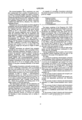
An example of a propellant formulation embodying the present invention is as follows with the percentages given by weight:
______________________________________
Finaprene 416 (binder) 3.28
Tufflo 6016 (plasticizer)
                       9.01
Endex 160 (polymer modifier)
                       1.31
Ammonium Perchlorate (oxidizer)
                       68.0
Aluminum (fuel)        18.0
A-1100 (bonding agent) 0.4
______________________________________
The binder consisting of the Finaprene 416, Tufflo 6016 and Endex 160 was melted and blended in an internal mixer at a suitable temperature. The ammonium perchlorate and aluminum were then mixed into the binder in increments. The A-1100 bonding agent was added with mixing, and the homogeneous mixture cast at 125° C. into a rocket motor case and allowed to cool.
The resulting propellant had a tensile strength of 104 psi, elongation at break of 26%, with a modulus E0 of 555 psi at 25° C. The onset of softening occurred at 58° C. (by TMA); creep was minimal below 40° C. End of mix viscosity was 57 kpoise at 125° C. The propellant had a burn rate of 0.60 in/sec at 1000 psi chamber pressure and a burn rate exponent of 0.48.
Such a propellant has 86 wt % solids for high performance, yet the binder-plasticizer combination is sufficiently fluid for processing.
Various modifications may be made to the invention as described without departing from the spirit of the invention or the scope of the appended claims.
Claims (8)
1. A process for producing a thermoplastic composite rocket propellant which comprises melt blending about 3 to 10 wt % of a styrene-diene block copolymer, about 3 to 20 wt % of a plasticizer, up to about 3 wt % of a resin modifier, up to about 1 wt % of a ballistic modifier and 0.3 to 0.5 wt % of a bonding agent, wherein the plasticizer:copolymer ratio is about 1:1 to 3:1, adding about 70 to 94 wt % energetic particulates to the melt, with mixing, and casting the mixture in a suitable mold.
2. The process of claim 1 wherein said plasticizer is a paraffinic oil.
3. The process of claim 2 wherein said energetic particulates are ammonium perchlorate.
4. The process of claim 2 wherein said energetic particulates are ammonium perchlorate and aluminum powder.
5. The process of claim 2 wherein said thermoplastic elastomer is a radial styrene-butadiene block copolymer.
6. The process of claim 2 wherein said thermoplastic elastomer is a triblock styrene-diene block copolymer.
7. The process of claim 2 wherein said thermoplastic elastomer is a multiblock styrene-diene block copolymer.
8. The process of claim 2 wherein said thermoplastic elastomer is a graft styrene-diene block copolymer.
Priority Applications (1)
| Application Number | Priority Date | Filing Date | Title |
|---|---|---|---|
| US07/489,562 US4985094A (en) | 1990-03-07 | 1990-03-07 | Thermoplastic castable composite rocket propellant |
Applications Claiming Priority (1)
| Application Number | Priority Date | Filing Date | Title |
|---|---|---|---|
| US07/489,562 US4985094A (en) | 1990-03-07 | 1990-03-07 | Thermoplastic castable composite rocket propellant |
Publications (1)
| Publication Number | Publication Date |
|---|---|
| US4985094A true US4985094A (en) | 1991-01-15 |
Family
ID=23944365
Family Applications (1)
| Application Number | Title | Priority Date | Filing Date |
|---|---|---|---|
| US07/489,562 Expired - Fee Related US4985094A (en) | 1990-03-07 | 1990-03-07 | Thermoplastic castable composite rocket propellant |
Country Status (1)
| Country | Link |
|---|---|
| US (1) | US4985094A (en) |
Cited By (11)
| Publication number | Priority date | Publication date | Assignee | Title |
|---|---|---|---|---|
| US5120479A (en) * | 1990-01-12 | 1992-06-09 | The United States Of America As Represented By The Secretary Of The Navy | Method of preparing castable, insensitive energetic compositions |
| US5183520A (en) * | 1990-03-06 | 1993-02-02 | Messerschmitt-Bolkow-Blohm Gmbh | Explosive charge |
| US5507891A (en) * | 1995-08-11 | 1996-04-16 | Alliant Techsystems Inc. | Propellant composition for automotive safety applications |
| US5616883A (en) * | 1994-03-18 | 1997-04-01 | Oea, Inc. | Hybrid inflator and related propellants |
| US5695216A (en) * | 1993-09-28 | 1997-12-09 | Bofors Explosives Ab | Airbag device and propellant for airbags |
| US6197135B1 (en) * | 1986-02-18 | 2001-03-06 | Kenrich Petrochemicals, Inc. | Enhanced energetic composites |
| US6554928B2 (en) * | 2000-11-30 | 2003-04-29 | Trw Inc. | Binder for a gas generating material |
| US6736913B1 (en) * | 2000-10-31 | 2004-05-18 | Alliant Techsystems Inc. | Method for processing explosives containing 2,4,6,8,10,12-hexanitro-2,4,6,8,10,12-hexaazatetracyclo [5.5.0.05,903,11]-dodecan (CL-20) with naphthenic and paraffinic oils |
| US6740180B1 (en) | 1997-07-15 | 2004-05-25 | Anthony Joseph Cesaroni | Thermoplastic polymer propellant compositions |
| US20170130104A1 (en) * | 2014-06-26 | 2017-05-11 | Ip & Patent Management Ug (Haftungsbeschränkt) | Hot-melt adhesive and use thereof |
| CN114736085A (en) * | 2022-04-15 | 2022-07-12 | 湖北航天化学技术研究所 | Thermoplastic composite solid propellant and preparation method thereof |
Citations (5)
| Publication number | Priority date | Publication date | Assignee | Title |
|---|---|---|---|---|
| US4361526A (en) * | 1981-06-12 | 1982-11-30 | The United States Of America As Represented By The Secretary Of The Army | Thermoplastic composite rocket propellant |
| US4597924A (en) * | 1985-10-21 | 1986-07-01 | The United States Of America As Represented By The Secretary Of The Army | Tetra-alkyl titanates as bonding agents for thermoplastic propellants |
| US4764316A (en) * | 1986-09-02 | 1988-08-16 | Morton Thiokol, Inc. | Process for preparing solid propellant grains using thermoplastic binders and product thereof |
| US4806613A (en) * | 1988-03-29 | 1989-02-21 | Morton Thiokol, Inc. | Method of producing thermoplastic elastomers having alternate crystalline structure for use as binders in high-energy compositions |
| US4889571A (en) * | 1986-09-02 | 1989-12-26 | Morton Thiokol, Inc. | High-energy compositions having castable thermoplastic binders |
-
1990
- 1990-03-07 US US07/489,562 patent/US4985094A/en not_active Expired - Fee Related
Patent Citations (5)
| Publication number | Priority date | Publication date | Assignee | Title |
|---|---|---|---|---|
| US4361526A (en) * | 1981-06-12 | 1982-11-30 | The United States Of America As Represented By The Secretary Of The Army | Thermoplastic composite rocket propellant |
| US4597924A (en) * | 1985-10-21 | 1986-07-01 | The United States Of America As Represented By The Secretary Of The Army | Tetra-alkyl titanates as bonding agents for thermoplastic propellants |
| US4764316A (en) * | 1986-09-02 | 1988-08-16 | Morton Thiokol, Inc. | Process for preparing solid propellant grains using thermoplastic binders and product thereof |
| US4889571A (en) * | 1986-09-02 | 1989-12-26 | Morton Thiokol, Inc. | High-energy compositions having castable thermoplastic binders |
| US4806613A (en) * | 1988-03-29 | 1989-02-21 | Morton Thiokol, Inc. | Method of producing thermoplastic elastomers having alternate crystalline structure for use as binders in high-energy compositions |
Cited By (14)
| Publication number | Priority date | Publication date | Assignee | Title |
|---|---|---|---|---|
| US6197135B1 (en) * | 1986-02-18 | 2001-03-06 | Kenrich Petrochemicals, Inc. | Enhanced energetic composites |
| US5120479A (en) * | 1990-01-12 | 1992-06-09 | The United States Of America As Represented By The Secretary Of The Navy | Method of preparing castable, insensitive energetic compositions |
| US5183520A (en) * | 1990-03-06 | 1993-02-02 | Messerschmitt-Bolkow-Blohm Gmbh | Explosive charge |
| US5695216A (en) * | 1993-09-28 | 1997-12-09 | Bofors Explosives Ab | Airbag device and propellant for airbags |
| US5616883A (en) * | 1994-03-18 | 1997-04-01 | Oea, Inc. | Hybrid inflator and related propellants |
| USRE36296E (en) * | 1995-08-11 | 1999-09-14 | Alliant Techsystems, Inc. | Propellant composition for automotive safety applications |
| US5507891A (en) * | 1995-08-11 | 1996-04-16 | Alliant Techsystems Inc. | Propellant composition for automotive safety applications |
| US6740180B1 (en) | 1997-07-15 | 2004-05-25 | Anthony Joseph Cesaroni | Thermoplastic polymer propellant compositions |
| US6736913B1 (en) * | 2000-10-31 | 2004-05-18 | Alliant Techsystems Inc. | Method for processing explosives containing 2,4,6,8,10,12-hexanitro-2,4,6,8,10,12-hexaazatetracyclo [5.5.0.05,903,11]-dodecan (CL-20) with naphthenic and paraffinic oils |
| USRE45318E1 (en) * | 2000-10-31 | 2015-01-06 | Alliant Techsystems Inc. | Method for processing explosives containing 2,4,6,8,10,12-hexanitro-2,4,6,8,10,12-hexaazatetracyclo[5.5.0.05,903,11]-dodecane (CL-20) with naphthenic and paraffinic oils |
| US6554928B2 (en) * | 2000-11-30 | 2003-04-29 | Trw Inc. | Binder for a gas generating material |
| US20170130104A1 (en) * | 2014-06-26 | 2017-05-11 | Ip & Patent Management Ug (Haftungsbeschränkt) | Hot-melt adhesive and use thereof |
| CN114736085A (en) * | 2022-04-15 | 2022-07-12 | 湖北航天化学技术研究所 | Thermoplastic composite solid propellant and preparation method thereof |
| WO2023197546A1 (en) * | 2022-04-15 | 2023-10-19 | 湖北航天化学技术研究所 | Thermoplastic composite solid propellant and preparation method therefor |
Similar Documents
| Publication | Publication Date | Title |
|---|---|---|
| US4361526A (en) | Thermoplastic composite rocket propellant | |
| CN102666438B (en) | Plastic solid explosive and method for obtaining same | |
| JPH0288486A (en) | Low-lethal ammunition handgun propellant based on thermoplastic elastomer | |
| EP1167324B1 (en) | Insensitive melt cast explosive compositions containing energetic thermoplastic elastomers | |
| US5690868A (en) | Multi-layer high energy propellants | |
| AU605442B2 (en) | High-energy compositions having castable thermoplastic binders | |
| US5009728A (en) | Castable, insensitive energetic compositions | |
| US6740180B1 (en) | Thermoplastic polymer propellant compositions | |
| JP2770018B1 (en) | Hexanitrohexaazaisowurtzitane composition and high performance explosive composition comprising the composition | |
| US20180370119A1 (en) | Energetic thermoplastic filaments for additive manufacturing and methods for their fabrication | |
| US3467558A (en) | Pyrotechnic disseminating composition containing an agent to be disseminated | |
| US6036894A (en) | Manufacture of propellant compositions and propellant charges | |
| USRE45318E1 (en) | Method for processing explosives containing 2,4,6,8,10,12-hexanitro-2,4,6,8,10,12-hexaazatetracyclo[5.5.0.05,903,11]-dodecane (CL-20) with naphthenic and paraffinic oils | |
| US5717158A (en) | High energy melt cast explosives | |
| US3762972A (en) | Reaction product of phosphine oxide with carboxylic acids | |
| US3943017A (en) | Explosive composition comprising HMX, RDX, or PETN and a high viscosity nitrocellulose binder plasticized with TMETN | |
| US3745074A (en) | Composite solid propellant with additive to improve the mechanical properties thereof | |
| JP2002511829A (en) | Ammonium nitrate propellant containing molecular sieve | |
| CA2301392C (en) | Desensitisation of energetic materials | |
| US6080248A (en) | Non-detonatable pyrotechnic materials for microsystems | |
| EP0333941B1 (en) | High-energy compositions having castable thermoplastic binders | |
| US3767489A (en) | Nitrasol propellant | |
| JPH0641397B2 (en) | Casting explosive composition and method for producing the same | |
| JPH1053484A (en) | Continuous solventless production of thermosetting composite explosive product | |
| US3705828A (en) | Process to increase filler content of castable explosives,pyrotechnics,or propellants |
Legal Events
| Date | Code | Title | Description |
|---|---|---|---|
| AS | Assignment |
Owner name: UNITED STATES OF AMERICA, THE, AS REPRESENTED BY T Free format text: ASSIGNMENT OF ASSIGNORS INTEREST.;ASSIGNORS:NAHLOVSKY, BORIS D.;ZIMMERMAN, GILBERT A.;REEL/FRAME:005280/0214;SIGNING DATES FROM 19900131 TO 19900206 |
|
| REMI | Maintenance fee reminder mailed | ||
| LAPS | Lapse for failure to pay maintenance fees | ||
| FP | Lapsed due to failure to pay maintenance fee |
Effective date: 19950118 |
|
| STCH | Information on status: patent discontinuation |
Free format text: PATENT EXPIRED DUE TO NONPAYMENT OF MAINTENANCE FEES UNDER 37 CFR 1.362 |