US4968327A - Moulding composition to produce abrasive tooling - Google Patents
Moulding composition to produce abrasive tooling Download PDFInfo
- Publication number
- US4968327A US4968327A US07/334,913 US33491389A US4968327A US 4968327 A US4968327 A US 4968327A US 33491389 A US33491389 A US 33491389A US 4968327 A US4968327 A US 4968327A
- Authority
- US
- United States
- Prior art keywords
- oxide
- moulding composition
- calcium
- moulding
- weight
- Prior art date
- Legal status (The legal status is an assumption and is not a legal conclusion. Google has not performed a legal analysis and makes no representation as to the accuracy of the status listed.)
- Expired - Fee Related
Links
- 239000000203 mixture Substances 0.000 title claims abstract description 84
- 238000000465 moulding Methods 0.000 title claims description 58
- 239000004615 ingredient Substances 0.000 claims abstract description 27
- OYPRJOBELJOOCE-UHFFFAOYSA-N Calcium Chemical compound [Ca] OYPRJOBELJOOCE-UHFFFAOYSA-N 0.000 claims abstract description 21
- 239000011575 calcium Substances 0.000 claims abstract description 21
- 229910052791 calcium Inorganic materials 0.000 claims abstract description 21
- 229910052593 corundum Inorganic materials 0.000 claims abstract description 21
- 239000010431 corundum Substances 0.000 claims abstract description 21
- PNEYBMLMFCGWSK-UHFFFAOYSA-N Alumina Chemical compound [O-2].[O-2].[O-2].[Al+3].[Al+3] PNEYBMLMFCGWSK-UHFFFAOYSA-N 0.000 claims abstract description 18
- 239000000292 calcium oxide Substances 0.000 claims abstract description 18
- ODINCKMPIJJUCX-UHFFFAOYSA-N calcium oxide Inorganic materials [Ca]=O ODINCKMPIJJUCX-UHFFFAOYSA-N 0.000 claims abstract description 18
- 239000000853 adhesive Substances 0.000 claims abstract description 13
- 230000001070 adhesive effect Effects 0.000 claims abstract description 13
- 229910052810 boron oxide Inorganic materials 0.000 claims abstract description 13
- BRPQOXSCLDDYGP-UHFFFAOYSA-N calcium oxide Chemical compound [O-2].[Ca+2] BRPQOXSCLDDYGP-UHFFFAOYSA-N 0.000 claims abstract description 13
- JKWMSGQKBLHBQQ-UHFFFAOYSA-N diboron trioxide Chemical compound O=BOB=O JKWMSGQKBLHBQQ-UHFFFAOYSA-N 0.000 claims abstract description 13
- NLYAJNPCOHFWQQ-UHFFFAOYSA-N kaolin Chemical compound O.O.O=[Al]O[Si](=O)O[Si](=O)O[Al]=O NLYAJNPCOHFWQQ-UHFFFAOYSA-N 0.000 claims abstract description 12
- 239000010433 feldspar Substances 0.000 claims abstract description 10
- 239000000463 material Substances 0.000 claims abstract description 10
- 229910052622 kaolinite Inorganic materials 0.000 claims abstract description 7
- VYPSYNLAJGMNEJ-UHFFFAOYSA-N Silicium dioxide Chemical compound O=[Si]=O VYPSYNLAJGMNEJ-UHFFFAOYSA-N 0.000 claims abstract description 6
- CHWRSCGUEQEHOH-UHFFFAOYSA-N potassium oxide Chemical compound [O-2].[K+].[K+] CHWRSCGUEQEHOH-UHFFFAOYSA-N 0.000 claims abstract description 6
- 229910001950 potassium oxide Inorganic materials 0.000 claims abstract description 6
- 229910052814 silicon oxide Inorganic materials 0.000 claims abstract description 6
- KKCBUQHMOMHUOY-UHFFFAOYSA-N sodium oxide Chemical compound [O-2].[Na+].[Na+] KKCBUQHMOMHUOY-UHFFFAOYSA-N 0.000 claims abstract description 6
- 229910001948 sodium oxide Inorganic materials 0.000 claims abstract description 6
- ZOXJGFHDIHLPTG-UHFFFAOYSA-N Boron Chemical compound [B] ZOXJGFHDIHLPTG-UHFFFAOYSA-N 0.000 abstract description 6
- 229910052796 boron Inorganic materials 0.000 abstract description 6
- 238000009472 formulation Methods 0.000 description 20
- WHXSMMKQMYFTQS-UHFFFAOYSA-N Lithium Chemical compound [Li] WHXSMMKQMYFTQS-UHFFFAOYSA-N 0.000 description 8
- 239000007767 bonding agent Substances 0.000 description 8
- 229910052744 lithium Inorganic materials 0.000 description 8
- 238000004519 manufacturing process Methods 0.000 description 8
- 238000000034 method Methods 0.000 description 8
- 229910001610 cryolite Inorganic materials 0.000 description 7
- 238000002844 melting Methods 0.000 description 7
- 238000010304 firing Methods 0.000 description 6
- 230000008018 melting Effects 0.000 description 6
- NTHWMYGWWRZVTN-UHFFFAOYSA-N sodium silicate Chemical compound [Na+].[Na+].[O-][Si]([O-])=O NTHWMYGWWRZVTN-UHFFFAOYSA-N 0.000 description 6
- 239000005995 Aluminium silicate Substances 0.000 description 5
- 235000012211 aluminium silicate Nutrition 0.000 description 5
- 235000019353 potassium silicate Nutrition 0.000 description 5
- UQSXHKLRYXJYBZ-UHFFFAOYSA-N Iron oxide Chemical compound [Fe]=O UQSXHKLRYXJYBZ-UHFFFAOYSA-N 0.000 description 4
- 239000000839 emulsion Substances 0.000 description 4
- 239000012188 paraffin wax Substances 0.000 description 4
- 239000000126 substance Substances 0.000 description 4
- 229910052916 barium silicate Inorganic materials 0.000 description 3
- HMOQPOVBDRFNIU-UHFFFAOYSA-N barium(2+);dioxido(oxo)silane Chemical compound [Ba+2].[O-][Si]([O-])=O HMOQPOVBDRFNIU-UHFFFAOYSA-N 0.000 description 3
- 239000000919 ceramic Substances 0.000 description 3
- 239000004014 plasticizer Substances 0.000 description 3
- 238000005452 bending Methods 0.000 description 2
- 238000001035 drying Methods 0.000 description 2
- 238000005516 engineering process Methods 0.000 description 2
- 239000000395 magnesium oxide Substances 0.000 description 2
- CPLXHLVBOLITMK-UHFFFAOYSA-N magnesium oxide Inorganic materials [Mg]=O CPLXHLVBOLITMK-UHFFFAOYSA-N 0.000 description 2
- AXZKOIWUVFPNLO-UHFFFAOYSA-N magnesium;oxygen(2-) Chemical compound [O-2].[Mg+2] AXZKOIWUVFPNLO-UHFFFAOYSA-N 0.000 description 2
- 239000000454 talc Substances 0.000 description 2
- 229910052623 talc Inorganic materials 0.000 description 2
- PXGOKWXKJXAPGV-UHFFFAOYSA-N Fluorine Chemical compound FF PXGOKWXKJXAPGV-UHFFFAOYSA-N 0.000 description 1
- 239000004115 Sodium Silicate Substances 0.000 description 1
- 239000006061 abrasive grain Substances 0.000 description 1
- 238000001816 cooling Methods 0.000 description 1
- 230000003247 decreasing effect Effects 0.000 description 1
- 230000007613 environmental effect Effects 0.000 description 1
- 239000011737 fluorine Substances 0.000 description 1
- 229910052731 fluorine Inorganic materials 0.000 description 1
- 238000010348 incorporation Methods 0.000 description 1
- 239000007788 liquid Substances 0.000 description 1
- FUJCRWPEOMXPAD-UHFFFAOYSA-N lithium oxide Chemical compound [Li+].[Li+].[O-2] FUJCRWPEOMXPAD-UHFFFAOYSA-N 0.000 description 1
- 229910001947 lithium oxide Inorganic materials 0.000 description 1
- 238000005488 sandblasting Methods 0.000 description 1
- 229910052911 sodium silicate Inorganic materials 0.000 description 1
- 239000010936 titanium Substances 0.000 description 1
- 229910052719 titanium Inorganic materials 0.000 description 1
Images

Classifications
-
- C—CHEMISTRY; METALLURGY
- C09—DYES; PAINTS; POLISHES; NATURAL RESINS; ADHESIVES; COMPOSITIONS NOT OTHERWISE PROVIDED FOR; APPLICATIONS OF MATERIALS NOT OTHERWISE PROVIDED FOR
- C09K—MATERIALS FOR MISCELLANEOUS APPLICATIONS, NOT PROVIDED FOR ELSEWHERE
- C09K3/00—Materials not provided for elsewhere
- C09K3/14—Anti-slip materials; Abrasives
- C09K3/1409—Abrasive particles per se
- C09K3/1418—Abrasive particles per se obtained by division of a mass agglomerated by sintering
Definitions
- the present invention relates to the field of abrasive tooling production and, more specifically, to moulding compositions based on synthetic corundum materials and ceramic bonding agents that can be used for the fabrication of abrasive tools.
- An abrasive tool is fabricated by compacting a moulding composition to impart the geometrical form of the tool in question, drying the moulding composition thus formed, and firing it, as a concluding step. While the abrasive tool is fired at a high temperature (1250° to 1300° C.), the ceramic bond will melt and pass, completely or partically, into a liquid state to coat and envelope the abrasive synthetic corundum grains and to bond together said abrasive grains while subsequently cooling down and solidifying as the temperature is decreased.
- the moulding, drying, and firing conditions for moulding compositions in abrasive tooling manufacturing processes are generally known.
- a moulding composition should meet the following basic requirements:
- abrasive tooling produced from said moulding composition should have high mechanical strength
- abrasive tooling that can be produced from said moulding composition should have a wide hardness range
- the moulding composition should be relatively inexpensive and readily available.
- the hardness range of abrasive tooling will depend upon the melting temperature of the bonding agent, hence on its composition. As is generally known, in the tool preform firing process the bonding agent dissolves the corundum grains to increase its viscosity. On the other hand, it is known that a larger amount of bond is required to obtain higher hardness in abrasive tooling. However, increasing bond concentration in a moulding composition will lead to the tool preform being deformed in the firing process before the bond has increased in viscosity sufficiently to prevent deformation.
- a moulding composition should meet depend in a large measure upon the composition of ceramic bond, which typically includes plasticizer to prevent abrasive tool deformation while fired, ingredients to enhance strength properties in the bonding agent, and a reactive ingredient to assure adhesion for corundum grains.
- Plasticizer to prevent abrasive tool deformation while fired
- ingredients to enhance strength properties in the bonding agent
- a reactive ingredient to assure adhesion for corundum grains.
- Boron-containing frits are used as reactive ingredients. The frits are named to reflect the presence of oxides that determine their properties.
- a moulding composition to produce abrasive tooling which contains synthetic corundum material and a bonding agent.
- the bonding agent comprises kaolin as plasticizer, talc as an ingredient to increase bond strength properties, and a borosilicate frit as reactive ingredient.
- the proportions of the bond ingredients, in per cent by weight, are as follows:
- composition of the borosilicate frit in per cent by weight, is as follows:
- aluminium oxide 3.3 to 3.6
- magnesium oxide 0.77 to 0.9
- Another prior-art moulding composition to produce abrasive tooling comprises synthetic corundum material and bond.
- the bond comprises fireclay as a plasticizer, feldspar as an ingredient to increase bond strength properties, and lithium borosilicate frit and cryolite as reactive ingredients.
- lithium borosilicate frit 15.0 to 60.0
- cryolite 5.0 to 15.0
- Lithium borosilicate frit in this case has the following composition, in per cent by weight:
- silicon oxide 64.0 to 75.0
- aluminium oxide 2.0 to 8.0
- lithium oxide 4.0 to 6.0
- Tooling fabricated from this moulding composition is somewhat stronger than in the case of the previous counterpart, owing to the higher aggregate adhesive capacity of lithium borosilicate frit and cryolite relative to corundum grains.
- lithium borosilicate frit 2.1 to 7.5
- cryolite 0.7 to 2.5
- barium silicate frit 2.1 to 7.5
- the adhesive and moistening ingredient is purposed to impart mouldability to the moulding composition.
- the adhesive and moistening ingredients that can be used in moulding compositions include water glass and paraffin emulsion.
- water glass denotes the widely known aqueous sodium silicate solution.
- paraffin emulsion formulations usable in moulding compositions are generally known.
- barium silicate frit into the moulding formulation leads to higher melting temperature for the moulding composition, thus to a broader hardness range for the abrasive tooling, compared to the previous counterpart, yet the strength of the abrasive tooling produced from this moulding composition still remains insufficiently high.
- this moulding composition is not readily available and relatively costly, just as the previous counterpart. And harmful substances are evolved into the environment in rather large amounts in the process of fabricating it into abrasive tooling.
- Another object of the invention is to provide a moulding composition expanding the hardness range for the abrasive tooling that can be produced therefrom.
- a further object of the invention is to reduce the level of harmful substances evolving into the environment in the process of manufacturing abrasive tooling.
- a moulding composition to produce abrasive tooling comprising a synthetic corundum material, kaolinite, feldspar, an adhesive and moistening ingredient, and calcium borosilicate frit, with the proportions of ingredients, in per cent by weight, being as follows:
- the calcium borosilicate frit has the following composition, in per cent by weight:
- silicon oxide 22.0 to 38.0
- aluminium oxide 14.5 to 15.5
- the ratio of boron oxide to calcium oxide is within 1.5 to 2.5.
- Kaolinite is understood here to denote either fireclay or kaolin.
- the authors have established experimentally that the adhesive capacity of calcium borosilicate frit of the above composition with respect to corundum grains is higher than that of other known frits.
- the increase in the adhesive capacity of said calcium borosilicate frit leads to a higher mechanical strength in tooling that can be fabricated from a moulding composition of the proposed formulation.
- the presence in the moulding composition of calcium oxide in an amount of between 12.5 to 17.5% by weight provides for a melting temperature of the bond (ca. 1100° C.) such that will permit this moulding composition to be used for fabricating abrasive tooling over the entire hardness range customary for the abrasive industry.
- the proposed moulding composition contains no ingredients that would be expensive or in short supply, nor any ingredients that would favour harmful environmental evolutions in substantial amounts in the process of abrasive tooling fabrication.
- the moulding composition was obtained as follows. First, a blend was prepared composed of kaolinite, feldspar, and calcium borosilicate frit. Then a synthetic corundum material was taken, thus white corundum, chrometitanium corundum or some other, to be moistened with water glass or paraffin emulsion and mixed with the previously prepared blend. The ingredients were taken in proportions to suit the proposed invention.
- the moulding composition was used to fabricate abrasive tools.
- the technology to use for fabricating abrasive tooling from moulding compositions is generally known.
- moulding formulations were used with different proportions (concentrations) of ingredients, to mould them into bar specimens, in accordance with the technology to be used for abrasive tooling manufacture, and test said bar specimens for mechanical strength (resistance to bending).
- the generally known sand blasting method was used for hardness determinations.
- bar specimens of varied hardness were prepared from a moulding composition of a known formulation and suitably tested.
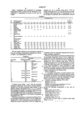
- Table 1 summarizes the formulations of moulding compositions used to mould test bar specimens. Concentrations of ingredients are given in per cent by weight.
- the proposed moulding composition can be used to produce abrasive tooling over the entire hardness range utilized in the abrasive industry (formulation Nos. 1, 2, 3, 4, 5 and 6).
- the mechanical strength of a specimen fabricated from this moulding composition (formulation Nos. 1, 2, 3, 4, 5 and 6) is higher than that of a specimen produced from the moulding composition of the known formulation (formulation No. 15).
Landscapes
- Chemical & Material Sciences (AREA)
- Engineering & Computer Science (AREA)
- Materials Engineering (AREA)
- Organic Chemistry (AREA)
- Compositions Of Oxide Ceramics (AREA)
- Polishing Bodies And Polishing Tools (AREA)
Abstract
The composition is formulated as follows, in percent by weight:
synthetic corundum material: 76.5 to 90.0
kaolinite: 2.1 to 5.7
feldspar: 2.8 to 7.6
adhesive and moistening ingredient: 3.0 to 4.5
calcium borosilicate frit: 2.1 to 5.7
Calcium borosilicate frit compositon, in percent by weight, is as follows:
silicon oxide: 22.0 to 38.0
aluminium oxide: 14.5 to 15.5
boron oxide: 25.0 to 35.0
calcium oxide: 12.5 to 17.5
sodium oxide: 4.0 to 7.5
potassium oxide: 2.0 to 3.5
The boron oxide-to-calcium oxide ratio is within 1.5 to 2.5.
Description
The present invention relates to the field of abrasive tooling production and, more specifically, to moulding compositions based on synthetic corundum materials and ceramic bonding agents that can be used for the fabrication of abrasive tools.
An abrasive tool is fabricated by compacting a moulding composition to impart the geometrical form of the tool in question, drying the moulding composition thus formed, and firing it, as a concluding step. While the abrasive tool is fired at a high temperature (1250° to 1300° C.), the ceramic bond will melt and pass, completely or partically, into a liquid state to coat and envelope the abrasive synthetic corundum grains and to bond together said abrasive grains while subsequently cooling down and solidifying as the temperature is decreased. The moulding, drying, and firing conditions for moulding compositions in abrasive tooling manufacturing processes are generally known.
A moulding composition should meet the following basic requirements:
abrasive tooling produced from said moulding composition should have high mechanical strength;
abrasive tooling that can be produced from said moulding composition should have a wide hardness range;
the amount of harmful substances that are evolved into the environment during firing operations in the process of abrasive tooling manufacture should be as low as possible; and
the moulding composition should be relatively inexpensive and readily available.
The hardness range of abrasive tooling will depend upon the melting temperature of the bonding agent, hence on its composition. As is generally known, in the tool preform firing process the bonding agent dissolves the corundum grains to increase its viscosity. On the other hand, it is known that a larger amount of bond is required to obtain higher hardness in abrasive tooling. However, increasing bond concentration in a moulding composition will lead to the tool preform being deformed in the firing process before the bond has increased in viscosity sufficiently to prevent deformation.
The above requirements that a moulding composition should meet depend in a large measure upon the composition of ceramic bond, which typically includes plasticizer to prevent abrasive tool deformation while fired, ingredients to enhance strength properties in the bonding agent, and a reactive ingredient to assure adhesion for corundum grains. Boron-containing frits are used as reactive ingredients. The frits are named to reflect the presence of oxides that determine their properties.
There is known a moulding composition to produce abrasive tooling (SU, A, 634923), which contains synthetic corundum material and a bonding agent. The bonding agent comprises kaolin as plasticizer, talc as an ingredient to increase bond strength properties, and a borosilicate frit as reactive ingredient. The proportions of the bond ingredients, in per cent by weight, are as follows:
kaolin: 40 to 95
borosilicate frit: 4 to 40
talc: 1 to 20
Composition of the borosilicate frit, in per cent by weight, is as follows:
silicon oxide: 67.8 to 70.0
aluminium oxide: 3.3 to 3.6
magnesium oxide: 0.77 to 0.9
calcium oxide: 0.53 to 0.6
iron oxide: 0.1 to 0.23
sodium oxide: 3.1 to 3.6
potassium oxide: 4.0 to 4.8
boron oxide: 15.6 to 17.7
However, tooling fabricated from this moulding composition is not strong enough owing to the relatively low adhesion between said borosilicate frit and corundum grains, the result of a low boron oxide concentration in said frit.
Another prior-art moulding composition to produce abrasive tooling (SU, A, 517203) comprises synthetic corundum material and bond. The bond comprises fireclay as a plasticizer, feldspar as an ingredient to increase bond strength properties, and lithium borosilicate frit and cryolite as reactive ingredients.
The proportions of the bond ingredients, in per cent by weight, are as follows:
lithium borosilicate frit: 15.0 to 60.0
fireclay: 0.1 to 40.0
feldspar: 15.0 to 60.0
cryolite: 5.0 to 15.0
Lithium borosilicate frit in this case has the following composition, in per cent by weight:
silicon oxide: 64.0 to 75.0
boron oxide: 10.0 to 18.0
aluminium oxide: 2.0 to 8.0
iron oxide: 0.1 to 0.5
magnesium oxide: 1.0 to 2.0
calcium oxide: 0.1 to 1.0
sodium oxide: 3.5 to 6.4
potassium oxide: 3.5 to 4.6
lithium oxide: 4.0 to 6.0
Tooling fabricated from this moulding composition is somewhat stronger than in the case of the previous counterpart, owing to the higher aggregate adhesive capacity of lithium borosilicate frit and cryolite relative to corundum grains.
However the lower melting temperature of the bond (ca. 800° C.) comprised in this moulding composition and due to the presence of the low-melting ingredients of lithium and cryolite, will limit the hardness range of abrasive tooling that can be prepared from this moulding composition. Besides, as cryolite contains about 50% fluorine, harmful substances are evolved into the environment in fairly large amounts in the abrasive tooling production process. One other disadvantage of this moulding composition is that it is not readily available and costs rather high--because of the lithium borosilicate frit contained therein, an expensive product and in short supply.
There is known a moulding comopasition to produce abrasive tooling (SU, A, 931446), with the composition, in per cent by weight, as follows:
synthetic chrome-titanium corundum: 69 to 90
kaolin: 1.4 to 5.0
feldspar: 0.7 to 2.5
lithium borosilicate frit: 2.1 to 7.5
cryolite: 0.7 to 2.5
adhesive and moistening ingredient (water glass): 3.0 to 6.0
barium silicate frit: 2.1 to 7.5
The adhesive and moistening ingredient is purposed to impart mouldability to the moulding composition.
The adhesive and moistening ingredients that can be used in moulding compositions include water glass and paraffin emulsion. The term "water glass" denotes the widely known aqueous sodium silicate solution. The paraffin emulsion formulations usable in moulding compositions are generally known.
The incorporation of barium silicate frit into the moulding formulation leads to higher melting temperature for the moulding composition, thus to a broader hardness range for the abrasive tooling, compared to the previous counterpart, yet the strength of the abrasive tooling produced from this moulding composition still remains insufficiently high. Besides, this moulding composition is not readily available and relatively costly, just as the previous counterpart. And harmful substances are evolved into the environment in rather large amounts in the process of fabricating it into abrasive tooling.
It is an object of the present invention to provide a moulding composition which makes it possible to increase the mechanical strength of abrasive tooling produced therefrom.
Another object of the invention is to provide a moulding composition expanding the hardness range for the abrasive tooling that can be produced therefrom.
A further object of the invention is to reduce the level of harmful substances evolving into the environment in the process of manufacturing abrasive tooling.
Finally, it is an object of the invention to reduce the cost of the inventive moulding composition and make it more readily available.
With these and other objects in view, there is provided a moulding composition to produce abrasive tooling, comprising a synthetic corundum material, kaolinite, feldspar, an adhesive and moistening ingredient, and calcium borosilicate frit, with the proportions of ingredients, in per cent by weight, being as follows:
synthetic corundum material: 76.5 to 90.0
kaolinite: 2.1 to 5.7
feldspar: 2.8 to 7.6
adhesive and moistening ingredient: 3.0 to 4.5
calcium borosilicate frit: 2.1 to 5.7
The calcium borosilicate frit has the following composition, in per cent by weight:
silicon oxide: 22.0 to 38.0
aluminium oxide: 14.5 to 15.5
boron oxide: 25.0 to 35.0
calcium oxide: 12.5 to 17.5
sodium oxide: 4.0 to 7.5
potassium oxide: 2.0 to 3.5
The ratio of boron oxide to calcium oxide is within 1.5 to 2.5.
Kaolinite is understood here to denote either fireclay or kaolin. The authors have established experimentally that the adhesive capacity of calcium borosilicate frit of the above composition with respect to corundum grains is higher than that of other known frits. The increase in the adhesive capacity of said calcium borosilicate frit leads to a higher mechanical strength in tooling that can be fabricated from a moulding composition of the proposed formulation.
The presence in the moulding composition of calcium oxide in an amount of between 12.5 to 17.5% by weight provides for a melting temperature of the bond (ca. 1100° C.) such that will permit this moulding composition to be used for fabricating abrasive tooling over the entire hardness range customary for the abrasive industry.
Besides, the proposed moulding composition contains no ingredients that would be expensive or in short supply, nor any ingredients that would favour harmful environmental evolutions in substantial amounts in the process of abrasive tooling fabrication.
The authors have established that with the concentration of calcium borosilicate frit in the moulding composition below 2.1% by weight, as well as with the concentration in the calcium borosilicate frit of boron oxide below 25.0% or calcium oxide exceeding 17.5%, there is a drastic decrease in the adhesive capacity of said frit relative to corundum grains, hence in the mechanical strength of tooling that can be prepared from said moulding composition. A sharp decrease in the adhesive capacity of calcium borosilicate frit relative to corundum grains is also to be observed where the boron oxide-to-calcium oxide ratios are below 1.5.
The authors have found also that with the concentration of calcium borosilicate frit in the moulding composition above 5.7% by weight, as well as with the concentration in the calcium borosilicate frit of boron oxide above 35.0% by weight or calcium oxide below 12.5% by weight, there is a substantial decrease in the melting temperature of the bonding agent, hence in the hardness range of abrasive tooling that can be produced from said moulding composition. A substantial decrease in the melting temperature of the bonding agent is also to be observed where the boron oxide-to-calcium oxide ratios exceed 2.5.
The concentrations of other ingredients in the moulding composition have been determined experimentally based on the requirements to be met by moulding compositions.
The moulding composition was obtained as follows. First, a blend was prepared composed of kaolinite, feldspar, and calcium borosilicate frit. Then a synthetic corundum material was taken, thus white corundum, chrometitanium corundum or some other, to be moistened with water glass or paraffin emulsion and mixed with the previously prepared blend. The ingredients were taken in proportions to suit the proposed invention.
Subsequently, the moulding composition was used to fabricate abrasive tools. The technology to use for fabricating abrasive tooling from moulding compositions is generally known.
To determine the mechanical strength and hardness range of abrasive tooling that can be produced from the proposed moulding composition, moulding formulations were used with different proportions (concentrations) of ingredients, to mould them into bar specimens, in accordance with the technology to be used for abrasive tooling manufacture, and test said bar specimens for mechanical strength (resistance to bending). The generally known sand blasting method was used for hardness determinations.
Besides, bar specimens of varied hardness were prepared from a moulding composition of a known formulation and suitably tested.
Table 1 summarizes the formulations of moulding compositions used to mould test bar specimens. Concentrations of ingredients are given in per cent by weight.
TABLE 1
__________________________________________________________________________
Formulation Nos.
15
Sl.
Moulding composi- known for-
No.
tion ingredients
1 2 3 4 5 6 7 8 9 10 11 12 13 14 mulation
__________________________________________________________________________
1 Synthetic corundum
90.0
83.2
76.5
90.0
83.3
76.5
90.0
76.5
83.2
76.5
83.2
76.5
83.2
76.5
69-40
material
2 Kaolin 2.1
3.9
5.7
2.1
3.9
5.7
2.1
5.5
3.9
5.7
3.9
5.7
3.9
5.7
1.4-5.0
3 Feldspar 2.8
5.2
7.6
2.8
5.2
7.6
3.0
7.5
5.2
7.6
5.2
7.6
5.2
7.6
0.7-2.5
4 Water glass
3.0
3.8
4.5 3.1
4.5
3.8
4.5
3.8
4.5
3.8
4.5
3.0-6.0
5 Paraffin emulsion 3.0
3.8
4.5
6 Lithium borosili- 2.1-7.5
cate frit
7 Cryolite 0.7-2.5
8 Barium silicate 2.1-7.5
frit
9 Calcium borosilicate
2.1
3.9
5.7
2.1
3.9
5.7
1.8
6.0
3.9
5.7
3.9
5.7
3.9
5.7
frit
Calcium borosili-
cate frit com-
ponents
10
silicon oxide
38.0 33.0
22.0
38.0
33.0
22.0
33.0
33.0
34.0
22.0
28.0
35.0
32.0
27.0
11
aluminium oxide
14.5 15.5
14.5
14.5
15.5
14.5
15.5
15.5
15.5
14.5
15.0
15.5
14.5
14.5
12
boron oxide
25.0 31.2
35.0
25.0
31.2
35.0
31.2
31.2
23.0
37.0
30.0
27.5
25.0
35.0
13
calcium oxide
16.5 12.5
17.5
16.5
12.5
17.5
12.5
12.5
17.5
15.5
19.0
11.0
17.5
12.5
14
sodium oxide
4.0 5.0
7.5
4.0
5.0
7.5
5.0
5.0
7.0
7.5
5.0
7.5
7.5
7.5
15
potassium oxide
2.0 2.8
3.5
2.0
2.8
3.5
2.8
3.0
3.5
3.0
3.5
3.5
3.5
__________________________________________________________________________
The test results obtained on bar specimens prepared from the moulding compositions formulated as shown in Table 1, are summarized in Table 2.
              TABLE 2
______________________________________
          Test results
Formulation Resistance to bending,
Nos.        kgf/cm.sup.2   Hardness
______________________________________
1           450            soft
2           460            medium hard
3           500            very hard
4           420            soft
5           450            medium hard
6           480            very hard
7           400            soft
8           Specimen deformed
9           430            medium hard
10          Specimen deformed
11          420            medium hard
12          Specimen deformed
13          410            medium hard
14          Specimen deformed
15a         400            soft
15b         430            medium hard
15c         460            very hard
______________________________________
It follows from Tables 1 and 2 that the proposed moulding composition can be used to produce abrasive tooling over the entire hardness range utilized in the abrasive industry (formulation Nos. 1, 2, 3, 4, 5 and 6). The mechanical strength of a specimen fabricated from this moulding composition (formulation Nos. 1, 2, 3, 4, 5 and 6) is higher than that of a specimen produced from the moulding composition of the known formulation (formulation No. 15).
With the concentration of calcium borosilicate frit in the moulding composition below 2.1% by weight (formulation No. 7), the concentration in the calcium borosilicate frit of boron oxide below 25.0% by weight (formulation No. 9) or calcium oxide above 17.5% by weight (formulation No. 11), and with the boron oxide-to-calcium oxide ratios below 1.5 (formulation No. 13), the strength of a specimen will be substantially reduced compared to that of a specimen prepared from the proposed moulding composition.
With the concentration of calcium borosilicate frit in the moulding composition above 5.7% by weight (formulation No. 8), the concentration in the calcium borosilicate frit of boron oxide above 35% by weight (formulation No. 10) or calcium oxide below 12.5% by weight (formulation No. 12), and with the boron oxide-to-calcium oxide ratios above 2.5 (formulation No. 14), it was found impossible to obtain specimens of high hardness that would be due to a high bond concentration in the moulding composition because the specimen preforms deformed in the firing process.
Claims (1)
1. A moulding composition to produce abrasive tooling, comprising a synthetic corundum material, kaolinite, feldspar, an adhesive and moistening ingredient, and calcium borosilicate frit, with the proportions of ingredients, in per cent by weight, being as follows:
synthetic corundum material: 76.5 to 90.0
kaolinite: 2.1 to 5.7
feldspar: 2.8 to 7.6
adhesive and moistening ingredient: 3.0 to 4.5
calcium borosilicate frit: 2.1 to 5.7
having the following composition, in per cent by weight:
silicon oxide: 22.0 to 38.0
aluminium oxide: 14.5 to 15.5
boron oxide: 25.0 to 35.0
calcium oxide: 12.5 to 17.5
sodium oxide: 4.0 to 7.5
potassium oxide: 2.0 to 3.5
and the ratio of boron oxide to calcium oxide being within 1.5 to 2.5.
Applications Claiming Priority (1)
| Application Number | Priority Date | Filing Date | Title |
|---|---|---|---|
| GB8907406A GB2230273A (en) | 1989-04-01 | 1989-04-01 | Moulding composition to produce abrasive tooling |
Publications (1)
| Publication Number | Publication Date |
|---|---|
| US4968327A true US4968327A (en) | 1990-11-06 |
Family
ID=10654339
Family Applications (1)
| Application Number | Title | Priority Date | Filing Date |
|---|---|---|---|
| US07/334,913 Expired - Fee Related US4968327A (en) | 1989-04-01 | 1989-04-06 | Moulding composition to produce abrasive tooling |
Country Status (6)
| Country | Link |
|---|---|
| US (1) | US4968327A (en) |
| JP (1) | JPH02293370A (en) |
| DE (1) | DE3912610A1 (en) |
| ES (1) | ES2011733A6 (en) |
| FR (1) | FR2645783A1 (en) |
| GB (1) | GB2230273A (en) |
Cited By (3)
| Publication number | Priority date | Publication date | Assignee | Title |
|---|---|---|---|---|
| US5318605A (en) * | 1991-01-07 | 1994-06-07 | Norton Company | Glass-ceramic bonded abrasive articles |
| US6123743A (en) * | 1991-01-07 | 2000-09-26 | Norton Company | Glass-ceramic bonded abrasive tools |
| CN100439468C (en) * | 2005-12-16 | 2008-12-03 | 湖州星星研磨有限公司 | Polishing grinding block |
Families Citing this family (1)
| Publication number | Priority date | Publication date | Assignee | Title |
|---|---|---|---|---|
| RU2131804C1 (en) * | 1997-11-26 | 1999-06-20 | Акционерное общество открытого типа "НИИ. Электрокерамика" | Method for preparing ceramic binder for abrasive tool |
Citations (2)
| Publication number | Priority date | Publication date | Assignee | Title |
|---|---|---|---|---|
| SU634923A1 (en) * | 1977-01-28 | 1978-11-30 | Запорожский индустриальный институт | Ceramic binder for abrasive tool |
| SU931446A1 (en) * | 1980-11-18 | 1982-05-30 | Всесоюзный Научно-Исследовательский Институт Абразивов И Шлифования | Mass for producing abrasive tool |
Family Cites Families (9)
| Publication number | Priority date | Publication date | Assignee | Title |
|---|---|---|---|---|
| US1829761A (en) * | 1927-08-08 | 1931-11-03 | Norton Co | Abrasive product and method of making the same |
| GB426480A (en) * | 1933-09-04 | 1935-04-04 | Carborundum Co | Improvements in or relating to the manufacture of ceramically bonded abrasive articles |
| US2916368A (en) * | 1956-07-31 | 1959-12-08 | Simonds Abrasive Company | Abrasive article |
| US3556820A (en) * | 1967-10-09 | 1971-01-19 | Feodosy Grigorievich Ruban | Method of producing frit for ceramic binding of abrasive tool and of abrasive tool casing |
| FR2208862A1 (en) * | 1972-12-01 | 1974-06-28 | Le Abrazivny | Ceramic binders contg. barium oxide - in addn. to silica, alumina and other metal oxides, used for grinding tools |
| SU604668A1 (en) * | 1976-08-23 | 1978-04-30 | Предприятие П/Я А-1425 | Ceramic binder for abrasive tool |
| US4543107A (en) * | 1984-08-08 | 1985-09-24 | Norton Company | Vitrified bonded grinding wheels containing sintered gel aluminous abrasive grits |
| SE442008B (en) * | 1983-07-22 | 1985-11-25 | Boris Antonovich Bryantsev | CERAMIC BINDING MATERIAL FOR THE MANUFACTURING OF GRINDING TOOL |
| FR2558151B1 (en) * | 1984-01-17 | 1986-07-11 | Le N Proizv | BOROSILICATE GLASS, LEAD-FREE, WITHOUT ALKALIS, AND COMPOSITION FOR ABRASION TOOLS CONTAINING THIS GLASS AS A GLASS BINDER |
-
1989
- 1989-04-01 GB GB8907406A patent/GB2230273A/en not_active Withdrawn
- 1989-04-06 US US07/334,913 patent/US4968327A/en not_active Expired - Fee Related
- 1989-04-11 JP JP1091683A patent/JPH02293370A/en active Pending
- 1989-04-12 ES ES898901272A patent/ES2011733A6/en not_active Expired - Lifetime
- 1989-04-17 FR FR8905066A patent/FR2645783A1/en not_active Withdrawn
- 1989-04-17 DE DE3912610A patent/DE3912610A1/en not_active Withdrawn
Patent Citations (2)
| Publication number | Priority date | Publication date | Assignee | Title |
|---|---|---|---|---|
| SU634923A1 (en) * | 1977-01-28 | 1978-11-30 | Запорожский индустриальный институт | Ceramic binder for abrasive tool |
| SU931446A1 (en) * | 1980-11-18 | 1982-05-30 | Всесоюзный Научно-Исследовательский Институт Абразивов И Шлифования | Mass for producing abrasive tool |
Cited By (3)
| Publication number | Priority date | Publication date | Assignee | Title |
|---|---|---|---|---|
| US5318605A (en) * | 1991-01-07 | 1994-06-07 | Norton Company | Glass-ceramic bonded abrasive articles |
| US6123743A (en) * | 1991-01-07 | 2000-09-26 | Norton Company | Glass-ceramic bonded abrasive tools |
| CN100439468C (en) * | 2005-12-16 | 2008-12-03 | 湖州星星研磨有限公司 | Polishing grinding block |
Also Published As
| Publication number | Publication date |
|---|---|
| DE3912610A1 (en) | 1990-10-25 |
| JPH02293370A (en) | 1990-12-04 |
| FR2645783A1 (en) | 1990-10-19 |
| ES2011733A6 (en) | 1990-02-01 |
| GB2230273A (en) | 1990-10-17 |
| GB8907406D0 (en) | 1989-05-17 |
Similar Documents
| Publication | Publication Date | Title |
|---|---|---|
| CA1065901A (en) | Process for preparing a foamed body | |
| KR890000833B1 (en) | Inorganic binder composition | |
| JPS60501707A (en) | cementitious composite material | |
| JPS61502603A (en) | Cementitious composite material with metal aggregate | |
| US4412863A (en) | Inorganic cement compositions having controlled thermal expansion coefficients | |
| US4968327A (en) | Moulding composition to produce abrasive tooling | |
| US5362687A (en) | Lead-free frit glaze | |
| US2766130A (en) | Self-hardening water-glass compositions and process of preparing same | |
| US3951673A (en) | Inorganic hardening composition | |
| JPH0797244A (en) | Water glass composition | |
| US2818345A (en) | Refractory cement | |
| US5022925A (en) | Composition for preparing artificial stone materials | |
| NZ237841A (en) | Masonry cement additive comprising a salt of stearic acid, a set retarding carbohydrate; an ethylenic glycol and a cellulose ether | |
| US3652305A (en) | Moldable hydrated magnesium oxide and the formation of molded articles therefrom | |
| US3957519A (en) | Acid and heat-resistant mortars for cellular glass compositions and products therefrom | |
| US3623897A (en) | Novel foamable glass compositions comprising copper | |
| EP1210302A1 (en) | Method of making a foamed hydraulic binder based product | |
| RU1424307C (en) | Ceramic mass for making facing artificial material | |
| US2158034A (en) | Silicon carbide abrasive product and method of manufacture | |
| US3278660A (en) | Light-weight structural units and method for producing the same | |
| KR100220188B1 (en) | Method for producing aqueous adhesive used sodium-silicate | |
| JPS604144B2 (en) | insulating bonding glass | |
| JPS6115907B2 (en) | ||
| JPH10259357A (en) | Adhesive composition for building boards | |
| SU1678494A1 (en) | Composition for manufacturing casting forms and mold core |
Legal Events
| Date | Code | Title | Description |
|---|---|---|---|
| AS | Assignment |
Owner name: NAUCHNO-PROIZVODSTVENNOE OBIEDINENIE PO ABRAZIVAMI Free format text: ASSIGNMENT OF ASSIGNORS INTEREST.;ASSIGNORS:EFROS, MIKHAIL G.;PROZOROVA, ZOYA M.;FEDOTOVA, SVETLANA M.;AND OTHERS;REEL/FRAME:005418/0174 Effective date: 19900618 |
|
| REMI | Maintenance fee reminder mailed | ||
| LAPS | Lapse for failure to pay maintenance fees | ||
| FP | Lapsed due to failure to pay maintenance fee |
Effective date: 19941104 |
|
| STCH | Information on status: patent discontinuation |
Free format text: PATENT EXPIRED DUE TO NONPAYMENT OF MAINTENANCE FEES UNDER 37 CFR 1.362 |