US4960945A - Process for the production of halobenzophenone derivatives - Google Patents
Process for the production of halobenzophenone derivatives Download PDFInfo
- Publication number
- US4960945A US4960945A US07/379,388 US37938889A US4960945A US 4960945 A US4960945 A US 4960945A US 37938889 A US37938889 A US 37938889A US 4960945 A US4960945 A US 4960945A
- Authority
- US
- United States
- Prior art keywords
- ethylene
- nitric acid
- dichloro
- chlorophenyl
- reaction
- Prior art date
- Legal status (The legal status is an assumption and is not a legal conclusion. Google has not performed a legal analysis and makes no representation as to the accuracy of the status listed.)
- Expired - Fee Related
Links
Images
Classifications
-
- C—CHEMISTRY; METALLURGY
- C07—ORGANIC CHEMISTRY
- C07C—ACYCLIC OR CARBOCYCLIC COMPOUNDS
- C07C45/00—Preparation of compounds having >C = O groups bound only to carbon or hydrogen atoms; Preparation of chelates of such compounds
- C07C45/27—Preparation of compounds having >C = O groups bound only to carbon or hydrogen atoms; Preparation of chelates of such compounds by oxidation
-
- C—CHEMISTRY; METALLURGY
- C07—ORGANIC CHEMISTRY
- C07C—ACYCLIC OR CARBOCYCLIC COMPOUNDS
- C07C49/00—Ketones; Ketenes; Dimeric ketenes; Ketonic chelates
- C07C49/76—Ketones containing a keto group bound to a six-membered aromatic ring
- C07C49/80—Ketones containing a keto group bound to a six-membered aromatic ring containing halogen
- C07C49/813—Ketones containing a keto group bound to a six-membered aromatic ring containing halogen polycyclic
Definitions
- This invention relates to a process for producing halobenzophenone derivatives useful as monomers for heat-resistant polymers.
- halobenzophenone derivatives have attracted particular attentions as monomers for heat-resistant polymers such as polyether ketones and polythioether ketones. There is hence an outstanding demand for the development of a process permitting their production at a lower cost.
- halobenzophenone derivatives for example, 4,4'-dichlorobenzophenone
- it has been well known to obtain it by oxidation of 1,1-dichloro-2,2-bis(4-chlorophenyl)ethylene.
- oxidation with chromic acid has been reported, for example, by J. Forrest, et al. in J. Chem. Soc., 333 (1946) and by H. L. Bradlow, et al.
- This invention has been completed with the foregoing in view. It is an object of this invention to provide a process for easily producing halobenzophenone derivatives at a high yield without an organic solvent.
- halobenzophenone derivatives represented by the following formula (II): ##STR3## wherein X and Y are the same or different and are independently F, Cl, Br or I, m stands for an integer of from 1 to 4 and n stands for an integer of from 0 to 4, can be obtained in a short time and at a high yield without substantial formation of nitro compounds when an compound represented by the following formula (I): ##STR4## wherein X, Y, m and n have the same meanings as in the formula (II) and Z is H or Cl, is oxidized by using an aqueous nitric acid solution having a specific gravity in a particular range.
- the present invention has been brought to completion on the basis of this finding.
- the process comprises oxidizing the compound represented by the formula (I) with an aqueous nitric acid solution having a specific gravity of from 1.32 to 1.47 as measured at 20° C. All specific gravities which will be described hereinafter are values as measured at the same temperature.
- halobenzophenones represented by the above formula (II) can be produced with ease at a high yield in the simplest reaction system composed of 1,1-dichloro-2,2-di(halophenyl)ethylene or 1-chloro-2,2-di(halophenyl)ethylene represented by the above formula (I), which is a reactant, and an aqueous solution of nitric acid.
- this invention does not employ any organic solvent in the reaction system and therefore, the post-reaction operations for separation and purification are simple and economical compared with those of the conventional processes. According to this invention, halobenzophenones can be produced advantageously on an industrial scale.
- halophenyl as used herein means a phenyl group having 1-4 halogen atoms selected from F, Cl, Br and I. Accordingly, a wide variety of compounds are included.
- halobenzophenone derivatives which are the target compounds of the present invention, as monomers for heat-resistant polymers
- 1,1-dichloro-2,2-di(monohalophenyl)ethylenes and 1-chloro-2,2-di(monohalophenyl)ethylenes are preferred as the reactants to be used in the present invention.
- ethylene moieties of the reactants listed above by way of example are oxidized by the process of the present invention, thereby obtaining benzophenone derivatives corresponding to the respective reactants.
- halobenzophenone derivative represented by the formula (II) and obtained by the process of the present invention 4,4-dichlorobenzophenone, 2,4'-dichlorobenzophenone and 4,4'-dibromobenzophenone may be mentioned by way of example.
- the aqueous solution of nitric acid used in this invention is required to have a specific gravity in a range of from 1.32 to 1.47. At a specific gravity lower than 1.32, the reaction does not proceed. On the other hand, specific gravities higher than 1.47 tend to induce nitration as a side reaction. More preferably, the aqueous solution of nitric acid may range from 1.35 to 1.46.
- the reaction temperature may range from -20° C. to 150° C. It is preferred to conduct the reaction at a lower temperature when the aqueous solution of nitric acid has a high specific gravity, but at a higher temperature when the aqueous solution of nitric acid has a low specific gravity.
- the temperature may range preferably from 0° C. to 120° C., and more preferably from 30° C. to 100° C.
- the reaction time and the ratio of the reactant to the aqueous solution of nitric acid vary depending on the specific gravity of the aqueous solution of nitric acid and reaction temperature to be employed.
- the reaction time may usually range from 1 minute to hours, preferably from 5 minutes to 50 hours, and more preferably from 30 minutes to 15 hours.
- the weight ratio of the reactant to the aqueous solution of nitric acid ranges from 0.001 to 50, preferably from 0.005 to 5, more preferably from 0.01 to 1.
- reaction is usually performed under ordinary pressure, it may also be conducted under elevated pressure or under reduced pressure.
- the reaction can be conducted in an oxygen atmosphere, air atmosphere or inert gas atmosphere and no particular limitation is imposed on the reaction atmosphere.
- a reaction method either a batchwise or continuous method can be used.
- the main reaction product is 4,4'-dichlorobenzophenone or the like for example, it can be separated and recovered as crystals only by simply cooling the reaction mixture and collecting the crystals by filtration after completion of the reaction. Therefore, the present invention has an advantage that the post-reaction operations for separation and purification are easier compared with those of the conventional processes. Further, the reaction product can be obtained with a higher purity when the above operations are combined suitably with usual operations for separation and purification such as washing, extraction with an organic solvent, crystallization and vacuum distillation.
- Example 2 A reaction was continued for 25 hours under similar conditions to Example 1 except that an aqueous nitric acid solution having a specific gravity of 1.30 was used. The reaction mixture was thereafter cooled and extracted with dichloromethane. After the dichloromethane layer was sufficiently washed with water, the extract was quantitatively analyzed by gas chromatography. As a result, it was found that conversion of 1,1-dichloro-2,2-bis(4-chlorophenyl)ethylene was 4.2%, and no 4,4'-dichlorobenzophenone was formed at all.
- a 200 ml flask equipped with a stirrer was charged with 3.3 g of 1,1-dichloro-2,2-bis(4-chlorophenyl)ethylene and then with 50 ml of an aqueous nitric acid solution having a specific gravity of 1.52.
- the weight ratio of the reaction material to the aqueous solution of nitric acid was 0.043. While vigorously stirring the resulting mixture at room temperature of about 20° C. in a nitrogen atmosphere, they were reacted for 1 hour.
- the reaction mixture was thereafter added with water, followed by extraction with dichloromethane. After sufficient washing of the dichloromethane layer with water, the extract was analyzed by gas chromatography.
Landscapes
- Chemical & Material Sciences (AREA)
- Organic Chemistry (AREA)
- Organic Low-Molecular-Weight Compounds And Preparation Thereof (AREA)
Abstract
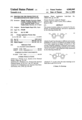
The present invention relates to a process for the production of halobenzophenone derivatives represented by the following formula (II): ##STR1## wherein X and Y are the same or different and are independently F, Cl, Br or I, m stands for an integer of from 1 to 4 and n stands for an integer of from 0 to 4. The process comprises oxidizing a compound with an aqueous nitric acid solution having a specific gravity of from 1.32 to 1.47 at 20° C., said compound being represented by the following formula (I): ##STR2## wherein X, Y, m and n have the same meanings as defined above and Z is Cl or H.
Description
(1) Field of the Invention:
This invention relates to a process for producing halobenzophenone derivatives useful as monomers for heat-resistant polymers.
(2) Description of the Related Arts:
In recent years, halobenzophenone derivatives have attracted particular attentions as monomers for heat-resistant polymers such as polyether ketones and polythioether ketones. There is hence an outstanding demand for the development of a process permitting their production at a lower cost. Regarding production processes for halobenzophenone derivatives, for example, 4,4'-dichlorobenzophenone, it has been well known to obtain it by oxidation of 1,1-dichloro-2,2-bis(4-chlorophenyl)ethylene. As such processes, oxidation with chromic acid has been reported, for example, by J. Forrest, et al. in J. Chem. Soc., 333 (1946) and by H. L. Bradlow, et al. in J. Amer. Chem. Soc., 69, 662 (1947). In addition, oxidation of 1,1-dichloro-2,2-bis(4-chlorophenyl)ethylene with nitric acid in an organic solvent has been reported by O. G. Backeberg and J. L. C. Marais in J. Chem. Soc., 803 (1945); in Japanese patent application Laid-Open No. 26829/1983, etc. As another organic solvent, acetic acid is used in the former publication while a halogenated aliphatic hydrocarbon is employed in the latter publication.
The above-described conventional processes for the production of halobenzophenone derivatives are, however, accompanied by various problems. Namely, the process relying upon the oxidation with chromic acid consumes a large amount of chromic acid in the reaction. Further, it is necessary to cope with environmental problems including waste water disposal. This process therefore requires a significant cost so that it is difficult to industrially practice it under the circumstances.
On the other hand, the processes including the oxidation with nitric acid require the use of an organic solvent and therefore, substantial energy is needed for the recovery of the organic solvent. Besides, these processes still involve some unsolved environmental problems. For example, the use of a halogenated aliphatic hydrocarbon as solvent is accompanied by a problem, because there is a concern of deleterious influence to the environment so that more stringent limitations will certainly be imposed on its use in the future.
Regarding the processes relying upon oxidation with nitric acid, development of a new process is described as a substitute for the processes using an organic solvent, such as the processes as described above, from the viewpoints of economy and also environmental problems. From such viewpoints, one may consider directly oxidizing 1,1-dichloro-2,2-bis(4-chlorophenyl)ethylene with nitric acid for the production of 4,4'-dichlorobenzophenone without using any organic solvent. It has, however, been known that the nitric acid oxidation without an organic solvent results in the formation of nitrated substances, whereby the yield of 4,4'-dichlorobenzophenone as the target product is lowered (See O. G. Backeberg and J. L. C. Marais: J. Chem. Soc., 803 (1945)).
As has been described above, the use of an organic solvent is essential for the oxidation of 1,1-dichloro-2,2-bis(4-chlorophenyl)ethylene with nitric acid under the present circumstances. Thus, problems still remain unsolved from the viewpoints of economy and environmental problems.
This invention has been completed with the foregoing in view. It is an object of this invention to provide a process for easily producing halobenzophenone derivatives at a high yield without an organic solvent.
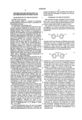
The present inventors have carried out an extensive investigation. As a result, it has been found that halobenzophenone derivatives represented by the following formula (II): ##STR3## wherein X and Y are the same or different and are independently F, Cl, Br or I, m stands for an integer of from 1 to 4 and n stands for an integer of from 0 to 4, can be obtained in a short time and at a high yield without substantial formation of nitro compounds when an compound represented by the following formula (I): ##STR4## wherein X, Y, m and n have the same meanings as in the formula (II) and Z is H or Cl, is oxidized by using an aqueous nitric acid solution having a specific gravity in a particular range. The present invention has been brought to completion on the basis of this finding.
In one aspect of this invention, there is thus provided a process for the production of halobenzophenone derivatives represented by the formula (II). The process comprises oxidizing the compound represented by the formula (I) with an aqueous nitric acid solution having a specific gravity of from 1.32 to 1.47 as measured at 20° C. All specific gravities which will be described hereinafter are values as measured at the same temperature.
As will also become apparent from a comparison between Examples and Comparative Examples to be described subsequently, the process according to the present invention has such advantages as a substantially high conversion and a significantly high yield of the target product. In addition, according to this invention, halobenzophenones represented by the above formula (II) can be produced with ease at a high yield in the simplest reaction system composed of 1,1-dichloro-2,2-di(halophenyl)ethylene or 1-chloro-2,2-di(halophenyl)ethylene represented by the above formula (I), which is a reactant, and an aqueous solution of nitric acid. Further, this invention does not employ any organic solvent in the reaction system and therefore, the post-reaction operations for separation and purification are simple and economical compared with those of the conventional processes. According to this invention, halobenzophenones can be produced advantageously on an industrial scale.
Compounds represented by the above-described formula (I) and used as reactants in the present invention include 1,1-dichloro-2-(halophenyl) -2-phenylethylene, 1,1-dichloro-2,2-di(halophenyl)ethylene, 1-chloro-2-(halophenyl)-2-phenylethylene and 1-chloro-2,2-di(halophenyl)ethylene. The term "halophenyl" as used herein means a phenyl group having 1-4 halogen atoms selected from F, Cl, Br and I. Accordingly, a wide variety of compounds are included. In view of the application of these halobenzophenone derivatives, which are the target compounds of the present invention, as monomers for heat-resistant polymers, 1,1-dichloro-2,2-di(monohalophenyl)ethylenes and 1-chloro-2,2-di(monohalophenyl)ethylenes are preferred as the reactants to be used in the present invention.
As specific examples of the above described reactants, the following isomers may be mentioned:
1,1-dichloro-2,2-di(fluorophenyl)ethylene;
1,1-dichloro-2-(bromophenyl)-2-(fluorophenyl)ethylene;
1,1-dichloro-2-(chlorophenyl)-2-(fluorophenyl)ethylene;
1,1-dichloro-2-(fluorophenyl)-2-(iodophenyl)ethylene;
1,1-dichloro-2,2-di(chlorophenyl)ethylene;
1,1-dichloro-2-(bromophenyl)-2-(chlorophenyl)ethylene;
1,1-dichloro-2-(chlorophenyl)-2-(iodophenyl)ethylene;
1,1-dichloro-2,2-di(bromophenyl)ethylene;
1,1-dichloro-2-(bromophenyl)-2-(iodophenyl)ethylene;
1,1-dichloro-2,2-di(iodophenyl)ethylene;
1-chloro-2,2-di(fluorophenyl)ethylene;
1-chloro-2-(bromophenyl)-2-(fluorophenyl)ethylene;
1-chloro-2-(chlorophenyl)-2-(fluorophenyl)ethylene;
1-chloro-2-(fluorophenyl)-2-(iodophenyl)ethylene;
1-chloro-2,2-di(chlorophenyl)ethylene;
1-chloro-2-(bromophenyl)-2-(chlorophenyl)ethylene;
1-chloro-2-(chlorophenyl)-2-(iodophenyl)ethylene;
1-chloro-2,2-di(bromophenyl)ethylene;
1-chloro-2-(bromophenyl)-2-(iodophenyl)ethylene; and
1-chloro-2,2-di(iodophenyl)ethylene.
In each of the above "bromophenyl, chlorophenyl, fluorophenyl and iodophenyl", one or more Br, Cl, F or I atoms may be bonded at any position on the phenyl group.
The ethylene moieties of the reactants listed above by way of example are oxidized by the process of the present invention, thereby obtaining benzophenone derivatives corresponding to the respective reactants. As representative examples of the halobenzophenone derivative represented by the formula (II) and obtained by the process of the present invention, 4,4-dichlorobenzophenone, 2,4'-dichlorobenzophenone and 4,4'-dibromobenzophenone may be mentioned by way of example.
As starting compounds represented by the formula (I), the following compounds can be used preferably:
1,1-dichloro-2,2-di(4-chlorophenyl)ethylene;
1-chloro-2,2-di(4-chlorophenyl)ethylene;
1,1-dichloro-2-(2-chlorophenyl)-2-(4-chlorophenyl)ethylene,
1-chloro-2-(2-chlorophenyl)-2-(4-chlorophenyl)ethylene,
1,1-dichloro-2,2-di(4-bromophenyl)ethylene; and
1-chloro-2,2-di(4-bromophenyl)ethylene.
In addition, the aqueous solution of nitric acid used in this invention is required to have a specific gravity in a range of from 1.32 to 1.47. At a specific gravity lower than 1.32, the reaction does not proceed. On the other hand, specific gravities higher than 1.47 tend to induce nitration as a side reaction. More preferably, the aqueous solution of nitric acid may range from 1.35 to 1.46.
The reaction temperature may range from -20° C. to 150° C. It is preferred to conduct the reaction at a lower temperature when the aqueous solution of nitric acid has a high specific gravity, but at a higher temperature when the aqueous solution of nitric acid has a low specific gravity. The temperature may range preferably from 0° C. to 120° C., and more preferably from 30° C. to 100° C.
The reaction time and the ratio of the reactant to the aqueous solution of nitric acid vary depending on the specific gravity of the aqueous solution of nitric acid and reaction temperature to be employed. The reaction time may usually range from 1 minute to hours, preferably from 5 minutes to 50 hours, and more preferably from 30 minutes to 15 hours. On the other hand, the weight ratio of the reactant to the aqueous solution of nitric acid ranges from 0.001 to 50, preferably from 0.005 to 5, more preferably from 0.01 to 1.
Although the reaction is usually performed under ordinary pressure, it may also be conducted under elevated pressure or under reduced pressure. The reaction can be conducted in an oxygen atmosphere, air atmosphere or inert gas atmosphere and no particular limitation is imposed on the reaction atmosphere. Moreover, as a reaction method, either a batchwise or continuous method can be used.
Where the main reaction product is 4,4'-dichlorobenzophenone or the like for example, it can be separated and recovered as crystals only by simply cooling the reaction mixture and collecting the crystals by filtration after completion of the reaction. Therefore, the present invention has an advantage that the post-reaction operations for separation and purification are easier compared with those of the conventional processes. Further, the reaction product can be obtained with a higher purity when the above operations are combined suitably with usual operations for separation and purification such as washing, extraction with an organic solvent, crystallization and vacuum distillation.
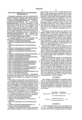
This invention will hereinafter be described specifically by the following Examples. It should however be borne in mind that this invention is not limited to or by the following Examples. Conversions and yields in the following Examples and Comparative Examples were calculated respectively in accordance with the following formulas:
A 200 ml flask fitted with a stirrer was charged with 5.0 g of 1,1-dichloro-2,2-bis(4-chlorophenyl)ethylene and then with 85 ml of an aqueous nitric acid solution having a specific gravity of 1.38. The weight ratio of the reactant to the aqueous solution of nitric acid was thus 0.043. While vigorously stirring the resulting mixture at 94° C. in a nitrogen gas atmosphere, their reaction was continued for 10 hours. The reaction mixture was thereafter cooled and crystals thus precipitated were extracted with dichloromethane. After the dichloromethane layer was sufficiently washed with water, the extract was quantitatively analyzed by gas chromatography. As a result, it was found that the conversion of 1,1-dichloro-2,2-bis(4-chlorophenyl)ethylene was 92.0% and the yield of 4,4'-dichlorobenzophenone was 66.0%.
A 200 ml flask fitted with a stirrer was charged with 5.0 g of 1,1-dichloro-2,2-bis(4-chlorophenyl)ethylene and then with 85 ml of an aqueous nitric acid solution having a specific gravity of 1.42. The weight ratio of the reactant to the aqueous solution of nitric acid was 0.041. While vigorously stirring the resulting mixture at 81° C. in a nitrogen gas atmosphere, their reaction was continued for 80 minutes. The reaction mixture was thereafter cooled and crystals thus precipitated were extracted with dichloromethane. After the dichloromethane layer was sufficiently washed with water, the extract was quantitatively analyzed by gas chromatography. As a result, it was found that the conversion of 1,1-dichloro-2,2-bis(4-chlorophenyl)ethylene was 100% and the yield of 4,4'-dichlorobenzophenone was 87.6%.
A 200 ml flask fitted with a stirrer was charged with 5.0 g of 1,1-dichloro-2,2-bis(4-chlorophenyl)ethylene and then with 85 ml of an aqueous nitric acid solution of having a specific gravity of 1.45. The weight ratio of the reactant to the aqueous solution of nitric acid was 0.041. While vigorously stirring the resulting mixture at 40° C. in a nitrogen gas atmosphere, their reaction was continued for 140 minutes. The reaction mixture was thereafter cooled and crystals thus precipitated were extracted with dichloromethane. After the dichloromethane layer was sufficiently washed with water, the extract was quantitatively analyzed by gas chromatography. As a result, it was found that the conversion of 1,1-dichloro-2,2-bis(4-chlorophenyl)ethylene was 100%, and the yield of 4,4'-dichlorobenzophenone was 91.3%.
A 200 ml flask fitted with a stirrer was charged with 5.0 g of 1-chloro-2,2-bis(4-chlorophenyl)ethylene and then with 85 ml of an aqueous nitric acid solution having a specific gravity of 1.42. The weight ratio of the reactant to the aqueous solution of nitric acid was 0.041. While vigorously stirring the resulting mixture at 65° C. in a nitrogen atmosphere, the reaction was continued for 1 hour. The reaction mixture was thereafter cooled and crystals thus precipitated were extracted with dichloromethane. After the dichloromethane layer was sufficiently washed with water, the extract was quantitatively analyzed by gas chromatography. As a result, it was found that the conversion of 1,1-dichloro-2,2-bis(4-chlorophenyl)ethylene was 91.0% and the yield of 4,4'-dichlorobenzophenone was 58.1%.
A reaction was continued for 25 hours under similar conditions to Example 1 except that an aqueous nitric acid solution having a specific gravity of 1.30 was used. The reaction mixture was thereafter cooled and extracted with dichloromethane. After the dichloromethane layer was sufficiently washed with water, the extract was quantitatively analyzed by gas chromatography. As a result, it was found that conversion of 1,1-dichloro-2,2-bis(4-chlorophenyl)ethylene was 4.2%, and no 4,4'-dichlorobenzophenone was formed at all.
A 200 ml flask equipped with a stirrer was charged with 3.3 g of 1,1-dichloro-2,2-bis(4-chlorophenyl)ethylene and then with 50 ml of an aqueous nitric acid solution having a specific gravity of 1.52. The weight ratio of the reaction material to the aqueous solution of nitric acid was 0.043. While vigorously stirring the resulting mixture at room temperature of about 20° C. in a nitrogen atmosphere, they were reacted for 1 hour. The reaction mixture was thereafter added with water, followed by extraction with dichloromethane. After sufficient washing of the dichloromethane layer with water, the extract was analyzed by gas chromatography. As a result, it was found that 1,1-dichloro-2,2-bis(4-chlorophenyl)ethylene was converted in its entirety to 4,4'-dichloro-3,3'-dinitrobenzophenone, but no 4,4'-dichlorobenzophenone was formed at all.
Claims (2)
1. A process for the production of a halobenzophenone derivative represented by the following formula (II): ##STR5## wherein X and Y are the same or different and are independently F, Cl, Br or I, m stands for an integer of from 1 to 4 and n stands for an integer of from 0 to 4, which comprises oxidizing a compound with an aqueous nitric acid solution having a specific gravity in a range of from 1.32 to 1.47 as measured at 20° C., and in the substantial absence of an organic solvent said compound being represented by the following formula (I): ##STR6## wherein X, Y, m and n have the same meanings as defined above and Z is Cl or H.
2. The process as claimed in claim 1, wherein a compound represented by the following formula: ##STR7## is oxidized with the aqueous nitric acid solution.
Applications Claiming Priority (2)
| Application Number | Priority Date | Filing Date | Title |
|---|---|---|---|
| JP63-186788 | 1988-07-28 | ||
| JP63186788A JPH0240339A (en) | 1988-07-28 | 1988-07-28 | Production of halobenzophenone derivative |
Publications (1)
| Publication Number | Publication Date |
|---|---|
| US4960945A true US4960945A (en) | 1990-10-02 |
Family
ID=16194601
Family Applications (1)
| Application Number | Title | Priority Date | Filing Date |
|---|---|---|---|
| US07/379,388 Expired - Fee Related US4960945A (en) | 1988-07-28 | 1989-07-13 | Process for the production of halobenzophenone derivatives |
Country Status (4)
| Country | Link |
|---|---|
| US (1) | US4960945A (en) |
| EP (1) | EP0352956B1 (en) |
| JP (1) | JPH0240339A (en) |
| DE (1) | DE68905397T2 (en) |
Cited By (1)
| Publication number | Priority date | Publication date | Assignee | Title |
|---|---|---|---|---|
| US5210313A (en) * | 1992-01-10 | 1993-05-11 | Maxdem Incorporated | Preparation of 2,5-dichlorobenzophenones |
Citations (3)
| Publication number | Priority date | Publication date | Assignee | Title |
|---|---|---|---|---|
| US2542985A (en) * | 1947-01-31 | 1951-02-27 | Houdry Process Corp | Preparation of acetophenone from alpha-methyl styrene |
| US4086277A (en) * | 1975-05-27 | 1978-04-25 | Gulf Research & Development Company | Process for preparing diarylketones |
| JPS58126829A (en) * | 1982-01-26 | 1983-07-28 | Mitsui Toatsu Chem Inc | Preparation of benzophenone derivative |
-
1988
- 1988-07-28 JP JP63186788A patent/JPH0240339A/en active Pending
-
1989
- 1989-07-13 US US07/379,388 patent/US4960945A/en not_active Expired - Fee Related
- 1989-07-19 DE DE8989307313T patent/DE68905397T2/en not_active Expired - Fee Related
- 1989-07-19 EP EP89307313A patent/EP0352956B1/en not_active Expired - Lifetime
Patent Citations (3)
| Publication number | Priority date | Publication date | Assignee | Title |
|---|---|---|---|---|
| US2542985A (en) * | 1947-01-31 | 1951-02-27 | Houdry Process Corp | Preparation of acetophenone from alpha-methyl styrene |
| US4086277A (en) * | 1975-05-27 | 1978-04-25 | Gulf Research & Development Company | Process for preparing diarylketones |
| JPS58126829A (en) * | 1982-01-26 | 1983-07-28 | Mitsui Toatsu Chem Inc | Preparation of benzophenone derivative |
Non-Patent Citations (8)
| Title |
|---|
| Article by H. L. Bradlow et al., Journal of the American Chemical Society, vol. 69, No. 3, pp. 477, 662 663. * |
| Article by H. L. Bradlow et al., Journal of the American Chemical Society, vol. 69, No. 3, pp. 477, 662-663. |
| Article by J. Forrest et al., Journal of the Chemical Society, (1946), pp. 333 339. * |
| Article by J. Forrest et al., Journal of the Chemical Society, (1946), pp. 333-339. |
| Article by O. G. Backeberg et al., Journal of the Chemcial Society, 803, (1945), pp. 803 805. * |
| Article by O. G. Backeberg et al., Journal of the Chemcial Society, 803, (1945), pp. 803-805. |
| Japanese Patent Application Laid Open No. 126829/1983, pp. 251 253. * |
| Japanese Patent Application Laid-Open No. 126829/1983, pp. 251-253. |
Cited By (2)
| Publication number | Priority date | Publication date | Assignee | Title |
|---|---|---|---|---|
| US5210313A (en) * | 1992-01-10 | 1993-05-11 | Maxdem Incorporated | Preparation of 2,5-dichlorobenzophenones |
| WO1993014055A1 (en) * | 1992-01-10 | 1993-07-22 | Maxdem Incorporated | Preparation of 2,5-dichlorobenzophenones |
Also Published As
| Publication number | Publication date |
|---|---|
| EP0352956A1 (en) | 1990-01-31 |
| DE68905397D1 (en) | 1993-04-22 |
| DE68905397T2 (en) | 1993-07-15 |
| EP0352956B1 (en) | 1993-03-17 |
| JPH0240339A (en) | 1990-02-09 |
Similar Documents
| Publication | Publication Date | Title |
|---|---|---|
| EP0022162B1 (en) | Process for producing disubstituted 4-hydroxycyclopentenones; monosubstituted cyclopentendiones and 4-hydroxycyclopentenones | |
| EP0150996B1 (en) | Manufacture of heptanoic acid derivatives | |
| US4960945A (en) | Process for the production of halobenzophenone derivatives | |
| JP3337728B2 (en) | Method for producing 2-acetylbenzo [b] thiophene | |
| US4792635A (en) | Symmetric benzophenones substituted by groups containing fluorine | |
| DE68922289T2 (en) | Preparation of 5-amino-1,2,4-triazole-3-sulfonamides and intermediates. | |
| KR950009481B1 (en) | Method for preparing 1,4-bis (4-hydroxybenzoyl) benzene | |
| HU202203B (en) | Improved process for producing 3,5-dichloro-2,4,6-trifluoropyridine | |
| US4764642A (en) | Process for preparing optically active alpha-haloalkyl-aryl-ketones | |
| JPH0446939B2 (en) | ||
| US6384289B2 (en) | Process for production of 1,4-bis(difluoroalkyl)benzene derivative | |
| WO1998055445A1 (en) | A process for the preparation of 1-bromoethyl acetate | |
| US5440045A (en) | Triazolinone ring formation in tert-butanol | |
| EP0019804A1 (en) | Bromination of side chain of m-phenoxytoluene | |
| JPH1112204A (en) | Method for producing 9,10-dichloroanthracene and 9,10-dihaloanthracene | |
| EP0558938B1 (en) | Fluoro-substituted dicarboxylic acids, process for preparing them and use | |
| US4235813A (en) | Aromatic sulfonamide sulfonyl chloride compounds | |
| EP0138849B1 (en) | Process for the preparation of lineatin | |
| WO1991017990A1 (en) | Process for producing l-ascorbic acid derivative | |
| US5208400A (en) | Process for producing allyl bromides | |
| EP0402892B1 (en) | Process for producing allyl bromides | |
| JPH0240340A (en) | Production of halobenzophenone derivative | |
| JPS606938B2 (en) | Method for producing 3-acylazopropionic acid ester | |
| JPS593457B2 (en) | Method for producing 9-oxoisolongifolene | |
| US20010008944A1 (en) | Method for preparing cycloheptimidazoles |
Legal Events
| Date | Code | Title | Description |
|---|---|---|---|
| AS | Assignment |
Owner name: KUREHA KAGAKU KOGYO K.K., 1-9-11, NIHONBASHI HORID Free format text: ASSIGNMENT OF ASSIGNORS INTEREST.;ASSIGNORS:TERAUCHI, TAKASHI;YOSHIDA, KAZUO;MACHIDA, YOSHIHISA;AND OTHERS;REEL/FRAME:005140/0888;SIGNING DATES FROM 19890626 TO 19890628 |
|
| FEPP | Fee payment procedure |
Free format text: PAYOR NUMBER ASSIGNED (ORIGINAL EVENT CODE: ASPN); ENTITY STATUS OF PATENT OWNER: LARGE ENTITY |
|
| FPAY | Fee payment |
Year of fee payment: 4 |
|
| REMI | Maintenance fee reminder mailed | ||
| LAPS | Lapse for failure to pay maintenance fees | ||
| FP | Lapsed due to failure to pay maintenance fee |
Effective date: 19981002 |
|
| STCH | Information on status: patent discontinuation |
Free format text: PATENT EXPIRED DUE TO NONPAYMENT OF MAINTENANCE FEES UNDER 37 CFR 1.362 |