US4900783A - Acetal copolymers with backbone double bonds and graft copolymers thereof - Google Patents
Acetal copolymers with backbone double bonds and graft copolymers thereof Download PDFInfo
- Publication number
- US4900783A US4900783A US07/181,047 US18104788A US4900783A US 4900783 A US4900783 A US 4900783A US 18104788 A US18104788 A US 18104788A US 4900783 A US4900783 A US 4900783A
- Authority
- US
- United States
- Prior art keywords
- copolymer
- copolymers
- dxpe
- trioxane
- dioxep
- Prior art date
- Legal status (The legal status is an assumption and is not a legal conclusion. Google has not performed a legal analysis and makes no representation as to the accuracy of the status listed.)
- Expired - Lifetime
Links
- 229920001577 copolymer Polymers 0.000 title claims abstract description 78
- DHKHKXVYLBGOIT-UHFFFAOYSA-N acetaldehyde Diethyl Acetal Natural products CCOC(C)OCC DHKHKXVYLBGOIT-UHFFFAOYSA-N 0.000 title abstract description 12
- 229920000578 graft copolymer Polymers 0.000 title description 5
- BAKUAUDFCNFLBX-UHFFFAOYSA-N 4,7-dihydro-1,3-dioxepine Chemical compound C1OCC=CCO1 BAKUAUDFCNFLBX-UHFFFAOYSA-N 0.000 claims abstract description 14
- BGJSXRVXTHVRSN-UHFFFAOYSA-N 1,3,5-trioxane Chemical compound C1OCOCO1 BGJSXRVXTHVRSN-UHFFFAOYSA-N 0.000 claims abstract 2
- 239000000203 mixture Substances 0.000 claims description 9
- 125000000391 vinyl group Chemical group [H]C([*])=C([H])[H] 0.000 claims description 5
- 239000000178 monomer Substances 0.000 claims description 4
- 125000002091 cationic group Chemical group 0.000 claims description 3
- NIXOWILDQLNWCW-UHFFFAOYSA-N acrylic acid group Chemical group C(C=C)(=O)O NIXOWILDQLNWCW-UHFFFAOYSA-N 0.000 claims 1
- 238000010348 incorporation Methods 0.000 abstract description 14
- 238000000034 method Methods 0.000 abstract description 7
- 230000015556 catabolic process Effects 0.000 abstract description 6
- 238000006731 degradation reaction Methods 0.000 abstract description 6
- 229910052736 halogen Inorganic materials 0.000 abstract description 6
- 150000002367 halogens Chemical class 0.000 abstract description 6
- 230000008569 process Effects 0.000 abstract description 4
- 230000001376 precipitating effect Effects 0.000 abstract description 2
- 229920000642 polymer Polymers 0.000 description 16
- KQBSGRWMSNFIPG-UHFFFAOYSA-N trioxane Chemical compound C1COOOC1 KQBSGRWMSNFIPG-UHFFFAOYSA-N 0.000 description 16
- WSFSSNUMVMOOMR-UHFFFAOYSA-N Formaldehyde Chemical compound O=C WSFSSNUMVMOOMR-UHFFFAOYSA-N 0.000 description 13
- 239000000523 sample Substances 0.000 description 11
- GDTBXPJZTBHREO-UHFFFAOYSA-N bromine Chemical compound BrBr GDTBXPJZTBHREO-UHFFFAOYSA-N 0.000 description 9
- 229920006324 polyoxymethylene Polymers 0.000 description 9
- BYEAHWXPCBROCE-UHFFFAOYSA-N 1,1,1,3,3,3-hexafluoropropan-2-ol Chemical compound FC(F)(F)C(O)C(F)(F)F BYEAHWXPCBROCE-UHFFFAOYSA-N 0.000 description 8
- XLYOFNOQVPJJNP-UHFFFAOYSA-N water Substances O XLYOFNOQVPJJNP-UHFFFAOYSA-N 0.000 description 8
- WKBOTKDWSSQWDR-UHFFFAOYSA-N Bromine atom Chemical compound [Br] WKBOTKDWSSQWDR-UHFFFAOYSA-N 0.000 description 7
- 229910052794 bromium Inorganic materials 0.000 description 7
- 238000000425 proton nuclear magnetic resonance spectrum Methods 0.000 description 7
- CSCPPACGZOOCGX-UHFFFAOYSA-N Acetone Chemical compound CC(C)=O CSCPPACGZOOCGX-UHFFFAOYSA-N 0.000 description 6
- UHOVQNZJYSORNB-UHFFFAOYSA-N Benzene Chemical compound C1=CC=CC=C1 UHOVQNZJYSORNB-UHFFFAOYSA-N 0.000 description 6
- 239000000975 dye Substances 0.000 description 6
- 125000000524 functional group Chemical group 0.000 description 6
- 238000010438 heat treatment Methods 0.000 description 6
- PQUXFUBNSYCQAL-UHFFFAOYSA-N 1-(2,3-difluorophenyl)ethanone Chemical compound CC(=O)C1=CC=CC(F)=C1F PQUXFUBNSYCQAL-UHFFFAOYSA-N 0.000 description 5
- OKTJSMMVPCPJKN-OUBTZVSYSA-N Carbon-13 Chemical compound [13C] OKTJSMMVPCPJKN-OUBTZVSYSA-N 0.000 description 5
- 238000005481 NMR spectroscopy Methods 0.000 description 5
- 229930182556 Polyacetal Natural products 0.000 description 5
- 239000000654 additive Substances 0.000 description 5
- 238000007334 copolymerization reaction Methods 0.000 description 5
- 229940047670 sodium acrylate Drugs 0.000 description 5
- 238000001228 spectrum Methods 0.000 description 5
- NIXOWILDQLNWCW-UHFFFAOYSA-M Acrylate Chemical compound [O-]C(=O)C=C NIXOWILDQLNWCW-UHFFFAOYSA-M 0.000 description 4
- ZAMOUSCENKQFHK-UHFFFAOYSA-N Chlorine atom Chemical compound [Cl] ZAMOUSCENKQFHK-UHFFFAOYSA-N 0.000 description 4
- 238000010521 absorption reaction Methods 0.000 description 4
- 229940048053 acrylate Drugs 0.000 description 4
- 238000004458 analytical method Methods 0.000 description 4
- 239000000460 chlorine Substances 0.000 description 4
- 229910052801 chlorine Inorganic materials 0.000 description 4
- 235000019256 formaldehyde Nutrition 0.000 description 4
- 238000006116 polymerization reaction Methods 0.000 description 4
- 239000000047 product Substances 0.000 description 4
- 239000007787 solid Substances 0.000 description 4
- 239000003381 stabilizer Substances 0.000 description 4
- WVDDGKGOMKODPV-UHFFFAOYSA-N Benzyl alcohol Chemical compound OCC1=CC=CC=C1 WVDDGKGOMKODPV-UHFFFAOYSA-N 0.000 description 3
- 229920005123 Celcon® Polymers 0.000 description 3
- IAZDPXIOMUYVGZ-WFGJKAKNSA-N Dimethyl sulfoxide Chemical class [2H]C([2H])([2H])S(=O)C([2H])([2H])[2H] IAZDPXIOMUYVGZ-WFGJKAKNSA-N 0.000 description 3
- IAYPIBMASNFSPL-UHFFFAOYSA-N Ethylene oxide Chemical compound C1CO1 IAYPIBMASNFSPL-UHFFFAOYSA-N 0.000 description 3
- OKKJLVBELUTLKV-UHFFFAOYSA-N Methanol Chemical compound OC OKKJLVBELUTLKV-UHFFFAOYSA-N 0.000 description 3
- KWYUFKZDYYNOTN-UHFFFAOYSA-M Potassium hydroxide Chemical compound [OH-].[K+] KWYUFKZDYYNOTN-UHFFFAOYSA-M 0.000 description 3
- HEMHJVSKTPXQMS-UHFFFAOYSA-M Sodium hydroxide Chemical compound [OH-].[Na+] HEMHJVSKTPXQMS-UHFFFAOYSA-M 0.000 description 3
- 150000001412 amines Chemical class 0.000 description 3
- 230000015572 biosynthetic process Effects 0.000 description 3
- 230000007423 decrease Effects 0.000 description 3
- 239000012153 distilled water Substances 0.000 description 3
- 238000009826 distribution Methods 0.000 description 3
- 230000004927 fusion Effects 0.000 description 3
- 230000007062 hydrolysis Effects 0.000 description 3
- 238000006460 hydrolysis reaction Methods 0.000 description 3
- 238000012986 modification Methods 0.000 description 3
- 230000004048 modification Effects 0.000 description 3
- XBEIUTPYAMBXEG-UHFFFAOYSA-N oxirane;trioxane Chemical compound C1CO1.C1COOOC1 XBEIUTPYAMBXEG-UHFFFAOYSA-N 0.000 description 3
- 239000002904 solvent Substances 0.000 description 3
- 238000012360 testing method Methods 0.000 description 3
- ORTVZLZNOYNASJ-UPHRSURJSA-N (z)-but-2-ene-1,4-diol Chemical compound OC\C=C/CO ORTVZLZNOYNASJ-UPHRSURJSA-N 0.000 description 2
- XMNIXWIUMCBBBL-UHFFFAOYSA-N 2-(2-phenylpropan-2-ylperoxy)propan-2-ylbenzene Chemical compound C=1C=CC=CC=1C(C)(C)OOC(C)(C)C1=CC=CC=C1 XMNIXWIUMCBBBL-UHFFFAOYSA-N 0.000 description 2
- GVNVAWHJIKLAGL-UHFFFAOYSA-N 2-(cyclohexen-1-yl)cyclohexan-1-one Chemical compound O=C1CCCCC1C1=CCCCC1 GVNVAWHJIKLAGL-UHFFFAOYSA-N 0.000 description 2
- RBTBFTRPCNLSDE-UHFFFAOYSA-N 3,7-bis(dimethylamino)phenothiazin-5-ium Chemical compound C1=CC(N(C)C)=CC2=[S+]C3=CC(N(C)C)=CC=C3N=C21 RBTBFTRPCNLSDE-UHFFFAOYSA-N 0.000 description 2
- IJGRMHOSHXDMSA-UHFFFAOYSA-N Atomic nitrogen Chemical compound N#N IJGRMHOSHXDMSA-UHFFFAOYSA-N 0.000 description 2
- 229910015900 BF3 Inorganic materials 0.000 description 2
- KZMGYPLQYOPHEL-UHFFFAOYSA-N Boron trifluoride etherate Chemical compound FB(F)F.CCOCC KZMGYPLQYOPHEL-UHFFFAOYSA-N 0.000 description 2
- 101150065749 Churc1 gene Proteins 0.000 description 2
- MHAJPDPJQMAIIY-UHFFFAOYSA-N Hydrogen peroxide Chemical compound OO MHAJPDPJQMAIIY-UHFFFAOYSA-N 0.000 description 2
- 239000004609 Impact Modifier Substances 0.000 description 2
- 229930040373 Paraformaldehyde Natural products 0.000 description 2
- 102100038239 Protein Churchill Human genes 0.000 description 2
- GSEJCLTVZPLZKY-UHFFFAOYSA-N Triethanolamine Chemical compound OCCN(CCO)CCO GSEJCLTVZPLZKY-UHFFFAOYSA-N 0.000 description 2
- 238000013459 approach Methods 0.000 description 2
- 238000001816 cooling Methods 0.000 description 2
- 239000013078 crystal Substances 0.000 description 2
- 230000001419 dependent effect Effects 0.000 description 2
- 238000004821 distillation Methods 0.000 description 2
- 239000000155 melt Substances 0.000 description 2
- 229960000907 methylthioninium chloride Drugs 0.000 description 2
- 229920002866 paraformaldehyde Polymers 0.000 description 2
- 239000011541 reaction mixture Substances 0.000 description 2
- 239000011347 resin Substances 0.000 description 2
- 229920005989 resin Polymers 0.000 description 2
- 210000002966 serum Anatomy 0.000 description 2
- 239000000126 substance Substances 0.000 description 2
- 238000003786 synthesis reaction Methods 0.000 description 2
- FAGUFWYHJQFNRV-UHFFFAOYSA-N tetraethylenepentamine Chemical compound NCCNCCNCCNCCN FAGUFWYHJQFNRV-UHFFFAOYSA-N 0.000 description 2
- 238000001757 thermogravimetry curve Methods 0.000 description 2
- JOXIMZWYDAKGHI-UHFFFAOYSA-N toluene-4-sulfonic acid Chemical compound CC1=CC=C(S(O)(=O)=O)C=C1 JOXIMZWYDAKGHI-UHFFFAOYSA-N 0.000 description 2
- 229920002554 vinyl polymer Polymers 0.000 description 2
- OZCRKDNRAAKDAN-IWQZZHSRSA-N (z)-but-1-ene-1,4-diol Chemical compound OCC\C=C/O OZCRKDNRAAKDAN-IWQZZHSRSA-N 0.000 description 1
- WNXJIVFYUVYPPR-UHFFFAOYSA-N 1,3-dioxolane Chemical compound C1COCO1 WNXJIVFYUVYPPR-UHFFFAOYSA-N 0.000 description 1
- ITRMDLYLIWFXSA-UHFFFAOYSA-N 1-hydroperoxy-2,5-dimethylhexane Chemical compound CC(C)CCC(C)COO ITRMDLYLIWFXSA-UHFFFAOYSA-N 0.000 description 1
- 238000005004 MAS NMR spectroscopy Methods 0.000 description 1
- 101100386054 Saccharomyces cerevisiae (strain ATCC 204508 / S288c) CYS3 gene Proteins 0.000 description 1
- KEAYESYHFKHZAL-UHFFFAOYSA-N Sodium Chemical compound [Na] KEAYESYHFKHZAL-UHFFFAOYSA-N 0.000 description 1
- 239000011354 acetal resin Substances 0.000 description 1
- 239000002253 acid Substances 0.000 description 1
- 230000009471 action Effects 0.000 description 1
- 150000001409 amidines Chemical class 0.000 description 1
- 235000019445 benzyl alcohol Nutrition 0.000 description 1
- IAQRGUVFOMOMEM-UHFFFAOYSA-N but-2-ene Chemical group CC=CC IAQRGUVFOMOMEM-UHFFFAOYSA-N 0.000 description 1
- CDQSJQSWAWPGKG-UHFFFAOYSA-N butane-1,1-diol Chemical compound CCCC(O)O CDQSJQSWAWPGKG-UHFFFAOYSA-N 0.000 description 1
- 238000011088 calibration curve Methods 0.000 description 1
- 125000004432 carbon atom Chemical group C* 0.000 description 1
- 239000011203 carbon fibre reinforced carbon Substances 0.000 description 1
- 238000001460 carbon-13 nuclear magnetic resonance spectrum Methods 0.000 description 1
- 238000006555 catalytic reaction Methods 0.000 description 1
- 239000000919 ceramic Substances 0.000 description 1
- 230000008859 change Effects 0.000 description 1
- 238000007385 chemical modification Methods 0.000 description 1
- 239000003153 chemical reaction reagent Substances 0.000 description 1
- 230000002860 competitive effect Effects 0.000 description 1
- 150000001875 compounds Chemical class 0.000 description 1
- 238000005388 cross polarization Methods 0.000 description 1
- 239000012043 crude product Substances 0.000 description 1
- 238000002425 crystallisation Methods 0.000 description 1
- 230000008025 crystallization Effects 0.000 description 1
- 230000000593 degrading effect Effects 0.000 description 1
- 238000000113 differential scanning calorimetry Methods 0.000 description 1
- 230000000694 effects Effects 0.000 description 1
- 238000002474 experimental method Methods 0.000 description 1
- 238000001914 filtration Methods 0.000 description 1
- 239000007789 gas Substances 0.000 description 1
- 230000014509 gene expression Effects 0.000 description 1
- 239000011521 glass Substances 0.000 description 1
- 150000004678 hydrides Chemical class 0.000 description 1
- 125000002887 hydroxy group Chemical group [H]O* 0.000 description 1
- 229910052738 indium Inorganic materials 0.000 description 1
- APFVFJFRJDLVQX-UHFFFAOYSA-N indium atom Chemical compound [In] APFVFJFRJDLVQX-UHFFFAOYSA-N 0.000 description 1
- 239000003999 initiator Substances 0.000 description 1
- 229910052500 inorganic mineral Inorganic materials 0.000 description 1
- 230000010354 integration Effects 0.000 description 1
- 229920002521 macromolecule Polymers 0.000 description 1
- 230000014759 maintenance of location Effects 0.000 description 1
- 239000000463 material Substances 0.000 description 1
- 238000005259 measurement Methods 0.000 description 1
- 230000007246 mechanism Effects 0.000 description 1
- 238000002844 melting Methods 0.000 description 1
- 230000008018 melting Effects 0.000 description 1
- 229910052751 metal Inorganic materials 0.000 description 1
- 239000002184 metal Substances 0.000 description 1
- 150000002739 metals Chemical class 0.000 description 1
- 239000011707 mineral Substances 0.000 description 1
- 229910052757 nitrogen Inorganic materials 0.000 description 1
- 239000012299 nitrogen atmosphere Substances 0.000 description 1
- 229920001778 nylon Polymers 0.000 description 1
- 239000002245 particle Substances 0.000 description 1
- 150000002978 peroxides Chemical class 0.000 description 1
- 230000000704 physical effect Effects 0.000 description 1
- 239000004033 plastic Substances 0.000 description 1
- 229920003023 plastic Polymers 0.000 description 1
- 229920000058 polyacrylate Polymers 0.000 description 1
- 239000002861 polymer material Substances 0.000 description 1
- 238000002360 preparation method Methods 0.000 description 1
- 150000003254 radicals Chemical class 0.000 description 1
- 229920005604 random copolymer Polymers 0.000 description 1
- 238000010992 reflux Methods 0.000 description 1
- 230000035945 sensitivity Effects 0.000 description 1
- 239000011343 solid material Substances 0.000 description 1
- 238000003756 stirring Methods 0.000 description 1
- 101150035983 str1 gene Proteins 0.000 description 1
- 238000002076 thermal analysis method Methods 0.000 description 1
- 239000003017 thermal stabilizer Substances 0.000 description 1
- 238000002411 thermogravimetry Methods 0.000 description 1
- 238000012546 transfer Methods 0.000 description 1
- 238000012795 verification Methods 0.000 description 1
Images
Classifications
-
- C—CHEMISTRY; METALLURGY
- C08—ORGANIC MACROMOLECULAR COMPOUNDS; THEIR PREPARATION OR CHEMICAL WORKING-UP; COMPOSITIONS BASED THEREON
- C08G—MACROMOLECULAR COMPOUNDS OBTAINED OTHERWISE THAN BY REACTIONS ONLY INVOLVING UNSATURATED CARBON-TO-CARBON BONDS
- C08G4/00—Condensation polymers of aldehydes or ketones with polyalcohols; Addition polymers of heterocyclic oxygen compounds containing in the ring at least once the grouping —O—C—O—
-
- C—CHEMISTRY; METALLURGY
- C07—ORGANIC CHEMISTRY
- C07D—HETEROCYCLIC COMPOUNDS
- C07D321/00—Heterocyclic compounds containing rings having two oxygen atoms as the only ring hetero atoms, not provided for by groups C07D317/00 - C07D319/00
- C07D321/02—Seven-membered rings
- C07D321/04—Seven-membered rings not condensed with other rings
-
- C—CHEMISTRY; METALLURGY
- C08—ORGANIC MACROMOLECULAR COMPOUNDS; THEIR PREPARATION OR CHEMICAL WORKING-UP; COMPOSITIONS BASED THEREON
- C08G—MACROMOLECULAR COMPOUNDS OBTAINED OTHERWISE THAN BY REACTIONS ONLY INVOLVING UNSATURATED CARBON-TO-CARBON BONDS
- C08G2/00—Addition polymers of aldehydes or cyclic oligomers thereof or of ketones; Addition copolymers thereof with less than 50 molar percent of other substances
- C08G2/18—Copolymerisation of aldehydes or ketones
Definitions
- Polyacetal copolymers are technically important macromolecules competitive with metals, ceramics and nylons in many applications. In the current technical processes, they are prepared by copolymerization of trioxane with a comonomer such as ethylene oxide, dioxolane or butanediol formal. Each such copolymer molecule carries a maximum of two functional groups, e.g. hydroxyl end groups. For purposes such as the preparation of graft copolymers and polymers with chemically bound stabilizers, it is desirable to synthesize polyacetals with higher levels of functional groups. It is an object of this invention to prepare polyacetal copolymers of trioxane that have stability equivalent to or greater than that of conventional resins while at the same time having functional groups which may be useful for further modifications or the attachment of additives.
- additives such as amidine thermal stabilizers and the like tend to reside in the amorphous regions of the polymer. Since the distribution of such non-crystalline areas is spatially random, the distribution of additives is often not optimal in terms of macroscopic properties. If functional sites can be provided at regular or semi-regular intervals (e.g. random copolymer) such that stabilizers or impact modifiers could be attached at a predetermined locus of points within the resin, then superior and more uniform properties could be achieved. This approach is particularly advantageous since the crystal structure of polyacetal is such that additives may be sterically obstructed from the crystalline areas. It therefore may be desirable to provide polymer backbone moieties that may disrupt the polymer's crystal structure in a controlled manner and provide a locus for attachment of additives.
- Polyacetal copolymers with such backbone functional groups would be useful in many important applications such as: (a) preparing trioxane copolymers with chemically bonded stabilizers; (b) preparing trioxane copolymers with chemically attached impact modifiers; (c) preparing grafted copolymers of trioxane as compatibilizers with existing commercial acetal copolymer blends or with other polymer materials such as glass or minerals; (d) preparing copolymers amenable to surface modifications; and (e) preparing crosslinked copolymers.
- the present invention concerns acetal copolymers of trioxane and 1,3-dioxep-5-ene which comprise specific percent mole incorporations of 1,3-dioxep-5-ene ("DXPE").
- the resulting polymer can be considered as an acetal copolymer with methylene oxide, --CH 2 O--, and 1-oxy-2-butene, --O--CH 2 CH ⁇ CHCH 2 --, comonomer units.
- Copolymers having preferred percent mole incorporations of DXPE e.g.
- the present invention also concerns a process for producing highly crystalline acetal copolymers by copolymerizing trioxane and DXPE and precipitating the copolymer product from solution.
- the process comprises copolymerizing trioxane and 1,3-dioxep-5-ene to produce the acetal copolymer and removing the unstable end groups from the polymer by base hydrolysis. This is done by preparing a mixture of the copolymer with a suitable solvent and a suitable base. The mixture is stirred and heated to a temperature from about 160° to about 170° C. so that all the solids are dissolved and then refluxed until the evolution of formaldehyde stops. The copolymer is then precipitated from the refluxed solution by cooling.
- the copolymer compositions of the invention can be controlled to give an upper limit of ca. 4% by mole of 2-butene repeat unit.
- the copolymers are thermally stable and show crystallinity comparable to the trioxane-ethylene oxide system.
- the backbone double bonds act efficiently as stoppers against unzipping as well as traps for harmful degrading species such as halogens. Further chemical modifications of this functionalized copolymer for the synthesis of polyacetals with pendant reactive groups as well as graft copolymers are possible.
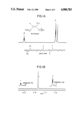
- FIG. 1 illustrates details of the copolymer structure revealed by proton NMR spectra.
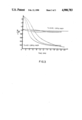
- FIG. 3 depicts Copolymer Stability Against Br 2 Degradation, ⁇ sp /C vs Time for TX-EO (Celcon M270-00) and TX-DXPE Copolymer in the presence of Br 2 .
- DXPE 1,3-dioxep-5-ene
- Proton and carbon-13 NMR spectra were obtained on an IBM WP-200SY FT NMR spectrometer.
- the solid-state carbon-13 spectra were determined in the same spectrometer with a solid-state attachment for magic angle spinning with cross polarization.
- Solvents used were perdeuterated dimethylsulfoxide, DMSO-d 6 , and hexafluoroisopropanol. The latter was used mostly for room temperature spectra of polymers and their model compounds. The temperature of measurement was 126° C.
- a pulse angle of 26° C. and relaxation time of 20 second were typical for quantitative determinations. Further increases in relaxation time did not lead to a change in quantitative results. Integration of area of absorption peaks was carried out using Brucker software provided. For carbon-13 spectra, long relaxation time together with gated decoupling was employed.
- FIG. 1 illustrates details of copolymer structure revealed by proton NMR spectra.
- the singlet, S represents the methylene oxide units from TX; the doublet, D, proton next to the double bond in the DXPE unit; and the triplet, T, protons on the carbon atoms of the double bond.
- the copolymer spectrum with that of the cis-1,4-butenediol, one can clearly identify the end group signals, DE and TE.
- the absorption peaks, TE cannot be due to trans-double bonds, since a trans configuration would lead to a downfield shift from T (Abraham, R. J.
- Table I summarizes the values calculated for the DXPE incorporation in mole percent.
- the comonomer DXPE is much less reactive than trioxane. For feeds above 6.8%, DXPE, copolymerization was not observed. The comonomer forms a complex with BF 3 as evidenced by the appearance of a brownish color.
- DP n the number average degree of polymerization
- a viscosity average molecular weight of 8 ⁇ 10 4 was obtained based on a GPC calibration curve determined through differential viscosity data.
- the number average molecular weight of 6 ⁇ 10 4 was obtained through proton NMR end group analysis. The data indicates that the DXPE comonomer exhibits no inherent limitations for copolymerization, such as chain transfer or action as a chain terminator.
- TX-EO trioxane-ethylene oxide copolymer
- Samples were reweighed after analysis in order to determine whether any of the sample had volatilized and escaped from the DSC pan during the analysis.
- Heat of fusion ⁇ H f was calculated by the time base method using a weighed indium sample as a standard.
- thermograms were obtained under nitrogen atmosphere with a heating rate of 10° C./minute.
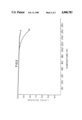
- the new copolymer with a 1.8% by mole incorporation of double bond shows better thermal stability than the polyacetal copolymer with the same level of ethylene oxide incorporation. (See FIG. 2).
- the double bond comonomer unit functions efficiently as a stopper for unzipping.
- Copolymer samples with a concentration of 0.2% (wt/wt) were prepared by dissolving 31.9 mg of trioxane-ethylene oxide polymer (Celcon® M-270-00) or TX-DXPE with 2% mole incorporation of DXPE in 10.00 mL hexafluoroisopropanol (HFIP) (HFIP was obtained from Aldrich Chemical Company and distilled before using).
- HFIP hexafluoroisopropanol
- To these copolymer solutions were added 10.00 uL of a 3 ⁇ 10 -2 M bromine solution prepared by dissolving 1.5 uL of bromine in 1.00 mL HFIP.
- the samples were quickly mixed and then introduced directly into a Ubbelohde viscometer. Reduced viscosities were calculated using a predetermined solvent flow times of 128.0 seconds according to the following formula: ##EQU2##
- the TX-DXPE copolymer was found to be much less susceptible to degradation by bromine (FIG. 3).
- the reduced viscosity of the copolymer TX-EO available commercially
- the reduced viscosity of a TX-DXPE copolymer sample was found to decrease only from 1.1 dL/g to 1.0 dL/g.
- the bromine concentration is increased by a factor of 10 2 , both copolymers experienced considerable degradation.
- This property of halogen resistance of the TX-DXPE acetal copolymer may make this copolymer useful for applications in aqueous environments where halogens such as chlorine are present.
- the levels of chlorine in such environments tends to corrode many plastic materials.
- the chlorine resistance of TX-DXPE would thus make it a preferred copolymer for use in aqueous environments containing chlorine or other halogens.
- the double bond units of the TX-DXPE copolymer may remove potentially harmful species such as bromine through the formation of stable products: ##STR2##
- Degradation of polyacetals by bromine may occur by either a radical or an acidolytic mechanism as follows: ##STR3## H + resulting from the ionization of HBr generated by hydride abstraction may also attack the polymer: ##STR4##
- the carbon-carbon double bonds in the backbone of the TX-DXPE copolymer can act as active sites for grafting compatibilizers, stabilizers etc.
- sodium acrylate was grafted onto TX-DXPE, resulting in a graft copolymer having a strong affinity towards cationic dyes.
- Copolymer samples of TX-DXPE copolymer, 2 mole % double bond incorporation (Copolymer A); TX-DXPE copolymer, 4 mole % double bond incorporation (Copolymer B); and trioxane ethylene oxide copolymer (“TX-EO”) (Celcon M270-00) were used.
- a 12 ⁇ 75 mm test tube was charged with 10 mg copolymer sample, 5 mg sodium acrylate and 0.5 mg of a hydroperoxide (2,5 hydroperoxy-2,5-dimethylhexane (“Luperox”)).
- a hydroperoxide (2,5 hydroperoxy-2,5-dimethylhexane ("Luperox")
- One mL of a deaerated HFIP solution containing 0.03 mL of an amine, tetraethylenepentamine (“TEPA”) per mL was then added to the test tube.
- the contents of the tubes were stirred with small magnetic stirrers and heated in a 55° C. water bath. After stirring and heating the system for one hour it was found to form very finely dispersed particles. Tubes containing hydroperoxide appeared to be clearer and more yellow than those without. The samples were removed from the water bath after one hour.
- Dye treatment was achieved by adding several drops of concentrated aqueous methylene blue to sample test tubes which contained the washed grafted copolymer and 4 mL of distilled water (pH adjusted to 9.5 with NaOH). The samples were then stirred with magnetic stirrers for several hours. Treated samples were repeatedly washed with acetone and distilled water. The relative color intensities of the samples were then observed and are set forth in Table III.
- solubility of the copolymer samples is dependent on the concentrations of other reagents involved.
- the experiment described above represents what were found to be the optimum conditions for the system selected.
- TX-DXPE copolymer Although we expect only the TX-DXPE copolymer to form grafts with the acrylate, it must be stated that TX-EO was often found to be light blue after treatment with the dye, and was occasionally found to be relatively dark blue in color. However, it is apparent from the results that the TX-DXPE grafted with acrylate showed a greater dye intensity.
Landscapes
- Chemical & Material Sciences (AREA)
- Organic Chemistry (AREA)
- Health & Medical Sciences (AREA)
- Chemical Kinetics & Catalysis (AREA)
- Medicinal Chemistry (AREA)
- Polymers & Plastics (AREA)
- Polyoxymethylene Polymers And Polymers With Carbon-To-Carbon Bonds (AREA)
- Polyethers (AREA)
- Graft Or Block Polymers (AREA)
Abstract
Description
HOCH.sub.2 CH═CHCH.sub.2 O--(OCH.sub.2).sub.n --(OCH.sub.2 CH═CH--CH.sub.2)--(OCH.sub.2).sub.n --OCH.sub.2 CH═CHCH.sub.2 OH.
              TABLE I
______________________________________
Percent Feed-Incorporation for
Copolymers of Trioxane - 1,3-dioxep-5-ene
Sample % DXPE in Mole Percent % DXPE Incorporated
No.    Feed (w:w)
                 HDXPE in Feed
                              (mole basis)
______________________________________
17, 18, 21
       5         1.5          1.8 ± 0.2
19, 20  10       3.2          2.4 ± 0.1
11, 13  20       6.8          3.9 ± 0.5
______________________________________
              TABLE II
______________________________________
Heat of Fusion and Percent of
Crystalinity For Acetal Copolymers
%           First heating  Second heating
       DXPE     ΔH.sub.f   ΔH.sub.f
Sample (by      (mcal/           (mcal/
No.    NMR)     mg)      % Cryst.
                                 mg     % Cryst.
______________________________________
17     1.8 ± 0.2
                4.1 ± 4
                         70.0 ± 6
                                 31.3 ± 2
                                        53.4 ± 3
20     2.4± 0.1
                37.6 ± 6
                         64.1 ± 10
                                 30.3 ± 1
                                        5l.6 ± 1
11     3.9 ± 0.5
                33.5 ± 2
                         57.1 ± 4
                                 27.4 ± 1
                                        46.7 ± 1
TX-EO  --       35.0 ± 3
                         59.7 ± 5
                                 29.1 ± 3
                                        49.5 ± 5
______________________________________
              TABLE III
______________________________________
Sample   Amine/HFIP   Luperox   "Final Color"
______________________________________
TX-EO    1 mL         none      pale blue
TX-EO    1 mL         0.5 mg    light blue
Copolymer A
         1 mL         none      light blue
Copolymer A
         1 mL         0.5 mg    dark blue
Copolymer B
         1 mL         none      light blue
Copolymer B
         1 mL         0.5 mg    dark blue
______________________________________
Claims (3)
Priority Applications (6)
| Application Number | Priority Date | Filing Date | Title |
|---|---|---|---|
| US07/181,047 US4900783A (en) | 1988-04-13 | 1988-04-13 | Acetal copolymers with backbone double bonds and graft copolymers thereof |
| CA000595777A CA1337449C (en) | 1988-04-13 | 1989-04-05 | Acetal copolymers with backbone double bonds |
| EP89303606A EP0337755A3 (en) | 1988-04-13 | 1989-04-12 | Acetal copolymers with backbone double bonds |
| CN89102215.5A CN1046339A (en) | 1988-04-13 | 1989-04-12 | The acetal copolymer that has two keys on the main chain |
| BR898901746A BR8901746A (en) | 1988-04-13 | 1989-04-12 | PROCESS FOR THE PRODUCTION OF TRIOXAN AND 1,3-DIOXEP-5-ENO ACETAL COPOLYMER, COMPOSITIONS AND PLASTIC ARTICLE |
| JP1092778A JP2943154B2 (en) | 1988-04-13 | 1989-04-12 | Acetal copolymer having main chain double bond |
Applications Claiming Priority (1)
| Application Number | Priority Date | Filing Date | Title |
|---|---|---|---|
| US07/181,047 US4900783A (en) | 1988-04-13 | 1988-04-13 | Acetal copolymers with backbone double bonds and graft copolymers thereof |
Publications (1)
| Publication Number | Publication Date |
|---|---|
| US4900783A true US4900783A (en) | 1990-02-13 |
Family
ID=22662685
Family Applications (1)
| Application Number | Title | Priority Date | Filing Date |
|---|---|---|---|
| US07/181,047 Expired - Lifetime US4900783A (en) | 1988-04-13 | 1988-04-13 | Acetal copolymers with backbone double bonds and graft copolymers thereof |
Country Status (6)
| Country | Link |
|---|---|
| US (1) | US4900783A (en) |
| EP (1) | EP0337755A3 (en) |
| JP (1) | JP2943154B2 (en) |
| CN (1) | CN1046339A (en) |
| BR (1) | BR8901746A (en) |
| CA (1) | CA1337449C (en) |
Cited By (1)
| Publication number | Priority date | Publication date | Assignee | Title |
|---|---|---|---|---|
| US5206308A (en) * | 1989-05-12 | 1993-04-27 | Hoechst Celanese Corporation | Grafting of amine functional polymers onto functionalized oxymethylene polymers and the resulting graft polymers thereof |
Families Citing this family (2)
| Publication number | Priority date | Publication date | Assignee | Title |
|---|---|---|---|---|
| JP4744909B2 (en) * | 2005-03-30 | 2011-08-10 | 東芝マイクロエレクトロニクス株式会社 | Hysteresis comparator |
| JP4844345B2 (en) * | 2006-10-19 | 2011-12-28 | 株式会社デンソー | Comparator circuit with hysteresis |
Citations (3)
| Publication number | Priority date | Publication date | Assignee | Title |
|---|---|---|---|---|
| GB837464A (en) * | 1956-12-14 | 1960-06-15 | Columbia Southern Chem Corp | Improvements in and relating to epoxides |
| US3297647A (en) * | 1962-04-28 | 1967-01-10 | Hoechst Ag | Product and process for the manufacture of linear terpolymers of acetals |
| US3337587A (en) * | 1960-03-21 | 1967-08-22 | Union Carbide Corp | 2-hydrocarbon-5, 6-epoxy-1, 3-dioxepanes |
Family Cites Families (3)
| Publication number | Priority date | Publication date | Assignee | Title |
|---|---|---|---|---|
| BE626151A (en) * | 1961-12-14 | |||
| US3385832A (en) * | 1964-09-28 | 1968-05-28 | Ici Ltd | Oxymethylene polymers having olefinic double bonds in the polymer chain |
| US4751272A (en) * | 1986-05-01 | 1988-06-14 | Toray Industries, Inc. | Process for producing oxymethylene copolymer and resinous composition |
-
1988
- 1988-04-13 US US07/181,047 patent/US4900783A/en not_active Expired - Lifetime
-
1989
- 1989-04-05 CA CA000595777A patent/CA1337449C/en not_active Expired - Fee Related
- 1989-04-12 JP JP1092778A patent/JP2943154B2/en not_active Expired - Fee Related
- 1989-04-12 CN CN89102215.5A patent/CN1046339A/en active Pending
- 1989-04-12 BR BR898901746A patent/BR8901746A/en unknown
- 1989-04-12 EP EP89303606A patent/EP0337755A3/en active Pending
Patent Citations (3)
| Publication number | Priority date | Publication date | Assignee | Title |
|---|---|---|---|---|
| GB837464A (en) * | 1956-12-14 | 1960-06-15 | Columbia Southern Chem Corp | Improvements in and relating to epoxides |
| US3337587A (en) * | 1960-03-21 | 1967-08-22 | Union Carbide Corp | 2-hydrocarbon-5, 6-epoxy-1, 3-dioxepanes |
| US3297647A (en) * | 1962-04-28 | 1967-01-10 | Hoechst Ag | Product and process for the manufacture of linear terpolymers of acetals |
Non-Patent Citations (8)
| Title |
|---|
| E. J. Vandenberg, J. of Polymer Sci. Polymer Chem. Ed., 23, 951 970 (1985). * |
| E. J. Vandenberg, J. of Polymer Sci. Polymer Chem. Ed., 23, 951-970 (1985). |
| P. H. Plesch and P. H. Westermann, Polymer, 10:105 (1965). * |
| R. C. Schulz, Makromol. Chem. Suppl. 13, 123 136 (1985). * |
| R. C. Schulz, Makromol. Chem. Suppl. 13, 123-136 (1985). |
| S. Penszek, et al, Adv. Polymer Sci. 68/69, Cationic Ring Opening Polymerization, 2. Synthetic Applications p. 91 (1981). * |
| W. Hellerman and R. C. Schulz, Makromol. Chem., Rapid Commun. 2, 585 589 (1981). * |
| W. Hellerman and R. C. Schulz, Makromol. Chem., Rapid Commun. 2, 585-589 (1981). |
Cited By (1)
| Publication number | Priority date | Publication date | Assignee | Title |
|---|---|---|---|---|
| US5206308A (en) * | 1989-05-12 | 1993-04-27 | Hoechst Celanese Corporation | Grafting of amine functional polymers onto functionalized oxymethylene polymers and the resulting graft polymers thereof |
Also Published As
| Publication number | Publication date |
|---|---|
| CA1337449C (en) | 1995-10-24 |
| JP2943154B2 (en) | 1999-08-30 |
| BR8901746A (en) | 1989-11-28 |
| EP0337755A2 (en) | 1989-10-18 |
| JPH0236225A (en) | 1990-02-06 |
| CN1046339A (en) | 1990-10-24 |
| EP0337755A3 (en) | 1990-02-28 |
Similar Documents
| Publication | Publication Date | Title |
|---|---|---|
| EP0398585A2 (en) | Novel polyacetal terpolymers of trioxane and alpha, alpha-and alpha, beta-isomers of glycerol formal and functional derivatives thereof | |
| CS197279B2 (en) | Shaping material based on polyoxymethylene | |
| US5004798A (en) | Novel polyacetal copolymers of trioxane and trimethylolpropane formal derivatives | |
| JP2955326B2 (en) | Process for producing acetal polymer and acetal copolymer | |
| EP0337755A2 (en) | Acetal copolymers with backbone double bonds | |
| US5015707A (en) | Preparation of poly-β-alanine from acrylamide | |
| EP0400827A2 (en) | Grafting of amine functional polymers onto functionalized oxymethylene polymers and the resulting graft polymers thereof | |
| Kweon | Preparation and characteristics of chitosan-g-PDMS copolymer | |
| NO159302B (en) | DRILL DEVICE WITH MULTIPLE PARALLEL DRILLS. | |
| US4983708A (en) | Novel polyacetal copolymers of trioxane and glycidyl ester derivatives | |
| US5034499A (en) | Acetal copolymers with backbone epoxide functional groups | |
| Bojinov et al. | Synthesis and application of triazinyl-2, 2, 6, 6-tetramethylpiperidine derivatives as stabilizers for polymeric materials | |
| US3494893A (en) | Process for preparing copolymers of trioxane | |
| US4906728A (en) | Acetal copolymers with backbone bromo functional groups | |
| TW593399B (en) | Method for producing polyacetal copolymer | |
| JPH0668058B2 (en) | Polyacetal composition | |
| Chiang et al. | Studies of reactions with polymers. VII. The reaction of acrylonitrile‐grafted polyvinyl alcohol copolymer (PVA‐g‐AN) with NaOH/HCHO aqueous solution | |
| Mateva et al. | Anionic polymerization of lactams in presence of activating and alloying additives | |
| KR0171611B1 (en) | Copolymer of Dodecane Terephthalamide | |
| US3442860A (en) | Process for the manufacture of copolymers of trioxane capable of being cross-linked by light | |
| JPH0610259B2 (en) | High molecular weight acrylamide unit-containing β-alanine copolymer and method for producing the same | |
| EP0340926A2 (en) | Acetal copolymers with backbone isocyanate functional groups | |
| WO2003011930A1 (en) | Novel polyacetal (co)polymers | |
| SU1242490A1 (en) | Redox system for water emulsion polymerization of styrene | |
| Avella et al. | Synthesis and Characterization of Interfacial Agents to be used in Polyamide 6/Rubber Blends |
Legal Events
| Date | Code | Title | Description |
|---|---|---|---|
| AS | Assignment |
Owner name: HOECHST CELANESE CORP., 26 MAIN STREET, CHATHAM, N Free format text: ASSIGNMENT OF ASSIGNORS INTEREST.;ASSIGNORS:PESCE, ROSE;WANG, SHIAN S.;REEL/FRAME:004996/0004 Effective date: 19880829 Owner name: HOECHST CELANESE CORP., 26 MAIN STREET, CHATHAM, N Free format text: ASSIGNMENT OF ASSIGNORS INTEREST.;ASSIGNORS:YANG, NAN-LOH;AUERBACH, ANDREW;PAUL, JAMES L.;REEL/FRAME:004996/0010 Effective date: 19880824 |
|
| STCF | Information on status: patent grant |
Free format text: PATENTED CASE |
|
| FEPP | Fee payment procedure |
Free format text: PAYOR NUMBER ASSIGNED (ORIGINAL EVENT CODE: ASPN); ENTITY STATUS OF PATENT OWNER: LARGE ENTITY |
|
| FPAY | Fee payment |
Year of fee payment: 4 |
|
| FPAY | Fee payment |
Year of fee payment: 8 |
|
| FPAY | Fee payment |
Year of fee payment: 12 |
|
| AS | Assignment |
Owner name: CNA HOLDINGS, INC., NEW JERSEY Free format text: CHANGE OF NAME;ASSIGNOR:HNA HOLDINGS, INC. (DE CORPORATION);REEL/FRAME:014515/0141 Effective date: 19990816 Owner name: HNA HOLDINGS, INC., DELAWARE Free format text: CHANGE OF NAME;ASSIGNOR:HOECHST CELANESE CORPORATION;REEL/FRAME:014506/0001 Effective date: 19980102 |
|
| AS | Assignment |
Owner name: DEUTSCHE BANK AG, NEW YORK BRANCH, NEW YORK Free format text: SECURITY AGREEMENT;ASSIGNOR:CNA HOLDINGS, INC.;REEL/FRAME:014601/0761 Effective date: 20040405 |
|
| AS | Assignment |
Owner name: DEUTSCHE BANK AG, NEW YORK BRANCH, NEW YORK Free format text: SECURITY INTEREST;ASSIGNOR:CNA HOLDINGS, INC. (F/K/A/ HOECHST CELANESE CORPORATION AND HNA HOLDINGS, INC.);REEL/FRAME:015394/0158 Effective date: 20041018 |
|
| AS | Assignment |
Owner name: DEUTSCHE BANK AG, NEW YORK BRANCH, AS COLLATERAL A Free format text: ASSIGNMENT OF SECURITY INTEREST IN CERTAIN PATENTS;ASSIGNOR:CNA HOLDINGS, INC.;REEL/FRAME:020710/0108 Effective date: 20070402 |