US4900779A - Organosilicon polymers - Google Patents
Organosilicon polymers Download PDFInfo
- Publication number
- US4900779A US4900779A US07/079,740 US7974087A US4900779A US 4900779 A US4900779 A US 4900779A US 7974087 A US7974087 A US 7974087A US 4900779 A US4900779 A US 4900779A
- Authority
- US
- United States
- Prior art keywords
- carbon
- polymer
- organosilicon polymer
- double bonds
- tbd
- Prior art date
- Legal status (The legal status is an assumption and is not a legal conclusion. Google has not performed a legal analysis and makes no representation as to the accuracy of the status listed.)
- Expired - Lifetime
Links
- 229920001558 organosilicon polymer Polymers 0.000 title claims abstract description 23
- 229920001187 thermosetting polymer Polymers 0.000 claims abstract description 51
- -1 polysiloxane Polymers 0.000 claims abstract description 36
- 229920001169 thermoplastic Polymers 0.000 claims abstract description 22
- 125000004122 cyclic group Chemical group 0.000 claims abstract description 12
- 229920001296 polysiloxane Polymers 0.000 claims abstract description 12
- 229920000642 polymer Polymers 0.000 claims description 58
- HECLRDQVFMWTQS-RGOKHQFPSA-N 1755-01-7 Chemical compound C1[C@H]2[C@@H]3CC=C[C@@H]3[C@@H]1C=C2 HECLRDQVFMWTQS-RGOKHQFPSA-N 0.000 claims description 38
- 239000011203 carbon fibre reinforced carbon Substances 0.000 claims description 37
- 239000000203 mixture Substances 0.000 claims description 26
- 239000011521 glass Substances 0.000 claims description 19
- SJYNFBVQFBRSIB-UHFFFAOYSA-N norbornadiene Chemical compound C1=CC2C=CC1C2 SJYNFBVQFBRSIB-UHFFFAOYSA-N 0.000 claims description 15
- XUIMIQQOPSSXEZ-UHFFFAOYSA-N Silicon Chemical compound [Si] XUIMIQQOPSSXEZ-UHFFFAOYSA-N 0.000 claims description 14
- 239000000376 reactant Substances 0.000 claims description 12
- 229910052739 hydrogen Inorganic materials 0.000 claims description 10
- 238000006459 hydrosilylation reaction Methods 0.000 claims description 10
- 239000007795 chemical reaction product Substances 0.000 claims description 9
- 239000000835 fiber Substances 0.000 claims description 9
- 239000001257 hydrogen Substances 0.000 claims description 9
- 229910052710 silicon Inorganic materials 0.000 claims description 8
- 239000010703 silicon Substances 0.000 claims description 8
- 125000004435 hydrogen atom Chemical group [H]* 0.000 claims description 6
- UFHFLCQGNIYNRP-UHFFFAOYSA-N Hydrogen Chemical compound [H][H] UFHFLCQGNIYNRP-UHFFFAOYSA-N 0.000 claims description 5
- 150000002846 norbornadienes Chemical class 0.000 claims description 5
- 230000002787 reinforcement Effects 0.000 claims description 5
- 229920006395 saturated elastomer Polymers 0.000 claims description 5
- OKTJSMMVPCPJKN-UHFFFAOYSA-N Carbon Chemical compound [C] OKTJSMMVPCPJKN-UHFFFAOYSA-N 0.000 claims description 4
- 239000003733 fiber-reinforced composite Substances 0.000 claims description 4
- 125000000217 alkyl group Chemical group 0.000 claims description 3
- 125000003118 aryl group Chemical group 0.000 claims description 3
- IKAACYWAXDLDPM-UHFFFAOYSA-N 1,2,3,4,4a,5-hexahydronaphthalene Chemical compound C1=CCC2CCCCC2=C1 IKAACYWAXDLDPM-UHFFFAOYSA-N 0.000 claims description 2
- UTBCLIMIBBSDLG-UHFFFAOYSA-N C12=CC=CCC2C2CC2C2C1C2 Chemical compound C12=CC=CCC2C2CC2C2C1C2 UTBCLIMIBBSDLG-UHFFFAOYSA-N 0.000 claims description 2
- 229920000049 Carbon (fiber) Polymers 0.000 claims description 2
- 229910052799 carbon Inorganic materials 0.000 claims description 2
- 239000000919 ceramic Substances 0.000 claims description 2
- 239000003365 glass fiber Substances 0.000 claims description 2
- 229920001059 synthetic polymer Polymers 0.000 claims description 2
- 125000003545 alkoxy group Chemical group 0.000 claims 2
- 101150108015 STR6 gene Proteins 0.000 claims 1
- 239000004917 carbon fiber Substances 0.000 claims 1
- VNWKTOKETHGBQD-UHFFFAOYSA-N methane Chemical compound C VNWKTOKETHGBQD-UHFFFAOYSA-N 0.000 claims 1
- 239000004416 thermosoftening plastic Substances 0.000 abstract description 7
- 238000006243 chemical reaction Methods 0.000 description 56
- IJGRMHOSHXDMSA-UHFFFAOYSA-N Atomic nitrogen Chemical compound N#N IJGRMHOSHXDMSA-UHFFFAOYSA-N 0.000 description 36
- WZJUBBHODHNQPW-UHFFFAOYSA-N 2,4,6,8-tetramethyl-1,3,5,7,2$l^{3},4$l^{3},6$l^{3},8$l^{3}-tetraoxatetrasilocane Chemical compound C[Si]1O[Si](C)O[Si](C)O[Si](C)O1 WZJUBBHODHNQPW-UHFFFAOYSA-N 0.000 description 26
- 238000002360 preparation method Methods 0.000 description 25
- 238000006116 polymerization reaction Methods 0.000 description 19
- 239000007787 solid Substances 0.000 description 19
- 238000010438 heat treatment Methods 0.000 description 18
- 229910052757 nitrogen Inorganic materials 0.000 description 18
- XLYOFNOQVPJJNP-UHFFFAOYSA-N water Substances O XLYOFNOQVPJJNP-UHFFFAOYSA-N 0.000 description 14
- 239000003054 catalyst Substances 0.000 description 13
- 239000000543 intermediate Substances 0.000 description 13
- 239000011541 reaction mixture Substances 0.000 description 13
- 239000007788 liquid Substances 0.000 description 12
- 239000000047 product Substances 0.000 description 12
- 239000002253 acid Substances 0.000 description 11
- BASFCYQUMIYNBI-UHFFFAOYSA-N platinum Substances [Pt] BASFCYQUMIYNBI-UHFFFAOYSA-N 0.000 description 10
- 239000004809 Teflon Substances 0.000 description 9
- 229920006362 Teflon® Polymers 0.000 description 9
- 239000002131 composite material Substances 0.000 description 8
- 238000004132 cross linking Methods 0.000 description 8
- 239000004744 fabric Substances 0.000 description 8
- 230000009477 glass transition Effects 0.000 description 8
- 238000002844 melting Methods 0.000 description 8
- 230000008018 melting Effects 0.000 description 8
- 239000000463 material Substances 0.000 description 7
- 238000000034 method Methods 0.000 description 7
- 239000000178 monomer Substances 0.000 description 7
- 150000001336 alkenes Chemical class 0.000 description 5
- 238000009835 boiling Methods 0.000 description 5
- 150000001875 compounds Chemical class 0.000 description 5
- 238000001816 cooling Methods 0.000 description 5
- 239000000945 filler Substances 0.000 description 5
- 230000009969 flowable effect Effects 0.000 description 5
- JRZJOMJEPLMPRA-UHFFFAOYSA-N olefin Natural products CCCCCCCC=C JRZJOMJEPLMPRA-UHFFFAOYSA-N 0.000 description 5
- 239000000843 powder Substances 0.000 description 5
- 229910052697 platinum Inorganic materials 0.000 description 4
- 238000003756 stirring Methods 0.000 description 4
- VGGSQFUCUMXWEO-UHFFFAOYSA-N Ethene Chemical compound C=C VGGSQFUCUMXWEO-UHFFFAOYSA-N 0.000 description 3
- 239000005977 Ethylene Substances 0.000 description 3
- 238000005481 NMR spectroscopy Methods 0.000 description 3
- YXFVVABEGXRONW-UHFFFAOYSA-N Toluene Chemical compound CC1=CC=CC=C1 YXFVVABEGXRONW-UHFFFAOYSA-N 0.000 description 3
- 238000004458 analytical method Methods 0.000 description 3
- 238000013459 approach Methods 0.000 description 3
- 239000012467 final product Substances 0.000 description 3
- 230000009970 fire resistant effect Effects 0.000 description 3
- 239000012530 fluid Substances 0.000 description 3
- 229910052751 metal Inorganic materials 0.000 description 3
- 239000002184 metal Substances 0.000 description 3
- 230000001590 oxidative effect Effects 0.000 description 3
- 229920005989 resin Polymers 0.000 description 3
- 239000011347 resin Substances 0.000 description 3
- 125000000391 vinyl group Chemical group [H]C([*])=C([H])[H] 0.000 description 3
- PUNGSQUVTIDKNU-UHFFFAOYSA-N 2,4,6,8,10-pentamethyl-1,3,5,7,9,2$l^{3},4$l^{3},6$l^{3},8$l^{3},10$l^{3}-pentaoxapentasilecane Chemical compound C[Si]1O[Si](C)O[Si](C)O[Si](C)O[Si](C)O1 PUNGSQUVTIDKNU-UHFFFAOYSA-N 0.000 description 2
- WSPOQKCOERDWJQ-UHFFFAOYSA-N 2-methyl-1,3,5,7,2,4,6,8-tetraoxatetrasilocane Chemical compound C[SiH]1O[SiH2]O[SiH2]O[SiH2]O1 WSPOQKCOERDWJQ-UHFFFAOYSA-N 0.000 description 2
- VTYYLEPIZMXCLO-UHFFFAOYSA-L Calcium carbonate Chemical compound [Ca+2].[O-]C([O-])=O VTYYLEPIZMXCLO-UHFFFAOYSA-L 0.000 description 2
- CTQNGGLPUBDAKN-UHFFFAOYSA-N O-Xylene Chemical compound CC1=CC=CC=C1C CTQNGGLPUBDAKN-UHFFFAOYSA-N 0.000 description 2
- BLRPTPMANUNPDV-UHFFFAOYSA-N Silane Chemical compound [SiH4] BLRPTPMANUNPDV-UHFFFAOYSA-N 0.000 description 2
- 239000000654 additive Substances 0.000 description 2
- 229910052782 aluminium Inorganic materials 0.000 description 2
- XAGFODPZIPBFFR-UHFFFAOYSA-N aluminium Chemical compound [Al] XAGFODPZIPBFFR-UHFFFAOYSA-N 0.000 description 2
- QXJJQWWVWRCVQT-UHFFFAOYSA-K calcium;sodium;phosphate Chemical compound [Na+].[Ca+2].[O-]P([O-])([O-])=O QXJJQWWVWRCVQT-UHFFFAOYSA-K 0.000 description 2
- ZSWFCLXCOIISFI-UHFFFAOYSA-N cyclopentadiene Chemical compound C1C=CC=C1 ZSWFCLXCOIISFI-UHFFFAOYSA-N 0.000 description 2
- 229920001971 elastomer Polymers 0.000 description 2
- 239000000806 elastomer Substances 0.000 description 2
- 239000010439 graphite Substances 0.000 description 2
- 229910002804 graphite Inorganic materials 0.000 description 2
- HTDJPCNNEPUOOQ-UHFFFAOYSA-N hexamethylcyclotrisiloxane Chemical compound C[Si]1(C)O[Si](C)(C)O[Si](C)(C)O1 HTDJPCNNEPUOOQ-UHFFFAOYSA-N 0.000 description 2
- 238000011065 in-situ storage Methods 0.000 description 2
- 239000000155 melt Substances 0.000 description 2
- 238000000465 moulding Methods 0.000 description 2
- 239000003921 oil Substances 0.000 description 2
- 230000009257 reactivity Effects 0.000 description 2
- 229910000077 silane Inorganic materials 0.000 description 2
- 229910001220 stainless steel Inorganic materials 0.000 description 2
- 239000010935 stainless steel Substances 0.000 description 2
- 238000003860 storage Methods 0.000 description 2
- 230000007704 transition Effects 0.000 description 2
- 238000011282 treatment Methods 0.000 description 2
- 229920002554 vinyl polymer Polymers 0.000 description 2
- 230000004580 weight loss Effects 0.000 description 2
- 239000008096 xylene Substances 0.000 description 2
- KOJCPAMHGPVAEW-UHFFFAOYSA-N 2,4,6,8-tetraethyl-1,3,5,7,2,4,6,8-tetraoxatetrasilocane Chemical compound CC[SiH]1O[SiH](CC)O[SiH](CC)O[SiH](CC)O1 KOJCPAMHGPVAEW-UHFFFAOYSA-N 0.000 description 1
- CQHTUIVVRYJZTG-UHFFFAOYSA-N 2,4,6,8-tetraoctyl-1,3,5,7,2,4,6,8-tetraoxatetrasilocane Chemical compound CCCCCCCC[SiH]1O[SiH](CCCCCCCC)O[SiH](CCCCCCCC)O[SiH](CCCCCCCC)O1 CQHTUIVVRYJZTG-UHFFFAOYSA-N 0.000 description 1
- VLQZJOLYNOGECD-UHFFFAOYSA-N 2,4,6-trimethyl-1,3,5,2,4,6-trioxatrisilinane Chemical compound C[SiH]1O[SiH](C)O[SiH](C)O1 VLQZJOLYNOGECD-UHFFFAOYSA-N 0.000 description 1
- 239000004821 Contact adhesive Substances 0.000 description 1
- 239000004606 Fillers/Extenders Substances 0.000 description 1
- HJLARPLSJYOZTN-UHFFFAOYSA-N O1[SiH](C=2C=CC=CC=2)O[SiH](C=2C=CC=CC=2)O[SiH](C=2C=CC=CC=2)O[SiH]1C1=CC=CC=C1 Chemical compound O1[SiH](C=2C=CC=CC=2)O[SiH](C=2C=CC=CC=2)O[SiH](C=2C=CC=CC=2)O[SiH]1C1=CC=CC=C1 HJLARPLSJYOZTN-UHFFFAOYSA-N 0.000 description 1
- 239000004820 Pressure-sensitive adhesive Substances 0.000 description 1
- 229910019032 PtCl2 Inorganic materials 0.000 description 1
- 101100386054 Saccharomyces cerevisiae (strain ATCC 204508 / S288c) CYS3 gene Proteins 0.000 description 1
- VYPSYNLAJGMNEJ-UHFFFAOYSA-N Silicium dioxide Chemical compound O=[Si]=O VYPSYNLAJGMNEJ-UHFFFAOYSA-N 0.000 description 1
- 238000002441 X-ray diffraction Methods 0.000 description 1
- 238000002835 absorbance Methods 0.000 description 1
- 239000003377 acid catalyst Substances 0.000 description 1
- 238000007259 addition reaction Methods 0.000 description 1
- 239000000853 adhesive Substances 0.000 description 1
- 230000001070 adhesive effect Effects 0.000 description 1
- 150000001343 alkyl silanes Chemical class 0.000 description 1
- 229940045985 antineoplastic platinum compound Drugs 0.000 description 1
- 239000003963 antioxidant agent Substances 0.000 description 1
- 239000011324 bead Substances 0.000 description 1
- 230000008901 benefit Effects 0.000 description 1
- 230000015572 biosynthetic process Effects 0.000 description 1
- 229910000019 calcium carbonate Inorganic materials 0.000 description 1
- 239000006229 carbon black Substances 0.000 description 1
- CREMABGTGYGIQB-UHFFFAOYSA-N carbon carbon Chemical compound C.C CREMABGTGYGIQB-UHFFFAOYSA-N 0.000 description 1
- 238000006555 catalytic reaction Methods 0.000 description 1
- 238000009833 condensation Methods 0.000 description 1
- 230000005494 condensation Effects 0.000 description 1
- DDJSWKLBKSLAAZ-UHFFFAOYSA-N cyclotetrasiloxane Chemical compound O1[SiH2]O[SiH2]O[SiH2]O[SiH2]1 DDJSWKLBKSLAAZ-UHFFFAOYSA-N 0.000 description 1
- 238000000354 decomposition reaction Methods 0.000 description 1
- 150000001354 dialkyl silanes Chemical class 0.000 description 1
- 150000001993 dienes Chemical class 0.000 description 1
- 238000007865 diluting Methods 0.000 description 1
- 230000000694 effects Effects 0.000 description 1
- 230000001747 exhibiting effect Effects 0.000 description 1
- 238000005187 foaming Methods 0.000 description 1
- 125000000524 functional group Chemical group 0.000 description 1
- 239000007789 gas Substances 0.000 description 1
- 239000005337 ground glass Substances 0.000 description 1
- 229910021472 group 8 element Inorganic materials 0.000 description 1
- 125000001188 haloalkyl group Chemical group 0.000 description 1
- UCQHUEOREKHIBP-UHFFFAOYSA-N heptacyclo[9.6.1.14,7.113,16.02,10.03,8.012,17]icosa-5,14-diene Chemical compound C1C(C23)C4C(C=C5)CC5C4C1C3CC1C2C2C=CC1C2 UCQHUEOREKHIBP-UHFFFAOYSA-N 0.000 description 1
- 229920001519 homopolymer Polymers 0.000 description 1
- 229930195733 hydrocarbon Natural products 0.000 description 1
- 150000002430 hydrocarbons Chemical class 0.000 description 1
- 230000000977 initiatory effect Effects 0.000 description 1
- 238000009434 installation Methods 0.000 description 1
- 239000010985 leather Substances 0.000 description 1
- 239000011159 matrix material Substances 0.000 description 1
- 230000007246 mechanism Effects 0.000 description 1
- 125000002496 methyl group Chemical group [H]C([H])([H])* 0.000 description 1
- SWGZAKPJNWCPRY-UHFFFAOYSA-N methyl-bis(trimethylsilyloxy)silicon Chemical compound C[Si](C)(C)O[Si](C)O[Si](C)(C)C SWGZAKPJNWCPRY-UHFFFAOYSA-N 0.000 description 1
- 239000010445 mica Substances 0.000 description 1
- 229910052618 mica group Inorganic materials 0.000 description 1
- 238000002156 mixing Methods 0.000 description 1
- 238000012986 modification Methods 0.000 description 1
- 230000004048 modification Effects 0.000 description 1
- 239000003607 modifier Substances 0.000 description 1
- 238000012544 monitoring process Methods 0.000 description 1
- CXQXSVUQTKDNFP-UHFFFAOYSA-N octamethyltrisiloxane Chemical compound C[Si](C)(C)O[Si](C)(C)O[Si](C)(C)C CXQXSVUQTKDNFP-UHFFFAOYSA-N 0.000 description 1
- 125000002524 organometallic group Chemical group 0.000 description 1
- 230000003647 oxidation Effects 0.000 description 1
- 238000007254 oxidation reaction Methods 0.000 description 1
- 238000010525 oxidative degradation reaction Methods 0.000 description 1
- 230000000737 periodic effect Effects 0.000 description 1
- 150000002978 peroxides Chemical class 0.000 description 1
- 230000000704 physical effect Effects 0.000 description 1
- 239000000049 pigment Substances 0.000 description 1
- 150000003058 platinum compounds Chemical class 0.000 description 1
- CLSUSRZJUQMOHH-UHFFFAOYSA-L platinum dichloride Chemical compound Cl[Pt]Cl CLSUSRZJUQMOHH-UHFFFAOYSA-L 0.000 description 1
- 125000003367 polycyclic group Chemical group 0.000 description 1
- 150000004291 polyenes Polymers 0.000 description 1
- 238000004382 potting Methods 0.000 description 1
- 230000008569 process Effects 0.000 description 1
- 238000000425 proton nuclear magnetic resonance spectrum Methods 0.000 description 1
- 238000010926 purge Methods 0.000 description 1
- 230000005855 radiation Effects 0.000 description 1
- 238000010526 radical polymerization reaction Methods 0.000 description 1
- 150000003254 radicals Chemical class 0.000 description 1
- 239000011819 refractory material Substances 0.000 description 1
- 238000003303 reheating Methods 0.000 description 1
- 239000004576 sand Substances 0.000 description 1
- 150000004756 silanes Chemical class 0.000 description 1
- 125000005372 silanol group Chemical group 0.000 description 1
- 150000004819 silanols Chemical class 0.000 description 1
- 239000000243 solution Substances 0.000 description 1
- 239000003381 stabilizer Substances 0.000 description 1
- 101150035983 str1 gene Proteins 0.000 description 1
- 239000000758 substrate Substances 0.000 description 1
- 238000012360 testing method Methods 0.000 description 1
- 125000003698 tetramethyl group Chemical group [H]C([H])([H])* 0.000 description 1
- 238000002411 thermogravimetry Methods 0.000 description 1
- ZOYFEXPFPVDYIS-UHFFFAOYSA-N trichloro(ethyl)silane Chemical compound CC[Si](Cl)(Cl)Cl ZOYFEXPFPVDYIS-UHFFFAOYSA-N 0.000 description 1
- ZDHXKXAHOVTTAH-UHFFFAOYSA-N trichlorosilane Chemical compound Cl[SiH](Cl)Cl ZDHXKXAHOVTTAH-UHFFFAOYSA-N 0.000 description 1
- 239000005052 trichlorosilane Substances 0.000 description 1
- 239000010455 vermiculite Substances 0.000 description 1
- 229910052902 vermiculite Inorganic materials 0.000 description 1
- 235000019354 vermiculite Nutrition 0.000 description 1
- UKRDPEFKFJNXQM-UHFFFAOYSA-N vinylsilane Chemical compound [SiH3]C=C UKRDPEFKFJNXQM-UHFFFAOYSA-N 0.000 description 1
- 239000002699 waste material Substances 0.000 description 1
- 239000010456 wollastonite Substances 0.000 description 1
- 229910052882 wollastonite Inorganic materials 0.000 description 1
Images
Classifications
-
- C—CHEMISTRY; METALLURGY
- C08—ORGANIC MACROMOLECULAR COMPOUNDS; THEIR PREPARATION OR CHEMICAL WORKING-UP; COMPOSITIONS BASED THEREON
- C08G—MACROMOLECULAR COMPOUNDS OBTAINED OTHERWISE THAN BY REACTIONS ONLY INVOLVING UNSATURATED CARBON-TO-CARBON BONDS
- C08G77/00—Macromolecular compounds obtained by reactions forming a linkage containing silicon with or without sulfur, nitrogen, oxygen or carbon in the main chain of the macromolecule
- C08G77/48—Macromolecular compounds obtained by reactions forming a linkage containing silicon with or without sulfur, nitrogen, oxygen or carbon in the main chain of the macromolecule in which at least two but not all the silicon atoms are connected by linkages other than oxygen atoms
-
- C—CHEMISTRY; METALLURGY
- C08—ORGANIC MACROMOLECULAR COMPOUNDS; THEIR PREPARATION OR CHEMICAL WORKING-UP; COMPOSITIONS BASED THEREON
- C08L—COMPOSITIONS OF MACROMOLECULAR COMPOUNDS
- C08L83/00—Compositions of macromolecular compounds obtained by reactions forming in the main chain of the macromolecule a linkage containing silicon with or without sulfur, nitrogen, oxygen or carbon only; Compositions of derivatives of such polymers
- C08L83/14—Compositions of macromolecular compounds obtained by reactions forming in the main chain of the macromolecule a linkage containing silicon with or without sulfur, nitrogen, oxygen or carbon only; Compositions of derivatives of such polymers in which at least two but not all the silicon atoms are connected by linkages other than oxygen atoms
Definitions
- This invention relates to a new and novel class of organosilicon polymers and the process of making the same. Specifically, it relates to novel polymers comprised of certain siloxanes and polyunsaturated hydrocarbons and a reaction for making the same.
- organosilicon polymers have been disclosed in the prior art which are actually vinyl addition polymers modified with silicon-containing moieties. Polymerization takes place in some cases via conventional olefin polymerization routes without making use of the hydrosilation reaction. The silicon containing moiety is then present as a polymer modifier. Examples of such polymerizations can be found in, e.g., U.S. Pat. Nos. 3,125,554; 3,375,236; 3,838,115; 3,920,714; and 3,929,850.
- novel polymers of this invention are substantially comprised of alternating polycyclic hydrocarbon residues and cyclic polysiloxane or tetrahedral siloxysilane residues linked thru carbon-silicon bonds. They are the reaction product of (a) a cyclic polysiloxane or tetrahedral siloxysilane containing at least two hydrosilane groups and (b) a polycyclic polyene, wherein the ratio of carbon-carbon double bonds in the rings of (b) to hydrosilane groups in (a) is in the range of from about 0.5:1 up to about 1.8:1 and at least one of (a) and (b) has more than two reactive sites (i.e., hydrosilane groups of (a) and carbon-carbon double bonds of the rings of (b)). In one preferred embodiment, wherein the ratio of carbon-carbon double bonds of (b) to hydrosilane groups in (a) is in the range of from about 0.7:1 up to about 1.3:1, the alternating residue
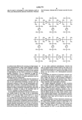
- Cyclic polysiloxanes useful in forming the products of this invention have the general formula: ##STR1## wherein R is hydrogen, a saturated, substituted or unsubstituted alkyl or alkoxy radical, a substituted or unsubstituted aromatic or aryloxy radical, n is an integer from 3 to about 20, and R is hydrogen on at least two of the silicon atoms.
- the tetrahedral siloxysilanes are represented by the general structural formula: ##STR2## wherein R is as defined above and is hydrogen on at least two silicon atoms in the molecule.
- reactants of Formula (I) include, e.g., trimethyl cyclotrisiloxane, tetramethyl cyclotetrasiloxane, pentamethyl cyclopentasiloxane, hexamethyl cyclohexasiloxane, tetraethyl cyclotetrasiloxane, cyclotetrasiloxane, tetraphenyl cyclotetrasiloxane, tetraoctyl cyclotetrasiloxane and hexamethyl tetracyclosiloxane.
- tetra-, penta-, and hexacyclosiloxanes are the tetra-, penta-, and hexacyclosiloxanes, with tetramethyl tetracyclosiloxane being a preferred member.
- the material is a mixture of a number of species wherein n can vary widely. Generally, commercial mixtures contain up to about 20% (in purer forms as low as 2%) low molecular weight linear methylhydrosiloxanes, such as heptamethyltrisiloxane, octamethyltrisiloxane, etc.
- reactants of Formula (II) include, e.g., tetrakisdimethylsiloxysilane, tetrakisdiphenylsiloxysilane, and tetrakisdiethylsiloxysilane.
- the tetrakisdimethylsiloxysilane is the best known and preferred species in this group.
- Cyclic polyenes which can be employed are polycyclic hydrocarbon compounds having at least two non-aromatic carbon-carbon double bonds in their rings.
- Exemplary compounds include dicyclopentadiene, methyl dicyclopentadiene, cyclopentadiene oligomers, norbornadiene, norbornadiene dimer, hexahydronaphthalene, dimethanohexahydronaphthalene, and substituted derivatives of any of these.
- the reaction proceeds readily in the presence of a platinum-containing catalyst.
- Metals salt and complexes of Group VIII elements can also be used.
- the preferred catalyst in terms of both reactivity and cost, is chloroplatinic acid (H 2 PtCl 6 .6H 2 O). Catalyst concentrations of 0.0005 to about 0.5% by weight, based on weight of the monomer, will effect smooth and substantially complete polymerization.
- Other platinum compounds can also be used to advantage in some instances, such as PtCl 2 and dibenzonitrile platinum dichloride. Platinum on carbon is also effective for carrying out high temperature polymerizations.
- Other useful platinum catalysts are disclosed in, e.g., U.S. Pat. Nos. 3,220,972, 3,715,334 and 3,159,662. An exhaustive discussion of the catalysis of hydrosilation can be found in Advances in Organometallic Chemistry, Vol. 17, beginning on page 407.
- the polymerization reactions can be promoted thermally or by the addition of radical generators such
- the polymers of this invention can be homopolymers, i.e., reaction products of one hydrosilane-containing reactant and one polycyclic polyene or they can be interpolymers prepared from a plurality of hydrosilane-containing reactants with one or more polycyclic polyenes. Any combination of silane-containing compound and polycyclic polyene is possible so long as the specified ratio of >C ⁇ C ⁇ groups to .tbd.Si--H groups is met.
- the ratio of carbon-carbon double bonds in the rings of (b) to hydrosilane groups in (a) is in the range of from about 0.7:1 up to about 1.3:1, preferably from about 0.8:1 up to about 1.1:1, at least one of (a) and (b) has more than two reactive sites, and the alternating residues form a thermoset polymer.
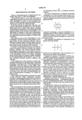
- An exemplary crosslinked, thermoset polymer per this invention is the reaction product of one mole of tetrakis dimethyl siloxysilane and 2 moles of norbornadiene which when fully cured, as the idealized general structural formula (the following formulae only depicts the 2,6 isomer, whereas the 2,5 isomer can also be present): ##STR3##
- thermoplastic polymers are formed.
- thermoset polymers of this invention have a range of utilities, depending upon their physical form.
- Tacky solids are useful as tackifiers in pressure sensitive adhesives and as contact adhesives. They are also useful as structural adhesives, curable in situ, to form strong bonds due to a high affinity of hydrosilane derived silanol groups for polar metal surfaces, especially oxidized metal surfaces.
- the elastomeric embodiments make excellent potting compounds for electronic applications since they can be cured in situ and are insensitive to water.
- thermoset polymers Thermal properties of these thermoset polymers are also outstanding.
- the glass transition temperature (Tg) of a fully cured thermoset polymer is about 200° C. or higher. Thermal stability is excellent with usually less than 10% weight loss at 500° C. during thermogravimetric analysis. At 1100° C. in air, they leave about 50% residue.
- the thermoset polymers are fire resistant and burn very slowly when subjected to a flame.
- thermoset polymers are their virtually total insensitivity to water. They have been found to be unaffected by boiling water after extended periods.
- thermoset polymers are also resistant to oxidation and to ultraviolet radiation at ordinary temperatures. Above 200° C., oxidative crosslinking of silicon portions of the molecule appears to take place, resulting in the formation of a dark siliceous outer layer. This oxidized outer layer appears to impede the oxidative degradation of the polymer.
- the tough, glassy thermoset polymers may be useful in many applications where glass is now employed as, e.g., water heater tank liners.
- the insensitivity of these thermoset polymers to water and their high temperature properties make them ideal for applications of this type.
- the impact resistance of glass fiber-filled polymer, although not extraordinary, is better than that of glass so that lined tanks can withstand the rigors of shipment, handling and installation better than glass.
- the tough glass thermoset polymers pyrolyze upon heating to greater than 100° C. This high temperature resistance makes them useful as refractory materials, fire resistant materials and ablative materials.
- thermoplastic polymers of this invention generally exhibit melting points in the range of from about 60° C. to about 130° C. However, when post-cured at temperature greater than 200° C., some (for instance, those having being a >C ⁇ C ⁇ :.tbd.Si--H equivalents ration of 0.45:1.0) exhibit elastomeric characteristics, and, in some instances, they have higher softening points or exhibit thermoset properties after post-cure.
- thermoplastic polymers of this invention range from tacky to hard, non-tacky solids which have low melting points. Some of the polymers (e.g., those having a >C ⁇ C ⁇ :.tbd.Si--H equivalents ratio of 1.45:1.0.) exhibit thermoplastic behavior (melt flow) until they are heated to a higher temperature (200° to 300° C.) where they become thermoset polymers. These can be considered thermoplastic-thermoset polymers.
- thermoset behavior e.g., those having >C ⁇ C ⁇ :.tbd.Si--H equivalents ration of about 0.7:1 to about 1.3:1).
- the correct relative ratios of reactants and the platinum catalyst are simply mixed and brought to a temperature at which the reaction is initiated and proper temperature conditions are thereafter maintained to drive the reaction to substantial completion (typically, with a >C ⁇ C ⁇ :.tbd.Si--H equivalents ratio of about 1:1, where 70 to 80% of the hydrosilane groups are consumed).
- a temperature at which the reaction is initiated and proper temperature conditions are thereafter maintained to drive the reaction to substantial completion (typically, with a >C ⁇ C ⁇ :.tbd.Si--H equivalents ratio of about 1:1, where 70 to 80% of the hydrosilane groups are consumed).
- periodic temperature increases are desirable to drive the reaction as the molecular weight of the polymer increases.
- the reaction is normally carried out in a mole, at least up until the point at which sufficient crosslinking as taken place to fix the polymer in the desired shape. Heat treatment can then be continued to drive the reaction further toward completion after removal from the mold, if necessary.
- This relatively simple approach is a workable method in
- hydrosilation reaction via the carbon-carbon unsaturation of the polycyclic polyene rings and the hydrosilane group is the primary polymerization and crosslinking mechanism
- other types of polymerization and crosslinking may also take place as the curing temperature is increased. These may include, e.g., oxidative crosslinking, free radical polymerization (olefin addition reactions) and condensation of silanols to form siloxane bonds.
- the initial product of the reaction at lower temperatures is often a flowable, heat-curable liquid prepolymer or oligomer (hereafter "prepolymer”) even though the ratio of >C ⁇ C ⁇ to .tbd.Si--H is otherwise suitable for crosslinking.
- prepolymer a flowable, heat-curable liquid prepolymer or oligomer
- Such liquid prepolymers analogous to the so-called B-stage resins encountered in other thermoset preparations, can be recovered and subsequently transferred to a mold for curing.
- These viscous, flowable liquid prepolymers are stable at room temperature for varying periods of time, but, upon reheating to an appropriate temperature, they cure to the same types of thermoset polymers as are prepared when polymerization is carried out substantially immediately.
- the B-stage type prepolymers can be prepared by cooling the reaction mass, following the initial exotherm, to about 25° to 65° C. and maintaining it at that point for several hours, and then interrupting the reaction by removing the heat until such time as it is desired to complete the transition to a glassy, crosslinked thermoset polymer.
- the viscous, flowable liquids will be about 30 to 50% reacted and the viscosity can vary accordingly. By monitoring the viscosity build-up, the practitioner can select, for his own purposes, the point at which the polymerization is to be interrupted.
- a unique viscous, liquid B-stage type polymer intermediate can be prepared by the hydrosilation reaction of (a) the cyclic or tetrahedral polysiloxane containing at least two hydrosilane groups and (b) the polycyclic polyene in amounts such that the ratio of >C ⁇ C ⁇ groups in the rings of (b) to .tbd.Si--H groups in (a) is equal to or greater than about 1.8:1, preferably approximately 2:1.
- Such polymer intermediates can then be mixed with additional amounts of (a) such that the total ratio of >C ⁇ C ⁇ groups in the rings of (b) to .tbd.Si--H groups in (a) is about 0.7:1 to about 1.3:1, and reacted to form a thermoset polymer.
- B-stage type polymer intermediates are stable at room temperature for varying periods of time and, in many instances, may be prepared at one location, stored and transported, all at room temperature, and reacted with additional amounts of (a) at a second location. In addition, they (without the addition of more (a) will form solids when heated to at least about 200° C. in the presence of air.
- these polymer intermediates are well suited for molding operations, and for use in preparing composites, etc.
- Another unique B stage type polymer intermediate can be prepared by the hydrosilation reaction of (a) and (b) in amounts such that the ratio of >C ⁇ C ⁇ groups in the rings of (b) to .tbd.Si--H groups in (a) is in the ratio of about 0.2:1 to about 0.5:1, preferably approximately 0.25:1.
- Such viscous, liquid polymer intermediates can then be mixed with additional amounts of (b), the intermediate described above (having a >C ⁇ C ⁇ :.tbd.Si--H equivalents ratio of greater than 1.8:1), or any other mixture or polymer intermediate that contains an excess of (a), such that the total ratio of >C ⁇ C ⁇ groups in the rings of (b) to .tbd.Si--H groups in (a) is in the ratio of about 0.7:1 to about 1.3:1.
- This mix will form a thermoset polymer when subjected to heat.
- thermoplastic polymers can be prepared in substantially the same manner as the thermoset polymers. That is, they may simply be prepared by mixing the correct ratios of reactants and catalyst and brought to the temperature at which the reaction is initiated. Thereafter, proper temperature conditions can be used to drive the reaction to completion. Again, it is preferred for the temperature to be increased periodically as the molecular weight of the polymer increases.
- the initial product of the reaction is a viscous, flowable liquid, which may be heated to complete polymerization, as described above.
- the resultant polymers are thermoplastic, there is generally no need to retain the reactants in the form of a B stage prepolymer, oligomer or thermoplastic polymer intermediate such as those described above, as the polymer can be heated, molded and cooled to form a shaped object.
- Such thermoplastic polymers can be ground and shipped to a molder where they will be heated and formed into a shaped object.
- thermoplastic polymers in the form of a solid, e.g., a powder, ready for use in a molding operation.
- additives such as fillers and pigments are readily incorporated.
- Carbon black, vermiculite, mica, wollastonite, calcium carbonate, sand, glass spheres, glass beads, ground glass and waste glass are examples of fillers which can be incorporated.
- Fillers can serve either as reinforcement or as fillers and extenders to reduce the cost of the molded product.
- Glass spheres are useful for preparing low density composites. When used, fillers can be present in amounts up to about 80%. Stabilizers and antioxidants are useful to maintain storage stability of B stage materials and thermal oxidative stability of the final product.
- Fibers are wetted very well by the liquid prepolymer embodiment making the polymers excellent matrix materials for high strength composite structures.
- a mold containing the requisite staple or continuous filament can be charged with the prepolymer and the prepolymer cured to form the desired composite structure.
- Fiber in fabric form can also be employed.
- solid thermoplastic polymers may be melted, poured over such fibers, and heated to form composites or thermoplastic polymer powders may be blended with such fibers and, then, heated to form a composite.
- Fiber reinforced composites of the polymers of this invention can contain as much as 80%, preferably 30 to 60%, by weight, of fibrous reinforcement, and, when fully cured, typically exhibit extremely high tensile and flexural properties and also excellent impact strength.
- Other types of fibers e.g., metallic, ceramic and synthetic polymer fibers, also work well.
- the glass filled, thermoset products which have been polymerized to the tough glassy state are characterized by high physical properties, i.e., high modulus and high tensile strength and good flex properties. They are fire resistant, burn very slowly when subjected to a flame, and selfextinguish when the flame is removed.
- This example shows preparation of a novel thermoset polymer per this invention by reacting dicyclopentadiene and tetrakisdimethylsiloxysilane, with a ratio of carbon-carbon double bonds to hydrosilane groups of 1:1.
- a reaction vessel was dried using an N 2 flow and a heat gun (300° C. pot temperature), stoppered and placed in a nitrogen flushed glove bag while hot. After equilibrating, the tube was tared on a balance, returned to the glove bag, and 0.027 g of Pt Cl 2 was charged. A "dry" 1/2" magnetic stirrer was charged and the reaction vessel was capped Dicyclopentadiene (2.68 g; 0.02 mole) was charged to the reaction vessel using a 5 cc syringe. This mixture was heated at 90° C. for 2 hours with stirring under slow N 2 purge to allow the catalyst complex to form.
- the sample was cooled to 35° C., tetrakisdimethylsiloxysilane (3.28 g; 0.01 mole) was charged via syringe and the reaction mixture was returned to the 90° C. oil bath. After stirring for about 2 minutes, the sample foamed and darkened. The sample was further heated in the oil bath to 165° C. for 3 hours during which time polymerization occurred as the sample continued to thicken. Additional heat treatments of 190° C. for 1/2 hour, and 215° to 235° C. for 3 hours were performed. The sample was allowed to cool and removed from the reaction vessel. The final sample was dark, rubbery and tough.
- This example shows preparation of a novel solid B stage polymer intermediate prepolymer by reacting norbornadiene and tetramethylcyclotetrasiloxane, with a ratio of carbon-carbon double bonds to hydrosilane groups of 2:1.
- This example shows preparation of a novel liquid B stage type polymer intermediate by partially reacting norbornadiene and tetrakisdimethylsiloxy silane, with a ratio of carbon-carbon double bonds to hydrosilane groups of 2:1.
- the resultant polymer intermediate was found to be stable for a period of greater than one year. It can be heated in the presence of air to form a solid polymer.
- thermoset polymer per this invention i.e., the reaction product of tetramethylcyclotetrasiloxane and norbornadiene, with a ratio of carbon-carbon double bonds to hydrosilane groups of 1:1.
- Chloroplatinic acid (0.0030 g, 200 ppm) was charged to a reaction vessel under a nitrogen sweep.
- the reaction vessel was capped and 8.57 g (0.035 mole) tetramethylcyclotetrasiloxane and 6.43 g (0.070 mole) norbornadiene were charged to the sealed reaction vessel by syringe.
- the reaction vessel contents were blanketed under nitrogen and stirred while heating at 50° C. for 2.5 hours. After two hours the initial yellow color disappeared and the viscosity of the fluid increased. After the 2.5 hours at 50° C. the reaction mixture was diluted by injecting 15 ml dry xylene and filtered through #41 paper to remove insoluble black catalyst residues.
- the resulting polymer contained 10 to 50 ppm Pt (x-ray analysis).
- Films of the filtered toluene solution fifteen mils thick were cast on glass plates with a doctor blade and the xylene was allowed to evaporate overnight.
- the films on the glass were heated at 100° C. for 70 hours under nitrogen and then at 200° C. for 4 hours.
- the films were immersed in water for a few hours at room temperature and they released from the glass.
- a visible/UV analysis showed no significant absorbance for these films from 220 to 800 nm.
- This example shows preparation of a molded, glass cloth PG,15 reinforced, article comprising a novel thermoset polymer per this invention by preparing a B stage prepolymer by partially reacting dicyclopentadiene and tetramethylcyclotetrasiloxane (ratio of carbon-carbon double bonds to hydrosilane groups of 1:1), injecting the B stage prepolymer into a mold, and heating to complete polymerization.
- Chloroplatinic acid (0.0101 g) was charged to a dry 750 ml reaction vessel in a N 2 filled glove bag and the reaction vessel was sealed. Dry dicyclopentadiene (26.44 g, 0.2 mole) was charged by syringe. This mixture was heated at 55° C. for one hour to form a dicyclopentadiene/H 2 PtCl 6 .6H 2 O catalyst complex. Dry tetramethylcyclotetrasiloxane (24.05 g, 0.10 mole) was added gradually at 56° C. and an immediate exotherm took the temperature to 174° C. The mixture was cooled to 64° to 65° C. and held there for 1.5 hour.
- Si 29 NMR shows that the hydrosilation reaction is about 50% complete at this time.
- the low viscosity product was removed from the reaction vessel by syringe and injected into a teflon coated mold containing glass cloth which exactly filled the mold cavity.
- the resin in the mold was degassed at 60° C. under a slight vacuum in a vacuum oven.
- the aspirator vacuum was manually controlled to keep the resin from foaming out of the mold.
- the mold was heated in an oven at 68° C. for 18 hours and then at 140° to 150° C. for 3 days. The oven was cooled slowly and the mold unclamped to give a very hard, stiff 5" ⁇ 5" ⁇ 1/8" plaque. Samples were cut for rheological, tensile, and flexural property determinations and the following data were obtained:
- This example shows preparation of a novel thermoset polymer per this invention by reacting norbornadiene and tetramethylcyclotetrasiloxane with a ratio of carbon-carbon double bonds to hydrosilane groups of approximately 1:1.
- a dry, N 2 sparged vessel was charged with a stir bar and 0.0021 g of H 2 PtCl 6 .6H 2 O.
- the vessel was capped and charged with 4.47 g (0.05 mole) of norbornadiene.
- the resulting mixture was stirred for thirty minutes at 60° C.
- Tetramethylcyclotetrasiloxane (5.83 g, 0.024 mole) was added and the reaction mixture gelled about three hours later.
- the sample was removed from the reaction vessel and cured at 150° C. for 16 hours, 250° C. for 2 hours and 280° C. for 16 hours to give a brown, glassy solid.
- thermoset polymer per this invention by reacting dicyclopentadiene and methylcyclotetrasiloxane, with a ratio of carbon-carbon double bonds to hydrosilane groups of approximately 1:1.
- tetramethylcyclotetrasiloxane (18.1 g, 0.075 mole) was added to a heated (60° C.) mixture of dicyclopentadiene (20.12 g, 0.152 mole) and H 2 PtCl 6 .6H 2 O (0.0076 g).
- the reaction mixture exothermed to 186° C. 30 seconds after the tetramethylcyclotetrasiloxane addition.
- the reaction mixture was stirred for 16 hours at 60° C., 24 hours at 70° C. and 5 hours at 150° C.
- the mixture was poured into an aluminum pan and cured for 12 hours at 200° C., 2 hours at 225° C., 2 hours at 250° C. and 16 hours at 280° C. to give a brown glassy solid.
- This example show preparation of a novel molded, thermoset polymer per this invention by reacting dicyclopentadiene and methylcyclotetrasiloxane, with a ratio of carbon-carbon double bonds to hydrosilane groups of approximately 1:1.
- tetramethylcyclotetrasiloxane 49.76 g, 0.20 mole was added to a heated (70° C.) mixture of dicyclopentadiene (54.71 g, 0.414 mole) and H 2 PtCl 6 .6H 2 O (0.0209 g). Thirty seconds after the tetramethylcyclotetrasiloxane addition, the reaction mixture exothermed to 170° C. The reaction mixture was stirred for 16 hours at 130° C. and poured into a teflon coated mold. The sample was cured for 16 hours at 150° C. to give an opaque, glassy solid.
- This example show preparation of a molded, glass cloth reinforced, article comprising a novel thermoset polymer per this invention.
- a B stage prepolymer was prepared by partially reacting dicyclopentadiene and tetramethyl cyclotetrasiloxane in amounts such that the ratio of carbon-carbon double bonds to hydrosilane groups was 1.1:1. Then, the B stage prepolymer was poured into a mold containing a glass cloth and was heated to complete polymerization.
- tetramethylcyclotetrasiloxane 28.6 g, 0.12 mole was added to a heated (55° C.) mixture of dicyclopentadiene (34.4 g, 0.26 mole) and H 2 PtCl 6 .6H 2 O (0.0126 g).
- the reaction mixture exothermed to 184° C.
- the reaction mixture was stirred for 2 hours at 80° C. then transferred to a teflon-coated mold containing 50.9 g woven glass cloth.
- the sample was cured for 12 hours at 130° C., 160° C. for eight hours, and 180° C. for 16 hours to give a opaque, glassy plaque containing 60.7 wt. % glass cloth. This plaque was further cured in a N 2 flushed oven at 200° C., 250° C. and 310° C. for 4 hours at each temperature.
- This example show preparation of a molded, opaque solid plaques comprising a novel thermoset polymer per this invention, by preparing a B stage prepolymer by partially reacting dicyclopentadiene and tetramethyl cyclotetrasiloxane (ratio of carbon-carbon double bonds to hydrosilane groups of 1:1), transferring the B stage prepolymer into a mold, and heating to complete polymerization.
- tetramethylcyclotetrasiloxane (76.36 g, 0.32 mole) was added to a heated (30° C.) mixture of dicyclopentadiene (83.9 g, 0.64 mole) and H 2 PtCl 6 .6H 2 O (0.0148 g). Five minutes after this addition the reaction mixture exothermed to 193° C. The reaction mixture was stirred for 1 hour at 55° to 70° C., transferred to teflon-coated molds and cured at 145° C. for 18 hours under slight vacuum. The opaque solid plaques were further cured to 285° C. in a N 2 flushed oven.
- the polymers of Examples 9 and 10 were further subjected to mechanical analysis to determine their glass transition temperature (Tg) and storage modulus (G') at various temperatures. Results are recorded in the following table.
- This example shows preparation of a novel thermoset polymer per this invention by reacting a dicyclopentadieneoligomer comprising about 58.43% dicyclopentadiene, 43.75% tricyclopentadiene and 5.05% tetracyclopentadiene (analyzed by G. C.), and tetramethylcyclotetrasiloxane (ratio of carbon-carbon double bonds to hydrosilane groups of 0.86:1).
- a complex of 0.0076 g of H 2 PtCl 6 .6H 2 O and 21.71 g (0.12 mole) of the dicyclopentadiene oligomer was prepared by heating the two materials under a dry nitrogen blanket for one hour at 50° C. Tetramethylcyclotetrasiloxane (16.10 g, 0.07 mole) was added to the yellow complex (complex temperature was 71° C.). The reaction exothermed to 153° C. in 8 seconds. The yellow solution was cooled to 30° C., poured into Teflon coated slotted molds and cured at 150° C./16 hours and 200° C./4 hours. The 1/2" ⁇ 3" ⁇ 1/8" test pieces were removed from the mold and post cured at 100° C./0.5 hours, 150° C./0.5 hours, 200° C./2 hours, 225° C./2 hours and 280° C./16 hours.
- This example shows preparation of a novel polymer outside the scope of this invention by reacting norbornadiene dimer and bisdimethylsilyl ethylene both of which contain two reactive sites (ratio of carbon-carbon double bonds to hydrosilane groups of 1:1).
- a complex of H 2 PtCl 6 .6H 2 O and norbornadiene dimer (pentacyclotetradeca-5,11-diene) was prepared by heating 0.0037 g of H 2 PtCl 6 .6H 2 O under a nitrogen blanket with 10.35 g (0.055 mole) of dry norbornadiene dimer for 1 hour at 55° to 60° C. This gives a clear yellow solution.
- Bisdimethylsilyl ethylene (8.16 g, 0.055 mole) was added and the resulting solution was heated to 58° C. The reaction exothermed to 172° C. within three minutes and the reaction mixture was highly viscous upon cooling to 53° C.
- the mixture was poured into a slotted mold and heated overnight at 120° C. then heated to 160° C. for 6 hours and then at 180° C. overnight.
- the polymer was very viscous at 180° C. and at 160° C. clear filaments could be drawn from the melt.
- the IR band for Si--H (2110 cm.sup. -1) had essentially disappeared and the olefin double bonds at 4.6 ppm by proton NMR were barely detectable.
- the resulting clear, glassy, thermoplastic polymer softens at 112° to 120° C.
- This example shows the preparation of a molded article comprising a novel thermoset polymer per this invention, by partially reacting dicyclopentadiene and tetramethylcyclotetrasiloxane (ratio of carbon-carbon double bonds to hydrosilane groups of 1:1) to form a B stage type prepolymer, injecting the B stage prepolymer into a mold, and heating to complete polymerization.
- the catalyst H 2 PtCl 6 .6H 2 O (0.0148 g) was charged to a dried 25 oz. reaction vessel and sealed. Under a nitrogen blanket 83.95 g (0.635 mole) dicyclopentadiene were charged by syringe. The catalyst and dicyclopentadiene were heated for 90 minutes at 60° to 70° C. giving a yellow solution which was cooled to 30° C. Tetramethylcyclotetrasiloxane 76.36 g, 0.317 mole) was added and an exothermic reaction started in two minutes, eventually reaching 193° C. After cooling to 55° C., a sample was injected into a 5" ⁇ 5" ⁇ 1/8" teflon lined aluminum mold. The polymer was polymerized at temperatures ranging from 120° to 280° C. under a blanket of nitrogen.
- Example 14 polymer A sample of the Example 14 polymer was immersed in boiling water for five days. The sample weight increased 0.1%. The dimensions of the sample (6.75, 1.30 cm, 0.32 cm) were unchanged after the boiling water treatment. The modulus/temperature curve and glass transition temperature (250° C.) were also unchanged by the boiling water treatment.
- This example shows preparation of a novel thermoplastic polymer per this invention by reacting dicyclopentadiene and methylhydrocyclosiloxanes, with a ratio of carbon-carbon double bonds to hydrosilane groups of 0.5:1.
- Chloroplatinic acid (0.0120 g) was weighed into an 8 oz. reaction vessel under a nitrogen blanket in a dry box and the septum was sealed. Dry dicyclopentadiene (23.01 g, 0.174 mole, 0.348 gram equivalents of olefin) was injected into the reaction vessel by a hypodermic syringe. The contents of the reaction vessel were heated to 60° to 65° C. for 1 hour, under a nitrogen blanket, and the chloroplatinic acid dissolved. Dry air was swept through the reaction vessel for 10 to 15 minutes and the contents were cooled to 31° C.
- Methylhydrocyclosiloxanes consisting of 54% tetramethyl cyclotetrasiloxane, 20% pentamethyl cyclopentasiloxane, 5% hexamethyl cyclohexasiloxane, 19% higher methylhydrocyclosiloxanes (up to approximately ((CH 3 (H)SiO--) 20 ), and 2% linear methylhydrosiloxanes, were injected and the reaction exothermed to 179° C. After cooling the reaction product to 60° C., it was poured into a teflon coated stainless steel mold.
- the mold was placed into a vacuum oven and vacuum applied (approximately 15 mm Hg pressure, vacuum pump) for 10 to 15 minutes. Then, the mold was heated under nitrogen for 15 hours at 130° C., for 6 hours at 160° C., for 16 hours at 180° C., for 4 hours at 200° C., and for 4 hours at 225° C. Attempts to obtain thermoset behavior were then abandoned. The final product was extremely viscous at room temperature.
- the final product can be blended with a mixture having a ratio of carbon-carbon double bonds to hydrosilane groups of, e.g., 1.5:1 to 1.75:1 to form a composition with thermoplastic behavior and then heated to 150° to 285° C. to form a thermoset polymer.
- a mixture having a ratio of carbon-carbon double bonds to hydrosilane groups of, e.g., 1.5:1 to 1.75:1 to form a composition with thermoplastic behavior and then heated to 150° to 285° C. to form a thermoset polymer.
- the polymer of example 21 and this polymer might be heated to 130 to 140° C., mixed in equal amounts, and cooled to form a thermoplastic blend that can be cured upon further heating (approximately 150° to 285° C.).
- This example shows preparation of a novel thermoset polymer per this invention, by reacting dicyclopentadiene and methylhydrocyclosiloxanes in the same manner as in example 14, except that the monomers were used in amounts such that the ratio of carbon-carbon double bonds to hydrosilane groups was 0.7:1 and the final heating was for 6 hours at 180° C., for 6 hours at 225° C., for 2 hours at 235° C., and for 4 hours at 285° C.
- the polymer of this example exhibits thermoset behavior when polymerized at 225° C.
- the polymer does not have a melting point, but softens at 100° C. to a soft extendable elastomer.
- the polymer is a tough, leather like solid at room temperature. It is flexible enough to be twisted 360° before tearing.
- This example shows preparation of a novel thermoset polymer per this invention by reacting dicyclopentadiene and methylhydrocyclosiloxanes in the same manner as in example 14, except that the monomers were used in amounts such that the ratio of carbon-carbon double bonds to hydrosilane groups was 0.85:1.
- thermoset polymer formed after heating to 225° C. was tougher than that found in example 16. This hard, solid polymer maintains a high modulus up to 200° C. and exhibits elastomeric behavior when heated to 235° C.
- This example shows preparation of a novel thermoset polymer per this invention by reacting dicyclopentadiene and methylhydrocyclosiloxanes in the same manner as in example 14, except that the monomers were used in amounts such that the ratio of carbon-carbon double bonds to hydrosilane groups of 1.15:1 and the final heating was for 4 hours at 150° C., for 2 hours at 235° C., and for 4 hours at 285° C.
- This example shows preparation of a novel thermoset polymer per this invention by reacting dicyclopentadiene and methylhydrocyclosiloxanes in the same manner as in example 17, except that the monomers were used in amounts such that the ratio of carbon-carbon double bonds to hydrosilane groups of 1.30:1.
- This example shows preparation of a novel thermoset polymer per this invention by reacting dicyclopentadiene and methylhydrocyclosiloxanes in the same manner as in example 15, except that the monomers were used in amounts such that the ratio of carbon-carbon double bonds to hydrosilane groups was 1.46:1 and the final heating was for 6 hours at 150° C., for 6 hours at 200° C., for 2 hours at 235° C., and for 4 hours at 285° C.
- Example 19 demonstrates polymerization in the transition range from thermoset behavior to thermoplastic behavior.
- the sample softened to a highly compressible elastomer at about 120° to 125° C.
- the glass transition temperature was raised to only 200° C. The degree of crosslinking was limited by available hydrosilane groups.
- This example shows preparation of a novel thermoplastic polymer per this invention by reacting dicyclopentadiene and methylhydrocyclosiloxanes in the same manner as in example 14, except in amounts such that the ratio of carbon-carbon double bonds to hydrosilane groups was 1.61:1 and the final heating was for 6 hours at 150° C., for 6 hours at 200° C., for 8 hours at 235° C., and for 4 hours at 285° C.
- This example shows preparation of a novel thermoplastic polymer per this invention by reacting dicyclopentadiene and methylhydrocyclosiloxanes in amounts such that the ratio of carbon-carbon double bonds to hydrosilane groups was 1.75:1.
- a catalyst solution containing 600 ppm chloroplatinic acid was prepared by heating 0.0953 g of chloroplatinic acid with 158.8 g dicyclopentadiene to 70° C. for 1.5 hours in a sealed 8 ounce reaction vessel, under nitrogen.
- a 150 ppm chloroplatinic acid solution was prepared by diluting 30 g of the above catalyst solution with 90 g of dicyclopentadiene.
- a portion of the resultant chloroplatinic acid solution (7.92 g) was weighed into a 7 inch reaction vessel with 4.59 g of dicyclopentadiene, making a 95 ppm concentration of chloroplatinic acid in dicyclopentadiene (0.185 gram equivalent of olefin).
- the polymers of examples 20 and 21 do not form a complete polymeric network, even when they are polymerized at 225° to 235° C. They are completely thermoplastic and form a viscous, flowable liquid above their melting points. The solids can be ground into powder.
- This example shows preparation of graphite fiber composite.
- Chloroplatinic acid (0.0185 g) was weighed into a reaction vessel in a dry box and the reaction vessel was sealed.
- Dicyclopentadiene (47.15 g, 0.357 mole, 0.714 equivalents) was injected into the reaction vessel and the mixture was heated with stirring to 60° C. for 1 hour.
- tetramethylcyclotetrasiloxane (44.67 g) was injected. In two minutes, the sample exothermed to 192° C. The product was cooled and injected into a teflon lined mold 5" ⁇ 5" ⁇ 1/8" containing ten 5" ⁇ 5" sheets of square woven graphite fiber cloth.
- the loaded mold was heated in a nitrogen blanketed oven for 15 hours at 130° C., for 6 hours at 160° C., and for 12 hours at 180° C.
- the resulting composite had good flexural strength (68,000 psi) and modulus (4.7 ⁇ 10 6 psi).
Landscapes
- Chemical & Material Sciences (AREA)
- Health & Medical Sciences (AREA)
- Chemical Kinetics & Catalysis (AREA)
- Medicinal Chemistry (AREA)
- Polymers & Plastics (AREA)
- Organic Chemistry (AREA)
- Silicon Polymers (AREA)
- Compositions Of Macromolecular Compounds (AREA)
- Separation, Recovery Or Treatment Of Waste Materials Containing Plastics (AREA)
Abstract
Description
______________________________________
60% Glass Cloth,
40% Tetramethylcyclotetrasiloxane/
Dicyclopentadiene 1/2
______________________________________
Tensile Strength        23,800 psi
Tensile Modulus         1.2 × 10.sup.6 psi
% Elongation (break)    2.2
Flexural Strength       40,400 psi
Flexural Modulus        2.2 × 10.sup.6 psi
Rockwell R Hardness     119
Glass Transition Temp (Rheometrics)
                        160° C.
Notched Izod Impact.    10 ft lb/in notch
Heat Distortion Temperature (264 psi)
                        >300 ° C.
______________________________________
______________________________________
TGA (20° C./Min.)
Example       10% Wt. Loss
                         % Residue
No.           (°C.)
                         (1100° C.)
______________________________________
6             520        63
7             510        39
______________________________________
______________________________________
Mechanical Analysis
       Wt. % Tg       G' (GPa) at T (°C.)
Example .sup.(1)
         Glass   (°C.)
                          25   100  140  180  200
______________________________________
9    (a)     60.7    275    2.7  2.2  2.0  1.8  1.6
     (b)     60.7    300    2.5  2.1  1.8  1.5  1.4
10   (a)     0       245    0.8  0.57 0.50 0.43 0.35
     (b)     0       250     0.78
                                 0.60 0.50 0.40 0.35
______________________________________
 .sup.(1) a Denotes data before water boil.
 b Denotes data after 5 day water boil.
______________________________________
Dielectric Constant
                 2.87        60     Hz
                 2.83        1      MHz
Dissipation      0.0001      60     Hz
Factor           0.0002      100    KHz
Volume           1.6 × 10.sup.18
Resistivity ohm-cm
Dielectric       381
Strength v/mil
______________________________________
__________________________________________________________________________
Organosilicon Polymers (Examples 15 to 22)
Dicyclopentadiene/Methylhydrocyclosiloxane
                 Example No.
                 14  15  16  17  18   19    20     31
__________________________________________________________________________
 ##STR4##        0.50
                     0.70
                         0.85
                             1.15
                                 1.30 1.46  1.61   1.75
Chloroplatinic Acid Catalyst
                 185 175 174 178 177  179   181    95
(ppm)
Max. Polymerization Temp.
                 225 225 225 150 150  200   235    225
(°C.)         (285)       (285)
                                      (285)
Melting/Softening Point
                 viscous
                     SP 100
                         >300
                             >300
                                 >300 SP 120-125
                                            MP 120-125
                                                   MP 117-125
                 fluid
Glass Transition Temp. (°C.)
Mechanical       --  100 235 155 135 (210)
                                      120 (200)
                                            --     --
Thermal DSC*     --  --  --  --  108  88    --     --
Initial Weight Loss TGA,
°C., (% residue, 1000° C.)
N.sub.2          --  --  --  --  460 (43.5)
                                      460 (45.9)
                                            450 (44.1)
                                                   500 (47.0)
Air              --  --  --  --  470 (35.6)
                                      470 (33.7)
                                            450 (34.0)
                                                   500 (33.4)
__________________________________________________________________________
  *Differential Scanning Calorimeter.
Claims (17)
Priority Applications (13)
| Application Number | Priority Date | Filing Date | Title |
|---|---|---|---|
| US07/079,740 US4900779A (en) | 1986-08-27 | 1987-07-30 | Organosilicon polymers |
| MX790587A MX173700B (en) | 1986-08-27 | 1987-08-25 | ORGANOSILICON POLYMERS, METHODS FOR THE PREPARATION AND PRODUCTS CONTAINING THEM |
| CA000545252A CA1295773C (en) | 1986-08-27 | 1987-08-25 | Organosilicon polymers |
| AU77461/87A AU593676B2 (en) | 1986-08-27 | 1987-08-26 | Organosilicon polymers |
| BR8704416A BR8704416A (en) | 1986-08-27 | 1987-08-27 | POLYMER OF ORGANOSILICIO CROSS OR RETICULATION, USE OF THE SAME, PROCESS FOR ITS PREPARATION, AND COMPOSITE STRUCTURE |
| KR1019870009455A KR0134785B1 (en) | 1986-08-27 | 1987-08-27 | Organosilicon polymers and process for preparing them |
| ES87112491T ES2060588T3 (en) | 1986-08-27 | 1987-08-27 | ORGANOSILICON POLYMERS. |
| EP87112491A EP0259711B1 (en) | 1986-08-27 | 1987-08-27 | Organosilicon polymers |
| DE3789475T DE3789475T2 (en) | 1986-08-27 | 1987-08-27 | Organosilicone polymers. |
| US07/419,429 US5013809A (en) | 1987-07-30 | 1989-10-10 | Organosilicon compositions |
| US07/461,558 US5124375A (en) | 1986-08-27 | 1990-01-05 | Process for preparing organosilicon prepolymers and polymers |
| US07/461,560 US5124423A (en) | 1986-08-27 | 1990-01-05 | Process for preparing organosilicon polymers |
| HK110394A HK110394A (en) | 1986-08-27 | 1994-10-12 | Organosilicon polymers |
Applications Claiming Priority (2)
| Application Number | Priority Date | Filing Date | Title |
|---|---|---|---|
| US90109286A | 1986-08-27 | 1986-08-27 | |
| US07/079,740 US4900779A (en) | 1986-08-27 | 1987-07-30 | Organosilicon polymers |
Related Parent Applications (1)
| Application Number | Title | Priority Date | Filing Date |
|---|---|---|---|
| US90109286A Continuation-In-Part | 1986-08-27 | 1986-08-27 |
Related Child Applications (3)
| Application Number | Title | Priority Date | Filing Date |
|---|---|---|---|
| US07/232,826 Continuation-In-Part US4902731A (en) | 1986-08-27 | 1988-08-16 | Organosilicon prepolymers |
| US07/419,429 Continuation-In-Part US5013809A (en) | 1987-07-30 | 1989-10-10 | Organosilicon compositions |
| US07/461,560 Division US5124423A (en) | 1986-08-27 | 1990-01-05 | Process for preparing organosilicon polymers |
Publications (1)
| Publication Number | Publication Date |
|---|---|
| US4900779A true US4900779A (en) | 1990-02-13 |
Family
ID=26762377
Family Applications (1)
| Application Number | Title | Priority Date | Filing Date |
|---|---|---|---|
| US07/079,740 Expired - Lifetime US4900779A (en) | 1986-08-27 | 1987-07-30 | Organosilicon polymers |
Country Status (10)
| Country | Link |
|---|---|
| US (1) | US4900779A (en) |
| EP (1) | EP0259711B1 (en) |
| KR (1) | KR0134785B1 (en) |
| AU (1) | AU593676B2 (en) |
| BR (1) | BR8704416A (en) |
| CA (1) | CA1295773C (en) |
| DE (1) | DE3789475T2 (en) |
| ES (1) | ES2060588T3 (en) |
| HK (1) | HK110394A (en) |
| MX (1) | MX173700B (en) |
Cited By (54)
| Publication number | Priority date | Publication date | Assignee | Title |
|---|---|---|---|---|
| US5008360A (en) * | 1989-10-16 | 1991-04-16 | Hercules Incorporated | Organosilicon materials |
| US5013809A (en) * | 1987-07-30 | 1991-05-07 | Hercules Incorporated | Organosilicon compositions |
| US5025048A (en) * | 1990-04-12 | 1991-06-18 | Hercules Incorporated | Organosilicon composition comprising stabilizer |
| US5041591A (en) * | 1989-08-10 | 1991-08-20 | Dow Corning Toray Silicone Company, Ltd. | Organopolysiloxane and method for its preparation |
| US5055507A (en) * | 1989-03-07 | 1991-10-08 | Asahi Denka Kogyo K.K. | Synthetic resins and stabilizer compositions for synthetic resin compositions containing the same |
| EP0423688A3 (en) * | 1989-10-16 | 1991-11-06 | Hercules Incorporated | Organosilicon materials |
| US5077134A (en) * | 1989-10-10 | 1991-12-31 | Hercules Incorporated | Organosilicon compositions |
| US5118735A (en) * | 1990-10-05 | 1992-06-02 | Hercules Incorporated | Organosilicon composition comprising stabilizers |
| US5147945A (en) * | 1990-12-31 | 1992-09-15 | Hercules Incorporated | Organosilicon polymers and prepolymers comprising a coupling monomer |
| US5171817A (en) * | 1991-04-15 | 1992-12-15 | Hercules Incorporated | Organosilicon compositions containing siloxane elastomers |
| EP0482404A3 (en) * | 1990-10-05 | 1993-02-17 | Hercules Incorporated | Organosilicon compositions containing hydrocarbon elastomers |
| US5196498A (en) * | 1991-09-24 | 1993-03-23 | Hercules Incorporated | Organosilicon polymers |
| US5212944A (en) * | 1990-10-23 | 1993-05-25 | Trw Inc. | Carbon and silicone polymer ablative liner material |
| US5254655A (en) * | 1992-02-05 | 1993-10-19 | Hercules Incorporated | Organosilicon polymers, and dyes, exhibiting nonlinear optical response |
| US5260377A (en) * | 1990-12-31 | 1993-11-09 | University Of Southern California | Crosslinkable carbosilane polymer formulations |
| US5298536A (en) * | 1992-02-21 | 1994-03-29 | Hercules Incorporated | Flame retardant organosilicon polymer composition, process for making same, and article produced therefrom |
| US5313365A (en) * | 1992-06-30 | 1994-05-17 | Motorola, Inc. | Encapsulated electronic package |
| US5334688A (en) * | 1993-04-19 | 1994-08-02 | Hercules Incorporated | Fully substituted cyclopolysiloxanes and their use for making organosilicon polymers |
| US5340777A (en) * | 1987-01-09 | 1994-08-23 | Alliedsignal Inc. | Carbon-containing black glass from hydrosilylation-derived siloxanes |
| US5340644A (en) * | 1990-10-05 | 1994-08-23 | Hercules Incorporated | Organosilicon compositions |
| US5354602A (en) * | 1991-02-12 | 1994-10-11 | Allied-Signal Inc. | Reinforced silicon carboxide composite with boron nitride coated ceramic fibers |
| US5357017A (en) * | 1992-08-31 | 1994-10-18 | Matsushita Electric Industrial Co., Ltd. | Macrocyclic poly-conjugated system and macrocyclic poly-conjugated composition |
| USH1388H (en) * | 1992-12-23 | 1994-12-06 | Hercules Incorporated | Polyolefin polymer and method of making same |
| US5408026A (en) * | 1993-08-23 | 1995-04-18 | Cowan; Patrick J. | Curable and cured organosilicon compositions, and process for making same |
| US5451637A (en) * | 1994-05-10 | 1995-09-19 | Hercules Incorporated | Organosilicon compositions prepared from unsaturated elastomeric polymers |
| EP0600512A3 (en) * | 1992-12-03 | 1995-09-20 | Hercules Inc | Curable and cured organosilicon compositions. |
| EP0624616A3 (en) * | 1993-05-07 | 1995-12-13 | Dow Corning | Organosiloxane ethers. |
| US5512376A (en) * | 1994-06-20 | 1996-04-30 | Hercules Incorporated | Nonpolar polymers comprising antiplasticizers |
| US5599445A (en) * | 1994-02-04 | 1997-02-04 | Supelco, Inc. | Nucleophilic bodies bonded to siloxane and use thereof for separations from sample matrices |
| US5852092A (en) * | 1997-02-11 | 1998-12-22 | Johnson Matthey, Inc. | Organosilicon-containing compositions having enhanced adhesive properties |
| US5859105A (en) * | 1997-02-11 | 1999-01-12 | Johnson Matthey, Inc. | Organosilicon-containing compositions capable of rapid curing at low temperature |
| US6458461B1 (en) | 2000-12-06 | 2002-10-01 | Lexmark International, Inc | Release agent composition |
| WO2004058857A3 (en) * | 2002-12-20 | 2004-09-23 | Dow Corning | Branched polymers from organohydrogensilicon compounds |
| US20040192874A1 (en) * | 2001-11-06 | 2004-09-30 | Walker Elizabeth M. | Fluid resistant silicone encapsulant |
| US6822066B2 (en) | 2002-11-18 | 2004-11-23 | Dow Corning Corporation | Organosiloxane resin-polyene materials |
| US20040236010A1 (en) * | 2001-07-23 | 2004-11-25 | Carter Randall Lee | Stabilized polyorganosiloxane composition |
| US6911518B2 (en) | 1999-12-23 | 2005-06-28 | Hybrid Plastics, Llc | Polyhedral oligomeric -silsesquioxanes, -silicates and -siloxanes bearing ring-strained olefinic functionalities |
| US20050256286A1 (en) * | 2002-05-01 | 2005-11-17 | Asch Karmen K | Organohydrogensilicon compounds |
| US20050272894A1 (en) * | 2004-06-02 | 2005-12-08 | Kennedy Joseph P | Novel hybrid polyurethanes |
| US20060111491A1 (en) * | 2002-05-01 | 2006-05-25 | Asch Karmen K | Compositions having improved bath life |
| US20060116500A1 (en) * | 2002-12-20 | 2006-06-01 | Chapman Brian D | Branched polymers from organohydrogensilicon compounds |
| US20060164796A1 (en) * | 2005-01-24 | 2006-07-27 | Horst Theuss | Electronic component for radio frequency applications and method for producing the same |
| US20060188732A1 (en) * | 1999-08-04 | 2006-08-24 | Lichtenhan Joseph D | Surface modification with polyhedral oligomeric silsesquioxanes silanols |
| US20060189767A1 (en) * | 2003-03-17 | 2006-08-24 | Dow Corning Corporation | Solventless silicone pressure sensitive adhesives with improved high temperature cohesive strength |
| US20060194919A1 (en) * | 1999-08-04 | 2006-08-31 | Lichtenhan Joseph D | Porosity control with polyhedral oligomeric silsesquioxanes |
| US20060263318A1 (en) * | 1999-08-04 | 2006-11-23 | Lichtenhan Joseph D | Process for continuous production of olefin polyhedral oligomeric silsesquioxane cages |
| US20070037951A1 (en) * | 2004-07-29 | 2007-02-15 | Musa Osama M | Siloxane resins with oxetane functionality |
| US20080020213A1 (en) * | 1999-08-04 | 2008-01-24 | Lichtenhan Joseph D | High use temperature nanocomposite resins |
| US7485692B2 (en) | 1999-08-04 | 2009-02-03 | Hybrid Plastics, Inc. | Process for assembly of POSS monomers |
| US20090085011A1 (en) * | 2003-12-18 | 2009-04-02 | Lichtenhan Joseph D | Neutron shielding composition |
| US7723415B2 (en) | 1999-08-04 | 2010-05-25 | Hybrid Plastics, Inc. | POSS nanostructured chemicals as dispersion aids and friction reducing agents |
| US20100144960A1 (en) * | 2005-07-28 | 2010-06-10 | Dow Corning Corporation | Release Coating Compositions Having Improved Release Force Profiles |
| US9963469B2 (en) | 2013-03-14 | 2018-05-08 | Momentive Performance Materials Inc. | High refractive index siloxanes |
| US20220164045A1 (en) * | 2020-11-25 | 2022-05-26 | Samsung Display Co., Ltd. | Display device and method of manufacturing the same |
Families Citing this family (5)
| Publication number | Priority date | Publication date | Assignee | Title |
|---|---|---|---|---|
| US5024877A (en) * | 1989-04-14 | 1991-06-18 | The Dow Chemical Company | Fire resistant materials |
| US5409995A (en) * | 1989-05-29 | 1995-04-25 | Kanegafuchi Chemical Industry Co., Ltd. | Curing agent, preparation thereof and curable composition comprising the same |
| EP0431173B1 (en) * | 1989-05-29 | 1995-08-02 | Kanegafuchi Chemical Industry Co., Ltd. | Curing agent, method of preparation thereof, and curable composition prepared therefrom |
| FR2676064B1 (en) * | 1991-04-30 | 1994-07-29 | Rhone Poulenc Chimie | POLYORGANOSILOXANES WITH CYCLOPENTADIENYL AND / OR CYCLOPENTADIENYLENE AND / OR DICYCLOPENTADIENYLENE ARRANGEMENTS, THEIR PREPARATIONS AND THEIR USE IN CROSSLINKABLE ELASTOMER COMPOSITIONS. |
| KR100419069B1 (en) * | 2001-06-21 | 2004-02-19 | 주식회사 엘지화학 | Organic silicate polymer and low dielectric insulation film comprising the same |
Citations (25)
| Publication number | Priority date | Publication date | Assignee | Title |
|---|---|---|---|---|
| US2665287A (en) * | 1948-08-09 | 1954-01-05 | Allied Chem & Dye Corp | Production of cyclic organosilicon compounds |
| US2823218A (en) * | 1955-12-05 | 1958-02-11 | Dow Corning | Process for the production of organo-silicon compounds |
| US3125554A (en) * | 1958-11-25 | 1964-03-17 | Olefinic hydrocarbons | |
| US3197432A (en) * | 1962-07-02 | 1965-07-27 | Gen Electric | Transparent resinous organopolysiloxanes |
| US3197433A (en) * | 1962-07-02 | 1965-07-27 | Gen Electric | Optically clear organopolysiloxane resins |
| US3220972A (en) * | 1962-07-02 | 1965-11-30 | Gen Electric | Organosilicon process using a chloroplatinic acid reaction product as the catalyst |
| US3271362A (en) * | 1966-02-07 | 1966-09-06 | Gen Electric | Process for reaction of silanic hydrogen with unsaturated organic compounds |
| US3375236A (en) * | 1964-11-05 | 1968-03-26 | Exxon Research Engineering Co | Moisture curable bicycloheptenyl halosilane copolymers |
| US3438936A (en) * | 1967-10-06 | 1969-04-15 | Gen Electric | Modified cyclotetrasiloxane polymers |
| US3686254A (en) * | 1969-12-24 | 1972-08-22 | Union Carbide Corp | Siloxane-polyoxyalkylene block copolymers |
| US3838115A (en) * | 1971-02-02 | 1974-09-24 | Copolymer Rubber & Chem Corp | Silyl-norbornene and interpolymers prepared of same |
| US3920714A (en) * | 1972-11-16 | 1975-11-18 | Weber Heinrich | Process for the production of polymeric hydrocarbons with reactive silyl side groups |
| US3929850A (en) * | 1971-11-19 | 1975-12-30 | Huels Chemische Werke Ag | Process for the production of polymeric hydrocarbons having reactive silyl end groups |
| GB1439945A (en) * | 1973-05-03 | 1976-06-16 | Ici Ltd | Hardenable compositions |
| US4011247A (en) * | 1973-10-08 | 1977-03-08 | Shinetsu Chemical Company | Method for the preparation of an organohydrogenpolysiloxane as a product of a partial addition reaction |
| SU767112A1 (en) * | 1978-05-24 | 1980-09-30 | Волгоградский Политехнический Институт | Method of preparing bio-(chlorosilyl)-tricyclo-/5.2.1.0 2,6/-decanes |
| US4234713A (en) * | 1979-05-29 | 1980-11-18 | Dow Corning Corporation | Curable solventless organopolysiloxane compositions |
| US4599440A (en) * | 1984-09-26 | 1986-07-08 | Toshiba Silicone Co., Ltd. | Organocyclosiloxane |
| EP0204171A1 (en) * | 1985-05-07 | 1986-12-10 | Sumitomo Electric Industries Limited | Cross-linked optical siloxane polymer |
| US4639501A (en) * | 1985-09-04 | 1987-01-27 | Massachusetts Institute Of Technology | Method for forming new preceramic polymers containing silicon |
| US4657965A (en) * | 1984-10-22 | 1987-04-14 | Toshiba Silicone Co., Ltd. | Silicone elastomer composition |
| FR2595363A1 (en) * | 1986-03-08 | 1987-09-11 | Nippon Petrochemicals Co Ltd | SILICON CARBIDE POLYMER |
| FR2595364A1 (en) * | 1986-03-08 | 1987-09-11 | Nippon Petrochemicals Co Ltd | SILICONE COPOLYMER |
| US4719273A (en) * | 1985-09-04 | 1988-01-12 | Massachusetts Institute Of Technology | Method for forming new preceramic polymers containing silicon |
| US4728687A (en) * | 1984-10-22 | 1988-03-01 | Toshiba Silicone Co., Ltd. | Silicone elastomer composition |
Family Cites Families (3)
| Publication number | Priority date | Publication date | Assignee | Title |
|---|---|---|---|---|
| US2624721A (en) * | 1948-09-22 | 1953-01-06 | Libbey Owens Ford Glass Co | Curable organo-silicon compositions |
| AU443991B2 (en) * | 1972-09-25 | 1973-12-17 | Dow Corning Corporation | Novel polymers from organometallic aminosilicon compounds |
| US4645815A (en) * | 1985-10-31 | 1987-02-24 | General Electric Company | Heat curable organopolysiloxane compositions |
-
1987
- 1987-07-30 US US07/079,740 patent/US4900779A/en not_active Expired - Lifetime
- 1987-08-25 MX MX790587A patent/MX173700B/en unknown
- 1987-08-25 CA CA000545252A patent/CA1295773C/en not_active Expired - Lifetime
- 1987-08-26 AU AU77461/87A patent/AU593676B2/en not_active Ceased
- 1987-08-27 DE DE3789475T patent/DE3789475T2/en not_active Expired - Lifetime
- 1987-08-27 ES ES87112491T patent/ES2060588T3/en not_active Expired - Lifetime
- 1987-08-27 BR BR8704416A patent/BR8704416A/en not_active IP Right Cessation
- 1987-08-27 EP EP87112491A patent/EP0259711B1/en not_active Expired - Lifetime
- 1987-08-27 KR KR1019870009455A patent/KR0134785B1/en not_active Expired - Fee Related
-
1994
- 1994-10-12 HK HK110394A patent/HK110394A/en not_active IP Right Cessation
Patent Citations (25)
| Publication number | Priority date | Publication date | Assignee | Title |
|---|---|---|---|---|
| US2665287A (en) * | 1948-08-09 | 1954-01-05 | Allied Chem & Dye Corp | Production of cyclic organosilicon compounds |
| US2823218A (en) * | 1955-12-05 | 1958-02-11 | Dow Corning | Process for the production of organo-silicon compounds |
| US3125554A (en) * | 1958-11-25 | 1964-03-17 | Olefinic hydrocarbons | |
| US3197432A (en) * | 1962-07-02 | 1965-07-27 | Gen Electric | Transparent resinous organopolysiloxanes |
| US3197433A (en) * | 1962-07-02 | 1965-07-27 | Gen Electric | Optically clear organopolysiloxane resins |
| US3220972A (en) * | 1962-07-02 | 1965-11-30 | Gen Electric | Organosilicon process using a chloroplatinic acid reaction product as the catalyst |
| US3375236A (en) * | 1964-11-05 | 1968-03-26 | Exxon Research Engineering Co | Moisture curable bicycloheptenyl halosilane copolymers |
| US3271362A (en) * | 1966-02-07 | 1966-09-06 | Gen Electric | Process for reaction of silanic hydrogen with unsaturated organic compounds |
| US3438936A (en) * | 1967-10-06 | 1969-04-15 | Gen Electric | Modified cyclotetrasiloxane polymers |
| US3686254A (en) * | 1969-12-24 | 1972-08-22 | Union Carbide Corp | Siloxane-polyoxyalkylene block copolymers |
| US3838115A (en) * | 1971-02-02 | 1974-09-24 | Copolymer Rubber & Chem Corp | Silyl-norbornene and interpolymers prepared of same |
| US3929850A (en) * | 1971-11-19 | 1975-12-30 | Huels Chemische Werke Ag | Process for the production of polymeric hydrocarbons having reactive silyl end groups |
| US3920714A (en) * | 1972-11-16 | 1975-11-18 | Weber Heinrich | Process for the production of polymeric hydrocarbons with reactive silyl side groups |
| GB1439945A (en) * | 1973-05-03 | 1976-06-16 | Ici Ltd | Hardenable compositions |
| US4011247A (en) * | 1973-10-08 | 1977-03-08 | Shinetsu Chemical Company | Method for the preparation of an organohydrogenpolysiloxane as a product of a partial addition reaction |
| SU767112A1 (en) * | 1978-05-24 | 1980-09-30 | Волгоградский Политехнический Институт | Method of preparing bio-(chlorosilyl)-tricyclo-/5.2.1.0 2,6/-decanes |
| US4234713A (en) * | 1979-05-29 | 1980-11-18 | Dow Corning Corporation | Curable solventless organopolysiloxane compositions |
| US4599440A (en) * | 1984-09-26 | 1986-07-08 | Toshiba Silicone Co., Ltd. | Organocyclosiloxane |
| US4657965A (en) * | 1984-10-22 | 1987-04-14 | Toshiba Silicone Co., Ltd. | Silicone elastomer composition |
| US4728687A (en) * | 1984-10-22 | 1988-03-01 | Toshiba Silicone Co., Ltd. | Silicone elastomer composition |
| EP0204171A1 (en) * | 1985-05-07 | 1986-12-10 | Sumitomo Electric Industries Limited | Cross-linked optical siloxane polymer |
| US4719273A (en) * | 1985-09-04 | 1988-01-12 | Massachusetts Institute Of Technology | Method for forming new preceramic polymers containing silicon |
| US4639501A (en) * | 1985-09-04 | 1987-01-27 | Massachusetts Institute Of Technology | Method for forming new preceramic polymers containing silicon |
| FR2595363A1 (en) * | 1986-03-08 | 1987-09-11 | Nippon Petrochemicals Co Ltd | SILICON CARBIDE POLYMER |
| FR2595364A1 (en) * | 1986-03-08 | 1987-09-11 | Nippon Petrochemicals Co Ltd | SILICONE COPOLYMER |
Non-Patent Citations (6)
| Title |
|---|
| E. P. Plueddemann and G. Fanger, "Epoxyorganosiloxanes", Jun. 5, 1959, This Journal, pp. 2632-2635, vol. 81. |
| E. P. Plueddemann and G. Fanger, Epoxyorganosiloxanes , Jun. 5, 1959, This Journal, pp. 2632 2635, vol. 81. * |
| John L. Speier et al, "The Addition of Silicon Hydrides to Olefinic Double Bonds, Part II, The Use of Group VII Metal Catalysts", Feb. 20, 1987, This Journal, vol. 79, pp. 974-978. |
| John L. Speier et al, The Addition of Silicon Hydrides to Olefinic Double Bonds, Part II, The Use of Group VII Metal Catalysts , Feb. 20, 1987, This Journal, vol. 79, pp. 974 978. * |
| Kim et al, "Polycycloalkylene-Siloxan Polymers: Synthesis and Thermal Study", 16, Journal of Polymer Science: Polymer Chemistry Edition, 483-490 (1978). |
| Kim et al, Polycycloalkylene Siloxan Polymers: Synthesis and Thermal Study , 16, Journal of Polymer Science: Polymer Chemistry Edition, 483 490 (1978). * |
Cited By (97)
| Publication number | Priority date | Publication date | Assignee | Title |
|---|---|---|---|---|
| US5340777A (en) * | 1987-01-09 | 1994-08-23 | Alliedsignal Inc. | Carbon-containing black glass from hydrosilylation-derived siloxanes |
| US5013809A (en) * | 1987-07-30 | 1991-05-07 | Hercules Incorporated | Organosilicon compositions |
| US5055507A (en) * | 1989-03-07 | 1991-10-08 | Asahi Denka Kogyo K.K. | Synthetic resins and stabilizer compositions for synthetic resin compositions containing the same |
| US5041591A (en) * | 1989-08-10 | 1991-08-20 | Dow Corning Toray Silicone Company, Ltd. | Organopolysiloxane and method for its preparation |
| US5077134A (en) * | 1989-10-10 | 1991-12-31 | Hercules Incorporated | Organosilicon compositions |
| EP0423688A3 (en) * | 1989-10-16 | 1991-11-06 | Hercules Incorporated | Organosilicon materials |
| EP0423689A3 (en) * | 1989-10-16 | 1991-10-09 | Hercules Incorporated | Organosilicon materials |
| US5068303A (en) * | 1989-10-16 | 1991-11-26 | Hercules Incorporated | Organosilicon materials |
| US5008360A (en) * | 1989-10-16 | 1991-04-16 | Hercules Incorporated | Organosilicon materials |
| US5025048A (en) * | 1990-04-12 | 1991-06-18 | Hercules Incorporated | Organosilicon composition comprising stabilizer |
| US5118735A (en) * | 1990-10-05 | 1992-06-02 | Hercules Incorporated | Organosilicon composition comprising stabilizers |
| US5340644A (en) * | 1990-10-05 | 1994-08-23 | Hercules Incorporated | Organosilicon compositions |
| EP0482404A3 (en) * | 1990-10-05 | 1993-02-17 | Hercules Incorporated | Organosilicon compositions containing hydrocarbon elastomers |
| US5242979A (en) * | 1990-10-05 | 1993-09-07 | Hercules Incorporated | Organosilicon compositions containing hydrocarbon elastomers |
| US5212944A (en) * | 1990-10-23 | 1993-05-25 | Trw Inc. | Carbon and silicone polymer ablative liner material |
| US5260377A (en) * | 1990-12-31 | 1993-11-09 | University Of Southern California | Crosslinkable carbosilane polymer formulations |
| JP3102658B2 (en) | 1990-12-31 | 2000-10-23 | ナショナル スターチ アンド ケミカル インベストメント ホールディング コーポレイション | Organosilicon polymers and prepolymers comprising coupling monomers |
| US5147945A (en) * | 1990-12-31 | 1992-09-15 | Hercules Incorporated | Organosilicon polymers and prepolymers comprising a coupling monomer |
| US5354602A (en) * | 1991-02-12 | 1994-10-11 | Allied-Signal Inc. | Reinforced silicon carboxide composite with boron nitride coated ceramic fibers |
| JP3288423B2 (en) | 1991-04-15 | 2002-06-04 | ナショナル スターチ アンド ケミカル インベストメント ホールディング コーポレイション | Organosilicon composition containing siloxane elastomer |
| EP0509373A3 (en) * | 1991-04-15 | 1993-02-17 | Hercules Incorporated | Organosilicon compositions containing siloxane elastomers |
| US5171817A (en) * | 1991-04-15 | 1992-12-15 | Hercules Incorporated | Organosilicon compositions containing siloxane elastomers |
| JP3215522B2 (en) | 1991-09-24 | 2001-10-09 | ナショナル スターチ アンド ケミカル インベストメント ホールディング コーポレイション | Organosilicon polymer |
| US5196498A (en) * | 1991-09-24 | 1993-03-23 | Hercules Incorporated | Organosilicon polymers |
| US5298588A (en) * | 1992-02-05 | 1994-03-29 | Hercules Incorporated | Organosilicon polymers, and dyes, exhibiting nonlinear optical response |
| US5605726A (en) * | 1992-02-05 | 1997-02-25 | Herecules Incorporated | Organosilicon polymers, and dyes, exhibiting nonlinear optical response |
| US5254655A (en) * | 1992-02-05 | 1993-10-19 | Hercules Incorporated | Organosilicon polymers, and dyes, exhibiting nonlinear optical response |
| US5714304A (en) * | 1992-02-05 | 1998-02-03 | Hercules Incorporated | Nonlinear optical media of organosilicon crosslinked polymer |
| US5466728A (en) * | 1992-02-21 | 1995-11-14 | Hercules Incorporated | Flame retardant organosilicon polymer composition, process for making same, and article produced therefrom |
| US5298536A (en) * | 1992-02-21 | 1994-03-29 | Hercules Incorporated | Flame retardant organosilicon polymer composition, process for making same, and article produced therefrom |
| US5466512A (en) * | 1992-02-21 | 1995-11-14 | Hercules Incorporated | Flame retardant organosilicon polymer composition, process for making same, and article produced therefrom |
| US5313365A (en) * | 1992-06-30 | 1994-05-17 | Motorola, Inc. | Encapsulated electronic package |
| US5357017A (en) * | 1992-08-31 | 1994-10-18 | Matsushita Electric Industrial Co., Ltd. | Macrocyclic poly-conjugated system and macrocyclic poly-conjugated composition |
| EP0600512A3 (en) * | 1992-12-03 | 1995-09-20 | Hercules Inc | Curable and cured organosilicon compositions. |
| US5523374A (en) * | 1992-12-03 | 1996-06-04 | Hercules Incorporated | Curable and cured organosilicon compositions |
| USH1388H (en) * | 1992-12-23 | 1994-12-06 | Hercules Incorporated | Polyolefin polymer and method of making same |
| US5334688A (en) * | 1993-04-19 | 1994-08-02 | Hercules Incorporated | Fully substituted cyclopolysiloxanes and their use for making organosilicon polymers |
| US5412055A (en) * | 1993-04-19 | 1995-05-02 | Hercules Incoporated | Fully substituted cyclopolysiloxanes and their use for making organosilicon polymers |
| US5373077A (en) * | 1993-04-19 | 1994-12-13 | Hercules Incorporated | Fully substituted cyclopolysiloxanes and their use for making organosilicon polymers |
| EP0624616A3 (en) * | 1993-05-07 | 1995-12-13 | Dow Corning | Organosiloxane ethers. |
| US5408026A (en) * | 1993-08-23 | 1995-04-18 | Cowan; Patrick J. | Curable and cured organosilicon compositions, and process for making same |
| US5630937A (en) * | 1994-02-04 | 1997-05-20 | Supelco, Inc. | Nucleophilic bodies bonded to siloxane and use thereof for separations from sample matrices |
| US5620603A (en) * | 1994-02-04 | 1997-04-15 | Supelco, Inc. | Nucleophilic bodies bonded to siloxane and use thereof for separations from sample matrices |
| US5653875A (en) * | 1994-02-04 | 1997-08-05 | Supelco, Inc. | Nucleophilic bodies bonded to siloxane and use thereof for separations from sample matrices |
| US5609756A (en) * | 1994-02-04 | 1997-03-11 | Supelco, Inc. | Nucleophilic bodies bonded to siloxane and use thereof for separations from sample matrices |
| US5607580A (en) * | 1994-02-04 | 1997-03-04 | Supelco, Inc. | Nucleophilic bodies bonded to siloxane and use thereof for separations from sample matrices |
| US5599445A (en) * | 1994-02-04 | 1997-02-04 | Supelco, Inc. | Nucleophilic bodies bonded to siloxane and use thereof for separations from sample matrices |
| US5451637A (en) * | 1994-05-10 | 1995-09-19 | Hercules Incorporated | Organosilicon compositions prepared from unsaturated elastomeric polymers |
| US5512376A (en) * | 1994-06-20 | 1996-04-30 | Hercules Incorporated | Nonpolar polymers comprising antiplasticizers |
| US5852092A (en) * | 1997-02-11 | 1998-12-22 | Johnson Matthey, Inc. | Organosilicon-containing compositions having enhanced adhesive properties |
| US5859105A (en) * | 1997-02-11 | 1999-01-12 | Johnson Matthey, Inc. | Organosilicon-containing compositions capable of rapid curing at low temperature |
| US7888435B2 (en) | 1999-08-04 | 2011-02-15 | Hybrid Plastics, Inc. | Process for continuous production of olefin polyhedral oligomeric silsesquioxane cages |
| US7723415B2 (en) | 1999-08-04 | 2010-05-25 | Hybrid Plastics, Inc. | POSS nanostructured chemicals as dispersion aids and friction reducing agents |
| US7638195B2 (en) | 1999-08-04 | 2009-12-29 | Hybrid Plastics, Inc. | Surface modification with polyhedral oligomeric silsesquioxanes silanols |
| US7553904B2 (en) | 1999-08-04 | 2009-06-30 | Hybrid Plastics, Inc. | High use temperature nanocomposite resins |
| US20060188732A1 (en) * | 1999-08-04 | 2006-08-24 | Lichtenhan Joseph D | Surface modification with polyhedral oligomeric silsesquioxanes silanols |
| US7485692B2 (en) | 1999-08-04 | 2009-02-03 | Hybrid Plastics, Inc. | Process for assembly of POSS monomers |
| US20080020213A1 (en) * | 1999-08-04 | 2008-01-24 | Lichtenhan Joseph D | High use temperature nanocomposite resins |
| US20060263318A1 (en) * | 1999-08-04 | 2006-11-23 | Lichtenhan Joseph D | Process for continuous production of olefin polyhedral oligomeric silsesquioxane cages |
| US20060194919A1 (en) * | 1999-08-04 | 2006-08-31 | Lichtenhan Joseph D | Porosity control with polyhedral oligomeric silsesquioxanes |
| US6911518B2 (en) | 1999-12-23 | 2005-06-28 | Hybrid Plastics, Llc | Polyhedral oligomeric -silsesquioxanes, -silicates and -siloxanes bearing ring-strained olefinic functionalities |
| US6458461B1 (en) | 2000-12-06 | 2002-10-01 | Lexmark International, Inc | Release agent composition |
| US7651642B2 (en) | 2001-07-23 | 2010-01-26 | Momentive Performance Materials Inc. | Stabilized polyorganosiloxane composition |
| US20040236010A1 (en) * | 2001-07-23 | 2004-11-25 | Carter Randall Lee | Stabilized polyorganosiloxane composition |
| US6841647B2 (en) | 2001-11-06 | 2005-01-11 | National Starch And Chemical Investment Holding Corporation | Fluid resistant silicone encapsulant |
| US20040192874A1 (en) * | 2001-11-06 | 2004-09-30 | Walker Elizabeth M. | Fluid resistant silicone encapsulant |
| US20040266945A1 (en) * | 2001-11-06 | 2004-12-30 | Walker Elizabeth M. | Fluid resistant silicone encapsulant |
| US20050003217A1 (en) * | 2001-11-06 | 2005-01-06 | Walker Elizabeth M. | Fluid resistant silicone encapsulant |
| US7199206B2 (en) | 2001-11-06 | 2007-04-03 | National Starch And Chemical Investment Holding Corporation | Fluid resistant silicone encapsulant |
| US7241852B2 (en) | 2001-11-06 | 2007-07-10 | National Starch And Chemical Investment Holding Corporation | Fluid resistant silicone encapsulant |
| US7273916B2 (en) | 2001-11-06 | 2007-09-25 | National Starch And Chemical Investment Holding Corporation | Fluid resistant silicone encapsulant |
| US7378482B2 (en) | 2002-05-01 | 2008-05-27 | Dow Corning Corporation | Compositions having improved bath life |
| US20060111491A1 (en) * | 2002-05-01 | 2006-05-25 | Asch Karmen K | Compositions having improved bath life |
| US20050256286A1 (en) * | 2002-05-01 | 2005-11-17 | Asch Karmen K | Organohydrogensilicon compounds |
| US7429636B2 (en) | 2002-05-01 | 2008-09-30 | Dow Corning Corporation | Organohydrogensilicon compounds |
| US6822066B2 (en) | 2002-11-18 | 2004-11-23 | Dow Corning Corporation | Organosiloxane resin-polyene materials |
| US7449536B2 (en) | 2002-12-20 | 2008-11-11 | Dow Corning Corporation | Branched polymers from organohydrogensilicon compounds |
| US20060074212A1 (en) * | 2002-12-20 | 2006-04-06 | Dow Corning Corporation | Branched polymers from organohydrogensilicon compounds |
| KR101028348B1 (en) | 2002-12-20 | 2011-04-11 | 다우 코닝 코포레이션 | Branched polymers from organohydrogensilicon compounds |
| CN100347223C (en) * | 2002-12-20 | 2007-11-07 | 陶氏康宁公司 | Branched polymers from organohydrogensilicon compounds |
| US7432338B2 (en) | 2002-12-20 | 2008-10-07 | Dow Corning Corporation | Branched polymers from organohydrogensilicon compounds |
| WO2004058857A3 (en) * | 2002-12-20 | 2004-09-23 | Dow Corning | Branched polymers from organohydrogensilicon compounds |
| US20060116500A1 (en) * | 2002-12-20 | 2006-06-01 | Chapman Brian D | Branched polymers from organohydrogensilicon compounds |
| US7687591B2 (en) | 2003-03-17 | 2010-03-30 | Dow Corning Corporation | Solventless silicone pressure sensitive adhesives with improved high temperature cohesive strength |
| US20060189767A1 (en) * | 2003-03-17 | 2006-08-24 | Dow Corning Corporation | Solventless silicone pressure sensitive adhesives with improved high temperature cohesive strength |
| US20090085011A1 (en) * | 2003-12-18 | 2009-04-02 | Lichtenhan Joseph D | Neutron shielding composition |
| US7105622B2 (en) | 2004-06-02 | 2006-09-12 | The University Of Akron | Hybrid polyurethanes |
| US20050272894A1 (en) * | 2004-06-02 | 2005-12-08 | Kennedy Joseph P | Novel hybrid polyurethanes |
| US20070037951A1 (en) * | 2004-07-29 | 2007-02-15 | Musa Osama M | Siloxane resins with oxetane functionality |
| US7414103B2 (en) | 2004-07-29 | 2008-08-19 | National Starch And Chemical Investment Holding Corporation | Siloxane resins with oxetane functionality |
| US20060164796A1 (en) * | 2005-01-24 | 2006-07-27 | Horst Theuss | Electronic component for radio frequency applications and method for producing the same |
| US7906605B2 (en) | 2005-07-28 | 2011-03-15 | Dow Corning Corporation | Release coating compositions having improved release force profiles |
| US20100144960A1 (en) * | 2005-07-28 | 2010-06-10 | Dow Corning Corporation | Release Coating Compositions Having Improved Release Force Profiles |
| US9963469B2 (en) | 2013-03-14 | 2018-05-08 | Momentive Performance Materials Inc. | High refractive index siloxanes |
| US10570162B2 (en) | 2013-03-14 | 2020-02-25 | Momentive Performace Materials Inc. | High refractive index siloxanes |
| US20220164045A1 (en) * | 2020-11-25 | 2022-05-26 | Samsung Display Co., Ltd. | Display device and method of manufacturing the same |
| US11822757B2 (en) * | 2020-11-25 | 2023-11-21 | Samsung Display Co., Ltd. | Display device and method of manufacturing the same |
Also Published As
| Publication number | Publication date |
|---|---|
| DE3789475T2 (en) | 1994-07-14 |
| KR880002916A (en) | 1988-05-12 |
| MX7905A (en) | 1993-10-01 |
| BR8704416A (en) | 1988-04-19 |
| MX173700B (en) | 1994-03-23 |
| HK110394A (en) | 1994-10-21 |
| ES2060588T3 (en) | 1994-12-01 |
| AU593676B2 (en) | 1990-02-15 |
| EP0259711B1 (en) | 1994-03-30 |
| AU7746187A (en) | 1988-03-03 |
| EP0259711A3 (en) | 1989-11-29 |
| KR0134785B1 (en) | 1998-04-20 |
| DE3789475D1 (en) | 1994-05-05 |
| EP0259711A2 (en) | 1988-03-16 |
| CA1295773C (en) | 1992-02-11 |
Similar Documents
| Publication | Publication Date | Title |
|---|---|---|
| EP0259711B1 (en) | Organosilicon polymers | |
| US4902731A (en) | Organosilicon prepolymers | |
| US4877820A (en) | Cross-linked organosiloxane polymers | |
| US5124423A (en) | Process for preparing organosilicon polymers | |
| US5077134A (en) | Organosilicon compositions | |
| US2645628A (en) | Vinyl polysiloxane compositions | |
| US5013809A (en) | Organosilicon compositions | |
| US5451637A (en) | Organosilicon compositions prepared from unsaturated elastomeric polymers | |
| EP0534206B1 (en) | Organosilicon polymers | |
| AU647184B2 (en) | Organosilicon compositions containing hydrocarbon elastomers | |
| JP2582524B2 (en) | Crosslinked organosilicon polymer | |
| US5124375A (en) | Process for preparing organosilicon prepolymers and polymers | |
| US5147945A (en) | Organosilicon polymers and prepolymers comprising a coupling monomer | |
| CA1262987A (en) | Curable polysilarylene-polysiloxane copolymers | |
| EP0282927B1 (en) | Cross-linked organosiloxane polymers | |
| US5260377A (en) | Crosslinkable carbosilane polymer formulations | |
| US5408026A (en) | Curable and cured organosilicon compositions, and process for making same | |
| JP3394331B2 (en) | SiH terminal chain extender for organosilicone polymer | |
| KR20050075030A (en) | Organosiloxane resin-polyene materials | |
| GB2282819A (en) | Crosslinkable and crosslinked polyphenylene oxide compositions | |
| US5512376A (en) | Nonpolar polymers comprising antiplasticizers | |
| US5357019A (en) | Carbosilane polymers prepared from butadiene |
Legal Events
| Date | Code | Title | Description |
|---|---|---|---|
| AS | Assignment |
Owner name: HERCULES INCORPORATE, DELAWARE Free format text: ASSIGNMENT OF ASSIGNORS INTEREST.;ASSIGNOR:LEIBFRIED, RAYMOND T.;REEL/FRAME:005153/0493 Effective date: 19870731 |
|
| STCF | Information on status: patent grant |
Free format text: PATENTED CASE |
|
| CC | Certificate of correction | ||
| FPAY | Fee payment |
Year of fee payment: 4 |
|
| FEPP | Fee payment procedure |
Free format text: PAYOR NUMBER ASSIGNED (ORIGINAL EVENT CODE: ASPN); ENTITY STATUS OF PATENT OWNER: LARGE ENTITY Free format text: PAYER NUMBER DE-ASSIGNED (ORIGINAL EVENT CODE: RMPN); ENTITY STATUS OF PATENT OWNER: LARGE ENTITY |
|
| FPAY | Fee payment |
Year of fee payment: 8 |
|
| AS | Assignment |
Owner name: NATIONAL STARCH AND CHEMICAL INVESTMENT HOLDING CO Free format text: ASSIGNMENT OF ASSIGNORS INTEREST;ASSIGNOR:HERCULES INCORPORATED;REEL/FRAME:008967/0497 Effective date: 19980202 |
|
| FPAY | Fee payment |
Year of fee payment: 12 |