US4900755A - Controlled release combination of carbidopa/levodopa - Google Patents
Controlled release combination of carbidopa/levodopa Download PDFInfo
- Publication number
- US4900755A US4900755A US07/315,057 US31505789A US4900755A US 4900755 A US4900755 A US 4900755A US 31505789 A US31505789 A US 31505789A US 4900755 A US4900755 A US 4900755A
- Authority
- US
- United States
- Prior art keywords
- levodopa
- carbidopa
- polymer
- formulation
- patients
- Prior art date
- Legal status (The legal status is an assumption and is not a legal conclusion. Google has not performed a legal analysis and makes no representation as to the accuracy of the status listed.)
- Expired - Lifetime
Links
Images
Classifications
-
- A—HUMAN NECESSITIES
- A61—MEDICAL OR VETERINARY SCIENCE; HYGIENE
- A61K—PREPARATIONS FOR MEDICAL, DENTAL OR TOILETRY PURPOSES
- A61K9/00—Medicinal preparations characterised by special physical form
- A61K9/20—Pills, tablets, discs, rods
- A61K9/2004—Excipients; Inactive ingredients
- A61K9/2022—Organic macromolecular compounds
- A61K9/2027—Organic macromolecular compounds obtained by reactions only involving carbon-to-carbon unsaturated bonds, e.g. polyvinyl pyrrolidone, poly(meth)acrylates
-
- A—HUMAN NECESSITIES
- A61—MEDICAL OR VETERINARY SCIENCE; HYGIENE
- A61K—PREPARATIONS FOR MEDICAL, DENTAL OR TOILETRY PURPOSES
- A61K31/00—Medicinal preparations containing organic active ingredients
- A61K31/185—Acids; Anhydrides, halides or salts thereof, e.g. sulfur acids, imidic, hydrazonic or hydroximic acids
- A61K31/19—Carboxylic acids, e.g. valproic acid
-
- A—HUMAN NECESSITIES
- A61—MEDICAL OR VETERINARY SCIENCE; HYGIENE
- A61K—PREPARATIONS FOR MEDICAL, DENTAL OR TOILETRY PURPOSES
- A61K31/00—Medicinal preparations containing organic active ingredients
- A61K31/185—Acids; Anhydrides, halides or salts thereof, e.g. sulfur acids, imidic, hydrazonic or hydroximic acids
- A61K31/19—Carboxylic acids, e.g. valproic acid
- A61K31/195—Carboxylic acids, e.g. valproic acid having an amino group
-
- A—HUMAN NECESSITIES
- A61—MEDICAL OR VETERINARY SCIENCE; HYGIENE
- A61K—PREPARATIONS FOR MEDICAL, DENTAL OR TOILETRY PURPOSES
- A61K9/00—Medicinal preparations characterised by special physical form
- A61K9/20—Pills, tablets, discs, rods
- A61K9/2004—Excipients; Inactive ingredients
- A61K9/2022—Organic macromolecular compounds
- A61K9/205—Polysaccharides, e.g. alginate, gums; Cyclodextrin
- A61K9/2054—Cellulose; Cellulose derivatives, e.g. hydroxypropyl methylcellulose
Definitions
- This invention is concerned with a controlled release formulation for the simultaneous delivery of levodopa and carbidopa in the treatment of parkinsonism whereby the adverse reactions and inadequacies often experienced with the administration of standard carbidopa/levodopa combinations are minimized.
- SINEMET® (Merck & Co., Inc., Rahway, N.J.) is the registered trademark for a therapeutic agent useful in the treatment of idiopathic Parkinsonism. It is a combination of levodopa and carbidopa and is provided in tablets of 10 mg carbidopa/100 mg of levodopa; 25 mg of carbidopa/250 mg of levodopa; and 25 mg of carbidopa/100 mg of levodopa. The usual dose is 3 to 4 tablets daily.
- On-off periods can usually be correlated with high or rising plasma levodopa levels and are often associated with distinct, abnormal involuntary movements (dose-related dyskinesias), while “off” periods are commonly but not invariably associated with low or falling plasma-levodopa levels.
- dose-related dyskinesias dose-related dyskinesias
- off periods are commonly but not invariably associated with low or falling plasma-levodopa levels.
- the relation of "off” periods to low plasma levodopa levels and the observation that the administration of apomorphine during an "off” period may restore function suggests that most such periods are due to cerebral dopamine deficiency. Frequent dosage administration helps to alleviate oscillating clinical responses but dyskinesias and bradykinetic episodes may still occur.
- Intravenous levodopa has been used to provide stable plasma levels of 2000 to 5000 ng/ml in advanced parkinsonian patients. This procedure reduces motor oscillations, but optimal response in some patients still include either tremor and bradykinesia or mobility with dyskinesia. High protein meals cause a decline in response without affecting plasma levodopa levels, presumably by inhibiting transport of levodopa into the brain.
- a controlled release preparation may also help to prevent the emergence of "wearing-off” and "on-off” phenomena.
- a controlled release form of the combination of carbidopa/levodopa designed to obviate or at least alleviate problems associated with the standard combination therapy.
- Dyskinesias and other central nervous system side effects, and gastrointestinal side effects may be reduced in patients sensitive to high plasma levodopa levels. Patients with oscillating symptoms should respond to the more constant plasma levodopa levels with a more even clinical response.
- controlled release SINEMET is expected to represent a more convenient dosage form (i.e., allowing for less frequent medication) for many patients who require standard SINEMET four or more time a day. A twice-daily dosage regimen may also be feasible in some patients.
- the novel controlled release tablet of carbidopa/levodopa of this invention is a matrix or monolithic drug delivery system containing carbidopa and levodopa as active ingredients.
- the system consists of the two drugs, uniformly dispersed in a polymer vehicle at a concentration that is greater than either drug solubility in the polymer vehicle which is either a single or a combination of polymers.
- the novel delivery system provides slow release of both drug components either by erosion or by a diffusion controlled mechanism, depending on the particular polymer vehicle.
- Release of drug by erosion occurs by slow disintegration of the tablet surface. Release of drug by diffusion occurs either through the space between the macromolecular polymer chains or through a porous network filled with aqueous medium. Optimum erosion or diffusion conditions can be achieved by controlling the crystalline phase porous structure, degree of swelling, polymer type, polymer ratio, drug concentration and other salient parameters.
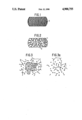
- FIG. 1 is a cross-section of a tablet-shaped homogeneous polymer matrix showing the drug components, 1, homogeneously dispersed in the matrix.
- FIG. 2 is a schematic representation of the same polymer matrix, 1, after some of the drug has been delivered by diffusion by entry of liquids into the tortuous microporous channels, 2, followed by exit of drug solution through the same tortuous path.
- This matrix remains essentially intact while delivering its drug content.
- FIG. 3 is a cross-section of a schematic representation of the polymer matrix, 1, after some of the drug has been delivered by erosion by liquids whereby polymer, 1, and active ingredients, 2, are dispersed in the fluid as solute or suspensoid.
- FIG. 3a is a schematic representation of the polymer matrix, 1, after essentially all of the drug, 2, has been delivered by erosion. This matrix completely disintegrates while delivering its drug content.
- the polymer vehicle is a mono-polymer or co-polymer or combinations thereof and are selected from: water soluble polymers such as hydroxypropyl cellulose, hydroxypropylmethyl cellulose, polyvinyl pyrrolidone, polyethylene glycol, starch, methyl cellulose; and less water-soluble polymers such as polyvinyl acetate-crotonic acid copolymer, polyvinyl chloride, polyethylene, cellulose acetate, polyvinyl alcohol, ethylene vinyl acetate copolymer, polyvinyl acetate, polymethyl methacrylate, ethyl cellulose and the like.
- the preferred vehicle is a combination of the water soluble polymer, hydroxypropyl cellulse and the less water soluble co-polymer of polyvinyl acetate-crotonic acid.
- dyes and tablet lubricants such as: metallic salts of acids including aluminum stearate, calcium stearate, magnesium stearate, sodium stearate, and zinc stearate; fatty acids, hydrocarbons and fatty alcohols including stearic acid, palmitic acid, liquid paraffin, stearyl alcohol, and palmityl alcohol; fatty acid esters including glyceryl monostearate, glyceryl (mono- and di-) stearate, triglycerides, glyceryl (palmiticstearic) ester, sorbitan monostearate, saccharose monostearate, saccharose monopalmitate, and sodium stearyl fumarate; alkyl sulfates, including sodium lauryl sulfate, and magnesium lauryl sulfate; polymers including polyethylene glycols, polyoxyethylene glycols, and polytetrafluoroethylene (Teflon); and inorganic salts of acids including aluminum
- a process for preparing the novel formulations comprises mixing levodopa, carbidopa and colorants with a hydroalcoholic or other suitable solvent dispersion of the polymer(s), drying, milling, mixing with the lubricant and compressing into tablets.
- the formulation can be prepared by mixing levodopa, carbidopa and colorants and adding hydroxyproyplcellulose and/or polyvinyl acetate/crotonic acid copolymer, either dry or dispersed in a solvent such as water, alcohol or hydroalcohol. The mixture is dried, mixed with lubricant and compressed into tablets.
- novel controlled release formulation of this invention are as follows:
- the No. 2 formulation proved to be extremely difficult to use because of a marked delay in onset of response after each dosage, a requirement for very high daily dosages (150-400% of standard SINEMET), and very poor correlation between time of dose and rise in plasma levodopa levels. IN fact, nighttime and early morning plasma levels were sometimes higher than daytime levels, although dosing occurred throughout the day and not at night. Severe, sustained, and unpredictable periods of dyskinesias and similarly sustained "off" periods were observed. B.I.D. dosage administration was unsuccessful in 9 of 9 patients with mild to moderate fluctuations. Formulation No. 2 had to be given nearly as frequently as standard SINEMET in most patients.
- Example 4 which has the same in vitro dissolution properties and polymeric matrix as No. 1 but contains 50 mg of carbidopa and 200 mg of levodopa. Fifty patients were enrolled in the No. 3 studies, and preliminary clinical and/or pharmacokinetic data are available from approximately 40 of them.
- No. 3 formulation is much easier to use than No. 2, due to 1) predictable onset of response, 2) dosage requirements which are comparable to or slightly higher than standard SINEMET, and 3) more sustained therapeutic action during the day.
- Most patients who have completed the initial phase of the No. 3 trails requested long-term treatment because of clinical improvement.
- dosing frequency can be reduced 25-50% with No. 3 relative to standard SINEMET.
- Clinical fluctuations are reduced throughout the day and occasionally eliminated.
- Patients with mold to moderate fluctuations (especially end-of-dose "wearing-off") benefit most, although half of the more severe patients have also improved.
- Pharmocokinetic data indicate that plasma levodopa levels are sustained for 3-6 hours following a dose of No. 3, as compared to 1-2 hours with standard SINEMET.
- Onset of response after a single dose of No. 3 is less than with standard SINEMET and may require 45 minutes. In patients with advanced disease, nighttime and early-morning response with No. 3 is better than with standard SINEMET but notably less than with No. 2. Plasma L-DOPA levels correlate well with these observations in that early morning L-DOPA levels are moderately higher with No. 3 than standard SINEMET but much less than with No. 2.
- Example 2 Another formulation (Example 2) with dissolution properties intermediate to those of No. 2 and No. 3 has also been developed. This formulation will provide nighttime benefits in severe patients over those seen with No. 3
Landscapes
- Health & Medical Sciences (AREA)
- Chemical & Material Sciences (AREA)
- Medicinal Chemistry (AREA)
- Pharmacology & Pharmacy (AREA)
- Epidemiology (AREA)
- Life Sciences & Earth Sciences (AREA)
- Animal Behavior & Ethology (AREA)
- General Health & Medical Sciences (AREA)
- Public Health (AREA)
- Veterinary Medicine (AREA)
- Medicinal Preparation (AREA)
Abstract
A matrix or monolithic drug delivery system for the controlled release of carbidopa and levodopa consists of the two drugs uniformly dispersed in a polymer vehicle at a concentration that is greater than the solubility of either drug in the polymer. Treatment of parkinsonism with the controlled release formulation provides several advantages over treatment with the standard carbidopa/levidopa combinations presently employed.
Description
This is a division of application Ser. No. 223,861 filed July 25, 1988, now U.S. Pat. No. 4,832,957, which is a continuation-in-part of copending application Ser. No. 131,061, filed Dec. 11, 1987, abandoned, which in turn is a continuation-in-part of copending application Ser, No. 874,988, filed June 16, 1986, abandoned.
This invention is concerned with a controlled release formulation for the simultaneous delivery of levodopa and carbidopa in the treatment of parkinsonism whereby the adverse reactions and inadequacies often experienced with the administration of standard carbidopa/levodopa combinations are minimized.
SINEMET® (Merck & Co., Inc., Rahway, N.J.) is the registered trademark for a therapeutic agent useful in the treatment of idiopathic Parkinsonism. It is a combination of levodopa and carbidopa and is provided in tablets of 10 mg carbidopa/100 mg of levodopa; 25 mg of carbidopa/250 mg of levodopa; and 25 mg of carbidopa/100 mg of levodopa. The usual dose is 3 to 4 tablets daily.
Before SINEMET was introduced to the market in 1975, parkinsonism was treated with levodopa by itself. Large doses of levodopa were necessary to adequately control the Parkinson syndrome and severe adverse reactions, especially emesis, were experienced. To minimize these adverse reactions attempts were made to delivery levodopa in a sustained release fashion. In fact there was a product called Brocadopa Temtabs. Several studies failed to show any advantage of the sustained release formulation over a standard preparation. See Eckstein et al., The Lancet, Feb. 24, 1973, page 431 which states at 432, "for the majority of parkinsonians in our study sustained-release levodopa offered no definite advantage over a standard preparation". Also curzon et al., The Lancet, Apr. 7, 1973, page 781, states, "These results suggest there is no practical advantage to be gained by the use of an oral sustained-release preparation of levodopa".
Therapy with SINEMET is widely accepted as the cornerstone in treating idiopathic Parkinson's disease. However, "wearing-off" and "on-off" phenomena have emerged as major problems in the long-term treatment of Parkinson's disease. After two to three years, many patients begin to experience oscillating motor fluctuations which become increasingly disabling. The essential feature is a change from mobility to immobility, which may occur many times a day. Predictable warning of therapeutic effects, following each dose of SINEMET, is known as "wearing-off" and may first occur during stage II-III of the disease. Such response fluctuations occur in 15 to 40% of patients after two to three years of treatment, and in a greater percentage with longer duration of illness. The fluctuations in levodopa levels which accompany SINEMET treatment may in themselves contribute to the development of clinical oscillations.
The clinical manifestations of "on-off" include rapid and unpredictable swings from mobility to immobility. "On" periods can usually be correlated with high or rising plasma levodopa levels and are often associated with distinct, abnormal involuntary movements (dose-related dyskinesias), while "off" periods are commonly but not invariably associated with low or falling plasma-levodopa levels. The relation of "off" periods to low plasma levodopa levels and the observation that the administration of apomorphine during an "off" period may restore function suggests that most such periods are due to cerebral dopamine deficiency. Frequent dosage administration helps to alleviate oscillating clinical responses but dyskinesias and bradykinetic episodes may still occur.
Intravenous levodopa has been used to provide stable plasma levels of 2000 to 5000 ng/ml in advanced parkinsonian patients. This procedure reduces motor oscillations, but optimal response in some patients still include either tremor and bradykinesia or mobility with dyskinesia. High protein meals cause a decline in response without affecting plasma levodopa levels, presumably by inhibiting transport of levodopa into the brain.
The above considerations indicate that a dosage preparation of SINEMET possessing less rapid dissolution properties and providing a more even plasma level profile of levodopa should be efficacious in alleviating some but not all oscillating therapeutic responses.
If the development of clinical fluctuations is promoted by oscillating levodopa levels, a controlled release preparation may also help to prevent the emergence of "wearing-off" and "on-off" phenomena.
Now, with the present invention there is provide a controlled release form of the combination of carbidopa/levodopa designed to obviate or at least alleviate problems associated with the standard combination therapy. Dyskinesias and other central nervous system side effects, and gastrointestinal side effects may be reduced in patients sensitive to high plasma levodopa levels. Patients with oscillating symptoms should respond to the more constant plasma levodopa levels with a more even clinical response. Furthermore, controlled release SINEMET is expected to represent a more convenient dosage form (i.e., allowing for less frequent medication) for many patients who require standard SINEMET four or more time a day. A twice-daily dosage regimen may also be feasible in some patients.
The novel controlled release tablet of carbidopa/levodopa of this invention is a matrix or monolithic drug delivery system containing carbidopa and levodopa as active ingredients. The system consists of the two drugs, uniformly dispersed in a polymer vehicle at a concentration that is greater than either drug solubility in the polymer vehicle which is either a single or a combination of polymers.
The novel delivery system provides slow release of both drug components either by erosion or by a diffusion controlled mechanism, depending on the particular polymer vehicle.
Release of drug by erosion occurs by slow disintegration of the tablet surface. Release of drug by diffusion occurs either through the space between the macromolecular polymer chains or through a porous network filled with aqueous medium. Optimum erosion or diffusion conditions can be achieved by controlling the crystalline phase porous structure, degree of swelling, polymer type, polymer ratio, drug concentration and other salient parameters.
FIG. 1, is a cross-section of a tablet-shaped homogeneous polymer matrix showing the drug components, 1, homogeneously dispersed in the matrix.
FIG. 2, is a schematic representation of the same polymer matrix, 1, after some of the drug has been delivered by diffusion by entry of liquids into the tortuous microporous channels, 2, followed by exit of drug solution through the same tortuous path. This matrix remains essentially intact while delivering its drug content.
FIG. 3, is a cross-section of a schematic representation of the polymer matrix, 1, after some of the drug has been delivered by erosion by liquids whereby polymer, 1, and active ingredients, 2, are dispersed in the fluid as solute or suspensoid.
FIG. 3a, is a schematic representation of the polymer matrix, 1, after essentially all of the drug, 2, has been delivered by erosion. This matrix completely disintegrates while delivering its drug content.
The polymer vehicle is a mono-polymer or co-polymer or combinations thereof and are selected from: water soluble polymers such as hydroxypropyl cellulose, hydroxypropylmethyl cellulose, polyvinyl pyrrolidone, polyethylene glycol, starch, methyl cellulose; and less water-soluble polymers such as polyvinyl acetate-crotonic acid copolymer, polyvinyl chloride, polyethylene, cellulose acetate, polyvinyl alcohol, ethylene vinyl acetate copolymer, polyvinyl acetate, polymethyl methacrylate, ethyl cellulose and the like. The preferred vehicle is a combination of the water soluble polymer, hydroxypropyl cellulse and the less water soluble co-polymer of polyvinyl acetate-crotonic acid.
Other components of the novel formulation are optional dyes and tablet lubricants such as: metallic salts of acids including aluminum stearate, calcium stearate, magnesium stearate, sodium stearate, and zinc stearate; fatty acids, hydrocarbons and fatty alcohols including stearic acid, palmitic acid, liquid paraffin, stearyl alcohol, and palmityl alcohol; fatty acid esters including glyceryl monostearate, glyceryl (mono- and di-) stearate, triglycerides, glyceryl (palmiticstearic) ester, sorbitan monostearate, saccharose monostearate, saccharose monopalmitate, and sodium stearyl fumarate; alkyl sulfates, including sodium lauryl sulfate, and magnesium lauryl sulfate; polymers including polyethylene glycols, polyoxyethylene glycols, and polytetrafluoroethylene (Teflon); and inorganic materials such as talc. The preferred tablet lubricant is magnesium stearate.
In a typical formulation the components thereof are present in the following quantities:
______________________________________
           Quantity
Component    Range         Preferred Range
______________________________________
Levodopa     20-1200   mg.sup.(1)
                               100-400 mg
Carbidopa    5-300     mg.sup.(1)
                               25-100  mg
Water Soluble
Polymer      0-120     mg.sup.(2)
                               5-25    mg
less water soluble
polymer      0-120     mg.sup.(2)
                               2-50    mg
lubricant    0-25      mg      1-10    mg
______________________________________
 .sup.(1) The relative amounts of carbidopa to levodopa are preferably fro
 about 1 carbidopa/10 levodopa to 1 carbidopa/4 levodopa.
 .sup.(2) In a given formulation both polymers cannot be 0 mg.
A process for preparing the novel formulations comprises mixing levodopa, carbidopa and colorants with a hydroalcoholic or other suitable solvent dispersion of the polymer(s), drying, milling, mixing with the lubricant and compressing into tablets.
Alternatively the formulation can be prepared by mixing levodopa, carbidopa and colorants and adding hydroxyproyplcellulose and/or polyvinyl acetate/crotonic acid copolymer, either dry or dispersed in a solvent such as water, alcohol or hydroalcohol. The mixture is dried, mixed with lubricant and compressed into tablets.
Specific examples of the novel controlled release formulation of this invention are as follows:
______________________________________
Ingredient           Per Tablet
______________________________________
Levodopa USP         200 mg
Carbidopa Hydrous USP
                     54 mg
Cellulose Acetate    50 mg
Magnesium Stearate Impalpable
                     5.5 mg
Powder NF
FD & C Blue No. 1    1.0 mg
______________________________________
______________________________________
Ingredient           Per Tablet
______________________________________
Levodopa USP         200 mg
Carbidopa Hydrous USP
                     54 mg
Vinyl Acetate/Crotonic Acid
                     6.5 mg
Copolymer.sup.(1)
Hydroxypropyl Cellulose NF.sup.(2)
                     17.0 mg
Magnesium Stearate Impalpable
                     3.0 mg
Powder NF
Red 347 Mapico       0.4 mg
Yellow D & C No. 10 Aluminum
                     1.0 mg
Lake HT
______________________________________
 .sup.(1) Vinac ASB516 ® containing about 5% crotonic acid; molar
 viscosity 15-17 cps; molecular weight 95,000; available from Air Products
 and Chemicals, Inc., Box 538, Allentown, PA 18105, U.S.A.
 .sup.(2) Klucel LF ®, molecular weight, 75,000; viscosity of 5%
 aqueous solution 75-150 cps; available from Hercules, Incorporated,
 Wilmington, Delaware, 19894, U.S.A.
______________________________________
Ingredient           Per Tablet
______________________________________
Levodopa USP         200 mg
Carbidopa Hydrous USP
                     54 mg
Carboxyvinyl Polymer 60 mg
Microcrystalline Cellulose
                     20 mg
Magnesium Stearate Impalpable
                     5.5 mg
Powder NF
FD & C Red No. 3     1.0 mg
______________________________________
______________________________________
Ingredient           Per Tablet
______________________________________
Levodopa USP         200 mg   100 mg.
Carbidopa Hydrous USP
                     54 mg    27 mg.
Vinyl Acetate/Crotonic Acid
                     5.0 mg   2.5 mg
Copolymer.sup.(1)
Hydroxypropyl Cellulose NF.sup.(2)
                     17.0 mg  8.5 mg
Magnesium Stearate Impalpable
                     3.0 mg   1.5 mg.
Powder NF
Red 347 Mapico       0.3 mg   0.15 mg.
Yellow D & C No. 10 Aluminum
                     1.1 mg   0.55
Lake HT
______________________________________
 .sup.(1) See footnote, Example 2.
 .sup.(2) See footnote, Example 2.
______________________________________
Ingredient           Per Tablet
______________________________________
Levodopa USP         200 mg
Carbidopa Hydrous USP
                     54 mg
Hydroxypropyl Cellulose NF.sup.(1)
                     90 mg
Magnesium Stearate Impalpable
                     8.0 mg
Powder NF
Red 347 Mapico       0.4 mg
Yellow D & C No. 10 Aluminum
                     1.0 mg
Lake HT
______________________________________
 .sup.(1) See footnote (2), Example 2.
______________________________________
Ingredient           Per Tablet
______________________________________
Levodopa USP         400 mg
Carbidopa Hydrous USP
                     108 mg
Polymethyl Methacrylate
                     120.0 mg
Magnesium Stearate Impalpable
                     5.5 mg
Powder NF
FD & C Red No. 3     0.4 mg
Yellow D & C No. 10 Aluminum
                     1.0 mg
Lake HT
______________________________________
______________________________________
Ingredient           Per Tablet
______________________________________
Levodopa USP         100 mg
Carbidopa Hydrous USP
                     54 mg
Ethyl Cellulose      20.0 mg
Methyl Cellulose     5.0 mg
Magnesium Stearate Impalpable
                     5.5 mg
Powder NF
FD & C Red No. 3     0.4 mg
Yellow D & C No. 10 Aluminum
                     1.0 mg
Lake HT
______________________________________
Two controlled release formulations, No. 1 and No. 2 were compared to standard SINEMET in 20 patients with uncomplicated Parkinson's disease. Means disability scores were similar over two weeks in patients who received No. 1 or standard SINEMET and in patients who received No. 2 or standard SINEMET. (Because of the design of this study, the group of 10 patients which received No. 1 was different from the 10 patients who received No. 2; however, all patients received standard SINEMET).
______________________________________
                   Per Tablet (mg)
Ingredient           No. 1   No. 2
______________________________________
                     CR-2    CR-3
Levodopa             100     200
Carbidopa            50      50
Polyvinyl acetate-   3       20
Crotonic acid
Co-polymer.sup.(1)
Magnesium Stearate   1.7     5.5
Hydroxypropyl Cellulose NF.sup.(2)
                     10      --
______________________________________
 .sup.(1) See footnote, Example 2.
 .sup.(2) See footnote, Example 2.
The pharmacokinetic profiles of the sustained release formulations were clearly different from that of standard SINEMET. Patients on No. 1 achieved peak plasma levodopa concentrations 2.8±1.2 hours after dosing, compared to a Tmax of 1.1±0.33 hours with standard SINEMET. For the No. 2 preparation, Tmax was 3.1±2.2 hours, compared to 1.4±0.5 hours with standard SINEMET. The eight hour bioavailabilities of No. 1 and No. 2 relative to standard SINEMET were estimated to be 86% and 75%, respectively.
Although mean peak plasma levodopa concentrations for No. 1 and No. 2 were only about half of those produced by SINEMET, and the 8 hour levels following No. 1 or No. 2 administration exceeded those with SINEMET, indicating sustained release properties for both CR formulations.
Based on these results, and the preferable 1:4 ratio of the No. 2 tablet, four open-label clinical and pharmacokinetic studies of No. 2 were conducted in parkinsonian patients with motor fluctuations. Among 30 such patients (22 with "wearing off" and 8 with unpredictable "on/off"), only a few showed marked improvement with decreased "off" time and smooth response during the day. Many others benefited from nighttime improvement including better sleep and mobility, and improved early morning function. Sustained elevated plasma levodopa levels were achieved, but were associated with unpredictable variability.
The No. 2 formulation proved to be extremely difficult to use because of a marked delay in onset of response after each dosage, a requirement for very high daily dosages (150-400% of standard SINEMET), and very poor correlation between time of dose and rise in plasma levodopa levels. IN fact, nighttime and early morning plasma levels were sometimes higher than daytime levels, although dosing occurred throughout the day and not at night. Severe, sustained, and unpredictable periods of dyskinesias and similarly sustained "off" periods were observed. B.I.D. dosage administration was unsuccessful in 9 of 9 patients with mild to moderate fluctuations. Formulation No. 2 had to be given nearly as frequently as standard SINEMET in most patients.
The results of these studies strongly indicated that the release rate and bioavailability of the No. 2 tablet were too low in vivo, and probably very sensitive to effects of food and gastric pH. It appeared that in many patients much of the daytime dosage was stored in the stomach and not released until nighttime. A fragmentable matrix with more rapid dissolution characteristics, such as No. 1, had the potential to eliminate some of these problems.
These considerations led to the development of the No. 3 formulation, (Example 4) which has the same in vitro dissolution properties and polymeric matrix as No. 1 but contains 50 mg of carbidopa and 200 mg of levodopa. Fifty patients were enrolled in the No. 3 studies, and preliminary clinical and/or pharmacokinetic data are available from approximately 40 of them.
All four investigators consider the No. 3 formulation to be much easier to use than No. 2, due to 1) predictable onset of response, 2) dosage requirements which are comparable to or slightly higher than standard SINEMET, and 3) more sustained therapeutic action during the day. Most patients who have completed the initial phase of the No. 3 trails requested long-term treatment because of clinical improvement. In general, dosing frequency can be reduced 25-50% with No. 3 relative to standard SINEMET. Clinical fluctuations are reduced throughout the day and occasionally eliminated. Patients with mold to moderate fluctuations (especially end-of-dose "wearing-off") benefit most, although half of the more severe patients have also improved. Pharmocokinetic data indicate that plasma levodopa levels are sustained for 3-6 hours following a dose of No. 3, as compared to 1-2 hours with standard SINEMET.
Onset of response after a single dose of No. 3 is less than with standard SINEMET and may require 45 minutes. In patients with advanced disease, nighttime and early-morning response with No. 3 is better than with standard SINEMET but notably less than with No. 2. Plasma L-DOPA levels correlate well with these observations in that early morning L-DOPA levels are moderately higher with No. 3 than standard SINEMET but much less than with No. 2.
Dyskinesia, mental confusion and psychosis have been observed at higher doses in patients who had similar side effects with standard SINEMET. Sustained dyskinesias or "off" periods have not been significant problems to date.
Another formulation (Example 2) with dissolution properties intermediate to those of No. 2 and No. 3 has also been developed. This formulation will provide nighttime benefits in severe patients over those seen with No. 3
Claims (4)
1. A controlled release oral dosage formulation comprising a uniform dispersion of 25-100 mg of carbidopa and 100-400 mg of levodopa in a polymer vehicle comprising 5-25 mg of a water-soluble hydroxypropylcellulose polymer and 2-50 mg of a less water-soluble polyvinylacetatecrotonic acid copolymer whereby, following administration, the carbidopa and levodopa are released slowly and simultaneously from the formulation.
2. The formulation of claim 1 comprising 200 mg. of levodopa and 50 mg. of carbidopa or 100 mg. of levodopa and 25 mg. of carbidopa.
3. The formulation of claim 1 comprising 200 mg of levodopa, 50 mg of carbidopa, 5-6.5 mg of vinyl acetate-crotonic acid copolymer and about 17 mg of hydroxypropyl cellulose.
4. The formulation of claim 1 comprising 100 mg of levodopa, 25 mg of carbidopa, 2.5 mg of vinylacetatecrontic acid copolymer and about 8.5 mg of hydroxypropylcellulose.
Priority Applications (4)
| Application Number | Priority Date | Filing Date | Title |
|---|---|---|---|
| US07/315,057 US4900755A (en) | 1986-06-16 | 1989-02-24 | Controlled release combination of carbidopa/levodopa |
| US07/444,222 US4983400A (en) | 1986-06-16 | 1989-12-01 | Controlled release combination of carbidopa/levodopa |
| BG096098A BG61200B2 (en) | 1989-02-24 | 1992-03-18 | CONTROLLED SEPARATOR/LEVATOR COMBINATION |
| LV950264A LV5718B4 (en) | 1989-02-24 | 1995-08-29 | Composition for controlled release of carbidopa and levodopa |
Applications Claiming Priority (3)
| Application Number | Priority Date | Filing Date | Title |
|---|---|---|---|
| US87498886A | 1986-06-16 | 1986-06-16 | |
| US13160187A | 1987-12-11 | 1987-12-11 | |
| US07/315,057 US4900755A (en) | 1986-06-16 | 1989-02-24 | Controlled release combination of carbidopa/levodopa |
Related Parent Applications (1)
| Application Number | Title | Priority Date | Filing Date |
|---|---|---|---|
| US07/223,861 Division US4832957A (en) | 1986-06-16 | 1988-07-25 | Controlled release combination of carbidopa/levodopa |
Related Child Applications (1)
| Application Number | Title | Priority Date | Filing Date |
|---|---|---|---|
| US07/444,222 Division US4983400A (en) | 1986-06-16 | 1989-12-01 | Controlled release combination of carbidopa/levodopa |
Publications (1)
| Publication Number | Publication Date |
|---|---|
| US4900755A true US4900755A (en) | 1990-02-13 |
Family
ID=26829627
Family Applications (1)
| Application Number | Title | Priority Date | Filing Date |
|---|---|---|---|
| US07/315,057 Expired - Lifetime US4900755A (en) | 1986-06-16 | 1989-02-24 | Controlled release combination of carbidopa/levodopa |
Country Status (2)
| Country | Link |
|---|---|
| US (1) | US4900755A (en) |
| ZA (1) | ZA889189B (en) |
Cited By (32)
| Publication number | Priority date | Publication date | Assignee | Title |
|---|---|---|---|---|
| US4983400A (en) * | 1986-06-16 | 1991-01-08 | Merck & Co., Inc. | Controlled release combination of carbidopa/levodopa |
| US5006344A (en) * | 1989-07-10 | 1991-04-09 | E. R. Squibb & Sons, Inc. | Fosinopril tablet formulations |
| US5532274A (en) * | 1991-01-23 | 1996-07-02 | Isis Pharma Gmbh | Orally administerable drugs for the treatment of central dopamine deficiency conditions |
| US5624960A (en) * | 1991-01-23 | 1997-04-29 | Isis Pharma Gmbh | Orally administrable drugs for the treatment of central dopamine deficiency conditions |
| WO2000015197A1 (en) * | 1998-09-14 | 2000-03-23 | Rubin Alan A | Improvement in treatment of parkinson's disease and related disorders by novel formulations of the combination carbidopa-levodopa |
| US6238699B1 (en) | 1997-04-08 | 2001-05-29 | Alan A. Rubin | Pharmaceutical formulations containing a combination of carbidopa and levidopa |
| US20030203055A1 (en) * | 2002-03-15 | 2003-10-30 | Cypress Bioscience, Inc. | Methods of treating visceral pain syndromes |
| US20030224045A1 (en) * | 2002-05-29 | 2003-12-04 | Chien-Hsuan Han | Combination immediate release sustained release levodopa/carbidopa dosage forms |
| US20030228360A1 (en) * | 2002-05-29 | 2003-12-11 | Chien-Hsuan Han | Combination immediate release controlled release levodopa/carbidopa dosage forms |
| WO2004032906A1 (en) * | 2002-10-11 | 2004-04-22 | Depomed Development, Ltd. | Gastro-retentive levodopa delivery form |
| US20040121010A1 (en) * | 2002-10-25 | 2004-06-24 | Collegium Pharmaceutical, Inc. | Pulsatile release compositions of milnacipran |
| US20040166159A1 (en) * | 2002-05-29 | 2004-08-26 | Chien-Hsuan Han | Pharmaceutical dosage forms having immediate and controlled release properties that contain an aromatic amino acid decarboxylase inhibitor and levodopa |
| US20040228830A1 (en) * | 2003-01-28 | 2004-11-18 | Collegium Pharmaceutical, Inc. | Multiparticulate compositions of milnacipran for oral administration |
| WO2004100932A1 (en) * | 2003-05-14 | 2004-11-25 | Eurand Pharmaceuticals Ltd. | Controlled drug release composition resistant to in vivo mechanic stress |
| US20050113452A1 (en) * | 2003-10-20 | 2005-05-26 | Moshe Flashner-Barak | Composition and dosage form for sustained effect of levodopa |
| US20060003004A1 (en) * | 2002-10-25 | 2006-01-05 | Collegium Pharmaceutical, Inc. | Pulsatile release compositions of milnacipran |
| US20060013875A1 (en) * | 2002-05-29 | 2006-01-19 | Impax Laboratories, Inc. | Combination immediate release controlled release levodopa/carbidopa dosage forms |
| US20060159751A1 (en) * | 2002-04-11 | 2006-07-20 | Mona Gogia | Controlled release pharmaceutical compositions of carbidopa and levodopa |
| US20070003621A1 (en) * | 2005-06-23 | 2007-01-04 | Spherics, Inc. | Dosage forms for movement disorder treatment |
| US7179486B1 (en) | 1997-04-01 | 2007-02-20 | Nostrum Pharmaceuticals, Inc. | Process for preparing sustained release tablets |
| US20070178149A1 (en) * | 2005-11-07 | 2007-08-02 | Moshe Flashner-Barak | Levodopa compositions |
| US20070275060A1 (en) * | 2005-08-05 | 2007-11-29 | Osmotica Costa Rica Sociedad Anonima | Extended release solid pharmaceutical composition containing carbidopa and levodopa |
| WO2008030830A3 (en) * | 2006-09-08 | 2008-05-29 | Drugtech Corp | Sustained-release composition and method of use thereof |
| US20080131492A1 (en) * | 2006-06-23 | 2008-06-05 | Spherics, Inc. | Dosage forms for movement disorder treatment |
| US20100040689A1 (en) * | 2008-08-15 | 2010-02-18 | Depomed, Inc. | Gastric retentive pharmaceutical compositions for treatment and prevention of cns disorders |
| US20100316712A1 (en) * | 2006-12-22 | 2010-12-16 | Combinatorx, Incorporated | Pharmaceutical compositions for treatment of parkinson's disease and related disorders |
| WO2012136816A2 (en) | 2011-04-06 | 2012-10-11 | BRKICIC, Cvjetko | Pharmaceutical composition |
| US9901640B2 (en) | 2007-12-28 | 2018-02-27 | Impax Laboratories, Inc. | Controlled release formulations of levodopa and uses thereof |
| US10098845B2 (en) | 2013-10-07 | 2018-10-16 | Impax Laboratories, Llc | Muco-adhesive, controlled release formulations of levodopa and/or esters of levodopa and uses thereof |
| US10987313B2 (en) | 2013-10-07 | 2021-04-27 | Impax Laboratories, Llc | Muco-adhesive, controlled release formulations of levodopa and/or esters of levodopa and uses thereof |
| US11986449B2 (en) | 2020-12-22 | 2024-05-21 | Amneal Pharmaceuticals Llc | Levodopa dosing regimen |
| US12194150B2 (en) | 2020-12-22 | 2025-01-14 | Amneal Pharmaceuticals Llc | Levodopa dosing regimen |
Citations (15)
| Publication number | Priority date | Publication date | Assignee | Title |
|---|---|---|---|---|
| US3995058A (en) * | 1973-12-12 | 1976-11-30 | Miles Laboratories, Inc. | Treatment of ethanol withdrawal symptoms with levodopa |
| US4021555A (en) * | 1975-03-29 | 1977-05-03 | Merck Patent Gesellschaft Mit Beschrankter Haftung | Pharmaceutical preparation and method for treatment of parkinsonism |
| US4190672A (en) * | 1978-09-01 | 1980-02-26 | Stanley Fahn | Method and compositions of treating Parkinsonisms with levodopa and 3',4'-dihydroxy-2-methylisopropiophenone |
| US4329356A (en) * | 1980-10-31 | 1982-05-11 | Eli Lilly And Company | Treatment of hypertension with fluoxetine and l-5-hydroxytryptophane |
| US4389415A (en) * | 1978-01-24 | 1983-06-21 | Merck & Co., Inc. | Method of treating hypertension |
| US4413012A (en) * | 1981-06-01 | 1983-11-01 | Merrell Toraude Et Compagnie | Method for treating depression |
| US4421767A (en) * | 1981-06-01 | 1983-12-20 | Merrell Toraude Et Compagnie | Compounds and methods for treating depression |
| US4424235A (en) * | 1981-09-14 | 1984-01-03 | Hoffmann-La Roche Inc. | Hydrodynamically balanced controlled release compositions containing L-dopa and a decarboxylase inhibitor |
| US4440740A (en) * | 1982-04-26 | 1984-04-03 | Merck & Co., Inc. | α-Keto aldehydes as enhancing agents of gastro-intestinal drug absorption |
| US4446138A (en) * | 1982-02-10 | 1984-05-01 | Pack Howard M | Method and composition for reducing weight |
| US4469695A (en) * | 1980-02-25 | 1984-09-04 | Ayerst, Mckenna & Harrison, Inc. | 2-(4-Hydroxyalkyl-1-piperazinyl)-2,4,6-cycloheptatrien-1-one derivatives |
| US4469693A (en) * | 1980-02-25 | 1984-09-04 | Ayerst, Mckenna & Harrison Inc. | 2-(4-Substituted alkyl-1-piperazinyl)-2,4,6-cycloheptatrien-1-one derivatives |
| US4469694A (en) * | 1980-02-25 | 1984-09-04 | Ayerst, Mckenna & Harrison Inc. | 2-(1-Piperazinyl)-2,4,6-cycloheptatrien-1-one derivatives |
| US4497826A (en) * | 1981-09-22 | 1985-02-05 | Sumitomo Chemical Company, Limited | Antiparkinsonian agent |
| US4529603A (en) * | 1983-09-22 | 1985-07-16 | Sumitomo Chemical Company, Limited | Pharmaceutical composition and method for treatment of psychomotor excitement |
-
1988
- 1988-12-08 ZA ZA889189A patent/ZA889189B/en unknown
-
1989
- 1989-02-24 US US07/315,057 patent/US4900755A/en not_active Expired - Lifetime
Patent Citations (15)
| Publication number | Priority date | Publication date | Assignee | Title |
|---|---|---|---|---|
| US3995058A (en) * | 1973-12-12 | 1976-11-30 | Miles Laboratories, Inc. | Treatment of ethanol withdrawal symptoms with levodopa |
| US4021555A (en) * | 1975-03-29 | 1977-05-03 | Merck Patent Gesellschaft Mit Beschrankter Haftung | Pharmaceutical preparation and method for treatment of parkinsonism |
| US4389415A (en) * | 1978-01-24 | 1983-06-21 | Merck & Co., Inc. | Method of treating hypertension |
| US4190672A (en) * | 1978-09-01 | 1980-02-26 | Stanley Fahn | Method and compositions of treating Parkinsonisms with levodopa and 3',4'-dihydroxy-2-methylisopropiophenone |
| US4469695A (en) * | 1980-02-25 | 1984-09-04 | Ayerst, Mckenna & Harrison, Inc. | 2-(4-Hydroxyalkyl-1-piperazinyl)-2,4,6-cycloheptatrien-1-one derivatives |
| US4469694A (en) * | 1980-02-25 | 1984-09-04 | Ayerst, Mckenna & Harrison Inc. | 2-(1-Piperazinyl)-2,4,6-cycloheptatrien-1-one derivatives |
| US4469693A (en) * | 1980-02-25 | 1984-09-04 | Ayerst, Mckenna & Harrison Inc. | 2-(4-Substituted alkyl-1-piperazinyl)-2,4,6-cycloheptatrien-1-one derivatives |
| US4329356A (en) * | 1980-10-31 | 1982-05-11 | Eli Lilly And Company | Treatment of hypertension with fluoxetine and l-5-hydroxytryptophane |
| US4421767A (en) * | 1981-06-01 | 1983-12-20 | Merrell Toraude Et Compagnie | Compounds and methods for treating depression |
| US4413012A (en) * | 1981-06-01 | 1983-11-01 | Merrell Toraude Et Compagnie | Method for treating depression |
| US4424235A (en) * | 1981-09-14 | 1984-01-03 | Hoffmann-La Roche Inc. | Hydrodynamically balanced controlled release compositions containing L-dopa and a decarboxylase inhibitor |
| US4497826A (en) * | 1981-09-22 | 1985-02-05 | Sumitomo Chemical Company, Limited | Antiparkinsonian agent |
| US4446138A (en) * | 1982-02-10 | 1984-05-01 | Pack Howard M | Method and composition for reducing weight |
| US4440740A (en) * | 1982-04-26 | 1984-04-03 | Merck & Co., Inc. | α-Keto aldehydes as enhancing agents of gastro-intestinal drug absorption |
| US4529603A (en) * | 1983-09-22 | 1985-07-16 | Sumitomo Chemical Company, Limited | Pharmaceutical composition and method for treatment of psychomotor excitement |
Cited By (71)
| Publication number | Priority date | Publication date | Assignee | Title |
|---|---|---|---|---|
| US4983400A (en) * | 1986-06-16 | 1991-01-08 | Merck & Co., Inc. | Controlled release combination of carbidopa/levodopa |
| US5006344A (en) * | 1989-07-10 | 1991-04-09 | E. R. Squibb & Sons, Inc. | Fosinopril tablet formulations |
| US5532274A (en) * | 1991-01-23 | 1996-07-02 | Isis Pharma Gmbh | Orally administerable drugs for the treatment of central dopamine deficiency conditions |
| US5624960A (en) * | 1991-01-23 | 1997-04-29 | Isis Pharma Gmbh | Orally administrable drugs for the treatment of central dopamine deficiency conditions |
| US7179486B1 (en) | 1997-04-01 | 2007-02-20 | Nostrum Pharmaceuticals, Inc. | Process for preparing sustained release tablets |
| US6238699B1 (en) | 1997-04-08 | 2001-05-29 | Alan A. Rubin | Pharmaceutical formulations containing a combination of carbidopa and levidopa |
| US6756056B2 (en) * | 1997-04-08 | 2004-06-29 | Alan A. Rubin | Treatment of Parkinson's disease and related disorders by novel formulations of the combination carbidopa-levodopa |
| WO2000015197A1 (en) * | 1998-09-14 | 2000-03-23 | Rubin Alan A | Improvement in treatment of parkinson's disease and related disorders by novel formulations of the combination carbidopa-levodopa |
| US20030203055A1 (en) * | 2002-03-15 | 2003-10-30 | Cypress Bioscience, Inc. | Methods of treating visceral pain syndromes |
| US20060159751A1 (en) * | 2002-04-11 | 2006-07-20 | Mona Gogia | Controlled release pharmaceutical compositions of carbidopa and levodopa |
| US20060013875A1 (en) * | 2002-05-29 | 2006-01-19 | Impax Laboratories, Inc. | Combination immediate release controlled release levodopa/carbidopa dosage forms |
| US7094427B2 (en) * | 2002-05-29 | 2006-08-22 | Impax Laboratories, Inc. | Combination immediate release controlled release levodopa/carbidopa dosage forms |
| US20030228360A1 (en) * | 2002-05-29 | 2003-12-11 | Chien-Hsuan Han | Combination immediate release controlled release levodopa/carbidopa dosage forms |
| US20030224045A1 (en) * | 2002-05-29 | 2003-12-04 | Chien-Hsuan Han | Combination immediate release sustained release levodopa/carbidopa dosage forms |
| US20040166159A1 (en) * | 2002-05-29 | 2004-08-26 | Chien-Hsuan Han | Pharmaceutical dosage forms having immediate and controlled release properties that contain an aromatic amino acid decarboxylase inhibitor and levodopa |
| US20040180086A1 (en) * | 2002-10-11 | 2004-09-16 | Zebunnissa Ramtoola | Gastro-retentive levodopa delivery form |
| WO2004032906A1 (en) * | 2002-10-11 | 2004-04-22 | Depomed Development, Ltd. | Gastro-retentive levodopa delivery form |
| US20040132826A1 (en) * | 2002-10-25 | 2004-07-08 | Collegium Pharmaceutical, Inc. | Modified release compositions of milnacipran |
| US20040122104A1 (en) * | 2002-10-25 | 2004-06-24 | Collegium Pharmaceutical, Inc. | Modified release compositions of milnacipran |
| US20040121010A1 (en) * | 2002-10-25 | 2004-06-24 | Collegium Pharmaceutical, Inc. | Pulsatile release compositions of milnacipran |
| US20060003004A1 (en) * | 2002-10-25 | 2006-01-05 | Collegium Pharmaceutical, Inc. | Pulsatile release compositions of milnacipran |
| US20040228830A1 (en) * | 2003-01-28 | 2004-11-18 | Collegium Pharmaceutical, Inc. | Multiparticulate compositions of milnacipran for oral administration |
| US20070009596A1 (en) * | 2003-05-14 | 2007-01-11 | Bruschi Stefano D L | Controlled drug release composition resistant to in vivo mechanic stress |
| WO2004100932A1 (en) * | 2003-05-14 | 2004-11-25 | Eurand Pharmaceuticals Ltd. | Controlled drug release composition resistant to in vivo mechanic stress |
| US20050113452A1 (en) * | 2003-10-20 | 2005-05-26 | Moshe Flashner-Barak | Composition and dosage form for sustained effect of levodopa |
| US20070003621A1 (en) * | 2005-06-23 | 2007-01-04 | Spherics, Inc. | Dosage forms for movement disorder treatment |
| US20070148238A1 (en) * | 2005-06-23 | 2007-06-28 | Spherics, Inc. | Dosage forms for movement disorder treatment |
| US20070275060A1 (en) * | 2005-08-05 | 2007-11-29 | Osmotica Costa Rica Sociedad Anonima | Extended release solid pharmaceutical composition containing carbidopa and levodopa |
| US20070178149A1 (en) * | 2005-11-07 | 2007-08-02 | Moshe Flashner-Barak | Levodopa compositions |
| US20080131492A1 (en) * | 2006-06-23 | 2008-06-05 | Spherics, Inc. | Dosage forms for movement disorder treatment |
| WO2008030830A3 (en) * | 2006-09-08 | 2008-05-29 | Drugtech Corp | Sustained-release composition and method of use thereof |
| US20080139655A1 (en) * | 2006-09-08 | 2008-06-12 | Drugtech Corporation | Sustained-release composition and method of use thereof |
| US20100316712A1 (en) * | 2006-12-22 | 2010-12-16 | Combinatorx, Incorporated | Pharmaceutical compositions for treatment of parkinson's disease and related disorders |
| US9901640B2 (en) | 2007-12-28 | 2018-02-27 | Impax Laboratories, Inc. | Controlled release formulations of levodopa and uses thereof |
| US9161911B2 (en) | 2008-08-15 | 2015-10-20 | Depomed, Inc. | Gastric retentive pharmaceutical compositions for treatment and prevention of CNS disorders |
| US9566258B2 (en) | 2008-08-15 | 2017-02-14 | Depomed, Inc. | Gastric retentive pharmaceutical compositions for treatment and prevention of CNS disorders |
| US20100040689A1 (en) * | 2008-08-15 | 2010-02-18 | Depomed, Inc. | Gastric retentive pharmaceutical compositions for treatment and prevention of cns disorders |
| US9937142B2 (en) | 2008-08-15 | 2018-04-10 | Depomed, Inc. | Gastric retentive pharmaceutical compositions for treatment and prevention of CNS disorders |
| EP3607938A2 (en) | 2011-04-06 | 2020-02-12 | Ljiljana Sovic Brkicic | Pharmaceutical composition |
| WO2012136816A2 (en) | 2011-04-06 | 2012-10-11 | BRKICIC, Cvjetko | Pharmaceutical composition |
| US11103891B2 (en) | 2011-04-06 | 2021-08-31 | Cvjetko Brkicic | Pharmaceutical composition |
| US12178919B2 (en) | 2013-10-07 | 2024-12-31 | Impax Laboratories, Llc | Muco-adhesive, controlled release formulation of levodopa and/or esters of levodopa and uses thereof |
| US12064521B2 (en) | 2013-10-07 | 2024-08-20 | Impax Laboratories, Llc | Muco-adhesive, controlled release formulations of levodopa and/or esters of levodopa and uses thereof |
| US10973769B2 (en) | 2013-10-07 | 2021-04-13 | Impax Laboratories, Llc | Muco-adhesive, controlled release formulations of levodopa and/or esters of levodopa and uses thereof |
| US10987313B2 (en) | 2013-10-07 | 2021-04-27 | Impax Laboratories, Llc | Muco-adhesive, controlled release formulations of levodopa and/or esters of levodopa and uses thereof |
| US10292935B2 (en) | 2013-10-07 | 2019-05-21 | Impax Laboratories, Inc. | Muco-adhesive, controlled release formulations of levodopa and/or esters of levodopa and uses thereof |
| US11357733B2 (en) | 2013-10-07 | 2022-06-14 | Impax Laboratories, Llc | Muco-adhesive, controlled release formulations of levodopa and/or esters of levodopa and uses thereof |
| US11622941B2 (en) | 2013-10-07 | 2023-04-11 | Impax Laboratories, Llc | Muco-adhesive, controlled release formulations of levodopa and/or esters of levodopa and uses thereof |
| US11666538B2 (en) | 2013-10-07 | 2023-06-06 | Impax Laboratories, Llc | Muco-adhesive, controlled release formulations of levodopa and/or esters of levodopa and uses thereof |
| US12691074B2 (en) | 2013-10-07 | 2026-07-28 | Impax Laboratories, Llc | Muco-adhesive, controlled release formulation of levodopa and/or esters of levodopa and uses thereof |
| US12274793B2 (en) | 2013-10-07 | 2025-04-15 | Impax Laboratories, Llc | Muco-adhesive, controlled release formulation of levodopa and/or esters of levodopa and uses thereof |
| US12491164B2 (en) | 2013-10-07 | 2025-12-09 | Impax Laboratories, Llc | Muco-adhesive, controlled release formulation of levodopa and/or esters of levodopa and uses thereof |
| US12128141B1 (en) | 2013-10-07 | 2024-10-29 | Impax Laboratories, Llc | Muco-adhesive, controlled release formulation of levodopa and/or esters of levodopa and uses thereof |
| US10098845B2 (en) | 2013-10-07 | 2018-10-16 | Impax Laboratories, Llc | Muco-adhesive, controlled release formulations of levodopa and/or esters of levodopa and uses thereof |
| US12178918B2 (en) | 2013-10-07 | 2024-12-31 | Impax Laboratories, Llc | Muco-adhesive, controlled release formulations of levodopa and/or esters of levodopa and uses thereof |
| US12403099B2 (en) | 2013-10-07 | 2025-09-02 | Impax Laboratories, Llc | Muco-adhesive, controlled release formulation of levodopa and/or esters of levodopa and uses thereof |
| US10688058B2 (en) | 2013-10-07 | 2020-06-23 | Impax Laboratories, Llc | Muco-adhesive, controlled release formulations of levodopa and/or esters of levodopa and uses thereof |
| US12303605B2 (en) | 2013-10-07 | 2025-05-20 | Impax Laboratories, Llc | Muco-adhesive, controlled release formulation of levodopa and/or esters of levodopa and uses thereof |
| US12201596B2 (en) | 2020-12-22 | 2025-01-21 | Amneal Pharmaceuticals, LLC | Levodopa dosing regimen |
| US12263149B2 (en) | 2020-12-22 | 2025-04-01 | Amneal Pharmaceuticals, LLC | Levodopa dosing regimen |
| US12295931B2 (en) | 2020-12-22 | 2025-05-13 | Amneal Pharmaceuticals, LLC | Levodopa dosing regimen |
| US12263148B2 (en) | 2020-12-22 | 2025-04-01 | Amneal Pharmaceuticals, LLC | Levodopa dosing regimen |
| US12303482B1 (en) | 2020-12-22 | 2025-05-20 | Amneal Pharmaceuticals, LLC | Levodopa dosing regimen |
| US12303481B2 (en) | 2020-12-22 | 2025-05-20 | Amneal Pharmaceuticals, LLC | Levodopa dosing regimen |
| US12370163B2 (en) | 2020-12-22 | 2025-07-29 | Amneal Pharmaceuticals, LLC | Levodopa dosing regimen |
| US12194150B2 (en) | 2020-12-22 | 2025-01-14 | Amneal Pharmaceuticals Llc | Levodopa dosing regimen |
| US12447139B2 (en) | 2020-12-22 | 2025-10-21 | Amneal Pharmaceuticals, LLC | Levodopa dosing regimen |
| US12453710B2 (en) | 2020-12-22 | 2025-10-28 | Amneal Pharmaceuticals, LLC | Levodopa dosing regimen |
| US12458616B2 (en) | 2020-12-22 | 2025-11-04 | Amneal Pharmaceuticals, LLC | Levodopa dosing regimen |
| US12109185B2 (en) | 2020-12-22 | 2024-10-08 | Amneal Pharmaceuticals, LLC | Levodopa dosing regimen |
| US11986449B2 (en) | 2020-12-22 | 2024-05-21 | Amneal Pharmaceuticals Llc | Levodopa dosing regimen |
Also Published As
| Publication number | Publication date |
|---|---|
| ZA889189B (en) | 1989-08-30 |
Similar Documents
| Publication | Publication Date | Title |
|---|---|---|
| US4832957A (en) | Controlled release combination of carbidopa/levodopa | |
| US4983400A (en) | Controlled release combination of carbidopa/levodopa | |
| EP0253490B1 (en) | Controlled release combination of carbidopa/levodopa | |
| US4375468A (en) | Constant order release aspirin composition and method of treating arthritis | |
| US20110071137A1 (en) | Process for preparing sustained release tablets | |
| JP2007532620A (en) | Pharmaceutical composition comprising amphiphilic starch | |
| EP1331972B1 (en) | Pharmaceutical compositions | |
| US6150410A (en) | pH independent extended release pharmaceutical formulation | |
| US20060159751A1 (en) | Controlled release pharmaceutical compositions of carbidopa and levodopa | |
| WO2004016249A1 (en) | Extended release matrix tablets | |
| CA2361496C (en) | Ph independent extended release pharmaceutical formulation | |
| WO2001087228A2 (en) | Sustained release pharmaceutical composition containing glipizide and method for producing same | |
| US20090149543A1 (en) | Solid pharmaceutical compositions comprising lumiracoxib | |
| BG61200B2 (en) | CONTROLLED SEPARATOR/LEVATOR COMBINATION | |
| BG61201B2 (en) | Controlled release combination of carbidopa/levodopa | |
| KR20050010843A (en) | Pharmaceutical composition containing oxcarbazepine and having a controlled active substance release | |
| HU192906B (en) | Process for producing oral penicilline composition of controlled dissolving the active agents | |
| ZA200300555B (en) | Pharmaceutical compositions. |
Legal Events
| Date | Code | Title | Description |
|---|---|---|---|
| STCF | Information on status: patent grant |
Free format text: PATENTED CASE |
|
| FEPP | Fee payment procedure |
Free format text: PAYOR NUMBER ASSIGNED (ORIGINAL EVENT CODE: ASPN); ENTITY STATUS OF PATENT OWNER: LARGE ENTITY |
|
| FPAY | Fee payment |
Year of fee payment: 4 |
|
| FPAY | Fee payment |
Year of fee payment: 8 |
|
| FPAY | Fee payment |
Year of fee payment: 12 |