US4900640A - Low coefficient of expansion alloys having a thermal barrier - Google Patents
Low coefficient of expansion alloys having a thermal barrier Download PDFInfo
- Publication number
- US4900640A US4900640A US07/183,675 US18367588A US4900640A US 4900640 A US4900640 A US 4900640A US 18367588 A US18367588 A US 18367588A US 4900640 A US4900640 A US 4900640A
- Authority
- US
- United States
- Prior art keywords
- alloy
- temperature
- thermal barrier
- cycles
- coating
- Prior art date
- Legal status (The legal status is an assumption and is not a legal conclusion. Google has not performed a legal analysis and makes no representation as to the accuracy of the status listed.)
- Expired - Lifetime
Links
- 229910045601 alloy Inorganic materials 0.000 title claims abstract description 70
- 239000000956 alloy Substances 0.000 title claims abstract description 70
- 230000004888 barrier function Effects 0.000 title abstract description 11
- 238000000576 coating method Methods 0.000 claims abstract description 33
- 239000011248 coating agent Substances 0.000 claims abstract description 31
- MCMNRKCIXSYSNV-UHFFFAOYSA-N Zirconium dioxide Chemical compound O=[Zr]=O MCMNRKCIXSYSNV-UHFFFAOYSA-N 0.000 claims abstract description 20
- 239000012720 thermal barrier coating Substances 0.000 claims abstract description 17
- 238000004519 manufacturing process Methods 0.000 claims abstract description 6
- PXHVJJICTQNCMI-UHFFFAOYSA-N Nickel Chemical compound [Ni] PXHVJJICTQNCMI-UHFFFAOYSA-N 0.000 claims description 43
- 239000000758 substrate Substances 0.000 claims description 35
- XEEYBQQBJWHFJM-UHFFFAOYSA-N Iron Chemical compound [Fe] XEEYBQQBJWHFJM-UHFFFAOYSA-N 0.000 claims description 19
- 239000000203 mixture Substances 0.000 claims description 10
- 229910052742 iron Inorganic materials 0.000 claims description 6
- 229910052759 nickel Inorganic materials 0.000 claims description 6
- 238000001816 cooling Methods 0.000 claims description 3
- RKTYLMNFRDHKIL-UHFFFAOYSA-N copper;5,10,15,20-tetraphenylporphyrin-22,24-diide Chemical compound [Cu+2].C1=CC(C(=C2C=CC([N-]2)=C(C=2C=CC=CC=2)C=2C=CC(N=2)=C(C=2C=CC=CC=2)C2=CC=C3[N-]2)C=2C=CC=CC=2)=NC1=C3C1=CC=CC=C1 RKTYLMNFRDHKIL-UHFFFAOYSA-N 0.000 claims description 3
- RTAQQCXQSZGOHL-UHFFFAOYSA-N Titanium Chemical compound [Ti] RTAQQCXQSZGOHL-UHFFFAOYSA-N 0.000 claims description 2
- 229910052804 chromium Inorganic materials 0.000 claims description 2
- 239000010941 cobalt Substances 0.000 claims description 2
- 229910017052 cobalt Inorganic materials 0.000 claims description 2
- GUTLYIVDDKVIGB-UHFFFAOYSA-N cobalt atom Chemical compound [Co] GUTLYIVDDKVIGB-UHFFFAOYSA-N 0.000 claims description 2
- 239000010955 niobium Substances 0.000 claims description 2
- 229910052758 niobium Inorganic materials 0.000 claims description 2
- GUCVJGMIXFAOAE-UHFFFAOYSA-N niobium atom Chemical compound [Nb] GUCVJGMIXFAOAE-UHFFFAOYSA-N 0.000 claims description 2
- 239000010936 titanium Substances 0.000 claims description 2
- 229910052719 titanium Inorganic materials 0.000 claims description 2
- UGKDIUIOSMUOAW-UHFFFAOYSA-N iron nickel Chemical compound [Fe].[Ni] UGKDIUIOSMUOAW-UHFFFAOYSA-N 0.000 claims 2
- 239000000463 material Substances 0.000 abstract description 10
- 230000003647 oxidation Effects 0.000 abstract description 10
- 238000007254 oxidation reaction Methods 0.000 abstract description 10
- 229910002077 partially stabilized zirconia Inorganic materials 0.000 description 28
- 229910001293 incoloy Inorganic materials 0.000 description 23
- 229910000601 superalloy Inorganic materials 0.000 description 14
- 229910001026 inconel Inorganic materials 0.000 description 10
- 229910002543 FeCrAlY Inorganic materials 0.000 description 4
- 239000002131 composite material Substances 0.000 description 4
- 230000000694 effects Effects 0.000 description 4
- 239000000843 powder Substances 0.000 description 4
- RYGMFSIKBFXOCR-UHFFFAOYSA-N Copper Chemical compound [Cu] RYGMFSIKBFXOCR-UHFFFAOYSA-N 0.000 description 2
- 229910052782 aluminium Inorganic materials 0.000 description 2
- XAGFODPZIPBFFR-UHFFFAOYSA-N aluminium Chemical compound [Al] XAGFODPZIPBFFR-UHFFFAOYSA-N 0.000 description 2
- 230000000052 comparative effect Effects 0.000 description 2
- 229910052802 copper Inorganic materials 0.000 description 2
- 239000010949 copper Substances 0.000 description 2
- 238000005260 corrosion Methods 0.000 description 2
- 230000007797 corrosion Effects 0.000 description 2
- 230000007613 environmental effect Effects 0.000 description 2
- 238000000034 method Methods 0.000 description 2
- 238000007750 plasma spraying Methods 0.000 description 2
- 239000011819 refractory material Substances 0.000 description 2
- 238000004901 spalling Methods 0.000 description 2
- 229910018404 Al2 O3 Inorganic materials 0.000 description 1
- VYZAMTAEIAYCRO-UHFFFAOYSA-N Chromium Chemical compound [Cr] VYZAMTAEIAYCRO-UHFFFAOYSA-N 0.000 description 1
- 229910001030 Iron–nickel alloy Inorganic materials 0.000 description 1
- 229910017709 Ni Co Inorganic materials 0.000 description 1
- 229910003266 NiCo Inorganic materials 0.000 description 1
- 239000002253 acid Substances 0.000 description 1
- 238000007792 addition Methods 0.000 description 1
- 230000003466 anti-cipated effect Effects 0.000 description 1
- 239000000919 ceramic Substances 0.000 description 1
- 238000005524 ceramic coating Methods 0.000 description 1
- 239000011651 chromium Substances 0.000 description 1
- 125000004122 cyclic group Chemical group 0.000 description 1
- 230000007423 decrease Effects 0.000 description 1
- 230000008021 deposition Effects 0.000 description 1
- 238000004090 dissolution Methods 0.000 description 1
- 238000005516 engineering process Methods 0.000 description 1
- 238000009472 formulation Methods 0.000 description 1
- NPURPEXKKDAKIH-UHFFFAOYSA-N iodoimino(oxo)methane Chemical compound IN=C=O NPURPEXKKDAKIH-UHFFFAOYSA-N 0.000 description 1
- 230000001902 propagating effect Effects 0.000 description 1
- 238000007789 sealing Methods 0.000 description 1
- 229910052710 silicon Inorganic materials 0.000 description 1
- 239000010703 silicon Substances 0.000 description 1
- 239000007921 spray Substances 0.000 description 1
- 238000005507 spraying Methods 0.000 description 1
- 230000002459 sustained effect Effects 0.000 description 1
- 238000005382 thermal cycling Methods 0.000 description 1
- 229910001247 waspaloy Inorganic materials 0.000 description 1
Images
Classifications
-
- C—CHEMISTRY; METALLURGY
- C23—COATING METALLIC MATERIAL; COATING MATERIAL WITH METALLIC MATERIAL; CHEMICAL SURFACE TREATMENT; DIFFUSION TREATMENT OF METALLIC MATERIAL; COATING BY VACUUM EVAPORATION, BY SPUTTERING, BY ION IMPLANTATION OR BY CHEMICAL VAPOUR DEPOSITION, IN GENERAL; INHIBITING CORROSION OF METALLIC MATERIAL OR INCRUSTATION IN GENERAL
- C23C—COATING METALLIC MATERIAL; COATING MATERIAL WITH METALLIC MATERIAL; SURFACE TREATMENT OF METALLIC MATERIAL BY DIFFUSION INTO THE SURFACE, BY CHEMICAL CONVERSION OR SUBSTITUTION; COATING BY VACUUM EVAPORATION, BY SPUTTERING, BY ION IMPLANTATION OR BY CHEMICAL VAPOUR DEPOSITION, IN GENERAL
- C23C28/00—Coating for obtaining at least two superposed coatings either by methods not provided for in a single one of groups C23C2/00 - C23C26/00 or by combinations of methods provided for in subclasses C23C and C25C or C25D
- C23C28/30—Coatings combining at least one metallic layer and at least one inorganic non-metallic layer
- C23C28/32—Coatings combining at least one metallic layer and at least one inorganic non-metallic layer including at least one pure metallic layer
- C23C28/321—Coatings combining at least one metallic layer and at least one inorganic non-metallic layer including at least one pure metallic layer with at least one metal alloy layer
- C23C28/3215—Coatings combining at least one metallic layer and at least one inorganic non-metallic layer including at least one pure metallic layer with at least one metal alloy layer at least one MCrAlX layer
-
- C—CHEMISTRY; METALLURGY
- C23—COATING METALLIC MATERIAL; COATING MATERIAL WITH METALLIC MATERIAL; CHEMICAL SURFACE TREATMENT; DIFFUSION TREATMENT OF METALLIC MATERIAL; COATING BY VACUUM EVAPORATION, BY SPUTTERING, BY ION IMPLANTATION OR BY CHEMICAL VAPOUR DEPOSITION, IN GENERAL; INHIBITING CORROSION OF METALLIC MATERIAL OR INCRUSTATION IN GENERAL
- C23C—COATING METALLIC MATERIAL; COATING MATERIAL WITH METALLIC MATERIAL; SURFACE TREATMENT OF METALLIC MATERIAL BY DIFFUSION INTO THE SURFACE, BY CHEMICAL CONVERSION OR SUBSTITUTION; COATING BY VACUUM EVAPORATION, BY SPUTTERING, BY ION IMPLANTATION OR BY CHEMICAL VAPOUR DEPOSITION, IN GENERAL
- C23C28/00—Coating for obtaining at least two superposed coatings either by methods not provided for in a single one of groups C23C2/00 - C23C26/00 or by combinations of methods provided for in subclasses C23C and C25C or C25D
- C23C28/30—Coatings combining at least one metallic layer and at least one inorganic non-metallic layer
- C23C28/34—Coatings combining at least one metallic layer and at least one inorganic non-metallic layer including at least one inorganic non-metallic material layer, e.g. metal carbide, nitride, boride, silicide layer and their mixtures, enamels, phosphates and sulphates
- C23C28/345—Coatings combining at least one metallic layer and at least one inorganic non-metallic layer including at least one inorganic non-metallic material layer, e.g. metal carbide, nitride, boride, silicide layer and their mixtures, enamels, phosphates and sulphates with at least one oxide layer
- C23C28/3455—Coatings combining at least one metallic layer and at least one inorganic non-metallic layer including at least one inorganic non-metallic material layer, e.g. metal carbide, nitride, boride, silicide layer and their mixtures, enamels, phosphates and sulphates with at least one oxide layer with a refractory ceramic layer, e.g. refractory metal oxide, ZrO2, rare earth oxides or a thermal barrier system comprising at least one refractory oxide layer
-
- C—CHEMISTRY; METALLURGY
- C23—COATING METALLIC MATERIAL; COATING MATERIAL WITH METALLIC MATERIAL; CHEMICAL SURFACE TREATMENT; DIFFUSION TREATMENT OF METALLIC MATERIAL; COATING BY VACUUM EVAPORATION, BY SPUTTERING, BY ION IMPLANTATION OR BY CHEMICAL VAPOUR DEPOSITION, IN GENERAL; INHIBITING CORROSION OF METALLIC MATERIAL OR INCRUSTATION IN GENERAL
- C23C—COATING METALLIC MATERIAL; COATING MATERIAL WITH METALLIC MATERIAL; SURFACE TREATMENT OF METALLIC MATERIAL BY DIFFUSION INTO THE SURFACE, BY CHEMICAL CONVERSION OR SUBSTITUTION; COATING BY VACUUM EVAPORATION, BY SPUTTERING, BY ION IMPLANTATION OR BY CHEMICAL VAPOUR DEPOSITION, IN GENERAL
- C23C4/00—Coating by spraying the coating material in the molten state, e.g. by flame, plasma or electric discharge
- C23C4/02—Pretreatment of the material to be coated, e.g. for coating on selected surface areas
-
- F—MECHANICAL ENGINEERING; LIGHTING; HEATING; WEAPONS; BLASTING
- F02—COMBUSTION ENGINES; HOT-GAS OR COMBUSTION-PRODUCT ENGINE PLANTS
- F02B—INTERNAL-COMBUSTION PISTON ENGINES; COMBUSTION ENGINES IN GENERAL
- F02B75/00—Other engines
- F02B75/02—Engines characterised by their cycles, e.g. six-stroke
- F02B2075/022—Engines characterised by their cycles, e.g. six-stroke having less than six strokes per cycle
- F02B2075/027—Engines characterised by their cycles, e.g. six-stroke having less than six strokes per cycle four
-
- Y—GENERAL TAGGING OF NEW TECHNOLOGICAL DEVELOPMENTS; GENERAL TAGGING OF CROSS-SECTIONAL TECHNOLOGIES SPANNING OVER SEVERAL SECTIONS OF THE IPC; TECHNICAL SUBJECTS COVERED BY FORMER USPC CROSS-REFERENCE ART COLLECTIONS [XRACs] AND DIGESTS
- Y02—TECHNOLOGIES OR APPLICATIONS FOR MITIGATION OR ADAPTATION AGAINST CLIMATE CHANGE
- Y02T—CLIMATE CHANGE MITIGATION TECHNOLOGIES RELATED TO TRANSPORTATION
- Y02T50/00—Aeronautics or air transport
- Y02T50/60—Efficient propulsion technologies, e.g. for aircraft
-
- Y—GENERAL TAGGING OF NEW TECHNOLOGICAL DEVELOPMENTS; GENERAL TAGGING OF CROSS-SECTIONAL TECHNOLOGIES SPANNING OVER SEVERAL SECTIONS OF THE IPC; TECHNICAL SUBJECTS COVERED BY FORMER USPC CROSS-REFERENCE ART COLLECTIONS [XRACs] AND DIGESTS
- Y10—TECHNICAL SUBJECTS COVERED BY FORMER USPC
- Y10T—TECHNICAL SUBJECTS COVERED BY FORMER US CLASSIFICATION
- Y10T428/00—Stock material or miscellaneous articles
- Y10T428/12—All metal or with adjacent metals
- Y10T428/12493—Composite; i.e., plural, adjacent, spatially distinct metal components [e.g., layers, joint, etc.]
- Y10T428/12535—Composite; i.e., plural, adjacent, spatially distinct metal components [e.g., layers, joint, etc.] with additional, spatially distinct nonmetal component
- Y10T428/12611—Oxide-containing component
- Y10T428/12618—Plural oxides
-
- Y—GENERAL TAGGING OF NEW TECHNOLOGICAL DEVELOPMENTS; GENERAL TAGGING OF CROSS-SECTIONAL TECHNOLOGIES SPANNING OVER SEVERAL SECTIONS OF THE IPC; TECHNICAL SUBJECTS COVERED BY FORMER USPC CROSS-REFERENCE ART COLLECTIONS [XRACs] AND DIGESTS
- Y10—TECHNICAL SUBJECTS COVERED BY FORMER USPC
- Y10T—TECHNICAL SUBJECTS COVERED BY FORMER US CLASSIFICATION
- Y10T428/00—Stock material or miscellaneous articles
- Y10T428/12—All metal or with adjacent metals
- Y10T428/12493—Composite; i.e., plural, adjacent, spatially distinct metal components [e.g., layers, joint, etc.]
- Y10T428/12771—Transition metal-base component
- Y10T428/12861—Group VIII or IB metal-base component
- Y10T428/12931—Co-, Fe-, or Ni-base components, alternative to each other
-
- Y—GENERAL TAGGING OF NEW TECHNOLOGICAL DEVELOPMENTS; GENERAL TAGGING OF CROSS-SECTIONAL TECHNOLOGIES SPANNING OVER SEVERAL SECTIONS OF THE IPC; TECHNICAL SUBJECTS COVERED BY FORMER USPC CROSS-REFERENCE ART COLLECTIONS [XRACs] AND DIGESTS
- Y10—TECHNICAL SUBJECTS COVERED BY FORMER USPC
- Y10T—TECHNICAL SUBJECTS COVERED BY FORMER US CLASSIFICATION
- Y10T428/00—Stock material or miscellaneous articles
- Y10T428/12—All metal or with adjacent metals
- Y10T428/12493—Composite; i.e., plural, adjacent, spatially distinct metal components [e.g., layers, joint, etc.]
- Y10T428/12771—Transition metal-base component
- Y10T428/12861—Group VIII or IB metal-base component
- Y10T428/12951—Fe-base component
- Y10T428/12972—Containing 0.01-1.7% carbon [i.e., steel]
- Y10T428/12979—Containing more than 10% nonferrous elements [e.g., high alloy, stainless]
Definitions
- the instant invention relates to a thermal barrier coating system in general, and more particularly, to a thermal barrier coating system for alloys having a low coefficient of expansion.
- TBC thermal barrier coating
- MCrAlY intermediate oxidation resistant bond coating
- a difficulty with the available systems is that the superalloys have a moderate coefficient of expansion that must be taken into account when the internal components of the engines are fabricated.
- turbines may reach temperatures of 1093° C. (2000° F.) and more.
- the refractory coating enables the superalloy to operate within such an environment serving as both a thermal barrier as well as an adjunct to the corrosion resistant properties of the alloy, the expansion of the superalloy substrate material may introduce certain inherent design inefficiencies in the engine. Close operating tolerances of the critical components are absolutely critical in turbine design.
- Low expansion cast and wrought alloys such as the 900 series of iron-base alloys are used for shafts, seals and shrouds in gas turbine engines where they are limited to components operating at 649° C. (1200° F.) or lower. This is because of the reduced oxidation resistance at this temperature and above. The problem is further compounded by the fact that at temperatures above about 649° C. (1200° F.) the alloys undergo phase changes that embrittle them.
- gas turbine manufacturers would welcome the opportunity to extend the use of low expansion alloys to higher operating temperatures and pressures, but currently are stymied in view of the perceived shortcomings of the alloys.
- a 900 series low expansion alloy includes a partially stabilized zirconia-yittria thermal barrier coating and an intermediate oxidation resistant coating.
- the resultant system exhibits the necessary low expansion characteristics and superalloy properties while simultaneously providing satisfactory oxidation resistance.
- Articles of manufacture may withstand temperatures of about 871° C. (1600° F.). Higher temperatures may be withstood provided that air cooling is employed.
- the thermal barrier coating has a very low thermal conductivity and a coefficient of expansion acceptably compatible to the cast and wrought low coefficient of expansion alloys in the expected temperature ranges. Although the anticipated internal operating temperatures may be higher than the results herein, the insulating characteristics of the thermal barrier will reduce the temperature of the substrate to acceptable levels.
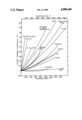
- the FIGURE is a graphical depiction of the linear thermal expansion (in percent) of various materials versus temperature.
- the ultimate thrust of the instant invention is the increased utilization of low coefficient of expansion iron-base alloys in heat engines.
- the alloy's low expansion characteristics may be used to great advantage.
- the thermal barrier preferably a partially stabilized zirconia ("PSZ"-8% Y 2 O 3 -ZrO 2 ) fairly matches the coefficient of expansion of the substrate 900 series of alloys (903, 907 and 909) and is compatible therewith.
- PSZ partially stabilized zirconia
- Y 2 O 3 -ZrO 2 fairly matches the coefficient of expansion of the substrate 900 series of alloys (903, 907 and 909) and is compatible therewith.
- the 900 series of alloys nominally contain about 38% nickel, 13-15% cobalt, 3-4.5% niobium, 1.5% titanium, optional silicon and aluminum, small quantities of other materials depending on the formulation and the remainder essentially iron (42%).
- COE coefficient of expansion
- the chemistry is restricted.
- chromium and aluminum must be limited to levels normally less than contained in other classes of superalloys. Normally this will cause oxidation at elevated temperatures as well as a rise in the COE. However, by coating these materials, oxidation resistance is maintained and temperature stresses within the substrate are kept to acceptable levels.
- the 900 series of iron-base alloys (available as INCOLOY® alloys 903, 907 and 909 [trademark of assignee]) were developed to take advantage of their low COE.
- the COE of alloy 909 is about 10.3 ⁇ m/m/° C. (5.7 ⁇ 10 -6 in/in/° F.) at about 649° C. (1200° F.)
- the nickel-base superalloys INCONEL® alloy 718 trademark of assignee
- RENE'® 41 trademark of Teledyne Allvac
- WASPALOY® trademark of United Technologies Corp.
- Iron-base superalloy A-286 has a COE of about 17.6 ⁇ m/m/° C. (9.8 ⁇ 10 -6 in/in/° F.) at 649° C. (1200° F.) (about 71% higher than 909).
- the Figure provides a comparison between various materials. It should be noted that the low expansion 900 series of alloys (particularly 907 and 909) are closer to zirconia than the typical nickel-base (and iron- and cobalt-base) superalloys.
- the COE's for alloys 907 and 909 at -18° to 93° C. (0°-200° F.) are about 8.0 ⁇ m/m/° C. (4.46 ⁇ 10 -6 in/in/° F.).
- the COE of PSZ at this same temperature range is about 11.0 ⁇ m/m/° C. (6.1 ⁇ 10 -6 in/in/° F.).
- the COE's of the PSZ at the temperature of interest are similar since they do not appreciably change.
- the coatings may be applied to the substrate by techniques known and available to those in the art. Plasma spraying was utilized in obtaining the following data. A METCO® 9MB plasma spray unit was employed. It should be appreciated, however, that the other suitable methods of applying the thermal barrier and intermediate bond coating are appropriate as well.
- a low COE is meant to be a value at least 25% lower than a corresponding nickel, iron or cobalt-base superalloy or an article of manufacture made therefrom at a given temperature.
- Test specimens were prepared. In most instances low COE INCOLOY® alloy 909 was the substrate alloy. For the purposes of comparison, INCONEL® alloy 718 and INCOLOY® alloy 800 were used for five substrates. The powders used for the intermediate bond coating were procured from commercial sources. Table I lists the compositions for the substrates and the intermediate bond coating.
- Tables II and III list the particulars of the specimens. Table II relates to the entire system, whereas Table III details three different thermal barrier coating compositions.
- the specimens were evaluated in a cyclic oxidation rig under a variety of conditions aimed at evaluating: (i) the comparative resistance to thermal fatigue (coating crack or spalling) in order to find the preferred coating system; (ii) the operating temperature below which failure does not occur and (iii) the temperature gradient across the thermal barrier coating.
- the monoliths of Table III were made by spraying the various PSZ powders on a 12.5 mm (0.5 in) diameter ⁇ 76.2 mm (3 in) length copper substrate followed by acid dissolution of the copper.
- the thermal cycling data from the specimens are presented by test run in Table IV. Each test run varied in thermal conditions and duration, consequently the data are reported by Test Run number (TR).
- the monoliths (second series of specimens) are described in Table V along with the distribution of phases in the as-received condition.
- Data from Table IV are presented in Table VI to show the effect of furnace temperature on the thermal cycle resistance of both types of PSZ (fused and sintered) coatings on FeCrAlY and NiCrAlY intermediate layers using an INCOLOY® alloy 909 substrate.
- Table VII summarizes the sustainable temperature gradient as measured at different operating temperatures and the thermal cycle history of air cooled (0.2 m 3 /hr [8 ft 3 /hr]) hollow pin 12.
- Table VIII A more detailed sustainable temperature gradient versus environmental temperature is given in Table VIII for pin 12. These temperature values are not rounded.
- Table IX compares the thermal cycle resistance of sintered PSZ coating on Ni 211 intermediate layer on INCOLOY® alloy 909 versus INCONEL® alloy 718 substrates at two furnace temperatures. Table X shows the effect of sintered PSZ thickness on two thicknesses of Ni 211 intermediate layer of INCOLOY® alloy 909 at a furnace temperature of 1000° C. (1830° F.).
- Table XI presents the thermal cycle resistance of INCOLOY® alloy 909 substrate versus INCONEL® alloy 718 and INCOLOY® alloy 800 substrates at equivalent sintered PSZ coating and Ni 211 intermediate layer thicknesses at 1000° C. (1830° F.).
- duplex PSZ coated INCOLOY® alloy 909 can be used in higher temperature environments than uncoated INCOLOY® alloy 909. It has been additionally shown that thermal barrier coated INCOLOY® alloy 909 as a composite system has greater thermal cycle resistance than does thermal barrier coated INCONEL® alloy 718 or thermal barrier coated INCOLOY® alloy 800. The instant system has been shown to tolerate at least up to 871° C. (1600° F.) with an air flow of only 0.2 m 3 /hr (8 ft 3 /hr) for at least 5000 cycles. It outperformed an identically tested alloy 718 NiCrAlY bond coat/PSZ composite which failed in less than 400 cycles.
- the performance of the two intermediate layers are equivalent at 650° C. (1220° F.). However, at 910° C. (1670° F.) and above, the NiCrAlY intermediate layer (Ni 211) is preferred over the FeCrAlY intermediate layer (Fe 124). Again, a reason for this result has yet to be established.
- Table X clearly shows the marked improvement in thermal cycle resistance that is achieved when INCOLOY® alloy 909 is used as the substrate for a sintered PSZ coating (0.5 mm [0.02 in]) on a NiCrAlY (Ni 211) (0.1 mm [0.004 in]) intermediate layer over that of the duplicate coating on INCO alloy 718 (see Table XI for additional comparison with INCONEL® alloy 718 and INCOLOY® alloy 800).
- the PVD coating of Ni 963 was not roughened prior to either PVD or plasma spraying (of PSZ coating), consequently, the composite failed rapidly (Pin 16 in TR 4 and 5, data presented in Table IV).
- Pin #12 from Table II was machined with a 6.3 mm (0.25 in) drill to make a hole to the dome of the test pin and using a small diameter tube and laboratory compressed air at 0.2 m 3 /hr (8 ft 3 /hr), the pin was air cooled while being tested in TR's 3, 6 and 7.
- the sustained temperature gradient and number of thermal cycles at each test temperature are given in Table VIII and a profile of the sustainable temperature gradients from 604° C. (1120° F.) to 1019° C. (1866° F.) are given in Table IX. Note that the sustainable temperature gradient gradually decreases as the temperature increases for the 0.5 mm (0.02 in) PSZ coating. Nonetheless, air cooled engine components made from the materials disclosed herein appear to be acceptable and overcome the difficulties envisioned with conventional 900 series alloys.
Landscapes
- Chemical & Material Sciences (AREA)
- Engineering & Computer Science (AREA)
- Metallurgy (AREA)
- Chemical Kinetics & Catalysis (AREA)
- Materials Engineering (AREA)
- Mechanical Engineering (AREA)
- Inorganic Chemistry (AREA)
- Organic Chemistry (AREA)
- Physics & Mathematics (AREA)
- Plasma & Fusion (AREA)
- Ceramic Engineering (AREA)
- Coating By Spraying Or Casting (AREA)
- Turbine Rotor Nozzle Sealing (AREA)
- Other Surface Treatments For Metallic Materials (AREA)
Abstract
Description
                                  TABLE I
__________________________________________________________________________
COMPOSITION OF SUBSTRATES AND INTERMEDIATE LAYERS
Alloy Substrates
         Ni Co   Fe Cr Cb
                         Ti
                           Al Si   Other
__________________________________________________________________________
909      38.2
            13.0 Bal.
                    -- 4.7
                         1.5
                           0.03
                              0.4  --
718      52.0
            1.0 max.
                 Bal.
                    19.0
                       5.2
                         0.8
                           0.5
                              0.35 max.
                                   --
800      32.0
            --   Bal.
                    21.0
                       --
                         0.4
                           0.4
                              1.0 max.
                                   --
Intermediate
Layers
Ni 211   Bal.
            --   -- 22.0
                       --
                         --
                           10.0
                              --   1Y
Fe 124   -- --   Bal.
                    24 --
                         --
                           8  --   .5Y
Ni 963   60.0
            --   Bal.
                    22.5
                       --
                         --
                           6.8
                              --   --
__________________________________________________________________________
              TABLE II
______________________________________
COMPOSITION OF TEST PIN SERIES
                   Type of  Intermediate
Sample
      8% Y.sub.2 O.sub.3 -- ZrO.sub.2
                   PSZ      Layer     Type of
No.   microns (mils)
                   Powder   microns (mils)
                                      Powder
______________________________________
 0    500 (20)     Sintered 100 (4)   Ni 211
 1    500 (20)     Fused    100 (4)   Fe 124
 2    500 (20)     Fused    100 (4)   Fe 124
 3    500 (20)     Fused    100 (4)   Fe 124
 4    500 (20)     Sintered 100 (4)   Fe 124
 5    500 (20)     Sintered 100 (4)   Fe 124
 6    500 (20)     Sintered 100 (4)   Fe 124
 7    500 (20)     Fused    100 (4)   Ni 211
 8    500 (20)     Fused    100 (4)   Ni 211
 9    500 (20)     Fused    100 (4)   Ni 211
10    500 (20)     Sintered 100 (4)   Ni 211
11    500 (20)     Sintered 100 (4)   Ni 211
 12*  500 (20)     Sintered 100 (4)   Ni 211
 16** 500 (20)     Fused      10 (0.4)
                                      Ni 963
19    500 (20)     Fused    100 (4)   Ni 211
20    500 (20)     Fused    100 (4)   Ni 211
21    500 (20)     Sintered 100 (4)   Ni 211
22    1000 (40)    Sintered 100 (4)   Ni 211
23    2000 (80)    Sintered 100 (4)   Ni 211
30    500 (20)     Sintered 200 (8)   Ni 211
31    1000 (40)    Sintered 200 (8)   Ni 211
32    2000 (80)    Sintered 200 (8)   Ni 211
37    1000 (40)    Sintered 100 (4)   Ni 211
39    1000 (40)    Sintered 200 (8)   Ni 211
42    1000 (40)    Sintered 100 (4)   Ni 211
______________________________________
 All domed pin substrates are INCOLOY ® alloy 909 (about 12.7 mm [0.5
 in] diameter × 76.2 mm [3.0 in] long) except 19, 20, 37 and 38 whic
 were INCONEL ® alloy 718 and 42 which was INCOLOY ® alloy 800.
 *Pin #12 was machined to hollow (6.3 mm [0.25 in] diameter) the interior
 to the dome of the pin
 **Intermediate layer was a plasma vapor coated deposition (PVD)
              TABLE III
______________________________________
COMPOSITION OF VARIOUS TYPES OF
PARTIALLY STABILIZED ZIRCONIA MONOLITHS
Monolith No.
          Composition   Type
______________________________________
M-2        8% Y.sub.2 O.sub.3 -- ZrO.sub.2
                        Fused and crushed
M-5        8% Y.sub.2 O.sub.3 -- ZrO.sub.2
                        Sintered and crushed
M-7        8% Y.sub.2 O.sub.3 -- ZrO.sub.2
                        Spherodized
M-10      12% Y.sub.2 O.sub.3 -- ZrO.sub.2
                        Fused and crushed
M-11      12% Y.sub.2 O.sub.3 -- ZrO.sub.2
                        Fused and crushed
M-13      20% Y.sub.2 O.sub.3 -- ZrO.sub.2
                        Fused and crushed
______________________________________
              TABLE IV
______________________________________
 THERMAL CYCLE RESISTANCE OF PSZ COATED PINS
______________________________________
TR 1
Conditions
______________________________________
Furnace temperature    915° C. (1680° F.)
Temperature at Core of Pin in Furnace
                       700° C. (1290° F.)
Temperature at Core of Pin out of Furnace
                       205° C. (400°  F.)
Cycle Times            15 min. in furnace/
                        5 min. out
______________________________________
Pin No.     Results
______________________________________
0           4536 cycles (63 days) without failure.
            Metallographic sample taken and pin 0
            restarted in TR 4.
______________________________________
TR 2
Conditions
______________________________________
Furnace temperature    900° C. (1650° F.)
Temperature at Core of Pin in Furnace
                       820° C. (1510° F.)
Temperature at Core of Pin out of Furnace
                       205° C. (400°  F.)
Cycle Times            30 min. in furnace/
                       10 min. out
______________________________________
Pin No.     Results
______________________________________
1           Failed in 1152 cycles (32 days) with
            longitudinal cracks and peeling from
            exposed end.
4           Failed in 1260 cycles (35 days) similar
            to Pin 1.
7           Failed in 1260 cycles (35 days) minor
            longitudinal crack emanating from
            exposed end.
10          No failure after 1260 cycles (35 days)
            Pin 10 restarted in TR 4
______________________________________
TR 3
Conditions
______________________________________
Furnace temperature     880° C. (1610° F.)
Temperature at Core of Pin with Air Flowing
                        740° C. (1365° F.)
Temperature of Core of Pin without Air
                        820° C. (1510° F.)
Flowing
Temperature of Core of Pin with Air Flowing
                         70° C. (160°  F.)
and Outside of Furnace
Cycle Times             30 min. in fur-
                        nace/10 min. out
______________________________________
Pin No.      Results
______________________________________
12 (Air Cooled)
             No failure after 1044 cycles (29 days)
             Pin 12 restarted in TR 6
______________________________________
TR 4 AND 5
Conditions
______________________________________
Furnace temperature    900° C. (1650° F.)
Temperature at Core of Pin in Furnace
                       820° C. (1510° F.)
Temperature at Core of Pin out of Furnace
                       205° C. (400°  F.)
Cycle Times            15 min. in furnace/
                        5 min. out
______________________________________
Pin No.       Results
______________________________________
0             396 cycles then restarted in TR 6.
10            Failed after 324 cycles (9 days) with
              hairline longitudinal crack - total of
              1584 cycles (TR 2 and TR 4).
16            Failed after 144 cycles (4 days) with
              extensive longitudinal cracks.
19 (718 substrate)
              Failed after 360 cycles (10 days).
______________________________________
TR 6
Conditions
______________________________________
Furnace temperature    1015° C. (1860° F.)
Temperature at Core of Pin in Furnace
                        980° C. (1795° F.)
Temperature at Core of Pin out of Furnace
                        135° C. (275°  F.)
Temperature of Core of Pin 12 in Furnace
                        910° C. (1670° F.)
Temperature of Core of Pin 12 outside
                        70° C. (160°  F.)
Furnace
Cycle Times            30 min. in furnace/
                       10 min. out 1
______________________________________
Pin No.     Results
______________________________________
0           Failed in 144 cycles (cracks at bottom) -
            total of 5076 cycles (TR's 1, 4 and 6).
3           Failed in 72 cycles (2 days) with longi-
            tudinal cracks.
5           Slight peeling at bottom after 216 cycles
            (6 days) - restarted Pin 5 in TR 7.
9           Failed in 72 cycles (2 days) with longi-
            tudinal cracks.
11          Ran 216 cycles (6 days) with no failure -
            restarted Pin 11 in TR 7.
17          Failed in 7 cycles (0.2 day) with massive
            spalling at PSZ coating.
20 (718 substrate)
            Failed at 72 cycles (2 days) with crack
            on dome.
12 (Air Cooled)
            No failure in 144 cycles (4 days) - re-
            started Pin 12 in TR 7.
______________________________________
TR 7
Conditions
______________________________________
Furnace temperature     650° C. (1200° F.)
Temperature at Core of Pin in Furnace
                        640° C. (1185° F.)
Temperature at Core of Pin out of Furnace
                        205° C. (400°  F.)
Temperature of Core of Pin 12 in Furnace
                        490° C. (900°  F.)
Temperature of Core of Pin 12 out of Furnace
                         70° C. (160°  F.)
Cycle Times             30 min. in fur-
                        nace/10 min. out
______________________________________
Pin No.    Results
______________________________________
2          No failure after 1877 cycles (52 days).
5          Failed after 390 cycles (11 days) with
           cracks on dome and bottom area (plus 216
           cycles (6 days) in TR 6.
6          No failure after 1877 cycles (52 days).
8          No failure after 1877 cycles (52 days).
11         No failure after 1877 cycles (52 days)
           plus 216 cycles (6 days) in TR 6.
12 (Air Cooled)
           Cracks on dome after 595 cycles (17 days).
           Cracks first observed at 390 cycles (11
           days). Pin 12 had total 1783 cycles (50
           days) in TR's 3, 4, 6 and 7. Pin 12
           restarted in TR 6
______________________________________
TR 4 AND 5 COMBINED
Conditions
______________________________________
Furnace temperature    900° C. (1650° F.)
Temperature at Core of Pin in Furnace
                       820° C. (1510° F.)
Temperature at Core of Pin out of Furnace
                       205° C. (400°  F.)
Cycle Times            15 min. in furnace/
                        5 min. out
______________________________________
TR 8
Conditions
______________________________________
Furnace temperature    1000° C. (1830° F.)
Temperature at Core of Pin in Furnace
                        994° C. (1830° F.)
Temperature at Core of Pin out of Furnace
                        205° C. (400°  F.)
Cycle Times            60 min. in furnace/
                       10 min. out
______________________________________
Pin No.       Results
______________________________________
21            No failure after 750 cycles (36 days).
22            Crack on dome at 190 cycles (9 days)
              (no propagating after 750 cycles [36
              days]).
23            Failed at 25 cycles (1 day).
30            No failure after 750 cycles (36 days).
31            Failed at 40 cycles (2 days).
32            Failed at 25 cycles (1 day).
37 (718 substrate)
              Failed at 41 cycles (2 days).
39 (718 substrate)
              Failed at 21 cycles (1 day).
42 (800 substrate)
              Failed at 39 cycles (2 days).
______________________________________
              TABLE V
______________________________________
PHASE IDENTIFICATION OF PLASMA
SPRAYED MONOLITHS
                   Phase Distribution
Monolith                 Tetra-        Mono-
No.    Type PSZ          gonal   FCC   clinic
______________________________________
M-2     8% Y.sub.2 O.sub.3 PSZ-Fused
                         100%    --    --
M-5     8% Y.sub.2 O.sub.3 PSZ-Sintered
                         100%    --    --
M-7     8% Y.sub.2 O.sub.3 PSZ-Spheroidized
                         100%    --    --
M-10   12% Y.sub.2 O.sub.3 PSZ-Fused
                          57%     43%  --
M-11   12% Y.sub.2 O.sub.3 PSZ-Fused
                          41%     59%  --
M-13   20% Y.sub.2 O.sub.3 PSZ-Fused
                         --      100%  --
______________________________________
  T1 TABLE VI-EFFECT OF FURNACE TEMPERATURE ON THERMAL? -CYCLE RESISTANCE
 OF FUSED AND SINTERED PSZ? -COATINGS ON FeCrAlY AND NiCrAlY INTERMEDIATE?
 -LAYERS USING AN INCOLOY ® ALLOY 909 SUBSTRATE? -? ? Cycles @? Cycles
 @? Cycles @? -? Intermediate? 650° C.? 910° C.? 1015°
 C.? -TBC Type? Layer? (1220° F.)? (1670° F.)? (1860°
 F.)? -Fused Fe 124 >1877 1052 72 -Sintered Fe 124 >1877 1186 208 ? -Fused
 Ni 211 >1877 1160 72 -Sintered Ni 211 >1877 5076 216*? -
              TABLE VII
______________________________________
HISTORY OF AIR COOLED (0.2 m.sup.3 /hr [8 ft.sup.3 /hr]) PIN #12
     Furnace,                          #
TR   °C. (°F.)
               Core, °C. (°F.)
                           Difference, °C. (°F.)
                                       Cycles
______________________________________
3     880 (1610)
               740 (1365)  140 (245)   1044
6    1015 (1860)
               910 (1670)  105 (190)    144
7     650 (1200)
               505 (940)   145 (260)    595
______________________________________
              TABLE VIII
______________________________________
SUSTAINABLE TEMPERATURE GRADIENT
EXPERIENCED BY PIN #12 VERSUS ENVIRONMENTAL
TEMPERATURE USING INTERNAL AIR FLOW
OF 0.2 m.sup.3 /hr (8 ft.sup.3 /hr)
Furnace Temperature,
               Core Temperature,
                             Difference,
°C. (°F.)
               °C. (°F.)
                             °C. (°F.)
______________________________________
1019 (1866)    916 (1680)    103 (186)
890 (1634)     742 (1368)    148 (266)
809 (1488)     650 (1202)    159 (286)
719 (1325)     556 (1032)    163 (293)
604 (1120)     440 (824)     164 (296)
______________________________________
              TABLE IX
______________________________________
THERMAL CYCLE RESISTANCE OF SINTERED PSZ
COATING ON NiCrAlY (Ni 211) INTERMEDIATE LAYER
ON INCOLOY ® ALLOY 900 VERSUS INCONEL ® ALLOY
718 SUBSTRATES AT 900° C. (1650° F.) AND
1015° C. (1860° F.)
                Cycles to Failure
Furnace Temperature, °C. (°F.)
                  Alloy 909 Alloy 718
______________________________________
 900 (1650)       5076      360
1015 (1860)        216*      72
______________________________________
 *360 cycles initially at 650° C. (1200° F.)
              TABLE X
______________________________________
EFFECT OF SINTERED PSZ THICKNESS ON TWO
THICKNESSES OF NiCrAlY (Ni 211) INTERMEDIATE
LAYER ON INCOLOY ® ALLOY 909 AT FURNACE
TEMPERATURE OF 1000° C. (1830° F.)
       Ni 211     Sintered PSZ
       Thickness  thickness,
       microns    microns
Pin No.
       (mils)     (mils)     Cycles to Failure
______________________________________
21     100 (4)     500 (20)  700
22     100 (4)    1000 (40)  190
                             (minor crack on dome)
23     100 (4)    2000 (80)  25
30     200 (8)     500 (20)  700
31     200 (8)    1000 (40)  40
32     200 (8)    2000 (80)  25
______________________________________
              TABLE XI
______________________________________
COMPARISON OF THERMAL CYCLE RESISTANCE OF
INCOLOY ® ALLOY 909 VERSUS INCONEL ® ALLOY 718
AND INCOLOY ® ALLOY 800 SUBSTRATES AT
EQUIVALENT SINTERED PSZ COATING
AND NiCrAlY (Ni 211) INTERMEDIATE LAYER
THICKNESS AT 1000° C. (1830° F.)
                        Sintered
             Ni 211     PSZ
             thickness  thickness
Pin  Sub-    microns    microns
No.  strate  (mils)     (mils) Cycles to Failure
______________________________________
22   909     100 (4)    1000 (40)
                               190
                               (minor crack on dome)
37   718     100 (4)    1000 (40)
                               41
42   800     100 (4)    1000 (40)
                               39
31   909     200 (8)    1000 (40)
                               40
39   718     200 (8)    1000 (40)
                               21
______________________________________
Claims (7)
Priority Applications (5)
| Application Number | Priority Date | Filing Date | Title |
|---|---|---|---|
| US07/183,675 US4900640A (en) | 1988-04-19 | 1988-04-19 | Low coefficient of expansion alloys having a thermal barrier |
| CA000596840A CA1338806C (en) | 1988-04-19 | 1989-04-17 | Low coefficient of expansion alloys having a thermal barrier |
| JP1098661A JPH0832960B2 (en) | 1988-04-19 | 1989-04-18 | Low expansion coefficient alloy with thermal barrier |
| EP89106952A EP0338520B1 (en) | 1988-04-19 | 1989-04-19 | Low coefficient of expansion alloys having a thermal barrier coating |
| DE8989106952T DE68905854T2 (en) | 1988-04-19 | 1989-04-19 | LESS EXPANSION COEFFICIENT ALLOYS COATED WITH A HEAT-INSULATING LAYER. |
Applications Claiming Priority (1)
| Application Number | Priority Date | Filing Date | Title |
|---|---|---|---|
| US07/183,675 US4900640A (en) | 1988-04-19 | 1988-04-19 | Low coefficient of expansion alloys having a thermal barrier |
Publications (1)
| Publication Number | Publication Date |
|---|---|
| US4900640A true US4900640A (en) | 1990-02-13 |
Family
ID=22673846
Family Applications (1)
| Application Number | Title | Priority Date | Filing Date |
|---|---|---|---|
| US07/183,675 Expired - Lifetime US4900640A (en) | 1988-04-19 | 1988-04-19 | Low coefficient of expansion alloys having a thermal barrier |
Country Status (5)
| Country | Link |
|---|---|
| US (1) | US4900640A (en) |
| EP (1) | EP0338520B1 (en) |
| JP (1) | JPH0832960B2 (en) |
| CA (1) | CA1338806C (en) |
| DE (1) | DE68905854T2 (en) |
Cited By (12)
| Publication number | Priority date | Publication date | Assignee | Title |
|---|---|---|---|---|
| US5015502A (en) * | 1988-11-03 | 1991-05-14 | Allied-Signal Inc. | Ceramic thermal barrier coating with alumina interlayer |
| US5032557A (en) * | 1990-07-02 | 1991-07-16 | Tocalo Co., Ltd. | Thermal spray material and and thermal sprayed member using the same |
| US5066458A (en) * | 1989-02-22 | 1991-11-19 | Carpenter Technology Corporation | Heat resisting controlled thermal expansion alloy balanced for having globular intermetallic phase |
| US5238752A (en) * | 1990-05-07 | 1993-08-24 | General Electric Company | Thermal barrier coating system with intermetallic overlay bond coat |
| US5279111A (en) * | 1992-08-27 | 1994-01-18 | Inco Limited | Gas turbine cooling |
| US5498484A (en) * | 1990-05-07 | 1996-03-12 | General Electric Company | Thermal barrier coating system with hardenable bond coat |
| US5780110A (en) * | 1995-12-22 | 1998-07-14 | General Electric Company | Method for manufacturing thermal barrier coated articles |
| US6123997A (en) * | 1995-12-22 | 2000-09-26 | General Electric Company | Method for forming a thermal barrier coating |
| US6333121B1 (en) | 1992-10-13 | 2001-12-25 | General Electric Company | Low-sulfur article having a platinum-aluminide protective layer and its preparation |
| US6670049B1 (en) * | 1995-05-05 | 2003-12-30 | General Electric Company | Metal/ceramic composite protective coating and its application |
| US20060251916A1 (en) * | 2004-09-28 | 2006-11-09 | Hideyuki Arikawa | High temperature component with thermal barrier coating and gas turbine using the same |
| US20110086163A1 (en) * | 2009-10-13 | 2011-04-14 | Walbar Inc. | Method for producing a crack-free abradable coating with enhanced adhesion |
Families Citing this family (4)
| Publication number | Priority date | Publication date | Assignee | Title |
|---|---|---|---|---|
| RU2115812C1 (en) * | 1994-02-16 | 1998-07-20 | Юнайтед Технолоджиз Корпорейшн | Method and device for holding molten material during combustion process in gas-turbine engine |
| FR2716898B1 (en) * | 1994-03-01 | 1996-06-07 | Peugeot | Piece, such as a foundry mold, and its production process. |
| DE19934418A1 (en) * | 1999-07-22 | 2001-01-25 | Abb Alstom Power Ch Ag | Process for coating a locally differently stressed component |
| US7867626B2 (en) | 2007-09-14 | 2011-01-11 | Siemens Energy, Inc. | Combustion turbine component having rare earth FeCrAI coating and associated methods |
Citations (7)
| Publication number | Priority date | Publication date | Assignee | Title |
|---|---|---|---|---|
| US4055705A (en) * | 1976-05-14 | 1977-10-25 | The United States Of America As Represented By The Administrator Of The National Aeronautics And Space Administration | Thermal barrier coating system |
| US4248940A (en) * | 1977-06-30 | 1981-02-03 | United Technologies Corporation | Thermal barrier coating for nickel and cobalt base super alloys |
| US4255495A (en) * | 1979-10-31 | 1981-03-10 | The United States Of America As Represented By The Administrator Of The National Aeronautics And Space Administration | Corrosion resistant thermal barrier coating |
| US4335190A (en) * | 1981-01-28 | 1982-06-15 | The United States Of America As Represented By The Administrator Of The National Aeronautics And Space Administration | Thermal barrier coating system having improved adhesion |
| US4485151A (en) * | 1982-05-06 | 1984-11-27 | The United States Of America As Represented By The Administrator Of The National Aeronautics And Space Administration | Thermal barrier coating system |
| US4535033A (en) * | 1983-08-16 | 1985-08-13 | The United States Of America As Represented By The Administrator Of The National Aeronautics And Space Administration | Thermal barrier coating system |
| US4576874A (en) * | 1984-10-03 | 1986-03-18 | Westinghouse Electric Corp. | Spalling and corrosion resistant ceramic coating for land and marine combustion turbines |
Family Cites Families (8)
| Publication number | Priority date | Publication date | Assignee | Title |
|---|---|---|---|---|
| JPS55112804A (en) * | 1979-02-26 | 1980-09-01 | Toshiba Corp | Manufacturing gas turbine blade |
| JPS5923962B2 (en) * | 1980-06-12 | 1984-06-06 | 飯田工業株式会社 | Fin gajo inter machine |
| US4487743A (en) * | 1982-08-20 | 1984-12-11 | Huntington Alloys, Inc. | Controlled expansion alloy |
| JPS6154932A (en) * | 1984-08-27 | 1986-03-19 | トヨタ自動車株式会社 | Heat-resistant part and manufacture thereof |
| DE3513882A1 (en) * | 1985-04-17 | 1986-10-23 | Plasmainvent AG, Zug | PROTECTIVE LAYER |
| JPS62207885A (en) * | 1986-03-07 | 1987-09-12 | Toshiba Corp | High temperature heat resistant member |
| JPH06102822B2 (en) * | 1986-03-12 | 1994-12-14 | 株式会社日立製作所 | Heat-resistant member with ceramic coating |
| JPS63487A (en) * | 1986-06-19 | 1988-01-05 | Tookaro Kk | Heat resistance member having oxide film on coating of chromium-contained thermal spraying metal |
-
1988
- 1988-04-19 US US07/183,675 patent/US4900640A/en not_active Expired - Lifetime
-
1989
- 1989-04-17 CA CA000596840A patent/CA1338806C/en not_active Expired - Fee Related
- 1989-04-18 JP JP1098661A patent/JPH0832960B2/en not_active Expired - Lifetime
- 1989-04-19 EP EP89106952A patent/EP0338520B1/en not_active Expired - Lifetime
- 1989-04-19 DE DE8989106952T patent/DE68905854T2/en not_active Expired - Fee Related
Patent Citations (7)
| Publication number | Priority date | Publication date | Assignee | Title |
|---|---|---|---|---|
| US4055705A (en) * | 1976-05-14 | 1977-10-25 | The United States Of America As Represented By The Administrator Of The National Aeronautics And Space Administration | Thermal barrier coating system |
| US4248940A (en) * | 1977-06-30 | 1981-02-03 | United Technologies Corporation | Thermal barrier coating for nickel and cobalt base super alloys |
| US4255495A (en) * | 1979-10-31 | 1981-03-10 | The United States Of America As Represented By The Administrator Of The National Aeronautics And Space Administration | Corrosion resistant thermal barrier coating |
| US4335190A (en) * | 1981-01-28 | 1982-06-15 | The United States Of America As Represented By The Administrator Of The National Aeronautics And Space Administration | Thermal barrier coating system having improved adhesion |
| US4485151A (en) * | 1982-05-06 | 1984-11-27 | The United States Of America As Represented By The Administrator Of The National Aeronautics And Space Administration | Thermal barrier coating system |
| US4535033A (en) * | 1983-08-16 | 1985-08-13 | The United States Of America As Represented By The Administrator Of The National Aeronautics And Space Administration | Thermal barrier coating system |
| US4576874A (en) * | 1984-10-03 | 1986-03-18 | Westinghouse Electric Corp. | Spalling and corrosion resistant ceramic coating for land and marine combustion turbines |
Non-Patent Citations (14)
| Title |
|---|
| "Ceramic-Coated Metals can Survive Contact with Hot Working Fluid" by S. R. Levine and R. A. Miller, Research and Development, Mar. 1984, 122-125 (pp. 279-282). |
| "Effect of Thermal Cycling On ZrO2 -Y2 O3 Thermal Barrier Coatings" by G. McDonald and R. C. Hendricks, NASA Technical Memorandum 81480, Apr. 21-25, 1980 Conference. |
| "Failure Mechanisms of Thermal Barrier Coatings Exposed to Elevated Temperatures" by R. A. Miller and C. E. Lowell, Thin Solid Films, 95 (1982), pp. 265-273, Apr. 5-8, 1982. |
| "Optimization of the NiCrAl-Y/ZrO2 -Y2 O3 Thermal Barrier System" by S. Stecura, NASA TM-86905, May 5-9, 1985. |
| "Practical Aspects of Ultra-Thick Thermal Barrier Coatings" by D. H. Harris, Journal of Materials for Energy Systems, vol. 8, No. 3, Dec. 1986, pp. 267-272. |
| "Thermal Barrier Coatings for Engine Applications" by J. A. Colwell, Battelle Columbus Division, MCIC-86-C2, Aug. 1986. |
| Ceramic Coated Metals can Survive Contact with Hot Working Fluid by S. R. Levine and R. A. Miller, Research and Development, Mar. 1984, 122 125 (pp. 279 282). * |
| Effect of Thermal Cycling On ZrO 2 Y 2 O 3 Thermal Barrier Coatings by G. McDonald and R. C. Hendricks, NASA Technical Memorandum 81480, Apr. 21 25, 1980 Conference. * |
| Failure Mechanisms of Thermal Barrier Coatings Exposed to Elevated Temperatures by R. A. Miller and C. E. Lowell, Thin Solid Films, 95 (1982), pp. 265 273, Apr. 5 8, 1982. * |
| McKee, D W. et al., "Resistance of Thermal Barrier Ceramic Coatings to Hot Salt Corrosion", Thin Solid Films, 73 (1980), pp. 439-445. |
| McKee, D W. et al., Resistance of Thermal Barrier Ceramic Coatings to Hot Salt Corrosion , Thin Solid Films, 73 (1980), pp. 439 445. * |
| Optimization of the NiCrAl Y/ZrO 2 Y 2 O 3 Thermal Barrier System by S. Stecura, NASA TM 86905, May 5 9, 1985. * |
| Practical Aspects of Ultra Thick Thermal Barrier Coatings by D. H. Harris, Journal of Materials for Energy Systems, vol. 8, No. 3, Dec. 1986, pp. 267 272. * |
| Thermal Barrier Coatings for Engine Applications by J. A. Colwell, Battelle Columbus Division, MCIC 86 C2, Aug. 1986. * |
Cited By (23)
| Publication number | Priority date | Publication date | Assignee | Title |
|---|---|---|---|---|
| US5015502A (en) * | 1988-11-03 | 1991-05-14 | Allied-Signal Inc. | Ceramic thermal barrier coating with alumina interlayer |
| US5066458A (en) * | 1989-02-22 | 1991-11-19 | Carpenter Technology Corporation | Heat resisting controlled thermal expansion alloy balanced for having globular intermetallic phase |
| US5238752A (en) * | 1990-05-07 | 1993-08-24 | General Electric Company | Thermal barrier coating system with intermetallic overlay bond coat |
| US5498484A (en) * | 1990-05-07 | 1996-03-12 | General Electric Company | Thermal barrier coating system with hardenable bond coat |
| US5032557A (en) * | 1990-07-02 | 1991-07-16 | Tocalo Co., Ltd. | Thermal spray material and and thermal sprayed member using the same |
| US5279111A (en) * | 1992-08-27 | 1994-01-18 | Inco Limited | Gas turbine cooling |
| GB2270126A (en) * | 1992-08-27 | 1994-03-02 | Inco Ltd | Cooling turbine blades |
| JPH06212903A (en) * | 1992-08-27 | 1994-08-02 | Inco Ltd | Cooling of gas turbine |
| GB2270126B (en) * | 1992-08-27 | 1995-08-02 | Inco Ltd | Gas turbine cooling |
| JP2771430B2 (en) | 1992-08-27 | 1998-07-02 | インコ、リミテッド | Gas turbines and turbine blades |
| US20040123923A1 (en) * | 1992-10-13 | 2004-07-01 | Walston William S. | Low sulfur article having a platinum-aluminide protective layer, and its preparation |
| US6333121B1 (en) | 1992-10-13 | 2001-12-25 | General Electric Company | Low-sulfur article having a platinum-aluminide protective layer and its preparation |
| US6656533B2 (en) | 1992-10-13 | 2003-12-02 | William S. Walston | Low-sulfur article having a platinum-aluminide protective layer, and its preparation |
| US6797408B2 (en) | 1992-10-13 | 2004-09-28 | General Electric Company | Low-sulfur article having a platinum-aluminide protective layer, and its preparation |
| US20050121116A1 (en) * | 1992-10-13 | 2005-06-09 | General Electric Company | Low-sulfur article having a platinum aluminide protective layer and its preparation |
| US6969558B2 (en) | 1992-10-13 | 2005-11-29 | General Electric Company | Low sulfur article having a platinum-aluminide protective layer, and its preparation |
| US7510779B2 (en) | 1992-10-13 | 2009-03-31 | General Electric Company | Low-sulfur article having a platinum aluminide protective layer and its preparation |
| US6670049B1 (en) * | 1995-05-05 | 2003-12-30 | General Electric Company | Metal/ceramic composite protective coating and its application |
| US6123997A (en) * | 1995-12-22 | 2000-09-26 | General Electric Company | Method for forming a thermal barrier coating |
| US5780110A (en) * | 1995-12-22 | 1998-07-14 | General Electric Company | Method for manufacturing thermal barrier coated articles |
| US20060251916A1 (en) * | 2004-09-28 | 2006-11-09 | Hideyuki Arikawa | High temperature component with thermal barrier coating and gas turbine using the same |
| US7901790B2 (en) * | 2004-09-28 | 2011-03-08 | Hitachi, Ltd. | High temperature component with thermal barrier coating and gas turbine using the same |
| US20110086163A1 (en) * | 2009-10-13 | 2011-04-14 | Walbar Inc. | Method for producing a crack-free abradable coating with enhanced adhesion |
Also Published As
| Publication number | Publication date |
|---|---|
| JPH01306573A (en) | 1989-12-11 |
| EP0338520A1 (en) | 1989-10-25 |
| EP0338520B1 (en) | 1993-04-07 |
| DE68905854D1 (en) | 1993-05-13 |
| DE68905854T2 (en) | 1993-07-15 |
| JPH0832960B2 (en) | 1996-03-29 |
| CA1338806C (en) | 1996-12-24 |
Similar Documents
| Publication | Publication Date | Title |
|---|---|---|
| US4900640A (en) | Low coefficient of expansion alloys having a thermal barrier | |
| US6106959A (en) | Multilayer thermal barrier coating systems | |
| EP1321542B1 (en) | Thermal barrier coating systems and materials | |
| CA2284363C (en) | Thermal barrier coating systems and materials | |
| KR100687123B1 (en) | Thin 7WS interfacial layer as a periodic endurance (break) lifespan for low conductivity TVs | |
| US6306515B1 (en) | Thermal barrier and overlay coating systems comprising composite metal/metal oxide bond coating layers | |
| US5455119A (en) | Coating composition having good corrosion and oxidation resistance | |
| US5683761A (en) | Alpha alumina protective coatings for bond-coated substrates and their preparation | |
| EP1340833B1 (en) | Hybrid thermal barrier coating and method of making the same | |
| US6165628A (en) | Protective coatings for metal-based substrates and related processes | |
| US20110151132A1 (en) | Methods for Coating Articles Exposed to Hot and Harsh Environments | |
| US20050282020A1 (en) | Smooth outer coating for combustor components and coating method therefor | |
| KR20030011690A (en) | Thermal barrier coating | |
| CA1330638C (en) | Thermal barrier coating system | |
| KR20010113888A (en) | Thermal barrier coating | |
| US20070190354A1 (en) | Low thermal expansion bondcoats for thermal barrier coatings | |
| Johner et al. | Flame rig testing of thermal barrier coatings and correlation with engine results | |
| JPH09287065A (en) | Heat resistant coating member | |
| JP3353035B2 (en) | Thermal insulation coating system | |
| JPH10110279A (en) | Ceramic coated heat resistant member, its use and gas turbine | |
| Agüero et al. | Quasicrystalline Materials as Thermal Barrier and Hot Corrosion Resistant Coatings | |
| 刘培生 et al. | High-temperature protective coatings on superalloys |
Legal Events
| Date | Code | Title | Description |
|---|---|---|---|
| AS | Assignment |
Owner name: INCO LIMITED, ROYAL TRUST TOWER TORONTO-DOMINION C Free format text: ASSIGNMENT OF ASSIGNORS INTEREST.;ASSIGNORS:BELL, JAMES A. E.;DE BARBADILLO, JOHN J.;SMITH, GAYLORD D.;REEL/FRAME:004889/0270;SIGNING DATES FROM 19880411 TO 19880418 Owner name: INCO LIMITED, CANADA Free format text: ASSIGNMENT OF ASSIGNORS INTEREST;ASSIGNORS:BELL, JAMES A. E.;DE BARBADILLO, JOHN J.;SMITH, GAYLORD D.;SIGNING DATES FROM 19880411 TO 19880418;REEL/FRAME:004889/0270 |
|
| STCF | Information on status: patent grant |
Free format text: PATENTED CASE |
|
| CC | Certificate of correction | ||
| FPAY | Fee payment |
Year of fee payment: 4 |
|
| FPAY | Fee payment |
Year of fee payment: 8 |
|
| FPAY | Fee payment |
Year of fee payment: 12 |