US4900427A - Antifoulant compositions and methods - Google Patents

Antifoulant compositions and methods Download PDF

Info

Publication number
US4900427A
US4900427A US07/383,941 US38394189A US4900427A US 4900427 A US4900427 A US 4900427A US 38394189 A US38394189 A US 38394189A US 4900427 A US4900427 A US 4900427A
Authority
US
United States
Prior art keywords
amine
aldehyde
carbon atoms
alkyl
diaminomethane
Prior art date
Legal status (The legal status is an assumption and is not a legal conclusion. Google has not performed a legal analysis and makes no representation as to the accuracy of the status listed.)
Expired - Fee Related
Application number
US07/383,941
Inventor
Jerry J. Weers
Thomas J. Falkler
George G. Duggan
Robert J. Garrecht
Current Assignee (The listed assignees may be inaccurate. Google has not performed a legal analysis and makes no representation or warranty as to the accuracy of the list.)
Baker Petrolite LLC
Original Assignee
Petrolite Corp
Priority date (The priority date is an assumption and is not a legal conclusion. Google has not performed a legal analysis and makes no representation as to the accuracy of the date listed.)
Filing date
Publication date
Application filed by Petrolite Corp filed Critical Petrolite Corp
Priority to US07/383,941 priority Critical patent/US4900427A/en
Assigned to PETROLITE CORPORATION, A CORP. OF DELAWARE reassignment PETROLITE CORPORATION, A CORP. OF DELAWARE ASSIGNMENT OF ASSIGNORS INTEREST. Assignors: DUGGAN, GEORGE G., FALKLER, THOMAS J., GARRECHT, ROBERT J., WEERS, JERRY J.
Application granted granted Critical
Publication of US4900427A publication Critical patent/US4900427A/en
Priority to CA002017187A priority patent/CA2017187A1/en
Priority to DE90305598T priority patent/DE69002558T2/en
Priority to ES90305598T priority patent/ES2060039T3/en
Priority to EP90305598A priority patent/EP0409386B1/en
Anticipated expiration legal-status Critical
Expired - Fee Related legal-status Critical Current

Links

Images

Classifications

    • CCHEMISTRY; METALLURGY
    • C10PETROLEUM, GAS OR COKE INDUSTRIES; TECHNICAL GASES CONTAINING CARBON MONOXIDE; FUELS; LUBRICANTS; PEAT
    • C10GCRACKING HYDROCARBON OILS; PRODUCTION OF LIQUID HYDROCARBON MIXTURES, e.g. BY DESTRUCTIVE HYDROGENATION, OLIGOMERISATION, POLYMERISATION; RECOVERY OF HYDROCARBON OILS FROM OIL-SHALE, OIL-SAND, OR GASES; REFINING MIXTURES MAINLY CONSISTING OF HYDROCARBONS; REFORMING OF NAPHTHA; MINERAL WAXES
    • C10G9/00Thermal non-catalytic cracking, in the absence of hydrogen, of hydrocarbon oils
    • C10G9/14Thermal non-catalytic cracking, in the absence of hydrogen, of hydrocarbon oils in pipes or coils with or without auxiliary means, e.g. digesters, soaking drums, expansion means
    • C10G9/16Preventing or removing incrustation
    • YGENERAL TAGGING OF NEW TECHNOLOGICAL DEVELOPMENTS; GENERAL TAGGING OF CROSS-SECTIONAL TECHNOLOGIES SPANNING OVER SEVERAL SECTIONS OF THE IPC; TECHNICAL SUBJECTS COVERED BY FORMER USPC CROSS-REFERENCE ART COLLECTIONS [XRACs] AND DIGESTS
    • Y10TECHNICAL SUBJECTS COVERED BY FORMER USPC
    • Y10STECHNICAL SUBJECTS COVERED BY FORMER USPC CROSS-REFERENCE ART COLLECTIONS [XRACs] AND DIGESTS
    • Y10S423/00Chemistry of inorganic compounds
    • Y10S423/09Reaction techniques
    • Y10S423/14Ion exchange; chelation or liquid/liquid ion extraction

Definitions

  • the present invention relates to compositions and methods for providing antifouling protection during processing of petroleum hydrocarbons or petrochemicals at elevated temperatures. More particularly, the present invention relates to compositions and methods for providing antifouling protection on hot surfaces of furnaces, heat exchangers, reboilers, condensers, auxiliary equipment, catalyst beds and the like in petroleum refining processes, petrochemical processes and the like.
  • fouling A major problem encountered in the treatment of various hydrocarbon charge stocks is the phenomenon recognized and descriptively called fouling. This phenomenon is manifested in the form of deposits which frequently form on the metal surfaces of the processing equipment and tend to naturally decrease the efficiency of the intermediate processing operations. The results of fouling appear in the form of heat transfer loss, pressure drop, loss in throughput rate and an increase in corrosion of the equipment.
  • the charge stocks which most commonly cause fouling in intermediate refinery equipment are naphthas, gas oils, crude, and petroleum gases.
  • the naphthas or light distillates may be considered as a light oil usually having a boiling point range of 32°-260° C.
  • the gas oils are intermediates between the so-called kerosene fractions and the light lubricating oils, and generally distill in the range of 260°-540° C. Those gas oils are usually used as charges to cracking units where the molecules are broken down into smaller components.
  • the crude oils which most often cause the problem of fouling are charged to the first refining stage operations and contain all the petroleum fractions normally removed in the refining processes. Crude stocks include the residual fraction which remain after the more valuable components and solvent extractable components of the crudes have been removed.
  • the various charge stocks mentioned above are most frequently subjected to one or more of the following general type thermal or catalytic processes to produce fuel: fractionation, reforming, cracking, alkylation, isomerization, polymerization, desulfurization, hydrogenation and dehydrogenation.
  • acetylene may be produced from light naphtha or natural gas.
  • Ammonia may be produced by mixing a compressed hydrocarbon gas, liquid hydrocarbon or the like with steam. Benzene and hydrogen are reacted to produce cyclohexane.
  • Light alkane hydrocarbons may be used to produce mono-olefins and di-olefins.
  • Ethylene fuel may be heated under pressure to produce ethanol.
  • Light and heavy crude oils, as well as light hydrocarbon gases may be thermally cracked into ethylene, propylene, and C 4 olefins.
  • One known antifoulant is the Mannich condensation product of an alkylphenol, an aldehyde, and an amine.
  • U.S. Pat. No. 4,810,354 discloses a method of inhibiting fouling in hydrocarbon processing equipment by using an effective amount of the Mannich condensation product of an alkoxylated alkylphenol, an aldehyde and a polyamine.
  • the present invention provides a process for substantially reducing the fouling normally experienced in processing petroleum hydrocarbon liquids at elevated temperatures.
  • the practice of the present invention inhibits the build-up of deposits in processing equipment that would otherwise reduce throughput capacity.
  • Fouling of process equipment is inhibited from occurring by the use in hydrocarbon stock of a combination of antifoulants comprising
  • R 1 , R 2 , R 3 , and R 4 are each independently an alkyl radical containing 1-14 carbon atoms, (CH 2 ) n --OR 6 or cycloalkyl having 5 or 6 carbon atoms or wherein R 1 and R 2 and/or R 3 and R 4 are alkylene groups joined together with their adjacent N atom to form a saturated heterocyclic ring and wherein R 5 is hydrogen or methyl and R 6 is an alkyl having 1 to 5 carbon atoms and n is an integer of 2 to 5.
  • the weight ratio of component (a) to component (b) is in the range of 1:100 to 100:1.
  • process temperatures may range from 35°-540° C., normally 260°-540° C.
  • the alkylphenols and/or alkoxyphenols useful in preparing the Mannich condensation product are of the formula: ##STR2## wherein R may be a straight or branched chain alkyl radical having 1 to 100 carbon atoms and preferably from 10 to 30 carbon atoms. x and y are independently selected integers which together total 1 to 5.
  • the R and RO groups may be present on any or all the sites around the phenolic ring, i.e., ortho, meta or para. Preferably, the R groups will predominantly be meta or para. More than about 40% of the R and RO groups will be in the ortho position and preferably less than 15% of the R or Ro groups will be in the ortho position.
  • Particularly preferred alkylated phenols include p-nonylphenol and dodecllphenol. Also preferred is p-methoxyphenol and p-methyoxy-o-tertbutylphenol.
  • the amines suitable for use in the condensation reaction contain one or more amino groups and at least one active hydrogen atom.
  • Suitable amines include primary amines and secondary amines. Examples include the primary alkyl amines such as methyl amine, ethyl amine, n-propyl amine, isopropyl amine, n-butyl amine, isobutyl amine, 2-ethylhexyl amine, dodecyl amine, stearyl amine, and the like.
  • dialkyl amines may be used, such as dimethyl amine, diethyl amine, methylethyl amine, methylbutyl amine, and the like.
  • polyfunctional amines such as N,N-dimethylamino-propylamine, 3-methylaminopyridine, ethyl-4-aminopentylamine, N-(2'-aminoethyl)-piperidine, including mixtures are useful.
  • Exemplary polyamines which can be used in the preparation of the condensation product include ethylene diamine, propylenediamine, diethylenetriamine, triethylenetetraamine, tetraethylenepentamine, bishexamethylenetriamine, and the like.
  • the preferred amines include methyl amine, ethylenediamine and triethylenetetraamine.
  • Aldehydes having the following formula are suitable for use in the condensation reaction product: ##STR4## wherein R is selected from hydrogen and alkyl radicals containing 1-6 carbon atoms.
  • suitable aldehydes include formaldehyde, acetaldehyde, propanaldehyde, butylaldehyde, hexaldehyde and heptaldehyde.
  • the preferred aldehyde is formaldehyde.
  • the Mannich condensation reaction may proceed at temperatures from about 50°14 200° C. with the preferred temperature range being about 75°14 75° C.
  • the time required for completion of the condensation reaction may vary from about 1-8 hours, varying with the specific reactants chosen and the reaction temperature.
  • the molar range of alkylated and/or alkoxylated phenol, formaldehyde and amine employed generally ranges from 0.5-5 molar parts of formaldehyde per molar part of alkylated phenol.
  • the molar ratio of the phenol to amine to aldehyde varies from 1:1-5:2-5 and more preferably from 1:1-1.5:2-3.
  • a ratio of 1:1:2 is theoretical.
  • the diaminomethanes which are suitable for use in the present invention have the following chemical structure: ##STR5## wherein R 1 , R 2 , R 3 , and R 4 are each independently an alkyl radical containing to 1 to 14 carbon atoms, (CH 2 ) n --OR 6 or cycloalkyl having 5 or 6 carbon atoms and R 5 is hydrogen or methyl. R 6 is an alkyl having 1 to 5 carbon atoms and n is an integer of 2 to 5. Additionally, R 1 , R 2 , R 3 , and R 4 can be a lower alkylene wherein R 1 and R 2 alone and/or wherein R 3 and R 4 are joined together to form a five or six member saturated heterocyclic ring.
  • Such ring can also contain hetero atoms such as N, O, or S in addition to the N to which R 1 and R 2 and/or R 3 and R 4 are respectively joined together to form, for example, a piperazino ring or morpholino ring.
  • the heterocyclic compounds comprising one additive of the combination of antifouling additives of the present invention have the following structure: ##STR6## where X is selected from the group of NH, O, S, or --CHR 6 and R 5 is hydrogen or methyl and each R 7 is independently hydrogen or C 1 -C 4 alkyl and R 6 is hydrogen or C 1 -C 4 alkyl.
  • the diaminomethanes useful in the present invention can be prepared by reacting a suitable aldehyde and a suitable secondary amine or mixtures in a known and conventional manner.
  • the diaminomethanes can be obtained by reacting a secondary amine typically having the formula: ##STR7## with an aldehyde having the formula: ##STR8## in which R 1 , R 2 , R 3 , and R 4 are each independently an alkyl radical containing to 1 to 14 carbon atoms, (CH 2 ) n --OR 6 or cycloalkyl having 5 or 6 carbon atoms, R 6 is an alkyl having 1 to 5 carbon atoms and n is an integer of 2 to 5.
  • R 1 , R 2 , R 3 , and R 4 can be a lower alkylene wherein R 1 and R 2 alone and/or R 3 and R 4 are joined together to form a five or six member saturated heterocyclic ring.
  • R is hydrogen or an alkyl radical having 1 to 6 carbon atoms.
  • the secondary amine and the aldehyde are preferably combined in a mole ratio of about 2:1 , i.e., the stoichiometric amount for the formation of diaminomethane with substantially no side products.
  • the diaminomethanes useful in the present invention can be prepared under conventional dehydrating conditions whereby water is removed by any suitable means.
  • the aldehyde is added to the secondary amine and the condensate recovered by mechanically separating as much of the water of reaction as possible and distilling off the remaining water.
  • the reaction is generally exothermic and the exotherm should be controlled particularly when the aldehyde is other than formaldehyde to prevent formation of enamines.
  • the subject diamines can be formed from mixtures of different aldehydes and/or mixtures of different secondary amines.
  • the additive composition of the present invention containing the two components may be dispersed within the hydrocarbon stock within the range of 0.5 to 25,000 ppm, preferably 10-10,000 ppm.
  • the proper concentration of components will vary depending on the particular composition of hydrocarbon stock, the presence of other additives and the like.

Landscapes

  • Chemical & Material Sciences (AREA)
  • Oil, Petroleum & Natural Gas (AREA)
  • Physics & Mathematics (AREA)
  • Thermal Sciences (AREA)
  • Engineering & Computer Science (AREA)
  • Chemical Kinetics & Catalysis (AREA)
  • General Chemical & Material Sciences (AREA)
  • Organic Chemistry (AREA)
  • Production Of Liquid Hydrocarbon Mixture For Refining Petroleum (AREA)
  • Organic Low-Molecular-Weight Compounds And Preparation Thereof (AREA)

Abstract

Fouling of heat exchangers in chemical processing or oil refining systems is inhibited by incorporating into a petroleum derived stock an effective antifouling amount of a mixture of
(a) a condensation product of an alkylphenol, an aldehyde, and an amine; and
(b) a diaminomethane.

Description

FIELD OF THE INVENTION
The present invention relates to compositions and methods for providing antifouling protection during processing of petroleum hydrocarbons or petrochemicals at elevated temperatures. More particularly, the present invention relates to compositions and methods for providing antifouling protection on hot surfaces of furnaces, heat exchangers, reboilers, condensers, auxiliary equipment, catalyst beds and the like in petroleum refining processes, petrochemical processes and the like.
BACKGROUND OF THE INVENTION
It is well known to treat various oil refinery charge stocks to extract improved fuel values therefrom or to convert them to valuable petrochemicals. A major problem encountered in the treatment of various hydrocarbon charge stocks is the phenomenon recognized and descriptively called fouling. This phenomenon is manifested in the form of deposits which frequently form on the metal surfaces of the processing equipment and tend to naturally decrease the efficiency of the intermediate processing operations. The results of fouling appear in the form of heat transfer loss, pressure drop, loss in throughput rate and an increase in corrosion of the equipment.
The charge stocks which most commonly cause fouling in intermediate refinery equipment are naphthas, gas oils, crude, and petroleum gases. The naphthas or light distillates may be considered as a light oil usually having a boiling point range of 32°-260° C. The gas oils are intermediates between the so-called kerosene fractions and the light lubricating oils, and generally distill in the range of 260°-540° C. Those gas oils are usually used as charges to cracking units where the molecules are broken down into smaller components. The crude oils which most often cause the problem of fouling are charged to the first refining stage operations and contain all the petroleum fractions normally removed in the refining processes. Crude stocks include the residual fraction which remain after the more valuable components and solvent extractable components of the crudes have been removed.
Another class of hydrocarbons where fouling problems arise and which are ameliorated by the method of the present invention is the petroleum gases or normally gaseous alkane and alkene hydrocarbons which normally boil in the range of -250° to 100° C., i.e., methane, ethane, propane, butane, ethylene, propylene, etc. These hydrocarbons may be in the liquefied state or gaseous state during processing thereof in the practice of the method of the present invention.
The various charge stocks mentioned above are most frequently subjected to one or more of the following general type thermal or catalytic processes to produce fuel: fractionation, reforming, cracking, alkylation, isomerization, polymerization, desulfurization, hydrogenation and dehydrogenation.
Similar fouling problems arise in equipment used in the petrochemical industry wherein the hydrocarbon charge stock is, in most cases, heated at normal or elevated temperatures and pressures. For example, acetylene may be produced from light naphtha or natural gas. Ammonia may be produced by mixing a compressed hydrocarbon gas, liquid hydrocarbon or the like with steam. Benzene and hydrogen are reacted to produce cyclohexane. Light alkane hydrocarbons may be used to produce mono-olefins and di-olefins. Ethylene fuel may be heated under pressure to produce ethanol. Light and heavy crude oils, as well as light hydrocarbon gases may be thermally cracked into ethylene, propylene, and C4 olefins.
The foregoing examples of petrochemical processes are illustrations but not exhaustive of processes where fouling problems arise such that the practice of the method of the present invention may be used advantageously.
It is common practice to add chemical agents to the above-mentioned fuel stocks to reduce the fouling of the processing equipment. One known antifoulant is the Mannich condensation product of an alkylphenol, an aldehyde, and an amine.
U.S. Pat. No. 4,166,726 suggests the use of such condensation product as diesel fuel additives to provide improved combustion of such fuel.
U.S. Pat. No. 4,810,354 discloses a method of inhibiting fouling in hydrocarbon processing equipment by using an effective amount of the Mannich condensation product of an alkoxylated alkylphenol, an aldehyde and a polyamine.
It has been found that even with the use of the aforementioned Mannich condensation products, undesirable fouling occurs during the thermal processing of hydrocarbon stocks.
The present invention provides a process for substantially reducing the fouling normally experienced in processing petroleum hydrocarbon liquids at elevated temperatures. Thus, the practice of the present invention inhibits the build-up of deposits in processing equipment that would otherwise reduce throughput capacity.
SUMMARY OF THE INVENTION
Fouling of process equipment is inhibited from occurring by the use in hydrocarbon stock of a combination of antifoulants comprising
(a) the condensation product of an alkylphenol or alkoxylphenol, an aldehyde, and an amine; and
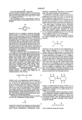
(b) a diamine having the chemical structure of: ##STR1## wherein R1, R2, R3, and R4 are each independently an alkyl radical containing 1-14 carbon atoms, (CH2)n --OR6 or cycloalkyl having 5 or 6 carbon atoms or wherein R1 and R2 and/or R3 and R4 are alkylene groups joined together with their adjacent N atom to form a saturated heterocyclic ring and wherein R5 is hydrogen or methyl and R6 is an alkyl having 1 to 5 carbon atoms and n is an integer of 2 to 5.
The weight ratio of component (a) to component (b) is in the range of 1:100 to 100:1.
DETAILED DESCRIPTION OF THE INVENTION
It has been found that a combination of additives including
(a) the condensation of an alkylphenol or alkoxyphenol, an aldehyde, and an amine; and
(b) certain diaminomethane compounds
provide excellent antifoulant activity in hydrocarbons and petrochemicals during thermal processing thereof where process temperatures may range from 35°-540° C., normally 260°-540° C.
The alkylphenols and/or alkoxyphenols useful in preparing the Mannich condensation product are of the formula: ##STR2## wherein R may be a straight or branched chain alkyl radical having 1 to 100 carbon atoms and preferably from 10 to 30 carbon atoms. x and y are independently selected integers which together total 1 to 5. The R and RO groups may be present on any or all the sites around the phenolic ring, i.e., ortho, meta or para. Preferably, the R groups will predominantly be meta or para. More than about 40% of the R and RO groups will be in the ortho position and preferably less than 15% of the R or Ro groups will be in the ortho position. Particularly preferred alkylated phenols include p-nonylphenol and dodecllphenol. Also preferred is p-methoxyphenol and p-methyoxy-o-tertbutylphenol.
The amines suitable for use in the condensation reaction contain one or more amino groups and at least one active hydrogen atom. Suitable amines include primary amines and secondary amines. Examples include the primary alkyl amines such as methyl amine, ethyl amine, n-propyl amine, isopropyl amine, n-butyl amine, isobutyl amine, 2-ethylhexyl amine, dodecyl amine, stearyl amine, and the like. Also, dialkyl amines may be used, such as dimethyl amine, diethyl amine, methylethyl amine, methylbutyl amine, and the like. Also, polyfunctional amines, such as N,N-dimethylamino-propylamine, 3-methylaminopyridine, ethyl-4-aminopentylamine, N-(2'-aminoethyl)-piperidine, including mixtures are useful. Also useful are alkylenepolyamines of the formula: ##STR3## wherein x and y are independently selected integers of 0-15 with the proviso that the sum of x+y is at least one, R and R1 are independently selected from the group of hydrogen, alkyl, aryl, aralkyl, or alkaryl having from 1 to 20 carbon atoms. Exemplary polyamines which can be used in the preparation of the condensation product include ethylene diamine, propylenediamine, diethylenetriamine, triethylenetetraamine, tetraethylenepentamine, bishexamethylenetriamine, and the like. The preferred amines include methyl amine, ethylenediamine and triethylenetetraamine.
Aldehydes having the following formula are suitable for use in the condensation reaction product: ##STR4## wherein R is selected from hydrogen and alkyl radicals containing 1-6 carbon atoms. Examples of suitable aldehydes include formaldehyde, acetaldehyde, propanaldehyde, butylaldehyde, hexaldehyde and heptaldehyde. The preferred aldehyde is formaldehyde.
The Mannich condensation reaction may proceed at temperatures from about 50°14 200° C. with the preferred temperature range being about 75°14 75° C. The time required for completion of the condensation reaction may vary from about 1-8 hours, varying with the specific reactants chosen and the reaction temperature.
The molar range of alkylated and/or alkoxylated phenol, formaldehyde and amine employed generally ranges from 0.5-5 molar parts of formaldehyde per molar part of alkylated phenol. Preferably, the molar ratio of the phenol to amine to aldehyde varies from 1:1-5:2-5 and more preferably from 1:1-1.5:2-3. For the use of a diamine a ratio of 1:1:2 is theoretical.
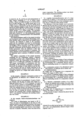
The diaminomethanes which are suitable for use in the present invention have the following chemical structure: ##STR5## wherein R1, R2, R3, and R4 are each independently an alkyl radical containing to 1 to 14 carbon atoms, (CH2)n --OR6 or cycloalkyl having 5 or 6 carbon atoms and R5 is hydrogen or methyl. R6 is an alkyl having 1 to 5 carbon atoms and n is an integer of 2 to 5. Additionally, R1, R2, R3, and R4 can be a lower alkylene wherein R1 and R2 alone and/or wherein R3 and R4 are joined together to form a five or six member saturated heterocyclic ring. Such ring can also contain hetero atoms such as N, O, or S in addition to the N to which R1 and R2 and/or R3 and R4 are respectively joined together to form, for example, a piperazino ring or morpholino ring. The heterocyclic compounds comprising one additive of the combination of antifouling additives of the present invention have the following structure: ##STR6## where X is selected from the group of NH, O, S, or --CHR6 and R5 is hydrogen or methyl and each R7 is independently hydrogen or C1 -C4 alkyl and R6 is hydrogen or C1 -C4 alkyl.
The diaminomethanes useful in the present invention can be prepared by reacting a suitable aldehyde and a suitable secondary amine or mixtures in a known and conventional manner. Thus, the diaminomethanes can be obtained by reacting a secondary amine typically having the formula: ##STR7## with an aldehyde having the formula: ##STR8## in which R1, R2, R3, and R4 are each independently an alkyl radical containing to 1 to 14 carbon atoms, (CH2)n --OR6 or cycloalkyl having 5 or 6 carbon atoms, R6 is an alkyl having 1 to 5 carbon atoms and n is an integer of 2 to 5. Additionally, R1, R2, R3, and R4 can be a lower alkylene wherein R1 and R2 alone and/or R3 and R4 are joined together to form a five or six member saturated heterocyclic ring. R is hydrogen or an alkyl radical having 1 to 6 carbon atoms. The secondary amine and the aldehyde are preferably combined in a mole ratio of about 2:1 , i.e., the stoichiometric amount for the formation of diaminomethane with substantially no side products.
The diaminomethanes useful in the present invention can be prepared under conventional dehydrating conditions whereby water is removed by any suitable means. Typically, the aldehyde is added to the secondary amine and the condensate recovered by mechanically separating as much of the water of reaction as possible and distilling off the remaining water. The reaction is generally exothermic and the exotherm should be controlled particularly when the aldehyde is other than formaldehyde to prevent formation of enamines. The subject diamines can be formed from mixtures of different aldehydes and/or mixtures of different secondary amines.
The additive composition of the present invention containing the two components, namely a Mannich condensation product and a diaminomethane, may be dispersed within the hydrocarbon stock within the range of 0.5 to 25,000 ppm, preferably 10-10,000 ppm. The proper concentration of components will vary depending on the particular composition of hydrocarbon stock, the presence of other additives and the like.
The invention will now be further disclosed in the following illustrated examples wherein parts and percentages are given on a weight basis unless otherwise specified.
EXAMPLE 1
In this example, a Mannich condensation product of an alkylphenol, an aldehyde, and a diamine was prepared.
Forty-four parts of p-nonylphenol, 12 parts of ethylene diamine, and 60 parts of xylene were mixed in a flask and heated at 60°-70° C. for 30 minutes. 32.4 parts of 37% aqueous solution of formaldehyde was added dropwise to the mixture over about a 20 minute period. Then, the resulting mixture was heated at 80°14 90° C. for one hour. Water of reaction and xylene was distilled from the flask by heating the mixture. Heating of the mixture was continued until a product temperature of 150° C. was obtained. Thereupon, the resulting condensate was cooled.
EXAMPLE 2
In this example, bis(di-n-butylamino)methane was prepared.
Two moles of dibutylamine was heated to 80° C. Then, one mole of formaldehyde in the form of 37% aqueous solution was then added dropwise to the heated amine. After completing the addition of the formaldehyde, the resulting mixture was stirred at room temperature for 15 minutes. Thereafter, water was removed by rotary evaporation. The resulting product was identified as bis(di-n-butylamino)methane.
EXAMPLE 3
In a naphtha hydrodesulfurization unit of a large commercial oil refinery, it was noted that an inordinate amount of deposits built-up on heat exchangers used in such unit in a relatively short period of time.
The efficiency of the heat transfer was so adversely affected that the unit had to be shut down and deposits removed from the heat exchangers in less than 100 days of operation. However, when 25 ppm of a mixture of 3 parts of the Mannich condensation product of Example 1 and 1 part of the diaminomethane compound of Example 2 was added to the same feed to the same unit, the efficiency of the heat transfer had not been adversely affected requiring a shut down of the unit even after over 200 days of normal operation of the unit.
While the illustrative embodiments of the invention have been described with particularity, it will be understood that various other modifications will be apparent to and can be readily made by those skilled in the art without departing from the spirit and scope of the invention. Accordingly, it is not intended that the scope of the claims appended hereto be limited to the examples and descriptions set forth hereinabove but rather that the claims be construed as encompassing all the features of patentable novelty which reside in the present invention, including all features which would be treated as equivalents thereof by those skilled in the art to which the invention pertains.
Claims (12)

What is claimed is:
1. A process of inhibiting fouling of heat exchangers in chemical processing or oil refining systems comprising incorporating into a petroleum derived stock an effective antifouling amount of a composition comprising
(a) a condensation product of an alkylphenol and/or alkoxyphenol, an aldehyde and an amine; and
(b) a diaminomethane;
the weight ratio of component (a) to component (b) being in the range of 1:100 to 100:1.
2. A process of inhibiting fouling of heat exchangers in chemical processing or oil refining systems comprising incorporating into a petroleum derived stock an effective antifouling amount of a composition comprising
(a) a Mannich condensation product of an alkylphenol, an aldehyde and an amine, the molar ratio of the phenol to the amine to aldehyde being in the range of 1:1-5:2-5; and
(b) a diaminomethane;
the weight ratio of component (a) to component (b) being in the range of 1:100 to 100:1 .
3. The process of claim 1 wherein the phenol has the structural formula: ##STR9## wherein R is an alkyl group having 1-100 carbon atoms and x and y are independently selected integers which together total 1-5.
4. The process of claim 3 wherein the molar ratio of phenol to aldehyde to amine is in the range of 1:1-1.5:2-3.
5. The process of claim 4 wherein the phenol is p-nonylphenol or dodecylphenol.
6. The process of claim 3 wherein the aldehyde has the structural formula: ##STR10## wherein R is selected from hydrogen and alkyl radicals containing 1-6 carbon atoms.
7. The process of claim 6 wherein the aldehyde is formaldehyde.
8. The process of claim wherein the amine is a primary amine or secondary amine.
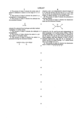
9. The process of claim 8 wherein the amine is a polyamine having the structural formula: ##STR11## wherein x and y are independently selected integers of 0-15 with the proviso that the sum of x+y is at least one, R and R1 are independently hydrogen, alkyl, aryl, aralkyl, or alkaryl having 1 to 20 carbon atoms.
10. The process of claim 9 wherein the polyamine is ethylene diamine.
11. The process of claim 1 wherein the diaminomethane has the structural formula: ##STR12## wherein R1, R2, R3, and R4 are each independently an alkyl containing 1 to 14 carbon atoms, (CH2)n --OR6 or cycloalkyl having 5 or 6 carbon atoms or wherein R1 and R2 and/or R3 and R4 are lower alkylene groups joined together with their adjacent N atom to form a saturated heterocyclic ring and R5 is hydrogen or methyl and R6 is an alkyl having 1 to 5 carbon atoms and n is an integer of 2 to 5.
12. The process of claim 11 wherein the diaminomethane is bis(di-n-butylamino)methane.
US07/383,941 1989-07-21 1989-07-21 Antifoulant compositions and methods Expired - Fee Related US4900427A (en)

Priority Applications (5)

Application Number Priority Date Filing Date Title
US07/383,941 US4900427A (en) 1989-07-21 1989-07-21 Antifoulant compositions and methods
CA002017187A CA2017187A1 (en) 1989-07-21 1990-05-18 Antifoulant compositions and methods
DE90305598T DE69002558T2 (en) 1989-07-21 1990-05-23 Anti-incrustation compositions and methods.
ES90305598T ES2060039T3 (en) 1989-07-21 1990-05-23 ANTI-CRUSHING COMPOSITIONS AND PROCEDURES.
EP90305598A EP0409386B1 (en) 1989-07-21 1990-05-23 Antifoulant compositions and methods

Applications Claiming Priority (1)

Application Number Priority Date Filing Date Title
US07/383,941 US4900427A (en) 1989-07-21 1989-07-21 Antifoulant compositions and methods

Publications (1)

Publication Number Publication Date
US4900427A true US4900427A (en) 1990-02-13

Family

ID=23515398

Family Applications (1)

Application Number Title Priority Date Filing Date
US07/383,941 Expired - Fee Related US4900427A (en) 1989-07-21 1989-07-21 Antifoulant compositions and methods

Country Status (5)

Country Link
US (1) US4900427A (en)
EP (1) EP0409386B1 (en)
CA (1) CA2017187A1 (en)
DE (1) DE69002558T2 (en)
ES (1) ES2060039T3 (en)

Cited By (9)

* Cited by examiner, † Cited by third party
Publication number Priority date Publication date Assignee Title
US5268115A (en) * 1990-02-01 1993-12-07 Exxon Chemical Patents Inc. Alkyl-substituted hydroxyaromatic compounds useful as a multifunctional viscosity index improver
US5324665A (en) * 1992-11-18 1994-06-28 Nalco Chemical Company On-line method for monitoring chloride levels in a fluid stream
US5338469A (en) * 1992-12-07 1994-08-16 Mobil Oil Corporation Mannich type compounds as antioxidants
US5458849A (en) * 1991-12-12 1995-10-17 Nalco Chemical Company Prevention of cracking and blistering of refinery steels by cyanide scavenging in petroleum refinery processes
US5783109A (en) * 1994-04-29 1998-07-21 Nalco/Exxon Energy Chemicals, L.P. Dispersion of gums and iron sulfide in hydrocarbon streams with alkyl phenol-polyethylenepolyamine formaldehyde resins
US5851377A (en) * 1997-03-10 1998-12-22 The Lubrizol Corporation Process of using acylated nitrogen compound petrochemical antifoulants
WO1999041328A1 (en) * 1998-02-17 1999-08-19 Nalco/Exxon Energy Chemicals, L.P. Mitigating fouling and reducing viscosity
US20030029077A1 (en) * 2001-08-07 2003-02-13 The Lubrizol Corporation, A Corporation Of The State Of Ohio Fuel composition containing detergent combination and methods thereof
US11015135B2 (en) 2016-08-25 2021-05-25 Bl Technologies, Inc. Reduced fouling of hydrocarbon oil

Citations (11)

* Cited by examiner, † Cited by third party
Publication number Priority date Publication date Assignee Title
US26330A (en) * 1859-12-06 Ukited
US2962442A (en) * 1957-01-03 1960-11-29 Socony Mobil Oil Co Inc Preparation of aldehyde-polyamine-hydroxyaromatic compound condensates and hydrocarbon fractions containing the same
USRE26330E (en) 1968-01-02 Method for inhibiting deposit for- mation in hydrocarbon feed stocks
US3390073A (en) * 1967-09-05 1968-06-25 Petrolite Corp Hydrocarbon additive for heatexchanger anti-fouling
US3756943A (en) * 1971-10-28 1973-09-04 Standard Oil Co Affinates of distillates method for improving the stability of hydrofinished distillates and r
US3868329A (en) * 1973-04-05 1975-02-25 Chevron Res Grease composition
US3872019A (en) * 1972-08-08 1975-03-18 Standard Oil Co Oil-soluble lubricant bi-functional additives from mannich condensation products of oxidized olefin copolymers, amines and aldehydes
US4285824A (en) * 1979-01-22 1981-08-25 The Lubrizol Corporation Hydroxyalkyl hydroxy-aromatic condensation products as fuel and lubricant additives
US4440625A (en) * 1981-09-24 1984-04-03 Atlantic Richfield Co. Method for minimizing fouling of heat exchanges
US4749468A (en) * 1986-09-05 1988-06-07 Betz Laboratories, Inc. Methods for deactivating copper in hydrocarbon fluids
US4810354A (en) * 1986-10-31 1989-03-07 Betz Laboratories, Inc. Bifunctional antifoulant compositions and methods

Family Cites Families (1)

* Cited by examiner, † Cited by third party
Publication number Priority date Publication date Assignee Title
US4244703A (en) * 1979-01-29 1981-01-13 California-Texas Oil Company Fuel additives

Patent Citations (11)

* Cited by examiner, † Cited by third party
Publication number Priority date Publication date Assignee Title
US26330A (en) * 1859-12-06 Ukited
USRE26330E (en) 1968-01-02 Method for inhibiting deposit for- mation in hydrocarbon feed stocks
US2962442A (en) * 1957-01-03 1960-11-29 Socony Mobil Oil Co Inc Preparation of aldehyde-polyamine-hydroxyaromatic compound condensates and hydrocarbon fractions containing the same
US3390073A (en) * 1967-09-05 1968-06-25 Petrolite Corp Hydrocarbon additive for heatexchanger anti-fouling
US3756943A (en) * 1971-10-28 1973-09-04 Standard Oil Co Affinates of distillates method for improving the stability of hydrofinished distillates and r
US3872019A (en) * 1972-08-08 1975-03-18 Standard Oil Co Oil-soluble lubricant bi-functional additives from mannich condensation products of oxidized olefin copolymers, amines and aldehydes
US3868329A (en) * 1973-04-05 1975-02-25 Chevron Res Grease composition
US4285824A (en) * 1979-01-22 1981-08-25 The Lubrizol Corporation Hydroxyalkyl hydroxy-aromatic condensation products as fuel and lubricant additives
US4440625A (en) * 1981-09-24 1984-04-03 Atlantic Richfield Co. Method for minimizing fouling of heat exchanges
US4749468A (en) * 1986-09-05 1988-06-07 Betz Laboratories, Inc. Methods for deactivating copper in hydrocarbon fluids
US4810354A (en) * 1986-10-31 1989-03-07 Betz Laboratories, Inc. Bifunctional antifoulant compositions and methods

Cited By (11)

* Cited by examiner, † Cited by third party
Publication number Priority date Publication date Assignee Title
US5268115A (en) * 1990-02-01 1993-12-07 Exxon Chemical Patents Inc. Alkyl-substituted hydroxyaromatic compounds useful as a multifunctional viscosity index improver
US5458849A (en) * 1991-12-12 1995-10-17 Nalco Chemical Company Prevention of cracking and blistering of refinery steels by cyanide scavenging in petroleum refinery processes
US5324665A (en) * 1992-11-18 1994-06-28 Nalco Chemical Company On-line method for monitoring chloride levels in a fluid stream
US5338469A (en) * 1992-12-07 1994-08-16 Mobil Oil Corporation Mannich type compounds as antioxidants
US5783109A (en) * 1994-04-29 1998-07-21 Nalco/Exxon Energy Chemicals, L.P. Dispersion of gums and iron sulfide in hydrocarbon streams with alkyl phenol-polyethylenepolyamine formaldehyde resins
US5851377A (en) * 1997-03-10 1998-12-22 The Lubrizol Corporation Process of using acylated nitrogen compound petrochemical antifoulants
WO1999041328A1 (en) * 1998-02-17 1999-08-19 Nalco/Exxon Energy Chemicals, L.P. Mitigating fouling and reducing viscosity
US5985940A (en) * 1998-02-17 1999-11-16 Nalco/Exxon Energy Chemicals, L.P. Method of mitigating fouling and reducing viscosity in primary fractionators and quench sections of ethylene plants
US20030029077A1 (en) * 2001-08-07 2003-02-13 The Lubrizol Corporation, A Corporation Of The State Of Ohio Fuel composition containing detergent combination and methods thereof
US11015135B2 (en) 2016-08-25 2021-05-25 Bl Technologies, Inc. Reduced fouling of hydrocarbon oil
US12031096B2 (en) 2016-08-25 2024-07-09 Bl Technologies, Inc. Reduced fouling of hydrocarbon oil

Also Published As

Publication number Publication date
DE69002558T2 (en) 1994-03-03
CA2017187A1 (en) 1991-01-21
EP0409386B1 (en) 1993-08-04
EP0409386A1 (en) 1991-01-23
ES2060039T3 (en) 1994-11-16
DE69002558D1 (en) 1993-09-09

Similar Documents

Publication Publication Date Title
US3776835A (en) Fouling rate reduction in hydrocarbon streams
US3235484A (en) Cracking processes
US4927561A (en) Multifunctional antifoulant compositions
US4749468A (en) Methods for deactivating copper in hydrocarbon fluids
US4900427A (en) Antifoulant compositions and methods
US4744881A (en) Antioxidant material and its use
US4810354A (en) Bifunctional antifoulant compositions and methods
US5171420A (en) Method for controlling fouling deposit formation in a liquid hydrocarbonaceous medium
US3261774A (en) Reducing fouling in refining of petroleum products
US5154817A (en) Method for inhibiting gum and sediment formation in liquid hydrocarbon mediums
US4828674A (en) Method for controlling fouling deposit formation in a liquid hydrocarbonaceous medium
US3567623A (en) Antifoulant agents for petroleum hydrocarbons
US3668111A (en) Fouling rate reduction in heated hydrocarbon streams with degraded polyisobutylene
CN101265418B (en) Anti-scaling agent used for hydrogenation plant and its preparation method and application
US4941968A (en) Method for inhibiting gum formation in liquid hydrocarbon mediums
US20020066225A1 (en) Process of preparation of novel mannich bases from hydrogenated and distilled cashew nut shell liquid (CNSL) for use as additive in liquid hydrocarbon fuels
US5221498A (en) Methods and compositions for inhibitoring polymerization of vinyl monomers
US4456454A (en) Mannich reaction product for motor fuels
US5139643A (en) Phosphorus derivatives of polyalkenylsuccinimides and methods of use thereof
US4804456A (en) Method for controlling fouling deposit formation in petroleum hydrocarbons or petrochemicals
US4978366A (en) Distillate fuels stabilized with diaminomethane and method thereof
US4435273A (en) Heat exchanger antifoulant
US5183555A (en) Method for controlling fouling deposit formation in a liquid hydrocarbonaceous medium
US5194620A (en) Compositions of phosphorus derivatives of polyalkenylsuccinimides
US5158667A (en) Methods for inhibiting fouling in fluid catalytic cracking units

Legal Events

Date Code Title Description
AS Assignment

Owner name: PETROLITE CORPORATION, 100 NORTH BROADWAY, ST. LOU

Free format text: ASSIGNMENT OF ASSIGNORS INTEREST.;ASSIGNORS:WEERS, JERRY J.;FALKLER, THOMAS J.;DUGGAN, GEORGE G.;AND OTHERS;REEL/FRAME:005109/0146

Effective date: 19890720

FPAY Fee payment

Year of fee payment: 4

FEPP Fee payment procedure

Free format text: PAYOR NUMBER ASSIGNED (ORIGINAL EVENT CODE: ASPN); ENTITY STATUS OF PATENT OWNER: LARGE ENTITY

FPAY Fee payment

Year of fee payment: 8

REMI Maintenance fee reminder mailed
LAPS Lapse for failure to pay maintenance fees
STCH Information on status: patent discontinuation

Free format text: PATENT EXPIRED DUE TO NONPAYMENT OF MAINTENANCE FEES UNDER 37 CFR 1.362

FP Lapsed due to failure to pay maintenance fee

Effective date: 20020213