US4882399A - Epoxy resins having reversible crosslinks - Google Patents
Epoxy resins having reversible crosslinks Download PDFInfo
- Publication number
- US4882399A US4882399A US07/088,179 US8817987A US4882399A US 4882399 A US4882399 A US 4882399A US 8817987 A US8817987 A US 8817987A US 4882399 A US4882399 A US 4882399A
- Authority
- US
- United States
- Prior art keywords
- epoxy
- resin
- polymer
- recited
- curing
- Prior art date
- Legal status (The legal status is an assumption and is not a legal conclusion. Google has not performed a legal analysis and makes no representation as to the accuracy of the status listed.)
- Expired - Fee Related
Links
- 239000003822 epoxy resin Substances 0.000 title claims abstract description 60
- 229920000647 polyepoxide Polymers 0.000 title claims abstract description 60
- LNEPOXFFQSENCJ-UHFFFAOYSA-N haloperidol Chemical compound C1CC(O)(C=2C=CC(Cl)=CC=2)CCN1CCCC(=O)C1=CC=C(F)C=C1 LNEPOXFFQSENCJ-UHFFFAOYSA-N 0.000 title claims abstract description 35
- 230000002441 reversible effect Effects 0.000 title claims abstract description 19
- 229920005989 resin Polymers 0.000 claims abstract description 131
- 239000011347 resin Substances 0.000 claims abstract description 131
- 238000000034 method Methods 0.000 claims abstract description 68
- 238000006243 chemical reaction Methods 0.000 claims abstract description 52
- 150000001875 compounds Chemical class 0.000 claims abstract description 52
- 239000003431 cross linking reagent Substances 0.000 claims abstract description 47
- 239000004593 Epoxy Substances 0.000 claims abstract description 35
- 125000003700 epoxy group Chemical group 0.000 claims abstract description 34
- 230000009467 reduction Effects 0.000 claims abstract description 32
- 239000002904 solvent Substances 0.000 claims abstract description 27
- 239000011541 reaction mixture Substances 0.000 claims abstract description 26
- 230000015572 biosynthetic process Effects 0.000 claims abstract description 23
- 125000003396 thiol group Chemical group [H]S* 0.000 claims abstract description 19
- 125000000524 functional group Chemical group 0.000 claims abstract description 10
- 238000002360 preparation method Methods 0.000 claims abstract description 10
- 150000004945 aromatic hydrocarbons Chemical class 0.000 claims abstract description 8
- 125000004432 carbon atom Chemical group C* 0.000 claims abstract description 8
- 238000003776 cleavage reaction Methods 0.000 claims abstract description 5
- 230000007017 scission Effects 0.000 claims abstract description 5
- 229920000642 polymer Polymers 0.000 claims description 65
- 239000003638 chemical reducing agent Substances 0.000 claims description 26
- 229910052783 alkali metal Inorganic materials 0.000 claims description 24
- 238000004132 cross linking Methods 0.000 claims description 19
- SBZXBUIDTXKZTM-UHFFFAOYSA-N diglyme Chemical compound COCCOCCOC SBZXBUIDTXKZTM-UHFFFAOYSA-N 0.000 claims description 19
- -1 alkali metal aluminum hydride Chemical class 0.000 claims description 18
- XYFCBTPGUUZFHI-UHFFFAOYSA-N Phosphine Chemical compound P XYFCBTPGUUZFHI-UHFFFAOYSA-N 0.000 claims description 16
- 150000001340 alkali metals Chemical class 0.000 claims description 16
- IISBACLAFKSPIT-UHFFFAOYSA-N bisphenol A Chemical compound C=1C=C(O)C=CC=1C(C)(C)C1=CC=C(O)C=C1 IISBACLAFKSPIT-UHFFFAOYSA-N 0.000 claims description 16
- RIOQSEWOXXDEQQ-UHFFFAOYSA-N triphenylphosphine Chemical group C1=CC=CC=C1P(C=1C=CC=CC=1)C1=CC=CC=C1 RIOQSEWOXXDEQQ-UHFFFAOYSA-N 0.000 claims description 16
- RYHBNJHYFVUHQT-UHFFFAOYSA-N 1,4-Dioxane Chemical compound C1COCCO1 RYHBNJHYFVUHQT-UHFFFAOYSA-N 0.000 claims description 14
- TUQOTMZNTHZOKS-UHFFFAOYSA-N tributylphosphine Chemical group CCCCP(CCCC)CCCC TUQOTMZNTHZOKS-UHFFFAOYSA-N 0.000 claims description 11
- NLKNQRATVPKPDG-UHFFFAOYSA-M potassium iodide Chemical compound [K+].[I-] NLKNQRATVPKPDG-UHFFFAOYSA-M 0.000 claims description 9
- MHAJPDPJQMAIIY-UHFFFAOYSA-N Hydrogen peroxide Chemical compound OO MHAJPDPJQMAIIY-UHFFFAOYSA-N 0.000 claims description 8
- 239000000203 mixture Substances 0.000 claims description 8
- 229910000073 phosphorus hydride Inorganic materials 0.000 claims description 8
- 239000007800 oxidant agent Substances 0.000 claims description 7
- 239000002245 particle Substances 0.000 claims description 7
- BRLQWZUYTZBJKN-UHFFFAOYSA-N Epichlorohydrin Chemical compound ClCC1CO1 BRLQWZUYTZBJKN-UHFFFAOYSA-N 0.000 claims description 6
- 150000004984 aromatic diamines Chemical class 0.000 claims description 6
- 230000001588 bifunctional effect Effects 0.000 claims description 6
- 238000006555 catalytic reaction Methods 0.000 claims description 5
- 230000001590 oxidative effect Effects 0.000 claims description 5
- 150000003568 thioethers Chemical class 0.000 claims description 5
- 125000000391 vinyl group Chemical group [H]C([*])=C([H])[H] 0.000 claims description 5
- QVGXLLKOCUKJST-UHFFFAOYSA-N atomic oxygen Chemical compound [O] QVGXLLKOCUKJST-UHFFFAOYSA-N 0.000 claims description 4
- PNDPGZBMCMUPRI-UHFFFAOYSA-N iodine Chemical compound II PNDPGZBMCMUPRI-UHFFFAOYSA-N 0.000 claims description 4
- 229910052760 oxygen Inorganic materials 0.000 claims description 4
- 239000001301 oxygen Substances 0.000 claims description 4
- 238000011084 recovery Methods 0.000 claims description 4
- 239000003570 air Substances 0.000 claims description 3
- 229920006037 cross link polymer Polymers 0.000 claims description 3
- 238000002407 reforming Methods 0.000 claims 7
- 125000000532 dioxanyl group Chemical group 0.000 claims 1
- BWGNESOTFCXPMA-UHFFFAOYSA-N Dihydrogen disulfide Chemical compound SS BWGNESOTFCXPMA-UHFFFAOYSA-N 0.000 abstract description 6
- KUBDPQJOLOUJRM-UHFFFAOYSA-N 2-(chloromethyl)oxirane;4-[2-(4-hydroxyphenyl)propan-2-yl]phenol Chemical compound ClCC1CO1.C=1C=C(O)C=CC=1C(C)(C)C1=CC=C(O)C=C1 KUBDPQJOLOUJRM-UHFFFAOYSA-N 0.000 description 85
- 238000001723 curing Methods 0.000 description 53
- OKKJLVBELUTLKV-UHFFFAOYSA-N Methanol Chemical compound OC OKKJLVBELUTLKV-UHFFFAOYSA-N 0.000 description 42
- NAQMVNRVTILPCV-UHFFFAOYSA-N hexane-1,6-diamine Chemical compound NCCCCCCN NAQMVNRVTILPCV-UHFFFAOYSA-N 0.000 description 38
- 150000002118 epoxides Chemical class 0.000 description 33
- 238000006722 reduction reaction Methods 0.000 description 32
- YBRVSVVVWCFQMG-UHFFFAOYSA-N 4,4'-diaminodiphenylmethane Chemical compound C1=CC(N)=CC=C1CC1=CC=C(N)C=C1 YBRVSVVVWCFQMG-UHFFFAOYSA-N 0.000 description 26
- 150000001412 amines Chemical class 0.000 description 23
- 239000003795 chemical substances by application Substances 0.000 description 21
- 239000000243 solution Substances 0.000 description 21
- 239000000499 gel Substances 0.000 description 18
- 230000009477 glass transition Effects 0.000 description 16
- 238000000113 differential scanning calorimetry Methods 0.000 description 13
- 239000007787 solid Substances 0.000 description 13
- 150000004985 diamines Chemical class 0.000 description 12
- XLYOFNOQVPJJNP-UHFFFAOYSA-N water Substances O XLYOFNOQVPJJNP-UHFFFAOYSA-N 0.000 description 12
- 230000009257 reactivity Effects 0.000 description 10
- UHOVQNZJYSORNB-UHFFFAOYSA-N Benzene Chemical compound C1=CC=CC=C1 UHOVQNZJYSORNB-UHFFFAOYSA-N 0.000 description 9
- IJGRMHOSHXDMSA-UHFFFAOYSA-N Atomic nitrogen Chemical compound N#N IJGRMHOSHXDMSA-UHFFFAOYSA-N 0.000 description 8
- 238000010586 diagram Methods 0.000 description 7
- 230000004048 modification Effects 0.000 description 7
- 238000012986 modification Methods 0.000 description 7
- ZMANZCXQSJIPKH-UHFFFAOYSA-N Triethylamine Chemical compound CCN(CC)CC ZMANZCXQSJIPKH-UHFFFAOYSA-N 0.000 description 6
- 238000002474 experimental method Methods 0.000 description 6
- XQUPVDVFXZDTLT-UHFFFAOYSA-N 1-[4-[[4-(2,5-dioxopyrrol-1-yl)phenyl]methyl]phenyl]pyrrole-2,5-dione Chemical compound O=C1C=CC(=O)N1C(C=C1)=CC=C1CC1=CC=C(N2C(C=CC2=O)=O)C=C1 XQUPVDVFXZDTLT-UHFFFAOYSA-N 0.000 description 5
- ZCYVEMRRCGMTRW-UHFFFAOYSA-N 7553-56-2 Chemical compound [I] ZCYVEMRRCGMTRW-UHFFFAOYSA-N 0.000 description 5
- 239000004809 Teflon Substances 0.000 description 5
- 229920006362 Teflon® Polymers 0.000 description 5
- 125000001931 aliphatic group Chemical group 0.000 description 5
- 229910052740 iodine Inorganic materials 0.000 description 5
- 239000011630 iodine Substances 0.000 description 5
- 229910052757 nitrogen Inorganic materials 0.000 description 5
- 239000000047 product Substances 0.000 description 5
- LFQSCWFLJHTTHZ-UHFFFAOYSA-N Ethanol Chemical compound CCO LFQSCWFLJHTTHZ-UHFFFAOYSA-N 0.000 description 4
- 125000003118 aryl group Chemical group 0.000 description 4
- 238000004090 dissolution Methods 0.000 description 4
- 239000007788 liquid Substances 0.000 description 4
- 239000000463 material Substances 0.000 description 4
- 238000010992 reflux Methods 0.000 description 4
- 238000010405 reoxidation reaction Methods 0.000 description 4
- 229920001187 thermosetting polymer Polymers 0.000 description 4
- 150000003573 thiols Chemical class 0.000 description 4
- MERLDGDYUMSLAY-UHFFFAOYSA-N 4-[(4-aminophenyl)disulfanyl]aniline Chemical compound C1=CC(N)=CC=C1SSC1=CC=C(N)C=C1 MERLDGDYUMSLAY-UHFFFAOYSA-N 0.000 description 3
- WSFSSNUMVMOOMR-UHFFFAOYSA-N Formaldehyde Chemical compound O=C WSFSSNUMVMOOMR-UHFFFAOYSA-N 0.000 description 3
- 239000002253 acid Substances 0.000 description 3
- 238000004458 analytical method Methods 0.000 description 3
- 239000003054 catalyst Substances 0.000 description 3
- 230000008034 disappearance Effects 0.000 description 3
- 239000000945 filler Substances 0.000 description 3
- 239000002244 precipitate Substances 0.000 description 3
- 230000008569 process Effects 0.000 description 3
- 239000000126 substance Substances 0.000 description 3
- 238000003786 synthesis reaction Methods 0.000 description 3
- 238000001757 thermogravimetry curve Methods 0.000 description 3
- FYSNRJHAOHDILO-UHFFFAOYSA-N thionyl chloride Chemical compound ClS(Cl)=O FYSNRJHAOHDILO-UHFFFAOYSA-N 0.000 description 3
- NWZSZGALRFJKBT-KNIFDHDWSA-N (2s)-2,6-diaminohexanoic acid;(2s)-2-hydroxybutanedioic acid Chemical compound OC(=O)[C@@H](O)CC(O)=O.NCCCC[C@H](N)C(O)=O NWZSZGALRFJKBT-KNIFDHDWSA-N 0.000 description 2
- XTHFKEDIFFGKHM-UHFFFAOYSA-N Dimethoxyethane Chemical compound COCCOC XTHFKEDIFFGKHM-UHFFFAOYSA-N 0.000 description 2
- IAZDPXIOMUYVGZ-UHFFFAOYSA-N Dimethylsulphoxide Chemical compound CS(C)=O IAZDPXIOMUYVGZ-UHFFFAOYSA-N 0.000 description 2
- 238000004497 NIR spectroscopy Methods 0.000 description 2
- 238000005481 NMR spectroscopy Methods 0.000 description 2
- CDBYLPFSWZWCQE-UHFFFAOYSA-L Sodium Carbonate Chemical compound [Na+].[Na+].[O-]C([O-])=O CDBYLPFSWZWCQE-UHFFFAOYSA-L 0.000 description 2
- 150000007513 acids Chemical class 0.000 description 2
- WNLRTRBMVRJNCN-UHFFFAOYSA-N adipic acid Chemical compound OC(=O)CCCCC(O)=O WNLRTRBMVRJNCN-UHFFFAOYSA-N 0.000 description 2
- IBVAQQYNSHJXBV-UHFFFAOYSA-N adipic acid dihydrazide Chemical compound NNC(=O)CCCCC(=O)NN IBVAQQYNSHJXBV-UHFFFAOYSA-N 0.000 description 2
- 125000002723 alicyclic group Chemical group 0.000 description 2
- 150000001408 amides Chemical class 0.000 description 2
- 239000003153 chemical reaction reagent Substances 0.000 description 2
- 239000000706 filtrate Substances 0.000 description 2
- 238000001879 gelation Methods 0.000 description 2
- 229940042795 hydrazides for tuberculosis treatment Drugs 0.000 description 2
- IKDUDTNKRLTJSI-UHFFFAOYSA-N hydrazine monohydrate Substances O.NN IKDUDTNKRLTJSI-UHFFFAOYSA-N 0.000 description 2
- 125000004435 hydrogen atom Chemical group [H]* 0.000 description 2
- 239000000543 intermediate Substances 0.000 description 2
- 230000007246 mechanism Effects 0.000 description 2
- 239000000155 melt Substances 0.000 description 2
- 230000008018 melting Effects 0.000 description 2
- 238000002844 melting Methods 0.000 description 2
- BIHJEIFLAWVSQP-UHFFFAOYSA-N n-(anilinodisulfanyl)aniline Chemical compound C=1C=CC=CC=1NSSNC1=CC=CC=C1 BIHJEIFLAWVSQP-UHFFFAOYSA-N 0.000 description 2
- 230000003647 oxidation Effects 0.000 description 2
- 238000007254 oxidation reaction Methods 0.000 description 2
- 229920000768 polyamine Polymers 0.000 description 2
- 150000003141 primary amines Chemical class 0.000 description 2
- AOJFQRQNPXYVLM-UHFFFAOYSA-N pyridin-1-ium;chloride Chemical compound [Cl-].C1=CC=[NH+]C=C1 AOJFQRQNPXYVLM-UHFFFAOYSA-N 0.000 description 2
- 239000011550 stock solution Substances 0.000 description 2
- 150000007944 thiolates Chemical class 0.000 description 2
- CBCKQZAAMUWICA-UHFFFAOYSA-N 1,4-phenylenediamine Chemical compound NC1=CC=C(N)C=C1 CBCKQZAAMUWICA-UHFFFAOYSA-N 0.000 description 1
- SWDGWQVRDKNNBV-UHFFFAOYSA-N 3-[2-[[2-[bis(2,5-dioxopyrrol-3-yl)amino]phenyl]methyl]-n-(2,5-dioxopyrrol-3-yl)anilino]pyrrole-2,5-dione Chemical compound O=C1NC(=O)C(N(C=2C(NC(=O)C=2)=O)C=2C(=CC=CC=2)CC=2C(=CC=CC=2)N(C=2C(NC(=O)C=2)=O)C=2C(NC(=O)C=2)=O)=C1 SWDGWQVRDKNNBV-UHFFFAOYSA-N 0.000 description 1
- KGSLDHZAZZJGDV-UHFFFAOYSA-N 4-[2-[4-[2-[4-[bis(oxiran-2-ylmethyl)amino]-3,5-dimethylphenyl]propan-2-yl]phenyl]propan-2-yl]-2,6-dimethyl-n,n-bis(oxiran-2-ylmethyl)aniline Chemical compound CC1=CC(C(C)(C)C=2C=CC(=CC=2)C(C)(C)C=2C=C(C)C(N(CC3OC3)CC3OC3)=C(C)C=2)=CC(C)=C1N(CC1OC1)CC1CO1 KGSLDHZAZZJGDV-UHFFFAOYSA-N 0.000 description 1
- RFMXGGLQTNRDPK-UHFFFAOYSA-N 4-[2-[4-[2-[4-[bis(oxiran-2-ylmethyl)amino]phenyl]propan-2-yl]phenyl]propan-2-yl]-n,n-bis(oxiran-2-ylmethyl)aniline Chemical compound C=1C=C(C(C)(C)C=2C=CC(=CC=2)N(CC2OC2)CC2OC2)C=CC=1C(C)(C)C(C=C1)=CC=C1N(CC1OC1)CC1CO1 RFMXGGLQTNRDPK-UHFFFAOYSA-N 0.000 description 1
- 101100177155 Arabidopsis thaliana HAC1 gene Proteins 0.000 description 1
- 0 CCC*CN(C)C Chemical compound CCC*CN(C)C 0.000 description 1
- OKTJSMMVPCPJKN-UHFFFAOYSA-N Carbon Chemical compound [C] OKTJSMMVPCPJKN-UHFFFAOYSA-N 0.000 description 1
- 239000004215 Carbon black (E152) Substances 0.000 description 1
- 229920000742 Cotton Polymers 0.000 description 1
- 239000004971 Cross linker Substances 0.000 description 1
- 238000005033 Fourier transform infrared spectroscopy Methods 0.000 description 1
- 238000001321 HNCO Methods 0.000 description 1
- 238000004566 IR spectroscopy Methods 0.000 description 1
- DGAQECJNVWCQMB-PUAWFVPOSA-M Ilexoside XXIX Chemical compound C[C@@H]1CC[C@@]2(CC[C@@]3(C(=CC[C@H]4[C@]3(CC[C@@H]5[C@@]4(CC[C@@H](C5(C)C)OS(=O)(=O)[O-])C)C)[C@@H]2[C@]1(C)O)C)C(=O)O[C@H]6[C@@H]([C@H]([C@@H]([C@H](O6)CO)O)O)O.[Na+] DGAQECJNVWCQMB-PUAWFVPOSA-M 0.000 description 1
- OWIKHYCFFJSOEH-UHFFFAOYSA-N Isocyanic acid Chemical compound N=C=O OWIKHYCFFJSOEH-UHFFFAOYSA-N 0.000 description 1
- CSNNHWWHGAXBCP-UHFFFAOYSA-L Magnesium sulfate Chemical compound [Mg+2].[O-][S+2]([O-])([O-])[O-] CSNNHWWHGAXBCP-UHFFFAOYSA-L 0.000 description 1
- LSDPWZHWYPCBBB-UHFFFAOYSA-N Methanethiol Chemical compound SC LSDPWZHWYPCBBB-UHFFFAOYSA-N 0.000 description 1
- FXHOOIRPVKKKFG-UHFFFAOYSA-N N,N-Dimethylacetamide Chemical compound CN(C)C(C)=O FXHOOIRPVKKKFG-UHFFFAOYSA-N 0.000 description 1
- 101100434170 Oryza sativa subsp. japonica ACR2.1 gene Proteins 0.000 description 1
- 101100434171 Oryza sativa subsp. japonica ACR2.2 gene Proteins 0.000 description 1
- 239000004952 Polyamide Substances 0.000 description 1
- 229910006124 SOCl2 Inorganic materials 0.000 description 1
- 101150108015 STR6 gene Proteins 0.000 description 1
- NINIDFKCEFEMDL-UHFFFAOYSA-N Sulfur Chemical compound [S] NINIDFKCEFEMDL-UHFFFAOYSA-N 0.000 description 1
- HCHKCACWOHOZIP-UHFFFAOYSA-N Zinc Chemical compound [Zn] HCHKCACWOHOZIP-UHFFFAOYSA-N 0.000 description 1
- 238000010521 absorption reaction Methods 0.000 description 1
- 239000000654 additive Substances 0.000 description 1
- 239000000853 adhesive Substances 0.000 description 1
- 230000001070 adhesive effect Effects 0.000 description 1
- 239000001361 adipic acid Substances 0.000 description 1
- 235000011037 adipic acid Nutrition 0.000 description 1
- 150000007933 aliphatic carboxylic acids Chemical class 0.000 description 1
- 239000003513 alkali Substances 0.000 description 1
- 125000000217 alkyl group Chemical group 0.000 description 1
- 125000003368 amide group Chemical group 0.000 description 1
- 150000008064 anhydrides Chemical class 0.000 description 1
- 238000013459 approach Methods 0.000 description 1
- 150000004982 aromatic amines Chemical class 0.000 description 1
- 239000012298 atmosphere Substances 0.000 description 1
- 230000003542 behavioural effect Effects 0.000 description 1
- 230000008901 benefit Effects 0.000 description 1
- 238000009835 boiling Methods 0.000 description 1
- 239000006227 byproduct Substances 0.000 description 1
- 150000001733 carboxylic acid esters Chemical class 0.000 description 1
- 238000012512 characterization method Methods 0.000 description 1
- 238000000576 coating method Methods 0.000 description 1
- 239000002131 composite material Substances 0.000 description 1
- 239000007859 condensation product Substances 0.000 description 1
- 239000000470 constituent Substances 0.000 description 1
- 230000002596 correlated effect Effects 0.000 description 1
- 230000000875 corresponding effect Effects 0.000 description 1
- 239000013078 crystal Substances 0.000 description 1
- LEVWYRKDKASIDU-IMJSIDKUSA-N cystine group Chemical group C([C@@H](C(=O)O)N)SSC[C@@H](C(=O)O)N LEVWYRKDKASIDU-IMJSIDKUSA-N 0.000 description 1
- 230000007423 decrease Effects 0.000 description 1
- 238000006731 degradation reaction Methods 0.000 description 1
- 150000001991 dicarboxylic acids Chemical class 0.000 description 1
- 150000005690 diesters Chemical class 0.000 description 1
- 238000001938 differential scanning calorimetry curve Methods 0.000 description 1
- GYZLOYUZLJXAJU-UHFFFAOYSA-N diglycidyl ether Chemical compound C1OC1COCC1CO1 GYZLOYUZLJXAJU-UHFFFAOYSA-N 0.000 description 1
- 125000000118 dimethyl group Chemical group [H]C([H])([H])* 0.000 description 1
- 229940113088 dimethylacetamide Drugs 0.000 description 1
- XXBDWLFCJWSEKW-UHFFFAOYSA-N dimethylbenzylamine Chemical compound CN(C)CC1=CC=CC=C1 XXBDWLFCJWSEKW-UHFFFAOYSA-N 0.000 description 1
- 238000002845 discoloration Methods 0.000 description 1
- 230000000694 effects Effects 0.000 description 1
- IDGUHHHQCWSQLU-UHFFFAOYSA-N ethanol;hydrate Chemical compound O.CCO IDGUHHHQCWSQLU-UHFFFAOYSA-N 0.000 description 1
- 239000004210 ether based solvent Substances 0.000 description 1
- 239000004744 fabric Substances 0.000 description 1
- 239000000835 fiber Substances 0.000 description 1
- 239000007789 gas Substances 0.000 description 1
- 229910002804 graphite Inorganic materials 0.000 description 1
- 239000010439 graphite Substances 0.000 description 1
- 125000004836 hexamethylene group Chemical group [H]C([H])([*:2])C([H])([H])C([H])([H])C([H])([H])C([H])([H])C([H])([H])[*:1] 0.000 description 1
- 229930195733 hydrocarbon Natural products 0.000 description 1
- 125000002887 hydroxy group Chemical group [H]O* 0.000 description 1
- 239000012535 impurity Substances 0.000 description 1
- 230000006698 induction Effects 0.000 description 1
- 230000001939 inductive effect Effects 0.000 description 1
- 239000002198 insoluble material Substances 0.000 description 1
- 125000005647 linker group Chemical group 0.000 description 1
- 239000012280 lithium aluminium hydride Substances 0.000 description 1
- 238000004519 manufacturing process Methods 0.000 description 1
- 238000005259 measurement Methods 0.000 description 1
- 238000012544 monitoring process Methods 0.000 description 1
- 125000004433 nitrogen atom Chemical group N* 0.000 description 1
- 150000002894 organic compounds Chemical class 0.000 description 1
- 230000035515 penetration Effects 0.000 description 1
- 150000002989 phenols Chemical class 0.000 description 1
- 230000000704 physical effect Effects 0.000 description 1
- 229920002647 polyamide Polymers 0.000 description 1
- 239000000843 powder Substances 0.000 description 1
- 125000002924 primary amino group Chemical group [H]N([H])* 0.000 description 1
- MVCPDOUDYOUTKS-UHFFFAOYSA-N propanedithioic acid Chemical compound CCC(S)=S MVCPDOUDYOUTKS-UHFFFAOYSA-N 0.000 description 1
- 239000011253 protective coating Substances 0.000 description 1
- 238000010298 pulverizing process Methods 0.000 description 1
- 239000000376 reactant Substances 0.000 description 1
- 230000035484 reaction time Effects 0.000 description 1
- 230000001172 regenerating effect Effects 0.000 description 1
- 229910052708 sodium Inorganic materials 0.000 description 1
- 239000011734 sodium Substances 0.000 description 1
- 229910000029 sodium carbonate Inorganic materials 0.000 description 1
- 230000007928 solubilization Effects 0.000 description 1
- 238000005063 solubilization Methods 0.000 description 1
- 230000003335 steric effect Effects 0.000 description 1
- HXJUTPCZVOIRIF-UHFFFAOYSA-N sulfolane Chemical compound O=S1(=O)CCCC1 HXJUTPCZVOIRIF-UHFFFAOYSA-N 0.000 description 1
- 229910052717 sulfur Inorganic materials 0.000 description 1
- 239000011593 sulfur Substances 0.000 description 1
- QAOWNCQODCNURD-UHFFFAOYSA-N sulfuric acid Substances OS(O)(=O)=O QAOWNCQODCNURD-UHFFFAOYSA-N 0.000 description 1
- 229920001169 thermoplastic Polymers 0.000 description 1
- 239000004416 thermosoftening plastic Substances 0.000 description 1
- FIQMHBFVRAXMOP-UHFFFAOYSA-N triphenylphosphane oxide Chemical compound C=1C=CC=CC=1P(C=1C=CC=CC=1)(=O)C1=CC=CC=C1 FIQMHBFVRAXMOP-UHFFFAOYSA-N 0.000 description 1
- 238000004017 vitrification Methods 0.000 description 1
- 210000002268 wool Anatomy 0.000 description 1
- 229910052725 zinc Inorganic materials 0.000 description 1
- 239000011701 zinc Substances 0.000 description 1
Images




Classifications
-
- C—CHEMISTRY; METALLURGY
- C08—ORGANIC MACROMOLECULAR COMPOUNDS; THEIR PREPARATION OR CHEMICAL WORKING-UP; COMPOSITIONS BASED THEREON
- C08G—MACROMOLECULAR COMPOUNDS OBTAINED OTHERWISE THAN BY REACTIONS ONLY INVOLVING UNSATURATED CARBON-TO-CARBON BONDS
- C08G59/00—Polycondensates containing more than one epoxy group per molecule; Macromolecules obtained by polymerising compounds containing more than one epoxy group per molecule using curing agents or catalysts which react with the epoxy groups
- C08G59/18—Macromolecules obtained by polymerising compounds containing more than one epoxy group per molecule using curing agents or catalysts which react with the epoxy groups ; e.g. general methods of curing
- C08G59/40—Macromolecules obtained by polymerising compounds containing more than one epoxy group per molecule using curing agents or catalysts which react with the epoxy groups ; e.g. general methods of curing characterised by the curing agents used
- C08G59/50—Amines
- C08G59/504—Amines containing an atom other than nitrogen belonging to the amine group, carbon and hydrogen
-
- C—CHEMISTRY; METALLURGY
- C08—ORGANIC MACROMOLECULAR COMPOUNDS; THEIR PREPARATION OR CHEMICAL WORKING-UP; COMPOSITIONS BASED THEREON
- C08G—MACROMOLECULAR COMPOUNDS OBTAINED OTHERWISE THAN BY REACTIONS ONLY INVOLVING UNSATURATED CARBON-TO-CARBON BONDS
- C08G59/00—Polycondensates containing more than one epoxy group per molecule; Macromolecules obtained by polymerising compounds containing more than one epoxy group per molecule using curing agents or catalysts which react with the epoxy groups
- C08G59/18—Macromolecules obtained by polymerising compounds containing more than one epoxy group per molecule using curing agents or catalysts which react with the epoxy groups ; e.g. general methods of curing
-
- C—CHEMISTRY; METALLURGY
- C08—ORGANIC MACROMOLECULAR COMPOUNDS; THEIR PREPARATION OR CHEMICAL WORKING-UP; COMPOSITIONS BASED THEREON
- C08G—MACROMOLECULAR COMPOUNDS OBTAINED OTHERWISE THAN BY REACTIONS ONLY INVOLVING UNSATURATED CARBON-TO-CARBON BONDS
- C08G59/00—Polycondensates containing more than one epoxy group per molecule; Macromolecules obtained by polymerising compounds containing more than one epoxy group per molecule using curing agents or catalysts which react with the epoxy groups
- C08G59/18—Macromolecules obtained by polymerising compounds containing more than one epoxy group per molecule using curing agents or catalysts which react with the epoxy groups ; e.g. general methods of curing
- C08G59/40—Macromolecules obtained by polymerising compounds containing more than one epoxy group per molecule using curing agents or catalysts which react with the epoxy groups ; e.g. general methods of curing characterised by the curing agents used
- C08G59/4007—Curing agents not provided for by the groups C08G59/42 - C08G59/66
- C08G59/4014—Nitrogen containing compounds
- C08G59/4028—Isocyanates; Thioisocyanates
-
- C—CHEMISTRY; METALLURGY
- C08—ORGANIC MACROMOLECULAR COMPOUNDS; THEIR PREPARATION OR CHEMICAL WORKING-UP; COMPOSITIONS BASED THEREON
- C08G—MACROMOLECULAR COMPOUNDS OBTAINED OTHERWISE THAN BY REACTIONS ONLY INVOLVING UNSATURATED CARBON-TO-CARBON BONDS
- C08G59/00—Polycondensates containing more than one epoxy group per molecule; Macromolecules obtained by polymerising compounds containing more than one epoxy group per molecule using curing agents or catalysts which react with the epoxy groups
- C08G59/18—Macromolecules obtained by polymerising compounds containing more than one epoxy group per molecule using curing agents or catalysts which react with the epoxy groups ; e.g. general methods of curing
- C08G59/40—Macromolecules obtained by polymerising compounds containing more than one epoxy group per molecule using curing agents or catalysts which react with the epoxy groups ; e.g. general methods of curing characterised by the curing agents used
- C08G59/4007—Curing agents not provided for by the groups C08G59/42 - C08G59/66
- C08G59/4014—Nitrogen containing compounds
- C08G59/4035—Hydrazines; Hydrazides
-
- C—CHEMISTRY; METALLURGY
- C08—ORGANIC MACROMOLECULAR COMPOUNDS; THEIR PREPARATION OR CHEMICAL WORKING-UP; COMPOSITIONS BASED THEREON
- C08G—MACROMOLECULAR COMPOUNDS OBTAINED OTHERWISE THAN BY REACTIONS ONLY INVOLVING UNSATURATED CARBON-TO-CARBON BONDS
- C08G59/00—Polycondensates containing more than one epoxy group per molecule; Macromolecules obtained by polymerising compounds containing more than one epoxy group per molecule using curing agents or catalysts which react with the epoxy groups
- C08G59/18—Macromolecules obtained by polymerising compounds containing more than one epoxy group per molecule using curing agents or catalysts which react with the epoxy groups ; e.g. general methods of curing
- C08G59/40—Macromolecules obtained by polymerising compounds containing more than one epoxy group per molecule using curing agents or catalysts which react with the epoxy groups ; e.g. general methods of curing characterised by the curing agents used
- C08G59/4007—Curing agents not provided for by the groups C08G59/42 - C08G59/66
- C08G59/4064—Curing agents not provided for by the groups C08G59/42 - C08G59/66 sulfur containing compounds
Definitions
- This invention relates to methods for crosslinking resins and to the crosslinked resins obtained. More specifically, this invention relates to methods for curing known difunctional or trifunctional epoxy resins with difunctional or multifunctional crosslinking agents, to methods for cleaving crosslinks in the cured resin at a labile bond to form a soluble polymer, and to methods for reoxidizing the reduced soluble polymer to make new cured resins or to modify the reduced polymer to make resins having a variety of properties. Even more specifically, this invention relates to methods for recovering epoxy resins, in which reversible crosslinks are present, from finished articles of manufacture.
- Epoxy resins have been used extensively in commerce to prepare hard thermoset solid polymeric compounds. Their use is widespread in many industries, notably, the electrical and aerospace industries. They are used, for example, in protective coatings, coatings, adhesives, structural composites, and laminates.
- epoxy resins are converted from a liquid or thermoplastic state to thermoset solids by reactions involving the use of reactive compounds, or curing agents, which become a part of the crosslinked structure.
- Curing agents can be selected from a large number of reactive chemical structures but in practice a limited number of compounds are used in industry. The compounds most often used belong to one of the following six groups:
- crosslinking agents examples include:
- the disulfide linkages in the curing agents of the invention can be reduced to mercaptan by many reducing agents such as zinc and dilute acid, alkali, trialkyl- and lithium aluminum hydride, by methods known in the art (L. B. Ryland, M. W. Tamele, "The Analytical Chemistry of Sulfur and its Compounds," Part I, J. H. Karchmer ed., Wiley-Interscience, 1970, p. 465; J. Wardell, "The Chemistry of the Thiol Group," Part II, S. Patai Ed., Wiley-Interscience, N.Y., (1976, p. 220)).
- reducing agents such as zinc and dilute acid, alkali, trialkyl- and lithium aluminum hydride
- tributyl phosphine has been used effectively in the reduction of cystine residues in wool (B. J. Sweetman, J. A. McClaren, Aust. J. Chem. 19, 2346 (1966)).
- Overman and coworkers found that triphenyl phosphine in aqueous dioxane efficiently reduced aryl disulfides (L. Overman, J. Smoot, J. D. Overman, Synthesis 59 (1974); L. Overman, D. Matzinger, E. M. O'Connor, J. D. Overman, J. Amer. Chem. Soc. 96, 6081 (1974).
- Sakamoto et al. M. Sakamoto, J. Takeda, Y. Yamada, H. Tonami, J. Appl. Polym. Sci. 14, 865 (1970) have used triphenyl phosphine to cleave disulfide linkages in the product formed by the crosslinking reaction of dithiodihydrazides with cotton fabric.
- the invention is in a method for the preparation of epoxy resins cured with a crosslinking agent which can be cleaved at a labile bond comprising the steps of:
- crosslinking agent is selected from compounds having the formula
- Q is an epoxy-reactive functional group selected from ##STR7## and X is a divalent aromatic or aliphatic hydrocarbon radical of one to ten carbon atoms.
- the crosslinking agent may be selected from compounds of the formula ##STR8## where Y is a substituted or unsubstituted hydrocarbon radical which may be alicyclic or aromatic and R is an aliphatic, alicyclic, or aromatic hydrocarbon radical, or ##STR9##
- the epoxy resin may also contain 3 or 4 epoxy groups.
- the following compounds may be used.
- Multifunctional epoxy resins are, for example, those offered commercially by Shell under the name Epon HPT 1071 and 1072.
- the preferred crosslinkers of the invention are 3,3'-dithiopropionyl dihydrazide (DTPDH) ##STR12## 2,2'-dithiobenzoic acid dihydrazide (DTBDH) ##STR13## 4,4'-dithiodianiline (DTDA) ##STR14##
- the temperature of the curing reactions ranges broadly from 25° to 200° C. and preferably is 70° to 180° C. From 2 to 48 hours are required for complete crosslinking.
- the crosslinked resin may be solubilized by cleaving the disulfide bond by reducing the resin in the presence of a reducing agent selected from the group consisting of trialkyl and triaryl phosphine, alkali metal borohydride, alkali metal aluminum hydride and alkali metal trialkyl borohydride.
- a reducing agent selected from the group consisting of trialkyl and triaryl phosphine, alkali metal borohydride, alkali metal aluminum hydride and alkali metal trialkyl borohydride.
- the reducing agent is one that can provide a homogeneous reaction environment for said reduction cleavage. Best results have been obtained with tributyl phosphine.
- the temperature of the reduction step is broadly from 25° to 200° C. and preferably from 80° to 170° C.
- the preferred solvents are inert, polar, organic compounds such as ether solvents of boiling point above 70° C. Suitable solvents are, for example, dioxane and ethylene glycol dimethyl ether (diglyme). Other solvents, such as dimethyl sulfoxide, dimethyl acetamide, and sulfolane may also be used. From 30 minutes to several hours may be required to solubilize the cured resin, depending upon the degree of crosslinking of the resin and the conditions used for reduction, including choice of solvent, reducing agent, temperature, and other factors.
- solubilization of the cured resin permits the efficient recovery by conventional means of any structural fillers or the like which have been used in the formation thereof.
- structural additives may have considerable value of their own and their recovery for potential reuse is an important aspect of the invention.
- the disulfide bonds can be reformed, if desired, by oxidizing the cleaved mixture in the presence of an oxidizing agent selected from iodine, hydrogen peroxide, potassium iodide, air, and oxygen.
- an oxidizing agent selected from iodine, hydrogen peroxide, potassium iodide, air, and oxygen.
- the oxidation step takes place at 25° to 200° C. and typically from 1 to 24 hours are required.
- the soluble, thiol-containing polymer can be modified to alter the properties of the resin.
- modifications include (i) crosslinking with bis-maleimides of aromatic diamines or with other bifunctional activated vinyl crosslinking agents; or (ii) crosslinking with dihalides to form stable thioether linkages in the resin; or (iii) reacting, in base-catalyzed reactions, with diepoxides or virgin epoxy resins to optimize the properties of the polymer and obtain interpenetrating polymer networks (IPN); or (iv) grafting of rubber particles which can become covalently bound to the resin and impart enhanced toughness.
- IPN interpenetrating polymer networks
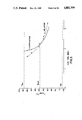
- FIG. 1 is a plot of DSC cure thermograms of MDA and DTDA with Epon 828 in a 1:2 molar ratio (amine/epoxide).
- FIG. 2 is a plot of the cure kinetics of MDA and DTDA with Epon 828 in a 1:2 molar ratio (amine/epoxide) at 80° to 100° C.
- FIG. 3 is a TTT diagram of DTDA and Epon 828 in a 1:2 molar ratio (amine/epoxide).
- FIG. 4 is a DMA plot of DTDA and Epon 828 in a 1:2 molar ratio (amine/epoxide).
- FIG. 5 is a DSC cure thermogram of DTDA and MDA with Epon 828 in a 1:1.75 molar ratio (amine/epoxide).
- FIG. 6 is a plot of the cure kinetics of DTDA and Epon 828 in a 1:1.75 molar ratio (amine/epoxide) at 80° C. and 100° C.
- FIG. 7 is a plot of T g versus percent conversion of epoxide for DTDA/Epon 828 in a 1:1.75 molar ratio (amine/epoxide).
- FIG. 8 is a plot of T g versus percent gel for DTDA/Epon 828 in a 1:1.75 molar ratio (amine/epoxide).
- FIG. 9 is a TTT diagram for DTDA/Epon 828 in a 1:1.75 molar ratio (amine/epoxide).
- FIG. 10 is a DMA plot of DTDA/Epon 828 in a 1:1.75 molar ratio (amine/epoxide).
- FIG. 11 is a plot of percent sol and gel (insolubles) in the reduction of fully cured DTDA/Epon 828 (1:1.75) with time.
- FIG. 12 is a plot of T g of unreduced gel (insolubles) of DTDA/Epon 828 (1:1.75) with time.
- FIG. 13 plots DSC thermograms of HMDA and DTPDH with Epon 828 in a 1:2 molar ratio (curing agent/epoxide).
- FIG. 14 is a plot of cure kinetics of DTPDH/Epon 828 in a 1:2 molar ratio (dihydrazide/epoxide).
- FIG. 15 is a plot of cure kinetics of HMDA/Epon 828 in a 1:2 molar ratio (amine/epoxide).
- FIG. 16 is a plot of T g versus percent conversion of epoxide for DTPDH/Epon 828 in a 1:2 molar ratio (dihydrazide/epoxide).
- FIG. 17 is a plot of T g versus percent gel for DTPDH/Epon 828 (1:2).
- FIG. 18 is a DMA plot of DTPDH/Epon 828 (1:2).
- FIG. 19 is a DMA plot of HMDA/Epon 828 (1:2).
- FIG. 20 is plot of percent of sol and gel in the reduction of fully cured DTPDH/Epon 828 (1:2) with time.
- DTPDH 2,2'-Dithiopropionyldihydrazide
- SOCl 2 Thionyl chloride
- DTDA p,p'-Dithiodianiline
- MDA methylene dianiline
- DTBDH 2,2'-dithiobenzoic acid dihydrazide
- DSC Differential scanning calorimetry
- DMA Dyamic Mechanical Analysis
- FT-IR Fourier Transform Infrared
- NIRA Near infrared spectroscopy
- NMR Nuclear magnetic resonance
- the specified ratios of the two components were weighed and mixed well in a Teflon beaker. The mixture was then placed in an oven at the specified cure temperature for various times as indicated in the Examples. The cooled samples were then analyzed.
- the curing agents DTPDH and DTDA were compared with known materials including an aliphatic diamine
- Table 1 shows the onset and peak cure temperatures as obtained by DSC analysis.
- DTPDH has a lower cure temperature than ADH because the temperature is slightly above its melting point (124°-126° C.) and as a result, dissolution of the curing agent is feasible and reaction occurs. Its cure temperature, however, is higher than that of the aliphatic diamine HMDA, indicating lower reactivity of the hydrazide nitrogen atom.
- DTDA has a slightly higher cure temperature than MDA.
- Epon 828 and the respective curing agent were weighed out accurately in a Teflon beaker. They were then put in an oven at the cure temperature and for the time specified in Table 2 (cure times of 1, 2 and 4 hours were used). The cured resins were then cooled and finely ground to 600 micron size particles which would ensure large surface areas in the subsequent reduction of swollen crosslinked samples.
- disulfide-containing compounds are effective crosslinking agents for epoxy resins.
- Conditions for curing reactions are in a practical range for some compounds and optimum curing temperatures depend on the specific structure. The curing reactions can be conveniently followed by infra red spectroscopy. Disappearance of epoxy functional groups and of terminal NH 2 in the crosslinking agent can be detected in the new systems.
- DTDA and epoxide i.e., two moles of epoxide resin--Epon 828--to one mole of diamine.
- DTDA and MDA as a reference compound were recrystallized from methanol/water solutions and dried well before use.
- Epon 828 had an epoxide equivalent of 190 (i.e., a molecular weight of 380) as analyzed by the pyridinium chloride method.
- the DTDA/Epon 828 system has an onset temperature of 140° C. and a peak temperature of 170° C., compared to the MDA/Epon 828 system, with an onset of 116° C. and a peak temperature of 146° C., clearly indicating the lower reactivity of dithiodianiline.
- the diamine and Epon 828 were accurately weighed and mixed well in a Teflon beaker at 60° C. till all the diamine dissolved into the resin.
- the beaker was then placed in an oven at a specific temperature (i.e., 80°, 100°, 140°, 160° C., etc.) and approximately 1.5 grams of the resin were removed at various time intervals.
- the resin sample (about 0.5 grams, accurately weighed) was then analyzed for epoxy content by the pyridinium chloride method.
- Table 4 shows the onset and peak temperatures (from DSC) for Epon 828 with DTDA as well as Epon 828 cured with methylene dianiline (MDA), hexamethylene diamine (HMDA) and adipic acid dihydrazide (ADH)--for comparison.
- DTDA has a lower reactivity (i.e., requires higher curing temperature) than MDA.
- FIG. 1 shows the DSC scan for this systems.
- FIG. 2 shows the percent conversion of epoxy groups with time for MDA and DTDA at 80° and 100° C. At 80° C., half the epoxy groups (50%) are consumed after 62 minutes for MDA, and this value is in excellent agreement with the 60 minute value reported by Bell.
- a cure cycle of 100° C. for 2 hours followed by 160° C. for 2 hours was chosen as the cure profile for DTDA and Epon 828 in 1:2 mol ratio.
- TTT Time-Temperature-Transformation
- FIG. 3 shows the TTT cure diagram for the DTDA/Epon 828 system.
- Tg o is the glass transition temperature of the unreacted resin mixture
- Tg gel the glass transition of the gel
- Tg that of the fully cured resin is the glass transition temperature of the unreacted resin mixture
- the crosslink density (M c ) and the glass transition temperature of the fully cured resin (DTDA/Epon 828) were obtained from DMA measurements.
- FIG. 4 shows the modulus (used for calculating M c ) and Tan (used for calculating Tg) of the resin.
- the crosslink density (M c ) of the polymer can be calculated by the formula ##EQU1##
- T absolute temperature at T g +40° C.
- M A molecular weight of diamine
- M B molecular weight of epoxy
- the results are summarized in Table 5.
- Table 6 shows the reagents and conditions studied for the reduction reaction. It is evident that the resin was not reduced to the point of complete dissolution. Triphenyl phosphine (Ph 3 P) in dioxane was less effective than tributyl phosphine (Bu 3 P) in diglyme. Diglyme swelled the resin more effectively.
- An added advantage of using tributyl phosphine is that its oxide (obtained as a byproduct in the reduction) is soluble in methanol, whereas the reduced resin (presumably) is not. The reduced sample can thus be washed several times with methanol to remove impurities.
- FIG. 5 shows the DSC profiles for Epon 828 with DTDA and with MDA at a 1:1.75 molar ratio of diamine to epoxide. DTDA once again showed lower reactivity (onset 154.4° C.).
- FIG. 6 shows the percent conversion of epoxy groups with time for DTDA/Epon 828 (1:1.75 mole ratio) at 80° C. and 100° C. The curing reaction at 80° C. is very slow, and, at 100° C., 57.1% of the epoxy groups (i.e., reaction of all primary amine) are reacted after 94 minutes. A cure profile of 100° C. for 2 hours followed by 150° C. for 2 hrs. was selected for this system.
- FIG. 8 shows the results for DTDA/Epon 828. Below a T g of 41° C. the resin is completely soluble and above a Tg of 105° C. it is completely gelled.
- the TTT cure diagram for DTDA/Epon 828 at a 1:1.75 molar ratio (diamine/epoxide) is shown in FIG. 9.
- the times to gelation and vitrification are longer compared with the 1:2 molar ratio system (FIG. 3).
- FIG. 10 is the DMA plot of the modulus and Tan ⁇ for the fully cured resin.
- Samples of fully cured resin at the 1:1.75 mol ratio were prepared as described previously, using a cure profile of 100° C. for 2 hours and 150° C. for 2 hours.
- the liquid was carefully decanted from the solid.
- the solid was washed several times with methanol, the methanol being decanted every time.
- the solid was then transferred to a weighed vial, dried under vacuum to constant weight and weighed. Percent sol and gel were calculated. The plot is shown in FIG. 11. The rate of reduction is very fast during the first 10 minutes, after which reduction is more gradual, and complete dissolution occurs at 55 minutes.
- FIG. 12 is the plot of the glass transition temperature of the gel from the reduction versus time.
- the glass transition temperature decreases with time and reaches a plateau at a value of approximately 40° C.
- the resin is soluble below a Tg of 41° C. and gels above this temperature (see FIG. 8).
- Example VII To 0.4 grams of the fully reduced solubilized sample obtained in Example VII dissolved in 15 ml dioxane, an iodine solution in dioxane was added dropwise. A precipitate gradually formed. The mixture was warmed slightly (approximately 60° C.). When the iodine color disappeared, a few additional drops of the iodine solution were added. This process was continued until the iodine color just persisted. The solid obtained was filtered, washed with dioxane, and then several times with methanol. It was then dried well.
- FIG. 13 shows the DSC scans of DTPDH and HMDA which was used as a reference.
- the aliphatic diamine is clearly more reactive; DTPDH reacts only after it melts and dissolves into the resin.
- the cure kinetics of DTPDH and HMDA is shown in FIGS. 14 and 15 respectively and the difference in reactivity of the dihydrazide and the diamine is evident.
- the dihydrazide does not have a uniform cure profile: this is seen in the scatter of experimental points in FIG. 14 at 130° C. and 150° C.
- the dihydrazide reacts as soon as it melts into the epoxy resin. As a result, there may be localized areas of unmelted (i.e., unreacted) curing agent and other domains of melted and reacted curing agent which soon gels. This poses a problem in the preparation of uniformly cured samples. A temperature of 110° C. was also examined and the cure, though slower, proceeded more uniformly.
- This temperature was therefore selected as the first stage of the cure profile for DTPDH. Later it was found that if a cure temperature of 130° C. is used as the first stage for larger samples, the highly exothermic curing reaction increases the temperature in the bulk of the resin mixture sufficiently to cause some discoloration in the resin. A cure temperature of 130° C. was chosen for the second stage of the cure profile for DTPDH.
- FIG. 16 shows the plot of glass transition temperature versus percent conversion of epoxy groups
- FIG. 17 is the plot of glass transition temperature versus the percent gel; below a Tg of 10° C. the resin is completely soluble and complete gelation is observed only when the Tg approaches that of the fully cured resin.
- FIGS. 18 and 19 are the DMA thermograms for HMDA and DTPDH respectively.
- Table 5 The results are summarized in Table 5.
- Example IX About 0.5 grams of the fully cured resin of Example IX was accurately weighed in a 50 ml round bottomed flask. 15 ml diglyme was added followed by 2 drops of water containing HCl (from a stock solution of 15 ml water containing 2 drops conc. HCl). 4 ml tributyl phosphine was then added via a syringe, and the solution was refluxed under nitrogen. Six different samples were prepared in this manner. The reflux was continued for various lengths of time (1, 2, 3, 4, 5, 6 days) to complete dissolution. At the specified time the solution was filtered immediately, and the gel was washed with a minimal amount of diglyme, dried to constant weight and weighed.
- a known weight of the reduced resin from Example X is dissolved in diglyme and to this is added a bis-maleimide (e.g., p-phenylene diamine bis-maleimide, methylene dianiline bis-maleimide).
- the weight of the bis-maleimide added is calculated from the thiol (--SH) content of the reduced resin.
- a basic catalyst, for example, triethylamine, is also added to initiate thiolate formation and the solution is stirred at 25° to 170° C. The solution is cooled and poured into methanol and the resulting solid filtered and dried. A modified polymer is obtained.
- a known weight of the reduced resin from Example X is dissolved in diglyme and to this is added '-dibromo-p-xylene.
- the weight of the '-dibromo-p-xylene added is calculated from the thiol (--SH) content of the reduced resin.
- a basic catalyst is also added to initiate thiolate formation and the solution is stirred at 20° C. to 170° C. The solution is cooled and poured into methanol and the resulting solid filtered and dried. A modified polymer is obtained.
Landscapes
- Chemical & Material Sciences (AREA)
- Health & Medical Sciences (AREA)
- Chemical Kinetics & Catalysis (AREA)
- Medicinal Chemistry (AREA)
- Polymers & Plastics (AREA)
- Organic Chemistry (AREA)
- Epoxy Resins (AREA)
Abstract
Description
Q--X--S--S--X--Q
______________________________________
Example I Curing of DTDA/Epon 828 and DTPDH/Epon
          828, - respectively, at 1:1 Mol Ratio
Example II
          Reduction of Cured DTPDH/Epon 828
          at 1:1 Mol Ratio
Example III
          Reoxidation of Reduced Solubilized Polymer of
          DTPDH/Epon 828 at 1:1 Mol Ratio
Example IV
          Curing of DTDA/Epon 828 at 1:2 Mol Ratio
Example V Reduction of Cured DTDA/Epon 828
          at 1:2 Mol Ratio
Example VI
          Curing of DTDA/Epon 828 at
          1:1.75 Mol Ratio
Example VII
          Reduction of Cured DTDA/Epon 828
          at 1:1.75 Mol Ratio
Example VIII
          Reoxidation of Reduced Solubilized Polymer
          of DTDA/Epon 828 at 1:1.75 Mol Ratio
Example IX
          Curing of 3,3'-Dithiopropionyl
          Dihydrazide (DTPDH)/Epon 828 at 1:2
          Mol Ratio
Example X Reduction of Cured DTPDH/Epon 828
          at 1:2 Mol Ratio
Example XI
          Modification of Reduced Resin
          with a Bis-maleimide
Example XII
          Modification of Reduced Resin
          with Diepoxide Compound
Example XIII
          Modification of Reduced Resin
          with Dihalide Compound
______________________________________
              TABLE 1
______________________________________
Cure temperatures as obtained from DSC
for an equimolar ratio of epoxide to amine
System            Onset °C.
                           Peak °C.
______________________________________
DTPDH + Epon 828  139      150
DTDA + Epon 828   133      161
ADH + Epon 828    165      173
HMDA + Epon 828    61       86
MDA + Epon 828    109      134
______________________________________
              TABLE 2
______________________________________
Curing conditions of Epon 828 and curing agents
                         Cure      Cure
Reaction No.
         System          Temp. °C.
                                   Time Hrs.
______________________________________
33       HMDA + Epon 828  80       1
34       HMDA + Epon 828  80       2
35       HMDA + Epon 828  80       4
36       MDA + Epon 828  100       1
37       MDA + Epon 828  100       2
38       MDA + Epon 828  100       4
39       DTPDH + Epon 828
                         130       1
40       DTPDH + Epon 828
                         130       2
41       DTPDH + Epon 828
                         130       4
42       DTDA + Epon 828 135       1
43       DTDA + Epon 828 135       2
44       DTDA + Epon 828 135       4
______________________________________
              TABLE 3
______________________________________
Conditions for reduction of resin
DTPDH/Epon 828 1:1, 130° C., 4 hrs.
Reaction 41, Table 2
Reaction  Reducing Temp.     Time
No.       Agent    °C.
                             Hrs. % Solubles
______________________________________
45        Bu.sub.3 P
                    60       12   90.34
46        Bu.sub.3 P
                   100       24   91.98
47        Ph.sub.3 P
                    60       12   87.40
48        Ph.sub.3 P
                   100       24   94.90
______________________________________
              TABLE 4
______________________________________
DSC cure temperatures for DTDA/Epon 828
at 1:2 mol ratio
Curing                         Heat of Cure
Agent    Onset °C.
                      Peak °C.
                               Cure J/g
______________________________________
DTDA     140.3        170.8    241
MDA      116.4        146.2    410
HMDA      62.6         89.4    475
ADH      165.6        172.5    329
______________________________________
              TABLE 5
______________________________________
Properties of fully cured epoxy resins
prepared in Examples IV, VI and IX
Cross-     Molar.sup.1
linker     Ratio     T.sub.g °C..sup.2
                               M.sub.c.sup.2
                                    T.sub.D °C..sup.4
______________________________________
MDA.sup.3  1:2       167       357  401
DTDA       1:2       176       370  336.5
MDA.sup.3  1:1.75    174.5       491.5
                                    388.1
DTDA       1:1.75    167       470  332.9
HMDA.sup.3 1:2        74       301  369.4
DTPDH      1:2       117.5     390  302.6
______________________________________
 .sup.1 Amine:epoxy.
 .sup.2 From DMA.
 .sup.3 Reference Experiments.
 .sup.4 TGA N.sub.2 20°/min.
              TABLE 6
______________________________________
Reduction reactions of DTDA/Epon 828
in a 1:2 mol ratio diamine/epoxide
                  Reducing    Time   Gel %
Reaction*
        Solvent   Agent       (Days) (Insolubles)
______________________________________
1       dioxane   Ph.sub.3 P  3      100
2       dioxane   Ph.sub.3 P  8      89
3       dioxane   Bu.sub.3 P  7      80
4       diglyme   Bu.sub.3 P  7      65
5       diglyme   Bu.sub.3 P  10     65
6       diglyme   NaBH.sub.4 /AlCl.sub.3
                              7      70
______________________________________
 *All reactions were at reflux temperatures of the corresponding solvents
 under an inert (N.sub.2) atmosphere. (Dioxane  100° C.; diglyme
 160° C.).
Claims (56)
Q--X--S--S--X--Q
Q--X--S--S--X--Q
Q--X--S--S--X--Q
Q--X--S--S--X--Q ,
Q--X--S--S--X--Q ,
Q--X--S--S--X--Q,
Priority Applications (1)
| Application Number | Priority Date | Filing Date | Title |
|---|---|---|---|
| US07/088,179 US4882399A (en) | 1987-08-21 | 1987-08-21 | Epoxy resins having reversible crosslinks |
Applications Claiming Priority (1)
| Application Number | Priority Date | Filing Date | Title |
|---|---|---|---|
| US07/088,179 US4882399A (en) | 1987-08-21 | 1987-08-21 | Epoxy resins having reversible crosslinks |
Publications (1)
| Publication Number | Publication Date |
|---|---|
| US4882399A true US4882399A (en) | 1989-11-21 |
Family
ID=22209824
Family Applications (1)
| Application Number | Title | Priority Date | Filing Date |
|---|---|---|---|
| US07/088,179 Expired - Fee Related US4882399A (en) | 1987-08-21 | 1987-08-21 | Epoxy resins having reversible crosslinks |
Country Status (1)
| Country | Link |
|---|---|
| US (1) | US4882399A (en) |
Cited By (56)
| Publication number | Priority date | Publication date | Assignee | Title |
|---|---|---|---|---|
| US5097010A (en) * | 1990-02-05 | 1992-03-17 | Battelle Memorial Institute | Thermally-reversible isocyanate polymers |
| US5260411A (en) * | 1988-04-20 | 1993-11-09 | Polytechnic University | Polyimide resins |
| US5387667A (en) * | 1990-02-05 | 1995-02-07 | Battelle Memorial Institute | Thermally-reversible isocyanate-based polymers |
| US5470945A (en) * | 1990-02-05 | 1995-11-28 | Battelle Memorial Institute | Thermally reversible isocyanate-based polymers |
| US5643998A (en) * | 1994-03-10 | 1997-07-01 | Kabushiki Kaisha Toyota Chuo Kenkyusho | Recyclable polymer, process for producing the same, method for recovering the same, and method for regenerating the same |
| US5654368A (en) * | 1995-03-03 | 1997-08-05 | Kabushiki Kaisha Toyota Chuo Kenkyusho | Recyclable cross-linked polymer, method for producing a molded article, and method for recycling the same |
| WO1999007774A1 (en) * | 1997-08-04 | 1999-02-18 | Henkel Kommanditgesellschaft Auf Aktien | Soluble adhesives with a base consisting of a bonding agent containing di- or polysulfide bonds |
| WO2000005288A1 (en) * | 1998-07-21 | 2000-02-03 | Daimlerchrysler Ag | Adhesive system to form reversible glued joints |
| WO2000047686A1 (en) * | 1999-02-08 | 2000-08-17 | Henkel Kommanditgesellschaft Auf Aktien | Soluble adhesives |
| EP1111020A2 (en) | 1999-12-22 | 2001-06-27 | Henkel Kommanditgesellschaft auf Aktien | Breakable adhesive bonds |
| US6475495B1 (en) * | 1997-12-19 | 2002-11-05 | L'oreal, S.A. | Hyperbranched polymers or dendrimers containing a particular group, preparation process, use and compositions comprising them |
| WO2001070685A3 (en) * | 2000-03-22 | 2003-03-27 | Solulink Inc | Hydrazine-based and carbonyl-based bifunctional crosslinking reagents |
| US20030168640A1 (en) * | 2000-08-03 | 2003-09-11 | Christian Kirsten | Method for accelerating the curing of adhesives |
| US6620308B2 (en) | 1999-07-14 | 2003-09-16 | Eic Laboratories, Inc. | Electrically disbonding materials |
| US20040026028A1 (en) * | 2000-08-03 | 2004-02-12 | Christian Kirsten | Ferrogmagnetic resonance excitation and its use for heating substrates that are filled with particles |
| US20040234707A1 (en) * | 2003-05-23 | 2004-11-25 | Dimarzio Don | Method of multi-axial crystalline thermoplastic coating of composite structures |
| US6855760B1 (en) | 1999-05-26 | 2005-02-15 | Henkel Kommanditgesellschaft Auf Aktien | Detachable adhesive compounds |
| US20050039848A1 (en) * | 1999-10-27 | 2005-02-24 | Christian Kirsten | Process for adhesive separation of bonded joints |
| US20050158556A1 (en) * | 2003-06-06 | 2005-07-21 | Valette Ludovic L. | Nanoporous laminates |
| US20060014924A1 (en) * | 2004-07-15 | 2006-01-19 | International Business Machines Corporation | Reworkable adhesives containing thermally labile groups |
| US20060047098A1 (en) * | 2002-10-25 | 2006-03-02 | The Furukawa Electric Co., Ltd. | Recyclable crosslinked polymers with saturated main chain and thermally reversible urethane crosslink points |
| US20060074135A1 (en) * | 2004-10-01 | 2006-04-06 | Nima Shahidi | Modified rubber particles and compositions including the same |
| US20070023313A1 (en) * | 2005-08-01 | 2007-02-01 | Stora Enso Ab | Method of holding together packages and components thereto |
| US20070023884A1 (en) * | 2005-08-01 | 2007-02-01 | Stora Enso Ab | Package |
| US20070182025A1 (en) * | 2006-02-07 | 2007-08-09 | Stora Enso Ab | Laminate structure and method of producing the same |
| US20070269659A1 (en) * | 2006-05-17 | 2007-11-22 | Eic Laboratories, Inc. | Electrically disbondable compositions and related methods |
| WO2008061427A1 (en) | 2006-11-24 | 2008-05-29 | Bioregen Biomedical (Shanghai) Co., Ltd. | Dihydrazide compounds, preparation and uses thereof |
| US20080196828A1 (en) * | 1999-07-14 | 2008-08-21 | Gilbert Michael D | Electrically Disbonding Adhesive Compositions and Related Methods |
| US20080262188A1 (en) * | 2007-04-20 | 2008-10-23 | Gm Global Technology Operations, Inc. | Shape memory epoxy polymers |
| US20080257485A1 (en) * | 2007-04-20 | 2008-10-23 | Gm Global Technology Operations, Inc. | Reversible dry adhesives |
| US20090062860A1 (en) * | 2007-08-31 | 2009-03-05 | Frasier William J | Spinal fixation implants |
| US20100273008A1 (en) * | 2007-11-21 | 2010-10-28 | Sika Technology Ag | Polyurethane polymer for reversible adhesive bonds |
| US20130127069A1 (en) * | 2011-11-17 | 2013-05-23 | International Business Machines Corporation | Matrices for rapid alignment of graphitic structures for stacked chip cooling applications |
| US20130146821A1 (en) * | 2011-12-09 | 2013-06-13 | Tara Yvonne Meyer | Redox stimulated variable-modulus material |
| US20130263888A1 (en) * | 2010-08-05 | 2013-10-10 | Council Of Scientific And Industrial Research | Process for the removal of polymer thermosets from a substrate |
| CN101560286B (en) * | 2007-10-04 | 2013-11-06 | 通用汽车环球科技运作公司 | Epoxide polymer of shape memory |
| US9082744B2 (en) | 2013-07-08 | 2015-07-14 | International Business Machines Corporation | Method for aligning carbon nanotubes containing magnetic nanoparticles in a thermosetting polymer using a magnetic field |
| US9090004B2 (en) | 2013-02-06 | 2015-07-28 | International Business Machines Corporation | Composites comprised of aligned carbon fibers in chain-aligned polymer binder |
| US9096784B2 (en) | 2010-07-23 | 2015-08-04 | International Business Machines Corporation | Method and system for allignment of graphite nanofibers for enhanced thermal interface material performance |
| EP2949679A1 (en) * | 2014-05-26 | 2015-12-02 | Fundación Cidetec | Thermomechanically reprocessable epoxy composites and processes for their manufacturing |
| US9245813B2 (en) | 2013-01-30 | 2016-01-26 | International Business Machines Corporation | Horizontally aligned graphite nanofibers in etched silicon wafer troughs for enhanced thermal performance |
| US9257359B2 (en) | 2011-07-22 | 2016-02-09 | International Business Machines Corporation | System and method to process horizontally aligned graphite nanofibers in a thermal interface material used in 3D chip stacks |
| CN106750182A (en) * | 2016-12-29 | 2017-05-31 | 广东生益科技股份有限公司 | A kind of degradable resin composition and its prepreg of preparation, laminate and its recovery method |
| CN108148155A (en) * | 2018-01-31 | 2018-06-12 | 闽江学院 | A kind of controllable and reversible crosslink cashew nut phenol resin and preparation method thereof |
| US10005930B2 (en) | 2015-09-14 | 2018-06-26 | Saudi Arabian Oil Company | Pendant epoxide polymers and methods of treating subterranean formations |
| CN108641065A (en) * | 2018-05-09 | 2018-10-12 | 西北工业大学 | It is a kind of based on cystine linkage exchange can selfreparing thermosetting epoxy resin preparation method |
| US10160902B2 (en) | 2015-09-14 | 2018-12-25 | Saudi Arabian Oil Company | Maleic anhydride polymers and methods of treating subterranean formations |
| US10351752B2 (en) | 2016-11-04 | 2019-07-16 | Saudi Arabian Oil Company | Compositions and methods for sealing off flow channels in contact with set cement |
| DE102008050025B4 (en) * | 2007-10-04 | 2021-02-11 | GM Global Technology Operations LLC (n. d. Ges. d. Staates Delaware) | Epoxy shape memory polymers |
| EP3885404A1 (en) | 2020-03-23 | 2021-09-29 | Covestro Deutschland AG | Use of mixtures of essential oils for the separation of adhesives |
| CN114573792A (en) * | 2022-03-29 | 2022-06-03 | 中海石油(中国)有限公司 | Dynamic crosslinking degradable epoxy resin, preparation method and high-temperature plugging application thereof |
| CN114891320A (en) * | 2022-05-07 | 2022-08-12 | 重庆国际复合材料股份有限公司 | Epoxy resin/chopped glass fiber composite material and preparation method thereof |
| CN115594949A (en) * | 2022-10-10 | 2023-01-13 | 重庆国际复合材料股份有限公司(Cn) | Recyclable epoxy wind turbine blade material and preparation method and recycling method thereof |
| WO2023014508A1 (en) * | 2021-08-05 | 2023-02-09 | ExxonMobil Technology and Engineering Company | Reversible epoxy polymer with dynamic boronic bond |
| CN115895000A (en) * | 2022-09-02 | 2023-04-04 | 西安热工研究院有限公司 | A self-lubricating fiber fabric composite material and its forming method |
| WO2025204944A1 (en) * | 2024-03-29 | 2025-10-02 | 帝人株式会社 | Epoxy resin composition, epoxy resin cured product, prepreg, fiber-reinforced composite material, method for repairing epoxy resin cured product, method for repairing fiber-reinforced composite material, method for reshaping epoxy resin cured product, method for reshaping fiber-reinforced composite material, method for decomposing epoxy resin cured product, and method for recovering reinforcing fibers from fiber-reinforced composite material |
Citations (6)
| Publication number | Priority date | Publication date | Assignee | Title |
|---|---|---|---|---|
| US2789958A (en) * | 1951-10-30 | 1957-04-23 | Thiokol Chemical Corp | Resinous reaction products of polyepoxides and polysulfide polymers and methods of making the same |
| US2849416A (en) * | 1952-07-12 | 1958-08-26 | Union Carbide Corp | Addition products of polyglycidyl ethers of phenolic resins and polythiols |
| US2871217A (en) * | 1956-05-23 | 1959-01-27 | Bell Telephone Labor Inc | Method for the reaction of polyglycidyl compounds with organic polysulfides |
| US3335201A (en) * | 1964-09-09 | 1967-08-08 | Thiokol Chemical Corp | Amino-functional phenol containing polysulfide polymers and their reaction products with polyepoxides |
| US3350423A (en) * | 1966-06-29 | 1967-10-31 | Dow Chemical Co | Method of preparing ethers of thiobisphenol compounds |
| US4214067A (en) * | 1977-12-14 | 1980-07-22 | Rca Corporation | Sealing composition |
-
1987
- 1987-08-21 US US07/088,179 patent/US4882399A/en not_active Expired - Fee Related
Patent Citations (6)
| Publication number | Priority date | Publication date | Assignee | Title |
|---|---|---|---|---|
| US2789958A (en) * | 1951-10-30 | 1957-04-23 | Thiokol Chemical Corp | Resinous reaction products of polyepoxides and polysulfide polymers and methods of making the same |
| US2849416A (en) * | 1952-07-12 | 1958-08-26 | Union Carbide Corp | Addition products of polyglycidyl ethers of phenolic resins and polythiols |
| US2871217A (en) * | 1956-05-23 | 1959-01-27 | Bell Telephone Labor Inc | Method for the reaction of polyglycidyl compounds with organic polysulfides |
| US3335201A (en) * | 1964-09-09 | 1967-08-08 | Thiokol Chemical Corp | Amino-functional phenol containing polysulfide polymers and their reaction products with polyepoxides |
| US3350423A (en) * | 1966-06-29 | 1967-10-31 | Dow Chemical Co | Method of preparing ethers of thiobisphenol compounds |
| US4214067A (en) * | 1977-12-14 | 1980-07-22 | Rca Corporation | Sealing composition |
Cited By (99)
| Publication number | Priority date | Publication date | Assignee | Title |
|---|---|---|---|---|
| US5260411A (en) * | 1988-04-20 | 1993-11-09 | Polytechnic University | Polyimide resins |
| US5097010A (en) * | 1990-02-05 | 1992-03-17 | Battelle Memorial Institute | Thermally-reversible isocyanate polymers |
| US5387667A (en) * | 1990-02-05 | 1995-02-07 | Battelle Memorial Institute | Thermally-reversible isocyanate-based polymers |
| US5470945A (en) * | 1990-02-05 | 1995-11-28 | Battelle Memorial Institute | Thermally reversible isocyanate-based polymers |
| US5643998A (en) * | 1994-03-10 | 1997-07-01 | Kabushiki Kaisha Toyota Chuo Kenkyusho | Recyclable polymer, process for producing the same, method for recovering the same, and method for regenerating the same |
| US5654368A (en) * | 1995-03-03 | 1997-08-05 | Kabushiki Kaisha Toyota Chuo Kenkyusho | Recyclable cross-linked polymer, method for producing a molded article, and method for recycling the same |
| WO1999007774A1 (en) * | 1997-08-04 | 1999-02-18 | Henkel Kommanditgesellschaft Auf Aktien | Soluble adhesives with a base consisting of a bonding agent containing di- or polysulfide bonds |
| US6475495B1 (en) * | 1997-12-19 | 2002-11-05 | L'oreal, S.A. | Hyperbranched polymers or dendrimers containing a particular group, preparation process, use and compositions comprising them |
| US6764569B1 (en) * | 1998-07-21 | 2004-07-20 | Daimlerchrysler Ag | Adhesive system for form reversible glued joints |
| WO2000005288A1 (en) * | 1998-07-21 | 2000-02-03 | Daimlerchrysler Ag | Adhesive system to form reversible glued joints |
| WO2000047686A1 (en) * | 1999-02-08 | 2000-08-17 | Henkel Kommanditgesellschaft Auf Aktien | Soluble adhesives |
| EP1785462A1 (en) | 1999-05-26 | 2007-05-16 | Henkel Kommanditgesellschaft Auf Aktien | Soluble adhesive joints |
| US6855760B1 (en) | 1999-05-26 | 2005-02-15 | Henkel Kommanditgesellschaft Auf Aktien | Detachable adhesive compounds |
| US20080283415A1 (en) * | 1999-07-14 | 2008-11-20 | Eic Laboratories, Inc. | Electrically disbondable compositions and related methods |
| US7968188B2 (en) | 1999-07-14 | 2011-06-28 | Eic Laboratories, Inc. | Electrically disbonding materials |
| US20100000878A1 (en) * | 1999-07-14 | 2010-01-07 | Eic Laboratories | Electrically disbonding materials |
| US6620308B2 (en) | 1999-07-14 | 2003-09-16 | Eic Laboratories, Inc. | Electrically disbonding materials |
| US7332218B1 (en) | 1999-07-14 | 2008-02-19 | Eic Laboratories, Inc. | Electrically disbonding materials |
| US7465492B2 (en) | 1999-07-14 | 2008-12-16 | Eic Laboratories, Inc. | Electrically disbondable compositions and related methods |
| US20080196828A1 (en) * | 1999-07-14 | 2008-08-21 | Gilbert Michael D | Electrically Disbonding Adhesive Compositions and Related Methods |
| US7407704B2 (en) | 1999-10-27 | 2008-08-05 | Henkel Kgaa | Process for adhesive separation of bonded joints |
| US20050039848A1 (en) * | 1999-10-27 | 2005-02-24 | Christian Kirsten | Process for adhesive separation of bonded joints |
| EP1111020A2 (en) | 1999-12-22 | 2001-06-27 | Henkel Kommanditgesellschaft auf Aktien | Breakable adhesive bonds |
| WO2001070685A3 (en) * | 2000-03-22 | 2003-03-27 | Solulink Inc | Hydrazine-based and carbonyl-based bifunctional crosslinking reagents |
| EP2298736A1 (en) * | 2000-03-22 | 2011-03-23 | Solulink, Inc. | Hydrazine-based and carbonyl-based bifunctional crosslinking reagents |
| US20040026028A1 (en) * | 2000-08-03 | 2004-02-12 | Christian Kirsten | Ferrogmagnetic resonance excitation and its use for heating substrates that are filled with particles |
| US7147742B2 (en) | 2000-08-03 | 2006-12-12 | Henkel Kommanditgesellschaft Auf Aktien ( Henkel Kgaa) | Method for accelerating the curing of adhesives |
| US20030168640A1 (en) * | 2000-08-03 | 2003-09-11 | Christian Kirsten | Method for accelerating the curing of adhesives |
| US7273580B2 (en) | 2000-08-03 | 2007-09-25 | Henkel Kommanditgesellschaft Auf Aktien (Henkel Kgaa) | Ferromagnetic resonance excitation and its use for heating substrates that are filled with particles |
| US20060047098A1 (en) * | 2002-10-25 | 2006-03-02 | The Furukawa Electric Co., Ltd. | Recyclable crosslinked polymers with saturated main chain and thermally reversible urethane crosslink points |
| US20050181181A1 (en) * | 2003-05-23 | 2005-08-18 | Dimarzio Don | Method of multi-axial crystalline thermoplastic coating of composite structures |
| US20070170618A1 (en) * | 2003-05-23 | 2007-07-26 | Northrop Grumman Corporation | Method of multi-axial crystalline thermoplastic coating of composite structures |
| US20040234707A1 (en) * | 2003-05-23 | 2004-11-25 | Dimarzio Don | Method of multi-axial crystalline thermoplastic coating of composite structures |
| US7485362B2 (en) * | 2003-06-06 | 2009-02-03 | Dow Global Technologies Inc. | Nanoporous laminates |
| US20050158556A1 (en) * | 2003-06-06 | 2005-07-21 | Valette Ludovic L. | Nanoporous laminates |
| US7288161B2 (en) * | 2004-07-15 | 2007-10-30 | International Business Machines Corporation | Reworkable adhesives containing thermally labile groups |
| US20060014924A1 (en) * | 2004-07-15 | 2006-01-19 | International Business Machines Corporation | Reworkable adhesives containing thermally labile groups |
| US7816446B2 (en) | 2004-10-01 | 2010-10-19 | Illinois Institute Of Technology | Interpenetrated rubber particles and compositions including the same |
| US8013036B2 (en) | 2004-10-01 | 2011-09-06 | Illinois Institute Of Technology | Modified rubber particles and compositions including the same |
| US20060074135A1 (en) * | 2004-10-01 | 2006-04-06 | Nima Shahidi | Modified rubber particles and compositions including the same |
| US7736710B2 (en) * | 2005-08-01 | 2010-06-15 | Stora Enso Ab | Package and method of closing and opening a package |
| US7963395B2 (en) | 2005-08-01 | 2011-06-21 | Stora Enso Ab | Method of holding together packages and components thereto |
| US20070023313A1 (en) * | 2005-08-01 | 2007-02-01 | Stora Enso Ab | Method of holding together packages and components thereto |
| US20070023382A1 (en) * | 2005-08-01 | 2007-02-01 | Stora Enso Ab | Package and method of closing and opening a package |
| US20070023929A1 (en) * | 2005-08-01 | 2007-02-01 | Stora Enso Ab | Laminate structure |
| US20070023884A1 (en) * | 2005-08-01 | 2007-02-01 | Stora Enso Ab | Package |
| US20070182025A1 (en) * | 2006-02-07 | 2007-08-09 | Stora Enso Ab | Laminate structure and method of producing the same |
| US20070269659A1 (en) * | 2006-05-17 | 2007-11-22 | Eic Laboratories, Inc. | Electrically disbondable compositions and related methods |
| US8067636B2 (en) | 2006-11-24 | 2011-11-29 | Bioregen Biomedical (Shanghai) Co., Ltd | Dihydrazide compounds, preparation and uses thereof |
| WO2008061427A1 (en) | 2006-11-24 | 2008-05-29 | Bioregen Biomedical (Shanghai) Co., Ltd. | Dihydrazide compounds, preparation and uses thereof |
| US20100048952A1 (en) * | 2006-11-24 | 2010-02-25 | Xiaozheng Shu | Dihydrazide compounds, preparation and uses thereof |
| CN101190891B (en) * | 2006-11-24 | 2010-08-25 | 上海百瑞吉生物医药有限公司 | Dihydrazide compound and its preparation method and application |
| US8231755B2 (en) | 2007-04-20 | 2012-07-31 | GM Global Technology Operations LLC | Method for robotic handling using thermo-reversible dry adhesives |
| US8618238B2 (en) * | 2007-04-20 | 2013-12-31 | GM Global Technology Operations LLC | Shape memory epoxy polymers |
| US20080257485A1 (en) * | 2007-04-20 | 2008-10-23 | Gm Global Technology Operations, Inc. | Reversible dry adhesives |
| US8043460B2 (en) | 2007-04-20 | 2011-10-25 | GM Global Technology Operations LLC | Reversible dry adhesives |
| US20080262188A1 (en) * | 2007-04-20 | 2008-10-23 | Gm Global Technology Operations, Inc. | Shape memory epoxy polymers |
| US8628838B2 (en) | 2007-04-20 | 2014-01-14 | GM Global Technology Operations LLC | Multilayer thermo-reversible dry adhesives |
| US8251163B2 (en) | 2007-04-20 | 2012-08-28 | GM Global Technology Operations LLC | Climbing devices based on thermo-reversible dry adhesives |
| US20090062860A1 (en) * | 2007-08-31 | 2009-03-05 | Frasier William J | Spinal fixation implants |
| DE102008050025B4 (en) * | 2007-10-04 | 2021-02-11 | GM Global Technology Operations LLC (n. d. Ges. d. Staates Delaware) | Epoxy shape memory polymers |
| CN101560286B (en) * | 2007-10-04 | 2013-11-06 | 通用汽车环球科技运作公司 | Epoxide polymer of shape memory |
| US20100273008A1 (en) * | 2007-11-21 | 2010-10-28 | Sika Technology Ag | Polyurethane polymer for reversible adhesive bonds |
| US9096784B2 (en) | 2010-07-23 | 2015-08-04 | International Business Machines Corporation | Method and system for allignment of graphite nanofibers for enhanced thermal interface material performance |
| KR101858140B1 (en) | 2010-08-05 | 2018-05-15 | 카운슬 오브 사이언티픽 앤드 인더스트리얼 리서치 | A process for the removal of polymer thermosets from a substrate |
| US20130263888A1 (en) * | 2010-08-05 | 2013-10-10 | Council Of Scientific And Industrial Research | Process for the removal of polymer thermosets from a substrate |
| US9611450B2 (en) * | 2010-08-05 | 2017-04-04 | Council Of Scientific And Industrial Research | Process for the removal of polymer thermosets from a substrate |
| US9257359B2 (en) | 2011-07-22 | 2016-02-09 | International Business Machines Corporation | System and method to process horizontally aligned graphite nanofibers in a thermal interface material used in 3D chip stacks |
| US20130127069A1 (en) * | 2011-11-17 | 2013-05-23 | International Business Machines Corporation | Matrices for rapid alignment of graphitic structures for stacked chip cooling applications |
| US20130146821A1 (en) * | 2011-12-09 | 2013-06-13 | Tara Yvonne Meyer | Redox stimulated variable-modulus material |
| US10894846B2 (en) * | 2011-12-09 | 2021-01-19 | University of Pittsburgh—of the Commonwealth System of Higher Education | Redox stimulated variable-modulus material |
| US9944729B2 (en) * | 2011-12-09 | 2018-04-17 | University of Pittsburgh—of the Commonwealth System of Higher Education | Redox stimulated variable-modulus material |
| US9245813B2 (en) | 2013-01-30 | 2016-01-26 | International Business Machines Corporation | Horizontally aligned graphite nanofibers in etched silicon wafer troughs for enhanced thermal performance |
| US9090004B2 (en) | 2013-02-06 | 2015-07-28 | International Business Machines Corporation | Composites comprised of aligned carbon fibers in chain-aligned polymer binder |
| US9082744B2 (en) | 2013-07-08 | 2015-07-14 | International Business Machines Corporation | Method for aligning carbon nanotubes containing magnetic nanoparticles in a thermosetting polymer using a magnetic field |
| US9406651B2 (en) | 2013-07-08 | 2016-08-02 | Globalfoundries Inc. | Chip stack with oleic acid-aligned nanotubes in thermal interface material |
| EP2949679A1 (en) * | 2014-05-26 | 2015-12-02 | Fundación Cidetec | Thermomechanically reprocessable epoxy composites and processes for their manufacturing |
| WO2015181054A1 (en) * | 2014-05-26 | 2015-12-03 | Fundación Cidetec | Thermomechanically reprocessable epoxy composites and processes for their manufacturing |
| US10005930B2 (en) | 2015-09-14 | 2018-06-26 | Saudi Arabian Oil Company | Pendant epoxide polymers and methods of treating subterranean formations |
| US10160902B2 (en) | 2015-09-14 | 2018-12-25 | Saudi Arabian Oil Company | Maleic anhydride polymers and methods of treating subterranean formations |
| US10351752B2 (en) | 2016-11-04 | 2019-07-16 | Saudi Arabian Oil Company | Compositions and methods for sealing off flow channels in contact with set cement |
| US10767099B2 (en) | 2016-11-04 | 2020-09-08 | Saudi Arabian Oil Company | Compositions and methods for sealing off flow channels in contact with wet cement |
| CN106750182B (en) * | 2016-12-29 | 2019-06-14 | 广东生益科技股份有限公司 | A kind of degradable resin composition and its prepreg, laminate and its recovery method of preparation |
| CN106750182A (en) * | 2016-12-29 | 2017-05-31 | 广东生益科技股份有限公司 | A kind of degradable resin composition and its prepreg of preparation, laminate and its recovery method |
| CN108148155A (en) * | 2018-01-31 | 2018-06-12 | 闽江学院 | A kind of controllable and reversible crosslink cashew nut phenol resin and preparation method thereof |
| CN108148155B (en) * | 2018-01-31 | 2019-12-10 | 闽江学院 | A kind of controllable and reversible crosslinking cardanol resin and preparation method thereof |
| CN108641065A (en) * | 2018-05-09 | 2018-10-12 | 西北工业大学 | It is a kind of based on cystine linkage exchange can selfreparing thermosetting epoxy resin preparation method |
| EP3885404A1 (en) | 2020-03-23 | 2021-09-29 | Covestro Deutschland AG | Use of mixtures of essential oils for the separation of adhesives |
| WO2021191060A1 (en) | 2020-03-23 | 2021-09-30 | Covestro Deutschland Ag | Use of essential oils for separating adhesive bonds |
| US12084600B2 (en) | 2020-03-23 | 2024-09-10 | Covestro Deutschland Ag | Use of essential oils for separating adhesive bonds |
| WO2023014508A1 (en) * | 2021-08-05 | 2023-02-09 | ExxonMobil Technology and Engineering Company | Reversible epoxy polymer with dynamic boronic bond |
| JP2024530941A (en) * | 2021-08-05 | 2024-08-27 | エクソンモービル テクノロジー アンド エンジニアリング カンパニー | Reversible epoxy polymers with dynamic boron bonds |
| CN114573792A (en) * | 2022-03-29 | 2022-06-03 | 中海石油(中国)有限公司 | Dynamic crosslinking degradable epoxy resin, preparation method and high-temperature plugging application thereof |
| CN114573792B (en) * | 2022-03-29 | 2023-07-18 | 中海石油(中国)有限公司 | A kind of dynamic cross-linking degradable epoxy resin and its preparation method and high temperature plugging application |
| CN114891320A (en) * | 2022-05-07 | 2022-08-12 | 重庆国际复合材料股份有限公司 | Epoxy resin/chopped glass fiber composite material and preparation method thereof |
| CN114891320B (en) * | 2022-05-07 | 2023-09-19 | 重庆国际复合材料股份有限公司 | Epoxy resin/chopped glass fiber composite material and preparation method thereof |
| CN115895000A (en) * | 2022-09-02 | 2023-04-04 | 西安热工研究院有限公司 | A self-lubricating fiber fabric composite material and its forming method |
| CN115594949A (en) * | 2022-10-10 | 2023-01-13 | 重庆国际复合材料股份有限公司(Cn) | Recyclable epoxy wind turbine blade material and preparation method and recycling method thereof |
| WO2025204944A1 (en) * | 2024-03-29 | 2025-10-02 | 帝人株式会社 | Epoxy resin composition, epoxy resin cured product, prepreg, fiber-reinforced composite material, method for repairing epoxy resin cured product, method for repairing fiber-reinforced composite material, method for reshaping epoxy resin cured product, method for reshaping fiber-reinforced composite material, method for decomposing epoxy resin cured product, and method for recovering reinforcing fibers from fiber-reinforced composite material |
Similar Documents
| Publication | Publication Date | Title |
|---|---|---|
| Tesoro et al. | Reversible crosslinking in epoxy resins. I. Feasibility studies | |
| EP0099268B1 (en) | Process for producing polymaleimide | |
| CN116283835B (en) | Biomass epoxy monomer, self-curing epoxy resin and preparation method thereof | |
| CN112646177A (en) | High-strength double-repair non-isocyanate polyurethane and preparation method thereof | |
| US4560739A (en) | Triglycidyl compounds of aminophenols | |
| JPS6120553B2 (en) | ||
| GB2112388A (en) | Carboxylic acid amides containing amino groups, and mixtures containing these amides and epoxy resins | |
| KR102506041B1 (en) | Epoxy resin composition containing modified lignin and method for producing same | |
| US3644431A (en) | Diglycidyl esters of aliphatic dicarboxylic acids | |
| US3717593A (en) | A composition comprising a 1,2-polyepoxide and piperidine derivitive as curing agent | |
| JPH0519567B2 (en) | ||
| US3620983A (en) | {11 -methylglycidyl-isocyanurates | |
| JPS6241236B2 (en) | ||
| JPH09268220A (en) | Production of epoxy resin, epoxy resin composition and its cured material | |
| JP3036691B2 (en) | Method for producing high heat-resistant epoxy resin composition containing benzyl group-containing pyrazinium salt | |
| JP2950299B2 (en) | Method for producing highly heat-resistant epoxy resin composition containing benzyl-containing quinoxalinium salt | |
| JP2000229927A (en) | Aminimide compound and epoxy resin composition using the same | |
| EP0369527A2 (en) | Curable resin compositions | |
| US3354121A (en) | Polymers of polyhedral boron compounds | |
| JPS5835500B2 (en) | Thermosetting ethynyl-terminated epoxy derivative compound and method for producing the same | |
| US4691021A (en) | Aminoalkyl hydantoins and glycidyl derivatives thereof | |
| US3862129A (en) | Novel haloaromatic etheramines | |
| JPH0559031A (en) | Diepoxy compound, its production and its cured product | |
| JP2000254513A (en) | Production of latent catalyst | |
| Galego et al. | Citric acid–diethylenetriamine salts as latent curing agents for epoxy resins |
Legal Events
| Date | Code | Title | Description |
|---|---|---|---|
| AS | Assignment |
Owner name: POLYTECHNIC UNIVERSITY, 333 JAY STREET BROOKLYN, N Free format text: ASSIGNMENT OF ASSIGNORS INTEREST.;ASSIGNORS:TESORO, GIULIANA C.;SASTRI, VINOD R.;REEL/FRAME:004774/0604 Effective date: 19870813 Owner name: POLYTECHNIC UNIVERSITY,NEW YORK Free format text: ASSIGNMENT OF ASSIGNORS INTEREST;ASSIGNORS:TESORO, GIULIANA C.;SASTRI, VINOD R.;REEL/FRAME:004774/0604 Effective date: 19870813 |
|
| REMI | Maintenance fee reminder mailed | ||
| LAPS | Lapse for failure to pay maintenance fees | ||
| FP | Lapsed due to failure to pay maintenance fee |
Effective date: 19930912 |
|
| STCH | Information on status: patent discontinuation |
Free format text: PATENT EXPIRED DUE TO NONPAYMENT OF MAINTENANCE FEES UNDER 37 CFR 1.362 |