US4863788A - Waterproof breathable microporous membrane with cellular foam adhesive - Google Patents
Waterproof breathable microporous membrane with cellular foam adhesive Download PDFInfo
- Publication number
- US4863788A US4863788A US07/156,298 US15629888A US4863788A US 4863788 A US4863788 A US 4863788A US 15629888 A US15629888 A US 15629888A US 4863788 A US4863788 A US 4863788A
- Authority
- US
- United States
- Prior art keywords
- layer
- microporous membrane
- fabric
- coated
- polyurethane
- Prior art date
- Legal status (The legal status is an assumption and is not a legal conclusion. Google has not performed a legal analysis and makes no representation as to the accuracy of the status listed.)
- Expired - Fee Related
Links
- 239000012982 microporous membrane Substances 0.000 title claims abstract description 45
- 239000006260 foam Substances 0.000 title claims abstract description 44
- 239000000853 adhesive Substances 0.000 title claims abstract description 14
- 230000001070 adhesive effect Effects 0.000 title claims abstract description 14
- 230000001413 cellular effect Effects 0.000 title description 14
- 238000000576 coating method Methods 0.000 claims abstract description 41
- 239000011248 coating agent Substances 0.000 claims abstract description 38
- 238000000034 method Methods 0.000 claims abstract description 34
- 229920000642 polymer Polymers 0.000 claims abstract description 33
- 239000000758 substrate Substances 0.000 claims abstract description 26
- 229920002635 polyurethane Polymers 0.000 claims abstract description 21
- 239000004814 polyurethane Substances 0.000 claims abstract description 21
- 239000000203 mixture Substances 0.000 claims abstract description 19
- NIXOWILDQLNWCW-UHFFFAOYSA-N acrylic acid group Chemical group C(C=C)(=O)O NIXOWILDQLNWCW-UHFFFAOYSA-N 0.000 claims abstract description 18
- 229920001169 thermoplastic Polymers 0.000 claims abstract description 12
- 238000004519 manufacturing process Methods 0.000 claims abstract description 11
- 229920000915 polyvinyl chloride Polymers 0.000 claims abstract description 11
- 239000004800 polyvinyl chloride Substances 0.000 claims abstract description 11
- 239000004793 Polystyrene Substances 0.000 claims abstract description 5
- 229920002223 polystyrene Polymers 0.000 claims abstract description 5
- 239000010410 layer Substances 0.000 claims description 43
- XLYOFNOQVPJJNP-UHFFFAOYSA-N water Substances O XLYOFNOQVPJJNP-UHFFFAOYSA-N 0.000 claims description 42
- 239000002904 solvent Substances 0.000 claims description 39
- 239000012528 membrane Substances 0.000 claims description 29
- 239000000463 material Substances 0.000 claims description 24
- 239000004753 textile Substances 0.000 claims description 23
- 239000004816 latex Substances 0.000 claims description 20
- 229920000126 latex Polymers 0.000 claims description 20
- 239000002033 PVDF binder Substances 0.000 claims description 18
- 229920002981 polyvinylidene fluoride Polymers 0.000 claims description 18
- 239000007788 liquid Substances 0.000 claims description 13
- 239000011800 void material Substances 0.000 claims description 12
- 239000012790 adhesive layer Substances 0.000 claims description 9
- 238000005452 bending Methods 0.000 claims description 8
- 239000004433 Thermoplastic polyurethane Substances 0.000 claims description 6
- 229920002803 thermoplastic polyurethane Polymers 0.000 claims description 6
- JOYRKODLDBILNP-UHFFFAOYSA-N Ethyl urethane Chemical compound CCOC(N)=O JOYRKODLDBILNP-UHFFFAOYSA-N 0.000 claims description 5
- 238000005299 abrasion Methods 0.000 claims description 5
- -1 polyethylene Polymers 0.000 claims description 5
- 239000011148 porous material Substances 0.000 claims description 5
- 239000004698 Polyethylene Substances 0.000 claims description 4
- 229920001328 Polyvinylidene chloride Polymers 0.000 claims description 4
- 238000005187 foaming Methods 0.000 claims description 4
- 229920000573 polyethylene Polymers 0.000 claims description 4
- 229920001296 polysiloxane Polymers 0.000 claims description 4
- 239000005033 polyvinylidene chloride Substances 0.000 claims description 4
- 229920002313 fluoropolymer Polymers 0.000 claims description 3
- 239000004811 fluoropolymer Substances 0.000 claims description 3
- 239000000178 monomer Substances 0.000 claims description 3
- 230000001681 protective effect Effects 0.000 claims description 3
- 229920006397 acrylic thermoplastic Polymers 0.000 claims 2
- 229920001971 elastomer Polymers 0.000 claims 2
- 239000000806 elastomer Substances 0.000 claims 2
- 230000002401 inhibitory effect Effects 0.000 claims 2
- 229920003229 poly(methyl methacrylate) Polymers 0.000 claims 2
- ISXSCDLOGDJUNJ-UHFFFAOYSA-N tert-butyl prop-2-enoate Chemical compound CC(C)(C)OC(=O)C=C ISXSCDLOGDJUNJ-UHFFFAOYSA-N 0.000 claims 2
- 239000004744 fabric Substances 0.000 abstract description 84
- 238000010030 laminating Methods 0.000 abstract description 4
- 238000005516 engineering process Methods 0.000 abstract description 2
- 238000012360 testing method Methods 0.000 description 16
- 229920001973 fluoroelastomer Polymers 0.000 description 13
- 150000001875 compounds Chemical class 0.000 description 8
- 230000002706 hydrostatic effect Effects 0.000 description 7
- 229920001343 polytetrafluoroethylene Polymers 0.000 description 6
- 239000004810 polytetrafluoroethylene Substances 0.000 description 6
- BQCIDUSAKPWEOX-UHFFFAOYSA-N 1,1-Difluoroethene Chemical compound FC(F)=C BQCIDUSAKPWEOX-UHFFFAOYSA-N 0.000 description 5
- 229920013646 Hycar Polymers 0.000 description 5
- 239000004677 Nylon Substances 0.000 description 5
- VYPSYNLAJGMNEJ-UHFFFAOYSA-N Silicium dioxide Chemical compound O=[Si]=O VYPSYNLAJGMNEJ-UHFFFAOYSA-N 0.000 description 5
- 238000001914 filtration Methods 0.000 description 5
- 229920001778 nylon Polymers 0.000 description 5
- SECXISVLQFMRJM-UHFFFAOYSA-N N-Methylpyrrolidone Chemical compound CN1CCCC1=O SECXISVLQFMRJM-UHFFFAOYSA-N 0.000 description 4
- 229920002125 Sokalan® Polymers 0.000 description 4
- 229940088990 ammonium stearate Drugs 0.000 description 4
- JPNZKPRONVOMLL-UHFFFAOYSA-N azane;octadecanoic acid Chemical compound [NH4+].CCCCCCCCCCCCCCCCCC([O-])=O JPNZKPRONVOMLL-UHFFFAOYSA-N 0.000 description 4
- 230000032798 delamination Effects 0.000 description 4
- 239000000047 product Substances 0.000 description 4
- 239000004094 surface-active agent Substances 0.000 description 4
- 238000010998 test method Methods 0.000 description 4
- 239000004416 thermosoftening plastic Substances 0.000 description 4
- 229920006370 Kynar Polymers 0.000 description 3
- ZMXDDKWLCZADIW-UHFFFAOYSA-N N,N-Dimethylformamide Chemical compound CN(C)C=O ZMXDDKWLCZADIW-UHFFFAOYSA-N 0.000 description 3
- 230000005540 biological transmission Effects 0.000 description 3
- 239000000835 fiber Substances 0.000 description 3
- 239000007888 film coating Substances 0.000 description 3
- 238000009501 film coating Methods 0.000 description 3
- 229920000728 polyester Polymers 0.000 description 3
- 229920003009 polyurethane dispersion Polymers 0.000 description 3
- 239000000126 substance Substances 0.000 description 3
- 239000002562 thickening agent Substances 0.000 description 3
- 229920000742 Cotton Polymers 0.000 description 2
- 229920010177 Kynar® 460 Polymers 0.000 description 2
- 235000009421 Myristica fragrans Nutrition 0.000 description 2
- WYURNTSHIVDZCO-UHFFFAOYSA-N Tetrahydrofuran Chemical compound C1CCOC1 WYURNTSHIVDZCO-UHFFFAOYSA-N 0.000 description 2
- 230000015572 biosynthetic process Effects 0.000 description 2
- 229920001577 copolymer Polymers 0.000 description 2
- 238000000635 electron micrograph Methods 0.000 description 2
- 239000000945 filler Substances 0.000 description 2
- 238000007667 floating Methods 0.000 description 2
- 239000013505 freshwater Substances 0.000 description 2
- 229910021485 fumed silica Inorganic materials 0.000 description 2
- 239000007789 gas Substances 0.000 description 2
- 239000000499 gel Substances 0.000 description 2
- 239000012948 isocyanate Substances 0.000 description 2
- 150000002513 isocyanates Chemical class 0.000 description 2
- 239000001115 mace Substances 0.000 description 2
- 239000004745 nonwoven fabric Substances 0.000 description 2
- 239000011241 protective layer Substances 0.000 description 2
- 239000013557 residual solvent Substances 0.000 description 2
- 231100000331 toxic Toxicity 0.000 description 2
- 230000002588 toxic effect Effects 0.000 description 2
- 238000012546 transfer Methods 0.000 description 2
- RYHBNJHYFVUHQT-UHFFFAOYSA-N 1,4-Dioxane Chemical compound C1COCCO1 RYHBNJHYFVUHQT-UHFFFAOYSA-N 0.000 description 1
- HNXOGZKVINGTHD-UHFFFAOYSA-N 1-methylpyrrolidin-2-one;2h-pyran-3-ol Chemical compound CN1CCCC1=O.OC1=CC=COC1 HNXOGZKVINGTHD-UHFFFAOYSA-N 0.000 description 1
- 239000004604 Blowing Agent Substances 0.000 description 1
- 229920002449 FKM Polymers 0.000 description 1
- 229920007484 Kynar® 760 Polymers 0.000 description 1
- 229920001730 Moisture cure polyurethane Polymers 0.000 description 1
- FXHOOIRPVKKKFG-UHFFFAOYSA-N N,N-Dimethylacetamide Chemical compound CN(C)C(C)=O FXHOOIRPVKKKFG-UHFFFAOYSA-N 0.000 description 1
- 229920000297 Rayon Polymers 0.000 description 1
- 238000010521 absorption reaction Methods 0.000 description 1
- 229920006243 acrylic copolymer Polymers 0.000 description 1
- 239000000654 additive Substances 0.000 description 1
- 230000002411 adverse Effects 0.000 description 1
- 150000001412 amines Chemical class 0.000 description 1
- 230000004888 barrier function Effects 0.000 description 1
- 238000009835 boiling Methods 0.000 description 1
- 239000006227 byproduct Substances 0.000 description 1
- 238000006243 chemical reaction Methods 0.000 description 1
- 231100000481 chemical toxicant Toxicity 0.000 description 1
- 238000005345 coagulation Methods 0.000 description 1
- 230000015271 coagulation Effects 0.000 description 1
- 239000002131 composite material Substances 0.000 description 1
- 239000000470 constituent Substances 0.000 description 1
- 229920006037 cross link polymer Polymers 0.000 description 1
- 230000000994 depressogenic effect Effects 0.000 description 1
- 238000011161 development Methods 0.000 description 1
- 230000018109 developmental process Effects 0.000 description 1
- 238000009792 diffusion process Methods 0.000 description 1
- 238000009826 distribution Methods 0.000 description 1
- 238000001035 drying Methods 0.000 description 1
- 230000007613 environmental effect Effects 0.000 description 1
- 238000001704 evaporation Methods 0.000 description 1
- 230000008020 evaporation Effects 0.000 description 1
- 238000011049 filling Methods 0.000 description 1
- 239000011521 glass Substances 0.000 description 1
- 230000002209 hydrophobic effect Effects 0.000 description 1
- 239000011261 inert gas Substances 0.000 description 1
- 230000002452 interceptive effect Effects 0.000 description 1
- 238000005304 joining Methods 0.000 description 1
- 238000009685 knife-over-roll coating Methods 0.000 description 1
- 238000003475 lamination Methods 0.000 description 1
- 231100000053 low toxicity Toxicity 0.000 description 1
- 238000001471 micro-filtration Methods 0.000 description 1
- 238000005065 mining Methods 0.000 description 1
- 238000002156 mixing Methods 0.000 description 1
- 231100000252 nontoxic Toxicity 0.000 description 1
- 230000003000 nontoxic effect Effects 0.000 description 1
- 230000000149 penetrating effect Effects 0.000 description 1
- 238000012545 processing Methods 0.000 description 1
- 239000002964 rayon Substances 0.000 description 1
- 230000002829 reductive effect Effects 0.000 description 1
- 238000009877 rendering Methods 0.000 description 1
- 238000001223 reverse osmosis Methods 0.000 description 1
- 238000000926 separation method Methods 0.000 description 1
- 229920000260 silastic Polymers 0.000 description 1
- 239000000377 silicon dioxide Substances 0.000 description 1
- 229920002379 silicone rubber Polymers 0.000 description 1
- 239000012748 slip agent Substances 0.000 description 1
- 239000007787 solid Substances 0.000 description 1
- 238000010561 standard procedure Methods 0.000 description 1
- YLQBMQCUIZJEEH-UHFFFAOYSA-N tetrahydrofuran Natural products C=1C=COC=1 YLQBMQCUIZJEEH-UHFFFAOYSA-N 0.000 description 1
- 229920001187 thermosetting polymer Polymers 0.000 description 1
- 239000003440 toxic substance Substances 0.000 description 1
- 229920003249 vinylidene fluoride hexafluoropropylene elastomer Polymers 0.000 description 1
- 238000005303 weighing Methods 0.000 description 1
Images



Classifications
-
- B—PERFORMING OPERATIONS; TRANSPORTING
- B32—LAYERED PRODUCTS
- B32B—LAYERED PRODUCTS, i.e. PRODUCTS BUILT-UP OF STRATA OF FLAT OR NON-FLAT, e.g. CELLULAR OR HONEYCOMB, FORM
- B32B5/00—Layered products characterised by the non- homogeneity or physical structure, i.e. comprising a fibrous, filamentary, particulate or foam layer; Layered products characterised by having a layer differing constitutionally or physically in different parts
- B32B5/18—Layered products characterised by the non- homogeneity or physical structure, i.e. comprising a fibrous, filamentary, particulate or foam layer; Layered products characterised by having a layer differing constitutionally or physically in different parts characterised by features of a layer of foamed material
-
- A—HUMAN NECESSITIES
- A41—WEARING APPAREL
- A41D—OUTERWEAR; PROTECTIVE GARMENTS; ACCESSORIES
- A41D31/00—Materials specially adapted for outerwear
- A41D31/04—Materials specially adapted for outerwear characterised by special function or use
- A41D31/10—Impermeable to liquids, e.g. waterproof; Liquid-repellent
- A41D31/102—Waterproof and breathable
-
- D—TEXTILES; PAPER
- D06—TREATMENT OF TEXTILES OR THE LIKE; LAUNDERING; FLEXIBLE MATERIALS NOT OTHERWISE PROVIDED FOR
- D06N—WALL, FLOOR, OR LIKE COVERING MATERIALS, e.g. LINOLEUM, OILCLOTH, ARTIFICIAL LEATHER, ROOFING FELT, CONSISTING OF A FIBROUS WEB COATED WITH A LAYER OF MACROMOLECULAR MATERIAL; FLEXIBLE SHEET MATERIAL NOT OTHERWISE PROVIDED FOR
- D06N3/00—Artificial leather, oilcloth or other material obtained by covering fibrous webs with macromolecular material, e.g. resins, rubber or derivatives thereof
- D06N3/18—Artificial leather, oilcloth or other material obtained by covering fibrous webs with macromolecular material, e.g. resins, rubber or derivatives thereof with two layers of different macromolecular materials
- D06N3/183—Artificial leather, oilcloth or other material obtained by covering fibrous webs with macromolecular material, e.g. resins, rubber or derivatives thereof with two layers of different macromolecular materials the layers are one next to the other
-
- D—TEXTILES; PAPER
- D06—TREATMENT OF TEXTILES OR THE LIKE; LAUNDERING; FLEXIBLE MATERIALS NOT OTHERWISE PROVIDED FOR
- D06N—WALL, FLOOR, OR LIKE COVERING MATERIALS, e.g. LINOLEUM, OILCLOTH, ARTIFICIAL LEATHER, ROOFING FELT, CONSISTING OF A FIBROUS WEB COATED WITH A LAYER OF MACROMOLECULAR MATERIAL; FLEXIBLE SHEET MATERIAL NOT OTHERWISE PROVIDED FOR
- D06N3/00—Artificial leather, oilcloth or other material obtained by covering fibrous webs with macromolecular material, e.g. resins, rubber or derivatives thereof
- D06N3/18—Artificial leather, oilcloth or other material obtained by covering fibrous webs with macromolecular material, e.g. resins, rubber or derivatives thereof with two layers of different macromolecular materials
- D06N3/186—Artificial leather, oilcloth or other material obtained by covering fibrous webs with macromolecular material, e.g. resins, rubber or derivatives thereof with two layers of different macromolecular materials one of the layers is on one surface of the fibrous web and the other layer is on the other surface of the fibrous web
-
- Y—GENERAL TAGGING OF NEW TECHNOLOGICAL DEVELOPMENTS; GENERAL TAGGING OF CROSS-SECTIONAL TECHNOLOGIES SPANNING OVER SEVERAL SECTIONS OF THE IPC; TECHNICAL SUBJECTS COVERED BY FORMER USPC CROSS-REFERENCE ART COLLECTIONS [XRACs] AND DIGESTS
- Y10—TECHNICAL SUBJECTS COVERED BY FORMER USPC
- Y10T—TECHNICAL SUBJECTS COVERED BY FORMER US CLASSIFICATION
- Y10T428/00—Stock material or miscellaneous articles
- Y10T428/249921—Web or sheet containing structurally defined element or component
- Y10T428/249953—Composite having voids in a component [e.g., porous, cellular, etc.]
- Y10T428/249978—Voids specified as micro
- Y10T428/24998—Composite has more than two layers
-
- Y—GENERAL TAGGING OF NEW TECHNOLOGICAL DEVELOPMENTS; GENERAL TAGGING OF CROSS-SECTIONAL TECHNOLOGIES SPANNING OVER SEVERAL SECTIONS OF THE IPC; TECHNICAL SUBJECTS COVERED BY FORMER USPC CROSS-REFERENCE ART COLLECTIONS [XRACs] AND DIGESTS
- Y10—TECHNICAL SUBJECTS COVERED BY FORMER USPC
- Y10T—TECHNICAL SUBJECTS COVERED BY FORMER US CLASSIFICATION
- Y10T428/00—Stock material or miscellaneous articles
- Y10T428/249921—Web or sheet containing structurally defined element or component
- Y10T428/249953—Composite having voids in a component [e.g., porous, cellular, etc.]
- Y10T428/249981—Plural void-containing components
-
- Y—GENERAL TAGGING OF NEW TECHNOLOGICAL DEVELOPMENTS; GENERAL TAGGING OF CROSS-SECTIONAL TECHNOLOGIES SPANNING OVER SEVERAL SECTIONS OF THE IPC; TECHNICAL SUBJECTS COVERED BY FORMER USPC CROSS-REFERENCE ART COLLECTIONS [XRACs] AND DIGESTS
- Y10—TECHNICAL SUBJECTS COVERED BY FORMER USPC
- Y10T—TECHNICAL SUBJECTS COVERED BY FORMER US CLASSIFICATION
- Y10T428/00—Stock material or miscellaneous articles
- Y10T428/249921—Web or sheet containing structurally defined element or component
- Y10T428/249953—Composite having voids in a component [e.g., porous, cellular, etc.]
- Y10T428/249982—With component specified as adhesive or bonding agent
- Y10T428/249984—Adhesive or bonding component contains voids
-
- Y—GENERAL TAGGING OF NEW TECHNOLOGICAL DEVELOPMENTS; GENERAL TAGGING OF CROSS-SECTIONAL TECHNOLOGIES SPANNING OVER SEVERAL SECTIONS OF THE IPC; TECHNICAL SUBJECTS COVERED BY FORMER USPC CROSS-REFERENCE ART COLLECTIONS [XRACs] AND DIGESTS
- Y10—TECHNICAL SUBJECTS COVERED BY FORMER USPC
- Y10T—TECHNICAL SUBJECTS COVERED BY FORMER US CLASSIFICATION
- Y10T442/00—Fabric [woven, knitted, or nonwoven textile or cloth, etc.]
- Y10T442/60—Nonwoven fabric [i.e., nonwoven strand or fiber material]
- Y10T442/647—Including a foamed layer or component
- Y10T442/652—Nonwoven fabric is coated, impregnated, or autogenously bonded
Definitions
- This invention relates to a breathable waterproof fabric. More specifically, this fabric comprises a microporous membrane layer sandwiched between a cellular foam adhesive layer and a continuous film protective layer.
- a waterproof garment can be rendered breathable by providing the fabric with a microporous layer.
- This layer allows for passage of water vapor by diffusion from inside the garment, through the microporous structure, to the outside due to the vapor pressure gradient across the microporous layer.
- a number of products for use in sports, outerwear and camping have been manufactured by laminating membranes with these properties to shell fabrics.
- One such garment is described in U.S. Pat. No. 4,194,041 to Gore et al.
- the microporous layer is composed of polytetrafluoroethylene (PTFE) which has no known practical solvent.
- PTFE polytetrafluoroethylene
- the manufacturing technique used to produce the membrane is therefore rigid and costly.
- an extruded film of the PTFE must be heated to its crystalline melt point under controlled tension, thus producing a microporous PTFE membrane.
- An additional lamination step for adhesion of the PTFE membrane to the garment fabric is also required.
- Microporous membranes have also been used for microfiltration and reverse osmosis. These microporous membranes are normally prepared by treating a solvent solution of a suitable polymer with a liquid that is miscible with the solvent and acts as a non-solvent for the polymer. The process is commonly referred to as the solvent/non-solvent method. Variations of this method are described in U.S. Pat. Nos. 4,203,848, 4,316,722 and 4,384,047. In the above applications the objective is to prepare a microporous membrane of a specific pore size and very small pore size distribution.
- Filtration membranes produced using the solvent/non-solvent process usually possess a high flexural modulus.
- Filtration membranes manufactured from thermoplastic polyvinylidene fluoride (PVDF) for example exhibit a bending radius well above 3.0 centimeters when subjected to stiffness testing as provided in ASTM D1388-64.
- a fabric attached to the above filtration membranes would possess undesirable stiffness due to the high membrane bending radius.
- microporous membranes used in filtration technology are prepared from fully reacted polymers and do not possess adhesion properties. Additionally, application of the liquid polymer solutions used to produce filtration membranes to the surface of the textile fabrics results in polymer solution striking through the fabric. The polymer fills the space between the normally freely moving fibers. This adversely affects the breathability and hand, or feel, of the fabric, making it overly stiff.
- U.S. Pat. No. 3,748,217 describes the use of foamed polymeric materials in the manufacture of draperies.
- the foamed materials are used as backing material, and in conjunction with bonded non-woven materials to modify the appearance and drape of the textile fabrics, and to increase opacity of the product.
- Two basic techniques are used for the production of foamed materials.
- One involves the reaction of prepolymers with the production of a gas as a side product.
- the produced gas acts as a blowing agent for the reacting polymer, producing the foam structure.
- This technique involves the use of toxic and difficult to handle materials such as isocyanates.
- the second technique involves the addition of precisely metered amounts of an inert gas into a water or solvent-based solution of a fully reacted polymer.
- a fabric coated with a suitable microporous membrane may have acceptable breathability and waterproofness.
- no garment could be made from this coated fabric since the microporous membrane is very delicate and susceptible to damage during manufacture and use of the garment. It is very difficult to attach a protective layer to a fully reacted, highly crosslinked polymer such as PTFE or PVDF from which a microporous membrane has been prepared.
- U.S. Pat. No. 4,194,041 uses costly laminating techniques and reactive, toxic and difficult to handle pre-polymers.
- a first cellular foam adhesive layer is mechanically formed in solution from a fully reacted polymer latex such as polyvinyl chloride, acrylic, polyurethane, polyethylene, polystyrene, copolymers of urethane and acrylic monomers, and mixtures thereof. This solution is coated on a fabric substrate.
- a microporous membrane structure is produced using a solvent/non-solvent method from a thermoplastic polymer such as polyvinylidene fluoride, polyvinylidene chloride, and thermoplastic polyurethane, and coated upon the adhesive layer.
- a continuous film third layer formed from acrylic, polyvinyl chloride or polyurethane latex is coated on the microporous membrane layer. In this way, a highly effective waterproof, breathable fabric can be manufactured by an environmentally safe method.
- FIG. 1 is a schematic sectional view of the coatings as applied to a woven textile substrate in the present invention.
- FIG. 2 is a schematic of the process of the present invention.
- FIG. 3 is an electron micrograph, magnification 2000 ⁇ , of the surface of the microporous membrane of the present invention.
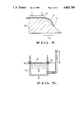
- FIG. 4 shows the test apparatus used to determine the bending radius, or flexibility, of coated materials as described in ASTM D1388-64.
- FIG. 5 shows the test apparatus used to determine low pressure hydrostatic resistance.
- FIG. 6 shows the Mullen Burst Test apparatus as described in ASTM D751-75.
- FIG. 7 shows the apparatus used to determine a moisture vapor transmission rate as described in ASTM E96-80 Procedure BW.
- the present invention provides a waterproof, breathable fabric useful in rainwear, sportswear, tents, automotive, marine and industrial covers, and other areas where the qualities of breathability and waterproofness are desired.
- the fabric is rendered waterproof and breathable through the use of a multilayered structure as illustrated in FIG. 1. This structure consists of a microporous membrane 10 sandwiched between a cellular foam adhesive layer 12 and a continuous, protective film 14.
- fabric substrates are useful in conjunction with the present invention, including woven and knit fabrics of rayon, nylon, polyester, acrylic and blends thereof.
- nonwoven fabrics of nylon, polyester are also useful as are natural fibers such as cotton or cotton/polyester blends.
- the multilayered structure is formed and coated onto the fabric substrate 16 in the following manner.
- a fabric roll is mounted on a machine unwind 62, and threaded through the rest of the apparatus.
- the cellular foam adhesive first layer is produced by mechanically foaming a water based latex solution containing a fully reacted polymer to a density of approximately 0.05 to 0.40 g/ml, more preferably 0.10 to 0.25 g/ml.
- Foam is produced by introducing pressurized air into the polymer coating solution. Shear from mechanical mixing reduces the viscosity of the solution surrounding the large air bubbles, causing continual reduction in bubble size and an increase in bubble number. Under the correct conditions of air, liquid feed rate and shear, a foam of the desired density and stability is formed. These parameters are well known in the art and depend on the type of machinery used.
- the foamed latex is applied as a first layer to the fabric substrate 16, by a knife over roll coater 64, preferably to a thickness of 0.002 to 0.10 inches, and dried in an oven 66 at an elevated temperature, preferably 200 to 300 degrees Fahrenheit.
- Suitable polymers include polyvinyl chloride, polyurethane, acrylic, polystyrene, polyethylene or mixtures thereof. Specific examples include the proprietary compound Hycar 26322 from B. F. Goodrich which is a fully reacted carboxy-modified acrylic latex or fully reacted polyurethane latex, such as WitcoBond 290H from Witco, or a co-polymer of urethane and acrylic constituents such as the experimental compound Darathane CL-204160 from W. R. Grace & Co.
- Darathane CL-204160 is a hydrophobic material consisting of approximately 75% acrylic copolymer and 25% urethane prepolymer. Suitable cellular foam layers can also be formed from a solution containing fully reacted polyurethane latex and acrylic latex. It is readily apparent that several other suitable compounds could be utilized in the practice of the instant invention.
- the latex is chosen and processed such that the resulting foam will dry to a stable, open celled structure adhered to the surface of, but not penetrating into, the textile substrate.
- the foam adhesive layer should possess a void volume of from approximately 60 to 90%, more preferably 70 to 80%.
- the void volume is a measure of the empty spaces existing in the foam structure and is a function of the liquid feed rate and amount of air introduced into the solution during foaming as described above. Due to the open celled structure of this adhesive layer, it does not interfere with transfer of moisture vapor.
- the foam layer 12 provides a suitable foundation for the coating solution used to form the microporous membrane 10 which is layered upon the cellular foam layer which serves to adhere the microporous membrane to the fabric substrate 16.
- a holding vessel 70 contains a solution used to form the microporous membrane.
- elastomeric materials are useful for mixtures with the above thermoplastic polymers to produce softer microporous membranes.
- elastomeric fluoropolymers fluoroelastomers
- Viton a class of elastomeric fluoropolymers
- Fluorel a class of silicones sold under the trademark Silastic by General Electric Co., and silicone gum by Dow Corning.
- Solvents for dissolving the membrane-forming polymer can be chosen from such liquids as dimethylformamide, tetrahydrofuran and dimethylacetamide. Particularly useful is the solvent M-Pyrol produced by GAF. This is a high boiling solvent with very low toxicity. In addition it is biodegradable.
- the microporous membrane solution is prepared by adding approximately 25% polymer, by weight, to solvent which has been heated to approximately 150 degrees Fahrenheit in the holding vessel 70.
- the polymer so added can consist of either approximately 25% thermoplastic polymer or approximately 12.5% thermoplastic polymer and 12.5% fluoroelastomer as described above.
- This solution is dispensed via pump 72 into a slot die applicator 74, and coated as a second layer onto the cellular foam adhesive-coated fabric 16 moving beneath the surface of the slot die 74.
- the solution of desired polymer in solvent can be coated on the surface of the cellular foam by knife over roll coating. This technique is well known in the textile industry.
- the coating is preferably applied to a thickness of approximately 0.002 to 0.008 inches and soaks into the surface of the open celled foam, filling the void areas, but does not soak into the fabric.
- the textile substrate thus coated enters a bath containing water at ambient temperature.
- the solvent/non-solvent process takes place in this bath and yields a fabric possessing an attached microporous membrane.
- a membrane thus produced owes its porosity to immobilization of the polymer gel prior to complete solvent depletion.
- the codiffusion of solvent out of, and water (non-solvent) into the polymer solution causes a separation of the solution into two interdispersed phases.
- One phase will contain concentrated polymer in solution becoming the membrane structure, the other a mixture of solvent in water becoming the micropores. Since the liquid coating solution has already filled the void areas of the foam, the produced microporous membrane is intertwined with the foam structure. This provides effective mechanical adhesion between the microporous membrane layer and the foam layer.
- the partially formed membrane is very delicate. Thus, some means must be provided to hold the textile substrate flat, and prevent contact between the coated surface and any rollers or other substrate handling equipment.
- the Drum Coagulator described in U.S. Pat. No. 4,598,662 is utilized in this process.
- the coated fabric enters a drum coagulator bath 76 containing water at ambient temperature.
- the coated fabric remains on the drum approximately two minutes. The time spent on the drum allows the formation of a microporous structure to take place before contact with rollers in a tank 78.
- the coated fabric is then run through two additional wash tanks 80 and 82, containing water at ambient temperature. This serves to remove any residual solvent left in the membrane. Fresh water is continually fed into the tank 82 and flows countercurrent to the fabric. The wash is followed by a nip 84 to remove excess water and the coated fabric is rolled up via a windup 86.
- the wet coated material is returned to the unwind 62 and run through the oven 66 to dry the coating, bypassing the wash tanks 76, 80 and 82 and moving straight to the windup 86.
- the microporous structure produced possesses a pore size ranging from approximately 1 to 2 microns, as determined by scanning electron microscope, a void volume of 55 to 70%, and a thickness of 0.0005 to 0.004 inches. This structure is both waterproof and breathable, forming a barrier to liquid water from the outside environment while allowing the passage of water vapor.
- FIG. 3 is a surface electron micrograph of the microporous membrane showing the structure 18 and void micropores 20.
- a third layer of a water based, film-forming material is applied on the surface of the microporous membrane 10.
- the continuous film formed from this material should be flexible, adhere to the microporous membrane 10, and should not interfere with the transfer of moisture vapor.
- the continuous film produced must be of sufficient strength to provide protection for the microporous membrane underneath.
- Suitable materials may be found among acrylic, polyvinyl chloride and polyurethane latexes and mixtures of the above, preferably polyurethane latex.
- the polyurethane solution PU-402A manufactured by Mobay American Corp., is suitable for use as the final film coating as is the experimental compound Darathane CL-204160 described above.
- Additives such as slip agents to prevent the continuous film from sticking to itself, can be used in the film coating solution.
- Slipayd AL140 available from Daniel Products.
- the latex solution is applied by knife over roll or Mayer rod, both standard techniques used in the textile industry, to a thickness of approximately 0.0005 to 0.005 inches and cured for approximately 2 to 5 minutes at 200 to 300 degrees Fahrenheit to produce a protective continuous film.
- the multilayered textile thus produced is breathable, waterproof and retains desirable feel and flexibility.
- the invention will be further described in the following examples which are intended to illustrate, but not limit, the invention.
- FIG. 4 illustrates the apparatus used.
- a strip of treated fabric 22 is placed on a support 24 so that its end projects from the horizontal surface of the support 24.
- the fabric is held in place by a weight 26.
- the length of overhang is measured when the fabric 22 is depressed under its own weight to the point where the line joining the strip of the fabric 22 to the edge of the support 24 makes an angle of 51.5 degrees from horizontal.
- One half of this length 28 is the bending radius of the sample.
- the test apparatus used to determine the low pressure hydrostatic resistance (LPHR) is illustrated in FIG. 5 and described in Fed. Std. 191A-5514.
- Water 30, under a hydrostatic head of 50 cm is forced against the test sample 32 which has been sealed to a container 34 by gaskets 36.
- the upper surface of the sample is observed for water leakage.
- the sample 32 has passed the LPHR test if no water is observed after five minutes.
- the Mullen Burst test apparatus used to determine the high pressure hydrostatic resistance is described in ASTM D751-75 and illustrated in FIG. 6.
- the test sample 38 is secured to the top of the test apparatus 40 and sealed with gaskets 42.
- the water pressure in the apparatus is raised by forcing water 44 from a cylinder 46 by means of a piston 48.
- the water pressure is indicated on a gauge 50. As pressure is increased the sample is visually observed for the appearance of water.
- the pressure on the gauge 50 at which water first penetrates the surface of the sample is the high pressure hydrostatic resistance.
- the test apparatus for moisture vapor transmission rate is described in ASTM E96-80 Method BW and illustrated in FIG. 7.
- a sample 52 acts as a cover for a sample cup 54 that is sealed with gaskets 56 and filled with water 58.
- the sample cup is inverted in a stream of air 60 at 72 degrees F. and 50% RH.
- the MVTR is determined by weighing the sample before and after the test period, thus giving the moisture transmitted through the sample 52.
- a microporous membrane layer was produced via the following method.
- a series of solutions were prepared from a mixture of Kynar 460, a thermoplastic polyvinylidene fluoride (PVDF) manufactured by Penwalt with flexural modulus 200,000 psi (ASTM D790), and Kynar 2800 a fluoroelastomer available from Penwalt with flexural modulus 90,000 psi. Blends of 0% fluoroelastomer, 20% fluoroelastomer and 50% fluoroelastomer, solids basis, were prepared.
- the solution produced from the 50% PVDF/fluoroelastomer blend from Example I was coated 0.004 inches thick on a woven 88P nylon Taffeta. This coated fabric was immersed in a water bath at 25 degrees C. for 2 hours, then dried at 110 degrees C. for 20 minutes. The result was a textile with a microporous membrane attached to one surface.
- the coated fabric exhibited the following properties:
- the coated fabric exhibited excellent performance with respect to waterproofness and breathability, several problems were readily apparent. Although the coating solution itself produced a membrane of suitable softness, when cast on fabric the resulting composite was rather stiff. This was due to the polymer solution striking through the fabric, restricting the otherwise freely moving fabric fibers. In addition, the membrane delaminated completely from the fabric substrate after only 5 wash and dry cycles. The surface of the membrane was easily damaged by abrasion, rendering it no longer waterproof.
- the following procedure was used to produce a multilayered textile.
- the fabric substrate used was an 88P, 50D nylon taffeta. This fabric is typical of that used in the production of outerwear garments. Other textile substrates could be substituted with only minor variations in processing parameters.
- a fabric roll was mounted on a machine unwind 62, and threaded through the rest of the apparatus.
- WitcoBond 290H available from Witco, is a fully reacted polyurethane dispersion that is typical of the foamable materials suitable for this application.
- This solution was mechanically foamed, with the addition of dry air, to a density of 0.18 g/ml.
- the foam thus produced was applied by a knife over roll coater 64 to a thickness of 0.006 inches.
- the coated fabric entered an oven 66 and was dried for 3 minutes at 280 degrees Fahrenheit. This produced an open celled foam with a void volume of 75 to 80%, adhered to the outer surface of the fabric 16.
- the weight of this coating ranged from 0.2 to 0.3 oz/sq.yd.
- the coated fabric then entered a drum coagulator bath 76 containing water at ambient temperature.
- the fabric remained on the drum approximately two minutes.
- the time spent on the drum allowed the formation of a microporous structure to take place before contact with rollers in a tank 78.
- the fabric was then run through two additional wash tanks 80 and 82, containing water at ambient temperature. This served to remove any additional solvent left in the membrane. Fresh water was continually fed into the tank 82 and flowed countercurrent to the fabric. The wash was followed by a nip 84 to remove excess water and the coated fabric was rolled up via a windup 86.
- the wet coated material was returned to the unwind 62 and run through the oven 66 to dry the coating, bypassing the wash tanks 76, 80 and 82 and moving straight to the windup 86.
- the final coating was a fully reacted polyurethane solution, PU-402A manufactured by Mobay Chemical Corp. This was applied by Mayer Rod to a thickness of 0.002 inches. The coating was cured 3 minutes at 250 degrees Fahrenheit to give a continuous surface film.
- the resulting coated fabric exhibited very good feel and appearance. No stiffness or strikethrough of the polymer coating were apparent on the samples. The following test data were obtained for this coated material:
- samples withstood 20 wash and dry cycles with no delamination, and exhibited excellent resistance to abrasion and damage of the microporous layer.
- Hycar 26322 is a product of B.F. Goodrich and is a fully reacted carboxy-modified acrylic latex. This solution was mechanically foamed using an SKG minimixer from SKG Industries, to a density of 0.15 g/ml. The foam was then coated onto the fabric substrate using a knife over roll coater to a thickness of 0.004 inches. The coated fabric was cured for 3 minutes at 300 degrees Fahrenheit. The result was a cellular foam which adhered to one side of the fabric. The foam had a void volume of 65 to 75% and a coating weight of 0.2 to 0.3 oz/sq.yd.
- the 50% PVDF/fluoroelastomer solution described in Example I was added 20% by weight to a holding vessel containing the solvent N-methyl pyrrolidone (M-pyrol) which had been heated to 150 degrees Fahrenheit. This was coated 0.005 inches thick on the surface of the cured foam layer. The coated material then entered a water coagulation bath. The bath contained a solution of 90% water and 10% M-pyrol at 75 degrees Fahrenheit. Contact with this solution coagulated the coating, producing a microporous film of PVDF on the surface of the foam. This film was 1 to 2 mils in thickness with a void volume of 60 to 65% and pore size ranging from 0.4 to 2 microns.
- M-pyrol solvent N-methyl pyrrolidone
- the material was run through two additional water baths to rinse out residual solvent and dried at 250 degrees Fahrenheit.
- the resulting coated fabric exhibited good hand and appearance. This fabric proved quite durable, with no visible delamination after 20 wash and dry cycles. Testing showed a high degree of waterproofness and good breathability.
- the properties of the coated fabric were as follows:
- the fabric substrate described in Example III was treated in the following manner.
- the Witcobond 290H is a fully reacted polyurethane dispersion that is compatible with the Hycar 26322.
- This solution was mechanically foamed, with the addition of dry air, to a density of 0.18 g/ml.
- the foam was applied to the fabric with a knife over roll to a thickness of 0.005 inches.
- the coated fabric was cured for 3 minutes at 280 degrees Fahrenheit. This resulted in a cellular foam with a void volume of 75 to 80% adhered to one surface of the fabric.
- the weight of this coating ranged from 0.3 to 0.4 oz/sq.yd.
- Example I The 50% PVDF/fluoroelastomer solution described in Example I was applied and treated in the same manner as in Example IV. The result was the same microporous membrane structure on the foam surface.
- the final coat was WitcoBond W-160, a fully reacted polyurethane latex solution available from WITCO, applied 0.001 inches thick using a floating knife. This solution was cured 3 minutes at 250 degrees Fahrenheit to give the continuous surface film.
- the resulting coated fabric also exhibited very good feel and appearance.
- the material showed no signs of delamination after 20 wash and dry cycles.
- the properties of the coated fabric were as follows:
- Taslite-Supplex woven nylon was used as the fabric substrate. This is a very soft, breathable fabric.
- the Witcobond 290H is a fully reacted polyurethane dispersion.
- Carbopol 1342 is an acrylic acid polymer manufactured by B. F. Goodrich and used as a thickener.
- This solution was mechanically foamed to a density of 0.18 g/ml. It was then applied 0.005 inches thick on the fabric using a knife over roll coater. The coated fabric was cured 5 minutes at 250 degrees Fahrenheit. This resulted in a polyurethane cellular foam that adhered to one surface of the fabric. This foam had a void volume of 70 to 80% and a coating weight of 0.2 to 0.25 oz/sq.yd.
- Estane 5707 from B. F. Goodrich, a solution consisting of 20% thermoplastic polyurethane in the solvent M-pyrol, was cast 0.005 inches thick on the surface of the cured foam. This coating was coagulated and washed in the same manner as the PVDF/fluoroelastomer coating described in Example IV. The result was a microporous film similar in structure to that described in Example IV but composed of polyurethane.
- the final coating was the same latex polyurethane solution described in Example V.
- the finished fabric had a very good feel, appearance and resistance to abrasion. It proved very durable, showing no signs of delamination after 30 wash and dry cycles.
- the properties of the coated fabric were as follows:
Landscapes
- Engineering & Computer Science (AREA)
- Textile Engineering (AREA)
- Laminated Bodies (AREA)
- Manufacture Of Porous Articles, And Recovery And Treatment Of Waste Products (AREA)
Abstract
Description
              TABLE 1
______________________________________
          SAMPLE 1 SAMPLE 2   SAMPLE 3
______________________________________
% Kynar 2800
in membrane 0.0        20.0       50.0
Thickness, mil
            3.0        2.5        2.4
MVTR, g/sqm/day
            18,900     16,200     16,500
Mullen, psi 78         65         45
Bending Radius, cm
            3.2        2.0        0.6
______________________________________
______________________________________
COATING WEIGHT:      0.50 oz./sq.yd.
MVTR:                7500 g./sq.m./day
Mullen:              45 psi
______________________________________
______________________________________
                  Parts by Weight
______________________________________
WitcoBond 290H      100.0
Acrysol ASE-60 (Thickener)
                    3.0
Ammonium Stearate (Surfactant)
                    8.0
______________________________________
______________________________________
MVTR (ASTM E96-80 BW)
                    5500 g./sqm./day
LPHR (FED 191A-5514)
                    No leaks after 5 min.
HPHR (ASTM D751-75) 145 psig
Coating Weight      0.8 oz./sq.yd.
______________________________________
______________________________________
                  Parts by weight
______________________________________
Hycar 26322 (acrylic latex)
                    100.0
Fumed Silica (filler)
                    5.0
Ammonium Stearate (surfactant)
                    10.0
______________________________________
______________________________________
MVTR (ASTM E96-80 BW)
                    4000 g./sq.m/day
LPHR (FED 191A-5514)
                    No leaks after 5 min.
HPHR (ASTM D751-75) 160 psig
Coating Weight      0.9 oz/sq.yd.
______________________________________
______________________________________
                  Parts by Weight
______________________________________
Hycar 26322 (acrylic latex)
                    50.0
Witcobond 290H      50.0
Fumed Silica (filler)
                    2.0
Ammonium Stearate (surfactant)
                    8.0
______________________________________
______________________________________
MVTR (ASTM E96-80 BW)
                    5500 g./sq.m./day
LPHR (FED 191a-5514)
                    No leaks after 5 min.
HPHR (ASTM D751-75) 145 psig
Coating Weight      .8 oz/sq.yd.
______________________________________
______________________________________
                     Parts by Weight
______________________________________
 Polyurethane Latex (Witcobond 290H)
                       100.0
Ammonium Stearate (surfactant)
                       5.0
Carbopol 1342 (thickener)
                       1.0
______________________________________
______________________________________
MVTR (ASTM E96-80 BW)
                    8500 g./sq.m/day
LPHR (FED 191A-5514)
                    No leaks after 5 min.
HPHR (ASTM D751-75) 120 psig
Coating Weight      .8 oz./sq.yd.
______________________________________
Claims (7)
Priority Applications (2)
| Application Number | Priority Date | Filing Date | Title |
|---|---|---|---|
| US07/156,298 US4863788A (en) | 1988-02-16 | 1988-02-16 | Waterproof breathable microporous membrane with cellular foam adhesive |
| EP89301438A EP0329411A3 (en) | 1988-02-16 | 1989-02-15 | Waterproof breathable microporous membrane with cellular foam adhesive |
Applications Claiming Priority (1)
| Application Number | Priority Date | Filing Date | Title |
|---|---|---|---|
| US07/156,298 US4863788A (en) | 1988-02-16 | 1988-02-16 | Waterproof breathable microporous membrane with cellular foam adhesive |
Publications (1)
| Publication Number | Publication Date |
|---|---|
| US4863788A true US4863788A (en) | 1989-09-05 |
Family
ID=22558983
Family Applications (1)
| Application Number | Title | Priority Date | Filing Date |
|---|---|---|---|
| US07/156,298 Expired - Fee Related US4863788A (en) | 1988-02-16 | 1988-02-16 | Waterproof breathable microporous membrane with cellular foam adhesive |
Country Status (2)
| Country | Link |
|---|---|
| US (1) | US4863788A (en) |
| EP (1) | EP0329411A3 (en) |
Cited By (47)
| Publication number | Priority date | Publication date | Assignee | Title |
|---|---|---|---|---|
| US4939030A (en) * | 1988-08-19 | 1990-07-03 | Mitsui Toatsu Chemicals, Inc. | Film for retaining freshness of vegetables and fruits |
| US4994278A (en) * | 1988-03-04 | 1991-02-19 | Noven Pharmaceuticals, Inc. | Breathable backing |
| US5126182A (en) * | 1989-10-17 | 1992-06-30 | Malden Mills Industries, Inc. | Drapable, water vapor permeable, wind and water resistant composite fabric and method of manufacturing same |
| US5134017A (en) * | 1988-09-02 | 1992-07-28 | Precision Fabrics Group, Inc. | Foam coated protective apparel fabric |
| US5342469A (en) * | 1993-01-08 | 1994-08-30 | Poly-Bond, Inc. | Method of making a composite with discontinuous adhesive structure |
| US5487189A (en) * | 1994-03-16 | 1996-01-30 | Kimberly-Clark Corporation | Coveralls having reduced seams and seamless shoulder construction and method of manufacture |
| US5509142A (en) * | 1993-06-30 | 1996-04-23 | Kimberly-Clark Corporation | Raised arm coveralls |
| US5523118A (en) * | 1993-04-07 | 1996-06-04 | Rexam Industries Corporation | Method of coating microporous membranes |
| US5682613A (en) * | 1994-07-25 | 1997-11-04 | Gates-Mills, Inc. | Waterproof breathable gloves |
| US5696174A (en) * | 1995-02-14 | 1997-12-09 | Allied Foam Tech Corporation | Stable and water-resistant aqueous foam composition |
| US5698307A (en) * | 1994-02-04 | 1997-12-16 | Fabrite Laminating Corp. | Quadlaminate fabric for surgical gowns and drapes |
| US5736467A (en) * | 1996-03-20 | 1998-04-07 | Oken; Aaron | Waterproof, vapor-permeable fabric and method for generating same |
| US5770529A (en) * | 1995-04-28 | 1998-06-23 | Kimberly-Clark Corporation | Liquid-distribution garment |
| US6013293A (en) * | 1997-09-10 | 2000-01-11 | Landec Corporation | Packing respiring biological materials with atmosphere control member |
| US6114024A (en) * | 1995-08-01 | 2000-09-05 | Kimberly-Clark Worldwide, Inc. | Multilayer breathable film |
| US6139675A (en) * | 1993-12-22 | 2000-10-31 | Kimberly-Clark Worldwide, Inc. | Process of manufacturing a water-based adhesive bonded, solvent resistant protective laminate |
| US6376032B1 (en) | 1995-05-30 | 2002-04-23 | Landec Corporation | Gas-permeable membrane |
| US6548132B1 (en) | 1998-07-23 | 2003-04-15 | Landec Corporation | Packaging biological materials |
| US20030077455A1 (en) * | 2001-02-15 | 2003-04-24 | Atofina Chemicals, Inc. | Novel foams and coatings |
| US6553995B1 (en) * | 2000-10-10 | 2003-04-29 | Peter Alexander Cole | Kit for support and stabilization of surgical patient extremities |
| US20030099799A1 (en) * | 2000-03-03 | 2003-05-29 | Masaki Koike | Resin hose for fuel |
| US6703115B2 (en) | 2001-05-01 | 2004-03-09 | Eastman Chemical Company | Multilayer films |
| US6767849B2 (en) | 2001-09-24 | 2004-07-27 | Malden Mills Industries, Inc. | Fabric with disparate surface properties |
| US20040195173A1 (en) * | 2003-04-02 | 2004-10-07 | Yeu Ming Tai Chemical Industrial Co., Ltd. | Asymmetric porous polytetrafluoroethylene membrane for a filter |
| US20040198121A1 (en) * | 2003-04-02 | 2004-10-07 | Yeu Ming Tai Chemical Industrial Co., Ltd. | Asymmetric porous polytetrafluoroethylene membrane for clothing |
| US20040256310A1 (en) * | 2003-06-19 | 2004-12-23 | Cheng Dah Yu | Method of producing a porous membrane and waterproof, highly breathable fabric including the membrane |
| KR100848036B1 (en) | 2007-06-26 | 2008-07-23 | 주식회사 웰텍 | Spunbond sheet having ventilation, stretchability, restoring force and water-repellent function and manufacturing method thereof |
| US20080265792A1 (en) * | 2006-04-03 | 2008-10-30 | Chih-Ping Liang | Constant Brightness Control For Electro-Luminescent Lamp |
| KR100888000B1 (en) * | 2001-01-24 | 2009-03-09 | 제옥스 에스. 뻬. 아. | Clothing ventilator which can be breathed by human body, and manufacturing method of garment ventilator |
| US7601374B2 (en) | 2000-09-26 | 2009-10-13 | Landec Corporation | Packaging of respiring biological materials |
| US20110097571A1 (en) * | 2009-10-22 | 2011-04-28 | Bha Group, Inc. | Oleophobic, air permeable, and breathable composite membrane |
| US20110185666A1 (en) * | 2008-04-14 | 2011-08-04 | Andrew Russell | Adhesive membrane |
| US8110232B2 (en) | 2000-09-26 | 2012-02-07 | Apio, Inc. | Packaging of bananas |
| WO2014093083A1 (en) | 2012-12-11 | 2014-06-19 | Hi-Tex, Inc. | Liquid repelling coating |
| US20140288171A1 (en) * | 2008-12-16 | 2014-09-25 | The Board Of Regents Of The University Of Texas System | Acrylic polymers containing metallic nanoparticles |
| US9474672B2 (en) | 2013-01-08 | 2016-10-25 | Bone Foam Inc. | Device and method for pelvic elevation and stabilization of surgical patient |
| US10086582B2 (en) | 2014-09-12 | 2018-10-02 | Columbia Sportswear North America, Inc. | Fabric having a waterproof barrier |
| US10189231B2 (en) | 2014-09-12 | 2019-01-29 | Columbia Sportswear North America, Inc. | Fabric having a waterproof barrier |
| US10278878B2 (en) | 2012-02-13 | 2019-05-07 | Bone Foam Llc | Extremity support and irrigation device and method of use |
| US10306933B2 (en) | 2006-01-30 | 2019-06-04 | Hbi Branded Apparel Enterprises, Llc | Garment with adhesive layer having different zones |
| US10420352B2 (en) | 2012-01-23 | 2019-09-24 | Apio, Inc. | Atmosphere control around respiring biological materials |
| CN111169106A (en) * | 2018-11-09 | 2020-05-19 | 聚纺股份有限公司 | Textiles |
| US10792066B2 (en) | 2012-02-13 | 2020-10-06 | Bone Foam, Inc. | Medical irrigation device and method |
| US20230030706A1 (en) * | 2018-12-14 | 2023-02-02 | Swnr Development, Llc | Fabric with Flow Restricting Core |
| WO2023232098A1 (en) * | 2022-06-02 | 2023-12-07 | 吴江市汉塔纺织整理有限公司 | Preparation method for ultra-thin and ultra-breathable microporous membrane |
| US20250325059A1 (en) * | 2024-04-18 | 2025-10-23 | Hbi Branded Apparel Enterprises, Llc | Moisture management upper torso garments |
| US12565723B2 (en) | 2018-12-14 | 2026-03-03 | Swnr Development, Llc | Fabric with flow restricting core |
Families Citing this family (12)
| Publication number | Priority date | Publication date | Assignee | Title |
|---|---|---|---|---|
| EP0488038A3 (en) * | 1990-11-29 | 1993-01-13 | The Dow Chemical Company | Composite film structures and articles made therefrom |
| DE59106435D1 (en) * | 1991-12-17 | 1995-10-12 | Kufner Textilwerke Gmbh | Coated fabric. |
| US5209969A (en) * | 1992-02-07 | 1993-05-11 | W. L. Gore & Associates, Inc. | Carbamate/urethane composition and textile lamination process |
| FR2700783B1 (en) * | 1993-01-28 | 1995-04-14 | Chaignaud Ste Indle Ets La | Improved multi-layer coating for walls and its application in particular to nautical linings. |
| GB9719205D0 (en) * | 1997-09-10 | 1997-11-12 | Spink Andrew D | Breatheable waterproof garment construction |
| WO2000039201A2 (en) * | 1998-12-28 | 2000-07-06 | Kimberly-Clark Worldwide, Inc. | Breathable composite elastic material having a cellular elastomeric film layer and method of making same |
| US6855424B1 (en) | 1998-12-28 | 2005-02-15 | Kinberly-Clark Worldwide, Inc. | Breathable composite elastic material having a cellular elastomeric film layer and method of making same |
| GB2424654B (en) * | 2005-04-01 | 2009-11-25 | Clarkson Textiles Ltd | Coated fabrics |
| DE102015113213A1 (en) * | 2015-07-25 | 2017-01-26 | BLüCHER GMBH | Novel textile protective material and method for its production |
| CN107379704A (en) * | 2017-08-21 | 2017-11-24 | 苏州井村服饰有限公司 | A kind of lightweight breathable wear-resistant fabric |
| CN109610184A (en) * | 2018-12-15 | 2019-04-12 | 深圳市仁义和兴塑胶五金制品有限公司 | A kind of organic silicon cloth of waterproof antiwear and processing technology |
| GB2642414A (en) * | 2024-05-07 | 2026-01-14 | Inoveight Ltd | A microporous membrane and method of manufacture thereof |
Citations (19)
| Publication number | Priority date | Publication date | Assignee | Title |
|---|---|---|---|---|
| NL7209319A (en) * | 1971-07-06 | 1973-01-09 | ||
| US3748217A (en) * | 1971-02-24 | 1973-07-24 | Burlington Industries Inc | Lined textile fabric and method of manufacture |
| US3953566A (en) * | 1970-05-21 | 1976-04-27 | W. L. Gore & Associates, Inc. | Process for producing porous products |
| US4194041A (en) * | 1978-06-29 | 1980-03-18 | W. L. Gore & Associates, Inc. | Waterproof laminate |
| US4203848A (en) * | 1977-05-25 | 1980-05-20 | Millipore Corporation | Processes of making a porous membrane material from polyvinylidene fluoride, and products |
| US4265962A (en) * | 1976-12-20 | 1981-05-05 | Burlington Industries, Inc. | Low penetration coating fabric |
| US4316772A (en) * | 1979-02-14 | 1982-02-23 | Cheng Dah Y | Composite membrane for a membrane distillation system |
| US4333786A (en) * | 1980-02-27 | 1982-06-08 | Inmont Corporation | Laminating |
| US4344999A (en) * | 1980-04-22 | 1982-08-17 | W. L. Gore & Associates, Inc. | Breathable laminate |
| US4384047A (en) * | 1980-03-28 | 1983-05-17 | Pennwalt Corporation | Porous vinylidene fluoride polymer membrane and process for its preparation |
| US4385093A (en) * | 1980-11-06 | 1983-05-24 | W. L. Gore & Associates, Inc. | Multi-component, highly porous, high strength PTFE article and method for manufacturing same |
| US4409275A (en) * | 1974-12-30 | 1983-10-11 | Samowich Joseph J | Decorative laminate |
| US4443511A (en) * | 1982-11-19 | 1984-04-17 | W. L. Gore & Associates, Inc. | Elastomeric waterproof laminate |
| US4473473A (en) * | 1979-02-14 | 1984-09-25 | International Microporous Technology, Inc. | Method and apparatus for distillation |
| US4478665A (en) * | 1980-11-06 | 1984-10-23 | W. L. Gore & Associates, Inc. | Method for manufacturing highly porous, high strength PTFE articles |
| US4482516A (en) * | 1982-09-10 | 1984-11-13 | W. L. Gore & Associates, Inc. | Process for producing a high strength porous polytetrafluoroethylene product having a coarse microstructure |
| US4537817A (en) * | 1982-12-08 | 1985-08-27 | Societe A Responsabilite Limitee Styled: Speri-France | Waterproof fabric and fabrication method thereof |
| US4554198A (en) * | 1982-01-14 | 1985-11-19 | Bluecher Hubert | Waterproof and air-tight, moisture-conducting textile material |
| US4619854A (en) * | 1984-06-12 | 1986-10-28 | Tikkurilan Varitehtaat Oy | Waterproof, weather-resistant and substantially non-stretching textile a method for producing it, and a component made from it |
Family Cites Families (1)
| Publication number | Priority date | Publication date | Assignee | Title |
|---|---|---|---|---|
| CH539729A (en) * | 1970-07-01 | 1973-07-31 | Sir Soc Italiana Resine Spa | Process for the manufacture of poromeric materials |
-
1988
- 1988-02-16 US US07/156,298 patent/US4863788A/en not_active Expired - Fee Related
-
1989
- 1989-02-15 EP EP89301438A patent/EP0329411A3/en not_active Withdrawn
Patent Citations (19)
| Publication number | Priority date | Publication date | Assignee | Title |
|---|---|---|---|---|
| US3953566A (en) * | 1970-05-21 | 1976-04-27 | W. L. Gore & Associates, Inc. | Process for producing porous products |
| US3748217A (en) * | 1971-02-24 | 1973-07-24 | Burlington Industries Inc | Lined textile fabric and method of manufacture |
| NL7209319A (en) * | 1971-07-06 | 1973-01-09 | ||
| US4409275A (en) * | 1974-12-30 | 1983-10-11 | Samowich Joseph J | Decorative laminate |
| US4265962A (en) * | 1976-12-20 | 1981-05-05 | Burlington Industries, Inc. | Low penetration coating fabric |
| US4203848A (en) * | 1977-05-25 | 1980-05-20 | Millipore Corporation | Processes of making a porous membrane material from polyvinylidene fluoride, and products |
| US4194041A (en) * | 1978-06-29 | 1980-03-18 | W. L. Gore & Associates, Inc. | Waterproof laminate |
| US4316772A (en) * | 1979-02-14 | 1982-02-23 | Cheng Dah Y | Composite membrane for a membrane distillation system |
| US4473473A (en) * | 1979-02-14 | 1984-09-25 | International Microporous Technology, Inc. | Method and apparatus for distillation |
| US4333786A (en) * | 1980-02-27 | 1982-06-08 | Inmont Corporation | Laminating |
| US4384047A (en) * | 1980-03-28 | 1983-05-17 | Pennwalt Corporation | Porous vinylidene fluoride polymer membrane and process for its preparation |
| US4344999A (en) * | 1980-04-22 | 1982-08-17 | W. L. Gore & Associates, Inc. | Breathable laminate |
| US4385093A (en) * | 1980-11-06 | 1983-05-24 | W. L. Gore & Associates, Inc. | Multi-component, highly porous, high strength PTFE article and method for manufacturing same |
| US4478665A (en) * | 1980-11-06 | 1984-10-23 | W. L. Gore & Associates, Inc. | Method for manufacturing highly porous, high strength PTFE articles |
| US4554198A (en) * | 1982-01-14 | 1985-11-19 | Bluecher Hubert | Waterproof and air-tight, moisture-conducting textile material |
| US4482516A (en) * | 1982-09-10 | 1984-11-13 | W. L. Gore & Associates, Inc. | Process for producing a high strength porous polytetrafluoroethylene product having a coarse microstructure |
| US4443511A (en) * | 1982-11-19 | 1984-04-17 | W. L. Gore & Associates, Inc. | Elastomeric waterproof laminate |
| US4537817A (en) * | 1982-12-08 | 1985-08-27 | Societe A Responsabilite Limitee Styled: Speri-France | Waterproof fabric and fabrication method thereof |
| US4619854A (en) * | 1984-06-12 | 1986-10-28 | Tikkurilan Varitehtaat Oy | Waterproof, weather-resistant and substantially non-stretching textile a method for producing it, and a component made from it |
Cited By (66)
| Publication number | Priority date | Publication date | Assignee | Title |
|---|---|---|---|---|
| US4994278A (en) * | 1988-03-04 | 1991-02-19 | Noven Pharmaceuticals, Inc. | Breathable backing |
| US4939030A (en) * | 1988-08-19 | 1990-07-03 | Mitsui Toatsu Chemicals, Inc. | Film for retaining freshness of vegetables and fruits |
| US5134017A (en) * | 1988-09-02 | 1992-07-28 | Precision Fabrics Group, Inc. | Foam coated protective apparel fabric |
| US5126182A (en) * | 1989-10-17 | 1992-06-30 | Malden Mills Industries, Inc. | Drapable, water vapor permeable, wind and water resistant composite fabric and method of manufacturing same |
| US5342469A (en) * | 1993-01-08 | 1994-08-30 | Poly-Bond, Inc. | Method of making a composite with discontinuous adhesive structure |
| US5523118A (en) * | 1993-04-07 | 1996-06-04 | Rexam Industries Corporation | Method of coating microporous membranes |
| US5509142A (en) * | 1993-06-30 | 1996-04-23 | Kimberly-Clark Corporation | Raised arm coveralls |
| US6139675A (en) * | 1993-12-22 | 2000-10-31 | Kimberly-Clark Worldwide, Inc. | Process of manufacturing a water-based adhesive bonded, solvent resistant protective laminate |
| US5698307A (en) * | 1994-02-04 | 1997-12-16 | Fabrite Laminating Corp. | Quadlaminate fabric for surgical gowns and drapes |
| US5487189A (en) * | 1994-03-16 | 1996-01-30 | Kimberly-Clark Corporation | Coveralls having reduced seams and seamless shoulder construction and method of manufacture |
| US5682613A (en) * | 1994-07-25 | 1997-11-04 | Gates-Mills, Inc. | Waterproof breathable gloves |
| US5696174A (en) * | 1995-02-14 | 1997-12-09 | Allied Foam Tech Corporation | Stable and water-resistant aqueous foam composition |
| US5770529A (en) * | 1995-04-28 | 1998-06-23 | Kimberly-Clark Corporation | Liquid-distribution garment |
| US7169451B2 (en) | 1995-05-30 | 2007-01-30 | Landec Corporation | Gas-permeable membrane |
| US20020054969A1 (en) * | 1995-05-30 | 2002-05-09 | Raymond Clarke | Gas-permeable membrane |
| US6376032B1 (en) | 1995-05-30 | 2002-04-23 | Landec Corporation | Gas-permeable membrane |
| US6114024A (en) * | 1995-08-01 | 2000-09-05 | Kimberly-Clark Worldwide, Inc. | Multilayer breathable film |
| US5736467A (en) * | 1996-03-20 | 1998-04-07 | Oken; Aaron | Waterproof, vapor-permeable fabric and method for generating same |
| US6013293A (en) * | 1997-09-10 | 2000-01-11 | Landec Corporation | Packing respiring biological materials with atmosphere control member |
| US6548132B1 (en) | 1998-07-23 | 2003-04-15 | Landec Corporation | Packaging biological materials |
| US20030099799A1 (en) * | 2000-03-03 | 2003-05-29 | Masaki Koike | Resin hose for fuel |
| US11365045B2 (en) | 2000-09-26 | 2022-06-21 | Curation Foods, Inc. | Packaging and methods of use for respiring biological materials |
| US8110232B2 (en) | 2000-09-26 | 2012-02-07 | Apio, Inc. | Packaging of bananas |
| US7601374B2 (en) | 2000-09-26 | 2009-10-13 | Landec Corporation | Packaging of respiring biological materials |
| US6553995B1 (en) * | 2000-10-10 | 2003-04-29 | Peter Alexander Cole | Kit for support and stabilization of surgical patient extremities |
| KR100888000B1 (en) * | 2001-01-24 | 2009-03-09 | 제옥스 에스. 뻬. 아. | Clothing ventilator which can be breathed by human body, and manufacturing method of garment ventilator |
| US20030077455A1 (en) * | 2001-02-15 | 2003-04-24 | Atofina Chemicals, Inc. | Novel foams and coatings |
| US7081216B2 (en) * | 2001-02-15 | 2006-07-25 | Arkema Inc. | Foams and coatings |
| US6703115B2 (en) | 2001-05-01 | 2004-03-09 | Eastman Chemical Company | Multilayer films |
| US8092848B2 (en) | 2001-05-15 | 2012-01-10 | Landec Corporation | Packaging of respiring biological materials |
| US6767849B2 (en) | 2001-09-24 | 2004-07-27 | Malden Mills Industries, Inc. | Fabric with disparate surface properties |
| US7374679B2 (en) * | 2003-04-02 | 2008-05-20 | Yeu Ming Tai Chemical Industrial Co., Ltd. | Asymmetric porous polytetrafluoroethylene membrane for a filter |
| US20040195173A1 (en) * | 2003-04-02 | 2004-10-07 | Yeu Ming Tai Chemical Industrial Co., Ltd. | Asymmetric porous polytetrafluoroethylene membrane for a filter |
| US7309663B2 (en) * | 2003-04-02 | 2007-12-18 | Yeu Ming Tai Chemical Industrial Co., Ltd. | Asymmetric porous polytetrafluoroethylene membrane for clothing |
| US20040198121A1 (en) * | 2003-04-02 | 2004-10-07 | Yeu Ming Tai Chemical Industrial Co., Ltd. | Asymmetric porous polytetrafluoroethylene membrane for clothing |
| US20040256310A1 (en) * | 2003-06-19 | 2004-12-23 | Cheng Dah Yu | Method of producing a porous membrane and waterproof, highly breathable fabric including the membrane |
| US20070102348A1 (en) * | 2003-06-19 | 2007-05-10 | Cheng Dah Y | Method of producing a porous membrane and waterproof, highly breathable fabric including the membrane |
| WO2004112934A3 (en) * | 2003-06-19 | 2005-06-09 | Dah Yu Cheng | Method of producing a porous membrane and waterproof, highly breathable fabric including the membrane |
| US11311058B2 (en) | 2006-01-30 | 2022-04-26 | Hbi Branded Apparel Enterprises, Llc | Methods for controlled application of adhesive and garments formed thereby |
| US10306933B2 (en) | 2006-01-30 | 2019-06-04 | Hbi Branded Apparel Enterprises, Llc | Garment with adhesive layer having different zones |
| US12035760B2 (en) | 2006-01-30 | 2024-07-16 | Hbi Branded Apparel Enterprises, Llc | Methods for controlled application of adhesive and garments formed thereby |
| US20080265792A1 (en) * | 2006-04-03 | 2008-10-30 | Chih-Ping Liang | Constant Brightness Control For Electro-Luminescent Lamp |
| KR100848036B1 (en) | 2007-06-26 | 2008-07-23 | 주식회사 웰텍 | Spunbond sheet having ventilation, stretchability, restoring force and water-repellent function and manufacturing method thereof |
| US9562174B2 (en) | 2008-04-14 | 2017-02-07 | A. Proctor Group Limited | Adhesive membrane |
| US20110185666A1 (en) * | 2008-04-14 | 2011-08-04 | Andrew Russell | Adhesive membrane |
| US20140288171A1 (en) * | 2008-12-16 | 2014-09-25 | The Board Of Regents Of The University Of Texas System | Acrylic polymers containing metallic nanoparticles |
| US9480260B2 (en) * | 2008-12-16 | 2016-11-01 | The Board Of Regents Of The University Of Texas System | Acrylic polymers containing metallic nanoparticles |
| US20110097571A1 (en) * | 2009-10-22 | 2011-04-28 | Bha Group, Inc. | Oleophobic, air permeable, and breathable composite membrane |
| US10420352B2 (en) | 2012-01-23 | 2019-09-24 | Apio, Inc. | Atmosphere control around respiring biological materials |
| US10278878B2 (en) | 2012-02-13 | 2019-05-07 | Bone Foam Llc | Extremity support and irrigation device and method of use |
| US10792066B2 (en) | 2012-02-13 | 2020-10-06 | Bone Foam, Inc. | Medical irrigation device and method |
| EP2931964A4 (en) * | 2012-12-11 | 2016-07-27 | Hi Tex Inc | COATING SPREADING LIQUIDS |
| WO2014093083A1 (en) | 2012-12-11 | 2014-06-19 | Hi-Tex, Inc. | Liquid repelling coating |
| AU2018250406B2 (en) * | 2012-12-11 | 2020-03-26 | Hi-Tex, Inc. | Liquid repelling coating |
| US9446563B2 (en) | 2012-12-11 | 2016-09-20 | Hi-Tex, Inc. | Liquid repelling coating |
| US9474672B2 (en) | 2013-01-08 | 2016-10-25 | Bone Foam Inc. | Device and method for pelvic elevation and stabilization of surgical patient |
| US10086582B2 (en) | 2014-09-12 | 2018-10-02 | Columbia Sportswear North America, Inc. | Fabric having a waterproof barrier |
| US10189231B2 (en) | 2014-09-12 | 2019-01-29 | Columbia Sportswear North America, Inc. | Fabric having a waterproof barrier |
| CN111169106A (en) * | 2018-11-09 | 2020-05-19 | 聚纺股份有限公司 | Textiles |
| US20230030706A1 (en) * | 2018-12-14 | 2023-02-02 | Swnr Development, Llc | Fabric with Flow Restricting Core |
| US12049069B2 (en) * | 2018-12-14 | 2024-07-30 | Swnr Development, Llc | Fabric with flow restricting core |
| US12565723B2 (en) | 2018-12-14 | 2026-03-03 | Swnr Development, Llc | Fabric with flow restricting core |
| WO2023232098A1 (en) * | 2022-06-02 | 2023-12-07 | 吴江市汉塔纺织整理有限公司 | Preparation method for ultra-thin and ultra-breathable microporous membrane |
| KR20240171160A (en) * | 2022-06-02 | 2024-12-06 | 우지앙 한타 텍스타일 피니싱 컴퍼니 리미티드 | Method for producing ultra-thin, ultra-permeable microporous membrane |
| JP2025520159A (en) * | 2022-06-02 | 2025-07-01 | 呉江市漢塔紡織整理有限公司 | Manufacturing method of ultra-thin, ultra-breathable microporous membrane |
| US20250325059A1 (en) * | 2024-04-18 | 2025-10-23 | Hbi Branded Apparel Enterprises, Llc | Moisture management upper torso garments |
Also Published As
| Publication number | Publication date |
|---|---|
| EP0329411A3 (en) | 1989-10-25 |
| EP0329411A2 (en) | 1989-08-23 |
Similar Documents
| Publication | Publication Date | Title |
|---|---|---|
| EP0329411A2 (en) | Waterproof breathable microporous membrane with cellular foam adhesive | |
| US4692369A (en) | Water-vapor-permeable, waterproof, highly elastic films | |
| CA1260335A (en) | Waterproof, moisture-vapor permeable sheet material and method of making the same | |
| US4833026A (en) | Breathable, waterproof sheet materials and methods for making the same | |
| AU748805B2 (en) | Breathable waterproof laminate and method for making same | |
| US4194041A (en) | Waterproof laminate | |
| US5239036A (en) | Waterproof breathable polyurethane membranes and porous substrates protected therewith | |
| US5238732A (en) | Waterproof breathable polyurethane membranes and porous substrates protected therewith | |
| US5234525A (en) | Waterproof breathable fabric laminates and method for producing same | |
| JP3401261B2 (en) | Water vapor permeable composite material | |
| CN1063707C (en) | Flexible water-resistant composites | |
| WO1997049552A1 (en) | Flexible water and oil resistant composites | |
| JPH09500844A (en) | Bi-directional stretchable fabric laminate and articles made therefrom | |
| WO2006083002A1 (en) | Stretch composite film and composite fabric and processes for production of them | |
| JPH11131373A (en) | Moisture permeable waterproof fabric and method for producing the same | |
| US5239037A (en) | Waterproof breathable polyurethane membranes and porous substrates protected therewith | |
| WO2007086128A1 (en) | Polyurethane resin composition for durable moisture-permeable waterproof sheet, moisture-permeable waterproof sheet, and process for producing the same | |
| KR101912828B1 (en) | Non-swelling porous film and manufacturing method tereof and its use using the same | |
| TWI825260B (en) | Synthetic leather and method of forming a synthetic leather | |
| JPH0434497B2 (en) | ||
| WO2004076154A1 (en) | Foam membranes and laminates | |
| KR100461878B1 (en) | Flexible water resistant composites | |
| JPS63109046A (en) | Dew-condensation preventive material | |
| JPH05138783A (en) | Permeable waterproof cloth and production thereof | |
| JPS63110223A (en) | Anti-sweating material |
Legal Events
| Date | Code | Title | Description |
|---|---|---|---|
| AS | Assignment |
Owner name: MICROPORE Free format text: ASSIGNMENT OF ASSIGNORS INTEREST.;ASSIGNORS:BELLAIRS, GEORGE L.;NOWAK, CHRIS E.;PAREKH, MAHNER;REEL/FRAME:004952/0284 Effective date: 19880301 Owner name: MICROPORE Free format text: ASSIGNMENT OF ASSIGNORS INTEREST;ASSIGNORS:BELLAIRS, GEORGE L.;NOWAK, CHRIS E.;PAREKH, MAHNER;REEL/FRAME:004952/0284 Effective date: 19880301 |
|
| REMI | Maintenance fee reminder mailed | ||
| LAPS | Lapse for failure to pay maintenance fees | ||
| FP | Lapsed due to failure to pay maintenance fee |
Effective date: 19930905 |
|
| STCH | Information on status: patent discontinuation |
Free format text: PATENT EXPIRED DUE TO NONPAYMENT OF MAINTENANCE FEES UNDER 37 CFR 1.362 |