US4789445A - Method for the electrodeposition of metals - Google Patents
Method for the electrodeposition of metals Download PDFInfo
- Publication number
- US4789445A US4789445A US06/933,284 US93328486A US4789445A US 4789445 A US4789445 A US 4789445A US 93328486 A US93328486 A US 93328486A US 4789445 A US4789445 A US 4789445A
- Authority
- US
- United States
- Prior art keywords
- electrolyte
- antimony
- zinc
- impurity
- concentration
- Prior art date
- Legal status (The legal status is an assumption and is not a legal conclusion. Google has not performed a legal analysis and makes no representation as to the accuracy of the status listed.)
- Expired - Fee Related
Links
- 238000000034 method Methods 0.000 title claims abstract description 60
- 238000004070 electrodeposition Methods 0.000 title claims abstract description 16
- 229910052751 metal Inorganic materials 0.000 title abstract description 14
- 239000002184 metal Substances 0.000 title abstract description 14
- 150000002739 metals Chemical group 0.000 title abstract description 7
- 239000012535 impurity Substances 0.000 claims abstract description 47
- 229910052787 antimony Inorganic materials 0.000 claims abstract description 25
- WATWJIUSRGPENY-UHFFFAOYSA-N antimony atom Chemical compound [Sb] WATWJIUSRGPENY-UHFFFAOYSA-N 0.000 claims abstract description 25
- 239000003792 electrolyte Substances 0.000 claims abstract description 22
- 230000008569 process Effects 0.000 claims abstract description 16
- NWONKYPBYAMBJT-UHFFFAOYSA-L zinc sulfate Chemical compound [Zn+2].[O-]S([O-])(=O)=O NWONKYPBYAMBJT-UHFFFAOYSA-L 0.000 claims abstract description 13
- 229960001763 zinc sulfate Drugs 0.000 claims abstract description 13
- 229910000368 zinc sulfate Inorganic materials 0.000 claims abstract description 13
- HCHKCACWOHOZIP-UHFFFAOYSA-N Zinc Chemical group [Zn] HCHKCACWOHOZIP-UHFFFAOYSA-N 0.000 claims description 22
- 229910052725 zinc Inorganic materials 0.000 claims description 20
- 239000011701 zinc Substances 0.000 claims description 20
- 239000008151 electrolyte solution Substances 0.000 claims description 11
- QSHDDOUJBYECFT-UHFFFAOYSA-N mercury Chemical compound [Hg] QSHDDOUJBYECFT-UHFFFAOYSA-N 0.000 claims description 7
- 229910052753 mercury Inorganic materials 0.000 claims description 7
- 238000003969 polarography Methods 0.000 claims description 6
- 238000010521 absorption reaction Methods 0.000 claims description 5
- 230000002939 deleterious effect Effects 0.000 claims description 5
- 238000001736 differential pulse polarography Methods 0.000 claims description 4
- 238000005363 electrowinning Methods 0.000 claims description 4
- 150000002500 ions Chemical class 0.000 claims description 3
- 238000002484 cyclic voltammetry Methods 0.000 claims description 2
- 238000009616 inductively coupled plasma Methods 0.000 claims description 2
- 238000005070 sampling Methods 0.000 claims description 2
- 239000007864 aqueous solution Substances 0.000 claims 1
- 238000011084 recovery Methods 0.000 abstract description 4
- 239000000243 solution Substances 0.000 description 16
- 238000004458 analytical method Methods 0.000 description 10
- PXHVJJICTQNCMI-UHFFFAOYSA-N Nickel Chemical compound [Ni] PXHVJJICTQNCMI-UHFFFAOYSA-N 0.000 description 7
- 229910052793 cadmium Inorganic materials 0.000 description 6
- BDOSMKKIYDKNTQ-UHFFFAOYSA-N cadmium atom Chemical compound [Cd] BDOSMKKIYDKNTQ-UHFFFAOYSA-N 0.000 description 6
- 238000005259 measurement Methods 0.000 description 6
- 229940021013 electrolyte solution Drugs 0.000 description 5
- 238000012360 testing method Methods 0.000 description 4
- RYGMFSIKBFXOCR-UHFFFAOYSA-N Copper Chemical compound [Cu] RYGMFSIKBFXOCR-UHFFFAOYSA-N 0.000 description 3
- VEXZGXHMUGYJMC-UHFFFAOYSA-N Hydrochloric acid Chemical compound Cl VEXZGXHMUGYJMC-UHFFFAOYSA-N 0.000 description 3
- RQNWIZPPADIBDY-UHFFFAOYSA-N arsenic atom Chemical compound [As] RQNWIZPPADIBDY-UHFFFAOYSA-N 0.000 description 3
- KRKNYBCHXYNGOX-UHFFFAOYSA-N citric acid Chemical compound OC(=O)CC(O)(C(O)=O)CC(O)=O KRKNYBCHXYNGOX-UHFFFAOYSA-N 0.000 description 3
- 239000010941 cobalt Substances 0.000 description 3
- 229910017052 cobalt Inorganic materials 0.000 description 3
- GUTLYIVDDKVIGB-UHFFFAOYSA-N cobalt atom Chemical compound [Co] GUTLYIVDDKVIGB-UHFFFAOYSA-N 0.000 description 3
- 229910052802 copper Inorganic materials 0.000 description 3
- 239000010949 copper Substances 0.000 description 3
- 238000009713 electroplating Methods 0.000 description 3
- GNPVGFCGXDBREM-UHFFFAOYSA-N germanium atom Chemical compound [Ge] GNPVGFCGXDBREM-UHFFFAOYSA-N 0.000 description 3
- 229910021645 metal ion Inorganic materials 0.000 description 3
- 229910052759 nickel Inorganic materials 0.000 description 3
- 238000004886 process control Methods 0.000 description 3
- UFHFLCQGNIYNRP-UHFFFAOYSA-N Hydrogen Chemical compound [H][H] UFHFLCQGNIYNRP-UHFFFAOYSA-N 0.000 description 2
- XEEYBQQBJWHFJM-UHFFFAOYSA-N Iron Chemical compound [Fe] XEEYBQQBJWHFJM-UHFFFAOYSA-N 0.000 description 2
- BUGBHKTXTAQXES-UHFFFAOYSA-N Selenium Chemical compound [Se] BUGBHKTXTAQXES-UHFFFAOYSA-N 0.000 description 2
- 229910052785 arsenic Inorganic materials 0.000 description 2
- 239000008139 complexing agent Substances 0.000 description 2
- 229910052732 germanium Inorganic materials 0.000 description 2
- 238000002386 leaching Methods 0.000 description 2
- 238000012544 monitoring process Methods 0.000 description 2
- 238000007747 plating Methods 0.000 description 2
- 229910052711 selenium Inorganic materials 0.000 description 2
- 239000011669 selenium Substances 0.000 description 2
- 229910052714 tellurium Inorganic materials 0.000 description 2
- PORWMNRCUJJQNO-UHFFFAOYSA-N tellurium atom Chemical compound [Te] PORWMNRCUJJQNO-UHFFFAOYSA-N 0.000 description 2
- IJGRMHOSHXDMSA-UHFFFAOYSA-N Atomic nitrogen Chemical compound N#N IJGRMHOSHXDMSA-UHFFFAOYSA-N 0.000 description 1
- VYZAMTAEIAYCRO-UHFFFAOYSA-N Chromium Chemical compound [Cr] VYZAMTAEIAYCRO-UHFFFAOYSA-N 0.000 description 1
- BQCADISMDOOEFD-UHFFFAOYSA-N Silver Chemical compound [Ag] BQCADISMDOOEFD-UHFFFAOYSA-N 0.000 description 1
- ATJFFYVFTNAWJD-UHFFFAOYSA-N Tin Chemical compound [Sn] ATJFFYVFTNAWJD-UHFFFAOYSA-N 0.000 description 1
- 239000002253 acid Substances 0.000 description 1
- 230000009471 action Effects 0.000 description 1
- 230000003213 activating effect Effects 0.000 description 1
- 230000004913 activation Effects 0.000 description 1
- QVGXLLKOCUKJST-UHFFFAOYSA-N atomic oxygen Chemical compound [O] QVGXLLKOCUKJST-UHFFFAOYSA-N 0.000 description 1
- 229910052797 bismuth Inorganic materials 0.000 description 1
- JCXGWMGPZLAOME-UHFFFAOYSA-N bismuth atom Chemical compound [Bi] JCXGWMGPZLAOME-UHFFFAOYSA-N 0.000 description 1
- 230000008859 change Effects 0.000 description 1
- 239000003153 chemical reaction reagent Substances 0.000 description 1
- 239000003795 chemical substances by application Substances 0.000 description 1
- 229910052804 chromium Inorganic materials 0.000 description 1
- 239000011651 chromium Substances 0.000 description 1
- 239000012141 concentrate Substances 0.000 description 1
- 239000000470 constituent Substances 0.000 description 1
- 238000010276 construction Methods 0.000 description 1
- 238000007796 conventional method Methods 0.000 description 1
- 230000002950 deficient Effects 0.000 description 1
- 238000000151 deposition Methods 0.000 description 1
- 230000008021 deposition Effects 0.000 description 1
- 238000011161 development Methods 0.000 description 1
- 238000010586 diagram Methods 0.000 description 1
- 229910001873 dinitrogen Inorganic materials 0.000 description 1
- 230000000694 effects Effects 0.000 description 1
- 239000002659 electrodeposit Substances 0.000 description 1
- 238000005868 electrolysis reaction Methods 0.000 description 1
- 239000003292 glue Substances 0.000 description 1
- PCHJSUWPFVWCPO-UHFFFAOYSA-N gold Chemical compound [Au] PCHJSUWPFVWCPO-UHFFFAOYSA-N 0.000 description 1
- 229910052737 gold Inorganic materials 0.000 description 1
- 239000010931 gold Substances 0.000 description 1
- -1 however Substances 0.000 description 1
- 239000001257 hydrogen Substances 0.000 description 1
- 229910052739 hydrogen Inorganic materials 0.000 description 1
- 229910052738 indium Inorganic materials 0.000 description 1
- APFVFJFRJDLVQX-UHFFFAOYSA-N indium atom Chemical compound [In] APFVFJFRJDLVQX-UHFFFAOYSA-N 0.000 description 1
- 229910052742 iron Inorganic materials 0.000 description 1
- 239000011133 lead Substances 0.000 description 1
- WPBNNNQJVZRUHP-UHFFFAOYSA-L manganese(2+);methyl n-[[2-(methoxycarbonylcarbamothioylamino)phenyl]carbamothioyl]carbamate;n-[2-(sulfidocarbothioylamino)ethyl]carbamodithioate Chemical compound [Mn+2].[S-]C(=S)NCCNC([S-])=S.COC(=O)NC(=S)NC1=CC=CC=C1NC(=S)NC(=O)OC WPBNNNQJVZRUHP-UHFFFAOYSA-L 0.000 description 1
- 238000001465 metallisation Methods 0.000 description 1
- 229910052760 oxygen Inorganic materials 0.000 description 1
- 239000001301 oxygen Substances 0.000 description 1
- 238000000746 purification Methods 0.000 description 1
- 238000011160 research Methods 0.000 description 1
- 229910052703 rhodium Inorganic materials 0.000 description 1
- 239000010948 rhodium Substances 0.000 description 1
- MHOVAHRLVXNVSD-UHFFFAOYSA-N rhodium atom Chemical compound [Rh] MHOVAHRLVXNVSD-UHFFFAOYSA-N 0.000 description 1
- 229910052709 silver Inorganic materials 0.000 description 1
- 239000004332 silver Substances 0.000 description 1
- 229910052718 tin Inorganic materials 0.000 description 1
- 239000011135 tin Substances 0.000 description 1
- 230000032258 transport Effects 0.000 description 1
- ITXJYKSENLRQLS-UHFFFAOYSA-L zinc antimony(3+) sulfate Chemical compound [Sb+3].S(=O)(=O)([O-])[O-].[Zn+2] ITXJYKSENLRQLS-UHFFFAOYSA-L 0.000 description 1
Images

Classifications
-
- C—CHEMISTRY; METALLURGY
- C25—ELECTROLYTIC OR ELECTROPHORETIC PROCESSES; APPARATUS THEREFOR
- C25C—PROCESSES FOR THE ELECTROLYTIC PRODUCTION, RECOVERY OR REFINING OF METALS; APPARATUS THEREFOR
- C25C1/00—Electrolytic production, recovery or refining of metals by electrolysis of solutions
- C25C1/16—Electrolytic production, recovery or refining of metals by electrolysis of solutions of zinc, cadmium or mercury
-
- C—CHEMISTRY; METALLURGY
- C25—ELECTROLYTIC OR ELECTROPHORETIC PROCESSES; APPARATUS THEREFOR
- C25C—PROCESSES FOR THE ELECTROLYTIC PRODUCTION, RECOVERY OR REFINING OF METALS; APPARATUS THEREFOR
- C25C7/00—Constructional parts, or assemblies thereof, of cells; Servicing or operating of cells
- C25C7/06—Operating or servicing
-
- G—PHYSICS
- G01—MEASURING; TESTING
- G01N—INVESTIGATING OR ANALYSING MATERIALS BY DETERMINING THEIR CHEMICAL OR PHYSICAL PROPERTIES
- G01N27/00—Investigating or analysing materials by the use of electric, electrochemical, or magnetic means
- G01N27/26—Investigating or analysing materials by the use of electric, electrochemical, or magnetic means by investigating electrochemical variables; by using electrolysis or electrophoresis
- G01N27/416—Systems
- G01N27/48—Systems using polarography, i.e. measuring changes in current under a slowly-varying voltage
Definitions
- This invention relates to a method for the electrodeposition of metals, and, more particularly, to a method for continuously measuring and adjusting the concentration of very low levels of impurities, particularly antimony impurities, in electrolyte solutions, particularly zinc electrolyte, during electrolytic metal recovery operations.
- electrolytic solutions which contain impurites that when present above certain predetermined concentrations can electrodeposit with the plated metal and thereby either contaminate or cause resolution of the deposit, with a corresponding decrease in the efficiency of the metal deposition process. Consequently, an effective technique for monitoring the purity of the electrolyte supplied to and used in the electrolysis section of the metal plant is required since the current efficiency is greatly affected by the presence of even minute quantities of undesirable impurity metal ions.
- metals such as zinc are produced from ores and/or concentrates by either roasting and leaching, or direct leaching so as to generate a solution, e.g., zinc sulfate, which contains a substantial amount and number of impurities.
- the solution is then purified by conventional techniques, thereby lowering the deleterious impurities to levels which will not interfere with the zinc recovery process.
- Kerby discusses many attempts to measure and/or determine the effects of impurities and discloses methods for measuring the activation overpotential between the cathode and a reference cell, and relates this to the concentration of impurities and polarizing affecting agents present in the sample.
- the processes for the purification of electrolyte and the electrodeposition of metals are subsequently adjusted in relation to the earlier measured value.
- a method for measuring the amount of current required to plate and then deplate, which can be related to the electrolyte quality, is disclosed by A. D'Este et al. in "Montevecchio" 16, Nos. 3-4, 1-11 (1965).
- a report by R. V. Wong of EG&G Princeton Applied Research entitled “Electrochemical Techniques for the Analysis of Plating Baths” discusses the use of differential pulse polarography to analyze major and minor constituents in a plating bath.
- Another object is to provide a method for analyzing low levels of impurities, e.g., in electroplating solutions, by using a polarograph.
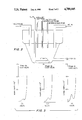
- FIG. 1 outlines a schematic diagram of the preferred process of the invention.
- FIG. 2 shows an electrode test cell for a polarograph.
- FIG. 3 is a differential pulse polarogram for a sample of zinc sulfate electrolyte showing the concentration of antimony as a function of the peak height.
- the invention discloses a method for the electrodeposition, usually by electrowinning, of a metal, selected from the group of zinc, copper, lead, iron, cobalt, nickel, manganese, chromium, tin, cadmium, bismuth, indium, silver, gold, rhodium, ano platinium; and most preferably, zinc.
- a metal selected from the group of zinc, copper, lead, iron, cobalt, nickel, manganese, chromium, tin, cadmium, bismuth, indium, silver, gold, rhodium, ano platinium; and most preferably, zinc.
- the metal to be electrodeposited frequently contains a significant amount of at least one of a plurality of various impurities selected from the group of antimony, arsenic, cadmium, cobalt, copper, germanium, nickel, selenium and tellurium.
- each electrolyte has impurities having predetermined concentrations that range, for zinc sulfate, from about 0.01 ppm, e.g., 0.02 ppm, for antimony to about 2.0 ppm for cadmium, and which should be continually kept below its predetermined concentration to achieve an efficient electroplating process.
- the method involves periodically preferably very frequently, sampling a sufficient, i.e., measurable amount of electrolyte solution, and promptly determining the concentration level of at least one such impurity, and particularly antimony in the recovery of zinc, by means of an effective analytical technique, preferably a polarographic technique, using a hanging drop mercury electrode method, to accurately determine the sought after impurity concentrations.
- the concentration of the desired impurity is calculated, preferably by a high speed calculating means, and most preferably by a microcomputer, whereby the electrolyte impurity concentration can be promptly readjusted to a desired value below the predetermined impurity concentration.
- This process control analysis is continually repeated for the duration of the electrodeposition process.
- Unit 1 represents any suitable source of an electrolyte solution, for example, a zinc sulfate container in the common case of recovering zinc in an electrowinning operation, such as an industrial electrorefining tankhouse.
- Pump 2 withdraws a measurable sample of the zinc sulfate solution from source 1 and transports it to polarograph cell 6, or, in the broadest embodiment of the invention, any suitable measuring means including spectrographic techniques as atomic absorption, ultraviolet absorption and inductively coupled plasma, together with specific ion and cyclic voltammetry techniques which can quickly and accurately determine the low concentration of impurities contained therein.
- Hydrochloric acid which is stored in tank 3, is concurrently supplied to the polarograph cell 6 by pump 4, while nitrogen gas, stored in tank 5, is bubbled through the electrolyte sample in order to displace any dissolved oxygen present.
- the polarographic measurement of the particular impurity concentration to be determined is then made in test cell 6, preferably by using a hanging drop mercury electrode. After the impurity level has been measured, the cell can be emptied to drain by pump 7, and the cycle then repeated for a determination either on a new sample, or, the measurement can be repeated on the present sample to ensure its accuracy.
- an effective high speed computing means which in the preferred embodiment is a state of the art electronic computer, and most preferably, a microcomputer 8.
- Microcomputer 8 is programmed the art programming techniques, and preferably programmed so as to record a polarographic or, other suitable data containing curve as shown in FIG. 3 and/or calculate the impurity concentration and exhibit the result on a screen or be printed out by printer 10 or the like.
- the microcomputer is preferably programmed to activate the measuring system in a predetermined desired sequence so as to effectively operate pumps 2, 4 and 7 and nitrogren addition 5, together with automatically starting and assisting in the polarographic analysis; as well as having an indicator means in alarm 11 and control unit 12 when the impurity concentration rises above a programmed value corresponding to the particular impurity concentration and which when activated, can, for example, divert the flow of electrolyte to a storage tank for corrective action.
- the computing means can be programmed for substantially continuous monitoring, by, for example, programming the data pertaining to cycle sequence and timing for each operation.
- the computer is particularly useful in properly activating the dropping mercury electrode to generate a fresh mercury drop at the electrode for each preferred polarographic determination.
- the potential value is held for a predetermined time at a predetermined value in order to electrolyze the impurity to be determined. After a predetermined time, the potential is then reversed and the voltage and current data collected by the computer.
- An important element of the process as pertains to zinc solutions is the surprising discovery that reducing the antimony content below its desired limit, e.g., 0.02 ppm, provides a solution which may be electrolytically refined with high efficiency. More specifically, it was discovered that when the antimony concentration is below about 0.02 ppm in a zinc sulfate solution, all other deleterious impurity concentrations were discovered to be below levels that would be harmful to the electrodeposition process. This relationship can be seen more clearly in Table I, where an impurity analysis of zinc sulfate electrolyte solutions is presented.
- the voltage scan range for antimony is about -0.420 to -0.150 volts, with the peak occurring at approximately -0.32 volts.
- FIG. 2 shows a typical polarographic test cell and
- FIG. 3 a typical differential pulse polarogram for antimony analysis by this technique.
- the antimony concentration is determined by measuring the peak height after suitable calibration to standardize the technique as well known to those skilled in the art.
- Such techniques and other information relating to polarography and differential pulse polarography may be found in "Polarographic Techniques", 2 nd Edition, by L. Meites, Interscience, NYC, 1965 and in “Modern Polarographic Methods in Analytical Chemistry” by A. M. Bond Marcel Dekker, Inc., 1980, both publications being hereby incorporated by reference.
- the preferred operating temperature with the polarograph is about room temperature, in the range of 25-35° C., although the electrodeposition processes can be conducted at other temperatures if so desired. In the room temperature range, it has been found that temperature variations were not a significant variable.
Landscapes
- Chemical & Material Sciences (AREA)
- Electrochemistry (AREA)
- Chemical Kinetics & Catalysis (AREA)
- Life Sciences & Earth Sciences (AREA)
- Materials Engineering (AREA)
- Metallurgy (AREA)
- Organic Chemistry (AREA)
- Health & Medical Sciences (AREA)
- Engineering & Computer Science (AREA)
- Physics & Mathematics (AREA)
- Molecular Biology (AREA)
- Analytical Chemistry (AREA)
- Biochemistry (AREA)
- General Health & Medical Sciences (AREA)
- General Physics & Mathematics (AREA)
- Immunology (AREA)
- Pathology (AREA)
- Electrolytic Production Of Metals (AREA)
Abstract
The invention relates to an improved electrodeposition process for the recovery of metals by controlling the concentration of certain impurities in the electrolyte. For a zinc sulfate electrolyte, control of only the antimony impurity level below a predetermined value provides an efficient electrodeposition process.
Description
This is a continutation of co-pending application Ser. No. 495,312 filed on May 16, 1983 now abandoned.
This invention relates to a method for the electrodeposition of metals, and, more particularly, to a method for continuously measuring and adjusting the concentration of very low levels of impurities, particularly antimony impurities, in electrolyte solutions, particularly zinc electrolyte, during electrolytic metal recovery operations.
In processes involving the electrodeposition of metals such as electrowinning, electrorefining and electroplating, electrolytic solutions are used which contain impurites that when present above certain predetermined concentrations can electrodeposit with the plated metal and thereby either contaminate or cause resolution of the deposit, with a corresponding decrease in the efficiency of the metal deposition process. Consequently, an effective technique for monitoring the purity of the electrolyte supplied to and used in the electrolysis section of the metal plant is required since the current efficiency is greatly affected by the presence of even minute quantities of undesirable impurity metal ions.
In modern industrial operations, metals such as zinc are produced from ores and/or concentrates by either roasting and leaching, or direct leaching so as to generate a solution, e.g., zinc sulfate, which contains a substantial amount and number of impurities. The solution is then purified by conventional techniques, thereby lowering the deleterious impurities to levels which will not interfere with the zinc recovery process. More particularly, when impurities such as antimony, arsenic, cadmium, cobalt, copper, germanium, nickel, selenium and tellurium are present above certain concentrations in various electrolyte solutions, ranging from 0.01 ppm (parts per million) for antimony to 2.0 ppm for cadmium in the case of zinc electrolyte, the hydrogen overpotential on zinc can be reduced, thus significantly impairing current efficiency while also permitting the dissolving of already deposited pure zinc metal.
The art has made many attempts to solve this troublesome problem, the most common being the use of analytical techniques for determining the concentration of the various impurities. However, such processes have all proven unsatisfactory due to the lengthy and unreliable techniques available for measuring the low levels of impurities found in the electrolyte. Additionally, these technique are deficient for a process control method since the variables to be monitored can frequently change significantly between the time the measurement is taken and the time the sample is quantitatively analyzed. The addition of organic reagents such as animal glue can inhibit the deleterious effects, but are frequently effective only within certain relatively narrow impurity ranges.
The importance of determining the quality of zinc electrolyte is reflected in the number of published references discussing the problem, and the number of different techniques investigated, none of which have gained wide acceptance in the zinc industry. One such technique, reported by R. C. Kerby et all. "The Construction and Operation of a Meter for Measuring the Quality of Zinc Electrolytes", Technical Bulletin TB 160, Dept. of Canadian Energy, Mines and Resources, September 1972, measures the evolution of hydrogen gas in a small cell as a measure of current efficiency. However, this only provides a qualitative indirect measurement and can be influenced by factors other than impurity levels. In U.S. Pat. Nos. 4,324,621 and 4,217,189, R. C. Kerby discusses many attempts to measure and/or determine the effects of impurities and discloses methods for measuring the activation overpotential between the cathode and a reference cell, and relates this to the concentration of impurities and polarizing affecting agents present in the sample. The processes for the purification of electrolyte and the electrodeposition of metals are subsequently adjusted in relation to the earlier measured value. A method for measuring the amount of current required to plate and then deplate, which can be related to the electrolyte quality, is disclosed by A. D'Este et al. in "Montevecchio" 16, Nos. 3-4, 1-11 (1965). A report by R. V. Wong of EG&G Princeton Applied Research entitled "Electrochemical Techniques for the Analysis of Plating Baths" discusses the use of differential pulse polarography to analyze major and minor constituents in a plating bath.
It is an object of this invention to provide a new and improved method for the electrodeposition of metals.
Another object is to provide a method for analyzing low levels of impurities, e.g., in electroplating solutions, by using a polarograph.
Other objects will be apparent from the following description.
FIG. 1 outlines a schematic diagram of the preferred process of the invention.
FIG. 2 shows an electrode test cell for a polarograph.
FIG. 3 is a differential pulse polarogram for a sample of zinc sulfate electrolyte showing the concentration of antimony as a function of the peak height.
Broadly, the invention discloses a method for the electrodeposition, usually by electrowinning, of a metal, selected from the group of zinc, copper, lead, iron, cobalt, nickel, manganese, chromium, tin, cadmium, bismuth, indium, silver, gold, rhodium, ano platinium; and most preferably, zinc. The metal to be electrodeposited frequently contains a significant amount of at least one of a plurality of various impurities selected from the group of antimony, arsenic, cadmium, cobalt, copper, germanium, nickel, selenium and tellurium. Depending on the metal to be plated, each electrolyte has impurities having predetermined concentrations that range, for zinc sulfate, from about 0.01 ppm, e.g., 0.02 ppm, for antimony to about 2.0 ppm for cadmium, and which should be continually kept below its predetermined concentration to achieve an efficient electroplating process. The method involves periodically preferably very frequently, sampling a sufficient, i.e., measurable amount of electrolyte solution, and promptly determining the concentration level of at least one such impurity, and particularly antimony in the recovery of zinc, by means of an effective analytical technique, preferably a polarographic technique, using a hanging drop mercury electrode method, to accurately determine the sought after impurity concentrations. Upon the completion of measuring, the concentration of the desired impurity is calculated, preferably by a high speed calculating means, and most preferably by a microcomputer, whereby the electrolyte impurity concentration can be promptly readjusted to a desired value below the predetermined impurity concentration. This process control analysis is continually repeated for the duration of the electrodeposition process.
Viewing FIG. 1, a schematic outline of the preferred process control system is set forth. Unit 1 represents any suitable source of an electrolyte solution, for example, a zinc sulfate container in the common case of recovering zinc in an electrowinning operation, such as an industrial electrorefining tankhouse. Pump 2 withdraws a measurable sample of the zinc sulfate solution from source 1 and transports it to polarograph cell 6, or, in the broadest embodiment of the invention, any suitable measuring means including spectrographic techniques as atomic absorption, ultraviolet absorption and inductively coupled plasma, together with specific ion and cyclic voltammetry techniques which can quickly and accurately determine the low concentration of impurities contained therein. Hydrochloric acid, which is stored in tank 3, is concurrently supplied to the polarograph cell 6 by pump 4, while nitrogen gas, stored in tank 5, is bubbled through the electrolyte sample in order to displace any dissolved oxygen present. The polarographic measurement of the particular impurity concentration to be determined is then made in test cell 6, preferably by using a hanging drop mercury electrode. After the impurity level has been measured, the cell can be emptied to drain by pump 7, and the cycle then repeated for a determination either on a new sample, or, the measurement can be repeated on the present sample to ensure its accuracy.
Upon completion of the measurement, the current and potential data are delivered to, in the broadest embodiment of the invention, an effective high speed computing means, which in the preferred embodiment is a state of the art electronic computer, and most preferably, a microcomputer 8. Microcomputer 8 is programmed the art programming techniques, and preferably programmed so as to record a polarographic or, other suitable data containing curve as shown in FIG. 3 and/or calculate the impurity concentration and exhibit the result on a screen or be printed out by printer 10 or the like. The microcomputer is preferably programmed to activate the measuring system in a predetermined desired sequence so as to effectively operate pumps 2, 4 and 7 and nitrogren addition 5, together with automatically starting and assisting in the polarographic analysis; as well as having an indicator means in alarm 11 and control unit 12 when the impurity concentration rises above a programmed value corresponding to the particular impurity concentration and which when activated, can, for example, divert the flow of electrolyte to a storage tank for corrective action.
The computing means can be programmed for substantially continuous monitoring, by, for example, programming the data pertaining to cycle sequence and timing for each operation. The computer is particularly useful in properly activating the dropping mercury electrode to generate a fresh mercury drop at the electrode for each preferred polarographic determination. The potential value is held for a predetermined time at a predetermined value in order to electrolyze the impurity to be determined. After a predetermined time, the potential is then reversed and the voltage and current data collected by the computer.
An important element of the process as pertains to zinc solutions is the surprising discovery that reducing the antimony content below its desired limit, e.g., 0.02 ppm, provides a solution which may be electrolytically refined with high efficiency. More specifically, it was discovered that when the antimony concentration is below about 0.02 ppm in a zinc sulfate solution, all other deleterious impurity concentrations were discovered to be below levels that would be harmful to the electrodeposition process. This relationship can be seen more clearly in Table I, where an impurity analysis of zinc sulfate electrolyte solutions is presented.
              TABLE I
______________________________________
Impurity Analysis (ppm)
Test  Sb      Co     Cu    Cd    Ge    Ni    As
______________________________________
1     1.8     0.80   2.0   19.0  0.15  0.1   0.02
2     0.44    0.50   1.0   3.0   0.02  0.1   0.01
3     0.41    0.10   2.0   12.0  0.10  0.05  0.01
4     0.29    0.30   0.4   2.0   0.01  0.05  0.01
5     0.11    0.30   0.4   1.0   <0.005
                                       <0.05 <0.01
6     0.02    0.1    <0.4  2.0   <0.005
                                       <0.05 <0.01
7     0.01    0.2    <0.4  1.0   <0.005
                                       <0.05 <0.01
8     0.01    0.2    <0.4  2.0   <0.005
                                       <0.05 <0.01
9     0.008   0.3    <0.4  0.5   <0.005
                                       <0.05 <0.01
______________________________________
As is shown in Table 1 lowering of the antimony concentration below certain levels in the zinc sulfate electrolyte also surprisingly reduces the impurity levels of the other harmful elements below their deleterious levels, as well. This development makes it unnecessary to analyze for impurities other than antimony in the case of the zinc electrodeposition processes, thus both greatly simplifying the purity analysis and also greatly reducing the time necessary to complete the analysis. Preferred methods for treating the zinc sulfate electrolyte to lower the antimony impurity levels are well known in the industry and commonly the solution is contacted with zinc dust. In a zinc electrodeposition process the limit for some of the impurities is approximately as follows (ppm): cobalt-0.3; copper-0.5: cadmium-2; germanium-<005; nickel-<.0.1; and arsenic-<0.1.
Since the preferred polarographic analysis for antimony is usually conducted on solutions extremely low in impurities, i.e., less than 0.02 ppm antimony, it is important to use a specialized procedure which is a preferred embodiment of the invention, to accurately measure these low concentrations since the polarograph is normally an instrument incapable of consistently providing accurate measurements at these low concentrations. We have found that using differential pulse polarography whereby the mercury at the tip of the electrode is not continuously dropped, but instead kept in a hanging mode for about 60 to 180 seconds, e.g., 120 seconds, and at a fixed voltage that varies depending on the particular impurity in question, was effective. The polarity is then altered, the impurity deplated and potential-current data gathered. The voltage scan range for antimony is about -0.420 to -0.150 volts, with the peak occurring at approximately -0.32 volts. FIG. 2 shows a typical polarographic test cell and FIG. 3 a typical differential pulse polarogram for antimony analysis by this technique.
As can be seen from FIG. 3, the antimony concentration is determined by measuring the peak height after suitable calibration to standardize the technique as well known to those skilled in the art. Such techniques and other information relating to polarography and differential pulse polarography may be found in "Polarographic Techniques", 2nd Edition, by L. Meites, Interscience, NYC, 1965 and in "Modern Polarographic Methods in Analytical Chemistry" by A. M. Bond Marcel Dekker, Inc., 1980, both publications being hereby incorporated by reference.
Due to the very low concentrations of impurities in the presence of a relatively high concentration of zinc, or, in the broadest embodiment of the invention, metal ions which are desired to be electrodeposited, it is preferable to include complexing agents in order to shift the ion deposition potential. In the determination of antimony levels it is important to add sufficient HCl to the solution so as to create about a 1 to 12, e.g., 8, normal acid solution. For the determination of cadmium in zinc solutions, however, citric acid is added to produce about a 0.125 molar solution As will be apparent to those skilled in the art, different complexing agents at varying amounts as well as different mercury hanging times and voltages determined by routine experimentation may be necessary depending on the metal ion and electrolyte to be analyzed.
The preferred operating temperature with the polarograph is about room temperature, in the range of 25-35° C., although the electrodeposition processes can be conducted at other temperatures if so desired. In the room temperature range, it has been found that temperature variations were not a significant variable.
The accuracy of polarographic analysis for zinc sulfate solutions using the preferred techniques described above is reflected in Table II in the comparison of data on the identical solutions when analyzed by standard atomic absorption (AA) techniques and polarography.
              TABLE II
______________________________________
Antimony (ppm)
Sample No.   AA Analysis
                        Polarographic
______________________________________
1            0.100      0.100
2            0.050      0.046
3            0.050      0.052
4            0.036      0.034
5            0.035      0.039
6            0.030      0.029
7            0.020      0.019
8            0.011      0.010
9            0.010      0.010
10           0.010      0.009
11           0.010      0.010
______________________________________
It is to be understood that although the examples are specific to zinc sulfate and the zinc sulfate-antimony solutions, the principles of the invention also apply to all other systems containing similar electrolytes and having similar voltage impairing impurities.
Claims (8)
1. A method for the electrodeposition of zinc containing a measurable concentration of a plurality of impurities including antimony in its electrolyte solution wherein the concentrations of the impurities are maintained below deleterious levels by the control of only the antimony impurity concentration, said method characterized by the following steps
sampling a sufficient amount of electrolyte from the electrolyte solution;
measuring the concentration level of antimony impurity
in the electrolyte sample by means of an effective measuring technique;
readjusting the antimony impurity level of the electrolyte solution below 0.02 ppm by the addition of zinc dust to the electrolyte;
continually repeating at predetermined intervals the above sequence of steps throughout the duration of the electrodeposition process.
2. A method as claimed in claim 1 wherein the electrodeposition process is the electrowinning of zinc.
3. A method as claimed in claim 1 wherein the effective measuring technique is selected from the group of polarography, atomic absorption, ultra violet absorption, inductively coupled plasma, specific ion and cyclic voltammetry techniques.
4. A method as claimed in claim 3 wherein the measuring technique is differential pulse polarography.
5. A method as claimed in claim 4 wherein the polarographic technique involves using a hanging drop mercury electrode capable of detecting antimony levels as low as 0.010 ppm.
6. A method as claimed in claim 1 where the readjusting of the impurity level of the electrolyte solution is made by an effective computing means.
7. The method as claimed in claim 6 wherein the computing means is a microcomputer.
8. A method as claimed in claim 1 wherein the electrolyte solution to be sampled is an aqueous solution of zinc sulfate.
Priority Applications (1)
| Application Number | Priority Date | Filing Date | Title |
|---|---|---|---|
| US06/933,284 US4789445A (en) | 1983-05-16 | 1986-11-19 | Method for the electrodeposition of metals |
Applications Claiming Priority (2)
| Application Number | Priority Date | Filing Date | Title |
|---|---|---|---|
| US49531283A | 1983-05-16 | 1983-05-16 | |
| US06/933,284 US4789445A (en) | 1983-05-16 | 1986-11-19 | Method for the electrodeposition of metals |
Related Parent Applications (1)
| Application Number | Title | Priority Date | Filing Date |
|---|---|---|---|
| US49531283A Continuation | 1983-05-16 | 1983-05-16 |
Publications (1)
| Publication Number | Publication Date |
|---|---|
| US4789445A true US4789445A (en) | 1988-12-06 |
Family
ID=27051721
Family Applications (1)
| Application Number | Title | Priority Date | Filing Date |
|---|---|---|---|
| US06/933,284 Expired - Fee Related US4789445A (en) | 1983-05-16 | 1986-11-19 | Method for the electrodeposition of metals |
Country Status (1)
| Country | Link |
|---|---|
| US (1) | US4789445A (en) |
Cited By (42)
| Publication number | Priority date | Publication date | Assignee | Title |
|---|---|---|---|---|
| US5045160A (en) * | 1987-09-28 | 1991-09-03 | Recytec S.A. | Process for the electrochemical separation of metal mixtures and metal alloys |
| FR2662709A1 (en) * | 1990-05-30 | 1991-12-06 | Mitsubishi Materials Corp | METHODS FOR MEASURING COBALT AND COPPER CONCENTRATIONS IN ELECTROLYTIC ZINC EXTRACTION SOLUTION AND METHOD FOR PURIFYING THE SAME. |
| WO1999022037A1 (en) * | 1997-10-27 | 1999-05-06 | Ruhr-Zink Gmbh | Method for extracting non-ferrous metals such as zinc by electrolysis and by adding substances containing phosphor |
| US6254760B1 (en) * | 1999-03-05 | 2001-07-03 | Applied Materials, Inc. | Electro-chemical deposition system and method |
| US6258220B1 (en) | 1998-11-30 | 2001-07-10 | Applied Materials, Inc. | Electro-chemical deposition system |
| US6261433B1 (en) | 1998-04-21 | 2001-07-17 | Applied Materials, Inc. | Electro-chemical deposition system and method of electroplating on substrates |
| US6267853B1 (en) | 1999-07-09 | 2001-07-31 | Applied Materials, Inc. | Electro-chemical deposition system |
| US6299753B1 (en) | 1999-09-01 | 2001-10-09 | Applied Materials, Inc. | Double pressure vessel chemical dispenser unit |
| US6436267B1 (en) | 2000-08-29 | 2002-08-20 | Applied Materials, Inc. | Method for achieving copper fill of high aspect ratio interconnect features |
| US20020113039A1 (en) * | 1999-07-09 | 2002-08-22 | Mok Yeuk-Fai Edwin | Integrated semiconductor substrate bevel cleaning apparatus and method |
| US6478937B2 (en) | 2001-01-19 | 2002-11-12 | Applied Material, Inc. | Substrate holder system with substrate extension apparatus and associated method |
| US6551488B1 (en) | 1999-04-08 | 2003-04-22 | Applied Materials, Inc. | Segmenting of processing system into wet and dry areas |
| US6551484B2 (en) | 1999-04-08 | 2003-04-22 | Applied Materials, Inc. | Reverse voltage bias for electro-chemical plating system and method |
| US6557237B1 (en) | 1999-04-08 | 2003-05-06 | Applied Materials, Inc. | Removable modular cell for electro-chemical plating and method |
| US6571657B1 (en) | 1999-04-08 | 2003-06-03 | Applied Materials Inc. | Multiple blade robot adjustment apparatus and associated method |
| US6576110B2 (en) | 2000-07-07 | 2003-06-10 | Applied Materials, Inc. | Coated anode apparatus and associated method |
| US6582578B1 (en) | 1999-04-08 | 2003-06-24 | Applied Materials, Inc. | Method and associated apparatus for tilting a substrate upon entry for metal deposition |
| US20030146102A1 (en) * | 2002-02-05 | 2003-08-07 | Applied Materials, Inc. | Method for forming copper interconnects |
| US20040003873A1 (en) * | 1999-03-05 | 2004-01-08 | Applied Materials, Inc. | Method and apparatus for annealing copper films |
| US20040020780A1 (en) * | 2001-01-18 | 2004-02-05 | Hey H. Peter W. | Immersion bias for use in electro-chemical plating system |
| US20040079633A1 (en) * | 2000-07-05 | 2004-04-29 | Applied Materials, Inc. | Apparatus for electro chemical deposition of copper metallization with the capability of in-situ thermal annealing |
| US20040140203A1 (en) * | 2003-01-21 | 2004-07-22 | Applied Materials,Inc. | Liquid isolation of contact rings |
| US20040149573A1 (en) * | 2003-01-31 | 2004-08-05 | Applied Materials, Inc. | Contact ring with embedded flexible contacts |
| US20040154185A1 (en) * | 1997-07-10 | 2004-08-12 | Applied Materials, Inc. | Method and apparatus for heating and cooling substrates |
| US20040154915A1 (en) * | 2003-02-06 | 2004-08-12 | Applied Materials, Inc. | Contact plating apparatus |
| US20040206628A1 (en) * | 2003-04-18 | 2004-10-21 | Applied Materials, Inc. | Electrical bias during wafer exit from electrolyte bath |
| US20040209414A1 (en) * | 2003-04-18 | 2004-10-21 | Applied Materials, Inc. | Two position anneal chamber |
| US6808612B2 (en) | 2000-05-23 | 2004-10-26 | Applied Materials, Inc. | Method and apparatus to overcome anomalies in copper seed layers and to tune for feature size and aspect ratio |
| US6837978B1 (en) | 1999-04-08 | 2005-01-04 | Applied Materials, Inc. | Deposition uniformity control for electroplating apparatus, and associated method |
| US20050092602A1 (en) * | 2003-10-29 | 2005-05-05 | Harald Herchen | Electrochemical plating cell having a membrane stack |
| US20050092601A1 (en) * | 2003-10-29 | 2005-05-05 | Harald Herchen | Electrochemical plating cell having a diffusion member |
| US6893548B2 (en) | 2000-06-15 | 2005-05-17 | Applied Materials Inc. | Method of conditioning electrochemical baths in plating technology |
| US6911136B2 (en) | 2002-04-29 | 2005-06-28 | Applied Materials, Inc. | Method for regulating the electrical power applied to a substrate during an immersion process |
| US6913680B1 (en) | 2000-05-02 | 2005-07-05 | Applied Materials, Inc. | Method of application of electrical biasing to enhance metal deposition |
| US20050218000A1 (en) * | 2004-04-06 | 2005-10-06 | Applied Materials, Inc. | Conditioning of contact leads for metal plating systems |
| US20060102467A1 (en) * | 2004-11-15 | 2006-05-18 | Harald Herchen | Current collimation for thin seed and direct plating |
| US7205153B2 (en) | 2003-04-11 | 2007-04-17 | Applied Materials, Inc. | Analytical reagent for acid copper sulfate solutions |
| US7285195B2 (en) | 2004-06-24 | 2007-10-23 | Applied Materials, Inc. | Electric field reducing thrust plate |
| US7851222B2 (en) | 2005-07-26 | 2010-12-14 | Applied Materials, Inc. | System and methods for measuring chemical concentrations of a plating solution |
| JP2014016169A (en) * | 2012-07-05 | 2014-01-30 | Sumitomo Metal Mining Co Ltd | Method for evaluating deterioration state of palladium plating solution and palladium plating method |
| US20160017508A1 (en) * | 2013-03-07 | 2016-01-21 | Kyoto University | Method for manufacturing electrolytic copper |
| CN113668018A (en) * | 2021-07-27 | 2021-11-19 | 三门三友科技股份有限公司 | Electrolytic copper impurity online detection method |
Citations (8)
| Publication number | Priority date | Publication date | Assignee | Title |
|---|---|---|---|---|
| US3073757A (en) * | 1959-06-22 | 1963-01-15 | Rolf K Ladisch | Polarographic method and apparatus |
| US3649180A (en) * | 1969-12-31 | 1972-03-14 | Cominco Ltd | Purification of zinc sulphate solution |
| US3755098A (en) * | 1970-05-25 | 1973-08-28 | Electrolyt Zinc Australasia | Control of the impurity content of zinc sulphate solutions |
| US4013412A (en) * | 1974-08-01 | 1977-03-22 | Mitsui Mining & Smelting Co., Ltd. | Method for judging purity of purified zinc sulphate solution used for electrolytic production of zinc |
| US4146437A (en) * | 1975-12-31 | 1979-03-27 | The Curators Of The University Of Missouri | Method for evaluating a system for electrodeposition of metals |
| US4153521A (en) * | 1977-08-05 | 1979-05-08 | Litvak Rafael S | Method of automatic control and optimization of electrodeposition conditions |
| US4217189A (en) * | 1978-07-05 | 1980-08-12 | Cominco Ltd. | Method and apparatus for control of electrowinning of zinc |
| US4324621A (en) * | 1979-12-26 | 1982-04-13 | Cominco Ltd. | Method and apparatus for controlling the quality of electrolytes |
-
1986
- 1986-11-19 US US06/933,284 patent/US4789445A/en not_active Expired - Fee Related
Patent Citations (9)
| Publication number | Priority date | Publication date | Assignee | Title |
|---|---|---|---|---|
| US3073757A (en) * | 1959-06-22 | 1963-01-15 | Rolf K Ladisch | Polarographic method and apparatus |
| US3649180A (en) * | 1969-12-31 | 1972-03-14 | Cominco Ltd | Purification of zinc sulphate solution |
| US3755098A (en) * | 1970-05-25 | 1973-08-28 | Electrolyt Zinc Australasia | Control of the impurity content of zinc sulphate solutions |
| US4013412A (en) * | 1974-08-01 | 1977-03-22 | Mitsui Mining & Smelting Co., Ltd. | Method for judging purity of purified zinc sulphate solution used for electrolytic production of zinc |
| US4146437A (en) * | 1975-12-31 | 1979-03-27 | The Curators Of The University Of Missouri | Method for evaluating a system for electrodeposition of metals |
| US4146437B1 (en) * | 1975-12-31 | 1987-07-14 | ||
| US4153521A (en) * | 1977-08-05 | 1979-05-08 | Litvak Rafael S | Method of automatic control and optimization of electrodeposition conditions |
| US4217189A (en) * | 1978-07-05 | 1980-08-12 | Cominco Ltd. | Method and apparatus for control of electrowinning of zinc |
| US4324621A (en) * | 1979-12-26 | 1982-04-13 | Cominco Ltd. | Method and apparatus for controlling the quality of electrolytes |
Cited By (54)
| Publication number | Priority date | Publication date | Assignee | Title |
|---|---|---|---|---|
| US5045160A (en) * | 1987-09-28 | 1991-09-03 | Recytec S.A. | Process for the electrochemical separation of metal mixtures and metal alloys |
| FR2662709A1 (en) * | 1990-05-30 | 1991-12-06 | Mitsubishi Materials Corp | METHODS FOR MEASURING COBALT AND COPPER CONCENTRATIONS IN ELECTROLYTIC ZINC EXTRACTION SOLUTION AND METHOD FOR PURIFYING THE SAME. |
| US20040154185A1 (en) * | 1997-07-10 | 2004-08-12 | Applied Materials, Inc. | Method and apparatus for heating and cooling substrates |
| US6929774B2 (en) | 1997-07-10 | 2005-08-16 | Applied Materials, Inc. | Method and apparatus for heating and cooling substrates |
| WO1999022037A1 (en) * | 1997-10-27 | 1999-05-06 | Ruhr-Zink Gmbh | Method for extracting non-ferrous metals such as zinc by electrolysis and by adding substances containing phosphor |
| US6261433B1 (en) | 1998-04-21 | 2001-07-17 | Applied Materials, Inc. | Electro-chemical deposition system and method of electroplating on substrates |
| USRE40218E1 (en) * | 1998-04-21 | 2008-04-08 | Uziel Landau | Electro-chemical deposition system and method of electroplating on substrates |
| US6258220B1 (en) | 1998-11-30 | 2001-07-10 | Applied Materials, Inc. | Electro-chemical deposition system |
| US6635157B2 (en) | 1998-11-30 | 2003-10-21 | Applied Materials, Inc. | Electro-chemical deposition system |
| US7192494B2 (en) | 1999-03-05 | 2007-03-20 | Applied Materials, Inc. | Method and apparatus for annealing copper films |
| US6254760B1 (en) * | 1999-03-05 | 2001-07-03 | Applied Materials, Inc. | Electro-chemical deposition system and method |
| US20040003873A1 (en) * | 1999-03-05 | 2004-01-08 | Applied Materials, Inc. | Method and apparatus for annealing copper films |
| US6571657B1 (en) | 1999-04-08 | 2003-06-03 | Applied Materials Inc. | Multiple blade robot adjustment apparatus and associated method |
| US6837978B1 (en) | 1999-04-08 | 2005-01-04 | Applied Materials, Inc. | Deposition uniformity control for electroplating apparatus, and associated method |
| US6551484B2 (en) | 1999-04-08 | 2003-04-22 | Applied Materials, Inc. | Reverse voltage bias for electro-chemical plating system and method |
| US6557237B1 (en) | 1999-04-08 | 2003-05-06 | Applied Materials, Inc. | Removable modular cell for electro-chemical plating and method |
| US6582578B1 (en) | 1999-04-08 | 2003-06-24 | Applied Materials, Inc. | Method and associated apparatus for tilting a substrate upon entry for metal deposition |
| US6551488B1 (en) | 1999-04-08 | 2003-04-22 | Applied Materials, Inc. | Segmenting of processing system into wet and dry areas |
| US20030168346A1 (en) * | 1999-04-08 | 2003-09-11 | Applied Materials, Inc. | Segmenting of processing system into wet and dry areas |
| US20030213772A9 (en) * | 1999-07-09 | 2003-11-20 | Mok Yeuk-Fai Edwin | Integrated semiconductor substrate bevel cleaning apparatus and method |
| US20020113039A1 (en) * | 1999-07-09 | 2002-08-22 | Mok Yeuk-Fai Edwin | Integrated semiconductor substrate bevel cleaning apparatus and method |
| US6267853B1 (en) | 1999-07-09 | 2001-07-31 | Applied Materials, Inc. | Electro-chemical deposition system |
| US6299753B1 (en) | 1999-09-01 | 2001-10-09 | Applied Materials, Inc. | Double pressure vessel chemical dispenser unit |
| US6913680B1 (en) | 2000-05-02 | 2005-07-05 | Applied Materials, Inc. | Method of application of electrical biasing to enhance metal deposition |
| US6808612B2 (en) | 2000-05-23 | 2004-10-26 | Applied Materials, Inc. | Method and apparatus to overcome anomalies in copper seed layers and to tune for feature size and aspect ratio |
| US6893548B2 (en) | 2000-06-15 | 2005-05-17 | Applied Materials Inc. | Method of conditioning electrochemical baths in plating technology |
| US20040079633A1 (en) * | 2000-07-05 | 2004-04-29 | Applied Materials, Inc. | Apparatus for electro chemical deposition of copper metallization with the capability of in-situ thermal annealing |
| US6576110B2 (en) | 2000-07-07 | 2003-06-10 | Applied Materials, Inc. | Coated anode apparatus and associated method |
| US6436267B1 (en) | 2000-08-29 | 2002-08-20 | Applied Materials, Inc. | Method for achieving copper fill of high aspect ratio interconnect features |
| US20040020780A1 (en) * | 2001-01-18 | 2004-02-05 | Hey H. Peter W. | Immersion bias for use in electro-chemical plating system |
| US6478937B2 (en) | 2001-01-19 | 2002-11-12 | Applied Material, Inc. | Substrate holder system with substrate extension apparatus and associated method |
| US20030146102A1 (en) * | 2002-02-05 | 2003-08-07 | Applied Materials, Inc. | Method for forming copper interconnects |
| US6911136B2 (en) | 2002-04-29 | 2005-06-28 | Applied Materials, Inc. | Method for regulating the electrical power applied to a substrate during an immersion process |
| US7138039B2 (en) | 2003-01-21 | 2006-11-21 | Applied Materials, Inc. | Liquid isolation of contact rings |
| US20040140203A1 (en) * | 2003-01-21 | 2004-07-22 | Applied Materials,Inc. | Liquid isolation of contact rings |
| US20040149573A1 (en) * | 2003-01-31 | 2004-08-05 | Applied Materials, Inc. | Contact ring with embedded flexible contacts |
| US7087144B2 (en) | 2003-01-31 | 2006-08-08 | Applied Materials, Inc. | Contact ring with embedded flexible contacts |
| US20060124468A1 (en) * | 2003-02-06 | 2006-06-15 | Applied Materials, Inc. | Contact plating apparatus |
| US20040154915A1 (en) * | 2003-02-06 | 2004-08-12 | Applied Materials, Inc. | Contact plating apparatus |
| US7025861B2 (en) | 2003-02-06 | 2006-04-11 | Applied Materials | Contact plating apparatus |
| US7205153B2 (en) | 2003-04-11 | 2007-04-17 | Applied Materials, Inc. | Analytical reagent for acid copper sulfate solutions |
| US20040206628A1 (en) * | 2003-04-18 | 2004-10-21 | Applied Materials, Inc. | Electrical bias during wafer exit from electrolyte bath |
| US20040209414A1 (en) * | 2003-04-18 | 2004-10-21 | Applied Materials, Inc. | Two position anneal chamber |
| US7311810B2 (en) | 2003-04-18 | 2007-12-25 | Applied Materials, Inc. | Two position anneal chamber |
| US20050092601A1 (en) * | 2003-10-29 | 2005-05-05 | Harald Herchen | Electrochemical plating cell having a diffusion member |
| US20050092602A1 (en) * | 2003-10-29 | 2005-05-05 | Harald Herchen | Electrochemical plating cell having a membrane stack |
| US20050218000A1 (en) * | 2004-04-06 | 2005-10-06 | Applied Materials, Inc. | Conditioning of contact leads for metal plating systems |
| US7285195B2 (en) | 2004-06-24 | 2007-10-23 | Applied Materials, Inc. | Electric field reducing thrust plate |
| US20060102467A1 (en) * | 2004-11-15 | 2006-05-18 | Harald Herchen | Current collimation for thin seed and direct plating |
| US7851222B2 (en) | 2005-07-26 | 2010-12-14 | Applied Materials, Inc. | System and methods for measuring chemical concentrations of a plating solution |
| JP2014016169A (en) * | 2012-07-05 | 2014-01-30 | Sumitomo Metal Mining Co Ltd | Method for evaluating deterioration state of palladium plating solution and palladium plating method |
| US20160017508A1 (en) * | 2013-03-07 | 2016-01-21 | Kyoto University | Method for manufacturing electrolytic copper |
| US9932682B2 (en) * | 2013-03-07 | 2018-04-03 | Pan Pacific Copper Co., Ltd. | Method for manufacturing electrolytic copper |
| CN113668018A (en) * | 2021-07-27 | 2021-11-19 | 三门三友科技股份有限公司 | Electrolytic copper impurity online detection method |
Similar Documents
| Publication | Publication Date | Title |
|---|---|---|
| US4146437A (en) | Method for evaluating a system for electrodeposition of metals | |
| US4324621A (en) | Method and apparatus for controlling the quality of electrolytes | |
| EP0286753B1 (en) | A method and apparatus for the determination of electrochemically active components in a process stream | |
| US4595462A (en) | Method for determining current efficiency in galvanic baths | |
| Lingane et al. | Controlled potential electrolytic separation and determination of copper, bismuth, Lead, and Tin | |
| CA1111125A (en) | Method and apparatus for control of electrowinning of zinc | |
| US4443301A (en) | Controlling metal electro-deposition using electrolyte containing two polarizing agents | |
| Bond et al. | Flow-through cell for continual on-line monitoring of cadmium, copper, antimony, and lead by anodic stripping voltammetry in highly dense zinc plant electrolyte | |
| DeFord et al. | Electroanalysis and coulometric analysis | |
| Christian | Anodic stripping pulse voltammetry | |
| Christensen et al. | Reductive potentiometric stripping analysis for elements forming sparingly soluble mercury compounds with amalgamated metal as the reducing agent | |
| Mrzljak et al. | On-line monitoring of cobalt ion zinc plant electrolyte by differential pulse adsorptive stripping voltammetry | |
| Meites | Purification and Supporting Electrolytes for Polarographic Trace Analysis by Controlled Potential Electrolysis at Mercury Cathode | |
| EP0215643B1 (en) | Method for monitoring the quality of zinc sulfate electrolyte containing antimony (v) | |
| Andersen et al. | Control techniques for industrial electrodeposition from aqueous solutions | |
| SU1684654A1 (en) | Method of electrochemical determination of rhenium in the presence of vi group elements | |
| CA1174200A (en) | Method and apparatus for controlling the quality of zinc sulfate electrolyte | |
| Mitchell et al. | Reagent Purification by Mercury Cathode Electrolysis I: A Practical Guide | |
| Buchanan et al. | Square-wave, polarographic determination of lead as a pollutant in river water | |
| Lovasi et al. | Determination of trace metals in high-purity aluminum, manganese, and gallium by inverse voltammetry | |
| Ashley | Electrolytic Separations. Separation by Electroanalysis | |
| Milner et al. | Controlled potential electrolysis in the analysis of copper-base alloys | |
| CA1155790A (en) | Method and apparatus for controlling the electrodeposition of metals | |
| Tutunji | Determination of mercury in biological fluids by potentiometric stripping analysis | |
| Bond et al. | Off‐line and on‐line differential pulse anodic stripping voltammetric techniques for the determination of antimony (III) and antimony (V) in zinc plant electrolyte |
Legal Events
| Date | Code | Title | Description |
|---|---|---|---|
| FPAY | Fee payment |
Year of fee payment: 4 |
|
| REMI | Maintenance fee reminder mailed | ||
| LAPS | Lapse for failure to pay maintenance fees | ||
| FP | Lapsed due to failure to pay maintenance fee |
Effective date: 19961211 |
|
| STCH | Information on status: patent discontinuation |
Free format text: PATENT EXPIRED DUE TO NONPAYMENT OF MAINTENANCE FEES UNDER 37 CFR 1.362 |