US4555329A - Selective flocculation of coal - Google Patents
Selective flocculation of coal Download PDFInfo
- Publication number
- US4555329A US4555329A US06/679,728 US67972884A US4555329A US 4555329 A US4555329 A US 4555329A US 67972884 A US67972884 A US 67972884A US 4555329 A US4555329 A US 4555329A
- Authority
- US
- United States
- Prior art keywords
- coal
- molecular weight
- acrylic acid
- slurry
- flocculant
- Prior art date
- Legal status (The legal status is an assumption and is not a legal conclusion. Google has not performed a legal analysis and makes no representation as to the accuracy of the status listed.)
- Expired - Fee Related
Links
- 239000003245 coal Substances 0.000 title claims abstract description 43
- 238000005189 flocculation Methods 0.000 title claims abstract description 8
- 230000016615 flocculation Effects 0.000 title claims abstract description 8
- 239000002002 slurry Substances 0.000 claims abstract description 40
- 239000002270 dispersing agent Substances 0.000 claims abstract description 33
- 125000002091 cationic group Chemical group 0.000 claims abstract description 30
- 239000010879 coal refuse Substances 0.000 claims abstract description 28
- 239000000701 coagulant Substances 0.000 claims abstract description 20
- 238000000034 method Methods 0.000 claims abstract description 16
- 239000003250 coal slurry Substances 0.000 claims abstract description 13
- 125000000129 anionic group Chemical group 0.000 claims abstract description 10
- 230000003311 flocculating effect Effects 0.000 claims abstract description 8
- 239000008346 aqueous phase Substances 0.000 claims abstract description 6
- SMZOUWXMTYCWNB-UHFFFAOYSA-N 2-(2-methoxy-5-methylphenyl)ethanamine Chemical compound COC1=CC=C(C)C=C1CCN SMZOUWXMTYCWNB-UHFFFAOYSA-N 0.000 claims description 27
- NIXOWILDQLNWCW-UHFFFAOYSA-N 2-Propenoic acid Natural products OC(=O)C=C NIXOWILDQLNWCW-UHFFFAOYSA-N 0.000 claims description 27
- 229920002554 vinyl polymer Polymers 0.000 claims description 21
- 229920000642 polymer Polymers 0.000 claims description 18
- HRPVXLWXLXDGHG-UHFFFAOYSA-N Acrylamide Chemical compound NC(=O)C=C HRPVXLWXLXDGHG-UHFFFAOYSA-N 0.000 claims description 16
- XLYOFNOQVPJJNP-UHFFFAOYSA-N water Substances O XLYOFNOQVPJJNP-UHFFFAOYSA-N 0.000 claims description 16
- 229920001577 copolymer Polymers 0.000 claims description 14
- CERQOIWHTDAKMF-UHFFFAOYSA-N Methacrylic acid Chemical compound CC(=C)C(O)=O CERQOIWHTDAKMF-UHFFFAOYSA-N 0.000 claims description 12
- 229920001519 homopolymer Polymers 0.000 claims description 12
- 239000000178 monomer Substances 0.000 claims description 12
- BAPJBEWLBFYGME-UHFFFAOYSA-N Methyl acrylate Chemical compound COC(=O)C=C BAPJBEWLBFYGME-UHFFFAOYSA-N 0.000 claims description 10
- NLVXSWCKKBEXTG-UHFFFAOYSA-M ethenesulfonate Chemical compound [O-]S(=O)(=O)C=C NLVXSWCKKBEXTG-UHFFFAOYSA-M 0.000 claims description 7
- 239000000203 mixture Substances 0.000 claims description 7
- 238000004064 recycling Methods 0.000 claims description 6
- JIGUQPWFLRLWPJ-UHFFFAOYSA-N Ethyl acrylate Chemical compound CCOC(=O)C=C JIGUQPWFLRLWPJ-UHFFFAOYSA-N 0.000 claims description 5
- FPYJFEHAWHCUMM-UHFFFAOYSA-N maleic anhydride Chemical compound O=C1OC(=O)C=C1 FPYJFEHAWHCUMM-UHFFFAOYSA-N 0.000 claims description 5
- PNJWIWWMYCMZRO-UHFFFAOYSA-N pent‐4‐en‐2‐one Natural products CC(=O)CC=C PNJWIWWMYCMZRO-UHFFFAOYSA-N 0.000 claims description 5
- BAVYZALUXZFZLV-UHFFFAOYSA-N Methylamine Chemical compound NC BAVYZALUXZFZLV-UHFFFAOYSA-N 0.000 claims description 4
- 238000009833 condensation Methods 0.000 claims description 4
- 230000005494 condensation Effects 0.000 claims description 4
- 150000003839 salts Chemical class 0.000 claims description 4
- 238000013019 agitation Methods 0.000 claims description 3
- GQOKIYDTHHZSCJ-UHFFFAOYSA-M dimethyl-bis(prop-2-enyl)azanium;chloride Chemical compound [Cl-].C=CC[N+](C)(C)CC=C GQOKIYDTHHZSCJ-UHFFFAOYSA-M 0.000 claims description 3
- DYDNPESBYVVLBO-UHFFFAOYSA-N formanilide Chemical compound O=CNC1=CC=CC=C1 DYDNPESBYVVLBO-UHFFFAOYSA-N 0.000 claims description 3
- 150000003926 acrylamides Chemical class 0.000 claims description 2
- UZNHKBFIBYXPDV-UHFFFAOYSA-N trimethyl-[3-(2-methylprop-2-enoylamino)propyl]azanium;chloride Chemical compound [Cl-].CC(=C)C(=O)NCCC[N+](C)(C)C UZNHKBFIBYXPDV-UHFFFAOYSA-N 0.000 claims description 2
- YPEMKASELPCGPB-UHFFFAOYSA-N 2-methylprop-2-enoic acid;prop-2-enamide Chemical compound NC(=O)C=C.CC(=C)C(O)=O YPEMKASELPCGPB-UHFFFAOYSA-N 0.000 claims 1
- NLVXSWCKKBEXTG-UHFFFAOYSA-N vinylsulfonic acid Chemical compound OS(=O)(=O)C=C NLVXSWCKKBEXTG-UHFFFAOYSA-N 0.000 claims 1
- 239000007787 solid Substances 0.000 description 20
- 239000000463 material Substances 0.000 description 12
- 239000006185 dispersion Substances 0.000 description 7
- 239000008394 flocculating agent Substances 0.000 description 7
- 238000012360 testing method Methods 0.000 description 6
- 239000007788 liquid Substances 0.000 description 5
- 238000011084 recovery Methods 0.000 description 5
- ROSDSFDQCJNGOL-UHFFFAOYSA-N Dimethylamine Chemical compound CNC ROSDSFDQCJNGOL-UHFFFAOYSA-N 0.000 description 4
- 239000002253 acid Substances 0.000 description 4
- 239000012071 phase Substances 0.000 description 4
- 239000006228 supernatant Substances 0.000 description 4
- 229920006317 cationic polymer Polymers 0.000 description 3
- 238000002156 mixing Methods 0.000 description 3
- 238000000926 separation method Methods 0.000 description 3
- QGZKDVFQNNGYKY-UHFFFAOYSA-N Ammonia Chemical compound N QGZKDVFQNNGYKY-UHFFFAOYSA-N 0.000 description 2
- BRLQWZUYTZBJKN-UHFFFAOYSA-N Epichlorohydrin Chemical compound ClCC1CO1 BRLQWZUYTZBJKN-UHFFFAOYSA-N 0.000 description 2
- IAYPIBMASNFSPL-UHFFFAOYSA-N Ethylene oxide Chemical compound C1CO1 IAYPIBMASNFSPL-UHFFFAOYSA-N 0.000 description 2
- 239000007864 aqueous solution Substances 0.000 description 2
- GZUXJHMPEANEGY-UHFFFAOYSA-N bromomethane Chemical compound BrC GZUXJHMPEANEGY-UHFFFAOYSA-N 0.000 description 2
- 150000001732 carboxylic acid derivatives Chemical class 0.000 description 2
- 230000005591 charge neutralization Effects 0.000 description 2
- 230000003247 decreasing effect Effects 0.000 description 2
- 229940117927 ethylene oxide Drugs 0.000 description 2
- 238000005188 flotation Methods 0.000 description 2
- 229920003145 methacrylic acid copolymer Polymers 0.000 description 2
- 239000013618 particulate matter Substances 0.000 description 2
- 239000004094 surface-active agent Substances 0.000 description 2
- 239000008399 tap water Substances 0.000 description 2
- 235000020679 tap water Nutrition 0.000 description 2
- 239000002562 thickening agent Substances 0.000 description 2
- 125000002348 vinylic group Chemical group 0.000 description 2
- WSLDOOZREJYCGB-UHFFFAOYSA-N 1,2-Dichloroethane Chemical compound ClCCCl WSLDOOZREJYCGB-UHFFFAOYSA-N 0.000 description 1
- RNIHAPSVIGPAFF-UHFFFAOYSA-N Acrylamide-acrylic acid resin Chemical compound NC(=O)C=C.OC(=O)C=C RNIHAPSVIGPAFF-UHFFFAOYSA-N 0.000 description 1
- NIXOWILDQLNWCW-UHFFFAOYSA-M Acrylate Chemical compound [O-]C(=O)C=C NIXOWILDQLNWCW-UHFFFAOYSA-M 0.000 description 1
- GOOHAUXETOMSMM-UHFFFAOYSA-N Propylene oxide Chemical compound CC1CO1 GOOHAUXETOMSMM-UHFFFAOYSA-N 0.000 description 1
- 229920002125 Sokalan® Polymers 0.000 description 1
- NJSSICCENMLTKO-HRCBOCMUSA-N [(1r,2s,4r,5r)-3-hydroxy-4-(4-methylphenyl)sulfonyloxy-6,8-dioxabicyclo[3.2.1]octan-2-yl] 4-methylbenzenesulfonate Chemical compound C1=CC(C)=CC=C1S(=O)(=O)O[C@H]1C(O)[C@@H](OS(=O)(=O)C=2C=CC(C)=CC=2)[C@@H]2OC[C@H]1O2 NJSSICCENMLTKO-HRCBOCMUSA-N 0.000 description 1
- 150000001408 amides Chemical class 0.000 description 1
- 150000001412 amines Chemical class 0.000 description 1
- 229910021529 ammonia Inorganic materials 0.000 description 1
- 229920006318 anionic polymer Polymers 0.000 description 1
- 230000003466 anti-cipated effect Effects 0.000 description 1
- YIRLUIDCBMHRSU-UHFFFAOYSA-N azane;1,2-dichloroethane Chemical compound N.ClCCCl YIRLUIDCBMHRSU-UHFFFAOYSA-N 0.000 description 1
- LXPXVFXOTMFHFO-UHFFFAOYSA-N azane;1,2-dichloroethane;methanamine Chemical compound N.NC.ClCCCl LXPXVFXOTMFHFO-UHFFFAOYSA-N 0.000 description 1
- 239000003153 chemical reaction reagent Substances 0.000 description 1
- 239000003795 chemical substances by application Substances 0.000 description 1
- NEHMKBQYUWJMIP-NJFSPNSNSA-N chloro(114C)methane Chemical compound [14CH3]Cl NEHMKBQYUWJMIP-NJFSPNSNSA-N 0.000 description 1
- 239000004927 clay Substances 0.000 description 1
- 239000002734 clay mineral Substances 0.000 description 1
- 125000004122 cyclic group Chemical group 0.000 description 1
- 230000007423 decrease Effects 0.000 description 1
- VAYGXNSJCAHWJZ-UHFFFAOYSA-N dimethyl sulfate Chemical compound COS(=O)(=O)OC VAYGXNSJCAHWJZ-UHFFFAOYSA-N 0.000 description 1
- 230000000694 effects Effects 0.000 description 1
- 230000002708 enhancing effect Effects 0.000 description 1
- 239000004615 ingredient Substances 0.000 description 1
- 229910010272 inorganic material Inorganic materials 0.000 description 1
- 239000011147 inorganic material Substances 0.000 description 1
- 239000004816 latex Substances 0.000 description 1
- 229920000126 latex Polymers 0.000 description 1
- 229940102396 methyl bromide Drugs 0.000 description 1
- 238000005065 mining Methods 0.000 description 1
- 230000007935 neutral effect Effects 0.000 description 1
- 230000003472 neutralizing effect Effects 0.000 description 1
- 239000002245 particle Substances 0.000 description 1
- 238000011020 pilot scale process Methods 0.000 description 1
- 229920000058 polyacrylate Polymers 0.000 description 1
- 239000004584 polyacrylic acid Substances 0.000 description 1
- 238000012643 polycondensation polymerization Methods 0.000 description 1
- 238000001556 precipitation Methods 0.000 description 1
- 238000002360 preparation method Methods 0.000 description 1
- 230000000717 retained effect Effects 0.000 description 1
- 239000000243 solution Substances 0.000 description 1
- 239000000126 substance Substances 0.000 description 1
- 239000000725 suspension Substances 0.000 description 1
- 125000000391 vinyl group Chemical group [H]C([*])=C([H])[H] 0.000 description 1
- 239000003643 water by type Substances 0.000 description 1
Images
Classifications
-
- B—PERFORMING OPERATIONS; TRANSPORTING
- B03—SEPARATION OF SOLID MATERIALS USING LIQUIDS OR USING PNEUMATIC TABLES OR JIGS; MAGNETIC OR ELECTROSTATIC SEPARATION OF SOLID MATERIALS FROM SOLID MATERIALS OR FLUIDS; SEPARATION BY HIGH-VOLTAGE ELECTRIC FIELDS
- B03D—FLOTATION; DIFFERENTIAL SEDIMENTATION
- B03D3/00—Differential sedimentation
- B03D3/06—Flocculation
-
- B—PERFORMING OPERATIONS; TRANSPORTING
- B03—SEPARATION OF SOLID MATERIALS USING LIQUIDS OR USING PNEUMATIC TABLES OR JIGS; MAGNETIC OR ELECTROSTATIC SEPARATION OF SOLID MATERIALS FROM SOLID MATERIALS OR FLUIDS; SEPARATION BY HIGH-VOLTAGE ELECTRIC FIELDS
- B03D—FLOTATION; DIFFERENTIAL SEDIMENTATION
- B03D1/00—Flotation
- B03D1/001—Flotation agents
- B03D1/004—Organic compounds
- B03D1/016—Macromolecular compounds
-
- B—PERFORMING OPERATIONS; TRANSPORTING
- B03—SEPARATION OF SOLID MATERIALS USING LIQUIDS OR USING PNEUMATIC TABLES OR JIGS; MAGNETIC OR ELECTROSTATIC SEPARATION OF SOLID MATERIALS FROM SOLID MATERIALS OR FLUIDS; SEPARATION BY HIGH-VOLTAGE ELECTRIC FIELDS
- B03D—FLOTATION; DIFFERENTIAL SEDIMENTATION
- B03D1/00—Flotation
- B03D1/001—Flotation agents
- B03D1/004—Organic compounds
- B03D1/01—Organic compounds containing nitrogen
-
- B—PERFORMING OPERATIONS; TRANSPORTING
- B03—SEPARATION OF SOLID MATERIALS USING LIQUIDS OR USING PNEUMATIC TABLES OR JIGS; MAGNETIC OR ELECTROSTATIC SEPARATION OF SOLID MATERIALS FROM SOLID MATERIALS OR FLUIDS; SEPARATION BY HIGH-VOLTAGE ELECTRIC FIELDS
- B03D—FLOTATION; DIFFERENTIAL SEDIMENTATION
- B03D2201/00—Specified effects produced by the flotation agents
- B03D2201/002—Coagulants and Flocculants
-
- B—PERFORMING OPERATIONS; TRANSPORTING
- B03—SEPARATION OF SOLID MATERIALS USING LIQUIDS OR USING PNEUMATIC TABLES OR JIGS; MAGNETIC OR ELECTROSTATIC SEPARATION OF SOLID MATERIALS FROM SOLID MATERIALS OR FLUIDS; SEPARATION BY HIGH-VOLTAGE ELECTRIC FIELDS
- B03D—FLOTATION; DIFFERENTIAL SEDIMENTATION
- B03D2201/00—Specified effects produced by the flotation agents
- B03D2201/005—Dispersants
-
- B—PERFORMING OPERATIONS; TRANSPORTING
- B03—SEPARATION OF SOLID MATERIALS USING LIQUIDS OR USING PNEUMATIC TABLES OR JIGS; MAGNETIC OR ELECTROSTATIC SEPARATION OF SOLID MATERIALS FROM SOLID MATERIALS OR FLUIDS; SEPARATION BY HIGH-VOLTAGE ELECTRIC FIELDS
- B03D—FLOTATION; DIFFERENTIAL SEDIMENTATION
- B03D2203/00—Specified materials treated by the flotation agents; Specified applications
- B03D2203/02—Ores
- B03D2203/04—Non-sulfide ores
- B03D2203/08—Coal ores, fly ash or soot
Definitions
- coal refuse thickener feed to a settling tank contains considerable amounts of inorganic gangue, clays and the like. These materials have previously been pulverized and dispersed in water and present a difficult problem in regards to the recovery of coal values therefrom. In most instances, no attempt is even made to recover the coal in the refuse or reject. As a result, the coal is lost.
- the coal content in the refuse can range from about 25 to 70% (based on the weight of refuse solids).
- Simply adding flocculants to this slurry provides flocculation for both coal particulate matter as well as the particulate matter obtained from inorganic gangue, clays and other suspended materials present in these slurries, such that separation of the coal values is not possible.
- a clay like inorganic gangue material dispersed in water may then be subsequently settled and collected, and the water values recycled back to the mining operations.
- a method of selectively flocculating a pulverized coal refuse containing both inorganic gangues and coal particulates, thereby providing for removal of inorganic gangue from coal particulates and decreasing the percent ash in the recovered coal comprises sequentially treating an aqueous dispersion or slurry of pulverized coal refuse with an initial and effective amount of an anionic polyacrylate dispersant having a molecular weight in the range of about 2,000-200,000, and then adding an effective amount of an anionic vinyl polymeric flocculant having a molecular weight ranging between about 1,000,000-50,000,000, then allowing sufficient time for settling and flocculation of coal particulates to occur, and then after the settling and flocculation, collecting a selectively flocculated coal particulate slurry having a decreased ash content.
- Our method of separating gangue from coal in a pulverized coal refuse slurry comprises the selective flocculation of a coal refuse slurry by:
- the method for selectively flocculating the pulverized coal refuse slurries uses the following types of dispersants.
- an anionic vinyl polymeric dispersant is used which is chosen from the group consisting of homopolymers of acrylic acid, homopolymers of methacrylic acid, copolymers of acrylic acid with monomers such as acrylamide, vinyl sulfonate, methacrylic acid, ethylacrylate, methylacrylate, maleic anhydride, and mixtures thereof.
- these anionic vinyl polymeric dispersants may be copolymers of methacrylic acid with acrylamides, vinyl sulfonate, ethylacrylate, methylacrylate, maleic anhydride, and mixtures thereof.
- the dispersants may have a weight average molecular weight of from 2,000-200,000 and preferably the anionic vinyl polymeric dispersants have a weight average molecular weight between about 5,000-50,000.
- These anionic vinyl polymeric dispersants are preferably either homopolymers of acrylic acid or methacrylic acid or are copolymers of acrylic acid with acrylamide, methacrylic acid, ethylacrylate, methylacrylate, vinyl sulfonate and mixtures of these monomers.
- the anionic vinyl polymeric dispersants preferably contain at least 50 mole percent of a carboxylic acid containing monomer such as acrylic acid or methyacrylic acid.
- these dispersants contain at least 80 mole percent of a carboxylic acid containing monomer such as acrylic acid or methacrylic acid.
- a carboxylic acid containing monomer such as acrylic acid or methacrylic acid.
- These materials may be used in all pH ranges, however neutral and basic pH ranges are preferred. It is understood that reference to a monomer in a free acid form should include its water soluble salts as well.
- the anionic vinyl polymeric dispersant is most preferably a homopolymer of acrylic acid or a copolymer of acrylic acid and methyacrylic acid.
- Either the homopolymer or the copolymer mentioned above should have a weight average molecular weight ranging between about 5,000 and 50,000 and is added to the pulverized coal refuse slurry containing both inorganic gangues clays and the like as well as particulated coal at a dispersant concentration of between about 10-500 parts per million by weight (ppmw).
- the treatment level of these anionic polymeric dispersants is between about 15 to 250 ppmw based on the total weight of the slurry being treated
- anionic vinyl polymeric flocculants may then be added.
- anionic vinyl polymeric flocculants are normally polymers of acrylamide with acrylic acid, methacrylic acid, vinyl sulfonate, maleic anhydride, or mixtures thereof.
- These acrylamide based anionic polymers normally have a weight average molecular weight between about 1,000,000 and about 50,000,000, preferably they have a molecular weight between about 5,000,000 and about 25,000,000, and most preferably they have a molecular weight between about 5,000,000 and about 20,000,000.
- the anionic vinyl polymeric flocculants normally are copolymers of acrylamide and acrylic acid wherein the weight ratio of acrylamide to acrylic acid ranges between about 20:1 to 1:20 and the molecular weight ranges between about 5,000,000 and about 25,000,000.
- the anionic vinyl polymeric flocculants may be added as aqueous solutions said aqueous solutions being formed by dissolving solid powdered flocculant or by dissolving a water-in-oil latex which contains such a flocculant and which has previously been described in the Frisque/Anderson U.S. Pat. Nos. Re. 28,474 and 28,576, both of which are incorporated herein by reference.
- the dispersed clays and gangue materials can be treated in a separate operation and precipitated from the dispersed slurries by adding thereto any kind of cationic flocculant and/or coagulant that may be available.
- This charge neutralization step is aimed at neutralizing the negative charge caused by the anionic dispersant absorbed on the surfaces of the inorganic clays gangues and the like materials in this inorganic gangue dispersion. This charge neutralization is often sufficient itself for precipitation and settling to occur. It is immaterial whether or not a high molecular weight cationic flocculant or a cationic coagulant having a lower molecular weight is used in this step. The step may be optimized at the experimenters choice.
- the cationic flocculant/coagulant is normally chosen from the group consisting of polymers containing DADMAC, MAPTAC, DMAEA, DMAEM*, quaternized salts of DMAEA and/or DMAEM, and the like.
- the invention regarding the use of these cationic flocculants/coagulants is not to be limited to the vinyl monomers mentioned above but may include any cationic flocculant/coagulant which is synthesized using a vinylic monomer having a cationic nature or which could have a cationic nature if protinated with acid solutions or quaternized with standard quaternizing agents such as dimethyl sulfate, methyl chloride, methyl bromide, and the like.
- the cationic flocculant/coagulant may also be chosen from the group consisting of cationic water-soluble or water dispersible condensation polymers which may be formed by condensation polymerization of materials such as epichlorohydrin-dimethylamine, ethylenedichloride-ammonia, ethylenedichloride-methylamine-ammonia, epichlorohydrin-dimethylamine-ethylene oxide-propylene oxide, aniline-formaldehyde reacted with materials such as epichlorohydrin dimethylamine condensated polymers, or any other cationic condensation polymers which contains epichlorohydrin, dimethylamine, ethylenedichloride, ammonia, methylamine, ethyleneoxide, propyleneoxide, aniline-formaldehyde condensates, or any admixture of the above ingredients, so as to form a cationic condensation polymer which is water soluble.
- condensation polymers which may be formed by condensation polymerization of materials such as epichlorohydrin-d
- the cationic flocculant-coagulant may have a weight average molecular weight ranging between about 500-25,000,000.
- the cationic flocculant-coagulant is preferably chosen from a vinylic cationic polymer containing monomers having or modified to contain cationic charges and which have a weight average molecular weight ranging between about 5,000-10,000,000.
- the cationic flocculant-coagulant may include cationic surface active agents of relatively low molecular weight, such as, for example, ethylene oxide modified amines, and the like. When these kind of cationic surface active agents are used, the molecular weight may range between about 500-5,000.
- the cationic flocculant-coagulant is normally added at a concentration ranging between about 0.5-50 ppm on the basis of total weight of the inorganic gangue disperson remaining after the particulate coal has been flocculated and separated therefrom.
- the invention can function to recover low-ash coals without the addition of this cationic flocculant-coagulant.
- Other means of recovering the inorganic gangue and recycling water can be anticipated by the person familiar with the art.
- Clarifier operation is familiar to the artisan and usually involves feeding a suspension, dispersion, slurry or the like into a high volume, low agitation settling tank equipped with baffles, inlets for the feed, and outlets for both overflow and underflow, and other design parameters aimed at enhancing the concentration and removal of the settling phase.
- the underflow, or settling phase Once the underflow, or settling phase, has been removed, it may be washed, diluted further with additional liquid, then treated in a cyclic fashion in another clarifier, or may possibly be filtered, decanted, or subjected to other operations designed to separate and collect the flocculated solids.
- the coal refuse slurries can contain from about 3 to about 20 weight percent solids, but normally these slurries contain between about 5 to 15% dispersed solids. These solids are from about 30-75% inorganic gangue which would be responsible for a high ash residue if these materials were burned without treatment. If the ash values could be lowered to about 20% or less, the coal could be of improved commercial value.
- the slurries can be treated as is or they may be either concentrated or diluted before treatment using the techniques described herein.
- the slurries being treated contain from about 2.5-10 weight % solids.
- a sample of pulverized coal refuse slurry containing 14.8% total solids were obtained from a coal mine in the central United States. This coal refuse feed was diluted with water to contain about 4.9% total solids. One thousand grams of the diluted slurry was placed in each of five graduated cylinders for testing. Various amounts of dispersant and flocculant were added to these cylinders whereupon the cylinders were inverted six times for mixing purposes after the addition of the dispersant, and following the addition of the flocculant were inverted four more times for mixing purposes prior to settling rates being measured.
- the underflow solids that is the flocculated coal samples, were dried at 105° C. to constant weight. Samples of the original supernatant, the wash water, and the overflow solids were submitted for analysis to determine percent ash and/or percent suspended solids. The results are presented in Table I.
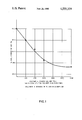
- FIG. 1 presents a graphical display of the data presented in Table I.
- FIG. 1 therefore graphically represents the 40% reduction in total ash when the combined polymers of this invention are used as described.
- a 40% reduction in ash as recovered in underflow solids is observed when the dosage of polymer A is increased with a constant adddition rate of polymer B.
- the remaining gangue dispersion would be expected to be settled by the addition of a cationic flocculant or coagulant.
- This flocculant could be, for example, a cationic polymer, having a molecular weight of 5,000-25,000,000, such as a copolymer of acrylamide with diallyl dimethyl ammonium chloride as a monomer weight ratio of between 10:1 to 1:10.
- Treatment of this dispersed gangue slurry with from 0.5-10 ppm of this type of cationic polymeric would be expected to rapidly settle the inorganic gangue, clays, et. al. from this slurry.
- Example 1 or 2 For example, if 1,000 grams of overflow from either Example 1 or 2 above were added to a graduated cylinder, and 5 ppm of a cationic polymer having a molecular weight between about 5,000-25,000,000 and comprising 50 weight % acrylamide and 50 weight % DADMAC were added thereto, followed by inversion of the cylinder about 4-6 times for mixing purposes, when the cylinders were placed quietly on a flat surface, the dispersion so treated would be expected to separate into water clear overflow and concentrated underflow phases within 5 minutes. The water clear phase would be of sufficient quality to be recycled for use in continuous minimg procedures.
- a cationic polymer having a molecular weight between about 5,000-25,000,000 and comprising 50 weight % acrylamide and 50 weight % DADMAC were added thereto, followed by inversion of the cylinder about 4-6 times for mixing purposes, when the cylinders were placed quietly on a flat surface, the dispersion so treated would be expected to separate into water clear overflow and concentrated underflow phases within 5 minutes.
Landscapes
- Separation Of Suspended Particles By Flocculating Agents (AREA)
Abstract
Description
                                  TABLE I
__________________________________________________________________________
Test Results
                 SETTLING                   % SS % ASH
DISPERSANT
         DOSAGE  RATE   % SS      % ASH     WASH WASH % ASH
FLOCCULANT
         (#/DRY TON)
                 (FT/HR)
                        SUPERNATANT
                                  SUPERNATANT
                                            H.sub.2 O
                                                 H.sub.2 O
                                                      UNDERFLOW
__________________________________________________________________________
B        0.52    20.0   0.02      67.15     0.10 25.50
                                                      40.37
A/B      2.16/0.52
                 very fast
                        0.67      83.42     0.02 40.21
                                                      35.13
A/B      4.32/0.52
                 very fast
                        0.83      74.98     0.04 55.36
                                                      31.12
A/B      6.48/0.52
                 very fast
                        2.36      51.03     0.06 67.99
                                                      26.10
A/B      12/96/0.52
                 very fast
                        2.62      53.98     0.08 56.49
                                                      23.47
__________________________________________________________________________
 where A = anionic dispersanta copolymer of methacrylic acid/acrylic acid;
 weight ratio MAA:AA = 1:4, MW = 2, 500-50,000.
 B = anionic flocculantcopolymer of acrylic acidacrylamide; acrylate/amide
 monomer weight ratio = 1:5
              TABLE II
______________________________________
EFFECT OF MULTIPLE-STAGE
SELECTIVE SEPARATIONS
Number of
        Poly C    Poly B    Overflow Underflow
Treatment
        Dosage    Dosage    Suspended
                                     %
Stages  (ppm)     (ppm)     Solids (ppm)
                                     Ash
______________________________________
1       25        1.0        660     27.80
2       25/25     1.0/1.0   2980     29.64
3       25/25/25  1.0/1.0/1.0
                            6860     20.64
______________________________________
 Polymer B = see above
 Polymer C = homopolymer of acrylic acid, MW = 5,000-25,000
Claims (5)
Priority Applications (1)
| Application Number | Priority Date | Filing Date | Title |
|---|---|---|---|
| US06/679,728 US4555329A (en) | 1984-12-10 | 1984-12-10 | Selective flocculation of coal |
Applications Claiming Priority (1)
| Application Number | Priority Date | Filing Date | Title |
|---|---|---|---|
| US06/679,728 US4555329A (en) | 1984-12-10 | 1984-12-10 | Selective flocculation of coal |
Publications (1)
| Publication Number | Publication Date |
|---|---|
| US4555329A true US4555329A (en) | 1985-11-26 |
Family
ID=24728106
Family Applications (1)
| Application Number | Title | Priority Date | Filing Date |
|---|---|---|---|
| US06/679,728 Expired - Fee Related US4555329A (en) | 1984-12-10 | 1984-12-10 | Selective flocculation of coal |
Country Status (1)
| Country | Link |
|---|---|
| US (1) | US4555329A (en) |
Cited By (23)
| Publication number | Priority date | Publication date | Assignee | Title |
|---|---|---|---|---|
| US4663018A (en) * | 1985-06-27 | 1987-05-05 | Betz Laboratories, Inc. | Method for coke retardant during hydrocarbon processing |
| US4690752A (en) * | 1983-08-19 | 1987-09-01 | Resource Technology Associates | Selective flocculation process for the recovery of phosphate |
| US4749492A (en) * | 1987-07-06 | 1988-06-07 | Zimpro/Passavant | Process for recovering regenerated adsorbent particles and separating ash therefrom |
| EP0277704A3 (en) * | 1987-02-02 | 1988-09-14 | Zimpro/Passavant Inc. | Separation of ash from regenerated adsorbent |
| US5089142A (en) * | 1990-10-30 | 1992-02-18 | Betz Laboratories, Inc. | Methods for dewatering coal and mineral concentrates |
| US5236596A (en) * | 1987-10-22 | 1993-08-17 | Greenwald Sr Edward H | Method and apparatus for dewatering |
| US5296006A (en) * | 1992-11-20 | 1994-03-22 | Nalco Chemical Company | 3-acrylamido-3-methylbutanoic acid copolymers as selective coal flocculants |
| US5330546A (en) * | 1992-08-18 | 1994-07-19 | Nalco Chemical Company | Hydrophobic polyelectrolyte coagulants for concentrating coal tailings |
| US5628911A (en) * | 1992-11-11 | 1997-05-13 | Norsk Hydro A.S | Filtration of soot/ash water slurries and improved partial oxidation process for hydrocarbon feedstocks |
| US5635112A (en) | 1993-06-09 | 1997-06-03 | Nalco Chemical Company | Hydrophobically-modified demulsifiers for oil-in-water systems |
| US5779910A (en) * | 1996-04-08 | 1998-07-14 | Cytec Technology Corp. | Enhanced flocculation of mineral slurry with polymer blends |
| US5795484A (en) * | 1987-10-22 | 1998-08-18 | Greenwald, Sr.; Edward H. | Method and apparatus for dewatering |
| US6641624B1 (en) | 2000-12-29 | 2003-11-04 | Ondeo Nalco Company | Method of preparing a synthetic fuel from coal |
| US20050145566A1 (en) * | 2001-08-28 | 2005-07-07 | Clearvalue Technologies | Methods, processes and apparatus for bio-solids recycling and the product of bio-solids from such methods, processes and apparatus |
| US6964691B1 (en) | 2000-12-29 | 2005-11-15 | Nalco Company | Method of preparing a synthetic fuel from coal |
| WO2012088291A1 (en) * | 2010-12-21 | 2012-06-28 | Kemira Oyj | Processes for flocculating tailings streams of the oil prospection |
| CN103977909A (en) * | 2014-01-29 | 2014-08-13 | 山东东山王楼煤矿有限公司 | High-argillization coal washing agent |
| CN105396684A (en) * | 2015-12-21 | 2016-03-16 | 深圳市瑞成世代实业有限公司 | Method for extracting ultra-low-ash-content pure coal from coal slime |
| CN111495557A (en) * | 2020-04-30 | 2020-08-07 | 舒新前 | Grading, upgrading and homogenizing method of coal gangue fuel |
| US11155478B2 (en) | 2016-07-15 | 2021-10-26 | Ecolab Usa Inc. | Method for improving overflow clarity in production of coal |
| CN114984914A (en) * | 2022-05-31 | 2022-09-02 | 西安科技大学 | Coal gangue-based adsorption material, coal gangue-based adsorption odor removal material and application |
| CN115921279A (en) * | 2022-12-13 | 2023-04-07 | 陕西陕煤曹家滩矿业有限公司 | Method for treating high-solid-content gangue powder suspension |
| CN118239733A (en) * | 2024-03-19 | 2024-06-25 | 江苏智聚智慧建筑科技有限公司 | A high performance coal gangue lightweight aggregate concrete and preparation method thereof |
Citations (3)
| Publication number | Priority date | Publication date | Assignee | Title |
|---|---|---|---|---|
| US3055827A (en) * | 1958-06-16 | 1962-09-25 | Dow Chemical Co | Separation of suspended solids |
| US3408293A (en) * | 1966-04-11 | 1968-10-29 | Nalco Chemical Co | Coal slurry clarification |
| US4210531A (en) * | 1977-12-15 | 1980-07-01 | American Cyanamid Company | Process for dewatering mineral concentrates |
-
1984
- 1984-12-10 US US06/679,728 patent/US4555329A/en not_active Expired - Fee Related
Patent Citations (3)
| Publication number | Priority date | Publication date | Assignee | Title |
|---|---|---|---|---|
| US3055827A (en) * | 1958-06-16 | 1962-09-25 | Dow Chemical Co | Separation of suspended solids |
| US3408293A (en) * | 1966-04-11 | 1968-10-29 | Nalco Chemical Co | Coal slurry clarification |
| US4210531A (en) * | 1977-12-15 | 1980-07-01 | American Cyanamid Company | Process for dewatering mineral concentrates |
Non-Patent Citations (2)
| Title |
|---|
| Symposium on Water Soluble Polymers, Bad Nauheim, West Germany 4/84 Dr. Hartan Chemische Fabrik Stockhausen. * |
| Symposium on Water Soluble Polymers, Bad Nauheim, West Germany 4/84--Dr. Hartan Chemische Fabrik Stockhausen. |
Cited By (28)
| Publication number | Priority date | Publication date | Assignee | Title |
|---|---|---|---|---|
| US4690752A (en) * | 1983-08-19 | 1987-09-01 | Resource Technology Associates | Selective flocculation process for the recovery of phosphate |
| US4663018A (en) * | 1985-06-27 | 1987-05-05 | Betz Laboratories, Inc. | Method for coke retardant during hydrocarbon processing |
| EP0277704A3 (en) * | 1987-02-02 | 1988-09-14 | Zimpro/Passavant Inc. | Separation of ash from regenerated adsorbent |
| US4778598A (en) * | 1987-02-02 | 1988-10-18 | Zimpro Inc. | Separation of ash from regenerated adsorbent |
| US4749492A (en) * | 1987-07-06 | 1988-06-07 | Zimpro/Passavant | Process for recovering regenerated adsorbent particles and separating ash therefrom |
| EP0298592A1 (en) * | 1987-07-06 | 1989-01-11 | Zimpro Environmental, Inc. | Process for recovering regenerated adsorbent particles and separating ash therefrom |
| US5795484A (en) * | 1987-10-22 | 1998-08-18 | Greenwald, Sr.; Edward H. | Method and apparatus for dewatering |
| US5236596A (en) * | 1987-10-22 | 1993-08-17 | Greenwald Sr Edward H | Method and apparatus for dewatering |
| US5089142A (en) * | 1990-10-30 | 1992-02-18 | Betz Laboratories, Inc. | Methods for dewatering coal and mineral concentrates |
| US5330546A (en) * | 1992-08-18 | 1994-07-19 | Nalco Chemical Company | Hydrophobic polyelectrolyte coagulants for concentrating coal tailings |
| EP0643017A1 (en) * | 1992-08-18 | 1995-03-15 | Nalco Chemical Company | Hydrophobic Polyelectrolyte coagulants for concentrating coal tailings |
| US5628911A (en) * | 1992-11-11 | 1997-05-13 | Norsk Hydro A.S | Filtration of soot/ash water slurries and improved partial oxidation process for hydrocarbon feedstocks |
| US5296006A (en) * | 1992-11-20 | 1994-03-22 | Nalco Chemical Company | 3-acrylamido-3-methylbutanoic acid copolymers as selective coal flocculants |
| US5635112A (en) | 1993-06-09 | 1997-06-03 | Nalco Chemical Company | Hydrophobically-modified demulsifiers for oil-in-water systems |
| US5779910A (en) * | 1996-04-08 | 1998-07-14 | Cytec Technology Corp. | Enhanced flocculation of mineral slurry with polymer blends |
| US6964691B1 (en) | 2000-12-29 | 2005-11-15 | Nalco Company | Method of preparing a synthetic fuel from coal |
| US6641624B1 (en) | 2000-12-29 | 2003-11-04 | Ondeo Nalco Company | Method of preparing a synthetic fuel from coal |
| US20050145566A1 (en) * | 2001-08-28 | 2005-07-07 | Clearvalue Technologies | Methods, processes and apparatus for bio-solids recycling and the product of bio-solids from such methods, processes and apparatus |
| US8123944B2 (en) | 2001-08-28 | 2012-02-28 | Clearvalue Technologies, Inc. | Processes of aqueous solids treatment |
| WO2012088291A1 (en) * | 2010-12-21 | 2012-06-28 | Kemira Oyj | Processes for flocculating tailings streams of the oil prospection |
| CN103977909A (en) * | 2014-01-29 | 2014-08-13 | 山东东山王楼煤矿有限公司 | High-argillization coal washing agent |
| CN105396684A (en) * | 2015-12-21 | 2016-03-16 | 深圳市瑞成世代实业有限公司 | Method for extracting ultra-low-ash-content pure coal from coal slime |
| US11155478B2 (en) | 2016-07-15 | 2021-10-26 | Ecolab Usa Inc. | Method for improving overflow clarity in production of coal |
| CN111495557A (en) * | 2020-04-30 | 2020-08-07 | 舒新前 | Grading, upgrading and homogenizing method of coal gangue fuel |
| CN114984914A (en) * | 2022-05-31 | 2022-09-02 | 西安科技大学 | Coal gangue-based adsorption material, coal gangue-based adsorption odor removal material and application |
| CN114984914B (en) * | 2022-05-31 | 2023-09-26 | 西安科技大学 | A kind of coal gangue-based adsorption material, coal gangue-based adsorption and deodorization material and its application |
| CN115921279A (en) * | 2022-12-13 | 2023-04-07 | 陕西陕煤曹家滩矿业有限公司 | Method for treating high-solid-content gangue powder suspension |
| CN118239733A (en) * | 2024-03-19 | 2024-06-25 | 江苏智聚智慧建筑科技有限公司 | A high performance coal gangue lightweight aggregate concrete and preparation method thereof |
Similar Documents
| Publication | Publication Date | Title |
|---|---|---|
| US6042732A (en) | Starch/cationic polymer combinations as coagulants for the mining industry | |
| US4569768A (en) | Flocculation of suspended solids from aqueous media | |
| US9150442B2 (en) | Method for dispersing and aggregating components of mineral slurries and high-molecular weight multivalent polymers for clay aggregation | |
| US7901583B2 (en) | Treatment of aqueous suspensions | |
| US4342653A (en) | Process for the flocculation of suspended solids | |
| US5622647A (en) | Dadmac/vinyl trialkoxysilane copolymers for dewatering in the mining industry | |
| US20050061750A1 (en) | Methods for the purification of contaminated waters | |
| AU664851B2 (en) | Dewatering of aqueous suspensions | |
| US5653886A (en) | Coagulant for mineral refuse slurries | |
| EP1377525A2 (en) | Treatment of suspensions with a flocculation system comprising a non-ionic polymer and a cationic polymeric flocculant | |
| US6726845B1 (en) | Dextran starch and flocculant combination for improving red mud clarification | |
| AU658321B2 (en) | Hydrophobic polyelectrolyte coagulants for concentrating coal tailings | |
| US5518634A (en) | Coagulant for twin belt filter presses | |
| US5478477A (en) | Use of alginates to treat bauxite red mud | |
| EP1089797A1 (en) | Dextran starch and flocculant combination for improving red mud clarification | |
| US5296006A (en) | 3-acrylamido-3-methylbutanoic acid copolymers as selective coal flocculants | |
| CA1146677A (en) | Iron ore beneficiation by selective flocculation | |
| CA2105333A1 (en) | Trihydrate clarification aid for the bayer process | |
| US5441649A (en) | Vinylamine copolymer flocculangts for use in coal refuse thickening | |
| CA2405323C (en) | Magnetic separation of ores using sulfonated polymers | |
| GB2268422A (en) | Dewatering of mineral suspensions | |
| França et al. | Particle aggregation and dewatering of red mud for dry stacking | |
| CA2064357A1 (en) | Froth flotation of fine coal or mineral particles | |
| Attia | Reversible flocculation and deflocculation of ball clays | |
| KR20080046444A (en) | Reduction of water content of waste paint |
Legal Events
| Date | Code | Title | Description |
|---|---|---|---|
| AS | Assignment |
Owner name: NALCO CHEMICAL COMPANY, OAK BROOK, IL., A CORP. OF Free format text: ASSIGNMENT OF ASSIGNORS INTEREST.;ASSIGNORS:SYKES, R. C.;CONNELLY, L. J.;ROE, WILLIAM J.;REEL/FRAME:004451/0644;SIGNING DATES FROM 19841121 TO 19841203 |
|
| FEPP | Fee payment procedure |
Free format text: PAYOR NUMBER ASSIGNED (ORIGINAL EVENT CODE: ASPN); ENTITY STATUS OF PATENT OWNER: LARGE ENTITY |
|
| REMI | Maintenance fee reminder mailed | ||
| LAPS | Lapse for failure to pay maintenance fees | ||
| STCH | Information on status: patent discontinuation |
Free format text: PATENT EXPIRED DUE TO NONPAYMENT OF MAINTENANCE FEES UNDER 37 CFR 1.362 |
|
| FP | Lapsed due to failure to pay maintenance fee |
Effective date: 19891126 |
|
| FEPP | Fee payment procedure |
Free format text: PAYER NUMBER DE-ASSIGNED (ORIGINAL EVENT CODE: RMPN); ENTITY STATUS OF PATENT OWNER: LARGE ENTITY Free format text: PAYOR NUMBER ASSIGNED (ORIGINAL EVENT CODE: ASPN); ENTITY STATUS OF PATENT OWNER: LARGE ENTITY |