US4544778A - Bulk separation of sorbitol by selective adsorption on zeolitic molecular sieves - Google Patents
Bulk separation of sorbitol by selective adsorption on zeolitic molecular sieves Download PDFInfo
- Publication number
- US4544778A US4544778A US06/645,215 US64521584A US4544778A US 4544778 A US4544778 A US 4544778A US 64521584 A US64521584 A US 64521584A US 4544778 A US4544778 A US 4544778A
- Authority
- US
- United States
- Prior art keywords
- inositol
- zeolite
- sorbitol
- adsorbent
- mixture
- Prior art date
- Legal status (The legal status is an assumption and is not a legal conclusion. Google has not performed a legal analysis and makes no representation as to the accuracy of the status listed.)
- Expired - Fee Related
Links
- FBPFZTCFMRRESA-FSIIMWSLSA-N D-Glucitol Natural products OC[C@H](O)[C@H](O)[C@@H](O)[C@H](O)CO FBPFZTCFMRRESA-FSIIMWSLSA-N 0.000 title claims abstract description 45
- 239000000600 sorbitol Substances 0.000 title claims abstract description 45
- 238000001179 sorption measurement Methods 0.000 title claims abstract description 17
- 238000000926 separation method Methods 0.000 title abstract description 27
- 239000002808 molecular sieve Substances 0.000 title abstract description 6
- URGAHOPLAPQHLN-UHFFFAOYSA-N sodium aluminosilicate Chemical compound [Na+].[Al+3].[O-][Si]([O-])=O.[O-][Si]([O-])=O URGAHOPLAPQHLN-UHFFFAOYSA-N 0.000 title abstract description 6
- 239000010457 zeolite Substances 0.000 claims abstract description 70
- HNPSIPDUKPIQMN-UHFFFAOYSA-N dioxosilane;oxo(oxoalumanyloxy)alumane Chemical compound O=[Si]=O.O=[Al]O[Al]=O HNPSIPDUKPIQMN-UHFFFAOYSA-N 0.000 claims abstract description 64
- 229910021536 Zeolite Inorganic materials 0.000 claims abstract description 57
- 238000000034 method Methods 0.000 claims abstract description 52
- 150000001720 carbohydrates Chemical class 0.000 claims abstract description 39
- 239000000203 mixture Substances 0.000 claims abstract description 39
- 230000008569 process Effects 0.000 claims abstract description 38
- -1 Ca++ cations Chemical class 0.000 claims abstract description 9
- CDAISMWEOUEBRE-GPIVLXJGSA-N inositol Chemical compound O[C@H]1[C@H](O)[C@@H](O)[C@H](O)[C@H](O)[C@@H]1O CDAISMWEOUEBRE-GPIVLXJGSA-N 0.000 claims description 91
- CDAISMWEOUEBRE-UHFFFAOYSA-N scyllo-inosotol Natural products OC1C(O)C(O)C(O)C(O)C1O CDAISMWEOUEBRE-UHFFFAOYSA-N 0.000 claims description 91
- 229960000367 inositol Drugs 0.000 claims description 89
- SQUHHTBVTRBESD-UHFFFAOYSA-N Hexa-Ac-myo-Inositol Natural products CC(=O)OC1C(OC(C)=O)C(OC(C)=O)C(OC(C)=O)C(OC(C)=O)C1OC(C)=O SQUHHTBVTRBESD-UHFFFAOYSA-N 0.000 claims description 82
- 239000003463 adsorbent Substances 0.000 claims description 39
- 235000014633 carbohydrates Nutrition 0.000 claims description 38
- FBPFZTCFMRRESA-JGWLITMVSA-N D-glucitol Chemical compound OC[C@H](O)[C@@H](O)[C@H](O)[C@H](O)CO FBPFZTCFMRRESA-JGWLITMVSA-N 0.000 claims description 36
- 239000003795 chemical substances by application Substances 0.000 claims description 21
- XLYOFNOQVPJJNP-UHFFFAOYSA-N water Substances O XLYOFNOQVPJJNP-UHFFFAOYSA-N 0.000 claims description 17
- 229910000323 aluminium silicate Inorganic materials 0.000 claims description 8
- 239000007791 liquid phase Substances 0.000 claims description 8
- 150000005846 sugar alcohols Chemical class 0.000 claims description 7
- OYPRJOBELJOOCE-UHFFFAOYSA-N Calcium Chemical compound [Ca] OYPRJOBELJOOCE-UHFFFAOYSA-N 0.000 claims description 6
- 239000011575 calcium Substances 0.000 claims description 6
- 229910052791 calcium Inorganic materials 0.000 claims description 6
- 235000000346 sugar Nutrition 0.000 claims description 6
- 150000001298 alcohols Chemical class 0.000 claims description 4
- 150000002576 ketones Chemical class 0.000 claims description 3
- 229910001387 inorganic aluminate Inorganic materials 0.000 claims description 2
- 239000012013 faujasite Substances 0.000 abstract 1
- 229930091371 Fructose Natural products 0.000 description 14
- RFSUNEUAIZKAJO-ARQDHWQXSA-N Fructose Chemical compound OC[C@H]1O[C@](O)(CO)[C@@H](O)[C@@H]1O RFSUNEUAIZKAJO-ARQDHWQXSA-N 0.000 description 14
- 239000005715 Fructose Substances 0.000 description 14
- 150000001768 cations Chemical group 0.000 description 14
- CZMRCDWAGMRECN-UGDNZRGBSA-N Sucrose Chemical compound O[C@H]1[C@H](O)[C@@H](CO)O[C@@]1(CO)O[C@@H]1[C@H](O)[C@@H](O)[C@H](O)[C@@H](CO)O1 CZMRCDWAGMRECN-UGDNZRGBSA-N 0.000 description 13
- 229930006000 Sucrose Natural products 0.000 description 13
- 239000005720 sucrose Substances 0.000 description 13
- WQZGKKKJIJFFOK-GASJEMHNSA-N Glucose Natural products OC[C@H]1OC(O)[C@H](O)[C@@H](O)[C@@H]1O WQZGKKKJIJFFOK-GASJEMHNSA-N 0.000 description 12
- VYPSYNLAJGMNEJ-UHFFFAOYSA-N Silicium dioxide Chemical compound O=[Si]=O VYPSYNLAJGMNEJ-UHFFFAOYSA-N 0.000 description 12
- 239000008103 glucose Substances 0.000 description 12
- 238000010828 elution Methods 0.000 description 11
- 230000014759 maintenance of location Effects 0.000 description 9
- 239000000047 product Substances 0.000 description 9
- 239000000243 solution Substances 0.000 description 8
- 239000007788 liquid Substances 0.000 description 7
- 239000000377 silicon dioxide Substances 0.000 description 6
- 229910018404 Al2 O3 Inorganic materials 0.000 description 5
- DGAQECJNVWCQMB-PUAWFVPOSA-M Ilexoside XXIX Chemical compound C[C@@H]1CC[C@@]2(CC[C@@]3(C(=CC[C@H]4[C@]3(CC[C@@H]5[C@@]4(CC[C@@H](C5(C)C)OS(=O)(=O)[O-])C)C)[C@@H]2[C@]1(C)O)C)C(=O)O[C@H]6[C@@H]([C@H]([C@@H]([C@H](O6)CO)O)O)O.[Na+] DGAQECJNVWCQMB-PUAWFVPOSA-M 0.000 description 5
- 229910052681 coesite Inorganic materials 0.000 description 5
- 229910052906 cristobalite Inorganic materials 0.000 description 5
- 239000000843 powder Substances 0.000 description 5
- 229910052682 stishovite Inorganic materials 0.000 description 5
- 229910052905 tridymite Inorganic materials 0.000 description 5
- 244000144725 Amygdalus communis Species 0.000 description 4
- 235000011437 Amygdalus communis Nutrition 0.000 description 4
- FBPFZTCFMRRESA-KVTDHHQDSA-N D-Mannitol Chemical compound OC[C@@H](O)[C@@H](O)[C@H](O)[C@H](O)CO FBPFZTCFMRRESA-KVTDHHQDSA-N 0.000 description 4
- 229920001202 Inulin Polymers 0.000 description 4
- 229930195725 Mannitol Natural products 0.000 description 4
- 235000020224 almond Nutrition 0.000 description 4
- WQZGKKKJIJFFOK-VFUOTHLCSA-N beta-D-glucose Chemical compound OC[C@H]1O[C@@H](O)[C@H](O)[C@@H](O)[C@@H]1O WQZGKKKJIJFFOK-VFUOTHLCSA-N 0.000 description 4
- 150000001875 compounds Chemical class 0.000 description 4
- 238000001704 evaporation Methods 0.000 description 4
- 230000008020 evaporation Effects 0.000 description 4
- JYJIGFIDKWBXDU-MNNPPOADSA-N inulin Chemical compound O[C@H]1[C@H](O)[C@@H](CO)O[C@@]1(CO)OC[C@]1(OC[C@]2(OC[C@]3(OC[C@]4(OC[C@]5(OC[C@]6(OC[C@]7(OC[C@]8(OC[C@]9(OC[C@]%10(OC[C@]%11(OC[C@]%12(OC[C@]%13(OC[C@]%14(OC[C@]%15(OC[C@]%16(OC[C@]%17(OC[C@]%18(OC[C@]%19(OC[C@]%20(OC[C@]%21(OC[C@]%22(OC[C@]%23(OC[C@]%24(OC[C@]%25(OC[C@]%26(OC[C@]%27(OC[C@]%28(OC[C@]%29(OC[C@]%30(OC[C@]%31(OC[C@]%32(OC[C@]%33(OC[C@]%34(OC[C@]%35(OC[C@]%36(O[C@@H]%37[C@@H]([C@@H](O)[C@H](O)[C@@H](CO)O%37)O)[C@H]([C@H](O)[C@@H](CO)O%36)O)[C@H]([C@H](O)[C@@H](CO)O%35)O)[C@H]([C@H](O)[C@@H](CO)O%34)O)[C@H]([C@H](O)[C@@H](CO)O%33)O)[C@H]([C@H](O)[C@@H](CO)O%32)O)[C@H]([C@H](O)[C@@H](CO)O%31)O)[C@H]([C@H](O)[C@@H](CO)O%30)O)[C@H]([C@H](O)[C@@H](CO)O%29)O)[C@H]([C@H](O)[C@@H](CO)O%28)O)[C@H]([C@H](O)[C@@H](CO)O%27)O)[C@H]([C@H](O)[C@@H](CO)O%26)O)[C@H]([C@H](O)[C@@H](CO)O%25)O)[C@H]([C@H](O)[C@@H](CO)O%24)O)[C@H]([C@H](O)[C@@H](CO)O%23)O)[C@H]([C@H](O)[C@@H](CO)O%22)O)[C@H]([C@H](O)[C@@H](CO)O%21)O)[C@H]([C@H](O)[C@@H](CO)O%20)O)[C@H]([C@H](O)[C@@H](CO)O%19)O)[C@H]([C@H](O)[C@@H](CO)O%18)O)[C@H]([C@H](O)[C@@H](CO)O%17)O)[C@H]([C@H](O)[C@@H](CO)O%16)O)[C@H]([C@H](O)[C@@H](CO)O%15)O)[C@H]([C@H](O)[C@@H](CO)O%14)O)[C@H]([C@H](O)[C@@H](CO)O%13)O)[C@H]([C@H](O)[C@@H](CO)O%12)O)[C@H]([C@H](O)[C@@H](CO)O%11)O)[C@H]([C@H](O)[C@@H](CO)O%10)O)[C@H]([C@H](O)[C@@H](CO)O9)O)[C@H]([C@H](O)[C@@H](CO)O8)O)[C@H]([C@H](O)[C@@H](CO)O7)O)[C@H]([C@H](O)[C@@H](CO)O6)O)[C@H]([C@H](O)[C@@H](CO)O5)O)[C@H]([C@H](O)[C@@H](CO)O4)O)[C@H]([C@H](O)[C@@H](CO)O3)O)[C@H]([C@H](O)[C@@H](CO)O2)O)[C@@H](O)[C@H](O)[C@@H](CO)O1 JYJIGFIDKWBXDU-MNNPPOADSA-N 0.000 description 4
- 229940029339 inulin Drugs 0.000 description 4
- 239000000594 mannitol Substances 0.000 description 4
- 235000010355 mannitol Nutrition 0.000 description 4
- 239000002245 particle Substances 0.000 description 4
- 238000011084 recovery Methods 0.000 description 4
- 239000011734 sodium Substances 0.000 description 4
- 229910052708 sodium Inorganic materials 0.000 description 4
- 239000002904 solvent Substances 0.000 description 4
- 150000008163 sugars Chemical class 0.000 description 4
- 239000011800 void material Substances 0.000 description 4
- LFQSCWFLJHTTHZ-UHFFFAOYSA-N Ethanol Chemical compound CCO LFQSCWFLJHTTHZ-UHFFFAOYSA-N 0.000 description 3
- IMQLKJBTEOYOSI-GPIVLXJGSA-N Inositol-hexakisphosphate Chemical compound OP(O)(=O)O[C@H]1[C@H](OP(O)(O)=O)[C@@H](OP(O)(O)=O)[C@H](OP(O)(O)=O)[C@H](OP(O)(O)=O)[C@@H]1OP(O)(O)=O IMQLKJBTEOYOSI-GPIVLXJGSA-N 0.000 description 3
- OKKJLVBELUTLKV-UHFFFAOYSA-N Methanol Chemical compound OC OKKJLVBELUTLKV-UHFFFAOYSA-N 0.000 description 3
- IMQLKJBTEOYOSI-UHFFFAOYSA-N Phytic acid Natural products OP(O)(=O)OC1C(OP(O)(O)=O)C(OP(O)(O)=O)C(OP(O)(O)=O)C(OP(O)(O)=O)C1OP(O)(O)=O IMQLKJBTEOYOSI-UHFFFAOYSA-N 0.000 description 3
- 240000008042 Zea mays Species 0.000 description 3
- 235000005824 Zea mays ssp. parviglumis Nutrition 0.000 description 3
- 235000002017 Zea mays subsp mays Nutrition 0.000 description 3
- 239000002156 adsorbate Substances 0.000 description 3
- 229910052788 barium Inorganic materials 0.000 description 3
- DSAJWYNOEDNPEQ-UHFFFAOYSA-N barium atom Chemical compound [Ba] DSAJWYNOEDNPEQ-UHFFFAOYSA-N 0.000 description 3
- SRBFZHDQGSBBOR-UHFFFAOYSA-N beta-D-Pyranose-Lyxose Natural products OC1COC(O)C(O)C1O SRBFZHDQGSBBOR-UHFFFAOYSA-N 0.000 description 3
- 235000005822 corn Nutrition 0.000 description 3
- 238000003795 desorption Methods 0.000 description 3
- 238000011068 loading method Methods 0.000 description 3
- 238000004519 manufacturing process Methods 0.000 description 3
- HEBKCHPVOIAQTA-UHFFFAOYSA-N meso ribitol Natural products OCC(O)C(O)C(O)CO HEBKCHPVOIAQTA-UHFFFAOYSA-N 0.000 description 3
- 238000005191 phase separation Methods 0.000 description 3
- 229940068041 phytic acid Drugs 0.000 description 3
- 235000002949 phytic acid Nutrition 0.000 description 3
- 239000000467 phytic acid Substances 0.000 description 3
- 239000002594 sorbent Substances 0.000 description 3
- WQZGKKKJIJFFOK-SVZMEOIVSA-N (+)-Galactose Chemical compound OC[C@H]1OC(O)[C@H](O)[C@@H](O)[C@H]1O WQZGKKKJIJFFOK-SVZMEOIVSA-N 0.000 description 2
- WQZGKKKJIJFFOK-QTVWNMPRSA-N D-mannopyranose Chemical compound OC[C@H]1OC(O)[C@@H](O)[C@@H](O)[C@@H]1O WQZGKKKJIJFFOK-QTVWNMPRSA-N 0.000 description 2
- 241000196324 Embryophyta Species 0.000 description 2
- 241001465754 Metazoa Species 0.000 description 2
- 239000002253 acid Substances 0.000 description 2
- PYMYPHUHKUWMLA-LMVFSUKVSA-N aldehydo-D-ribose Chemical compound OC[C@@H](O)[C@@H](O)[C@@H](O)C=O PYMYPHUHKUWMLA-LMVFSUKVSA-N 0.000 description 2
- LKDRXBCSQODPBY-ZXXMMSQZSA-N alpha-D-fructopyranose Chemical compound OC[C@]1(O)OC[C@@H](O)[C@@H](O)[C@@H]1O LKDRXBCSQODPBY-ZXXMMSQZSA-N 0.000 description 2
- PNEYBMLMFCGWSK-UHFFFAOYSA-N aluminium oxide Inorganic materials [O-2].[O-2].[O-2].[Al+3].[Al+3] PNEYBMLMFCGWSK-UHFFFAOYSA-N 0.000 description 2
- 239000006286 aqueous extract Substances 0.000 description 2
- 239000011230 binding agent Substances 0.000 description 2
- HVYWMOMLDIMFJA-DPAQBDIFSA-N cholesterol Chemical compound C1C=C2C[C@@H](O)CC[C@]2(C)[C@@H]2[C@@H]1[C@@H]1CC[C@H]([C@H](C)CCCC(C)C)[C@@]1(C)CC2 HVYWMOMLDIMFJA-DPAQBDIFSA-N 0.000 description 2
- 239000013078 crystal Substances 0.000 description 2
- 230000007423 decrease Effects 0.000 description 2
- 238000013461 design Methods 0.000 description 2
- 235000013399 edible fruits Nutrition 0.000 description 2
- 239000000284 extract Substances 0.000 description 2
- 239000012527 feed solution Substances 0.000 description 2
- 229910052816 inorganic phosphate Inorganic materials 0.000 description 2
- 150000004001 inositols Chemical class 0.000 description 2
- 239000000463 material Substances 0.000 description 2
- 239000007787 solid Substances 0.000 description 2
- 241000894007 species Species 0.000 description 2
- 238000012360 testing method Methods 0.000 description 2
- PJVXUVWGSCCGHT-ZPYZYFCMSA-N (2r,3s,4r,5r)-2,3,4,5,6-pentahydroxyhexanal;(3s,4r,5r)-1,3,4,5,6-pentahydroxyhexan-2-one Chemical compound OC[C@@H](O)[C@@H](O)[C@H](O)[C@@H](O)C=O.OC[C@@H](O)[C@@H](O)[C@H](O)C(=O)CO PJVXUVWGSCCGHT-ZPYZYFCMSA-N 0.000 description 1
- OWEGMIWEEQEYGQ-UHFFFAOYSA-N 100676-05-9 Natural products OC1C(O)C(O)C(CO)OC1OCC1C(O)C(O)C(O)C(OC2C(OC(O)C(O)C2O)CO)O1 OWEGMIWEEQEYGQ-UHFFFAOYSA-N 0.000 description 1
- GUBGYTABKSRVRQ-XLOQQCSPSA-N Alpha-Lactose Chemical compound O[C@@H]1[C@@H](O)[C@@H](O)[C@@H](CO)O[C@H]1O[C@@H]1[C@@H](CO)O[C@H](O)[C@H](O)[C@H]1O GUBGYTABKSRVRQ-XLOQQCSPSA-N 0.000 description 1
- 229930091051 Arenine Natural products 0.000 description 1
- GUBGYTABKSRVRQ-UHFFFAOYSA-N D-Cellobiose Natural products OCC1OC(OC2C(O)C(O)C(O)OC2CO)C(O)C(O)C1O GUBGYTABKSRVRQ-UHFFFAOYSA-N 0.000 description 1
- GUBGYTABKSRVRQ-CUHNMECISA-N D-Cellobiose Chemical compound O[C@@H]1[C@@H](O)[C@H](O)[C@@H](CO)O[C@H]1O[C@@H]1[C@@H](CO)OC(O)[C@H](O)[C@H]1O GUBGYTABKSRVRQ-CUHNMECISA-N 0.000 description 1
- LKDRXBCSQODPBY-JDJSBBGDSA-N D-allulose Chemical compound OCC1(O)OC[C@@H](O)[C@@H](O)[C@H]1O LKDRXBCSQODPBY-JDJSBBGDSA-N 0.000 description 1
- FBPFZTCFMRRESA-ZXXMMSQZSA-N D-iditol Chemical compound OC[C@@H](O)[C@H](O)[C@@H](O)[C@H](O)CO FBPFZTCFMRRESA-ZXXMMSQZSA-N 0.000 description 1
- SRBFZHDQGSBBOR-IOVATXLUSA-N D-xylopyranose Chemical compound O[C@@H]1COC(O)[C@H](O)[C@H]1O SRBFZHDQGSBBOR-IOVATXLUSA-N 0.000 description 1
- LKDRXBCSQODPBY-AMVSKUEXSA-N L-(-)-Sorbose Chemical compound OCC1(O)OC[C@H](O)[C@@H](O)[C@@H]1O LKDRXBCSQODPBY-AMVSKUEXSA-N 0.000 description 1
- GUBGYTABKSRVRQ-QKKXKWKRSA-N Lactose Natural products OC[C@H]1O[C@@H](O[C@H]2[C@H](O)[C@@H](O)C(O)O[C@@H]2CO)[C@H](O)[C@@H](O)[C@H]1O GUBGYTABKSRVRQ-QKKXKWKRSA-N 0.000 description 1
- GUBGYTABKSRVRQ-PICCSMPSSA-N Maltose Natural products O[C@@H]1[C@@H](O)[C@H](O)[C@@H](CO)O[C@@H]1O[C@@H]1[C@@H](CO)OC(O)[C@H](O)[C@H]1O GUBGYTABKSRVRQ-PICCSMPSSA-N 0.000 description 1
- ZLMJMSJWJFRBEC-UHFFFAOYSA-N Potassium Chemical compound [K] ZLMJMSJWJFRBEC-UHFFFAOYSA-N 0.000 description 1
- JVWLUVNSQYXYBE-UHFFFAOYSA-N Ribitol Natural products OCC(C)C(O)C(O)CO JVWLUVNSQYXYBE-UHFFFAOYSA-N 0.000 description 1
- 229920002472 Starch Polymers 0.000 description 1
- MUPFEKGTMRGPLJ-UHFFFAOYSA-N UNPD196149 Natural products OC1C(O)C(CO)OC1(CO)OC1C(O)C(O)C(O)C(COC2C(C(O)C(O)C(CO)O2)O)O1 MUPFEKGTMRGPLJ-UHFFFAOYSA-N 0.000 description 1
- TVXBFESIOXBWNM-UHFFFAOYSA-N Xylitol Natural products OCCC(O)C(O)C(O)CCO TVXBFESIOXBWNM-UHFFFAOYSA-N 0.000 description 1
- 150000007513 acids Chemical class 0.000 description 1
- 230000009471 action Effects 0.000 description 1
- 230000002411 adverse Effects 0.000 description 1
- 238000005054 agglomeration Methods 0.000 description 1
- 230000002776 aggregation Effects 0.000 description 1
- WQZGKKKJIJFFOK-PHYPRBDBSA-N alpha-D-galactose Chemical compound OC[C@H]1O[C@H](O)[C@H](O)[C@@H](O)[C@H]1O WQZGKKKJIJFFOK-PHYPRBDBSA-N 0.000 description 1
- 150000001450 anions Chemical class 0.000 description 1
- PYMYPHUHKUWMLA-UHFFFAOYSA-N arabinose Natural products OCC(O)C(O)C(O)C=O PYMYPHUHKUWMLA-UHFFFAOYSA-N 0.000 description 1
- 235000021028 berry Nutrition 0.000 description 1
- GUBGYTABKSRVRQ-QUYVBRFLSA-N beta-maltose Chemical compound OC[C@H]1O[C@H](O[C@H]2[C@H](O)[C@@H](O)[C@H](O)O[C@@H]2CO)[C@H](O)[C@@H](O)[C@@H]1O GUBGYTABKSRVRQ-QUYVBRFLSA-N 0.000 description 1
- 230000008033 biological extinction Effects 0.000 description 1
- 230000033228 biological regulation Effects 0.000 description 1
- 239000007767 bonding agent Substances 0.000 description 1
- 239000006227 byproduct Substances 0.000 description 1
- 150000001669 calcium Chemical class 0.000 description 1
- 238000013375 chromatographic separation Methods 0.000 description 1
- 238000010960 commercial process Methods 0.000 description 1
- 230000002153 concerted effect Effects 0.000 description 1
- 239000002537 cosmetic Substances 0.000 description 1
- 238000002425 crystallisation Methods 0.000 description 1
- 230000008025 crystallization Effects 0.000 description 1
- FGFCSHCXBYAKOL-UHFFFAOYSA-N cyclohexane-1,1,2,2,3,3-hexol Chemical class OC1(O)CCCC(O)(O)C1(O)O FGFCSHCXBYAKOL-UHFFFAOYSA-N 0.000 description 1
- HEBKCHPVOIAQTA-NGQZWQHPSA-N d-xylitol Chemical compound OC[C@H](O)C(O)[C@H](O)CO HEBKCHPVOIAQTA-NGQZWQHPSA-N 0.000 description 1
- 238000001514 detection method Methods 0.000 description 1
- 238000010586 diagram Methods 0.000 description 1
- 230000029087 digestion Effects 0.000 description 1
- 150000002016 disaccharides Chemical class 0.000 description 1
- 238000009826 distribution Methods 0.000 description 1
- 230000000694 effects Effects 0.000 description 1
- 230000005686 electrostatic field Effects 0.000 description 1
- 238000005516 engineering process Methods 0.000 description 1
- 150000002148 esters Chemical class 0.000 description 1
- 238000002474 experimental method Methods 0.000 description 1
- 239000012530 fluid Substances 0.000 description 1
- 229930182830 galactose Natural products 0.000 description 1
- 150000004676 glycans Chemical class 0.000 description 1
- 239000003102 growth factor Substances 0.000 description 1
- 235000019534 high fructose corn syrup Nutrition 0.000 description 1
- 239000003906 humectant Substances 0.000 description 1
- 239000012535 impurity Substances 0.000 description 1
- 239000008101 lactose Substances 0.000 description 1
- 238000004811 liquid chromatography Methods 0.000 description 1
- 230000004060 metabolic process Effects 0.000 description 1
- 244000005700 microbiome Species 0.000 description 1
- 238000012986 modification Methods 0.000 description 1
- 230000004048 modification Effects 0.000 description 1
- 150000002772 monosaccharides Chemical class 0.000 description 1
- 238000012856 packing Methods 0.000 description 1
- 230000001766 physiological effect Effects 0.000 description 1
- 239000004033 plastic Substances 0.000 description 1
- 229920003023 plastic Polymers 0.000 description 1
- 229920000570 polyether Polymers 0.000 description 1
- 229920000642 polymer Polymers 0.000 description 1
- 229920001282 polysaccharide Polymers 0.000 description 1
- 239000005017 polysaccharide Substances 0.000 description 1
- 239000011148 porous material Substances 0.000 description 1
- 239000011591 potassium Substances 0.000 description 1
- 229910052700 potassium Inorganic materials 0.000 description 1
- 238000001556 precipitation Methods 0.000 description 1
- 238000010926 purge Methods 0.000 description 1
- MUPFEKGTMRGPLJ-ZQSKZDJDSA-N raffinose Chemical compound O[C@H]1[C@H](O)[C@@H](CO)O[C@@]1(CO)O[C@@H]1[C@H](O)[C@@H](O)[C@H](O)[C@@H](CO[C@@H]2[C@@H]([C@@H](O)[C@@H](O)[C@@H](CO)O2)O)O1 MUPFEKGTMRGPLJ-ZQSKZDJDSA-N 0.000 description 1
- 238000004064 recycling Methods 0.000 description 1
- 230000009467 reduction Effects 0.000 description 1
- 230000008929 regeneration Effects 0.000 description 1
- 238000011069 regeneration method Methods 0.000 description 1
- HEBKCHPVOIAQTA-ZXFHETKHSA-N ribitol Chemical compound OC[C@H](O)[C@H](O)[C@H](O)CO HEBKCHPVOIAQTA-ZXFHETKHSA-N 0.000 description 1
- 150000003839 salts Chemical class 0.000 description 1
- 229920006395 saturated elastomer Polymers 0.000 description 1
- 238000002336 sorption--desorption measurement Methods 0.000 description 1
- 239000008107 starch Substances 0.000 description 1
- 235000019698 starch Nutrition 0.000 description 1
- 230000003335 steric effect Effects 0.000 description 1
- 239000000126 substance Substances 0.000 description 1
- 235000019156 vitamin B Nutrition 0.000 description 1
- 239000011720 vitamin B Substances 0.000 description 1
- 229940046001 vitamin b complex Drugs 0.000 description 1
- 238000001238 wet grinding Methods 0.000 description 1
- HEBKCHPVOIAQTA-SCDXWVJYSA-N xylitol Chemical compound OC[C@H](O)[C@@H](O)[C@H](O)CO HEBKCHPVOIAQTA-SCDXWVJYSA-N 0.000 description 1
- 239000000811 xylitol Substances 0.000 description 1
- 235000010447 xylitol Nutrition 0.000 description 1
- 229960002675 xylitol Drugs 0.000 description 1
Images


Classifications
-
- C—CHEMISTRY; METALLURGY
- C07—ORGANIC CHEMISTRY
- C07C—ACYCLIC OR CARBOCYCLIC COMPOUNDS
- C07C29/00—Preparation of compounds having hydroxy or O-metal groups bound to a carbon atom not belonging to a six-membered aromatic ring
- C07C29/74—Separation; Purification; Use of additives, e.g. for stabilisation
- C07C29/76—Separation; Purification; Use of additives, e.g. for stabilisation by physical treatment
-
- C—CHEMISTRY; METALLURGY
- C07—ORGANIC CHEMISTRY
- C07B—GENERAL METHODS OF ORGANIC CHEMISTRY; APPARATUS THEREFOR
- C07B2200/00—Indexing scheme relating to specific properties of organic compounds
- C07B2200/07—Optical isomers
Definitions
- This invention relates to a process for the liquid phase separation of inositol and/or sorbitol from mixtures containing same. More particularly and in a preferred embodiment, this invention relates to such a separation by selective adsorption onto certain types of zeolitic molecular sieves.
- Inositol is a generic name for a family of cyclohexanehexols (hexahydroxycyclohexane C 6 H 6 (OH) 6 , in which there are nine possible stereoisomers. Of these possible isomeric forms, one occurs in predominance in nature and is known by various names including meso -inositol, myo -inositol, i -inositol, inosite, dambose, meat sugar or muscle sugar. Myo -inositol is a commercially important compound and has certain physiological activities.
- inositol It is a member of the Vitamin-B complex, in which role it possesses activity as a growth factor for certain animals and microorganisms. It also is a factor in the regulation of fat and cholesterol metabolism in higher animals.
- myo -inositol will be hereinafter referred to simply as inositol.
- the present invention has been shown to be useful for the separation of myo -inositol, it is expected that some other inositol isomers, other than myo -inositol, could also be separated by the same process.
- Kirk-Othmer Encyclopedia of Chemical Technology, 2d Ed., Vol. 11 (1966), pp. 673-676 For a more complete description of inositol and its properties, see Kirk-Othmer Encyclopedia of Chemical Technology, 2d Ed., Vol. 11 (1966), pp. 673-676.
- Inositol exists in the free form in many fruits; for example, about 8 weight % of the soluble carbohydrates in almond hulls is inositol and about 1.2 weight % of the fresh weight of the berries of Loranthacene is inositol. Inositol also exists as the hexaphosphate (i.e., phytic acid) in the seeds of many plants.
- hexaphosphate i.e., phytic acid
- phytic acid For example, about 2 weight % of corn "steepwater” solids (a by-product of the wet milling of corn) is phytic acid and inositol is currently commercially produced by recovery from such corn steepwater.
- the phytic acid which has the following composition (as the acid) C 6 H 6 (OPO[OH] 2 ) 6 , is first precipitated out as a calcium/magnesium salt.
- the salt is hydrolyzed to inorganic phosphate and inositol, the inorganic phosphate is removed by precipitation and the inositol recovered by repeated crystallization. This process is both expensive and onerous, involving digestion at 100°-200° C. in strong acids or bases, etc.
- Sorbitol may be made by the reduction of sugars and is an important commercial polyhydric alcohol in its pure form. Sorbitol has many uses, for example as a humectant in cosmetics or it may be used to make polyethers which are useful in plastics.
- the present invention in its broadest aspects, is a process for the liquid phase separation of inositol and/or sorbitol from solutions containing same by selective adsorption on cation-exchanged type X or type Y zeolite molecular sieves.
- the process generally comprises contacting the solution at a pressure sufficient to maintain the system in the liquid phase with an adsorbent composition comprising at least one crystalline aluminosilicate zeolite selected from the group consisting of zeolite type X and zeolite type Y wherein the zeolitic cations are selected from the group consisting of sodium, barium and calcium, to selectively adsorb inositol and/or sorbitol thereon; removing the non-adsorbed portion of the solution from contact with the adsorbent; and desorbing the adsorbate therefrom by contacting the adsorbent with a desorbing agent and recovering the desorbed inositol and/or sorbitol.
- an adsorbent composition comprising at least one crystalline aluminosilicate zeolite selected from the group consisting of zeolite type X and zeolite type Y wherein the zeolitic cations are selected from the
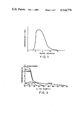
- FIG. 1 shows an elution curve of a mixture of sugars and sugar alcohols where the adsorbent is a sodium-substituted zeolite type Y.
- FIGS. 2-4 show elution curves of the same sugar-sugar alcohol mixture where the adsorbents are barium-substituted, barium-substituted and sodium-substituted zeolite type X adsorbents, respectively.
- FIG. 5 shows one method in which the process of this invention may be employed.
- the present invention provides a process for the bulk separation of inositol and/or sorbitol from feed solutions containing same.
- the feed solution may be, for example, a mixture of sugars and/or sugar alcohols such as the liquid extract of fruit; or the feed may comprise a mixture of just sugar alcohols or a mixture of inositol and/or sorbitol with other carbohydrates.
- the solvent used to prepare the solution feedstock is not a critical factor, and can be any material which has a reasonable capacity to dissolve the carbohydrate species involved, is a liquid and is chemically inert toward the adsorbent and the essential solute compounds under the adsorption conditions imposed in carrying out the separation process. Water is the preferred solvent, but alcohols, ketones, esters and the like can be employed.
- inositol can constitute as much as about 8 weight percent of the soluble carbohydrates in almond hulls
- an aqueous extract thereof which also contains significant quantities of sorbitol, sucrose, glucose, and fructose, is a preferred feedstock for use in the process of the invention when the adsorbent has a marked preference for inositol or sorbitol.
- present invention is generic with respect to the feedstocks which can be suitably treated, the specific embodiment utilizing almond hull extract as the feedstock is not a species invention of ours.
- the carbohydrates which along with inositol and/or sorbitol comprise the solutions suitably treated using the present process are well known in the art, are any of the well-known monosaccharides, disaccharides and even polysaccharides of which lactose, maltose, sucrose, mannose, galactose, allulose, fructose, sorbose and starch are representative.
- Other sugar alcohols such as mannitol, xylitol, ribitol and iditol can also be present and are considered to be carbohydrates for purposes of the present invention although they are not, strictly speaking, true carbohydrates.
- Zeolite molecular sieves are crystalline aluminosilicates which have a three-dimensional framework structure and contain exchangeable cations.
- the number of cations per unit cell is determined by its silica-to-alumina ratio and the cations are distributed in the channels of the zeolite framework.
- Carbohydrate molecules can diffuse into the zeolite channels, and then interact with the cation and be adsorbed onto the cations.
- the cations are, in turn, attracted by the aluminosilicate framework which is a gigantic, multiply-charged anion.
- the adsorption selectivity of the zeolite depends on the concerted action of the electrostatic field intensity, cation radius, channel size, channel shape, and the density and spacial distribution of the cations. Since steric effects play a major role, the adsorption selectivities of zeolites are highly unpredictable.
- CaX and CaY zeolites have different adsorption selectivities for the above-mentioned five carbohydrates, but sorbitol, not inositol, is the most strongly adsorbed compound.
- CaX has the selectivity sequence of sorbitol>>inositol>fructose>glucose>sucrose.
- CaY has the selectivity sequence of sorbitol>>inositol ⁇ fructose>glucose>sucrose.
- the distinctive selectivities of CaX allow the adsorbent to be used to isolate both sorbitol and inositol from the other three compounds by chromatographic elution.
- CaY by itself may be used to separate sorbitol, it cannot easily isolate inositol in pure form. It must be used together with another adsorbent which can separate inositol from fructose.
- Zeolite Y and the method for its manufacture are described in detail in U.S. Pat. No. 3,130,007, issued Apr. 21, 1954 to D. W. Breck.
- Zeolite X and the method for its manufacture are described in detail in United States Pat. No. 2,882,244, issued Apr. 14, 1959 to R. M. Milton. The disclosures of both of said patents are hereby incorporated herein by reference.
- the type X and type Y zeolites useful in the present invention are those whose zeolitic cations are predominately sodium, barium or calcium; that is, these zeolites may contain a minor amount of another cation as long as the zeolite is capable of effecting the desired separation.
- the calcium or barium exchanged zeolites may be prepared from a sodium exchanged zeolite using known techniques, and the product may contain a minor amount of sodium and still be useful in the present invention.
- other cations such as potassium may be added to the zeolites in small amounts or be present as impurities without adversely affecting the usefulness of these zeolites in the present invention.
- At least about 50%, and most preferably at least about 70%, on a charge equivalent basis, of the AlO 4 tetrahedra of the type X or type Y zeolite are electrovalently satisfied with the specified cation.
- the adsorption affinities of various zeolites for different carbohydrates was determined by a "pulse test". This test consisted of packing a column with the appropriate zeolite, placing it in a block heater to maintain constant temperature, and eluting solutions through the column with water to determine the retention volume of solute.
- the retention volume of solute is defined as elution volume of solute minus "void volume”.
- "Void volume” is the volume of solvent needed to elute a non-sorbing solute through the column.
- a soluble polymer of fructose, inulin which is too large to be sorbed into the zeolite pores, was chosen as the solute to determine void volume.
- the elution volume of inulin was first determined. The elution volumes of the five above-identified carbohydrates were then determined under similar experimental conditions. The retention volumes were calculated and are recorded in Table I, below.
- a bed of solid zeolite adsorbent is preferentially loaded with adsorbates, the unadsorbed or raffinate mixture is removed from the adsorbent bed, and the adsorbed inositol and/or sorbitol is then desorbed from the zeolite adsorbent by a desorbant.
- the adsorbent can, if desired, be contained in a single bed, a plurality of beds in which conventional swing-bed operation techniques are utilized, or a simulated moving-bed countercurrent type of apparatus, depending upon the zeolite and upon which of inositol and/or sorbitol is being adsorbed.
- a chromatographic elution method such as that described in U.S. Pat. No. 3,928,193, the disclosure of which is hereby incorporated herein by reference
- the zeolite adsorbent BaX, BaY, NaX and CaX can be used.
- CaY cannot be used by itself, since the inositol/fructose separation must be accomplished by a second bed, which may contain any of CaX, NaX, BaX or BaY.
- the sodium forms of zeolite types X and Y have a lower silica to alumina ratio since such zeolites generally enable higher separation factors to be achieved.
- a preferable method for practicing the process of this invention is separation by chromatographic column.
- feedstock solution is injected for a short period of time at the top of a column and eluted down through the column with water.
- chromatographic separation leads to a zone increasingly enriched in the adsorbed carbohydrate.
- the degree of separation increases as the mixture passes further down through the column until a desired degree of separation is achieved.
- the effluent from the column may be first shunted to one receiver which collects a pure product.
- the effluent may be directed towards a "receiver for mixed product”.
- the effluent may be directed to a receiver for that product.
- NaX, BaX and BaY in a simulated moving bed process (e.g., as described in U.S. Pat. No. 2,985,589, the disclosure of which is hereby incorporated herein by reference).
- CaX or CaY alone in a single-stage simulated moving bed process to produce pure inositol when sorbitol is also present because for such a process only the least strongly adsorbed or most strongly adsorbed adsorbate can be produced in pure form.
- a suitable displacing or desorbing agent or fluid (solvent) must take into account the requirements that it be capable of readily displacing adsorbed carbohydrate from the adsorbent bed and also that carbohydrate from the feed mixture be able to displace adsorbed desorbing agent from a previous adsorption step.
- the desorbing agent employed should be readily separable from admixture with the carbohydrate components of the feed-stock. Therefore, it is contemplated that a desorbing agent having characteristics which allow it to be easily fractionated from the carbohydrate should be used.
- volatile desorbing agents should be used, such as alcohols, ketones, water, mixtures thereof, mixtures of alcohols and water, particularly methanol and ethanol, etc.
- the most preferred desorbing agent is water.
- BaX and BaY are very strong adsorbents for inositol, which makes them particularly suitable for recovery of inositol in those cases where inositol is a relatively minor component in the mixture, and its concentration is low.
- This strong affinity means high adsorption capacity, even at low concentrations.
- the strong affinity also means a very broad desorption front. In this case, it may well be attractive economically to use a fixed bed adsorption/desorption process. In this type of process, the feed is allowed to flow through the bed until most of the bed is saturated with inositol. Then, the bed is desorbed. The fraction of effluent which contains pure inositol is collected as the product and the fraction which contains contaminated inositol is recycled.
- the feed can be switched to a co-current stream of pure inositol in water, which can be passed through the bed to displace the non-inositol components from the sorbent and from the void spaces in the bed.
- the bed can be counter-currently desorbed with water to recover the inositol from the sorbent and voids.
- This type of fixed bed loading/co-product purge/counter-current desorption cycle may be particularly attractive when the inositol is present at low concentrations and it is desired to recover it at higher purity levels.
- NaX is also a particularly suitable adsorbent for inositol recovery, because of its unique, high selectivity for inositol. Though its loading capacity is not as high as BaX and BaY, the desorption of inositol from NaX is faster than from BaX and BaY. Thus, NaX can be used for a separation process which has a shorter cycle time than BaX and BaY, and will be suitable for both fixed bed and simulated moving bed processes.
- zeolite crystals While it is possible to utilize the activated adsorbent zeolite crystals in a non-agglomerated form, it is generally more feasible, particularly when the process involves the use of a fixed adsorption bed, to agglomerate the crystals into larger particles to decrease the pressure drop in the system.
- the particular agglomerating agent and the agglomeration procedure employed are not critical factors, but it is important that the bonding agent be as inert toward the carbohydrates being adsorbed and desorbing agent as possible.
- the proportions of zeolite and binder are advantageously in the range of 4 to 20 parts zeolite per part binder on an anhydrous weight basis.
- the temperature at which the adsorption step of the process should be carried out should be from about 0° to 150° C. As the temperature increases, the temperature at which the desorbent boils will be reached. Preferably, the adsorption step should take place between about 15° C. and about 100° C. Pressure conditions must be maintained so as to keep the system in liquid phase. High process temperatures needlessly necessitate high pressure apparatus and increase the cost of the process.
- FIG. 5 Another method for practicing the process of this invention is illustrated by the drawing in FIG. 5.
- a number of fixed beds are connected to one another by conduits which are also connected to a special valve (e.g., of the type described in U.S. Pat. No. 2,985,589).
- the valve sequentially moves the liquid feed and product takeoff points to different positions around a circular array of the individual fixed beds in such a manner as to simulate countercurrent motion of the adsorbent.
- This process is well-suited to binary separations.
- FIG. 5 represents a hypothetical moving-bed countercurrent flow diagram involved in carrying out a typical process embodiment of the present invention.
- the liquid stream inlets and outlets are represented as being fixed, and the adsorbent mass is represented as moving with respect to the counter flow of feedstock and desorbing material, this representation is intended primarily to facilitate describing the functioning of the system.
- the sorbent mass would ordinarily be in a fixed bed with the liquid stream inlets and outlets moving with respect thereto.
- a feedstock is fed into the system through line 10 to adsorbent bed 12 which contains particles of zeolite adsorbent in transit downwardly therethrough.
- the temperature is at 70° C.
- the component(s) of the feedstock are adsorbed preferentially on the zeolite particles moving through bed 12, and the raffinate is entrained in the liquid stream of water desorbing agent leaving bed 12 through line 14 and a major portion thereof is withdrawn through line 16 and fed into evaporation apparatus 18 wherein the mixture is fractionated and the concentrated raffinate is discharged through line 20.
- the water desorbing agent leaves the evaporation apparatus 18 through line 22 and is fed to line 24 through which it is admixed with additional desorbing agent leaving the adsorbent bed 26, and is recycled to the bottom of adsorbent bed 30.
- the zeolite carrying adsorbed carbohydate passes downwardly through line 44 into bed 30 where it is counter-currently contacted with recycled desorbing agent which effectively desorbs the carbohydrate therefrom before the adsorbent passes through bed 30 and enters line 32 through which it is recycled to the top of adsorbent bed 26.
- the desorbing agent and desorbed carbohydrate leave bed 30 through line 34.
- a portion of this liquid mixture is diverted through line 36, where it passes evaporation apparatus 38, and the remaining portion passes upwardly through adsorbent bed 12 for further treatment as hereinbefore described.
- the desorbing agent and carbohydrate are fractionated and the carbohydrate product is recovered through line 40 and the desorbing agent is either disposed of or passed through line 42 into line 24 for recycle as described above.
- the undiverted portion of the desorbing agent/raffinate mixture passes from bed 12 through line 14, enters bed 26 and moves counter-currently upwardly therethrough with respect to the desorbing agent-laden zeolite adsorbent passing downwardly therethrough from recycle line 32.
- the desorbing agent passes from bed 26 in a relatively pure form through recycle line 24 and to bed 30 as hereinbefore described.
- NaX Sodium-exchanged zeolite X
- NaY Sodium-exchanged zeolite Y
- BaX Barium-exchanged zeolite X
- gpm/ft 2 gallons per minute per square foot.
- the column was filled with water and maintained at a temperature of 160° F. Water was then pumped through the column and a flow rate of 0.53 gpm/ft 2 was maintained. For a period of one minute, the feed was switched to a mixture which contained 3.9% glucose, 3.7% fructose, 0.6% sucrose, 1.0% sorbitol and 0.8% inositol, and then switched back to water.
- the composition of the effluent from the column was monitored by a refractive index detector.
- a refractive index detector cannot differentiate one carbohydrate from another, but it does detect the presence of carbohydrate in the effluent. Such detectors are most useful where each component emerges in the effluent as completely separate peaks. The identity of each peak then can be determined by its characteristic retention volume. However, such detection techniques can also be useful to demonstrate a column or conditions which lack separation power for certain mixtures. Under such circumstances, the mixture will emerge as a single peak with a narrow peak width.
- FIG. 1 of the drawings shows the elution curve for the above five-component mixture which emerged from the NaY column as a single peak. The observed single peak indicates that the separation ability of this NaY zeolite was insufficient under the above conditions to allow resolution of the inositol or other components into separate peaks.
- FIG. 2 gives the elution curves.
- the elution order is: sucrose, glucose, fructose, sorbitol and inositol. Inositol is well separated from all other carbohydrates.
- the column was loaded with a feed which contained 15.6% glucose, 14.8% fructose, 2.4% sucrose, 4.0% sorbitol and 3.2% inositol. After the column reached equilibrium, the regeneration started. Water was used as a desorbent and was pumped through at a flow rate of 0.27 gallons per minute. The effluent was collected and analyzed by liquid chromatography. The results are shown in FIG. 3. 80 cc of pure inositol at an average concentration of 1 wt % was collected.
- FIG. 4 gives the elution curves. Sorbitol, sucrose, glucose and fructose emerge as one peak. Inositol emerges as the second peak, which is well separated from the first one.
Landscapes
- Chemical & Material Sciences (AREA)
- Organic Chemistry (AREA)
- Organic Low-Molecular-Weight Compounds And Preparation Thereof (AREA)
Abstract
Description
______________________________________
α .sub.Glucose .sup.Inositol (i.e., S.F..sub.I/G),
α.sup.Inositol  .sub.Fructose (i.e., S.F..sub.I/F), α
.sub.Sucrose .sup.Inositol (i.e., S.F..sub.I/Su)
and
α.sup.Inositol  .sub.Sorbitol (i.e., S.F..sub.I/So)
______________________________________
                                  TABLE I
__________________________________________________________________________
CORRECTED RETENTION VOLUMES OF CARBOHYDRATES
(in ml's)
Column Dimension:
          15.75 inches × 0.30 inch I.D.
Flow Rate:
          0.53 gpm/ft.sup.2
Temperature:
          160° F.
Zeolite Form:
          powder
Carbohydrate
Zeolite
    Mole Ratio
          Inulin
              Glucose
                   Fructose
                        Sucrose
                             Sorbitol
                                  Inositol
                                       Mannitol
__________________________________________________________________________
NaX 2.5   0   2.7  3.1  0.9   2.2 8.7  2.2
NaY 5.0   0   1.7  2.6  1.6   1.9 2.9  1.8
CaX 2.5   0   0.3  1.9  <0.2 12.8 5.2  13.0
CaY 5.0   0   1.7  7.3  0.2  27.0 6.7  20.9
BaX 2.5   0   3.6  7.4  0.3  22.0 34.6 10.5
BaY*
    5.0   0   5.0  6.2  2.1  12.3 28.1 14.6
NaY 3.7   0   1.7  1.5  0.2  <0.2 4.0  1.3
__________________________________________________________________________
 *the BaY zeolite was in the form of 30 × 50 mesh
              TABLE II
______________________________________
SEPARATION FACTORS OF CARBOHYDRATES
      Mole
Zeolite
      Ratio   α .sub.Glucose .sup.Inositol
                       α .sub.Fructose .sup.Inositol
                              α .sub.Sucrose .sup.Inositol
                                    α .sub.Sorbitol
                                          α .sub.Mannitol
                                          .sup.Inositol
______________________________________
NaX   2.5     3.2      2.8    9.7   4.0   4.0
CaX   2.5     17.3     2.7    >26   0.4   0.4
CaY   5.0     3.9      0.9    33.5  0.2   0.3
BaX   2.5     9.6      4.7    115.0 1.6   3.3
BaY   5.0     5.6      4.4    13.4  2.3   1.9
NaY   5.0     1.7      1.1    1.8   1.5   1.6
Nay   3.7     2.4      2.7    20    >20   3.1
______________________________________
              TABLE III
______________________________________
Corrected Retention Volumes and
Separation Factors of NaX
Column Dimension:
                 15.75 inches × 0.30 inch I.D.
Flow Rate:       0.53 gpm/ft.sup.2
Temperature:     160° F.
Zeolite Form:    powder
             Corrected
             Retention Volume
Carbohydrate (in ml's)    α .sub.Carbohydrate .sup.Inositol
______________________________________
Inulin       0.0          --
L-Arabinose  2.0          4.4
D-Galactose  1.0          8.7
D-Mannose    1.5          5.8
D-Ribose     0.0          >43.0
D-Xylose     1.0          8.7
D-Cellobiose 0.0          >43.0
D-Raffinose  1.2          7.3
D-Xylitol    2.2          4.0
Inositol     8.7          1.0
______________________________________
Claims (6)
Priority Applications (1)
| Application Number | Priority Date | Filing Date | Title |
|---|---|---|---|
| US06/645,215 US4544778A (en) | 1983-01-12 | 1984-08-29 | Bulk separation of sorbitol by selective adsorption on zeolitic molecular sieves |
Applications Claiming Priority (2)
| Application Number | Priority Date | Filing Date | Title |
|---|---|---|---|
| US06/457,427 US4482761A (en) | 1982-09-13 | 1983-01-12 | Bulk separation of inositol and sorbitol by selective adsorption on zeolitic molecular sieves |
| US06/645,215 US4544778A (en) | 1983-01-12 | 1984-08-29 | Bulk separation of sorbitol by selective adsorption on zeolitic molecular sieves |
Related Parent Applications (1)
| Application Number | Title | Priority Date | Filing Date |
|---|---|---|---|
| US06/457,427 Division US4482761A (en) | 1982-09-13 | 1983-01-12 | Bulk separation of inositol and sorbitol by selective adsorption on zeolitic molecular sieves |
Publications (1)
| Publication Number | Publication Date |
|---|---|
| US4544778A true US4544778A (en) | 1985-10-01 |
Family
ID=27038594
Family Applications (1)
| Application Number | Title | Priority Date | Filing Date |
|---|---|---|---|
| US06/645,215 Expired - Fee Related US4544778A (en) | 1983-01-12 | 1984-08-29 | Bulk separation of sorbitol by selective adsorption on zeolitic molecular sieves |
Country Status (1)
| Country | Link |
|---|---|
| US (1) | US4544778A (en) |
Cited By (4)
| Publication number | Priority date | Publication date | Assignee | Title |
|---|---|---|---|---|
| US4997489A (en) * | 1989-05-08 | 1991-03-05 | Rabinowitz Israel N | Extraction of products from almond fruit |
| US5096594A (en) * | 1990-12-20 | 1992-03-17 | Israel Rabinowitz | Chromatographic method of purifying cyclitols |
| US5160756A (en) * | 1987-03-24 | 1992-11-03 | Itd Corporation | Extraction of products from almond fruit |
| US20080249323A1 (en) * | 2007-04-06 | 2008-10-09 | Aiguo Liu | Sorbitol Conversion Process |
Citations (4)
| Publication number | Priority date | Publication date | Assignee | Title |
|---|---|---|---|---|
| US2524414A (en) * | 1946-06-26 | 1950-10-03 | Univ Ohio State Res Found | Chromatographic separation of carbohydrates |
| NL7405513A (en) * | 1973-04-25 | 1974-10-29 | ||
| US4069172A (en) * | 1975-03-17 | 1978-01-17 | Toray Industries, Inc. | Adsorbent for aromatic hydrocarbon mixture separation |
| US4238243A (en) * | 1979-05-29 | 1980-12-09 | Uop Inc. | Technique to reduce the zeolite molecular sieve solubility in an aqueous system |
-
1984
- 1984-08-29 US US06/645,215 patent/US4544778A/en not_active Expired - Fee Related
Patent Citations (5)
| Publication number | Priority date | Publication date | Assignee | Title |
|---|---|---|---|---|
| US2524414A (en) * | 1946-06-26 | 1950-10-03 | Univ Ohio State Res Found | Chromatographic separation of carbohydrates |
| NL7405513A (en) * | 1973-04-25 | 1974-10-29 | ||
| US3864406A (en) * | 1973-04-25 | 1975-02-04 | Suomen Sokeri Oy | Process for the production of mannitol and sorbitol |
| US4069172A (en) * | 1975-03-17 | 1978-01-17 | Toray Industries, Inc. | Adsorbent for aromatic hydrocarbon mixture separation |
| US4238243A (en) * | 1979-05-29 | 1980-12-09 | Uop Inc. | Technique to reduce the zeolite molecular sieve solubility in an aqueous system |
Non-Patent Citations (2)
| Title |
|---|
| Samuelson et al., "Acta Chemica Scandinavica", 22, (1968), pp. 1252-1258. |
| Samuelson et al., Acta Chemica Scandinavica , 22, (1968), pp. 1252 1258. * |
Cited By (5)
| Publication number | Priority date | Publication date | Assignee | Title |
|---|---|---|---|---|
| US5160756A (en) * | 1987-03-24 | 1992-11-03 | Itd Corporation | Extraction of products from almond fruit |
| US4997489A (en) * | 1989-05-08 | 1991-03-05 | Rabinowitz Israel N | Extraction of products from almond fruit |
| US5096594A (en) * | 1990-12-20 | 1992-03-17 | Israel Rabinowitz | Chromatographic method of purifying cyclitols |
| US20080249323A1 (en) * | 2007-04-06 | 2008-10-09 | Aiguo Liu | Sorbitol Conversion Process |
| US7982059B2 (en) | 2007-04-06 | 2011-07-19 | Sud-Chemie Inc. | Sorbitol conversion process |
Similar Documents
| Publication | Publication Date | Title |
|---|---|---|
| US4482761A (en) | Bulk separation of inositol and sorbitol by selective adsorption on zeolitic molecular sieves | |
| US4471114A (en) | Separation of mannose by selective adsorption on zeolitic molecular sieves | |
| EP0115068B1 (en) | Separation of arabinose by selective adsorption on zeolitic molecular sieves | |
| US4248737A (en) | Technique to reduce the zeolite molecular sieve solubility in an aqueous system | |
| US4692514A (en) | Process for separating ketoses from alkaline- or pyridine-catalyzed isomerization products | |
| US4295994A (en) | Cellulose acetate butyrate bound zeolite adsorbents | |
| US4373025A (en) | Process for the isomerization of glucose | |
| US4316819A (en) | Technique to reduce the zeolite molecular sieve solubility in an aqueous system | |
| US4431456A (en) | Technique to reduce the zeolite molecular sieve solubility in an aqueous system | |
| US4544778A (en) | Bulk separation of sorbitol by selective adsorption on zeolitic molecular sieves | |
| US5000794A (en) | Process for separating glucose and mannose with dealuminated Y zeolites | |
| US4298501A (en) | Technique to reduce the zeolite molecular sieve solubility in an aqueous system | |
| US4394178A (en) | Bulk lactulose/lactose separation by selective adsorption on zeolitic molecular sieves | |
| US4880920A (en) | Process for separating ketoses from alkaline-or pyridine-catalyzed isomerization products | |
| US4421567A (en) | Separatory process using organic bound adsorbents | |
| US4456774A (en) | Bulk separation of polyhydric alcohols by selective adsorption on zeolitic molecular sieves | |
| US4591388A (en) | Separation of arabinose by selective adsorption on zeolitic molecular sieves | |
| USRE33105E (en) | Separation of mannose by selective adsorption on zeolitic molecular sieves | |
| EP0137063B1 (en) | Bulk separation of polyhydric alcohols by selective adsorption on zeolitic molecular sieves | |
| US4880919A (en) | Process for separating arabinose from a mixture of aldoses | |
| CA1292988C (en) | Process for separating psicose from another ketose | |
| US4319928A (en) | Technique to reduce the zeolite molecular sieve solubility in an aqueous system | |
| JPS6365054B2 (en) | ||
| US4386012A (en) | Zeolite molecular sieve adsorbent for use in an aqueous system | |
| US4363672A (en) | Separation process using cellulose acetate butyrate bound zeolite adsorbents |
Legal Events
| Date | Code | Title | Description |
|---|---|---|---|
| FEPP | Fee payment procedure |
Free format text: PAYOR NUMBER ASSIGNED (ORIGINAL EVENT CODE: ASPN); ENTITY STATUS OF PATENT OWNER: LARGE ENTITY |
|
| AS | Assignment |
Owner name: UOP, DES PLAINES, IL., A NY GENERAL PARTNERSHIP Free format text: ASSIGNMENT OF ASSIGNORS INTEREST.;ASSIGNOR:KATALISTIKS INTERNATIONAL, INC.;REEL/FRAME:004994/0001 Effective date: 19880916 Owner name: KATALISTIKS INTERNATIONAL, INC., DANBURY, CT, A CO Free format text: ASSIGNMENT OF ASSIGNORS INTEREST.;ASSIGNOR:UNION CARBIDE CORPORATION;REEL/FRAME:004998/0636 Effective date: 19880916 Owner name: KATALISTIKS INTERNATIONAL, INC., CONNECTICUT Free format text: ASSIGNMENT OF ASSIGNORS INTEREST;ASSIGNOR:UNION CARBIDE CORPORATION;REEL/FRAME:004998/0636 Effective date: 19880916 |
|
| FPAY | Fee payment |
Year of fee payment: 4 |
|
| FEPP | Fee payment procedure |
Free format text: PAYER NUMBER DE-ASSIGNED (ORIGINAL EVENT CODE: RMPN); ENTITY STATUS OF PATENT OWNER: LARGE ENTITY |
|
| FPAY | Fee payment |
Year of fee payment: 8 |
|
| REMI | Maintenance fee reminder mailed | ||
| LAPS | Lapse for failure to pay maintenance fees | ||
| FP | Lapsed due to failure to pay maintenance fee |
Effective date: 19971001 |
|
| STCH | Information on status: patent discontinuation |
Free format text: PATENT EXPIRED DUE TO NONPAYMENT OF MAINTENANCE FEES UNDER 37 CFR 1.362 |