US4483565A - Head rest stay retaining device - Google Patents

Head rest stay retaining device Download PDF

Info

Publication number
US4483565A
US4483565A US06/276,280 US27628081A US4483565A US 4483565 A US4483565 A US 4483565A US 27628081 A US27628081 A US 27628081A US 4483565 A US4483565 A US 4483565A
Authority
US
United States
Prior art keywords
stay
engagement face
pushing member
engagement
head rest
Prior art date
Legal status (The legal status is an assumption and is not a legal conclusion. Google has not performed a legal analysis and makes no representation as to the accuracy of the status listed.)
Expired - Fee Related
Application number
US06/276,280
Inventor
Mituru Terui
Youki Yoshida
Current Assignee (The listed assignees may be inaccurate. Google has not performed a legal analysis and makes no representation or warranty as to the accuracy of the list.)
Ikeda Corp
Original Assignee
Ikeda Bussan Co Ltd
Priority date (The priority date is an assumption and is not a legal conclusion. Google has not performed a legal analysis and makes no representation as to the accuracy of the date listed.)
Filing date
Publication date
Application filed by Ikeda Bussan Co Ltd filed Critical Ikeda Bussan Co Ltd
Priority to GB08119189A priority Critical patent/GB2101477B/en
Priority to US06/276,280 priority patent/US4483565A/en
Assigned to IKEDA BUSSAN CO., LTD. reassignment IKEDA BUSSAN CO., LTD. ASSIGNMENT OF ASSIGNORS INTEREST. Assignors: TERUI, MITURU, YOSHIDA, YOUKI
Application granted granted Critical
Publication of US4483565A publication Critical patent/US4483565A/en
Anticipated expiration legal-status Critical
Expired - Fee Related legal-status Critical Current

Links

Images

Classifications

    • AHUMAN NECESSITIES
    • A47FURNITURE; DOMESTIC ARTICLES OR APPLIANCES; COFFEE MILLS; SPICE MILLS; SUCTION CLEANERS IN GENERAL
    • A47CCHAIRS; SOFAS; BEDS
    • A47C7/00Parts, details, or accessories of chairs or stools
    • A47C7/36Supports for the head or the back
    • A47C7/38Supports for the head or the back for the head, e.g. detachable
    • BPERFORMING OPERATIONS; TRANSPORTING
    • B60VEHICLES IN GENERAL
    • B60NSEATS SPECIALLY ADAPTED FOR VEHICLES; VEHICLE PASSENGER ACCOMMODATION NOT OTHERWISE PROVIDED FOR
    • B60N2/00Seats specially adapted for vehicles; Arrangement or mounting of seats in vehicles
    • B60N2/80Head-rests
    • B60N2/806Head-rests movable or adjustable
    • B60N2/809Head-rests movable or adjustable vertically slidable
    • B60N2/812Head-rests movable or adjustable vertically slidable characterised by their locking devices
    • B60N2/815Release mechanisms, e.g. buttons
    • BPERFORMING OPERATIONS; TRANSPORTING
    • B60VEHICLES IN GENERAL
    • B60NSEATS SPECIALLY ADAPTED FOR VEHICLES; VEHICLE PASSENGER ACCOMMODATION NOT OTHERWISE PROVIDED FOR
    • B60N2/00Seats specially adapted for vehicles; Arrangement or mounting of seats in vehicles
    • B60N2/80Head-rests
    • B60N2/806Head-rests movable or adjustable
    • B60N2/809Head-rests movable or adjustable vertically slidable
    • B60N2/812Head-rests movable or adjustable vertically slidable characterised by their locking devices
    • B60N2/818Head-rests movable or adjustable vertically slidable characterised by their locking devices with stepwise positioning
    • BPERFORMING OPERATIONS; TRANSPORTING
    • B60VEHICLES IN GENERAL
    • B60NSEATS SPECIALLY ADAPTED FOR VEHICLES; VEHICLE PASSENGER ACCOMMODATION NOT OTHERWISE PROVIDED FOR
    • B60N2/00Seats specially adapted for vehicles; Arrangement or mounting of seats in vehicles
    • B60N2/80Head-rests
    • B60N2/897Head-rests with sleeves located in the back-rest for guiding the rods of the head-rest

Definitions

  • the present invention generally relates to a head rest stay retaining mechanism, and more particularly to a head rest stay retainer which is provided atop the back of a seat, and which retains the head rest stay in such a manner that the stay can be moved vertically in relation to the seat back, when the head rest height is to be adjusted.
  • the engagement retainer 100 comprises a casing 111 which encloses the stay 3 of head rest 2, an engagement plate 112 housed in the casing 111 in such a manner that it may be displaceable perpendicularly to the axis of the stay 3, said plate 112 having a locking hole 114 through which the stay 3 penetrates or extends, and a spring 113 which forces the engagement plate 112 in the direction of engagement with one of cuts or recesses 31 provided in the stay 3.
  • this prior-art device is disadvantageous in operation and structure; namely, in order to vertically move the head rest 2, the peripheral edge 114a of the locking hole 114 must be disengaged from the cut 31 each time by forcing the engagement plate 112 against the action of the spring 113. Further, the structure of this device is rather complicated.
  • the engagement plate 112 For accurate engagement and disengagement between the cut 31 in the stay 3 and the peripheral edge 114a of the locking hole 114, the engagement plate 112 must be moved straight. To this end, a pair of springs 113 which have the same spring force is needed. Further, to assure that the engagement plate 112 will not be moved as deviated, but will move straight under the action of the springs 113, there must be provided in the engagement plate 112 a slot 116 of a length corresponding to the displacement of the plate 112, and a pin 117 which will engage in the slot 116 must be press-fitted from the top of the casing 111. Thus, the structure of the head rest stay retaining device is very complicated.
  • the present invention has as an object to overcome the drawbacks of the prior-art devices, by providing a head rest stay retaining device of a simplified structure and thus with a lower manufacturing cost, easy to operate, and so securely retaining the head rest as to assure the safety of the user.
  • Another object of the present invention is to provide a head rest stay retaining device in which there is provided on the stay an engagement face which is formed continuously to a predetermined length along the axis of the stay, and in which an engagement face of a pushing member is so forced as to be in forced contact with said engagement face of said stay, thus retaining the latter.
  • Yet another object of the present invention is to provide a head rest stay retaining device in which a pushing member with a face which engages the engagement face formed on the stay, is constantly forced about a pivotal axis in the direction of engagement on said engagement face, and in which a knob is provided which, when depressed, turns the pushing member in a direction opposite to said forced direction, to disengage said face of the pushing member from said engagement face on the stay.
  • the head rest stay is retained due to the forced engagement of the engagement face formed on the stay with the engagement face of the pushing member, thus ensuring the retention of the stay and simplifying the structure.
  • an additional object is to provide a pushing member which is in forced engagement at the engagement face thereof with the engagement face formed on the stay, and which is easily turned about the pivotal axis by simply depressing the knob; namely, the inventive device is very easily operable.
  • An object is to provide a head rest stay retaining device in which there is provided an engagement face on the stay, the engagement face being formed continuously to a predetermined length along the axis of the stay and tapered nearer to the axis of the stay in a downward direction.
  • the present invention generally relates to a head rest stay retaining mechanism, and more particularly to a head rest stay retainer which is provided atop the back of a seat, and which retains the head rest stay in such a manner that the stay can be moved vertically in relation to the seat back, when the head rest height is to be adjusted.
  • the present head rest stay retaining device has an engagement face provided on the stay thereof which supports the head rest.
  • the engagement face is formed continuously to a predetermined length along the axis thereof, and it further has a pushing member with an engagement face formed so as to be in contact with the engagement face of the stay, thereby retaining the stay, due to the engagement between these two engagement faces.
  • the engagement face on the stay may taper inwards in a downwards direction, towards the axis of the stay; this engagement face may be knurled.
  • the pushing member may be spring-loaded and/or with a grooved or corrugated engagement face, which may engage the tapered and/or knurled engagement face of the stay.
  • the pushing member may be eccentrically mounted or pivoted or the like, and, in a generally elliptical form or other non-circular shape or configuration.
  • the invention accordingly consists in the head rest stay retaining device as described supra, and as will appear infra from the drawings and from the detailed description of the invention, and as elucidated in the recitations of the appended claims.
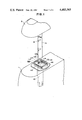
  • FIG. 1 is a perspective view of a prior-art head rest stay retaining device
  • FIG. 2 is a sectional view of one embodiment of the head rest stay retaining device according to the present invention.
  • FIG. 3 is a perspective view showing a variation of the pushing member for use in the head rest stay retaining device in FIG. 2;
  • FIG. 4 is a perspective view showing a variation of the engagement face of the stay for use in the head rest stay retaining device in FIG. 2;
  • FIG. 5 shows perspectively another embodiment of the head rest stay retaining device according to the present invention
  • FIG. 6 is a sectional view of the head rest stay retaining device in FIG. 5;
  • FIG. 7 is a perspective view illustrating the engagement face on the stay for use in the head rest stay retaining device in FIG. 5;
  • FIG. 8 is a perspective view of the pushing member for use in the head rest stay retaining device in FIG. 5;
  • FIG. 9 is a sectional view illustrative of a third embodiment of the head rest stay retaining device according to the present invention.
  • FIG. 10 is illustrative of the manner of operating the pushing member used in the head rest stay retaining device according to the present invention.
  • FIG. 11 is a sectional view showing a fourth embodiment of the head rest stay retaining device.
  • the inventive head rest stay retaining device comprises a stay 3 provided in one side thereof with a tapered engagement face 4 which becomes progressively closer to the axis of the stay 3 in a downward direction.
  • the lower end of this engagement face 4 terminates in a step 4a which prevents the stay 3 from coming out of the device or out of the seat back.
  • the stay 3 is inserted in and vertically movable as guided by a support cylinder 5.
  • a support cylinder 5 Formed atop the support cylinder 5 is a casing 6 provided with an opening or hole 6a through which the stay 3 extends or penetrates.
  • a pushing member 8 which is so forced and biased by an elastic means such as spring 7 as to be in forced contact with the engagement face 4 on the stay 3.
  • engagement face 4 is formed in only one side face of the stay 3 as seen in FIG. 2, it is possible, and will be evident to those skilled in the art, that another engagement face 4 may be also formed in the opposite side of the stay 3, and correspondingly another pushing member 8 be provided within the casing 6, in such a way that the stay 3 is pressed at the both side faces thereof by the two pushing members 8.
  • an engagement face 8a of the pushing member 8 which is in forced engagement or contact with said engagement face 4 on the stay 3 may be formed as a successively grooved or corrugated element, as shown in FIG. 3, in order to enhance the retention of the stay 3.
  • Such corrugation or the like may also be provided on the engagement face 4 of the stay 3, so that the corrugated faces on the stay 3 and pushing member 8 may be in more effective forced contact with each other.
  • knurling may be adopted instead of the corrugating; for example, as shown in FIG. 4, the engagement face 4 may be knurled as shown at 4b.
  • the head rest can be adjusted in height simply by pulling up or depressing the head rest 2.
  • the engagement face 4 of the stay 3 slides over the engagement face of the pushing member 8 while the pushing member 8 moves forward and rearward, thus permitting the stay 3 to freely move.
  • the pushing member 8 will be in forced contact at the front or engagement face thereof with the engagement face 4 of the stay 3 so that the stay will be retained in place at the position where the head rest is stopped. Should another car collide with the car at the rear thereof, when the user's head collides with the head rest, a force due to the collision will act on the head rest so as to force it downward.
  • the engagement face 4 on the stay 3 is tapered downward or nearer the axis of the stay as it goes down; this strucure will provide for an engagement, with a greater force, of the pushing member 8 onto the engagement face 4 of the stay 3 as the stay goes down, thus preventing the stay 3 from falling suddenly.
  • FIGS. 5 and 6 Another embodiment of the present invention is illustrated in FIGS. 5 and 6; this head rest stay retaining device comprises, similar to the embodiment shown in FIG. 2, a support cylinder 5 and casing 6 through which the stay 3 extends or penetrates.
  • the stay 3 has formed thereon a tapered engagement face 4 as seen in FIG. 7.
  • FIG. 6 there is installed within said casing 6, pivotably about a pin 10, a pushing member 18, the free end of which is projected out through a hole 11 formed in the side face of the casing 6 and provided with a knob 12.
  • the inner end of the pushing member 18 which is positioned within the casing 6 is formed approximately elliptic, and the inner end face is formed into a corrugated engagement face 18a.
  • the knob 12 is pivotable about the pin 10, which is positioned eccentric from the center of the ellipse. Forced engagement of the engagement face 18a of the pushing member 18 with the face 4 on the stay 3 permits the retention of the stay and prevents it from falling.
  • the knob 12 of said pushing member 18 is always forced upward and biased by means of a spring 13 provided within the casing 6; this spring 13 may be a wire spring as shown in FIG. 8 or a coil spring as shown in FIG. 9, and may be provided either within or outside the casing 6. Any type of spring may be selected, for this use, which would force upward the knob 12 of the pushing member 18.
  • the engagement face 4 formed in said stay 3 on at least one side thereof is tapered nearer the axis of the stay 3 as it goes down as shown in FIG.
  • the engagement face 4 shown in FIG. 7 may be knurled or corrugated as shown at 40 in FIG. 9.
  • the head rest stay retaining device functions as follows: By depressing the knob 12 of the pushing member 18 against the elasticity of the spring 13, the engagement of the engagement face 18a with the engagement face 4 or 40 on the stay 3 is released as shown in FIG. 10. Namely, the pushing member 18 pivots about the pivotal point "0" from the position defined by the imaginary, or two dot and dash line, to that defined by the solid line as shown in FIG. 10. In this state, the stay 3 can be freely moved vertically. Eliminating the effort which forces downward the knob 12 will result in return of the pushing member 18 to the position defined by the imaginary line, as shown in FIG. 10, under the action of the spring 13. The engagement face 18a gets in forced contact with the engagement face 4 or 40, thus retaining the stay 3.
  • a tapered or continously irregular face is preferably formed on at least one side face of the stay 3, according to the present invention; an corrugated engagement face of a pushing member pivotably installed inside the casing is urged to get into forced contact engagement with the tapered or irregular surface of the stay; and a knob of the pushing member projecting out of the casing is always biased and forced upward by a spring.
  • This structure is simplified and thus can be manufactured with a reduced cost.
  • the stay can be allowed to move vertically, by depressing the knob to pivot the pushing member, so that the engagement of the pushing member with the stay is eliminated, the effort necessary for this operation is less than that required for horizontal straight move of the locking plate in the prior-art device.
  • the stay can be more securely retained with a greater force, when the engagement of the engagement face of the pushing member is made with a stay having a tapered or irregular face. That is, when it moves lower, the stay will be retained better and more securely. In this way, an excellent operability is assured as compared with the prior-art devices, in which the force for retention of the stay is proportional to that of the spring.

Landscapes

  • Engineering & Computer Science (AREA)
  • Aviation & Aerospace Engineering (AREA)
  • Transportation (AREA)
  • Mechanical Engineering (AREA)
  • Chair Legs, Seat Parts, And Backrests (AREA)

Abstract

A head rest stay retaining device has an engagement face provided on the stay thereof which supports the head rest. The engagement face is formed continuously to a predetermined length along the axis thereof, and it further has a pushing member with an engagement face forced so as to be in contact with the engagement face of the stay, thereby retaining the stay, due to the engagement between these two engagement faces. In one version, the engagement face on the stay may taper inwards in a downwards direction, towards the axis of the stay; this engagement face may be knurled. The pushing member may be spring-loaded and/or with a grooved or corrugated engagement face, which may engage the tapered and/or knurled engagement face of the stay. The pushing member may be eccentrically mounted or pivoted or the like, and in a generally elliptical form or other non-circular shape or configuration.

Description

BACKGROUND OF THE INVENTION
1. Field of the Invention
The present invention generally relates to a head rest stay retaining mechanism, and more particularly to a head rest stay retainer which is provided atop the back of a seat, and which retains the head rest stay in such a manner that the stay can be moved vertically in relation to the seat back, when the head rest height is to be adjusted.
2. Description of the Prior Art
Such devices have been proposed; one of them is disclosed in the Japanese Utility Model Publication No. Sho-51-24664, for example, which consists, as illustrated in FIG. 1, of an engagement retainer 100 which is provided on the top face of a seat back 1 and retains a head rest 2 at the stay 3 thereof, and a support cylinder 101 provided within the seat back 1 to vertically guide the head rest stay 3. The engagement retainer 100 comprises a casing 111 which encloses the stay 3 of head rest 2, an engagement plate 112 housed in the casing 111 in such a manner that it may be displaceable perpendicularly to the axis of the stay 3, said plate 112 having a locking hole 114 through which the stay 3 penetrates or extends, and a spring 113 which forces the engagement plate 112 in the direction of engagement with one of cuts or recesses 31 provided in the stay 3. As obvious to those skilled in the art, this prior-art device is disadvantageous in operation and structure; namely, in order to vertically move the head rest 2, the peripheral edge 114a of the locking hole 114 must be disengaged from the cut 31 each time by forcing the engagement plate 112 against the action of the spring 113. Further, the structure of this device is rather complicated.
Besides, since the engagement of the peripheral edge 114a of the locking hole 114 in the engagement plate 112 into the cut 31 in the stay depends upon the magnitude of the force of the spring 113, the effort necessary to push the operating piece 115 attached to the engagement plate 112 in the direction of the casing 111, in order to disengage the peripheral edge 114a from the cut 31 and vertically move the stay 3, must be as great as the degree of engagement with the stay 3, which means a poor operability of the device. Namely, when operating the prior-art device in FIG. 1, a very great effort by the finger is required, and it is inconvenient that the stay 3 must be vertically moved while pressing the operating piece 115 to the casing 111, to move the engagement plate 112 directly against the force of the spring 113. For accurate engagement and disengagement between the cut 31 in the stay 3 and the peripheral edge 114a of the locking hole 114, the engagement plate 112 must be moved straight. To this end, a pair of springs 113 which have the same spring force is needed. Further, to assure that the engagement plate 112 will not be moved as deviated, but will move straight under the action of the springs 113, there must be provided in the engagement plate 112 a slot 116 of a length corresponding to the displacement of the plate 112, and a pin 117 which will engage in the slot 116 must be press-fitted from the top of the casing 111. Thus, the structure of the head rest stay retaining device is very complicated.
SUMMARY OF THE INVENTION Purposes of the Invention
Accordingly, the present invention has as an object to overcome the drawbacks of the prior-art devices, by providing a head rest stay retaining device of a simplified structure and thus with a lower manufacturing cost, easy to operate, and so securely retaining the head rest as to assure the safety of the user.
Another object of the present invention is to provide a head rest stay retaining device in which there is provided on the stay an engagement face which is formed continuously to a predetermined length along the axis of the stay, and in which an engagement face of a pushing member is so forced as to be in forced contact with said engagement face of said stay, thus retaining the latter.
Yet another object of the present invention is to provide a head rest stay retaining device in which a pushing member with a face which engages the engagement face formed on the stay, is constantly forced about a pivotal axis in the direction of engagement on said engagement face, and in which a knob is provided which, when depressed, turns the pushing member in a direction opposite to said forced direction, to disengage said face of the pushing member from said engagement face on the stay.
According to a further object of the present invention, the head rest stay is retained due to the forced engagement of the engagement face formed on the stay with the engagement face of the pushing member, thus ensuring the retention of the stay and simplifying the structure.
Also, an additional object is to provide a pushing member which is in forced engagement at the engagement face thereof with the engagement face formed on the stay, and which is easily turned about the pivotal axis by simply depressing the knob; namely, the inventive device is very easily operable.
An object is to provide a head rest stay retaining device in which there is provided an engagement face on the stay, the engagement face being formed continuously to a predetermined length along the axis of the stay and tapered nearer to the axis of the stay in a downward direction.
Other objects and advantages of the present invention will be better understood from the following description provided, by way of example, to include the preferred embodiments according to the present invention, and with reference to the accompanying drawings.
BRIEF DESCRIPTION OF THE INVENTION
The present invention generally relates to a head rest stay retaining mechanism, and more particularly to a head rest stay retainer which is provided atop the back of a seat, and which retains the head rest stay in such a manner that the stay can be moved vertically in relation to the seat back, when the head rest height is to be adjusted.
The present head rest stay retaining device has an engagement face provided on the stay thereof which supports the head rest. The engagement face is formed continuously to a predetermined length along the axis thereof, and it further has a pushing member with an engagement face formed so as to be in contact with the engagement face of the stay, thereby retaining the stay, due to the engagement between these two engagement faces. In one version, the engagement face on the stay may taper inwards in a downwards direction, towards the axis of the stay; this engagement face may be knurled. The pushing member may be spring-loaded and/or with a grooved or corrugated engagement face, which may engage the tapered and/or knurled engagement face of the stay. The pushing member may be eccentrically mounted or pivoted or the like, and, in a generally elliptical form or other non-circular shape or configuration.
The invention accordingly consists in the head rest stay retaining device as described supra, and as will appear infra from the drawings and from the detailed description of the invention, and as elucidated in the recitations of the appended claims.
BRIEF DESCRIPTION OF THE DRAWINGS
Referring now to the drawings, in which are shown several embodiments of the present invention:
FIG. 1 is a perspective view of a prior-art head rest stay retaining device;
FIG. 2 is a sectional view of one embodiment of the head rest stay retaining device according to the present invention;
FIG. 3 is a perspective view showing a variation of the pushing member for use in the head rest stay retaining device in FIG. 2;
FIG. 4 is a perspective view showing a variation of the engagement face of the stay for use in the head rest stay retaining device in FIG. 2;
FIG. 5 shows perspectively another embodiment of the head rest stay retaining device according to the present invention;
FIG. 6 is a sectional view of the head rest stay retaining device in FIG. 5;
FIG. 7 is a perspective view illustrating the engagement face on the stay for use in the head rest stay retaining device in FIG. 5;
FIG. 8 is a perspective view of the pushing member for use in the head rest stay retaining device in FIG. 5;
FIG. 9 is a sectional view illustrative of a third embodiment of the head rest stay retaining device according to the present invention;
FIG. 10 is illustrative of the manner of operating the pushing member used in the head rest stay retaining device according to the present invention; and
FIG. 11 is a sectional view showing a fourth embodiment of the head rest stay retaining device.
DETAILED DESCRIPTION OF THE PREFERRED EMBODIMENTS
Referring now to FIG. 2, the inventive head rest stay retaining device comprises a stay 3 provided in one side thereof with a tapered engagement face 4 which becomes progressively closer to the axis of the stay 3 in a downward direction. The lower end of this engagement face 4 terminates in a step 4a which prevents the stay 3 from coming out of the device or out of the seat back. The stay 3 is inserted in and vertically movable as guided by a support cylinder 5. Formed atop the support cylinder 5 is a casing 6 provided with an opening or hole 6a through which the stay 3 extends or penetrates. There is provided within this casing 6 a pushing member 8 which is so forced and biased by an elastic means such as spring 7 as to be in forced contact with the engagement face 4 on the stay 3.
Although the engagement face 4 is formed in only one side face of the stay 3 as seen in FIG. 2, it is possible, and will be evident to those skilled in the art, that another engagement face 4 may be also formed in the opposite side of the stay 3, and correspondingly another pushing member 8 be provided within the casing 6, in such a way that the stay 3 is pressed at the both side faces thereof by the two pushing members 8.
According to another aspect of the present invention, an engagement face 8a of the pushing member 8 which is in forced engagement or contact with said engagement face 4 on the stay 3 may be formed as a successively grooved or corrugated element, as shown in FIG. 3, in order to enhance the retention of the stay 3. Such corrugation or the like may also be provided on the engagement face 4 of the stay 3, so that the corrugated faces on the stay 3 and pushing member 8 may be in more effective forced contact with each other. Further, knurling may be adopted instead of the corrugating; for example, as shown in FIG. 4, the engagement face 4 may be knurled as shown at 4b. Of course, it is possible to freely select any of the combinations, namely, plain facing, corrugated facing or knurled facing.
In case of the above-described retaining devices, the head rest can be adjusted in height simply by pulling up or depressing the head rest 2. The engagement face 4 of the stay 3 slides over the engagement face of the pushing member 8 while the pushing member 8 moves forward and rearward, thus permitting the stay 3 to freely move. When the head rest 2 is stopped in a position, the pushing member 8 will be in forced contact at the front or engagement face thereof with the engagement face 4 of the stay 3 so that the stay will be retained in place at the position where the head rest is stopped. Should another car collide with the car at the rear thereof, when the user's head collides with the head rest, a force due to the collision will act on the head rest so as to force it downward. If the head rest is lowered suddenly, it means that such head rest stay retaining device is not satisfactory from the standpoint of safety. In the device according to the present invention, however, the engagement face 4 on the stay 3 is tapered downward or nearer the axis of the stay as it goes down; this strucure will provide for an engagement, with a greater force, of the pushing member 8 onto the engagement face 4 of the stay 3 as the stay goes down, thus preventing the stay 3 from falling suddenly.
Another embodiment of the present invention is illustrated in FIGS. 5 and 6; this head rest stay retaining device comprises, similar to the embodiment shown in FIG. 2, a support cylinder 5 and casing 6 through which the stay 3 extends or penetrates. The stay 3 has formed thereon a tapered engagement face 4 as seen in FIG. 7. As shown in detail in FIG. 6, there is installed within said casing 6, pivotably about a pin 10, a pushing member 18, the free end of which is projected out through a hole 11 formed in the side face of the casing 6 and provided with a knob 12. The inner end of the pushing member 18 which is positioned within the casing 6 is formed approximately elliptic, and the inner end face is formed into a corrugated engagement face 18a. The knob 12 is pivotable about the pin 10, which is positioned eccentric from the center of the ellipse. Forced engagement of the engagement face 18a of the pushing member 18 with the face 4 on the stay 3 permits the retention of the stay and prevents it from falling. The knob 12 of said pushing member 18 is always forced upward and biased by means of a spring 13 provided within the casing 6; this spring 13 may be a wire spring as shown in FIG. 8 or a coil spring as shown in FIG. 9, and may be provided either within or outside the casing 6. Any type of spring may be selected, for this use, which would force upward the knob 12 of the pushing member 18. The engagement face 4 formed in said stay 3 on at least one side thereof is tapered nearer the axis of the stay 3 as it goes down as shown in FIG. 7; the lower end of the engagement face ends in a step 4a, which prevents the stay 3 from coming out at the top of the casing or out of seat back. The engagement face 4 shown in FIG. 7 may be knurled or corrugated as shown at 40 in FIG. 9.
The head rest stay retaining device according to the present invention functions as follows: By depressing the knob 12 of the pushing member 18 against the elasticity of the spring 13, the engagement of the engagement face 18a with the engagement face 4 or 40 on the stay 3 is released as shown in FIG. 10. Namely, the pushing member 18 pivots about the pivotal point "0" from the position defined by the imaginary, or two dot and dash line, to that defined by the solid line as shown in FIG. 10. In this state, the stay 3 can be freely moved vertically. Eliminating the effort which forces downward the knob 12 will result in return of the pushing member 18 to the position defined by the imaginary line, as shown in FIG. 10, under the action of the spring 13. The engagement face 18a gets in forced contact with the engagement face 4 or 40, thus retaining the stay 3. Should the car collide with another car, when the user's head collides with the head rest, a force due to this shock will act on the head rest to lower it. Along with the fall of the stay 3, the engagement face 18a is likely to move lower. However, the pushing member 18 will abut the upper portion of the hole 11, thus blocking the pushing member 18 from pivoting. In case the engagement face 4 of the stay 3 is of tapered form, the force of engagement between the tapered engagement face 4 and face 18a will be increased as the stay 3 goes downward; thus, the latter is prevented from falling. In this case, where the equipment face 4 is tapered, an arrangement may be made so that the pin 10 may be displaced as a pivot for the pushing member 18. For example, elongated holes or slots 14 may be formed in the casing in the positions where the pins are installed, as shown in FIG. 11, so that the pin may move within the slots 14, while tensioning springs 15 may be provided to urge the pin 10 toward the stay 3.
As has been explained in the foregoing, a tapered or continously irregular face is preferably formed on at least one side face of the stay 3, according to the present invention; an corrugated engagement face of a pushing member pivotably installed inside the casing is urged to get into forced contact engagement with the tapered or irregular surface of the stay; and a knob of the pushing member projecting out of the casing is always biased and forced upward by a spring. This structure is simplified and thus can be manufactured with a reduced cost. Besides, since the stay can be allowed to move vertically, by depressing the knob to pivot the pushing member, so that the engagement of the pushing member with the stay is eliminated, the effort necessary for this operation is less than that required for horizontal straight move of the locking plate in the prior-art device. Increasing the length from the pivot of the pushing member to the knob will permit further reduction of the necessary operating effort due to the principle of a fulcrum. The stay can be more securely retained with a greater force, when the engagement of the engagement face of the pushing member is made with a stay having a tapered or irregular face. That is, when it moves lower, the stay will be retained better and more securely. In this way, an excellent operability is assured as compared with the prior-art devices, in which the force for retention of the stay is proportional to that of the spring.
It thus will be seen that there is provided a head rest stay retaining device which attains the various objects of the invention, and is well adapted for the conditions of practical use. As various alternatives, modifications and variations of the present invention will occur to those skilled in the art, besides those embodiments discussed supra and shown in the drawings, it will be understood that the present invention extends fully to such equivalents and is to be limited in scope only as recited in the appended claims, and structural and functional equivalents thereof.
Claims (22)

What is claimed is:
1. A head rest stay retaining device, comprising:
a stay supporting the head rest in such a manner that the head rest can be vertically moved, said stay being provided with an engagement face formed continuously thereon to a predetermined length along the axis of the stay, said engagement face of the stay being tapered toward the axis of the stay, so as to be nearer to the axis of the stay as it extends in a downward direction;
a support cylinder provided within the back of a seat to guide the vertical movement of said stay; and
a pushing member having an engagement face for engaging with said engagement face of the stay, and a pivotal axis for pivoting of the pushing member about said axis, said pushing member, when pivoted in one direction, causing said engagement face of said pushing member to be in contact or engagement with said engagement face of the stay, and when pivoted in the opposite direction, causing said engagement face of said pushing member to be disengaged from said engagement face of said stay, said pushing member being further provided with a spring so as to always force said engagement face of said pushing member in the direction of said engagement face of said stay.
2. A head rest stay retaining device as set forth in claim 1, in which the pushing member is provided with a knob which will, when depressed, cause the pushing member to pivot against the expansion force of the spring, thereby causing the engagement face of the pushing member to be disengaged from said engagement face of the stay.
3. A head rest stay retaining device as set forth in claim 1, in which the engagement face of the stay is continuously irregular, thereby enhancing frictional engagement with the engagement face of the pushing member.
4. A head rest stay retaining device as set forth in claim 3, in which said continuous irregularity is in the form of corrugations or a knurled surface on the engagement face of the stay.
5. A head rest stay retaining device as set forth in claim 1, in which the engagement face of the pushing member is continuously irregular, thereby enhancing frictional engagement with the engagement face of the stay.
6. A head rest stay retaining device as set forth in claim 3, in which said engagement face of the pushing member is continuously irregular, thereby enhancing frictional engagement with the engagement face of the stay.
7. A head rest stay retaining device as set forth in claim 1, in which the engagement face of the stay terminates in a step, said step extending outwards from the engagement face, so as to prevent the stay from coming out of the retaining device.
8. A head rest stay retaining device, comprising:
a stay supporting the head rest in such a manner that the head rest can be vertically moved, said stay being provided with an engagement face formed continuously thereon to a predetermined length along the axis of said stay, said engagement face of said stay being of tapered form, so as to be nearer to the axis of said stay as it extends in a downward direction;
a support cylinder provided within the back of a seat to guide the vertical movement of said stay;
a pushing member having an engagement face; and
means to bias said pushing member, so that said engagement face of said pushing member is always forced so as to be in forced contact with said engagement face of said stay, thereby retaining said stay due to the engagement of said engagement faces.
9. A head rest stay retaining device as set forth in claim 8, in which the engagement face of the stay is formed as a continuously irregular face, thereby enhancing frictional engagement with the engagement face of the pushing member.
10. A head rest stay retaining device as set forth in claim 9, in which the irregularity comprises a knurled or corrugated surface on the engagement face of the stay.
11. A head rest stay retaining device as set forth in claim 8, in which the engagement face of the pushing member is formed as a continuously irregular face, thereby enhancing frictional engagement with the engagement face of the stay.
12. A head rest stay retaining device as set forth in claim 9, in which the engagement face of the pushing member is formed as a continuously irregular face, thereby enhancing frictional engagement with the engagement face of the stay.
13. A head rest stay retaining device as set forth in claim 8, in which the pushing member is provided with a spring which biases and forces the pushing member in such a manner that the engagement face thereof is pressed nearly perpendicularly to the engagement face of the stay.
14. A head rest stay retaining device as set forth in claim 8, in which the pushing member is provided with a pivotal mounting, so as to pivot about a pivotal axis; pivoting of the pushing member about said axis in one direction causing the engagement face of the pushing member to be in contact or engagement with the engagement face of the stay, while pivoting in the opposite direction will cause the engagement to be eliminated, and in which the pushing member is provided with a spring to continuously force and bias the engagement face of the pushing member in the direction of engagement with the engagement face of the stay.
15. A head rest stay retaining device as set forth in claim 14, in which the pushing member is provided with a knob means which will, when depressed, cause the pushing member to pivot against the forcing bias or elasticity of the spring, thereby causing the engagement face of the pushing member to be disengaged from the engagement face of the stay.
16. A head rest retaining device as set forth in claim 8, in which the engagement face of the stay terminates in a step, said step extending outwards from the engagement face, so as to prevent the stay from coming out of the retaining device.
17. A head rest stay retaining device, comprising:
a stay supporting the head rest in such a manner that said head rest can be vertically moved, said stay being provided with an engagement face formed continuously thereon to a predetermined length along the axis of said stay, said engagement face of said stay being of tapered form, so as to be nearer to the axis of the stay as it extends in a downward direction;
a support cylinder provided within the back of a seat to guide the vertical movement of said stay;
a casing formed on top of said support cylinder and having an opening or hole through which the stay extends or penetrates;
a pushing member provided within said casing, said pushing member being pivotably mounted about a pin and having a knob formed at its free end, said knob projecting outwards through a hole formed in the side face of said casing, said pushing member having an engagement face for engaging with said engagement face of said stay, an inner end of said pushing member, when said pushing member is pivoted in a down direction, causing said engagement face of said pushing member to be in contact or engagement with said engagement face of said stay, and when pivoted in the opposite direction, causing said engagement face of said pushing member to be disengaged from said engagement face of said stay;
the inner end of said pushing member being of substantially elliptical form;
said pin being positioned eccentrically from the center of said ellipse; and
spring means provided within said casing, said spring means biasing and continuously forcing said knob upward.
18. A head rest stay retaining device as set forth in claim 17, in which the engagement face of the stay is formed as a continuously irregular face, thereby enhancing frictional engagement with the engagement face of the pushing member.
19. A head rest stay retaining device as set forth in claim 18, in which said continuous irregularity is in the form of corrugations or a knurled surface on the engagement face of the stay.
20. A head rest stay retaining device as set forth in claim 17, in which the engagement face of the pushing member is formed as a continuously irregular face, thereby enhancing frictional engagement with the engagement face of the stay.
21. A head rest stay retaining device as set forth in claim 18, in which the engagement face of the pushing member is formed as a continuously irregular face, thereby enhancing frictional engagement with the engagement face of the stay.
22. A head rest stay retaining device as set forth in claim 17, in which the engagement face of the stay terminates in a step, said step extending outwards from the engagement face, so as to prevent the stay from coming out of the retaining device.
US06/276,280 1981-06-22 1981-06-22 Head rest stay retaining device Expired - Fee Related US4483565A (en)

Priority Applications (2)

Application Number Priority Date Filing Date Title
GB08119189A GB2101477B (en) 1981-06-22 1981-06-22 Head rest stay retaining device
US06/276,280 US4483565A (en) 1981-06-22 1981-06-22 Head rest stay retaining device

Applications Claiming Priority (1)

Application Number Priority Date Filing Date Title
US06/276,280 US4483565A (en) 1981-06-22 1981-06-22 Head rest stay retaining device

Publications (1)

Publication Number Publication Date
US4483565A true US4483565A (en) 1984-11-20

Family

ID=23055998

Family Applications (1)

Application Number Title Priority Date Filing Date
US06/276,280 Expired - Fee Related US4483565A (en) 1981-06-22 1981-06-22 Head rest stay retaining device

Country Status (2)

Country Link
US (1) US4483565A (en)
GB (1) GB2101477B (en)

Cited By (32)

* Cited by examiner, † Cited by third party
Publication number Priority date Publication date Assignee Title
USD282522S (en) 1982-09-03 1986-02-11 Itw Limited Support for adjustment devices for head rests in automotive vehicles
US4577904A (en) * 1983-01-14 1986-03-25 Itw Ateco Gmbh Guiding sleeve for head rests at vehicle seats
US4604777A (en) * 1982-08-20 1986-08-12 Itw Limited Spring retainers
US4695095A (en) * 1984-10-05 1987-09-22 Daimler-Benz Aktiengesellschaft Arrangement for securing the end position of a guided support rod of a headrest
US4714292A (en) * 1984-07-04 1987-12-22 Aprica Kassai Kabushikikaisha Baby carriage
US5382077A (en) * 1992-07-29 1995-01-17 Doerner Products Ltd. Height adjustment mechanism for a chair seat back
US5711579A (en) * 1995-06-28 1998-01-27 Volkswagen Ag Locking arrangement for a head restraint
US5823623A (en) * 1996-03-30 1998-10-20 Itw-Ateco Gmbh Guide sleeve for neck rests on vehicle seats
WO1998051530A1 (en) * 1997-05-14 1998-11-19 Centre D'etudes Et Recherche Pour L'automobile (Cera) Device for locking a headrest adjusted height, in particular for motor vehicle seats
US5895094A (en) * 1996-04-08 1999-04-20 Aisin Seiki Kabushiki Kaisha Headrest apparatus for vehicle seat
US5927813A (en) * 1998-02-05 1999-07-27 Tachi-S Co., Ltd. Arrangement of headrest stay holder and holder bracket in vehicles seat
US5934755A (en) * 1997-01-15 1999-08-10 Raviv Precision Injection Molding Adjusting mechanism for a vehicle seat headrest
US5944387A (en) * 1998-05-04 1999-08-31 Northfield Metal Products Ltd. Adjustment mechanism for chairs
US5964505A (en) * 1996-09-24 1999-10-12 Lear Corp. Detachable cantilevered headrest having a ratchet mechanism
US6012777A (en) * 1997-04-29 2000-01-11 Grammer Automotive Gmbh Mount for motor-vehicle headrest
US6068337A (en) * 1997-11-14 2000-05-30 Gestind M.B. Manifattura Di Bruzolo S.P.A. Headrest for motor-vehicle seats
US6641219B2 (en) * 2001-12-18 2003-11-04 E.R. Wagner Manufacturing Company Reduced cost head restraint support tube to improve system function
US20030222491A1 (en) * 2002-05-29 2003-12-04 Centura Group, Inc. Head restraint assembly for motor vehicle
US20040217640A1 (en) * 2003-04-29 2004-11-04 Intier Automotive Inc. Multi-position head restraint
US20050146190A1 (en) * 2004-01-02 2005-07-07 Taatjes Steven W. Adjustable retainer for a headrest
US20060108851A1 (en) * 2004-11-22 2006-05-25 Tachi-S Co. Ltd. Headrest device for vehicle seat
US20060197366A1 (en) * 2005-03-03 2006-09-07 Lear Corporation Moveable headrest assembly for a vehicle seat
US20060214492A1 (en) * 2005-03-21 2006-09-28 Keiper Gmbh & Co. Kg Vehicle seat with a headrest
FR2902053A1 (en) * 2006-06-12 2007-12-14 Faurecia Sieges Automobile AUTOMOBILE SEAT COMPRISING MEANS FOR ELECTRICALLY CONNECTING THE HEADREST
US20080061611A1 (en) * 2004-04-28 2008-03-13 Johnson Controls Gmbh Vehicle Seat With Cover Plate
US20080073950A1 (en) * 2006-08-10 2008-03-27 Hyun Ko Locking structure of an active headrest
US20080191522A1 (en) * 2007-02-14 2008-08-14 Inoac Corporation Headrest
FR2912355A1 (en) * 2007-02-09 2008-08-15 Cera DEVICE FOR LOCKING A CRIMPING ROD OF THE HEADREST COMPRISING SAFETY STOPES
US20090021069A1 (en) * 2007-07-17 2009-01-22 Stephan Hentschel Head rest carrying element
US20140361595A1 (en) * 2013-06-06 2014-12-11 Holger Weiland Headrest
CN105922915A (en) * 2015-02-26 2016-09-07 日本发条株式会社 Headrest device
US10029596B2 (en) * 2014-01-23 2018-07-24 Illinois Tool Works Inc. Retaining device for vehicle headrests

Families Citing this family (5)

* Cited by examiner, † Cited by third party
Publication number Priority date Publication date Assignee Title
FR2671587B1 (en) * 1991-01-10 1994-01-21 Itw De France LOCKING MECHANISM OF A NOTCHED ROD.
EP0582765B1 (en) * 1992-08-11 1995-11-15 Gestind M.B. Manifattura Di Bruzolo S.P.A A headrest for motor vehicle seats
GB0020257D0 (en) * 2000-08-18 2000-10-04 Lander Automotive Ltd Friction headrest
DE102010064068A1 (en) * 2010-12-23 2012-06-28 Volkswagen Ag Support unit, particularly supporting rod for head rest, has recess in manner of indentation, where support unit is mounted in vehicle-fixed bearing device
GB2511091B (en) * 2013-02-22 2015-10-14 Jaguar Land Rover Ltd Head restraint locking mechanism

Citations (6)

* Cited by examiner, † Cited by third party
Publication number Priority date Publication date Assignee Title
US410296A (en) * 1889-09-03 schneekloth
US1714696A (en) * 1929-05-28 Sahag menas sabettelian
US1867600A (en) * 1929-07-08 1932-07-19 Theo A Kochs Company Barber's chair
US2584732A (en) * 1949-10-06 1952-02-05 Joseph Velick Adjustable armrest
US3877751A (en) * 1973-07-30 1975-04-15 Hek Manufacturing Company Inc Split back dental chair apparatus
US4128274A (en) * 1976-03-05 1978-12-05 U.S. Philips Corporation Adjusting device for a section of a medical treatment apparatus or examining apparatus

Patent Citations (6)

* Cited by examiner, † Cited by third party
Publication number Priority date Publication date Assignee Title
US410296A (en) * 1889-09-03 schneekloth
US1714696A (en) * 1929-05-28 Sahag menas sabettelian
US1867600A (en) * 1929-07-08 1932-07-19 Theo A Kochs Company Barber's chair
US2584732A (en) * 1949-10-06 1952-02-05 Joseph Velick Adjustable armrest
US3877751A (en) * 1973-07-30 1975-04-15 Hek Manufacturing Company Inc Split back dental chair apparatus
US4128274A (en) * 1976-03-05 1978-12-05 U.S. Philips Corporation Adjusting device for a section of a medical treatment apparatus or examining apparatus

Cited By (40)

* Cited by examiner, † Cited by third party
Publication number Priority date Publication date Assignee Title
US4604777A (en) * 1982-08-20 1986-08-12 Itw Limited Spring retainers
USD282522S (en) 1982-09-03 1986-02-11 Itw Limited Support for adjustment devices for head rests in automotive vehicles
US4577904A (en) * 1983-01-14 1986-03-25 Itw Ateco Gmbh Guiding sleeve for head rests at vehicle seats
US4714292A (en) * 1984-07-04 1987-12-22 Aprica Kassai Kabushikikaisha Baby carriage
US4695095A (en) * 1984-10-05 1987-09-22 Daimler-Benz Aktiengesellschaft Arrangement for securing the end position of a guided support rod of a headrest
US5382077A (en) * 1992-07-29 1995-01-17 Doerner Products Ltd. Height adjustment mechanism for a chair seat back
US5711579A (en) * 1995-06-28 1998-01-27 Volkswagen Ag Locking arrangement for a head restraint
US5823623A (en) * 1996-03-30 1998-10-20 Itw-Ateco Gmbh Guide sleeve for neck rests on vehicle seats
US5895094A (en) * 1996-04-08 1999-04-20 Aisin Seiki Kabushiki Kaisha Headrest apparatus for vehicle seat
US5964505A (en) * 1996-09-24 1999-10-12 Lear Corp. Detachable cantilevered headrest having a ratchet mechanism
US5934755A (en) * 1997-01-15 1999-08-10 Raviv Precision Injection Molding Adjusting mechanism for a vehicle seat headrest
US6012777A (en) * 1997-04-29 2000-01-11 Grammer Automotive Gmbh Mount for motor-vehicle headrest
FR2763293A1 (en) * 1997-05-14 1998-11-20 Cera DEVICE FOR LOCKING HEIGHT OF A HEADREST, PARTICULARLY FOR A MOTOR VEHICLE SEAT
WO1998051530A1 (en) * 1997-05-14 1998-11-19 Centre D'etudes Et Recherche Pour L'automobile (Cera) Device for locking a headrest adjusted height, in particular for motor vehicle seats
US6068337A (en) * 1997-11-14 2000-05-30 Gestind M.B. Manifattura Di Bruzolo S.P.A. Headrest for motor-vehicle seats
US5927813A (en) * 1998-02-05 1999-07-27 Tachi-S Co., Ltd. Arrangement of headrest stay holder and holder bracket in vehicles seat
US5944387A (en) * 1998-05-04 1999-08-31 Northfield Metal Products Ltd. Adjustment mechanism for chairs
US6641219B2 (en) * 2001-12-18 2003-11-04 E.R. Wagner Manufacturing Company Reduced cost head restraint support tube to improve system function
US20030222491A1 (en) * 2002-05-29 2003-12-04 Centura Group, Inc. Head restraint assembly for motor vehicle
US6802565B2 (en) * 2002-05-29 2004-10-12 Centura Group, Inc. Head restraint assembly for motor vehicle
US20040217640A1 (en) * 2003-04-29 2004-11-04 Intier Automotive Inc. Multi-position head restraint
US7137668B2 (en) * 2003-04-29 2006-11-21 Intier Automotive Inc. Multi-position head restraint
US20050146190A1 (en) * 2004-01-02 2005-07-07 Taatjes Steven W. Adjustable retainer for a headrest
US20080061611A1 (en) * 2004-04-28 2008-03-13 Johnson Controls Gmbh Vehicle Seat With Cover Plate
US7309108B2 (en) * 2004-11-22 2007-12-18 Tachi-S Co., Ltd. Headrest device for vehicle seat
US20060108851A1 (en) * 2004-11-22 2006-05-25 Tachi-S Co. Ltd. Headrest device for vehicle seat
US7506936B2 (en) * 2005-03-03 2009-03-24 Lear Corporation Moveable headrest assembly for a vehicle seat
US20060197366A1 (en) * 2005-03-03 2006-09-07 Lear Corporation Moveable headrest assembly for a vehicle seat
US20060214492A1 (en) * 2005-03-21 2006-09-28 Keiper Gmbh & Co. Kg Vehicle seat with a headrest
FR2902053A1 (en) * 2006-06-12 2007-12-14 Faurecia Sieges Automobile AUTOMOBILE SEAT COMPRISING MEANS FOR ELECTRICALLY CONNECTING THE HEADREST
US20080073950A1 (en) * 2006-08-10 2008-03-27 Hyun Ko Locking structure of an active headrest
FR2912355A1 (en) * 2007-02-09 2008-08-15 Cera DEVICE FOR LOCKING A CRIMPING ROD OF THE HEADREST COMPRISING SAFETY STOPES
US20080191522A1 (en) * 2007-02-14 2008-08-14 Inoac Corporation Headrest
US7845721B2 (en) * 2007-02-14 2010-12-07 Inoac Corporation Headrest
US20090021069A1 (en) * 2007-07-17 2009-01-22 Stephan Hentschel Head rest carrying element
US8056984B2 (en) * 2007-07-17 2011-11-15 Stephan Hentschel Head rest carrying element
US20140361595A1 (en) * 2013-06-06 2014-12-11 Holger Weiland Headrest
US9428089B2 (en) * 2013-06-06 2016-08-30 Grammer Ag Headrest
US10029596B2 (en) * 2014-01-23 2018-07-24 Illinois Tool Works Inc. Retaining device for vehicle headrests
CN105922915A (en) * 2015-02-26 2016-09-07 日本发条株式会社 Headrest device

Also Published As

Publication number Publication date
GB2101477B (en) 1985-04-17
GB2101477A (en) 1983-01-19

Similar Documents

Publication Publication Date Title
US4483565A (en) Head rest stay retaining device
AU634906B2 (en) Shoulder adjuster
US5090751A (en) Latching device for use on a vehicle
US5692266A (en) Concealable and expandable handle
US5568676A (en) End release buckle
US5492468A (en) Child-resistant lighter with externally biased actuator
US4310175A (en) Belt clamping apparatus with self-aligning feature
GB1560322A (en) Safety belt buckle
GB2206032A (en) Anchor device for seat belts
US4069559A (en) Ferrule buckle
JPH06127893A (en) Single roller jack
JPH0790748B2 (en) Device for vertical adjustment of safety belt fittings
KR970069656A (en) Seat belt height adjustment device of vehicle
JP3453438B2 (en) Headrest height adjustment device
US6332596B1 (en) Device for releasably mounting wrist support to computer keyboard
JP2010063833A (en) Armrest, chair
US6007040A (en) Seat slide apparatus
JPH0748472Y2 (en) Bicycle parking brake structure
JPH0724292Y2 (en) Shoulder anchor adjuster for seat belt
JPH0523097Y2 (en)
JP2605159Y2 (en) Automotive drawer
KR0118731Y1 (en) Push type poll guide
GB2202896A (en) Buckle
JPS6258407B2 (en)
GB2243532A (en) Improvements in or relating to an adjustable pillar loop

Legal Events

Date Code Title Description
AS Assignment

Owner name: IKEDA BUSSAN CO., LTD., 1-3 HIGASHIKAWASHIMA-CHOU

Free format text: ASSIGNMENT OF ASSIGNORS INTEREST.;ASSIGNORS:TERUI, MITURU;YOSHIDA, YOUKI;REEL/FRAME:003902/0194

Effective date: 19810616

FPAY Fee payment

Year of fee payment: 4

FEPP Fee payment procedure

Free format text: PAYOR NUMBER ASSIGNED (ORIGINAL EVENT CODE: ASPN); ENTITY STATUS OF PATENT OWNER: LARGE ENTITY

FPAY Fee payment

Year of fee payment: 8

FEPP Fee payment procedure

Free format text: PAYOR NUMBER ASSIGNED (ORIGINAL EVENT CODE: ASPN); ENTITY STATUS OF PATENT OWNER: LARGE ENTITY

Free format text: PAYER NUMBER DE-ASSIGNED (ORIGINAL EVENT CODE: RMPN); ENTITY STATUS OF PATENT OWNER: LARGE ENTITY

REMI Maintenance fee reminder mailed
LAPS Lapse for failure to pay maintenance fees
FP Lapsed due to failure to pay maintenance fee

Effective date: 19961120

STCH Information on status: patent discontinuation

Free format text: PATENT EXPIRED DUE TO NONPAYMENT OF MAINTENANCE FEES UNDER 37 CFR 1.362