US4451393A - Cleaner for ovens and the like using sodium alpha olefin sulfonate, sodium hydroxide, and sodium silicate - Google Patents
Cleaner for ovens and the like using sodium alpha olefin sulfonate, sodium hydroxide, and sodium silicate Download PDFInfo
- Publication number
- US4451393A US4451393A US06/407,154 US40715482A US4451393A US 4451393 A US4451393 A US 4451393A US 40715482 A US40715482 A US 40715482A US 4451393 A US4451393 A US 4451393A
- Authority
- US
- United States
- Prior art keywords
- weight percent
- composition
- sodium
- alpha olefin
- viscosity
- Prior art date
- Legal status (The legal status is an assumption and is not a legal conclusion. Google has not performed a legal analysis and makes no representation as to the accuracy of the status listed.)
- Expired - Fee Related
Links
- HEMHJVSKTPXQMS-UHFFFAOYSA-M Sodium hydroxide Chemical compound [OH-].[Na+] HEMHJVSKTPXQMS-UHFFFAOYSA-M 0.000 title claims abstract description 165
- 239000004115 Sodium Silicate Substances 0.000 title claims abstract description 67
- NTHWMYGWWRZVTN-UHFFFAOYSA-N sodium silicate Chemical compound [Na+].[Na+].[O-][Si]([O-])=O NTHWMYGWWRZVTN-UHFFFAOYSA-N 0.000 title claims abstract description 66
- 229910052911 sodium silicate Inorganic materials 0.000 title claims abstract description 64
- 239000004711 α-olefin Substances 0.000 title claims abstract description 57
- 239000011734 sodium Substances 0.000 title claims abstract description 52
- 229910052708 sodium Inorganic materials 0.000 title claims abstract description 52
- BDHFUVZGWQCTTF-UHFFFAOYSA-M sulfonate Chemical compound [O-]S(=O)=O BDHFUVZGWQCTTF-UHFFFAOYSA-M 0.000 title claims abstract description 51
- DGAQECJNVWCQMB-PUAWFVPOSA-M Ilexoside XXIX Chemical compound C[C@@H]1CC[C@@]2(CC[C@@]3(C(=CC[C@H]4[C@]3(CC[C@@H]5[C@@]4(CC[C@@H](C5(C)C)OS(=O)(=O)[O-])C)C)[C@@H]2[C@]1(C)O)C)C(=O)O[C@H]6[C@@H]([C@H]([C@@H]([C@H](O6)CO)O)O)O.[Na+] DGAQECJNVWCQMB-PUAWFVPOSA-M 0.000 title claims abstract description 50
- 239000000203 mixture Substances 0.000 claims abstract description 138
- XLYOFNOQVPJJNP-UHFFFAOYSA-N water Substances O XLYOFNOQVPJJNP-UHFFFAOYSA-N 0.000 claims abstract description 34
- VYPSYNLAJGMNEJ-UHFFFAOYSA-N Silicium dioxide Chemical compound O=[Si]=O VYPSYNLAJGMNEJ-UHFFFAOYSA-N 0.000 claims description 66
- 239000007864 aqueous solution Substances 0.000 claims description 34
- 239000000243 solution Substances 0.000 claims description 33
- 229910004742 Na2 O Inorganic materials 0.000 claims description 31
- 229910052681 coesite Inorganic materials 0.000 claims description 31
- 229910052906 cristobalite Inorganic materials 0.000 claims description 31
- 239000000377 silicon dioxide Substances 0.000 claims description 31
- 229910052682 stishovite Inorganic materials 0.000 claims description 31
- 229910052905 tridymite Inorganic materials 0.000 claims description 31
- 238000004140 cleaning Methods 0.000 claims description 30
- 239000007788 liquid Substances 0.000 claims description 27
- 238000000034 method Methods 0.000 claims description 20
- 150000003839 salts Chemical class 0.000 claims description 16
- FAPWRFPIFSIZLT-UHFFFAOYSA-M Sodium chloride Chemical compound [Na+].[Cl-] FAPWRFPIFSIZLT-UHFFFAOYSA-M 0.000 claims description 12
- 239000011780 sodium chloride Substances 0.000 claims description 6
- PMZURENOXWZQFD-UHFFFAOYSA-L Sodium Sulfate Chemical compound [Na+].[Na+].[O-]S([O-])(=O)=O PMZURENOXWZQFD-UHFFFAOYSA-L 0.000 claims description 5
- 229910052938 sodium sulfate Inorganic materials 0.000 claims description 5
- 235000011152 sodium sulphate Nutrition 0.000 claims description 5
- 238000005406 washing Methods 0.000 claims description 5
- OFHCOWSQAMBJIW-AVJTYSNKSA-N alfacalcidol Chemical compound C1(/[C@@H]2CC[C@@H]([C@]2(CCC1)C)[C@H](C)CCCC(C)C)=C\C=C1\C[C@@H](O)C[C@H](O)C1=C OFHCOWSQAMBJIW-AVJTYSNKSA-N 0.000 claims description 4
- 125000004432 carbon atom Chemical group C* 0.000 claims description 4
- 210000003298 dental enamel Anatomy 0.000 claims description 4
- 235000013305 food Nutrition 0.000 claims description 4
- 239000002699 waste material Substances 0.000 claims description 4
- 239000010935 stainless steel Substances 0.000 claims description 3
- 229910001220 stainless steel Inorganic materials 0.000 claims description 3
- 229910052751 metal Inorganic materials 0.000 abstract description 12
- 239000002184 metal Substances 0.000 abstract description 12
- 239000000499 gel Substances 0.000 description 49
- 239000000047 product Substances 0.000 description 14
- 239000007787 solid Substances 0.000 description 13
- BPQQTUXANYXVAA-UHFFFAOYSA-N Orthosilicate Chemical compound [O-][Si]([O-])([O-])[O-] BPQQTUXANYXVAA-UHFFFAOYSA-N 0.000 description 10
- 230000009471 action Effects 0.000 description 10
- 239000004094 surface-active agent Substances 0.000 description 9
- 230000008719 thickening Effects 0.000 description 6
- 230000001680 brushing effect Effects 0.000 description 5
- 230000000717 retained effect Effects 0.000 description 5
- 238000005507 spraying Methods 0.000 description 5
- 239000002562 thickening agent Substances 0.000 description 5
- 239000000443 aerosol Substances 0.000 description 4
- 239000003795 chemical substances by application Substances 0.000 description 4
- 239000013078 crystal Substances 0.000 description 4
- 239000010453 quartz Substances 0.000 description 4
- 239000000126 substance Substances 0.000 description 4
- KWYUFKZDYYNOTN-UHFFFAOYSA-M Potassium hydroxide Chemical compound [OH-].[K+] KWYUFKZDYYNOTN-UHFFFAOYSA-M 0.000 description 3
- 239000000654 additive Substances 0.000 description 3
- 230000002411 adverse Effects 0.000 description 3
- 238000009472 formulation Methods 0.000 description 3
- 239000000463 material Substances 0.000 description 3
- 239000003380 propellant Substances 0.000 description 3
- 235000019351 sodium silicates Nutrition 0.000 description 3
- 239000007858 starting material Substances 0.000 description 3
- 230000002195 synergetic effect Effects 0.000 description 3
- POWFTOSLLWLEBN-UHFFFAOYSA-N tetrasodium;silicate Chemical compound [Na+].[Na+].[Na+].[Na+].[O-][Si]([O-])([O-])[O-] POWFTOSLLWLEBN-UHFFFAOYSA-N 0.000 description 3
- XEEYBQQBJWHFJM-UHFFFAOYSA-N Iron Chemical compound [Fe] XEEYBQQBJWHFJM-UHFFFAOYSA-N 0.000 description 2
- ATUOYWHBWRKTHZ-UHFFFAOYSA-N Propane Chemical compound CCC ATUOYWHBWRKTHZ-UHFFFAOYSA-N 0.000 description 2
- 229910052782 aluminium Inorganic materials 0.000 description 2
- XAGFODPZIPBFFR-UHFFFAOYSA-N aluminium Chemical compound [Al] XAGFODPZIPBFFR-UHFFFAOYSA-N 0.000 description 2
- 239000012736 aqueous medium Substances 0.000 description 2
- 230000000694 effects Effects 0.000 description 2
- KWIUHFFTVRNATP-UHFFFAOYSA-N glycine betaine Chemical compound C[N+](C)(C)CC([O-])=O KWIUHFFTVRNATP-UHFFFAOYSA-N 0.000 description 2
- NNPPMTNAJDCUHE-UHFFFAOYSA-N isobutane Chemical compound CC(C)C NNPPMTNAJDCUHE-UHFFFAOYSA-N 0.000 description 2
- 238000004519 manufacturing process Methods 0.000 description 2
- 150000002739 metals Chemical class 0.000 description 2
- 150000004760 silicates Chemical class 0.000 description 2
- 150000003385 sodium Chemical class 0.000 description 2
- 159000000000 sodium salts Chemical class 0.000 description 2
- 238000003756 stirring Methods 0.000 description 2
- 239000000037 vitreous enamel Substances 0.000 description 2
- KEZYHIPQRGTUDU-UHFFFAOYSA-N 2-[dithiocarboxy(methyl)amino]acetic acid Chemical compound SC(=S)N(C)CC(O)=O KEZYHIPQRGTUDU-UHFFFAOYSA-N 0.000 description 1
- RYGMFSIKBFXOCR-UHFFFAOYSA-N Copper Chemical compound [Cu] RYGMFSIKBFXOCR-UHFFFAOYSA-N 0.000 description 1
- 229910004809 Na2 SO4 Inorganic materials 0.000 description 1
- 206010067482 No adverse event Diseases 0.000 description 1
- 239000004111 Potassium silicate Substances 0.000 description 1
- 229920002472 Starch Polymers 0.000 description 1
- ATJFFYVFTNAWJD-UHFFFAOYSA-N Tin Chemical compound [Sn] ATJFFYVFTNAWJD-UHFFFAOYSA-N 0.000 description 1
- HCHKCACWOHOZIP-UHFFFAOYSA-N Zinc Chemical compound [Zn] HCHKCACWOHOZIP-UHFFFAOYSA-N 0.000 description 1
- 150000001339 alkali metal compounds Chemical class 0.000 description 1
- 230000004075 alteration Effects 0.000 description 1
- SNAAJJQQZSMGQD-UHFFFAOYSA-N aluminum magnesium Chemical compound [Mg].[Al] SNAAJJQQZSMGQD-UHFFFAOYSA-N 0.000 description 1
- 239000002280 amphoteric surfactant Substances 0.000 description 1
- 229960003237 betaine Drugs 0.000 description 1
- 238000004061 bleaching Methods 0.000 description 1
- 239000003518 caustics Substances 0.000 description 1
- 239000012459 cleaning agent Substances 0.000 description 1
- 150000001875 compounds Chemical class 0.000 description 1
- 239000012141 concentrate Substances 0.000 description 1
- 238000010411 cooking Methods 0.000 description 1
- 238000001816 cooling Methods 0.000 description 1
- 229910052802 copper Inorganic materials 0.000 description 1
- 239000010949 copper Substances 0.000 description 1
- 238000005260 corrosion Methods 0.000 description 1
- 230000007797 corrosion Effects 0.000 description 1
- 239000003599 detergent Substances 0.000 description 1
- 239000012530 fluid Substances 0.000 description 1
- NBVXSUQYWXRMNV-UHFFFAOYSA-N fluoromethane Chemical compound FC NBVXSUQYWXRMNV-UHFFFAOYSA-N 0.000 description 1
- 239000003752 hydrotrope Substances 0.000 description 1
- 230000005764 inhibitory process Effects 0.000 description 1
- 229910052742 iron Inorganic materials 0.000 description 1
- 239000001282 iso-butane Substances 0.000 description 1
- 235000013372 meat Nutrition 0.000 description 1
- 229910001092 metal group alloy Inorganic materials 0.000 description 1
- 235000013336 milk Nutrition 0.000 description 1
- 239000008267 milk Substances 0.000 description 1
- 210000004080 milk Anatomy 0.000 description 1
- 239000011259 mixed solution Substances 0.000 description 1
- 238000002156 mixing Methods 0.000 description 1
- 238000012986 modification Methods 0.000 description 1
- 230000004048 modification Effects 0.000 description 1
- 238000006386 neutralization reaction Methods 0.000 description 1
- 239000003973 paint Substances 0.000 description 1
- 238000010422 painting Methods 0.000 description 1
- 239000006072 paste Substances 0.000 description 1
- 238000009928 pasteurization Methods 0.000 description 1
- 230000002093 peripheral effect Effects 0.000 description 1
- NNHHDJVEYQHLHG-UHFFFAOYSA-N potassium silicate Chemical compound [K+].[K+].[O-][Si]([O-])=O NNHHDJVEYQHLHG-UHFFFAOYSA-N 0.000 description 1
- 229910052913 potassium silicate Inorganic materials 0.000 description 1
- 235000019353 potassium silicate Nutrition 0.000 description 1
- 239000002244 precipitate Substances 0.000 description 1
- 238000002360 preparation method Methods 0.000 description 1
- 239000001294 propane Substances 0.000 description 1
- 235000019795 sodium metasilicate Nutrition 0.000 description 1
- QUCDWLYKDRVKMI-UHFFFAOYSA-M sodium;3,4-dimethylbenzenesulfonate Chemical compound [Na+].CC1=CC=C(S([O-])(=O)=O)C=C1C QUCDWLYKDRVKMI-UHFFFAOYSA-M 0.000 description 1
- 239000008247 solid mixture Substances 0.000 description 1
- 239000002904 solvent Substances 0.000 description 1
- 235000019698 starch Nutrition 0.000 description 1
- 150000003871 sulfonates Chemical class 0.000 description 1
- 239000008399 tap water Substances 0.000 description 1
- 235000020679 tap water Nutrition 0.000 description 1
- 229910052718 tin Inorganic materials 0.000 description 1
- 229910052725 zinc Inorganic materials 0.000 description 1
- 239000011701 zinc Substances 0.000 description 1
Images




Classifications
-
- C—CHEMISTRY; METALLURGY
- C11—ANIMAL OR VEGETABLE OILS, FATS, FATTY SUBSTANCES OR WAXES; FATTY ACIDS THEREFROM; DETERGENTS; CANDLES
- C11D—DETERGENT COMPOSITIONS; USE OF SINGLE SUBSTANCES AS DETERGENTS; SOAP OR SOAP-MAKING; RESIN SOAPS; RECOVERY OF GLYCEROL
- C11D1/00—Detergent compositions based essentially on surface-active compounds; Use of these compounds as a detergent
- C11D1/02—Anionic compounds
- C11D1/12—Sulfonic acids or sulfuric acid esters; Salts thereof
- C11D1/14—Sulfonic acids or sulfuric acid esters; Salts thereof derived from aliphatic hydrocarbons or mono-alcohols
- C11D1/143—Sulfonic acid esters
-
- C—CHEMISTRY; METALLURGY
- C11—ANIMAL OR VEGETABLE OILS, FATS, FATTY SUBSTANCES OR WAXES; FATTY ACIDS THEREFROM; DETERGENTS; CANDLES
- C11D—DETERGENT COMPOSITIONS; USE OF SINGLE SUBSTANCES AS DETERGENTS; SOAP OR SOAP-MAKING; RESIN SOAPS; RECOVERY OF GLYCEROL
- C11D1/00—Detergent compositions based essentially on surface-active compounds; Use of these compounds as a detergent
- C11D1/02—Anionic compounds
- C11D1/04—Carboxylic acids or salts thereof
- C11D1/08—Polycarboxylic acids containing no nitrogen or sulfur
-
- C—CHEMISTRY; METALLURGY
- C11—ANIMAL OR VEGETABLE OILS, FATS, FATTY SUBSTANCES OR WAXES; FATTY ACIDS THEREFROM; DETERGENTS; CANDLES
- C11D—DETERGENT COMPOSITIONS; USE OF SINGLE SUBSTANCES AS DETERGENTS; SOAP OR SOAP-MAKING; RESIN SOAPS; RECOVERY OF GLYCEROL
- C11D3/00—Other compounding ingredients of detergent compositions covered in group C11D1/00
- C11D3/0005—Other compounding ingredients characterised by their effect
- C11D3/0057—Oven-cleaning compositions
Definitions
- This invention lies in the field of metal and enamel cleaning compositions, particularly compositions adapted for the treatment of surfaces fouled with carbonaceous deposits.
- Oven cleaners are intended to remove carbonaceous (including proteinaceous) deposits and residues retained on oven surfaces as a result of baking, broiling or other cooking operations, and such products are available as liquids, pastes, and aerosols.
- an oven cleaner formulation apparently contains surfactant, carrier liquid or solvent, optionally cleaning additives (which can include caustic material), and perhaps also thickening agents.
- An aerosol additionally contains a propellant.
- thickeners previously employed in this art have been gums, starches, and, perhaps, complex colloidal magnesium aluminum silicate.
- Sodium hydroxide though apparently employed as a means for raising formulation alkalinity, has never previously been used as a thickening agent. Further, sodium hydroxide appears to be objectionable in this art because of adverse solubility effects upon many surfactants.
- Sodium silicate has never previously been used as a thickening agent so far as now known. Mixtures of sodium hydroxide and sodium silicate have never previously been used so far as now known with sodium alpha olefin sulfonate.
- Metal and enamel cleaning compositions appear to have a wide variety of applications including oven cleaning and food processing equipment cleaning and the like.
- this invention relates to new and very useful homogeneous compositions for cleaning surfaces, particularly surfaces contaminated with carbonaceous (including proteinaceous) deposits, or the like, such as occur on the interior walls of ovens used for the baking or broiling of foodstuffs such as meats, on the interior walls of vessels used for the processing of food, on equipment used for pasteurization of milk, on peripheral equipment, such as grills, stove tops, etc., and the like. Paint stripping, and the like, can also be accomplished.
- Such a compsoition comprise on a 100 weight percent total composition basis:
- the combination of sodium hydroxide, sodium silicate and sodium alpha olefin sulfonate appears to represent a coaction in water in a manner which may be considered to be synergistic to produce aqueous mixed solutions which are unexpectedly more viscous than is the viscosity of any of these agents alone in an aqueous solution at a similar respective concentration level.
- a 40 weight percent aqueous solution of sodium alpha olefin sulfonate has a characteristic viscosity of less than about 300 centipoises as measured by a Brookfield viscometer using a #2 spindle at 60 revolutions per minute at 24° C.
- a 50 weight percent aqueous solution of sodium hydroxide has a characteristic viscosity of less than about 60 centipoises similarly measured
- a 25 weight percent solution of sodium silicate having an SiO 2 to Na 2 O weight ratio of 2.4:1 has a viscosity of less than about 15 centipoises similarly measured.
- composition of this invention which has a viscosity of at least about 1000 centipoises. (Unless otherwise specifically indicated, all viscosity values herein are measured as above described.)
- compositions which result having such viscosities appear to be very useful for cleaning the surfaces above indicated.
- Such compositions do not need further thickening or cleaning agents added thereto, as is apparently common, for example, in prior art oven cleaning compositions, in order to achieve a commercially useful level of cleansing action, although of course, as those skilled in the art will readily appreciate, various known additives, if desired, may be formulated with a composition of this invention to enhance some type of cleansing action or to enhance product composition merchantability, provided such additives do not adversely or excessively interfere with the desired thickening action achieved by such an admixture as indicated.
- the relatively high pH typically above about pH 11
- the relatively high pH apparently results from the presence of the sodium hydroxide and the sodium silicate and such high pH appears to be one desirable factor in accounting for the cleaning action characteristically associated with surfactant containing compositions of this invention.
- No adverse effects of the sodium hydroxide and the sodium silicate upon the sodium alpha olefin sulfonate appear to be involved.
- compositions of this invention are all the more surprisingly in view of certain additional circumstances.
- another corresponding alkali metal compound such as potassium hydroxide and potassium silicate, respectively
- no such corresponding thickening action is observed.
- such other materials appear to be inoperative as agents for coacting together with sodium alpha olefin sulfonate in aqueous medium to produce strong viscosity increases.
- compositions of this invention appear to be advantageous from the standpoint that they combine into a single system the desirable advantages associated with aqueous alpha olefin sulfonate mixtures with sodium hydroxide (e.g., good cleansing action) on the one hand and associated with aqueous sodium alpha olefin sulfonate mixtures with sodium silicate (e.g., corrosion inhibition) on the other hand.
- sodium hydroxide e.g., good cleansing action
- sodium silicate e.g., corrosion inhibition
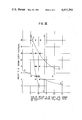
- FIG. 1 is a plot showing the relationship between viscosity and sodium alpha olefin sulfonate in aqueous solution at various concentrations;
- FIG. 2 is a plot showing the relationship between viscosity and sodium hydroxide in aqueous solution at various concentrations
- FIG. 3 is a plot showing the relationship between viscosity and sodium silicate having an SiO 2 to Na 2 O weight ratio of 2.4:1 in aqueous solution at various concentrations;
- FIG. 4 is a graph showing the relationship between mixtures of sodium hydroxide and sodium silicate having an SiO 2 to Na 2 O weight ratio of 2.4:1, in aqueous solutions, with sodium alpha olefin sulfonate at various concentrations;
- FIG. 5 is a graph showing the relationship between mixtures of sodium hydroxide and sodium silicate having an SiO 2 to Na 2 O weight ratio of 1:1, in aqueous solutions, with sodium alpha olefin sulfonate at various concentrations;
- FIG. 6 is a graph showing the relationship between mixtures of sodium hydroxide and sodium silicate having an SiO 2 to Na 2 O weight ratio of 1:2, in aqueous solutions, with sodium alpha olefin sulfonate at various concentrations;
- FIG. 7 is a graph showing the relationship between various ratios of sodium hydroxide to sodium silicate having an SiO 2 to Na 2 O weight ratio of 1:2 at a constant weight of these materials in aqueous solutions having a constant concentration of sodium alpha olefin sulfonate.
- the sodium alpha olefin sulfonate employed in the practice of the present invention is preferably derived from at least one alpha olefin containing from 12 to 18 carbon atoms per molecule.
- Such surfactant is known well to the prior art and is made commonly by sulfonating such an alpha olefin following by bleaching and neutralization; it is available commercially as an aqueous solution.
- One presently particularly preferred starting material is a 40 weight percent aqueous solution of sodium alpha olefin sulfonate, such as is available commercially from Stepan Chemical Company as "BIOTERGE AS-40". Preparation of this surfactant is well known and does not constitute as such a part of the present invention.
- the sodium chloride and/or sodium sulfate present in a product composition is inherently derived from the commercial method of making sodium alpha olefin sulfonate, and it is not practical or necessary at the present time to purity a starting sodium alpha olefin sulfonate for use in the present invention by separating therefrom such small amounts of inorganic sodium salts particularly from the standpoints of cost and commercial practicality.
- the characteristic presence of such small amounts of inorganic sodium salts is here detailed (based upon "BIOTERGE AS-40").
- the sodium hydroxide employed in the practice of the present invention is preferably preliminarily obtained as an aqueous solution concentrate.
- One presently particularly preferred starting material is a 50 weight percent aqueous solution, such as is available commercially from J. T. Baker as Sodium Hydroxide, 50% solution.
- the sodium silicate employed in the practice of the present invention is preferably preliminarily prepared as an aqueous solution.
- a present preference is to employ sodium silicate having an SiO 2 to Na 2 O weight ratio of from about 2.4:1 to 1:2.
- sodium silicates with SiO 2 to Na 2 O weight ratios ranging from about 1:1 to 1:2 are, for example, available as solids which are then dissolved in water before use.
- Sodium silicates having, for example, an SiO 2 to Na 2 O weight ratio of about 2.4:1 are available commercially as aqueous solutions.
- composition of this invention as characterized above is prepared by any convenient procedure.
- One presently preferred procedure involves the steps of admixing together:
- the exact amount of total solids comprising sodium alpha olefin sulfonate, sodium hydroxide, sodium silicate and salt as described above needed to produce a viscosity in water of at least about 1000 centipoises possibly can vary from one system to another depending upon a number of compositional variations, so that an exact numerical value for this weight summation cannot now be accurately stated. In general, however, it now appears that this value will be in the range from about 9 to 40 weight percent of total solids based upon 100 percent by weight of a given homogeneous composition of this invention. A typical value of about 15 weight percent, then, is generally a minimum which is sufficient to produce a viscosity of at least about 1000 centipoises measured as indicated above.
- Homogeneous compositions of this invention can have viscosities extending over an extremely large range which extends or encompasses about 1000 to 100,000 centipoises (or even higher) measured as indicated above.
- Compositions in the approximate viscosity range of from about 2,000 to 12,000 are regarded as pourable gels and presently constitute a class of preferred compositions of the present invention.
- a "gel” can be regarded generally as a viscous, jelly-like substance. Characteristically, gels of this invention are homogeneous; usually they are also clear, but some gels are translucent. Depending upon presently unknown compositional variations, it now appears that somewhere above about 12,000 to 15,000 centipoises, the initially pourable gels of this invention may typically become unpourable at ambient temperatures and pressures. However, the presently preferred gels as prepared are apparently clear up to about 100,000 centipoises and even higher.
- viscosity range extending from about 5000 to 9500 centipoises, with viscosities in the range from about 6000 to 7000 centipoises being particularly preferred.
- viscosity of an oven cleaner may be regarded as being more of a matter of taste or market appeal than a matter of technical significance bearing upon cleaning capability or the like.
- a gel's viscosity should preferably be such that a composition of this invention as used for cleaning clings, or tends to cling, to the surfaces to be cleansed.
- Gels of this invention which are not pourable are believed to still have excellent value as cleaning compositions since they can be applied by brushing, spraying, or the like to surfaces to be cleansed and good adherence characteristics to surface deposits is observed with compositions of this invention generally.
- Such surfaces can include vitreous enamel, stainless steel, and the like, as desired. Good cleaning action with all compositions of this invention is characteristically observed.
- pastes of this invention can, on standing, slowly convert to white, opaque pastes.
- the term "paste” has referred to a soft, viscous mass of solids dispersed in a liquid.
- such pastes are believed to have excellent value as cleaning compositions since they can be applied by brushing, spraying, or the like to surfaces to be cleansed and similar good surface deposit adherence characteristics are observed, and also good cleaning action is achieved.
- One presently particularly preferred starting sodium silicate has an SiO 2 to Na 2 O weight ratio of about 1:1 (meta silicate) and such is available commercially under the trade designation "Metso Pentabead 20" from Philadelphia Quartz of Valley Forge, PA.
- Another presently particularly preferred starting sodium silicate has an SiO 2 to Na 2 O weight ratio of about 1:2 (ortho silicate) and such is available commercially under the trade designation "Dry orth” from Stauffer Chemical Co. of Westport, Conn.
- Another presently particularly preferred starting sodium silicate is an aqueous solution of sodium silicate wherein the SiO 2 to Na 2 O weight ratio is about 2.4:1, which is available commercially under the trade designation "RU Silicate” from Philadelphia Quartz of Valley Forge, PA.
- the weight percent thereof used in a composition of this invention can range preferably from about 3 to 11 weight percent.
- the combined weight of such sodium silicate and the sodium hydroxide preferably ranges from about 5 to 15 weight percent, based on total composition.
- the sodium silicate has an SiO 2 to Na 2 O weight ratio in the range from about 3.2:1 to 1:1, such appears to exert another effect which is deemed desirable:
- This sodium silicate appears to reduce the ability of a composition of this invention to attack and corrode a soft metal when applied thereto as in a cleaning operation.
- soft metal as used herein, reference is had to a metal or metal alloy at least 50 weight percent of which is comprised of at least one metal above iron on the electromotive series of metals. Examples of common soft metals include aluminum, tin, zinc and the like.
- compositions of this invention can be used either as a cleaning composition (of metal, enamel, or similar surfaces) or as an intermediate for the manufacture of other, more viscous compositions, such as especially the presently preferred clear pourable gel compositions above referenced.
- Compositions of such one class preferably have a viscosity in the range from about 1000 to 2000 centipoises and are in the form of pourable liquids.
- Such a composition comprises (on a 100 weight percent total composition basis):
- compositions within the class of preferred gels and having a viscosity of from about 2,000 to 30,000 centipoises comprises on a 100 weight percent total composition basis:
- a homogeneous opaque paste composition having a viscosity ranging from about 15,000 to 50,000 centipoises comprises on a 100 weight percent total composition basis:
- Applying may be accomplished by any convenient procedure, including brushing, spraying, or the like. Standing time can vary, but typically and preferably, should be at least about 60 minutes. Washing can be accomplished with tap water only, but a detergent can be used if desired. Sometimes the steps above indicated need to be repeated to effectuate a complete removal of deposits.
- the surface so cleaned can be metal (stainless steel, aluminum, copper or the like), or enameled metal, such as a vitreous enamel, or the like.
- the compositions of this invention are well suited for use in oven cleaning or in cleaning food processing equipment.
- compositions having a viscosity of from about 1,000 to 2,000 centipoises can simply admix together such an intermediate composition and at least one of the following:
- a product solution which is preferably in the form of a gel having a viscosity ranging from about 2,000 to 30,000 centipoises.
- agents such as an amphoteric surfactant, a betaine, a hydrotrope or other agent, if desired, care being taken not to adversely offset the thickening action between sodium alpha olefin sulfonate and sodium hydroxide.
- compositions of this invention can be formulated into aerosols.
- a pourable composition of this invention can be compounded with from about 15 to 50 weight percent of a fluorocarbon or other inert propellant on a 100 weight percent total composition basis to make a sprayable mixture in a pressurized valve-equipped aerosol-type dispensing container.
- compositions of the invention ranging from about 1:1 to 6:2. Also, it is presently preferred to use a weight ratio of sodium hydroxide to sodium silicate in compositions of this invention ranging from about 2:3 to 1:9.
- compositions of the present invention can be used as cleaning compositions even when such are in a solid or semisolid (e.g. paste, gel, or the like) form at room temperature.
- a solid composition can be warmed and converted into a softer state suitable for application by painting, brushing, spraying or the like.
- BIOTERGE AS-40 from Stepan Chemical Company, containing 40 weight percent of sodium alpha olefin sulfonate and containing also about 0.67 weight percent of NaCl plus about 1.33 weight percent of Na 2 SO 4 with the balance to 100 weight percent being water.
- a 47 weight percent aqueous solution of sodium silicate is obtained commercially as "RU Silicate” from Philadelphia Quartz, Valley Forge, PA; this silicate has an SiO 2 to Na 2 O weight ratio of 2.4:1.
- Solid crystals of sodium metasilicate pentahydrate having an SiO 2 to Na 2 O weight ratio of 1:1 is obtained commercially from Philadelphia Quartz as "Metso Pentabead 20". Such crystals are dissolved in water to make solutions for use in the Examples below.
- Solid crystals of sodium orthosilicate having an SiO 2 to Na 2 O weight ratio of 1:2 is obtained commercially from Stauffer Chemical, Westport, Conn. as "DRYORTH". Such crystals are dissolved in water to make solutions for use in the Examples below.
- Viscosity is measured in centipoises by using a Brookfield viscometer operated at 60 rpm with a #1 spindle at about 24° C.
- Viscosity is measured in centipoises by using a Brookfield viscometer operated at 60 rpm with a #1 spindle at about 24° C.
- Viscosity is measured for the 47 weight percent starting solution using a Brookfield viscometer operated at 12 revolutions per minute with a #2 spindle at about 24° C. Then for the 42.3 weight percent solution the spindle operated at 60 revolutions per minute is used. For the final 2 solutions, spindle #1 operated at 60 revolutions per minute is employed.
- a gel is made by combining Example A, Example B and Example D as follows:
- the metasilicate is dissolved in the water and the Na AOS solution is added with stirring.
- the Na OH solution is then added, and the mixture stirred until homogeneous.
- the product is a clear gel having an initial viscosity of 7,250 centipoises.
- Example 4 Using the procedure of Example 1 but employing as the sodium silicate the ortho silicate of Example 18 instead of the metasilicate, a series of sodium alpha olefin sulfonate/sodium hydroxide/sodium silicate mixtures are prepared. The results are summarized in Table IV below:
- the sodium silicate solution is admixed with the water and the sodium alpha olefin sulfonate solution is added to the resulting diluted system with stirring.
- compositions between lines A and C and D and E is useful as an oven cleaner.
- compositions between lines A and C and lines D and E is useful as an oven cleaner in FIGS. VI, IV and V.
- Example 3 About 80 weight percent of the formulation of Example 3 above is charged with a pressurizable valve-equipped aerosol-type dispensing container and the container is charged with about 20 weight percent (on a 100 weight percent total composition weight basis) of a fluid of isobutane and propane as a propellant to produce an aerosol type oven cleaner.
- Example 10 which (as shown) has viscosity in excess of 100,000 centipoises at room temperature is warmed to about 130° F. and the resulting viscosity is reduced to about 8400 centipoises when the system is classified as a clear pourable gel. On cooling to room (ambient) temperatures, this gel resolidifies to its initial condition. This gel is suitable for cleaning by an application procedure involving brushing, spraying or the like to a surface to be cleansed of deposited carbonaceous matter. Following application to a surface at ambient temperature, the so warmed gel cools and solidifies which can be considered to be advantageous, since, on a vertical or overhead surface, running does not occur with the solidified system.
- compositions of this invention compared to the viscosities associated with the individual component solutions (as shown, for instance, in Examples F and G) is believed to represent a type of synergistic coaction between the sodium alpha olefin sulfonate, the sodium hydroxide, and the sodium silicate.
- compositions of this invention are chosen so as to contain a minimum amount of water of 70 weight percent as hereinabove taught. Such compositions are believed not to have been previously taught or suggested in the prior art. See, for example, Shultz et al U.S. Pat. No. 4,111,853.
- oven cleaning and removal of carbonaceous deposits from contaminated surfaces as taught herein can be accomplished by using compositions of sodium silicate and sodium alpha olefin sulfonate in aqueous solution which contain higher than 30 weight percent solids concentrations as hereinabove taught.
Landscapes
- Chemical & Material Sciences (AREA)
- Life Sciences & Earth Sciences (AREA)
- Engineering & Computer Science (AREA)
- Chemical Kinetics & Catalysis (AREA)
- Oil, Petroleum & Natural Gas (AREA)
- Wood Science & Technology (AREA)
- Organic Chemistry (AREA)
- Detergent Compositions (AREA)
Abstract
A mixture in water of sodium alpha olefin sulfonate, sodium hydroxide and sodium silicate displays surprisingly high viscosity characteristics and is useful as an oven cleaner or metal cleaner.
Description
1. Field of the Invention
This invention lies in the field of metal and enamel cleaning compositions, particularly compositions adapted for the treatment of surfaces fouled with carbonaceous deposits.
2. Description of the Prior Art
Oven cleaners are intended to remove carbonaceous (including proteinaceous) deposits and residues retained on oven surfaces as a result of baking, broiling or other cooking operations, and such products are available as liquids, pastes, and aerosols.
Typically an oven cleaner formulation apparently contains surfactant, carrier liquid or solvent, optionally cleaning additives (which can include caustic material), and perhaps also thickening agents. An aerosol additionally contains a propellant.
So far as now known, thickeners previously employed in this art have been gums, starches, and, perhaps, complex colloidal magnesium aluminum silicate. Sodium hydroxide, though apparently employed as a means for raising formulation alkalinity, has never previously been used as a thickening agent. Further, sodium hydroxide appears to be objectionable in this art because of adverse solubility effects upon many surfactants. Sodium silicate has never previously been used as a thickening agent so far as now known. Mixtures of sodium hydroxide and sodium silicate have never previously been used so far as now known with sodium alpha olefin sulfonate.
Metal and enamel cleaning compositions appear to have a wide variety of applications including oven cleaning and food processing equipment cleaning and the like.
More particularly, this invention relates to new and very useful homogeneous compositions for cleaning surfaces, particularly surfaces contaminated with carbonaceous (including proteinaceous) deposits, or the like, such as occur on the interior walls of ovens used for the baking or broiling of foodstuffs such as meats, on the interior walls of vessels used for the processing of food, on equipment used for pasteurization of milk, on peripheral equipment, such as grills, stove tops, etc., and the like. Paint stripping, and the like, can also be accomplished.
Such a compsoition comprise on a 100 weight percent total composition basis:
(A) from about 2 to 38 weight percent of a sodium alpha olefin sulfonate derived from at least one alpha olefin containing from 12 to 18 carbon atoms per molecule,
(B) from about 0.1 to 1.9 weight percent of salt selected from the group consisting of sodium chloride and sodium sulfate,
(C) from about 1.0 to 12.5 weight percent of sodium hydroxide,
(D) from about 2.3 to 23.5 weight percent of sodium silicate having an SiO2 to Na2 O weight ratio ranging from about 3.2:1 to 1:2, and
(E) from about 26 to 94 weight percent of water,
said composition being further characterized by
(1) having said components (A), (B), (C) and (D) each substantially completely dissolved in said water,
(2) having the sum of the respective weight percentages of each of said components (A), (B), (C) and (D) at least such that the viscosity of the resulting such composition is at least about 1000 centipoises as measured with a Brookfield viscometer using a #3 spindle at 60 revolutions per minute at about 24° C.
Surprisingly, in such compositions, the combination of sodium hydroxide, sodium silicate and sodium alpha olefin sulfonate appears to represent a coaction in water in a manner which may be considered to be synergistic to produce aqueous mixed solutions which are unexpectedly more viscous than is the viscosity of any of these agents alone in an aqueous solution at a similar respective concentration level. For example, a 40 weight percent aqueous solution of sodium alpha olefin sulfonate has a characteristic viscosity of less than about 300 centipoises as measured by a Brookfield viscometer using a #2 spindle at 60 revolutions per minute at 24° C., a 50 weight percent aqueous solution of sodium hydroxide, has a characteristic viscosity of less than about 60 centipoises similarly measured, and a 25 weight percent solution of sodium silicate having an SiO2 to Na2 O weight ratio of 2.4:1 has a viscosity of less than about 15 centipoises similarly measured. However, when such respective aqueous solutions are admixed together, there is produced a composition of this invention as described above which has a viscosity of at least about 1000 centipoises. (Unless otherwise specifically indicated, all viscosity values herein are measured as above described.)
The present thickened cleaning compositions which result having such viscosities appear to be very useful for cleaning the surfaces above indicated. Surprisingly, such compositions do not need further thickening or cleaning agents added thereto, as is apparently common, for example, in prior art oven cleaning compositions, in order to achieve a commercially useful level of cleansing action, although of course, as those skilled in the art will readily appreciate, various known additives, if desired, may be formulated with a composition of this invention to enhance some type of cleansing action or to enhance product composition merchantability, provided such additives do not adversely or excessively interfere with the desired thickening action achieved by such an admixture as indicated.
The relatively high pH (typically above about pH 11) typically associated with compositions of this invention apparently results from the presence of the sodium hydroxide and the sodium silicate and such high pH appears to be one desirable factor in accounting for the cleaning action characteristically associated with surfactant containing compositions of this invention. No adverse effects of the sodium hydroxide and the sodium silicate upon the sodium alpha olefin sulfonate appear to be involved.
The thickened compositions of this invention are all the more surprisingly in view of certain additional circumstances. Thus, for one thing, when one attempts to substitute for sodium hydroxide and sodium silicate in a composition of this invention another corresponding alkali metal compound, such as potassium hydroxide and potassium silicate, respectively, no such corresponding thickening action is observed. In other words, such other materials appear to be inoperative as agents for coacting together with sodium alpha olefin sulfonate in aqueous medium to produce strong viscosity increases.
For another thing, when one attempts to substitute for sodium alpha olefin sulfonate another surfactant in an aqueous medium at comparable concentrations, it is believed that not only would no thickening action be achieved, but also such other surfactant would become insolubilized or chemically altered such that a precipitate would develop. No other surfactant other than sodium alpha olefin sulfonate is known to me which will stay in solution as a surfactant in the presence of such concentrations of sodium hydroxide and sodium silicate and which will coact with these compounds to produce a thickened system.
The compositions of this invention appear to be advantageous from the standpoint that they combine into a single system the desirable advantages associated with aqueous alpha olefin sulfonate mixtures with sodium hydroxide (e.g., good cleansing action) on the one hand and associated with aqueous sodium alpha olefin sulfonate mixtures with sodium silicate (e.g., corrosion inhibition) on the other hand.
Other and further objects, aims, purposes, features, advantages, embodiments, and the like will be apparent to those skilled in the art from the present teachings.
FIG. 1 is a plot showing the relationship between viscosity and sodium alpha olefin sulfonate in aqueous solution at various concentrations;
FIG. 2 is a plot showing the relationship between viscosity and sodium hydroxide in aqueous solution at various concentrations;
FIG. 3 is a plot showing the relationship between viscosity and sodium silicate having an SiO2 to Na2 O weight ratio of 2.4:1 in aqueous solution at various concentrations;
FIG. 4 is a graph showing the relationship between mixtures of sodium hydroxide and sodium silicate having an SiO2 to Na2 O weight ratio of 2.4:1, in aqueous solutions, with sodium alpha olefin sulfonate at various concentrations;
FIG. 5 is a graph showing the relationship between mixtures of sodium hydroxide and sodium silicate having an SiO2 to Na2 O weight ratio of 1:1, in aqueous solutions, with sodium alpha olefin sulfonate at various concentrations;
FIG. 6 is a graph showing the relationship between mixtures of sodium hydroxide and sodium silicate having an SiO2 to Na2 O weight ratio of 1:2, in aqueous solutions, with sodium alpha olefin sulfonate at various concentrations; and
FIG. 7 is a graph showing the relationship between various ratios of sodium hydroxide to sodium silicate having an SiO2 to Na2 O weight ratio of 1:2 at a constant weight of these materials in aqueous solutions having a constant concentration of sodium alpha olefin sulfonate.
The sodium alpha olefin sulfonate employed in the practice of the present invention is preferably derived from at least one alpha olefin containing from 12 to 18 carbon atoms per molecule. Such surfactant is known well to the prior art and is made commonly by sulfonating such an alpha olefin following by bleaching and neutralization; it is available commercially as an aqueous solution. Preferably, in the practice of the present invention, it is preferred to use as a starting sodium alpha olefin sulfonate one which has been previously prepared as an aqueous solution. One presently particularly preferred starting material is a 40 weight percent aqueous solution of sodium alpha olefin sulfonate, such as is available commercially from Stepan Chemical Company as "BIOTERGE AS-40". Preparation of this surfactant is well known and does not constitute as such a part of the present invention.
The sodium chloride and/or sodium sulfate present in a product composition is inherently derived from the commercial method of making sodium alpha olefin sulfonate, and it is not practical or necessary at the present time to purity a starting sodium alpha olefin sulfonate for use in the present invention by separating therefrom such small amounts of inorganic sodium salts particularly from the standpoints of cost and commercial practicality. For purposes of technical accuracy, the characteristic presence of such small amounts of inorganic sodium salts is here detailed (based upon "BIOTERGE AS-40").
The sodium hydroxide employed in the practice of the present invention is preferably preliminarily obtained as an aqueous solution concentrate. One presently particularly preferred starting material is a 50 weight percent aqueous solution, such as is available commercially from J. T. Baker as Sodium Hydroxide, 50% solution.
The sodium silicate employed in the practice of the present invention is preferably preliminarily prepared as an aqueous solution. A present preference is to employ sodium silicate having an SiO2 to Na2 O weight ratio of from about 2.4:1 to 1:2. Commercially, sodium silicates with SiO2 to Na2 O weight ratios ranging from about 1:1 to 1:2 are, for example, available as solids which are then dissolved in water before use. Sodium silicates having, for example, an SiO2 to Na2 O weight ratio of about 2.4:1 are available commercially as aqueous solutions.
A composition of this invention as characterized above is prepared by any convenient procedure. One presently preferred procedure involves the steps of admixing together:
(a) a preformed aqueous solution of such sodium alpha olefin sulfonate containing also dissolved therein such salt,
(b) a preformed aqueous solution of such sodium hydroxide, and
(c) a preformed aqueous solution of such sodium silicate,
in the presence of sufficient water to produce a product solution wherein the respective quantities of the components are as defined above and wherein the viscosity of such a product solution is at least about 1000 centipoises so measured as above indicated.
After mixing occurs of such respective preformed solutions, thickening or gelling takes place characteristically almost at once.
The exact amount of total solids comprising sodium alpha olefin sulfonate, sodium hydroxide, sodium silicate and salt as described above needed to produce a viscosity in water of at least about 1000 centipoises possibly can vary from one system to another depending upon a number of compositional variations, so that an exact numerical value for this weight summation cannot now be accurately stated. In general, however, it now appears that this value will be in the range from about 9 to 40 weight percent of total solids based upon 100 percent by weight of a given homogeneous composition of this invention. A typical value of about 15 weight percent, then, is generally a minimum which is sufficient to produce a viscosity of at least about 1000 centipoises measured as indicated above.
Homogeneous compositions of this invention can have viscosities extending over an extremely large range which extends or encompasses about 1000 to 100,000 centipoises (or even higher) measured as indicated above. Compositions in the approximate viscosity range of from about 2,000 to 12,000 are regarded as pourable gels and presently constitute a class of preferred compositions of the present invention.
For purposes of the present invention, a "gel" can be regarded generally as a viscous, jelly-like substance. Characteristically, gels of this invention are homogeneous; usually they are also clear, but some gels are translucent. Depending upon presently unknown compositional variations, it now appears that somewhere above about 12,000 to 15,000 centipoises, the initially pourable gels of this invention may typically become unpourable at ambient temperatures and pressures. However, the presently preferred gels as prepared are apparently clear up to about 100,000 centipoises and even higher.
For purposes of oven cleaning, it is presently most preferred to employ the gels in the viscosity range extending from about 5000 to 9500 centipoises, with viscosities in the range from about 6000 to 7000 centipoises being particularly preferred. However, as those skilled in the art appreciate, viscosity of an oven cleaner may be regarded as being more of a matter of taste or market appeal than a matter of technical significance bearing upon cleaning capability or the like. In general, a gel's viscosity should preferably be such that a composition of this invention as used for cleaning clings, or tends to cling, to the surfaces to be cleansed.
Gels of this invention which are not pourable are believed to still have excellent value as cleaning compositions since they can be applied by brushing, spraying, or the like to surfaces to be cleansed and good adherence characteristics to surface deposits is observed with compositions of this invention generally. Such surfaces can include vitreous enamel, stainless steel, and the like, as desired. Good cleaning action with all compositions of this invention is characteristically observed.
For reasons not now clear, some gels of this invention, especially those with initial viscosities typically apparently over about 12,000 to 15,000 centipoises, can, on standing, slowly convert to white, opaque pastes. For present purposes, the term "paste" has referred to a soft, viscous mass of solids dispersed in a liquid. Like the gels, such pastes are believed to have excellent value as cleaning compositions since they can be applied by brushing, spraying, or the like to surfaces to be cleansed and similar good surface deposit adherence characteristics are observed, and also good cleaning action is achieved.
One presently particularly preferred starting sodium silicate has an SiO2 to Na2 O weight ratio of about 1:1 (meta silicate) and such is available commercially under the trade designation "Metso Pentabead 20" from Philadelphia Quartz of Valley Forge, PA.
Another presently particularly preferred starting sodium silicate has an SiO2 to Na2 O weight ratio of about 1:2 (ortho silicate) and such is available commercially under the trade designation "Dry orth" from Stauffer Chemical Co. of Westport, Conn.
Another presently particularly preferred starting sodium silicate is an aqueous solution of sodium silicate wherein the SiO2 to Na2 O weight ratio is about 2.4:1, which is available commercially under the trade designation "RU Silicate" from Philadelphia Quartz of Valley Forge, PA.
When the sodium silicate having an SiO2 to Na2 O weight ratio of from about 1:1 to 1:2 is employed, the weight percent thereof used in a composition of this invention can range preferably from about 3 to 11 weight percent. The combined weight of such sodium silicate and the sodium hydroxide preferably ranges from about 5 to 15 weight percent, based on total composition.
Particularly, when the sodium silicate has an SiO2 to Na2 O weight ratio in the range from about 3.2:1 to 1:1, such appears to exert another effect which is deemed desirable: This sodium silicate appears to reduce the ability of a composition of this invention to attack and corrode a soft metal when applied thereto as in a cleaning operation. By the term "soft metal" as used herein, reference is had to a metal or metal alloy at least 50 weight percent of which is comprised of at least one metal above iron on the electromotive series of metals. Examples of common soft metals include aluminum, tin, zinc and the like. Thus, when such a sodium silicate is employed, it is presently preferred to employ from about 4.7 to 24 weight percent thereof on a 100 weight percent total composition basis.
One class of useful compositions of this invention can be used either as a cleaning composition (of metal, enamel, or similar surfaces) or as an intermediate for the manufacture of other, more viscous compositions, such as especially the presently preferred clear pourable gel compositions above referenced. Compositions of such one class preferably have a viscosity in the range from about 1000 to 2000 centipoises and are in the form of pourable liquids. Such a composition comprises (on a 100 weight percent total composition basis):
(A) from about 5 to 16 weight percent of such sodium alpha olefin sulfonate,
(B) from about 0.25 to 0.8 weight percent of such salt,
(C) from about 1 to 5 weight percent of such sodium hydroxide,
(D) from about 4.5 to 9.0 weight percent of a sodium silicate having an SiO2 to Na2 O weight ratio of from about 2.8:1 to 1:2, and
(E) from about 69 to 90 weight percent of water.
Here, the sum of (A), (B), (C) and (D) in any given composition, each component being dissolved in the water, ranges from about 10 to 31 weight percent.
When a composition within the class of preferred gels and having a viscosity of from about 2,000 to 30,000 centipoises is involved, such comprises on a 100 weight percent total composition basis:
(A) from about 5 to 36 weight percent of such sodium alpha olefin sulfonate,
(B) from about 0.25 to 1.8 weight percent of such salt,
(C) from about 3.25 to 10 weight percent of such sodium hydroxide,
(D) from about 4.3 to 11.3 weight percent of sodium silicate having an SiO2 to Na2 O weight ratio of from about 2.8:1 to 1:2, and
(E) from about 40.9 to 87 weight percent of water.
Here, the sum of (A), (B), (C) and (D) in any given composition, each component being dissolved in the water, ranges from about 13.0 to 59.1 weight percent.
When a homogeneous opaque paste composition having a viscosity ranging from about 15,000 to 50,000 centipoises is involved, such comprises on a 100 weight percent total composition basis:
(A) from about 10 to 20 weight percent of said sodium alpha olefin sulfonate,
(B) from about 0.3 to 1.0 weight percent of said salt,
(C) from about 5 to 10 weight percent of said sodium hydroxide,
(D) from about 15 to 30 weight percent of sodium silicate having an SiO2 to Na2 O weight ratio ranging from about 2.8:1 to 1:2, and
(E) from about 39 to 70 weight percent of said water.
Here, the sum of (A), (B), (C) and (D) in any given composition, each component being dissolved in the water, ranges from about 30 to 61 weight percent.
In cleaning a surface contaminated with waste carbonaceous deposits using a homogeneous composition of this invention, the following steps are typically followed:
(A) applying to such so contaminated surface a composition of this invention;
(B) allowing the so treated surface to stand for a time at least sufficient to loosen such deposits therefrom; and
(C) washing the resulting surface to remove such loosened deposits and such composition therefrom.
Applying may be accomplished by any convenient procedure, including brushing, spraying, or the like. Standing time can vary, but typically and preferably, should be at least about 60 minutes. Washing can be accomplished with tap water only, but a detergent can be used if desired. Sometimes the steps above indicated need to be repeated to effectuate a complete removal of deposits.
The surface so cleaned can be metal (stainless steel, aluminum, copper or the like), or enameled metal, such as a vitreous enamel, or the like. The compositions of this invention are well suited for use in oven cleaning or in cleaning food processing equipment.
To use as an intermediate composition for preparing compositions of higher viscosity a composition having a viscosity of from about 1,000 to 2,000 centipoises (all as above characterized), one can simply admix together such an intermediate composition and at least one of the following:
(A) a preformed solution of such sodium alpha olefin sulfonate containing also dissolved therein said salt,
(B) a preformed solution of such sodium hydroxide, and
(C) a preformed solution of such sodium silicate
in the presence of sufficient water to produce a product solution which is preferably in the form of a gel having a viscosity ranging from about 2,000 to 30,000 centipoises.
Before such an admixing is accomplished, one can dissolve in the intermediate compositions other agents, if desired, such as an amphoteric surfactant, a betaine, a hydrotrope or other agent, if desired, care being taken not to adversely offset the thickening action between sodium alpha olefin sulfonate and sodium hydroxide.
The compositions of this invention can be formulated into aerosols. For example, from about 50 to 85 weight percent of a pourable composition of this invention can be compounded with from about 15 to 50 weight percent of a fluorocarbon or other inert propellant on a 100 weight percent total composition basis to make a sprayable mixture in a pressurized valve-equipped aerosol-type dispensing container.
It is presently preferred to use a weight ratio of sodium alpha olefin sulfonate to combined weight of sodium hydroxide and sodium silicate in compositions of the invention ranging from about 1:1 to 6:2. Also, it is presently preferred to use a weight ratio of sodium hydroxide to sodium silicate in compositions of this invention ranging from about 2:3 to 1:9.
Compositions of the present invention can be used as cleaning compositions even when such are in a solid or semisolid (e.g. paste, gel, or the like) form at room temperature. Thus, for example, a solid composition can be warmed and converted into a softer state suitable for application by painting, brushing, spraying or the like.
The following examples are merely illustrations of the present invention and are not intended as a limitation upon the scope thereof.
"BIOTERGE AS-40" from Stepan Chemical Company, containing 40 weight percent of sodium alpha olefin sulfonate and containing also about 0.67 weight percent of NaCl plus about 1.33 weight percent of Na2 SO4 with the balance to 100 weight percent being water.
Sodium hydroxide, 50% aqueous solution from J. T. Baker.
A 47 weight percent aqueous solution of sodium silicate is obtained commercially as "RU Silicate" from Philadelphia Quartz, Valley Forge, PA; this silicate has an SiO2 to Na2 O weight ratio of 2.4:1.
Solid crystals of sodium metasilicate pentahydrate having an SiO2 to Na2 O weight ratio of 1:1 is obtained commercially from Philadelphia Quartz as "Metso Pentabead 20". Such crystals are dissolved in water to make solutions for use in the Examples below.
Solid crystals of sodium orthosilicate having an SiO2 to Na2 O weight ratio of 1:2 is obtained commercially from Stauffer Chemical, Westport, Conn. as "DRYORTH". Such crystals are dissolved in water to make solutions for use in the Examples below.
The viscosity of various respective aqueous solutions of sodium alpha olefin sulfonate (based on derived solutions from Example A) is measured and the results are tabularized below and are also plotted in FIG. 2 herewith. Viscosity is measured in centipoises by using a Brookfield viscometer operated at 60 rpm with a #1 spindle at about 24° C.
              TABLE I
______________________________________
weight percent
NaAOS solids*   viscosity in
dissolved in H.sub.2 O
                centipoises
______________________________________
40              61
36              20
32              11
24               7
______________________________________
 *"NaAOS" has reference herein to sodium alpha olefin sulfonate.   CL
 EXAMPLE G
The viscosity of various respective aqueous solutions of sodium hydroxide (based on derived solutions from Example B) is measured and the results are tabularized below and are also plotted in FIG. 3 herewith. Viscosity is measured in centipoises by using a Brookfield viscometer operated at 60 rpm with a #1 spindle at about 24° C.
              TABLE II
______________________________________
weight percent
NaOH solids     viscosity in
dissolved in H.sub.2 O
                centipoises
______________________________________
50              64
40              34
30              12
25               9
15               7
______________________________________
The viscosity of various aqueous solutions of sodium silicate having an SiO2 to Na2 O weight ratio of 2.4:1 (based on derived solutions from Example B) is measured and the results are tabularized below and also are plotted in FIG. 5 herewith. Viscosity is measured for the 47 weight percent starting solution using a Brookfield viscometer operated at 12 revolutions per minute with a #2 spindle at about 24° C. Then for the 42.3 weight percent solution the spindle operated at 60 revolutions per minute is used. For the final 2 solutions, spindle # 1 operated at 60 revolutions per minute is employed.
              TABLE III
______________________________________
weight percent
sodium silicate
               viscosity
2.4:1 solids   (centipoises)
______________________________________
47.0           1900
42.3           200
37.6           40
28.2           15
______________________________________
A gel is made by combining Example A, Example B and Example D as follows:
______________________________________
             wt. %     wt. %
             (solution basis)
                       (solids basis)
______________________________________
NaAOS          30          12
NaOH           7.5         3.75
Sodium Metasilicate
               9.6         5.6
Water          52.9        78.8
______________________________________
The metasilicate is dissolved in the water and the Na AOS solution is added with stirring. The Na OH solution is then added, and the mixture stirred until homogeneous.
The product is a clear gel having an initial viscosity of 7,250 centipoises.
Using the procedure of Example 1, a series of sodium alpha olefin sulfonate/sodium hydroxide/sodium silicate mixtures are prepared. The results are summarized in Table III below:
                                  TABLE III
__________________________________________________________________________
              wt. %
Example
     wt. %
          wt. %
              sodium
                    wgt. %
                        cps. @ 24° C.
No.  NaAOS
          NaOH
              metasilicate
                    H.sub.2 O
                        Viscosity
                               Appearance
__________________________________________________________________________
2    4    3.74
              5.6   87.05
                        33     clear liquid
3    4    5   7.4   83.6
                        3575   clear gel
4    8    --  11.1  80.9
                        50     clear liquid
5    8    3.75
              5.6   82.65
                        1900   clear gel
6    8    5   7.4   79.6
                        46500  clear gel
7    12   3.75
              5.6   78.65
                        7250   clear gel
8    12   2.5 3.7   81.8
                        20     clear liquid
9    12   --  11.1  76.9
                        25000  clear gel
10   16   3.75
              5.6   74.65
                        >100000
                               clear gel
11   16   2.5 3.7   77.8
                        110    clear liquid
12   16   2.5 11.1  70.4
                        56000  clear gel
__________________________________________________________________________
Using the procedure of Example 1 but employing as the sodium silicate the ortho silicate of Example 18 instead of the metasilicate, a series of sodium alpha olefin sulfonate/sodium hydroxide/sodium silicate mixtures are prepared. The results are summarized in Table IV below:
                                  TABLE IV
__________________________________________________________________________
Example
     wt. %
          wt. %
              wt. %  wgt %
                         cps. @ 24° C.
No.  NaAOS
          NaOH
              orthosilicate
                     H.sub.2 O
                         Viscosity
                                Appearance
__________________________________________________________________________
13   4    3.75
              4.3    87.95
                         170    clear liquid
14   4    5   5.75   85.25
                         1900   clear gel
15   5    1   4.5    89.5
                         15     clear liquid
16   5    3.5 4.5    87  360    clear liquid
17   5    4.5 4.5    86  1540   clear gel
18   5    6   4.5    84.5
                         8060   clear gel
19   5    1   9      85  1420   clear gel
20   5    1   18     76  --     2-phase
21   8    3.75
              4.3    83.95
                         3600   clear gel
22   8    5   5.75   81.25
                         68000  clear gel
23   8    --  8.6    83.4
                         950    clear liquid
24   12   3.75
              4.3    79.95
                         75000  clear gel
25   12   2.5 2.9    82.6
                         540    clear liquid
26   12   2.5 8.57   76.93
                         >100000
                                clear gel
27   16   3.75
              4.3    75.95
                         >100000
                                clear gel
28   16   2.5 2.9    78.6
                         2150   clear gel
29   16   2.5 8.57   72.93
                         >100000
                                clear gel
__________________________________________________________________________
A gel made from the alpha olefin sulfonate of Example A and the sodium silicate of Example B to produce the composition shown in Table V below.
The sodium silicate solution is admixed with the water and the sodium alpha olefin sulfonate solution is added to the resulting diluted system with stirring.
Using the procedure of Example 30, a series of mixtures are prepared. The results are summarized in Table V below:
                                  TABLE V
__________________________________________________________________________
Example
     wt. %
          wt. % wt. %
                    wgt %
                        cps. @ 24° C.
No.  NaAOS
          silicate RU
                NaOH
                    H.sub.2 O
                        Viscosity
                               Appearance
__________________________________________________________________________
30   2    4.7   2.5 90.8
                        10     liquid
31   2    4.7   5   88.3
                        10     liquid
32   2    4.7   7.5 85.8
                        105    liquid
33   2    4.7   10  83.3
                        490    liquid
34   2    4.7   12.5
                    81.5
                        --     2-phase
35   6    4.7   5   84.3
                        50     liquid
36   6    4.7   7.5 81.8
                        30000  gel
37   6    4.7   10  79.3
                        12500  gel
38   6    4.7   12.5
                    76.8
                        --     2-phase
39   10   4.7   2.5 81.8
                        10     liquid
40   10   4.7   5   80.3
                        500    liquid
41   10   4.7   7.5 77.8
                        >100000
                               gel
42   10   4.7   10  75.3
                        16500  gel
43   10   4.7   12.5
                    72.8
                        200    liquid
44   14   4.7   2.5 78.8
                        15     liquid
45   20   4.7   2.5 72.8
                        300    liquid
46   20   4.7   5   70.2
                        >100000
                               gel
47   20   4.7   7.5 67.8
                        >100000
                               gel
48   20   4.7   10  65.3
                        30000  cloud
49   10   23.5  1.5 65  6500   gel
50   37.6 2.35  0.5 59.55
                        260    liquid
51   37.2 2.35  1.0 59.45
                        720    liquid
52   36.8 2.35  1.5 59.35
                        2640   gel
53   36.4 2.35  2.0 59.25
                        10000  gel
__________________________________________________________________________
When in Tables III, IV and V, reference is made to a two phase system, it will be appreciated that such a system is not included within the scope of homogeneous compositions of this invention.
When the data of Examples 1-53 is plotted with the sum in weight percentages of sodium hydroxide and silicates as abscissae and with sodium alpha olefin sulfonates as ordinates, with corresponding viscosity values marked over each data point, the respective plots shown in FIGS. IV, V and VI for the metasilicate, orthosilicate and the so-called RU silicate, respectively, result. In these FIGS:
(A) In each of the FIGS. V, IV and VI, all points to the right of line A indicate product mixtures which were not homogeneous or were cloudy initially.
(B) All points to the left of line A indicate product mixtures which were homogeneous and clear initially.
(C) All points to the right of line A indicate product mixtures which were not clear and homogeneous initially.
(D) All points to the left of line C indicate product mixtures which had viscosities below about 1000 centipoises initially and which retained this viscosity over an extended period.
(E) All points below line D indicate product mixtures which had viscosities below about 1000 centipoises initially and which retained such viscosities over an extended period.
(F) All points above line E indicate product mixtures which had viscosities above about 100,000 centipoises initially and which retained high viscosities over an extended period.
The points to the left of line A and between lines D and E are thus considered to represent compositions with the scope of the present invention useful as oven cleaners.
Each of the compositions between lines A and C and D and E is useful as an oven cleaner.
All points to the left of line C indicate product mixtures which had viscosities below about 1000 cenitpoises initially and which retained such viscosities over a 6 month period.
The points (area) between lines A and C and between lines D and E are thus considered to represent compositions within the scope of the present invention in each of FIGS. VI, IV and V, when such compositions contain at least about 10 weight percent water.
Each of the compositions between lines A and C and lines D and E is useful as an oven cleaner in FIGS. VI, IV and V.
About 80 weight percent of the formulation of Example 3 above is charged with a pressurizable valve-equipped aerosol-type dispensing container and the container is charged with about 20 weight percent (on a 100 weight percent total composition weight basis) of a fluid of isobutane and propane as a propellant to produce an aerosol type oven cleaner.
The composition of Example 10 which (as shown) has viscosity in excess of 100,000 centipoises at room temperature is warmed to about 130° F. and the resulting viscosity is reduced to about 8400 centipoises when the system is classified as a clear pourable gel. On cooling to room (ambient) temperatures, this gel resolidifies to its initial condition. This gel is suitable for cleaning by an application procedure involving brushing, spraying or the like to a surface to be cleansed of deposited carbonaceous matter. Following application to a surface at ambient temperature, the so warmed gel cools and solidifies which can be considered to be advantageous, since, on a vertical or overhead surface, running does not occur with the solidified system.
To demonstrate the nonlinear and therefore probable synergistic coaction, in the context of the present invention, between sodium hydroxide and sodium silicate in aqueous solution as a fixed total amount relative to a fixed total quantity of dissolved sodium alpha olefin sulfonate, differing weight ratios of each of sodium hydroxide and sodium silicate are employed while maintaining the total combined weight of sodium hydroxide and sodium silicate fixed at about 9 weight percent and while using aqueous solutions of sodium alpha olefin sulfonate each containing about 7 weight percent of sodium alpha olefin sulfonate (all on a 100 weight percent total solution basis. The results are shown in Table VI below which results are plotted in FIG. 7.
              TABLE VI
______________________________________
weight ratio of
NaOH to sodium  Viscosity
ortho silicate  (centipoises)
______________________________________
.33             130
.28             220
.65             360
1.0             1650
2.65            1700
______________________________________
The surprising and unexpected viscosity increase associated with compositions of this invention (as shown, for instance, in Examples 36 and 37) compared to the viscosities associated with the individual component solutions (as shown, for instance, in Examples F and G) is believed to represent a type of synergistic coaction between the sodium alpha olefin sulfonate, the sodium hydroxide, and the sodium silicate.
Because of the circumstance that it is desired to make thickened sodium hydroxide/sodium silicate/sodium alpha olefin sulfonate compositions which contain a maximum quantity of water with a minimum of dissolved solids, the novel compositions of this invention are chosen so as to contain a minimum amount of water of 70 weight percent as hereinabove taught. Such compositions are believed not to have been previously taught or suggested in the prior art. See, for example, Shultz et al U.S. Pat. No. 4,111,853. However, the practice of oven cleaning and removal of carbonaceous deposits from contaminated surfaces as taught herein can be accomplished by using compositions of sodium silicate and sodium alpha olefin sulfonate in aqueous solution which contain higher than 30 weight percent solids concentrations as hereinabove taught.
As is apparent from the foregoing specification, the present invention is susceptible of being embodied with various alterations and modifications which may differ particularly from those that have been described in the preceding specification and description. For this reason, it is to be fully understood that all of the foregoing is intended to be merely illustrative and is not to be construed or interpreted as being restrictive or otherwise limiting of the present invention, except as it is set forth in the hereto-appended claims.
Claims (23)
1. A homogeneous composition for oven cleaning and the like comprising on a 100 weight percent total composition basis:
(A) from about 2 to 36.8 weight percent of a sodium alpha olefin sulfonate derived from at least one alpha olefin containing from 12 to 18 carbon atoms per molecule,
(B) from about 0.1 to 1.9 weight percent of salt selected from the group consisting of sodium chloride and sodium sulfate,
(C) from about 1 to 12.5 weight percent of sodium hydroxide,
(D) from about 2.3 to 23.5 weight percent of sodium silicate having an SiO2 to Na2 O weight ratio of 3.2:1 to 1:2, and
(E) from about 26 to 94 weight percent of water,
said composition being further characterized by
(1) having said components (A), (B), (C) and (D) each substantially completely dissolved in said water, and
(2) having the sum of the respective weight percentages of each of said components (A), (B), (C) and (D) at least such that the viscosity of the resulting such composition is at least about 1000 centipoises as measured with a Brookfield viscometer using a #3 spindle at 60 revolutions per minute at about 24° C.
2. The homogeneous composition of claim 1, wherein said sum is at least about 7.55 weight percent on a 100 weight percent total composition basis.
3. The homogeneous composition of claim 1 wherein said composition viscosity ranges from about 1,000 to 100,000 centipoises as so measured.
4. The homogeneous composition of claim 1 wherein said sodium silicate has an SiO2 to Na2 O weight ratio of from about 2.8:1 to 1:2.
5. The homogeneous composition of claim 4 wherein said sodium silicate has an SiO2 to Na2 O weight ratio of from about 1:1 to 1:2, the weight percent thereof so contained ranges from about 3 to 11 weight percent, and the combined weight of said sodium silicate plus said sodium hydroxide ranges from about 5 to 15 weight percent.
6. The homogeneous composition of claim 4 wherein said sodium silicate has an SiO2 to Na2 O weight ratio of from about 2.8:1 to 1.5:1, and the weight percent thereof so contained ranges from about 4.7 to 24 weight percent.
7. The homogeneous composition of claim 1 in the form of a pourable liquid gel comprising on a 100 weight percent total composition basis:
(A) from about 5 to 16 weight percent of said sodium alpha olefin sulfonate,
(B) from about 0.2 to 0.8 weight percent of said salt,
(C) from about 1 to 5 weight percent of said sodium hydroxide,
(D) from about 4.5 to 9.0 weight percent of said sodium silicate, and
(E) from about 69 to 90 weight percent of said water,
said sum being in the range from about 10 to 31 weight percent, said composition viscosity being in the range from about 1000 to 2000 centipoises as so measured.
8. The homogeneous composition of claim 1 in the form of a pourable liquid gel comprising on a 100 weight percent total composition basis:
(A) from about 5 to 36 weight percent of said sodium alpha olefin sulfonate,
(B) from about 0.25 to 1.8 weight percent of said salt,
(C) from about 3.25 to 10 weight percent of said sodium hydroxide,
(D) from about 4.3 to 11.3 weight percent of said sodium silicate having an SiO2 to Na2 O weight ratio of from about 2.8:1 to 1:2,
(E) from about 40 to 87 weight percent of said water,
said sum being in the range from about 13.0 to 59.1 weight percent, said composition viscosity being in the range from about 2,000 to 30,000 centipoises as so measured.
9. The homogeneous composition of claim 1 in the form of an opaque paste comprising on a 100 weight percent total composition basis:
(A) from about 10 to 20 weight percent of said sodium alpha olefin sulfonate,
(B) from about 0.3 to 1.0 weight percent of said salt,
(C) from about 5 to 10 weight percent of said sodium hydroxide,
(D) from about 15 to 30 weight percent of sodium silicate having an SiO2 to Na2 O weight ratio ranging from about 2.8:1 to 1:2, and
(E) from about 39 to 70 weight percent of said water,
said sum being in the range from about 30 to 61 weight percent, said composition viscosity being in the range from about 15,000 to 50,000 centipoises as so measured.
10. A process for cleaning a surface contaminated with waste carbonaceous deposits comprising the steps of
(A) applying to such so contaminated surface the composition of claim 1,
(B) allowing the so treated surface to stand for a time at least sufficient to loosen said deposits therefrom, and
(C) washing the resulting surface to remove such loosened deposits and such composition therefrom.
11. The process for cleaning of claim 10 wherein said surface is enameled.
12. The process of claim 11 wherein said enamel is vitreous.
13. The process of claim 12 wherein said surface is in an oven.
14. The process of claim 10 wherein said surface is stainless steel.
15. The process of claim 14 wherein said surface is in a food processing vessel.
16. A process for cleaning a surface contaminated with waste carbonaceous deposits comprising the steps of
(A) applying to such so contaminated surface the composition of claim 8,
(B) allowing the so treated surface to stand for a time at least sufficient to loosen said deposits therefrom, and
(C) washing the resulting surface to remove such loosened deposits and such composition therefrom.
17. A process for cleaning a surface contaminated with waste carbonaceous deposits comprising the steps of
(A) applying to such so contaminated surface the composition of claim 9,
(B) allowing the so treated surface to stand for a time at least sufficient to loosen said deposits therefrom, and
(C) washing the resulting surface to remove therefrom such loosened deposits and such composition.
18. A process for making the composition of claim 1 comprising the steps of
admixing together (a) a preformed aqueous solution of said sodium alpha olefin sulfonate containing also dissolved therein said salt, (b) a preformed aqueous solution of said sodium hydroxide, and (c) a preformed solution of said sodium silicate, in the presence of sufficient water to produce a product solution wherein the respective quantities of the components are as defined in claim 1 and wherein the viscosity of such product solution is at least about 1000 centipoises as so measured.
19. The process of claim 18 wherein said product solution has a viscosity ranging from about 2000 to 20,000 centipoises and is in the form of a gel.
20. The process of claim 18 wherein said sodium silicate having an SiO2 to Na2 O weight ratio of from about 2.8:1 to 1:2.
21. A process for making the composition of claim 7 comprising the step of admixing together a preformed aqueous solution of said sodium alpha olefin sulfonate containing also dissolved therein said salt, a preformed aqueous solution of said sodium hydroxide and a preformed solution of said sodium silicate in the presence of sufficient water to produce a product solution wherein the respective quantities of the components are as defined in claim 7 and wherein the viscosity of such product solution ranges from about 1000 to 2000 centipoises as so measured.
22. A process for making the composition of claim 8 comprising the step of admixing together with the homogeneous composition which comprises on a 100 weight percent total composition basis:
(A) from about 5 to 16 weight percent of a sodium alpha olefin sulfonate derived from at least one alpha olefin containing from 12 to 18 carbon atoms per molecule,
(B) from about 0.2 to 0.8 weight percent of salt selected from the group consisting of sodium chloride and sodium sulfate,
(C) from about 1 to 5 weight percent of sodium hydroxide,
(D) from about 4.5 to 9.0 weight percent of sodium silicate having an SiO2 to Na2 O weight ratio of 3.2:1 to 1:2, and
(E) from about 69 to 90 weight percent of water,
said composition being further characterized by:
(1) having said components (A), (B), (C), and (D) ech substantially completely dissolved in said water, and
(2) having the sum of the respective weight percentages of each of said components (A), (B), (C), and (D) being in the range from about 10 to 31 weight percent and the viscosity of the resulting such composition being in the range from about 1000 to 2000 centipoises as measured with a Brookfield viscometer using a #3 spindle at 60 revolutions pere minute at about 24° C.,
an amount which is sufficient to produce said composition of claim 8 of at least one of the following:
(A) a preformed solution of said sodium alpha olefin sulfonate containing also dissolved therein said salt,
(B) from about 0.25 to 1.8 weight percent of salt selected from the group consisting of sodium chloride and sodium sulfate,
(C) from about 4.3 to 11.3 weight percent of sodium silicate having an SiO2 /Na2 O weight ratio of from about 2.8:1 to 1:2,
(D) from about 3.25 to 10 weight percent of sodium hydroxide, and
(E) from about 40 to 87 weight percent water,
said component (A), (B), (C) and (D) each being substantially completely dissolved in said water, and the total weight percentage of said components (A), (B), (C) and (D) ranges from about 13 to 59.1 weight percent in any given such composition, said composition having a viscosity ranging from about 2,000 to 30,000 centipoises as measured with a Brookfield viscometer using a #3 spindle at 12 revolutions per minute at about 24° C.
23. The composition of claim 3, wherein said viscosity ranges from about 5000 to 9500 centipoises so measured.
Priority Applications (1)
| Application Number | Priority Date | Filing Date | Title |
|---|---|---|---|
| US06/407,154 US4451393A (en) | 1982-08-11 | 1982-08-11 | Cleaner for ovens and the like using sodium alpha olefin sulfonate, sodium hydroxide, and sodium silicate |
Applications Claiming Priority (1)
| Application Number | Priority Date | Filing Date | Title |
|---|---|---|---|
| US06/407,154 US4451393A (en) | 1982-08-11 | 1982-08-11 | Cleaner for ovens and the like using sodium alpha olefin sulfonate, sodium hydroxide, and sodium silicate |
Publications (1)
| Publication Number | Publication Date |
|---|---|
| US4451393A true US4451393A (en) | 1984-05-29 |
Family
ID=23610849
Family Applications (1)
| Application Number | Title | Priority Date | Filing Date |
|---|---|---|---|
| US06/407,154 Expired - Fee Related US4451393A (en) | 1982-08-11 | 1982-08-11 | Cleaner for ovens and the like using sodium alpha olefin sulfonate, sodium hydroxide, and sodium silicate |
Country Status (1)
| Country | Link |
|---|---|
| US (1) | US4451393A (en) |
Cited By (6)
| Publication number | Priority date | Publication date | Assignee | Title |
|---|---|---|---|---|
| US5378242A (en) * | 1992-12-22 | 1995-01-03 | Apollo Chemical Company | Liquid alkali for soaping off reactive dyes |
| US5766826A (en) * | 1996-10-11 | 1998-06-16 | Eastman Kodak Company | Alkaline developing composition and method of use to process lithographic printing plates |
| US20060019865A1 (en) * | 2004-07-20 | 2006-01-26 | Enrique Hernandez | Methods and compositions of multifunctional detergent components |
| US20060178289A1 (en) * | 2004-07-20 | 2006-08-10 | Enrique Hernandez | Multifunctional material compositions and methods |
| US20070161539A1 (en) * | 2006-01-12 | 2007-07-12 | Enrique Hernandez | Method of regulating degree of polymerization of an alkali metal silicate in solution using pH |
| NL1040706A (en) * | 2014-03-05 | 2015-10-15 | B+C Consultancy | A Cleaning gel, what is only and specially applicable for cleaning al sorts of cast iron baking plates of industrial wafer baking ovens which is baking soft or hard wafer made of cereal flour based batter or dough. |
Citations (12)
| Publication number | Priority date | Publication date | Assignee | Title |
|---|---|---|---|---|
| US3335092A (en) * | 1965-08-26 | 1967-08-08 | Winfield Brooks Company Inc | Oven cleaner and method of using the same |
| US3640880A (en) * | 1967-12-06 | 1972-02-08 | Lever Brothers Ltd | Hard surface cleaner |
| US3950276A (en) * | 1971-09-01 | 1976-04-13 | Colgate-Palmolive Company | Sulfonate detergent compositions |
| US3954676A (en) * | 1973-09-26 | 1976-05-04 | Ethyl Corporation | Sulfonate detergents |
| US3954679A (en) * | 1973-11-26 | 1976-05-04 | Colgate-Palmolive Company | Viscosity reduction of aqueous alpha-olefin sulfonate detergent composition |
| US4006091A (en) * | 1975-03-14 | 1977-02-01 | Amway Corporation | Plastic bottle storable oven cleaner |
| US4006111A (en) * | 1972-07-12 | 1977-02-01 | Lever Brothers Company | Production of alkane: olefin sulfonate mixtures by sequential sulfonation and sulfitation |
| US4099985A (en) * | 1974-01-02 | 1978-07-11 | Basf Wyandotte Corporation | Process for cleaning greasy surfaces with a heat dependent alkali gel |
| US4111853A (en) * | 1976-03-08 | 1978-09-05 | Stepan Chemical Company | Particulate composition of sodium alpha olefin sulfonate and sodium silicate |
| US4139498A (en) * | 1975-12-26 | 1979-02-13 | The Lion Fat & Oil Co., Ltd. | Process of manufacturing high-concentration olefin sulfonate solution |
| US4157921A (en) * | 1978-02-13 | 1979-06-12 | American Home Products Corporation | Oven cleaning method and composition |
| US4244840A (en) * | 1977-05-10 | 1981-01-13 | Colgate-Palmolive Company | Self-opacified liquid hard surface cleaning compositions |
-
1982
- 1982-08-11 US US06/407,154 patent/US4451393A/en not_active Expired - Fee Related
Patent Citations (12)
| Publication number | Priority date | Publication date | Assignee | Title |
|---|---|---|---|---|
| US3335092A (en) * | 1965-08-26 | 1967-08-08 | Winfield Brooks Company Inc | Oven cleaner and method of using the same |
| US3640880A (en) * | 1967-12-06 | 1972-02-08 | Lever Brothers Ltd | Hard surface cleaner |
| US3950276A (en) * | 1971-09-01 | 1976-04-13 | Colgate-Palmolive Company | Sulfonate detergent compositions |
| US4006111A (en) * | 1972-07-12 | 1977-02-01 | Lever Brothers Company | Production of alkane: olefin sulfonate mixtures by sequential sulfonation and sulfitation |
| US3954676A (en) * | 1973-09-26 | 1976-05-04 | Ethyl Corporation | Sulfonate detergents |
| US3954679A (en) * | 1973-11-26 | 1976-05-04 | Colgate-Palmolive Company | Viscosity reduction of aqueous alpha-olefin sulfonate detergent composition |
| US4099985A (en) * | 1974-01-02 | 1978-07-11 | Basf Wyandotte Corporation | Process for cleaning greasy surfaces with a heat dependent alkali gel |
| US4006091A (en) * | 1975-03-14 | 1977-02-01 | Amway Corporation | Plastic bottle storable oven cleaner |
| US4139498A (en) * | 1975-12-26 | 1979-02-13 | The Lion Fat & Oil Co., Ltd. | Process of manufacturing high-concentration olefin sulfonate solution |
| US4111853A (en) * | 1976-03-08 | 1978-09-05 | Stepan Chemical Company | Particulate composition of sodium alpha olefin sulfonate and sodium silicate |
| US4244840A (en) * | 1977-05-10 | 1981-01-13 | Colgate-Palmolive Company | Self-opacified liquid hard surface cleaning compositions |
| US4157921A (en) * | 1978-02-13 | 1979-06-12 | American Home Products Corporation | Oven cleaning method and composition |
Cited By (9)
| Publication number | Priority date | Publication date | Assignee | Title |
|---|---|---|---|---|
| US5378242A (en) * | 1992-12-22 | 1995-01-03 | Apollo Chemical Company | Liquid alkali for soaping off reactive dyes |
| US5766826A (en) * | 1996-10-11 | 1998-06-16 | Eastman Kodak Company | Alkaline developing composition and method of use to process lithographic printing plates |
| US5851735A (en) * | 1996-10-11 | 1998-12-22 | Kodak Polychrome Graphics | Alkaline developing composition and method of use to process lithographic printing plates |
| US5914217A (en) * | 1996-10-11 | 1999-06-22 | Kodak Polychrome Graphics Llc | Alkaline developing composition and method of use to process lithographic printing plates |
| US20060019865A1 (en) * | 2004-07-20 | 2006-01-26 | Enrique Hernandez | Methods and compositions of multifunctional detergent components |
| US20060178289A1 (en) * | 2004-07-20 | 2006-08-10 | Enrique Hernandez | Multifunctional material compositions and methods |
| US20080261848A1 (en) * | 2004-07-20 | 2008-10-23 | Enrique Hernandez | Multifunctional Material Compositions and Methods |
| US20070161539A1 (en) * | 2006-01-12 | 2007-07-12 | Enrique Hernandez | Method of regulating degree of polymerization of an alkali metal silicate in solution using pH |
| NL1040706A (en) * | 2014-03-05 | 2015-10-15 | B+C Consultancy | A Cleaning gel, what is only and specially applicable for cleaning al sorts of cast iron baking plates of industrial wafer baking ovens which is baking soft or hard wafer made of cereal flour based batter or dough. |
Similar Documents
| Publication | Publication Date | Title |
|---|---|---|
| AU633814B2 (en) | Heavy duty hard surface liquid detergent | |
| US4477365A (en) | Caustic based aqueous cleaning composition | |
| US5102573A (en) | Detergent composition | |
| US3578499A (en) | Gelling composition for general purpose cleaning and sanitizing | |
| US4388204A (en) | Thickened alkali metal hypochlorite compositions | |
| US4129527A (en) | Liquid abrasive detergent composition and method for preparing same | |
| IE861398L (en) | Cleaning compositions | |
| EP0379093A1 (en) | Hard surface cleaning composition | |
| JPS60173098A (en) | Cleaning composition | |
| US4477364A (en) | Acidic glass cleaning composition | |
| CA1306921C (en) | Detergent composition | |
| US4451393A (en) | Cleaner for ovens and the like using sodium alpha olefin sulfonate, sodium hydroxide, and sodium silicate | |
| EP0147943B1 (en) | Bleaching compositions | |
| US4452731A (en) | Cleaner for ovens and the like using sodium alpha olefin sulfonate and sodium silicate | |
| EP0758017B1 (en) | Acidic cleaning compositions | |
| CA2168464C (en) | Low temperature non-caustic oven cleaning composition | |
| US4686065A (en) | Caustic based cleaning composition containing THFA and a propoxylated alcohol or phenol | |
| EP0143327B1 (en) | Method and compositions for removal of undesirable organic matter | |
| US2826552A (en) | Water treating and cleaning composition | |
| JPS6031360B2 (en) | liquid detergent composition | |
| CA1151501A (en) | Cleaning gel, and process for its manufacture and use | |
| US3754941A (en) | Removal of metallic stains from porcelain surfaces | |
| WO1995035359A1 (en) | Aqueous cleaning composition | |
| US4828748A (en) | Thickened alkali metal hypochlorite compositions | |
| US5431839A (en) | Sulfamic acid cleaning/stripping compositions comprising heteropolysaccharide thickening agents |
Legal Events
| Date | Code | Title | Description |
|---|---|---|---|
| AS | Assignment |
Owner name: STEPAN CHEMICAL COMPANY, EDENS AND WINNETKA ROADS, Free format text: ASSIGNMENT OF ASSIGNORS INTEREST.;ASSIGNORS:WATANABE, HENRY;SHULTZ, ANDREW;REEL/FRAME:004064/0008 Effective date: 19820825 |
|
| FEPP | Fee payment procedure |
Free format text: PAYOR NUMBER ASSIGNED (ORIGINAL EVENT CODE: ASPN); ENTITY STATUS OF PATENT OWNER: LARGE ENTITY |
|
| FPAY | Fee payment |
Year of fee payment: 4 |
|
| REMI | Maintenance fee reminder mailed | ||
| REMI | Maintenance fee reminder mailed | ||
| LAPS | Lapse for failure to pay maintenance fees | ||
| FP | Lapsed due to failure to pay maintenance fee |
Effective date: 19920531 |
|
| STCH | Information on status: patent discontinuation |
Free format text: PATENT EXPIRED DUE TO NONPAYMENT OF MAINTENANCE FEES UNDER 37 CFR 1.362 |