US4416878A - [8-(Dialkylamino alkoxy)-caffeine]-platinum complex compounds and pharmaceutical products containing the same - Google Patents
[8-(Dialkylamino alkoxy)-caffeine]-platinum complex compounds and pharmaceutical products containing the same Download PDFInfo
- Publication number
- US4416878A US4416878A US06/327,712 US32771281A US4416878A US 4416878 A US4416878 A US 4416878A US 32771281 A US32771281 A US 32771281A US 4416878 A US4416878 A US 4416878A
- Authority
- US
- United States
- Prior art keywords
- caffeine
- complex compounds
- pharmaceutical products
- platinum complex
- dialkylamino alkoxy
- Prior art date
- Legal status (The legal status is an assumption and is not a legal conclusion. Google has not performed a legal analysis and makes no representation as to the accuracy of the status listed.)
- Expired - Fee Related
Links
Images


Classifications
-
- C—CHEMISTRY; METALLURGY
- C07—ORGANIC CHEMISTRY
- C07D—HETEROCYCLIC COMPOUNDS
- C07D473/00—Heterocyclic compounds containing purine ring systems
- C07D473/02—Heterocyclic compounds containing purine ring systems with oxygen, sulphur, or nitrogen atoms directly attached in positions 2 and 6
- C07D473/04—Heterocyclic compounds containing purine ring systems with oxygen, sulphur, or nitrogen atoms directly attached in positions 2 and 6 two oxygen atoms
- C07D473/06—Heterocyclic compounds containing purine ring systems with oxygen, sulphur, or nitrogen atoms directly attached in positions 2 and 6 two oxygen atoms with radicals containing only hydrogen and carbon atoms, attached in position 1 or 3
- C07D473/12—Heterocyclic compounds containing purine ring systems with oxygen, sulphur, or nitrogen atoms directly attached in positions 2 and 6 two oxygen atoms with radicals containing only hydrogen and carbon atoms, attached in position 1 or 3 with methyl radicals in positions 1, 3, and 7, e.g. caffeine
-
- A—HUMAN NECESSITIES
- A61—MEDICAL OR VETERINARY SCIENCE; HYGIENE
- A61P—SPECIFIC THERAPEUTIC ACTIVITY OF CHEMICAL COMPOUNDS OR MEDICINAL PREPARATIONS
- A61P35/00—Antineoplastic agents
-
- C—CHEMISTRY; METALLURGY
- C07—ORGANIC CHEMISTRY
- C07F—ACYCLIC, CARBOCYCLIC OR HETEROCYCLIC COMPOUNDS CONTAINING ELEMENTS OTHER THAN CARBON, HYDROGEN, HALOGEN, OXYGEN, NITROGEN, SULFUR, SELENIUM OR TELLURIUM
- C07F15/00—Compounds containing elements of Groups 8, 9, 10 or 18 of the Periodic Table
- C07F15/0006—Compounds containing elements of Groups 8, 9, 10 or 18 of the Periodic Table compounds of the platinum group
- C07F15/0086—Platinum compounds
- C07F15/0093—Platinum compounds without a metal-carbon linkage
Definitions
- This invention relates to [8-(dialkylamino alkoxy)-caffeine]platinum complex compounds; the invention also relates to a process of preparing the above-mentioned compounds as well as their use in pharmaceutical products for application in human and veterinary medicine.
- the said composition is an inorganic complex compound, consisting of a central platinum atom surrounded by two chlorine atoms and two ammonia groups in cis-position.
- the new complex compounds are able to bind additional water as crystal water. They are stable and unlimitedly durable.
- the complex compounds of this invention show excellent healing activity when used for treatment of experimentally effected animal cancer, i.e. ascites tumors of mice, while the starting material hexachloro platinic acid is without any anti-tumor activity. Cosidering the non-toxicity and thus the possibility of being handled without precaution, the stableness and infinite durability of the complex compounds of this invention, an important technical progress becomes evident in comparison with other platinum containing drugs for tumor treatment.
- the complex compounds of this invention may be formulated according to conventional methods for preparation of pharmaceutical products, to provide tablets, pills, solutions or syrups especially for treatment of malignant tumors, but there is no limitation proposed with respect to the way and the field of application of the pharmaceutical products of this invention.
- the oily residue was treated with a small amount of methanol so that colourless crystals were formed.
- the thus prepared substance had a Fp. of about 72° to 74° C., it was re-crystallized by dissolving it in aqueous methanol; Fp. 90° to 92° C., yield 12 g.
- the new complex compound is water-soluble.
- di-[8-(2-diethylaminoethoxy)-caffeine]hexachloroplatinate was prepared from 8-(2-diethylaminoethoxy)-caffeine and hexachloroplatinic acid, Fp. 194° and 196° C., yield about 80%.
- the caffeine platinate according to example 2 was dissolved in the freshly destilled water together with the sodium chloride. The solution was filtered and filled into 2-ml ampuls. After sealing the ampuls were sterilized for about 30 minutes at 120° C. in an autoclave.
Landscapes
- Chemical & Material Sciences (AREA)
- Organic Chemistry (AREA)
- Health & Medical Sciences (AREA)
- Life Sciences & Earth Sciences (AREA)
- General Health & Medical Sciences (AREA)
- Medicinal Chemistry (AREA)
- Nuclear Medicine, Radiotherapy & Molecular Imaging (AREA)
- Pharmacology & Pharmacy (AREA)
- Chemical Kinetics & Catalysis (AREA)
- Animal Behavior & Ethology (AREA)
- General Chemical & Material Sciences (AREA)
- Public Health (AREA)
- Veterinary Medicine (AREA)
- Pharmaceuticals Containing Other Organic And Inorganic Compounds (AREA)
- Acyclic And Carbocyclic Compounds In Medicinal Compositions (AREA)
- Polyesters Or Polycarbonates (AREA)
- Breeding Of Plants And Reproduction By Means Of Culturing (AREA)
- Preventing Corrosion Or Incrustation Of Metals (AREA)
Abstract
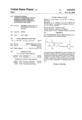
New [8-(dialkylamino alkoxy)-caffeine]-platinum complex compounds of the general formula <IMAGE> are prepared from 8-(dialkylamino alkoxy)-caffeine and hexachloro platinic acid. The complex compounds are nonpoisonous, stable and infinitely durable. In pharmacological test series distinct cytostatic activity of the complex compounds is observed and they are suitable for use as active components in pharmaceutical products.
Description
This invention relates to [8-(dialkylamino alkoxy)-caffeine]platinum complex compounds; the invention also relates to a process of preparing the above-mentioned compounds as well as their use in pharmaceutical products for application in human and veterinary medicine.
The cytostatic activity of certain platinum coordination compounds is well known (Rosenberg et al., Nature 222, 385 to 386 (1969)). Several classes of coordination complexes have since been studied for anti-tumor activity, see M. G. Cleare, Coordination Chemistry Reviews 12, 349 to 405 (1974) and A. J. Thomson, Nachr. Chem. Techn. Lab. 25, 20 to 23 (1977).
In the course of these efforts cis-dichloro diammine platinum (DDP) was found to be a most promising anti-cancer remedy (DD-PS No. 142 293). The said composition is an inorganic complex compound, consisting of a central platinum atom surrounded by two chlorine atoms and two ammonia groups in cis-position.
Disadvantageously this composition is highly poisonous; for this reason it is very difficult to handle and for the use of it in medical treatment heavy precautions have to be taken. Also the attempt to overcome the disadvantages of DDP by preparing an organophosphate complex, as described in DE-OS No. 30 08 661, led to only small success, since it is already very difficult to handle the highly poisonous starting material.
It is further known from literature that certain caffeine derivatives, for instance 8-(dialkylamino alkoxy)-caffeine develop some cancerostatic activity, see J. Klosa, J. prakt. Chemie 6, 8 to 13 (1958); ibid. 18, 117 (1962); A. M. Rusanow et al., Vopr. Radiobiol. Deistvija Tsitostatich Prep. 8, 80 (1977) [C. A. 91, 49393y (1979)].
Surprisingly 4-valent platinum in caffeine complex compounds, which are well compatible, develop convincing anti-tumor activity already in amounts of 10 to 50 mg/kg bodyweight when tested on mice. As a result of the wide range of previous experience no anti-tumor activity of 4-valent platinum could be expected.
By means of the [8-(di-alkylamino alkoxy)-caffeine]-platinum complex compounds of this invention a remedy especially for treatment of tumors is provided which is extraordinarily stable and at the same time does not cause any skin irritation or etching, so that the extensive precautions necessary when applying DDP or DDP-containing products, are not necessary.
In practicing the present invention equimolar amounts of an alcoholic solution of 8-(dialkylamino alkoxy)-caffeine of the general formula ##STR2## wherein n is 2 or 3 and R is an alkyl group with 1 to 3 carbon atoms, the chain of carbon atoms being straight or branched, and an alcoholic solution of hexachloro platinic acid are mixed together, by which process a new complex compound of the general formula ##STR3## is formed either immediately or within a few hours depending on its constitution, which cristallizes in characteristically golden-yellow coloured crystals and which is easily recrystallized from an aqueous alcoholic solution. The new complex compounds are able to bind additional water as crystal water. They are stable and unlimitedly durable.
The complex compounds of this invention show excellent healing activity when used for treatment of experimentally effected animal cancer, i.e. ascites tumors of mice, while the starting material hexachloro platinic acid is without any anti-tumor activity. Cosidering the non-toxicity and thus the possibility of being handled without precaution, the stableness and infinite durability of the complex compounds of this invention, an important technical progress becomes evident in comparison with other platinum containing drugs for tumor treatment.
The complex compounds of this invention may be formulated according to conventional methods for preparation of pharmaceutical products, to provide tablets, pills, solutions or syrups especially for treatment of malignant tumors, but there is no limitation proposed with respect to the way and the field of application of the pharmaceutical products of this invention.
The following examples illustrate the invention but are in now way intended to limit the same.
10 ml of diisopropylamino ethanol were dissolved in 50 ml of toluene. To this solution 1.2 g of sliced sodium was added. The mixture was heated to about 50° to 60° C. for about 6 to 8 hours. During this time all of the sodium was dissolved to form the sodium salt of the diisopropylamino ethanol. Thereafter 11 g of well dried 8-chlorocaffeine were added batchwise within 20 minutes while stirring; subsequently the mixture was heated to about 40° to 50° C. on a water bath for about 20 minutes and thereafter left alone for about 5 hours. After that time the composition was separated from the sodium chloride by suction and the toluene was evaporated while the filtrate was kept under vacuum on a water bath. The oily residue was treated with a small amount of methanol so that colourless crystals were formed. The thus prepared substance had a Fp. of about 72° to 74° C., it was re-crystallized by dissolving it in aqueous methanol; Fp. 90° to 92° C., yield 12 g.
6.6 g of the thus prepared 8-(diisopropylamino ethoxy)caffeine were dissolved in 20 ml methanol. To the waterclear solution 5.2 g of hexachloro platinic acid hexahydrate in 10 ml of methanol were added dropwise. Immediately golden-yellow coloured crystals were formed. To complete crystallization 20 ml of acetone were added, the mixture was allowed to stand for about 2 hours, subsequently it was sucked off, washed with acetone and dried on clay. The Fp. determination showed brown colouring from 190° C. and decomposition by formation of a black, tarry melt from about 218° to 220° C. After recrystallization from hot 60% ethanol and subsequent cooling golden-yellow bar-shaped crystals were obtained.
Analysis:
Fp. 190° C. brown colouring, 200° C. black, tarry melt (decomposition).
Yield: 9.5 g
(C.sub.16 H.sub.28 N.sub.5 O.sub.3).sub.2 PtCl.sub.6
Molecular weight: 1028,35
Calc. Pt 18,02%
Found: Pt 18,10%
6.6 g of 8-(3-dimethylamino propoxy)-caffeine, prepared according to J. Klosa (J.prakt. Chemie, 6, 8-13 (1958)), Fp. of about 58° to 60° C., were dissolved in 30 ml of methanol. To this solution 5.2 g of hexachloro platinic acid hexahydrate in 20 ml of methanol were added dropwise within 10 minutes at room temperature while stirring. A golden-yellow sandy precipitate was formed which was sucked off after 3 hours standing and was washed with acetone.
Analysis:
Fp. 180° to 182° C. (orange-coloured melt)
Yield: 10 g. The product contained 3 moles of water as water of hydration.
(C.sub.13 H.sub.22 N.sub.5 O.sub.3).sub.2 PtCl.sub.6.3H.sub.2 O)
Calc.: Pt 18,54%.
Found: Pt 18,35%.
The new complex compound is water-soluble.
Following the same procedure as described above di-[8-(2-diethylaminoethoxy)-caffeine]hexachloroplatinate was prepared from 8-(2-diethylaminoethoxy)-caffeine and hexachloroplatinic acid, Fp. 194° and 196° C., yield about 80%.
(a) Capsules
The following components were mixed together and 100 mg of the mixture were filled into each capsule.
______________________________________
Di-[8-(3-dimethylamino propoxy)-caffeine]-
                         30 mg
hexachloroplatinate according to
example 2
Lactose                  70 mg
______________________________________
(b) Tablets
The following components were mixed, agglomerated on a compactor and subsequently granulated and pressed to tablets or pills:
______________________________________
Di-[8-(3-dimethylamino propoxy)-caffeine]-
                         50 mg
hexachloroplatinate according to
example 2
Hydroxy ethyl cellulose  30 mg
Polyvinyl pyrrolidine    10 mg
Talcum                    6 mg
Magnesium stearate        4 mg
                         100 mg
______________________________________
(c) Ampuls
______________________________________
Components:
______________________________________
Di-[8-(3-dimethylamino propoxy)-caffeine]-
                         60     mg
hexachloroplatinate according to
example 2
Sodium chloride          16     g
Redestilled water ad     2000   g
______________________________________
The caffeine platinate according to example 2 was dissolved in the freshly destilled water together with the sodium chloride. The solution was filtered and filled into 2-ml ampuls. After sealing the ampuls were sterilized for about 30 minutes at 120° C. in an autoclave.
For treatment of Ehrlich tumors in the paw area of mice di-[8-(3-dimethylamino propoxy)-caffeine]-hexachloroplatinate was injected every second day for a total of 3 times in an amount of 50 mg/kg bodyweight. In 70% of all cases healing was observed within a few days.
In corresponding test series with the same dose applied as above described the development of Ehrlich ascites cells could be inhibited and in 15% of all cases healing was observed.
During additional investigations on sarkoma 180 of mice and Yoshida-sarkoma of rats (both in the ascites form) inhibition of growth was observed in all cases.
Claims (2)
1. Di-[8-(dialkylamino alkoxy)-caffeine]-hexachloroplatinates of the formula: ##STR4## wherein n is 2 or 3 and R is a straight or branched alkyl having from 1 to 3 carbon atoms.
2. A pharmaceutical composition for the treatment of malignant tumors containing as the active ingredient a cytostatically effective amount of the compound of claim 1 together with a pharmaceutically acceptable carrier.
Applications Claiming Priority (2)
| Application Number | Priority Date | Filing Date | Title |
|---|---|---|---|
| DE19803046927 DE3046927A1 (en) | 1980-12-11 | 1980-12-11 | 8-DIALKYLAMINOALKYLAETHER-COFFEIN-PLATINUM COMPLEXES, PROCESS FOR THEIR PRODUCTION AND MEDICINAL PRODUCTS CONTAINING THE SAME |
| DE3046927 | 1980-12-11 |
Publications (1)
| Publication Number | Publication Date |
|---|---|
| US4416878A true US4416878A (en) | 1983-11-22 |
Family
ID=6119043
Family Applications (1)
| Application Number | Title | Priority Date | Filing Date |
|---|---|---|---|
| US06/327,712 Expired - Fee Related US4416878A (en) | 1980-12-11 | 1981-12-04 | [8-(Dialkylamino alkoxy)-caffeine]-platinum complex compounds and pharmaceutical products containing the same |
Country Status (9)
| Country | Link |
|---|---|
| US (1) | US4416878A (en) |
| EP (1) | EP0054215B1 (en) |
| JP (1) | JPS57122086A (en) |
| AT (1) | ATE10280T1 (en) |
| AU (1) | AU7831981A (en) |
| CA (1) | CA1169060A (en) |
| DE (2) | DE3046927A1 (en) |
| FI (1) | FI813951A7 (en) |
| ZA (1) | ZA818620B (en) |
Cited By (2)
| Publication number | Priority date | Publication date | Assignee | Title |
|---|---|---|---|---|
| US4548820A (en) * | 1982-07-28 | 1985-10-22 | Adir | Xanthine compounds |
| US20040235712A1 (en) * | 2003-01-13 | 2004-11-25 | Lippard Stephen J. | Coordination complexes having tethered therapeutic agents and/or targeting moieties, and methods of making and using the same |
Families Citing this family (3)
| Publication number | Priority date | Publication date | Assignee | Title |
|---|---|---|---|---|
| US4843161A (en) * | 1984-06-01 | 1989-06-27 | Massachusetts Institute Of Technology | Platinum-intercalative complexes for the treatment of cancer |
| JPH0692409B2 (en) * | 1986-09-19 | 1994-11-16 | 喜徳 喜谷 | Novel platinum complex |
| CN110185596B (en) | 2019-07-09 | 2025-05-16 | 珠海格力节能环保制冷技术研究中心有限公司 | Pump structure, compressor and heat exchange equipment |
Citations (5)
| Publication number | Priority date | Publication date | Assignee | Title |
|---|---|---|---|---|
| US3794648A (en) * | 1971-06-14 | 1974-02-26 | Olin Corp | Process for making catalytic noble metal complexes |
| DE2445418A1 (en) * | 1974-09-23 | 1976-04-01 | Research Corp | Platinum complexes of (dihydro) 2,4-dioxopyrimidines - antitumour, antiviral and antibacterial agents, readily sol. in water and of low renal toxicity |
| US4080324A (en) * | 1974-09-05 | 1978-03-21 | Engelhard Minerals & Chemicals Corporation | Ethylenediamineplatinum(II) 2,4-dioxopyrimidine complexes |
| DE2729080A1 (en) * | 1977-06-24 | 1979-01-11 | Josef Dipl Chem Dr Rer N Klosa | Radioactive metal chelates for tumour visualisation - prepd. from uracil-4-methyl:imino-di:acetic acid and gamma emitting metals |
| DD142293A5 (en) | 1978-05-30 | 1980-06-18 | Bristol Myers Co | PROCESS FOR PREPARING A PHARMACEUTICAL AGENT |
Family Cites Families (1)
| Publication number | Priority date | Publication date | Assignee | Title |
|---|---|---|---|---|
| US2688618A (en) * | 1952-01-03 | 1954-09-07 | Bristol Lab Inc | Basic caffeine derivatives |
-
1980
- 1980-12-11 DE DE19803046927 patent/DE3046927A1/en not_active Withdrawn
-
1981
- 1981-12-01 AT AT81110026T patent/ATE10280T1/en not_active IP Right Cessation
- 1981-12-01 EP EP81110026A patent/EP0054215B1/en not_active Expired
- 1981-12-01 DE DE8181110026T patent/DE3167232D1/en not_active Expired
- 1981-12-04 US US06/327,712 patent/US4416878A/en not_active Expired - Fee Related
- 1981-12-07 AU AU78319/81A patent/AU7831981A/en not_active Abandoned
- 1981-12-09 FI FI813951A patent/FI813951A7/en not_active Application Discontinuation
- 1981-12-10 CA CA000391989A patent/CA1169060A/en not_active Expired
- 1981-12-10 JP JP56199441A patent/JPS57122086A/en active Pending
- 1981-12-11 ZA ZA818620A patent/ZA818620B/en unknown
Patent Citations (5)
| Publication number | Priority date | Publication date | Assignee | Title |
|---|---|---|---|---|
| US3794648A (en) * | 1971-06-14 | 1974-02-26 | Olin Corp | Process for making catalytic noble metal complexes |
| US4080324A (en) * | 1974-09-05 | 1978-03-21 | Engelhard Minerals & Chemicals Corporation | Ethylenediamineplatinum(II) 2,4-dioxopyrimidine complexes |
| DE2445418A1 (en) * | 1974-09-23 | 1976-04-01 | Research Corp | Platinum complexes of (dihydro) 2,4-dioxopyrimidines - antitumour, antiviral and antibacterial agents, readily sol. in water and of low renal toxicity |
| DE2729080A1 (en) * | 1977-06-24 | 1979-01-11 | Josef Dipl Chem Dr Rer N Klosa | Radioactive metal chelates for tumour visualisation - prepd. from uracil-4-methyl:imino-di:acetic acid and gamma emitting metals |
| DD142293A5 (en) | 1978-05-30 | 1980-06-18 | Bristol Myers Co | PROCESS FOR PREPARING A PHARMACEUTICAL AGENT |
Non-Patent Citations (2)
| Title |
|---|
| Melnik, "J. Inorg. Chem." vol. 43, No. 11, 1981, pp. 3035-3038. * |
| Rosenberg, et al. "Nature," vol. 222, 4/26/69, pp. 385-386, Cleare, "Coordination Chemistry Reviews," vol. 12, 1974, pp. 349-405. * |
Cited By (3)
| Publication number | Priority date | Publication date | Assignee | Title |
|---|---|---|---|---|
| US4548820A (en) * | 1982-07-28 | 1985-10-22 | Adir | Xanthine compounds |
| US20040235712A1 (en) * | 2003-01-13 | 2004-11-25 | Lippard Stephen J. | Coordination complexes having tethered therapeutic agents and/or targeting moieties, and methods of making and using the same |
| US7138520B2 (en) | 2003-01-13 | 2006-11-21 | Massachusetts Institute Of Technology | Coordination complexes having tethered therapeutic agents and/or targeting moieties, and methods of making and using the same |
Also Published As
| Publication number | Publication date |
|---|---|
| CA1169060A (en) | 1984-06-12 |
| DE3167232D1 (en) | 1984-12-20 |
| AU7831981A (en) | 1982-06-17 |
| EP0054215B1 (en) | 1984-11-14 |
| JPS57122086A (en) | 1982-07-29 |
| DE3046927A1 (en) | 1982-07-15 |
| FI813951L (en) | 1982-06-12 |
| ATE10280T1 (en) | 1984-11-15 |
| ZA818620B (en) | 1982-11-24 |
| FI813951A7 (en) | 1982-06-12 |
| EP0054215A1 (en) | 1982-06-23 |
Similar Documents
| Publication | Publication Date | Title |
|---|---|---|
| EP0138420B1 (en) | Pharmaceutical compositions containing 1-hydroxypyrid-2-one derivatives | |
| KR100442096B1 (en) | Antitumor derivative of double dicarboxylic acid diaminoplatin complex, process for the preparing thereof, the pharmaceutical composition containing the same and application of the derivative | |
| NL8004752A (en) | MEDICINE AGAINST CANCER ON THE BASIS OF A PLATINUM COMPOUND, METHOD FOR THE PREPARATION THEREOF AND THE PLATINUM COMPOUND USED THEREOF. | |
| US5519155A (en) | Platinum complexes | |
| US5434256A (en) | Diamine platinum complexes as antitumor agents | |
| JPS58174319A (en) | pharmaceutical composition | |
| GB2157563A (en) | Pharmaceutical compositions containing iron complexes | |
| KR900003513B1 (en) | Organic-platinum complexes and method of theating tumors | |
| US4416878A (en) | [8-(Dialkylamino alkoxy)-caffeine]-platinum complex compounds and pharmaceutical products containing the same | |
| EP0115929A1 (en) | Novel organic platinum complex and process for the preparation thereof | |
| JPS61171495A (en) | Platinum complexes and production thereof | |
| RU2084449C1 (en) | 1-benzyl-2-oxotryptamine hydrochloride and its derivatives showing hepatoprotective activity | |
| US4157391A (en) | Cholesterol derivative-based medicaments acting on bio-protective mechanisms | |
| US4739087A (en) | Antineoplastic platinum complexes | |
| US4571335A (en) | Method of inhibiting herpetic lesions by the use of platinum coordination compounds | |
| CS269719B1 (en) | Platinum cytostatic | |
| EP0186085A2 (en) | Platinum complexes | |
| WO1991017751A1 (en) | Orally administrable gallium compositions and methods of treatment therewith | |
| NL8002271A (en) | PROCESS FOR PREPARING ISOPROPYLAMINOPYRIMIDINE HYDROXY DERIVATIVES. | |
| EP0923932B1 (en) | Composition containing antitumor agent | |
| GB2304712A (en) | Complex | |
| KR900004404B1 (en) | Organoplatinum complex and tumor treatment method using the same | |
| US4100287A (en) | Pyrimidine derivative | |
| EP0214862A2 (en) | Anti-tumour platinum complexes, their preparation and their use | |
| DE60004826T2 (en) | DIMERE RUTHENIUM COMPLEXES FOR ANTIMETASTATIC AND ANTINEOPLASTIC MEDICINAL PRODUCTS |
Legal Events
| Date | Code | Title | Description |
|---|---|---|---|
| MAFP | Maintenance fee payment |
Free format text: PAYMENT OF MAINTENANCE FEE, 4TH YEAR, PL 96-517 (ORIGINAL EVENT CODE: M170); ENTITY STATUS OF PATENT OWNER: SMALL ENTITY Year of fee payment: 4 |
|
| FEPP | Fee payment procedure |
Free format text: MAINTENANCE FEE REMINDER MAILED (ORIGINAL EVENT CODE: REM.); ENTITY STATUS OF PATENT OWNER: SMALL ENTITY |
|
| LAPS | Lapse for failure to pay maintenance fees | ||
| FP | Lapsed due to failure to pay maintenance fee |
Effective date: 19911124 |
|
| STCH | Information on status: patent discontinuation |
Free format text: PATENT EXPIRED DUE TO NONPAYMENT OF MAINTENANCE FEES UNDER 37 CFR 1.362 |