US4381992A - Reclaiming used lubricating oil - Google Patents
Reclaiming used lubricating oil Download PDFInfo
- Publication number
- US4381992A US4381992A US06/273,297 US27329781A US4381992A US 4381992 A US4381992 A US 4381992A US 27329781 A US27329781 A US 27329781A US 4381992 A US4381992 A US 4381992A
- Authority
- US
- United States
- Prior art keywords
- oil
- column
- oils
- lubricating oil
- fraction
- Prior art date
- Legal status (The legal status is an assumption and is not a legal conclusion. Google has not performed a legal analysis and makes no representation as to the accuracy of the status listed.)
- Expired - Lifetime
Links
- 239000010687 lubricating oil Substances 0.000 title claims description 24
- 238000000034 method Methods 0.000 claims abstract description 30
- 238000005194 fractionation Methods 0.000 claims abstract description 12
- 239000003921 oil Substances 0.000 claims description 77
- 239000003795 chemical substances by application Substances 0.000 claims description 26
- XLYOFNOQVPJJNP-UHFFFAOYSA-N water Substances O XLYOFNOQVPJJNP-UHFFFAOYSA-N 0.000 claims description 24
- 229910001868 water Inorganic materials 0.000 claims description 24
- 238000012856 packing Methods 0.000 claims description 15
- 239000000203 mixture Substances 0.000 claims description 13
- 239000007864 aqueous solution Substances 0.000 claims description 10
- 238000002156 mixing Methods 0.000 claims description 9
- 238000010790 dilution Methods 0.000 claims description 6
- 239000012895 dilution Substances 0.000 claims description 6
- 239000007788 liquid Substances 0.000 claims description 6
- 150000003863 ammonium salts Chemical class 0.000 claims description 5
- 238000009835 boiling Methods 0.000 claims description 3
- 239000010742 number 1 fuel oil Substances 0.000 claims description 3
- 238000010992 reflux Methods 0.000 claims description 3
- 239000007787 solid Substances 0.000 claims description 3
- 238000004519 manufacturing process Methods 0.000 claims description 2
- 238000009877 rendering Methods 0.000 claims description 2
- 239000010913 used oil Substances 0.000 abstract description 15
- 238000000746 purification Methods 0.000 abstract description 5
- 229930195733 hydrocarbon Natural products 0.000 description 11
- 150000002430 hydrocarbons Chemical class 0.000 description 11
- 239000003463 adsorbent Substances 0.000 description 9
- 229910052751 metal Inorganic materials 0.000 description 9
- 239000002184 metal Substances 0.000 description 9
- 238000013019 agitation Methods 0.000 description 8
- 239000003054 catalyst Substances 0.000 description 7
- 239000004927 clay Substances 0.000 description 7
- 238000001914 filtration Methods 0.000 description 7
- 238000004821 distillation Methods 0.000 description 6
- 239000000047 product Substances 0.000 description 6
- OYPRJOBELJOOCE-UHFFFAOYSA-N Calcium Chemical compound [Ca] OYPRJOBELJOOCE-UHFFFAOYSA-N 0.000 description 5
- 229910052791 calcium Inorganic materials 0.000 description 5
- 239000011575 calcium Substances 0.000 description 5
- 239000000295 fuel oil Substances 0.000 description 5
- 239000000463 material Substances 0.000 description 5
- QGZKDVFQNNGYKY-UHFFFAOYSA-N Ammonia Chemical compound N QGZKDVFQNNGYKY-UHFFFAOYSA-N 0.000 description 4
- NBIIXXVUZAFLBC-UHFFFAOYSA-N Phosphoric acid Chemical compound OP(O)(O)=O NBIIXXVUZAFLBC-UHFFFAOYSA-N 0.000 description 4
- 230000001877 deodorizing effect Effects 0.000 description 4
- MNNHAPBLZZVQHP-UHFFFAOYSA-N diammonium hydrogen phosphate Chemical compound [NH4+].[NH4+].OP([O-])([O-])=O MNNHAPBLZZVQHP-UHFFFAOYSA-N 0.000 description 4
- 230000000694 effects Effects 0.000 description 4
- 229910052739 hydrogen Inorganic materials 0.000 description 4
- 239000001257 hydrogen Substances 0.000 description 4
- 238000005984 hydrogenation reaction Methods 0.000 description 4
- 239000010705 motor oil Substances 0.000 description 4
- 230000003647 oxidation Effects 0.000 description 4
- 238000007254 oxidation reaction Methods 0.000 description 4
- 239000002002 slurry Substances 0.000 description 4
- 238000003860 storage Methods 0.000 description 4
- -1 zinc alkyl thiophosphates Chemical class 0.000 description 4
- OKTJSMMVPCPJKN-UHFFFAOYSA-N Carbon Chemical compound [C] OKTJSMMVPCPJKN-UHFFFAOYSA-N 0.000 description 3
- 239000004215 Carbon black (E152) Substances 0.000 description 3
- UFHFLCQGNIYNRP-UHFFFAOYSA-N Hydrogen Chemical compound [H][H] UFHFLCQGNIYNRP-UHFFFAOYSA-N 0.000 description 3
- VYPSYNLAJGMNEJ-UHFFFAOYSA-N Silicium dioxide Chemical compound O=[Si]=O VYPSYNLAJGMNEJ-UHFFFAOYSA-N 0.000 description 3
- 239000000654 additive Substances 0.000 description 3
- 229910052788 barium Inorganic materials 0.000 description 3
- 238000002485 combustion reaction Methods 0.000 description 3
- 150000001875 compounds Chemical class 0.000 description 3
- 238000000354 decomposition reaction Methods 0.000 description 3
- 239000003599 detergent Substances 0.000 description 3
- 229910000388 diammonium phosphate Inorganic materials 0.000 description 3
- 235000019838 diammonium phosphate Nutrition 0.000 description 3
- 239000002270 dispersing agent Substances 0.000 description 3
- 238000009472 formulation Methods 0.000 description 3
- 239000012535 impurity Substances 0.000 description 3
- 238000011065 in-situ storage Methods 0.000 description 3
- 238000000926 separation method Methods 0.000 description 3
- 238000012546 transfer Methods 0.000 description 3
- 229910052725 zinc Inorganic materials 0.000 description 3
- 239000011701 zinc Substances 0.000 description 3
- XEEYBQQBJWHFJM-UHFFFAOYSA-N Iron Chemical compound [Fe] XEEYBQQBJWHFJM-UHFFFAOYSA-N 0.000 description 2
- 239000005909 Kieselgur Substances 0.000 description 2
- QAOWNCQODCNURD-UHFFFAOYSA-N Sulfuric acid Chemical compound OS(O)(=O)=O QAOWNCQODCNURD-UHFFFAOYSA-N 0.000 description 2
- HCHKCACWOHOZIP-UHFFFAOYSA-N Zinc Chemical compound [Zn] HCHKCACWOHOZIP-UHFFFAOYSA-N 0.000 description 2
- 239000002253 acid Substances 0.000 description 2
- PNEYBMLMFCGWSK-UHFFFAOYSA-N aluminium oxide Inorganic materials [O-2].[O-2].[O-2].[Al+3].[Al+3] PNEYBMLMFCGWSK-UHFFFAOYSA-N 0.000 description 2
- 229910000147 aluminium phosphate Inorganic materials 0.000 description 2
- 229910021529 ammonia Inorganic materials 0.000 description 2
- BIGPRXCJEDHCLP-UHFFFAOYSA-N ammonium bisulfate Chemical compound [NH4+].OS([O-])(=O)=O BIGPRXCJEDHCLP-UHFFFAOYSA-N 0.000 description 2
- LFVGISIMTYGQHF-UHFFFAOYSA-N ammonium dihydrogen phosphate Chemical compound [NH4+].OP(O)([O-])=O LFVGISIMTYGQHF-UHFFFAOYSA-N 0.000 description 2
- 229910000387 ammonium dihydrogen phosphate Inorganic materials 0.000 description 2
- DSAJWYNOEDNPEQ-UHFFFAOYSA-N barium atom Chemical compound [Ba] DSAJWYNOEDNPEQ-UHFFFAOYSA-N 0.000 description 2
- 239000000470 constituent Substances 0.000 description 2
- 238000005336 cracking Methods 0.000 description 2
- 238000004042 decolorization Methods 0.000 description 2
- 239000000428 dust Substances 0.000 description 2
- 239000000446 fuel Substances 0.000 description 2
- 239000003502 gasoline Substances 0.000 description 2
- 239000012208 gear oil Substances 0.000 description 2
- 238000010438 heat treatment Methods 0.000 description 2
- 239000003112 inhibitor Substances 0.000 description 2
- 235000019837 monoammonium phosphate Nutrition 0.000 description 2
- 239000002245 particle Substances 0.000 description 2
- 239000000243 solution Substances 0.000 description 2
- 230000003068 static effect Effects 0.000 description 2
- 238000003756 stirring Methods 0.000 description 2
- 239000002699 waste material Substances 0.000 description 2
- QWQNFXDYOCUEER-UHFFFAOYSA-N 2,3-ditert-butyl-4-methylphenol Chemical compound CC1=CC=C(O)C(C(C)(C)C)=C1C(C)(C)C QWQNFXDYOCUEER-UHFFFAOYSA-N 0.000 description 1
- ZEYKLMDPUOVUCR-UHFFFAOYSA-N 2-chloro-5-(trifluoromethyl)benzenesulfonyl chloride Chemical compound FC(F)(F)C1=CC=C(Cl)C(S(Cl)(=O)=O)=C1 ZEYKLMDPUOVUCR-UHFFFAOYSA-N 0.000 description 1
- WWILHZQYNPQALT-UHFFFAOYSA-N 2-methyl-2-morpholin-4-ylpropanal Chemical compound O=CC(C)(C)N1CCOCC1 WWILHZQYNPQALT-UHFFFAOYSA-N 0.000 description 1
- VHUUQVKOLVNVRT-UHFFFAOYSA-N Ammonium hydroxide Chemical compound [NH4+].[OH-] VHUUQVKOLVNVRT-UHFFFAOYSA-N 0.000 description 1
- 239000004254 Ammonium phosphate Substances 0.000 description 1
- 229920003043 Cellulose fiber Polymers 0.000 description 1
- 229910019142 PO4 Inorganic materials 0.000 description 1
- ISWSIDIOOBJBQZ-UHFFFAOYSA-N Phenol Chemical class OC1=CC=CC=C1 ISWSIDIOOBJBQZ-UHFFFAOYSA-N 0.000 description 1
- OAICVXFJPJFONN-UHFFFAOYSA-N Phosphorus Chemical compound [P] OAICVXFJPJFONN-UHFFFAOYSA-N 0.000 description 1
- 229920002367 Polyisobutene Polymers 0.000 description 1
- UCKMPCXJQFINFW-UHFFFAOYSA-N Sulphide Chemical compound [S-2] UCKMPCXJQFINFW-UHFFFAOYSA-N 0.000 description 1
- DZHMRSPXDUUJER-UHFFFAOYSA-N [amino(hydroxy)methylidene]azanium;dihydrogen phosphate Chemical compound NC(N)=O.OP(O)(O)=O DZHMRSPXDUUJER-UHFFFAOYSA-N 0.000 description 1
- SSBRSHIQIANGKS-UHFFFAOYSA-N [amino(hydroxy)methylidene]azanium;hydrogen sulfate Chemical compound NC(N)=O.OS(O)(=O)=O SSBRSHIQIANGKS-UHFFFAOYSA-N 0.000 description 1
- 238000009825 accumulation Methods 0.000 description 1
- 150000004996 alkyl benzenes Chemical class 0.000 description 1
- FRHBOQMZUOWXQL-UHFFFAOYSA-L ammonium ferric citrate Chemical compound [NH4+].[Fe+3].[O-]C(=O)CC(O)(CC([O-])=O)C([O-])=O FRHBOQMZUOWXQL-UHFFFAOYSA-L 0.000 description 1
- 239000000908 ammonium hydroxide Substances 0.000 description 1
- PYCBFXMWPVRTCC-UHFFFAOYSA-N ammonium metaphosphate Chemical compound N.OP(=O)=O PYCBFXMWPVRTCC-UHFFFAOYSA-N 0.000 description 1
- 229910000148 ammonium phosphate Inorganic materials 0.000 description 1
- 235000019289 ammonium phosphates Nutrition 0.000 description 1
- 235000019826 ammonium polyphosphate Nutrition 0.000 description 1
- 229920001276 ammonium polyphosphate Polymers 0.000 description 1
- BFNBIHQBYMNNAN-UHFFFAOYSA-N ammonium sulfate Chemical compound N.N.OS(O)(=O)=O BFNBIHQBYMNNAN-UHFFFAOYSA-N 0.000 description 1
- 229910052921 ammonium sulfate Inorganic materials 0.000 description 1
- 235000011130 ammonium sulphate Nutrition 0.000 description 1
- XYXNTHIYBIDHGM-UHFFFAOYSA-N ammonium thiosulfate Chemical compound [NH4+].[NH4+].[O-]S([O-])(=O)=S XYXNTHIYBIDHGM-UHFFFAOYSA-N 0.000 description 1
- 238000004380 ashing Methods 0.000 description 1
- 239000010426 asphalt Substances 0.000 description 1
- 159000000009 barium salts Chemical class 0.000 description 1
- 229910001570 bauxite Inorganic materials 0.000 description 1
- 230000005540 biological transmission Effects 0.000 description 1
- 238000004061 bleaching Methods 0.000 description 1
- 238000001354 calcination Methods 0.000 description 1
- CEDDGDWODCGBFQ-UHFFFAOYSA-N carbamimidoylazanium;hydron;phosphate Chemical compound NC(N)=N.OP(O)(O)=O CEDDGDWODCGBFQ-UHFFFAOYSA-N 0.000 description 1
- 229910052799 carbon Inorganic materials 0.000 description 1
- 230000015556 catabolic process Effects 0.000 description 1
- 238000006243 chemical reaction Methods 0.000 description 1
- 229910052570 clay Inorganic materials 0.000 description 1
- KYYSIVCCYWZZLR-UHFFFAOYSA-N cobalt(2+);dioxido(dioxo)molybdenum Chemical compound [Co+2].[O-][Mo]([O-])(=O)=O KYYSIVCCYWZZLR-UHFFFAOYSA-N 0.000 description 1
- 238000004939 coking Methods 0.000 description 1
- 230000003247 decreasing effect Effects 0.000 description 1
- 238000013461 design Methods 0.000 description 1
- ZZTURJAZCMUWEP-UHFFFAOYSA-N diaminomethylideneazanium;hydrogen sulfate Chemical compound NC(N)=N.OS(O)(=O)=O ZZTURJAZCMUWEP-UHFFFAOYSA-N 0.000 description 1
- NLPVCCRZRNXTLT-UHFFFAOYSA-N dioxido(dioxo)molybdenum;nickel(2+) Chemical compound [Ni+2].[O-][Mo]([O-])(=O)=O NLPVCCRZRNXTLT-UHFFFAOYSA-N 0.000 description 1
- 238000001704 evaporation Methods 0.000 description 1
- 230000008020 evaporation Effects 0.000 description 1
- 229960004642 ferric ammonium citrate Drugs 0.000 description 1
- IMBKASBLAKCLEM-UHFFFAOYSA-L ferrous ammonium sulfate (anhydrous) Chemical compound [NH4+].[NH4+].[Fe+2].[O-]S([O-])(=O)=O.[O-]S([O-])(=O)=O IMBKASBLAKCLEM-UHFFFAOYSA-L 0.000 description 1
- 239000012065 filter cake Substances 0.000 description 1
- 238000004508 fractional distillation Methods 0.000 description 1
- 239000004519 grease Substances 0.000 description 1
- 239000010720 hydraulic oil Substances 0.000 description 1
- 150000002431 hydrogen Chemical class 0.000 description 1
- 238000005470 impregnation Methods 0.000 description 1
- 229910010272 inorganic material Inorganic materials 0.000 description 1
- 239000011147 inorganic material Substances 0.000 description 1
- 229910052742 iron Inorganic materials 0.000 description 1
- 239000004313 iron ammonium citrate Substances 0.000 description 1
- 235000000011 iron ammonium citrate Nutrition 0.000 description 1
- 150000002506 iron compounds Chemical class 0.000 description 1
- RUTXIHLAWFEWGM-UHFFFAOYSA-H iron(3+) sulfate Chemical compound [Fe+3].[Fe+3].[O-]S([O-])(=O)=O.[O-]S([O-])(=O)=O.[O-]S([O-])(=O)=O RUTXIHLAWFEWGM-UHFFFAOYSA-H 0.000 description 1
- JEIPFZHSYJVQDO-UHFFFAOYSA-N iron(III) oxide Inorganic materials O=[Fe]O[Fe]=O JEIPFZHSYJVQDO-UHFFFAOYSA-N 0.000 description 1
- 229910000360 iron(III) sulfate Inorganic materials 0.000 description 1
- 239000011133 lead Substances 0.000 description 1
- 150000002611 lead compounds Chemical class 0.000 description 1
- 239000000314 lubricant Substances 0.000 description 1
- 230000001050 lubricating effect Effects 0.000 description 1
- 238000005461 lubrication Methods 0.000 description 1
- 238000012423 maintenance Methods 0.000 description 1
- 150000002736 metal compounds Chemical class 0.000 description 1
- 239000002923 metal particle Substances 0.000 description 1
- 150000002739 metals Chemical class 0.000 description 1
- 238000012986 modification Methods 0.000 description 1
- 230000004048 modification Effects 0.000 description 1
- 230000007935 neutral effect Effects 0.000 description 1
- 230000003287 optical effect Effects 0.000 description 1
- 210000002741 palatine tonsil Anatomy 0.000 description 1
- 230000000737 periodic effect Effects 0.000 description 1
- 239000010451 perlite Substances 0.000 description 1
- 235000019362 perlite Nutrition 0.000 description 1
- 239000003208 petroleum Substances 0.000 description 1
- 239000010452 phosphate Substances 0.000 description 1
- NBIIXXVUZAFLBC-UHFFFAOYSA-K phosphate Chemical compound [O-]P([O-])([O-])=O NBIIXXVUZAFLBC-UHFFFAOYSA-K 0.000 description 1
- 229910052698 phosphorus Inorganic materials 0.000 description 1
- 239000011574 phosphorus Substances 0.000 description 1
- 239000002243 precursor Substances 0.000 description 1
- 238000002360 preparation method Methods 0.000 description 1
- 239000000376 reactant Substances 0.000 description 1
- 230000000717 retained effect Effects 0.000 description 1
- 229920006395 saturated elastomer Polymers 0.000 description 1
- 239000000741 silica gel Substances 0.000 description 1
- 229910002027 silica gel Inorganic materials 0.000 description 1
- 239000011734 sodium Substances 0.000 description 1
- 229910052708 sodium Inorganic materials 0.000 description 1
- 239000010736 steam turbine oil Substances 0.000 description 1
- 239000000758 substrate Substances 0.000 description 1
- KZNICNPSHKQLFF-UHFFFAOYSA-N succinimide Chemical class O=C1CCC(=O)N1 KZNICNPSHKQLFF-UHFFFAOYSA-N 0.000 description 1
- 150000003460 sulfonic acids Chemical class 0.000 description 1
- 238000005979 thermal decomposition reaction Methods 0.000 description 1
- 238000005292 vacuum distillation Methods 0.000 description 1
- 238000009834 vaporization Methods 0.000 description 1
- 230000008016 vaporization Effects 0.000 description 1
Images
Classifications
-
- B—PERFORMING OPERATIONS; TRANSPORTING
- B01—PHYSICAL OR CHEMICAL PROCESSES OR APPARATUS IN GENERAL
- B01D—SEPARATION
- B01D3/00—Distillation or related exchange processes in which liquids are contacted with gaseous media, e.g. stripping
- B01D3/14—Fractional distillation or use of a fractionation or rectification column
-
- C—CHEMISTRY; METALLURGY
- C10—PETROLEUM, GAS OR COKE INDUSTRIES; TECHNICAL GASES CONTAINING CARBON MONOXIDE; FUELS; LUBRICANTS; PEAT
- C10G—CRACKING HYDROCARBON OILS; PRODUCTION OF LIQUID HYDROCARBON MIXTURES, e.g. BY DESTRUCTIVE HYDROGENATION, OLIGOMERISATION, POLYMERISATION; RECOVERY OF HYDROCARBON OILS FROM OIL-SHALE, OIL-SAND, OR GASES; REFINING MIXTURES MAINLY CONSISTING OF HYDROCARBONS; REFORMING OF NAPHTHA; MINERAL WAXES
- C10G29/00—Refining of hydrocarbon oils, in the absence of hydrogen, with other chemicals
- C10G29/06—Metal salts, or metal salts deposited on a carrier
-
- C—CHEMISTRY; METALLURGY
- C10—PETROLEUM, GAS OR COKE INDUSTRIES; TECHNICAL GASES CONTAINING CARBON MONOXIDE; FUELS; LUBRICANTS; PEAT
- C10G—CRACKING HYDROCARBON OILS; PRODUCTION OF LIQUID HYDROCARBON MIXTURES, e.g. BY DESTRUCTIVE HYDROGENATION, OLIGOMERISATION, POLYMERISATION; RECOVERY OF HYDROCARBON OILS FROM OIL-SHALE, OIL-SAND, OR GASES; REFINING MIXTURES MAINLY CONSISTING OF HYDROCARBONS; REFORMING OF NAPHTHA; MINERAL WAXES
- C10G7/00—Distillation of hydrocarbon oils
- C10G7/06—Vacuum distillation
-
- C—CHEMISTRY; METALLURGY
- C10—PETROLEUM, GAS OR COKE INDUSTRIES; TECHNICAL GASES CONTAINING CARBON MONOXIDE; FUELS; LUBRICANTS; PEAT
- C10M—LUBRICATING COMPOSITIONS; USE OF CHEMICAL SUBSTANCES EITHER ALONE OR AS LUBRICATING INGREDIENTS IN A LUBRICATING COMPOSITION
- C10M175/00—Working-up used lubricants to recover useful products ; Cleaning
- C10M175/0016—Working-up used lubricants to recover useful products ; Cleaning with the use of chemical agents
Definitions
- This invention relates to a method for reducing the ash-content of lubricating oil containing ash-forming components.
- this invention relates to a method for the treatment of used lubricating oils to obtain purified oil suitable for use as fuel oil, in grease formulations, or in the preparation of lubricating oil formulations.
- Used motor oil has been estimated as being generated in the United States at a rate of about 1.1 billion gallons per year. Some of this used oil has been used as furnace oil and some has been used on rural dirt roads for dust control. Much of the oil has been merely discarded in sewers, dumps, and back alleys. With the ever decreasing petroleum reserves, it becomes more and more essential that this used oil be saved and used as long as possible.
- Materials contained in a typical used crankcase oil that are considered to contribute to the ash content of the oil include sub-micron size carbon particles, inorganic materials such as atmospheric dust, metal particles, lead and other metal compounds originating from fuel combustion. Besides lead, which is generally present at concentrations of 1.0 to 2.5 weight percent, appreciable amounts of zinc, barium, calcium, phosphorus and iron are also present in the used crankcase oil. Examination of the used oil under an optical microscope at 600 magnifications reveals the very effective dispersant characteristics of modern day lube oils. The particle size of the particulates is estimated from this microscopic examination to be 0.1-1.0 microns with virtually no occurrence of agglomerates in the oil.
- One embodiment of this invention provides a means of obtaining such useable fractions without the use of hydrotreating.
- Another embodiment of this invention provides a means of reducing the severity of the conditions to which a hydrotreating catalyst must be exposed to produce the desired fractions.
- Still another object of the present invention is to increase the catalyst life of the employed hydrotreating catalyst.
- Still yet another object of the present invention is to reduce the amount of hydrogen needed in the reclaiming process.
- a process for the production of an essentially ash free oil stock from a lubricating oil containing ash-forming components comprising:
- step (3) separating solids from the oil resulting from step (2) to obtain a partially purified oil
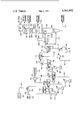
- FIG. 1 is a schematic representation of a specific process employing the present invention.
- the present invention is applicable to the de-ashing of oil in which ash forming components can be rendered removable by the treating agent.
- the invention is particularly applicable to the purification of oils that have been used for internal combustion engine lubrication purposes such as crankcase oils, e.g., in gasoline engines or diesel engines.
- oils that have been used for internal combustion engine lubrication purposes such as crankcase oils, e.g., in gasoline engines or diesel engines.
- Other sources of used oils include steam-turbine oils, transmission and gear oils, steam engine oils, hydraulic oils, heat-transfer oils and the like.
- oils generally used for preparing internal combustion engine lubricants are the refinery lubricating cuts from paraffin-base, mixed-base, or naphthenic crudes. Their viscosities are generally in the range of from about 100 to about 1,800 SUS at 100° F.
- the oils also contain various additives such as oxidation inhibitors (e.g., barium, calcium and zinc alkyl thiophosphates, di-t-butyl-p-cresol, etc.), antiwear agents (e.g., organic lead compounds such as lead diorganophosphorodithioates, zinc dialkyldithiophosphates, etc.), rust inhibitors (e.g., calcium and sodium sulfonates, etc.) dispersants (e.g., calcium and barium sulfonates and phenoxides, etc.), viscosity index improvers (e.g., polyisobutylenes, poly-(alkylstyrenes), etc.), detergents (e.g., calcium and barium salts of alkyl benzene sulfonic acids) and ashless-type detergents such as alkyl-substituted succinimides, etc.
- oxidation inhibitors e.g., barium, calcium and
- water entrained in the untreated used lubricating oil can be removed before use of same in the process of this invention. Such a separation can be readily achieved by removal of the water phase which may occur in the storage tanks for the used lubricating oil.
- ammonium salt treating agents which are useful in the process of the present invention are those selected from the group consisting of ammonium sulfate, ammonium bisulfate, ammonium phosphate, diammonium hydrogen phosphate, ammonium dihydrogen phosphate, ammonium thiosulfate, ammonium polyphosphates such as ammonium metaphosphate, urea sulfate, guanidine sulfate, urea phosphate, and guanidine phosphate, and mixtures thereof.
- Said treating agents can be formed in situ if desired as, for example, by combining ammonia and/or ammonium hydroxide with sulfuric acid and/or phosphoric acid and/or an ammonium hydrogen sulfate or phosphate, i.e., ammonium bisulfate, diammonium hydrogen phosphate, and/or ammonium dihydrogen phosphate.
- the reactants employed can be introduced at the same time, or one after the other.
- the concentration of treating agent in the aqueous solution of treating agent is not critical and more dilute solutions can be used, the economics of the process are enhanced by the use of relatively concentrated solutions in order that the amount of water to be removed subsequently will not be great.
- the concentration of treating agent in the aqueous solution will be within the range of about 30 to about 95 weight percent, typically about 80 weight percent, of that in an aqueous solution that is saturated with the treating agent at 25° C. Frequently some water will be found in used oil, and in these instances the concentration of the treating agent can be adjusted accordingly.
- the treating agent should preferably be employed in an amount at least sufficient to react with essentially all of the metal constituents in the used oil.
- the weight ratio of the treating agent to the oil can vary greatly, depending in part upon the nature and concentration of metal-containing components in the oil and on the particular treating agent employed, generally it will be within the range of about 0.002:1 to about 0.05:1, most often being within the range of about 0.005:1 to about 0.015:1, and typically being about 0.01:1. Although larger amounts of treating agent can be used, in most instances this would be wasteful of treating agent.
- Water can be removed from the mixture resulting from the combination of the aqueous solution and the oil by any suitable means. Distillation is the preferred method of removing water. Generally, the distillation is carried out at a temperature in the range of about 100° to about 140° C. and a pressure in the range of about 5 to about 25 psig for a period of time sufficient to effect removal of a major portion of the water. Light hydrocarbons contained in the oil that boil under the distillation conditions, e.g. gasoline, will be, of course, separated from the oil along with the water.
- the solids are separated from the treated oil in any suitable manner.
- filtering is the preferred technique.
- Filter aids which are useful in the practice of the invention include those selected from the group consisting of diatomaceous earth, perlite, and cellulose fibers.
- the presently preferred filter aid is diatomaceous earth.
- the partially purified oil is next vacuum distilled to produce a plurality of different boiling range oil fractions.
- the vacuum distillation should be carried out under conditions which minimize cracking and coking of the oil.
- An especially preferred technique for achieving that end is to provide high dilution with superheated steam in the vacuum fractional distillation column.
- the temperature in the fractionation column is kept below 700° F.
- the maximum temperature is no greater than 650° F.
- the pressure is in the range of about 90 to 200 mm Hg, most preferably about 93 to 103 mm Hg (1.8-2.0 psia).
- the steam added to the bottom of the column below the point of introduction of the oil feed is generally used in amounts equal to about 0.05 to 0.2 weight percent of the oil feed, preferably about 0.1.
- superheated steam is also added to the oil feed prior to the passage of the oil feed through the heater where it is heated for transfer into the fractionator.
- steam in this fashion adds dilution and helps minimize decomposition of the oil in the heat exchanger coils of the heater.
- the various fractions obtained can be collected in storage vessels and further processed separately or in a combined fashion as desired. If processed separately, the fractions needing additional purification can be passed through a single decolorizing and deodorizing zone in a blocked out fashion, i.e. one after the other as desired. Alternatively, the separate fractions can be passed through decolorizing and deodorizing zones especially adapted for that specific fraction. Even if the various lubricating oil fractions are recombined and passed through a single decolorizing and deodorizing zone, the products obtained are generally of a much better quality than those obtained in the prior art processes in which the heavies were not removed before the final purification.
- the bottoms from the fractionation column while being heavier than what would generally be used in blending lubricating oils are relatively metal free and can be further processed for other uses, such as heavy gear oils or asphalt additives. If desired the heavies can be sent to a cracking zone to produce fuel fractions.
- the decolorizing and deodorizing step or steps can be carried out by any of several processes useful for that purpose, for example, clay treating or mild hydrogenation. Although the hydrogenation method is preferred, it is more expensive and satisfactory products can be obtained by using only clay treating.
- oil and clay be separated as soon as possible after the contact time is met to obtain a better product. Separation can be accomplished by any well-known separation method such as filtering. Any acid-activated bleaching clay such as Filtrol grade 20®, Superfiltrol® or Tonsil® was found to provide satisfactory results.
- Mild hydrogenation as an alternative process to effect odor and color improvement of the reprocessed lubricating oil is preferred if adequate quantities of hydrogen are available at practical prices.
- Typical conditions of hydrogenation to produce a satisfactory finished lubricating oil with neutral odor and light color include an operating temperature of about 600°-700° F. with a temperature in the range of 650° F. preferred.
- the hydrogen partial pressure may range between about 400 and 900 psig, with a preferred level near 650 psig.
- Space velocities may vary between about 0.5 and 2.5 vol/vol/hr with a preferred value of 1. Hydrogen rates of from 250-2000 Standard Cubic Foot/Barrel (SCFB) have been found satisfactory, with a rate of 1500 SCFB being preferred.
- SCFB Standard Cubic Foot/Barrel
- the catalyst employed may be substantially any of the known hydrofinishing catalysts which promote desired reactions which result in the removal of undesirable unsaturated materials and polar compounds.
- a metal of Groups II-A, II-B, VI-B, or VIII of the Periodic Table of Elements, an oxide of a metal of Groups II-A, II-B, VI-B, or VIII, or a sulfide of a metal of Groups II-A, II-B, VI-B, or VIII is satisfactory as catalyst material.
- Typical catalysts are cobalt molybdate and nickel molybdate on an inert substrate such as alumina.
- FIG. 1 A further understanding of the present invention will be provided by the following description of a preferred embodiment of the present invention as illustrated in FIG. 1.
- used oil from storage tank 101 is passed via line 102 to heater 103 and contactor 106.
- Aqueous treating agent such as diammonium hydrogen phosphate from makeup tank 105 is introduced via line 104.
- agent precursors ammonia, phosphoric acid, and water can be introduced into the heated oil downstream of heater 103, thereby forming the treating agent in situ in line 102 and contactor 106.
- the oil from heater 103 is passed in admixture with treating agent into the first agitated contactor 106 wherein the mixture is maintained under agitation for a time sufficient to react with at least a portion of the ash-forming components in the oil.
- a recycle stream is passed through conduit 152 to pump 153 and then through heater 154 before its return to contactor 106, thereby providing heat and agitation to the contents of the contactor.
- Stirring means also can be employed.
- the mixture is passed via conduit 107 to second contactor 109, which is maintained at a temperature in the range of about 110° to about 140° C., for a time sufficient to effect distillation of a major portion of the water and at least some of the light hydrocarbons present therein.
- second contactor 109 essentially all of the water and at least a portion of the light hydrocarbon components of the mixture are removed via line 110 and passed to separator 111 wherein a hydrocarbon layer and a water layer are allowed to form.
- the hydrocarbon phase can then be transferred via line 112 to storage 113.
- the water layer can be removed and discarded or employed for any desired purpose.
- a recycle stream is passed through conduit 155 to pump 156 and then through heater 108 before its return to contactor 109, thereby providing heat and agitation to the contents of the reactor. Stirring means also can be employed.
- the resulting mixture comprising a hot oil phase which is essentially free of water is passed via conduit 114 to a third contactor wherein it is subjected to agitation and a temperature in the range of about 140° to about 200° C. to remove additional water and lighter components.
- a recycle stream is passed through conduit 157 to pump 158 and then through heater 115 before its return to contactor 116, thereby providing heat and agitation to the contents of the contactor. Any residual water and light hydrocarbons are removed from contactor 116 via line 159.
- any one or two or all of contactors 106, 109 and 116 can be provided with jackets heated by steam or other source of heat to aid in maintaining the contents of the contactors at the desired temperatures.
- Any one or two or all of contactors 106, 109 and 116 can be equipped with stirrers to provide additional agitation.
- a stirrer in any one or more of the three contactors can be used instead of the recycle system employed with the corresponding one or more of the three contactors, any additional heating being provided by heaters in the line ahead of the contactors and/or by heated jackets around the contactors.
- any one or two or all of conduits 103, 107 and 114 can feed into the recycle stream for contactors 106, 109 and 116, respectively, i.e., into conduits 152, 155 and 157, respectively, instead of directly into the respective contactor as shown.
- the feed in conduit 102 rather than being passed directly into contactor 106, is passed into conduit 152 at the inlet side of pump 153.
- pump 153 is a high-volume pump that will cause the oil to flow in the turbulent flow range so as to promote heat transfer and decrease scaling in the conduit 152.
- the heated oil from contactor 116 is passed via conduit 117 through heater 163 to a fourth contactor 164 wherein the mixture is subjected to agitation to a temperature in the range of about 320° to about 420° C. for a period of time sufficient to result in a product which when later filtered will contain less ash than it would contain if it had not been so heated.
- a recycle stream is passed through conduit 165 to pump 166 and then through heater 167 before its return to contactor 164, thereby providing heat and agitation to the contents of contactor 164. Any residual water or light components can be removed from contactor 164 via line 168.
- Treated oil from contactor 164 is passed through conduit 169 through a cooler 170 wherein the oil is cooled to a temperature in the range of about 150° to about 180° C. and then passed into a fifth contactor 171 wherein it is admixed with filter aid provided via conduit 118, preferably as a slurry in light hydrocarbons provided from makeup tank 119.
- the oil from contactor 164 is cooled at least in part as a result of passing in indirect heat exchange with the feed passing through line 102 whereby the heat in the oil in line 120 is used to heat the feed oil in line 102.
- filter 121 Following admixture of filter aid, the resulting mixture is passed via line 172 to filter 121, which optionally can be precoated with filter aid.
- filter 121 which optionally can be precoated with filter aid.
- the use of the heat soak step of the present invention can in many cases result in a reduction in the amount of filter aid required for a suitable filtration rate.
- Filter cake from filter 121 is removed via line 147 and optionally passed to furnace 148 from which, following burning or calcination, at least a portion of the resulting ash containing filter aid can be passed to waste via line 149 or recycled via conduits 120 and 160 to slurry makeup tank 119 for further use in the system.
- Fresh filter aid is added through conduit 151.
- Light hydrocarbons for use in preparing the slurry can be recovered from the integrated process and can be passed to tank 119 via conduit 151.
- the filtered oil being essentially free of ash-forming constituents is then combined with superheated steam and passed through a heater 200.
- the steam diluted oil feed is then passed into the lower portion of a vacuum fractionation column 201.
- Superheated steam is passed into an even lower portion of the vacuum fractionator. Distillation in the presence of this steam permits the vaporization and distillation of lube oil at moderate vacuum and at temperature conditions sufficiently low to avoid thermal decomposition of the oil fractions.
- the preferred fractionating column illustrated in FIG. 1 comprises five staggered 50% cut baffle plates 202, i.e., plates extending halfway across the column, located beneath the point of entry of the oil feed and above the point of entry of the operating steam provided via line 203.
- the oil feed combined with mixing steam is introduced into the column by way of a feed distributor 204 comprising a channel formed by a plate with weirs extending around approximately a third of the circumference of the column.
- the column 201 is divided into three main zones by total drawoff plate 205 and partial drawoff plate 206. Both plates 205 and 206 are provided with liquid overflow chimneys.
- Partial drawoff plate 206 is provided with a second liquid overflow chimney having an upper height between the upper height of the first chimney of that plate and the intermediate height of the partial drawoff plate.
- Four areas of static mixing packing material 207-210 are provided. Any suitable low pressure drop static mixing packing can be used. Examples include intalox saddles, sulzer, pall rings, and the like.
- area 210 comprises a layer of KOCH Sulzer above a layer of intalox saddles such as Norton 40 Intalox. The layer of Intalox serves to protect the Sulzer from gumming and plugging.
- the illustrated column allows for the withdrawal of two sidestream fractions via lines 211 and 212, an overhead fraction via line 213, and a bottoms fraction via line 214.
- Portions of the fraction removed via line 212 are returned as liquid to liquid distributors in the column via lines 215 and 216.
- the overhead fraction is passed via line 213 to a accumulator 217 where steam and lighter hydrocarbons are separated from the oil to provide an overhead oil fraction.
- a portion of the overhead fraction is recycled via line 218 to a liquid distributor placed above packing 207.
- the recycle provided via line 216 provides additional reflux to the system.
- the recycle provided via line 215 is employed to assure that the tray 205 does not run dry.
- the steam from accumulator 217 along with the light hydrocarbons is cooled and passed to a phase separator where the hydrocarbons and water are separated.
- the recovered water is then recycled to provide at least part of the water used for producing operating steam for the fractionation column.
- the fractionator is shaped as illustrated in FIG. 1.
- the section of the fractionator containing the trays and the packing is about 5 feet in diameter and about 40 feet in length.
- the section containing the 50% cut baffle plates is about 27 inches in diameter and about 6 feet in length.
- the section for bottoms accumulation beneath the operating steam inlet is about 18 inches in diameter and 3 feet in length.
- the plate of the feed distributor extends inwardly to a point defined by an arc which at all points lies 18 inches from the adjoining wall of the column.
- the plate extends outward from about a third of the circumference of the column wall. Weirs extend upwardly from the interior edges of the plate about 18 inches high.
- the first layer of packing 210 is located about 42 inches from the bottom of the 5 foot diameter portion of the column. That layer of packing preferably comprises a 1 foot layer of Norton 40 Intalox below a 2 foot layer of KOCH Sulzer.
- the next layer of packing 209 is located about 72 inches above the top of packing 210 and comprises a 4 foot layer of KOCH Sulzer.
- the packing 208 is a 4 foot bed of KOCH Sulzer in turn located about 42 inches above the top of packing 209.
- packing 207 is a 6 foot bed of KOCH Sulzer located about 69 inches above the top of packing 208.
- This particular fractionator design allows for steady operation under a wide range of operating conditions. For example, it can be readily operated so that the overhead can be as much as 40 weight percent of the oil feed. Alternatively, it can be operated so that either cut #2 or cut #3 can be as much as 50 weight percent of the oil feed. Further, the column can be operated when as much as 15 weight percent of the oil feed is removed as bottoms. Typical examples calculated for the amounts of various streams under those extremes of operation is presented in Table I.
- the cuts resulting from the vacuum fractionation can be subjected to decolorization and deordorization as deemed necessary.
- the present invention is particularly useful since in many cases the oil cuts that will be used in a blending operation will not require the decolorization and deordorization step.
- the present invention is further advantageous in that the fractionation results in fractions which have been sufficiently devolatilized that they will generally meet flash point standards without further treatment.
- a particularly preferred technique of purifying fractions from the vacuum fractionator, especially for the bottoms fraction involves passing the fraction through a bed of adsorbent and then through a hydrotreater.
- the adsorbent can be bauxite, activated carbon, silica gel, clay, activated alumina, combinations thereof, and the like.
- the adsorbent serves to effect breakdown and decomposition of the ammonium salts of sulfonic acids and the ashless detergents contained in the oil.
- the adsorbent further serves to collect a small portion of the resulting products and thus precludes passage of such undesirable decomposition products to the hydrotreater.
- Such adsorbents can be regenerated by conventional means and reused.
- the adsorbent contains about 0.2 to about 20 weight percent of at least one metal selected from the group consisting of Group VIB and Group VIII metals, this weight percent being based on the total weight of modified adsorbent.
- This modified adsorbent can be prepared by impregnation of the adsorbent with an aqueous solution of a water-soluble compound of a Group VIB or Group VIII metal, followed by evaporation of water.
- Water-soluble compounds presently preferred for this use are iron compounds such as ferric ammonium oxalate, ferric ammonium citrate, ferric sulfate, and ferrous ammonium sulfate.
Landscapes
- Chemical & Material Sciences (AREA)
- Oil, Petroleum & Natural Gas (AREA)
- Chemical Kinetics & Catalysis (AREA)
- Engineering & Computer Science (AREA)
- General Chemical & Material Sciences (AREA)
- Organic Chemistry (AREA)
- Combustion & Propulsion (AREA)
- Production Of Liquid Hydrocarbon Mixture For Refining Petroleum (AREA)
Abstract
Description
TABLE I
__________________________________________________________________________
Stream Feed
Mixing
Operating
Oily Reflux Line
Line
Feature (122)
Steam
Steam (203)
Steam (213)
Cut #1
(218)
Cut # 2
215 216 Cut # 3
Bottoms
__________________________________________________________________________
40% Overhead
Pounds/Day
245746
9603
25330 35110 102039
60350
77729
153965
44881
43834
21967
°F.
673 750 659 201 201 201 596 579 579 635 601
50% Cut # 2
Pounds/Day
245746
9603
28794 38759 41621
91355
123406
158432
40848
64788
15569
°F.
673 750 659 201 201 201 574 565 565 630 598
50% Cut # 3
Pounds/Day
245746
9603
23354 33360 29055
101355
76192
87113
36902
123495
16601
°F.
673 750 659 201 201 201 564 545 545 620 600
15% Bottoms
Pounds/Day
245746
9603
20110 30001 40377
92340
106821
104094
62201
59855
38405
°F.
673 750 659 201 201 201 583 575 575 629 605
__________________________________________________________________________
Claims (4)
Priority Applications (3)
| Application Number | Priority Date | Filing Date | Title |
|---|---|---|---|
| US06/273,297 US4381992A (en) | 1981-06-15 | 1981-06-15 | Reclaiming used lubricating oil |
| CA000400619A CA1177009A (en) | 1981-06-15 | 1982-04-07 | Reclaiming used lubricating oil |
| US06/422,776 US4406743A (en) | 1981-06-15 | 1982-09-24 | Fractionation column for reclaiming used lubricating oil |
Applications Claiming Priority (1)
| Application Number | Priority Date | Filing Date | Title |
|---|---|---|---|
| US06/273,297 US4381992A (en) | 1981-06-15 | 1981-06-15 | Reclaiming used lubricating oil |
Related Child Applications (1)
| Application Number | Title | Priority Date | Filing Date |
|---|---|---|---|
| US06/422,776 Division US4406743A (en) | 1981-06-15 | 1982-09-24 | Fractionation column for reclaiming used lubricating oil |
Publications (1)
| Publication Number | Publication Date |
|---|---|
| US4381992A true US4381992A (en) | 1983-05-03 |
Family
ID=23043348
Family Applications (1)
| Application Number | Title | Priority Date | Filing Date |
|---|---|---|---|
| US06/273,297 Expired - Lifetime US4381992A (en) | 1981-06-15 | 1981-06-15 | Reclaiming used lubricating oil |
Country Status (2)
| Country | Link |
|---|---|
| US (1) | US4381992A (en) |
| CA (1) | CA1177009A (en) |
Cited By (24)
| Publication number | Priority date | Publication date | Assignee | Title |
|---|---|---|---|---|
| US4420389A (en) * | 1982-09-14 | 1983-12-13 | Phillips Petroleum Company | De-ashing lubricating oils |
| US4490245A (en) * | 1984-04-09 | 1984-12-25 | Texaco Inc. | Process for reclaiming used lubricating oil |
| DE3433336A1 (en) * | 1983-09-21 | 1985-03-28 | Buss Ag, Basel | Process and equipment for reprocessing spent oil |
| US5271808A (en) * | 1988-09-20 | 1993-12-21 | Shurtleff Edward C | Apparatus from waste oil for reclaiming a useful oil product |
| US5286349A (en) * | 1988-09-20 | 1994-02-15 | Shurtleff Edward C | Apparatus for reclaiming useful oil products from waste oil |
| US5306419A (en) * | 1993-08-05 | 1994-04-26 | Texaco Inc. | Used lubricating oil reclaiming |
| EP0668340A1 (en) * | 1994-02-21 | 1995-08-23 | Benjamin Sy Santos | An improved process for removing heavy metals, sulfur and chlorinated compounds from used oil to generate clear fuel oils or lube stock and soft and/or hard asphalt with no acid sludge problem |
| US5447628A (en) * | 1993-11-15 | 1995-09-05 | Texaco Inc. | Reconstituting lubricating oil |
| WO1996000273A1 (en) * | 1994-06-23 | 1996-01-04 | Corex Technologies (1993) Ltd. | Process for the reclamation of used lubricating oils |
| US5795462A (en) * | 1988-09-20 | 1998-08-18 | Patent Holdings Ltd. | Apparatus and method for reclaiming useful oil products from waste oil |
| US5876591A (en) * | 1997-03-31 | 1999-03-02 | Uop Llc | Process for the production of lube oil |
| US5885444A (en) * | 1992-11-17 | 1999-03-23 | Green Oasis Environmental, Inc. | Process for converting waste motor oil to diesel fuel |
| US5904760A (en) * | 1996-08-23 | 1999-05-18 | Marathon Ashland Petroleum Llc | Rerefined oil or hydrofinished neutral oil for blending superpave asphalts with low temperature properties |
| US6027557A (en) * | 1997-07-17 | 2000-02-22 | Marathon Ashland Petroleum Llc | Oxidized blends of asphalt and paraffinic base stock fluxing component having improved low temperature properties |
| US6074469A (en) * | 1998-05-01 | 2000-06-13 | Petro Source Refining Partners | Asphalt composition and method |
| FR2787118A1 (en) * | 1998-12-09 | 2000-06-16 | Richard Deutsch | Process for the recycling of used lubricating oil from automobiles, comprises the removal of contaminant metals followed by low temperature vacuum distillation stages |
| US6106699A (en) * | 1997-04-29 | 2000-08-22 | Probex | Process for de-chlorinating and de-fouling oil |
| WO2006028408A3 (en) * | 2004-09-03 | 2006-08-17 | Obshestvo S Ogranichennoy Otve | Oil recovery |
| US20070039853A1 (en) * | 2003-09-23 | 2007-02-22 | Sener Grupo De Ingenieria, S.A. | Method for regenerating used oils by demetallization and distillation |
| US20080000808A1 (en) * | 1999-02-16 | 2008-01-03 | Miami University | Methods of removing contaminants from used oil |
| US20160053184A1 (en) * | 2012-07-23 | 2016-02-25 | Envirolles Inc. | Hybrid thermal process to separate and transform contaminated or uncontaminated hydrocarbon materials into useful products, uses of the process, manufacturing of the corresponding system and plant |
| US10315183B2 (en) | 2010-05-18 | 2019-06-11 | Envirollea Inc. | Thermal processing reactor for mixtures, fabrication of the reactor, processes using the reactors and uses of the products obtained |
| US11530358B2 (en) | 2017-07-13 | 2022-12-20 | Envirollea Inc. | Process for producing liquid fuel from waste hydrocarbon and/or organic material, reactor, apparatus, uses and managing system thereof |
| US11591528B2 (en) | 2017-12-13 | 2023-02-28 | Karl Ip Holdings Inc. | Low-pressure catalytic conversion of used motor oil to diesel fuel |
Citations (15)
| Publication number | Priority date | Publication date | Assignee | Title |
|---|---|---|---|---|
| US1953939A (en) * | 1929-06-14 | 1934-04-10 | Sharples Specialty Co | Mineral oil separation |
| US2319750A (en) * | 1939-08-12 | 1943-05-18 | Standard Oil Dev Co | Distillation process |
| US2897147A (en) * | 1956-09-14 | 1959-07-28 | Shell Dev | Method and apparatus for distillation |
| US3173859A (en) * | 1961-08-24 | 1965-03-16 | Berks Associates Inc | Crankcase oil refining |
| US3301778A (en) * | 1964-06-15 | 1967-01-31 | Phillips Petroleum Co | Fractional distillation |
| US3679764A (en) * | 1969-06-04 | 1972-07-25 | Litton Systems Inc | Purification of oxidative dehydrogenation process effluents |
| US3791965A (en) * | 1972-04-07 | 1974-02-12 | Petrocon Corp | Process for re-refining used petroleum products |
| US3879282A (en) * | 1974-02-26 | 1975-04-22 | Phillips Petroleum Co | Reclaiming used motor oil by chemical treatment with ammonium phosphate |
| US3930988A (en) * | 1975-02-24 | 1976-01-06 | Phillips Petroleum Company | Reclaiming used motor oil |
| US4033859A (en) * | 1975-04-24 | 1977-07-05 | Witco Chemical Corporation | Thermal treatment of used petroleum oils |
| US4071438A (en) * | 1976-06-03 | 1978-01-31 | Vacsol Corporation | Method of reclaiming waste oil by distillation and extraction |
| US4073719A (en) * | 1977-04-26 | 1978-02-14 | The United States Of America As Represented By The United States Department Of Energy | Process for preparing lubricating oil from used waste lubricating oil |
| US4151072A (en) * | 1977-05-16 | 1979-04-24 | Phillips Petroleum Company | Reclaiming used lubricating oils |
| US4247389A (en) * | 1979-11-07 | 1981-01-27 | Phillips Petroleum Company | De-ashing lubricating oils |
| US4261814A (en) * | 1977-11-30 | 1981-04-14 | Exxon Research And Engineering Co. | Vacuum pipestill operation |
-
1981
- 1981-06-15 US US06/273,297 patent/US4381992A/en not_active Expired - Lifetime
-
1982
- 1982-04-07 CA CA000400619A patent/CA1177009A/en not_active Expired
Patent Citations (15)
| Publication number | Priority date | Publication date | Assignee | Title |
|---|---|---|---|---|
| US1953939A (en) * | 1929-06-14 | 1934-04-10 | Sharples Specialty Co | Mineral oil separation |
| US2319750A (en) * | 1939-08-12 | 1943-05-18 | Standard Oil Dev Co | Distillation process |
| US2897147A (en) * | 1956-09-14 | 1959-07-28 | Shell Dev | Method and apparatus for distillation |
| US3173859A (en) * | 1961-08-24 | 1965-03-16 | Berks Associates Inc | Crankcase oil refining |
| US3301778A (en) * | 1964-06-15 | 1967-01-31 | Phillips Petroleum Co | Fractional distillation |
| US3679764A (en) * | 1969-06-04 | 1972-07-25 | Litton Systems Inc | Purification of oxidative dehydrogenation process effluents |
| US3791965A (en) * | 1972-04-07 | 1974-02-12 | Petrocon Corp | Process for re-refining used petroleum products |
| US3879282A (en) * | 1974-02-26 | 1975-04-22 | Phillips Petroleum Co | Reclaiming used motor oil by chemical treatment with ammonium phosphate |
| US3930988A (en) * | 1975-02-24 | 1976-01-06 | Phillips Petroleum Company | Reclaiming used motor oil |
| US4033859A (en) * | 1975-04-24 | 1977-07-05 | Witco Chemical Corporation | Thermal treatment of used petroleum oils |
| US4071438A (en) * | 1976-06-03 | 1978-01-31 | Vacsol Corporation | Method of reclaiming waste oil by distillation and extraction |
| US4073719A (en) * | 1977-04-26 | 1978-02-14 | The United States Of America As Represented By The United States Department Of Energy | Process for preparing lubricating oil from used waste lubricating oil |
| US4151072A (en) * | 1977-05-16 | 1979-04-24 | Phillips Petroleum Company | Reclaiming used lubricating oils |
| US4261814A (en) * | 1977-11-30 | 1981-04-14 | Exxon Research And Engineering Co. | Vacuum pipestill operation |
| US4247389A (en) * | 1979-11-07 | 1981-01-27 | Phillips Petroleum Company | De-ashing lubricating oils |
Cited By (28)
| Publication number | Priority date | Publication date | Assignee | Title |
|---|---|---|---|---|
| US4420389A (en) * | 1982-09-14 | 1983-12-13 | Phillips Petroleum Company | De-ashing lubricating oils |
| DE3433336A1 (en) * | 1983-09-21 | 1985-03-28 | Buss Ag, Basel | Process and equipment for reprocessing spent oil |
| US4490245A (en) * | 1984-04-09 | 1984-12-25 | Texaco Inc. | Process for reclaiming used lubricating oil |
| US5271808A (en) * | 1988-09-20 | 1993-12-21 | Shurtleff Edward C | Apparatus from waste oil for reclaiming a useful oil product |
| US5286349A (en) * | 1988-09-20 | 1994-02-15 | Shurtleff Edward C | Apparatus for reclaiming useful oil products from waste oil |
| US6440298B1 (en) | 1988-09-20 | 2002-08-27 | Patent Holdings Ltd. | Method of reclaiming waste oil |
| US5795462A (en) * | 1988-09-20 | 1998-08-18 | Patent Holdings Ltd. | Apparatus and method for reclaiming useful oil products from waste oil |
| US5885444A (en) * | 1992-11-17 | 1999-03-23 | Green Oasis Environmental, Inc. | Process for converting waste motor oil to diesel fuel |
| US5306419A (en) * | 1993-08-05 | 1994-04-26 | Texaco Inc. | Used lubricating oil reclaiming |
| US5447628A (en) * | 1993-11-15 | 1995-09-05 | Texaco Inc. | Reconstituting lubricating oil |
| EP0668340A1 (en) * | 1994-02-21 | 1995-08-23 | Benjamin Sy Santos | An improved process for removing heavy metals, sulfur and chlorinated compounds from used oil to generate clear fuel oils or lube stock and soft and/or hard asphalt with no acid sludge problem |
| WO1996000273A1 (en) * | 1994-06-23 | 1996-01-04 | Corex Technologies (1993) Ltd. | Process for the reclamation of used lubricating oils |
| US5904760A (en) * | 1996-08-23 | 1999-05-18 | Marathon Ashland Petroleum Llc | Rerefined oil or hydrofinished neutral oil for blending superpave asphalts with low temperature properties |
| US5911817A (en) * | 1996-08-23 | 1999-06-15 | Marathon Ashland Petroleum Llc | Process for paving with asphalt containing mineral lubricating oil base stock |
| US5876591A (en) * | 1997-03-31 | 1999-03-02 | Uop Llc | Process for the production of lube oil |
| US6106699A (en) * | 1997-04-29 | 2000-08-22 | Probex | Process for de-chlorinating and de-fouling oil |
| US6027557A (en) * | 1997-07-17 | 2000-02-22 | Marathon Ashland Petroleum Llc | Oxidized blends of asphalt and paraffinic base stock fluxing component having improved low temperature properties |
| US6074469A (en) * | 1998-05-01 | 2000-06-13 | Petro Source Refining Partners | Asphalt composition and method |
| FR2787118A1 (en) * | 1998-12-09 | 2000-06-16 | Richard Deutsch | Process for the recycling of used lubricating oil from automobiles, comprises the removal of contaminant metals followed by low temperature vacuum distillation stages |
| US20080000808A1 (en) * | 1999-02-16 | 2008-01-03 | Miami University | Methods of removing contaminants from used oil |
| US7662274B2 (en) * | 1999-02-16 | 2010-02-16 | Miami University | Methods of removing contaminants from used oil |
| US20070039853A1 (en) * | 2003-09-23 | 2007-02-22 | Sener Grupo De Ingenieria, S.A. | Method for regenerating used oils by demetallization and distillation |
| WO2006028408A3 (en) * | 2004-09-03 | 2006-08-17 | Obshestvo S Ogranichennoy Otve | Oil recovery |
| US10315183B2 (en) | 2010-05-18 | 2019-06-11 | Envirollea Inc. | Thermal processing reactor for mixtures, fabrication of the reactor, processes using the reactors and uses of the products obtained |
| US20160053184A1 (en) * | 2012-07-23 | 2016-02-25 | Envirolles Inc. | Hybrid thermal process to separate and transform contaminated or uncontaminated hydrocarbon materials into useful products, uses of the process, manufacturing of the corresponding system and plant |
| US10655070B2 (en) * | 2012-07-23 | 2020-05-19 | Envirollea Inc. | Hybrid thermal process to separate and transform contaminated or uncontaminated hydrocarbon materials into useful products, uses of the process, manufacturing of the corresponding system and plant |
| US11530358B2 (en) | 2017-07-13 | 2022-12-20 | Envirollea Inc. | Process for producing liquid fuel from waste hydrocarbon and/or organic material, reactor, apparatus, uses and managing system thereof |
| US11591528B2 (en) | 2017-12-13 | 2023-02-28 | Karl Ip Holdings Inc. | Low-pressure catalytic conversion of used motor oil to diesel fuel |
Also Published As
| Publication number | Publication date |
|---|---|
| CA1177009A (en) | 1984-10-30 |
Similar Documents
| Publication | Publication Date | Title |
|---|---|---|
| CA1177009A (en) | Reclaiming used lubricating oil | |
| US4151072A (en) | Reclaiming used lubricating oils | |
| CA1076507A (en) | Rerefining of used motor oils | |
| US4502948A (en) | Reclaiming used lubricating oil | |
| US3930988A (en) | Reclaiming used motor oil | |
| US4247389A (en) | De-ashing lubricating oils | |
| RU2099397C1 (en) | Method of treating exhausted lubricating oils | |
| US4360420A (en) | Distillation and solvent extraction process for rerefining used lubricating oil | |
| EP0149862B1 (en) | Process for re-refining spent lubeoils | |
| US4287049A (en) | Reclaiming used lubricating oils with ammonium salts and polyhydroxy compounds | |
| US3879282A (en) | Reclaiming used motor oil by chemical treatment with ammonium phosphate | |
| EP0574272B1 (en) | Improved process for the production of base stock oils from used oil | |
| US4406743A (en) | Fractionation column for reclaiming used lubricating oil | |
| US4383915A (en) | Clay contacting process for removing contaminants from waste lubricating oil | |
| US5447628A (en) | Reconstituting lubricating oil | |
| US4431523A (en) | Upgrading fuel fractions in a re-refined oil process | |
| US3980551A (en) | Refining of waste lube oil to prepare usable lubestock | |
| CA1174630A (en) | Reclaiming used lubricating oil | |
| US4342645A (en) | Method of rerefining used lubricating oil | |
| EP0077564A2 (en) | De-ashing lubricating oils | |
| US4522729A (en) | Filtration of oil | |
| RU2161176C1 (en) | Method and installation for processing waste petroleum products | |
| US7241377B2 (en) | Salt bath refining | |
| US4420389A (en) | De-ashing lubricating oils | |
| CA1107673A (en) | Reclaiming used lubricating oils |
Legal Events
| Date | Code | Title | Description |
|---|---|---|---|
| AS | Assignment |
Owner name: PHILLIPS PETROLEUM COMPANY, A CORP. OF DE Free format text: ASSIGNMENT OF ASSIGNORS INTEREST.;ASSIGNORS:WOOD, WILLIAM E.;MAC QUEEN, DONALD K.;REEL/FRAME:003922/0949 Effective date: 19810723 |
|
| STCF | Information on status: patent grant |
Free format text: PATENTED CASE |
|
| CC | Certificate of correction | ||
| MAFP | Maintenance fee payment |
Free format text: PAYMENT OF MAINTENANCE FEE, 4TH YEAR, PL 96-517 (ORIGINAL EVENT CODE: M170); ENTITY STATUS OF PATENT OWNER: LARGE ENTITY Year of fee payment: 4 |
|
| FEPP | Fee payment procedure |
Free format text: PAYOR NUMBER ASSIGNED (ORIGINAL EVENT CODE: ASPN); ENTITY STATUS OF PATENT OWNER: LARGE ENTITY |
|
| MAFP | Maintenance fee payment |
Free format text: PAYMENT OF MAINTENANCE FEE, 8TH YEAR, PL 96-517 (ORIGINAL EVENT CODE: M171); ENTITY STATUS OF PATENT OWNER: LARGE ENTITY Year of fee payment: 8 |
|
| MAFP | Maintenance fee payment |
Free format text: PAYMENT OF MAINTENANCE FEE, 12TH YEAR, LARGE ENTITY (ORIGINAL EVENT CODE: M185); ENTITY STATUS OF PATENT OWNER: LARGE ENTITY Year of fee payment: 12 |