US4373110A - HF Alkylation process and apparatus - Google Patents
HF Alkylation process and apparatus Download PDFInfo
- Publication number
- US4373110A US4373110A US06/226,589 US22658981A US4373110A US 4373110 A US4373110 A US 4373110A US 22658981 A US22658981 A US 22658981A US 4373110 A US4373110 A US 4373110A
- Authority
- US
- United States
- Prior art keywords
- stream
- fractionator
- withdrawing
- hydrogen fluoride
- phase
- Prior art date
- Legal status (The legal status is an assumption and is not a legal conclusion. Google has not performed a legal analysis and makes no representation as to the accuracy of the status listed.)
- Expired - Lifetime
Links
- 238000005804 alkylation reaction Methods 0.000 title claims abstract description 39
- 229930195733 hydrocarbon Natural products 0.000 claims abstract description 87
- 150000002430 hydrocarbons Chemical class 0.000 claims abstract description 87
- 239000004215 Carbon black (E152) Substances 0.000 claims abstract description 85
- 239000002253 acid Substances 0.000 claims abstract description 59
- 230000029936 alkylation Effects 0.000 claims abstract description 33
- KRHYYFGTRYWZRS-UHFFFAOYSA-N Fluorane Chemical compound F KRHYYFGTRYWZRS-UHFFFAOYSA-N 0.000 claims description 87
- 229910000040 hydrogen fluoride Inorganic materials 0.000 claims description 85
- 239000000463 material Substances 0.000 claims description 71
- 239000000047 product Substances 0.000 claims description 60
- NNPPMTNAJDCUHE-UHFFFAOYSA-N isobutane Chemical compound CC(C)C NNPPMTNAJDCUHE-UHFFFAOYSA-N 0.000 claims description 36
- 238000000926 separation method Methods 0.000 claims description 33
- XLYOFNOQVPJJNP-UHFFFAOYSA-N water Substances O XLYOFNOQVPJJNP-UHFFFAOYSA-N 0.000 claims description 29
- 150000001336 alkenes Chemical class 0.000 claims description 27
- JRZJOMJEPLMPRA-UHFFFAOYSA-N olefin Natural products CCCCCCCC=C JRZJOMJEPLMPRA-UHFFFAOYSA-N 0.000 claims description 25
- 238000004891 communication Methods 0.000 claims description 24
- ATUOYWHBWRKTHZ-UHFFFAOYSA-N Propane Chemical compound CCC ATUOYWHBWRKTHZ-UHFFFAOYSA-N 0.000 claims description 23
- 238000000034 method Methods 0.000 claims description 22
- 239000001282 iso-butane Substances 0.000 claims description 18
- 239000001294 propane Substances 0.000 claims description 11
- VQTUBCCKSQIDNK-UHFFFAOYSA-N Isobutene Chemical compound CC(C)=C VQTUBCCKSQIDNK-UHFFFAOYSA-N 0.000 claims description 10
- 238000006243 chemical reaction Methods 0.000 claims description 10
- VXNZUUAINFGPBY-UHFFFAOYSA-N 1-Butene Chemical compound CCC=C VXNZUUAINFGPBY-UHFFFAOYSA-N 0.000 claims description 8
- QQONPFPTGQHPMA-UHFFFAOYSA-N Propene Chemical compound CC=C QQONPFPTGQHPMA-UHFFFAOYSA-N 0.000 claims description 6
- 239000011541 reaction mixture Substances 0.000 claims description 5
- 239000007795 chemical reaction product Substances 0.000 claims description 4
- IAQRGUVFOMOMEM-UHFFFAOYSA-N butene Natural products CC=CC IAQRGUVFOMOMEM-UHFFFAOYSA-N 0.000 claims description 3
- 125000004817 pentamethylene group Chemical class [H]C([H])([*:2])C([H])([H])C([H])([H])C([H])([H])C([H])([H])[*:1] 0.000 claims description 3
- IAQRGUVFOMOMEM-ONEGZZNKSA-N trans-but-2-ene Chemical compound C\C=C\C IAQRGUVFOMOMEM-ONEGZZNKSA-N 0.000 claims description 3
- 239000003921 oil Substances 0.000 abstract description 15
- 239000003054 catalyst Substances 0.000 description 36
- 239000012071 phase Substances 0.000 description 35
- 239000007788 liquid Substances 0.000 description 24
- 239000002861 polymer material Substances 0.000 description 5
- 238000011084 recovery Methods 0.000 description 5
- 238000010438 heat treatment Methods 0.000 description 4
- QWTDNUCVQCZILF-UHFFFAOYSA-N isopentane Chemical compound CCC(C)C QWTDNUCVQCZILF-UHFFFAOYSA-N 0.000 description 4
- 239000007791 liquid phase Substances 0.000 description 4
- 238000010992 reflux Methods 0.000 description 4
- 230000001172 regenerating effect Effects 0.000 description 4
- 229910000792 Monel Inorganic materials 0.000 description 3
- 238000001816 cooling Methods 0.000 description 3
- 239000003085 diluting agent Substances 0.000 description 3
- 239000000203 mixture Substances 0.000 description 3
- IJDNQMDRQITEOD-UHFFFAOYSA-N n-butane Chemical compound CCCC IJDNQMDRQITEOD-UHFFFAOYSA-N 0.000 description 3
- LEEDMQGKBNGPDN-UHFFFAOYSA-N 2-methylnonadecane Chemical compound CCCCCCCCCCCCCCCCCC(C)C LEEDMQGKBNGPDN-UHFFFAOYSA-N 0.000 description 2
- 239000012809 cooling fluid Substances 0.000 description 2
- 239000000498 cooling water Substances 0.000 description 2
- AFABGHUZZDYHJO-UHFFFAOYSA-N dimethyl butane Natural products CCCC(C)C AFABGHUZZDYHJO-UHFFFAOYSA-N 0.000 description 2
- -1 propane Chemical class 0.000 description 2
- 239000000376 reactant Substances 0.000 description 2
- 238000011144 upstream manufacturing Methods 0.000 description 2
- 244000304217 Brassica oleracea var. gongylodes Species 0.000 description 1
- YCKRFDGAMUMZLT-UHFFFAOYSA-N Fluorine atom Chemical compound [F] YCKRFDGAMUMZLT-UHFFFAOYSA-N 0.000 description 1
- 238000009825 accumulation Methods 0.000 description 1
- 239000003377 acid catalyst Substances 0.000 description 1
- LMHUKLLZJMVJQZ-UHFFFAOYSA-N but-1-ene;prop-1-ene Chemical class CC=C.CCC=C LMHUKLLZJMVJQZ-UHFFFAOYSA-N 0.000 description 1
- XTPRYQKDDRWPNS-UHFFFAOYSA-N butane;2-methylpropane;propane Chemical compound CCC.CCCC.CC(C)C XTPRYQKDDRWPNS-UHFFFAOYSA-N 0.000 description 1
- 238000004523 catalytic cracking Methods 0.000 description 1
- 238000010276 construction Methods 0.000 description 1
- 238000005260 corrosion Methods 0.000 description 1
- 230000007797 corrosion Effects 0.000 description 1
- 238000005336 cracking Methods 0.000 description 1
- 238000006115 defluorination reaction Methods 0.000 description 1
- 238000010790 dilution Methods 0.000 description 1
- 239000012895 dilution Substances 0.000 description 1
- 239000012530 fluid Substances 0.000 description 1
- 229910052731 fluorine Inorganic materials 0.000 description 1
- 239000011737 fluorine Substances 0.000 description 1
- 238000002156 mixing Methods 0.000 description 1
- 230000004048 modification Effects 0.000 description 1
- 238000012986 modification Methods 0.000 description 1
- 230000003472 neutralizing effect Effects 0.000 description 1
- TVMXDCGIABBOFY-UHFFFAOYSA-N octane Chemical compound CCCCCCCC TVMXDCGIABBOFY-UHFFFAOYSA-N 0.000 description 1
- 239000012188 paraffin wax Substances 0.000 description 1
- 229920000642 polymer Polymers 0.000 description 1
- 238000007670 refining Methods 0.000 description 1
- 230000008016 vaporization Effects 0.000 description 1
Images

Classifications
-
- C—CHEMISTRY; METALLURGY
- C07—ORGANIC CHEMISTRY
- C07C—ACYCLIC OR CARBOCYCLIC COMPOUNDS
- C07C2/00—Preparation of hydrocarbons from hydrocarbons containing a smaller number of carbon atoms
- C07C2/54—Preparation of hydrocarbons from hydrocarbons containing a smaller number of carbon atoms by addition of unsaturated hydrocarbons to saturated hydrocarbons or to hydrocarbons containing a six-membered aromatic ring with no unsaturation outside the aromatic ring
- C07C2/56—Addition to acyclic hydrocarbons
- C07C2/58—Catalytic processes
- C07C2/62—Catalytic processes with acids
-
- C—CHEMISTRY; METALLURGY
- C07—ORGANIC CHEMISTRY
- C07C—ACYCLIC OR CARBOCYCLIC COMPOUNDS
- C07C9/00—Aliphatic saturated hydrocarbons
- C07C9/14—Aliphatic saturated hydrocarbons with five to fifteen carbon atoms
- C07C9/16—Branched-chain hydrocarbons
-
- C—CHEMISTRY; METALLURGY
- C07—ORGANIC CHEMISTRY
- C07C—ACYCLIC OR CARBOCYCLIC COMPOUNDS
- C07C2527/00—Catalysts comprising the elements or compounds of halogens, sulfur, selenium, tellurium, phosphorus or nitrogen; Catalysts comprising carbon compounds
- C07C2527/06—Halogens; Compounds thereof
- C07C2527/08—Halides
- C07C2527/12—Fluorides
- C07C2527/1206—Hydrogen fluoride
Definitions
- the invention relates to hydrocarbon processing. In another aspect, the invention relates to an alkylation process. In yet another aspect, the invention relates to an apparatus for carrying out an alkylation process.
- Alkylation processes are often employed by the petrochemical and refining industries to produce high octane blending stocks for gasoline. In such processes, it is inevitable that a portion of the feedstock, commonly at least one isoparaffin and at least one olefin, react in a manner to form a hydrocarbon having a molecular weight higher than that of the desired alkylate product. At least a portion of this hydrocarbon comprises a polymeric material which is more soluble in acid than in hydrocarbon and is commonly referred to by the industry as acid soluble oil, or "ASO". Acid soluble oils build-up in liquid acid alkylation catalyst systems and are desirably periodically or continuously removed so as to be maintained at low levels in liquid acid alkylation catalyst systems.
- ASO acid soluble oil
- acid soluble oils and water can be removed from hydrogen fluoride (HF) catalyst by processing a slip stream of catalyst in a fractionator under controlled temperature and pressure conditions.
- the acid soluble oil stream which is removed as fractionator bottoms, is a small stream and contains only small amounts of HF and water, ASO being the major component.
- the ASO stream is recycled to the refinery or passed to a disposal unit.
- polymer material is separated from a portion of the HF acid phase in an alkylation unit. At least a portion of this polymer material is combined with at least a portion of the hydrocarbon phase from the unit. From these combined materials, there is separated an alkylate product which contains polymer material.
- separation of the polymer material from a portion of the HF acid phase and routing the polymer material to product separation can reduce the amount of HF acid entering the product separation zone from that of U.S. Pat. No. 3,993,706. When the amount of HF is small, corrosion problems within the product separation zone are reduced, and the use of expensive materials of construction, such as monel, can be avoided.
- polymeric materials are recovered in blend with alkylate product, as contrasted to prior art processes in which the acid soluble oils were disposed of in a neutralizing pond or recycled to other refinery processes, such as by being blended with catalytic cracking feed.
- the acid soluble oils can be upgraded by at least partial defluorination.
- an HF alkylation unit comprising an HF alkylation reactor with settler, and an HF acid catalyst regenerator and an alkylate product separator each in flow communication with the settler is improved by provision of a conduit means for withdrawing polymeric material from the HF acid regenerator and conveying the polymeric material to the alkylate product separator.
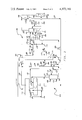
- FIG. 1 illustrates in schematic certain features of one embodiment of the present invention.
- FIG. 2 illustrates in schematic certain features of another embodiment of the present invention.
- isoparaffin relates to isoparaffin feedstock or recycle to an HF alkylation reactor, to avoid confusion with the product alkylate, which is also technically an isoparaffin.
- polymeric material is intended to include “acid soluble oils” as well as possible products resulting from the contact of acid soluble oils with elevated temperatures below that at which cracking commences.
- an alkylation unit comprises a means 2 for conducting an alkylation reaction, a means 4 for regenerating alkylation catalyst, and a means 6 for recovery of alkylate product.
- the means 2 preferably comprises a means 8 for contacting an alkylation catalyst, such as hydrogen fluoride, with an isoparaffin, such as isobutane or isopentane, preferably isobutane, and at least one olefin, preferably an olefin selected from the group consisting of propene, butene-1, butene-2, isobutene, and pentenes.
- an alkylation catalyst such as hydrogen fluoride
- an isoparaffin such as isobutane or isopentane
- isobutane preferably isobutane
- at least one olefin preferably an olefin selected from the group consisting of propene, butene-1, butene-2, isobutene, and pentenes.
- the means 8 is a riser-reactor.
- the means 8 opens into a means 10 for phase separating a liquid hydrocarbon phase from a liquid catalyst phase.
- the means 10 comprises a settler vessel of sufficient size to provide for the establishment of an upper hydrocarbon phase and a lower HF phase therein.
- a conduit means 12 leads from a lower portion of the settler vessel 10 to a means 14 for cooling catalyst.
- the means 14 comprises a shell and tube heat exchanger. Cooling fluid, such as relatively cool cooling water, is circulated through the tube side of the heat exchanger bundle for indirect heat exchange with the acid on the shell side.
- the shell side of the heat exchanger 14 communicates with the riser reactor 8 to provide for loop flow of catalyst through the riser-reactor 8, the settler 10, the line 12, and the heat exchanger 14.
- a conduit means 16 for withdrawing a slip stream of system catalyst from the reactor 2 establishes communication between a lower portion of the settler vessel 10 and the means 4 for regenerating catalyst.
- the conduit 16 extends from the conduit 12, although other arrangements can be employed if desired.
- the means 16 includes a heat exchanger 18 for indirectly heating and vaporizing the major portion of the contents of the conduit 16 before same are introduced into the means 4, which is the zone in which polymeric material and water if present in excessive quantities is separated from the catalyst.
- the means 4 preferably comprises a fractionator or rerun column 20.
- the fractionator 20 is employed to separate polymeric material from the alkylation catalyst.
- a stream of polymeric material is separated from the alkylation catalyst which contains polymeric material as its major component.
- the stream contains water and HF as well, but preferably in a combined amount of only about 5% by volume or less. It is desirable to maintain the fractionator 20 under appropriate conditions so that water which may be present in the catalyst inventory in an amount in excess of about 1% by weight is separated from the catalyst with the polymeric material in the fractionator.
- the reactor feedstocks are suitably treated to prevent water accumulation in the catalyst system.
- Water and polymeric material are withdrawn from the fractionator 20 by a conduit means 22 communicating with a lower portion of the fractionator 20 for withdrawing water and polymeric material from the acid regenerator 4.
- a conduit 24 communicating with an upper portion of the fractionator 20 conveys regenerated catalyst vapor and isobutane vapor back to the alkylation reactor 2, preferably into the hydrocarbon phase of settler 10.
- Reflux liquid, preferably isobutane is introduced adjacent the upper portion of the fractionator 20 via a conduit 26.
- Stripping vapor preferably isobutane, is introduced adjacent the lower portion of the fractionator 20 via a conduit 28.
- a conduit means 30 establishes communication between an upper portion of the settler 10 and the means 6 for recovering alkylate product.
- the means 30 includes a pump 32 and a heat exchanger 34. At least a portion of the hydrocarbon phase in the settler 10 is withdrawn by the conduit 30 due to the action of pump 32, heated in heat exchanger 34, and passed to the means 6 which is the zone in which separation of alkylate product occurs.
- the means 6 comprises at least one fractionator.
- the conduit 30 empties into a fractionator 36 which is provided with a reboiler means 37.
- Alkylate product is withdrawn from a lower portion of the fractionator 36 via a conduit 38.
- Hydrogen fluoride and light hydrocarbon, such as propane, are withdrawn from an upper portion of the fractionator 36 by a conduit 40 which empties into an accumulator 42.
- a condenser 44 is associated with the conduit 40.
- the light hydrocarbon and hydrogen fluoride issuing from the fractionator 36 are condensed in the condenser 44 and pass to the accumulator 42, where the mass separates into an upper light hydrocarbon liquid phase and a lower HF liquid phase.
- a conduit means 46 for withdrawing light hydrocarbon from the accumulator 42 communicates with an upper portion of the accumulator 42.
- a pump 48 is associated with the conduit 46.
- the conduit 46 empties into the fractionator 36 adjacent its upper portion to provide light hydrocarbon reflux.
- a means 50 for withdrawing a stream of the light hydrocarbon liquid phase from the accumulator 42 opens preferably from the conduit 46 between the pump 48 and the fractionator 36 to take advantage of the pump 48.
- the means 50 empties into a fractionator or stripper 52 provided with a reboiling means 54. Liquid light hydrocarbon product is withdrawn from a lower portion of the fractionator 54 via a conduit 56. Overhead vapor from the fractionator 52 is withdrawn by a conduit 58, condensed, and passed back to the accumulator 42.
- conduit 58 empties into the conduit 40 upstream of the condenser 44 to avoid duplication of condensers.
- a conduit means 60 establishes communication between a lower portion of the accumulator 42 and the alkylation reactor 2 for recycle of liquid HF catalyst liquid.
- Unreacted liquid isoparaffin for recycle is withdrawn from the fractionator 36 by a conduit 62 communicating adjacent the upper portion of the fractionator 36.
- the isoparaffin carried by the conduit 62 is cooled in a heat exchanger 64, combined with feed isoparaffin introduced via the conduit 66, and feed olefin introduced via the conduit 68 and introduced into the riser reactor 8.
- the fractionator 36 also provides a convenient source for reflux liquid and stripping vapor for the acid regenerator 4.
- the conduits 26 and 28 each establish communication between the fractionator 36 and the fractionator 20.
- the conduit means 22 for withdrawing polymeric material from the fractionator 20 is routed so as to convey at least a portion of the polymeric material to the means 6 for separating alkylate product.
- the conduit means 22 is constructed of monel or other suitable material resistant to HF attack. If desired, for example, in the event of excessive water in the conduit 22, a portion of the contents of the conduit 22 can be drawn off for proper and safe disposal via a conduit 72 communicating with the conduit 22. It is preferable to dilute the contents of the conduit 22 with a suitable diluent prior to conveying the polymeric material and water to the means 6, to aid handling.
- a conduit means 74 having a valve 76 therein establishes communication between the conduit 38 and the conduit 22.
- a portion of the contents of the conduit 38 can thus be blended with at least a portion of the contents of the conduit 22.
- the conduit 74 opens into the conduit 22 closely adjacent the fractionator 20.
- Product alkylate containing polymeric material withdrawn from the acid regenerator is yielded at 38.
- the contents of the conduit 22 can discharge into the conduit 30 via conduit 78 having valve 80 disposed therein establishing communication between the conduit 22 and the conduit 30 and/or be discharged directly into the fractionator 36 via conduit 82 having valve 84 disposed therein which establishes communication between conduit 22 and fractionator 36.
- the embodiment of the invention illustrated in FIG. 2 comprises a means 102 for carrying out an alkylation reaction, a means 104 for regenerating alkylation catalyst, and a means 106 for recovering alkylate product.
- the means 102 preferably comprises a means 108 for contacting an alkylation catalyst, such as liquid hydrogen fluoride, with a liquid isoparaffin, preferably isobutane, and at least one liquid olefin, preferably an olefin selected from the group consisting of propene, butene-1, butene-2, isobutene, and pentenes.
- an alkylation catalyst such as liquid hydrogen fluoride
- a liquid isoparaffin preferably isobutane
- at least one liquid olefin preferably an olefin selected from the group consisting of propene, butene-1, butene-2, isobutene, and pentenes.
- the means 108 is a riser-reactor.
- the means 108 opens into a means 110 for phase separating a liquid hydrocarbon phase from a liquid catalyst phase.
- the means 110 comprises a settler vessel of sufficient size to provide for the establishment of an upper liquid hydrocarbon phase and a lower liquid HF phase therein.
- a conduit means 112 leads from a lower portion of the settler vessel 110 to a means 114 for cooling catalyst.
- the means 114 comprises a shell and tube heat exchanger. Cooling fluid, such as relatively cool cooling water, is circulated through the tube side of the heat exchanger bundle for indirect heat exchange with the liquid HF acid on the shell side.
- the shell side of the heat exchanger 114 communicates with the riser-reactor 108 to provide for loop flow of catalyst through the riser-reactor 108, the settler 110, the line 112, and the heat exchanger 114.
- a means 116 for withdrawing a slip stream of catalyst from the reactor 102 establishes communication between a lower portion of the settler vessel 110 and the means 104 for regenerating catalyst.
- the conduit 116 extends from the conduit 112, although other arrangements can be employed if desired.
- the means 116 includes a heat exchanger 118 for indirectly heating the contents of the conduit 116 before same are introduced into the means 104, which is the zone in which polymeric material and water are separated from the catalyst.
- the means 104 preferably comprises a fractionator or rerun column 120.
- the fractionator 120 is employed to separate water, when present in higher than desired quantities, and polymeric material from the alkylation catalyst. Water and polymeric material are withdrawn from the fractionator 120 by a conduit means 122 communicating with a lower portion of the fractionator 120 for withdrawing water and polymeric material from the acid regenerator 104. Preferably the polymeric material is the main component of the stream carried by the conduit 122.
- a conduit 124 communicating with an upper portion of the fractionator 120 conveys regenerated catalyst vapor and isobutene vapor back to the alkylation reactor 102.
- Reflux liquid, preferably isobutane is introduced adjacent the upper portion of the fractionator 120 via a conduit 126. Stripping vapor, preferably isobutane, is introduced adjacent the lower portion of the fractionator 120 via a conduit 128.
- a conduit means 130 establishes communication between an upper portion of the settler 110 and the means 106 for recovering alkylate product.
- the means 130 includes a pump 132 and a heat exchanger 133. At least a portion of the hydrocarbon phase in the settler 110 is withdrawn by the conduit 130 due to the action of pump 132, heated in heat exchanger 133, and passed to the means 106 which is the zone in which separation of alkylate product occurs.
- the means 106 comprises a fractionator 141 and a fractionator 165.
- the fractionator 141 is a depropanizer and the fractionator 165 is an isobutane column.
- a conduit means 135 for withdrawing at least a stream of the hydrocarbon phase from the conduit 130 establishes communication between the conduit 130 and the fractionator 141.
- the conduit means 135 includes a valve 137 and a heat exchanger 139, to further heat the material in conduit 135.
- the fractionator 141 is provided with a reboiler means 143. Hydrogen fluoride and light hydrocarbon, such as propane, are withdrawn from an upper portion of the fractionator 141 by a conduit 140, which empties into an accumulator 142. A condenser 144 is associated with the conduit 140. In the accumulator 142, the hydrogen fluoride and light hydrocarbon separate into an upper liquid hydrocarbon phase and a lower liquid HF phase. A conduit means 146 for withdrawing light hydrocarbon from the accumulator 142 communicates with an upper portion of the accumulator 142 and empties into an upper portion of the fractionator 141. A pump 148 is associated with the conduit 146.
- a means 150 for withdrawing a stream from the conduit 146 establishes a flow path between the conduit 148 and a fractionator 152 which is provided with a reboiler means 154.
- Light liquid hydrocarbon product is withdrawn from the fractionator 152 by a conduit 156 communicating with a lower portion thereof.
- Overhead vapor from the fractionator 152 is passed back to the accumulator 142 via c conduit 158, which preferably empties into the conduit 140 upstream of the condenser 144.
- a conduit means 160 establishes communication between a lower portion of the accumulator 142 and the alkylation reactor 2 for recycle of recovered HF catalyst liquid.
- Bottoms product from the fractionator 141 is withdrawn by a conduit 161 having a valve 163 disposed therein and charged to the fractionator 165.
- the contents of the conduit 161 can be either blended with the contents of the conduit 130 and charged to the column, or charged directly to the column 165, as desired.
- the conduit 130 empties into a conduit 167 having a valve 169 and a heat exchanger 171 (for heating) disposed therein and a conduit 173 having a valve 175 and a heat exchanger 177 (for heating) disposed therein.
- By closing valve 175 the contents of the conduit 130 and those of the conduit 161 can be charged separately into the fractionator 165 via conduits 167 and 173, respectively.
- By closing the valve 169 and opening the valve 175 the contents of the conduit 130 and those of the conduit 161 are introduced into the fractionator 165 in admixture via conduit 173.
- both valves can be open if desired.
- the fractionator 165 is provided with a reboiler 179. Isoparaffin vapor for recycle is withdrawn from an upper portion of the fractionator 165 via a conduit 162.
- the isoparaffin is cooled in heat exchanger 133 and provides preheat for the contents of the conduit 130. If necessary, the isoparaffin is further cooled in a heat exchanger 164 for complete condensing and cooling before being combined with feed isoparaffin introduced into the conduit 162 via a conduit 166, with feed olefin introduced into the conduit 162 via a conduit 168 and introduced into the riser-reactor 8.
- a sidedraw conduit 170 is provided for removal for n-paraffin, such as vaporous n-butane, from the fractionator 165.
- Alkylate product is removed from the fractionator 165 via conduit 138 which communicates with a lower portion of the fractionator 165.
- At least a portion of the polymeric material carried by the conduit 122 is introduced into the product separation zone 106. If desired, for example, in the event of excessive water in the conduit 122, a portion of the contents of the conduit 122 can be drawn off for proper safe disposal via conduit 172 communicating with the conduit 122. It is preferable that the conduit means 122 be constructed of monel or other suitable material resistant to HF attack. The contents of the conduit 122 can be charged to the fractionator 165 and/or the depropanizer 141. Some of the various possibilities are illustrated by FIG. 2. For example, the conduit 122 can empty into a conduit 181.
- a conduit 183 having a valve 185 disposed therein establishes communication between the conduit 138 and the conduit 181 for supply of alkylate diluent.
- the conduit 181 empties into a conduit 178 which has a valve 180 disposed therein and which empties into the conduit 130.
- the conduit 181 can also empty into a conduit 182 which in turn empties into the fractionator 165.
- the conduit 182 is preferably provided with a valve 184 and a heat exchanger (heater) 186. If desired, the conduit 122 can empty into a conduit 187 having a valve 188 and a pump 190 associated therewith.
- a conduit 191 communicating between the conduit 183 and the conduit 187 provides a flow path between the conduit 138 and the conduit 187 for dilution of the polymeric material with alkylate.
- the contents of the conduit 187 can be discharged into the line 135, if desired, via the valve 192, and/or, if desired, directly into the depropanizer 141 via the line 194 and the valve 196, and/or, if desired, into the depropanizer bottoms line 161 via the line 198 and the valve 200.
- a reaction mixture comprising hydrogen fluoride, isoparaffin and the reaction products of isoparaffin and olefin in the presence of hydrogen fluoride.
- This is generally accomplished by carrying out in the riser-reactor 8 an alkylation of isoparaffin with olefin with a substantial molar excess of isoparaffin to olefin usually to provide a feed ratio in excess of 1:1, usually from about 4:1 to about 20:1 and preferably from about 10:1 to 15:1 of isoparaffin to olefin.
- the riser-reactor 8 is maintained under sufficient pressure to ensure that the hydrocarbon reactants and alkylation catalyst are in the liquid phase.
- the temperature of the reaction will vary with the reactants and with the catalyst employed, but generally ranges from about-40° F. to about 150° F.
- the reaction mixture is separated into a first phase containing liquid hydrocarbon as its major component and a second phase containing liquid hydrogen fluoride catalyst as its major component and polymeric material as a minor component.
- a first stream is withdrawn from the first phase via the line 30 which contains hydrocarbon as its major component.
- At least a portion of the stream contained in the conduit 22 is combined with at least a portion of the first stream flowing through the conduit 30, for example by passage of the contents of the conduit 22 through line 78, in which event the streams are combined prior to introduction to fractionator 36, and/or line 82, in which event the streams are combined in the fractionator 36.
- a third stream carried by the conduit 38 which contains the reaction products of isoparaffin and olefin as its major component.
- major component connotes a component which is present at a concentration by volume of greater than 50 percent
- minor component connotes a component which is present at a concentration of less than 50 percent by volume.
- a portion of the stream containing polymeric material carried by the conduit 22 can be conveyed away via the line 72 for proper and safe disposal.
- At least a portion of the stream containing polymeric material carried by the conduit 122 can be introduced into the separation zone 106 by combination with at least one of the hydrocarbon streams carried by the conduit 130 and/or 135 by passage through the conduits 178 and 187, respectively; and/or be introduced directly into the fractionators 165 or 141 via the conduits 182 and 194, respectively; and/or be combined with the bottoms stream 161 issuing from the fractionator 141, for example.
- the polymer-containing stream can be diluted with alkylate from the conduit 138 via conduits 183 and/or 191, as desired.
- Hydrogen fluoride and propane can be factionated from the combined stream portions by introducing the stream carried by the conduit 122 into the conduit 135 via conduit 187 and/or into the fractionator 141 via conduits 187 and 194.
- the polymeric material recovered from one unit can be passed to the separation zone of the other unit, and, if desired, vice versa.
- at least a portion of the stream of polymeric material is combined with at least a portion of a hydrocarbon phase originating in the same or a different alkylation reactor. is combined with at least a portion of a hydrocarbon phase originating in the same or a different alkylation reactor.
- valve 80 is open, valve 82 is closed.
- Unit operating conditions are set forth in the following table.
Landscapes
- Chemical & Material Sciences (AREA)
- Organic Chemistry (AREA)
- Engineering & Computer Science (AREA)
- Oil, Petroleum & Natural Gas (AREA)
- Chemical Kinetics & Catalysis (AREA)
- Organic Low-Molecular-Weight Compounds And Preparation Thereof (AREA)
- Production Of Liquid Hydrocarbon Mixture For Refining Petroleum (AREA)
- Low-Molecular Organic Synthesis Reactions Using Catalysts (AREA)
Abstract
Description
              TABLE I
______________________________________
Operating Conditions:
______________________________________
(8) Alkylation Reactor:
Pressure, psia,      150      (1020 kPa)
Temperature (Inlet), °F.,
                      90      (32.2° C.)
HF.sup.(1) /Total Hydrocarbon Volume
Ratio,                4:1
Isobutane/Olefin Volume Ratio,
                     14:1
(20) HF Rerun Column:
Pressure, psia,      150      (1020 kPa)
Feed Temperature, °F.,
                     300      (148.9° C.)
Temperatures, °F.,
Top,                 289      (142.8° C.)
Bottom,              300      (148.9° C.)
(36) Main Fractionator
Pressures, psia,
Top,                 235      (1600 kPa)
Bottom,              240      (1635 kPa)
Temperatures,
Top,                 164      (73.3° C.)
Bottom,              409      (209.4° C.)
(52) HF Stripper
Pressure, psia,      330      (2247 kPa)
Temperatures, °F.,
Top,                 134      (56.7° C.)
Bottom,              148      (64.4° C.)
______________________________________
 .sup.(1) HF catalyst can have up to about 3 volume percent water; up to
 about 2-3 volume percent ASO; and hydrocarbons of about 2 to 3 volume
 percent.
                                  TABLE II
__________________________________________________________________________
BALANCES: BARRELS/DAY.sup.5
Composition         Normal          Isopentane
Stream No.
          Propane
               Isobutane
                    Butane
                         Propylene
                               Butenes.sup.1
                                    Plus.sup.2
                                          HF  ASO.sup.4
                                                  Total
__________________________________________________________________________
Feed isobutane,
(66)      111  1991 111  --    --   --    --  --  2213
Feed Olefins (68)
          157  1893 539  48    3324 54    --  --  6015
Recycle iC.sub.4 (62)
          1729 43325
                    3348 --    --   677   119 0   49198
Total Feed (-)
          1997 47209
                    3998 48    3324 731   119 0   57426
Reactor Product,
(30)      2027 43893
                    4036 --    --   6737  376 0   57079
Rerun Bottoms,
(22)      --   0.05 --   --    --   --    0.05
                                              5.90
                                                  6.00
Diluent Alkylate,
(74)      --   Trace
                    0.25 --    --   6.00  --  Trace
                                                  6.25
Total to 30, (78)
          --   0.05 0.25 --    --   6.00  0.05
                                              5.90
                                                  12.25
Total to Tower 36,
          2027 43903.05
                    4036.25
                         --    --   6743  376.05
                                              5.90
                                                  57091.25
Propane (56)
          273  4    --   --    --   --    --  --  277
HF (60)   6    12   --   --    --   --    257 --  275
Normal Butane (70)
          --   26   396  --    --   53    --  --  475
Vapor iC.sub.4 (28)
          13   316  25   --    --   5     1       360
Liquid iC.sub.4 (26)
          1    32   3    --    --   0.5   --  --  36.5
Alkylate Yield (38)
          --   6    254  --    --   6001.sup.3
                                          --  5.90
                                                  6266.9
__________________________________________________________________________
 .sup.1 Mixed butene1; butenes2; isobutene.
 .sup.2 Alkylate.
 .sup.3 RON Clear of about 95.
 .sup.4 Polymeric oil is referred to as ASO, Acid Soluble Oils.
 .sup.5 42 U.S. gallons per barrel; 0.1587 meters.sup.3 /barrel.
Claims (30)
Priority Applications (7)
| Application Number | Priority Date | Filing Date | Title |
|---|---|---|---|
| US06/226,589 US4373110A (en) | 1981-01-21 | 1981-01-21 | HF Alkylation process and apparatus |
| CA000393784A CA1175863A (en) | 1981-01-21 | 1982-01-08 | Hf alkylation process and apparatus |
| ZA82248A ZA82248B (en) | 1981-01-21 | 1982-01-14 | A process for hf alkylation process and apparatus therefor |
| AU79516/82A AU534190B2 (en) | 1981-01-21 | 1982-01-14 | Alkylation of isoparaffins and the reaction products of isoparaffins and olefins to produce high octane blending stocks |
| MX191045A MX160858A (en) | 1981-01-21 | 1982-01-20 | IMPROVED PROCEDURE AND APPARATUS FOR THE RECOVERY OF THE REACTION PRODUCT FROM THE RENTING OF AN ISOPARAPHINE AND OLEPHINE IN THE PRESENCE OF HYDROGEN FLUORIDE |
| EP82100410A EP0084576B1 (en) | 1981-01-21 | 1982-01-21 | A process for processing hydrocarbons and apparatus |
| JP57008246A JPS57142925A (en) | 1981-01-21 | 1982-01-21 | Method and apparatus for recovering alkylated matters |
Applications Claiming Priority (1)
| Application Number | Priority Date | Filing Date | Title |
|---|---|---|---|
| US06/226,589 US4373110A (en) | 1981-01-21 | 1981-01-21 | HF Alkylation process and apparatus |
Publications (1)
| Publication Number | Publication Date |
|---|---|
| US4373110A true US4373110A (en) | 1983-02-08 |
Family
ID=22849531
Family Applications (1)
| Application Number | Title | Priority Date | Filing Date |
|---|---|---|---|
| US06/226,589 Expired - Lifetime US4373110A (en) | 1981-01-21 | 1981-01-21 | HF Alkylation process and apparatus |
Country Status (7)
| Country | Link |
|---|---|
| US (1) | US4373110A (en) |
| EP (1) | EP0084576B1 (en) |
| JP (1) | JPS57142925A (en) |
| AU (1) | AU534190B2 (en) |
| CA (1) | CA1175863A (en) |
| MX (1) | MX160858A (en) |
| ZA (1) | ZA82248B (en) |
Cited By (6)
| Publication number | Priority date | Publication date | Assignee | Title |
|---|---|---|---|---|
| US4454369A (en) * | 1982-05-07 | 1984-06-12 | Phillips Petroleum Company | HF Alkylation process |
| US4513165A (en) * | 1984-06-15 | 1985-04-23 | Joe Van Pool | Alkylation process |
| US4663026A (en) * | 1984-11-28 | 1987-05-05 | Mobil Oil Corporation | Solvent extraction and purification of acid soluble oil from an HF alkylation unit |
| RU2104087C1 (en) * | 1992-05-01 | 1998-02-10 | Филлипс Петролеум Компани | Catalytic composition and method for liquid-phase olefin alkylation |
| US20020148357A1 (en) * | 2001-04-11 | 2002-10-17 | Lazaris Nicholas G. | Beverage filter cartridge holder |
| US20080177123A1 (en) * | 2007-01-18 | 2008-07-24 | Exxonmobil Research And Engineering Company | HF alkylation process with internal acid regeneration |
Citations (15)
| Publication number | Priority date | Publication date | Assignee | Title |
|---|---|---|---|---|
| US2984693A (en) * | 1959-08-28 | 1961-05-16 | Phillips Petroleum Co | Defluorination of reaction products |
| US3069483A (en) * | 1960-03-11 | 1962-12-18 | Phillips Petroleum Co | Isobutane stripper-depropanizer operation |
| US3213157A (en) * | 1963-03-21 | 1965-10-19 | Phillips Petroleum Co | Catalytic alkylation method and apparatus |
| US3431079A (en) * | 1966-01-24 | 1969-03-04 | Phillips Petroleum Co | Alkylation |
| US3721720A (en) * | 1971-01-25 | 1973-03-20 | Phillips Petroleum Co | Purification of hf catalyst in alkylation process |
| US3767726A (en) * | 1971-11-11 | 1973-10-23 | Phillips Petroleum Co | Extraction of alkyl fluoride from an alkylate hydrocarbon with a leanhf acid |
| US3804918A (en) * | 1972-06-02 | 1974-04-16 | Phillips Petroleum Co | Liquid flushing for the pump seal in alkylation |
| US3867473A (en) * | 1972-03-20 | 1975-02-18 | Universal Oil Prod Co | Two stages of isoparaffin-olefin alkylation with recycle of alkylate-containing hydrocarbon |
| US3919343A (en) * | 1974-05-08 | 1975-11-11 | Universal Oil Prod Co | Isobutane-butylene alkylation process |
| US3919342A (en) * | 1971-08-06 | 1975-11-11 | Phillips Petroleum Co | Propane recovery in HF alkylation utilizing extraction or two-phase condensation for removal of organic fluoride |
| US3993706A (en) * | 1975-10-28 | 1976-11-23 | Uop Inc. | Acid purification and recycle in HF-catalyzed alkylation |
| US4041101A (en) * | 1975-12-03 | 1977-08-09 | Uop Inc. | HF alkylation process with addition of acid regenarator bottoms to the recycle isoparaffin stream |
| US4195191A (en) * | 1973-05-14 | 1980-03-25 | Uop Inc. | Non-regenerative HF alkylation process |
| US4236036A (en) * | 1979-04-05 | 1980-11-25 | Phillips Petroleum Company | Catalytic alkylation of hydrocarbons |
| US4249030A (en) * | 1979-08-02 | 1981-02-03 | Phillips Petroleum Company | Alkylation process |
Family Cites Families (1)
| Publication number | Priority date | Publication date | Assignee | Title |
|---|---|---|---|---|
| ZA742773B (en) * | 1973-05-14 | 1975-05-28 | Universal Oil Prod Co | Non-regenerative hf alkylation process |
-
1981
- 1981-01-21 US US06/226,589 patent/US4373110A/en not_active Expired - Lifetime
-
1982
- 1982-01-08 CA CA000393784A patent/CA1175863A/en not_active Expired
- 1982-01-14 ZA ZA82248A patent/ZA82248B/en unknown
- 1982-01-14 AU AU79516/82A patent/AU534190B2/en not_active Ceased
- 1982-01-20 MX MX191045A patent/MX160858A/en unknown
- 1982-01-21 EP EP82100410A patent/EP0084576B1/en not_active Expired
- 1982-01-21 JP JP57008246A patent/JPS57142925A/en active Pending
Patent Citations (15)
| Publication number | Priority date | Publication date | Assignee | Title |
|---|---|---|---|---|
| US2984693A (en) * | 1959-08-28 | 1961-05-16 | Phillips Petroleum Co | Defluorination of reaction products |
| US3069483A (en) * | 1960-03-11 | 1962-12-18 | Phillips Petroleum Co | Isobutane stripper-depropanizer operation |
| US3213157A (en) * | 1963-03-21 | 1965-10-19 | Phillips Petroleum Co | Catalytic alkylation method and apparatus |
| US3431079A (en) * | 1966-01-24 | 1969-03-04 | Phillips Petroleum Co | Alkylation |
| US3721720A (en) * | 1971-01-25 | 1973-03-20 | Phillips Petroleum Co | Purification of hf catalyst in alkylation process |
| US3919342A (en) * | 1971-08-06 | 1975-11-11 | Phillips Petroleum Co | Propane recovery in HF alkylation utilizing extraction or two-phase condensation for removal of organic fluoride |
| US3767726A (en) * | 1971-11-11 | 1973-10-23 | Phillips Petroleum Co | Extraction of alkyl fluoride from an alkylate hydrocarbon with a leanhf acid |
| US3867473A (en) * | 1972-03-20 | 1975-02-18 | Universal Oil Prod Co | Two stages of isoparaffin-olefin alkylation with recycle of alkylate-containing hydrocarbon |
| US3804918A (en) * | 1972-06-02 | 1974-04-16 | Phillips Petroleum Co | Liquid flushing for the pump seal in alkylation |
| US4195191A (en) * | 1973-05-14 | 1980-03-25 | Uop Inc. | Non-regenerative HF alkylation process |
| US3919343A (en) * | 1974-05-08 | 1975-11-11 | Universal Oil Prod Co | Isobutane-butylene alkylation process |
| US3993706A (en) * | 1975-10-28 | 1976-11-23 | Uop Inc. | Acid purification and recycle in HF-catalyzed alkylation |
| US4041101A (en) * | 1975-12-03 | 1977-08-09 | Uop Inc. | HF alkylation process with addition of acid regenarator bottoms to the recycle isoparaffin stream |
| US4236036A (en) * | 1979-04-05 | 1980-11-25 | Phillips Petroleum Company | Catalytic alkylation of hydrocarbons |
| US4249030A (en) * | 1979-08-02 | 1981-02-03 | Phillips Petroleum Company | Alkylation process |
Cited By (8)
| Publication number | Priority date | Publication date | Assignee | Title |
|---|---|---|---|---|
| US4454369A (en) * | 1982-05-07 | 1984-06-12 | Phillips Petroleum Company | HF Alkylation process |
| US4513165A (en) * | 1984-06-15 | 1985-04-23 | Joe Van Pool | Alkylation process |
| US4663026A (en) * | 1984-11-28 | 1987-05-05 | Mobil Oil Corporation | Solvent extraction and purification of acid soluble oil from an HF alkylation unit |
| RU2104087C1 (en) * | 1992-05-01 | 1998-02-10 | Филлипс Петролеум Компани | Catalytic composition and method for liquid-phase olefin alkylation |
| US20020148357A1 (en) * | 2001-04-11 | 2002-10-17 | Lazaris Nicholas G. | Beverage filter cartridge holder |
| US20080177123A1 (en) * | 2007-01-18 | 2008-07-24 | Exxonmobil Research And Engineering Company | HF alkylation process with internal acid regeneration |
| US8212098B2 (en) * | 2007-01-18 | 2012-07-03 | Exxonmobil Research & Engineering Company | HF alkylation process with internal acid regeneration |
| US8501123B2 (en) | 2007-01-18 | 2013-08-06 | Exxonmobil Research And Engineering Company | HF alkylation process with internal acid regeneration |
Also Published As
| Publication number | Publication date |
|---|---|
| AU534190B2 (en) | 1984-01-12 |
| MX160858A (en) | 1990-06-05 |
| EP0084576B1 (en) | 1986-04-16 |
| EP0084576A1 (en) | 1983-08-03 |
| JPS57142925A (en) | 1982-09-03 |
| ZA82248B (en) | 1982-11-24 |
| AU7951682A (en) | 1983-01-06 |
| CA1175863A (en) | 1984-10-09 |
Similar Documents
| Publication | Publication Date | Title |
|---|---|---|
| US5284990A (en) | Method for converting a hydrogen fluoride alkylation unit to a sulfuric acid alkylation unit | |
| US4373110A (en) | HF Alkylation process and apparatus | |
| US4404418A (en) | HF Alkylation process | |
| US4513165A (en) | Alkylation process | |
| US4239931A (en) | HF Alkylatior process | |
| US4220806A (en) | Plural stages of hydrofluoric acid alkylation utilizing separated acid phase as catalyst in the subsequent stage | |
| US9433917B2 (en) | Alkylation unit and process | |
| CA1240341A (en) | Hf alkylation with product recycle employing two reactors | |
| US4777323A (en) | Catalytic alkylation process | |
| US3544651A (en) | Recycling acid streams to different alkylation reactions | |
| KR100280617B1 (en) | Catalytic Alkylation of Hydrocarbons | |
| US5547909A (en) | Regeneration of hydrogen fluoride alkylation catalyst | |
| US3594444A (en) | Process for separating hydrocarbons and hydrogen fluoride catalyst from the effluent of an isoparaffin-olefin alkylation reaction zone | |
| US3431079A (en) | Alkylation | |
| US3993706A (en) | Acid purification and recycle in HF-catalyzed alkylation | |
| US4454369A (en) | HF Alkylation process | |
| US4863697A (en) | Catalytic alkylation apparatus | |
| US3879487A (en) | Hydrogen fluoride alkylation utilizing a heat exchanger in the settling zone | |
| US3579603A (en) | Process utilizing liquid acid settling in an alkylation-fractionator | |
| US4237327A (en) | Process for HF-catalyzed alkylation of aromatic hydrocarbons | |
| US3713615A (en) | Alkylation fractionator | |
| US3956416A (en) | Alkylation process utilizing HF regenerator stream to a multi-tray isoparaffin stripper | |
| US4225742A (en) | Alkylation process | |
| US2382067A (en) | Alkylation | |
| US4073823A (en) | Alkylation process utilizing HF regenerator stream to a multi-tray main fractionator |
Legal Events
| Date | Code | Title | Description |
|---|---|---|---|
| AS | Assignment |
Owner name: PHILLIPS PETROLEUM COMPANY A CORP. OF DE Free format text: ASSIGNMENT OF ASSIGNORS INTEREST.;ASSIGNOR:HUTSON THOMAS JR.;REEL/FRAME:003840/0116 Effective date: 19810219 Owner name: PHILLIPS PETROLEUM COMPANY A CORP. OF, DELAWARE Free format text: ASSIGNMENT OF ASSIGNORS INTEREST;ASSIGNOR:HUTSON THOMAS JR.;REEL/FRAME:003840/0116 Effective date: 19810219 |
|
| STCF | Information on status: patent grant |
Free format text: PATENTED CASE |
|
| MAFP | Maintenance fee payment |
Free format text: PAYMENT OF MAINTENANCE FEE, 4TH YEAR, PL 96-517 (ORIGINAL EVENT CODE: M170); ENTITY STATUS OF PATENT OWNER: LARGE ENTITY Year of fee payment: 4 |
|
| FEPP | Fee payment procedure |
Free format text: PAYOR NUMBER ASSIGNED (ORIGINAL EVENT CODE: ASPN); ENTITY STATUS OF PATENT OWNER: LARGE ENTITY |
|
| MAFP | Maintenance fee payment |
Free format text: PAYMENT OF MAINTENANCE FEE, 8TH YEAR, PL 96-517 (ORIGINAL EVENT CODE: M171); ENTITY STATUS OF PATENT OWNER: LARGE ENTITY Year of fee payment: 8 |
|
| MAFP | Maintenance fee payment |
Free format text: PAYMENT OF MAINTENANCE FEE, 12TH YEAR, LARGE ENTITY (ORIGINAL EVENT CODE: M185); ENTITY STATUS OF PATENT OWNER: LARGE ENTITY Year of fee payment: 12 |