US4234727A - Preparation of amines - Google Patents
Preparation of amines Download PDFInfo
- Publication number
- US4234727A US4234727A US06/068,742 US6874279A US4234727A US 4234727 A US4234727 A US 4234727A US 6874279 A US6874279 A US 6874279A US 4234727 A US4234727 A US 4234727A
- Authority
- US
- United States
- Prior art keywords
- volume
- hydrogen
- reaction
- catalyst
- amines
- Prior art date
- Legal status (The legal status is an assumption and is not a legal conclusion. Google has not performed a legal analysis and makes no representation as to the accuracy of the status listed.)
- Expired - Lifetime
Links
- 150000001412 amines Chemical class 0.000 title claims abstract description 15
- 238000002360 preparation method Methods 0.000 title description 4
- 239000003054 catalyst Substances 0.000 claims abstract description 30
- 238000006243 chemical reaction Methods 0.000 claims abstract description 20
- LFQSCWFLJHTTHZ-UHFFFAOYSA-N Ethanol Chemical compound CCO LFQSCWFLJHTTHZ-UHFFFAOYSA-N 0.000 claims abstract description 18
- RYGMFSIKBFXOCR-UHFFFAOYSA-N Copper Chemical compound [Cu] RYGMFSIKBFXOCR-UHFFFAOYSA-N 0.000 claims abstract description 9
- 229910052802 copper Inorganic materials 0.000 claims abstract description 9
- 239000010949 copper Substances 0.000 claims abstract description 9
- 150000001728 carbonyl compounds Chemical class 0.000 claims abstract description 7
- 229910052782 aluminium Inorganic materials 0.000 claims abstract description 4
- XAGFODPZIPBFFR-UHFFFAOYSA-N aluminium Chemical compound [Al] XAGFODPZIPBFFR-UHFFFAOYSA-N 0.000 claims abstract description 4
- 239000002244 precipitate Substances 0.000 claims abstract description 3
- 150000003839 salts Chemical class 0.000 claims abstract description 3
- 238000000034 method Methods 0.000 claims description 27
- 239000000047 product Substances 0.000 claims description 3
- 229910000288 alkali metal carbonate Inorganic materials 0.000 claims description 2
- 150000008041 alkali metal carbonates Chemical class 0.000 claims description 2
- VMELYXXWGLFSFO-UHFFFAOYSA-L aluminum copper carbonate Chemical compound C([O-])([O-])=O.[Al+3].[Cu+2] VMELYXXWGLFSFO-UHFFFAOYSA-L 0.000 claims description 2
- 238000000465 moulding Methods 0.000 claims description 2
- 230000001376 precipitating effect Effects 0.000 claims description 2
- 238000005979 thermal decomposition reaction Methods 0.000 claims description 2
- 239000001257 hydrogen Substances 0.000 abstract description 27
- 229910052739 hydrogen Inorganic materials 0.000 abstract description 27
- UFHFLCQGNIYNRP-UHFFFAOYSA-N Hydrogen Chemical compound [H][H] UFHFLCQGNIYNRP-UHFFFAOYSA-N 0.000 abstract description 23
- 239000007789 gas Substances 0.000 abstract description 13
- 238000010438 heat treatment Methods 0.000 abstract description 2
- OKKJLVBELUTLKV-UHFFFAOYSA-N Methanol Chemical compound OC OKKJLVBELUTLKV-UHFFFAOYSA-N 0.000 description 21
- ROSDSFDQCJNGOL-UHFFFAOYSA-N Dimethylamine Chemical compound CNC ROSDSFDQCJNGOL-UHFFFAOYSA-N 0.000 description 18
- 239000000203 mixture Substances 0.000 description 17
- LQZZUXJYWNFBMV-UHFFFAOYSA-N dodecan-1-ol Chemical compound CCCCCCCCCCCCO LQZZUXJYWNFBMV-UHFFFAOYSA-N 0.000 description 9
- 239000007788 liquid Substances 0.000 description 9
- 239000000470 constituent Substances 0.000 description 7
- 239000006200 vaporizer Substances 0.000 description 7
- XLYOFNOQVPJJNP-UHFFFAOYSA-N water Substances O XLYOFNOQVPJJNP-UHFFFAOYSA-N 0.000 description 7
- IJGRMHOSHXDMSA-UHFFFAOYSA-N Atomic nitrogen Chemical compound N#N IJGRMHOSHXDMSA-UHFFFAOYSA-N 0.000 description 6
- NQRYJNQNLNOLGT-UHFFFAOYSA-N Piperidine Chemical compound C1CCNCC1 NQRYJNQNLNOLGT-UHFFFAOYSA-N 0.000 description 6
- 238000009835 boiling Methods 0.000 description 6
- PAYRUJLWNCNPSJ-UHFFFAOYSA-N Aniline Chemical compound NC1=CC=CC=C1 PAYRUJLWNCNPSJ-UHFFFAOYSA-N 0.000 description 4
- 230000015572 biosynthetic process Effects 0.000 description 4
- 150000001875 compounds Chemical class 0.000 description 4
- JHIVVAPYMSGYDF-UHFFFAOYSA-N cyclohexanone Chemical compound O=C1CCCCC1 JHIVVAPYMSGYDF-UHFFFAOYSA-N 0.000 description 4
- 238000004817 gas chromatography Methods 0.000 description 4
- RNVCVTLRINQCPJ-UHFFFAOYSA-N o-toluidine Chemical compound CC1=CC=CC=C1N RNVCVTLRINQCPJ-UHFFFAOYSA-N 0.000 description 4
- 239000000376 reactant Substances 0.000 description 4
- 150000003335 secondary amines Chemical class 0.000 description 4
- PXHVJJICTQNCMI-UHFFFAOYSA-N Nickel Chemical compound [Ni] PXHVJJICTQNCMI-UHFFFAOYSA-N 0.000 description 3
- HEMHJVSKTPXQMS-UHFFFAOYSA-M Sodium hydroxide Chemical compound [OH-].[Na+] HEMHJVSKTPXQMS-UHFFFAOYSA-M 0.000 description 3
- 150000002431 hydrogen Chemical class 0.000 description 3
- 229910052757 nitrogen Inorganic materials 0.000 description 3
- 239000012071 phase Substances 0.000 description 3
- -1 platinum metals Chemical class 0.000 description 3
- 150000003141 primary amines Chemical class 0.000 description 3
- 239000011541 reaction mixture Substances 0.000 description 3
- PAMIQIKDUOTOBW-UHFFFAOYSA-N 1-methylpiperidine Chemical compound CN1CCCCC1 PAMIQIKDUOTOBW-UHFFFAOYSA-N 0.000 description 2
- ZTQSAGDEMFDKMZ-UHFFFAOYSA-N Butyraldehyde Chemical compound CCCC=O ZTQSAGDEMFDKMZ-UHFFFAOYSA-N 0.000 description 2
- BAVYZALUXZFZLV-UHFFFAOYSA-N Methylamine Chemical compound NC BAVYZALUXZFZLV-UHFFFAOYSA-N 0.000 description 2
- YNAVUWVOSKDBBP-UHFFFAOYSA-N Morpholine Chemical compound C1COCCN1 YNAVUWVOSKDBBP-UHFFFAOYSA-N 0.000 description 2
- 238000007126 N-alkylation reaction Methods 0.000 description 2
- VSHTWPWTCXQLQN-UHFFFAOYSA-N N-butyl-N-phenyl-amine Natural products CCCCNC1=CC=CC=C1 VSHTWPWTCXQLQN-UHFFFAOYSA-N 0.000 description 2
- GLUUGHFHXGJENI-UHFFFAOYSA-N Piperazine Chemical compound C1CNCCN1 GLUUGHFHXGJENI-UHFFFAOYSA-N 0.000 description 2
- VYPSYNLAJGMNEJ-UHFFFAOYSA-N Silicium dioxide Chemical compound O=[Si]=O VYPSYNLAJGMNEJ-UHFFFAOYSA-N 0.000 description 2
- 150000001298 alcohols Chemical class 0.000 description 2
- 239000007795 chemical reaction product Substances 0.000 description 2
- 238000001816 cooling Methods 0.000 description 2
- JGDFBJMWFLXCLJ-UHFFFAOYSA-N copper chromite Chemical compound [Cu]=O.[Cu]=O.O=[Cr]O[Cr]=O JGDFBJMWFLXCLJ-UHFFFAOYSA-N 0.000 description 2
- 238000004821 distillation Methods 0.000 description 2
- 230000000694 effects Effects 0.000 description 2
- DAZXVJBJRMWXJP-UHFFFAOYSA-N n,n-dimethylethylamine Chemical compound CCN(C)C DAZXVJBJRMWXJP-UHFFFAOYSA-N 0.000 description 2
- MWOUGPLLVVEUMM-UHFFFAOYSA-N n-ethyl-2-methylaniline Chemical compound CCNC1=CC=CC=C1C MWOUGPLLVVEUMM-UHFFFAOYSA-N 0.000 description 2
- CDZOGLJOFWFVOZ-UHFFFAOYSA-N n-propylaniline Chemical compound CCCNC1=CC=CC=C1 CDZOGLJOFWFVOZ-UHFFFAOYSA-N 0.000 description 2
- BDERNNFJNOPAEC-UHFFFAOYSA-N propan-1-ol Chemical compound CCCO BDERNNFJNOPAEC-UHFFFAOYSA-N 0.000 description 2
- 150000003512 tertiary amines Chemical class 0.000 description 2
- HLZKNKRTKFSKGZ-UHFFFAOYSA-N tetradecan-1-ol Chemical compound CCCCCCCCCCCCCCO HLZKNKRTKFSKGZ-UHFFFAOYSA-N 0.000 description 2
- 238000010555 transalkylation reaction Methods 0.000 description 2
- 230000008016 vaporization Effects 0.000 description 2
- RXYPXQSKLGGKOL-UHFFFAOYSA-N 1,4-dimethylpiperazine Chemical compound CN1CCN(C)CC1 RXYPXQSKLGGKOL-UHFFFAOYSA-N 0.000 description 1
- ZRIILUSQBDFVNY-UHFFFAOYSA-N 4-dodecylmorpholine Chemical compound CCCCCCCCCCCCN1CCOCC1 ZRIILUSQBDFVNY-UHFFFAOYSA-N 0.000 description 1
- 229910018404 Al2 O3 Inorganic materials 0.000 description 1
- SVYKKECYCPFKGB-UHFFFAOYSA-N N,N-dimethylcyclohexylamine Chemical compound CN(C)C1CCCCC1 SVYKKECYCPFKGB-UHFFFAOYSA-N 0.000 description 1
- 239000007868 Raney catalyst Substances 0.000 description 1
- 229910000564 Raney nickel Inorganic materials 0.000 description 1
- 239000002253 acid Substances 0.000 description 1
- 150000001299 aldehydes Chemical class 0.000 description 1
- 125000000217 alkyl group Chemical group 0.000 description 1
- 230000002152 alkylating effect Effects 0.000 description 1
- 230000000844 anti-bacterial effect Effects 0.000 description 1
- 150000004982 aromatic amines Chemical class 0.000 description 1
- 239000003899 bactericide agent Substances 0.000 description 1
- 239000006227 byproduct Substances 0.000 description 1
- 229910052681 coesite Inorganic materials 0.000 description 1
- 229910052906 cristobalite Inorganic materials 0.000 description 1
- HPXRVTGHNJAIIH-UHFFFAOYSA-N cyclohexanol Chemical compound OC1CCCCC1 HPXRVTGHNJAIIH-UHFFFAOYSA-N 0.000 description 1
- 238000000354 decomposition reaction Methods 0.000 description 1
- VFFDVELHRCMPLY-UHFFFAOYSA-N dimethyldodecyl amine Natural products CC(C)CCCCCCCCCCCN VFFDVELHRCMPLY-UHFFFAOYSA-N 0.000 description 1
- 238000001035 drying Methods 0.000 description 1
- 238000005265 energy consumption Methods 0.000 description 1
- 238000011010 flushing procedure Methods 0.000 description 1
- 229940083124 ganglion-blocking antiadrenergic secondary and tertiary amines Drugs 0.000 description 1
- 239000011521 glass Substances 0.000 description 1
- 239000000543 intermediate Substances 0.000 description 1
- 150000002576 ketones Chemical class 0.000 description 1
- 239000010410 layer Substances 0.000 description 1
- 239000007791 liquid phase Substances 0.000 description 1
- 230000014759 maintenance of location Effects 0.000 description 1
- 239000000463 material Substances 0.000 description 1
- 229910052751 metal Inorganic materials 0.000 description 1
- 239000002184 metal Substances 0.000 description 1
- FZPXKEPZZOEPGX-UHFFFAOYSA-N n,n-dibutylaniline Chemical compound CCCCN(CCCC)C1=CC=CC=C1 FZPXKEPZZOEPGX-UHFFFAOYSA-N 0.000 description 1
- YQYUUNRAPYPAPC-UHFFFAOYSA-N n,n-diethyl-2-methylaniline Chemical compound CCN(CC)C1=CC=CC=C1C YQYUUNRAPYPAPC-UHFFFAOYSA-N 0.000 description 1
- YWFWDNVOPHGWMX-UHFFFAOYSA-N n,n-dimethyldodecan-1-amine Chemical compound CCCCCCCCCCCCN(C)C YWFWDNVOPHGWMX-UHFFFAOYSA-N 0.000 description 1
- OMEMQVZNTDHENJ-UHFFFAOYSA-N n-methyldodecan-1-amine Chemical compound CCCCCCCCCCCCNC OMEMQVZNTDHENJ-UHFFFAOYSA-N 0.000 description 1
- 229910052759 nickel Inorganic materials 0.000 description 1
- 239000012044 organic layer Substances 0.000 description 1
- 230000000737 periodic effect Effects 0.000 description 1
- 229910052697 platinum Inorganic materials 0.000 description 1
- BASFCYQUMIYNBI-UHFFFAOYSA-N platinum Substances [Pt] BASFCYQUMIYNBI-UHFFFAOYSA-N 0.000 description 1
- 229920002635 polyurethane Polymers 0.000 description 1
- 239000004814 polyurethane Substances 0.000 description 1
- 238000000926 separation method Methods 0.000 description 1
- 239000000377 silicon dioxide Substances 0.000 description 1
- 239000007858 starting material Substances 0.000 description 1
- 229910052682 stishovite Inorganic materials 0.000 description 1
- 238000003786 synthesis reaction Methods 0.000 description 1
- 229910052723 transition metal Inorganic materials 0.000 description 1
- 150000003624 transition metals Chemical class 0.000 description 1
- 229910052905 tridymite Inorganic materials 0.000 description 1
- 238000009834 vaporization Methods 0.000 description 1
Images
Classifications
-
- C—CHEMISTRY; METALLURGY
- C07—ORGANIC CHEMISTRY
- C07D—HETEROCYCLIC COMPOUNDS
- C07D295/00—Heterocyclic compounds containing polymethylene-imine rings with at least five ring members, 3-azabicyclo [3.2.2] nonane, piperazine, morpholine or thiomorpholine rings, having only hydrogen atoms directly attached to the ring carbon atoms
- C07D295/02—Heterocyclic compounds containing polymethylene-imine rings with at least five ring members, 3-azabicyclo [3.2.2] nonane, piperazine, morpholine or thiomorpholine rings, having only hydrogen atoms directly attached to the ring carbon atoms containing only hydrogen and carbon atoms in addition to the ring hetero elements
- C07D295/023—Preparation; Separation; Stabilisation; Use of additives
-
- B—PERFORMING OPERATIONS; TRANSPORTING
- B01—PHYSICAL OR CHEMICAL PROCESSES OR APPARATUS IN GENERAL
- B01J—CHEMICAL OR PHYSICAL PROCESSES, e.g. CATALYSIS OR COLLOID CHEMISTRY; THEIR RELEVANT APPARATUS
- B01J23/00—Catalysts comprising metals or metal oxides or hydroxides, not provided for in group B01J21/00
- B01J23/70—Catalysts comprising metals or metal oxides or hydroxides, not provided for in group B01J21/00 of the iron group metals or copper
- B01J23/72—Copper
-
- C—CHEMISTRY; METALLURGY
- C07—ORGANIC CHEMISTRY
- C07C—ACYCLIC OR CARBOCYCLIC COMPOUNDS
- C07C209/00—Preparation of compounds containing amino groups bound to a carbon skeleton
- C07C209/04—Preparation of compounds containing amino groups bound to a carbon skeleton by substitution of functional groups by amino groups
- C07C209/14—Preparation of compounds containing amino groups bound to a carbon skeleton by substitution of functional groups by amino groups by substitution of hydroxy groups or of etherified or esterified hydroxy groups
- C07C209/18—Preparation of compounds containing amino groups bound to a carbon skeleton by substitution of functional groups by amino groups by substitution of hydroxy groups or of etherified or esterified hydroxy groups with formation of amino groups bound to carbon atoms of six-membered aromatic rings or from amines having nitrogen atoms bound to carbon atoms of six-membered aromatic rings
-
- C—CHEMISTRY; METALLURGY
- C07—ORGANIC CHEMISTRY
- C07C—ACYCLIC OR CARBOCYCLIC COMPOUNDS
- C07C209/00—Preparation of compounds containing amino groups bound to a carbon skeleton
- C07C209/24—Preparation of compounds containing amino groups bound to a carbon skeleton by reductive alkylation of ammonia, amines or compounds having groups reducible to amino groups, with carbonyl compounds
- C07C209/26—Preparation of compounds containing amino groups bound to a carbon skeleton by reductive alkylation of ammonia, amines or compounds having groups reducible to amino groups, with carbonyl compounds by reduction with hydrogen
Definitions
- Another group employs catalysts of the type of ADKINS copper-chromium oxide (copper chromite).
Landscapes
- Chemical & Material Sciences (AREA)
- Organic Chemistry (AREA)
- Engineering & Computer Science (AREA)
- Materials Engineering (AREA)
- Chemical Kinetics & Catalysis (AREA)
- Organic Low-Molecular-Weight Compounds And Preparation Thereof (AREA)
Abstract
Amines are N-alkylated by reaction with an alcohol or a carbonyl compound in the presence of hydrogen under atmospheric pressure in the gas phase over a catalyst, containing copper and aluminum, which is obtained by heating and reducing a basic precipitate of salts of copper and aluminum.
Description
The present invention relates to a process for the N-alkylation of amines, ie. for the preparation of secondary or tertiary amines by reacting primary or secondary amines with alcohols or carbonyl compounds in the gas phase under hydrogenating conditions.
Secondary and tertiary amines have many uses, for example as intermediates and acid neutralizers in various syntheses, as catalysts for the preparation of polyurethanes, and as bactericides.
A plurality of processes has been proposed for the preparation of substituted amines by alkylating incompletely substituted amines; these processes can be classified into groups:
One group of processes employs, as the catalysts, transition metals of group 8 of the periodic table, eg. nickel, especially Raney nickel, in the presence of hydrogen; occasionally, the platinum metals are also specified. The reactants are in general in the liquid phase, and less frequently in the gas phase; in many cases the process is carried out under atmospheric pressure.
Another group employs catalysts of the type of ADKINS copper-chromium oxide (copper chromite). For these, a pressure range of from 10 to 25 bar, and sometimes up to 200 bar or even higher, is usually employed, so that the reactants are always present in the liquid state.
German Pat. No. 881,657 also discloses a process in which the reactants are employed in the gaseous state. This process is carried out at from 10 to 15 bar and a relatively high temperature (from 240° to 300° C.).
In a third group of processes, the catalyst employed is an oxide possessing dehydrating properties, for example Al2 O3 or SiO2. These processes in some cases employ very high temperatures (up to 400° C.) and frequently also high pressures (up to 200 bar). Only in exceptional cases does such a process succeed if carried out under atmospheric pressure and in the gas phase (cf., for example, German Pat. No. 637,731 and U.S. Pat. No. 3,384,667).
The very fact that such different processes have been proposed leads to the conclusion that all of these processes suffer from some disadvantages:
The elements of group 8 can, because of their high hydrogenating activity, result in the loss of alkyl groups, already present, from the nitrogen of the amine, thereby favoring the formation of secondary and often even primary amines and (by trans-alkylation) the formation of other amines than those required.
The other processes are as a rule carried out under high pressure; this entails high energy consumption and material consumption and, if faults should develop, certain hazards.
It is an object of the present invention to provide a process for the N-alkylation of amines which is simple, employs cheap catalysts and gives a high yield.
We have found that this object is achieved if the reaction is carried out over certain copper-containing fixed bed catalysts at pressures under 10 bar, preferably under 5 bar, more especially at atmospheric pressure, and at below 300° C.
The copper catalysts used are those described in German Laid-Open Application DOS 2,445,303. They may be regarded as amorphous products of the thermal decomposition and reduction of basic copper-aluminum carbonates and may be obtained by precipitating dilute or moderately concentrated solutions, preferably less than 3-molar solutions, of salts of copper and aluminum with an alkali metal carbonate at pH 8-10 and decomposing the resulting precipitates, before or after suitable molding, at 350°-600° C. For details, reference may be made to the description given in the last-mentioned DOS. After conventional reduction, highly active catalysts which are extremely suitable for the present process are obtained.
The process is equally applicable to incompletely alkylated aliphatic amines and incompletely alkylated aromatic amines. These amines, which may be primary or secondary, can in particular be reacted with monohydric aliphatic alcohols, ranging from methanol to about tetra-decanol, at atmospheric pressure in the presence of hydrogen, the yield being virtually quantitative. In many cases, it is equally economical to use corresponding aldehyde and ketones; these in general have boiling points of up to 250° C. under atmospheric pressure.
Trans-alkylation reactions, and the formation of secondary or primary amines from tertiary or secondary amines respectively are only observed to a slight extent, if at all. The reactions can even be carried out in glass apparatus. If the equipment should leak for any reason, only small amounts of amines pass into the environment; furthermore, the probability of a leakage occurring at all is substantially less than with processes carried out under pressure.
The process can be carried out as follows: the reactor used is, for example, a vertical cylindrical vessel, preferably a vertical pipe bundle, with conventional devices for cooling and heating. It is filled with the catalyst according to the invention, which is molded to a shape conventionally used for industrial purposes, for example cylindrical tablets which are about 3 to 10 mm in height and/or width. The end faces of the cylinder may be plane, concave or convex. Catalyst shapes other than cylinders, for example spheres or elongate extrudates, may also be used. The catalyst may be introduced into the reactor either in a pre-reduced, passive state or in the oxide state. In the former case, it is reactivated by a brief treatment with a nitrogen-hydrogen mixture at 100°-150° C., whilst in the second case the entire reduction is carried out in the reactor. Thereafter, the reactor is brought to the requisite temperatures, which is in general from 100° to 250° C. At the same time, the hydrogen flow required for the reaction is set up; the hydrogen is preferably recycled and may flow upward or downward through the reactor. The amount of hydrogen is in general of the order of from 100 to 2,000 units of volume of hydrogen (measured under reaction conditions) per unit of volume of the catalyst per hour. If the partial pressure of hydrogen is too low, by-products may form and in the long run the activity of the catalyst may suffer. In most cases, a partial pressure of hydrogen of the order of from 0.3 to 0.8 bar suffices, and the reaction can be carried out at a total pressure equal to atmospheric pressure. If a partial hydrogen pressure of from 0.7 to 0.8 bar does not suffice, it may be necessary to work at slightly superatmospheric total pressure. Of course, the process also works entirely satisfactorily at higher pressures.
The stream of hydrogen is advantageously first brought to about 300°-400° C. in a preheater and is then utilized for vaporizing the reactants, which are fed as liquids to a vaporizer wherein they are entrained by the heated hydrogen. The resulting mixture flows through the reactor and is cooled, if appropriate, down to about -10° C. in a system of heat exchangers and coolers and, if necessary, is additionally compressed in order to cause condensable constituents to separate out. The hydrogen then returns to the preheater.
Particularly when using an excess of amine--which may be, for example, up to 20 moles per mole of alcohol--the mixture leaving the reactor contains, in addition to the reaction product, excess hydrogen and water, a corresponding amount of the original amine, whilst the alcohol or carbonyl compounds have in general been completely converted.
Thus, the separation of this mixture of compounds as a rule requires, additionally, to the cooling stage, a distillation stage in order to remove the unconverted amine, and a process for separating off the water or drying the product. This can equally be effected by distillation, but also, for example, by a treatment with concentrated sodium hydroxide solution.
It is of course also possible to carry out the reaction with an excess of alcohol or carbonyl compound, and the decision as to which procedure to follow is in general determined by economic considerations. If the reaction products have a high boiling point and the unconverted amine has a low boiling point, which is especially the case where a long-chain alcohol or long-chain carbonyl compound has been used in the reaction, the unconverted volatile amine can be recycled as a gas, together with the hydrogen, and merely be replenished to the extent that it has reacted.
For this reason the process is also particularly suitable for the reaction of alcohols or carbonyl compounds which have a high boiling point, which in some cases may even be above the reaction temperature. In these cases, particularly, it is advantageous to vaporize these high-boiling compounds by means of the recycled gas or gas mixture, ie., in the simplest case, to saturate the circulating gas with these compounds. In other cases also, this procedure facilitates vaporization, as has already been explained above.
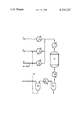
The reactor consists of a cylindrical vertical vessel (8) which can be heated by a circulating organic heat transfer medium, and which is filled with a catalyst in the form of cylinders of 3 mm height and 3 mm diameter; the catalyst has been prepared in accordance with Example 1 of German Laid-Open Application DOS 2,445,303. It is reduced at 120°-140° C. by first flushing the line (3) with nitrogen, to which subsequently from 3 to 5 percent by volume of hydrogen are added. When water starts to separate out more slowly, the temperature is gradually raised to 200° C. When the formation of water has ceased, the nitrogen is replaced by hydrogen. The gas flow rate is set to 570 parts by volume (S.T.P.) per hour per unit volume of catalyst. The hydrogen is preheated to about 250° C. in the heat exchanger (6). Through line (2), 28 parts by volume (S.T.P.) per hour of gaseous dimethylamine, which has been preheated to about 250° C. in the heat exchanger (5), are added to the stream of hydrogen.
Commercial dodecyl alcohol, which, according to gas chromatography, contains about 1.4 percent (assessed on area) of constituents with shorter retention time is used for the reaction. Per hour, 0.1 part by volume of liquid alcohol, corresponding to a molar ratio of dimethylamine to dodecanol of 1.3:1, is fed through line (1) and through the heat exchanger (4) to the gas mixture and then to the vaporizer (7). It is completely vaporized at about 200° C. The resulting gas mixture enters the reactor under a pressure of about 1.1 bar. The reaction is conducted so as to give a maximum temperature of 170° C. The hottest point is approximately between the 1st and the 2nd quarter of the catalyst bed, viewed in the direction of flow. The temperature drops by about 10° C. near the reactor exit. In the cooler (9), the reaction mixture is cooled to room temperature. The condensate collects in the separator (10). It has the following composition according to gas chromatography:
Dimethyldodecylamine: 97.0%
Dimethylamine: 0.6%
Monomethyldodecylamine 0.3%
Water (according to K. Fischer): 0.9%
Other constituents: 1.2%
Unconverted dodecanol and other high-boiling constituents are not found.
The equipment described in Example 1 is used. 120 parts by volume (S.T.P.) of hydrogen per part by volume of catalyst per hour are passed through at a maximum reaction temperature of 180° C. The preset temperature in the vaporizer (7) is 250° C. A mixture of piperidine and methanol in the molar ratio of 1:4, and in an amount corresponding to 0.2 part by volume in the liquid state is fed to the stream of hydrogen. The condensate obtained has the following composition, according to gas chromatography:
N-Methylpiperidine: 79.3%
Piperidine: --
Methanol: 19.4%
Remainder: 1.3%
The equipment described in Example 1 is used. The mean reaction temperature is 140° C. and a stream of hydrogen of 60 parts by volume (S.T.P.) per hour per part by volume of catalyst is used. The temperature in the heat exchanger (6) and in the vaporizer (7) is also 140° C. 20 parts by volume (S.T.P.) of gaseous dimethylamine are fed in per hour per part by volume of catalyst through lines (2) and the heat exchanger (5). Liquid cyclohexanone in an amount of 0.03 part by volume of liquid per hour per part by volume of catalyst is introduced through lines (1) and the heat exchanger (4), where it vaporizes. The maximum temperature measured in the reactor is 160° C. The reaction mixture is cooled to room temperature and is found, by gas chromatography, to have the following composition (excluding water):
Dimethylcyclohexylamine: 89%
Dimethylamine: 8%
Cyclohexanol: 1%
Remainder: 2%
The procedure described in Example 1 is followed. 60 parts by volume of hydrogen are introduced per hour per part by volume of catalyst via the heat exchanger (6) and the vaporizer (7), the temperature of each being set to 150° C. 20 parts by volume (S.T.P.) per hour per part by volume of catalyst of gaseous methylamine are passed through the heat exchanger (5), which is also set to 150° C. and then admixed to the stream of hydrogen, whilst 0.1 part by volume of liquid ethanol per hour per part by volume of catalyst is introduced into the gas stream via the heat exchanger (4) and vaporizes completely in the vaporizer (7). After leaving the reactor, the reaction mixture is cooled in 2 stages; the fraction obtained at room temperature has the following composition (excluding water):
Dimethylethylamine: 49%
Ethanol: 48%
Remainder: 3%
In a second cooler (12), the residual gas is cooled to -40° C., as a result of which a low temperature condensate having the following composition is obtained in the vessel (13):
Dimethylethylamine: 90%
Ethanol: 6%
Dimethylamine: 2%
Remainder: 2%
This condensate is formed in an amount of 14% , based on the total condensable amount of constituents, and is recycled to the reactor (as shown schematically by the broken line (14) in the FIGURE).
To obtain N-n-propylaniline, a mixture of 0.35 part by volume of liquid aniline and propanol, in the molar ratio of 1:1.1, is fed per hour (per part by volume of catalyst) to the reactor described in Example 1, by taking up the mixture, in the vaporizer, in a stream of hydrogen (120 parts by volume (S.T.P.) per hour per part by volume of catalyst) which has been preheated to 200° C. The pressure at the reactor inlet is 1.1 bar; the temperature in the reactor is not allowed to exceed 190° C. The condensate collected in the separator forms an aqueous layer and an organic layer; the latter consists of 89% of N-n-propylaniline, 4% of propanol, 4% of aniline and 3% of other constituents.
N-Ethyltoluidine is prepared from o-toluidine and ethanol by a method similar to that described in Example 5. The amount of hydrogen is 150 parts by volume (S.T.P.) and the mixture of starting materials amounts to 0.5 part by volume of liquid. A mixture of 80% of N-ethyl-o-toluidine, 2% of N,N-diethyl-o-toluidine, 13% of o-toluidine, 4% of ethanol and 1% of other constituents is obtained.
Examples of other compounds which were obtained equally successfully to those described above are N,N-dimethylpiperazine from methanol and piperazine, N-laurylmorpholine from morpholine and lauryl alcohol and N,N-di-n-butylaniline from N-butyraldehyde and N-n-butylaniline. For reactions with methanol, the temperature should not exceed 170° C., to avoid decomposition of the methanol to CO+H2.
Claims (2)
1. A process for N-alkylating an amine by reacting it with an alcohol or carbonyl compound in the gas phase over a copper catalyst under hydrogenating conditions, wherein the reaction is carried out over a copper catalyst which has been obtained by thermal decomposition and reduction of a basic copper-aluminum carbonate.
2. A process as claimed in claim 1, wherein the copper catalyst used is obtained by precipitating a dilute or moderately concentrated solution of salts of copper and aluminum with an alkali metal carbonate at pH 8-10, decomposing the resulting precipitate, after appropriate molding, at 350°-600° C., and reducing the product in the conventional manner.
Applications Claiming Priority (2)
| Application Number | Priority Date | Filing Date | Title |
|---|---|---|---|
| DE19782838184 DE2838184A1 (en) | 1978-09-01 | 1978-09-01 | METHOD FOR PRODUCING TERTIA AMINES |
| DE2838184 | 1978-09-01 |
Publications (1)
| Publication Number | Publication Date |
|---|---|
| US4234727A true US4234727A (en) | 1980-11-18 |
Family
ID=6048470
Family Applications (1)
| Application Number | Title | Priority Date | Filing Date |
|---|---|---|---|
| US06/068,742 Expired - Lifetime US4234727A (en) | 1978-09-01 | 1979-08-22 | Preparation of amines |
Country Status (3)
| Country | Link |
|---|---|
| US (1) | US4234727A (en) |
| EP (1) | EP0009590B1 (en) |
| DE (2) | DE2838184A1 (en) |
Cited By (11)
| Publication number | Priority date | Publication date | Assignee | Title |
|---|---|---|---|---|
| JPS57150639A (en) * | 1981-02-11 | 1982-09-17 | Basf Ag | Manufacture of polymethylated oligoamine and aminoalkanol |
| US4851580A (en) * | 1985-11-06 | 1989-07-25 | Basf Aktiengesellschaft | Preparation of trialkylamines |
| US4851578A (en) * | 1986-08-14 | 1989-07-25 | Basf Aktiengesellschaft | Preparation of trialkylamines |
| US4954654A (en) * | 1988-08-29 | 1990-09-04 | Phillips Petroleum Company | Process for the preparation of secondary and tertiary amines |
| AU674628B2 (en) * | 1994-08-02 | 1997-01-02 | Mitsui Chemicals, Inc. | Copper catalyst for the hydration of nitrile and preparation thereof |
| US5925793A (en) * | 1992-09-12 | 1999-07-20 | Basf Aktiengesellschaft | Preparation of tertiary amines |
| US6306795B1 (en) | 1999-09-07 | 2001-10-23 | Cytec Technology Corp. | Stable highly active supported copper based catalysts |
| US6417353B1 (en) | 1999-03-12 | 2002-07-09 | Basf Aktiengesellschaft | Preparing amines |
| US6525222B2 (en) | 1999-12-06 | 2003-02-25 | Basf Aktiengesellschaft | Process for preparing amines |
| US6563004B2 (en) | 1999-12-06 | 2003-05-13 | Basf Aktiengesellschaft | Process for preparing monoisopropylamine |
| US20120004464A1 (en) * | 2010-06-30 | 2012-01-05 | Basf Se | Process for preparing tri-n-propylamine (tpa) |
Families Citing this family (2)
| Publication number | Priority date | Publication date | Assignee | Title |
|---|---|---|---|---|
| DE3422610A1 (en) * | 1984-06-19 | 1985-12-19 | Basf Ag, 6700 Ludwigshafen | METHOD FOR PRODUCING AMINES |
| DE3840194A1 (en) * | 1988-11-29 | 1990-05-31 | Bayer Ag | COPPER TRAITER CATALYST, METHOD FOR THE PRODUCTION THEREOF AND METHOD FOR THE PRODUCTION OF N-ALKYLATED AROMATIC AMINES USING THIS COPPER CATALYST |
Citations (14)
| Publication number | Priority date | Publication date | Assignee | Title |
|---|---|---|---|---|
| DE637731C (en) * | 1933-10-22 | 1936-11-03 | I G Farbenindustrie Akt Ges | Process for the production of higher molecular weight secondary and tertiary amines |
| US3239562A (en) * | 1963-02-14 | 1966-03-08 | Halcon International Inc | Process for preparing cyclohexylamines |
| US3384667A (en) * | 1964-04-28 | 1968-05-21 | Mobil Oil Corp | Production of primary and secondary amines |
| US3397237A (en) * | 1965-06-10 | 1968-08-13 | Ashland Oil Inc | Process for preparing methyldialkyl-amines |
| US3520933A (en) * | 1966-10-28 | 1970-07-21 | Basf Ag | Production of amines |
| US3542694A (en) * | 1965-09-15 | 1970-11-24 | Texaco Inc | Platinum alkylation catalyst |
| US3558706A (en) * | 1968-03-14 | 1971-01-26 | Gen Electric | Alkylation of aromatic primary amino group |
| DE2445303A1 (en) * | 1974-09-21 | 1976-04-08 | Basf Ag | BASIC CARBONATE SUITABLE FOR THE PRODUCTION OF A CATALYST CONTAINING COPPER |
| US3976697A (en) * | 1974-10-29 | 1976-08-24 | Texaco Inc. | Preparation of tertiary amines |
| GB1451777A (en) * | 1972-11-14 | 1976-10-06 | Hoechst Ag | Process for preparation of secondary aliphatic amines |
| US4014933A (en) * | 1969-10-23 | 1977-03-29 | Basf Aktiengesellschaft | Production of amines from alcohols |
| US4036883A (en) * | 1974-11-27 | 1977-07-19 | Basf Aktiengesellschaft | Manufacture of isomer-free 3-methylbutylamine |
| US4062899A (en) * | 1974-09-21 | 1977-12-13 | Basf Aktiengesellschaft | Butynediol manufacture |
| US4138437A (en) * | 1975-08-06 | 1979-02-06 | Hoechst Aktiengesellschaft | Process for the preparation of tertiary aliphatic amines |
Family Cites Families (2)
| Publication number | Priority date | Publication date | Assignee | Title |
|---|---|---|---|---|
| DE881657C (en) * | 1949-01-07 | 1953-07-02 | Ici Ltd | Process for the production of amines |
| DE2709864A1 (en) * | 1977-02-08 | 1978-08-17 | Lonza Ag | Tert. aliphatic amine prepn. - from satd. aliphatic alcohol and amine using highly selective catalysts |
-
1978
- 1978-09-01 DE DE19782838184 patent/DE2838184A1/en active Pending
-
1979
- 1979-08-20 EP EP79103040A patent/EP0009590B1/en not_active Expired
- 1979-08-20 DE DE7979103040T patent/DE2962201D1/en not_active Expired
- 1979-08-22 US US06/068,742 patent/US4234727A/en not_active Expired - Lifetime
Patent Citations (14)
| Publication number | Priority date | Publication date | Assignee | Title |
|---|---|---|---|---|
| DE637731C (en) * | 1933-10-22 | 1936-11-03 | I G Farbenindustrie Akt Ges | Process for the production of higher molecular weight secondary and tertiary amines |
| US3239562A (en) * | 1963-02-14 | 1966-03-08 | Halcon International Inc | Process for preparing cyclohexylamines |
| US3384667A (en) * | 1964-04-28 | 1968-05-21 | Mobil Oil Corp | Production of primary and secondary amines |
| US3397237A (en) * | 1965-06-10 | 1968-08-13 | Ashland Oil Inc | Process for preparing methyldialkyl-amines |
| US3542694A (en) * | 1965-09-15 | 1970-11-24 | Texaco Inc | Platinum alkylation catalyst |
| US3520933A (en) * | 1966-10-28 | 1970-07-21 | Basf Ag | Production of amines |
| US3558706A (en) * | 1968-03-14 | 1971-01-26 | Gen Electric | Alkylation of aromatic primary amino group |
| US4014933A (en) * | 1969-10-23 | 1977-03-29 | Basf Aktiengesellschaft | Production of amines from alcohols |
| GB1451777A (en) * | 1972-11-14 | 1976-10-06 | Hoechst Ag | Process for preparation of secondary aliphatic amines |
| DE2445303A1 (en) * | 1974-09-21 | 1976-04-08 | Basf Ag | BASIC CARBONATE SUITABLE FOR THE PRODUCTION OF A CATALYST CONTAINING COPPER |
| US4062899A (en) * | 1974-09-21 | 1977-12-13 | Basf Aktiengesellschaft | Butynediol manufacture |
| US3976697A (en) * | 1974-10-29 | 1976-08-24 | Texaco Inc. | Preparation of tertiary amines |
| US4036883A (en) * | 1974-11-27 | 1977-07-19 | Basf Aktiengesellschaft | Manufacture of isomer-free 3-methylbutylamine |
| US4138437A (en) * | 1975-08-06 | 1979-02-06 | Hoechst Aktiengesellschaft | Process for the preparation of tertiary aliphatic amines |
Cited By (14)
| Publication number | Priority date | Publication date | Assignee | Title |
|---|---|---|---|---|
| JPS57150639A (en) * | 1981-02-11 | 1982-09-17 | Basf Ag | Manufacture of polymethylated oligoamine and aminoalkanol |
| US4851580A (en) * | 1985-11-06 | 1989-07-25 | Basf Aktiengesellschaft | Preparation of trialkylamines |
| US4851578A (en) * | 1986-08-14 | 1989-07-25 | Basf Aktiengesellschaft | Preparation of trialkylamines |
| US4954654A (en) * | 1988-08-29 | 1990-09-04 | Phillips Petroleum Company | Process for the preparation of secondary and tertiary amines |
| US5925793A (en) * | 1992-09-12 | 1999-07-20 | Basf Aktiengesellschaft | Preparation of tertiary amines |
| US5817872A (en) * | 1994-08-02 | 1998-10-06 | Mitsui Chemicals, Inc. | Copper catalyst for the hydration of nitrile and preparation thereof |
| AU674628B2 (en) * | 1994-08-02 | 1997-01-02 | Mitsui Chemicals, Inc. | Copper catalyst for the hydration of nitrile and preparation thereof |
| US6417353B1 (en) | 1999-03-12 | 2002-07-09 | Basf Aktiengesellschaft | Preparing amines |
| US6306795B1 (en) | 1999-09-07 | 2001-10-23 | Cytec Technology Corp. | Stable highly active supported copper based catalysts |
| US6472561B2 (en) | 1999-09-07 | 2002-10-29 | Cytec Technology Corp | Stable highly active supported copper based catalysts |
| US6525222B2 (en) | 1999-12-06 | 2003-02-25 | Basf Aktiengesellschaft | Process for preparing amines |
| US6563004B2 (en) | 1999-12-06 | 2003-05-13 | Basf Aktiengesellschaft | Process for preparing monoisopropylamine |
| US20120004464A1 (en) * | 2010-06-30 | 2012-01-05 | Basf Se | Process for preparing tri-n-propylamine (tpa) |
| US8466322B2 (en) * | 2010-06-30 | 2013-06-18 | Basf Se | Process for preparing tri-n-propylamine (TPA) |
Also Published As
| Publication number | Publication date |
|---|---|
| EP0009590A1 (en) | 1980-04-16 |
| DE2838184A1 (en) | 1980-03-13 |
| DE2962201D1 (en) | 1982-03-25 |
| EP0009590B1 (en) | 1982-02-24 |
Similar Documents
| Publication | Publication Date | Title |
|---|---|---|
| US8017816B2 (en) | Method of producing lower alcohols from glycerol | |
| EP2809643B1 (en) | Ethyl acetate production | |
| US9404027B2 (en) | Method of producing lower alcohols from glycerol | |
| JPH0830042B2 (en) | Production method of trialkylamine | |
| HU218150B (en) | Process for the preparation of aminoethyl ethanolamine and / or hydroxyethylpiperazine | |
| EP0009590B1 (en) | Process for the preparation of amines | |
| JP2001213825A (en) | High purity 1,3-butylene glycol | |
| JP2005511674A (en) | Method for isolating trimethylolpropane from a reaction mixture | |
| EP2240429B1 (en) | Method of producing lower alcohols from glycerol | |
| US2583729A (en) | Separation of a schiff's base from the condensation product of a primary amine with a carbonyl compound | |
| CN1054366C (en) | Process for producing isopropyl amine | |
| GB1585480A (en) | Production of tertiary amines | |
| CA2032362C (en) | Process for the preparation of n,n-dimethylamine | |
| US3976700A (en) | Process for preparing methyl heptenone | |
| US4256880A (en) | Continuous morpholine process | |
| JPS6228947B2 (en) | ||
| US6380438B1 (en) | Process for the production of 3-hydroxypropanal | |
| US9809517B2 (en) | Method for breakdown of formates | |
| US4196147A (en) | Manufacture of N-alkylanilines | |
| US5965769A (en) | Method for heat recovery and utilization by use of chemical energy of synthesis and decomposition of methyl formate | |
| US3532755A (en) | Hydrogenation of perfluoroalkyl nitriles | |
| US20100094055A1 (en) | Process for the preparation of phenethylamine derivatives | |
| US6566534B2 (en) | Processes for the preparation of aziridine compounds and vapor-phase reaction processes | |
| US20210253537A1 (en) | Hydrogenation process | |
| CA1057775A (en) | Process for preparing methyl heptenone |