US4139265A - Modified gauss type photographic lens - Google Patents
Modified gauss type photographic lens Download PDFInfo
- Publication number
- US4139265A US4139265A US05/757,144 US75714477A US4139265A US 4139265 A US4139265 A US 4139265A US 75714477 A US75714477 A US 75714477A US 4139265 A US4139265 A US 4139265A
- Authority
- US
- United States
- Prior art keywords
- sub
- lens
- surface facing
- object side
- lens component
- Prior art date
- Legal status (The legal status is an assumption and is not a legal conclusion. Google has not performed a legal analysis and makes no representation as to the accuracy of the status listed.)
- Expired - Lifetime
Links
- 230000005499 meniscus Effects 0.000 claims abstract description 35
- 238000007496 glass forming Methods 0.000 claims 4
- 206010073261 Ovarian theca cell tumour Diseases 0.000 description 12
- 230000004075 alteration Effects 0.000 description 12
- 208000001644 thecoma Diseases 0.000 description 12
- 239000011521 glass Substances 0.000 description 10
- 239000000463 material Substances 0.000 description 10
- 238000012937 correction Methods 0.000 description 5
- 201000009310 astigmatism Diseases 0.000 description 2
- 206010010071 Coma Diseases 0.000 description 1
- 238000010276 construction Methods 0.000 description 1
- 238000004519 manufacturing process Methods 0.000 description 1
- 238000012986 modification Methods 0.000 description 1
- 230000004048 modification Effects 0.000 description 1
- 230000011514 reflex Effects 0.000 description 1
Images


Classifications
-
- G—PHYSICS
- G02—OPTICS
- G02B—OPTICAL ELEMENTS, SYSTEMS OR APPARATUS
- G02B13/00—Optical objectives specially designed for the purposes specified below
Definitions
- This invention relates to improvements in a modified Gauss type photographic lens.
- the Gauss type lens and its modifications have heretofore been widely used and their performances have been considerably improved.
- the back focal distance thereof must be increased and this greatly affects the correction of the various aberrations and accordingly aggravates the performance.
- use must be made of glass materials having various refractive indices and Abbe numbers, which means higher cost of the manufacture, and this could never be said to be sufficiently satisfactory.
- the present invention intends to provide a modified Gauss type photographic lens which has an aperture ratio of 1:1.8 or 1:2.0, an angle of view of the order of 46° and a back focal distance as long as 0.71f or more (f represents the total focal length) and in which the various aberrations can be corrected by using a combination of a few types of glass materials and a sufficiently satisfactory performance is provided both in terms of resolution and contrast.
- the modified Gauss type photographic lens system comprises, in order from the object side, a first lens component which is a positive meniscus lens having its convex surface facing the object side, a second lens component which is a positive meniscus lens having its convex surface facing the object side, a third lens component which is a negative meniscus lens having its convex surface facing the object side, a fourth lens component which is a negative meniscus lens having its concave surface facing the object side, a fifth lens component which is a positive meniscus lens cemented to the fourth lens component and having its convex surface facing the image side, and a sixth lens component which is a biconvex lens having its more curved surface facing the image side, and the lens system satisfies certain conditions peculiar to the present invention which will hereinafter become fully apparent from the following detailed description thereof taken in conjunction with the accompanying drawings.
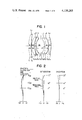
- FIG. 1 is a cross-sectional view showing the construction of the lens system according to the present invention.
- FIGS. 2, 3, 4 and 5 are graphs illustrating the corrections of the spherical aberration, sine condition, astigmatism and distortion in Examples 1, 2, 3 and 4 of the invention, respectively.
- FIG. 6 illustrates the coma in the meridional direction in Example 1, with the lateral spherical aberration shown by a broken line.
- FIG. 7 is a graph illustrating the coma in the sagittal direction in Example 1.
- the modified Gauss type photographic lens system of the present invention comprises six lens components, namely, a first L1 and a second lens component L2 both of which are positive meniscus lenses having their convex surfaces facing the object side, a third lens component L3 which is a negative meniscus lens having its convex surface facing the object side, a fourth lens L4 which is a negative meniscus lens having its concave surface facing the object side, a fifth lens component L5 which is a positive meniscus lens having its convex surface facing the image side, the fourth L4 and fifth lens components L5 being cemented together, and a sixth lens component L6 which is a biconvex lens having its more curved surface facing the image side.
- This lens system has a back focal distance as long as 0.71f or more and is formed of a few types of glass materials, and satisfies the following conditions:
- r 1 , r 2 , . . . , r 11 are the curvature radii of the successive lens surfaces
- d 1 , d 2 , . . . , d 10 are the distances between adjacent ones of the lens surfaces
- nd 1 , nd 2 , . . . , nd 6 are the refractive indices of the respective glass materials
- ⁇ d 1 , ⁇ d 2 , . . . , ⁇ d 6 are the Abbe numbers of the respective glass materials
- f is the total focal length of the entire system.
- Conditions (1) to (6) are intended to restrict the degrees of refraction of the meniscus lens components disposed with the diaphragm therebetween, namely, the second and third lens components and the fourth and fifth lens components.
- the back focal distance of the lens system may be made as long as 0.71f or more while, at the same time, the advantage of the intrinsic symmetry of the Gauss with respect to the diaphragm may be availed of to the utmost to thereby bring about advantages to the correction of the asymmetry of coma and chromatic difference of magnification and also reduce the Petzval sum while well correcting the coma in the sagittal direction.
- conditions (1) and (2) are intended to keep the back focal distance as long as 0.71f or more while minimizing the Petzval sum for improving the image plane characteristic.
- the lower limits of these conditions being exceeded would be advantageous to increase the back focal distance but would aggravate the Petzval sum and conversely, the upper limits of these conditions being exceeded would be advantageous to the Petzval sum but would make it difficult to increase the back focal distance to 0.71f or more.
- Conditions (3) and (4) are intended to make the two concave lens groups before and behind the diaphragm symmetrical about the diaphragm to thereby eliminate the asymmetry of the coma and provide an advantage in correcting the lateral chromatic aberration. If the upper and the lower limits of these conditions are exceeded, such symmetry will be lost so that difficulties will be encountered in correcting the coma and the chromatic difference of magnification.
- Condition (5) is for well correcting the various aberrations while also well correcting the coma in the sagittal direction and, in order that this may be satisfied, condition (6) must be satisfied at the same time. More specifically, in order that the coma in the sagittal direction may be better, a greater value of (r 6 +
- Conditions (7) and (8) are requisite for correcting the Petzval sum of the entire system and keeping the balance of the chromatic aberration in the entire system where conditions (1) to (6) are satisfied. Deviation from these conditions (7) and (8) would aggravate the image plane characteristic and in addition, destroy the balance of the chromatic aberration.
- conditions (6), (7) and (8) are advantageous to realize the correction of the coma by using a combination of a few types of glass materials, e.g. four types of glass materials in Example 1, three types of glass materials in Examples 2 and 3, and two types of glass materials in Example 4.
- r, d, nd and ⁇ d respectively represent the curvature radius of each refracting surface, the center thickness of each lens component or the air space between adjacent lens components, the refractive index and the Abbe number of each lens component, and the subscripts represent the order from the object side.
- FIG. 6 illustrates the coma in the meridional direction in Example 1, with the lateral spherical aberration shown by a broken line.
- FIG. 7 illustrates the coma in the sagittale direction also in Example 1.
- the back focal distance is as long as 0.71f or more, and the number of types of glass materials is restricted to a small number, say, four in Example 1, three in Examples 2 and 3, and two in Example 4, and yet the various aberrations are well corrected and the performance is fully satisfactory both in terms of resolution and contrast.
Landscapes
- Physics & Mathematics (AREA)
- General Physics & Mathematics (AREA)
- Optics & Photonics (AREA)
- Lenses (AREA)
Abstract
A modified Gauss type photographic lens system comprises, in the order from the object side, a first lens component which is a positive meniscus lens having its convex surface facing the object side, a second lens component which is a positive meniscus lens having its convex surface facing the object side, a third lens component which is a negative meniscus lens having its convex surface facing the object side, a fourth lens component which is a negative meniscus lens having its concave surface facing the object side, a fifth lens component which is a positive meniscus lens cemented to the fourth lens component and havings its convex surface facing the image side, and a sixth lens component which is a biconvex lens having its more curved surface facing the image side, the lens system satisfying certain conditions peculiar to the invention.
Description
1. Field of the Invention
This invention relates to improvements in a modified Gauss type photographic lens.
2. Description of the Prior Art
The Gauss type lens and its modifications have heretofore been widely used and their performances have been considerably improved. However, in order that such lens may be used with a single lens reflex camera, the back focal distance thereof must be increased and this greatly affects the correction of the various aberrations and accordingly aggravates the performance. To make such lens, therefore, use must be made of glass materials having various refractive indices and Abbe numbers, which means higher cost of the manufacture, and this could never be said to be sufficiently satisfactory.
The present invention intends to provide a modified Gauss type photographic lens which has an aperture ratio of 1:1.8 or 1:2.0, an angle of view of the order of 46° and a back focal distance as long as 0.71f or more (f represents the total focal length) and in which the various aberrations can be corrected by using a combination of a few types of glass materials and a sufficiently satisfactory performance is provided both in terms of resolution and contrast.
To achieve such an object, the modified Gauss type photographic lens system according to the present invention comprises, in order from the object side, a first lens component which is a positive meniscus lens having its convex surface facing the object side, a second lens component which is a positive meniscus lens having its convex surface facing the object side, a third lens component which is a negative meniscus lens having its convex surface facing the object side, a fourth lens component which is a negative meniscus lens having its concave surface facing the object side, a fifth lens component which is a positive meniscus lens cemented to the fourth lens component and having its convex surface facing the image side, and a sixth lens component which is a biconvex lens having its more curved surface facing the image side, and the lens system satisfies certain conditions peculiar to the present invention which will hereinafter become fully apparent from the following detailed description thereof taken in conjunction with the accompanying drawings.
FIG. 1 is a cross-sectional view showing the construction of the lens system according to the present invention.
FIGS. 2, 3, 4 and 5 are graphs illustrating the corrections of the spherical aberration, sine condition, astigmatism and distortion in Examples 1, 2, 3 and 4 of the invention, respectively.
FIG. 6 illustrates the coma in the meridional direction in Example 1, with the lateral spherical aberration shown by a broken line.
FIG. 7 is a graph illustrating the coma in the sagittal direction in Example 1.
As shown in FIG. 1, the modified Gauss type photographic lens system of the present invention comprises six lens components, namely, a first L1 and a second lens component L2 both of which are positive meniscus lenses having their convex surfaces facing the object side, a third lens component L3 which is a negative meniscus lens having its convex surface facing the object side, a fourth lens L4 which is a negative meniscus lens having its concave surface facing the object side, a fifth lens component L5 which is a positive meniscus lens having its convex surface facing the image side, the fourth L4 and fifth lens components L5 being cemented together, and a sixth lens component L6 which is a biconvex lens having its more curved surface facing the image side. This lens system has a back focal distance as long as 0.71f or more and is formed of a few types of glass materials, and satisfies the following conditions:
(1) 0.7 < r6 /r3 < 0.8
(2) 0.7 < r7 /r9 < 0.8
(3) 0.95 < |r3 /r9 | < 1.05
(4) 0.95 < |r6 /r7 | < 1.05
(5) 0.29f < (r6 + |r7 |/2) < 0.32f ##EQU1## where r1, r2, . . . , r11 are the curvature radii of the successive lens surfaces, d1, d2, . . . , d10 are the distances between adjacent ones of the lens surfaces, nd1, nd2, . . . , nd6 are the refractive indices of the respective glass materials, νd1, νd2, . . . , νd6 are the Abbe numbers of the respective glass materials, f is the total focal length of the entire system.
The above conditions will now be considered. Conditions (1) to (6) are intended to restrict the degrees of refraction of the meniscus lens components disposed with the diaphragm therebetween, namely, the second and third lens components and the fourth and fifth lens components. By these conditions, the back focal distance of the lens system may be made as long as 0.71f or more while, at the same time, the advantage of the intrinsic symmetry of the Gauss with respect to the diaphragm may be availed of to the utmost to thereby bring about advantages to the correction of the asymmetry of coma and chromatic difference of magnification and also reduce the Petzval sum while well correcting the coma in the sagittal direction.
More particularly, conditions (1) and (2) are intended to keep the back focal distance as long as 0.71f or more while minimizing the Petzval sum for improving the image plane characteristic. The lower limits of these conditions being exceeded would be advantageous to increase the back focal distance but would aggravate the Petzval sum and conversely, the upper limits of these conditions being exceeded would be advantageous to the Petzval sum but would make it difficult to increase the back focal distance to 0.71f or more. Conditions (3) and (4) are intended to make the two concave lens groups before and behind the diaphragm symmetrical about the diaphragm to thereby eliminate the asymmetry of the coma and provide an advantage in correcting the lateral chromatic aberration. If the upper and the lower limits of these conditions are exceeded, such symmetry will be lost so that difficulties will be encountered in correcting the coma and the chromatic difference of magnification.
Condition (5) is for well correcting the various aberrations while also well correcting the coma in the sagittal direction and, in order that this may be satisfied, condition (6) must be satisfied at the same time. More specifically, in order that the coma in the sagittal direction may be better, a greater value of (r6 + |r7 |/2) is more advantageous because r3 and r9 become also greater due to conditions (1) and (2), but the back focal distance becomes correspondingly shorter. Thus, conditions (5) and (6) are necessary to well correct the coma in the sagittal direction while maintaining 0.71f or more for the back focal distance. If the lower limit of condition (5) is exceeded, the coma in the sagittal direction could not be sufficiently corrected, and if the upper limit of condition (5) is exceeded, it will become difficult to maintain a predetermined back focal distance. If the lower limit of condition (6) is exceeded, it will become difficult to satisfy condition (5), and the upper limit of condition (6) being exceeded will be undesirable to the correction of the Petzval sum and of the chromatic aberration.
Conditions (7) and (8) are requisite for correcting the Petzval sum of the entire system and keeping the balance of the chromatic aberration in the entire system where conditions (1) to (6) are satisfied. Deviation from these conditions (7) and (8) would aggravate the image plane characteristic and in addition, destroy the balance of the chromatic aberration.
Also, as will be seen in the examples below, conditions (6), (7) and (8) are advantageous to realize the correction of the coma by using a combination of a few types of glass materials, e.g. four types of glass materials in Example 1, three types of glass materials in Examples 2 and 3, and two types of glass materials in Example 4.
Shown below are some examples of the numerical data of the modified Gauss type photographic lens according to the present invention, in which r, d, nd and νd respectively represent the curvature radius of each refracting surface, the center thickness of each lens component or the air space between adjacent lens components, the refractive index and the Abbe number of each lens component, and the subscripts represent the order from the object side.
______________________________________
Example 1
f = 100 mm aperture ratio 1:1,8 Angle of view 2ω = 46°
______________________________________
r.sub.1 =
      79.457
               d.sub.1 =
                       8.915 nd.sub.1 = 1.79631
                                       νd.sub.1 = 40.8
r.sub.2 =
      383.527
               d.sub.2 =
                       0.194
r.sub.3 =
      41.473
               d.sub.3 =
                       9.109 nd.sub.2 = 1.78797
                                       νd.sub.2 = 47.5
r.sub.4 =
      63.178
               d.sub.4 =
                       1.938
r.sub.5 =
      98.837
               d.sub.5 =
                       2.132 nd.sub.3 = 1.74000
                                       νd.sub.3 = 28.2
r.sub.6 =
      31.395
               d.sub.6 =
                       25.388
r.sub.7 =
      -31.977
               d.sub.7 =
                       2.519 nd.sub.4 = 1.74000
                                       νd.sub.4 = 28.2
r.sub.8 =
      -193.798
               d.sub.8 =
                       10.465
                             nd.sub.5 = 1.74443
                                       νd.sub.5 = 49.4
r.sub.9 =
      -40.0
               d.sub.9 =
                       0.194
r.sub.10 =
      395.930
               d.sub.10 =
                       6.686 nd.sub.6 = 1.79631
                                       νd.sub.6 = 40.8
r.sub.11 =
      -96.225
back focal distance = 0.729f
______________________________________
______________________________________
Example 2
f = 100 mm, aperture ratio 1:2.0 angle of view 2ω = 46°
______________________________________
r.sub.1 =
      75.698
               d.sub.1 =
                       8.527 nd.sub.1 = 1.76684
                                       νd.sub.1 = 46.6
r.sub.2 =
      323.124
               d.sub.2 =
                       0.194
r.sub.3 =
      40.789
               d.sub.3 =
                       9.690 nd.sub.2 = 1.76684
                                       νd.sub.2 = 46.6
r.sub.4 =
      60.078
               d.sub.4 =
                       1.357
r.sub.5 =
      87.486
               d.sub.5 =
                       2.132 nd.sub.3 = 1.69895
                                       νd.sub.3 = 30.0
r.sub.6 =
      29.797
               d.sub.6 =
                       25.969
r.sub.7 =
      -30.426
               d.sub.7 =
                       1.938 nd.sub.4 = 1.69895
                                       νd.sub.4 = 30.0
r.sub.8 =
      -232.558
               d.sub.8 =
                       10.659
                             nd.sub.5 = 1.74443
                                       νd.sub.5 = 49.4
r.sub.9 =
      -39.535
               d.sub.9 =
                       0.194
r.sub.10 =
      785.659
               d.sub.10 =
                       7.171 nd.sub.6 = 1.76684
                                       νd.sub.6 = 46.6
r.sub.11 =
      -83.176
back focal distance = 0.729f
______________________________________
______________________________________
Example 3
f = 100, aperture ratio 1:2.0 angle of view 2ω = 46°
______________________________________
r.sub.1 =
      75.775
               d.sub.1 =
                       8.721 nd.sub.1 = 1.76684
                                       νd.sub.1 = 46.6
r.sub.2 =
      323.124
               d.sub.2 =
                       0.194
r.sub.3 =
      40.789
               d.sub.3 =
                       9.690 nd.sub.2 = 1.76684
                                       νd.sub.2 = 46.6
r.sub.4 =
      60.078
               d.sub.4 =
                       1.357
r.sub.5 =
      87.486
               d.sub.5 =
                       2.132 nd.sub.3 = 1.69895
                                       νd.sub.3 = 30.0
r.sub.6 =
      29.652
               d.sub.6 =
                       26.163
r.sub.7 =
      -30.426
               d.sub.7 =
                       1.938 nd.sub.4 = 1.69895
                                       νd.sub.4 = 30.0
r.sub.8 =
      -310.078
               d.sub.8 =
                       10.853
                             nd.sub.5 = 1.74443
                                       νd.sub.5 = 49.4
r.sub.9 =
      -39.535
               d.sub.9 =
                       0.194
r.sub.10 =
      717.054
               d.sub.10 =
                       7.558 nd.sub.6 = 1.76684
                                       νd.sub.6 = 46.6
r.sub.11 =
      -83.950
back focal distance = 0.731f
______________________________________
______________________________________
Example 4
f = 100, aperture ratio 1:2.0 angle of view 2ω = 46°
______________________________________
r.sub.1 =
      75.700
               d.sub.1 =
                       8.527 nd.sub.1 = 1.76684
                                       νd.sub.1 = 46.6
r.sub.2 =
      323.124
               d.sub.2 =
                       0.194
r.sub.3 =
      40.698
               d.sub.3 =
                       9.690 nd.sub.2 = 1.76684
                                       νd.sub.2 = 46.6
r.sub.4 =
      60.078
               d.sub.4 =
                       1.453
r.sub.5 =
      87.486
               d.sub.5 =
                       2.132 nd.sub.3 = 1.69895
                                       νd.sub.3 = 30.0
r.sub.6 =
      29.574
               d.sub.6 =
                       25.969
r.sub.7 =
      -30.523
               d.sub.7 =
                       1.938 nd.sub.4 = 1.69895
                                       νd.sub.4 = 30.0
r.sub.8 =
      -968.992
               d.sub.8 =
                       11.047
                             nd.sub.5 = 1.76684
                                       νd.sub.5 = 46.6
r.sub.9 =
      -39.922
               d.sub.9 =
                       0.194
r.sub.10 =
      678.295
               d.sub.10 =
                       7.558 nd.sub.6 = 1.76684
                                       νd.sub.6 = 46.6
r.sub.11 =
      -89.481
back focal distance = 0.727f
______________________________________
The spherical aberration, sine condition, astigmatism and distortion in Examples 1, 2, 3 and 4 are graphically shown in FIGS. 2, 3, 4 and 5.
FIG. 6 illustrates the coma in the meridional direction in Example 1, with the lateral spherical aberration shown by a broken line. FIG. 7 illustrates the coma in the sagittale direction also in Example 1.
As will be seen in these graphs, the back focal distance is as long as 0.71f or more, and the number of types of glass materials is restricted to a small number, say, four in Example 1, three in Examples 2 and 3, and two in Example 4, and yet the various aberrations are well corrected and the performance is fully satisfactory both in terms of resolution and contrast.
Claims (4)
1. A modified Gauss type photographic lens system having a back focal distance as long as 71% or more of the total focal length of the entire system comprising, in the order from the object side, a first lens component which is a positive meniscus lens having its convex surface facing the object side, a second lens component which is a positive meniscus lens having its convex surface facing the object side, a third lens component which is a negative meniscus lens having its convex surface facing the object side, a fourth lens component which is a negative meniscus lens having its concave surface facing the object side, a fifth lens component which is a positive meniscus lens cemented to said fourth lens component and having its convex surface facing the image side, and a sixth lens component which is a biconvex lens having its more curved surface facing the image side, said lens system satisfying the following conditions:
(1) 0.7 < r6 /r3 < 0.8
(2) 0.7 < r7 /r9 < 0.8
(3) 0.95 < |r3 /r9 | < 1.05
(4) 0.95 < |r6 /r7 | < 1.05
(5) 0.29f < (r6 + |r7 |/2) < 0.32f
and wherein the numerical data are as shown in the following table:
______________________________________
           Thickness and
                       Refractive  Abbe
Radii      air spaces  indexes     number
______________________________________
r.sub.1 = 79.457
           d.sub.1 = 8.915
                       nd.sub.1 = 1.79631
                                   νd.sub.1 = 40.8
r.sub.2 = 383.527
           d.sub.2 = 0.194
r.sub.3 = 41.473
           d.sub.3 = 9.109
                       nd.sub.2 = 1.78797
                                   μd.sub.2 = 47.5
r.sub.4 = 63.178
           d.sub.4 = 1.938
r.sub.5 = 98.837
           d.sub.5 = 2.132
                       nd.sub.3 = 1.74000
                                   νd.sub.3 = 28.2
r.sub.6 = 31.395
           d.sub.6 = 25.388
r.sub.7 = -31.977
           d.sub.7 = 2.519
                       nd.sub.4 = 1.74000
                                   νd.sub.4 = 28.2
r.sub.8 = -193.798
           d.sub.8 = 10.465
                       nd.sub.5 = 1.74443
                                   νd.sub.5 = 49.4
r.sub.9 = -40.0
           d.sub.9  = 0.194
r.sub.10 = 395.930
           d.sub.10 = 6.686
                       nd.sub.6 = 1.79631
                                   νd.sub.6 = 40.8
r.sub.11 = -96.225
______________________________________
where f is the total focal length of the entire system, r, d, nd and νd respectively represent the curvature radius of each refracting surface, the distance between adjacent refracting surfaces, the refractive index and the Abbe number of the glass forming each lens component, and the subscripts represent the order from the object side.
2. A modified Gauss type photographic lens system having a back focal distance as long as 71% or more of the total focal length of the entire system comprising, in the order from the object side, a first lens component which is a positive meniscus lens having its convex surface facing the object side, a second lens component which is a positive meniscus lens having its convex surface facing the object side, a third lens component which is a negative meniscus lens having its convex surface facing the object side, a fourth lens component which is a negative meniscus lens having its concave surface facing the object side, a fifth lens component which is a positive meniscus lens cemented to said fourth lens component and having its convex surface facing the image side, and a sixth lens component which is a biconvex lens having its more curved surface facing the image side, said lens system satisfying the following conditions:
(1) 0.7 < r6 /r3 < 0.8
(2) 0.7 < r7 /r9 < 0.8
(3) 0.95 < |r3 /r9 | < 1.05
(4) 0.95 < |r6 /r7 | < 1.05
(5) 0.29f < (r6 + |r7 |/2) < 0.32f
and wherein the numerical data are as shown in the following table:
______________________________________
           Thick-
           nesses and  Refractive  Abbe
Radii      air spaces  indexes     number
______________________________________
r.sub.1 =
      75.698
               d.sub.1 =
                       8.527 nd.sub.1 = 1.76684
                                       νd.sub.1 = 46.6
r.sub.2 =
      323.124
               d.sub.2 =
                       0.194
r.sub.3 =
      40.789
               d.sub.3 =
                       9.690 nd.sub.2 = 1.76684
                                       νd.sub.2 = 46.6
r.sub.4 =
      60.078
               d.sub.4 =
                       1.357
r.sub.5 =
      87.486
               d.sub.5 =
                       2.132 nd.sub.3 = 1.69895
                                       νd.sub.3 = 30.0
r.sub.6 =
      29.797
               d.sub.6 =
                       25.969
r.sub.7 =
      -30.426
               d.sub.7 =
                       1.938 nd.sub.4 = 1.69895
                                       νd.sub.4 = 30.0
r.sub.8 =
      -232.558
               d.sub.8 =
                       10.659
                             nd.sub. 5 = 1.74443
                                       νd.sub.5 = 49.4
r.sub.9 =
      -39.535
               d.sub.9 =
                       0.194
r.sub.10 =
      785.659
               d.sub.10 =
                       7.171 nd.sub.6 = 1.76684
                                       νd.sub.6 = 46.6
r.sub.11 =
      -83.176
______________________________________
where f is the total focal length of the entire system, r, d, nd and νd respectively represent the curvature radius of each refracting surface, the distance between adjacent refracting surfaces, the refractive index and the Abbe number of the glass forming each lens component, and the subscripts represent the order from the object side.
3. A modified Gauss type photographic lens system having a back focal distance as long as 71% or more of the total focal length of the entire system comprising, in the order from the object side, a first lens component which is a positive meniscus lens having its convex surface facing the object side, a second lens component which is a positive meniscus lens having its convex surface facing the object side, a third lens component which is a negative meniscus lens having its convex surface facing the object side, a fourth lens component which is a negative meniscus lens having its concave surface facing the object side, a fifth lens component which is a positive meniscus lens cemented to said fourth lens component and having its convex surface facing the image side, and a sixth lens component which is a biconvex lens having its more curved surface facing the image side, said lens system satisfying the following conditions:
(1) 0.7 < r6 /r3 < 0.8
(2) 0.7 < r7 /r9 < 0.8
(3) 0.95 < |r3 /r9 | < 1.05
(4) 0.95 < |r6 /r7 | < 1.05
(5) 0.29f < r6 + |r7 |/2 < 0.32f
and wherein the numerical data are as shown in the following table:
______________________________________
           Thick-
           nesses and  Refractive  Abbe
Radii      air spaces  indexes     number
______________________________________
r.sub.1 =
      75.775
               d.sub.1 =
                       8.721 nd.sub.1 = 1.76684
                                       νd.sub.1 = 46.6
r.sub.2 =
      323.124
               d.sub.2 =
                       0.194
r.sub.3 =
      40.789
               d.sub.3 =
                       9.690 nd.sub.2 = 1.76684
                                       νd.sub.2 = 46.6
r.sub.4 =
      60.078
               d.sub.4 =
                       1.357
r.sub.5 =
      87.486
               d.sub.5 =
                       2.132 nd.sub.3 = 1.69895
                                       νd.sub.3 = 30.0
r.sub.6 =
      29.652
               d.sub.6 =
                       26.163
r.sub.7 =
      -30.426
               d.sub.7 =
                       1.938 nd.sub.4 = 1.69895
                                       νd.sub.4 = 30.0
r.sub.8 =
      -310.078
               d.sub.8 =
                       10.853
                             nd.sub. 5 = 1.74443
                                       νd.sub.5 = 49.4
r.sub.9 =
      -39.535
               d.sub.9 =
                       0.194
r.sub.10 =
      717.054
               d.sub.10 =
                       7.558 nd.sub.6 = 1.76684
                                       νd.sub.6 = 46.6
r.sub.11 =
      -83.950
______________________________________
where f is the total focal length of the entire system, r, d, nd and νd respectively represent the curvature radius of each refracting surface, the distance between adjacent refracting surfaces, the refractive index and the Abbe number of the glass forming each lens component, and the subscripts represent the order from the object side.
4. A modified Gauss type photographic lens system having a back focal distance as long as 71% or more of the total focal length of the entire system comprising, in the order from the object side, a first lens component which is a positive meniscus lens having its convex surface facing the object side, a second lens component which is a positive meniscus lens having its convex surface facing the object side, a third lens component which is a negative meniscus lens having its convex surface facing the object side, a fourth lens component which is a negative meniscus lens having its concave surface facing the object side, a fifth lens component which is a positive meniscus lens cemented to said fourth lens component and having its convex surface facing the image side, and a sixth lens component which is a biconvex lens having its more curved surface facing the image side, said lens system satisfying the following conditions:
(1) 0.7 < r6 /r3 < 0.8
(2) 0.7 < r7 /r9 < 0.8
(3) 0.95 < |r3 /r9 | < 1.05
(4) 0.95 < |r6 /r7 | < 1.05
(5) 0.29f < (r6 + |r7 |/2) < 0.32f
and wherein the numerical data are as shown in the following table:
______________________________________
           Thick-
           nesses and  Refractive  Abbe
Radii      air spaces  indexes     number
______________________________________
r.sub.1 =
      75.700
               d.sub.1 =
                       8.527 nd.sub.1 = 1.76684
                                       νd.sub.1 = 46.6
r.sub.2 =
      323.124
               d.sub.2 =
                       0.194
r.sub.3 =
      40.698
               d.sub.3 =
                       9.690 nd.sub.2 = 1.76684
                                       νd.sub.2 = 46.6
r.sub.4 =
      60.078
               d.sub.4 =
                       1.453
r.sub.5 =
      87.486
               d.sub.5 =
                       2.132 nd.sub.3 = 1.69895
                                       νd.sub.3 = 30.0
r.sub.6 =
      29.574
               d.sub.6 =
                       25.969
r.sub.7 =
      -30.523
               d.sub.7 =
                       1.938 nd.sub.4 = 1.69895
                                       νd.sub.4 = 30.0
r.sub.8 =
      -968.922
               d.sub.8 =
                       11.047
                             nd.sub.5 = 1.76684
                                       νd.sub. 5 = 46.6
r.sub.9 =
      -39.922
               d.sub.9 =
                       0.194
r.sub.10 =
      678.295
               d.sub.10 =
                       7.558 nd.sub.6 = 1.76684
                                       νd.sub.6 = 46.6
r.sub.11 =
      -89.481
______________________________________
where f is the total focal length of the entire system, r, d, nd and νd respectively represent the curvature radius of each refracting surface, the distance between adjacent refracting surfaces, the refractive index and the Abbe number of the glass forming each lens component, and the subscripts represent the order from the object side.
Applications Claiming Priority (2)
| Application Number | Priority Date | Filing Date | Title |
|---|---|---|---|
| JP393276A JPS5288020A (en) | 1976-01-16 | 1976-01-16 | Deformed gauss type photographic lens |
| JP51/3932 | 1976-01-16 |
Publications (1)
| Publication Number | Publication Date |
|---|---|
| US4139265A true US4139265A (en) | 1979-02-13 |
Family
ID=11570900
Family Applications (1)
| Application Number | Title | Priority Date | Filing Date |
|---|---|---|---|
| US05/757,144 Expired - Lifetime US4139265A (en) | 1976-01-16 | 1977-01-06 | Modified gauss type photographic lens |
Country Status (4)
| Country | Link |
|---|---|
| US (1) | US4139265A (en) |
| JP (1) | JPS5288020A (en) |
| DE (1) | DE2701424C3 (en) |
| FR (1) | FR2338501A1 (en) |
Cited By (5)
| Publication number | Priority date | Publication date | Assignee | Title |
|---|---|---|---|---|
| US4234242A (en) * | 1978-02-03 | 1980-11-18 | Nippon Kogaku K.K. | Gauss type photographic lens |
| US4277149A (en) * | 1977-09-07 | 1981-07-07 | Minolta Camera Kabushiki Kaisha | Modified gauss type lens system |
| CN109799599A (en) * | 2018-05-15 | 2019-05-24 | 浙江舜宇光学有限公司 | Optical imaging lens |
| US20190331896A1 (en) * | 2018-04-26 | 2019-10-31 | AAC Technologies Pte. Ltd. | Camera Optical Lens |
| US20190331889A1 (en) * | 2018-04-26 | 2019-10-31 | AAC Technologies Pte. Ltd. | Camera Optical Lens |
Families Citing this family (4)
| Publication number | Priority date | Publication date | Assignee | Title |
|---|---|---|---|---|
| JPS5528038A (en) * | 1978-08-21 | 1980-02-28 | Nippon Kogaku Kk <Nikon> | Lens system for close distance photographing |
| JPS5862607A (en) * | 1981-10-09 | 1983-04-14 | Canon Inc | Gaussian lens |
| JPS61124913A (en) * | 1984-11-22 | 1986-06-12 | Konishiroku Photo Ind Co Ltd | Modified gaussian lens |
| JPH0820596B2 (en) * | 1989-11-14 | 1996-03-04 | 大日本スクリーン製造株式会社 | Projection lens |
Citations (3)
| Publication number | Priority date | Publication date | Assignee | Title |
|---|---|---|---|---|
| US2683396A (en) * | 1951-04-30 | 1954-07-13 | Schneider Co Optische Werke | Optical objective system of the gauss type comprising five airspaced members |
| US3556643A (en) * | 1969-08-15 | 1971-01-19 | Ibm | Highly corrected seven element gauss type reduction lens |
| US3817603A (en) * | 1971-05-24 | 1974-06-18 | Asahi Optical Co Ltd | Photographic objective having glass of a high index of refraction |
-
1976
- 1976-01-16 JP JP393276A patent/JPS5288020A/en active Granted
-
1977
- 1977-01-06 US US05/757,144 patent/US4139265A/en not_active Expired - Lifetime
- 1977-01-14 DE DE2701424A patent/DE2701424C3/en not_active Expired
- 1977-01-14 FR FR7701131A patent/FR2338501A1/en active Granted
Patent Citations (3)
| Publication number | Priority date | Publication date | Assignee | Title |
|---|---|---|---|---|
| US2683396A (en) * | 1951-04-30 | 1954-07-13 | Schneider Co Optische Werke | Optical objective system of the gauss type comprising five airspaced members |
| US3556643A (en) * | 1969-08-15 | 1971-01-19 | Ibm | Highly corrected seven element gauss type reduction lens |
| US3817603A (en) * | 1971-05-24 | 1974-06-18 | Asahi Optical Co Ltd | Photographic objective having glass of a high index of refraction |
Cited By (9)
| Publication number | Priority date | Publication date | Assignee | Title |
|---|---|---|---|---|
| US4277149A (en) * | 1977-09-07 | 1981-07-07 | Minolta Camera Kabushiki Kaisha | Modified gauss type lens system |
| US4234242A (en) * | 1978-02-03 | 1980-11-18 | Nippon Kogaku K.K. | Gauss type photographic lens |
| US20190331896A1 (en) * | 2018-04-26 | 2019-10-31 | AAC Technologies Pte. Ltd. | Camera Optical Lens |
| US20190331889A1 (en) * | 2018-04-26 | 2019-10-31 | AAC Technologies Pte. Ltd. | Camera Optical Lens |
| US10775592B2 (en) * | 2018-04-26 | 2020-09-15 | Aac Optics Solutions Pte. Ltd. | Camera optical lens |
| US10775591B2 (en) * | 2018-04-26 | 2020-09-15 | Aac Optics Solutions Pte. Ltd. | Camera optical lens |
| CN109799599A (en) * | 2018-05-15 | 2019-05-24 | 浙江舜宇光学有限公司 | Optical imaging lens |
| CN109799599B (en) * | 2018-05-15 | 2021-09-03 | 浙江舜宇光学有限公司 | Optical imaging lens |
| US11709349B2 (en) | 2018-05-15 | 2023-07-25 | Zhejiang Sunny Optical Co., Ltd. | Optical imaging lens assembly |
Also Published As
| Publication number | Publication date |
|---|---|
| JPS5288020A (en) | 1977-07-22 |
| FR2338501B1 (en) | 1979-03-09 |
| DE2701424C3 (en) | 1980-01-10 |
| DE2701424A1 (en) | 1977-07-21 |
| JPS5720604B2 (en) | 1982-04-30 |
| DE2701424B2 (en) | 1979-04-19 |
| FR2338501A1 (en) | 1977-08-12 |
Similar Documents
| Publication | Publication Date | Title |
|---|---|---|
| US4214816A (en) | High speed telephoto lens system | |
| US3951523A (en) | Photographic lens system with a short overall length | |
| US5076677A (en) | Zoom lens | |
| US4203653A (en) | Inverted telephoto type wide angle lens system | |
| US4323302A (en) | Wide-angle zoom lens system | |
| US4266860A (en) | Wide angle zoom lens system having shortened closeup focal length | |
| US4139265A (en) | Modified gauss type photographic lens | |
| US3953112A (en) | Behind-stop type compact photographic lens system | |
| US4285579A (en) | Copying lens system | |
| JPS6125122B2 (en) | ||
| US4422734A (en) | Photographic lens system having an auxiliary lens | |
| US4176915A (en) | Wide angle lens | |
| US4163603A (en) | Wide-angle photograhic objective | |
| US4348085A (en) | Inverted telephoto type wide angle lens | |
| US4435049A (en) | Telephoto lens system | |
| JPH0420161B2 (en) | ||
| US4487485A (en) | Retrofocus wide-angle photographic lens system | |
| US4257678A (en) | Wide angle photographic lens | |
| US4268128A (en) | Ocular of large visual field | |
| US4099850A (en) | Wide angle photographic lens | |
| US4621909A (en) | Photographic lens of a great aperture ratio | |
| US4110007A (en) | Large aperture photographic lens system | |
| US4493536A (en) | Inverted telephoto type lens system | |
| US3984155A (en) | Compact lens system having a long back focal length and a large relative aperture | |
| US2826116A (en) | Photographic objective consisting of five lens elements |
Legal Events
| Date | Code | Title | Description |
|---|---|---|---|
| AS | Assignment |
Owner name: NIKON CORPORATION, 2-3, MARUNOUCHI 3-CHOME, CHIYOD Free format text: CHANGE OF NAME;ASSIGNOR:NIPPON KOGAKU, K.K.;REEL/FRAME:004935/0584 |