US4138564A - Tetrahydro[1H]pyrazino[1,2-a]azaquinoxalin-5(6H)-ones and derivatives thereof - Google Patents
Tetrahydro[1H]pyrazino[1,2-a]azaquinoxalin-5(6H)-ones and derivatives thereof Download PDFInfo
- Publication number
- US4138564A US4138564A US05/821,381 US82138177A US4138564A US 4138564 A US4138564 A US 4138564A US 82138177 A US82138177 A US 82138177A US 4138564 A US4138564 A US 4138564A
- Authority
- US
- United States
- Prior art keywords
- pyrazino
- tetrahydro
- pyrido
- pyrazin
- compounds
- Prior art date
- Legal status (The legal status is an assumption and is not a legal conclusion. Google has not performed a legal analysis and makes no representation as to the accuracy of the status listed.)
- Expired - Lifetime
Links
- KVIOIFKWKBDGAV-UHFFFAOYSA-N 58881-41-7 Chemical compound C1=CC=C2N3C(=O)C4=CC5=CC=CC=C5N4C(=O)C3=CC2=C1 KVIOIFKWKBDGAV-UHFFFAOYSA-N 0.000 title description 4
- 150000001875 compounds Chemical class 0.000 claims abstract description 49
- 239000002253 acid Substances 0.000 claims abstract description 14
- 229910052731 fluorine Chemical group 0.000 claims abstract description 12
- 239000001257 hydrogen Substances 0.000 claims abstract description 12
- 229910052739 hydrogen Inorganic materials 0.000 claims abstract description 12
- 150000003839 salts Chemical class 0.000 claims abstract description 12
- 229910052801 chlorine Inorganic materials 0.000 claims abstract description 11
- 239000000460 chlorine Chemical group 0.000 claims abstract description 11
- PXGOKWXKJXAPGV-UHFFFAOYSA-N Fluorine Chemical group FF PXGOKWXKJXAPGV-UHFFFAOYSA-N 0.000 claims abstract description 10
- 239000011737 fluorine Chemical group 0.000 claims abstract description 10
- ZAMOUSCENKQFHK-UHFFFAOYSA-N Chlorine atom Chemical group [Cl] ZAMOUSCENKQFHK-UHFFFAOYSA-N 0.000 claims abstract description 7
- 125000002496 methyl group Chemical group [H]C([H])([H])* 0.000 claims abstract description 6
- 125000001495 ethyl group Chemical group [H]C([H])([H])C([H])([H])* 0.000 claims abstract description 5
- 125000001449 isopropyl group Chemical group [H]C([H])([H])C([H])(*)C([H])([H])[H] 0.000 claims abstract description 5
- 231100000252 nontoxic Toxicity 0.000 claims abstract description 5
- 230000003000 nontoxic effect Effects 0.000 claims abstract description 5
- 125000001436 propyl group Chemical group [H]C([*])([H])C([H])([H])C([H])([H])[H] 0.000 claims abstract description 5
- 125000004435 hydrogen atom Chemical group [H]* 0.000 claims abstract 5
- JNRQGSRWMBHGOG-UHFFFAOYSA-N 1,3,8,12-tetrazatricyclo[8.4.0.02,7]tetradeca-2(7),3,5-trien-9-one Chemical compound C1CNCC2C(=O)NC3=CC=CN=C3N21 JNRQGSRWMBHGOG-UHFFFAOYSA-N 0.000 claims description 9
- -1 carbobenzoxy, benzhydryl Chemical group 0.000 claims description 8
- 125000001797 benzyl group Chemical group [H]C1=C([H])C([H])=C(C([H])=C1[H])C([H])([H])* 0.000 claims description 5
- 125000002088 tosyl group Chemical group [H]C1=C([H])C(=C([H])C([H])=C1C([H])([H])[H])S(*)(=O)=O 0.000 claims description 4
- 125000004044 trifluoroacetyl group Chemical group FC(C(=O)*)(F)F 0.000 claims description 4
- XFEXEDSUGZAVEJ-UHFFFAOYSA-N benzyl 4-fluoro-9-oxo-1,3,8,12-tetrazatricyclo[8.4.0.02,7]tetradeca-2(7),3,5-triene-12-carboxylate Chemical compound C1CN2C3=NC(F)=CC=C3NC(=O)C2CN1C(=O)OCC1=CC=CC=C1 XFEXEDSUGZAVEJ-UHFFFAOYSA-N 0.000 claims description 3
- SBSVXYDGHQWWIX-UHFFFAOYSA-N 4-fluoro-1,3,8,12-tetrazatricyclo[8.4.0.02,7]tetradeca-2(7),3,5-trien-9-one Chemical compound C1NCCN2C3=NC(F)=CC=C3NC(=O)C21 SBSVXYDGHQWWIX-UHFFFAOYSA-N 0.000 claims description 2
- 101150108015 STR6 gene Proteins 0.000 claims 1
- 230000003276 anti-hypertensive effect Effects 0.000 abstract description 2
- 238000000034 method Methods 0.000 description 34
- 239000000047 product Substances 0.000 description 24
- LFQSCWFLJHTTHZ-UHFFFAOYSA-N Ethanol Chemical compound CCO LFQSCWFLJHTTHZ-UHFFFAOYSA-N 0.000 description 21
- VEXZGXHMUGYJMC-UHFFFAOYSA-N Hydrochloric acid Chemical compound Cl VEXZGXHMUGYJMC-UHFFFAOYSA-N 0.000 description 18
- ZMANZCXQSJIPKH-UHFFFAOYSA-N Triethylamine Chemical compound CCN(CC)CC ZMANZCXQSJIPKH-UHFFFAOYSA-N 0.000 description 15
- 239000000243 solution Substances 0.000 description 13
- YMWUJEATGCHHMB-UHFFFAOYSA-N Dichloromethane Chemical compound ClCCl YMWUJEATGCHHMB-UHFFFAOYSA-N 0.000 description 12
- 239000000543 intermediate Substances 0.000 description 12
- 239000000203 mixture Substances 0.000 description 10
- QTBSBXVTEAMEQO-UHFFFAOYSA-N Acetic acid Chemical compound CC(O)=O QTBSBXVTEAMEQO-UHFFFAOYSA-N 0.000 description 9
- OKKJLVBELUTLKV-UHFFFAOYSA-N Methanol Chemical compound OC OKKJLVBELUTLKV-UHFFFAOYSA-N 0.000 description 9
- HEMHJVSKTPXQMS-UHFFFAOYSA-M Sodium hydroxide Chemical compound [OH-].[Na+] HEMHJVSKTPXQMS-UHFFFAOYSA-M 0.000 description 9
- 238000004458 analytical method Methods 0.000 description 9
- IJGRMHOSHXDMSA-UHFFFAOYSA-N Atomic nitrogen Chemical compound N#N IJGRMHOSHXDMSA-UHFFFAOYSA-N 0.000 description 8
- IAZDPXIOMUYVGZ-UHFFFAOYSA-N Dimethylsulphoxide Chemical compound CS(C)=O IAZDPXIOMUYVGZ-UHFFFAOYSA-N 0.000 description 8
- 206010020772 Hypertension Diseases 0.000 description 8
- CSNNHWWHGAXBCP-UHFFFAOYSA-L Magnesium sulfate Chemical compound [Mg+2].[O-][S+2]([O-])([O-])[O-] CSNNHWWHGAXBCP-UHFFFAOYSA-L 0.000 description 8
- 230000000903 blocking effect Effects 0.000 description 8
- 125000001584 benzyloxycarbonyl group Chemical group C(=O)(OCC1=CC=CC=C1)* 0.000 description 7
- 125000006239 protecting group Chemical group 0.000 description 7
- 241000700159 Rattus Species 0.000 description 6
- 230000015572 biosynthetic process Effects 0.000 description 6
- 239000013522 chelant Substances 0.000 description 6
- IXCSERBJSXMMFS-UHFFFAOYSA-N hydrogen chloride Substances Cl.Cl IXCSERBJSXMMFS-UHFFFAOYSA-N 0.000 description 6
- 229910000041 hydrogen chloride Inorganic materials 0.000 description 6
- 230000001631 hypertensive effect Effects 0.000 description 6
- 239000007858 starting material Substances 0.000 description 6
- 238000003756 stirring Methods 0.000 description 6
- 238000003786 synthesis reaction Methods 0.000 description 6
- 150000002431 hydrogen Chemical group 0.000 description 5
- 125000000449 nitro group Chemical group [O-][N+](*)=O 0.000 description 5
- 150000003335 secondary amines Chemical class 0.000 description 5
- 229940086542 triethylamine Drugs 0.000 description 5
- XLYOFNOQVPJJNP-UHFFFAOYSA-N water Substances O XLYOFNOQVPJJNP-UHFFFAOYSA-N 0.000 description 5
- QCQCHGYLTSGIGX-GHXANHINSA-N 4-[[(3ar,5ar,5br,7ar,9s,11ar,11br,13as)-5a,5b,8,8,11a-pentamethyl-3a-[(5-methylpyridine-3-carbonyl)amino]-2-oxo-1-propan-2-yl-4,5,6,7,7a,9,10,11,11b,12,13,13a-dodecahydro-3h-cyclopenta[a]chrysen-9-yl]oxy]-2,2-dimethyl-4-oxobutanoic acid Chemical compound N([C@@]12CC[C@@]3(C)[C@]4(C)CC[C@H]5C(C)(C)[C@@H](OC(=O)CC(C)(C)C(O)=O)CC[C@]5(C)[C@H]4CC[C@@H]3C1=C(C(C2)=O)C(C)C)C(=O)C1=CN=CC(C)=C1 QCQCHGYLTSGIGX-GHXANHINSA-N 0.000 description 4
- CUBJXYRXBSREMA-UHFFFAOYSA-N 4-phenylmethoxycarbonylpiperazine-2-carboxylic acid;hydrochloride Chemical compound Cl.C1CNC(C(=O)O)CN1C(=O)OCC1=CC=CC=C1 CUBJXYRXBSREMA-UHFFFAOYSA-N 0.000 description 4
- KDLHZDBZIXYQEI-UHFFFAOYSA-N Palladium Chemical compound [Pd] KDLHZDBZIXYQEI-UHFFFAOYSA-N 0.000 description 4
- 230000000694 effects Effects 0.000 description 4
- 229910052943 magnesium sulfate Inorganic materials 0.000 description 4
- 239000000463 material Substances 0.000 description 4
- 229910052757 nitrogen Inorganic materials 0.000 description 4
- 238000001953 recrystallisation Methods 0.000 description 4
- 238000007363 ring formation reaction Methods 0.000 description 4
- 239000002904 solvent Substances 0.000 description 4
- DCKQSYOIZDJVHZ-UHFFFAOYSA-N 1,4,8,12-tetrazatricyclo[8.4.0.02,7]tetradeca-2(7),3,5-trien-9-one Chemical class C1CNCC2C(=O)NC3=CC=NC=C3N21 DCKQSYOIZDJVHZ-UHFFFAOYSA-N 0.000 description 3
- ARLOIFJEXPDJGV-UHFFFAOYSA-N 4-phenylmethoxycarbonylpiperazin-1-ium-2-carboxylate Chemical compound C1CNC(C(=O)O)CN1C(=O)OCC1=CC=CC=C1 ARLOIFJEXPDJGV-UHFFFAOYSA-N 0.000 description 3
- WKBOTKDWSSQWDR-UHFFFAOYSA-N Bromine atom Chemical group [Br] WKBOTKDWSSQWDR-UHFFFAOYSA-N 0.000 description 3
- KZBUYRJDOAKODT-UHFFFAOYSA-N Chlorine Chemical compound ClCl KZBUYRJDOAKODT-UHFFFAOYSA-N 0.000 description 3
- XEKOWRVHYACXOJ-UHFFFAOYSA-N Ethyl acetate Chemical compound CCOC(C)=O XEKOWRVHYACXOJ-UHFFFAOYSA-N 0.000 description 3
- XEEYBQQBJWHFJM-UHFFFAOYSA-N Iron Chemical compound [Fe] XEEYBQQBJWHFJM-UHFFFAOYSA-N 0.000 description 3
- ZMXDDKWLCZADIW-UHFFFAOYSA-N N,N-Dimethylformamide Chemical compound CN(C)C=O ZMXDDKWLCZADIW-UHFFFAOYSA-N 0.000 description 3
- 150000001204 N-oxides Chemical class 0.000 description 3
- 239000002585 base Substances 0.000 description 3
- ALKKWGRVNCTDBZ-UHFFFAOYSA-N benzyl 9-oxo-1,3,8,12-tetrazatricyclo[8.4.0.02,7]tetradeca-2(7),3,5-triene-12-carboxylate Chemical compound C1CN(C2=NC=CC=C2NC2=O)C2CN1C(=O)OCC1=CC=CC=C1 ALKKWGRVNCTDBZ-UHFFFAOYSA-N 0.000 description 3
- 238000009903 catalytic hydrogenation reaction Methods 0.000 description 3
- 238000006243 chemical reaction Methods 0.000 description 3
- 238000004587 chromatography analysis Methods 0.000 description 3
- ZZVUWRFHKOJYTH-UHFFFAOYSA-N diphenhydramine Chemical group C=1C=CC=CC=1C(OCCN(C)C)C1=CC=CC=C1 ZZVUWRFHKOJYTH-UHFFFAOYSA-N 0.000 description 3
- 239000011521 glass Substances 0.000 description 3
- 230000001077 hypotensive effect Effects 0.000 description 3
- 230000000144 pharmacologic effect Effects 0.000 description 3
- JSSXHAMIXJGYCS-UHFFFAOYSA-N piperazin-4-ium-2-carboxylate Chemical compound OC(=O)C1CNCCN1 JSSXHAMIXJGYCS-UHFFFAOYSA-N 0.000 description 3
- 238000002360 preparation method Methods 0.000 description 3
- 239000000725 suspension Substances 0.000 description 3
- AWGZHHUPUDCXTG-UHFFFAOYSA-N 1-(2-nitropyridin-3-yl)-4-phenylmethoxycarbonylpiperazine-2-carboxylic acid Chemical compound OC(=O)C1CN(C(=O)OCC=2C=CC=CC=2)CCN1C1=CC=CN=C1[N+]([O-])=O AWGZHHUPUDCXTG-UHFFFAOYSA-N 0.000 description 2
- KPBWRXVWKPZKOZ-UHFFFAOYSA-N 1-(3-nitropyridin-2-yl)-4-phenylmethoxycarbonylpiperazine-2-carboxylic acid Chemical compound OC(=O)C1CN(C(=O)OCC=2C=CC=CC=2)CCN1C1=NC=CC=C1[N+]([O-])=O KPBWRXVWKPZKOZ-UHFFFAOYSA-N 0.000 description 2
- UIIJFINFHVTJJX-UHFFFAOYSA-N 1-(6-fluoro-3-nitropyridin-2-yl)-4-phenylmethoxycarbonylpiperazine-2-carboxylic acid Chemical compound OC(=O)C1CN(C(=O)OCC=2C=CC=CC=2)CCN1C1=NC(F)=CC=C1[N+]([O-])=O UIIJFINFHVTJJX-UHFFFAOYSA-N 0.000 description 2
- HEDRZPFGACZZDS-UHFFFAOYSA-N Chloroform Chemical compound ClC(Cl)Cl HEDRZPFGACZZDS-UHFFFAOYSA-N 0.000 description 2
- JPVYNHNXODAKFH-UHFFFAOYSA-N Cu2+ Chemical compound [Cu+2] JPVYNHNXODAKFH-UHFFFAOYSA-N 0.000 description 2
- RTZKZFJDLAIYFH-UHFFFAOYSA-N Diethyl ether Chemical compound CCOCC RTZKZFJDLAIYFH-UHFFFAOYSA-N 0.000 description 2
- UFHFLCQGNIYNRP-UHFFFAOYSA-N Hydrogen Chemical compound [H][H] UFHFLCQGNIYNRP-UHFFFAOYSA-N 0.000 description 2
- 241001465754 Metazoa Species 0.000 description 2
- IMNFDUFMRHMDMM-UHFFFAOYSA-N N-Heptane Chemical compound CCCCCCC IMNFDUFMRHMDMM-UHFFFAOYSA-N 0.000 description 2
- 239000007868 Raney catalyst Substances 0.000 description 2
- 229910000564 Raney nickel Inorganic materials 0.000 description 2
- NPXOKRUENSOPAO-UHFFFAOYSA-N Raney nickel Chemical compound [Al].[Ni] NPXOKRUENSOPAO-UHFFFAOYSA-N 0.000 description 2
- PNEYBMLMFCGWSK-UHFFFAOYSA-N aluminium oxide Inorganic materials [O-2].[O-2].[O-2].[Al+3].[Al+3] PNEYBMLMFCGWSK-UHFFFAOYSA-N 0.000 description 2
- 150000001413 amino acids Chemical class 0.000 description 2
- 239000002220 antihypertensive agent Substances 0.000 description 2
- XYNOPLHNPODZBM-UHFFFAOYSA-N benzyl 9-oxo-1,4,8,12-tetrazatricyclo[8.4.0.02,7]tetradeca-2(7),3,5-triene-12-carboxylate Chemical compound C1CN(C2=CN=CC=C2NC2=O)C2CN1C(=O)OCC1=CC=CC=C1 XYNOPLHNPODZBM-UHFFFAOYSA-N 0.000 description 2
- 230000036772 blood pressure Effects 0.000 description 2
- 239000003054 catalyst Substances 0.000 description 2
- 239000003153 chemical reaction reagent Substances 0.000 description 2
- GRWZHXKQBITJKP-UHFFFAOYSA-L dithionite(2-) Chemical compound [O-]S(=O)S([O-])=O GRWZHXKQBITJKP-UHFFFAOYSA-L 0.000 description 2
- IDGUHHHQCWSQLU-UHFFFAOYSA-N ethanol;hydrate Chemical compound O.CCO IDGUHHHQCWSQLU-UHFFFAOYSA-N 0.000 description 2
- 125000001153 fluoro group Chemical group F* 0.000 description 2
- 239000012458 free base Substances 0.000 description 2
- 238000005984 hydrogenation reaction Methods 0.000 description 2
- 239000012442 inert solvent Substances 0.000 description 2
- 239000007788 liquid Substances 0.000 description 2
- HQKMJHAJHXVSDF-UHFFFAOYSA-L magnesium stearate Chemical compound [Mg+2].CCCCCCCCCCCCCCCCCC([O-])=O.CCCCCCCCCCCCCCCCCC([O-])=O HQKMJHAJHXVSDF-UHFFFAOYSA-L 0.000 description 2
- BWHMMNNQKKPAPP-UHFFFAOYSA-L potassium carbonate Chemical compound [K+].[K+].[O-]C([O-])=O BWHMMNNQKKPAPP-UHFFFAOYSA-L 0.000 description 2
- 239000003755 preservative agent Substances 0.000 description 2
- JVBXVOWTABLYPX-UHFFFAOYSA-L sodium dithionite Chemical compound [Na+].[Na+].[O-]S(=O)S([O-])=O JVBXVOWTABLYPX-UHFFFAOYSA-L 0.000 description 2
- 239000007787 solid Substances 0.000 description 2
- 230000003381 solubilizing effect Effects 0.000 description 2
- 239000003381 stabilizer Substances 0.000 description 2
- 230000000087 stabilizing effect Effects 0.000 description 2
- 239000000126 substance Substances 0.000 description 2
- 239000000375 suspending agent Substances 0.000 description 2
- 230000035488 systolic blood pressure Effects 0.000 description 2
- QAGNNZGCTSFFTO-UHFFFAOYSA-N 1,6,8,12-tetrazatricyclo[8.4.0.02,7]tetradeca-2(7),3,5-trien-9-one Chemical compound C1CNCC2C(=O)NC3=NC=CC=C3N21 QAGNNZGCTSFFTO-UHFFFAOYSA-N 0.000 description 1
- AKUAGJYVIVDXJA-UHFFFAOYSA-N 1,6,8,12-tetrazatricyclo[8.4.0.02,7]tetradeca-2,4-dien-9-one Chemical class N12CCNCC2C(=O)NC2C1=CC=CN2 AKUAGJYVIVDXJA-UHFFFAOYSA-N 0.000 description 1
- GFDZKTFHLUFNPC-UHFFFAOYSA-N 2,6-difluoro-3-nitropyridine Chemical compound [O-][N+](=O)C1=CC=C(F)N=C1F GFDZKTFHLUFNPC-UHFFFAOYSA-N 0.000 description 1
- UUOLETYDNTVQDY-UHFFFAOYSA-N 2-chloro-3-nitropyridine Chemical compound [O-][N+](=O)C1=CC=CN=C1Cl UUOLETYDNTVQDY-UHFFFAOYSA-N 0.000 description 1
- QDKIYDGHCFZBGC-UHFFFAOYSA-N 2-fluoro-3-nitropyridine Chemical class [O-][N+](=O)C1=CC=CN=C1F QDKIYDGHCFZBGC-UHFFFAOYSA-N 0.000 description 1
- HLTDBMHJSBSAOM-UHFFFAOYSA-N 2-nitropyridine Chemical compound [O-][N+](=O)C1=CC=CC=N1 HLTDBMHJSBSAOM-UHFFFAOYSA-N 0.000 description 1
- LAQJGAKLLZAETL-UHFFFAOYSA-N 2h-pyrazin-3-one Chemical compound O=C1CN=CC=N1 LAQJGAKLLZAETL-UHFFFAOYSA-N 0.000 description 1
- IJVFHCSUEBAAOZ-UHFFFAOYSA-N 3-fluoro-2-nitropyridine Chemical compound [O-][N+](=O)C1=NC=CC=C1F IJVFHCSUEBAAOZ-UHFFFAOYSA-N 0.000 description 1
- QHWIGULJOZAPAQ-UHFFFAOYSA-N 3-fluoro-4-nitro-1-oxidopyridin-1-ium Chemical compound [O-][N+](=O)C1=CC=[N+]([O-])C=C1F QHWIGULJOZAPAQ-UHFFFAOYSA-N 0.000 description 1
- JKQDAOXSBHDWQZ-UHFFFAOYSA-N 3-phenylmethoxycarbonylpiperazine-2-carboxylic acid Chemical compound OC(=O)C1NCCNC1C(=O)OCC1=CC=CC=C1 JKQDAOXSBHDWQZ-UHFFFAOYSA-N 0.000 description 1
- BVKZGUZCCUSVTD-UHFFFAOYSA-M Bicarbonate Chemical compound OC([O-])=O BVKZGUZCCUSVTD-UHFFFAOYSA-M 0.000 description 1
- COVZYZSDYWQREU-UHFFFAOYSA-N Busulfan Chemical compound CS(=O)(=O)OCCCCOS(C)(=O)=O COVZYZSDYWQREU-UHFFFAOYSA-N 0.000 description 1
- OKTJSMMVPCPJKN-UHFFFAOYSA-N Carbon Chemical compound [C] OKTJSMMVPCPJKN-UHFFFAOYSA-N 0.000 description 1
- RYGMFSIKBFXOCR-UHFFFAOYSA-N Copper Chemical compound [Cu] RYGMFSIKBFXOCR-UHFFFAOYSA-N 0.000 description 1
- RWSOTUBLDIXVET-UHFFFAOYSA-N Dihydrogen sulfide Chemical compound S RWSOTUBLDIXVET-UHFFFAOYSA-N 0.000 description 1
- WQZGKKKJIJFFOK-GASJEMHNSA-N Glucose Natural products OC[C@H]1OC(O)[C@H](O)[C@@H](O)[C@@H]1O WQZGKKKJIJFFOK-GASJEMHNSA-N 0.000 description 1
- GUBGYTABKSRVRQ-QKKXKWKRSA-N Lactose Natural products OC[C@H]1O[C@@H](O[C@H]2[C@H](O)[C@@H](O)C(O)O[C@@H]2CO)[C@H](O)[C@@H](O)[C@H]1O GUBGYTABKSRVRQ-QKKXKWKRSA-N 0.000 description 1
- FAPWRFPIFSIZLT-UHFFFAOYSA-M Sodium chloride Chemical compound [Na+].[Cl-] FAPWRFPIFSIZLT-UHFFFAOYSA-M 0.000 description 1
- HHRFWSALGNYPHA-UHFFFAOYSA-N [N].C1CNCCN1 Chemical compound [N].C1CNCCN1 HHRFWSALGNYPHA-UHFFFAOYSA-N 0.000 description 1
- NVVGMIRCFUVBOB-UHFFFAOYSA-N acetic acid;iron Chemical compound [Fe].CC(O)=O NVVGMIRCFUVBOB-UHFFFAOYSA-N 0.000 description 1
- 238000005903 acid hydrolysis reaction Methods 0.000 description 1
- 150000007513 acids Chemical class 0.000 description 1
- 239000013543 active substance Substances 0.000 description 1
- 239000000654 additive Substances 0.000 description 1
- 229910000288 alkali metal carbonate Inorganic materials 0.000 description 1
- 150000008041 alkali metal carbonates Chemical class 0.000 description 1
- 150000001350 alkyl halides Chemical class 0.000 description 1
- 239000002168 alkylating agent Substances 0.000 description 1
- 229940100198 alkylating agent Drugs 0.000 description 1
- 125000003277 amino group Chemical group 0.000 description 1
- 229940030600 antihypertensive agent Drugs 0.000 description 1
- 239000007864 aqueous solution Substances 0.000 description 1
- 125000003118 aryl group Chemical group 0.000 description 1
- 125000004429 atom Chemical group 0.000 description 1
- WPYMKLBDIGXBTP-UHFFFAOYSA-N benzoic acid group Chemical group C(C1=CC=CC=C1)(=O)O WPYMKLBDIGXBTP-UHFFFAOYSA-N 0.000 description 1
- HSDAJNMJOMSNEV-UHFFFAOYSA-N benzyl chloroformate Chemical compound ClC(=O)OCC1=CC=CC=C1 HSDAJNMJOMSNEV-UHFFFAOYSA-N 0.000 description 1
- WQZGKKKJIJFFOK-VFUOTHLCSA-N beta-D-glucose Chemical compound OC[C@H]1O[C@@H](O)[C@H](O)[C@@H](O)[C@@H]1O WQZGKKKJIJFFOK-VFUOTHLCSA-N 0.000 description 1
- 230000037396 body weight Effects 0.000 description 1
- GDTBXPJZTBHREO-UHFFFAOYSA-N bromine Substances BrBr GDTBXPJZTBHREO-UHFFFAOYSA-N 0.000 description 1
- 229910052794 bromium Inorganic materials 0.000 description 1
- 239000006172 buffering agent Substances 0.000 description 1
- 230000003139 buffering effect Effects 0.000 description 1
- 239000002775 capsule Substances 0.000 description 1
- 229910052799 carbon Inorganic materials 0.000 description 1
- 125000004432 carbon atom Chemical group C* 0.000 description 1
- 150000001732 carboxylic acid derivatives Chemical class 0.000 description 1
- 239000003638 chemical reducing agent Substances 0.000 description 1
- 125000001309 chloro group Chemical group Cl* 0.000 description 1
- 239000003086 colorant Substances 0.000 description 1
- 238000004040 coloring Methods 0.000 description 1
- 229910052802 copper Inorganic materials 0.000 description 1
- 239000010949 copper Substances 0.000 description 1
- 229940116318 copper carbonate Drugs 0.000 description 1
- 229910000009 copper(II) carbonate Inorganic materials 0.000 description 1
- GEZOTWYUIKXWOA-UHFFFAOYSA-L copper;carbonate Chemical compound [Cu+2].[O-]C([O-])=O GEZOTWYUIKXWOA-UHFFFAOYSA-L 0.000 description 1
- 238000002425 crystallisation Methods 0.000 description 1
- 230000008025 crystallization Effects 0.000 description 1
- 239000011646 cupric carbonate Substances 0.000 description 1
- 235000019854 cupric carbonate Nutrition 0.000 description 1
- WZHCOOQXZCIUNC-UHFFFAOYSA-N cyclandelate Chemical compound C1C(C)(C)CC(C)CC1OC(=O)C(O)C1=CC=CC=C1 WZHCOOQXZCIUNC-UHFFFAOYSA-N 0.000 description 1
- 239000003937 drug carrier Substances 0.000 description 1
- 239000012259 ether extract Substances 0.000 description 1
- 238000011156 evaluation Methods 0.000 description 1
- 239000000706 filtrate Substances 0.000 description 1
- 238000001914 filtration Methods 0.000 description 1
- 239000000796 flavoring agent Substances 0.000 description 1
- 238000007429 general method Methods 0.000 description 1
- 239000008103 glucose Substances 0.000 description 1
- 229910000037 hydrogen sulfide Inorganic materials 0.000 description 1
- 238000007327 hydrogenolysis reaction Methods 0.000 description 1
- 210000003734 kidney Anatomy 0.000 description 1
- 239000008101 lactose Substances 0.000 description 1
- 235000019359 magnesium stearate Nutrition 0.000 description 1
- 150000007522 mineralic acids Chemical class 0.000 description 1
- 238000012986 modification Methods 0.000 description 1
- 230000004048 modification Effects 0.000 description 1
- 238000013059 nephrectomy Methods 0.000 description 1
- 229910000510 noble metal Inorganic materials 0.000 description 1
- 239000012457 nonaqueous media Substances 0.000 description 1
- 230000003287 optical effect Effects 0.000 description 1
- 150000007524 organic acids Chemical class 0.000 description 1
- 239000003960 organic solvent Substances 0.000 description 1
- 229940045681 other alkylating agent in atc Drugs 0.000 description 1
- IPCSVZSSVZVIGE-UHFFFAOYSA-N palmitic acid group Chemical group C(CCCCCCCCCCCCCCC)(=O)O IPCSVZSSVZVIGE-UHFFFAOYSA-N 0.000 description 1
- 239000008194 pharmaceutical composition Substances 0.000 description 1
- 239000000546 pharmaceutical excipient Substances 0.000 description 1
- 125000004193 piperazinyl group Chemical group 0.000 description 1
- 239000000902 placebo Substances 0.000 description 1
- 229940068196 placebo Drugs 0.000 description 1
- 235000015497 potassium bicarbonate Nutrition 0.000 description 1
- 229910000028 potassium bicarbonate Inorganic materials 0.000 description 1
- 239000011736 potassium bicarbonate Substances 0.000 description 1
- 229910000027 potassium carbonate Inorganic materials 0.000 description 1
- 235000011181 potassium carbonates Nutrition 0.000 description 1
- TYJJADVDDVDEDZ-UHFFFAOYSA-M potassium hydrogencarbonate Chemical compound [K+].OC([O-])=O TYJJADVDDVDEDZ-UHFFFAOYSA-M 0.000 description 1
- 239000000843 powder Substances 0.000 description 1
- OVARTBFNCCXQKS-UHFFFAOYSA-N propan-2-one;hydrate Chemical compound O.CC(C)=O OVARTBFNCCXQKS-UHFFFAOYSA-N 0.000 description 1
- 239000011347 resin Substances 0.000 description 1
- 229920005989 resin Polymers 0.000 description 1
- 239000011369 resultant mixture Substances 0.000 description 1
- 125000000467 secondary amino group Chemical group [H]N([*:1])[*:2] 0.000 description 1
- 238000007086 side reaction Methods 0.000 description 1
- 239000011780 sodium chloride Substances 0.000 description 1
- 239000007909 solid dosage form Substances 0.000 description 1
- 238000011699 spontaneously hypertensive rat Methods 0.000 description 1
- 238000010561 standard procedure Methods 0.000 description 1
- 239000008174 sterile solution Substances 0.000 description 1
- 125000001424 substituent group Chemical group 0.000 description 1
- 239000003826 tablet Substances 0.000 description 1
- 238000010998 test method Methods 0.000 description 1
- 238000002560 therapeutic procedure Methods 0.000 description 1
- 125000005490 tosylate group Chemical class 0.000 description 1
- 238000010626 work up procedure Methods 0.000 description 1
- 229910052727 yttrium Inorganic materials 0.000 description 1
Images
Classifications
-
- C—CHEMISTRY; METALLURGY
- C07—ORGANIC CHEMISTRY
- C07D—HETEROCYCLIC COMPOUNDS
- C07D471/00—Heterocyclic compounds containing nitrogen atoms as the only ring hetero atoms in the condensed system, at least one ring being a six-membered ring with one nitrogen atom, not provided for by groups C07D451/00 - C07D463/00
- C07D471/12—Heterocyclic compounds containing nitrogen atoms as the only ring hetero atoms in the condensed system, at least one ring being a six-membered ring with one nitrogen atom, not provided for by groups C07D451/00 - C07D463/00 in which the condensed system contains three hetero rings
- C07D471/14—Ortho-condensed systems
Definitions
- the present invention relates to substituted 7,8,9,10-tetrahydro-5H-pyrazino[1,2-a]pyrido[3,2-e]pyrazin-6(6aH)-ones, 7,8,9,10-tetrahydro-5H-pyrazino[1,2-a]pyrido[4,3-e]pyrazin-6(6aH)-ones, and 2,3,4,4a-tetrahydro-1H-pyrazino[1,2-a]pyrido[2,3-e]-pyrazin-5(6aH)-ones, which compounds have pharmacological activity.
- Also contemplated by this invention are intermediates used in the synthesis of said compounds, pharmaceutical compositions containing said compounds, and methods of using said compounds.
- the invention sought to be patented comprises chemical compounds of the formula: ##STR2## WHEREIN: R is hydrogen, chlorine, or fluorine; and
- R 1 is hydrogen, methyl, ethyl, propyl, or isopropyl
- Preferred compounds of Formula Ia, Ib, or Ic are those in which R and R 1 , are each hydrogen.
- R is a group other than hydrogen, fluorine is preferred.
- R is hydrogen, chlorine, or fluorine
- R is hydrogen, chlorine, or fluorine.
- protecting group for a secondary amine is meant a group which will prevent undesirable side reactions at the secondary amine nitrogen during reactions leading to the final products, but will be easily removed by chemical means, when desired, to obtain the final products.
- Such protecting groups are conventional in the art of chemistry. Examples are: carbobenzoxy, benzhydryl, benzyl, trifluoroacetyl, t-butyloxycarbonyl, or tosyl. The carbobenzoxy group is preferred.
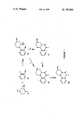
- FIG. I of the annexed Drawing depicts the preparation of 7,8,9,10-tetrahydro-5H-pyrazino[1,2-a]pyrido[3,2-e]pyrazin-6(6aH)-one and the methyl substituted derivative thereof.
- the method depicted in FIG. I employs intermediates in which the protecting group (Y or Y 1 ) for the secondary amine nitrogen is illustrated by the carbobenzoxy group (represented in FIG. I by the symbol CBZ) having the structure: ##STR5##
- the symbol X in Formula III represents a chlorine, fluorine, or bromine atom.
- 4-carbobenzoxypiperazine-2-carboxylic acid (II) is condensed with a 2-halo-3-nitropyridine (III), to afford 4-carbobenzoxy-1-(3-nitro-2-pyridinyl)piperazine-2-carboxylic acid (IV).
- the reaction is carried out in an inert organic solvent, such as dimethylsulfoxide, dimethylformamide, or a water-(lower)alkanol solution, in the presence of a base, such as a teriary-alkyl amine (e.g. triethylamine) or an alkali metal carbonate or bicarbonate at a temperature from about 20° to about 100° C., preferably 60° C.
- the intermediate IV is cyclized to 8-carbobenzoxy-7,8,9,10-tetrahydro-5H-pyrazino[1,2-a]pyrido[3,2-e]pyrazin-6(6aH)-one by a two-step process involving reduction of the nitro group to the amino group followed by cyclization.
- the reduction step is preferably performed by treating the nitro acid (IV) with a reducing agent, such as iron-acetic acid or sodium dithionite at a pH of 8-10.
- a reducing agent such as iron-acetic acid or sodium dithionite
- Other standard reagents capable of reducing an aromatic nitro group will be obvious to those skilled in the art.
- the amino acid thus produced is cyclized by adjusting the pH of the solution to about 7.5 or less (preferably a pH of about 3).
- the 3-carbobenzoxy protecting group is removed from 8-carbobenzoxy-7,8,9,10-tetrahydro-5H-pyrazino[1,2-a]pyrido[3,2-e]-pyrazin-6(6aH)-one (V) by catalytic hydrogenation (Process C) to afford 7,8,9,10-tetrahydro-5H-pyrazino[1,2-a]pyrido[3,2-e]-pyrazin-6(6aH)-one (VI).
- the hydrogenation is carried out in an inert solvent, such as ethanol, in the presence of a catalyst, such as a noble metal (e.g. Raney nickel or palladium on carbon), at a pressure of from about 1 atm. to about 3 atm., preferably about 3 atom.
- a catalyst such as a noble metal (e.g. Raney nickel or palladium on carbon)
- the hydrogenation may be performed in the presence of an acid, such as hydrogen chloride which provides the product as the
- FIG. I illustrates the preparation of 7,8,9,10-tetrahydro-5H-pyrazino[1,2-a]pyrido[3,2-e]pyrazin-6(6aH)-one (a compound of Formula Ia)
- FIG. I illustrates the preparation of 7,8,9,10-tetrahydro-5H-pyrazino[1,2-a]pyrido[3,2-e]pyrazin-6(6aH)-one
- compounds of Formula Ib and Ic may be prepared by this method or by modifications of this method which would be obvious to those skilled in the art.
- compounds of Formula Ib and Ic may be prepared by employing an appropriate nitrohalopyridine in Process A and using the intermediates formed therefrom in the subsequent processes.
- 7,8,9,10-tetrahydro-5H-pyrazino[1,2-a]pyrido[4,3-e]-pyrazin-6(6aH)-one can be prepared from a 3-halo-4-nitropyridine while 2,3,4,4a-tetrahydro-1H-pyrazino[1,2-a]pyrido[2,3-e]pyrazin-6(6aH)-one can be prepared from a 2-nitro-3-halopyridine.
- nitrohalopyridines employed as starting materials in the process described above are either known compounds or may be prepared from known compounds by methods which will be apparent to one skilled in the art of chemistry.
- nitrohalopyridine means a nitropyridine containing a fluorine, chlorine, or bromine atom in the appropriate position ortho to the nitro group.
- the nitrofluoropyridines are preferred starting materials since the fluorine atom is more easily replaced than chlorine or bromine.
- nitrohalopyridine starting materials employed for preparing the compounds of Formula Ia can be further substituted with a chlorine or fluorine atom at a position ortho to the pyrido nitrogen, and such starting materials will afford the compounds of Formula Ia when R is chlorine or fluorine.
- 4-Carbobenzoxypiperazine-2-carboxylic acid (II) employed as a starting material in Process A is prepared from piperazine-2-carboxylic acid in three steps: (a) treating said acid, as the dihydrochloride, with cupric carbonate in water to form the cupric ion chelate; (b) treating the chelate with benzylchloroformate in acetone-water to introduce the carbobenzoxy group; and (c) treating the 3-carbobenzoxypiperazine-2-carboxylic acid, copper chelate with hydrochloric acid and hydrogen sulfide to destroy the chelate. The product is isolated as the hydrochloride salt.
- Other protected piperazine-2-carboxylic acids may be similarly prepared by treating the piperazine-2-carboxylic acid cupric ion chelate with a suitable blocking reagent to introduce the blocking group at the 4-position and then destroying the chelate.
- the carbobenzoxy group is employed as a blocking group to protect the reactive nitrogen of the piperazine ring of the intermediates.
- any conventional blocking group useful for protecting a secondary amino group may be employed, for example; the benzhydryl, benzyl, trifluoroacetyl, t-butyloxycarbonyl, or tosyl group.
- Methods for removing a particular protecting group will be obvious to one skilled in the art of organic chemistry.
- a benzyl-type blocking group e.g. a benzhydryl, benzyl, or carbobenzoxy group
- catalytic hydrogenation hydrolysis
- Certain blocking groups e.g. carbobenzoxy, t-butyloxycarbonyl, trifluoroacetyl, or tosyl
- acid hydrolysis such as by treatment with hydrochloric acid.
- the compounds of Formula Ia, Ib, or Ic, wherein R is methyl, ethyl, propyl, or isopropyl are conveniently prepared by an alternate process in which a 4-(lower)alkylpiperazine-2-carboxylic acid is employed in place of 4-carbobenzoxypiperazine-2-carboxylic acid (II) in Process A described above. Reduction of the nitro group of the product thus formed followed by cyclization (as in Process B, described above) directly gives the desired product without the need for blocking and deblocking the piperazine nitrogen.
- the compounds of Formula Ia, Ib, or Ic possess an asymmetric carbon atom, optical enantiomorphs are possible, and the compounds of the invention may be in the form of the pure enantiomorph or mixtures thereof, such as the racemates.
- the compounds of Formula Ia, Ib, or Ic may be obtained in the form of the pure enantiomorph either by resolving a desired racemic product or by resolving a racemic starting material or intermediate at any convenient stage of the synthesis. Methods of carrying out the resolution are well known in the art of chemistry.
- the desired racemate may be treated with an optically active carboxylic acid and the optically active addition salts may be separated by standard techniques.
- the compounds of Formula Ia, Ib, or Ic may exist either in the form of the free base or the acid addition salt. Methods for converting one such form to another will be obvious to one skilled in the art of chemistry.
- amino acids 4-(substituted)piperazine-2-carboxylic acid and the 4-(substituted)-1-(nitropyridinyl)piperazine-2-carboxylic acids, employed as intermediates for preparing the compounds of Formula Ia, Ib, or Ic may exist either in the acid, base, or zwitterion form, and methods for converting one such form to another will be apparent to those skilled in the art.
- the compounds of Formula Ia, Ib, or Ic may be administered in the form of an acid addition salt of a non-toxic organic or inorganic acid.
- the salts may be prepared by methods well known in the art. Appropriate salts are those formed from the following acids: hydrochloric, hydrobromic, sulfonic, sulfuric, phosporic, nitric, maleic, fumaric, benzoic, ascorbic, pamoic, succinic, methanesulfonic, acetic, propionic, tartaric, citric, lactic, malic, mandelic, cinnamic, palmitic, itaconic, and benzenesulfonic.
- the effective dosage of the compounds of Formula Ia, Ib, or Ic will vary according to the particular compound being employed, the severity and nature of the hypertension, and the particular subject being treated. In general, with large warm-blooded animals (about 70 kg. body weight) effective results can be achieved by the oral route at a dosage level of from 25 mg. to about 2 g. given as needed, for example every four to six hours. A dose of about 25 mg. to about 500 mg. is preferred. Therapy should be initiated at lower dosages, the dosage thereafter being increased until the desired hypotensive effect is obtained.
- the active substances of Formula Ia, Ib, or Ic may be administered alone or in combination with pharmaceutically acceptable carriers, the proportion and nature of which are determined by the solubility and chemical properties of the compound selected, the chosen route of administration, and standard pharmaceutical practice.
- the compounds of Formula Ia, Ib, or Ic may be administered orally in solid dosage forms, e.g. capsules, tablets, or powders, or in liquid forms, e.g. solutions or suspensions.
- the compounds may also be injected parenterally in the form of sterile solutions or suspensions.
- Solid oral forms may contain conventional excipients, for instance: lactose, succrose, magnesium stearate, resins, and like materials.
- Liquid oral forms may contain various flavoring, coloring, preserving, stabilizing, solubilizing or suspending agents.
- Parenteral preparations are sterile aqueous or non-aqueous solutions or suspensions which may contain various preserving, stabilizing, buffering, solubilizing, or suspending agents.
- additives such as saline or glucose may be added to make the solutions isotonic.
- a solution of 1.95 g. of 1-(3-nitro-2-pyridinyl-4-carbobenzoxypiperazine-2-carboxylic acid in 250 ml. of water is adjusted to pH 9-10 with aqueous sodium hydroxide.
- To this solution with stirring, is added 3.5 g. of sodium dithionite in small portions.
- the pH is maintained between 8 and 10 by addition of small portions of aqueous sodium hydroxide while the dithionite is being added.
- the pH of the solution is brought to 3 with concentrated hydrochloric acid, then is brought back to pH 10 with aqueous sodium hydroxide.
- the mixture is extracted with methylene chloride, dried (MgSO 4 ), and concentrated to give 0.5 g. of the title product as a tan solid. After recrystallization from ethanol, m.p. 188°-189°.
- the antihypertensive effect of a compound of Formula Ia, Ib, or Ic is ellicited and demonstrated by administering the compound to a hypertensive rat and measuring the change in systolic blood pressure 2 and 4 hours after administration.
- the rats used are either spontaneously hypertensive or are rendered hypertensive by applying a figure-of-eight ligature around one kidney and contralateral nephrectomy.
- Male spontaneously hypertensive rats derived from the Okamoto-Aoki strain were purchased from commercial breeders.
- blood pressure tends to stabilize at a hypertensive level after approximately six weeks.
- a group of at least 4 rats is given the compound by the oral (P.O.) route.
- Systolic blood pressure as measured by an indirect technique using the Decker Caudal Plethysmorgraph, is measured prior to administration of the compound and at 2 and 4 hours thereafter. This schedule may vary depending upon the behavior of the compound.
- a control group of rats, given either a placebo or a standard antihypertensive agent is run with each group of treated rats.
- hypotensive activity of the compound is rated as follows:
Landscapes
- Chemical & Material Sciences (AREA)
- Organic Chemistry (AREA)
- Nitrogen Condensed Heterocyclic Rings (AREA)
- Pharmaceuticals Containing Other Organic And Inorganic Compounds (AREA)
Abstract
Compounds of the formula <IMAGE> Ia <IMAGE> Ib or +tr <IMAGE> Ic WHEREIN R is hydrogen, chlorine, or fluorine; and R1 is hydrogen, methyl, ethyl, propyl, or isopropyl; OR A NON-TOXIC ACID ADDITION SALT THEREOF; EXERT AN ANTI-HYPERTENSIVE EFFECT.
Description
The present invention relates to substituted 7,8,9,10-tetrahydro-5H-pyrazino[1,2-a]pyrido[3,2-e]pyrazin-6(6aH)-ones, 7,8,9,10-tetrahydro-5H-pyrazino[1,2-a]pyrido[4,3-e]pyrazin-6(6aH)-ones, and 2,3,4,4a-tetrahydro-1H-pyrazino[1,2-a]pyrido[2,3-e]-pyrazin-5(6aH)-ones, which compounds have pharmacological activity. Also contemplated by this invention are intermediates used in the synthesis of said compounds, pharmaceutical compositions containing said compounds, and methods of using said compounds.
The invention sought to be patented comprises chemical compounds of the formula: ##STR2## WHEREIN: R is hydrogen, chlorine, or fluorine; and
R1 is hydrogen, methyl, ethyl, propyl, or isopropyl;
Or a non-toxic acid addition salt thereof.
The compounds of Formula Ia, Ib, or Ic, wherein R and R1 have the meanings above-defined, and the non-toxic acid addition salts thereof, exert a hypotensive effect in hypertensive warm-blooded animals, as evidenced by pharmacological evaluation in standard test procedures.
Preferred compounds of Formula Ia, Ib, or Ic are those in which R and R1, are each hydrogen. When R is a group other than hydrogen, fluorine is preferred.
Also within the scope of this invention are the intermediates employed in the synthesis of the compounds of Formula Ia, Ib, or Ic. Such intermediates are:
(A) COMPOUNDS OF THE FORMULA: ##STR3## wherein: Y is methyl, ethyl, propyl, isopropyl, or a protecting group for a secondary amine; and
R is hydrogen, chlorine, or fluorine;
or an N-oxide or a salt thereof; and
(b) compounds of the formula: ##STR4## wherein: Y1 is a protecting group for a secondary amine; and
R is hydrogen, chlorine, or fluorine.
As used herein the term "protecting group for a secondary amine" is meant a group which will prevent undesirable side reactions at the secondary amine nitrogen during reactions leading to the final products, but will be easily removed by chemical means, when desired, to obtain the final products. Such protecting groups are conventional in the art of chemistry. Examples are: carbobenzoxy, benzhydryl, benzyl, trifluoroacetyl, t-butyloxycarbonyl, or tosyl. The carbobenzoxy group is preferred.
The general method of synthesis of the compounds of Formula Ia, Ib, or Ic is illustrated schematically in FIG. I of the annexed Drawing which depicts the preparation of 7,8,9,10-tetrahydro-5H-pyrazino[1,2-a]pyrido[3,2-e]pyrazin-6(6aH)-one and the methyl substituted derivative thereof. The method depicted in FIG. I employs intermediates in which the protecting group (Y or Y1) for the secondary amine nitrogen is illustrated by the carbobenzoxy group (represented in FIG. I by the symbol CBZ) having the structure: ##STR5## The symbol X in Formula III represents a chlorine, fluorine, or bromine atom.
Referring now to FIG. I, wherein the compounds are assigned Roman numerals for identification, in Process A, 4-carbobenzoxypiperazine-2-carboxylic acid (II) is condensed with a 2-halo-3-nitropyridine (III), to afford 4-carbobenzoxy-1-(3-nitro-2-pyridinyl)piperazine-2-carboxylic acid (IV). The reaction is carried out in an inert organic solvent, such as dimethylsulfoxide, dimethylformamide, or a water-(lower)alkanol solution, in the presence of a base, such as a teriary-alkyl amine (e.g. triethylamine) or an alkali metal carbonate or bicarbonate at a temperature from about 20° to about 100° C., preferably 60° C.
The intermediate IV is cyclized to 8-carbobenzoxy-7,8,9,10-tetrahydro-5H-pyrazino[1,2-a]pyrido[3,2-e]pyrazin-6(6aH)-one by a two-step process involving reduction of the nitro group to the amino group followed by cyclization. The reduction step is preferably performed by treating the nitro acid (IV) with a reducing agent, such as iron-acetic acid or sodium dithionite at a pH of 8-10. Other standard reagents capable of reducing an aromatic nitro group will be obvious to those skilled in the art. The amino acid thus produced is cyclized by adjusting the pH of the solution to about 7.5 or less (preferably a pH of about 3).
The 3-carbobenzoxy protecting group is removed from 8-carbobenzoxy-7,8,9,10-tetrahydro-5H-pyrazino[1,2-a]pyrido[3,2-e]-pyrazin-6(6aH)-one (V) by catalytic hydrogenation (Process C) to afford 7,8,9,10-tetrahydro-5H-pyrazino[1,2-a]pyrido[3,2-e]-pyrazin-6(6aH)-one (VI). The hydrogenation is carried out in an inert solvent, such as ethanol, in the presence of a catalyst, such as a noble metal (e.g. Raney nickel or palladium on carbon), at a pressure of from about 1 atm. to about 3 atm., preferably about 3 atom. If desired, the hydrogenation may be performed in the presence of an acid, such as hydrogen chloride which provides the product as the acid addition salt.
Catalytic hydrogenation (e.g. with Raney nickel) of the intermediate (IV) in the presence of an acid effects reduction, cyclization, and removal of the carbobenzoxy group and yields the product VI directly (Process I).
When it is desired to prepare the product containing a substituent at the 8-position, 7,8,9,10-tetrahydro-5H-pyrazino-[1,2-a]pyrido[3,2-e]pyrazin-6(6aH)-one (VI) is treated with a suitable alkylating agent (Process D), for example, an alkyl halide. The reaction is performed in an inert solvent, such as ethanol, preferably in the presence of a weak base, such as potassium carbonate. Other alkylating agents, such as the tosylate derivatives, will be apparent to those skilled in the art.
While the above method of synthesis has been described by reference to FIG. I which illustrates the preparation of 7,8,9,10-tetrahydro-5H-pyrazino[1,2-a]pyrido[3,2-e]pyrazin-6(6aH)-one (a compound of Formula Ia), it will be apparent to those skilled in the art of chemistry that the compounds of Formula Ib and Ic may be prepared by this method or by modifications of this method which would be obvious to those skilled in the art. Thus, compounds of Formula Ib and Ic may be prepared by employing an appropriate nitrohalopyridine in Process A and using the intermediates formed therefrom in the subsequent processes. For example; 7,8,9,10-tetrahydro-5H-pyrazino[1,2-a]pyrido[4,3-e]-pyrazin-6(6aH)-one can be prepared from a 3-halo-4-nitropyridine while 2,3,4,4a-tetrahydro-1H-pyrazino[1,2-a]pyrido[2,3-e]pyrazin-6(6aH)-one can be prepared from a 2-nitro-3-halopyridine.
The nitrohalopyridines employed as starting materials in the process described above are either known compounds or may be prepared from known compounds by methods which will be apparent to one skilled in the art of chemistry. The term "nitrohalopyridine" means a nitropyridine containing a fluorine, chlorine, or bromine atom in the appropriate position ortho to the nitro group. The nitrofluoropyridines are preferred starting materials since the fluorine atom is more easily replaced than chlorine or bromine. In some instances, it may be more convenient to use the N-oxide of the nitrohalopyridine, and for synthetic purposes such N-oxides are equivalent to the free base.
It will also be apparent that the nitrohalopyridine starting materials employed for preparing the compounds of Formula Ia can be further substituted with a chlorine or fluorine atom at a position ortho to the pyrido nitrogen, and such starting materials will afford the compounds of Formula Ia when R is chlorine or fluorine.
4-Carbobenzoxypiperazine-2-carboxylic acid (II) employed as a starting material in Process A is prepared from piperazine-2-carboxylic acid in three steps: (a) treating said acid, as the dihydrochloride, with cupric carbonate in water to form the cupric ion chelate; (b) treating the chelate with benzylchloroformate in acetone-water to introduce the carbobenzoxy group; and (c) treating the 3-carbobenzoxypiperazine-2-carboxylic acid, copper chelate with hydrochloric acid and hydrogen sulfide to destroy the chelate. The product is isolated as the hydrochloride salt. Other protected piperazine-2-carboxylic acids may be similarly prepared by treating the piperazine-2-carboxylic acid cupric ion chelate with a suitable blocking reagent to introduce the blocking group at the 4-position and then destroying the chelate.
In the method of synthesis depicted in FIG. 1, the carbobenzoxy group is employed as a blocking group to protect the reactive nitrogen of the piperazine ring of the intermediates. It will be obvious to those skilled in the art that any conventional blocking group useful for protecting a secondary amino group may be employed, for example; the benzhydryl, benzyl, trifluoroacetyl, t-butyloxycarbonyl, or tosyl group. Methods for removing a particular protecting group will be obvious to one skilled in the art of organic chemistry. For example a benzyl-type blocking group (e.g. a benzhydryl, benzyl, or carbobenzoxy group) can be removed by catalytic hydrogenation (hydrogenolysis). Hence, catalytically reducing an intermediate of Formula Ic containing the benzhydryl, benzyl, or carbobenzoxy group in the presence of an acid effects reduction, cyclization, and removal of the blocking group and provides a convenient method for preparing the compounds of Formula Ia wherein R and R1 are hydrogen.
Certain blocking groups (e.g. carbobenzoxy, t-butyloxycarbonyl, trifluoroacetyl, or tosyl) can be removed by acid hydrolysis such as by treatment with hydrochloric acid.
The compounds of Formula Ia, Ib, or Ic, wherein R is methyl, ethyl, propyl, or isopropyl are conveniently prepared by an alternate process in which a 4-(lower)alkylpiperazine-2-carboxylic acid is employed in place of 4-carbobenzoxypiperazine-2-carboxylic acid (II) in Process A described above. Reduction of the nitro group of the product thus formed followed by cyclization (as in Process B, described above) directly gives the desired product without the need for blocking and deblocking the piperazine nitrogen.
Since the compounds of Formula Ia, Ib, or Ic possess an asymmetric carbon atom, optical enantiomorphs are possible, and the compounds of the invention may be in the form of the pure enantiomorph or mixtures thereof, such as the racemates.
The compounds of Formula Ia, Ib, or Ic may be obtained in the form of the pure enantiomorph either by resolving a desired racemic product or by resolving a racemic starting material or intermediate at any convenient stage of the synthesis. Methods of carrying out the resolution are well known in the art of chemistry. For example, the desired racemate may be treated with an optically active carboxylic acid and the optically active addition salts may be separated by standard techniques.
The compounds of Formula Ia, Ib, or Ic as obtained in the processes depicted in FIG. I, and the appropriate intermediates thereto, may be isolated and purified in a conventional manner. It is furthermore appreciated that in the various processes hereinbefore described, factors such as solvents or temperatures are not critical and the selection of a temperature or solvent for a particular process will be apparent to one skilled in the art.
The compounds of Formula Ia, Ib, or Ic may exist either in the form of the free base or the acid addition salt. Methods for converting one such form to another will be obvious to one skilled in the art of chemistry.
The amino acids, 4-(substituted)piperazine-2-carboxylic acid and the 4-(substituted)-1-(nitropyridinyl)piperazine-2-carboxylic acids, employed as intermediates for preparing the compounds of Formula Ia, Ib, or Ic may exist either in the acid, base, or zwitterion form, and methods for converting one such form to another will be apparent to those skilled in the art.
For pharmacological use, the compounds of Formula Ia, Ib, or Ic may be administered in the form of an acid addition salt of a non-toxic organic or inorganic acid. The salts may be prepared by methods well known in the art. Appropriate salts are those formed from the following acids: hydrochloric, hydrobromic, sulfonic, sulfuric, phosporic, nitric, maleic, fumaric, benzoic, ascorbic, pamoic, succinic, methanesulfonic, acetic, propionic, tartaric, citric, lactic, malic, mandelic, cinnamic, palmitic, itaconic, and benzenesulfonic.
When employed to relieve hypertension, the effective dosage of the compounds of Formula Ia, Ib, or Ic will vary according to the particular compound being employed, the severity and nature of the hypertension, and the particular subject being treated. In general, with large warm-blooded animals (about 70 kg. body weight) effective results can be achieved by the oral route at a dosage level of from 25 mg. to about 2 g. given as needed, for example every four to six hours. A dose of about 25 mg. to about 500 mg. is preferred. Therapy should be initiated at lower dosages, the dosage thereafter being increased until the desired hypotensive effect is obtained.
When employed as hypotensive agents, the active substances of Formula Ia, Ib, or Ic may be administered alone or in combination with pharmaceutically acceptable carriers, the proportion and nature of which are determined by the solubility and chemical properties of the compound selected, the chosen route of administration, and standard pharmaceutical practice. For example, the compounds of Formula Ia, Ib, or Ic may be administered orally in solid dosage forms, e.g. capsules, tablets, or powders, or in liquid forms, e.g. solutions or suspensions. The compounds may also be injected parenterally in the form of sterile solutions or suspensions. Solid oral forms may contain conventional excipients, for instance: lactose, succrose, magnesium stearate, resins, and like materials. Liquid oral forms may contain various flavoring, coloring, preserving, stabilizing, solubilizing or suspending agents. Parenteral preparations are sterile aqueous or non-aqueous solutions or suspensions which may contain various preserving, stabilizing, buffering, solubilizing, or suspending agents. If desired, additives, such as saline or glucose may be added to make the solutions isotonic.
The following examples are illustrative of the processes of the invention. All temperatures are in centigrade.
A solution of 6.0 g. of 4-carbobenzoxypiperazine-2-carboxylic acid hydrochloride, 3.3 g. of 2-chloro-3-nitropyridine and 15 ml. of triethyl amine in 100 ml. of dimethyl sulfoxide is heated at 60° with stirring for 18 hours. The mixture is diluted with 400 ml. of water, acidified to pH 3 with concentrated hydrochloric acid, and extracted repeatedly with ether. The combined ether extracts are dried (MgSO4) and concentrated. The residue is crystallized from ethyl acetate/heptane to give 6.3 g. of the title product, m.p. 145°-147°.
Analysis for: C18 H18 N4 O6 ; Calculated: C, 55.95; H, 4.70; N, 14.50; Found: C, 55.62; H, 4.68; N, 14.67.
A mixture of 3.48 g. of 3-fluoro-4-nitropyridine-N-oxide, 6.6 g. of 4-carbobenzoxypiperazine-2-carboxylic acid hydrochloride, 15 ml. of triethylamine, and 100 ml. of methanol is stirred at room temperature for 18 hours. The solution is concentrated and the residue is dissolved in aqueous potassium bicarbonate solution. The pH is adjusted to 3 with aqueous hydrogen chloride then treated with methylene chloride and the resultant mixture is filtered to give 4.6 g. of the title product, m.p. 145° dec. Thin layer chromatographic analysis of this material shows one single spot.
Analysis for: C18 N18 N4 O7.1/2H2 O; Calculated: C, 52.55; H, 4.65; N, 13.62; Found: C, 52.39; H, 4.48; N, 13.50.
A mixture of 2.8 g. of 2-nitro-3-fluoropyridine, 5.0 g. of 4-carbobenzoxypiperazine-2-carboxylic acid, hydrochloride, 25 ml. of triethylamine, and 90 ml. of dimethyl sulfoxide is heated at 55° with stirring for 11/2 hours, then allowed to stand at room temperature overnight. A similar workup to that described in Example 1 gives 4.5 g. of the title product as a viscous orange glass. Thin layer chromatographic analysis of this material shows one single spot.
In a similar procedure to that described in Example 1, from 6.0 g. of 2,6-difluoro-3-nitropyridine, 9.0 g. of 4-carbobenzoxypiperazine-2-carboxylic acid, hydrochloride, 20 ml. of triethylamine and 150 ml. of dimethyl sulfoxide, there is obtained 14 g. of the title product as a viscous orange glass. Thin layer chromatographic analysis of this material shows essentially one spot.
A solution of 1.95 g. of 1-(3-nitro-2-pyridinyl-4-carbobenzoxypiperazine-2-carboxylic acid in 250 ml. of water is adjusted to pH 9-10 with aqueous sodium hydroxide. To this solution, with stirring, is added 3.5 g. of sodium dithionite in small portions. The pH is maintained between 8 and 10 by addition of small portions of aqueous sodium hydroxide while the dithionite is being added. After the addition of dithionite the pH of the solution is brought to 3 with concentrated hydrochloric acid, then is brought back to pH 10 with aqueous sodium hydroxide. The mixture is extracted with methylene chloride, dried (MgSO4), and concentrated to give 0.5 g. of the title product as a tan solid. After recrystallization from ethanol, m.p. 188°-189°.
Analysis for: C18 H18 N4 O3.1/2H2 O; Calculated: C, 62.23; H, 5.51; N, 16.13; Found: C, 62.58; H, 5.38; N, 16.25.
To a solution of 2.0 g. of 1-(4-nitro-3-pyridinyl, N-oxide)-4-carbobenzoxypiperazine-2-carboxylic acid, 25 ml. of acetic acid is added, while stirring, 1.5 g. of iron powder. The mixture is warmed to 55° for 1/2 hour then concentrated. The residue is treated with 10% hydrochloric acid and filtered to give 1.35 g. of the hydrogen chloride salt of the title compound with m.p. 234°-238°. Recrystallization from ethanol-water gives the the title product, m.p. 255°-256° dec.
Analysis for: C18 H18 N4 O3.HCl.1/4H2 O; Calculated: C, 56.99; H, 5.18; N, 14.77; Found: C, 56.81; H, 5.10; N, 14.50.
To a solution of 4.5 g. of 1-(2-nitro-3-pyridinyl)-4-carbobenzoxypiperazine-2-carboxylic acid in 75 ml. of acetic acid is added, while stirring, 3.0 g. of iron powder. The mixture is heated to 60° for a few minutes then filtered and concentrated. Water is added to the residue and the mixture is extracted with methylene chloride, dried (MgSO4) and concentrated to give 4.5 g. of the title product as a viscous glass. Crystallization from ethanol (Norit) gives 1.8 g., m.p. 190°-192°.
Analysis for: C18 H18 N4 O3 ; Calculated: C, 63.89; H, 5.36; N, 16.56; Found: C, 63.64; H, 5.42; N, 16.35.
To a solution of 14.0 g. of 1-(6-fluoro-3-nitro-2-pyridinyl)-4-carbobenzoxypiperazine-2-carboxylic acid in 300 ml. of acetic acid is added, while stirring, 7.0 g. of iron powder. The mixture is warmed to 55° for 3 hours then concentrated. The residue is treated with water and extracted with methylene chloride, dried (MgSO4) and concentrated. The residue is placed on a dry column of alumina and eluted with chloroform. The product band in the column is cut out and the product is washed from the alumina with methanol. Concentration of the methanol wash gives 5.0 g. of the light green-colored title product. Recrystallization from ethanol gives 2.2 g. of pure product, m.p. 210°-214°.
A mixture of 1.5 g. of 8-carbobenzoxy-7,8,9,10-tetrahydro-5H-pyrazino[1,2-a]pyrido[3,2-e]pyrazin-6(6aH)-one, 1 g. of 10% palladium on carbon, and 150 ml. of ethanol is hydrogenated at 45 psi for 2 hours. The catalyst is filtered and the filtrate is concentrated. The residue is dissolved in a small amount of ethanol and ethanolic hydrogen chloride is added. Filtration of the precipitated salt gives 0.72 g. of the title product, m.p. 270° dec. Recrystallization from ethanol-water gives 0.60 g., m.p. 278°-279°.
Analysis for: C10 H12 N4 O.HCl.H2 O; Calculated: C, 46.42; H, 5.84; N, 21.65; Found: C, 46.32; H, 5.12; N, 21.42.
In a similar procedure to that described in Example 9, from 1.1 g. of 8-carbobenzoxy-7,8,9,10-tetrahydro-5H-pyrazino-[1,2-a]pyrido[4,3-e]pyrazin-6(6aH)-one, there is obtained 0.45 g. of the title product as the hydrochloride salt, m.p. 303°-306°.
Analysis for: C10 H12 N4 O.2HCl.1/4H2 O; Calculated: C, 42.64; H, 5.19; N, 19.89; Found: C, 42.45; H, 5.14; N, 19.87.
In a similar procedure to that described in Example 9, from 1.75 g. of 3-carbobenzoxy-2,3,4,4a-tetrahydro-5H-pyrazino-[1,2-a]pyrdio[2,3-e]pyrazin-5(6H)-one, there is obtained 0.55 g. of the title product as the hydrochloride salt, m.p. 315°-319°.
Analysis for: C10 H12 N4 O.HCl.1/4H2 O; Calculated: C, 48.98; H, 5.37; N, 22.85; Found: C, 48.90; H, 5.25; N, 22.79.
In a similar procedure to that described in Example 9, from 2.0 g. of 8-carbobenzoxy-2-fluoro-7,8,9,10-tetrahydro-5H-pyrazino[1,2-a]pyrido[3,2-e]pyrazin-6(6aH)-one, there is obtained 0.85 g. of the title product as the hydrochloride salt, m.p. 305°14 308°.
Analysis for: C10 H11 H4 OF.HCl.1/4H2 O; Calculated: C, 45.63; H, 4.79, N, 21.29; Found: C, 45.81; H, 4.75; N, 21.13.
The antihypertensive effect of a compound of Formula Ia, Ib, or Ic is ellicited and demonstrated by administering the compound to a hypertensive rat and measuring the change in systolic blood pressure 2 and 4 hours after administration. The rats used are either spontaneously hypertensive or are rendered hypertensive by applying a figure-of-eight ligature around one kidney and contralateral nephrectomy. Male spontaneously hypertensive rats derived from the Okamoto-Aoki strain were purchased from commercial breeders. In the renal hypertensive rats, blood pressure tends to stabilize at a hypertensive level after approximately six weeks. A group of at least 4 rats is given the compound by the oral (P.O.) route. Systolic blood pressure, as measured by an indirect technique using the Decker Caudal Plethysmorgraph, is measured prior to administration of the compound and at 2 and 4 hours thereafter. This schedule may vary depending upon the behavior of the compound. A control group of rats, given either a placebo or a standard antihypertensive agent is run with each group of treated rats.
The hypotensive activity of the compound is rated as follows:
______________________________________
                   Systolic Decrease
       Activity    in Blood Pressure
______________________________________
       Slight      25 - 35       mm Hg
       Moderate    35 - 50
       Marked      over 50
______________________________________
When tested as described above, the compounds of Formula Ia, Ib, or Ic gave the following results:
______________________________________
  Compound        Activity (P.O.)
______________________________________
7,8,9,10-tetrahydro-5H-
                  Moderate at
pyrazino[1,2-a]pyrido[3,2-e]-
                  2.5 mg/kg
pyrazin-6(6aH)-one
7,8,9,10-tetrahydro-5H-
                  Slight at
pyrazino[1,2-a]pyrido[4,3-e]-
                  20 mg/kg
pyrazin-6(6aH)-one
2,3,4,4a-tetrahydro-1H-
                  Marked at
pyrazino[1,2-a]pyrido[2,3-e]-
                  25 mg/kg
pyrazin-5(6H)-one
2-fluoro-7,8,9,10-tetrahydro-
                  Marked at
5H-pyrazino[1,2-a]pyrido-
                  20 mg/kg
[3,2-e]pyrazin-6(6aH)-one
______________________________________
Claims (6)
1. A compound of the formula: ##STR6## wherein: R is hydrogen, chlorine, or fluorine; and
R1 is hydrogen, methyl, ethyl, propyl, or isopropyl, or a non-toxic pharmaceutically acceptable acid addition salt thereof.
2. The compound as defined in claim 1 which is 7,8,9,10-tetrahydro-5H-pyrazino[1,2-a]pyrido[3,2-e]pyrazin-6(6aH)-one.
3. The compound as defined in claim 1 which is 2-fluoro-7,8,9,10-tetrahydro-5H-pyrazino[1,2-a]pyrido[3,2-e]pyrazin-6(6aH)-one.
4. The compound as defined in claim 1 which is 8-carbobenzoxy-7,8,9,10-tetrahydro-5H-pyrazino[1,2-a]pyrido[3,2-e]-pyrazino-6(6aH)-one.
5. The compound as defined in claim 1 which is 8-carbobenzoxy-2-fluoro-7,8,9,10-tetrahydro-5H-pyrazino[1,2-a]-pyrido[3,2-e]pyrazin-6(6aH)-one.
6. A compound of the formula: ##STR7## wherein Y1 is carbobenzoxy, benzhydryl, benzyl, trifluoroacetyl, t-butyloxy carbonyl, or tosyl; and
R is hydrogen, chlorine, or fluorine.
Priority Applications (2)
| Application Number | Priority Date | Filing Date | Title |
|---|---|---|---|
| US05/821,381 US4138564A (en) | 1977-08-03 | 1977-08-03 | Tetrahydro[1H]pyrazino[1,2-a]azaquinoxalin-5(6H)-ones and derivatives thereof |
| US05/957,508 US4225713A (en) | 1977-08-03 | 1978-11-03 | Tetrahydro(1H)pyrazino(1,2-A)azaquinoxalin-5(6H)-ones and derivatives thereof |
Applications Claiming Priority (1)
| Application Number | Priority Date | Filing Date | Title |
|---|---|---|---|
| US05/821,381 US4138564A (en) | 1977-08-03 | 1977-08-03 | Tetrahydro[1H]pyrazino[1,2-a]azaquinoxalin-5(6H)-ones and derivatives thereof |
Related Child Applications (1)
| Application Number | Title | Priority Date | Filing Date |
|---|---|---|---|
| US05/957,508 Division US4225713A (en) | 1977-08-03 | 1978-11-03 | Tetrahydro(1H)pyrazino(1,2-A)azaquinoxalin-5(6H)-ones and derivatives thereof |
Publications (1)
| Publication Number | Publication Date |
|---|---|
| US4138564A true US4138564A (en) | 1979-02-06 |
Family
ID=25233240
Family Applications (1)
| Application Number | Title | Priority Date | Filing Date |
|---|---|---|---|
| US05/821,381 Expired - Lifetime US4138564A (en) | 1977-08-03 | 1977-08-03 | Tetrahydro[1H]pyrazino[1,2-a]azaquinoxalin-5(6H)-ones and derivatives thereof |
Country Status (1)
| Country | Link |
|---|---|
| US (1) | US4138564A (en) |
Cited By (8)
| Publication number | Priority date | Publication date | Assignee | Title |
|---|---|---|---|---|
| US4446323A (en) * | 1983-05-23 | 1984-05-01 | American Home Products Corporation | Tetra- and hexa-hydropyrrolo(1,2-a)quinoxaline and azaquinoxaline derivatives |
| EP0400583A1 (en) * | 1989-05-31 | 1990-12-05 | Berlex Laboratories, Inc. | Imidazoquinoxalinones, their aza analogs and process for their preparation |
| US5292726A (en) * | 1991-05-22 | 1994-03-08 | Merck & Co., Inc. | N,N-diacylpiperazines |
| US5348955A (en) * | 1993-06-22 | 1994-09-20 | Merck & Co., Inc. | N,N-diacylpiperazines |
| WO2010085570A1 (en) | 2009-01-23 | 2010-07-29 | Takeda Pharmaceutical Company Limited | Poly (ADP-Ribose) Polymerase (PARP) Inhibitors |
| US8980902B2 (en) | 2009-07-30 | 2015-03-17 | Takeda Pharmaceutical Company Limited | Poly (ADP-ribose) polymerase (PARP) inhibitors |
| WO2022247816A1 (en) | 2021-05-24 | 2022-12-01 | 江苏恒瑞医药股份有限公司 | Nitrogen-containing heterocyclic compound, preparation method therefor, and application thereof in medicines |
| TWI926045B (en) | 2021-05-24 | 2026-05-21 | 大陸商江蘇恆瑞醫藥股份有限公司 | Nitrogen-containing heterocyclic compounds, preparation method and medical use thereof |
-
1977
- 1977-08-03 US US05/821,381 patent/US4138564A/en not_active Expired - Lifetime
Non-Patent Citations (1)
| Title |
|---|
| winterfeld et al., Chem. Abst. 73, 35330s (1970). |
Cited By (17)
| Publication number | Priority date | Publication date | Assignee | Title |
|---|---|---|---|---|
| US4446323A (en) * | 1983-05-23 | 1984-05-01 | American Home Products Corporation | Tetra- and hexa-hydropyrrolo(1,2-a)quinoxaline and azaquinoxaline derivatives |
| EP0400583A1 (en) * | 1989-05-31 | 1990-12-05 | Berlex Laboratories, Inc. | Imidazoquinoxalinones, their aza analogs and process for their preparation |
| US5292726A (en) * | 1991-05-22 | 1994-03-08 | Merck & Co., Inc. | N,N-diacylpiperazines |
| US5348955A (en) * | 1993-06-22 | 1994-09-20 | Merck & Co., Inc. | N,N-diacylpiperazines |
| US8124606B2 (en) | 2009-01-23 | 2012-02-28 | Takeda Pharmaceutical Company Limited | Substituted 7,8,9,10-tetrahydro-5H-dipyrido[1,2-a:3′,2′-e]pyrazin-6(6aH)-ones |
| US20100190763A1 (en) * | 2009-01-23 | 2010-07-29 | Takeda Pharmaceutical Company Limited | Poly (ADP-Ribose) Polymerase (PARP) Inhibitors |
| US7928105B2 (en) | 2009-01-23 | 2011-04-19 | Takeda Pharmaceutical Company Limited | Substituted 6a,7,8,9-tetrahydropyrido[3,2-e]pyrrolo[1,2-a]pyrazin-6(5H)-ones |
| US20110158989A1 (en) * | 2009-01-23 | 2011-06-30 | Takeda Pharmaceutical Company Limited | Poly (ADP-Ribose) Polymerase (PARP) INHIBITORS |
| WO2010085570A1 (en) | 2009-01-23 | 2010-07-29 | Takeda Pharmaceutical Company Limited | Poly (ADP-Ribose) Polymerase (PARP) Inhibitors |
| US8450323B2 (en) | 2009-01-23 | 2013-05-28 | Takeda Pharmaceutical Company Limited | Substituted derivatives of pyrido[3,2-e][1,4]thiazino[4,3-a]pyrazine and pyrido[3,2-e][1,4]oxazino[4,3-a]pyrazine |
| US8822470B2 (en) | 2009-01-23 | 2014-09-02 | Takeda Pharmaceutical Company Limited | Substituted pyrido[2,3-b]pyrazines |
| EA020301B1 (en) * | 2009-01-23 | 2014-10-30 | Такеда Фармасьютикал Компани Лимитед | Poly(adp-ribose)polymerase (parp) inhibitors |
| US9187497B2 (en) | 2009-01-23 | 2015-11-17 | Takeda Phamaceutical Company Limited | Substituted pyrido[3,2-e]pyrrolo[1,2-a]pyrazines as inhibitors of poly(ADP-ribose)polymerase (PARP) |
| US8980902B2 (en) | 2009-07-30 | 2015-03-17 | Takeda Pharmaceutical Company Limited | Poly (ADP-ribose) polymerase (PARP) inhibitors |
| WO2022247816A1 (en) | 2021-05-24 | 2022-12-01 | 江苏恒瑞医药股份有限公司 | Nitrogen-containing heterocyclic compound, preparation method therefor, and application thereof in medicines |
| CN117177971A (en) * | 2021-05-24 | 2023-12-05 | 江苏恒瑞医药股份有限公司 | Nitrogen-containing heterocyclic compounds, their preparation methods and their applications in medicine |
| TWI926045B (en) | 2021-05-24 | 2026-05-21 | 大陸商江蘇恆瑞醫藥股份有限公司 | Nitrogen-containing heterocyclic compounds, preparation method and medical use thereof |
Similar Documents
| Publication | Publication Date | Title |
|---|---|---|
| US3950343A (en) | Pyrroloisoquinoline derivatives | |
| EP0846118B1 (en) | Cyclic gmp-specific phosphodiesterase inhibitors | |
| JPH11501925A (en) | Substituted N-arylmethyl and heterocyclylmethyl-1H-pyrazolo [3,4-b] quinolin-4-amines and compositions containing them | |
| US4032639A (en) | 2,3,4,4A-Tetrahydro-1H-pyrazino[1,2-a,]quinoxalin-5(6H)-ones and derivatives thereof for relieving hypertension | |
| NO162977B (en) | FILTER FOR MANUFACTURING A WATER PRESSURE FILTER FOR A PAPER MACHINE, AND PROCEDURES FOR MANUFACTURING THEREOF. | |
| EP0813533A1 (en) | SUBSTITUTED N-CYCLOALKYLMETHYL-1H-PYRAZOLO 3,4-b]QUINOLIN-4 AMINES AND COMPOSITIONS AND METHODS OF USE THEREOF | |
| US6194428B1 (en) | Use of 5-substituted pyridine and hexahydroquinoline-3 carboxylic acid derivatives for treating diseases of the central nervous system | |
| CA3121631A1 (en) | Substituted heterocycle fused gamma-carbolines synthesis | |
| JPH0826036B2 (en) | Derivatives of physiologically active substance K-252 | |
| US4089958A (en) | 2,3,4,4A-Tetrahydro-1H-pyrazino[1,2]quinoxalin-5(6)-ones and derivatives thereof | |
| NZ225421A (en) | 8,9-annelated-1,2,3,4-tetrahydro-beta-carboline derivatives, preparations thereof and pharmaceutical compositions | |
| EP0635506A1 (en) | Compound with antipsychotic effect | |
| KR900006448B1 (en) | Process for the preparation of dihydro pyrazolo (3,4-b)pyridine derivatives | |
| EP0328700A1 (en) | 4,7-Dihydropyrazolo(1,5-a)pyrimidine compound and pharmaceutical use thereof | |
| JPH0322390B2 (en) | ||
| US4225713A (en) | Tetrahydro(1H)pyrazino(1,2-A)azaquinoxalin-5(6H)-ones and derivatives thereof | |
| FI68623B (en) | FRAMEWORK FOR THE FRAMEWORK OF THERAPEUTIC ACTIVITIES OF ACTIVE HALOGENVINCAMONDERIVAT | |
| EP0260642A2 (en) | Thiazolo [f]-fused hexahydroquinoline derivatives as dopaminergic agents | |
| SK37394A3 (en) | 1,8-benzonaphthyridine derivatives, method of their preparation and compositions containing these derivatives | |
| CA1301171C (en) | 1,12b-disubstituted octahydroindolo ¬2,3-a| quinolizine derivatives, process for their preparation and pharmaceutical compositions containing them | |
| US4482714A (en) | Pyrazino[2',3'-3,4]pyrido[1,2-a]indole derivatives | |
| KR880001281B1 (en) | Process for preparing 9,10-substituted 2-mesitylimino-3-alkyl-3,4,6,7-tetrahydro-2H-pyrimido (6,1-a) isoquinolin-4-one | |
| US3998811A (en) | Optically active 1,4-benzodiazepines and process for the preparation thereof | |
| AU651171B2 (en) | Oxazinobenzazole compounds | |
| US4515949A (en) | [2-(1H-indol-1-yl)ethyl]-2-piperazine and pyrido[1,2-a]indol-9-one as intermediates for pyrazino(2,3-3,4)pyrido(1,2-a) indoles which are useful for treating hypertension in mammals |