US4069293A - Method for dissolving plutonium dioxide - Google Patents
Method for dissolving plutonium dioxide Download PDFInfo
- Publication number
- US4069293A US4069293A US05/659,826 US65982676A US4069293A US 4069293 A US4069293 A US 4069293A US 65982676 A US65982676 A US 65982676A US 4069293 A US4069293 A US 4069293A
- Authority
- US
- United States
- Prior art keywords
- dissolution
- puo
- plutonium
- fluoride
- dissolved
- Prior art date
- Legal status (The legal status is an assumption and is not a legal conclusion. Google has not performed a legal analysis and makes no representation as to the accuracy of the status listed.)
- Expired - Lifetime
Links
Images

Classifications
-
- C—CHEMISTRY; METALLURGY
- C22—METALLURGY; FERROUS OR NON-FERROUS ALLOYS; TREATMENT OF ALLOYS OR NON-FERROUS METALS
- C22B—PRODUCTION AND REFINING OF METALS; PRETREATMENT OF RAW MATERIALS
- C22B3/00—Extraction of metal compounds from ores or concentrates by wet processes
- C22B3/04—Extraction of metal compounds from ores or concentrates by wet processes by leaching
- C22B3/045—Leaching using electrochemical processes
-
- B—PERFORMING OPERATIONS; TRANSPORTING
- B01—PHYSICAL OR CHEMICAL PROCESSES OR APPARATUS IN GENERAL
- B01F—MIXING, e.g. DISSOLVING, EMULSIFYING OR DISPERSING
- B01F21/00—Dissolving
- B01F21/02—Methods
-
- C—CHEMISTRY; METALLURGY
- C22—METALLURGY; FERROUS OR NON-FERROUS ALLOYS; TREATMENT OF ALLOYS OR NON-FERROUS METALS
- C22B—PRODUCTION AND REFINING OF METALS; PRETREATMENT OF RAW MATERIALS
- C22B60/00—Obtaining metals of atomic number 87 or higher, i.e. radioactive metals
- C22B60/02—Obtaining thorium, uranium, or other actinides
- C22B60/04—Obtaining plutonium
-
- G—PHYSICS
- G21—NUCLEAR PHYSICS; NUCLEAR ENGINEERING
- G21C—NUCLEAR REACTORS
- G21C19/00—Arrangements for treating, for handling, or for facilitating the handling of, fuel or other materials which are used within the reactor, e.g. within its pressure vessel
- G21C19/42—Reprocessing of irradiated fuel
- G21C19/44—Reprocessing of irradiated fuel of irradiated solid fuel
- G21C19/46—Aqueous processes, e.g. by using organic extraction means, including the regeneration of these means
-
- Y—GENERAL TAGGING OF NEW TECHNOLOGICAL DEVELOPMENTS; GENERAL TAGGING OF CROSS-SECTIONAL TECHNOLOGIES SPANNING OVER SEVERAL SECTIONS OF THE IPC; TECHNICAL SUBJECTS COVERED BY FORMER USPC CROSS-REFERENCE ART COLLECTIONS [XRACs] AND DIGESTS
- Y02—TECHNOLOGIES OR APPLICATIONS FOR MITIGATION OR ADAPTATION AGAINST CLIMATE CHANGE
- Y02E—REDUCTION OF GREENHOUSE GAS [GHG] EMISSIONS, RELATED TO ENERGY GENERATION, TRANSMISSION OR DISTRIBUTION
- Y02E30/00—Energy generation of nuclear origin
- Y02E30/30—Nuclear fission reactors
-
- Y—GENERAL TAGGING OF NEW TECHNOLOGICAL DEVELOPMENTS; GENERAL TAGGING OF CROSS-SECTIONAL TECHNOLOGIES SPANNING OVER SEVERAL SECTIONS OF THE IPC; TECHNICAL SUBJECTS COVERED BY FORMER USPC CROSS-REFERENCE ART COLLECTIONS [XRACs] AND DIGESTS
- Y02—TECHNOLOGIES OR APPLICATIONS FOR MITIGATION OR ADAPTATION AGAINST CLIMATE CHANGE
- Y02P—CLIMATE CHANGE MITIGATION TECHNOLOGIES IN THE PRODUCTION OR PROCESSING OF GOODS
- Y02P10/00—Technologies related to metal processing
- Y02P10/20—Recycling
-
- Y—GENERAL TAGGING OF NEW TECHNOLOGICAL DEVELOPMENTS; GENERAL TAGGING OF CROSS-SECTIONAL TECHNOLOGIES SPANNING OVER SEVERAL SECTIONS OF THE IPC; TECHNICAL SUBJECTS COVERED BY FORMER USPC CROSS-REFERENCE ART COLLECTIONS [XRACs] AND DIGESTS
- Y02—TECHNOLOGIES OR APPLICATIONS FOR MITIGATION OR ADAPTATION AGAINST CLIMATE CHANGE
- Y02W—CLIMATE CHANGE MITIGATION TECHNOLOGIES RELATED TO WASTEWATER TREATMENT OR WASTE MANAGEMENT
- Y02W30/00—Technologies for solid waste management
- Y02W30/50—Reuse, recycling or recovery technologies
Definitions
- This invention was made in the course of, or under, a contract with the Energy Research and Development Administration.
- the present invention relates generally to the dissolution of plutonium dioxide for nuclear fuel reprocessing, and more specifically to the nitric acid dissolution of plutonium dioxide catalyzed by hydrofluoric acid.
- plutonium in the form of the dioxide.
- the dioxide is suitable for use in nuclear fuel because of its refractivity and its inert nature.
- PuO 2 is generally mixed with UO 2 in compositions of 15-30% PuO 2 .
- the spent fuel is periodically removed and reprocessed to separate the waste materials from the useful products.
- Methods are available for recovering and purifying plutonium once the material is dissolved in an aqueous nitrate solution.
- PuO 2 is relatively difficult to dissolve in pure concentrated nitric acid.
- the difficulty of dissolution depends upon the fuel manufacturing process. Fuels experiencing high sintering temperatures resulting in solid solution of the mixed oxides are soluble in 10-12 M nitric acid. Mechanically blended fuels of high PuO 2 content which, having been sintered at relatively lower temperature, contain separate PuO 2 and UO 2 phases are difficultly soluble in 10-12 nitric acid. Preferential dissolution of UO 2 usually occurs in these fuels leaving difficultly soluble residues of high PuO 2 content. In addition, certain forms of PuO 2 which have been fired at very high temperatures to obtain maximum density, such as microspheres having 96-98% theoretical density, are slow to dissolve by any known means. The accumulation of plutonium containing residues in fuel reprocessing plants is very undesirable from a criticality standpoint. The subject invention is particularly applicable to the dissolution of such difficultly soluble PuO 2 .
- the problem of dissolving plutonium dioxide is well known in the art of nuclear fuel reprocessing.
- the prior art methods are generally classifiable into two groups: oxidative dissolution and non-oxidative dissolution.
- oxidative dissolution processes the principal mechanism by which the plutonium dioxide goes into solution is by the oxidation of Pu(IV) in solid PuO 2 to a more soluble oxidation state such as Pu(VI).
- non-oxidative dissolution the plutonium dioxide goes into solution without oxidation of Pu(IV) such as by the formation of a soluble Pu(IV) complex.
- batch of irradiated liquid metal fast breeder reactor contains 200-250 kg. plutonium (as PuO 2 ) and about 6 kg. ruthenium with the remainder uranium and other fission products. Due to its multiplicity of available oxidation states and tendency to form complex ions, ruthenium's behavior (especially in the presence of oxidizing or reducing agents) is largely unpredictable and always of primary concern in fuel reprocessing processes. In oxidative dissolution with cerium ions, ruthenium is also oxidized (to RuO 4 ) and volatilizes, causing serious radioactive materials handling problems.
- the ruthenium volatilization problem is avoided in a non-oxidative dissolution process.
- Some success has been achieved in the prior art with an essentially non-oxidative, fluoride-catalyzed dissolution.
- PuO 2 is dissolved by contacting with aqueous HNO 3 (about 8 to 16 M) in the presence of an effective catalytic amount of fluoride (about 0.05 to 0.30 M).
- the fluoride ion catalyzes the PuO 2 dissolution without oxidizing plutonium.
- the fluoride ion is preferably added as HF to avoid extraneous ions.
- dissolved ruthenium did not volatilize and did not interfere with the oxidation of dissolved plutonium ions.
- the oxidation may be carried out in any effective manner which does not interfere with the catalytic action of fluoride, preferably by electrolytic oxidation.
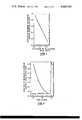
- FIG. 1 is a graph of PuO 2 dissolution rate vs. Pu(IV)/F mole ratio showing the decrease in dissolution rate as dissolved Pu(IV) concentration increases.
- FIG. 2 is a graph of PuO 2 dissolution rate vs. time showing the effect of Ag 2 O 2 addition.
- FIG. 3 is a graph of total plutonium ion concentration in solution vs. time for solution with and without periodic Ag 2 O 2 addition.
- FIG. 4 is a graph of total plutonium ion concentration in solution vs. time for two acid solutions with and without electrolytic oxidation.
- FIG. 1 An experimental demonstration of the variation of the initial dissolution rate with respect to time is represented in FIG. 1. This experiment was carried out as follows:
- the data are shown in FIG. 1 wherein the fraction of maximum dissolution rate is plotted vs. Pu(IV)/fluoride mole ratio (the concentration of dissolved Pu(IV) with respect to initial fluoride concentration).
- the resulting curve has a slope of minus one, indicating that the decrease in dissolution rate is directly proportional to the increase in Pu(IV)/F -1 mole ratio.
- the fraction of maximum dissolution rate is defined as the dissolution rate at a given time divided by the initial dissolution rate (found to be the maximum rate). This linear relationship with a slope of minus one indicates the formation of a Pu(IV)-fluoride complex with a one-to-one mole ratio, thereby causing the decrease in reaction rate as the fluoride ion is complexed.
- Oxidizing conditions have very little effect on the dissolution rate of PuO 2 in HNO 3 in the absence of fluoride. For example only 1.2 miligram of PuO 2 was dissolved after 1.0 gram of PuO 2 was digested at 100° C in 50 ml. 8.0 M HNO 3 for 24 hours under electrolytic oxidation. Electrolytic oxidation was carried out with an applied potential of 2 volts with 100 milliamps current. The total dissolved Pu concentration was 0.0001 moles/liter.
- PuO 2 be contacted with an aqueous HNO 3 dissolving solution containing an effective catalytic amount of fluoride under oxidizing conditions.
- the proper oxidizing conditions may be established in the dissolving solution electrolytically or by any non-interfering oxidizing agent.
- Electrolytic oxidation may be carried out by any conventional means of passing electrolytic current through the solution with corrosion resistant electrodes such as platinum.
- a non-interfering oxidizing agent is one (such as Ag 2 O 2 ) which operates to oxidize dissolved plutonium without itself complexing available fluoride ions. According to the present invention, fluoride is no longer required in stoichiometric amounts with respect to Pu.
- an effective catalytic amount is that amount, independent of Pu stoichiometry, which will effectively catalyze the PuO 2 dissolution for the particular HNO 3 concentration used and may be routinely determined for the desired application.
- sustained dissolution rates no longer require high initial fluoride concentrations and the necessary fluoride ion concentration may now be reduced to less than 0.01 M to suit the corrosion resistance of the dissolving vessel.
- Oxidation of the dissolved plutonium occured during the next three hours as evidenced by analysis for Pu(IV) and Pu(VI).
- the mole ratio of Pu(IV) in solution to initial fluoride decreased to 0.25 and the dissolution rate increased to greater than 85 percent of the initial rate.
- This example provides a comparison of PuO 2 dissolutions both with and without the addition of oxidizing agent.
- One half gram samples of PuO 2 microspheres were digested at 100° C in polytetrafluoroethylene equipment in 40 ml. volumes of 8 M HNO 3 - 0.02 M HF solution with and without Ag 2 O 2 addition.
- the data in the table show that after 174 hours of dissolution in 8 M HNO 3 - 0.02 M HF there is 51.0% more total plutonium dissolved with Ag 2 O 2 addition than without the addition.
- the data in the table shows that the dissolution with Ag 2 O 2 results in large fractions of the dissolved plutonium being oxidized to the plutonyl (PuO 2 +2 ) state. While some oxidation of dissolved plutonium occurs without Ag 2 O 2 addition, the significant increase in dissolution rate corresponds to the greatly increased amount of Pu(VI) in solution with Ag 2 O 2 addition.
- the increased plutonium dissolution rates resulting from the Ag 2 O 2 additions can be seen in FIG. 3 where plutonium concentrations in the dissolvents are plotted as a function of dissolution time for dissolutions with and without Ag 2 O 2 additions.
- the curves in the FIG. 3 show that the initial dissolution rates are the same with and without Ag 2 O 2 additions but that the rate without Ag 2 O 2 addition decreases much faster than does the rate with Ag 2 O 2 addition.
- This example demonstrates the effect of electrolytic oxidation on PuO 2 dissolution in HNO 3 -HF solutions.
- 1.2 gram samples of PuO 2 microspheres were digested at 100° C in 30 ml. volumes of HNO 3 -HF solutions with and without electrolytic oxidation. The results are depicted in FIG. 4.
- the electrolytic oxidations of this example were carried out by immersing platinum wire electrodes (0.2 cm. diameter) about 1.8-2.0 cm. apart, directly in the dissolver solutions to a depth of 8 cm. within a 2.3 cm. diameter polytetrafluoroethylene cylinder.
- the applied potential was 2.0 V. and the current flow was 200 mA.
- the cathode was enclosed in a polytetrafluoroethylene sleeve and vented separately. Electrolytic oxidation for 28 hours in an 8.0 M HNO 3 -0.085 M HF dissolvent resulted in a 75% increase in PuO 2 dissolution. The relative effects were even more striking in a 4.0 M HNO 3 -0.15 M HF dissolvent where there was a more than 800% increase in PuO 2 dissolution after 72 hours. Even after 100 hours, no sharp decrease in PuO 2 dissolution rate occurs.
- This example demonstrates that the oxidation of dissolved plutonium according to this invention may be carried out in the presence of ruthenium and without ruthenium volatilization.
- 0.50 gram samples of PuO 2 microspheres were digested in 40 ml. volumes of 8.0 M HNO 3 -0.10 M HF -0.10 M ruthenium with and without electrolytic oxidation as in Example III.
- the quantity of plutonium dissolved with electrolytic oxidation was more than 100% greater than that without the oxidation at the end of 24 hours, and was 45% in the plutonyl state.
- the ruthenium in the dissolvents was traced with 106 Ru. Based on gross gamma and gamma scan analyses, the concentration of ruthenium in the dissolvents did not change significantly during the dissolutions, indicating that ruthenium volatilization did not occur.
- An additional advantage to the method of this invention is that plutonium precipitation is prevented by the oxidation of dissolved plutonium ions. It has been observed experimentally that at the higher fluoride concentrations favorable for high dissolution rates (greater than about 0.1 M) and in the absence of oxidation, the formation of an insoluble PuF 2 +2 complex occurs, thereby retarding the overall plutonium dissolution rate. When dissolved plutonium ions are oxidized according to this invention, the insoluble complex does not appear.
- Contemplated equivalents of Ag 2 O 2 in this method are those oxidizing agents capable of oxidizing Pu ions dissolved in HNO 3 --HF solutions to increase the PuO 2 dissolution rate without themselves substantially complexing fluoride ions.
- the dissolution may be efficiently carried out even at below the boiling temperature of the acid, with higher dissolution rates available at elevated temperatures.
- the preferred temperature of the dissolving mixture is now about 100° C.
Landscapes
- Engineering & Computer Science (AREA)
- Chemical & Material Sciences (AREA)
- Organic Chemistry (AREA)
- Manufacturing & Machinery (AREA)
- Chemical Kinetics & Catalysis (AREA)
- Metallurgy (AREA)
- Mechanical Engineering (AREA)
- Life Sciences & Earth Sciences (AREA)
- Environmental & Geological Engineering (AREA)
- General Life Sciences & Earth Sciences (AREA)
- Geology (AREA)
- Physics & Mathematics (AREA)
- Materials Engineering (AREA)
- High Energy & Nuclear Physics (AREA)
- General Engineering & Computer Science (AREA)
- Plasma & Fusion (AREA)
- Electrochemistry (AREA)
- General Chemical & Material Sciences (AREA)
- Geochemistry & Mineralogy (AREA)
- Inorganic Compounds Of Heavy Metals (AREA)
Abstract
The fluoride-catalyzed, non-oxidative dissolution of plutonium dioxide in HNO3 is significantly enhanced in rate by oxidizing dissolved plutonium ions. It is believed that the oxidation of dissolved plutonium releases fluoride ions from a soluble plutonium-fluoride complex for further catalytic action.
Description
This invention was made in the course of, or under, a contract with the Energy Research and Development Administration.
This application is a continuation-in-part of application Ser. No. 574,977 filed May 6, 1975 now U.S. Pat. No. 3,976,775 in the name of Othar K. Tallent for "Method for Dissolving Plutonium Dioxide".
The present invention relates generally to the dissolution of plutonium dioxide for nuclear fuel reprocessing, and more specifically to the nitric acid dissolution of plutonium dioxide catalyzed by hydrofluoric acid.
One of the commonly used nuclear fuels is plutonium in the form of the dioxide. The dioxide is suitable for use in nuclear fuel because of its refractivity and its inert nature. For nuclear fuel applications, PuO2 is generally mixed with UO2 in compositions of 15-30% PuO2. In nuclear reactors, particularly the breeder type reactor, the spent fuel is periodically removed and reprocessed to separate the waste materials from the useful products. Methods are available for recovering and purifying plutonium once the material is dissolved in an aqueous nitrate solution. However, PuO2 is relatively difficult to dissolve in pure concentrated nitric acid.
The difficulty of dissolution depends upon the fuel manufacturing process. Fuels experiencing high sintering temperatures resulting in solid solution of the mixed oxides are soluble in 10-12 M nitric acid. Mechanically blended fuels of high PuO2 content which, having been sintered at relatively lower temperature, contain separate PuO2 and UO2 phases are difficultly soluble in 10-12 nitric acid. Preferential dissolution of UO2 usually occurs in these fuels leaving difficultly soluble residues of high PuO2 content. In addition, certain forms of PuO2 which have been fired at very high temperatures to obtain maximum density, such as microspheres having 96-98% theoretical density, are slow to dissolve by any known means. The accumulation of plutonium containing residues in fuel reprocessing plants is very undesirable from a criticality standpoint. The subject invention is particularly applicable to the dissolution of such difficultly soluble PuO2.
The problem of dissolving plutonium dioxide is well known in the art of nuclear fuel reprocessing. The prior art methods are generally classifiable into two groups: oxidative dissolution and non-oxidative dissolution. In oxidative dissolution processes, the principal mechanism by which the plutonium dioxide goes into solution is by the oxidation of Pu(IV) in solid PuO2 to a more soluble oxidation state such as Pu(VI). In non-oxidative dissolution, the plutonium dioxide goes into solution without oxidation of Pu(IV) such as by the formation of a soluble Pu(IV) complex.
An example of oxidative dissolution is found in U.S. Pat. No. 3,005,682. The method disclosed therein involved the addition of cerium ions (strong oxidizing agents) to 4 M nitric acid above 115° C. The addition of cerium ions aids in the dissolution of solid PuO2 by oxidizing difficultly soluble PuO2 to the soluble plutonyl ion (PuO2 +2) in which the plutonium exhibits an oxidation state of (VI). One disadvantage of this oxidative dissolution process for nuclear fuel reprocessing is the observed behavior of ruthenium. Ruthenium is always present as a fission product in irradiated fuels. For example, a typical 1000 kg. batch of irradiated liquid metal fast breeder reactor (after about 10% burnup) contains 200-250 kg. plutonium (as PuO2) and about 6 kg. ruthenium with the remainder uranium and other fission products. Due to its multiplicity of available oxidation states and tendency to form complex ions, ruthenium's behavior (especially in the presence of oxidizing or reducing agents) is largely unpredictable and always of primary concern in fuel reprocessing processes. In oxidative dissolution with cerium ions, ruthenium is also oxidized (to RuO4) and volatilizes, causing serious radioactive materials handling problems. Furthermore, some of the volatile ruthenium species condense and are reduced back to RuO2 which re-enters the dissolving solution and interfere with the Pu oxidation, catalyzing the reduction of Ce(IV) to Ce(III) thereby preventing Pu(IV) oxidation. Fear of ruthenium volatilization has militated against dissolution processes involving oxidation processes.
The ruthenium volatilization problem is avoided in a non-oxidative dissolution process. Some success has been achieved in the prior art with an essentially non-oxidative, fluoride-catalyzed dissolution. In this process PuO2 is dissolved by contacting with aqueous HNO3 (about 8 to 16 M) in the presence of an effective catalytic amount of fluoride (about 0.05 to 0.30 M). The fluoride ion catalyzes the PuO2 dissolution without oxidizing plutonium. The fluoride ion is preferably added as HF to avoid extraneous ions. Of course, regardless of the fluoride added, it will behave in an acid medium substantially as HF and will be delineated herein as an HNO3 -HF dissolvent. While this fluoride-catalyzed non-oxidative dissolution process is effective for preventing ruthenium volatilization, there are certain disadvantages inherent. For example, after a period of time the dissolution rate decreases and comes to a near stop. Apparently, fluoride ion is consumed in the dissolution reaction and constant addition of fluoride is necessary to sustain the dissolution rate. In some cases refractory PuO2 is not completely dissolved even after long periods of digestion and stoichiometric addition of fluoride. Of course, it would be desirable in any fuel reprocessing application that the HNO3 and the fluoride ion concentrations be minimized to lessen the corrosive nature of the dissolving solution.
It is an object of the present invention to provide a method for dissolving PuO2 in nitric acid whereby dissolution is substantially complete.
It is a further object to provide a method for enhancing the rate of dissolution of PuO2 in a mixed nitric-hydrofluoric acid.
It is a further object to reduce the fluoride concentration of the dissolving solution, thereby reducing the corrosiveness of the solution.
It is a further object to reduce or eliminate the consumption of fluoride during the dissolution of PuO2 in mixed nitric-hydrofluoric acid.
These and other objects are accomplished according to this invention by providing a method for dissolving PuO2 in an aqueous dissolving mixture comprising PuO2, HNO3 and an effective catalytic amount of fluoride, the improvement comprising increasing the rate of dissolution by providing oxidizing conditions in the dissolving mixture to oxidize dissolved Pu ions. It is believed that when the dissolved plutonium is oxidized, fluoride ions are released from a soluble plutonium-fluoride complex for further catalytic action. By this method fluoride is no longer consumed in the dissolution process and the dissolution rate no longer decreases substantially with time. Unexpectedly, dissolved ruthenium did not volatilize and did not interfere with the oxidation of dissolved plutonium ions. According to this invention, the oxidation may be carried out in any effective manner which does not interfere with the catalytic action of fluoride, preferably by electrolytic oxidation.
FIG. 1 is a graph of PuO2 dissolution rate vs. Pu(IV)/F mole ratio showing the decrease in dissolution rate as dissolved Pu(IV) concentration increases.
FIG. 2 is a graph of PuO2 dissolution rate vs. time showing the effect of Ag2 O2 addition.
FIG. 3 is a graph of total plutonium ion concentration in solution vs. time for solution with and without periodic Ag2 O2 addition.
FIG. 4 is a graph of total plutonium ion concentration in solution vs. time for two acid solutions with and without electrolytic oxidation.
In furtherance of the objects of this invention, kinetic studies of PuO2 dissolution in aqueous HNO3 -HF solution were undertaken. A study of PuO2 dissolution rates in solutions of various HNO3 and HF concentrations revealed that the initial PuO2 solubility rate is higher for higher HNO3 concentrations and for higher HF concentrations. Furthermore, log-log plots of initial dissolution rates vs. initial fluoride concentration in solutions of constant acid activity revealed that the kinetics of the dissolution reaction in the HNO3 -HF system is first order with respect to HF concentration.
An experimental demonstration of the variation of the initial dissolution rate with respect to time is represented in FIG. 1. This experiment was carried out as follows:
One half gram of PuO2 microspheres of a refractory, difficultly soluble type (considered to be no less difficult to dissolve than the PuO2 in residues from liquid metal fast breeder type fuel rods) was digested at 100° C in a polytetrafluoroethylene container in 30 ml. of a solution 10 M in HNO3 and 0.02 M in HF.
The data are shown in FIG. 1 wherein the fraction of maximum dissolution rate is plotted vs. Pu(IV)/fluoride mole ratio (the concentration of dissolved Pu(IV) with respect to initial fluoride concentration). The resulting curve has a slope of minus one, indicating that the decrease in dissolution rate is directly proportional to the increase in Pu(IV)/F-1 mole ratio. The fraction of maximum dissolution rate is defined as the dissolution rate at a given time divided by the initial dissolution rate (found to be the maximum rate). This linear relationship with a slope of minus one indicates the formation of a Pu(IV)-fluoride complex with a one-to-one mole ratio, thereby causing the decrease in reaction rate as the fluoride ion is complexed. For all practical purposes, it can be concluded that the formation of this complex limits the total quantity of Pu which can be dissolved with a given amount of HF. It can therefore be concluded that the mechanism of dissolution of PuO2 in HNO3 -HF solutions is by the formation of a soluble PuF+3 complex. Note that the Pu(IV) in the PuO2 is not oxidized in this fluoride-catalyzed dissolution method.
It has been discovered according to this invention that the fluoride catalyzed dissolution of plutonium dioxide in HNO3 is significantly enhanced in rate by oxidizing dissolved plutonium ions. Based upon kinetic studies, it is believed that oxidizing dissolved plutonium releases fluoride ions from the soluble PuF+3 complex, with concurrent formation of soluble plutonyl ion, PuO2 +2. Unexpectedly, dissolved ruthenium ions did not interfere with the plutonium oxidation. It should be noted that the method of this invention is still essentially a non-oxidative dissolution process since the plutonium is not oxidized during the dissolution reaction but only after dissolution.
Oxidizing conditions have very little effect on the dissolution rate of PuO2 in HNO3 in the absence of fluoride. For example only 1.2 miligram of PuO2 was dissolved after 1.0 gram of PuO2 was digested at 100° C in 50 ml. 8.0 M HNO3 for 24 hours under electrolytic oxidation. Electrolytic oxidation was carried out with an applied potential of 2 volts with 100 milliamps current. The total dissolved Pu concentration was 0.0001 moles/liter.
All that is required to carry out the method of this invention is that PuO2 be contacted with an aqueous HNO3 dissolving solution containing an effective catalytic amount of fluoride under oxidizing conditions. The proper oxidizing conditions may be established in the dissolving solution electrolytically or by any non-interfering oxidizing agent. Electrolytic oxidation may be carried out by any conventional means of passing electrolytic current through the solution with corrosion resistant electrodes such as platinum.
For dissolution of irradiated fuels with electrolytic oxidation, it is desirable to regulate the standard potential of the anolyte to a value intermediate the standard potentials for the following reactions:
Pu.sup.+4 + 2H.sub.2 O → PuO.sub.2.sup.+2 + 4H.sup.+ + 2e (-1.04 V.)
ruO.sub.2 + 2H.sub.2 O → RuO.sub.4 + 4H.sup.+ + 4e (-1.39 V.)
by maintaining the cell potential between about -1.15 V. and -1.25 V. (with respect to a hydrogen electrode) dissolved plutonium is oxidized without volatilization of dissolved ruthenium. The proper applied potential may be routinely determined by measuring the standard cell potential. For purposes of this invention, a non-interfering oxidizing agent is one (such as Ag2 O2) which operates to oxidize dissolved plutonium without itself complexing available fluoride ions. According to the present invention, fluoride is no longer required in stoichiometric amounts with respect to Pu. While the rate of dissolution may be enhanced by adding greater amounts of fluoride, all that is necessary is an effective catalytic amount since the fluoride ion is now returned to the solution rather than being tied up in the PuF+3 complex ion. For purposes of this invention, an effective catalytic amount is that amount, independent of Pu stoichiometry, which will effectively catalyze the PuO2 dissolution for the particular HNO3 concentration used and may be routinely determined for the desired application. According to the present invention, sustained dissolution rates no longer require high initial fluoride concentrations and the necessary fluoride ion concentration may now be reduced to less than 0.01 M to suit the corrosion resistance of the dissolving vessel.
To illustrate the method of this invention the following examples are presented. The requisite oxidation of dissolved plutonium is accomplished by an oxidating agent in Examples I and II and by electrolytic oxidation in Examples III and IV. The dissolutions were performed on refractory PuO2 microspheres of 98% theoretical density thought to be representative of the most difficultly soluble PuO2 likely to be encountered in nuclear reprocessing of breeder reactor fuel.
This example illustrates the dramatic increase in dissolution rate of PuO2 as a result of Ag2 O2 addition graphically depicted in FIG. 2. One half gram of refractory PuO2 microspheres was digested at 100° C in polytetrafluoroethylene equipment in 30 ml. of 10 M HNO3 - 0.02 M HF solution. The initial dissolution rate for the sample was approximately 10.4 × 10⁻⁴ moles per liter, per hour. At the end of 24 hours enough plutonium had dissolved to provide a Pu(IV)/F-1 mole ratio of 0.75. The dissolution rate had then decreased to about one-fourth the initial rate. At this point 0.50 gram of Ag2 O2 was added to the solution. Oxidation of the dissolved plutonium occured during the next three hours as evidenced by analysis for Pu(IV) and Pu(VI). The mole ratio of Pu(IV) in solution to initial fluoride decreased to 0.25 and the dissolution rate increased to greater than 85 percent of the initial rate.
This example provides a comparison of PuO2 dissolutions both with and without the addition of oxidizing agent. One half gram samples of PuO2 microspheres were digested at 100° C in polytetrafluoroethylene equipment in 40 ml. volumes of 8 M HNO3 - 0.02 M HF solution with and without Ag2 O2 addition. The data in the table show that after 174 hours of dissolution in 8 M HNO3 - 0.02 M HF there is 51.0% more total plutonium dissolved with Ag2 O2 addition than without the addition. The data in the table shows that the dissolution with Ag2 O2 results in large fractions of the dissolved plutonium being oxidized to the plutonyl (PuO2 +2) state. While some oxidation of dissolved plutonium occurs without Ag2 O2 addition, the significant increase in dissolution rate corresponds to the greatly increased amount of Pu(VI) in solution with Ag2 O2 addition.
______________________________________
Effect of Ag.sub.2 O.sub.2 Addition.sup.a on Plutonium
in 8 M HNO.sub.3 -- 0.02 M HF Dissolvents at 100° C
     Percentage Increase in
                       Percentage Increase
     PuO.sub.2.sup.+2 Concentration
                       in Total Pu Concen-
Time Resulting from Ag.sub.2 O.sub.2
                       tration Resulting
(hr) Addition          from Ag.sub.2 O.sub.2 Addition
______________________________________
 51  65.5              8.0
 75  204.3             10.1
129  247.8             28.7
174  325.0             51.0
______________________________________
 .sup.a Added 100 mg. of Ag.sub.2 O.sub.2 every 24 hours.
The increased plutonium dissolution rates resulting from the Ag2 O2 additions can be seen in FIG. 3 where plutonium concentrations in the dissolvents are plotted as a function of dissolution time for dissolutions with and without Ag2 O2 additions. The curves in the FIG. 3 show that the initial dissolution rates are the same with and without Ag2 O2 additions but that the rate without Ag2 O2 addition decreases much faster than does the rate with Ag2 O2 addition.
This example demonstrates the effect of electrolytic oxidation on PuO2 dissolution in HNO3 -HF solutions. 1.2 gram samples of PuO2 microspheres were digested at 100° C in 30 ml. volumes of HNO3 -HF solutions with and without electrolytic oxidation. The results are depicted in FIG. 4. The electrolytic oxidations of this example were carried out by immersing platinum wire electrodes (0.2 cm. diameter) about 1.8-2.0 cm. apart, directly in the dissolver solutions to a depth of 8 cm. within a 2.3 cm. diameter polytetrafluoroethylene cylinder. The applied potential was 2.0 V. and the current flow was 200 mA. The cathode was enclosed in a polytetrafluoroethylene sleeve and vented separately. Electrolytic oxidation for 28 hours in an 8.0 M HNO3 -0.085 M HF dissolvent resulted in a 75% increase in PuO2 dissolution. The relative effects were even more striking in a 4.0 M HNO3 -0.15 M HF dissolvent where there was a more than 800% increase in PuO2 dissolution after 72 hours. Even after 100 hours, no sharp decrease in PuO2 dissolution rate occurs.
This example demonstrates that the oxidation of dissolved plutonium according to this invention may be carried out in the presence of ruthenium and without ruthenium volatilization. 0.50 gram samples of PuO2 microspheres were digested in 40 ml. volumes of 8.0 M HNO3 -0.10 M HF -0.10 M ruthenium with and without electrolytic oxidation as in Example III. The quantity of plutonium dissolved with electrolytic oxidation was more than 100% greater than that without the oxidation at the end of 24 hours, and was 45% in the plutonyl state. The ruthenium in the dissolvents was traced with 106 Ru. Based on gross gamma and gamma scan analyses, the concentration of ruthenium in the dissolvents did not change significantly during the dissolutions, indicating that ruthenium volatilization did not occur.
The beneficial effect of oxidizing conditions on the non-oxidative fluoride-catalyzed nitric acid dissolution of PuO2 was unexpected, especially in view of my experience with various oxidizing agents in this system. The addition of sodium dichromate, a strong oxidizing agent, to a dissolving mixture of refractory PuO2 microspheres (about 98% theoretical density) in 8 M HNO3 - 0.02 M HF oxidized the Pu already in solution to PuO2 2+, but did not increase the dissolution rate of solid PuO2. Similarly, the addition of Ce(IV) ions, as in the prior art oxidative dissolution process, to a similar dissolving solution not only did not cause complete dissolution of the microspheres but acutally retarded dissolution. It was even more unexpected that the oxidation would increase the dissolution rate in the presence of ruthenium ions as are found in dissolving mixtures of irradiated fuels. Past experience with cerium in HNO3 -- HF dissolvents containing dissolved ruthenium has been that dissolution rates were not increased. It is now believed that this was probably due to fluoride complexation and the tendency of ruthenium to be oxidized preferentially to plutonium.
An additional advantage to the method of this invention is that plutonium precipitation is prevented by the oxidation of dissolved plutonium ions. It has been observed experimentally that at the higher fluoride concentrations favorable for high dissolution rates (greater than about 0.1 M) and in the absence of oxidation, the formation of an insoluble PuF2 +2 complex occurs, thereby retarding the overall plutonium dissolution rate. When dissolved plutonium ions are oxidized according to this invention, the insoluble complex does not appear.
This invention has been illustrated by experimental demonstrations which show the operability of this process. These laboratory-scale examples may be readily amplified to industrial scale by those skilled in the art. As has been demonstrated, the HNO3 concentration is not critical to the operativeness of this process (with good results attainable even at 4.0 M HNO3) and may now be tailored to accommodate the corrosion resistance of the equipment. While electrolytic oxidation appears most attractive for large scale applications, chemical oxidizing agents such as Ag2 O2 may be used without departing from my inventive concept. It is now believed that the reason that cerium ions and sodium dichromate did not aid the HNO3 --HF dissolution was that Ce and Cr ions themselves complexed fluoride ions. Other metal ions which have been found to complex fluoride in HNO3 --HF are Zn+2, La+3, Ca+3, Al+3, Th+4, and Zr+4. Contemplated equivalents of Ag2 O2 in this method are those oxidizing agents capable of oxidizing Pu ions dissolved in HNO3 --HF solutions to increase the PuO2 dissolution rate without themselves substantially complexing fluoride ions.
With the enhanced dissolution rates now available according to this invention, the dissolution may be efficiently carried out even at below the boiling temperature of the acid, with higher dissolution rates available at elevated temperatures. The preferred temperature of the dissolving mixture is now about 100° C.
Claims (3)
1. In a method for dissolving PuO2 in an aqueous dissolving mixture comprising PuO2, HNO3 and an effective catalytic amount of fluoride, the improvement comprising providing oxidizing conditions in said dissolving mixture to oxidize dissolved Pu ions and thereby increase the rate of PuO2 dissolution.
2. The method of claim 1 wherein said oxidizing conditions are provided electrolytically.
3. The method of claim 1 wherein said dissolving mixture contains dissolved ruthenium.
Priority Applications (4)
| Application Number | Priority Date | Filing Date | Title |
|---|---|---|---|
| CA249,234A CA1071414A (en) | 1975-05-06 | 1976-03-30 | Method for dissolving plutonium dioxide |
| FR7613037A FR2311754A1 (en) | 1975-05-06 | 1976-04-30 | PLUTONIUM DIOXIDE DISSOLUTION PROCESS |
| DE19762619089 DE2619089A1 (en) | 1975-05-06 | 1976-05-03 | METHOD OF DIGITATING PLUTONIUM DIOXYDE |
| JP5165376A JPS5220995A (en) | 1975-05-06 | 1976-05-06 | Dissolusion process for plutonium dioxide |
Applications Claiming Priority (1)
| Application Number | Priority Date | Filing Date | Title |
|---|---|---|---|
| US05/574,977 US3976775A (en) | 1975-05-06 | 1975-05-06 | Method for dissolving plutonium dioxide |
Related Parent Applications (1)
| Application Number | Title | Priority Date | Filing Date |
|---|---|---|---|
| US05/574,977 Continuation-In-Part US3976775A (en) | 1975-05-06 | 1975-05-06 | Method for dissolving plutonium dioxide |
Publications (1)
| Publication Number | Publication Date |
|---|---|
| US4069293A true US4069293A (en) | 1978-01-17 |
Family
ID=24298402
Family Applications (2)
| Application Number | Title | Priority Date | Filing Date |
|---|---|---|---|
| US05/574,977 Expired - Lifetime US3976775A (en) | 1975-05-06 | 1975-05-06 | Method for dissolving plutonium dioxide |
| US05/659,826 Expired - Lifetime US4069293A (en) | 1975-05-06 | 1976-02-20 | Method for dissolving plutonium dioxide |
Family Applications Before (1)
| Application Number | Title | Priority Date | Filing Date |
|---|---|---|---|
| US05/574,977 Expired - Lifetime US3976775A (en) | 1975-05-06 | 1975-05-06 | Method for dissolving plutonium dioxide |
Country Status (2)
| Country | Link |
|---|---|
| US (2) | US3976775A (en) |
| BE (1) | BE841140A (en) |
Cited By (12)
| Publication number | Priority date | Publication date | Assignee | Title |
|---|---|---|---|---|
| US4134960A (en) * | 1977-06-01 | 1979-01-16 | The United States Of America As Represented By The United States Department Of Energy | Method for dissolving plutonium oxide with HI and separating plutonium |
| FR2455565A1 (en) * | 1979-04-30 | 1980-11-28 | Atomic Energy Authority Uk | PROCESS FOR ACCELERATING THE DISSOLUTION AND INCREASING THE SOLUBILITY IN NITRIC ACID OF PLUTONIUM DIOXIDE AND MIXED URANIUM / PLUTONIUM OXIDES AND THEIR RESIDUES |
| US4434137A (en) | 1979-12-20 | 1984-02-28 | Alkem Gmbh | Method for dissolving hard-to dissolve nuclear fuels |
| FR2561942A1 (en) * | 1984-03-27 | 1985-10-04 | Commissariat Energie Atomique | PROCESS AND DEVICE FOR DISSOLVING PLUTONIUM AND / OR NEPTUNIUM OXIDES |
| EP0089185A3 (en) * | 1982-03-11 | 1985-12-18 | Exxon Nuclear Company Inc. | Dissolution of pu02 or np02 using electrolytically regenerated reagents |
| US4686019A (en) * | 1982-03-11 | 1987-08-11 | Exxon Research And Engineering Company | Dissolution of PuO2 or NpO2 using electrolytically regenerated reagents |
| US4749519A (en) * | 1984-03-27 | 1988-06-07 | Commissariat A L'energie Atomique | Process for the recovery of plutonium contained in solid waste |
| US4839103A (en) * | 1986-01-22 | 1989-06-13 | Alkem Gmbh | Method for obtaining a solution of nuclear fuel not readily dissovable, especially of PuOhd 2 or (U/Pu)O2 mixed oxide |
| US4879006A (en) * | 1987-08-12 | 1989-11-07 | United Kingdom Atomic Energy Authority | Liquid treatment process |
| US5069827A (en) * | 1987-10-13 | 1991-12-03 | Commissariat A L'energie Atomique | Process for reducing and dissolving puo2 |
| US5678167A (en) * | 1994-07-19 | 1997-10-14 | Doryokuro Kakunenryo Kaihatsu Jigyodan | Method for dissolving nuclear fuels |
| GB2456645A (en) * | 2008-01-25 | 2009-07-29 | John William Carson | Extraction from an ore using a redox reagent, a pH adjuster and a dissolution promoter |
Families Citing this family (4)
| Publication number | Priority date | Publication date | Assignee | Title |
|---|---|---|---|---|
| NZ181123A (en) * | 1975-06-30 | 1979-12-11 | Univ Melbourne | Treatment of mineralcontaining materials with an acid in the presence of fluoride ion |
| DE2811959C3 (en) * | 1978-03-18 | 1980-09-25 | Alkem Gmbh, 6450 Hanau | Process for the production of (U / Pu) 02 mixed crystals |
| FR2688337B1 (en) * | 1992-03-05 | 1994-05-13 | Commissariat Energie Atomique | PROCESS FOR THE DISSOLUTION OF PLUTONIUM BIOXIDE USING OH RADICALS. PRODUCTS BY RADIOLYSIS OF WATER, USEFUL FOR THE TREATMENT OF FINES OF DISSOLUTION AND OF WASTE PLUTONIFERES. |
| CN103345956A (en) * | 2013-06-26 | 2013-10-09 | 中国原子能科学研究院 | Preparation method of liquid alpha irradiation source |
Citations (2)
| Publication number | Priority date | Publication date | Assignee | Title |
|---|---|---|---|---|
| US3901786A (en) * | 1974-04-10 | 1975-08-26 | Us Energy | Electrolytic dissolver |
| US3957615A (en) * | 1972-12-28 | 1976-05-18 | Gesellschaft Fur Kernforschung M.B.H. | Apparatus for conducting electrolytic reactions |
Family Cites Families (2)
| Publication number | Priority date | Publication date | Assignee | Title |
|---|---|---|---|---|
| BE634617A (en) * | 1962-07-27 | 1900-01-01 | ||
| US3259473A (en) * | 1963-10-02 | 1966-07-05 | Jr Horace H Hopkins | Dissolution of plutonium |
-
1975
- 1975-05-06 US US05/574,977 patent/US3976775A/en not_active Expired - Lifetime
-
1976
- 1976-02-20 US US05/659,826 patent/US4069293A/en not_active Expired - Lifetime
- 1976-04-26 BE BE166476A patent/BE841140A/en unknown
Patent Citations (2)
| Publication number | Priority date | Publication date | Assignee | Title |
|---|---|---|---|---|
| US3957615A (en) * | 1972-12-28 | 1976-05-18 | Gesellschaft Fur Kernforschung M.B.H. | Apparatus for conducting electrolytic reactions |
| US3901786A (en) * | 1974-04-10 | 1975-08-26 | Us Energy | Electrolytic dissolver |
Non-Patent Citations (3)
| Title |
|---|
| Cleveland, J. M., "The Chemistry of Plutonium", Gordon & Breach Science Publishers, N.Y., 1970, pp. 56-58, 301-303. * |
| Tallent, O. K. et al., "Effect of Oxidation State of Dissolved Plutonium on PuO.sub.2 Dissolution", Trans. American Nuc. Soc., June, 1975, pp. 252-253. * |
| Tallent, O. K. et al., "Effect of Oxidation State of Dissolved Plutonium on PuO2 Dissolution", Trans. American Nuc. Soc., June, 1975, pp. 252-253. |
Cited By (15)
| Publication number | Priority date | Publication date | Assignee | Title |
|---|---|---|---|---|
| US4134960A (en) * | 1977-06-01 | 1979-01-16 | The United States Of America As Represented By The United States Department Of Energy | Method for dissolving plutonium oxide with HI and separating plutonium |
| FR2455565A1 (en) * | 1979-04-30 | 1980-11-28 | Atomic Energy Authority Uk | PROCESS FOR ACCELERATING THE DISSOLUTION AND INCREASING THE SOLUBILITY IN NITRIC ACID OF PLUTONIUM DIOXIDE AND MIXED URANIUM / PLUTONIUM OXIDES AND THEIR RESIDUES |
| US4434137A (en) | 1979-12-20 | 1984-02-28 | Alkem Gmbh | Method for dissolving hard-to dissolve nuclear fuels |
| EP0031067B1 (en) * | 1979-12-20 | 1984-06-06 | Alkem Gmbh | Method for dissolving hardly soluble nuclear fuels |
| EP0089185A3 (en) * | 1982-03-11 | 1985-12-18 | Exxon Nuclear Company Inc. | Dissolution of pu02 or np02 using electrolytically regenerated reagents |
| US4686019A (en) * | 1982-03-11 | 1987-08-11 | Exxon Research And Engineering Company | Dissolution of PuO2 or NpO2 using electrolytically regenerated reagents |
| EP0160589A1 (en) * | 1984-03-27 | 1985-11-06 | Commissariat A L'energie Atomique | Process and apparatus for the dissolution of plutonium and/or neptumium oxides |
| FR2561942A1 (en) * | 1984-03-27 | 1985-10-04 | Commissariat Energie Atomique | PROCESS AND DEVICE FOR DISSOLVING PLUTONIUM AND / OR NEPTUNIUM OXIDES |
| US4749519A (en) * | 1984-03-27 | 1988-06-07 | Commissariat A L'energie Atomique | Process for the recovery of plutonium contained in solid waste |
| US4839103A (en) * | 1986-01-22 | 1989-06-13 | Alkem Gmbh | Method for obtaining a solution of nuclear fuel not readily dissovable, especially of PuOhd 2 or (U/Pu)O2 mixed oxide |
| US4879006A (en) * | 1987-08-12 | 1989-11-07 | United Kingdom Atomic Energy Authority | Liquid treatment process |
| US5069827A (en) * | 1987-10-13 | 1991-12-03 | Commissariat A L'energie Atomique | Process for reducing and dissolving puo2 |
| US5678167A (en) * | 1994-07-19 | 1997-10-14 | Doryokuro Kakunenryo Kaihatsu Jigyodan | Method for dissolving nuclear fuels |
| GB2456645A (en) * | 2008-01-25 | 2009-07-29 | John William Carson | Extraction from an ore using a redox reagent, a pH adjuster and a dissolution promoter |
| GB2456645B (en) * | 2008-01-25 | 2011-03-02 | John William Carson | Improved extraction from ores |
Also Published As
| Publication number | Publication date |
|---|---|
| US3976775A (en) | 1976-08-24 |
| BE841140A (en) | 1976-08-16 |
Similar Documents
| Publication | Publication Date | Title |
|---|---|---|
| Taube et al. | Applications of radioactive chlorine to the study of the mechanisms of reactions involving changes in the oxidation state of chlorine | |
| US4056482A (en) | Method for preparing aqueous, radioactive waste solutions from nuclear plants for solidification | |
| US3976775A (en) | Method for dissolving plutonium dioxide | |
| CA1071414A (en) | Method for dissolving plutonium dioxide | |
| US5609745A (en) | Process for the electrochemical oxidation of Am(III) to Am(VI) usable for separating americium from spent nuclear fuel reprocessing solutions | |
| US3119658A (en) | Aluminum cladding dissolution | |
| US3276850A (en) | Method of selectively reducing plutonium values | |
| Tallent | Method for dissolving plutonium dioxide | |
| US4197274A (en) | Process for reducing plutonium | |
| US3965237A (en) | Dissolution process for ZrO2 -UO2 -CaO fuels | |
| Tallent et al. | Study of the dissolution of refractory PuO2 in nitric-hydrofluoric acid dissolvents at 100 C | |
| Salomon et al. | Optimization of the aqueous processing of irradiated fuel from nuclear power reactors. Use of uranium (IV) nitrate as reductant in a Purex type processing plant | |
| Kolotyrkin et al. | Role of oxidizers in the active dissolution and passivation of metals | |
| Wymer et al. | Uranium-aluminum alloy dissolution | |
| US5069827A (en) | Process for reducing and dissolving puo2 | |
| US5422084A (en) | Process for dissolving plutonium dioxide by means of OH- radicals produced by the radiolysis of water usable for the treatment of dissolving fines and plutoniferous waste | |
| US3005682A (en) | Method of dissolving plutonium dioxide in nitric acid using cerium ions | |
| US2992886A (en) | Method for dissolving zirconiumuranium compositions | |
| US6623712B1 (en) | Method for dissolving plutonium or a plutonium alloy and converting it into nuclear fuel | |
| US2820692A (en) | Process of dissolving zirconium alloys | |
| US3726956A (en) | Method for dissolving molybdenum and tungsten | |
| Marchenko et al. | Specific Features of Electrochemical Oxidation of Pu (III) in a Diaphragmless Cell in Hydrazine-Containing Nitric Acid Solutions | |
| US3086926A (en) | Method of dissolving refractory alloys | |
| US5830342A (en) | Process for the electrocatalytic reducing dissolving of refractory compounds of cerium | |
| Niedrach et al. | Recovery of Uranium from Stainless Steel Fuel Elements |