US4046849A - Method of compounding thermo-plastic polymeric materials and fillers and extruding onto electrical conductors - Google Patents
Method of compounding thermo-plastic polymeric materials and fillers and extruding onto electrical conductors Download PDFInfo
- Publication number
- US4046849A US4046849A US05/492,965 US49296574A US4046849A US 4046849 A US4046849 A US 4046849A US 49296574 A US49296574 A US 49296574A US 4046849 A US4046849 A US 4046849A
- Authority
- US
- United States
- Prior art keywords
- filler
- polymeric material
- particles
- melting
- mixing
- Prior art date
- Legal status (The legal status is an assumption and is not a legal conclusion. Google has not performed a legal analysis and makes no representation as to the accuracy of the status listed.)
- Expired - Lifetime
Links
- 239000000463 material Substances 0.000 title claims abstract description 195
- 239000000945 filler Substances 0.000 title claims abstract description 193
- 238000000034 method Methods 0.000 title claims abstract description 97
- 229920001169 thermoplastic Polymers 0.000 title claims abstract description 64
- 239000004416 thermosoftening plastic Substances 0.000 title claims abstract description 62
- 239000004020 conductor Substances 0.000 title claims description 28
- 238000013329 compounding Methods 0.000 title abstract description 62
- 238000002156 mixing Methods 0.000 claims abstract description 156
- 239000002245 particle Substances 0.000 claims abstract description 151
- 238000002844 melting Methods 0.000 claims abstract description 69
- 230000008018 melting Effects 0.000 claims abstract description 69
- 239000003795 chemical substances by application Substances 0.000 claims abstract description 37
- 230000000750 progressive effect Effects 0.000 claims abstract description 12
- 150000001875 compounds Chemical class 0.000 claims description 68
- 239000000203 mixture Substances 0.000 claims description 53
- -1 polyethylene Polymers 0.000 claims description 43
- 239000004698 Polyethylene Substances 0.000 claims description 41
- 229920000642 polymer Polymers 0.000 claims description 41
- 229920000573 polyethylene Polymers 0.000 claims description 40
- 230000009471 action Effects 0.000 claims description 36
- VGGSQFUCUMXWEO-UHFFFAOYSA-N Ethene Chemical compound C=C VGGSQFUCUMXWEO-UHFFFAOYSA-N 0.000 claims description 24
- 239000005977 Ethylene Substances 0.000 claims description 23
- 230000000694 effects Effects 0.000 claims description 19
- 238000009413 insulation Methods 0.000 claims description 18
- 238000004519 manufacturing process Methods 0.000 claims description 18
- 238000010438 heat treatment Methods 0.000 claims description 16
- 239000000843 powder Substances 0.000 claims description 11
- 238000004132 cross linking Methods 0.000 claims description 7
- 150000002978 peroxides Chemical group 0.000 claims description 7
- 229920000098 polyolefin Polymers 0.000 claims description 6
- 229920001577 copolymer Polymers 0.000 claims description 5
- 239000002861 polymer material Substances 0.000 claims description 2
- 229920002397 thermoplastic olefin Polymers 0.000 claims 1
- 239000000654 additive Substances 0.000 abstract description 7
- 230000003292 diminished effect Effects 0.000 abstract description 4
- 239000008188 pellet Substances 0.000 description 46
- 239000004927 clay Substances 0.000 description 41
- 239000004615 ingredient Substances 0.000 description 38
- 230000008569 process Effects 0.000 description 28
- 238000012360 testing method Methods 0.000 description 27
- 238000001816 cooling Methods 0.000 description 21
- VYPSYNLAJGMNEJ-UHFFFAOYSA-N Silicium dioxide Chemical compound O=[Si]=O VYPSYNLAJGMNEJ-UHFFFAOYSA-N 0.000 description 14
- ZNRLMGFXSPUZNR-UHFFFAOYSA-N 2,2,4-trimethyl-1h-quinoline Chemical compound C1=CC=C2C(C)=CC(C)(C)NC2=C1 ZNRLMGFXSPUZNR-UHFFFAOYSA-N 0.000 description 13
- 239000007787 solid Substances 0.000 description 12
- OKTJSMMVPCPJKN-UHFFFAOYSA-N Carbon Chemical compound [C] OKTJSMMVPCPJKN-UHFFFAOYSA-N 0.000 description 11
- 239000012815 thermoplastic material Substances 0.000 description 10
- 235000013305 food Nutrition 0.000 description 8
- XMNIXWIUMCBBBL-UHFFFAOYSA-N 2-(2-phenylpropan-2-ylperoxy)propan-2-ylbenzene Chemical compound C=1C=CC=CC=1C(C)(C)OOC(C)(C)C1=CC=CC=C1 XMNIXWIUMCBBBL-UHFFFAOYSA-N 0.000 description 7
- 238000007792 addition Methods 0.000 description 7
- 229920001971 elastomer Polymers 0.000 description 7
- 229920001084 poly(chloroprene) Polymers 0.000 description 7
- YXFVVABEGXRONW-UHFFFAOYSA-N Toluene Chemical compound CC1=CC=CC=C1 YXFVVABEGXRONW-UHFFFAOYSA-N 0.000 description 6
- 239000006229 carbon black Substances 0.000 description 6
- 239000010410 layer Substances 0.000 description 6
- XLYOFNOQVPJJNP-UHFFFAOYSA-N water Substances O XLYOFNOQVPJJNP-UHFFFAOYSA-N 0.000 description 6
- 229920000181 Ethylene propylene rubber Polymers 0.000 description 5
- 238000001125 extrusion Methods 0.000 description 5
- 238000009472 formulation Methods 0.000 description 5
- QSHDDOUJBYECFT-UHFFFAOYSA-N mercury Chemical compound [Hg] QSHDDOUJBYECFT-UHFFFAOYSA-N 0.000 description 5
- 229910052753 mercury Inorganic materials 0.000 description 5
- 238000003801 milling Methods 0.000 description 5
- 229920001296 polysiloxane Polymers 0.000 description 5
- 239000000377 silicon dioxide Substances 0.000 description 5
- 238000003756 stirring Methods 0.000 description 5
- 230000035882 stress Effects 0.000 description 5
- IJGRMHOSHXDMSA-UHFFFAOYSA-N Atomic nitrogen Chemical compound N#N IJGRMHOSHXDMSA-UHFFFAOYSA-N 0.000 description 4
- BLRPTPMANUNPDV-UHFFFAOYSA-N Silane Chemical compound [SiH4] BLRPTPMANUNPDV-UHFFFAOYSA-N 0.000 description 4
- PPBRXRYQALVLMV-UHFFFAOYSA-N Styrene Chemical compound C=CC1=CC=CC=C1 PPBRXRYQALVLMV-UHFFFAOYSA-N 0.000 description 4
- 238000013019 agitation Methods 0.000 description 4
- 230000008859 change Effects 0.000 description 4
- 238000004581 coalescence Methods 0.000 description 4
- 239000000470 constituent Substances 0.000 description 4
- 239000000806 elastomer Substances 0.000 description 4
- 238000011067 equilibration Methods 0.000 description 4
- 238000002474 experimental method Methods 0.000 description 4
- 235000013312 flour Nutrition 0.000 description 4
- 239000011159 matrix material Substances 0.000 description 4
- 229920003023 plastic Polymers 0.000 description 4
- 239000004033 plastic Substances 0.000 description 4
- 230000002829 reductive effect Effects 0.000 description 4
- 229910000077 silane Inorganic materials 0.000 description 4
- 229920003048 styrene butadiene rubber Polymers 0.000 description 4
- 229920002554 vinyl polymer Polymers 0.000 description 4
- BKUSIKGSPSFQAC-RRKCRQDMSA-N 2'-deoxyinosine-5'-diphosphate Chemical compound O1[C@H](CO[P@@](O)(=O)OP(O)(O)=O)[C@@H](O)C[C@@H]1N1C(NC=NC2=O)=C2N=C1 BKUSIKGSPSFQAC-RRKCRQDMSA-N 0.000 description 3
- 239000004743 Polypropylene Substances 0.000 description 3
- 239000003963 antioxidant agent Substances 0.000 description 3
- 238000013459 approach Methods 0.000 description 3
- 239000006105 batch ingredient Substances 0.000 description 3
- 230000015572 biosynthetic process Effects 0.000 description 3
- 230000003467 diminishing effect Effects 0.000 description 3
- 239000006185 dispersion Substances 0.000 description 3
- 239000003517 fume Substances 0.000 description 3
- 239000007788 liquid Substances 0.000 description 3
- 229910052751 metal Inorganic materials 0.000 description 3
- 239000002184 metal Substances 0.000 description 3
- 239000000049 pigment Substances 0.000 description 3
- 230000009467 reduction Effects 0.000 description 3
- 239000005060 rubber Substances 0.000 description 3
- 238000000926 separation method Methods 0.000 description 3
- 238000010008 shearing Methods 0.000 description 3
- 125000000391 vinyl group Chemical group [H]C([*])=C([H])[H] 0.000 description 3
- 239000002023 wood Substances 0.000 description 3
- QTBSBXVTEAMEQO-UHFFFAOYSA-M Acetate Chemical compound CC([O-])=O QTBSBXVTEAMEQO-UHFFFAOYSA-M 0.000 description 2
- VTYYLEPIZMXCLO-UHFFFAOYSA-L Calcium carbonate Chemical compound [Ca+2].[O-]C([O-])=O VTYYLEPIZMXCLO-UHFFFAOYSA-L 0.000 description 2
- 239000004215 Carbon black (E152) Substances 0.000 description 2
- RYGMFSIKBFXOCR-UHFFFAOYSA-N Copper Chemical compound [Cu] RYGMFSIKBFXOCR-UHFFFAOYSA-N 0.000 description 2
- 229920000742 Cotton Polymers 0.000 description 2
- XEEYBQQBJWHFJM-UHFFFAOYSA-N Iron Chemical compound [Fe] XEEYBQQBJWHFJM-UHFFFAOYSA-N 0.000 description 2
- 239000005909 Kieselgur Substances 0.000 description 2
- 239000004952 Polyamide Substances 0.000 description 2
- 239000004793 Polystyrene Substances 0.000 description 2
- BQCADISMDOOEFD-UHFFFAOYSA-N Silver Chemical compound [Ag] BQCADISMDOOEFD-UHFFFAOYSA-N 0.000 description 2
- 238000005054 agglomeration Methods 0.000 description 2
- 230000002776 aggregation Effects 0.000 description 2
- 230000032683 aging Effects 0.000 description 2
- ADCOVFLJGNWWNZ-UHFFFAOYSA-N antimony trioxide Chemical compound O=[Sb]O[Sb]=O ADCOVFLJGNWWNZ-UHFFFAOYSA-N 0.000 description 2
- 230000003078 antioxidant effect Effects 0.000 description 2
- TZCXTZWJZNENPQ-UHFFFAOYSA-L barium sulfate Chemical compound [Ba+2].[O-]S([O-])(=O)=O TZCXTZWJZNENPQ-UHFFFAOYSA-L 0.000 description 2
- 230000008901 benefit Effects 0.000 description 2
- 238000007385 chemical modification Methods 0.000 description 2
- 238000005345 coagulation Methods 0.000 description 2
- 230000015271 coagulation Effects 0.000 description 2
- 230000001427 coherent effect Effects 0.000 description 2
- 239000000498 cooling water Substances 0.000 description 2
- 238000005520 cutting process Methods 0.000 description 2
- 230000006378 damage Effects 0.000 description 2
- 230000000593 degrading effect Effects 0.000 description 2
- 230000003111 delayed effect Effects 0.000 description 2
- 229910001873 dinitrogen Inorganic materials 0.000 description 2
- 230000008034 disappearance Effects 0.000 description 2
- 238000010292 electrical insulation Methods 0.000 description 2
- 239000011521 glass Substances 0.000 description 2
- 229930195733 hydrocarbon Natural products 0.000 description 2
- 150000002430 hydrocarbons Chemical class 0.000 description 2
- 238000011065 in-situ storage Methods 0.000 description 2
- 229910052500 inorganic mineral Inorganic materials 0.000 description 2
- 238000004898 kneading Methods 0.000 description 2
- 230000007257 malfunction Effects 0.000 description 2
- 239000000155 melt Substances 0.000 description 2
- 150000002739 metals Chemical class 0.000 description 2
- 239000011707 mineral Substances 0.000 description 2
- 238000013021 overheating Methods 0.000 description 2
- 239000003973 paint Substances 0.000 description 2
- 235000019271 petrolatum Nutrition 0.000 description 2
- 229920002647 polyamide Polymers 0.000 description 2
- 229920002223 polystyrene Polymers 0.000 description 2
- 238000002360 preparation method Methods 0.000 description 2
- 238000012545 processing Methods 0.000 description 2
- 230000001105 regulatory effect Effects 0.000 description 2
- 229920005989 resin Polymers 0.000 description 2
- 239000011347 resin Substances 0.000 description 2
- 239000004576 sand Substances 0.000 description 2
- 229910052709 silver Inorganic materials 0.000 description 2
- 239000004332 silver Substances 0.000 description 2
- 239000007921 spray Substances 0.000 description 2
- 229920001187 thermosetting polymer Polymers 0.000 description 2
- OGIDPMRJRNCKJF-UHFFFAOYSA-N titanium oxide Inorganic materials [Ti]=O OGIDPMRJRNCKJF-UHFFFAOYSA-N 0.000 description 2
- UKRDPEFKFJNXQM-UHFFFAOYSA-N vinylsilane Chemical compound [SiH3]C=C UKRDPEFKFJNXQM-UHFFFAOYSA-N 0.000 description 2
- 125000003903 2-propenyl group Chemical group [H]C([*])([H])C([H])=C([H])[H] 0.000 description 1
- BUZICZZQJDLXJN-UHFFFAOYSA-N 3-azaniumyl-4-hydroxybutanoate Chemical compound OCC(N)CC(O)=O BUZICZZQJDLXJN-UHFFFAOYSA-N 0.000 description 1
- 101710190981 50S ribosomal protein L6 Proteins 0.000 description 1
- RZVAJINKPMORJF-UHFFFAOYSA-N Acetaminophen Chemical compound CC(=O)NC1=CC=C(O)C=C1 RZVAJINKPMORJF-UHFFFAOYSA-N 0.000 description 1
- 239000004342 Benzoyl peroxide Substances 0.000 description 1
- OMPJBNCRMGITSC-UHFFFAOYSA-N Benzoylperoxide Chemical compound C=1C=CC=CC=1C(=O)OOC(=O)C1=CC=CC=C1 OMPJBNCRMGITSC-UHFFFAOYSA-N 0.000 description 1
- VEXZGXHMUGYJMC-UHFFFAOYSA-M Chloride anion Chemical compound [Cl-] VEXZGXHMUGYJMC-UHFFFAOYSA-M 0.000 description 1
- ZVFDTKUVRCTHQE-UHFFFAOYSA-N Diisodecyl phthalate Chemical compound CC(C)CCCCCCCOC(=O)C1=CC=CC=C1C(=O)OCCCCCCCC(C)C ZVFDTKUVRCTHQE-UHFFFAOYSA-N 0.000 description 1
- 229920004142 LEXAN™ Polymers 0.000 description 1
- 239000004418 Lexan Substances 0.000 description 1
- 241000276489 Merlangius merlangus Species 0.000 description 1
- CERQOIWHTDAKMF-UHFFFAOYSA-M Methacrylate Chemical compound CC(=C)C([O-])=O CERQOIWHTDAKMF-UHFFFAOYSA-M 0.000 description 1
- KEQFTVQCIQJIQW-UHFFFAOYSA-N N-Phenyl-2-naphthylamine Chemical compound C=1C=C2C=CC=CC2=CC=1NC1=CC=CC=C1 KEQFTVQCIQJIQW-UHFFFAOYSA-N 0.000 description 1
- 239000004727 Noryl Substances 0.000 description 1
- 229920001207 Noryl Polymers 0.000 description 1
- MXRIRQGCELJRSN-UHFFFAOYSA-N O.O.O.[Al] Chemical compound O.O.O.[Al] MXRIRQGCELJRSN-UHFFFAOYSA-N 0.000 description 1
- 239000004264 Petrolatum Substances 0.000 description 1
- 239000004721 Polyphenylene oxide Substances 0.000 description 1
- 239000002174 Styrene-butadiene Substances 0.000 description 1
- GWEVSGVZZGPLCZ-UHFFFAOYSA-N Titan oxide Chemical compound O=[Ti]=O GWEVSGVZZGPLCZ-UHFFFAOYSA-N 0.000 description 1
- RTAQQCXQSZGOHL-UHFFFAOYSA-N Titanium Chemical compound [Ti] RTAQQCXQSZGOHL-UHFFFAOYSA-N 0.000 description 1
- 229920006383 Tyril Polymers 0.000 description 1
- 239000004957 Zytel Substances 0.000 description 1
- 229920006102 Zytel® Polymers 0.000 description 1
- 230000000996 additive effect Effects 0.000 description 1
- 230000002411 adverse Effects 0.000 description 1
- PNEYBMLMFCGWSK-UHFFFAOYSA-N aluminium oxide Inorganic materials [O-2].[O-2].[O-2].[Al+3].[Al+3] PNEYBMLMFCGWSK-UHFFFAOYSA-N 0.000 description 1
- 238000004458 analytical method Methods 0.000 description 1
- 239000010425 asbestos Substances 0.000 description 1
- 238000004380 ashing Methods 0.000 description 1
- 238000000429 assembly Methods 0.000 description 1
- 230000000712 assembly Effects 0.000 description 1
- QVGXLLKOCUKJST-UHFFFAOYSA-N atomic oxygen Chemical compound [O] QVGXLLKOCUKJST-UHFFFAOYSA-N 0.000 description 1
- AYJRCSIUFZENHW-DEQYMQKBSA-L barium(2+);oxomethanediolate Chemical compound [Ba+2].[O-][14C]([O-])=O AYJRCSIUFZENHW-DEQYMQKBSA-L 0.000 description 1
- 239000011324 bead Substances 0.000 description 1
- 125000003236 benzoyl group Chemical group [H]C1=C([H])C([H])=C(C([H])=C1[H])C(*)=O 0.000 description 1
- 229960003328 benzoyl peroxide Drugs 0.000 description 1
- 235000019400 benzoyl peroxide Nutrition 0.000 description 1
- 238000009835 boiling Methods 0.000 description 1
- MTAZNLWOLGHBHU-UHFFFAOYSA-N butadiene-styrene rubber Chemical compound C=CC=C.C=CC1=CC=CC=C1 MTAZNLWOLGHBHU-UHFFFAOYSA-N 0.000 description 1
- 229910000019 calcium carbonate Inorganic materials 0.000 description 1
- 239000000378 calcium silicate Substances 0.000 description 1
- 229910052918 calcium silicate Inorganic materials 0.000 description 1
- OYACROKNLOSFPA-UHFFFAOYSA-N calcium;dioxido(oxo)silane Chemical compound [Ca+2].[O-][Si]([O-])=O OYACROKNLOSFPA-UHFFFAOYSA-N 0.000 description 1
- 230000015556 catabolic process Effects 0.000 description 1
- 238000010382 chemical cross-linking Methods 0.000 description 1
- 238000006243 chemical reaction Methods 0.000 description 1
- 230000009194 climbing Effects 0.000 description 1
- 238000012777 commercial manufacturing Methods 0.000 description 1
- 238000000748 compression moulding Methods 0.000 description 1
- 230000001143 conditioned effect Effects 0.000 description 1
- 238000010276 construction Methods 0.000 description 1
- 238000007796 conventional method Methods 0.000 description 1
- 239000003431 cross linking reagent Substances 0.000 description 1
- 230000003247 decreasing effect Effects 0.000 description 1
- 230000001419 dependent effect Effects 0.000 description 1
- 230000006866 deterioration Effects 0.000 description 1
- 230000001627 detrimental effect Effects 0.000 description 1
- 238000010586 diagram Methods 0.000 description 1
- 229910001882 dioxygen Inorganic materials 0.000 description 1
- 238000009826 distribution Methods 0.000 description 1
- 239000013536 elastomeric material Substances 0.000 description 1
- 239000012777 electrically insulating material Substances 0.000 description 1
- 230000002708 enhancing effect Effects 0.000 description 1
- HQQADJVZYDDRJT-UHFFFAOYSA-N ethene;prop-1-ene Chemical group C=C.CC=C HQQADJVZYDDRJT-UHFFFAOYSA-N 0.000 description 1
- 125000002573 ethenylidene group Chemical group [*]=C=C([H])[H] 0.000 description 1
- 235000012438 extruded product Nutrition 0.000 description 1
- 239000000835 fiber Substances 0.000 description 1
- 244000144992 flock Species 0.000 description 1
- 239000012530 fluid Substances 0.000 description 1
- 239000012634 fragment Substances 0.000 description 1
- 230000006870 function Effects 0.000 description 1
- 239000003365 glass fiber Substances 0.000 description 1
- 230000005484 gravity Effects 0.000 description 1
- 238000007654 immersion Methods 0.000 description 1
- 239000003112 inhibitor Substances 0.000 description 1
- 230000000977 initiatory effect Effects 0.000 description 1
- 238000001746 injection moulding Methods 0.000 description 1
- 239000011810 insulating material Substances 0.000 description 1
- 230000003993 interaction Effects 0.000 description 1
- 229910052742 iron Inorganic materials 0.000 description 1
- 230000001788 irregular Effects 0.000 description 1
- 239000004611 light stabiliser Substances 0.000 description 1
- 229920001684 low density polyethylene Polymers 0.000 description 1
- 239000004702 low-density polyethylene Substances 0.000 description 1
- 239000000314 lubricant Substances 0.000 description 1
- ZLNQQNXFFQJAID-UHFFFAOYSA-L magnesium carbonate Chemical compound [Mg+2].[O-]C([O-])=O ZLNQQNXFFQJAID-UHFFFAOYSA-L 0.000 description 1
- 239000001095 magnesium carbonate Substances 0.000 description 1
- 229910000021 magnesium carbonate Inorganic materials 0.000 description 1
- 239000000395 magnesium oxide Substances 0.000 description 1
- CPLXHLVBOLITMK-UHFFFAOYSA-N magnesium oxide Inorganic materials [Mg]=O CPLXHLVBOLITMK-UHFFFAOYSA-N 0.000 description 1
- AXZKOIWUVFPNLO-UHFFFAOYSA-N magnesium;oxygen(2-) Chemical compound [O-2].[Mg+2] AXZKOIWUVFPNLO-UHFFFAOYSA-N 0.000 description 1
- 230000018984 mastication Effects 0.000 description 1
- 238000010077 mastication Methods 0.000 description 1
- 230000007246 mechanism Effects 0.000 description 1
- 238000010309 melting process Methods 0.000 description 1
- 125000002496 methyl group Chemical group [H]C([H])([H])* 0.000 description 1
- 239000010445 mica Substances 0.000 description 1
- 229910052618 mica group Inorganic materials 0.000 description 1
- 238000000465 moulding Methods 0.000 description 1
- 229910052757 nitrogen Inorganic materials 0.000 description 1
- AICOOMRHRUFYCM-ZRRPKQBOSA-N oxazine, 1 Chemical compound C([C@@H]1[C@H](C(C[C@]2(C)[C@@H]([C@H](C)N(C)C)[C@H](O)C[C@]21C)=O)CC1=CC2)C[C@H]1[C@@]1(C)[C@H]2N=C(C(C)C)OC1 AICOOMRHRUFYCM-ZRRPKQBOSA-N 0.000 description 1
- 230000003647 oxidation Effects 0.000 description 1
- 238000007254 oxidation reaction Methods 0.000 description 1
- TWNQGVIAIRXVLR-UHFFFAOYSA-N oxo(oxoalumanyloxy)alumane Chemical compound O=[Al]O[Al]=O TWNQGVIAIRXVLR-UHFFFAOYSA-N 0.000 description 1
- 239000001301 oxygen Substances 0.000 description 1
- 229910052760 oxygen Inorganic materials 0.000 description 1
- HFHZKZSRXITVMK-UHFFFAOYSA-N oxyphenbutazone Chemical compound O=C1C(CCCC)C(=O)N(C=2C=CC=CC=2)N1C1=CC=C(O)C=C1 HFHZKZSRXITVMK-UHFFFAOYSA-N 0.000 description 1
- 229940038597 peroxide anti-acne preparations for topical use Drugs 0.000 description 1
- 229940066842 petrolatum Drugs 0.000 description 1
- ISWSIDIOOBJBQZ-UHFFFAOYSA-N phenol group Chemical group C1(=CC=CC=C1)O ISWSIDIOOBJBQZ-UHFFFAOYSA-N 0.000 description 1
- 230000019612 pigmentation Effects 0.000 description 1
- 239000004014 plasticizer Substances 0.000 description 1
- 239000004417 polycarbonate Substances 0.000 description 1
- 229920000515 polycarbonate Polymers 0.000 description 1
- 229920000728 polyester Polymers 0.000 description 1
- 229920001155 polypropylene Polymers 0.000 description 1
- 229920002635 polyurethane Polymers 0.000 description 1
- 239000004814 polyurethane Substances 0.000 description 1
- 239000003755 preservative agent Substances 0.000 description 1
- 230000002250 progressing effect Effects 0.000 description 1
- 230000002035 prolonged effect Effects 0.000 description 1
- SCUZVMOVTVSBLE-UHFFFAOYSA-N prop-2-enenitrile;styrene Chemical compound C=CC#N.C=CC1=CC=CC=C1 SCUZVMOVTVSBLE-UHFFFAOYSA-N 0.000 description 1
- QQONPFPTGQHPMA-UHFFFAOYSA-N propylene Natural products CC=C QQONPFPTGQHPMA-UHFFFAOYSA-N 0.000 description 1
- 125000004805 propylene group Chemical group [H]C([H])([H])C([H])([*:1])C([H])([H])[*:2] 0.000 description 1
- 230000001681 protective effect Effects 0.000 description 1
- 239000005297 pyrex Substances 0.000 description 1
- 230000002787 reinforcement Effects 0.000 description 1
- 230000000284 resting effect Effects 0.000 description 1
- 230000000717 retained effect Effects 0.000 description 1
- 238000000518 rheometry Methods 0.000 description 1
- 229910052895 riebeckite Inorganic materials 0.000 description 1
- 102220085098 rs763184444 Human genes 0.000 description 1
- 229920005573 silicon-containing polymer Polymers 0.000 description 1
- 239000002356 single layer Substances 0.000 description 1
- 239000010454 slate Substances 0.000 description 1
- 239000002904 solvent Substances 0.000 description 1
- 239000012798 spherical particle Substances 0.000 description 1
- 238000003860 storage Methods 0.000 description 1
- 238000013517 stratification Methods 0.000 description 1
- 229920000638 styrene acrylonitrile Polymers 0.000 description 1
- 239000011115 styrene butadiene Substances 0.000 description 1
- 239000000126 substance Substances 0.000 description 1
- 230000000153 supplemental effect Effects 0.000 description 1
- 238000009864 tensile test Methods 0.000 description 1
- 238000005979 thermal decomposition reaction Methods 0.000 description 1
- 239000010936 titanium Substances 0.000 description 1
- 229910052719 titanium Inorganic materials 0.000 description 1
Images


Classifications
-
- C—CHEMISTRY; METALLURGY
- C08—ORGANIC MACROMOLECULAR COMPOUNDS; THEIR PREPARATION OR CHEMICAL WORKING-UP; COMPOSITIONS BASED THEREON
- C08J—WORKING-UP; GENERAL PROCESSES OF COMPOUNDING; AFTER-TREATMENT NOT COVERED BY SUBCLASSES C08B, C08C, C08F, C08G or C08H
- C08J3/00—Processes of treating or compounding macromolecular substances
- C08J3/20—Compounding polymers with additives, e.g. colouring
- C08J3/203—Solid polymers with solid and/or liquid additives
-
- B—PERFORMING OPERATIONS; TRANSPORTING
- B29—WORKING OF PLASTICS; WORKING OF SUBSTANCES IN A PLASTIC STATE IN GENERAL
- B29B—PREPARATION OR PRETREATMENT OF THE MATERIAL TO BE SHAPED; MAKING GRANULES OR PREFORMS; RECOVERY OF PLASTICS OR OTHER CONSTITUENTS OF WASTE MATERIAL CONTAINING PLASTICS
- B29B7/00—Mixing; Kneading
- B29B7/74—Mixing; Kneading using other mixers or combinations of mixers, e.g. of dissimilar mixers ; Plant
- B29B7/7476—Systems, i.e. flow charts or diagrams; Plants
- B29B7/7495—Systems, i.e. flow charts or diagrams; Plants for mixing rubber
-
- B—PERFORMING OPERATIONS; TRANSPORTING
- B29—WORKING OF PLASTICS; WORKING OF SUBSTANCES IN A PLASTIC STATE IN GENERAL
- B29B—PREPARATION OR PRETREATMENT OF THE MATERIAL TO BE SHAPED; MAKING GRANULES OR PREFORMS; RECOVERY OF PLASTICS OR OTHER CONSTITUENTS OF WASTE MATERIAL CONTAINING PLASTICS
- B29B7/00—Mixing; Kneading
- B29B7/80—Component parts, details or accessories; Auxiliary operations
- B29B7/88—Adding charges, i.e. additives
- B29B7/90—Fillers or reinforcements, e.g. fibres
-
- B—PERFORMING OPERATIONS; TRANSPORTING
- B29—WORKING OF PLASTICS; WORKING OF SUBSTANCES IN A PLASTIC STATE IN GENERAL
- B29B—PREPARATION OR PRETREATMENT OF THE MATERIAL TO BE SHAPED; MAKING GRANULES OR PREFORMS; RECOVERY OF PLASTICS OR OTHER CONSTITUENTS OF WASTE MATERIAL CONTAINING PLASTICS
- B29B9/00—Making granules
- B29B9/02—Making granules by dividing preformed material
-
- B—PERFORMING OPERATIONS; TRANSPORTING
- B29—WORKING OF PLASTICS; WORKING OF SUBSTANCES IN A PLASTIC STATE IN GENERAL
- B29B—PREPARATION OR PRETREATMENT OF THE MATERIAL TO BE SHAPED; MAKING GRANULES OR PREFORMS; RECOVERY OF PLASTICS OR OTHER CONSTITUENTS OF WASTE MATERIAL CONTAINING PLASTICS
- B29B9/00—Making granules
- B29B9/12—Making granules characterised by structure or composition
-
- B—PERFORMING OPERATIONS; TRANSPORTING
- B29—WORKING OF PLASTICS; WORKING OF SUBSTANCES IN A PLASTIC STATE IN GENERAL
- B29C—SHAPING OR JOINING OF PLASTICS; SHAPING OF MATERIAL IN A PLASTIC STATE, NOT OTHERWISE PROVIDED FOR; AFTER-TREATMENT OF THE SHAPED PRODUCTS, e.g. REPAIRING
- B29C48/00—Extrusion moulding, i.e. expressing the moulding material through a die or nozzle which imparts the desired form; Apparatus therefor
- B29C48/03—Extrusion moulding, i.e. expressing the moulding material through a die or nozzle which imparts the desired form; Apparatus therefor characterised by the shape of the extruded material at extrusion
- B29C48/04—Particle-shaped
-
- B—PERFORMING OPERATIONS; TRANSPORTING
- B29—WORKING OF PLASTICS; WORKING OF SUBSTANCES IN A PLASTIC STATE IN GENERAL
- B29C—SHAPING OR JOINING OF PLASTICS; SHAPING OF MATERIAL IN A PLASTIC STATE, NOT OTHERWISE PROVIDED FOR; AFTER-TREATMENT OF THE SHAPED PRODUCTS, e.g. REPAIRING
- B29C48/00—Extrusion moulding, i.e. expressing the moulding material through a die or nozzle which imparts the desired form; Apparatus therefor
- B29C48/15—Extrusion moulding, i.e. expressing the moulding material through a die or nozzle which imparts the desired form; Apparatus therefor incorporating preformed parts or layers, e.g. extrusion moulding around inserts
-
- B—PERFORMING OPERATIONS; TRANSPORTING
- B29—WORKING OF PLASTICS; WORKING OF SUBSTANCES IN A PLASTIC STATE IN GENERAL
- B29C—SHAPING OR JOINING OF PLASTICS; SHAPING OF MATERIAL IN A PLASTIC STATE, NOT OTHERWISE PROVIDED FOR; AFTER-TREATMENT OF THE SHAPED PRODUCTS, e.g. REPAIRING
- B29C2791/00—Shaping characteristics in general
- B29C2791/001—Shaping in several steps
-
- B—PERFORMING OPERATIONS; TRANSPORTING
- B29—WORKING OF PLASTICS; WORKING OF SUBSTANCES IN A PLASTIC STATE IN GENERAL
- B29C—SHAPING OR JOINING OF PLASTICS; SHAPING OF MATERIAL IN A PLASTIC STATE, NOT OTHERWISE PROVIDED FOR; AFTER-TREATMENT OF THE SHAPED PRODUCTS, e.g. REPAIRING
- B29C48/00—Extrusion moulding, i.e. expressing the moulding material through a die or nozzle which imparts the desired form; Apparatus therefor
- B29C48/001—Combinations of extrusion moulding with other shaping operations
- B29C48/0022—Combinations of extrusion moulding with other shaping operations combined with cutting
-
- B—PERFORMING OPERATIONS; TRANSPORTING
- B29—WORKING OF PLASTICS; WORKING OF SUBSTANCES IN A PLASTIC STATE IN GENERAL
- B29C—SHAPING OR JOINING OF PLASTICS; SHAPING OF MATERIAL IN A PLASTIC STATE, NOT OTHERWISE PROVIDED FOR; AFTER-TREATMENT OF THE SHAPED PRODUCTS, e.g. REPAIRING
- B29C48/00—Extrusion moulding, i.e. expressing the moulding material through a die or nozzle which imparts the desired form; Apparatus therefor
- B29C48/03—Extrusion moulding, i.e. expressing the moulding material through a die or nozzle which imparts the desired form; Apparatus therefor characterised by the shape of the extruded material at extrusion
- B29C48/05—Filamentary, e.g. strands
-
- B—PERFORMING OPERATIONS; TRANSPORTING
- B29—WORKING OF PLASTICS; WORKING OF SUBSTANCES IN A PLASTIC STATE IN GENERAL
- B29C—SHAPING OR JOINING OF PLASTICS; SHAPING OF MATERIAL IN A PLASTIC STATE, NOT OTHERWISE PROVIDED FOR; AFTER-TREATMENT OF THE SHAPED PRODUCTS, e.g. REPAIRING
- B29C48/00—Extrusion moulding, i.e. expressing the moulding material through a die or nozzle which imparts the desired form; Apparatus therefor
- B29C48/03—Extrusion moulding, i.e. expressing the moulding material through a die or nozzle which imparts the desired form; Apparatus therefor characterised by the shape of the extruded material at extrusion
- B29C48/06—Rod-shaped
-
- B—PERFORMING OPERATIONS; TRANSPORTING
- B29—WORKING OF PLASTICS; WORKING OF SUBSTANCES IN A PLASTIC STATE IN GENERAL
- B29K—INDEXING SCHEME ASSOCIATED WITH SUBCLASSES B29B, B29C OR B29D, RELATING TO MOULDING MATERIALS OR TO MATERIALS FOR MOULDS, REINFORCEMENTS, FILLERS OR PREFORMED PARTS, e.g. INSERTS
- B29K2105/00—Condition, form or state of moulded material or of the material to be shaped
- B29K2105/06—Condition, form or state of moulded material or of the material to be shaped containing reinforcements, fillers or inserts
- B29K2105/16—Fillers
-
- Y—GENERAL TAGGING OF NEW TECHNOLOGICAL DEVELOPMENTS; GENERAL TAGGING OF CROSS-SECTIONAL TECHNOLOGIES SPANNING OVER SEVERAL SECTIONS OF THE IPC; TECHNICAL SUBJECTS COVERED BY FORMER USPC CROSS-REFERENCE ART COLLECTIONS [XRACs] AND DIGESTS
- Y10—TECHNICAL SUBJECTS COVERED BY FORMER USPC
- Y10T—TECHNICAL SUBJECTS COVERED BY FORMER US CLASSIFICATION
- Y10T428/00—Stock material or miscellaneous articles
- Y10T428/29—Coated or structually defined flake, particle, cell, strand, strand portion, rod, filament, macroscopic fiber or mass thereof
- Y10T428/2913—Rod, strand, filament or fiber
- Y10T428/2933—Coated or with bond, impregnation or core
- Y10T428/294—Coated or with bond, impregnation or core including metal or compound thereof [excluding glass, ceramic and asbestos]
Definitions
- thermoplastic polymeric materials or admixing of the composition ingredients
- very costly and massive apparatus such as a Banbury or similar large volume internal mixer, or an open roll mill.
- the means and procedures therefore are not unlike those applied in compounding elastomers or rubber generally.
- large masses of the polymeric or elastomeric material for example, 300 to 500 pound chunks, are heat fluxed and masticated to reduce the tenacious characteristic of the material to a workable plastic consistency whereupon the other compound ingredients are added and worked through the resulting plastic body with intensive kneading type mixing action.
- the complexity of performing common compounding operations with such apparatus of limited flexibility creates high manpower requirements as well as rather exacting demands upon the performance of operating personnel.
- the intractable consistency of a typical polymeric material and in turn, its receptivity to blending with the other ingredients is largely dependent upon the internal temperatures and heat control throughout its mass.
- its receptivity to blending may also be influenced to varying degrees by the type and amount of added ingredients, among other possible variable factors.
- internal temperatures throughout a voluminous mass and the dispersion of the added ingredients therethrough without incurring adverse effects requires a deft balancing of the compound processing conditions.
- Overmixing tends to degrade polymeric compositions due to excessive mechanical action disruption and/or shearing of the molecular structure of the polymer, and/or over heating of the polymeric material or ingredients contained therewith resulting from the additional heat generated internally from the continued mixing action.
- the compounding operation should be gauged so as to terminate the mixing as soon as an adequate degree of dispersion of components through the polymeric mass has been attained.
- the kneading type of mixing action provided by a Banbury internal mixer or roll mill is not particularly effective in disrupting small agglomerates of finely divided filler ingredients which are commonly encountered due to storage, handling, etc., whereby agglomerates of filler particles are likely to be dispersed and blended with the polymeric material rather than substantially individual particles of filler.
- U.S. Pat No. 3,372,139 makes reference to the prior art methods of utilizing "customary mixing apparatus, such as roller mills and mixing kneaders", and then discusses the preparation of curable polyolefin compositions by a different means whereby improved distribution of the curing agent for the polymer is the primary objective.
- This patent discloses a method of heating a polyolefin material, preferably in powdered form, together with all other ingredients except the curing agent, up to a "sinter point" in a rapidly rotating eddy mixer, then terminating the heating of the mixture and cooling it whereupon the curing agent is introduced with continued mixing.
- thermoplastic powder is softened or sintered whereupon it integrates into a coherent plastic mass not unlike that produced with the more common prior art mixing apparatus such as a Banbury. Morever, the preferred powdered form for the polymeric material called for in the patent is the most expensive form for such materials which adds to cost.
- thermoplastic materials with solid fillers are proposed in U.S. Pat. Nos. 2,445,928 and 2,572,068 wherein the thermoplastic material is melted and a fine spray of the liquid is applied to the solid filler while the solid filler particles are suspended in air by means of strong agitation with an impeller.
- the exposure of the suspended filler particles to collision contacts with the liquified plastic is said to cause adherence to each other by impact.
- This process requires a separate melting system and spray means, among other rather involved equipment components disclosed in these patents.
- This invention comprises an improved method of compounding thermoplastic polymeric materials and fillers, including substantially all types of particulate forms of additives or agents.
- the method of this invention is very flexible in its application, and essentially free of precise operating conditions or manipulation, thereby reducing the demands upon operating personnel and the likelihood or frequency of any malfunctions. That is, if the compounding method of this invention has not been continued to the point of attaining a sufficient degree of compounding, the process can simply be resumed without any degrading effects and carried thereafter to a designed end point. On the other hand, in most instances excessive or over compounding will not be detrimental to the resulting product.
- the method of compounding of the invention comprises mixing particles of thermoplastic material with particulate filler while melting the surface portions of the thermoplastic particles whereupon the filler blends with the melting surface of the particles and the resultant superficial blend of surface melt and filler is removed from the underlying thermoplastic particles by the attrition of the mixing action.
- This process of mixing and melting is continued with the successive surface melting, blending of melt and filler and removal of the blended ingredients progressively diminishing the thermoplastic particles and consuming the filler, at least until all filler is substantially expended and the particles of thermoplastic material are substantially diminished by the melting and removal actions.
- a compounded product of unique structural systems comprising random sized particulate cohesive bodies of the compounded ingredients combined in distinctive physical patterns of discontinuous polyphases interspersed with one another comprising discrete blended phases of polymeric material and filler which includes its polymeric material and filler in stratified arrangements, and interstitial phases substantially of polymeric material. Additional mixing will comminute the random sized particles of the compound to a substantially finer and more uniform range, and extended mixing thereafter will result in a gradual reduction in the discontinuous polyphases of the compound described, while proceeding toward an essentially continuous phase and homogeneous consistency.
- This invention further comprises the preparation of curable polymeric compounds and the curing of curable polymeric compounds prepared by the improved method of compounding, and the molding or other manufacture of products from the compounds of this method, both uncured and cured, and in particular the production of electrically insulated conductors utilizing the unique polymeric compounds of the invention wherein their distinctive characteristics are especially significant.
- thermoplastic polymeric materials and fillers including all additive ingredients or agents, and which is more economical in both equipment costs and in operating expenses, including both reduced operations and manpower requirements.
- FIG. 1 comprises a schematic diagram illustrating the sequence and stages of the ingredients progressing through the compounding method of this invention
- FIGS. 2 and 3 are photomicrographs of a transverse section of the same compounded ingredients at 800 ⁇ magnification, with FIG. 2 illustrating the continuous homogeneous phase type of product of the prior art, and FIG. 3 illustrating the stratified system of the preferred products of this invention; and,
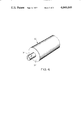
- FIG. 4 is a perspective view of a section of metal conductor insulated with a compounded product of the method of this invention.
- the method of compounding thermoplastic material and filler of this invention primarily comprises effecting the mixing of particles of thermoplastic polymeric material with particulate filler, and while so mixing, effecting the progressive melting of the surface portion of the thermoplastic particles, whereby the mixing action causes the particulate filler to adhere and blend with the viscid molten surface portions of the thermoplastic particles and also causes the resultant blended polymeric melt and filler to be removed from the polymer particle substructure.
- any type of mixing device providing a sufficient degree of agitation to maintain an extensive intermingling action between the particles of the thermoplastic polymeric material and filler will suffice.
- the mixing be performed in a high energy and high velocity impeller type mixer, such as exemplified by the Henschel mixing apparatus of U.S. Pat. No. 2,945,634, which is adapted for producing a very vigorous intermingling of particles.
- This type of mixing apparatus generally operates with impeller speeds within the approximate range of about 1000 to 2000 R. P. M.
- the heat to effect a melting of the thermoplastic polymeric material particles can be derived for substantially any source, or combination of sources. It can be either internally generated by the friction of colliding particles or supplied from an external origin, or both, and can also include appropriate preheating of the ingredients through any of such means to accelerate the rate of completing the method.
- the preferred manner of parcticing the method of this invention comprises the internal generation of at least part of the heat energy required through the intensive attrition of the particles of polymeric material and the action of the filler mixing and colliding together at high energies and velocities. Effective internal heating through particle attrition alone and adequate to produce the required melting for most thermoplastic polymeric materials can be attained with the Henschel type of mixer having a high speed impeller action.
- thermoplastic material up to its melting range.
- supplemental heating means such as heaters or heat sources provided within or about the mixing container to more efficiently and controllably bring the temperature of the thermoplastic material up to its melting range.
- the use of such multiple sources of heat to accelerate the process rate is particularly significant when compounding some of the higher melting thermoplastic polymeric materials.
- the high energy and high velocity impeller type mixers are most effective in other aspects of the method, and particularly in providing the magnitude of particle attrition and turbulence which rapidly effects the progressive removal of the thermoplastic polymeric particles.
- FIG. 1 of the drawing illustrating the sequence and stages of the materials and the effects when compounded according to this invention.
- thermoplastic polymeric material A and particulate filler B simply intermingle and/or collide as a result of the agitating action of mixing, identified as Stage I in FIG. 1 of the drawing, until the temperature of the thermoplastic polymeric particles, due to whatever means, attrition and/or external heat sources, is raised to the melting level of the particular thermoplastic polymeric composition, whereby there is a progressive softening and liquidifying of the surface portions of the thermoplastic polymeric particles.
- Stage II wherein the outer or surface area 10 of the thermoplastic particle A has become essentially molten and thus viscid.
- the filler B colliding with the thermoplastic polymeric particles A at this stage is easily blended therewith by adherence of the particles to the receptive soft and molten viscid surface portions of the thermoplastic particles, which effect is shown as Stage III, wherein the tacky surface 10 of polymeric particles A adhesively embraces colliding filler B to effect an outer area 12 of blended filler and polymeric melt composed of a layer of stratum of particles of filler adhering to a surface of molten polymeric material.
- the blended fragmentary segments comprise fundamental units predominantly structured essentially of a stratified layer of filler adhesively embraced by a film-like mass of thermoplastic material.
- the distinctive compound properties provided by this method are primarily based upon this unique structure throughout the blended phase, or agglomeration thereof, when preserved as pointed out hereinafter.
- thermoplastic polymeric material A and filler B The mixing of the particles of thermoplastic polymeric material A and filler B, and the melting of the thermoplastic polymeric material is continued with the commensurate resultant blend until substantially all the filler has been assimilated by blending with molten polymeric material, and the particles of the polymeric material are substantially expended by melting regardless of any further blending with filler if the filler has previously been consumed.
- the compounding procedure of this method comprises a continuing action of mixing and melting to effect a progressive blending and removal of the blend from the polymer particles which is carried on until the filler has been substantially consumed by the blending action whereby substantially no free or unblended filler remains, and the particles of polymeric material have been substantially progressively diminshed by melting.
- Residual molten but substantially unblended polymeric material is shown in Stage V et seq. of FIG. 1 as phase D.
- the effect upon the materials is a continuing progressive action once reaching the melting range of the particular thermoplastic polymer, but it is not necessary to carry the compounding to completion without interruptions once initiated, and it can be terminated at substantially any stage and subsequently resumed with no discernible effects other than a loss in time.
- the extent to which the aforesaid mixing process and blending is carried can be conformed to the requirements for given compounded products. For instance, when the compounded product may be subjected to further mixing action such as is encountered in some extrusion apparatus or occures in other processes, it may not be appropriate to continue the mixing action to the extent that the whole amount of the filler is assimilated by blending with the polymeric material, and/or that all polymeric material is expended by melting.
- the mixing process need only proceed to the extent that at least about a majority of greater than 50% of the total filler be assimilated by blending with the polymeric material and also that at least about a majority of greater than 50% of the polymeric material be expended by melting.
- a two dimensional drawing cannot aptly illustrate the distinctive stratified structure produced by the method in the blended phases comprising a layer or stratum of filler particles united with film-like segments of melted polymer, or the laminated assemblies composed of a plurality of such blended segments agglomerated together.
- the fragmentary segments of blended ingredients exhibit a marked tendency to rapidly cohere together and thus form random sized agglomerations of the blended phase C alone, and also to unite with bodies of melted polymeric material comprising phase D and thereby producing discontinuous polyphase agglomerates of the blended phase C alone or including melted polymeric phase D interspersed thereabout, as shown in Stage VI, rather than retain their more or less discrete identity as first formed and shown in Stage V.
- the agglomerated segments typically comprise relatively large soft lumps.
- a brief continuation of the mixing action coupled with a lowering of the material temperature reduces the random agglomerates to a relatively more uniform particle size range, which product is not susceptible to reagglomeration while maintained at temperatures below the polymer melting range.
- the compounded product obtained upon carrying the mixing and melting to the extent of assimilating the filler and substantially diminishing the particles of polymeric material by melting is made up of a unique polyphase physical system of particulate cohesive bodies or agglomerates 16 of discontinuous phases interspersed with on another comprising discrete blended phases (C) of polymeric material and filler, including stratified arrangements thereof, and some interstitial phases (D) substantially of polymeric material.
- the relative proportions of polymeric material and filler as well as the size of the filler or fillers, and the degree of mixing, will determine the extent, if any, of the interstitial phase of substantially polymeric material throughout the system.
- the unique stratified structure included in the blending phase referred to hereinbefore comprises a distinct pattern of layers or strata of filler particles adhering to film-like sections of polymer which is attributable to this method, is demonstrated in photomicrographs illustrated in FIGS. 2 and 3 of the drawing.
- FIG. 2 of the drawing comprises a cross-section cut through a filled and cured polymer compound prepared in a conventional manner with a Banbury mixer
- FIG. 3 of the drawing comprises a cross-section cut through the same filled and cured polymer compound material prepared by the method of this invention.
- the compound composition of each illustration was a standard production formulation containing polyethylene and clay filler in a weight ratio of two parts polymer to one part clay, and including minor amounts of the usual additives such as preservatives and curing agent.
- the compounded product of both the conventinal Banbury process and produced by the method of this invention were extruded in an identical manner and thickness onto #14 solid copper wire as an insulation therefor and cured by cross-linking the polyethylene. The wire was removed from the compound insulation of each and like samples were cut for microscopic examination and photographing.
- the surfaces of the samples exposed by cutting were subjected to a "Low Temperature Ashing" treatment to offset the artificially induced directional alignment of the cut surface area.
- This treatment was carried out using a Plasmatic Low Temperature Asher Model PL200, and the cut surface of each sample was excited with radio frequency waves that convert diatomic oxygen to monoatomic oxygen which burns away the polymer matrix thereby exposing the internal pattern of the filler.
- Each sample of the identical compound composition was exposed to this treatment at 30 watts for 1 minute.
- the photomicrograph of FIG. 2 of the conventional Banbury produced filled polymeric material exhibits an essentially homogeneous continuous system of filler (the light colored projecting bodies shown as 20) dispersed evenly throughout a matrix of the polymer, (the dark colored background material shown as 22) whereas the stratified pattern of the filler (the light colored projecting bodies in layer shown as 24) and intermediate polymer (the dark colored background material shown as 26) produced by the method of the invention is clearly evident from the photomicrograph of FIG. 3.
- the relative proportions of polymeric material and filler amenable to compounding by means of the method of this invention are extensive and thus the method is sufficiently versatile to compound most formulations.
- the proportion of filler may effectively range from about 5 to 200 parts by weight per 100 parts by weight of thermoplastic polymeric material. It should be appreciated, however, that factors such as the relative sizes and densities, or more aptly relative bulk densities with respect to some fillers as well as the absorptive capacity and internal structures of certain common fillers such as diatomaceous earth, may have a significant influence upon the relative weight proportions of polymeric material to fillers, and thus may render it expedient or even necessary to adjust the amounts specified.
- the preferred proportion comprises from about 25 to 150 parts by weight of filler per 100 parts by weight of polymeric material.
- the mixing and melting of the method should be carried, either continuously or intermittently, substantially to the extent of having assimilated substantially all free filler by blending with melted polymeric material, and also of having attained the diminution of substantially all particles of thermoplastic polymeric material through melting.
- the filler component need not be present at the beginning of the mixing operation but it must be present to achieve the necessary action of blending and removal of the resultant blend.
- the filler can be introduced into the mixing system after initiating the agitation and upon approaching or reaching the melting temperature range of the polymeric material, and can be applied gradually throughout the process, continuously or in several increments of either amounts or of kind, if more than one type of filler is compounded.
- Ingredients which are physically unstable or in some way susceptible to an unwanted change at temperatures of the melting range of the particular polymeric composition of the compound which constitutes a prevailing condition during the compounding can be introduced into the product following its compounding and cooling to below the susceptible temperature level for the material to be included and then effectively dispersed through the compounded material by mixing without effecting a substantial increase in temperature.
- the inclusion of such temperature sensitive ingredients is generally most expeditiously effected by first transferring the hot compounded product to a second mixing unit provided with cooling means, and completing the additions and mixing following an appropriate cooling.
- thermoplastic polymeric materials which can be compounded by the method of this invention comprise substantially all polymeric materials which melt or become soft and relatively fluid-like or viscid upon the application of heat, without undergoing unwanted chemical change, or deterioration and thus are amenable to the process conditions.
- suitable polymeric materials which exhibit sufficient thermoplastic-like properties for the practice of the invention are polyethylene, vinyl resins, polyamides, polyesters, vinylidenes, allyls, styrene, and including uncured elastomers such as neoprene, styrene butadiene, and ethylene propylene.
- the method of the invention applies to essentially the same polymeric materials, including many so-called elastomers, amenable to compounding with the prior art means.
- thermoplastic polymeric materials are readily obtainable, such as in well-known and widely-used handbooks and similar publications or from the materials vendors or manufacturers.
- the melting or softening temperature can very easily be ascertained by simple empirical means.
- the temperature applied during mixing or at any stage of the process should never be so high as to deteriorate or in any way irreparably damage the particular polymer composition, or for that matter any other constituents.
- the polymeric material preferably should be in particulate form, as opposed to one or more relatively large bodies or lumps.
- Beads or pellets of polymeric material sized about 2 to 8 millimeters in diameter are preferred because they are conducive to optimizing the compounding method, and constitute the most economical form for the purchase of many polymers.
- the compounding method of this invention is effective with polymeric particles of a wide range of sizes running from relatively fine powder such as particles sized down to about 100 U.S. Sieve Series, up to substantial chucks of about an inch or more in diameter. For instance, thermoplastic particles measuring 10 ⁇ 10 ⁇ 20 mm were effectively compounded in a kitchen type blender according to the precepts of this invention.
- the filler constituents embrace any relatively fine powder-like materials which maintain their dimensional integrity at the temperature levels utilized in the compounding method.
- the operating temperature level is of course a condition dictated by the melting temperature of the particular polymeric material acted upon, and the filler components must not appreciably soften or deteriorate at the mixing temperature which melts the polymer component to be compounded therewith.
- a paticular filler composition could be a particularly satisfactory componenet for compounding with some polymers, such as those of a relatively low melting point, and not as effective for use with others such as those having a high melting point.
- Apt particle sizes for example, comprise from about 100 U.S. Sieve Series (approximately 149 Micron in diameter) down to about 400 U.S.
- the specified sizes should be applied to the particles smallest cross-sectional dimension.
- the fillers should be of a relatively smaller size than the polymeric particles whereby the filler particles can be blended by adherence into the viscid molten surface portions of the polymeric material.
- fillers generally comprise all common fillers and solid compounding ingredients or agents used in polymeric compounds. They include materials of natural or synthetic and mineral or non-mineral origin, and of any configuration, such as spheres, plates or fibers, which are available as fine particulate solids and of sufficient thermal resistance to maintain their solid physical structure at least at the melting temperature of the particular polymeric material to be compounded therewith.
- Typical fillers include clays, carbon black, wood flour either with or without oil, various forms of silica including common sand, glass, metals, and oxides of metals such as aluminum oxide and titanium oxide, magnesium oxide, calcium carbonate, barium carbonate, magnesium carbonate, barium sulfate, antimony trioxide, calcium silicate, diatomaceous earth, Fuller earth, mica, talic, slate flour, volcanic ash, cotton flock, glass fiber, asbestos, and many others, whether primarily utilized for reducing costs, reinforcement, bulking, pigmentation, or for whatever purpose.
- silica including common sand, glass, metals, and oxides of metals such as aluminum oxide and titanium oxide, magnesium oxide, calcium carbonate, barium carbonate, magnesium carbonate, barium sulfate, antimony trioxide, calcium silicate, diatomaceous earth, Fuller earth, mica, talic, slate flour, volcanic ash, cotton flock, glass fiber, asbestos, and many others, whether primarily utilized for reducing costs, reinforcement, bulking,
- solid compounding ingredients which meet the specified temperature requirements, including but not limited to, such typical and conventional components as vulcanizing agents, accelerators, aging resistors and protective materials such as antioxidants, heat and light stabilizing agents.
- Liquid components or those not possessing adequate temperature resistance can be introduced and dispersed following performance of the compounding method and cooling.
- the following comprise examples of the compounding method of this invention, including demonstrations of the conditions of applying the method, various materials amenable to the method, and the compounded products derived therefrom.
- the compounding method was conducted on a laboratory scale to minimize both the processing time and quantities of material expended, and also to permit closer and more detailed observation and study of the physical occurrences due to the blending phenomenon.
- the ingredients were compounded in a kitchen type food blender comprising a Waring blender with an impeller blade speed ranging from about 875 to 1750 R. P. M., or a like device manufactured by General Electric Company.
- the familiar, common kitchen type food blender comprising a transparent jar mixing container typically of about one liter or more capacity, and provided with a multi-blade high speed impeller in the bottom of the mixing container, constitutes a small scale mixer duplicating the performance and essential construction of a commercial Henschel type mixing apparatus of relatively large capacity. In these runs there was no external heat applied, except when stated that the ingredients were preheated for the purpose of reducing the period of time required for the polymeric material to reach its melting level.
- thermoplastic material This example illustrates the essential interaction of the thermoplastic material with filler by showing the effects of performing the manipulative steps of the method with particles of polyethylene material alone.
- polyethylene pellets R4 low density polyethylene-- Sinclair-Koppers Co.
- This mixer was operated at high speed of about 1500 to 1750 R. P. M., and over a continuous 14 minute period the thermometer reading gradually rose to 90° C., at which point some clumping together of the pellets was observed.
- the temperature On further mixing for an additional 2 minutes the temperature increased further to 97° C. and the entire batch of pellets tended to agglomerate and adhere to the walls of the blender jar outside the reach of the impeller blade.
- Example II illustrates the significance of the temperature of mixing in relation to the particular thermoplastic material utilized in the compounding method.
- the mixing conditions of Example II were repeated including the total mixing time, except that the temperature of the batch was never permitted to exceed 81° C., a temperature level substantially below the melting range of polyethylene.
- the results were that the polyethylene pellets were essentially unchanged in size or shape, and a sample molded into a sheet showed that essentially no mixing between the polyethylene material and filler particles had taken place.
- the temperature must exceed the softening point and reach melting levels for the given thermoplastic composition to attain the compounding objective and advantages of this invention.
- Example II The conditions of Example II, with the same ingredients, were again repeated, including the procedure of mixing the ingredients until the batch temperature reached about 135° C., and then alternately cooling to about 100° C., by terminating mixing action. This cycle of mixing and heating, then resting and cooling, was repeated until the powder product formed of the compounded batch ingredients coalesced into a large soft lump which stalled the mixer. Upon cooling, this lump had become a friable solid which could easily be broken into smaller fragments.
- This example of the compounding method of this invention was carried out in a 30 gallon capacity Henschel mixer, Model JSS-35D.
- the batch ingredients consisted of 33.0 lbs. of the same polyethylene pellets of about 4 millimeters, 16.6 lbs. of clay (3071 Whitetex), 1.65 lbs. carbon black (Thermax MT-R. T. Vanderbilt), and 0.58 lbs. of polytrimethyldihydroquinoline antioxidant (Flectol H-Monsanto).
- the batch was mixed in the Henschel at high impeller speed (about 1700 R. P. M.) until its temperature reached about 116° C., whereupon the mixer was placed on low speed (about 1400 R. P.
- the pellets When cut open the pellets were found to be of a uniform black color throughout indicating the dispersion of the carbon black through the blended mass of opaque polyethylene material and white clay filler. Analysis of the pellets established that they contained a polymer-filler percentage composition comparable to that produced with conventional Banbury mixing for the same formulations, and that the method achieved a true compounding of filler into a polymer matrix, and not merely a mechanical tossing or mingling of the particles of polymer and filler.
- This compounded product in each of two forms, was extruded onto wire, one extrusion being made with a sample of the compounded material obtained directly from the mixer, and the other with a sample of the material milled at 190° F. and granulated into small pellets before extrusion.
- Each extrusion was performed with a Royle 2, 31/2 inch extruder and the compound was applied as a 3/64 inch thick covering onto No. 14 solid copper wire.
- the extruded products were passed directly from the extruder head into a 400° F. steam vulcanizing pipe chamber, containing a downstream water cooling leg.
- the wire product covered with the compounded polymer and fillers was wound on a take-up reel and then placed in an oven in air for 4 hours at 190° F.
- the insulation formed of each of these samples of the compounded product was then compared with an insulation of an identical composition prepared with a Banbury in a conventional manner and then formed identically to the other samples.
- the voltage endurance of the samples of compounds prepared above as compared with the voltage endurance results of the same test carried out upon the same compounds prepared in a conventional manner in a Banbury mixer was as follows: The data is given as the mean life in hours of resistance to accelerated testing voltage conditions for 10 separate test units of each of the samples.
- the resultant coalesced batch was further cooled whereupon the blender was turned on to relatively low speed which quickly broke the the coalesced and cooled mass into free-flowing small pellets. With continued mixing the temperature of the mass of small pellets increased to about 100° C., whereupon they again coalesced and blocked mixing. After standing and cooling, the coalesced mass was again broken up by starting the mixer and the mass was comminuted into free-flowing small pellets. This cycle of coalescing with mixing heat, and comminution of the cooled coalesced mass, was repeated six times, and the final small comminuted pellets were retained.
- a standard Waring food blender having a mixing jar of one liter capacity fitted with a mercury thermometer extending through the jar cap down into its interior to batch contents level was utilized in this run.
- the principal fillers comprising 55 grams of clay (Catalpo) with 48 grams of carbon black were first added to the blender and mixed. In about 5 minutes the heat self-generated by mixing the fillers had increased the temperature of these fillers to about 115° C. At this stage a relatively large chunk of neoprene rubber measuring about 10 ⁇ 10 ⁇ 20 millimeters was dropped into the running blender. There immediately occured sounds characteristic of the piece bounding between the blender impeller and jar walls, but the sounds rapidly diminished with the progressive reduction of the mass of the neoprene piece.
- the accelerated batch powder was milled and quickly bonded together.
- a Mooney plasticity-scorch curve test of this product compared favorably with that for the same formulation prepared conventionally on a Banbury, and a cured slab of the milled powder had a 1100 psi tensile strength, 220% elongation, and 200% modulus of 900 psi.
- the batch On terminating the mixing, the batch as a single mass sagged to the bottom of the mixer and was allowed to stand and cool at about 160° C. Then 20 cc of water was added to the stagnant batch, and the blender was turned on. The mixing action quickly broke up or pulverized the mass into free flowing pellets. After cooling the blender jar, the pellets of the compound were mixed and a small amount of clay was added to insure continuance of pellet separation, followed by the addition of 3.3 grams of di- ⁇ -cumyl peroxide curing agent (Di-Cup).
- DI-Cup di- ⁇ -cumyl peroxide curing agent
- the compounded product consisted of roughly spherical particles sized from about 2.5 mm down to very fine. When the larger particles were opened they revealed that the clay filler was dispersed through the particle providing a good blending of the filler with the styrene-butadiene rubber.
- clay is a calcined clay
- 3071 treated clay is a clay treated with 1% of methyl silicone tetramer according to U.S. Pat. No. 3,148,169
- DIDP is di-isodecyl phthalate.
- this invention comprises the distinctive and advantageous compounded products of filled polymeric material of the method described, and their use, including molded or otherwise shaped articles formed therefrom, both in an uncured thermoplastic state and cured to a thermoset condition.
- the invention particularly includes compounds of filled polyethylene, and blends or copolymers containing polyethylene, produced by the method for use as electrically insulating material in combination with metallic electrical conductors such as the insulated wire or cable 30 of FIG. 4.
- the unique stratified structure of the filler and polymer material attributable to the method appears to be especially significant in this service by enhancing the resistance of the compounded electrical insulation to high voltage stresses.
- this invention is especially directed to and includes curable filled polyolefin polymeric compounds for use as electrically insulating metallic conductors, and curable, filled polymeric compounds of the invention are easily amenable to extrusion with conventional apparatus and processes, in forming an insulating covering 32 over wire or cable conductor strands 34.
- the compounded products of the invention are amenable to curing for conversion of the initially thermoplastic polymeric material to an essentially thermoset condition by means of conventional techniques comprising the use of curing agents, such as cross-linking peroxides, or measures such as irradiation, appropriate for the particular polymeric constituents.
- curing agents such as cross-linking peroxides, or measures such as irradiation
- the preferred polyethylene containing compounds of this invention can be effectively cured by adding an appropriate cross-linking peroxide such as taught in the prior art and subjecting the curable compound containing the curing agent to sufficient heat to activate the peroxide curing agent through its thermal decomposition, pursuant to the prior art such as described in U.S. Pat. Nos. 3,888,424 and 3,079,370.
- the method of this invention is applicable to the compounding of a variety of polymeric compositions and products for various services.
- the invention is especially useful in compounding polyolefin materials comprising polyethylene, blends of polyethylene and other polymers, and copolymers of ethylene and other polymerizable materials.
- Typical polymeric and filler materials, and their compounding, and curing means, to which this invention is directed are set forth in U.S. Pat. Nos. 2,888,419; 2,888,424; 2,924,559; 2,928,801; 2,991,268; 3,039,989; 3,061,594; 3,148,169; 3,334,080; 3,362,924; 3,494,883 and 3,553,348.
Landscapes
- Engineering & Computer Science (AREA)
- Mechanical Engineering (AREA)
- Chemical & Material Sciences (AREA)
- Health & Medical Sciences (AREA)
- Chemical Kinetics & Catalysis (AREA)
- Medicinal Chemistry (AREA)
- Polymers & Plastics (AREA)
- Organic Chemistry (AREA)
- Compositions Of Macromolecular Compounds (AREA)
- Processes Of Treating Macromolecular Substances (AREA)
Abstract
Description
______________________________________
Conventional
           Compound Of The Method Of This Invention
Banbury    Direct        Pre-milled and
Compound   formed        Pelletized
______________________________________
436 hrs.   658 hrs       692 hrs.
______________________________________
__________________________________________________________________________
          LEGEND FOR TABLES
Cl, Temp.
       Means first mixing cycle where all compounding ingredients,
       except curing agent, are present. The batch is then mixed to
       a temperature range (in ° C.) and held there while the
       particulate
       input polymer gradually diminuates, concommitant with progressive
       disappearance of loose filler, concommitant with formation of
       blended particles of filled compound; culminating in a coalesced
       mass of molten filled compound which becomes friable on cooling.
C2, Temp.
       Means a second mixing cycle where the cooled, friable material
       of Cl is broken up into stirrable particles, curing agent added
       and the particulate mixture stirred and heated until the
       particles
       form a coalesced mass, done over a range of temperature in
       ° C.
C3, Temp.
       Means third mixing cycle where the cooled, friable material of
       C2 is again broken up into stirrable particles, again stirred and
       heated until coalescence, done over a range of temperature in
       ° C.
       In addition of curing agents, additional fillers, other additives
       can be delayed to this stage or subsequent to such mixing cycles.
WB     Means Model 1041 or 5011 Waring Blender, one-liter transparent
       glass jar. Jar cover fitted with mercury thermometer extending
       downward so mercury bulb is just above impellar shaft.
CS     Means cold start. Both jar and ingredients initially at room
       temperature.
MHO    Means mechanical heat only. Heat to melt PE derived only from
       mechanical mixing action of blender impeller.
CBS    Means batch cooled by allowing to stand.
VTC    Means temperature controlled by regulating blender impeller speed
       through a variac transformer in series with blender motor.
AA     Means air atmosphere inside blender jar or other compounding
       chamber.
HM     Means Model JSS-35D, 35-gallon Henschel Mixer, variable speeds,
       with cooling water jacket.
CBJW   Means batch cooled by jacket water.
Suffix HPP
       Means "Hot Pressed Particles". That is, the particles containing
       no curing agent, were loaded directly into the cavity of a com-
       pression molding press and the press slowly closed over several
       minutes time, followed by cooling the press and removing the test
       slab (about 75 mils thick) which had been so formed with minimal
       shearing action.
Suffix PCP
       Means "Press Cured Particles. Same as HPP", except that the
       particles contain curing agent and therefore, the slab formed
       with such minimal shearing action was kept hot in the forming
       press until cured, before cooling and removing the test slab.
Suffix MLD
       Means "Milled". That is, the compound particles were briefly
       masticated on a two-roll mill at a temperature to give a fluxed
       continuism. The amount of mastication given approximated that
       which the compound particles would have received by direct
       feeding into, and passage through, an ordinary extruder, or
       - injection molding device. Then the masticated material was
       pressed into a cured slab as per Suffix PCP above.
(T/E.sub.o)
       Means the numerical results from conventional tensile testing
       done on HPP, PCP and MLD test slabs, or on cured insulation
       stripped from the metallic conductor. Tensile value represents
       psi and elongation value, percent; both values obtained on
       specimens tested at room temperature.
(T/E.sub.H)
       Means the same as (T/H.sub.o), except that the specimen test
       temperature
       was 150° C. Measurable tensile-elongation properties at
       this
       temperature indicates that the filled polymeric system is
       chemically cross-linked or cured.
% Tol. Extr.
       Means weight percent of the cured specimen that is extractable
       by immersion in boiling toluene for 24 hours. This test, along
       with (T/E.sub.H), is useful for determining the presence of
       chemical
       cross-linking or cure.
SG     Means "Specific Gravity" of the test specimen, and is useful in
       showing the presence of fillers in the polymeric test
__________________________________________________________________________
       specimen.
TABLE I
__________________________________________________________________________
Result On
Results On Test
Compounding Results on Test
Slabs Formed
Slabs Formed
Conditions: WB, CS, Slabs Hot Pressed
From Com-
From Starting,
Parts
MHO, AA, CBS, VTC; Directly From
pound Particles
Input Polymer
by except as noted in Compound After Brief
Pellets,
Ingredients
Wt.
process variations
Process Variations
Particles
Milling Without
__________________________________________________________________________
Filler
Temp. ° C (T/E.sub.o)
SG (T/E.sub.o)
SG (T/E.sub.o)
SG
Polyvinyl
100
Cl, 150-170
Added last half of plastic-
1692/222
1.36
1968/180
1.36
chloride, izer oil at 150-170° C.
Pliovic K90E
Powder (0.12
mm. dram.)
Whiting 45 C2, 115-150
without curing agent for
33 Clay 10 equilibration only.
DIDP 78 Obtained compound as
particles up to 4.0 mm dia-
meter, free of loose filler
__________________________________________________________________________
Polypheny-
lene oxide
Gen. Elec.
Noryl 731
145
Cl, 200-250
Heating tape, 220° C., wrapped
1.34
Not Milled 1.05
Pellets (3.5 about blender jar. Used N.sub.2
× 2.5 × 1.8mm)
atmosphere. Obtained compound
3071 Treated as plate-like particles up to
Clay 60 1 mm dia., free of loose
filler.
__________________________________________________________________________
Polyamide Ny-
Cl, 200-230
Obtained filled compound
lon - du Pont particles as plates and
Zytel, Color-
100 fibrils, with uniformly
less Trans- black interiors. 1.28
Not Milled 1.02
lucent Pellets
(4 × 4 × 1.5mm)
3071 Treated
Clay 50
Flectol H
1.8
Thermax MT
5
__________________________________________________________________________
Polycarbonate
Cl, 175-225
Obtained filled compound
1.33
Not Milled 1.17
Gen. Elec. particles as small,
Lexan, Color-
100 flattened, tear drops
less, clear,
rod-like
pellets
(2.5 × 3.5mm)
3071 Treated
Clay 50
Thermax MT
5
__________________________________________________________________________
Polyurethane
Cl, 150-185
Used N.sub.2 atmosphere
1591/120
1.61
2256/255
1.47
2391/585
1.27
Roylar Black
125 Obtained compound
Rod-like particles, from very
pellets fine up to 8mm dia.,
(3 × 4 × 6mm)
free of loose filler
3071 Treated
Clay 63
__________________________________________________________________________
Styrene Acryl-
100
Cl, 130-145
Added oil in ten increments,
1.28
Not Milled 1.08
onitrile Tyril
C2, 120-135
over 50-130° C. Without
867, colorless curing agent, for equilibra-
clear pellets (2.5 tion only. Obtained filled
(× 3.0 × 3.5mm)
Styrene Acrylonitrile
3071 Treated particles free of loose
Clay 50 filler
DIDP 27
__________________________________________________________________________
Polymethyl-
140
Cl, 188-194
Preheated jar and contents
1.45
Not Milled
1.16
methacrylate to 180° C. Used N.sub.2 atmosphere.
VM/100 clear Obtained a voluminous batch
transp. of fibrous filled particles
pellets
(2 × 3 × 3.5mm)
3071 Treated
Clay
Polypro-
pylene 100
Cl, 155-163
Obtained hard, brittle
1.16
Not Milled 0.88
Avisun 10-1016 particles of filled
clear, transp. polypropylene.
pellets (2.5
× 3.5mm rods)
3071 Treated
Clay 50
__________________________________________________________________________
Polystyrene
138
Cl, 185-203
Preheated jar and contents
1.27
Not Milled
1.06
Fostarene to 170° C. Obtained spheres
20-D-9 of filled polystyrene,
clear, transp. ranging up to 12 mm. dia.
pellets (2.0
× 3.0 × 4.5mm)
3071 Treated
Clay 62
__________________________________________________________________________
Phenolic 190
Cl, 110-115
Used exterior heating tape
1.47
Not Milled
1.44
Resin, Genal at 113° C. for precise temp.
4000, BL-1431 control. Obtained 3071-
gray-green filled particles ranging up
particles, up to 8 mm diameter.
to 3.5mm dia.
3071 Treated
Clay 10
__________________________________________________________________________
Compounding
Conditions
All Experiments
WB, CS, MHO, Test Results on Cured
Test Results on Cured
Parts
AA, CBS, VTC; Slabs Formed Directly
Slabs Formed From Com-
by except as noted in From Compound pound Particles After
Ingredients
Wt.
process variations
Process Variations
Particles Brief Hot
__________________________________________________________________________
Milling
% Tol % Tol
Temp. ° C. (T/E.sub.o)
(T/E.sub.H)
Extr,
SG (T/E.sub.o)
(T/E.sub.H)
Extr.
SG
Ethylene Cl,
117-130 1197/
147/
3.8 2012/
244/
Vinyl C2,
68-86 322 22 220 65
Acetate C3,
74-79
Copolymer
100
C4,
75-80
(DQD 1868) C5,
75-80
pellets
(4 × 3.5mm)
Flectol H
1.75
3071 Treated
Clay 50
Di Cup R 3.3
__________________________________________________________________________
Ethylene Cl,
80-130
Added wood flour in
1078/ 0.98
1585/
Vinyl eight increments, just as the batch
120 440
Acetate 100 was about to coalesce
(DQD 1868) into a stagnant mass after previous
pellets C2,
50-80
increment. Used an
Benzoyl Per- air jet immersed in the stirring par-
oxide Powder ticles to sweep out
(dissolved solvent.
in Toluene)
2.8
__________________________________________________________________________
Chlorinated Cl,
163-180
Preheated blender jar
569/ 1.51
553/ 1.42
Polyethylene
173 and contents to 170° C., before
715 940
du Pont LD321 starting to mix. Used N.sub.2
chunks (35 atmosphere during mixing.
× 20 × 15mm)
C2, Added peroxide to stirring
3071 Treated compound particles and
Clay 63 mixed at 40° C. without
Di cup R 0.9 coagulation.
__________________________________________________________________________
Ethylene Cl,
150-200
Preheated blender jar
64/ 42.6 178/ 31.4
Propylene and contents 263 608
Rubber-Enjay
100 to 150° C. before
Vistalon starting to mix. After
404 chunks (20 coagulation, water was
× 15 × 10mm)
C2,
50-80
added to cool
3071 Treated the batch before C2.
Clay 50 C3,
55-60
Water added to cool the
Di Cup R 3.3 batch before C3.
Obtained small sp-
eres of filled
EPR. By judicious
addition of minor
amounts of filler
periodically, rubber
particles could be
maintained in free-
flow particle condi-
tion for extended
Periods of time.
Silicone
Polymer 110
Cl,
110-120
Addition of fumed 3.5 1.28
180/
100/
3.7 1.29
(GE SE33) silica delayed 78 25
3071 Treated until all 3071
Clay 50 C2,
70-80
had been
Treated Fume taken up by SE33.
Silica 11
Benzoyl per-
oxide Powder
2.5
__________________________________________________________________________
                                  TABLE II
__________________________________________________________________________
            Compounding
            Conditions
            All Experiments
            WB, CS, MHO,         Test Results on Cured
                                                Test Results on Cured
         Parts
            AA, CBS, VTC;        Slabs Formed Directly
                                                Slabs Formed From Com-
         by except as noted in   From Compound  pound Particles After
Ingredients
         Wt.
            process variations
                     Process Variations
                                 Particles      Brief Hot
__________________________________________________________________________
                                                Milling
                                         % Tol          % Tol
               Temp. ° C. (T/E.sub. o)
                                     (T/E.sub.H)
                                         Extr.
                                             SG (T/E.sub.
                                                    (T/E.sub.H)
                                                        Extr.  SG
Polyethylene
         100
            C1,
               115-124           1340/   16.5
                                             0.94
                                                1548/
                                                    8/10
(R4)        C2,
                80-101           55             370
pellets     C3,
                80-101
(4.0mm dia.)
Wood Flour
         20
Flectol H
         1.75
Thermax MT
         5
Di Cup R 3.3
__________________________________________________________________________
Same as above
            C1,
               115-124           1222/   21.5
                                             0.99
                                                1286/
                                                    27/31
+ 3 parts   C2,
                80-101           33             220
ASTM No. 2 oil
            C3,
                80-101
__________________________________________________________________________
Polyethylene
         100
            C1,
               115-130           1658/   11.4
                                             1.03
                                                2932
                                                    202/
(R4)        C2,
                86-101           322            450 232
Treated Fume
         20 C3,
                86-101
Silica
Flectol H
         1.75
Thermax MT
         5
Di Cup R 3.3
__________________________________________________________________________
Polyethylene
         100
            C1,
               105-120
                     Added filler in ten incre-
                                 2274/
                                     94/ 10.6
                                             0.91
                                                2142/
                                                    146/
(R4)        C2,
                86-101
                     ments. Each increment
                                 435 79         310 65
Treated Fume
         5  C3,
                86-101
                     added just as the batch
Silica               was about to coalesce
Di Cup R 3.3         into a stagnant mass
                     after the previous
                     filler addition
__________________________________________________________________________
Polyethylene
         100
            C1,
               115-131           1558/   50.0
                                             1.51
                                                1528/
                                                    5/
(R4)        C2,
                86-101           10             100 602
Red Iron    C3,
                86-101
Oxide 5560
         100
Di Cup R 3.3
__________________________________________________________________________
Polyethylene
         100
            C1,
               105-115           1486/   8.0 1.03
                                                1606/
(R4)        C2,
                86-101           80             130
Pyrex Glass Wool
         20
Vinyl Silane
         1.0
(3933)
Di Cup R 3.3
__________________________________________________________________________
Polyethylene
         100
            C1,
               105-128           1251/
                                     126/
                                         11.0
                                             1.14
                                                2372/
                                                    152
Hydral 705 Hy-
            C2,
                86-101           34  95         420 132
drated Alumina
         50 C3,
                77-101
Thermax MT
         5
Flectol H
         1.75
Di Cup R 3.3
__________________________________________________________________________
Polyethylene
         100
            C1,
               110-126           1256/
                                     12/ 7.8 0.95
                                                1437/
(R4)        C2,
                86-101           22  8          60
Cotton Fibers
         20
(1 × 3 - 30 mils)
Di Cup R 3.3
__________________________________________________________________________
Polyethylene
         150
            C1,
               100-105
                     Added TiO.sub.2 filler in
                                 1560/
                                     183/
                                         6.0 1.74
                                                1765/
                                                    310/
                                                       6.4 1.56
pellets              twelve increments.
                                 15  45         80  155
Titanium 60          Kept mixing temp.
Dioxide              3009-19 input pellets
                     already contain peroxide.
__________________________________________________________________________
                                  TABLE III
__________________________________________________________________________
            Compounding
            Conditions:
            WB, CS,
            MHO,
            CBS, VTC;
            Except As
            Noted In             Test Results on Cured
                                                Test Results on Cured
         Parts
            Process              Slabs Formed Directly
                                                Slabs Formed From
         by Variations
                    Process Variations
                                 From Compound  Compound Particles
Ingredients
         Wt.
            & Comments
                    And Comments Particles      After Brief
__________________________________________________________________________
                                                Milling
               Temp.                     % Tol          % Tol
               ° C.       (T/E).sub.o
                                     (T/E).sub.H
                                         Extr.
                                             SG (T/E).sub.o
                                                    (T/E).sub.H
                                                        Extr.
                                                            SG
High Density
            C1,
               135-145           1071/
                                     214/
                                         11.2
                                             1.21
                                                1414/
                                                    230/
Polyethylene
         100
            C2,
               100-125
                    For equilibration only,
                                 10  50         10  70  15.7
                                                            1.21
(Monsanto MPE       no curing agent added.
240-17555)  C3,
                85-90
                    Added curing agent to
pellets             stirring particles. No
(3.0 × 3.5mm dia)
                    coalescence into a mass.
Flectol H
         1.75
3071 Treated
Clay     50.5
Thermax MT
         5
Di Cup R 3.3
__________________________________________________________________________
Low Density C1,
               100-125           1564/
                                     48/ 8.7 1.18
                                                2264/
Polyethylene
         100                     80  15         245
(R4) pellets
(4.0mm dia.)
            C2,
                85-100
                    Added curing agent. Also
Flectol H
         1.75       silane filler treating
Whitetex Clay
         50         agent,ψwhich can be incor-
Thermax MT
         5          porated at this stage or
SC3933 Silane       at the outset of compound-
Treating Agent
         1.5        ing. The addition of sili-
Silicone       cone tetramer and of
Tetramer 0.5        SC3933 show both physical
Di Cup R 3.3        & Chemical modification of
                    fillers, "in situ" with
                    this process.
__________________________________________________________________________
            Compounding
            Conditions:
            WB, CS,
            MhO,
            CBS, VTC;            Test Results on Compound
            Except As            Particles After Direct
            Noted In             Feeding Into Ordinary
         Parts
            Process              Extruder, Extruding Onto
         by Variations
                    Process Variations
                                 Wire, Steam Curing, Then
Ingredients
         Wt.
            & Comments
                    And Comments Removing From Wire
__________________________________________________________________________
               Temp.                     % Tol
                ° C.      (T/E).sub.o
                                     H   (T/E).sub.H Extr.
                                             SG
High Density
            C1,
               135-145
Polyethylene
         100
            C2,
               100-125
                    For equilibration only,
                                 2593/
                                     299/
                                         5.7 0.94
(Monsanto MPE       no curing agent added.
                                 60  40  5.
240-17555)  C3,
                85-90
                    Added curing agent to
pellets             stirring particles. No
(3.0 × 3.5mm dia)
                    coalescence into a mass.
Flectol H
         1.75
3071 Treated
Clay     50.5
Thermax MT
         5
Di Cup R 3.3
Low Density C1,
               100-125
Polyethylene
         100
(R4) pellets
(4.0mm dia.)
            C2,
                85-100
                    Added curing agent. Also
Flectol H
         1.75       silane filler treating
Whitetex Clay
         50         agent, which can be incor-
Thermax MT
         5          porated at this stage or
SC3933 Silane       at the outset of compound-
Treating Agent
         1.5        ing. The addition of sili-
Silicone            cone tetramer and of
Tetramer 0.5        SC3933 show both o
Di Cup R 3.3        & Chemical modification of
                    fillers, "in situ" with
                    this process.
            Compounding
            Conditions
            WB, CS,
            MHD,    .sup.←-                CBS, VTC;
            Except As
            Noted In             Test Results on Cured
                                                Test Results on Cured
         Parts
            Process              Slabs Formed Directly
                                                Slabs Formed From
         by VAriations
                    Process Variations
                                 From Compound  Compound Particles
Ingredients
         Wt.
            & Comments
                    And Comments Particles      After Brief
__________________________________________________________________________
                                                Milling
               Temp.                     % Tol          % Tol
               ° C.       (T/E).sub.o (T/E).sub.
                                     Extr.
                                         SG  (T/E).sub.o
                                                (T/E).sub.H
                                                    Extr.
                                                        SG
Low Density C1,
               100-124           1052/   7.5    1305/
Polyethylene
         100                     30             140
(R4) Pellets
            C2,
                88-100
(4.0mm dia.)
Flectol H
         1.75
Translink
Treated Clay
         50
Di Cup R 4.9
__________________________________________________________________________
Low Density C1,
               100-120           1305/   11.7   2433/
Polyethylene
         100        50                   205
(R4) Pellets
            C2,
                79-100
                    Obtained particles of
(4.0mm dia.)        compound free of loose
Flectol H.
         1.51       filler.
Thermax MT
         40
Di Cup R 3.30
__________________________________________________________________________
High Mol Wt.
            C1,
               130-145
                    Batch behavior very sim-
                                 1570/   2.9    2332/
                                                    174/
Low Density         ilar to that containing
                                 345            410 165
Polyethylene
         100        LDPE pellets. Only a
(DFD6005)           higher compounding
(2.5 × 3.5mm) temp. was needed.
Pellets     C2,
               103-155
                    For equilibration only,
Flectol H
         1.75       no curing agent added.
3071 Treated
            C3,
                97-100
                    Added curing agent to
Clay     50.5       stirring particles. No
Thermax MT
         5          coalescence into a mass.
Di Cup R 3.3
__________________________________________________________________________
Claims (15)
Priority Applications (1)
| Application Number | Priority Date | Filing Date | Title |
|---|---|---|---|
| US05/492,965 US4046849A (en) | 1972-07-19 | 1974-07-29 | Method of compounding thermo-plastic polymeric materials and fillers and extruding onto electrical conductors |
Applications Claiming Priority (2)
| Application Number | Priority Date | Filing Date | Title |
|---|---|---|---|
| US05/273,156 US3997494A (en) | 1972-07-19 | 1972-07-19 | Compounded thermoplastic polymeric materials and fillers |
| US05/492,965 US4046849A (en) | 1972-07-19 | 1974-07-29 | Method of compounding thermo-plastic polymeric materials and fillers and extruding onto electrical conductors |
Related Parent Applications (1)
| Application Number | Title | Priority Date | Filing Date |
|---|---|---|---|
| US05/273,156 Division US3997494A (en) | 1972-07-19 | 1972-07-19 | Compounded thermoplastic polymeric materials and fillers |
Publications (1)
| Publication Number | Publication Date |
|---|---|
| US4046849A true US4046849A (en) | 1977-09-06 |
Family
ID=26955978
Family Applications (1)
| Application Number | Title | Priority Date | Filing Date |
|---|---|---|---|
| US05/492,965 Expired - Lifetime US4046849A (en) | 1972-07-19 | 1974-07-29 | Method of compounding thermo-plastic polymeric materials and fillers and extruding onto electrical conductors |
Country Status (1)
| Country | Link |
|---|---|
| US (1) | US4046849A (en) |
Cited By (13)
| Publication number | Priority date | Publication date | Assignee | Title |
|---|---|---|---|---|
| US4197381A (en) * | 1976-10-22 | 1980-04-08 | Alia Dominic A | Preparation of vulcanizable compositions by extruder mixing |
| US4273806A (en) * | 1978-04-03 | 1981-06-16 | Stechler Bernard G | Method of forming electrical insulation by extruding polymeric compositions containing hollow microspheres |
| US4360489A (en) * | 1981-02-02 | 1982-11-23 | The Dow Chemical Company | Process for adding magnesium oxide to film forming vinylidene chloride copolymer compositions |
| US4764549A (en) * | 1984-09-07 | 1988-08-16 | Vulkor, Incorporated | Low temperature curing of elastomer |
| US4820469A (en) * | 1985-07-09 | 1989-04-11 | Colortech Inc. | Method and apparatus for producing thermoplastic and products produced therefrom |
| US4915889A (en) * | 1987-02-20 | 1990-04-10 | Nkt A/S | Method of producing an electrically semi-conducting, strippable plastics mixture |
| US5281379A (en) * | 1989-04-05 | 1994-01-25 | Kanebo, Ltd. | Processes for manufacturing thermoplastic resin compositions |
| US5723506A (en) * | 1992-09-18 | 1998-03-03 | Apache Products Company | Extruded polymer foam with filler particles and method |
| EP1057603A1 (en) * | 1999-06-01 | 2000-12-06 | PKU Pulverkautschuk Union GmbH | Twin extruder and continuous process for extruding rubber powder |
| USRE37095E1 (en) | 1992-09-18 | 2001-03-13 | Apache Products Company | Extruded polymer foam with filler particles and method |
| US20100093922A1 (en) * | 2008-03-26 | 2010-04-15 | Johnson Sr William L | Structurally enhanced plastics with filler reinforcements |
| US20100331451A1 (en) * | 2009-03-26 | 2010-12-30 | Johnson Sr William L | Structurally enhanced plastics with filler reinforcements |
| US20150366677A1 (en) * | 2013-02-13 | 2015-12-24 | Smith & Nephew, Inc. | Impact resistant medical instruments, implants and methods |
Citations (4)
| Publication number | Priority date | Publication date | Assignee | Title |
|---|---|---|---|---|
| US3148169A (en) * | 1960-12-01 | 1964-09-08 | Gen Electric | Curable polyethylene composition comprising a peroxide containing tertiary carbon atos, clay filler, and an electrical conductor insulated with the composition |
| US3372139A (en) * | 1964-09-08 | 1968-03-05 | Dynamit Nobel Ag | Preparation of cross-linkable polyolefin compositions |
| FR2047362A5 (en) | 1969-05-29 | 1971-03-12 | Huels Chemische Werke Ag | |
| US3736173A (en) * | 1967-10-20 | 1973-05-29 | Dainichi Nippon Cables Ltd | Method of preparing curable polyolefin granules containing a cross-linking agent |
-
1974
- 1974-07-29 US US05/492,965 patent/US4046849A/en not_active Expired - Lifetime
Patent Citations (4)
| Publication number | Priority date | Publication date | Assignee | Title |
|---|---|---|---|---|
| US3148169A (en) * | 1960-12-01 | 1964-09-08 | Gen Electric | Curable polyethylene composition comprising a peroxide containing tertiary carbon atos, clay filler, and an electrical conductor insulated with the composition |
| US3372139A (en) * | 1964-09-08 | 1968-03-05 | Dynamit Nobel Ag | Preparation of cross-linkable polyolefin compositions |
| US3736173A (en) * | 1967-10-20 | 1973-05-29 | Dainichi Nippon Cables Ltd | Method of preparing curable polyolefin granules containing a cross-linking agent |
| FR2047362A5 (en) | 1969-05-29 | 1971-03-12 | Huels Chemische Werke Ag |
Cited By (15)
| Publication number | Priority date | Publication date | Assignee | Title |
|---|---|---|---|---|
| US4197381A (en) * | 1976-10-22 | 1980-04-08 | Alia Dominic A | Preparation of vulcanizable compositions by extruder mixing |
| US4273806A (en) * | 1978-04-03 | 1981-06-16 | Stechler Bernard G | Method of forming electrical insulation by extruding polymeric compositions containing hollow microspheres |
| US4360489A (en) * | 1981-02-02 | 1982-11-23 | The Dow Chemical Company | Process for adding magnesium oxide to film forming vinylidene chloride copolymer compositions |
| US4764549A (en) * | 1984-09-07 | 1988-08-16 | Vulkor, Incorporated | Low temperature curing of elastomer |
| US4820469A (en) * | 1985-07-09 | 1989-04-11 | Colortech Inc. | Method and apparatus for producing thermoplastic and products produced therefrom |
| US4915889A (en) * | 1987-02-20 | 1990-04-10 | Nkt A/S | Method of producing an electrically semi-conducting, strippable plastics mixture |
| US5281379A (en) * | 1989-04-05 | 1994-01-25 | Kanebo, Ltd. | Processes for manufacturing thermoplastic resin compositions |
| US5723506A (en) * | 1992-09-18 | 1998-03-03 | Apache Products Company | Extruded polymer foam with filler particles and method |
| USRE37095E1 (en) | 1992-09-18 | 2001-03-13 | Apache Products Company | Extruded polymer foam with filler particles and method |
| EP1057603A1 (en) * | 1999-06-01 | 2000-12-06 | PKU Pulverkautschuk Union GmbH | Twin extruder and continuous process for extruding rubber powder |
| US20100093922A1 (en) * | 2008-03-26 | 2010-04-15 | Johnson Sr William L | Structurally enhanced plastics with filler reinforcements |
| US8791194B2 (en) | 2008-03-26 | 2014-07-29 | Ecopuro, Llc | Structurally enhanced plastics with filler reinforcements |
| US8978449B2 (en) | 2008-03-26 | 2015-03-17 | Ecopuro, Llc | Structurally enhanced plastics with reinforcements |
| US20100331451A1 (en) * | 2009-03-26 | 2010-12-30 | Johnson Sr William L | Structurally enhanced plastics with filler reinforcements |
| US20150366677A1 (en) * | 2013-02-13 | 2015-12-24 | Smith & Nephew, Inc. | Impact resistant medical instruments, implants and methods |
Similar Documents
| Publication | Publication Date | Title |
|---|---|---|
| US3997494A (en) | Compounded thermoplastic polymeric materials and fillers | |
| US4045403A (en) | Method of compounding thermo-plastic polymeric materials and fillers | |
| US4491553A (en) | Method for producing filler-loaded thermoplastic resin composite | |
| US3962531A (en) | Electrical conductor insulated with filled polymeric compounds | |
| US3923947A (en) | Process for continuously preparing extrudable, crosslinkable polyethylene compositions | |
| US3146493A (en) | Process and apparatus for the production of polyolefine granulates | |
| GB2111510A (en) | Filler granules for use in moldings | |
| US4508859A (en) | Finishing of rotational molding grade resin | |
| JPS6360062B2 (en) | ||
| EP0275003B1 (en) | Incorporation of chemically reactive agents on resin particles | |
| KR100274264B1 (en) | Extrusion method and apparatus of crosslinked polymer | |
| EP0897783B1 (en) | Recycling process of a cross-linked polymeric material, in particular from electric cable coating materials | |
| US4524160A (en) | Directly moldable resin compositions for composite plastics | |
| KR20010025101A (en) | Process for pelletizing elastomeric anionically polymerised polymers | |
| JP2012218278A (en) | Mixing device for regenerated rubber production, and method for producing regenerated rubber | |
| US4035322A (en) | Method of preparing curable pellets of polyethylene | |
| CA1077183A (en) | Mixing particulate additives into thermoplastics polymers | |
| US3654218A (en) | Process of forming an elastomer-carbon black mixture | |
| EP0439491A4 (en) | Plastic pellets coated with processing aid and method of coating | |
| US3354115A (en) | Multiple additive dispersion in 1-olefin polymers | |
| JP2595782B2 (en) | Method for kneading polyolefin and inorganic filler | |
| JPS5953291B2 (en) | Kneading method of thermoplastic resin | |
| US3470113A (en) | Process for the production of polyolefines containing blowing agents | |
| JPH0249031A (en) | Function-imparting material for composite material and production thereof | |
| EP0363493A1 (en) | Purging agent for plastic molding machines and extruders |
Legal Events
| Date | Code | Title | Description |
|---|---|---|---|
| AS | Assignment |
Owner name: VULKOR, INCORPORATED, 950 BROADWAY, LOWELL, MA 018 Free format text: ASSIGNMENT OF ASSIGNORS INTEREST.;ASSIGNOR:GENERAL ELECTRIC COMPANY, A CORP. OF NY;REEL/FRAME:004835/0028 Effective date: 19871222 Owner name: VULKOR, INCORPORATED, A CORP. OF MA, MASSACHUSETT Free format text: ASSIGNMENT OF ASSIGNORS INTEREST;ASSIGNOR:GENERAL ELECTRIC COMPANY, A CORP. OF NY;REEL/FRAME:004835/0028 Effective date: 19871222 |
|
| AS | Assignment |
Owner name: VULKOR, INCORPORATED A CORP. OF OHIO, OHIO Free format text: NUNC PRO TUNC ASSIGNMENT;ASSIGNOR:VULKOR, INCORPORATED A CORP. OF MASSACHUSETTS;REEL/FRAME:006196/0550 Effective date: 19920721 |
|
| AS | Assignment |
Owner name: BANK ONE, YOUNGSTOWN, N.A., OHIO Free format text: ASSIGNMENT OF ASSIGNORS INTEREST.;ASSIGNOR:VULKOR, INCORPORATED;REEL/FRAME:006327/0516 Effective date: 19920921 |
|
| AS | Assignment |
Owner name: VULKOR, INCORPORATED (AN OHIO CORPORATION), OHIO Free format text: ASSIGNMENT OF ASSIGNORS INTEREST;ASSIGNOR:BANK ONE, YOUNGSTOWN, N.A.;REEL/FRAME:013117/0538 Effective date: 20020715 |