US3966775A - Process for the preparation of 1-substituted anthraquinones - Google Patents
Process for the preparation of 1-substituted anthraquinones Download PDFInfo
- Publication number
- US3966775A US3966775A US05/518,209 US51820974A US3966775A US 3966775 A US3966775 A US 3966775A US 51820974 A US51820974 A US 51820974A US 3966775 A US3966775 A US 3966775A
- Authority
- US
- United States
- Prior art keywords
- parts
- general formula
- nitro
- hydroxylaminoanthraquinone
- group
- Prior art date
- Legal status (The legal status is an assumption and is not a legal conclusion. Google has not performed a legal analysis and makes no representation as to the accuracy of the status listed.)
- Expired - Lifetime
Links
- 238000000034 method Methods 0.000 title claims abstract description 75
- -1 1-substituted anthraquinones Chemical class 0.000 title claims abstract description 39
- 238000002360 preparation method Methods 0.000 title claims abstract description 24
- XSNVCYOYLASJHN-UHFFFAOYSA-N 5-nitro-1,4,4a,9a-tetrahydroanthracene-9,10-dione Chemical compound O=C1C2CC=CCC2C(=O)C2=C1C=CC=C2[N+](=O)[O-] XSNVCYOYLASJHN-UHFFFAOYSA-N 0.000 claims abstract description 31
- 150000007514 bases Chemical class 0.000 claims abstract description 28
- 239000007788 liquid Substances 0.000 claims abstract description 25
- 239000003638 chemical reducing agent Substances 0.000 claims abstract description 23
- 125000002496 methyl group Chemical group [H]C([H])([H])* 0.000 claims abstract description 11
- 125000004435 hydrogen atom Chemical group [H]* 0.000 claims abstract description 10
- 125000003277 amino group Chemical group 0.000 claims abstract description 4
- ALLSLBRMOMGUBP-UHFFFAOYSA-N 1-(hydroxyamino)anthracene-9,10-dione Chemical compound O=C1C2=CC=CC=C2C(=O)C2=C1C=CC=C2NO ALLSLBRMOMGUBP-UHFFFAOYSA-N 0.000 claims description 72
- XLYOFNOQVPJJNP-UHFFFAOYSA-N water Substances O XLYOFNOQVPJJNP-UHFFFAOYSA-N 0.000 claims description 59
- KHUFHLFHOQVFGB-UHFFFAOYSA-N 1-aminoanthracene-9,10-dione Chemical compound O=C1C2=CC=CC=C2C(=O)C2=C1C=CC=C2N KHUFHLFHOQVFGB-UHFFFAOYSA-N 0.000 claims description 51
- XEEYBQQBJWHFJM-UHFFFAOYSA-N Iron Chemical compound [Fe] XEEYBQQBJWHFJM-UHFFFAOYSA-N 0.000 claims description 37
- 238000006243 chemical reaction Methods 0.000 claims description 36
- LYCAIKOWRPUZTN-UHFFFAOYSA-N ethylene glycol Natural products OCCO LYCAIKOWRPUZTN-UHFFFAOYSA-N 0.000 claims description 35
- 230000002829 reductive effect Effects 0.000 claims description 33
- LFQSCWFLJHTTHZ-UHFFFAOYSA-N Ethanol Chemical compound CCO LFQSCWFLJHTTHZ-UHFFFAOYSA-N 0.000 claims description 26
- VEXZGXHMUGYJMC-UHFFFAOYSA-N Hydrochloric acid Chemical compound Cl VEXZGXHMUGYJMC-UHFFFAOYSA-N 0.000 claims description 24
- 150000001875 compounds Chemical class 0.000 claims description 23
- 229910052751 metal Inorganic materials 0.000 claims description 23
- 239000002184 metal Substances 0.000 claims description 23
- HCHKCACWOHOZIP-UHFFFAOYSA-N Zinc Chemical compound [Zn] HCHKCACWOHOZIP-UHFFFAOYSA-N 0.000 claims description 20
- PXHVJJICTQNCMI-UHFFFAOYSA-N Nickel Chemical compound [Ni] PXHVJJICTQNCMI-UHFFFAOYSA-N 0.000 claims description 19
- 239000002253 acid Substances 0.000 claims description 19
- 229910052742 iron Inorganic materials 0.000 claims description 18
- 229940093476 ethylene glycol Drugs 0.000 claims description 15
- QGZKDVFQNNGYKY-UHFFFAOYSA-N Ammonia Chemical compound N QGZKDVFQNNGYKY-UHFFFAOYSA-N 0.000 claims description 14
- JUJWROOIHBZHMG-UHFFFAOYSA-N Pyridine Chemical compound C1=CC=NC=C1 JUJWROOIHBZHMG-UHFFFAOYSA-N 0.000 claims description 14
- 229910052739 hydrogen Inorganic materials 0.000 claims description 13
- 239000001257 hydrogen Substances 0.000 claims description 13
- 229910052500 inorganic mineral Inorganic materials 0.000 claims description 13
- 239000011707 mineral Substances 0.000 claims description 13
- 239000012429 reaction media Substances 0.000 claims description 13
- QAOWNCQODCNURD-UHFFFAOYSA-N Sulfuric acid Chemical compound OS(O)(=O)=O QAOWNCQODCNURD-UHFFFAOYSA-N 0.000 claims description 12
- 239000003054 catalyst Substances 0.000 claims description 12
- UFHFLCQGNIYNRP-UHFFFAOYSA-N Hydrogen Chemical compound [H][H] UFHFLCQGNIYNRP-UHFFFAOYSA-N 0.000 claims description 10
- MUBZPKHOEPUJKR-UHFFFAOYSA-N Oxalic acid Chemical compound OC(=O)C(O)=O MUBZPKHOEPUJKR-UHFFFAOYSA-N 0.000 claims description 9
- PYKYMHQGRFAEBM-UHFFFAOYSA-N anthraquinone Natural products CCC(=O)c1c(O)c2C(=O)C3C(C=CC=C3O)C(=O)c2cc1CC(=O)OC PYKYMHQGRFAEBM-UHFFFAOYSA-N 0.000 claims description 9
- 150000004056 anthraquinones Chemical class 0.000 claims description 9
- 229910052725 zinc Inorganic materials 0.000 claims description 9
- 239000011701 zinc Substances 0.000 claims description 9
- FYYHWMGAXLPEAU-UHFFFAOYSA-N Magnesium Chemical compound [Mg] FYYHWMGAXLPEAU-UHFFFAOYSA-N 0.000 claims description 8
- XAGFODPZIPBFFR-UHFFFAOYSA-N aluminium Chemical compound [Al] XAGFODPZIPBFFR-UHFFFAOYSA-N 0.000 claims description 8
- 125000004432 carbon atom Chemical group C* 0.000 claims description 8
- 239000011777 magnesium Substances 0.000 claims description 8
- 229910052749 magnesium Inorganic materials 0.000 claims description 8
- 150000003839 salts Chemical class 0.000 claims description 8
- RWSOTUBLDIXVET-UHFFFAOYSA-N Dihydrogen sulfide Chemical compound S RWSOTUBLDIXVET-UHFFFAOYSA-N 0.000 claims description 7
- XSQUKJJJFZCRTK-UHFFFAOYSA-N Urea Chemical compound NC(N)=O XSQUKJJJFZCRTK-UHFFFAOYSA-N 0.000 claims description 7
- 229910052782 aluminium Inorganic materials 0.000 claims description 7
- 229910021529 ammonia Inorganic materials 0.000 claims description 7
- 229910052759 nickel Inorganic materials 0.000 claims description 7
- UMJSCPRVCHMLSP-UHFFFAOYSA-N pyridine Natural products COC1=CC=CN=C1 UMJSCPRVCHMLSP-UHFFFAOYSA-N 0.000 claims description 7
- 239000002904 solvent Substances 0.000 claims description 7
- NINIDFKCEFEMDL-UHFFFAOYSA-N Sulfur Chemical compound [S] NINIDFKCEFEMDL-UHFFFAOYSA-N 0.000 claims description 6
- 229910000037 hydrogen sulfide Inorganic materials 0.000 claims description 6
- 229910052717 sulfur Inorganic materials 0.000 claims description 6
- 239000011593 sulfur Substances 0.000 claims description 6
- 125000001931 aliphatic group Chemical group 0.000 claims description 5
- 235000011114 ammonium hydroxide Nutrition 0.000 claims description 5
- 150000002739 metals Chemical class 0.000 claims description 5
- 230000033116 oxidation-reduction process Effects 0.000 claims description 5
- 125000001453 quaternary ammonium group Chemical group 0.000 claims description 5
- 125000000217 alkyl group Chemical group 0.000 claims description 4
- 239000004202 carbamide Substances 0.000 claims description 4
- 150000004679 hydroxides Chemical class 0.000 claims description 4
- 150000002828 nitro derivatives Chemical class 0.000 claims description 3
- 235000006408 oxalic acid Nutrition 0.000 claims description 3
- 230000000737 periodic effect Effects 0.000 claims description 3
- 229920001021 polysulfide Polymers 0.000 claims description 3
- 239000005077 polysulfide Substances 0.000 claims description 3
- 150000008117 polysulfides Polymers 0.000 claims description 3
- ATRRKUHOCOJYRX-UHFFFAOYSA-N Ammonium bicarbonate Chemical compound [NH4+].OC([O-])=O ATRRKUHOCOJYRX-UHFFFAOYSA-N 0.000 claims description 2
- BVKZGUZCCUSVTD-UHFFFAOYSA-M Bicarbonate Chemical class OC([O-])=O BVKZGUZCCUSVTD-UHFFFAOYSA-M 0.000 claims description 2
- 229910019142 PO4 Inorganic materials 0.000 claims description 2
- 150000001298 alcohols Chemical class 0.000 claims description 2
- 229910052783 alkali metal Inorganic materials 0.000 claims description 2
- 150000001340 alkali metals Chemical class 0.000 claims description 2
- 150000003973 alkyl amines Chemical class 0.000 claims description 2
- 239000001099 ammonium carbonate Substances 0.000 claims description 2
- 235000012501 ammonium carbonate Nutrition 0.000 claims description 2
- 150000004649 carbonic acid derivatives Chemical class 0.000 claims description 2
- 150000002019 disulfides Chemical class 0.000 claims description 2
- 238000005984 hydrogenation reaction Methods 0.000 claims description 2
- 230000001590 oxidative effect Effects 0.000 claims description 2
- 235000021317 phosphate Nutrition 0.000 claims description 2
- 150000003013 phosphoric acid derivatives Chemical class 0.000 claims description 2
- 150000003141 primary amines Chemical class 0.000 claims description 2
- 150000003335 secondary amines Chemical class 0.000 claims description 2
- 235000000346 sugar Nutrition 0.000 claims description 2
- 150000008163 sugars Chemical class 0.000 claims description 2
- 150000003512 tertiary amines Chemical class 0.000 claims description 2
- 150000004764 thiosulfuric acid derivatives Chemical class 0.000 claims description 2
- 125000000449 nitro group Chemical group [O-][N+](*)=O 0.000 claims 9
- 239000012430 organic reaction media Substances 0.000 claims 5
- WSFSSNUMVMOOMR-UHFFFAOYSA-N Formaldehyde Chemical compound O=C WSFSSNUMVMOOMR-UHFFFAOYSA-N 0.000 claims 3
- 150000003568 thioethers Chemical class 0.000 claims 2
- WBBFBHOZKCHJHN-UHFFFAOYSA-N 2-amino-1-hydroxyanthracene-9,10-dione Chemical compound C1=CC=C2C(=O)C3=C(O)C(N)=CC=C3C(=O)C2=C1 WBBFBHOZKCHJHN-UHFFFAOYSA-N 0.000 claims 1
- 150000001242 acetic acid derivatives Chemical class 0.000 claims 1
- 235000019256 formaldehyde Nutrition 0.000 claims 1
- OKKJLVBELUTLKV-UHFFFAOYSA-N Methanol Chemical compound OC OKKJLVBELUTLKV-UHFFFAOYSA-N 0.000 description 36
- 239000000203 mixture Substances 0.000 description 29
- 239000011541 reaction mixture Substances 0.000 description 27
- 239000013078 crystal Substances 0.000 description 26
- 235000019441 ethanol Nutrition 0.000 description 17
- ZMXDDKWLCZADIW-UHFFFAOYSA-N N,N-Dimethylformamide Chemical compound CN(C)C=O ZMXDDKWLCZADIW-UHFFFAOYSA-N 0.000 description 15
- XNWFRZJHXBZDAG-UHFFFAOYSA-N 2-METHOXYETHANOL Chemical compound COCCO XNWFRZJHXBZDAG-UHFFFAOYSA-N 0.000 description 13
- CSCPPACGZOOCGX-UHFFFAOYSA-N Acetone Chemical compound CC(C)=O CSCPPACGZOOCGX-UHFFFAOYSA-N 0.000 description 12
- HEMHJVSKTPXQMS-UHFFFAOYSA-M Sodium hydroxide Chemical compound [OH-].[Na+] HEMHJVSKTPXQMS-UHFFFAOYSA-M 0.000 description 12
- 239000000047 product Substances 0.000 description 12
- 238000006722 reduction reaction Methods 0.000 description 12
- 239000007858 starting material Substances 0.000 description 11
- RTZKZFJDLAIYFH-UHFFFAOYSA-N ether Substances CCOCC RTZKZFJDLAIYFH-UHFFFAOYSA-N 0.000 description 10
- 238000003756 stirring Methods 0.000 description 10
- YXFVVABEGXRONW-UHFFFAOYSA-N Toluene Chemical compound CC1=CC=CC=C1 YXFVVABEGXRONW-UHFFFAOYSA-N 0.000 description 9
- 235000010755 mineral Nutrition 0.000 description 9
- MTHSVFCYNBDYFN-UHFFFAOYSA-N diethylene glycol Chemical compound OCCOCCO MTHSVFCYNBDYFN-UHFFFAOYSA-N 0.000 description 8
- 239000000706 filtrate Substances 0.000 description 8
- 239000011734 sodium Substances 0.000 description 8
- KFZMGEQAYNKOFK-UHFFFAOYSA-N Isopropanol Chemical compound CC(C)O KFZMGEQAYNKOFK-UHFFFAOYSA-N 0.000 description 7
- IAZDPXIOMUYVGZ-UHFFFAOYSA-N Dimethylsulphoxide Chemical compound CS(C)=O IAZDPXIOMUYVGZ-UHFFFAOYSA-N 0.000 description 6
- KWYUFKZDYYNOTN-UHFFFAOYSA-M Potassium hydroxide Chemical compound [OH-].[K+] KWYUFKZDYYNOTN-UHFFFAOYSA-M 0.000 description 6
- 238000000862 absorption spectrum Methods 0.000 description 6
- LRHPLDYGYMQRHN-UHFFFAOYSA-N N-Butanol Chemical class CCCCO LRHPLDYGYMQRHN-UHFFFAOYSA-N 0.000 description 5
- 239000000543 intermediate Substances 0.000 description 5
- 229910052979 sodium sulfide Inorganic materials 0.000 description 5
- GRVFOGOEDUUMBP-UHFFFAOYSA-N sodium sulfide (anhydrous) Chemical compound [Na+].[Na+].[S-2] GRVFOGOEDUUMBP-UHFFFAOYSA-N 0.000 description 5
- HMDVTIVXZAHSMI-UHFFFAOYSA-N 1-(hydroxyamino)-6,7-dimethylanthracene-9,10-dione Chemical compound O=C1C2=CC=CC(NO)=C2C(=O)C2=C1C=C(C)C(C)=C2 HMDVTIVXZAHSMI-UHFFFAOYSA-N 0.000 description 4
- OEKGYCGWQZJFDP-UHFFFAOYSA-N 1-amino-6,7-dimethylanthracene-9,10-dione Chemical compound O=C1C2=CC=CC(N)=C2C(=O)C2=C1C=C(C)C(C)=C2 OEKGYCGWQZJFDP-UHFFFAOYSA-N 0.000 description 4
- IJGRMHOSHXDMSA-UHFFFAOYSA-N Atomic nitrogen Chemical compound N#N IJGRMHOSHXDMSA-UHFFFAOYSA-N 0.000 description 4
- 239000007868 Raney catalyst Substances 0.000 description 4
- 229910000564 Raney nickel Inorganic materials 0.000 description 4
- BTANRVKWQNVYAZ-UHFFFAOYSA-N butan-2-ol Chemical compound CCC(C)O BTANRVKWQNVYAZ-UHFFFAOYSA-N 0.000 description 4
- 238000001914 filtration Methods 0.000 description 4
- BDAGIHXWWSANSR-UHFFFAOYSA-N methanoic acid Natural products OC=O BDAGIHXWWSANSR-UHFFFAOYSA-N 0.000 description 4
- BWHMMNNQKKPAPP-UHFFFAOYSA-L potassium carbonate Chemical compound [K+].[K+].[O-]C([O-])=O BWHMMNNQKKPAPP-UHFFFAOYSA-L 0.000 description 4
- 229910052708 sodium Inorganic materials 0.000 description 4
- DZNZJSLRWHFNLM-UHFFFAOYSA-N 2,3-dimethyl-5-nitro-1,4,4a,9a-tetrahydroanthracene-9,10-dione Chemical compound C1=CC([N+]([O-])=O)=C2C(=O)C3CC(C)=C(C)CC3C(=O)C2=C1 DZNZJSLRWHFNLM-UHFFFAOYSA-N 0.000 description 3
- ZWEHNKRNPOVVGH-UHFFFAOYSA-N 2-Butanone Chemical compound CCC(C)=O ZWEHNKRNPOVVGH-UHFFFAOYSA-N 0.000 description 3
- VSBOSAGJYNRBJN-UHFFFAOYSA-N 5-nitronaphthalene-1,4-dione Chemical compound O=C1C=CC(=O)C2=C1C=CC=C2[N+](=O)[O-] VSBOSAGJYNRBJN-UHFFFAOYSA-N 0.000 description 3
- UHOVQNZJYSORNB-UHFFFAOYSA-N Benzene Chemical compound C1=CC=CC=C1 UHOVQNZJYSORNB-UHFFFAOYSA-N 0.000 description 3
- DGAQECJNVWCQMB-PUAWFVPOSA-M Ilexoside XXIX Chemical compound C[C@@H]1CC[C@@]2(CC[C@@]3(C(=CC[C@H]4[C@]3(CC[C@@H]5[C@@]4(CC[C@@H](C5(C)C)OS(=O)(=O)[O-])C)C)[C@@H]2[C@]1(C)O)C)C(=O)O[C@H]6[C@@H]([C@H]([C@@H]([C@H](O6)CO)O)O)O.[Na+] DGAQECJNVWCQMB-PUAWFVPOSA-M 0.000 description 3
- WMFOQBRAJBCJND-UHFFFAOYSA-M Lithium hydroxide Chemical compound [Li+].[OH-] WMFOQBRAJBCJND-UHFFFAOYSA-M 0.000 description 3
- KDLHZDBZIXYQEI-UHFFFAOYSA-N Palladium Chemical compound [Pd] KDLHZDBZIXYQEI-UHFFFAOYSA-N 0.000 description 3
- DNIAPMSPPWPWGF-UHFFFAOYSA-N Propylene glycol Chemical compound CC(O)CO DNIAPMSPPWPWGF-UHFFFAOYSA-N 0.000 description 3
- WYURNTSHIVDZCO-UHFFFAOYSA-N Tetrahydrofuran Chemical compound C1CCOC1 WYURNTSHIVDZCO-UHFFFAOYSA-N 0.000 description 3
- ZMANZCXQSJIPKH-UHFFFAOYSA-N Triethylamine Chemical compound CCN(CC)CC ZMANZCXQSJIPKH-UHFFFAOYSA-N 0.000 description 3
- 230000015572 biosynthetic process Effects 0.000 description 3
- 239000011575 calcium Substances 0.000 description 3
- AXCZMVOFGPJBDE-UHFFFAOYSA-L calcium dihydroxide Chemical compound [OH-].[OH-].[Ca+2] AXCZMVOFGPJBDE-UHFFFAOYSA-L 0.000 description 3
- 239000000920 calcium hydroxide Substances 0.000 description 3
- 229910001861 calcium hydroxide Inorganic materials 0.000 description 3
- 238000010531 catalytic reduction reaction Methods 0.000 description 3
- UAOMVDZJSHZZME-UHFFFAOYSA-N diisopropylamine Chemical compound CC(C)NC(C)C UAOMVDZJSHZZME-UHFFFAOYSA-N 0.000 description 3
- 239000000975 dye Substances 0.000 description 3
- 230000000694 effects Effects 0.000 description 3
- XLYOFNOQVPJJNP-UHFFFAOYSA-M hydroxide Chemical compound [OH-] XLYOFNOQVPJJNP-UHFFFAOYSA-M 0.000 description 3
- 230000008018 melting Effects 0.000 description 3
- 238000002844 melting Methods 0.000 description 3
- 238000000655 nuclear magnetic resonance spectrum Methods 0.000 description 3
- LMHHRCOWPQNFTF-UHFFFAOYSA-N s-propan-2-yl azepane-1-carbothioate Chemical compound CC(C)SC(=O)N1CCCCCC1 LMHHRCOWPQNFTF-UHFFFAOYSA-N 0.000 description 3
- 239000001488 sodium phosphate Substances 0.000 description 3
- 150000004763 sulfides Chemical class 0.000 description 3
- LWIHDJKSTIGBAC-UHFFFAOYSA-K tripotassium phosphate Chemical compound [K+].[K+].[K+].[O-]P([O-])([O-])=O LWIHDJKSTIGBAC-UHFFFAOYSA-K 0.000 description 3
- FRASJONUBLZVQX-UHFFFAOYSA-N 1,4-naphthoquinone Chemical compound C1=CC=C2C(=O)C=CC(=O)C2=C1 FRASJONUBLZVQX-UHFFFAOYSA-N 0.000 description 2
- YCANAXVBJKNANM-UHFFFAOYSA-N 1-nitroanthracene-9,10-dione Chemical compound O=C1C2=CC=CC=C2C(=O)C2=C1C=CC=C2[N+](=O)[O-] YCANAXVBJKNANM-UHFFFAOYSA-N 0.000 description 2
- SBASXUCJHJRPEV-UHFFFAOYSA-N 2-(2-methoxyethoxy)ethanol Chemical compound COCCOCCO SBASXUCJHJRPEV-UHFFFAOYSA-N 0.000 description 2
- POAOYUHQDCAZBD-UHFFFAOYSA-N 2-butoxyethanol Chemical compound CCCCOCCO POAOYUHQDCAZBD-UHFFFAOYSA-N 0.000 description 2
- OSWFIVFLDKOXQC-UHFFFAOYSA-N 4-(3-methoxyphenyl)aniline Chemical compound COC1=CC=CC(C=2C=CC(N)=CC=2)=C1 OSWFIVFLDKOXQC-UHFFFAOYSA-N 0.000 description 2
- PAYRUJLWNCNPSJ-UHFFFAOYSA-N Aniline Chemical compound NC1=CC=CC=C1 PAYRUJLWNCNPSJ-UHFFFAOYSA-N 0.000 description 2
- CIWBSHSKHKDKBQ-JLAZNSOCSA-N Ascorbic acid Chemical compound OC[C@H](O)[C@H]1OC(=O)C(O)=C1O CIWBSHSKHKDKBQ-JLAZNSOCSA-N 0.000 description 2
- OYPRJOBELJOOCE-UHFFFAOYSA-N Calcium Chemical compound [Ca] OYPRJOBELJOOCE-UHFFFAOYSA-N 0.000 description 2
- OKTJSMMVPCPJKN-UHFFFAOYSA-N Carbon Chemical compound [C] OKTJSMMVPCPJKN-UHFFFAOYSA-N 0.000 description 2
- LCGLNKUTAGEVQW-UHFFFAOYSA-N Dimethyl ether Chemical compound COC LCGLNKUTAGEVQW-UHFFFAOYSA-N 0.000 description 2
- ROSDSFDQCJNGOL-UHFFFAOYSA-N Dimethylamine Chemical compound CNC ROSDSFDQCJNGOL-UHFFFAOYSA-N 0.000 description 2
- QUSNBJAOOMFDIB-UHFFFAOYSA-N Ethylamine Chemical compound CCN QUSNBJAOOMFDIB-UHFFFAOYSA-N 0.000 description 2
- DHMQDGOQFOQNFH-UHFFFAOYSA-N Glycine Chemical compound NCC(O)=O DHMQDGOQFOQNFH-UHFFFAOYSA-N 0.000 description 2
- OAKJQQAXSVQMHS-UHFFFAOYSA-N Hydrazine Chemical compound NN OAKJQQAXSVQMHS-UHFFFAOYSA-N 0.000 description 2
- BAVYZALUXZFZLV-UHFFFAOYSA-N Methylamine Chemical compound NC BAVYZALUXZFZLV-UHFFFAOYSA-N 0.000 description 2
- NBIIXXVUZAFLBC-UHFFFAOYSA-N Phosphoric acid Chemical compound OP(O)(O)=O NBIIXXVUZAFLBC-UHFFFAOYSA-N 0.000 description 2
- GLUUGHFHXGJENI-UHFFFAOYSA-N Piperazine Chemical compound C1CNCCN1 GLUUGHFHXGJENI-UHFFFAOYSA-N 0.000 description 2
- KYQCOXFCLRTKLS-UHFFFAOYSA-N Pyrazine Chemical compound C1=CN=CC=N1 KYQCOXFCLRTKLS-UHFFFAOYSA-N 0.000 description 2
- CDBYLPFSWZWCQE-UHFFFAOYSA-L Sodium Carbonate Chemical compound [Na+].[Na+].[O-]C([O-])=O CDBYLPFSWZWCQE-UHFFFAOYSA-L 0.000 description 2
- VMHLLURERBWHNL-UHFFFAOYSA-M Sodium acetate Chemical compound [Na+].CC([O-])=O VMHLLURERBWHNL-UHFFFAOYSA-M 0.000 description 2
- UIIMBOGNXHQVGW-DEQYMQKBSA-M Sodium bicarbonate-14C Chemical compound [Na+].O[14C]([O-])=O UIIMBOGNXHQVGW-DEQYMQKBSA-M 0.000 description 2
- WQDUMFSSJAZKTM-UHFFFAOYSA-N Sodium methoxide Chemical compound [Na+].[O-]C WQDUMFSSJAZKTM-UHFFFAOYSA-N 0.000 description 2
- CZMRCDWAGMRECN-UGDNZRGBSA-N Sucrose Chemical compound O[C@H]1[C@H](O)[C@@H](CO)O[C@@]1(CO)O[C@@H]1[C@H](O)[C@@H](O)[C@H](O)[C@@H](CO)O1 CZMRCDWAGMRECN-UGDNZRGBSA-N 0.000 description 2
- 229930006000 Sucrose Natural products 0.000 description 2
- DKGAVHZHDRPRBM-UHFFFAOYSA-N Tert-Butanol Chemical compound CC(C)(C)O DKGAVHZHDRPRBM-UHFFFAOYSA-N 0.000 description 2
- UYJXRRSPUVSSMN-UHFFFAOYSA-P ammonium sulfide Chemical compound [NH4+].[NH4+].[S-2] UYJXRRSPUVSSMN-UHFFFAOYSA-P 0.000 description 2
- 150000008425 anthrones Chemical class 0.000 description 2
- RQPZNWPYLFFXCP-UHFFFAOYSA-L barium dihydroxide Chemical compound [OH-].[OH-].[Ba+2] RQPZNWPYLFFXCP-UHFFFAOYSA-L 0.000 description 2
- 229910001863 barium hydroxide Inorganic materials 0.000 description 2
- WGQKYBSKWIADBV-UHFFFAOYSA-N benzylamine Chemical compound NCC1=CC=CC=C1 WGQKYBSKWIADBV-UHFFFAOYSA-N 0.000 description 2
- 229910052791 calcium Inorganic materials 0.000 description 2
- 229910052799 carbon Inorganic materials 0.000 description 2
- 239000007795 chemical reaction product Substances 0.000 description 2
- BNIILDVGGAEEIG-UHFFFAOYSA-L disodium hydrogen phosphate Chemical compound [Na+].[Na+].OP([O-])([O-])=O BNIILDVGGAEEIG-UHFFFAOYSA-L 0.000 description 2
- 229910000397 disodium phosphate Inorganic materials 0.000 description 2
- 235000019800 disodium phosphate Nutrition 0.000 description 2
- 235000019253 formic acid Nutrition 0.000 description 2
- 150000002431 hydrogen Chemical class 0.000 description 2
- ZXEKIIBDNHEJCQ-UHFFFAOYSA-N isobutanol Chemical compound CC(C)CO ZXEKIIBDNHEJCQ-UHFFFAOYSA-N 0.000 description 2
- 238000004519 manufacturing process Methods 0.000 description 2
- 239000012452 mother liquor Substances 0.000 description 2
- 238000006396 nitration reaction Methods 0.000 description 2
- 229910052757 nitrogen Inorganic materials 0.000 description 2
- 125000000018 nitroso group Chemical group N(=O)* 0.000 description 2
- 229910052763 palladium Inorganic materials 0.000 description 2
- BASFCYQUMIYNBI-UHFFFAOYSA-N platinum Chemical compound [Pt] BASFCYQUMIYNBI-UHFFFAOYSA-N 0.000 description 2
- SCVFZCLFOSHCOH-UHFFFAOYSA-M potassium acetate Chemical compound [K+].CC([O-])=O SCVFZCLFOSHCOH-UHFFFAOYSA-M 0.000 description 2
- 229910000027 potassium carbonate Inorganic materials 0.000 description 2
- 235000011181 potassium carbonates Nutrition 0.000 description 2
- DPLVEEXVKBWGHE-UHFFFAOYSA-N potassium sulfide Chemical compound [S-2].[K+].[K+] DPLVEEXVKBWGHE-UHFFFAOYSA-N 0.000 description 2
- BDERNNFJNOPAEC-UHFFFAOYSA-N propan-1-ol Chemical compound CCCO BDERNNFJNOPAEC-UHFFFAOYSA-N 0.000 description 2
- WGYKZJWCGVVSQN-UHFFFAOYSA-N propylamine Chemical compound CCCN WGYKZJWCGVVSQN-UHFFFAOYSA-N 0.000 description 2
- 230000035484 reaction time Effects 0.000 description 2
- CPRMKOQKXYSDML-UHFFFAOYSA-M rubidium hydroxide Chemical compound [OH-].[Rb+] CPRMKOQKXYSDML-UHFFFAOYSA-M 0.000 description 2
- 238000000926 separation method Methods 0.000 description 2
- 239000002002 slurry Substances 0.000 description 2
- 239000001632 sodium acetate Substances 0.000 description 2
- 235000017281 sodium acetate Nutrition 0.000 description 2
- SRRKNRDXURUMPP-UHFFFAOYSA-N sodium disulfide Chemical compound [Na+].[Na+].[S-][S-] SRRKNRDXURUMPP-UHFFFAOYSA-N 0.000 description 2
- NESLWCLHZZISNB-UHFFFAOYSA-M sodium phenolate Chemical compound [Na+].[O-]C1=CC=CC=C1 NESLWCLHZZISNB-UHFFFAOYSA-M 0.000 description 2
- GEHJYWRUCIMESM-UHFFFAOYSA-L sodium sulfite Chemical compound [Na+].[Na+].[O-]S([O-])=O GEHJYWRUCIMESM-UHFFFAOYSA-L 0.000 description 2
- 239000000126 substance Substances 0.000 description 2
- 239000005720 sucrose Substances 0.000 description 2
- 238000006277 sulfonation reaction Methods 0.000 description 2
- 239000000725 suspension Substances 0.000 description 2
- WGTYBPLFGIVFAS-UHFFFAOYSA-M tetramethylammonium hydroxide Chemical compound [OH-].C[N+](C)(C)C WGTYBPLFGIVFAS-UHFFFAOYSA-M 0.000 description 2
- UMGDCJDMYOKAJW-UHFFFAOYSA-N thiourea Chemical compound NC(N)=S UMGDCJDMYOKAJW-UHFFFAOYSA-N 0.000 description 2
- GETQZCLCWQTVFV-UHFFFAOYSA-N trimethylamine Chemical compound CN(C)C GETQZCLCWQTVFV-UHFFFAOYSA-N 0.000 description 2
- XFNJVJPLKCPIBV-UHFFFAOYSA-N trimethylenediamine Chemical compound NCCCN XFNJVJPLKCPIBV-UHFFFAOYSA-N 0.000 description 2
- SNTIXIWDIVIQDJ-UHFFFAOYSA-N 1-aminoanthracene-9,10-dione;anthracene-9,10-dione Chemical compound C1=CC=C2C(=O)C3=CC=CC=C3C(=O)C2=C1.O=C1C2=CC=CC=C2C(=O)C2=C1C=CC=C2N SNTIXIWDIVIQDJ-UHFFFAOYSA-N 0.000 description 1
- HXKKHQJGJAFBHI-UHFFFAOYSA-N 1-aminopropan-2-ol Chemical compound CC(O)CN HXKKHQJGJAFBHI-UHFFFAOYSA-N 0.000 description 1
- DURPTKYDGMDSBL-UHFFFAOYSA-N 1-butoxybutane Chemical compound CCCCOCCCC DURPTKYDGMDSBL-UHFFFAOYSA-N 0.000 description 1
- BMVXCPBXGZKUPN-UHFFFAOYSA-N 1-hexanamine Chemical class CCCCCCN BMVXCPBXGZKUPN-UHFFFAOYSA-N 0.000 description 1
- RJKGJBPXVHTNJL-UHFFFAOYSA-N 1-nitronaphthalene Chemical compound C1=CC=C2C([N+](=O)[O-])=CC=CC2=C1 RJKGJBPXVHTNJL-UHFFFAOYSA-N 0.000 description 1
- OWEGMIWEEQEYGQ-UHFFFAOYSA-N 100676-05-9 Natural products OC1C(O)C(O)C(CO)OC1OCC1C(O)C(O)C(O)C(OC2C(OC(O)C(O)C2O)CO)O1 OWEGMIWEEQEYGQ-UHFFFAOYSA-N 0.000 description 1
- VILCJCGEZXAXTO-UHFFFAOYSA-N 2,2,2-tetramine Chemical compound NCCNCCNCCN VILCJCGEZXAXTO-UHFFFAOYSA-N 0.000 description 1
- OZDGMOYKSFPLSE-UHFFFAOYSA-N 2-Methylaziridine Chemical compound CC1CN1 OZDGMOYKSFPLSE-UHFFFAOYSA-N 0.000 description 1
- MFGOFGRYDNHJTA-UHFFFAOYSA-N 2-amino-1-(2-fluorophenyl)ethanol Chemical compound NCC(O)C1=CC=CC=C1F MFGOFGRYDNHJTA-UHFFFAOYSA-N 0.000 description 1
- DHVBMEDBXREIAW-UHFFFAOYSA-N 2-aminoethanol;2-(2-hydroxyethylamino)ethanol Chemical compound NCCO.OCCNCCO DHVBMEDBXREIAW-UHFFFAOYSA-N 0.000 description 1
- FRWYFWZENXDZMU-UHFFFAOYSA-N 2-iodoquinoline Chemical compound C1=CC=CC2=NC(I)=CC=C21 FRWYFWZENXDZMU-UHFFFAOYSA-N 0.000 description 1
- MSMBFWDRWBYTGF-UHFFFAOYSA-N 2-methyl-8-nitro-1,4,4a,9a-tetrahydroanthracene-9,10-dione Chemical compound C1C(C)=CCC(C2=O)C1C(=O)C1=C2C=CC=C1[N+]([O-])=O MSMBFWDRWBYTGF-UHFFFAOYSA-N 0.000 description 1
- KDSNLYIMUZNERS-UHFFFAOYSA-N 2-methylpropanamine Chemical class CC(C)CN KDSNLYIMUZNERS-UHFFFAOYSA-N 0.000 description 1
- ZXVONLUNISGICL-UHFFFAOYSA-N 4,6-dinitro-o-cresol Chemical group CC1=CC([N+]([O-])=O)=CC([N+]([O-])=O)=C1O ZXVONLUNISGICL-UHFFFAOYSA-N 0.000 description 1
- QTBSBXVTEAMEQO-UHFFFAOYSA-N Acetic acid Chemical compound CC(O)=O QTBSBXVTEAMEQO-UHFFFAOYSA-N 0.000 description 1
- QGZKDVFQNNGYKY-UHFFFAOYSA-O Ammonium Chemical compound [NH4+] QGZKDVFQNNGYKY-UHFFFAOYSA-O 0.000 description 1
- NOWKCMXCCJGMRR-UHFFFAOYSA-N Aziridine Chemical compound C1CN1 NOWKCMXCCJGMRR-UHFFFAOYSA-N 0.000 description 1
- RYGMFSIKBFXOCR-UHFFFAOYSA-N Copper Chemical compound [Cu] RYGMFSIKBFXOCR-UHFFFAOYSA-N 0.000 description 1
- 238000005698 Diels-Alder reaction Methods 0.000 description 1
- RPNUMPOLZDHAAY-UHFFFAOYSA-N Diethylenetriamine Chemical compound NCCNCCN RPNUMPOLZDHAAY-UHFFFAOYSA-N 0.000 description 1
- PIICEJLVQHRZGT-UHFFFAOYSA-N Ethylenediamine Chemical compound NCCN PIICEJLVQHRZGT-UHFFFAOYSA-N 0.000 description 1
- 229930091371 Fructose Natural products 0.000 description 1
- 239000005715 Fructose Substances 0.000 description 1
- RFSUNEUAIZKAJO-ARQDHWQXSA-N Fructose Chemical compound OC[C@H]1O[C@](O)(CO)[C@@H](O)[C@@H]1O RFSUNEUAIZKAJO-ARQDHWQXSA-N 0.000 description 1
- WQZGKKKJIJFFOK-GASJEMHNSA-N Glucose Natural products OC[C@H]1OC(O)[C@H](O)[C@@H](O)[C@@H]1O WQZGKKKJIJFFOK-GASJEMHNSA-N 0.000 description 1
- 239000004471 Glycine Substances 0.000 description 1
- WJYIASZWHGOTOU-UHFFFAOYSA-N Heptylamine Chemical class CCCCCCCN WJYIASZWHGOTOU-UHFFFAOYSA-N 0.000 description 1
- GUBGYTABKSRVRQ-PICCSMPSSA-N Maltose Natural products O[C@@H]1[C@@H](O)[C@H](O)[C@@H](CO)O[C@@H]1O[C@@H]1[C@@H](CO)OC(O)[C@H](O)[C@H]1O GUBGYTABKSRVRQ-PICCSMPSSA-N 0.000 description 1
- CTQNGGLPUBDAKN-UHFFFAOYSA-N O-Xylene Chemical compound CC1=CC=CC=C1C CTQNGGLPUBDAKN-UHFFFAOYSA-N 0.000 description 1
- 229930040373 Paraformaldehyde Natural products 0.000 description 1
- PCNDJXKNXGMECE-UHFFFAOYSA-N Phenazine Natural products C1=CC=CC2=NC3=CC=CC=C3N=C21 PCNDJXKNXGMECE-UHFFFAOYSA-N 0.000 description 1
- ZLMJMSJWJFRBEC-UHFFFAOYSA-N Potassium Chemical compound [K] ZLMJMSJWJFRBEC-UHFFFAOYSA-N 0.000 description 1
- WTKZEGDFNFYCGP-UHFFFAOYSA-N Pyrazole Chemical compound C=1C=NNC=1 WTKZEGDFNFYCGP-UHFFFAOYSA-N 0.000 description 1
- CZPWVGJYEJSRLH-UHFFFAOYSA-N Pyrimidine Chemical compound C1=CN=CN=C1 CZPWVGJYEJSRLH-UHFFFAOYSA-N 0.000 description 1
- GSEJCLTVZPLZKY-UHFFFAOYSA-N Triethanolamine Chemical compound OCCN(CCO)CCO GSEJCLTVZPLZKY-UHFFFAOYSA-N 0.000 description 1
- SLINHMUFWFWBMU-UHFFFAOYSA-N Triisopropanolamine Chemical compound CC(O)CN(CC(C)O)CC(C)O SLINHMUFWFWBMU-UHFFFAOYSA-N 0.000 description 1
- LTJSXGVQCAVSJW-UHFFFAOYSA-N [K+].[K+].[S-][S-] Chemical compound [K+].[K+].[S-][S-] LTJSXGVQCAVSJW-UHFFFAOYSA-N 0.000 description 1
- GHVZOJONCUEWAV-UHFFFAOYSA-N [K].CCO Chemical compound [K].CCO GHVZOJONCUEWAV-UHFFFAOYSA-N 0.000 description 1
- 229910000147 aluminium phosphate Inorganic materials 0.000 description 1
- 150000001412 amines Chemical class 0.000 description 1
- HIVLDXAAFGCOFU-UHFFFAOYSA-N ammonium hydrosulfide Chemical compound [NH4+].[SH-] HIVLDXAAFGCOFU-UHFFFAOYSA-N 0.000 description 1
- 150000004982 aromatic amines Chemical class 0.000 description 1
- 150000004945 aromatic hydrocarbons Chemical class 0.000 description 1
- 235000010323 ascorbic acid Nutrition 0.000 description 1
- 229960005070 ascorbic acid Drugs 0.000 description 1
- 239000011668 ascorbic acid Substances 0.000 description 1
- 125000005337 azoxy group Chemical group [N+]([O-])(=N*)* 0.000 description 1
- 239000002585 base Substances 0.000 description 1
- NDKBVBUGCNGSJJ-UHFFFAOYSA-M benzyltrimethylammonium hydroxide Chemical compound [OH-].C[N+](C)(C)CC1=CC=CC=C1 NDKBVBUGCNGSJJ-UHFFFAOYSA-M 0.000 description 1
- LTPBRCUWZOMYOC-UHFFFAOYSA-N beryllium oxide Inorganic materials O=[Be] LTPBRCUWZOMYOC-UHFFFAOYSA-N 0.000 description 1
- WQZGKKKJIJFFOK-VFUOTHLCSA-N beta-D-glucose Chemical compound OC[C@H]1O[C@@H](O)[C@H](O)[C@@H](O)[C@@H]1O WQZGKKKJIJFFOK-VFUOTHLCSA-N 0.000 description 1
- GUBGYTABKSRVRQ-QUYVBRFLSA-N beta-maltose Chemical compound OC[C@H]1O[C@H](O[C@H]2[C@H](O)[C@@H](O)[C@H](O)O[C@@H]2CO)[C@H](O)[C@@H](O)[C@@H]1O GUBGYTABKSRVRQ-QUYVBRFLSA-N 0.000 description 1
- 229910021538 borax Inorganic materials 0.000 description 1
- KAKZBPTYRLMSJV-UHFFFAOYSA-N butadiene group Chemical group C=CC=C KAKZBPTYRLMSJV-UHFFFAOYSA-N 0.000 description 1
- HQABUPZFAYXKJW-UHFFFAOYSA-N butan-1-amine Chemical compound CCCCN HQABUPZFAYXKJW-UHFFFAOYSA-N 0.000 description 1
- 239000006227 byproduct Substances 0.000 description 1
- HUCVOHYBFXVBRW-UHFFFAOYSA-M caesium hydroxide Inorganic materials [OH-].[Cs+] HUCVOHYBFXVBRW-UHFFFAOYSA-M 0.000 description 1
- BRPQOXSCLDDYGP-UHFFFAOYSA-N calcium oxide Chemical compound [O-2].[Ca+2] BRPQOXSCLDDYGP-UHFFFAOYSA-N 0.000 description 1
- 239000000292 calcium oxide Substances 0.000 description 1
- ODINCKMPIJJUCX-UHFFFAOYSA-N calcium oxide Inorganic materials [Ca]=O ODINCKMPIJJUCX-UHFFFAOYSA-N 0.000 description 1
- 150000001721 carbon Chemical group 0.000 description 1
- 239000003795 chemical substances by application Substances 0.000 description 1
- 229910017052 cobalt Inorganic materials 0.000 description 1
- 239000010941 cobalt Substances 0.000 description 1
- GUTLYIVDDKVIGB-UHFFFAOYSA-N cobalt atom Chemical compound [Co] GUTLYIVDDKVIGB-UHFFFAOYSA-N 0.000 description 1
- 230000000052 comparative effect Effects 0.000 description 1
- 239000010949 copper Substances 0.000 description 1
- 229910052802 copper Inorganic materials 0.000 description 1
- 150000003946 cyclohexylamines Chemical class 0.000 description 1
- 230000008021 deposition Effects 0.000 description 1
- QTNDMWXOEPGHBT-UHFFFAOYSA-N dicesium;sulfide Chemical compound [S-2].[Cs+].[Cs+] QTNDMWXOEPGHBT-UHFFFAOYSA-N 0.000 description 1
- JQDCIBMGKCMHQV-UHFFFAOYSA-M diethyl(dimethyl)azanium;hydroxide Chemical compound [OH-].CC[N+](C)(C)CC JQDCIBMGKCMHQV-UHFFFAOYSA-M 0.000 description 1
- HPNMFZURTQLUMO-UHFFFAOYSA-N diethylamine Chemical compound CCNCC HPNMFZURTQLUMO-UHFFFAOYSA-N 0.000 description 1
- LVTYICIALWPMFW-UHFFFAOYSA-N diisopropanolamine Chemical compound CC(O)CNCC(C)O LVTYICIALWPMFW-UHFFFAOYSA-N 0.000 description 1
- 229940043276 diisopropanolamine Drugs 0.000 description 1
- 229940043279 diisopropylamine Drugs 0.000 description 1
- XXBDWLFCJWSEKW-UHFFFAOYSA-N dimethylbenzylamine Chemical compound CN(C)CC1=CC=CC=C1 XXBDWLFCJWSEKW-UHFFFAOYSA-N 0.000 description 1
- ZPWVASYFFYYZEW-UHFFFAOYSA-L dipotassium hydrogen phosphate Chemical compound [K+].[K+].OP([O-])([O-])=O ZPWVASYFFYYZEW-UHFFFAOYSA-L 0.000 description 1
- 229910000396 dipotassium phosphate Inorganic materials 0.000 description 1
- 235000019797 dipotassium phosphate Nutrition 0.000 description 1
- FGRVOLIFQGXPCT-UHFFFAOYSA-L dipotassium;dioxido-oxo-sulfanylidene-$l^{6}-sulfane Chemical compound [K+].[K+].[O-]S([O-])(=O)=S FGRVOLIFQGXPCT-UHFFFAOYSA-L 0.000 description 1
- WEHWNAOGRSTTBQ-UHFFFAOYSA-N dipropylamine Chemical compound CCCNCCC WEHWNAOGRSTTBQ-UHFFFAOYSA-N 0.000 description 1
- UCYWDWSKWUEDSC-UHFFFAOYSA-M disodium;sulfanide;nonahydrate Chemical compound O.O.O.O.O.O.O.O.O.[Na+].[Na+].[SH-] UCYWDWSKWUEDSC-UHFFFAOYSA-M 0.000 description 1
- 238000004821 distillation Methods 0.000 description 1
- 150000002169 ethanolamines Chemical class 0.000 description 1
- 125000004494 ethyl ester group Chemical group 0.000 description 1
- 239000008103 glucose Substances 0.000 description 1
- 150000002334 glycols Chemical class 0.000 description 1
- 238000010438 heat treatment Methods 0.000 description 1
- KEDRKJFXBSLXSI-UHFFFAOYSA-M hydron;rubidium(1+);carbonate Chemical compound [Rb+].OC([O-])=O KEDRKJFXBSLXSI-UHFFFAOYSA-M 0.000 description 1
- WGCNASOHLSPBMP-UHFFFAOYSA-N hydroxyacetaldehyde Natural products OCC=O WGCNASOHLSPBMP-UHFFFAOYSA-N 0.000 description 1
- 238000010348 incorporation Methods 0.000 description 1
- 229910000358 iron sulfate Inorganic materials 0.000 description 1
- BAUYGSIQEAFULO-UHFFFAOYSA-L iron(2+) sulfate (anhydrous) Chemical compound [Fe+2].[O-]S([O-])(=O)=O BAUYGSIQEAFULO-UHFFFAOYSA-L 0.000 description 1
- 229940102253 isopropanolamine Drugs 0.000 description 1
- 125000001449 isopropyl group Chemical group [H]C([H])([H])C([H])(*)C([H])([H])[H] 0.000 description 1
- JJWLVOIRVHMVIS-UHFFFAOYSA-N isopropylamine Chemical compound CC(C)N JJWLVOIRVHMVIS-UHFFFAOYSA-N 0.000 description 1
- 239000007791 liquid phase Substances 0.000 description 1
- XGZVUEUWXADBQD-UHFFFAOYSA-L lithium carbonate Chemical compound [Li+].[Li+].[O-]C([O-])=O XGZVUEUWXADBQD-UHFFFAOYSA-L 0.000 description 1
- 229910052808 lithium carbonate Inorganic materials 0.000 description 1
- JILPJDVXYVTZDQ-UHFFFAOYSA-N lithium methoxide Chemical compound [Li+].[O-]C JILPJDVXYVTZDQ-UHFFFAOYSA-N 0.000 description 1
- GLNWILHOFOBOFD-UHFFFAOYSA-N lithium sulfide Chemical compound [Li+].[Li+].[S-2] GLNWILHOFOBOFD-UHFFFAOYSA-N 0.000 description 1
- HQRPHMAXFVUBJX-UHFFFAOYSA-M lithium;hydrogen carbonate Chemical compound [Li+].OC([O-])=O HQRPHMAXFVUBJX-UHFFFAOYSA-M 0.000 description 1
- HXQGSILMFTUKHI-UHFFFAOYSA-M lithium;sulfanide Chemical compound S[Li] HXQGSILMFTUKHI-UHFFFAOYSA-M 0.000 description 1
- 239000000395 magnesium oxide Substances 0.000 description 1
- CPLXHLVBOLITMK-UHFFFAOYSA-N magnesium oxide Inorganic materials [Mg]=O CPLXHLVBOLITMK-UHFFFAOYSA-N 0.000 description 1
- XDKQUSKHRIUJEO-UHFFFAOYSA-N magnesium;ethanolate Chemical compound [Mg+2].CC[O-].CC[O-] XDKQUSKHRIUJEO-UHFFFAOYSA-N 0.000 description 1
- AXZKOIWUVFPNLO-UHFFFAOYSA-N magnesium;oxygen(2-) Chemical compound [O-2].[Mg+2] AXZKOIWUVFPNLO-UHFFFAOYSA-N 0.000 description 1
- 229940100892 mercury compound Drugs 0.000 description 1
- 150000002731 mercury compounds Chemical class 0.000 description 1
- 239000012046 mixed solvent Substances 0.000 description 1
- 150000003941 n-butylamines Chemical class 0.000 description 1
- IOQPZZOEVPZRBK-UHFFFAOYSA-N octan-1-amine Chemical class CCCCCCCCN IOQPZZOEVPZRBK-UHFFFAOYSA-N 0.000 description 1
- 230000003647 oxidation Effects 0.000 description 1
- 238000007254 oxidation reaction Methods 0.000 description 1
- 229920002866 paraformaldehyde Polymers 0.000 description 1
- DPBLXKKOBLCELK-UHFFFAOYSA-N pentan-1-amine Chemical class CCCCCN DPBLXKKOBLCELK-UHFFFAOYSA-N 0.000 description 1
- 239000000049 pigment Substances 0.000 description 1
- 229910052697 platinum Inorganic materials 0.000 description 1
- 229910052700 potassium Inorganic materials 0.000 description 1
- 239000011591 potassium Substances 0.000 description 1
- 235000011056 potassium acetate Nutrition 0.000 description 1
- 229910000028 potassium bicarbonate Inorganic materials 0.000 description 1
- 235000015497 potassium bicarbonate Nutrition 0.000 description 1
- 239000011736 potassium bicarbonate Substances 0.000 description 1
- TYJJADVDDVDEDZ-UHFFFAOYSA-M potassium hydrogencarbonate Chemical compound [K+].OC([O-])=O TYJJADVDDVDEDZ-UHFFFAOYSA-M 0.000 description 1
- ZOCLAPYLSUCOGI-UHFFFAOYSA-M potassium hydrosulfide Chemical compound [SH-].[K+] ZOCLAPYLSUCOGI-UHFFFAOYSA-M 0.000 description 1
- BDAWXSQJJCIFIK-UHFFFAOYSA-N potassium methoxide Chemical compound [K+].[O-]C BDAWXSQJJCIFIK-UHFFFAOYSA-N 0.000 description 1
- 239000012286 potassium permanganate Substances 0.000 description 1
- 229940016373 potassium polysulfide Drugs 0.000 description 1
- BHZRJJOHZFYXTO-UHFFFAOYSA-L potassium sulfite Chemical compound [K+].[K+].[O-]S([O-])=O BHZRJJOHZFYXTO-UHFFFAOYSA-L 0.000 description 1
- 235000019252 potassium sulphite Nutrition 0.000 description 1
- AVTYONGGKAJVTE-UHFFFAOYSA-L potassium tartrate Chemical compound [K+].[K+].[O-]C(=O)C(O)C(O)C([O-])=O AVTYONGGKAJVTE-UHFFFAOYSA-L 0.000 description 1
- CUQOHAYJWVTKDE-UHFFFAOYSA-N potassium;butan-1-olate Chemical compound [K+].CCCC[O-] CUQOHAYJWVTKDE-UHFFFAOYSA-N 0.000 description 1
- ZGJADVGJIVEEGF-UHFFFAOYSA-M potassium;phenoxide Chemical compound [K+].[O-]C1=CC=CC=C1 ZGJADVGJIVEEGF-UHFFFAOYSA-M 0.000 description 1
- WQKGAJDYBZOFSR-UHFFFAOYSA-N potassium;propan-2-olate Chemical compound [K+].CC(C)[O-] WQKGAJDYBZOFSR-UHFFFAOYSA-N 0.000 description 1
- 239000000843 powder Substances 0.000 description 1
- 125000002924 primary amino group Chemical group [H]N([H])* 0.000 description 1
- 229960004063 propylene glycol Drugs 0.000 description 1
- 235000013772 propylene glycol Nutrition 0.000 description 1
- AOHJOMMDDJHIJH-UHFFFAOYSA-N propylenediamine Chemical compound CC(N)CN AOHJOMMDDJHIJH-UHFFFAOYSA-N 0.000 description 1
- 238000000746 purification Methods 0.000 description 1
- 238000011084 recovery Methods 0.000 description 1
- 238000011946 reduction process Methods 0.000 description 1
- LXOXXUIVMOYGST-UHFFFAOYSA-M rubidium(1+);sulfanide Chemical compound [SH-].[Rb+] LXOXXUIVMOYGST-UHFFFAOYSA-M 0.000 description 1
- BHRZNVHARXXAHW-UHFFFAOYSA-N sec-butylamine Chemical class CCC(C)N BHRZNVHARXXAHW-UHFFFAOYSA-N 0.000 description 1
- WXMKPNITSTVMEF-UHFFFAOYSA-M sodium benzoate Chemical compound [Na+].[O-]C(=O)C1=CC=CC=C1 WXMKPNITSTVMEF-UHFFFAOYSA-M 0.000 description 1
- 235000010234 sodium benzoate Nutrition 0.000 description 1
- 239000004299 sodium benzoate Substances 0.000 description 1
- 229910000029 sodium carbonate Inorganic materials 0.000 description 1
- 235000017550 sodium carbonate Nutrition 0.000 description 1
- PXLIDIMHPNPGMH-UHFFFAOYSA-N sodium chromate Chemical compound [Na+].[Na+].[O-][Cr]([O-])(=O)=O PXLIDIMHPNPGMH-UHFFFAOYSA-N 0.000 description 1
- QDRKDTQENPPHOJ-UHFFFAOYSA-N sodium ethoxide Chemical compound [Na+].CC[O-] QDRKDTQENPPHOJ-UHFFFAOYSA-N 0.000 description 1
- HYHCSLBZRBJJCH-UHFFFAOYSA-M sodium hydrosulfide Chemical compound [Na+].[SH-] HYHCSLBZRBJJCH-UHFFFAOYSA-M 0.000 description 1
- HYHCSLBZRBJJCH-UHFFFAOYSA-N sodium polysulfide Chemical compound [Na+].S HYHCSLBZRBJJCH-UHFFFAOYSA-N 0.000 description 1
- 235000010265 sodium sulphite Nutrition 0.000 description 1
- 235000010339 sodium tetraborate Nutrition 0.000 description 1
- AKHNMLFCWUSKQB-UHFFFAOYSA-L sodium thiosulfate Chemical compound [Na+].[Na+].[O-]S([O-])(=O)=S AKHNMLFCWUSKQB-UHFFFAOYSA-L 0.000 description 1
- 235000019345 sodium thiosulphate Nutrition 0.000 description 1
- SYXYWTXQFUUWLP-UHFFFAOYSA-N sodium;butan-1-olate Chemical compound [Na+].CCCC[O-] SYXYWTXQFUUWLP-UHFFFAOYSA-N 0.000 description 1
- 239000007787 solid Substances 0.000 description 1
- 238000003786 synthesis reaction Methods 0.000 description 1
- 125000000999 tert-butyl group Chemical group [H]C([H])([H])C(*)(C([H])([H])[H])C([H])([H])[H] 0.000 description 1
- 150000003942 tert-butylamines Chemical class 0.000 description 1
- VDZOOKBUILJEDG-UHFFFAOYSA-M tetrabutylammonium hydroxide Chemical compound [OH-].CCCC[N+](CCCC)(CCCC)CCCC VDZOOKBUILJEDG-UHFFFAOYSA-M 0.000 description 1
- 229940073455 tetraethylammonium hydroxide Drugs 0.000 description 1
- LRGJRHZIDJQFCL-UHFFFAOYSA-M tetraethylazanium;hydroxide Chemical compound [OH-].CC[N+](CC)(CC)CC LRGJRHZIDJQFCL-UHFFFAOYSA-M 0.000 description 1
- YLQBMQCUIZJEEH-UHFFFAOYSA-N tetrahydrofuran Natural products C=1C=COC=1 YLQBMQCUIZJEEH-UHFFFAOYSA-N 0.000 description 1
- LPSKDVINWQNWFE-UHFFFAOYSA-M tetrapropylazanium;hydroxide Chemical compound [OH-].CCC[N+](CCC)(CCC)CCC LPSKDVINWQNWFE-UHFFFAOYSA-M 0.000 description 1
- UEUXEKPTXMALOB-UHFFFAOYSA-J tetrasodium;2-[2-[bis(carboxylatomethyl)amino]ethyl-(carboxylatomethyl)amino]acetate Chemical compound [Na+].[Na+].[Na+].[Na+].[O-]C(=O)CN(CC([O-])=O)CCN(CC([O-])=O)CC([O-])=O UEUXEKPTXMALOB-UHFFFAOYSA-J 0.000 description 1
- GPHXJBZAVNFMKX-UHFFFAOYSA-M triethyl(phenyl)azanium;hydroxide Chemical compound [OH-].CC[N+](CC)(CC)C1=CC=CC=C1 GPHXJBZAVNFMKX-UHFFFAOYSA-M 0.000 description 1
- ODHXBMXNKOYIBV-UHFFFAOYSA-N triphenylamine Chemical compound C1=CC=CC=C1N(C=1C=CC=CC=1)C1=CC=CC=C1 ODHXBMXNKOYIBV-UHFFFAOYSA-N 0.000 description 1
- WUUHFRRPHJEEKV-UHFFFAOYSA-N tripotassium borate Chemical compound [K+].[K+].[K+].[O-]B([O-])[O-] WUUHFRRPHJEEKV-UHFFFAOYSA-N 0.000 description 1
- 229910000404 tripotassium phosphate Inorganic materials 0.000 description 1
- 235000019798 tripotassium phosphate Nutrition 0.000 description 1
- YFTHZRPMJXBUME-UHFFFAOYSA-N tripropylamine Chemical compound CCCN(CCC)CCC YFTHZRPMJXBUME-UHFFFAOYSA-N 0.000 description 1
- BSVBQGMMJUBVOD-UHFFFAOYSA-N trisodium borate Chemical compound [Na+].[Na+].[Na+].[O-]B([O-])[O-] BSVBQGMMJUBVOD-UHFFFAOYSA-N 0.000 description 1
- RYFMWSXOAZQYPI-UHFFFAOYSA-K trisodium phosphate Chemical compound [Na+].[Na+].[Na+].[O-]P([O-])([O-])=O RYFMWSXOAZQYPI-UHFFFAOYSA-K 0.000 description 1
- 229910000406 trisodium phosphate Inorganic materials 0.000 description 1
- 235000019801 trisodium phosphate Nutrition 0.000 description 1
- 229960004418 trolamine Drugs 0.000 description 1
- 239000002351 wastewater Substances 0.000 description 1
- 239000008096 xylene Substances 0.000 description 1
Images

Classifications
-
- A—HUMAN NECESSITIES
- A61—MEDICAL OR VETERINARY SCIENCE; HYGIENE
- A61K—PREPARATIONS FOR MEDICAL, DENTAL OR TOILETRY PURPOSES
- A61K8/00—Cosmetics or similar toiletry preparations
- A61K8/18—Cosmetics or similar toiletry preparations characterised by the composition
- A61K8/30—Cosmetics or similar toiletry preparations characterised by the composition containing organic compounds
- A61K8/33—Cosmetics or similar toiletry preparations characterised by the composition containing organic compounds containing oxygen
- A61K8/35—Ketones, e.g. benzophenone
- A61K8/355—Quinones
-
- A—HUMAN NECESSITIES
- A61—MEDICAL OR VETERINARY SCIENCE; HYGIENE
- A61Q—SPECIFIC USE OF COSMETICS OR SIMILAR TOILETRY PREPARATIONS
- A61Q5/00—Preparations for care of the hair
- A61Q5/06—Preparations for styling the hair, e.g. by temporary shaping or colouring
- A61Q5/065—Preparations for temporary colouring the hair, e.g. direct dyes
Definitions
- the process (1) needs as a catalyst for the sulfonation of anthraquinone a mercury compound which is very difficult to be recovered from reaction mixtures and contaminates waste water and the product to bring about pollution of biological environment.
- the process (2) it is very difficult to obtain a product of a high purity because of inevitable formation of dinitro compounds as by-products.
- an object of the present invention is to provide a novel process for the preparation of 1-substituted anthraquinones from 5-nitro-1,4,4a, 9a-tetrahydroanthraquinones.
- Another object of the present invention is to provide a process for the preparation of 1-hydroxylaminoanthraquinones from 5-nitro-1,4,4a, 9a-tetrahydroanthraquinones.
- a still another object of the present invention is to provide a process for the preparation of 1-aminoanthraquinones from 5-nitro-1,4,4a, 9a-tetrahydroanthraquinones.
- a further object of the present invention is to provide a process for the preparation of 1-aminoanthraquinones from 1-hydroxylaminoanthraquinones.
- a still further object of the present invention is to provide a novel process for the preparation of 1 -hydroxylaminoanthraquinones and new uses thereof.
- 1-substituted anthraquinones represented by the following general formula I ##EQU5## where, in the general formula, R 1 and R 2 represent individually a hydrogen atom or methyl group and x represents a hydroxylamino or amino group,
- the 5-nitro-1,4,4a , 9a-tetrahydroanthraquinones as starting materials such compounds that may easily be obtained by adding butadienes to 5-nitro-1,4-naphthoquinone through Diels-Alder reaction, so that the process of the present invention is a very advantageous process in industrial point of view for the preparation of the 1-substituted anthraquinones of the general formula I.
- the 5-nitro-1,4-naphthoquinone may be prepared by, e.g., electrolytic oxidation of 1-nitronaphthalene or nitration of 1,4-naphthoquinone, and among processes of the latter type the process as disclosed in our application Ser. No.
- alcoholates of Group Ia and IIa metals of the periodic table such as lithium methylate, sodium methylate, potassium methylate, sodium ethylate, potassium ethylate, magnesium ethylate, calcium ethylate, sodium isopropylate, potassium isopropylate, calcium isopropylate, magnesium isopropylate, sodium butoxide, potassium butoxide and the like, and
- a strong base such as sodium hydroxide, sodium sulfide, sodium phenolate, sodium alkoxides and quaternary ammonium hydroxides
- weak basic non-reducing compound such as liquid amines, sodium acetate, disodium phosphate and sodium bicarbonate
- liquid medium any liquid which is relatively stable in oxidative or reductive atmosphere.
- liquid media suitably used are: water; methanol, ethanol, isopropanol, butanols and like alcohols; ethyleneglycol monomethyl ether (methyl-Cellosolve), ethyleneglycol monobutyl ether and like glycol ethers; ethyleneglycol, diethyleneglycol, propyleneglycol and like glycols; benzene, toluene, xylene and like aromatic hydrocarbons; and ligroin, acetone, methyl ethyl ketone, tetrahydrofurane, dimethylformamide, dimethylsulfoxide, pyridine, ethanolamines and like solvents, and mixtures thereof.
- 1-hydroxylaminoanthraquinone is easily soluble in dimethylsulfoxide and soluble in acetone and ethanol but insoluble in water and ligroin.
- the reducing agents hydrogen sulfide, ammonium sulfide, sodium sulfide, sodium disulfide, elementary sulfur and metallic zinc. It is preferred to use the reducing agent in excess over the amount necessary for completion of reduction of the starting material 5-nitro-1,4,4a, 9a-tetrahydroanthraquinones, optimally in amount of 2 to 6 oxidation-reduction equivalents per mole of the starting material, and after reaction the excess of the reducing agent may be recovered for recirculation.
- the 1-hydroxylaminoanthraquinones thus obtained are further reduced to obtain 1-aminoanthraquinones in the following processes:
- the reducing agent used in the process of the present invention is at least one metal selected from the group consisting of iron, nickel, zinc, magnesium and aluminum.
- the metal should be supplied as it is to a reaction system, though its form does not matter. However, it is preferred to use the metal in the form of powder or ribbon from the industrial aspect, and as the metal preferred are iron, zinc and aluminum because of their low prices.
- the metals as reducing agent are used in amounts of 2 to 6 oxidation-reduction equivalents per mole of 1-hydroxylaminoanthraquinones.
- the mineral acid used in the process of the present invention includes hydrochloric acid, sulfuric acid, phosphoric acid and the like, though preferred are hydrochloric acid and sulfuric acid, and the mineral acid is used in amounts sufficient to form salt with such a metal consumed in the aforesaid reduction reaction or more.
- the aliphatic monohydric alcohol used as the reaction medium is of a carbon atom number of 1 to 4, such as, e.g., methanol, ethanol, n-propanol, isopropanol, n-butanol, isobutanol, sec-butanol and tert-butanol, and mixtures thereof.
- the presence of a small amount of water in the reaction system lowers the solubility of the reaction product 1-aminoanthraquinones to increase the recovery of the product in the form of crystals, reduces formation of higher-order reduction products, such as anthrones, by overprogress of reduction caused by use of somewhat excess metal and dissolves the metal salt formed to facilitate, e.g., stirring.
- the weight ratio of alcohol to (alcohol + water) is at least 0.2, preferably at least 0.5. It has been found that when the weight ratio is less than 0.2 the reaction rate is low and crystals of 1-aminoanthraquinones formed are too fine to be recovered by filtration.
- reaction medium it is good enough for the reaction medium to be used in an amount as to form a stirrable reaction mixture, though the reaction medium preferably is used in an amount of at least 4 times the weight of 1-hydroxylaminoanthraquinones, more desirably 10 to 50 times the weight of 1-hydroxylaminoanthraquinone, in the practice of the process of the present invention.
- the ethyleneglycol monoalkyl ethers used as the other reaction medium includes ethyleneglycol monoalkylethers and diethyleneglycol monoalkyl ethers represented by the general formula III
- R represents an alkyl group containing 1 to 8 carbon atoms, preferably 1 to 4 carbon atoms, and n represents an integer of 0 or 1.
- Representative examples are, e.g., mono- or diethyleneglycol monomethyl ether, -monoethyl ether, -mono-n-propyl ether, -mono-isopropyl ether, -mono-n-butyl ether, -monoisobutyl ether, -mono-sec-butyl ether, -mono-tert-butyl ether, -monopentyl ether, -mono-hexyl ether and -monooctyl ether.
- the presence of such ethyleneglycol monoalkyl ethers in the reaction system solubilizes portion of the starting material 1-hydroxylaminoanthraquinones.
- the catalyst to be used for the catalytic reduction by hydrogen there may be used any of the known catalysts generally regarded as hydrogenation catalysts, such as nickel, cobalt, iron, copper, platinum or palladium.
- the catalyst may be used in amounts of 0.1 to 30, preferably of 1 to 10% by weight based on the weight of 1-hydroxylaminoanthraquinones.
- the 1-aminoanthraquinones formed may be separated from the reaction mixture in a conventional manner and may be obtained in a yield of 80% or more of theoretical yield.
- the catalytic reduction by hydrogen is carried out by suspending 1-hydroxylaminoanthraquinone and a hydroganation catalyst in the reaction medium as mentioned above and then introducing gaseous hydrogen into the suspension under normal pressure or under pressure.
- the aforesaid reaction medium is used in an amount as to form a stirrable slurry of the starting material and the catalyst, i.e. in an amount of at least 4, preferably of 10 to 50 times the weight of 1-hydroxylaminoanthraquinones.
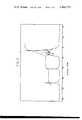
- FIG. 1 there is shown an infrared absorption spectrum determined on a crude 1-hydroxylaminoanthraquinone obtained in Example 1 and in FIG. 2 is shown a NMR spectrum determined on the crude 1-hydroxylaminoanthraquinone obtained in Example 1 in dimethylsulfoxide solution at 60MHz.
- Table 2 were summarized the results of elementary analysis in comparison with the calculated values, on crude 1-hydroxylaminoanthraquinone obtained in Example 1 and in Example 2.
- the reaction mixture was filtered and washed with water and the crystals thus obtained was dried at 80°C to obtain 4.3 parts of red crystals having a melting point of 252°C.
- the product was confirmed to be 1-aminoanthraquinone by infrared absorption spectrum.
- a mixture of 5.0 parts of 5-nitro-1,4,4a,9a-tetrahydroanthraquinone with 50 parts of pyridine was stirred at 90°C for 2 hours with introducing thereinto 0.8 parts/hour of gaseous hydrogen sulfide.
- the reaction mixture was then cooled to 25°C and added with 50 parts of water to precipitate crystals.
- the crystals were recovered by filtration, washed with water and dried under reduced pressure to obtain 3.9 parts of 1-aminoanthraquinone.
- 1-Hydroxylaminoanthraquinone 50 parts was stirred into a mixture of methyl alcohol 700 parts, water 100 parts and a 35% aqueous hydrochloric acid 60 parts. The reaction mixture was heated to 70°C and then added with zinc dust 16 parts little by little over 1 hour. After the reaction at 70°C for 3 hours, the reaction mixture was cooled to 25°C, filtered, washed with water and dried to obtain 42.5 parts of crystalline 1-aminoanthraquinone of a purity of 93%.
- Example 37 The same procedure as in Example 37 was repeated except that there was used 5.0 parts of 2,3-dimethyl-5-hydroxylaminoanthraquinone, to obtain 4.3 parts of 2,3-dimethyl-5-aminoanthraquinone of a purity of 97 %.
Landscapes
- Health & Medical Sciences (AREA)
- Life Sciences & Earth Sciences (AREA)
- Animal Behavior & Ethology (AREA)
- General Health & Medical Sciences (AREA)
- Public Health (AREA)
- Veterinary Medicine (AREA)
- Emergency Medicine (AREA)
- Birds (AREA)
- Epidemiology (AREA)
- Organic Low-Molecular-Weight Compounds And Preparation Thereof (AREA)
Abstract
A process for the preparation of 1-substituted anthraquinones represented by the general formula I ##EQU1## where, in the formula, R1 and R2 represent individually a hydrogen atom or methyl group and X represents a hydroxylamino or amino group,
Which comprises treating in a liquid medium a 5-nitro-1,4,4a,9a-tetrahydroanthraquinone represented by the general formula II ##EQU2## where, in the general formula, R1 and R2 represent individually a hydrogen atom or methyl group,
In the presence of a basic compound with or without a reducing agent.
Description
This invention relates to a process for the preparation of 1-substituted anthraquinones and, more particularly, to a process for the preparation of 1-substituted anthraquinones represented by the following general formula I ##EQU3## where, in the general formula, R1 and R2 represent individually a hydrogen atom or methyl group and X represents a hydroxylamino or amino group,
From 5-nitro-1,4,4a, 9a-tetrahydroanthraquinones represented by the following general formula II ##EQU4## where, in the general formula, R1 and R2 represent individually a hydrogen atom or methyl group.
1-Hydroxylaminoanthraquinones and 1-aminoanthraquinones represented by the above general formula I are of great value as intermediates for dyes and pigments.
In the reduction of nitro compounds, in general, there are inevitably formed nitroso (--NO) compounds, azoxy (--N(:O)=N--) compounds, hydrazine (--NHNH--) compounds or like intermediate compounds, and, all the intermediate compounds including hydroxylamino (--NHOH) compounds are subject to reduction into amino (--NH2) compounds when reduced in the ordinary reduction process, so that it was difficult so far to obtain such hydroxylamino compounds stationarily at a high yield. It was reported by W. H. Beisler et al in Journal of American Chemical Society, 44, pp 2296 - 2306 (1922), that 1-hydroxylaminoanthraquinone was formed by treating 1-nitroanthraquinone with hydrogen sulfide in pyridine solution. This process seems to be fairly successful, but there is a difficulty in separation and purification of a reaction product because of deposition of solid sulfur by reduction of the reducing agent.
Hitherto, 1-aminoanthraquinone which is the most important among aminoanthraquinones has been produced industrially in the following two processes:
1. in which anthraquinone-α-sulfonic acid prepared by sulfonation of anthraquinone is aminated, and
2. in which 1-nitroanthraquinone prepared by nitration of anthraquinone is reduced.
These processes, however, have various shortcomings as mentioned below. Namely, the process (1) needs as a catalyst for the sulfonation of anthraquinone a mercury compound which is very difficult to be recovered from reaction mixtures and contaminates waste water and the product to bring about pollution of biological environment. And, in the process (2) it is very difficult to obtain a product of a high purity because of inevitable formation of dinitro compounds as by-products.
Accordingly, an object of the present invention is to provide a novel process for the preparation of 1-substituted anthraquinones from 5-nitro-1,4,4a, 9a-tetrahydroanthraquinones.
Another object of the present invention is to provide a process for the preparation of 1-hydroxylaminoanthraquinones from 5-nitro-1,4,4a, 9a-tetrahydroanthraquinones.
A still another object of the present invention is to provide a process for the preparation of 1-aminoanthraquinones from 5-nitro-1,4,4a, 9a-tetrahydroanthraquinones.
A further object of the present invention is to provide a process for the preparation of 1-aminoanthraquinones from 1-hydroxylaminoanthraquinones.
A still further object of the present invention is to provide a novel process for the preparation of 1 -hydroxylaminoanthraquinones and new uses thereof.
In accordance with the present invention, 1-substituted anthraquinones represented by the following general formula I ##EQU5## where, in the general formula, R1 and R2 represent individually a hydrogen atom or methyl group and x represents a hydroxylamino or amino group,
are obtained by treating 5-nitro-1,4,4a, 9a-tetrahydroanthraquinones represented by the following general formula II ##EQU6## where, in the general formula, R1 and R2 represent individually a hydrogen atom or methyl group,
in the presence of a basic compound in a liquid medium.
Compounds of the general formula II yield 1-hydroxylaminoanthraquinones when treated with a basic compound only, while they yield 1-aminoanthraquinones when treated with either a basic reducing agent or a combination of a basic compound and a reducing agent.
Thus, in accordance with the process of the present invention, by treating compounds of the general formula II with a basic compound in a liquid medium there may be obtained with ease 1-hydroxylaminoanthraquinones. The 1-hydroxylaminoanthraquinones thus obtained are used for the preparation of various compounds such as 1-aminoanthraquinones, and the 1-aminoanthraquinones thus obtained are of great value as intermediates for dyes.
The present invention will be understood best in connection with the accompanying drawings wherein;
FIG. 1 shows an infrared absorption spectrum of crude 1-hydroxylaminoanthraquinone prepared in Example 1, and
FIG. 2 shows a NMR spectrum of the crude 1-hydroxylaminoanthraquinone prepared in Example 1.
The 5-nitro-1,4,4a , 9a-tetrahydroanthraquinones as starting materials such compounds that may easily be obtained by adding butadienes to 5-nitro-1,4-naphthoquinone through Diels-Alder reaction, so that the process of the present invention is a very advantageous process in industrial point of view for the preparation of the 1-substituted anthraquinones of the general formula I. The 5-nitro-1,4-naphthoquinone may be prepared by, e.g., electrolytic oxidation of 1-nitronaphthalene or nitration of 1,4-naphthoquinone, and among processes of the latter type the process as disclosed in our application Ser. No. 493,607 now U.S. Pat. No. 3,941,815, provides the best result in the manufacture of 5-nitro-1,4-naphthoquinone. The representatives of the 5-nitro-1,4,4a, 9a-tetrahydroanthraquinones as starting materials include 5-nitro-1,4,4a, 9a- tetrahydroanthraquinone, 2- or 3-methyl-5-nitro-1,4,4a, 9a-tetrahydroanthraquinone and 2,3-dimethyl-5-nitro-1,4,4a, 9a-tetrahydroanthraquinone, among which 5-nitro-1,4,4a, 9a-tetrahydroanthraquinone is useful as a starting material for the preparation of the most important dye intermediate 1-hydroxylaminoanthraquinone or 1-aminoanthraquinone.
It is essential for the process of the present invention to carry out the reaction in the presence of a basic compound, though it is good enough to use the basic compound in an amount sufficient to maintain the rection mixture basic. The basic compound may be any of those compounds as generally be regarded as basic substance, such as, e.g.;
1. Oxides, hydroxides, sulfides and weak acid salts of Group Ia, Ib, IIa and IIb metals of the periodic table, such as magnesium oxide, calcium oxide, beryllium oxide, lithium hydroxide, sodium hydroxide, potassium hydroxide, rubidium hydroxide, cesium hydroxide, barium hydroxide, lithium bicarbonate, sodium bicarbonate, potassium bicarbonate, rubidium bicarbonate, lithium carbonate, sodium carbonate, potassium carbonate, sodium acetate, potassium acetate, sodium borate, potassium borate, sodium sulfite, potassium sulfite, sodium thiosulfate, potassium thiosulfate, tripotassium phosphate, trisodium phosphate, dipotassium phosphate, disodium phosphate, potassium permanganate, sodium chromate, sodium sulfide, potassium sulfide, sodium phenolate, potassium phenolate, sodium benzoate, potassium tartarate and tetrasodium ethylenediaminetetraacetate,
2. ammonia and ammonium carbonate,
3. alcoholates of Group Ia and IIa metals of the periodic table, such as lithium methylate, sodium methylate, potassium methylate, sodium ethylate, potassium ethylate, magnesium ethylate, calcium ethylate, sodium isopropylate, potassium isopropylate, calcium isopropylate, magnesium isopropylate, sodium butoxide, potassium butoxide and the like, and
4. primary amines, secondary amines, tertiary amines, quaternary ammonium hydroxides and like nitrogen-containing basic compounds, such as monomethylamine, dimethylamine, trimethylamine, monoethylamine, diethylamine, triethylamine, mono-n-propylamine, di-n-propylamine, tri-n-propylamine, monoisopropylamine, diisopropylamine, n-butylamines, isobutylamines, sec-butylamines, tert-butylamines, pentylamines, hexylamines, heptylamines, octylamines, cyclohexylamines, ethanolamine diethanolamine, triethanolamine, isopropanolamine, diisopropanolamine, triisopropanolamine, aniline, benzyldimethylamine, triphenylamine, benzylamine, ethylenediamine, 1,2-propylenediamine, 1,3-propylenediamine, diethylenetriamine, triethylenetetramine, ethyleneimine, propyleneimine, piperazine, morphorine, pyridine, pyrazine, pyrimidine, pyrazole, 1,8-diazabicyclo(5,4,0)undecene-7, tetramethylammonium hydroxide, tetraethylammonium hydroxide, tetra-n-propylammonium hydroxide, tetra-n-butylammonium hydroxide, benzyl trimethylammonium hydroxide, phenyl triethylammonium hydroxide, dimethyldiethylammonium hydroxide, urea, thiourea, methyl and ethyl esters of glycine and the like.
In the process of the present invention suitably used are hydroxides, carbonates, bicarbonates, sulfides, phosphates and thiosulfates of alkali metals, calcium hydroxide, barium hydroxide and ammonia, alkylamines, urea, pyridine and quaternary ammonium hydroxides. The basic compound may be used in amounts of at least 0.01, preferably 0.1 - 100 parts by weight per 100 parts by weight of the compound of the general formula II as a starting material. In a case of using a strong base such as sodium hydroxide, sodium sulfide, sodium phenolate, sodium alkoxides and quaternary ammonium hydroxides, it is preferred to be used in an amount of 0.01 to 1.0 parts by weight of 100 parts by weight of the compound of the general formula II, but in case of weak basic non-reducing compound such as liquid amines, sodium acetate, disodium phosphate and sodium bicarbonate, it may be used in an amount of 1 to 100 parts by weight of 100 parts of the compound of the general formula II.
In the process of the present invention, it is preferable to use a basic compound not effecting reductivity to the product to obtain a 1-hydroxylaminoanthraquinone as a main product.
In the process of the present invention in which reaction is carried out in liquid phase, there may be used as liquid medium any liquid which is relatively stable in oxidative or reductive atmosphere. Examples of the liquid media suitably used are: water; methanol, ethanol, isopropanol, butanols and like alcohols; ethyleneglycol monomethyl ether (methyl-Cellosolve), ethyleneglycol monobutyl ether and like glycol ethers; ethyleneglycol, diethyleneglycol, propyleneglycol and like glycols; benzene, toluene, xylene and like aromatic hydrocarbons; and ligroin, acetone, methyl ethyl ketone, tetrahydrofurane, dimethylformamide, dimethylsulfoxide, pyridine, ethanolamines and like solvents, and mixtures thereof.
In the process of the present invention, it is unnecessary to completely dissolve the 5-nitro-1,4,4a, 9a-tetrahydroanthraquinone as starting material in such a liquid medium as mentioned above, and the reaction advances also in suspension. For attaining efficient separation of the product, 1-hydroxylaminoanthraquinones, it is preferred to reduce the solubility of the 1-hydroxylaminoanthraquinones in the liquid medium. This is attained by use of a mixed solvent containing water, ligroin or like poor solvent or by adding such a poor solvent to the reaction mixture after reaction to reduce the solubility in the liquid medium. For instance, 1-hydroxylaminoanthraquinone is easily soluble in dimethylsulfoxide and soluble in acetone and ethanol but insoluble in water and ligroin. Similarly, in the preparation of 1-aminoanthraquinones, it is preferred to select a liquid medium from which the product is easily separable.
In the preparation of 1-aminoanthraquinones, there may be used as the reducing agent any compound which has been known to have a reducing power of reducing nitro compound into amino compound. Representative examples of the reducing agents are, for examples, hydrogen sulfide; hydrosulfides, such as lithium hydrosulfide, sodium hydrosulfide, potassium hydrosulfide, rubidium hydrosulfide and ammonium hydrosulfide; sulfides, such as lithium sulfide, sodium sulfide, potassium sulfide, cesium sulfide and ammonium sulfide; disulfides and polysulfides, such as sodium disulfide, sodium polysulfide, potassium disulfide, potassium polysulfide, ammonium disulfide and ammonium polysulfides; and like sulfur-containing compound and, in addition thereto, elementary sulfur, ammonia, metallic zinc, metallic iron, metallic aluminum, metallic magnesium, metallic nickel, catalytically activated hydrogen, sugars such as glucose, fructose, sucrose and maltose, paraformaldehyde, oxalic acid and its salts, formic acid and its salts, ascorbic acid and its salts, and the like.
In the practice of the process of the present invention in commercial scale, there may advantageously be used as the reducing agents hydrogen sulfide, ammonium sulfide, sodium sulfide, sodium disulfide, elementary sulfur and metallic zinc. It is preferred to use the reducing agent in excess over the amount necessary for completion of reduction of the starting material 5-nitro-1,4,4a, 9a-tetrahydroanthraquinones, optimally in amount of 2 to 6 oxidation-reduction equivalents per mole of the starting material, and after reaction the excess of the reducing agent may be recovered for recirculation.
The reaction temperature ranges from 0° to 200°C, preferably from 30° to 150°C and optimally from 50° to 110°C. The reaction time ranges from 20 to 120 minutes in the preparation of 1-hydroxylaminoanthraquinones and, on the other hand, from 1 to 20 hours in the preparation of 1-aminoanthraquinones.
Thus, 1-hydroxylaminoanthraquinones or 1-aminoanthraquinones are obtained steadily at a quantitative high yield.
According to our observation, 1-hydroxylaminoanthraquinone purified by means of methanol exhibited no distinct melting point and decomposed at 200° to 240°C.
The 1-hydroxylaminoanthraquinones thus obtained are further reduced to obtain 1-aminoanthraquinones in the following processes:
1. a process in which 1-hydroxylaminoanthraquinones are reduced by means of at least one metal selected from the group consisting of iron, nickel, zinc, magnesium and aluminum and a mineral acid in the presence of an aliphatic monohydric alcohol containing 1 to 4 carbon atoms,
2. a process in which 1 -hydroxylaminoanthraquinones are reduced by means of at least one metal selected from the group consisting of iron, nickel, zinc, magnesium and aluminum and a mineral acid in the presence of ethyleneglycol monoalkyl ethers, or
3. a process in which 1-hydroxylaminoanthraquinones are catalytically reduced with hydrogen in the presence of ethyleneglycol monoalkyl ethers.
The reducing agent used in the process of the present invention is at least one metal selected from the group consisting of iron, nickel, zinc, magnesium and aluminum. The metal should be supplied as it is to a reaction system, though its form does not matter. However, it is preferred to use the metal in the form of powder or ribbon from the industrial aspect, and as the metal preferred are iron, zinc and aluminum because of their low prices. The metals as reducing agent are used in amounts of 2 to 6 oxidation-reduction equivalents per mole of 1-hydroxylaminoanthraquinones.
The mineral acid used in the process of the present invention includes hydrochloric acid, sulfuric acid, phosphoric acid and the like, though preferred are hydrochloric acid and sulfuric acid, and the mineral acid is used in amounts sufficient to form salt with such a metal consumed in the aforesaid reduction reaction or more.
The aliphatic monohydric alcohol used as the reaction medium is of a carbon atom number of 1 to 4, such as, e.g., methanol, ethanol, n-propanol, isopropanol, n-butanol, isobutanol, sec-butanol and tert-butanol, and mixtures thereof. By the presence of the aforesaid lower alcohol in the reaction system portion of the starting material 1-hydroxylaminoanthraquinones is solubilized and thereby a smooth progress of reaction is promoted. And, it has been found that incorporation of water in the alcohol as reaction medium makes it easy to process the reaction mixture after reaction. That is to say, the presence of a small amount of water in the reaction system lowers the solubility of the reaction product 1-aminoanthraquinones to increase the recovery of the product in the form of crystals, reduces formation of higher-order reduction products, such as anthrones, by overprogress of reduction caused by use of somewhat excess metal and dissolves the metal salt formed to facilitate, e.g., stirring. These effects are obtained especially when the weight ratio of alcohol to (alcohol + water) is at least 0.2, preferably at least 0.5. It has been found that when the weight ratio is less than 0.2 the reaction rate is low and crystals of 1-aminoanthraquinones formed are too fine to be recovered by filtration.
It is good enough for the reaction medium to be used in an amount as to form a stirrable reaction mixture, though the reaction medium preferably is used in an amount of at least 4 times the weight of 1-hydroxylaminoanthraquinones, more desirably 10 to 50 times the weight of 1-hydroxylaminoanthraquinone, in the practice of the process of the present invention.
The ethyleneglycol monoalkyl ethers used as the other reaction medium includes ethyleneglycol monoalkylethers and diethyleneglycol monoalkyl ethers represented by the general formula III
ro --ch.sub.2 ch.sub.2 --(och.sub.2 ch.sub.2).sub.n OH (III)
where, in the formula, R represents an alkyl group containing 1 to 8 carbon atoms, preferably 1 to 4 carbon atoms, and n represents an integer of 0 or 1.
Representative examples are, e.g., mono- or diethyleneglycol monomethyl ether, -monoethyl ether, -mono-n-propyl ether, -mono-isopropyl ether, -mono-n-butyl ether, -monoisobutyl ether, -mono-sec-butyl ether, -mono-tert-butyl ether, -monopentyl ether, -mono-hexyl ether and -monooctyl ether. The presence of such ethyleneglycol monoalkyl ethers in the reaction system solubilizes portion of the starting material 1-hydroxylaminoanthraquinones.
Hitherto, synthesis of aromatic amines has usually been made by reducing aromatic nitro compounds by means of iron and a mineral acid. However, in case of 1-hydroxylaminoanthraquinones as the starting material in the process of the present invention, the reaction rate is very low when reduced in the conventional manner by means of a metal and a mineral acid and the most part of metal is consumed for generation of gaseous hydrogen, so that this method seems to be unpracticable for the commercial production of 1-aminoanthraquinones. Therefore, the effect of use of the aforesaid liquid medium has to be said remarkable. In addition, use of water in combination with such a liquid medium is very effective for the performance of the process of the present invention, especially in an amount as to provide in the reaction system a weight ratio of ethyleneglycol monoalkyl ether to (water + ethyleneglycol monoalkyl ether) of at least 0.2, preferably of at least 0.5. When the aforesaid weight ratio is less than 0.2, the reaction rate of reduction is too low and crystals of the 1-aminoanthraquinones formed are too fine to be recovered by filteration. The presence of water (including water contained in a mineral acid used) in the reaction system exerts effects of reducing the solubility of 1 -aminoanthraquinones and of increasing the yield of crystals and, in addition, of preventing formaton of higher-order reduction products, such as anthrones, by the action of somewhat excess metal, of dissolving a metal salt formed and of facilitating stirring of the reaction mixture. It is good enough for the liquid medium to be used in an amount as to form a stirrable reaction mixture, though the reaction medium preferably is used in an amount of at least 4, more desirably of 10 to 50 times the weight of 1-hydroxylaminoanthraquinones.
As the catalyst to be used for the catalytic reduction by hydrogen there may be used any of the known catalysts generally regarded as hydrogenation catalysts, such as nickel, cobalt, iron, copper, platinum or palladium. The catalyst may be used in amounts of 0.1 to 30, preferably of 1 to 10% by weight based on the weight of 1-hydroxylaminoanthraquinones. The 1-aminoanthraquinones formed may be separated from the reaction mixture in a conventional manner and may be obtained in a yield of 80% or more of theoretical yield.
The reduction of 1-hydroxylaminoanthraquinones is conducted at temperatures of 0° to 200°C. The reduction by means of at least one metal selected from the group consisting of iron, nickel, zinc, magnesium and aluminum and a mineral acid in the presence of an aliphatic monohydric alcohol or (di)ethyleneglycol monoalkyl ether is conducted at temperatures of 50° to 150°, preferably of 60° to 110°C. On the other hand, the catalytic reduction by hydrogen preferably is conducted at temperatures of 20° to 150°C, and more desirably of 50° to 150°C. The reaction time varies depending on the reaction temperature, the amounts of metal and mineral acid or of reducing catalyst used and the nature and concentration of reaction medium, though sufficient is a time of 1 to 20 hours.
The catalytic reduction by hydrogen is carried out by suspending 1-hydroxylaminoanthraquinone and a hydroganation catalyst in the reaction medium as mentioned above and then introducing gaseous hydrogen into the suspension under normal pressure or under pressure. In this case, the aforesaid reaction medium is used in an amount as to form a stirrable slurry of the starting material and the catalyst, i.e. in an amount of at least 4, preferably of 10 to 50 times the weight of 1-hydroxylaminoanthraquinones.
In the following Examples, all parts and percentages are by weight unless otherwise designated.
A mixture of 5 parts of 5-nitro-1,4,4a, 9a-tetrahydroanthraquinone, 70 parts of methanol and a basic compound, as listed in the following Table 1 in an amount as indicated therein, was stirred at 60°C for 1 hour, then cooled to 20°C and crystals formed were filtered, washed with water and dried under reduced pressure. The mother liquor was distilled to remove methanol and then washed with water to remove the basic compound and recover crystals. The crystals thus obtained were confirmed to be of 1-hydroxylaminoanthraquinone by infrared absorption spectrum, elementary analysis, NMR spectrum and determination of reduction equivalent. The yields were as summarized in the Table 1.
                                  Table 1
__________________________________________________________________________
Example
     Basic compound  Yielf of hydroxyl-
                               1-Hydroxylamino-
Nos. Kinds   Amounts added
                     aminoanthraquinone
                               anthraquinone
             (parts) (parts)   remaining in
                               mother liquor
                                 (parts)
__________________________________________________________________________
1    KOH     0.06    4.25        0.35
2    NH.sub.3
             0.5     4.30        0.35
3    (C.sub.2 H.sub.5).sub.4 NOH
             0.1     4.30        0.25
4    Ca(OH).sub.2
             0.1     4.26        0.35
__________________________________________________________________________
The above results indicate that the yields are almost quantitative.
In FIG. 1 there is shown an infrared absorption spectrum determined on a crude 1-hydroxylaminoanthraquinone obtained in Example 1 and in FIG. 2 is shown a NMR spectrum determined on the crude 1-hydroxylaminoanthraquinone obtained in Example 1 in dimethylsulfoxide solution at 60MHz. And, in the following Table 2 were summarized the results of elementary analysis in comparison with the calculated values, on crude 1-hydroxylaminoanthraquinone obtained in Example 1 and in Example 2.
              Table 2
______________________________________
             Values of
             elementary analysis (%)
             Carbon Hydrogen  Nitrogen
______________________________________
Example 1 (found)
               70.10    3.83      5.82
Example 2 (found)
               70.15    3.80      5.83
C.sub.14 H.sub.9 O.sub.3 N (calculated)
               70.29    3.79      5.86
______________________________________
A mixture of 5.0 parts of 5-nitro-1,4,4a,9a-tetrahydroanthraquinone with a solvent and a basic compound, of kinds and in amounts as listed in the following Table 3, was stirred for 1 hour at a temperature, as indicated in the Table 3, then cooled to 20°c, filtered to recover crystals and dried under reduced pressure to obtain the results as shown in the Table 3.
The product in each Example was confirmed to be 1-hydroxylaminoanthraquinone by determination of infrared absorption spectrum, and it was confirmed that in filtrates in Examples 5 to 12 there were contained little amounts of 1-hydroxylaminoanthraquinone.
                                  Table 3
__________________________________________________________________________
Solvent            Basic compound
Example                         Reaction
                                     Yields of
Nos.          Amounts      Amounts
                                temp.
                                     1-hydroxyl-
      Kinds   (parts)
                   Kinds   (parts)
                                (°C)
                                     aminoanthra-
                                     quinone
                                      (parts)
__________________________________________________________________________
     Methylcellosolve
                50
5                  Na.sub.2 CO.sub.3
                            0.04
                                90   4.35
     Water      50
     Acetone    40
6                  Na.sub.3 PO.sub.4
                            0.05
                                50   4.25
     Water      50
7    n-Butanol  80 HOCH.sub.2 CH.sub.2 NH.sub.2
                            0.50
                                60   4.30
     Methylcellosolve
                50
8                  CH.sub.3 COONa
                            0.10
                                100  4.30
     Water      50
     Tetrahydrofuran
                40
9                  Na.sub.2 S
                            0.05
                                60   4.33
     Water      50
     Methylcellosolve
                50
10                 (NH.sub.2).sub.2 CO
                            1.00
                                70   4.35
     Water      50
     Methylcellosolve
                50
11                 Na.sub.2 S.sub.2 O.sub.3
                            0.50
                                70   4.34
     Water      50
12   Ligroin    80 (n- C.sub.4 H.sub.9).sub.2 NH
                            1.0 70   4.36
__________________________________________________________________________
A mixture of 5.0 parts of 5-nitro-1,4,4a,9a-tetrahydroanthraquinone with 80 parts of toluene and 1.0 part of n-butylamine was stirred at 70°C for 2 hours. The mixture was then distilled under a reduced pressure of 100 mm Hg to remove toluene, washed with 50 parts of methanol and dried under reduced pressure to obtain 4.4 parts of 1-hydroxylaminoanthraquinone.
A mixture of 5.0 parts of 5-nitro-1,4,4a,9a-tetrahydroanthraquinone with 50 parts of pyridine was stirred at 70° C for 1 hour and then poured into 500 parts of water to precipitate crystals. After cooled to 20°C, the crystals were recovered by filtration, washed with water and dried under reduced pressure to obtain 4.5 parts of 1-hydroxylaminoanthraquinone.
A mixture of 5.0 parts of 5-nitro-2,3-dimethyl-1,4,4a,9a-tetrahydroanthraquinone with 50 parts of water, 50 parts of methylcellosolve and 0.05 parts of potassium carbonate was stirred at 60°C for 1 hour, then cooled to 20°C and filtered to recover crystals. The crystals were washed with water and dried under reduced pressure to obtain 4.5 parts of 5-hydroxylamino-2,3-dimethylanthraquinone.
Elementary analysis Found: C, 71.85%; H, 4.92%; N, 5.22%. C16 H12 O2 N: Calculated: C, 71.89%; H, 4.90%; N, 5.24%.
A mixture of 5.0 parts of 5-nitro-1,4,4a,9a-tetrahydroanthraquinone with 100 parts of water and 5.0 parts of sodium sulfide enneahydrate was heated to 90°C with stirring, maintained at 90° to 100°C for 1 hour and cooled to 50°C. The reaction mixture was filtered and washed with water and the crystals thus obtained was dried at 80°C to obtain 4.3 parts of red crystals having a melting point of 252°C. The product was confirmed to be 1-aminoanthraquinone by infrared absorption spectrum.
Mixtures of each 5.0 parts of 5-nitro-1,4,4a,9a-tetrahydroanthraquinone with 30 parts of water, 70 parts of methylcellosolve and reducing agents and basic compounds, of kinds and in amounts as indicated in the following Table 4, were stirred at 90°-100°C for times, as indicated in the Table 4, then cooled to 40°C and filtered to recover crystals. The crystals were washed with water and dried under reduced pressure. In all of these Examples, the products were confirmed by infrared absorption spectrum to be 1-aminoanthraquinone. The yields of 1-aminoanthraquinone obtained in the form of crystals were as shown in the Table 4.
                                  Table 4
__________________________________________________________________________
Reducing agent     Basic compound
Example                       Reaction
                                   Yield of
Nos.          Amounts    Amounts
                              time 1-amino-
      Kinds   (parts)
                   Kinds (parts)
                              (hours)
                                   anthraqui-
                                   none (pts)
__________________________________________________________________________
17   Hydrogen sulfide
              1    Ammonia
                         1    2     4.3
18   Formic acid
              2    Sodium
                         2    5     4.0
                    hydroxide
19   Oxalic acid
              3    Sodium
                         2    5     4.0
                    hydroxide
20   Sucrose  5    Potassium
                         2    10    3.9
                    hydroxide
__________________________________________________________________________
A mixture of 5.0 parts of 5-nitro-1,4,4a,9a-tetrahydroanthraquinone with 3 parts of zinc dust, 10 parts of a 20 wt % aqueous sodium hydroxide and 50 parts of ethanol was refluxed for 2 hours with stirring and, after cooled to 20°C, filtered. The residue was washed with water and poured into a dilute hydrochloric acid to dissolve zinc dust. Crystals were recovered by filration, washed with water and dried under reduced pressure to obtain 3.8 parts of 1-aminoanthraquinone.
A mixture of 5.0 parts of 5-nitro-1,4,4a,9a-tetrahydroanthraquinone with 100 parts of water, 2 parts of sulfur and 2 parts of calcium hydroxide was stirred at 95°C for 3 hours and then cooled to 25°C. Crystals precipitated were recovered by filteration, washed with water, then washed with a dilute hydrochloric acid to dissolving away calcium hydroxide and dried under reduced pressure to obtain 3.7 parts of crystalline 1-aminoanthraquinone.
A mixture of 5.0 parts of 5-nitro-1,4,4a,9a-tetrahydroanthraquinone with 50 parts of pyridine was stirred at 90°C for 2 hours with introducing thereinto 0.8 parts/hour of gaseous hydrogen sulfide. The reaction mixture was then cooled to 25°C and added with 50 parts of water to precipitate crystals. The crystals were recovered by filtration, washed with water and dried under reduced pressure to obtain 3.9 parts of 1-aminoanthraquinone.
To 5.0 parts of 5-nitro-2,3-dimethyl-1,4,4a,9a-tetrahydroanthraquinone there was added 100 parts of water and then, with stirring at 90°C, 20 parts of a 10 wt % aqueous sodium sulfide. The reaction mixture thus formed was maintained at 90° - 95°C for 1 hour and, after cooled to 25°C, filtered to recover crystals. The crystals were washed with water and dried under reduced pressure to obtain 4.5 parts of 5-amino-2,3-dimethylanthraquinone of a melting point of 222°C.
1-Hydroxylaminoanthraquinone 50 parts was stirred into a mixture of methyl alcohol 700 parts, water 100 parts and a 35% aqueous hydrochloric acid 60 parts. The reaction mixture was heated to 70°C and then added with zinc dust 16 parts little by little over 1 hour. After the reaction at 70°C for 3 hours, the reaction mixture was cooled to 25°C, filtered, washed with water and dried to obtain 42.5 parts of crystalline 1-aminoanthraquinone of a purity of 93%.
To a mixture of 600 parts of methyl alcohol, 200 parts of water and 70 parts of a 35% aqueous hydrochloric acid there was added with stirring 50 parts of 1-hydroxylaminoanthraquinone and the resulting mixture was heated to 70°C. After addition of 17 parts of metallic iron in the form of ribbon little by little over 1 hour, the reaction mixture was maintained at 70°C for additional 4 hours, then cooled to 25°C and filtered. The residue was washed with water, then dissolved in 500 parts of dimethylformamide and filtered to remove residual metallic iron. Dimethylformamide in the filtrate was removed by distillation under reduced pressure to obtain 42.0 parts of 1-aminoanthraquinone of a purity of 92%.
To a mixture of an alcohol, water and an acid, of kinds and in amounts as listed in the following Table 5, there was added 50 parts of 1-hydroxylaminoanthraquinone. The reaction mixture was, after heated to a temperature as indicated in the Table 5, added with zinc dust or iron ribbon little by little over 1 hour and then maintained at the reaction temperature for a time as indicated in the Table 5. The reaction mixture was then cooled to 25°C and processed thereafter in the similar manner as in Example 26 to recover 1-aminoanthraquinone in the yields as summarized in the Table 5.
It was confirmed, as shown in the Table 5, that the solubility of aminoanthraquinone in the reaction medium increased as the concentration of alcohol therein increased and a portion of aminoanthraquinone formed passed into the filtrate.
                                  Table 5
__________________________________________________________________________
Example
      Solvent and acid
                     (alcohol)/(alcohol + water)
Nos.  Kinds     (parts)
                     ratio in reaction system
__________________________________________________________________________
27   Methyl alcohol
                500
     Water      400  0.53
     35 % HCl    60
28   Ethyl alcohol
                400
     Water      100  0.80
     H.sub.2 SO.sub.4
                 30
29   Isopropyl alcohol
                800
     Water      100  0.89
     H.sub.2 SO.sub.4
                 30
30   Sec-butyl alcohol
                800  0.95
     35 % HCl    60
31   Methyl alcohol
                800  1.00
     H.sub.2 SO.sub.4
                 30
Reducing    Reaction temperature and time
                           Yield and Purity
agent  (parts)
            (°C)
                   (hours) (parts)
                                 (%)
__________________________________________________________________________
Iron ribbon
       17
            77     6       43.6  91
Iron ribbon
       17   80     4       41.5  94
Iron ribbon
       17   65     6       38.5  95
Zinc dust
       16   75     3       41.0  94
Zinc dust
       16   65     4       37.5  96
__________________________________________________________________________
50 Parts of 2,3-dimethyl-5-hydroxylaminoanthraquinone was added to a mixture of 600 parts of methyl alcohol, 200 parts of water and 60 parts of a 35 % aqueous hydrochloric acid and the mixture was heated with stirring to 70°C, then added thereto 15 parts of zinc dust little by little over 1 hour. The reaction mixture was maintained at 70°C for additional 3 hours and then cooled to 25°C and filtered. The residue was washed with water and dried to obtain 42.8 parts of 2,3-dimethyl-5-aminoanthraquinone of a purity of 95 %.
To 700 parts of a 3 % aqueous hydrochloric acid there was added 50 parts of 1-hydroxylaminoanthraquinone and the mixture was heated with stirring to 70°C, then added thereto little by little 16 parts of zinc dust over 1 hour. The reaction mixture was maintained at 70°C for additional 4 hours. Zinc dust was completely consumed during the reaction course but a fairly large amount of 1-hydroxylaminoanthraquinone remained unreacted. The reaction mixture was cooled to 25°C and filtered. The residue was washed with water and then with 200 parts of a 3 % solution of sodium hydroxide in a 20 % aqueous acetone to extract therefrom unreacted 1-hydroxylaminoanthraquinone and washed with water again and dried to obtain 15.5 parts of 1-aminoanthraquinone of a purity of 90 %.
50 Parts of 1-hydroxylaminoanthraquinone was stirred into a mixture of 700 parts of diethyleneglycol monomethyl ether, 100 parts of water and 30 parts of conc. sulfuric acid, then added thereto little by little 16 parts of zinc dust over 1 hour after heating to 80°C. The reaction mixture was maintained at 80°C for additional 2 hours and then filtered. The filtrate was washed with water and dried to obtain 43.5 parts of 1-aminoanthraquinone of a purity of 94 %.
50 Parts of 1-hydroxylaminoanthraquinone was stirred into a mixture of 500 parts of ethyleneglycol monobutyl ether, 200 parts of water and 60 parts of a 35 % aqueous hydrochloric acid. After heated to 75°C, the mixture was added with 17 parts of iron ribbon little by little over 1 hour and maintained at 75°C for additional 3 hours. After cooled to 25°C, the reaction mixture was filtered and the residue was washed with water and extracted with 500 parts of dimethylformamide to separate the resulting 1-aminoanthraquinone from unreacted metal. The extract was distilled for removal of dimethylformamide to obtain 42.5 parts of 1-aminoanthraquinone of a purity of 93 %.
50 Parts of 1-hydroxylaminoanthraquinone was stirred into a mixture of 1,000 parts of ethyleneglycol monomethyl ether and 30 parts of conc. sulfuric acid. After heated to 75°C, the mixture was added with 17 parts of iron dust little by little over 1 hour and maintained at 75°C for additional 3 hours. The reaction mixture was then filtered while hot and the residue was washed with 100 parts of ethyleneglycol monomethyl ether heated at 80°C. Thus, unreacted metallic iron and iron sulfate were separated as residue. The filtrate was added with 200 parts of water and then cooled to 25°C to precipitate crystals. The crystals were recovered by filtration, washed with water and dried to obtain 43.5 parts of 1-aminoanthraquinone of a purity of 95 %.
50 Parts of 2,3-dimethyl-5-hydroxylaminoanthraquinone was stirred into a mixture of 700 parts of ethyleneglycol monomethyl ether, 200 parts of water and 60 parts of a 35 % aqueous hydrochloric acid, and the mixture was then heated to 75°C. To the mixture there was added little by little 16 parts of zinc dust over 1 hour. The reaction mixture was maintained at 75°C for additional 3 hours, then cooled to 25°C and filtered. The residue was washed with water and dried to obtain 43.6 parts of 2,3-dimethyl-5-aminoanthraquinone of a purity of 95 %.
To 100 parts of ethyleneglycol monomethyl ether (so called methyl-Cellosolve) there were added 5.0 parts of 1-hydroxylaminoanthraquinone and 0.25 part of Raney nickel. The reaction mixture was heated to 80°C over 30 minutes and maintained at 80°C for 4 hours, with stirring, while introducing thereinto 0.04 parts/hour of gaseous hydrogen. The reaction mixture was then purged of gaseous hydrogen with gaseous nitrogen, heated to 100°C and filtered while hot to separate the catalyst as residue. The filtrate was, while maintained at 80°C, added with 100 parts of water, with stirring, to precipitate crystals. The slurry thus formed was then cooled to room temperature and filtered. The residue was washed with 5 parts of methanol and dried to obtain 4.2 parts of 1-aminoanthraquinone of a purity of 97 %. In the filtrate there remained 0.1 part of 1-aminoanthraquinone dissolved.
To a reaction medium, as shown in the following Table 6, there were added 5.0 parts of 1-hydroxylaminoanthraquinone and a catalyst of a kind and in an amount, as indicated in the Table 6. The reaction mixture thus formed was stirred under the reaction conditions as indicated in the Table 6. In Example 40 and 41, there was introduced gaseous hydrogen into reaction mixtures.
The reaction mixture was, after reaction step, processed in the similar manner as in Example 37. In all of these Examples, there remained little 1-aminoanthraquinone in filtrates.
                                  Table 6
__________________________________________________________________________
Example
     Reaction medium
                    Catalyst   Gaseous hydrogen
Nos.  Kinds    (parts)
                    (parts)    (parts/hr)
                                     (gauge atm.)
__________________________________________________________________________
38   Ethylene glycol
                90  Raney nickel
                               0.04  0
     monobutyl ether
                    0.25
     Water      10
39   Diethylene glycol
               100  Raney nickel
                               0.04  0
     monoethyl ether
                    0.25
40   Ethylene glycol
               100  5 % Pd supporting
                               --    0.2
     monomethyl ether
                    activated carbon
                    2
41   Ethylene glycol
               100  Raney nickel
                               --    40
     monoethyl ether
                    0.05
Temperature     Time   1-Aminoanthraquinone
(°C)     (hrs)  Yield (parts)
                                  Purity (%)
__________________________________________________________________________
125             5      4.3        96
100             6      4.1        97
80              7      4.3        96
80              20     4.4        95
__________________________________________________________________________
The same procedure as in Example 37 was repeated except that there was used 5.0 parts of 2,3-dimethyl-5-hydroxylaminoanthraquinone, to obtain 4.3 parts of 2,3-dimethyl-5-aminoanthraquinone of a purity of 97 %.
Claims (38)
1. A process for the preparation of a 1-substituted anthraquinone having the general formula (I) ##EQU7## where, in the formula, R1 and R2 individually represent a hydrogen atom or methyl group and X represents a hydroxylamino or amino group,
which comprises treating a 5-nitro-1,4,4a,9a -tetrahydroanthraquinone having the general formula (II) ##EQU8## where, in the formula, R1 and R2 individually represent a hydrogen atom or methyl group
in the presence of a basic compound in a liquid medium whereby during the course of the reaction the ring structure is oxidized and the nitro group is partially or completely reduced to provide a product consisting essentially of the 1-substituted anthraquinone of the above general formula (I).
2. A process of claim 1 in which the basic compound is at least one member selected from the group consisting of oxides, hydroxides, weak acid salts and alcoholates of the group I and II metals of the periodic table, ammonia, ammonium carbonate, primary amines, secondary amines, tertiary amines, quaternary ammonium hydroxides and urea.
3. A process of claim 1 in which the basic compound is at least one member selected from the group consisting of hydroxides, carbonates, bicarbonates, sulfides, acetates, phosphates and thiosulfates of alkali metals, ammonia, alkylamines, urea, pyridine and quaternary ammonium hydroxides.
4. A process of claim 1 in which the basic compound is used in an amount of at least 0.01 parts by weight per 100 parts by weight of the compound represented by the general formula II.
5. A process of claim 1 in which the basic compound is used in an amount of 0.1 to 100 parts by weight per 100 parts by weight of the compound represented by the general formula II.
6. A process of claim 1 in which the basic compound is a liquid amine compound and used in a solvent amount.
7. A process of claim 1 in which the treatment is carried out at a temperature of 0° to 200°C.
8. A process of claim 1 in which the treatment is carried out at a temperature of 30° to 150°C.
9. A process of claim 1 in which the compound having the general formula II is 5-nitro-1,4,4a, 9a-tetrahydroanthraquinone.
10. A process of claim 1 in which the 1-substituted anthraquinone having the general formula I is 1-hydroxylaminoanthraquinone.
11. A process of claim 1 in which the 1-substituted anthraquinone having the general formula I is 1-aminoanthraquinone.
12. The process of claim 1 wherein the liquid medium is a liquid that is stable in an oxidative or reductive environment. pg,35
13. A process for the preparation of 1-hydroxylaminoanthraquinones comprising treating at a temperature of 0° to 200°C in a liquid medium a 5-nitro-1,4,4a, 9a-tetrahydroanthraquinone having the general formula (II) with at least 0.01 parts by weight, per 100 parts by weight of said anthraquinone, of a basic compound whereby during the course of the reaction the ring structure is oxidized and the nitro group is partially reduced to provide a product consisting essentially of a 1-hydroxylaminoanthraquinone.
14. A process for the preparation of 1-hydroxylaminoanthraquinones comprising treating at a temperature of 30° to 150°C in a liquid medium a 5-nitro-1,4, 4a, 9a-tetrahydroanthraquinone having the general formula (II) with 0.01 to 100 parts by weight, per 100 parts by weight of said anthraquinone, of a basic non-reducing compound whereby during the course of the reaction the ring structure is oxidized and the nitro group is partially reduced to provide a product consisting essentially of a 1-hydroxylaminoanthraquinone.
15. A process for the preparation of 1-hydroxylaminoanthraquinones comprising treating at a temperature of 30° to 150°C in a liquid medium a 5-nitro-1,4, 4a, 9a-tetrahydroanthraquinone having the general formula (II) with 0.01 to 1 part by weight, per 100 parts by weight of said anthraquinone, of a strong basic compound whereby during the course of the reaction the ring structure is oxidized and the nitro group is partially reduced to provide a product consisting essentially of a 1-hydroxylaminoanthraquinone.
16. A process for the preparation of 1-hydroxylaminoanthraquinone comprising treating at a temperature of 30° to 150°C in a liquid medium a 5-nitro-1,4,4a, 9a-tetrahydroanthraquinone having the general formula (II) with 1 to 100 parts by weight, per 100 parts by weight of said anthraquinone, of a weak basic non-reducing compound whereby during the course of the reaction the ring structure is oxidized and the nitro group is partially reduced to provide a product consisting essentially of a 1-hydroxylaminoanthraquinone.
17. A process for the preparation of 1-aminoanthraquinones comprising treating a 5-nitro-1,4,4a, 9a-tetrahydroanthraquinone having the general formula (II) ##EQU9## where, in the general formula, R1 and R2 individually represent a hydrogen atom or methyl group
in a liquid medium with a basic reducing agent or a combination of a reducing agent and a basic compound whereby during the course of the reaction the ring structure is oxidized and the nitro group is reduced to provide a product consisting essentially of a 1-aminoanthraquinone.
18. The process of claim 17 wherein the basic reducing agent or reducing agent is a compound capable of reducing a nitro compound to an amino compound.
19. A process of claim 17 in which the reducing agent or basic reducing agent is used in an amount of 2 to 6 oxidationreduction equivalents per mole of the compound having the general formula II.
20. A process of claim 17 in which the reducing agent or basic reducing agent is at least one member selected from the group consisting of hydrogen sulfide, sulfides, disulfides, polysulfides, ammonia, elementary sulfur, metals, sugars, formaldehyde and oxalic acid.
21. A process of claim 20 in which the treatment is carried out at a temperature of 30° to 150°C.
22. A process of claim 21 in which the reduction of 1-hydroxylaminoanthraquinones is carried out in a reaction medium selected from the group consisting of aliphatic monohydric alcohols containing 1 to 4 carbon atoms and (di)ethyleneglycol monoalkyl ethers having the general formula RO-CH2 CH2 -- OCH2 CH2 )n OH wherein R is an alkyl group containing 1 to 8 carbon atoms and n is 0 or 1.
23. A process of claim 23 in which water is incorporated in the organic reaction medium in an amount as to provide the weight ratio of the organic reaction medium to the sum of the organic reaction medium and water of at least 0.2.
24. A process of claim 22 in which the organic reaction medium is used in an amount of about 4 times the weight of the 1-hydroxylaminoanthraquinone.
25. A process of claim 22 in which the organic reaction medium is used in an amount of 10 to 50 times the weight of the 1-hydroxylaminoanthraquinone.
26. A process for the preparation of 1-aminoanthraquinones comprising treating of 5-nitro-1,4,4a, 9a-tetrahydroanthraquinone in a liquid medium at a temperature of 0° to 200°C using 2 to 6 oxidation-reduction equivalents of a basic reducing agent per mole of the said antrhraquinone whereby during the course of the reaction the ring structure is oxidized and the nitro group is reduced to provide a product consisting essentially of 1-aminoanthraquinone.
27. A process for the prepara of 1-aminoanthraquinones comprising treating at a temperature of 0° to 200°C a 5-nitro-1,4,4a,9a-tetrahydroanthraquinone having the general formula (II) using 2 to 6 oxidation-reduction equivalents of a reducing agent per mole of said anthraquinone in the presence of a basic compound whereby during the course of the reaction the ring structure is oxidized and the nitro group is reduced to provide a product consisting essentially of a 1-aminoanthraquinone.
28. A process of claim 27 in which the treatment is carried out at a temperature of 30° to 150°C.
29. A process for the preparation of 1-aminoanthraquinones comprising treating a 5-nitro-1,4,4a, 9a-tetrahydroanthraquinone having the general formula (II) ##EQU10## where, in the formula, R1 and R2 individually represent a hydrogen atom or methyl group
in a liquid medium with a basic compound to obtain an 1-hydroxylaminoanthraquinone and reducing said 1-hydroxyaminoanthraquinone into an 1-aminoanthraquinone whereby during the course of the reaction the ring structure is oxidized and the nitro group is reduced to provide a product consisting essentially of a 1-aminoanthraquinone.
30. A process of claim 29 in which the reduction of 1-hydroxylaminoanthraquinones is carried out at a temperature of 0° to 200°C.
31. A process of 29 in which the 1-hydroxylaminoanthraquinone is reduced in the presence of an aliphatic monohydric alcohol containing 1 to 4 carbon atoms by means of at least one metal selected from the group consisting of iron, nickel, zinc, magnesium and aluminum and a mineral acid.
32. A process of claim 31 in which the mineral acid is an acid selected from the group consisting of hydrochloric acid and sulfuric acid.
33. A process of claim 31 in which the reduction of 1-hydroxylaminoanthraquinone is carried out at a temperature of 50° to 150°C.
34. A process of claim 29 in which the 1-hydroxylaminoanthraquinone is reduced in the presence of an ethyleneglycol monoalkyl ether having the general formula RO--CH2 --OCH2 CH2)n OH wherein R is an alkyl group containing 1 to 8 carbon atoms and n is 0 or 1 by means of at least one metal selected from the group consisting of iron, nickel, zinc, magnesium and aluminum and a mineral acid.
35. A process of claim 34 in which the mineral acid is an acid selected from the group consisting of hydrochloric acid and sulfuric acid.
36. A process of claim 34 in which the reduction of 1-hydroxylaminoanthraquinone is carried out at a temperature of 50° to 150°C.
37. A process of claim 29 in which the 1-hydroxylaminoanthraquinone is reduced in the presence of an ethyleneglycol monoalkyl ether having the general formula RO--CH2 CH2 --(OCH2 CH2)n OH wherein R represents an alkyl group containing 1 to 8 carbon atoms and n is 0 or 1, by means of gaseous hydrogen using a hydrogenation catalyst.
38. A process of claim 37 in which the reduction of 1-hydroxylaminoanthraquinone is carried out at a temperature of 20° to 150°C.
Applications Claiming Priority (10)
| Application Number | Priority Date | Filing Date | Title |
|---|---|---|---|
| JA48-119978 | 1973-10-26 | ||
| JP11997873A JPS5243498B2 (en) | 1973-10-26 | 1973-10-26 | |
| JA48-125422 | 1973-11-09 | ||
| JP12542273A JPS5250789B2 (en) | 1973-11-09 | 1973-11-09 | |
| JA49-5318 | 1974-01-09 | ||
| JP531874A JPS532862B2 (en) | 1974-01-09 | 1974-01-09 | |
| JP562674A JPS532863B2 (en) | 1974-01-10 | 1974-01-10 | |
| JA49-5626 | 1974-01-10 | ||
| JA49-50276 | 1974-05-08 | ||
| JP5027674A JPS532864B2 (en) | 1974-05-08 | 1974-05-08 |
Publications (1)
| Publication Number | Publication Date |
|---|---|
| US3966775A true US3966775A (en) | 1976-06-29 |
Family
ID=27518581
Family Applications (1)
| Application Number | Title | Priority Date | Filing Date |
|---|---|---|---|
| US05/518,209 Expired - Lifetime US3966775A (en) | 1973-10-26 | 1974-10-25 | Process for the preparation of 1-substituted anthraquinones |
Country Status (8)
| Country | Link |
|---|---|
| US (1) | US3966775A (en) |
| BE (1) | BE821492A (en) |
| CH (1) | CH611263A5 (en) |
| DE (1) | DE2450883C3 (en) |
| FR (1) | FR2249068B1 (en) |
| GB (1) | GB1457083A (en) |
| IT (1) | IT1021948B (en) |
| NL (1) | NL7413985A (en) |
Cited By (4)
| Publication number | Priority date | Publication date | Assignee | Title |
|---|---|---|---|---|
| US4297288A (en) * | 1979-01-19 | 1981-10-27 | P C U K Produits Chimiques Ugine Kuhlmann | 5-Amino-1,2,3,4-tetrahydroanthraquinone and its preparation |
| US4770818A (en) * | 1986-10-28 | 1988-09-13 | Ciba-Geigy Corporation | Process for the preparation of 1-aminoanthraquinones |
| US5149848A (en) * | 1988-02-29 | 1992-09-22 | Nippon Shokubai Kagaku Kogyo Co., Ltd. | Process for producing 1-aminoanthraquinones |
| US5213665A (en) * | 1988-02-29 | 1993-05-25 | Nippon Shokubai Kagaku Kogyo, Co., Ltd. | Process for producing 1-aminoanthraquinones |
Families Citing this family (1)
| Publication number | Priority date | Publication date | Assignee | Title |
|---|---|---|---|---|
| CN113527134B (en) * | 2021-07-08 | 2023-05-23 | 常州大学 | Synthesis method of 1-hydroxyaminoanthraquinone |
Citations (4)
| Publication number | Priority date | Publication date | Assignee | Title |
|---|---|---|---|---|
| US2276637A (en) * | 1937-12-25 | 1942-03-17 | Gen Aniline & Film Corp | 5,6,7,8-tetrahydroanthraquinone derivatives containing nitrogen and a process of preparing them |
| US2570866A (en) * | 1948-10-19 | 1951-10-09 | Gen Aniline & Film Corp | Reduction of nitroaryl compounds |
| US2607782A (en) * | 1947-09-30 | 1952-08-19 | Celanese Corp | Process for the production of 1:4:5:8 tetraamino-anthraquinone |
| US3417090A (en) * | 1965-09-15 | 1968-12-17 | Bayer Ag | Reduction of nitro compounds to amines |
-
1974
- 1974-10-25 NL NL7413985A patent/NL7413985A/en not_active Application Discontinuation
- 1974-10-25 GB GB4634374A patent/GB1457083A/en not_active Expired
- 1974-10-25 US US05/518,209 patent/US3966775A/en not_active Expired - Lifetime
- 1974-10-25 CH CH107378A patent/CH611263A5/xx not_active IP Right Cessation
- 1974-10-25 BE BE149889A patent/BE821492A/en unknown
- 1974-10-25 DE DE2450883A patent/DE2450883C3/en not_active Expired
- 1974-10-25 IT IT53753/74A patent/IT1021948B/en active
- 1974-10-25 FR FR7435893A patent/FR2249068B1/fr not_active Expired
Patent Citations (4)
| Publication number | Priority date | Publication date | Assignee | Title |
|---|---|---|---|---|
| US2276637A (en) * | 1937-12-25 | 1942-03-17 | Gen Aniline & Film Corp | 5,6,7,8-tetrahydroanthraquinone derivatives containing nitrogen and a process of preparing them |
| US2607782A (en) * | 1947-09-30 | 1952-08-19 | Celanese Corp | Process for the production of 1:4:5:8 tetraamino-anthraquinone |
| US2570866A (en) * | 1948-10-19 | 1951-10-09 | Gen Aniline & Film Corp | Reduction of nitroaryl compounds |
| US3417090A (en) * | 1965-09-15 | 1968-12-17 | Bayer Ag | Reduction of nitro compounds to amines |
Cited By (5)
| Publication number | Priority date | Publication date | Assignee | Title |
|---|---|---|---|---|
| US4297288A (en) * | 1979-01-19 | 1981-10-27 | P C U K Produits Chimiques Ugine Kuhlmann | 5-Amino-1,2,3,4-tetrahydroanthraquinone and its preparation |
| US4770818A (en) * | 1986-10-28 | 1988-09-13 | Ciba-Geigy Corporation | Process for the preparation of 1-aminoanthraquinones |
| AU607942B2 (en) * | 1986-10-28 | 1991-03-21 | Ciba-Geigy Ag | Process for the preparation of 1-aminoanthraquinones |
| US5149848A (en) * | 1988-02-29 | 1992-09-22 | Nippon Shokubai Kagaku Kogyo Co., Ltd. | Process for producing 1-aminoanthraquinones |
| US5213665A (en) * | 1988-02-29 | 1993-05-25 | Nippon Shokubai Kagaku Kogyo, Co., Ltd. | Process for producing 1-aminoanthraquinones |
Also Published As
| Publication number | Publication date |
|---|---|
| BE821492A (en) | 1975-02-17 |
| DE2450883A1 (en) | 1975-05-07 |
| FR2249068A1 (en) | 1975-05-23 |
| FR2249068B1 (en) | 1977-03-25 |
| GB1457083A (en) | 1976-12-01 |
| DE2450883B2 (en) | 1979-09-20 |
| NL7413985A (en) | 1975-04-29 |
| CH611263A5 (en) | 1979-05-31 |
| IT1021948B (en) | 1978-02-20 |
| DE2450883C3 (en) | 1980-06-04 |
Similar Documents
| Publication | Publication Date | Title |
|---|---|---|
| HU229515B1 (en) | Substituted sulfonyl aminomethyl benzoic acid (derivatives) and method for the production thereof | |
| RU2224741C2 (en) | 4-aminodiphenylamine production process | |
| US6395933B1 (en) | Process for preparing 4-aminodiphenylamine intermediates | |
| US2811555A (en) | Reduction of 2-nitroso-5-diethylaminotoluene | |
| US2600000A (en) | Manufacture of symmetrical diarylhydrazines | |
| US7057072B2 (en) | Synthesis and purification of 1,3,5-triamino-2,4,6-trinitrobenzene (TATB) | |
| US2735850A (en) | Preparation of guanamines | |
| US3140316A (en) | Manufacture of diaminodiphenylether | |
| DE2450883C3 (en) | Process for the preparation of 1-substituted anthraquinones | |
| US8158830B1 (en) | Integrated process for the preparation of tetraaminobenzene | |
| US4115652A (en) | Process for the preparation of amino-nitrophenols | |
| US5072053A (en) | 1,3-di-arylmethoxy-4,6-dinitro-benzenes, process for their preparation and process for the preparation of 4,6-diaminoresorcinol | |
| US3876703A (en) | Purification of p-aminophenol | |
| Gilbert | Recovery of organic values from TNT purification waste water | |
| US4407756A (en) | Process for producing aminoanthraquinone | |
| US2267749A (en) | Process of converting dihydroxy compounds of the acetylene series into dihydroxy compounds of the ethylene series | |
| US4054586A (en) | Process for preparing 1-aminoanthraquinone having high purity | |
| CA1106854A (en) | Process for the preparation of para-nitroso- diphenylhydroxylamines | |
| US4329503A (en) | Process for the preparation of 2-amino-4-nitrophenol | |
| US3923845A (en) | Recovery of purified 1-nitroanthraquinone | |
| US3864399A (en) | Catalytic reduction of nitroparaffins to oximes and catalyst therefor | |
| EP0355024B1 (en) | Process for the production of cyclic ureas | |
| Khurana | Reductive coupling of nitroarenes to hydrazoarenes with aluminium and potassium hydroxide in methanol | |
| JPH0366660A (en) | Production of n,n-bis(hydroxyalkyl)aminoethylsulfonate | |
| US3917701A (en) | Reduction of certain 2,2{40 -disubstituted azoxybenzenes and azobenzenes to corresponding hydrazobenzenes |