US3950488A - Process for recovering copper from basic carbonate mixtures - Google Patents
Process for recovering copper from basic carbonate mixtures Download PDFInfo
- Publication number
- US3950488A US3950488A US05/520,673 US52067374A US3950488A US 3950488 A US3950488 A US 3950488A US 52067374 A US52067374 A US 52067374A US 3950488 A US3950488 A US 3950488A
- Authority
- US
- United States
- Prior art keywords
- acid
- set forth
- extractant
- hydroxy
- group
- Prior art date
- Legal status (The legal status is an assumption and is not a legal conclusion. Google has not performed a legal analysis and makes no representation as to the accuracy of the status listed.)
- Expired - Lifetime
Links
Images

Classifications
-
- C—CHEMISTRY; METALLURGY
- C22—METALLURGY; FERROUS OR NON-FERROUS ALLOYS; TREATMENT OF ALLOYS OR NON-FERROUS METALS
- C22B—PRODUCTION AND REFINING OF METALS; PRETREATMENT OF RAW MATERIALS
- C22B23/00—Obtaining nickel or cobalt
- C22B23/04—Obtaining nickel or cobalt by wet processes
-
- C—CHEMISTRY; METALLURGY
- C01—INORGANIC CHEMISTRY
- C01G—COMPOUNDS CONTAINING METALS NOT COVERED BY SUBCLASSES C01D OR C01F
- C01G3/00—Compounds of copper
-
- C—CHEMISTRY; METALLURGY
- C01—INORGANIC CHEMISTRY
- C01G—COMPOUNDS CONTAINING METALS NOT COVERED BY SUBCLASSES C01D OR C01F
- C01G3/00—Compounds of copper
- C01G3/003—Preparation involving a liquid-liquid extraction, an adsorption or an ion-exchange
-
- C—CHEMISTRY; METALLURGY
- C01—INORGANIC CHEMISTRY
- C01G—COMPOUNDS CONTAINING METALS NOT COVERED BY SUBCLASSES C01D OR C01F
- C01G53/00—Compounds of nickel
- C01G53/01—Preparation or separation involving a liquid-liquid extraction, an adsorption or an ion-exchange
-
- C—CHEMISTRY; METALLURGY
- C22—METALLURGY; FERROUS OR NON-FERROUS ALLOYS; TREATMENT OF ALLOYS OR NON-FERROUS METALS
- C22B—PRODUCTION AND REFINING OF METALS; PRETREATMENT OF RAW MATERIALS
- C22B15/00—Obtaining copper
- C22B15/0063—Hydrometallurgy
- C22B15/0065—Leaching or slurrying
- C22B15/0067—Leaching or slurrying with acids or salts thereof
- C22B15/0071—Leaching or slurrying with acids or salts thereof containing sulfur
-
- C—CHEMISTRY; METALLURGY
- C22—METALLURGY; FERROUS OR NON-FERROUS ALLOYS; TREATMENT OF ALLOYS OR NON-FERROUS METALS
- C22B—PRODUCTION AND REFINING OF METALS; PRETREATMENT OF RAW MATERIALS
- C22B3/00—Extraction of metal compounds from ores or concentrates by wet processes
- C22B3/20—Treatment or purification of solutions, e.g. obtained by leaching
- C22B3/26—Treatment or purification of solutions, e.g. obtained by leaching by liquid-liquid extraction using organic compounds
- C22B3/30—Oximes
-
- C—CHEMISTRY; METALLURGY
- C22—METALLURGY; FERROUS OR NON-FERROUS ALLOYS; TREATMENT OF ALLOYS OR NON-FERROUS METALS
- C22B—PRODUCTION AND REFINING OF METALS; PRETREATMENT OF RAW MATERIALS
- C22B3/00—Extraction of metal compounds from ores or concentrates by wet processes
- C22B3/20—Treatment or purification of solutions, e.g. obtained by leaching
- C22B3/26—Treatment or purification of solutions, e.g. obtained by leaching by liquid-liquid extraction using organic compounds
- C22B3/32—Carboxylic acids
-
- C—CHEMISTRY; METALLURGY
- C22—METALLURGY; FERROUS OR NON-FERROUS ALLOYS; TREATMENT OF ALLOYS OR NON-FERROUS METALS
- C22B—PRODUCTION AND REFINING OF METALS; PRETREATMENT OF RAW MATERIALS
- C22B3/00—Extraction of metal compounds from ores or concentrates by wet processes
- C22B3/20—Treatment or purification of solutions, e.g. obtained by leaching
- C22B3/26—Treatment or purification of solutions, e.g. obtained by leaching by liquid-liquid extraction using organic compounds
- C22B3/38—Treatment or purification of solutions, e.g. obtained by leaching by liquid-liquid extraction using organic compounds containing phosphorus
- C22B3/384—Pentavalent phosphorus oxyacids, esters thereof
- C22B3/3846—Phosphoric acid, e.g. (O)P(OH)3
-
- Y—GENERAL TAGGING OF NEW TECHNOLOGICAL DEVELOPMENTS; GENERAL TAGGING OF CROSS-SECTIONAL TECHNOLOGIES SPANNING OVER SEVERAL SECTIONS OF THE IPC; TECHNICAL SUBJECTS COVERED BY FORMER USPC CROSS-REFERENCE ART COLLECTIONS [XRACs] AND DIGESTS
- Y02—TECHNOLOGIES OR APPLICATIONS FOR MITIGATION OR ADAPTATION AGAINST CLIMATE CHANGE
- Y02P—CLIMATE CHANGE MITIGATION TECHNOLOGIES IN THE PRODUCTION OR PROCESSING OF GOODS
- Y02P10/00—Technologies related to metal processing
- Y02P10/20—Recycling
-
- Y—GENERAL TAGGING OF NEW TECHNOLOGICAL DEVELOPMENTS; GENERAL TAGGING OF CROSS-SECTIONAL TECHNOLOGIES SPANNING OVER SEVERAL SECTIONS OF THE IPC; TECHNICAL SUBJECTS COVERED BY FORMER USPC CROSS-REFERENCE ART COLLECTIONS [XRACs] AND DIGESTS
- Y10—TECHNICAL SUBJECTS COVERED BY FORMER USPC
- Y10S—TECHNICAL SUBJECTS COVERED BY FORMER USPC CROSS-REFERENCE ART COLLECTIONS [XRACs] AND DIGESTS
- Y10S423/00—Chemistry of inorganic compounds
- Y10S423/04—Manganese marine modules
Definitions
- This invention relates to a method for recovering copper, nickel and other base metal values from a basic carbonate or hydroxide mixture of such metals.
- they are normally dissolved to produce an aqueous metal bearing solution containing the various base metals. From thes solutions metal values can be recovered or separated from each other by various schemes.
- liquid ion exchangers can be used effectively for separation of copper from elements such as nickel and cobalt.
- effective separation from acid systems normally requires that the pH of the system be maintained within a specific narrow range. Due to the liberation of hydrogen ions during the exchange reaction, a neutralizing agent is required for pH control. Liquid ion exchange processes in acid media are thus normally associated with formation of undesirable by-products.
- the liberation of unreacted hydrogen ions during the ion exchange reaction is eliminated by partially dissolving the basic salt mixture with an amount of acid that is equivalent to the non-copper metal content (i.e. nickel content) of the basic carbonate or basic hydroxide mixture.
- An amount of organic ion exchange extractant is selected so that the exchangeable hydrogen ion on the extractant is equivalent to or in excess of the amount required to extract all the copper in the metal bearing liquor.
- the pH of the metal bearing liquor remains fairly constant because the hydrogen ion in the organic when liberated supplements the acid and reacts with undissolved carbonates or hydroxides to place these undissolved hydroxides or carbonates into solutions.
- One important advantage of the process of the present invention is that inexpensive extractants, such as carboxylic acids, which are selective for copper at a comparatively narrow pH range can be employed economically because the metal bearing solution can be adjusted to have a final pH within the appropriate range and once adjusted the pH of the metal bearing solution will not vary significantly.
- FIG. 1. is a graph showing percent extraction of copper values with naphthenic acid against the pH
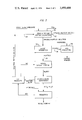
- FIG. 2. is a flow chart illustrating the recovery of copper and nickel from a basic carbonate mixture in accordance with the present invention.
- FIG. 3. is a flow chart illustrating a process for recovering copper in which a carboxylic acid is the ion exchanger.DESCRIPTION OF THE PREFERRED EMBODIMENTS
- a small stream of basic metal carbonates (BMC) is recycled to the first stage as required to maintain the total copper in the system at an acceptable level.
- This stream of basic metal carbonate compensates for unsolubilized copper leaving the reduction loop in the clarifier underflow.
- a portion of the pregnant liquor (wash effluent) from the oxidation and wash-leach circuit is steam stripped on a batch basis to remove ammonia and carbon dioxide and to precipitate the basic metal carbonates. That basic carbonate mixture can be treated in accordance with the present invention to recover copper and other base metals (i.e. nickel, cobalt and molybdenum).
- the salt In order to process the basic salt, the salt must be solubilized.
- One typical method for solubilizing the basic salt is to dissolve them in acids such as sulfuric acid to yield an aqueous solution containing metal sulfates. From that solution, the various metals can be separated.
- One widely employed method for separating metals is to employ extractants which are selective for a particular metal of interest. Obviously it is desirable to use an extractant that is inexpensive.
- One particular extractant that is inexpensive and which has the capability of separating copper from a solution of copper and nickel and other base metals is a carboxylic acid extractant. However, as is shown in FIG.
- carboxylic acid extractants are selective for copper at a very narrow pH range. That range is 3 to 4.2. Furthermore, since the carboxylic acid is a hydrogen cation exchanger, hydrogen ions are liberated during the extraction reaction which must be neutralized in order to maintain a constant pH during the extraction.
- the amount of acid utilized to dissolve the salt is equivalent to the non-copper carbonate (or hydroxide) content of the salt mixture.
- enough extractant is supplied to extract the amount of copper in the solution.
- carboxylic acid compounds which are usable include, by way of example and not by way of limitation, naphthenic acid, pelargonic acid, 2,2-dimethyl propionic acid, capric acid, butyric acid and 3,5-dinitro benzoic acid.
- the organo phosphorous compounds which can be utilized include acid compounds of the following formula: ##EQU1## where R 1 and R 2 are selected from the group consisting of alkyl, aryl, and aralkyl radicals. Since the compound must be substantially water-immiscible, the total number of carbon atoms in the molecule should be sufficient to render the compound substantially insoluble. Generally at least 4-20 carbon atoms should be present on each R group. R 1 and R 2 can be the same radical.
- R 1 and R 2 groups can, of course, be substituted with a variety of groups such as alkoxy, halogen, etc., and R 1 and R 2 can be saturated or unsaturated or interrupted by hetero atoms so long as there is no interference in the performance of the compound in extracting ions from the aqueous phase to the organic phase.
- Organophosphoric acid compounds which can be advantageously used according to this invention include di(2-ethylhexyl) phosphoric acid, heptadecylphosphoric acid, dodecylphosphoric acid, di(1-methyl-heptyl) phosphoric acid, diiooctylphosphoric acid, di(2-ethyl-4-methyl-pentyl) phosphoric acid, di(2-propyl-4-methyl-pentyl) phosphoric acid, octylphenyl phosphoric acid, the isooctyl or stearyl derivatives of alkyl acid phosphates and the like.
- the oximes referred to herein may be for example ⁇ -hydroxy oximes, substituted hydroxy benzophenoximes, and mixtures thereof.
- the ⁇ -hydroxy oximes also preferably contain a total of about 14 to 40 carbon atoms.
- Representative compounds are 19-hydroxyhexatriaconta-9, 27 -dien-18-oxime, 5-10-diethyl-8-hydroxy-tetradecan-7-oxime, and 5, 8-diethyly-7-hydroxy-dodecane-6-oxime.
- the latter compound has the following structural formula: ##EQU3##
- radicals are heptenyl, octenyl, decenyl, octadencenyl, and alkyl substituted radicals such as ethyloctadecenyl.
- alkyl substituted radicals such as ethyloctadecenyl.
- mono- and polyalkyl substituted saturated radicals are ethylhexyl, diethylheptyl, butyldecyl, butylhexadecyl, ethylbutyldodecyl, butylcyclohexyl and the like.
- the ⁇ -hydroxy oxime component is also characterized as having a solubility of at least 2% by weight in the hydrocarbon solvent used to make up the organic phase and substantially complete insolubility in water.
- the ⁇ -hydroxy oximes are prepared by reacting an acyloin with a hydroxylamine salt under reflux conditions. Such reaction can be carried out by refluxing the reactants in an alcohol such as ethanol and adding pyridine to combine with the acid associated with the hydroxylamine.
- substituted benzophenoximes useful in the present invention have the following formula: ##SPC1##
- R and R' may be individually alike or different and are saturated aliphatic groups, ethylenically unsaturated aliphatic groups or saturated or ethylenically unsaturated aliphatic ether groups (i.e. -- OR") and m and n are 0, 1, 2, 3 or 4 with the provise that m and n are not both 0.
- the total number of carbon atoms in R m and R' n is from 3-25.
- R and R' contain 1 to 25 carbon atoms when saturated aliphatic and 3 to 25 carbon atoms when they are ethylenically unsaturated groups.
- the position ortho to the phenolic OH substituted carbon atom is unsubstituted and also preferably the positions ortho to the oxime carbon atom on the other aromatic nucleus are unsubstituted.
- Branched chain saturated aliphatic hydrocarbon substituents are preferred.
- R 1 , R 2 and R 3 may be any of a variety of organic radicals such as aliphatic and alkylarly radicals. R 3 may also be hydrogen.
- R.sup. 1 and R 2 are unsaturated hydrocarbon or branched chain alkyl groups containing from about 6 to 20 carbon atoms.
- R 3 is hydrogen or unsaturated hydrocarbon or branched chain alkyl groups containing from about 6 to 20 carbon atoms.
- the ⁇ -hydroxy oximes also preferably contain a total of about 14 to 40 carbon atoms.
- Representative compounds are 19-hydroxyhexatriaconta-9, 27-dien-18-oxime, 5,10-diethyl-8-hydroxy-tetradecan 7-oxime, and 5,8--diethyl-7-hydroxydodecane-6-oxime. The latter compound has the following formula: ##EQU5##
- R 1 , R 2 and R 3 groups may contain inert substituents.
- Suitable oximes are disclosed for example by U.S. Pat. Nos. 3,224,873, 3,592,775, 3,455,680, 3,428,499, 3,276,863 and 3,197,274.
- Particularly suitable extractants comprise 2-hydroxy-4-nonyl-benzophenoxime which is the primary extractant in a composition also containing an ⁇ -hydroxy oxime sold by General Mills, Inc. under the tradename LIX-64N, 5,8-diethyl-7-hydroxy-6-dodecanone oxime which is the primary extractant in a composition sold by General Mills, Inc. under the tradename LIX-63 and 2-hydroxy-4-dodecylbenzophenoxime which is the primary extractant in a composition also containing an ⁇ -hydroxy oxime sold by General Mills, Inc. under the tradename LIX-64.
- the ion extractants used in the practice of the present invention may be employed in an inert diluent, although the use of such diluent is not critical.
- a wide varity of organic diluents, in which the ion extractant is dissolved, can be employed according to this invention.
- the minimum requirements for the diluent are that the diluent be substantially water-immiscible, that it will dissolve the ion extractant, and that it will not interfere with the function of the ion extractant in extracting values from said acid solutions.
- These diluents can be aliphatic or aromatic hydrocarbons, halogenated hydrocarbons, petroleum derivatives, ethers, etc. Examples of these various diluents include toluene, carbon tetrachloride, benzene, chloroform, 2-ethyl-hexanol, and particularly kerosene.
- an amount of acid is used to completely dissolve the metal values in the mixed basic salt.
- a basic carbonate salt containing copper and nickel carbonates was to be treated, a stoichiometric amount of acid would be used to place all the copper and all the nickel values into solution.
- the mixed salt is dissolved in accordance with the following reaction: ##EQU6## Once in solution, the soluble copper sulfate is then reacted with a hydrogen cation exchanger in accordance with the following reaction:
- the H 2 SO 4 which is produced in accordance with equation (2) causes the pH to drop. If the pH drops to a value below which the extractant is no long capable of extracting copper, a base must be added to the system to bring the pH of the metal bearing liquor back to a value where the extractant is selective for copper.
- the chemistry of the process of the present invention differs from prior arts processes in that the equivalent amount of acid used for dissolution of the carbonates (and hydroxides) is provided by two different sources, namely:
- the amount of free acid introduced is adjusted to be equivalent to the amount of metals other than copper present in the basic salt mixture.
- the amount of acid provided by the exchange reaction (b) will be equivalent to the amount of copper present.
- the process will thus provide complete dissolution of the carbonates (or hydroxides) and simultaneous extraction of copper into the organic phase.
- the pH during the copper extraction step remains constant due to the high transfer rate of copper into the organic phase.
- the process of the present invention is illustrated further by the following equations: ##EQU7##
- equation (3) when an amount of acid is selected that is equivalent to the molar amount of basic salt other than copper salts, the acid dissolves some amounts of each salt leaving some of each salt undissolved.
- the resulting slurry will have a pH near neutrality.
- the dissolved Cu and Ni are extracted.
- the associated pH drop will cause Ni to be stripped off again.
- An equilibrium pH will be obtained and will be automatically controlled within the specific extracting range for Cu only by the countering rates of the two reactions:
- the present invention can be utilized to treat any basic salt mixture containing copper and other base metals so long as the basic salt mixture is soluble.
- the process can be employed to great advantage to treat carbonates and hydroxides.
- the net reaction for a carbonate reaction for a carbonate mixture containing one mole amount of copper carbonate to one mole amount of nickel carbonate to one mole amount of zinc carbonate is as follow: ##EQU9##
- H 2 CO 3 decomposes to form carbon dioxide gas and water.
- a basic carbonate mixture containing 4.5g Cu and 4.5g Ni was suspended in 300 ml H 2 O contained in a 1000 ml double-walled beaker equipped with a high speed mechanical stirrer. Sulfuric acid in an amount equivalent to the nickel present in the carbonate mixture was then added to the suspension which was maintained at a temperature of 40°C. After neutralization of the acid, 450 ml LIX-64N (40 volume % in kerosene) was added to the beaker. Stirring was continued for 10 minutes. To ensure total dissolution of the carbonates, a small amount of additional acid was added to produce a final pH of 2.5. The organic and aqueous phases were allowed to separate, and samples of each phase were taken.
- a basic carbonate mixture containing equal amounts of Cu, Ni, Co, Zn, Mn is suspended in water in a beaker. Sulfuric acid in an amount equivalent to the Ni, Co, Zn, Mn is added to the suspension. A sufficient volume of a 1M Napthenic acid solution contacted with the slurry and a small amount of additional acid is added to produce a final pH of 4.2. The kinetics of basic carbonate dissolution at pH 4.2 is slow and therefore this particular reaction will require longer contact times and heat to speed the exchange reaction. However, after dissolution, analysis will show only Cu will have extracted leaving Zn, Ni, Co, and Mn preferentially behind in the aqueous phase. Fe + + + will co-extract with Cu + + if presence to any significant degree.
- the above reaction can also be carried out using for example D2EHPA (di-2-ethyl hexylphosphoric acid). Enough additional acid will have to be added initially to produce a final pH 3.4.
- D2EHPA di-2-ethyl hexylphosphoric acid
- Enough additional acid will have to be added initially to produce a final pH 3.4.
- a drawback of this extractant is that Zn + + as well as Fe + + + will interfere with the preferential separation of Cu as both extract at a lower pH than 3.4.
- the object of the present process is to eliminate the necessity of supplying a pH adjusting agent such as a base when metal values are extracted by a hydrogen cation exchanger from an aqueous acidic metal bearing liquor.
- a pH adjusting agent such as a base
- the necessity of including a base in the process is eliminated by preventing the pH from dropping as extraction occurs. This is accomplished by partially dissolving a basic salt mixture with an amount of acid that is equivalent to the nonextractable species (which in most cases is nickel, cobalt, etc.) and by utilizing the acid generated by the ion exchange reaction to supplement the free acid and dissolve the remainder of the basic mixture.
- the present process is especially suitable for the removal of copper from mixtures containing other base metals.
- most extractants extract iron at the same pH as copper. Therefore, it is preferable, but not essential, to employ the process of the present invention to treat mixtures containing copper and other non-ferrous base metals.
- FIGS. 2 and 3 are block diagrams of a commercial application of the process of the present invention.
- a copper and nickel carbonate is introduced into a stage 10, whereupon, it is partially dissolved by an amount of sulfuric acid equivalent to the nickel content of the mixture.
- the sulfuric acid is the recycle from a nickel electrowinning circuit 12.
- the slurry from stage 10 is introduced into a mixer 14 where it is contacted with organic as shown by arrow 16.
- An amount of organic is used which is capable of extracting all of the copper present in stage 14.
- stage 18 the organic is separated from the aqeuous.
- stage 14 and 18 can be a mixer/settler or a series of mixer/settlers connected so that there is a countercurrent flow of organic and aqueous.
- the aqueous is then sent to a nickel electrowinning circuit 12 whereupon the nickel is electrowon as nickel cathodes and the electrolyte (H 2 SO 4 ) is recycled to stage 10.
- the copper is stripped from the organic in stage 20.
- the stripped organic is recycled and the copper is sent to a copper electrowinning circuit 22. Details of nickel recovery and copper recovery are well within the skill of those in this art and form no part of the present invention.
- FIG. 3 An alternate embodiment of the present invention which is particularly suitable for the use of a carboxylic acid extractant is shown in FIG. 3.
- recycle 28 partially dissolved the mixed carbonate while organic recycle 30 completes the carbonate dissolution.
- the organic/aqueous solution is separated in stage 32 and the organic 34 is sent to a gas reduction circuit 36.
- hydrogen reduces the cupric ions to copper powder.
- the hydrogen ions thus produced react with the carboxylic radical to produce fresh carboxylic acid recycle 30.
- the aqueous 28 from stage 32 is sent to nickel reduction circuit where nickel is recovered. Details of recovery of nickel by reduction are well known in this art and also constitute no part of this invention.
Landscapes
- Chemical & Material Sciences (AREA)
- Organic Chemistry (AREA)
- Engineering & Computer Science (AREA)
- Metallurgy (AREA)
- Mechanical Engineering (AREA)
- Materials Engineering (AREA)
- Manufacturing & Machinery (AREA)
- Life Sciences & Earth Sciences (AREA)
- Geology (AREA)
- Geochemistry & Mineralogy (AREA)
- General Life Sciences & Earth Sciences (AREA)
- Environmental & Geological Engineering (AREA)
- Inorganic Chemistry (AREA)
- Manufacture And Refinement Of Metals (AREA)
Abstract
Description
Cu.sup.+.sup.+ + SO.sub.4.sup.= + 2RH → R.sub.2 Cu + H.sub.2 SO.sub.4 (2)
2RH + CuSO.sub.4 → R.sub.2 Cu + H.sub.2 SO.sub.4.
2Cu.sup.+.sup.+ + 2SO.sub.4.sup.= +4RH → 2R.sub.2 Cu + 2H.sub.2 SO.sub.4 (2),
Claims (27)
Priority Applications (4)
| Application Number | Priority Date | Filing Date | Title |
|---|---|---|---|
| US05/520,673 US3950488A (en) | 1974-11-04 | 1974-11-04 | Process for recovering copper from basic carbonate mixtures |
| CA237,849A CA1047258A (en) | 1974-11-04 | 1975-10-17 | Process for recovering copper from basic salt mixtures |
| GB44554/75A GB1532006A (en) | 1974-11-04 | 1975-10-29 | Process for recovering copper from basic mixtures |
| JP13240975A JPS5518773B2 (en) | 1974-11-04 | 1975-11-04 |
Applications Claiming Priority (1)
| Application Number | Priority Date | Filing Date | Title |
|---|---|---|---|
| US05/520,673 US3950488A (en) | 1974-11-04 | 1974-11-04 | Process for recovering copper from basic carbonate mixtures |
Publications (1)
| Publication Number | Publication Date |
|---|---|
| US3950488A true US3950488A (en) | 1976-04-13 |
Family
ID=24073609
Family Applications (1)
| Application Number | Title | Priority Date | Filing Date |
|---|---|---|---|
| US05/520,673 Expired - Lifetime US3950488A (en) | 1974-11-04 | 1974-11-04 | Process for recovering copper from basic carbonate mixtures |
Country Status (4)
| Country | Link |
|---|---|
| US (1) | US3950488A (en) |
| JP (1) | JPS5518773B2 (en) |
| CA (1) | CA1047258A (en) |
| GB (1) | GB1532006A (en) |
Cited By (12)
| Publication number | Priority date | Publication date | Assignee | Title |
|---|---|---|---|---|
| US3988224A (en) * | 1974-12-18 | 1976-10-26 | Commissariat A L'energie Atomique | Method of extraction of metallic elements from submarine nodules |
| US4067802A (en) * | 1976-05-10 | 1978-01-10 | Ashland Oil, Inc. | Ion exchange process for the purification of base metal electrolyte solutions |
| FR2379611A1 (en) * | 1977-02-02 | 1978-09-01 | Goldschmidt Ag Th | LIQUID-LIQUID EXTRACTION OF NICKEL CONTAINED IN AQUEOUS SOLUTIONS WITH ALKALINE SALT CONTENT |
| US4150976A (en) * | 1978-06-19 | 1979-04-24 | Dart Industries Inc. | Method for the recovery of metallic copper |
| EP0023428A1 (en) * | 1979-07-30 | 1981-02-04 | The British Petroleum Company p.l.c. | Liquid-liquid process for extracting metals using organo-phosphorous compounds |
| US4956154A (en) * | 1988-03-09 | 1990-09-11 | Unc Reclamation | Selective removal of chromium, nickel, cobalt, copper and lead cations from aqueous effluent solutions |
| US5009868A (en) * | 1987-12-14 | 1991-04-23 | East Penn Manufacturing Co., Inc. | Process for the extended use of strip acid employed in the reclamation of battery acid fluid from expanded lead-acid batteries |
| WO2001012589A1 (en) * | 1999-08-12 | 2001-02-22 | Cognis Corporation | Method for separating copper from iron |
| US6432167B1 (en) | 1999-07-08 | 2002-08-13 | Cognis Corporation | Processes for the recovery of copper from aqueous solutions containing nitrate ions |
| US6596053B2 (en) | 1999-07-08 | 2003-07-22 | Cognis Corporation | Processes for the recovery of copper from aqueous solutions containing nitrate ions |
| US6702872B1 (en) * | 1999-07-08 | 2004-03-09 | Cognis Corporation | Processes for the recovery of copper from aqueous solutions containing nitrate ions |
| WO2011047070A1 (en) * | 2009-10-16 | 2011-04-21 | Daniel Colton | Carbon-dioxide mineral sequestration using mine waste |
Citations (4)
| Publication number | Priority date | Publication date | Assignee | Title |
|---|---|---|---|---|
| GB959813A (en) * | 1961-06-01 | 1964-06-03 | Shell Res Ltd | A process for the extraction of a metal value or values |
| US3193381A (en) * | 1962-03-19 | 1965-07-06 | Int Nickel Co | Process for the concentration of nickel and cobalt in aqueous solutions |
| FR1512813A (en) * | 1966-03-01 | 1968-02-09 | Aspro Nicholas Ltd | Extraction process for metallic elements |
| JPS4733439U (en) * | 1971-05-08 | 1972-12-14 |
-
1974
- 1974-11-04 US US05/520,673 patent/US3950488A/en not_active Expired - Lifetime
-
1975
- 1975-10-17 CA CA237,849A patent/CA1047258A/en not_active Expired
- 1975-10-29 GB GB44554/75A patent/GB1532006A/en not_active Expired
- 1975-11-04 JP JP13240975A patent/JPS5518773B2/ja not_active Expired
Patent Citations (4)
| Publication number | Priority date | Publication date | Assignee | Title |
|---|---|---|---|---|
| GB959813A (en) * | 1961-06-01 | 1964-06-03 | Shell Res Ltd | A process for the extraction of a metal value or values |
| US3193381A (en) * | 1962-03-19 | 1965-07-06 | Int Nickel Co | Process for the concentration of nickel and cobalt in aqueous solutions |
| FR1512813A (en) * | 1966-03-01 | 1968-02-09 | Aspro Nicholas Ltd | Extraction process for metallic elements |
| JPS4733439U (en) * | 1971-05-08 | 1972-12-14 |
Non-Patent Citations (1)
| Title |
|---|
| Madigan, "The Extraction of Certain Cations From Aqueous Solution With Di-(2-ethylhexyl)orthophosphate," Australian J. Chem., Vol. 13, No. 1, Feb. 1960, pp. 58-66. * |
Cited By (18)
| Publication number | Priority date | Publication date | Assignee | Title |
|---|---|---|---|---|
| US3988224A (en) * | 1974-12-18 | 1976-10-26 | Commissariat A L'energie Atomique | Method of extraction of metallic elements from submarine nodules |
| US4067802A (en) * | 1976-05-10 | 1978-01-10 | Ashland Oil, Inc. | Ion exchange process for the purification of base metal electrolyte solutions |
| FR2379611A1 (en) * | 1977-02-02 | 1978-09-01 | Goldschmidt Ag Th | LIQUID-LIQUID EXTRACTION OF NICKEL CONTAINED IN AQUEOUS SOLUTIONS WITH ALKALINE SALT CONTENT |
| US4150976A (en) * | 1978-06-19 | 1979-04-24 | Dart Industries Inc. | Method for the recovery of metallic copper |
| FR2429262A1 (en) * | 1978-06-19 | 1980-01-18 | Dart Ind Inc | COPPER RECOVERY PROCESS |
| EP0023428A1 (en) * | 1979-07-30 | 1981-02-04 | The British Petroleum Company p.l.c. | Liquid-liquid process for extracting metals using organo-phosphorous compounds |
| FR2462481A1 (en) * | 1979-07-30 | 1981-02-13 | British Petroleum Co | METHOD FOR THE LIQUID-LIQUID EXTRACTION OF AQUEOUS SOLUTION-BASED METALS USING ORGANOPHOSPHORUS DERIVATIVES |
| US5009868A (en) * | 1987-12-14 | 1991-04-23 | East Penn Manufacturing Co., Inc. | Process for the extended use of strip acid employed in the reclamation of battery acid fluid from expanded lead-acid batteries |
| US4956154A (en) * | 1988-03-09 | 1990-09-11 | Unc Reclamation | Selective removal of chromium, nickel, cobalt, copper and lead cations from aqueous effluent solutions |
| WO1991009810A1 (en) * | 1989-12-21 | 1991-07-11 | East Penn Manufacturing Co., Inc. | Process of reclaiming battery acid from lead acid batteries |
| US6432167B1 (en) | 1999-07-08 | 2002-08-13 | Cognis Corporation | Processes for the recovery of copper from aqueous solutions containing nitrate ions |
| US6596053B2 (en) | 1999-07-08 | 2003-07-22 | Cognis Corporation | Processes for the recovery of copper from aqueous solutions containing nitrate ions |
| US6702872B1 (en) * | 1999-07-08 | 2004-03-09 | Cognis Corporation | Processes for the recovery of copper from aqueous solutions containing nitrate ions |
| WO2001012589A1 (en) * | 1999-08-12 | 2001-02-22 | Cognis Corporation | Method for separating copper from iron |
| US6632410B2 (en) | 1999-08-12 | 2003-10-14 | Cognis Corporation | Solvent extraction process |
| ES2204339A1 (en) * | 1999-08-12 | 2004-04-16 | Cognis Corporation | Method for separating copper from iron |
| ES2204339B1 (en) * | 1999-08-12 | 2005-08-01 | Cognis Corporation | PROCEDURE FOR SEPARATING IRON COPPER. |
| WO2011047070A1 (en) * | 2009-10-16 | 2011-04-21 | Daniel Colton | Carbon-dioxide mineral sequestration using mine waste |
Also Published As
| Publication number | Publication date |
|---|---|
| CA1047258A (en) | 1979-01-30 |
| GB1532006A (en) | 1978-11-15 |
| JPS5518773B2 (en) | 1980-05-21 |
| JPS5169425A (en) | 1976-06-16 |
Similar Documents
| Publication | Publication Date | Title |
|---|---|---|
| US3276863A (en) | Separation of nickel and cobalt values using alpha-hydroxy oximes | |
| US3971843A (en) | Process for liquid/liquid extraction of gallium | |
| US5378262A (en) | Process for the extraction and separation of nickel and/or cobalt | |
| US3428449A (en) | Extraction of copper from acidic liquors with a phenolic oxime | |
| CA2145054C (en) | A process for the extraction and separation of nickel and/or cobalt | |
| US3455680A (en) | Mixed extractant and process for separating copper from cobalt and nickel in acid medium | |
| JPS5939488B2 (en) | Method for extracting metal valuables from an aqueous solution of metal salts | |
| CA1047258A (en) | Process for recovering copper from basic salt mixtures | |
| US3907966A (en) | Nickel extraction and stripping using oximes and ammoniacal carbonate solutions | |
| US5908605A (en) | Copper recovery process | |
| JPH089741B2 (en) | Separation and recovery of nickel and cobalt in ammoniacal systems | |
| CN114317961B (en) | Co-extraction system for nickel-cobalt co-extraction and co-extraction method thereof | |
| US4258016A (en) | Process for recovering Ni (II), Cu (II) and Co (II) from an ammoniacal-ammonium sulfate leach liquor | |
| EP0023428B1 (en) | Liquid-liquid process for extracting metals using organo-phosphorous compounds | |
| US5976218A (en) | Process for the recovery of nickel | |
| US6231823B1 (en) | Solvent extraction process for the separation of cobalt from nickel in aqueous sulphate-containing solutions | |
| US5788844A (en) | Process for removing and recovering ammonia from organic metal extractant solutions in a liquid-liquid metal extraction process | |
| US3988151A (en) | Liquid ion exchange process for the recovery of copper and nickel | |
| US4435368A (en) | Hydrometallurgical process for selective dissolution of mixtures of oxy compounds | |
| CA1091038A (en) | Cobalt stripping process | |
| US3449066A (en) | Recovery of molybdenum values from aqueous solutions using alpha-hydroxy oximes | |
| US5779997A (en) | Method for preventing the formation of jarosite and ammonium and alkali based double salts in solvent extraction circuits connected to acidic leaching processes | |
| US4032332A (en) | Process for increasing the rate of copper metal production in a quinolic extraction system | |
| CA1075474A (en) | Separation of cobalt and nickel | |
| JPH0448733B2 (en) |
Legal Events
| Date | Code | Title | Description |
|---|---|---|---|
| AS | Assignment |
Owner name: KENNECOTT CORPORATION Free format text: CHANGE OF NAME;ASSIGNOR:KENNECOTT COPPER CORPORATION;REEL/FRAME:004815/0016 Effective date: 19800520 Owner name: KENNECOTT CORPORATION, 200 PUBLIC SQUARE, CLEVELAN Free format text: ASSIGNMENT OF ASSIGNORS INTEREST.;ASSIGNOR:KENNECOTT MINING CORPORATION;REEL/FRAME:004815/0063 Effective date: 19870320 Owner name: KENNECOTT MINING CORPORATION Free format text: CHANGE OF NAME;ASSIGNOR:KENNECOTT CORPORATION;REEL/FRAME:004815/0036 Effective date: 19870220 |
|
| AS | Assignment |
Owner name: GAZELLE CORPORATION, C/O CT CORPORATION SYSTEMS, C Free format text: ASSIGNMENT OF ASSIGNORS INTEREST.;ASSIGNOR:RENNECOTT CORPORATION, A DE. CORP.;REEL/FRAME:005164/0153 Effective date: 19890628 |
|
| AS | Assignment |
Owner name: KENNECOTT UTAH COPPER CORPORATION Free format text: CHANGE OF NAME;ASSIGNOR:GAZELLE CORPORATION;REEL/FRAME:005604/0237 Effective date: 19890630 |