US3928811A - Laser amplifier - Google Patents
Laser amplifier Download PDFInfo
- Publication number
- US3928811A US3928811A US439920A US43992074A US3928811A US 3928811 A US3928811 A US 3928811A US 439920 A US439920 A US 439920A US 43992074 A US43992074 A US 43992074A US 3928811 A US3928811 A US 3928811A
- Authority
- US
- United States
- Prior art keywords
- laser
- slab
- medium
- laser medium
- amplifying device
- Prior art date
- Legal status (The legal status is an assumption and is not a legal conclusion. Google has not performed a legal analysis and makes no representation as to the accuracy of the status listed.)
- Expired - Lifetime
Links
- 230000005855 radiation Effects 0.000 claims abstract description 11
- 230000005284 excitation Effects 0.000 claims description 31
- 239000011521 glass Substances 0.000 claims description 11
- 229910052779 Neodymium Inorganic materials 0.000 claims description 10
- QEFYFXOXNSNQGX-UHFFFAOYSA-N neodymium atom Chemical compound [Nd] QEFYFXOXNSNQGX-UHFFFAOYSA-N 0.000 claims description 10
- 230000003321 amplification Effects 0.000 claims description 9
- 238000003199 nucleic acid amplification method Methods 0.000 claims description 9
- 229910001750 ruby Inorganic materials 0.000 claims description 4
- 239000010979 ruby Substances 0.000 claims description 4
- ZCYVEMRRCGMTRW-UHFFFAOYSA-N 7553-56-2 Chemical compound [I] ZCYVEMRRCGMTRW-UHFFFAOYSA-N 0.000 claims description 3
- XAGFODPZIPBFFR-UHFFFAOYSA-N aluminium Chemical compound [Al] XAGFODPZIPBFFR-UHFFFAOYSA-N 0.000 claims description 3
- 229910052782 aluminium Inorganic materials 0.000 claims description 3
- 239000004411 aluminium Substances 0.000 claims description 3
- 239000002223 garnet Substances 0.000 claims description 3
- 229910052740 iodine Inorganic materials 0.000 claims description 3
- 239000011630 iodine Substances 0.000 claims description 3
- 229910052727 yttrium Inorganic materials 0.000 claims description 3
- VWQVUPCCIRVNHF-UHFFFAOYSA-N yttrium atom Chemical compound [Y] VWQVUPCCIRVNHF-UHFFFAOYSA-N 0.000 claims description 3
- 238000000034 method Methods 0.000 description 8
- 239000007787 solid Substances 0.000 description 7
- 239000007788 liquid Substances 0.000 description 6
- 230000003287 optical effect Effects 0.000 description 5
- 238000001816 cooling Methods 0.000 description 4
- 238000004519 manufacturing process Methods 0.000 description 4
- 230000001427 coherent effect Effects 0.000 description 3
- 230000006378 damage Effects 0.000 description 3
- 230000001627 detrimental effect Effects 0.000 description 3
- 230000004927 fusion Effects 0.000 description 3
- 239000000463 material Substances 0.000 description 3
- 230000007547 defect Effects 0.000 description 2
- 230000000694 effects Effects 0.000 description 2
- 238000004880 explosion Methods 0.000 description 2
- 239000012530 fluid Substances 0.000 description 2
- 230000010355 oscillation Effects 0.000 description 2
- 230000003071 parasitic effect Effects 0.000 description 2
- 239000002245 particle Substances 0.000 description 2
- 238000011160 research Methods 0.000 description 2
- 229910052772 Samarium Inorganic materials 0.000 description 1
- 238000013459 approach Methods 0.000 description 1
- 238000006243 chemical reaction Methods 0.000 description 1
- 238000005253 cladding Methods 0.000 description 1
- 239000011248 coating agent Substances 0.000 description 1
- 238000000576 coating method Methods 0.000 description 1
- 239000002131 composite material Substances 0.000 description 1
- 230000006835 compression Effects 0.000 description 1
- 238000007906 compression Methods 0.000 description 1
- 238000010276 construction Methods 0.000 description 1
- 238000007796 conventional method Methods 0.000 description 1
- 239000000110 cooling liquid Substances 0.000 description 1
- 239000013078 crystal Substances 0.000 description 1
- 238000005520 cutting process Methods 0.000 description 1
- 238000011161 development Methods 0.000 description 1
- 238000005553 drilling Methods 0.000 description 1
- 238000010894 electron beam technology Methods 0.000 description 1
- 238000005516 engineering process Methods 0.000 description 1
- 239000002360 explosive Substances 0.000 description 1
- 238000001914 filtration Methods 0.000 description 1
- 239000012634 fragment Substances 0.000 description 1
- -1 gaseous Substances 0.000 description 1
- 238000007654 immersion Methods 0.000 description 1
- 150000002500 ions Chemical class 0.000 description 1
- 238000003698 laser cutting Methods 0.000 description 1
- 230000028161 membrane depolarization Effects 0.000 description 1
- 239000000203 mixture Substances 0.000 description 1
- 238000005086 pumping Methods 0.000 description 1
- KZUNJOHGWZRPMI-UHFFFAOYSA-N samarium atom Chemical compound [Sm] KZUNJOHGWZRPMI-UHFFFAOYSA-N 0.000 description 1
- 230000009528 severe injury Effects 0.000 description 1
- 230000003068 static effect Effects 0.000 description 1
- 239000000126 substance Substances 0.000 description 1
- 239000011009 synthetic ruby Substances 0.000 description 1
- 238000003466 welding Methods 0.000 description 1
Images

Classifications
-
- H—ELECTRICITY
- H01—ELECTRIC ELEMENTS
- H01S—DEVICES USING THE PROCESS OF LIGHT AMPLIFICATION BY STIMULATED EMISSION OF RADIATION [LASER] TO AMPLIFY OR GENERATE LIGHT; DEVICES USING STIMULATED EMISSION OF ELECTROMAGNETIC RADIATION IN WAVE RANGES OTHER THAN OPTICAL
- H01S3/00—Lasers, i.e. devices using stimulated emission of electromagnetic radiation in the infrared, visible or ultraviolet wave range
- H01S3/23—Arrangements of two or more lasers not provided for in groups H01S3/02 - H01S3/22, e.g. tandem arrangements of separate active media
- H01S3/2308—Amplifier arrangements, e.g. MOPA
- H01S3/2316—Cascaded amplifiers
-
- H—ELECTRICITY
- H01—ELECTRIC ELEMENTS
- H01S—DEVICES USING THE PROCESS OF LIGHT AMPLIFICATION BY STIMULATED EMISSION OF RADIATION [LASER] TO AMPLIFY OR GENERATE LIGHT; DEVICES USING STIMULATED EMISSION OF ELECTROMAGNETIC RADIATION IN WAVE RANGES OTHER THAN OPTICAL
- H01S3/00—Lasers, i.e. devices using stimulated emission of electromagnetic radiation in the infrared, visible or ultraviolet wave range
- H01S3/05—Construction or shape of optical resonators; Accommodation of active medium therein; Shape of active medium
- H01S3/06—Construction or shape of active medium
- H01S3/0602—Crystal lasers or glass lasers
- H01S3/0606—Crystal lasers or glass lasers with polygonal cross-section, e.g. slab, prism
Definitions
- a single laser beam or a sequence of laser beams glernoct 33394.5 5 equivalent to such a beam can be amplified.
- LASER AMPLIFIER BACKGROUND OF THE INVENTION atoms, molecules, ions or particles can be appropriately excited to a state where laser radiation of a particular wavelength passing through such an excited medium can undergo amplification via the stimulated emission of radiation.
- the first laser amplifier medium proposed was a rod of synthetic ruby.
- the problems associated with such cylindrical amplifiers are well known in the art and although such problems vary depending on whether the laser amplifying medium is solid, liquid or gaseous, they always exist particularly when the laser beam parameters are at or near the diffraction limit and the laser pulse or beam is amplified to high energy and/or high power levels. Under such conditions the cylindrical laser amplifier medium can exhibit non-uniformities which can lead to severe beam distortions and depolarization.
- the medium can also be damaged due to non-linear optical effects leading to self-focussing of the laser beam within the amplifying medium, an effect which is particularly disastrous in the case of large cylindrical amplifier media such as neodymium doped glass rods, resulting in a row of bubbles along the rod axis if even more severe damage does not occur in the process.
- the total area of the output aperture of a practical rod laser amplifier is relatively small. Because the laser radiation loading per unit area is limited due to surface and bulk damage to the medium, it follows that the total output pulse energy (power) available from a practical laser rod amplifier is also relatively small.
- excitation sources such as flash lamps and photo emitting diodes cannot be as closely coupled to a disc laser amplifier as they can to a cylindrical rod laser amplifier.
- the discs must be excited via their optically polished surfaces which makes them highly susceptible to damage by explosive fragments if the source of excitation explodes.
- a still further object of the invention' is to provide a laser amplifier which can amplify a single laser beam, more than one laser beam, a diffraction limited laser beam or a divergent laser beam by means of one or more passages through the amplifying medium in either the same direction or in opposite directions.
- a still further object of the invention is to provide a laser amplifier utilizing a laser medium in solid, liquid, gaseous, particle or plasma phase, or a mixture of one or more of these phases.
- a laser amplifying medium in the form of one or more elongated slabs of laser medium or one or more elongated slab-like containers containing a liquid, gaseous, or plasma laser medium, said slab, or slab-like container being elongated along an axis along which the laser radiation undergoing amplification does not propagate.
- the elongated laser slab (or slab-like container) may be thought of as a section ofa laser disc (or disc-like container) or on the other hand such an elongated laser slab (or slab-like container) may be thought of as a laser rod with two sides rather than two ends optically polished.
- the laser pulse or beam enters and leaves the slab (or slab-like container) through the optically polished sides of the slab rather than via its ends as would correspond to a conventional rod amplifier.
- the laser beam is not amplified in a direction parallel to the long axis of the slab (or slab-like container), the maximum deviation of the beam direction from a direction perpendicular to the long axis of the slab (or slab-like container) being the Brewster angle or such a departure (few degrees) in excess of the Brewster angle that the losses incurred are not detrimental to the operation of the slab laser amplifier as a whole.
- the slab laser amplifier medium of the invention may be static or mobile without affecting the lasing action and can be excited via closely or loosely coupled excitation sources either in the vicinity or away from the vicinity where the lasing action takes place with the slab laser amplifier.
- the slab may comprise a container having a liquid, gaseous or plasma medium, as known in the art.
- the laser medium is a neodymium doped glass slab up to about 1 meter long, of square or rectangular cross-section having two oppositely optically polished sides, parallel to the long axis of the slab, being of between about 2 to cms wide. The other two sides are not optically polished and are of dimentions of between about 2 to 5 cms wide.
- the length of the slab may be up to about to 30 cms long and ground to the above mentioned square or rectangular configuration with sides up to about 2.5 cms wide.
- the two unpolished sides and both ends of the slab should be such as to allow uniform excitation of the medium and of a quality 4 sufficient to allow coating, where desired, with appropriate antirefiection or filtering material.
- sources of excitation energy such as flash lamps or photo emitting diodes
- sources of excitation energy such as flash lamps or photo emitting diodes
- the excitation of the laser medium is not effected by means of the expensively polished optically flat surfaces.
- the uniformity of the excitation process is more representative of disc rather than rod laser media.
- a further advantage of the amplifier of this invention is that if there should be an explosion emanating from the closely coupled excitation sources, such as flashlamps and photoemitting diodes, then it is unlikely that the optically polished surfaces of the slabs will be damaged, as would be the case with loosely coupled excitation sources, since exploding material will strike only the non-optically polished surfaces.
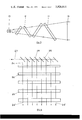
- FIG. 1 is a diagrammatic perspective view of an aircooled laser amplifier according to the invention
- FIG. 2 is a sectional plan view of the amplifier diagrammatically illustrated in FIG. 1, taken along the lines II of FIG. 1,
- FIG. 3 is a diagrammatic representation of a second form of laser amplifier according to the invention.
- FIG. 4 is a diagrammatic representation of a further form of an amplifier of the invention.
- the laser amplifier illustrated comprises four rectangular sectioned elongated slabs 11 having two opposed optically polished side surfaces 14, and unpolished sides 15 and unpolished ends 16.
- the slabs 11 are each formed of neodymium doped glass and they are disposed with their longitudinal axis substantially parallel.
- Each slab 11 has an excitation source consisting of a pair of flash lamps 12 adjacent each of the side surfaces 15. Adjacent polished side surfaces 14 of adjacent slabs 11 are angled with respect to each other at Brewsters angle so that a laser beam 13 entering the left hand slab, as indicated, passes through the slab array and leaves the right hand slab at 13' substantially parallel to the beam 13.
- the beam 13 passing through the amplifier may be diffraction limited, less than one milliradian for neodymium glass lasers developed to date, or diverging up to several milliradians, for example, to a laser beam divergence where it becomes impractical to correct for the severe optical distortions inherent in such amplified laser beams.
- the laser amplifier of FIGS. 1 and 2 may be aircooled or, if desired, conventional techniques for liquid cooling may be employed. These may involve immersion of substantially the whole or part of the slabs 11 in a cooling liquid medium.
- the slabs 11 may be orientated with their longitudinal axes angled to the vertical as shown in FIG. 3. With this arrangement the laser beam 23 enters the first slab 11 at Brewsters angle to minimise losses or at other angles to minimise reflections along the path of the laser beam, normally a few degrees off the direction of the laser beam.
- the embodiment of the invention illustrated in FIG. 3 utilizes slabs ll of the same or similar configuration to those shown in FIG. 1. These slabs preferably have the width of the polished surfaces greater than the slab thickness. The slabs 11 are made progressively longer towards the output end of the amplifier (the right hand.
- the slabs of this embodiment are normally excited by close coupled flash lamps or photo emitting diodes (not shown) adjacent the unpolished side surfaces of each slab.
- close coupled flash lamps or photo emitting diodes not shown
- loosely coupled force pumping that is excitation by means of the optically polished surfaces, would be necessary.
- the thickness of the slab will in general be less than its width to minimise possible damage due to self-focussing.
- close coupled excitation will be possible under those conditions when using diffraction limited or near diffraction limited laser beams.
- the length of the slab will be much greater than either its width or its thickness.
- the laser amplifier of the present invention can be used to amplify one or more laser beams in the manner required for producing, for example, fusion reactions in both compressed and uncompressed targets, as well as possible thermonuclear fusion in compressed targets.
- the invention When using the invention to amplify a single laser beam in a multi-pass mode it is preferable to ensure that the input beam is as near to a square or rectangular cross-section as possible in order to derive maximum utilization of the invention.
- an apparatus of the type illustrated in FIG. 4 can be used.
- the incoming laser beam 23 can be of circular cross-section and it is split up into a number of separate beams 24 by a series of beamsplitters 25. Each new portion 24 of the beam can then be amplified either simultaneously or in a fixed sequence with a fixed delay between the time each portion 24 of the beam passes through the slabs 26 and undergoes amplification.
- the beams 24 emerging from the amplifier in the manner depicted in FIG. 4 can be used either together or separately depending on the particular application involved.
- Excitation of the slabs 26 may be carried out in the manner previously described, the slabs may be substantially parallel, or they may be angled relative to each other as described with reference to the previous embodiments.
- the fixed sequence in time can either be maintained after amplification or brought back into coincidence by another series of beamsplitters and reflectors to produce a single beam or beam pulse.
- One particularly important application of a series of amplified laser beams is the generation of coherent X-rays for use in non-linear optical studies.
- the target involved in the generation of coherent X-rays may be sequentially excited to produce a travelling wave type amplifier for the generation and amplification of coherent X-rays.
- the invention has particular application for target ranging and the amplifier may take the form shown in FIGS. 1 and 2 or the form shown in FIG. 3 where the highest possible laser power was required.
- the invention can produce much higher output powers and energy than conventional rod laser amplifiers operating at the same loading per unit area of the output aperture for the simple reason that the sides rather than the ends of the rod (in slab form) are used.
- the present invention For the highest power levels the same may be true when the present invention is compared with a disc laser. Whilst the present invention has an output aperture area less than a disc amplifier whose output aperture diameter is equal to the length of the slabs, there are practical limitations in manufacturing discs of large diameters of the required quality so that, in practice, slab amplifiers may be made with longer output areas than disc lasers and yet have the highest possible quality due to relatively less difficulty of manufacture. In many industrial applications such as cutting materials of considerable length or width, a series of slabs could be laid end to end with a thin optically opaque sheet inserted between the ends of the slabs to cut self oscillation along the long series of slabs. In this way a very long, large effective aperture composite slab would result.
- the limit on the length of the individual slabs will be set either by parasitic oscillations or production difficulties. It should be noted that the slab medium being a compromise between rod and disc media will also be a compromise regarding the self-oscillation of the medium.
- the techniques effective e.g., samarium doped glass cladding) for the supression of self-oscillation in rod and disc media apply equally to the slab media of the present invention.
- thermonuclear fusion research has further application in laser-controlled thermonuclear fusion research, studying non-linear optics and in laser ranging to targets such as military targets and earth satellite targets.
- targets such as military targets and earth satellite targets.
- the slab of laser medium may be constructed as a solid slab or constructed in such a manner to behave like a slab-like container into which the laser medium in fluid form can be circulated during operation of the amplifier. Excitation of the medium may then be carried out remote from the slabs and pumped or otherwise fed to the slab container. Remote cooling of the medium may also be carried out.
- the best fluid media are dye lasers and iodine.
- remote excitation may be carried out using flash lamps, light emitting diodes or the like, the light being conveyed to the slab by means of light p
- the thickness of the solid slab is generally limited by considerations of cooling difficulties, particularly when the slab is constructed of a poor conducting medium such as glass. Also, self-focussing effect of the laser beam restrict the slab thickness.
- the thickness of the slab must not be too small otherwise the slab becomes too fragile for reliable operation.
- An elongated rectangular slab-shaped laser amplifier device having one pair of opposite side surfaces which are optically polished, said optically polished side surfaces being parallel to the longitudinal axis of the slab, with all other surfaces being optically unpolished, and means for introducing excitation radiation through said unpolished side surfaces with said device adapted to eliminate laser radiation and excitation through said unpolished end surfaces.
- a laser medium amplifying device as claimed in claim I particularly adapted to amplify a sequence of non-overlapping laser beams having circular or near circular cross-section.
- a laser medium amplifying device as claimed in claim 1 wherein the dimensions of length, width and thickness of the individual slab segments are varied in 8 such a manner as to accommodate the amplification of a divergent laser beam, or sequence of such laser beams.
- a laser medium amplifying device as claimed in claim 1 comprising means for passing a a plurality of non-overlapping laser beams each of circular or near circular cross section into the device with a time sequence between the beams appropriate to the realization of a travelling wave output with a time gradient.
Landscapes
- Physics & Mathematics (AREA)
- Electromagnetism (AREA)
- Engineering & Computer Science (AREA)
- Plasma & Fusion (AREA)
- Optics & Photonics (AREA)
- Lasers (AREA)
Applications Claiming Priority (1)
| Application Number | Priority Date | Filing Date | Title |
|---|---|---|---|
| AU221073 | 1973-02-09 |
Publications (1)
| Publication Number | Publication Date |
|---|---|
| US3928811A true US3928811A (en) | 1975-12-23 |
Family
ID=3692727
Family Applications (1)
| Application Number | Title | Priority Date | Filing Date |
|---|---|---|---|
| US439920A Expired - Lifetime US3928811A (en) | 1973-02-09 | 1974-02-06 | Laser amplifier |
Country Status (5)
| Country | Link |
|---|---|
| US (1) | US3928811A (ja) |
| JP (1) | JPS5048889A (ja) |
| AU (1) | AU463106B2 (ja) |
| CA (1) | CA1024247A (ja) |
| GB (1) | GB1457973A (ja) |
Cited By (7)
| Publication number | Priority date | Publication date | Assignee | Title |
|---|---|---|---|---|
| US4155046A (en) * | 1978-01-11 | 1979-05-15 | The United States Of America As Represented By The United States Department Of Energy | Segmented amplifier configurations for laser amplifier |
| US4191928A (en) * | 1978-01-11 | 1980-03-04 | The United States Of America As Represented By The United States Department Of Energy | Laser system using regenerative amplifier |
| US4243942A (en) * | 1978-01-11 | 1981-01-06 | The United States Of America As Represented By The United States Department Of Energy | Fully relayed regenerative amplifier |
| US4321551A (en) * | 1980-06-12 | 1982-03-23 | General Motors Corporation | Laser line of light generator |
| DE3640572A1 (de) * | 1986-11-27 | 1988-06-09 | Hagen Hans Dr Ing | Kompakter multielement-laser mit internen energiequellen und optischer korrektur |
| US5162940A (en) * | 1987-03-06 | 1992-11-10 | The United States Of America As Represented By The Secretary Of The Air Force | Multiple energy level, multiple pulse rate laser source |
| US20110273766A1 (en) * | 2010-03-26 | 2011-11-10 | Lawrence Livermore National Security, Llc | Multi-pass amplifier architecture for high power laser systems |
Families Citing this family (2)
| Publication number | Priority date | Publication date | Assignee | Title |
|---|---|---|---|---|
| WO1990015458A1 (en) * | 1989-06-01 | 1990-12-13 | Australian Electro Optics Pty Ltd | Efficient, double ended, fibre bundle coupled diode pumped solid state slab laser |
| WO1991006994A1 (en) * | 1989-10-25 | 1991-05-16 | Australian Electro Optics Pty. Ltd. | Phase-locked, fibre bundle excited, stacked slabs, laser system |
Citations (5)
| Publication number | Priority date | Publication date | Assignee | Title |
|---|---|---|---|---|
| US3423697A (en) * | 1963-10-09 | 1969-01-21 | Gen Electric | Disk laser having pumping means in indirect optical communication with the disk end faces |
| US3500231A (en) * | 1965-06-29 | 1970-03-10 | Gen Electric | Brewster angle oriented end surface pumped multiple disc laser device |
| US3621456A (en) * | 1969-03-24 | 1971-11-16 | Young Charles G | Disc laser system |
| US3631362A (en) * | 1968-08-27 | 1971-12-28 | Gen Electric | Face-pumped, face-cooled laser device |
| US3794929A (en) * | 1972-10-13 | 1974-02-26 | Atomic Energy Commission | Compact laser amplifier system |
Family Cites Families (1)
| Publication number | Priority date | Publication date | Assignee | Title |
|---|---|---|---|---|
| US3504295A (en) * | 1966-12-15 | 1970-03-31 | Us Navy | Optically clad laser |
-
1973
- 1973-02-09 AU AU65227/74A patent/AU463106B2/en not_active Expired
-
1974
- 1974-02-05 GB GB528374A patent/GB1457973A/en not_active Expired
- 1974-02-06 US US439920A patent/US3928811A/en not_active Expired - Lifetime
- 1974-02-06 JP JP49014601A patent/JPS5048889A/ja active Pending
- 1974-02-07 CA CA192,015A patent/CA1024247A/en not_active Expired
Patent Citations (6)
| Publication number | Priority date | Publication date | Assignee | Title |
|---|---|---|---|---|
| US3423697A (en) * | 1963-10-09 | 1969-01-21 | Gen Electric | Disk laser having pumping means in indirect optical communication with the disk end faces |
| US3423696A (en) * | 1963-10-09 | 1969-01-21 | Gen Electric | Disk laser having pumping means in direct optical communication with the disk end faces |
| US3500231A (en) * | 1965-06-29 | 1970-03-10 | Gen Electric | Brewster angle oriented end surface pumped multiple disc laser device |
| US3631362A (en) * | 1968-08-27 | 1971-12-28 | Gen Electric | Face-pumped, face-cooled laser device |
| US3621456A (en) * | 1969-03-24 | 1971-11-16 | Young Charles G | Disc laser system |
| US3794929A (en) * | 1972-10-13 | 1974-02-26 | Atomic Energy Commission | Compact laser amplifier system |
Cited By (8)
| Publication number | Priority date | Publication date | Assignee | Title |
|---|---|---|---|---|
| US4155046A (en) * | 1978-01-11 | 1979-05-15 | The United States Of America As Represented By The United States Department Of Energy | Segmented amplifier configurations for laser amplifier |
| US4191928A (en) * | 1978-01-11 | 1980-03-04 | The United States Of America As Represented By The United States Department Of Energy | Laser system using regenerative amplifier |
| US4243942A (en) * | 1978-01-11 | 1981-01-06 | The United States Of America As Represented By The United States Department Of Energy | Fully relayed regenerative amplifier |
| US4321551A (en) * | 1980-06-12 | 1982-03-23 | General Motors Corporation | Laser line of light generator |
| DE3640572A1 (de) * | 1986-11-27 | 1988-06-09 | Hagen Hans Dr Ing | Kompakter multielement-laser mit internen energiequellen und optischer korrektur |
| US5162940A (en) * | 1987-03-06 | 1992-11-10 | The United States Of America As Represented By The Secretary Of The Air Force | Multiple energy level, multiple pulse rate laser source |
| US20110273766A1 (en) * | 2010-03-26 | 2011-11-10 | Lawrence Livermore National Security, Llc | Multi-pass amplifier architecture for high power laser systems |
| US8687270B2 (en) * | 2010-03-26 | 2014-04-01 | Lawrence Livermore National Security, Llc | Multi-pass amplifier architecture for high power laser systems |
Also Published As
| Publication number | Publication date |
|---|---|
| JPS5048889A (ja) | 1975-05-01 |
| CA1024247A (en) | 1978-01-10 |
| GB1457973A (en) | 1976-12-08 |
| AU463106B2 (en) | 1975-07-17 |
| AU6522774A (en) | 1975-07-17 |
Similar Documents
| Publication | Publication Date | Title |
|---|---|---|
| US5546222A (en) | Multi-pass light amplifier | |
| US5615043A (en) | Multi-pass light amplifier | |
| US4890289A (en) | Fiber coupled diode pumped moving solid state laser | |
| EP0222005B1 (en) | Energy scalable laser amplifier | |
| Avizonis et al. | Experimental and theoretical ruby laser amplifier dynamics | |
| US5077750A (en) | Power lasers pumped by laser diodes | |
| US3292102A (en) | Pulsed optical beam generator | |
| US4191928A (en) | Laser system using regenerative amplifier | |
| US6847673B2 (en) | Solid state laser disk amplifer architecture: the normal-incidence stack | |
| US20040233960A1 (en) | Diode-pumped solid state disk laser and method for producing uniform laser gain | |
| US3924201A (en) | Laser apparatus employing mechanical stabilization means | |
| US4717842A (en) | Mode-matched laser/raman coupled unstabled resonators | |
| US3423696A (en) | Disk laser having pumping means in direct optical communication with the disk end faces | |
| GB2140611A (en) | A method of and device for producing individual short laser pulses | |
| KR19980070480A (ko) | 3 단계 레이저 시스템 | |
| US5084882A (en) | Face pumped, looped fibre bundle, phased array laser oscillator | |
| KR0149771B1 (ko) | 고반복, 고에너지 및 고출력 레이저 빔 발생용 고체 레이저 | |
| US4876694A (en) | External cavity slab lasers | |
| US3798571A (en) | Slab laser system with means to overcome the positive lens effect caused by the thermal gradient in the laser rod | |
| US3670258A (en) | Frequency-doubled neodymium doped glass laser utilizing a lithium niobate crystal | |
| US4132955A (en) | System for amplifying laser beams | |
| US4945547A (en) | Laser beam processing apparatus | |
| GB1457973A (en) | Laser amplifier | |
| US4074203A (en) | Elliptical beam amplifying system | |
| Soures | Solid-State Lasers for ICF |