US3733142A - Apparatus for simultaneously drilling and tapping a plurality of work pieces at each of a plurality of positions - Google Patents
Apparatus for simultaneously drilling and tapping a plurality of work pieces at each of a plurality of positions Download PDFInfo
- Publication number
- US3733142A US3733142A US00118218A US3733142DA US3733142A US 3733142 A US3733142 A US 3733142A US 00118218 A US00118218 A US 00118218A US 3733142D A US3733142D A US 3733142DA US 3733142 A US3733142 A US 3733142A
- Authority
- US
- United States
- Prior art keywords
- housing
- spindles
- tapping
- lead screw
- drilling
- Prior art date
- Legal status (The legal status is an assumption and is not a legal conclusion. Google has not performed a legal analysis and makes no representation as to the accuracy of the status listed.)
- Expired - Lifetime
Links
- 238000010079 rubber tapping Methods 0.000 title claims abstract description 37
- 238000005553 drilling Methods 0.000 title abstract description 42
- 230000020347 spindle assembly Effects 0.000 claims description 14
- 241000282472 Canis lupus familiaris Species 0.000 claims description 10
- 230000002441 reversible effect Effects 0.000 claims description 3
- 241000255927 Papilio polyxenes Species 0.000 claims 1
- 238000000429 assembly Methods 0.000 abstract description 18
- 230000000712 assembly Effects 0.000 abstract description 16
- 238000010586 diagram Methods 0.000 description 5
- 101001069810 Homo sapiens Psoriasis susceptibility 1 candidate gene 2 protein Proteins 0.000 description 4
- 102100034249 Psoriasis susceptibility 1 candidate gene 2 protein Human genes 0.000 description 4
- 230000007246 mechanism Effects 0.000 description 4
- 102100038019 Corticotropin-releasing factor receptor 2 Human genes 0.000 description 3
- 101000878664 Homo sapiens Corticotropin-releasing factor receptor 2 Proteins 0.000 description 3
- VAYOSLLFUXYJDT-RDTXWAMCSA-N Lysergic acid diethylamide Chemical class C1=CC(C=2[C@H](N(C)C[C@@H](C=2)C(=O)N(CC)CC)C2)=C3C2=CNC3=C1 VAYOSLLFUXYJDT-RDTXWAMCSA-N 0.000 description 3
- 238000005760 Tripper reaction Methods 0.000 description 3
- 238000010276 construction Methods 0.000 description 3
- 101100314273 Arabidopsis thaliana TOR1 gene Proteins 0.000 description 2
- 101000659545 Homo sapiens U5 small nuclear ribonucleoprotein 200 kDa helicase Proteins 0.000 description 2
- 102100036230 U5 small nuclear ribonucleoprotein 200 kDa helicase Human genes 0.000 description 2
- 238000001390 forced Rayleigh scattering spectroscopy Methods 0.000 description 2
- 101150029097 BRR1 gene Proteins 0.000 description 1
- 230000006835 compression Effects 0.000 description 1
- 238000007906 compression Methods 0.000 description 1
- 238000000034 method Methods 0.000 description 1
- 238000004806 packaging method and process Methods 0.000 description 1
Images





Classifications
-
- B—PERFORMING OPERATIONS; TRANSPORTING
- B23—MACHINE TOOLS; METAL-WORKING NOT OTHERWISE PROVIDED FOR
- B23Q—DETAILS, COMPONENTS, OR ACCESSORIES FOR MACHINE TOOLS, e.g. ARRANGEMENTS FOR COPYING OR CONTROLLING; MACHINE TOOLS IN GENERAL CHARACTERISED BY THE CONSTRUCTION OF PARTICULAR DETAILS OR COMPONENTS; COMBINATIONS OR ASSOCIATIONS OF METAL-WORKING MACHINES, NOT DIRECTED TO A PARTICULAR RESULT
- B23Q39/00—Metal-working machines incorporating a plurality of sub-assemblies, each capable of performing a metal-working operation
- B23Q39/04—Metal-working machines incorporating a plurality of sub-assemblies, each capable of performing a metal-working operation the sub-assemblies being arranged to operate simultaneously at different stations, e.g. with an annular work-table moved in steps
- B23Q39/042—Metal-working machines incorporating a plurality of sub-assemblies, each capable of performing a metal-working operation the sub-assemblies being arranged to operate simultaneously at different stations, e.g. with an annular work-table moved in steps with circular arrangement of the sub-assemblies
-
- Y—GENERAL TAGGING OF NEW TECHNOLOGICAL DEVELOPMENTS; GENERAL TAGGING OF CROSS-SECTIONAL TECHNOLOGIES SPANNING OVER SEVERAL SECTIONS OF THE IPC; TECHNICAL SUBJECTS COVERED BY FORMER USPC CROSS-REFERENCE ART COLLECTIONS [XRACs] AND DIGESTS
- Y10—TECHNICAL SUBJECTS COVERED BY FORMER USPC
- Y10T—TECHNICAL SUBJECTS COVERED BY FORMER US CLASSIFICATION
- Y10T408/00—Cutting by use of rotating axially moving tool
- Y10T408/16—Cutting by use of rotating axially moving tool with control means energized in response to activator stimulated by condition sensor
- Y10T408/17—Cutting by use of rotating axially moving tool with control means energized in response to activator stimulated by condition sensor to control infeed
- Y10T408/172—Responsive to Tool
-
- Y—GENERAL TAGGING OF NEW TECHNOLOGICAL DEVELOPMENTS; GENERAL TAGGING OF CROSS-SECTIONAL TECHNOLOGIES SPANNING OVER SEVERAL SECTIONS OF THE IPC; TECHNICAL SUBJECTS COVERED BY FORMER USPC CROSS-REFERENCE ART COLLECTIONS [XRACs] AND DIGESTS
- Y10—TECHNICAL SUBJECTS COVERED BY FORMER USPC
- Y10T—TECHNICAL SUBJECTS COVERED BY FORMER US CLASSIFICATION
- Y10T408/00—Cutting by use of rotating axially moving tool
- Y10T408/36—Machine including plural tools
- Y10T408/38—Plural, simultaneously operational tools
-
- Y—GENERAL TAGGING OF NEW TECHNOLOGICAL DEVELOPMENTS; GENERAL TAGGING OF CROSS-SECTIONAL TECHNOLOGIES SPANNING OVER SEVERAL SECTIONS OF THE IPC; TECHNICAL SUBJECTS COVERED BY FORMER USPC CROSS-REFERENCE ART COLLECTIONS [XRACs] AND DIGESTS
- Y10—TECHNICAL SUBJECTS COVERED BY FORMER USPC
- Y10T—TECHNICAL SUBJECTS COVERED BY FORMER US CLASSIFICATION
- Y10T408/00—Cutting by use of rotating axially moving tool
- Y10T408/36—Machine including plural tools
- Y10T408/38—Plural, simultaneously operational tools
- Y10T408/3806—Plural, simultaneously operational tools with plural simultaneously operational work stations
- Y10T408/3809—Successively acting on workpiece
-
- Y—GENERAL TAGGING OF NEW TECHNOLOGICAL DEVELOPMENTS; GENERAL TAGGING OF CROSS-SECTIONAL TECHNOLOGIES SPANNING OVER SEVERAL SECTIONS OF THE IPC; TECHNICAL SUBJECTS COVERED BY FORMER USPC CROSS-REFERENCE ART COLLECTIONS [XRACs] AND DIGESTS
- Y10—TECHNICAL SUBJECTS COVERED BY FORMER USPC
- Y10T—TECHNICAL SUBJECTS COVERED BY FORMER US CLASSIFICATION
- Y10T408/00—Cutting by use of rotating axially moving tool
- Y10T408/36—Machine including plural tools
- Y10T408/385—Rotatable about parallel axes
-
- Y—GENERAL TAGGING OF NEW TECHNOLOGICAL DEVELOPMENTS; GENERAL TAGGING OF CROSS-SECTIONAL TECHNOLOGIES SPANNING OVER SEVERAL SECTIONS OF THE IPC; TECHNICAL SUBJECTS COVERED BY FORMER USPC CROSS-REFERENCE ART COLLECTIONS [XRACs] AND DIGESTS
- Y10—TECHNICAL SUBJECTS COVERED BY FORMER USPC
- Y10T—TECHNICAL SUBJECTS COVERED BY FORMER US CLASSIFICATION
- Y10T408/00—Cutting by use of rotating axially moving tool
- Y10T408/65—Means to drive tool
- Y10T408/66—Friction gearing
-
- Y—GENERAL TAGGING OF NEW TECHNOLOGICAL DEVELOPMENTS; GENERAL TAGGING OF CROSS-SECTIONAL TECHNOLOGIES SPANNING OVER SEVERAL SECTIONS OF THE IPC; TECHNICAL SUBJECTS COVERED BY FORMER USPC CROSS-REFERENCE ART COLLECTIONS [XRACs] AND DIGESTS
- Y10—TECHNICAL SUBJECTS COVERED BY FORMER USPC
- Y10T—TECHNICAL SUBJECTS COVERED BY FORMER US CLASSIFICATION
- Y10T408/00—Cutting by use of rotating axially moving tool
- Y10T408/65—Means to drive tool
- Y10T408/675—Means to drive tool including means to move Tool along tool-axis
- Y10T408/6757—Fluid means
Definitions
- ABSTRACT The apparatus, intended primarily for simultaneously drilling and tapping a plurality of work pieces at each of a plurality of working positions includes an annular table supporting a plurality of tapping and drilling assemblies at a plurality of spaced working positions.
- a turret Rotably mounted within the annular table support is a turret having a plurality of radial arms on which are supported retractible work supporting shuttles movable toward and from working positions adjacent the tapping and drilling assemblies mounted on the annular table.
- Novel multiple spindle tapping and drilling assemblies permit tapping and drilling from different angles, simultaneously of a plurality of rigidly held work pieces mounted on the shuttles.
- the apparatus which is capable of simultaneously drilling and tapping a plurality of work pieces at each of a plurality of work positions includes an annularly shaped supporting table.
- This table provides a work loading position and supports a plurality of spaced drilling and tapping assemblies at spaced working positions there around.
- a rotatable work supporting turret is positioned centrally of the annular tool assembly supporting table. It is provided with a plurality of radially directed slide guides.
- Slidably mounted on the guides are retractable shuttles which can be moved into work positions adjacent the tool assemblies when the turret is indexed to successive working positions.
- the work pieces are secured to cartridges or fixtures which are releasably clamped to the shuttles. Each cartridge supports a plurality of work pieces.
- the clamps are automatically released at the discharge position when all operationsare completed on the work pieces.
- Means on the shuttles and on the annular table contact the cartridge for very accurately positioning the work pieces.
- Novel multiple tool drilling assembleys make it possible to side tap work pieces where the directions of dril-
- the timing of indexing is such that both the drilling and tapping operations at all stations are completed and the shuttles retracted before indexing takes place.
- the movement of the drilling assemblies and the tapping assemblies are controlled by circuits which are controlled by trippers and switches responsive to the movement of the assemblies.
- FIGS. 1a and 1b show a plan view of a complete machine assembly incorporating my invention
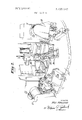
- FIG. 2 is a partial perspective of the apparatus shown in FIG. 1 showing details of construction
- FIG. 3 is a side elevation partially in section showing details of construction of a multiple drill assembly made according to my invention
- FIG. 4 is a section taken along the line 44 of FIG.
- FIG. 5 is a left end view of FIG. 3
- FIG. 6 is a section taken along line 6-6 of FIG. 5 showing details of the retractor
- FIG. 7 is a perspective of a pair of drill assemblies shown at Station 2 of the complete assembly with a shuttle in working position
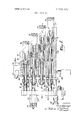
- FIG. 8 is a side elevation of the multiple tapping assembly made according to my invention and partially in section to show details of construction
- FIG. 9 is a horizontal section taken along the line 99 of FIG. 10,
- FIG. 10 is a section taken along the line 10-40 of FIG. 9,
- FIG. 11 is a schematic control circuit diagram for the drilling assembly as tied in with the indexing circuit
- FIG. 12 is a schematic control circuit diagram for the tapping assembly as tied in with the indexing circuit.
- one form of apparatus made according to my invention includes an annular tool assembly supporting table 20. There are six positions or stations on the table, but more or less could be provided.
- Drilling assembly 23 is mounted for vertical movement on guides or ways 24 and 25.
- the other drilling assembly 26 provides for horizontal drilling.
- the tapping assembly 27 taps from the top and the drilling assembly 28 drills from the side.
- the work pieces are drilled from the top by assembly 29, and from the side by the drill assembly 30. Reaming can also be done instead of drilling.
- tapping is done from the top by tapping assembly 31, horizontally by tapping assembly 32, and drilling is done from the side by drilling assembly 33.
- turret 35 Rotatably mounted within the central opening of the annular table 20, is the turret 35, provided with the radially directed work supporting slide guides 36, 37, 38, 39, 40 and 41 each of which supports a shuttle 42, 43, 44, 45, 46 and 47. These shuttles support and have clamped thereon during working operations work loaded cartridges 50, 51, 52, 53, 54 and 55. These shuttles and cartridges are described and claimed in a copending application.
- An air manifold 56 provides the air for operating air cylinders 60, 61, 62, 63, 64 and 65 which function to move the shuttles into work operating positions.
- the drilling spindle assembly comprises two major sub-assemblies relatively movable with respect to each other. Both are slidably mounted on the same base.
- One sub-assembly includes the drill bushings which are rapidly advanced into working position closely adjacent the work pieces and then remain stationary.
- the drilling spindle sub-assembly includes the spindles and drills and is moved forward with the bushing subassembly initially. When the bushing sub-assembly comes to rest, a rotating cam and a contacting follower element come into operation to advance the drills.
- a driving motor connected to drive the drills is energized when the bushing sub-assembly reaches its working position. After the drilling operations are completed the entire drill spindle assembly is retracted. These operations are controlled by circuits operated by properly placed switches and trippers or dogs.
- the assembly for example 21 supported on the annular table 20, includes a base 70, supporting a pair of shafts or supporting guides 71 and 72.
- the drill bushings 73, 74, 75 and 76 are mounted on a bushing plate or slide support 77 slidably supported on the guides 71 and 72 by a pair of ball bushing blocks 78 and 79 being shown.
- a housing 80 supports the drill spindles 81, 82, 83 and 84 in ball bearing assemblies as shown (FIG. 4).
- the spindles are provided with the drive pulleys 85, 86, 87 and 88. These spindles are driven by motor 89 by means of belt 90 which engages the drive pulleys 85, 86, 87 and 88 as well as idler pulleys 90, 91 and 92.
- the housing 80 is slidably supported on guides 71 and 72 by means of four ball bearing bushing blocks two of which 93 and 94 are mounted on guide 71. The other two on guide 72 are not shown (FIG. 3). Thus it will be seen that the bushing plate 77 and housing 80 are independently slidable on the guides 71 and 72.
- the bushing mounting plate 77 and the spindle housing 80 are moved toward the work piece together by means of a hydraulic cylinder. When the bushings are in their work position further movements toward the work pieces is stopped as will be described below. This movement toward the work position is made rapidly. At this point a cam which contacts a follower on the spindle housing 80, is caused to rotate. The spindle housing is moved toward the work pieces for causing the drills to move into the work pieces. When drilling operations are completed the drills and bushings are automatically retracted.
- the mechanism for advancing the bushing and drill assembly rapidly to working position includes (FIGS. 3, 4 and 5) a hydraulic cylinder 95.
- the cylinder is fastened to the base by means of bracket 96.
- the piston rod 97 is connected to the drill housing by a block 98.
- the follower 99 fixed to the housing 80 comes in contact with a high spot on the cam 100 attached to the driving shaft of driving motor 101.
- motor 101 is energized causing the cam 100 to rotate. Since hydraulic cylinder biases the follower 99 against the cam 100, because of the cam shape the drill housing moves to the right and the drills advance through the bushings to perform drilling operations.
- the drills Upon completion of drilling the drills are retracted and the drill housing 80 and bushing plate 77 are returned to these initial positions. The drills are fed in and out slowly.
- a rod 110 slidable through a block 111 fixed to base 70.
- Fixed to rod 110 is a screw 112, cooperating with a cup shaped stop nut 113.
- This stop nut upon engagement with block 111 prevents further movement of the busing mounting plate toward the work pieces.
- the limiting position of the bushing plate can be varied by repositioning stop nut 113 on screw 112. This arrangement permits minute and accurate positioning of the bushing.
- hydraulic piston continues to bias the drill housing 80 to the right (FIG. 3) maintaining follower 99 against cam which on rotating presents a shorter radius to the follower so that the drills can move into the work piece.
- Means are provided on housing 80 for retracting the bushing plate 77 when the housing is retracted to its non-working position.
- a bracket 102 having an apertured plate 103 is attached to housing 80.
- a rod 104 passes slidably through plate 103 and is secured to the bushing plate 77.
- a compression spring 105 is mounted on the rod or spring guide 104. When forward movement of the bushing plate is stopped by stop nut 113, housing 80 can continue forward movement relative to plate 77, spring 105 being compressed and holding bushing plate forward.
- the housing 80 is retracted plate 103 engages the head 106 of rod 104 retracting bushing plate 77.
- the tapping assembly includes a slide housing rotatably supporting a plurality of tapping spindles and a rotatable lead screw all driven from a common drive.
- the housing is slidably supported on a pair of case shafts or guides mounted on a base.
- a slide mounted on one of the guides has fixed thereto and supports a lead screw nut engaging the lead screw on the housing.
- a hydraulic cylinder mounted on the base is connected to the lead screw nut supporting slide and controls rapid movement toward and from the work position of the housing slide to position the tappers in their operating position.
- the lead screw then causes feeding of the plurality of tappers into the work pieces.
- the tapping spindle assembly includes a base supporting a pair of case shafts or guides 131 and 132.
- a tapping spindle assembly slide housing 133 is supported on guides 131 and 132 by means of ball bushing blocks 134 and 135 mounted on guide 131 and two others (not shown) mounted on guide 132.
- housing 133 Mounted within the housing 133 are a plurality of ball bearing supported tapping spindles 136, 137, 138 and 139. Also rotatably supported in housing 133 is the lead screw 140.
- the tapping spindles and lead screw 140 are provided with worm gears 141, 142, 143, 144 and 145 for driving the tappers and the lead screw to advance the tappers simultaneously at the proper rate of rotation to produce the desired pitch.
- a worm shaft 146 has mounted thereon and secured thereto driving worm wheels 1147, 148, 149, 150 and 151.
- Shaft 146 is driven by pulley 152 connected to motor 153 by belt 154.
- Mechanism is provided for rapidly moving the housing 133 and tapping spindles to initial working position and then starting tapping operations.
- a hydraulic cylinder 161 is pivotally attached to the base 130 by yoke 162. The piston rod of hydraulic cylinder 161 is attached to slide 156 by means of bracket 158.
- FIGS. 4, 5 and 11 The mechanical trip switches as shown in these figures are identified by the same letter symbols. As the drilling assembly including the drill bushing sub-assembly and the drilling spindle sub-assembly moves toward and from operating positions, trippers activate the various switches for controlling relays and solenoids for energizing the hydraulic cylinders and motor governing the operation of the drilling sub-assemblies.
- the Cam causes the bank to move into the work pieces.
- bank reaches maximum In position it closes BRLS switch energizing BRRl and BRR2 relays.
- FRLS switch As the fixture moves to In position, FRLS switch is contacted, which in turn energizes the FRLR latch relay thereby completing the index circuit.
- the BILS switch is operated by the dog 185 carried on the bushing plate assembly 77.
- Switch BRLS is operated by thd dog 186 carried on the drilling subassembly housing.
- Switch BOLS is also activated by dog 186.
- the tapping operation is described below.
- the steps are indicated in FIG. 12 by the numerals 1 to 17 on the left hand side of the diagram.
- the Tap Forward solenoid causes the hydraulic motor to rotate the feed screw which drives the taps in the work pieces.
- the bank contacts the TRLS switch which energizes the TRL latch coil.
- TLR contact closes energizing the tap reverse solenoid.
- the BILS switch is operated by the dog 180 mounted on slide 156.
- Switch TRLS is actuated by dog 181 mounted on the lead screw nut 157.
- Switch TSLS is actuated by the dog 182 mounted on the housing 133 and switch BOLS is actuated by the dog 183 also mounted on the housing 133.
- a spindle assembly for supporting a plurality of tapping tools each of which is adapted to engage a different work piece area at a working position including:
- a lead screw nut non-rotatably mounted on said slide, said lead screw and said nut threadedly engaging each other;
- feeding means connected to said slide for rapidly moving said housing, through the threaded connection of said nut and lead screw, axially of said spindles between a retracted non-working position and a forward working position;
- drive means independently connected to each of said spindles for rotating said spindles when said housing reaches said working position for further advancing said housing and tool supporting spindles into said work piece areas.
- a spindle assembly according to claim 1 wherein: a. said feeding means includes a hydraulic cylinder having its piston rod connected to said slide; and b. said drive means includes a reversible motor mounted on said housing and connected to drive said spindles.
- a spindle assembly according to claim 2 further comprising:
- switches and dogs on said base and slide for electrically controlling said motor for causing said spindles to rotate when said housing reaches said working position to further advance said housing and tools into said work piece areas and to retract said housing and tools after said work piece areas have been operated on.
- a spindle assembly according to claim 4 further including:
Landscapes
- Engineering & Computer Science (AREA)
- Mechanical Engineering (AREA)
- Drilling And Boring (AREA)
Abstract
The apparatus, intended primarily for simultaneously drilling and tapping a plurality of work pieces at each of a plurality of working positions includes an annular table supporting a plurality of tapping and drilling assemblies at a plurality of spaced working positions. Rotably mounted within the annular table support is a turret having a plurality of radial arms on which are supported retractible work supporting shuttles movable toward and from working positions adjacent the tapping and drilling assemblies mounted on the annular table. Means are provided for rotating the turret to successive working positions. A novel clamp and positioning means are mounted on the shuttles for holding and accurately positioning a work supporting cartridge. Novel multiple spindle tapping and drilling assemblies permit tapping and drilling from different angles, simultaneously of a plurality of rigidly held work pieces mounted on the shuttles.
Description
United States Patent [191 Hoglund [54] APPARATUS FOR SIMULTANEOUSLll DRILLING AND TAPPING A PLURALITY OF WORK PIECES AT EACH OF A PLURALITY OF POSITIONS Nils Hoglund, Short Hills, NJ.
Tri-Ordinate Corporation, Berkeley Heights, NJ.
Filed: Feb. 24, 1971 Appl. No.: 118,218
Related U.S. Application Data Division of Ser. No. 763,043, Aug. 9, 1968, abandoned.
Inventor:
Assignee:
[56] References Cited UNITED STATES PATENTS Van Den Kieboom ..408/l30 May 15, 1973 2,023,841 10/1935 Kingbury ..408/129 Primary Examiner-Gil Weidenfeld Attorney Dean S. Edmonds [57] ABSTRACT The apparatus, intended primarily for simultaneously drilling and tapping a plurality of work pieces at each of a plurality of working positions includes an annular table supporting a plurality of tapping and drilling assemblies at a plurality of spaced working positions. Rotably mounted within the annular table support is a turret having a plurality of radial arms on which are supported retractible work supporting shuttles movable toward and from working positions adjacent the tapping and drilling assemblies mounted on the annular table. Means are provided for rotating the turret to successive working positions. A novel clamp and positioning means are mounted on the shuttles for holding and accurately positioning a work supporting cartridge. Novel multiple spindle tapping and drilling assemblies permit tapping and drilling from different angles, simultaneously of a plurality of rigidly held work pieces mounted on the shuttles.
5 Claims, 13 Drawing Figures PATENTEummms 3,733,142
sum new 11 INVENTOR PATENTEU 1 975 SHEET 08 [1F 11 INVENTOR. M15 f/aa; uuo
5v VM M j TO/QA EY PATENTE HAY 1 51973 mm m x m (i n n 1 I INVENTOR. M flaaww WVWZW ,e/vey This application is a division of my application, Ser. No. 763,043 filed Aug. 9, 1968 and now abandoned.
BACKGROUND OF THE INVENTION Present equipment such as in line equipment 'is not normally designed to process at one working station more than one work piece nor generally to perform more than one operation at each working station. In line equipment requires much space to accomodate the different working positions. A work piece has to be moved manually from the last working position for further processing or packaging. Registering a work piece with its working position is difficult. Link chains carrying the work holder of fixture which chains are usually used on in line equipment have stretch and wear and thus particularly where extreme accuracies are required in line equipment is not satisfactory. Turret machines presently available have very complicated mechanisms to carry the work pieces to a working position and are incapable of performing multiple operations on a plurality of work pieces in a single working position. Equipment for performing working operations from all sides; that is from all sides of the work piece as well as the top and bottom without rotating the work piece from a fixed position in a fixture have not heretofore been available.
SUMMARY OF THE INVENTION The apparatus which is capable of simultaneously drilling and tapping a plurality of work pieces at each of a plurality of work positions includes an annularly shaped supporting table. This table provides a work loading position and supports a plurality of spaced drilling and tapping assemblies at spaced working positions there around. A rotatable work supporting turret is positioned centrally of the annular tool assembly supporting table. It is provided with a plurality of radially directed slide guides.
Slidably mounted on the guides are retractable shuttles which can be moved into work positions adjacent the tool assemblies when the turret is indexed to successive working positions. The work pieces are secured to cartridges or fixtures which are releasably clamped to the shuttles. Each cartridge supports a plurality of work pieces. The clamps are automatically released at the discharge position when all operationsare completed on the work pieces. Means on the shuttles and on the annular table contact the cartridge for very accurately positioning the work pieces.
Novel multiple tool drilling assembleys make it possible to side tap work pieces where the directions of dril- The timing of indexing is such that both the drilling and tapping operations at all stations are completed and the shuttles retracted before indexing takes place.
The movement of the drilling assemblies and the tapping assemblies are controlled by circuits which are controlled by trippers and switches responsive to the movement of the assemblies.
DESCRIPTION OF DRAWINGS Referring to the drawings,
FIGS. 1a and 1b show a plan view of a complete machine assembly incorporating my invention,
FIG. 2 is a partial perspective of the apparatus shown in FIG. 1 showing details of construction,
FIG. 3 is a side elevation partially in section showing details of construction of a multiple drill assembly made according to my invention,
FIG. 4 is a section taken along the line 44 of FIG.
FIG. 5 is a left end view of FIG. 3, FIG. 6 is a section taken along line 6-6 of FIG. 5 showing details of the retractor,
FIG. 7 is a perspective of a pair of drill assemblies shown at Station 2 of the complete assembly with a shuttle in working position,
FIG. 8 is a side elevation of the multiple tapping assembly made according to my invention and partially in section to show details of construction,
FIG. 9 is a horizontal section taken along the line 99 of FIG. 10,
FIG. 10 is a section taken along the line 10-40 of FIG. 9,
FIG. 11 is a schematic control circuit diagram for the drilling assembly as tied in with the indexing circuit, and
FIG. 12 is a schematic control circuit diagram for the tapping assembly as tied in with the indexing circuit.
DESCRIPTION OF THE PREFERRED EMBODIMENT Referring to FIGS. 11 and 2, one form of apparatus made according to my invention includes an annular tool assembly supporting table 20. There are six positions or stations on the table, but more or less could be provided.
At station 1 the shuttles are loaded with the work filled cartridge and also unloaded after all operations are completed.
At station 2, there are provided two banks or drilling assemblies 21 and 22 which will be described in greater detail below. It will be noted that the spindles are mounted at an angle to each other and to the center line passing through the work pieces for side drilling. One set of drills completes its drilling operation before the second set begins operations to prevent drills contacting each other particularly if small work pieces are involved.
At station 3 vertical and horizontal drilling operations take place. Drilling assembly 23 is mounted for vertical movement on guides or ways 24 and 25. The other drilling assembly 26 provides for horizontal drilling.
At station 4, the tapping assembly 27 taps from the top and the drilling assembly 28 drills from the side.
At station 5 the work pieces are drilled from the top by assembly 29, and from the side by the drill assembly 30. Reaming can also be done instead of drilling.
At station 6, the last working position, tapping is done from the top by tapping assembly 31, horizontally by tapping assembly 32, and drilling is done from the side by drilling assembly 33.
Rotatably mounted within the central opening of the annular table 20, is the turret 35, provided with the radially directed work supporting slide guides 36, 37, 38, 39, 40 and 41 each of which supports a shuttle 42, 43, 44, 45, 46 and 47. These shuttles support and have clamped thereon during working operations work loaded cartridges 50, 51, 52, 53, 54 and 55. These shuttles and cartridges are described and claimed in a copending application. An air manifold 56 provides the air for operating air cylinders 60, 61, 62, 63, 64 and 65 which function to move the shuttles into work operating positions.
Switches and tripping mechanisms for controlling operation of the drilling assemblies and tapping assemblies will be described below.
DRILLING ASSEMBLIES The drilling spindle assembly comprises two major sub-assemblies relatively movable with respect to each other. Both are slidably mounted on the same base. One sub-assembly includes the drill bushings which are rapidly advanced into working position closely adjacent the work pieces and then remain stationary. The drilling spindle sub-assembly includes the spindles and drills and is moved forward with the bushing subassembly initially. When the bushing sub-assembly comes to rest, a rotating cam and a contacting follower element come into operation to advance the drills. A driving motor connected to drive the drills is energized when the bushing sub-assembly reaches its working position. After the drilling operations are completed the entire drill spindle assembly is retracted. These operations are controlled by circuits operated by properly placed switches and trippers or dogs.
Referring now to FIGS. 3, 4, 5, 6 and 7, the assembly, for example 21 supported on the annular table 20, includes a base 70, supporting a pair of shafts or supporting guides 71 and 72. The drill bushings 73, 74, 75 and 76 are mounted on a bushing plate or slide support 77 slidably supported on the guides 71 and 72 by a pair of ball bushing blocks 78 and 79 being shown.
A housing 80 supports the drill spindles 81, 82, 83 and 84 in ball bearing assemblies as shown (FIG. 4). The spindles are provided with the drive pulleys 85, 86, 87 and 88. These spindles are driven by motor 89 by means of belt 90 which engages the drive pulleys 85, 86, 87 and 88 as well as idler pulleys 90, 91 and 92.
The housing 80 is slidably supported on guides 71 and 72 by means of four ball bearing bushing blocks two of which 93 and 94 are mounted on guide 71. The other two on guide 72 are not shown (FIG. 3). Thus it will be seen that the bushing plate 77 and housing 80 are independently slidable on the guides 71 and 72.
The bushing mounting plate 77 and the spindle housing 80 are moved toward the work piece together by means of a hydraulic cylinder. When the bushings are in their work position further movements toward the work pieces is stopped as will be described below. This movement toward the work position is made rapidly. At this point a cam which contacts a follower on the spindle housing 80, is caused to rotate. The spindle housing is moved toward the work pieces for causing the drills to move into the work pieces. When drilling operations are completed the drills and bushings are automatically retracted.
The mechanism for advancing the bushing and drill assembly rapidly to working position includes (FIGS. 3, 4 and 5) a hydraulic cylinder 95. The cylinder is fastened to the base by means of bracket 96. The piston rod 97 is connected to the drill housing by a block 98. When the piston is energized to move the housing to the right (FIGS. 3 and 4) the follower 99 fixed to the housing 80 comes in contact with a high spot on the cam 100 attached to the driving shaft of driving motor 101. At this point motor 101 is energized causing the cam 100 to rotate. Since hydraulic cylinder biases the follower 99 against the cam 100, because of the cam shape the drill housing moves to the right and the drills advance through the bushings to perform drilling operations. Upon completion of drilling the drills are retracted and the drill housing 80 and bushing plate 77 are returned to these initial positions. The drills are fed in and out slowly.
To precisely position the bushings at their forward working position, there is attached to the bushing mounting plate 77, a rod 110 slidable through a block 111 fixed to base 70. Fixed to rod 110 is a screw 112, cooperating with a cup shaped stop nut 113. This stop nut upon engagement with block 111 prevents further movement of the busing mounting plate toward the work pieces. The limiting position of the bushing plate can be varied by repositioning stop nut 113 on screw 112. This arrangement permits minute and accurate positioning of the bushing. As will be described hydraulic piston continues to bias the drill housing 80 to the right (FIG. 3) maintaining follower 99 against cam which on rotating presents a shorter radius to the follower so that the drills can move into the work piece.
Means are provided on housing 80 for retracting the bushing plate 77 when the housing is retracted to its non-working position. As shown in FIG. 6, a bracket 102 having an apertured plate 103 is attached to housing 80. A rod 104 passes slidably through plate 103 and is secured to the bushing plate 77. A compression spring 105 is mounted on the rod or spring guide 104. When forward movement of the bushing plate is stopped by stop nut 113, housing 80 can continue forward movement relative to plate 77, spring 105 being compressed and holding bushing plate forward. When the housing 80 is retracted plate 103 engages the head 106 of rod 104 retracting bushing plate 77.
TAPPING ASSEMBLIES The tapping assembly includes a slide housing rotatably supporting a plurality of tapping spindles and a rotatable lead screw all driven from a common drive. The housing is slidably supported on a pair of case shafts or guides mounted on a base. A slide mounted on one of the guides has fixed thereto and supports a lead screw nut engaging the lead screw on the housing. A hydraulic cylinder mounted on the base is connected to the lead screw nut supporting slide and controls rapid movement toward and from the work position of the housing slide to position the tappers in their operating position. The lead screw then causes feeding of the plurality of tappers into the work pieces.
Referring to FIGS. 8, 9 and 10 the tapping spindle assembly includes a base supporting a pair of case shafts or guides 131 and 132. A tapping spindle assembly slide housing 133 is supported on guides 131 and 132 by means of ball bushing blocks 134 and 135 mounted on guide 131 and two others (not shown) mounted on guide 132.
Mounted within the housing 133 are a plurality of ball bearing supported tapping spindles 136, 137, 138 and 139. Also rotatably supported in housing 133 is the lead screw 140. The tapping spindles and lead screw 140 are provided with worm gears 141, 142, 143, 144 and 145 for driving the tappers and the lead screw to advance the tappers simultaneously at the proper rate of rotation to produce the desired pitch.
A worm shaft 146, has mounted thereon and secured thereto driving worm wheels 1147, 148, 149, 150 and 151. Shaft 146 is driven by pulley 152 connected to motor 153 by belt 154.
Mechanism is provided for rapidly moving the housing 133 and tapping spindles to initial working position and then starting tapping operations.
Mounted on guide 131 by means of ball bearing supported slide 156 is the non-rotatable lead screw nut 157. Also mounted on slide 156 is the bracket 158 carrying an adjustable stop screw 159. Contact between stop screw 159 and rest button 160 mounted on the base limits movement of the tapping assembly housing toward the work pieces. A hydraulic cylinder 161 is pivotally attached to the base 130 by yoke 162. The piston rod of hydraulic cylinder 161 is attached to slide 156 by means of bracket 158.
When the assembly is in its retracted position there is no contact between stop screw 159 and rest button 160. Also since slide 156 is connected to lead screw 140 by means of lead screw nut 157 action of hydraulic cylinder 161 will move the housing assembly between retracted position and starting position at any rapid desired speed depending upon speed of operation of the hydraulic cylinder.
When the stop screw 159 contacts stop button 160 on base 130, further movement of the housing toward the work pieces ceases. At this point rotation of the motor 153 begins causing rotation of the tappers and the lead screw to advance the housing 133 toward the work pieces. When tapping operations cease the tappers and lead screw are reversed with drawing the tappers and moving the housing to retracted position. Switches and controlling elements for these operations will be described below.
CIRCUIT AND CONTROLS FOR THE DRILLING ASSEMBLY Reference is made to FIGS. 4, 5 and 11. The mechanical trip switches as shown in these figures are identified by the same letter symbols. As the drilling assembly including the drill bushing sub-assembly and the drilling spindle sub-assembly moves toward and from operating positions, trippers activate the various switches for controlling relays and solenoids for energizing the hydraulic cylinders and motor governing the operation of the drilling sub-assemblies.
The drilling circuit operation is described below. The successive steps are indicated in the diagram shown in FIG. 11 by the numerals 1 to 12 on the left hand side of the diagram.
1 Table Turrent Indexes A During index cycle, relay ILR latches.
3 At end of index, IR contact closes, completing circuit to energize Fixture Out solenoid.
4 When the fixture reaches Out position it closes the FOLS switch, energizing Bank In solenoid.
5 When the bank (assembly) reaches In position BILS switch closes energizing CRFI & CRF2 relays.
6 CRFI & CRF2 contacts close, energizing Cam F orward solenoid.
7 The Cam causes the bank to move into the work pieces. When bank reaches maximum In position it closes BRLS switch energizing BRRl and BRR2 relays.
. 8 BRRl & BRR2 contacts close energizing Bank Out 6 B ILR contact closes, energizing HLR unlatch (2011.
C IR contact closes, energizing FLR unlatch coil 2 FLR & HLR contacts close solenoid. I
9 As bank reaches maximum Out position it contacts BOLS switch, energizing SPR1 & SPR2 relays.
10 SPR1 & SPR2 contacts close, energizing BOR relay.
11 BOR contact closes, energizing Fixture In solenoid.
12 As the fixture moves to In position, FRLS switch is contacted, which in turn energizes the FRLR latch relay thereby completing the index circuit.
The BILS switch is operated by the dog 185 carried on the bushing plate assembly 77. Switch BRLS is operated by thd dog 186 carried on the drilling subassembly housing. Switch BOLS is also activated by dog 186.
CIRCUIT AND CONTROLS FOR THE TAPPING ASSEMBLY Reference is made to FIGS. 8, 9 and 12.
The tapping operation is described below. The steps are indicated in FIG. 12 by the numerals 1 to 17 on the left hand side of the diagram.
1 Table Indexes A During index cycle, relay ILR latches.
B ILR contact closes, energizing HLR unlatch coil.
C IR contact closes, energizing FLR unlatch coil. 2 FLR & HLR contacts close.
3 At end of index, IR contact closes, completing circuit to energize Fixture Out solenoid.
4 When the fixture reaches Out position the FOLS switch closes, energizing the Bank In solenoid.
5 When the bank (assembly) reaches In position BILS switch is closed, energizing CRFI & CRFZ relays.
CRFl & CRF2 contacts close, energizing the Tap Forward solenoid.
7 The Tap Forward solenoid causes the hydraulic motor to rotate the feed screw which drives the taps in the work pieces.
8 As the taps reach maximum In position, the bank contacts the TRLS switch which energizes the TRL latch coil.
9 TLR contact opens deenergizing tap forward solenoid.
10 TLR contact closes energizing the tap reverse solenoid.
11 Tap feed screw reverses until bank contacts TSLS switch which stops tap.
12 Other side of TSLS switch closes and energizes BRRl relay.
13 BRR1 contacts close energizing the Bank Out solenoids.
14 As the bank reaches maximum Out position BOLS switch is closed energizing SPR1 relay.
15 SPR1 contacts close, energizing BOR relay.
l6 BOR contact closes, energizing Fixture In solenoid.
17 As the fixture moves to In position the FRLS switch is contacted, which in turn energizes the FRLR latch relay thereby completing the index circuit.
The BILS switch is operated by the dog 180 mounted on slide 156. Switch TRLS is actuated by dog 181 mounted on the lead screw nut 157. Switch TSLS is actuated by the dog 182 mounted on the housing 133 and switch BOLS is actuated by the dog 183 also mounted on the housing 133.
What is claimed is:
1. A spindle assembly for supporting a plurality of tapping tools each of which is adapted to engage a different work piece area at a working position including:
a. a base;
b. a housing slidably mounted on said base;
c. a plurality of tool supporting spindles rotatably mounted in said housing;
d. a single lead screw spindle rotatably mounted in said housing;
e. a lead screw mounted on said lead screw spindle;
f. a slide on said base;
g. a lead screw nut non-rotatably mounted on said slide, said lead screw and said nut threadedly engaging each other;
h. feeding means connected to said slide for rapidly moving said housing, through the threaded connection of said nut and lead screw, axially of said spindles between a retracted non-working position and a forward working position; and
i. drive means independently connected to each of said spindles for rotating said spindles when said housing reaches said working position for further advancing said housing and tool supporting spindles into said work piece areas.
2. A spindle assembly according to claim 1 wherein: a. said feeding means includes a hydraulic cylinder having its piston rod connected to said slide; and b. said drive means includes a reversible motor mounted on said housing and connected to drive said spindles.
3. A spindle assembly according to claim 2 further comprising:
a. switches and dogs on said base and slide for electrically controlling said motor for causing said spindles to rotate when said housing reaches said working position to further advance said housing and tools into said work piece areas and to retract said housing and tools after said work piece areas have been operated on.
4. A spindle assembly according to claim 3 wherein said drive means further includes:
a. a worm gear means connected to each of said spindles;
b. a worm shaft mounted in said housing;
0. worm wheels fixed to said worm shaft and operatively engaging each of said worm gear means; and
d. means connecting said worm shaft to said motor to cause rotation of said shaft upon actuation of said motor.
5. A spindle assembly according to claim 4 further including:
a. supporting guides mounted on said base for slidably mounting said housing on said base.
Claims (5)
1. A spindle assembly for supporting a plurality of tapping tools each of which is adapted to engage a different work piece area at a working position including: a. a base; b. a housing slidably mounted on said base; c. a plurality of tool supporting spindles rotatably mounted in said housing; d. a single lead screw spindle rotatably mounted in said housing; e. a lead screw mounted on said lead screw spindle; f. a slide on said base; g. a lead screw nut non-rotatably mounted on said slide, said lead screw and said nut threadedly engaging each other; h. feeding means connected to said slide for rapidly moving said housing, through the threaded connection of said nut and lead screw, axially of said spindles between a retracted non-working position and a forward working position; and i. drive means independently connected to each of said spindles for rotating said spindles when said housing reaches said working position for further advancing said housing and tool supporting spindles into said work piece areas.
2. A spindle assembly according to claim 1 wherein: a. said feeding means includes a hydraulic cylinder having its piston rod connected to said slide; and b. said drive means includes a reversible motor mounted on said housing and connected to drive said spindles.
3. A spindle assembly according to claim 2 further comprising: a. switches and dogs on said base and slide for electrically controlling said motor for causing said spindles to rotate when said housing reaches said working position to further advance said housing and tools into said work piece areas and to retract said housing and tools after said work piece areas have been operated on.
4. A spindle assembly according to claim 3 wherein said drive means further includes: a. a worm gear means connected to each of said spindles; b. a worm shaft mounted in said housing; c. worm wheels fixed to said worm shaft and operatively engaging each of said worm gear means; and d. means connecting said worm shaft to said motor to cause rotation of said shaft upon actuation of said motor.
5. A spindle assembly according to claim 4 further including: a. supporting guides mounted on said base for slidably mounting said housing on said base.
Applications Claiming Priority (1)
| Application Number | Priority Date | Filing Date | Title |
|---|---|---|---|
| US11821871A | 1971-02-24 | 1971-02-24 |
Publications (1)
| Publication Number | Publication Date |
|---|---|
| US3733142A true US3733142A (en) | 1973-05-15 |
Family
ID=22377224
Family Applications (1)
| Application Number | Title | Priority Date | Filing Date |
|---|---|---|---|
| US00118218A Expired - Lifetime US3733142A (en) | 1971-02-24 | 1971-02-24 | Apparatus for simultaneously drilling and tapping a plurality of work pieces at each of a plurality of positions |
Country Status (1)
| Country | Link |
|---|---|
| US (1) | US3733142A (en) |
Cited By (6)
| Publication number | Priority date | Publication date | Assignee | Title |
|---|---|---|---|---|
| US3895424A (en) * | 1972-07-26 | 1975-07-22 | Vulcan Tool Company | Machine tool |
| US4550488A (en) * | 1981-12-12 | 1985-11-05 | Honda Giken Kogyo Kabushiki Kaisha | Gang head type machine tool |
| US4655652A (en) * | 1982-02-03 | 1987-04-07 | The O.S. Kelly Company | Method of multiple station drilling |
| US4968194A (en) * | 1988-05-09 | 1990-11-06 | Considine John W | Tap chuck crank |
| US20100132528A1 (en) * | 2005-08-31 | 2010-06-03 | Kistler Holding Ag | Tool condition monitoring system |
| CN112207370A (en) * | 2020-09-09 | 2021-01-12 | 扬中市宏光防爆电器有限公司 | Tapping device of explosion-proof threading box |
Citations (2)
| Publication number | Priority date | Publication date | Assignee | Title |
|---|---|---|---|---|
| US2023841A (en) * | 1932-07-11 | 1935-12-10 | Kingsbury Edward Joslin | Two-motor control for screw feed machine tool units |
| US3389413A (en) * | 1966-07-11 | 1968-06-25 | La Salle Machine Tool | Single spindle tap unit |
-
1971
- 1971-02-24 US US00118218A patent/US3733142A/en not_active Expired - Lifetime
Patent Citations (2)
| Publication number | Priority date | Publication date | Assignee | Title |
|---|---|---|---|---|
| US2023841A (en) * | 1932-07-11 | 1935-12-10 | Kingsbury Edward Joslin | Two-motor control for screw feed machine tool units |
| US3389413A (en) * | 1966-07-11 | 1968-06-25 | La Salle Machine Tool | Single spindle tap unit |
Cited By (7)
| Publication number | Priority date | Publication date | Assignee | Title |
|---|---|---|---|---|
| US3895424A (en) * | 1972-07-26 | 1975-07-22 | Vulcan Tool Company | Machine tool |
| US4550488A (en) * | 1981-12-12 | 1985-11-05 | Honda Giken Kogyo Kabushiki Kaisha | Gang head type machine tool |
| US4655652A (en) * | 1982-02-03 | 1987-04-07 | The O.S. Kelly Company | Method of multiple station drilling |
| US4968194A (en) * | 1988-05-09 | 1990-11-06 | Considine John W | Tap chuck crank |
| US20100132528A1 (en) * | 2005-08-31 | 2010-06-03 | Kistler Holding Ag | Tool condition monitoring system |
| US8376666B2 (en) * | 2005-08-31 | 2013-02-19 | Kistler Holding Ag | Tool condition monitoring system |
| CN112207370A (en) * | 2020-09-09 | 2021-01-12 | 扬中市宏光防爆电器有限公司 | Tapping device of explosion-proof threading box |
Similar Documents
| Publication | Publication Date | Title |
|---|---|---|
| US3821835A (en) | Machine tool | |
| US3797363A (en) | Tools carrying heads, more particularly for transfer machines | |
| US3587873A (en) | Tool change mechanism for a machine tool | |
| GB1310561A (en) | Tool change mechanisms for machine tools | |
| US2697373A (en) | Tracer controlled facing lathe | |
| US3609838A (en) | Machine tool | |
| US2423367A (en) | Indexing universal grinding machine | |
| US3691626A (en) | Tool change mechanism | |
| US3302494A (en) | Automatic drilling machine | |
| US3571912A (en) | Multitool tool changer | |
| US3733142A (en) | Apparatus for simultaneously drilling and tapping a plurality of work pieces at each of a plurality of positions | |
| US2850849A (en) | High-speed flute-grinding machine | |
| US2329756A (en) | Indexable support | |
| US3798720A (en) | Multiple-spindle machine tool | |
| GB1312388A (en) | Automatic machine tool | |
| US3309819A (en) | Machine tool | |
| US3789501A (en) | Machine tool with tool change device | |
| US2192436A (en) | Center drive double end turret lathe | |
| GB1355108A (en) | Piston-turning lathe | |
| US3797957A (en) | Apparatus for simultaneously drilling and tapping a plurality of work pieces at each of a plurality of positions | |
| US3881836A (en) | Apparatus for simultaneously drilling and tapping a plurality of work pieces at each of a plurality of positions | |
| US2671233A (en) | Machine tool with automatically indexable rotary table | |
| US2643570A (en) | Multiple station center drive crankshaft lathe | |
| US3669558A (en) | Apparatus for simultaneously drilling and tapping a plurality of work pieces at each of a plurality of positions | |
| GB1277316A (en) | Machine tool |