US3607070A - Method and apparatus for the determination of phosphorus in aqueous solutions - Google Patents
Method and apparatus for the determination of phosphorus in aqueous solutions Download PDFInfo
- Publication number
- US3607070A US3607070A US8545A US3607070DA US3607070A US 3607070 A US3607070 A US 3607070A US 8545 A US8545 A US 8545A US 3607070D A US3607070D A US 3607070DA US 3607070 A US3607070 A US 3607070A
- Authority
- US
- United States
- Prior art keywords
- accordance
- detector
- phosphorus
- mixture
- source
- Prior art date
- Legal status (The legal status is an assumption and is not a legal conclusion. Google has not performed a legal analysis and makes no representation as to the accuracy of the status listed.)
- Expired - Lifetime
Links
- 229910052698 phosphorus Inorganic materials 0.000 title claims abstract description 49
- 239000011574 phosphorus Substances 0.000 title claims abstract description 49
- OAICVXFJPJFONN-UHFFFAOYSA-N Phosphorus Chemical compound [P] OAICVXFJPJFONN-UHFFFAOYSA-N 0.000 title claims abstract description 45
- 238000000034 method Methods 0.000 title claims abstract description 32
- 239000007864 aqueous solution Substances 0.000 title claims description 8
- XLYOFNOQVPJJNP-UHFFFAOYSA-N water Substances O XLYOFNOQVPJJNP-UHFFFAOYSA-N 0.000 claims abstract description 18
- -1 alkali metal salt Chemical class 0.000 claims abstract description 17
- 229910052783 alkali metal Inorganic materials 0.000 claims abstract description 16
- 150000001340 alkali metals Chemical class 0.000 claims abstract description 7
- 239000000243 solution Substances 0.000 claims description 26
- IJGRMHOSHXDMSA-UHFFFAOYSA-N Atomic nitrogen Chemical compound N#N IJGRMHOSHXDMSA-UHFFFAOYSA-N 0.000 claims description 20
- ZLMJMSJWJFRBEC-UHFFFAOYSA-N Potassium Chemical compound [K] ZLMJMSJWJFRBEC-UHFFFAOYSA-N 0.000 claims description 19
- 239000000203 mixture Substances 0.000 claims description 19
- 229910052700 potassium Inorganic materials 0.000 claims description 19
- 239000011591 potassium Substances 0.000 claims description 19
- 239000007789 gas Substances 0.000 claims description 12
- XKRFYHLGVUSROY-UHFFFAOYSA-N Argon Chemical compound [Ar] XKRFYHLGVUSROY-UHFFFAOYSA-N 0.000 claims description 10
- WCUXLLCKKVVCTQ-UHFFFAOYSA-M Potassium chloride Chemical group [Cl-].[K+] WCUXLLCKKVVCTQ-UHFFFAOYSA-M 0.000 claims description 10
- 229910052757 nitrogen Inorganic materials 0.000 claims description 10
- UFHFLCQGNIYNRP-UHFFFAOYSA-N Hydrogen Chemical compound [H][H] UFHFLCQGNIYNRP-UHFFFAOYSA-N 0.000 claims description 9
- 239000001257 hydrogen Substances 0.000 claims description 9
- 229910052739 hydrogen Inorganic materials 0.000 claims description 9
- QVGXLLKOCUKJST-UHFFFAOYSA-N atomic oxygen Chemical compound [O] QVGXLLKOCUKJST-UHFFFAOYSA-N 0.000 claims description 8
- 239000001301 oxygen Substances 0.000 claims description 8
- 229910052760 oxygen Inorganic materials 0.000 claims description 8
- 239000000463 material Substances 0.000 claims description 7
- 229910052786 argon Inorganic materials 0.000 claims description 5
- 238000002485 combustion reaction Methods 0.000 claims description 5
- 239000001103 potassium chloride Substances 0.000 claims description 5
- 235000011164 potassium chloride Nutrition 0.000 claims description 5
- 229910052701 rubidium Inorganic materials 0.000 claims description 5
- IGLNJRXAVVLDKE-UHFFFAOYSA-N rubidium atom Chemical compound [Rb] IGLNJRXAVVLDKE-UHFFFAOYSA-N 0.000 claims description 5
- 229910052792 caesium Inorganic materials 0.000 claims description 4
- 239000012266 salt solution Substances 0.000 claims description 4
- 150000001447 alkali salts Chemical class 0.000 claims description 3
- 238000010438 heat treatment Methods 0.000 claims description 3
- 150000001242 acetic acid derivatives Chemical class 0.000 claims description 2
- 239000000470 constituent Substances 0.000 claims description 2
- 150000002823 nitrates Chemical class 0.000 claims description 2
- 125000002467 phosphate group Chemical group [H]OP(=O)(O[H])O[*] 0.000 claims description 2
- 239000002245 particle Substances 0.000 abstract description 4
- 230000003993 interaction Effects 0.000 abstract description 3
- 239000000523 sample Substances 0.000 description 10
- 229910052816 inorganic phosphate Inorganic materials 0.000 description 6
- NBIIXXVUZAFLBC-UHFFFAOYSA-K phosphate Chemical compound [O-]P([O-])([O-])=O NBIIXXVUZAFLBC-UHFFFAOYSA-K 0.000 description 6
- 230000004044 response Effects 0.000 description 6
- 229910019142 PO4 Inorganic materials 0.000 description 5
- 239000010452 phosphate Substances 0.000 description 5
- 235000021317 phosphate Nutrition 0.000 description 5
- DGAQECJNVWCQMB-PUAWFVPOSA-M Ilexoside XXIX Chemical compound C[C@@H]1CC[C@@]2(CC[C@@]3(C(=CC[C@H]4[C@]3(CC[C@@H]5[C@@]4(CC[C@@H](C5(C)C)OS(=O)(=O)[O-])C)C)[C@@H]2[C@]1(C)O)C)C(=O)O[C@H]6[C@@H]([C@H]([C@@H]([C@H](O6)CO)O)O)O.[Na+] DGAQECJNVWCQMB-PUAWFVPOSA-M 0.000 description 4
- 229910052708 sodium Inorganic materials 0.000 description 4
- 239000011734 sodium Substances 0.000 description 4
- 150000001768 cations Chemical class 0.000 description 3
- SMWDFEZZVXVKRB-UHFFFAOYSA-N Quinoline Chemical compound N1=CC=CC2=CC=CC=C21 SMWDFEZZVXVKRB-UHFFFAOYSA-N 0.000 description 2
- 239000000443 aerosol Substances 0.000 description 2
- 238000000889 atomisation Methods 0.000 description 2
- TVFDJXOCXUVLDH-UHFFFAOYSA-N caesium atom Chemical compound [Cs] TVFDJXOCXUVLDH-UHFFFAOYSA-N 0.000 description 2
- 230000000694 effects Effects 0.000 description 2
- 230000002452 interceptive effect Effects 0.000 description 2
- 238000005259 measurement Methods 0.000 description 2
- 239000002904 solvent Substances 0.000 description 2
- 239000000126 substance Substances 0.000 description 2
- OYPRJOBELJOOCE-UHFFFAOYSA-N Calcium Chemical compound [Ca] OYPRJOBELJOOCE-UHFFFAOYSA-N 0.000 description 1
- RYGMFSIKBFXOCR-UHFFFAOYSA-N Copper Chemical compound [Cu] RYGMFSIKBFXOCR-UHFFFAOYSA-N 0.000 description 1
- MYMOFIZGZYHOMD-UHFFFAOYSA-N Dioxygen Chemical compound O=O MYMOFIZGZYHOMD-UHFFFAOYSA-N 0.000 description 1
- 229920000388 Polyphosphate Polymers 0.000 description 1
- 238000010521 absorption reaction Methods 0.000 description 1
- 239000003513 alkali Substances 0.000 description 1
- AIYUHDOJVYHVIT-UHFFFAOYSA-M caesium chloride Chemical class [Cl-].[Cs+] AIYUHDOJVYHVIT-UHFFFAOYSA-M 0.000 description 1
- 239000011575 calcium Substances 0.000 description 1
- 229910052791 calcium Inorganic materials 0.000 description 1
- 238000011088 calibration curve Methods 0.000 description 1
- 239000000567 combustion gas Substances 0.000 description 1
- 229910052802 copper Inorganic materials 0.000 description 1
- 239000010949 copper Substances 0.000 description 1
- 230000008878 coupling Effects 0.000 description 1
- 238000010168 coupling process Methods 0.000 description 1
- 238000005859 coupling reaction Methods 0.000 description 1
- XPPKVPWEQAFLFU-UHFFFAOYSA-J diphosphate(4-) Chemical compound [O-]P([O-])(=O)OP([O-])([O-])=O XPPKVPWEQAFLFU-UHFFFAOYSA-J 0.000 description 1
- 235000011180 diphosphates Nutrition 0.000 description 1
- 229940005740 hexametaphosphate Drugs 0.000 description 1
- BHEPBYXIRTUNPN-UHFFFAOYSA-N hydridophosphorus(.) (triplet) Chemical compound [PH] BHEPBYXIRTUNPN-UHFFFAOYSA-N 0.000 description 1
- 230000006872 improvement Effects 0.000 description 1
- 238000005342 ion exchange Methods 0.000 description 1
- 150000002500 ions Chemical class 0.000 description 1
- 230000007774 longterm Effects 0.000 description 1
- 230000007246 mechanism Effects 0.000 description 1
- MEFBJEMVZONFCJ-UHFFFAOYSA-N molybdate Chemical compound [O-][Mo]([O-])(=O)=O MEFBJEMVZONFCJ-UHFFFAOYSA-N 0.000 description 1
- 150000002894 organic compounds Chemical class 0.000 description 1
- 150000003018 phosphorus compounds Chemical class 0.000 description 1
- 239000001205 polyphosphate Substances 0.000 description 1
- 235000011176 polyphosphates Nutrition 0.000 description 1
- 239000002244 precipitate Substances 0.000 description 1
- 230000001376 precipitating effect Effects 0.000 description 1
- 150000003839 salts Chemical class 0.000 description 1
- 229920002379 silicone rubber Polymers 0.000 description 1
- 239000004945 silicone rubber Substances 0.000 description 1
- 235000019832 sodium triphosphate Nutrition 0.000 description 1
- 239000007787 solid Substances 0.000 description 1
- 150000003467 sulfuric acid derivatives Chemical class 0.000 description 1
- UNXRWKVEANCORM-UHFFFAOYSA-I triphosphate(5-) Chemical compound [O-]P([O-])(=O)OP([O-])(=O)OP([O-])([O-])=O UNXRWKVEANCORM-UHFFFAOYSA-I 0.000 description 1
Images

Classifications
-
- G—PHYSICS
- G01—MEASURING; TESTING
- G01N—INVESTIGATING OR ANALYSING MATERIALS BY DETERMINING THEIR CHEMICAL OR PHYSICAL PROPERTIES
- G01N27/00—Investigating or analysing materials by the use of electric, electrochemical, or magnetic means
- G01N27/62—Investigating or analysing materials by the use of electric, electrochemical, or magnetic means by investigating the ionisation of gases, e.g. aerosols; by investigating electric discharges, e.g. emission of cathode
- G01N27/626—Investigating or analysing materials by the use of electric, electrochemical, or magnetic means by investigating the ionisation of gases, e.g. aerosols; by investigating electric discharges, e.g. emission of cathode using heat to ionise a gas
-
- Y—GENERAL TAGGING OF NEW TECHNOLOGICAL DEVELOPMENTS; GENERAL TAGGING OF CROSS-SECTIONAL TECHNOLOGIES SPANNING OVER SEVERAL SECTIONS OF THE IPC; TECHNICAL SUBJECTS COVERED BY FORMER USPC CROSS-REFERENCE ART COLLECTIONS [XRACs] AND DIGESTS
- Y10—TECHNICAL SUBJECTS COVERED BY FORMER USPC
- Y10T—TECHNICAL SUBJECTS COVERED BY FORMER US CLASSIFICATION
- Y10T436/00—Chemistry: analytical and immunological testing
- Y10T436/16—Phosphorus containing
Definitions
- ABSTRACT A method and apparatus for directly determining inorganic phosphorus in water samples, comprising adding a very small amount of an alkali metal salt to the water solution containing the phosphorus compound, atomizing the water solution pneumatically, injecting the atomized particles into a flame ionization detector where interaction between the alkali metal and the phosphorus produces in the flame an enhanced ionization that is proportional to the phosphorus concentration.
- An alkali" flame ionization detector (FlD) has been used to detect phosphorus-containing organic compounds eluting from a gas chromatographic column, but it is impossible to vaporize inorganic phosphates and detect them with the reported detectors.
- Another object of this invention is to provide an improved, easier to use accurate method and apparatus for directly determining the amount of inorganic phosphates in aqueous solutions.
- a low concentration of an alkali metal salt is added to the water solution containing the phosphorus compound and the water solution is atomized pneumatically.
- the aerosol is then carried into a flame ionization detector where interaction between the alkali metal and the phosphorus species produces in the flame an enhanced ionization which is proportional to the phosphorus concentration (usually in the range of 0.1 to 20 parts per million) in the water sample.
- the signal from the detector is then amplified and recorded.
- H6. 1 is a diagrammatical view showing apparatus in accordance with this invention.
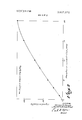
- FlG. 2 is a graph showing magnitude of electrical output signal of the flame ionization detector as a function of phosphorus concentration.
- FIG. 1 there is shown apparatus for determining the concentration of phosphorus in water solutions in which there is introduced to an ionization chamber 12 atomized phosphorus solution 58 to which has been added a low concentration of an alkali metal salt, such as potassium chloride, for example, from the source 59 through valved tube 61 from a suitable container 56 for the mixture.
- an alkali metal salt such as potassium chloride
- Pressurized nitrogen from the tank 24 is coupled through line 46 having a pressure-regulator valve therein and a pressure gauge coupled thereto to an atomizer comprising a Beckman-type atomizer-burner 64 as used in flame emission and atomic absorption work.
- the sample material 58 is coupled to the aspirator 64 through tube 54.
- the enclosed hollow chamber 12 has a drain end through which condensed sample material flows into a drain tube 60, usually through a wick 62 which extends from the bottom of the chamber 12 into the tube 60.
- Atomized sample is conducted from the upper or output end of the chamber through a T-joint l4 and tube 16 by means of suitable coupling such as a silicone rubber tubing, for example, to a flame ionization detector 18 to which is electrically coupled a high-voltage source and electrometer 20 to provide an electrical output signal.
- a suitable recorder 22 or other readout device is coupled to the electrometer. Excess atomized sample from the output of the chamber 12 is removed through a bypass tube extending from the T-joint l4 and having a suitable orifice 17 in its wall.
- Oxygen from pressurized source 26 is coupled through line 48 having a pressure regulator 32 and flowmeter 36 therein and gauge 42 coupled thereto to another input of the flame ionization detector 18.
- Hydrogen from a pressurized source 28 is also coupled to an input of the flame ionization detector 18 through line 50 having a pressure regulator 34, needle valve 52, and flowmeter 38 therein and a pressure gauge 44 coupled thereto.
- water samples containing inorganic phosphates, for example, which are freed from significant interfering substances are treated with an alkali metal salt such as potassium chloride, for example, and aspirated into a suitable flame ionization detector, such as a Wilkins Aerograph flame ionization detector, for example.
- an alkali metal salt such as potassium chloride
- the inorganic phosphate species enhance the potassium ionization in the flame proportionally to the phosphorous concentration of the solution.
- Interfering cations may be removed from sample phosphate material by either of two procedures, for example.
- One procedure makes use of ion exchange and the other procedure involves converting the phosphorus to orthophosphate and precipitating it with quinoline molybdate. The precipitate is then washed and redissolved for analysis.
- Nitrogen pressure used to aspirate the sample material is usually about l4 pounds per square inch, while flow rates of 300 milliliters per minute of oxygen and 17 milliliters per minute of hydrogen are usually supplied to the flame ionization detector 18.
- a flow restrictor 55 is usually also incorporated into the line 50, and may be a standard aerograph hydrogen flow restrictor, for example.
- Usually hole(s) are provided in the cylinder cap of the detector 18 to permit combustion gases to escape.
- a Sargent Model SR recorder or equivalent, l.0 millivolt full scale and 0.5 inch per minute chart speed have been used as the recorder 22.
- the T-joint 14, bypass tube 15, and tube 16, usually copper, are heated during operation of the apparatus, as by electrical heating tape, for example.
- the atomizer may be a Beckman No. 4020 atomizerburner, for example.
- the salts tested with phosphate standards were sodium, potassium, rubidium, and cesium chlorides. Potassium was judged the best cation because of its large signal with phosphorus compared to sodium, the stability of the signal and less interferences compared to cesium, and its ready availability compared to cesium and rubidium. The rubidium response appeared about equivalent to potassium.
- Table I shows the results of a study to determine the optimum potassium concentration in a 10 p.p.m. phosphorus standard. The total signals observed were divided into the contributions from the potassium background thermal ionization and the potassium ionization due to the phosphorus species.
- the potassium background signal is directly proportional to the potassium concentration, but the signal due to phosphorus does not increase significantly for potassium concentrations above 25 p.p.m. potassium. All further work was done with 25 p.p.m. potassium.
- the instrument is equally responsive to phosphorus in all the inorganic phosphorus compounds that have been tested. These include pyrophosphate, tripolyphosphate, hexametaphosphate, and decapolyphosphate.
- the pH of the sample has no effect on the response.
- the potassium and the phosphorus compound apparently must enter the flame chemically combined in a solid particle that remains after the solvent has evaporated.
- the resulting signal was considerably less than when the potassiumand phosphate were in the same solution.
- the instrument can possibly be improved by using an atomizer assembly in which the sample is aspirated into a heated chamber where the solvent is vaporized. The vapor is condensed in a cold trap while the aerosol particles continue to the flame. Eliminating the water vapor from the nitrogen line would increase the long term stability of the detector.
- the common ions which interfere with the measurement of phosphorus are sodium, calcium and sulfates, for example.
- the graph shows the output signal received when inorganic phosphates are present in a wide variety of concentrations at a given level of potassium chloride addition. While the graph is essentially a calibration curve, it has been found to be typical of the response of the method when used in connection with a great number of inorganic phosphates including polyphosphates.
- a method of determining the amount of inorganic phosphorus present in aqueous solutions comprising mixing a predetermined amount of alkali metal salt material with said phosphorus containing solution, aspirating said mixture of phosphorus solution and alkali metal salt, introducing said aspirated mixture into a flame ionization detector while feeding a predetermined amount of hydrogen and other combustion supporting gas material to'said detector, and developing an electrical signal which is a function of the phosphorus in the flame of said detector.
- alkali metal salt material is from the group consisting of potassium, rubidium and cesium halides, nitrates and acetates.
- alkali salt is potassium chloride in between 5 and over 200 p.p.m.
- pressurized nitrogen is used to aspirate said mixture and introduce it to said detector.
- the other gas material to support combustion is selected from the group consisting of oxygen or mixtures of oxygen and argon wherein argon is the major constituent.
- Apparatus for determining the amount of inorganic phosphorus present in aqueous solutions comprising a source of phosphorus solution to be analyzed, means for adding a predetermined amount of alkali metal salt solution to said source, means for atomizing said combined phosphorus solution and said alkali metal salt solution, a flame ionization detector, means for introducing said atomized combined solutions to said detector, and signal readout means coupled to said detector.
- Apparatus in accordance with claim 11, wherein said means for atomizing said combined solutions comprises a mechanical aspirator having inputs and an output and a source of gas which is pressurized with respect to the output or said mechanical aspirator.
Landscapes
- Chemical & Material Sciences (AREA)
- Chemical Kinetics & Catalysis (AREA)
- Electrochemistry (AREA)
- Physics & Mathematics (AREA)
- Health & Medical Sciences (AREA)
- Life Sciences & Earth Sciences (AREA)
- Analytical Chemistry (AREA)
- Biochemistry (AREA)
- General Health & Medical Sciences (AREA)
- General Physics & Mathematics (AREA)
- Immunology (AREA)
- Pathology (AREA)
- Other Investigation Or Analysis Of Materials By Electrical Means (AREA)
- Investigating Or Analyzing Non-Biological Materials By The Use Of Chemical Means (AREA)
Abstract
A method and apparatus for directly determining inorganic phosphorus in water samples, comprising adding a very small amount of an alkali metal salt to the water solution containing the phosphorus compound, atomizing the water solution pneumatically, injecting the atomized particles into a flame ionization detector where interaction between the alkali metal and the phosphorus produces in the flame an enhanced ionization that is proportional to the phosphorus concentration.
Description
United States Patent 72] Inventors Vernon A. Stenger;
David N. Armentrout, both of Midland, Mich.
[211 Appl. No. 8,545
[22] Filed Feb. 4, 1970 [45] Patented Sept. 21, 1971 [73] Assignee The Dow Chemical Company Midland, Mich.
[54] METHOD AND APPARATUS FOR THE DETERMINATION OF PHOSPHORUS IN AQUEOUS SOLUTIONS 17 Claims, 2 Drawing Figs.
[52] US. Cl 23/230 R,
23/230 PC, 23/232 E, 23/253 R, 23/253 PC, 23/254 E [51] Int.Cl ..G01n 31/12 [50] Field of Search 23/230, 232, 253, 254
[5 6] References Cited UNITED STATES PATENTS 3,423,181 [/1969 Dimick et a1. 23/254 To a ral'n 64 fi/k 7 s id 0722;;
OTHER REFERENCES Bernhart et al., Flame Photometric Determination of Phosphorus in the Presence of Sodium, Potassium, and Other Cations, Analytical Chemistry Vol.33, No. 3, Mar. 1961 pp. 395* 396.
Page et al., Mechanism of the Determination of Phosphorus With a Flame Ionization Detector," Analytical Chemistry, Vol. 40, No. 1, Jan. 1968 pp. 210- 212.
Primary ExaminerMorris O. Wolk Assistant ExaminerR. E. Serwin Attorneys-Griswold & Burdick and Earl D. Ayers ABSTRACT: A method and apparatus for directly determining inorganic phosphorus in water samples, comprising adding a very small amount of an alkali metal salt to the water solution containing the phosphorus compound, atomizing the water solution pneumatically, injecting the atomized particles into a flame ionization detector where interaction between the alkali metal and the phosphorus produces in the flame an enhanced ionization that is proportional to the phosphorus concentration.
High ua/ro 6 :our 6 ana e/eciromezer Recorder METHOD AND APPARATUS FOR THE DETERMINATION OF PHOSPI-IORUS IN AQUEOUS SOLUTIONS BACKGROUND OF THE INVENTION This invention relates to a method and apparatus for determinin inorganic phosphorus in water solution and particularly to such a method and apparatus wherein a flame ionization detector is used.
An alkali" flame ionization detector (FlD) has been used to detect phosphorus-containing organic compounds eluting from a gas chromatographic column, but it is impossible to vaporize inorganic phosphates and detect them with the reported detectors.
Accordingly, it is a principal object of this invention to provide an improved method and apparatus for directly determining the amount of inorganic phosphorus in aqueous solutions.
Another object of this invention is to provide an improved, easier to use accurate method and apparatus for directly determining the amount of inorganic phosphates in aqueous solutions.
In accordance with this invention, a low concentration of an alkali metal salt is added to the water solution containing the phosphorus compound and the water solution is atomized pneumatically. The aerosol is then carried into a flame ionization detector where interaction between the alkali metal and the phosphorus species produces in the flame an enhanced ionization which is proportional to the phosphorus concentration (usually in the range of 0.1 to 20 parts per million) in the water sample. The signal from the detector is then amplified and recorded.
The invention, as well as additional objects and advantages thereof will best be understood when the following detailed descriptions are read in connection with the accompanying drawings, in which:
H6. 1 is a diagrammatical view showing apparatus in accordance with this invention; and
FlG. 2 is a graph showing magnitude of electrical output signal of the flame ionization detector as a function of phosphorus concentration.
Referring to the drawings, particularly to FIG. 1, there is shown apparatus for determining the concentration of phosphorus in water solutions in which there is introduced to an ionization chamber 12 atomized phosphorus solution 58 to which has been added a low concentration of an alkali metal salt, such as potassium chloride, for example, from the source 59 through valved tube 61 from a suitable container 56 for the mixture.
Pressurized nitrogen from the tank 24 is coupled through line 46 having a pressure-regulator valve therein and a pressure gauge coupled thereto to an atomizer comprising a Beckman-type atomizer-burner 64 as used in flame emission and atomic absorption work. The sample material 58 is coupled to the aspirator 64 through tube 54.
The enclosed hollow chamber 12 has a drain end through which condensed sample material flows into a drain tube 60, usually through a wick 62 which extends from the bottom of the chamber 12 into the tube 60.
Atomized sample is conducted from the upper or output end of the chamber through a T-joint l4 and tube 16 by means of suitable coupling such as a silicone rubber tubing, for example, to a flame ionization detector 18 to which is electrically coupled a high-voltage source and electrometer 20 to provide an electrical output signal. A suitable recorder 22 or other readout device is coupled to the electrometer. Excess atomized sample from the output of the chamber 12 is removed through a bypass tube extending from the T-joint l4 and having a suitable orifice 17 in its wall.
Oxygen from pressurized source 26 is coupled through line 48 having a pressure regulator 32 and flowmeter 36 therein and gauge 42 coupled thereto to another input of the flame ionization detector 18.
Hydrogen from a pressurized source 28 is also coupled to an input of the flame ionization detector 18 through line 50 having a pressure regulator 34, needle valve 52, and flowmeter 38 therein and a pressure gauge 44 coupled thereto.
In operation, water samples containing inorganic phosphates, for example, which are freed from significant interfering substances, are treated with an alkali metal salt such as potassium chloride, for example, and aspirated into a suitable flame ionization detector, such as a Wilkins Aerograph flame ionization detector, for example.
The inorganic phosphate species enhance the potassium ionization in the flame proportionally to the phosphorous concentration of the solution.
Interfering cations may be removed from sample phosphate material by either of two procedures, for example. One procedure makes use of ion exchange and the other procedure involves converting the phosphorus to orthophosphate and precipitating it with quinoline molybdate. The precipitate is then washed and redissolved for analysis.
Nitrogen pressure used to aspirate the sample material is usually about l4 pounds per square inch, while flow rates of 300 milliliters per minute of oxygen and 17 milliliters per minute of hydrogen are usually supplied to the flame ionization detector 18. A flow restrictor 55 is usually also incorporated into the line 50, and may be a standard aerograph hydrogen flow restrictor, for example.
Usually hole(s) are provided in the cylinder cap of the detector 18 to permit combustion gases to escape.
A Sargent Model SR recorder or equivalent, l.0 millivolt full scale and 0.5 inch per minute chart speed have been used as the recorder 22.
The T-joint 14, bypass tube 15, and tube 16, usually copper, are heated during operation of the apparatus, as by electrical heating tape, for example.
The atomizer may be a Beckman No. 4020 atomizerburner, for example.
It has been found in one apparatus used that only about 1.8 percent of the nitrogen flow enters the detector 18. The remainder escapes through the orifice 17 in the bypass tube 15. However, other proportions may be used in other setups.
Studies were undertaken to optimize the various parameters for the measurement of 0 to 20 p.p.m. phosphorus in water. The more important variables studied were alkali salt composition and concentration and gas compositions and flow rates.
The salts tested with phosphate standards were sodium, potassium, rubidium, and cesium chlorides. Potassium was judged the best cation because of its large signal with phosphorus compared to sodium, the stability of the signal and less interferences compared to cesium, and its ready availability compared to cesium and rubidium. The rubidium response appeared about equivalent to potassium.
Table I shows the results of a study to determine the optimum potassium concentration in a 10 p.p.m. phosphorus standard. The total signals observed were divided into the contributions from the potassium background thermal ionization and the potassium ionization due to the phosphorus species.
TABLE 1 EFFECT OF POTASSlUM CONCENTRATION ON THE PHOSPHORUS RESPONSE Signal with Added Phosphate (l0 p.p.m. P)
The potassium background signal is directly proportional to the potassium concentration, but the signal due to phosphorus does not increase significantly for potassium concentrations above 25 p.p.m. potassium. All further work was done with 25 p.p.m. potassium.
Several gases for atomizing the sample and supporting combustion in the flame ionization detector were evaluated. The largest signals were observed with nitrogen for atomization and oxygen to support combustion. With a mixture of 80 percent argon and percent oxygen instead of pure oxygen, a more linear phosphorus analytical working curve resulted. However, the improvement was not significant enough to justify use of the mixture.
Dependence of the potassium background and phosphorus signals on the hydrogen flow rate has been demonstrated in our tests. The background ionization from p.p.m. potassium continuously increases with increasing hydrogen flow while the signal due to the phosphorus reaches a maximum at 16.8 ml./min. The flow rate should be controlled at 16.8 i 0.5 ml./min. to obtain a stable maximum response. When the nitrogen flow rate was increased and the hydrogen flow optimized, larger signals resulted but the ratio of phosphorus signal to the background did not improve. The Beckman atomizer was operated at a nitrogen pressure of 14 p.s.i., to provide the most efficient atomization, and the nitrogen flow to the detector was controlled by the size of the bypass orifice.
The instrument is equally responsive to phosphorus in all the inorganic phosphorus compounds that have been tested. These include pyrophosphate, tripolyphosphate, hexametaphosphate, and decapolyphosphate. The pH of the sample has no effect on the response.
To obtain the maximum instrumental response, the potassium and the phosphorus compound apparently must enter the flame chemically combined in a solid particle that remains after the solvent has evaporated. For example, when potassium and phosphate solutions were aspirated independently into the detector 18, the resulting signal was considerably less than when the potassiumand phosphate were in the same solution.
It is believed the instrument can possibly be improved by using an atomizer assembly in which the sample is aspirated into a heated chamber where the solvent is vaporized. The vapor is condensed in a cold trap while the aerosol particles continue to the flame. Eliminating the water vapor from the nitrogen line would increase the long term stability of the detector.
The common ions which interfere with the measurement of phosphorus are sodium, calcium and sulfates, for example.
Referring now to FIG. 2, it may be seen that the graph shows the output signal received when inorganic phosphates are present in a wide variety of concentrations at a given level of potassium chloride addition. While the graph is essentially a calibration curve, it has been found to be typical of the response of the method when used in connection with a great number of inorganic phosphates including polyphosphates.
We claim:
1, A method of determining the amount of inorganic phosphorus present in aqueous solutions, comprising mixing a predetermined amount of alkali metal salt material with said phosphorus containing solution, aspirating said mixture of phosphorus solution and alkali metal salt, introducing said aspirated mixture into a flame ionization detector while feeding a predetermined amount of hydrogen and other combustion supporting gas material to'said detector, and developing an electrical signal which is a function of the phosphorus in the flame of said detector.
2. A method in accordance with claim 1, wherein said phosphorus is in phosphate form.
3. A method in accordance with claim 1, wherein said alkali metal salt material is from the group consisting of potassium, rubidium and cesium halides, nitrates and acetates.
4. A method in accordance with claim 1, wherein said alkali salt is potassium chloride in between 5 and over 200 p.p.m.
concentration in the mixture.
5. A method in accordance with claim 1, wherein pressurized nitrogen is used to aspirate said mixture and introduce it to said detector.
6. A method in accordance with claim 1, wherein air is used to aspirate said mixture and introduce it to said detector.
7. A method in accordance with claim 1, wherein said aspirated mixture is heated following its aspiration.
8. A method in accordance with claim 7, wherein water vapor is removed from said aspirated mixture before it enters said detector. z
9. A method in accordance with claim 1, wherein the other gas material to support combustion is selected from the group consisting of oxygen or mixtures of oxygen and argon wherein argon is the major constituent.
10. A method in accordance with claim 1, wherein said phosphorus is present in amounts from 0.1 to about 20 ppm.
11. Apparatus for determining the amount of inorganic phosphorus present in aqueous solutions, comprising a source of phosphorus solution to be analyzed, means for adding a predetermined amount of alkali metal salt solution to said source, means for atomizing said combined phosphorus solution and said alkali metal salt solution, a flame ionization detector, means for introducing said atomized combined solutions to said detector, and signal readout means coupled to said detector.
12. Apparatus in accordance with claim 11, wherein a hydrogen source and combustion-supporting gas source are coupled to aid detector.
13. Apparatus in accordance with claim 11, wherein said means for atomizing said combined solutions comprises a mechanical aspirator having inputs and an output and a source of gas which is pressurized with respect to the output or said mechanical aspirator.
14. Apparatus in accordance with claim 11, wherein means are provided for heating said aspirated combined solutions before they are introduced to said detector.
15. Apparatus in accordance with claim 11, wherein means are provided for removing excess gas from said aspirated combined solutions before the combined solutions are introduced to aid detector.
16. Apparatus in accordance with claim 11, wherein the output of said means for atomizing is coupled to an expansion chamber.
17. Apparatus in accordance with claim 16, wherein means are provided in said expansion chamber for withdrawing water therefrom.
Claims (16)
- 2. A method in accordance with claim 1, wherein said phosphorus is in phosphate form.
- 3. A method in accordance with claim 1, wherein said alkali metal salt material is from the group consisting of potassium, rubidium and cesium halides, nitrates and acetates.
- 4. A method in accordance with claim 1, wherein said alkali salt is potassium chloride in between 5 and over 200 p.p.m. concentration in the mixture.
- 5. A method in accordance with claim 1, wherein pressurized nitrogen is used to aspirate said mixture and introduce it to said detector.
- 6. A method in accordance with claim 1, wherein air is used to aspirate said mixture and introduce it to said detector.
- 7. A method in accordance with claim 1, wherein said aspirated mixture is heated following its aspiration.
- 8. A method in accordance with claim 7, wherein water vapor is removed from said aspirated mixture before it enters said detector.
- 9. A method in accordance with claim 1, wherein the other gas material to support combustion is selected from the group consisting of oxygen or mixtures of oxygen and argon wherein argon is the major constituent.
- 10. A method in accordance with claim 1, wherein said phosphorus is present in amounts from 0.1 to about 20 p.p.m.
- 11. Apparatus for determining the amount of inorganic phosphorus present in aqueous solutions, comprising a source of phosphorus solution to be analyzed, means for adding a predetermined amount of alkali metal salt solution to said source, means for atomizing said combined phosphorus solution and said alkali metal salt solution, a flame ionization detector, means for introducing said atomized combined solutions to said detector, and signal readout means coupled to said detector.
- 12. Apparatus in accordance with claim 11, wherein a hydrogen source and combustion-supporting gas source are coupled to aid detector.
- 13. Apparatus in accordance with claim 11, wherein said means for atomizing said combined solutions comprises a mechanical aspirator having inputs and an output and a source of gas which is pressurized with respect to the output or said mechanical aspirator.
- 14. Apparatus in accordance with claim 11, wherein means are provided for heating said aspirated combined solutions before they are introduced to said detector.
- 15. Apparatus in accordance with claim 11, wherein means are provided for removing excess gas from said aspirated combined solutions before the combined solutions are introduced to aid detector.
- 16. Apparatus in accordance with claim 11, wherein the output of said means for atomizing is coupled to an expansion chamber.
- 17. Apparatus in accordance with claim 16, wherein means are provided in said expansion chamber for withdrawing water therefrom.
Applications Claiming Priority (1)
| Application Number | Priority Date | Filing Date | Title |
|---|---|---|---|
| US854570A | 1970-02-04 | 1970-02-04 |
Publications (1)
| Publication Number | Publication Date |
|---|---|
| US3607070A true US3607070A (en) | 1971-09-21 |
Family
ID=21732203
Family Applications (1)
| Application Number | Title | Priority Date | Filing Date |
|---|---|---|---|
| US8545A Expired - Lifetime US3607070A (en) | 1970-02-04 | 1970-02-04 | Method and apparatus for the determination of phosphorus in aqueous solutions |
Country Status (1)
| Country | Link |
|---|---|
| US (1) | US3607070A (en) |
Cited By (2)
| Publication number | Priority date | Publication date | Assignee | Title |
|---|---|---|---|---|
| US5567621A (en) * | 1993-07-14 | 1996-10-22 | Shimadzu Corporation | Method of and apparatus for analyzing nitrogen compound and phosphorus compound contained in water |
| US20100173419A1 (en) * | 2007-01-29 | 2010-07-08 | Werner Arts | Method and device for determining the phosphorus content of an aqueous sample |
Citations (1)
| Publication number | Priority date | Publication date | Assignee | Title |
|---|---|---|---|---|
| US3423181A (en) * | 1966-06-06 | 1969-01-21 | Varian Associates | Thermionic detector for gas chromatography |
-
1970
- 1970-02-04 US US8545A patent/US3607070A/en not_active Expired - Lifetime
Patent Citations (1)
| Publication number | Priority date | Publication date | Assignee | Title |
|---|---|---|---|---|
| US3423181A (en) * | 1966-06-06 | 1969-01-21 | Varian Associates | Thermionic detector for gas chromatography |
Non-Patent Citations (2)
| Title |
|---|
| Bernhart et al., Flame Photometric Determination of Phosphorus in the Presence of Sodium, Potassium, and Other Cations, Analytical Chemistry Vol. 33, No. 3, Mar. 1961 pp. 395 396. * |
| Page et al., Mechanism of the Determination of Phosphorus With a Flame Ionization Detector, Analytical Chemistry, Vol. 40, No. 1, Jan. 1968 pp. 210 212. * |
Cited By (3)
| Publication number | Priority date | Publication date | Assignee | Title |
|---|---|---|---|---|
| US5567621A (en) * | 1993-07-14 | 1996-10-22 | Shimadzu Corporation | Method of and apparatus for analyzing nitrogen compound and phosphorus compound contained in water |
| US20100173419A1 (en) * | 2007-01-29 | 2010-07-08 | Werner Arts | Method and device for determining the phosphorus content of an aqueous sample |
| US7993930B2 (en) * | 2007-01-29 | 2011-08-09 | Lar Process Analysers Ag | Method and device for determining the phosphorus content of an aqueous sample |
Similar Documents
| Publication | Publication Date | Title |
|---|---|---|
| Willis | Determination of lead and other heavy metals in urine by atomic absorption spectroscopy. | |
| US5935519A (en) | Apparatus for the detection of sulfur | |
| Gregoire | Determination of boron in fresh and saline waters by inductively coupled plasma mass spectrometry | |
| Lehmann et al. | Determination of alkali elements by field desorption mass spectrometry | |
| Sweetser | Decomposition of organic fluorine compounds by Wickbold oxyhydrogen flame combustion method | |
| US3814583A (en) | Method and apparatus for analyzing organic carbon in aqueous systems | |
| Carnahan et al. | Determination of halogenated organic compounds by electrothermal vaporization into a helium microwave induced plasma at atmospheric pressure | |
| US3661527A (en) | Method and apparatus for volatility and vapor pressures measurement and for distillation analysis | |
| Khayamian et al. | Direct determination of ultra-trace amounts of acetone by corona-discharge ion mobility spectrometry | |
| Cantuti et al. | The gas chromatographic determination of tetraethyllead in air | |
| US5702954A (en) | Method to detect phosphorus | |
| Haraldsson et al. | Determination of mercury isotope ratios in samples containing sub-nanogram amounts of mercury using inductively coupled plasma mass spectrometry | |
| Kato et al. | Determination of thorium and uranium in activated concrete by inductively coupled plasma mass spectrometry after anion-exchange separation | |
| Hoenig et al. | Determination of selenium and arsenic in animal tissues with platform furnace atomic absorption spectrometry and deuterium background correction | |
| Hinkle et al. | Field determination of nanogram quantities of mercury in soils and rocks | |
| Atsuya et al. | Low-pressure, microwave-induced plasma spectrometry method for the determination of subnanogram quantities of mercury: Application to mercury-carboxypeptidase analysis | |
| Hargrove et al. | Determination of nitrogen and hydrogen at parts-per-million levels in milligram steel samples | |
| Ohta et al. | Determination of cadmium in river water by sequential metal vapor elution analysis | |
| Cherry et al. | Alarms and analyzers for nerve gas vapors | |
| JPH0245825B2 (en) | KIHATSUSEIJUKITANSONOSOKUTEIHOOYOBISOKUTEISOCHI | |
| Chapman et al. | Improved cesium sensitivity in electrothermal atomic absorption spectrometry | |
| Stan’kov et al. | Trace determination of β-chlorovinyldichloroarsine (Lewisite) in water, soil, and construction materials by gas chromatography | |
| Katz | The determination of rubidium and strontium in silicates by flameless atomic-absorption spectroscopy | |
| Marsh | Flame-photometric determination of dissolved solids in water | |
| Akilimali et al. | Inorganic ion exchangers for the removal of scandium and rare earth elements in neutron activation analysis of geological samples |