US3415744A - Solvent extraction method for removing salt from water - Google Patents
Solvent extraction method for removing salt from water Download PDFInfo
- Publication number
- US3415744A US3415744A US452650A US45265065A US3415744A US 3415744 A US3415744 A US 3415744A US 452650 A US452650 A US 452650A US 45265065 A US45265065 A US 45265065A US 3415744 A US3415744 A US 3415744A
- Authority
- US
- United States
- Prior art keywords
- water
- solvent
- phase
- trioxane
- percent
- Prior art date
- Legal status (The legal status is an assumption and is not a legal conclusion. Google has not performed a legal analysis and makes no representation as to the accuracy of the status listed.)
- Expired - Lifetime
Links
- XLYOFNOQVPJJNP-UHFFFAOYSA-N water Substances O XLYOFNOQVPJJNP-UHFFFAOYSA-N 0.000 title description 118
- 238000000034 method Methods 0.000 title description 47
- 150000003839 salts Chemical class 0.000 title description 25
- 238000000638 solvent extraction Methods 0.000 title description 10
- 239000012071 phase Substances 0.000 description 88
- FAPWRFPIFSIZLT-UHFFFAOYSA-M Sodium chloride Chemical compound [Na+].[Cl-] FAPWRFPIFSIZLT-UHFFFAOYSA-M 0.000 description 86
- 239000002904 solvent Substances 0.000 description 76
- CURLTUGMZLYLDI-UHFFFAOYSA-N Carbon dioxide Chemical compound O=C=O CURLTUGMZLYLDI-UHFFFAOYSA-N 0.000 description 48
- 239000011780 sodium chloride Substances 0.000 description 44
- BGJSXRVXTHVRSN-UHFFFAOYSA-N 1,3,5-trioxane Chemical compound C1OCOCO1 BGJSXRVXTHVRSN-UHFFFAOYSA-N 0.000 description 41
- 239000000243 solution Substances 0.000 description 33
- 239000001569 carbon dioxide Substances 0.000 description 25
- 229910002092 carbon dioxide Inorganic materials 0.000 description 25
- 238000000926 separation method Methods 0.000 description 23
- 239000007788 liquid Substances 0.000 description 16
- 239000006228 supernatant Substances 0.000 description 16
- 239000007789 gas Substances 0.000 description 15
- 238000000605 extraction Methods 0.000 description 14
- 229910052736 halogen Inorganic materials 0.000 description 14
- 150000002367 halogens Chemical class 0.000 description 14
- WSLDOOZREJYCGB-UHFFFAOYSA-N 1,2-Dichloroethane Chemical compound ClCCCl WSLDOOZREJYCGB-UHFFFAOYSA-N 0.000 description 11
- 239000012267 brine Substances 0.000 description 11
- HPALAKNZSZLMCH-UHFFFAOYSA-M sodium;chloride;hydrate Chemical compound O.[Na+].[Cl-] HPALAKNZSZLMCH-UHFFFAOYSA-M 0.000 description 11
- QQIVNUPLBOUZMR-UHFFFAOYSA-N trioxepane Chemical compound C1CCOOOC1 QQIVNUPLBOUZMR-UHFFFAOYSA-N 0.000 description 11
- GQPLMRYTRLFLPF-UHFFFAOYSA-N Nitrous Oxide Chemical compound [O-][N+]#N GQPLMRYTRLFLPF-UHFFFAOYSA-N 0.000 description 10
- 239000003795 chemical substances by application Substances 0.000 description 10
- 239000000203 mixture Substances 0.000 description 10
- 239000013535 sea water Substances 0.000 description 10
- 235000012206 bottled water Nutrition 0.000 description 9
- 239000003651 drinking water Substances 0.000 description 9
- 229910052500 inorganic mineral Inorganic materials 0.000 description 9
- 239000011707 mineral Substances 0.000 description 9
- 239000013078 crystal Substances 0.000 description 8
- 101710134784 Agnoprotein Proteins 0.000 description 7
- 230000003213 activating effect Effects 0.000 description 7
- 238000001556 precipitation Methods 0.000 description 7
- 238000011084 recovery Methods 0.000 description 7
- 238000010438 heat treatment Methods 0.000 description 6
- 239000007791 liquid phase Substances 0.000 description 6
- VLKZOEOYAKHREP-UHFFFAOYSA-N n-Hexane Chemical compound CCCCCC VLKZOEOYAKHREP-UHFFFAOYSA-N 0.000 description 6
- 238000003756 stirring Methods 0.000 description 6
- 239000007864 aqueous solution Substances 0.000 description 5
- 238000002425 crystallisation Methods 0.000 description 5
- 230000008025 crystallization Effects 0.000 description 5
- 125000004122 cyclic group Chemical group 0.000 description 5
- 238000004090 dissolution Methods 0.000 description 5
- 230000007062 hydrolysis Effects 0.000 description 5
- 238000006460 hydrolysis reaction Methods 0.000 description 5
- 239000001272 nitrous oxide Substances 0.000 description 5
- 239000000047 product Substances 0.000 description 5
- 238000004448 titration Methods 0.000 description 5
- QVGXLLKOCUKJST-UHFFFAOYSA-N atomic oxygen Chemical group [O] QVGXLLKOCUKJST-UHFFFAOYSA-N 0.000 description 4
- 125000004432 carbon atom Chemical group C* 0.000 description 4
- 239000003960 organic solvent Substances 0.000 description 4
- 125000004430 oxygen atom Chemical group O* 0.000 description 4
- 239000000126 substance Substances 0.000 description 4
- 238000005406 washing Methods 0.000 description 4
- -1 1,3,5-trioxane-2,4,6-trioxy Chemical group 0.000 description 3
- RYHBNJHYFVUHQT-UHFFFAOYSA-N 1,4-Dioxane Chemical compound C1COCCO1 RYHBNJHYFVUHQT-UHFFFAOYSA-N 0.000 description 3
- YMWUJEATGCHHMB-UHFFFAOYSA-N Dichloromethane Chemical compound ClCCl YMWUJEATGCHHMB-UHFFFAOYSA-N 0.000 description 3
- 125000004429 atom Chemical group 0.000 description 3
- 238000001816 cooling Methods 0.000 description 3
- 238000010586 diagram Methods 0.000 description 3
- 238000004821 distillation Methods 0.000 description 3
- 238000007710 freezing Methods 0.000 description 3
- 230000008014 freezing Effects 0.000 description 3
- 229910052739 hydrogen Inorganic materials 0.000 description 3
- 239000001257 hydrogen Substances 0.000 description 3
- 238000000622 liquid--liquid extraction Methods 0.000 description 3
- 238000002156 mixing Methods 0.000 description 3
- 229910001220 stainless steel Inorganic materials 0.000 description 3
- 239000010935 stainless steel Substances 0.000 description 3
- ULAGGPJVDRGWTI-UHFFFAOYSA-N 1,3,5-trioxepane Chemical compound C1COCOCO1 ULAGGPJVDRGWTI-UHFFFAOYSA-N 0.000 description 2
- VDFVNEFVBPFDSB-UHFFFAOYSA-N 1,3-dioxane Chemical compound C1COCOC1 VDFVNEFVBPFDSB-UHFFFAOYSA-N 0.000 description 2
- CSCPPACGZOOCGX-UHFFFAOYSA-N Acetone Chemical compound CC(C)=O CSCPPACGZOOCGX-UHFFFAOYSA-N 0.000 description 2
- RTZKZFJDLAIYFH-UHFFFAOYSA-N Diethyl ether Chemical compound CCOCC RTZKZFJDLAIYFH-UHFFFAOYSA-N 0.000 description 2
- RAHZWNYVWXNFOC-UHFFFAOYSA-N Sulphur dioxide Chemical compound O=S=O RAHZWNYVWXNFOC-UHFFFAOYSA-N 0.000 description 2
- 238000010533 azeotropic distillation Methods 0.000 description 2
- 230000015572 biosynthetic process Effects 0.000 description 2
- 150000001875 compounds Chemical class 0.000 description 2
- 238000000354 decomposition reaction Methods 0.000 description 2
- 230000000994 depressogenic effect Effects 0.000 description 2
- 230000000694 effects Effects 0.000 description 2
- 239000006193 liquid solution Substances 0.000 description 2
- 231100000053 low toxicity Toxicity 0.000 description 2
- 239000000463 material Substances 0.000 description 2
- 125000002496 methyl group Chemical group [H]C([H])([H])* 0.000 description 2
- 230000009972 noncorrosive effect Effects 0.000 description 2
- 150000004029 oxacyclic compounds Chemical class 0.000 description 2
- 239000007787 solid Substances 0.000 description 2
- BNOJVIHQRIBWFO-UHFFFAOYSA-N 5-methyltrioxane Chemical compound CC1COOOC1 BNOJVIHQRIBWFO-UHFFFAOYSA-N 0.000 description 1
- OKTJSMMVPCPJKN-UHFFFAOYSA-N Carbon Chemical compound [C] OKTJSMMVPCPJKN-UHFFFAOYSA-N 0.000 description 1
- 239000004215 Carbon black (E152) Substances 0.000 description 1
- 239000002253 acid Substances 0.000 description 1
- 150000001260 acyclic compounds Chemical class 0.000 description 1
- 230000002776 aggregation Effects 0.000 description 1
- 238000004220 aggregation Methods 0.000 description 1
- 239000012670 alkaline solution Substances 0.000 description 1
- 239000012223 aqueous fraction Substances 0.000 description 1
- 239000008346 aqueous phase Substances 0.000 description 1
- 238000009835 boiling Methods 0.000 description 1
- 239000006227 byproduct Substances 0.000 description 1
- 229910052799 carbon Inorganic materials 0.000 description 1
- VTVVPPOHYJJIJR-UHFFFAOYSA-N carbon dioxide;hydrate Chemical compound O.O=C=O VTVVPPOHYJJIJR-UHFFFAOYSA-N 0.000 description 1
- 238000006243 chemical reaction Methods 0.000 description 1
- UHZZMRAGKVHANO-UHFFFAOYSA-M chlormequat chloride Chemical compound [Cl-].C[N+](C)(C)CCCl UHZZMRAGKVHANO-UHFFFAOYSA-M 0.000 description 1
- 239000012141 concentrate Substances 0.000 description 1
- 238000011109 contamination Methods 0.000 description 1
- 238000012899 de-mixing Methods 0.000 description 1
- 230000000881 depressing effect Effects 0.000 description 1
- 238000010612 desalination reaction Methods 0.000 description 1
- PXBRQCKWGAHEHS-UHFFFAOYSA-N dichlorodifluoromethane Chemical compound FC(F)(Cl)Cl PXBRQCKWGAHEHS-UHFFFAOYSA-N 0.000 description 1
- 235000019404 dichlorodifluoromethane Nutrition 0.000 description 1
- 239000007792 gaseous phase Substances 0.000 description 1
- 229930195733 hydrocarbon Natural products 0.000 description 1
- 150000002430 hydrocarbons Chemical class 0.000 description 1
- 230000003301 hydrolyzing effect Effects 0.000 description 1
- 239000012535 impurity Substances 0.000 description 1
- 238000009434 installation Methods 0.000 description 1
- 239000000155 melt Substances 0.000 description 1
- 230000007935 neutral effect Effects 0.000 description 1
- 231100000252 nontoxic Toxicity 0.000 description 1
- 230000003000 nontoxic effect Effects 0.000 description 1
- 239000012074 organic phase Substances 0.000 description 1
- 229910052760 oxygen Inorganic materials 0.000 description 1
- 239000001301 oxygen Substances 0.000 description 1
- 238000012856 packing Methods 0.000 description 1
- SQYNKIJPMDEDEG-UHFFFAOYSA-N paraldehyde Chemical compound CC1OC(C)OC(C)O1 SQYNKIJPMDEDEG-UHFFFAOYSA-N 0.000 description 1
- 229960003868 paraldehyde Drugs 0.000 description 1
- 229920000642 polymer Polymers 0.000 description 1
- 239000002244 precipitate Substances 0.000 description 1
- 230000001376 precipitating effect Effects 0.000 description 1
- 238000011027 product recovery Methods 0.000 description 1
- 238000009877 rendering Methods 0.000 description 1
- 239000013557 residual solvent Substances 0.000 description 1
- 239000007790 solid phase Substances 0.000 description 1
- 239000011877 solvent mixture Substances 0.000 description 1
- 230000002195 synergetic effect Effects 0.000 description 1
- 239000011885 synergistic combination Substances 0.000 description 1
- 238000003786 synthesis reaction Methods 0.000 description 1
- 231100000419 toxicity Toxicity 0.000 description 1
- 230000001988 toxicity Effects 0.000 description 1
- 230000008016 vaporization Effects 0.000 description 1
Images

Classifications
-
- C—CHEMISTRY; METALLURGY
- C02—TREATMENT OF WATER, WASTE WATER, SEWAGE, OR SLUDGE
- C02F—TREATMENT OF WATER, WASTE WATER, SEWAGE, OR SLUDGE
- C02F1/00—Treatment of water, waste water, or sewage
- C02F1/26—Treatment of water, waste water, or sewage by extraction
- C02F1/265—Desalination
-
- B—PERFORMING OPERATIONS; TRANSPORTING
- B01—PHYSICAL OR CHEMICAL PROCESSES OR APPARATUS IN GENERAL
- B01D—SEPARATION
- B01D11/00—Solvent extraction
- B01D11/04—Solvent extraction of solutions which are liquid
- B01D11/0488—Flow sheets
-
- B—PERFORMING OPERATIONS; TRANSPORTING
- B01—PHYSICAL OR CHEMICAL PROCESSES OR APPARATUS IN GENERAL
- B01D—SEPARATION
- B01D11/00—Solvent extraction
- B01D11/04—Solvent extraction of solutions which are liquid
- B01D11/0492—Applications, solvents used
-
- Y—GENERAL TAGGING OF NEW TECHNOLOGICAL DEVELOPMENTS; GENERAL TAGGING OF CROSS-SECTIONAL TECHNOLOGIES SPANNING OVER SEVERAL SECTIONS OF THE IPC; TECHNICAL SUBJECTS COVERED BY FORMER USPC CROSS-REFERENCE ART COLLECTIONS [XRACs] AND DIGESTS
- Y10—TECHNICAL SUBJECTS COVERED BY FORMER USPC
- Y10S—TECHNICAL SUBJECTS COVERED BY FORMER USPC CROSS-REFERENCE ART COLLECTIONS [XRACs] AND DIGESTS
- Y10S203/00—Distillation: processes, separatory
- Y10S203/18—Control
Definitions
- This invention relates to a solvent extraction method for reducing salt content in saline solution, and more particularly relates to a method for extracting potable water from sea water by liquid-liquid extraction.
- water containing dissolved mineral salt is contacted by a solvent in which water dissolves preferentially to salt causing two liquid phases to form, one as a brine and solvent ratlinate layer and the other as a potable water (with respect to salt content) and solvent extract layer; the two phases are separated and each may again be contacted with a solvent to cause aqueous and organic phases to separate from each separated fraction, potable water being recovered from the extract fraction after expelling dissolved gases or removing residual solvent by other operable means.
- FIGURE 1 is a schematic flow diagram of the process of this invention
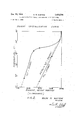
- FIGURE 2 is a solvent crystallization curve for trioxane in carbon dioxide solution, carbon dioxide-water solution, and in water solution.
- This invention discloses a solvent extraction method for separating saline solution such as sea-water into two phases of differing salt concentration, which in a preferred method may be withdrawn as two component streams one of which comprises water having not more than about 0.03 percent by weight of residual salt, if multiple extraction procedure is used, and the second comprising brine. Separation of solvent from the two ice streams may be accomplished by introducing into each of the separated fractions a second solvent which may be a condensed gas or other non-polar agent which renders water and the first solvent immiscible or which renders azeotropic distillation possible.
- a second solvent which may be a condensed gas or other non-polar agent which renders water and the first solvent immiscible or which renders azeotropic distillation possible.
- Solvents suitable for use in this invention comprise those which form mutual solubility solution saline water with large differences in salinity occurring between phases; oxa-cyclic compounds such as dioxane, trioxane, trioxepane, Tetraoxopane, and homologs and lower alkyl substituents and oxy substituents thereof are suitable; preferred solvents have combined properties of low-toxicity, high stability under vaporizing temperature and pressure conditions, low hydrolysis constant, and non-corrosive activity so that end use for which product water is suitable is not restricted.
- S-trioxane is a preferred solvent for use herein alone and in synergistic combination with a minor proportion of trioxepane; it melts at 61 C.
- Recovery from water solution may be effected by extracting it with non-polar water immiscible solvents, for example, ethylene dichloride, or methylene chloride, or with condensed gas such as nitrous oxide, carbon dioxide, or sulfur dioxide, or may be effected by azeotropic distillation as disclosed in US Patents 2,432,771 and 2,439,777 where hexane is disclosed as a solvent which reduces distillation temperature.
- non-polar water immiscible solvents for example, ethylene dichloride, or methylene chloride
- condensed gas such as nitrous oxide, carbon dioxide, or sulfur dioxide
- sym-trioxane crystallizes at higher concentrations from aqueous solution at about 48 C. and distills as a constant boiling mixture of about 70 percent sym-trioxane and 30. percent water at about 91 C.; addition of a solvent may lower crystallization temperature and distillation temperature, eg, at atmospheric pressure with carbon dioxide added crystallization temperature may be lowered to 30 C. or below and with hexane added distillation temperature may be lowered to about 70 C.
- Sym-trioxane may be operably used over a wide range of pressure conditions from subatmospheric to 70 atmospheres or more.
- Oxa-cyclic compounds i.e. compounds of closed ring structure comprising multiple (-C-OC) bonding, are preferred for use herein to acyclic compounds because it is believed that hydrogen bonding of water is promoted.
- Mineral salts as occur in sea water are soluble in symtrioxane-water solutions at 48 C. to about 1.6 percent by weight in the water portion calculated as sodium chloride; at lower temperature sym-trioxane crystallizetion occurs.
- Addition of a small amount of a condensed gas such as carbon dioxide will reduce sodium chloride solubility in water to a 0.1 percent by weight for water in the water-solvent rich phase in comparison to 1.6 percent solubility in water without such addition; sym-trioxane precipitation temperature in the phase is reduced to about 30 C.
- Carbon dioxide to the order of 50 weight percent may further be added to the solvent rich water phase after it is separated to cause solvent and water to become immiscible and separate into two phases with residual contamination of the water by the solvent being under 0.03 percent by weight and within tolerable limits for human consumption and for agricultural and industrial use, carbon dioxide being recoverable after separation of solvent and water upon slight heating and/ or release of pressure.
- the process of this invention may be performed throughout at near ambient temperature, i.e. between about 15 C. and 40 C. with super-atmospheric pressure only being necessary to contain carbon dioxide during extraction and to condense and recover it after it is freed from the product water.
- the process may be conducted at pressures, either sub-atmospheric or super-atmospheric as may be most advantageous in view of the particular conditions existing at a process installation.
- FIGURE 1 a schematic flow diagram of a process of this invention is shown wherein salt feed water stream is introduced into extraction tower 11.
- the tower may be heated or cooled by conventional means which are not shown, but which may comprise internal heating or cooling coils. A temperature greater than the temperature at which crystallization of components would occur must be attained.
- Solvent is introduced into tower 11 through pipe 8, and an activating agent may be introduced into either the solvent or feed water before entry into tower 11, or may be introduced directly through pipe 9 into tower 11 as shown.
- an activating agent may be introduced into either the solvent or feed water before entry into tower 11, or may be introduced directly through pipe 9 into tower 11 as shown.
- a temperature in tower 11 of 40 C. is sufiicient to avoid precipitation of crystals of trioxane.
- Total vapor pressure of about 250:40 p.s.i. will obtain under such conditions.
- the contents of tower 11 are brought into intimate mutual contact by means not shown, but which may comprise countercurrent flow of components through sieve plates, tower packing or the like.
- Two phases form in tower .11 as well separated raffinate and extract layers.
- the upper phase (rafiinate if the stated components are used) is pumped by pump 12 to solvent recovery tower 22 through pipe 14.
- the lower phase (extract) is pumped from the bottom of tower 11 by pump 15 to second stage extraction tower 16 through pipe 17.
- Solvent is introduced into tower 16 through pipe 8, and activating agent is added to the bottom of tower 16, through pipe 9.
- Ratfinate and extract are pumped from tower 16, which may be similar in structure and operation to tower 11, through pumps .12 and 15' respectively.
- the rafiinate is emptied to pipe 14 and the extract is conducted through pipe 17 to wash tower 20.
- Activating agent which is used to wash the water fraction is introduced to tower 20 through pipe 9".
- solvent recovery tower 2.1 which may be structurally similar to extraction towers 11, 16, and 20, a second solvent is introduced which in FIGURE 1 is the same material as the activating agent introduced into the extraction towers 11, 16, and 20; using theabove stated components the second solvent is liquid carbon dioxide and is introduced to tower 21 through pipe 19".
- the more dense solvent phase is withdrawn from tower 21 through pipe 25 to heater 26.
- the less dense water phase is pumped from the top of tower 21 by pump 27 to heater 28 through pipe 29.
- a second solvent is introduced into solvent recovery tower 22 in a manner similar to that shown for tower 21.
- a condensed gas is used in different concentrations both as activating agent and separating agent to effect respectively, mixing and de-mixing action on the mixture of solvent and water in the towers.
- the more denes solvent phase is withdrawn from tower 22, in all material respects similar to tower 21, through pipe 30 into pipe 25 and heater 26.
- the less dense brine phase is pumped from the top of tower 22 by pump 31 through pipe 32 to heater 33.
- heaters 26, 28, and 33 is heated, means not shown, to a temperature sufiiciently great to vaporize the second solvent.
- the critical temperature of carbon dioxide is 31 C., and heating may not be necessary under all operating conditions.
- Cooler 37 may incorporate compressor stages Qr other means as may be necessary to condense, dry, and otherwise render the recovered solvent reusable. If the process is operated at super-atmospheric pressure, means not shown, such as brine and product water, driven turbines may be used to pump feed water into the process.
- the brine discharge from the bottom of heater 33 may be collected for by-product recovery.
- Solvent discharge from heater 26 is returned through pipe 39 to solvent make-up pipe 8 for re-use.
- Fresh potable water is obtained from the bottom of heater 28 containing less than 0.05 weight percent salt and not more than about 0.03 weight percent solvent if trioxane is used.
- FIGURE 2 is a semi-qualitative composition diagram for a system of water-sym-trioxane-carbon dioxide in which the effect of small quantities of carbon dioxide in depressing the freezing point of sym-trioxane in aqueous solution will be noted, i.e. the freezing point at atmospheric pressure is depressed from 48 C. to about 15 C. with addition of an amount to 50 weight percent liquid carbon dioxide.
- the critical temperature of carbon dioxide is 31 C., however the solubility of carbon dioxide in sym-trioxane is sufficiently great to enable it to be dissolved in water-trioxane solutions or mixtures in all feasible solvent proportions to about 20 weight percent of the maximum usable in tower 11 of FIGURE 1, or to about 50 weight percent as usable in the recovery towers.
- potable water means water having less than 0.2 percent by weight mineral salt content; brackish water from about 0.2 percent to 0.5 percent by weight mineral salt content; sea water about 3.5 percent by weight mineral salt content; brine greater than about 3.5 percent by weight mineral salt content.
- S-trioxane is used herein to mean trioxane as obtained from known methods of synthesis, asymmetric trioxane being present in insufiicient quantities to require separation for use in the processes herein described.
- EXAMPLE I 25 ml. Pacific Ocean water obtained near Los Angeles, Calif., having 3.4 wt. percent total halogen content calculated as NaCl; gms. trioxane.
- the above components were placed in a 300 ml. separatory funnel at 61 C. and completely dissolved with stirring into one phase.
- the total solution volume was 155 ml.
- the contents of the funnel were cooled in a water bath slowly with frequent stirring and were observed to separate into two liquid phases upon standing. The volumes of the phases were observed; at 57 C. the lower phase was 110 -ml.; at 52 C., 100 ml.; and at 48 C. trioxane crystallization occurred.
- the temperature of the funnel and contents was raised to 57 C. by heating in a water bath with stirring.
- the lower phase of 110 ml. was removed to a second separatory funnel.
- the brine layer 11 ml. in volume formed in the supernatant phase 15 ml. in volume from the second funnel contained 4.0 wt. percent NaCl
- the brine layer 19 ml. in volume formed in the lower phase 95 ml. in volume from the second funnel contained 1.7 wt. percent NaCl as titrated with 0.1 N AgNO
- Additional extractions of 3.5 wt. percent NaCl solutions in water were separately conducted in the manner and with the proportions of Example II with each of the following solvents replacing sym-trioxane and l,3,5-trimethyl trioxane(paraldehyde).
- Solvents which may be preferred to both latter named solvents include 1,3,5-trioxepane; l, 3,5-trioxane-2-oxy; 1,3,5-trioxane-2,4,6-trioxy, and monomethyl and mono-ethyl substituents of each of said hydrocarbon solvents. Solvents may be used in combination and with tetraoxocane or lower alkyl substituents. The stability of each said solvent was less at elevated temperatures and under hydrolyzing conditions than for trioxane; and none is preferred for use in the method disclosed herein.
- the processes of this invention can be performed by continuous multiple extraction methods.
- Example II The precipitative extraction procedure of Example II was followed with additional extractions being made in the described manner of each phase of the second funnel and of the supernatant phase of thte first funnel.
- EXAMPLE IV 25 ml. of 3.5 wt. percent solution of NaCl in water; 60 gms. trioxane.
- Example II The above components were placed in a separatory funnel at 54 C. and after stirring and dissolution were observed to separate into a supernatant phase ml. in volume and a lower phase ml. in volume.
- the procedure of Example II was followed by cooling the funnel and at 51 C. separating a lower phase 49 ml. in volume.
- Trioxane was extracted from the separate phases by double washing with ethylene dichloride in the manner of Example II to yield water layers 7 ml. in volume with 1.8 wt. percent NaCl in the lower phase and 16 ml. in volume with 4.6 wt. percent NaCl in the supernatant phase.
- EXAMPLE V 56 gms. sym-trioxane; 30 gms. sea water having 3.4 percent by weight salt content calculated as NaCl.
- the sample was ejected from the funnel into a smaller sealed chamber in which pressure was released after the funnel was again sealed.
- An equal volume of ethylene dichloride was added to the sample causing dissolved water to appear as a supernatant layer.
- After separating the water layer it was again washed with an equal volume of ethylene dichloride and was analyzed for halogen content by titrating with 0.1 N .AgNO solution. The titration showed 0.08 percent by weight halogen calculated as NaCl in the water which was about 2 ml. in volume.
- Example V The procedure of Example V was repeated .at a [water bath temperature of 55 C. The water obtained from the sample withdrawn from the funnel was found to contain 0.35 percent by weight halogen calculated as NaCl. The proportion of water in the sample was measurably higher than that of Example V.
- Example VII The procedure of Example V was followed for obtaining a sample; washing of the sample with ethylene dichloride was omitted. After withdrawing the sample superatmospheric pressure was not released, but the sample was cooled to about 23 C. and additional carbon dioxide was introduced .as liquid until it comprised slightly in excess of percent of the weight of the sample with super atmospheric pressure being about 650 p.s.i.g. After shaking the sample two liquid layers formed and the more dense solvent layer was withdrawn from the sample. The remaining supernatant water layer was multiply washed with equal volumes of liquid carbon dioxide. After three washings the water was found to contain 0.03 weight percent syn-trioxane and 0.05 weight percent halogen calculated as NaCl. The proportion of water in the sample was similar to that of Example V.
- Example VIII The procedure of Example V is followed except that the temperature of the funnel is adjusted to 32 C. and a total of 17 tnl. of liquid carbon dioxide is introduced to the funnel to provide total vapor pressure of 1060 p.s.i.g. A sample is withdrawn from the funnel and cooled to 30 C. condensing the carbon dioxide while 15 ml. additional liquid carbon dioxide is introduced to maintain the vapor pressure. After separating two phases which form in the sample and washing the water phase three successive times with liquid carbon dioxide, the halogen content of the water is determined by titration with 0.1 N AgNO and is found to be less than in Example VII.
- the above components are intimately mixed at C. After letting the mixture sit for five minutes two phases which appear in the mixture are separated and are introduced into separate stainless steel separatory funnels. Nitrous oxide is introduced into the contents of each of the funnels until pressures of 400 p.s.i.g. are obtained. After thorough mixing of the contents the contents of each funnel separates into two phases. A sample drawn from the bottom of the funnel containing the IOlWfiI phase of the initial mixture is washed twice with nitrous oxide and is analyzed for halogen by titration with 0.1 N AgNO The halogen content calculated as NaCl is found to be less than 0.1 weight percent of the water solution.
- Example XI The procedure of Example XI may be repeated using 1,3,5-trioxepane or using 1,3,5-trioxane, 2,4,6-trioxy to yield results similar to that of Example XI.
- the monomethyl and mono-ethyl substituents of dioxane, trioxane, and trioxepane may also be used with similar results, and at lower temperature than are possible with the unsubstituted solvents, but with somewhat greater hydrolysis of the solvent.
- EXAMPLE X 20 gms. salt water (1.6 percent NaCl); 40 gms. symtrioxane; 20 gms. trioxepane.
- the above components at 18 C. are placed in a separatory funnel and intimately mixed. After letting the funnel sit for five minutes the two phases which appear are separated and the lower phase fraction is mixed with an equal volume of ethylene dichloride. The water and solvent phases which appear are separated and the water is washed twice with equal volumes of ethylene dichloride at 18 C.
- the halogen content calculated as NaCl is determined by titration with 0.1 N AgNO Halogen content is less than 0.3 weight percent of water solution.
- the lower phase fraction in the separatory funnel constitutes about two-thirds the original total volume, .and from about 10 percent to 15 percent of the lower phase was absorbed water.
- Trioxepane is described in U.S. Patents 2,475,610 and 2,625,569; it is a liquid at room temperature and boils at 131 C. at atmospheric pressure.
- Example XI A process of Example X is repeated and 6 ml. of liquid carbon dioxide is introduced into the separatory funnel before mixing of the components.
- the extracted water is of similar volume to that of Example X, and has .a halogen content calculated as NaCl of less than 0.1 weight percent of water solution.
- EXAMPLE XII 30 gms. sea water, 30 gms. tetraoxocane, 30 gms. trioxepane.
- Condensible gases generally and in particular other members of those sold commercially as freon such as, for example, trifiuoromonochloromethane may be used as a separatory agent in the process of this invention.
- Halogenated solvents are also generally suitable as separatory agents herein.
- Example XII The procedure of Example XII is repeated at 25 C. using meta-dioxane and trioxane in place of tetraoxecane and trioxepane.
- the halogen content calculated as NaCl is less than 0.5 weight percent of water solution.
- trioxane is used as solvent to concentrate the salinity of the rejected phase to about 8.0 percent by weight NaCl in water, and similar concentrations may be expected with other solvents herein disclosed.
- Synergistic solvent action may be provided by using multiple solvents in combination e.g. trioxane and trioxepane as shown in Example X, to yield potable water in greater quantity than can be obtained by use of either solvent alone with the given solvents, and the range of processing temperatures may be greatly increased so that sea water at ambient temperature may be processed without heating, the freezing range of the solvent mixture being depressed by trioxepane which freezes at 4 C.
- trioxane rich supernatant phase appeared and crystalline salt was observed in the lower phase.
- crystals of trioxane precipitated.
- the supernatant trioxane rich phase was reduced to /2 ml. or less while an estimated 1 /2 ml. of NaCl crystals appeared on the bottom of the funnel.
- 7 /2 gms. of trioxane were added and the temperature raised to 68 C. and the contents stirred. After allowing to stand about 2 ml. of NaCl crystals were removed from the bottom of the funnel and were washed with acetone, dried, and found to weigh 1.5 gms.
- EXAMPLE XIV 168 gms. of trioxane were placed in a separatory funnel and melted at 62 C. in a water bath. 7 cc. of 3.5 wt. percent solution of NaCl in water were added to the funnel dropwise while the temperature was maintained at about 55 C. Upon the addition of each drop of saline solution salt crystals were observed to precipitate in the funnel. The water appeared to be completely absorbed. 2 cc. of additional 3.5 wt. percent solution of NaCl in water were added with dissolution of all salt crystals in the vessel being observed and with a second liquid phase dispersed as droplets throughout the funnel content appearing.
- oxa-cyclic means cyclic organic compounds consisting of carbon and oxygen as cyclic members, and all other nomenclature is as prescribed in Nomenclature of Organic Chemistry 1957, Butterworths Scientific Publications, London, 1958, which embodies approved nomenclature of the International Union of Pure and Applied Chemistry.
- an improvement comprising the steps of dissolving in liquid solution phase of said water and said solvent at least one condensible gas substance in an amount to provide a solution phase comprising water potable with respect to salinity, separating at least said phase comprising water potable with respect to salinity and contacting therewith at least one member of a group consisting of condensible gases and substantially water immisible liquid substance ha-ving solubility with said solvent in an amount to provide a liquid phase comprising water potable with respect to salinity and substantially free of said solvent.
- an improvement comprising the steps of dissolving in solution phase comprising said water and said solvent at least one member selected from a group consisting of carbon dioxide and nitrous oxide in an amount to provide a solution phase comprising water potable with respect to salinity separating at least said phase comprising water potable with respect to salinity and contacting therewith at least one member of a group consisting of condensible gases and substantially water immisible liquid having solubility with said solvent in an amount to provide a liquid phase comprising water potable with respect to salinity, and substantially free of said solvent.
- a process for providing potable water with respect to saline content from non-potable aqueous solution of mineral salt comprising the steps of:
- non-potable aqueous solution of mineral salt comprises not more than 1.6 percent by weight mineral salt.
- oxa-cyclic organic compounds consist of paradioxane; meta-dioxane; trioxane; 1,3,5-trioxane-2-oxy; trioxepane; tetraoxocane, and lower alkyl substituents thereof, and oxygen substituents thereof.
Landscapes
- Chemical & Material Sciences (AREA)
- Chemical Kinetics & Catalysis (AREA)
- Life Sciences & Earth Sciences (AREA)
- Hydrology & Water Resources (AREA)
- Engineering & Computer Science (AREA)
- Environmental & Geological Engineering (AREA)
- Water Supply & Treatment (AREA)
- Organic Chemistry (AREA)
- Organic Low-Molecular-Weight Compounds And Preparation Thereof (AREA)
- Polyethers (AREA)
Description
Dec. 10, 1968. R. w. BUETOW SOLVENT EXTRACTION METHOD FOR REMOVING SALT FROM WATER 2 Sheets-Sheet 1 Filed May 5, 1965 mZEm NOLLQVULXB Z U3MOJ.
NOILDVBLX'S RALPH W. BUETOW INVENTOR ATTORNEY Dec. 10, 1968 R. w. BUETOW 3,415,744
SOLVENT EXTRACTION METHOD FOR REMOVING SALT FROM WATER Filed May 5. 1965 2 Sheets-Sheet 2 JOLVE/VT CRYJTALL/ZAT/O/V CUPVE' 1 1 07; 25 2 50% 75 7. /00% SOLVENT, WEIGHT PERCENT (s -TR/0XANE) FIGZ RALPH w. auzmw INVENTOR ATTORNEY United States Patent 11 Claims. (Cl. 210-22) ABSTRACT OF THE DISCLOSURE A solvent extraction method for reducing saline content of aqueous solution using solvents of cyclic structure comprising oxygen ring members and a condensible gas in solution.
This invention relates to a solvent extraction method for reducing salt content in saline solution, and more particularly relates to a method for extracting potable water from sea water by liquid-liquid extraction.
This application is a continuation-in-part of patent ap plication Serial No. 434,686 filed February 23, 1965.
In the method of this invention water containing dissolved mineral salt is contacted by a solvent in which water dissolves preferentially to salt causing two liquid phases to form, one as a brine and solvent ratlinate layer and the other as a potable water (with respect to salt content) and solvent extract layer; the two phases are separated and each may again be contacted with a solvent to cause aqueous and organic phases to separate from each separated fraction, potable water being recovered from the extract fraction after expelling dissolved gases or removing residual solvent by other operable means.
It is an object of this invention to provide a liquidliquid extraction method for extracting potable water from sea water.
It is another object of this invention to provide a solvent extraction method for extracting potable water from sea water utilizing relatively non-toxic, non-corrosive chemicals.
It is another object of this invention to provide an economical method for rendering saline water potable and suitable for large scale agricultural and industrial use.
Other objects will become apparent from the following detailed description and from the accompanying drawings in which:
FIGURE 1 is a schematic flow diagram of the process of this invention;
FIGURE 2 is a solvent crystallization curve for trioxane in carbon dioxide solution, carbon dioxide-water solution, and in water solution.
This invention discloses a solvent extraction method for separating saline solution such as sea-water into two phases of differing salt concentration, which in a preferred method may be withdrawn as two component streams one of which comprises water having not more than about 0.03 percent by weight of residual salt, if multiple extraction procedure is used, and the second comprising brine. Separation of solvent from the two ice streams may be accomplished by introducing into each of the separated fractions a second solvent which may be a condensed gas or other non-polar agent which renders water and the first solvent immiscible or which renders azeotropic distillation possible.
Solvents suitable for use in this invention comprise those which form mutual solubility solution saline water with large differences in salinity occurring between phases; oxa-cyclic compounds such as dioxane, trioxane, trioxepane, Tetraoxopane, and homologs and lower alkyl substituents and oxy substituents thereof are suitable; preferred solvents have combined properties of low-toxicity, high stability under vaporizing temperature and pressure conditions, low hydrolysis constant, and non-corrosive activity so that end use for which product water is suitable is not restricted. S-trioxane is a preferred solvent for use herein alone and in synergistic combination with a minor proportion of trioxepane; it melts at 61 C. has a hydrolysis constant of 5.3)(10 minf is soluble from 21.1 gm./ cc. of water solution at 25 C. to infinity in hot water, vaporizes under atmospheric pressure at C. showing no decomposition at 200 C. for 2 hours, is not hydrolyzed in neutral or alkaline solution, undergoes only very slow hydrolysis in weak acid solution, and is of very low toxicity. Recovery from water solution may be effected by extracting it with non-polar water immiscible solvents, for example, ethylene dichloride, or methylene chloride, or with condensed gas such as nitrous oxide, carbon dioxide, or sulfur dioxide, or may be effected by azeotropic distillation as disclosed in US Patents 2,432,771 and 2,439,777 where hexane is disclosed as a solvent which reduces distillation temperature.
At atmospheric pressure sym-trioxane crystallizes at higher concentrations from aqueous solution at about 48 C. and distills as a constant boiling mixture of about 70 percent sym-trioxane and 30. percent water at about 91 C.; addition of a solvent may lower crystallization temperature and distillation temperature, eg, at atmospheric pressure with carbon dioxide added crystallization temperature may be lowered to 30 C. or below and with hexane added distillation temperature may be lowered to about 70 C. Sym-trioxane may be operably used over a wide range of pressure conditions from subatmospheric to 70 atmospheres or more.
Oxa-cyclic compounds, i.e. compounds of closed ring structure comprising multiple (-C-OC) bonding, are preferred for use herein to acyclic compounds because it is believed that hydrogen bonding of water is promoted.
by ether linkages, and in a cyclic molecule hydrogen bonding is essentially internally complete so that cross bonded aggregations of molecules or polymers is substantially avoided; the steric configuration of sym-triox: ane wherein oxygen atoms and carbon atoms are grouped mutually independently in non-intersecting planes is believed to particularly enhance internal hydrogen bonding.
Mineral salts as occur in sea water are soluble in symtrioxane-water solutions at 48 C. to about 1.6 percent by weight in the water portion calculated as sodium chloride; at lower temperature sym-trioxane crystallizetion occurs. Addition of a small amount of a condensed gas such as carbon dioxide will reduce sodium chloride solubility in water to a 0.1 percent by weight for water in the water-solvent rich phase in comparison to 1.6 percent solubility in water without such addition; sym-trioxane precipitation temperature in the phase is reduced to about 30 C. Carbon dioxide to the order of 50 weight percent may further be added to the solvent rich water phase after it is separated to cause solvent and water to become immiscible and separate into two phases with residual contamination of the water by the solvent being under 0.03 percent by weight and within tolerable limits for human consumption and for agricultural and industrial use, carbon dioxide being recoverable after separation of solvent and water upon slight heating and/ or release of pressure. The process of this invention may be performed throughout at near ambient temperature, i.e. between about 15 C. and 40 C. with super-atmospheric pressure only being necessary to contain carbon dioxide during extraction and to condense and recover it after it is freed from the product water. The process may be conducted at pressures, either sub-atmospheric or super-atmospheric as may be most advantageous in view of the particular conditions existing at a process installation.
Referring now to FIGURE 1, a schematic flow diagram of a process of this invention is shown wherein salt feed water stream is introduced into extraction tower 11. The tower may be heated or cooled by conventional means which are not shown, but which may comprise internal heating or cooling coils. A temperature greater than the temperature at which crystallization of components would occur must be attained. Solvent is introduced into tower 11 through pipe 8, and an activating agent may be introduced into either the solvent or feed water before entry into tower 11, or may be introduced directly through pipe 9 into tower 11 as shown. For use of sym-trioxane as solvent and carbon dioxide as activating "agent (in concentration in the order about 10 weight percent of total solution) a temperature in tower 11 of 40 C. is sufiicient to avoid precipitation of crystals of trioxane. Total vapor pressure of about 250:40 p.s.i. will obtain under such conditions. The contents of tower 11 are brought into intimate mutual contact by means not shown, but which may comprise countercurrent flow of components through sieve plates, tower packing or the like. Two phases form in tower .11 as well separated raffinate and extract layers. The upper phase (rafiinate if the stated components are used) is pumped by pump 12 to solvent recovery tower 22 through pipe 14. The lower phase (extract) is pumped from the bottom of tower 11 by pump 15 to second stage extraction tower 16 through pipe 17. Solvent is introduced into tower 16 through pipe 8, and activating agent is added to the bottom of tower 16, through pipe 9. Ratfinate and extract are pumped from tower 16, which may be similar in structure and operation to tower 11, through pumps .12 and 15' respectively.The rafiinate is emptied to pipe 14 and the extract is conducted through pipe 17 to wash tower 20. Activating agent which is used to wash the water fraction is introduced to tower 20 through pipe 9". From tower 20, which may be similar in structure to towers 11 and 16, rafiinate is pumped from the top of wash tower 20 by pump 12" to recovery tower 21 through pipe 14' and extract is pumped by pump 15" through pipe 14 to solvent recovery tower 22. In solvent recovery tower 2.1, which may be structurally similar to extraction towers 11, 16, and 20, a second solvent is introduced which in FIGURE 1 is the same material as the activating agent introduced into the extraction towers 11, 16, and 20; using theabove stated components the second solvent is liquid carbon dioxide and is introduced to tower 21 through pipe 19". The more dense solvent phase is withdrawn from tower 21 through pipe 25 to heater 26. The less dense water phase is pumped from the top of tower 21 by pump 27 to heater 28 through pipe 29.
A second solvent is introduced into solvent recovery tower 22 in a manner similar to that shown for tower 21. In FIGURE 1, a condensed gas is used in different concentrations both as activating agent and separating agent to effect respectively, mixing and de-mixing action on the mixture of solvent and water in the towers. The more denes solvent phase is withdrawn from tower 22, in all material respects similar to tower 21, through pipe 30 into pipe 25 and heater 26. The less dense brine phase is pumped from the top of tower 22 by pump 31 through pipe 32 to heater 33. Each of heaters 26, 28, and 33 is heated, means not shown, to a temperature sufiiciently great to vaporize the second solvent. The critical temperature of carbon dioxide is 31 C., and heating may not be necessary under all operating conditions.
The vapors released in heaters 26, 28, and 33 are piped (by pipe 35 for heater 26) into manifold 36 which exhausts in cooler 37 where the vapors are condensed and withdrawn by pipe 38 into liquid activating solvent makeup pipe 9. Cooler 37 may incorporate compressor stages Qr other means as may be necessary to condense, dry, and otherwise render the recovered solvent reusable. If the process is operated at super-atmospheric pressure, means not shown, such as brine and product water, driven turbines may be used to pump feed water into the process.
The brine discharge from the bottom of heater 33 may be collected for by-product recovery. Solvent discharge from heater 26 is returned through pipe 39 to solvent make-up pipe 8 for re-use. Fresh potable water is obtained from the bottom of heater 28 containing less than 0.05 weight percent salt and not more than about 0.03 weight percent solvent if trioxane is used.
In the process illustrated in FIGURE 1, it may be desirable to pre-mix and filter feed components before introducing them to extraction tower 11 to remove solid impurities and any complex-ion hydrate precipitate that may form upon addition of extraction solvents to saline water although such precipitation is not substantial.
FIGURE 2 is a semi-qualitative composition diagram for a system of water-sym-trioxane-carbon dioxide in which the effect of small quantities of carbon dioxide in depressing the freezing point of sym-trioxane in aqueous solution will be noted, i.e. the freezing point at atmospheric pressure is depressed from 48 C. to about 15 C. with addition of an amount to 50 weight percent liquid carbon dioxide. The critical temperature of carbon dioxide is 31 C., however the solubility of carbon dioxide in sym-trioxane is sufficiently great to enable it to be dissolved in water-trioxane solutions or mixtures in all feasible solvent proportions to about 20 weight percent of the maximum usable in tower 11 of FIGURE 1, or to about 50 weight percent as usable in the recovery towers.
As used herein potable water means water having less than 0.2 percent by weight mineral salt content; brackish water from about 0.2 percent to 0.5 percent by weight mineral salt content; sea water about 3.5 percent by weight mineral salt content; brine greater than about 3.5 percent by weight mineral salt content.
S-trioxane is used herein to mean trioxane as obtained from known methods of synthesis, asymmetric trioxane being present in insufiicient quantities to require separation for use in the processes herein described.
The following examples illustrate the process of this invention:
EXAMPLE I 25 ml. Pacific Ocean water obtained near Los Angeles, Calif., having 3.4 wt. percent total halogen content calculated as NaCl; gms. trioxane.
The above components were placed in a separatory funnel, heated in a water bath to 61 C. and stirred until complete dissolution occurred. The funnel and contents were cooled to 51 C. in the water bath with frequent stirring with the appearance of two phases, the lower phase being 58 ml. in volume and the supernatant phase 19 ml. in volume. The phases were separated at 51 C. after which the lower phase was cooled to below 48 C. with the precipitation of trioxane crystals. An equal vol ume of ethylene dichloride was added to the lower phase dissolving all trioxane crystals and freeing occluded water EXAMPLE II 50 ml. of 3.5 wt. percent solution of NaCl in water; 121 gms. of trioxane.
The above components were placed in a 300 ml. separatory funnel at 61 C. and completely dissolved with stirring into one phase. The total solution volume was 155 ml. The contents of the funnel were cooled in a water bath slowly with frequent stirring and were observed to separate into two liquid phases upon standing. The volumes of the phases were observed; at 57 C. the lower phase was 110 -ml.; at 52 C., 100 ml.; and at 48 C. trioxane crystallization occurred. The temperature of the funnel and contents was raised to 57 C. by heating in a water bath with stirring. At 57 C. the lower phase of 110 ml. was removed to a second separatory funnel. A volume of 40 ml. of the remaining upper layer was washed with an equal volume of ethylene dichloride with the appearance of a brine layer floating on a trioxaneethylene dichloride rich loWer layer. The lower layer was removed from the first funnel and the remaining brine layer in the funnel was again washed with ethylene dichloride to remove traces of trioxane. After removing the second ethylene dichloride wash layer the brine layer remaining 21 ml. in volume was titrated with 0.1 N AgNO It was found to contain 4.5 wt. percent NaCl. The temperature of the second funnel was adjusted to 55 C. Two layers appeared. The lower layer was removed and treated as in Example I. The supernatant layer was washed and analyzed in the manner of the supernatant layer of the first funnel. The brine layer 11 ml. in volume formed in the supernatant phase 15 ml. in volume from the second funnel contained 4.0 wt. percent NaCl, and the brine layer 19 ml. in volume formed in the lower phase 95 ml. in volume from the second funnel contained 1.7 wt. percent NaCl as titrated with 0.1 N AgNO Additional extractions of 3.5 wt. percent NaCl solutions in water were separately conducted in the manner and with the proportions of Example II with each of the following solvents replacing sym-trioxane and l,3,5-trimethyl trioxane(paraldehyde). Product water of equivalent saline concentration in either case was substantially less than yield obtained in Example II, and in each extraction solvent hydrolysis and apparent toxicity of the decomposition product was greater than that for trioxane in Example II. Solvents which may be preferred to both latter named solvents include 1,3,5-trioxepane; l, 3,5-trioxane-2-oxy; 1,3,5-trioxane-2,4,6-trioxy, and monomethyl and mono-ethyl substituents of each of said hydrocarbon solvents. Solvents may be used in combination and with tetraoxocane or lower alkyl substituents. The stability of each said solvent was less at elevated temperatures and under hydrolyzing conditions than for trioxane; and none is preferred for use in the method disclosed herein.
Precipitation and separation of phases with trioxane conducted as in Example II, but at increasing pressures to 1500 p.s.i. did not materially affect phase volumes, and phase compositions were found to be similar to those of Example II in NaCl content.
The processes of this invention can be performed by continuous multiple extraction methods.
6 EXAMPLE 111 50 ml. of 3.5 wt. percent solution of NaCl in water; 120 gms. trioxane.
The precipitative extraction procedure of Example II was followed with additional extractions being made in the described manner of each phase of the second funnel and of the supernatant phase of thte first funnel.
Supernatant phase Lower phase 1st. separation at 61 0.:
16 1111. total. 8.3 ml. water layer. 4.8 wt. percent NaCl in water. 2nd separation using supernatant phase; 1st separation at 49 0.:
12 1111. total. 7.5 ml. water layer. 5.3 wt. percent NaCl in water. 2nd separation using lower phase 1st separation 56 0.:
22 ml. total. 15 ml. water layer. 4.6 wt. percent NaCl in water. 3rd separation 'usiug lower phase;
1st separation, supernatant phase; 2nd separation at 49 0.:
20 ml. total. 14 ml. water layer. 4.8 wt. percent NaCl in water. 3rd separation using lower phase;
1st separation, lower phase; 2nd separation at 49 0.:
10 ml. total. 5 ml. water layer. 3.8 wt. percent NaCl in water.
2.0 wt. percent NaCl in water.
3rd seapration using lower phase;
1st separation, supernatant phase; 2nd separation at 49 0.:
2 m1. total. .5 ml. water layer. 1.8 wt. percent Nacl in water. 3rd separation using lower phase;
1st separation, lower phase; 2nd separation at 49 0.:
105 ml. total. 21 ml. water layer. 1.6 wt. percent N aGl in water.
The above components were placed in a separatory funnel at 54 C. and after stirring and dissolution were observed to separate into a supernatant phase ml. in volume and a lower phase ml. in volume. The procedure of Example II was followed by cooling the funnel and at 51 C. separating a lower phase 49 ml. in volume. Trioxane was extracted from the separate phases by double washing with ethylene dichloride in the manner of Example II to yield water layers 7 ml. in volume with 1.8 wt. percent NaCl in the lower phase and 16 ml. in volume with 4.6 wt. percent NaCl in the supernatant phase.
EXAMPLE V 56 gms. sym-trioxane; 30 gms. sea water having 3.4 percent by weight salt content calculated as NaCl.
The above components were placed in a stainless steel separatory funnel and dissolved by being heated to 60 C. with stirring, after which the funnel was tightly sealed by securing the top; 6 ml. carbon dioxide as liquid was introduced into the contents of the funnel through a valve and the funnel and contents were then immersed in a water bath and cooled to 41 C. The pressure within the funnel at this temperature was about 300 p.s.i.g. Two liquid layers formed in the funnel without precipitating a solid phase (precipitation would occur at about 39 C.) and after shaking of the funnel and contents equilibrium between phases was obtained by letting the funnel sit for five minutes. A 17 ml. sample was drawn from the lower layer through a valve in the bottom of the funnel. The sample was ejected from the funnel into a smaller sealed chamber in which pressure was released after the funnel was again sealed. An equal volume of ethylene dichloride was added to the sample causing dissolved water to appear as a supernatant layer. After separating the water layer it was again washed with an equal volume of ethylene dichloride and was analyzed for halogen content by titrating with 0.1 N .AgNO solution. The titration showed 0.08 percent by weight halogen calculated as NaCl in the water which was about 2 ml. in volume.
7 EXAMPLE v1 The procedure of Example V was repeated .at a [water bath temperature of 55 C. The water obtained from the sample withdrawn from the funnel was found to contain 0.35 percent by weight halogen calculated as NaCl. The proportion of water in the sample was measurably higher than that of Example V.
EXAMPLE VII The procedure of Example V was followed for obtaining a sample; washing of the sample with ethylene dichloride was omitted. After withdrawing the sample superatmospheric pressure was not released, but the sample was cooled to about 23 C. and additional carbon dioxide was introduced .as liquid until it comprised slightly in excess of percent of the weight of the sample with super atmospheric pressure being about 650 p.s.i.g. After shaking the sample two liquid layers formed and the more dense solvent layer was withdrawn from the sample. The remaining supernatant water layer was multiply washed with equal volumes of liquid carbon dioxide. After three washings the water was found to contain 0.03 weight percent syn-trioxane and 0.05 weight percent halogen calculated as NaCl. The proportion of water in the sample was similar to that of Example V.
EXAMPLE VIII The procedure of Example V is followed except that the temperature of the funnel is adjusted to 32 C. and a total of 17 tnl. of liquid carbon dioxide is introduced to the funnel to provide total vapor pressure of 1060 p.s.i.g. A sample is withdrawn from the funnel and cooled to 30 C. condensing the carbon dioxide while 15 ml. additional liquid carbon dioxide is introduced to maintain the vapor pressure. After separating two phases which form in the sample and washing the water phase three successive times with liquid carbon dioxide, the halogen content of the water is determined by titration with 0.1 N AgNO and is found to be less than in Example VII.
EXAMPLE IX 70 gms. monomethyl trioxane; 32 gms. sea water.
The above components are intimately mixed at C. After letting the mixture sit for five minutes two phases which appear in the mixture are separated and are introduced into separate stainless steel separatory funnels. Nitrous oxide is introduced into the contents of each of the funnels until pressures of 400 p.s.i.g. are obtained. After thorough mixing of the contents the contents of each funnel separates into two phases. A sample drawn from the bottom of the funnel containing the IOlWfiI phase of the initial mixture is washed twice with nitrous oxide and is analyzed for halogen by titration with 0.1 N AgNO The halogen content calculated as NaCl is found to be less than 0.1 weight percent of the water solution.
The procedure of Example XI may be repeated using 1,3,5-trioxepane or using 1,3,5-trioxane, 2,4,6-trioxy to yield results similar to that of Example XI. The monomethyl and mono-ethyl substituents of dioxane, trioxane, and trioxepane may also be used with similar results, and at lower temperature than are possible with the unsubstituted solvents, but with somewhat greater hydrolysis of the solvent.
The above components at 18 C. are placed in a separatory funnel and intimately mixed. After letting the funnel sit for five minutes the two phases which appear are separated and the lower phase fraction is mixed with an equal volume of ethylene dichloride. The water and solvent phases which appear are separated and the water is washed twice with equal volumes of ethylene dichloride at 18 C. The halogen content calculated as NaCl is determined by titration with 0.1 N AgNO Halogen content is less than 0.3 weight percent of water solution. The lower phase fraction in the separatory funnel constitutes about two-thirds the original total volume, .and from about 10 percent to 15 percent of the lower phase was absorbed water.
Trioxepane is described in U.S. Patents 2,475,610 and 2,625,569; it is a liquid at room temperature and boils at 131 C. at atmospheric pressure.
EXAMPLE XI A process of Example X is repeated and 6 ml. of liquid carbon dioxide is introduced into the separatory funnel before mixing of the components. The extracted water is of similar volume to that of Example X, and has .a halogen content calculated as NaCl of less than 0.1 weight percent of water solution.
The above components at 18 C. are placed in a separatory funnel and intimately mixed. After letting the funnel sit for five minutes the two phases which appear are separated and the lower phase fraction is thoroughly mixed with an equal volume of condensed difiu-orodichloromethane in a sealed stainless steel separatory funnel at 25 C. and p.s.i.g. After funnel and contents sit for five minutes a sample is withdrawn from the upper iphase lWhICh forms in the funnel and is washed twice with condensed difluorodichloromethane and analysed for halogen content by titration with 0.1 N AgNO Calculated as NaCl the halogen content is less than 0.4 weight percent of water solution.
Condensible gases generally and in particular other members of those sold commercially as freon such as, for example, trifiuoromonochloromethane may be used as a separatory agent in the process of this invention. Halogenated solvents are also generally suitable as separatory agents herein.
The procedure of Example XII is repeated at 25 C. using meta-dioxane and trioxane in place of tetraoxecane and trioxepane. The halogen content calculated as NaCl is less than 0.5 weight percent of water solution.
It is possible in the processes of this invention wherein trioxane is used as solvent to concentrate the salinity of the rejected phase to about 8.0 percent by weight NaCl in water, and similar concentrations may be expected with other solvents herein disclosed. Synergistic solvent action may be provided by using multiple solvents in combination e.g. trioxane and trioxepane as shown in Example X, to yield potable water in greater quantity than can be obtained by use of either solvent alone with the given solvents, and the range of processing temperatures may be greatly increased so that sea water at ambient temperature may be processed without heating, the freezing range of the solvent mixture being depressed by trioxepane which freezes at 4 C.
The above components were placed in a separatory funnel at 55 C. and stirred. A 2 ml. trioxane rich supernatant phase appeared and crystalline salt was observed in the lower phase. Upon cooling to 48 C. crystals of trioxane precipitated. Upon heating the components in a water bath to 64 C. the supernatant trioxane rich phase was reduced to /2 ml. or less while an estimated 1 /2 ml. of NaCl crystals appeared on the bottom of the funnel. 7 /2 gms. of trioxane were added and the temperature raised to 68 C. and the contents stirred. After allowing to stand about 2 ml. of NaCl crystals were removed from the bottom of the funnel and were washed with acetone, dried, and found to weigh 1.5 gms.
EXAMPLE XIV 168 gms. of trioxane were placed in a separatory funnel and melted at 62 C. in a water bath. 7 cc. of 3.5 wt. percent solution of NaCl in water were added to the funnel dropwise while the temperature was maintained at about 55 C. Upon the addition of each drop of saline solution salt crystals were observed to precipitate in the funnel. The water appeared to be completely absorbed. 2 cc. of additional 3.5 wt. percent solution of NaCl in water were added with dissolution of all salt crystals in the vessel being observed and with a second liquid phase dispersed as droplets throughout the funnel content appearing. Separation of the disperse phase as a supernatant layer was not elfected by standing and the density differential between phases was not sutficient to cause separation of layers until the salt rich phase was more dilute. This extraction method was considered less satisfactory than the addition of solvent to saline solution as in the preceding examples.
Precipitation and separation of phases conducted in the manner of Example II, but at increasing pressures to 150 p,s.i. did not materially affect phase volumes, and phase compositions were found to be similar to those of Example II in NaCl content.
As used herein oxa-cyclic means cyclic organic compounds consisting of carbon and oxygen as cyclic members, and all other nomenclature is as prescribed in Nomenclature of Organic Chemistry 1957, Butterworths Scientific Publications, London, 1958, which embodies approved nomenclature of the International Union of Pure and Applied Chemistry.
While certain examples have been described for the purpose of illustrating the invention, it is to be understood that variations will be suggested to persons familiar in the art and that the invention is not limited except by limitations clearly imposed in the appended claims.
I claim:
1. In a process for purifying water non-potable because of salinity by extracting with oxa-cyclic organic solvent, an improvement comprising the steps of dissolving in liquid solution phase of said water and said solvent at least one condensible gas substance in an amount to provide a solution phase comprising water potable with respect to salinity.
2. In a process for purifying water non-potable because of salinity by extracting with oxa-cyclic organic solvent comprising at least three carbon atoms and at least two oxygen atoms as cyclic members in a ring consisting of from six to eight said atoms, an improvement comprising the steps of dissolving in solution phase comprising said water and said solvent at least one member selected from the group consisting of carbon dioxide and nitrous oxide in an amount to provide a solution phase comprising water potable with respect to salinity.
3. In a process for purifying water non-potable because of salinity by extracting with oxa-cyclic organic solvent, an improvement comprising the steps of dissolving in liquid solution phase of said water and said solvent at least one condensible gas substance in an amount to provide a solution phase comprising water potable with respect to salinity, separating at least said phase comprising water potable with respect to salinity and contacting therewith at least one member of a group consisting of condensible gases and substantially water immisible liquid substance ha-ving solubility with said solvent in an amount to provide a liquid phase comprising water potable with respect to salinity and substantially free of said solvent.
4. The process of claim 3 wherein said water potable with respect to salinity and substantially free of solvent is subjected to temperature and pressure whereby condensible gases therein are removed in gaseous state therefrom.
5. In a process for purifying water non-potable because of salinity by extracting with oxa-cyclic organic solvent comprising at least three carbon atoms and at least two oxygen atoms as cyclic members in a ring consisting of from six to eight said atoms, an improvement comprising the steps of dissolving in solution phase comprising said water and said solvent at least one member selected from a group consisting of carbon dioxide and nitrous oxide in an amount to provide a solution phase comprising water potable with respect to salinity separating at least said phase comprising water potable with respect to salinity and contacting therewith at least one member of a group consisting of condensible gases and substantially water immisible liquid having solubility with said solvent in an amount to provide a liquid phase comprising water potable with respect to salinity, and substantially free of said solvent.
6. The process of claim 5, wherein said water potable with respect to salinity and substantially free of solvent is subjected to temperature and pressure whereby condensible gases therein are removed in gaseous state therefrom.
7. A process for providing potable water with respect to saline content from non-potable aqueous solution of mineral salt comprising the steps of:
(a) introducing into said solution with intimate contact and at least partial dissolution a quantity of at least two oxa-cyclic organic compounds comprising at least three carbon atoms and at least two oxygen atoms in a ring consisting of from six to eight said atoms wherein one of said compounds is selected from a group consisting of trioxepane and lower alkyl substituents thereof and oxygen substituents thereof,
(b) controlling temperature thereof below the temperature of total dissolution to cause formation of plural phases, 7
(c) separating said phases,
(d) introducing into at least said separated phase comprising lesser salinity at least one member of a group consisting of condensible gases and substantially water immisible liquid having solubility with said solvent in an amount to provide a liquid phase comprising water potable with respect to salinity and substantially free of said solvent and azeotropic solvents,
(e) providing water potable with respect to saline content by subjecting mixture of said separated phase comprising lesser salinity and said member to temperature and pressure to remove from water as gaseous phase at least one of said member, said solvent, and said gases.
8. In the process of claim 7, wherein said non-potable aqueous solution of mineral salt comprises not more than 1.6 percent by weight mineral salt.
9. The process of claim 7, wherein said solution is contacted by said oxa-cyclic organic compound at ambient conditions of temperature and pressure.
10. The process of claim 7, wherein said oxa-cyclic organic compounds consist of paradioxane; meta-dioxane; trioxane; 1,3,5-trioxane-2-oxy; trioxepane; tetraoxocane, and lower alkyl substituents thereof, and oxygen substituents thereof.
11. The process of claim 7, wherein said comprise a solid salt phase.
plural phases References Cited UNITED STATES PATENTS 3,088,909 5/1963 Davison et a1. 21022 3,231,491 l/1966 Knap 2l021 3,239,459 3/1966 Patterson 2l021 (Other references on following page) Harwell et al., Desalination By Liquid-Liquid Extraction, First Annual Report, October 1954, pp. 1, 2, 6 and Dept. of Interior, Oflice of Saline Water Conversion Contract No. 1401-() 0'l6(), research conducted through the Texas A. & M. Research Foundation, College Station, Tex.
REUBEN FRIEDMAN, Primary Examiner.
F. SPEAR, Assistant Examiner.
US. Cl. X.R.
Priority Applications (5)
| Application Number | Priority Date | Filing Date | Title |
|---|---|---|---|
| US434686A US3415746A (en) | 1965-02-23 | 1965-02-23 | Method for extracting salt from sea water |
| US452650A US3415744A (en) | 1965-02-23 | 1965-05-03 | Solvent extraction method for removing salt from water |
| GB6394/66A GB1127671A (en) | 1965-02-23 | 1966-02-14 | Solvent extraction method for removing salt from water |
| IL25176A IL25176A (en) | 1965-02-23 | 1966-02-15 | Solvent extraction method for removing salt from water |
| ES0323477A ES323477A1 (en) | 1965-02-23 | 1966-02-23 | A procedure to purify impured aqueous solutions. (Machine-translation by Google Translate, not legally binding) |
Applications Claiming Priority (2)
| Application Number | Priority Date | Filing Date | Title |
|---|---|---|---|
| US434686A US3415746A (en) | 1965-02-23 | 1965-02-23 | Method for extracting salt from sea water |
| US452650A US3415744A (en) | 1965-02-23 | 1965-05-03 | Solvent extraction method for removing salt from water |
Publications (1)
| Publication Number | Publication Date |
|---|---|
| US3415744A true US3415744A (en) | 1968-12-10 |
Family
ID=27030278
Family Applications (2)
| Application Number | Title | Priority Date | Filing Date |
|---|---|---|---|
| US434686A Expired - Lifetime US3415746A (en) | 1965-02-23 | 1965-02-23 | Method for extracting salt from sea water |
| US452650A Expired - Lifetime US3415744A (en) | 1965-02-23 | 1965-05-03 | Solvent extraction method for removing salt from water |
Family Applications Before (1)
| Application Number | Title | Priority Date | Filing Date |
|---|---|---|---|
| US434686A Expired - Lifetime US3415746A (en) | 1965-02-23 | 1965-02-23 | Method for extracting salt from sea water |
Country Status (4)
| Country | Link |
|---|---|
| US (2) | US3415746A (en) |
| ES (1) | ES323477A1 (en) |
| GB (1) | GB1127671A (en) |
| IL (1) | IL25176A (en) |
Cited By (4)
| Publication number | Priority date | Publication date | Assignee | Title |
|---|---|---|---|---|
| US4187290A (en) * | 1978-03-20 | 1980-02-05 | The United States Of America As Represented By The Secretary Of The Navy | Carrier and dispersal mechanism for a microorganic larvicide |
| WO2007115339A1 (en) * | 2006-03-30 | 2007-10-11 | Jelenka Savkovic-Stevanovic | Process for drinking water producing from see water |
| WO2022147521A1 (en) | 2021-01-04 | 2022-07-07 | Saudi Arabian Oil Company | Methods for water extraction |
| US12116326B2 (en) | 2021-11-22 | 2024-10-15 | Saudi Arabian Oil Company | Conversion of hydrogen sulfide and carbon dioxide into hydrocarbons using non-thermal plasma and a catalyst |
Citations (3)
| Publication number | Priority date | Publication date | Assignee | Title |
|---|---|---|---|---|
| US3088909A (en) * | 1961-02-09 | 1963-05-07 | Richard R Davison | Mixed solvents for saline water extraction |
| US3231491A (en) * | 1963-10-11 | 1966-01-25 | Knap George | Method of desalting liquids |
| US3239459A (en) * | 1962-12-03 | 1966-03-08 | Patterson Hydro Chemical Corp | Separation of water from saline solution |
-
1965
- 1965-02-23 US US434686A patent/US3415746A/en not_active Expired - Lifetime
- 1965-05-03 US US452650A patent/US3415744A/en not_active Expired - Lifetime
-
1966
- 1966-02-14 GB GB6394/66A patent/GB1127671A/en not_active Expired
- 1966-02-15 IL IL25176A patent/IL25176A/en unknown
- 1966-02-23 ES ES0323477A patent/ES323477A1/en not_active Expired
Patent Citations (3)
| Publication number | Priority date | Publication date | Assignee | Title |
|---|---|---|---|---|
| US3088909A (en) * | 1961-02-09 | 1963-05-07 | Richard R Davison | Mixed solvents for saline water extraction |
| US3239459A (en) * | 1962-12-03 | 1966-03-08 | Patterson Hydro Chemical Corp | Separation of water from saline solution |
| US3231491A (en) * | 1963-10-11 | 1966-01-25 | Knap George | Method of desalting liquids |
Cited By (5)
| Publication number | Priority date | Publication date | Assignee | Title |
|---|---|---|---|---|
| US4187290A (en) * | 1978-03-20 | 1980-02-05 | The United States Of America As Represented By The Secretary Of The Navy | Carrier and dispersal mechanism for a microorganic larvicide |
| WO2007115339A1 (en) * | 2006-03-30 | 2007-10-11 | Jelenka Savkovic-Stevanovic | Process for drinking water producing from see water |
| WO2022147521A1 (en) | 2021-01-04 | 2022-07-07 | Saudi Arabian Oil Company | Methods for water extraction |
| US12006233B2 (en) | 2021-01-04 | 2024-06-11 | Saudi Arabian Oil Company | Methods for water extraction |
| US12116326B2 (en) | 2021-11-22 | 2024-10-15 | Saudi Arabian Oil Company | Conversion of hydrogen sulfide and carbon dioxide into hydrocarbons using non-thermal plasma and a catalyst |
Also Published As
| Publication number | Publication date |
|---|---|
| US3415746A (en) | 1968-12-10 |
| GB1127671A (en) | 1968-09-18 |
| ES323477A1 (en) | 1967-01-01 |
| IL25176A (en) | 1969-11-30 |
Similar Documents
| Publication | Publication Date | Title |
|---|---|---|
| US3088909A (en) | Mixed solvents for saline water extraction | |
| CN104120037A (en) | Extracting method for jasmine flower essential oil | |
| US4207351A (en) | Water removal by hydrate formation | |
| JP7016619B2 (en) | Water absorption liquid, draw solution and forward osmosis water treatment method | |
| CN102168183A (en) | Process for extracting lithium from salt lake water subjected to calcium and magnesium preseparation | |
| US3399538A (en) | Method for separating relatively pure water from aqueous solutions | |
| US4778597A (en) | Process for the separation and recovery of boron compounds from a geothermal brine | |
| US3415747A (en) | Solution treatment | |
| US7560028B1 (en) | Complex admixtures of clathrate hydrates in a water desalination method | |
| US3437451A (en) | Selective precipitation of potassium chloride from brine using organoamines | |
| US7569737B2 (en) | Method for excluding salt and other soluble materials from produced water | |
| IL25176A (en) | Solvent extraction method for removing salt from water | |
| US3058832A (en) | Solution treatment | |
| US4228309A (en) | Cyclohexane extraction to remove chlorodibenzo-p-dioxins | |
| US3450508A (en) | Extraction of salts from saline water using dimethylsulfoxide | |
| JPH0429434B2 (en) | ||
| US2395529A (en) | Preferential absorption of hydrocarbons | |
| DE2427440A1 (en) | Process for the recovery of amines | |
| US3314882A (en) | Process and apparatus for the desalination of salt water | |
| US4195071A (en) | Polyethers to obtain anhydrous magnesium chloride | |
| US3321284A (en) | Extraction of hydrazine from aqueous solution using a fluorinated alcohol | |
| US3165384A (en) | Process of concentration of solutes | |
| AU2011202102B2 (en) | Processing of Coal Seam Gas (CSG) Water | |
| US5440053A (en) | Recovery of maltol through aqueous extraction | |
| US2740690A (en) | Process for manufacture of chlorine dioxide hydrate |