US3337493A - Durability of rubber with 4-aminoalkyl-or 4-haloalkyldihydroquinolines - Google Patents
Durability of rubber with 4-aminoalkyl-or 4-haloalkyldihydroquinolines Download PDFInfo
- Publication number
- US3337493A US3337493A US377510A US37751064A US3337493A US 3337493 A US3337493 A US 3337493A US 377510 A US377510 A US 377510A US 37751064 A US37751064 A US 37751064A US 3337493 A US3337493 A US 3337493A
- Authority
- US
- United States
- Prior art keywords
- rubber
- dihydroquinoline
- group
- dimethyl
- antioxidant
- Prior art date
- Legal status (The legal status is an assumption and is not a legal conclusion. Google has not performed a legal analysis and makes no representation as to the accuracy of the status listed.)
- Expired - Lifetime
Links
Images
Classifications
-
- C—CHEMISTRY; METALLURGY
- C08—ORGANIC MACROMOLECULAR COMPOUNDS; THEIR PREPARATION OR CHEMICAL WORKING-UP; COMPOSITIONS BASED THEREON
- C08K—Use of inorganic or non-macromolecular organic substances as compounding ingredients
- C08K5/00—Use of organic ingredients
- C08K5/16—Nitrogen-containing compounds
- C08K5/34—Heterocyclic compounds having nitrogen in the ring
- C08K5/3412—Heterocyclic compounds having nitrogen in the ring having one nitrogen atom in the ring
- C08K5/3432—Six-membered rings
- C08K5/3437—Six-membered rings condensed with carbocyclic rings
-
- C—CHEMISTRY; METALLURGY
- C08—ORGANIC MACROMOLECULAR COMPOUNDS; THEIR PREPARATION OR CHEMICAL WORKING-UP; COMPOSITIONS BASED THEREON
- C08K—Use of inorganic or non-macromolecular organic substances as compounding ingredients
- C08K5/00—Use of organic ingredients
- C08K5/36—Sulfur-, selenium-, or tellurium-containing compounds
- C08K5/41—Compounds containing sulfur bound to oxygen
-
- Y—GENERAL TAGGING OF NEW TECHNOLOGICAL DEVELOPMENTS; GENERAL TAGGING OF CROSS-SECTIONAL TECHNOLOGIES SPANNING OVER SEVERAL SECTIONS OF THE IPC; TECHNICAL SUBJECTS COVERED BY FORMER USPC CROSS-REFERENCE ART COLLECTIONS [XRACs] AND DIGESTS
- Y10—TECHNICAL SUBJECTS COVERED BY FORMER USPC
- Y10S—TECHNICAL SUBJECTS COVERED BY FORMER USPC CROSS-REFERENCE ART COLLECTIONS [XRACs] AND DIGESTS
- Y10S524/00—Synthetic resins or natural rubbers -- part of the class 520 series
- Y10S524/925—Natural rubber compositions having nonreactive materials, i.e. NRM, other than: carbon, silicon dioxide, glass titanium dioxide, water, hydrocarbon or halohydrocarbon
Definitions
- This invention relates to the production of novel rubber compositions having improved durability.
- the invention accordingly comprises a process for the production of rubber having improved durability, in which a 4 aminoaliphatic 2,2 dialiphatic 1,2 dihydroquinoline, a 4-halogenoaliphatic-Z,Z-dialiphatic-1,2-dihydroquinoline or a salt of one of these compounds is incorporated in the rubber.
- a typical 4 aminoaliphatic 2,2 dialiphatic 1,2- dihydroquinoline is 4diethylaminomethyl-2,2-dimethyl- 1,2-dihydroquinoline and a typical 4-halogenoaliphatic- 2,2-dialiphatic-l,Z-dihydroquinoline is 4-chloromethyl-2,2- dimethyl- 1,2-dihydroquinoline.
- the dihydroquinolines and their salts can be used for the protection of vulcanized or unvulcanized rubber; In the production of a vulcanized rubber having improved durability, the dihydroquinoline or its salt is normally incorporated into the rubber prior to vulcanization, and the mixture is subsequently vulcanized.
- the aliphatic groups in the 2-position and the aliphatic portion of the 4-aminoaliphatic or 4-hal0genoaliphatic group can each be for example an alkyl group, for instance a methyl, ethyl or butyl group, a cycloalkyl group, for instance a cyclohexyl group, or an aralkyl group, for instance a benzyl group.
- amino portion of the 4-aminoaliphatic group and a halogen atom in a 4-halogenoaliphatic group is usually linked to the tat-carbon atom of the aliphatic portion.
- each aliphatic group is a lower alkyl group, especially a methyl group; the preferred compounds are accordingly 4-aminomethyl-2,2-dimethyl-1,2- dihydroquinolines and 4-halogenomethyl-2,2-dimethyl-1,2 dihydroquinolines.
- the useful 4-aminoaliphatic-2,2-dialiphatic-1,2- dihydroquinolines, 4 halogenoaliphatic 2,2 dialiphatic- 1,2-dihydroquinolines, and their salts include compounds where the dihydroquinoline nucleus is unsubstituted apart from the groups in the 2- and 4- positions, and compounds Where one or more other nuclear substituents is present.
- Such a substituent can be for example a halogen atom, such as fluorine, chlorine, or bromine; an alkoxy group, such as a methoxy or ethoxy group; a hydroxy group; an amino group; a nitro group; an aliphatic group, for instance an alkyl, cycloalkyl or aralkyl group (as exemplified above); or an aromatic group, for instance an aryl group, such as a phenyl or tolyl group.
- the amino portion of the 4-aminoaliphatic group in a 4 aminoaliphatic-2,2-dialiphatic 1,2-dihydroquinoline can be a primary group NH a secondary group NHR, or a tertiary group NRR, Where R and R each represent an aliphatic or aromatic radical, or where in the tertiary group NRR, R and R together represent a radical that forms a ring with the nitrogen atom.
- An aliphatic radical R or R can be for example an alkyl, cycloalkyl or aralkyl group, as exemplified above.
- An aromatic group R or R can be for example an aryl group such as for instance a phenyl or tolyl group or one of these groups having a substituent, for example a halogen atom, an alkoxy group, or a tertiary amino group, such as a dialkylamino group, so that R or R can be for instance a chlorophenyl, ethoxyphenyl or dimethylaminophenyl group.
- group NRR' is cyclic it can be saturated, for example a l-pyrrolidinyl, piperidino, l-hexamethylenimino, or morpholino group, or unsaturated, for example (in quaternary salt form) a pyridyl group.
- a preferred class of 4-aminoaliphatic-2,2-dialiphatic- 1,2-dihydroquinolines comprises those where the amino portion of the 4-aminoaliphatic group is a group -NRR' in which both R and R are aliphatic groups, or in which R and R form a saturated ring with the nitrogen atom.
- the 4-aminoaliphatic--2,2-dialiphatic-l,2- dihydroquinolines and their salts where the dihydroquinoline nucleus contains at most one substituent apart from those in the 2- and 4 positions are most preferred.
- This class of compounds can be used in light-colored rubber since their tendency to discoloration is very slight.
- a preferred class comprises those where the amino group is a secondary group NHR.
- High activities are shown by compounds where R is an alkoxyphenyl or dialkylaminophenyl' .group.
- the dihydroquinoline nucleus can be unsubstituted apart from the groups in the 2- and 4- positions, or it can contain one or more substituents, for example halogen atoms or alkoxy groups.
- the 4-halogenoaliphatic group where present is preferably a monohalogenoaliphatic group, but it can be one containing two or more halogen atoms.
- the preferred halogens are chlorine and bromine.
- High activities are, shown by 4-halogenoaliphatic-2,2- dialiphatic-1,2-dihydroquinolines that contain an alkoxy group in the dihydroquinoline nucleus.
- the dihydroquinoline nucleus can also contain one or more other substituents, for example one or more halogen atoms.
- a salt of a 4-aminoaliphatic or 4-halogenoaliphatic- 2,2-dialiphatic-1,Z-dihydroquinoline for use in the process of the invention can be an acid addition salt or a quaternary ammonium salt.
- An acid addition salt can be a salt of the dihydroquinoline with an inorganic acid, for example a hydrohalide salt such as for instance a hydrochloride, hydrobromide or hydroiodide, a sulfate or phosphate; or a salt of a dihydro quinoline with an organic acid, for example an oxalate, benzene-sulfonate or picrate.
- a quaternary ammonium salt can be for example a quaternary halide or sulfate such as for instance a (dihydroquinolyl) methyl trialkyl ammonium chloride.
- dihydroquinolines and their salts that can be used as rubber antioxidants according to the present invention are:
- the 4 aminoaliphaticand 4-halogenoaliphatic-2,2-dia1iphatic-1,2-dihydroquinolines and their salts are effective antioxidants for both natural and synthetic rubber.
- Synthetic rubbers which can be used include polymers of 1,3-butadienes, for instance 1,3-butadiene itself and isoprene, copolymers of 1,3-butadienes with other monomers,
- polystyrene such as styrene, acrylon-itrile, isobutylene or methyl methacrylate, and polyolefin rubbers, for instance ethylenepropylene copolymers.
- the additive can be incorporated into the rubber by conventional means, using for example a roll mill or an internal mixer.
- the antioxidant is normally incorporated into the rubber prior to vulcanization together with other commonly used ingredients, such as for instance zinc oxide, stearic acid, a filler, a vulcanizing agent and a vulcanization accelerator.
- the vulcanization proper in which the mixture so obtained is heated, is carried out at a temperature appropriate to the particular rubber concerned, for example at a temperature of about 135155 C. where the composition is based on natural rubber, or at a temperature of about 140-160 C. where the composition is based on a styrene-b-utadiene rubber.
- incorporation can be by milling into the solid rubber, but very often, and particularly where the rubber is synthetic, the antioxidant (preferably a free base rather than a salt) is more conveniently added to a latex or solution of the rubber, for example one obtained during its manufacture.
- An additive used in this way is generally referred to as a stabilizer for the synthetic rubber.
- the amount of the dihydroquinoline or its salt incorporated in the rubber can vary between wide limits, but in general it has been found preferable to use from 0.2 to 3.0 parts by weight, and particularly from 0.5 to 2.0 parts by weight, per hundred parts by weight of rubber. Amounts somewhat outside these limits can sometimes be employed, for instance from 0.1 to 5.0 parts of the additive per 100 parts of rubber. Very satisfactory results have been obtained using about 1.5 parts by weight of the antioxidant per hundred parts by weight of rubber.
- Example 1 describes the production of samples of vulcanized rubber each containing a 4-aminomethylor 4 halogenomethyl-2,2-dimethyl-1,2-dihydroquinoline or dihydroquinoline salt as antioxidant.
- the effectiveness of the antioxidant was assessed by the following test method, which is based on the fact that an antioxidant retards the rate at which the stress required to produce a given extension in a sample of rubber decreases while the rubber is aged, that is, subjected to attack by atmospheric oxygen at an elevated temperature. Measurements were made on a sample which was unstressed during aging and on a sample which was stressed. The rate of decrease being dependent on the tension in the rubber irrespective of the presence or absence of an antioxidant.
- a masterbatch of the following composition was compounded on a laboratory mill.
- a portion of the masterbatch was taken, and the antioxidant was milled into it in an amount equivalent to 1.5 parts by weight per 100 parts by weight of rubber in the masterbatch.
- a number of rectangular bands each having side walls 79 mm. in length and 4 mm. x 1 mm. in cross section and thickened end walls 11 mm. in length, were moulded from the rubber stock by vulcanizing at 153 C. for 30 minutes.
- the stress required to extend the bands in their original or unaged condition to 1 /2 times their unstretched length was determined using a Baldwin machine by taking one band, stretching it to 50% extension, releasing, and again stretching to 50% extension, the stress required for the second extension being the figure recorded.
- Rubber subject to atmospheric oxidation selected vfrom the class consisting of natural rubber, elastorneric polymers and copolymers of 1,3-butadienes, and polyolefin rubbers of improved durability by having incorporated therein an antioxidant amount of a compound selected from the group consisting of a dihydroquinoline of the formula where R and R are lower alkyl, R is selected from a group consisting of hydrogen and halogen, A is lower alkylene, R is selected from a group consisting of NH lower alkylamino, cyclohexylamino, benzylamino, arylamino, l-pyrrolidinyl, piperidino, l-hexamethyleneiminomorpholino, and 2,6-dimethy1morpholino, R R R and R are selected from a group consisting of hydrogen, halogen, lower alkoxy, hydroxy, amino, nitro, lower alkyl, cyclohexyl, benzyl, and aryl
- Rubber subject to atmospheric oxidation selected from the class consisting of natural rubber, elastomeric polymers and copolymers of 1,3-butadienes, and polyolefin rubbers of improved durability by having incorporated therein an antioxidant amount of 4-[di(lower alkyl)aminomethyl]-2,2-dimethyl-1,2 dihydroquinoline.
- Rubber subject to atmospheric oxidation selected from the class consisting of natural rubber, elastomeric polymers and copolymers of 1,3-butadienes, and polyolefin rubbers of improved durability by having incorporated therein an antioxidant amount of 4-[di(lower alkyl)aminomethyl]-2,2-dimethyl 6-lower alkoxy-1,2-dihydroquinoline.
- Rubber subject to atmospheric oxidation selected from the class consisting of natural rubber, elastomeric polymers and copolymers of 1,3-butadienes, and polyolefin rubbers of improved durability by having incorporated therein an antioxidant amount of 4-(arylaminomethyl) -2,2-dimethyl-1,2-dil1ydroquinoline.
- Rubber subject to atmospheric oxidation selected from the class consisting of natural rubber, elastomeric polymers and copolymers of 1,3-butadienes, and polyolefin rubbers of improved durability by having incorporated therein an antioxidant amount of 4-(lower alkoxy phenylaminomethyl)-2,2 dimethyl-1,2-dihydr-oquinoline.
- Rubber subject to atmospheric oxidation selected from the class consisting of natural rubber, elastomeric polymers and copolymers of 1,3-butadienes, and polyolefin rubbers ot improved durability by having incorporated therein an antioxidant amount of 4-[di(lower alkyl)aminophenylmethyl] 2,2 dimethyl 1,2-dihydroquinoline.
- Rubber subject to atmospheric oxidation selected from the class consisting of natural rubber, elastomeric polymers and copolymers of 1,3-butadienes, and polyolefin rubbers of improved durability by having incorporated therein an antioxidant amount of 4-diethylaminomethyl-2,2-dimethyl-1,2-dihydroquinoline.
- Rubber subject to atmospheric oxidation selected from the class consisting of natural rubber, elastomeric polymers and copolymers of 1,3-butadienes, and polyo'lefin rubbers o t improved durability by having incorporated therein an antioxidant amount of 4-morpho- -lir1omethy1-2,2-dimethyl-1,Z-dihydroquinoline.
- Rubber subject to atmospheric oxidation selected from the class consisting of natural rubber, elastomeric polymers and copolymers of 1,3-butadienes, and polyo'lefin rubbers of improved durability by having incorporated therein an antioxidant amount of 4(pphenetidinomethyl) 2,2 dimethyltribromo-1,2-dihydroquinoline.
- Rubber subject to atmospheric oxidation selected from the class consisting of natural rubber, elastomeric polymers and copolymers of 1,3-butadienes, and polyolefin rubbers of improved durability by having incorporated therein an antioxidant amount of 4(p-dimethylaminoanilinomethyl) 2,2-dimethyl-3,6,8-tribromo 1,2- dihydroquinoline hydrobromide.
Landscapes
- Chemical & Material Sciences (AREA)
- Health & Medical Sciences (AREA)
- Chemical Kinetics & Catalysis (AREA)
- Medicinal Chemistry (AREA)
- Polymers & Plastics (AREA)
- Organic Chemistry (AREA)
- Compositions Of Macromolecular Compounds (AREA)
Description
United States Patent 3,337,493 DURABILITY 0F RUBBER WITH 4-AMINOALKYL- OR 4-HALOALKYLDIHYDROQUINOLINES John Herbert New, Surbiton, England, and Joseph Patrick Brown, Geufron, Llangollen, Wales, assignors to Monsanto Chemicals Limited, London, England, a British company No Drawing. Filed June 24, 1964, Ser. No. 377,510 Claims priority, application Great Britain, June 28, 1963, 25,731/ 63 13 Claims. (Cl. 26045.8)
This invention relates to the production of novel rubber compositions having improved durability.
It is known that rubber 'is liable to deteriorate under conditions of normal use, and that to a large extent this deterioration is due to the action of atmospheric oxygen. There are a number of substances which when incorporated into rubber confer on it a certain measure of protection against the action of oxygen; the use of such a substance (termed as antioxidant) in the production of rubber articles is therefore a usual practice.
We have now found that a certain class of dihydroquinoline derivatives are useful as new antioxidants for rubber. Moreover, certainmembers can be used in lightcolored rubbers since they show very little tendency to discoloration.
The invention accordingly comprises a process for the production of rubber having improved durability, in which a 4 aminoaliphatic 2,2 dialiphatic 1,2 dihydroquinoline, a 4-halogenoaliphatic-Z,Z-dialiphatic-1,2-dihydroquinoline or a salt of one of these compounds is incorporated in the rubber.
A typical 4 aminoaliphatic 2,2 dialiphatic 1,2- dihydroquinoline is 4diethylaminomethyl-2,2-dimethyl- 1,2-dihydroquinoline and a typical 4-halogenoaliphatic- 2,2-dialiphatic-l,Z-dihydroquinoline is 4-chloromethyl-2,2- dimethyl- 1,2-dihydroquinoline.
The dihydroquinolines and their salts can be used for the protection of vulcanized or unvulcanized rubber; In the production of a vulcanized rubber having improved durability, the dihydroquinoline or its salt is normally incorporated into the rubber prior to vulcanization, and the mixture is subsequently vulcanized.
In the 4-aminoaliphatic and 4-halogenoaliphatic-2,2- dialiphatic-1,2-dihydroquinolines, the aliphatic groups in the 2-position and the aliphatic portion of the 4-aminoaliphatic or 4-hal0genoaliphatic group can each be for example an alkyl group, for instance a methyl, ethyl or butyl group, a cycloalkyl group, for instance a cyclohexyl group, or an aralkyl group, for instance a benzyl group. The amino portion of the 4-aminoaliphatic group and a halogen atom in a 4-halogenoaliphatic group is usually linked to the tat-carbon atom of the aliphatic portion. Preferably each aliphatic group is a lower alkyl group, especially a methyl group; the preferred compounds are accordingly 4-aminomethyl-2,2-dimethyl-1,2- dihydroquinolines and 4-halogenomethyl-2,2-dimethyl-1,2 dihydroquinolines.
The useful 4-aminoaliphatic-2,2-dialiphatic-1,2- dihydroquinolines, 4 halogenoaliphatic 2,2 dialiphatic- 1,2-dihydroquinolines, and their salts include compounds where the dihydroquinoline nucleus is unsubstituted apart from the groups in the 2- and 4- positions, and compounds Where one or more other nuclear substituents is present. Such a substituent can be for example a halogen atom, such as fluorine, chlorine, or bromine; an alkoxy group, such as a methoxy or ethoxy group; a hydroxy group; an amino group; a nitro group; an aliphatic group, for instance an alkyl, cycloalkyl or aralkyl group (as exemplified above); or an aromatic group, for instance an aryl group, such as a phenyl or tolyl group.
The amino portion of the 4-aminoaliphatic group in a 4 aminoaliphatic-2,2-dialiphatic 1,2-dihydroquinoline can be a primary group NH a secondary group NHR, or a tertiary group NRR, Where R and R each represent an aliphatic or aromatic radical, or where in the tertiary group NRR, R and R together represent a radical that forms a ring with the nitrogen atom. An aliphatic radical R or R can be for example an alkyl, cycloalkyl or aralkyl group, as exemplified above. An aromatic group R or R can be for example an aryl group such as for instance a phenyl or tolyl group or one of these groups having a substituent, for example a halogen atom, an alkoxy group, or a tertiary amino group, such as a dialkylamino group, so that R or R can be for instance a chlorophenyl, ethoxyphenyl or dimethylaminophenyl group. Where the group NRR' is cyclic it can be saturated, for example a l-pyrrolidinyl, piperidino, l-hexamethylenimino, or morpholino group, or unsaturated, for example (in quaternary salt form) a pyridyl group.
A preferred class of 4-aminoaliphatic-2,2-dialiphatic- 1,2-dihydroquinolines comprises those where the amino portion of the 4-aminoaliphatic group is a group -NRR' in which both R and R are aliphatic groups, or in which R and R form a saturated ring with the nitrogen atom. Of this class, the 4-aminoaliphatic--2,2-dialiphatic-l,2- dihydroquinolines and their salts where the dihydroquinoline nucleus contains at most one substituent apart from those in the 2- and 4 positions are most preferred. This class of compounds can be used in light-colored rubber since their tendency to discoloration is very slight.
Of the compounds where the amino portion of the 4- aminoaliphatic group is an aromatic-amino group, a preferred class comprises those where the amino group is a secondary group NHR. High activities are shown by compounds where R is an alkoxyphenyl or dialkylaminophenyl' .group.
. Where agroup R or R is aromatic, the dihydroquinoline nucleus can be unsubstituted apart from the groups in the 2- and 4- positions, or it can contain one or more substituents, for example halogen atoms or alkoxy groups.
The 4-halogenoaliphatic group where present is preferably a monohalogenoaliphatic group, but it can be one containing two or more halogen atoms. The preferred halogens are chlorine and bromine.
High activities are, shown by 4-halogenoaliphatic-2,2- dialiphatic-1,2-dihydroquinolines that contain an alkoxy group in the dihydroquinoline nucleus. In such compounds the dihydroquinoline nucleus can also contain one or more other substituents, for example one or more halogen atoms.
A salt of a 4-aminoaliphatic or 4-halogenoaliphatic- 2,2-dialiphatic-1,Z-dihydroquinoline for use in the process of the invention can be an acid addition salt or a quaternary ammonium salt. An acid addition salt can be a salt of the dihydroquinoline with an inorganic acid, for example a hydrohalide salt such as for instance a hydrochloride, hydrobromide or hydroiodide, a sulfate or phosphate; or a salt of a dihydro quinoline with an organic acid, for example an oxalate, benzene-sulfonate or picrate. A quaternary ammonium salt can be for example a quaternary halide or sulfate such as for instance a (dihydroquinolyl) methyl trialkyl ammonium chloride.
The 4 aminoaliphatic-2,2-dialiphatic-1,2-dihydroquinoline and their salts can be obtained as described in copending application of J. P. Brown, Ser. No. 319,663, and the 4 -halogenoaliphatic-Z,2-dialiphatic-1,2-dihydroquinolines and their salts as described in copending application of J. P. Brown, Ser. No. 188,518, now US. Patent No. 3,149,117.
Specific examples of dihydroquinolines and their salts that can be used as rubber antioxidants according to the present invention are:
4(diethylaminomethyl)-2,2 dimethyl 1,2 dihydroquin- .oline;
4(diethylaminomethyl) 2,2-dimethy1 1,2 dihydroquinoline hydrochloride;
4-piperidinomethyl-2,Z-dimethyl-1,2-dihydroquinoline;
4-morpholinomethyl-2,Z-dimethyl-1,2-dihydroquinoline;
4-morpholinomethyl 2,2 dimethyl 1,2 dihydroquinoline hydrobromide;
4-morpholinomethyl 2,2 dimethyl 6 ethoxy-1,2-dihydroquinoline;
4-morpho1inomethyl 2,2 dimethyl 7 bromo-1,2-dihydroquinoline;
4(2',6'-dimethylmorpholinomethyl) 2,2 dimethyl 1,2-
dihydroquinoline;
4-anilinomethyl-2,Z-dimethyl-1,2-dihydroquinoline; 4(p-phenetidinomethyl)-2,2-dimethyl 1,2 dihydroquinoline; 4(p-phenetidinomethyl) 2,2 dimethyl-3,6,8-tribromo- 1,2-dihydroquinoline; 4(p-dimethylaminoanilinomethyl)-2,2-dimethyl 1,2 dihydroquinoline;
4(p-dimethylaminoanilinomethyl) 2,2-dimethyl 3,6,8-
tribromo-1,2-dihydroquinoline;
4(p-dimethylaminoanilinomethyl) 2,2 dimethyl 3,6,8-
tribromo-1,2-dihydroquinoline hydrobromide',
4-chloromethyl-2,2-dimethyl-1,2-dihydroquinoline;
4 chloromethyl-2,2-dimethyl 6 methoxy-1,2-dihydroquinoline;
4 chloromethyl 2,2 dimethyl-6-ethoxy-1,2 dihydroquinoline;
4 chloromethyl 2,2 dimethyl-6-ethoxy-1,2 dihydroquinoline hydrochloride;
4-bromornethyl 2,2 dimethyl-6-ethoxy 1,2 dihydroquinoline hydrobromide; and
4-bromoethyl-7-bromo 2,2 dimethyl-6-ethoxy 1,2 dihydroquinoline.
The 4 aminoaliphaticand 4-halogenoaliphatic-2,2-dia1iphatic-1,2-dihydroquinolines and their salts are effective antioxidants for both natural and synthetic rubber. Synthetic rubbers which can be used include polymers of 1,3-butadienes, for instance 1,3-butadiene itself and isoprene, copolymers of 1,3-butadienes with other monomers,
such as styrene, acrylon-itrile, isobutylene or methyl methacrylate, and polyolefin rubbers, for instance ethylenepropylene copolymers.
The additive can be incorporated into the rubber by conventional means, using for example a roll mill or an internal mixer. Where the process is used to produce a vulcanized rubber having improved resistance to deterioration, the antioxidant is normally incorporated into the rubber prior to vulcanization together with other commonly used ingredients, such as for instance zinc oxide, stearic acid, a filler, a vulcanizing agent and a vulcanization accelerator. The vulcanization proper, in which the mixture so obtained is heated, is carried out at a temperature appropriate to the particular rubber concerned, for example at a temperature of about 135155 C. where the composition is based on natural rubber, or at a temperature of about 140-160 C. where the composition is based on a styrene-b-utadiene rubber.
Where a dihydroquinoline or one of its salts is used to protect an unvulcanized rubber, incorporation can be by milling into the solid rubber, but very often, and particularly where the rubber is synthetic, the antioxidant (preferably a free base rather than a salt) is more conveniently added to a latex or solution of the rubber, for example one obtained during its manufacture. An additive used in this way is generally referred to as a stabilizer for the synthetic rubber.
The amount of the dihydroquinoline or its salt incorporated in the rubber can vary between wide limits, but in general it has been found preferable to use from 0.2 to 3.0 parts by weight, and particularly from 0.5 to 2.0 parts by weight, per hundred parts by weight of rubber. Amounts somewhat outside these limits can sometimes be employed, for instance from 0.1 to 5.0 parts of the additive per 100 parts of rubber. Very satisfactory results have been obtained using about 1.5 parts by weight of the antioxidant per hundred parts by weight of rubber.
The invention is illustrated by the following example:
Example This example describes the production of samples of vulcanized rubber each containing a 4-aminomethylor 4 halogenomethyl-2,2-dimethyl-1,2-dihydroquinoline or dihydroquinoline salt as antioxidant.
The effectiveness of the antioxidant was assessed by the following test method, which is based on the fact that an antioxidant retards the rate at which the stress required to produce a given extension in a sample of rubber decreases while the rubber is aged, that is, subjected to attack by atmospheric oxygen at an elevated temperature. Measurements were made on a sample which was unstressed during aging and on a sample which was stressed. The rate of decrease being dependent on the tension in the rubber irrespective of the presence or absence of an antioxidant.
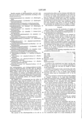
A masterbatch of the following composition was compounded on a laboratory mill.
A portion of the masterbatch was taken, and the antioxidant was milled into it in an amount equivalent to 1.5 parts by weight per 100 parts by weight of rubber in the masterbatch.
A number of rectangular bands, each having side walls 79 mm. in length and 4 mm. x 1 mm. in cross section and thickened end walls 11 mm. in length, were moulded from the rubber stock by vulcanizing at 153 C. for 30 minutes.
The stress required to extend the bands in their original or unaged condition to 1 /2 times their unstretched length was determined using a Baldwin machine by taking one band, stretching it to 50% extension, releasing, and again stretching to 50% extension, the stress required for the second extension being the figure recorded.
Two other bands were placed in an air oven at 0., one of the bands being supported so that except for its own weight it was unstressed, while the other was extended over hooks so spaced that the length of the band was 44i0.5% more than its unstretched length.
After 48 hours, the bands were removed from the oven, and after cooling, the stress required to extend each to 1 /2 times its original length was measured using the same procedure as for the original unaged band.
Corresponding measurements were made on a control set of bands moulded from a further portion of the masterbatch containing no antioxidant.
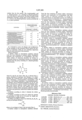
The results are given in the table below.
Where a band contained an antioxidant and was un stressed during aging, the stress required to extend it to 1 /2 times its unstretched length was only slightly less after the 48 hours of the test than at the beginning, whereas for the corresponding control band, the stress fell to of its original value over the same period. Where a band was stressed during aging, the stress required to extend it to 1 /2 times its unstretched length after the 48 hours was considerably higher for a band containing an antioxidant than for the control. The 4-aminomethy1- and 4 halogenornethyl 2,2 dimethyl-1,2-dihydroquinolines were thus effective antioxidants. The three bromine atoms designated tribromo occupy three of the positions 3, 5, 6, 7, and 8 in the dihydroquinoline nucleus, probably the 3-, 6-, and 8- positions.
It is intended to cover all changes and modifications of the examples of the invention herein chosen for pur poses of disclosure which do not constitute departures from the spirit and scope of the invention.
What is claimed is:
1. Rubber subject to atmospheric oxidation selected vfrom the class consisting of natural rubber, elastorneric polymers and copolymers of 1,3-butadienes, and polyolefin rubbers of improved durability by having incorporated therein an antioxidant amount of a compound selected from the group consisting of a dihydroquinoline of the formula where R and R are lower alkyl, R is selected from a group consisting of hydrogen and halogen, A is lower alkylene, R is selected from a group consisting of NH lower alkylamino, cyclohexylamino, benzylamino, arylamino, l-pyrrolidinyl, piperidino, l-hexamethyleneiminomorpholino, and 2,6-dimethy1morpholino, R R R and R are selected from a group consisting of hydrogen, halogen, lower alkoxy, hydroxy, amino, nitro, lower alkyl, cyclohexyl, benzyl, and aryl, acid addition salts wherein the anion is a halide, sulfate, phosphate, sulfonate, oxalate, or picrate and quaternary ammonium halides and sulfates thereof.
2. Rubber according to claim 1 wherein the rubber is vulcanized.
3. Rubber according to claim 1 in which the amount of antioxidant is from 0.2 to 3.0 parts by weight per hundred parts by Weight of rubber.
4. Rubber according to claim 1 in which R R R R and R are hydrogen and R is where n is an integer at least 2 but not more than 4.
5. Rubber subject to atmospheric oxidation selected from the class consisting of natural rubber, elastomeric polymers and copolymers of 1,3-butadienes, and polyolefin rubbers of improved durability by having incorporated therein an antioxidant amount of 4-[di(lower alkyl)aminomethyl]-2,2-dimethyl-1,2 dihydroquinoline.
6. Rubber subject to atmospheric oxidation selected from the class consisting of natural rubber, elastomeric polymers and copolymers of 1,3-butadienes, and polyolefin rubbers of improved durability by having incorporated therein an antioxidant amount of 4-[di(lower alkyl)aminomethyl]-2,2-dimethyl 6-lower alkoxy-1,2-dihydroquinoline.
7. Rubber subject to atmospheric oxidation selected from the class consisting of natural rubber, elastomeric polymers and copolymers of 1,3-butadienes, and polyolefin rubbers of improved durability by having incorporated therein an antioxidant amount of 4-(arylaminomethyl) -2,2-dimethyl-1,2-dil1ydroquinoline.
8. Rubber subject to atmospheric oxidation selected from the class consisting of natural rubber, elastomeric polymers and copolymers of 1,3-butadienes, and polyolefin rubbers of improved durability by having incorporated therein an antioxidant amount of 4-(lower alkoxy phenylaminomethyl)-2,2 dimethyl-1,2-dihydr-oquinoline.
9. Rubber subject to atmospheric oxidation selected from the class consisting of natural rubber, elastomeric polymers and copolymers of 1,3-butadienes, and polyolefin rubbers ot improved durability by having incorporated therein an antioxidant amount of 4-[di(lower alkyl)aminophenylmethyl] 2,2 dimethyl 1,2-dihydroquinoline.
10. Rubber subject to atmospheric oxidation selected from the class consisting of natural rubber, elastomeric polymers and copolymers of 1,3-butadienes, and polyolefin rubbers of improved durability by having incorporated therein an antioxidant amount of 4-diethylaminomethyl-2,2-dimethyl-1,2-dihydroquinoline.
11. Rubber subject to atmospheric oxidation selected from the class consisting of natural rubber, elastomeric polymers and copolymers of 1,3-butadienes, and polyo'lefin rubbers o t improved durability by having incorporated therein an antioxidant amount of 4-morpho- -lir1omethy1-2,2-dimethyl-1,Z-dihydroquinoline.
12. Rubber subject to atmospheric oxidation selected from the class consisting of natural rubber, elastomeric polymers and copolymers of 1,3-butadienes, and polyo'lefin rubbers of improved durability by having incorporated therein an antioxidant amount of 4(pphenetidinomethyl) 2,2 dimethyltribromo-1,2-dihydroquinoline.
13. Rubber subject to atmospheric oxidation selected from the class consisting of natural rubber, elastomeric polymers and copolymers of 1,3-butadienes, and polyolefin rubbers of improved durability by having incorporated therein an antioxidant amount of 4(p-dimethylaminoanilinomethyl) 2,2-dimethyl-3,6,8-tribromo 1,2- dihydroquinoline hydrobromide.
References Cited UNITED STATES PATENTS 2,203,899 6/1940 Dunbrook et all 260800 2,713,047 7/1955 Beaver et a1. 26045.8 2,748,100 5/ 1956 Harris et a1 260--45.8 2,973,335 2/1961 Stasiunas 26037 3,149,117 9/1964 Brown 260283 DONALD E. CZAJA, Primary Examiner.
LEON J. BERCOVITZ, Examiner.
M. J. WELSH, Assistant Examiner.
Claims (1)
1. RUBBER SUBJECT TO ATMOSPHERIC OXIDATION SELECTED FROM THE CLASS CONSISTING OF NATURAL RUBBER, ELASTOMERIC POLYMERS AND COPOLYMERS OF 1.3-BUTADIENES, AND POLYOLEFIN RUBBERS OF IMPROVED DURABILITY BY HAVING INCORPORATED THEREIN AN ANTIOXIDANT AMOUNT OF A COMPOUND SELECTED FROM THE GROUP CONSISTING OF A DIHYROQUINOLINE OF THE FORMULA
Applications Claiming Priority (1)
| Application Number | Priority Date | Filing Date | Title |
|---|---|---|---|
| GB25371/63A GB1010637A (en) | 1963-06-28 | 1963-06-28 | Novel rubber compositions |
Publications (1)
| Publication Number | Publication Date |
|---|---|
| US3337493A true US3337493A (en) | 1967-08-22 |
Family
ID=10226591
Family Applications (1)
| Application Number | Title | Priority Date | Filing Date |
|---|---|---|---|
| US377510A Expired - Lifetime US3337493A (en) | 1963-06-28 | 1964-06-24 | Durability of rubber with 4-aminoalkyl-or 4-haloalkyldihydroquinolines |
Country Status (2)
| Country | Link |
|---|---|
| US (1) | US3337493A (en) |
| GB (1) | GB1010637A (en) |
Cited By (4)
| Publication number | Priority date | Publication date | Assignee | Title |
|---|---|---|---|---|
| US3956420A (en) * | 1973-09-03 | 1976-05-11 | Dainichi-Nippon Cables, Ltd. | Polyolefin composition for electrical insulation |
| US4244864A (en) * | 1979-07-30 | 1981-01-13 | Monsanto Company | Poly(6-oxy-2,2,4-trialkyl-1,2-dihydroquinoline)alkylene compounds as antidegradants for rubber |
| US4624977A (en) * | 1984-05-23 | 1986-11-25 | Bridgestone Corporation | Rubber composition for use in a tire tread |
| US6171517B1 (en) * | 1994-02-03 | 2001-01-09 | Uniroyal Chemical Company, Inc. | Rubber compounding formulation and method |
Citations (5)
| Publication number | Priority date | Publication date | Assignee | Title |
|---|---|---|---|---|
| US2203899A (en) * | 1939-04-26 | 1940-06-11 | Firestone Tire & Rubber Co | Rubber composition and method of preserving rubber |
| US2713047A (en) * | 1953-08-04 | 1955-07-12 | Monsanto Chemicals | 6-diethylamino-1, 2-dihydroquinolines |
| US2748100A (en) * | 1952-05-23 | 1956-05-29 | Monsanto Chemicals | Stabilization of a sulfur vulcanizable rubber with a mixture of 6- and 8-alkoxy dihydrotrialkylquinolines |
| US2973335A (en) * | 1956-09-26 | 1961-02-28 | Connecticut Hard Rubber Co | Vulcanizing silicone rubber in presence of antioxidants |
| US3149117A (en) * | 1961-05-08 | 1964-09-15 | Monsanto Chemicals | 4-haloalkyl-2, 2-dialkyl-1, 2-dihydroquinolines and process for the preparation thereof |
-
1963
- 1963-06-28 GB GB25371/63A patent/GB1010637A/en not_active Expired
-
1964
- 1964-06-24 US US377510A patent/US3337493A/en not_active Expired - Lifetime
Patent Citations (5)
| Publication number | Priority date | Publication date | Assignee | Title |
|---|---|---|---|---|
| US2203899A (en) * | 1939-04-26 | 1940-06-11 | Firestone Tire & Rubber Co | Rubber composition and method of preserving rubber |
| US2748100A (en) * | 1952-05-23 | 1956-05-29 | Monsanto Chemicals | Stabilization of a sulfur vulcanizable rubber with a mixture of 6- and 8-alkoxy dihydrotrialkylquinolines |
| US2713047A (en) * | 1953-08-04 | 1955-07-12 | Monsanto Chemicals | 6-diethylamino-1, 2-dihydroquinolines |
| US2973335A (en) * | 1956-09-26 | 1961-02-28 | Connecticut Hard Rubber Co | Vulcanizing silicone rubber in presence of antioxidants |
| US3149117A (en) * | 1961-05-08 | 1964-09-15 | Monsanto Chemicals | 4-haloalkyl-2, 2-dialkyl-1, 2-dihydroquinolines and process for the preparation thereof |
Cited By (4)
| Publication number | Priority date | Publication date | Assignee | Title |
|---|---|---|---|---|
| US3956420A (en) * | 1973-09-03 | 1976-05-11 | Dainichi-Nippon Cables, Ltd. | Polyolefin composition for electrical insulation |
| US4244864A (en) * | 1979-07-30 | 1981-01-13 | Monsanto Company | Poly(6-oxy-2,2,4-trialkyl-1,2-dihydroquinoline)alkylene compounds as antidegradants for rubber |
| US4624977A (en) * | 1984-05-23 | 1986-11-25 | Bridgestone Corporation | Rubber composition for use in a tire tread |
| US6171517B1 (en) * | 1994-02-03 | 2001-01-09 | Uniroyal Chemical Company, Inc. | Rubber compounding formulation and method |
Also Published As
| Publication number | Publication date |
|---|---|
| GB1010637A (en) | 1965-11-24 |
Similar Documents
| Publication | Publication Date | Title |
|---|---|---|
| US2538355A (en) | 2, 2'-alkylene bis-4, 6-dialkyl phenols as rubber stabilizers | |
| US6277907B1 (en) | Thermoplastic resins stabilized by blends of sterically hindered phenols, secondary amines, and thioethers | |
| US3436362A (en) | Halogen-containing polymers and polyolefins stabilized with uracils | |
| US2731442A (en) | Sulfur vulcanizable rubber stabilized with a mixture of an alkyl substituted phenol and an alkyl substituted di(hydroxyphenyl) alkane | |
| US3337493A (en) | Durability of rubber with 4-aminoalkyl-or 4-haloalkyldihydroquinolines | |
| US2700691A (en) | Inhibition of the deterioration of vulcanized rubber compositions | |
| US2731443A (en) | Vulcanized rubber stabilized with a mixture of a di(hydroxyphenyl) sulfide and a di(alkylhydroxyphenyl) methane | |
| US3975414A (en) | N,N-bis(4-anilinophenyl)-4,7-dithia-5-methyldecanediamide and related compounds useful as polymer stabilizers | |
| US2849420A (en) | Rubber stabilized with metallic symmetrical disubstituted thiourea compound | |
| US2841627A (en) | Method of preserving a rubber with an alpha, alpha'-bis(hydroxyphenyl)-2, 6-xylenol ad resulting compositions | |
| US2939867A (en) | Reaction products of alkylene dihalides and substituted phenylenediamines | |
| US2203899A (en) | Rubber composition and method of preserving rubber | |
| US2538047A (en) | Chlorobutadiene polymers having improved resistance to the deteriorating effects of heat and light | |
| US3161612A (en) | Alkylated amino phenols protecting rubber goods against ozone | |
| US3024217A (en) | Rubber antioxidant | |
| US1899058A (en) | Rubber composition and method of preserving rubber | |
| US3284401A (en) | Stabilized rubber, olefin polymer or vinyl chloride polymer compositions containing 1, 2-dithiole-3-thiones | |
| JPH0468042A (en) | Rubber composition | |
| US3502615A (en) | Synergistic antiozonant mixture and use thereof in rubber | |
| US2727014A (en) | Method for retarding prevulcanization of rubber mixes | |
| US3288749A (en) | Stabilization of rubber with a mixture of phenylene diamines and diaminodiphenyl ethers or thioethers | |
| US3019211A (en) | Use of phenylene di-tertiary amines in rubber | |
| US3196180A (en) | Substituted phenylenediamine-alkyl halide condensation products | |
| US2181719A (en) | Preservation of rubber | |
| US3017443A (en) | Method of incorporating a mixture of 2, 6-dialkoxy-4-alkylphenol and 2, 2'-alkylene-bis-(4, 6-dialkylphenol) in rubber, and resulting product |