US2571663A - Refining of fatty acids - Google Patents
Refining of fatty acids Download PDFInfo
- Publication number
- US2571663A US2571663A US665083A US66508346A US2571663A US 2571663 A US2571663 A US 2571663A US 665083 A US665083 A US 665083A US 66508346 A US66508346 A US 66508346A US 2571663 A US2571663 A US 2571663A
- Authority
- US
- United States
- Prior art keywords
- fatty acids
- solvent
- acids
- mixture
- saturated
- Prior art date
- Legal status (The legal status is an assumption and is not a legal conclusion. Google has not performed a legal analysis and makes no representation as to the accuracy of the status listed.)
- Expired - Lifetime
Links
- 235000014113 dietary fatty acids Nutrition 0.000 title claims description 42
- 229930195729 fatty acid Natural products 0.000 title claims description 42
- 239000000194 fatty acid Substances 0.000 title claims description 42
- 150000004665 fatty acids Chemical class 0.000 title claims description 42
- 238000007670 refining Methods 0.000 title description 3
- 239000000203 mixture Substances 0.000 claims description 26
- 239000002253 acid Substances 0.000 claims description 23
- 150000007513 acids Chemical class 0.000 claims description 21
- 229920006395 saturated elastomer Polymers 0.000 claims description 19
- 229910052740 iodine Inorganic materials 0.000 claims description 13
- 239000011630 iodine Substances 0.000 claims description 13
- LFQSCWFLJHTTHZ-UHFFFAOYSA-N Ethanol Chemical compound CCO LFQSCWFLJHTTHZ-UHFFFAOYSA-N 0.000 claims description 11
- 239000012065 filter cake Substances 0.000 claims description 11
- 239000000706 filtrate Substances 0.000 claims description 9
- 238000000034 method Methods 0.000 claims description 7
- 235000019441 ethanol Nutrition 0.000 claims description 6
- 238000001914 filtration Methods 0.000 claims description 6
- 238000002156 mixing Methods 0.000 claims description 5
- 239000003549 soybean oil Substances 0.000 claims description 3
- 235000012424 soybean oil Nutrition 0.000 claims description 3
- 231100000252 nontoxic Toxicity 0.000 claims description 2
- 230000003000 nontoxic effect Effects 0.000 claims description 2
- PNDPGZBMCMUPRI-UHFFFAOYSA-N iodine Chemical compound II PNDPGZBMCMUPRI-UHFFFAOYSA-N 0.000 claims 3
- 239000002904 solvent Substances 0.000 description 49
- ZCYVEMRRCGMTRW-UHFFFAOYSA-N 7553-56-2 Chemical compound [I] ZCYVEMRRCGMTRW-UHFFFAOYSA-N 0.000 description 10
- 235000010469 Glycine max Nutrition 0.000 description 10
- 244000068988 Glycine max Species 0.000 description 10
- 238000004821 distillation Methods 0.000 description 8
- 238000000926 separation method Methods 0.000 description 8
- 235000021122 unsaturated fatty acids Nutrition 0.000 description 8
- 150000004670 unsaturated fatty acids Chemical class 0.000 description 8
- 125000005456 glyceride group Chemical group 0.000 description 7
- 239000007788 liquid Substances 0.000 description 7
- 150000004671 saturated fatty acids Chemical class 0.000 description 6
- ZQPPMHVWECSIRJ-KTKRTIGZSA-N oleic acid group Chemical group C(CCCCCCC\C=C/CCCCCCCC)(=O)O ZQPPMHVWECSIRJ-KTKRTIGZSA-N 0.000 description 5
- 239000000047 product Substances 0.000 description 5
- 235000003441 saturated fatty acids Nutrition 0.000 description 5
- 238000005406 washing Methods 0.000 description 5
- PEDCQBHIVMGVHV-UHFFFAOYSA-N Glycerine Chemical compound OCC(O)CO PEDCQBHIVMGVHV-UHFFFAOYSA-N 0.000 description 4
- 239000000061 acid fraction Substances 0.000 description 4
- 238000001035 drying Methods 0.000 description 4
- 238000005194 fractionation Methods 0.000 description 4
- 239000003921 oil Substances 0.000 description 4
- 235000019198 oils Nutrition 0.000 description 4
- 235000021313 oleic acid Nutrition 0.000 description 4
- IPCSVZSSVZVIGE-UHFFFAOYSA-N palmitic acid group Chemical group C(CCCCCCCCCCCCCCC)(=O)O IPCSVZSSVZVIGE-UHFFFAOYSA-N 0.000 description 4
- WRIDQFICGBMAFQ-UHFFFAOYSA-N (E)-8-Octadecenoic acid Natural products CCCCCCCCCC=CCCCCCCC(O)=O WRIDQFICGBMAFQ-UHFFFAOYSA-N 0.000 description 3
- LQJBNNIYVWPHFW-UHFFFAOYSA-N 20:1omega9c fatty acid Natural products CCCCCCCCCCC=CCCCCCCCC(O)=O LQJBNNIYVWPHFW-UHFFFAOYSA-N 0.000 description 3
- QSBYPNXLFMSGKH-UHFFFAOYSA-N 9-Heptadecensaeure Natural products CCCCCCCC=CCCCCCCCC(O)=O QSBYPNXLFMSGKH-UHFFFAOYSA-N 0.000 description 3
- ZQPPMHVWECSIRJ-UHFFFAOYSA-N Oleic acid Natural products CCCCCCCCC=CCCCCCCCC(O)=O ZQPPMHVWECSIRJ-UHFFFAOYSA-N 0.000 description 3
- 239000005642 Oleic acid Substances 0.000 description 3
- 235000021314 Palmitic acid Nutrition 0.000 description 3
- 235000021355 Stearic acid Nutrition 0.000 description 3
- 230000000694 effects Effects 0.000 description 3
- 238000010438 heat treatment Methods 0.000 description 3
- QXJSBBXBKPUZAA-UHFFFAOYSA-N isooleic acid Natural products CCCCCCCC=CCCCCCCCCC(O)=O QXJSBBXBKPUZAA-UHFFFAOYSA-N 0.000 description 3
- 230000000717 retained effect Effects 0.000 description 3
- 239000007787 solid Substances 0.000 description 3
- QGZKDVFQNNGYKY-UHFFFAOYSA-N Ammonia Chemical compound N QGZKDVFQNNGYKY-UHFFFAOYSA-N 0.000 description 2
- 238000001816 cooling Methods 0.000 description 2
- 230000018044 dehydration Effects 0.000 description 2
- 238000006297 dehydration reaction Methods 0.000 description 2
- 239000008157 edible vegetable oil Substances 0.000 description 2
- 235000011187 glycerol Nutrition 0.000 description 2
- 238000004519 manufacturing process Methods 0.000 description 2
- 238000002844 melting Methods 0.000 description 2
- 230000008018 melting Effects 0.000 description 2
- QIQXTHQIDYTFRH-UHFFFAOYSA-N octadecanoic acid Chemical class CCCCCCCCCCCCCCCCCC(O)=O QIQXTHQIDYTFRH-UHFFFAOYSA-N 0.000 description 2
- 238000005191 phase separation Methods 0.000 description 2
- 238000011084 recovery Methods 0.000 description 2
- -1 stearic Chemical group 0.000 description 2
- DTRGDWOPRCXRET-UHFFFAOYSA-N (9Z,11E,13E)-4-Oxo-9,11,13-octadecatrienoic acid Natural products CCCCC=CC=CC=CCCCCC(=O)CCC(O)=O DTRGDWOPRCXRET-UHFFFAOYSA-N 0.000 description 1
- CUXYLFPMQMFGPL-WPOADVJFSA-N (9Z,11E,13E)-octadeca-9,11,13-trienoic acid Chemical compound CCCC\C=C\C=C\C=C/CCCCCCCC(O)=O CUXYLFPMQMFGPL-WPOADVJFSA-N 0.000 description 1
- UGFAIRIUMAVXCW-UHFFFAOYSA-N Carbon monoxide Chemical compound [O+]#[C-] UGFAIRIUMAVXCW-UHFFFAOYSA-N 0.000 description 1
- DGAQECJNVWCQMB-PUAWFVPOSA-M Ilexoside XXIX Chemical compound C[C@@H]1CC[C@@]2(CC[C@@]3(C(=CC[C@H]4[C@]3(CC[C@@H]5[C@@]4(CC[C@@H](C5(C)C)OS(=O)(=O)[O-])C)C)[C@@H]2[C@]1(C)O)C)C(=O)O[C@H]6[C@@H]([C@H]([C@@H]([C@H](O6)CO)O)O)O.[Na+] DGAQECJNVWCQMB-PUAWFVPOSA-M 0.000 description 1
- OYHQOLUKZRVURQ-HZJYTTRNSA-N Linoleic acid Chemical compound CCCCC\C=C/C\C=C/CCCCCCCC(O)=O OYHQOLUKZRVURQ-HZJYTTRNSA-N 0.000 description 1
- DTOSIQBPPRVQHS-PDBXOOCHSA-N alpha-linolenic acid Chemical compound CC\C=C/C\C=C/C\C=C/CCCCCCCC(O)=O DTOSIQBPPRVQHS-PDBXOOCHSA-N 0.000 description 1
- 235000020661 alpha-linolenic acid Nutrition 0.000 description 1
- 229910021529 ammonia Inorganic materials 0.000 description 1
- 238000009835 boiling Methods 0.000 description 1
- 238000003889 chemical engineering Methods 0.000 description 1
- 239000007795 chemical reaction product Substances 0.000 description 1
- 239000000470 constituent Substances 0.000 description 1
- 239000002826 coolant Substances 0.000 description 1
- 238000002425 crystallisation Methods 0.000 description 1
- 230000008025 crystallization Effects 0.000 description 1
- 238000000354 decomposition reaction Methods 0.000 description 1
- 239000003546 flue gas Substances 0.000 description 1
- 239000012530 fluid Substances 0.000 description 1
- 235000013305 food Nutrition 0.000 description 1
- 235000021588 free fatty acids Nutrition 0.000 description 1
- 230000007062 hydrolysis Effects 0.000 description 1
- 238000006460 hydrolysis reaction Methods 0.000 description 1
- 239000002198 insoluble material Substances 0.000 description 1
- 235000020778 linoleic acid Nutrition 0.000 description 1
- OYHQOLUKZRVURQ-IXWMQOLASA-N linoleic acid Natural products CCCCC\C=C/C\C=C\CCCCCCCC(O)=O OYHQOLUKZRVURQ-IXWMQOLASA-N 0.000 description 1
- 229960004488 linolenic acid Drugs 0.000 description 1
- KQQKGWQCNNTQJW-UHFFFAOYSA-N linolenic acid Natural products CC=CCCC=CCC=CCCCCCCCC(O)=O KQQKGWQCNNTQJW-UHFFFAOYSA-N 0.000 description 1
- 239000007791 liquid phase Substances 0.000 description 1
- 230000004048 modification Effects 0.000 description 1
- 238000012986 modification Methods 0.000 description 1
- 150000002889 oleic acids Chemical class 0.000 description 1
- 239000004033 plastic Substances 0.000 description 1
- 229920003023 plastic Polymers 0.000 description 1
- 159000000001 potassium salts Chemical class 0.000 description 1
- 239000002244 precipitate Substances 0.000 description 1
- 238000001556 precipitation Methods 0.000 description 1
- 238000002360 preparation method Methods 0.000 description 1
- 238000011085 pressure filtration Methods 0.000 description 1
- 238000005057 refrigeration Methods 0.000 description 1
- 150000003839 salts Chemical class 0.000 description 1
- 239000000344 soap Substances 0.000 description 1
- 229910052708 sodium Inorganic materials 0.000 description 1
- 239000011734 sodium Substances 0.000 description 1
- 239000007790 solid phase Substances 0.000 description 1
- 239000000126 substance Substances 0.000 description 1
- 229920003002 synthetic resin Polymers 0.000 description 1
- 239000000057 synthetic resin Substances 0.000 description 1
- 238000003828 vacuum filtration Methods 0.000 description 1
- 235000013311 vegetables Nutrition 0.000 description 1
Images
Classifications
-
- C—CHEMISTRY; METALLURGY
- C11—ANIMAL OR VEGETABLE OILS, FATS, FATTY SUBSTANCES OR WAXES; FATTY ACIDS THEREFROM; DETERGENTS; CANDLES
- C11C—FATTY ACIDS FROM FATS, OILS OR WAXES; CANDLES; FATS, OILS OR FATTY ACIDS BY CHEMICAL MODIFICATION OF FATS, OILS, OR FATTY ACIDS OBTAINED THEREFROM
- C11C1/00—Preparation of fatty acids from fats, fatty oils, or waxes; Refining the fatty acids
- C11C1/007—Preparation of fatty acids from fats, fatty oils, or waxes; Refining the fatty acids using organic solvents
Definitions
- This invention relates to the refining of fatty acids and particularly to an improved method of obtaining fractions of fatty acids having different characteristics. It is a continuation-in-part of my copending application Serial No. 402,363, filed July 14, 1941, entitled Solvent Fractionation of Fatty Acids, which is now abandoned.
- Mixtures of fatty acids are generally comprised of both saturated and unsaturated members in varying proportions.
- the several acids present, in such a mixture of higher fatty acids derived from a vegetable, animal, or synthetic source usually include palmitic, stearic, oleic, linoleic, and linolenic; Other acids, both saturated and unsaturated, may also be present, however.
- Fatty acids find a use in the manufacture of many products.
- the metallic salts of palmitic, stearic, and oleic acids particularly the sodium and potassium salts, form the various soaps.
- the unsaturated acids may be used in the preparation of synthetic resins and plastics. These acids also have many other important applications.
- the fatty acids when esterified with glycerine, form the corresponding glycerides, which are valuable either as food products or as drying oils according to the degree of saturation of the particular glyceride.
- the glycerides of palmitic and stearic acids, both of which are saturated, are
- oleic acid contains a single double bond and, hence is unsaturated, its glyceride is also non-drying; this glyceride also finds use as an edible oil.
- the glycerides of linoleic acid and of linolenic acid, which respectively contain two and three nonconjugate double bonds, are good drying oils because of the increased activity of the double bonds.
- Elaeo-stearic and licanic acid glycerides contain several double bonds in conjugate relationship, in which positionthe double bonds are extremely active, and are very fastdrying oils.
- a specific object of my invention is to separate soybean fatty acid mixtures into fractions-comprising the relatively more saturated and the relatively more unsaturated constituentssothat the respective acids may be moreadvantageously utilized.
- Soybean fatty acids may be derived from soybean oil, which in turn has been extracted from the soybean, by splitting the oil, which consists of glycerides of the fatty acids, into glycerine and the free fatty acids by hydrolysis in the presence of steam.
- soybean oil which in turn has been extracted from the soybean, by splitting the oil, which consists of glycerides of the fatty acids, into glycerine and the free fatty acids by hydrolysis in the presence of steam.
- the approximate composition of soybean fatty acids is given below (see- Chemical engineering advances in soybean processing by Gordon W. McBride in Chemical and Metallurgical Engineering, vol. XLVII, No. 9 (September 1940), pp. 614, 618) As shown. in the accompanying drawing, the
- mixture of fatty acids is introduced into the system at In.
- these fatty acids will be substantially liquid at the usual atmospheric temperature, they can be readily pumped through line by pump l I.
- a suitable solvent from line [2 is added to the fatty acids, and the resulting mixture is thoroughly agitated in mixer I4 to insure that the fatty acids are completely dissolved in the solvent.
- the mixture of fatty acids and solvent may be slightly heated in order to effect complete solution.
- mixer l4 may be dispensed with, and the mixture may be circulated through a heat exchanger (not shown), wherein the desired heat is provided and the turbulent flow insures complete solution.
- the solution of fatty acids is then passed through heat exchanger [6 wherein its temperature is considerably lowered.
- the cooled solution then flows through line [1 to chiller l8, through which ammonia is preferably circulated as by line l9 as the heat-removing medium in indirect contact with the solution.
- chiller I8 the temperature of the solution is lowered sufiiciently to precipitate out the portion of the fatty acids which it is desired to separate from the original mixture.
- the portion of the acids which separates out from the soybean fatty acids comprises the relatively more saturated fatty acids and consists of palmitic and stearic acids as well as some oleic acid whereas the fatty acids remaining dissolved comprise oleic, linoleic, and linolenic.
- the chilled mixture containing the precipitated fatty acids is accumulated in surge tank 20,
- the wash solvent filtrate may be removed from the filter through line 3
- the filter cake may be continuously removed from the filter surface as by a, scraper knife (not shown) and may be discharged by screw conveyors 34 into hopper 35.
- This hopper is preferably provided with a steam coil 36 or the like so that the filter cake may be melted down for convenient disposal.
- the filtrates collected in receivers 26 and 32 may be combined, and the resulting mixture may be passed through A line 38 as by pump 39 to exchanger l6 wherein it serves to lower the temperature of the incomins solution of fatty acids.
- the combined ill-- trate is then heated in heater 4! to a temperature above the boiling point of the solvent and is introduced into the upper part of distillation tower 4
- This distillation may be accomplished at atmospheric pressure or under vacuum produced by vacuum pump 42 as desired. Dry solvent is removed overhead and is condensed in condenser 43.
- the net condensate is discharged through line 44 into receiver 46, from which solvent is withdrawn through line 41 as by pump 48 and passed through line I2 to be mixed with the incoming fatty acids in line In.
- the relatively more unsaturated fatty acids are preferably introduced by means of trapped line into the lower part of distillation tower 4
- Imperforate plate 50 serves to separate the two parts of the tower from each other. Stripping steam may be introduced through line 51 to aid in the removal of the remainder of the solvent from the unsaturated fatty acids, which may be removed as a bottoms product through line 52. The wet solvent vapors may be removed from the lower part of tower 4
- the melted filter cake of relatively more saturated fatty acids may be pumped through line 55 and heater 56 as by pump 51 and is introduced into the upper part of distillation tower 58 for separation of the greater portion of the solvent therefrom.
- This distillation may likewise be carried out at atmospheric pressure or under vacuum produced by vacuum pump 42. Dry solvent is taken off overhead and condensed in condenser 60 the net condensate is discharged through line 6
- the relatively more saturated fatty acids are preferably introduced by means of trapped line 62 into the lower part of tower 58 wherein the remaining solvent is separated therefrom. This part of the tower may also be operated under vacuum and is also separated from the upper part of the tower by imperforate plate 64.
- Stripping steam may also be introduced at 65 to aid in the removal of the remainder of the solvent from the relatively more saturated fatty acids, which are removed as a bottoms product through line 56.
- the wet solvent vapors may be discharged through line 68 into the solvent dehydration system (not shown). It will be appreciated that, in place of heaters 40 and 56, heat exchangers utilizing steam as the heating medium may be employed.
- Wash solvent is provided by withdrawing a portion of the solvent from receiver 46 and passing it through lines 41 and 10 as by pump 48 into tank 29, from which it is discharged through line 28 into filter 22 for washing of the fatty acid filter cake.
- This wash solvent is preferably cooled in exchanger 'H by indirect contact with a cooling medium circulated through line 12.
- the ultimate yields and efiiciencies of separation will depend to a large extent on the solvent ratio (ratio of solvent to fatty acid feed) and the wash solvent ratio (ratio of wash solvent to fatty acid feed) used.
- the solvent ratio ratio of solvent to fatty acid feed
- the wash solvent ratio ratio of wash solvent to fatty acid feed
- the ratio of wash solvent is preferably 2:1, but ratios ranging from 0.5:1 to 4:1 may also be used.
- the solvent ratio and the wash ratio used will depend primarily on the balance of the fatty acid separation obtained against the cost of recovery and refrigeration of the solvent used.
- the solvent ratio used will depend on the concentration of saturated acids in the feed and the filtering temperature.
- I also find it desirable in some cases to recycle chilled filtrate solution, as by line 38a to the feed to increase the ratio of liquids to solids to improve the liquid solid separation and provide a more efficient cake thickness and more effective crystallization.
- the method of resolving a mixture of the fatty acids derived from soy bean oil into a fraction containing substantially only unsaturated acids and a second fraction containing substantially only saturated acid which comprises feeding a mixture of the fatty acids having an iodine number of approximately 137 (Wijs) to a mixing device and mixing said acids With non-toxic ethyl alcohol, reducing the temperature of said mixture to below F., continuously filtering said mixture, washing the filter cake and separating as a filtrate approximately 85% of the charge as unsaturated acids having an iodine number in excess of 160 from the remainder of the charge as saturated acids having an iodine number less than 10.
- a process for the separation of fractions of saturated acids from fractions of unsaturated fatty acids in a mixture of soybean fatty acid which comprises dissolving the mixture in 95% ethyl alcohol with a solvent ratio of three parts of alcohol to fatty acid, cooling the solution to below 0 F. to efiect precipitation of the saturated acid fraction, making a liquid solid separation to separate the saturated acid fraction from the remaining liquid containing the unsaturated acid fraction, separately recovering the solvent from said fractions and washing said relatively saturated acid fraction with said recovered solvents, said wash ratio being at least 2:1 whereby a saturated fatty acid fraction of 8.2 iodine number and an unsaturated fatty acid fraction of 157.4 iodine number are recovered in one pass.
Landscapes
- Chemical & Material Sciences (AREA)
- Life Sciences & Earth Sciences (AREA)
- Microbiology (AREA)
- General Chemical & Material Sciences (AREA)
- Engineering & Computer Science (AREA)
- Chemical Kinetics & Catalysis (AREA)
- Oil, Petroleum & Natural Gas (AREA)
- Wood Science & Technology (AREA)
- Organic Chemistry (AREA)
- Fats And Perfumes (AREA)
Description
Patented Get. 16, 1951 l'iED STATES PATENT OFFICE.
REFINING 0F FATTY. ACIDS Ward J. Bloomer, Westfield, N. J assignor to The Lumrnus Company, New York, N. Y., a corporation of Delaware Application April 26, 1946, Serial No. 665,083
3 Claims.
This invention relates to the refining of fatty acids and particularly to an improved method of obtaining fractions of fatty acids having different characteristics. It is a continuation-in-part of my copending application Serial No. 402,363, filed July 14, 1941, entitled Solvent Fractionation of Fatty Acids, which is now abandoned.
Mixtures of fatty acids are generally comprised of both saturated and unsaturated members in varying proportions. The several acids present, in such a mixture of higher fatty acids derived from a vegetable, animal, or synthetic source usually include palmitic, stearic, oleic, linoleic, and linolenic; Other acids, both saturated and unsaturated, may also be present, however.
Fatty acids find a use in the manufacture of many products. For example, the metallic salts of palmitic, stearic, and oleic acids, particularly the sodium and potassium salts, form the various soaps. The unsaturated acids may be used in the preparation of synthetic resins and plastics. These acids also have many other important applications.
The fatty acids, when esterified with glycerine, form the corresponding glycerides, which are valuable either as food products or as drying oils according to the degree of saturation of the particular glyceride. The glycerides of palmitic and stearic acids, both of which are saturated, are
valuable as edible oils and are non-drying in nature. Although oleic acid contains a single double bond and, hence is unsaturated, its glyceride is also non-drying; this glyceride also finds use as an edible oil. The glycerides of linoleic acid and of linolenic acid, which respectively contain two and three nonconjugate double bonds, are good drying oils because of the increased activity of the double bonds. Elaeo-stearic and licanic acid glycerides contain several double bonds in conjugate relationship, in which positionthe double bonds are extremely active, and are very fastdrying oils.
In order to take full advantage of the different individual properties of the various acids present, it is highly desirable to separate such a mixture into fractions which are respectively relatively more saturated and relatively more unsaturated in nature. Heretofore, such a separation has been accomplished principally by distillation; but in this procedure there are the disadvantages that decomposition of some of the fatty acids usually occurs at the high temperatures necessary even though the distillation is effected under vacuum and that the fractionation accomplished may. not be so sharp as desired. Thense of -sol-;
vents to effect a separation of the saturated from the unsaturated fatty acids by a liquid-liquid phase separation as well as by a liquid-solid phase separation has also been proposed. Attempts in this respect have not been entirely satisfactory, however, because of certain operating or other disadvantages in each particular instance.
A specific object of my invention is to separate soybean fatty acid mixtures into fractions-comprising the relatively more saturated and the relatively more unsaturated constituentssothat the respective acids may be moreadvantageously utilized.
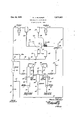
Other objects and advantages of my invention will appear from the following description thereof taken in connection with the accompanying drawing in which the single figure is-a diagrammatic flow sheet of a process embodying m invention.
In carrying out my invention, I bring the mixture of fatty acids and the solvent into intimate contact to produce a solution of fattyacids. This solution is gradually cooled and chilled until the desired amount of the relatively more-saturated acids precipitates or separates out. This insoluble material is then separated from the remaining liquid by filtration or the like. The solvent retained in the filter cake and the filtrate is suitably recovered as by distillation, and the separated fatty acid fractions may then be utilized for their respective purposes.
In the following description reference is made to the solvent fractionation of soybean fatty acids. Soybean fatty acids may be derived from soybean oil, which in turn has been extracted from the soybean, by splitting the oil, which consists of glycerides of the fatty acids, into glycerine and the free fatty acids by hydrolysis in the presence of steam. For convenience, the approximate composition of soybean fatty acids is given below (see- Chemical engineering advances in soybean processing by Gordon W. McBride in Chemical and Metallurgical Engineering, vol. XLVII, No. 9 (September 1940), pp. 614, 618) As shown. in the accompanying drawing, the
, mixture of fatty acids. is introduced into the system at In. Inasmuch as these fatty acids will be substantially liquid at the usual atmospheric temperature, they can be readily pumped through line by pump l I. A suitable solvent from line [2 is added to the fatty acids, and the resulting mixture is thoroughly agitated in mixer I4 to insure that the fatty acids are completely dissolved in the solvent. If desirable or necessary, the mixture of fatty acids and solvent may be slightly heated in order to effect complete solution. In such case, mixer l4 may be dispensed with, and the mixture may be circulated through a heat exchanger (not shown), wherein the desired heat is provided and the turbulent flow insures complete solution.
In accordance with my invention, the solution of fatty acids is then passed through heat exchanger [6 wherein its temperature is considerably lowered. The cooled solution then flows through line [1 to chiller l8, through which ammonia is preferably circulated as by line l9 as the heat-removing medium in indirect contact with the solution. In chiller I8 the temperature of the solution is lowered sufiiciently to precipitate out the portion of the fatty acids which it is desired to separate from the original mixture.
The portion of the acids which separates out from the soybean fatty acids comprises the relatively more saturated fatty acids and consists of palmitic and stearic acids as well as some oleic acid whereas the fatty acids remaining dissolved comprise oleic, linoleic, and linolenic.
The chilled mixture containing the precipitated fatty acids is accumulated in surge tank 20,
from which it is continuously passed to rotary that used to form the initial solution, serves to displace the greater portion of the relatively more unsaturated fatty acids which are retained in the filter cake. The wash solvent filtrate may be removed from the filter through line 3| into receiver 32. The filter cake may be continuously removed from the filter surface as by a, scraper knife (not shown) and may be discharged by screw conveyors 34 into hopper 35. This hopper is preferably provided with a steam coil 36 or the like so that the filter cake may be melted down for convenient disposal.
It will be appreciated that the application of my invention is not limited to the use of a rotary or other special type filter. Furthermore, either pressure or vacuum filtration may be used; the choice of the particular system used will depend primarily on the amount of acids precipitated and on the efliciency of the washing step. It may also be found desirable to use a flue gas system (not shown) to blanket the surge tank 20, wash solvent tank 29, filter 22, receivers 26 and 32, and hopper 35 in order to make the apparatus fireproof and explosion-proof.
For recovery of the solvent, the filtrates collected in receivers 26 and 32 may be combined, and the resulting mixture may be passed through A line 38 as by pump 39 to exchanger l6 wherein it serves to lower the temperature of the incomins solution of fatty acids.
The combined ill-- trate is then heated in heater 4!! to a temperature above the boiling point of the solvent and is introduced into the upper part of distillation tower 4| wherein the greater portion of the solvent is separated from the relatively more unsaturated fatty acids. This distillation may be accomplished at atmospheric pressure or under vacuum produced by vacuum pump 42 as desired. Dry solvent is removed overhead and is condensed in condenser 43. The net condensate is discharged through line 44 into receiver 46, from which solvent is withdrawn through line 41 as by pump 48 and passed through line I2 to be mixed with the incoming fatty acids in line In. The relatively more unsaturated fatty acids are preferably introduced by means of trapped line into the lower part of distillation tower 4|, which may also be operated under vacuum. Imperforate plate 50 serves to separate the two parts of the tower from each other. Stripping steam may be introduced through line 51 to aid in the removal of the remainder of the solvent from the unsaturated fatty acids, which may be removed as a bottoms product through line 52. The wet solvent vapors may be removed from the lower part of tower 4| through line 53 for introduction into a system (not shown) for dehydration of the solvent.
The melted filter cake of relatively more saturated fatty acids may be pumped through line 55 and heater 56 as by pump 51 and is introduced into the upper part of distillation tower 58 for separation of the greater portion of the solvent therefrom. This distillation may likewise be carried out at atmospheric pressure or under vacuum produced by vacuum pump 42. Dry solvent is taken off overhead and condensed in condenser 60 the net condensate is discharged through line 6| into receiver 46. The relatively more saturated fatty acids are preferably introduced by means of trapped line 62 into the lower part of tower 58 wherein the remaining solvent is separated therefrom. This part of the tower may also be operated under vacuum and is also separated from the upper part of the tower by imperforate plate 64. Stripping steam may also be introduced at 65 to aid in the removal of the remainder of the solvent from the relatively more saturated fatty acids, which are removed as a bottoms product through line 56. The wet solvent vapors may be discharged through line 68 into the solvent dehydration system (not shown). It will be appreciated that, in place of heaters 40 and 56, heat exchangers utilizing steam as the heating medium may be employed.
Wash solvent is provided by withdrawing a portion of the solvent from receiver 46 and passing it through lines 41 and 10 as by pump 48 into tank 29, from which it is discharged through line 28 into filter 22 for washing of the fatty acid filter cake. This wash solvent is preferably cooled in exchanger 'H by indirect contact with a cooling medium circulated through line 12.
In the solvent fractionation of soybean fatty acids, melting point 65 F., iodine number (Wijs) 137.3, I have found that ethyl alcohol is particularly eifective as a selective solvent. With a solvent ratio of 3:1 and a wash ratio of 2:1 at a filtering temperature of -l0 F., 84.3% filtrate of unsaturated fatty acids having an iodine number of 157.4 and a pour point of 5 F., and 15.7% filter cake of saturated fatty acids having an iodine number of 8.2 and a melting point of 122 R, were obtained in a single pass.
It will be appreciated that the ultimate yields and efiiciencies of separation will depend to a large extent on the solvent ratio (ratio of solvent to fatty acid feed) and the wash solvent ratio (ratio of wash solvent to fatty acid feed) used. In operating my improved process, I prefer to use a solvent ratio of 3:1 although the range of solvent ratio may extend from 0.5:1 to 6:1. The ratio of wash solvent is preferably 2:1, but ratios ranging from 0.5:1 to 4:1 may also be used. The solvent ratio and the wash ratio used will depend primarily on the balance of the fatty acid separation obtained against the cost of recovery and refrigeration of the solvent used. In addition, the solvent ratio used will depend on the concentration of saturated acids in the feed and the filtering temperature.
I also find it desirable in some cases to recycle chilled filtrate solution, as by line 38a to the feed to increase the ratio of liquids to solids to improve the liquid solid separation and provide a more efficient cake thickness and more effective crystallization.
Although I have shown and described a preferred manner of carrying out my invention, I am aware that modifications may be made thereto; therefore, only such limitations as appear in the claims appended hereinafter should be applied.
I claim:
1. The method of resolving a mixture of the fatty acids derived from soy bean oil into a fraction containing substantially only unsaturated acids and a second fraction containing substantially only saturated acid which comprises feeding a mixture of the fatty acids having an iodine number of approximately 137 (Wijs) to a mixing device and mixing said acids With non-toxic ethyl alcohol, reducing the temperature of said mixture to below F., continuously filtering said mixture, washing the filter cake and separating as a filtrate approximately 85% of the charge as unsaturated acids having an iodine number in excess of 160 from the remainder of the charge as saturated acids having an iodine number less than 10.
2. A process for the separation of fractions of saturated acids from fractions of unsaturated fatty acids in a mixture of soybean fatty acid, which comprises dissolving the mixture in 95% ethyl alcohol with a solvent ratio of three parts of alcohol to fatty acid, cooling the solution to below 0 F. to efiect precipitation of the saturated acid fraction, making a liquid solid separation to separate the saturated acid fraction from the remaining liquid containing the unsaturated acid fraction, separately recovering the solvent from said fractions and washing said relatively saturated acid fraction with said recovered solvents, said wash ratio being at least 2:1 whereby a saturated fatty acid fraction of 8.2 iodine number and an unsaturated fatty acid fraction of 157.4 iodine number are recovered in one pass.
3. The method of making a fractional cut in the oleic acid range of a soya fatty acid to separate completely all higher unsaturated components from all saturated components, said acid having a general range of 13% saturated components and higher unsaturated components whereby a high yield of a product having an iodine number of nearly and the balance of a product having an iodine number of less than 10 may be simultaneously obtained in a once through operation, which comprises mixing from between two and four parts of ethyl alcohol with the fatty acid at temperatures at which the mixture is fluid, thereafter sub-cooling said mixture to a temperature in the range of from 20 F. to below 0 F. whereby saturated components of the mixture are precipitated, continuously filtering the precipitated constituents from the liquid unsaturated components and the solvent, Washing the cake formed with additional solvent in the ratio of at least two parts of solvent to one of cake to liberate any retained unsaturated component, heating the filter cake to remove the solvent therefrom, separately heating the filtrate to recover the solvent therein, returning such solvents for primary use, and thereafter independently steam stripping the filtrate and filter cake to produce the desired end products and I wet solvent.
WARD J. BLOOMER.
REFERENCES CITED The following references are of record in the file of this patent:
UNITED STATES PATENTS Number Name Date 2,045,727 Rider June 30, 1936 2,113,960 Grote et a1. Apr. 12, 1938 2,291,461 Freeman July 28, 1942 2,293,676 Myers et al. Aug. 18, 1942 2,340,104 Brown Jan. 25, 1944
Claims (1)
1. THE METHOD OF RESOLVING A MIXTURE OF THE FATTY ACIDS DERIVED FROM SOY BEAN OIL INTO A FRACTION CONTAINING SUBSTANTIALLY ONLY UNSATURATED ACIDS AND A SECOND FRACTION CONTAINING SUBSTANTIALLY ONLY SATURATED ACIDS WHICH COMPRISES FEEDING A MIXTURE OF THE FATTY ACIDS HAVING AN IODINE NUMBER OF APPROXIMATELY 137 (WIJS) TO A MIXING DEVICE AND MIXING SAID ACIDS WITH NON-TOXIC ETHYL ALCOHOL, REDUCING THE TEMPERATURE OF SAID MIXTURE TO BELOW -10* F., CONTINUOUSLY FILTERING SAID MIXTURE, WASHING THE FILTER CAKE AND SEPARATING AS A FILTRATE APPROXIMATELY 85% OF THE CHARGE AS UNSATURATED ACIDS HAVING AN IODINE NUMBER IN EXCESS OF 160 FROM THE REMAINDER OF THE CHARGE AS SATURATED ACIDS HAVING AN IODINE NUMBER LESS THAN 10.
Priority Applications (1)
| Application Number | Priority Date | Filing Date | Title |
|---|---|---|---|
| US665083A US2571663A (en) | 1946-04-26 | 1946-04-26 | Refining of fatty acids |
Applications Claiming Priority (1)
| Application Number | Priority Date | Filing Date | Title |
|---|---|---|---|
| US665083A US2571663A (en) | 1946-04-26 | 1946-04-26 | Refining of fatty acids |
Publications (1)
| Publication Number | Publication Date |
|---|---|
| US2571663A true US2571663A (en) | 1951-10-16 |
Family
ID=24668643
Family Applications (1)
| Application Number | Title | Priority Date | Filing Date |
|---|---|---|---|
| US665083A Expired - Lifetime US2571663A (en) | 1946-04-26 | 1946-04-26 | Refining of fatty acids |
Country Status (1)
| Country | Link |
|---|---|
| US (1) | US2571663A (en) |
Citations (5)
| Publication number | Priority date | Publication date | Assignee | Title |
|---|---|---|---|---|
| US2045727A (en) * | 1932-02-11 | 1936-06-30 | Wm S Merrell Co | Method of purifying ricinoleic acid |
| US2113960A (en) * | 1933-07-12 | 1938-04-12 | Firm Edeleanu Ges M B H | Method of separating saturated and unsaturated higher aliphatic organic compounds from mixtures thereof |
| US2291461A (en) * | 1939-01-17 | 1942-07-28 | Pittsburgh Plate Glass Co | Liquid phase extraction of glyceride oils and acids |
| US2293676A (en) * | 1940-07-29 | 1942-08-18 | Emery Industries Inc | Method of separating fatty acids |
| US2340104A (en) * | 1944-01-25 | Process fob making mixtures of |
-
1946
- 1946-04-26 US US665083A patent/US2571663A/en not_active Expired - Lifetime
Patent Citations (5)
| Publication number | Priority date | Publication date | Assignee | Title |
|---|---|---|---|---|
| US2340104A (en) * | 1944-01-25 | Process fob making mixtures of | ||
| US2045727A (en) * | 1932-02-11 | 1936-06-30 | Wm S Merrell Co | Method of purifying ricinoleic acid |
| US2113960A (en) * | 1933-07-12 | 1938-04-12 | Firm Edeleanu Ges M B H | Method of separating saturated and unsaturated higher aliphatic organic compounds from mixtures thereof |
| US2291461A (en) * | 1939-01-17 | 1942-07-28 | Pittsburgh Plate Glass Co | Liquid phase extraction of glyceride oils and acids |
| US2293676A (en) * | 1940-07-29 | 1942-08-18 | Emery Industries Inc | Method of separating fatty acids |
Similar Documents
| Publication | Publication Date | Title |
|---|---|---|
| Haraldsson | Separation of saturated/unsaturated fatty acids | |
| CA1084045A (en) | Process for preparing a protein concentrate and the product obtained thereby | |
| US2548434A (en) | Selective extraction and fractionation of fatty materials | |
| GB2096634A (en) | Process for extracting oleaginous seed materials | |
| US2838480A (en) | Separation of mixed fatty acids | |
| Stein | The hydrophilization process for the separation of fatty materials | |
| US2740799A (en) | Solvent treatment | |
| US2571663A (en) | Refining of fatty acids | |
| US2502485A (en) | Distillation of water-immiscible solvents from proteinaceous residues | |
| US2605271A (en) | Solvent extraction of oil | |
| US3755389A (en) | Method of separating fatty acids | |
| US2415313A (en) | Recovery of valuable fractions from glyceride oils | |
| US2505012A (en) | Separation of fatty acids | |
| US2579946A (en) | Process for filtering glyceride oils | |
| US2679503A (en) | Extraction of sterols and antioxidants | |
| US2296457A (en) | Separation of different melting point materials | |
| US2273045A (en) | Process for recovering sterols | |
| US2802849A (en) | Refining of soybean oil | |
| US2349269A (en) | Recovery of tocopherol | |
| US2682550A (en) | Solvent treatment | |
| US2576958A (en) | Refining of animal and vegetable oils | |
| US2489713A (en) | Manufacture of fatty acids | |
| US20060211875A1 (en) | Method for the production of raw materials for candle production and a heat store material | |
| US2302679A (en) | Process of treating wool greases | |
| US2489599A (en) | Extraction of cottonseed oil |