US2108564A - Autographic register - Google Patents
Autographic register Download PDFInfo
- Publication number
- US2108564A US2108564A US746543A US74654334A US2108564A US 2108564 A US2108564 A US 2108564A US 746543 A US746543 A US 746543A US 74654334 A US74654334 A US 74654334A US 2108564 A US2108564 A US 2108564A
- Authority
- US
- United States
- Prior art keywords
- paper
- strips
- casing
- register
- lid
- Prior art date
- Legal status (The legal status is an assumption and is not a legal conclusion. Google has not performed a legal analysis and makes no representation as to the accuracy of the status listed.)
- Expired - Lifetime
Links
- OKTJSMMVPCPJKN-UHFFFAOYSA-N Carbon Chemical compound [C] OKTJSMMVPCPJKN-UHFFFAOYSA-N 0.000 description 20
- 229910052799 carbon Inorganic materials 0.000 description 20
- 238000005576 amination reaction Methods 0.000 description 1
- 210000005069 ears Anatomy 0.000 description 1
- 230000002452 interceptive effect Effects 0.000 description 1
- 230000004048 modification Effects 0.000 description 1
- 238000012986 modification Methods 0.000 description 1
- 210000003813 thumb Anatomy 0.000 description 1
Images
Classifications
-
- B—PERFORMING OPERATIONS; TRANSPORTING
- B41—PRINTING; LINING MACHINES; TYPEWRITERS; STAMPS
- B41L—APPARATUS OR DEVICES FOR MANIFOLDING, DUPLICATING OR PRINTING FOR OFFICE OR OTHER COMMERCIAL PURPOSES; ADDRESSING MACHINES OR LIKE SERIES-PRINTING MACHINES
- B41L5/00—Autographic registers or like manifolding apparatus using movable strips or webs
- B41L5/04—Autographic registers or like manifolding apparatus using movable strips or webs with mechanisms for feeding webs or for arranging web feed; with web storage arrangements
- B41L5/06—Autographic registers or like manifolding apparatus using movable strips or webs with mechanisms for feeding webs or for arranging web feed; with web storage arrangements by means of rollers, wheels, or chains, e.g. with pins transversely
Definitions
- ⁇ Another advantage of the invention is that the press, can be set up for the printing of standard forms with a very small variation, so as to eliminatethe make-ready and set-ups of the press.
- the only change'that need be made in the machine is either toadjust a pair of guides or substitute a lid with a larger or a smaller opening over the writing table.
- a constant throw that is, a constant width of form between creases and a variation of the length of the sheet, which becomes a trans-- verse dimension of the sheet.
- the machine may be operated either by hand, 'through the grasping of the pins, by crank, or by electric motor.
- Figure 1 is a top plan View.:
- Figure 2 is a section on the line 2--2 of Figure 1.
- Figure 3 is a section on the line 3--3 of ure 2.
- Figure 4 is a section substantially on the line 4-4 of Figurel 1, with part of the table broken away.
- a casing I which has at one end a lid 2 and at its other end a lid 2a.
- the lid 2 is pivoted to the casing by means of Fig- Vears 3 and pivots 4.
- the lid 2a has therein an opening 5 for use in writing upon strips -of paper supported beneath the lid 2a.
- V Supported within the casing and immediately beneaththe opening 5 is a table 6, which has at one end ears Y'I 20 by Vwhich'it is-pivoted, by means of 'a rod 8,'to the sides ofthe casing'.
- 'I'he table is supported at its other end by means of studs 6a located on Ythe sides of the casing immediately above theupperedges thereof.
- a slot 9 Extending along one side of the lid 2a, is a slot 9. This slot extends substantially the'full length of the part 2a adjacent one edge of the table, and is adapted to receive vstuds I5, later onto be described.
- vstuds I5 In the casing and supported byv the sides thereof are two shaftsl and II.' On the shaft I 0 there is a sprocket wheel I 2, while on the shaft II there is a sprocket wheel i3. These wheels are connectedby a sprocket chain I4, which has extending outwardly therefrom a plurality of studs I 5. As the sprockets rotate and the chain and studs travel the studs'will pass through 'the slot 9, from onefend ⁇ thereof tothe other.
- y 'y In the end of the casing, beneathvthe lid 2a., is a stack of fan-folded strips of paper I, ⁇ arranged in a group containing a plurality of strips. The superimposed strips form a group I 1 which passes over a Arod I8 adjacent one end of the casing. AfterV the group of strips of paper hasV passed over the rod I8 it is engaged bymeans of the studs I5 entering into suitable holes in the strips of paper so that the traveling of the studs will cause the strips of paper to travel lengthwisealong vthe top of the table and beneath the opening in the lid 2d.
- the studs as they travel throughV the Vcasing enter the slot 9 and project therethrough, partly above the top of the lid, sov that they maybe engaged by the hand of the operator to advance and feed the strips ofpaper forwardly.
- thejupper strip 23 passes out ⁇ of the casing above the lid 2 and beneath a part I9 of the lid 2a, ⁇ which serves to hold down the freeends of the strips of paper.
- the other strips of the group passinto the end of the casing beneath the lid 2, as shown by the numeral 24, and are engaged by a clip 25 for properly positioning the strips in a pile 26 in the end of the casing beneath the lid 2.
- the lid 2a For the purpose of supporting sheets of carbon paper interleaved between the strips of paper the lid 2a has attached thereto a plurality of carbon carrier plates 20, each attached to the lid by means of a pin 2
- the group After entries have been made upon the tickets or sheets of paper the group is advanced by applying manual pressure to one of the studs I5.
- the lower strips of the group pass into the end of the casing, while the upper strip remains out and may be torn olf.
- the part I8 may serve as a cutter blade.
- a crank or other suitable instrumentality may be attached to one of the shafts II) or I I.
- the strips of paper are shown to be slightly elevated by the ⁇ upper edge of the disc so that if there should be any tendency of the strips of paper to stick to the lugs this disc will release them so they can be easily removed therefrom.
- the rod I 8 is provided with guide collars 30. There are two of these collars, arranged apart corresponding to the width of the strips of paper being used in the register.
- the lid 2a may be readily removed and replaced by another lid having an opening or hole therein'for writing purposes of greater or less dimension transversely of the casing. From an examination of Figure 1 it is evident that strips of paper much wider than those illustrated could be used without interfering with the attachments for the carbon supports. All that would be necessary to do to adjust this register Vfor wider strips of paper would be to remove the lid 2a, as shown in Figure 1, and replace it by another lid with a larger transversely extending opening. In this event one of the collars 30 would have to be moved near the wall of the casing to provide for wider strips of paper.
- the register casing In use the register casing is placed in front of the operator with one side adjacent the operator.
- the strips of paper may be fed across the table by engaging one of the studs I5 with the thumb or linger of the right hand to advance the strips of paper so that a group of tickets will be brought into proper position on the table, be-
- the used tickets may be torn off along their folds or creases, also by the right hand of the operator.
- the part I9 is used, the creases of the strips having been advanced to the edge of this part.
- the slot through which the writing studs I5 pass is located on the side of the lid opposite the operator, this slot may be located on the side of the lid adjacent the operator, with the carbon supports supported on the opposite side of the lid.
- a casing In an autographic register, a casing, a pair of shafts rotatably supported in the casing, a sprocket wheel on each shaft adjacent one side of the casing, a writing table in the casing, a paper-feeding instrumentality on the sprocket wheels at one edge of the table, and a paperstripping disc on one shaft adjacent the sprocket wheel thereon.
- feeding means for the paper comprising a longi- Y tudinally disposed endless chain operable in the direction of the printed form on the paper, said chain carrying pins extending upward through said slot so as to be manually movable and adapted to engage openings located at one side of the paper and aligned with said pins, and means supported adjacent to the opposite edge of the table from the feeding means to support sheets of carbon paper interleaved between strips of the data paper at one longitudinally disposed edge only.
- a table for supporting paper sheets to be written upon means adjacent one side edge of said table for supporting carbon sheets by one longitudinal edge only, a cover for the table having an opening therein over the table for writing purposes and a slot adjacent to the opening and the opposite edge of the table, and means adapted to engage the strips of paper at one edge only and extend through the slot to be. manually engageable: for feeding the strips over the table and relative to thercarbon sheets.
- an autographic register for paper strips having forms perforated on one side only, means in one side of the register for supporting transversely disposed carbon sheets at one end only and means in the other side only of the register movable longitudinally thereof for engaging the perforations and moving the forms, whereby the forms are supported at one side only. and are moved laterally of the carbon sheets and sidewise through the register.
- an autographic register for paper strips having forms perforated on one side only
- means in one side of the register movable longitudinally thereof for engaging the perforations and moving the forms and means opposite said irstnamed means fo-r supporting transversely disposed carbon sheets at one longitudinally disposed edge only in a stationary manner whereby the forms are engaged at one side only and moved sldewise through the register and laterally and independently of the carbon sheets.
- an autographic register having a longitudinally-disposed writing aperture in its top and means disposed at one side thereof and travelling parallel to the side for engaging one edge of a web comprising superposed strips of paper having forms printed laterally thereon and traversing said forms sidewise through Vthe register, the combination of a carbon pack comprising superposed carbon sheets extending laterally of the register and interleaved with the strips of the web, and means adjacent the free edge of the web for securing one longitudinally disposed end only of the pack to the register whereby the strips may be fed laterally of and independently of the carbon pack.
- the combination with a general casing having a top plate with an opening elongated lengthwise of the machine and a slot elongated in the same direction, and having also a table beneath said elongated opening to support paper strips having thereon printed forms extending transversely of the strips while entering data thereon and means at one side of said table for stationarily supporting at one longitudinally disposed edge only, carbon sheets disposed between said paper strips, of feeding means for the paper strips comprising a longitudinally disposed endless chain at the opposite side of said table and operable in the direction of the width of the printed form on the paper, said chain carrying pins adapted to engage openings located at o-ne side of the paper and to align the paper strips with one another, said pins also projecting through the slot during a part of the traverse whereby they may be manually operated to feed the paper.
- an autographic register the combination with a general casing having a topplate with an opening elongated lengthwise of the machine and a slot elongated in the same direction, and having also a table beneath said elongated opening to support the paper while entering data thereon, of feeding means for the paper at one side only of the register comprising a longitudinally disposed endless chain operable in the direction of the printed form on the paper, said chain carrying pins adapted to engage openings located at one side of the paper and aligned with said pins, said pins in their travel projecting upward through the slot so as to be manually engaged thereat, and means supported adjacent the opposite edge of the table from the feeding means to independently support at one longitudinally disposed edge only sheets of carbo-n paper interleaved between strips of the data paper.
- an autographic register the combination with a casing having an aperture and a slot in the top thereof and a table therein disposed below the aperture, said slot being parallel to a longitudinal side of the top and disposed between said side and the aperture; an endless chain longitudinally disposed in the casing and havin-g its upper reach disposed within the zone of the slot and carrying projections adapted to engage one edge of the individual strips of a paper web and project through the slot and be manually en- .gageable to traverse the web longitudinally of the casing and above the table, and a carbonV pack having the sheets thereof interleaved with the strips of the web and having one longitudinally disposed edge only secured to the register adjacent that side of the table which is opposite to the: chain whereby the paper web may be selectively fed longitudinally of the register casing and laterally of the carbon pack and independently thereof,
Landscapes
- Engineering & Computer Science (AREA)
- Mechanical Engineering (AREA)
- Handling Of Sheets (AREA)
Description
Feb. 15 W38. w. c. PFEIFFER ET AL 2,103,564
A AUTOGRAPHIC REGISTER iFiled OCL. 2, 1954 3 Sheets-Sheet 1 Feb., l, ma
" W. C. PFEIFFER ET AL Amvomwmw` REGISTER s sheets-sheet 2 Figed oct. 2, 1954.
W. C. PF'EIFFER ET AL AUTOGRAPHIC REGISTER 3 Sheets-Sheet 3 Filed oct. 2, 1934 Feb. 15, 1938.
Patented Feb. 15, 1938 UNI TED Asilnres AUTOGRAPHIG REGISTER William C. Pfeiffer and Frank E. Pfeiffer, Dayton, Ohio, assignors to The Egry Register Company, Dayton, Ohio, a corporation of Ohio Application October V2, 1934, Serial No. 746,543 '14; Claims. (Cl. Y 282-21) This invention relates to improvements-in autographic registers, and has for its object to'use the same distance between'creases for the width of the'tickets and to Vary the length of the tickets by varying the width of the sheet folded on the creases. By this 'arrangement it is possible to have a large number of lengths of sheets without changing the throw of the machine. F By changing the' size of the writing opening, Vor the size of the form, and writing on the sheet lengthwise rather than the usual crosswise'position, this is accomplished. n Y
It is understood that the variations in tickets take place primarily in length and that the variations in width are very much less. In other words. there are a large number of different tickets of similar widths. By selecting four standard widths of 81/2, 61/2, 51/, and l1/4= it is only necessary' to have two types of machines; machines able to handle a 51/2 width and the 8% width. n
This permits variation in length from 3" to 11",V and variation in widths by either varying the machine `throw or by multiplying the standard distance between the actuating pins.v On one machine the spacing between pins is 2%, which permits ofv using either a 5%, wide ticket or a 2%." ticket. On the other type of machine the distance between pins is either 4% or 81/2.
`Another advantage of the invention is that the press, can be set up for the printing of standard forms with a very small variation, so as to eliminatethe make-ready and set-ups of the press. The only change'that need be made in the machine is either toadjust a pair of guides or substitute a lid with a larger or a smaller opening over the writing table. -By this arrangement there is a constant throw, that is, a constant width of form between creases and a variation of the length of the sheet, which becomes a trans-- verse dimension of the sheet.
l It is another object to provide means of supporting carbon sheets4 between the papersheets,
and of using the actuating pins as the means for actuating the chain and.v pins. The machine may be operated either by hand, 'through the grasping of the pins, by crank, or by electric motor.
It is also an object of the invention to provide an autographic register casing with a removable and replaceable cover havinga writing opening therein, and parallel with said opening a slot through which aligning and feeding means for strips of paperextends, said means comprising pins for projecting through holes in the strips of paper that may be engaged by the hand of the operator for feeding the strips of paper over a writing table, suitably supported by the casing.
These and other advantages will appear from the following descriptionA taken in connection with `the drawings.
Referring to the drawings:
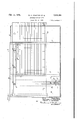
Figure 1 is a top plan View.:
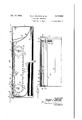
Figure 2 is a section on the line 2--2 of Figure 1.
Figure 3 is a section on the line 3--3 of ure 2. l
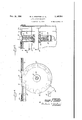
Figure 4 is a section substantially on the line 4-4 of Figurel 1, with part of the table broken away.
Figure 5 is a section substantially on the line 5 5 of Figure 1. v
'I'he operating mechanism of the autographic register is inclosed within a casing I, which has at one end a lid 2 and at its other end a lid 2a. The lid 2 is pivoted to the casing by means of Fig- Vears 3 and pivots 4. The lid 2a has therein an opening 5 for use in writing upon strips -of paper supported beneath the lid 2a. V Supported within the casing and immediately beneaththe opening 5 is a table 6, which has at one end ears Y'I 20 by Vwhich'it is-pivoted, by means of 'a rod 8,'to the sides ofthe casing'. 'I'he table is supported at its other end by means of studs 6a located on Ythe sides of the casing immediately above theupperedges thereof. I
Extending along one side of the lid 2a, is a slot 9. This slot extends substantially the'full length of the part 2a adjacent one edge of the table, and is adapted to receive vstuds I5, later onto be described. In the casing and supported byv the sides thereof are two shaftsl and II.' On the shaft I 0 there is a sprocket wheel I 2, while on the shaft II there is a sprocket wheel i3. These wheels are connectedby a sprocket chain I4, which has extending outwardly therefrom a plurality of studs I 5. As the sprockets rotate and the chain and studs travel the studs'will pass through 'the slot 9, from onefend` thereof tothe other. y 'y In the end of the casing, beneathvthe lid 2a., is a stack of fan-folded strips of paper I,` arranged in a group containing a plurality of strips. The superimposed strips form a group I 1 which passes over a Arod I8 adjacent one end of the casing. AfterV the group of strips of paper hasV passed over the rod I8 it is engaged bymeans of the studs I5 entering into suitable holes in the strips of paper so that the traveling of the studs will cause the strips of paper to travel lengthwisealong vthe top of the table and beneath the opening in the lid 2d.
The studs as they travel throughV the Vcasing enter the slot 9 and project therethrough, partly above the top of the lid, sov that they maybe engaged by the hand of the operator to advance and feed the strips ofpaper forwardly. As the group of strips of paper is advanced thejupper strip 23 passes out `of the casing above the lid 2 and beneath a part I9 of the lid 2a,` which serves to hold down the freeends of the strips of paper. The other strips of the group passinto the end of the casing beneath the lid 2, as shown by the numeral 24, and are engaged by a clip 25 for properly positioning the strips in a pile 26 in the end of the casing beneath the lid 2.
For the purpose of supporting sheets of carbon paper interleaved between the strips of paper the lid 2a has attached thereto a plurality of carbon carrier plates 20, each attached to the lid by means of a pin 2| adjacent one end of the plate, and a pin 22 slightly more removed from that end of the plate. It will be observed from an examination of Figure 1 that these plates are supported at the side of the lid 2a remote from the slot 9. It will also be observed from an eX- amination of Figure 1 that these plates extend from the pins 2| and 22 to a point adjacent the slot but not fully to the slot. By this means the support of the carbon sheets does not interfere with the operation of the sprocket chain for feeding the strips of paper forwardly over the table,
After entries have been made upon the tickets or sheets of paper the group is advanced by applying manual pressure to one of the studs I5. The lower strips of the group pass into the end of the casing, while the upper strip remains out and may be torn olf. For the purpose of tearing off this upper strip the part I8 may serve as a cutter blade. Instead of using the studs for advancing the feeding member or chain, a crank or other suitable instrumentality may be attached to one of the shafts II) or I I.
On the shaft IIJ, adjacent the hub 28 of the sprocket I2, is a disc 21 held in position against the hub by means of a collar 29. This disc is a little larger in diameter than the sprocket and is adapted to loosen the strips of paper from the studs I5 so that as the sprocket advances for feeding the paper the studs may be easily withdrawn from the holes provided therefor in the strips of paper.
In Figures 4 and 5 the strips of paper are shown to be slightly elevated by the `upper edge of the disc so that if there should be any tendency of the strips of paper to stick to the lugs this disc will release them so they can be easily removed therefrom. In order to accommodate strips of paper of varying vwidths the rod I 8 is provided with guide collars 30. There are two of these collars, arranged apart corresponding to the width of the strips of paper being used in the register.
It will be observed that the lid 2a may be readily removed and replaced by another lid having an opening or hole therein'for writing purposes of greater or less dimension transversely of the casing. From an examination of Figure 1 it is evident that strips of paper much wider than those illustrated could be used without interfering with the attachments for the carbon supports. All that would be necessary to do to adjust this register Vfor wider strips of paper would be to remove the lid 2a, as shown in Figure 1, and replace it by another lid with a larger transversely extending opening. In this event one of the collars 30 would have to be moved near the wall of the casing to provide for wider strips of paper.
In use the register casing is placed in front of the operator with one side adjacent the operator. The strips of paper may be fed across the table by engaging one of the studs I5 with the thumb or linger of the right hand to advance the strips of paper so that a group of tickets will be brought into proper position on the table, be-
neath the opening in the lid. After the strips have been thus advanced the used tickets may be torn off along their folds or creases, also by the right hand of the operator. For this purpose the part I9 is used, the creases of the strips having been advanced to the edge of this part. While the slot through which the writing studs I5 pass is located on the side of the lid opposite the operator, this slot may be located on the side of the lid adjacent the operator, with the carbon supports supported on the opposite side of the lid.
It will be understood that the various figures of the drawings exaggerate the relation of the strips. This is done for clarity and ready illustration purposes.
It will be understood that we desire to comprehend within our invention such modifications as come within the scope of the claims and the invention.
Having thus fully described our invention, what We claim as new and desire to secure by Letters Patent, is:
1. In an autographic register, a casing, a pair of shafts rotatably supported in the casing, a sprocket wheel on each shaft adjacent one side of the casing, a writing table in the casing, a paper-feeding instrumentality on the sprocket wheels at one edge of the table, and a paperstripping disc on one shaft adjacent the sprocket wheel thereon.
2. In an autographic register, the combination with a general casing having a top plate with an opening elongated lengthwise of the machine and a slot elongated in the same direction, and having also a table beneath said elongated opening to support superposed paper strips while entering data thereon, of feeding means for the paper comprising a longitudinally disposed endless chain operable in the direction of the printed form on the paper, said chain carrying pins adapted to yengage openings located at one side of the paper and to align the paper strips with one another and means adjacent the side of said table opposite said chain for stationarily sup.- porting at one longitudinally disposed edge only carbon sheets disposed between said paper strips.
3. In an auto-graphic register, the combination with a general casing having a top plate with an opening elongated lengthwise of the machine and a slot elongated in the same direction, and having also a table beneath said elongated opening to support superposed sheets of paper having printed forms thereon while entering data thereon, of
feeding means for the paper comprising a longi- Y tudinally disposed endless chain operable in the direction of the printed form on the paper, said chain carrying pins extending upward through said slot so as to be manually movable and adapted to engage openings located at one side of the paper and aligned with said pins, and means supported adjacent to the opposite edge of the table from the feeding means to support sheets of carbon paper interleaved between strips of the data paper at one longitudinally disposed edge only.
4. In an autographic register, a table for supporting paper sheets to be written upon, means adjacent one side edge of said table for supporting carbon sheets by one longitudinal edge only, a cover for the table having an opening therein over the table for writing purposes and a slot adjacent to the opening and the opposite edge of the table, and means adapted to engage the strips of paper at one edge only and extend through the slot to be. manually engageable: for feeding the strips over the table and relative to thercarbon sheets.
5. In an autographic register, a casing, a table in the casing, and a longitudinally disposed end- Y less chain` mounted to travel between one side of 6. In an autographic register, the combination with the table, a traveling member located near one edge of the tableand adaptedto feed superimposedV strips of paper along the table, and means supported at the other side of thetable to stationarily support at one longitudinally disposed edge only carbon sheets interleaves between the strips of paper.
7. In an autographic register, the combination with a casing, and feeding means for moving the paper through the machine, of av disk mounted near such feeding means and acting when the paper moves over it to lift Vthe paper and prevent it from binding on the feeding means.
8. In an autographic register for paper strips having forms perforated on one side only, means in one side of the register for supporting transversely disposed carbon sheets at one end only and means in the other side only of the register movable longitudinally thereof for engaging the perforations and moving the forms, whereby the forms are supported at one side only. and are moved laterally of the carbon sheets and sidewise through the register.
' 9. In an autographic register for paper strips having forms perforated on one side only, means in one side of the register movable longitudinally thereof for engaging the perforations and moving the forms and means opposite said irstnamed means fo-r supporting transversely disposed carbon sheets at one longitudinally disposed edge only in a stationary manner whereby the forms are engaged at one side only and moved sldewise through the register and laterally and independently of the carbon sheets.
10. In an autographic register having a longitudinally-disposed writing aperture in its top and means disposed at one side thereof and travelling parallel to the side for engaging one edge of a web comprising superposed strips of paper having forms printed laterally thereon and traversing said forms sidewise through Vthe register, the combination of a carbon pack comprising superposed carbon sheets extending laterally of the register and interleaved with the strips of the web, and means adjacent the free edge of the web for securing one longitudinally disposed end only of the pack to the register whereby the strips may be fed laterally of and independently of the carbon pack. Y
11. In an autographio register, the combination with a general casing having a top plate with an opening elongated lengthwise of the machine and a slot elongated in the same direction, and having also a table beneath said elongated opening to support paper strips having thereon printed forms extending transversely of the strips while entering data thereon and means at one side of said table for stationarily supporting at one longitudinally disposed edge only, carbon sheets disposed between said paper strips, of feeding means for the paper strips comprising a longitudinally disposed endless chain at the opposite side of said table and operable in the direction of the width of the printed form on the paper, said chain carrying pins adapted to engage openings located at o-ne side of the paper and to align the paper strips with one another, said pins also projecting through the slot during a part of the traverse whereby they may be manually operated to feed the paper.
12. In an autographic register, the combination with a general casing having a topplate with an opening elongated lengthwise of the machine and a slot elongated in the same direction, and having also a table beneath said elongated opening to support the paper while entering data thereon, of feeding means for the paper at one side only of the register comprising a longitudinally disposed endless chain operable in the direction of the printed form on the paper, said chain carrying pins adapted to engage openings located at one side of the paper and aligned with said pins, said pins in their travel projecting upward through the slot so as to be manually engaged thereat, and means supported adjacent the opposite edge of the table from the feeding means to independently support at one longitudinally disposed edge only sheets of carbo-n paper interleaved between strips of the data paper.
13. In an autographic register, a casing, a table in the casing, a longitudinally disposed endless chain mounted between one side of the casing and the edge of the table and carrying pro-jections adapted to engage one edge only of strips of paper and to feed them over the table, and a carbon pack secured at one longitudinally disposed edge only to the machine between the edge of the table and the side of the casing at the opposite edge thereof whereby in feeding, the free side edges of the strips are disposed adjacent the secured edges of the carbons and the strips move laterally and independently thereof.
14. In an autographic register, the combination with a casing having an aperture and a slot in the top thereof and a table therein disposed below the aperture, said slot being parallel to a longitudinal side of the top and disposed between said side and the aperture; an endless chain longitudinally disposed in the casing and havin-g its upper reach disposed within the zone of the slot and carrying projections adapted to engage one edge of the individual strips of a paper web and project through the slot and be manually en- .gageable to traverse the web longitudinally of the casing and above the table, and a carbonV pack having the sheets thereof interleaved with the strips of the web and having one longitudinally disposed edge only secured to the register adjacent that side of the table which is opposite to the: chain whereby the paper web may be selectively fed longitudinally of the register casing and laterally of the carbon pack and independently thereof,
WILLIAM C. PFEIFFER. FRANK E. PFEIFFER.
Priority Applications (1)
| Application Number | Priority Date | Filing Date | Title |
|---|---|---|---|
| US746543A US2108564A (en) | 1934-10-02 | 1934-10-02 | Autographic register |
Applications Claiming Priority (1)
| Application Number | Priority Date | Filing Date | Title |
|---|---|---|---|
| US746543A US2108564A (en) | 1934-10-02 | 1934-10-02 | Autographic register |
Publications (1)
| Publication Number | Publication Date |
|---|---|
| US2108564A true US2108564A (en) | 1938-02-15 |
Family
ID=25001294
Family Applications (1)
| Application Number | Title | Priority Date | Filing Date |
|---|---|---|---|
| US746543A Expired - Lifetime US2108564A (en) | 1934-10-02 | 1934-10-02 | Autographic register |
Country Status (1)
| Country | Link |
|---|---|
| US (1) | US2108564A (en) |
-
1934
- 1934-10-02 US US746543A patent/US2108564A/en not_active Expired - Lifetime
Similar Documents
| Publication | Publication Date | Title |
|---|---|---|
| US2103734A (en) | Typewriter | |
| US2377896A (en) | Carbon separator | |
| US2100776A (en) | Machine and method for making manifold forms | |
| US2236155A (en) | Carbon pack for manifolding typewriters | |
| US2076022A (en) | Record strip aligner for manifolding machines | |
| US2248188A (en) | Manifolding device | |
| US1254368A (en) | Manifolding attachment for type-writers. | |
| US2314371A (en) | Recording apparatus | |
| US2063959A (en) | Manifolding attachment for typewriters | |
| US1454822A (en) | Manifolding typewriter | |
| US2327667A (en) | Pinwheel register | |
| US2047232A (en) | Typewriter attachment | |
| US1910517A (en) | Manifolding device | |
| US1872206A (en) | Carbon manifolding apparatus | |
| US2027612A (en) | Method and apparatus for handling multiple paper sheets | |
| US1982606A (en) | Manifolding machine | |
| US1953411A (en) | Autographic register | |
| US1805239A (en) | Autographic register | |
| US1930202A (en) | Web control | |
| US2110594A (en) | Manifolding device | |
| US989309A (en) | Type-writing machine. | |
| US1552544A (en) | Material feed control for impression apparatus | |
| US1255032A (en) | Printing and addressing machine. | |
| US2132068A (en) | Carbon holding and retracting device for duplicating machines | |
| US1898793A (en) | Typewriting machine |