US2024918A - Beet knife - Google Patents
Beet knife Download PDFInfo
- Publication number
- US2024918A US2024918A US714343A US71434334A US2024918A US 2024918 A US2024918 A US 2024918A US 714343 A US714343 A US 714343A US 71434334 A US71434334 A US 71434334A US 2024918 A US2024918 A US 2024918A
- Authority
- US
- United States
- Prior art keywords
- channels
- knife
- walls
- beet
- blade
- Prior art date
- Legal status (The legal status is an assumption and is not a legal conclusion. Google has not performed a legal analysis and makes no representation as to the accuracy of the status listed.)
- Expired - Lifetime
Links
- 235000016068 Berberis vulgaris Nutrition 0.000 title description 19
- 241000335053 Beta vulgaris Species 0.000 title description 19
- 230000003247 decreasing effect Effects 0.000 description 2
- 230000002411 adverse Effects 0.000 description 1
- 230000001771 impaired effect Effects 0.000 description 1
- 238000000034 method Methods 0.000 description 1
- 238000003801 milling Methods 0.000 description 1
- 230000001105 regulatory effect Effects 0.000 description 1
- 230000003014 reinforcing effect Effects 0.000 description 1
- 238000009877 rendering Methods 0.000 description 1
Images
Classifications
-
- C—CHEMISTRY; METALLURGY
- C13—SUGAR INDUSTRY
- C13B—PRODUCTION OF SUCROSE; APPARATUS SPECIALLY ADAPTED THEREFOR
- C13B5/00—Reducing the size of material from which sugar is to be extracted
- C13B5/06—Slicing sugar beet
Definitions
- This invention relates to improvements in beet knives, and the principal object of the invention is tc provide a knife of the stated character that shall be generally more eicient in operation than knives of the prior form.
- FIG. 1 is a fragmentary sectional perspective view of a knife made in accordance with my invention
- Fig. 2 is an enlarged fragmentary plan view of the knife
- Fig. 3 is a section on the line 3 3, Fig. 2, and
- Fig. 4 is a fragmentary sectional View of that portion of the beet-cutting apparatus in which the beet knives are mounted.
- I is the body of the knife which is accordance with the usual practice is formed at the front end with aplurality of channels 2 which terminate in the cutting edge 3 of the knife.
- these knives cut the beets into elongated strips which pass back through the channels 2 and are discharged from the rear ends of the latter.
- the knives may be mounted on the inside of a rotary cylindrical drum, one section of which is shown at 5.
- the forward ends of the knives overlie openings 6 in the drum, and gauge bars 'l are adjustably supported in the drum closely adjacent the forward or cutting edges of the knives and afford a means for regulating the size of the severed beet strips.
- the beets are massed in the interior of the drum and the free ends of the knives are unavoidably subjected to the (Cl. 14S-129) weight of this mass, which is considerable.
- a beet knife comprising a substantially fiat blade having in a face thereof a series of longitudinal channels the walls of whicheat their front ends terminate iny the cutting*V edge of the knife, the bottom walls of said channels at their rear ends curving outwardly toward the said face of the blade, and the upper edges of the side walls of said channels at their rear ends extending inwardly toward said curved bottom walls to provide a. transverse channel intersecting the longitudinal channels first l' named, and the said side walls being of reduced Ythickness at their rear ends. to thereby increase.
- a beet knife comprising a substantially flat blade having adjoining channels in a face thereof, the walls oi'said channels terminating at their outer end in a Vcutting edge, and the.
- a beet knife comprising a, substantially flat blade having adjoining, V-bottomed channels in a face thereof,v therwalls of said channels ance with my invention is substantially free terminating at their outer end in a cutting edge, and the said bottoms of the channels curving upwardly at the inner ends to intersect the said face of the blade, the walls of the channels toward their inner ends and above said V'bottoms being reduced in thickness to afford an increased channel width within the area of said reduction.
- a beet knife comprising a substantially flat blade having adjoining channels in a face thereof, the walls of said channels terminating at their outer end in a cutting edge, and the bottom surfaces of the channels curving upwardly at the inner ends to intersect the said face ofi the blade, the walls'of the channels above said bottom surfaces and from a point intermediate the ends thereof toward the inner ends of the, channels being reduced from the upper edges both in height and in thickness.
- a beet knife comprising a substantially flat blade having adjoining channels in a face thereof, the walls of said channels terminating at their outer end in a cutting edge, and the bottom surfaces of the channels curving upwardly at the inner ends to intersect the said face of 25 the blade, the walls of said channels above said bottom surfaces. terminating shortof the point where the said, bottom surfaces intersect the said face of the blade, and the inner ends of the side walls of the channels above the said bottom or surfaces being of reduced thickness to afford an increased ⁇ channel width within the area of said reduction.
Landscapes
- Chemical & Material Sciences (AREA)
- Life Sciences & Earth Sciences (AREA)
- Biochemistry (AREA)
- Organic Chemistry (AREA)
- Harvesting Machines For Root Crops (AREA)
- Apparatuses For Bulk Treatment Of Fruits And Vegetables And Apparatuses For Preparing Feeds (AREA)
Description
S. T. FREAS Dec. 17, 1935.
BEET KNIFE 2 Sheets-Shea# 1 Filed MaIOh 6, 1934 Dec. 17, 193s. s. T. FREAS 2,024,918
BEET KNIFE Filed March 6, 1934 2 Sheets-Sheet 2 N14/fl M Seanad ZELQQAS Patented Dec. 17, 1935 UNITED STATES BEET KNIFE Samuel T. Freas, Trenton, N. J., assignor to Henry Disston & Sons, Incorporated, Philadelphia, Pa., a corporation of Pennsylvania Application March 6, 1934, Serial No. 714,343
5 Claims.
This invention relates to improvements in beet knives, and the principal object of the invention is tc provide a knife of the stated character that shall be generally more eicient in operation than knives of the prior form.
In the attached drawings:
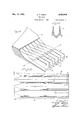
Figure 1 is a fragmentary sectional perspective view of a knife made in accordance with my invention;
Fig. 2 is an enlarged fragmentary plan view of the knife;
Fig. 3 is a section on the line 3 3, Fig. 2, and
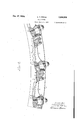
Fig. 4 is a fragmentary sectional View of that portion of the beet-cutting apparatus in which the beet knives are mounted.
With reference to the drawings, I is the body of the knife which is accordance with the usual practice is formed at the front end with aplurality of channels 2 which terminate in the cutting edge 3 of the knife. In operation, these knives cut the beets into elongated strips which pass back through the channels 2 and are discharged from the rear ends of the latter.
In the process of extracting sugar from the beets, it is desirable that these strips be as long and as uniform as possible, and it is therefore essential that the strips be permitted to escape freely from the channels, since any tendency of the strips to bind or clog in the channels destroys the continuity of the strips and interferes with efficient operation of the knives. It has been proposed as a means for preventing binding of the strips in the channels to reduce the height of the walls 4 of the channels from their upper edges towards the rear ends of the channels, but I have found that if the walls are cut down in this manner to the extent required for substantially y:effective results, the. strength of the knife is impaired to a degreel rendering the blade flexible under the conditions of use, which precludes efficient operation of the knife in cutting the beets into' uniform strips.
lI'his will be more readily understood from Fig. l of the drawings. In practice, the knives may be mounted on the inside of a rotary cylindrical drum, one section of which is shown at 5. The forward ends of the knives overlie openings 6 in the drum, and gauge bars 'l are adjustably supported in the drum closely adjacent the forward or cutting edges of the knives and afford a means for regulating the size of the severed beet strips. The beets are massed in the interior of the drum and the free ends of the knives are unavoidably subjected to the (Cl. 14S-129) weight of this mass, which is considerable. It willbe apparent that if, as proposed, the inner ends of the walls 4 of the channels are entirely cut away, which would afford maximum clearance for the severed beet strips, there is produced in this section of the knife an area of maximum weakness in which the blade will tend to flex under the weight of the beets irnposed upon the forward unsupported end of the knife, and that this flexure win unavoidabiy 1 destroy the adjusted relation of the gauge bar 1 to the cutting edge of the knife.
I have discovered that by milling or otherwise decreasing the transverse thickness of the inner ends of the Walls 4 of the channels, rear- 15 wardly of the line A-A for example, the efficiency of the knife in forming the elongated strips of beet is materially increased and without affecting the normal rigidity of the knife. 'Ihe increased width of the channels effected in this man- 20 ner permits the strips to fall away freely from the channels and substantially precludes possibility of the strips jamming or binding in the channels. The Walls 4 of the channels in this area of reduced thickness remain, however, to function 25 as reinforcing ribs, preventing flexure of the blade as previously described, so that the relation between the cutting edge of the knife and the gauge bar 'l remains constant. I have found it practicable, in order to afford a further de- 30 gree of clearance for the strips in leaving the channels, to reduce the height of the walls 4 from their upper edges in that section of the knife rearwardly of the line A-A in which the transverse thickness of the Walls has been re- 35 duced in accordance with my invention, although such reduction in the height of the walls should be limited to an extent not affecting the substantial rigidity of the knife required for efficient operation as described above; and the attached drawings illustrate a knife incorporating this feature.
It will be noted that in decreasing the width and the height of the walls 4 of the channels in accordance with my invention, I do not in other respects alter the characteristics of the knife as a whole. The useful life of the blade is not affected for example, since the narrowing of the walls 4 is confined substantially to that r portion of the knife rearwardly of the line "0 A-A which marks the inner practical limit of the cutting edge. Also as previously set forth, the narrowing of the channel walls does not adversely affect the strength and normal rigidity of the blade. A knife made in accordfrom tendency to clog, and has shown in practice a materially increased efliciency over the knives of the prior art.
I claim:
1. A beet knife comprising a substantially fiat blade having in a face thereof a series of longitudinal channels the walls of whicheat their front ends terminate iny the cutting*V edge of the knife, the bottom walls of said channels at their rear ends curving outwardly toward the said face of the blade, and the upper edges of the side walls of said channels at their rear ends extending inwardly toward said curved bottom walls to provide a. transverse channel intersecting the longitudinal channels first l' named, and the said side walls being of reduced Ythickness at their rear ends. to thereby increase.
the width of the longitudinal channels in that portion thereof 4adjoining said transverse channel.
2. A beet knife comprising a substantially flat blade having adjoining channels in a face thereof, the walls oi'said channels terminating at their outer end in a Vcutting edge, and the.
Y bottoms of thechannels curving upwardly at Y channel width withinrthe area of said reduction.
3. A beet knife comprising a, substantially flat blade having adjoining, V-bottomed channels in a face thereof,v therwalls of said channels ance with my invention is substantially free terminating at their outer end in a cutting edge, and the said bottoms of the channels curving upwardly at the inner ends to intersect the said face of the blade, the walls of the channels toward their inner ends and above said V'bottoms being reduced in thickness to afford an increased channel width within the area of said reduction.
4.. A beet knife comprising a substantially flat blade having adjoining channels in a face thereof, the walls of said channels terminating at their outer end in a cutting edge, and the bottom surfaces of the channels curving upwardly at the inner ends to intersect the said face ofi the blade, the walls'of the channels above said bottom surfaces and from a point intermediate the ends thereof toward the inner ends of the, channels being reduced from the upper edges both in height and in thickness.
5. A beet knife comprising a substantially flat blade having adjoining channels in a face thereof, the walls of said channels terminating at their outer end in a cutting edge, and the bottom surfaces of the channels curving upwardly at the inner ends to intersect the said face of 25 the blade, the walls of said channels above said bottom surfaces. terminating shortof the point where the said, bottom surfaces intersect the said face of the blade, and the inner ends of the side walls of the channels above the said bottom or surfaces being of reduced thickness to afford an increased` channel width within the area of said reduction.
SAMUEL T. FREAS.
Priority Applications (1)
| Application Number | Priority Date | Filing Date | Title |
|---|---|---|---|
| US714343A US2024918A (en) | 1934-03-06 | 1934-03-06 | Beet knife |
Applications Claiming Priority (1)
| Application Number | Priority Date | Filing Date | Title |
|---|---|---|---|
| US714343A US2024918A (en) | 1934-03-06 | 1934-03-06 | Beet knife |
Publications (1)
| Publication Number | Publication Date |
|---|---|
| US2024918A true US2024918A (en) | 1935-12-17 |
Family
ID=24869653
Family Applications (1)
| Application Number | Title | Priority Date | Filing Date |
|---|---|---|---|
| US714343A Expired - Lifetime US2024918A (en) | 1934-03-06 | 1934-03-06 | Beet knife |
Country Status (1)
| Country | Link |
|---|---|
| US (1) | US2024918A (en) |
-
1934
- 1934-03-06 US US714343A patent/US2024918A/en not_active Expired - Lifetime
Similar Documents
| Publication | Publication Date | Title |
|---|---|---|
| US2566112A (en) | Knife blade construction | |
| US2281846A (en) | Straw cutter for grain combines | |
| US2555735A (en) | Knife having a serrated edge | |
| US2813557A (en) | Chipping knife construction | |
| US2713276A (en) | Saw chain tooth | |
| EP4331385B1 (en) | Improved crusher and crushing machine comprising said crusher | |
| US2126080A (en) | Paring knife | |
| US1503784A (en) | Machine for producing rattan weaving strips | |
| US2132320A (en) | Paring knife | |
| US1566880A (en) | Saw | |
| US1328982A (en) | Hacksaw-blade | |
| US2829684A (en) | Saw blade with hardened teeth | |
| US1394927A (en) | Steel for sharpening cutlery | |
| US2551049A (en) | Rotary gang knife for meat chopping machines | |
| US3431714A (en) | Cutter bar | |
| US1464690A (en) | Wood chipper | |
| US2078218A (en) | Intercepting member for paper stock treating machines | |
| US1543919A (en) | Excelsior knife | |
| US2679874A (en) | Meat cutting machine | |
| US1933766A (en) | Turnplate for cane sugar mills | |
| US1671040A (en) | Knife holder for rotary cane cutters | |
| SU713909A1 (en) | Cutting device to root cutters | |
| US1088085A (en) | Cotton-seed huller. | |
| SU1090329A2 (en) | Onion-breaking machine | |
| US2028919A (en) | Textile picker |