US20240209010A1 - Prodrugs of azo compounds and their salts - Google Patents
Prodrugs of azo compounds and their salts Download PDFInfo
- Publication number
- US20240209010A1 US20240209010A1 US18/278,530 US202218278530A US2024209010A1 US 20240209010 A1 US20240209010 A1 US 20240209010A1 US 202218278530 A US202218278530 A US 202218278530A US 2024209010 A1 US2024209010 A1 US 2024209010A1
- Authority
- US
- United States
- Prior art keywords
- optionally substituted
- group
- heterocycloalkyl
- aryl
- heteroaryl
- Prior art date
- Legal status (The legal status is an assumption and is not a legal conclusion. Google has not performed a legal analysis and makes no representation as to the accuracy of the status listed.)
- Pending
Links
Images


Classifications
-
- A—HUMAN NECESSITIES
- A61—MEDICAL OR VETERINARY SCIENCE; HYGIENE
- A61K—PREPARATIONS FOR MEDICAL, DENTAL OR TOILETRY PURPOSES
- A61K31/00—Medicinal preparations containing organic active ingredients
- A61K31/655—Azo (—N=N—), diazo (=N2), azoxy (>N—O—N< or N(=O)—N<), azido (—N3) or diazoamino (—N=N—N<) compounds
-
- A—HUMAN NECESSITIES
- A61—MEDICAL OR VETERINARY SCIENCE; HYGIENE
- A61K—PREPARATIONS FOR MEDICAL, DENTAL OR TOILETRY PURPOSES
- A61K31/00—Medicinal preparations containing organic active ingredients
- A61K31/33—Heterocyclic compounds
- A61K31/395—Heterocyclic compounds having nitrogen as a ring hetero atom, e.g. guanethidine or rifamycins
- A61K31/435—Heterocyclic compounds having nitrogen as a ring hetero atom, e.g. guanethidine or rifamycins having six-membered rings with one nitrogen as the only ring hetero atom
- A61K31/44—Non condensed pyridines; Hydrogenated derivatives thereof
- A61K31/4427—Non condensed pyridines; Hydrogenated derivatives thereof containing further heterocyclic ring systems
- A61K31/4439—Non condensed pyridines; Hydrogenated derivatives thereof containing further heterocyclic ring systems containing a five-membered ring with nitrogen as a ring hetero atom, e.g. omeprazole
-
- A—HUMAN NECESSITIES
- A61—MEDICAL OR VETERINARY SCIENCE; HYGIENE
- A61K—PREPARATIONS FOR MEDICAL, DENTAL OR TOILETRY PURPOSES
- A61K31/00—Medicinal preparations containing organic active ingredients
- A61K31/66—Phosphorus compounds
- A61K31/675—Phosphorus compounds having nitrogen as a ring hetero atom, e.g. pyridoxal phosphate
-
- A—HUMAN NECESSITIES
- A61—MEDICAL OR VETERINARY SCIENCE; HYGIENE
- A61P—SPECIFIC THERAPEUTIC ACTIVITY OF CHEMICAL COMPOUNDS OR MEDICINAL PREPARATIONS
- A61P13/00—Drugs for disorders of the urinary system
- A61P13/10—Drugs for disorders of the urinary system of the bladder
-
- A—HUMAN NECESSITIES
- A61—MEDICAL OR VETERINARY SCIENCE; HYGIENE
- A61P—SPECIFIC THERAPEUTIC ACTIVITY OF CHEMICAL COMPOUNDS OR MEDICINAL PREPARATIONS
- A61P25/00—Drugs for disorders of the nervous system
- A61P25/04—Centrally acting analgesics, e.g. opioids
-
- C—CHEMISTRY; METALLURGY
- C07—ORGANIC CHEMISTRY
- C07D—HETEROCYCLIC COMPOUNDS
- C07D213/00—Heterocyclic compounds containing six-membered rings, not condensed with other rings, with one nitrogen atom as the only ring hetero atom and three or more double bonds between ring members or between ring members and non-ring members
- C07D213/02—Heterocyclic compounds containing six-membered rings, not condensed with other rings, with one nitrogen atom as the only ring hetero atom and three or more double bonds between ring members or between ring members and non-ring members having three double bonds between ring members or between ring members and non-ring members
- C07D213/04—Heterocyclic compounds containing six-membered rings, not condensed with other rings, with one nitrogen atom as the only ring hetero atom and three or more double bonds between ring members or between ring members and non-ring members having three double bonds between ring members or between ring members and non-ring members having no bond between the ring nitrogen atom and a non-ring member or having only hydrogen or carbon atoms directly attached to the ring nitrogen atom
- C07D213/60—Heterocyclic compounds containing six-membered rings, not condensed with other rings, with one nitrogen atom as the only ring hetero atom and three or more double bonds between ring members or between ring members and non-ring members having three double bonds between ring members or between ring members and non-ring members having no bond between the ring nitrogen atom and a non-ring member or having only hydrogen or carbon atoms directly attached to the ring nitrogen atom with hetero atoms or with carbon atoms having three bonds to hetero atoms with at the most one bond to halogen, e.g. ester or nitrile radicals, directly attached to ring carbon atoms
- C07D213/72—Nitrogen atoms
- C07D213/75—Amino or imino radicals, acylated by carboxylic or carbonic acids, or by sulfur or nitrogen analogues thereof, e.g. carbamates
-
- C—CHEMISTRY; METALLURGY
- C07—ORGANIC CHEMISTRY
- C07D—HETEROCYCLIC COMPOUNDS
- C07D213/00—Heterocyclic compounds containing six-membered rings, not condensed with other rings, with one nitrogen atom as the only ring hetero atom and three or more double bonds between ring members or between ring members and non-ring members
- C07D213/02—Heterocyclic compounds containing six-membered rings, not condensed with other rings, with one nitrogen atom as the only ring hetero atom and three or more double bonds between ring members or between ring members and non-ring members having three double bonds between ring members or between ring members and non-ring members
- C07D213/04—Heterocyclic compounds containing six-membered rings, not condensed with other rings, with one nitrogen atom as the only ring hetero atom and three or more double bonds between ring members or between ring members and non-ring members having three double bonds between ring members or between ring members and non-ring members having no bond between the ring nitrogen atom and a non-ring member or having only hydrogen or carbon atoms directly attached to the ring nitrogen atom
- C07D213/60—Heterocyclic compounds containing six-membered rings, not condensed with other rings, with one nitrogen atom as the only ring hetero atom and three or more double bonds between ring members or between ring members and non-ring members having three double bonds between ring members or between ring members and non-ring members having no bond between the ring nitrogen atom and a non-ring member or having only hydrogen or carbon atoms directly attached to the ring nitrogen atom with hetero atoms or with carbon atoms having three bonds to hetero atoms with at the most one bond to halogen, e.g. ester or nitrile radicals, directly attached to ring carbon atoms
- C07D213/72—Nitrogen atoms
- C07D213/76—Nitrogen atoms to which a second hetero atom is attached
- C07D213/77—Hydrazine radicals
-
- C—CHEMISTRY; METALLURGY
- C07—ORGANIC CHEMISTRY
- C07D—HETEROCYCLIC COMPOUNDS
- C07D213/00—Heterocyclic compounds containing six-membered rings, not condensed with other rings, with one nitrogen atom as the only ring hetero atom and three or more double bonds between ring members or between ring members and non-ring members
- C07D213/02—Heterocyclic compounds containing six-membered rings, not condensed with other rings, with one nitrogen atom as the only ring hetero atom and three or more double bonds between ring members or between ring members and non-ring members having three double bonds between ring members or between ring members and non-ring members
- C07D213/04—Heterocyclic compounds containing six-membered rings, not condensed with other rings, with one nitrogen atom as the only ring hetero atom and three or more double bonds between ring members or between ring members and non-ring members having three double bonds between ring members or between ring members and non-ring members having no bond between the ring nitrogen atom and a non-ring member or having only hydrogen or carbon atoms directly attached to the ring nitrogen atom
- C07D213/60—Heterocyclic compounds containing six-membered rings, not condensed with other rings, with one nitrogen atom as the only ring hetero atom and three or more double bonds between ring members or between ring members and non-ring members having three double bonds between ring members or between ring members and non-ring members having no bond between the ring nitrogen atom and a non-ring member or having only hydrogen or carbon atoms directly attached to the ring nitrogen atom with hetero atoms or with carbon atoms having three bonds to hetero atoms with at the most one bond to halogen, e.g. ester or nitrile radicals, directly attached to ring carbon atoms
- C07D213/78—Carbon atoms having three bonds to hetero atoms, with at the most one bond to halogen, e.g. ester or nitrile radicals
- C07D213/84—Nitriles
- C07D213/85—Nitriles in position 3
-
- C—CHEMISTRY; METALLURGY
- C07—ORGANIC CHEMISTRY
- C07D—HETEROCYCLIC COMPOUNDS
- C07D401/00—Heterocyclic compounds containing two or more hetero rings, having nitrogen atoms as the only ring hetero atoms, at least one ring being a six-membered ring with only one nitrogen atom
- C07D401/02—Heterocyclic compounds containing two or more hetero rings, having nitrogen atoms as the only ring hetero atoms, at least one ring being a six-membered ring with only one nitrogen atom containing two hetero rings
- C07D401/12—Heterocyclic compounds containing two or more hetero rings, having nitrogen atoms as the only ring hetero atoms, at least one ring being a six-membered ring with only one nitrogen atom containing two hetero rings linked by a chain containing hetero atoms as chain links
-
- C—CHEMISTRY; METALLURGY
- C07—ORGANIC CHEMISTRY
- C07D—HETEROCYCLIC COMPOUNDS
- C07D401/00—Heterocyclic compounds containing two or more hetero rings, having nitrogen atoms as the only ring hetero atoms, at least one ring being a six-membered ring with only one nitrogen atom
- C07D401/14—Heterocyclic compounds containing two or more hetero rings, having nitrogen atoms as the only ring hetero atoms, at least one ring being a six-membered ring with only one nitrogen atom containing three or more hetero rings
-
- C—CHEMISTRY; METALLURGY
- C07—ORGANIC CHEMISTRY
- C07D—HETEROCYCLIC COMPOUNDS
- C07D405/00—Heterocyclic compounds containing both one or more hetero rings having oxygen atoms as the only ring hetero atoms, and one or more rings having nitrogen as the only ring hetero atom
- C07D405/02—Heterocyclic compounds containing both one or more hetero rings having oxygen atoms as the only ring hetero atoms, and one or more rings having nitrogen as the only ring hetero atom containing two hetero rings
- C07D405/12—Heterocyclic compounds containing both one or more hetero rings having oxygen atoms as the only ring hetero atoms, and one or more rings having nitrogen as the only ring hetero atom containing two hetero rings linked by a chain containing hetero atoms as chain links
-
- C—CHEMISTRY; METALLURGY
- C07—ORGANIC CHEMISTRY
- C07D—HETEROCYCLIC COMPOUNDS
- C07D413/00—Heterocyclic compounds containing two or more hetero rings, at least one ring having nitrogen and oxygen atoms as the only ring hetero atoms
- C07D413/14—Heterocyclic compounds containing two or more hetero rings, at least one ring having nitrogen and oxygen atoms as the only ring hetero atoms containing three or more hetero rings
-
- C—CHEMISTRY; METALLURGY
- C07—ORGANIC CHEMISTRY
- C07D—HETEROCYCLIC COMPOUNDS
- C07D471/00—Heterocyclic compounds containing nitrogen atoms as the only ring hetero atoms in the condensed system, at least one ring being a six-membered ring with one nitrogen atom, not provided for by groups C07D451/00 - C07D463/00
- C07D471/02—Heterocyclic compounds containing nitrogen atoms as the only ring hetero atoms in the condensed system, at least one ring being a six-membered ring with one nitrogen atom, not provided for by groups C07D451/00 - C07D463/00 in which the condensed system contains two hetero rings
- C07D471/04—Ortho-condensed systems
-
- C—CHEMISTRY; METALLURGY
- C07—ORGANIC CHEMISTRY
- C07D—HETEROCYCLIC COMPOUNDS
- C07D471/00—Heterocyclic compounds containing nitrogen atoms as the only ring hetero atoms in the condensed system, at least one ring being a six-membered ring with one nitrogen atom, not provided for by groups C07D451/00 - C07D463/00
- C07D471/02—Heterocyclic compounds containing nitrogen atoms as the only ring hetero atoms in the condensed system, at least one ring being a six-membered ring with one nitrogen atom, not provided for by groups C07D451/00 - C07D463/00 in which the condensed system contains two hetero rings
- C07D471/10—Spiro-condensed systems
-
- C—CHEMISTRY; METALLURGY
- C07—ORGANIC CHEMISTRY
- C07D—HETEROCYCLIC COMPOUNDS
- C07D487/00—Heterocyclic compounds containing nitrogen atoms as the only ring hetero atoms in the condensed system, not provided for by groups C07D451/00 - C07D477/00
- C07D487/02—Heterocyclic compounds containing nitrogen atoms as the only ring hetero atoms in the condensed system, not provided for by groups C07D451/00 - C07D477/00 in which the condensed system contains two hetero rings
- C07D487/10—Spiro-condensed systems
-
- C—CHEMISTRY; METALLURGY
- C07—ORGANIC CHEMISTRY
- C07F—ACYCLIC, CARBOCYCLIC OR HETEROCYCLIC COMPOUNDS CONTAINING ELEMENTS OTHER THAN CARBON, HYDROGEN, HALOGEN, OXYGEN, NITROGEN, SULFUR, SELENIUM OR TELLURIUM
- C07F9/00—Compounds containing elements of Groups 5 or 15 of the Periodic Table
- C07F9/02—Phosphorus compounds
- C07F9/547—Heterocyclic compounds, e.g. containing phosphorus as a ring hetero atom
- C07F9/553—Heterocyclic compounds, e.g. containing phosphorus as a ring hetero atom having one nitrogen atom as the only ring hetero atom
- C07F9/576—Six-membered rings
- C07F9/58—Pyridine rings
-
- C—CHEMISTRY; METALLURGY
- C07—ORGANIC CHEMISTRY
- C07H—SUGARS; DERIVATIVES THEREOF; NUCLEOSIDES; NUCLEOTIDES; NUCLEIC ACIDS
- C07H13/00—Compounds containing saccharide radicals esterified by carbonic acid or derivatives thereof, or by organic acids, e.g. phosphonic acids
- C07H13/12—Compounds containing saccharide radicals esterified by carbonic acid or derivatives thereof, or by organic acids, e.g. phosphonic acids by acids having the group -X-C(=X)-X-, or halides thereof, in which each X means nitrogen, oxygen, sulfur, selenium or tellurium, e.g. carbonic acid, carbamic acid
Definitions
- the present invention relates to compounds of general formula I and therapeutic use of the same.
- the present disclosure also relates to pharmaceutical composition of compounds of general formula I and method of treatment using the same.
- Pain is a complex multidimensional concept that facilitates the initiation of the signaling cascade in response to any noxious stimuli.
- Numerous types of receptors are activated in pain sensations which vary in their signaling pathway. These signaling pathways can be regarded as a site for modulation of pain by targeting the pain transduction molecules to produce analgesia out of several pain syndromes.
- Interstitial Cystitis/Bladder Pain Syndrome IC/BPS
- OAB active bladder
- Peripheral inflammation produces multiple inflammatory mediators, such as bradykinin, prostaglandins (PGE2), purines (ATP), proteases and NGF that act on their cognate receptors expressed in nociceptive sensory neurons to activate intracellular signal transduction pathways.
- the present invention provides the compounds useful in treatment of interstitial cystitis/bladder pain syndrome (IC/BPS), over active bladder (OAB), chronic cough, endometriosis, neuropathic pain, migraine, pruritus, postherpetic neuralgia, urinary tract infection-related pain, osteoarthritis, arthritis and urinary incontinence.
- IC/BPS interstitial cystitis/bladder pain syndrome
- OAB active bladder
- FIG. 1 Gene expression analysis was done by quantitative RT-PCR using RNA isolated (subsequent cDNA synthesis) from RT4 cells treated with test drug compounds in combination with cyclophosphamide. Bar graph represents fold change in gene expression of P2RX3. All the values are represented as mean ⁇ SEM.
- CYP acute cyclophosphamide
- CYP Chronic cyclophosphamide
- FIG. 8 Mean ⁇ SD concentration—time profile of Compound No. 12 and Compound XI following single oral administration of Compound No. 12 in Sprague Dawley rat.
- FIG. 9 Mean ⁇ SD concentration—time profile of Compound No. 43 and Compound XI following single oral administration of Compound No. 43 in Sprague Dawley rat.
- FIG. 10 Mean ⁇ SD concentration—time profile of Compound No. 446 and Compound XI following single oral administration of Compound No. 446 in Sprague Dawley rat.
- FIG. 11 Mean ⁇ SD concentration—time profile of Compound No. 449 and Compound XI following single oral administration of Compound No. 449 in Sprague Dawley rat.
- FIG. 12 Mean ⁇ SD concentration—time profile of Compound XIII and Compound XI following single oral administration of Compound XIII in Sprague Dawley rat.
- FIG. 13 Mean ⁇ SD concentration—time profile of Compound No. 54 and Compound XI following single oral administration of Compound No. 54 in Sprague Dawley rat.
- the present invention provides valuable prodrugs which overcome the disadvantage of the active substances available, namely inadequate absorption of the active substance by biological membranes or the unfavorable metabolism of parent compound. Furthermore, these novel prodrugs have improved pharmacokinetic characteristics compared with parent compounds.
- the present invention provides compounds of general formula (I), pharmaceutically acceptable salts or solvates thereof:
- R 2 is selected from the group consisting of optionally substituted alkyl, alkenyl, alkynyl, cycloalkyl, heterocycloalkyl, aryl, or heteroaryl
- R 4 is selected from the group consisting of optionally substituted alkyl, alkenyl, alkynyl, —(CH 2 —CH 2 —O) n —, cycloalkyl, heterocycloalkyl, aryl, or heteroaryl; where n is from 1-20;
- R 9 is selected from the group consisting of optionally substituted alkyl, alkenyl, alkynyl, cycloalkyl, heterocycloalkyl, aryl, heteroaryl, amino, alkyl-ester, alkoxy, heterocycloalkoxy, heteroaryloxy, cycloalkoxy, aryloxy, amino acid linked via ester or amide linkage at the point of attachment, —(CH 2 —CH 2 —O) n —, or NR 10 R 11 , where n is from 1-20, R 10 and R 11 are the same or different and independently selected from hydrogen or optionally substituted alkyl; R 8 is selected from the group consisting of optionally substituted alkyl, alkenyl, alkynyl, cycloalkyl, heterocycloalkyl, aryl, or heteroaryl;
- R 12 is selected from the group consisting of optionally substituted alkyl, alkenyl, alkynyl, cycloalkyl, heterocycloalkyl, aryl, or heteroaryl
- R 13 is selected from group consisting of optionally substituted alkyl, alkenyl, alkynyl, cycloalkyl, heterocycloalkyl, aryl, heteroaryl, alkyl-ester, amino, alkoxy, heterocycloalkoxy, heteroaryloxy, cycloalkoxy, aryloxy, aminoaryl, or amino acid linked via ester or amide linkage at the point of attachment, —(CH 2 —CH 2 —O) n —, or NR 14 R 15 , where n is from 1-20; where R 14 and R 15 are each independently selected from hydrogen, optionally substituted alkyl, heterocycloalkyl, aryl group; R 16 is selected from optionally substituted alkylene(C 1-6 ) group; with the proviso
- the present invention provides compounds of general formula I-A, pharmaceutically acceptable salts or solvates thereof:
- R 2 is selected from the group consisting of optionally substituted alkyl, alkenyl, alkynyl, cycloalkyl, heterocycloalkyl, aryl, or heteroaryl
- R 4 is selected from the group consisting of optionally substituted alkyl, alkenyl, alkynyl, —(CH 2 —CH 2 —O) n —, cycloalkyl, heterocycloalkyl, aryl, or heteroaryl, where n is from 1-20
- R 17 is selected from optionally substituted linear or branched alkylene group, wherein alkylene is optionally substituted with amino, alkylamino and dialkylamino group
- Rig is selected from NH 2 , —NR 20 R 21 , wherein R 20 and R 21 are each independently selected from hydrogen, optionally substituted alkyl, —C(O)—R 22 , wherein R 22 is selected from optionally substituted alkyl, cycloalkyl, heterocyclo
- R 9 is selected from the group consisting of optionally substituted alkyl, alkenyl, alkynyl, cycloalkyl, heterocycloalkyl, aryl, heteroaryl, amino, alkyl-ester, alkoxy, heterocycloalkoxy, heteroaryloxy, cycloalkoxy, aryloxy, amino acid linked via ester or amide linkage at the point of attachment, —(CH 2 —CH 2 —O) n —, or NR 10 R 11 , where n is from 1-20; R 10 and R 11 are the same or different and independently selected from hydrogen or optionally substituted alkyl, cycloalkyl, aryl, heterocycloalkyl, and heteroaryl group; R 8 is selected from the group consisting of optionally substituted alkyl, alkenyl, alkynyl, cycloalkyl, heterocycloalkyl, aryl, or heteroaryl;
- R 12 is selected from the group consisting of optionally substituted alkyl, alkenyl, alkynyl, cycloalkyl, heterocycloalkyl, aryl, or heteroaryl
- R 13 is selected from group consisting of optionally substituted alkyl, alkenyl, alkynyl, cycloalkyl, heterocycloalkyl, aryl, heteroaryl, alkyl-ester, amino, alkoxy, heterocycloalkoxy, heteroaryloxy, cycloalkoxy, aryloxy, aminoaryl, or amino acid linked via ester or amide linkage at the point of attachment, —(CH 2 —CH 2 —O) n —, or NR 14 R 15 , where n is from 1-20; R 14 and R 15 are each independently selected from hydrogen, optionally substituted alkyl, heterocycloalkyl, aryl group; Rib selected from optionally substituted alkylene (C1-6) group; R 19 is
- the present invention provides a method for the treatment of interstitial cystitis/bladder pain syndrome (IC/BPS), over active bladder (OAB), chronic cough, endometriosis, neuropathic pain, migraine, pruritus, postherpetic neuralgia, urinary tract infection-related pain, osteoarthritis, arthritis and urinary incontinence which comprises administering a compound selected from general formula (I) pharmaceutically acceptable salts or solvates thereof.
- the present invention provides a method for the treatment of interstitial cystitis/bladder pain syndrome (IC/BPS), over active bladder (OAB), chronic cough, endometriosis, neuropathic pain, migraine, pruritus, postherpetic neuralgia, urinary tract infection-related pain, osteoarthritis, arthritis and urinary incontinence which comprises administering a compound selected from general formula (I-A) pharmaceutically acceptable salts or solvates thereof.
- the present invention provides a method of use for interstitial cystitis/bladder pain syndrome (IC/BPS), over active bladder (OAB), chronic cough, endometriosis, neuropathic pain, migraine, pruritus, postherpetic neuralgia, urinary tract infection-related pain, osteoarthritis, arthritis and urinary incontinence which comprises administering a compound selected from general formula (I) pharmaceutically acceptable salts, or solvates thereof.
- the present invention provides a method of use for interstitial cystitis/bladder pain syndrome (IC/BPS), over active bladder (OAB), chronic cough, endometriosis, neuropathic pain, migraine, pruritus, postherpetic neuralgia, urinary tract infection-related pain, osteoarthritis, arthritis and urinary incontinence which comprises administering a compound selected from general formula (I-A) pharmaceutically acceptable salts, or solvates thereof.
- the present invention provides a method for the symptomatic relief of pain, burning, urgency, frequency, and other discomforts arising from irritation of the lower urinary tract mucosa caused by infection, trauma, surgery, endoscopic procedures, or the passage of sounds or catheters comprises administering compound selected from general formula (I) pharmaceutically acceptable salts, or solvates thereof.
- the present invention provides a method for the symptomatic relief of pain, burning, urgency, frequency, and other discomforts arising from irritation of the lower urinary tract mucosa caused by infection, trauma, surgery, endoscopic procedures, or the passage of sounds or catheters comprises administering compound selected from general formula (I-A) pharmaceutically acceptable salts, or solvates thereof.
- the present invention relates to pharmaceutical composition
- pharmaceutical composition comprising at least one compound selected from compounds of general formula (I) pharmaceutically acceptable salts, solvates thereof; and a pharmaceutically acceptable excipient.
- the present invention relates to pharmaceutical composition
- pharmaceutical composition comprising at least one compound selected from compounds of general formula (I-A) pharmaceutically acceptable salts, solvates thereof; and a pharmaceutically acceptable excipient.
- prodrug refers to a precursor compound that, following administration, releases a biologically active compound in vivo via a chemical or physiological process.
- the prodrug has a desired biological activity.
- prodrug converts into therapeutic active compound which has desired biological activity.
- compositions of the present disclosure can be in any form known to those of skill in the art.
- the pharmaceutical compositions of this invention may be administered orally, parenterally, by inhalation spray, topically, rectally, nasally, buccally or via an implanted reservoir, preferably oral administration, or administration by injection.
- the pharmaceutical compositions are in a form of a product for oral delivery, said product form being selected from a group consisting of a tablets, concentrate, dried powder, liquid, capsule, pellet, and pill.
- the pharmaceutical compositions disclosed herein may also further comprise carriers, binders, diluents, and excipients.
- composition for the purpose of the invention, means a composition in the form of pharmaceutical preparation wherein said compositions can be administered via route selected from group consisting of oral, parenteral, nasal, topical, rectal, buccal, ophthalmic, vaginal, otic or an implanted reservoir.
- pharmaceutically acceptable means salt, carriers, excipients, and other composition ingredients that are compatible with all other pharmaceutical ingredients of a composition and are not deleterious to an individual treated with composition.
- pharmaceutically acceptable carrier refers to a non-toxic carrier that may be administered to a patient, together with a compound of this invention, and which does not destroy the pharmacological activity thereof.
- pharmaceutically acceptable excipient includes vehicles, adjuvants, or diluents or other auxiliary substances, such as those conventional in the art, which are readily available to the public.
- pharmaceutically acceptable excipients include pH adjusting and buffering agents, tonicity adjusting agents, stabilizers, wetting agents and the like.
- solvate is physical form of the compound formula (I) or a pharmaceutically acceptable salt thereof and either a stoichiometric or a non-stoichiometric amount of a solvent.
- salts of basic compounds are salts formed with mineral acids, organic carboxylic acids, organic sulfonic acids, and the like.
- suitable acids include hydrochloric, hydrobromic, sulfuric, nitric, perchloric, fumaric, maleic, phosphoric, glycollic, lactic, salicylic, succinic, toluene-p-Sulfonic, tartaric, acetic, citric, methanesulfonic, formic, benzoic, malonic, naphthalene-2-sulfonic, trifluoracetic acid and benzenesulfonic acids.
- Salts of acidic compounds are formed with bases, namely cationic species such as alkali and alkaline earth metal cations e.g., sodium, lithium, potassium, calcium, and magnesium ions, as well as ammonium cations e.g., ammonium, trimethylammonium and diethylammonium.
- bases namely cationic species such as alkali and alkaline earth metal cations e.g., sodium, lithium, potassium, calcium, and magnesium ions, as well as ammonium cations e.g., ammonium, trimethylammonium and diethylammonium.
- alkyl refers to a straight or branched, saturated, aliphatic radical having from 1 to about 12 carbon atoms, for example, methyl, ethyl, propyl, isopropyl, n-butyl, i-butyl, t-butyl and the like. Alkyl also refers to having 1 to about 2 carbon atom, having 1 to about 3 carbon atom, having 1 to about 4 carbon atom, having 1 to about 5 carbon atom, having 1 to about 6 carbon atom, having 1 to about 7 carbon atom, having 1 to about 8 carbon atom, having 1 to about 9 carbon atom, having 1 to about 10 carbon atom.
- alkylene refers to a straight or branched, saturated, bivalent aliphatic radical derived from alkyl group having from 1 to about 6 carbon atoms such as —CH2-R or —CH(Me)-R.
- alkenyl refers to a straight chain or branched hydrocarbon having at least 2 carbon atoms and at least one carbon-carbon double bond. Alkenyl groups can have any suitable number of double bonds, including, but not limited to 1, 2, 3, 4, 5 or more. Preferable alkenyl groups include ethenyl (—CH ⁇ CH 2 ), 2-propenyl (allyl, —CH2-CH ⁇ CH 2 ) and the like.
- alkynyl denotes an alkynyl groups having from 2 to 12 carbon atoms and having at least 1-2 sites of alkynyl unsaturation, alkynyl groups include ethynyl (—C ⁇ CH), propargyl (—CH 2 —C ⁇ CH), 1-butenyl, 2-butenyl, isobutenyl, butadienyl and the like.
- cycloalkyl denotes a saturated carbocyclic group of from 3 to 12 carbon atoms having a single ring (e.g., cyclohexyl) or multiple condensed rings (e.g., norbornyl). Cycloalkyl include cyclopropyl, cyclobutyl, cyclopentyl, cyclohexyl, cycloheptyl, norbornyl and the like.
- heterocyclic Ring denotes a ring containing C3-C12 atoms, in which up to 4 carbon atoms are replaced by heteroatoms chosen from the group consisting of O, S or N. Heterocyclic ring further contain “heterocycloalkyl” or “heteroaryl”.
- heterocycloalkyl denotes a C3-C12 cycloalkyl group according to the definition above, in which up to 4 carbon atoms are replaced by heteroatoms chosen from the group consisting of O, S or N.
- Heterocycloalkyl include pyrrolidine, piperidine, piperazine, morpholine, tetrahydrofuran, tetrahydrothiophenyl, 3-methyl-3,9-diazaspiro[5.5]undecane, 2-methyl-2,6-diazaspiro[3.3]heptane, dioxole and the like.
- the heterocycloalkyl can be monocyclic, bicyclic or spirocyclic.
- aryl denotes a cyclic aromatic hydrocarbon radical consisting of one or more fused rings containing 6-14 carbon atoms in which at least one ring is aromatic in nature, for example phenyl, naphthyl, 1,2,3,4-tetrahydronaphthalenyl, indanyl and the like.
- heteroaryl denotes a cyclic aromatic hydrocarbon radical consisting of one or more fused rings containing 5-14 ring atoms, preferably containing 5-10 ring atoms, in which at least one ring is aromatic in nature, and which contains at least one heteroatom, selected from N, O or S, for example pyridyl, pyrrolyl, furyl, thienyl, imidazolyl, oxazolyl, isoxazolyl, thiazolyl, isothiazolyl, pyrazolyl, 1,2,3-triazolyl, 1,2,4-triazolyl, benzothienyl, benzotriazolyl, isobenzothienyl, indolyl, isoindolyl, benzimidazolyl, imidazo[1,2-a]pyridyl, benzothiazolyl, benzoxazolyl, quinolizinyl, quinazolinyl, benzoquinolyl
- amino acid refers to two stereoisomeric forms, called “D” and “L.”
- the D and L forms of any amino acid have identical physical properties and chemical reactivities, but rotate the plane of plane-polarized light equally but in opposite directions and react at different rates with asymmetric reagents. All naturally occurring amino acids in proteins are in the L form.
- Amino acid comprises lysine, valine, tryptophan, phenylalanine, methionine, leucine, threonine, isoleucine, arginine, histidine, tyrosine, carnitine, serine, glutamine, aspartic acid, proline, glycine, cysteine, alanine, glutamic acid.
- Amino acid may be present as either “D” or “L” enantiomer.
- halogen denotes chlorine, iodine, fluorine and bromine.
- leaving group or “L” or “L 1 ” can be defined as part of a substrate that is cleaved by the action of a nucleophile.
- leaving groups include, but are not limited to: halogen (F, Cl, Br, and I), tosylate, mesylate, triflate, acetate, hydroxyl, camphorsulfonate, aryloxide, and the like.
- amino refers to the group —NH 2 .
- alkylamino refers to the group —NHalkyl.
- dialkylamino refers to the group —N(alkyl) 2
- alkoxy refers to the group —O-alkyl.
- aryloxy refers to the group —O-aryl.
- cycloalkoxy refers to the group —O-cycloalkyl.
- heterocycloalkyloxy refers to the group —O-heterocycloalkyl.
- heteroaryloxy refers to the group —O-heteraryl.
- alkyl-ester refers to the group -alkylene-O—(CO)—R.
- aminoaryl refers to the group -arylene-amino.
- alkylalcohol or “hydroxyalkyl” refers to alkyl group substituted with one or more —OH group.
- amino acid residue or “amino acid side chain” refer to the fragments —C(O)—C(H/R) 2 —N(H/R) 2 or —N(H/R)— C(H/R) 2 —C(O)(O—H/R), or N(H/R) 2 —C(H/R)— C(O)(O—H/R).
- R refers to hydrogen or any other variable value except hydrogen.
- substituted shall be understood to include adding or replacing one or more atoms contained within a functional group or compound with one or more different atoms.
- substituents can optionally be substituted with one or more substituents selected from the group consisting of “C1-C8-alkyl”, “C2-C8-alkenyl”, “C2-C8-alkynyl”, “cycloalkyl”, “heterocycloalkyl”, “aryl”, “heteroaryl”, “amino”, “alkylamino”, “dialkylamino”, “acyl”, “aryloxy”, “acylamino”, “aminocarbonyl”, “alkoxycarbonyl”, “alkoxyalkyloxy”, “alkoxycarbonyloxy”, “carbamate,” “sulfinyl”, “sulfonyl”, “alkoxy”, “sulfanyl”, “halogen”, “carboxy”, “trihalomethyl”, “cyano”, “hydroxy”, “mercapto”, “nitro”, “phosphate”, “alkylphosphate” and the like.
- the preferred one or more substituents is selected from 1 to 10 in number; more preferably from
- the prodrug itself may either lack or possess the desired biological activity.
- the compound as disclosed in the specification may possess the desired biological activity on their own.
- the compounds of this invention contain one or more asymmetric carbon atoms and thus occur as racemate and racemic mixtures, single enantiomers, diastereomeric mixtures and individual diastereomers. All such isomeric forms of these compounds are expressly included in the present invention.
- Each stereo genic carbon may be of the R or S configuration.
- enantiomers, diastereomers, racemates of the compounds are expressly included in the present invention.
- the present invention provides compounds of general formula I-A, pharmaceutically acceptable salts or solvates thereof:
- R 2 is selected from the group consisting of optionally substituted alkyl, alkenyl, alkynyl, cycloalkyl, heterocycloalkyl, aryl, or heteroaryl
- R 4 is selected from the group consisting of optionally substituted alkyl, alkenyl, alkynyl, —(CH 2 —CH 2 —O) n —, cycloalkyl, heterocycloalkyl, aryl, or heteroaryl, where n is from 1-20
- R 17 is selected from optionally substituted linear or branched alkylene group, wherein alkylene is optionally substituted with amino, alkylamino and dialkylamino group
- R 18 is selected from NH 2 , —NR 20 R 21 , wherein R 20 and R 21 are each independently selected from hydrogen, optionally substituted alkyl, —C(O)—R 22 , wherein R 22 is selected from optionally substituted alkyl, cycloalkyl, heterocyclo
- R 9 is selected from the group consisting of optionally substituted alkyl, alkenyl, alkynyl, cycloalkyl, heterocycloalkyl, aryl, heteroaryl, amino, alkyl-ester, alkoxy, heterocycloalkoxy, heteroaryloxy, cycloalkoxy, aryloxy, amino acid linked via ester or amide linkage at the point of attachment, —(CH 2 —CH 2 —O) n , or NR 10 R 11 , where n is from 1-20; R 10 and R 11 are the same or different and independently selected from hydrogen or optionally substituted alkyl, cycloalkyl, aryl, heterocycloalkyl, and heteroaryl group; R 8 is selected from the group consisting of optionally substituted alkyl, alkenyl, alkynyl, cycloalkyl, heterocycloalkyl, aryl, or heteroaryl;
- R 12 is selected from the group consisting of optionally substituted alkyl, alkenyl, alkynyl, cycloalkyl, heterocycloalkyl, aryl, or heteroaryl
- R 13 is selected from group consisting of optionally substituted alkyl, alkenyl, alkynyl, cycloalkyl, heterocycloalkyl, aryl, heteroaryl, alkyl-ester, amino, alkoxy, heterocycloalkoxy, heteroaryloxy, cycloalkoxy, aryloxy, aminoaryl, or amino acid linked via ester or amide linkage at the point of attachment, —(CH 2 —CH 2 —O) n —, or NR 14 R 15 , where n is from 1-20; R 14 and R 15 are each independently selected from hydrogen, optionally substituted alkyl, heterocycloalkyl, aryl group; R 16 selected from optionally substituted alkylene (C1-6) group; R 19 is
- the present invention provides compounds of general formula I-A, pharmaceutically acceptable salts or solvates thereof; wherein R 4 is alkyl which is substituted with the group selected from amino, alkylamino, dialkylamino or optionally substituted heterocycloalkyl or R 4 is aryl which is substituted with optionally substituted amino acid side chain.
- the present invention provides compounds of general formula I-A, pharmaceutically acceptable salts or solvates thereof; wherein R 9 is alkyl which is substituted with alkylester, amino, and optionally substituted heterocycloalkyl, amino, and optionally substituted heterocycloalkyl; or R 9 is heterocycloalkyl which is substituted with the group selected from alkyl, amino, alkylamino, dialkylamino, aryl, or optionally substituted heterocyclic ring wherein the optionally substituted heterocyclic ring is substituted by alkyl; or R 9 is aryloxy is optionally substituted with amino acid residue or amino acid side chain.
- the present invention provides compounds of general formula I-A, pharmaceutically acceptable salts or solvates thereof; wherein R 10 and R 11 are independently selected as alkyl which is substituted with the group selected from amino, alkylamino, dialkylamino and optionally substituted heterocycloalkyl.
- the present invention provides compounds of general formula I-A, pharmaceutically acceptable salts or solvates thereof; wherein R 13 is alkyl which is substituted with the group selected from hydroxy, aryl, amino, alkylamino, dialkylamino, alkylalcohol, heterocycloalkyl or substituted heterocycloalkyl; or R 13 is alkoxy which is substituted with group selected from amino, alkylamino, dialkylamino, heterocycloalkyl or substituted heterocycloalkyl; or R 13 is heterocycloalkyl which is substituted with hydroxy, amino, carboxy, alkyl, alkylamino, dialkylamino, heterocyclic ring, substituted heterocyclic ring; wherein the substituted heterocyclic ring is substituted with alkyl; or R 13 is heterocycloalkloxy which is substituted with alkyl.
- the present invention provides compounds of general formula I-A, pharmaceutically acceptable salts or solvates thereof; wherein R 14 and R 15 are independently selected from alkyl which is substituted with the group selected from carboxy, amino, alkylamino, dialkylamino, heterocycloalkyl, or substituted heterocycloalkyl group; or R 14 and R 15 are independently selected from heterocycloalkyl which is substituted by alkyl, heterocyclic ring or substituted heterocyclic ring, wherein the substituted heterocyclic ring is substituted with alkyl.
- the present invention provides compounds of general formula I-A, pharmaceutically acceptable salts or solvates thereof; wherein R 14 and R 15 are independently selected from aryl which is substituted with the group selected from heterocyclic or substituted heterocycloalkyl group; wherein the substituted heterocyclic ring is substituted with alkyl.
- the present invention provides compounds of general formula I, pharmaceutically acceptable salts or solvates thereof:
- R 2 is selected from the group consisting of optionally substituted alkyl, alkenyl, alkynyl, cycloalkyl, heterocycloalkyl, aryl, or heteroaryl
- R 4 is selected from the group consisting of optionally substituted alkyl, alkenyl, alkynyl, —(CH 2 —CH 2 —O) n —, cycloalkyl, heterocycloalkyl, aryl, or heteroaryl; where n is from 1-20;
- R 9 is selected from the group consisting of optionally substituted alkyl, alkenyl, alkynyl, cycloalkyl, heterocycloalkyl, aryl, heteroaryl, amino, alkyl-ester, alkoxy, heterocycloalkoxy, heteroaryloxy, cycloalkoxy, aryloxy, amino acid linked via ester or amide linkage at the point of attachment, —(CH 2 —CH 2 —O) n —, or NR 10 R 11 , where n is from 1-20, R 10 and R 11 are the same or different and independently selected from hydrogen or optionally substituted alkyl; R 8 is selected from the group consisting of optionally substituted alkyl, alkenyl, alkynyl, cycloalkyl, heterocycloalkyl, aryl, or heteroaryl;
- R 12 is selected from the group consisting of optionally substituted alkyl, alkenyl, alkynyl, cycloalkyl, heterocycloalkyl, aryl, or heteroaryl
- R 13 is selected from group consisting of optionally substituted alkyl, alkenyl, alkynyl, cycloalkyl, heterocycloalkyl, aryl, heteroaryl, alkyl-ester, amino, alkoxy, heterocycloalkoxy, heteroaryloxy, cycloalkoxy, aryloxy, aminoaryl, or amino acid linked via ester or amide linkage at the point of attachment, —(CH 2 —CH 2 —O) n —, or NR 14 R 15 , where n is from 1-20;
- the present invention provides compounds of general formula I, pharmaceutically acceptable salts or solvates thereof; wherein R 4 is alkyl which is substituted with the group selected from amino, alkylamino, dialkylamino or optionally substituted heterocycloalkyl or R 4 is aryl which is substituted with optionally substituted amino acid side chain.
- the present invention provides compounds of general formula I, pharmaceutically acceptable salts or solvates thereof; wherein R 9 is alkyl which is substituted with alkylester, amino, and optionally substituted heterocycloalkyl, amino, and optionally substituted heterocycloalkyl; or R 9 is heterocycloalkyl which is substituted with the group selected from alkyl, amino, alkylamino, dialkylamino, aryl, or optionally substituted heterocyclic ring wherein the optionally substituted heterocyclic ring is substituted by alkyl; or R 9 is aryloxy is optionally substituted with amino acid residue or amino acid side chain.
- the present invention provides compounds of general formula I, pharmaceutically acceptable salts or solvates thereof; wherein R 10 and R 11 are independently selected as alkyl which is substituted with the group selected from amino, alkylamino, dialkylamino and optionally substituted heterocycloalkyl.
- the present invention provides compounds of general formula I, pharmaceutically acceptable salts or solvates thereof; wherein R 13 is alkyl which is substituted with the group selected from hydroxy, aryl, amino, alkylamino, dialkylamino, alkylalcohol, heterocycloalkyl or substituted heterocycloalkyl; or Rn is alkoxy which is substituted with group selected from amino, alkylamino, dialkylamino, heterocycloalkyl or substituted heterocycloalkyl; or R 13 is heterocycloalkyl which is substituted with hydroxy, amino, carboxy, alkyl, alkylamino, dialkylamino, heterocyclic ring, substituted heterocyclic ring; wherein the substituted heterocyclic ring is substituted with alkyl; or R 13 is heterocycloalkloxy which is substituted with alkyl.
- the present invention provides compounds of general formula I, pharmaceutically acceptable salts or solvates thereof; wherein R 14 and R 15 are independently selected from alkyl which is substituted with the group selected from carboxy, amino, alkylamino, dialkylamino, heterocycloalkyl, or substituted heterocycloalkyl group; or R 14 and R 15 are independently selected from heterocycloalkyl which is substituted by alkyl, heterocyclic ring or substituted heterocyclic ring, wherein the substituted heterocyclic ring is substituted with alkyl.
- the present invention provides compounds of general formula I, pharmaceutically acceptable salts or solvates thereof; wherein R 14 and R 15 are independently selected from aryl which is substituted with the group selected from heterocyclic or substituted heterocycloalkyl group; wherein the substituted heterocyclic ring is substituted with alkyl.
- the present invention relates compounds of general formula (II), pharmaceutically acceptable salts or solvates thereof:
- R 2 is selected from the group consisting of optionally substituted alkyl, alkenyl, alkynyl, cycloalkyl, heterocycloalkyl, aryl, or heteroaryl
- R 4 is selected from the group consisting of optionally substituted alkyl, alkenyl, alkynyl, cycloalkyl, heterocycloalkyl, aryl, —(CH 2 —CH 2 —O) n —, or heteroaryl; where n is from 1-20;
- R 9 is selected from the group consisting of optionally substituted alkyl, alkenyl, alkynyl, cycloalkyl, heterocycloalkyl, aryl, heteroaryl, amino, alkyl-ester, alkoxy, heterocycloalkoxy, heteroaryloxy, cycloalkoxy, aryloxy, amino acid linked via ester or amide linkage at the point of attachment, —(CH2-CH2-O)n-, or NR 10 R 11 , where n is from 1-20; wherein R 10 and R 11 are the same or different and independently selected from hydrogen or optionally substituted alkyl; R 8 is selected from the group consisting of optionally substituted alkyl, alkenyl, alkynyl, cycloalkyl, heterocycloalkyl, aryl, or heteroaryl; R 7 and R′ 7 are the same or different and independently selected from hydrogen, OH, —OR 12 ,
- R 12 is selected from the group consisting of optionally substituted alkyl, alkenyl, alkynyl, cycloalkyl, heterocycloalkyl, aryl, or heteroaryl
- R 13 is selected from group consisting of optionally substituted alkyl, alkenyl, alkynyl, cycloalkyl, heterocycloalkyl, aryl, heteroaryl, alkyl-ester, amino, alkoxy, heterocycloalkoxy, heteroaryloxy, cycloalkoxy, aryloxy, heterocycloalkyloxy, aminoaryl, or amino acid linked via ester or amide linkage at the point of attachment, —(CH2-CH2-O)n-, or NR 14 R 15 , where n is from 1-20; wherein R 14 and R15 each independently selected from hydrogen, optionally substituted alkyl, heterocycloalkyl, aryl group; R16 is selected from optionally substituted alkylene (C1-6) group;
- the present invention provides compounds of general formula II; pharmaceutically acceptable salts or solvates thereof; wherein R 4 is alkyl which is substituted with the group selected from amino, alkylamino, dialkylamino or optionally substituted heterocycloalkyl; wherein aryl group represented by R 4 is aryl which is substituted with optionally substituted amino acid side chain.
- the present invention provides compounds of general formula II; pharmaceutically acceptable salts or solvates thereof; wherein alkyl group represented by R9 is substituted by alkylester, amino, and optionally substituted heterocycloalkyl; wherein heterocycloalkyl group represented by R 9 is substituted with the group selected from alkyl, amino, alkylamino, dialkylamino, aryl, or optionally substituted heterocyclic ring; wherein the optionally substituted heterocyclic ring is substituted by alkyl, wherein the aryloxy group of R9 is optionally substituted with amino acid residue or amino acid side chain.
- the present invention provides compounds of general formula II; pharmaceutically acceptable salts or solvates thereof; wherein R 10 and R 11 are independently selected as alkyl which is substituted with the group selected from amino, alkylamino, dialkylamino and optionally substituted heterocycloalkyl.
- the present invention provides compounds of general formula II; pharmaceutically acceptable salts or solvates thereof; wherein R 13 is alkyl which is substituted with the group selected from hydroxy, aryl, amino, alkylamino, dialkylamino, alkylalcohol, heterocycloalkyl or substituted heterocycloalkyl; or R 13 is alkoxy which is substituted with group selected from amino, alkylamino, dialkylamino, heterocycloalkyl or substituted heterocycloalkyl; or R 13 is heterocycloalkyl which is substituted with hydroxy, amino, carboxy, alkyl, alkylamino, dialkylamino, heterocyclic ring, substituted heterocyclic ring; wherein the substituted heterocyclic ring is substituted with alkyl; or R 13 is heterocycloalkloxy which is substituted with alkyl.
- the present invention provides compounds of general formula II; pharmaceutically acceptable salts or solvates thereof;
- R 14 and R 15 are independently selected from alkyl which is substituted with the group selected from carboxy, amino, alkylamino, dialkylamino, heterocycloalkyl, or substituted heterocycloalkyl group; or R 14 and R 15 are independently selected from heterocycloalkyl which is substituted by alkyl, heterocyclic ring or substituted heterocyclic ring, wherein the substituted heterocyclic ring is substituted with alkyl.
- the present invention provides compounds of general formula II; pharmaceutically acceptable salts or solvates thereof;
- R 14 and R 15 are independently selected from aryl which is substituted with the group selected from heterocyclic or substituted heterocycloalkyl group; wherein the substituted heterocyclic ring is substituted with alkyl.
- the present invention relates compounds of general formula (III), pharmaceutically acceptable salts or solvates thereof:
- R 3 is selected from
- R 2 is selected from the group consisting of optionally substituted alkyl alkenyl, alkynyl, cycloalkyl, heterocycloalkyl, or heteroaryl
- R 4 is selected from the group consisting of optionally substituted alkyl, alkenyl, alkynyl, —(CH2-CH2-O)n-, cycloalkyl, heterocycloalkyl, or heteroaryl; where n is from 1-20;
- R 9 is selected from the group consisting of optionally substituted alkyl, alkenyl, alkynyl, cycloalkyl, heterocycloalkyl, aryl, heteroaryl, alkyl-ester, alkoxy, heterocycloalkoxy, heteroaryloxy, cycloalkoxy, aryloxy, amino acid linked via ester or amide linkage at the point of attachment, —(CH2-CH2-O)n-, or N 10 R 11 , wherein R 10 repand R 11 are the same or different and are independently selected from hydrogen, optionally substituted alkyl; where n is from 1-20; wherein alkyl group represented by R 10 and R 11 may optionally substituted with the group selected from amino, alkylamino, dialkylamino and optionally substituted heterocycloalkyl; R 8 is selected from the group consisting of hydrogen; optionally substituted alkyl alkenyl, alkynyl, cycloalkyl, heterocycloalkyl, aryl
- the present invention provides compounds of general formula III; pharmaceutically acceptable salts or solvates thereof;
- R 4 is alkyl which is substituted with the group selected from amino, alkylamino, dialkylamino or optionally substituted heterocycloalkyl or R 4 is aryl which is substituted with optionally substituted amino acid side chain.
- the present invention provides compounds of general formula III; pharmaceutically acceptable salts or solvates thereof;
- R 9 is alkyl which is substituted with alkylester, amino, and optionally substituted heterocycloalkyl, amino, and optionally substituted heterocycloalkyl; or R 9 is heterocycloalkyl which is substituted with the group selected from alkyl, amino, alkylamino, dialkylamino, aryl, or optionally substituted heterocyclic ring wherein the optionally substituted heterocyclic ring is substituted by alkyl; or R 9 is aryloxy is optionally substituted with amino acid residue or amino acid side chain.
- the present invention provides compounds of general formula III; pharmaceutically acceptable salts or solvates thereof;
- R 10 and R 11 are independently selected as alkyl which is substituted with the group selected from amino, alkylamino, dialkylamino and optionally substituted heterocycloalkyl.
- R 2 is selected from the group consisting of optionally substituted alkyl, alkenyl, alkynyl, cycloalkyl, heterocycloalkyl, or heteroaryl and; R 4 is selected from the group consisting of optionally substituted alkyl, alkenyl, alkynyl, —(CH2-CH2-O)n-, cycloalkyl, heterocycloalkyl, or heteroaryl; where n is from 1-20;
- R 9 is selected from the group consisting of optionally substituted alkyl, alkenyl, alkynyl, cycloalkyl, heterocycloalkyl, aryl, heteroaryl, alkoxy, heterocycloalkoxy, heteroaryloxy, cycloalkoxy, aryloxy, alkyl-ester, amino acid linked via ester or amide linkage at the point of attachment, —(CH2-CH2-O)n-, or N 10 R 11 , where n is from 1-20; wherein R 10 and R 11 are independently selected from hydrogen, optionally substituted alkyl; wherein alkyl group represented by R 10 and R 11 may optionally substituted with the group selected from amino, alkylamino, dialkylamino and optionally substituted heterocycloalkyl; R 8 is selected from the group consisting of hydrogen; optionally substituted alkyl, alkenyl, alkynyl, cycloalkyl, heterocycloalkyl, aryl, or heteroaryl.
- R 9 is selected from the group consisting of optionally substituted alkyl, alkenyl, alkynyl, —(CH2-CH2-O)n-, cycloalkyl, heterocycloalkyl, aryl, heteroaryl, alkoxy, heterocycloalkoxy, heteroaryloxy, cycloalkoxy, aryloxy, alkyl-ester, amino acid linked via ester or amide linkage at the point of attachment or N 10 R 11 ; where n is from 1-20, wherein R 10 and R 11 are independently selected from hydrogen, optionally substituted alkyl; wherein alkyl group represented by R 10 and R 11 may optionally substituted with the group selected from amino, alkylamino, dialkylamino and optionally substituted heterocycloalkyl; R 8 is selected from the group consisting of optionally substituted alkyl, alkenyl, alkynyl, cycloalkyl, heterocycloalkyl, aryl, or heteroaryl.
- R 2 is selected from the group consisting of optionally substituted alkyl, alkenyl, alkynyl, cycloalkyl, heterocycloalkyl, or heteroaryl and, R 4 is selected from the group consisting of optionally substituted alkyl, alkenyl, alkynyl, —(CH2-CH2-O)n-, cycloalkyl, heterocycloalkyl, or heteroaryl; where n is from 1-20;
- R5 selected from —OR 8 .
- R 9 is selected from the group consisting of optionally substituted alkyl, alkenyl, alkynyl, cycloalkyl, heterocycloalkyl, aryl, heteroaryl, alkoxy, heterocycloalkoxy, heteroaryloxy, cycloalkoxy, aryloxy, alkyl-ester, amino acid linked via ester or amide linkage at the point of attachment, —(CH2-CH2-O)n-, or N 10 R 11 , where n is from 1-20; wherein R 10 and R 11 are independently selected from hydrogen, optionally substituted alkyl; wherein alkyl group represented by R 10 and R 11 may optionally substituted with the group selected from amino, alkylamino, dialkylamino and optionally substituted heterocycloalkyl; R 8 is selected from the group consisting of hydrogen; optionally substituted alkyl, alkenyl, alkynyl, cycloalkyl, heterocycloalkyl, aryl, or heteroaryl.
- the present invention relates to compounds of general formula (IV), pharmaceutically acceptable salts or solvates thereof;
- R 2 is selected from the group consisting of optionally substituted alkyl, alkenyl, alkynyl, cycloalkyl, heterocycloalkyl, aryl, or heteroaryl
- R 4 is selected from the group consisting of optionally substituted alkyl, alkenyl, alkynyl, —(CH2-CH2-O)n-, cycloalkyl, heterocycloalkyl, aryl, or heteroaryl; where n is from 1-20;
- R 9 is selected from the group consisting of optionally substituted alkyl, alkenyl, alkynyl, cycloalkyl, heterocycloalkyl, aryl, heteroaryl, amino, alkoxy, heterocycloalkoxy, heteroaryloxy, cycloalkoxy, aryloxy, alkyl-ester, alkoxy, amino acid linked via ester or amide linkage at the point of attachment, —(CH2-CH2-O)n-, or NR 10 R 11 ; where n is from 1-20; wherein R 10 and R 11 are the same or different and are independently selected from hydrogen or optionally substituted alkyl; R 8 is selected from the group consisting of hydrogen, optionally substituted alkyl, alkenyl, alkynyl, cycloalkyl, heterocycloalkyl, aryl, or heteroaryl;
- R 12 is selected from the group consisting of optionally substituted alkyl, alkenyl, alkynyl, cycloalkyl, heterocycloalkyl, aryl, or heteroaryl;
- Ria is selected from group consisting of optionally substituted alkyl, alkenyl, alkynyl, cycloalkyl, heterocycloalkyl, aryl, heteroaryl, alkyl-ester, amino, alkoxy, heterocycloalkoxy, heteroaryloxy, cycloalkoxy, aryloxy, aminoaryl, or amino acid linked via ester or amide linkage at the point of attachment, —(CH2-CH2-O)n-, or NR 14 R 15 ; where n is from 1-20; where R 14 and R 15 are each independently selected from hydrogen, optionally substituted alkyl, heterocycloalkyl, aryl group; R 16 is selected from optionally substituted alkylene(C 1-6 ) group;
- the present invention relates to compounds of general formula (IV-A), pharmaceutically acceptable salts or solvates thereof;
- R 2 is selected from the group consisting of optionally substituted alkyl, alkenyl, alkynyl, cycloalkyl, heterocycloalkyl, aryl, or heteroaryl
- R 4 is selected from the group consisting of optionally substituted alkyl, alkenyl, alkynyl, —(CH 2 —CH 2 —O) n —, cycloalkyl, heterocycloalkyl, aryl, or heteroaryl; where n is from 1-20;
- R 9 is selected from the group consisting of optionally substituted alkyl, alkenyl, alkynyl, cycloalkyl, heterocycloalkyl, aryl, heteroaryl, amino, alkyl-ester, alkoxy, heterocycloalkoxy, heteroaryloxy, cycloalkoxy, aryloxy, amino acid linked via ester or amide linkage at the point of attachment, —(CH2-CH2-O)n-, or NR 10 R 11 ; where n is from 1-20; wherein R 10 and R 11 are the same or different and are independently selected from hydrogen or optionally substituted alkyl; R 8 is selected from the group consisting of hydrogen, optionally substituted alkyl, alkenyl, alkynyl, cycloalkyl, heterocycloalkyl, aryl, or heteroaryl;
- R 12 is selected from the group consisting of optionally substituted alkyl, alkenyl, alkynyl, cycloalkyl, heterocycloalkyl, aryl, or heteroaryl
- R 13 is selected from group consisting of optionally substituted alkyl, alkenyl, alkynyl, cycloalkyl, heterocycloalkyl, aryl, heteroaryl, alkyl-ester, amino, alkoxy, heterocycloalkoxy, heteroaryloxy, cycloalkoxy, aryloxy, aminoaryl, or amino acid linked via ester or amide linkage at the point of attachment, —(CH2-CH2-O)n-, or NR 14 R 15 , where n is from 1-20; where R 14 and R 15 are each independently selected from hydrogen, optionally substituted alkyl, heterocycloalkyl, aryl group; R 16 is optionally substituted alkylene(C1-6) group.
- the present invention relates to compounds of general formula (IV-B), pharmaceutically acceptable salts or solvates thereof;
- R 2 is selected from the group consisting of optionally substituted alkyl, alkenyl, alkynyl, cycloalkyl, heterocycloalkyl, aryl, or heteroaryl
- R 4 is selected from the group consisting of optionally substituted alkyl, alkenyl, alkynyl, —(CH2-CH2-O)n-, cycloalkyl, heterocycloalkyl, aryl, or heteroaryl; where n is from 1-20;
- R 9 is selected from the group consisting of optionally substituted alkyl, alkenyl, alkynyl, cycloalkyl, heterocycloalkyl, aryl, heteroaryl, amino, alkyl-ester, alkoxy, heterocycloalkoxy, heteroaryloxy, cycloalkoxy, aryloxy, amino acid linked via ester or amide linkage at the point of attachment, —(CH2-CH2-O)n-, or NR 10 R 11 ; where n is from 1-20; wherein R 10 and R 11 are the same or different and are independently selected from hydrogen or optionally substituted alkyl; R 8 is selected from the group consisting of optionally substituted alkyl, alkenyl, alkynyl, cycloalkyl, heterocycloalkyl, aryl, or heteroaryl;
- R 12 is selected from the group consisting of optionally substituted alkyl, alkenyl, alkynyl, cycloalkyl, heterocycloalkyl, aryl, or heteroaryl
- R 13 is selected from group consisting of optionally substituted alkyl, alkenyl, alkynyl, cycloalkyl, heterocycloalkyl, aryl, heteroaryl, alkyl-ester, amino, alkoxy, heterocycloalkoxy, heteroaryloxy, cycloalkoxy, aryloxy, aminoaryl, or amino acid linked via ester or amide linkage at the point of attachment, —(CH2-CH2-O)n-, or NR 14 R 15 ; where n is from 1-20; where R 14 and R 15 are each independently selected from hydrogen, optionally substituted alkyl, heterocycloalkyl, aryl group; R 16 is optionally substituted alkylene(C 1-6 ) group.
- the present invention relates to compounds of general formula (IV-C), pharmaceutically acceptable salts or solvates thereof;
- R 9 is selected from the group consisting of optionally substituted alkyl, alkenyl, alkynyl, cycloalkyl, heterocycloalkyl, aryl, heteroaryl, amino, alkyl-ester, alkoxy, heterocycloalkoxy, heteroaryloxy, cycloalkoxy, aryloxy, amino acid linked via ester or amide linkage at the point of attachment, —(CH2-CH2-O)n-, or NR 10 R 11 ; where n is from 1-20; wherein R 10 and R 11 are the same or different and are independently selected from hydrogen or optionally substituted alkyl; R 8 is selected from the group consisting of optionally substituted alkyl, alkenyl, alkynyl, cycloalkyl, heterocycloalkyl, aryl, or heteroaryl;
- R 12 is selected from the group consisting of optionally substituted alkyl, alkenyl, alkynyl, cycloalkyl, heterocycloalkyl, aryl, or heteroaryl
- R 13 is selected from group consisting of optionally substituted alkyl, alkenyl, alkynyl, cycloalkyl, heterocycloalkyl, aryl, heteroaryl, alkyl-ester, amino, alkoxy, heterocycloalkoxy, heteroaryloxy, cycloalkoxy, aryloxy, aminoaryl, or amino acid linked via ester or amide linkage at the point of attachment, —(CH2-CH2-O)n-, or NR 14 R 15 ; where n is from 1-20; where R 14 and R 15 are each independently selected from hydrogen, optionally substituted alkyl, heterocycloalkyl, aryl group; R 16 is optionally substituted alkylene(C 1-6 ) group;
- the present invention relates to compounds of general formula (V),
- R 2 is selected from the group consisting of optionally substituted alkyl, alkenyl, alkynyl, cycloalkyl, heterocycloalkyl, aryl, or heteroaryl
- R 4 is selected from the group consisting of optionally substituted alkyl, alkenyl, alkynyl, —(CH 2 —CH 2 —O)n-, cycloalkyl, heterocycloalkyl, aryl, or heteroaryl;
- R 9 is selected from the group consisting of optionally substituted alkyl, alkenyl, alkynyl, cycloalkyl, heterocycloalkyl, aryl, heteroaryl, amino, alkyl-ester, alkoxy, heterocycloalkoxy, heteroaryloxy, cycloalkoxy, aryloxy, amino acid linked via ester or amide linkage at the point of attachment, —(CH 2 —CH 2 —O)n-, or NR 10 R 11 ; where n is from 1-20; wherein R 10 and R 11 are the same or different and are independently selected from hydrogen or optionally substituted alkyl; R 8 is selected from the group consisting of optionally substituted alkyl, alkenyl, alkynyl, cycloalkyl, heterocycloalkyl, aryl, or heteroaryl;
- R 12 is selected from the group consisting of optionally substituted alkyl, alkenyl, alkynyl, cycloalkyl, heterocycloalkyl, aryl, or heteroaryl
- R 13 is selected from group consisting of optionally substituted alkyl, alkenyl, alkynyl, cycloalkyl, heterocycloalkyl, aryl, heteroaryl, alkyl-ester, amino, alkoxy, heterocycloalkoxy, heteroaryloxy, cycloalkoxy, aryloxy, aminoaryl, or amino acid linked via ester or amide linkage at the point of attachment, —(CH2-CH2-O)n-, or NR 14 R 15 ; where n is from 1-20;
- the present invention relates to compounds of general formula (V-A), pharmaceutically acceptable salts or solvates thereof;
- R 2 is selected from the group consisting of optionally substituted alkyl, alkenyl, alkynyl, cycloalkyl, heterocycloalkyl, aryl, or heteroaryl
- R 4 is selected from the group consisting of optionally substituted alkyl, alkenyl, alkynyl, —(CH 2 —CH 2 —O)n-, cycloalkyl, heterocycloalkyl, aryl, or heteroaryl; where n is from 1-20;
- R 9 is selected from the group consisting of optionally substituted alkyl, alkenyl, alkynyl, cycloalkyl, heterocycloalkyl, aryl, heteroaryl, amino, alkyl-ester, alkoxy, heterocycloalkoxy, heteroaryloxy, cycloalkoxy, aryloxy, amino acid linked via ester or amide linkage at the point of attachment, —(CH 2 —CH 2 —O)n-, or NR 10 R 11 ; where n is from 1-20; wherein R 10 and R 11 are the same or different and are independently selected from hydrogen or optionally substituted alkyl; R 8 is selected from the group consisting of hydrogen, optionally substituted alkyl, alkenyl, alkynyl, cycloalkyl, heterocycloalkyl, aryl, or heteroaryl;
- R 12 is selected from the group consisting of optionally substituted alkyl, alkenyl, alkynyl, cycloalkyl, heterocycloalkyl, aryl, or heteroaryl
- R 13 is selected from group consisting of optionally substituted alkyl, alkenyl, alkynyl, cycloalkyl, heterocycloalkyl, aryl, heteroaryl, alkyl-ester, amino, alkoxy, heterocycloalkoxy, heteroaryloxy, cycloalkoxy, aryloxy, aminoaryl, or amino acid linked via ester or amide linkage at the point of attachment, —(CH 2 —CH 2 —O)n-, or NR 14 R 15 ; where n is from 1-20; wherein R 14 and R 15 each independently selected from hydrogen, optionally substituted alkyl, heterocycloalkyl, aryl group; R 16 is selected from optionally substituted alkylene(C 1-6 ) group.
- the present invention relates to compounds of general formula (V-B), pharmaceutically acceptable salts or solvates thereof;
- R 2 is selected from the group consisting of optionally substituted alkyl, alkenyl, alkynyl, cycloalkyl, heterocycloalkyl, aryl, or heteroaryl
- R 4 is selected from the group consisting of optionally substituted alkyl, alkenyl, alkynyl, —(CH 2 —CH 2 —O) n —, cycloalkyl, heterocycloalkyl, aryl, or heteroaryl; where n is from 1-20;
- R 9 is selected from the group consisting of optionally substituted alkyl, alkenyl, alkynyl, cycloalkyl, heterocycloalkyl, aryl, heteroaryl, amino, alkyl-ester, alkoxy, heterocycloalkoxy, heteroaryloxy, cycloalkoxy, aryloxy, amino acid linked via ester or amide linkage at the point of attachment, —(CH 2 —CH 2 —O)n-, or NR 10 R 11 , where n is from 1-20; wherein R 10 and R 11 are the same or different and are independently selected from hydrogen or optionally substituted alkyl; R 8 is selected from the group consisting of hydrogen, optionally substituted alkyl, alkenyl, alkynyl, cycloalkyl, heterocycloalkyl, aryl, or heteroaryl; R′ 7 is selected from —OH, —OR 12 ,
- R 12 is selected from the group consisting of optionally substituted alkyl, alkenyl, alkynyl, cycloalkyl, heterocycloalkyl, aryl, or heteroaryl
- R 13 is selected from group consisting of optionally substituted alkyl, alkenyl, alkynyl, cycloalkyl, heterocycloalkyl, aryl, heteroaryl, alkyl-ester, amino, alkoxy, heterocycloalkoxy, heteroaryloxy, cycloalkoxy, aryloxy, aminoaryl, or amino acid linked via ester or amide linkage at the point of attachment; —(CH 2 —CH 2 —O) n —, or NR 14 R 15 ; where n is from 1-20; where R 14 and R 15 are each independently selected from hydrogen, optionally substituted alkyl, heterocycloalkyl, aryl group; R 16 is selected from optionally substituted alkylene(C 1-6 ) group.
- the present invention relates to compounds of general formula (V-C), pharmaceutically acceptable salts or solvates thereof;
- R 9 is selected from the group consisting of optionally substituted alkyl, alkenyl, alkynyl, cycloalkyl, heterocycloalkyl, aryl, heteroaryl, amino, alkyl-ester, alkoxy, heterocycloalkoxy, heteroaryloxy, cycloalkoxy, aryloxy, amino acid linked via ester or amide linkage at the point of attachment, —(CH 2 —CH 2 —O)n-, or NR 10 R 11 , wherein R 10 and R 11 are the same or different and are independently selected from hydrogen or optionally substituted alkyl; R 8 is selected from the group consisting of optionally substituted alkyl, alkenyl, alkynyl, cycloalkyl, heterocycloalkyl, aryl, or heteroaryl; where n is from 1-20;
- R 12 is selected from the group consisting of optionally substituted alkyl, alkenyl, alkynyl, cycloalkyl, heterocycloalkyl, aryl, or heteroaryl
- R 13 is selected from group consisting of optionally substituted alkyl, alkenyl, alkynyl, cycloalkyl, heterocycloalkyl, aryl, heteroaryl, alkyl-ester, amino, alkoxy, heterocycloalkoxy, heteroaryloxy, cycloalkoxy, aryloxy, aminoaryl, or amino acid linked via ester or amide linkage at the point of attachment, —(CH 2 —CH 2 —O)n-, or NR 14 R 15 ; where n is from 1-20; where R 14 and R 15 each independently selected from hydrogen, optionally substituted alkyl, heterocycloalkyl, aryl group; R 16 is selected from optionally substituted alkylene(C 1-6 ) group.
- the present invention relates to compounds of general formula (VI), pharmaceutically acceptable salts or solvates thereof:
- R 2 is selected from the group consisting of optionally substituted alkyl, alkenyl, alkynyl, cycloalkyl, heterocycloalkyl, aryl, or heteroaryl
- R 4 is selected from the group consisting of optionally substituted alkyl, alkenyl, alkynyl, —(CH 2 —CH 2 —O) n —, cycloalkyl, heterocycloalkyl, aryl, or heteroaryl; where n is from 1-20;
- R 12 is selected from the group consisting of optionally substituted alkyl, alkenyl, alkynyl, cycloalkyl, heterocycloalkyl, aryl, or heteroaryl
- R 13 is selected from group consisting of optionally substituted alkyl, alkenyl, alkynyl, cycloalkyl, heterocycloalkyl, aryl, heteroaryl, alkyl-ester, amino, alkoxy, heterocycloalkoxy, heteroaryloxy, cycloalkoxy, aryloxy, aminoaryl, or amino acid linked via ester or amide linkage at the point of attachment, —(CH 2 —CH 2 —O)n-, or R 13 selected from by NR 14 R 15 ; where n is from 1-20; where R 14 and R 15 each independently selected from hydrogen, optionally substituted alkyl, heterocycloalkyl, aryl group; R 16 is selected from optionally substituted alkylene(C 1-6 ) group;
- the present invention relates to compounds of general formula (VI-A), pharmaceutically acceptable salts or solvates thereof;
- R 2 is selected from the group consisting of optionally substituted alkyl, alkenyl, alkynyl, cycloalkyl, heterocycloalkyl, aryl, or heteroaryl
- R 4 is selected from the group consisting of optionally substituted alkyl, alkenyl, alkynyl, —(CH 2 —CH 2 —O)n-, cycloalkyl, heterocycloalkyl, aryl, or heteroaryl; where n is from 1-20;
- R 12 is selected from the group consisting of optionally substituted alkyl, alkenyl, alkynyl, cycloalkyl, heterocycloalkyl, aryl, or heteroaryl
- R 13 is selected from group consisting of optionally substituted alkyl, alkenyl, alkynyl, cycloalkyl, heterocycloalkyl, aryl, heteroaryl, alkyl-ester, amino, alkoxy, heterocycloalkoxy, heteroaryloxy, cycloalkoxy, aryloxy, aminoaryl, or amino acid linked via ester or amide linkage at the point of attachment, —(CH 2 —CH 2 —O)n-, or NR 14 R 15 ; where n is from 1-20; where R 14 and R 15 each independently selected from hydrogen, optionally substituted alkyl, heterocycloalkyl, aryl group.
- R 16 is selected from optionally substituted alkylene(C 1-6 ) group.
- the present invention relates to compounds of general formula (VI-B), pharmaceutically acceptable salts or solvates thereof;
- R 2 is selected from the group consisting of optionally substituted alkyl, alkenyl, alkynyl, cycloalkyl, heterocycloalkyl, aryl, or heteroaryl
- R 4 is selected from the group consisting of optionally substituted alkyl, alkenyl, alkynyl, —(CH 2 —CH 2 —O)n-, cycloalkyl, heterocycloalkyl, aryl, or heteroaryl; where n is from 1-20;
- R 12 is selected from the group consisting of optionally substituted alkyl, alkenyl, alkynyl, cycloalkyl, heterocycloalkyl, aryl, or heteroaryl
- R 13 is selected from group consisting of optionally substituted alkyl, alkenyl, alkynyl, cycloalkyl, heterocycloalkyl, aryl, heteroaryl, alkyl-ester, amino, alkoxy, heterocycloalkoxy, heteroaryloxy, cycloalkoxy, aryloxy, aminoaryl, or amino acid linked via ester or amide linkage at the point of attachment, —(CH 2 —CH 2 —O)n-, or NR 14 R 15 ; where n is from 1-20; where R 14 and R 15 each independently selected from hydrogen, optionally substituted alkyl, heterocycloalkyl, aryl group; R 16 is selected from optionally substituted alkylene(C 1-6 ) group.
- the present invention relates to compounds of general formula (VI-C) pharmaceutically acceptable salts or solvates thereof:
- R 12 is selected from the group consisting of optionally substituted alkyl, alkenyl, alkynyl, cycloalkyl, heterocycloalkyl, aryl, or heteroaryl;
- R 13 is selected from group consisting of optionally substituted alkyl, alkenyl, alkynyl, cycloalkyl, heterocycloalkyl, aryl, heteroaryl, alkyl-ester, amino, alkoxy, heterocycloalkoxy, heteroaryloxy, cycloalkoxy, aryloxy, aminoaryl, or amino acid linked via ester or amide linkage at the point of attachment, —(CH2-CH2-O)n-, or NR 14 R 15 ; where n is from 1-20; where R14 and R15 each independently selected from hydrogen, optionally substituted alkyl, heterocycloalkyl, aryl group.
- R16 is selected from optionally substituted alkylene (C1-6) group.
- the present invention relates to compounds of general formula (VII), pharmaceutically acceptable salts or solvates thereof:
- R 2 is selected from the group consisting of optionally substituted alkyl, alkenyl, alkynyl, cycloalkyl, heterocycloalkyl, aryl, or heteroaryl
- R 4 is selected from the group consisting of optionally substituted alkyl, alkenyl, alkynyl, —(CH2-CH2-O)n-, cycloalkyl, heterocycloalkyl, aryl, or heteroaryl; where n is from 1-20;
- R 12 is selected from the group consisting of optionally substituted alkyl, alkenyl, alkynyl, cycloalkyl, heterocycloalkyl, aryl, or heteroaryl
- R 13 is selected from group consisting of optionally substituted alkyl, alkenyl, alkynyl, cycloalkyl, heterocycloalkyl, aryl, heteroaryl, alkyl-ester, amino, alkoxy, heterocycloalkoxy, heteroaryloxy, cycloalkoxy, aryloxy, aminoaryl, or amino acid linked via ester or amide linkage at the point of attachment, —(CH2-CH2-O)n-, or NR 14 R 15 ; where n is from 1-20; where R 14 and R 15 each independently selected from hydrogen, optionally substituted alkyl, heterocycloalkyl, aryl group.
- R 16 is selected from optionally substituted alkylene(C1-6) group;
- the present invention relates to compounds of general formula (VII-A), pharmaceutically acceptable salts or solvates thereof;
- R 2 is selected from the group consisting of optionally substituted alkyl, alkenyl, alkynyl, cycloalkyl, heterocycloalkyl, aryl, or heteroaryl
- R 4 is selected from the group consisting of optionally substituted alkyl, alkenyl, alkynyl, —(CH2-CH2-O)n-, cycloalkyl, heterocycloalkyl, aryl, or heteroaryl; where n is from 1-20;
- R 7 is selected from —OH, —OR 12 ,
- R 12 is selected from the group consisting of optionally substituted alkyl, alkenyl, alkynyl, cycloalkyl, heterocycloalkyl, aryl, or heteroaryl
- R 13 is selected from group consisting of optionally substituted alkyl, alkenyl, alkynyl, cycloalkyl, heterocycloalkyl, aryl, heteroaryl, alkyl-ester, amino, alkoxy, heterocycloalkoxy, heteroaryloxy, cycloalkoxy, aryloxy, aminoaryl, or amino acid linked via ester or amide linkage at the point of attachment, —(CH2-CH2-O)n-, or NR 14 R 15 ; where n is from 1-20; wherein R 14 and R 15 each independently selected from hydrogen, optionally substituted alkyl, heterocycloalkyl, aryl group.
- R 16 is selected from optionally substituted alkylene(C 1-6 ) group.
- the present invention relates to compounds of general formula (VII-B), pharmaceutically acceptable salts or solvates thereof;
- R 2 is selected from the group consisting of optionally substituted alkyl, alkenyl, alkynyl, cycloalkyl, heterocycloalkyl, aryl, or heteroaryl
- R 4 is selected from the group consisting of optionally substituted alkyl, alkenyl, alkynyl, —(CH2-CH2-O)n-, cycloalkyl, heterocycloalkyl, aryl, or heteroaryl; where n is from 1-20;
- R 7 is selected from —OH, —OR 12 ,
- R 12 is selected from the group consisting of optionally substituted alkyl, alkenyl, alkynyl, cycloalkyl, heterocycloalkyl, aryl, or heteroaryl
- R 13 is selected from group consisting of optionally substituted alkyl, alkenyl, alkynyl, cycloalkyl, heterocycloalkyl, aryl, heteroaryl, alkyl-ester, amino, alkoxy, heterocycloalkoxy, heteroaryloxy, cycloalkoxy, aryloxy, aminoaryl, or amino acid linked via ester or amide linkage at the point of attachment, —(CH2-CH2-O)n-, or NR 14 R 15 ; where n is from 1-20; where R 14 and R 15 each independently selected from hydrogen, optionally substituted alkyl, heterocycloalkyl, aryl group.
- R 16 is selected from optionally substituted alkylene(C 1-6 ) group;
- the present invention relates to compounds of general formula (VII-C), pharmaceutically acceptable salts or solvates thereof;
- R 12 is selected from the group consisting of optionally substituted alkyl, alkenyl, alkynyl, cycloalkyl, heterocycloalkyl, aryl, or heteroaryl
- R 13 is selected from group consisting of optionally substituted alkyl, alkenyl, alkynyl, cycloalkyl, heterocycloalkyl, aryl, heteroaryl, alkyl-ester, amino, alkoxy, heterocycloalkoxy, heteroaryloxy, cycloalkoxy, aryloxy, aminoaryl, or amino acid linked via ester or amide linkage at the point of attachment, —(CH2-CH2-O)n-, or NR 14 R 15 ; where n is from 1-20; where R 14 and R 15 each independently selected from hydrogen, optionally substituted alkyl, heterocycloalkyl, aryl group, R 16 is selected from optionally substituted alkylene(C 1-6 ) group.
- the present invention relates to compounds of general formula (VIII) pharmaceutically acceptable salts or solvates thereof:
- R 2 is selected from the group consisting of optionally substituted alkyl, alkenyl, alkynyl, cycloalkyl, heterocycloalkyl, aryl, or heteroaryl
- R 4 is selected from the group consisting of optionally substituted alkyl, alkenyl, alkynyl, —(CH2-CH2-O) n —, cycloalkyl, heterocycloalkyl, aryl, or heteroaryl; where n is from 1-20;
- R 12 is selected from the group consisting of optionally substituted alkyl, alkenyl, alkynyl, cycloalkyl, heterocycloalkyl, aryl, or heteroaryl
- R 13 is selected from group consisting of optionally substituted alkyl, alkenyl, alkynyl, cycloalkyl, heterocycloalkyl, aryl, heteroaryl, alkyl-ester, amino, alkoxy, heterocycloalkoxy, heteroaryloxy, cycloalkoxy, aryloxy, aminoaryl, or amino acid linked via ester or amide linkage at the point of attachment, —(CH2-CH2-O)n-, or NR 14 R 15 ; where n is from 1-20; where R 14 and R 15 each independently selected from hydrogen, optionally substituted alkyl, heterocycloalkyl, aryl group.
- R 16 is selected from optionally substituted alkylene (C1-6) group;
- the present invention relates to compounds of general formula (VIII-A), pharmaceutically acceptable salts or solvates thereof;
- R 2 is selected from the group consisting of optionally substituted alkyl, alkenyl, alkynyl, cycloalkyl, heterocycloalkyl, aryl, or heteroaryl
- R 4 is selected from the group consisting of optionally substituted alkyl, alkenyl, alkynyl, —(CH2-CH2-O)n-, cycloalkyl, heterocycloalkyl, aryl, or heteroaryl; where n is from 1-20;
- R′ 7 is selected from —OH, —OR 12 ,
- R 12 is selected from the group consisting of optionally substituted alkyl, alkenyl, alkynyl, cycloalkyl, heterocycloalkyl, aryl, or heteroaryl
- R 13 is selected from group consisting of optionally substituted alkyl, alkenyl, alkynyl, cycloalkyl, heterocycloalkyl, aryl, heteroaryl, alkyl-ester, amino, alkoxy, heterocycloalkoxy, heteroaryloxy, cycloalkoxy, aryloxy, aminoaryl, or amino acid linked via ester or amide linkage at the point of attachment, —(CH2-CH2-O)n-, or NR 14 R 15 ; where n is from 1-20; wherein R 14 and R 15 each independently selected from hydrogen, optionally substituted alkyl, heterocycloalkyl, aryl group.
- R 16 is selected from optionally substituted alkylene(C 1-6 ) group.
- the present invention relates to compound of formula (VIII-B), pharmaceutically acceptable salts or solvates thereof;
- R 2 is selected from the group consisting of optionally substituted alkyl, alkenyl, alkynyl, cycloalkyl, heterocycloalkyl, aryl, or heteroaryl
- R 4 is selected from the group consisting of optionally substituted alkyl, alkenyl, alkynyl, —(CH 2 —CH 2 —O)n-, cycloalkyl, heterocycloalkyl, aryl, or heteroaryl, where n is from 1-20;
- R 12 is selected from the group consisting of optionally substituted alkyl, alkenyl, alkynyl, cycloalkyl, heterocycloalkyl, aryl, or heteroaryl
- R 13 is selected from group consisting of optionally substituted alkyl, alkenyl, alkynyl, cycloalkyl, heterocycloalkyl, aryl, heteroaryl, alkyl-ester, amino, alkoxy, heterocycloalkoxy, heteroaryloxy, cycloalkoxy, aryloxy, aminoaryl, or amino acid linked via ester or amide linkage at the point of attachment, —(CH 2 —CH 2 —O) n —, or NR 14 R 15 ; where n is from 1-20; where R 14 and R 15 are each independently selected from hydrogen, optionally substituted alkyl, heterocycloalkyl, aryl group.
- R 16 is selected from optionally substituted alkylene(C 1-6 ) group.
- the present invention relates to compounds of general formula (VIII-C), pharmaceutically acceptable salts or solvates thereof:
- R 12 is selected from the group consisting of optionally substituted alkyl, alkenyl, alkynyl, cycloalkyl, heterocycloalkyl, aryl, or heteroaryl
- R 13 is selected from group consisting of optionally substituted alkyl, alkenyl, alkynyl, cycloalkyl, heterocycloalkyl, aryl, heteroaryl, alkyl-ester, amino, alkoxy, heterocycloalkoxy, heteroaryloxy, cycloalkoxy, aryloxy, aminoaryl, or amino acid linked via ester or amide linkage at the point of attachment, —(CH 2 —CH 2 —O)n-, or NR 14 R 15 ; where n is from 1-20; where R 14 and R 15 each independently selected from hydrogen, optionally substituted alkyl, heterocycloalkyl, aryl group.
- R 16 is selected from optionally substituted alkylene(C 1-6 ) group; with proviso that when
- the present invention provides the compound selected from group of compounds listed in Table 1 pharmaceutically acceptable salts or solvates thereof.
- the present invention provides a method for the treatment of at least one disease condition selected from interstitial cystitis/bladder pain syndrome (IC/BPS), over active bladder
- IC/BPS interstitial cystitis/bladder pain syndrome
- OAB chronic cough, endometriosis, neuropathic pain, migraine, pruritus, postherpetic neuralgia, urinary tract infection related pain, osteoarthritis, arthritis and urinary incontinence
- the present invention provides a method of use of at least one compound selected from group consisting of compounds listed in Table 1, pharmaceutically acceptable salts or solvates thereof, for the treatment of at least one disease condition selected from interstitial cystitis/bladder pain syndrome (IC/BPS), over active bladder (OAB), chronic cough, endometriosis, neuropathic pain, migraine, pruritus, postherpetic neuralgia, urinary tract infection related pain, osteoarthritis, arthritis and urinary incontinence.
- IC/BPS interstitial cystitis/bladder pain syndrome
- OAB active bladder
- chronic cough endometriosis
- neuropathic pain migraine, pruritus, postherpetic neuralgia
- urinary tract infection related pain osteoarthritis, arthritis and urinary incontinence.
- serial number given in table 1 and 2 is consider as compound number for the reference in the specification.
- the present invention relates to compounds of general formula (IX), pharmaceutically acceptable salts or solvates thereof:
- the present invention relates to compounds of general formula (IX-A), pharmaceutically acceptable salts or solvates thereof:
- the present invention relates to compounds of general formula (IX-B), pharmaceutically acceptable salts or solvates thereof:
- R 17 is selected from optionally substituted linear or branched alkylene group, wherein alkylene is optionally substituted by amino, alkylamino and dialkylamino group;
- Rig is selected from NH 2 , —NR 20 R 21 , wherein R 20 and R 21 are each independently selected from hydrogen, optionally substituted alkyl, —C(O)—R 22 , wherein R 22 is selected from optionally substituted alkyl, cycloalkyl, heterocycloalkyl, heteroaryl, and aryl group; wherein R 23 is optionally substituted linear or branched alkylene; wherein R 25 and R 26 are each independently selected from hydrogen, optionally substituted alkyl and aryl group, wherein alkyl and aryl is optionally substituted with OH, SH, F, Cl, Br, I, and optionally substituted, hydroxyalkyl, amino group; or R 25 and R 26 is taken together form an optionally substituted heterocycloalkyl ring, wherein the heterocycl
- the present invention relates to compounds of general formula (IX-C), pharmaceutically acceptable salts or solvates thereof:
- R 27 is selected from optionally substituted alkyl, cycloalkyl, heterocycloalkyl, heteroaryl, aryl and —N(R 25 R 26 ) group; wherein R 25 and R 26 are each independently selected from hydrogen, optionally substituted alkyl and aryl group, wherein alkyl and aryl is optionally substituted with OH, SH, F, Cl, Br, I, and optionally substituted, hydroxyalkyl, amino group; or R 25 and R 26 is taken together form an optionally substituted heterocycloalkyl ring, wherein the heterocycloalkyl ring is optionally substituted by optionally substituted alkyl, hydroxyalkyl group, OH, SH, F, Cl, Br, I, and optionally substituted amino group.
- the present invention relates to compounds of general formula (IX-D) pharmaceutically acceptable salts or solvates thereof:
- the present invention provides the compound
- the present invention relates to compounds of general formula (X), pharmaceutically acceptable salts or solvates thereof:
- R 2 is selected from the group consisting of optionally substituted alkyl, alkenyl, alkynyl, cycloalkyl, heterocycloalkyl, aryl, or heteroaryl
- R 4 is selected from the group consisting of optionally substituted alkyl, alkenyl, alkynyl, —(CH 2 —CH 2 —O) n —, cycloalkyl, heterocycloalkyl, aryl, or heteroaryl; where n is from 1-20;
- R 17 is selected from optionally substituted linear or branched alkylene group, wherein alkylene is optionally substituted by amino, alkylamino and dialkylamino group;
- R 18 is selected from NH 2 , —NR 20 R 21 wherein R 20 and R 21 is each independently selected from hydrogen, optionally substituted alkyl and —C(O)—R 22 wherein R 22 is selected from optionally substituted alkyl, cycloalkyl, heterocycloalky
- R 12 is selected from the group consisting of optionally substituted alkyl, alkenyl, alkynyl, cycloalkyl, heterocycloalkyl, aryl, or heteroaryl
- the present invention provides at least one compound selected from group consisting of compounds listed in Table 2 pharmaceutically acceptable salts or solvates thereof.
- the present invention provides a method for the treatment of at least one disease condition selected from interstitial cystitis/bladder pain syndrome (IC/BPS), over active bladder (OAB), chronic cough, endometriosis, neuropathic pain, migraine, pruritus, postherpetic neuralgia, urinary tract infection related pain, osteoarthritis, arthritis and urinary incontinence, comprises administering at least one compound selected from group consisting of compounds listed in Table 2, pharmaceutically acceptable salts or solvates thereof.
- IC/BPS interstitial cystitis/bladder pain syndrome
- OAB active bladder
- the present invention provides a method of use of at least one compound selected from group consisting of compounds listed in Table 2, pharmaceutically acceptable salts or solvates thereof, for treatment of at least one disease condition selected from interstitial cystitis/bladder pain syndrome (IC/BPS), over active bladder (OAB), chronic cough, endometriosis, neuropathic pain, migraine, pruritus, postherpetic neuralgia, urinary tract infection related pain, osteoarthritis, arthritis and urinary incontinence.
- IC/BPS interstitial cystitis/bladder pain syndrome
- OAB active bladder
- chronic cough endometriosis
- neuropathic pain migraine, pruritus, postherpetic neuralgia
- urinary tract infection related pain osteoarthritis, arthritis and urinary incontinence.
- the present invention provides a method for the treatment of at least one disease condition selected from interstitial cystitis/bladder pain syndrome (IC/BPS), over active bladder (OAB), chronic cough, endometriosis, neuropathic pain, migraine, pruritus, postherpetic neuralgia, urinary tract infection related pain, osteoarthritis, arthritis and urinary incontinence, comprises administering a compound selected from general formula (I) or (I-A), pharmaceutically acceptable salts or solvates thereof.
- IC/BPS interstitial cystitis/bladder pain syndrome
- OAB active bladder
- the present invention provides a method for the treatment of at least one disease condition selected from interstitial cystitis/bladder pain syndrome (IC/BPS), over active bladder (OAB), chronic cough, endometriosis, neuropathic pain, migraine, pruritus, postherpetic neuralgia, urinary tract infection related pain, osteoarthritis, arthritis and urinary incontinence, comprises administering a compound selected from compounds of general formula (II), formula (III), formula (III-A), formula (III-B), formula (III-C), formula (IV), formula (IV-A), formula (IV-B), formula (IV-C), formula (V), formula (V-A), formula (V-B), formula (V-C), formula (VI), formula (VI-A), formula (VI-B), formula (VI-C), formula (VII), formula (VII-A), formula (VII-B), formula (VII-C), formula (VIII), formula (VIII-A), formula (VIII-B), formula (VIII-C
- the present invention provides a method for the symptomatic relief of pain, burning, urgency, frequency, and other discomforts arising from irritation of the lower urinary tract mucosa caused by infection, trauma, surgery, endoscopic procedures, or the passage of sounds or catheters comprises administering a therapeutically effective amount of compound of formula (I) or formula (I-A); pharmaceutically acceptable salts or solvates thereof.
- the present invention provides a method for the symptomatic relief of pain, burning, urgency, frequency, and other discomforts arising from irritation of the lower urinary tract mucosa caused by infection, trauma, surgery, endoscopic procedures, or the passage of sounds or catheters comprises administering a compound selected from compounds of general formula (II), formula (III), formula (III-A), formula (III-B), formula (III-C), formula (IV), formula (IV-A), formula (IV-B), formula (IV-C), formula (V), formula (V-A), formula (V-B), formula (V-C), formula (VI), formula (VI-A), formula (VI-B), formula (VI-C), formula (VII), formula (VII-A), formula (VII-B), formula (VII-C), formula (VIII), formula (VIII-A), formula (VIII-B), formula (VIII-C), formula (IX), formula (IX-A), formula (IX-B), formula (IX-C), formula (IX-D), formula (
- the present invention relates to pharmaceutical composition
- pharmaceutical composition comprising at least one compound selected from compounds of general formula (I-A), formula (I), formula (II), formula (III), formula (III-A), formula (III-B), formula (III-C), formula (IV), formula (IV-A), formula (IV-B), formula (IV-C), formula (V), formula (V-A), formula (V-B), formula (V-C), formula (VI), formula (VI-A), formula (VI-B), formula (VI-C), formula (VII), formula (VII-A), formula (VII-B), formula (VII-C), formula (VIII), formula (VIII-A), formula (VIII-B), formula (VIII-C), formula (IX), formula (IX-A), formula (IX-B), formula (IX-C), formula (IX-D), Formula (X) pharmaceutically acceptable salts or solvates thereof and a pharmaceutically acceptable excipient.
- the present invention provides pharmaceutical composition for use in the treatment of at least one disease condition selected from interstitial cystitis/bladder pain syndrome (IC/BPS), over active bladder (OAB), chronic cough, endometriosis, neuropathic pain, migraine, pruritus, postherpetic neuralgia, urinary tract infection related pain, osteoarthritis, arthritis and urinary incontinence, comprises administering a compound selected from compounds of general formula (I-A), formula (I), formula (II), formula (III), formula (III-A), formula (III-B), formula (III-C), formula (IV), formula (IV-A), formula (IV-B), formula (IV-C), formula (V), formula (V-A), formula (V-B), formula (V-C), formula (VI), formula (VI-A), formula (VI-B), formula (VI-C), formula (VII), formula (VII-A), formula (VII-B), formula (VII-C), formula (VIII), formula (VIII-A), formula (
- the present invention provides a method for the treatment of at least one disease condition selected from interstitial cystitis/bladder pain syndrome (IC/BPS), over active bladder (OAB), chronic cough, endometriosis, neuropathic pain, migraine, pruritus, postherpetic neuralgia, urinary tract infection related pain, osteoarthritis, arthritis and urinary incontinence, which comprises administering a compound selected from:
- the present invention provides a method for the treatment of at least one disease condition selected from over active bladder (OAB), chronic cough, endometriosis, neuropathic pain, migraine, pruritus, postherpetic neuralgia, urinary tract infection related pain, osteoarthritis, arthritis and urinary incontinence; which comprises administering a compound selected from:
- OAB over active bladder
- Step-02 Preparation of (E)-2-((2,6-diaminopyridin-3-yl)diazenyl)phenyl(S)-3-(112-indol-3-yl)-2-((tert-butoxycarbonyl)amino)propanoate
- Step-03 Preparation of (E)-2-((2,6-diaminopyridin-3-yl)diazenyl)phenyl 1-methyl-L-tryptophanate
- 1 H NMR 400 MHz, DMSO-d 6 ): ⁇ ppm 7.71- 7.69 (m, 1H), 7.63 (d, 1H) 7.32-7.27 (m, 2H), 7.20-7.17 (m, 1H), 6.83 (br s, 2H), 5.98 (d, 1H), 2.59 (t, 2H), 1.65-1.61 (m, 2H), 1.36-1.24 (m, 16H), 0.85 (t, 3H).
- Example-05 LCMS: 95.38% (m/z: 357.18, [M + 1] + , 3.90 min (10 min run), 214 nm).
- 1 H NMR 400 MHz, DMSO-d 6 ): ⁇ ppm 7.74- 7.71 (m, 1H), 7.65 (d, 1H) 7.32-7.29 (m, 2H), 7.24-7.05 (m, 1H), 6.86 (br s, 2H), 5.99 (d, 1H), 3.60-3.58 (m, 6H), 2.61 (br s, 4H)
- 1 H-NMR 400 MHz, DMSO-d 6 ): ⁇ ppm 7.72- 7.70 (m, 1H), 7.65 (d, 1H), 7.32-7.30 (m, 2H), 7.20-7.17 (m, 1H), 6.82 (br s, 2H), 6.00 (d, 1H), 3.76 (t, 2H), 3.56-3.48 (m, 14H), 3.42-3.41 (m, 2H), 3.23 (s, 3H), 2.86 (t, 2H).
- 1 H-NMR 400 MHz, DMSO-d 6 ): ⁇ ppm 10.50 (br s, 1H), 7.89 (d, 1H), 7.80 (d, 1H), 7.59-7.21 (m, 5H), 6.04 (d, 1H), 4.70 (s, 2H), 3.63 (br s, 2H), 3.18 (br s, 2H), 2.06 (br s, 2H), 1.92 (br s, 2H).
- 1 H-NMR 400 MHz, DMSO-d 6 ): ⁇ ppm 8.23 (br s, 1H), 7.81 (t, 2H) 7.60 (br s, 1H), 7.42- 7.33 (m, 2H), 7.27-7.25 (m, 1H), 6.10 (d, 1H), 4.38-4.35 (m, 1H), 3.99-3.96 (m, 1H), 3.58-3.52 (m, 1H), 2.03-1.99 (m, 1H), 1.85-1.82 (m, 1H), 1.75-1.62 (m, 2H), 1.60-1.54 (m, 2H).
- 1 H-NMR 400 MHz, DMSO-d 6 ): ⁇ ppm 8.16 (br s, 1H), 7.80-7.77 (m, 2H), 7.70-7.57 (m, 1H), 7.43-7.31 (m, 2H), 7.23 (d, 1H), 6.09 (d, 1H), 3.13-3.05 (m, 1H), 2.05-1.97 (m, 2H), 1.91-1.83 (m, 2H), 1.70-1.57 (m, 4H).
- 1 H NMR 400 MHz, DMSO-d 6 ): ⁇ ppm 8.03- 8.17 (m, 1H), 7.81-7.79 (m, 2H), 7.72-7.46 (m, 1H), 7.41-7.31 (m, 2H), 7.25 (d, 1H), 6.09 (d, 1H), 3.55-3.48 (m, 1H), 2.35-2.26 (m, 4H), 2.07-1.96 (m, 1H), 1.94-1.88 (m, 1H).
- Example-13 LCMS: 98.59% (m/z: 357.15, [M + 1] + , 6.06 min (10 min run), 214 nm).
- 1 H-NMR 400 MHz, DMSO-d 6 ): ⁇ ppm 7.71- 7.43 (m, 3H), 7.33-7.28 (m, 2H), 7.17-7.15 (m, 1H), 6.79 (br s, 2H), 5.93 (d, 1H), 3.03 (d, 1H), 2.37 (s, 6H), 2.04-1.98 (m, 1H), 1.00-0.95 (m, 6H).
- Example-14 LCMS: 96.39% (m/z: 343.26 [M + 1] + , 4.71 min (10 min run), 214 nm).
- reaction mass was quenched with cold water (10 mL) and extracted with dichloromethane (3 ⁇ 30 mL), washed with water (2 ⁇ 100 mL), dried over anhydrous sodium sulfate, and concentrated under vacuum to obtain the crude material.
- the crude material was purified by prep HPLC [70% Acetonitrile/30% TFA] to afford (E)-2-((2,6-diaminopyridin-3-yl)diazenyl)phenyl diethylcarbamate (0.025 g, 10.1%) as yellow solid.
- 1 H NMR 400 MHz, DMSO-d 6 ): ⁇ ppm 9.56 (br s, 1H), 8.22 (br s, 1H), 7.74-7.70 (m, 2H), 7.35-7.27 (m, 3H), 7.23-7.21 (dd, 1H), 7.10 (br s, 1H), 6.06 (d, 1H), 4.35 (br s, 1H), 4.11-4.05 (m, 1H), 3.43-3.37 (m, 2H), 3.09 (br s, 1H), 2.92 (br s, 1H), 2.81- 2.80 (m, 6H), 2.06 (br s, 2H), ), 1.61 (br s, 2H).
- 1 H-NMR 400 MHz, DMSO-d 6 ): ⁇ ppm 8.51 (d, 1H), 7.82 (d, 1H), 7.69 (d, 1H), 7.58 (d, 1H), 7.37-7.29 (m, 4H), 6.75 (br s, 2H), 5.90 (d, 1H), 4.95 (s, 1H), 4.88 (s, 1H), 4.75 (s, 1H), 4.69 (s, 1H).
- 1 H-NMR 400 MHz, DMSO-d 6 ): ⁇ ppm 9.70 (br s, 1H), 8.22 (br s, 1H), 7.76-7.72 (m, 2H), 7.36-7.28 (m, 2H), 7.24-6.97 (m, 2H), 6.08 (d, 1H), 4.31 (br s, 1H), 4.07 (br s, 1H), 3.58-3.57 (m, 2H), 3.38-3.36 (m, 2H), 3.13-3.10 (m, 3H), 2.92 (br s, 1H), 2.16-2.05 (m, 4H), 1.90-1.87 (m, 2H), 1.57 (br s, 2H).
- 1 H NMR 400 MHz, DMSO: ⁇ ppm 9.20 (br s, 1H), 7.71-7.67 (m, 2H), 7.34-7.26 (m, 3H), 7.22 (dd, 1H), 7.01 (br s, 2H), 6.04 (d, 1H), 4.33-4.10 (m, 2H), 3.54-3.51 (m, 1H), 3.38-3.33 (m, 2H), 3.28-3.17 (m, 2H), 3.09 (br s, 1H), 2.93 (br s, 1H), 2.08 (br s, 2H), 1.86-1.63 (m, 10H).
- 1 H-NMR 400 MHz, DMSO-d 6 ): ⁇ ppm 8.07 (br s, 2H), 7.79-7.72 (m, 2H), 7.44- 7.08 (m, 5H), 6.07 (d, 1H), 4.75 (br s, 1H), 3.94 (br s, 1H), 3.75-3.71 (m, 2H), 3.31- 3.12 (m, 2H), 1.80 (br s, 2H), 1.41-1.36 (m, 2H).
- reaction mass was quenched with cold water (10 mL) and extracted with dichloromethane (3 ⁇ 30 mL). The organic layer was washed with water (2 ⁇ 100 mL), dried over anhydrous sodium sulfate, and concentrated under reduced pressure to obtain the crude material.
- the crude material was purified by prep HPLC (using TFA method) to afford (E)-2-((2,6-diaminopyridin-3-yl)diazenyl)phenyl 4-morpholinopiperidine-1-carboxylate (0.094 g, 28.9%) as a yellow solid.
- Step-01 Preparation of (E)-3-((2-((tert-butyldimethylsilyl)oxy)phenyl)diazenyl)pyridine-2,6-diamine
- Step-02 Preparation of (E)-N-(6-amino-54(2-((tert-butyldimethylsilyl)oxy)phenyl)diazenyl)pyridin-2-yl)acetamide
- Step-03 Preparation of (E)-N-(6-amino-5-((2-((tert-butyldimethylsilyl)oxy)phenyl) diazenyl)pyridin-2-yl)acetamide
- Step-01 Preparation of (E)-3-((2-((tert-butyldimethylsilyl)oxy)phenyl)diazenyl)pyridine-2,6-diamine
- Step-02 Preparation of Methyl butyldimethylsilyl)oxy)phenyl)diazenyl)pyridin-2-yl)carbamate
- Step-03 Preparation of methyl (E)-(6-amino-5-((2-hydroxyphenyl)diazenyl)pyridin-2-yl)carbamate
- chloroformate TEA, DCM
- carbamate prodrugs As per reaction condition of example-41 (chloroformate, TEA, DCM); following carbamate prodrugs have been synthesized where respective chloroformate derivatives were procured commercially.
- 1 H-NMR 400 MHz, DMSO-d 6 ): ⁇ ppm 10.53 (s, 1H), 10.04 (s, 1H), 8.10 (d, 1H), 7.80-7.70 (m, 3H), 7.31- 7.25 (m, 2H), 7.01 (d, 1H), 6.93-6.89 (m, 1H), 4.09 (t, 2H), 1.63-1.58 (m, 2H), 1.34-1.24 (m, 18H), 0.84 (t, 3H).
- 1 H-NMR 400 MHz, DMSO-d 6 ): ⁇ ppm 10.52 (br s, 1H), 10.17 (s, 1H), 8.11 (d, 1H), 7.78-7.76 (br s, 2H), 7.72 (dd, 1H), 7.30-7.25 (m, 1H), 7.01 (d, 1H), 6.93-6.89 (m, 1H), 4.24 (t, 2H), 3.57 (t, 2H), 3.29 (s, 3H).
- Step-01 Preparation of octyl (E)-(6-amino-54(2-((tert-butyldimethylsilyl)oxy)phenyl)diazenyl)pyridin-2-yl)carbamate
- Step-02 Preparation of octyl (E)-(6-amino-54(2-hydroxyphenyl)diazenyl)pyridin-2-yl)carbamate
- Example-48 LCMS: 96.00% (m/z: 420.03), [M + 1] + , 5.54 min (10 min run), 214 nm).
- 1 H-NMR 400 MHz, DMSO-d 6 ): ppm ⁇ 10.53 (s, 1H), 10.16 (s, 1H), 8.11 (d, 1H), 7.76 (br s, 2H), 7.72 (dd, 1H), 7.31-7.25 (m, 2H), 7.01 (d, 1H), 6.93-6.90 (m, 1H), 4.24 (t, 2H), 3.66 (t, 2H), 3.58-3.56 (m, 2H), 3.54-3.51 (m, 4H), 3.44-3.41 (m, 2H), 3.23 (s, 3H).
- Step-01 Preparation of (E)-dibenzyl (2-((2,6-diaminopyridin-3-yl)diazenyl)phenyl) phosphate
- Step-02 Preparation of (E)-2-((2,6-diaminopyridin-3-yl)diazenyl)phenyl dihydrogen phosphate
- Step-01 Preparation of (E)-di-tert-butyl ((2-((2,6-diaminopyridin-3-yl)diazenyl)phenoxy)methyl) phosphate
- Step-02 Preparation of (E)-(2-((2,6-diaminopyridin-3-yl)diazenyl)phenoxy)methyl dihydrogen phosphate
- Step-02 Preparation of 2,6-diaminopyridin-3-yl butyrate
- reaction mass was cooled to room temperature and then poured onto ice water (300 mL). Reaction mass was extracted with ethyl acetate (3 ⁇ 150 mL), followed by washings with water (2 ⁇ 100 mL).
- reaction mass was diluted with ethyl acetate (100 mL). Reaction mass was passed through celite bed to remove inorganics followed by several washings with ethyl acetate.
- Step-04 Preparation of (E)-2,6-diamino-5-(phenyldiazenyl)pyridin-3-yl butyrate
- Example-52 LCMS: (93.09)% (m/z: 298.11 [M + 1] + , 5.33min (10 min run), 214 nm).
- 1 H-NMR 400 MHz, DMSO-d 6 ): ⁇ 10.92 (br s, 1H), 9.65 (br s, 1H), 7.92 (d, 2H), 7.58-7.45 (m, 4H), 7.39-6.99 (m, 2H), 2.28-2.26 (m, 1H), 0.98-0.92 (m, 4H).
- Example Structure Analytical details Example-57 LCMS: 96.95% (m/z: 301.10 [M + 1] + , 5.53 min (10 min run), 214 nm). 1 H-NMR (400 MHz, DMSO-d 6 ): ⁇ 7.73 (d, 2H), 7.46-7.28 (m, 6H), 6.72 (br s, 2H), 3.04 (s, 3H), 2.91 (s, 3H)
- Example-58 LCMS: 98.98% (m/z: 343.00, [M + 1] + , 5.32 min (10 min run), 214 nm).
- Step-1 Preparation of tert-butyl (E)-(2-((6-amino-5-((2-hydroxyphenyl)diazenyl)pyridin-2-yl)amino)-2-oxoethyl)carbamate
- Step-2 Preparation of (E)-2-amino-N-(6-amino-5-((2-hydroxyphenyl)diazenyl) pyridin-2-yl)acetamide
- Step-1 Preparation of (E)-2-((2-amino-6-(2-((tert-butoxycarbonyl)amino) acetamido)pyridin-3-yl)diazenyl)phenyl cyclopropane carboxylate
- Step-2 Preparation of (E)-2-((2-amino-6-(2-aminoacetamido)pyridin-3-yl)diazenyl)phenyl cyclopropanecarboxylate
- Step-1 Preparation of (E)-2-((2-amino-6-(2-((tert-butoxycarbonyl)amino) acetamido)pyridin-3-yl)diazenyl)phenyl butyrate
- reaction mass was quenched with cold water (10 ml) and extracted with dichloromethane (3 ⁇ 30 mL). The combined organic layer was washed with water (2 ⁇ 10 mL), dried over anhydrous sodium sulfate, and concentrated under reduced pressure to obtain the crude material which was purified by preparative HPLC to afford 0.21 g of (E)-2-((2-amino-6-(2-((tert-butoxycarbonyl)amino)acetamido) pyridin-3-yl)diazenyl)phenyl as a yellow solid.
- Step-2 Preparation of ((E)-2-((2-amino-6-(2-aminoacetamido)pyridin-3-yl) diazenyl)phenyl butyrate
- Step-1 Preparation of morpholine-4-carbonyl chloride
- Step-2 Preparation of (E)-2-((2,6-diaminopyridin-3-yl)diazenyl)phenyl morpholine-4-carboxylate
- Step-3 Preparation of (E)-2-((2-amino-6-(2-((tert-butoxycarbonyl)amino) acetamido)pyridin-3-yl)diazenyl)phenyl morpholine-4-carboxylate
- reaction mass was quenched with ice-water followed by extraction using ethyl acetate (3 ⁇ 50 mL). The combined organic layers were washed with water (50 mL), dried over anhydrous sodium sulfate, and concentrated under reduced pressure to obtain the crude material. Crude was purified by flash chromatography to afford 0.34 g of (E)-24(2-amino-6-(2-((tert-butoxycarbonypamino)acetamido)pyridin-3-yl)diazenyl)phenyl morpholine-4-carboxylate as a yellow solid.
- Step-4 Preparation of (E)-2-((2-amino-6-(2-aminoacetamido)pyridin-3-yl)diazenyl)phenyl morpholine-4-carboxylate
- Step-1 Preparation of (E)-24(2-amino-6-(2-((tert-butoxycarbonyl)amino)acetamido)pyridin-3-yl)diazenyl)phenyl acetate
- Step-2 Preparation of (E)-2-((2-amino-6-(2-aminoacetamido)pyridin-3-yl)diazenyl)phenyl acetate
- Step-1 Preparation of tert-butyl (E)-(2-((6-amino-5-((2-((5-methyl-2-oxo-1,3-dioxol-4-yl)methoxy)phenyl)diazenyl)pyridin-2-yl)amino)-2-oxoethyl)carbamate
- reaction mass was diluted with ice water (10 mL) and extracted with ethyl acetate (2 ⁇ 10 mL). The organic layer was dried over anhydrous sodium sulfate and concentrated under reduced pressure to get crude mass which was purified through column chromatography using 10% ethyl acetate in petroleum ether to afford 0.03 g of tert-butyl (E)-(2-((6-amino-5-((2-((5-methyl-2-oxo-1,3-dioxol-4-yl)methoxy)phenyl)diazenyl)pyridin-2-yl)amino)-2-oxoethyl) carbamate as a brown semisolid.
- Step-2 Preparation of (E)-2-amino-N-(6-amino-5-((2-((5-methyl-2-oxo-1,3-dioxol-4-yl)methoxy)phenyl)diazenyl)pyridin-2-yl)acetamide
- Step-1 Preparation of tert-butyl (E)-(2-((6-amino-5-((2-((isobutoxycarbonyl) oxy)phenyl)diazenyl)pyridin-2-yl)amino)-2-oxoethyl)carbamate
- Step-2 Preparation of (E)-2-((2-amino-6-(2-aminoacetamido)pyridin-3-yl) diazenyl)phenyl isobutyl carbonate
- Step-1 (E)-2-((2-amino-6-(2-((tert-butoxycarbonyl)amino)acetamido)pyridin-3-yl)diazenyl)phenyl 2-morpholinoacetate
- reaction mass was diluted with ice-cold water (50 mL) and extracted with ethyl acetate (3 ⁇ 200 mL). The combined organic layers dried over anhydrous sodium sulfate and concentrated under reduced pressure which gave crude material which was subjected to column chromatography using 30% ethyl acetate in petroleum ether as mobile phase which afforded 0.11 g of (E)-2-((2-amino-6-(2-((tert-butoxycarbonyl)amino)acetamido)pyridin-3-yl)diazenyl)phenyl 2-morpholinoacetate as a yellow solid.
- Step-2 Preparation of (E)-2-((2-amino-6-(2-aminoacetamido)pyridin-3-yl)diazenyl)phenyl 2-morpholinoacetate
- Step-1 Synthesis of (E)-3-bromo-5-(phenyldiazenyl)pyridine-2,6-diamine
- Step-2 Synthesis of (E)-3-(phenyldiazenyl)-5-(4,4,5,5-tetramethyl-1,3,2-dioxaborolan-2-yl)pyridine-2,6-diamine
- Step-3 Synthesis of (E)-2,6-diamino-5-(phenyldiazenyl)pyridin-3-ol
- Step-4 Synthesis of (E)-2,6-diamino-5-(phenyldiazenyl)pyridin-3-yl methyl carbonate
- RT4 Human Urinary bladder carcinoma cells
- CYP cyclophosphamide
- 0.5 ⁇ 10 ⁇ circumflex over ( ) ⁇ 6 cells were treated with cyclophosphamide and test compounds. Cells were incubated for 4 h at 37° C.
- RNA isolation was performed as per the manufacturer's instruction utilizing Qiagen RNA mini kit (Cat #74104).
- cDNA synthesis using 3 ⁇ g of total RNA each sample utilizing Superscript III First strand cDNA synthesis system (Thermo fisher, Cat No 18080051).
- qRT-PCR was performed using the SYBR green master mix (PCR Biosystems, Cat No:—PB20.14) and primers specific for P2RX3 gene.
- the data was analysed using the CFX manager software.
- CFA Complete Freund's Adjuvant
- PWT Paw Withdrawal Threshold
- Group 1 Vehicle control
- Group 2 CFA control (75 ⁇ g/150 ⁇ l, Per Oral (PO))
- Group 3 CFA+compound XI (20 mg/kg, PO)
- Group 4 CFA+compound XI (5 mg/kg, IV)
- Group 5 CFA+Naproxen (20 mg/kg, PO)
- Group 6 CFA+Gabapentin (100 mg/kg, IP). Naproxen and Gabapentin were taken as reference standards.
- the PWT was recorded at 0.5 hour and 4 hour post-dosing. Calculation of % Maximum Possible Effect (MPE) of Mechanical Allodynia was done using following formula:
- mice were placed inside the dynamic plantar aesthesiometer apparatus for 30 mins for acclimatization and the baseline response was taken and animals responding to ⁇ 20 g pain force were selected and randomized in different groups like Group 1: Sham control (without SNL), Group 2: Vehicle control (SNL), Group 3: SNL+compound XI (20 mg/kg, PO), Group 4: SNL+compound XI (5 mg/kg, IV), Group 5: SNL+Gabapentin (100 mg/kg, PO).
- Group 1 Sham control (without SNL)
- Group 2 Vehicle control (SNL)
- Group 3 SNL+compound XI (20 mg/kg, PO)
- Group 4 SNL+compound XI (5 mg/kg, IV)
- Group 5 SNL+Gabapentin (100 mg/kg, PO).
- Study protocol Acute interstitial cystitis was induced in experimental animals by a single intraperitoneal administration of cyclophosphamide at a dose of 150 mg/kg body weight.
- Study groups, dose and route of administration (RoA) is mentioned in the table.
- the normal control group was administered saline.
- the test compounds were administered 30 min prior to Cyclophosphamide administration.
- the Reference compound Ibuprofen was administered 1 h prior to Cyclophosphamide administration.
- the Control group was administered the vehicle alone.
- Nociceptive response was evaluated, before CYP or saline injection (basal, 0 h) and at 4 h after CYP administration. Von Frey filaments of increasing forces were applied to the lower abdomen, close to the urinary bladder. Animals were sacrificed, the bladder was removed through a lower midline abdominal incision.
- Cyclophosphamide Dose and RoA Normal control Saline, 10 mL/kg, IP Vehicle CYP control Cyclophosphamide, NA CYP + Ibuprofen 150 mg/kg, IP 300 mg/kg, PO CYP + Compound No. 449 (Single dose administration) 25 mg/kg, PO CYP + Compound No. 54 27 mg/kg, PO
- FIG. 4 shows AUC of nociceptive pain scores at 4 hours post CYP dosing.
- Test or Reference compounds were administered for a period of 3 days from Day 8 to Day 10.
- the test compounds were administered once or twice daily via oral route as indicated in the study design table.
- Ibuprofen was administered orally once daily for a period of 3 days.
- the Control group was administered the Vehicle alone. After last dosing on day 10, nociceptive behavior was recorded 1 hr post dose.
- Cyclophosphamide Dose, RoA & Treatment Groups Frequency Normal control Saline, 10 mL/kg, IP vehicle CYP control Cyclophosphamide, NA CYP + Ibuprofen 50 mg/kg, IP on 300 mg/kg, PO, QD CYP + Compound XI day 0, 3, 6 20 mg/kg, PO, QD CYP + Compound XI 20 mg/kg, PO, BID IntraPeritoneal, QD—once a day, BID—Twice a day
- FIG. 5 shows AUC pain score on day 10 (after three days of treatment).
- Study protocol Acute interstitial cystitis was induced in experimental animals by a single intraperitoneal administration of cyclophosphamide at a dose of 150 mg/kg body weight.
- Study groups, dose and route of administration (RoA) is mentioned in the table.
- the normal control group was administered saline.
- the test compound were administered 30 min prior to Cyclophosphamide administration.
- the Reference compound Ibuprofen was administered 1 h prior to Cyclophosphamide administration.
- the Control group was administered the vehicle alone.
- Nociceptive response was evaluated, before CYP or saline injection (basal, 0 h) and at 4 h after CYP administration. Von Frey filaments of increasing forces were applied to the lower abdomen, close to the urinary bladder. Animals were sacrificed, the bladder was removed through a lower midline abdominal incision.
- Cyclophosphamide Dose and RoA Normal control Saline, 10 mL/kg, IP Vehicle CYP control Cyclophosphamide, NA CYP + Ibuprofen 150 mg/kg, IP 300 mg/kg, PO CYP + Compound No. 43 (Single dose administration) 25 mg/kg, PO
- FIG. 6 shows AUC pain score after 4 hr of CYP injection.
- Study protocol Acute interstitial cystitis was induced in experimental animals by a single intraperitoneal administration of cyclophosphamide at a dose of 150 mg/kg body weight.
- Study groups, dose and route of administration (RoA) is mentioned in the table.
- the normal control group was administered saline.
- the test compounds were administered 30 min prior to Cyclophosphamide administration.
- the Reference compound Ibuprofen was administered 1 h prior to Cyclophosphamide administration.
- the Control group was administered the vehicle alone.
- Nociceptive response was evaluated, before CYP or saline injection (basal, 0 h) and at 4 h after CYP administration. Von Frey filaments of increasing forces were applied to the lower abdomen, close to the urinary bladder. Animals were sacrificed, the bladder was removed through a lower midline abdominal incision.
- Cyclophosphamide Dose and RoA Normal control Saline, 10 mL/kg, IP NA CYP control Cyclophosphamide, NA CYP + Ibuprofen 150 mg/kg, IP 300 mg/kg, PO CYP + Compound XIII (Single dose administration) 20 mg/kg, PO
- FIG. 7 shows AUC pain score after 4 hr of CYP injection.
- the objective of the study was to evaluate pharmacokinetic exposure of Compound XI along with Compound No. 12/Compound No. 43/Compound No. 446/Compound No. 449/Compound XIII/Compound No. 54 after per oral dosing at 31.2 mg/kg of Compound No. 12, 32.8 mg/kg of Compound No. 43, 34.8 mg/kg of Compound No. 446, 25 mg/kg of Compound No. 449, 21.2 mg/kg of Compound XIII and 27 mg/kg of Compound No. 54 in female Sprague Dawley rat. This study was performed in overnight fasted female Sprague Dawley rat. Dose formulation was prepared freshly on the day of dosing. 0.1% tween-80+99.9% of 0.5% CMC was used as vehicle for the preparation of dose formulation.
- Blood samples were collected through retro orbital plexus puncture at pre-dose, 0.25, 0.5, 1, 2, 4, 8, 12 and 24 h post-dose. At each time point, blood was withdrawn and transferred into a pre-labeled of micro centrifuge tubes containing anti-coagulant. Tube was mixed gently by inverting the tube to facilitate mixing of anticoagulant with the blood. All blood/plasma samples were analysed using fit-for purpose LC-MS/MS method.
- the pharmacokinetic parameters were calculated using standard non-compartmental analysis (Phoenix® software, version 8.3, Pharsight Corporation, Mountain View, California 94040/USA) using linear trapezoidal method with linear interpolation.
- Study protocol Acute interstitial cystitis was induced in experimental animals by a single intraperitoneal administration of cyclophosphamide at a dose of 150 mg/kg body weight.
- Study groups, dose, and route of administration (RoA) is mentioned in the table.
- the normal control group was administered saline.
- the test compounds were administered 30 min prior to Cyclophosphamide administration.
- the Control group was administered the vehicle alone.
- Rats were anesthetized, and body temperature constantly monitored and kept at 36.5° C. ⁇ 0.2° C. by means of a temperature probe and a heating lamp.
- the bladder was cannulated and connected to the pressure transducer on one side and an infusion pump on the other (Harvard Apparatus).
- the pressure transducer was connected via an amplifier to the data acquisition system and a computer. Lab chart Version 8.8.2 software which was used for recording. Infusion pump was started, enabling the infusion of saline at, 100 ⁇ l/min. As such the bladder was filled at a constant rate, mean bladder pressure was recorded and shown in FIG. 14 .
Landscapes
- Chemical & Material Sciences (AREA)
- Organic Chemistry (AREA)
- Health & Medical Sciences (AREA)
- Life Sciences & Earth Sciences (AREA)
- General Health & Medical Sciences (AREA)
- Veterinary Medicine (AREA)
- Public Health (AREA)
- Animal Behavior & Ethology (AREA)
- Medicinal Chemistry (AREA)
- Pharmacology & Pharmacy (AREA)
- Epidemiology (AREA)
- Engineering & Computer Science (AREA)
- Biochemistry (AREA)
- Molecular Biology (AREA)
- Nuclear Medicine, Radiotherapy & Molecular Imaging (AREA)
- Chemical Kinetics & Catalysis (AREA)
- Bioinformatics & Cheminformatics (AREA)
- General Chemical & Material Sciences (AREA)
- Pain & Pain Management (AREA)
- Urology & Nephrology (AREA)
- Biomedical Technology (AREA)
- Neurology (AREA)
- Neurosurgery (AREA)
- Genetics & Genomics (AREA)
- Biotechnology (AREA)
- Pharmaceuticals Containing Other Organic And Inorganic Compounds (AREA)
- Nitrogen Condensed Heterocyclic Rings (AREA)
- Hydrogenated Pyridines (AREA)
- Organic Low-Molecular-Weight Compounds And Preparation Thereof (AREA)
- Pyridine Compounds (AREA)
- Plural Heterocyclic Compounds (AREA)
Abstract
Description
- The present invention relates to compounds of general formula I and therapeutic use of the same. The present disclosure also relates to pharmaceutical composition of compounds of general formula I and method of treatment using the same.
- Pain is a complex multidimensional concept that facilitates the initiation of the signaling cascade in response to any noxious stimuli. Numerous types of receptors are activated in pain sensations which vary in their signaling pathway. These signaling pathways can be regarded as a site for modulation of pain by targeting the pain transduction molecules to produce analgesia out of several pain syndromes.
- Interstitial Cystitis/Bladder Pain Syndrome (IC/BPS), over active bladder (OAB) often has comorbidities of other chronic pelvic pain conditions, such as IBS and endometriosis, as well as more systemic pain conditions. Peripheral inflammation produces multiple inflammatory mediators, such as bradykinin, prostaglandins (PGE2), purines (ATP), proteases and NGF that act on their cognate receptors expressed in nociceptive sensory neurons to activate intracellular signal transduction pathways.
- Therefore, the present invention provides the compounds useful in treatment of interstitial cystitis/bladder pain syndrome (IC/BPS), over active bladder (OAB), chronic cough, endometriosis, neuropathic pain, migraine, pruritus, postherpetic neuralgia, urinary tract infection-related pain, osteoarthritis, arthritis and urinary incontinence.
-
FIG. 1 —Gene expression analysis was done by quantitative RT-PCR using RNA isolated (subsequent cDNA synthesis) from RT4 cells treated with test drug compounds in combination with cyclophosphamide. Bar graph represents fold change in gene expression of P2RX3. All the values are represented as mean±SEM. -
FIG. 2 —Effect of compound XI on CFA induced mechanical allodynia in male SD rats using the up-and-down method % MPE;Day 2 Post CFA injection. Data is represented as % MPE (Mean±SEM), ****p<0.0001 as compared with CFA control group in Two way ANOVA followed by Bonferroni multiple comparisons test, n=08. -
FIG. 3 . Effect of compound XI on average paw withdrawal threshold in mechanical allodynia. Data is represented as Mean±SEM, n=8, One-way ANOVA followed by Dunnett's multiple comparison test *P<0.05, ***P<0.0001 Vs Vehicle control. -
FIG. 4 : Effect of Compound No. 449 and Compound No. 54 against acute cyclophosphamide (CYP) induced cystitis model. Data is presented as AUC % Pain Score (Mean±SEM). ###p<0.0001 vs NC and *P<0.05, **P<0.001 vs CYP group in One-way ANOVA test followed by Dunnett's test, n=9. -
FIG. 5 : Effect of Compound XI against Chronic cyclophosphamide (CYP) induced cystitis model. Data is presented as AUC % Pain Score (Mean±SEM). ###p<0.0001 vs NC and **P<0.001, ***P<0.0001 vs CYP group in One-way ANOVA test followed by Dunnett's test, n=8. -
FIG. 6 : Effect of Compound No. 43 against acute cyclophosphamide (CYP) induced cystitis model. Data is presented as AUC % Pain Score (Mean±SE). ###p<0.001 vs NC and *p<0.05, **p<0.01 vs CYP group in Two-Way RM ANOVA followed by Bonferroni test, n=9. -
FIG. 7 : Effect of Compound XIII against acute cyclophosphamide (CYP) induced cystitis model. Data is presented as AUC % Pain Score (Mean±SEM). ###p<0.001 vs NC and *P<0.05, **P<0.01, ***p<0.001 vs CYP group in Two-way ANOVA test followed by Bonferroni test, n=8. -
FIG. 8 : Mean±SD concentration—time profile of Compound No. 12 and Compound XI following single oral administration of Compound No. 12 in Sprague Dawley rat. -
FIG. 9 : Mean±SD concentration—time profile of Compound No. 43 and Compound XI following single oral administration of Compound No. 43 in Sprague Dawley rat. -
FIG. 10 : Mean±SD concentration—time profile of Compound No. 446 and Compound XI following single oral administration of Compound No. 446 in Sprague Dawley rat. -
FIG. 11 : Mean±SD concentration—time profile of Compound No. 449 and Compound XI following single oral administration of Compound No. 449 in Sprague Dawley rat. -
FIG. 12 : Mean±SD concentration—time profile of Compound XIII and Compound XI following single oral administration of Compound XIII in Sprague Dawley rat. -
FIG. 13 : Mean±SD concentration—time profile of Compound No. 54 and Compound XI following single oral administration of Compound No. 54 in Sprague Dawley rat. -
FIG. 14 : Effect of Compound XI against acute cyclophosphamide (CYP) induced cystitis model. Data is presented as bladder pressure (mm hg) (Mean±SE). *p<0.05, **p<0.01 vs CYP group in One-Way ANOVA followed by Dunnett's multiple comparison test, n=10. - The present invention provides valuable prodrugs which overcome the disadvantage of the active substances available, namely inadequate absorption of the active substance by biological membranes or the unfavorable metabolism of parent compound. Furthermore, these novel prodrugs have improved pharmacokinetic characteristics compared with parent compounds.
- In one embodiment, the present invention provides compounds of general formula (I), pharmaceutically acceptable salts or solvates thereof:
-

- wherein;
-
- R1 and R3 are the same or different and independently selected from hydrogen.
-

- wherein R2 is selected from the group consisting of optionally substituted alkyl, alkenyl, alkynyl, cycloalkyl, heterocycloalkyl, aryl, or heteroaryl; R4 is selected from the group consisting of optionally substituted alkyl, alkenyl, alkynyl, —(CH2—CH2—O)n—, cycloalkyl, heterocycloalkyl, aryl, or heteroaryl; where n is from 1-20;
-
- R5 is selected from hydrogen, —OH, —OR8, and
-

- wherein R9 is selected from the group consisting of optionally substituted alkyl, alkenyl, alkynyl, cycloalkyl, heterocycloalkyl, aryl, heteroaryl, amino, alkyl-ester, alkoxy, heterocycloalkoxy, heteroaryloxy, cycloalkoxy, aryloxy, amino acid linked via ester or amide linkage at the point of attachment, —(CH2—CH2—O)n—, or NR10R11, where n is from 1-20, R10 and R11 are the same or different and independently selected from hydrogen or optionally substituted alkyl; R8 is selected from the group consisting of optionally substituted alkyl, alkenyl, alkynyl, cycloalkyl, heterocycloalkyl, aryl, or heteroaryl;
-
- R6 is a phenylene group; wherein the phenylene group is zero to four times substituted by R7, wherein R7 is selected from hydrogen, —OH, —OR12,
-

- wherein R12 is selected from the group consisting of optionally substituted alkyl, alkenyl, alkynyl, cycloalkyl, heterocycloalkyl, aryl, or heteroaryl; R13 is selected from group consisting of optionally substituted alkyl, alkenyl, alkynyl, cycloalkyl, heterocycloalkyl, aryl, heteroaryl, alkyl-ester, amino, alkoxy, heterocycloalkoxy, heteroaryloxy, cycloalkoxy, aryloxy, aminoaryl, or amino acid linked via ester or amide linkage at the point of attachment, —(CH2—CH2—O)n—, or NR14R15, where n is from 1-20; where R14 and R15 are each independently selected from hydrogen, optionally substituted alkyl, heterocycloalkyl, aryl group; R16 is selected from optionally substituted alkylene(C1-6) group; with the proviso that all substitutions at R1, R3, R5, R7 are not hydrogen when R6 is phenylene; when anyone substitution at R1 or R3 is other than hydrogen and R6 is phenylene, then R5 and R7 is not hydrogen; when substitution at R1, R3, R7 is hydrogen then R5 is not —OH; when substitution at R1, R3, R5 is hydrogen and R6 is phenylene then single R7 substitution on phenylene is not —OH or —O-(alkyl1-3) at either ortho or para position; when substitution at R1, R3 is hydrogen, R5 is —OH and R6 is phenylene then R7 substitution on phenylene is not —OH para position.
- In one embodiment, the present invention provides compounds of general formula I-A, pharmaceutically acceptable salts or solvates thereof:
-

-
- wherein; R1 and R3 are the same or different and independently selected from hydrogen,
-

- wherein R2 is selected from the group consisting of optionally substituted alkyl, alkenyl, alkynyl, cycloalkyl, heterocycloalkyl, aryl, or heteroaryl; R4 is selected from the group consisting of optionally substituted alkyl, alkenyl, alkynyl, —(CH2—CH2—O)n—, cycloalkyl, heterocycloalkyl, aryl, or heteroaryl, where n is from 1-20; R17 is selected from optionally substituted linear or branched alkylene group, wherein alkylene is optionally substituted with amino, alkylamino and dialkylamino group; Rig is selected from NH2, —NR20R21, wherein R20 and R21 are each independently selected from hydrogen, optionally substituted alkyl, —C(O)—R22, wherein R22 is selected from optionally substituted alkyl, cycloalkyl, heterocycloalkyl, heteroaryl, and aryl group;
-
- R5 is selected from hydrogen, —OH, —OR8, and
-

- wherein R9 is selected from the group consisting of optionally substituted alkyl, alkenyl, alkynyl, cycloalkyl, heterocycloalkyl, aryl, heteroaryl, amino, alkyl-ester, alkoxy, heterocycloalkoxy, heteroaryloxy, cycloalkoxy, aryloxy, amino acid linked via ester or amide linkage at the point of attachment, —(CH2—CH2—O)n—, or NR10R11, where n is from 1-20; R10 and R11 are the same or different and independently selected from hydrogen or optionally substituted alkyl, cycloalkyl, aryl, heterocycloalkyl, and heteroaryl group; R8 is selected from the group consisting of optionally substituted alkyl, alkenyl, alkynyl, cycloalkyl, heterocycloalkyl, aryl, or heteroaryl;
-
- R6 is a phenylene group, wherein the phenylene group is zero to four times substituted by R7, wherein R7 is selected from hydrogen, —OH, —OR12,
-

- and—R19; wherein R12 is selected from the group consisting of optionally substituted alkyl, alkenyl, alkynyl, cycloalkyl, heterocycloalkyl, aryl, or heteroaryl; R13 is selected from group consisting of optionally substituted alkyl, alkenyl, alkynyl, cycloalkyl, heterocycloalkyl, aryl, heteroaryl, alkyl-ester, amino, alkoxy, heterocycloalkoxy, heteroaryloxy, cycloalkoxy, aryloxy, aminoaryl, or amino acid linked via ester or amide linkage at the point of attachment, —(CH2—CH2—O)n—, or NR14R15, where n is from 1-20; R14 and R15 are each independently selected from hydrogen, optionally substituted alkyl, heterocycloalkyl, aryl group; Rib selected from optionally substituted alkylene(C1-6) group; R19 is Selected from —O—R23—O—C(O)—R24, —O—C(O)—R23—R27, and —O—R23—R28; wherein R23 is optionally substituted linear or branched alkylene; R24 is selected from optionally substituted alkoxy, cycloalkoxy, heterocycloalkoxy, heteroaryloxy, aryloxy group and —N(R25R26), wherein R25, R26 are each independently selected from hydrogen, optionally substituted alkyl and aryl, wherein alkyl and aryl are optionally substituted with OH, SH, F, Cl, Br, I, and optionally substituted hydroxyalkyl, amino group, or R25 and R26 is taken together to form an optionally substituted heterocycloalkyl ring, wherein the heterocycloalkyl ring is optionally substituted with alkyl, hydroxyalkyl, —OH, —SH, F, Cl, Br, I, and optionally substituted amino group;
-
- R27 is selected from optionally substituted alkyl, cycloalkyl, heterocycloalkyl, heteroaryl, aryl and —N(R25R26) group;
- R28 is selected from optionally substituted alkyl, cycloalkyl, heterocycloalkyl, heteroaryl, and aryl group; wherein heterocycloalkyl, heteroaryl in R28 is optionally substituted with alkyl, hydroxyalkyl group, OH, SH, F, Cl, Br, I, and optionally substituted, amino and oxo group;
- R29 and R30 are each independently selected from hydrogen, and —R23—O—C(O)—O—R31; wherein R31 is selected from optionally substituted alkyl, cycloalkyl, heterocycloalkyl, aryl, and heteroaryl group; with the proviso that all substitutions at R1, R3, R5, R7 are not hydrogen when R6 is phenylene; when anyone substitution at R1 or R3 is other than hydrogen and R6 is phenylene, then R5 and R7 is not hydrogen; when substitution at R1, R3, R7 is hydrogen then R5 is not —OH; when substitution at R1, R3, R5 is hydrogen and R6 is phenylene then single R7 substitution on phenylene is not —OH or —O-(alkyl1-3) at either ortho or para position; when substitution at R1, R3 is hydrogen, R5 is —OH and R6 is phenylene then R7 substitution on phenylene is not —OH para position.
- In another aspect, the present invention provides a method for the treatment of interstitial cystitis/bladder pain syndrome (IC/BPS), over active bladder (OAB), chronic cough, endometriosis, neuropathic pain, migraine, pruritus, postherpetic neuralgia, urinary tract infection-related pain, osteoarthritis, arthritis and urinary incontinence which comprises administering a compound selected from general formula (I) pharmaceutically acceptable salts or solvates thereof.
- In another aspect, the present invention provides a method for the treatment of interstitial cystitis/bladder pain syndrome (IC/BPS), over active bladder (OAB), chronic cough, endometriosis, neuropathic pain, migraine, pruritus, postherpetic neuralgia, urinary tract infection-related pain, osteoarthritis, arthritis and urinary incontinence which comprises administering a compound selected from general formula (I-A) pharmaceutically acceptable salts or solvates thereof.
- In another aspect, the present invention provides a method of use for interstitial cystitis/bladder pain syndrome (IC/BPS), over active bladder (OAB), chronic cough, endometriosis, neuropathic pain, migraine, pruritus, postherpetic neuralgia, urinary tract infection-related pain, osteoarthritis, arthritis and urinary incontinence which comprises administering a compound selected from general formula (I) pharmaceutically acceptable salts, or solvates thereof.
- In another aspect, the present invention provides a method of use for interstitial cystitis/bladder pain syndrome (IC/BPS), over active bladder (OAB), chronic cough, endometriosis, neuropathic pain, migraine, pruritus, postherpetic neuralgia, urinary tract infection-related pain, osteoarthritis, arthritis and urinary incontinence which comprises administering a compound selected from general formula (I-A) pharmaceutically acceptable salts, or solvates thereof.
- In another aspect, the present invention provides a method for the symptomatic relief of pain, burning, urgency, frequency, and other discomforts arising from irritation of the lower urinary tract mucosa caused by infection, trauma, surgery, endoscopic procedures, or the passage of sounds or catheters comprises administering compound selected from general formula (I) pharmaceutically acceptable salts, or solvates thereof.
- In another aspect, the present invention provides a method for the symptomatic relief of pain, burning, urgency, frequency, and other discomforts arising from irritation of the lower urinary tract mucosa caused by infection, trauma, surgery, endoscopic procedures, or the passage of sounds or catheters comprises administering compound selected from general formula (I-A) pharmaceutically acceptable salts, or solvates thereof.
- In one embodiment, the present invention relates to pharmaceutical composition comprising at least one compound selected from compounds of general formula (I) pharmaceutically acceptable salts, solvates thereof; and a pharmaceutically acceptable excipient.
- In one embodiment, the present invention relates to pharmaceutical composition comprising at least one compound selected from compounds of general formula (I-A) pharmaceutically acceptable salts, solvates thereof; and a pharmaceutically acceptable excipient.
- The detailed description and the examples provided herein are exemplary and any modification or variation within the scope of the invention will be apparent to a person skilled in the art. Further, unless otherwise defined, all the technical and scientific terms used herein shall bear the meaning as understood by a person who is ordinarily skilled in the art.
- As used herein, the term “prodrug” refers to a precursor compound that, following administration, releases a biologically active compound in vivo via a chemical or physiological process. In an embodiment the prodrug has a desired biological activity. In another embodiment prodrug converts into therapeutic active compound which has desired biological activity.
- The pharmaceutical compositions of the present disclosure can be in any form known to those of skill in the art. The pharmaceutical compositions of this invention may be administered orally, parenterally, by inhalation spray, topically, rectally, nasally, buccally or via an implanted reservoir, preferably oral administration, or administration by injection. For instance, in some embodiments the pharmaceutical compositions are in a form of a product for oral delivery, said product form being selected from a group consisting of a tablets, concentrate, dried powder, liquid, capsule, pellet, and pill. The pharmaceutical compositions disclosed herein may also further comprise carriers, binders, diluents, and excipients.
- The terms “a” and “an” do not denote a limitation of quantity, but rather denote the presence of at least one of the referenced items.
- The term “about” as used herein, when referring to a measurable value is meant to encompass variations of ±10%, preferably ±5%, more preferably ±1% and still more preferably ±0.1% from the specified value.
- As used herein, the term “pharmaceutical composition” for the purpose of the invention, means a composition in the form of pharmaceutical preparation wherein said compositions can be administered via route selected from group consisting of oral, parenteral, nasal, topical, rectal, buccal, ophthalmic, vaginal, otic or an implanted reservoir.
- As used herein, the term “pharmaceutically acceptable” means salt, carriers, excipients, and other composition ingredients that are compatible with all other pharmaceutical ingredients of a composition and are not deleterious to an individual treated with composition.
- The term “pharmaceutically acceptable carrier” refers to a non-toxic carrier that may be administered to a patient, together with a compound of this invention, and which does not destroy the pharmacological activity thereof.
- The term “pharmaceutically acceptable excipient” as used herein includes vehicles, adjuvants, or diluents or other auxiliary substances, such as those conventional in the art, which are readily available to the public. For example, pharmaceutically acceptable excipients include pH adjusting and buffering agents, tonicity adjusting agents, stabilizers, wetting agents and the like.
- As used herein, the term “solvate” is physical form of the compound formula (I) or a pharmaceutically acceptable salt thereof and either a stoichiometric or a non-stoichiometric amount of a solvent.
- As used herein, the term “salt” refers to an acid or base salt of a compound of the invention. Salts of basic compounds are salts formed with mineral acids, organic carboxylic acids, organic sulfonic acids, and the like. Examples of suitable acids include hydrochloric, hydrobromic, sulfuric, nitric, perchloric, fumaric, maleic, phosphoric, glycollic, lactic, salicylic, succinic, toluene-p-Sulfonic, tartaric, acetic, citric, methanesulfonic, formic, benzoic, malonic, naphthalene-2-sulfonic, trifluoracetic acid and benzenesulfonic acids. Salts of acidic compounds are formed with bases, namely cationic species such as alkali and alkaline earth metal cations e.g., sodium, lithium, potassium, calcium, and magnesium ions, as well as ammonium cations e.g., ammonium, trimethylammonium and diethylammonium.
- As used herein, the term “alkyl” refers to a straight or branched, saturated, aliphatic radical having from 1 to about 12 carbon atoms, for example, methyl, ethyl, propyl, isopropyl, n-butyl, i-butyl, t-butyl and the like. Alkyl also refers to having 1 to about 2 carbon atom, having 1 to about 3 carbon atom, having 1 to about 4 carbon atom, having 1 to about 5 carbon atom, having 1 to about 6 carbon atom, having 1 to about 7 carbon atom, having 1 to about 8 carbon atom, having 1 to about 9 carbon atom, having 1 to about 10 carbon atom.
- As used herein, the term “alkylene” refers to a straight or branched, saturated, bivalent aliphatic radical derived from alkyl group having from 1 to about 6 carbon atoms such as —CH2-R or —CH(Me)-R.
- The term “alkenyl” refers to a straight chain or branched hydrocarbon having at least 2 carbon atoms and at least one carbon-carbon double bond. Alkenyl groups can have any suitable number of double bonds, including, but not limited to 1, 2, 3, 4, 5 or more. Preferable alkenyl groups include ethenyl (—CH═CH2), 2-propenyl (allyl, —CH2-CH═CH2) and the like.
- The term “alkynyl” denotes an alkynyl groups having from 2 to 12 carbon atoms and having at least 1-2 sites of alkynyl unsaturation, alkynyl groups include ethynyl (—C≡CH), propargyl (—CH2—C≡CH), 1-butenyl, 2-butenyl, isobutenyl, butadienyl and the like.
- The term “cycloalkyl” denotes a saturated carbocyclic group of from 3 to 12 carbon atoms having a single ring (e.g., cyclohexyl) or multiple condensed rings (e.g., norbornyl). Cycloalkyl include cyclopropyl, cyclobutyl, cyclopentyl, cyclohexyl, cycloheptyl, norbornyl and the like.
- The term “heterocyclic Ring” denotes a ring containing C3-C12 atoms, in which up to 4 carbon atoms are replaced by heteroatoms chosen from the group consisting of O, S or N. Heterocyclic ring further contain “heterocycloalkyl” or “heteroaryl”.
- The term “heterocycloalkyl” denotes a C3-C12 cycloalkyl group according to the definition above, in which up to 4 carbon atoms are replaced by heteroatoms chosen from the group consisting of O, S or N. Heterocycloalkyl include pyrrolidine, piperidine, piperazine, morpholine, tetrahydrofuran, tetrahydrothiophenyl, 3-methyl-3,9-diazaspiro[5.5]undecane, 2-methyl-2,6-diazaspiro[3.3]heptane, dioxole and the like. The heterocycloalkyl can be monocyclic, bicyclic or spirocyclic.
- The term “aryl” denotes a cyclic aromatic hydrocarbon radical consisting of one or more fused rings containing 6-14 carbon atoms in which at least one ring is aromatic in nature, for example phenyl, naphthyl, 1,2,3,4-tetrahydronaphthalenyl, indanyl and the like.
- The term “heteroaryl” denotes a cyclic aromatic hydrocarbon radical consisting of one or more fused rings containing 5-14 ring atoms, preferably containing 5-10 ring atoms, in which at least one ring is aromatic in nature, and which contains at least one heteroatom, selected from N, O or S, for example pyridyl, pyrrolyl, furyl, thienyl, imidazolyl, oxazolyl, isoxazolyl, thiazolyl, isothiazolyl, pyrazolyl, 1,2,3-triazolyl, 1,2,4-triazolyl, benzothienyl, benzotriazolyl, isobenzothienyl, indolyl, isoindolyl, benzimidazolyl, imidazo[1,2-a]pyridyl, benzothiazolyl, benzoxazolyl, quinolizinyl, quinazolinyl, benzoquinolyl and the like.
- The term amino acid as used herein refers to two stereoisomeric forms, called “D” and “L.” The D and L forms of any amino acid have identical physical properties and chemical reactivities, but rotate the plane of plane-polarized light equally but in opposite directions and react at different rates with asymmetric reagents. All naturally occurring amino acids in proteins are in the L form. Amino acid comprises lysine, valine, tryptophan, phenylalanine, methionine, leucine, threonine, isoleucine, arginine, histidine, tyrosine, carnitine, serine, glutamine, aspartic acid, proline, glycine, cysteine, alanine, glutamic acid. Amino acid may be present as either “D” or “L” enantiomer.
- The term “halogen” denotes chlorine, iodine, fluorine and bromine.
- As used herein, the term “leaving group” or “L” or “L1” can be defined as part of a substrate that is cleaved by the action of a nucleophile. Examples of leaving groups include, but are not limited to: halogen (F, Cl, Br, and I), tosylate, mesylate, triflate, acetate, hydroxyl, camphorsulfonate, aryloxide, and the like.
- The term “amino” refers to the group —NH2.
- The term “alkylamino” refers to the group —NHalkyl.
- The term “dialkylamino” refers to the group —N(alkyl)2
- The term “alkoxy” refers to the group —O-alkyl.
- The term “aryloxy” refers to the group —O-aryl.
- The term “cycloalkoxy” refers to the group —O-cycloalkyl.
- The term “heterocycloalkyloxy” refers to the group —O-heterocycloalkyl.
- The term “heteroaryloxy” refers to the group —O-heteraryl.
- The term “alkyl-ester” refers to the group -alkylene-O—(CO)—R.
- The term “aminoaryl” refers to the group -arylene-amino.
- The term “alkylalcohol” or “hydroxyalkyl” refers to alkyl group substituted with one or more —OH group.
- The term “amino acid residue” or “amino acid side chain” refer to the fragments —C(O)—C(H/R)2—N(H/R)2 or —N(H/R)— C(H/R)2—C(O)(O—H/R), or N(H/R)2—C(H/R)— C(O)(O—H/R). where “R” refers to hydrogen or any other variable value except hydrogen.
- The term “optionally” means the subsequently described event or circumstance can or cannot occur, and that the description includes instances where the event or circumstance occurs and instances where it does not.
- For purposes of the present invention, the term “substituted” shall be understood to include adding or replacing one or more atoms contained within a functional group or compound with one or more different atoms.
- Unless otherwise constrained by the definition of the individual substituent, the above set out groups, like “alkyl”, “alkenyl”, “alkynyl”, “cycloalkyl”, “heterocyclic ring”, “heterocycloalkyl”, “substituted heterocycloalkyl”, “aryl” and “heteroaryl” etc. groups can optionally be substituted with one or more substituents selected from the group consisting of “C1-C8-alkyl”, “C2-C8-alkenyl”, “C2-C8-alkynyl”, “cycloalkyl”, “heterocycloalkyl”, “aryl”, “heteroaryl”, “amino”, “alkylamino”, “dialkylamino”, “acyl”, “aryloxy”, “acylamino”, “aminocarbonyl”, “alkoxycarbonyl”, “alkoxyalkyloxy”, “alkoxycarbonyloxy”, “carbamate,” “sulfinyl”, “sulfonyl”, “alkoxy”, “sulfanyl”, “halogen”, “carboxy”, “trihalomethyl”, “cyano”, “hydroxy”, “mercapto”, “nitro”, “phosphate”, “alkylphosphate” and the like. The preferred one or more substituents is selected from 1 to 10 in number; more preferably from 1 to 5 in number.
- In one embodiment, the prodrug itself may either lack or possess the desired biological activity. In one embodiment of the present invention the compound as disclosed in the specification may possess the desired biological activity on their own.
- In one embodiment, the compounds of this invention contain one or more asymmetric carbon atoms and thus occur as racemate and racemic mixtures, single enantiomers, diastereomeric mixtures and individual diastereomers. All such isomeric forms of these compounds are expressly included in the present invention. Each stereo genic carbon may be of the R or S configuration. In one embodiment, enantiomers, diastereomers, racemates of the compounds are expressly included in the present invention.
- In one embodiment, the present invention provides compounds of general formula I-A, pharmaceutically acceptable salts or solvates thereof:
-

-
- wherein; R1 and R3 are the same or different and independently selected from hydrogen,
-

- wherein R2 is selected from the group consisting of optionally substituted alkyl, alkenyl, alkynyl, cycloalkyl, heterocycloalkyl, aryl, or heteroaryl; R4 is selected from the group consisting of optionally substituted alkyl, alkenyl, alkynyl, —(CH2—CH2—O)n—, cycloalkyl, heterocycloalkyl, aryl, or heteroaryl, where n is from 1-20; R17 is selected from optionally substituted linear or branched alkylene group, wherein alkylene is optionally substituted with amino, alkylamino and dialkylamino group; R18 is selected from NH2, —NR20R21, wherein R20 and R21 are each independently selected from hydrogen, optionally substituted alkyl, —C(O)—R22, wherein R22 is selected from optionally substituted alkyl, cycloalkyl, heterocycloalkyl, heteroaryl, and aryl group;
-
- R5 is selected from hydrogen, —OH, —OR8, and
-

- wherein R9 is selected from the group consisting of optionally substituted alkyl, alkenyl, alkynyl, cycloalkyl, heterocycloalkyl, aryl, heteroaryl, amino, alkyl-ester, alkoxy, heterocycloalkoxy, heteroaryloxy, cycloalkoxy, aryloxy, amino acid linked via ester or amide linkage at the point of attachment, —(CH2—CH2—O)n, or NR10R11, where n is from 1-20; R10 and R11 are the same or different and independently selected from hydrogen or optionally substituted alkyl, cycloalkyl, aryl, heterocycloalkyl, and heteroaryl group; R8 is selected from the group consisting of optionally substituted alkyl, alkenyl, alkynyl, cycloalkyl, heterocycloalkyl, aryl, or heteroaryl;
-
- R6 is a phenylene group, wherein the phenylene group is zero to four times substituted by R7. wherein R7 is selected from hydrogen, —OH, —OR12,
-

- and—R19; wherein R12 is selected from the group consisting of optionally substituted alkyl, alkenyl, alkynyl, cycloalkyl, heterocycloalkyl, aryl, or heteroaryl; R13 is selected from group consisting of optionally substituted alkyl, alkenyl, alkynyl, cycloalkyl, heterocycloalkyl, aryl, heteroaryl, alkyl-ester, amino, alkoxy, heterocycloalkoxy, heteroaryloxy, cycloalkoxy, aryloxy, aminoaryl, or amino acid linked via ester or amide linkage at the point of attachment, —(CH2—CH2—O)n—, or NR14R15, where n is from 1-20; R14 and R15 are each independently selected from hydrogen, optionally substituted alkyl, heterocycloalkyl, aryl group; R16 selected from optionally substituted alkylene(C1-6) group; R19 is Selected from —O—R23—O—C(O)—R24, —O—C(O)—R23—R27, and —O—R23—R28; wherein R23 is optionally substituted linear or branched alkylene; R24 is selected from optionally substituted alkoxy, cycloalkoxy, heterocycloalkoxy, heteroaryloxy, aryloxy group and —N(R25R26), wherein R25, R26 are each independently selected from hydrogen, optionally substituted alkyl and aryl, wherein alkyl and aryl are optionally substituted with OH, SH, F, Cl, Br, I, and optionally substituted hydroxyalkyl, amino group, or R25 and R26 is taken together to form an optionally substituted heterocycloalkyl ring, wherein the heterocycloalkyl ring is optionally substituted with alkyl, hydroxyalkyl, —OH, —SH, F, Cl, Br, I, and optionally substituted amino group;
-
- R27 is selected from optionally substituted alkyl, cycloalkyl, heterocycloalkyl, heteroaryl, aryl and —N(R25R26) group;
- R28 is selected from optionally substituted alkyl, cycloalkyl, heterocycloalkyl, heteroaryl, and aryl group; wherein heterocycloalkyl, heteroaryl in R28 is optionally substituted with alkyl, hydroxyalkyl group, OH, SH, F, Cl, Br, I, and optionally substituted, amino and oxo group;
- R29 and R30 are each independently selected from hydrogen, and —R23—O—C(O)—O—R31; wherein R31 is selected from optionally substituted alkyl, cycloalkyl, heterocycloalkyl, aryl, and heteroaryl group; with the proviso that all substitutions at R1, R3, R5, R7 are not hydrogen when R6 is phenylene; when anyone substitution at R1 or R3 is other than hydrogen and R6 is phenylene, then R5 and R7 is not hydrogen; when substitution at R1, R3, R7 is hydrogen then R5 is not —OH; when substitution at R1, R3, R5 is hydrogen and R6 is phenylene then single R7 substitution on phenylene is not —OH or —O-(alkyl1-3) at either ortho or para position; when substitution at R1, R3 is hydrogen, R5 is —OH and R6 is phenylene then R7 substitution on phenylene is not —OH para position.
- In one embodiment, the present invention provides compounds of general formula I-A, pharmaceutically acceptable salts or solvates thereof; wherein R4 is alkyl which is substituted with the group selected from amino, alkylamino, dialkylamino or optionally substituted heterocycloalkyl or R4 is aryl which is substituted with optionally substituted amino acid side chain.
- In one embodiment, the present invention provides compounds of general formula I-A, pharmaceutically acceptable salts or solvates thereof; wherein R9 is alkyl which is substituted with alkylester, amino, and optionally substituted heterocycloalkyl, amino, and optionally substituted heterocycloalkyl; or R9 is heterocycloalkyl which is substituted with the group selected from alkyl, amino, alkylamino, dialkylamino, aryl, or optionally substituted heterocyclic ring wherein the optionally substituted heterocyclic ring is substituted by alkyl; or R9 is aryloxy is optionally substituted with amino acid residue or amino acid side chain.
- In one embodiment, the present invention provides compounds of general formula I-A, pharmaceutically acceptable salts or solvates thereof; wherein R10 and R11 are independently selected as alkyl which is substituted with the group selected from amino, alkylamino, dialkylamino and optionally substituted heterocycloalkyl.
- In one embodiment, the present invention provides compounds of general formula I-A, pharmaceutically acceptable salts or solvates thereof; wherein R13 is alkyl which is substituted with the group selected from hydroxy, aryl, amino, alkylamino, dialkylamino, alkylalcohol, heterocycloalkyl or substituted heterocycloalkyl; or R13 is alkoxy which is substituted with group selected from amino, alkylamino, dialkylamino, heterocycloalkyl or substituted heterocycloalkyl; or R13 is heterocycloalkyl which is substituted with hydroxy, amino, carboxy, alkyl, alkylamino, dialkylamino, heterocyclic ring, substituted heterocyclic ring; wherein the substituted heterocyclic ring is substituted with alkyl; or R13 is heterocycloalkloxy which is substituted with alkyl.
- In one embodiment, the present invention provides compounds of general formula I-A, pharmaceutically acceptable salts or solvates thereof; wherein R14 and R15 are independently selected from alkyl which is substituted with the group selected from carboxy, amino, alkylamino, dialkylamino, heterocycloalkyl, or substituted heterocycloalkyl group; or R14 and R15 are independently selected from heterocycloalkyl which is substituted by alkyl, heterocyclic ring or substituted heterocyclic ring, wherein the substituted heterocyclic ring is substituted with alkyl.
- In one embodiment, the present invention provides compounds of general formula I-A, pharmaceutically acceptable salts or solvates thereof; wherein R14 and R15 are independently selected from aryl which is substituted with the group selected from heterocyclic or substituted heterocycloalkyl group; wherein the substituted heterocyclic ring is substituted with alkyl.
- In one embodiment, the present invention provides compounds of general formula I, pharmaceutically acceptable salts or solvates thereof:
-

-
- wherein;
- R1 and R3 are the same or different and independently selected from hydrogen.
-

- wherein R2 is selected from the group consisting of optionally substituted alkyl, alkenyl, alkynyl, cycloalkyl, heterocycloalkyl, aryl, or heteroaryl; R4 is selected from the group consisting of optionally substituted alkyl, alkenyl, alkynyl, —(CH2—CH2—O)n—, cycloalkyl, heterocycloalkyl, aryl, or heteroaryl; where n is from 1-20;
-
- R5 is selected from hydrogen, —OH, —OR8, and
-

- wherein R9 is selected from the group consisting of optionally substituted alkyl, alkenyl, alkynyl, cycloalkyl, heterocycloalkyl, aryl, heteroaryl, amino, alkyl-ester, alkoxy, heterocycloalkoxy, heteroaryloxy, cycloalkoxy, aryloxy, amino acid linked via ester or amide linkage at the point of attachment, —(CH2—CH2—O)n—, or NR10R11, where n is from 1-20, R10 and R11 are the same or different and independently selected from hydrogen or optionally substituted alkyl; R8 is selected from the group consisting of optionally substituted alkyl, alkenyl, alkynyl, cycloalkyl, heterocycloalkyl, aryl, or heteroaryl;
-
- R6 is a phenylene group; wherein the phenylene group is zero to four times substituted by R7, wherein R7 is selected from hydrogen, —OH, —OR12,
-

- wherein R12 is selected from the group consisting of optionally substituted alkyl, alkenyl, alkynyl, cycloalkyl, heterocycloalkyl, aryl, or heteroaryl; R13 is selected from group consisting of optionally substituted alkyl, alkenyl, alkynyl, cycloalkyl, heterocycloalkyl, aryl, heteroaryl, alkyl-ester, amino, alkoxy, heterocycloalkoxy, heteroaryloxy, cycloalkoxy, aryloxy, aminoaryl, or amino acid linked via ester or amide linkage at the point of attachment, —(CH2—CH2—O)n—, or NR14R15, where n is from 1-20;
-
- where R14 and R15 are each independently selected from hydrogen, optionally substituted alkyl, heterocycloalkyl, aryl group; R16 is selected from optionally substituted alkylene(C1-6) group; with the proviso that all substitutions at R1, R3, R5, R7 are not hydrogen when R6 is phenylene; when anyone substitution at R1 or R3 is other than hydrogen and R6 is phenylene, then R5 and R7 is not hydrogen; when substitution at R1, R3, R7 is hydrogen then R5 is not —OH; when substitution at R1, R3, R5 is hydrogen and R6 is phenylene then single R7 substitution on phenylene is not —OH or —O-(alkyl1-3) at either ortho or para position; when substitution at R1, R3 is hydrogen, R5 is —OH and R6 is phenylene then R7 substitution on phenylene is not —OH para position.
- In one embodiment, the present invention provides compounds of general formula I, pharmaceutically acceptable salts or solvates thereof; wherein R4 is alkyl which is substituted with the group selected from amino, alkylamino, dialkylamino or optionally substituted heterocycloalkyl or R4 is aryl which is substituted with optionally substituted amino acid side chain.
- In one embodiment, the present invention provides compounds of general formula I, pharmaceutically acceptable salts or solvates thereof; wherein R9 is alkyl which is substituted with alkylester, amino, and optionally substituted heterocycloalkyl, amino, and optionally substituted heterocycloalkyl; or R9 is heterocycloalkyl which is substituted with the group selected from alkyl, amino, alkylamino, dialkylamino, aryl, or optionally substituted heterocyclic ring wherein the optionally substituted heterocyclic ring is substituted by alkyl; or R9 is aryloxy is optionally substituted with amino acid residue or amino acid side chain.
- In one embodiment, the present invention provides compounds of general formula I, pharmaceutically acceptable salts or solvates thereof; wherein R10 and R11 are independently selected as alkyl which is substituted with the group selected from amino, alkylamino, dialkylamino and optionally substituted heterocycloalkyl.
- In one embodiment, the present invention provides compounds of general formula I, pharmaceutically acceptable salts or solvates thereof; wherein R13 is alkyl which is substituted with the group selected from hydroxy, aryl, amino, alkylamino, dialkylamino, alkylalcohol, heterocycloalkyl or substituted heterocycloalkyl; or Rn is alkoxy which is substituted with group selected from amino, alkylamino, dialkylamino, heterocycloalkyl or substituted heterocycloalkyl; or R13 is heterocycloalkyl which is substituted with hydroxy, amino, carboxy, alkyl, alkylamino, dialkylamino, heterocyclic ring, substituted heterocyclic ring; wherein the substituted heterocyclic ring is substituted with alkyl; or R13 is heterocycloalkloxy which is substituted with alkyl.
- In one embodiment, the present invention provides compounds of general formula I, pharmaceutically acceptable salts or solvates thereof; wherein R14 and R15 are independently selected from alkyl which is substituted with the group selected from carboxy, amino, alkylamino, dialkylamino, heterocycloalkyl, or substituted heterocycloalkyl group; or R14 and R15 are independently selected from heterocycloalkyl which is substituted by alkyl, heterocyclic ring or substituted heterocyclic ring, wherein the substituted heterocyclic ring is substituted with alkyl.
- In one embodiment, the present invention provides compounds of general formula I, pharmaceutically acceptable salts or solvates thereof; wherein R14 and R15 are independently selected from aryl which is substituted with the group selected from heterocyclic or substituted heterocycloalkyl group; wherein the substituted heterocyclic ring is substituted with alkyl.
- In one embodiment, the present invention relates compounds of general formula (II), pharmaceutically acceptable salts or solvates thereof:
-
- wherein;
-

-
- R1 and R3 are independently selected from hydrogen
-

- wherein R2 is selected from the group consisting of optionally substituted alkyl, alkenyl, alkynyl, cycloalkyl, heterocycloalkyl, aryl, or heteroaryl; R4 is selected from the group consisting of optionally substituted alkyl, alkenyl, alkynyl, cycloalkyl, heterocycloalkyl, aryl, —(CH2—CH2—O)n—, or heteroaryl; where n is from 1-20;
-
- R5 is selected from hydrogen, OH, —OR8, and
-

- wherein R9 is selected from the group consisting of optionally substituted alkyl, alkenyl, alkynyl, cycloalkyl, heterocycloalkyl, aryl, heteroaryl, amino, alkyl-ester, alkoxy, heterocycloalkoxy, heteroaryloxy, cycloalkoxy, aryloxy, amino acid linked via ester or amide linkage at the point of attachment, —(CH2-CH2-O)n-, or NR10R11, where n is from 1-20; wherein R10 and R11 are the same or different and independently selected from hydrogen or optionally substituted alkyl; R8 is selected from the group consisting of optionally substituted alkyl, alkenyl, alkynyl, cycloalkyl, heterocycloalkyl, aryl, or heteroaryl; R7 and R′7 are the same or different and independently selected from hydrogen, OH, —OR12,
-

- wherein R12 is selected from the group consisting of optionally substituted alkyl, alkenyl, alkynyl, cycloalkyl, heterocycloalkyl, aryl, or heteroaryl; R13 is selected from group consisting of optionally substituted alkyl, alkenyl, alkynyl, cycloalkyl, heterocycloalkyl, aryl, heteroaryl, alkyl-ester, amino, alkoxy, heterocycloalkoxy, heteroaryloxy, cycloalkoxy, aryloxy, heterocycloalkyloxy, aminoaryl, or amino acid linked via ester or amide linkage at the point of attachment, —(CH2-CH2-O)n-, or NR14R15, where n is from 1-20; wherein R14 and R15 each independently selected from hydrogen, optionally substituted alkyl, heterocycloalkyl, aryl group; R16 is selected from optionally substituted alkylene(C1-6) group;
-
- with the proviso that all substitutions at R1, R3, R5, R7 and R′7 is not hydrogen at the same time; when any one substitution at R1 or R3 is not hydrogen then R5, R7 and R′7 is not hydrogen; when substitution at R1, R3, R7 and R′7 is hydrogen then R5 is not —OH; when substitution at R1, R3, R5 and R′7 is hydrogen then R7 is not —OH or —O-(alkyl1-3); when substitution at R1, R3, R5 and R7 is hydrogen then R′7 is not —OH or —O-(alkyl1-3); and when substitution at R1, R3 and R7 is hydrogen then both R5 and R′7 is not —OH.
- In one embodiment, the present invention provides compounds of general formula II; pharmaceutically acceptable salts or solvates thereof; wherein R4 is alkyl which is substituted with the group selected from amino, alkylamino, dialkylamino or optionally substituted heterocycloalkyl; wherein aryl group represented by R4 is aryl which is substituted with optionally substituted amino acid side chain.
- In one embodiment, the present invention provides compounds of general formula II; pharmaceutically acceptable salts or solvates thereof; wherein alkyl group represented by R9 is substituted by alkylester, amino, and optionally substituted heterocycloalkyl; wherein heterocycloalkyl group represented by R9 is substituted with the group selected from alkyl, amino, alkylamino, dialkylamino, aryl, or optionally substituted heterocyclic ring; wherein the optionally substituted heterocyclic ring is substituted by alkyl, wherein the aryloxy group of R9 is optionally substituted with amino acid residue or amino acid side chain.
- In one embodiment, the present invention provides compounds of general formula II; pharmaceutically acceptable salts or solvates thereof; wherein R10 and R11 are independently selected as alkyl which is substituted with the group selected from amino, alkylamino, dialkylamino and optionally substituted heterocycloalkyl.
- In one embodiment, the present invention provides compounds of general formula II; pharmaceutically acceptable salts or solvates thereof; wherein R13 is alkyl which is substituted with the group selected from hydroxy, aryl, amino, alkylamino, dialkylamino, alkylalcohol, heterocycloalkyl or substituted heterocycloalkyl; or R13 is alkoxy which is substituted with group selected from amino, alkylamino, dialkylamino, heterocycloalkyl or substituted heterocycloalkyl; or R13 is heterocycloalkyl which is substituted with hydroxy, amino, carboxy, alkyl, alkylamino, dialkylamino, heterocyclic ring, substituted heterocyclic ring; wherein the substituted heterocyclic ring is substituted with alkyl; or R13 is heterocycloalkloxy which is substituted with alkyl.
- In one embodiment, the present invention provides compounds of general formula II; pharmaceutically acceptable salts or solvates thereof;
- wherein R14 and R15 are independently selected from alkyl which is substituted with the group selected from carboxy, amino, alkylamino, dialkylamino, heterocycloalkyl, or substituted heterocycloalkyl group; or R14 and R15 are independently selected from heterocycloalkyl which is substituted by alkyl, heterocyclic ring or substituted heterocyclic ring, wherein the substituted heterocyclic ring is substituted with alkyl.
- In one embodiment, the present invention provides compounds of general formula II; pharmaceutically acceptable salts or solvates thereof;
- wherein R14 and R15 are independently selected from aryl which is substituted with the group selected from heterocyclic or substituted heterocycloalkyl group; wherein the substituted heterocyclic ring is substituted with alkyl.
- In one aspect, the present invention relates compounds of general formula (III), pharmaceutically acceptable salts or solvates thereof:
-

-
- R1 selected from hydrogen,
-

- and R3 is selected from
-

- wherein R2 is selected from the group consisting of optionally substituted alkyl alkenyl, alkynyl, cycloalkyl, heterocycloalkyl, or heteroaryl; R4 is selected from the group consisting of optionally substituted alkyl, alkenyl, alkynyl, —(CH2-CH2-O)n-, cycloalkyl, heterocycloalkyl, or heteroaryl; where n is from 1-20;
-
- R5 selected from —OR8, and
-

- wherein R9 is selected from the group consisting of optionally substituted alkyl, alkenyl, alkynyl, cycloalkyl, heterocycloalkyl, aryl, heteroaryl, alkyl-ester, alkoxy, heterocycloalkoxy, heteroaryloxy, cycloalkoxy, aryloxy, amino acid linked via ester or amide linkage at the point of attachment, —(CH2-CH2-O)n-, or N10R11, wherein R10 repand R11 are the same or different and are independently selected from hydrogen, optionally substituted alkyl; where n is from 1-20; wherein alkyl group represented by R10 and R11 may optionally substituted with the group selected from amino, alkylamino, dialkylamino and optionally substituted heterocycloalkyl; R8 is selected from the group consisting of hydrogen; optionally substituted alkyl alkenyl, alkynyl, cycloalkyl, heterocycloalkyl, aryl, or heteroaryl.
- In one embodiment, the present invention provides compounds of general formula III; pharmaceutically acceptable salts or solvates thereof;
- wherein R4 is alkyl which is substituted with the group selected from amino, alkylamino, dialkylamino or optionally substituted heterocycloalkyl or R4 is aryl which is substituted with optionally substituted amino acid side chain.
- In one embodiment, the present invention provides compounds of general formula III; pharmaceutically acceptable salts or solvates thereof;
- wherein R9 is alkyl which is substituted with alkylester, amino, and optionally substituted heterocycloalkyl, amino, and optionally substituted heterocycloalkyl; or R9 is heterocycloalkyl which is substituted with the group selected from alkyl, amino, alkylamino, dialkylamino, aryl, or optionally substituted heterocyclic ring wherein the optionally substituted heterocyclic ring is substituted by alkyl; or R9 is aryloxy is optionally substituted with amino acid residue or amino acid side chain.
- In one embodiment, the present invention provides compounds of general formula III; pharmaceutically acceptable salts or solvates thereof;
- wherein R10 and R11 are independently selected as alkyl which is substituted with the group selected from amino, alkylamino, dialkylamino and optionally substituted heterocycloalkyl.
- In one embodiment the present invention provides the compound selected from the group consisting of:
-


- pharmaceutically acceptable salts or solvates thereof.
- In another aspect, compounds of general formula (III-A), pharmaceutically acceptable salts or solvates thereof:
-

-
- wherein;
- R1 selected from
-

- wherein R2 is selected from the group consisting of optionally substituted alkyl, alkenyl, alkynyl, cycloalkyl, heterocycloalkyl, or heteroaryl and; R4 is selected from the group consisting of optionally substituted alkyl, alkenyl, alkynyl, —(CH2-CH2-O)n-, cycloalkyl, heterocycloalkyl, or heteroaryl; where n is from 1-20;
-
- R5 selected from —OR8, and
-

- wherein R9 is selected from the group consisting of optionally substituted alkyl, alkenyl, alkynyl, cycloalkyl, heterocycloalkyl, aryl, heteroaryl, alkoxy, heterocycloalkoxy, heteroaryloxy, cycloalkoxy, aryloxy, alkyl-ester, amino acid linked via ester or amide linkage at the point of attachment, —(CH2-CH2-O)n-, or N10R11, where n is from 1-20; wherein R10 and R11 are independently selected from hydrogen, optionally substituted alkyl; wherein alkyl group represented by R10 and R11 may optionally substituted with the group selected from amino, alkylamino, dialkylamino and optionally substituted heterocycloalkyl; R8 is selected from the group consisting of hydrogen; optionally substituted alkyl, alkenyl, alkynyl, cycloalkyl, heterocycloalkyl, aryl, or heteroaryl.
- In one embodiment the present invention provides the compound selected from the group consisting of:
-


- pharmaceutically acceptable salts or solvates thereof.
- In another aspect, compounds of general formula (III-B), pharmaceutically acceptable salts or solvates thereof:
-

-
- wherein; R5 is selected from —OR8, and
-

- wherein R9 is selected from the group consisting of optionally substituted alkyl, alkenyl, alkynyl, —(CH2-CH2-O)n-, cycloalkyl, heterocycloalkyl, aryl, heteroaryl, alkoxy, heterocycloalkoxy, heteroaryloxy, cycloalkoxy, aryloxy, alkyl-ester, amino acid linked via ester or amide linkage at the point of attachment or N10R11; where n is from 1-20, wherein R10 and R11 are independently selected from hydrogen, optionally substituted alkyl; wherein alkyl group represented by R10 and R11 may optionally substituted with the group selected from amino, alkylamino, dialkylamino and optionally substituted heterocycloalkyl; R8 is selected from the group consisting of optionally substituted alkyl, alkenyl, alkynyl, cycloalkyl, heterocycloalkyl, aryl, or heteroaryl.
- In one embodiment the present invention provides the compound selected from the group consisting of:
-


- pharmaceutically acceptable salts or solvates thereof.
- In another aspect, compounds of general formula (III-C), pharmaceutically acceptable salts or solvates thereof:
-

-
- wherein;
- R3 is selected from
-

- wherein R2 is selected from the group consisting of optionally substituted alkyl, alkenyl, alkynyl, cycloalkyl, heterocycloalkyl, or heteroaryl and, R4 is selected from the group consisting of optionally substituted alkyl, alkenyl, alkynyl, —(CH2-CH2-O)n-, cycloalkyl, heterocycloalkyl, or heteroaryl; where n is from 1-20;
- R5 selected from —OR8, and
-

- wherein R9 is selected from the group consisting of optionally substituted alkyl, alkenyl, alkynyl, cycloalkyl, heterocycloalkyl, aryl, heteroaryl, alkoxy, heterocycloalkoxy, heteroaryloxy, cycloalkoxy, aryloxy, alkyl-ester, amino acid linked via ester or amide linkage at the point of attachment, —(CH2-CH2-O)n-, or N10R11, where n is from 1-20; wherein R10 and R11 are independently selected from hydrogen, optionally substituted alkyl; wherein alkyl group represented by R10 and R11 may optionally substituted with the group selected from amino, alkylamino, dialkylamino and optionally substituted heterocycloalkyl; R8 is selected from the group consisting of hydrogen; optionally substituted alkyl, alkenyl, alkynyl, cycloalkyl, heterocycloalkyl, aryl, or heteroaryl.
- In one embodiment the present invention provides the compound selected from the group consisting of:
-


- pharmaceutically acceptable salts or solvates thereof.
- In one embodiment, the present invention relates to compounds of general formula (IV), pharmaceutically acceptable salts or solvates thereof;
-

-
- wherein;
- R1 and R3 are independently selected from hydrogen
-

- wherein R2 is selected from the group consisting of optionally substituted alkyl, alkenyl, alkynyl, cycloalkyl, heterocycloalkyl, aryl, or heteroaryl; R4 is selected from the group consisting of optionally substituted alkyl, alkenyl, alkynyl, —(CH2-CH2-O)n-, cycloalkyl, heterocycloalkyl, aryl, or heteroaryl; where n is from 1-20;
-
- R5 is selected from hydrogen, —OR8, halogen and
-

- wherein, R9 is selected from the group consisting of optionally substituted alkyl, alkenyl, alkynyl, cycloalkyl, heterocycloalkyl, aryl, heteroaryl, amino, alkoxy, heterocycloalkoxy, heteroaryloxy, cycloalkoxy, aryloxy, alkyl-ester, alkoxy, amino acid linked via ester or amide linkage at the point of attachment, —(CH2-CH2-O)n-, or NR10R11; where n is from 1-20; wherein R10 and R11 are the same or different and are independently selected from hydrogen or optionally substituted alkyl; R8 is selected from the group consisting of hydrogen, optionally substituted alkyl, alkenyl, alkynyl, cycloalkyl, heterocycloalkyl, aryl, or heteroaryl;
-
- R7 is selected from hydrogen, OH, —OR12,
-

- wherein, R12 is selected from the group consisting of optionally substituted alkyl, alkenyl, alkynyl, cycloalkyl, heterocycloalkyl, aryl, or heteroaryl; Ria is selected from group consisting of optionally substituted alkyl, alkenyl, alkynyl, cycloalkyl, heterocycloalkyl, aryl, heteroaryl, alkyl-ester, amino, alkoxy, heterocycloalkoxy, heteroaryloxy, cycloalkoxy, aryloxy, aminoaryl, or amino acid linked via ester or amide linkage at the point of attachment, —(CH2-CH2-O)n-, or NR14R15; where n is from 1-20; where R14 and R15 are each independently selected from hydrogen, optionally substituted alkyl, heterocycloalkyl, aryl group; R16 is selected from optionally substituted alkylene(C1-6) group;
-
- with the proviso that all substitutions at R1, R3, R5 and R7 is not hydrogen at the same time; when any one substitution at R1 or R3 is not hydrogen then R5 and R7 is not hydrogen; when substitution at R1, R3, R7 is hydrogen then R5 is not —OH; when substitution at R1, R3, R5 is hydrogen then R7 is not —OH or —O-(alkyl1-3); when substitution at R1, R3 is hydrogen then both R5 and R7 is not —OH.
- In one embodiment, the present invention relates to compounds of general formula (IV-A), pharmaceutically acceptable salts or solvates thereof;
-

-
- wherein;
- R1 is selected from
-

- wherein R2 is selected from the group consisting of optionally substituted alkyl, alkenyl, alkynyl, cycloalkyl, heterocycloalkyl, aryl, or heteroaryl; R4 is selected from the group consisting of optionally substituted alkyl, alkenyl, alkynyl, —(CH2—CH2—O)n—, cycloalkyl, heterocycloalkyl, aryl, or heteroaryl; where n is from 1-20;
-
- R5 is selected from —OR8, and
-

- wherein R9 is selected from the group consisting of optionally substituted alkyl, alkenyl, alkynyl, cycloalkyl, heterocycloalkyl, aryl, heteroaryl, amino, alkyl-ester, alkoxy, heterocycloalkoxy, heteroaryloxy, cycloalkoxy, aryloxy, amino acid linked via ester or amide linkage at the point of attachment, —(CH2-CH2-O)n-, or NR10R11; where n is from 1-20; wherein R10 and R11 are the same or different and are independently selected from hydrogen or optionally substituted alkyl; R8 is selected from the group consisting of hydrogen, optionally substituted alkyl, alkenyl, alkynyl, cycloalkyl, heterocycloalkyl, aryl, or heteroaryl;
-
- R7 is selected from —OH, —OR12,
-

- wherein, R12 is selected from the group consisting of optionally substituted alkyl, alkenyl, alkynyl, cycloalkyl, heterocycloalkyl, aryl, or heteroaryl; R13 is selected from group consisting of optionally substituted alkyl, alkenyl, alkynyl, cycloalkyl, heterocycloalkyl, aryl, heteroaryl, alkyl-ester, amino, alkoxy, heterocycloalkoxy, heteroaryloxy, cycloalkoxy, aryloxy, aminoaryl, or amino acid linked via ester or amide linkage at the point of attachment, —(CH2-CH2-O)n-, or NR14R15, where n is from 1-20; where R14 and R15 are each independently selected from hydrogen, optionally substituted alkyl, heterocycloalkyl, aryl group; R16 is optionally substituted alkylene(C1-6) group.
- In one embodiment the present invention provides the compound selected from the group consisting of:
-

- pharmaceutically acceptable salts or solvates thereof.
- In one embodiment, the present invention relates to compounds of general formula (IV-B), pharmaceutically acceptable salts or solvates thereof;
-

-
- wherein;
- R3 is selected from
-

- wherein R2 is selected from the group consisting of optionally substituted alkyl, alkenyl, alkynyl, cycloalkyl, heterocycloalkyl, aryl, or heteroaryl; R4 is selected from the group consisting of optionally substituted alkyl, alkenyl, alkynyl, —(CH2-CH2-O)n-, cycloalkyl, heterocycloalkyl, aryl, or heteroaryl; where n is from 1-20;
-
- R5 is selected from —OH, —OR8, and
-

- wherein R9 is selected from the group consisting of optionally substituted alkyl, alkenyl, alkynyl, cycloalkyl, heterocycloalkyl, aryl, heteroaryl, amino, alkyl-ester, alkoxy, heterocycloalkoxy, heteroaryloxy, cycloalkoxy, aryloxy, amino acid linked via ester or amide linkage at the point of attachment, —(CH2-CH2-O)n-, or NR10R11; where n is from 1-20; wherein R10 and R11 are the same or different and are independently selected from hydrogen or optionally substituted alkyl; R8 is selected from the group consisting of optionally substituted alkyl, alkenyl, alkynyl, cycloalkyl, heterocycloalkyl, aryl, or heteroaryl;
-
- R7 is selected from —OH, —OR12,
-

- wherein, R12 is selected from the group consisting of optionally substituted alkyl, alkenyl, alkynyl, cycloalkyl, heterocycloalkyl, aryl, or heteroaryl; R13 is selected from group consisting of optionally substituted alkyl, alkenyl, alkynyl, cycloalkyl, heterocycloalkyl, aryl, heteroaryl, alkyl-ester, amino, alkoxy, heterocycloalkoxy, heteroaryloxy, cycloalkoxy, aryloxy, aminoaryl, or amino acid linked via ester or amide linkage at the point of attachment, —(CH2-CH2-O)n-, or NR14R15; where n is from 1-20; where R14 and R15 are each independently selected from hydrogen, optionally substituted alkyl, heterocycloalkyl, aryl group; R16 is optionally substituted alkylene(C1-6) group.
- In one embodiment, the present invention relates to compounds of general formula (IV-C), pharmaceutically acceptable salts or solvates thereof;
-

-
- wherein;
- R5 is selected from —OH, —OR8, and
-

- wherein R9 is selected from the group consisting of optionally substituted alkyl, alkenyl, alkynyl, cycloalkyl, heterocycloalkyl, aryl, heteroaryl, amino, alkyl-ester, alkoxy, heterocycloalkoxy, heteroaryloxy, cycloalkoxy, aryloxy, amino acid linked via ester or amide linkage at the point of attachment, —(CH2-CH2-O)n-, or NR10R11; where n is from 1-20; wherein R10 and R11 are the same or different and are independently selected from hydrogen or optionally substituted alkyl; R8 is selected from the group consisting of optionally substituted alkyl, alkenyl, alkynyl, cycloalkyl, heterocycloalkyl, aryl, or heteroaryl;
-
- R7 is selected from —OH, —OR12,
-

- wherein, R12 is selected from the group consisting of optionally substituted alkyl, alkenyl, alkynyl, cycloalkyl, heterocycloalkyl, aryl, or heteroaryl; R13 is selected from group consisting of optionally substituted alkyl, alkenyl, alkynyl, cycloalkyl, heterocycloalkyl, aryl, heteroaryl, alkyl-ester, amino, alkoxy, heterocycloalkoxy, heteroaryloxy, cycloalkoxy, aryloxy, aminoaryl, or amino acid linked via ester or amide linkage at the point of attachment, —(CH2-CH2-O)n-, or NR14R15; where n is from 1-20; where R14 and R15 are each independently selected from hydrogen, optionally substituted alkyl, heterocycloalkyl, aryl group; R16 is optionally substituted alkylene(C1-6) group;
-
- with proviso that both R5 and R7 is not —OH.
- In one embodiment the present invention provides the compound selected from the group consisting of:
-

- pharmaceutically acceptable salts or solvates thereof:
- In one aspect, the present invention relates to compounds of general formula (V),
-

-
- wherein;
- R1 and R3 are the same or different and are independently selected from hydrogen,
-

- wherein R2 is selected from the group consisting of optionally substituted alkyl, alkenyl, alkynyl, cycloalkyl, heterocycloalkyl, aryl, or heteroaryl; R4 is selected from the group consisting of optionally substituted alkyl, alkenyl, alkynyl, —(CH2—CH2—O)n-, cycloalkyl, heterocycloalkyl, aryl, or heteroaryl;
-
- where n is from 1-20;
- R5 is selected from hydrogen, OH, —OR8, halogen and
-

- wherein, R9 is selected from the group consisting of optionally substituted alkyl, alkenyl, alkynyl, cycloalkyl, heterocycloalkyl, aryl, heteroaryl, amino, alkyl-ester, alkoxy, heterocycloalkoxy, heteroaryloxy, cycloalkoxy, aryloxy, amino acid linked via ester or amide linkage at the point of attachment, —(CH2—CH2—O)n-, or NR10R11; where n is from 1-20; wherein R10 and R11 are the same or different and are independently selected from hydrogen or optionally substituted alkyl; R8 is selected from the group consisting of optionally substituted alkyl, alkenyl, alkynyl, cycloalkyl, heterocycloalkyl, aryl, or heteroaryl;
-
- R′7 is selected from hydrogen, OH, —OR12,
-

- wherein, R12 is selected from the group consisting of optionally substituted alkyl, alkenyl, alkynyl, cycloalkyl, heterocycloalkyl, aryl, or heteroaryl; R13 is selected from group consisting of optionally substituted alkyl, alkenyl, alkynyl, cycloalkyl, heterocycloalkyl, aryl, heteroaryl, alkyl-ester, amino, alkoxy, heterocycloalkoxy, heteroaryloxy, cycloalkoxy, aryloxy, aminoaryl, or amino acid linked via ester or amide linkage at the point of attachment, —(CH2-CH2-O)n-, or NR14R15; where n is from 1-20;
-
- wherein R14 and R15 are each independently selected from hydrogen, optionally substituted alkyl, heterocycloalkyl, aryl group; R16 is selected from optionally substituted alkylene(C1-6) group;
- with the proviso that all substitutions at R1, R3, R5 and R′7 is not hydrogen at the same time; when any one substitution at R1 or R3 is not hydrogen then R5 and R′7 is not hydrogen; when substitution at R1, R3, R′7 is hydrogen then R5 is not —OH; when substitution at R1, R3, R5 is hydrogen then R′7 is not —OH or —O-(alkyl1-3).
- In one embodiment, the present invention relates to compounds of general formula (V-A), pharmaceutically acceptable salts or solvates thereof;
-

-
- wherein;
- R1 is selected from
-

- wherein R2 is selected from the group consisting of optionally substituted alkyl, alkenyl, alkynyl, cycloalkyl, heterocycloalkyl, aryl, or heteroaryl; R4 is selected from the group consisting of optionally substituted alkyl, alkenyl, alkynyl, —(CH2—CH2—O)n-, cycloalkyl, heterocycloalkyl, aryl, or heteroaryl; where n is from 1-20;
-
- R5 is selected from —OR8 and
-

- wherein, R9 is selected from the group consisting of optionally substituted alkyl, alkenyl, alkynyl, cycloalkyl, heterocycloalkyl, aryl, heteroaryl, amino, alkyl-ester, alkoxy, heterocycloalkoxy, heteroaryloxy, cycloalkoxy, aryloxy, amino acid linked via ester or amide linkage at the point of attachment, —(CH2—CH2—O)n-, or NR10R11; where n is from 1-20; wherein R10 and R11 are the same or different and are independently selected from hydrogen or optionally substituted alkyl; R8 is selected from the group consisting of hydrogen, optionally substituted alkyl, alkenyl, alkynyl, cycloalkyl, heterocycloalkyl, aryl, or heteroaryl;
-
- R′7 is selected from —OH, —OR12,
-

- wherein, R12 is selected from the group consisting of optionally substituted alkyl, alkenyl, alkynyl, cycloalkyl, heterocycloalkyl, aryl, or heteroaryl; R13 is selected from group consisting of optionally substituted alkyl, alkenyl, alkynyl, cycloalkyl, heterocycloalkyl, aryl, heteroaryl, alkyl-ester, amino, alkoxy, heterocycloalkoxy, heteroaryloxy, cycloalkoxy, aryloxy, aminoaryl, or amino acid linked via ester or amide linkage at the point of attachment, —(CH2—CH2—O)n-, or NR14R15; where n is from 1-20; wherein R14 and R15 each independently selected from hydrogen, optionally substituted alkyl, heterocycloalkyl, aryl group; R16 is selected from optionally substituted alkylene(C1-6) group.
- In one embodiment, the present invention relates to compounds of general formula (V-B), pharmaceutically acceptable salts or solvates thereof;
-

-
- wherein;
- R3 is selected from
-

- wherein R2 is selected from the group consisting of optionally substituted alkyl, alkenyl, alkynyl, cycloalkyl, heterocycloalkyl, aryl, or heteroaryl; R4 is selected from the group consisting of optionally substituted alkyl, alkenyl, alkynyl, —(CH2—CH2—O)n—, cycloalkyl, heterocycloalkyl, aryl, or heteroaryl; where n is from 1-20;
-
- R5 is selected from ˜OR8 and
-

- wherein, R9 is selected from the group consisting of optionally substituted alkyl, alkenyl, alkynyl, cycloalkyl, heterocycloalkyl, aryl, heteroaryl, amino, alkyl-ester, alkoxy, heterocycloalkoxy, heteroaryloxy, cycloalkoxy, aryloxy, amino acid linked via ester or amide linkage at the point of attachment, —(CH2—CH2—O)n-, or NR10R11, where n is from 1-20; wherein R10 and R11 are the same or different and are independently selected from hydrogen or optionally substituted alkyl; R8 is selected from the group consisting of hydrogen, optionally substituted alkyl, alkenyl, alkynyl, cycloalkyl, heterocycloalkyl, aryl, or heteroaryl; R′7 is selected from —OH, —OR12,
-

- wherein, R12 is selected from the group consisting of optionally substituted alkyl, alkenyl, alkynyl, cycloalkyl, heterocycloalkyl, aryl, or heteroaryl; R13 is selected from group consisting of optionally substituted alkyl, alkenyl, alkynyl, cycloalkyl, heterocycloalkyl, aryl, heteroaryl, alkyl-ester, amino, alkoxy, heterocycloalkoxy, heteroaryloxy, cycloalkoxy, aryloxy, aminoaryl, or amino acid linked via ester or amide linkage at the point of attachment; —(CH2—CH2—O)n—, or NR14R15; where n is from 1-20; where R14 and R15 are each independently selected from hydrogen, optionally substituted alkyl, heterocycloalkyl, aryl group; R16 is selected from optionally substituted alkylene(C1-6) group.
- In one embodiment, the present invention relates to compounds of general formula (V-C), pharmaceutically acceptable salts or solvates thereof;
-

-
- wherein;
- R5 is selected from —OH, —OR8 and
-

- wherein, R9 is selected from the group consisting of optionally substituted alkyl, alkenyl, alkynyl, cycloalkyl, heterocycloalkyl, aryl, heteroaryl, amino, alkyl-ester, alkoxy, heterocycloalkoxy, heteroaryloxy, cycloalkoxy, aryloxy, amino acid linked via ester or amide linkage at the point of attachment, —(CH2—CH2—O)n-, or NR10R11, wherein R10 and R11 are the same or different and are independently selected from hydrogen or optionally substituted alkyl; R8 is selected from the group consisting of optionally substituted alkyl, alkenyl, alkynyl, cycloalkyl, heterocycloalkyl, aryl, or heteroaryl; where n is from 1-20;
-
- R′7 is selected from —OH, —OR12,
-

- wherein, R12 is selected from the group consisting of optionally substituted alkyl, alkenyl, alkynyl, cycloalkyl, heterocycloalkyl, aryl, or heteroaryl; R13 is selected from group consisting of optionally substituted alkyl, alkenyl, alkynyl, cycloalkyl, heterocycloalkyl, aryl, heteroaryl, alkyl-ester, amino, alkoxy, heterocycloalkoxy, heteroaryloxy, cycloalkoxy, aryloxy, aminoaryl, or amino acid linked via ester or amide linkage at the point of attachment, —(CH2—CH2—O)n-, or NR14R15; where n is from 1-20; where R14 and R15 each independently selected from hydrogen, optionally substituted alkyl, heterocycloalkyl, aryl group; R16 is selected from optionally substituted alkylene(C1-6) group.
- In one aspect, the present invention relates to compounds of general formula (VI), pharmaceutically acceptable salts or solvates thereof:
-

-
- wherein;
- R1 and R3 are the same or different and are independently selected from hydrogen,
-

- wherein R2 is selected from the group consisting of optionally substituted alkyl, alkenyl, alkynyl, cycloalkyl, heterocycloalkyl, aryl, or heteroaryl; R4 is selected from the group consisting of optionally substituted alkyl, alkenyl, alkynyl, —(CH2—CH2—O)n—, cycloalkyl, heterocycloalkyl, aryl, or heteroaryl;
where n is from 1-20; -
- R7 and R′7 is selected from hydrogen, OH, —OR12,
-

- wherein, R12 is selected from the group consisting of optionally substituted alkyl, alkenyl, alkynyl, cycloalkyl, heterocycloalkyl, aryl, or heteroaryl; R13 is selected from group consisting of optionally substituted alkyl, alkenyl, alkynyl, cycloalkyl, heterocycloalkyl, aryl, heteroaryl, alkyl-ester, amino, alkoxy, heterocycloalkoxy, heteroaryloxy, cycloalkoxy, aryloxy, aminoaryl, or amino acid linked via ester or amide linkage at the point of attachment, —(CH2—CH2—O)n-, or R13 selected from by NR14R15; where n is from 1-20; where R14 and R15 each independently selected from hydrogen, optionally substituted alkyl, heterocycloalkyl, aryl group; R16 is selected from optionally substituted alkylene(C1-6) group;
-
- with the proviso that all substitutions at R1, R3, R7 and R′7 is not hydrogen at the same time; when any one substitution at R1 or R3 is not hydrogen then R7 and R′7 is not hydrogen; when substitution at R1, R3, R7 is hydrogen then R′7 is not —OH or —O-(alkyl1-3); when substitution at R1, R3, R′7 is hydrogen then R7 is not —OH or —O-(alkyl1-3).
- In one embodiment, the present invention relates to compounds of general formula (VI-A), pharmaceutically acceptable salts or solvates thereof;
-

-
- wherein;
- R1 is selected from
-

- wherein R2 is selected from the group consisting of optionally substituted alkyl, alkenyl, alkynyl, cycloalkyl, heterocycloalkyl, aryl, or heteroaryl; R4 is selected from the group consisting of optionally substituted alkyl, alkenyl, alkynyl, —(CH2—CH2—O)n-, cycloalkyl, heterocycloalkyl, aryl, or heteroaryl; where n is from 1-20;
-
- R7 and R′7 is selected independently at each point of substitution from —OH, —OR12,
-

- wherein, R12 is selected from the group consisting of optionally substituted alkyl, alkenyl, alkynyl, cycloalkyl, heterocycloalkyl, aryl, or heteroaryl; R13 is selected from group consisting of optionally substituted alkyl, alkenyl, alkynyl, cycloalkyl, heterocycloalkyl, aryl, heteroaryl, alkyl-ester, amino, alkoxy, heterocycloalkoxy, heteroaryloxy, cycloalkoxy, aryloxy, aminoaryl, or amino acid linked via ester or amide linkage at the point of attachment, —(CH2—CH2—O)n-, or NR14R15; where n is from 1-20; where R14 and R15 each independently selected from hydrogen, optionally substituted alkyl, heterocycloalkyl, aryl group. R16 is selected from optionally substituted alkylene(C1-6) group.
- In one embodiment, the present invention relates to compounds of general formula (VI-B), pharmaceutically acceptable salts or solvates thereof;
-

-
- wherein;
- R3 is selected from
-

- wherein R2 is selected from the group consisting of optionally substituted alkyl, alkenyl, alkynyl, cycloalkyl, heterocycloalkyl, aryl, or heteroaryl; R4 is selected from the group consisting of optionally substituted alkyl, alkenyl, alkynyl, —(CH2—CH2—O)n-, cycloalkyl, heterocycloalkyl, aryl, or heteroaryl; where n is from 1-20;
-
- R7 and R′7 is selected independently at each point of substitution from —OH, —OR12,
-

- wherein, R12 is selected from the group consisting of optionally substituted alkyl, alkenyl, alkynyl, cycloalkyl, heterocycloalkyl, aryl, or heteroaryl; R13 is selected from group consisting of optionally substituted alkyl, alkenyl, alkynyl, cycloalkyl, heterocycloalkyl, aryl, heteroaryl, alkyl-ester, amino, alkoxy, heterocycloalkoxy, heteroaryloxy, cycloalkoxy, aryloxy, aminoaryl, or amino acid linked via ester or amide linkage at the point of attachment, —(CH2—CH2—O)n-, or NR14R15; where n is from 1-20; where R14 and R15 each independently selected from hydrogen, optionally substituted alkyl, heterocycloalkyl, aryl group; R16 is selected from optionally substituted alkylene(C1-6) group.
- In one embodiment, the present invention relates to compounds of general formula (VI-C) pharmaceutically acceptable salts or solvates thereof:
-

-
- wherein,
- R7 and R′7 is selected independently at each point of substitution from —OH, —OR12,
-

- R12 is selected from the group consisting of optionally substituted alkyl, alkenyl, alkynyl, cycloalkyl, heterocycloalkyl, aryl, or heteroaryl; R13 is selected from group consisting of optionally substituted alkyl, alkenyl, alkynyl, cycloalkyl, heterocycloalkyl, aryl, heteroaryl, alkyl-ester, amino, alkoxy, heterocycloalkoxy, heteroaryloxy, cycloalkoxy, aryloxy, aminoaryl, or amino acid linked via ester or amide linkage at the point of attachment, —(CH2-CH2-O)n-, or NR14R15; where n is from 1-20; where R14 and R15 each independently selected from hydrogen, optionally substituted alkyl, heterocycloalkyl, aryl group. R16 is selected from optionally substituted alkylene(C1-6)group.
- In one aspect, the present invention relates to compounds of general formula (VII), pharmaceutically acceptable salts or solvates thereof:
-

-
- wherein;
- R1 and R3 are independently selected from hydrogen,
-

- wherein R2 is selected from the group consisting of optionally substituted alkyl, alkenyl, alkynyl, cycloalkyl, heterocycloalkyl, aryl, or heteroaryl; R4 is selected from the group consisting of optionally substituted alkyl, alkenyl, alkynyl, —(CH2-CH2-O)n-, cycloalkyl, heterocycloalkyl, aryl, or heteroaryl; where n is from 1-20;
-
- R7 is selected from hydrogen, OH, —OR12,
-

- wherein, R12 is selected from the group consisting of optionally substituted alkyl, alkenyl, alkynyl, cycloalkyl, heterocycloalkyl, aryl, or heteroaryl; R13 is selected from group consisting of optionally substituted alkyl, alkenyl, alkynyl, cycloalkyl, heterocycloalkyl, aryl, heteroaryl, alkyl-ester, amino, alkoxy, heterocycloalkoxy, heteroaryloxy, cycloalkoxy, aryloxy, aminoaryl, or amino acid linked via ester or amide linkage at the point of attachment, —(CH2-CH2-O)n-, or NR14R15; where n is from 1-20; where R14 and R15 each independently selected from hydrogen, optionally substituted alkyl, heterocycloalkyl, aryl group. R16 is selected from optionally substituted alkylene(C1-6) group;
-
- with the proviso that all substitutions at R1, R3 and R7 is not hydrogen at the same time; when any one substitution at R1 or R3 is not hydrogen then R7 is not hydrogen; when substitution at R1, R3 is hydrogen then R7 is not —OH, —O-(alkyl1-3).
- In one embodiment, the present invention relates to compounds of general formula (VII-A), pharmaceutically acceptable salts or solvates thereof;
-

-
- wherein;
- R1 is selected from
-

- wherein R2 is selected from the group consisting of optionally substituted alkyl, alkenyl, alkynyl, cycloalkyl, heterocycloalkyl, aryl, or heteroaryl; R4 is selected from the group consisting of optionally substituted alkyl, alkenyl, alkynyl, —(CH2-CH2-O)n-, cycloalkyl, heterocycloalkyl, aryl, or heteroaryl; where n is from 1-20;
- R7 is selected from —OH, —OR12,
-

- wherein, R12 is selected from the group consisting of optionally substituted alkyl, alkenyl, alkynyl, cycloalkyl, heterocycloalkyl, aryl, or heteroaryl; R13 is selected from group consisting of optionally substituted alkyl, alkenyl, alkynyl, cycloalkyl, heterocycloalkyl, aryl, heteroaryl, alkyl-ester, amino, alkoxy, heterocycloalkoxy, heteroaryloxy, cycloalkoxy, aryloxy, aminoaryl, or amino acid linked via ester or amide linkage at the point of attachment, —(CH2-CH2-O)n-, or NR14R15; where n is from 1-20; wherein R14 and R15 each independently selected from hydrogen, optionally substituted alkyl, heterocycloalkyl, aryl group. R16 is selected from optionally substituted alkylene(C1-6) group.
- In one embodiment the present invention provides the compound selected from the group consisting of:
-

- pharmaceutically acceptable salts or solvates thereof.
- In one embodiment, the present invention relates to compounds of general formula (VII-B), pharmaceutically acceptable salts or solvates thereof;
-

- wherein;
-
- R3 is selected from
-

- wherein R2 is selected from the group consisting of optionally substituted alkyl, alkenyl, alkynyl, cycloalkyl, heterocycloalkyl, aryl, or heteroaryl; R4 is selected from the group consisting of optionally substituted alkyl, alkenyl, alkynyl, —(CH2-CH2-O)n-, cycloalkyl, heterocycloalkyl, aryl, or heteroaryl; where n is from 1-20;
- R7 is selected from —OH, —OR12,
-

- wherein, R12 is selected from the group consisting of optionally substituted alkyl, alkenyl, alkynyl, cycloalkyl, heterocycloalkyl, aryl, or heteroaryl; R13 is selected from group consisting of optionally substituted alkyl, alkenyl, alkynyl, cycloalkyl, heterocycloalkyl, aryl, heteroaryl, alkyl-ester, amino, alkoxy, heterocycloalkoxy, heteroaryloxy, cycloalkoxy, aryloxy, aminoaryl, or amino acid linked via ester or amide linkage at the point of attachment, —(CH2-CH2-O)n-, or NR14R15; where n is from 1-20; where R14 and R15 each independently selected from hydrogen, optionally substituted alkyl, heterocycloalkyl, aryl group. R16 is selected from optionally substituted alkylene(C1-6) group;
- In one embodiment, the present invention relates to compounds of general formula (VII-C), pharmaceutically acceptable salts or solvates thereof;
-

-
- Wherein R7 is selected from −OR12,
-

- wherein, R12 is selected from the group consisting of optionally substituted alkyl, alkenyl, alkynyl, cycloalkyl, heterocycloalkyl, aryl, or heteroaryl; R13 is selected from group consisting of optionally substituted alkyl, alkenyl, alkynyl, cycloalkyl, heterocycloalkyl, aryl, heteroaryl, alkyl-ester, amino, alkoxy, heterocycloalkoxy, heteroaryloxy, cycloalkoxy, aryloxy, aminoaryl, or amino acid linked via ester or amide linkage at the point of attachment, —(CH2-CH2-O)n-, or NR14R15; where n is from 1-20; where R14 and R15 each independently selected from hydrogen, optionally substituted alkyl, heterocycloalkyl, aryl group, R16 is selected from optionally substituted alkylene(C1-6) group.
- In one embodiment the present invention provides the compound selected from the group consisting of:
-

- pharmaceutically acceptable salts or solvates thereof.
- In one aspect, the present invention relates to compounds of general formula (VIII) pharmaceutically acceptable salts or solvates thereof:
-

-
- wherein;
- R1 and R3 are independently selected from hydrogen,
-

- wherein R2 is selected from the group consisting of optionally substituted alkyl, alkenyl, alkynyl, cycloalkyl, heterocycloalkyl, aryl, or heteroaryl; R4 is selected from the group consisting of optionally substituted alkyl, alkenyl, alkynyl, —(CH2-CH2-O)n—, cycloalkyl, heterocycloalkyl, aryl, or heteroaryl; where n is from 1-20;
-
- R′7 is selected from hydrogen, OH, —OR12,
-

- wherein, R12 is selected from the group consisting of optionally substituted alkyl, alkenyl, alkynyl, cycloalkyl, heterocycloalkyl, aryl, or heteroaryl; R13 is selected from group consisting of optionally substituted alkyl, alkenyl, alkynyl, cycloalkyl, heterocycloalkyl, aryl, heteroaryl, alkyl-ester, amino, alkoxy, heterocycloalkoxy, heteroaryloxy, cycloalkoxy, aryloxy, aminoaryl, or amino acid linked via ester or amide linkage at the point of attachment, —(CH2-CH2-O)n-, or NR14R15; where n is from 1-20; where R14 and R15 each independently selected from hydrogen, optionally substituted alkyl, heterocycloalkyl, aryl group. R16 is selected from optionally substituted alkylene(C1-6) group;
-
- with the proviso that all substitutions at R1, R3 and R′7 is not hydrogen at the same time; when any one substitution at R1 or R3 is not hydrogen then R′7 is not hydrogen; when substitution at R1, R3 is hydrogen then R′7 is not —OH or —O-(alkyl1-3).
- In one embodiment the present invention provides the compound selected from the group consisting of:
-


- In one embodiment, the present invention relates to compounds of general formula (VIII-A), pharmaceutically acceptable salts or solvates thereof;
-

-
- wherein;
- R1 is selected from
-

- wherein R2 is selected from the group consisting of optionally substituted alkyl, alkenyl, alkynyl, cycloalkyl, heterocycloalkyl, aryl, or heteroaryl; R4 is selected from the group consisting of optionally substituted alkyl, alkenyl, alkynyl, —(CH2-CH2-O)n-, cycloalkyl, heterocycloalkyl, aryl, or heteroaryl; where n is from 1-20;
- R′7 is selected from —OH, —OR12,
-

- wherein, R12 is selected from the group consisting of optionally substituted alkyl, alkenyl, alkynyl, cycloalkyl, heterocycloalkyl, aryl, or heteroaryl; R13 is selected from group consisting of optionally substituted alkyl, alkenyl, alkynyl, cycloalkyl, heterocycloalkyl, aryl, heteroaryl, alkyl-ester, amino, alkoxy, heterocycloalkoxy, heteroaryloxy, cycloalkoxy, aryloxy, aminoaryl, or amino acid linked via ester or amide linkage at the point of attachment, —(CH2-CH2-O)n-, or NR14R15; where n is from 1-20; wherein R14 and R15 each independently selected from hydrogen, optionally substituted alkyl, heterocycloalkyl, aryl group. R16 is selected from optionally substituted alkylene(C1-6) group.
- In one embodiment the present invention provides the compound selected from the group consisting of:
-


- pharmaceutically acceptable salts or solvates thereof;
- In one embodiment, the present invention relates to compound of formula (VIII-B), pharmaceutically acceptable salts or solvates thereof;
-

-
- wherein;
- R3 is selected from
-

- wherein R2 is selected from the group consisting of optionally substituted alkyl, alkenyl, alkynyl, cycloalkyl, heterocycloalkyl, aryl, or heteroaryl; R4 is selected from the group consisting of optionally substituted alkyl, alkenyl, alkynyl, —(CH2—CH2—O)n-, cycloalkyl, heterocycloalkyl, aryl, or heteroaryl, where n is from 1-20;
-
- R′7 is selected from —OH, —OR12,
-

- wherein, R12 is selected from the group consisting of optionally substituted alkyl, alkenyl, alkynyl, cycloalkyl, heterocycloalkyl, aryl, or heteroaryl; R13 is selected from group consisting of optionally substituted alkyl, alkenyl, alkynyl, cycloalkyl, heterocycloalkyl, aryl, heteroaryl, alkyl-ester, amino, alkoxy, heterocycloalkoxy, heteroaryloxy, cycloalkoxy, aryloxy, aminoaryl, or amino acid linked via ester or amide linkage at the point of attachment, —(CH2—CH2—O)n—, or NR14R15; where n is from 1-20; where R14 and R15 are each independently selected from hydrogen, optionally substituted alkyl, heterocycloalkyl, aryl group. R16 is selected from optionally substituted alkylene(C1-6) group.
- In one embodiment the present invention provides the compound selected from the group consisting of:
-


- pharmaceutically acceptable salts or solvates thereof.
- In one embodiment, the present invention relates to compounds of general formula (VIII-C), pharmaceutically acceptable salts or solvates thereof:
-

-
- wherein R′7 is selected from —OR12,
-

- wherein, R12 is selected from the group consisting of optionally substituted alkyl, alkenyl, alkynyl, cycloalkyl, heterocycloalkyl, aryl, or heteroaryl; R13 is selected from group consisting of optionally substituted alkyl, alkenyl, alkynyl, cycloalkyl, heterocycloalkyl, aryl, heteroaryl, alkyl-ester, amino, alkoxy, heterocycloalkoxy, heteroaryloxy, cycloalkoxy, aryloxy, aminoaryl, or amino acid linked via ester or amide linkage at the point of attachment, —(CH2—CH2—O)n-, or NR14R15; where n is from 1-20; where R14 and R15 each independently selected from hydrogen, optionally substituted alkyl, heterocycloalkyl, aryl group. R16 is selected from optionally substituted alkylene(C1-6) group; with proviso that when substitution at R1, R3 is hydrogen then R′7 is not —OH or —O-(alkyl1-3).
- In one embodiment the present invention provides the compound selected from the group consisting of:
-


- pharmaceutically acceptable salts thereof.
- In one embodiment, the present invention provides the compound selected from group of compounds listed in Table 1 pharmaceutically acceptable salts or solvates thereof.
- In one embodiment, the present invention provides a method for the treatment of at least one disease condition selected from interstitial cystitis/bladder pain syndrome (IC/BPS), over active bladder
- (OAB), chronic cough, endometriosis, neuropathic pain, migraine, pruritus, postherpetic neuralgia, urinary tract infection related pain, osteoarthritis, arthritis and urinary incontinence, comprises administering at least one compound selected from group consisting of compounds listed in Table 1 pharmaceutically acceptable salts or solvates thereof.
- In one embodiment, the present invention provides a method of use of at least one compound selected from group consisting of compounds listed in Table 1, pharmaceutically acceptable salts or solvates thereof, for the treatment of at least one disease condition selected from interstitial cystitis/bladder pain syndrome (IC/BPS), over active bladder (OAB), chronic cough, endometriosis, neuropathic pain, migraine, pruritus, postherpetic neuralgia, urinary tract infection related pain, osteoarthritis, arthritis and urinary incontinence.
- In one embodiment, the serial number given in table 1 and 2 is consider as compound number for the reference in the specification.
-
TABLE 1 Compounds Sr. No Structures 1 
2 
3 
4 
5 
6 
7 
8 
9 
10 
11 
12 
13 
14 
15 
16 
17 
18 
19 
20 
21 
22 
23 
24 
25 
26 
27 
28 
29 
30 
31 
32 
33 
34 
35 
36 
37 
38 
39 
40 
41 
42 
43 
44 
45 
46 
47 
48 
49 
50 
51 
52 
53 
54 
55 
56 
57 
58 
59 
60 
61 
62 
63 
64 
65 
66 
67 
68 
69 
70 
71 
72 
73 
74 
75 
76 
77 
78 
79 
80 
81 
82 
83 
84 
85 
86 
87 
88 
89 
90 
91 
92 
93 
94 
95 
96 
97 
98 
99 
100 
101 
102 
103 
104 
105 
106 
107 
108 
109 
110 
111 
112 
113 
114 
115 
116 
117 
118 
119 
120 
121 
122 
123 
124 
125 
126 
127 
128 
129 
130 
131 
132 
133 
134 
135 
136 
137 
138 
139 
140 
141 
142 
143 
144 
145 
146 
147 
148 
149 
150 
151 
152 
153 
154 
155 
156 
157 
158 
159 
160 
161 
162 
163 
164 
165 
166 
167 
168 
169 
170 
171 
172 
173 
174 
175 
176 
177 
178 
179 
180 
181 
182 
183 
184 
185 
186 
187 
188 
189 
190 
191 
192 
193 
194 
195 
196 
197 
198 
199 
- In one embodiment, the present invention relates to compounds of general formula (IX), pharmaceutically acceptable salts or solvates thereof:
-

-
- wherein R17 is selected from optionally substituted linear or branched alkylene group, wherein alkylene is optionally substituted by amino, alkylamino and dialkylamino group; R18 is selected from NH2, —NR20R21, wherein R20 and R21 are each independently selected from hydrogen, optionally substituted alkyl, —C(O)—R22, wherein R22 is selected from optionally substituted alkyl, cycloalkyl, heterocycloalkyl, heteroaryl, and aryl group;
- R19 is selected from —O—R23—O—C(O)—R24, —O—C(O)—R27, and —O—R23—R28, wherein R23 is optionally substituted linear or branched alkylene;
- R24 is selected from optionally substituted alkoxy, cycloalkoxy, heterocycloalkoxy, heteroaryloxy, aryloxy group and —N(R25R26), wherein R25, R26 are each independently selected from hydrogen, optionally substituted alkyl and aryl, wherein alkyl and aryl are optionally substituted with OH, SH, F, Cl, Br, I, and optionally substituted hydroxyalkyl, amino group, or R25 and R26 is taken together to form an optionally substituted heterocycloalkyl ring, wherein the heterocycloalkyl ring is optionally substituted with alkyl, hydroxyalkyl, —OH, —SH, F, Cl, Br, I, and optionally substituted amino group;
- R27 is selected from optionally substituted alkyl, cycloalkyl, heterocycloalkyl, heteroaryl, aryl and —N(R25R26) group; R28 is selected from optionally substituted alkyl, cycloalkyl, heterocycloalkyl, heteroaryl, and aryl group; wherein heterocycloalkyl, heteroaryl in R28 is optionally substituted with alkyl, hydroxyalkyl group, OH, SH, F, Cl, Br, I, and optionally substituted, amino and oxo group.
- In one embodiment, the present invention relates to compounds of general formula (IX-A), pharmaceutically acceptable salts or solvates thereof:
-

-
- wherein R17 is selected from optionally substituted linear or branched alkylene group, wherein alkylene is optionally substituted by amino, alkylamino and dialkylamino group; R18 is selected from NH2, —NR20R21, wherein R20 and R21 are each independently selected from hydrogen, optionally substituted alkyl, —C(O)—R22, wherein R22 is selected from optionally substituted alkyl, cycloalkyl, heterocycloalkyl, heteroaryl, and aryl group;
- Wherein R23 is optionally substituted linear or branched alkylene;
- R24 is selected from optionally substituted alkoxy, cycloalkoxy, heterocycloalkoxy, heteroaryloxy, aryloxy group and —N(R25R26), wherein R25, R26 are each independently selected from hydrogen, optionally substituted alkyl and aryl, wherein alkyl and aryl are optionally substituted with OH, SH, F, Cl, Br, I, and optionally substituted hydroxyalkyl, amino group, or R25 and R26 is taken together to form an optionally substituted heterocycloalkyl ring, wherein the heterocycloalkyl ring is optionally substituted with alkyl, hydroxyalkyl, —OH, —SH, F, Cl, Br, I, and optionally substituted amino group.
- In one embodiment the present invention provides at least one compound selected from the group consisting of:
-


- In one embodiment, the present invention relates to compounds of general formula (IX-B), pharmaceutically acceptable salts or solvates thereof:
-

- wherein R17 is selected from optionally substituted linear or branched alkylene group, wherein alkylene is optionally substituted by amino, alkylamino and dialkylamino group; Rig is selected from NH2, —NR20R21, wherein R20 and R21 are each independently selected from hydrogen, optionally substituted alkyl, —C(O)—R22, wherein R22 is selected from optionally substituted alkyl, cycloalkyl, heterocycloalkyl, heteroaryl, and aryl group; wherein R23 is optionally substituted linear or branched alkylene; wherein R25 and R26 are each independently selected from hydrogen, optionally substituted alkyl and aryl group, wherein alkyl and aryl is optionally substituted with OH, SH, F, Cl, Br, I, and optionally substituted, hydroxyalkyl, amino group; or R25 and R26 is taken together form an optionally substituted heterocycloalkyl ring, wherein the heterocycloalkyl ring is optionally substituted by optionally substituted alkyl, hydroxyalkyl group, OH, SH, F, Cl, Br, I, and optionally substituted amino group.
- In one embodiment the present invention provides at least one compound selected from the group consisting of:
-


- In one embodiment, the present invention relates to compounds of general formula (IX-C), pharmaceutically acceptable salts or solvates thereof:
-

-
- wherein R17 is selected from optionally substituted linear or branched alkylene group, wherein alkylene is optionally substituted by amino, alkylamino and dialkylamino group; R18 is selected from NH2, —NR20R21, wherein R20 and R21 are each independently selected from hydrogen, optionally substituted
- alkyl, —C(O)—R22, wherein R22 is selected from optionally substituted alkyl, cycloalkyl, heterocycloalkyl, heteroaryl, and aryl group;
- R27 is selected from optionally substituted alkyl, cycloalkyl, heterocycloalkyl, heteroaryl, aryl and —N(R25R26) group; wherein R25 and R26 are each independently selected from hydrogen, optionally substituted alkyl and aryl group, wherein alkyl and aryl is optionally substituted with OH, SH, F, Cl, Br, I, and optionally substituted, hydroxyalkyl, amino group; or R25 and R26 is taken together form an optionally substituted heterocycloalkyl ring, wherein the heterocycloalkyl ring is optionally substituted by optionally substituted alkyl, hydroxyalkyl group, OH, SH, F, Cl, Br, I, and optionally substituted amino group.
- In one embodiment the present invention provides at least one compound selected from the group consisting of:
-


- pharmaceutically acceptable salts or solvates thereof:
- In one embodiment, the present invention relates to compounds of general formula (IX-D) pharmaceutically acceptable salts or solvates thereof:
-

-
- wherein R17 is selected from optionally substituted linear or branched alkylene group, wherein alkylene is optionally substituted by amino, alkylamino and dialkylamino group; Rig is selected from NH2, —NR20R21, wherein R20 and R21 are each independently selected from hydrogen, optionally substituted alkyl, —C(O)—R22, wherein R22 is selected from optionally substituted alkyl, cycloalkyl, heterocycloalkyl, heteroaryl, and aryl group; R23 is optionally substituted linear or branched alkylene;
- R28 is selected from optionally substituted alkyl, cycloalkyl, heterocycloalkyl, heteroaryl, and aryl group; wherein heterocycloalkyl, heteroaryl in R28 is optionally substituted with alkyl, hydroxyalkyl group, OH, SH, F, Cl, Br, I, and optionally substituted, amino and oxo group.
- In one embodiment, the present invention provides the compound
-

- pharmaceutically acceptable salts or solvates thereof.
- In one embodiment, the present invention relates to compounds of general formula (X), pharmaceutically acceptable salts or solvates thereof:
-

-
- wherein;
- R1 is selected from
-

- wherein R2 is selected from the group consisting of optionally substituted alkyl, alkenyl, alkynyl, cycloalkyl, heterocycloalkyl, aryl, or heteroaryl; R4 is selected from the group consisting of optionally substituted alkyl, alkenyl, alkynyl, —(CH2—CH2—O)n—, cycloalkyl, heterocycloalkyl, aryl, or heteroaryl; where n is from 1-20; Wherein R17 is selected from optionally substituted linear or branched alkylene group, wherein alkylene is optionally substituted by amino, alkylamino and dialkylamino group; R18 is selected from NH2, —NR20R21 wherein R20 and R21 is each independently selected from hydrogen, optionally substituted alkyl and —C(O)—R22 wherein R22 is selected from optionally substituted alkyl, cycloalkyl, heterocycloalkyl, heteroaryl, and aryl group;
-
- R′7 is selected from —OH, —OR12,
-

- and R19, wherein, R12 is selected from the group consisting of optionally substituted alkyl, alkenyl, alkynyl, cycloalkyl, heterocycloalkyl, aryl, or heteroaryl; R13 is selected from group consisting of optionally substituted alkyl, alkenyl, alkynyl, cycloalkyl, heterocycloalkyl, aryl, heteroaryl, alkyl-ester, amino, alkoxy, heterocycloalkoxy, heteroaryloxy, cycloalkoxy, aryloxy, aminoaryl, or amino acid linked via ester or amide linkage at the point of attachment, —(CH2-CH2-O)n-, or NR14R15; where n is from 1-20; wherein R14 and R15 each independently selected from hydrogen, optionally substituted alkyl, heterocycloalkyl, aryl group; R16 is selected from optionally substituted alkylene(C1-6) group; R19 is selected from —O—R23—O—C(O)—R24, —O—C(O)—R23—R27, and —O—R23—R28, wherein R23 is optionally substituted linear or branched alkylene;
-
- R24 is selected from optionally substituted alkoxy, cycloalkoxy, heterocycloalkoxy, heteroaryloxy, aryloxy group and —N(R25R26), wherein R25, R26 are each independently selected from hydrogen, optionally substituted alkyl and aryl, wherein alkyl and aryl are optionally substituted with OH, SH, F, Cl, Br, I, and optionally substituted hydroxyalkyl, amino group, or R25 and R26 is taken together to form an optionally substituted heterocycloalkyl ring, wherein the heterocycloalkyl ring is optionally substituted with alkyl, hydroxyalkyl, —OH, —SH, F, Cl, Br, I, and optionally substituted amino group;
- R27 is selected from optionally substituted alkyl, cycloalkyl, heterocycloalkyl, heteroaryl, aryl and —N(R25R26) group;
- R28 is selected from optionally substituted alkyl, cycloalkyl, heterocycloalkyl, heteroaryl, and aryl group; wherein heterocycloalkyl, heteroaryl in R28 is optionally substituted with alkyl, hydroxyalkyl group, OH, SH, F, Cl, Br, I, and optionally substituted, amino and oxo group;
- R29 and R30 are each independently selected from hydrogen, and —R23—O—C(O)—O—R31; wherein R31 is selected from optionally substituted alkyl, cycloalkyl, heterocycloalkyl, aryl, and heteroaryl group.
- In one embodiment the present invention provides at least one compound selected from the group consisting of:
-


- pharmaceutically acceptable salts or solvates thereof.
- In one embodiment, the present invention provides at least one compound selected from group consisting of compounds listed in Table 2 pharmaceutically acceptable salts or solvates thereof.
- In one embodiment, the present invention provides a method for the treatment of at least one disease condition selected from interstitial cystitis/bladder pain syndrome (IC/BPS), over active bladder (OAB), chronic cough, endometriosis, neuropathic pain, migraine, pruritus, postherpetic neuralgia, urinary tract infection related pain, osteoarthritis, arthritis and urinary incontinence, comprises administering at least one compound selected from group consisting of compounds listed in Table 2, pharmaceutically acceptable salts or solvates thereof.
- In one embodiment, the present invention provides a method of use of at least one compound selected from group consisting of compounds listed in Table 2, pharmaceutically acceptable salts or solvates thereof, for treatment of at least one disease condition selected from interstitial cystitis/bladder pain syndrome (IC/BPS), over active bladder (OAB), chronic cough, endometriosis, neuropathic pain, migraine, pruritus, postherpetic neuralgia, urinary tract infection related pain, osteoarthritis, arthritis and urinary incontinence.
-
TABLE 2 Compounds Sr. No. Structures 200 
201 
202 
203 
204 
205 
206 
207 
208 
209 
210 
211 
212 
213 
214 
215 
216 
217 
218 
219 
220 
221 
222 
223 
224 
225 
226 
227 
228 
229 
230 
231 
232 
233 
234 
235 
236 
237 
238 
239 
240 
241 
242 
243 
244 
245 
246 
247 
248 
249 
250 
251 
252 
253 
254 
255 
256 
257 
258 
259 
260 
261 
262 
263 
264 
265 
266 
267 
268 
269 
270 
271 
272 
273 
274 
275 
276 
277 
278 
279 
280 
281 
282 
283 
284 
285 
286 
287 
288 
289 
290 
291 
292 
293 
294 
295 
296 
297 
298 
299 
300 
301 
302 
303 
304 
305 
306 
307 
308 
309 
310 
311 
312 
313 
314 
315 
316 
317 
318 
319 
320 
321 
322 
323 
324 
325 
326 
327 
328 
329 
330 
331 
332 
333 
334 
335 
336 
337 
338 
339 
340 
341 
342 
343 
344 
345 
346 
347 
348 
349 
350 
351 
352 
353 
354 
355 
356 
357 
358 
359 
360 
361 
362 
363 
364 
365 
366 
367 
368 
369 
370 
371 
372 
373 
374 
375 
376 
377 
378 
379 
380 
381 
382 
383 
384 
385 
386 
387 
388 
389 
390 
391 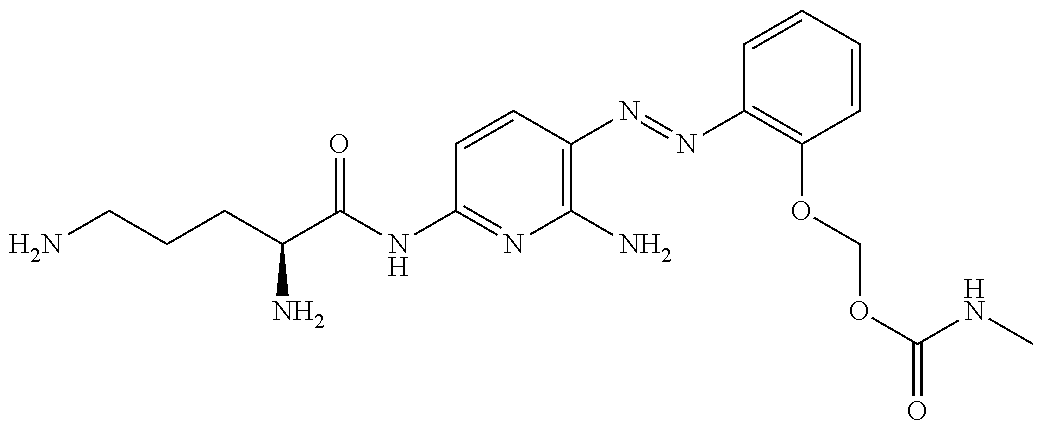
392 
393 
394 
395 
396 
397 
398 
399 
400 
401 
402 
403 
404 
405 
406 
407 
408 
409 
410 
411 
412 
413 
414 
415 
416 
417 
418 
419 
420 
421 
422 
423 
424 
425 
426 
427 
428 
429 
430 
431 
432 
433 
434 
435 
436 
437 
438 
439 
440 
441 
442 
443 
444 
445 
446 
447 
448 
449 
450 
451 
452 
453 
454 
- In another aspect, the present invention provides a method for the treatment of at least one disease condition selected from interstitial cystitis/bladder pain syndrome (IC/BPS), over active bladder (OAB), chronic cough, endometriosis, neuropathic pain, migraine, pruritus, postherpetic neuralgia, urinary tract infection related pain, osteoarthritis, arthritis and urinary incontinence, comprises administering a compound selected from general formula (I) or (I-A), pharmaceutically acceptable salts or solvates thereof.
- In another aspect, the present invention provides a method for the treatment of at least one disease condition selected from interstitial cystitis/bladder pain syndrome (IC/BPS), over active bladder (OAB), chronic cough, endometriosis, neuropathic pain, migraine, pruritus, postherpetic neuralgia, urinary tract infection related pain, osteoarthritis, arthritis and urinary incontinence, comprises administering a compound selected from compounds of general formula (II), formula (III), formula (III-A), formula (III-B), formula (III-C), formula (IV), formula (IV-A), formula (IV-B), formula (IV-C), formula (V), formula (V-A), formula (V-B), formula (V-C), formula (VI), formula (VI-A), formula (VI-B), formula (VI-C), formula (VII), formula (VII-A), formula (VII-B), formula (VII-C), formula (VIII), formula (VIII-A), formula (VIII-B), formula (VIII-C), formula (IX), formula (IX-A), formula (IX-B), formula (IX-C), formula (IX-D), formula (X) pharmaceutically acceptable salts or solvates thereof.
- In another aspect, the present invention provides a method for the symptomatic relief of pain, burning, urgency, frequency, and other discomforts arising from irritation of the lower urinary tract mucosa caused by infection, trauma, surgery, endoscopic procedures, or the passage of sounds or catheters comprises administering a therapeutically effective amount of compound of formula (I) or formula (I-A); pharmaceutically acceptable salts or solvates thereof.
- In another aspect, the present invention provides a method for the symptomatic relief of pain, burning, urgency, frequency, and other discomforts arising from irritation of the lower urinary tract mucosa caused by infection, trauma, surgery, endoscopic procedures, or the passage of sounds or catheters comprises administering a compound selected from compounds of general formula (II), formula (III), formula (III-A), formula (III-B), formula (III-C), formula (IV), formula (IV-A), formula (IV-B), formula (IV-C), formula (V), formula (V-A), formula (V-B), formula (V-C), formula (VI), formula (VI-A), formula (VI-B), formula (VI-C), formula (VII), formula (VII-A), formula (VII-B), formula (VII-C), formula (VIII), formula (VIII-A), formula (VIII-B), formula (VIII-C), formula (IX), formula (IX-A), formula (IX-B), formula (IX-C), formula (IX-D), formula (X) pharmaceutically acceptable salts or solvates thereof.
- In yet another aspect, the present invention relates to pharmaceutical composition comprising at least one compound selected from compounds of general formula (I-A), formula (I), formula (II), formula (III), formula (III-A), formula (III-B), formula (III-C), formula (IV), formula (IV-A), formula (IV-B), formula (IV-C), formula (V), formula (V-A), formula (V-B), formula (V-C), formula (VI), formula (VI-A), formula (VI-B), formula (VI-C), formula (VII), formula (VII-A), formula (VII-B), formula (VII-C), formula (VIII), formula (VIII-A), formula (VIII-B), formula (VIII-C), formula (IX), formula (IX-A), formula (IX-B), formula (IX-C), formula (IX-D), Formula (X) pharmaceutically acceptable salts or solvates thereof and a pharmaceutically acceptable excipient.
- In another aspect, the present invention provides pharmaceutical composition for use in the treatment of at least one disease condition selected from interstitial cystitis/bladder pain syndrome (IC/BPS), over active bladder (OAB), chronic cough, endometriosis, neuropathic pain, migraine, pruritus, postherpetic neuralgia, urinary tract infection related pain, osteoarthritis, arthritis and urinary incontinence, comprises administering a compound selected from compounds of general formula (I-A), formula (I), formula (II), formula (III), formula (III-A), formula (III-B), formula (III-C), formula (IV), formula (IV-A), formula (IV-B), formula (IV-C), formula (V), formula (V-A), formula (V-B), formula (V-C), formula (VI), formula (VI-A), formula (VI-B), formula (VI-C), formula (VII), formula (VII-A), formula (VII-B), formula (VII-C), formula (VIII), formula (VIII-A), formula (VIII-B), formula (VIII-C), formula (IX), formula (IX-A), formula (IX-B), formula (IX-C), formula (IX-D), formula (X) pharmaceutically acceptable salts or solvates thereof.
- In another aspect, the present invention provides a method for the treatment of at least one disease condition selected from interstitial cystitis/bladder pain syndrome (IC/BPS), over active bladder (OAB), chronic cough, endometriosis, neuropathic pain, migraine, pruritus, postherpetic neuralgia, urinary tract infection related pain, osteoarthritis, arthritis and urinary incontinence, which comprises administering a compound selected from:
-

- pharmaceutically acceptable salts or solvates thereof.
- In another aspect, the present invention provides a method for the treatment of at least one disease condition selected from over active bladder (OAB), chronic cough, endometriosis, neuropathic pain, migraine, pruritus, postherpetic neuralgia, urinary tract infection related pain, osteoarthritis, arthritis and urinary incontinence; which comprises administering a compound selected from:
-

-
- (Compound XIII); pharmaceutically acceptable salts or solvates thereof.
- The following examples are given for the purpose of illustrating the present invention and should not be considered as limiting the scope of the invention.
-

- To a stirred solution of 1-methyl-L-tryptophan (2.0 g) in 1,4-dioxane (40 mL) were added sodium hydroxide (364 mg/20 mL water) at 0° C. temperature, followed by addition of di-tert-butyl dicarbonate (2.7 mL) at same temperature. The reaction mixture was stirred at 0° C. for 4 h and then continued stirring at room temperature for additional 16 h. After completion of reaction (monitored by TLC: 20% methanol in dichloromethane), excess of solvent was evaporated under reduced pressure, followed by acidification of the reaction mixture using 1N hydrochloric acid. This mixture was extracted with ethyl acetate (3×1500 mL) followed by washings with water (3×500 mL). The combined organic layer was dried over anhydrous sodium sulfate and evaporated under reduced pressure to obtain a crude. The crude was washed with n-pentane and dried under reduced pressure to give N-(tert-butoxycarbonyl)-1-methyl-L-tryptophan (1.4 g, 48% yield) as an off-white solid.
- LCMS: 96.83% (m/z: 317.39), [M−1]+, 1.48 min (10 min run), 214 nm).
- 1H-NMR (400 MHz, DMSO-d6): δ 12.51 (s, 1H), 7.53 (d, 1H), 7.37 (d, 1H), 7.15-7.11 (m, 2H), 7.02 (t, 1H), 6.93 (d, 1H), 4.15-4.12 (m, 1H), 3.72 (s, 3H), 3.12 (dd, 1H), 3.01-2.95 (m, 1H), 1.33 (s, 9H).
-

- To a stirred solution of (E)-2-((2,6-diaminopyridin-3-yl)diazenyl)phenol (0.500 g) in dichloromethane (6.0 mL) were added dicyclohexylcarbodiimide (1.16 g), 4-(dimethylamino)pyridine (0.12 g) and N-(tert-butoxycarbonyl)-1-methyl-L-tryptophan (1.2 g). The reaction mixture was stirred at room temperature for 16 h. Completion of the reaction was monitored by TLC (mobile phase: 50% ethyl acetate in heptane). After completion of the reaction, the reaction mixture was quenched with demineralized water and extracted with 5% methanol in dichloromethane (3×100 mL). The combined organic layer was dried over anhydrous sodium sulfate and evaporated under reduced pressure to obtain crude. The crude was washed with n-pentane and dried under reduced pressure to give of (E)-2-((2,6-diaminopyridin-3-yl)diazenyl)phenyl (S)-3-(112-indol-3-yl)-2-((tert-butoxycarbonyl)amino)propanoate (0.1 g, 50% purity) as a yellow solid.
- LCMS: 50.45% (m/z: 530.14), [M+1]+, 2.43 min (10 min run), 214 nm).
-

- To a stirred solution of (E)-2-((2,6-diaminopyridin-3-yl)diazenyl)phenyl (S)-3-(1H-indol-3-yl)-2-((tert-butoxycarbonyl)amino)propanoate (1 g) in dichloromethane (20 mL) was added 4M hydrochloric acid in 1,4-dioxane (2 mL) at 0° C. temperature and then reaction mixture stirred at room temperature for additional 16 h. After completion of the reaction (monitored by TLC: mobile phase: 50% ethyl acetate in heptane), excess of the solvent was evaporated under reduced pressure to obtain crude material. The crude was purified by prep-HPLC (T3 column, triflluoroacetic acid:acetonitrile, 1:1) to give (E)-2-((2,6-diaminopyridin-3-yl)diazenyl)phenyl 1-methyl-L-tryptophanate (0.09 g, 11%) as a yellow solid.
- LCMS: 95.22% (m/z: 430.15 [M+1]+, 4.74 min (10 min run), 214 nm).
- 1H-NMR (400 MHz, DMSO-d6): δ 7.80-7.78 (m, 2H), 7.59 (d, 1H), 7.42-7.36 (m, 3H), 7.26-7.11 (m, 3H), 7.04 (t, 1H), 6.00 (d, 1H), 4.59 (t, 1H), 3.69 (s, 3H), 3.52 (dd, 1H), 3.40 (dd, 1H).
- As per step-02 reaction condition of example-01 (DCC, DMAP, DCM); following ester prodrugs have been synthesized where respective acids were procured commercially.
-
Examples Structure Analytical details Example-02 
LCMS: 99.76% (m/z: 272.29, [M + 1]+, 4.93 min (10 min run), 214 nm). 1H NMR (400 MHz, DMSO-d6): δ ppm 7.72-7.70 (m, 1H), 7.65 (d, 1H), 7.32-7.29 (m, 2H), 7.22-7.20 (m, 1H), 6.87 (br s, 2H), 6.01 (d, 1H), 2.30 (s, 3H) Example-03 
LCMS: 99.57% (m/z: 300.14, [M + 1]+, 5.20 min (10 min run), 214 nm) 1H NMR (400 MHz, DMSO-d6): δ ppm 7.71- 7.69 (m, 1H), 7.64 (d, 1H), 7.32-7.28 (m, 2H), 7.20-7.18 (m, 1H), 6.84 (br s, 2H), 5.99 (d, 1H), 2.59 (t, 2H), 1.69-1.63 (m, 2H), 0.90 (t, 3H). Example-04 
LCMS: 99.50% (m/z: 412.27, [M + 1]+, 7.02 min (10 min run), 214 nm). 1H NMR (400 MHz, DMSO-d6): δ ppm 7.71- 7.69 (m, 1H), 7.63 (d, 1H) 7.32-7.27 (m, 2H), 7.20-7.17 (m, 1H), 6.83 (br s, 2H), 5.98 (d, 1H), 2.59 (t, 2H), 1.65-1.61 (m, 2H), 1.36-1.24 (m, 16H), 0.85 (t, 3H). Example-05 
LCMS: 95.38% (m/z: 357.18, [M + 1]+, 3.90 min (10 min run), 214 nm). 1H NMR (400 MHz, DMSO-d6): δ ppm 7.74- 7.71 (m, 1H), 7.65 (d, 1H) 7.32-7.29 (m, 2H), 7.24-7.05 (m, 1H), 6.86 (br s, 2H), 5.99 (d, 1H), 3.60-3.58 (m, 6H), 2.61 (br s, 4H) Example-06 
LCMS: 89.02% (m/z: 370.27, [M + 1]+, 4.04 min (10 min run), 214 nm). Example-07 
LCMS: 98.03% (m/z: 492.25, [M + 1]+, 5.05 min (10 min run), 214 nm). 1H-NMR (400 MHz, DMSO-d6): δ ppm 7.72- 7.70 (m, 1H), 7.65 (d, 1H), 7.32-7.30 (m, 2H), 7.20-7.17 (m, 1H), 6.82 (br s, 2H), 6.00 (d, 1H), 3.76 (t, 2H), 3.56-3.48 (m, 14H), 3.42-3.41 (m, 2H), 3.23 (s, 3H), 2.86 (t, 2H). Example-08 
LCMS: 96.72% (m/z: 341.21, [M + 1]+, 5.18 min (10 min run), 214 nm. 1H-NMR (400 MHz, DMSO-d6): δ ppm 10.50 (br s, 1H), 7.89 (d, 1H), 7.80 (d, 1H), 7.59-7.21 (m, 5H), 6.04 (d, 1H), 4.70 (s, 2H), 3.63 (br s, 2H), 3.18 (br s, 2H), 2.06 (br s, 2H), 1.92 (br s, 2H). Example-09 
LCMS: 99.81% (m/z: 342.25, [M + 1]+, 5.09 min (10 min run), 214 nm). 1H-NMR (400 MHz, DMSO-d6): δ ppm 8.23 (br s, 1H), 7.81 (t, 2H) 7.60 (br s, 1H), 7.42- 7.33 (m, 2H), 7.27-7.25 (m, 1H), 6.10 (d, 1H), 4.38-4.35 (m, 1H), 3.99-3.96 (m, 1H), 3.58-3.52 (m, 1H), 2.03-1.99 (m, 1H), 1.85-1.82 (m, 1H), 1.75-1.62 (m, 2H), 1.60-1.54 (m, 2H). Example-10 
LCMS: 99.87% (m/z: 340.24, [M + 1]+, 5.80 min (10 min run), 214 nm). 1H-NMR (400 MHz, DMSO-d6): δ ppm 8.33- 8.18 (m, 1H), 7.82-7.77 (m, 2H), 7.59-7.51 (m, 1H), 7.40-7.30 (m, 2H), 7.21 (d, 1H), 6.09 (d, 1H), 2.69-2.63 (m, 1H), 2.02-1.99 (m, 2H), 1.76-1.73 (m, 2H), 1.65-1.62 (m, 1H), 1.55-1.46 (m, 2H), 1.41-1.20 (m, 3H). Example-11 
LCMS: 99.55% (m/z: 326.20, [M + 1]+, 5.57 min (10 min run), 214 nm). 1H-NMR (400 MHz, DMSO-d6): δ ppm 8.16 (br s, 1H), 7.80-7.77 (m, 2H), 7.70-7.57 (m, 1H), 7.43-7.31 (m, 2H), 7.23 (d, 1H), 6.09 (d, 1H), 3.13-3.05 (m, 1H), 2.05-1.97 (m, 2H), 1.91-1.83 (m, 2H), 1.70-1.57 (m, 4H). Example-12 
LCMS: 99.11% (m/z: 312.16 [M + 1]+, 5.33 min (10 min run), 214 nm). 1H NMR (400 MHz, DMSO-d6): δ ppm 8.03- 8.17 (m, 1H), 7.81-7.79 (m, 2H), 7.72-7.46 (m, 1H), 7.41-7.31 (m, 2H), 7.25 (d, 1H), 6.09 (d, 1H), 3.55-3.48 (m, 1H), 2.35-2.26 (m, 4H), 2.07-1.96 (m, 1H), 1.94-1.88 (m, 1H). Example-13 
LCMS: 98.59% (m/z: 357.15, [M + 1]+, 6.06 min (10 min run), 214 nm). 1H-NMR (400 MHz, DMSO-d6): δ ppm 7.71- 7.43 (m, 3H), 7.33-7.28 (m, 2H), 7.17-7.15 (m, 1H), 6.79 (br s, 2H), 5.93 (d, 1H), 3.03 (d, 1H), 2.37 (s, 6H), 2.04-1.98 (m, 1H), 1.00-0.95 (m, 6H). Example-14 
LCMS: 96.39% (m/z: 343.26 [M + 1]+, 4.71 min (10 min run), 214 nm). 1H-NMR (400 MHz, DMSO-d6): δ ppm 8.18 (s, 1H), 8.11 (d, 1H), 7.73-7.60 (m, 3H), 7.55 (d, 1H), 7.31-7.27 (m, 1H), 7.02 (d, 1H), 6.94-6.88 (m, 1H), 2.43 (t, 2H), 2.38 (t, 2H), 2.25 (s, 6H), 1.78-1.70 (m, 2H). Example-15 
LCMS: 97.88% (m/z: 315.22 [M + 1]+, 4.74 min (10 min run), 214 nm). 1H-NMR (400 MHz, DMSO-d6): δ ppm 11.05 (s, 1H), 10.50 (br s, 1H), 8.17 (d, 1H), 7.83 (br s, 2H), 7.74 (d, 1H), 7.49 (br s, 1H), 7.30 (t, 1H), 7.04 (d, 1H), 6.90 (t, 1H), 3.71 (br s, 2H), 2.63 (s, 6H). Example-16 
LCMS: 97.03% (m/z: 372.13, [M + 1]+, 7.69 min (15 min run), 214 nm). 1H-NMR (400 MHz, DMSO-d6): δ ppm 7.79- 7.77 (m, 1H), 7.69 (d, 1H), 7.34-7.30 (m, 2H), 7.24-7.13 (m, 1H), 6.78 (br s, 2H), 5.99 (d, 1H), 5.00 (s, 2H), 1.20 (s, 9H). Example-17 
LCMS: 99.89% (m/z: 374.14, [M + 1]+, 6.13 min (10 min run), 214 nm). 1H NMR (400 MHz, DMSO-d6): δ ppm 7.97 (s, 1H), 7.92-7.90 (d, 1H), 7.74-7.72 (m, 1H), 7.52 (d, 1H), 7.44 (d, 1H), 7.38-7.13 (m, 3H), 6.75 (br s, 2H), 5.91 (d, 1H), 2.97 (t, 4H), 2.13-2.04 (m, 2H). -

- To a solution of (E)-2-((2,6-diaminopyridin-3-yl)diazenyl)phenol hydrochloride (0.2 g) in dichloromethane (8 mL) were added triethylamine (0.25 mL) and propionyl chloride (0.1 g) at 0° C. temperature and the reaction mixture was stirred at room temperature for 3 h. After completion of reaction (monitored by TLC), the reaction mass was quenched with cold water (10 mL) and extracted with dichloromethane (3×30 mL). The combined organic layer was washed with water (2×100 mL), dried over anhydrous sodium sulfate, and concentrated under reduced pressure to obtained crude material which was purified by Prep HPLC [(60% Acetonitrile:Formic acid) to afford (E)-2-((2,6-diaminopyridin-3-yl)diazenyl)phenyl propionate. (0.042 g, 19.5%)
- LCMS: 99.52% (m/z: 286.2, [M+1]+, 4.85 min (10 min run), 214 nm).
- 1H NMR (400 MHz, DMSO-d6): δ ppm 7.71-7.69 (m, 1H), 7.64 (d, 1H), 7.31-7.28 (m, 2H), 7.22-7.19 (m, 1H), 6.84 (br s, 2H), 6.00 (d, 1H), 2.64 (q, 2H), 1.15 (t, 3H).
- As per reaction condition of example-18 (Triethylamine, DCM); following ester prodrugs have been synthesized where respective acyl chlorides were procured commercially.
-
Examples Structure Analytical details Example-19 
LCMS: 97.89% (m/z: 298.16 [M + 1]+, 5.61 min (10 min run), 214 nm). 1H-NMR (400 MHz, DMSO-d6): δ ppm 8.10 (br s, 1H), 7.70-7.68 (m, 1H), 7.65 (d, 1H), 7.31-7.28 (m, 2H), 7.22-7.20 (m, 1H), 6.82 (br s, 2H), 6.01 (d, 1H), 1.95-1.89 (m, 1H), 1.15-1.08 (m, 2H), 1.00-0.98 (m, 2H). -

- To a stirred solution of (E)-2-((2,6-diaminopyridin-3-yl)diazenyl)phenol (0.3 g) in dichloromethane (3 mL) was added pyridine (3 mL), 1,1′-carbonyl diimidazole (0.68 g) and 4-(dimethylamino)pyridine (0.067 g). The resulting reaction mixture was stirred at 0° C. for 30 min. To this above stirring solution, 1-methylpiperidine-2-carboxylic acid (0.592 g) was added and resulting solution was stirred at room temperature for 16 h. Reaction mixture was monitored by TLC (mobile phase: 70% ethyl acetate in hexane). After completion of reaction, the reaction mixture was quenched with water, extracted with dichloromethane (3×100 mL), dried over anhydrous sodium sulfate, evaporated under reduced pressure to obtain crude material. The crude was purified by prep HPLC [method: (A) 0.5% TFA in water (B) 100% Acetonitrile] and the product fractions were lyophilized to give (E)-2-((2,6-diaminopyridin-3-yl)diazenyl)phenyl 1-methylpiperidine-2-carboxylate (0.037 g, 9%) as yellow solid.
- LCMS: 95.00% (m/z: 355.25, [M+1]+, 4.02 min (10 min run), 214 nm).
- 1H-NMR (400 MHz, DMSO-d6): δ 7.80 (dd, 1H), 7.73 (d, 1H), 7.43-7.36 (m, 3H), 6.05 (d, 1H), 4.41-4.55 (m, 1H), 3.47-3.44 (m, 1H), 3.12-3.07 (m, 1H), 2.87 (s, 3H), 2.45-2.25 (m, 2H), 1.83-1.59 (m, 4H).
-

- To a solution of (E)-2-((2,6-diaminopyridin-3-yl)diazenyl) phenol hydrochloride (0.200 g) in Dichloromethane (10 mL) were added dicyclohexylcarbodiimide (0.466 g) and 4-(dimethylamino)pyridine (0.046 g) and stirred at room temperature for 15 min. After that, diethylcarbamic acid (0.114 g) was added and the reaction mixture was stirred at room temperature for 24 h. After completion of reaction, (monitored by TLC), the reaction mass was quenched with cold water (10 mL) and extracted with dichloromethane (3×30 mL), washed with water (2×100 mL), dried over anhydrous sodium sulfate, and concentrated under vacuum to obtain the crude material. The crude material was purified by prep HPLC [70% Acetonitrile/30% TFA] to afford (E)-2-((2,6-diaminopyridin-3-yl)diazenyl)phenyl diethylcarbamate (0.025 g, 10.1%) as yellow solid.
- LCMS: 99.70% (m/z: 329.20, [M+1]+, 5.58 min (10 min run), 214 nm).
- 1H NMR (400 MHz, DMSO-d6): δ ppm 8.16-7.87 (m, 2H), 7.68-7.63 (m, 2H), 7.30-7.17 (m, 3H), 6.76 (br s, 2H), 5.98 (d, 1H), 3.46-3.41 (m, 2H), 3.28-3.25 (m, 2H), 1.21 (t, 3H), 1.09 (t, 3H).
-

- To a stirred solution of (E)-2-((2,6-diaminopyridin-3-yl) diazenyl) phenol hydrogen chloride (0.500 g) in 10 mL dichloromethane at 0° C. under nitrogen atmosphere were added N,N-diisopropylethylamine (2.43 g) and 1,1′-carbonyldiimidazole (0.918 g) followed by 4-(dimethylamino)pyridine (0.116 g). Stirred the reaction mixture for 10 min at 0° C. temperature and then added 1-
methyl 1,4-diazepane (0.861 g). The reaction mixture was stirred at room temperature for 26 h. After completion of the reaction, the mixture was quenched with water and extracted with dichloromethane (3×50 mL). The combined organic layer was dried over anhydrous sodium sulfate and evaporated under reduced pressure to obtained crude material. The crude was enriched by Flash chromatography and then purified by prep HPLC [method: TFA buffer] and the product fractions were lyophilized to give 0.080 g of (E)-2-((2,6-diaminopyridin-3-yl) diazenyl) phenyl 4-methyl-1,4-diazepane-1-carboxylate HCl salt as red solid. - LCMS: 97.21% (m/z: 370.22 [M+1]+, 4.39 min (10 min run), 214 nm).
- 1H NMR (400 MHz, DMSO-d6): δ ppm 7.78 (dd, 1H), 7.72 (d, 1H), 7.39-7.25 (m, 3H), 6.10 (d, 1H), 4.08-3.80 (m, 1H), 3.70-3.68 (m, 2H), 3.62-3.54 (m, 3H), 3.31-3.16 (m, 2H), 2.88 (s, 3H), 2.20-2.01 (m, 2H).
-

- To a solution of (E)-2-((2,6-diaminopyridin-3-yl)diazenyl)phenol hydrochloride (0.2 g) in dichloromethane:pyridine (1:1, 5 mL) were added morpholine 4-carbonyl chloride (0.279 g) and stirred at room temperature for 24 h. After completion of the reaction (monitored by TLC), the reaction mass was quenched with cold water (10 mL) and extracted with dichloromethane (3×30 mL). The organic layer was washed with water (2×100 mL), dried over anhydrous sodium sulfate, and concentrated under reduced pressure to obtain crude material. The crude was purified by using flash chromatography with 9% methanol in dichloromethane as eluent to afford (E)-2-((2,6-diaminopyridin-3-yl)diazenyl)phenyl 4-methylpiperazine-1-carboxylate (0.035 g, 13.5%) as a yellow solid.
- LCMS: 98.18% (m/z: 341.19 [M+1]+, 4.97 min (10 min run), 214 nm).
- 1H NMR (400 MHz, DMSO-d6): δ ppm 8.40 (br s, 1H), 7.68-7.65 (m, 2H), 7.31-7.21 (m, 3H), 6.81 (br s, 2H), 6.01 (d, 1H), 3.65 (br s, 6H), 3.41 (br s, 2H).
-

- To a solution of (E)-2-((2,6-diaminopyridin-3-yl)diazenyl)phenol hydrochloride (0.2 g) in dichloromethane (10 mL) were added 4-methylpiperazine-1-carbonyl chloride (0.305 g) and 4-(dimethylamino)pyridine (0.045 g) and stirred at room temperature for 24 h. After completion of the reaction (monitored by TLC), the reaction mass was quenched with cold water (10 mL) and extracted with dichloromethane (3×30 mL). The organic layer was washed with water (2×100 mL), washed with brine, dried over anhydrous sodium sulfate, and concentrated under reduced pressure to obtain the crude material. The crude was purified by using flash chromatography with 10% methanol:dichloromethane as eluent to afford (E)-2-((2,6-diaminopyridin-3-yl)diazenyl)phenyl 4-methylpiperazine-1-carboxylate (0.051 g, 19.1%) as yellow solid.
- LCMS: 96.78% (m/z: 356.20, [M+1]+, 4.75 min (10 min run), 214 nm).
- 1H NMR (400 MHz, DMSO-d6): δ ppm 7.68-7.65 (m, 2H), 7.30-7.25 (m, 2H), 7.24-7.19 (m, 1H), 6.79 (br s, 2H), 6.00 (d, 1H), 3.63 (br s, 2H), 3.42 (br s, 2H), 2.41 (br s, 4H), 2.27 (br s, 3H).
- As per reaction condition of example-24 (Acyl chloride, DMAP, DCM); following carbamate prodrugs have been synthesized where respective acyl chlorides were procured commercially.
-
Examples Structure Analytical details Example-25 
LCMS: 97.70% (m/z: 424.4), [M + 1]+, 4.16 min (10 min run), 214 nm). 1H NMR (400 MHz, DMSO-d6): δ ppm 7.67-7.63 (m, 2H), 7.30-7.19 (m, 3H), 6.78 (br s, 1H), 5.99 (d, 1H), 4.22- 4.20 (m, 1H), 4.01-3.98 (m, 1H), 3.05- 3.01 (m, 1H), 2.88-2.83 (m, 1H), 2.49- 2.44 (m, 5H), 1.79 (br s, 2H), 1.50-1.38 (m, 8H) -

- To a stirred solution of (E)-2-((2,6-diaminopyridin-3-yl)diazenyl)phenol hydrochloride (0.25 g) in dichloromethane (2.5 mL) and pyridine (2.5 mL) at 0° C. was added 1,1′-carbonyldiimidaziole (0.456 g) and 4-(dimethylamino)pyridine (0.057 g) and the resulting mixture was stirred at 0° C. for 30 min followed by the addition of N1,N1,N2-trimethylethane-1,2-diamine (0.385 g). The reaction mixture was stirred at room temperature for 16 h. The completion of the reaction was monitored by TLC (mobile phase: 10% methanol in dichloromethane). After completion of reaction, the reaction mixture was quenched with DM water and extracted with dichloromethane (3×100 mL). The combined organic layer was dried over anhydrous sodium sulfate and evaporated under reduced pressure to obtain crude material. The crude was purified by prep HPLC [method: (A) 0.5% TFA in water (B) 100% Acetonitrile] and the product fractions were lyophilized to give 0.135 g of (E)-2-((2,6-diaminopyridin-3-yl)diazenyl)phenyl(2-(dimethylamino)ethyl)(methyl)carbamate hydrochloride as a red solid.
- LCMS: 98.96% (m/z: 358.25 [M+1]+, 4.33 min (10 min run), 214 nm).
- 1H NMR (400 MHz, DMSO-d6): δ ppm 9.54-9.46 (m, 1H), 8.20 (br s, 1H), 7.75-7.72 (m, 2H), 7.36-7.25 (m, 4H), 6.07 (d, 1H), 3.78 (t, 1H), 3.81-3.62 (m, 2H), 3.39-3.30 (m, 2H), 3.11-2.94 (m, 3H), 2.87-2.83 (m, 6H)
- As per reaction condition of example-26 (CDI, Pyridine, DMAP, DCM); following carbamate prodrugs have been synthesized where respective secondary amines were procured commercially.
-
Examples Structure Analytical details Example-27 
LCMS: 98.82% (m/z: 418.23, [M + 1]+, 4.31 min (10 min run), 214 nm. 1H-NMR (400 MHz, DMSO-d6): δ ppm 8.76 (d, 2H), 8.30 (br s, 2H), 7.7-7.77 (m, 3H), 7.73 (d, 1H), 7.73-7.25 (m, 4H), 6.06 (d, 1H), 4.36-4.05 (m, 2H), 3.20-3.02 (m, 3H), 1.91 (br s, 2H), 1.72 (m, 2H). Example-28 
LCMS: 99.07% (m/z: 384.27, [M + 1]+, 4.10 min (10 min run), 214 nm). 1H NMR (400 MHz, DMSO-d6): δ ppm 9.56 (br s, 1H), 8.22 (br s, 1H), 7.74-7.70 (m, 2H), 7.35-7.27 (m, 3H), 7.23-7.21 (dd, 1H), 7.10 (br s, 1H), 6.06 (d, 1H), 4.35 (br s, 1H), 4.11-4.05 (m, 1H), 3.43-3.37 (m, 2H), 3.09 (br s, 1H), 2.92 (br s, 1H), 2.81- 2.80 (m, 6H), 2.06 (br s, 2H), ), 1.61 (br s, 2H). Example-29 
LCMS: 99.56 %, (m/z: 376.10, [M + 1]+, 4.47 min (10 min run), 214 nm). 1H-NMR (400 MHz, DMSO-d6): δ ppm 8.51 (d, 1H), 7.82 (d, 1H), 7.69 (d, 1H), 7.58 (d, 1H), 7.37-7.29 (m, 4H), 6.75 (br s, 2H), 5.90 (d, 1H), 4.95 (s, 1H), 4.88 (s, 1H), 4.75 (s, 1H), 4.69 (s, 1H). Example-30 
LCMS: 98.03% (m/z: 440.23 [M + 1]+, 4.72 min (10 min run), 214 nm). 1H-NMR (400 MHz, DMSO-d6): δ ppm 8.17 (s, 1H), 7.67-7.63 (m, 2H), 7.29-7.19 (m, 3H), 6.78 (br s, 2H), 5.98 (d, 1H), 4.23- 4.20 (m, 1H), 4.01-3.98 (m, 1H), 3.68 (t, 2H), 3.60-3.58 (t, 2H), 3.07-3.02 (m, 1H), 2.90-2.87 (m, 1H), 2.75-2.70 (m, 5H), 1.78- 1.73 (m, 4H), 1.43 (br s, 2H). Example-31 
LCMS: 93.37% (m/z: 368.26, [M + 1]+, 3.98 min (10 min run), 214 nm). 1H-NMR (400 MHz, DMSO-d6): δ ppm 9.60 (br s, 1H), 8.37 (br s, 1H), 7.78-769 (d, 2H), 7.34-6.96 (m, 5H), 6.07 (d, 1H), 4.46- 4.42 (m, 2H), 4.36-4.32 (m, 2H), 4.19-4.15 (m, 4H), 2.82 (d, 3H). Example-32 
LCMS: 98.18% (m/z: 410.31, [M + 1]+, 4.41 min (10 min run), 214 nm). 1H-NMR (400 MHz, DMSO-d6): δ ppm 9.70 (br s, 1H), 8.22 (br s, 1H), 7.76-7.72 (m, 2H), 7.36-7.28 (m, 2H), 7.24-6.97 (m, 2H), 6.08 (d, 1H), 4.31 (br s, 1H), 4.07 (br s, 1H), 3.58-3.57 (m, 2H), 3.38-3.36 (m, 2H), 3.13-3.10 (m, 3H), 2.92 (br s, 1H), 2.16-2.05 (m, 4H), 1.90-1.87 (m, 2H), 1.57 (br s, 2H). Example-33 
LCMS: 97.53% (m/z: 438.26 [M + 1]+, 4.47 min (10 min run), 214 nm). 1H NMR (400 MHz, DMSO): δ ppm 9.20 (br s, 1H), 7.71-7.67 (m, 2H), 7.34-7.26 (m, 3H), 7.22 (dd, 1H), 7.01 (br s, 2H), 6.04 (d, 1H), 4.33-4.10 (m, 2H), 3.54-3.51 (m, 1H), 3.38-3.33 (m, 2H), 3.28-3.17 (m, 2H), 3.09 (br s, 1H), 2.93 (br s, 1H), 2.08 (br s, 2H), 1.86-1.63 (m, 10H). Example-34 
LCMS: 95.69% (m/z: 357.11 [M + 1]+, 4.52 min (10 min run), 214 nm). 1H-NMR (400 MHz, DMSO-d6): δ ppm 8.07 (br s, 2H), 7.79-7.72 (m, 2H), 7.44- 7.08 (m, 5H), 6.07 (d, 1H), 4.75 (br s, 1H), 3.94 (br s, 1H), 3.75-3.71 (m, 2H), 3.31- 3.12 (m, 2H), 1.80 (br s, 2H), 1.41-1.36 (m, 2H). -

- To a solution of (E)-2-((2,6-diaminopyridin-3-yl)diazenyl)phenol hydrochloride (0.2 g) in dichloromethane (10 mL) were added pyridine (0.288 g), 1,1′-carbonyldiimidazole (0.6 g) and 4-(dimethylamino)pyridine (0.046 g) at 0° C. and stirred at room temperature for 30 min. After that, 4-(piperidin-4-yl)morpholine (0.32 g) was added and the reaction mixture was stirred at room temperature for 48 h. After completion of reaction (monitored by TLC), the reaction mass was quenched with cold water (10 mL) and extracted with dichloromethane (3×30 mL). The organic layer was washed with water (2×100 mL), dried over anhydrous sodium sulfate, and concentrated under reduced pressure to obtain the crude material. The crude material was purified by prep HPLC (using TFA method) to afford (E)-2-((2,6-diaminopyridin-3-yl)diazenyl)phenyl 4-morpholinopiperidine-1-carboxylate (0.094 g, 28.9%) as a yellow solid.
- LCMS: 99.74% (m/z: 426.24, [M+1]+, 4.10 min (10 min run), 214 nm).
- 1H NMR (400 MHz, DMSO-d6): δ ppm 9.80 (s, 1H), 8.20 (br s, 1H), 7.74-7.70 (m, 2H), 7.36-7.27 (m, 2H), 7.24-7.21 (m, 1H), 7.14 (br s, 1H), 6.06 (d, 1H), 4.35-4.11 (m, 2H), 4.07-4.04 (m, 2H), 3.73-3.67 (m, 2H), 3.48-3.45 (m, 3H), 3.19-3.09 (m, 3H), 2.93 (br s, 1H), 2.14 (br s, 2H), 1.62 (br s, 2H).
- As per reaction condition of example-35 (CDI, DMAP, DCM); following carbamate prodrugs have been synthesized where respective secondary amines were procured commercially.
-
Examples Structure Analytical details Example-36 
LCMS: 94.17% (m/z: 439., [M + 1]+, 4.38 min (10 min run), 214 nm). 1H NMR (400 MHz, DMSO-d6): δ ppm 8.37-8.19 (m, 1H), 7.77 (d, 1H) 7.73 (d, 1H), 7.36-7.10 (m, 5H), 6.07 (d, 1H), 4.25- 3.70 (m, 3H), 3.51-2.91 (m, 12H), 2.79 (s, 3H), 1.92 (br s, 2H), 1.49 (br s, 2H). Example-37 
LCMS: 98.42% (m/z: 424.52, [M + 1]+, 4.20 min (10 min run), 214 nm). 1H-NMR (400 MHz, DMSO-d6): δ ppm 8.59 (br s, 1H), 8.22 (s, 1H), 7.92 (br s, 1H), 7.68-7.64 (m, 2H), 7.30-7.20 (m, 2H), 7.18 (dd, 1H), 6.76 (br s, 2H), 5.99 (d, 1H), 3.59- 3.39 (m, 2H), 2.42 (br s, 4H), 2.52 (s, 3H), 1.55-1.44 (m, 8H). Example-38 
LCMS: 91.22 % (m/z: 371.21 [M + 1]+, 4.49 min (10 min run), 214 nm). 1H NMR (400 MHz, DMSO-d6): δ ppm 12.81 (br s, 1H), 8.25 (br s, 1H), 7.86-7.84 (m, 1H), 7.75 (d, 1H), 7.53 (br s, 1H), 7.36- 7.24 (m, 3H), 7.14 (d, 1H), 6.09 (d, 1H), 4.46-4.20 (m, 1H), 3.68-3.64 (m, 1H), 3.47- 3.43 (m, 1H), 2.40-2.26 (m, 1H), 2.02-1.88 (m, 3H). -

- To a solution of (E)-2-((2,6-diaminopyridin-3-yl)diazenyl)phenol hydrochloride (0.3 g) in dichloromethane (8 mL) were added triethylamine (0.4 mL) and ethyl carbonochloridate (0.183 g) at 0° C. temperature. Resulting reaction mixture was stirred at room temperature for 2 h. After completion of reaction (monitored by TLC), the reaction mass was quenched with cold water (10 mL) and extracted with dichloromethane (3×30 mL). The combined organic layer was washed with water (2×100 mL), dried over anhydrous sodium sulfate, and concentrated under reduced pressure to obtain crude. Crude was purified by flash chromatography (70% ethyl acetate in hexane) to afford (E)-2-((2,6-diaminopyridin-3-yl)diazenyl)phenyl ethyl carbonate (0.095 g, 28%) as orange color solid.
- LCMS: 97.86% (m/z: 302.07, [M+1]+, 4.96 min (10 min run), 214 nm).
- 1H-NMR (400 MHz, DMSO-d6): δ 7.70-7.67 (m, 1H), 7.65 (d, 1H), 7.34-7.26 (m, 3H), 6.02 (d, 1H), 4.19 (q, 2H), 1.23 (t, 3H).
-

- To a stirred solution of ((E)-2-((2,6-diaminopyridin-3-yl)diazenyl)phenol (2.0 g) in dichloromethane (25 mL) were added triethylamine (1.98 mL) and tert-butyldimethylsilyl chloride (2.2 g) at 0° C. temperature. The resulting reaction mixture was stirred at room temperature for additional 4 h. After completion of the reaction (monitored by TLC), the mixture was diluted with water (20 mL) and extracted with dichloromethane (3×70 mL). The combined organic layer was dried over anhydrous sodium sulfate and concentrated under reduced pressure to obtain a crude. The crude was purified by combi-flash chromatography (using 23% ethyl acetate in heptane) to afford (E)-3-((2-((tert-butyldimethylsilyl)oxy)phenyl)diazenyl)pyridine-2,6-diamine (2.6 g, 99%) as a red solid.
- LCMS: 99.69% (m/z: 344.46), [M+1]+, 2.47 min (4 min run), 214 nm).
- 1H-NMR (400 MHz, DMSO-d6): δ 7.66 (d, 1H), 7.56 (d, 1H), 7.18 (t, 1H), 6.98 (t, 2H), 6.65 (s, 2H), 5.96 (d, 1H), 0.96 (s, 9H), 0.20 (s, 6H).
-

- To a stirred solution of (E)-3-((2-((tert-butyldimethylsilyl)oxy)phenyl)diazenyl)pyridine-2,6-diamine (0.4 g) in dichloromethane (6 mL) were added triethylamine (0.32 mL) and acetyl chloride (0.16 mL) at 0° C. temperature. The resulting reaction mixture was stirred at room temperature for 3 h. After completion of the reaction (monitored by TLC), the mixture was diluted with water (20 mL) and extracted with dichloromethane (3×70 mL). The combined organic layer was dried over anhydrous sodium sulfate and concentrated under reduced pressure to obtain a crude. The crude was purified by combi-flash chromatography (18% ethyl acetate in n-heptane) to afford (E)-N-(6-amino-5-((2-((tert-butyldimethylsilyl)oxy)phenyl)diazenyl)pyridin-2-yl)acetamide (0.350 g, 89%) as a yellow solid.
- Analytical Details:
- LCMS: 95.04% (m/z: 385.19), [M+1]+, 2.47 min (4 min run), 214 nm).
-

- To a stirred solution (E)-N-(6-amino-54(2-((tert-butyldimethylsilypoxy)phenyl)diazenyl)pyridin-2-yl)acetamide (0.35 g) in dichloromethane (5 mL) was added trifluoroacetic acid (4 mL) at 0° C. and then reaction mixture was stirred at room temperature for 3 h. After completion of the reaction (monitored by TLC), the reaction mass was extracted with dichloromethane (2×20 mL) followed by washings with water (2×50 mL). The combined organic layer was dried over anhydrous sodium sulfate and concentrated under reduced pressure to obtain a crude. The crude was purified by ether washings to furnish (E)-N-(6-amino-5-((2-hydroxyphenyl)diazenyl)pyridin-2-yl)acetamide (67 mg, 27.9%) as a yellow solid.
- LCMS: 98.69% (m/z: 271.11), [M+1]+, 5.14 min (10 min run), 214 nm).
- 1H-NMR (400 MHz, DMSO-d6): δ 8.13 (d, 1H), 7.71 (dd, 1H), 7.40 (d, 1H), 7.29 (t, 1H), 7.01 (d, 1H), 6.93 (t, 1H), 2.10 (s, 3H).
-

- To a stirred solution of ((E)-2-((2,6-diaminopyridin-3-yl)diazenyl)phenol (2 g) in dichloromethane (25 mL) were added triethylamine (1.98 mL) and tert-butyldimethylsilylchloride (2.2 g) at 0° C. temperature. Resulting reaction mixture was stirred at room temperature for additional 4 h. After completion of reaction (monitored by TLC), the mixture was diluted with water (20 mL) and extracted with dichloromethane (3×70 mL). Collected organics were dried over anhydrous sodium sulfate and concentrated under reduced pressure to obtain a crude. The crude was purified by combi-flash chromatography (using 23% ethyl acetate in heptane) affording (E)-3-((2-((tert-butyldimethylsilyl)oxy)phenyl)diazenyl)pyridine-2,6-diamine (2.6 g, 99%) as a red solid.
- LCMS: 99.69% (m/z: 344.46), [M+1]+, 2.47 min (4 min run), 214 nm).
- 1H-NMR (400 MHz, DMSO-d6): δ 7.66 (d, 1H), 7.56 (d, 1H), 7.18 (t, 1H), 6.98 (t, 2H), 6.65 (s, 2H), 5.96 (d, 1H), 0.96 (s, 9H), 0.20 (s, 6H).
-

- To a stirred solution of (E)-3-((2-((tert-butyldimethylsilyl)oxy)phenyl)diazenyl)pyridine-2,6-diamine (0.3 g) in dichloromethane (6 mL) were added triethylamine (0.2 mL) and methyl chloroformate (0.165 mL) at 0° C. temperature. The resulting reaction mixture was stirred at room temperature for 4 h. After completion of the reaction (monitored by TLC), the mixture was diluted with water (20 mL) and extracted with dichloromethane (3×70 mL). Collected organics were dried the over anhydrous sodium sulfate and concentrated under reduced pressure to obtain the crude. The crude was purified by combi-flash chromatography (18% ethyl acetate in n-heptane) to afford methyl (E)-(6-amino-5-((2-((tert-butyldimethylsilyl)oxy)phenyl)diazenyl)pyridin-2-yl)carbamate (0.16 g, 50.7%) as a yellow solid.
- Analytical Details:
- LCMS: 80.58% (m/z: 402.47), [M+1]+, 2.70 min (4 min run), 214 nm).
-

- To a stirred solution methyl (E)-(6-amino-54(2-((tert-butyldimethylsilyfloxy)phenyl)diazenyl)pyridin-2-yl)carbamate (0.16 g) in dichloromethane (5 mL) was added trifluoroacetic acid (2 mL) at 0° C. temperature and then reaction mixture was stirred at room temperature for 3 h. After completion of the reaction (monitored by TLC), reaction mass was extracted with dichloromethane (2×20 mL) followed by washings with water (2×50 mL). Collected organics were dried over anhydrous sodium sulfate and concentrated under reduced pressure to obtain a crude. The crude was purified by combi-flash chromatography (using 25% ethyl acetate in n-hexane) to furnish methyl (E)-(6-amino-5-((2-hydroxyphenyl)diazenyl)pyridin-2-yl)carbamate (40 mg, 36.3%) as a yellow solid.
- LCMS: 98.84% (m/z: 288.13), [M+1]+, 5.77 min (10 min run), 214 nm).
- 1H NMR (400 MHz, DMSO-d6): δ 8.09 (d, 1H), 7.69 (dd, 1H), 7.30-7.25 (m, 2H), 6.99 (d, 1H), 6.93 (t, 1H), 3.67 (s, 3H).
- As per reaction condition of example-41 (chloroformate, TEA, DCM); following carbamate prodrugs have been synthesized where respective chloroformate derivatives were procured commercially.
-
Examples Structure Analytical details Example-42 
LCMS: 98.83% (m/z: 302.05), [M + 1]+, 6.07 min (10 min run), 214 nm). 1H NMR (400 MHz, DMSO-d6): δ ppm 10.53 (s, 1H), 10.04 (s, 1H), 8.09 (d, 1H), 7.76-7.70 (m, 3H), 7.32- 7.25 (m, 2H), 7.01 (d, 1H), 6.93-6.89 (m, 1H), 4.16 (q, 2H), 1.25 (t, 3H). Example-43 
LCMS: 99.22% (m/z: 414.14), [M + 1]+, 4.95 min (10 min run), 214 nm). 1H-NMR (400 MHz, DMSO-d6): δ ppm 10.53 (s, 1H), 10.05 (s, 1H), 8.10 (d, 1H), 7.75-7.70 (m, 3H), 7.31- 7.25 (m, 2H), 7.01 (d, 1H), 6.93-6.89 (m, 1H), 4.09 (t, 2H), 1.65-1.58 (m, 2H), 1.34-1.25 (m, 14H), 0.85 (t, 3H). Example-44 
LCMS: 98.18% (m/z: 442.14 [M + 1]+, 6.09 min (10 min run), 214 nm). 1H-NMR (400 MHz, DMSO-d6): δ ppm 10.53 (s, 1H), 10.04 (s, 1H), 8.10 (d, 1H), 7.80-7.70 (m, 3H), 7.31- 7.25 (m, 2H), 7.01 (d, 1H), 6.93-6.89 (m, 1H), 4.09 (t, 2H), 1.63-1.58 (m, 2H), 1.34-1.24 (m, 18H), 0.84 (t, 3H). Example-45 
LCMS: 99.21% (m/z: 332.04 [M + 1]+, 5.80 min (10 min run), 214 nm). 1H-NMR (400 MHz, DMSO-d6): δ ppm 10.52 (br s, 1H), 10.17 (s, 1H), 8.11 (d, 1H), 7.78-7.76 (br s, 2H), 7.72 (dd, 1H), 7.30-7.25 (m, 1H), 7.01 (d, 1H), 6.93-6.89 (m, 1H), 4.24 (t, 2H), 3.57 (t, 2H), 3.29 (s, 3H). -

- To a stirred solution of (E)-3-((2-((tert-butyldimethylsilyl)oxy)phenyl)diazenyl)pyridine-2,6-diamine (0.3 g) in dichloromethane (12 mL) were added triphosgene (0.128 g) and N, N′-diisopropylethylamine (0.25 mL) at 0° C. temperature. This reaction mixture was stirred at same temperature for additional 15 min. After that, octanol (0.12 g) was added to above mixture, and it was continued stirring at room temperature for additional 16 h. After completion of the reaction (monitored by TLC: 30% ethyl acetate in heptane), the mixture was diluted with water (25 mL) followed by extraction with dichloromethane (3×50 mL). Collected organics layer was dried over anhydrous sodium sulfate and concentrated under reduced pressure to obtain crude. The crude was purified by flash chromatography (using 15% ethyl acetate in n-heptane) to afford octyl (E)-(6-amino-5-((2-((tert-butyldimethylsilyl)oxy)phenyl)diazenyl)pyridin-2-yl)carbamate (0.35 g, 85%) as a brown solid.
- Analytical Details:
- LCMS: 97.04% (m/z: 500.17), [M+1]+, 3.09 min (4 min run), 214 nm).
-

- A stirred solution octyl (E)-(6-amino-54(2-((tert-butyldimethylsilyl)oxy)phenyl)diazenyl) pyridin-2-yl)carbamate (0.3 g) in dichloromethane (10 mL) was added trifluoroacetic acid (1.1 mL) at 0° C. temperature and resulting solution was stirred for 2 h at the room temperature. Completion of the reaction was monitored by TLC (70% ethyl acetate in heptane). After completion of the reaction, excess of solvent was evaporated under reduced pressure to obtain crude. The crude was purified by washing with n-pentane followed by washings with diethyl ether to give octyl (E)-(6-amino-5-((2-hydroxyphenyl)diazenyl)pyridin-2-yl)carbamate (0.14 g, 31%) as a red color solid.
- LCMS: 99.05% (m/z: 386.09), [M+1]+, 4.69 min (10 min run), 214 nm).
- 1H-NMR (400 MHz, DMSO-d6): δ 8.09 (d, 1H), 7.70 (d, 1H), 7.26-7.27 (m, 2H), 7.01-6.93 (m, 2H), 4.18-4.00 (m, 2H), 1.65-1.53 (m, 2H), 1.33-1.12 (m, 10H), 0.93-0.53 (m, 3H).
- As per reaction condition of example-46 (Triphosgene, DIPEA, DCM); following carbamate prodrugs have been synthesized where respective alcohol derivatives were procured commercially.
-
Examples Structure Analytical details Example-47 
LCMS: 96.48% (m/z: 376.04, [M + 1]+, 5.80 min (10 min run), 214 nm). 1H-NMR (400 MHz, DMSO-d6): ppm δ 10.53 (s, 1H), 10.17 (s, 1H), 8.10 (d, 1H), 7.76 (br s, 2H), 7.73- 7.71 (m, 1H), 7.30-7.26 (m, 2H), 7.01 (d, 1H), 6.93-6.89 (m, 1H), 4.23 (br s, 2H), 3.65 (br s, 2H), 3.57-3.56 (m, 2H), 3.46-3.45 (m, 2H), 3.25 (s, 3H). Example-48 
LCMS: 96.00% (m/z: 420.03), [M + 1]+, 5.54 min (10 min run), 214 nm). 1H-NMR (400 MHz, DMSO-d6): ppm δ 10.53 (s, 1H), 10.16 (s, 1H), 8.11 (d, 1H), 7.76 (br s, 2H), 7.72 (dd, 1H), 7.31-7.25 (m, 2H), 7.01 (d, 1H), 6.93-6.90 (m, 1H), 4.24 (t, 2H), 3.66 (t, 2H), 3.58-3.56 (m, 2H), 3.54-3.51 (m, 4H), 3.44-3.41 (m, 2H), 3.23 (s, 3H). -

- To a stirred solution of tert-butyl (E)-2-((2,6-diaminopyridin-3-yl)diazenyl)phenol hydrochloride (1 g) in tetrahydrofuran (20 mL) was added sodium bis(trimethylsilyl)amide (1M in THF) at 0° C. temperature and the resulting mixture was stirred at same temperature for 15 min. After that, tetra benzyl diphosphate (4.6 g) was added at same temperature and the reaction mixture continued stirring at room temperature for 30 min. After completion of reaction (monitored by TLC: 50% ethyl acetate in heptane), the mixture was quenched with ammonium chloride followed by extraction with ethyl acetate. Collected organics were dried over anhydrous sodium sulfate and concentrated under reduced pressure to obtain the crude (2 g, crude). The crude proceeded next step without further purification.
- LCMS: 60.69% (m/z: 491.20, [M+1]+, 2.25 min (10 min run), 214 nm).
-

- To a stirred solution of (E)-dibenzyl (2((2,6-diaminopyridin-3-yl)diazenyl)phenyl) phosphate (1 g) in dichloromethane was added bromotrimethylsilane (0.86 mL) at 0° C. temperature and the resulting reaction mixture was stirred for 15 min at the room temperature. After completion of the reaction (monitored by TLC: 50% ethyl acetate in heptane), excess of solvent was evaporated under reduced pressure to obtain crude material. The crude was purified by prep-HPLC [(NH4HCO3 65%, ACN 35%), X-bridge column] to give of (E)-2-((2,6-diaminopyridin-3-yl)diazenyl)phenyl dihydrogen phosphate (0.170 g, 27%) as orange solid.
- LCMS: 95.67% (m/z: 310.04, [M+1]+, 4.24 min (10 min run), 214 nm).
- 1H-NMR (400 MHz, DMSO-d6): δ 7.84 (d, 1H), 7.60 (d, 1H), 7.33 (d, 1H), 7.27 (t, 1H), 7.11 (t, 1H), 6.08 (d, 1H).
-

- To a stirred solution of (E)-2-((2,6-diaminopyridin-3-yl)diazenyl)phenol hydrogen chloride (0.3 g) in N,N′-dimethylformamide (6 mL) was added potassium carbonate (0.937 g) followed by addition of di-tert-butyl (chloromethyl) phosphate (1.16 g). This solution was stirred at 60° C. temperature for additional 6 h. After completion of the reaction (monitored by LCMS), the mixture was quenched with water (25 mL) and extracted with ethyl acetate (2×50 mL). The combined organic layer was washed with chilled water, dried over anhydrous sodium sulfate, and evaporated under reduced pressure to obtain (E)-di-tert-butyl ((2-((2,6-diaminopyridin-3-yl)diazenyl)phenoxy)methyl) phosphate (0.500 g, crude). The crude was carried forward to next step without further purification.
- LCMS: 37.14% (m/z: 452.51), [M+1]+, 2.14 min (4 min run), 214 nm).
-

- To a stirred solution of (E)-di-tert-butyl ((2-((2,6-diaminopyridin-3-yl)diazenyl)phenoxy)methyl) phosphate (0.5 g) in dichloromethane (10 mL) was added trifluoroacetic acid (2 mL) at 0° C. temperature. the resulting solution was stirred for additional 30 min at 0° C. temperature. After completion of the reaction (monitored by LCMS), mixture was evaporated under reduced pressure (bellow 25° C.) to obtain a crude. The crude was purified by prep HPLC (using ammonium bicarbonate as a buffer) to give (E)-(2-((2,6-diaminopyridin-3-yl)diazenyl)phenoxy)methyl dihydrogen phosphate (0.012 g, 3.2%) as a yellow solid.
- LCMS: 95.81% (m/z: 340.05 [M+1]+, 2.67 min (10 min run), 214 nm).
- 1H-NMR (400 MHz, DMSO-d6): δ 7.76 (d, 1H), 7.60 (dd, 1H), 7.33 (d, 1H), 7.26 (t, 1H), 7.05 (t, 1H), 6.02 (d, 1H), 5.55 (d, 2H).
-

- To a pre-mixture solution of acetic anhydride (14 mL) and nitric acid (6.2 mL) was added a solution of 2-nitropyridin-3-ol (5 g) drop wisely at 0° C. temperature. Resulting solution was stirred at 0° C. for 2 h followed by stirring at room temperature for additional 2 h. After completion of the reaction (monitored by TLC), the reaction mass was quenched with ice water and extracted with dichloromethane (3×150 mL). The combined organic layer was dried over anhydrous sodium sulfate, evaporated under reduced pressure to obtain a crude. The crude was triturated with n-pentane followed by drying under reduced pressure to afford 2,6-dinitropyridin-3-ol (3.4 g, 51%) as a yellow solid.
- 1H NMR (400 MHz, DMSO-d6): δ 10.72 (b s, 1H), 8.53 (d, 1H), 7.89-7.85 (m, 1H).
-

- To a stirred solution of 2,6-dinitropyridin-3-ol (1 g) in dichloromethane (100 mL) were added triethylamine (1.7 mL) and butyryl chloride (1.09 g) at 0° C. temperature. Then, resulting mixture was stirred at 50° C. for 2.5 h. After completion of the reaction (monitored by TLC), reaction mass was cooled to room temperature and then poured onto ice water (300 mL). Reaction mass was extracted with ethyl acetate (3×150 mL), followed by washings with water (2×100 mL). The combined organic layer was dried over anhydrous sodium sulfate, evaporated under reduced pressure to afford 3-((4-methoxybenzyl)oxy)-2,6-dinitropyridine (1 g, crude) as a brown oil. Crude product was carried forward to next step without purification.
- 1H NMR (400 MHz, DMSO-d6): δ 8.47 (d, 1H), 7.75 (d, 1H), 2.17 (t, 2H), 1.55-1.46 (m, 2H), 0.88 (t, 3H)
-

- To a stirred solution of 3-((4-methoxybenzyl)oxy)-2,6-dinitropyridine (1 g) in acetic acid (20 mL) was added iron powder (1.5 g) and resulting mixture was stirred at room temperature for 1 h. After completion of the reaction (monitored by TLC), reaction mass was diluted with ethyl acetate (100 mL). Reaction mass was passed through celite bed to remove inorganics followed by several washings with ethyl acetate. The combined organics were washed with water (2×200 mL), dried over anhydrous sodium sulfate, and concentrated under reduced pressure to obtain 3-((4-methoxybenzyl)oxy)pyridine-2,6-diamine as brown oil (0.80 g, crude). Product was carried forward to next step without further purification.
- LCMS: 42.03% (m/z: 195.22), [M+1]+, 1.24 min (4 min run), 214 nm).
- 1H NMR (400 MHz, DMSO-d6): δ 6.81 (d, 1H), 5.61 (d, 1H), 5.34 (br s, 4H), 2.54 (t, 2H), 1.65-1.58 (m, 2H), 0.95 (m, 3H)
-

- To a stirred solution of sodium nitrite (0.28 g) in water (1.5 mL) was added aniline (0.38 g) and 6N hydrochloric acid (0.56 ml). Resulting mixture was stirred at room temperature for 30 min. After that, 3-((4-methoxybenzyl) oxy)pyridine-2,6-diamine (0.8 g; dissolved in water: 5.0 mL) was added to reaction mass and then it was stirred at room temperature for additional 1 h. After completion of reaction (monitored by TLC), it was quenched with sodium acetate and stirred for 15 min. The reaction mixture was extracted with ethyl acetate (3×70 mL), washed with water (2×200 mL), collected organics were dried over anhydrous sodium sulfate, evaporated under reduced pressure to obtain the crude. Crude was purified by flash chromatography (50% ethyl acetate in hexane) to afford (E)-2,6-diamino-5-(phenyldiazenyl)pyridin-3-yl butyrate (0.063 g, 5.16%) as a red solid.
- LCMS: 99.14% (m/z: 300.07, [M+1]+, 5.49 min (10 min run), 214 nm).
- 1H NMR (400 MHz, DMSO-d6): δ 10.38 (s, 1H), 9.38 (s, 1H), 7.91 (d, 2H), 7.55-7.52 (m, 3H), 7.48-7.44 (m, 1H), 6.95 (br s, 2H), 2.52 (t, 2H), 1.67-1.58 (m, 2H), 0.93 (t, 3H)
-
-
Example # Structure Analytical details Example-52 
LCMS: (93.09)% (m/z: 298.11 [M + 1]+, 5.33min (10 min run), 214 nm). 1H-NMR (400 MHz, DMSO-d6): δ 10.92 (br s, 1H), 9.65 (br s, 1H), 7.92 (d, 2H), 7.58-7.45 (m, 4H), 7.39-6.99 (m, 2H), 2.28-2.26 (m, 1H), 0.98-0.92 (m, 4H). Example-53 
LCMS: 97.45% (m/z: 312.07 [M + 1]+, 5.60 min (10 min run), 214 nm). 1H-NMR (400 MHz, DMSO-d6): δ 10.16 (s, 1H), 9.45 (s, 1H), 7.90 (d, 2H), 7.55-7.52 (m, 3H), 7.49-7.44 (m, 1H), 6.96 (br s, 2H), 3.64-3.56 (m, 1H), 2.28-2.11 (m, 4H), 2.01-1.92 (m, 1H), 1.85-1.81 (m, 1H). Example-54 
LCMS: (91.84 and 4.01)% (m/z: 326.07 and 326.10), [M + 1]+, 5.90 and 5.60 min (10 min run), 214 nm). 1H-NMR (400 MHz, DMSO-d6): δ 10.43 (s, 1H), 9.39-9.38 (m, 1H), 7.92- 7.90 (m, 2H), 7.56-7.50 (m, 3H), 7.47- 7.43 (m, 1H), 6.95-6.93 (m, 2H), 3.15- 3.10 (m, 1H), 1.93-1.87 (m, 2H), 2.02- 1.85 (m, 2H), 1.73-1.61 (m, 4H), 1.58- 1.53 (m, 2H). Example-55 
LCMS: 92.53% (m/z: 340.43 [M + 1]+, 6.05 min (10 min run), 214 nm). 1H-NMR (400 MHz, DMSO-d6): δ 10.29 (s, 1H), 9.38 (s, 1H), 7.91 (d, 2H), 7.56-7.52 (m, 3H), 7.48-7.46 (m, 1H), 6.96 (br s, 2H), 2.73-2.70 (m, 1H), 1.84-1.81 (m, 2H), 1.77-1.74 (m, 2H), 1.67-1.64 (m, 1H), 1.45-1.36 (m, 2H), 1.32-1.20 (m, 3H). -

- A stirred solution of 2,6-dinitropyridin-3-ol (0.5 g) in dichloromethane (100 mL) was added N,N′-diisopropylethylamine (0.75 mL) followed by addition of triphosgene (0.4 g) at 0° C. temperature. The resulting mixture was stirred at room temperature for 10 min. After that, diethylamine (0.296 g) was added to above mixture and it was stirred at room temperature for additional 16 h. After completion of the reaction (monitored by TLC), water (100 mL) was added to it and reaction mass was extracted with ethyl acetate (3×150 mL). The combined organic layer was dried over anhydrous sodium sulfate, filtered, and evaporated under reduced pressure to afford crude. The crude was purified using flash chromatography to furnish 2,6-dinitropyridin-3-yl diethylcarbamate (330 mg, 46%) as a yellow solid. The compound was carried forward to next step without further purification.
-

- To a stirred solution of 2,6-dinitropyridin-3-yl diethylcarbamate (330 mg) in acetic acid (20 mL) was added iron powder (0.063 g) and resulting mixture was stirred at room temperature for 1 h. After completion of the reaction (monitored by TLC), reaction mass was filtered through celite and concentrated under reduced pressure to obtain crude. Crude was further dried to furnish 2,6-diaminopyridin-3-yl diethylcarbamate (300, crude) as a brown oil. Product was carried forward to next step without purification.
- LCMS: 76.50% (m/z: 225.05), [M+1]+, 1.17 min (4 min run), 214 nm).
-

- To a stirred solution of aniline (0.381 g) in water (5 mL) and 6 N hydrochloric acid (1 mL) was added solution of sodium nitrite (0.27 g) in water (1.5 mL) drop-wisely at 0° C. temperature. The resulting mixture was stirred at 0° C. temperature for 30 min. After that, 2,6-diaminopyridin-3-yl diethylcarbamate (0.3 g) was added at 0° C. temperature and resulting reaction mass was stirred at room temperature for additional 1 h. After completion of the reaction (monitored by TLC), reaction mass was quenched with sodium acetate and reaction was stirred for additional 15 min. The reaction mixture was extracted with ethyl acetate (3×70 mL), washed with water (2×50 mL). The collected organic layer was dried over anhydrous sodium sulfate, evaporated under reduced pressure to obtain a crude. The crude was purified by flash chromatography (50% ethyl acetate in hexane) to afford (E)-2,6-diamino-5-(phenyldiazenyl)pyridin-3-yl butyrate (0.063 g, 5.2%) as a red solid.
- LCMS: 99.96% (m/z: 329.23), [M+1]+, 5.30 min (10 min run), 214 nm).
- 1H NMR (400 MHz, DMSO-d6): δ 8.79 (br s, 1H), 7.75 (d, 2H), 7.46-7.42 (m, 4H), 7.431-7.27 (m, 1H), 6.68 (br s, 2H), 3.46-3.41 (m, 2H), 3.30-3.28 (m, 2H), 1.19 (t, 3H), 1.13 (t, 3H).
-
Example Structure Analytical details Example-57 
LCMS: 96.95% (m/z: 301.10 [M + 1] +, 5.53 min (10 min run), 214 nm). 1H-NMR (400 MHz, DMSO-d6): δ 7.73 (d, 2H), 7.46-7.28 (m, 6H), 6.72 (br s, 2H), 3.04 (s, 3H), 2.91 (s, 3H) Example-58 
LCMS: 98.98% (m/z: 343.00, [M + 1]+, 5.32 min (10 min run), 214 nm). 1H-NMR (400 MHz, DMSO-d6): δ 7.73 (d, 2H), 7.48-7.29 (m, 6H), 6.76 (br s, 2H), 3.65 (br s, 4H), 3.59 (br s, 2H), 3.40 (br s, 2H). Example-59 
LCMS: 98.58% (m/z: 426.15, [M + 1] +, 4.24 min (10 min run), 214 nm). 1H-NMR (400 MHz, DMSO-d6): δ 7.73 (d, 2H), 7.46-7.28 (m, 6H), 6.70 (br s, 2H), 4.18- 4.15 (m, 1H), 4.02-3.99 (m, 1H), 3.59-3.57 (m, 4H), 3.05-2.99 (m, 1H), 2.90-2.84 (m, 1H), 2.48-2.40 (m, 4H), 2.37-2.32 (m, 1H), 1.82-1.79 (m, 2H), 1.53-1.51 (m, 1H), 1.42-1.39 (m, 1H). -

- To a stirred solution of (E)-2-((2,6-diaminopyridin-3-yl)diazenyl)phenol (2 g) in N,N′-dimethyl formamide (20 mL) was added sodium hydride (60% w/w dispersion in mineral oil, 0.87 g) at 0° C. temperature and then reaction mixture was stirred at room temperature for 15 min. After that, N-boc-glycine N-hydroxysuccinimide ester (9.5 g) was added to above solution. The resulting reaction mixture was stirred at room temperature for 4 h. After completion of the reaction (monitored by TLC, 50% ethyl acetate in n-heptane), the mixture was quenched with ice-cold water (50 mL). Reaction mass was extracted by using ethyl acetate (2×50 mL) to afford a crude. The crude was purified by flash chromatography to afford 0.18 g of tert-butyl (E)-(2-((6-amino-5-((2-hydroxyphenyl)diazenyl)pyridin-2-yl)amino)-2-oxoethyl)carbamate as a yellow solid.
- LCMS purity: 95.31% (m/z: 387, [M-F1], 0.83 min (4 min run), 214 nm).
-

- To a stirred solution of tert-butyl (E)-(2-((6-amino-5-((2-hydroxyphenyl)diazenyl) pyridin-2-yl)amino)-2-oxoethyl)carbamate (0.25 g) in dichloromethane (5 mL) was added 4 M HCl in 1,4-dioxane (1 mL) at 0° C. temperature under nitrogen atmosphere. Resulting reaction mixture was stirred at room temperature for 2 h. After completion of the reaction (monitored by TLC), the mixture was evaporated under reduced pressure to obtain a crude mass. The crude compound was purified by preparative HPLC using trifluoroacetic acid as a modifier to afford 0.11 g of (E)-2-amino-N-(6-amino-5-((2-hydroxyphenyl) diazenyl)pyridin-2-yl)acetamide mono trifluoroacetate salt as a yellow solid.
- LCMS purity: 99.22% (m/z: 287, [M-F1], 4.66 min (10 min run), 214 nm).
- 1H-NMR (400 MHz, DMSO-d6): δ 10.79 (s, 1H), 10.49 (s, 1H), 8.19 (d, 1H), 8.09 (br s, 3H), 7.80 (br s, 2H), 7.73 (d, 1H), 7.50 (br s, 1H), 7.33-7.29 (m, 1H), 7.04 (d, 1H), 6.95-6.91 (m, 1H), 3.87 (br s, 2H).
-

- To a stirred solution of tert-butyl (E)-(2-((6-amino-5-((2-hydroxyphenyl)diazenyl) pyridin-2-yl) amino)-2-oxoethyl)carbamate (0.5 g, as prepared in example-60, step-1) in dichloromethane (7.5 mL) was added triethylamine (0.45 ml) and resultant mixture was stirred at 0° C. for 5 min. Cyclopropylcarbonyl chloride (0.15 ml) was added to the above reaction mixture and reaction was allowed to stir at room temperature for additional 1 h. After completion of the reaction as monitored by TLC, reaction mixture was quenched with cold water (10 mL). The reaction mass was extracted with dichloromethane (3×15 mL) followed by washings with water (2×30 mL). Collected organics, dried over anhydrous sodium sulfate, and concentrated under reduced pressure to obtain the crude material. The crude was purified by combi-flash chromatography to afford 0.32 g of (E)-2-((2-amino-6-(2-((tert-butoxycarbonyl)amino)acetamido)pyridin-3-yl)diazenyl)phenyl cyclopropane carboxylate as a yellow solid.
- LCMS purity: 72.80% (m/z: 455.2, [M+1]+, 453.2 [M−1]+, 8.11 min (15 min run), 431 nm).
-

- To a stirred solution of (E)-2-((2-amino-6-(2-((tert-butoxycarbonyl)amino) acetamido)pyridin-3-yl)diazenyl)phenyl cyclopropane carboxylate (0.30 g) in dichloromethane (6 mL) was added trifluoroacetic acid (0.5 mL) and resulting reaction mixture was stirred at room temperature for 1 h. After completion of the reaction as monitored by TLC, solvent was concentrated under reduced pressure. Obtained crude mass was triturated with diethyl ether to obtain 0.15 g of (E)-2-((2-amino-6-(2-aminoacetamido)pyridin-3-yl)diazenyl)phenyl cyclopropane carboxylate as an yellow solid.
- LCMS purity: 83.55% (m/z: 355.0 [M+1]+, 353.1 [M−1]+, 8.16 min (15 min run), 273 nm).
-

- To a solution of (E)-(2-((6-amino-5-((2-hydroxyphenyl)diazenyl)pyridin-2-yl) amino)-2-oxoethyl) carbamate (0.3 g, as prepared in example-60, step-1) in dichloromethane (10 ml) were added dicylohexylcarbodiimide (0.698 g) and 4-(dimethylamino)pyridine (0.068 g) and stirred the reaction mass at room temperature for 15 min, followed by the addition of butyric acid (0.118 g) and resulting reaction mixture was stirred at room temperature for additional 2 h. After completion of reaction (monitored by TLC), the reaction mass was quenched with cold water (10 ml) and extracted with dichloromethane (3×30 mL). The combined organic layer was washed with water (2×10 mL), dried over anhydrous sodium sulfate, and concentrated under reduced pressure to obtain the crude material which was purified by preparative HPLC to afford 0.21 g of (E)-2-((2-amino-6-(2-((tert-butoxycarbonyl)amino)acetamido) pyridin-3-yl)diazenyl)phenyl as a yellow solid.
- LCMS purity: 45.76% (m/z: 457.2, [M+1]+, 455.2 [M−1]+, 8.38 min (15 min run), 268 nm).
-

- To a stirred solution of (E)-2-((2-amino-6-(2-((tert-butoxycarbonyl)amino) acetamido)pyridin-3-yl)diazenyl)phenyl butyrate (0.21 g) in dichloromethane (4 mL) was added trifluoroacetic acid (0.3 mL) and resulting reaction mixture was stirred at room temperature for 1 h. After completion of the reaction as monitored by TLC, solvent was concentrated under reduced pressure. Obtained crude mass was triturated with diethyl ether to furnish 0.080 g of ((E)-2-((2-amino-6-(2-amino acetamido)pyridin-3-yl)diazenyl)phenyl butyrate as a light brown solid.
- LCMS purity: 94.48% (m/z: 357.2 [M+1]+, 355.1 [M−1]+, 8.75 min (15 min run), 268 nm).
-

- To a stirred solution of morpholine (4 g) in dichloromethane (40 mL) were added triethylamine (11.2 mL) and triphosgene (20.44 g) at 0° C. temperature under nitrogen atmosphere. Resulting reaction mixture was stirred at room temperature for 3 h. After completion of the reaction (monitored by TLC), reaction mass was diluted with ice cold water followed by extraction with dichloromethane (3×100 mL). The organic layer was washed with water (3×100 mL), dried over anhydrous sodium sulfate, and concentrated under reduced pressure to afford crude. Crude was purified by flash chromatography to obtain 4.52 g of morpholine-4-carbonyl chloride as a light-yellow liquid.
- 1H NMR (400 MHz, DMSO-d6): δ 3.70-3.64 (m, 8H).
-

- To a stirred solution of (E)-2-((2,6-diaminopyridin-3-yl)diazenyl)phenol (2 g) in pyridine (15 mL) and dichloromethane (15 mL) was added morpholine-4-carbonyl chloride (5.2 g). The resulting reaction mixture was stirred at room temperature for 16 h. After completion of the reaction (monitored by TLC), reaction mass was quenched with 1 M hydrochloric acid solution followed by extraction with dichloromethane (2×50 mL). The combined organic layers were washed with water (50 mL), dried over anhydrous sodium sulfate, and concentrated under reduced pressure to obtain the crude material. Crude was purified by flash chromatography to afford 1.02 g of (E)-2-((2,6-diaminopyridin-3-yl)diazenyl) phenyl morpholine-4-carboxylate as a yellow solid.
- LCMS purity: 96.92% (m/z: 343.30, [M+1]+, 1.83 min (4 min run), 214 nm).
- 1H NMR (400 MHz, DMSO-d6-D2O): δ 7.88 (d, 1H), 7.73 (d, 1H), 7.37 (t, 1H), 7.31 (t, 1H), 7.25 (d, 1H), 6.15 (d, 1H), 3.62-3.65 (m, 6H), 3.37-3.39 (m, 2H).
-

- To a stirred solution of (E)-2-((2,6-diaminopyridin-3-yl)diazenyl)phenyl morpholine-4-carboxylate (0.65 g) in N,N-dimethylformamide (7.0 mL) at 0° C. temperature was added sodium hydride (60% w/w dispersion in mineral oil, 0.19 g) in portion wise. Resulting reaction mixture was stirred at 0° C. for 15 min. After that, boc-glycine N-hydroxysuccinimide ester (2.07 g) was added to above solution and reaction mixture is stirred at room temperature for 16 h. After completion of the reaction (monitored by TLC), reaction mass was quenched with ice-water followed by extraction using ethyl acetate (3×50 mL). The combined organic layers were washed with water (50 mL), dried over anhydrous sodium sulfate, and concentrated under reduced pressure to obtain the crude material. Crude was purified by flash chromatography to afford 0.34 g of (E)-24(2-amino-6-(2-((tert-butoxycarbonypamino)acetamido)pyridin-3-yl)diazenyl)phenyl morpholine-4-carboxylate as a yellow solid.
- LCMS purity: 93.16% (m/z: 500.13 [M+1]+, 498.11 [M−1]+, 2.06 min (4 min run), 214 nm).
-

- To a stirred solution of (E)-2-((2-amino-6-(2-((tert-butoxycarbonyl)amino) acetamido)pyridin-3-yl)diazenyl)phenyl morpholine-4-carboxylate (0.3 g) in dichloromethane (2 mL) at 0° C. temperature was added 4M HCl in dioxane (1 mL). Resulting reaction mixture was stirred at room temperature for 2 h. After completion of the reaction (monitored by TLC), reaction mass was evaporated under reduced pressure to obtain the crude material. Crude was triturated with diethyl ether followed by purification using preparative HPLC afforded 0.12 g of (E)-2-((2-amino-6-(2-aminoacetamido) pyridin-3-yl)diazenyl) phenyl morpholine-4-carboxylate as a yellow solid.
- LCMS purity: 95.22% (m/z: 400.42, [M+1]+, 4.65 min (10 min run), 214 nm).
- 1H NMR (400 MHz, DMSO-d6-D2O): 8.09 (d, 1H), 7.73 (d, 1H), 7.47 (t, 2H), 7.29-7.36 (m, 2H), 3.76-3.96 (m, 2H), 3.50-3.83 (m, 6H), 3.33-3.40 (m, 2H).
-

- To a stirred solution of tert-butyl (E)-(2-((6-amino-54(2-hydroxyphenyl)diazenyl)pyridin-2-yl)amino)-2-oxoethyl)carbamate (0.11 g) in dichloromethane (3 mL) was added triethylamine (0.11 ml) followed by addition of acetyl chloride (0.026 ml) at 0° C. Resulting reaction mixture was allowed to stir at room temperature for 2 h. After completion of reaction by TLC, reaction mass was diluted with ice water (10 mL) and washed with saturated sodium bicarbonate solution. The organic layer was dried over anhydrous sodium sulfate and concentrated under reduced pressure to afford 0.12 g of (E)-24(2-amino-6-(2-((tert-butoxycarbonyl)amino)acetamido)pyridin-3-yl)diazenyl)phenyl acetate as orange color solid.
- LCMS Purity: 93.45% (m/z: 427.2, [M−1]+, 6.59 min (10 min run), 273 nm).
-

- To a stirred solution of (E)-2-((2-amino-6-(2-((tert-butoxycarbonyl)amino) acetamido)pyridin-3-yl)diazenyl)phenyl acetate (0.1 g) in dichloromethane (3 mL) was added trifluoroacetic acid (0.2 mL) at 0° C. temperature under nitrogen atmosphere. Resulting reaction mixture was allowed to stir at room temperature for 1 h. After completion of reaction by TLC, reaction mass was diluted with ice water (10 mL) and washed with saturated sodium bicarbonate solution. The organic layer was dried overanhydrous sodium sulfate and concentrated under reduced pressure to afford 0.075 g of (E)-2-((2-amino-6-(2-aminoacetamido)pyridin-3-yl)diazenyl) phenyl acetate as a yellow solid.
- LCMS purity: 94.83% (m/z: 329.0 [M+1]+, 327.1 [M−1]+, 4.17 min (10 min run), 273 nm).
-

- To a stirred solution of (E)-(2-((6-amino-5-((2-hydroxyphenyl)diazenyl)pyridin-2-yl)amino)-2-oxoethyl)carbamate (0.1 g, as prepared in example-60, step-1) in tetrahydrofuran (3 mL) was sequentially added triphenyl phosphine (0.088 g) and diisopropyl azadicarboxylate (0.068 g) at 0° C. temperature under nitrogen atmosphere and the resulting reaction mixture was allowed to stir at room temperature for 10 min followed by addition of 4-(hydroxymethyl)-5-methyl-1,3-dioxol-2-one (0.050 g). After completion of reaction by TLC, reaction mass was diluted with ice water (10 mL) and extracted with ethyl acetate (2×10 mL). The organic layer was dried over anhydrous sodium sulfate and concentrated under reduced pressure to get crude mass which was purified through column chromatography using 10% ethyl acetate in petroleum ether to afford 0.03 g of tert-butyl (E)-(2-((6-amino-5-((2-((5-methyl-2-oxo-1,3-dioxol-4-yl)methoxy)phenyl)diazenyl)pyridin-2-yl)amino)-2-oxoethyl) carbamate as a brown semisolid.
- LCMS Purity: 31.28% (m/z: 497.2, [M−1]+, 6.91 min (10 min run), 273 nm).
-

- To a stirred solution of tert-butyl (E)-(2-((6-amino-5-((2-(5-methyl-2-oxo-1,3-dioxol-4-yl)methoxy)phenyl)diazenyl)pyridin-2-yl)amino)-2-oxoethyl)carbamate (0.03 g) in dichloromethane (1.5 mL) was added trifluoroacetic acid (0.1 mL) at 0° C. temperature. Resulting reaction mixture was allowed to stir at room temperature for 1 h. After completion of reaction by TLC, reaction mass was diluted with ice water (10 mL) and washed with saturated solution of sodium bicarbonate. The organic layer was dried over anhydrous sodium sulfate and concentrated under reduced pressure to afford 0.015 g of (E)-2-amino-N-(6-amino-5-((2-((5-methyl-2-oxo-1,3-dioxol-4-yl)methoxy)phenyl)diazenyl)pyridin-2-yl)acetamide as an orange color solid.
- LCMS purity: 29.11% (m/z: 399.0, [M+1]+, 397.1 [M−1]+, 4.71 min (10 min run), 273 nm).
-

- To a stirred solution of (E)-(2-((6-amino-5-((2-hydroxyphenyl)diazenyl)pyridin-2-yl)amino)-2-oxoethyl)carbamate (0.10 g; as prepared in example-60, step-1) in dichloromethane (3 mL) was added triethylamine (0.1 mL) followed by addition of isobutyl chloroformate (0.045 mL) at 0° C. temperature under nitrogen atmosphere. Resulting reaction mixture was allowed to stir at room temperature for 2 h. After completion of reaction by TLC, reaction mass was diluted with ice-cold water (10 mL) and washed with saturated solution of sodium bicarbonate. The organic layer was dried over anhydrous sodium sulfate and concentrated under reduced pressure to afford 0.10 g of tert-butyl (E)-(2-((6-amino-5-((2-((isobutoxy carbonyl)oxy)phenyl)diazenyl)pyridin-2-yl)amino)-2-oxoethyl)carbamate as a light brown solid.
- LCMS Purity: 97.15% (m/z: 487.0, [M+1]+, 485.2 [M−1]+, 7.48 min (10 min run), 268 nm).
-

- To a stirred solution of tert-butyl (E)-(2-((6-amino-5-((2-((isobutoxycarbonyl)oxy) phenyl)diazenyl)pyridin-2-yl)amino)-2-oxoethyl)carbamate (0.1 g) in dichloromethane (3 mL) was added trifluoroacetic acid (0.3 mL) at 0° C. temperature under nitrogen atmosphere. Resulting reaction mixture was allowed to stir at room temperature for 1 h. After completion of reaction by TLC, reaction mass was diluted with ice water (10 mL) and washed with saturated sodium bicarbonate solution. The organic layer was dried over anhydrous sodium sulfate and concentrated under reduced pressure to afford 0.07 g of (E)-2-((2-amino-6-(2-aminoacetamido)pyridin-3-yl)diazenyl)phenyl isobutyl carbonate as a yellow solid.
- LCMS Purity: 94.27% (m/z: 487.1 [M+1]+, 385.1 [M−1]+, 5.22 min (10 min run), 273 nm).
-

- To a stirred solution of tert-butyl (E)-(2-((6-amino-5-((2-hydroxyphenyl) diazenyl)pyridin-2-yl)amino)-2-oxoethyl)carbamate (0.10 g, as prepared in example-60, step-1) in dichloromethane (4 mL) was sequentially added dicyclohexylcarbodiimide (0.13 g) and 4-(dimethylamino)pyridine (0.039 g) at 0° C. temperature. Resulting reaction mixture was allowed to stir at same temperature for 30 min followed by addition of 2-morpholinoacetic acid (0.056 g) and stirred at room temperature for additional 2 h. After completion of reaction by TLC, reaction mass was diluted with ice-cold water (50 mL) and extracted with ethyl acetate (3×200 mL). The combined organic layers dried over anhydrous sodium sulfate and concentrated under reduced pressure which gave crude material which was subjected to column chromatography using 30% ethyl acetate in petroleum ether as mobile phase which afforded 0.11 g of (E)-2-((2-amino-6-(2-((tert-butoxycarbonyl)amino)acetamido)pyridin-3-yl)diazenyl)phenyl 2-morpholinoacetate as a yellow solid.
- LCMS purity: 69% (m/z: 514.1 [M+1]+, 512.2 [M−1]+, 5.23 min (10 min run), 268 nm).
-

- To a stirred solution of (E)-2-((2-amino-6-(2-((tert-butoxycarbonyl)amino) acetamido)pyridin-3-yl)diazenyl)phenyl 2-morpholinoacetate (0.1 g) in dichloromethane (3 mL) was added trifluoroacetic acid (0.3 mL) at 0° C. temperature under nitrogen atmosphere. Resulting reaction mixture was allowed to stir at room temperature for 1 h. After completion of reaction by TLC, reaction mass was diluted with ice-cold water (10 mL) and washed with saturated sodium bicarbonate solution. The organic layer was dried over anhydrous sodium sulfate and concentrated under reduced pressure to afford 0.06 g of (E)-2-((2-amino-6-(2-aminoacetamido)pyridin-3-yl)diazenyl)phenyl 2-morpholinoacetate as a dark orange solid.
- LCMS Purity: 35.50% (m/z: 412.2 [M−1]+, 3.61 min (10 min run), 273 nm).
-

- To a stirred solution of aniline (2.9 g) in water (5 mL) was added 6 N hydrochloric acid (3.01 g) followed by addition of sodium nitrite (2.2 g) at 0° C. temperature and the resulting suspension was stirred at 0° C. for additional 30 min followed by the drop wise addition of solution of 3-bromopyridine-2,6-diamine (5 g) in 6 N HCl (25 mL). The resulting reaction mixture was stirred at room temperature for additional 2 h. After completion of the reaction as monitored by TLC, the reaction mass was quenched with sodium acetate (30 mL) and stirred for 15 min. Reaction mass was extracted with ethyl acetate (100 mL×3), followed by washings with water (300 mL×2). The combined organic layer was dried over anhydrous sodium sulfate, and concentrated under reduced pressure to obtain crude. The crude was purified by flash chromatography to afford 2.8 g of (E)-3-bromo-5-(phenyl diazenyl)pyridine-2,6-diamine as a red solid.
- LCMS purity: 86.73% (m/z: 293.92, [M+2]+, 2.16 min (4 min run), 214 nm).
- 1H NMR (400 MHz, DMSO-d6): δ 7.90 (s, 1H), 7.70 (d, 2H), 7.46 (t, 2H), 7.34 (t, 2H), 6.85 (br s, 2H).
-

- To a stirred solution of (E)-3-bromo-5-(phenyldiazenyl)pyridine-2,6-diamine (2.8 g) in dioxane (30 mL) were added bis(pinacolato)diborane (14.4 g), potassium acetate (1.41 g) and tricyclohexylphosphine tetrafluoroborate (0.353 g) at room temperature. The reaction mixture was degassed using continuous flow of argon gas for next 15 min. After that, Pd2(dba)3·CHCl3 (0.496 g) was added and resulting reaction mixture was stirred at 80° C. for 3 h. After completion of the reaction (monitored by TLC), the reaction mass was cooled to room temperature and diluted with ethyl acetate (100 mL). The organic layers were washed with water (150 mL×2), dried over anhydrous sodium sulfate and concentrated under reduced pressure to obtain the crude. Crude was purified by flash chromatography to afford 2.2 g of (E)-3-(phenyldiazenyl)-5-(4,4,5,5-tetramethyl-1,3,2-dioxaborolan-2-yl)pyridine-2,6-diamine as a yellow solid.
- LCMS purity: 75% (m/z: 340.33, [M+1]+, 2.44 min (4 min run), 214 nm).
- 1H NMR (400 MHz, DMSO-d6): (δ 8.03 (s, 1H), 7.77 (d, 2H), 7.46 (t, 2H), 7.34 (t, 1H), 6.88 (s, 1H), 6.55 (s, 1H), 6.26 (s, 1H), 1.30 (s, 9H), 1.16 (s, 3H).
-

- To a stirred solution of (E)-3-(phenyldiazenyl)-5-(4,4,5,5-tetramethyl-1,3,2-dioxaborolan-2-yl)pyridine-2,6-diamine (2.2 g) in tetrahydrofuran (40 mL) was added hydrogen peroxide (0.424 g) and resulting solution was stirred at room temperature for 2 h. After completion of the reaction as monitored by TLC, reaction mass was diluted with ethyl acetate (40 mL). The organic layers were washed with water (100 mL×2), dried over anhydrous sodium sulfate and concentrated under reduced pressure to obtain the crude. The crude was purified by preparative HPLC using trifluoroacetic acid as a modifier to afford 0.44 g of (E)-2,6-diamino-5-(phenyldiazenyl)pyridin-3-ol as a red solid.
- LCMS purity: 97% (m/z: 230.03, [M+1]+, 1.43 min (6 min run), 214 nm).
- 1H NMR (400 MHz, DMSO-d6): (δ 7.68 (d, 2H), 7.37 (t, 2H), 7.10 (t, 1H), 7.06 (s, 1H), (s, 3H).
-

- To a stirred solution of (E)-2,6-diamino-5-(phenyldiazenyl)pyridin-3-ol (0.08 g) in dichloromethane (3 mL) were added triethylamine (0.045 g) and methyl chloroformate (0.039 g) at 0° C. temperature and the resulting reaction mixture was stirred at room temperature for 10 min. After completion of the reaction as monitored by TLC, reaction mass was quenched with water (3 mL), extracted with dichloromethane (3×30 mL), washed with brine (2×100 mL), dried over anhydrous sodium sulfate, and concentrated under reduced pressure to obtain the crude. The crude was purified by preparative HPLC using trifluoroacetic acid as a modifier to obtain 0.018 g of (E)-2,6-diamino-5-(phenyldiazenyl)pyridin-3-yl methyl carbonate as a brown solid.
- LCMS purity: 98.09% (m/z: 288.10 [M+1]+, 4.84 min (10 min run), 214 nm).
- 1H NMR (400 MHz, DMSO-d6-D2O): δ 7.81 (d, J=8.00 Hz, 2H), 7.52-7.49 (m, 3H), 7.42 (t, J=7.20 Hz, 1H), 3.65 (s, 3H).
- Study Design: With objective of evaluating effect of text compounds on the pain related markers we have utilized human urothelial “RT4 (Human Urinary bladder carcinoma cells)” cells, treated with test compounds in combination with cyclophosphamide (CYP) and performed gene expression analysis of pain related gene. For gene expression study, 0.5×10{circumflex over ( )}6 cells were treated with cyclophosphamide and test compounds. Cells were incubated for 4 h at 37° C. Experimental Groups: Groups 1: Untreated cells, Group 2: CYP treated (100 μM CYP), Group 3: CYP+Compound IX (100 μM CYP+10 μM Compound IX).
- At the end of 4 hr incubation, medium was removed from all wells and cells were washed once with sterile PBS. RNA isolation was performed as per the manufacturer's instruction utilizing Qiagen RNA mini kit (Cat #74104). Followed by cDNA synthesis using 3 μg of total RNA each sample utilizing Superscript III First strand cDNA synthesis system (Thermo fisher, Cat No 18080051). qRT-PCR was performed using the SYBR green master mix (PCR Biosystems, Cat No:—PB20.14) and primers specific for P2RX3 gene. Upon the completion of PCR, the data was analysed using the CFX manager software. The Fold change of the expression was calculated using the following formula: 2{circumflex over ( )}−ddCT=2{circumflex over ( )}−((CT target −CT internal control)
- Results: As showed in
FIG. 1 , CYP treatment for 4 hr to RT4 cells increased the gene expression of P2RX3 when compared to control cells (untreated). Interestingly, CYP treated cells exposed to test Compound IX at 10 μM concentration exhibited reduction in P2RX3 gene expression when compared to CYP control. - Study Design: With objective of evaluating effect of test compounds on inflammatory pain we have used Complete Freund's Adjuvant (CFA) as inducing agent to develop inflammation and measured pain response based on the Paw Withdrawal Threshold (PWT). CFA emulsion (75 μg/150 μl/rat) was injected in intraplantar surface of rat hind paw to induce mechanical allodynia. Post-CFA injection, baseline ipsilateral PWT (iPWT) was measured using Von Frey apparatus. Rats were acclimatized to the testing chambers ˜30 min. before initiating the experiments, and prior to Von Frey testing. To determine the lowest mechanical threshold, 2 g filaments are applied to the hind paw and absence of withdrawal response up to 3 secs would prompt to use of next filament with increasing force. Conversely, a hind paw withdrawal response within 3 seconds would prompt use of the next filament of decreasing force. The animals with iPWT ≤4 g were considered to be hyperalgesic and used in the study. Group 1: Vehicle control, Group 2: CFA control (75 μg/150 μl, Per Oral (PO)), Group 3: CFA+compound XI (20 mg/kg, PO), Group 4: CFA+compound XI (5 mg/kg, IV), Group 5: CFA+Naproxen (20 mg/kg, PO), Group 6: CFA+Gabapentin (100 mg/kg, IP). Naproxen and Gabapentin were taken as reference standards. The PWT was recorded at 0.5 hour and 4 hour post-dosing. Calculation of % Maximum Possible Effect (MPE) of Mechanical Allodynia was done using following formula:
-
- Where 15=cut off threshold of mechanical allodynia for mice (highest force).
- % MPE represented in
FIG. 2 - Study Design: With objective of evaluating effect of test compounds on the neuropathic pain we have used Spinal Nerve Ligation (SNL) technique and measured pain response based on the Paw Withdrawal Threshold (PWT).
- Longitudinal incision was made on lower lumber and sacral levels, followed by removal of muscles and connective tissues. The L6 transverse process covering the L4 and L5 spinal nerves was removed and the L5 and L6 spinal nerves were tightly ligated in the SNL groups whereas only longitudinal incision was made in the Sham control group. Anti-biotic treatment was done post-surgery. For measurement of PWT, the tip of transducer was placed on middle of rat's hind paw and the pressure was applied linearly until clear withdrawal observed. The same was repeated 3 times per animal at an interval of 5 mins per reading and average pressure value was considered as the final PWT recording. On 6th day post-SNL surgery, rats were placed inside the dynamic plantar aesthesiometer apparatus for 30 mins for acclimatization and the baseline response was taken and animals responding to −20 g pain force were selected and randomized in different groups like Group 1: Sham control (without SNL), Group 2: Vehicle control (SNL), Group 3: SNL+compound XI (20 mg/kg, PO), Group 4: SNL+compound XI (5 mg/kg, IV), Group 5: SNL+Gabapentin (100 mg/kg, PO). After single-dose of compound XI, on 7th day post-surgery, rats were acclimatized for 15 mins and mechanical allodynia-Paw withdrawal threshold (PWT) recorded at 1 hour and 4 hour post-dosing using dynamic plantar aesthesiometer. The maximum force was 50 g and ramp 20 secs. Upon the completion of average PWT recording, the % change in average PWT compared to vehicle control was calculated (
FIG. 3 ). - Experimental System—Study was Performed on Female SD Rats (6-8 Weeks of Age).
- Study protocol—Acute interstitial cystitis was induced in experimental animals by a single intraperitoneal administration of cyclophosphamide at a dose of 150 mg/kg body weight. Study groups, dose and route of administration (RoA) is mentioned in the table. The normal control group was administered saline. The test compounds were administered 30 min prior to Cyclophosphamide administration. The Reference compound Ibuprofen was administered 1 h prior to Cyclophosphamide administration. The Control group was administered the vehicle alone. Nociceptive response was evaluated, before CYP or saline injection (basal, 0 h) and at 4 h after CYP administration. Von Frey filaments of increasing forces were applied to the lower abdomen, close to the urinary bladder. Animals were sacrificed, the bladder was removed through a lower midline abdominal incision.
-
Treatment Groups Cyclophosphamide (CYP) Dose and RoA Normal control Saline, 10 mL/kg, IP Vehicle CYP control Cyclophosphamide, NA CYP + Ibuprofen 150 mg/kg, IP 300 mg/kg, PO CYP + Compound No. 449 (Single dose administration) 25 mg/kg, PO CYP + Compound No. 54 27 mg/kg, PO -
FIG. 4 shows AUC of nociceptive pain scores at 4 hours post CYP dosing. - Experimental System—Study was Performed on Female SD Rats (6-7 Weeks of Age).
- Study protocol—Chronic Interstitial cystitis was induced by intraperitoneal administration of cyclophosphamide at a dose of 50 mg/kg body weight on
day 0, 3 andDay 6. The normal control group was administered saline. Animals were subjected to evaluation of nociceptive response onDay 7 by using Von Frey Filaments. Prior to testing, the lower abdominal area of each animal was shaved for mechanical stimulation. Von Frey filaments with grading force from 1 to 60 g were applied serially and pain behavior was recorded according to a pain behavior rating scale. Animals were randomized into different treatment groups based on body weight as the primary criteria and pain score as secondary criteria. Animals that exhibited an optimal pain response were selected for randomization and the average pain score across the groups was found to be within ±10%. The test items, dose, dose frequency and route of administration is mentioned in the table below. The Test or Reference compounds were administered for a period of 3 days fromDay 8 toDay 10. The test compounds were administered once or twice daily via oral route as indicated in the study design table. Ibuprofen was administered orally once daily for a period of 3 days. The Control group was administered the Vehicle alone. After last dosing onday 10, nociceptive behavior was recorded 1 hr post dose. -
Cyclophosphamide Dose, RoA & Treatment Groups (CYP) Frequency Normal control Saline, 10 mL/kg, IP vehicle CYP control Cyclophosphamide, NA CYP + Ibuprofen 50 mg/kg, IP on 300 mg/kg, PO, QD CYP + Compound XI day 0, 3, 6 20 mg/kg, PO, QD CYP + Compound XI 20 mg/kg, PO, BID IntraPeritoneal, QD—once a day, BID—Twice a day -
FIG. 5 shows AUC pain score on day 10 (after three days of treatment). - Experimental System—Study was Performed on Female SD Rats (6-7 Weeks of Age).
- Study protocol—Acute interstitial cystitis was induced in experimental animals by a single intraperitoneal administration of cyclophosphamide at a dose of 150 mg/kg body weight. Study groups, dose and route of administration (RoA) is mentioned in the table. The normal control group was administered saline. The test compound were administered 30 min prior to Cyclophosphamide administration. The Reference compound Ibuprofen was administered 1 h prior to Cyclophosphamide administration. The Control group was administered the vehicle alone. Nociceptive response was evaluated, before CYP or saline injection (basal, 0 h) and at 4 h after CYP administration. Von Frey filaments of increasing forces were applied to the lower abdomen, close to the urinary bladder. Animals were sacrificed, the bladder was removed through a lower midline abdominal incision.
-
Treatment Groups Cyclophosphamide (CYP) Dose and RoA Normal control Saline, 10 mL/kg, IP Vehicle CYP control Cyclophosphamide, NA CYP + Ibuprofen 150 mg/kg, IP 300 mg/kg, PO CYP + Compound No. 43 (Single dose administration) 25 mg/kg, PO -
FIG. 6 shows AUC pain score after 4 hr of CYP injection. Example—Efficacy of compounds against Acute cyclophosphamide (CYP) induced cystitis model - Experimental System—Study was Performed on Female SD Rats (6-7 Weeks of Age).
- Study protocol—Acute interstitial cystitis was induced in experimental animals by a single intraperitoneal administration of cyclophosphamide at a dose of 150 mg/kg body weight. Study groups, dose and route of administration (RoA) is mentioned in the table. The normal control group was administered saline. The test compounds were administered 30 min prior to Cyclophosphamide administration. The Reference compound Ibuprofen was administered 1 h prior to Cyclophosphamide administration. The Control group was administered the vehicle alone. Nociceptive response was evaluated, before CYP or saline injection (basal, 0 h) and at 4 h after CYP administration. Von Frey filaments of increasing forces were applied to the lower abdomen, close to the urinary bladder. Animals were sacrificed, the bladder was removed through a lower midline abdominal incision.
-
Treatment Groups Cyclophosphamide (CYP) Dose and RoA Normal control Saline, 10 mL/kg, IP NA CYP control Cyclophosphamide, NA CYP + Ibuprofen 150 mg/kg, IP 300 mg/kg, PO CYP + Compound XIII (Single dose administration) 20 mg/kg, PO -
FIG. 7 shows AUC pain score after 4 hr of CYP injection. - The objective of the study was to evaluate pharmacokinetic exposure of Compound XI along with Compound No. 12/Compound No. 43/Compound No. 446/Compound No. 449/Compound XIII/Compound No. 54 after per oral dosing at 31.2 mg/kg of Compound No. 12, 32.8 mg/kg of Compound No. 43, 34.8 mg/kg of Compound No. 446, 25 mg/kg of Compound No. 449, 21.2 mg/kg of Compound XIII and 27 mg/kg of Compound No. 54 in female Sprague Dawley rat. This study was performed in overnight fasted female Sprague Dawley rat. Dose formulation was prepared freshly on the day of dosing. 0.1% tween-80+99.9% of 0.5% CMC was used as vehicle for the preparation of dose formulation.
- Blood samples were collected through retro orbital plexus puncture at pre-dose, 0.25, 0.5, 1, 2, 4, 8, 12 and 24 h post-dose. At each time point, blood was withdrawn and transferred into a pre-labeled of micro centrifuge tubes containing anti-coagulant. Tube was mixed gently by inverting the tube to facilitate mixing of anticoagulant with the blood. All blood/plasma samples were analysed using fit-for purpose LC-MS/MS method.
- The pharmacokinetic parameters were calculated using standard non-compartmental analysis (Phoenix® software, version 8.3, Pharsight Corporation, Mountain View, California 94040/USA) using linear trapezoidal method with linear interpolation.
-
TABLE Arithmetic Mean pharmacokinetic parameters of Compound No. 12/Compound No. 43/Compound No. 446/Compound No. 449/Compound XIII/Compound No. 54 and Compound XI following a single oral route of administration of Compound No. 12/Compound No. 43/Compound No. 446/Compound No. 449/Compound XIII/Compound No. 54 to Sprague Dawley rat PK parameters Cmax Tmax AUClast AUCinf — obsAUC% Extrap — obsAnalytes (ng/mL) (h) (h · ng/mL) (h · ng/mL) (%) Compound Compound 601.32 3.33 3268.17 3324.61 1.92 No. 12 XI Compound 501.38 2.33 2698.54 2777.74 3.39 No. 12 Compound Compound 77.62 0.58 275.38 296.66 7.15 No. 43 XI Compound 1631.82 1.00 3585.43 3671.66 2.48 No. 43 Compound Compound 93.11 0.67 173.54 179.49 3.28 No. 446 XI Compound 145.19 0.25 150.54 170.18 11.73 No. 446 Compound Compound 98.10 0.25 90.68 100.29 9.64 No. 449 XI Compound 9.26 0.25 5.98 8.32 15.39 No. 449 Compound Compound NC NC NC NC NC XIII XI Compound 1193.48 0.33 1848.23 1854.30 0.33 XIII Compound Compound 647.47 0.25 338.07 345.58 2.16 No. 54 XI Compound NC NC NC NC NC No. 54 NC—Not Calculated - Experimental System—Study was Performed on Female SD Rats (7-9 Weeks of Age).
- Study protocol—Acute interstitial cystitis was induced in experimental animals by a single intraperitoneal administration of cyclophosphamide at a dose of 150 mg/kg body weight. Study groups, dose, and route of administration (RoA) is mentioned in the table. The normal control group was administered saline. The test compounds were administered 30 min prior to Cyclophosphamide administration. The Control group was administered the vehicle alone. Rats were anesthetized, and body temperature constantly monitored and kept at 36.5° C.±0.2° C. by means of a temperature probe and a heating lamp. The bladder was cannulated and connected to the pressure transducer on one side and an infusion pump on the other (Harvard Apparatus). The pressure transducer was connected via an amplifier to the data acquisition system and a computer. Lab chart Version 8.8.2 software which was used for recording. Infusion pump was started, enabling the infusion of saline at, 100 μl/min. As such the bladder was filled at a constant rate, mean bladder pressure was recorded and shown in
FIG. 14 .
Claims (57)


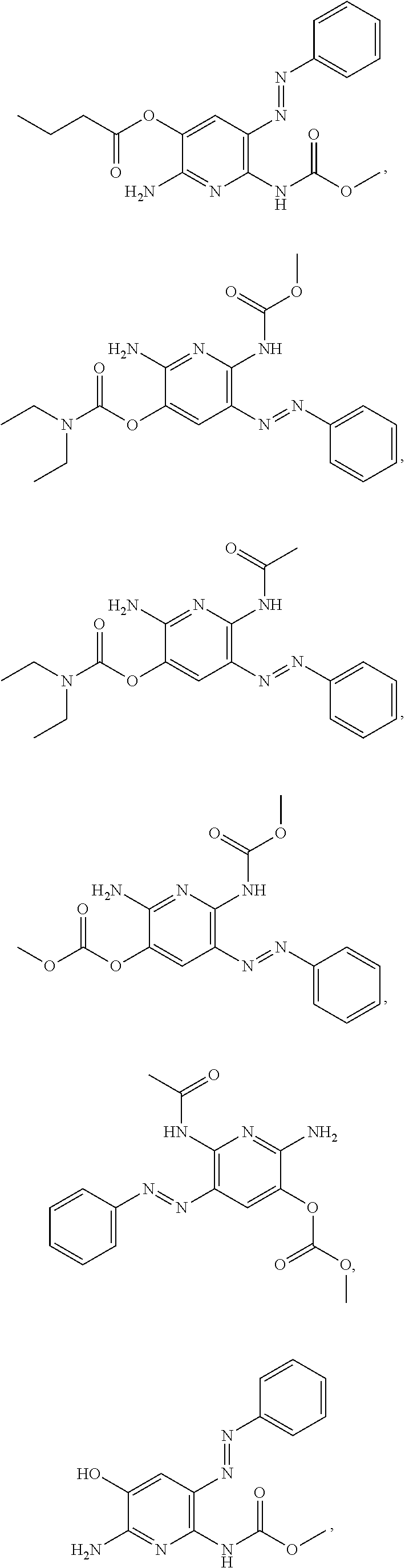


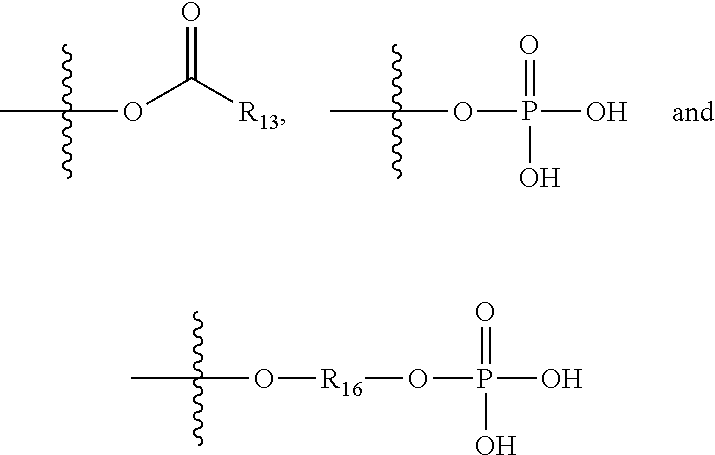


Applications Claiming Priority (3)
| Application Number | Priority Date | Filing Date | Title |
|---|---|---|---|
| IN202121007881 | 2021-02-24 | ||
| IN202121007881 | 2021-02-24 | ||
| PCT/IB2022/051628 WO2022180560A1 (en) | 2021-02-24 | 2022-02-24 | Prodrugs of azo compounds and their salts |
Publications (1)
| Publication Number | Publication Date |
|---|---|
| US20240209010A1 true US20240209010A1 (en) | 2024-06-27 |
Family
ID=83048822
Family Applications (1)
| Application Number | Title | Priority Date | Filing Date |
|---|---|---|---|
| US18/278,530 Pending US20240209010A1 (en) | 2021-02-24 | 2022-02-24 | Prodrugs of azo compounds and their salts |
Country Status (7)
| Country | Link |
|---|---|
| US (1) | US20240209010A1 (en) |
| EP (1) | EP4297755A4 (en) |
| JP (1) | JP2024508804A (en) |
| CN (1) | CN117337181A (en) |
| AU (1) | AU2022225755A1 (en) |
| CA (1) | CA3211722A1 (en) |
| WO (1) | WO2022180560A1 (en) |
Citations (1)
| Publication number | Priority date | Publication date | Assignee | Title |
|---|---|---|---|---|
| US3493555A (en) * | 1966-03-23 | 1970-02-03 | Nepera Chem Co Inc | 3-phenylazo-2,6-pyridyl dicyclopropane-carboxamide |
Family Cites Families (5)
| Publication number | Priority date | Publication date | Assignee | Title |
|---|---|---|---|---|
| US20070208134A1 (en) * | 2005-10-03 | 2007-09-06 | Hunter William L | Anti-scarring drug combinations and use thereof |
| WO2010038153A1 (en) * | 2008-10-01 | 2010-04-08 | The University Of British Columbia | Use of sox transcription factor acti\ators for stimulating chondrogenesis |
| CA2747716A1 (en) * | 2008-12-19 | 2010-06-24 | Pinnacle Pharmaceuticals, Inc. | Phenazopyridine compounds |
| US20120046232A1 (en) * | 2010-06-22 | 2012-02-23 | Medical University Of South Carolina | Compositions and methods for reducing relapse of addictive behavior |
| JP2022546036A (en) * | 2019-08-27 | 2022-11-02 | ケーアイ ファーマシューティカルズ,リミテッド・ライアビリティ・カンパニー | Compounds Useful for Pain Treatment |
-
2022
- 2022-02-24 EP EP22759054.4A patent/EP4297755A4/en active Pending
- 2022-02-24 WO PCT/IB2022/051628 patent/WO2022180560A1/en not_active Ceased
- 2022-02-24 CA CA3211722A patent/CA3211722A1/en active Pending
- 2022-02-24 AU AU2022225755A patent/AU2022225755A1/en active Pending
- 2022-02-24 CN CN202280030244.7A patent/CN117337181A/en active Pending
- 2022-02-24 US US18/278,530 patent/US20240209010A1/en active Pending
- 2022-02-24 JP JP2023551109A patent/JP2024508804A/en active Pending
Patent Citations (1)
| Publication number | Priority date | Publication date | Assignee | Title |
|---|---|---|---|---|
| US3493555A (en) * | 1966-03-23 | 1970-02-03 | Nepera Chem Co Inc | 3-phenylazo-2,6-pyridyl dicyclopropane-carboxamide |
Non-Patent Citations (1)
| Title |
|---|
| BURGUENO-TAPIA. Magnetic Resonance in Chemistry, 2004, 43, 256-260 (Year: 2004) * |
Also Published As
| Publication number | Publication date |
|---|---|
| AU2022225755A1 (en) | 2023-09-28 |
| CA3211722A1 (en) | 2022-09-01 |
| EP4297755A1 (en) | 2024-01-03 |
| CN117337181A (en) | 2024-01-02 |
| EP4297755A4 (en) | 2025-05-07 |
| JP2024508804A (en) | 2024-02-28 |
| WO2022180560A1 (en) | 2022-09-01 |
Similar Documents
| Publication | Publication Date | Title |
|---|---|---|
| US12502434B2 (en) | Compound comprising EZH2 inhibitor and E3 ligase binder and pharmaceutical composition for preventing or treating EZH2-associated disease comprising same as active ingredient | |
| US11912727B2 (en) | Arginase inhibitors and methods of use thereof | |
| US20230227446A9 (en) | Phosphatidylinositol 3-kinase inhibitors | |
| US20110105488A1 (en) | Substituted pyrrolidine and piperidine compounds, derivatives thereof, and methods for treating pain | |
| USRE49816E1 (en) | Dipeptides as inhibitors of human immunoproteasomes | |
| US20250114428A1 (en) | Dipeptidomimetics as inhibitors of human immunoproteasomes | |
| US20160068483A1 (en) | Amide derivatives of lactam based n-acylethanolamine acid amidase (naaa) inhibitors | |
| US20230210847A1 (en) | Substituted Alkynylene Compounds As Anticancer Agents | |
| US20240083845A1 (en) | Sars-cov-2 mpro inhibitor compounds | |
| US12570675B2 (en) | Boronic acid compounds | |
| CN103626825B (en) | The glycogen phosphorylase inhibitors cholic acid derivative of target liver, its preparation method and medicinal use | |
| US11407768B2 (en) | AMPK activators | |
| EP1692098B1 (en) | Alpha-ketoamide derivative, and production method and use thereof | |
| US12485121B2 (en) | Antiviral agents for the treatment and prevention of HIV infection | |
| US20230026696A1 (en) | Trpv4 receptor ligands | |
| US20240165248A1 (en) | Proteolysis-targeting chimeric molecules (protacs) that induce degradation of indoleamine 2,3-dioxygenase (ido) protein | |
| US20250108064A1 (en) | Phosphate prodrugs of cannabinoids | |
| WO2014197775A1 (en) | Thiourea compounds and their use as inhibitors of sirt2 or sirt5 | |
| AU2022225755A1 (en) | Prodrugs of azo compounds and their salts | |
| AU2023213626A1 (en) | Biphenyl-substituted epithelial sodium channel blocking compounds | |
| US11951094B2 (en) | TLR2 modulator compounds, pharmaceutical compositions and uses thereof | |
| US20240327407A1 (en) | Novel inhibitors of autotaxin | |
| HK1246718A1 (en) | Compounds for treatment of cystic fibrosis | |
| HUP9903675A2 (en) | Novel acetamide derivatives and protease inhibitors |
Legal Events
| Date | Code | Title | Description |
|---|---|---|---|
| AS | Assignment |
Owner name: KASHIV BIOSCIENCES, LLC, NEW JERSEY Free format text: ASSIGNMENT OF ASSIGNORS INTEREST;ASSIGNORS:PUROHIT, PARVA YOGESHCHANDRA;SANGLE, GANESH VISHWANATH;UNADKAT, VISHAL BHARATBHAI;AND OTHERS;REEL/FRAME:065125/0836 Effective date: 20230922 |
|
| STPP | Information on status: patent application and granting procedure in general |
Free format text: DOCKETED NEW CASE - READY FOR EXAMINATION |
|
| AS | Assignment |
Owner name: ACQUIOM AGENCY SERVICES LLC, AS COLLATERAL AGENT, COLORADO Free format text: SHORT FORM TERM LOAN INTELLECTUAL PROPERTY ASSIGNMENT;ASSIGNOR:KASHIV BIOSCIENCES, LLC;REEL/FRAME:071150/0372 Effective date: 20250402 |
|
| AS | Assignment |
Owner name: AMNEAL PHARMACEUTICALS LLC, NEW JERSEY Free format text: ASSIGNMENT OF ASSIGNORS INTEREST;ASSIGNOR:SHIVANKA RESEARCH, LLC;REEL/FRAME:071115/0600 Effective date: 20250508 Owner name: SHIVANKA RESEARCH, LLC, NEW JERSEY Free format text: ASSIGNMENT OF ASSIGNORS INTEREST;ASSIGNOR:KASHIV BIOSCIENCES, LLC;REEL/FRAME:071115/0589 Effective date: 20250508 |
|
| STPP | Information on status: patent application and granting procedure in general |
Free format text: NON FINAL ACTION COUNTED, NOT YET MAILED |
|
| STPP | Information on status: patent application and granting procedure in general |
Free format text: NON FINAL ACTION MAILED |
|
| STPP | Information on status: patent application and granting procedure in general |
Free format text: RESPONSE TO NON-FINAL OFFICE ACTION ENTERED AND FORWARDED TO EXAMINER |
|
| STPP | Information on status: patent application and granting procedure in general |
Free format text: NON FINAL ACTION COUNTED, NOT YET MAILED |
|
| STPP | Information on status: patent application and granting procedure in general |
Free format text: NON FINAL ACTION MAILED |
|
| STPP | Information on status: patent application and granting procedure in general |
Free format text: RESPONSE TO NON-FINAL OFFICE ACTION ENTERED AND FORWARDED TO EXAMINER |