US20220107902A1 - Metadata cache for storing manifest portion - Google Patents
Metadata cache for storing manifest portion Download PDFInfo
- Publication number
- US20220107902A1 US20220107902A1 US17/060,456 US202017060456A US2022107902A1 US 20220107902 A1 US20220107902 A1 US 20220107902A1 US 202017060456 A US202017060456 A US 202017060456A US 2022107902 A1 US2022107902 A1 US 2022107902A1
- Authority
- US
- United States
- Prior art keywords
- record
- data unit
- manifest
- storage
- stored
- Prior art date
- Legal status (The legal status is an assumption and is not a legal conclusion. Google has not performed a legal analysis and makes no representation as to the accuracy of the status listed.)
- Granted
Links
Images




Classifications
-
- G—PHYSICS
- G06—COMPUTING OR CALCULATING; COUNTING
- G06F—ELECTRIC DIGITAL DATA PROCESSING
- G06F12/00—Accessing, addressing or allocating within memory systems or architectures
- G06F12/02—Addressing or allocation; Relocation
- G06F12/08—Addressing or allocation; Relocation in hierarchically structured memory systems, e.g. virtual memory systems
- G06F12/0802—Addressing of a memory level in which the access to the desired data or data block requires associative addressing means, e.g. caches
- G06F12/0875—Addressing of a memory level in which the access to the desired data or data block requires associative addressing means, e.g. caches with dedicated cache, e.g. instruction or stack
-
- G—PHYSICS
- G06—COMPUTING OR CALCULATING; COUNTING
- G06F—ELECTRIC DIGITAL DATA PROCESSING
- G06F12/00—Accessing, addressing or allocating within memory systems or architectures
- G06F12/02—Addressing or allocation; Relocation
- G06F12/0223—User address space allocation, e.g. contiguous or non contiguous base addressing
- G06F12/023—Free address space management
- G06F12/0238—Memory management in non-volatile memory, e.g. resistive RAM or ferroelectric memory
-
- G—PHYSICS
- G06—COMPUTING OR CALCULATING; COUNTING
- G06F—ELECTRIC DIGITAL DATA PROCESSING
- G06F12/00—Accessing, addressing or allocating within memory systems or architectures
- G06F12/02—Addressing or allocation; Relocation
- G06F12/08—Addressing or allocation; Relocation in hierarchically structured memory systems, e.g. virtual memory systems
- G06F12/0802—Addressing of a memory level in which the access to the desired data or data block requires associative addressing means, e.g. caches
- G06F12/0806—Multiuser, multiprocessor or multiprocessing cache systems
- G06F12/0815—Cache consistency protocols
- G06F12/0831—Cache consistency protocols using a bus scheme, e.g. with bus monitoring or watching means
- G06F12/0833—Cache consistency protocols using a bus scheme, e.g. with bus monitoring or watching means in combination with broadcast means (e.g. for invalidation or updating)
-
- G—PHYSICS
- G06—COMPUTING OR CALCULATING; COUNTING
- G06F—ELECTRIC DIGITAL DATA PROCESSING
- G06F12/00—Accessing, addressing or allocating within memory systems or architectures
- G06F12/02—Addressing or allocation; Relocation
- G06F12/08—Addressing or allocation; Relocation in hierarchically structured memory systems, e.g. virtual memory systems
- G06F12/12—Replacement control
- G06F12/121—Replacement control using replacement algorithms
-
- G—PHYSICS
- G06—COMPUTING OR CALCULATING; COUNTING
- G06F—ELECTRIC DIGITAL DATA PROCESSING
- G06F2212/00—Indexing scheme relating to accessing, addressing or allocation within memory systems or architectures
- G06F2212/46—Caching storage objects of specific type in disk cache
- G06F2212/465—Structured object, e.g. database record
-
- G—PHYSICS
- G06—COMPUTING OR CALCULATING; COUNTING
- G06F—ELECTRIC DIGITAL DATA PROCESSING
- G06F2212/00—Indexing scheme relating to accessing, addressing or allocation within memory systems or architectures
- G06F2212/46—Caching storage objects of specific type in disk cache
- G06F2212/466—Metadata, control data
Definitions
- Data reduction techniques can be applied to reduce the amount of data stored in a storage system.
- An example data reduction technique includes data deduplication.
- Data deduplication identifies data units that are duplicative, and seeks to reduce or eliminate the number of instances of duplicative data units that are stored in the storage system.
- FIG. 1 is a schematic diagram of an example system, in accordance with some implementations.
- FIG. 2 is an illustration of example data structures, in accordance with some implementations.
- FIGS. 3A-3B are illustrations of example data structures, in accordance with some implementations.
- FIG. 4 is illustration of example data structures, in accordance with some implementations.
- FIGS. 5A-5B is an illustration of an example data structures, in accordance with some implementations.
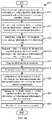
- FIGS. 6A-6B are illustrations of an example process, in accordance with some implementations.
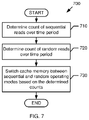
- FIG. 7 is an illustration of an example process, in accordance with some implementations.
- FIG. 8 is an illustration of an example process, in accordance with some implementations.
- FIG. 9 is a diagram of an example machine-readable medium storing instructions in accordance with some implementations.
- FIG. 10 is a schematic diagram of an example computing device, in accordance with some implementations.
- a storage system may deduplicate data to reduce the amount of space required to store the data.
- the storage system may perform a deduplication process including breaking a stream of data into discrete data units or “chunks.” Further, the storage system may determine identifiers or “fingerprints” of incoming data units, and may determine which incoming data units are duplicates of previously stored data units. In the case of data units that are duplicates, the storage system may store references to the previous data units instead of storing the duplicate incoming data units.
- the term “fingerprint” refers to a value derived by applying a function on the content of the data unit (where the “content” can include the entirety or a subset of the content of the data unit).
- An example of the function that can be applied includes a hash function that produces a hash value based on the incoming data unit.
- hash functions include cryptographic hash functions such as the Secure Hash Algorithm 2 (SHA-2) hash functions, e.g., SHA-224, SHA-256, SHA-384, etc. In other examples, other types of hash functions or other types of fingerprint functions may be employed.
- a “storage system” can include a storage device or an array of storage devices.
- a storage system may also include storage controller(s) that manage(s) access of the storage device(s).
- a “data unit” can refer to any portion of data that can be separately identified in the storage system. In some cases, a data unit can refer to a chunk, a collection of chunks, or any other portion of data. In some examples, a storage system may store data units in persistent storage.
- Persistent storage can be implemented using one or more of persistent (e.g., nonvolatile) storage device(s), such as disk-based storage device(s) (e.g., hard disk drive(s) (HDDs)), solid state device(s) (SSDs) such as flash storage device(s), or the like, or a combination thereof.
- persistent storage device(s) such as disk-based storage device(s) (e.g., hard disk drive(s) (HDDs)), solid state device(s) (SSDs) such as flash storage device(s), or the like, or a combination thereof.
- a “controller” can refer to a hardware processing circuit, which can include any or some combination of a microprocessor, a core of a multi-core microprocessor, a microcontroller, a programmable integrated circuit, a programmable gate array, a digital signal processor, or another hardware processing circuit.
- a “controller” can refer to a combination of a hardware processing circuit and machine-readable instructions (software and/or firmware) executable on the hardware processing circuit.
- a deduplication storage system may use stored metadata for processing and reconstructing the original data stream from the stored data units. In this manner, the deduplication process may avoid storing duplicate copies of repeated data units, and thereby may reduce the amount of space required to store the stream of data.
- the deduplication metadata may include data recipes (also referred to herein as “manifests”) that specify the order in which particular data units were received (e.g., in a data stream).
- the deduplication system may use a manifest to determine the received order of data units, and thereby recreate the original data stream.
- the manifest may include a sequence of records, with each record representing a particular set of data unit(s).
- the records of the manifest may include one or more fields (also referred to herein as “pointer information”) that identify indexes that include storage information for the data units.
- the storage information may include one or more index fields that specify location information (e.g., containers, offsets, etc.) for the stored data units, compression and/or encryption characteristics of the stored data units, and so forth.
- the manifests and indexes may each be read in addressable portions of fixed sizes (e.g., 4 KB portions). Further, the locations of multiple data units represented by one manifest portion may be identified in multiple index portions. Therefore, recreating the original sequence of data units may include loading the manifest portion into memory, and then loading multiple index portions into memory to access those data units.
- the deduplication system may cache at least some of the metadata in order to improve performance during some read operations. For example, storing a manifest portion in a cache may reduce the time required to identify and access the data units represented by that manifest portion. Further, caching a manifest portion may be particularly useful when the data being read is a continuous sequence of data units that are represented in that manifest portion. In contrast, storing a particular manifest portion in a cache may provide little or no benefit if the data units have to be read in non-continuous fashion across multiple manifest portions.
- reading the data units represented by one manifest portion may require using multiple index portions, and because each index portion may be read and addressed as an entire unit of fixed size, it may not be possible or efficient to attempt to also cache the multiple index portions required to access the chunks represented by the manifest portion.
- a deduplication storage system may cache a manifest portion in response to a read request for a data unit represented by a record of the manifest portion.
- the deduplication system may use pointer information included in the record to identify an index associated with the data unit, and may read storage information of the data unit from the identified index.
- the deduplication system may replace the pointer information of the record with the storage information of the data unit. In this manner, the record of the cached manifest portion may be modified or “resolved” to include all information needed to access the data unit during subsequent reads (i.e., without having to read that index again).
- the deduplication system may opportunistically resolve other records of the cached manifest portion. Accordingly, implementations described herein may allow caching of a manifest portion, but without having to also cache multiple index portions that are associated with the manifest portion. In this manner, implementations may provide improved performance of the deduplication system while using a limited amount of cache memory.
- FIG. 1 shows an example of a storage system 100 that includes a storage controller 110 , memory 115 , a metadata cache 130 , and persistent storage 140 , in accordance with some implementations.
- the persistent storage 140 may include any number of manifests 150 , indexes 160 , and data containers 170 .
- the persistent storage 140 may include one or more non-transitory storage media such as hard disk drives (HDDs), solid state drives (SSDs), optical disks, and so forth, or a combination thereof.
- the memory 115 and/or the metadata cache 130 may be implemented in semiconductor memory such as random access memory (RAM).
- the storage system 100 may perform deduplication of stored data.
- the storage controller 110 may divide a stream of input data into data units, and may store at least one copy of each data unit in a data container 170 (e.g., by appending the data units to the end of the container 170 ).
- each data container 170 may be divided into entities 175 , where each entity 175 includes multiple stored data units.
- the storage controller 110 may generate a fingerprint for each data unit.
- the fingerprint may include a full or partial hash value based on the data unit.
- the storage controller 110 may compare the fingerprint generated for the incoming data unit to the fingerprints of the stored data units. If this comparison results in a match, then the storage controller 110 may determine that a duplicate of the incoming data unit is already stored by the storage system 100 .
- the storage controller 110 may generate a manifest 150 to record the order in which the data units were received.
- the manifest 150 may include a pointer or other information indicating the index 160 that is associated with each data unit.
- the associated index 160 may indicate the location in which the data unit is stored.
- the associated index 160 may include information specifying that the data unit is stored at a particular offset in an entity 175 , and that the entity 175 is stored at a particular offset in a data container 170 .
- the storage controller 110 may receive a read request 105 to access the stored data, and in response may access the manifest 150 to determine the sequence of data units that made up the original data. The storage controller 110 may then use pointer data included in the manifest 150 to identify the indexes 160 associated with the data units. Further, the storage controller 110 may use information included in the identified indexes 160 to determine the locations that store the data units (e.g., data container 170 , entity 175 , offsets, etc.), and may then read the data units from the determined locations.
- the storage controller 110 may receive a read request 105 to access the stored data, and in response may access the manifest 150 to determine the sequence of data units that made up the original data. The storage controller 110 may then use pointer data included in the manifest 150 to identify the indexes 160 associated with the data units. Further, the storage controller 110 may use information included in the identified indexes 160 to determine the locations that store the data units (e.g., data container 170 , entity 175 , offsets, etc.), and may then read the data
- the storage system 100 may use the metadata cache 130 to store at least some metadata associated with data deduplication.
- the metadata cache 130 may store any number of manifest portions 152 A- 152 N (also referred to as “manifest portions 152 ”).
- Each manifest portion 152 may include multiple manifest records 155 , where each manifest record 155 is associated with a particular data unit.
- caching metadata in the metadata cache 130 may reduce the frequency and amount of metadata that has to be read from the persistent storage 140 , and may thereby provide improved performance of the storage system 100 .
- the data structures 200 may include a manifest record 210 , a container index 220 , a container 250 , and an entity 260 .
- the manifest record 210 , the container index 220 , the container 250 , and the entity 230 may correspond generally to example implementations of a manifest record 155 , an index 160 , a data container 170 , and an entity 175 (shown in FIG. 1 ), respectively.
- the data structures 200 may be generated and/or managed by the storage controller 110 (shown in FIG. 1 ).
- the manifest record 210 may include various fields, such as offset, length, container index, and unit address.
- each container index 220 may include any number of data unit record(s) 230 and entity record(s) 240 .
- Each data unit record 230 may include various fields, such as a fingerprint (e.g., a hash of the data unit), a unit address, an entity identifier, a unit offset (i.e., an offset of the data unit within the entity), a count value, and a unit length.
- each entity record 240 may include various fields, such as an entity identifier, an entity offset (i.e., an offset of the entity within the container), a stored length (i.e., a length of the data unit within the entity), a decompressed length, a checksum value, and compression/encryption information (e.g., type of compression, type of encryption, and so forth).
- entity identifier i.e., an offset of the entity within the container
- a stored length i.e., a length of the data unit within the entity
- a decompressed length i.e., a length of the data unit within the entity
- a checksum value i.e., a length of the data unit within the entity
- compression/encryption information e.g., type of compression, type of encryption, and so forth.
- each container 250 may include any number of entities 260
- each entity 260 may include any number of stored data units.
- the data structures 200 may be used to retrieve stored deduplicated data.
- a read request may specify an offset and length of data in a given file. These request parameters may be matched to the offset and length fields of a particular manifest record 210 .
- the container index and unit address of the particular manifest record 210 may then be matched to a particular data unit record 230 included in a container index 220 .
- the entity identifier of the particular data unit record 230 may be matched to the entity identifier of a particular entity record 240 .
- one or more other fields of the particular entity record 240 may be used to identity the container 250 and entity 260 , and the data unit may then be read from the identified container 250 and entity 260 .
- using the data structures 200 to retrieve stored deduplicated data may include reading manifest portions and the associated index portions from persistent storage 140 , and loading these metadata portions into memory 115 .
- some metadata may be stored in the metadata cache 130 .
- Such caching of metadata may be particularly useful for “sequential reads,” which involve reading relatively large sequences of data units that are continuous in a manifest and/or container location.
- such caching of metadata may provide little or no benefit for “random reads,” which involve reading relatively small sets of data units that are not continuous in a manifest and/or container location.
- performing random reads may require using a relatively large number of index portions, and it may not be possible or efficient to load this large number of index portions in a metadata cache.
- the metadata cache 130 may be used in different operating modes that are adapted to different types of read requests.
- the operating modes of the metadata cache 130 may include a first operating mode that is adapted to sequential reads, and a second operating mode that is adapted to random reads.
- the operating mode of the metadata cache 130 may be selected based on characteristics of recent read operations. For example, the storage controller 110 may cause the metadata cache 130 to use a first operating mode in response to a determination that the majority of recent read requests are sequential reads. Further, the storage controller 110 may cause the metadata cache 130 to use a second operating mode in response to a determination that the majority of recent read requests are random reads.
- the metadata cache 130 may store different types of metadata when used in the different operating modes. For example, referring now to FIG. 3A , shown is an illustration of the metadata cache 130 in the first operating mode (i.e., adapted for sequential reads). As shown in FIG. 3A , when using the first operating mode, the metadata cache 130 may store manifest portion(s) 310 and associated indexes 320 in unmodified form (i.e., having the same content and structure as the corresponding metadata elements that are stored in the persistent storage 140 ).
- the metadata cache 130 may store only resolved manifest portion(s) 330 .
- a “resolved manifest portion” refers to a manifest portion that includes at least one resolved entry.
- a “resolved entry” refers to a manifest entry in which the information that identifies a corresponding index is replaced with data unit storage information from the corresponding index.
- each resolved entry of the resolved manifest portion 330 may include all information needed to access a particular data unit associated with the entry.
- the resolved manifest record 410 may correspond generally to a resolved record of the resolved manifest portion 330 (shown in FIG. 3B ). In some examples, the resolved manifest record 410 may be generated and/or managed by the storage controller 110 (shown in FIG. 1 ).
- the resolved manifest record 410 may be generated by modifying a source manifest record (e.g., manifest record 210 shown in FIG. 2 ) such that pointer information of the record is replaced with storage information of the data unit.
- a source manifest record e.g., manifest record 210 shown in FIG. 2
- pointer information of the manifest record may refer to the container index field and the unit address field of the manifest record 220 .
- the resolved manifest record 410 may include the offset field and the length field from the manifest record 220 .
- the pointer information e.g., the container index field and the unit address field
- the manifest record 220 may be replaced with fields copied from an associated index.
- the resolved manifest record 410 may include the unit offset field from a data unit record 230 , and may also include an entity offset, a stored length, a decompressed length field, a checksum value, and compression/encryption information from an entity record 240 .
- the term “storage information of the data unit” may refer to the unit offset field from the data unit record 230 , and the entity offset, stored length, decompressed length field, checksum value, and compression/encryption information from the entity record 240 .
- the resolved manifest record 410 may include all information needed to identify the container 250 and entity 260 that stores a particular data unit. In this manner, the resolved manifest record 410 may be used to access the data unit without having to access a container index associated with the data unit. As shown, the resolved manifest record 410 may also include a resolved flag that indicates whether the manifest record has been resolved. This resolved flag is described further below with reference to FIGS. 5A-5B .
- the resolved manifest portion 510 may correspond generally to an example of the resolved manifest portion 330 (shown in FIG. 3B ).
- the resolved manifest portion 510 includes any number of manifest records MR 520 , where each manifest record 520 is associated with a resolved flag 530 .
- the resolved manifest portion 510 includes the manifest record “MR-2” that is resolved, and therefore is associated with a resolved flag 530 set to true (T).
- the resolved manifest portion 510 also includes multiple unresolved manifest records that are associated with resolved flags 530 set to false (F).
- the resolved manifest portion 510 may be generated and stored in the metadata cache 130 upon receiving a read request, where the read request involves a particular data unit that is associated with the record MR-2.
- the unmodified manifest portion e.g., manifest record 210 shown in FIG. 2
- pointer information included in the record MR-2 may be used to identify an associated index (e.g., container index 220 shown in FIG. 2 ), and the associated index may be used to obtain storage information associated with the particular data unit.
- the manifest portion 510 may be stored in the metadata cache 130 , and the record MR-2 may be modified or “resolved” such that the pointer information is replaced with the storage information obtained from the index. Further, the resolved flag 530 associated with the record MR-2 may be set to “T,” thereby indicating that the record MR-2 is now resolved.
- FIG. 5B shown is an illustration of the metadata cache 130 storing the resolved manifest portion 510 at a second point in time.
- the resolved flags 530 of each record 520 is set to “T,” thereby indicating that all records 520 have been resolved.
- each of the records 520 that were unresolved at the first point in time may have been opportunistically resolved based on subsequent read requests (i.e., after the read request that caused the resolved manifest portion 510 to be initially stored in the metadata cache 130 ).
- two or more records of the resolved manifest portion 510 may be consolidated into a single record. For example, if two records are adjacent within the resolved manifest portion 510 (e.g., adjacent records MR-1 and MR-2), and if the storage locations of the corresponding data units are also adjacent (e.g., the data units associated with MR-1 and MR-2 are stored in adjacent container locations), then the storage controller 110 may consolidate these adjacent records into a single record of the resolved manifest portion 510 . Further, the consolidated record may include storage information that indicates the continuous storage location of the adjacent data units. In some examples, this storage location may be specified as offset and length values.
- the unresolved records of the manifest portion 510 may be opportunistically resolved based on subsequent reads (i.e., after the read that caused the manifest portion 510 to be stored in the metadata cache 130 ). For example, if the record MR-1 of the cached manifest portion 510 is used to access a second data unit (e.g., by accessing a second index and determining storage information of the second unit), the record MR-1 may then be resolved by replacing its pointer information with the storage information of the second data unit (obtained from the second index).
- record MR-3 includes pointer information that identifies a data unit record in a third index.
- another manifest portion (not shown) includes a different record that includes the same pointer information. If that different record of another manifest portion is then used to access a third data unit (e.g., in response to a different read request), then the record MR-3 may be opportunistically resolved by replacing its pointer information with the storage information of the third data unit.
- the metadata cache 130 may store a data structure (not shown in FIGS. 5A-5B ) that identifies the unresolved records of stored manifest portions 510 and the indexes (e.g., container indexes) associated with those unresolved records. This data structure may be used to determine whether any records can be opportunistically resolved when an associated index has been loaded into memory.
- the manifest portion 510 may remain in the metadata cache 130 according to one or more replacements policies.
- the metadata cache 130 may use a data structure (not shown) to track the most recent time that each manifest portion 510 has been used to complete a read operation, and may evict a manifest portion 510 that is least recently used (LRU).
- LRU least recently used
- a first manifest portion 510 that is opportunistically resolved based on a read of another manifest portion 510 is not counted as the most recent use of the first manifest portion 510 for purposes of LRU tracking and eviction.
- the process 600 may be performed using the storage controller 110 (shown in FIG. 1 ).
- the process 600 may be implemented in hardware or a combination of hardware and programming (e.g., machine-readable instructions executable by a processor(s)).
- the machine-readable instructions may be stored in a non-transitory computer readable medium, such as an optical, semiconductor, or magnetic storage device.
- the machine-readable instructions may be executed by a single processor, multiple processors, a single processing engine, multiple processing engines, and so forth.
- FIGS. 1-5B show examples in accordance with some implementations. However, other implementations are also possible.
- block 610 may include receiving a read request associated with a first data unit.
- Block 615 may include identifying a first manifest portion comprising a plurality of records, where the plurality of records includes a first record associated with the first data unit.
- Block 620 may include storing the first manifest portion in a metadata cache.
- Block 625 may include accessing a first container index using first pointer information included in the first record.
- the storage controller 110 may receive a read request 105 that specifies an offset and length. The offset and length may identify or be associated with a data unit or portion included in a stored data file. The storage controller 110 may use the offset and length to identify a record 155 of a first manifest portion 152 .
- the storage controller 110 may cause an entirety of the first manifest portion 152 to be stored in a metadata cache 130 . Further, the storage controller 110 may identify a container index 220 that matches the pointer information of the first record 210 , and may thereby access information included in the identified container index 220 . For example, referring to FIG. 2 , the pointer information of the first record 210 may include the container index field and unit address field.
- block 630 may include determining, using the first container index, storage information of the first data unit.
- Block 635 may include replacing, in the first record of the first manifest portion, the first pointer information with the storage information of the first data unit.
- Block 640 may include flagging the first record as resolved.
- Block 642 may include reading and providing the first data unit (i.e., as a response to the read request). For example, referring to FIGS. 1-5A , the storage controller 110 may read storage information included in the identified container index 220 (e.g., unit offset field from the data unit record 230 , and entity offset, stored length, decompressed length field, checksum value, and compression/encryption information from the entity record 240 ).
- the storage controller 110 may modify the first record 210 by replacing the pointer information with the storage information read from the container index 220 , and by setting the associated resolved flag 530 (shown in FIG. 5A ) to true (“T”).
- the resolved first record 210 may have the same form as the resolved manifest record 410 shown in FIG. 4 .
- the storage controller 110 may use the storage information to read the first data unit from the persistent storage 140 , and may provide the first data unit as a result to the read request (received at block 610 ).
- the first data unit may be one of multiple data units that are provided as the result of the read request.
- block 645 may include receiving a read request associated with a second data unit, where the second data unit is associated with a second record of the first manifest portion, where the second record is unresolved.
- Block 650 may include accessing a second container index using second pointer information included in the second record. For example, referring to FIGS. 1-2 , the storage controller 110 may receive a second read request, and in response may identify a second record of the first manifest portion 152 (i.e., different from the first record discussed above with reference to block 615 ). The storage controller 110 may read second pointer information included in the second record, and may identify a second container index 220 that matches the second pointer information.
- block 655 may include determining, using the second container index, storage information of the second data unit.
- Block 660 may include replacing, in the second record of the first manifest portion, the second pointer information with the storage information of the second data unit.
- Block 665 may include flagging the second record as resolved.
- Block 667 may include reading and providing the second data unit (i.e., as a response to the read request).
- the storage controller 110 may read storage information included in the second container index 220 . Further the storage controller 110 may modify the second record 155 of the first manifest portion 152 by replacing the pointer information with the storage information read from the second container index 220 , and by setting the associated resolved flag 530 (shown in FIG.
- the storage controller 110 may use the storage information to read the second data unit from the persistent storage 140 , and may provide the second data unit as a result to the read request (received at block 645 ).
- the second data unit may be one of multiple data units that are provided as the result of the read request.
- the process 600 may continue at block 670 (shown in FIG. 6B ).
- block 670 may include receiving a read request associated with a third data unit, where the third data unit is associated with a third record of a second manifest portion.
- Block 672 may include accessing a third container index using third pointer information included in the third record of the second manifest portion.
- the storage controller 110 may receive a third read request, and in response may identify a third record 155 of a second manifest portion 152 (i.e., different from the manifest portion discussed above with reference to blocks 615 and 645 ). If the second manifest portion 152 is not already included in the metadata cache 130 , the storage controller 110 may store the second manifest portion 152 in the metadata cache 130 . Further, the storage controller 110 may read third pointer information included in the third record 155 , and may identify a third container index 220 that matches the third pointer information.
- block 674 may include determining, using the third container index, storage information of the third data unit.
- Block 676 may include replacing, in the third record of the second manifest portion, the third pointer information with the storage information of the third data unit.
- Block 678 may include flagging the third record as resolved.
- Block 679 may include reading and providing the third data unit (i.e., as a response to the read request). For example, referring to FIGS. 1-5A , the storage controller 110 may read storage information included in the third container index 220 . Further the storage controller 110 may modify the third record 155 by replacing the pointer information with the storage information read from the third container index 220 , and by setting the associated resolved flag 530 (shown in FIG. 5A ) to true (“T”).
- the storage controller 110 may use the storage information to read the third data unit from the persistent storage 140 , and may provide the third data unit as a result to the read request (received at block 670 ).
- the second data unit may be one of multiple data units that are provided as the result of the read request.
- block 680 may include determining a fourth record of the first manifest portion that also includes the third pointer information, where the fourth record is unresolved.
- Block 682 may include replacing, in the fourth record of the first manifest portion, the third pointer information with the storage information of the third data unit.
- Block 684 may include flagging the fourth record as resolved.
- the storage controller 110 may read storage information included in the third container index 220 . Further the storage controller 110 may modify the third record 155 by replacing the pointer information with the storage information read from the third container index 220 , and by setting the associated resolved flag 530 (shown in FIG. 5A ) to true (“T”).
- T the associated resolved flag 530
- the process 700 may be performed using the storage controller 110 (shown in FIG. 1 ).
- the process 700 may be implemented in hardware or a combination of hardware and programming (e.g., machine-readable instructions executable by a processor(s)).
- the machine-readable instructions may be stored in a non-transitory computer readable medium, such as an optical, semiconductor, or magnetic storage device.
- the machine-readable instructions may be executed by a single processor, multiple processors, a single processing engine, multiple processing engines, and so forth.
- FIGS. 1-5B show examples in accordance with some implementations. However, other implementations are also possible.
- Block 710 may include determining a count of sequential reads over a time period.
- Block 720 may include determining a count of random reads over the time period.
- Block 730 may include switching a cache memory between sequential and random operating modes based on the determined counts. For example, referring to FIGS. 1-5A , the storage controller 110 may count the number of sequential reads (e.g., reads for continuous blocks of data that are larger than a specified size) that occur during a predefined time period (e.g., one minute). The storage controller 110 may also count the number of random reads (e.g., reads for non-continuous blocks of data that are smaller than a given size) that occur during the time period.
- sequential reads e.g., reads for continuous blocks of data that are larger than a specified size
- the storage controller 110 may also count the number of random reads (e.g., reads for non-continuous blocks of data that are smaller than a given size) that occur during the time period.
- the storage controller 110 may determine whether the ratio between random reads and sequential reads exceeds a threshold, and may select between first and second operating modes for the metadata cache 130 . For example, the first operating mode may be used if sequential reads are more common than random reads, while the second operating mode may be used otherwise. After block 730 , the process 700 may be completed.
- a sequential operating mode includes storing unmodified manifest portions in the cache memory
- a random operating mode includes storing only resolved manifest portions in the cache memory.
- the process 800 may be performed using the storage controller 110 (shown in FIG. 1 ).
- the process 800 may be implemented in hardware or a combination of hardware and programming (e.g., machine-readable instructions executable by a processor(s)).
- the machine-readable instructions may be stored in a non-transitory computer readable medium, such as an optical, semiconductor, or magnetic storage device.
- the machine-readable instructions may be executed by a single processor, multiple processors, a single processing engine, multiple processing engines, and so forth.
- FIGS. 1-5B show examples in accordance with some implementations. However, other implementations are also possible.
- Block 810 may include receiving, by a storage controller, a read request associated with a first data unit.
- Block 820 may include, in response to receiving the read request, the storage controller storing a manifest portion in a metadata cache, the stored manifest portion comprising a plurality of records, the plurality of records including a first record associated with the first data unit.
- the storage controller 110 may receive a read request 105 associated with a first data unit, and in response may identify a manifest portion 152 that includes a first record 210 associated with the first data unit.
- the storage controller 110 may cause the identified manifest portion 152 to be stored in the metadata cache 130 .
- the manifest portion 152 is cached as an entire unit of a fixed size (e.g., a predetermined number of manifest records).
- block 830 may include determining, by the storage controller, storage information of the first data unit using pointer information included in the first record of the stored manifest portion.
- Block 840 may include replacing in the first record, by the storage controller, the pointer information with the storage information of the first data unit. For example, referring to FIGS. 1-5A , the storage controller 110 may identify a container index 220 that matches the pointer information of the first record 210 , and may then access information included in the identified container index 220 .
- the storage controller 110 may read storage information included in the identified container index 220 (e.g., unit offset field from the data unit record 230 , and entity offset, stored length, decompressed length field, checksum value, and compression/encryption information from the entity record 240 ). Further, the storage controller 110 may modify the first record 210 by replacing the pointer information with the storage information read from the container index 220 , and by setting the associated resolved flag 530 (shown in FIG. 5A ) to true (“T”). After block 840 , the process 800 may be completed.
- storage information included in the identified container index 220 e.g., unit offset field from the data unit record 230 , and entity offset, stored length, decompressed length field, checksum value, and compression/encryption information from the entity record 240 . Further, the storage controller 110 may modify the first record 210 by replacing the pointer information with the storage information read from the container index 220 , and by setting the associated resolved flag 530 (shown in FIG. 5A ) to true (“T
- FIG. 9 shows a machine-readable medium 900 storing instructions 910 - 940 , in accordance with some implementations.
- the instructions 910 - 940 can be executed by a single processor, multiple processors, a single processing engine, multiple processing engines, and so forth.
- the machine-readable medium 900 may be a non-transitory storage medium, such as an optical, semiconductor, or magnetic storage medium.
- Instruction 910 may be executed to, in response to a read request associated with a first data unit, store a manifest portion in a metadata cache, the stored manifest portion comprising a plurality of records, the plurality of records including a first record associated with the first data unit.
- Instruction 920 may be executed to access a first container index using pointer information included in the first record.
- Instruction 930 may be executed to determine, using the first container index, storage information of the first data unit.
- Instruction 940 may be executed to replace, in the first record of the stored manifest portion, the pointer information with the storage information of the first data unit.
- FIG. 10 shows a schematic diagram of an example computing device 1000 .
- the computing device 1000 may correspond generally to some or all of the storage system 100 (shown in FIG. 1 ).
- the computing device 1000 may include hardware processor 1002 and machine-readable storage 1005 including instruction 1010 - 1040 .
- the machine-readable storage 1005 may be a non-transitory medium.
- the instructions 1010 - 1040 may be executed by the hardware processor 1002 , or by a processing engine included in hardware processor 1002 .
- Instruction 1010 may be executed to, in response to a read request associated with a first data unit, store a manifest portion in a metadata cache, the stored manifest portion comprising a plurality of records, the plurality of records including a first record associated with the first data unit.
- Instruction 1020 may be executed to determine storage information of the first data unit using pointer information included in the first record of the stored manifest portion.
- Instruction 1030 may be executed to replace, in the first record of the stored manifest portion, the pointer information with the storage information of the first data unit.
- Instruction 1040 may be executed to flag the first record of the stored manifest portion as resolved.
- a storage system may cache a manifest portion including a plurality of records.
- the storage system may use pointer information included in a manifest record to identify an index associated with a data unit, and may read storage information of the data unit from the identified index.
- the storage system may replace the pointer information of the manifest record with the storage information of the data unit, and may thereby resolve the manifest record to include all information needed to access the data unit during subsequent reads. Further, during subsequent read operations of other data units, the storage system may opportunistically resolve other records of the cached manifest portion. Accordingly, implementations described herein may allow reading data using a resolved manifest portion, and may thereby provide improved performance of the deduplication system while using a limited amount of cache memory.
- FIGS. 1-10 show various examples, implementations are not limited in this regard.
- the storage system 100 may include additional devices and/or components, fewer components, different components, different arrangements, and so forth.
- the functionality of the storage controller 110 described above may be included in any another engine or software of storage system 100 .
- Other combinations and/or variations are also possible.
- Data and instructions are stored in respective storage devices, which are implemented as one or multiple computer-readable or machine-readable storage media.
- the storage media include different forms of non-transitory memory including semiconductor memory devices such as dynamic or static random access memories (DRAMs or SRAMs), erasable and programmable read-only memories (EPROMs), electrically erasable and programmable read-only memories (EEPROMs) and flash memories; magnetic disks such as fixed, floppy and removable disks; other magnetic media including tape; optical media such as compact disks (CDs) or digital video disks (DVDs); or other types of storage devices.
- DRAMs or SRAMs dynamic or static random access memories
- EPROMs erasable and programmable read-only memories
- EEPROMs electrically erasable and programmable read-only memories
- flash memories such as fixed, floppy and removable disks
- magnetic media such as fixed, floppy and removable disks
- optical media such as compact disks (CDs) or digital video disks (DV
- the instructions discussed above can be provided on one computer-readable or machine-readable storage medium, or alternatively, can be provided on multiple computer-readable or machine-readable storage media distributed in a large system having possibly plural nodes.
- Such computer-readable or machine-readable storage medium or media is (are) considered to be part of an article (or article of manufacture).
- An article or article of manufacture can refer to any manufactured single component or multiple components.
- the storage medium or media can be located either in the machine running the machine-readable instructions, or located at a remote site from which machine-readable instructions can be downloaded over a network for execution.
Landscapes
- Engineering & Computer Science (AREA)
- Theoretical Computer Science (AREA)
- Physics & Mathematics (AREA)
- General Engineering & Computer Science (AREA)
- General Physics & Mathematics (AREA)
- Information Retrieval, Db Structures And Fs Structures Therefor (AREA)
Abstract
Description
- Data reduction techniques can be applied to reduce the amount of data stored in a storage system. An example data reduction technique includes data deduplication. Data deduplication identifies data units that are duplicative, and seeks to reduce or eliminate the number of instances of duplicative data units that are stored in the storage system.
- Some implementations are described with respect to the following figures.
-
FIG. 1 is a schematic diagram of an example system, in accordance with some implementations. -
FIG. 2 is an illustration of example data structures, in accordance with some implementations. -
FIGS. 3A-3B are illustrations of example data structures, in accordance with some implementations. -
FIG. 4 is illustration of example data structures, in accordance with some implementations. -
FIGS. 5A-5B is an illustration of an example data structures, in accordance with some implementations. -
FIGS. 6A-6B are illustrations of an example process, in accordance with some implementations. -
FIG. 7 is an illustration of an example process, in accordance with some implementations. -
FIG. 8 is an illustration of an example process, in accordance with some implementations. -
FIG. 9 is a diagram of an example machine-readable medium storing instructions in accordance with some implementations. -
FIG. 10 is a schematic diagram of an example computing device, in accordance with some implementations. - Throughout the drawings, identical reference numbers designate similar, but not necessarily identical, elements. The figures are not necessarily to scale, and the size of some parts may be exaggerated to more clearly illustrate the example shown. Moreover, the drawings provide examples and/or implementations consistent with the description; however, the description is not limited to the examples and/or implementations provided in the drawings.
- In the present disclosure, use of the term “a,” “an,” or “the” is intended to include the plural forms as well, unless the context clearly indicates otherwise. Also, the term “includes,” “including,” “comprises,” “comprising,” “have,” or “having” when used in this disclosure specifies the presence of the stated elements, but do not preclude the presence or addition of other elements.
- In some examples, a storage system may deduplicate data to reduce the amount of space required to store the data. The storage system may perform a deduplication process including breaking a stream of data into discrete data units or “chunks.” Further, the storage system may determine identifiers or “fingerprints” of incoming data units, and may determine which incoming data units are duplicates of previously stored data units. In the case of data units that are duplicates, the storage system may store references to the previous data units instead of storing the duplicate incoming data units.
- As used herein, the term “fingerprint” refers to a value derived by applying a function on the content of the data unit (where the “content” can include the entirety or a subset of the content of the data unit). An example of the function that can be applied includes a hash function that produces a hash value based on the incoming data unit. Examples of hash functions include cryptographic hash functions such as the Secure Hash Algorithm 2 (SHA-2) hash functions, e.g., SHA-224, SHA-256, SHA-384, etc. In other examples, other types of hash functions or other types of fingerprint functions may be employed.
- A “storage system” can include a storage device or an array of storage devices. A storage system may also include storage controller(s) that manage(s) access of the storage device(s). A “data unit” can refer to any portion of data that can be separately identified in the storage system. In some cases, a data unit can refer to a chunk, a collection of chunks, or any other portion of data. In some examples, a storage system may store data units in persistent storage. Persistent storage can be implemented using one or more of persistent (e.g., nonvolatile) storage device(s), such as disk-based storage device(s) (e.g., hard disk drive(s) (HDDs)), solid state device(s) (SSDs) such as flash storage device(s), or the like, or a combination thereof.
- A “controller” can refer to a hardware processing circuit, which can include any or some combination of a microprocessor, a core of a multi-core microprocessor, a microcontroller, a programmable integrated circuit, a programmable gate array, a digital signal processor, or another hardware processing circuit. Alternatively, a “controller” can refer to a combination of a hardware processing circuit and machine-readable instructions (software and/or firmware) executable on the hardware processing circuit.
- In some examples, a deduplication storage system may use stored metadata for processing and reconstructing the original data stream from the stored data units. In this manner, the deduplication process may avoid storing duplicate copies of repeated data units, and thereby may reduce the amount of space required to store the stream of data. In some examples, the deduplication metadata may include data recipes (also referred to herein as “manifests”) that specify the order in which particular data units were received (e.g., in a data stream). In response to a read request, the deduplication system may use a manifest to determine the received order of data units, and thereby recreate the original data stream. The manifest may include a sequence of records, with each record representing a particular set of data unit(s). The records of the manifest may include one or more fields (also referred to herein as “pointer information”) that identify indexes that include storage information for the data units. For example, the storage information may include one or more index fields that specify location information (e.g., containers, offsets, etc.) for the stored data units, compression and/or encryption characteristics of the stored data units, and so forth. In some examples, the manifests and indexes may each be read in addressable portions of fixed sizes (e.g., 4 KB portions). Further, the locations of multiple data units represented by one manifest portion may be identified in multiple index portions. Therefore, recreating the original sequence of data units may include loading the manifest portion into memory, and then loading multiple index portions into memory to access those data units.
- In some examples, the deduplication system may cache at least some of the metadata in order to improve performance during some read operations. For example, storing a manifest portion in a cache may reduce the time required to identify and access the data units represented by that manifest portion. Further, caching a manifest portion may be particularly useful when the data being read is a continuous sequence of data units that are represented in that manifest portion. In contrast, storing a particular manifest portion in a cache may provide little or no benefit if the data units have to be read in non-continuous fashion across multiple manifest portions. Furthermore, because reading the data units represented by one manifest portion may require using multiple index portions, and because each index portion may be read and addressed as an entire unit of fixed size, it may not be possible or efficient to attempt to also cache the multiple index portions required to access the chunks represented by the manifest portion.
- In accordance with some implementations of the present disclosure, a deduplication storage system may cache a manifest portion in response to a read request for a data unit represented by a record of the manifest portion. The deduplication system may use pointer information included in the record to identify an index associated with the data unit, and may read storage information of the data unit from the identified index. In some implementations, the deduplication system may replace the pointer information of the record with the storage information of the data unit. In this manner, the record of the cached manifest portion may be modified or “resolved” to include all information needed to access the data unit during subsequent reads (i.e., without having to read that index again). Further, during subsequent read operations of other data units, the deduplication system may opportunistically resolve other records of the cached manifest portion. Accordingly, implementations described herein may allow caching of a manifest portion, but without having to also cache multiple index portions that are associated with the manifest portion. In this manner, implementations may provide improved performance of the deduplication system while using a limited amount of cache memory.
-
FIG. 1 shows an example of astorage system 100 that includes astorage controller 110,memory 115, ametadata cache 130, andpersistent storage 140, in accordance with some implementations. As shown, thepersistent storage 140 may include any number ofmanifests 150,indexes 160, anddata containers 170. Thepersistent storage 140 may include one or more non-transitory storage media such as hard disk drives (HDDs), solid state drives (SSDs), optical disks, and so forth, or a combination thereof. Thememory 115 and/or themetadata cache 130 may be implemented in semiconductor memory such as random access memory (RAM). - In some implementations, the
storage system 100 may perform deduplication of stored data. For example, thestorage controller 110 may divide a stream of input data into data units, and may store at least one copy of each data unit in a data container 170 (e.g., by appending the data units to the end of the container 170). In some examples, eachdata container 170 may be divided intoentities 175, where eachentity 175 includes multiple stored data units. - In one or more implementations, the
storage controller 110 may generate a fingerprint for each data unit. For example, the fingerprint may include a full or partial hash value based on the data unit. To determine whether an incoming data unit is a duplicate of a stored data unit, thestorage controller 110 may compare the fingerprint generated for the incoming data unit to the fingerprints of the stored data units. If this comparison results in a match, then thestorage controller 110 may determine that a duplicate of the incoming data unit is already stored by thestorage system 100. - In some implementations, the
storage controller 110 may generate a manifest 150 to record the order in which the data units were received. Further, themanifest 150 may include a pointer or other information indicating theindex 160 that is associated with each data unit. In some implementations, the associatedindex 160 may indicate the location in which the data unit is stored. For example, the associatedindex 160 may include information specifying that the data unit is stored at a particular offset in anentity 175, and that theentity 175 is stored at a particular offset in adata container 170. - In some implementations, the
storage controller 110 may receive aread request 105 to access the stored data, and in response may access themanifest 150 to determine the sequence of data units that made up the original data. Thestorage controller 110 may then use pointer data included in themanifest 150 to identify theindexes 160 associated with the data units. Further, thestorage controller 110 may use information included in the identifiedindexes 160 to determine the locations that store the data units (e.g.,data container 170,entity 175, offsets, etc.), and may then read the data units from the determined locations. - As shown, the
storage system 100 may use themetadata cache 130 to store at least some metadata associated with data deduplication. For example, as shown inFIG. 1 , themetadata cache 130 may store any number ofmanifest portions 152A-152N (also referred to as “manifest portions 152”). Each manifest portion 152 may include multiplemanifest records 155, where eachmanifest record 155 is associated with a particular data unit. In some examples, caching metadata in themetadata cache 130 may reduce the frequency and amount of metadata that has to be read from thepersistent storage 140, and may thereby provide improved performance of thestorage system 100. - Referring now to
FIG. 2 , shown is an illustration ofexample data structures 200 used in deduplication, in accordance with some implementations. As shown, thedata structures 200 may include amanifest record 210, acontainer index 220, acontainer 250, and anentity 260. In some examples, themanifest record 210, thecontainer index 220, thecontainer 250, and theentity 230 may correspond generally to example implementations of amanifest record 155, anindex 160, adata container 170, and an entity 175 (shown inFIG. 1 ), respectively. In some examples, thedata structures 200 may be generated and/or managed by the storage controller 110 (shown inFIG. 1 ). - As shown in
FIG. 2 , in some examples, themanifest record 210 may include various fields, such as offset, length, container index, and unit address. In some implementations, eachcontainer index 220 may include any number of data unit record(s) 230 and entity record(s) 240. Eachdata unit record 230 may include various fields, such as a fingerprint (e.g., a hash of the data unit), a unit address, an entity identifier, a unit offset (i.e., an offset of the data unit within the entity), a count value, and a unit length. Further, eachentity record 240 may include various fields, such as an entity identifier, an entity offset (i.e., an offset of the entity within the container), a stored length (i.e., a length of the data unit within the entity), a decompressed length, a checksum value, and compression/encryption information (e.g., type of compression, type of encryption, and so forth). In some implementations, eachcontainer 250 may include any number ofentities 260, and eachentity 260 may include any number of stored data units. - In one or more implementations, the
data structures 200 may be used to retrieve stored deduplicated data. For example, a read request may specify an offset and length of data in a given file. These request parameters may be matched to the offset and length fields of aparticular manifest record 210. The container index and unit address of theparticular manifest record 210 may then be matched to a particulardata unit record 230 included in acontainer index 220. Further, the entity identifier of the particulardata unit record 230 may be matched to the entity identifier of aparticular entity record 240. Furthermore, one or more other fields of the particular entity record 240 (e.g., the entity offset, the stored length, checksum, etc.) may be used to identity thecontainer 250 andentity 260, and the data unit may then be read from the identifiedcontainer 250 andentity 260. - Referring now to
FIGS. 1-2 , in some examples, using thedata structures 200 to retrieve stored deduplicated data may include reading manifest portions and the associated index portions frompersistent storage 140, and loading these metadata portions intomemory 115. Further, in order to reduce the time and performance cost of reading from persistent storage, some metadata may be stored in themetadata cache 130. Such caching of metadata may be particularly useful for “sequential reads,” which involve reading relatively large sequences of data units that are continuous in a manifest and/or container location. However, such caching of metadata may provide little or no benefit for “random reads,” which involve reading relatively small sets of data units that are not continuous in a manifest and/or container location. In particular, performing random reads may require using a relatively large number of index portions, and it may not be possible or efficient to load this large number of index portions in a metadata cache. - In one or more implementations, the
metadata cache 130 may be used in different operating modes that are adapted to different types of read requests. For example, the operating modes of themetadata cache 130 may include a first operating mode that is adapted to sequential reads, and a second operating mode that is adapted to random reads. In some implementations, the operating mode of themetadata cache 130 may be selected based on characteristics of recent read operations. For example, thestorage controller 110 may cause themetadata cache 130 to use a first operating mode in response to a determination that the majority of recent read requests are sequential reads. Further, thestorage controller 110 may cause themetadata cache 130 to use a second operating mode in response to a determination that the majority of recent read requests are random reads. - In one or more implementations, the
metadata cache 130 may store different types of metadata when used in the different operating modes. For example, referring now toFIG. 3A , shown is an illustration of themetadata cache 130 in the first operating mode (i.e., adapted for sequential reads). As shown inFIG. 3A , when using the first operating mode, themetadata cache 130 may store manifest portion(s) 310 and associatedindexes 320 in unmodified form (i.e., having the same content and structure as the corresponding metadata elements that are stored in the persistent storage 140). - Referring now to
FIG. 3B , shown is an illustration of themetadata cache 130 in the second operating mode (i.e., adapted for random reads). As shown inFIG. 3B , when using the second operating mode, themetadata cache 130 may store only resolved manifest portion(s) 330. As used herein, a “resolved manifest portion” refers to a manifest portion that includes at least one resolved entry. Further, as used herein, a “resolved entry” refers to a manifest entry in which the information that identifies a corresponding index is replaced with data unit storage information from the corresponding index. In some examples, each resolved entry of the resolvedmanifest portion 330 may include all information needed to access a particular data unit associated with the entry. - Referring now to
FIG. 4 , shown is a resolvedmanifest record 410 in accordance with some implementations. In some examples, the resolvedmanifest record 410 may correspond generally to a resolved record of the resolved manifest portion 330 (shown inFIG. 3B ). In some examples, the resolvedmanifest record 410 may be generated and/or managed by the storage controller 110 (shown inFIG. 1 ). - In one or more implementations, the resolved
manifest record 410 may be generated by modifying a source manifest record (e.g.,manifest record 210 shown inFIG. 2 ) such that pointer information of the record is replaced with storage information of the data unit. As used herein, the term “pointer information of the manifest record” may refer to the container index field and the unit address field of themanifest record 220. For example, referring toFIGS. 2 and 4 , the resolvedmanifest record 410 may include the offset field and the length field from themanifest record 220. However, in the resolvedmanifest record 410, the pointer information (e.g., the container index field and the unit address field) of themanifest record 220 may be replaced with fields copied from an associated index. For example, the resolvedmanifest record 410 may include the unit offset field from adata unit record 230, and may also include an entity offset, a stored length, a decompressed length field, a checksum value, and compression/encryption information from anentity record 240. As used herein, the term “storage information of the data unit” may refer to the unit offset field from thedata unit record 230, and the entity offset, stored length, decompressed length field, checksum value, and compression/encryption information from theentity record 240. - In some implementations, the resolved
manifest record 410 may include all information needed to identify thecontainer 250 andentity 260 that stores a particular data unit. In this manner, the resolvedmanifest record 410 may be used to access the data unit without having to access a container index associated with the data unit. As shown, the resolvedmanifest record 410 may also include a resolved flag that indicates whether the manifest record has been resolved. This resolved flag is described further below with reference toFIGS. 5A-5B . - Referring now to
FIG. 5A , shown is an illustration of anexample metadata cache 130 storing a resolvedmanifest portion 510 at a first point in time. The resolvedmanifest portion 510 may correspond generally to an example of the resolved manifest portion 330 (shown inFIG. 3B ). As shown inFIG. 5A , the resolvedmanifest portion 510 includes any number ofmanifest records MR 520, where eachmanifest record 520 is associated with a resolvedflag 530. In particular, the resolvedmanifest portion 510 includes the manifest record “MR-2” that is resolved, and therefore is associated with a resolvedflag 530 set to true (T). Further, the resolvedmanifest portion 510 also includes multiple unresolved manifest records that are associated with resolvedflags 530 set to false (F). - In some implementations, the resolved
manifest portion 510 may be generated and stored in themetadata cache 130 upon receiving a read request, where the read request involves a particular data unit that is associated with the record MR-2. In response to this read request, the unmodified manifest portion (e.g.,manifest record 210 shown inFIG. 2 ) that includes the record MR-2 may be identified. Further, pointer information included in the record MR-2 may be used to identify an associated index (e.g.,container index 220 shown inFIG. 2 ), and the associated index may be used to obtain storage information associated with the particular data unit. In some implementations, themanifest portion 510 may be stored in themetadata cache 130, and the record MR-2 may be modified or “resolved” such that the pointer information is replaced with the storage information obtained from the index. Further, the resolvedflag 530 associated with the record MR-2 may be set to “T,” thereby indicating that the record MR-2 is now resolved. - Referring now to
FIG. 5B , shown is an illustration of themetadata cache 130 storing the resolvedmanifest portion 510 at a second point in time. As shown, at the second point in time, the resolvedflags 530 of each record 520 is set to “T,” thereby indicating that allrecords 520 have been resolved. In some examples, each of therecords 520 that were unresolved at the first point in time (illustrated inFIG. 5A ) may have been opportunistically resolved based on subsequent read requests (i.e., after the read request that caused the resolvedmanifest portion 510 to be initially stored in the metadata cache 130). - In some implementations, if two or more records of the resolved
manifest portion 510 may be consolidated into a single record. For example, if two records are adjacent within the resolved manifest portion 510 (e.g., adjacent records MR-1 and MR-2), and if the storage locations of the corresponding data units are also adjacent (e.g., the data units associated with MR-1 and MR-2 are stored in adjacent container locations), then thestorage controller 110 may consolidate these adjacent records into a single record of the resolvedmanifest portion 510. Further, the consolidated record may include storage information that indicates the continuous storage location of the adjacent data units. In some examples, this storage location may be specified as offset and length values. - In some implementations, the unresolved records of the manifest portion 510 (e.g., record MR-1) may be opportunistically resolved based on subsequent reads (i.e., after the read that caused the
manifest portion 510 to be stored in the metadata cache 130). For example, if the record MR-1 of the cachedmanifest portion 510 is used to access a second data unit (e.g., by accessing a second index and determining storage information of the second unit), the record MR-1 may then be resolved by replacing its pointer information with the storage information of the second data unit (obtained from the second index). - In another example, assume that record MR-3 includes pointer information that identifies a data unit record in a third index. Assume further that another manifest portion (not shown) includes a different record that includes the same pointer information. If that different record of another manifest portion is then used to access a third data unit (e.g., in response to a different read request), then the record MR-3 may be opportunistically resolved by replacing its pointer information with the storage information of the third data unit. In some implementations, the
metadata cache 130 may store a data structure (not shown inFIGS. 5A-5B ) that identifies the unresolved records of storedmanifest portions 510 and the indexes (e.g., container indexes) associated with those unresolved records. This data structure may be used to determine whether any records can be opportunistically resolved when an associated index has been loaded into memory. - In some implementations, the
manifest portion 510 may remain in themetadata cache 130 according to one or more replacements policies. For example, themetadata cache 130 may use a data structure (not shown) to track the most recent time that eachmanifest portion 510 has been used to complete a read operation, and may evict amanifest portion 510 that is least recently used (LRU). In some examples, afirst manifest portion 510 that is opportunistically resolved based on a read of anothermanifest portion 510 is not counted as the most recent use of thefirst manifest portion 510 for purposes of LRU tracking and eviction. - Referring now to
FIGS. 6A-6B , shown is anexample process 600, in accordance with some implementations. In some examples, theprocess 600 may be performed using the storage controller 110 (shown inFIG. 1 ). Theprocess 600 may be implemented in hardware or a combination of hardware and programming (e.g., machine-readable instructions executable by a processor(s)). The machine-readable instructions may be stored in a non-transitory computer readable medium, such as an optical, semiconductor, or magnetic storage device. The machine-readable instructions may be executed by a single processor, multiple processors, a single processing engine, multiple processing engines, and so forth. For the sake of illustration, details of theprocess 600 may be described below with reference toFIGS. 1-5B , which show examples in accordance with some implementations. However, other implementations are also possible. - Referring now to
FIG. 6A , block 610 may include receiving a read request associated with a first data unit.Block 615 may include identifying a first manifest portion comprising a plurality of records, where the plurality of records includes a first record associated with the first data unit.Block 620 may include storing the first manifest portion in a metadata cache.Block 625 may include accessing a first container index using first pointer information included in the first record. For example, referring toFIGS. 1-2 , thestorage controller 110 may receive aread request 105 that specifies an offset and length. The offset and length may identify or be associated with a data unit or portion included in a stored data file. Thestorage controller 110 may use the offset and length to identify arecord 155 of a first manifest portion 152. Thestorage controller 110 may cause an entirety of the first manifest portion 152 to be stored in ametadata cache 130. Further, thestorage controller 110 may identify acontainer index 220 that matches the pointer information of thefirst record 210, and may thereby access information included in the identifiedcontainer index 220. For example, referring toFIG. 2 , the pointer information of thefirst record 210 may include the container index field and unit address field. - Referring again to
FIG. 6A , block 630 may include determining, using the first container index, storage information of the first data unit.Block 635 may include replacing, in the first record of the first manifest portion, the first pointer information with the storage information of the first data unit.Block 640 may include flagging the first record as resolved.Block 642 may include reading and providing the first data unit (i.e., as a response to the read request). For example, referring toFIGS. 1-5A , thestorage controller 110 may read storage information included in the identified container index 220 (e.g., unit offset field from thedata unit record 230, and entity offset, stored length, decompressed length field, checksum value, and compression/encryption information from the entity record 240). Further, thestorage controller 110 may modify thefirst record 210 by replacing the pointer information with the storage information read from thecontainer index 220, and by setting the associated resolved flag 530 (shown inFIG. 5A ) to true (“T”). In some examples, after completing the modifications, the resolvedfirst record 210 may have the same form as the resolvedmanifest record 410 shown inFIG. 4 . Thestorage controller 110 may use the storage information to read the first data unit from thepersistent storage 140, and may provide the first data unit as a result to the read request (received at block 610). In some examples, the first data unit may be one of multiple data units that are provided as the result of the read request. - Referring again to
FIG. 6A , block 645 may include receiving a read request associated with a second data unit, where the second data unit is associated with a second record of the first manifest portion, where the second record is unresolved.Block 650 may include accessing a second container index using second pointer information included in the second record. For example, referring toFIGS. 1-2 , thestorage controller 110 may receive a second read request, and in response may identify a second record of the first manifest portion 152 (i.e., different from the first record discussed above with reference to block 615). Thestorage controller 110 may read second pointer information included in the second record, and may identify asecond container index 220 that matches the second pointer information. - Referring again to
FIG. 6A , block 655 may include determining, using the second container index, storage information of the second data unit.Block 660 may include replacing, in the second record of the first manifest portion, the second pointer information with the storage information of the second data unit.Block 665 may include flagging the second record as resolved.Block 667 may include reading and providing the second data unit (i.e., as a response to the read request). For example, referring toFIGS. 1-5A , thestorage controller 110 may read storage information included in thesecond container index 220. Further thestorage controller 110 may modify thesecond record 155 of the first manifest portion 152 by replacing the pointer information with the storage information read from thesecond container index 220, and by setting the associated resolved flag 530 (shown inFIG. 5A ) to true (“T”). Thestorage controller 110 may use the storage information to read the second data unit from thepersistent storage 140, and may provide the second data unit as a result to the read request (received at block 645). In some examples, the second data unit may be one of multiple data units that are provided as the result of the read request. Afterblock 667, theprocess 600 may continue at block 670 (shown inFIG. 6B ). - Referring now to
FIG. 6B , block 670 may include receiving a read request associated with a third data unit, where the third data unit is associated with a third record of a second manifest portion.Block 672 may include accessing a third container index using third pointer information included in the third record of the second manifest portion. For example, referring toFIGS. 1-2 , thestorage controller 110 may receive a third read request, and in response may identify athird record 155 of a second manifest portion 152 (i.e., different from the manifest portion discussed above with reference toblocks 615 and 645). If the second manifest portion 152 is not already included in themetadata cache 130, thestorage controller 110 may store the second manifest portion 152 in themetadata cache 130. Further, thestorage controller 110 may read third pointer information included in thethird record 155, and may identify athird container index 220 that matches the third pointer information. - Referring again to
FIG. 6B , block 674 may include determining, using the third container index, storage information of the third data unit.Block 676 may include replacing, in the third record of the second manifest portion, the third pointer information with the storage information of the third data unit.Block 678 may include flagging the third record as resolved.Block 679 may include reading and providing the third data unit (i.e., as a response to the read request). For example, referring toFIGS. 1-5A , thestorage controller 110 may read storage information included in thethird container index 220. Further thestorage controller 110 may modify thethird record 155 by replacing the pointer information with the storage information read from thethird container index 220, and by setting the associated resolved flag 530 (shown inFIG. 5A ) to true (“T”). Thestorage controller 110 may use the storage information to read the third data unit from thepersistent storage 140, and may provide the third data unit as a result to the read request (received at block 670). In some examples, the second data unit may be one of multiple data units that are provided as the result of the read request. - Referring again to
FIG. 6B , block 680 may include determining a fourth record of the first manifest portion that also includes the third pointer information, where the fourth record is unresolved.Block 682 may include replacing, in the fourth record of the first manifest portion, the third pointer information with the storage information of the third data unit.Block 684 may include flagging the fourth record as resolved. For example, referring toFIGS. 1-5A , thestorage controller 110 may read storage information included in thethird container index 220. Further thestorage controller 110 may modify thethird record 155 by replacing the pointer information with the storage information read from thethird container index 220, and by setting the associated resolved flag 530 (shown inFIG. 5A ) to true (“T”). Afterblock 684, theprocess 600 may be completed. - Referring now to
FIG. 7 , shown is anexample process 700, in accordance with some implementations. In some examples, theprocess 700 may be performed using the storage controller 110 (shown inFIG. 1 ). Theprocess 700 may be implemented in hardware or a combination of hardware and programming (e.g., machine-readable instructions executable by a processor(s)). The machine-readable instructions may be stored in a non-transitory computer readable medium, such as an optical, semiconductor, or magnetic storage device. The machine-readable instructions may be executed by a single processor, multiple processors, a single processing engine, multiple processing engines, and so forth. For the sake of illustration, details of theprocess 700 may be described below with reference toFIGS. 1-5B , which show examples in accordance with some implementations. However, other implementations are also possible. -
Block 710 may include determining a count of sequential reads over a time period.Block 720 may include determining a count of random reads over the time period.Block 730 may include switching a cache memory between sequential and random operating modes based on the determined counts. For example, referring toFIGS. 1-5A , thestorage controller 110 may count the number of sequential reads (e.g., reads for continuous blocks of data that are larger than a specified size) that occur during a predefined time period (e.g., one minute). Thestorage controller 110 may also count the number of random reads (e.g., reads for non-continuous blocks of data that are smaller than a given size) that occur during the time period. Further, thestorage controller 110 may determine whether the ratio between random reads and sequential reads exceeds a threshold, and may select between first and second operating modes for themetadata cache 130. For example, the first operating mode may be used if sequential reads are more common than random reads, while the second operating mode may be used otherwise. Afterblock 730, theprocess 700 may be completed. In some examples, a sequential operating mode includes storing unmodified manifest portions in the cache memory, and a random operating mode includes storing only resolved manifest portions in the cache memory. - Referring now to
FIG. 8 , shown is anexample process 800, in accordance with some implementations. In some examples, theprocess 800 may be performed using the storage controller 110 (shown inFIG. 1 ). Theprocess 800 may be implemented in hardware or a combination of hardware and programming (e.g., machine-readable instructions executable by a processor(s)). The machine-readable instructions may be stored in a non-transitory computer readable medium, such as an optical, semiconductor, or magnetic storage device. The machine-readable instructions may be executed by a single processor, multiple processors, a single processing engine, multiple processing engines, and so forth. For the sake of illustration, details of theprocess 800 may be described below with reference toFIGS. 1-5B , which show examples in accordance with some implementations. However, other implementations are also possible. -
Block 810 may include receiving, by a storage controller, a read request associated with a first data unit.Block 820 may include, in response to receiving the read request, the storage controller storing a manifest portion in a metadata cache, the stored manifest portion comprising a plurality of records, the plurality of records including a first record associated with the first data unit. For example, referring toFIGS. 1-2 , thestorage controller 110 may receive aread request 105 associated with a first data unit, and in response may identify a manifest portion 152 that includes afirst record 210 associated with the first data unit. Thestorage controller 110 may cause the identified manifest portion 152 to be stored in themetadata cache 130. In some examples, the manifest portion 152 is cached as an entire unit of a fixed size (e.g., a predetermined number of manifest records). - Referring again to
FIG. 8 , block 830 may include determining, by the storage controller, storage information of the first data unit using pointer information included in the first record of the stored manifest portion.Block 840 may include replacing in the first record, by the storage controller, the pointer information with the storage information of the first data unit. For example, referring toFIGS. 1-5A , thestorage controller 110 may identify acontainer index 220 that matches the pointer information of thefirst record 210, and may then access information included in the identifiedcontainer index 220. Thestorage controller 110 may read storage information included in the identified container index 220 (e.g., unit offset field from thedata unit record 230, and entity offset, stored length, decompressed length field, checksum value, and compression/encryption information from the entity record 240). Further, thestorage controller 110 may modify thefirst record 210 by replacing the pointer information with the storage information read from thecontainer index 220, and by setting the associated resolved flag 530 (shown inFIG. 5A ) to true (“T”). Afterblock 840, theprocess 800 may be completed. -
FIG. 9 shows a machine-readable medium 900 storing instructions 910-940, in accordance with some implementations. The instructions 910-940 can be executed by a single processor, multiple processors, a single processing engine, multiple processing engines, and so forth. The machine-readable medium 900 may be a non-transitory storage medium, such as an optical, semiconductor, or magnetic storage medium. -
Instruction 910 may be executed to, in response to a read request associated with a first data unit, store a manifest portion in a metadata cache, the stored manifest portion comprising a plurality of records, the plurality of records including a first record associated with the first data unit.Instruction 920 may be executed to access a first container index using pointer information included in the first record.Instruction 930 may be executed to determine, using the first container index, storage information of the first data unit.Instruction 940 may be executed to replace, in the first record of the stored manifest portion, the pointer information with the storage information of the first data unit. -
FIG. 10 shows a schematic diagram of anexample computing device 1000. In some examples, thecomputing device 1000 may correspond generally to some or all of the storage system 100 (shown inFIG. 1 ). As shown, thecomputing device 1000 may includehardware processor 1002 and machine-readable storage 1005 including instruction 1010-1040. The machine-readable storage 1005 may be a non-transitory medium. The instructions 1010-1040 may be executed by thehardware processor 1002, or by a processing engine included inhardware processor 1002. -
Instruction 1010 may be executed to, in response to a read request associated with a first data unit, store a manifest portion in a metadata cache, the stored manifest portion comprising a plurality of records, the plurality of records including a first record associated with the first data unit.Instruction 1020 may be executed to determine storage information of the first data unit using pointer information included in the first record of the stored manifest portion.Instruction 1030 may be executed to replace, in the first record of the stored manifest portion, the pointer information with the storage information of the first data unit.Instruction 1040 may be executed to flag the first record of the stored manifest portion as resolved. - In accordance with implementations described herein, a storage system may cache a manifest portion including a plurality of records. The storage system may use pointer information included in a manifest record to identify an index associated with a data unit, and may read storage information of the data unit from the identified index. The storage system may replace the pointer information of the manifest record with the storage information of the data unit, and may thereby resolve the manifest record to include all information needed to access the data unit during subsequent reads. Further, during subsequent read operations of other data units, the storage system may opportunistically resolve other records of the cached manifest portion. Accordingly, implementations described herein may allow reading data using a resolved manifest portion, and may thereby provide improved performance of the deduplication system while using a limited amount of cache memory.
- Note that, while
FIGS. 1-10 show various examples, implementations are not limited in this regard. For example, referring toFIG. 1 , it is contemplated that thestorage system 100 may include additional devices and/or components, fewer components, different components, different arrangements, and so forth. In another example, it is contemplated that the functionality of thestorage controller 110 described above may be included in any another engine or software ofstorage system 100. Other combinations and/or variations are also possible. - Data and instructions are stored in respective storage devices, which are implemented as one or multiple computer-readable or machine-readable storage media. The storage media include different forms of non-transitory memory including semiconductor memory devices such as dynamic or static random access memories (DRAMs or SRAMs), erasable and programmable read-only memories (EPROMs), electrically erasable and programmable read-only memories (EEPROMs) and flash memories; magnetic disks such as fixed, floppy and removable disks; other magnetic media including tape; optical media such as compact disks (CDs) or digital video disks (DVDs); or other types of storage devices.
- Note that the instructions discussed above can be provided on one computer-readable or machine-readable storage medium, or alternatively, can be provided on multiple computer-readable or machine-readable storage media distributed in a large system having possibly plural nodes. Such computer-readable or machine-readable storage medium or media is (are) considered to be part of an article (or article of manufacture). An article or article of manufacture can refer to any manufactured single component or multiple components. The storage medium or media can be located either in the machine running the machine-readable instructions, or located at a remote site from which machine-readable instructions can be downloaded over a network for execution.
- In the foregoing description, numerous details are set forth to provide an understanding of the subject disclosed herein. However, implementations may be practiced without some of these details. Other implementations may include modifications and variations from the details discussed above. It is intended that the appended claims cover such modifications and variations.
Claims (22)
Priority Applications (2)
| Application Number | Priority Date | Filing Date | Title |
|---|---|---|---|
| US17/060,456 US11461240B2 (en) | 2020-10-01 | 2020-10-01 | Metadata cache for storing manifest portion |
| US17/935,368 US11803483B2 (en) | 2020-10-01 | 2022-09-26 | Metadata cache for storing manifest portion |
Applications Claiming Priority (1)
| Application Number | Priority Date | Filing Date | Title |
|---|---|---|---|
| US17/060,456 US11461240B2 (en) | 2020-10-01 | 2020-10-01 | Metadata cache for storing manifest portion |
Related Child Applications (1)
| Application Number | Title | Priority Date | Filing Date |
|---|---|---|---|
| US17/935,368 Continuation US11803483B2 (en) | 2020-10-01 | 2022-09-26 | Metadata cache for storing manifest portion |
Publications (2)
| Publication Number | Publication Date |
|---|---|
| US20220107902A1 true US20220107902A1 (en) | 2022-04-07 |
| US11461240B2 US11461240B2 (en) | 2022-10-04 |
Family
ID=80931342
Family Applications (2)
| Application Number | Title | Priority Date | Filing Date |
|---|---|---|---|
| US17/060,456 Active US11461240B2 (en) | 2020-10-01 | 2020-10-01 | Metadata cache for storing manifest portion |
| US17/935,368 Active 2040-10-01 US11803483B2 (en) | 2020-10-01 | 2022-09-26 | Metadata cache for storing manifest portion |
Family Applications After (1)
| Application Number | Title | Priority Date | Filing Date |
|---|---|---|---|
| US17/935,368 Active 2040-10-01 US11803483B2 (en) | 2020-10-01 | 2022-09-26 | Metadata cache for storing manifest portion |
Country Status (1)
| Country | Link |
|---|---|
| US (2) | US11461240B2 (en) |
Cited By (1)
| Publication number | Priority date | Publication date | Assignee | Title |
|---|---|---|---|---|
| US20220147378A1 (en) * | 2020-11-09 | 2022-05-12 | International Business Machines Corporation | Container image creation and deployment |
Family Cites Families (47)
| Publication number | Priority date | Publication date | Assignee | Title |
|---|---|---|---|---|
| US7886126B2 (en) | 2005-01-14 | 2011-02-08 | Intel Corporation | Extended paging tables to map guest physical memory addresses from virtual memory page tables to host physical memory addresses in a virtual machine system |
| GB2471715A (en) | 2009-07-10 | 2011-01-12 | Hewlett Packard Development Co | Determining the data chunks to be used as seed data to restore a database, from manifests of chunks stored in a de-duplicated data chunk store. |
| US8386745B2 (en) | 2009-07-24 | 2013-02-26 | Advanced Micro Devices, Inc. | I/O memory management unit including multilevel address translation for I/O and computation offload |
| US8453257B2 (en) * | 2009-08-14 | 2013-05-28 | International Business Machines Corporation | Approach for securing distributed deduplication software |
| US8539155B1 (en) | 2009-09-21 | 2013-09-17 | Tilera Corporation | Managing home cache assignment |
| US8832154B1 (en) | 2009-12-08 | 2014-09-09 | Netapp, Inc. | Object location service for network-based content repository |
| US8285918B2 (en) | 2009-12-11 | 2012-10-09 | Nimble Storage, Inc. | Flash memory cache for data storage device |
| US8996563B2 (en) | 2010-04-06 | 2015-03-31 | Tokutek, Inc. | High-performance streaming dictionary |
| US20110283048A1 (en) | 2010-05-11 | 2011-11-17 | Seagate Technology Llc | Structured mapping system for a memory device |
| US9213628B2 (en) | 2010-07-14 | 2015-12-15 | Nimble Storage, Inc. | Methods and systems for reducing churn in flash-based cache |
| US8627026B2 (en) | 2011-08-19 | 2014-01-07 | Hitachi, Ltd. | Storage apparatus and additional data writing method |
| WO2013054588A1 (en) | 2011-10-11 | 2013-04-18 | インターナショナル・ビジネス・マシーンズ・コーポレーション | Information processing device, data store operation method, data construction device, data construction method, data linking device, data linking method and program |
| US9684601B2 (en) | 2012-05-10 | 2017-06-20 | Arm Limited | Data processing apparatus having cache and translation lookaside buffer |
| JP2015525419A (en) * | 2012-06-18 | 2015-09-03 | アクテフィオ,インク. | Advanced data management virtualization system |
| US20150347477A1 (en) | 2014-05-30 | 2015-12-03 | John Esmet | Streaming File System |
| US20150347547A1 (en) | 2014-05-30 | 2015-12-03 | Zardosht Kasheff | Replication in a NoSQL System Using Fractal Tree Indexes |
| US9514054B2 (en) | 2014-07-08 | 2016-12-06 | Netapp, Inc. | Method to persistent invalidation to ensure cache durability |
| US10089185B2 (en) | 2014-09-16 | 2018-10-02 | Actifio, Inc. | Multi-threaded smart copy |
| US9852076B1 (en) * | 2014-12-18 | 2017-12-26 | Violin Systems Llc | Caching of metadata for deduplicated LUNs |
| US20180011892A1 (en) | 2015-01-29 | 2018-01-11 | Hewlett Packard Enterprise Development Lp | Foster twin data structure |
| US9916241B2 (en) | 2015-08-14 | 2018-03-13 | Netapp, Inc. | Storage controller caching using symmetric storage class memory devices |
| US9977746B2 (en) | 2015-10-21 | 2018-05-22 | Hewlett Packard Enterprise Development Lp | Processing of incoming blocks in deduplicating storage system |
| CN105404596B (en) | 2015-10-30 | 2018-07-20 | 华为技术有限公司 | A kind of data transmission method, apparatus and system |
| US10496283B2 (en) | 2016-01-22 | 2019-12-03 | Suraj Prabhakar WAGHULDE | Adaptive prefix tree based order partitioned data storage system |
| US10169365B2 (en) | 2016-03-02 | 2019-01-01 | Hewlett Packard Enterprise Development Lp | Multiple deduplication domains in network storage system |
| US10402394B2 (en) | 2016-11-03 | 2019-09-03 | Veritas Technologies Llc | Systems and methods for flushing data in a virtual computing environment |
| US9990281B1 (en) | 2016-11-29 | 2018-06-05 | Sap Se | Multi-level memory mapping |
| CN106708749B (en) | 2016-12-23 | 2019-08-23 | 量子云未来(北京)信息科技有限公司 | A kind of data search method |
| US10725988B2 (en) | 2017-02-09 | 2020-07-28 | Micron Technology, Inc. | KVS tree |
| CN107193758A (en) | 2017-05-19 | 2017-09-22 | 记忆科技(深圳)有限公司 | The mapping table management method and solid state hard disc of a kind of solid state hard disc |
| US10372687B1 (en) * | 2017-08-03 | 2019-08-06 | EMC IP Holding Company LLC | Speeding de-duplication using a temporal digest cache |
| US11093450B2 (en) | 2017-09-27 | 2021-08-17 | Vmware, Inc. | Auto-tuned write-optimized key-value store |
| US10649959B2 (en) | 2017-09-27 | 2020-05-12 | Vmware, Inc. | Write-optimized nested trees |
| US11093454B2 (en) * | 2017-10-31 | 2021-08-17 | EMC IP Holding Company LLC | Speeding deduplication using a most wanted digest cache |
| US10319445B1 (en) | 2017-11-30 | 2019-06-11 | Western Digital Technologies, Inc. | Programming unprogrammed upper page during lower page programming of multi-level storage cells |
| US11151028B2 (en) | 2018-01-22 | 2021-10-19 | President And Fellows Of Harvard College | Key-value stores with optimized merge policies and optimized LSM-tree structures |
| US11093471B2 (en) | 2018-06-05 | 2021-08-17 | Vmware, Inc. | Large range lookups for Bϵ-tree |
| US10824610B2 (en) | 2018-09-18 | 2020-11-03 | Vmware, Inc. | Balancing write amplification and space amplification in buffer trees |
| JP6995723B2 (en) | 2018-09-19 | 2022-01-17 | キオクシア株式会社 | Memory system, storage system, and control method |
| US11061881B2 (en) | 2018-11-08 | 2021-07-13 | Vmware, Inc. | Bounding cost of flushes in buffer trees |
| US10776276B2 (en) | 2018-11-30 | 2020-09-15 | Hewlett Packard Enterprise Development Lp | Bypass storage class memory read cache based on a queue depth threshold |
| US10983909B2 (en) | 2019-01-18 | 2021-04-20 | Vmware, Inc. | Trading off cache space and write amplification for Bε-trees |
| US10732881B1 (en) * | 2019-01-30 | 2020-08-04 | Hewlett Packard Enterprise Development Lp | Region cloning for deduplication |
| US11372823B2 (en) | 2019-02-06 | 2022-06-28 | President And Fellows Of Harvard College | File management with log-structured merge bush |
| US11030107B2 (en) | 2019-04-19 | 2021-06-08 | Hewlett Packard Enterprise Development Lp | Storage class memory queue depth threshold adjustment |
| US11226904B2 (en) | 2019-04-26 | 2022-01-18 | Hewlett Packard Enterprise Development Lp | Cache data location system |
| US12032534B2 (en) * | 2019-08-02 | 2024-07-09 | EMC IP Holding Company LLC | Inline deduplication using stream detection |
-
2020
- 2020-10-01 US US17/060,456 patent/US11461240B2/en active Active
-
2022
- 2022-09-26 US US17/935,368 patent/US11803483B2/en active Active
Cited By (2)
| Publication number | Priority date | Publication date | Assignee | Title |
|---|---|---|---|---|
| US20220147378A1 (en) * | 2020-11-09 | 2022-05-12 | International Business Machines Corporation | Container image creation and deployment |
| US12056511B2 (en) * | 2020-11-09 | 2024-08-06 | International Business Machines Corporation | Container image creation and deployment using a manifest |
Also Published As
| Publication number | Publication date |
|---|---|
| US20230019871A1 (en) | 2023-01-19 |
| US11803483B2 (en) | 2023-10-31 |
| US11461240B2 (en) | 2022-10-04 |
Similar Documents
| Publication | Publication Date | Title |
|---|---|---|
| US11803518B2 (en) | Journals to record metadata changes in a storage system | |
| US10860232B2 (en) | Dynamic adjustment of fingerprints added to a fingerprint index | |
| US11836053B2 (en) | Resource allocation for synthetic backups | |
| US11550493B2 (en) | Container index including a tracking data structure | |
| US20240037034A1 (en) | Data intake buffers for deduplication storage system | |
| US12019620B2 (en) | Journal groups for metadata housekeeping operation | |
| US11940882B2 (en) | Migration of journal groups in a storage system | |
| US11803483B2 (en) | Metadata cache for storing manifest portion | |
| US20240311363A1 (en) | Housekeeping work map for a deduplication storage system | |
| US12061581B2 (en) | Matching operation for a deduplication storage system | |
| US12079161B2 (en) | Data index for deduplication storage system | |
| US12105976B2 (en) | Journals for data cloning operations | |
| US20240143213A1 (en) | Fingerprint tracking structure for storage system | |
| CN114442919B (en) | Writing container indices to persistent storage | |
| US12436927B2 (en) | Storage location metadata for a deduplication storage system | |
| US12039180B2 (en) | Temporary sparse index for a deduplication storage system | |
| US12130707B2 (en) | Back-reference data structure for a deduplication storage system | |
| US12461675B1 (en) | Comparison of a fingerprint generated for a realigned data page that begins at a non-zero value portion to a plurality of fingerprints of a deduplication storage system | |
| US20250077356A1 (en) | Snapshot repair in a deduplication storage system | |
| US12314139B2 (en) | Inline housekeeping for a deduplication storage system | |
| US12306941B2 (en) | Ransomware detection in a deduplication storage system | |
| US20250238407A1 (en) | Repair strings for a deduplication storage system |
Legal Events
| Date | Code | Title | Description |
|---|---|---|---|
| FEPP | Fee payment procedure |
Free format text: ENTITY STATUS SET TO UNDISCOUNTED (ORIGINAL EVENT CODE: BIG.); ENTITY STATUS OF PATENT OWNER: LARGE ENTITY |
|
| AS | Assignment |
Owner name: HEWLETT PACKARD ENTERPRISE DEVELOPMENT LP, TEXAS Free format text: ASSIGNMENT OF ASSIGNORS INTEREST;ASSIGNOR:HEWLETT-PACKARD LIMITED;REEL/FRAME:057635/0693 Effective date: 20210701 Owner name: HEWLETT-PACKARD LIMITED, UNITED KINGDOM Free format text: ASSIGNMENT OF ASSIGNORS INTEREST;ASSIGNORS:MAYO, RICHARD PHILLIP;FALKINDER, DAVID MALCOLM;CAMBLE, PETER THOMAS;SIGNING DATES FROM 20210114 TO 20210115;REEL/FRAME:057517/0441 |
|
| STPP | Information on status: patent application and granting procedure in general |
Free format text: NOTICE OF ALLOWANCE MAILED -- APPLICATION RECEIVED IN OFFICE OF PUBLICATIONS |
|
| STPP | Information on status: patent application and granting procedure in general |
Free format text: DOCKETED NEW CASE - READY FOR EXAMINATION |
|
| STPP | Information on status: patent application and granting procedure in general |
Free format text: NOTICE OF ALLOWANCE MAILED -- APPLICATION RECEIVED IN OFFICE OF PUBLICATIONS |
|
| STPP | Information on status: patent application and granting procedure in general |
Free format text: PUBLICATIONS -- ISSUE FEE PAYMENT VERIFIED |
|
| STCF | Information on status: patent grant |
Free format text: PATENTED CASE |