US20190116632A1 - Communicating sensor data in wireless communication systems - Google Patents
Communicating sensor data in wireless communication systems Download PDFInfo
- Publication number
- US20190116632A1 US20190116632A1 US16/228,887 US201816228887A US2019116632A1 US 20190116632 A1 US20190116632 A1 US 20190116632A1 US 201816228887 A US201816228887 A US 201816228887A US 2019116632 A1 US2019116632 A1 US 2019116632A1
- Authority
- US
- United States
- Prior art keywords
- sensor data
- mobile terminal
- server
- processor
- sensor
- Prior art date
- Legal status (The legal status is an assumption and is not a legal conclusion. Google has not performed a legal analysis and makes no representation as to the accuracy of the status listed.)
- Granted
Links
- 238000004891 communication Methods 0.000 title description 33
- 238000000034 method Methods 0.000 claims abstract description 55
- 230000001413 cellular effect Effects 0.000 claims abstract description 44
- 230000005540 biological transmission Effects 0.000 claims description 33
- 238000013473 artificial intelligence Methods 0.000 claims description 9
- 230000003139 buffering effect Effects 0.000 claims description 8
- 230000010267 cellular communication Effects 0.000 description 36
- 238000005516 engineering process Methods 0.000 description 28
- 238000012545 processing Methods 0.000 description 10
- 230000001133 acceleration Effects 0.000 description 6
- 238000004590 computer program Methods 0.000 description 6
- 230000011664 signaling Effects 0.000 description 5
- 230000033001 locomotion Effects 0.000 description 4
- 239000000463 material Substances 0.000 description 4
- 230000007774 longterm Effects 0.000 description 3
- 238000005259 measurement Methods 0.000 description 3
- QVGXLLKOCUKJST-UHFFFAOYSA-N atomic oxygen Chemical compound [O] QVGXLLKOCUKJST-UHFFFAOYSA-N 0.000 description 2
- 239000008280 blood Substances 0.000 description 2
- 210000004369 blood Anatomy 0.000 description 2
- 238000010295 mobile communication Methods 0.000 description 2
- 230000003287 optical effect Effects 0.000 description 2
- 229910052760 oxygen Inorganic materials 0.000 description 2
- 239000001301 oxygen Substances 0.000 description 2
- 240000001436 Antirrhinum majus Species 0.000 description 1
- 238000013528 artificial neural network Methods 0.000 description 1
- 230000003247 decreasing effect Effects 0.000 description 1
- 230000001934 delay Effects 0.000 description 1
- 230000001419 dependent effect Effects 0.000 description 1
- 230000000694 effects Effects 0.000 description 1
- 230000007613 environmental effect Effects 0.000 description 1
- 238000009434 installation Methods 0.000 description 1
- 238000012423 maintenance Methods 0.000 description 1
- 238000012986 modification Methods 0.000 description 1
- 230000004048 modification Effects 0.000 description 1
- 230000008450 motivation Effects 0.000 description 1
- 230000000737 periodic effect Effects 0.000 description 1
- 238000001228 spectrum Methods 0.000 description 1
- 210000000707 wrist Anatomy 0.000 description 1
Images


Classifications
-
- H—ELECTRICITY
- H04—ELECTRIC COMMUNICATION TECHNIQUE
- H04W—WIRELESS COMMUNICATION NETWORKS
- H04W4/00—Services specially adapted for wireless communication networks; Facilities therefor
- H04W4/30—Services specially adapted for particular environments, situations or purposes
- H04W4/38—Services specially adapted for particular environments, situations or purposes for collecting sensor information
-
- H—ELECTRICITY
- H04—ELECTRIC COMMUNICATION TECHNIQUE
- H04W—WIRELESS COMMUNICATION NETWORKS
- H04W84/00—Network topologies
- H04W84/18—Self-organising networks, e.g. ad-hoc networks or sensor networks
-
- H—ELECTRICITY
- H04—ELECTRIC COMMUNICATION TECHNIQUE
- H04L—TRANSMISSION OF DIGITAL INFORMATION, e.g. TELEGRAPHIC COMMUNICATION
- H04L67/00—Network arrangements or protocols for supporting network services or applications
- H04L67/01—Protocols
- H04L67/12—Protocols specially adapted for proprietary or special-purpose networking environments, e.g. medical networks, sensor networks, networks in vehicles or remote metering networks
-
- H—ELECTRICITY
- H04—ELECTRIC COMMUNICATION TECHNIQUE
- H04L—TRANSMISSION OF DIGITAL INFORMATION, e.g. TELEGRAPHIC COMMUNICATION
- H04L67/00—Network arrangements or protocols for supporting network services or applications
- H04L67/50—Network services
- H04L67/535—Tracking the activity of the user
Definitions
- Embodiments of the present invention relate in general to communicating sensor data. More specifically, embodiments of the present invention relate to communicating sensor data in wireless communication systems.
- Sensor technology enables new and beautiful applications that can be used to address various societal, industrial, environmental, and economical challenges.
- sensors may be used for measuring acceleration, moisture, temperature, heart rate, or a blood oxygen level.
- Wireless communications are free from the physical constraints of communication cables. Wireless communication systems are thus a very alluring communication solution for many sensor applications. Furthermore, wireless communication systems are often preferred over wired systems because of low installation costs, ease of maintenance and flexibility. Nevertheless, wireless communication systems typically have limited resources and the number of wireless devices communicating over wireless communication systems is constantly increasing. There is therefore a need to provide more efficient solutions for communicating sensor data in wireless communication systems.
- a mobile terminal comprising a non-cellular receiver configured to receive first sensor data from a first wireless sensor node and second sensor data from the first or a second wireless sensor node, a processor configured to determine whether the second sensor data is a duplicate of the first sensor data and a cellular transmitter configured to transmit, responsive to the determination, third sensor data to a server, wherein said third sensor data is based on at least one of said first and second sensor data.
- the processor may be further configured to discard said second sensor data and the cellular transmitter may be further configured to transmit said third sensor data, wherein said third sensor data comprises said first sensor data and not second sensor data.
- the cellular transmitter may be further configured to transmit said third sensor data, wherein said third sensor data comprises first sensor data and second sensor data.
- the mobile terminal may further comprise a buffer for buffering said first sensor data for a period of time and the processor may be further configured to determine, at the end of the period of time, whether the second sensor data is a duplicate of the first sensor data.
- the mobile terminal may further comprise a buffer for buffering unique sensor data for a period of time, possibly for last X seconds and the cellular transmitter may be further configured to transmit oldest sensor data to the server.
- the mobile terminal may further comprise a cellular receiver configured to receive, responsive to transmitting said third sensor data to the server, processed sensor data associated with said third sensor data.
- the cellular receiver may be further configure to receive, responsive to transmitting said third sensor data to the server, a security key from the server and the processor may be further configured to decrypt said processed sensor data using the security key.
- the processor may be configured to determine a security key based on said third sensor data and the processor may be further configured to obtain information using the security key.
- said information may be received from the server or said information is retrieved from the Internet.
- the non-cellular receiver may be further configured to receive a first broadcast transmission comprising said first sensor data and a second broadcast transmission comprising said second sensor data, wherein said first and second broadcast transmissions possibly comprise advertisement messages.
- said first and second sensor data are associated with a sports application, IoT application or artificial intelligence application.
- the non-cellular receiver may be configured to receive sensor data from N wireless sensor nodes.
- a system comprising multiple mobile terminals according to the first example aspect.
- a server comprising a receiver configured to receive third sensor data from a first mobile terminal and fourth sensor from a second mobile terminal, a processor configured to determine whether the fourth sensor data is a duplicate of the third sensor data and a transmitter configured to transmit, responsive to the determination, processed sensor data to the first mobile terminal, wherein said processed sensor data is based on at least one of said third and fourth sensor data.
- the processor may be further configured to discard said fourth sensor data and the transmitter may be further configured to transmit said processed sensor data, wherein said processed sensor data is based on said third sensor data and not fourth sensor data.
- the transmitter may be further configured to transmit said processed sensor data, wherein said processed sensor data is based on said third and fourth sensor data.
- the transmitter may be further configure to transmit, responsive to receiving said third sensor data from the first mobile terminal, a security key to the first mobile terminal and the processor may be further configured to encrypt said processed sensor data using the security key.
- the processor may be configured to determine a security key based on said third sensor data and the processor may be further configured to encrypt said processed sensor data using the security key.
- said first and second sensor data are associated with a sports application, IoT application or artificial intelligence application.
- the processor may be configured to discard duplicates of sensor data received from mobile terminals and the processor may be configured to store remaining, unique sensor data to a database and/or process remaining, unique sensor data.
- a first method for a mobile terminal comprising receiving first sensor data from a first wireless sensor node and second sensor data from the first or a second wireless sensor node, determining whether the second sensor data is a duplicate of the first sensor data and transmitting, responsive to the determination, third sensor data to a server, wherein said third sensor data is based on at least one of said first and second sensor data.
- the first method may further comprise responsive to the determination that the second sensor data is a duplicate of the first sensor data, discarding said second sensor data and transmitting said third sensor data, wherein said third sensor data comprises said first sensor data and not second sensor data.
- the first method may further comprise responsive to the determination that the second sensor data is not a duplicate of the first sensor data, transmitting said third sensor data, wherein said third sensor data comprises first sensor data and second sensor data.
- the first method may further comprise buffering said first sensor data for a period of time and determining, at the end of the period of time, whether the second sensor data is a duplicate of the first sensor data.
- the first method may further comprise buffering unique sensor data for a period of time, possibly for last X seconds and transmitting oldest sensor data to the server.
- the first method may further comprise receiving, responsive to transmitting said third sensor data to the server, processed sensor data associated with said third sensor data.
- the first method may further comprise receiving, responsive to transmitting said third sensor data to the server, a security key from the server and decrypting said processed sensor data using the security key.
- the first method may further comprise determining a security key based on said third sensor data and obtaining information using the security key.
- said information may be received from the server or said information may be retrieved from the Internet.
- the first method may further comprise receiving a first broadcast transmission comprising said first sensor data and a second broadcast transmission comprising said second sensor data, wherein said first and second broadcast transmissions possibly comprise advertisement messages.
- said first and second sensor data are associated with a sports application, IoT application or artificial intelligence application.
- the first method may further comprise receiving sensor data from N wireless sensor nodes.
- a second method comprising receiving third sensor data from a first mobile terminal and fourth sensor from a second mobile terminal, determining whether the fourth sensor data is a duplicate of the third sensor data and transmitting, responsive to the determination, processed sensor data to the first mobile terminal, wherein said processed sensor data is based on at least one of said third and fourth sensor data.
- the second method may further comprise responsive to the determination that the fourth sensor data is a duplicate of the third sensor data, discarding said fourth sensor data and transmitting said processed sensor data, wherein said processed sensor data is based on said third sensor data and not fourth sensor data.
- the second method may further comprise responsive to the determination that the fourth sensor data is not a duplicate of the third sensor data, transmitting said processed sensor data, wherein said processed sensor data is based on said third and fourth sensor data.
- the second method may further comprise transmitting, responsive to receiving said third sensor data from the first mobile terminal, a security key to the first mobile terminal and encrypting said processed sensor data using the security key.
- the second method may further comprise determining a security key based on said third sensor data and encrypting said processed sensor data using the security key.
- said first and second sensor data may be associated with a sports application, IoT application or artificial intelligence application.
- the second method may further comprise discarding duplicates of sensor data received from mobile terminals and storing remaining, unique sensor data to a database and/or processing remaining, unique sensor data.
- an apparatus comprising means for performing the first method.
- an apparatus comprising means for performing the second method.
- non-transitory computer readable medium having stored thereon a set of computer readable instructions that, when executed by at least one processor, cause an apparatus to at least perform the first method.
- non-transitory computer readable medium having stored thereon a set of computer readable instructions that, when executed by at least one processor, cause an apparatus to at least perform the second method.
- a computer program configured to perform the first method.
- a computer program configured to perform the second method.
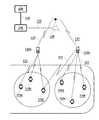
- FIG. 1 illustrates an exemplary scenario in accordance with at least some embodiments of the present invention
- FIG. 2 illustrates a signalling graph in accordance with at least some embodiments of the present invention
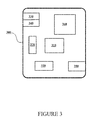
- FIG. 3 illustrates an example apparatus capable of supporting at least some embodiments of the present invention
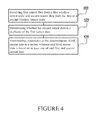
- FIG. 4 illustrates a flow graph of a first method in accordance with at least some embodiments of the present invention
- FIG. 5 illustrates a flow graph of a second method in accordance with at least some embodiments of the present invention.
- Wireless sensor nodes may gather and transmit sensor data associated with a sports event to a server, wherein the server is for the sports event as well. Said sensor data may be transmitted to the server via mobile terminals.
- Wireless sensor nodes may transmit the sensor data to said mobile terminals using non-cellular communications. Said mobile terminals may then relay the sensor data, or a part of it, to the server using cellular communications. Moreover, said mobile terminals and the server may determine whether the received sensor data comprises duplicates and then discard the duplicates, if received. Embodiments of the present invention thereby enable more efficient operation of wireless communication systems by using both, non-cellular and cellular communications, and discarding duplicates of sensor data.
- FIG. 1 illustrates an exemplary scenario in accordance with at least some example embodiments.
- the wireless communication system may comprise wireless sensor nodes 110 a - f, mobile terminals 120 a and 120 b, wireless network node 130 , core network element 140 and server 150 .
- Wireless sensor nodes 110 a - c may communicate with mobile terminal 120 a via air interface 115 .
- Wireless sensor nodes 110 d - f may communicate with mobile terminal 120 b via air interface 115 .
- a transmission from wireless sensor node 110 c may be received by mobile terminal 120 b as well.
- wireless sensor node 110 a may be referred to as a first wireless sensor node and wireless sensor node 110 b may be referred to as a second wireless sensor node.
- a wireless sensor node 110 a - f may be a smart watch, digital watch, smartphone, phablet device, tablet device, heart rate belt, or another type of suitable wireless device.
- Wireless sensor node 110 a - f may comprise a display, which may comprise a touchscreen display, for example. The display may be limited in size. An example of a limited-size display is a display worn on a wrist.
- Wireless sensor nodes 110 a - f may be powered, for example, by a rechargeable battery.
- wireless sensor nodes 110 a - f may comprise, or be coupled with, at least one sensor, such as, for example, an acceleration sensor, moisture sensor, temperature sensor, heart rate sensor or a blood oxygen level sensor.
- the sensors may be configured to measure acceleration, rotation, moisture, pressure and/or other variables, for example.
- the sensors are configured to measure acceleration along three mutually orthogonal axes and rotation about three mutually orthogonal axes.
- the sensors may comprise single-or multi-axis magnetic field sensors, skin signal EMG, ECG, heartbeat and/or optical pulse sensors. Additionally or alternatively, human activity may be sensed via motion or use of sport utensils, tools, machinery and/or devices.
- the data measured by the sensors may be associated with a sports application, Internet of Things, IoT, application or artificial intelligence application.
- the sports application may be related to a sports event, such as an ice hockey game, wherein sensors may be attached to players and spectators carry mobile terminals for relaying sensor data.
- the IoT application may be related to smart cities, wherein sensors may monitor traffic and pedestrians carry mobile terminals for relaying sensor data.
- the cars may comprise mobile terminals for relaying sensor data.
- artificial intelligence such as in artificial neural networks
- sensors may be used for providing user-generated content which is then relayed to a server for processing.
- Mobile terminals 120 a and 120 b may be connected to, and possibly communicate with, wireless network node 130 via air interface 125 .
- Mobile terminal 120 a - b may be, for example, a smartphone, a cellular phone, a User Equipment, UE, a Machine-to-Machine, M2M, node, Machine-Type Communications, MTC, node, an IoT node, a laptop computer, a tablet computer or, indeed, any kind of suitable mobile station or wireless terminal in general.
- mobile terminal 120 a may be referred to as a first mobile terminal and mobile terminal 120 b may be referred to as a second mobile terminal.
- mobile terminals may be ad hoc mobile base stations, which may hear or listen to N wireless sensor nodes, i.e., may receive sensor data from N wireless sensor nodes.
- Air interface 115 between wireless sensor node 110 a - f and mobile terminal 120 a - b may be configured in accordance with a first radio communication technology which both wireless sensor node 110 a - f and mobile terminal 120 a - b are configured to support.
- air interface 125 between mobile terminal 120 a - b and wireless network node 130 may be configured in accordance with a second radio communication technology which both mobile terminal 120 a - b and wireless network node 130 are configured to support.
- wireless sensor node 110 a - f may communicate with mobile terminal 120 a - b over air interface 115 in accordance with the first radio communication technology.
- Mobile terminal 120 a - b may also communicate with wireless network node 130 over air interface 125 in accordance with the second radio communication technology.
- said first radio communication technology may be a non-cellular communication technology while said second radio communication technology may be a cellular communication technology.
- wireless sensor node 110 a - f may comprise a transmitter and a receiver, or a transceiver, for communicating using a non-cellular communication technology.
- Mobile terminal 120 a - b may comprise a transmitter and a receiver, or a transceiver, for communicating using a non-cellular communication technology, and a transmitter and a receiver, or a transceiver, for communicating using a cellular communication technology.
- Wireless network node 130 may comprise a transmitter and a receiver, or a transceiver, for communicating using a cellular communication technology.
- Examples of cellular communication technologies include Long Term Evolution, LTE, New Radio, NR, which may also be known as fifth generation, 5G, radio access technology and MulteFire.
- examples of non-cellular communication technologies include Wireless Personal Area Network, WPAN, Wireless Local Area Network, WLAN, and Worldwide Interoperability for Microwave Access, WiMAX.
- the non-cellular communication technology may be a WPAN, such as Bluetooth, Zigbee or Wireless Universal Serial Bus, USB.
- Bluetooth may be preferred, e.g., Bluetooth Low Energy, BLE.
- wireless network node 130 may be referred to as a Base Station, BS.
- a BS may be referred to as eNB while in the context of NR, a BS may be referred to as gNB.
- mobile terminals 120 a and 120 b may be referred to as User Equipments, UEs. So in case of NR for instance, UEs 120 a and 120 b may communicate wirelessly with gNB 130 , or a cell of gNB 130 , via air interface 125 .
- example embodiments are not restricted to any particular radio communication technology. Instead, example embodiments may be exploited in any wireless communication system which exploits non-cellular and cellular communication technologies for transmitting sensor data.
- Wireless network node 130 may be connected, directly or via at least one intermediate node, with core network 140 via interface 135 .
- Interface 135 may be a wire-line or wireless link.
- Interface 135 may be referred to as a backhaul link as well.
- core network 140 may be, in turn, coupled via interface 145 with server 150 .
- Server 150 may be suitable for processing sensor data, e.g., for a sports event.
- Core network 140 may be connected to server 150 via another network (not shown in FIG. 1 ), for example via a worldwide interconnection network.
- Embodiments of the present invention may be exploited in various wireless sensor applications, such as in applications related to sports, IoT or artificial intelligence.
- spectators may be interested in a sport event.
- the spectators may have mobile terminal 120 a - b, such as a mobile phone, with them and mobile terminals 120 a - b of the spectators may be exploited for communicating sensor data associated with the sports event efficiently.
- Wireless sensor nodes 110 a - f may be attached to players and comprise a sensor for measuring moving direction, distance, acceleration, heart rate, etc.
- Wireless sensor nodes 110 a - f may generate sensor data based on measurements. Then, mobile terminal 120 a - b of the spectators may be used to relay sensor data from wireless sensor nodes 120 a - f to server 150 .
- mobile terminal 120 a may receive sensor data from wireless sensor nodes 110 a - c and relay the sensor data to server 150 .
- mobile terminal 120 b may receive sensor data from wireless sensor nodes 110 d - f, and possibly from wireless sensor node 120 c as well, and relay the sensor data to server 150 .
- Server 150 may be associated with the sports event and it may process received sensor data to generate interesting information for the spectators of the sports event.
- ice hockey players may wear skates and one or more sensors may be attached to the skates. Other sensors may be attached to different parts of the bodies of the ice hockey players as well.
- one or more wireless sensor nodes 110 a - f may be associated with, or coupled to, the sensors. One wireless sensor node 110 a - f may be attached to one player. Wireless sensor nodes 110 a - f may comprise a transmitter for transmitting the information gathered by the sensors to server 150 .
- wireless sensor nodes 110 a - f there may be many wireless sensor nodes 110 a - f and a lot of spectators, which carry mobile terminals 120 a - b, in an ice hockey hall.
- Mobile terminals 120 a - b may use a cellular communication system for phone calls and browsing the Internet, for example.
- wireless sensor nodes 110 a - f would communicate to server 150 using the cellular communication system, the cellular communication system would become congested, thereby decreasing the quality of service experienced by the spectators.
- wireless sensor nodes 110 a - f may be cheaper because those do not need to have a transmitter for cellular communication.
- wireless sensor nodes 110 a - f may communicate with server 150 via mobile terminal 120 a - b, using non-cellular communication technology.
- the used non-cellular communication technology may be a WPAN, such as Bluetooth.
- an ad hoc network may need to be setup and organized for non-cellular communication between wireless sensor nodes 110 a - f and mobile terminals 120 a - b.
- non-cellular communication between wireless sensor nodes 110 a - f and mobile terminals 120 a - b may need to be configured again every now and then if, for example, wireless sensor nodes 110 a - f and/or mobile terminals 120 a - b move.
- an ice hockey player carrying wireless sensor node 110 a - f may skate from one end of the ice hockey rink to the other end of the ice hockey rink and in such a case wireless sensor node 110 a - f attached to the player may be disconnected from, e.g., first mobile terminal 120 a. Also, if a spectator carrying first mobile terminal 120 a would decide to leave the arena or go behind the stands to buy something, the connection may be lost.
- Non-cellular communication links typically have a short range, which enables efficient use of the spectrum because a frequency band may be reused within a short distance.
- the short range of a non-cellular communication link may cause challenges as well. If for example first mobile terminal 120 a starts to move, it may be out of range of a certain wireless sensor node rather quickly. Consequently, there would be a need for fast setup of a connection to second mobile terminal 120 b, to ensure continuous connectivity.
- broadcast transmission are hence used to transmit sensor data from wireless sensor nodes 110 a - f to mobile terminals 120 a - b, thereby avoiding delays associated with setting up of a new connection.
- sensor data that is broadcasted by one wireless sensor node 110 a - f may be received by both, first mobile terminal 120 a and second mobile terminal 120 b. That is to say, both first mobile terminal 120 a and 120 b may receive broadcast transmissions from wireless sensor node 110 c.
- second mobile terminal 120 b may be able to forward said sensor data from wireless sensor node 110 c to server 150 .
- the impact of packet losses may be minimized.
- server 150 may receive a duplicate of sensor data, which may be discarded according to some embodiments of the present invention.
- the impact of packet losses may be minimized if wireless sensor nodes 120 a - f transmit multiple copies of the same sensor data.
- mobile terminals 120 a and 120 b may determine whether there are duplicates and if so, discard the duplicates before transmitting the sensor data to server 150 using cellular communications.
- efficiency of the cellular communication system is improved because unnecessary transmissions may be avoided.
- mobile terminals 120 a - b, or spectators carrying mobile terminals 120 a - b may need to have an incentive for participating in the process. Without an incentive mobile terminals 120 a - b, or spectators carrying mobile terminals 120 a - b, may decide not to relay sensor data from wireless network nodes 110 a - f to server 150 .
- only mobile terminals 120 a - b that participate in the process may be able to receive, and possibly decrypt, processed sensor data transmitted by server 150 .
- server 150 associated with the sports event may process received sensor data and then transmit said processed sensor data to mobile terminals 120 a - b.
- the processed sensor data may be interesting for spectators of the sports event, thereby giving an incentive for mobile terminals 120 a - b, or spectators carrying mobile terminals 120 a - b, to participate in the process.
- the processed sensor data may provide, e.g., a complete view of the movement of all of the ice hockey players during a game and some statistics related to the game as well. That is to say, said processed sensor data may be associated with the sports event and the processed sensor data may be based on the sensor data gathered by wireless sensor nodes 110 a - f.
- wireless sensor nodes 110 a - f typically there are multiple wireless sensor nodes 110 a - f associated with the sports event. Nevertheless, all of wireless sensor nodes 110 a - f may not be able to connect to a same master node, such as first mobile terminal 120 a.
- Reason may be for example that the number of wireless sensor nodes 110 a - f is too high or a distance from some wireless sensor nodes 110 a - f to first mobile terminal 120 a is too large.
- the number of spectators is usually rather high. For instance, in case of ice hockey games the number of spectators may be between 10,000 and 20,000.
- the number of mobile terminals 120 a - b that may be used for relying sensor data from wireless sensor nodes 110 a - f to server 150 would be thus high as well. So if for example a broadcast transmission of wireless sensor node 110 d cannot be received by first mobile terminal 110 a, the broadcast transmission of wireless sensor node 110 d may be received by second mobile terminal 120 b.
- Some embodiments of the present invention therefore provide means for transmitting sensor data via different mobile terminals using broadcast transmission.
- FIG. 2 illustrates a signalling graph in accordance with at least some embodiments of the present invention.
- FIG. 2 illustrates signalling associated with first wireless sensor node 110 a, second wireless sensor node 110 b, first mobile terminal 120 a and server 150 . Nevertheless, similar signalling may be carried out between various wireless sensor nodes and mobile terminals, for example, between fourth wireless sensor node 110 d, fifth wireless sensor node 110 e, second mobile terminal 120 b and server 150 .
- first wireless sensor node 110 a may decide to transmit first sensor data to wireless network node 120 a.
- Step 210 a may also comprise encrypting, by first wireless sensor node 110 a, first sensor data for enabling secure communication between first wireless sensor node 110 a and first mobile terminal 120 a.
- the decision to transmit first sensor data may be based on detecting an event which triggers the transmission.
- transmissions of sensor data may be periodic, i.e., the decision to transmit first sensor data may be based on detecting that a certain time has elapsed after the last transmission.
- first wireless sensor node 110 a may also perform measurements for generating said first sensor data. For example, first wireless sensor node may measure acceleration, heart-beat, etc., and generate said first sensor data based on the measurements.
- Step 210 b may be performed by second wireless sensor node 110 b similarly as step 210 a.
- first wireless sensor node 110 a may transmit said first sensor data to first mobile terminal 120 a.
- an identity of first wireless sensor node 110 a may be transmitted along with said first sensor data.
- the identity of first wireless sensor node 110 a may be for example an identity of a Movesense®-device.
- First wireless sensor node 110 a may comprise a non-cellular transmitter and transmit said first sensor data using non-cellular communication technology, such as WPAN. In some embodiments, Bluetooth may be used. Thus, resources of a cellular communication system may be saved. In addition, first wireless sensor node 120 a does not need to have a cellular transmitter, which reduces costs.
- the non-cellular transmission may be encrypted, thereby enabling secure communication between first wireless sensor node 110 a and first mobile terminal 120 a.
- the non-cellular transmission may be a broadcast transmission, such as an advertisement message.
- said broadcast transmission may be received by some other mobile terminal as well, such as second mobile terminal 120 b, which increases the likelihood of successful transmission if first mobile terminal 120 a does not receive the transmission for some reason.
- first wireless sensor node 110 a may transmit multiple copies of the first sensor data, to improve the likelihood of successful transmission. That is to say, first mobile may also transmit second sensor data at step 220 a, wherein said second sensor data is a duplicate of said first sensor data.
- Step 220 b may be performed by second wireless sensor node 110 b similarly as step 220 a.
- Mobile terminal 120 a may comprise a non-cellular receiver for receiving non-cellular transmissions. Hence, mobile terminal 120 a may receive first sensor data from first wireless sensor node 110 a at step 220 a, and second sensor data from second wireless network node 110 b, at step 220 b, using the non-cellular receiver. Alternatively, mobile terminal 120 a may receive first and second sensor data from first wireless sensor node 110 a at step 220 a.
- first mobile terminal 120 a may comprise an application for listening to non-cellular transmissions, especially for broadcast transmissions.
- a user of first mobile terminal 120 a may therefore decide whether to participate in the process using the application.
- the user of first mobile terminal 120 a may instruct an application layer of mobile terminal 120 a, possibly via a user interface, to give a command to a physical layer of mobile terminal 120 a to discard received packets associated with the application.
- the received packets may be discarded already at the physical layer of first mobile terminal 120 a.
- the application may be required to be able to participate in the process.
- mobile terminal 120 a may determine, upon receiving the first sensor data and the second sensor data, whether the second sensor data is a duplicate of the first sensor data.
- mobile terminal 120 a may also comprise a processor.
- the processor may be configured to determine, at step 230 , whether the second sensor data is a duplicate of the first sensor data. Duplicates may be identified by comparing the first sensor data to the second sensor data.
- First mobile terminal 120 a may also comprise a buffer for buffering said first sensor data for a period of time and/or a memory for storing said first sensor data for the period of time, possibly for last X seconds. In such a case, first mobile terminal 120 a may determine at the end of the period of time, whether the second sensor data is a duplicate of the first sensor data, if second sensor data is received within the period of time. That is to say, in some embodiments, first mobile terminal 120 a may comprise a timer for the period of time. The timer may be started when the first sensor data is received and then the determination whether the second sensor data is a duplicate of the first sensor data may be performed upon expiry of the timer, if said second sensor data was received while the timer was running.
- first mobile terminal 120 a may transmit, responsive to the determination, third sensor data to server 150 . That is to say, first mobile terminal 120 a may transmit third sensor data responsive to determining whether the second sensor data is a duplicate of the first sensor data.
- mobile terminal 120 a may comprise a cellular transmitter as well.
- Said cellular transmitter may be configured to transmit using a cellular communication technology, such as LTE or 5G/NR. In general, the cellular transmitter may be configured to operate according to a 3GPP standard.
- the cellular transmitter of first mobile terminal 120 a may be configured to transmit, responsive to the determination, said third sensor data to server 150 using the cellular communication technology.
- Said third sensor data may be based on at least one of said first and second sensor data.
- Said third sensor data may be transmitted from mobile terminal 120 a to server 150 via base station 130 , and possibly via core network 140 .
- mobile terminal 120 a may determine that the second sensor data is a duplicate of the first sensor data. Responsive to the determination that the second sensor data is a duplicate of the first sensor data, mobile terminal 120 a may discard said second sensor data.
- the processor of mobile terminal 120 a may be configured to determine that the second sensor data is a duplicate of the first sensor data. In addition, the processor of mobile terminal 120 a may be configured to discard said second sensor data responsive to the determination that the second sensor data is a duplicate of the first sensor data.
- Mobile terminal 120 a may also transmit, responsive to the determination that the second sensor data is a duplicate of the first sensor data, said third sensor data, wherein said third sensor data may comprise said first sensor data and not second sensor data. That is to say, said third sensor data may comprise only first sensor data.
- the cellular transmitter of mobile terminal 120 a may be configured to transmit, responsive to the determination that the second sensor data is a duplicate of the first sensor data, said third sensor data. In other words, only remaining sensor data, i.e., non-duplicate sensor data may be transmitted.
- mobile terminal 120 a may determine that the second sensor data is not a duplicate of the first sensor data.
- the processor of mobile terminal 120 a may be configured to determine that the second sensor data is not a duplicate of the first sensor data.
- mobile terminal 120 a may also transmit, responsive to the determination that the second sensor data is not a duplicate of the first sensor data, said third sensor data, wherein said third sensor data may comprise said first sensor data and second sensor data.
- the cellular transmitter of mobile terminal 120 a may be configured to transmit, responsive to the determination that the second sensor data is not a duplicate of the first sensor data, said third sensor data.
- server 150 may receive said third sensor data from mobile terminal 120 a.
- Server 150 may receive said third sensor data via a base station, and possibly via core network 140 as well.
- server 150 may also receive fourth sensor data from mobile terminal 120 b.
- Said fourth sensor data may be similar as said third sensor data. That is to say, as mobile terminal 120 b may operate similarly as mobile terminal 120 a, mobile terminal 120 b may have received sensor data from wireless sensor nodes 110 d and 110 e, for example. Consequently, mobile terminal 120 b may have determined whether determined the two received sensor data are duplicates and transmitted fourth sensor data to server 150 responsive to the determination.
- the buffer of first mobile terminal 120 a may be for buffering unique sensor data for a period of time, possibly for last X seconds. That is to say, only remaining, non-duplicate sensor data may be stored to the buffer upon discarding duplicate sensor data. Thus, if second sensor data is discarded, only first sensor data may be stored to the buffer.
- the cellular transmitter of first mobile terminal 120 a may be further configured to transmit oldest, unique sensor data to the server.
- a system may comprise multiple mobile terminals and each of said multiple mobile terminals may determine, or detect, duplicates of sensor data. Moreover, each of said multiple mobile terminals may also discard said duplicates of sensor data and transmit remaining, non-duplicate sensor data to server 150 using cellular communications.
- Server 150 may comprise a receiver for receiving third and/or fourth sensor data.
- the receiver may be configured to receive said third and/or fourth sensor data via base station 130 , and possibly via core network 140 .
- the receiver of server 150 may be configured to receive said third and/or fourth sensor data via a wire-line connection.
- Server 150 may determine, at step 250 , whether the fourth sensor data is a duplicate of the third sensor data. Duplicates may be identified by comparing the third sensor data to the fourth sensor data.
- Server 150 may comprise a processor and the processor may be configured to perform the determination. Said processed sensor data may be based on at least one of said third and fourth sensor data That is to say, server 150 may generate processed sensor data based on at least one of said third and fourth sensor data.
- the processor of server 150 may generate said processed sensor data. For example, server 150 may generate said processed sensor data to provide a complete view of the movement of all of the ice hockey players during a game and some statistics related to the game.
- server 150 may transmit, responsive to the determination, said processed sensor data to first mobile terminal 120 a.
- Said processed sensor data may be transmitted responsive to receiving said third sensor data from first mobile terminal 120 a and/or said fourth sensor data from second mobile terminal 120 b.
- Said processed sensor data may be associated with the sports event, and possibly associated with said third and/or fourth sensor data as well.
- said processed sensor data may be encrypted by server 150 and only mobile terminals that participate in the process may be informed about a security that is required for decrypting the encrypted processed sensor data. Hence, only the participating mobile terminals may decrypt the processed sensor data.
- Server 150 may comprise a transmitter and the transmitter may be configured to transmit, at step 260 , said processed sensor data to first mobile terminal 120 a.
- the transmitter may be configured to transmit said processed sensor data via base station 130 , and possibly via core network 140 , to first mobile terminal 120 a.
- the transmitter of server 150 may be configured to transmit said processed sensor data via a wire-line connection.
- server 150 may determine whether the fourth sensor data is a duplicate of the third sensor data.
- the processor of server 150 may perform the determination and generate, responsive to the determination, said processed sensor data.
- server 150 may determine that the fourth sensor data is a duplicate of the third sensor data. Responsive to the determination that the fourth sensor data is a duplicate of the third sensor data, server 150 may discard said fourth sensor data.
- the processor of server 150 may be configured to determine that the fourth sensor data is a duplicate of the third sensor data.
- the processor of server 150 may be configured to discard said fourth sensor data responsive to the determination that the fourth sensor data is a duplicate of the third sensor data. That is to say, server 150 , or the processor of server 150 , may generate processed sensor data based on said third sensor data and not fourth sensor data.
- the processor of server 150 may be configured to discard duplicates of sensor data and to store remaining sensor data to a database and/or process remaining sensor data. That is to say, only the remaining sensor data, i.e., non-duplicate sensor data may be stored and/or processed. In general, remaining, non-duplicate sensor data may therefore refer to unique sensor data.
- Server 150 may also transmit, responsive to the determination that the fourth data is a duplicate of the third sensor data, said processed sensor data, wherein said processed sensor data may be based on said third sensor data and not fourth sensor data. That is to say, said processed sensor data may be based only on third sensor data.
- the transmitter of server 150 may be configured to transmit, responsive to the determination that the fourth sensor data is a duplicate of the third sensor data, said processed sensor data.
- server 150 may determine that the fourth sensor data is not a duplicate of the third sensor data.
- the processor of server 150 may be configured to determine that the fourth sensor data is a duplicate of the third sensor data.
- Server 150 or the processor of server 150 , may therefore generate processed sensor data based on said third sensor data and fourth sensor data.
- Server 150 may also transmit, responsive to the determination that the fourth data is a not duplicate of the third sensor data, said processed sensor data, wherein said processed sensor data may be based on said third sensor data and fourth sensor data.
- the transmitter of server 150 may be configured to transmit, responsive to the determination that the fourth sensor data is not a duplicate of the third sensor data, said processed sensor data.
- first mobile terminal 120 a may receive said processed sensor data using cellular communication technology, such as LTE/NR.
- First mobile terminal 120 a may comprise a cellular receiver for receiving said processed sensor data.
- Said processed data may be received from wireless network node 130 , possible via core network 140 .
- first mobile terminal 120 a may exploit said processed sensor data in various ways. For example, a complete view of the movement of all of the ice hockey players during a game and some statistics related to the game may be displayed to a user of first mobile terminal 120 a, possibly via a user interface of first mobile terminal 120 a.
- said processed sensor data may be encrypted by server 150 using a security key.
- Server 150 may, for example, transmit the security key to first mobile terminal 120 a responsive to receiving said third sensor data.
- server 150 may encrypt said processed sensor data using the security key and after that transmit the encrypted processed sensor data to mobile terminal 120 a.
- first mobile terminal 120 a may decrypt the received processed sensor data using the security.
- Server 150 may hence control which mobile terminals can decrypt said processed sensor data, thereby giving to a user of first mobile terminal 120 a a reason, or motivation, for participating in the process. Participation of mobile terminals is needed to be able to reduce resource usage of the cellular communication system, because otherwise wireless sensor network nodes would need to use cellular communications to transmit to base station 130 .
- a security key for first mobile terminal 120 a may be determined based on third sensor data. For instance, the security key may be based on selecting a certain number of first bits, or last bits, of third sensor data using a predefined rule. Alternatively, or in addition, the security key may be based on multiple, possibly subsequent, transmissions of third sensor data. One or more bits may be selected from the multiple transmissions to be used as the security key.
- first mobile terminal 120 a transmits 32 packets comprising sensor data
- 8 bits at predefined locations may be selected from each packet, to derive a 256-bit security key.
- server 150 and first mobile terminal 120 a may determine the security key for first mobile terminal 120 a individually using the predefined rule.
- Embodiments of the present invention are not limited to the use of any specific predefined rule though.
- 256 bits associated with one transmission of said third sensor data may be used for deriving the security for first mobile terminal 120 a.
- the processor of first mobile terminal 120 a may be configured to determine a security key based on said third sensor data.
- the processor of first mobile terminal 120 a may also be configured to obtain information using the security key. Said information may be received from server 150 .
- said information may comprise said processed sensor data.
- server 150 may encrypt said processed sensor data using the security key.
- first mobile terminal 120 a may decrypt said processed sensor data.
- server 150 may also control which mobile terminals can decrypt said processed sensor data by using a security key which is derived from sensor data received by server 150 .
- first mobile terminal 120 a may retrieve said information from the Internet using the security key.
- Server 150 may store said information to another server in the Internet, or server 150 may be accessible via the Internet.
- Server 150 may hence encrypt said information using the security key and first mobile terminal 120 a may decrypt said information using the security key.
- FIG. 3 illustrates an example apparatus capable of supporting at least some example embodiments. Illustrated is device 300 , which may comprise, for example, first mobile terminal 120 a, or server 150 .
- processor 310 which may comprise, for example, a single- or multi-core processor wherein a single-core processor comprises one processing core and a multi-core processor comprises more than one processing core.
- Processor 310 may comprise, in general, a control device.
- Processor 310 may comprise more than one processor.
- Processor 310 may be a control device.
- a processing core may comprise, for example, a Cortex-A8 processing core manufactured by ARM Holdings or a Steamroller processing core produced by Advanced Micro Devices Corporation.
- Processor 310 may comprise at least one Qualcomm Snapdragon and/or Intel Atom processor.
- Processor 310 may comprise at least one application-specific integrated circuit, ASIC.
- Processor 310 may comprise at least one field-programmable gate array, FPGA.
- Processor 310 may be means for performing method steps in device 300 .
- Processor 310 may be configured, at least in part by computer instructions, to perform actions.
- Device 300 may comprise memory 320 .
- Memory 320 may comprise random-access memory and/or permanent memory.
- Memory 320 may comprise at least one RAM chip.
- Memory 320 may comprise solid-state, magnetic, optical and/or holographic memory, for example.
- Memory 320 may be at least in part accessible to processor 310 .
- Memory 320 may be at least in part comprised in processor 310 .
- Memory 320 may be means for storing information.
- Memory 320 may comprise computer instructions that processor 310 is configured to execute. When computer instructions configured to cause processor 310 to perform certain actions are stored in memory 320 , and device 300 overall is configured to run under the direction of processor 310 using computer instructions from memory 320 , processor 310 and/or its at least one processing core may be considered to be configured to perform said certain actions.
- Memory 320 may be at least in part comprised in processor 310 .
- Memory 320 may be at least in part external to device 300 but accessible to device 300 .
- Device 300 may comprise a transmitter 330 .
- Device 300 may comprise a receiver 340 .
- Transmitter 330 and receiver 340 may be configured to transmit and receive, respectively, information in accordance with at least one cellular or non-cellular communication technology.
- Transmitter 330 may comprise more than one transmitter.
- Receiver 340 may comprise more than one receiver.
- Transmitter 330 and/or receiver 340 may be configured to operate in accordance with Global System for Mobile communication, GSM, Wideband Code Division Multiple Access, WCDMA, 5G, Long Term Evolution, LTE, IS-95, Wireless Local Area Network, WLAN, Ethernet and/or Worldwide Interoperability for Microwave Access, WiMAX, standards, for example.
- Device 300 may comprise a Near-Field Communication, NFC, transceiver 350 .
- NFC transceiver 350 may support at least one NFC technology.
- Device 300 may comprise User Interface, UI, 360 .
- UI 360 may comprise at least one of a display, a keyboard, a touchscreen, a vibrator arranged to signal to a user by causing device 300 to vibrate, a speaker and a microphone.
- a user may be able to operate device 300 via UI 360 , for example to accept incoming telephone calls, to originate telephone calls or video calls, to browse the Internet, to manage digital files stored in memory 320 or on a cloud accessible via transmitter 330 and receiver 340 , or via NFC transceiver 350 , and/or to play games.
- Device 300 may comprise or be arranged to accept a user identity module 370 .
- User identity module 370 may comprise, for example, a Subscriber Identity Module, SIM, card installable in device 300 .
- a user identity module 370 may comprise information identifying a subscription of a user of device 300 .
- a user identity module 370 may comprise cryptographic information usable to verify the identity of a user of device 300 and/or to facilitate encryption of communicated information and billing of the user of device 300 for communication effected via device 300 .
- Processor 310 may be furnished with a transmitter arranged to output information from processor 310 , via electrical leads internal to device 300 , to other devices comprised in device 300 .
- a transmitter may comprise a serial bus transmitter arranged to, for example, output information via at least one electrical lead to memory 320 for storage therein.
- the transmitter may comprise a parallel bus transmitter.
- processor 310 may comprise a receiver arranged to receive information in processor 310 , via electrical leads internal to device 300 , from other devices comprised in device 300 .
- Such a receiver may comprise a serial bus receiver arranged to, for example, receive information via at least one electrical lead from receiver 340 for processing in processor 310 .
- the receiver may comprise a parallel bus receiver.
- Device 300 may comprise further devices not illustrated in FIG. 5 .
- device 300 may comprise at least one digital camera.
- Some devices 300 may comprise a back-facing camera and a front-facing camera, wherein the back-facing camera may be intended for digital photography and the front-facing camera for video telephony.
- Device 300 may comprise a fingerprint sensor arranged to authenticate, at least in part, a user of device 300 .
- device 300 lacks at least one device described above.
- some devices 300 may lack a NFC transceiver 350 and/or user identity module 370 .
- Processor 310 , memory 320 , transmitter 330 , receiver 340 , NFC transceiver 350 , UI 360 and/or user identity module 370 may be interconnected by electrical leads internal to device 300 in a multitude of different ways.
- each of the aforementioned devices may be separately connected to a master bus internal to device 300 , to allow for the devices to exchange information.
- this is only one example and depending on the example embodiment various ways of interconnecting at least two of the aforementioned devices may be selected without departing from the scope of the example embodiments.
- FIG. 4 is a flow graph of a first method in accordance with at least some example embodiments.
- the phases of the illustrated first method may be performed by first mobile terminal 120 a, or a UE in accordance with the 3GPP standards, or by a control device configured to control the functioning thereof, possibly when installed therein.
- the first method may comprise, at phase 410 , receiving first sensor data from a first wireless sensor node and second sensor data from the first wireless sensor node or a second wireless sensor node.
- the first method may also comprise, at phase 420 , determining whether the second sensor data is a duplicate of the first sensor data.
- the first method may comprise, at phase 430 , transmitting, responsive to the determination, third sensor data to a server, wherein said third sensor data is based on at least one of said first and second sensor data.
- FIG. 5 is a flow graph of a second method in accordance with at least some example embodiments.
- the phases of the illustrated second method may be performed by server 150 , or by a control device configured to control the functioning thereof, possibly when installed therein.
- the second method may comprise, at phase 510 , receiving third sensor data from a first mobile terminal and fourth sensor data from a second mobile terminal.
- the second method may also comprise, at phase 520 , determining whether the fourth sensor data is a duplicate of the third sensor data.
- the second method may comprise, at phase 530 , transmitting, responsive to the determination, processed sensor data to the first mobile terminal, wherein said processed sensor data is based on at least one of said third and fourth sensor data.
- an apparatus such as, for example first mobile terminal 120 a, or server 150 , or a control device configured to control the functioning thereof, possibly when installed therein, may comprise means for carrying out the example embodiments described above and any combination thereof.
- a computer program may be configured to cause a method in accordance with the example embodiments described above and any combination thereof.
- a computer program product embodied on a non-transitory computer readable medium, may be configured to control a processor to perform a process comprising the example embodiments described above and any combination thereof.
- an apparatus such as, for example first mobile terminal 120 a, or server 150 , or a control device configured to control the functioning thereof, possibly when installed therein, may comprise at least one processor, and at least one memory including computer program code, wherein the at least one memory and the computer program code are configured to, with the at least one processor, cause the apparatus at least to perform the example embodiments described above and any combination thereof.
- At least some example embodiments find industrial application in wireless communication systems, wherein it is desirable to communicate sensor data efficiently.
- Mobile terminal e.g., UE 130 Wireless network node, e.g., BS 140 Core network 150 Server 115, 125, 135, 145 Interfaces 210-270 Phases of the signaling graph of FIG. 2 300-370 Structure of the apparatus of FIG. 3 410-430 Phases of the first method of FIG. 4 510-530 Phases of the second method of FIG. 5
Landscapes
- Engineering & Computer Science (AREA)
- Computer Networks & Wireless Communication (AREA)
- Signal Processing (AREA)
- Computer Hardware Design (AREA)
- General Engineering & Computer Science (AREA)
- Health & Medical Sciences (AREA)
- Computing Systems (AREA)
- General Health & Medical Sciences (AREA)
- Medical Informatics (AREA)
- Mobile Radio Communication Systems (AREA)
- Telephonic Communication Services (AREA)
Abstract
Description
- This application is a continuation-in-Part of U.S. patent applications Ser. No. 15/382,763, filed on Dec. 19, 2016, which claims priority to Finnish patent application No. 20155989, filed on Dec. 21, 2015, Ser. No. 15/386,050, claiming priority of Finnish patent application 20165707, Ser. No. 15/386,062, which claims the priority of Finnish patent application 20165709, and Ser. No. 15/386,074, claiming the priority of Finnish patent application 20165710. The subject matter of these is incorporated by reference in their entirety.
- Embodiments of the present invention relate in general to communicating sensor data. More specifically, embodiments of the present invention relate to communicating sensor data in wireless communication systems.
- Sensor technology enables new and fascinating applications that can be used to address various societal, industrial, environmental, and economical challenges. A large number of various sensors have been developed for different purposes. For instance, sensors may be used for measuring acceleration, moisture, temperature, heart rate, or a blood oxygen level. In case of many sensor applications, it is desirable to communicate the information measured by a sensor to some other, distant device, such as a server.
- Wireless communications are free from the physical constraints of communication cables. Wireless communication systems are thus a very alluring communication solution for many sensor applications. Furthermore, wireless communication systems are often preferred over wired systems because of low installation costs, ease of maintenance and flexibility. Nevertheless, wireless communication systems typically have limited resources and the number of wireless devices communicating over wireless communication systems is constantly increasing. There is therefore a need to provide more efficient solutions for communicating sensor data in wireless communication systems.
- According to some example aspects, there is provided the subject-matter of the independent claims. Some example embodiments are defined in the dependent claims.
- According to a first example aspect, there is provided a mobile terminal, comprising a non-cellular receiver configured to receive first sensor data from a first wireless sensor node and second sensor data from the first or a second wireless sensor node, a processor configured to determine whether the second sensor data is a duplicate of the first sensor data and a cellular transmitter configured to transmit, responsive to the determination, third sensor data to a server, wherein said third sensor data is based on at least one of said first and second sensor data.
- According to the first example aspect, responsive to the determination that the second sensor data is a duplicate of the first sensor data, the processor may be further configured to discard said second sensor data and the cellular transmitter may be further configured to transmit said third sensor data, wherein said third sensor data comprises said first sensor data and not second sensor data.
- According to the first example aspect, responsive to the determination that the second sensor data is not a duplicate of the first sensor data, the cellular transmitter may be further configured to transmit said third sensor data, wherein said third sensor data comprises first sensor data and second sensor data.
- According to the first example aspect, the mobile terminal may further comprise a buffer for buffering said first sensor data for a period of time and the processor may be further configured to determine, at the end of the period of time, whether the second sensor data is a duplicate of the first sensor data.
- According to the first example aspect, the mobile terminal may further comprise a buffer for buffering unique sensor data for a period of time, possibly for last X seconds and the cellular transmitter may be further configured to transmit oldest sensor data to the server.
- According to the first example aspect, the mobile terminal may further comprise a cellular receiver configured to receive, responsive to transmitting said third sensor data to the server, processed sensor data associated with said third sensor data. In some embodiments, the cellular receiver may be further configure to receive, responsive to transmitting said third sensor data to the server, a security key from the server and the processor may be further configured to decrypt said processed sensor data using the security key.
- According to the first example aspect, the processor may be configured to determine a security key based on said third sensor data and the processor may be further configured to obtain information using the security key. In some embodiments, said information may be received from the server or said information is retrieved from the Internet.
- According to the first example aspect, the non-cellular receiver may be further configured to receive a first broadcast transmission comprising said first sensor data and a second broadcast transmission comprising said second sensor data, wherein said first and second broadcast transmissions possibly comprise advertisement messages.
- According to the first example aspect, said first and second sensor data are associated with a sports application, IoT application or artificial intelligence application.
- According to the first example aspect, the non-cellular receiver may be configured to receive sensor data from N wireless sensor nodes.
- According to a second example aspect, there is provided a system comprising multiple mobile terminals according to the first example aspect.
- According to a third example aspect, there is provided a server comprising a receiver configured to receive third sensor data from a first mobile terminal and fourth sensor from a second mobile terminal, a processor configured to determine whether the fourth sensor data is a duplicate of the third sensor data and a transmitter configured to transmit, responsive to the determination, processed sensor data to the first mobile terminal, wherein said processed sensor data is based on at least one of said third and fourth sensor data.
- According to the third example aspect, responsive to the determination that the fourth sensor data is a duplicate of the third sensor data, the processor may be further configured to discard said fourth sensor data and the transmitter may be further configured to transmit said processed sensor data, wherein said processed sensor data is based on said third sensor data and not fourth sensor data.
- According to the third example aspect, responsive to the determination that the fourth sensor data is not a duplicate of the third sensor data, the transmitter may be further configured to transmit said processed sensor data, wherein said processed sensor data is based on said third and fourth sensor data.
- According to the third example aspect, the transmitter may be further configure to transmit, responsive to receiving said third sensor data from the first mobile terminal, a security key to the first mobile terminal and the processor may be further configured to encrypt said processed sensor data using the security key.
- According to the third example aspect, the processor may be configured to determine a security key based on said third sensor data and the processor may be further configured to encrypt said processed sensor data using the security key.
- According to the third example aspect, said first and second sensor data are associated with a sports application, IoT application or artificial intelligence application.
- According to the third example aspect, the processor may be configured to discard duplicates of sensor data received from mobile terminals and the processor may be configured to store remaining, unique sensor data to a database and/or process remaining, unique sensor data.
- According to a fourth example aspect, there is provided a first method for a mobile terminal, comprising receiving first sensor data from a first wireless sensor node and second sensor data from the first or a second wireless sensor node, determining whether the second sensor data is a duplicate of the first sensor data and transmitting, responsive to the determination, third sensor data to a server, wherein said third sensor data is based on at least one of said first and second sensor data.
- According to the fourth example aspect, the first method may further comprise responsive to the determination that the second sensor data is a duplicate of the first sensor data, discarding said second sensor data and transmitting said third sensor data, wherein said third sensor data comprises said first sensor data and not second sensor data.
- According to the fourth example aspect, the first method may further comprise responsive to the determination that the second sensor data is not a duplicate of the first sensor data, transmitting said third sensor data, wherein said third sensor data comprises first sensor data and second sensor data.
- According to the fourth example aspect, the first method may further comprise buffering said first sensor data for a period of time and determining, at the end of the period of time, whether the second sensor data is a duplicate of the first sensor data.
- According to the fourth example aspect, the first method may further comprise buffering unique sensor data for a period of time, possibly for last X seconds and transmitting oldest sensor data to the server.
- According to the fourth example aspect, the first method may further comprise receiving, responsive to transmitting said third sensor data to the server, processed sensor data associated with said third sensor data.
- According to the fourth example aspect, the first method may further comprise receiving, responsive to transmitting said third sensor data to the server, a security key from the server and decrypting said processed sensor data using the security key.
- According to the fourth example aspect, the first method may further comprise determining a security key based on said third sensor data and obtaining information using the security key.
- According to the fourth example aspect, said information may be received from the server or said information may be retrieved from the Internet.
- According to the fourth example aspect, the first method may further comprise receiving a first broadcast transmission comprising said first sensor data and a second broadcast transmission comprising said second sensor data, wherein said first and second broadcast transmissions possibly comprise advertisement messages.
- According to the fourth example aspect, said first and second sensor data are associated with a sports application, IoT application or artificial intelligence application.
- According to the fourth example aspect, the first method may further comprise receiving sensor data from N wireless sensor nodes.
- According to a fifth example aspect, there is provided a second method comprising receiving third sensor data from a first mobile terminal and fourth sensor from a second mobile terminal, determining whether the fourth sensor data is a duplicate of the third sensor data and transmitting, responsive to the determination, processed sensor data to the first mobile terminal, wherein said processed sensor data is based on at least one of said third and fourth sensor data.
- According to the fifth example aspect, the second method may further comprise responsive to the determination that the fourth sensor data is a duplicate of the third sensor data, discarding said fourth sensor data and transmitting said processed sensor data, wherein said processed sensor data is based on said third sensor data and not fourth sensor data.
- According to the fifth example aspect, the second method may further comprise responsive to the determination that the fourth sensor data is not a duplicate of the third sensor data, transmitting said processed sensor data, wherein said processed sensor data is based on said third and fourth sensor data.
- According to the fifth example aspect, the second method may further comprise transmitting, responsive to receiving said third sensor data from the first mobile terminal, a security key to the first mobile terminal and encrypting said processed sensor data using the security key.
- According to the fifth example aspect, the second method may further comprise determining a security key based on said third sensor data and encrypting said processed sensor data using the security key.
- According to the fifth example aspect, said first and second sensor data may be associated with a sports application, IoT application or artificial intelligence application.
- According to the fifth example aspect, the second method may further comprise discarding duplicates of sensor data received from mobile terminals and storing remaining, unique sensor data to a database and/or processing remaining, unique sensor data.
- According to a sixth example aspect, there is provided an apparatus comprising means for performing the first method. According to a seventh example aspect, there is provided an apparatus comprising means for performing the second method.
- According to an eighth example aspect, there is provided non-transitory computer readable medium having stored thereon a set of computer readable instructions that, when executed by at least one processor, cause an apparatus to at least perform the first method. According to a ninth example aspect, there is provided non-transitory computer readable medium having stored thereon a set of computer readable instructions that, when executed by at least one processor, cause an apparatus to at least perform the second method.
- According to a tenth example aspect, there is provided a computer program configured to perform the first method. According to an eleventh example aspect, there is provided a computer program configured to perform the second method.
-
FIG. 1 illustrates an exemplary scenario in accordance with at least some embodiments of the present invention; -
FIG. 2 illustrates a signalling graph in accordance with at least some embodiments of the present invention; -
FIG. 3 illustrates an example apparatus capable of supporting at least some embodiments of the present invention; -
FIG. 4 illustrates a flow graph of a first method in accordance with at least some embodiments of the present invention; -
FIG. 5 illustrates a flow graph of a second method in accordance with at least some embodiments of the present invention. - Operation of wireless communication systems may be improved by the procedures described herein. More specifically, operation of wireless communication systems for communicating sensor data may be improved. Wireless sensor nodes may gather and transmit sensor data associated with a sports event to a server, wherein the server is for the sports event as well. Said sensor data may be transmitted to the server via mobile terminals.
- Wireless sensor nodes may transmit the sensor data to said mobile terminals using non-cellular communications. Said mobile terminals may then relay the sensor data, or a part of it, to the server using cellular communications. Moreover, said mobile terminals and the server may determine whether the received sensor data comprises duplicates and then discard the duplicates, if received. Embodiments of the present invention thereby enable more efficient operation of wireless communication systems by using both, non-cellular and cellular communications, and discarding duplicates of sensor data.
-
FIG. 1 illustrates an exemplary scenario in accordance with at least some example embodiments. According to the example scenario ofFIG. 1 , there may be a wireless communication system. The wireless communication system may comprise wireless sensor nodes 110 a-f,mobile terminals wireless network node 130,core network element 140 andserver 150. Wireless sensor nodes 110 a-c may communicate with mobile terminal 120 a viaair interface 115.Wireless sensor nodes 110 d-f may communicate withmobile terminal 120 b viaair interface 115. In addition, in some embodiments, a transmission fromwireless sensor node 110 c may be received bymobile terminal 120 b as well. In some embodiments,wireless sensor node 110 a may be referred to as a first wireless sensor node andwireless sensor node 110 b may be referred to as a second wireless sensor node. - A wireless sensor node 110 a-f may be a smart watch, digital watch, smartphone, phablet device, tablet device, heart rate belt, or another type of suitable wireless device. Wireless sensor node 110 a-f may comprise a display, which may comprise a touchscreen display, for example. The display may be limited in size. An example of a limited-size display is a display worn on a wrist. Wireless sensor nodes 110 a-f may be powered, for example, by a rechargeable battery. Moreover, wireless sensor nodes 110 a-f may comprise, or be coupled with, at least one sensor, such as, for example, an acceleration sensor, moisture sensor, temperature sensor, heart rate sensor or a blood oxygen level sensor.
- The sensors may be configured to measure acceleration, rotation, moisture, pressure and/or other variables, for example. In one specific embodiment, the sensors are configured to measure acceleration along three mutually orthogonal axes and rotation about three mutually orthogonal axes. The sensors may comprise single-or multi-axis magnetic field sensors, skin signal EMG, ECG, heartbeat and/or optical pulse sensors. Additionally or alternatively, human activity may be sensed via motion or use of sport utensils, tools, machinery and/or devices.
- The data measured by the sensors may be associated with a sports application, Internet of Things, IoT, application or artificial intelligence application. For example, the sports application may be related to a sports event, such as an ice hockey game, wherein sensors may be attached to players and spectators carry mobile terminals for relaying sensor data. Moreover, the IoT application may be related to smart cities, wherein sensors may monitor traffic and pedestrians carry mobile terminals for relaying sensor data. Similarly, in case of connected cars, the cars may comprise mobile terminals for relaying sensor data. In the context of artificial intelligence, such as in artificial neural networks, sensors may be used for providing user-generated content which is then relayed to a server for processing.
-
Mobile terminals wireless network node 130 viaair interface 125. Mobile terminal 120 a-b may be, for example, a smartphone, a cellular phone, a User Equipment, UE, a Machine-to-Machine, M2M, node, Machine-Type Communications, MTC, node, an IoT node, a laptop computer, a tablet computer or, indeed, any kind of suitable mobile station or wireless terminal in general. In some embodiments, mobile terminal 120 a may be referred to as a first mobile terminal andmobile terminal 120 b may be referred to as a second mobile terminal. In general, mobile terminals may be ad hoc mobile base stations, which may hear or listen to N wireless sensor nodes, i.e., may receive sensor data from N wireless sensor nodes. -
Air interface 115 between wireless sensor node 110 a-f and mobile terminal 120 a-b may be configured in accordance with a first radio communication technology which both wireless sensor node 110 a-f and mobile terminal 120 a-b are configured to support. Moreover,air interface 125 between mobile terminal 120 a-b andwireless network node 130 may be configured in accordance with a second radio communication technology which both mobile terminal 120 a-b andwireless network node 130 are configured to support. - Thus, wireless sensor node 110 a-f may communicate with mobile terminal 120 a-b over
air interface 115 in accordance with the first radio communication technology. Mobile terminal 120 a-b may also communicate withwireless network node 130 overair interface 125 in accordance with the second radio communication technology. In some embodiments of the present invention, said first radio communication technology may be a non-cellular communication technology while said second radio communication technology may be a cellular communication technology. - Thus, wireless sensor node 110 a-f may comprise a transmitter and a receiver, or a transceiver, for communicating using a non-cellular communication technology. Mobile terminal 120 a-b may comprise a transmitter and a receiver, or a transceiver, for communicating using a non-cellular communication technology, and a transmitter and a receiver, or a transceiver, for communicating using a cellular communication technology.
Wireless network node 130 may comprise a transmitter and a receiver, or a transceiver, for communicating using a cellular communication technology. - Examples of cellular communication technologies include Long Term Evolution, LTE, New Radio, NR, which may also be known as fifth generation, 5G, radio access technology and MulteFire. On the other hand, examples of non-cellular communication technologies include Wireless Personal Area Network, WPAN, Wireless Local Area Network, WLAN, and Worldwide Interoperability for Microwave Access, WiMAX. For example, in some embodiments of the present invention the non-cellular communication technology may be a WPAN, such as Bluetooth, Zigbee or Wireless Universal Serial Bus, USB. In some embodiments of the present invention, Bluetooth may be preferred, e.g., Bluetooth Low Energy, BLE.
- In case of cellular communication technology,
wireless network node 130 may be referred to as a Base Station, BS. For example, in the context of LTE, a BS may be referred to as eNB while in the context of NR, a BS may be referred to as gNB. In case of both, LTE and NR,mobile terminals UEs gNB 130, or a cell ofgNB 130, viaair interface 125. - In any case, example embodiments are not restricted to any particular radio communication technology. Instead, example embodiments may be exploited in any wireless communication system which exploits non-cellular and cellular communication technologies for transmitting sensor data.
-
Wireless network node 130 may be connected, directly or via at least one intermediate node, withcore network 140 viainterface 135.Interface 135 may be a wire-line or wireless link.Interface 135 may be referred to as a backhaul link as well. Moreover,core network 140 may be, in turn, coupled viainterface 145 withserver 150.Server 150 may be suitable for processing sensor data, e.g., for a sports event.Core network 140 may be connected toserver 150 via another network (not shown inFIG. 1 ), for example via a worldwide interconnection network. - Embodiments of the present invention may be exploited in various wireless sensor applications, such as in applications related to sports, IoT or artificial intelligence. For example, in the context of sports, spectators may be interested in a sport event. The spectators may have mobile terminal 120 a-b, such as a mobile phone, with them and mobile terminals 120 a-b of the spectators may be exploited for communicating sensor data associated with the sports event efficiently. Wireless sensor nodes 110 a-f may be attached to players and comprise a sensor for measuring moving direction, distance, acceleration, heart rate, etc.
- Wireless sensor nodes 110 a-f may generate sensor data based on measurements. Then, mobile terminal 120 a-b of the spectators may be used to relay sensor data from wireless sensor nodes 120 a-f to
server 150. For example, mobile terminal 120 a may receive sensor data from wireless sensor nodes 110 a-c and relay the sensor data toserver 150. Also,mobile terminal 120 b may receive sensor data fromwireless sensor nodes 110 d-f, and possibly from wireless sensor node 120 c as well, and relay the sensor data toserver 150.Server 150 may be associated with the sports event and it may process received sensor data to generate interesting information for the spectators of the sports event. - As an example, ice hockey players may wear skates and one or more sensors may be attached to the skates. Other sensors may be attached to different parts of the bodies of the ice hockey players as well. In addition, one or more wireless sensor nodes 110 a-f may be associated with, or coupled to, the sensors. One wireless sensor node 110 a-f may be attached to one player. Wireless sensor nodes 110 a-f may comprise a transmitter for transmitting the information gathered by the sensors to
server 150. - However, there may be many wireless sensor nodes 110 a-f and a lot of spectators, which carry mobile terminals 120 a-b, in an ice hockey hall. Mobile terminals 120 a-b may use a cellular communication system for phone calls and browsing the Internet, for example. Thus, if in a sports event wireless sensor nodes 110 a-f would communicate to
server 150 using the cellular communication system, the cellular communication system would become congested, thereby decreasing the quality of service experienced by the spectators. - Therefore, some embodiments of the present invention enable saving of resources of a cellular communication system, because wireless sensor nodes 110 a-f do not need to communicate sensor data using the cellular communication system. In addition, wireless sensor nodes 110 a-f may be cheaper because those do not need to have a transmitter for cellular communication. Instead, wireless sensor nodes 110 a-f may communicate with
server 150 via mobile terminal 120 a-b, using non-cellular communication technology. In some embodiments, the used non-cellular communication technology may be a WPAN, such as Bluetooth. - However, several technical challenges need to be solved to enable efficient communication of sensor data from wireless sensor nodes 110 a-f to
server 150. For example, an ad hoc network may need to be setup and organized for non-cellular communication between wireless sensor nodes 110 a-f and mobile terminals 120 a-b. Moreover, non-cellular communication between wireless sensor nodes 110 a-f and mobile terminals 120 a-b may need to be configured again every now and then if, for example, wireless sensor nodes 110 a-f and/or mobile terminals 120 a-b move. - For example, an ice hockey player carrying wireless sensor node 110 a-f may skate from one end of the ice hockey rink to the other end of the ice hockey rink and in such a case wireless sensor node 110 a-f attached to the player may be disconnected from, e.g., first
mobile terminal 120 a. Also, if a spectator carrying firstmobile terminal 120 a would decide to leave the arena or go behind the stands to buy something, the connection may be lost. - Non-cellular communication links typically have a short range, which enables efficient use of the spectrum because a frequency band may be reused within a short distance. However, the short range of a non-cellular communication link may cause challenges as well. If for example first
mobile terminal 120 a starts to move, it may be out of range of a certain wireless sensor node rather quickly. Consequently, there would be a need for fast setup of a connection to secondmobile terminal 120 b, to ensure continuous connectivity. In some embodiments of the present invention, broadcast transmission are hence used to transmit sensor data from wireless sensor nodes 110 a-f to mobile terminals 120 a-b, thereby avoiding delays associated with setting up of a new connection. - Also, packets may get lost occasionally if the non-cellular connection between one wireless sensor node and one mobile terminal does not work properly. There is therefore a need to ensure operation in such a case. That is to say, if one packet would get lost, it should not affect the operation, at least not significantly. According to some embodiments of the present invention, sensor data that is broadcasted by one wireless sensor node 110 a-f may be received by both, first
mobile terminal 120 a and secondmobile terminal 120 b. That is to say, both firstmobile terminal wireless sensor node 110 c. So even if firstmobile terminal 120 a would not receive the sensor data fromwireless sensor node 110 c correctly at some point, secondmobile terminal 120 b may be able to forward said sensor data fromwireless sensor node 110 c toserver 150. Thus, the impact of packet losses may be minimized. - However, an additional technical challenge is related to a situation wherein both
mobile terminals wireless sensor node 110 c and forward the sensor data toserver 150. In such a case,server 150 may receive a duplicate of sensor data, which may be discarded according to some embodiments of the present invention. - In addition, or alternatively, the impact of packet losses may be minimized if wireless sensor nodes 120 a-f transmit multiple copies of the same sensor data. However, in such a case
mobile terminals server 150 using cellular communications. Thus, efficiency of the cellular communication system is improved because unnecessary transmissions may be avoided. - Another issue is that mobile terminals 120 a-b, or spectators carrying mobile terminals 120 a-b, may need to have an incentive for participating in the process. Without an incentive mobile terminals 120 a-b, or spectators carrying mobile terminals 120 a-b, may decide not to relay sensor data from wireless network nodes 110 a-f to
server 150. - Therefore, in some embodiments only mobile terminals 120 a-b that participate in the process, i.e., relay sensor data, may be able to receive, and possibly decrypt, processed sensor data transmitted by
server 150. For example, in case of a sports event,server 150 associated with the sports event may process received sensor data and then transmit said processed sensor data to mobile terminals 120 a-b. The processed sensor data may be interesting for spectators of the sports event, thereby giving an incentive for mobile terminals 120 a-b, or spectators carrying mobile terminals 120 a-b, to participate in the process. The processed sensor data may provide, e.g., a complete view of the movement of all of the ice hockey players during a game and some statistics related to the game as well. That is to say, said processed sensor data may be associated with the sports event and the processed sensor data may be based on the sensor data gathered by wireless sensor nodes 110 a-f. - Moreover, another technical challenge is that typically there are multiple wireless sensor nodes 110 a-f associated with the sports event. Nevertheless, all of wireless sensor nodes 110 a-f may not be able to connect to a same master node, such as first
mobile terminal 120 a. Reason may be for example that the number of wireless sensor nodes 110 a-f is too high or a distance from some wireless sensor nodes 110 a-f to firstmobile terminal 120 a is too large. - On the other hand, there may be also multiple mobile terminals 120 a-b, because the number of spectators is usually rather high. For instance, in case of ice hockey games the number of spectators may be between 10,000 and 20,000. The number of mobile terminals 120 a-b that may be used for relying sensor data from wireless sensor nodes 110 a-f to
server 150 would be thus high as well. So if for example a broadcast transmission ofwireless sensor node 110 d cannot be received by firstmobile terminal 110 a, the broadcast transmission ofwireless sensor node 110 d may be received by secondmobile terminal 120 b. Some embodiments of the present invention therefore provide means for transmitting sensor data via different mobile terminals using broadcast transmission. -
FIG. 2 illustrates a signalling graph in accordance with at least some embodiments of the present invention.FIG. 2 illustrates signalling associated with firstwireless sensor node 110 a, secondwireless sensor node 110 b, firstmobile terminal 120 a andserver 150. Nevertheless, similar signalling may be carried out between various wireless sensor nodes and mobile terminals, for example, between fourthwireless sensor node 110 d, fifthwireless sensor node 110 e, secondmobile terminal 120 b andserver 150. - At
step 210 a, firstwireless sensor node 110 a may decide to transmit first sensor data towireless network node 120 a. Step 210 a may also comprise encrypting, by firstwireless sensor node 110 a, first sensor data for enabling secure communication between firstwireless sensor node 110 a and firstmobile terminal 120 a. The decision to transmit first sensor data may be based on detecting an event which triggers the transmission. Alternatively, transmissions of sensor data may be periodic, i.e., the decision to transmit first sensor data may be based on detecting that a certain time has elapsed after the last transmission. At step 210, firstwireless sensor node 110 a may also perform measurements for generating said first sensor data. For example, first wireless sensor node may measure acceleration, heart-beat, etc., and generate said first sensor data based on the measurements. Step 210 b may be performed by secondwireless sensor node 110 b similarly asstep 210 a. - At
step 220 a, firstwireless sensor node 110 a may transmit said first sensor data to firstmobile terminal 120 a. In addition, an identity of firstwireless sensor node 110 a may be transmitted along with said first sensor data. The identity of firstwireless sensor node 110 a may be for example an identity of a Movesense®-device. Firstwireless sensor node 110 a may comprise a non-cellular transmitter and transmit said first sensor data using non-cellular communication technology, such as WPAN. In some embodiments, Bluetooth may be used. Thus, resources of a cellular communication system may be saved. In addition, firstwireless sensor node 120 a does not need to have a cellular transmitter, which reduces costs. - Moreover, in some embodiments, the non-cellular transmission may be encrypted, thereby enabling secure communication between first
wireless sensor node 110 a and firstmobile terminal 120 a. Alternatively, or in addition, the non-cellular transmission may be a broadcast transmission, such as an advertisement message. In some embodiments, said broadcast transmission may be received by some other mobile terminal as well, such as secondmobile terminal 120 b, which increases the likelihood of successful transmission if firstmobile terminal 120 a does not receive the transmission for some reason. Also, in some embodiments, firstwireless sensor node 110 a may transmit multiple copies of the first sensor data, to improve the likelihood of successful transmission. That is to say, first mobile may also transmit second sensor data atstep 220 a, wherein said second sensor data is a duplicate of said first sensor data. Step 220 b may be performed by secondwireless sensor node 110 b similarly asstep 220 a. - Mobile terminal 120 a may comprise a non-cellular receiver for receiving non-cellular transmissions. Hence, mobile terminal 120 a may receive first sensor data from first
wireless sensor node 110 a atstep 220 a, and second sensor data from secondwireless network node 110 b, atstep 220 b, using the non-cellular receiver. Alternatively, mobile terminal 120 a may receive first and second sensor data from firstwireless sensor node 110 a atstep 220 a. - If the non-cellular transmissions are encrypted, mobile terminal may decrypt said first and/or second sensor data. In some embodiments, first
mobile terminal 120 a may comprise an application for listening to non-cellular transmissions, especially for broadcast transmissions. A user of firstmobile terminal 120 a may therefore decide whether to participate in the process using the application. As an example, the user of firstmobile terminal 120 a may instruct an application layer of mobile terminal 120 a, possibly via a user interface, to give a command to a physical layer of mobile terminal 120 a to discard received packets associated with the application. Hence, the received packets may be discarded already at the physical layer of firstmobile terminal 120 a. Also, the application may be required to be able to participate in the process. - At
step 230, mobile terminal 120 a may determine, upon receiving the first sensor data and the second sensor data, whether the second sensor data is a duplicate of the first sensor data. For example, mobile terminal 120 a may also comprise a processor. The processor may be configured to determine, atstep 230, whether the second sensor data is a duplicate of the first sensor data. Duplicates may be identified by comparing the first sensor data to the second sensor data. - First
mobile terminal 120 a may also comprise a buffer for buffering said first sensor data for a period of time and/or a memory for storing said first sensor data for the period of time, possibly for last X seconds. In such a case, firstmobile terminal 120 a may determine at the end of the period of time, whether the second sensor data is a duplicate of the first sensor data, if second sensor data is received within the period of time. That is to say, in some embodiments, firstmobile terminal 120 a may comprise a timer for the period of time. The timer may be started when the first sensor data is received and then the determination whether the second sensor data is a duplicate of the first sensor data may be performed upon expiry of the timer, if said second sensor data was received while the timer was running. - At
step 240, firstmobile terminal 120 a may transmit, responsive to the determination, third sensor data toserver 150. That is to say, firstmobile terminal 120 a may transmit third sensor data responsive to determining whether the second sensor data is a duplicate of the first sensor data. In some embodiments, mobile terminal 120 a may comprise a cellular transmitter as well. Said cellular transmitter may be configured to transmit using a cellular communication technology, such as LTE or 5G/NR. In general, the cellular transmitter may be configured to operate according to a 3GPP standard. The cellular transmitter of firstmobile terminal 120 a may be configured to transmit, responsive to the determination, said third sensor data toserver 150 using the cellular communication technology. Said third sensor data may be based on at least one of said first and second sensor data. Said third sensor data may be transmitted from mobile terminal 120 a toserver 150 viabase station 130, and possibly viacore network 140. - In some embodiments, mobile terminal 120 a may determine that the second sensor data is a duplicate of the first sensor data. Responsive to the determination that the second sensor data is a duplicate of the first sensor data, mobile terminal 120 a may discard said second sensor data. The processor of mobile terminal 120 a may be configured to determine that the second sensor data is a duplicate of the first sensor data. In addition, the processor of mobile terminal 120 a may be configured to discard said second sensor data responsive to the determination that the second sensor data is a duplicate of the first sensor data.
- Mobile terminal 120 a may also transmit, responsive to the determination that the second sensor data is a duplicate of the first sensor data, said third sensor data, wherein said third sensor data may comprise said first sensor data and not second sensor data. That is to say, said third sensor data may comprise only first sensor data. In some embodiments, the cellular transmitter of mobile terminal 120 a may be configured to transmit, responsive to the determination that the second sensor data is a duplicate of the first sensor data, said third sensor data. In other words, only remaining sensor data, i.e., non-duplicate sensor data may be transmitted.
- In some embodiments, mobile terminal 120 a may determine that the second sensor data is not a duplicate of the first sensor data. The processor of mobile terminal 120 a may be configured to determine that the second sensor data is not a duplicate of the first sensor data. In addition, mobile terminal 120 a may also transmit, responsive to the determination that the second sensor data is not a duplicate of the first sensor data, said third sensor data, wherein said third sensor data may comprise said first sensor data and second sensor data. In some embodiments, the cellular transmitter of mobile terminal 120 a may be configured to transmit, responsive to the determination that the second sensor data is not a duplicate of the first sensor data, said third sensor data.
- At
step 240,server 150 may receive said third sensor data from mobile terminal 120 a.Server 150 may receive said third sensor data via a base station, and possibly viacore network 140 as well. In some embodiments,server 150 may also receive fourth sensor data frommobile terminal 120 b. Said fourth sensor data may be similar as said third sensor data. That is to say, asmobile terminal 120 b may operate similarly as mobile terminal 120 a,mobile terminal 120 b may have received sensor data fromwireless sensor nodes mobile terminal 120 b may have determined whether determined the two received sensor data are duplicates and transmitted fourth sensor data toserver 150 responsive to the determination. - In some embodiments, the buffer of first
mobile terminal 120 a may be for buffering unique sensor data for a period of time, possibly for last X seconds. That is to say, only remaining, non-duplicate sensor data may be stored to the buffer upon discarding duplicate sensor data. Thus, if second sensor data is discarded, only first sensor data may be stored to the buffer. Moreover, the cellular transmitter of firstmobile terminal 120 a may be further configured to transmit oldest, unique sensor data to the server. - In general, a system may comprise multiple mobile terminals and each of said multiple mobile terminals may determine, or detect, duplicates of sensor data. Moreover, each of said multiple mobile terminals may also discard said duplicates of sensor data and transmit remaining, non-duplicate sensor data to
server 150 using cellular communications. -
Server 150 may comprise a receiver for receiving third and/or fourth sensor data. The receiver may be configured to receive said third and/or fourth sensor data viabase station 130, and possibly viacore network 140. In some embodiments, the receiver ofserver 150 may be configured to receive said third and/or fourth sensor data via a wire-line connection. -
Server 150 may determine, atstep 250, whether the fourth sensor data is a duplicate of the third sensor data. Duplicates may be identified by comparing the third sensor data to the fourth sensor data.Server 150 may comprise a processor and the processor may be configured to perform the determination. Said processed sensor data may be based on at least one of said third and fourth sensor data That is to say,server 150 may generate processed sensor data based on at least one of said third and fourth sensor data. In some embodiments, the processor ofserver 150 may generate said processed sensor data. For example,server 150 may generate said processed sensor data to provide a complete view of the movement of all of the ice hockey players during a game and some statistics related to the game. - At
step 260,server 150 may transmit, responsive to the determination, said processed sensor data to firstmobile terminal 120 a. Said processed sensor data may be transmitted responsive to receiving said third sensor data from firstmobile terminal 120 a and/or said fourth sensor data from secondmobile terminal 120 b. Said processed sensor data may be associated with the sports event, and possibly associated with said third and/or fourth sensor data as well. In some embodiments, said processed sensor data may be encrypted byserver 150 and only mobile terminals that participate in the process may be informed about a security that is required for decrypting the encrypted processed sensor data. Hence, only the participating mobile terminals may decrypt the processed sensor data. -
Server 150 may comprise a transmitter and the transmitter may be configured to transmit, atstep 260, said processed sensor data to firstmobile terminal 120 a. The transmitter may be configured to transmit said processed sensor data viabase station 130, and possibly viacore network 140, to firstmobile terminal 120 a. In some embodiments, the transmitter ofserver 150 may be configured to transmit said processed sensor data via a wire-line connection. - If
server 150 receives both, third and fourth sensor data, it may determine whether the fourth sensor data is a duplicate of the third sensor data. The processor ofserver 150 may perform the determination and generate, responsive to the determination, said processed sensor data. - In some embodiments,
server 150 may determine that the fourth sensor data is a duplicate of the third sensor data. Responsive to the determination that the fourth sensor data is a duplicate of the third sensor data,server 150 may discard said fourth sensor data. The processor ofserver 150 may be configured to determine that the fourth sensor data is a duplicate of the third sensor data. In addition, the processor ofserver 150 may be configured to discard said fourth sensor data responsive to the determination that the fourth sensor data is a duplicate of the third sensor data. That is to say,server 150, or the processor ofserver 150, may generate processed sensor data based on said third sensor data and not fourth sensor data. - In general, the processor of
server 150 may be configured to discard duplicates of sensor data and to store remaining sensor data to a database and/or process remaining sensor data. That is to say, only the remaining sensor data, i.e., non-duplicate sensor data may be stored and/or processed. In general, remaining, non-duplicate sensor data may therefore refer to unique sensor data. -
Server 150 may also transmit, responsive to the determination that the fourth data is a duplicate of the third sensor data, said processed sensor data, wherein said processed sensor data may be based on said third sensor data and not fourth sensor data. That is to say, said processed sensor data may be based only on third sensor data. In some embodiments, the transmitter ofserver 150 may be configured to transmit, responsive to the determination that the fourth sensor data is a duplicate of the third sensor data, said processed sensor data. - In some embodiments,
server 150 may determine that the fourth sensor data is not a duplicate of the third sensor data. The processor ofserver 150 may be configured to determine that the fourth sensor data is a duplicate of the third sensor data.Server 150, or the processor ofserver 150, may therefore generate processed sensor data based on said third sensor data and fourth sensor data. -
Server 150 may also transmit, responsive to the determination that the fourth data is a not duplicate of the third sensor data, said processed sensor data, wherein said processed sensor data may be based on said third sensor data and fourth sensor data. In some embodiments, the transmitter ofserver 150 may be configured to transmit, responsive to the determination that the fourth sensor data is not a duplicate of the third sensor data, said processed sensor data. - At
step 260, firstmobile terminal 120 a may receive said processed sensor data using cellular communication technology, such as LTE/NR. Firstmobile terminal 120 a may comprise a cellular receiver for receiving said processed sensor data. Said processed data may be received fromwireless network node 130, possible viacore network 140. - At
step 270, firstmobile terminal 120 a may exploit said processed sensor data in various ways. For example, a complete view of the movement of all of the ice hockey players during a game and some statistics related to the game may be displayed to a user of firstmobile terminal 120 a, possibly via a user interface of firstmobile terminal 120 a. - In some embodiments, said processed sensor data may be encrypted by
server 150 using a security key.Server 150 may, for example, transmit the security key to firstmobile terminal 120 a responsive to receiving said third sensor data. In addition,server 150 may encrypt said processed sensor data using the security key and after that transmit the encrypted processed sensor data to mobile terminal 120 a. Upon receiving the security key and the encrypted processed sensor data, firstmobile terminal 120 a may decrypt the received processed sensor data using the security.Server 150 may hence control which mobile terminals can decrypt said processed sensor data, thereby giving to a user of firstmobile terminal 120 a a reason, or motivation, for participating in the process. Participation of mobile terminals is needed to be able to reduce resource usage of the cellular communication system, because otherwise wireless sensor network nodes would need to use cellular communications to transmit tobase station 130. - Moreover, in some embodiments a security key for first
mobile terminal 120 a may be determined based on third sensor data. For instance, the security key may be based on selecting a certain number of first bits, or last bits, of third sensor data using a predefined rule. Alternatively, or in addition, the security key may be based on multiple, possibly subsequent, transmissions of third sensor data. One or more bits may be selected from the multiple transmissions to be used as the security key. - As an example, if first
mobile terminal 120 a transmits 32 packets comprising sensor data, 8 bits at predefined locations may be selected from each packet, to derive a 256-bit security key. Both,server 150 and firstmobile terminal 120 a, may determine the security key for firstmobile terminal 120 a individually using the predefined rule. - Embodiments of the present invention are not limited to the use of any specific predefined rule though. In some embodiments, for example 256 bits associated with one transmission of said third sensor data may be used for deriving the security for first
mobile terminal 120 a. - That is to say, the processor of first
mobile terminal 120 a, and possibly the processor ofserver 150, may be configured to determine a security key based on said third sensor data. The processor of firstmobile terminal 120 a may also be configured to obtain information using the security key. Said information may be received fromserver 150. For example, said information may comprise said processed sensor data. In such a case,server 150 may encrypt said processed sensor data using the security key. Respectively, firstmobile terminal 120 a may decrypt said processed sensor data. Thus,server 150 may also control which mobile terminals can decrypt said processed sensor data by using a security key which is derived from sensor data received byserver 150. - In some embodiments, first
mobile terminal 120 a may retrieve said information from the Internet using the security key.Server 150 may store said information to another server in the Internet, orserver 150 may be accessible via the Internet.Server 150 may hence encrypt said information using the security key and firstmobile terminal 120 a may decrypt said information using the security key. -
FIG. 3 illustrates an example apparatus capable of supporting at least some example embodiments. Illustrated isdevice 300, which may comprise, for example, firstmobile terminal 120 a, orserver 150. Comprised indevice 300 isprocessor 310, which may comprise, for example, a single- or multi-core processor wherein a single-core processor comprises one processing core and a multi-core processor comprises more than one processing core.Processor 310 may comprise, in general, a control device.Processor 310 may comprise more than one processor.Processor 310 may be a control device. A processing core may comprise, for example, a Cortex-A8 processing core manufactured by ARM Holdings or a Steamroller processing core produced by Advanced Micro Devices Corporation.Processor 310 may comprise at least one Qualcomm Snapdragon and/or Intel Atom processor.Processor 310 may comprise at least one application-specific integrated circuit, ASIC.Processor 310 may comprise at least one field-programmable gate array, FPGA.Processor 310 may be means for performing method steps indevice 300.Processor 310 may be configured, at least in part by computer instructions, to perform actions. -
Device 300 may comprisememory 320.Memory 320 may comprise random-access memory and/or permanent memory.Memory 320 may comprise at least one RAM chip.Memory 320 may comprise solid-state, magnetic, optical and/or holographic memory, for example.Memory 320 may be at least in part accessible toprocessor 310.Memory 320 may be at least in part comprised inprocessor 310.Memory 320 may be means for storing information.Memory 320 may comprise computer instructions thatprocessor 310 is configured to execute. When computer instructions configured to causeprocessor 310 to perform certain actions are stored inmemory 320, anddevice 300 overall is configured to run under the direction ofprocessor 310 using computer instructions frommemory 320,processor 310 and/or its at least one processing core may be considered to be configured to perform said certain actions.Memory 320 may be at least in part comprised inprocessor 310.Memory 320 may be at least in part external todevice 300 but accessible todevice 300. -
Device 300 may comprise atransmitter 330.Device 300 may comprise areceiver 340.Transmitter 330 andreceiver 340 may be configured to transmit and receive, respectively, information in accordance with at least one cellular or non-cellular communication technology.Transmitter 330 may comprise more than one transmitter.Receiver 340 may comprise more than one receiver.Transmitter 330 and/orreceiver 340 may be configured to operate in accordance with Global System for Mobile communication, GSM, Wideband Code Division Multiple Access, WCDMA, 5G, Long Term Evolution, LTE, IS-95, Wireless Local Area Network, WLAN, Ethernet and/or Worldwide Interoperability for Microwave Access, WiMAX, standards, for example. -
Device 300 may comprise a Near-Field Communication, NFC,transceiver 350.NFC transceiver 350 may support at least one NFC technology. -
Device 300 may comprise User Interface, UI, 360.UI 360 may comprise at least one of a display, a keyboard, a touchscreen, a vibrator arranged to signal to a user by causingdevice 300 to vibrate, a speaker and a microphone. A user may be able to operatedevice 300 viaUI 360, for example to accept incoming telephone calls, to originate telephone calls or video calls, to browse the Internet, to manage digital files stored inmemory 320 or on a cloud accessible viatransmitter 330 andreceiver 340, or viaNFC transceiver 350, and/or to play games. -
Device 300 may comprise or be arranged to accept auser identity module 370.User identity module 370 may comprise, for example, a Subscriber Identity Module, SIM, card installable indevice 300. Auser identity module 370 may comprise information identifying a subscription of a user ofdevice 300. Auser identity module 370 may comprise cryptographic information usable to verify the identity of a user ofdevice 300 and/or to facilitate encryption of communicated information and billing of the user ofdevice 300 for communication effected viadevice 300. -
Processor 310 may be furnished with a transmitter arranged to output information fromprocessor 310, via electrical leads internal todevice 300, to other devices comprised indevice 300. Such a transmitter may comprise a serial bus transmitter arranged to, for example, output information via at least one electrical lead tomemory 320 for storage therein. Alternatively to a serial bus, the transmitter may comprise a parallel bus transmitter. Likewiseprocessor 310 may comprise a receiver arranged to receive information inprocessor 310, via electrical leads internal todevice 300, from other devices comprised indevice 300. Such a receiver may comprise a serial bus receiver arranged to, for example, receive information via at least one electrical lead fromreceiver 340 for processing inprocessor 310. Alternatively to a serial bus, the receiver may comprise a parallel bus receiver. -
Device 300 may comprise further devices not illustrated inFIG. 5 . For example, wheredevice 300 comprises a smartphone, it may comprise at least one digital camera. Somedevices 300 may comprise a back-facing camera and a front-facing camera, wherein the back-facing camera may be intended for digital photography and the front-facing camera for video telephony.Device 300 may comprise a fingerprint sensor arranged to authenticate, at least in part, a user ofdevice 300. In some example embodiments,device 300 lacks at least one device described above. For example, somedevices 300 may lack aNFC transceiver 350 and/oruser identity module 370. -
Processor 310,memory 320,transmitter 330,receiver 340,NFC transceiver 350,UI 360 and/oruser identity module 370 may be interconnected by electrical leads internal todevice 300 in a multitude of different ways. For example, each of the aforementioned devices may be separately connected to a master bus internal todevice 300, to allow for the devices to exchange information. However, as the skilled person will appreciate, this is only one example and depending on the example embodiment various ways of interconnecting at least two of the aforementioned devices may be selected without departing from the scope of the example embodiments. -
FIG. 4 is a flow graph of a first method in accordance with at least some example embodiments. The phases of the illustrated first method may be performed by firstmobile terminal 120 a, or a UE in accordance with the 3GPP standards, or by a control device configured to control the functioning thereof, possibly when installed therein. - The first method may comprise, at
phase 410, receiving first sensor data from a first wireless sensor node and second sensor data from the first wireless sensor node or a second wireless sensor node. The first method may also comprise, atphase 420, determining whether the second sensor data is a duplicate of the first sensor data. Finally, the first method may comprise, atphase 430, transmitting, responsive to the determination, third sensor data to a server, wherein said third sensor data is based on at least one of said first and second sensor data. -
FIG. 5 is a flow graph of a second method in accordance with at least some example embodiments. The phases of the illustrated second method may be performed byserver 150, or by a control device configured to control the functioning thereof, possibly when installed therein. - The second method may comprise, at
phase 510, receiving third sensor data from a first mobile terminal and fourth sensor data from a second mobile terminal. The second method may also comprise, atphase 520, determining whether the fourth sensor data is a duplicate of the third sensor data. Finally, the second method may comprise, atphase 530, transmitting, responsive to the determination, processed sensor data to the first mobile terminal, wherein said processed sensor data is based on at least one of said third and fourth sensor data. - It is to be understood that the example embodiments disclosed are not limited to the particular structures, process steps, or materials disclosed herein, but are extended to equivalents thereof as would be recognized by those ordinarily skilled in the relevant arts. It should also be understood that terminology employed herein is used for the purpose of describing particular example embodiments only and is not intended to be limiting.
- Reference throughout this specification to one example embodiment or an example embodiment means that a particular feature, structure, or characteristic described in connection with the example embodiment is included in at least one example embodiment. Thus, appearances of the phrases “in one example embodiment” or “in an example embodiment” in various places throughout this specification are not necessarily all referring to the same example embodiment. Where reference is made to a numerical value using a term such as, for example, about or substantially, the exact numerical value is also disclosed.
- As used herein, a plurality of items, structural elements, compositional elements, and/or materials may be presented in a common list for convenience. However, these lists should be construed as though each member of the list is individually identified as a separate and unique member. Thus, no individual member of such list should be construed as a de facto equivalent of any other member of the same list solely based on their presentation in a common group without indications to the contrary. In addition, various example embodiments and examples may be referred to herein along with alternatives for the various components thereof. It is understood that such example embodiments, examples, and alternatives are not to be construed as de facto equivalents of one another, but are to be considered as separate and autonomous representations.
- In an exemplary embodiment, an apparatus, such as, for example first
mobile terminal 120 a, orserver 150, or a control device configured to control the functioning thereof, possibly when installed therein, may comprise means for carrying out the example embodiments described above and any combination thereof. - In an exemplary embodiment, a computer program may be configured to cause a method in accordance with the example embodiments described above and any combination thereof. In an exemplary embodiment, a computer program product, embodied on a non-transitory computer readable medium, may be configured to control a processor to perform a process comprising the example embodiments described above and any combination thereof.
- In an exemplary embodiment, an apparatus, such as, for example first
mobile terminal 120 a, orserver 150, or a control device configured to control the functioning thereof, possibly when installed therein, may comprise at least one processor, and at least one memory including computer program code, wherein the at least one memory and the computer program code are configured to, with the at least one processor, cause the apparatus at least to perform the example embodiments described above and any combination thereof. - Furthermore, the described features, structures, or characteristics may be combined in any suitable manner in one or more example embodiments. In the preceding description, numerous specific details are provided, such as examples of lengths, widths, shapes, etc., to provide a thorough understanding of example embodiments of the invention. One skilled in the relevant art will recognize, however, that the invention can be practiced without one or more of the specific details, or with other methods, components, materials, etc. In other instances, well-known structures, materials, or operations are not shown or described in detail to avoid obscuring aspects of the invention.
- While the forgoing examples are illustrative of the principles of the example embodiments in one or more particular applications, it will be apparent to those of ordinary skill in the art that numerous modifications in form, usage and details of implementation can be made without the exercise of inventive faculty, and without departing from the principles and concepts of the invention. Accordingly, it is not intended that the invention be limited, except as by the claims set forth below.
- The verbs “to comprise” and “to include” are used in this document as open limitations that neither exclude nor require the existence of also un-recited features. The features recited in depending claims are mutually freely combinable unless otherwise explicitly stated. Furthermore, it is to be understood that the use of “a” or “an”, that is, a singular form, throughout this document does not exclude a plurality.
- At least some example embodiments find industrial application in wireless communication systems, wherein it is desirable to communicate sensor data efficiently.
-
- 3GPP 3rd Generation Partnership Project
- BLE Bluetooth Low Energy
- BS Base Station
- GSM Global System for Mobile communication
- IoT Internet of Things
- LTE Long-Term Evolution
- M2M Machine-to-Machine
- MTC Machine-type Communications
- NFC Near-Field Communication
- NR New Radio
- SIM Subscriber Identity Module
- UE User Equipment
- UI User Interface
- USB Universal Serial Bus
- WCDMA Wideband Code Division Multiple Access
- WiMAX Worldwide Interoperability for Microwave Access
- WLAN Wireless Local Area Network
-
REFERENCE SIGNS LIST 110a, 110b, 110c, Wireless sensor node 110d, 110e, 110f 120a, 120b Mobile terminal, e.g., UE 130 Wireless network node, e.g., BS 140 Core network 150 Server 115, 125, 135, 145 Interfaces 210-270 Phases of the signaling graph of FIG. 2 300-370 Structure of the apparatus of FIG. 3 410-430 Phases of the first method of FIG. 4 510-530 Phases of the second method of FIG. 5
Claims (21)
Priority Applications (6)
| Application Number | Priority Date | Filing Date | Title |
|---|---|---|---|
| US16/228,887 US11838990B2 (en) | 2015-12-21 | 2018-12-21 | Communicating sensor data in wireless communication systems |
| DE102019007649.4A DE102019007649A1 (en) | 2018-12-21 | 2019-11-05 | COMMUNICATION OF SENSOR DATA IN WIRELESS COMMUNICATION SYSTEMS |
| GB1917730.2A GB2580528B (en) | 2018-12-21 | 2019-12-04 | Communicating sensor data in wireless communication systems |
| FI20196067A FI128781B (en) | 2018-12-21 | 2019-12-10 | Communicating sensor data in wireless communication systems |
| TW108145257A TW202037191A (en) | 2018-12-21 | 2019-12-11 | Communicating sensor data in wireless communication systems |
| CN201911321907.7A CN111356036B (en) | 2018-12-21 | 2019-12-20 | Transmitting sensor data in a wireless communication system |
Applications Claiming Priority (16)
| Application Number | Priority Date | Filing Date | Title |
|---|---|---|---|
| GB1522525.3 | 2015-12-21 | ||
| FI20155989A FI127926B (en) | 2015-12-21 | 2015-12-21 | Sensor-based context management |
| FI20155989 | 2015-12-21 | ||
| GB1522525 | 2015-12-21 | ||
| GB1522525.3A GB2545668B (en) | 2015-12-21 | 2015-12-21 | Sensor based context management |
| FI20165709 | 2016-09-20 | ||
| FI20165710A FI128335B (en) | 2015-12-21 | 2016-09-20 | Determining the intensity level of an activity |
| FI20165710 | 2016-09-20 | ||
| FI20165709A FI128316B (en) | 2015-12-21 | 2016-09-20 | Determination of activity intensity level |
| FI20165707 | 2016-09-20 | ||
| FI20165707A FI128334B (en) | 2015-12-21 | 2016-09-20 | Determining the intensity level of an activity |
| US15/382,763 US11607144B2 (en) | 2015-12-21 | 2016-12-19 | Sensor based context management |
| US15/386,050 US10856776B2 (en) | 2015-12-21 | 2016-12-21 | Activity intensity level determination |
| US15/386,074 US10327673B2 (en) | 2015-12-21 | 2016-12-21 | Activity intensity level determination |
| US15/386,062 US10433768B2 (en) | 2015-12-21 | 2016-12-21 | Activity intensity level determination |
| US16/228,887 US11838990B2 (en) | 2015-12-21 | 2018-12-21 | Communicating sensor data in wireless communication systems |
Related Parent Applications (1)
| Application Number | Title | Priority Date | Filing Date |
|---|---|---|---|
| US15/382,763 Continuation-In-Part US11607144B2 (en) | 2015-12-21 | 2016-12-19 | Sensor based context management |
Publications (2)
| Publication Number | Publication Date |
|---|---|
| US20190116632A1 true US20190116632A1 (en) | 2019-04-18 |
| US11838990B2 US11838990B2 (en) | 2023-12-05 |
Family
ID=66097630
Family Applications (1)
| Application Number | Title | Priority Date | Filing Date |
|---|---|---|---|
| US16/228,887 Active 2038-07-08 US11838990B2 (en) | 2015-12-21 | 2018-12-21 | Communicating sensor data in wireless communication systems |
Country Status (1)
| Country | Link |
|---|---|
| US (1) | US11838990B2 (en) |
Cited By (5)
| Publication number | Priority date | Publication date | Assignee | Title |
|---|---|---|---|---|
| US20200064466A1 (en) * | 2018-08-21 | 2020-02-27 | Siren Marine LLC | Marine machine type communication device |
| US20200252328A1 (en) * | 2019-01-31 | 2020-08-06 | Sensata Technologies, Inc. | Hybrid communication between electronic circuits |
| US11228878B1 (en) * | 2020-08-31 | 2022-01-18 | Amdocs Development Limited | System, method, and computer program for edge management of geographically dispersed sensors |
| US11762792B1 (en) | 2020-07-31 | 2023-09-19 | Siren Marine, Inc. | Data transmission system |
| GB2640183A (en) * | 2024-04-04 | 2025-10-15 | Jaguar Land Rover Ltd | Data encryption for a vehicle |
Families Citing this family (1)
| Publication number | Priority date | Publication date | Assignee | Title |
|---|---|---|---|---|
| KR102570783B1 (en) * | 2018-07-02 | 2023-08-25 | 삼성전자 주식회사 | Electronic device and method for providing of personalized biometric information based on biometric signal thereof |
Citations (2)
| Publication number | Priority date | Publication date | Assignee | Title |
|---|---|---|---|---|
| US20140228649A1 (en) * | 2012-07-30 | 2014-08-14 | Treefrog Developments, Inc. | Activity monitoring |
| US10295556B1 (en) * | 2013-10-17 | 2019-05-21 | Sprint Communications Company L.P. | Event detection using physical vibration and audio sensors on mobile devices |
Family Cites Families (284)
| Publication number | Priority date | Publication date | Assignee | Title |
|---|---|---|---|---|
| US5503145A (en) | 1992-06-19 | 1996-04-02 | Clough; Stuart | Computer-controlling life support system and method for mixed-gas diving |
| US5457284A (en) | 1993-05-24 | 1995-10-10 | Dacor Corporation | Interactive dive computer |
| US5899204A (en) | 1993-11-17 | 1999-05-04 | Cochran Consulting, Inc. | Dive computer with wrist activation |
| US5617848A (en) | 1993-11-17 | 1997-04-08 | Cochran; Michael J. | Advanced dive computer that calculates and displays the user's breathing parameter and water salinity |
| US6882955B1 (en) | 1997-10-02 | 2005-04-19 | Fitsense Technology, Inc. | Monitoring activity of a user in locomotion on foot |
| US6898550B1 (en) | 1997-10-02 | 2005-05-24 | Fitsense Technology, Inc. | Monitoring activity of a user in locomotion on foot |
| US5924980A (en) | 1998-03-11 | 1999-07-20 | Siemens Corporate Research, Inc. | Method and apparatus for adaptively reducing the level of noise in an acquired signal |
| WO2002054157A1 (en) | 2001-01-08 | 2002-07-11 | Firmaet Berit Johannsen | Device for displaying time |
| US7231531B2 (en) | 2001-03-16 | 2007-06-12 | Dualcor Technologies, Inc. | Personal electronics device with a dual core processor |
| EP1421505A1 (en) | 2001-08-22 | 2004-05-26 | Koninklijke Philips Electronics N.V. | Timeline display apparatus |
| FR2833448B1 (en) | 2001-12-06 | 2004-02-27 | Cit Alcatel | OPTIMIZATION OF THE CONSUMPTION OF A MULTIMEDIA AUXILIARY CHIP IN A MOBILE RADIO COMMUNICATION TERMINAL |
| US7480512B2 (en) | 2004-01-16 | 2009-01-20 | Bones In Motion, Inc. | Wireless device, program products and methods of using a wireless device to deliver services |
| GB2404593A (en) | 2003-07-03 | 2005-02-09 | Alexander Roger Deas | Control electronics system for rebreather |
| US20050070809A1 (en) | 2003-09-29 | 2005-03-31 | Acres John F. | System for regulating exercise and exercise network |
| US7363411B2 (en) | 2003-10-06 | 2008-04-22 | Intel Corporation | Efficient system management synchronization and memory allocation |
| WO2015142817A1 (en) | 2014-03-20 | 2015-09-24 | Q-Tec Systems Llc | Method and apparatus for exercise monitoring combining exercise monitoring and visual data with wireless wearable devices |
| SE528295C2 (en) | 2004-05-04 | 2006-10-10 | Klas Greger Eriksson | The system is for information diffusion and storage with a public extensive radio network and a local, more restricted radio network |
| DE602005000669T2 (en) | 2004-09-27 | 2007-11-29 | International Business Machines Corp. | System and method for dynamic scheduling of tasks depending on the position of a mobile user |
| US7721118B1 (en) | 2004-09-27 | 2010-05-18 | Nvidia Corporation | Optimizing power and performance for multi-processor graphics processing |
| US7254516B2 (en) | 2004-12-17 | 2007-08-07 | Nike, Inc. | Multi-sensor monitoring of athletic performance |
| US7627423B2 (en) | 2005-03-10 | 2009-12-01 | Wright Ventures, Llc | Route based on distance |
| GB2425180B (en) | 2005-04-14 | 2009-03-18 | Justin Pisani | Monitoring system |
| US7605714B2 (en) | 2005-05-13 | 2009-10-20 | Microsoft Corporation | System and method for command and control of wireless devices using a wearable device |
| JP5028751B2 (en) | 2005-06-09 | 2012-09-19 | ソニー株式会社 | Action recognition device |
| EP1907076B1 (en) | 2005-07-12 | 2008-11-05 | Dartfish SA | A method for analyzing the motion of a person during an activity |
| US20070032345A1 (en) | 2005-08-08 | 2007-02-08 | Ramanath Padmanabhan | Methods and apparatus for monitoring quality of service for an exercise machine communication network |
| WO2007035611A2 (en) | 2005-09-16 | 2007-03-29 | Hoshiko, Llc | Low power mode for portable computer system |
| US20070156335A1 (en) | 2006-01-03 | 2007-07-05 | Mcbride Sandra Lynn | Computer-Aided Route Selection |
| US7706973B2 (en) | 2006-01-03 | 2010-04-27 | Navitrail Llc | Computer-aided route selection |
| US7827000B2 (en) | 2006-03-03 | 2010-11-02 | Garmin Switzerland Gmbh | Method and apparatus for estimating a motion parameter |
| US7467060B2 (en) | 2006-03-03 | 2008-12-16 | Garmin Ltd. | Method and apparatus for estimating a motion parameter |
| US8384700B2 (en) | 2007-01-26 | 2013-02-26 | Microsoft Corporation | Linked shell |
| US7558622B2 (en) | 2006-05-24 | 2009-07-07 | Bao Tran | Mesh network stroke monitoring appliance |
| US7539532B2 (en) | 2006-05-12 | 2009-05-26 | Bao Tran | Cuffless blood pressure monitoring appliance |
| US8684922B2 (en) | 2006-05-12 | 2014-04-01 | Bao Tran | Health monitoring system |
| US9907473B2 (en) | 2015-04-03 | 2018-03-06 | Koninklijke Philips N.V. | Personal monitoring system |
| US7539533B2 (en) | 2006-05-16 | 2009-05-26 | Bao Tran | Mesh network monitoring appliance |
| FI119907B (en) | 2006-05-18 | 2009-05-15 | Polar Electro Oy | Calibration of the performance meter |
| WO2008003830A1 (en) | 2006-07-04 | 2008-01-10 | Firstbeat Technologies Oy | Method and system for guiding a person in physical exercise |
| US7844805B2 (en) | 2006-08-23 | 2010-11-30 | Via Technologies, Inc. | Portable processing device having a modem selectively coupled to a RISC core or a CISC core |
| AU2007216704B2 (en) | 2006-09-11 | 2010-04-29 | Quiksilver, Inc. | Tide display device with global positioning system, timing and navigation |
| US8001472B2 (en) | 2006-09-21 | 2011-08-16 | Apple Inc. | Systems and methods for providing audio and visual cues via a portable electronic device |
| US7840346B2 (en) | 2006-11-02 | 2010-11-23 | Nokia Corporation | Real time performance comparison |
| KR100835174B1 (en) * | 2006-12-08 | 2008-06-05 | 한국전자통신연구원 | Sensing Information Transmission Method in Wireless Sensor Networks with Pair Nodes |
| US7995050B2 (en) | 2006-12-27 | 2011-08-09 | Hewlett-Packard Development Company, L.P. | Power saving display |
| US7873673B2 (en) | 2007-03-02 | 2011-01-18 | Samsung Electronics Co., Ltd. | Method and system for data aggregation in a sensor network |
| US20080294663A1 (en) | 2007-05-14 | 2008-11-27 | Heinley Brandon J | Creation and management of visual timelines |
| US9160838B2 (en) | 2007-06-21 | 2015-10-13 | William R. Fry | Cell-phone-based vehicle locator and “path back” navigator |
| US8702430B2 (en) | 2007-08-17 | 2014-04-22 | Adidas International Marketing B.V. | Sports electronic training system, and applications thereof |
| US8221290B2 (en) | 2007-08-17 | 2012-07-17 | Adidas International Marketing B.V. | Sports electronic training system with electronic gaming features, and applications thereof |
| US8291345B2 (en) | 2007-10-05 | 2012-10-16 | Autodesk, Inc. | Sun-shadow simulation in a geospatial system |
| CN101408429B (en) | 2007-10-11 | 2011-03-09 | 金宝电子工业股份有限公司 | Navigation device with power saving mechanism and method thereof |
| US9785916B2 (en) | 2007-10-12 | 2017-10-10 | Yahoo Holdings, Inc. | Integrating rich media into a web-based calendar |
| EP2098165B1 (en) | 2008-03-03 | 2018-05-02 | Vodafone GmbH | Multifunctional portable electronic device and method for transmitting a particular graphical user interface to the display of a multifunctional portable electronic device |
| FI20085280A0 (en) | 2008-04-03 | 2008-04-03 | Polar Electro Oy | Communication between handheld and matching device |
| US20090265623A1 (en) | 2008-04-17 | 2009-10-22 | Kho Nancy E | Customizing calendar views |
| US8187182B2 (en) | 2008-08-29 | 2012-05-29 | Dp Technologies, Inc. | Sensor fusion for activity identification |
| US9409052B2 (en) | 2008-10-03 | 2016-08-09 | Adidas Ag | Program products, methods, and systems for providing location-aware fitness monitoring services |
| JP2010088886A (en) | 2008-10-03 | 2010-04-22 | Adidas Ag | Program products, methods, and systems for providing location-aware fitness monitoring services |
| FI20085993A0 (en) | 2008-10-21 | 2008-10-21 | Polar Electro Oy | Display mode selection |
| US8229411B2 (en) | 2008-12-30 | 2012-07-24 | Verizon Patent And Licensing Inc. | Graphical user interface for mobile device |
| FI124328B (en) | 2008-12-31 | 2014-06-30 | Suunto Oy | Two-function control means for a wrist computer or equivalent and a method for controlling a wrist computer or a corresponding terminal device |
| WO2010083562A1 (en) | 2009-01-22 | 2010-07-29 | National Ict Australia Limited | Activity detection |
| US20100257014A1 (en) | 2009-04-01 | 2010-10-07 | Verizon Patent And Licensing Inc. | Event scheduling |
| US20120022336A1 (en) | 2010-07-21 | 2012-01-26 | Streamline Automation, Llc | Iterative probabilistic parameter estimation apparatus and method of use therefor |
| US8405502B2 (en) | 2009-06-10 | 2013-03-26 | Qualcomm Incorporated | Identification and connectivity gateway wristband for hospital and medical applications |
| KR101369773B1 (en) | 2009-07-08 | 2014-03-06 | 한국전자통신연구원 | Method and apparatus for installation of application using application identifier |
| FI20096232A0 (en) | 2009-11-23 | 2009-11-23 | Valtion Teknillinen | Physical activity-based control for a device |
| KR20110070049A (en) | 2009-12-18 | 2011-06-24 | 한국전자통신연구원 | Apparatus and Method for Data Acquisition in Wireless Sensor Networks |
| FI20096365A0 (en) | 2009-12-18 | 2009-12-18 | Polar Electro Oy | System for processing training-related data |
| US8805707B2 (en) | 2009-12-31 | 2014-08-12 | Hartford Fire Insurance Company | Systems and methods for providing a safety score associated with a user location |
| EP2539837A4 (en) | 2010-02-24 | 2016-05-25 | Jonathan Edward Bell Ackland | CLASSIFICATION SYSTEM AND METHOD |
| RU94832U1 (en) | 2010-02-27 | 2010-06-10 | Олег Викторович Переведенцев | TELEMEDICAL COMPLEX OF REMOTE HUMAN HEALTH MONITORING |
| US8394009B2 (en) | 2010-03-05 | 2013-03-12 | Minnetronix, Inc. | Portable controller with integral power source for mechanical circulation support systems |
| CN103002803B (en) | 2010-04-06 | 2015-12-09 | 尼尔斯·格林伯格 | virtual exercise device |
| US20110252351A1 (en) | 2010-04-09 | 2011-10-13 | Calamander Inc. | Systems and methods for consuming, sharing, and synchronizing time based information |
| US9230224B2 (en) | 2010-05-11 | 2016-01-05 | Salesforce.Com, Inc. | Providing a timeline control in a multi-tenant database environment |
| US20110288381A1 (en) | 2010-05-24 | 2011-11-24 | Jesse Bartholomew | System And Apparatus For Correlating Heart Rate To Exercise Parameters |
| US9158444B2 (en) | 2010-05-26 | 2015-10-13 | Avaya Inc. | User interface for managing communication sessions |
| US9532734B2 (en) | 2010-08-09 | 2017-01-03 | Nike, Inc. | Monitoring fitness using a mobile device |
| KR101817048B1 (en) | 2010-08-09 | 2018-01-09 | 나이키 이노베이트 씨.브이. | Monitoring fitness using a mobile device |
| US9401178B2 (en) | 2010-08-26 | 2016-07-26 | Blast Motion Inc. | Event analysis system |
| US8903521B2 (en) | 2010-08-26 | 2014-12-02 | Blast Motion Inc. | Motion capture element |
| CN103120003B (en) | 2010-09-23 | 2016-09-28 | 黑莓有限公司 | System and method for dynamically coordinating wireless resource usage in a wireless network environment |
| US8775120B2 (en) | 2010-09-30 | 2014-07-08 | Fitbit, Inc. | Method of data synthesis |
| US9253168B2 (en) | 2012-04-26 | 2016-02-02 | Fitbit, Inc. | Secure pairing of devices via pairing facilitator-intermediary device |
| US9390427B2 (en) | 2010-09-30 | 2016-07-12 | Fitbit, Inc. | Methods, systems and devices for automatic linking of activity tracking devices to user devices |
| US8954290B2 (en) | 2010-09-30 | 2015-02-10 | Fitbit, Inc. | Motion-activated display of messages on an activity monitoring device |
| US8849610B2 (en) | 2010-09-30 | 2014-09-30 | Fitbit, Inc. | Tracking user physical activity with multiple devices |
| US8612142B2 (en) | 2010-10-22 | 2013-12-17 | Mitac International Corp. | Customizable exercise routes for a user of a personal navigation device |
| US8706172B2 (en) | 2010-10-26 | 2014-04-22 | Miscrosoft Corporation | Energy efficient continuous sensing for communications devices |
| CN102455188A (en) | 2010-11-01 | 2012-05-16 | 英华达(上海)科技有限公司 | Satellite navigation pedometer |
| US8195313B1 (en) | 2010-11-19 | 2012-06-05 | Nest Labs, Inc. | Thermostat user interface |
| US9134137B2 (en) | 2010-12-17 | 2015-09-15 | Microsoft Technology Licensing, Llc | Mobile search based on predicted location |
| ES2562704T3 (en) | 2010-12-30 | 2016-03-07 | Ar Innovation Ag | Method for configuring a motion sensor, as well as a configurable motion sensor and a system for configuring said motion sensor |
| US7938752B1 (en) | 2011-01-03 | 2011-05-10 | Leao Wang | Portable operation control panel structure of a sport equipment |
| US8903308B2 (en) | 2011-01-14 | 2014-12-02 | Covidien Lp | System and method for patient identification in a remote monitoring system |
| WO2012115943A1 (en) | 2011-02-22 | 2012-08-30 | Heartmiles, Llc | Activity type detection and targeted advertising system |
| US8774499B2 (en) | 2011-02-28 | 2014-07-08 | Seiko Epson Corporation | Embedded optical flow features |
| US20120238208A1 (en) | 2011-03-17 | 2012-09-20 | Maik Bienas | Mobile radio communication devices and servers |
| KR101924836B1 (en) | 2011-03-23 | 2018-12-04 | 삼성전자주식회사 | System and method for a hsic communication |
| US20140018686A1 (en) | 2011-03-29 | 2014-01-16 | Pedro J. Medelius | Data collection unit power and noise management |
| US9317660B2 (en) | 2011-03-31 | 2016-04-19 | Adidas Ag | Group performance monitoring system and method |
| US8781730B2 (en) | 2011-04-11 | 2014-07-15 | Garmin Switzerland Gmbh | Route selection employing metrics |
| US8617067B2 (en) | 2011-05-13 | 2013-12-31 | Fujitsu Limited | Continuous monitoring of stress using environmental data |
| US20140156084A1 (en) | 2011-06-10 | 2014-06-05 | Aliphcom | Data-capable band management in an integrated application and network communication data environment |
| KR101824388B1 (en) | 2011-06-10 | 2018-02-01 | 삼성전자주식회사 | Apparatus and method for providing dynamic user interface in consideration of physical characteristics of user |
| US10631760B2 (en) | 2011-09-02 | 2020-04-28 | Jeffrey Albert Dracup | Method for prediction, detection, monitoring, analysis and alerting of seizures and other potentially injurious or life-threatening states |
| US8994082B2 (en) | 2011-09-30 | 2015-03-31 | Taiwan Semiconductor Manufacturing Company, Ltd. | Transistors, methods of manufacturing thereof, and image sensor circuits with reduced RTS noise |
| US9658767B2 (en) | 2011-10-17 | 2017-05-23 | Sony Corporation | Information processing device |
| CN102495756B (en) | 2011-11-07 | 2016-09-14 | 北京中星微电子有限公司 | The method and system that operating system switches between different central processing units |
| US20130127636A1 (en) | 2011-11-20 | 2013-05-23 | Cardibo, Inc. | Wireless sensor network for determining cardiovascular machine usage |
| US9734304B2 (en) | 2011-12-02 | 2017-08-15 | Lumiradx Uk Ltd | Versatile sensors with data fusion functionality |
| US20150119728A1 (en) | 2011-12-02 | 2015-04-30 | Fitlinxx, Inc. | Health monitor |
| WO2013091135A1 (en) | 2011-12-20 | 2013-06-27 | Renesas Mobile Corporation | Method and apparatus for facilitating gateway selection |
| US9069543B2 (en) | 2011-12-22 | 2015-06-30 | International Business Machines Corporation | Predictive operator graph element processing |
| WO2013096954A1 (en) | 2011-12-23 | 2013-06-27 | The Trustees Of Dartmouth College | Wearable computing device for secure control of physiological sensors and medical devices, with secure storage of medical records, and bioimpedance biometric |
| CA2856078C (en) | 2012-01-06 | 2016-09-27 | Icon Health & Fitness, Inc. | Exercise device having communication linkage for connection with external computing device |
| US9166282B2 (en) | 2012-01-19 | 2015-10-20 | Nike, Inc. | Wearable device assembly having antenna |
| US9352207B2 (en) | 2012-01-19 | 2016-05-31 | Nike, Inc. | Action detection and activity classification |
| WO2013121076A1 (en) | 2012-02-15 | 2013-08-22 | Nokia Corporation | Method and apparatus for managing sensor information |
| RU2639688C2 (en) | 2012-02-16 | 2017-12-21 | Филипс Лайтинг Холдинг Б.В. | Control method of mediators table in the wireless network, using the device-mediators |
| US20150094904A1 (en) | 2012-02-22 | 2015-04-02 | The Government Of The United States, As Represented By The Secretary Of Navy | System and method for underwater vehicle simulation |
| US8942965B2 (en) | 2012-02-22 | 2015-01-27 | The United States Of America, As Represented By The Secretary Of The Navy | System and method for underwater vehicle simulation |
| US9367668B2 (en) | 2012-02-28 | 2016-06-14 | Precor Incorporated | Dynamic fitness equipment user interface adjustment |
| US9189062B2 (en) | 2012-03-07 | 2015-11-17 | Google Technology Holdings LLC | Portable electronic device and method for controlling operation thereof based on user motion |
| US9246862B2 (en) | 2012-03-09 | 2016-01-26 | Facebook, Inc. | Dynamic duty-cycling of processor of mobile device based on operating condition of mobile device |
| CN103309428B (en) | 2012-03-12 | 2016-12-14 | 联想(北京)有限公司 | Information processing method and electronic equipment |
| MX339940B (en) * | 2012-03-21 | 2016-06-17 | Powercast Corp | Wireless sensor system, method and apparatus with switch and outlet control. |
| US20190367143A1 (en) | 2012-03-28 | 2019-12-05 | Marine Depth Control Engineering, Llc | Smart buoyancy assistant |
| US8655591B2 (en) | 2012-05-09 | 2014-02-18 | Mitac International Corp. | Method of creating varied exercise routes for a user |
| US20130312043A1 (en) | 2012-05-20 | 2013-11-21 | Transportation Security Enterprises, Inc. (Tse) | System and method for security data acquisition and aggregation on mobile platforms |
| KR101774120B1 (en) | 2012-06-05 | 2017-09-01 | 나이키 이노베이트 씨.브이. | Multi-activity platform and interface |
| US9222787B2 (en) | 2012-06-05 | 2015-12-29 | Apple Inc. | System and method for acquiring map portions based on expected signal strength of route segments |
| US9063731B2 (en) | 2012-08-27 | 2015-06-23 | Samsung Electronics Co., Ltd. | Ultra low power apparatus and method to wake up a main processor |
| US8818420B2 (en) | 2012-09-28 | 2014-08-26 | Intel Corporation | Rotation-tolerant devices and schemes for pedestrian-dead-reckoning (PDR) location determination |
| US9501942B2 (en) | 2012-10-09 | 2016-11-22 | Kc Holdings I | Personalized avatar responsive to user physical state and context |
| US9079090B2 (en) | 2012-10-25 | 2015-07-14 | Sstatzz Oy | Sports apparatus and method |
| US9063564B2 (en) | 2012-10-30 | 2015-06-23 | Google Technology Holdings LLC | Method and apparatus for action indication selection |
| US9152211B2 (en) | 2012-10-30 | 2015-10-06 | Google Technology Holdings LLC | Electronic device with enhanced notifications |
| US9498128B2 (en) | 2012-11-14 | 2016-11-22 | MAD Apparel, Inc. | Wearable architecture and methods for performance monitoring, analysis, and feedback |
| GB2503299B (en) | 2012-11-16 | 2014-05-07 | Polar Electro Oy | Interface circuitry for gym apparatus |
| WO2014082665A1 (en) | 2012-11-28 | 2014-06-05 | Polar Electro Oy | Bluetooth service discovery |
| US9081571B2 (en) | 2012-11-29 | 2015-07-14 | Amazon Technologies, Inc. | Gesture detection management for an electronic device |
| EP2929413B1 (en) | 2012-12-06 | 2020-06-03 | Google LLC | Eye tracking wearable devices and methods for use |
| KR101710666B1 (en) * | 2012-12-12 | 2017-02-27 | 한국전자통신연구원 | Apparatus and Method for Monitoring Complex Slope based on Wireless Network |
| US20140208333A1 (en) | 2013-01-22 | 2014-07-24 | Motorola Mobility Llc | Initialize a Computing Device to Perform an Action |
| WO2014118767A1 (en) | 2013-02-03 | 2014-08-07 | Sensogo Ltd. | Classifying types of locomotion |
| US9026053B2 (en) | 2013-02-17 | 2015-05-05 | Fitbit, Inc. | System and method for wireless device pairing |
| EP2770454A1 (en) | 2013-02-22 | 2014-08-27 | NIKE Innovate C.V. | Activity monitoring, tracking and synchronization |
| US9174084B2 (en) | 2013-03-05 | 2015-11-03 | Microsoft Technology Licensing, Llc | Automatic exercise segmentation and recognition |
| US10223926B2 (en) | 2013-03-14 | 2019-03-05 | Nike, Inc. | Skateboard system |
| WO2014153130A1 (en) | 2013-03-14 | 2014-09-25 | Sirius Xm Radio Inc. | High resolution encoding and transmission of traffic information |
| US9636048B2 (en) | 2013-03-14 | 2017-05-02 | Group Mee Llc | Specialized sensors and techniques for monitoring personal activity |
| US9087234B2 (en) | 2013-03-15 | 2015-07-21 | Nike, Inc. | Monitoring fitness using a mobile device |
| EP3101392B1 (en) | 2013-03-15 | 2021-12-15 | Apple Inc. | Mapping application with turn-by-turn navigation mode for output to vehicle display |
| JP5803962B2 (en) | 2013-03-22 | 2015-11-04 | ソニー株式会社 | Information processing apparatus, sensor apparatus, information processing system, and recording medium |
| GB2513585B (en) | 2013-04-30 | 2015-12-16 | Tommi Opas | Data transfer of a heart rate and activity monitor arrangement and a method for the same |
| US20160073961A1 (en) | 2013-04-30 | 2016-03-17 | Donny Cheng Lock SOH | Method and system for characterizing sporting activitiy |
| NL1040199C2 (en) | 2013-05-06 | 2014-11-10 | Henricus Petrus Martinus Sijbers | Clock with sunlight indicator. |
| EP2801974A3 (en) | 2013-05-09 | 2015-02-18 | DSP Group Ltd. | Low power activation of a voice activated device |
| WO2014183124A1 (en) | 2013-05-10 | 2014-11-13 | Amiigo, Inc. | Platform for generating sensor data |
| CA2915473A1 (en) | 2013-05-15 | 2014-11-20 | Amiigo, Inc. | Correlating sensor data obtained from a wearable sensor device with sensor data obtained from a smart phone |
| US20140351617A1 (en) | 2013-05-27 | 2014-11-27 | Motorola Mobility Llc | Method and Electronic Device for Bringing a Primary Processor Out of Sleep Mode |
| US20140365107A1 (en) | 2013-06-08 | 2014-12-11 | Apple Inc. | Specifying Travel Times for Calendared Events |
| US8948783B2 (en) | 2013-06-28 | 2015-02-03 | Facebook, Inc. | User activity tracking system |
| KR101511514B1 (en) * | 2013-06-28 | 2015-04-14 | 현대엠엔소프트 주식회사 | Method and server for providing contents |
| US9595180B2 (en) | 2013-08-07 | 2017-03-14 | Nike, Inc. | Activity recognition with activity reminders |
| JP2016530819A (en) | 2013-08-22 | 2016-09-29 | サムスン エレクトロニクス カンパニー リミテッド | Method for performing power saving mode in electronic device and electronic device therefor |
| EP3036694A1 (en) | 2013-08-23 | 2016-06-29 | NIKE Innovate C.V. | Sessions and groups |
| WO2015036649A1 (en) | 2013-09-13 | 2015-03-19 | Polar Electro Oy | Remote wireless display for biometric data with bidirectional communications |
| US9705989B2 (en) | 2013-09-13 | 2017-07-11 | Polar Electro Oy | Pairing of devices |
| KR101500662B1 (en) | 2013-10-18 | 2015-03-09 | 경희대학교 산학협력단 | Apparatus and method for activity recognizing using mobile device |
| US9314172B2 (en) | 2013-10-24 | 2016-04-19 | JayBird LLC | System and method for providing a training load schedule for peak performance positioning |
| CN103631359A (en) | 2013-11-15 | 2014-03-12 | 联想(北京)有限公司 | Information processing method and electronic equipment |
| CN104680046B (en) | 2013-11-29 | 2018-09-07 | 华为技术有限公司 | A kind of User Activity recognition methods and device |
| KR102469716B1 (en) | 2013-12-02 | 2022-11-21 | 나이키 이노베이트 씨.브이. | Flight time |
| WO2015087164A1 (en) | 2013-12-10 | 2015-06-18 | 4Iiii Innovations Inc. | Signature based monitoring systems and methods |
| US9297651B2 (en) | 2013-12-11 | 2016-03-29 | Strava, Inc. | Generating user preference activity maps |
| US9804665B2 (en) | 2013-12-29 | 2017-10-31 | Google Inc. | Apparatus and method for passing event handling control from a primary processor to a secondary processor during sleep mode |
| US8949022B1 (en) | 2014-01-16 | 2015-02-03 | WI-MM Corporation | Cloud based activity monitor for human powered vehicle |
| US20150209615A1 (en) | 2014-01-27 | 2015-07-30 | Sally Edwards | Zoning Method of Processing Threshold and Metabolic and Heart Rate Training Data and Sensors and Apparatus for Displaying the Same |
| US9159294B2 (en) | 2014-01-31 | 2015-10-13 | Google Inc. | Buttonless display activation |
| EP2910901B1 (en) | 2014-02-21 | 2019-09-04 | CSEM Centre Suisse d'Electronique et de Microtechnique SA - Recherche et Développement | Method for determining an instant velocity of a user and for improving estimation of heart rate |
| WO2015126095A1 (en) | 2014-02-21 | 2015-08-27 | 삼성전자 주식회사 | Electronic device |
| US10209779B2 (en) | 2014-02-21 | 2019-02-19 | Samsung Electronics Co., Ltd. | Method for displaying content and electronic device therefor |
| EP3146896B1 (en) | 2014-02-28 | 2020-04-01 | Valencell, Inc. | Method and apparatus for generating assessments using physical activity and biometric parameters |
| US10146297B2 (en) | 2014-03-06 | 2018-12-04 | Polar Electro Oy | Device power saving during exercise |
| US10327670B2 (en) | 2014-03-26 | 2019-06-25 | GestureLogic Inc. | Systems, methods and devices for exercise and activity metric computation |
| US10133332B2 (en) | 2014-03-31 | 2018-11-20 | Intel Corporation | Location aware power management scheme for always-on-always-listen voice recognition system |
| CN103970271B (en) | 2014-04-04 | 2017-06-20 | 浙江大学 | The daily routines recognition methods of fusional movement and physiology sensing data |
| US9699732B2 (en) | 2014-04-29 | 2017-07-04 | Samsung Electronics Co., Ltd. | Apparatus and method for controlling communication module |
| US9344546B2 (en) | 2014-05-06 | 2016-05-17 | Fitbit, Inc. | Fitness activity related messaging |
| WO2015174764A1 (en) | 2014-05-15 | 2015-11-19 | Samsung Electronics Co., Ltd. | System for providing personalized information and method of providing the personalized information |
| US9763049B2 (en) | 2014-05-15 | 2017-09-12 | Pebble Technology Corp. | Contextual information usage in systems that include accessory devices |
| KR102322027B1 (en) | 2014-05-15 | 2021-11-08 | 삼성전자주식회사 | System for providing personalization information and device thereof |
| US9339714B2 (en) | 2014-05-20 | 2016-05-17 | Arccos Golf Llc | System and method for monitoring performance characteristics associated with user activities involving swinging instruments |
| US20150350822A1 (en) | 2014-05-29 | 2015-12-03 | Apple Inc. | Electronic Devices with Motion Characterization Circuitry |
| US9848823B2 (en) | 2014-05-29 | 2017-12-26 | Apple Inc. | Context-aware heart rate estimation |
| US9978043B2 (en) | 2014-05-30 | 2018-05-22 | Apple Inc. | Automatic event scheduling |
| US9717427B2 (en) | 2014-05-30 | 2017-08-01 | Microsoft Technology Licensing, Llc | Motion based estimation of biometric signals |
| WO2015188234A1 (en) | 2014-06-13 | 2015-12-17 | Mrp Systems Pty Ltd | Calendar interface |
| US9032321B1 (en) | 2014-06-16 | 2015-05-12 | Google Inc. | Context-based presentation of a user interface |
| JP6459241B2 (en) | 2014-06-25 | 2019-01-30 | Tdk株式会社 | Sleep state estimation device, sleep state estimation method, and program |
| US9763056B2 (en) | 2014-06-30 | 2017-09-12 | Polar Electro Oy | Bluetooth beacon transmission |
| US9565633B2 (en) * | 2014-07-03 | 2017-02-07 | Alcatel Lucent | Opportunistic information forwarding using wireless terminals in the internet-of-things |
| US10307643B2 (en) | 2014-07-10 | 2019-06-04 | Nike, Inc. | Athletic team integrated communication, notification, and scheduling system |
| US9308417B2 (en) | 2014-07-16 | 2016-04-12 | Flomio | Method and system for identification of concurrently moving bodies and objects |
| EP3170062B1 (en) | 2014-07-18 | 2019-08-21 | Apple Inc. | Raise gesture detection in a device |
| TWI647608B (en) | 2014-07-21 | 2019-01-11 | 美商蘋果公司 | Remote user interface |
| US10379599B2 (en) | 2014-07-24 | 2019-08-13 | Samsung Electronics Co., Ltd. | Method for displaying items in an electronic device when the display screen is off |
| EP4160376A1 (en) | 2014-08-02 | 2023-04-05 | Apple Inc. | Method of editing a watch face user interface at a watch with a touch-sensitive display |
| US9823725B2 (en) | 2014-08-11 | 2017-11-21 | Google Technology Holdings LLC | Method and apparatus for adjusting a sleep mode display mechanism of an electronic device |
| US10186161B2 (en) | 2014-08-27 | 2019-01-22 | Icon Health & Fitness, Inc. | Providing interaction with broadcasted media content |
| CN116584928A (en) | 2014-09-02 | 2023-08-15 | 苹果公司 | Physical Activity and Fitness Monitors |
| US20160058372A1 (en) | 2014-09-02 | 2016-03-03 | Apple Inc. | Terrain type inference from wearable with motion sensing |
| WO2016037012A1 (en) | 2014-09-03 | 2016-03-10 | Grou.Ps | Measuring health and fitness data using proximity sensors and mobile technologies |
| FI126491B (en) | 2014-09-09 | 2017-01-13 | Suunto Oy | System and method for enabling a wireless device to communicate with a laptop over an inductive link |
| KR102276853B1 (en) | 2014-09-12 | 2021-07-14 | 삼성전자주식회사 | Memory Allocating Method and Electronic device supporting the same |
| KR20160035394A (en) | 2014-09-23 | 2016-03-31 | 삼성전자주식회사 | Method and apparatus for processing sensor data |
| US9410979B2 (en) | 2014-09-23 | 2016-08-09 | Fitbit, Inc. | Hybrid angular motion sensors |
| US9952675B2 (en) | 2014-09-23 | 2018-04-24 | Fitbit, Inc. | Methods, systems, and apparatuses to display visibility changes responsive to user gestures |
| US9808185B2 (en) | 2014-09-23 | 2017-11-07 | Fitbit, Inc. | Movement measure generation in a wearable electronic device |
| US10488936B2 (en) | 2014-09-30 | 2019-11-26 | Apple Inc. | Motion and gesture input from a wearable device |
| KR20160054850A (en) | 2014-11-07 | 2016-05-17 | 삼성전자주식회사 | Apparatus and method for operating processors |
| US9724003B2 (en) | 2014-11-14 | 2017-08-08 | Intel Corporation | Ultra-low power continuous heart rate sensing in wearable devices |
| US11766214B2 (en) | 2014-11-19 | 2023-09-26 | Suunto Oy | Wearable sports monitoring equipment and method for characterizing sports performances or sportspersons |
| KR102246120B1 (en) | 2014-11-21 | 2021-04-29 | 삼성전자주식회사 | User terminal for controlling display apparatus and control method thereof |
| KR20160063126A (en) | 2014-11-26 | 2016-06-03 | 삼성전자주식회사 | Exercise information providing method and electronic device supporting the same |
| KR102299330B1 (en) | 2014-11-26 | 2021-09-08 | 삼성전자주식회사 | Method for voice recognition and an electronic device thereof |
| US20160148396A1 (en) * | 2014-11-26 | 2016-05-26 | Blackberry Limited | Method and Apparatus for Controlling Display of Mobile Communication Device |
| WO2016087381A1 (en) | 2014-12-02 | 2016-06-09 | Koninklijke Philips N.V. | System and method for generating health data using measurements of wearable device |
| CN107111925B (en) | 2014-12-22 | 2020-06-05 | 皇家飞利浦有限公司 | Wearable First Aid Kit |
| US10706740B2 (en) | 2014-12-24 | 2020-07-07 | Sony Corporation | System and method for processing sensor data |
| US10959649B2 (en) | 2015-01-29 | 2021-03-30 | Beijing Shunyuan Kaihua Technology Limited | Systems and methods for stride length calibration |
| WO2016127439A1 (en) | 2015-02-15 | 2016-08-18 | 华为技术有限公司 | Display screen controlling method and apparatus, and terminal |
| US10244948B2 (en) | 2015-03-06 | 2019-04-02 | Apple Inc. | Statistical heart rate monitoring for estimating calorie expenditure |
| US9645732B2 (en) | 2015-03-08 | 2017-05-09 | Apple Inc. | Devices, methods, and graphical user interfaces for displaying and using menus |
| GB2541578B (en) | 2015-04-17 | 2019-09-11 | Suunto Oy | Embedded dual-processing core computing device |
| US9622182B2 (en) | 2015-04-17 | 2017-04-11 | Suunto Oy | Embedded computing device |
| TWI554266B (en) | 2015-04-24 | 2016-10-21 | Univ Nat Yang Ming | Wearable gait rehabilitation training device and gait training method using the same |
| US9901306B2 (en) | 2015-04-29 | 2018-02-27 | Analog Devices, Inc. | Tracking mechanism for heart rate measurements |
| GB2536509A (en) | 2015-05-06 | 2016-09-21 | Vodafone Ip Licensing Ltd | Efficient cellular network security configuration |
| US10424219B2 (en) | 2015-05-07 | 2019-09-24 | Dexcom, Inc. | System and method for educating users, including responding to patterns |
| US20160327915A1 (en) | 2015-05-08 | 2016-11-10 | Garmin Switzerland Gmbh | Smart watch |
| US20160367202A1 (en) | 2015-05-18 | 2016-12-22 | Abraham Carter | Systems and Methods for Wearable Sensor Techniques |
| US10842219B2 (en) | 2015-05-29 | 2020-11-24 | Nike, Inc. | Smart top routes |
| US10796397B2 (en) | 2015-06-12 | 2020-10-06 | Intel Corporation | Facilitating dynamic runtime transformation of graphics processing commands for improved graphics performance at computing devices |
| US10420515B2 (en) | 2015-06-15 | 2019-09-24 | Vital Labs, Inc. | Method and system for acquiring data for assessment of cardiovascular disease |
| US20160374566A1 (en) | 2015-06-23 | 2016-12-29 | Microsoft Technology Licensing, Llc | Sample-count-based sensor data calculations |
| JP6265174B2 (en) | 2015-06-29 | 2018-01-24 | カシオ計算機株式会社 | Portable electronic device, display control system, display control method, and display control program |
| TWM511837U (en) | 2015-07-01 | 2015-11-11 | Wen-Jun Wu | Chip sensing wearable system applied in sport event |
| US10372705B2 (en) | 2015-07-07 | 2019-08-06 | International Business Machines Corporation | Parallel querying of adjustable resolution geospatial database |
| WO2017011818A1 (en) | 2015-07-16 | 2017-01-19 | Blast Motion Inc. | Sensor and media event detection and tagging system |
| US20170032256A1 (en) | 2015-07-29 | 2017-02-02 | Google Inc. | Systems and method of selecting music for predicted events |
| FI126911B (en) | 2015-08-05 | 2017-07-31 | Suunto Oy | Timeline User Interface |
| GB2541234A (en) | 2015-08-14 | 2017-02-15 | Suunto Oy | Timeline user interface |
| GB2555107B (en) | 2016-10-17 | 2020-10-21 | Suunto Oy | Embedded Computing Device |
| DE102016113417A1 (en) | 2015-08-05 | 2017-02-09 | Suunto Oy | TIME BLOCKS USER INTERFACE |
| HK1207793A2 (en) | 2015-08-11 | 2016-02-05 | Platysens Limited | System and method for analysing stroking motions in water sports |
| US20170055918A1 (en) | 2015-08-28 | 2017-03-02 | Focus Ventures, Inc. | Automated motion of interest recognition, detection and self-learning |
| CN105242779B (en) | 2015-09-23 | 2018-09-04 | 歌尔股份有限公司 | A kind of method and mobile intelligent terminal of identification user action |
| US9733695B2 (en) | 2015-11-30 | 2017-08-15 | International Business Machines Corporation | Battery life management in portable terminal |
| DE102016012597A1 (en) | 2015-12-01 | 2017-06-01 | Suunto Oy | Predetermination of an activity based on a thematic map |
| DE102016012596A1 (en) | 2015-12-01 | 2017-06-01 | Suunto Oy | Thematic map based route optimization |
| US20170173391A1 (en) | 2015-12-18 | 2017-06-22 | MAD Apparel, Inc. | Adaptive calibration for sensor-equipped athletic garments |
| US10433768B2 (en) | 2015-12-21 | 2019-10-08 | Amer Sports Digital Services Oy | Activity intensity level determination |
| DE102016015066A1 (en) | 2015-12-21 | 2017-06-22 | Suunto Oy | Activity intensity level determination |
| US11541280B2 (en) | 2015-12-21 | 2023-01-03 | Suunto Oy | Apparatus and exercising device |
| EP3196597A1 (en) | 2016-01-21 | 2017-07-26 | Sony Mobile Communications, Inc. | A system and method for linking oscillating movements of exercise equipment to a user of the exercise equipment in a database |
| US20170232294A1 (en) | 2016-02-16 | 2017-08-17 | SensorKit, Inc. | Systems and methods for using wearable sensors to determine user movements |
| US9830516B1 (en) | 2016-07-07 | 2017-11-28 | Videoken, Inc. | Joint temporal segmentation and classification of user activities in egocentric videos |
| DE102017009171B4 (en) | 2016-10-17 | 2025-05-22 | Suunto Oy | Embedded computing device |
| CN106604369B (en) | 2016-10-26 | 2020-01-03 | 惠州Tcl移动通信有限公司 | Terminal equipment with dual-mode switching function |
| GB2555639B (en) | 2016-11-07 | 2022-02-09 | Rheon Labs Ltd | Activity monitoring |
| TWI658706B (en) | 2017-01-12 | 2019-05-01 | 林 美杏 | Data transmission system |
| US20180343200A1 (en) | 2017-05-26 | 2018-11-29 | Qualcomm Incorporated | Congestion control and message analysis in a wireless mesh network |
| US10814167B2 (en) | 2017-06-02 | 2020-10-27 | Apple Inc. | Wearable computer with fitness machine connectivity for improved activity monitoring |
| CN107391604A (en) | 2017-06-30 | 2017-11-24 | 北京奇虎科技有限公司 | Map styles display methods, device and mobile terminal based on active state |
| KR102463281B1 (en) | 2017-08-25 | 2022-11-07 | 삼성전자주식회사 | Electronic apparatus for providing mode switching and storage medium |
| CN108010562A (en) | 2017-10-10 | 2018-05-08 | 北京妙医佳信息技术有限公司 | A kind of health data interactive system |
| CN108377264A (en) | 2018-02-05 | 2018-08-07 | 江苏大学 | Vehicular ad hoc network quorum-sensing system data report De-weight method |
| CN108403110A (en) | 2018-04-19 | 2018-08-17 | 成都天奥电子股份有限公司 | A kind of real-time atrial fibrillation automatic detection system and its detection method based on wearable device |
| CN108961719A (en) | 2018-08-21 | 2018-12-07 | 成都理工大学 | A kind of high altitude regions rescue system based on Intelligent bracelet |
-
2018
- 2018-12-21 US US16/228,887 patent/US11838990B2/en active Active
Patent Citations (2)
| Publication number | Priority date | Publication date | Assignee | Title |
|---|---|---|---|---|
| US20140228649A1 (en) * | 2012-07-30 | 2014-08-14 | Treefrog Developments, Inc. | Activity monitoring |
| US10295556B1 (en) * | 2013-10-17 | 2019-05-21 | Sprint Communications Company L.P. | Event detection using physical vibration and audio sensors on mobile devices |
Cited By (7)
| Publication number | Priority date | Publication date | Assignee | Title |
|---|---|---|---|---|
| US20200064466A1 (en) * | 2018-08-21 | 2020-02-27 | Siren Marine LLC | Marine machine type communication device |
| US11681040B2 (en) * | 2018-08-21 | 2023-06-20 | Siren Marine, Inc. | Marine machine type communication device |
| US20200252328A1 (en) * | 2019-01-31 | 2020-08-06 | Sensata Technologies, Inc. | Hybrid communication between electronic circuits |
| US11153198B2 (en) * | 2019-01-31 | 2021-10-19 | Sensata Technologies, Inc. | Hybrid communication between battery sensor nodes of a battery management system |
| US11762792B1 (en) | 2020-07-31 | 2023-09-19 | Siren Marine, Inc. | Data transmission system |
| US11228878B1 (en) * | 2020-08-31 | 2022-01-18 | Amdocs Development Limited | System, method, and computer program for edge management of geographically dispersed sensors |
| GB2640183A (en) * | 2024-04-04 | 2025-10-15 | Jaguar Land Rover Ltd | Data encryption for a vehicle |
Also Published As
| Publication number | Publication date |
|---|---|
| US11838990B2 (en) | 2023-12-05 |
Similar Documents
| Publication | Publication Date | Title |
|---|---|---|
| US11838990B2 (en) | Communicating sensor data in wireless communication systems | |
| US11178639B2 (en) | Method and arrangement for accessing a communication network | |
| CN105900487B (en) | User equipment and method for cell association and beamforming training using mmwave-enabled small cells | |
| CN104716993B (en) | It is used for method, equipment and the computer program product of service discovery in junction service environment | |
| EP2837105B1 (en) | Operator-assisted device-to-device (d2d) discovery | |
| CN104412698A (en) | Network assistance for device-to-device discovery | |
| US20150256959A1 (en) | Technology for triggering groups of wireless devices | |
| WO2017113264A1 (en) | Communication method and device | |
| KR101593340B1 (en) | Link sharing within a communication system | |
| CN106211053A (en) | Communication in mobile communication system and the scheme of transmission discovery signal | |
| KR101781761B1 (en) | Communication control apparatus, communication control method, terminal apparatus, and information processing apparatus | |
| CN103988566A (en) | Wireless wide area network (wwan) assisted proximity wireless local area network (wlan) peer-to-peer (p2p) connection and offloading | |
| WO2015030773A1 (en) | Mobile station and method for anonymous media access control addressing | |
| Bronzi et al. | Bluetooth low energy for inter-vehicular communications | |
| EP4038825B1 (en) | Security key generation in wireless networks | |
| CN111919460A (en) | Network data collection method and device, network equipment, user equipment and storage medium | |
| US20190075069A1 (en) | Behaviorally modelled smart notification regime | |
| JP6854779B2 (en) | A method of communicating with a wireless communication system and a device for that purpose | |
| FI128781B (en) | Communicating sensor data in wireless communication systems | |
| US20170164194A1 (en) | Offloading of a wireless node authentication with core network | |
| CN108307482B (en) | Device moving method, device and system, terminal and relay device | |
| CN106165525B (en) | MBSFN measurement and DRX, different DRX settings for different transmission types | |
| US10785449B2 (en) | Communicating using media content | |
| CN107615811B (en) | Method and equipment for interoperation between networks | |
| WO2024259859A1 (en) | Method, apparatus and system for semantic communications |
Legal Events
| Date | Code | Title | Description |
|---|---|---|---|
| FEPP | Fee payment procedure |
Free format text: ENTITY STATUS SET TO UNDISCOUNTED (ORIGINAL EVENT CODE: BIG.); ENTITY STATUS OF PATENT OWNER: LARGE ENTITY |
|
| STPP | Information on status: patent application and granting procedure in general |
Free format text: DOCKETED NEW CASE - READY FOR EXAMINATION |
|
| AS | Assignment |
Owner name: AMER SPORTS DIGITAL SERVICES OY, FINLAND Free format text: ASSIGNMENT OF ASSIGNORS INTEREST;ASSIGNORS:VIRKKALA, JUSSI;ERIKSSON, TIMO;LINDMAN, ERIK;AND OTHERS;SIGNING DATES FROM 20190114 TO 20190118;REEL/FRAME:048498/0798 |
|
| STPP | Information on status: patent application and granting procedure in general |
Free format text: NON FINAL ACTION MAILED |
|
| STPP | Information on status: patent application and granting procedure in general |
Free format text: RESPONSE TO NON-FINAL OFFICE ACTION ENTERED AND FORWARDED TO EXAMINER |
|
| STPP | Information on status: patent application and granting procedure in general |
Free format text: NON FINAL ACTION MAILED |
|
| STPP | Information on status: patent application and granting procedure in general |
Free format text: RESPONSE TO NON-FINAL OFFICE ACTION ENTERED AND FORWARDED TO EXAMINER |
|
| STPP | Information on status: patent application and granting procedure in general |
Free format text: FINAL REJECTION MAILED |
|
| AS | Assignment |
Owner name: SUUNTO OY, FINLAND Free format text: ASSIGNMENT OF ASSIGNORS INTEREST;ASSIGNOR:AMER SPORTS DIGITAL SERVICES OY;REEL/FRAME:059847/0281 Effective date: 20220428 |
|
| STPP | Information on status: patent application and granting procedure in general |
Free format text: RESPONSE AFTER FINAL ACTION FORWARDED TO EXAMINER |
|
| STPP | Information on status: patent application and granting procedure in general |
Free format text: ADVISORY ACTION MAILED |
|
| STPP | Information on status: patent application and granting procedure in general |
Free format text: DOCKETED NEW CASE - READY FOR EXAMINATION |
|
| STPP | Information on status: patent application and granting procedure in general |
Free format text: NON FINAL ACTION MAILED |
|
| STPP | Information on status: patent application and granting procedure in general |
Free format text: DOCKETED NEW CASE - READY FOR EXAMINATION |
|
| STPP | Information on status: patent application and granting procedure in general |
Free format text: NOTICE OF ALLOWANCE MAILED -- APPLICATION RECEIVED IN OFFICE OF PUBLICATIONS |
|
| STPP | Information on status: patent application and granting procedure in general |
Free format text: DOCKETED NEW CASE - READY FOR EXAMINATION |
|
| STPP | Information on status: patent application and granting procedure in general |
Free format text: NOTICE OF ALLOWANCE MAILED -- APPLICATION RECEIVED IN OFFICE OF PUBLICATIONS |
|
| STPP | Information on status: patent application and granting procedure in general |
Free format text: PUBLICATIONS -- ISSUE FEE PAYMENT VERIFIED |
|
| STCF | Information on status: patent grant |
Free format text: PATENTED CASE |