US20180201848A1 - Treating c8 - c10 aromatic feed streams to prepare and recover trimethylated benzenes - Google Patents
Treating c8 - c10 aromatic feed streams to prepare and recover trimethylated benzenes Download PDFInfo
- Publication number
- US20180201848A1 US20180201848A1 US15/864,777 US201815864777A US2018201848A1 US 20180201848 A1 US20180201848 A1 US 20180201848A1 US 201815864777 A US201815864777 A US 201815864777A US 2018201848 A1 US2018201848 A1 US 2018201848A1
- Authority
- US
- United States
- Prior art keywords
- hydrodealkylating
- aromatic
- benzene
- aromatics
- benzenes
- Prior art date
- Legal status (The legal status is an assumption and is not a legal conclusion. Google has not performed a legal analysis and makes no representation as to the accuracy of the status listed.)
- Granted
Links
- 125000003118 aryl group Chemical group 0.000 title claims abstract description 52
- 125000001997 phenyl group Chemical class [H]C1=C([H])C([H])=C(*)C([H])=C1[H] 0.000 title description 2
- 238000000034 method Methods 0.000 claims abstract description 111
- 239000000203 mixture Substances 0.000 claims abstract description 35
- 150000005172 methylbenzenes Chemical class 0.000 claims abstract description 11
- 238000004519 manufacturing process Methods 0.000 claims abstract description 8
- 150000004996 alkyl benzenes Chemical class 0.000 claims abstract description 6
- UHOVQNZJYSORNB-UHFFFAOYSA-N Benzene Chemical compound C1=CC=CC=C1 UHOVQNZJYSORNB-UHFFFAOYSA-N 0.000 claims description 99
- YXFVVABEGXRONW-UHFFFAOYSA-N Toluene Chemical compound CC1=CC=CC=C1 YXFVVABEGXRONW-UHFFFAOYSA-N 0.000 claims description 68
- AUHZEENZYGFFBQ-UHFFFAOYSA-N mesitylene Substances CC1=CC(C)=CC(C)=C1 AUHZEENZYGFFBQ-UHFFFAOYSA-N 0.000 claims description 66
- 125000001827 mesitylenyl group Chemical group [H]C1=C(C(*)=C(C([H])=C1C([H])([H])[H])C([H])([H])[H])C([H])([H])[H] 0.000 claims description 47
- 239000001257 hydrogen Substances 0.000 claims description 23
- 229910052739 hydrogen Inorganic materials 0.000 claims description 23
- TVMXDCGIABBOFY-UHFFFAOYSA-N octane Chemical compound CCCCCCCC TVMXDCGIABBOFY-UHFFFAOYSA-N 0.000 claims description 23
- UFHFLCQGNIYNRP-UHFFFAOYSA-N Hydrogen Chemical compound [H][H] UFHFLCQGNIYNRP-UHFFFAOYSA-N 0.000 claims description 21
- 239000003054 catalyst Substances 0.000 claims description 20
- 125000002496 methyl group Chemical group [H]C([H])([H])* 0.000 claims description 19
- ODLMAHJVESYWTB-UHFFFAOYSA-N propylbenzene Chemical class CCCC1=CC=CC=C1 ODLMAHJVESYWTB-UHFFFAOYSA-N 0.000 claims description 15
- 150000005199 trimethylbenzenes Chemical class 0.000 claims description 15
- 238000004821 distillation Methods 0.000 claims description 12
- 150000001335 aliphatic alkanes Chemical class 0.000 claims description 10
- 238000004064 recycling Methods 0.000 claims description 7
- 238000010791 quenching Methods 0.000 claims description 6
- 150000001555 benzenes Chemical class 0.000 claims description 4
- 238000004523 catalytic cracking Methods 0.000 claims 1
- 230000000153 supplemental effect Effects 0.000 claims 1
- 239000000446 fuel Substances 0.000 abstract description 37
- 238000002156 mixing Methods 0.000 abstract description 12
- 230000008569 process Effects 0.000 description 76
- GWHJZXXIDMPWGX-UHFFFAOYSA-N 1,2,4-trimethylbenzene Chemical compound CC1=CC=C(C)C(C)=C1 GWHJZXXIDMPWGX-UHFFFAOYSA-N 0.000 description 69
- 238000010555 transalkylation reaction Methods 0.000 description 61
- 239000000047 product Substances 0.000 description 37
- FYGHSUNMUKGBRK-UHFFFAOYSA-N 1,2,3-trimethylbenzene Chemical compound CC1=CC=CC(C)=C1C FYGHSUNMUKGBRK-UHFFFAOYSA-N 0.000 description 28
- 239000008096 xylene Substances 0.000 description 21
- 238000006243 chemical reaction Methods 0.000 description 20
- 150000003738 xylenes Chemical class 0.000 description 15
- 238000006317 isomerization reaction Methods 0.000 description 13
- ATUOYWHBWRKTHZ-UHFFFAOYSA-N Propane Chemical compound CCC ATUOYWHBWRKTHZ-UHFFFAOYSA-N 0.000 description 12
- 150000001875 compounds Chemical class 0.000 description 12
- 238000012545 processing Methods 0.000 description 12
- 238000001833 catalytic reforming Methods 0.000 description 11
- HYFLWBNQFMXCPA-UHFFFAOYSA-N 1-ethyl-2-methylbenzene Chemical compound CCC1=CC=CC=C1C HYFLWBNQFMXCPA-UHFFFAOYSA-N 0.000 description 10
- OTMSDBZUPAUEDD-UHFFFAOYSA-N Ethane Chemical compound CC OTMSDBZUPAUEDD-UHFFFAOYSA-N 0.000 description 10
- 125000001495 ethyl group Chemical group [H]C([H])([H])C([H])([H])* 0.000 description 10
- 239000007789 gas Substances 0.000 description 10
- 229930195733 hydrocarbon Natural products 0.000 description 10
- 150000002430 hydrocarbons Chemical class 0.000 description 10
- OCKPCBLVNKHBMX-UHFFFAOYSA-N butylbenzene Chemical compound CCCCC1=CC=CC=C1 OCKPCBLVNKHBMX-UHFFFAOYSA-N 0.000 description 9
- 239000012188 paraffin wax Substances 0.000 description 9
- 125000001436 propyl group Chemical group [H]C([*])([H])C([H])([H])C([H])([H])[H] 0.000 description 9
- 230000008901 benefit Effects 0.000 description 8
- 239000006227 byproduct Substances 0.000 description 8
- 230000003197 catalytic effect Effects 0.000 description 8
- AFZZYIJIWUTJFO-UHFFFAOYSA-N 1,3-diethylbenzene Chemical compound CCC1=CC=CC(CC)=C1 AFZZYIJIWUTJFO-UHFFFAOYSA-N 0.000 description 7
- 229910052751 metal Inorganic materials 0.000 description 7
- 239000002184 metal Substances 0.000 description 7
- CHIKRULMSSADAF-UHFFFAOYSA-N 2-ethyl-1,3-dimethylbenzene Chemical compound CCC1=C(C)C=CC=C1C CHIKRULMSSADAF-UHFFFAOYSA-N 0.000 description 6
- 239000004215 Carbon black (E152) Substances 0.000 description 6
- SQNZJJAZBFDUTD-UHFFFAOYSA-N durene Chemical compound CC1=CC(C)=C(C)C=C1C SQNZJJAZBFDUTD-UHFFFAOYSA-N 0.000 description 6
- 239000000463 material Substances 0.000 description 6
- 239000001294 propane Substances 0.000 description 6
- 238000000926 separation method Methods 0.000 description 6
- 239000000126 substance Substances 0.000 description 6
- JRLPEMVDPFPYPJ-UHFFFAOYSA-N 1-ethyl-4-methylbenzene Chemical compound CCC1=CC=C(C)C=C1 JRLPEMVDPFPYPJ-UHFFFAOYSA-N 0.000 description 5
- CTQNGGLPUBDAKN-UHFFFAOYSA-N O-Xylene Chemical compound CC1=CC=CC=C1C CTQNGGLPUBDAKN-UHFFFAOYSA-N 0.000 description 5
- 238000009835 boiling Methods 0.000 description 5
- 150000003613 toluenes Chemical class 0.000 description 5
- 238000011282 treatment Methods 0.000 description 5
- 239000010457 zeolite Substances 0.000 description 5
- QUBBAXISAHIDNM-UHFFFAOYSA-N 1-ethyl-2,3-dimethylbenzene Chemical class CCC1=CC=CC(C)=C1C QUBBAXISAHIDNM-UHFFFAOYSA-N 0.000 description 4
- IJGRMHOSHXDMSA-UHFFFAOYSA-N Atomic nitrogen Chemical compound N#N IJGRMHOSHXDMSA-UHFFFAOYSA-N 0.000 description 4
- YNQLUTRBYVCPMQ-UHFFFAOYSA-N Ethylbenzene Chemical compound CCC1=CC=CC=C1 YNQLUTRBYVCPMQ-UHFFFAOYSA-N 0.000 description 4
- URLKBWYHVLBVBO-UHFFFAOYSA-N Para-Xylene Chemical group CC1=CC=C(C)C=C1 URLKBWYHVLBVBO-UHFFFAOYSA-N 0.000 description 4
- 229910021536 Zeolite Inorganic materials 0.000 description 4
- -1 acyclic alkanes Chemical class 0.000 description 4
- 125000000484 butyl group Chemical group [H]C([*])([H])C([H])([H])C([H])([H])C([H])([H])[H] 0.000 description 4
- 239000000470 constituent Substances 0.000 description 4
- 238000006900 dealkylation reaction Methods 0.000 description 4
- 238000010586 diagram Methods 0.000 description 4
- HNPSIPDUKPIQMN-UHFFFAOYSA-N dioxosilane;oxo(oxoalumanyloxy)alumane Chemical compound O=[Si]=O.O=[Al]O[Al]=O HNPSIPDUKPIQMN-UHFFFAOYSA-N 0.000 description 4
- 238000000605 extraction Methods 0.000 description 4
- 239000007788 liquid Substances 0.000 description 4
- 150000002739 metals Chemical class 0.000 description 4
- 229910052680 mordenite Inorganic materials 0.000 description 4
- 238000002360 preparation method Methods 0.000 description 4
- ZJMWRROPUADPEA-UHFFFAOYSA-N sec-butylbenzene Chemical compound CCC(C)C1=CC=CC=C1 ZJMWRROPUADPEA-UHFFFAOYSA-N 0.000 description 4
- KVNYFPKFSJIPBJ-UHFFFAOYSA-N 1,2-diethylbenzene Chemical compound CCC1=CC=CC=C1CC KVNYFPKFSJIPBJ-UHFFFAOYSA-N 0.000 description 3
- MEMBJMDZWKVOTB-UHFFFAOYSA-N 1-ethyl-2,4-dimethylbenzene Chemical compound CCC1=CC=C(C)C=C1C MEMBJMDZWKVOTB-UHFFFAOYSA-N 0.000 description 3
- XCYJPXQACVEIOS-UHFFFAOYSA-N 1-isopropyl-3-methylbenzene Chemical compound CC(C)C1=CC=CC(C)=C1 XCYJPXQACVEIOS-UHFFFAOYSA-N 0.000 description 3
- SBUYFICWQNHBCM-UHFFFAOYSA-N 4-Ethyl-o-xylene Chemical compound CCC1=CC=C(C)C(C)=C1 SBUYFICWQNHBCM-UHFFFAOYSA-N 0.000 description 3
- 125000000217 alkyl group Chemical group 0.000 description 3
- 238000004517 catalytic hydrocracking Methods 0.000 description 3
- 238000005336 cracking Methods 0.000 description 3
- 230000020335 dealkylation Effects 0.000 description 3
- 238000009826 distribution Methods 0.000 description 3
- 150000002431 hydrogen Chemical class 0.000 description 3
- QUEBYVKXYIKVSO-UHFFFAOYSA-N m-propyltoluene Chemical compound CCCC1=CC=CC(C)=C1 QUEBYVKXYIKVSO-UHFFFAOYSA-N 0.000 description 3
- IVSZLXZYQVIEFR-UHFFFAOYSA-N m-xylene Chemical compound CC1=CC=CC(C)=C1 IVSZLXZYQVIEFR-UHFFFAOYSA-N 0.000 description 3
- UOHMMEJUHBCKEE-UHFFFAOYSA-N prehnitene Chemical compound CC1=CC=C(C)C(C)=C1C UOHMMEJUHBCKEE-UHFFFAOYSA-N 0.000 description 3
- 238000011084 recovery Methods 0.000 description 3
- 238000002407 reforming Methods 0.000 description 3
- DSNHSQKRULAAEI-UHFFFAOYSA-N 1,4-Diethylbenzene Chemical compound CCC1=CC=C(CC)C=C1 DSNHSQKRULAAEI-UHFFFAOYSA-N 0.000 description 2
- BTOVVHWKPVSLBI-UHFFFAOYSA-N 2-methylprop-1-enylbenzene Chemical compound CC(C)=CC1=CC=CC=C1 BTOVVHWKPVSLBI-UHFFFAOYSA-N 0.000 description 2
- ZLCSFXXPPANWQY-UHFFFAOYSA-N 3-ethyltoluene Chemical compound CCC1=CC=CC(C)=C1 ZLCSFXXPPANWQY-UHFFFAOYSA-N 0.000 description 2
- UFWIBTONFRDIAS-UHFFFAOYSA-N Naphthalene Chemical compound C1=CC=CC2=CC=CC=C21 UFWIBTONFRDIAS-UHFFFAOYSA-N 0.000 description 2
- VYPSYNLAJGMNEJ-UHFFFAOYSA-N Silicium dioxide Chemical compound O=[Si]=O VYPSYNLAJGMNEJ-UHFFFAOYSA-N 0.000 description 2
- PPBRXRYQALVLMV-UHFFFAOYSA-N Styrene Chemical compound C=CC1=CC=CC=C1 PPBRXRYQALVLMV-UHFFFAOYSA-N 0.000 description 2
- KKEYFWRCBNTPAC-UHFFFAOYSA-N Terephthalic acid Chemical compound OC(=O)C1=CC=C(C(O)=O)C=C1 KKEYFWRCBNTPAC-UHFFFAOYSA-N 0.000 description 2
- 238000013459 approach Methods 0.000 description 2
- 239000001273 butane Substances 0.000 description 2
- 239000000498 cooling water Substances 0.000 description 2
- 230000000875 corresponding effect Effects 0.000 description 2
- RWGFKTVRMDUZSP-UHFFFAOYSA-N cumene Chemical compound CC(C)C1=CC=CC=C1 RWGFKTVRMDUZSP-UHFFFAOYSA-N 0.000 description 2
- VFSFCYAQBIPUSL-UHFFFAOYSA-N cyclopropylbenzene Chemical compound C1CC1C1=CC=CC=C1 VFSFCYAQBIPUSL-UHFFFAOYSA-N 0.000 description 2
- 150000005194 ethylbenzenes Chemical class 0.000 description 2
- 239000013529 heat transfer fluid Substances 0.000 description 2
- VNWKTOKETHGBQD-UHFFFAOYSA-N methane Chemical compound C VNWKTOKETHGBQD-UHFFFAOYSA-N 0.000 description 2
- 230000004048 modification Effects 0.000 description 2
- 238000012986 modification Methods 0.000 description 2
- 229910052750 molybdenum Inorganic materials 0.000 description 2
- IJDNQMDRQITEOD-UHFFFAOYSA-N n-butane Chemical compound CCCC IJDNQMDRQITEOD-UHFFFAOYSA-N 0.000 description 2
- OFBQJSOFQDEBGM-UHFFFAOYSA-N n-pentane Natural products CCCCC OFBQJSOFQDEBGM-UHFFFAOYSA-N 0.000 description 2
- 229910052757 nitrogen Inorganic materials 0.000 description 2
- 229910052697 platinum Inorganic materials 0.000 description 2
- 238000010926 purge Methods 0.000 description 2
- 239000000376 reactant Substances 0.000 description 2
- 238000007670 refining Methods 0.000 description 2
- 230000008929 regeneration Effects 0.000 description 2
- 238000011069 regeneration method Methods 0.000 description 2
- 229910052702 rhenium Inorganic materials 0.000 description 2
- 238000012546 transfer Methods 0.000 description 2
- MHCVCKDNQYMGEX-UHFFFAOYSA-N 1,1'-biphenyl;phenoxybenzene Chemical compound C1=CC=CC=C1C1=CC=CC=C1.C=1C=CC=CC=1OC1=CC=CC=C1 MHCVCKDNQYMGEX-UHFFFAOYSA-N 0.000 description 1
- WZEYZMKZKQPXSX-UHFFFAOYSA-N 1,3,5-trimethylbenzene Chemical compound CC1=CC(C)=CC(C)=C1.CC1=CC(C)=CC(C)=C1 WZEYZMKZKQPXSX-UHFFFAOYSA-N 0.000 description 1
- YQZBFMJOASEONC-UHFFFAOYSA-N 1-Methyl-2-propylbenzene Chemical class CCCC1=CC=CC=C1C YQZBFMJOASEONC-UHFFFAOYSA-N 0.000 description 1
- VGGSQFUCUMXWEO-UHFFFAOYSA-N Ethene Chemical compound C=C VGGSQFUCUMXWEO-UHFFFAOYSA-N 0.000 description 1
- 239000005977 Ethylene Substances 0.000 description 1
- ISWSIDIOOBJBQZ-UHFFFAOYSA-N Phenol Chemical compound OC1=CC=CC=C1 ISWSIDIOOBJBQZ-UHFFFAOYSA-N 0.000 description 1
- 239000004952 Polyamide Substances 0.000 description 1
- DNIAPMSPPWPWGF-UHFFFAOYSA-N Propylene glycol Chemical class CC(O)CO DNIAPMSPPWPWGF-UHFFFAOYSA-N 0.000 description 1
- 238000010521 absorption reaction Methods 0.000 description 1
- 230000002378 acidificating effect Effects 0.000 description 1
- 230000006978 adaptation Effects 0.000 description 1
- 150000001336 alkenes Chemical class 0.000 description 1
- 239000000956 alloy Substances 0.000 description 1
- 229910045601 alloy Inorganic materials 0.000 description 1
- 230000004075 alteration Effects 0.000 description 1
- PNEYBMLMFCGWSK-UHFFFAOYSA-N aluminium oxide Inorganic materials [O-2].[O-2].[O-2].[Al+3].[Al+3] PNEYBMLMFCGWSK-UHFFFAOYSA-N 0.000 description 1
- 150000004982 aromatic amines Chemical class 0.000 description 1
- 150000001491 aromatic compounds Chemical class 0.000 description 1
- 230000015572 biosynthetic process Effects 0.000 description 1
- 239000012267 brine Substances 0.000 description 1
- 230000015556 catabolic process Effects 0.000 description 1
- 239000000571 coke Substances 0.000 description 1
- 238000004939 coking Methods 0.000 description 1
- 238000002485 combustion reaction Methods 0.000 description 1
- 238000009833 condensation Methods 0.000 description 1
- 230000005494 condensation Effects 0.000 description 1
- 238000001816 cooling Methods 0.000 description 1
- 230000002596 correlated effect Effects 0.000 description 1
- 125000004122 cyclic group Chemical group 0.000 description 1
- 150000001924 cycloalkanes Chemical class 0.000 description 1
- 230000008021 deposition Effects 0.000 description 1
- 150000005195 diethylbenzenes Chemical class 0.000 description 1
- 239000003085 diluting agent Substances 0.000 description 1
- 238000010790 dilution Methods 0.000 description 1
- 239000012895 dilution Substances 0.000 description 1
- 230000000694 effects Effects 0.000 description 1
- 238000011067 equilibration Methods 0.000 description 1
- 239000012530 fluid Substances 0.000 description 1
- 238000009472 formulation Methods 0.000 description 1
- 230000006872 improvement Effects 0.000 description 1
- 239000011261 inert gas Substances 0.000 description 1
- 229910052741 iridium Inorganic materials 0.000 description 1
- 238000011068 loading method Methods 0.000 description 1
- 239000000178 monomer Substances 0.000 description 1
- 239000002105 nanoparticle Substances 0.000 description 1
- 239000003921 oil Substances 0.000 description 1
- 230000003647 oxidation Effects 0.000 description 1
- 238000007254 oxidation reaction Methods 0.000 description 1
- 229910052763 palladium Inorganic materials 0.000 description 1
- BEZDDPMMPIDMGJ-UHFFFAOYSA-N pentamethylbenzene Chemical compound CC1=CC(C)=C(C)C(C)=C1C BEZDDPMMPIDMGJ-UHFFFAOYSA-N 0.000 description 1
- 238000005191 phase separation Methods 0.000 description 1
- 239000002574 poison Substances 0.000 description 1
- 231100000614 poison Toxicity 0.000 description 1
- 231100000572 poisoning Toxicity 0.000 description 1
- 230000000607 poisoning effect Effects 0.000 description 1
- 229920002647 polyamide Polymers 0.000 description 1
- 239000011148 porous material Substances 0.000 description 1
- 239000010970 precious metal Substances 0.000 description 1
- 238000003672 processing method Methods 0.000 description 1
- 230000001737 promoting effect Effects 0.000 description 1
- 235000013772 propylene glycol Nutrition 0.000 description 1
- 238000000746 purification Methods 0.000 description 1
- 230000001172 regenerating effect Effects 0.000 description 1
- 230000001105 regulatory effect Effects 0.000 description 1
- 238000012552 review Methods 0.000 description 1
- 229910052703 rhodium Inorganic materials 0.000 description 1
- 229920006395 saturated elastomer Polymers 0.000 description 1
- 229930195734 saturated hydrocarbon Natural products 0.000 description 1
- 239000000377 silicon dioxide Substances 0.000 description 1
- 239000010454 slate Substances 0.000 description 1
- HPALAKNZSZLMCH-UHFFFAOYSA-M sodium;chloride;hydrate Chemical compound O.[Na+].[Cl-] HPALAKNZSZLMCH-UHFFFAOYSA-M 0.000 description 1
- 239000002904 solvent Substances 0.000 description 1
- 238000000638 solvent extraction Methods 0.000 description 1
- 125000001424 substituent group Chemical group 0.000 description 1
- HXJUTPCZVOIRIF-UHFFFAOYSA-N sulfolane Chemical compound O=S1(=O)CCCC1 HXJUTPCZVOIRIF-UHFFFAOYSA-N 0.000 description 1
- 150000003464 sulfur compounds Chemical class 0.000 description 1
- 150000005201 tetramethylbenzenes Chemical class 0.000 description 1
- 238000009834 vaporization Methods 0.000 description 1
- 230000008016 vaporization Effects 0.000 description 1
- 239000002918 waste heat Substances 0.000 description 1
Images













Classifications
-
- C—CHEMISTRY; METALLURGY
- C10—PETROLEUM, GAS OR COKE INDUSTRIES; TECHNICAL GASES CONTAINING CARBON MONOXIDE; FUELS; LUBRICANTS; PEAT
- C10G—CRACKING HYDROCARBON OILS; PRODUCTION OF LIQUID HYDROCARBON MIXTURES, e.g. BY DESTRUCTIVE HYDROGENATION, OLIGOMERISATION, POLYMERISATION; RECOVERY OF HYDROCARBON OILS FROM OIL-SHALE, OIL-SAND, OR GASES; REFINING MIXTURES MAINLY CONSISTING OF HYDROCARBONS; REFORMING OF NAPHTHA; MINERAL WAXES
- C10G69/00—Treatment of hydrocarbon oils by at least one hydrotreatment process and at least one other conversion process
- C10G69/02—Treatment of hydrocarbon oils by at least one hydrotreatment process and at least one other conversion process plural serial stages only
- C10G69/12—Treatment of hydrocarbon oils by at least one hydrotreatment process and at least one other conversion process plural serial stages only including at least one polymerisation or alkylation step
- C10G69/123—Treatment of hydrocarbon oils by at least one hydrotreatment process and at least one other conversion process plural serial stages only including at least one polymerisation or alkylation step alkylation
-
- C—CHEMISTRY; METALLURGY
- C07—ORGANIC CHEMISTRY
- C07C—ACYCLIC OR CARBOCYCLIC COMPOUNDS
- C07C4/00—Preparation of hydrocarbons from hydrocarbons containing a larger number of carbon atoms
- C07C4/08—Preparation of hydrocarbons from hydrocarbons containing a larger number of carbon atoms by splitting-off an aliphatic or cycloaliphatic part from the molecule
- C07C4/12—Preparation of hydrocarbons from hydrocarbons containing a larger number of carbon atoms by splitting-off an aliphatic or cycloaliphatic part from the molecule from hydrocarbons containing a six-membered aromatic ring, e.g. propyltoluene to vinyltoluene
- C07C4/14—Preparation of hydrocarbons from hydrocarbons containing a larger number of carbon atoms by splitting-off an aliphatic or cycloaliphatic part from the molecule from hydrocarbons containing a six-membered aromatic ring, e.g. propyltoluene to vinyltoluene splitting taking place at an aromatic-aliphatic bond
- C07C4/18—Catalytic processes
-
- C—CHEMISTRY; METALLURGY
- C07—ORGANIC CHEMISTRY
- C07C—ACYCLIC OR CARBOCYCLIC COMPOUNDS
- C07C5/00—Preparation of hydrocarbons from hydrocarbons containing the same number of carbon atoms
- C07C5/22—Preparation of hydrocarbons from hydrocarbons containing the same number of carbon atoms by isomerisation
- C07C5/27—Rearrangement of carbon atoms in the hydrocarbon skeleton
- C07C5/2729—Changing the branching point of an open chain or the point of substitution on a ring
-
- C—CHEMISTRY; METALLURGY
- C07—ORGANIC CHEMISTRY
- C07C—ACYCLIC OR CARBOCYCLIC COMPOUNDS
- C07C6/00—Preparation of hydrocarbons from hydrocarbons containing a different number of carbon atoms by redistribution reactions
- C07C6/08—Preparation of hydrocarbons from hydrocarbons containing a different number of carbon atoms by redistribution reactions by conversion at a saturated carbon-to-carbon bond
- C07C6/12—Preparation of hydrocarbons from hydrocarbons containing a different number of carbon atoms by redistribution reactions by conversion at a saturated carbon-to-carbon bond of exclusively hydrocarbons containing a six-membered aromatic ring
- C07C6/126—Preparation of hydrocarbons from hydrocarbons containing a different number of carbon atoms by redistribution reactions by conversion at a saturated carbon-to-carbon bond of exclusively hydrocarbons containing a six-membered aromatic ring of more than one hydrocarbon
-
- C—CHEMISTRY; METALLURGY
- C10—PETROLEUM, GAS OR COKE INDUSTRIES; TECHNICAL GASES CONTAINING CARBON MONOXIDE; FUELS; LUBRICANTS; PEAT
- C10G—CRACKING HYDROCARBON OILS; PRODUCTION OF LIQUID HYDROCARBON MIXTURES, e.g. BY DESTRUCTIVE HYDROGENATION, OLIGOMERISATION, POLYMERISATION; RECOVERY OF HYDROCARBON OILS FROM OIL-SHALE, OIL-SAND, OR GASES; REFINING MIXTURES MAINLY CONSISTING OF HYDROCARBONS; REFORMING OF NAPHTHA; MINERAL WAXES
- C10G2300/00—Aspects relating to hydrocarbon processing covered by groups C10G1/00 - C10G99/00
- C10G2300/10—Feedstock materials
- C10G2300/1096—Aromatics or polyaromatics
-
- C—CHEMISTRY; METALLURGY
- C10—PETROLEUM, GAS OR COKE INDUSTRIES; TECHNICAL GASES CONTAINING CARBON MONOXIDE; FUELS; LUBRICANTS; PEAT
- C10G—CRACKING HYDROCARBON OILS; PRODUCTION OF LIQUID HYDROCARBON MIXTURES, e.g. BY DESTRUCTIVE HYDROGENATION, OLIGOMERISATION, POLYMERISATION; RECOVERY OF HYDROCARBON OILS FROM OIL-SHALE, OIL-SAND, OR GASES; REFINING MIXTURES MAINLY CONSISTING OF HYDROCARBONS; REFORMING OF NAPHTHA; MINERAL WAXES
- C10G2300/00—Aspects relating to hydrocarbon processing covered by groups C10G1/00 - C10G99/00
- C10G2300/40—Characteristics of the process deviating from typical ways of processing
- C10G2300/4081—Recycling aspects
-
- C—CHEMISTRY; METALLURGY
- C10—PETROLEUM, GAS OR COKE INDUSTRIES; TECHNICAL GASES CONTAINING CARBON MONOXIDE; FUELS; LUBRICANTS; PEAT
- C10G—CRACKING HYDROCARBON OILS; PRODUCTION OF LIQUID HYDROCARBON MIXTURES, e.g. BY DESTRUCTIVE HYDROGENATION, OLIGOMERISATION, POLYMERISATION; RECOVERY OF HYDROCARBON OILS FROM OIL-SHALE, OIL-SAND, OR GASES; REFINING MIXTURES MAINLY CONSISTING OF HYDROCARBONS; REFORMING OF NAPHTHA; MINERAL WAXES
- C10G2400/00—Products obtained by processes covered by groups C10G9/00 - C10G69/14
- C10G2400/30—Aromatics
Definitions
- the present invention relates to the preparation of trimethyl benzenes (“TMBs”) and other hydrocarbons, as well as fuels and blending components, from heavy aromatic feeds, e.g., C9 aromatic rich streams available from refineries.
- TMBs trimethyl benzenes
- Other hydrocarbons e.g., C9 aromatic rich streams available from refineries.
- higher-octane aromatic compounds such as 1,3,5-trimethyl benzene (“mesitylene”) and 1,2,4-trimethyl benzene (“pseudocumene”) due to their higher energy density.
- the refining industry currently formulates the motor gasoline pool from a wide range of hydrocarbon streams including C 4 to C 10 saturated branched acyclic alkanes and olefins and monocyclic aromatic compounds.
- these latter hydrocarbon streams contain a broad range of components and have usually been distilled, or otherwise treated (e.g., by solvent extraction), to obtain specific desired components or combinations of components.
- One purpose of these operations in the past has been to obtain high purity, often greater than 99%, chemical feed stocks such as para-xylene and benzene, which have been used in huge quantities in the manufacture of styrene, phenol, polyamide monomers, terephthalic acid and other chemical products.
- the streams resulting from the separation processes accordingly consist of product streams of benzene, toluene, C 8 aromatics containing xylenes, and a bottoms product of C 9 and C 10 + aromatics.
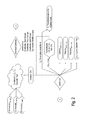
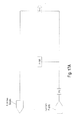
- FIGS. 1 and 2 are diagrammatic views of a C9 Stream treatment process according to the present invention.
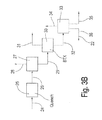
- FIGS. 3A and 3B are flow diagrams showing typical major components of a process according to an embodiment of the present invention.
- FIG. 4 is a flow diagram showing an alternate embodiment of the present invention.
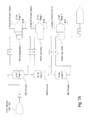
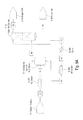
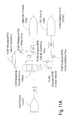
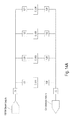
- FIGS. 5A-17A are diagrams showing various portions of an overall process in accordance with the present invention.
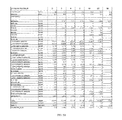
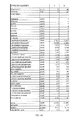
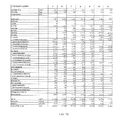
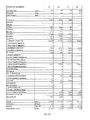
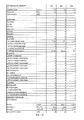
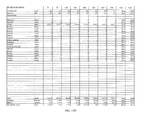
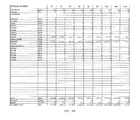
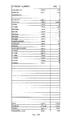
- FIGS. 5B-17B are tables providing weight balance information for the process streams shown in FIGS. 5A-17A , respectively.
- This invention treats a C 9 aromatic blend feed stream to obtain high-octane, TMB-rich products.
- the process includes any combination of the hydrodealkylation (HDA), transalkylation (TA) and isomerization of the C9 feed to obtain the TMB-rich fraction.
- the process may also include further treatment to obtain a substantially pure mesitylene product and/or a mixed TMB product comprising mesitylene and pseudocumene. Recovery of other products may also be involved.
- the invention further comprises the TMB products of these processes.
- the invention thereby facilitates the preparation of an unexpectedly high octane aromatic stream, which can serve as a high-octane unleaded fuel or fuel blending component for a wide range of applications, particularly aviation gasoline and other high-performance transportation fuels.
- the present invention uses a combination of processing steps to transform a typical mixed-C 9 and higher aromatic rich feed stream such as might result from catalytic reforming.
- Catalytic reforming is frequently followed by a BTX (benzene, toluene, xylene) unit which recovers the light aromatics by extraction, distillation, or a combination of these processes.
- the aromatics cut left over after the BTX process is generally a C 9 and higher aromatic feedstock which can be separated into specific, high octane C 9 compounds and mixtures thereof which are isolated and recovered. While some of the individual processing methods have been known in the art, they have not been combined in the manner of the present invention.
- the process uses a catalytic process to transmethylate the C 8 and C 10 methyl aromatics to produce additional C 9 trimethyl aromatics.
- the C 9 aromatics are isomerized to increase the amount of the desired TMBs.
- certain aromatics are catalytically converted to remove paraffins (to gas) and also to dealkylate the ethyl group from ethyl-methyl-benzene to toluene and ethane, the propyl group from propyl-benzene to benzene and propane, and the butyl group from butyl-benzene to benzene and butane.
- the remaining blend which contains predominantly trimethylbenzene isomers, is then distilled to remove the xylene (C 8 ), toluene (C 7 ) and benzene (C 6 ) fractions.
- C 2 -C 4 components can be returned to the gasoline pool, or recycled within the process.
- the remaining trimethyl-C 9 aromatic stream will have a very high octane suitable as a high-performance unleaded aviation fuel, unleaded aviation fuel blending components or other high-value gasoline blending components.
- a further object of the present invention is to provide TMB-rich fuel products, with or without pseudocumene, as fuels and fuel blending components.
- the present invention provides a surprisingly efficient and cost-effective method for the production of trimethyl benzenes, and particularly 1,3,5-trimethylbenzene (mesitylene), 1,2,4-trimethylbenzene (pseudocumene) and mixtures thereof.
- mesitylene is obtained as the primary component of a mesitylene/pseudocumene blend.
- mesitylene is obtained as an essentially pure component.
- C9 Stream is intended to cover any available aromatic stream, including effluent refinery streams or fractions thereof, which includes a sufficient amount of C9 aromatics to make the process practical.
- One preferred C9 Stream is a catalytic naptha reformer C9 effluent, particularly after BTX processing.
- the C9 Stream may comprise specifically C9 aromatics, e.g., trimethyl-benzenes, ethyl-methyl-benzenes and propyl-benzenes.
- the stream may also comprise quantities of lower aromatics such as toluene, xylenes, ethylbenzene, etc.
- the C9 Stream may also include higher aromatics, such as diethylbenzenes, ethyl dimethyl benzenes, methyl propylbenzenes, tetramethylbenzenes, pentamethylbenzene and various other alkyl benzenes.
- the present invention is directed to the preparation and collection of mesitylene, alone or in combination with pseudocumene.
- the present invention can convert a C9 aromatic feed stream having a MON in the order of 96-100, to a C9 product having a MON of 100-108.
- the result of the present invention is therefore a product which is useful itself as a motor fuel, e.g., an aviation fuel, of high octane, and/or which may be used to blend with gasoline or other components to provide fuels of various octanes as desired.
- This invention identifies known molecules within the gasoline blending pool which bring down the average octane rating within the entire motor gasoline pool.
- This invention seeks to isomerize and catalytically convert certain molecules pooled together across the C 8 , C 9 and C 10 blend pool known to have very low octane ratings, and further separate certain other molecules in order to derive an unexpectedly high octane of the remaining blended aromatic stream, which could uniquely serve as a high octane blendstock for unleaded aviation fuel and premium gasolines for piston engines.
- the C 9 aromatics pool shown in Table 1 highlights specifically how this invention separates the various compounds via isomerization and dealkylation of the ethyl and propyl groups resulting in ethane, propane, benzene, toluene and xylene, plus trimethylbenzenes that can then be blended to unique recipes to create various grades of high motor octane aviation fuel or premium gasoline.
- the inventive process starts with a C9 Stream which is chemically treated, alone or in combination with recycle or other feed streams.
- the treatments provide hydrodealkylation of ethyl, propyl and butyl groups, and transalkylation and isomerization of the C9's, to yield an effluent “A”.
- This process is followed by one or more steps which treat the “A” stream to allow separate collection of the desired C9 trimethylbenzene products. These further separation steps may also provide for the separate collection of xylenes, toluenes, benzene, light hydrocarbons, and hydrogen.
- the overall process provides a suitable yield of the desired trimethylbenzene products, as well as providing various other product streams that have value in gasolines and for other products and purposes.
- the C9 Stream includes significant amounts of other aromatics.
- the C9 Stream contains primarily C9 and higher components, and the process involves several steps for converting the C9 components to mesitylene and pseudocumene, particularly mesitylene.
- the C9 feed may also include a variety of C7-C12 components including paraffins. Examples of typical feed streams are provided elsewhere herein.
- the present invention applies a number of processes which convert these various components of a C9 feed stream to a high yield of the desired blendstock, including the increased yield of mesitylene and pseudocumene.
- hydrodealkylation which selectively removes the ethyl and propyl constituents of the aromatics, while leaving the methyl constituents.
- a second process is isomerization, which is performed, for example, to convert 1,2,3-trimethyl benzene to the desired mesitylene and pseudocumene. Conversion to mesitylene, and/or pseudocumene, may also occur for the hydrodealkylated C9 components.
- transalkylation which is the reaction of light (C7 and C8) and heavy (C10, C11 or C12) methylbenzenes into trimethylbenzenes, including pseudocumene and mesitylene.
- saturated hydrocarbons that may be present in the feed stream will be hydrocracked into lower alkanes, which can be used as a higher-octane blendstock, or further processed and optionally separated by distillation.
- a significant advantage of the present invention is that it is operable with aromatic feeds which are readily available, for example from catalytic reforming of heavy naphtha.
- catalytic reforming A number of proprietary catalytic reforming processes are available, but they possess many features in common.
- the purpose of catalytic reforming is to increase the octane number of a refinery stream, primarily by converting the naphthenes to aromatics and the paraffins to more branched structures.
- feed stocks are rich in paraffins and naphthenes with some aromatic content, and product streams are somewhat reduced in paraffin content, but significantly reduced in napthenes.
- Aromatics are usually the largest component of catalytic reformate.
- reaction severity may be chosen to maximize the yields of high-octane blendstocks.
- this process seeks to optimize the refinery options involving process severity and catalyst life, limiting volume loss, and maximizing yield of higher octane blendstocks.
- This process can also be tailored to minimize any benzene byproducts to fall well within the regulatory limits for gasoline blending.
- catalytic reforming is a net hydrogen producer, some hydrogen is typically recycled to the feed to help minimize coking.
- This invention may use excess (impure) hydrogen from the reformer in which case no hydrogen separation may be required.
- Reactors in this invention are typically fixed bed units, or they may employ continuous catalytic regeneration. The net reaction is endothermic. Heat may be supplied by a process furnace. There may be multiple passes through the furnace and multiple separate catalyst beds.
- catalytic reforming processes differ in the catalyst formulations used, all current processes use precious Pt group metals. Because precious metal catalysts are subject to poisoning, feed to catalytic reforming is typically treated to remove sulfur compounds and other catalyst poisons. Operation may be described as continuous, cyclic or regenerative; these terms are descriptive of equipment configurations designed to permit replacement and/or regeneration of catalyst without complete unit shutdown. This is an important consideration because reforming catalysts tend to become fouled over time by the deposition of coke, although they can be regenerated by oxidation.
- a fuller discussion of catalytic reforming can be found in Antos, G. J. and Aitani, A. M., “Catalytic Naphtha Reforming” Marcel Dekker (2004); and Rahimpour, M. R. et al., “Progress in Catalytic Naphtha Reforming Process: A Review”, Applied Energy, v109, pages 79-93 (2013).
- Such feeds are the result of the typical naptha reformate process, for example, and may include a variety of other aromatic components, as well as non-aromatic components such as alkanes.
- Typical refinery C9 fractions may include a variety of C7-C10 components.
- heavy reformate typically contains significant amounts of C10 and higher aromatics. Heavy reformate may be treated by distillation to remove the C10's and heavier components, yielding “fractionated heavy reformate.” Benzene, toluenes and xylenes may be removed through a conventional BTX process, which sometimes has already been carried out by the refinery before the C9 fraction is isolated.
- concentration of C9 aromatics in the feed will depend on the processing of the feed prior to its use in the present invention.
- Table 2 lists typical constituents of a heavy reformate feed useful with the present invention.
- the present invention includes the hydrodealkylation (HDA) of certain aromatic compounds that may be present in the C 9 aromatic feed.
- the process is carried out under conditions which do not cleave the substituent methyl groups, but will selectively remove the higher C 2 -C 4 alkyl substituents, as their corresponding alkanes, thus converting the higher (C 2 +) alkyl benzenes to leave only a mix of benzene and methylated benzenes as the aromatic constituents.
- ethyl toluene is converted to ethane and toluene
- propyl benzene is converted to propane and benzene
- butyl benzene (a C 10 compound) is converted to butane and benzene.
- HDA process is therefore the production of, inter alia, benzene, toluene and polymethyl benzenes, including xylenes, as well as certain lower alkanes. It may be of particular interest to remove xylenes at this point, which will be without ethylbenzenes, as these are more valuable to refineries than normal C8 compounds.
- HDA is preferably operated at a relatively higher temperature (than the TA) of above 250-300 ° C. However, under these harsher conditions there may be some transalkylation and isomerization that takes place. As later discussed, in one embodiment the HDA effluent is treated to remove light (C6-8) aromatics, prior to the subsequent lower temperature TA. The light aromatics at this stage will overall have a lower ratio of methyls to aromatics, and the removal enhances the TA process, if utilized.
- the transalkylation (TA) and isomerization step results in a redistribution of methyl groups among the aromatics.
- Any of the C 6 -C 10 aromatics may be affected by TA.
- a C 8 aromatic may add a methyl group or a C 10 may give up a methyl group—each resulting in formation of a TMB.
- the present invention combines HDA and TA with correlated recycle and recovery steps to obtain a high yield of mesitylene. Conditions for providing the TA and isomerization are known in the art.
- the TA is conducted at a relatively lower temperature (than the HDA) of less than 250° C. in order to favor higher-octane TMB production.
- One aspect of this process involves taking advantage of the known equilibrium distribution of trimethyl benzenes in an aromatic pool.
- Egan describes aspects of the equilibrium distribution of methylbenzenes in transalkylation. See, Egan, Clark J., “Calculated Equilibria of the Methylbenzenes and Benzene from 298° to 1000° K”, J. Chem. And Eng. Data 5 (3) 298, July 1960, hereby incorporated by reference in its entirety.
- the present process includes selectively recovering the mesitylene, by itself or optionally with the pseudocumene, from the equilibrium pool of the C9 and other isomers.
- a relevant parameter in transalkylation is the ratio in the feed stream of methyl groups to benzene groups.
- Egan shows, for example, that the equilibrium mesitylene concentration (as well as the pseudocumene concentration) peaks at a methyl/benzene ratio of 3.0. It is therefore a preferred embodiment of the present invention, though not a requirement, to operate the transalkylation step with a methyl/benzene ratio of the feed close to 3.0. This is readily accomplished, for example, by recycling tetra and higher methylbenzenes from a subsequent process stream. Note that these higher alkylbenzenes need only be present at the final transalkylation step and need not flow through the multi-stage hydrodealkylation system.
- HDA may be a relatively severe process which may be performed at higher temperatures. Consequently, TA and isomerization can occur automatically during HDA. However, redoing TA at conditions suitable to maximize mesitylene, generally at lower temperatures, provides a higher yield.
- a refiner wanting to produce a lot of mesitylene will choose reformate streams having a higher starting methyl/benzene ratio, and will then convert xylenes to C9 aromatics in the HDA stage.
- Refiners can add a splitter at low cost to an existing tower to get the higher M/B ratios.
- a refiner may choose reformate streams with lower starting M/B ratios, and then perform HDA/TA to make mesitylene and also make more xylenes without ethylbenzenes due to the hydrodealkylation.
- the sequential operation of the HDA and TA processes provides a desirable result in the production of the TMBs.
- the HDA is preferred to operate at a higher temperature, for example, above 250° C.
- the HDA reactions do not affect the M/B ratio, and the effluent thus has the same ratio as the initial feed.
- the HDA effluent may be treated to remove the light aromatics, thereby increasing the M/B ratio of the feed to the TA reaction unit.
- the HDA/TA process is generally understood in the art. It provides for the removal of C 2 and higher alkyl groups from the aromatics of the C 9 Stream, and an equilibrium distribution of the methyl groups among the aromatics.
- An example of a conventional combined HDA/TA process is described in detail in U.S. Pat. No. 4,172,813, which is hereby incorporated by reference in its entirety.
- the feed is contacted with a suitable catalyst in the presence of a hydrogen-affording gas.
- the '813 patent describes a TMB stream which is an equilibrium mixture of C 9 methyl aromatics with essentially all higher alkyl groups removed.
- the feed stock contained 65% toluene with the balance C9 and higher aromatics.
- a suitable catalyst is a metal and zeolite operated at temperatures from 200-1000° C., pressures from 1-100 atmospheres and a space velocity from 0.1-10 hr ⁇ 1 .
- the catalyst metals include, Pt, Pd, Re, Rh, Ir and Mo. These may be present as an oxide, metallic or alloy nano-particles.
- the preferred metals are Pt, Re and Mo.
- the metal loadings can be from 0.05 to about 10 weight % as metal in the catalyst.
- the metals are typically supported on a high surface area support such as alumina, silica, and other refractory oxides. These oxides provide high surface area, porosity and physical strength.
- the oxide support also contains an acidic form of zeolite Y (FAU), beta (BEA), mordenite (MOR), ZSM-5 (MFI).
- the amount of zeolite may be from about 10% to 90% of the oxide support.
- large pore zeolites are preferred, including zeolite Y (FAU), mordenite (MOR) and beta (BEA).
- the preferred catalyst(s) depend upon the configuration of the invention and the processing options chosen for a specific refinery configuration.
- the combined process of HDA and TA thus treats the C9 components in a manner to increase the proportion of desired mesitylene and pseudocumene, while converting other likely present components to readily eliminated compounds.
- Hemimellitene, 1,2,3, trimethylbenzene is the most difficult component to separate by distillation from mesitylene and pseudocumene. Fortunately, as shown by Egan, the equilibrium concentration of hemimellitene is always quite low. The ethyl toluenes which have a boiling point close to that of mesitylene are eliminated by removing the ethyl groups in the HDA process.
- the boiling point of toluene is sufficiently different that it is readily separated from mesitylene (and pseudocumene) by distillation.
- the process therefore preferably removes at least 75%, and more preferably at least 90%, of the ethyl toluenes in the HDA step.
- all components present following the HDA/TA processes are readily separated from the mesitylene and pseudocumene.
- the benzene, toluenes and xylenes if not converted to the desired trimethyl benzenes, can be removed through a conventional BTX tower.
- the lower alkanes and hydrogen are easily separated in a conventional manner prior to the BTX tower, and could even be removed prior to the TA unit when operated separately from the HDA reactor.
- BTX extraction unit As has been previously described, many refineries practice high severity catalytic reforming and some follow this operation with what is known in the art as a BTX extraction unit to recover the light aromatics valuable as chemical feed stocks.
- the reformer effluent contains a relatively low concentration of light paraffins which are conveniently removed prior to the BTX unit.
- BTX raffinate is heavy aromatics suitable for feed to the present invention.
- the process preferably includes the step of hydrocracking.
- Hydrocracking is well known in the art and occurs under the same reaction conditions as HDA and TA.
- Alkanes and cycloalkanes are cracked into lower molecular weight alkanes, which are separated by phase separation (degassed) or by distillation for use as a high-octane blendstock or for subsequent processing.
- Table 3 provides a typical effluent composition from a low severity catalytic reformer. This stream may be fed directly into the process of the present invention. The majority of the paraffin components will pass through both the HDA and TA reactions unreacted, although the heavier paraffins (e.g. C10, C9, etc.) are likely to hydrocrack as part of the process. Transalkylation effluent can then conveniently be fed to a BTX unit whose raffinate will be a mixture of C9 and higher methyl aromatics. A pseudocumene/mesitylene mixture is readily recovered from this stream (and can be further processed to obtain pure mesitylene), leaving a higher aromatics stream suitable for recycle to transalkylation.
- BTX unit whose raffinate will be a mixture of C9 and higher methyl aromatics.
- the BTX unit can be positioned between the HDA and TA steps.
- a simple BTX distillation can remove C6-C8 components formed in the HDA effluent.
- a pseudocumene/mesitylene mixture can be recovered from TA by distillation and the heavier aromatics can be recycled.
- FIGS. 1 and 2 The present invention has been shown diagrammatically in FIGS. 1 and 2 . These diagrams indicate an overall process involving HDA and TA processes, combined with recycle of certain components, which increase the concentration of mesitylene over that present in the initial C9 Stream. This process generally involves several conventional steps which are combined in a unique manner, with other process methodology, to produce a high-octane product which is rich in TMB. A more specific exemplary process is described hereafter, but it will be appreciated that certain aspects of the described process may be varied as understood by those skilled in the art. For example, the following description provides separate HDA and TA reactors, but it is within the skill in the art to operate such reactors so as to achieve concurrent HDA and TA within individual reactors.
- the feed stock is treated using one or more adiabatic reactors operating at conditions to perform the HDA/TA processes, as generally known.
- HDA can also be carried out in an isothermal reactor wherein the catalyst is contained in tubes and a heat transfer fluid on the shell side removes the heat. Typical heat transfer fluids are Dowtherm and other heat transfer oils or high pressure steam. It is also well known in the art to place the catalyst on the shell side of an isothermal reactor and the heat transfer fluid in the tubes. Cold shot cooling can also be employed. In this embodiment, instead of recovering the heat to steam in between reactor stages, additional cold hydrogen or other inert gas or liquid component is added between stages.
- the C9 Stream is mixed with a hydrogen-containing gas and preheated to a suitable temperature, and then transferred to the hydrodealkylation/transalkylation reaction zone.
- the hydrogen also provides dilution of the hydrocarbon stream and limits the adiabatic temperature rise across each reaction stage.
- the hydrogen can be replaced in part (only in part because the hydrogen is reactant as well as diluent) by a gas inert in the reaction such as nitrogen or a lower hydrocarbon such as methane, ethane or propane or mixtures thereof or mixtures thereof further comprising hydrogen or nitrogen.
- a gas inert in the reaction such as nitrogen or a lower hydrocarbon such as methane, ethane or propane or mixtures thereof or mixtures thereof further comprising hydrogen or nitrogen.
- the C9 Stream 11 is provided to booster pump 12 which elevates the liquid to a reaction pressure, e.g., 400 PSIA, before the stream enters vaporization furnace 13 .
- Hydrogen recycle 14 from a subsequent separation step is preferably combined with make-up hydrogen 15 and passes through a separate coil in furnace 13 .
- These gas phase streams combine before entering the first stage reactor 16 .
- Effluent 17 enters a waste heat boiler 18 where it is cooled by generating 750 PSI steam 19 .
- a second stage reactor 20 and boiler 21 are preferably included, and one or more additional stages (not shown) may be added.
- effluent from the last of the HDA stages is mixed with a C9 and higher aromatics recycle stream 22 (from a subsequent separation section) before being fed to a transalkylation reactor 23 , which yields effluent stream 24 .
- the effluent 24 from the HDA/TA reactor(s) is fed to a quench column 25 which cools the material. This cooled material is then fed through line 26 to a partial condensation unit 27 .
- the lighter components comprising C2-C4 paraffins and hydrogen are removed by way of line 28 and the heavier components comprising C6-C10 and higher aromatics are removed through line 29 , and may be recycled to the TA reactor, as elsewhere described.
- the quench column overheads can be fed to an absorption or extraction unit to separate the hydrogen from the light hydrocarbons.
- the heavier components in line 29 are then fed into a conventional type BTX (benzene/toluene/xylene) column 30 .
- the BTX column separates out through line 31 the toluenes, xylenes, and benzene from the C9 and higher aromatics.
- the bottoms 32 from the BTX column pass to the product column 33 which takes the desired mesitylene/pseudocumene product overhead 34 from a bottoms including some pseudocumene and higher polymethylbenzenes. Pseudocumene distributes between the overheads and bottoms of this column. A purge 35 of C10 and higher aromatics is taken from the bottoms of this column to prevent unreactive heavy compounds from building up. The balance 36 of the higher polymethylbenzenes is recycled to the transalkylation unit by way of line 22 ( FIG. 2 ). It is unnecessary to send these aromatic heavies to the HDA reactors.
- the lighter component overheads 28 from quench column 27 may also be processed for recovery of the lighter components. Most of the C 3 and C 4 is removed against cooling water and the residual gasses pass to an ethane chiller (not shown) where the ethane is condensed against chilled brine at about ⁇ 5° C. Uncondensed hydrogen is recompressed to reaction pressure and recycled through line 14 ( FIG. 2 ). H2 may also be combined with C2-4 components as previously mentioned.
- the foregoing description provides a system in which the aromatic lights are removed by means of a BTX column 30 ( FIG. 3B ), which is positioned after the TA reactor.
- the HDA effluent is shown as entering the TA reactor ( FIG. 3A ) without processing out the aromatic lights.
- FIG. 4 there is shown an alternate embodiment in which two separate lights separations are made.
- the feed stream 11 is fed to the HDA reactor 16 .
- this embodiment then directs the HDA effluent 24 to a quench column 40 , where the H 2 and light alkanes are separated out by gas separator 41 .
- the remaining liquid 42 from the HDA effluent is fed to a first aromatic lights column 43 and the benzene and toluene, and perhaps some xylenes 44 are collected out.
- a first aromatic lights column 43 Given the limited methyl/benzene ratio for benzene and toluene, it is most productive to remove these components, as compared to the xylenes. Regardless, removal of any of these components can significantly move the equilibrium composition coming out of the TA reactor to higher methylated benzene compounds, including the desired TMBs. This is because the BTX removal occurs at a point where the methyl/benzene ratio is desirably lower than it may be elsewhere.
- the removal of these components raises the methyl/benzene ratio of the remaining liquid 45 , which is then fed to the TA reactor 23 .
- the TA effluent 46 is transferred to a second lights column 47 , where any remaining C6-8 compounds are removed.
- the remaining bottoms material is processed in a product column 33 as previously described.
- This embodiment further provides for the recycle of several byproduct streams.
- the H2 recovered in gas separator 41 may be recycled to the HDA reactor as needed. At least a portion of the heavy aromatic bottoms from the product column 33 is combined with the feed to the TA reactor in order to increase the methyl/benzene ratio for transalkylation. A purge of some amount of the heavies is appropriate to prevent a buildup of such materials in the product column.
- the BTX light aromatics may be recycled to the HDA reactor to provide additional aromatics for re-equilibration at high temperature.
- the combined processes of HDA and TA with distillation and recycling described herein yield a high-octane, TMB-rich product containing primarily mesitylene (1,3,5-trimethyl benzene), and some amount of pseudocumene.
- TMB-rich after distillation and recycling refers to a C9 aromatic product containing at least about 50 wt % mesitylene, preferably at least 60 wt % mesitylene and more preferably at least 70 wt % mesitylene.
- TMB-rich product whereby the TMB compounds are in higher proportion than the original feedstock; these are well suited for use as a premium motor fuel blendstocks, and aviation fuel, either as it is obtained or after blending with other components.
- the presence of the mesitylene provides a desirably high MON and other characteristics suitable for such fuels. It is an additional advantage of the present invention that the inventive process provides TMB-rich products which have this utility in the absence of TEL and aromatic amines.
- the process may optionally include a further purification of the TMB-rich product to obtain a Substantially Pure Mesitylene product, which refers to a product that is at least about 90 wt % mesitylene, and preferably at least 95 wt % mesitylene.
- a Substantially Pure Mesitylene product an additional column is used to resolve the pseudocumene and mesitylene.
- a column is included which is used to take an overhead pseudocumene composition as 98 wt %.
- the TMB-rich product is sufficient and has excellent utility as a fuel or fuel blending component, without requiring the additional steps required to obtain a Substantially Pure Mesitylene product.
- FIGS. 3A, 3B and 4 Auxiliary equipment, such as pumps and heat exchangers, are not shown in FIGS. 3A, 3B and 4 , although additional details of such components are shown in FIGS. 5A-17A .
- Such auxiliary equipment is well-known and the uses and locations of this equipment in this process system will be recognized easily by those having ordinary skill in the art.
- a further advantage of the described processes is that they are readily adapted to existing refinery operations. Special feed preparation is not necessary, although a targeted cut output from the catalytic reformer allows refiners optionality for more efficient conversions. Process configurations, as implemented, can be tailored to provide a wide range of valuable aromatic byproducts for gasoline and petrochemical feedstocks.
- An aromatic rich feed is preheated and mixed with a high-pressure feed. This is sent into the reactor segment where conversion of C2+ alkyl aromatics occurs through a non-equilibrium decoupling reaction.
- the decoupled effluent is then re-synthesized into a preferred slate of components that can be distilled as mesitylene and/or used as gasoline blendstocks to upgrade the overall octane of the gasoline pool.
- High value byproducts may include xylenes (absent ethyl-aromatics), toluene, a C9 aromatic mixture, and other gasoline and petrochemical feedstocks.
- the undistilled effluent can be made free of long-chain (C8 and higher) paraffins.
- the same C9+ reformate can yield 18% mesitylene, 64% xylenes/toluenes, 9% pseudocumene, and C2 and gases.
- a refiner may instead proceed with only the HDA portion of the described reaction process, followed by alternative processing of the HDA effluent.
- the presence of long-chain (C8 and higher) paraffin compounds blended into the gasoline pool can reduce its octane level and result in lower fuel efficiency in performance spar ignited combustion engines.
- the HDA effluent is treated, such as by a less severe HDA reaction, to perform cracking of the C8 and higher paraffins. The result is an aromatic stream with significantly enhanced octane rating.
- a C 9 aromatic stream from a naphtha reformer and related process units contains a mixture of aromatic isomers some of which have much higher octane ratings than other isomers in that stream.
- a typical C 9 stream also includes other components, as shown for example in Table 4:
- the C 9 stream from the naphtha reformer, or other source may also comprise significant amounts of C 8 and C 10 aromatics.
- a C 9 aromatic stream was determined to have the chemical composition shown in Table 5.
- the C 8 xylenes byproducts can either be processed into a BTX unit, used in high-octane gasoline blendstocks, distilled for commercial use, or they may be processed along with C 10 's via the trans-alkylation technique to make additional C 9 aromatics, subject to the economic tradeoffs of the process.
- the present invention is useful with a variety of C 9 aromatic streams, including those obtained directly from a reformer.
- a C 9 stream from catalytic reforming was analyzed for chemical composition and was found to contain the components as set forth in Table 9.
- Table 10 further highlights specifically how this invention separates the various compounds via hydrodealkylation of the ethyl and propyl groups resulting in ethane, propane, benzene, toluene and xylene, and isomerization of the methyl benzenes, yielding the trimethyl benzenes.
- Table 4 it is shown, for example, that 1-ethyl-2-methyl-benzene yields ethane and toluene, and 1,3-diethyl-benzene is broken down to ethane and benzene.
- FIGS. 5A-17A a heat and material balance has been prepared based on a typical C8-C10 feed stream.
- the entire system is shown diagrammatically in FIGS. 5A-17A .
- FIG. 5A for example, there is shown the initial feed and preliminary processing thereof for passing the feed to the system.
- FIGS. 5B-17B The compositions of the feed and of other system streams are presented in FIGS. 5B-17B , corresponding to the process streams shown in FIGS. 5A-17A , respectively.
Landscapes
- Chemical & Material Sciences (AREA)
- Organic Chemistry (AREA)
- Oil, Petroleum & Natural Gas (AREA)
- Chemical Kinetics & Catalysis (AREA)
- Engineering & Computer Science (AREA)
- General Chemical & Material Sciences (AREA)
- Organic Low-Molecular-Weight Compounds And Preparation Thereof (AREA)
- Production Of Liquid Hydrocarbon Mixture For Refining Petroleum (AREA)
Abstract
Description
- This application claims the benefit of U.S. Provisional Application No. 62/443,292 filed Jan. 6, 2017, which is hereby incorporated by reference.
- The present invention relates to the preparation of trimethyl benzenes (“TMBs”) and other hydrocarbons, as well as fuels and blending components, from heavy aromatic feeds, e.g., C9 aromatic rich streams available from refineries. Of particular interest are higher-octane aromatic compounds such as 1,3,5-trimethyl benzene (“mesitylene”) and 1,2,4-trimethyl benzene (“pseudocumene”) due to their higher energy density.
- The refining industry currently formulates the motor gasoline pool from a wide range of hydrocarbon streams including C4 to C10 saturated branched acyclic alkanes and olefins and monocyclic aromatic compounds. However derived, these latter hydrocarbon streams contain a broad range of components and have usually been distilled, or otherwise treated (e.g., by solvent extraction), to obtain specific desired components or combinations of components. One purpose of these operations in the past has been to obtain high purity, often greater than 99%, chemical feed stocks such as para-xylene and benzene, which have been used in huge quantities in the manufacture of styrene, phenol, polyamide monomers, terephthalic acid and other chemical products. The streams resulting from the separation processes accordingly consist of product streams of benzene, toluene, C8 aromatics containing xylenes, and a bottoms product of C9 and C10+ aromatics.
- There is extensive knowledge in the refining industry regarding the use of catalysts to restructure molecules for the adaptation of these C4-C10 streams. However, these techniques do not satisfy the need for high octane fuels, particularly aviation fuels for piston and turbine engines, which have unique high octane, distillation, flash point, stability and vapor pressure requirements. The prior art primarily has focused on fuels and fuel components that are not able to meet the particularly higher octane demands of unleaded aviation fuel and premium gasolines as measured by Motor Octane Number (MON) which is generally required to be between 80 to 100 MON for most piston engines.
-
FIGS. 1 and 2 are diagrammatic views of a C9 Stream treatment process according to the present invention. -
FIGS. 3A and 3B are flow diagrams showing typical major components of a process according to an embodiment of the present invention. -
FIG. 4 is a flow diagram showing an alternate embodiment of the present invention. -
FIGS. 5A-17A are diagrams showing various portions of an overall process in accordance with the present invention. -
FIGS. 5B-17B are tables providing weight balance information for the process streams shown inFIGS. 5A-17A , respectively. - This invention treats a C9 aromatic blend feed stream to obtain high-octane, TMB-rich products. The process includes any combination of the hydrodealkylation (HDA), transalkylation (TA) and isomerization of the C9 feed to obtain the TMB-rich fraction. The process may also include further treatment to obtain a substantially pure mesitylene product and/or a mixed TMB product comprising mesitylene and pseudocumene. Recovery of other products may also be involved. The invention further comprises the TMB products of these processes.
- The invention thereby facilitates the preparation of an unexpectedly high octane aromatic stream, which can serve as a high-octane unleaded fuel or fuel blending component for a wide range of applications, particularly aviation gasoline and other high-performance transportation fuels.
- The present invention uses a combination of processing steps to transform a typical mixed-C9 and higher aromatic rich feed stream such as might result from catalytic reforming. Catalytic reforming is frequently followed by a BTX (benzene, toluene, xylene) unit which recovers the light aromatics by extraction, distillation, or a combination of these processes. The aromatics cut left over after the BTX process is generally a C9 and higher aromatic feedstock which can be separated into specific, high octane C9 compounds and mixtures thereof which are isolated and recovered. While some of the individual processing methods have been known in the art, they have not been combined in the manner of the present invention.
- These streams are used as a feed stream to the present inventive method. The process uses a catalytic process to transmethylate the C8 and C10 methyl aromatics to produce additional C9 trimethyl aromatics. The C9 aromatics are isomerized to increase the amount of the desired TMBs. In addition, certain aromatics are catalytically converted to remove paraffins (to gas) and also to dealkylate the ethyl group from ethyl-methyl-benzene to toluene and ethane, the propyl group from propyl-benzene to benzene and propane, and the butyl group from butyl-benzene to benzene and butane. The remaining blend, which contains predominantly trimethylbenzene isomers, is then distilled to remove the xylene (C8), toluene (C7) and benzene (C6) fractions. C2-C4 components can be returned to the gasoline pool, or recycled within the process. The remaining trimethyl-C9 aromatic stream will have a very high octane suitable as a high-performance unleaded aviation fuel, unleaded aviation fuel blending components or other high-value gasoline blending components.
- It is an object of the present invention to provide methods and alternatives for the efficient and cost-effective production of high-octane fuel blends, as well as 1,3,5-trimethyl benzene and pseudocumene fuel products from C9 aromatic feeds. It is a further object of the invention to provide such methods which further provide lower paraffins and C6-C8 aromatics as by-products.
- A further object of the present invention is to provide TMB-rich fuel products, with or without pseudocumene, as fuels and fuel blending components.
- Further objects, features, aspects, benefits, advantages, and embodiments of the present invention will become apparent from the detailed description and drawings provided herewith.
- For the purpose of promoting an understanding of the principles of the invention, reference will now be made to the embodiments illustrated herein and specific language will be used to describe the same. It will nevertheless be understood that no limitation of the scope of the invention is thereby intended. Any alterations and further modifications of the described embodiments, and any further applications of the principles of the invention as described herein, are contemplated as would normally occur to one skilled in the art to which the invention relates. While certain aspects of the invention are shown in detail, it will be apparent to those skilled in the relevant art that some features that are not relevant to the present invention may not be shown for the sake of clarity.
- The present invention provides a surprisingly efficient and cost-effective method for the production of trimethyl benzenes, and particularly 1,3,5-trimethylbenzene (mesitylene), 1,2,4-trimethylbenzene (pseudocumene) and mixtures thereof. In a preferred embodiment, mesitylene is obtained as the primary component of a mesitylene/pseudocumene blend. In another preferred embodiment, mesitylene is obtained as an essentially pure component. These products may be used in a variety of ways, particularly as motor fuels or blending components, including for aviation fuels.
- The inventive process is directed to the treatment of feed streams which include C9 aromatics in combination with other components. As used herein, the term “C9 Stream” is intended to cover any available aromatic stream, including effluent refinery streams or fractions thereof, which includes a sufficient amount of C9 aromatics to make the process practical. One preferred C9 Stream is a catalytic naptha reformer C9 effluent, particularly after BTX processing.
- The C9 Stream may comprise specifically C9 aromatics, e.g., trimethyl-benzenes, ethyl-methyl-benzenes and propyl-benzenes. The stream may also comprise quantities of lower aromatics such as toluene, xylenes, ethylbenzene, etc. The C9 Stream may also include higher aromatics, such as diethylbenzenes, ethyl dimethyl benzenes, methyl propylbenzenes, tetramethylbenzenes, pentamethylbenzene and various other alkyl benzenes. Of these, the present invention is directed to the preparation and collection of mesitylene, alone or in combination with pseudocumene. This provides a C9 aromatic product which has a much increased MON compared to the initial feed stream. As exemplified hereafter, for example, the present invention can convert a C9 aromatic feed stream having a MON in the order of 96-100, to a C9 product having a MON of 100-108. The result of the present invention is therefore a product which is useful itself as a motor fuel, e.g., an aviation fuel, of high octane, and/or which may be used to blend with gasoline or other components to provide fuels of various octanes as desired.
- This invention identifies known molecules within the gasoline blending pool which bring down the average octane rating within the entire motor gasoline pool. This invention seeks to isomerize and catalytically convert certain molecules pooled together across the C8, C9 and C10 blend pool known to have very low octane ratings, and further separate certain other molecules in order to derive an unexpectedly high octane of the remaining blended aromatic stream, which could uniquely serve as a high octane blendstock for unleaded aviation fuel and premium gasolines for piston engines.
- The C9 aromatics pool shown in Table 1 highlights specifically how this invention separates the various compounds via isomerization and dealkylation of the ethyl and propyl groups resulting in ethane, propane, benzene, toluene and xylene, plus trimethylbenzenes that can then be blended to unique recipes to create various grades of high motor octane aviation fuel or premium gasoline.
- As shown in
FIG. 1 , the inventive process starts with a C9 Stream which is chemically treated, alone or in combination with recycle or other feed streams. The treatments provide hydrodealkylation of ethyl, propyl and butyl groups, and transalkylation and isomerization of the C9's, to yield an effluent “A”. This process is followed by one or more steps which treat the “A” stream to allow separate collection of the desired C9 trimethylbenzene products. These further separation steps may also provide for the separate collection of xylenes, toluenes, benzene, light hydrocarbons, and hydrogen. The overall process provides a suitable yield of the desired trimethylbenzene products, as well as providing various other product streams that have value in gasolines and for other products and purposes. In the more complex embodiment shown inFIG. 2 , the C9 Stream includes significant amounts of other aromatics. In this embodiment, there is increased effect of the dealkylation, isomerization and transalkylation, as further described hereafter. - In the simplest form of the invention, the C9 Stream contains primarily C9 and higher components, and the process involves several steps for converting the C9 components to mesitylene and pseudocumene, particularly mesitylene. However, while a high concentration of C9 aromatics in the feed stream may be preferred, it will be appreciated that the C9 feed may also include a variety of C7-C12 components including paraffins. Examples of typical feed streams are provided elsewhere herein. The present invention applies a number of processes which convert these various components of a C9 feed stream to a high yield of the desired blendstock, including the increased yield of mesitylene and pseudocumene.
- One process is hydrodealkylation, which selectively removes the ethyl and propyl constituents of the aromatics, while leaving the methyl constituents. A second process is isomerization, which is performed, for example, to convert 1,2,3-trimethyl benzene to the desired mesitylene and pseudocumene. Conversion to mesitylene, and/or pseudocumene, may also occur for the hydrodealkylated C9 components. Thus, a third reaction which may occur is transalkylation, which is the reaction of light (C7 and C8) and heavy (C10, C11 or C12) methylbenzenes into trimethylbenzenes, including pseudocumene and mesitylene. Optionally, saturated hydrocarbons that may be present in the feed stream will be hydrocracked into lower alkanes, which can be used as a higher-octane blendstock, or further processed and optionally separated by distillation.
- A significant advantage of the present invention is that it is operable with aromatic feeds which are readily available, for example from catalytic reforming of heavy naphtha. A number of proprietary catalytic reforming processes are available, but they possess many features in common. The purpose of catalytic reforming is to increase the octane number of a refinery stream, primarily by converting the naphthenes to aromatics and the paraffins to more branched structures. Typically, feed stocks are rich in paraffins and naphthenes with some aromatic content, and product streams are somewhat reduced in paraffin content, but significantly reduced in napthenes. Aromatics are usually the largest component of catalytic reformate. Depending on the refinery processes and the feed stocks available, different degrees of reaction severity may be chosen to maximize the yields of high-octane blendstocks. Furthermore, this process seeks to optimize the refinery options involving process severity and catalyst life, limiting volume loss, and maximizing yield of higher octane blendstocks. This process can also be tailored to minimize any benzene byproducts to fall well within the regulatory limits for gasoline blending.
- Although catalytic reforming is a net hydrogen producer, some hydrogen is typically recycled to the feed to help minimize coking. This invention may use excess (impure) hydrogen from the reformer in which case no hydrogen separation may be required. Reactors in this invention are typically fixed bed units, or they may employ continuous catalytic regeneration. The net reaction is endothermic. Heat may be supplied by a process furnace. There may be multiple passes through the furnace and multiple separate catalyst beds.
- Although catalytic reforming processes differ in the catalyst formulations used, all current processes use precious Pt group metals. Because precious metal catalysts are subject to poisoning, feed to catalytic reforming is typically treated to remove sulfur compounds and other catalyst poisons. Operation may be described as continuous, cyclic or regenerative; these terms are descriptive of equipment configurations designed to permit replacement and/or regeneration of catalyst without complete unit shutdown. This is an important consideration because reforming catalysts tend to become fouled over time by the deposition of coke, although they can be regenerated by oxidation. A fuller discussion of catalytic reforming can be found in Antos, G. J. and Aitani, A. M., “Catalytic Naphtha Reforming” Marcel Dekker (2004); and Rahimpour, M. R. et al., “Progress in Catalytic Naphtha Reforming Process: A Review”, Applied Energy, v109, pages 79-93 (2013).
- Such feeds are the result of the typical naptha reformate process, for example, and may include a variety of other aromatic components, as well as non-aromatic components such as alkanes. Typical refinery C9 fractions may include a variety of C7-C10 components. For example, heavy reformate typically contains significant amounts of C10 and higher aromatics. Heavy reformate may be treated by distillation to remove the C10's and heavier components, yielding “fractionated heavy reformate.” Benzene, toluenes and xylenes may be removed through a conventional BTX process, which sometimes has already been carried out by the refinery before the C9 fraction is isolated. The concentration of C9 aromatics in the feed will depend on the processing of the feed prior to its use in the present invention.
- It is a significant advantage of the present invention that the process uniquely combines several types of treatments which effectively eliminate or convert these various feed streams to the desired C9 product(s) in high proportion.
- Table 2 lists typical constituents of a heavy reformate feed useful with the present invention.
-
TABLE 2 Composition of heavy reformate feedstock. Major compound Short name wt. % Iso-propyl benzene iPB 1.7 n-Propyl benzene nPB 4.3 1-Methyl 2-ethyl benzene 1M2EB 6.5 1-Methyl 3-ethyl benzene 1M3EB 18.5 1-Methyl 4-ethyl benzene 1M4EB 9.1 1,2,3-Tri-methyl benzene 123TMB 6.6 1,2,4-Tri-methyl benzene 124TMB 39.1 1,3,5-Tri-methyl benzene 135TMB 10.1 Total A9 95.9 n-Butyl benzene nBB 0.5 1,4-Diethyl benzene 14DEB 0.8 1,3-Diethyl benzene 13DEB 0.4 1,3-Dimethyl, 5-ethyl benzene 13DM5EB 0.8 1,4-Dimethyl, 2-ethyl benzene 14DM2EB 0.4 Others A10 1.2 Total A10 4.1 - Hydrodealkylation
- The present invention includes the hydrodealkylation (HDA) of certain aromatic compounds that may be present in the C9 aromatic feed. The process is carried out under conditions which do not cleave the substituent methyl groups, but will selectively remove the higher C2-C4 alkyl substituents, as their corresponding alkanes, thus converting the higher (C2+) alkyl benzenes to leave only a mix of benzene and methylated benzenes as the aromatic constituents. For example, ethyl toluene is converted to ethane and toluene, propyl benzene is converted to propane and benzene, and butyl benzene (a C10 compound) is converted to butane and benzene. The consequence of the HDA process is therefore the production of, inter alia, benzene, toluene and polymethyl benzenes, including xylenes, as well as certain lower alkanes. It may be of particular interest to remove xylenes at this point, which will be without ethylbenzenes, as these are more valuable to refineries than normal C8 compounds.
- HDA is preferably operated at a relatively higher temperature (than the TA) of above 250-300 ° C. However, under these harsher conditions there may be some transalkylation and isomerization that takes place. As later discussed, in one embodiment the HDA effluent is treated to remove light (C6-8) aromatics, prior to the subsequent lower temperature TA. The light aromatics at this stage will overall have a lower ratio of methyls to aromatics, and the removal enhances the TA process, if utilized.
- Transalkylation
- The transalkylation (TA) and isomerization step results in a redistribution of methyl groups among the aromatics. Any of the C6-C10 aromatics may be affected by TA. Thus, a C8 aromatic may add a methyl group or a C10 may give up a methyl group—each resulting in formation of a TMB. The present invention combines HDA and TA with correlated recycle and recovery steps to obtain a high yield of mesitylene. Conditions for providing the TA and isomerization are known in the art. In a preferred embodiment, the TA is conducted at a relatively lower temperature (than the HDA) of less than 250° C. in order to favor higher-octane TMB production.
- One aspect of this process, therefore, involves taking advantage of the known equilibrium distribution of trimethyl benzenes in an aromatic pool. Egan describes aspects of the equilibrium distribution of methylbenzenes in transalkylation. See, Egan, Clark J., “Calculated Equilibria of the Methylbenzenes and Benzene from 298° to 1000° K”, J. Chem. And Eng. Data 5 (3) 298, July 1960, hereby incorporated by reference in its entirety. The present process includes selectively recovering the mesitylene, by itself or optionally with the pseudocumene, from the equilibrium pool of the C9 and other isomers.
- As known in the art, a relevant parameter in transalkylation is the ratio in the feed stream of methyl groups to benzene groups. Egan shows, for example, that the equilibrium mesitylene concentration (as well as the pseudocumene concentration) peaks at a methyl/benzene ratio of 3.0. It is therefore a preferred embodiment of the present invention, though not a requirement, to operate the transalkylation step with a methyl/benzene ratio of the feed close to 3.0. This is readily accomplished, for example, by recycling tetra and higher methylbenzenes from a subsequent process stream. Note that these higher alkylbenzenes need only be present at the final transalkylation step and need not flow through the multi-stage hydrodealkylation system.
- In some embodiments, HDA may be a relatively severe process which may be performed at higher temperatures. Consequently, TA and isomerization can occur automatically during HDA. However, redoing TA at conditions suitable to maximize mesitylene, generally at lower temperatures, provides a higher yield.
- A refiner wanting to produce a lot of mesitylene will choose reformate streams having a higher starting methyl/benzene ratio, and will then convert xylenes to C9 aromatics in the HDA stage. Refiners can add a splitter at low cost to an existing tower to get the higher M/B ratios. Alternatively, a refiner may choose reformate streams with lower starting M/B ratios, and then perform HDA/TA to make mesitylene and also make more xylenes without ethylbenzenes due to the hydrodealkylation.
- The sequential operation of the HDA and TA processes provides a desirable result in the production of the TMBs. The HDA is preferred to operate at a higher temperature, for example, above 250° C. The HDA reactions do not affect the M/B ratio, and the effluent thus has the same ratio as the initial feed. However, as discussed with respect to an alternate embodiment, the HDA effluent may be treated to remove the light aromatics, thereby increasing the M/B ratio of the feed to the TA reaction unit.
- To maximize the yield of 1,3,5-trimethyl-benzene using the TA process, it is necessary to distill mesitylene and recycle the heavy compounds, thereby increasing the pool of feedstocks to TA with a higher ratio of methyl-benzenes. This process follows the equilibrium law of Le Chatelier's principle.
- Sample HDA/TA Processes
- The HDA/TA process is generally understood in the art. It provides for the removal of C2 and higher alkyl groups from the aromatics of the C9 Stream, and an equilibrium distribution of the methyl groups among the aromatics. An example of a conventional combined HDA/TA process is described in detail in U.S. Pat. No. 4,172,813, which is hereby incorporated by reference in its entirety. As described in the '813 patent, for example, the feed is contacted with a suitable catalyst in the presence of a hydrogen-affording gas. The '813 patent describes a TMB stream which is an equilibrium mixture of C9 methyl aromatics with essentially all higher alkyl groups removed. The feed stock contained 65% toluene with the balance C9 and higher aromatics. Close to equilibrium results are obtained at 800-900° F. and 172 PSIG at a WHSV of 3.7 or 3.8 hf−1. Excess hydrogen for the dealkylation reaction was provided; the examples use just over 1.7:1 of H2:hydrocarbon. Various operating conditions are selected to suit the catalyst, which may include particular molar ratios of hydrogen to hydrocarbon, not including inert, gas phase hydrocarbons. Excess hydrogen purity of 70% from the refinery is acceptable. Operating pressures, temperatures and contact times are also selected in accordance with known operation of these types of catalysts.
- Catalysts
- An example of a suitable catalyst is a metal and zeolite operated at temperatures from 200-1000° C., pressures from 1-100 atmospheres and a space velocity from 0.1-10 hr−1. The catalyst metals include, Pt, Pd, Re, Rh, Ir and Mo. These may be present as an oxide, metallic or alloy nano-particles. The preferred metals are Pt, Re and Mo. The metal loadings can be from 0.05 to about 10 weight % as metal in the catalyst. The metals are typically supported on a high surface area support such as alumina, silica, and other refractory oxides. These oxides provide high surface area, porosity and physical strength. The oxide support also contains an acidic form of zeolite Y (FAU), beta (BEA), mordenite (MOR), ZSM-5 (MFI). The amount of zeolite may be from about 10% to 90% of the oxide support. For C9 aromatic feeds, large pore zeolites are preferred, including zeolite Y (FAU), mordenite (MOR) and beta (BEA). The preferred catalyst(s) depend upon the configuration of the invention and the processing options chosen for a specific refinery configuration.
- The combined process of HDA and TA thus treats the C9 components in a manner to increase the proportion of desired mesitylene and pseudocumene, while converting other likely present components to readily eliminated compounds. Hemimellitene, 1,2,3, trimethylbenzene, is the most difficult component to separate by distillation from mesitylene and pseudocumene. Fortunately, as shown by Egan, the equilibrium concentration of hemimellitene is always quite low. The ethyl toluenes which have a boiling point close to that of mesitylene are eliminated by removing the ethyl groups in the HDA process. This is important because unlike ethyl toluenes, the boiling point of toluene is sufficiently different that it is readily separated from mesitylene (and pseudocumene) by distillation. The process therefore preferably removes at least 75%, and more preferably at least 90%, of the ethyl toluenes in the HDA step. As a result, all components present following the HDA/TA processes are readily separated from the mesitylene and pseudocumene. For example, the benzene, toluenes and xylenes, if not converted to the desired trimethyl benzenes, can be removed through a conventional BTX tower. The lower alkanes and hydrogen are easily separated in a conventional manner prior to the BTX tower, and could even be removed prior to the TA unit when operated separately from the HDA reactor.
- Hydrocracking
- As has been previously described, many refineries practice high severity catalytic reforming and some follow this operation with what is known in the art as a BTX extraction unit to recover the light aromatics valuable as chemical feed stocks. In this scenario, the reformer effluent contains a relatively low concentration of light paraffins which are conveniently removed prior to the BTX unit. BTX raffinate is heavy aromatics suitable for feed to the present invention.
- If a significant amount of paraffins are present in the C9 Stream, the process preferably includes the step of hydrocracking. Hydrocracking is well known in the art and occurs under the same reaction conditions as HDA and TA. Alkanes and cycloalkanes are cracked into lower molecular weight alkanes, which are separated by phase separation (degassed) or by distillation for use as a high-octane blendstock or for subsequent processing.
- BTX
- Table 3 provides a typical effluent composition from a low severity catalytic reformer. This stream may be fed directly into the process of the present invention. The majority of the paraffin components will pass through both the HDA and TA reactions unreacted, although the heavier paraffins (e.g. C10, C9, etc.) are likely to hydrocrack as part of the process. Transalkylation effluent can then conveniently be fed to a BTX unit whose raffinate will be a mixture of C9 and higher methyl aromatics. A pseudocumene/mesitylene mixture is readily recovered from this stream (and can be further processed to obtain pure mesitylene), leaving a higher aromatics stream suitable for recycle to transalkylation.
-
TABLE 3 C5 paraffin 0.272 C6 paraffin 0.04 C 7 paraffin0.041 C8 paraffin 0.053 C9 paraffin 0.033 C10 paraffin 0.007 Naphthenes 0.01 Benzene 0.009 Toluene 0.136 C8 aromatics 0.274 C9 aromatics 0.126 Total 1.001 - Alternatively, if the hydrodealkylation and transalkylation reactions are carried out in separate reactors, the BTX unit can be positioned between the HDA and TA steps. In this case, a simple BTX distillation can remove C6-C8 components formed in the HDA effluent. As above, a pseudocumene/mesitylene mixture can be recovered from TA by distillation and the heavier aromatics can be recycled.
- Many commercial proprietary BTX extraction systems are available and are known by trade names such as Udex and Tetra. Solvents such as higher ethylene or propylene glycols or sulfolane are employed. Any of these systems are suitable for use as above described.
- The present invention has been shown diagrammatically in
FIGS. 1 and 2 . These diagrams indicate an overall process involving HDA and TA processes, combined with recycle of certain components, which increase the concentration of mesitylene over that present in the initial C9 Stream. This process generally involves several conventional steps which are combined in a unique manner, with other process methodology, to produce a high-octane product which is rich in TMB. A more specific exemplary process is described hereafter, but it will be appreciated that certain aspects of the described process may be varied as understood by those skilled in the art. For example, the following description provides separate HDA and TA reactors, but it is within the skill in the art to operate such reactors so as to achieve concurrent HDA and TA within individual reactors. - Referring to
FIG. 3A , there is shown a preferred embodiment of aprocess 10 according to the present invention. In general, the feed stock is treated using one or more adiabatic reactors operating at conditions to perform the HDA/TA processes, as generally known. The use of multiple reactors, with intermediate heat removal to steam (or cooling water), facilitates control of the exothermic HDA reactions. HDA can also be carried out in an isothermal reactor wherein the catalyst is contained in tubes and a heat transfer fluid on the shell side removes the heat. Typical heat transfer fluids are Dowtherm and other heat transfer oils or high pressure steam. It is also well known in the art to place the catalyst on the shell side of an isothermal reactor and the heat transfer fluid in the tubes. Cold shot cooling can also be employed. In this embodiment, instead of recovering the heat to steam in between reactor stages, additional cold hydrogen or other inert gas or liquid component is added between stages. - Typically, the C9 Stream is mixed with a hydrogen-containing gas and preheated to a suitable temperature, and then transferred to the hydrodealkylation/transalkylation reaction zone. Besides being a reactant, the hydrogen also provides dilution of the hydrocarbon stream and limits the adiabatic temperature rise across each reaction stage. It will be clear to one of skill in the art that the hydrogen can be replaced in part (only in part because the hydrogen is reactant as well as diluent) by a gas inert in the reaction such as nitrogen or a lower hydrocarbon such as methane, ethane or propane or mixtures thereof or mixtures thereof further comprising hydrogen or nitrogen. As described hereafter, many of these components can be obtained from other byproduct streams. As shown in
FIG. 3A , theC9 Stream 11 is provided to booster pump 12 which elevates the liquid to a reaction pressure, e.g., 400 PSIA, before the stream entersvaporization furnace 13. Hydrogen recycle 14 from a subsequent separation step is preferably combined with make-uphydrogen 15 and passes through a separate coil infurnace 13. These gas phase streams combine before entering thefirst stage reactor 16.Effluent 17 enters awaste heat boiler 18 where it is cooled by generating 750PSI steam 19. Asecond stage reactor 20 andboiler 21 are preferably included, and one or more additional stages (not shown) may be added. In this embodiment, effluent from the last of the HDA stages is mixed with a C9 and higher aromatics recycle stream 22 (from a subsequent separation section) before being fed to atransalkylation reactor 23, which yieldseffluent stream 24. - As shown in
FIG. 3B , the effluent 24 from the HDA/TA reactor(s) is fed to a quenchcolumn 25 which cools the material. This cooled material is then fed throughline 26 to apartial condensation unit 27. The lighter components comprising C2-C4 paraffins and hydrogen are removed by way ofline 28 and the heavier components comprising C6-C10 and higher aromatics are removed throughline 29, and may be recycled to the TA reactor, as elsewhere described. Alternatively, the quench column overheads can be fed to an absorption or extraction unit to separate the hydrogen from the light hydrocarbons. The heavier components inline 29 are then fed into a conventional type BTX (benzene/toluene/xylene)column 30. The BTX column separates out throughline 31 the toluenes, xylenes, and benzene from the C9 and higher aromatics. - The
bottoms 32 from the BTX column pass to theproduct column 33 which takes the desired mesitylene/pseudocumene product overhead 34 from a bottoms including some pseudocumene and higher polymethylbenzenes. Pseudocumene distributes between the overheads and bottoms of this column. Apurge 35 of C10 and higher aromatics is taken from the bottoms of this column to prevent unreactive heavy compounds from building up. Thebalance 36 of the higher polymethylbenzenes is recycled to the transalkylation unit by way of line 22 (FIG. 2 ). It is unnecessary to send these aromatic heavies to the HDA reactors. - The
lighter component overheads 28 from quenchcolumn 27 may also be processed for recovery of the lighter components. Most of the C3 and C4 is removed against cooling water and the residual gasses pass to an ethane chiller (not shown) where the ethane is condensed against chilled brine at about −5° C. Uncondensed hydrogen is recompressed to reaction pressure and recycled through line 14 (FIG. 2 ). H2 may also be combined with C2-4 components as previously mentioned. - The foregoing description provides a system in which the aromatic lights are removed by means of a BTX column 30 (
FIG. 3B ), which is positioned after the TA reactor. In that embodiment, the HDA effluent is shown as entering the TA reactor (FIG. 3A ) without processing out the aromatic lights. Referring toFIG. 4 , there is shown an alternate embodiment in which two separate lights separations are made. As in the earlier embodiment, thefeed stream 11 is fed to theHDA reactor 16. In contrast, this embodiment then directs theHDA effluent 24 to a quenchcolumn 40, where the H2 and light alkanes are separated out bygas separator 41. - The remaining
liquid 42 from the HDA effluent is fed to a firstaromatic lights column 43 and the benzene and toluene, and perhaps somexylenes 44 are collected out. Given the limited methyl/benzene ratio for benzene and toluene, it is most productive to remove these components, as compared to the xylenes. Regardless, removal of any of these components can significantly move the equilibrium composition coming out of the TA reactor to higher methylated benzene compounds, including the desired TMBs. This is because the BTX removal occurs at a point where the methyl/benzene ratio is desirably lower than it may be elsewhere. Further, the removal of these components raises the methyl/benzene ratio of the remainingliquid 45, which is then fed to theTA reactor 23. TheTA effluent 46 is transferred to asecond lights column 47, where any remaining C6-8 compounds are removed. The remaining bottoms material is processed in aproduct column 33 as previously described. - This embodiment further provides for the recycle of several byproduct streams. As shown in
FIG. 4 , the H2 recovered ingas separator 41 may be recycled to the HDA reactor as needed. At least a portion of the heavy aromatic bottoms from theproduct column 33 is combined with the feed to the TA reactor in order to increase the methyl/benzene ratio for transalkylation. A purge of some amount of the heavies is appropriate to prevent a buildup of such materials in the product column. In addition, the BTX light aromatics may be recycled to the HDA reactor to provide additional aromatics for re-equilibration at high temperature. - In one embodiment the combined processes of HDA and TA with distillation and recycling described herein yield a high-octane, TMB-rich product containing primarily mesitylene (1,3,5-trimethyl benzene), and some amount of pseudocumene. As used herein, the term “TMB-rich” after distillation and recycling refers to a C9 aromatic product containing at least about 50 wt % mesitylene, preferably at least 60 wt % mesitylene and more preferably at least 70 wt % mesitylene. Other embodiments produce high-octane blendstocks that are TMB-rich product whereby the TMB compounds are in higher proportion than the original feedstock; these are well suited for use as a premium motor fuel blendstocks, and aviation fuel, either as it is obtained or after blending with other components. In particular, the presence of the mesitylene provides a desirably high MON and other characteristics suitable for such fuels. It is an additional advantage of the present invention that the inventive process provides TMB-rich products which have this utility in the absence of TEL and aromatic amines.
- The process may optionally include a further purification of the TMB-rich product to obtain a Substantially Pure Mesitylene product, which refers to a product that is at least about 90 wt % mesitylene, and preferably at least 95 wt % mesitylene. To obtain a Substantially Pure Mesitylene product, an additional column is used to resolve the pseudocumene and mesitylene. In one approach, for example, a column is included which is used to take an overhead pseudocumene composition as 98 wt %. However, it will be found that in most instances the TMB-rich product is sufficient and has excellent utility as a fuel or fuel blending component, without requiring the additional steps required to obtain a Substantially Pure Mesitylene product.
- Auxiliary equipment, such as pumps and heat exchangers, are not shown in
FIGS. 3A, 3B and 4 , although additional details of such components are shown inFIGS. 5A-17A . Such auxiliary equipment is well-known and the uses and locations of this equipment in this process system will be recognized easily by those having ordinary skill in the art. - A further advantage of the described processes is that they are readily adapted to existing refinery operations. Special feed preparation is not necessary, although a targeted cut output from the catalytic reformer allows refiners optionality for more efficient conversions. Process configurations, as implemented, can be tailored to provide a wide range of valuable aromatic byproducts for gasoline and petrochemical feedstocks. An aromatic rich feed is preheated and mixed with a high-pressure feed. This is sent into the reactor segment where conversion of C2+ alkyl aromatics occurs through a non-equilibrium decoupling reaction. The decoupled effluent is then re-synthesized into a preferred slate of components that can be distilled as mesitylene and/or used as gasoline blendstocks to upgrade the overall octane of the gasoline pool. High value byproducts may include xylenes (absent ethyl-aromatics), toluene, a C9 aromatic mixture, and other gasoline and petrochemical feedstocks. Optionally, the undistilled effluent can be made free of long-chain (C8 and higher) paraffins.
- Tailoring the process configurations optimizes yields and maximizes the value of various byproducts for each refinery configuration. For example, a mesitylene high-yield case for the present invention can take a C9+ reformate (methyl-benzene ratio=2.1:1) and convert it into 43% mesitylene, 34% toluene, 12% C9+ aromatics, and C2 and gases. By changing the process parameters, the same C9+ reformate can yield 18% mesitylene, 64% xylenes/toluenes, 9% pseudocumene, and C2 and gases.
- A refiner may instead proceed with only the HDA portion of the described reaction process, followed by alternative processing of the HDA effluent. For example, the presence of long-chain (C8 and higher) paraffin compounds blended into the gasoline pool can reduce its octane level and result in lower fuel efficiency in performance spar ignited combustion engines. In one approach, therefore, the HDA effluent is treated, such as by a less severe HDA reaction, to perform cracking of the C8 and higher paraffins. The result is an aromatic stream with significantly enhanced octane rating.
- Further embodiments and aspects of the process of the present invention may be found in the following examples. These embodiments and examples are presented for purposes of illustration only and are not intended to limit the scope of the invention.
- A C9 aromatic stream from a naphtha reformer and related process units contains a mixture of aromatic isomers some of which have much higher octane ratings than other isomers in that stream. A typical C9 stream also includes other components, as shown for example in Table 4:
- The C9 stream from the naphtha reformer, or other source, may also comprise significant amounts of C8 and C10 aromatics.
- By way of example, a C9 aromatic stream was determined to have the chemical composition shown in Table 5.
- After the hydrodealkylation, transalkylation and isomerization, and cracking of paraffins, the resulting mixture of tri-methyl C9-aromatics showed a ratio as described in Table 6.
-
TABLE 6 Trimethylbenzenes Cut Ratio 1,2,4-trimethylbenzene 22.57% 66.4% 1,3,5-trimethylbenzene 11.03% 32.4% 1,2,3-trimethylbenzene 0.40% 1.2% 34.00% 100.0%
The resulting comparison of motor octane numbers (ASTM D2700) reveals that the original octane number of the combined C9 stream was 100.7 MON, which was increased to 111 as a result of the invention. The high-value aromatic components once distilled can be blended, whereby the trimethylbenzene can be utilized directly as a high-octane aviation fuel or as a fuel component. The C8 xylenes byproducts can either be processed into a BTX unit, used in high-octane gasoline blendstocks, distilled for commercial use, or they may be processed along with C10's via the trans-alkylation technique to make additional C9 aromatics, subject to the economic tradeoffs of the process. - An aromatic stream comprising C8 and C9 aromatics was analyzed for chemical composition following hydrodealkylation. It was confirmed that the ethyl compounds converted to toluene and ethane, and the propyl compounds to benzene and propane, as follows:
- After the isomerization, dealkylation, and cracking of paraffins, the resulting components of the tri-methyl C9 aromatics are more easily distilled in the absence of ethyl, propyl and butyl groups. The following initial ratios are further enhanced by C9's produced during the transalkylation process.
-
TABLE 8 Trimethylbenzenes Cut Ratio Boiling Pt 1,2,4-trimethylbenzene 22.57% 66.4% 169° C. 1,3,5-trimethylbenzene 11.03% 32.4% 165° C. 1,2,3-trimethylbenzene 0.40% 1.2% 175° C. 34.00% 100.0%
The resulting comparison of motor octane numbers (ASTM D2700) showed that the original octane number of the combined C8 and C9 stream was 102.1 MON, which increased to 111 as a result of the invention. - The present invention is useful with a variety of C9 aromatic streams, including those obtained directly from a reformer. By way of example, a C9 stream from catalytic reforming was analyzed for chemical composition and was found to contain the components as set forth in Table 9.
-
TABLE 9 Reformate Sample (C8, C9 & C10 Aromatic Stream) 95-63-6 1,2,4-trimethyl-benzene 38.174% 611-14-3 1-ethyl-2-methyl-benzene 17.316% 622-96-8 1-ethyl-4-methyl-benzene 8.537% 526-73-8 1,2,3-trimethyl-benzene 7.280% 108-67-8 1,3,5-trimethyl-benzene 5.520% 108-38-3 1,3-dimethyl-benzene 3.097% 141-93-5 1,3-diethyl-benzene 2.779% 873-49-4 cyclopropyl-benzene 2.088% 2870-04-4 2-ethyl-1,3-dimethyl-benzene 2.036% 1074-43-7 1-methyl-3-propyl-benzene 1.561% 933-98-2 1-ethyl-2,3-dimethyl-benzene 1.230% 95-93-2 1,2,4,5-tetramethyl-benzene 1.050% 874-41-9 1-ethyl-2,4-dimethyl-benzene 1.011% 103-65-1 propyl-benzene 0.915% 95-93-2 1,2,4,5-tetramethyl-benzene 0.715% 535-77-3 m-Cymene 0.697% 135-98-8 S-Butyl-benzene 0.657% 488-23-3 1,2,3,4-tetramethyl-benzene 0.479% 934-80-5 4-ethyl-1,2-dimethyl-benzene 0.396% 106-42-3 P-Xylene 0.319% 91-20-3 Napthalene 0.267% 135-98-8 S-Butyl-benzene 0.250% 104-51-8 butyl-benzene 0.224% 2870-04-4 2-ethyl-1,3-dimethyl-benzene 0.201% 135-01-3 1,2-diethyl-benzene 0.162% 768-49-0 (2-methyl-1-propenyl)-benzene 0.149% Unknown 2.890% 100.000% - After processing in accordance with the present invention, including hydrodealkylation and transalkylation/isomerization, the resulting mixture of tri-methyl C9-aromatics produces products as shown in Table 10.
- Table 10 further highlights specifically how this invention separates the various compounds via hydrodealkylation of the ethyl and propyl groups resulting in ethane, propane, benzene, toluene and xylene, and isomerization of the methyl benzenes, yielding the trimethyl benzenes. Referring to Table 4, it is shown, for example, that 1-ethyl-2-methyl-benzene yields ethane and toluene, and 1,3-diethyl-benzene is broken down to ethane and benzene.
- Following processing in accordance with the present invention, an initial feed is converted as shown in Table 11 (based on vol %).
-
TABLE 11 Prior to Processing After Processing Mesitylene 7.37% 24.61% Pseudocumene 37.52% 11.94% Mixed C9's/C10's+ 50.60% 9.62% Mixed-Xylenes 4.51% 38.71 % Toluene 0 6.75% - As a result of the decoupling of the ethyl, propyl and butyls, the capability to fractionate the trimethylbenzenes is significantly simplified due to the difference in the boiling point of the 1,2,3-trimethyl benzene. See Table 12. This allows for a variety of blending combinations to meet various grades of high performance gasoline and aviation fuel. This is a major feature of this invention.
-
TABLE 12 Trimethylbenzenes Boiling CAS # (TMB's) Cut Ratio Pt 95-63-6 1,2,4-trimethyl-benzene 38.174% 74.889% 169° C. 526-73-8 1,2,3-trimethyl-benzene 7.280% 14.282% 175° C. 108-67-8 1,3,5-trimethyl-benzene 5.520% 10.829% 165° C. 50.974% 100.000% - By way of further example, a heat and material balance has been prepared based on a typical C8-C10 feed stream. The entire system is shown diagrammatically in
FIGS. 5A-17A . Referring toFIG. 5A , for example, there is shown the initial feed and preliminary processing thereof for passing the feed to the system. The compositions of the feed and of other system streams are presented inFIGS. 5B-17B , corresponding to the process streams shown inFIGS. 5A-17A , respectively. - While the invention has been illustrated and described in detail in the drawings and foregoing description, the same is to be considered as illustrative and not restrictive in character, it being understood that only exemplary embodiments have been shown and described. All changes, equivalents, and modifications that come within the spirit of the inventions defined by the following claims are desired to be protected. All publications, patents, and patent applications cited in this specification are herein incorporated by reference as if each individual publication, patent, or patent application was specifically and individually indicated to be incorporated by reference and set forth in its entirety herein.
Claims (27)
Priority Applications (1)
| Application Number | Priority Date | Filing Date | Title |
|---|---|---|---|
| US15/864,777 US10526554B2 (en) | 2017-01-06 | 2018-01-08 | Treating C8-C10 aromatic feed streams to prepare and recover trimethylated benzenes |
Applications Claiming Priority (2)
| Application Number | Priority Date | Filing Date | Title |
|---|---|---|---|
| US201762443292P | 2017-01-06 | 2017-01-06 | |
| US15/864,777 US10526554B2 (en) | 2017-01-06 | 2018-01-08 | Treating C8-C10 aromatic feed streams to prepare and recover trimethylated benzenes |
Publications (2)
| Publication Number | Publication Date |
|---|---|
| US20180201848A1 true US20180201848A1 (en) | 2018-07-19 |
| US10526554B2 US10526554B2 (en) | 2020-01-07 |
Family
ID=62791125
Family Applications (1)
| Application Number | Title | Priority Date | Filing Date |
|---|---|---|---|
| US15/864,777 Active US10526554B2 (en) | 2017-01-06 | 2018-01-08 | Treating C8-C10 aromatic feed streams to prepare and recover trimethylated benzenes |
Country Status (5)
| Country | Link |
|---|---|
| US (1) | US10526554B2 (en) |
| EP (1) | EP3565800A4 (en) |
| CN (1) | CN110382450B (en) |
| CA (1) | CA3054154A1 (en) |
| WO (1) | WO2018129457A1 (en) |
Families Citing this family (2)
| Publication number | Priority date | Publication date | Assignee | Title |
|---|---|---|---|---|
| US11370980B2 (en) | 2020-07-31 | 2022-06-28 | Saudi Arabian Oil Company | Recycle catalytic reforming process to increase aromatics yield |
| CN113150824A (en) * | 2021-04-02 | 2021-07-23 | 福建省格兰尼生物工程股份有限公司 | Cardanol hydrotreating method |
Family Cites Families (44)
| Publication number | Priority date | Publication date | Assignee | Title |
|---|---|---|---|---|
| US2593561A (en) | 1948-09-04 | 1952-04-22 | Standard Oil Dev Co | Method of preparing rich-mixture aviation fuel |
| US3260764A (en) | 1962-01-05 | 1966-07-12 | Sinclair Research Inc | Transmethylation and disproportionation of aromatics |
| US3253049A (en) | 1963-01-14 | 1966-05-24 | Exxon Research Engineering Co | Production of mesitylene |
| US3412521A (en) | 1967-02-06 | 1968-11-26 | Dow Chemical Co | Method for packing articles |
| US3677973A (en) | 1970-03-16 | 1972-07-18 | Universal Oil Prod Co | Transalkylation of alklaromatic hydrocarbons in contact with a zeolite catalyst composition |
| US4172813A (en) * | 1977-11-08 | 1979-10-30 | Standard Oil Company (Indiana) | Process for selectively hydrodealkylating/transalkylating heavy reformate |
| US5004864A (en) | 1988-11-28 | 1991-04-02 | Iowa State University Research Foundation, Inc. | Dominant amylose-extender mutant of maize |
| JPH0624198Y2 (en) | 1990-03-23 | 1994-06-29 | 株式会社タナカヤ | Cardboard structure |
| US5197659A (en) | 1992-07-21 | 1993-03-30 | Wtpa, Incorporated | Disposable box by folding into a log-shaped configuration |
| US5285957A (en) | 1993-01-26 | 1994-02-15 | The Mead Corporation | Repulpable, reinforced corrugated containers |
| NZ245923A (en) | 1993-02-17 | 1996-05-28 | Print Ueb Ltd | Panel formed from large pitch and depth corrugated board between liners; details of corner construction between such panels |
| US5417342A (en) | 1994-02-04 | 1995-05-23 | Miriam M. Benson | Packaging for fragile articles |
| US5702053A (en) | 1994-09-19 | 1997-12-30 | Ngk Insulators, Ltd. | Composite insulator-packing container and a method for packing a composite insulator |
| US5698757A (en) | 1996-06-26 | 1997-12-16 | Phillips Petroleum Company | Hydrodealkylation catalyst composition and process therewith |
| US6079617A (en) | 1997-08-04 | 2000-06-27 | Kim; Seung-Wook | Corrugated board packaging box |
| US6189330B1 (en) | 1998-01-06 | 2001-02-20 | Campbell Soup Company | Container, system and process for shipping and storing food products and method for recycling shipping and storage containers |
| US6138903A (en) | 1998-08-21 | 2000-10-31 | Longview Fibre Company | Multi-ply corrugated paperboard container |
| US6136155A (en) | 1999-06-04 | 2000-10-24 | Berg; Lloyd | Separation of mesitylene from 1,2,4-trimetyhlbenzene by azeotropic distillation |
| US6325281B1 (en) | 2000-03-30 | 2001-12-04 | Polyfoam Packers Corporation | Thermally insulating shipping system |
| JP2002015476A (en) | 2000-06-29 | 2002-01-18 | Kitano Engineering Kk | Disc substrate bonding method |
| JP2002226406A (en) | 2001-02-05 | 2002-08-14 | Toray Ind Inc | Method for producing 1,3,5-trimethylbenzene |
| US6536654B2 (en) | 2001-02-27 | 2003-03-25 | Em Industries, Inc. | Bottle packages |
| CA2398033C (en) | 2002-03-19 | 2005-06-14 | Carlo Fascio | Corrugated packaging and insulation material |
| US20030226882A1 (en) | 2002-05-03 | 2003-12-11 | Jose Porchia | Corrugated paperboard dishware and cookware |
| ITMI20030346A1 (en) | 2003-02-27 | 2004-08-28 | Enitecnologie Spa | PROCEDURE FOR THE PRODUCTION OF MESITILENE. |
| US7094192B2 (en) | 2003-12-30 | 2006-08-22 | Drayton Miller | Knockdown corrugated box for temperature control and method of making |
| US7229677B2 (en) | 2003-12-30 | 2007-06-12 | Drayton Miller | Knockdown corrugated box for temperature control and method of making |
| US20050224501A1 (en) | 2004-04-09 | 2005-10-13 | Rod Folkert | Thermal storage container |
| US7624911B2 (en) | 2005-06-29 | 2009-12-01 | International Paper Co. | Container with freestanding insulating encapsulated cellulose-based substrate |
| US20070051782A1 (en) | 2005-09-07 | 2007-03-08 | Gary Lantz | Variable-volume insulated shipping container |
| US8074465B2 (en) | 2005-09-12 | 2011-12-13 | Genzyme Corporation | Thermally insulated transport container for cell-based products and related methods |
| US8049048B2 (en) | 2006-07-27 | 2011-11-01 | Swift Enterprises, Ltd. | Renewable engine fuel |
| US20080041860A1 (en) | 2006-08-21 | 2008-02-21 | Pactiv Corporation | Three-layered containers and methods of making the same |
| US20080086982A1 (en) | 2006-09-19 | 2008-04-17 | Martin Parenteau | Insulating panel and process of making same |
| US7767049B2 (en) | 2006-10-12 | 2010-08-03 | Dixie Consumer Products Llc | Multi-layered container having interrupted corrugated insulating liner |
| EP2537913A1 (en) | 2006-12-11 | 2012-12-26 | Shell Internationale Research Maatschappij B.V. | Unleaded fuel compositions |
| CN101348733B (en) * | 2007-07-18 | 2012-03-14 | 中国石油化工股份有限公司 | Method for producing light arene and light alkane from hydrocarbon raw material |
| US8431758B2 (en) | 2010-09-16 | 2013-04-30 | Uop Llc | Processes for increasing the overall aromatics and xylenes yield in an aromatics complex |
| KR101377050B1 (en) | 2011-04-18 | 2014-03-24 | 인하대학교 산학협력단 | Method for selective dealkylation of alkyl-substituted C9+ aromatic compound |
| CN102746092B (en) | 2011-04-20 | 2015-04-08 | 中国石油化工股份有限公司 | Method for separating and producing 1,3,5-trimethylbenzene through hydrocracking heavy aromatic hydrocarbons |
| US20120271071A1 (en) * | 2011-04-22 | 2012-10-25 | Uop Llc | Transalkylation of methylated aromatic hydrocarbon-enriched fractions in c8 aromatic hydrocarbon production |
| JP6290180B2 (en) * | 2012-04-19 | 2018-03-07 | サウジ アラビアン オイル カンパニー | Dealkylation-transalkylation method of complex heavy reformate to maximize xylene formation |
| EP2792730A1 (en) | 2013-04-16 | 2014-10-22 | Sasol Technology (Proprietary) Limited | Process for producing jet fuel from a hydrocarbon synthesis product stream |
| CN105358509B (en) * | 2013-04-18 | 2019-01-08 | 斯威夫特燃料有限责任公司 | C8-C10 aromatic compound feed steam is handled to prepare and recycle tri-methylated benzene |
-
2018
- 2018-01-08 US US15/864,777 patent/US10526554B2/en active Active
- 2018-01-08 EP EP18735811.4A patent/EP3565800A4/en active Pending
- 2018-01-08 CA CA3054154A patent/CA3054154A1/en active Pending
- 2018-01-08 WO PCT/US2018/012801 patent/WO2018129457A1/en not_active Ceased
- 2018-01-08 CN CN201880016616.4A patent/CN110382450B/en active Active
Also Published As
| Publication number | Publication date |
|---|---|
| US10526554B2 (en) | 2020-01-07 |
| EP3565800A1 (en) | 2019-11-13 |
| CN110382450A (en) | 2019-10-25 |
| WO2018129457A1 (en) | 2018-07-12 |
| EP3565800A4 (en) | 2020-08-05 |
| CA3054154A1 (en) | 2018-07-12 |
| CN110382450B (en) | 2023-02-28 |
Similar Documents
| Publication | Publication Date | Title |
|---|---|---|
| US10464865B2 (en) | Treating C8-C10 aromatic feed streams to prepare and recover trimethylated benzenes | |
| US10759723B2 (en) | Methods and systems of upgrading heavy aromatics stream to petrochemical feedstock | |
| KR102250067B1 (en) | A process for recovering a light alkyl mono-aromatic compound from a heavy alkyl aromatic and an alkyl-bridged non-condensed alkyl aromatic compound. | |
| KR100710542B1 (en) | Process for the Distillation of Light Olefin Hydrocarbons from Hydrocarbon Raw Material Mixtures | |
| JP5351391B2 (en) | High energy efficient process for producing para-xylene | |
| US10876054B2 (en) | Olefin and BTX production using aliphatic cracking reactor | |
| US11279663B2 (en) | Methods and systems of upgrading heavy aromatics stream to petrochemical feedstock | |
| CN102037102B (en) | Novel system for optimising the production of high octane gasoline and the coproduction of aromatic bases | |
| EP3155072B1 (en) | Process for producing benzene from a c5-c12 hydrocarbon mixture | |
| WO2021041890A1 (en) | Low-sulfur aromatic-rich fuel oil blending component | |
| US11192834B2 (en) | Process and system for producing para-xylene | |
| US10208259B2 (en) | Aliphatic cracking and dealkylation with hydrogen diluent | |
| US10526554B2 (en) | Treating C8-C10 aromatic feed streams to prepare and recover trimethylated benzenes | |
| EP3455336B1 (en) | Process for naphtha cracking and reforming | |
| US11066344B2 (en) | Methods and systems of upgrading heavy aromatics stream to petrochemical feedstock | |
| US10287518B2 (en) | Process for producing LPG and BTX | |
| WO2021087163A1 (en) | Methods and systems of upgrading heavy aromatics stream to petrochemical feedstock | |
| WO2020214872A1 (en) | Methods and systems of upgrading heavy aromatics stream to petrochemical feedstock |
Legal Events
| Date | Code | Title | Description |
|---|---|---|---|
| FEPP | Fee payment procedure |
Free format text: ENTITY STATUS SET TO UNDISCOUNTED (ORIGINAL EVENT CODE: BIG.); ENTITY STATUS OF PATENT OWNER: SMALL ENTITY |
|
| FEPP | Fee payment procedure |
Free format text: ENTITY STATUS SET TO SMALL (ORIGINAL EVENT CODE: SMAL); ENTITY STATUS OF PATENT OWNER: SMALL ENTITY |
|
| AS | Assignment |
Owner name: SWIFT FUELS, LLC, INDIANA Free format text: ASSIGNMENT OF ASSIGNORS INTEREST;ASSIGNORS:D'ACOSTA, CHRIS;HOCH, ROBERT;MILLER, JEFFERY;REEL/FRAME:045495/0280 Effective date: 20180209 |
|
| STPP | Information on status: patent application and granting procedure in general |
Free format text: NON FINAL ACTION MAILED |
|
| STPP | Information on status: patent application and granting procedure in general |
Free format text: RESPONSE TO NON-FINAL OFFICE ACTION ENTERED AND FORWARDED TO EXAMINER |
|
| STPP | Information on status: patent application and granting procedure in general |
Free format text: NOTICE OF ALLOWANCE MAILED -- APPLICATION RECEIVED IN OFFICE OF PUBLICATIONS |
|
| STPP | Information on status: patent application and granting procedure in general |
Free format text: NOTICE OF ALLOWANCE MAILED -- APPLICATION RECEIVED IN OFFICE OF PUBLICATIONS |
|
| STPP | Information on status: patent application and granting procedure in general |
Free format text: PUBLICATIONS -- ISSUE FEE PAYMENT RECEIVED |
|
| STPP | Information on status: patent application and granting procedure in general |
Free format text: PUBLICATIONS -- ISSUE FEE PAYMENT VERIFIED |
|
| STCF | Information on status: patent grant |
Free format text: PATENTED CASE |
|
| MAFP | Maintenance fee payment |
Free format text: PAYMENT OF MAINTENANCE FEE, 4TH YR, SMALL ENTITY (ORIGINAL EVENT CODE: M2551); ENTITY STATUS OF PATENT OWNER: SMALL ENTITY Year of fee payment: 4 |