US20180098499A1 - Automated vegetation removal - Google Patents
Automated vegetation removal Download PDFInfo
- Publication number
- US20180098499A1 US20180098499A1 US15/291,649 US201615291649A US2018098499A1 US 20180098499 A1 US20180098499 A1 US 20180098499A1 US 201615291649 A US201615291649 A US 201615291649A US 2018098499 A1 US2018098499 A1 US 2018098499A1
- Authority
- US
- United States
- Prior art keywords
- vehicle
- areas
- undesirable vegetation
- processor
- vegetation growth
- Prior art date
- Legal status (The legal status is an assumption and is not a legal conclusion. Google has not performed a legal analysis and makes no representation as to the accuracy of the status listed.)
- Granted
Links
Images
Classifications
-
- A—HUMAN NECESSITIES
- A01—AGRICULTURE; FORESTRY; ANIMAL HUSBANDRY; HUNTING; TRAPPING; FISHING
- A01D—HARVESTING; MOWING
- A01D91/00—Methods for harvesting agricultural products
-
- A—HUMAN NECESSITIES
- A01—AGRICULTURE; FORESTRY; ANIMAL HUSBANDRY; HUNTING; TRAPPING; FISHING
- A01B—SOIL WORKING IN AGRICULTURE OR FORESTRY; PARTS, DETAILS, OR ACCESSORIES OF AGRICULTURAL MACHINES OR IMPLEMENTS, IN GENERAL
- A01B69/00—Steering of agricultural machines or implements; Guiding agricultural machines or implements on a desired track
- A01B69/007—Steering or guiding of agricultural vehicles, e.g. steering of the tractor to keep the plough in the furrow
- A01B69/008—Steering or guiding of agricultural vehicles, e.g. steering of the tractor to keep the plough in the furrow automatic
-
- A—HUMAN NECESSITIES
- A01—AGRICULTURE; FORESTRY; ANIMAL HUSBANDRY; HUNTING; TRAPPING; FISHING
- A01M—CATCHING, TRAPPING OR SCARING OF ANIMALS; APPARATUS FOR THE DESTRUCTION OF NOXIOUS ANIMALS OR NOXIOUS PLANTS
- A01M21/00—Apparatus for the destruction of unwanted vegetation, e.g. weeds
- A01M21/04—Apparatus for destruction by steam, chemicals, burning, or electricity
- A01M21/043—Apparatus for destruction by steam, chemicals, burning, or electricity by chemicals
-
- G—PHYSICS
- G01—MEASURING; TESTING
- G01C—MEASURING DISTANCES, LEVELS OR BEARINGS; SURVEYING; NAVIGATION; GYROSCOPIC INSTRUMENTS; PHOTOGRAMMETRY OR VIDEOGRAMMETRY
- G01C21/00—Navigation; Navigational instruments not provided for in groups G01C1/00 - G01C19/00
- G01C21/20—Instruments for performing navigational calculations
-
- G—PHYSICS
- G05—CONTROLLING; REGULATING
- G05D—SYSTEMS FOR CONTROLLING OR REGULATING NON-ELECTRIC VARIABLES
- G05D1/00—Control of position, course, altitude or attitude of land, water, air or space vehicles, e.g. using automatic pilots
- G05D1/0088—Control of position, course, altitude or attitude of land, water, air or space vehicles, e.g. using automatic pilots characterized by the autonomous decision making process, e.g. artificial intelligence, predefined behaviours
-
- G—PHYSICS
- G05—CONTROLLING; REGULATING
- G05D—SYSTEMS FOR CONTROLLING OR REGULATING NON-ELECTRIC VARIABLES
- G05D1/00—Control of position, course, altitude or attitude of land, water, air or space vehicles, e.g. using automatic pilots
- G05D1/02—Control of position or course in two dimensions
- G05D1/021—Control of position or course in two dimensions specially adapted to land vehicles
- G05D1/0212—Control of position or course in two dimensions specially adapted to land vehicles with means for defining a desired trajectory
-
- G—PHYSICS
- G05—CONTROLLING; REGULATING
- G05D—SYSTEMS FOR CONTROLLING OR REGULATING NON-ELECTRIC VARIABLES
- G05D1/00—Control of position, course, altitude or attitude of land, water, air or space vehicles, e.g. using automatic pilots
- G05D1/02—Control of position or course in two dimensions
- G05D1/021—Control of position or course in two dimensions specially adapted to land vehicles
- G05D1/0212—Control of position or course in two dimensions specially adapted to land vehicles with means for defining a desired trajectory
- G05D1/0217—Control of position or course in two dimensions specially adapted to land vehicles with means for defining a desired trajectory in accordance with energy consumption, time reduction or distance reduction criteria
-
- G—PHYSICS
- G05—CONTROLLING; REGULATING
- G05D—SYSTEMS FOR CONTROLLING OR REGULATING NON-ELECTRIC VARIABLES
- G05D1/00—Control of position, course, altitude or attitude of land, water, air or space vehicles, e.g. using automatic pilots
- G05D1/02—Control of position or course in two dimensions
- G05D1/021—Control of position or course in two dimensions specially adapted to land vehicles
- G05D1/0276—Control of position or course in two dimensions specially adapted to land vehicles using signals provided by a source external to the vehicle
- G05D1/028—Control of position or course in two dimensions specially adapted to land vehicles using signals provided by a source external to the vehicle using a RF signal
- G05D1/0282—Control of position or course in two dimensions specially adapted to land vehicles using signals provided by a source external to the vehicle using a RF signal generated in a local control room
-
- G—PHYSICS
- G05—CONTROLLING; REGULATING
- G05D—SYSTEMS FOR CONTROLLING OR REGULATING NON-ELECTRIC VARIABLES
- G05D1/00—Control of position, course, altitude or attitude of land, water, air or space vehicles, e.g. using automatic pilots
- G05D1/02—Control of position or course in two dimensions
- G05D1/021—Control of position or course in two dimensions specially adapted to land vehicles
- G05D1/0287—Control of position or course in two dimensions specially adapted to land vehicles involving a plurality of land vehicles, e.g. fleet or convoy travelling
Definitions
- the present invention relates generally to a method for implementing a vehicle based automated vegetation removal process and in particular to a method and associated system for dividing an area into sectors and directing a vehicle to sectors comprising undesirable vegetation for removal.
- a first aspect of the invention provides an automated vegetation removal method comprising: receiving, by a processor of a first vehicle, data describing a specified geographical area for scanning; dividing, by the processor, the specified geographical area into a plurality of sectors; directing, by the processor, a second vehicle to a first sector of the plurality of sectors; receiving, by the processor from the second vehicle, first geographical coordinates associated with areas of undesirable vegetation growth located within the first sector; determining, by the processor based on analysis of the first geographical coordinates, an optimal travel path from a current location of the first vehicle to the areas of undesirable vegetation growth located within the first sector; directing, by the processor, the first vehicle to the areas of undesirable vegetation growth via the optimal travel path; executing upon arrival of the first vehicle to the areas of undesirable vegetation growth, by the processor via the first vehicle, a process for eliminating the areas of undesirable vegetation growth.
- a second aspect of the invention provides a computer program product, comprising a computer readable hardware storage device storing a computer readable program code, the computer readable program code comprising an algorithm that when executed by a processor of a first vehicle implements automated vegetation removal method, the method comprising: receiving, by the processor, data describing a specified geographical area for scanning; dividing, by the processor, the specified geographical area into a plurality of sectors; directing, by the processor, a second vehicle to a first sector of the plurality of sectors; receiving, by the processor from the second vehicle, first geographical coordinates associated with areas of undesirable vegetation growth located within the first sector; determining, by the processor based on analysis of the first geographical coordinates, an optimal travel path from a current location of the first vehicle to the areas of undesirable vegetation growth located within the first sector; directing, by the processor, the first vehicle to the areas of undesirable vegetation growth via the optimal travel path; executing upon arrival of the first vehicle to the areas of undesirable vegetation growth, by the processor via the first vehicle, a process for eliminating the areas of undesirable vegetation growth
- a third aspect of the invention provides a first vehicle comprising a processor coupled to a computer-readable memory unit, the memory unit comprising instructions that when executed by the processor executes automated vegetation removal method comprising: receiving, by the processor, data describing a specified geographical area for scanning; dividing, by the processor, the specified geographical area into a plurality of sectors; directing, by the processor, a second vehicle to a first sector of the plurality of sectors; receiving, by the processor from the second vehicle, first geographical coordinates associated with areas of undesirable vegetation growth located within the first sector; determining, by the processor based on analysis of the first geographical coordinates, an optimal travel path from a current location of the first vehicle to the areas of undesirable vegetation growth located within the first sector; directing, by the processor, the first vehicle to the areas of undesirable vegetation growth via the optimal travel path; executing upon arrival of the first vehicle to the areas of undesirable vegetation growth, by the processor via the first vehicle, a process for eliminating the areas of undesirable vegetation growth.
- the present invention advantageously provides a simple method and associated system capable of implementing weed control processes.
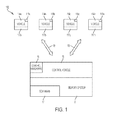
- FIG. 1 illustrates a system for enabling a control vehicle to automatically divide a geographical area into sectors and direct an undesirable vegetation removal process, in accordance with embodiments of the present invention.
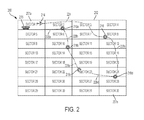
- FIG. 2 illustrates a system comprising vehicles enabled to automatically divide a geographical area into sectors and direct an undesirable vegetation removal process, in accordance with embodiments of the present invention.
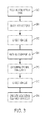
- FIG. 3 illustrates an algorithm detailing a process flow enabled by the system of FIG. 1 for enabling a control vehicle to automatically divide a geographical area into sectors and direct an undesirable vegetation removal process, in accordance with embodiments of the present invention.
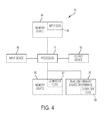
- FIG. 4 illustrates a computer system used by or comprised by the system of FIG. 1 for enabling a control vehicle to automatically divide a geographical area into sectors and direct an undesirable vegetation removal process, in accordance with embodiments of the present invention.
- FIG. 1 illustrates a system 100 for enabling control vehicle 15 to automatically divide a geographical area into sectors and direct an undesirable vegetation removal process, in accordance with embodiments of the present invention.
- System 100 enables a process for automated control of undesirable vegetation (e.g., weeds) via usage of aerial and land/terrestrial vehicles by: identifying and locating undesirable vegetation (via vehicles 114 a . . . 114 n ) and automatically directing vehicle 15 to a target location (comprising undesirable vegetation) for removal of the undesirable vegetation. Additionally, vehicles 114 a . . . 114 n may return to a location of vehicle 15 for recharging (e.g., batteries) via vehicle 15 .
- undesirable vegetation e.g., weeds
- System 100 of FIG. 1 includes a control vehicle 15 in communication with vehicles 114 a . . . 114 n (comprising video devices 117 a . . . 117 n such as, inter alia, a video camera and control hardware 119 a . . . 119 n comprising sensor devices such as, inter alia, an optical sensor, a GPS sensor, etc.) via a wireless network 118 .
- Vehicles 114 a . . . 114 n i.e., control hardware 119 a . . . 119 n internal to vehicles 114 a . . . 114 n
- control vehicle 15 i.e., control hardware 19
- each may comprise an embedded computer.
- An embedded computer is defined herein as a remotely portable dedicated computer comprising a combination of computer hardware and software (fixed in capability or programmable) specifically designed for executing a specialized function.
- Programmable embedded computers may comprise specialized programming interfaces.
- vehicles 114 a . . . 114 n i.e., control hardware 119 a . . . 119 n internal to vehicles 114 a . . .
- control vehicle 15 i.e., control hardware 19
- control vehicle 15 may each comprise a specialized hardware device comprising specialized (non-generic) hardware and circuitry (i.e., specialized discrete non-generic analog, digital, and logic based circuitry) for executing a process described with respect to FIGS. 1-4 .
- the specialized discrete non-generic analog, digital, and logic based circuitry may include proprietary specially designed components (e.g., a specialized integrated circuit, such as for example an Application Specific Integrated Circuit (ASIC) designed for only implementing an automated process for automatically dividing a geographical area into sectors and directing an undesirable vegetation removal process.
- ASIC Application Specific Integrated Circuit
- Control vehicle 15 includes a memory system 8 , software 17 , and control hardware 19 (all sensors and associated control hardware for enabling software 17 to execute a process for automatically dividing a geographical area into sectors and directing an undesirable vegetation removal process).
- Control hardware 19 may include sensors. Sensors may include, inter alia, GPS sensors, video recording devices, optical sensors, weight sensors, etc. Additionally, control hardware 19 may include a battery charging station for recharging batteries of vehicles 114 a . . . 114 n .
- the memory system 8 may include a single memory system. Alternatively, the memory system may include a plurality of memory systems. Each of vehicles 114 a . . .
- control vehicle 15 may comprise any vehicle that does not require a human operator to be located within the vehicles 114 a . . . 114 n or control vehicle 15 such as, inter alia, a remote controlled vehicle (e.g., an aircraft flown by a pilot at a ground control station), an autonomously controlled vehicle (e.g., an aircraft controlled based on pre-programmed flight plans and may include an intelligence algorithm that would enable vehicles 114 a . . . 114 n or control vehicle 15 to know it's location and self-determine a route to an audience member), a pre-programmed vehicle, etc.
- Vehicles 114 a and control vehicle 15 may comprise any type of vehicle that includes a human operator located within the vehicle (e.g., an aircraft, an automobile, a boat or ship, a train, etc.).
- Vehicles 114 a . . . 114 n and control vehicle 15 may include, inter alia, an aerial vehicle, a land based vehicle, a marine (water) based vehicle, etc.
- the following implementation example illustrates a vegetation removal process executed by vehicles 114 a . . . 114 n (i.e., an aerial vehicle) and control vehicle 15 (a land based vehicle) thereby enabling vehicles 114 a . . . 114 n to determine locations for the undesirable vegetation and control vehicle 15 to perform a removal process as follows:
- Control vehicle 15 determines a target geographical area for scanning for undesirable vegetation and divides the target geographical area into sectors (i.e., as illustrated with respect to FIG. 2 , infra) corresponding to flight ranges of vehicles 114 a . . . 114 n .
- Vehicles 114 a . . . 114 n are directed to associated sectors to perform an automated discovery patrol and scan associated sectors for undesirable vegetation. Coordinates for the undesirable vegetation in each sector (retrieved by vehicles 114 a . . . 114 n ) are transmitted back to control vehicle 15 and in response vehicles 114 a . . . 114 n are directed to control vehicle 15 for a battery recharging process.
- Control vehicle 15 determines (based on the received coordinates) an optimal travel path (e.g., a shortest travel path) to each area of undesirable vegetation in each sector and subsequently travels, via the optimal travel path, to each area of undesirable vegetation for removal.
- the removal process is executed by control vehicle 15 and may include spraying a chemical substance (e.g., a herbicide) over the areas of undesirable vegetation growth to eliminate the areas of undesirable vegetation growth.
- the removal process may include mechanically removing (via control vehicle 15 ) the areas of undesirable vegetation growth.
- control vehicle 15 may enable a soil turning apparatus (a rake, a shovel, a tiller, etc.) for removal of the undesirable vegetation growth.
- FIG. 2 illustrates a system 200 comprising a vehicle 214 and control vehicle 215 enabled to automatically divide a geographical area 202 into sectors 207 a . . . 207 n and direct an undesirable vegetation removal process, in accordance with embodiments of the present invention.
- Geographical area 202 comprises areas undesirable vegetation 218 a . . . 218 n and is divided into (virtual) sectors 207 a . . . 207 n .
- the aforementioned process described with respect to FIG. 1 enables control vehicle 215 to direct vehicle 214 (e.g., via path 224 ) to scan each of sectors 207 a . . . 207 n for undesirable vegetation (e.g., undesirable vegetation 218 a . . .
- control vehicle 218 n determines an optimal travel path (a combination of travel paths 228 a - 218 n ) to each area of undesirable vegetation (i.e., undesirable vegetation 218 a . . . 218 n ) in each sector (of sectors 207 a . . . 207 n ) and subsequently travels, via the optimal travel path, to each area of undesirable vegetation for removal.
- an optimal travel path a combination of travel paths 228 a - 218 n
- FIG. 3 illustrates an algorithm detailing a process flow enabled by system 100 of FIG. 1 for enabling a control vehicle to automatically divide a geographical area into sectors and direct an undesirable vegetation removal process, in accordance with embodiments of the present invention.
- Each of the steps in the algorithm of FIG. 3 may be enabled and executed in any order by a computer processor(s) or any type of specialized hardware executing computer code.
- step 300 data (describing a specified geographical area for undesirable vegetation scanning) is received by a control vehicle (e.g., control vehicle 15 of FIG. 1 ).
- step 301 the specified geographical area is divided into a plurality of sectors.
- a scouting (aerial) vehicle is directed (by the control vehicle) to multiple sectors of the plurality of sectors.
- step 304 geographical coordinates (associated with areas of undesirable vegetation (determined via a patrol and scanning process executed by the second vehicle via, e.g., a video device) growth located within the multiple sectors) are received from the second vehicle. Additionally, the second vehicle may be directed back to a current location of the first vehicle for recharging (via the first vehicle) the second vehicle.
- step 310 an optimal travel path from a current location of the first vehicle to the areas of undesirable vegetation growth located within the multiple sectors is determined based on analysis of the geographical coordinates.
- step 312 the first vehicle is directed to the areas of undesirable vegetation growth (in each sector) via the optimal travel path.
- a process for eliminating the areas of undesirable vegetation growth is executed upon arrival of the first vehicle to the areas of undesirable vegetation growth.
- the elimination process is executed by the first vehicle and may include spraying a chemical substance (e.g., a herbicide) over the areas of undesirable vegetation growth to eliminate the areas of undesirable vegetation growth.
- the removal process may include mechanically removing (via the first vehicle) the areas of undesirable vegetation growth.
- the first vehicle may enable a soil turning apparatus (a rake, a shovel, a tiller, etc.) for removal of the undesirable vegetation growth.
- FIG. 4 illustrates a computer system 90 (e.g., control vehicle 15 (i.e., control hardware 19 internal to control vehicle 15 ) and vehicles 114 a . . . 114 n (i.e., control hardware 119 a . . . 119 n internal to vehicles 114 a . . . 114 n ) used by or comprised by the system of FIG. 1 for enabling a process for automatically dividing a geographical area into sectors and directing an undesirable vegetation removal process, in accordance with embodiments of the present invention.
- control vehicle 15 i.e., control hardware 19 internal to control vehicle 15
- vehicles 114 a . . . 114 n i.e., control hardware 119 a . . . 119 n internal to vehicles 114 a . . . 114 n
- aspects of the present invention may take the form of an entirely hardware embodiment, an entirely software embodiment (including firmware, resident software, microcode, etc.) or an embodiment combining software and hardware aspects that may all generally be referred to herein as a “circuit,” “module,” or “system.”
- the present invention may be a system, a method, and/or a computer program product.
- the computer program product may include a computer readable storage medium (or media) having computer readable program instructions thereon for causing a processor to carry out aspects of the present invention.
- the computer readable storage medium can be a tangible device that can retain and store instructions for use by an instruction execution device.
- the computer readable storage medium may be, for example, but is not limited to, an electronic storage device, a magnetic storage device, an optical storage device, an electromagnetic storage device, a semiconductor storage device, or any suitable combination of the foregoing.
- a non-exhaustive list of more specific examples of the computer readable storage medium includes the following: a portable computer diskette, a hard disk, a random access memory (RAM), a read-only memory (ROM), an erasable programmable read-only memory (EPROM or Flash memory), a static random access memory (SRAM), a portable compact disc read-only memory (CD-ROM), a digital versatile disk (DVD), a memory stick, a floppy disk, a mechanically encoded device such as punch-cards or raised structures in a groove having instructions recorded thereon, and any suitable combination of the foregoing.
- RAM random access memory
- ROM read-only memory
- EPROM or Flash memory erasable programmable read-only memory
- SRAM static random access memory
- CD-ROM compact disc read-only memory
- DVD digital versatile disk
- memory stick a floppy disk
- a mechanically encoded device such as punch-cards or raised structures in a groove having instructions recorded thereon
- a computer readable storage medium is not to be construed as being transitory signals per se, such as radio waves or other freely propagating electromagnetic waves, electromagnetic waves propagating through a waveguide or other transmission media (e.g., light pulses passing through a fiber-optic cable), or electrical signals transmitted through a wire.
- Computer readable program instructions described herein can be downloaded to respective computing/processing devices from a computer readable storage medium or to an external computer or external storage device via a network, for example, the Internet, a local area network, a wide area network and/or a wireless network.
- the network may comprise copper transmission cables, optical transmission fibers, wireless transmission, routers, firewalls, switches, gateway computers and/or edge servers.
- a network adapter card or network interface in each computing/processing apparatus receives computer readable program instructions from the network and forwards the computer readable program instructions for storage in a computer readable storage medium within the respective computing/processing device.
- Computer readable program instructions for carrying out operations of the present invention may be assembler instructions, instruction-set-architecture (ISA) instructions, machine instructions, machine dependent instructions, microcode, firmware instructions, state-setting data, or either source code or object code written in any combination of one or more programming languages, including an object oriented programming language such as Smalltalk, C++ or the like, and conventional procedural programming languages, such as the “C” programming language or similar programming languages.
- the computer readable program instructions may execute entirely on the user's computer, partly on the user's computer, as a stand-alone software package, partly on the user's computer and partly on a remote computer or entirely on the remote computer or server.
- the remote computer may be connected to the user's computer through any type of network, including a local area network (LAN) or a wide area network (WAN), or the connection may be made to an external computer (for example, through the Internet using an Internet Service Provider).
- electronic circuitry including, for example, programmable logic circuitry, field-programmable gate arrays (FPGA), or programmable logic arrays (PLA) may execute the computer readable program instructions by utilizing state information of the computer readable program instructions to personalize the electronic circuitry, in order to perform aspects of the present invention.
- These computer readable program instructions may be provided to a processor of a general purpose computer, special purpose computer, or other programmable data processing device to produce a machine, such that the instructions, which execute via the processor of the computer or other programmable data processing device, create means for implementing the functions/acts specified in the flowchart and/or block diagram block or blocks.
- These computer readable program instructions may also be stored in a computer readable storage medium that can direct a computer, a programmable data processing device, and/or other devices to function in a particular manner, such that the computer readable storage medium having instructions stored therein comprises an article of manufacture including instructions which implement aspects of the function/act specified in the flowchart and/or block diagram block or blocks.
- the computer readable program instructions may also be loaded onto a computer, other programmable data processing device, or other device to cause a series of operational steps to be performed on the computer, other programmable device or other device to produce a computer implemented process, such that the instructions which execute on the computer, other programmable device, or other device implement the functions/acts specified in the flowchart and/or block diagram block or blocks.
- each block in the flowchart or block diagrams may represent a module, segment, or portion of instructions, which comprises one or more executable instructions for implementing the specified logical function(s).
- the functions noted in the block may occur out of the order noted in the figures.
- two blocks shown in succession may, in fact, be executed substantially concurrently, or the blocks may sometimes be executed in the reverse order, depending upon the functionality involved.
- the computer system 90 illustrated in FIG. 5 includes a processor 91 , an input device 92 coupled to the processor 91 , an output device 93 coupled to the processor 91 , and memory devices 94 and 95 each coupled to the processor 91 .
- the input device 92 may be, inter alia, a keyboard, a mouse, a camera, a touchscreen, etc.
- the output device 93 may be, inter alia, a printer, a plotter, a computer screen, a magnetic tape, a removable hard disk, a floppy disk, etc.
- the memory devices 94 and 95 may be, inter alia, a hard disk, a floppy disk, a magnetic tape, an optical storage such as a compact disc (CD) or a digital video disc (DVD), a dynamic random access memory (DRAM), a read-only memory (ROM), etc.
- the memory device 95 includes a computer code 97 .
- the computer code 97 includes algorithms (e.g., the algorithm of FIG. 3 ) for enabling a process for automatically dividing a geographical area into sectors and directing an undesirable vegetation removal process.
- the processor 91 executes the computer code 97 .
- the memory device 94 includes input data 96 .
- the input data 96 includes input required by the computer code 97 .
- the output device 93 displays output from the computer code 97 .
- Either or both memory devices 94 and 95 may include algorithms (e.g., the algorithm of FIG. 4 ) and may be used as a computer usable medium (or a computer readable medium or a program storage device) having a computer readable program code embodied therein and/or having other data stored therein, wherein the computer readable program code includes the computer code 97 .
- a computer program product (or, alternatively, an article of manufacture) of the computer system 90 may include the computer usable medium (or the program storage device).
- stored computer program code 84 may be stored on a static, nonremovable, read-only storage medium such as a Read-Only Memory (ROM) device 85 , or may be accessed by processor 91 directly from such a static, nonremovable, read-only medium 85 .
- stored computer program code 97 may be stored as computer-readable firmware 85 , or may be accessed by processor 91 directly from such firmware 85 , rather than from a more dynamic or removable hardware data-storage device 95 , such as a hard drive or optical disc.
- any of the components of the present invention could be created, integrated, hosted, maintained, deployed, managed, serviced, etc. by a service supplier who offers to enable a process for automatically dividing a geographical area into sectors and directing an undesirable vegetation removal process.
- the present invention discloses a process for deploying, creating, integrating, hosting, maintaining, and/or integrating computing infrastructure, including integrating computer-readable code into the computer system 90 , wherein the code in combination with the computer system 90 is capable of performing a method for enabling a process for automatically dividing a geographical area into sectors and directing an undesirable vegetation removal process.
- the invention provides a business method that performs the process steps of the invention on a subscription, advertising, and/or fee basis.
- a service supplier such as a Solution Integrator
- the service supplier can create, maintain, support, etc. a computer infrastructure that performs the process steps of the invention for one or more customers.
- the service supplier can receive payment from the customer(s) under a subscription and/or fee agreement and/or the service supplier can receive payment from the sale of advertising content to one or more third parties.
- FIG. 4 shows the computer system 90 as a particular configuration of hardware and software, any configuration of hardware and software, as would be known to a person of ordinary skill in the art, may be utilized for the purposes stated supra in conjunction with the particular computer system 90 of FIG. 5 .
- the memory devices 94 and 95 may be portions of a single memory device rather than separate memory devices.
Landscapes
- Engineering & Computer Science (AREA)
- Life Sciences & Earth Sciences (AREA)
- Remote Sensing (AREA)
- Radar, Positioning & Navigation (AREA)
- Automation & Control Theory (AREA)
- General Physics & Mathematics (AREA)
- Physics & Mathematics (AREA)
- Environmental Sciences (AREA)
- Aviation & Aerospace Engineering (AREA)
- Health & Medical Sciences (AREA)
- Mechanical Engineering (AREA)
- Soil Sciences (AREA)
- Pest Control & Pesticides (AREA)
- Zoology (AREA)
- Wood Science & Technology (AREA)
- Insects & Arthropods (AREA)
- Toxicology (AREA)
- General Health & Medical Sciences (AREA)
- Business, Economics & Management (AREA)
- Artificial Intelligence (AREA)
- Evolutionary Computation (AREA)
- Game Theory and Decision Science (AREA)
- Medical Informatics (AREA)
- Catching Or Destruction (AREA)
- Soil Working Implements (AREA)
Abstract
Description
- The present invention relates generally to a method for implementing a vehicle based automated vegetation removal process and in particular to a method and associated system for dividing an area into sectors and directing a vehicle to sectors comprising undesirable vegetation for removal.
- Implementing weed control processes typically includes an inaccurate process with little flexibility. Weed control herbicides process may enhance negative environmental impacts and typically involve an unreliable process that may be time consuming and require a large amount of resources. Accordingly, there exists a need in the art to overcome at least some of the deficiencies and limitations described herein above.
- A first aspect of the invention provides an automated vegetation removal method comprising: receiving, by a processor of a first vehicle, data describing a specified geographical area for scanning; dividing, by the processor, the specified geographical area into a plurality of sectors; directing, by the processor, a second vehicle to a first sector of the plurality of sectors; receiving, by the processor from the second vehicle, first geographical coordinates associated with areas of undesirable vegetation growth located within the first sector; determining, by the processor based on analysis of the first geographical coordinates, an optimal travel path from a current location of the first vehicle to the areas of undesirable vegetation growth located within the first sector; directing, by the processor, the first vehicle to the areas of undesirable vegetation growth via the optimal travel path; executing upon arrival of the first vehicle to the areas of undesirable vegetation growth, by the processor via the first vehicle, a process for eliminating the areas of undesirable vegetation growth.
- A second aspect of the invention provides a computer program product, comprising a computer readable hardware storage device storing a computer readable program code, the computer readable program code comprising an algorithm that when executed by a processor of a first vehicle implements automated vegetation removal method, the method comprising: receiving, by the processor, data describing a specified geographical area for scanning; dividing, by the processor, the specified geographical area into a plurality of sectors; directing, by the processor, a second vehicle to a first sector of the plurality of sectors; receiving, by the processor from the second vehicle, first geographical coordinates associated with areas of undesirable vegetation growth located within the first sector; determining, by the processor based on analysis of the first geographical coordinates, an optimal travel path from a current location of the first vehicle to the areas of undesirable vegetation growth located within the first sector; directing, by the processor, the first vehicle to the areas of undesirable vegetation growth via the optimal travel path; executing upon arrival of the first vehicle to the areas of undesirable vegetation growth, by the processor via the first vehicle, a process for eliminating the areas of undesirable vegetation growth.
- A third aspect of the invention provides a first vehicle comprising a processor coupled to a computer-readable memory unit, the memory unit comprising instructions that when executed by the processor executes automated vegetation removal method comprising: receiving, by the processor, data describing a specified geographical area for scanning; dividing, by the processor, the specified geographical area into a plurality of sectors; directing, by the processor, a second vehicle to a first sector of the plurality of sectors; receiving, by the processor from the second vehicle, first geographical coordinates associated with areas of undesirable vegetation growth located within the first sector; determining, by the processor based on analysis of the first geographical coordinates, an optimal travel path from a current location of the first vehicle to the areas of undesirable vegetation growth located within the first sector; directing, by the processor, the first vehicle to the areas of undesirable vegetation growth via the optimal travel path; executing upon arrival of the first vehicle to the areas of undesirable vegetation growth, by the processor via the first vehicle, a process for eliminating the areas of undesirable vegetation growth.
- The present invention advantageously provides a simple method and associated system capable of implementing weed control processes.
-
FIG. 1 illustrates a system for enabling a control vehicle to automatically divide a geographical area into sectors and direct an undesirable vegetation removal process, in accordance with embodiments of the present invention. -
FIG. 2 illustrates a system comprising vehicles enabled to automatically divide a geographical area into sectors and direct an undesirable vegetation removal process, in accordance with embodiments of the present invention. -
FIG. 3 illustrates an algorithm detailing a process flow enabled by the system ofFIG. 1 for enabling a control vehicle to automatically divide a geographical area into sectors and direct an undesirable vegetation removal process, in accordance with embodiments of the present invention. -
FIG. 4 illustrates a computer system used by or comprised by the system ofFIG. 1 for enabling a control vehicle to automatically divide a geographical area into sectors and direct an undesirable vegetation removal process, in accordance with embodiments of the present invention. -
FIG. 1 illustrates asystem 100 for enablingcontrol vehicle 15 to automatically divide a geographical area into sectors and direct an undesirable vegetation removal process, in accordance with embodiments of the present invention.System 100 enables a process for automated control of undesirable vegetation (e.g., weeds) via usage of aerial and land/terrestrial vehicles by: identifying and locating undesirable vegetation (viavehicles 114 a . . . 114 n) and automatically directingvehicle 15 to a target location (comprising undesirable vegetation) for removal of the undesirable vegetation. Additionally,vehicles 114 a . . . 114 n may return to a location ofvehicle 15 for recharging (e.g., batteries) viavehicle 15. -
System 100 ofFIG. 1 includes acontrol vehicle 15 in communication withvehicles 114 a . . . 114 n (comprisingvideo devices 117 a . . . 117 n such as, inter alia, a video camera andcontrol hardware 119 a . . . 119 n comprising sensor devices such as, inter alia, an optical sensor, a GPS sensor, etc.) via a wireless network 118.Vehicles 114 a . . . 114 n (i.e.,control hardware 119 a . . . 119 n internal tovehicles 114 a . . . 114 n) and control vehicle 15 (i.e., control hardware 19) each may comprise an embedded computer. An embedded computer is defined herein as a remotely portable dedicated computer comprising a combination of computer hardware and software (fixed in capability or programmable) specifically designed for executing a specialized function. Programmable embedded computers may comprise specialized programming interfaces. Additionally,vehicles 114 a . . . 114 n (i.e.,control hardware 119 a . . . 119 n internal tovehicles 114 a . . . 114 n vehicles) and control vehicle 15 (i.e., control hardware 19) may each comprise a specialized hardware device comprising specialized (non-generic) hardware and circuitry (i.e., specialized discrete non-generic analog, digital, and logic based circuitry) for executing a process described with respect toFIGS. 1-4 . The specialized discrete non-generic analog, digital, and logic based circuitry may include proprietary specially designed components (e.g., a specialized integrated circuit, such as for example an Application Specific Integrated Circuit (ASIC) designed for only implementing an automated process for automatically dividing a geographical area into sectors and directing an undesirable vegetation removal process.Control vehicle 15 includes amemory system 8,software 17, and control hardware 19 (all sensors and associated control hardware for enablingsoftware 17 to execute a process for automatically dividing a geographical area into sectors and directing an undesirable vegetation removal process).Control hardware 19 may include sensors. Sensors may include, inter alia, GPS sensors, video recording devices, optical sensors, weight sensors, etc. Additionally,control hardware 19 may include a battery charging station for recharging batteries ofvehicles 114 a . . . 114 n. Thememory system 8 may include a single memory system. Alternatively, the memory system may include a plurality of memory systems. Each ofvehicles 114 a . . . 114 n andcontrol vehicle 15 may comprise any vehicle that does not require a human operator to be located within thevehicles 114 a . . . 114 n orcontrol vehicle 15 such as, inter alia, a remote controlled vehicle (e.g., an aircraft flown by a pilot at a ground control station), an autonomously controlled vehicle (e.g., an aircraft controlled based on pre-programmed flight plans and may include an intelligence algorithm that would enablevehicles 114 a . . . 114 n or controlvehicle 15 to know it's location and self-determine a route to an audience member), a pre-programmed vehicle, etc. Alternatively,vehicles 114 a . . . 114 n andcontrol vehicle 15 may comprise any type of vehicle that includes a human operator located within the vehicle (e.g., an aircraft, an automobile, a boat or ship, a train, etc.).Vehicles 114 a . . . 114 n andcontrol vehicle 15 may include, inter alia, an aerial vehicle, a land based vehicle, a marine (water) based vehicle, etc. - The following implementation example illustrates a vegetation removal process executed by
vehicles 114 a . . . 114 n (i.e., an aerial vehicle) and control vehicle 15 (a land based vehicle) thereby enablingvehicles 114 a . . . 114 n to determine locations for the undesirable vegetation andcontrol vehicle 15 to perform a removal process as follows: -
Control vehicle 15 determines a target geographical area for scanning for undesirable vegetation and divides the target geographical area into sectors (i.e., as illustrated with respect toFIG. 2 , infra) corresponding to flight ranges ofvehicles 114 a . . . 114 n.Vehicles 114 a . . . 114 n are directed to associated sectors to perform an automated discovery patrol and scan associated sectors for undesirable vegetation. Coordinates for the undesirable vegetation in each sector (retrieved byvehicles 114 a . . . 114 n) are transmitted back to controlvehicle 15 and inresponse vehicles 114 a . . . 114 n are directed to controlvehicle 15 for a battery recharging process.Control vehicle 15 determines (based on the received coordinates) an optimal travel path (e.g., a shortest travel path) to each area of undesirable vegetation in each sector and subsequently travels, via the optimal travel path, to each area of undesirable vegetation for removal. The removal process is executed bycontrol vehicle 15 and may include spraying a chemical substance (e.g., a herbicide) over the areas of undesirable vegetation growth to eliminate the areas of undesirable vegetation growth. Alternatively, the removal process may include mechanically removing (via control vehicle 15) the areas of undesirable vegetation growth. For example,control vehicle 15 may enable a soil turning apparatus (a rake, a shovel, a tiller, etc.) for removal of the undesirable vegetation growth. -
FIG. 2 illustrates asystem 200 comprising avehicle 214 andcontrol vehicle 215 enabled to automatically divide ageographical area 202 intosectors 207 a . . . 207 n and direct an undesirable vegetation removal process, in accordance with embodiments of the present invention.Geographical area 202 comprises areasundesirable vegetation 218 a . . . 218 n and is divided into (virtual)sectors 207 a . . . 207 n. The aforementioned process described with respect toFIG. 1 enablescontrol vehicle 215 to direct vehicle 214 (e.g., via path 224) to scan each ofsectors 207 a . . . 207 n for undesirable vegetation (e.g.,undesirable vegetation 218 a . . . 218 n) and transmit associated geographical coordinates (for areas of undesirable vegetation growth) back tocontrol vehicle 215 for analysis. In response, control vehicle determines an optimal travel path (a combination of travel paths 228 a-218 n) to each area of undesirable vegetation (i.e.,undesirable vegetation 218 a . . . 218 n) in each sector (ofsectors 207 a . . . 207 n) and subsequently travels, via the optimal travel path, to each area of undesirable vegetation for removal. -
FIG. 3 illustrates an algorithm detailing a process flow enabled bysystem 100 ofFIG. 1 for enabling a control vehicle to automatically divide a geographical area into sectors and direct an undesirable vegetation removal process, in accordance with embodiments of the present invention. Each of the steps in the algorithm ofFIG. 3 may be enabled and executed in any order by a computer processor(s) or any type of specialized hardware executing computer code. Instep 300, data (describing a specified geographical area for undesirable vegetation scanning) is received by a control vehicle (e.g.,control vehicle 15 ofFIG. 1 ). Instep 301, the specified geographical area is divided into a plurality of sectors. Instep 302, a scouting (aerial) vehicle is directed (by the control vehicle) to multiple sectors of the plurality of sectors. Instep 304, geographical coordinates (associated with areas of undesirable vegetation (determined via a patrol and scanning process executed by the second vehicle via, e.g., a video device) growth located within the multiple sectors) are received from the second vehicle. Additionally, the second vehicle may be directed back to a current location of the first vehicle for recharging (via the first vehicle) the second vehicle. Instep 310, an optimal travel path from a current location of the first vehicle to the areas of undesirable vegetation growth located within the multiple sectors is determined based on analysis of the geographical coordinates. Instep 312, the first vehicle is directed to the areas of undesirable vegetation growth (in each sector) via the optimal travel path. Instep 314, a process for eliminating the areas of undesirable vegetation growth is executed upon arrival of the first vehicle to the areas of undesirable vegetation growth. The elimination process is executed by the first vehicle and may include spraying a chemical substance (e.g., a herbicide) over the areas of undesirable vegetation growth to eliminate the areas of undesirable vegetation growth. Alternatively, the removal process may include mechanically removing (via the first vehicle) the areas of undesirable vegetation growth. For example, the first vehicle may enable a soil turning apparatus (a rake, a shovel, a tiller, etc.) for removal of the undesirable vegetation growth. -
FIG. 4 illustrates a computer system 90 (e.g., control vehicle 15 (i.e.,control hardware 19 internal to control vehicle 15) andvehicles 114 a . . . 114 n (i.e.,control hardware 119 a . . . 119 n internal tovehicles 114 a . . . 114 n) used by or comprised by the system ofFIG. 1 for enabling a process for automatically dividing a geographical area into sectors and directing an undesirable vegetation removal process, in accordance with embodiments of the present invention. - Aspects of the present invention may take the form of an entirely hardware embodiment, an entirely software embodiment (including firmware, resident software, microcode, etc.) or an embodiment combining software and hardware aspects that may all generally be referred to herein as a “circuit,” “module,” or “system.”
- The present invention may be a system, a method, and/or a computer program product. The computer program product may include a computer readable storage medium (or media) having computer readable program instructions thereon for causing a processor to carry out aspects of the present invention.
- The computer readable storage medium can be a tangible device that can retain and store instructions for use by an instruction execution device. The computer readable storage medium may be, for example, but is not limited to, an electronic storage device, a magnetic storage device, an optical storage device, an electromagnetic storage device, a semiconductor storage device, or any suitable combination of the foregoing. A non-exhaustive list of more specific examples of the computer readable storage medium includes the following: a portable computer diskette, a hard disk, a random access memory (RAM), a read-only memory (ROM), an erasable programmable read-only memory (EPROM or Flash memory), a static random access memory (SRAM), a portable compact disc read-only memory (CD-ROM), a digital versatile disk (DVD), a memory stick, a floppy disk, a mechanically encoded device such as punch-cards or raised structures in a groove having instructions recorded thereon, and any suitable combination of the foregoing. A computer readable storage medium, as used herein, is not to be construed as being transitory signals per se, such as radio waves or other freely propagating electromagnetic waves, electromagnetic waves propagating through a waveguide or other transmission media (e.g., light pulses passing through a fiber-optic cable), or electrical signals transmitted through a wire.
- Computer readable program instructions described herein can be downloaded to respective computing/processing devices from a computer readable storage medium or to an external computer or external storage device via a network, for example, the Internet, a local area network, a wide area network and/or a wireless network. The network may comprise copper transmission cables, optical transmission fibers, wireless transmission, routers, firewalls, switches, gateway computers and/or edge servers. A network adapter card or network interface in each computing/processing apparatus receives computer readable program instructions from the network and forwards the computer readable program instructions for storage in a computer readable storage medium within the respective computing/processing device.
- Computer readable program instructions for carrying out operations of the present invention may be assembler instructions, instruction-set-architecture (ISA) instructions, machine instructions, machine dependent instructions, microcode, firmware instructions, state-setting data, or either source code or object code written in any combination of one or more programming languages, including an object oriented programming language such as Smalltalk, C++ or the like, and conventional procedural programming languages, such as the “C” programming language or similar programming languages. The computer readable program instructions may execute entirely on the user's computer, partly on the user's computer, as a stand-alone software package, partly on the user's computer and partly on a remote computer or entirely on the remote computer or server. In the latter scenario, the remote computer may be connected to the user's computer through any type of network, including a local area network (LAN) or a wide area network (WAN), or the connection may be made to an external computer (for example, through the Internet using an Internet Service Provider). In some embodiments, electronic circuitry including, for example, programmable logic circuitry, field-programmable gate arrays (FPGA), or programmable logic arrays (PLA) may execute the computer readable program instructions by utilizing state information of the computer readable program instructions to personalize the electronic circuitry, in order to perform aspects of the present invention.
- Aspects of the present invention are described herein with reference to flowchart illustrations and/or block diagrams of methods, device (systems), and computer program products according to embodiments of the invention. It will be understood that each block of the flowchart illustrations and/or block diagrams, and combinations of blocks in the flowchart illustrations and/or block diagrams, can be implemented by computer readable program instructions.
- These computer readable program instructions may be provided to a processor of a general purpose computer, special purpose computer, or other programmable data processing device to produce a machine, such that the instructions, which execute via the processor of the computer or other programmable data processing device, create means for implementing the functions/acts specified in the flowchart and/or block diagram block or blocks. These computer readable program instructions may also be stored in a computer readable storage medium that can direct a computer, a programmable data processing device, and/or other devices to function in a particular manner, such that the computer readable storage medium having instructions stored therein comprises an article of manufacture including instructions which implement aspects of the function/act specified in the flowchart and/or block diagram block or blocks.
- The computer readable program instructions may also be loaded onto a computer, other programmable data processing device, or other device to cause a series of operational steps to be performed on the computer, other programmable device or other device to produce a computer implemented process, such that the instructions which execute on the computer, other programmable device, or other device implement the functions/acts specified in the flowchart and/or block diagram block or blocks.
- The flowchart and block diagrams in the Figures illustrate the architecture, functionality, and operation of possible implementations of systems, methods, and computer program products according to various embodiments of the present invention. In this regard, each block in the flowchart or block diagrams may represent a module, segment, or portion of instructions, which comprises one or more executable instructions for implementing the specified logical function(s). In some alternative implementations, the functions noted in the block may occur out of the order noted in the figures. For example, two blocks shown in succession may, in fact, be executed substantially concurrently, or the blocks may sometimes be executed in the reverse order, depending upon the functionality involved. It will also be noted that each block of the block diagrams and/or flowchart illustration, and combinations of blocks in the block diagrams and/or flowchart illustration, can be implemented by special purpose hardware-based systems that perform the specified functions or acts or carry out combinations of special purpose hardware and computer instructions.
- The computer system 90 illustrated in
FIG. 5 includes aprocessor 91, aninput device 92 coupled to theprocessor 91, anoutput device 93 coupled to theprocessor 91, andmemory devices processor 91. Theinput device 92 may be, inter alia, a keyboard, a mouse, a camera, a touchscreen, etc. Theoutput device 93 may be, inter alia, a printer, a plotter, a computer screen, a magnetic tape, a removable hard disk, a floppy disk, etc. Thememory devices memory device 95 includes acomputer code 97. Thecomputer code 97 includes algorithms (e.g., the algorithm ofFIG. 3 ) for enabling a process for automatically dividing a geographical area into sectors and directing an undesirable vegetation removal process. Theprocessor 91 executes thecomputer code 97. Thememory device 94 includesinput data 96. Theinput data 96 includes input required by thecomputer code 97. Theoutput device 93 displays output from thecomputer code 97. Either or bothmemory devices 94 and 95 (or one or more additional memory devices such as read only memory device 96) may include algorithms (e.g., the algorithm ofFIG. 4 ) and may be used as a computer usable medium (or a computer readable medium or a program storage device) having a computer readable program code embodied therein and/or having other data stored therein, wherein the computer readable program code includes thecomputer code 97. Generally, a computer program product (or, alternatively, an article of manufacture) of the computer system 90 may include the computer usable medium (or the program storage device). - In some embodiments, rather than being stored and accessed from a hard drive, optical disc or other writeable, rewriteable, or removable
hardware memory device 95, stored computer program code 84 (e.g., including an algorithm) may be stored on a static, nonremovable, read-only storage medium such as a Read-Only Memory (ROM) device 85, or may be accessed byprocessor 91 directly from such a static, nonremovable, read-only medium 85. Similarly, in some embodiments, storedcomputer program code 97 may be stored as computer-readable firmware 85, or may be accessed byprocessor 91 directly from such firmware 85, rather than from a more dynamic or removable hardware data-storage device 95, such as a hard drive or optical disc. - Still yet, any of the components of the present invention could be created, integrated, hosted, maintained, deployed, managed, serviced, etc. by a service supplier who offers to enable a process for automatically dividing a geographical area into sectors and directing an undesirable vegetation removal process. Thus, the present invention discloses a process for deploying, creating, integrating, hosting, maintaining, and/or integrating computing infrastructure, including integrating computer-readable code into the computer system 90, wherein the code in combination with the computer system 90 is capable of performing a method for enabling a process for automatically dividing a geographical area into sectors and directing an undesirable vegetation removal process. In another embodiment, the invention provides a business method that performs the process steps of the invention on a subscription, advertising, and/or fee basis. That is, a service supplier, such as a Solution Integrator, could offer to enable a process for automatically dividing a geographical area into sectors and directing an undesirable vegetation removal process. In this case, the service supplier can create, maintain, support, etc. a computer infrastructure that performs the process steps of the invention for one or more customers. In return, the service supplier can receive payment from the customer(s) under a subscription and/or fee agreement and/or the service supplier can receive payment from the sale of advertising content to one or more third parties. While
FIG. 4 shows the computer system 90 as a particular configuration of hardware and software, any configuration of hardware and software, as would be known to a person of ordinary skill in the art, may be utilized for the purposes stated supra in conjunction with the particular computer system 90 ofFIG. 5 . For example, thememory devices - While embodiments of the present invention have been described herein for purposes of illustration, many modifications and changes will become apparent to those skilled in the art. Accordingly, the appended claims are intended to encompass all such modifications and changes as fall within the true spirit and scope of this invention.
Claims (20)
Priority Applications (1)
| Application Number | Priority Date | Filing Date | Title |
|---|---|---|---|
| US15/291,649 US11464168B2 (en) | 2016-10-12 | 2016-10-12 | Automated vegetation removal |
Applications Claiming Priority (1)
| Application Number | Priority Date | Filing Date | Title |
|---|---|---|---|
| US15/291,649 US11464168B2 (en) | 2016-10-12 | 2016-10-12 | Automated vegetation removal |
Publications (2)
| Publication Number | Publication Date |
|---|---|
| US20180098499A1 true US20180098499A1 (en) | 2018-04-12 |
| US11464168B2 US11464168B2 (en) | 2022-10-11 |
Family
ID=61829462
Family Applications (1)
| Application Number | Title | Priority Date | Filing Date |
|---|---|---|---|
| US15/291,649 Active 2038-12-05 US11464168B2 (en) | 2016-10-12 | 2016-10-12 | Automated vegetation removal |
Country Status (1)
| Country | Link |
|---|---|
| US (1) | US11464168B2 (en) |
Cited By (2)
| Publication number | Priority date | Publication date | Assignee | Title |
|---|---|---|---|---|
| US10448585B2 (en) * | 2017-11-14 | 2019-10-22 | Google Llc | Irrigation management via intelligent image analysis |
| DE102019135791B4 (en) * | 2019-12-24 | 2024-03-07 | Felix Meyer | Device and method for picking up stones from agricultural land |
Families Citing this family (1)
| Publication number | Priority date | Publication date | Assignee | Title |
|---|---|---|---|---|
| CN110286670A (en) * | 2019-04-09 | 2019-09-27 | 丰疆智能科技股份有限公司 | Driving path planning system and method for multiple automatic harvesters |
Citations (11)
| Publication number | Priority date | Publication date | Assignee | Title |
|---|---|---|---|---|
| US20120042563A1 (en) * | 2010-08-20 | 2012-02-23 | Noel Wayne Anderson | Robotic pesticide application |
| US8407157B2 (en) * | 2003-12-22 | 2013-03-26 | Deere & Company | Locating harvested material within a work area |
| US8620510B1 (en) * | 2007-04-26 | 2013-12-31 | The Boeing Company | Adaptive multi-vehicle area coverage optimization system and method |
| US20140121881A1 (en) * | 2012-10-23 | 2014-05-01 | Daniel A. DIAZDELCASTILLO | Autonomous and remote control all purpose machine (arcapm) |
| US20140303814A1 (en) * | 2013-03-24 | 2014-10-09 | Bee Robotics Corporation | Aerial farm robot system for crop dusting, planting, fertilizing and other field jobs |
| US20160157414A1 (en) * | 2014-12-05 | 2016-06-09 | Deere & Company | Scouting systems |
| US20160205872A1 (en) * | 2015-01-20 | 2016-07-21 | Elwha Llc | Systems and methods for pruning plants |
| US9421869B1 (en) * | 2015-09-25 | 2016-08-23 | Amazon Technologies, Inc. | Deployment and adjustment of airborne unmanned aerial vehicles |
| US20170031365A1 (en) * | 2015-07-30 | 2017-02-02 | Deer & Company | Uav-based sensing for worksite operations |
| US20170075354A1 (en) * | 2015-09-14 | 2017-03-16 | Deere & Company | Method and arrangement for monitoring the collection of plant material |
| US20200020093A1 (en) * | 2018-07-12 | 2020-01-16 | TerraClear Inc. | Object identification and collection system and method |
Family Cites Families (5)
| Publication number | Priority date | Publication date | Assignee | Title |
|---|---|---|---|---|
| US20120101784A1 (en) | 2010-10-25 | 2012-04-26 | Trimble Navigation Limited | Wide-area agricultural monitoring and prediction |
| US9464902B2 (en) * | 2013-09-27 | 2016-10-11 | Regents Of The University Of Minnesota | Symbiotic unmanned aerial vehicle and unmanned surface vehicle system |
| EP3827654A1 (en) | 2013-11-20 | 2021-06-02 | Rowbot Systems LLC | Agricultural robot for performing multiple functions in argicultural systems |
| CN103869821B (en) * | 2014-04-01 | 2015-02-11 | 绍兴卓群航空科技有限公司 | Onboard automatic pesticide balancing system of agricultural unmanned aerial vehicle |
| WO2016130711A1 (en) * | 2015-02-11 | 2016-08-18 | Aerovironment, Inc. | Pod operating system for a vertical take-off and landing (vtol) unmanned aerial vehicle (uav) |
-
2016
- 2016-10-12 US US15/291,649 patent/US11464168B2/en active Active
Patent Citations (11)
| Publication number | Priority date | Publication date | Assignee | Title |
|---|---|---|---|---|
| US8407157B2 (en) * | 2003-12-22 | 2013-03-26 | Deere & Company | Locating harvested material within a work area |
| US8620510B1 (en) * | 2007-04-26 | 2013-12-31 | The Boeing Company | Adaptive multi-vehicle area coverage optimization system and method |
| US20120042563A1 (en) * | 2010-08-20 | 2012-02-23 | Noel Wayne Anderson | Robotic pesticide application |
| US20140121881A1 (en) * | 2012-10-23 | 2014-05-01 | Daniel A. DIAZDELCASTILLO | Autonomous and remote control all purpose machine (arcapm) |
| US20140303814A1 (en) * | 2013-03-24 | 2014-10-09 | Bee Robotics Corporation | Aerial farm robot system for crop dusting, planting, fertilizing and other field jobs |
| US20160157414A1 (en) * | 2014-12-05 | 2016-06-09 | Deere & Company | Scouting systems |
| US20160205872A1 (en) * | 2015-01-20 | 2016-07-21 | Elwha Llc | Systems and methods for pruning plants |
| US20170031365A1 (en) * | 2015-07-30 | 2017-02-02 | Deer & Company | Uav-based sensing for worksite operations |
| US20170075354A1 (en) * | 2015-09-14 | 2017-03-16 | Deere & Company | Method and arrangement for monitoring the collection of plant material |
| US9421869B1 (en) * | 2015-09-25 | 2016-08-23 | Amazon Technologies, Inc. | Deployment and adjustment of airborne unmanned aerial vehicles |
| US20200020093A1 (en) * | 2018-07-12 | 2020-01-16 | TerraClear Inc. | Object identification and collection system and method |
Cited By (2)
| Publication number | Priority date | Publication date | Assignee | Title |
|---|---|---|---|---|
| US10448585B2 (en) * | 2017-11-14 | 2019-10-22 | Google Llc | Irrigation management via intelligent image analysis |
| DE102019135791B4 (en) * | 2019-12-24 | 2024-03-07 | Felix Meyer | Device and method for picking up stones from agricultural land |
Also Published As
| Publication number | Publication date |
|---|---|
| US11464168B2 (en) | 2022-10-11 |
Similar Documents
| Publication | Publication Date | Title |
|---|---|---|
| US12165531B1 (en) | Fiducial-based navigation of unmanned vehicles | |
| US10926412B2 (en) | Coordinating robotic apparatus deliveries | |
| US10220802B2 (en) | Power source element detection and monitoring | |
| US11308816B2 (en) | Automated vehicle control | |
| US9714012B1 (en) | Power source element replacement during vehicle operation | |
| US10460280B2 (en) | Methods and systems for multiple drone delivery system | |
| US10438494B1 (en) | Generation of flight plans for aerial vehicles | |
| US20180107209A1 (en) | Methods and systems for managing aerial drones in regulated spaces with ground vehicle assist | |
| US20250130568A1 (en) | Systems and methods for using risk profiles for creating and deploying new vehicle event definitions to a fleet of vehicles | |
| US10853756B2 (en) | Vehicle identification and interception | |
| US10838837B2 (en) | Sensor based system state prediction | |
| US20220365534A1 (en) | Systems and methods for mission planning | |
| US20170190048A1 (en) | Marsupial Robotic System | |
| US11464168B2 (en) | Automated vegetation removal | |
| US20200394608A1 (en) | Intelligent vehicle delivery | |
| US11047690B2 (en) | Automated emergency response | |
| US9994289B2 (en) | Automated commercial fishing location determination | |
| US10948916B2 (en) | Vehicular implemented projection | |
| US10172222B2 (en) | Utility light malfunction determination | |
| US20200379467A1 (en) | Vehicle navigation using point cloud decimation | |
| Snyder et al. | Development and deployment of multi-mission intelligent autonomous maritime systems |
Legal Events
| Date | Code | Title | Description |
|---|---|---|---|
| AS | Assignment |
Owner name: INTERNATIONAL BUSINESS MACHINES CORPORATION, NEW YORK Free format text: ASSIGNMENT OF ASSIGNORS INTEREST;ASSIGNORS:CLEAVER, JAMES D.;MCGUIRE, LOUISE A.;MCGUIRE, MICHAEL J.;SIGNING DATES FROM 20160810 TO 20160926;REEL/FRAME:039999/0013 Owner name: INTERNATIONAL BUSINESS MACHINES CORPORATION, NEW Y Free format text: ASSIGNMENT OF ASSIGNORS INTEREST;ASSIGNORS:CLEAVER, JAMES D.;MCGUIRE, LOUISE A.;MCGUIRE, MICHAEL J.;SIGNING DATES FROM 20160810 TO 20160926;REEL/FRAME:039999/0013 |
|
| STPP | Information on status: patent application and granting procedure in general |
Free format text: NON FINAL ACTION MAILED |
|
| STPP | Information on status: patent application and granting procedure in general |
Free format text: RESPONSE TO NON-FINAL OFFICE ACTION ENTERED AND FORWARDED TO EXAMINER |
|
| STPP | Information on status: patent application and granting procedure in general |
Free format text: FINAL REJECTION MAILED |
|
| STPP | Information on status: patent application and granting procedure in general |
Free format text: RESPONSE AFTER FINAL ACTION FORWARDED TO EXAMINER |
|
| STPP | Information on status: patent application and granting procedure in general |
Free format text: ADVISORY ACTION MAILED |
|
| STPP | Information on status: patent application and granting procedure in general |
Free format text: DOCKETED NEW CASE - READY FOR EXAMINATION |
|
| STPP | Information on status: patent application and granting procedure in general |
Free format text: FINAL REJECTION MAILED |
|
| STPP | Information on status: patent application and granting procedure in general |
Free format text: ADVISORY ACTION MAILED |
|
| STPP | Information on status: patent application and granting procedure in general |
Free format text: DOCKETED NEW CASE - READY FOR EXAMINATION |
|
| STPP | Information on status: patent application and granting procedure in general |
Free format text: NON FINAL ACTION MAILED |
|
| STPP | Information on status: patent application and granting procedure in general |
Free format text: RESPONSE TO NON-FINAL OFFICE ACTION ENTERED AND FORWARDED TO EXAMINER |
|
| AS | Assignment |
Owner name: KYNDRYL, INC., NEW YORK Free format text: ASSIGNMENT OF ASSIGNORS INTEREST;ASSIGNOR:INTERNATIONAL BUSINESS MACHINES CORPORATION;REEL/FRAME:058213/0912 Effective date: 20211118 |
|
| STPP | Information on status: patent application and granting procedure in general |
Free format text: FINAL REJECTION MAILED |
|
| STPP | Information on status: patent application and granting procedure in general |
Free format text: RESPONSE AFTER FINAL ACTION FORWARDED TO EXAMINER |
|
| STPP | Information on status: patent application and granting procedure in general |
Free format text: ADVISORY ACTION MAILED |
|
| STCV | Information on status: appeal procedure |
Free format text: NOTICE OF APPEAL FILED |
|
| STCV | Information on status: appeal procedure |
Free format text: APPEAL BRIEF (OR SUPPLEMENTAL BRIEF) ENTERED AND FORWARDED TO EXAMINER |
|
| STPP | Information on status: patent application and granting procedure in general |
Free format text: NOTICE OF ALLOWANCE MAILED -- APPLICATION RECEIVED IN OFFICE OF PUBLICATIONS |
|
| STPP | Information on status: patent application and granting procedure in general |
Free format text: PUBLICATIONS -- ISSUE FEE PAYMENT VERIFIED |
|
| STCF | Information on status: patent grant |
Free format text: PATENTED CASE |
|
| MAFP | Maintenance fee payment |
Free format text: PAYMENT OF MAINTENANCE FEE, 4TH YEAR, LARGE ENTITY (ORIGINAL EVENT CODE: M1551); ENTITY STATUS OF PATENT OWNER: LARGE ENTITY Year of fee payment: 4 |