US20180098368A1 - Control method for ble communication between host device and peripheral device - Google Patents
Control method for ble communication between host device and peripheral device Download PDFInfo
- Publication number
- US20180098368A1 US20180098368A1 US15/475,110 US201715475110A US2018098368A1 US 20180098368 A1 US20180098368 A1 US 20180098368A1 US 201715475110 A US201715475110 A US 201715475110A US 2018098368 A1 US2018098368 A1 US 2018098368A1
- Authority
- US
- United States
- Prior art keywords
- scan
- control method
- peripheral device
- high priority
- communication circuit
- Prior art date
- Legal status (The legal status is an assumption and is not a legal conclusion. Google has not performed a legal analysis and makes no representation as to the accuracy of the status listed.)
- Granted
Links
Images

Classifications
-
- H—ELECTRICITY
- H04—ELECTRIC COMMUNICATION TECHNIQUE
- H04W—WIRELESS COMMUNICATION NETWORKS
- H04W76/00—Connection management
- H04W76/10—Connection setup
- H04W76/14—Direct-mode setup
-
- H04W76/023—
-
- H04W4/008—
-
- H—ELECTRICITY
- H04—ELECTRIC COMMUNICATION TECHNIQUE
- H04W—WIRELESS COMMUNICATION NETWORKS
- H04W4/00—Services specially adapted for wireless communication networks; Facilities therefor
- H04W4/80—Services using short range communication, e.g. near-field communication [NFC], radio-frequency identification [RFID] or low energy communication
-
- H—ELECTRICITY
- H04—ELECTRIC COMMUNICATION TECHNIQUE
- H04W—WIRELESS COMMUNICATION NETWORKS
- H04W8/00—Network data management
- H04W8/005—Discovery of network devices, e.g. terminals
Definitions
- the present application relates to a communication system. More particularly, the present application relates to a control method related to a management of communication process on a Bluetooth-based communication system.
- Bluetooth low energy is a wireless communication solution, which is popular in various applications such as healthcare, fitness, beacon, security, etc.
- BLE technology is intended to provide commutation capability over wireless connections with reduced power consumption and cost.
- a BLE host device when a BLE host device tries to reach multiple desired BLE peripheral devices, the BLE host performs a full scan on the whole communication channel at first, and then the BLE will start to connect these peripheral devices.
- the full scan takes a certain period of time, such that the user must wait for the full scan to be complete and then the BLE connections are established afterward.
- the user may experience a long delay from the user requests to initiate the BLE connections until the BLE connections are established.
- An embodiment of the disclosure provides a control method, which is suitable for a host device includes a Bluetooth low energy (BLE) communication circuit.
- the control method includes following operations.
- a high priority list is obtained.
- the high priority list includes information about at least one first peripheral device.
- the BLE communication circuit is triggered to perform a first scan to search for any peripheral device around the host device.
- a first search result of the first scan is compared with the high priority list.
- the BLE communication circuit is triggered to stop the first scan.
- the BLE communication circuit is triggered to communicate with the at least one first peripheral device found in the first scan.
- the control method includes following operations.
- the BLE communication circuit is triggered to perform a first scan to search around the host device. Signal strength between the host device and a peripheral device found in the first scan is compared with a threshold signal strength level. In response to that the signal strength exceeds the threshold signal strength level, the BLE communication circuit is triggered to stop the first scan. The BLE communication circuit is triggered to communicate with the peripheral device found in the first scan.
- Another embodiment of the disclosure also provides a control method.
- the control method includes following operations.
- a high priority list is obtained.
- the high priority list includes information about at least one first peripheral device.
- the BLE communication circuit is triggered to communicate with the at least one first peripheral device in the high priority list.
- FIG. 1A is a schematic diagram illustrating a host device and some peripheral devices around the host device according to an embodiment of this disclosure.
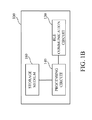
- FIG. 1B is a functional block diagram illustrating the host device in FIG. 1A .
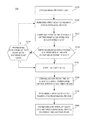
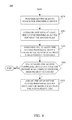
- FIG. 2 is a flow chart illustrating a control method 200 according to an embodiment the disclosure.
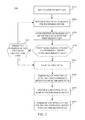
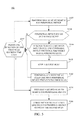
- FIG. 3 is a flow chart illustrating further details of the operation in FIG. 2 according to an embodiment the disclosure.
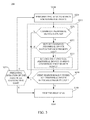
- FIG. 4 is a flow chart illustrating additional operations of the control method shown in FIG. 2 according to another embodiment the disclosure.
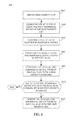
- FIG. 5 is a flow chart illustrating a control method according to another embodiment of the disclosure.
- FIG. 6 is a flow chart illustrating a control method according to still another embodiment of the disclosure.
- FIG. 1A is a schematic diagram illustrating a host device 100 and some peripheral devices PD 1 -PD 4 around the host device 100 according to an embodiment of this disclosure.
- FIG. 1B is a functional block diagram illustrating the host device 100 in FIG. 1A .
- peripheral devices PD 1 -PD 4 located around the host device 100 . These peripheral devices PD 1 -PD 4 may be placed at different positions and include functions. These peripheral devices PD 1 -PD 4 are capable to be connected over a Bluetooth Low Energy (BLE) protocol.
- BLE Bluetooth Low Energy
- the peripheral devices PD 1 and PD 2 as shown in FIG. 1A are base stations for a virtual reality system. The base stations with the BLE connectivity can be utilized to detect a gesture or a motion of a user, to capture a depth map of the space, or to provide some positioning signals.
- the peripheral device PD 3 as shown in FIG. 1A is a smart weight scale with the BLE connectivity.
- the smart weight scale is capable of measuring weight readings of a user, recording the weight readings and providing a weight historical log of the user.
- the peripheral device PD 4 as shown in FIG. 1A is a loudspeaker with BLE connectivity.
- the loudspeaker is capable of broadcasting an audio sound.
- the peripheral devices PD 1 -PD 4 shown in FIG. 1A are illustrated for demonstration.
- the peripheral devices in this disclosure are not limited thereto.
- the peripheral devices can be any equivalent electronic device with BLE connectivity.
- the host device 100 includes a BLE communication circuit 120 , a processing circuit 140 and a storage medium 160 .
- the BLE communication circuit 120 may include a BLE transceiver, an antenna module, a codec circuit for the BLE protocol and/or any component required to establish BLE connections (referring the BLE connections BC 1 -BC 4 shown in FIG. 1A ) from the host device 100 to the peripheral devices PD 1 -PD 4 .
- the processing circuit 140 is coupled to the BLE communication circuit 120 and the storage medium 160 .
- the processing circuit 140 can be a processor, a system-on-chip (SoC) circuit, a central processing unit (CPU) and/or similar processing component.
- the storage medium 160 can be a flash memory, a read-only memory (ROM), a hard disk or a non-transitory computer readable media.
- the host device 100 can be a wireless communication hub, a Bluetooth dongle, a set up box, a link box, a computer, a server and/or any electronic device capable of establishing the BLE connections and communicating with the peripheral devices PD 1 -PD 4 over the BLE connections BC 1 -BC 4 .
- the host device 100 can exchange data with the peripheral devices PD 1 -PD 4 around.
- the peripheral devices PD 1 -PD 4 may provide some peripheral functions to the host device 100 .
- the peripheral devices PD 1 and PD 2 can provide positioning data of virtual reality applications to the host device 100 ; the peripheral device PD 3 can provide the weight readings or the weight historical log to the host device 100 ; and the peripheral device PD 4 can broadcast an audio file sent from the host device 100 .
- the BLE connections BC 1 -BC 4 shown in FIG. 1A are not always connected.
- the processing circuit 140 will trigger the BLE communication circuit 120 to perform a BLE connection procedure.
- the BLE connection procedure may include scanning for the peripheral devices PD 1 -PD 4 around the host device 100 , waking up desired devices among the peripheral devices PD 1 -PD 4 and establishing the BLE connections to the desired devices. Details about the BLE connection procedure in this disclosure are introduced in following embodiments.
- FIG. 2 is a flow chart illustrating a control method 200 according to an embodiment the disclosure.
- the control method 200 is suitable to be utilized by the host device 100 shown in FIG. 1A and FIG. 1B .
- operation S 210 of the control method 200 is executed to obtain a high priority list.
- the high priority list includes information about at least one high-priority peripheral device.
- the high priority list can be a historical log about any peripheral device previously communicated with the host device 100 , the high priority list can be stored in the storage medium 160 .
- the processing circuit 140 can obtain the high priority list by reading the high priority list previously stored the storage medium 160 .
- the information about the peripheral devices PD 1 and PD 2 can be recorded in the high priority list.
- the information about the peripheral devices PD 1 in the high priority list can include a Bluetooth device address (BDA) of the peripheral devices PD 1 .
- the information about the peripheral devices PD 2 in the high priority list can include another Bluetooth device address (BDA) of the peripheral devices PD 2 .
- BDA Bluetooth device address
- the peripheral devices PD 1 and PD 2 are regarded as the high-priority peripheral devices in the high priority list.
- operation S 220 of the control method 200 is executed by the processing circuit 140 for triggering the BLE communication circuit 120 to perform a first scan to search for any peripheral device around the host device 100 .
- the BLE communication circuit 120 is triggered to search for the peripheral devices PD 1 -PD 4 around the host device 100 in FIG. 1A . If the first scan is not interrupted or stopped, these peripheral devices PD 1 -PD 4 may be found by the first scan one-by-one sequentially. In practices, a sequential order about which one of the peripheral devices PD 1 -PD 4 is found earlier may be different from time to time, and will not be always the same.
- the sequential order can be PD 1 , PD 3 , PD 2 and then PD 4 at a time, or be PD 4 , PD 1 , PD 2 and then PD 3 at the next time, or be PD 2 , PD 1 , PD 4 and then PD 3 at another time.
- operation S 230 of the control method 200 is executed by the processing circuit 140 for comparing a first search result of the first scan with the high priority list.
- operation S 240 of the control method 200 is executed by the processing circuit 140 for determining whether the first search result of the first scan covers all of the high-priority peripheral device(s) in the high priority list. If the first search result already covers all of the high-priority peripheral device(s) in the high priority list, operation S 250 of the control method 200 is executed by the processing circuit 140 for triggering the BLE communication circuit 120 to stop the first scan. In other words, the first scan is stopped (or interrupted) immediately when the first search result covers all of the high-priority peripheral device(s) in the high priority list.
- the first scan will be stopped immediately when the first search result includes the peripheral devices PD 1 and PD 2 . Even though there are still other peripheral devices PD 3 and PD 4 on the BLE communication channel, the first scan will ignore unsearched devices.
- operation S 255 of the control method 200 is executed by the processing circuit 140 for calculating a persisting duration of the first scan and determining whether the persisting duration exceeds a time limit (e.g., 3 seconds, 10 seconds or other given time limits). If the at least one of the high-priority peripheral devices in the high priority list is not found in the first scan and the persisting duration is not over the time limit, the control method 200 goes back to operation S 220 and the BLE communication circuit 120 continues the first scan, until all high-priority peripheral devices are found in the first search result or the time limit expires.
- a time limit e.g. 3 seconds, 10 seconds or other given time limits
- operation S 260 of the control method 200 is executed by the processing circuit 140 for triggering the BLE communication circuit 120 to communicate with the peripheral device found in the first scan.
- the BLE communication circuit 120 will establish the BLE connections BC 1 and BC 2 accordingly.
- the BLE connections BC 1 and BC 2 are formed right after the peripheral devices PD 1 and PD 2 are found in the first scan. Therefore, the host device 100 can establish the BLE connections BC 1 and BC 2 if the first search result covers all high-priority peripheral devices in the high priority list, and do not have to wait until all of the peripheral devices PD 1 -PD 4 are scanned.
- operation S 270 of the control method 200 is further executed by the processing circuit 140 for triggering the BLE communication circuit 120 to perform a second scan to search around the host device 100 .
- the second scan is a standard full scan of the BLE communication circuit 120 .
- the second scan is utilized to search all peripheral devices around the host device 100 . If the peripheral devices PD 1 and PD 2 are the high-priority peripheral devices in the high priority list and the peripheral devices PD 1 and PD 2 are already communicated with the host device 100 in aforesaid operation S 260 , the operation S 270 is utilized to find the peripheral devices PD 3 and PD 4 which are not in the high priority list. In this case, the peripheral devices PD 3 and PD 4 are regarded as low-priority devices.
- Operation S 280 of the control method 200 is further executed by the processing circuit 140 for triggering the BLE communication circuit 120 to communicate with the low-priority peripheral devices according to the second search result of the second scan.
- the host device 100 can establish the BLE connections BC 1 and BC 2 relatively faster without the burden to search for all peripheral devices on the BLE channel.
- FIG. 3 is a flow chart illustrating further details of the operation S 230 in FIG. 2 according to an embodiment the disclosure.
- the operation S 230 in FIG. 2 may include further operations S 231 -S 233 .
- the high priority list includes a first Bluetooth device address of each high-priority peripheral device.
- the BLE communication circuit 120 is configured to obtain a second Bluetooth device address of a candidate peripheral device around the host device during the first scan (S 220 ).
- the operation S 231 is executed for determining whether a candidate peripheral device is found around the host device 100 . If the candidate peripheral device is found, the BLE communication circuit 120 is configured to obtain a second Bluetooth device address of the candidate peripheral device around the host device during the first scan (S 220 ).
- the operation S 232 is executed for determining whether the second Bluetooth device address of the candidate peripheral device matches the first Bluetooth device addresses of the high-priority devices in the high priority list. If the second Bluetooth device address matches any one of the first Bluetooth device addresses in the high priority list, operation S 233 is executed for recording the candidate peripheral device with the matched one of the at least one first Bluetooth device address as being covered by the first search result.
- the peripheral devices PD 1 and PD 2 are the high-priority peripheral devices in the high priority list. If the peripheral device PD 3 is firstly scanned as the candidate peripheral device. A Bluetooth device address of the peripheral device PD 3 will not have a match in the high priority list. The control method 200 will return to operation S 220 (if the persisting duration of the first scan does not exceed time limit) and the first scan continues. If the peripheral device PD 2 is then scanned as the candidate peripheral device, a Bluetooth device address of the peripheral device PD 2 will have a match in the high priority list. The control method 200 will go to operation S 233 to record the current candidate peripheral device (i.e., the peripheral device PD 2 ) as being covered in the first search result.
- the current candidate peripheral device i.e., the peripheral device PD 2
- the control method 200 return to operation S 220 (if the persisting duration of the first scan does not exceed time limit) again. If the peripheral device PD 1 is then scanned as the candidate peripheral device, a Bluetooth device address of the peripheral device PD 1 will have a match in the high priority list. The control method 200 will go to operation S 233 to record the current candidate peripheral device (i.e., the peripheral device PD 1 ) as being covered in the first search result.
- the control method 200 proceeds to the operation S 250 .
- the peripheral devices PD 1 -PD 4 around the host device 100 as shown in FIG. 1A can be scanned one-by-one in the operations S 231 -S 233 at a time.
- FIG. 4 is a flow chart illustrating additional operations S 291 -S 293 of the control method 200 shown in FIG. 2 according to another embodiment the disclosure.
- the method 200 further includes additional operations S 291 -S 293 after the operation S 280 discussed in aforesaid embodiment shown in FIG. 2 .
- the BLE communication circuit 120 perform the second scan (e.g., the standard full scan)
- some peripheral devices not existed in the high priority list will be identified. It is assumed that the peripheral devices PD 1 and PD 2 are the original high-priority peripheral devices in the high priority list.
- the peripheral devices PD 3 and PD 4 will be identified in the second scan.
- Operation S 291 is executed by the processing circuit 140 for verifying the peripheral device found in the second scan with a high priority standard.
- the peripheral device found in the second scan can be verified by the Bluetooth device address or a Bluetooth device name.
- the Bluetooth device name includes a string indicating some features of the peripheral device.
- the Bluetooth device name may suggest or hint a manufacture, a brand, a product name and/or a function of the peripheral device found in the second scan.
- Operation S 292 is executed by the processing circuit 140 for determining whether the peripheral device found in the second scan complies with the high priority standard. If the peripheral device found in the second scan complies with the high priority standard, operation S 293 is executed by the processing circuit 140 for adding the peripheral device found in the second scan into the high priority list, and the updated high priority list can be stored into the storage medium 160 in FIG. 1B .
- the updated high priority list can be utilized by the processing circuit 140 in the future BLE communication procedure.
- the high priority standard may include that the peripheral devices has a specific function.
- the Bluetooth device name is required to include a string such as “HealthBox”.
- a Bluetooth device name of the smart weight scale may include the string “HealthBox”, such that the peripheral device PD 3 in FIG. 1A can be added to the high priority list in the operation S 293 .
- the high priority standard may include that the peripheral devices is produced by a specific brand.
- the Bluetooth device name is required to include a string such as “HTC” or “VIVE”.
- the new base station (not shown in figures) may include the string “HTC” or “VIVE”, such that the new base station can be added to the high priority list in the operation S 293 .
- the high priority standard may include that the peripheral devices has the Bluetooth device address in a certain range.
- the high priority standard can be adjusted dynamically according to the second search result of the second scan.
- FIG. 5 is a flow chart illustrating a control method 300 according to another embodiment of the disclosure.
- the control method 300 is also suitable to be utilized on the host device 100 shown in FIG. 1A and FIG. 1B .
- the control method 300 in FIG. 5 does not rely on the high priority list as a standard to stop the first scan.
- operation S 320 is executed by the processing circuit 140 for triggering the BLE communication circuit 120 to perform a first scan to search around the host device 100 .
- Operation S 330 is executed by the processing circuit 140 for determining whether a peripheral device is found in the first scan. If one peripheral device (PD 1 , PD 2 , PD 3 or PD 4 in FIG. 1A ) is found in this round of the first scan, the BLE communication circuit 120 measures a signal strength between the host device 100 and the peripheral device found in the first scan.
- Operation S 340 is executed by the processing circuit 140 for comparing the signal strength between the host device 100 and the peripheral device found in the first scan with a threshold signal strength level (e.g., the threshold signal strength can be configured as 20 dB). If the signal strength between the host device 100 and the peripheral device found in the first scan exceeds the threshold signal strength level, operation S 350 is executed by the processing circuit 140 for triggering the BLE communication circuit 120 to stop the first scan.
- a threshold signal strength level e.g., the threshold signal strength can be configured as 20 dB.
- operation S 360 is executed by the processing circuit 140 for triggering the BLE communication circuit 120 to communicate with the peripheral device found in the first scan.
- the host device 100 is able to establish the BLE connection to the peripheral devices with relative strong signal strength levels.
- these peripheral devices with relative strong signal strength levels may indicates these peripheral devices are located closer to the host device 100 , and are regarded as having relatively higher priority.
- operation S 355 is executed by the processing circuit 140 for calculating the persisting duration of the first scan and determining whether the persisting duration exceed a time limit (e.g., 2 seconds, 10 seconds, or other given time limit for the first scan).
- a time limit e.g. 2 seconds, 10 seconds, or other given time limit for the first scan.
- the control method 300 After the operation S 360 is executed by the processing circuit 140 for triggering the BLE communication circuit 120 to communicate with the peripheral device found in the first scan, the control method 300 also proceeds to the operation S 355 . When the total persisting duration of the first scan exceeds the time limit, the control method 300 proceeds to operation S 370 for triggering the BLE communication circuit 120 to perform a second scan to search around the host device 100 . Afterward, the control method 300 proceeds to operation S 380 for triggering the BLE communication circuit 120 to communicate with at least one second peripheral device according to a second search result of the second scan.
- the second scan is a standard full scan performed by the BLE communication circuit 120 . During the second scan, all peripheral devices will be searched regardless of the signal strength between the host device 100 and the target peripheral devices. The host device 100 will connect to and communicate with the peripheral devices with relative lower signal strength toward the host device 100 in the operation S 380 .
- FIG. 6 is a flow chart illustrating a control method 400 according to still another embodiment of the disclosure.
- the control method 400 is also suitable to be utilized on the host device 100 shown in FIG. 1A and FIG. 1B .
- the control method 400 in FIG. 6 does not include operations of the first scan in aforesaid embodiments.
- operation S 410 is executed by the processing circuit 140 for obtaining a high priority list.
- the high priority list includes information about at least one high-priority peripheral device.
- the high priority list can be a historical log about any peripheral device previously communicated with the host device 100 , the high priority list can be stored in the storage medium 160 .
- the processing circuit 140 can obtain the high priority list by reading the high priority list previously stored the storage medium 160 .
- the information about the peripheral devices PD 1 and PD 2 can be recorded in the high priority list.
- the information about the peripheral devices PD 1 in the high priority list can include a Bluetooth device address (BDA) of the peripheral devices PD 1 .
- the information about the peripheral devices PD 2 in the high priority list can include another Bluetooth device address (BDA) of the peripheral devices PD 2 .
- BDA Bluetooth device address
- the peripheral devices PD 1 and PD 2 are regarded as the high-priority peripheral devices in the high priority list.
- Operation S 420 is executed by the processing circuit 140 for triggering the BLE communication circuit 120 to communicate with the peripheral device (e.g., the peripheral devices PD 1 and PD 2 ) in the high priority list. Because the peripheral devices PD 1 and PD 2 have been previously connected with the host device 100 , and the high priority list records the Bluetooth device addresses of the peripheral devices PD 1 and PD 2 .
- the BLE communication circuit 120 is able to form the BLE connections BC 1 and BC 2 and communicate with the peripheral devices PD 1 and PD 2 in the high priority list directly, before performing a full scan by the BLE communication circuit 120 . Therefore, the BLE connections BC 1 and BC 2 can be established immediately after the high priority list is read by processing circuit 120 from the storage medium 160 . No scan is required before the operation S 420 .
- operation S 430 is executed by the processing circuit 140 for triggering the BLE communication circuit 120 to perform a full scan to search for the peripheral device(s) around the host device 100 . If there is any peripheral device detected in the full scan and not recorded in the high priority list (e.g., the peripheral devices PD 3 and PD 4 are not recorded in the high priority list), operation S 440 is executed by the processing circuit 140 for triggering the BLE communication circuit 120 to communicate with at least one peripheral device according to a search result of the full scan.
- the peripheral device in the search result of the full scan is also regarded as a low-priority peripheral device.
- control method 400 in an embodiment may further include operations S 451 , S 452 and S 453 to update the high priority list.
- Operation S 451 is executed by the processing circuit 140 for verifying the peripheral device found in the full scan with a high priority standard.
- the peripheral device found in the full scan can be verified by the Bluetooth device address or a Bluetooth device name.
- the Bluetooth device name includes a string indicating some features of the peripheral device.
- the Bluetooth device name may suggest or hint a manufacture, a brand, a product name and/or a function of the peripheral device found in the full scan.
- Operation S 452 is executed by the processing circuit 140 for determining whether the peripheral device found in the full scan complies with the high priority standard. If the peripheral device found in the full scan complies with the high priority standard, operation S 453 is executed by the processing circuit 140 for adding the peripheral device found in the full scan into the high priority list, and the updated high priority list can be stored into the storage medium 160 in FIG. 1B . The updated high priority list can be utilized by the processing circuit 140 in the future BLE communication procedure.
- the host device 100 in FIG. 1 is able to establish the BLE connection to the peripheral device existed in the high priority list already before performing any scanning. Therefore, when the user tries to connect the host device 100 to a high-priority peripheral device, the user do not have to endure a long response time.
- the BLE communication circuit 120 will firstly establish the BLE connection to the peripheral device existed in the high priority list, and preform the full scan afterward.
Landscapes
- Engineering & Computer Science (AREA)
- Computer Networks & Wireless Communication (AREA)
- Signal Processing (AREA)
- Databases & Information Systems (AREA)
- Mobile Radio Communication Systems (AREA)
- Telephone Function (AREA)
Abstract
Description
- This application claims priority to U.S. Provisional Application Ser. No. 62/404,227, filed Oct. 5, 2016, which is herein incorporated by reference.
- The present application relates to a communication system. More particularly, the present application relates to a control method related to a management of communication process on a Bluetooth-based communication system.
- Bluetooth low energy (BLE) is a wireless communication solution, which is popular in various applications such as healthcare, fitness, beacon, security, etc. BLE technology is intended to provide commutation capability over wireless connections with reduced power consumption and cost.
- In a conventional communication procedure, when a BLE host device tries to reach multiple desired BLE peripheral devices, the BLE host performs a full scan on the whole communication channel at first, and then the BLE will start to connect these peripheral devices. The full scan takes a certain period of time, such that the user must wait for the full scan to be complete and then the BLE connections are established afterward. The user may experience a long delay from the user requests to initiate the BLE connections until the BLE connections are established.
- An embodiment of the disclosure provides a control method, which is suitable for a host device includes a Bluetooth low energy (BLE) communication circuit. The control method includes following operations. A high priority list is obtained. The high priority list includes information about at least one first peripheral device. The BLE communication circuit is triggered to perform a first scan to search for any peripheral device around the host device. A first search result of the first scan is compared with the high priority list. In response to that the first search result covers all of the at least one first peripheral device in the high priority list, the BLE communication circuit is triggered to stop the first scan. The BLE communication circuit is triggered to communicate with the at least one first peripheral device found in the first scan.
- Another embodiment of the disclosure also provides a control method. The control method includes following operations. The BLE communication circuit is triggered to perform a first scan to search around the host device. Signal strength between the host device and a peripheral device found in the first scan is compared with a threshold signal strength level. In response to that the signal strength exceeds the threshold signal strength level, the BLE communication circuit is triggered to stop the first scan. The BLE communication circuit is triggered to communicate with the peripheral device found in the first scan.
- Another embodiment of the disclosure also provides a control method. The control method includes following operations. A high priority list is obtained. The high priority list includes information about at least one first peripheral device. The BLE communication circuit is triggered to communicate with the at least one first peripheral device in the high priority list.
- It is to be understood that both the foregoing general description and the following detailed description are by examples, and are intended to provide further explanation of the invention as claimed.
- The disclosure can be more fully understood by reading the following detailed description of the embodiment, with reference made to the accompanying drawings as follows:
-
FIG. 1A is a schematic diagram illustrating a host device and some peripheral devices around the host device according to an embodiment of this disclosure. -
FIG. 1B is a functional block diagram illustrating the host device inFIG. 1A . -
FIG. 2 is a flow chart illustrating acontrol method 200 according to an embodiment the disclosure. -
FIG. 3 is a flow chart illustrating further details of the operation inFIG. 2 according to an embodiment the disclosure. -
FIG. 4 is a flow chart illustrating additional operations of the control method shown inFIG. 2 according to another embodiment the disclosure. -
FIG. 5 is a flow chart illustrating a control method according to another embodiment of the disclosure. -
FIG. 6 is a flow chart illustrating a control method according to still another embodiment of the disclosure. - Reference will now be made in detail to the present embodiments of the disclosure, examples of which are illustrated in the accompanying drawings. Wherever possible, the same reference numbers are used in the drawings and the description to refer to the same or like parts.
- Reference is made to
FIG. 1A andFIG. 1B .FIG. 1A is a schematic diagram illustrating ahost device 100 and some peripheral devices PD1-PD4 around thehost device 100 according to an embodiment of this disclosure.FIG. 1B is a functional block diagram illustrating thehost device 100 inFIG. 1A . - In the embodiment shown in
FIG. 1 , there are different peripheral devices PD1-PD4 located around thehost device 100. These peripheral devices PD1-PD4 may be placed at different positions and include functions. These peripheral devices PD1-PD4 are capable to be connected over a Bluetooth Low Energy (BLE) protocol. For example, the peripheral devices PD1 and PD2 as shown inFIG. 1A are base stations for a virtual reality system. The base stations with the BLE connectivity can be utilized to detect a gesture or a motion of a user, to capture a depth map of the space, or to provide some positioning signals. For example, the peripheral device PD3 as shown inFIG. 1A is a smart weight scale with the BLE connectivity. The smart weight scale is capable of measuring weight readings of a user, recording the weight readings and providing a weight historical log of the user. For example, the peripheral device PD4 as shown inFIG. 1A is a loudspeaker with BLE connectivity. The loudspeaker is capable of broadcasting an audio sound. However, the peripheral devices PD1-PD4 shown inFIG. 1A are illustrated for demonstration. The peripheral devices in this disclosure are not limited thereto. The peripheral devices can be any equivalent electronic device with BLE connectivity. - As shown in
FIG. 1B , thehost device 100 includes aBLE communication circuit 120, aprocessing circuit 140 and astorage medium 160. TheBLE communication circuit 120 may include a BLE transceiver, an antenna module, a codec circuit for the BLE protocol and/or any component required to establish BLE connections (referring the BLE connections BC1-BC4 shown inFIG. 1A ) from thehost device 100 to the peripheral devices PD1-PD4. Theprocessing circuit 140 is coupled to theBLE communication circuit 120 and thestorage medium 160. Theprocessing circuit 140 can be a processor, a system-on-chip (SoC) circuit, a central processing unit (CPU) and/or similar processing component. Thestorage medium 160 can be a flash memory, a read-only memory (ROM), a hard disk or a non-transitory computer readable media. - As shown in
FIG. 1A , thehost device 100 can be a wireless communication hub, a Bluetooth dongle, a set up box, a link box, a computer, a server and/or any electronic device capable of establishing the BLE connections and communicating with the peripheral devices PD1-PD4 over the BLE connections BC1-BC4. Thehost device 100 can exchange data with the peripheral devices PD1-PD4 around. The peripheral devices PD1-PD4 may provide some peripheral functions to thehost device 100. For example, the peripheral devices PD1 and PD2 can provide positioning data of virtual reality applications to thehost device 100; the peripheral device PD3 can provide the weight readings or the weight historical log to thehost device 100; and the peripheral device PD4 can broadcast an audio file sent from thehost device 100. - For security issues and also to save power consumption on the
host device 100 and the peripheral devices PD1-PD4, the BLE connections BC1-BC4 shown inFIG. 1A are not always connected. When thehost device 100 inFIG. 18B is requested to perform some tasks (e.g., a virtual reality gaming program is launched, a health-monitoring program is launched or an audio file is to be broadcasted) related to the peripheral devices PD1-PD4, theprocessing circuit 140 will trigger theBLE communication circuit 120 to perform a BLE connection procedure. The BLE connection procedure may include scanning for the peripheral devices PD1-PD4 around thehost device 100, waking up desired devices among the peripheral devices PD1-PD4 and establishing the BLE connections to the desired devices. Details about the BLE connection procedure in this disclosure are introduced in following embodiments. - Reference is made to
FIG. 2 , which is a flow chart illustrating acontrol method 200 according to an embodiment the disclosure. Thecontrol method 200 is suitable to be utilized by thehost device 100 shown inFIG. 1A andFIG. 1B . As shown inFIG. 2 , operation S210 of thecontrol method 200 is executed to obtain a high priority list. In an embodiment, the high priority list includes information about at least one high-priority peripheral device. As shown inFIG. 1B , the high priority list can be a historical log about any peripheral device previously communicated with thehost device 100, the high priority list can be stored in thestorage medium 160. Theprocessing circuit 140 can obtain the high priority list by reading the high priority list previously stored thestorage medium 160. - For example, if the peripheral devices PD1 and PD2 among the peripheral devices PD1-PD4 have been connected with the
host device 100 and also the peripheral devices PD1 and PD2 have been communicated with thehost device 100 over the BLE connections BC1 and BC2, the information about the peripheral devices PD1 and PD2 can be recorded in the high priority list. The information about the peripheral devices PD1 in the high priority list can include a Bluetooth device address (BDA) of the peripheral devices PD1. The information about the peripheral devices PD2 in the high priority list can include another Bluetooth device address (BDA) of the peripheral devices PD2. In aforesaid example, the peripheral devices PD1 and PD2 are regarded as the high-priority peripheral devices in the high priority list. - As shown in
FIG. 1B andFIG. 2 , operation S220 of thecontrol method 200 is executed by theprocessing circuit 140 for triggering theBLE communication circuit 120 to perform a first scan to search for any peripheral device around thehost device 100. During the first scan in this embodiment, theBLE communication circuit 120 is triggered to search for the peripheral devices PD1-PD4 around thehost device 100 inFIG. 1A . If the first scan is not interrupted or stopped, these peripheral devices PD1-PD4 may be found by the first scan one-by-one sequentially. In practices, a sequential order about which one of the peripheral devices PD1-PD4 is found earlier may be different from time to time, and will not be always the same. For example, the sequential order can be PD1, PD3, PD2 and then PD4 at a time, or be PD4, PD1, PD2 and then PD3 at the next time, or be PD2, PD1, PD4 and then PD3 at another time. - During the first scan, operation S230 of the
control method 200 is executed by theprocessing circuit 140 for comparing a first search result of the first scan with the high priority list. Afterward, operation S240 of thecontrol method 200 is executed by theprocessing circuit 140 for determining whether the first search result of the first scan covers all of the high-priority peripheral device(s) in the high priority list. If the first search result already covers all of the high-priority peripheral device(s) in the high priority list, operation S250 of thecontrol method 200 is executed by theprocessing circuit 140 for triggering theBLE communication circuit 120 to stop the first scan. In other words, the first scan is stopped (or interrupted) immediately when the first search result covers all of the high-priority peripheral device(s) in the high priority list. For example, if the peripheral devices PD1 and PD2 are the high-priority peripheral devices in the high priority list, the first scan will be stopped immediately when the first search result includes the peripheral devices PD1 and PD2. Even though there are still other peripheral devices PD3 and PD4 on the BLE communication channel, the first scan will ignore unsearched devices. - If at least one of the high-priority peripheral devices in the high priority list is not found in the first scan, operation S255 of the
control method 200 is executed by theprocessing circuit 140 for calculating a persisting duration of the first scan and determining whether the persisting duration exceeds a time limit (e.g., 3 seconds, 10 seconds or other given time limits). If the at least one of the high-priority peripheral devices in the high priority list is not found in the first scan and the persisting duration is not over the time limit, thecontrol method 200 goes back to operation S220 and theBLE communication circuit 120 continues the first scan, until all high-priority peripheral devices are found in the first search result or the time limit expires. - Once the first scan is stopped (in operation S250), operation S260 of the
control method 200 is executed by theprocessing circuit 140 for triggering theBLE communication circuit 120 to communicate with the peripheral device found in the first scan. For example, if the peripheral devices PD1 and PD2 are the high-priority peripheral devices in the high priority list and the peripheral devices PD1 and PD2 are found in the first scan, theBLE communication circuit 120 will establish the BLE connections BC1 and BC2 accordingly. In this case, the BLE connections BC1 and BC2 are formed right after the peripheral devices PD1 and PD2 are found in the first scan. Therefore, thehost device 100 can establish the BLE connections BC1 and BC2 if the first search result covers all high-priority peripheral devices in the high priority list, and do not have to wait until all of the peripheral devices PD1-PD4 are scanned. - In an embodiment, operation S270 of the
control method 200 is further executed by theprocessing circuit 140 for triggering theBLE communication circuit 120 to perform a second scan to search around thehost device 100. The second scan is a standard full scan of theBLE communication circuit 120. The second scan is utilized to search all peripheral devices around thehost device 100. If the peripheral devices PD1 and PD2 are the high-priority peripheral devices in the high priority list and the peripheral devices PD1 and PD2 are already communicated with thehost device 100 in aforesaid operation S260, the operation S270 is utilized to find the peripheral devices PD3 and PD4 which are not in the high priority list. In this case, the peripheral devices PD3 and PD4 are regarded as low-priority devices. Operation S280 of thecontrol method 200 is further executed by theprocessing circuit 140 for triggering theBLE communication circuit 120 to communicate with the low-priority peripheral devices according to the second search result of the second scan. - In the example that the peripheral devices PD1 and PD2 are the high-priority peripheral devices in the high priority list, the
host device 100 can establish the BLE connections BC1 and BC2 relatively faster without the burden to search for all peripheral devices on the BLE channel. - Reference is further made to
FIG. 3 , which is a flow chart illustrating further details of the operation S230 inFIG. 2 according to an embodiment the disclosure. As shown inFIG. 3 , the operation S230 inFIG. 2 may include further operations S231-S233. - Referring to
FIG. 3 , the high priority list includes a first Bluetooth device address of each high-priority peripheral device. TheBLE communication circuit 120 is configured to obtain a second Bluetooth device address of a candidate peripheral device around the host device during the first scan (S220). Within the operation S230, the operation S231 is executed for determining whether a candidate peripheral device is found around thehost device 100. If the candidate peripheral device is found, theBLE communication circuit 120 is configured to obtain a second Bluetooth device address of the candidate peripheral device around the host device during the first scan (S220). The operation S232 is executed for determining whether the second Bluetooth device address of the candidate peripheral device matches the first Bluetooth device addresses of the high-priority devices in the high priority list. If the second Bluetooth device address matches any one of the first Bluetooth device addresses in the high priority list, operation S233 is executed for recording the candidate peripheral device with the matched one of the at least one first Bluetooth device address as being covered by the first search result. - It is assumed that the peripheral devices PD1 and PD2 are the high-priority peripheral devices in the high priority list. If the peripheral device PD3 is firstly scanned as the candidate peripheral device. A Bluetooth device address of the peripheral device PD3 will not have a match in the high priority list. The
control method 200 will return to operation S220 (if the persisting duration of the first scan does not exceed time limit) and the first scan continues. If the peripheral device PD2 is then scanned as the candidate peripheral device, a Bluetooth device address of the peripheral device PD2 will have a match in the high priority list. Thecontrol method 200 will go to operation S233 to record the current candidate peripheral device (i.e., the peripheral device PD2) as being covered in the first search result. Afterward, in operation S240, because the first search result only covers the peripheral device PD2 and does not cover all peripheral devices (PD1 and PD2 in this example) in the high priority list, thecontrol method 200 return to operation S220 (if the persisting duration of the first scan does not exceed time limit) again. If the peripheral device PD1 is then scanned as the candidate peripheral device, a Bluetooth device address of the peripheral device PD1 will have a match in the high priority list. Thecontrol method 200 will go to operation S233 to record the current candidate peripheral device (i.e., the peripheral device PD1) as being covered in the first search result. Afterward, in operation S240, because the first search result covers all of the peripheral devices (PD1 and PD2 in this example) in the high priority list, thecontrol method 200 proceeds to the operation S250. In aforesaid example, the peripheral devices PD1-PD4 around thehost device 100 as shown inFIG. 1A can be scanned one-by-one in the operations S231-S233 at a time. - In aforesaid example, items in the high priority list are assumed to include the peripheral devices PD1 and PD2 for demonstration. However, this disclosure is not limited thereto. In another embodiment, the items in the high priority list are not fixed and are adjustable. Reference is further made to
FIG. 4 , which is a flow chart illustrating additional operations S291-S293 of thecontrol method 200 shown inFIG. 2 according to another embodiment the disclosure. - In the embodiment shown in
FIG. 4 , themethod 200 further includes additional operations S291-S293 after the operation S280 discussed in aforesaid embodiment shown inFIG. 2 . After theBLE communication circuit 120 perform the second scan (e.g., the standard full scan), some peripheral devices not existed in the high priority list will be identified. It is assumed that the peripheral devices PD1 and PD2 are the original high-priority peripheral devices in the high priority list. The peripheral devices PD3 and PD4 will be identified in the second scan. Operation S291 is executed by theprocessing circuit 140 for verifying the peripheral device found in the second scan with a high priority standard. In an embodiment, the peripheral device found in the second scan can be verified by the Bluetooth device address or a Bluetooth device name. The Bluetooth device name includes a string indicating some features of the peripheral device. The Bluetooth device name may suggest or hint a manufacture, a brand, a product name and/or a function of the peripheral device found in the second scan. Operation S292 is executed by theprocessing circuit 140 for determining whether the peripheral device found in the second scan complies with the high priority standard. If the peripheral device found in the second scan complies with the high priority standard, operation S293 is executed by theprocessing circuit 140 for adding the peripheral device found in the second scan into the high priority list, and the updated high priority list can be stored into thestorage medium 160 inFIG. 1B . The updated high priority list can be utilized by theprocessing circuit 140 in the future BLE communication procedure. - In an example, the high priority standard may include that the peripheral devices has a specific function. In this case, the Bluetooth device name is required to include a string such as “HealthBox”. In this case, a Bluetooth device name of the smart weight scale may include the string “HealthBox”, such that the peripheral device PD3 in
FIG. 1A can be added to the high priority list in the operation S293. - In another example, the high priority standard may include that the peripheral devices is produced by a specific brand. In this case, the Bluetooth device name is required to include a string such as “HTC” or “VIVE”. In this case, if the peripheral devices PD1 and PD2 is replaced by a new one. The new base station (not shown in figures) may include the string “HTC” or “VIVE”, such that the new base station can be added to the high priority list in the operation S293.
- In still another example, the high priority standard may include that the peripheral devices has the Bluetooth device address in a certain range.
- Therefore, the high priority standard can be adjusted dynamically according to the second search result of the second scan.
- Reference is further made to
FIG. 5 , which is a flow chart illustrating acontrol method 300 according to another embodiment of the disclosure. Thecontrol method 300 is also suitable to be utilized on thehost device 100 shown inFIG. 1A andFIG. 1B . Compared to thecontrol method 200 inFIG. 2 ,FIG. 3 andFIG. 4 , thecontrol method 300 inFIG. 5 does not rely on the high priority list as a standard to stop the first scan. - In the embodiment shown in
FIG. 1A ,FIG. 1B andFIG. 5 , operation S320 is executed by theprocessing circuit 140 for triggering theBLE communication circuit 120 to perform a first scan to search around thehost device 100. Operation S330 is executed by theprocessing circuit 140 for determining whether a peripheral device is found in the first scan. If one peripheral device (PD1, PD2, PD3 or PD4 inFIG. 1A ) is found in this round of the first scan, theBLE communication circuit 120 measures a signal strength between thehost device 100 and the peripheral device found in the first scan. - Operation S340 is executed by the
processing circuit 140 for comparing the signal strength between thehost device 100 and the peripheral device found in the first scan with a threshold signal strength level (e.g., the threshold signal strength can be configured as 20 dB). If the signal strength between thehost device 100 and the peripheral device found in the first scan exceeds the threshold signal strength level, operation S350 is executed by theprocessing circuit 140 for triggering theBLE communication circuit 120 to stop the first scan. - When the first scan is temporally stopped, operation S360 is executed by the
processing circuit 140 for triggering theBLE communication circuit 120 to communicate with the peripheral device found in the first scan. In this case, thehost device 100 is able to establish the BLE connection to the peripheral devices with relative strong signal strength levels. In this case, these peripheral devices with relative strong signal strength levels may indicates these peripheral devices are located closer to thehost device 100, and are regarded as having relatively higher priority. - If no peripheral device is found in this round of the first scan (S330), or if the signal strength between the
host device 100 and the peripheral device found in the first scan is lower than the threshold signal strength level (S340), operation S355 is executed by theprocessing circuit 140 for calculating the persisting duration of the first scan and determining whether the persisting duration exceed a time limit (e.g., 2 seconds, 10 seconds, or other given time limit for the first scan). When the persisting duration of the first scan is still within the time limit, thecontrol method 300 proceeds to the operation S320 to continue the first scan, which will go on to search for the peripheral device with a higher signal strength. - After the operation S360 is executed by the
processing circuit 140 for triggering theBLE communication circuit 120 to communicate with the peripheral device found in the first scan, thecontrol method 300 also proceeds to the operation S355. When the total persisting duration of the first scan exceeds the time limit, thecontrol method 300 proceeds to operation S370 for triggering theBLE communication circuit 120 to perform a second scan to search around thehost device 100. Afterward, thecontrol method 300 proceeds to operation S380 for triggering theBLE communication circuit 120 to communicate with at least one second peripheral device according to a second search result of the second scan. The second scan is a standard full scan performed by theBLE communication circuit 120. During the second scan, all peripheral devices will be searched regardless of the signal strength between thehost device 100 and the target peripheral devices. Thehost device 100 will connect to and communicate with the peripheral devices with relative lower signal strength toward thehost device 100 in the operation S380. - Reference is further made to
FIG. 6 , which is a flow chart illustrating acontrol method 400 according to still another embodiment of the disclosure. Thecontrol method 400 is also suitable to be utilized on thehost device 100 shown inFIG. 1A andFIG. 1B . Compared to thecontrol method 200 inFIG. 2 ,FIG. 3 andFIG. 4 , thecontrol method 400 inFIG. 6 does not include operations of the first scan in aforesaid embodiments. - In the embodiment shown in
FIG. 1A ,FIG. 1B andFIG. 6 , operation S410 is executed by theprocessing circuit 140 for obtaining a high priority list. In an embodiment, the high priority list includes information about at least one high-priority peripheral device. As shown inFIG. 1B , the high priority list can be a historical log about any peripheral device previously communicated with thehost device 100, the high priority list can be stored in thestorage medium 160. Theprocessing circuit 140 can obtain the high priority list by reading the high priority list previously stored thestorage medium 160. - For example, if the peripheral devices PD1 and PD2 in
FIG. 1A among the peripheral devices PD1-PD4 have been connected with thehost device 100 and also the peripheral devices PD1 and PD2 have been previously communicated with thehost device 100 over the BLE connections BC1 and BC2, the information about the peripheral devices PD1 and PD2 can be recorded in the high priority list. The information about the peripheral devices PD1 in the high priority list can include a Bluetooth device address (BDA) of the peripheral devices PD1. The information about the peripheral devices PD2 in the high priority list can include another Bluetooth device address (BDA) of the peripheral devices PD2. In aforesaid example, the peripheral devices PD1 and PD2 are regarded as the high-priority peripheral devices in the high priority list. - Operation S420 is executed by the
processing circuit 140 for triggering theBLE communication circuit 120 to communicate with the peripheral device (e.g., the peripheral devices PD1 and PD2) in the high priority list. Because the peripheral devices PD1 and PD2 have been previously connected with thehost device 100, and the high priority list records the Bluetooth device addresses of the peripheral devices PD1 and PD2. TheBLE communication circuit 120 is able to form the BLE connections BC1 and BC2 and communicate with the peripheral devices PD1 and PD2 in the high priority list directly, before performing a full scan by theBLE communication circuit 120. Therefore, the BLE connections BC1 and BC2 can be established immediately after the high priority list is read by processingcircuit 120 from thestorage medium 160. No scan is required before the operation S420. - Afterward, operation S430 is executed by the
processing circuit 140 for triggering theBLE communication circuit 120 to perform a full scan to search for the peripheral device(s) around thehost device 100. If there is any peripheral device detected in the full scan and not recorded in the high priority list (e.g., the peripheral devices PD3 and PD4 are not recorded in the high priority list), operation S440 is executed by theprocessing circuit 140 for triggering theBLE communication circuit 120 to communicate with at least one peripheral device according to a search result of the full scan. The peripheral device in the search result of the full scan is also regarded as a low-priority peripheral device. - In addition, the
control method 400 in an embodiment may further include operations S451, S452 and S453 to update the high priority list. - After the
BLE communication circuit 120 perform the full scan (e.g., the standard full scan), some peripheral devices not existed in the high priority list will be identified in the full scan. It is assumed that the peripheral devices PD1 and PD2 are the original high-priority peripheral devices in the high priority list. The peripheral devices PD3 and PD4 will be identified in the full scan. Operation S451 is executed by theprocessing circuit 140 for verifying the peripheral device found in the full scan with a high priority standard. In an embodiment, the peripheral device found in the full scan can be verified by the Bluetooth device address or a Bluetooth device name. The Bluetooth device name includes a string indicating some features of the peripheral device. The Bluetooth device name may suggest or hint a manufacture, a brand, a product name and/or a function of the peripheral device found in the full scan. Operation S452 is executed by theprocessing circuit 140 for determining whether the peripheral device found in the full scan complies with the high priority standard. If the peripheral device found in the full scan complies with the high priority standard, operation S453 is executed by theprocessing circuit 140 for adding the peripheral device found in the full scan into the high priority list, and the updated high priority list can be stored into thestorage medium 160 inFIG. 1B . The updated high priority list can be utilized by theprocessing circuit 140 in the future BLE communication procedure. - Further details about the operations S451, S452 and S453 can be referred to embodiments about the operation S291, S292 and S293, and not to be repeated herein.
- Based on
control method 400 shown inFIG. 6 , thehost device 100 inFIG. 1 is able to establish the BLE connection to the peripheral device existed in the high priority list already before performing any scanning. Therefore, when the user tries to connect thehost device 100 to a high-priority peripheral device, the user do not have to endure a long response time. TheBLE communication circuit 120 will firstly establish the BLE connection to the peripheral device existed in the high priority list, and preform the full scan afterward. - Although the present invention has been described in considerable detail with reference to certain embodiments thereof, other embodiments are possible. Therefore, the spirit and scope of the appended claims should not be limited to the description of the embodiments contained herein.
- It will be apparent to those skilled in the art that various modifications and variations can be made to the structure of the present invention without departing from the scope or spirit of the invention. In view of the foregoing, it is intended that the present invention cover modifications and variations of this invention provided they fall within the scope of the following claims.
Claims (15)
Priority Applications (1)
| Application Number | Priority Date | Filing Date | Title |
|---|---|---|---|
| US15/475,110 US10034323B2 (en) | 2016-10-05 | 2017-03-30 | Control method for BLE communication between host device and peripheral device |
Applications Claiming Priority (2)
| Application Number | Priority Date | Filing Date | Title |
|---|---|---|---|
| US201662404227P | 2016-10-05 | 2016-10-05 | |
| US15/475,110 US10034323B2 (en) | 2016-10-05 | 2017-03-30 | Control method for BLE communication between host device and peripheral device |
Publications (2)
| Publication Number | Publication Date |
|---|---|
| US20180098368A1 true US20180098368A1 (en) | 2018-04-05 |
| US10034323B2 US10034323B2 (en) | 2018-07-24 |
Family
ID=61759212
Family Applications (1)
| Application Number | Title | Priority Date | Filing Date |
|---|---|---|---|
| US15/475,110 Active US10034323B2 (en) | 2016-10-05 | 2017-03-30 | Control method for BLE communication between host device and peripheral device |
Country Status (1)
| Country | Link |
|---|---|
| US (1) | US10034323B2 (en) |
Cited By (5)
| Publication number | Priority date | Publication date | Assignee | Title |
|---|---|---|---|---|
| CN110784859A (en) * | 2019-10-31 | 2020-02-11 | 出门问问信息科技有限公司 | Bluetooth low energy BLE-based equipment connection implementation method, intelligent accessory and system |
| US20210410204A1 (en) * | 2020-06-25 | 2021-12-30 | Honda Motor Co., Ltd. | Control method, on-vehicle device, and storage medium |
| CN114143760A (en) * | 2021-07-08 | 2022-03-04 | 深圳市汇顶科技股份有限公司 | Data transmission method, system, chip, electronic device and storage medium |
| US11310118B2 (en) * | 2019-01-21 | 2022-04-19 | Hewlett Packard Enterprise Development Lp | Tracking randomized addresses in bluetooth devices |
| CN115086920A (en) * | 2022-06-07 | 2022-09-20 | Oppo广东移动通信有限公司 | Wireless communication connection method, device, electronic equipment and storage medium |
Family Cites Families (9)
| Publication number | Priority date | Publication date | Assignee | Title |
|---|---|---|---|---|
| JP3671881B2 (en) * | 2001-07-18 | 2005-07-13 | ソニー株式会社 | COMMUNICATION SYSTEM AND METHOD, INFORMATION PROCESSING DEVICE AND METHOD, COMMUNICATION TERMINAL AND METHOD, EXPANSION DEVICE, AND PROGRAM |
| US8599767B2 (en) * | 2008-06-26 | 2013-12-03 | Netgear, Inc. | Method and apparatus for scanning multi-mode wireless communication environments |
| US8352639B2 (en) * | 2011-05-06 | 2013-01-08 | Research In Motion Limited | Method of device selection using sensory input and portable electronic device configured for same |
| US8954007B2 (en) * | 2011-08-12 | 2015-02-10 | Wicentric, Inc. | Systems and methods for low power short range wireless device communication scanning |
| TWI548982B (en) * | 2012-03-06 | 2016-09-11 | 宏碁股份有限公司 | Management method and related computer system and computer program product thereof |
| WO2013169974A1 (en) * | 2012-05-11 | 2013-11-14 | Interdigital Patent Holdings, Inc. | Context-aware peer-to-peer communication |
| US9351224B2 (en) * | 2014-02-21 | 2016-05-24 | Qualcomm Incorporated | System and method for access point selection |
| US20170245204A1 (en) * | 2016-02-19 | 2017-08-24 | Qualcomm Incorporated | Systems and methods for prioritizing channel scanning |
| US20170290069A1 (en) * | 2016-04-01 | 2017-10-05 | Intel Corporation | Techniques and systems for logical mesh network control |
-
2017
- 2017-03-30 US US15/475,110 patent/US10034323B2/en active Active
Cited By (7)
| Publication number | Priority date | Publication date | Assignee | Title |
|---|---|---|---|---|
| US11310118B2 (en) * | 2019-01-21 | 2022-04-19 | Hewlett Packard Enterprise Development Lp | Tracking randomized addresses in bluetooth devices |
| CN110784859A (en) * | 2019-10-31 | 2020-02-11 | 出门问问信息科技有限公司 | Bluetooth low energy BLE-based equipment connection implementation method, intelligent accessory and system |
| US20210410204A1 (en) * | 2020-06-25 | 2021-12-30 | Honda Motor Co., Ltd. | Control method, on-vehicle device, and storage medium |
| US11672030B2 (en) * | 2020-06-25 | 2023-06-06 | Honda Motor Co., Ltd. | Control method, on-vehicle device, and storage medium |
| CN114143760A (en) * | 2021-07-08 | 2022-03-04 | 深圳市汇顶科技股份有限公司 | Data transmission method, system, chip, electronic device and storage medium |
| US12127282B2 (en) | 2021-07-08 | 2024-10-22 | Shenzhen GOODIX Technology Co., Ltd. | Method and system for data transmission, chip, electronic device, and computer readable storage medium |
| CN115086920A (en) * | 2022-06-07 | 2022-09-20 | Oppo广东移动通信有限公司 | Wireless communication connection method, device, electronic equipment and storage medium |
Also Published As
| Publication number | Publication date |
|---|---|
| US10034323B2 (en) | 2018-07-24 |
Similar Documents
| Publication | Publication Date | Title |
|---|---|---|
| US10034323B2 (en) | Control method for BLE communication between host device and peripheral device | |
| US9900355B2 (en) | Method, terminal device, server and system for sharing information | |
| US9538330B2 (en) | System and method for selecting a Wi-Fi access point for position determination | |
| US9883447B2 (en) | Communication method and apparatus supporting selective communication services | |
| AU2018273505B2 (en) | Method for capturing fingerprint and associated products | |
| KR102107132B1 (en) | Access point connection method of electronic apparatus and electronic appparatus thereof | |
| CN104253740A (en) | Picture registration method, device and system | |
| CN112400346A (en) | Server apparatus and method for collecting location information of other apparatus | |
| US11164022B2 (en) | Method for fingerprint enrollment, terminal, and non-transitory computer readable storage medium | |
| US10492125B2 (en) | Electronic device and method of connecting electronic device to network | |
| CN106804055A (en) | A kind of Wireless Fidelity Wi Fi connection methods and mobile terminal | |
| CN106658672A (en) | A wireless fidelity Wi-Fi connection method and mobile terminal | |
| US20170126556A1 (en) | Information transmission method and apparatus, device and storage medium | |
| CN103678605A (en) | Information transmission method and device and terminal device | |
| CN103687063B (en) | A kind of method of interconnection network, device and terminal equipment | |
| CN106686587A (en) | A wireless fidelity Wi-Fi connection method and mobile terminal | |
| US20170237816A1 (en) | Method and electronic device for identifying device | |
| CN103607236A (en) | Method and device for outputting prompt information, wireless repeater and terminal equipment | |
| US11023544B2 (en) | User matching method and apparatus | |
| US11288335B2 (en) | Method for search resource recommendation and smart device | |
| CN106792698A (en) | A wireless fidelity Wi-Fi connection method and mobile terminal | |
| CN108601063B (en) | Personal hotspot implementation method and related products | |
| US20150373187A1 (en) | Device for displaying identification information on other device and method thereof | |
| US20200026728A1 (en) | Scenario-based sound effect control method and electronic device | |
| CN103873682B (en) | A kind of information processing method and electronic equipment |
Legal Events
| Date | Code | Title | Description |
|---|---|---|---|
| AS | Assignment |
Owner name: HTC CORPORATION, TAIWAN Free format text: ASSIGNMENT OF ASSIGNORS INTEREST;ASSIGNORS:WU, JING-LUNG;CHUNG, CHENG-YU;CHEN, KAI-HSIU;REEL/FRAME:041851/0712 Effective date: 20170327 |
|
| STCF | Information on status: patent grant |
Free format text: PATENTED CASE |
|
| MAFP | Maintenance fee payment |
Free format text: PAYMENT OF MAINTENANCE FEE, 4TH YEAR, LARGE ENTITY (ORIGINAL EVENT CODE: M1551); ENTITY STATUS OF PATENT OWNER: LARGE ENTITY Year of fee payment: 4 |
|
| FEPP | Fee payment procedure |
Free format text: MAINTENANCE FEE REMINDER MAILED (ORIGINAL EVENT CODE: REM.); ENTITY STATUS OF PATENT OWNER: LARGE ENTITY |