US20180098233A1 - Automated resolution of wi-fi connectivity issues over sms - Google Patents
Automated resolution of wi-fi connectivity issues over sms Download PDFInfo
- Publication number
- US20180098233A1 US20180098233A1 US15/283,277 US201615283277A US2018098233A1 US 20180098233 A1 US20180098233 A1 US 20180098233A1 US 201615283277 A US201615283277 A US 201615283277A US 2018098233 A1 US2018098233 A1 US 2018098233A1
- Authority
- US
- United States
- Prior art keywords
- connectivity
- sms
- station
- network
- sms message
- Prior art date
- Legal status (The legal status is an assumption and is not a legal conclusion. Google has not performed a legal analysis and makes no representation as to the accuracy of the status listed.)
- Granted
Links
Images


Classifications
-
- H—ELECTRICITY
- H04—ELECTRIC COMMUNICATION TECHNIQUE
- H04W—WIRELESS COMMUNICATION NETWORKS
- H04W76/00—Connection management
- H04W76/10—Connection setup
- H04W76/18—Management of setup rejection or failure
-
- H—ELECTRICITY
- H04—ELECTRIC COMMUNICATION TECHNIQUE
- H04W—WIRELESS COMMUNICATION NETWORKS
- H04W24/00—Supervisory, monitoring or testing arrangements
- H04W24/04—Arrangements for maintaining operational condition
-
- G—PHYSICS
- G06—COMPUTING OR CALCULATING; COUNTING
- G06N—COMPUTING ARRANGEMENTS BASED ON SPECIFIC COMPUTATIONAL MODELS
- G06N20/00—Machine learning
-
- G06N99/005—
-
- H—ELECTRICITY
- H04—ELECTRIC COMMUNICATION TECHNIQUE
- H04L—TRANSMISSION OF DIGITAL INFORMATION, e.g. TELEGRAPHIC COMMUNICATION
- H04L41/00—Arrangements for maintenance, administration or management of data switching networks, e.g. of packet switching networks
- H04L41/06—Management of faults, events, alarms or notifications
- H04L41/069—Management of faults, events, alarms or notifications using logs of notifications; Post-processing of notifications
-
- H—ELECTRICITY
- H04—ELECTRIC COMMUNICATION TECHNIQUE
- H04L—TRANSMISSION OF DIGITAL INFORMATION, e.g. TELEGRAPHIC COMMUNICATION
- H04L41/00—Arrangements for maintenance, administration or management of data switching networks, e.g. of packet switching networks
- H04L41/16—Arrangements for maintenance, administration or management of data switching networks, e.g. of packet switching networks using machine learning or artificial intelligence
-
- H—ELECTRICITY
- H04—ELECTRIC COMMUNICATION TECHNIQUE
- H04L—TRANSMISSION OF DIGITAL INFORMATION, e.g. TELEGRAPHIC COMMUNICATION
- H04L41/00—Arrangements for maintenance, administration or management of data switching networks, e.g. of packet switching networks
- H04L41/40—Arrangements for maintenance, administration or management of data switching networks, e.g. of packet switching networks using virtualisation of network functions or resources, e.g. SDN or NFV entities
-
- H—ELECTRICITY
- H04—ELECTRIC COMMUNICATION TECHNIQUE
- H04L—TRANSMISSION OF DIGITAL INFORMATION, e.g. TELEGRAPHIC COMMUNICATION
- H04L43/00—Arrangements for monitoring or testing data switching networks
- H04L43/08—Monitoring or testing based on specific metrics, e.g. QoS, energy consumption or environmental parameters
- H04L43/0805—Monitoring or testing based on specific metrics, e.g. QoS, energy consumption or environmental parameters by checking availability
- H04L43/0811—Monitoring or testing based on specific metrics, e.g. QoS, energy consumption or environmental parameters by checking availability by checking connectivity
-
- H—ELECTRICITY
- H04—ELECTRIC COMMUNICATION TECHNIQUE
- H04L—TRANSMISSION OF DIGITAL INFORMATION, e.g. TELEGRAPHIC COMMUNICATION
- H04L43/00—Arrangements for monitoring or testing data switching networks
- H04L43/20—Arrangements for monitoring or testing data switching networks the monitoring system or the monitored elements being virtualised, abstracted or software-defined entities, e.g. SDN or NFV
-
- H—ELECTRICITY
- H04—ELECTRIC COMMUNICATION TECHNIQUE
- H04L—TRANSMISSION OF DIGITAL INFORMATION, e.g. TELEGRAPHIC COMMUNICATION
- H04L51/00—User-to-user messaging in packet-switching networks, transmitted according to store-and-forward or real-time protocols, e.g. e-mail
- H04L51/04—Real-time or near real-time messaging, e.g. instant messaging [IM]
- H04L51/046—Interoperability with other network applications or services
-
- H04L61/6022—
-
- H—ELECTRICITY
- H04—ELECTRIC COMMUNICATION TECHNIQUE
- H04W—WIRELESS COMMUNICATION NETWORKS
- H04W4/00—Services specially adapted for wireless communication networks; Facilities therefor
- H04W4/12—Messaging; Mailboxes; Announcements
- H04W4/14—Short messaging services, e.g. short message services [SMS] or unstructured supplementary service data [USSD]
-
- H—ELECTRICITY
- H04—ELECTRIC COMMUNICATION TECHNIQUE
- H04W—WIRELESS COMMUNICATION NETWORKS
- H04W48/00—Access restriction; Network selection; Access point selection
- H04W48/08—Access restriction or access information delivery, e.g. discovery data delivery
- H04W48/10—Access restriction or access information delivery, e.g. discovery data delivery using broadcasted information
-
- H—ELECTRICITY
- H04—ELECTRIC COMMUNICATION TECHNIQUE
- H04W—WIRELESS COMMUNICATION NETWORKS
- H04W8/00—Network data management
- H04W8/005—Discovery of network devices, e.g. terminals
-
- G—PHYSICS
- G06—COMPUTING OR CALCULATING; COUNTING
- G06N—COMPUTING ARRANGEMENTS BASED ON SPECIFIC COMPUTATIONAL MODELS
- G06N3/00—Computing arrangements based on biological models
- G06N3/02—Neural networks
- G06N3/08—Learning methods
-
- H—ELECTRICITY
- H04—ELECTRIC COMMUNICATION TECHNIQUE
- H04L—TRANSMISSION OF DIGITAL INFORMATION, e.g. TELEGRAPHIC COMMUNICATION
- H04L2101/00—Indexing scheme associated with group H04L61/00
- H04L2101/60—Types of network addresses
- H04L2101/618—Details of network addresses
- H04L2101/622—Layer-2 addresses, e.g. medium access control [MAC] addresses
-
- H—ELECTRICITY
- H04—ELECTRIC COMMUNICATION TECHNIQUE
- H04L—TRANSMISSION OF DIGITAL INFORMATION, e.g. TELEGRAPHIC COMMUNICATION
- H04L51/00—User-to-user messaging in packet-switching networks, transmitted according to store-and-forward or real-time protocols, e.g. e-mail
- H04L51/07—User-to-user messaging in packet-switching networks, transmitted according to store-and-forward or real-time protocols, e.g. e-mail characterised by the inclusion of specific contents
- H04L51/08—Annexed information, e.g. attachments
-
- H—ELECTRICITY
- H04—ELECTRIC COMMUNICATION TECHNIQUE
- H04L—TRANSMISSION OF DIGITAL INFORMATION, e.g. TELEGRAPHIC COMMUNICATION
- H04L51/00—User-to-user messaging in packet-switching networks, transmitted according to store-and-forward or real-time protocols, e.g. e-mail
- H04L51/58—Message adaptation for wireless communication
-
- H—ELECTRICITY
- H04—ELECTRIC COMMUNICATION TECHNIQUE
- H04W—WIRELESS COMMUNICATION NETWORKS
- H04W88/00—Devices specially adapted for wireless communication networks, e.g. terminals, base stations or access point devices
- H04W88/16—Gateway arrangements
-
- H—ELECTRICITY
- H04—ELECTRIC COMMUNICATION TECHNIQUE
- H04W—WIRELESS COMMUNICATION NETWORKS
- H04W88/00—Devices specially adapted for wireless communication networks, e.g. terminals, base stations or access point devices
- H04W88/18—Service support devices; Network management devices
Definitions
- the invention relates generally to computer networking, and more specifically, to resolving user connectivity issues over SMS (short messaging service).
- Wi-Fi networks are being used in mission critical applications, such as administration of exams at educational institutions, health monitoring at hospitals, and the like.
- Wi-Fi networks are subject to various network problems including outages and downtime, lack of responsiveness, log-in problems, slow bandwidth, down network devices, and various errors.
- One difficulty with station connectivity is that issues cannot be resolved if a network connection is not available to report the problem. It can be difficult to report problems over a telephone due to the complexity of identifying a user device by MAC number by voice. Furthermore, live operators are needed to answer telephones 24-hours a day which can add to support expenses.
- an SMS message including a MAC address is received for a station having a wireless connectivity issue involving a Wi-Fi portion of the data communication network. Additionally, general connectivity issues, slow network performance, disconnections, application performance, and other client experience issues can be reported.
- the SMS message is converted according to an API (application programming interface) of the network manager.
- error logs are retrieved according to the MAC address. Based on the error logs, a connectivity solution (or other type of solution) to the connectivity issue is determined. The connectivity solution from the network manager API to an SMS message. The SMS message with the connectivity solution is sent to the station.
- subsequent SMS messages are sent to the station to determine whether the connectivity solution was effective in improving a client experience. Successes and failures are logged for future determinations. Failures can also spawn a group chat facilitated between users and network administrators.
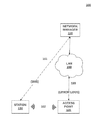
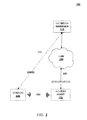
- FIG. 1 is a high-level block diagram illustrating a system to resolve user connectivity issues over SMS, according to one embodiment.
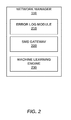
- FIGS. 2 is a more detailed block diagram illustrating a network manager of the system of FIG. 1 , respectively, according to some embodiments.
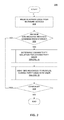
- FIG. 3 is a high-level flow diagram illustrating a method for resolving user connectivity issues over SMS, according to one embodiment.
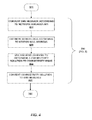
- FIG. 4 is a more detailed flow diagram illustrating a step of determining connectivity solutions for connectivity issues from the method of FIG. 3 , according to one embodiment.
- FIG. 5 is a more detailed flow diagram illustrating a step of sending SMS messages to resolve connectivity issue with user from the method of FIG. 3 , according to one embodiment.
- FIG. 6 is a block diagram illustrating an example computing device, according to one embodiment.
- SMS messages and error logs are used for purposes of illustrating detailed embodiments, other types of messaging channels (e.g., Bluetooth) and other types of logs (e.g., network activity logs) can be implemented as well.
- SMS messages and error logs are used for purposes of illustrating detailed embodiments, other types of messaging channels (e.g., Bluetooth) and other types of logs (e.g., network activity logs) can be implemented as well.
- FIGS. 1-2 Systems to Resolve User Connectivity Issues Over SMS ( FIGS. 1-2 )
- FIG. 1 is a high-level block diagram illustrating a system to resolve user connectivity issues over SMS, according to one embodiment.
- the system 100 comprises a network manager 110 , an access point 120 and a station 130 .
- Many other components may also be present, such as more access points, more stations, controllers, firewalls, routers, switches, repeaters, servers, and the like.
- components can be implemented with a single physical box, or, each could represent a cluster of physical boxes acting in coordination.
- the system 100 can be implemented locally as a LAN or be implemented in the cloud with certain components being remotely available (e.g., through a firewall).
- the network manager 110 and the access point 120 are communicatively coupled to the LAN 199 , preferably by a wired connection.
- the station 130 communicatively couples to the LAN 199 via the access point 120 by a wireless connection 102 when network connections are operating correctly.
- the station 130 also communicatively couples to the network manager by an SMS channel 101 .
- the SMS channel 101 can be over a cell network using 3G, 4G or another cellular technology.
- the SMS channel 101 comprises a data channel such as Bluetooth.
- Wi-Fi components can communicate using IEEE 802 . 11 protocols, including IEEE 802 . 11 n and IEEE 802 . 11 ac.
- the network manager 110 responds to SMS messages form the station 130 to resolve connectivity issues.
- the network manager 110 sits atop a hierarchy of network components, having the authority to configure all subservient network components. Management can be initiated manually by a network administrator or be initiated automatically under network policies and responsive to real-time network conditions.
- the access point 120 under ideal conditions, provides an on-ramp for the station 130 for utilizing the backbone network.
- the Wi-Fi channel 102 or the backbone channel 103 to the LAN 199 can be having performance issues. Additionally, the access point 120 itself can cause connectivity problems for the station 130 .
- the access point 120 communicates with the network manager 110 over an SMS channel to report connectivity issues to the LAN 199 . For example, a failed log in attempt by a specific user from a MAC address, due to invalid log in credentials is sent upstream.
- the access point 120 periodically transmits beacons to advertise services and available BSSIDs. Wireless stations within radio range may choose to join the network and send a probe request (or association request) to initiate the connection process. In turn, the access point 120 sends a probe response to facilitate in the connection process. As a result, the station 130 can reach resources on the LAN 199 and outside of the LAN 199 .
- the station 130 resorts to the SMS channel 101 when the wireless channel 102 is not performing as expected.
- a user can initiate while using a network application such as a browser or streaming application.
- a mobile app or mobile operating system can automatically recognize connectivity issues and gather appropriate information needed for communication to the network manager 110 .
- a browser application automatically reports an HTTP 404 error to the network manager 110 in a manner that is transparent to users.
- An SMS application executing on the station 110 sends SMS messages for the mobile app or mobile operating system.
- the access point 120 can provide SMS contact information over the wireless connection 120 , if available, using beacons or a special message responsive to connection errors.
- users manually compose a text message with appropriate identification data, such a MAC address of a specific device, a user name, a password, a physical location, a code describing an issue, or a natural language text message.
- the station 130 selects the access point 110 from available access points within range, and initiates a connection. Users may be asked to enter one or more network credentials, server credentials, corporate credentials, application credentials, or the like.
- the network components of the system 100 can implemented in any of the computing devices discussed herein, for example, a personal computer, a laptop computer, a tablet computer, a smart phone, a mobile computing device, a server, a cloud-based device, a virtual device, an Internet appliance, or any of the computing devices described herein, using hardware and/or software (see e.g., FIG. 6 ).
- FIG. 2 is a more detailed block diagram illustrating the network manager 110 of the system 100 , according to one embodiment.
- the network manager 110 includes an error log module 210 , an SMS gateway 220 , and a machine learning engine 230 .
- the components can be implemented in hardware, software, or a combination of both.
- the error log module 210 receives error logs from the access point 120 and other network devices on the LAN 199 , in an embodiment.
- the error log module 120 comprises a SIEM (security information and event management) log manager, an example of which is disclosed in U.S. application Ser. No. 15/277,965 which is hereby incorporated by reference.
- the error log module 120 communicates with an external log manager.
- the access point 120 reports failed log on attempts, hard and soft hand-offs of connected stations, device and user non-compliance, network conditions and performance, and the like.
- the SMS gateway 220 manages SMS messaging with and between the station 110 , the network manager 120 and a network administrator. In one case, the access point 120 also communicates via SMS messages. A client experience protocol can be initiated when an SMS message is received from the station 110 . SMS messages are parsed to recognize a MAC address and a connectivity issue (e.g., a specific issue, or an indication that an unknown issue exists) embedded within a data packet. Example SMS formats are 160 7-bit characters, 140 8-bit characters, or 70 16-bit characters. If the MAC address matches one or more error logs or activity logs, a user account, an entry on a BSSID table, or other network record, a sequence of subsequent messages can be tracked, as further described in FIG. 5 or otherwise.
- One embodiment of the SMS gateway 220 comprises the Twilio Platform for converting SMS messages according to an API of the network manager 110 .
- the machine learning engine 230 implements artificial intelligence to identify connectivity solutions for connectivity issues submitted from the SMS gateway 220 .
- One embodiment includes an artificial neural network that adapts to one or more errors or events.
- Another embodiment uses pattern recognition to develop statistical models between connectivity issues and connectivity solutions.
- Statistics and analysis can also be received from the error log module 210 for self-configuration and self-reconfiguration.
- Hard rules that are inflexible can also be applied, such as those set by a network administrator. In one implementation, a subset of rules applies to connectivity issues.
- FIG. 3 is a high-level flow diagram illustrating a method for resolving user connectivity issues over SMS, according to one embodiment.
- the method 300 is non-limiting as other embodiments can have more or less steps and can be performed in a different order.
- the method 300 is implemented in the system 100 of FIG. 1 .
- Error logs (or other network activity) is received from network devices (step 310 ). Responsive to receiving an SMS message with a MAC address (or other identification information) is received from the station (step 320 ), a connectivity solution for a connectivity issue is determined (step 330 ), as described in FIG. 4 . The connectivity issue, or an indication thereof, can be included in the SMS message. Otherwise, the system resorts to error logs. SMS messages are sent back to the station or user to resolve connectivity issues (step 340 ), as detailed in FIG. 5 . Some implementations automatically execute the connectivity solution at the station from the returned SMS message when recognized by a local mobile app.
- FIG. 4 is a more detailed flow diagram illustrating the step 330 of determining connectivity solutions for connectivity issues from the method of FIG. 3 , according to one embodiment.
- An SMS message is converted according to a network manager API (step 410 ), for example, using the Twilio platform. Error logs are retrieved according to the station MAC address (or other identification information) (step 420 ). In one case, machine learning is used to determine a connectivity solution to a connectivity issue (step 430 ). The connectivity solution is converted to an SMS message.
- FIG. 5 is a more detailed flow diagram illustrating the step 340 of sending SMS messages to resolve connectivity issue with user from the method of FIG. 3 , according to one embodiment.
- SMS protocols There are many different SMS protocols.
- solutions can be automatically implemented (step 510 ), user implemented (step 520 ), or network administrator implemented (step 530 ).
- a corresponding SMS message is sent to the user, including an SMS message notification of resolution (step 515 ), an SMS message with user instructions (step 525 ), or an SMS message indicating intervention needed by network administrator (step 535 ), accordingly.
- an SMS message requesting confirmation of resolution from station, application or user perspective is sent (step 545 ). If user confirms resolution (step 555 ), machine learning or rules in a network manager is updated (step 550 ). If resolution is not confirmed (step 555 ), an SMS can be sent to a network administrator for follow-up. Machine learning or rules can also be updated for failures.
- FIG. 6 is a block diagram illustrating an exemplary computing device 600 for use in the system 60 of FIG. 1 , according to one embodiment.
- the computing device 600 is an exemplary device that is implementable for each of the components of the system 60 , including the SDN controller 16 , the Wi-Fi controller 120 , the access points 130 A-N, and the stations 140 A-N.
- the computing device 600 can be a mobile computing device, a laptop device, a smartphone, a tablet device, a phablet device, a video game console, a personal computing device, a stationary computing device, a server blade, an Internet appliance, a virtual computing device, a distributed computing device, a cloud-based computing device, or any appropriate processor-driven device.
- the computing device 600 includes a memory 66 , a processor 620 , a storage drive 630 , and an I/O port 640 . Each of the components is coupled for electronic communication via a bus 666 . Communication can be digital and/or analog, and use any suitable protocol.
- the memory 66 further comprises network applications 612 and an operating system 614 .
- the network applications 612 can include the modules of the SDN controller 16 , the Wi-Fi controller 120 , or the access point 130 , as illustrated in FIGS. 3-5 .
- Other network applications 612 can include a web browser, a mobile application, an application that uses networking, a remote application executing locally, a network protocol application, a network management application, a network routing application, or the like.
- the operating system 614 can be one of the Microsoft Windows® family of operating systems (e.g., Windows 95, 98, Me, Windows NT, Windows 2000, Windows XP, Windows XP x64 Edition, Windows Vista, Windows CE, Windows Mobile, Windows 7 or Windows 8), Linux, HP-UX, UNIX, Sun OS, Solaris, Mac OS X, Alpha OS, AIX, IRIX32, or IRIX64. Other operating systems may be used. Microsoft Windows is a trademark of Microsoft Corporation.
- the processor 620 can be a network processor (e.g., optimized for IEEE 802 . 11 ), a general purpose processor, an application-specific integrated circuit (ASIC), a field programmable gate array (FPGA), a reduced instruction set controller (RISC) processor, an integrated circuit, or the like. Qualcomm Atheros, Broadcom Corporation, and Marvell Semiconductors manufacture processors that are optimized for IEEE 802 . 11 devices.
- the processor 620 can be single core, multiple core, or include more than one processing elements.
- the processor 620 can be disposed on silicon or any other suitable material.
- the processor 620 can receive and execute instructions and data stored in the memory 66 or the storage drive 630
- the storage drive 630 can be any non-volatile type of storage such as a magnetic disc, EEPROM (electronically erasable programmable read-only memory), Flash, or the like.
- the storage drive 630 stores code and data for applications.
- the I/O port 640 further comprises a user interface 642 and a network interface 644 .
- the user interface 642 can output to a display device and receive input from, for example, a keyboard.
- the network interface 644 e.g. RF antennae
- Computer software products may be written in any of various suitable programming languages, such as C, C++, C#, Oracle® Java, JavaScript, PHP, Python, Perl, Ruby, AJAX, and Adobe® Flash®.
- the computer software product may be an independent application with data input and data display modules.
- the computer software products may be classes that are instantiated as distributed objects.
- the computer software products may also be component software such as Java Beans (from Sun Microsystems) or Enterprise Java Beans (EJB from Sun Microsystems).
- the computer that is running the previously mentioned computer software may be connected to a network and may interface with other computers using this network.
- the network may be on an instant or the Internet, among others.
- the network may be a wired network (e.g., using copper), telephone network, packet network, an optical network (e.g., using optical fiber), or a wireless network, or any combination of these.
- data and other information may be passed between the computer and components (or steps) of a system of the invention using a wireless network using a protocol such as Wi-Fi (IEEE standards 802.11, 802.11a, 802.11b, 802.11e, 802.11g, 802.11i, 802.11n, and 802.11ac, just to name a few examples).
- Wi-Fi IEEE standards 802.11, 802.11a, 802.11b, 802.11e, 802.11g, 802.11i, 802.11n, and 802.11ac, just to name a few examples.
- signals from a computer may be transferred, at least in
- a user accesses a system on the World Wide Web (WWW) through a network such as the Internet.
- WWW World Wide Web
- the Web browser is used to download web pages or other content in various formats including HTML, XML, text, PDF, and postscript, and may be used to upload information to other parts of the system.
- the Web browser may use uniform resource identifiers (URLs) to identify resources on the Web and hypertext transfer protocol (HTTP) in transferring files on the Web.
- URLs uniform resource identifiers
- HTTP hypertext transfer protocol
Landscapes
- Engineering & Computer Science (AREA)
- Computer Networks & Wireless Communication (AREA)
- Signal Processing (AREA)
- Software Systems (AREA)
- Medical Informatics (AREA)
- Computer Vision & Pattern Recognition (AREA)
- Evolutionary Computation (AREA)
- Artificial Intelligence (AREA)
- Theoretical Computer Science (AREA)
- Databases & Information Systems (AREA)
- Data Mining & Analysis (AREA)
- Environmental & Geological Engineering (AREA)
- Physics & Mathematics (AREA)
- Computing Systems (AREA)
- General Engineering & Computer Science (AREA)
- General Physics & Mathematics (AREA)
- Mathematical Physics (AREA)
- Computer Security & Cryptography (AREA)
- Mobile Radio Communication Systems (AREA)
Abstract
Description
- The invention relates generally to computer networking, and more specifically, to resolving user connectivity issues over SMS (short messaging service).
- More and more often, Wi-Fi networks are being used in mission critical applications, such as administration of exams at educational institutions, health monitoring at hospitals, and the like. Unfortunately, Wi-Fi networks are subject to various network problems including outages and downtime, lack of responsiveness, log-in problems, slow bandwidth, down network devices, and various errors.
- One difficulty with station connectivity is that issues cannot be resolved if a network connection is not available to report the problem. It can be difficult to report problems over a telephone due to the complexity of identifying a user device by MAC number by voice. Furthermore, live operators are needed to answer telephones 24-hours a day which can add to support expenses.
- Therefore, what is needed is a robust technique to resolve user connectivity issues over SMS.
- These shortcomings are addressed by the present disclosure of methods, computer program products, and systems for resolving user connectivity issues over SMS.
- In one embodiment, an SMS message including a MAC address is received for a station having a wireless connectivity issue involving a Wi-Fi portion of the data communication network. Additionally, general connectivity issues, slow network performance, disconnections, application performance, and other client experience issues can be reported. The SMS message is converted according to an API (application programming interface) of the network manager.
- In another embodiment, error logs are retrieved according to the MAC address. Based on the error logs, a connectivity solution (or other type of solution) to the connectivity issue is determined. The connectivity solution from the network manager API to an SMS message. The SMS message with the connectivity solution is sent to the station.
- In other embodiments, subsequent SMS messages are sent to the station to determine whether the connectivity solution was effective in improving a client experience. Successes and failures are logged for future determinations. Failures can also spawn a group chat facilitated between users and network administrators.
- Advantageously, computer network performance with respect to client experiences are improved. Moreover, wireless computer device Wi-Fi connectivity issues are reduced.
- In the following drawings, like reference numbers are used to refer to like elements. Although the following figures depict various examples of the invention, the invention is not limited to the examples depicted in the figures.
-
FIG. 1 is a high-level block diagram illustrating a system to resolve user connectivity issues over SMS, according to one embodiment. -
FIGS. 2 is a more detailed block diagram illustrating a network manager of the system ofFIG. 1 , respectively, according to some embodiments. -
FIG. 3 is a high-level flow diagram illustrating a method for resolving user connectivity issues over SMS, according to one embodiment. -
FIG. 4 is a more detailed flow diagram illustrating a step of determining connectivity solutions for connectivity issues from the method ofFIG. 3 , according to one embodiment. -
FIG. 5 is a more detailed flow diagram illustrating a step of sending SMS messages to resolve connectivity issue with user from the method ofFIG. 3 , according to one embodiment. -
FIG. 6 is a block diagram illustrating an example computing device, according to one embodiment. - The description below provides methods, computer program products, and systems for resolving user connectivity issues over SMS. One of ordinary skill in the art will recognize many additional variations made possible by the succinct description of techniques below. For example, although SMS messages and error logs are used for purposes of illustrating detailed embodiments, other types of messaging channels (e.g., Bluetooth) and other types of logs (e.g., network activity logs) can be implemented as well.
- Systems to Resolve User Connectivity Issues Over SMS (
FIGS. 1-2 ) -
FIG. 1 is a high-level block diagram illustrating a system to resolve user connectivity issues over SMS, according to one embodiment. Thesystem 100 comprises anetwork manager 110, anaccess point 120 and astation 130. Many other components may also be present, such as more access points, more stations, controllers, firewalls, routers, switches, repeaters, servers, and the like. Additionally, components can be implemented with a single physical box, or, each could represent a cluster of physical boxes acting in coordination. Thesystem 100 can be implemented locally as a LAN or be implemented in the cloud with certain components being remotely available (e.g., through a firewall). - The
network manager 110 and theaccess point 120 are communicatively coupled to the LAN 199, preferably by a wired connection. Thestation 130 communicatively couples to the LAN 199 via theaccess point 120 by awireless connection 102 when network connections are operating correctly. Thestation 130 also communicatively couples to the network manager by anSMS channel 101. TheSMS channel 101 can be over a cell network using 3G, 4G or another cellular technology. In one embodiment, theSMS channel 101 comprises a data channel such as Bluetooth. Wi-Fi components can communicate using IEEE 802.11 protocols, including IEEE 802.11 n and IEEE 802.11 ac. - The
network manager 110 responds to SMS messages form thestation 130 to resolve connectivity issues. In one embodiment, sits atop a hierarchy of network components, having the authority to configure all subservient network components. Management can be initiated manually by a network administrator or be initiated automatically under network policies and responsive to real-time network conditions. - Additional embodiments of the network manager are set forth with respect to
FIG. 2 below. - The
access point 120, under ideal conditions, provides an on-ramp for thestation 130 for utilizing the backbone network. When not under ideal conditions, the Wi-Fi channel 102 or the backbone channel 103 to the LAN 199 can be having performance issues. Additionally, theaccess point 120 itself can cause connectivity problems for thestation 130. In one case, theaccess point 120 communicates with thenetwork manager 110 over an SMS channel to report connectivity issues to the LAN 199. For example, a failed log in attempt by a specific user from a MAC address, due to invalid log in credentials is sent upstream. - In general operations, the
access point 120 periodically transmits beacons to advertise services and available BSSIDs. Wireless stations within radio range may choose to join the network and send a probe request (or association request) to initiate the connection process. In turn, theaccess point 120 sends a probe response to facilitate in the connection process. As a result, thestation 130 can reach resources on the LAN 199 and outside of the LAN 199. - The
station 130 resorts to theSMS channel 101 when thewireless channel 102 is not performing as expected. In one case, a user can initiate while using a network application such as a browser or streaming application. A mobile app or mobile operating system can automatically recognize connectivity issues and gather appropriate information needed for communication to thenetwork manager 110. In one case, a browser application automatically reports an HTTP 404 error to thenetwork manager 110 in a manner that is transparent to users. An SMS application executing on thestation 110 sends SMS messages for the mobile app or mobile operating system. Theaccess point 120 can provide SMS contact information over thewireless connection 120, if available, using beacons or a special message responsive to connection errors. Alternatively, users manually compose a text message with appropriate identification data, such a MAC address of a specific device, a user name, a password, a physical location, a code describing an issue, or a natural language text message. - In general operations, the station 130 (either device, user, or application) selects the
access point 110 from available access points within range, and initiates a connection. Users may be asked to enter one or more network credentials, server credentials, corporate credentials, application credentials, or the like. - The network components of the
system 100 can implemented in any of the computing devices discussed herein, for example, a personal computer, a laptop computer, a tablet computer, a smart phone, a mobile computing device, a server, a cloud-based device, a virtual device, an Internet appliance, or any of the computing devices described herein, using hardware and/or software (see e.g.,FIG. 6 ). -
FIG. 2 is a more detailed block diagram illustrating thenetwork manager 110 of thesystem 100, according to one embodiment. Thenetwork manager 110 includes anerror log module 210, an SMS gateway 220, and amachine learning engine 230. The components can be implemented in hardware, software, or a combination of both. - The
error log module 210 receives error logs from theaccess point 120 and other network devices on the LAN 199, in an embodiment. In some embodiments, theerror log module 120 comprises a SIEM (security information and event management) log manager, an example of which is disclosed in U.S. application Ser. No. 15/277,965 which is hereby incorporated by reference. In other embodiments, theerror log module 120 communicates with an external log manager. In more detail, theaccess point 120 reports failed log on attempts, hard and soft hand-offs of connected stations, device and user non-compliance, network conditions and performance, and the like. - The SMS gateway 220 manages SMS messaging with and between the
station 110, thenetwork manager 120 and a network administrator. In one case, theaccess point 120 also communicates via SMS messages. A client experience protocol can be initiated when an SMS message is received from thestation 110. SMS messages are parsed to recognize a MAC address and a connectivity issue (e.g., a specific issue, or an indication that an unknown issue exists) embedded within a data packet. Example SMS formats are 160 7-bit characters, 140 8-bit characters, or 70 16-bit characters. If the MAC address matches one or more error logs or activity logs, a user account, an entry on a BSSID table, or other network record, a sequence of subsequent messages can be tracked, as further described inFIG. 5 or otherwise. One embodiment of the SMS gateway 220 comprises the Twilio Platform for converting SMS messages according to an API of thenetwork manager 110. - The
machine learning engine 230 implements artificial intelligence to identify connectivity solutions for connectivity issues submitted from the SMS gateway 220. One embodiment includes an artificial neural network that adapts to one or more errors or events. Another embodiment uses pattern recognition to develop statistical models between connectivity issues and connectivity solutions. Statistics and analysis can also be received from theerror log module 210 for self-configuration and self-reconfiguration. Hard rules that are inflexible can also be applied, such as those set by a network administrator. In one implementation, a subset of rules applies to connectivity issues. - Methods Resolving User Connectivity Issues Over SMS (
FIG. 3-5 ) -
FIG. 3 is a high-level flow diagram illustrating a method for resolving user connectivity issues over SMS, according to one embodiment. One of ordinary skill in the art will recognize that themethod 300 is non-limiting as other embodiments can have more or less steps and can be performed in a different order. In one embodiment, themethod 300 is implemented in thesystem 100 ofFIG. 1 . - Error logs (or other network activity) is received from network devices (step 310). Responsive to receiving an SMS message with a MAC address (or other identification information) is received from the station (step 320), a connectivity solution for a connectivity issue is determined (step 330), as described in
FIG. 4 . The connectivity issue, or an indication thereof, can be included in the SMS message. Otherwise, the system resorts to error logs. SMS messages are sent back to the station or user to resolve connectivity issues (step 340), as detailed inFIG. 5 . Some implementations automatically execute the connectivity solution at the station from the returned SMS message when recognized by a local mobile app. -
FIG. 4 is a more detailed flow diagram illustrating thestep 330 of determining connectivity solutions for connectivity issues from the method ofFIG. 3 , according to one embodiment. - An SMS message is converted according to a network manager API (step 410), for example, using the Twilio platform. Error logs are retrieved according to the station MAC address (or other identification information) (step 420). In one case, machine learning is used to determine a connectivity solution to a connectivity issue (step 430). The connectivity solution is converted to an SMS message.
-
FIG. 5 is a more detailed flow diagram illustrating thestep 340 of sending SMS messages to resolve connectivity issue with user from the method ofFIG. 3 , according to one embodiment. - There are many different SMS protocols. In
FIG. 5 , solutions can be automatically implemented (step 510), user implemented (step 520), or network administrator implemented (step 530). A corresponding SMS message is sent to the user, including an SMS message notification of resolution (step 515), an SMS message with user instructions (step 525), or an SMS message indicating intervention needed by network administrator (step 535), accordingly. - After resolution (or partial resolution), an SMS message requesting confirmation of resolution from station, application or user perspective is sent (step 545). If user confirms resolution (step 555), machine learning or rules in a network manager is updated (step 550). If resolution is not confirmed (step 555), an SMS can be sent to a network administrator for follow-up. Machine learning or rules can also be updated for failures.
- Generic Computing Device (
FIG. 6 ) -
FIG. 6 is a block diagram illustrating anexemplary computing device 600 for use in the system 60 ofFIG. 1 , according to one embodiment. Thecomputing device 600 is an exemplary device that is implementable for each of the components of the system 60, including the SDN controller 16, the Wi-Fi controller 120, the access points 130A-N, and the stations 140A-N. Thecomputing device 600 can be a mobile computing device, a laptop device, a smartphone, a tablet device, a phablet device, a video game console, a personal computing device, a stationary computing device, a server blade, an Internet appliance, a virtual computing device, a distributed computing device, a cloud-based computing device, or any appropriate processor-driven device. - The
computing device 600, of the present embodiment, includes amemory 66, aprocessor 620, astorage drive 630, and an I/O port 640. Each of the components is coupled for electronic communication via a bus 666. Communication can be digital and/or analog, and use any suitable protocol. - The
memory 66 further comprisesnetwork applications 612 and anoperating system 614. Thenetwork applications 612 can include the modules of the SDN controller 16, the Wi-Fi controller 120, or theaccess point 130, as illustrated inFIGS. 3-5 .Other network applications 612 can include a web browser, a mobile application, an application that uses networking, a remote application executing locally, a network protocol application, a network management application, a network routing application, or the like. - The
operating system 614 can be one of the Microsoft Windows® family of operating systems (e.g., Windows 95, 98, Me, Windows NT, Windows 2000, Windows XP, Windows XP x64 Edition, Windows Vista, Windows CE, Windows Mobile, Windows 7 or Windows 8), Linux, HP-UX, UNIX, Sun OS, Solaris, Mac OS X, Alpha OS, AIX, IRIX32, or IRIX64. Other operating systems may be used. Microsoft Windows is a trademark of Microsoft Corporation. - The
processor 620 can be a network processor (e.g., optimized for IEEE 802.11 ), a general purpose processor, an application-specific integrated circuit (ASIC), a field programmable gate array (FPGA), a reduced instruction set controller (RISC) processor, an integrated circuit, or the like. Qualcomm Atheros, Broadcom Corporation, and Marvell Semiconductors manufacture processors that are optimized for IEEE 802.11 devices. Theprocessor 620 can be single core, multiple core, or include more than one processing elements. Theprocessor 620 can be disposed on silicon or any other suitable material. Theprocessor 620 can receive and execute instructions and data stored in thememory 66 or thestorage drive 630 - The
storage drive 630 can be any non-volatile type of storage such as a magnetic disc, EEPROM (electronically erasable programmable read-only memory), Flash, or the like. Thestorage drive 630 stores code and data for applications. - The I/
O port 640 further comprises a user interface 642 and anetwork interface 644. The user interface 642 can output to a display device and receive input from, for example, a keyboard. The network interface 644 (e.g. RF antennae) connects to a medium such as Ethernet or Wi-Fi for data input and output. - Many of the functionalities described herein can be implemented with computer software, computer hardware, or a combination.
- Computer software products (e.g., non-transitory computer products storing source code) may be written in any of various suitable programming languages, such as C, C++, C#, Oracle® Java, JavaScript, PHP, Python, Perl, Ruby, AJAX, and Adobe® Flash®. The computer software product may be an independent application with data input and data display modules. Alternatively, the computer software products may be classes that are instantiated as distributed objects. The computer software products may also be component software such as Java Beans (from Sun Microsystems) or Enterprise Java Beans (EJB from Sun Microsystems).
- Furthermore, the computer that is running the previously mentioned computer software may be connected to a network and may interface with other computers using this network. The network may be on an instant or the Internet, among others. The network may be a wired network (e.g., using copper), telephone network, packet network, an optical network (e.g., using optical fiber), or a wireless network, or any combination of these. For example, data and other information may be passed between the computer and components (or steps) of a system of the invention using a wireless network using a protocol such as Wi-Fi (IEEE standards 802.11, 802.11a, 802.11b, 802.11e, 802.11g, 802.11i, 802.11n, and 802.11ac, just to name a few examples). For example, signals from a computer may be transferred, at least in part, wirelessly to components or other computers.
- In an embodiment, with a Web browser executing on a computer workstation system, a user accesses a system on the World Wide Web (WWW) through a network such as the Internet. The Web browser is used to download web pages or other content in various formats including HTML, XML, text, PDF, and postscript, and may be used to upload information to other parts of the system. The Web browser may use uniform resource identifiers (URLs) to identify resources on the Web and hypertext transfer protocol (HTTP) in transferring files on the Web.
- This description of the invention has been presented for the purposes of illustration and description. It is not intended to be exhaustive or to limit the invention to the precise form described, and many modifications and variations are possible in light of the teaching above. The embodiments were chosen and described in order to best explain the principles of the invention and its practical applications. This description will enable others skilled in the art to best utilize and practice the invention in various embodiments and with various modifications as are suited to a particular use. The scope of the invention is defined by the following claims.
Claims (12)
Priority Applications (1)
| Application Number | Priority Date | Filing Date | Title |
|---|---|---|---|
| US15/283,277 US10515318B2 (en) | 2016-09-30 | 2016-09-30 | Automated resolution of Wi-Fi connectivity issues over SMS |
Applications Claiming Priority (1)
| Application Number | Priority Date | Filing Date | Title |
|---|---|---|---|
| US15/283,277 US10515318B2 (en) | 2016-09-30 | 2016-09-30 | Automated resolution of Wi-Fi connectivity issues over SMS |
Publications (2)
| Publication Number | Publication Date |
|---|---|
| US20180098233A1 true US20180098233A1 (en) | 2018-04-05 |
| US10515318B2 US10515318B2 (en) | 2019-12-24 |
Family
ID=61758621
Family Applications (1)
| Application Number | Title | Priority Date | Filing Date |
|---|---|---|---|
| US15/283,277 Active 2037-03-07 US10515318B2 (en) | 2016-09-30 | 2016-09-30 | Automated resolution of Wi-Fi connectivity issues over SMS |
Country Status (1)
| Country | Link |
|---|---|
| US (1) | US10515318B2 (en) |
Cited By (6)
| Publication number | Priority date | Publication date | Assignee | Title |
|---|---|---|---|---|
| CN109347688A (en) * | 2018-11-26 | 2019-02-15 | 锐捷网络股份有限公司 | A method and device for locating faults in a wireless local area network |
| US11190395B2 (en) * | 2018-08-08 | 2021-11-30 | International Business Machines Corporation | Alerting service provider of failed network connectivity by IoT-enabled modem |
| US11416187B2 (en) * | 2020-03-25 | 2022-08-16 | Fujifilm Business Innovation Corp. | Information processing system, information processing apparatus, and non-transitory computer readable medium |
| US11553393B2 (en) * | 2018-06-13 | 2023-01-10 | Huawei Technologies Co., Ltd. | Transmission control method and device |
| CN116233773A (en) * | 2023-03-03 | 2023-06-06 | 深圳市东信云科技有限公司 | Short message verification code sending method, device, computer equipment and storage medium |
| US12353971B1 (en) * | 2018-12-13 | 2025-07-08 | Amazon Technologies, Inc. | Machine learning model adaptation via segment replacement and student-teacher training |
Citations (9)
| Publication number | Priority date | Publication date | Assignee | Title |
|---|---|---|---|---|
| US20030224797A1 (en) * | 2002-04-08 | 2003-12-04 | Chia-Chee Kuan | Monitoring a local area network |
| US20070197206A1 (en) * | 2006-02-17 | 2007-08-23 | Cisco Technology, Inc. | Troubleshooting link and protocol in a wireless network |
| US20140130111A1 (en) * | 2012-11-06 | 2014-05-08 | Tollgrade Communications, Inc. | Agent-based communication service quality monitoring and diagnostics |
| US20150269586A1 (en) * | 2014-03-18 | 2015-09-24 | Cellco Partnership D/B/A Verizon Wireless | Method and System for Crowd-Sourcing Customer Care |
| US20160078142A1 (en) * | 2014-09-12 | 2016-03-17 | Tomas Gorny | Customer Management System |
| US20160164930A1 (en) * | 2014-12-08 | 2016-06-09 | Alcatel-Lucent Usa Inc. | Usage authorization control for group communications in a communication network |
| US20160205697A1 (en) * | 2015-01-14 | 2016-07-14 | Futurewei Technologies, Inc. | Analytics-Assisted, Multi-agents, Self-Learning, Self-managing, Flexible and Adaptive Framework for Intelligent SON |
| US20160242053A1 (en) * | 2013-09-30 | 2016-08-18 | Telefonica Digital España, S.L.U. | Method and system for identifying the cause of network problems in mobile networks and computer program thereof |
| US20170155547A1 (en) * | 2014-06-30 | 2017-06-01 | British Telecommunications Public Limited Company | Network diagnostic device |
-
2016
- 2016-09-30 US US15/283,277 patent/US10515318B2/en active Active
Patent Citations (9)
| Publication number | Priority date | Publication date | Assignee | Title |
|---|---|---|---|---|
| US20030224797A1 (en) * | 2002-04-08 | 2003-12-04 | Chia-Chee Kuan | Monitoring a local area network |
| US20070197206A1 (en) * | 2006-02-17 | 2007-08-23 | Cisco Technology, Inc. | Troubleshooting link and protocol in a wireless network |
| US20140130111A1 (en) * | 2012-11-06 | 2014-05-08 | Tollgrade Communications, Inc. | Agent-based communication service quality monitoring and diagnostics |
| US20160242053A1 (en) * | 2013-09-30 | 2016-08-18 | Telefonica Digital España, S.L.U. | Method and system for identifying the cause of network problems in mobile networks and computer program thereof |
| US20150269586A1 (en) * | 2014-03-18 | 2015-09-24 | Cellco Partnership D/B/A Verizon Wireless | Method and System for Crowd-Sourcing Customer Care |
| US20170155547A1 (en) * | 2014-06-30 | 2017-06-01 | British Telecommunications Public Limited Company | Network diagnostic device |
| US20160078142A1 (en) * | 2014-09-12 | 2016-03-17 | Tomas Gorny | Customer Management System |
| US20160164930A1 (en) * | 2014-12-08 | 2016-06-09 | Alcatel-Lucent Usa Inc. | Usage authorization control for group communications in a communication network |
| US20160205697A1 (en) * | 2015-01-14 | 2016-07-14 | Futurewei Technologies, Inc. | Analytics-Assisted, Multi-agents, Self-Learning, Self-managing, Flexible and Adaptive Framework for Intelligent SON |
Non-Patent Citations (1)
| Title |
|---|
| "Station (networking)", Wikipedia entry, July 18, 2017 [retrieved on 2018-06-05]. Retrieved from the Internet: <URL:https://en.wikipedia.org/wiki/Station_(networking)>. * |
Cited By (7)
| Publication number | Priority date | Publication date | Assignee | Title |
|---|---|---|---|---|
| US11553393B2 (en) * | 2018-06-13 | 2023-01-10 | Huawei Technologies Co., Ltd. | Transmission control method and device |
| US11190395B2 (en) * | 2018-08-08 | 2021-11-30 | International Business Machines Corporation | Alerting service provider of failed network connectivity by IoT-enabled modem |
| CN109347688A (en) * | 2018-11-26 | 2019-02-15 | 锐捷网络股份有限公司 | A method and device for locating faults in a wireless local area network |
| US12353971B1 (en) * | 2018-12-13 | 2025-07-08 | Amazon Technologies, Inc. | Machine learning model adaptation via segment replacement and student-teacher training |
| US11416187B2 (en) * | 2020-03-25 | 2022-08-16 | Fujifilm Business Innovation Corp. | Information processing system, information processing apparatus, and non-transitory computer readable medium |
| JP7512636B2 (en) | 2020-03-25 | 2024-07-09 | 富士フイルムビジネスイノベーション株式会社 | Information processing system, information processing device, and information processing program |
| CN116233773A (en) * | 2023-03-03 | 2023-06-06 | 深圳市东信云科技有限公司 | Short message verification code sending method, device, computer equipment and storage medium |
Also Published As
| Publication number | Publication date |
|---|---|
| US10515318B2 (en) | 2019-12-24 |
Similar Documents
| Publication | Publication Date | Title |
|---|---|---|
| US10515318B2 (en) | Automated resolution of Wi-Fi connectivity issues over SMS | |
| US10938926B2 (en) | User and IoT (internet of things) apparatus tracking in a log management system | |
| US11659420B2 (en) | Systems and methods of using network slicing for test platform | |
| US20160156614A1 (en) | Provisioning a device over an internet of things | |
| US10517018B2 (en) | Load balancing for a cloud-based Wi-Fi controller based on local conditions | |
| US11343135B2 (en) | Network troubleshooting digital assistant system | |
| US9922225B2 (en) | Cloud-based authentication of user devices for onboarding to a Wi-Fi network | |
| US20180007067A1 (en) | Detecting poisoning attacks of internet of things (iot) location beacons in wireless local area networks (wlans) with silence periods | |
| US20180070216A1 (en) | Extension of wi-fi services multicast to a subnet across a wi-fi network using software-defined network (sdn) to centrally control data plane behavior | |
| CN108337308B (en) | Data communication method, device and system for LWM2M client and upper computer | |
| US10951497B2 (en) | System and method for a service-based interface architecture | |
| US10122745B2 (en) | Heuristics-based identification of IoT (internet of things) attacks in Wi-fi | |
| US10645585B2 (en) | Containing internet of things (IOT) analytics poisoning on wireless local access networks (WLANs) | |
| US11057304B1 (en) | DNS (domain name server)-based application-aware routing on SD-WAN (software-defined wide access network) | |
| US10070263B1 (en) | Using location to detect location of network poisoning attacks in Wi-Fi based locationing | |
| US10187273B2 (en) | Monitoring wireless station experience on a wi-fi network by emulating client radios | |
| US20220171011A1 (en) | Positioning method and device, server, storage medium and terminal | |
| US10390217B2 (en) | Wireless configuration of wireless distribution system (WDS) Wi-Fi range extenders using non-Wi-Fi-wireless communication channels | |
| US20210051213A1 (en) | Network services controller for cloud-based control of connectivity for heterogeneous network infrastructure | |
| US20160112241A1 (en) | Instant messenger applications for interacting with network infrastructure devices | |
| US11539599B2 (en) | Scalable multiple layer machine learning model for classification of Wi-Fi issues on a data communication network | |
| US10205724B2 (en) | Cloud-based onboarding of cloud-controlled Wi-Fi network devices | |
| US11611933B2 (en) | Managing station connectivity in microcell Wi-Fi environment on a data communication network | |
| CN111314991B (en) | Network access control method, device and system | |
| US10721138B2 (en) | Providing differentiated QoS by dynamically segregating voice and video clients into different BSSIDs |
Legal Events
| Date | Code | Title | Description |
|---|---|---|---|
| AS | Assignment |
Owner name: FORTINET, INC., CALIFORNIA Free format text: ASSIGNMENT OF ASSIGNORS INTEREST;ASSIGNORS:TALARI, SAMUEL STEPHEN;DRONADULA, LAKSHMI NARAYANA;REEL/FRAME:040175/0206 Effective date: 20160310 |
|
| AS | Assignment |
Owner name: FORTINET, LLC, CALIFORNIA Free format text: MERGER;ASSIGNOR:MERU NETWORKS, INC.;REEL/FRAME:045112/0786 Effective date: 20160401 |
|
| STPP | Information on status: patent application and granting procedure in general |
Free format text: FINAL REJECTION MAILED |
|
| STPP | Information on status: patent application and granting procedure in general |
Free format text: DOCKETED NEW CASE - READY FOR EXAMINATION |
|
| STPP | Information on status: patent application and granting procedure in general |
Free format text: NON FINAL ACTION MAILED |
|
| STPP | Information on status: patent application and granting procedure in general |
Free format text: RESPONSE TO NON-FINAL OFFICE ACTION ENTERED AND FORWARDED TO EXAMINER |
|
| STPP | Information on status: patent application and granting procedure in general |
Free format text: NOTICE OF ALLOWANCE MAILED -- APPLICATION RECEIVED IN OFFICE OF PUBLICATIONS |
|
| STPP | Information on status: patent application and granting procedure in general |
Free format text: PUBLICATIONS -- ISSUE FEE PAYMENT VERIFIED |
|
| STCF | Information on status: patent grant |
Free format text: PATENTED CASE |
|
| MAFP | Maintenance fee payment |
Free format text: PAYMENT OF MAINTENANCE FEE, 4TH YEAR, LARGE ENTITY (ORIGINAL EVENT CODE: M1551); ENTITY STATUS OF PATENT OWNER: LARGE ENTITY Year of fee payment: 4 |