US20180098219A1 - Securing access to vehicles - Google Patents
Securing access to vehicles Download PDFInfo
- Publication number
- US20180098219A1 US20180098219A1 US15/565,876 US201615565876A US2018098219A1 US 20180098219 A1 US20180098219 A1 US 20180098219A1 US 201615565876 A US201615565876 A US 201615565876A US 2018098219 A1 US2018098219 A1 US 2018098219A1
- Authority
- US
- United States
- Prior art keywords
- mobile device
- data
- remote control
- control system
- access
- Prior art date
- Legal status (The legal status is an assumption and is not a legal conclusion. Google has not performed a legal analysis and makes no representation as to the accuracy of the status listed.)
- Granted
Links
Images
Classifications
-
- H—ELECTRICITY
- H04—ELECTRIC COMMUNICATION TECHNIQUE
- H04W—WIRELESS COMMUNICATION NETWORKS
- H04W12/00—Security arrangements; Authentication; Protecting privacy or anonymity
- H04W12/08—Access security
-
- B—PERFORMING OPERATIONS; TRANSPORTING
- B60—VEHICLES IN GENERAL
- B60R—VEHICLES, VEHICLE FITTINGS, OR VEHICLE PARTS, NOT OTHERWISE PROVIDED FOR
- B60R25/00—Fittings or systems for preventing or indicating unauthorised use or theft of vehicles
- B60R25/20—Means to switch the anti-theft system on or off
- B60R25/24—Means to switch the anti-theft system on or off using electronic identifiers containing a code not memorised by the user
-
- G—PHYSICS
- G07—CHECKING-DEVICES
- G07C—TIME OR ATTENDANCE REGISTERS; REGISTERING OR INDICATING THE WORKING OF MACHINES; GENERATING RANDOM NUMBERS; VOTING OR LOTTERY APPARATUS; ARRANGEMENTS, SYSTEMS OR APPARATUS FOR CHECKING NOT PROVIDED FOR ELSEWHERE
- G07C9/00—Individual registration on entry or exit
- G07C9/00174—Electronically operated locks; Circuits therefor; Nonmechanical keys therefor, e.g. passive or active electrical keys or other data carriers without mechanical keys
- G07C9/00571—Electronically operated locks; Circuits therefor; Nonmechanical keys therefor, e.g. passive or active electrical keys or other data carriers without mechanical keys operated by interacting with a central unit
-
- H04L29/0854—
-
- H—ELECTRICITY
- H04—ELECTRIC COMMUNICATION TECHNIQUE
- H04L—TRANSMISSION OF DIGITAL INFORMATION, e.g. TELEGRAPHIC COMMUNICATION
- H04L67/00—Network arrangements or protocols for supporting network services or applications
- H04L67/01—Protocols
- H04L67/04—Protocols specially adapted for terminals or networks with limited capabilities; specially adapted for terminal portability
-
- H—ELECTRICITY
- H04—ELECTRIC COMMUNICATION TECHNIQUE
- H04L—TRANSMISSION OF DIGITAL INFORMATION, e.g. TELEGRAPHIC COMMUNICATION
- H04L67/00—Network arrangements or protocols for supporting network services or applications
- H04L67/01—Protocols
- H04L67/10—Protocols in which an application is distributed across nodes in the network
- H04L67/1095—Replication or mirroring of data, e.g. scheduling or transport for data synchronisation between network nodes
-
- H—ELECTRICITY
- H04—ELECTRIC COMMUNICATION TECHNIQUE
- H04L—TRANSMISSION OF DIGITAL INFORMATION, e.g. TELEGRAPHIC COMMUNICATION
- H04L67/00—Network arrangements or protocols for supporting network services or applications
- H04L67/01—Protocols
- H04L67/10—Protocols in which an application is distributed across nodes in the network
- H04L67/1097—Protocols in which an application is distributed across nodes in the network for distributed storage of data in networks, e.g. transport arrangements for network file system [NFS], storage area networks [SAN] or network attached storage [NAS]
-
- H—ELECTRICITY
- H04—ELECTRIC COMMUNICATION TECHNIQUE
- H04L—TRANSMISSION OF DIGITAL INFORMATION, e.g. TELEGRAPHIC COMMUNICATION
- H04L67/00—Network arrangements or protocols for supporting network services or applications
- H04L67/01—Protocols
- H04L67/12—Protocols specially adapted for proprietary or special-purpose networking environments, e.g. medical networks, sensor networks, networks in vehicles or remote metering networks
-
- H—ELECTRICITY
- H04—ELECTRIC COMMUNICATION TECHNIQUE
- H04W—WIRELESS COMMUNICATION NETWORKS
- H04W12/00—Security arrangements; Authentication; Protecting privacy or anonymity
- H04W12/08—Access security
- H04W12/082—Access security using revocation of authorisation
-
- H—ELECTRICITY
- H04—ELECTRIC COMMUNICATION TECHNIQUE
- H04W—WIRELESS COMMUNICATION NETWORKS
- H04W12/00—Security arrangements; Authentication; Protecting privacy or anonymity
- H04W12/12—Detection or prevention of fraud
-
- H—ELECTRICITY
- H04—ELECTRIC COMMUNICATION TECHNIQUE
- H04W—WIRELESS COMMUNICATION NETWORKS
- H04W12/00—Security arrangements; Authentication; Protecting privacy or anonymity
- H04W12/12—Detection or prevention of fraud
- H04W12/126—Anti-theft arrangements, e.g. protection against subscriber identity module [SIM] cloning
-
- B—PERFORMING OPERATIONS; TRANSPORTING
- B60—VEHICLES IN GENERAL
- B60R—VEHICLES, VEHICLE FITTINGS, OR VEHICLE PARTS, NOT OTHERWISE PROVIDED FOR
- B60R2325/00—Indexing scheme relating to vehicle anti-theft devices
- B60R2325/10—Communication protocols, communication systems of vehicle anti-theft devices
- B60R2325/101—Bluetooth®
-
- B—PERFORMING OPERATIONS; TRANSPORTING
- B60—VEHICLES IN GENERAL
- B60R—VEHICLES, VEHICLE FITTINGS, OR VEHICLE PARTS, NOT OTHERWISE PROVIDED FOR
- B60R2325/00—Indexing scheme relating to vehicle anti-theft devices
- B60R2325/10—Communication protocols, communication systems of vehicle anti-theft devices
- B60R2325/103—Near field communication [NFC]
-
- B—PERFORMING OPERATIONS; TRANSPORTING
- B60—VEHICLES IN GENERAL
- B60R—VEHICLES, VEHICLE FITTINGS, OR VEHICLE PARTS, NOT OTHERWISE PROVIDED FOR
- B60R2325/00—Indexing scheme relating to vehicle anti-theft devices
- B60R2325/20—Communication devices for vehicle anti-theft devices
- B60R2325/205—Mobile phones
-
- B—PERFORMING OPERATIONS; TRANSPORTING
- B60—VEHICLES IN GENERAL
- B60R—VEHICLES, VEHICLE FITTINGS, OR VEHICLE PARTS, NOT OTHERWISE PROVIDED FOR
- B60R25/00—Fittings or systems for preventing or indicating unauthorised use or theft of vehicles
- B60R25/20—Means to switch the anti-theft system on or off
- B60R25/2018—Central base unlocks or authorises unlocking
-
- H—ELECTRICITY
- H04—ELECTRIC COMMUNICATION TECHNIQUE
- H04L—TRANSMISSION OF DIGITAL INFORMATION, e.g. TELEGRAPHIC COMMUNICATION
- H04L2463/00—Additional details relating to network architectures or network communication protocols for network security covered by H04L63/00
- H04L2463/121—Timestamp
-
- H—ELECTRICITY
- H04—ELECTRIC COMMUNICATION TECHNIQUE
- H04W—WIRELESS COMMUNICATION NETWORKS
- H04W12/00—Security arrangements; Authentication; Protecting privacy or anonymity
- H04W12/60—Context-dependent security
- H04W12/61—Time-dependent
Definitions
- the invention relates to a method for securing an access method.
- the invention relates to the field of access to motor vehicles.
- An authorization for the access to motor vehicles has so far usually been checked via a key component, e.g. a radio key or so-called ID transponder. That user who is carrying the key is authorized to access vehicle functions.
- a key component e.g. a radio key or so-called ID transponder.
- That user who is carrying the key is authorized to access vehicle functions.
- Systems are known thereby that require no active unlocking or authorization process, so-called Keyless Entry Systems and Keyless Go Systems.
- a vehicle There are various approaches for storing the authorization information for access to a vehicle in a mobile device (e.g. a smartphone).
- the owner or administrator of a vehicle can grant rights to a user of the vehicle, and these rights are retrievably stored with an appropriate application and data on a cellular telephone dedicated to the user.
- a vehicle then has a control system, which communicates with the cellular telephone (e.g. via a Bluetooth of the NFC connection).
- the stored legitimation is checked, and access to the vehicle is provided on the basis thereof.
- both a control unit in the vehicle, as well as the mobile device communicate with a central, secure platform, which is provided, for example, by a service provider or a vehicle manufacturer.
- a central, secure platform which is provided, for example, by a service provider or a vehicle manufacturer.
- the user of a cellular telephone must identify himself to this cellular telephone by means of an ID or biometrical data, before he obtains access to the data stored in the mobile device, and thus to a vehicle.
- the object of the invention is to provide an additional security in the authorization processes for access to vehicles.
- a mobile device in particular a smartphone is used, having an application running on it for managing the access to vehicles in the vicinity of this mobile apparatus.
- a smartphone equipped in this manner can communicate with a central platform as well as with a security system in a vehicle. It is also possible, however, that only one vehicle unit and the smartphone are used, without a central platform.
- the mobile device and, the application running on it are configured such that the mobile device repeatedly makes contact with a remote location, e.g. a central platform or a vehicle control system.
- a remote location e.g. a central platform or a vehicle control system.
- the intervals of these contacts can be randomly varied within a certain range, or prescribed at a fixed interval. By way of example, periods of 10 minutes, or 60 minutes, or even numerous hours between establishing contact may be provided.
- Establishing the contacts does not require any user action as the devices establish and process the contacts automatically.
- Characteristic and distinct data for the respective contact are stored in the mobile device as well as in remote locates with each contact.
- the characteristic data can be composed of a timestamp, which documents the contact.
- the mobile device can receive a small data packet transmitted with randomly generated content.
- it is checked, according to the invention, with each contact, whether the data of a preceding contact, e.g. the immediately preceding contact, are consistent with one another. It is thus determined with each contact whether the identical timestamp or data set of the preceding contact is present at both ends. For this, the mobile device transmits the data packet transmitted in the preceding contact back to the remote location each time it establishes contact, which then carries out a comparison with the previously transmitted data packet.
- a substantial feature of the invention thus comprises the provision and automatic refreshing and synchronization of data between that in the mobile device and the control unit in the vehicle, or the central platform. This protects against a cloned mobile device being able to be operated with a false identity.
- the repeated synchronization process can be initiated without difficulty by an application on the mobile device.
- the synchronization interval can and should be varied randomly, within certain limits, in order to reduce any systematic and predictable behavior of the contact.
- the data will not be consistent, because with each contact, a new synchronization datum is stored at each end. With the first access by another device, it is determined that the synchronization data of the preceding contact are not consistent therewith, which can cause access to a vehicle to be blocked.
- a cloned mobile device is first employed after the copying process, and after a significant delay, the original device will have already received new synchronization data, and the synchronization data will have likewise have been updated at the remote location.
- the central element of the method is thus the process of the repeated security synchronization between the mobile device and a remote location, and the storage of data that is characteristic and distinct for the respective synchronization process.
- the data from a preceding, preferably immediately preceding, synchronization process are compared, and an access to a central system or a vehicle is prevented when the compared data are not consistent.
- each synchronization process is confirmed, such that after a transmission of the data, the data that have just been transmitted are checked, in order to eliminate the possibility of a defective transmission and storage.
- a reciprocal checking of the transmitted and stored data thus takes place with each synchronization and transmission of new synchronization data.
- a timestamp is used for the characteristic information
- the invention is preferably used in a system where a central office having administrative rights coordinates the access rights between mobile devices and vehicles.
- the central office verifies the identity of a user.
- a trustworthy office e.g. the vehicle dealer
- the synchronization preferably takes place between the mobile device and the central office, wherein the mobile device and the central office can be connected via a wireless data line. Because each synchronization exchanges only very small amounts of data, such a system can run without significant load to the data traffic or the operation of the mobile device.
- the type of data exchange is substantially arbitrary, e.g. data messaging via a data network, e.g. phone calls from a secure internet site, or a data exchange via proprietary protocols.
- the central platform determines that the transmitted synchronization data are not consistent, it blocks the respective privileges of the device dedicated thereto, and shares this with a vehicle unit, which is likewise in contact with the central platform.
- the user is informed of the blocking of such a system, e.g. by means of a phone call or transmission of an appropriate message.
Landscapes
- Engineering & Computer Science (AREA)
- Computer Networks & Wireless Communication (AREA)
- Signal Processing (AREA)
- Computer Security & Cryptography (AREA)
- Mechanical Engineering (AREA)
- General Physics & Mathematics (AREA)
- Physics & Mathematics (AREA)
- Health & Medical Sciences (AREA)
- General Health & Medical Sciences (AREA)
- Medical Informatics (AREA)
- Computing Systems (AREA)
- Mobile Radio Communication Systems (AREA)
- Selective Calling Equipment (AREA)
Abstract
Description
- The invention relates to a method for securing an access method. In particular, the invention relates to the field of access to motor vehicles.
- An authorization for the access to motor vehicles has so far usually been checked via a key component, e.g. a radio key or so-called ID transponder. That user who is carrying the key is authorized to access vehicle functions. Systems are known thereby that require no active unlocking or authorization process, so-called Keyless Entry Systems and Keyless Go Systems.
- Furthermore, in particular from the field of the car sharing concept, it is also known that after the registration procedure, the access to vehicles can take place with a key card or a mobile telephone.
- In the field of vehicles used privately or for business, with a substantially limited group of users, an access possibility via mobile devices is likewise known, but there are reservations regarding the security of such concepts.
- There are various approaches for storing the authorization information for access to a vehicle in a mobile device (e.g. a smartphone). The owner or administrator of a vehicle can grant rights to a user of the vehicle, and these rights are retrievably stored with an appropriate application and data on a cellular telephone dedicated to the user. In the simplest conception, a vehicle then has a control system, which communicates with the cellular telephone (e.g. via a Bluetooth of the NFC connection). When accessing the vehicle, the stored legitimation is checked, and access to the vehicle is provided on the basis thereof.
- In more advanced systems, both a control unit in the vehicle, as well as the mobile device, communicate with a central, secure platform, which is provided, for example, by a service provider or a vehicle manufacturer. A higher security level can be ensured through this relay point.
- Moreover, it may be provided that the user of a cellular telephone must identify himself to this cellular telephone by means of an ID or biometrical data, before he obtains access to the data stored in the mobile device, and thus to a vehicle.
- The aforementioned concepts offer a robust security regarding typical accesses, but it would be worthwhile, however, to further improve the security. By way of example, systems still do not offer a comprehensive security when a mobile device (smartphone) has been cloned by malicious third parties. It is fundamentally possible (with significant effort) to create an exact copy of a mobile device, in particular a smartphone. For this, identical hardware, for example, can be used, onto which a software system image of the cloned mobile device is uploaded. The IDs stored in the hardware itself, which fundamentally cannot be manipulated because they are stored in the hardware, can be intercepted and manipulated, for example, beneath the operating system, such that an identical hardware is simulated for both the operating system as well as connected third parties. Security against such a process has not yet been implemented in the prior concepts.
- The object of the invention is to provide an additional security in the authorization processes for access to vehicles.
- The object is achieved in accordance with the invention by a method having the features of claim 1.
- In accordance with the invention, a mobile device, in particular a smartphone is used, having an application running on it for managing the access to vehicles in the vicinity of this mobile apparatus. A smartphone equipped in this manner can communicate with a central platform as well as with a security system in a vehicle. It is also possible, however, that only one vehicle unit and the smartphone are used, without a central platform.
- The important thing is that in accordance with the invention, the mobile device and, the application running on it are configured such that the mobile device repeatedly makes contact with a remote location, e.g. a central platform or a vehicle control system. The intervals of these contacts can be randomly varied within a certain range, or prescribed at a fixed interval. By way of example, periods of 10 minutes, or 60 minutes, or even numerous hours between establishing contact may be provided.
- Establishing the contacts does not require any user action as the devices establish and process the contacts automatically.
- Characteristic and distinct data for the respective contact are stored in the mobile device as well as in remote locates with each contact. By way of example, the characteristic data can be composed of a timestamp, which documents the contact. Alternatively, the mobile device can receive a small data packet transmitted with randomly generated content. Furthermore, it is checked, according to the invention, with each contact, whether the data of a preceding contact, e.g. the immediately preceding contact, are consistent with one another. It is thus determined with each contact whether the identical timestamp or data set of the preceding contact is present at both ends. For this, the mobile device transmits the data packet transmitted in the preceding contact back to the remote location each time it establishes contact, which then carries out a comparison with the previously transmitted data packet.
- If there is any inconsistency in this check, it can be reacted to in that the access to a vehicle by this mobile device is blocked. For this, a blocking is initiated in the remote location, thus in the central platform, and/or directly in the control unit of the vehicle.
- A substantial feature of the invention thus comprises the provision and automatic refreshing and synchronization of data between that in the mobile device and the control unit in the vehicle, or the central platform. This protects against a cloned mobile device being able to be operated with a false identity. The repeated synchronization process can be initiated without difficulty by an application on the mobile device. The synchronization interval can and should be varied randomly, within certain limits, in order to reduce any systematic and predictable behavior of the contact.
- If, for example, two devices, a legitimate device and an unauthorized device clone, access the remote location, e.g. the central platform, in accordance with this synchronization process according to the invention, the data will not be consistent, because with each contact, a new synchronization datum is stored at each end. With the first access by another device, it is determined that the synchronization data of the preceding contact are not consistent therewith, which can cause access to a vehicle to be blocked.
- If a cloned mobile device is first employed after the copying process, and after a significant delay, the original device will have already received new synchronization data, and the synchronization data will have likewise have been updated at the remote location.
- With the first attempt to synchronize the illegal clone, it will be determined that the synchronization data are not identical, and access to the vehicle will be blocked.
- In accordance with the invention, the central element of the method is thus the process of the repeated security synchronization between the mobile device and a remote location, and the storage of data that is characteristic and distinct for the respective synchronization process. With each subsequent synchronization process, the data from a preceding, preferably immediately preceding, synchronization process are compared, and an access to a central system or a vehicle is prevented when the compared data are not consistent.
- It is beneficial in the framework of the present invention when each synchronization process is confirmed, such that after a transmission of the data, the data that have just been transmitted are checked, in order to eliminate the possibility of a defective transmission and storage. Preferably, a reciprocal checking of the transmitted and stored data thus takes place with each synchronization and transmission of new synchronization data. If, for example, a timestamp is used for the characteristic information, it is also important that the temporal synchronization of the devices is ensured. It is easier to implement this when the remote location from the mobile device transmits, as a master of the synchronization, a data packet (e.g. the timestamp) to the mobile device, and this mobile device stores these data as characteristic data of the contact. In a subsequent communication, these data are returned, checked at the remote location, and if the check is positive, a new data packet is returned to the mobile device.
- Because the data are regularly updated, and not generated according to an algorithm on the cellular telephone, such a measure prevents the copying of a mobile device. When numerous devices with fake identities access the same remote location, it will be noticed.
- The invention is preferably used in a system where a central office having administrative rights coordinates the access rights between mobile devices and vehicles. In such systems, the central office, for example, verifies the identity of a user. It is often provided with such systems that a trustworthy office, e.g. the vehicle dealer, enters the registration in the central data base, and both the vehicle unit in the vehicle itself, as well as the mobile device are dependent on these central registrations. In such a case, the synchronization preferably takes place between the mobile device and the central office, wherein the mobile device and the central office can be connected via a wireless data line. Because each synchronization exchanges only very small amounts of data, such a system can run without significant load to the data traffic or the operation of the mobile device. The type of data exchange is substantially arbitrary, e.g. data messaging via a data network, e.g. phone calls from a secure internet site, or a data exchange via proprietary protocols.
- As soon as the central platform determines that the transmitted synchronization data are not consistent, it blocks the respective privileges of the device dedicated thereto, and shares this with a vehicle unit, which is likewise in contact with the central platform.
- The user is informed of the blocking of such a system, e.g. by means of a phone call or transmission of an appropriate message. There is also the possibility of removing the block with the presentation of an appropriate legitimization, or by registering another mobile device.
- Also when a user must reset his mobile device, or upload an older security of the mobile device, such a process may be necessary, because the stored synchronization data are then lost.
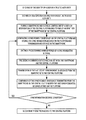
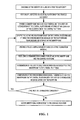
- The sequence of an embodiment of the method is illustrated by way of example in the attached drawing.
Claims (4)
Applications Claiming Priority (4)
| Application Number | Priority Date | Filing Date | Title |
|---|---|---|---|
| DE102015105595 | 2015-04-13 | ||
| DE102015105595.3A DE102015105595A1 (en) | 2015-04-13 | 2015-04-13 | Securing access to vehicles |
| DE102015105595.3 | 2015-04-13 | ||
| PCT/EP2016/053865 WO2016165864A1 (en) | 2015-04-13 | 2016-02-24 | Securing access to vehicles |
Publications (2)
| Publication Number | Publication Date |
|---|---|
| US20180098219A1 true US20180098219A1 (en) | 2018-04-05 |
| US10321319B2 US10321319B2 (en) | 2019-06-11 |
Family
ID=55527518
Family Applications (1)
| Application Number | Title | Priority Date | Filing Date |
|---|---|---|---|
| US15/565,876 Active US10321319B2 (en) | 2015-04-13 | 2016-02-24 | Securing access to vehicles |
Country Status (4)
| Country | Link |
|---|---|
| US (1) | US10321319B2 (en) |
| EP (1) | EP3284064B1 (en) |
| DE (1) | DE102015105595A1 (en) |
| WO (1) | WO2016165864A1 (en) |
Cited By (2)
| Publication number | Priority date | Publication date | Assignee | Title |
|---|---|---|---|---|
| US10321319B2 (en) * | 2015-04-13 | 2019-06-11 | Huf Huelsback & Fuerst GmbH & Co. KG | Securing access to vehicles |
| CN113506399A (en) * | 2021-06-03 | 2021-10-15 | 山西三友和智慧信息技术股份有限公司 | Wisdom campus access control system based on artificial intelligence |
Families Citing this family (4)
| Publication number | Priority date | Publication date | Assignee | Title |
|---|---|---|---|---|
| DE102016103366A1 (en) * | 2016-02-25 | 2017-08-31 | Huf Hülsbeck & Fürst Gmbh & Co. Kg | Securing access authorizations to fixed installations |
| DE102016223165A1 (en) * | 2016-11-23 | 2018-05-24 | Bayerische Motoren Werke Aktiengesellschaft | Authorization of the use of a motor vehicle |
| DE102017219770B4 (en) | 2017-11-07 | 2019-06-19 | Continental Automotive Gmbh | Method for operating an Ethernet communication device and Ethernet communication device |
| CN109532758B (en) * | 2018-12-12 | 2021-02-05 | 安徽江淮汽车集团股份有限公司 | Method for remotely locking and unlocking functions of new energy automobile leasing industry |
Citations (12)
| Publication number | Priority date | Publication date | Assignee | Title |
|---|---|---|---|---|
| US6732144B1 (en) * | 1999-11-19 | 2004-05-04 | Kabushiki Kaisha Toshiba | Communication method for data synchronization processing and electronic device therefor |
| US20050071208A1 (en) * | 2003-09-29 | 2005-03-31 | Danamichele Brennen | Open architecture technology platform having front end administratively driven delivery management system |
| US20050124345A1 (en) * | 2003-12-05 | 2005-06-09 | Raiv Laroia | Methods and apparatus for performing handoffs in a multi-carrier wireless communications system |
| US20050124344A1 (en) * | 2003-12-05 | 2005-06-09 | Rajiv Laroia | Base station based methods and apparatus for supporting break before make handoffs in a multi-carrier system |
| US20050283209A1 (en) * | 2004-06-17 | 2005-12-22 | Mehdi Katoozi | On-demand retransmission of data with an implantable medical device |
| US20060029139A1 (en) * | 2004-07-22 | 2006-02-09 | Detlef Teichner | Data transmission synchronization scheme |
| US7331047B2 (en) * | 2003-11-25 | 2008-02-12 | Microsoft Corporation | Deterministic system and method for implementing software distributed between a desktop and a remote device |
| US20080228948A1 (en) * | 2007-03-14 | 2008-09-18 | Avaya Gmbh & Co. Kg | Communication network and method for storing message data in a communication network |
| US20120078383A1 (en) * | 2010-09-28 | 2012-03-29 | Yamaha Corporation | Remote control system and communication system |
| US8380165B1 (en) * | 2010-10-22 | 2013-02-19 | Sprint Communications Company L.P. | Identifying a cloned mobile device in a communications network |
| US20140040621A1 (en) * | 2012-08-03 | 2014-02-06 | Infineon Technologies Ag | Mobile Electronic Device |
| EP2743868A1 (en) * | 2012-12-14 | 2014-06-18 | Seven Principles AG | Virtual vehicle key |
Family Cites Families (10)
| Publication number | Priority date | Publication date | Assignee | Title |
|---|---|---|---|---|
| US8140658B1 (en) * | 1999-10-06 | 2012-03-20 | Borgia/Cummins, Llc | Apparatus for internetworked wireless integrated network sensors (WINS) |
| US8707382B2 (en) * | 2008-02-13 | 2014-04-22 | At&T Intellectual Property I, L.P. | Synchronizing presentations of multimedia programs |
| US20110208532A1 (en) * | 2010-02-23 | 2011-08-25 | Samsung Electronics Co., Ltd. | MANAGING HEALTH DATA FROM WITHIN AND OUTSIDE A UPnP NETWORK |
| DE102012106522A1 (en) * | 2012-07-18 | 2014-01-23 | Huf Hülsbeck & Fürst Gmbh & Co. Kg | Method for authenticating a driver in a motor vehicle |
| US9461876B2 (en) * | 2012-08-29 | 2016-10-04 | Loci | System and method for fuzzy concept mapping, voting ontology crowd sourcing, and technology prediction |
| DE102013114394A1 (en) * | 2013-12-18 | 2015-06-18 | Huf Hülsbeck & Fürst Gmbh & Co. Kg | Method for authenticating a driver in a motor vehicle |
| DE102014107242A1 (en) * | 2014-05-22 | 2015-11-26 | Huf Hülsbeck & Fürst Gmbh & Co. Kg | System and method for access control |
| DE102014112849A1 (en) * | 2014-09-05 | 2016-03-10 | Huf Hülsbeck & Fürst Gmbh & Co. Kg | Method for remote control of at least a first function of a safety device of a vehicle |
| DE102015105595A1 (en) * | 2015-04-13 | 2016-10-13 | Huf Hülsbeck & Fürst Gmbh & Co. Kg | Securing access to vehicles |
| US10993100B2 (en) * | 2017-09-07 | 2021-04-27 | Huf Secure Mobile GmbH | System and method of low energy mobile device recognition |
-
2015
- 2015-04-13 DE DE102015105595.3A patent/DE102015105595A1/en not_active Withdrawn
-
2016
- 2016-02-24 US US15/565,876 patent/US10321319B2/en active Active
- 2016-02-24 WO PCT/EP2016/053865 patent/WO2016165864A1/en not_active Ceased
- 2016-02-24 EP EP16709717.9A patent/EP3284064B1/en active Active
Patent Citations (12)
| Publication number | Priority date | Publication date | Assignee | Title |
|---|---|---|---|---|
| US6732144B1 (en) * | 1999-11-19 | 2004-05-04 | Kabushiki Kaisha Toshiba | Communication method for data synchronization processing and electronic device therefor |
| US20050071208A1 (en) * | 2003-09-29 | 2005-03-31 | Danamichele Brennen | Open architecture technology platform having front end administratively driven delivery management system |
| US7331047B2 (en) * | 2003-11-25 | 2008-02-12 | Microsoft Corporation | Deterministic system and method for implementing software distributed between a desktop and a remote device |
| US20050124345A1 (en) * | 2003-12-05 | 2005-06-09 | Raiv Laroia | Methods and apparatus for performing handoffs in a multi-carrier wireless communications system |
| US20050124344A1 (en) * | 2003-12-05 | 2005-06-09 | Rajiv Laroia | Base station based methods and apparatus for supporting break before make handoffs in a multi-carrier system |
| US20050283209A1 (en) * | 2004-06-17 | 2005-12-22 | Mehdi Katoozi | On-demand retransmission of data with an implantable medical device |
| US20060029139A1 (en) * | 2004-07-22 | 2006-02-09 | Detlef Teichner | Data transmission synchronization scheme |
| US20080228948A1 (en) * | 2007-03-14 | 2008-09-18 | Avaya Gmbh & Co. Kg | Communication network and method for storing message data in a communication network |
| US20120078383A1 (en) * | 2010-09-28 | 2012-03-29 | Yamaha Corporation | Remote control system and communication system |
| US8380165B1 (en) * | 2010-10-22 | 2013-02-19 | Sprint Communications Company L.P. | Identifying a cloned mobile device in a communications network |
| US20140040621A1 (en) * | 2012-08-03 | 2014-02-06 | Infineon Technologies Ag | Mobile Electronic Device |
| EP2743868A1 (en) * | 2012-12-14 | 2014-06-18 | Seven Principles AG | Virtual vehicle key |
Cited By (2)
| Publication number | Priority date | Publication date | Assignee | Title |
|---|---|---|---|---|
| US10321319B2 (en) * | 2015-04-13 | 2019-06-11 | Huf Huelsback & Fuerst GmbH & Co. KG | Securing access to vehicles |
| CN113506399A (en) * | 2021-06-03 | 2021-10-15 | 山西三友和智慧信息技术股份有限公司 | Wisdom campus access control system based on artificial intelligence |
Also Published As
| Publication number | Publication date |
|---|---|
| WO2016165864A1 (en) | 2016-10-20 |
| US10321319B2 (en) | 2019-06-11 |
| EP3284064A1 (en) | 2018-02-21 |
| DE102015105595A1 (en) | 2016-10-13 |
| EP3284064B1 (en) | 2019-04-10 |
Similar Documents
| Publication | Publication Date | Title |
|---|---|---|
| US10321319B2 (en) | Securing access to vehicles | |
| KR102219756B1 (en) | Method for managing the state of connected devices | |
| CN103201996B (en) | The method that radio machine motor-car is accessed is provided | |
| KR101536489B1 (en) | Authentication of access terminal identities in roaming networks | |
| US10440034B2 (en) | Network assisted fraud detection apparatus and methods | |
| KR100591495B1 (en) | Service verification system, authorization requesting terminal, service using terminal and service providing method | |
| US20160057725A1 (en) | Security method and system for supporting re-subscription or additional subscription restriction policy in mobile communications | |
| EP2472927A1 (en) | Method and system for controlling an intelligent card remotely | |
| WO2012062067A1 (en) | Method, device and system for unlocking mobile terminal by operator | |
| EP2368382B1 (en) | Locking of communication device | |
| CN106211131B (en) | Management method, managing device, server and the terminal of virtual SIM card | |
| US20120258689A1 (en) | Method, Device and System for Partially Locking Functions of Terminal | |
| EP3525503A1 (en) | Registering or authenticating user equipment to a visited public land mobile network | |
| WO2017219587A1 (en) | Master-slave device switching method, slave device, management server, and storage medium | |
| WO2015113351A1 (en) | Information processing method, terminal and server, and communication method and system | |
| US8121580B2 (en) | Method of securing a mobile telephone identifier and corresponding mobile telephone | |
| CN101568116B (en) | Method for obtaining certificate state information and certificate state management system | |
| US12532153B2 (en) | Method of managing a communication function in a user equipment | |
| KR101837711B1 (en) | System and Method for authentication terminal under black list authentication | |
| US20120190340A1 (en) | Method for binding secure device to a wireless phone | |
| CN102104697A (en) | Stealing processing method and device | |
| CN107318112B (en) | Registration method of mobile terminal user, mobile terminal and system | |
| DE102016103366A1 (en) | Securing access authorizations to fixed installations | |
| CN111050323A (en) | Terminal switching method, device and system | |
| KR100600359B1 (en) | Illegal terminal detection and control system and method |
Legal Events
| Date | Code | Title | Description |
|---|---|---|---|
| AS | Assignment |
Owner name: HUF HUELSBECK & FUERST GMBH & CO. KG, GERMANY Free format text: ASSIGNMENT OF ASSIGNORS INTEREST;ASSIGNOR:GENNERMANN, SVEN;REEL/FRAME:043841/0922 Effective date: 20171010 |
|
| FEPP | Fee payment procedure |
Free format text: ENTITY STATUS SET TO UNDISCOUNTED (ORIGINAL EVENT CODE: BIG.); ENTITY STATUS OF PATENT OWNER: LARGE ENTITY |
|
| STPP | Information on status: patent application and granting procedure in general |
Free format text: NOTICE OF ALLOWANCE MAILED -- APPLICATION RECEIVED IN OFFICE OF PUBLICATIONS |
|
| STCF | Information on status: patent grant |
Free format text: PATENTED CASE |
|
| MAFP | Maintenance fee payment |
Free format text: PAYMENT OF MAINTENANCE FEE, 4TH YEAR, LARGE ENTITY (ORIGINAL EVENT CODE: M1551); ENTITY STATUS OF PATENT OWNER: LARGE ENTITY Year of fee payment: 4 |